EP3640805A1 - Method and apparatus for implementing white-box otn hardware device, and storage medium - Google Patents
Method and apparatus for implementing white-box otn hardware device, and storage medium Download PDFInfo
- Publication number
- EP3640805A1 EP3640805A1 EP18823614.5A EP18823614A EP3640805A1 EP 3640805 A1 EP3640805 A1 EP 3640805A1 EP 18823614 A EP18823614 A EP 18823614A EP 3640805 A1 EP3640805 A1 EP 3640805A1
- Authority
- EP
- European Patent Office
- Prior art keywords
- otn
- hardware device
- chip
- box
- white
- Prior art date
- Legal status (The legal status is an assumption and is not a legal conclusion. Google has not performed a legal analysis and makes no representation as to the accuracy of the status listed.)
- Granted
Links
Images



Classifications
-
- G—PHYSICS
- G06—COMPUTING OR CALCULATING; COUNTING
- G06F—ELECTRIC DIGITAL DATA PROCESSING
- G06F30/00—Computer-aided design [CAD]
- G06F30/30—Circuit design
- G06F30/34—Circuit design for reconfigurable circuits, e.g. field programmable gate arrays [FPGA] or programmable logic devices [PLD]
-
- G—PHYSICS
- G06—COMPUTING OR CALCULATING; COUNTING
- G06F—ELECTRIC DIGITAL DATA PROCESSING
- G06F11/00—Error detection; Error correction; Monitoring
- G06F11/36—Prevention of errors by analysis, debugging or testing of software
- G06F11/362—Debugging of software
- G06F11/3648—Debugging of software using additional hardware
- G06F11/3656—Debugging of software using additional hardware using a specific debug interface
-
- G—PHYSICS
- G06—COMPUTING OR CALCULATING; COUNTING
- G06F—ELECTRIC DIGITAL DATA PROCESSING
- G06F11/00—Error detection; Error correction; Monitoring
- G06F11/36—Prevention of errors by analysis, debugging or testing of software
-
- G—PHYSICS
- G06—COMPUTING OR CALCULATING; COUNTING
- G06F—ELECTRIC DIGITAL DATA PROCESSING
- G06F8/00—Arrangements for software engineering
- G06F8/30—Creation or generation of source code
-
- H—ELECTRICITY
- H04—ELECTRIC COMMUNICATION TECHNIQUE
- H04J—MULTIPLEX COMMUNICATION
- H04J3/00—Time-division multiplex systems
- H04J3/16—Time-division multiplex systems in which the time allocation to individual channels within a transmission cycle is variable, e.g. to accommodate varying complexity of signals, to vary number of channels transmitted
- H04J3/1605—Fixed allocated frame structures
- H04J3/1652—Optical Transport Network [OTN]
-
- G—PHYSICS
- G06—COMPUTING OR CALCULATING; COUNTING
- G06F—ELECTRIC DIGITAL DATA PROCESSING
- G06F2117/00—Details relating to the type or aim of the circuit design
- G06F2117/08—HW-SW co-design, e.g. HW-SW partitioning
-
- H—ELECTRICITY
- H04—ELECTRIC COMMUNICATION TECHNIQUE
- H04J—MULTIPLEX COMMUNICATION
- H04J2203/00—Aspects of optical multiplex systems other than those covered by H04J14/05 and H04J14/07
- H04J2203/0001—Provisions for broadband connections in integrated services digital network using frames of the Optical Transport Network [OTN] or using synchronous transfer mode [STM], e.g. SONET, SDH
- H04J2203/0057—Operations, administration and maintenance [OAM]
Definitions
- the present disclosure relates to the technical field of communication, and in particular, to a method and an apparatus for implementing a white-box optical transport network (OTN) hardware device, and a computer-readable storage medium.
- OTN optical transport network
- the present disclosure provides a method for implementing a white-box OTN hardware device, including the steps of: performing an abstraction processing on a hardware device adopted by an OTN device and making a constraint rule to form a low-level Application Programming Interface (API); acquiring a customization description file of the low-level API inputted by a user, and automatically generating a connection code between a public code and a user code according to the customization description file of the low-level API inputted by the user.
- API Application Programming Interface
- the present disclosure provides an apparatus for implementing a white-box OTN hardware device, including: a first abstraction processing module configured to perform an abstraction processing on a hardware device adopted by an OTN device and make a constraint rule to form a low-level API; and a compiler configured to acquire a customization description file of the low-level API inputted by a user, and automatically generate a connection code between a public code and a user code according to the customization description file of the low-level API inputted by the user, such that a low-level service logic is processed publically.
- a first abstraction processing module configured to perform an abstraction processing on a hardware device adopted by an OTN device and make a constraint rule to form a low-level API
- a compiler configured to acquire a customization description file of the low-level API inputted by a user, and automatically generate a connection code between a public code and a user code according to the customization description file of the low-level API inputted by the user, such that a low-level service logic is processed publically.
- the present disclosure provides an apparatus for implementing a white-box OTN hardware device, including: a memory, a processor, and an abstraction program of the white-box OTN hardware device stored on the memory and operable on the processor, wherein the abstraction program of the white-box OTN hardware device, when executed by the processor, implements the steps of the method for implementing the white-box OTN hardware device described herein.
- the present disclosure provides a computer-readable storage medium having stored thereon an abstraction program of a white-box OTN hardware device, which, when executed by a processor, implements the steps of the method for implementing the white-box OTN hardware device described herein.
- the present disclosure particularly provides a method and an apparatus for implementing a white-box optical transport network (OTN) hardware device, and a computer-readable storage medium, which substantially obviate one or more of the problems due to limitations and disadvantages of the related art.
- OTN optical transport network
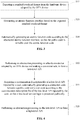
- FIG. 1 is a schematic flowchart of a method for implementing a white-box OTN hardware device according to an embodiment of the present disclosure. Referring to FIG. 1 , in some embodiments, the method may include step S10.
- an abstraction processing is performed on a hardware device adopted by an OTN (Optical Transport Network) device and a constraint rule is made, so as to form a low-level API (Application Programming Interface).
- OTN Optical Transport Network
- constraint rule is made, so as to form a low-level API (Application Programming Interface).
- FIG. 2 is a schematic flowchart of the abstraction processing and constraint rule making in a method for implementing a white-box OTN hardware device according to an embodiment of the present disclosure.
- performing an abstraction processing on a hardware device adopted by the OTN device and making a constraint rule may include step S102 and step S104.
- the hardware device adopted by the OTN device is abstracted into a service processing chip, a photoelectric conversion chip, and a cross-dispatching chip.
- step S104 constraint rules of the service processing chip, the photoelectric conversion chip, and the cross-dispatching chip are made.
- the idea of white-box technology is adopted, from the perspective of OTN device, the hardware device adopted to form the OTN device is abstracted into three types of chips, i.e., service processing chip, photoelectric conversion chip and cross-dispatching chip; and from the perspective of optical transmission device service, constraint rules are made for the three types of chips forming the OTN device, so as to form an API function based on the service rules and an agreement of input parameters thereof.
- chips from any manufacturer must have the function, and an SDK (Software Development Kit) or a combination of SDKs capable of implementing the function needs to be provided.
- the method may further include step S11.
- step S11 a customization description file of the low-level API inputted by the user is acquired, and a connection code between the public code and the user code is automatically generated according to the customization description file of the low-level API inputted by the user, so that the low-level service logic is processed publically.
- DSL Domain Specific Language
- the user code for implementing hardware privatization is separated from the public control logic.
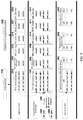
- FIG. 9 is a schematic structural diagram of an abstract system of the white-box OTN hardware device according to an embodiment of the present disclosure.
- the system of FIG. 9 may include: a service processing chip driver library 1001, a photoelectric conversion chip driver library 1002, a cross chip driver library 1003, a customization description file 1004, a customization private code 1005, a C code automatic generation compiler 1006, an HDL service processing module 1007, an HDL photoelectric conversion module 1008, an HDL cross dispatching module 1009, an HDL protection swapping module 1010, an HDL performance alarm maintenance management module 1011, an HDL clock time processing module 1012, an HAL service processing module 1013, an HAL photoelectric conversion module 1014, an HAL cross dispatching module 1015, an HAL protection swapping module 1016, an HAL performance alarm maintenance management module 1017, an HAL clock time processing module 1018, an automated test 1019, and a high-level service processing module 1020.
- a service processing chip driver library 1001 a photoelectric conversion chip driver library 1002, a cross chip driver library 1003, a customization description file 1004, a customization private code 1005, a C code automatic generation compiler 1006, an HDL service processing module
- chip a it is necessary for chip a to implement: UINT32 sdk_a_svc_cfg_otu_oduj21_api (TOduj32Para oduj21_para), the chip calls SDK of its own to complete the configuration function of the split service; for chip b, it must also implement: UINT32 sdk_b_svc_cfg_otu_oduj21_api(TOduj32Para oduj21_para), the chip calls SDK of its own to complete the configuration function of the split service.
- the user indicates in the description file that the service chip used is chip a, i.e., ⁇ svc_chip_name, a ⁇ .
- an implementation code of an ADPT interface on the lower half of an HDL (Hardware Description Language) service processing module 1007 is automatically generated, i.e., UINT32 adpt_svc_cfg_otu_oduj21_api(TOduj32Para oduj21_para) ⁇ return sdk_a_svc_cfg_otu_oduj21_api(TOduj32Para oduj21_para); ⁇ .
- the upper half of the HDL service processing module 1007 performs related public processing based on a corresponding function decomposed by the HAL (Hardware Abstraction Layer) service processing module 1013, and calls adpt_svc_cfg_otu_oduj21_api according to an input structure oduj21_para to complete the public processing function that the layer needs to implement.
- HAL Hardware Abstraction Layer
- the (2) photoelectric conversion configuration management and (3) cross dispatching configuration management are similar to (1) service configuration management in processing manner, which will not be described herein again.
- FIG. 3 is a schematic flowchart of atomic function abstraction in the method for implementing the white-box OTN hardware device according to an embodiment of the present disclosure.
- the method may further include steps S12 to S14.
- a standard overhead format is exported from the hardware device adopted by the OTN device.
- the standard overhead format may be exported from diverse chips by using FPGA to export the overhead that conforms to the ITU-TG.709 standard from the SDK.
- an atomic function interface is abstracted based on the exported standard overhead format.
- an atomic function code is automatically generated according to the abstracted atomic function interface, so that a public code may be written over the atomic function code.
- protection swapping configuration management module is taken as an example for explanation with reference to FIG. 9 .
- the module mainly imports the overhead of a service chip into an FPGA (Field Programmable Gate Array), and implements service swapping based on alarm change that is interrupted via configuration of the FPGA.
- FPGA Field Programmable Gate Array
- the module abstracts functions of the protection configuration command from the perspective of service, abstracts a plurality of atomic function interfaces, and restricts FPGA hardware developers based on the atomic function interfaces and requires the FPGA developers to cover these atomic functions.
- an FPGA address corresponding to the atomic function interface is described in the customization description file 1004, a read-write function for reading and writing the FPGA address is registered in the customization private code 1005, the C code automatic generation compiler 1006 automatically generates an atomic functional function required by the HDL layer, and the HDL layer completes a combination of atomic functions which is supplied to the HAL layer to use.
- the (6) clock time configuration management module is similar to the (4) protection swapping configuration management module in processing manner, which is not described herein again.
- the performance alarm module has several characteristics: firstly, the performance alarm quantity is huge; secondly, the performance alarm processing is simple, which is only to call one SDK or to read and write one register address. Based on the above two characteristics, in the description of the customization description file 1004, what need to be described are merely the API in which SDK needs to be used for a certain alarm and what type of parameters the API needs to fill in; the C code automatic generation compiler 1006 automatically generates a performance alarm function required by the HDL layer and a combined function based on the atomic functions, which is supplied for the HAL layer to call.
- FIG. 4 is another flowchart of a method for implementing the white-box OTN hardware device according to an embodiment of the present disclosure.
- the method further includes step S 15 in addition to step S10 and step S11 (see the description of FIG. 1 for details).
- step S15 an abstraction processing is performed on the low-level API to form a high-level API.
- the low-level API because the granularity of the low-level API is relatively fine, abstraction processing needs to be performed again on this basis to form a higher-level API that is convenient and flexible for a user to use.
- the low-level API is further abstracted from the perspective of high level use, so as to form a condensed and cohesive API for a high-level user.
- the high-level API may be supplied to high-level users such as NOS (Network Operating System), SDN (Software Defined Network) and the like to use.
- NOS Network Operating System
- SDN Software Defined Network
- the high-level API is simple, cohesive and relatively stable, it is possible to develop automation script on such basis, to thereby providing a quick feedback mechanism for a quick-launched product.
- the simplified high-level API is irrelevant to hardware, it matches with the requirements of SDN and the NVF thereof quite well.
- the (7) automated testing module and (8) high-level service processing module illustrated in FIG. 9 are taken as an example for explanation.
- automated testing module automated acceptance tests are developed based on a standard interface of the HAL layer.
- high-level application module it mainly calls interfaces of the HAL layer, which are irrelevant to hardware, to complete high-level functions such as SDN, WASON (WDM/OTN Automatically Switched Optical Network) and NOS.
- SDN SDN
- WASON WDM/OTN Automatically Switched Optical Network
- NOS NOS
- the hardware device adopted by the OTN device is abstracted to form a low-level API
- a connection code between a public code and a user code is automatically generated according to a customization description file of the low-level API inputted by the user, which realizes public processing of low-level service logic and decoupling of software and hardware of the white-box OTN, obviates repeated development of software caused by hardware difference, and since the design, development and test need not to start from zero in the process of hardware replacement, thus saves time from development to launch.
- FIG. 5 is a schematic structural diagram of an apparatus for implementing a white-box OTN hardware device according to an embodiment of the present disclosure.
- the apparatus for implementing a white-box OTN hardware device may include a first abstraction processing module 21 and a compiler 22.
- the first abstraction processing module 21 may be configured to perform an abstraction processing on a hardware device adopted by the OTN device and make a constraint rule, so as to form a low-level API.
- FIG. 6 is a schematic structural diagram of a first abstraction processing module in the apparatus for implementing a white-box OTN hardware device according to an embodiment of the present disclosure.
- the first abstraction processing module 21 may include an abstracting unit 212 and a constraint rule making unit 214.
- the abstracting unit 212 may be configured to abstract a hardware device adopted by the OTN device into a service processing chip, a photoelectric conversion chip, and a cross-dispatching chip.
- the constraint rule making unit 214 may be configured to make constraint rules of the service processing chip, the photoelectric conversion chip and the cross-dispatching chip.
- the idea of the white-box technology is adopted, from the perspective of OTN device, the hardware device adopted to form the OTN device is abstracted into three types of chips, i.e., a service processing chip, a photoelectric conversion chip and a cross-dispatching chip; and from the perspective of optical transmission device service, constraint rules are made for the three types of chips forming the OTN device, so as to form a function of an API based on service rules and an agreement of input parameters thereof.
- chips from any manufacturer must have the function, and an SDK (Software Development Kit) or a combination of SDKs capable of implementing the function needs to be provided.
- the compiler 22 may be configured to acquire a customization description file of the low-level API inputted by the user, and automatically generate a connection code between a public code and a user code according to the customization description file of the low-level API inputted by the user, such that a low-level service logic is processed publically.
- the apparatus further includes a description file forming unit 216.
- the description file forming unit 216 may be configured to abstract the differences between the service processing chip, the photoelectric conversion chip, and the cross-dispatching chip to form the customization description file by using DSL technology.
- the user code for implementing hardware privatization is separated from the public control logic.
- FIG. 9 To better illustrate the disclosed embodiment, reference is now made to FIG. 9 .
- the system of FIG. 9 may include: a service processing chip driver library 1001, a photoelectric conversion chip driver library 1002, a cross chip driver library 1003, a customization description file 1004, a customization private code 1005, a C code automatic generation compiler 1006, an HDL service processing module 1007, an HDL photoelectric conversion module 1008, an HDL cross dispatching module 1009, an HDL protection swapping module 1010, an HDL performance alarm maintenance management module 1011, an HDL clock time processing module 1012, an HAL service processing module 1013, an HAL photoelectric conversion module 1014, an HAL cross dispatching module 1015, an HAL protection swapping module 1016, an HAL performance alarm maintenance management module 1017, an HAL clock time processing module 1018, an automated test 1019, and a high-level service processing module 1020.
- a service processing chip driver library 1001 a photoelectric conversion chip driver library 1002, a cross chip driver library 1003, a customization description file 1004, a customization private code 1005, a C code automatic generation compiler 1006, an HDL service processing module
- chip a it is necessary for chip a to implement: UINT32 sdk_a_svc_cfg_otu_oduj21_api(TOduj32Para oduj21_para), the chip calls SDK of its own to complete the configuration function of the split service; for chip b, it must also implement: UINT32 sdk_b_svc_cfg_otu_oduj21_api(TOduj32Para oduj21_para), the chip calls SDK of its own to complete the configuration function of the split service.
- the user indicates in the description file that the service chip used is chip a, i.e., ⁇ svc_chip_name, a ⁇ .
- an implementation code of an ADPT interface on the lower half of an HDL (Hardware Description Language) service processing module 1007 is automatically generated, i.e., UINT32 adpt_svc_cfg_otu_oduj21_api(TOduj32Para oduj21_para) ⁇ return sdk_a_svc_cfg_otu_oduj21_api(TOduj32Para oduj21_para); ⁇ .
- the upper half of the HDL service processing module 1007 performs related public processing based on a corresponding function decomposed by the HAL (Hardware Abstraction Layer) service processing module 1013, and calls adpt_svc_cfg_otu_oduj21_api according to an input structure oduj21_para to complete the public processing function that the layer needs to implement.
- HAL Hardware Abstraction Layer
- the (2) photoelectric conversion configuration management and (3) cross dispatching configuration management are similar to (1) service configuration management in processing manner, which will not be described herein again.
- FIG. 7 is another schematic structural diagram of the apparatus for implementing a white-box OTN hardware device according to an embodiment of the present disclosure.
- the apparatus may further include an export module 23 and an atomic function interface abstracting module 24.
- the export module 23 may be configured to export a standard overhead format from a hardware device adopted by the OTN device.
- the export module 23 may export the standard overhead format from diverse chips by using FPGA to export an overhead that conforms to the ITU-TG.709 standard from SDK.
- the atomic function interface abstracting module 24 may be configured to abstract an atomic function interface based on the exported standard overhead format.
- the compiler 22 may be further configured to automatically generate an atomic function code based on the abstracted atomic function interface, so that a public code may be written over the atomic function code.
- protection swapping configuration management module is taken as an example for explanation with reference to Fig.9 .
- the module mainly imports the overhead of a service chip into an FPGA (Field Programmable Gate Array), and implements service swapping based on alarm change that is interrupted via configuration of the FPGA.
- FPGA Field Programmable Gate Array
- the module abstracts functions of the protection configuration command from the perspective of service, abstracts a plurality of atomic function interfaces, and restricts FPGA hardware developers based on the atomic function interfaces and requires the FPGA developers to cover these atomic functions.
- an FPGA address corresponding to the atomic function interface is described in the customization description file 1004, a read-write function for reading and writing the FPGA address is registered in the customization private code 1005, the C code automatic generation compiler 1006 automatically generates an atomic functional function required by the HDL layer, and the HDL layer completes a combination of atomic functions, which is supplied for the HAL layer to use.
- the (6) clock time configuration management module is similar to the (4) protection swapping configuration management module in processing manner, which is not described herein again.
- the performance alarm module has several characteristics: firstly, the performance alarm quantity is huge; secondly, the performance alarm processing is simple, which is only to call one SDK or read and write one register address. Based on the above two characteristics, in the description of the customization description file 1004, what need to be described are merely the API in which SDK needs to be used for a certain alarm and what type of parameters the API needs to fill in; the C code automatic generation compiler 1006 automatically generates a performance alarm function required by the HDL layer, and a combined function of the atomic functions for the HAL layer to call.
- the apparatus further includes a second abstraction processing module 25.
- the second abstraction processing module 25 may be configured to perform an abstraction processing on the low-level API to form a high-level API.
- the low-level API because the granularity of the low-level API is relatively fine, abstraction processing needs to be performed again on such basis, so to form a higher-level API that is convenient and flexible for a user to use.
- the low-level API is further abstracted from the perspective of high level use, so as to form a condensed and cohesive API for a high-level user.
- the high-level API may be supplied to high-level users such as NOS (Network Operating System), SDN (Software Defined Network) and the like to use.
- NOS Network Operating System
- SDN Software Defined Network
- the high-level API is simple, cohesive and relatively stable, it is possible to develop automation script on such basis, to thereby providing a quick feedback mechanism for a quick-launched product.
- the simplified high-level API is irrelevant to hardware, it matches with the requirements of SDN and NVF thereof well.
- the (7) automated testing module and (8) high-level service processing module illustrated in FIG. 9 are taken as an example for explanation.
- automated testing module automated acceptance tests are developed based on a standard interface of the HAL layer.
- high-level application module it mainly calls interfaces of HAL layer, which are irrelevant to hardware, to complete high-level functions such as SDN, WASON (WDM/OTN Automatically Switched Optical Network) and NOS.
- SDN SDN
- WASON WDM/OTN Automatically Switched Optical Network
- NOS NOS
- the hardware device adopted by the OTN device is abstracted to form a low-level API
- a connection code between a public code and a user code is automatically generated according to a customization description file of the low-level API inputted by the user, which realizes public processing of low-level service logic, decoupling of software and hardware of the white-box OTN, obviates repeated development of software caused by hardware difference, and since design, development and test need not to start from zero in the process of hardware replacement, thus saves time from development to launch.
- FIG. 8 is a schematic structural diagram of the apparatus for implementing the white-box OTN hardware device according to an embodiment of the present disclosure.
- the apparatus for implementing the white-box OTN hardware device includes: a memory 31, a processor 32 and an abstraction program of a white-box OTN hardware device stored on the memory 31 and operable on the processor 32, which, when executed by the processor, implements the steps of the method for implementing a white-box OTN hardware device described herein.
- the hardware device adopted by the OTN device is abstracted to form a low-level API
- a connection code between a public code and a user code is automatically generated according to a customization description file of the low-level API inputted by the user, which realizes public processing of low-level service logic, decoupling of software and hardware of the white-box OTN, obviates repeated development of software caused by hardware difference, and since the design, development and test need not to start from zero in the process of hardware replacement, thus saves time from development to launch.
- the present disclosure provides a computer-readable storage medium.
- the computer-readable storage medium has stored thereon an abstraction program of a white-box OTN hardware device, which, when executed by a processor, implements the steps of the method for implementing a white-box OTN hardware device described herein.
- the hardware device adopted by the OTN device is abstracted to form a low-level API
- a connection code between a public code and a user code is automatically generated according to a customization description file of the low-level API inputted by the user, which realizes public processing of low-level service logic, decoupling of software and hardware of the white-box OTN, obviates repeated development of software caused by hardware difference, and since the design, development and test need not to start from zero in the process of hardware replacement, thus saves time from development to launch.
- the method for the above embodiments can be implemented by software plus a necessary general hardware platform, and certainly can also be implemented by hardware, but in many cases, the former is a better embodiment.
- the technical solutions of the present disclosure substantially, or their parts contributing to the related technologies may be embodied in the form of a software product, which is stored in a storage medium (e.g., ROM/RAM, magnetic disk, optical disk) and includes instructions for enabling a terminal device (e.g., a mobile phone, a computer, a server, an air conditioner, or a network device) to execute the method according to the embodiments of the present disclosure.
- a storage medium e.g., ROM/RAM, magnetic disk, optical disk
- a terminal device e.g., a mobile phone, a computer, a server, an air conditioner, or a network device
Landscapes
- Engineering & Computer Science (AREA)
- Theoretical Computer Science (AREA)
- General Engineering & Computer Science (AREA)
- Computer Hardware Design (AREA)
- Physics & Mathematics (AREA)
- General Physics & Mathematics (AREA)
- Software Systems (AREA)
- Quality & Reliability (AREA)
- Evolutionary Computation (AREA)
- Geometry (AREA)
- Computer Networks & Wireless Communication (AREA)
- Signal Processing (AREA)
- Stored Programmes (AREA)
- Data Exchanges In Wide-Area Networks (AREA)
- Telephonic Communication Services (AREA)
- Debugging And Monitoring (AREA)
- Optical Communication System (AREA)
- Computer And Data Communications (AREA)
Abstract
Description
- The present disclosure relates to the technical field of communication, and in particular, to a method and an apparatus for implementing a white-box optical transport network (OTN) hardware device, and a computer-readable storage medium.
- In the technical field of optical network transmission, communication device manufacturers generally tie software and hardware together during the process of developing transmission devices, that is, adopt a development mode under which software and hardware are highly coupled.
- In one aspect, the present disclosure provides a method for implementing a white-box OTN hardware device, including the steps of: performing an abstraction processing on a hardware device adopted by an OTN device and making a constraint rule to form a low-level Application Programming Interface (API); acquiring a customization description file of the low-level API inputted by a user, and automatically generating a connection code between a public code and a user code according to the customization description file of the low-level API inputted by the user.
- In another aspect, the present disclosure provides an apparatus for implementing a white-box OTN hardware device, including: a first abstraction processing module configured to perform an abstraction processing on a hardware device adopted by an OTN device and make a constraint rule to form a low-level API; and a compiler configured to acquire a customization description file of the low-level API inputted by a user, and automatically generate a connection code between a public code and a user code according to the customization description file of the low-level API inputted by the user, such that a low-level service logic is processed publically.
- In another aspect, the present disclosure provides an apparatus for implementing a white-box OTN hardware device, including: a memory, a processor, and an abstraction program of the white-box OTN hardware device stored on the memory and operable on the processor, wherein the abstraction program of the white-box OTN hardware device, when executed by the processor, implements the steps of the method for implementing the white-box OTN hardware device described herein.
- In another aspect, the present disclosure provides a computer-readable storage medium having stored thereon an abstraction program of a white-box OTN hardware device, which, when executed by a processor, implements the steps of the method for implementing the white-box OTN hardware device described herein.
-
-
FIG. 1 is a schematic flowchart of a method for implementing the white-box OTN hardware device according to an embodiment of the present disclosure; -
FIG. 2 is a schematic flowchart illustrating an abstraction process and a constraint rule making process in the method for implementing the white-box OTN hardware device according to an embodiment of the present disclosure; -
FIG. 3 is a schematic flowchart of an atomic function abstraction in the method for implementing the white-box OTN hardware device according to an embodiment of the present disclosure; -
FIG. 4 is another flowchart of the method for implementing the white-box OTN hardware device according to an embodiment of the present disclosure; -
FIG. 5 is a schematic structural diagram of an apparatus for implementing the white-box OTN hardware device according to an embodiment of the present disclosure; -
FIG. 6 is a schematic structural diagram of a first abstraction processing module in the apparatus for implementing the white-box OTN hardware device according to an embodiment of the present disclosure; -
FIG. 7 is another schematic structural diagram of the apparatus for implementing the white-box OTN hardware device according to an embodiment of the present disclosure; -
FIG. 8 is a schematic structural diagram of the apparatus for implementing the white-box OTN hardware device according to an embodiment of the present disclosure; -
FIG. 9 is a schematic structural diagram of an abstract system of the white-box OTN hardware device according to an embodiment of the present disclosure. - The achievement of objects, functional features, and advantages of the present disclosure will be further described with reference to the accompanying drawings.
- For a clearer understanding of the technical problems to be solved, the technical solutions to be adopted, and the technical effect to be achieved by the present disclosure, the present disclosure is further described in detail below with reference to the accompanying drawings and embodiments. It should be understood that the specific embodiments described herein are merely intended to explain the present disclosure only rather than to restrict the present disclosure.
- In the technical field of optical network transmission, communication device manufacturers generally tie software and hardware together during the process of developing transmission devices, that is, adopt a development mode in which software and hardware are highly coupled.
- This mode of development suffers from the following drawbacks. Firstly, upper level software cannot be reused due to hardware differences between device boards, which results in a large amount of repeated development. Secondly, due to hardware difference, each project and product need to be restarted from the very beginning each time, while replacement of personnel and change of developers make it impossible to inherit historical experience and excellent design effectively. This would further lead to a great deal of waste of design, development and test. In addition, as the operators and the internet are in continuous pursuit of shorter and shorter development periods, customers come up with new severe requirements on the development period at the device manufacturer's side, and such requirements cannot be satisfied by the existing development mode. Moreover, in order to meet the customer's severe requirement for shortening the development period, it is necessary to improve the automation level of development and testing at the device manufacturer's side, but the existing development mode makes it difficult to develop automation. Finally, with the high-speed development of SDN (Software Defined Network) and NFV (Network Function Virtualization), future devices are required to have increasingly open interoperability, and better performance and flexibility, which further require the device manufacturer to obviate hardware difference as much as possible and perform high-level abstraction on hardware devices, thereby realizing separation of software and hardware.
- Accordingly, the present disclosure particularly provides a method and an apparatus for implementing a white-box optical transport network (OTN) hardware device, and a computer-readable storage medium, which substantially obviate one or more of the problems due to limitations and disadvantages of the related art.
- In one aspect, the present disclosure provides a method for implementing a white-box OTN hardware device.
FIG. 1 is a schematic flowchart of a method for implementing a white-box OTN hardware device according to an embodiment of the present disclosure. Referring toFIG. 1 , in some embodiments, the method may include step S10. - At step S10, an abstraction processing is performed on a hardware device adopted by an OTN (Optical Transport Network) device and a constraint rule is made, so as to form a low-level API (Application Programming Interface).
-
FIG. 2 is a schematic flowchart of the abstraction processing and constraint rule making in a method for implementing a white-box OTN hardware device according to an embodiment of the present disclosure. Referring toFIG. 2 , in some embodiments, performing an abstraction processing on a hardware device adopted by the OTN device and making a constraint rule may include step S102 and step S104. - At step S102, the hardware device adopted by the OTN device is abstracted into a service processing chip, a photoelectric conversion chip, and a cross-dispatching chip.
- At step S104, constraint rules of the service processing chip, the photoelectric conversion chip, and the cross-dispatching chip are made.
- In the disclosed embodiment, the idea of white-box technology is adopted, from the perspective of OTN device, the hardware device adopted to form the OTN device is abstracted into three types of chips, i.e., service processing chip, photoelectric conversion chip and cross-dispatching chip; and from the perspective of optical transmission device service, constraint rules are made for the three types of chips forming the OTN device, so as to form an API function based on the service rules and an agreement of input parameters thereof. In the process of hardware type selection, chips from any manufacturer must have the function, and an SDK (Software Development Kit) or a combination of SDKs capable of implementing the function needs to be provided.
- Referring to
FIG. 1 , the method may further include step S11. At step S11, a customization description file of the low-level API inputted by the user is acquired, and a connection code between the public code and the user code is automatically generated according to the customization description file of the low-level API inputted by the user, so that the low-level service logic is processed publically. - In the disclosed embodiment, DSL (Domain Specific Language) technology may be adopted to abstract the differences between the service processing chip, the photoelectric conversion chip, and the cross-dispatching chip to form the customization description file. The user code for implementing hardware privatization is separated from the public control logic.
- To better illustrate the disclosed embodiment, reference is now made to
FIG. 9. FIG. 9 is a schematic structural diagram of an abstract system of the white-box OTN hardware device according to an embodiment of the present disclosure. - In some embodiments, the system of
FIG. 9 may include: a service processingchip driver library 1001, a photoelectric conversionchip driver library 1002, a crosschip driver library 1003, acustomization description file 1004, a customizationprivate code 1005, a C codeautomatic generation compiler 1006, an HDLservice processing module 1007, an HDLphotoelectric conversion module 1008, an HDLcross dispatching module 1009, an HDLprotection swapping module 1010, an HDL performance alarmmaintenance management module 1011, an HDL clocktime processing module 1012, an HALservice processing module 1013, an HALphotoelectric conversion module 1014, an HALcross dispatching module 1015, an HALprotection swapping module 1016, an HAL performance alarmmaintenance management module 1017, an HAL clocktime processing module 1018, anautomated test 1019, and a high-levelservice processing module 1020. - Based on the understanding of OTN service, eight functions may be abstracted laterally: (1) service configuration management, (2) photoelectric conversion configuration management, (3) cross dispatching configuration management, (4) protection swapping configuration management module, (5) performance alarm configuration management module, (6) clock time configuration management module, (7) automated test module, and (8) high-level service processing module.
- Below, (1) service configuration management is taken as an example for explanation.
- In the service processing
chip driver library 1001, it is assumed that two types of chips, chip a and chip b, exist in the driver library, and configuration of OTN split service needs to be realized, the constraint rule of the SDK must satisfy the following form:
UINT32 xxxx_svc_cfg_otu_oduj21_api(TOduj32Para oduj21_para) - Based on the above assumptions, it is necessary for chip a to implement: UINT32 sdk_a_svc_cfg_otu_oduj21_api (TOduj32Para oduj21_para), the chip calls SDK of its own to complete the configuration function of the split service; for chip b, it must also implement: UINT32 sdk_b_svc_cfg_otu_oduj21_api(TOduj32Para oduj21_para), the chip calls SDK of its own to complete the configuration function of the split service.
- In the
customization description file 1004, assuming that the user uses chip a, the user indicates in the description file that the service chip used is chip a, i.e., {svc_chip_name, a}. - When the C code
automatic generation compiler 1006 reads the description {svcchip name, a} from thecustomization description file 1004, an implementation code of an ADPT interface on the lower half of an HDL (Hardware Description Language)service processing module 1007 is automatically generated, i.e., UINT32 adpt_svc_cfg_otu_oduj21_api(TOduj32Para oduj21_para) {return sdk_a_svc_cfg_otu_oduj21_api(TOduj32Para oduj21_para);}. - The upper half of the HDL
service processing module 1007 performs related public processing based on a corresponding function decomposed by the HAL (Hardware Abstraction Layer)service processing module 1013, and calls adpt_svc_cfg_otu_oduj21_api according to an input structure oduj21_para to complete the public processing function that the layer needs to implement. - The (2) photoelectric conversion configuration management and (3) cross dispatching configuration management are similar to (1) service configuration management in processing manner, which will not be described herein again.
-
FIG. 3 is a schematic flowchart of atomic function abstraction in the method for implementing the white-box OTN hardware device according to an embodiment of the present disclosure. Referring toFIG. 3 , in some embodiments, to implement standardized processing of protection swapping, the method may further include steps S12 to S14. - At step S 12, a standard overhead format is exported from the hardware device adopted by the OTN device.
- In some embodiments, the standard overhead format may be exported from diverse chips by using FPGA to export the overhead that conforms to the ITU-TG.709 standard from the SDK.
- At step S13, an atomic function interface is abstracted based on the exported standard overhead format.
- At step S14, an atomic function code is automatically generated according to the abstracted atomic function interface, so that a public code may be written over the atomic function code.
- In the below, (4) protection swapping configuration management module is taken as an example for explanation with reference to
FIG. 9 . - For (4) protection swapping configuration management module, the module mainly imports the overhead of a service chip into an FPGA (Field Programmable Gate Array), and implements service swapping based on alarm change that is interrupted via configuration of the FPGA.
- The module abstracts functions of the protection configuration command from the perspective of service, abstracts a plurality of atomic function interfaces, and restricts FPGA hardware developers based on the atomic function interfaces and requires the FPGA developers to cover these atomic functions.
- Based on these atomic function interfaces, an FPGA address corresponding to the atomic function interface is described in the
customization description file 1004, a read-write function for reading and writing the FPGA address is registered in the customizationprivate code 1005,the C codeautomatic generation compiler 1006 automatically generates an atomic functional function required by the HDL layer, and the HDL layer completes a combination of atomic functions which is supplied to the HAL layer to use. - The (6) clock time configuration management module is similar to the (4) protection swapping configuration management module in processing manner, which is not described herein again.
- For (5) performance alarm configuration management module, the performance alarm module has several characteristics: firstly, the performance alarm quantity is huge; secondly, the performance alarm processing is simple, which is only to call one SDK or to read and write one register address. Based on the above two characteristics, in the description of the
customization description file 1004, what need to be described are merely the API in which SDK needs to be used for a certain alarm and what type of parameters the API needs to fill in; the C codeautomatic generation compiler 1006 automatically generates a performance alarm function required by the HDL layer and a combined function based on the atomic functions, which is supplied for the HAL layer to call. -
FIG. 4 is another flowchart of a method for implementing the white-box OTN hardware device according to an embodiment of the present disclosure. Referring toFIG. 4 , in some embodiments, the method further includes step S 15 in addition to step S10 and step S11 (see the description ofFIG. 1 for details). - At step S15, an abstraction processing is performed on the low-level API to form a high-level API.
- In the disclosed embodiment, because the granularity of the low-level API is relatively fine, abstraction processing needs to be performed again on this basis to form a higher-level API that is convenient and flexible for a user to use. The low-level API is further abstracted from the perspective of high level use, so as to form a condensed and cohesive API for a high-level user.
- The high-level API may be supplied to high-level users such as NOS (Network Operating System), SDN (Software Defined Network) and the like to use. In addition, since the high-level API is simple, cohesive and relatively stable, it is possible to develop automation script on such basis, to thereby providing a quick feedback mechanism for a quick-launched product. In addition, since the simplified high-level API is irrelevant to hardware, it matches with the requirements of SDN and the NVF thereof quite well.
- The (7) automated testing module and (8) high-level service processing module illustrated in
FIG. 9 are taken as an example for explanation. - For (7) automated testing module, automated acceptance tests are developed based on a standard interface of the HAL layer.
- For (8) high-level application module, it mainly calls interfaces of the HAL layer, which are irrelevant to hardware, to complete high-level functions such as SDN, WASON (WDM/OTN Automatically Switched Optical Network) and NOS.
- According to a method for implementing the white-box OTN hardware device of an embodiment of the present disclosure, the hardware device adopted by the OTN device is abstracted to form a low-level API, a connection code between a public code and a user code is automatically generated according to a customization description file of the low-level API inputted by the user, which realizes public processing of low-level service logic and decoupling of software and hardware of the white-box OTN, obviates repeated development of software caused by hardware difference, and since the design, development and test need not to start from zero in the process of hardware replacement, thus saves time from development to launch.
- In another aspect, the present disclosure provides an apparatus for implementing a white-box OTN hardware device.
FIG. 5 is a schematic structural diagram of an apparatus for implementing a white-box OTN hardware device according to an embodiment of the present disclosure. As shown inFIG. 5 , in some embodiments, the apparatus for implementing a white-box OTN hardware device may include a firstabstraction processing module 21 and acompiler 22. - The first
abstraction processing module 21 may be configured to perform an abstraction processing on a hardware device adopted by the OTN device and make a constraint rule, so as to form a low-level API. -
FIG. 6 is a schematic structural diagram of a first abstraction processing module in the apparatus for implementing a white-box OTN hardware device according to an embodiment of the present disclosure. Referring toFIG. 6 , in some embodiments, the firstabstraction processing module 21 may include anabstracting unit 212 and a constraintrule making unit 214. - The abstracting
unit 212 may be configured to abstract a hardware device adopted by the OTN device into a service processing chip, a photoelectric conversion chip, and a cross-dispatching chip. - The constraint
rule making unit 214 may be configured to make constraint rules of the service processing chip, the photoelectric conversion chip and the cross-dispatching chip. - In the disclosed embodiment, the idea of the white-box technology is adopted, from the perspective of OTN device, the hardware device adopted to form the OTN device is abstracted into three types of chips, i.e., a service processing chip, a photoelectric conversion chip and a cross-dispatching chip; and from the perspective of optical transmission device service, constraint rules are made for the three types of chips forming the OTN device, so as to form a function of an API based on service rules and an agreement of input parameters thereof. In the process of hardware type selection, chips from any manufacturer must have the function, and an SDK (Software Development Kit) or a combination of SDKs capable of implementing the function needs to be provided.
- The
compiler 22 may be configured to acquire a customization description file of the low-level API inputted by the user, and automatically generate a connection code between a public code and a user code according to the customization description file of the low-level API inputted by the user, such that a low-level service logic is processed publically. - With continued reference to
FIG. 6 , in some embodiments, the apparatus further includes a descriptionfile forming unit 216. - The description
file forming unit 216 may be configured to abstract the differences between the service processing chip, the photoelectric conversion chip, and the cross-dispatching chip to form the customization description file by using DSL technology. The user code for implementing hardware privatization is separated from the public control logic. - To better illustrate the disclosed embodiment, reference is now made to
FIG. 9 . - In some embodiments, the system of
FIG. 9 may include: a service processingchip driver library 1001, a photoelectric conversionchip driver library 1002, a crosschip driver library 1003, acustomization description file 1004, a customizationprivate code 1005, a C codeautomatic generation compiler 1006, an HDLservice processing module 1007, an HDLphotoelectric conversion module 1008, an HDLcross dispatching module 1009, an HDLprotection swapping module 1010, an HDL performance alarmmaintenance management module 1011, an HDL clocktime processing module 1012, an HALservice processing module 1013, an HALphotoelectric conversion module 1014, an HALcross dispatching module 1015, an HALprotection swapping module 1016, an HAL performance alarmmaintenance management module 1017, an HAL clocktime processing module 1018, anautomated test 1019, and a high-levelservice processing module 1020. - Based on the understanding of the OTN service, eight functions can be abstracted laterally: (1) service configuration management, (2) photoelectric conversion configuration management, (3) cross dispatching configuration management, (4) protection swapping configuration management module, (5) performance alarm configuration management module, (6) clock time configuration management module, (7) automated test module, and (8) high-level service processing module.
- Below, description is made by taking (1) service configuration management as an example.
- In the service processing
chip driver library 1001, it is assumed that two types of chips, chip a and chip b, exist in the driver library, and that configuration of OTN split service needs to be implemented, the constraint rule of the SDK must satisfy the following form:
UINT32 xxxx_svc_cfg_otu_oduj21_api(TOduj32Para oduj21_para) - Based on the above assumptions, it is necessary for chip a to implement: UINT32 sdk_a_svc_cfg_otu_oduj21_api(TOduj32Para oduj21_para), the chip calls SDK of its own to complete the configuration function of the split service; for chip b, it must also implement: UINT32 sdk_b_svc_cfg_otu_oduj21_api(TOduj32Para oduj21_para), the chip calls SDK of its own to complete the configuration function of the split service.
- In the
customization description file 1004, assuming that the user uses chip a, the user indicates in the description file that the service chip used is chip a, i.e., {svc_chip_name, a}. - When the C code
automatic generation compiler 1006 reads the description {svcchip name, a} in thecustomization description file 1004, an implementation code of an ADPT interface on the lower half of an HDL (Hardware Description Language)service processing module 1007 is automatically generated, i.e., UINT32 adpt_svc_cfg_otu_oduj21_api(TOduj32Para oduj21_para) {return sdk_a_svc_cfg_otu_oduj21_api(TOduj32Para oduj21_para);}. - The upper half of the HDL
service processing module 1007 performs related public processing based on a corresponding function decomposed by the HAL (Hardware Abstraction Layer)service processing module 1013, and calls adpt_svc_cfg_otu_oduj21_api according to an input structure oduj21_para to complete the public processing function that the layer needs to implement. - The (2) photoelectric conversion configuration management and (3) cross dispatching configuration management are similar to (1) service configuration management in processing manner, which will not be described herein again.
-
FIG. 7 is another schematic structural diagram of the apparatus for implementing a white-box OTN hardware device according to an embodiment of the present disclosure. Referring toFIG. 7 , in some embodiments, to implement the standardized processing of protection swapping, the apparatus may further include anexport module 23 and an atomic functioninterface abstracting module 24. - The
export module 23 may be configured to export a standard overhead format from a hardware device adopted by the OTN device. - In some embodiments, the
export module 23 may export the standard overhead format from diverse chips by using FPGA to export an overhead that conforms to the ITU-TG.709 standard from SDK. - The atomic function
interface abstracting module 24 may be configured to abstract an atomic function interface based on the exported standard overhead format. - In some embodiments, the
compiler 22 may be further configured to automatically generate an atomic function code based on the abstracted atomic function interface, so that a public code may be written over the atomic function code. - In the below, (4) protection swapping configuration management module is taken as an example for explanation with reference to
Fig.9 . - For (4) protection swapping configuration management module, the module mainly imports the overhead of a service chip into an FPGA (Field Programmable Gate Array), and implements service swapping based on alarm change that is interrupted via configuration of the FPGA.
- The module abstracts functions of the protection configuration command from the perspective of service, abstracts a plurality of atomic function interfaces, and restricts FPGA hardware developers based on the atomic function interfaces and requires the FPGA developers to cover these atomic functions.
- Based on these atomic function interfaces, an FPGA address corresponding to the atomic function interface is described in the
customization description file 1004, a read-write function for reading and writing the FPGA address is registered in the customizationprivate code 1005,the C codeautomatic generation compiler 1006 automatically generates an atomic functional function required by the HDL layer, and the HDL layer completes a combination of atomic functions, which is supplied for the HAL layer to use. - The (6) clock time configuration management module is similar to the (4) protection swapping configuration management module in processing manner, which is not described herein again.
- For the (5) performance alarm configuration management module, the performance alarm module has several characteristics: firstly, the performance alarm quantity is huge; secondly, the performance alarm processing is simple, which is only to call one SDK or read and write one register address. Based on the above two characteristics, in the description of the
customization description file 1004, what need to be described are merely the API in which SDK needs to be used for a certain alarm and what type of parameters the API needs to fill in; the C codeautomatic generation compiler 1006 automatically generates a performance alarm function required by the HDL layer, and a combined function of the atomic functions for the HAL layer to call. - Referring to
FIG. 7 , in some embodiments, the apparatus further includes a secondabstraction processing module 25. - The second
abstraction processing module 25 may be configured to perform an abstraction processing on the low-level API to form a high-level API. - In the disclosed embodiment, because the granularity of the low-level API is relatively fine, abstraction processing needs to be performed again on such basis, so to form a higher-level API that is convenient and flexible for a user to use. The low-level API is further abstracted from the perspective of high level use, so as to form a condensed and cohesive API for a high-level user.
- The high-level API may be supplied to high-level users such as NOS (Network Operating System), SDN (Software Defined Network) and the like to use. In addition, since the high-level API is simple, cohesive and relatively stable, it is possible to develop automation script on such basis, to thereby providing a quick feedback mechanism for a quick-launched product. In addition, since the simplified high-level API is irrelevant to hardware, it matches with the requirements of SDN and NVF thereof well.
- The (7) automated testing module and (8) high-level service processing module illustrated in
FIG. 9 are taken as an example for explanation. - For (7) automated testing module, automated acceptance tests are developed based on a standard interface of the HAL layer.
- For (8) high-level application module, it mainly calls interfaces of HAL layer, which are irrelevant to hardware, to complete high-level functions such as SDN, WASON (WDM/OTN Automatically Switched Optical Network) and NOS.
- In an apparatus for implementing the white-box OTN hardware device according to an embodiment of the present disclosure, the hardware device adopted by the OTN device is abstracted to form a low-level API, a connection code between a public code and a user code is automatically generated according to a customization description file of the low-level API inputted by the user, which realizes public processing of low-level service logic, decoupling of software and hardware of the white-box OTN, obviates repeated development of software caused by hardware difference, and since design, development and test need not to start from zero in the process of hardware replacement, thus saves time from development to launch.
- In another aspect, the present disclosure provides an apparatus for implementing a white-box OTN hardware device.
FIG. 8 is a schematic structural diagram of the apparatus for implementing the white-box OTN hardware device according to an embodiment of the present disclosure. Referring toFIG. 8 , in some embodiments, the apparatus for implementing the white-box OTN hardware device includes: amemory 31, aprocessor 32 and an abstraction program of a white-box OTN hardware device stored on thememory 31 and operable on theprocessor 32, which, when executed by the processor, implements the steps of the method for implementing a white-box OTN hardware device described herein. - In an apparatus for implementing the white-box OTN hardware device according to an embodiment of the present disclosure, the hardware device adopted by the OTN device is abstracted to form a low-level API, a connection code between a public code and a user code is automatically generated according to a customization description file of the low-level API inputted by the user, which realizes public processing of low-level service logic, decoupling of software and hardware of the white-box OTN, obviates repeated development of software caused by hardware difference, and since the design, development and test need not to start from zero in the process of hardware replacement, thus saves time from development to launch.
- In another aspect, the present disclosure provides a computer-readable storage medium. In some embodiments, the computer-readable storage medium has stored thereon an abstraction program of a white-box OTN hardware device, which, when executed by a processor, implements the steps of the method for implementing a white-box OTN hardware device described herein.
- According to a computer-readable storage medium of an embodiment of the present disclosure, the hardware device adopted by the OTN device is abstracted to form a low-level API, a connection code between a public code and a user code is automatically generated according to a customization description file of the low-level API inputted by the user, which realizes public processing of low-level service logic, decoupling of software and hardware of the white-box OTN, obviates repeated development of software caused by hardware difference, and since the design, development and test need not to start from zero in the process of hardware replacement, thus saves time from development to launch.
- It should be noted that the embodiments of the apparatus and method described above belong to the same concept, and the specific implementation process of the apparatus is described in detail in the method embodiments, and the technical features in the method embodiments are correspondingly applicable in the apparatus embodiments, which will not described herein again.
- Through the above description of the embodiments, those skilled in the art will clearly understand that the method for the above embodiments can be implemented by software plus a necessary general hardware platform, and certainly can also be implemented by hardware, but in many cases, the former is a better embodiment. Based on such understanding, the technical solutions of the present disclosure substantially, or their parts contributing to the related technologies may be embodied in the form of a software product, which is stored in a storage medium (e.g., ROM/RAM, magnetic disk, optical disk) and includes instructions for enabling a terminal device (e.g., a mobile phone, a computer, a server, an air conditioner, or a network device) to execute the method according to the embodiments of the present disclosure.
- The foregoing describes some embodiments of the present disclosure with reference to the accompanying drawings, and does not therefore limit the scope of the claims of the present disclosure. Those skilled in the art can implement the present disclosure in various modifications, such as features from one embodiment can be used in another embodiment to yield yet a further embodiment, without departing from the scope and spirit of the present disclosure. Any modification, equivalent replacement, and improvement made within the technical idea of using the present disclosure should be within the scope of the right of the present disclosure.
Claims (12)
- A method for implementing a white-box Optical Transport Network (OTN) hardware device, comprising:performing an abstraction processing on a hardware device adopted by an OTN device and making a constraint rule to form a low-level Application Programming Interface (API); andacquiring a customization description file of the low-level API inputted by a user, and automatically generating a connection code between a public code and a user code according to the customization description file of the low-level API inputted by the user.
- The method according to claim 1, wherein the step of performing an abstraction processing on a hardware device adopted by an OTN device and making a constraint rule comprises:abstracting the hardware device adopted by the OTN device into a service processing chip, a photoelectric conversion chip and a cross-dispatching chip; andmaking constraint rules for the service processing chip, the photoelectric conversion chip and the cross-dispatching chip.
- The method according to claim 2, wherein the customization description file is formed by:
abstracting differences between the service processing chip, the photoelectric conversion chip and the cross-dispatching chip by using domain specific language (DSL) technology to form the customization description file. - The method according to any of claims 1 to 3, further comprising:exporting a standard overhead format from the hardware device adopted by the OTN device;abstracting an atomic function interface based on the exported standard overhead format; andautomatically generating an atomic function code according to the abstracted atomic function interface, so that the public code is writable over the atomic function code.
- The method according to any of claims 1 to 3, further comprising:
performing an abstraction processing on the low-level API to form a high-level API. - An apparatus for implementing a white-box Optical Transport Network (OTN) hardware device, comprising:a first abstraction processing module configured to perform an abstraction processing on a hardware device adopted by an OTN device and make a constraint rule to form a low-level Application Programming Interface (API); anda compiler configured to acquire a customization description file of the low-level API inputted by a user, and automatically generate a connection code between a public code and a user code according to the customization description file of the low-level API inputted by the user, such that a low-level service logic is processed publically.
- The apparatus according to claim 6, wherein the first abstraction processing module comprises:an abstracting unit configured to abstract the hardware device adopted by the OTN device into a service processing chip, a photoelectric conversion chip and a cross-dispatching chip; anda constraint rule making unit configured to make constraint rules for the service processing chip, the photoelectric conversion chip and the cross-dispatching chip.
- The apparatus according to claim 7, further comprising:
a description file forming unit configured to abstract differences between the service processing chip, the photoelectric conversion chip and the cross-dispatching chip by using domain specific language (DSL) technology to form the customization description file. - The apparatus according to any of claims 6 to 8, further comprising:an export module configured to export a standard overhead format from the hardware device adopted by the OTN device; andan atomic function interface abstracting module configured to abstract an atomic function interface based on the exported standard overhead format;wherein the compiler is further configured to automatically generate an atomic function code according to the abstracted atomic function interface, so that the public code is writable over the atomic function code.
- The apparatus according to any of claims 6 to 8, further comprising:
a second abstraction processing module configured to abstract the low-level API to form a high-level API. - An apparatus for implementing a white-box OTN hardware device, comprising: a memory, a processor, and an abstraction program of a white-box OTN hardware device stored on the memory and operable on the processor, when the abstraction program of the white-box OTN hardware device is executed by the processor, the processor implements the steps of the method for implementing a white-box OTN hardware device according to any of claims 1 to 5.
- A computer-readable storage medium having stored thereon an abstraction program of a white-box OTN hardware device, when the abstraction program of the white-box OTN hardware device is executed by a processor, the processor implements the steps of the method for implementing a white-box OTN hardware device according to any of claims 1 to 5.
Applications Claiming Priority (2)
| Application Number | Priority Date | Filing Date | Title |
|---|---|---|---|
| CN201710520007.XA CN109213670A (en) | 2017-06-30 | 2017-06-30 | Realize method and device, the storage medium of whitepack OTN hardware device |
| PCT/CN2018/093601 WO2019001565A1 (en) | 2017-06-30 | 2018-06-29 | Method and apparatus for implementing white-box otn hardware device, and storage medium |
Publications (3)
| Publication Number | Publication Date |
|---|---|
| EP3640805A1 true EP3640805A1 (en) | 2020-04-22 |
| EP3640805A4 EP3640805A4 (en) | 2021-05-05 |
| EP3640805B1 EP3640805B1 (en) | 2024-05-22 |
Family
ID=64741155
Family Applications (1)
| Application Number | Title | Priority Date | Filing Date |
|---|---|---|---|
| EP18823614.5A Active EP3640805B1 (en) | 2017-06-30 | 2018-06-29 | Method and apparatus for implementing white-box otn hardware device, and storage medium |
Country Status (5)
| Country | Link |
|---|---|
| EP (1) | EP3640805B1 (en) |
| JP (1) | JP6909877B2 (en) |
| KR (1) | KR102328825B1 (en) |
| CN (1) | CN109213670A (en) |
| WO (1) | WO2019001565A1 (en) |
Families Citing this family (3)
| Publication number | Priority date | Publication date | Assignee | Title |
|---|---|---|---|---|
| CN111800188B (en) * | 2019-04-09 | 2021-09-07 | 烽火通信科技股份有限公司 | Switching method and system of optical communication service |
| CN111737697B (en) * | 2020-08-06 | 2020-12-25 | 中国人民解放军国防科技大学 | Safety scanning system and scanning method based on atomization function |
| CN115225501A (en) * | 2022-03-08 | 2022-10-21 | 国家电网有限公司信息通信分公司 | White-box network equipment type selection method and related equipment |
Family Cites Families (15)
| Publication number | Priority date | Publication date | Assignee | Title |
|---|---|---|---|---|
| CN1787418B (en) * | 2004-12-10 | 2010-05-05 | 北京邮电大学 | Method for reducing information distortion in ASON layering network topological abstract |
| WO2009140774A1 (en) * | 2008-05-23 | 2009-11-26 | Cloakware Corporation | System and method for generating white-box implementations of software applications |
| JP2011221803A (en) * | 2010-04-09 | 2011-11-04 | Toyota Motor Corp | Test tool and test method |
| JP5548966B2 (en) * | 2010-12-23 | 2014-07-16 | インテル・コーポレーション | Test, verification and debug architecture apparatus and system |
| CN102521133A (en) * | 2011-12-15 | 2012-06-27 | 盛科网络(苏州)有限公司 | TCL (tool command language)-based white-box testing automation method and TCL-based white-box testing automation system |
| US10402208B2 (en) * | 2012-06-18 | 2019-09-03 | Microsoft Technology Licensing, Llc | Adaptive portable libraries |
| US9811319B2 (en) * | 2013-01-04 | 2017-11-07 | Microsoft Technology Licensing, Llc | Software interface for a hardware device |
| US9015685B2 (en) * | 2013-03-01 | 2015-04-21 | International Business Machines Corporation | Code analysis for simulation efficiency improvement |
| CN103559028B (en) * | 2013-10-24 | 2016-08-24 | 烽火通信科技股份有限公司 | The implementation method of OTN family chip software tool pack framework and device |
| CN103746746B (en) * | 2013-12-11 | 2017-12-19 | 上海斐讯数据通信技术有限公司 | A kind of operation system of the network equipment |
| CN105721959A (en) * | 2014-12-03 | 2016-06-29 | 中兴通讯股份有限公司 | Management platform, system and method for implementing optical transport network (OTN) business |
| CN104506365A (en) * | 2014-12-24 | 2015-04-08 | 上海市共进通信技术有限公司 | Method for realizing compatible analysis of various chip services in passive optical network |
| JP2016197291A (en) * | 2015-04-02 | 2016-11-24 | 富士電機株式会社 | Object-oriented model generation apparatus, object-oriented model generation method, and object-oriented model generation program |
| KR102025425B1 (en) * | 2015-11-16 | 2019-09-25 | 한국전자통신연구원 | Network apparatus for deploying virtual network function and method thereof |
| CN105471656B (en) * | 2015-12-10 | 2018-11-20 | 国家电网公司 | A kind of abstract method for automatic system of intelligent transformer station O&M information model |
-
2017
- 2017-06-30 CN CN201710520007.XA patent/CN109213670A/en active Pending
-
2018
- 2018-06-29 KR KR1020197038448A patent/KR102328825B1/en active Active
- 2018-06-29 EP EP18823614.5A patent/EP3640805B1/en active Active
- 2018-06-29 WO PCT/CN2018/093601 patent/WO2019001565A1/en not_active Ceased
- 2018-06-29 JP JP2019571933A patent/JP6909877B2/en active Active
Also Published As
| Publication number | Publication date |
|---|---|
| EP3640805B1 (en) | 2024-05-22 |
| JP6909877B2 (en) | 2021-07-28 |
| KR20200011494A (en) | 2020-02-03 |
| KR102328825B1 (en) | 2021-11-22 |
| JP2020525931A (en) | 2020-08-27 |
| CN109213670A (en) | 2019-01-15 |
| EP3640805A4 (en) | 2021-05-05 |
| WO2019001565A1 (en) | 2019-01-03 |
Similar Documents
| Publication | Publication Date | Title |
|---|---|---|
| CN110825362B (en) | Low-code application software development system and method | |
| US10440138B2 (en) | Provisioning IaaS services | |
| KR102283736B1 (en) | Method and apparatus for generating automatically setup code of application software baesed autosar | |
| US20100280863A1 (en) | Automated Model Generation For Computer Based Business Process | |
| Loutas et al. | A semantic interoperability framework for cloud platform as a service | |
| CN106371838A (en) | Method and system for maintaining software package dependence relationship | |
| US10594800B2 (en) | Platform runtime abstraction | |
| CN110543328A (en) | Cross-platform component management method, system, terminal and storage medium based on Ambari | |
| CN105677302A (en) | Application program modularization developing method and device | |
| CN112631696B (en) | Service arranging method, arranging device, processor and service arranging system | |
| CN112948110B (en) | Topology and arrangement system and method of cloud application, storage medium and electronic equipment | |
| EP3640805A1 (en) | Method and apparatus for implementing white-box otn hardware device, and storage medium | |
| US20210200605A1 (en) | Infrastructure base model api | |
| WO2025061005A1 (en) | Service formation method and system in multi-cloud environment | |
| CN114840223A (en) | Resource processing method and device | |
| CN114944979A (en) | Multi-management-domain communication method and device | |
| CN113656001A (en) | Platform component development method, apparatus, computer equipment and storage medium | |
| CN112631563A (en) | System development method and device based on framework, computer equipment and storage medium | |
| CN115437615A (en) | A data reporting method, device, computer equipment and storage medium | |
| CN119645374A (en) | A visual large-screen design system and method based on low code | |
| US11182272B2 (en) | Application state monitoring | |
| CN115204136A (en) | Method, device, equipment and medium for simplifying complexity of yaml operation based on DevOps | |
| CN117234466B (en) | Enterprise management software development method, system, equipment and storage medium | |
| CN114416370A (en) | A task processing method, device, equipment, storage medium and product | |
| CN112698813B (en) | System development method, device, computer readable storage medium and processor |
Legal Events
| Date | Code | Title | Description |
|---|---|---|---|
| STAA | Information on the status of an ep patent application or granted ep patent |
Free format text: STATUS: THE INTERNATIONAL PUBLICATION HAS BEEN MADE |
|
| PUAI | Public reference made under article 153(3) epc to a published international application that has entered the european phase |
Free format text: ORIGINAL CODE: 0009012 |
|
| STAA | Information on the status of an ep patent application or granted ep patent |
Free format text: STATUS: REQUEST FOR EXAMINATION WAS MADE |
|
| 17P | Request for examination filed |
Effective date: 20191223 |
|
| AK | Designated contracting states |
Kind code of ref document: A1 Designated state(s): AL AT BE BG CH CY CZ DE DK EE ES FI FR GB GR HR HU IE IS IT LI LT LU LV MC MK MT NL NO PL PT RO RS SE SI SK SM TR |
|
| AX | Request for extension of the european patent |
Extension state: BA ME |
|
| DAV | Request for validation of the european patent (deleted) | ||
| DAX | Request for extension of the european patent (deleted) | ||
| A4 | Supplementary search report drawn up and despatched |
Effective date: 20210409 |
|
| RIC1 | Information provided on ipc code assigned before grant |
Ipc: G06F 11/36 20060101AFI20210401BHEP Ipc: H04J 3/04 20060101ALI20210401BHEP Ipc: H04J 3/16 20060101ALN20210401BHEP |
|
| REG | Reference to a national code |
Ref legal event code: R079 Free format text: PREVIOUS MAIN CLASS: G06F0011360000 Ipc: G06F0030340000 Ref country code: DE Ref document number: 602018069850 Country of ref document: DE |
|
| GRAP | Despatch of communication of intention to grant a patent |
Free format text: ORIGINAL CODE: EPIDOSNIGR1 |
|
| STAA | Information on the status of an ep patent application or granted ep patent |
Free format text: STATUS: GRANT OF PATENT IS INTENDED |
|
| RIC1 | Information provided on ipc code assigned before grant |
Ipc: H04J 3/16 20060101ALN20240226BHEP Ipc: H04J 3/04 20060101ALI20240226BHEP Ipc: G06F 30/34 20200101AFI20240226BHEP |
|
| GRAS | Grant fee paid |
Free format text: ORIGINAL CODE: EPIDOSNIGR3 |
|
| INTG | Intention to grant announced |
Effective date: 20240314 |
|
| GRAA | (expected) grant |
Free format text: ORIGINAL CODE: 0009210 |
|
| STAA | Information on the status of an ep patent application or granted ep patent |
Free format text: STATUS: THE PATENT HAS BEEN GRANTED |
|
| AK | Designated contracting states |
Kind code of ref document: B1 Designated state(s): AL AT BE BG CH CY CZ DE DK EE ES FI FR GB GR HR HU IE IS IT LI LT LU LV MC MK MT NL NO PL PT RO RS SE SI SK SM TR |
|
| REG | Reference to a national code |
Ref country code: GB Ref legal event code: FG4D |
|
| REG | Reference to a national code |
Ref country code: CH Ref legal event code: EP |
|
| REG | Reference to a national code |
Ref country code: DE Ref legal event code: R096 Ref document number: 602018069850 Country of ref document: DE |
|
| REG | Reference to a national code |
Ref country code: IE Ref legal event code: FG4D |
|
| REG | Reference to a national code |
Ref country code: LT Ref legal event code: MG9D |
|
| REG | Reference to a national code |
Ref country code: NL Ref legal event code: MP Effective date: 20240522 |
|
| PG25 | Lapsed in a contracting state [announced via postgrant information from national office to epo] |
Ref country code: IS Free format text: LAPSE BECAUSE OF FAILURE TO SUBMIT A TRANSLATION OF THE DESCRIPTION OR TO PAY THE FEE WITHIN THE PRESCRIBED TIME-LIMIT Effective date: 20240922 |
|
| PG25 | Lapsed in a contracting state [announced via postgrant information from national office to epo] |
Ref country code: BG Free format text: LAPSE BECAUSE OF FAILURE TO SUBMIT A TRANSLATION OF THE DESCRIPTION OR TO PAY THE FEE WITHIN THE PRESCRIBED TIME-LIMIT Effective date: 20240522 |
|
| PG25 | Lapsed in a contracting state [announced via postgrant information from national office to epo] |
Ref country code: HR Free format text: LAPSE BECAUSE OF FAILURE TO SUBMIT A TRANSLATION OF THE DESCRIPTION OR TO PAY THE FEE WITHIN THE PRESCRIBED TIME-LIMIT Effective date: 20240522 Ref country code: FI Free format text: LAPSE BECAUSE OF FAILURE TO SUBMIT A TRANSLATION OF THE DESCRIPTION OR TO PAY THE FEE WITHIN THE PRESCRIBED TIME-LIMIT Effective date: 20240522 |
|
| PG25 | Lapsed in a contracting state [announced via postgrant information from national office to epo] |
Ref country code: GR Free format text: LAPSE BECAUSE OF FAILURE TO SUBMIT A TRANSLATION OF THE DESCRIPTION OR TO PAY THE FEE WITHIN THE PRESCRIBED TIME-LIMIT Effective date: 20240823 |
|
| PG25 | Lapsed in a contracting state [announced via postgrant information from national office to epo] |
Ref country code: PT Free format text: LAPSE BECAUSE OF FAILURE TO SUBMIT A TRANSLATION OF THE DESCRIPTION OR TO PAY THE FEE WITHIN THE PRESCRIBED TIME-LIMIT Effective date: 20240923 |
|
| REG | Reference to a national code |
Ref country code: AT Ref legal event code: MK05 Ref document number: 1689349 Country of ref document: AT Kind code of ref document: T Effective date: 20240522 |
|
| PG25 | Lapsed in a contracting state [announced via postgrant information from national office to epo] |
Ref country code: NL Free format text: LAPSE BECAUSE OF FAILURE TO SUBMIT A TRANSLATION OF THE DESCRIPTION OR TO PAY THE FEE WITHIN THE PRESCRIBED TIME-LIMIT Effective date: 20240522 |
|
| PG25 | Lapsed in a contracting state [announced via postgrant information from national office to epo] |
Ref country code: ES Free format text: LAPSE BECAUSE OF FAILURE TO SUBMIT A TRANSLATION OF THE DESCRIPTION OR TO PAY THE FEE WITHIN THE PRESCRIBED TIME-LIMIT Effective date: 20240522 |
|
| PG25 | Lapsed in a contracting state [announced via postgrant information from national office to epo] |
Ref country code: AT Free format text: LAPSE BECAUSE OF FAILURE TO SUBMIT A TRANSLATION OF THE DESCRIPTION OR TO PAY THE FEE WITHIN THE PRESCRIBED TIME-LIMIT Effective date: 20240522 |
|
| PG25 | Lapsed in a contracting state [announced via postgrant information from national office to epo] |
Ref country code: PL Free format text: LAPSE BECAUSE OF FAILURE TO SUBMIT A TRANSLATION OF THE DESCRIPTION OR TO PAY THE FEE WITHIN THE PRESCRIBED TIME-LIMIT Effective date: 20240522 |
|
| PG25 | Lapsed in a contracting state [announced via postgrant information from national office to epo] |
Ref country code: LV Free format text: LAPSE BECAUSE OF FAILURE TO SUBMIT A TRANSLATION OF THE DESCRIPTION OR TO PAY THE FEE WITHIN THE PRESCRIBED TIME-LIMIT Effective date: 20240522 |
|
| PG25 | Lapsed in a contracting state [announced via postgrant information from national office to epo] |
Ref country code: PT Free format text: LAPSE BECAUSE OF FAILURE TO SUBMIT A TRANSLATION OF THE DESCRIPTION OR TO PAY THE FEE WITHIN THE PRESCRIBED TIME-LIMIT Effective date: 20240923 Ref country code: PL Free format text: LAPSE BECAUSE OF FAILURE TO SUBMIT A TRANSLATION OF THE DESCRIPTION OR TO PAY THE FEE WITHIN THE PRESCRIBED TIME-LIMIT Effective date: 20240522 Ref country code: NO Free format text: LAPSE BECAUSE OF FAILURE TO SUBMIT A TRANSLATION OF THE DESCRIPTION OR TO PAY THE FEE WITHIN THE PRESCRIBED TIME-LIMIT Effective date: 20240822 Ref country code: NL Free format text: LAPSE BECAUSE OF FAILURE TO SUBMIT A TRANSLATION OF THE DESCRIPTION OR TO PAY THE FEE WITHIN THE PRESCRIBED TIME-LIMIT Effective date: 20240522 Ref country code: LV Free format text: LAPSE BECAUSE OF FAILURE TO SUBMIT A TRANSLATION OF THE DESCRIPTION OR TO PAY THE FEE WITHIN THE PRESCRIBED TIME-LIMIT Effective date: 20240522 Ref country code: IS Free format text: LAPSE BECAUSE OF FAILURE TO SUBMIT A TRANSLATION OF THE DESCRIPTION OR TO PAY THE FEE WITHIN THE PRESCRIBED TIME-LIMIT Effective date: 20240922 Ref country code: HR Free format text: LAPSE BECAUSE OF FAILURE TO SUBMIT A TRANSLATION OF THE DESCRIPTION OR TO PAY THE FEE WITHIN THE PRESCRIBED TIME-LIMIT Effective date: 20240522 Ref country code: GR Free format text: LAPSE BECAUSE OF FAILURE TO SUBMIT A TRANSLATION OF THE DESCRIPTION OR TO PAY THE FEE WITHIN THE PRESCRIBED TIME-LIMIT Effective date: 20240823 Ref country code: FI Free format text: LAPSE BECAUSE OF FAILURE TO SUBMIT A TRANSLATION OF THE DESCRIPTION OR TO PAY THE FEE WITHIN THE PRESCRIBED TIME-LIMIT Effective date: 20240522 Ref country code: ES Free format text: LAPSE BECAUSE OF FAILURE TO SUBMIT A TRANSLATION OF THE DESCRIPTION OR TO PAY THE FEE WITHIN THE PRESCRIBED TIME-LIMIT Effective date: 20240522 Ref country code: BG Free format text: LAPSE BECAUSE OF FAILURE TO SUBMIT A TRANSLATION OF THE DESCRIPTION OR TO PAY THE FEE WITHIN THE PRESCRIBED TIME-LIMIT Effective date: 20240522 Ref country code: AT Free format text: LAPSE BECAUSE OF FAILURE TO SUBMIT A TRANSLATION OF THE DESCRIPTION OR TO PAY THE FEE WITHIN THE PRESCRIBED TIME-LIMIT Effective date: 20240522 Ref country code: RS Free format text: LAPSE BECAUSE OF FAILURE TO SUBMIT A TRANSLATION OF THE DESCRIPTION OR TO PAY THE FEE WITHIN THE PRESCRIBED TIME-LIMIT Effective date: 20240822 |
|
| PG25 | Lapsed in a contracting state [announced via postgrant information from national office to epo] |
Ref country code: DK Free format text: LAPSE BECAUSE OF FAILURE TO SUBMIT A TRANSLATION OF THE DESCRIPTION OR TO PAY THE FEE WITHIN THE PRESCRIBED TIME-LIMIT Effective date: 20240522 |
|
| PG25 | Lapsed in a contracting state [announced via postgrant information from national office to epo] |
Ref country code: EE Free format text: LAPSE BECAUSE OF FAILURE TO SUBMIT A TRANSLATION OF THE DESCRIPTION OR TO PAY THE FEE WITHIN THE PRESCRIBED TIME-LIMIT Effective date: 20240522 |
|
| PG25 | Lapsed in a contracting state [announced via postgrant information from national office to epo] |
Ref country code: CZ Free format text: LAPSE BECAUSE OF FAILURE TO SUBMIT A TRANSLATION OF THE DESCRIPTION OR TO PAY THE FEE WITHIN THE PRESCRIBED TIME-LIMIT Effective date: 20240522 |
|
| PG25 | Lapsed in a contracting state [announced via postgrant information from national office to epo] |
Ref country code: RO Free format text: LAPSE BECAUSE OF FAILURE TO SUBMIT A TRANSLATION OF THE DESCRIPTION OR TO PAY THE FEE WITHIN THE PRESCRIBED TIME-LIMIT Effective date: 20240522 Ref country code: SK Free format text: LAPSE BECAUSE OF FAILURE TO SUBMIT A TRANSLATION OF THE DESCRIPTION OR TO PAY THE FEE WITHIN THE PRESCRIBED TIME-LIMIT Effective date: 20240522 |
|
| PG25 | Lapsed in a contracting state [announced via postgrant information from national office to epo] |
Ref country code: SM Free format text: LAPSE BECAUSE OF FAILURE TO SUBMIT A TRANSLATION OF THE DESCRIPTION OR TO PAY THE FEE WITHIN THE PRESCRIBED TIME-LIMIT Effective date: 20240522 |
|
| PG25 | Lapsed in a contracting state [announced via postgrant information from national office to epo] |
Ref country code: SM Free format text: LAPSE BECAUSE OF FAILURE TO SUBMIT A TRANSLATION OF THE DESCRIPTION OR TO PAY THE FEE WITHIN THE PRESCRIBED TIME-LIMIT Effective date: 20240522 Ref country code: SK Free format text: LAPSE BECAUSE OF FAILURE TO SUBMIT A TRANSLATION OF THE DESCRIPTION OR TO PAY THE FEE WITHIN THE PRESCRIBED TIME-LIMIT Effective date: 20240522 Ref country code: RO Free format text: LAPSE BECAUSE OF FAILURE TO SUBMIT A TRANSLATION OF THE DESCRIPTION OR TO PAY THE FEE WITHIN THE PRESCRIBED TIME-LIMIT Effective date: 20240522 Ref country code: EE Free format text: LAPSE BECAUSE OF FAILURE TO SUBMIT A TRANSLATION OF THE DESCRIPTION OR TO PAY THE FEE WITHIN THE PRESCRIBED TIME-LIMIT Effective date: 20240522 Ref country code: DK Free format text: LAPSE BECAUSE OF FAILURE TO SUBMIT A TRANSLATION OF THE DESCRIPTION OR TO PAY THE FEE WITHIN THE PRESCRIBED TIME-LIMIT Effective date: 20240522 Ref country code: CZ Free format text: LAPSE BECAUSE OF FAILURE TO SUBMIT A TRANSLATION OF THE DESCRIPTION OR TO PAY THE FEE WITHIN THE PRESCRIBED TIME-LIMIT Effective date: 20240522 |
|
| REG | Reference to a national code |
Ref country code: CH Ref legal event code: PL |
|
| PG25 | Lapsed in a contracting state [announced via postgrant information from national office to epo] |
Ref country code: MC Free format text: LAPSE BECAUSE OF FAILURE TO SUBMIT A TRANSLATION OF THE DESCRIPTION OR TO PAY THE FEE WITHIN THE PRESCRIBED TIME-LIMIT Effective date: 20240522 Ref country code: IT Free format text: LAPSE BECAUSE OF FAILURE TO SUBMIT A TRANSLATION OF THE DESCRIPTION OR TO PAY THE FEE WITHIN THE PRESCRIBED TIME-LIMIT Effective date: 20240522 |
|
| PG25 | Lapsed in a contracting state [announced via postgrant information from national office to epo] |
Ref country code: LU Free format text: LAPSE BECAUSE OF NON-PAYMENT OF DUE FEES Effective date: 20240629 |
|
| REG | Reference to a national code |
Ref country code: DE Ref legal event code: R097 Ref document number: 602018069850 Country of ref document: DE |
|
| PLBE | No opposition filed within time limit |
Free format text: ORIGINAL CODE: 0009261 |
|
| STAA | Information on the status of an ep patent application or granted ep patent |
Free format text: STATUS: NO OPPOSITION FILED WITHIN TIME LIMIT |
|
| PG25 | Lapsed in a contracting state [announced via postgrant information from national office to epo] |
Ref country code: IE Free format text: LAPSE BECAUSE OF NON-PAYMENT OF DUE FEES Effective date: 20240629 |
|
| PG25 | Lapsed in a contracting state [announced via postgrant information from national office to epo] |
Ref country code: SI Free format text: LAPSE BECAUSE OF FAILURE TO SUBMIT A TRANSLATION OF THE DESCRIPTION OR TO PAY THE FEE WITHIN THE PRESCRIBED TIME-LIMIT Effective date: 20240522 Ref country code: CH Free format text: LAPSE BECAUSE OF NON-PAYMENT OF DUE FEES Effective date: 20240630 Ref country code: BE Free format text: LAPSE BECAUSE OF NON-PAYMENT OF DUE FEES Effective date: 20240630 |
|
| 26N | No opposition filed |
Effective date: 20250225 |
|
| REG | Reference to a national code |
Ref country code: BE Ref legal event code: MM Effective date: 20240630 |
|
| PGFP | Annual fee paid to national office [announced via postgrant information from national office to epo] |
Ref country code: DE Payment date: 20250402 Year of fee payment: 8 |
|
| PGFP | Annual fee paid to national office [announced via postgrant information from national office to epo] |
Ref country code: GB Payment date: 20250401 Year of fee payment: 8 |
|
| PGFP | Annual fee paid to national office [announced via postgrant information from national office to epo] |
Ref country code: FR Payment date: 20250508 Year of fee payment: 8 |
|
| PG25 | Lapsed in a contracting state [announced via postgrant information from national office to epo] |
Ref country code: SE Free format text: LAPSE BECAUSE OF FAILURE TO SUBMIT A TRANSLATION OF THE DESCRIPTION OR TO PAY THE FEE WITHIN THE PRESCRIBED TIME-LIMIT Effective date: 20240522 |
|
| PG25 | Lapsed in a contracting state [announced via postgrant information from national office to epo] |
Ref country code: CY Free format text: LAPSE BECAUSE OF FAILURE TO SUBMIT A TRANSLATION OF THE DESCRIPTION OR TO PAY THE FEE WITHIN THE PRESCRIBED TIME-LIMIT; INVALID AB INITIO Effective date: 20180629 |
|
| PG25 | Lapsed in a contracting state [announced via postgrant information from national office to epo] |
Ref country code: HU Free format text: LAPSE BECAUSE OF FAILURE TO SUBMIT A TRANSLATION OF THE DESCRIPTION OR TO PAY THE FEE WITHIN THE PRESCRIBED TIME-LIMIT; INVALID AB INITIO Effective date: 20180629 |