EP3637283A1 - Method and apparatus for generating music - Google Patents
Method and apparatus for generating music Download PDFInfo
- Publication number
- EP3637283A1 EP3637283A1 EP18861474.7A EP18861474A EP3637283A1 EP 3637283 A1 EP3637283 A1 EP 3637283A1 EP 18861474 A EP18861474 A EP 18861474A EP 3637283 A1 EP3637283 A1 EP 3637283A1
- Authority
- EP
- European Patent Office
- Prior art keywords
- lyrics
- multiple images
- image
- rhyming
- scenarios
- Prior art date
- Legal status (The legal status is an assumption and is not a legal conclusion. Google has not performed a legal analysis and makes no representation as to the accuracy of the status listed.)
- Pending
Links
Images


Classifications
-
- G—PHYSICS
- G10—MUSICAL INSTRUMENTS; ACOUSTICS
- G10H—ELECTROPHONIC MUSICAL INSTRUMENTS; INSTRUMENTS IN WHICH THE TONES ARE GENERATED BY ELECTROMECHANICAL MEANS OR ELECTRONIC GENERATORS, OR IN WHICH THE TONES ARE SYNTHESISED FROM A DATA STORE
- G10H1/00—Details of electrophonic musical instruments
- G10H1/0008—Associated control or indicating means
- G10H1/0025—Automatic or semi-automatic music composition, e.g. producing random music, applying rules from music theory or modifying a musical piece
-
- G—PHYSICS
- G06—COMPUTING OR CALCULATING; COUNTING
- G06F—ELECTRIC DIGITAL DATA PROCESSING
- G06F40/00—Handling natural language data
- G06F40/40—Processing or translation of natural language
- G06F40/55—Rule-based translation
- G06F40/56—Natural language generation
-
- G—PHYSICS
- G10—MUSICAL INSTRUMENTS; ACOUSTICS
- G10H—ELECTROPHONIC MUSICAL INSTRUMENTS; INSTRUMENTS IN WHICH THE TONES ARE GENERATED BY ELECTROMECHANICAL MEANS OR ELECTRONIC GENERATORS, OR IN WHICH THE TONES ARE SYNTHESISED FROM A DATA STORE
- G10H1/00—Details of electrophonic musical instruments
- G10H1/36—Accompaniment arrangements
- G10H1/361—Recording/reproducing of accompaniment for use with an external source, e.g. karaoke systems
-
- G—PHYSICS
- G10—MUSICAL INSTRUMENTS; ACOUSTICS
- G10H—ELECTROPHONIC MUSICAL INSTRUMENTS; INSTRUMENTS IN WHICH THE TONES ARE GENERATED BY ELECTROMECHANICAL MEANS OR ELECTRONIC GENERATORS, OR IN WHICH THE TONES ARE SYNTHESISED FROM A DATA STORE
- G10H1/00—Details of electrophonic musical instruments
- G10H1/36—Accompaniment arrangements
- G10H1/361—Recording/reproducing of accompaniment for use with an external source, e.g. karaoke systems
- G10H1/368—Recording/reproducing of accompaniment for use with an external source, e.g. karaoke systems displaying animated or moving pictures synchronized with the music or audio part
-
- G—PHYSICS
- G10—MUSICAL INSTRUMENTS; ACOUSTICS
- G10L—SPEECH ANALYSIS TECHNIQUES OR SPEECH SYNTHESIS; SPEECH RECOGNITION; SPEECH OR VOICE PROCESSING TECHNIQUES; SPEECH OR AUDIO CODING OR DECODING
- G10L13/00—Speech synthesis; Text to speech systems
-
- G—PHYSICS
- G10—MUSICAL INSTRUMENTS; ACOUSTICS
- G10L—SPEECH ANALYSIS TECHNIQUES OR SPEECH SYNTHESIS; SPEECH RECOGNITION; SPEECH OR VOICE PROCESSING TECHNIQUES; SPEECH OR AUDIO CODING OR DECODING
- G10L13/00—Speech synthesis; Text to speech systems
- G10L13/02—Methods for producing synthetic speech; Speech synthesisers
-
- G—PHYSICS
- G10—MUSICAL INSTRUMENTS; ACOUSTICS
- G10L—SPEECH ANALYSIS TECHNIQUES OR SPEECH SYNTHESIS; SPEECH RECOGNITION; SPEECH OR VOICE PROCESSING TECHNIQUES; SPEECH OR AUDIO CODING OR DECODING
- G10L13/00—Speech synthesis; Text to speech systems
- G10L13/02—Methods for producing synthetic speech; Speech synthesisers
- G10L13/027—Concept to speech synthesisers; Generation of natural phrases from machine-based concepts
-
- G—PHYSICS
- G10—MUSICAL INSTRUMENTS; ACOUSTICS
- G10L—SPEECH ANALYSIS TECHNIQUES OR SPEECH SYNTHESIS; SPEECH RECOGNITION; SPEECH OR VOICE PROCESSING TECHNIQUES; SPEECH OR AUDIO CODING OR DECODING
- G10L13/00—Speech synthesis; Text to speech systems
- G10L13/02—Methods for producing synthetic speech; Speech synthesisers
- G10L13/04—Details of speech synthesis systems, e.g. synthesiser structure or memory management
- G10L13/047—Architecture of speech synthesisers
-
- G—PHYSICS
- G10—MUSICAL INSTRUMENTS; ACOUSTICS
- G10L—SPEECH ANALYSIS TECHNIQUES OR SPEECH SYNTHESIS; SPEECH RECOGNITION; SPEECH OR VOICE PROCESSING TECHNIQUES; SPEECH OR AUDIO CODING OR DECODING
- G10L13/00—Speech synthesis; Text to speech systems
- G10L13/08—Text analysis or generation of parameters for speech synthesis out of text, e.g. grapheme to phoneme translation, prosody generation or stress or intonation determination
-
- G—PHYSICS
- G06—COMPUTING OR CALCULATING; COUNTING
- G06F—ELECTRIC DIGITAL DATA PROCESSING
- G06F40/00—Handling natural language data
- G06F40/40—Processing or translation of natural language
- G06F40/53—Processing of non-Latin text
-
- G—PHYSICS
- G10—MUSICAL INSTRUMENTS; ACOUSTICS
- G10H—ELECTROPHONIC MUSICAL INSTRUMENTS; INSTRUMENTS IN WHICH THE TONES ARE GENERATED BY ELECTROMECHANICAL MEANS OR ELECTRONIC GENERATORS, OR IN WHICH THE TONES ARE SYNTHESISED FROM A DATA STORE
- G10H2210/00—Aspects or methods of musical processing having intrinsic musical character, i.e. involving musical theory or musical parameters or relying on musical knowledge, as applied in electrophonic musical tools or instruments
- G10H2210/021—Background music, e.g. for video sequences or elevator music
-
- G—PHYSICS
- G10—MUSICAL INSTRUMENTS; ACOUSTICS
- G10H—ELECTROPHONIC MUSICAL INSTRUMENTS; INSTRUMENTS IN WHICH THE TONES ARE GENERATED BY ELECTROMECHANICAL MEANS OR ELECTRONIC GENERATORS, OR IN WHICH THE TONES ARE SYNTHESISED FROM A DATA STORE
- G10H2210/00—Aspects or methods of musical processing having intrinsic musical character, i.e. involving musical theory or musical parameters or relying on musical knowledge, as applied in electrophonic musical tools or instruments
- G10H2210/031—Musical analysis, i.e. isolation, extraction or identification of musical elements or musical parameters from a raw acoustic signal or from an encoded audio signal
- G10H2210/071—Musical analysis, i.e. isolation, extraction or identification of musical elements or musical parameters from a raw acoustic signal or from an encoded audio signal for rhythm pattern analysis or rhythm style recognition
-
- G—PHYSICS
- G10—MUSICAL INSTRUMENTS; ACOUSTICS
- G10H—ELECTROPHONIC MUSICAL INSTRUMENTS; INSTRUMENTS IN WHICH THE TONES ARE GENERATED BY ELECTROMECHANICAL MEANS OR ELECTRONIC GENERATORS, OR IN WHICH THE TONES ARE SYNTHESISED FROM A DATA STORE
- G10H2210/00—Aspects or methods of musical processing having intrinsic musical character, i.e. involving musical theory or musical parameters or relying on musical knowledge, as applied in electrophonic musical tools or instruments
- G10H2210/101—Music Composition or musical creation; Tools or processes therefor
-
- G—PHYSICS
- G10—MUSICAL INSTRUMENTS; ACOUSTICS
- G10H—ELECTROPHONIC MUSICAL INSTRUMENTS; INSTRUMENTS IN WHICH THE TONES ARE GENERATED BY ELECTROMECHANICAL MEANS OR ELECTRONIC GENERATORS, OR IN WHICH THE TONES ARE SYNTHESISED FROM A DATA STORE
- G10H2210/00—Aspects or methods of musical processing having intrinsic musical character, i.e. involving musical theory or musical parameters or relying on musical knowledge, as applied in electrophonic musical tools or instruments
- G10H2210/101—Music Composition or musical creation; Tools or processes therefor
- G10H2210/105—Composing aid, e.g. for supporting creation, edition or modification of a piece of music
-
- G—PHYSICS
- G10—MUSICAL INSTRUMENTS; ACOUSTICS
- G10H—ELECTROPHONIC MUSICAL INSTRUMENTS; INSTRUMENTS IN WHICH THE TONES ARE GENERATED BY ELECTROMECHANICAL MEANS OR ELECTRONIC GENERATORS, OR IN WHICH THE TONES ARE SYNTHESISED FROM A DATA STORE
- G10H2210/00—Aspects or methods of musical processing having intrinsic musical character, i.e. involving musical theory or musical parameters or relying on musical knowledge, as applied in electrophonic musical tools or instruments
- G10H2210/101—Music Composition or musical creation; Tools or processes therefor
- G10H2210/111—Automatic composing, i.e. using predefined musical rules
-
- G—PHYSICS
- G10—MUSICAL INSTRUMENTS; ACOUSTICS
- G10H—ELECTROPHONIC MUSICAL INSTRUMENTS; INSTRUMENTS IN WHICH THE TONES ARE GENERATED BY ELECTROMECHANICAL MEANS OR ELECTRONIC GENERATORS, OR IN WHICH THE TONES ARE SYNTHESISED FROM A DATA STORE
- G10H2220/00—Input/output interfacing specifically adapted for electrophonic musical tools or instruments
- G10H2220/005—Non-interactive screen display of musical or status data
- G10H2220/011—Lyrics displays, e.g. for karaoke applications
-
- G—PHYSICS
- G10—MUSICAL INSTRUMENTS; ACOUSTICS
- G10H—ELECTROPHONIC MUSICAL INSTRUMENTS; INSTRUMENTS IN WHICH THE TONES ARE GENERATED BY ELECTROMECHANICAL MEANS OR ELECTRONIC GENERATORS, OR IN WHICH THE TONES ARE SYNTHESISED FROM A DATA STORE
- G10H2220/00—Input/output interfacing specifically adapted for electrophonic musical tools or instruments
- G10H2220/155—User input interfaces for electrophonic musical instruments
- G10H2220/441—Image sensing, i.e. capturing images or optical patterns for musical purposes or musical control purposes
-
- G—PHYSICS
- G10—MUSICAL INSTRUMENTS; ACOUSTICS
- G10H—ELECTROPHONIC MUSICAL INSTRUMENTS; INSTRUMENTS IN WHICH THE TONES ARE GENERATED BY ELECTROMECHANICAL MEANS OR ELECTRONIC GENERATORS, OR IN WHICH THE TONES ARE SYNTHESISED FROM A DATA STORE
- G10H2250/00—Aspects of algorithms or signal processing methods without intrinsic musical character, yet specifically adapted for or used in electrophonic musical processing
- G10H2250/311—Neural networks for electrophonic musical instruments or musical processing, e.g. for musical recognition or control, automatic composition or improvisation
-
- G—PHYSICS
- G10—MUSICAL INSTRUMENTS; ACOUSTICS
- G10H—ELECTROPHONIC MUSICAL INSTRUMENTS; INSTRUMENTS IN WHICH THE TONES ARE GENERATED BY ELECTROMECHANICAL MEANS OR ELECTRONIC GENERATORS, OR IN WHICH THE TONES ARE SYNTHESISED FROM A DATA STORE
- G10H2250/00—Aspects of algorithms or signal processing methods without intrinsic musical character, yet specifically adapted for or used in electrophonic musical processing
- G10H2250/315—Sound category-dependent sound synthesis processes [Gensound] for musical use; Sound category-specific synthesis-controlling parameters or control means therefor
- G10H2250/455—Gensound singing voices, i.e. generation of human voices for musical applications, vocal singing sounds or intelligible words at a desired pitch or with desired vocal effects, e.g. by phoneme synthesis
Definitions
- This application relates to the field of computer technologies, and in particular, to generating of music.
- Rap music plays a significant role in people's life, and can be classified into different music genres according to different rhythms. Rap music or hip hop is a music genre in which lyrics are chanted (rapped) to the accompaniment in a rhythmic way. Accompaniments in use are mostly generated by means of music sampling. Currently, music is mainly created by people manually. For example, rap music may be compiled by rappers. However, people without music foundations are incapable of creating music.
- the first method is to convert a sound of a video into music
- the second method is to convert a speech recorded by a user into music.
- the first method of generating music from a sound of a video video data needs to be processed to extract sound data carried in the video, and then background music is added to the sound, thereby generating music to be enjoyed by a user.
- the second method of generating music by using a speech video data does not need to be processed, and music to be enjoyed by a user can be generated merely by synthesizing the speech with background music.
- the foregoing technical solution for generating music can only add background music to a sound or speed of a video.
- audio features of the sound or speech are not taken into consideration. Therefore, the generated music cannot be closely associated with music materials provided by a user. As a result, the generated music cannot match the music materials inputted by the user.
- Embodiments of this application provide a method and an apparatus for generating music, which are configured to automatically generate music that matches description texts of scenarios.
- the embodiments of this application provide a method for generating music, including:
- the embodiments of this application provide an apparatus for generating music, the apparatus for generating music including:
- the embodiments of this application further provide a terminal, the terminal including:
- the embodiments of this application further provide a storage medium, the storage medium being configured to store program code, and the program code being used for performing the method according to the first aspect.
- the embodiments of this application further provide a computer program product including instructions, the computer program product, when run on a computer, causing the computer to perform the method according to the first aspect.
- scenario recognition is performed on multiple images already inputted to a terminal, and respective description texts matching scenarios corresponding to the multiple images are generated.
- keyword-based rhyme matching is performed on the description text matching the scenario corresponding to each image, and respective rhyming lyrics corresponding to the multiple images are generated.
- the respective rhyming lyrics corresponding to the multiple images are converted into a speech.
- the speech is synthesized with preset background music to generate image music.
- image music can be generated as long as a terminal provides multiple images. Scenarios of the multiple images are recognized, description texts adaptive to the scenarios are obtained through automatic matching, and then rhymes are designed for the description texts of the scenarios.
- generated rhyming lyrics conform to music characteristics. Further, the rhyming lyrics are converted into a speech. Finally, the rhyming lyrics are synthesized with background music, thus forming a piece of image music.
- the rhyming lyrics in the image music are generated according to the images inputted to the terminal. Therefore, the outputted image music can be closely associated with image materials provided by a user. Thus, music that matches description texts of scenarios can be automatically generated by using inputted images.
- Embodiments of this application provide a method and an apparatus for generating music, which are configured to automatically generate music that matches description texts of scenarios by using inputted images.
- the embodiments of this application may be applied to a terminal.
- the terminal may be a personal computer (PC), a mobile terminal, a tablet computer, or the like capable of generating music.
- An embodiment of a method for generating music according to this application may be specifically configured to generate, based on multiple images inputted by a user, music that matches description texts of the images.
- a method for generating music provided in an embodiment of this application includes the following steps:
- a user in a terminal may input multiple images for generating image music.
- the image music described in this embodiment of this application refers to rhythmic music adaptive the multiple images inputted by the user.
- the multiple images inputted in the terminal may be stored by the user in the terminal in advance, or may be acquired by the user in real time by using a camera of the terminal. For example, the multiple images may be acquired by the terminal after entering a photographing mode; or the multiple images may be obtained from a photo album of the terminal. Implementations of the multiple images already inputted to the terminal are not limited.
- scenario recognition may be performed on the multiple images already inputted to the terminal, so as to recognize a scenario corresponding to each image.
- classification of image scenarios may be implemented in many manners.
- Image scenario recognition is performed according to pictures uploaded by a user.
- a scenario of each image is recognized, and texts that can describe scenarios corresponding to different images are obtained for each image through automatic matching.
- scenario recognition is performed on the multiple images. For example, there are blue sky and birds on an image.
- step 101 of performing scenario recognition on multiple images already inputted to the terminal, and generating respective description texts matching scenarios corresponding to the multiple images includes the following steps:
- scenario recognition may be performed on the multiple images by using a deep learning neural network model.
- the deep learning neural network model may also be referred to as a neural image annotation model.
- Image features may be recognized by using the deep learning neural network model, and the scenarios corresponding to the multiple images are determined according to the image features.
- Image recognition refers to a technology of processing, analyzing, and understanding images by using a computer, so as to recognize targets and objects of various different modes.
- image descriptions are generated according to the recognized image features and the scenarios corresponding to the multiple images, to obtain the respective description texts matching the scenarios corresponding to the multiple images.
- An image scenario is recognized by using a deep learning neural network, and a related description text is automatically matched up with the scenario.
- Generating of image description means extracting, based on computer vision, an image feature by using a scenario and object class information as prior knowledge, and synergistically generating an image description sentence integrating the scenario and the object class.
- the description text matching the scenario corresponding to each image may be generated through scenario recognition.
- the description text matching the scenario corresponding to each image is a basis for further generating lyrics.
- Rhymes of the text may be designed by using the description text matching the scenario of each image.
- Rhyming lyrics may be generated for each image.
- the rhyming lyrics refer to a verse that rhymes.
- the rhyming lyrics corresponding to each image may be a line of lyrics, or two or more lines of lyrics.
- step 102 of performing keyword-based rhyme matching on the description text that matches the scenario corresponding to each image, and generating respective rhyming lyrics corresponding to the multiple images includes:
- rhyming lyrics corresponding to the multiple images are generated based on the Chinese pinyin and rhymes corresponding to the last words in the description texts.
- the rhyming lyrics corresponding to each image have the same rhyme as the last word in the description text matching the scenario corresponding to the image. Therefore, the rhyme of the rhyming lyrics that can be generated may come from the rhyme of the last word in the description text.
- the design of the same rhyme can ensure that the generated rhyming lyrics corresponding to the multiple images have harmonious and uniform rhymes and sound catchier.
- step B2 of generating the rhyming lyrics corresponding to the multiple images according to the Chinese pinyin and the rhymes corresponding to the last words in the description texts includes:
- a description text is matched up with the scenario corresponding to each image in the multiple images.
- the description texts each include a last word. Therefore, all possible finals may be arranged according to the Chinese pinyin of the multiple last words.
- For each final different description text sentences corresponding to different scenarios are generated in advance as a lyrics pattern, a final distribution rule of last words in description texts is found by using data samples of multiple description texts. Finals that are distributed most frequently are found. The amount of data for such finals is increased, thereby determining which final is used as the rhyme.
- a lyrics pattern is searched for based on the rhyme selected according to the final distribution rule, and rhyming lyrics corresponding to the multiple images may be obtained by using the lyrics pattern.
- corresponding rap scripts may be generated as lyrics patterns for different rhymes of different scenarios, and more optional scripts are generated for a high-frequency rhyme. Then, a matching script is randomly selected according to a rhyme and a scenario, to generate rhyming lyrics of rap music. The same rap script is generated for the same rhyme. When some rhymes appear frequently, more lyrics patterns may be generated for the high-frequency rhymes, so that rhyming lyrics can be generated from multiple lyrics patterns.
- step B24 of obtaining the rhyming lyrics corresponding to the multiple images from pre-generated lyrics patterns according to the scenarios corresponding to the multiple images and the rhymes corresponding to the scenarios includes:
- the description text matching the scenario corresponding to each image may be used as image description lyrics.
- the image description lyrics refer to lyrics from the description text.
- the description text may be " " (Chinese pinyin: xiao3 niao3 zai4 lan2 tian1 shang4 ao2 xiang2, meaning birds are flying in the blue sky).
- the description text may be used as image description lyrics.
- supplementary lyrics may further be obtained.
- the supplementary lyrics and the image description lyrics may be generated simultaneously.
- the supplementary lyrics refer to lyrics obtained from a lyrics pattern.
- the supplementary lyrics and the image description lyrics may have the same rhyme.
- the image description lyrics and the supplementary lyrics may be synthesized to obtain the rhyming lyrics.
- the description text may be supplemented in a rhyming manner.
- the image description lyrics are " " (Chinese pinyin: xiao3 niao3 zai4 lan2 tian1 shang4 ao2 xiang2, meaning birds are flying in the blue sky)
- supplementary lyrics having the same rhyme as the image lyrics may be found from the lyrics patterns.
- the supplementary lyrics may be " " " " (Chinese pinyin: cha4 bu5 duol de5 hao3, cha4 bu5 duol de5 zan4, meaning they are equally pretty).
- the finally generated rhyming lyrics in this embodiment of this application may be: ; , (Chinese pinyin: xiao3 niao3 zai4 lan2 tian1 shang4 ao2 xiang2; cha4 bu5 duol de5 hao3, cha4 bu5 duol de5 zan4, meaning birds are flying in the blue sky, and they are equally pretty).
- step B242 of obtaining supplementary lyrics from the pre-generated lyrics patterns according to the scenarios corresponding to the multiple images and the rhymes corresponding to the scenarios includes:
- a double-rhyme when rhymes are obtained according to the image description lyrics, a double-rhyme may further be determined.
- a double-rhyme is a rhyme with two rhyming characters.
- the supplementary lyrics can be obtained from the lyrics patterns based on the scenarios and the double-rhyme.
- the supplementary lyrics are generated in a double-rhyme manner, so that the supplementary lyrics and the image description lyrics have the same double-rhyme.
- the rhyming lyrics may be converted from a text into a speech.
- all the rhyming lyrics obtained in step 102 may be converted into a speech by means of txt-to-speech (TTS) conversion.
- TTS txt-to-speech
- step 103 of multiple images converting the respective rhyming lyrics corresponding to the multiple images into a speech includes:
- text analysis may be performed first, to provide information for subsequent feature extraction.
- the obtained text analysis result may be mainly used for generating pronunciations, predicting rhythms, predicting parts of speech, and the like.
- a linguistic feature is extracted from the result and is converted into an input vector of a neural network model.
- phoneme-level duration prediction and adaptive duration adjustment may be performed by using a duration model.
- the generated rhyming lyrics are different from ordinary speaking, and are rhythmic. Therefore, the duration prediction result is adjusted adaptively, so that each character is on the beat while the original pronunciation remains unchanged.
- pronunciations are generated by using the neural network model, to obtain the speech.
- the speech may include content of the rhyming lyrics. Then, the speech is combined with background music to generate final image music.
- the image music is obtained by synthesizing the rhyming lyrics compiled according to the multiple images inputted by the user with the background music. Therefore, when the image music is played, the user can hear a piece of rhythmic music with lyrics. For example, after rap rhyming lyrics are compiled according to multiple images, the rap rhyming lyrics are synthesized with rap background music, thus completing text-to-rap (TTR) conversion.
- TTR text-to-rap
- Scenarios of the multiple images are recognized, description texts adaptive to the scenarios are obtained through automatic matching, and then rhymes are designed for the description texts of the scenarios.
- generated rhyming lyrics conform to music characteristics.
- the rhyming lyrics are converted into a speech.
- the rhyming lyrics are synthesized with background music, thus forming a piece of image music.
- the rhyming lyrics in the image music are generated according to the images inputted to the terminal. Therefore, the outputted image music can be closely associated with image materials provided by a user. Thus, music that matches description texts of scenarios can be automatically generated by using inputted images.
- a song may be composed through Artificial Intelligence (AI), which is a prospective attempt and provides reference value for the application of AI in a larger scenario.
- AI Artificial Intelligence
- TTR means conversion from a text into rap music, which mainly includes recognizing scenarios of multiple inputted images, then providing a description text conforming to each of the scenarios, designing rhymes of subtitles according to image content-based recognition, and finally converting the description texts for the scenarios into a speech through TTS.
- background music with a specific rhythm is added.
- the background music is synthesized with the text speech seamlessly to complete a piece of rap music.
- a piece of beautiful music with a rap characteristic is generated.
- TTR a scenario of any inputted image is recognized and a description text is provided. Through a series of processing, the description is converted into rap music. Composing songs by using AI is a prospective attempt and provides reference value for the application of AI in a larger scenario.
- This embodiment of this application mainly includes recognizing scenarios of multiple inputted images, and finally combining the multiple inputted images into a music video (MV) accompanied with rap music.
- a user inputs multiple images from an applet on a mobile phone client. After the multiple images are uploaded, image scenarios are recognized by using a deep learning neural network model, and related description texts of the scenarios are obtained through automatic matching. Then, rhymes of the related description texts are designed through image content recognition. Finally, the rhyming texts are converted into a speech through a TTS technology.
- FIG. 2 is a schematic flowchart of generating rap music according to an embodiment of this application. This system mainly includes four parts:
- a description text is directly provided according to an inputted picture, that is, a scenario of the picture is determined directly. For example, there are birds flying in the blue sky, or someone is on the beach. Further, the texts are converted into a speech through TTS, and a piece of rap music is generated through subsequent processing.
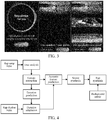
- FIG. 3 is a schematic diagram of uploading multiple images by a user from a mobile phone client.
- the user takes multiple pictures or selects multiple pictures in the mobile phone, and uploads the pictures from the mobile phone client.
- uploading images from a mobile phone client when a user clicks an "upload image” button, two optional modes appear: one is a "photographing" mode, and the other is a mode of "selecting from a mobile phone photo album". Multiple pictures may be selected and uploaded each time.
- Image scenarios are recognized, and texts are matched automatically.
- Image scenarios are recognized according to the pictures uploaded by the user.
- a scenario of each image is recognized, and a text is matched up with each image automatically.
- texts corresponding to all the images are connected.
- Text annotations are generated for the inputted images, and a success rate thereof can be maximized by training a neural image annotation model.
- Novel image descriptions can be generated.
- the following annotation may be generated: a gray-suited man waves a stick, and a black-suited man looks on him.
- the following annotation may be generated: a bus "sits" beside a person.
- This application relates to the application field of generating an AI image item description, and in particular, to a keyword-based rhyme matching method.
- the main process is as follows:
- pictures uploaded by a user are converted into texts based on an image recognition technology and an image description generating technology, and a random second sentence of lyrics is obtained through matching according to a final of the last word of the first sentence generated from an image description and an image scenario.
- rhyming lyrics are generated. Then, the rhyming lyrics are made into a song and sung through AI, thus forming a complete interaction process of uploading pictures by a user and composing lyrics and singing based on AI. Therefore, it is much more interactive and interesting.
- image descriptions are generated and obtained.
- image description information is obtained by using an AI image description generating technology.
- a description sentence is obtained for each picture.
- Chinese pinyin is obtained.
- a Pinyin table of commonly used Chinese characters is generated in advance. An index is created according to the characters and is loaded into a memory. When Pinyin of a Chinese character needs to be obtained, Pinyin can be quickly obtained within a time of O(1).
- Image description scenarios are obtained. Keywords in scenarios are obtained through matching according to texts of the image descriptions, so as to distinguish the corresponding scenarios.
- Examples are described as follows: When the scenario is scenery, there may be multiple description texts, for example, scenery-sunshine, scenery-sea, scenery-rain, scenery-flower, and scenery-grass. When the scenario is people, there may be multiple description texts, for example, people-boy, and people-girl. When the scenario is food, there may be multiple description texts, for example, food-gourmet. When scenario is selfie, there may be multiple description texts, for example, selfie-picture, selfie-avartar.
- supplementary lyrics are obtained according to the scenarios and the rhymes.
- corresponding rap scripts are generated for different rhymes of different scenarios. More optional scripts are generated for high-frequency rhymes. Then, a matching script is selected randomly according to the rhyme and the scenario.
- the finally generated rhyming lyrics may be as follows:
- the text analysis mainly includes: pronunciation generating, rhythm prediction, part-of-speech prediction, and the like.
- a linguistic feature is extracted from the result and is converted into an input vector of a neural network model.
- Phoneme-level duration prediction is performed by using a duration model. Phonemes are predicted by using the duration model, so that a better rhythm can be obtained. Rap music is different from ordinary speaking, and is rhythmic. Therefore, the duration prediction result is adjusted adaptively. Duration adaptation means automatic adjustment by using a neural network, so that each character is on the beat while the original pronunciation remains unchanged.
- a rap input refers to description texts.
- Acoustic feature prediction includes: rhythm prediction and part-of-speech prediction.
- a rap rhythm in a rap rhythm input is obtained through neural network prediction. Background music may have a relatively fast rhythm. Rap lyrics are obtained by recognizing scenarios of images to obtain description texts and designing rhymes of the description texts.
- the following further provides a related apparatus configured to implement the foregoing solution.
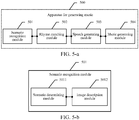
- an apparatus 500 for generating music may include: a scenario recognition module 501, a rhyme matching module 502, a speech generating module 503, and a music generating module 504, where the scenario recognition module 501 is configured to perform scenario recognition on multiple images already inputted to a terminal, and generate respective description texts matching scenarios corresponding to the multiple images; the rhyme matching module 502 is configured to perform keyword-based rhyme matching on the description text that matches the scenario corresponding to each image, and generate respective rhyming lyrics corresponding to the multiple images; the speech generating module 503 is configured to convert the respective rhyming lyrics corresponding to the multiple images into a speech; and the music generating module 504 is configured to synthesize the speech with preset background music to obtain image music.
- the scenario recognition module 501 is configured to perform scenario recognition on multiple images already inputted to a terminal, and generate respective description texts matching scenarios corresponding to the multiple images
- the rhyme matching module 502 is configured to perform keyword-based rhyme matching on the description text that matches the scenario corresponding to each image, and generate
- the scenario recognition module 501 includes:
- the rhyme matching module 502 includes:
- the lyrics generating module 5022 includes:
- the lyrics obtaining module 50224 includes:
- the multiple images are acquired by the terminal after entering a photographing mode; or the multiple images are obtained from a photo album of the terminal.
- the speech generating module 503 includes:
- Scenarios of the multiple images are recognized, description texts adaptive to the scenarios are obtained through automatic matching, and then rhymes are designed for the description texts of the scenarios.
- generated rhyming lyrics conform to music characteristics.
- the rhyming lyrics are converted into a speech.
- the rhyming lyrics are synthesized with background music, thus forming a piece of image music.
- the rhyming lyrics in the image music are generated according to the images inputted to the terminal. Therefore, the outputted image music can be closely associated with image materials provided by a user. Thus, music that matches description texts of scenarios can be automatically generated by using inputted images.
- An embodiment of this application further provides a terminal, as shown in FIG. 6 .
- the terminal may be any terminal device, including a mobile phone, a tablet computer, a personal digital assistant (PDA), a point of sales (POS), a vehicle-mounted computer, and the like.
- PDA personal digital assistant
- POS point of sales
- vehicle-mounted computer and the like.
- the terminal being a mobile phone is used as an example.
- FIG. 6 is a block diagram of a partial structure of a mobile phone related to a terminal according to an embodiment of this application.
- the mobile phone includes: a radio frequency (RF) circuit 1010, a memory 1020, an input unit 1030, a display unit 1040, a sensor 1050, an audio circuit 1060, a wireless fidelity (WiFi) module 1070, a processor 1080, a power supply 1090, and other components.
- RF radio frequency
- the components of the mobile phone are described in detail below with reference to FIG. 6 .
- the RF circuit 1010 may be configured to receive and send a signal during an information receiving and sending process or a call process. Particularly, the RF circuit 1010 receives downlink information from a base station, then delivers the downlink information the processors 1080 for processing, and sends related uplink data to the base station.
- the RF circuit 1010 includes, but is not limited to, an antenna, at least one amplifier, a transceiver, a coupler, a low noise amplifier (LNA), a duplexer, and the like. In addition, the RF circuit 1010 may also communicate with a network and another device by wireless communication.
- the wireless communication may use any communications standard or protocol, which includes, but is not limited to, a Global System for Mobile Communications (GSM), a General Packet Radio Service (GPRS), Code Division Multiple Access (CDMA), Wideband Code Division Multiple Access (WCDMA), Long Term Evolution (LTE), e-mail, Short Messaging Service (SMS), and the like.
- GSM Global System for Mobile Communications
- GPRS General Packet Radio Service
- CDMA Code Division Multiple Access
- WCDMA Wideband Code Division Multiple Access
- LTE Long Term Evolution
- SMS Short Messaging Service
- the memory 1020 may be configured to store a software program and module.
- the processor 1080 runs the software program and module stored in the memory 1020, to implement various functional applications and data processing.
- the memory 1020 may mainly include a program storage area and a data storage area.
- the program storage area may store an operating system, an application program required by at least one function (such as a sound playback function and an image display function), and the like.
- the data storage area may store data (such as audio data and an address book) created according to use of the mobile phone, and the like.
- the memory 1020 may include a high speed random access memory, and may also include a nonvolatile memory, such as at least one magnetic disk storage device, a flash memory, or another volatile solid storage device.
- the touch detection apparatus detects a touch position of the user, detects a signal generated by the touch operation, and transfers the signal to the touch controller.
- the touch controller receives the touch information from the touch detection apparatus, converts the touch information into touch point coordinates, and sends the touch point coordinates to the processor 1080. Moreover, the touch controller can receive and execute a command sent from the processor 1080.
- the touch panel 1031 may be implemented by using various types, such as a resistive type, a capacitance type, an infrared type, and a surface acoustic wave type.
- the input unit 1030 may further include the another input device 1032.
- the another input device 1032 may include, but is not limited to, one or more of a physical keyboard, a functional key (such as a volume control key or a switch key), a track ball, a mouse, and a joystick.
- the display unit 1040 may be configured to display information input by the user or information provided for the user, and various menus of the mobile phone.
- the display unit 1040 may include a display panel 1041.
- the display panel 1041 may be configured by using a liquid crystal display (LCD), an organic light-emitting diode (OLED), or the like.
- the touch panel 1031 may cover the display panel 1041. After detecting a touch operation on or near the touch panel 1031, the touch panel 1031 transfers the touch operation to the processor 1080, so as to determine a type of a touch event. Then, the processor 1080 provides corresponding visual output on the display panel 1041 according to the type of the touch event.
- the touch panel 1031 and the display panel 1041 are used as two separate parts to implement input and output functions of the mobile phone, in some embodiments, the touch panel 1031 and the display panel 1041 may be integrated to implement the input and output functions of the mobile phone.
- a gravity acceleration sensor may detect magnitude of accelerations at various directions (which generally include three axes), may detect magnitude and a direction of the gravity when static, and may be configured to identify an application of a mobile phone attitude (such as switchover between horizontal and vertical screens, a related game, and attitude calibration of a magnetometer), a function related to vibration identification (such as a pedometer and a knock).
- Other sensors such as a gyroscope, a barometer, a hygrometer, a thermometer, and an infrared sensor, which may be configured in the mobile phone are not further described herein.
- WiFi belongs to a short distance wireless transmission technology.
- the mobile phone may help, by using the WiFi module 1070, the user to receive and send an e-mail, browse a webpage, access stream media, and the like, which provides wireless broadband Internet access for the user.
- FIG. 6 shows the WiFi module 1070, it may be understood that, the WiFi module is not a necessary component of the mobile phone, and can be omitted as required without changing the scope of the essence of the present invention.
- the processor 1080 is a control center of the mobile phone, and connects to various parts of the mobile phone by using various interfaces and lines. By running or executing the software program and/or module stored in the memory 1020, and invoking data stored in the memory 1020, the processor 1080 performs various functions and data processing of the mobile phone, thereby performing overall monitoring on the mobile phone.
- the processor 1080 may include one or more processing units.
- the processor 1080 may integrate an application processor and a modem processor.
- the application processor mainly processes an operating system, a user interface, an application program, and the like.
- the modem processor mainly processes wireless communication. It may be understood that, the foregoing modem processor may also not be integrated into the processor 1080.
- the mobile phone may further include a camera, a Bluetooth module, and the like, which are not further described herein.
- the processor 1080 included in the terminal further controls the foregoing method process performed by the terminal.
- an embodiment of this application further provides a storage medium.
- the storage medium is configured to store program code.
- the program code is used for performing the method for generating method provided in the foregoing embodiment.
- An embodiment of this application further provides a computer program product.
- the computer program product when run on a terminal, causes the terminal to perform method for generating method provided in the foregoing embodiment.
- this application may be implemented by software in addition to necessary universal hardware, or by dedicated hardware including a dedicated integrated circuit, a dedicated CPU, a dedicated memory, and dedicated parts and components.
- dedicated hardware including a dedicated integrated circuit, a dedicated CPU, a dedicated memory, and dedicated parts and components.
- all functions performed by a computer program can be easily implemented by corresponding hardware.
- specific hardware structures for implementing the same function are diverse, which may be, for example, an analog circuit, a digital circuit, and a dedicated circuit.
- a software program is a preferred implementation under more circumstances. Based on such an understanding, the essence of the technical solutions of this application or the part that makes contributions to the related technology can be embodied as a software product.
- the computer software product may be stored in a readable storage medium such as a computer floppy disk, a USB flash disk, a removable hard disk, a read-only memory (ROM), a random access memory (RAM), a magnetic disk, or an optical disc.
- the storage medium includes several instructions instructing a computer device (which may be a personal computer, a server, a network device, or the like) to perform the method in the embodiments of this application.
Landscapes
- Engineering & Computer Science (AREA)
- Physics & Mathematics (AREA)
- Acoustics & Sound (AREA)
- Multimedia (AREA)
- Computational Linguistics (AREA)
- Health & Medical Sciences (AREA)
- Audiology, Speech & Language Pathology (AREA)
- Theoretical Computer Science (AREA)
- Human Computer Interaction (AREA)
- Artificial Intelligence (AREA)
- General Health & Medical Sciences (AREA)
- General Engineering & Computer Science (AREA)
- General Physics & Mathematics (AREA)
- Machine Translation (AREA)
- Processing Or Creating Images (AREA)
- Studio Circuits (AREA)
Abstract
Description
- This application claims priority to China Patent Application No.
201710920219.7 - This application relates to the field of computer technologies, and in particular, to generating of music.
- Music plays a significant role in people's life, and can be classified into different music genres according to different rhythms. Rap music or hip hop is a music genre in which lyrics are chanted (rapped) to the accompaniment in a rhythmic way. Accompaniments in use are mostly generated by means of music sampling. Currently, music is mainly created by people manually. For example, rap music may be compiled by rappers. However, people without music foundations are incapable of creating music.
- To implement no-threshold music creation and generate music to be enjoyed by ordinary users, there are the following two methods for generating music in the related technology: the first method is to convert a sound of a video into music, and the second method is to convert a speech recorded by a user into music. In the first method of generating music from a sound of a video, video data needs to be processed to extract sound data carried in the video, and then background music is added to the sound, thereby generating music to be enjoyed by a user. In the second method of generating music by using a speech, video data does not need to be processed, and music to be enjoyed by a user can be generated merely by synthesizing the speech with background music.
- The foregoing technical solution for generating music can only add background music to a sound or speed of a video. In this music generating method, audio features of the sound or speech are not taken into consideration. Therefore, the generated music cannot be closely associated with music materials provided by a user. As a result, the generated music cannot match the music materials inputted by the user.
- Embodiments of this application provide a method and an apparatus for generating music, which are configured to automatically generate music that matches description texts of scenarios.
- To resolve the foregoing technical problem, the embodiments of this application provide the following technical solutions:
- According to a first aspect, the embodiments of this application provide a method for generating music, including:
- performing scenario recognition on multiple images already inputted to a terminal, and generating respective description texts matching scenarios corresponding to the multiple images;
- performing keyword-based rhyme matching on the description text that matches the scenario corresponding to each image, and generating respective rhyming lyrics corresponding to the multiple images;
- converting the respective rhyming lyrics corresponding to the multiple images into a speech; and
- synthesizing the speech with preset background music to obtain image music.
- According to a second aspect, the embodiments of this application provide an apparatus for generating music, the apparatus for generating music including:
- a scenario recognition module, configured to perform scenario recognition on multiple images already inputted to a terminal, and generate respective description texts matching scenarios corresponding to the multiple images;
- a rhyme matching module, configured to perform keyword-based rhyme matching on the description text that matches the scenario corresponding to each image, and generate respective rhyming lyrics corresponding to the multiple images;
- a speech generating module, configured to convert the respective rhyming lyrics corresponding to the multiple images into a speech; and
- a music generating module, configured to synthesize the speech with preset background music to obtain image music.
- According to a third aspect, the embodiments of this application further provide a terminal, the terminal including:
- a processor, a communications interface, a memory, and a communications bus;
- the processor, the communications interface, and the memory communicating with each other through the communications bus, and the communications interface being an interface of a communications module;
- the memory being configured to store program code and transmit the program code to the processor; and
- the processor being configured to invoke instructions of the program code in the memory to perform the method according to the first aspect.
- According to a fourth aspect, the embodiments of this application further provide a storage medium, the storage medium being configured to store program code, and the program code being used for performing the method according to the first aspect.
- According to a fifth aspect, the embodiments of this application further provide a computer program product including instructions, the computer program product, when run on a computer, causing the computer to perform the method according to the first aspect.
- It can be learned from the foregoing technical solutions that, the embodiments of this application have the following advantages:
- In the embodiments of this application, first of all, scenario recognition is performed on multiple images already inputted to a terminal, and respective description texts matching scenarios corresponding to the multiple images are generated. Then, keyword-based rhyme matching is performed on the description text matching the scenario corresponding to each image, and respective rhyming lyrics corresponding to the multiple images are generated. Next, the respective rhyming lyrics corresponding to the multiple images are converted into a speech. Finally, the speech is synthesized with preset background music to generate image music. In the embodiments of this application, image music can be generated as long as a terminal provides multiple images. Scenarios of the multiple images are recognized, description texts adaptive to the scenarios are obtained through automatic matching, and then rhymes are designed for the description texts of the scenarios. In this way, generated rhyming lyrics conform to music characteristics. Further, the rhyming lyrics are converted into a speech. Finally, the rhyming lyrics are synthesized with background music, thus forming a piece of image music. The rhyming lyrics in the image music are generated according to the images inputted to the terminal. Therefore, the outputted image music can be closely associated with image materials provided by a user. Thus, music that matches description texts of scenarios can be automatically generated by using inputted images.
- To describe the technical solutions in the embodiments of this application more clearly, the following briefly introduces the accompanying drawings required for describing the embodiments. Apparently, the accompanying drawings in the following description merely show some embodiments of this application, and a person of ordinary skill in the art may still derive other drawings from these accompanying drawings without creative efforts.
-
FIG. 1 is a schematic block flowchart of a method for generating music according to an embodiment of this application; -
FIG. 2 is a schematic flowchart of generating rap music according to an embodiment of this application; -
FIG. 3 is a schematic diagram of uploading multiple images at a client according to an embodiment of this application; -
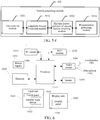
FIG. 4 is a schematic flowchart of converting rhyming lyrics into a speech according to an embodiment of this application; -
FIG. 5-a is a schematic structural diagram of composition of an apparatus for generating music according to an embodiment of this application; -
FIG. 5-b is a schematic structural diagram of composition of a scenario recognition module according to an embodiment of this application; -
FIG. 5-c is a schematic structural diagram of composition of a rhyme matching module according to an embodiment of this application; -
FIG. 5-d is a schematic structural diagram of composition of a lyrics generating module according to an embodiment of this application; -
FIG. 5-e is a schematic structural diagram of composition of a lyrics obtaining module according to an embodiment of this application; -
FIG. 5-f is a schematic structural diagram of composition of a speech generating module according to an embodiment of this application; and -
FIG. 6 is a schematic structural diagram of composition of a terminal to which a method for generating music is applied according to an embodiment of this application. - Embodiments of this application provide a method and an apparatus for generating music, which are configured to automatically generate music that matches description texts of scenarios by using inputted images.
- To make the objectives, features, and advantages of this application clearer and easier to understand, the following clearly and completely describes the technical solutions in the embodiments of this application with reference to the accompanying drawings in the embodiments of this application. Apparently, the embodiments described in the following are merely some, rather than all, of the embodiments of this application. All other embodiments obtained by a person of skilled in the art based on the embodiments of this application without creative efforts shall fall within the protection scope of this application.
- The terms "include", "have", and any variation thereof in the specification, claims, and accompanying drawings in this application are intended to cover a non-exclusive inclusion. Therefore, in the context of a process, a method, a system, a product or a device that includes a series of units, the process, method, system, product or device is not necessarily limited to the units clearly listed, but may include other units not specified expressly or inherent to the process, method, system, product or device.
- The method and apparatus for generating music are described separately in the following.
- The embodiments of this application may be applied to a terminal. In the embodiments of this application, the terminal may be a personal computer (PC), a mobile terminal, a tablet computer, or the like capable of generating music.
- An embodiment of a method for generating music according to this application may be specifically configured to generate, based on multiple images inputted by a user, music that matches description texts of the images. Referring to
FIG. 1 , a method for generating music provided in an embodiment of this application includes the following steps: - 101: Perform scenario recognition on multiple images already inputted to a terminal, and generate respective description texts matching scenarios corresponding to the multiple images.
- In this embodiment of this application, a user in a terminal may input multiple images for generating image music. The image music described in this embodiment of this application refers to rhythmic music adaptive the multiple images inputted by the user. The multiple images inputted in the terminal may be stored by the user in the terminal in advance, or may be acquired by the user in real time by using a camera of the terminal. For example, the multiple images may be acquired by the terminal after entering a photographing mode; or the multiple images may be obtained from a photo album of the terminal. Implementations of the multiple images already inputted to the terminal are not limited.
- In this embodiment of this application, scenario recognition may be performed on the multiple images already inputted to the terminal, so as to recognize a scenario corresponding to each image. For example, classification of image scenarios may be implemented in many manners. For example, there are mainly four types of scenarios: scenery, people, food, and selfie. Image scenario recognition is performed according to pictures uploaded by a user. A scenario of each image is recognized, and texts that can describe scenarios corresponding to different images are obtained for each image through automatic matching. For example, scenario recognition is performed on the multiple images. For example, there are blue sky and birds on an image. In this case, a description text "" (Chinese pinyin: xiao3 niao3 zai4 lan2 tian1 shang4 ao2 xiang2, meaning birds are flying in the blue sky) is automatically provided after scenario recognition.

- In some embodiments of this application,
step 101 of performing scenario recognition on multiple images already inputted to the terminal, and generating respective description texts matching scenarios corresponding to the multiple images includes the following steps: - A1: performing scenario recognition on the multiple images according to a deep learning neural network model to obtain recognized image features, and determining the respective scenarios corresponding to the multiple images according to the image features; and
- A2: generating image descriptions according to the recognized image features and the respective scenarios corresponding to the multiple images, to obtain the respective description texts matching the scenarios corresponding to the multiple images.
- In this embodiment of this application, scenario recognition may be performed on the multiple images by using a deep learning neural network model. The deep learning neural network model may also be referred to as a neural image annotation model. Image features may be recognized by using the deep learning neural network model, and the scenarios corresponding to the multiple images are determined according to the image features. Image recognition refers to a technology of processing, analyzing, and understanding images by using a computer, so as to recognize targets and objects of various different modes. Next, image descriptions are generated according to the recognized image features and the scenarios corresponding to the multiple images, to obtain the respective description texts matching the scenarios corresponding to the multiple images. An image scenario is recognized by using a deep learning neural network, and a related description text is automatically matched up with the scenario. Generating of image description means extracting, based on computer vision, an image feature by using a scenario and object class information as prior knowledge, and synergistically generating an image description sentence integrating the scenario and the object class.
- 102: Perform keyword-based rhyme matching on the description text that matches the scenario corresponding to each image, and generate respective rhyming lyrics corresponding to the multiple images.
- In this embodiment of this application, the description text matching the scenario corresponding to each image may be generated through scenario recognition. The description text matching the scenario corresponding to each image is a basis for further generating lyrics. Rhymes of the text may be designed by using the description text matching the scenario of each image. Rhyming lyrics may be generated for each image. The rhyming lyrics refer to a verse that rhymes. The rhyming lyrics corresponding to each image may be a line of lyrics, or two or more lines of lyrics.
- In some embodiments of this application,
step 102 of performing keyword-based rhyme matching on the description text that matches the scenario corresponding to each image, and generating respective rhyming lyrics corresponding to the multiple images includes: - B1: obtaining, from the description text matching the scenario corresponding to each image, Chinese pinyin and a rhyme corresponding to a last word in the description text; and
- B2: generating the rhyming lyrics corresponding to the multiple images according to the Chinese pinyin and the rhymes corresponding to the last words in the description texts, where the rhyming lyrics corresponding to each image have the same rhyme as the last word in the description text matching the scenario corresponding to the image.
- In the description text matching the scenario corresponding to each image, Chinese pinyin and a rhyme corresponding to a last word in the description text may be obtained. In Chinese characters, there are less than 8000 commonly used Chinese characters. Therefore, a Pinyin table of commonly used Chinese characters may be generated in advance. An index is created according to the characters and is loaded into a memory. Pinyin of a Chinese character may be obtained as required. By searching a final table, it can be learned that there are 35 finals. All the finals may be put into an array, and sorted in descending order of final lengths. Then, a character string is sequentially compared with the finals, to obtain a rhyme corresponding to the last word. After the Chinese pinyin and the rhymes corresponding to the last words in the description texts are obtained, rhyming lyrics corresponding to the multiple images are generated based on the Chinese pinyin and rhymes corresponding to the last words in the description texts. The rhyming lyrics corresponding to each image have the same rhyme as the last word in the description text matching the scenario corresponding to the image. Therefore, the rhyme of the rhyming lyrics that can be generated may come from the rhyme of the last word in the description text. The design of the same rhyme can ensure that the generated rhyming lyrics corresponding to the multiple images have harmonious and uniform rhymes and sound catchier.
- Further, in some embodiments of this application, step B2 of generating the rhyming lyrics corresponding to the multiple images according to the Chinese pinyin and the rhymes corresponding to the last words in the description texts includes:
- B21: arranging all finals in the Chinese pinyin corresponding to the last words in the description texts;
- B22: determining a final distribution rule according to all the finals arranged;
- B23: determining the rhymes corresponding to the last words in the description texts from finals meeting the final distribution rule; and
- B24: obtaining the rhyming lyrics corresponding to the multiple images from pre-generated lyrics patterns according to the scenarios corresponding to the multiple images and the rhymes corresponding to the scenarios, lyrics texts corresponding to multiple scenarios and multiple rhymes being preconfigured in the lyrics patterns.
- A description text is matched up with the scenario corresponding to each image in the multiple images. The description texts each include a last word. Therefore, all possible finals may be arranged according to the Chinese pinyin of the multiple last words. For each final, different description text sentences corresponding to different scenarios are generated in advance as a lyrics pattern, a final distribution rule of last words in description texts is found by using data samples of multiple description texts. Finals that are distributed most frequently are found. The amount of data for such finals is increased, thereby determining which final is used as the rhyme. A lyrics pattern is searched for based on the rhyme selected according to the final distribution rule, and rhyming lyrics corresponding to the multiple images may be obtained by using the lyrics pattern.
- An example is described as follows. In an example of generating rhyming lyrics of rap music, corresponding rap scripts may be generated as lyrics patterns for different rhymes of different scenarios, and more optional scripts are generated for a high-frequency rhyme. Then, a matching script is randomly selected according to a rhyme and a scenario, to generate rhyming lyrics of rap music. The same rap script is generated for the same rhyme. When some rhymes appear frequently, more lyrics patterns may be generated for the high-frequency rhymes, so that rhyming lyrics can be generated from multiple lyrics patterns.
- Further, in some embodiments of this application, step B24 of obtaining the rhyming lyrics corresponding to the multiple images from pre-generated lyrics patterns according to the scenarios corresponding to the multiple images and the rhymes corresponding to the scenarios includes:
- B241: generating image description lyrics according to the description text matching the scenario corresponding to each image;
- B242: obtaining supplementary lyrics from the pre-generated lyrics patterns according to the scenarios corresponding to the multiple images and the rhymes corresponding to the scenarios; and
- B243: synthesizing the image description lyrics with the supplementary lyrics, to obtain the rhyming lyrics.
- Specifically, in the foregoing embodiment of this application, the description text matching the scenario corresponding to each image may be used as image description lyrics. The image description lyrics refer to lyrics from the description text. For example, the description text may be "" (Chinese pinyin: xiao3 niao3 zai4 lan2 tian1 shang4 ao2 xiang2, meaning birds are flying in the blue sky). The description text may be used as image description lyrics. In step B242, supplementary lyrics may further be obtained. The supplementary lyrics and the image description lyrics may be generated simultaneously. The supplementary lyrics refer to lyrics obtained from a lyrics pattern. The supplementary lyrics and the image description lyrics may have the same rhyme. Finally, the image description lyrics and the supplementary lyrics may be synthesized to obtain the rhyming lyrics. For example, the description text may be supplemented in a rhyming manner. For example, if the image description lyrics are "
 " (Chinese pinyin: xiao3 niao3 zai4 lan2 tian1 shang4 ao2 xiang2, meaning birds are flying in the blue sky), supplementary lyrics having the same rhyme as the image lyrics may be found from the lyrics patterns. The supplementary lyrics may be "
 " (Chinese pinyin: cha4 bu5 duol de5 hao3, cha4 bu5 duol de5 zan4, meaning they are equally pretty). Therefore, the finally generated rhyming lyrics in this embodiment of this application may be:
 ;
;
 ,
, (Chinese pinyin: xiao3 niao3 zai4 lan2 tian1 shang4 ao2 xiang2; cha4 bu5 duol de5 hao3, cha4 bu5 duol de5 zan4, meaning birds are flying in the blue sky, and they are equally pretty).
- Further, in some embodiments of this application, step B242 of obtaining supplementary lyrics from the pre-generated lyrics patterns according to the scenarios corresponding to the multiple images and the rhymes corresponding to the scenarios includes:
- obtaining a double-rhyme according to the image description lyrics; and
- obtaining supplementary lyrics from the pre-generated lyrics patterns according to the scenarios corresponding to the multiple images and the double-rhyme corresponding to the scenarios.
- In this embodiment of this application, when rhymes are obtained according to the image description lyrics, a double-rhyme may further be determined. A double-rhyme is a rhyme with two rhyming characters. The supplementary lyrics can be obtained from the lyrics patterns based on the scenarios and the double-rhyme. The supplementary lyrics are generated in a double-rhyme manner, so that the supplementary lyrics and the image description lyrics have the same double-rhyme.
- 103: Convert the respective rhyming lyrics corresponding to the multiple images into a speech.
- In this embodiment of this application, after the rhyming lyrics corresponding to the multiple images are obtained, the rhyming lyrics may be converted from a text into a speech. Specifically, all the rhyming lyrics obtained in
step 102 may be converted into a speech by means of txt-to-speech (TTS) conversion. - In some embodiments of this application,
step 103 of multiple images converting the respective rhyming lyrics corresponding to the multiple images into a speech includes: - C1: performing text analysis on the respective rhyming lyrics corresponding to the multiple images, to obtain a text analysis result;
- C2: extracting a linguistic feature from the text analysis result;
- C3: performing phoneme-level duration prediction and adaptive duration adjustment according to the linguistic feature, to obtain a rhythm feature and a part-of-speech feature corresponding to the rhyming lyrics; and
- C4: generating pronunciations by using a neural network model based on the linguistic feature as well as the rhythm feature and the part-of-speech feature that match the rhyming lyrics, to obtain the speech.
- For the respective rhyming lyrics corresponding to each image, text analysis may be performed first, to provide information for subsequent feature extraction. The obtained text analysis result may be mainly used for generating pronunciations, predicting rhythms, predicting parts of speech, and the like. After the text analysis result is obtained, a linguistic feature is extracted from the result and is converted into an input vector of a neural network model. Next, phoneme-level duration prediction and adaptive duration adjustment may be performed by using a duration model. In this embodiment of this application, the generated rhyming lyrics are different from ordinary speaking, and are rhythmic. Therefore, the duration prediction result is adjusted adaptively, so that each character is on the beat while the original pronunciation remains unchanged. Finally, based on the linguistic feature as well as the rhythm feature and the part-of-speech feature that match the rhyming lyrics, pronunciations are generated by using the neural network model, to obtain the speech.
- 104: Synthesize the speech with preset background music to obtain image music.
- In this embodiment of this application, after the rhyming lyrics are converted into the speech through
step 103, the speech may include content of the rhyming lyrics. Then, the speech is combined with background music to generate final image music. The image music is obtained by synthesizing the rhyming lyrics compiled according to the multiple images inputted by the user with the background music. Therefore, when the image music is played, the user can hear a piece of rhythmic music with lyrics. For example, after rap rhyming lyrics are compiled according to multiple images, the rap rhyming lyrics are synthesized with rap background music, thus completing text-to-rap (TTR) conversion. - It can be learned from the illustration of this application in the foregoing embodiment that, first of all, scenario recognition is performed on multiple images already inputted to a terminal, and respective description texts matching scenarios corresponding to the multiple images are generated. Then, keyword-based rhyme matching is performed on the description text matching the scenario corresponding to each image, and respective rhyming lyrics corresponding to the multiple images are generated. Next, the respective rhyming lyrics corresponding to the multiple images are converted into a speech. Finally, the speech is synthesized with preset background music to generate image music. In this embodiment of this application, image music can be generated as long as a terminal provides multiple images. Scenarios of the multiple images are recognized, description texts adaptive to the scenarios are obtained through automatic matching, and then rhymes are designed for the description texts of the scenarios. In this way, generated rhyming lyrics conform to music characteristics. Further, the rhyming lyrics are converted into a speech. Finally, the rhyming lyrics are synthesized with background music, thus forming a piece of image music. The rhyming lyrics in the image music are generated according to the images inputted to the terminal. Therefore, the outputted image music can be closely associated with image materials provided by a user. Thus, music that matches description texts of scenarios can be automatically generated by using inputted images.
- To facilitate better understanding and implementation of the foregoing solution in the embodiments of this application, a specific description is made below by using a corresponding application scenario as an example.
- In this embodiment of this application, a song may be composed through Artificial Intelligence (AI), which is a prospective attempt and provides reference value for the application of AI in a larger scenario. In the following, generating of rap music is used as an example. TTR means conversion from a text into rap music, which mainly includes recognizing scenarios of multiple inputted images, then providing a description text conforming to each of the scenarios, designing rhymes of subtitles according to image content-based recognition, and finally converting the description texts for the scenarios into a speech through TTS. Subsequently, background music with a specific rhythm is added. The background music is synthesized with the text speech seamlessly to complete a piece of rap music. Finally, a piece of beautiful music with a rap characteristic is generated. In TTR, a scenario of any inputted image is recognized and a description text is provided. Through a series of processing, the description is converted into rap music. Composing songs by using AI is a prospective attempt and provides reference value for the application of AI in a larger scenario.
- This embodiment of this application mainly includes recognizing scenarios of multiple inputted images, and finally combining the multiple inputted images into a music video (MV) accompanied with rap music. A user inputs multiple images from an applet on a mobile phone client. After the multiple images are uploaded, image scenarios are recognized by using a deep learning neural network model, and related description texts of the scenarios are obtained through automatic matching. Then, rhymes of the related description texts are designed through image content recognition. Finally, the rhyming texts are converted into a speech through a TTS technology.
-
FIG. 2 is a schematic flowchart of generating rap music according to an embodiment of this application. This system mainly includes four parts: - 1. A user uploads or selects multiple images from a mobile phone client. The images inputted by the user are obtained.
- 2. Recognize image scenarios. Scenarios of the multiple inputted images are recognized, and related description texts are provided.
- 3. Design rhymes. Rhymes of the related description texts are designed.
- 4. Convert texts into a speech. The rhyming description texts are converted into a speech.
- When a user submits multiple images on a mobile phone client, the multiple inputted images are recognized. Then, scenarios of the inputted images are recognized, and description texts adaptive to the scenarios are obtained through automatic matching. Next, rhymes are designed and supplemented according to the rhymes of the description texts. This is an AI algorithm. A description text is directly provided according to an inputted picture, that is, a scenario of the picture is determined directly. For example, there are birds flying in the blue sky, or someone is on the beach. Further, the texts are converted into a speech through TTS, and a piece of rap music is generated through subsequent processing.
- Next, each part is separately described by way of example.
FIG. 3 is a schematic diagram of uploading multiple images by a user from a mobile phone client. The user takes multiple pictures or selects multiple pictures in the mobile phone, and uploads the pictures from the mobile phone client. In an example of uploading images from a mobile phone client, when a user clicks an "upload image" button, two optional modes appear: one is a "photographing" mode, and the other is a mode of "selecting from a mobile phone photo album". Multiple pictures may be selected and uploaded each time. - Next, image scenarios are recognized, and texts are matched automatically. Image scenarios are recognized according to the pictures uploaded by the user. A scenario of each image is recognized, and a text is matched up with each image automatically. Then, texts corresponding to all the images are connected. Text annotations are generated for the inputted images, and a success rate thereof can be maximized by training a neural image annotation model. Novel image descriptions can be generated. For example, the following annotation may be generated: a gray-suited man waves a stick, and a black-suited man looks on him. For another example, the following annotation may be generated: a bus "sits" beside a person.
- Then, text rhyme design method provided in this embodiment of this application is illustrated. This application relates to the application field of generating an AI image item description, and in particular, to a keyword-based rhyme matching method. The main process is as follows:
- 1. Obtain text information generated from image descriptions, to obtain Chinese pinyin corresponding to Chinese characters, and rhymes.
- 2. Arrange all possible finals according to the Chinese pinyin, generate multiple description text sentences corresponding to different scenarios for each final in advance, implement double rhyming in the same sentence, and supplement the second sentence of lyrics in this manner. The pre-generating manner is as follows: listing all possible finals in Chinese pinyin. Rhyming lyrics corresponding to four classes of scenarios, that is, "scenery", "people", "selfie", and "food", are generated for each final.
- 3. Find a final distribution rule of description texts through data samples, find finals that are distributed most frequently, and increase the amount of data for such finals.
- 4. Generate and capture scenarios according to the image descriptions and the text descriptions, matching up rhyming materials with the scenarios according to finals of characters generated from the text descriptions.
- 5. Finally, technically present a complete composition with rhyming lyrics.
- In this technical solution, pictures uploaded by a user are converted into texts based on an image recognition technology and an image description generating technology, and a random second sentence of lyrics is obtained through matching according to a final of the last word of the first sentence generated from an image description and an image scenario. Finally, rhyming lyrics are generated. Then, the rhyming lyrics are made into a song and sung through AI, thus forming a complete interaction process of uploading pictures by a user and composing lyrics and singing based on AI. Therefore, it is much more interactive and interesting.
- First of all, image descriptions are generated and obtained. According to photos uploaded by a user, image description information is obtained by using an AI image description generating technology. A description sentence is obtained for each picture.
- Then, Chinese pinyin is obtained. There are less than 8000 Chinese characters. A Pinyin table of commonly used Chinese characters is generated in advance. An index is created according to the characters and is loaded into a memory. When Pinyin of a Chinese character needs to be obtained, Pinyin can be quickly obtained within a time of O(1).
- An example is described as follows:
- a1,
 a1,
a1, a1,
a1, a1, a1, a1,
 a2,
a2, a2,
a2, a2,
a2, a3
a3

- a3, a4,
 a4,
a4, a5,
a5, a5,
a5, a5,
a5, ai1,
ai1, ai1,
ai1, ai1,
ai1, ai1,
ai1, zun1,
zun1, zun1,
zun1, zun1,
zun1, zun1,
zun1, zun3,
zun3, zuo1,
zuo1, zuo1,
zuo1, zuo2,
zuo2, zuo2,
zuo2, zuo2,
zuo2, zuo2,
zuo2, zuo3,
zuo3, zuo3,
zuo3, zuo3,
zuo3, zuo4,
zuo4, zuo4,
zuo4, zuo4,
zuo4, zuo4,
zuo4, zuo4,
zuo4, zuo4,
zuo4, zuo4,
zuo4, zuo4,
zuo4, zuo4,
zuo4, zuo4,
zuo4, zuo4,
zuo4, zuo4.
zuo4.
- Next, rhymes are obtained. It can be learned by searching the final table that, there are 35 finals. Using the Chinese character "" (Pinyin: bian4) as an example, a three-letter final includes a compound final and a single final. For example, ian includes a final i and a final an. Therefore, the finals are obtained in the following sequence: three-letter final, compound final, and single final. In an implementation, all finals are put into an array and are sorted in descending order of final lengths. Then, a character string is sequentially compared with the finals.

- Image description scenarios are obtained. Keywords in scenarios are obtained through matching according to texts of the image descriptions, so as to distinguish the corresponding scenarios. Currently, there are mainly four classes of scenarios: scenery, people, food, and selfie. The following are some of corresponding keywords.
- Examples are described as follows: When the scenario is scenery, there may be multiple description texts, for example, scenery-sunshine, scenery-sea, scenery-rain, scenery-flower, and scenery-grass. When the scenario is people, there may be multiple description texts, for example, people-boy, and people-girl. When the scenario is food, there may be multiple description texts, for example, food-gourmet. When scenario is selfie, there may be multiple description texts, for example, selfie-picture, selfie-avartar.
- Then, supplementary lyrics are obtained according to the scenarios and the rhymes. First of all, corresponding rap scripts are generated for different rhymes of different scenarios. More optional scripts are generated for high-frequency rhymes. Then, a matching script is selected randomly according to the rhyme and the scenario.
- Examples are described as follows:
- a scenery ,
 (Chinese Pinyin: cha4 bu5 duol de5 hua4, you3 cha4 bu5 duol de5 qian1 gua4, meaning: almost the same word expressing almost the same care)
- a people ,
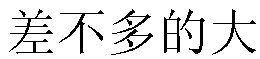 (Chinese Pinyin: cha4 bu5 duol de5 da4, you3 cha4 bu5 duol de5 xian4 sha4, meaning: almost the same size causing almost the same envy)
- a food ,
 (Chinese Pinyin: cha4 bu5 duol de5 zha4, you3 cha4 bu5 duol de5 huo3 la4, meaning: fried in almost the same way, almost equally spicy)
- ia gourmet ,
 (Chinese Pinyin: cha4 bu5 duol de5 xia1, you3 cha4 bu5 duol de5 jing1 xia4, meaning: almost the same shrimp, almost the same shock)
- ia people ,
 (Chinese Pinyin: cha4 bu5 duol de5 rong2 qia4, you3 cha4 bu5 duol de5 wo3 men5 lia3, meaning: we two are getting along well with each other)
- ia food ,
 (Chinese Pinyin: cha4 bu5 duol de5 jia1, you3 cha4 bu5 duol de5 wan3 xia2, meaning: our homes are similar, and we enjoy almost the same sunset)
- ua scenery ,
 (Chinese Pinyin: cha4 bu5 duol de5 ye3 hua1, you3 cha4 bu5 duol de5 mei3 ru2 hua4, meaning: similar wild flowers make similar beautiful scenery)
- ua people ,
 (Chinese Pinyin: cha4 bu5 duol de5 hua4, you3 cha4 bu5 duol de5 bal gua4, meaning: similar wild words make similar gossips)
- ce general ,
 (Chinese Pinyin: cha4 bu5 duol de5 shi1 luo4, you3 cha4 bu5 duol de5 zai4 bian1 ce4, meaning: similar disappointments spur us all)
- che scenery ,
 (Chinese Pinyin: cha4 bu5 duol de5 he2, you3 cha4 bu5 duol de5 qing1 che4, meaning: similar rivers look equally clear)
- ge gourmet ,
 (Chinese Pinyin: cha4 bu5 duol de5 chan2, you3 cha4 bu5 duol de5 ru3 ge1, meaning: we both fond of roast pigeons)
- re scenery ,
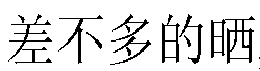 (Chinese Pinyin: cha4 bu5 duol de5 shai4, you3 cha4 bu5 duol de5 yan2 re4, meaning: almost the same burning sunlight gives us almost the same heat)
- te people ,
 (Chinese Pinyin: cha4 bu5 duol de5 biao3 bai2, you3 cha4 bu5 duol de5 tan3 te4, meaning: similar confessions, and similar nervousness)
- ye general ,
 (Chinese Pinyin: cha4 bu5 duol de5 shen1 ye4, shi4 cha4 bu5 duol de5 zai4 geng3 ye4, meaning: people alike sob late at night)
- ze general ,
 (Chinese Pinyin: cha4 bu5 duol de5 ren2 sheng1, shi4 cha4 bu5 duol de5 zuo1 xuan3 ze4, meaning: almost the same life, almost the same choice)
- he scenery , (Chinese Pinyin: cha4 bu5 duol de5 he2, you3 cha4 bu5 duol de5 ge2 he2, meaning: similar rivers cause similar barriers)

- ke people ,
 (Chinese Pinyin: cha4 bu5 duol de5 ke4, you3 cha4 bu5 duol de5 kel ke4, meaning: similar customers are almost equally harsh)
- ke food ,
 (Chinese Pinyin: cha4 bu5 duol de5 he1, you3 cha4 bu5 duol de5 kou3 ke3, meaning: we drink alike because we are almost equally thirsty)
- The finally generated rhyming lyrics may be as follows:
- (Chinese Pinyin: yi1 qun2 ren2 zou3 zai4 fan2 hua2 de5 jie1 dao4 shang4, meaning: a group of people walking on the street) [image description]

- ,
 (Chinese Pinyin: cha4 bu5 duol de5 mang2, you3 cha4 bu5 duol de5 yi2 wang4, meaning: we are all busy and forget about the old days)
-
- (Chinese Pinyin: cheng2 shi4 zhong1 de5 gao1 lou2 da4 sha4, meaning: skyscrapers in the city) [image description]

- ,
 (Chinese Pinyin: cha4 bu5 duol de5 jing3, you3 cha4 bu5 duol de5 qian1 gua4, meaning: we see almost the same scenery and have almost the same care) [supplementary lyrics]
- (Chinese Pinyin: he2 peng2 you3 ju4 can1 shi2 de5 mei3 shi4 zhao4 pian1, meaning: photos of gourmet food on the party with friends) [image description]

- ,
 (Chinese Pinyin: cha4 bu5 duol de5 lian3, you3 cha4 bu5 duol de5 xiang3 nian4, meaning: looking at the similar faces, we all miss each other)
- Finally, conversion from the texts to a speech is described by way of example. As shown in
FIG. 4 , text analysis is performed on the description texts, to provide information for subsequent feature extraction. The text analysis mainly includes: pronunciation generating, rhythm prediction, part-of-speech prediction, and the like. After the text analysis result is obtained, a linguistic feature is extracted from the result and is converted into an input vector of a neural network model. Phoneme-level duration prediction is performed by using a duration model. Phonemes are predicted by using the duration model, so that a better rhythm can be obtained. Rap music is different from ordinary speaking, and is rhythmic. Therefore, the duration prediction result is adjusted adaptively. Duration adaptation means automatic adjustment by using a neural network, so that each character is on the beat while the original pronunciation remains unchanged. A rap input refers to description texts. Acoustic feature prediction includes: rhythm prediction and part-of-speech prediction. A rap rhythm in a rap rhythm input is obtained through neural network prediction. Background music may have a relatively fast rhythm. Rap lyrics are obtained by recognizing scenarios of images to obtain description texts and designing rhymes of the description texts. - For ease of description, the foregoing method embodiments are described as a series of action combinations. However, it is to be appreciated by a person skilled in the art that, this application is not limited to the described sequence of the actions, because some steps may be performed in another sequence or performed at the same time according to this application. In addition, it is also to be appreciated by a person skilled in the art that, the embodiments described in this specification all belong to exemplary embodiments, and the involved actions and modules are not necessarily mandatory to this application.
- To facilitate implementation of the foregoing solution in the embodiments of this application, the following further provides a related apparatus configured to implement the foregoing solution.
- As shown in
FIG. 5-a , anapparatus 500 for generating music provided in an embodiment of this application may include: ascenario recognition module 501, arhyme matching module 502, aspeech generating module 503, and amusic generating module 504, where
thescenario recognition module 501 is configured to perform scenario recognition on multiple images already inputted to a terminal, and generate respective description texts matching scenarios corresponding to the multiple images;
therhyme matching module 502 is configured to perform keyword-based rhyme matching on the description text that matches the scenario corresponding to each image, and generate respective rhyming lyrics corresponding to the multiple images;
thespeech generating module 503 is configured to convert the respective rhyming lyrics corresponding to the multiple images into a speech; and
themusic generating module 504 is configured to synthesize the speech with preset background music to obtain image music. - In some embodiments of this application, as shown in
FIG. 5-b , thescenario recognition module 501 includes: - a
scenario determining module 5011, configured to perform scenario recognition on the multiple images according to a deep learning neural network model to obtain recognized image features, and determine the respective scenarios corresponding to the multiple images according to the image features; and - an
image description module 5012, configured to generate image descriptions according to the recognized image features and the respective scenarios corresponding to the multiple images, to obtain the respective description texts matching the scenarios corresponding to the multiple images. - In some embodiments of this application, as shown in
FIG. 5-c , therhyme matching module 502 includes: - a
rhyme obtaining module 5021, configured to obtain, from the description text matching the scenario corresponding to each image, Chinese pinyin and a rhyme corresponding to a last word in the description text; and - a
lyrics generating module 5022, configured to generate the rhyming lyrics corresponding to the multiple images according to the Chinese pinyin and the rhymes corresponding to the last words in the description texts, where the rhyming lyrics corresponding to each image have the same rhyme as the last word in the description text matching the scenario corresponding to the image. - In some embodiments of this application, as shown in
FIG. 5-d , thelyrics generating module 5022 includes: - a
final arrangement module 50221, configured to arrange all finals in the Chinese pinyin corresponding to the last words in the description texts; - a
rule determining module 50222, configured to determine a final distribution rule according to all the finals arranged; - a
rhyme determining module 50223, configured to determine the rhymes corresponding to the last words in the description texts from finals meeting the final distribution rule; and - a
lyrics obtaining module 50224, configured to obtain the rhyming lyrics corresponding to the multiple images from pre-generated lyrics patterns according to the scenarios corresponding to the multiple images and the rhymes corresponding to the scenarios, lyrics texts corresponding to multiple scenarios and multiple rhymes being preconfigured in the lyrics patterns. - In some embodiments of this application, as shown in
FIG. 5-e , thelyrics obtaining module 50224 includes: - a description
lyrics generating module 502241, configured to generate image description lyrics according to the description text matching the scenario corresponding to each image; - a supplementary
lyrics generating module 502242, configured to obtain supplementary lyrics from the pre-generated lyrics patterns according to the scenarios corresponding to the multiple images and the rhymes corresponding to the scenarios; and - a
lyrics synthesizing module 502243, configured to synthesize the image description lyrics with the supplementary lyrics, to obtain the rhyming lyrics. - In some embodiments of this application, the multiple images are acquired by the terminal after entering a photographing mode; or
the multiple images are obtained from a photo album of the terminal. - In some embodiments of this application, as shown in
FIG. 5-f , thespeech generating module 503 includes: - a
text analysis module 5031, configured to perform text analysis on the respective rhyming lyrics corresponding to the multiple images, to obtain a text analysis result; - a linguistic
feature extraction module 5032, configured to extract a linguistic feature from the text analysis result; - a rhythm feature and part-of-speech
feature obtaining module 5033, configured to perform phoneme-level duration prediction and adaptive duration adjustment according to the linguistic feature, to obtain a rhythm feature and a part-of-speech feature corresponding to the rhyming lyrics; and - a
pronunciation generating module 5034, configured to generate pronunciations by using a neural network model based on the linguistic feature as well as the rhythm feature and the part-of-speech feature that match the rhyming lyrics, to obtain the speech. - It can be learned from the illustration of this application in the foregoing embodiment that, first of all, scenario recognition is performed on multiple images already inputted to a terminal, and respective description texts matching scenarios corresponding to the multiple images are generated. Then, keyword-based rhyme matching is performed on the description text matching the scenario corresponding to each image, and respective rhyming lyrics corresponding to the multiple images are generated. Next, the respective rhyming lyrics corresponding to the multiple images are converted into a speech. Finally, the speech is synthesized with preset background music to generate image music. In this embodiment of this application, image music can be generated as long as a terminal provides multiple images. Scenarios of the multiple images are recognized, description texts adaptive to the scenarios are obtained through automatic matching, and then rhymes are designed for the description texts of the scenarios. In this way, generated rhyming lyrics conform to music characteristics. Further, the rhyming lyrics are converted into a speech. Finally, the rhyming lyrics are synthesized with background music, thus forming a piece of image music. The rhyming lyrics in the image music are generated according to the images inputted to the terminal. Therefore, the outputted image music can be closely associated with image materials provided by a user. Thus, music that matches description texts of scenarios can be automatically generated by using inputted images.
- An embodiment of this application further provides a terminal, as shown in
FIG. 6 . For ease of description, only parts related to this embodiment of this application are shown. For specific details not disclosed, refer to the method part according to the embodiments of this application. The terminal may be any terminal device, including a mobile phone, a tablet computer, a personal digital assistant (PDA), a point of sales (POS), a vehicle-mounted computer, and the like. The terminal being a mobile phone is used as an example. -
FIG. 6 is a block diagram of a partial structure of a mobile phone related to a terminal according to an embodiment of this application. Referring toFIG. 6 , the mobile phone includes: a radio frequency (RF)circuit 1010, amemory 1020, aninput unit 1030, adisplay unit 1040, asensor 1050, anaudio circuit 1060, a wireless fidelity (WiFi)module 1070, aprocessor 1080, apower supply 1090, and other components. A person skilled in the art may understand that the structure of the mobile phone shown inFIG. 6 does not limit the mobile phone, and the mobile phone may include more components or fewer components than those shown in the figure, or some components may be combined, or a different component deployment may be used. - The components of the mobile phone are described in detail below with reference to
FIG. 6 . - The
RF circuit 1010 may be configured to receive and send a signal during an information receiving and sending process or a call process. Particularly, theRF circuit 1010 receives downlink information from a base station, then delivers the downlink information theprocessors 1080 for processing, and sends related uplink data to the base station. TheRF circuit 1010 includes, but is not limited to, an antenna, at least one amplifier, a transceiver, a coupler, a low noise amplifier (LNA), a duplexer, and the like. In addition, theRF circuit 1010 may also communicate with a network and another device by wireless communication. The wireless communication may use any communications standard or protocol, which includes, but is not limited to, a Global System for Mobile Communications (GSM), a General Packet Radio Service (GPRS), Code Division Multiple Access (CDMA), Wideband Code Division Multiple Access (WCDMA), Long Term Evolution (LTE), e-mail, Short Messaging Service (SMS), and the like. - The
memory 1020 may be configured to store a software program and module. Theprocessor 1080 runs the software program and module stored in thememory 1020, to implement various functional applications and data processing. Thememory 1020 may mainly include a program storage area and a data storage area. The program storage area may store an operating system, an application program required by at least one function (such as a sound playback function and an image display function), and the like. The data storage area may store data (such as audio data and an address book) created according to use of the mobile phone, and the like. In addition, thememory 1020 may include a high speed random access memory, and may also include a nonvolatile memory, such as at least one magnetic disk storage device, a flash memory, or another volatile solid storage device. - The
input unit 1030 may be configured to receive input digit or character information, and generate a keyboard signal input related to user settings and function control of the mobile phone. Specifically, theinput unit 1030 may include atouch panel 1031 and anotherinput device 1032. Thetouch panel 1031 may also be referred to as a touch screen, and may collect a touch operation of a user on or near the touch panel (such as an operation of a user on or near thetouch panel 1031 by using any suitable object or attachment, such as a finger or a stylus), and drive a corresponding connection apparatus according to a preset program. Optionally, thetouch panel 1031 may include two parts: a touch detection apparatus and a touch controller. The touch detection apparatus detects a touch position of the user, detects a signal generated by the touch operation, and transfers the signal to the touch controller. The touch controller receives the touch information from the touch detection apparatus, converts the touch information into touch point coordinates, and sends the touch point coordinates to theprocessor 1080. Moreover, the touch controller can receive and execute a command sent from theprocessor 1080. In addition, thetouch panel 1031 may be implemented by using various types, such as a resistive type, a capacitance type, an infrared type, and a surface acoustic wave type. In addition to thetouch panel 1031, theinput unit 1030 may further include the anotherinput device 1032. Specifically, the anotherinput device 1032 may include, but is not limited to, one or more of a physical keyboard, a functional key (such as a volume control key or a switch key), a track ball, a mouse, and a joystick. - The
display unit 1040 may be configured to display information input by the user or information provided for the user, and various menus of the mobile phone. Thedisplay unit 1040 may include adisplay panel 1041. Optionally, thedisplay panel 1041 may be configured by using a liquid crystal display (LCD), an organic light-emitting diode (OLED), or the like. Further, thetouch panel 1031 may cover thedisplay panel 1041. After detecting a touch operation on or near thetouch panel 1031, thetouch panel 1031 transfers the touch operation to theprocessor 1080, so as to determine a type of a touch event. Then, theprocessor 1080 provides corresponding visual output on thedisplay panel 1041 according to the type of the touch event. Although, inFIG. 6 , thetouch panel 1031 and thedisplay panel 1041 are used as two separate parts to implement input and output functions of the mobile phone, in some embodiments, thetouch panel 1031 and thedisplay panel 1041 may be integrated to implement the input and output functions of the mobile phone. - The mobile phone may further include at least one
sensor 1050, such as an optical sensor, a motion sensor, and other sensors. Specifically, the optical sensor may include an ambient light sensor and a proximity sensor. The ambient light sensor may adjust luminance of thedisplay panel 1041 according to brightness of the ambient light. The proximity sensor may switch off thedisplay panel 1041 and/or backlight when the mobile phone is moved to the ear. As one type of motion sensor, a gravity acceleration sensor may detect magnitude of accelerations at various directions (which generally include three axes), may detect magnitude and a direction of the gravity when static, and may be configured to identify an application of a mobile phone attitude (such as switchover between horizontal and vertical screens, a related game, and attitude calibration of a magnetometer), a function related to vibration identification (such as a pedometer and a knock). Other sensors, such as a gyroscope, a barometer, a hygrometer, a thermometer, and an infrared sensor, which may be configured in the mobile phone are not further described herein. - The
audio circuit 1060, aloudspeaker 1061, and amicrophone 1062 may provide audio interfaces between the user and the mobile phone. Theaudio circuit 1060 may transmit, to theloudspeaker 1061, a received electric signal converted from received audio data. Theloudspeaker 1061 converts the electric signal into a sound signal for output. On the other hand, themicrophone 1062 converts a collected sound signal into an electric signal. Theaudio circuit 1060 receives the electric signal and converts the electric signal into audio data, and outputs the audio data to theprocessor 1080 for processing. Then, theprocessor 1080 sends the audio data to, for example, another mobile phone by using theRF circuit 1010, or outputs the audio data to thememory 1020 for further processing. - WiFi belongs to a short distance wireless transmission technology. The mobile phone may help, by using the
WiFi module 1070, the user to receive and send an e-mail, browse a webpage, access stream media, and the like, which provides wireless broadband Internet access for the user. AlthoughFIG. 6 shows theWiFi module 1070, it may be understood that, the WiFi module is not a necessary component of the mobile phone, and can be omitted as required without changing the scope of the essence of the present invention. - The
processor 1080 is a control center of the mobile phone, and connects to various parts of the mobile phone by using various interfaces and lines. By running or executing the software program and/or module stored in thememory 1020, and invoking data stored in thememory 1020, theprocessor 1080 performs various functions and data processing of the mobile phone, thereby performing overall monitoring on the mobile phone. Optionally, theprocessor 1080 may include one or more processing units. Preferably, theprocessor 1080 may integrate an application processor and a modem processor. The application processor mainly processes an operating system, a user interface, an application program, and the like. The modem processor mainly processes wireless communication. It may be understood that, the foregoing modem processor may also not be integrated into theprocessor 1080. - The mobile phone further includes the power supply 1090 (such as a battery) for supplying power to various components. Preferably, the power supply may be logically connected to the
processor 1080 by using a power supply management system, thereby implementing functions, such as charging, discharging, and power consumption management, by using the power supply management system. - Although not shown in the figure, the mobile phone may further include a camera, a Bluetooth module, and the like, which are not further described herein.
- In this embodiment of this application, the
processor 1080 included in the terminal further controls the foregoing method process performed by the terminal. - In addition, an embodiment of this application further provides a storage medium. The storage medium is configured to store program code. The program code is used for performing the method for generating method provided in the foregoing embodiment.
- An embodiment of this application further provides a computer program product. The computer program product, when run on a terminal, causes the terminal to perform method for generating method provided in the foregoing embodiment.
- The described apparatus embodiments are merely exemplary. The units described as separate parts may be physically separated or not, and the parts displayed as units may or may not be physical units, that is, they may be located in one location or distributed on a plurality of network units. Some or all of the modules may be selected according to actual needs to achieve the objectives of the solutions of the embodiments. In addition, in the accompanying drawings of the apparatus embodiments in this application, the connection relationships between modules represent existence of communicative connections between the modules, and may be physically implemented as one or more communication buses or signal cables. A person of ordinary skill in the art may understand and implement the embodiments without creative efforts.
- According to the descriptions of the foregoing implementations, a person skilled in the art can clearly understand that, this application may be implemented by software in addition to necessary universal hardware, or by dedicated hardware including a dedicated integrated circuit, a dedicated CPU, a dedicated memory, and dedicated parts and components. Generally, all functions performed by a computer program can be easily implemented by corresponding hardware. Moreover, specific hardware structures for implementing the same function are diverse, which may be, for example, an analog circuit, a digital circuit, and a dedicated circuit. However, in this application, a software program is a preferred implementation under more circumstances. Based on such an understanding, the essence of the technical solutions of this application or the part that makes contributions to the related technology can be embodied as a software product. The computer software product may be stored in a readable storage medium such as a computer floppy disk, a USB flash disk, a removable hard disk, a read-only memory (ROM), a random access memory (RAM), a magnetic disk, or an optical disc. The storage medium includes several instructions instructing a computer device (which may be a personal computer, a server, a network device, or the like) to perform the method in the embodiments of this application.
- In conclusion, the foregoing embodiments are merely intended for describing the technical solutions of this application other than limiting this application. Although this application is described in detail with reference to the foregoing embodiments, it is to be appreciated by a person of ordinary skill in the art that, modifications may still be made on the technical solutions described in the foregoing embodiments or equivalent replacements may be made on some technical features thereof. Such modifications or replacements do not cause the essence of the corresponding technical solutions to depart from the spirit and scope of the technical solutions of the embodiments of this application.
Claims (17)
- A method for generating music, applied to a terminal, the method comprising:performing scenario recognition on multiple images already inputted to the terminal, and generating respective description texts matching scenarios corresponding to the multiple images;performing keyword-based rhyme matching on the description text that matches the scenario corresponding to each image, and generating respective rhyming lyrics corresponding to the multiple images;converting the respective rhyming lyrics corresponding to the multiple images into a speech; andsynthesizing the speech with preset background music to obtain image music.
- The method according to claim 1, wherein the performing scenario recognition on multiple images already inputted to the terminal, and generating description texts matching the scenarios corresponding to the multiple images comprises:performing scenario recognition on the multiple images according to a deep learning neural network model to obtain recognized image features, and determining the respective scenarios corresponding to the multiple images according to the image features; andgenerating image descriptions according to the recognized image features and the respective scenarios corresponding to the multiple images, to obtain the respective description texts matching the scenarios corresponding to the multiple images.
- The method according to claim 1, wherein the performing keyword-based rhyme matching on the description text that matches the scenario corresponding to each image, and generating respective rhyming lyrics corresponding to the multiple images comprises:obtaining, from the description text matching the scenario corresponding to each image, Chinese pinyin and a rhyme corresponding to a last word in the description text; andgenerating the rhyming lyrics corresponding to the multiple images according to the Chinese pinyin and the rhymes corresponding to the last words in the description texts, wherein the rhyming lyrics corresponding to each image have the same rhyme as the last word in the description text matching the scenario corresponding to the image.
- The method according to claim 3, wherein the generating the rhyming lyrics corresponding to the multiple images according to the Chinese pinyin and the rhymes corresponding to the last words in the description texts comprises:arranging all finals in the Chinese pinyin corresponding to the last words in the description texts;determining a final distribution rule according to all the finals arranged;determining the rhymes corresponding to the last words in the description texts from finals meeting the final distribution rule; andobtaining the rhyming lyrics corresponding to the multiple images from pre-generated lyrics patterns according to the scenarios corresponding to the multiple images and the rhymes corresponding to the scenarios, lyrics texts corresponding to multiple scenarios and multiple rhymes being preconfigured in the lyrics patterns.
- The method according to claim 4, wherein the obtaining the rhyming lyrics corresponding to the multiple images from pre-generated lyrics patterns according to the scenarios corresponding to the multiple images and the rhymes corresponding to the scenarios comprises:generating image description lyrics according to the description text matching the scenario corresponding to each image;obtaining supplementary lyrics from the pre-generated lyrics patterns according to the scenarios corresponding to the multiple images and the rhymes corresponding to the scenarios; andsynthesizing the image description lyrics with the supplementary lyrics, to obtain the rhyming lyrics.
- The method according to claim 1, wherein the multiple images are acquired by the terminal after entering a photographing mode; or
the multiple images are obtained from a photo album of the terminal. - The method according to claim 1, wherein the converting the respective rhyming lyrics corresponding to the multiple images into a speech comprises:performing text analysis on the respective rhyming lyrics corresponding to the multiple images, to obtain a text analysis result;extracting a linguistic feature from the text analysis result;performing phoneme-level duration prediction and adaptive duration adjustment according to the linguistic feature, to obtain a rhythm feature and a part-of-speech feature corresponding to the rhyming lyrics; andgenerating pronunciations by using a neural network model based on the linguistic feature as well as the rhythm feature and the part-of-speech feature that match the rhyming lyrics, to obtain the speech.
- An apparatus for generating music, the apparatus for generating music comprising:a scenario recognition module, configured to perform scenario recognition on multiple images already inputted to a terminal, and generate respective description texts matching scenarios corresponding to the multiple images;a rhyme matching module, configured to perform keyword-based rhyme matching on the description text that matches the scenario corresponding to each image, and generate respective rhyming lyrics corresponding to the multiple images;a speech generating module, configured to convert the respective rhyming lyrics corresponding to the multiple images into a speech; anda music generating module, configured to synthesize the speech with preset background music to obtain image music.
- The apparatus according to claim 8, wherein the scenario recognition module comprises:a scenario determining module, configured to perform scenario recognition on the multiple images according to a deep learning neural network model to obtain recognized image features, and determine the respective scenarios corresponding to the multiple images according to the image features; andan image description module, configured to generate image descriptions according to the recognized image features and the respective scenarios corresponding to the multiple images, to obtain the respective description texts matching the scenarios corresponding to the multiple images.
- The apparatus according to claim 8, wherein the rhyme matching module comprises:a rhyme obtaining module, configured to obtain, from the description text matching the scenario corresponding to each image, Chinese pinyin and a rhyme corresponding to a last word in the description text; anda lyrics generating module, configured to generate the rhyming lyrics corresponding to the multiple images according to the Chinese pinyin and the rhymes corresponding to the last words in the description texts, wherein the rhyming lyrics corresponding to each image have the same rhyme as the last word in the description text matching the scenario corresponding to the image.
- The apparatus according to claim 10, wherein the lyrics generating module comprises:a final arrangement module, configured to arrange all finals in the Chinese pinyin corresponding to the last words in the description texts;a rule determining module, configured to determine a final distribution rule according to all the finals arranged;a rhyme determining module, configured to determine the rhymes corresponding to the last words in the description texts from finals meeting the final distribution rule; anda lyrics obtaining module, configured to obtain the rhyming lyrics corresponding to the multiple images from pre-generated lyrics patterns according to the scenarios corresponding to the multiple images and the rhymes corresponding to the scenarios, lyrics texts corresponding to multiple scenarios and multiple rhymes being preconfigured in the lyrics patterns.
- The apparatus according to claim 11, wherein the lyrics obtaining module comprises:a description lyrics generating module, configured to generate image description lyrics according to the description text matching the scenario corresponding to each image;a supplementary lyrics generating module, configured to obtain supplementary lyrics from the pre-generated lyrics patterns according to the scenarios corresponding to the multiple images and the rhymes corresponding to the scenarios; anda lyrics synthesizing module, configured to synthesize the image description lyrics with the supplementary lyrics, to obtain the rhyming lyrics.
- The apparatus according to claim 8, wherein the multiple images are acquired by the terminal after entering a photographing mode; or
the multiple images are obtained from a photo album of the terminal. - The apparatus according to claim 8, wherein the speech generating module comprises:a text analysis module, configured to perform text analysis on the respective rhyming lyrics corresponding to the multiple images, to obtain a text analysis result;a linguistic feature extraction module, configured to extract a linguistic feature from the text analysis result;a rhythm feature and part-of-speech feature obtaining module, configured to perform phoneme-level duration prediction and adaptive duration adjustment according to the linguistic feature, to obtain a rhythm feature and a part-of-speech feature corresponding to the rhyming lyrics; anda pronunciation generating module, configured to generate pronunciations by using a neural network model based on the linguistic feature as well as the rhythm feature and the part-of-speech feature that match the rhyming lyrics, to obtain the speech.
- A terminal, comprising:a processor, a communications interface, a memory, and a communications bus;the processor, the communications interface, and the memory communicating with each other through the communications bus, and the communications interface being an interface of a communications module;the memory being configured to store program code and transmit the program code to the processor; andthe processor being configured to invoke instructions of the program code in the memory to perform the method according to any of claims 1 to 7.
- A storage medium, the storage medium being configured to store program code, and the program code being used for performing the method according to any of claims 1 to 7.
- A computer program product comprising instructions, the computer program product, when run on a computer, causing the computer to perform the method according to any of claims 1 to 7.
Applications Claiming Priority (2)
| Application Number | Priority Date | Filing Date | Title |
|---|---|---|---|
| CN201710920219.7A CN109599079B (en) | 2017-09-30 | 2017-09-30 | Music generation method and device |
| PCT/CN2018/107361 WO2019062716A1 (en) | 2017-09-30 | 2018-09-25 | Method and apparatus for generating music |
Publications (2)
| Publication Number | Publication Date |
|---|---|
| EP3637283A1 true EP3637283A1 (en) | 2020-04-15 |
| EP3637283A4 EP3637283A4 (en) | 2020-08-12 |
Family
ID=65900671
Family Applications (1)
| Application Number | Title | Priority Date | Filing Date |
|---|---|---|---|
| EP18861474.7A Pending EP3637283A4 (en) | 2017-09-30 | 2018-09-25 | METHOD AND DEVICE FOR GENERATING MUSIC |
Country Status (4)
| Country | Link |
|---|---|
| US (1) | US11301641B2 (en) |
| EP (1) | EP3637283A4 (en) |
| CN (1) | CN109599079B (en) |
| WO (1) | WO2019062716A1 (en) |
Cited By (1)
| Publication number | Priority date | Publication date | Assignee | Title |
|---|---|---|---|---|
| TWI899845B (en) * | 2024-02-17 | 2025-10-01 | 矽響先創科技股份有限公司 | Apparatus for producing ai-generated music based on gait |
Families Citing this family (29)
| Publication number | Priority date | Publication date | Assignee | Title |
|---|---|---|---|---|
| CN109599079B (en) | 2017-09-30 | 2022-09-23 | 腾讯科技(深圳)有限公司 | Music generation method and device |
| CN110516110B (en) * | 2019-07-22 | 2023-06-23 | 平安科技(深圳)有限公司 | Song generation method, song generation device, computer equipment and storage medium |
| CN110288972B (en) * | 2019-08-07 | 2021-08-13 | 北京新唐思创教育科技有限公司 | Speech synthesis model training method, speech synthesis method and device |
| CN110781835B (en) * | 2019-10-28 | 2022-08-23 | 中国传媒大学 | Data processing method and device, electronic equipment and storage medium |
| CN110740262A (en) * | 2019-10-31 | 2020-01-31 | 维沃移动通信有限公司 | Method, device and electronic device for adding background music |
| CN110808019A (en) * | 2019-10-31 | 2020-02-18 | 维沃移动通信有限公司 | Song generation method and electronic equipment |
| CN111063006A (en) * | 2019-12-16 | 2020-04-24 | 北京亿评网络科技有限公司 | Image-based method, device, device and storage medium for generating literary works |
| CN111935537A (en) * | 2020-06-30 | 2020-11-13 | 百度在线网络技术(北京)有限公司 | Music video generation method and device, electronic equipment and storage medium |
| CN111970579A (en) * | 2020-08-14 | 2020-11-20 | 苏州思萃人工智能研究所有限公司 | Video music adaptation method and system based on AI video understanding |
| WO2022056113A1 (en) * | 2020-09-09 | 2022-03-17 | Yao The Bard, Llc | Systems and methods capable of generating rhythmic repetition based on textual input |
| CN112487153B (en) * | 2020-12-17 | 2024-04-05 | 广州华多网络科技有限公司 | Lyric content generation method and corresponding device, equipment and medium thereof |
| CN112712783B (en) * | 2020-12-21 | 2023-09-29 | 北京百度网讯科技有限公司 | Methods and apparatus, computer equipment and media for generating music |
| CN113591472B (en) * | 2021-01-21 | 2023-10-20 | 腾讯科技(深圳)有限公司 | Lyric generation method, lyric generation model training method and device and electronic equipment |
| CN115171629B (en) * | 2021-03-17 | 2025-06-06 | 北京达佳互联信息技术有限公司 | Music generation method, device, electronic device and storage medium |
| US12032922B2 (en) * | 2021-05-12 | 2024-07-09 | Microsoft Technology Licensing, Llc | Automated script generation and audio-visual presentations |
| CN113360001A (en) * | 2021-05-26 | 2021-09-07 | 北京百度网讯科技有限公司 | Input text processing method and device, electronic equipment and storage medium |
| CN113488010B (en) * | 2021-06-25 | 2024-01-02 | 北京达佳互联信息技术有限公司 | Music data generation method, device, equipment and storage medium |
| CN113850080B (en) * | 2021-09-29 | 2026-01-09 | 北京百度网讯科技有限公司 | A method, apparatus, device, and storage medium for recommending rhyming words |
| CN113923517B (en) * | 2021-09-30 | 2024-05-07 | 北京搜狗科技发展有限公司 | Background music generation method and device and electronic equipment |
| CN116434729B (en) * | 2022-01-04 | 2026-03-31 | 腾讯科技(深圳)有限公司 | Methods, devices, equipment, storage media, and software products for publishing audio content. |
| CN114816091A (en) * | 2022-04-30 | 2022-07-29 | 珠海凯芯微电子科技有限公司 | Point writing pen and audio file manufacturing method and system based on point writing pen |
| CN116013246B (en) * | 2022-12-29 | 2026-03-17 | 上海哔哩哔哩科技有限公司 | Methods and systems for automatically generating rap music |
| CN116259289A (en) * | 2023-02-15 | 2023-06-13 | 南京大学 | An automatic music description generation method |
| CN116561350B (en) * | 2023-07-07 | 2024-01-09 | 腾讯科技(深圳)有限公司 | Resource generation method and related device |
| CN117037769B (en) * | 2023-07-31 | 2026-02-24 | 鼎富智能科技有限公司 | Text processing method and system for speech synthesis |
| CN119729143A (en) * | 2023-09-27 | 2025-03-28 | 北京字跳网络技术有限公司 | Streaming media generation method and device and terminal equipment |
| CN117789677A (en) * | 2023-12-06 | 2024-03-29 | 腾讯音乐娱乐科技(深圳)有限公司 | Lyrics generation method, training method, device and medium for lyrics generation model |
| WO2025225484A1 (en) * | 2024-04-25 | 2025-10-30 | ソニーグループ株式会社 | Information processing system, information processing method, and information processing program |
| CN121034258A (en) * | 2024-08-30 | 2025-11-28 | 深圳引望智能技术有限公司 | A music generation method and related apparatus |
Family Cites Families (26)
| Publication number | Priority date | Publication date | Assignee | Title |
|---|---|---|---|---|
| JP3578464B2 (en) * | 1996-09-13 | 2004-10-20 | 株式会社日立製作所 | Automatic composition method |
| FR2785438A1 (en) * | 1998-09-24 | 2000-05-05 | Baron Rene Louis | MUSIC GENERATION METHOD AND DEVICE |
| US6845358B2 (en) * | 2001-01-05 | 2005-01-18 | Matsushita Electric Industrial Co., Ltd. | Prosody template matching for text-to-speech systems |
| JP4150198B2 (en) * | 2002-03-15 | 2008-09-17 | ソニー株式会社 | Speech synthesis method, speech synthesis apparatus, program and recording medium, and robot apparatus |
| KR100658869B1 (en) * | 2005-12-21 | 2006-12-15 | 엘지전자 주식회사 | Music generating device and its operation method |
| US7669122B2 (en) * | 2007-11-19 | 2010-02-23 | O'dell Robert Barry | Using input of rhyming characters for computer text entry of Chinese characters |
| JP5669065B2 (en) * | 2010-11-18 | 2015-02-12 | 株式会社たちこぎライダー | Synonym search device, homonym search method, program for realizing the method, and computer-readable recording medium for recording the program |
| CN103927366B (en) * | 2014-04-21 | 2017-03-22 | 苏州大学 | Method and system for automatically playing songs according to pictures |
| US20180374461A1 (en) * | 2014-08-22 | 2018-12-27 | Zya, Inc, | System and method for automatically generating media |
| CN104391980B (en) * | 2014-12-08 | 2019-03-08 | 百度在线网络技术(北京)有限公司 | The method and apparatus for generating song |
| CN106547789B (en) * | 2015-09-22 | 2021-02-05 | 阿里巴巴集团控股有限公司 | Lyric generation method and device |
| US9721551B2 (en) * | 2015-09-29 | 2017-08-01 | Amper Music, Inc. | Machines, systems, processes for automated music composition and generation employing linguistic and/or graphical icon based musical experience descriptions |
| US10854180B2 (en) * | 2015-09-29 | 2020-12-01 | Amper Music, Inc. | Method of and system for controlling the qualities of musical energy embodied in and expressed by digital music to be automatically composed and generated by an automated music composition and generation engine |
| US9792534B2 (en) * | 2016-01-13 | 2017-10-17 | Adobe Systems Incorporated | Semantic natural language vector space |
| CN105955938A (en) * | 2016-04-25 | 2016-09-21 | 广州酷狗计算机科技有限公司 | Method and device for editing lyrics |
| CN106657817A (en) * | 2016-12-28 | 2017-05-10 | 杭州趣维科技有限公司 | Processing method applied to mobile phone platform for automatically making album MV |
| CN107169430B (en) * | 2017-05-02 | 2020-12-01 | 哈尔滨工业大学深圳研究生院 | Reading environment sound effect enhancement system and method based on image processing semantic analysis |
| CN107122492A (en) * | 2017-05-19 | 2017-09-01 | 北京金山安全软件有限公司 | Lyric generation method and device based on picture content |
| CN109599079B (en) * | 2017-09-30 | 2022-09-23 | 腾讯科技(深圳)有限公司 | Music generation method and device |
| US20190147060A1 (en) * | 2017-11-10 | 2019-05-16 | R2 Ipr Limited | Method for automatic generation of multimedia message |
| CN108334540B (en) * | 2017-12-15 | 2020-11-10 | 深圳市腾讯计算机系统有限公司 | Media information display method and device, storage medium and electronic device |
| GB2580937B (en) * | 2019-01-31 | 2022-07-13 | Sony Interactive Entertainment Europe Ltd | Method and system for generating audio-visual content from video game footage |
| CA3132742A1 (en) * | 2019-03-07 | 2020-09-10 | Yao The Bard, LLC. | Systems and methods for transposing spoken or textual input to music |
| CN109819179B (en) * | 2019-03-21 | 2022-02-01 | 腾讯科技(深圳)有限公司 | Video editing method and device |
| US11947864B2 (en) * | 2020-02-11 | 2024-04-02 | Aimi Inc. | Music content generation using image representations of audio files |
| JP7189169B2 (en) * | 2020-02-25 | 2022-12-13 | 株式会社豊田中央研究所 | AUTOMATIC COMPOSITION SYSTEM AND AUTOMATIC COMPOSITION METHOD |
-
2017
- 2017-09-30 CN CN201710920219.7A patent/CN109599079B/en active Active
-
2018
- 2018-09-25 EP EP18861474.7A patent/EP3637283A4/en active Pending
- 2018-09-25 WO PCT/CN2018/107361 patent/WO2019062716A1/en not_active Ceased
-
2019
- 2019-10-22 US US16/660,407 patent/US11301641B2/en active Active
Cited By (1)
| Publication number | Priority date | Publication date | Assignee | Title |
|---|---|---|---|---|
| TWI899845B (en) * | 2024-02-17 | 2025-10-01 | 矽響先創科技股份有限公司 | Apparatus for producing ai-generated music based on gait |
Also Published As
| Publication number | Publication date |
|---|---|
| CN109599079A (en) | 2019-04-09 |
| WO2019062716A1 (en) | 2019-04-04 |
| US11301641B2 (en) | 2022-04-12 |
| US20200051536A1 (en) | 2020-02-13 |
| CN109599079B (en) | 2022-09-23 |
| EP3637283A4 (en) | 2020-08-12 |
Similar Documents
| Publication | Publication Date | Title |
|---|---|---|
| EP3637283A1 (en) | Method and apparatus for generating music | |
| CN111524501B (en) | Voice playback method, device, computer equipment and computer-readable storage medium | |
| CN109783798A (en) | Method, apparatus, terminal and the storage medium of text information addition picture | |
| CN110019919B (en) | Method and device for generating rhyme-rhyme lyrics | |
| CN110989847B (en) | Information recommendation method, device, terminal equipment and storage medium | |
| US12300230B2 (en) | Conversational artificial intelligence system in a virtual reality space | |
| CN109801618B (en) | Audio information generation method and device | |
| CN109151186B (en) | Theme switching method and apparatus, electronic device, computer-readable storage medium | |
| CN110808019A (en) | Song generation method and electronic equipment | |
| CN111368171A (en) | Keyword recommendation method, related device and storage medium | |
| CN108628985B (en) | Photo album processing method and mobile terminal | |
| WO2020238938A1 (en) | Information input method and mobile terminal | |
| CN111491123A (en) | Video background processing method and device and electronic equipment | |
| CN109815363A (en) | Generation method, device, terminal and the storage medium of lyrics content | |
| CN111339737A (en) | Entity linking method, apparatus, device and storage medium | |
| CN111491124B (en) | Video processing method, device and electronic equipment | |
| CN108197206A (en) | Expression packet generation method, mobile terminal and computer readable storage medium | |
| KR102003492B1 (en) | Maintaining search context | |
| CN109302528A (en) | A kind of photographic method, mobile terminal and computer readable storage medium | |
| CN107643923A (en) | The processing method and mobile terminal of Copy Info | |
| CN115658857B (en) | Intelligent dialogue methods, devices, equipment and storage media | |
| CN116708920B (en) | Video processing method, device and storage medium applied to virtual image synthesis | |
| CN110852093B (en) | Poem generation method, device, computer equipment and storage medium | |
| CN115730030B (en) | Comment information processing method and related device | |
| CN116708899A (en) | Video processing method, device and storage medium for synthesizing virtual images |
Legal Events
| Date | Code | Title | Description |
|---|---|---|---|
| STAA | Information on the status of an ep patent application or granted ep patent |
Free format text: STATUS: THE INTERNATIONAL PUBLICATION HAS BEEN MADE |
|
| PUAI | Public reference made under article 153(3) epc to a published international application that has entered the european phase |
Free format text: ORIGINAL CODE: 0009012 |
|
| STAA | Information on the status of an ep patent application or granted ep patent |
Free format text: STATUS: REQUEST FOR EXAMINATION WAS MADE |
|
| 17P | Request for examination filed |
Effective date: 20191206 |
|
| AK | Designated contracting states |
Kind code of ref document: A1 Designated state(s): AL AT BE BG CH CY CZ DE DK EE ES FI FR GB GR HR HU IE IS IT LI LT LU LV MC MK MT NL NO PL PT RO RS SE SI SK SM TR |
|
| AX | Request for extension of the european patent |
Extension state: BA ME |
|
| A4 | Supplementary search report drawn up and despatched |
Effective date: 20200709 |
|
| RIC1 | Information provided on ipc code assigned before grant |
Ipc: G06F 40/56 20200101AFI20200704BHEP Ipc: G06F 40/20 20200101ALI20200704BHEP Ipc: G10L 13/027 20130101ALI20200704BHEP Ipc: G10H 1/36 20060101ALI20200704BHEP |
|
| DAV | Request for validation of the european patent (deleted) | ||
| DAX | Request for extension of the european patent (deleted) | ||
| RAP3 | Party data changed (applicant data changed or rights of an application transferred) |
Owner name: TENCENT TECHNOLOGY (SHENZHEN) COMPANY LIMITED |
|
| STAA | Information on the status of an ep patent application or granted ep patent |
Free format text: STATUS: EXAMINATION IS IN PROGRESS |
|
| 17Q | First examination report despatched |
Effective date: 20230104 |