EP3633505A1 - Configurable user interface architecture - Google Patents
Configurable user interface architecture Download PDFInfo
- Publication number
- EP3633505A1 EP3633505A1 EP19201315.9A EP19201315A EP3633505A1 EP 3633505 A1 EP3633505 A1 EP 3633505A1 EP 19201315 A EP19201315 A EP 19201315A EP 3633505 A1 EP3633505 A1 EP 3633505A1
- Authority
- EP
- European Patent Office
- Prior art keywords
- protocol
- interface
- display
- data
- unformatted
- Prior art date
- Legal status (The legal status is an assumption and is not a legal conclusion. Google has not performed a legal analysis and makes no representation as to the accuracy of the status listed.)
- Granted
Links
Images


Classifications
-
- G—PHYSICS
- G07—CHECKING-DEVICES
- G07C—TIME OR ATTENDANCE REGISTERS; REGISTERING OR INDICATING THE WORKING OF MACHINES; GENERATING RANDOM NUMBERS; VOTING OR LOTTERY APPARATUS; ARRANGEMENTS, SYSTEMS OR APPARATUS FOR CHECKING NOT PROVIDED FOR ELSEWHERE
- G07C5/00—Registering or indicating the working of vehicles
- G07C5/08—Registering or indicating performance data other than driving, working, idle, or waiting time, with or without registering driving, working, idle or waiting time
- G07C5/0816—Indicating performance data, e.g. occurrence of a malfunction
- G07C5/0825—Indicating performance data, e.g. occurrence of a malfunction using optical means
-
- G—PHYSICS
- G06—COMPUTING OR CALCULATING; COUNTING
- G06F—ELECTRIC DIGITAL DATA PROCESSING
- G06F9/00—Arrangements for program control, e.g. control units
- G06F9/06—Arrangements for program control, e.g. control units using stored programs, i.e. using an internal store of processing equipment to receive or retain programs
- G06F9/44—Arrangements for executing specific programs
- G06F9/451—Execution arrangements for user interfaces
-
- B—PERFORMING OPERATIONS; TRANSPORTING
- B64—AIRCRAFT; AVIATION; COSMONAUTICS
- B64D—EQUIPMENT FOR FITTING IN OR TO AIRCRAFT; FLIGHT SUITS; PARACHUTES; ARRANGEMENT OR MOUNTING OF POWER PLANTS OR PROPULSION TRANSMISSIONS IN AIRCRAFT
- B64D43/00—Arrangements or adaptations of instruments
-
- G—PHYSICS
- G01—MEASURING; TESTING
- G01C—MEASURING DISTANCES, LEVELS OR BEARINGS; SURVEYING; NAVIGATION; GYROSCOPIC INSTRUMENTS; PHOTOGRAMMETRY OR VIDEOGRAMMETRY
- G01C23/00—Combined instruments indicating more than one navigational value, e.g. for aircraft; Combined measuring devices for measuring two or more variables of movement, e.g. distance, speed or acceleration
-
- G—PHYSICS
- G06—COMPUTING OR CALCULATING; COUNTING
- G06F—ELECTRIC DIGITAL DATA PROCESSING
- G06F3/00—Input arrangements for transferring data to be processed into a form capable of being handled by the computer; Output arrangements for transferring data from processing unit to output unit, e.g. interface arrangements
- G06F3/14—Digital output to display device ; Cooperation and interconnection of the display device with other functional units
-
- G—PHYSICS
- G09—EDUCATION; CRYPTOGRAPHY; DISPLAY; ADVERTISING; SEALS
- G09G—ARRANGEMENTS OR CIRCUITS FOR CONTROL OF INDICATING DEVICES USING STATIC MEANS TO PRESENT VARIABLE INFORMATION
- G09G5/00—Control arrangements or circuits for visual indicators common to cathode-ray tube indicators and other visual indicators
- G09G5/36—Control arrangements or circuits for visual indicators common to cathode-ray tube indicators and other visual indicators characterised by the display of a graphic pattern, e.g. using an all-points-addressable [APA] memory
-
- H—ELECTRICITY
- H04—ELECTRIC COMMUNICATION TECHNIQUE
- H04L—TRANSMISSION OF DIGITAL INFORMATION, e.g. TELEGRAPHIC COMMUNICATION
- H04L69/00—Network arrangements, protocols or services independent of the application payload and not provided for in the other groups of this subclass
- H04L69/08—Protocols for interworking; Protocol conversion
-
- G—PHYSICS
- G09—EDUCATION; CRYPTOGRAPHY; DISPLAY; ADVERTISING; SEALS
- G09G—ARRANGEMENTS OR CIRCUITS FOR CONTROL OF INDICATING DEVICES USING STATIC MEANS TO PRESENT VARIABLE INFORMATION
- G09G2354/00—Aspects of interface with display user
-
- G—PHYSICS
- G09—EDUCATION; CRYPTOGRAPHY; DISPLAY; ADVERTISING; SEALS
- G09G—ARRANGEMENTS OR CIRCUITS FOR CONTROL OF INDICATING DEVICES USING STATIC MEANS TO PRESENT VARIABLE INFORMATION
- G09G2380/00—Specific applications
- G09G2380/12—Avionics applications
Definitions
- the disclosure relates to a method and architecture for bidirectionally mapping formatted and unformatted data, independent of the respective formatted and unformatted constraints.
- the present disclosure relates to an architecture for an interface display, including a protocol-agnostic interface layer configured to define unformatted system data, a protocol-specific interface layer communicatively coupled with the protocol-agnostic interface layer, and defining display behaviors of the interface display, and a mapping table defining formatting definitions for bidirectional mapping of the unformatted system data with the interface display, wherein the bidirectional mapping of the unformatted system data with the interface display enables displaying of formatted system data based on mapping the unformatted system data, by way of the mapping table defining translating the unformatted system data between the protocol-agnostic interface layer and the protocol-specific interface layer, such that the formatted system data is displayed in accordance with the display behaviors of the interface display, and wherein the bidirectional mapping of the unformatted system data with the interface display enables receiving a formatted protocol-specific interface layer input data at the interface display, and mapping the formatted input data to unformatted system input data, by way of the mapping table defining translating the formatted input data between the
- the present disclosure relates to a method of operating an interface display for an aircraft, the method including retrieving, by a system operating a protocol-specific interface layer, a user input on the interface display, mapping, by way of a mapping table defining formatting definitions of the interface display, the user input to corresponding unformatted system input data, communicating the unformatted system input data to an avionics system by way of a protocol-agnostic interface layer, and in response to the communicating, performing a system action, by the avionics system, including the unformatted system input data.
- the described aspects of the present disclosure are directed to a user interface architecture, for example, in an aircraft. While an aircraft is specifically mentioned, the user interface architecture can be utilized in any user interface where adaptability between distinct installations is advantageous and especially when safety critical certifications are important.
- write-access means availability or authorization to commit a change to a memory, the change being storing or overwriting data, values, commands, instructions, or any other data, element, or identifier to a memory location, regardless of the function performed by the data, element, or identifier, or regardless of the function or implementation of the environment, apparatus, system, or method.
- access to data or “accessing” data can refer to either reading, viewing, or otherwise receiving data from a data store, "writing” data, as referenced above, or a combination thereof.
- a "regulated" system is a system having restrictions on access, such as write-access to data or values of the system, whereby only approved or authorized entities, parties, functions, or the like, are enabled or otherwise allowed to access the regulated or restricted elements.
- only a single authorized function can have write access to a specific data element.
- sensing or measuring can include determining a value indicative of or related to the respective value, data, function, or the like, rather than directly sensing or measuring the value, data, function, or the like, itself.
- the sensed or measured value, data, function, or the like can further be provided to additional components.
- the value can be provided to a controller module or processor, and the controller module or processor can perform processing on the value to determine a representative value or an electrical characteristic representative of said value, data, function, or the like.
- a "data store” can include a data value stored in a memory, wherein the data value is only write-accessible by a single function, program, entity, or the like (a "writer").
- the write-accessibility of the data store can be policed or otherwise regulated by digital security mechanisms understood by those skilled in the art. While only a single writer has write-access to the data store, a data store can have or include multiple function, program, or entities having read-access to read, view, or otherwise receive the data in an unidirectional relationship.
- a "data store queue” can include a data value or set of data values stored in a memory, wherein the data value is write-accessible by a set of one or more functions, programs, entities, or the like.
- the write-accessibility of the data store queue can be policed or otherwise regulated by digital security mechanisms understood by those skilled in the art. Additionally, a data store queue can include only a single function, program, or entity having read-access to read, view, or otherwise receive the data in a unidirectional relationship.
- a "system” or a “controller module” can include at least one processor and memory.
- the memory can include Random Access Memory (RAM), Read-Only Memory (ROM), flash memory, or one or more different types of portable electronic memory, such as discs, DVDs, CD-ROMs, etc., or any suitable combination of these types of memory.
- the processor can be configured to run any suitable programs or executable instructions designed to carry out various methods, functionality, processing tasks, calculations, or the like, to enable or achieve the technical operations or operations described herein.
- This disclosure is directed to user interface architecture that provides reusability and rapid deployment of user interface changes in a way that is within the requirements of a safety critical system, such as an avionics system for an aircraft.
- the components of the architecture are standalone and can be independently verified at a unit level or at an integrated level with equivalent results. This also means each component in the architecture has complete certification artifacts that are independent of each other.
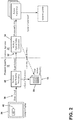
- FIG. 1 illustrates the architecture 10 having an efficient "protocol-agnostic" language to connect the user interface behaviors 24 to protocol-specific messages generated by or sent to the cockpit display system.
- the connection 12 occurs using table configuration parameters 14 that describe all that is necessary to process user input from the display system, and display behaviors 16 that convey the internal state of the system back to the user.
- This allows the protocol-specific cockpit display system 18 interface to be changed without needing to modify or adapt any of the entry or display behaviors 20, 16 to the new protocol. All the protocol-specific translation is handled in the protocol-specific layer 18.
- protocol-specific layer 18 is verified independently from the protocol-agnostic layer 22 (core user interface behaviors) reducing the time and effort to deploy a new user interface into a new cockpit display architecture.
- the protocol-specific layer 18 uses the configuration tables 14 to identify what protocol-agnostic message to send to the protocol-agnostic layer 22.
- An exemplary configuration table 14 is the User Action Mapping table 30 in Fig. 2 .
- the protocol-agnostic layer 22 uses the unit that is configured in the configuration tables 14 for the specific user input field to perform entry conversion 34 of the user input 36 to that unit (such as speed, altitude, distance, direction, frequency). This also means that entry errors are all generated by the protocol-agnostic layer 22.
- the entry processing 42 can handle multiple formats for the entries 36 in order to support any constraints of the cockpit display system 38. It can handle situations where one entry 36 can have multiple units (for example "Speed/Altitude” entry of "250/FL180").
- the configuration also allows for specifying parts or whole of a combined entry field 40 (as in the example above "/FL180" will accept the altitude portion only).
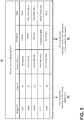
- the exemplary User Action Mapping table 30 implements the binding of the external inputs 42 to the protocol-agnostic actions 44.
- the left two columns 46 of the table are considered the "input source identification" columns.
- the example is shown for an ARINC 661 cockpit display system, but this can be adapted to any other user interface.
- the three columns on the right (Unit, Action, Extension) 48 are used to build the protocol-agnostic description of the input so that it can be handled by the protocol-agnostic layer 44.
- the "Unit” column describes the expected source units for the entry.
- the second row 50 of the table 30 has two units entered in because the input field is expected to allow both speed and altitude to be entered with a known separator to indicate which of the values the user has entered. For example, a "240" or “240/” will be understood as the speed entry and “/FL340" will be understood as the altitude entry just by the position of the slash.
- the “Action” describes an action that is expected to be performed when input is received from the source. Like the "Unit” column, there can be multiple actions to match the number of units specified. The Action is least likely to change and together with the entry conversion, represents a significant portion of the components needed for entry handling.
- Extension provides additional configuration that will help in the translation of the input to the right system update action.
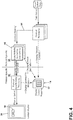
- the protocol-specific layer 18 uses the configuration tables 14 to understand how to translate a protocol-agnostic 22 message to the protocol-specific display system 18.
- An exemplary configuration table is the Display Mapping Element table 52 in FIG. 4 .
- the display behaviors 16 bind content from internal state 54 of the target user interface application and apply decoration (style, formatting, visibility, and interactivity) 56 to the output.
- the content is represented in displayable units (speed, altitude, frequency, etc.).
- a display item 58 can be configured to display as a single or combined unit content field (such as "Speed/Altitude") simply by the configuration.
- the decoration (style, format, visibility, and interactivity) that is applied to a display item 58 is also specified by configuration table 14.
- a configuration tool is used to create the configuration tables 14 and ensures that the correct decoration is applied to a content (for example, a speed formatter is not applied to an altitude content).
- the entry and display behaviors 20, 16 are designed such that the verification of the behavior can be conducted at a unit level or at an integrated level and have equivalent results. Because of this, the configuration tables 14 only need to be verified for correctness by the configuration tool, but the target user interface software would not need any further verification due to a change in the configuration.
- dynamic memory allocation is only used when initializing the table from a parameter data item (PDI).
- the loading mechanism always ensures that the size of the file will not exceed the maximum allowed memory allocation that has been reserved for the user interface of the target system.
- the configuration tool builds a hash into the configuration tables that the target software will use to ensure that the options in the configuration are compatible with the target software.
- FIG. 5 illustrates how a Display Element Mapping 52 can be implemented.
- the left side 60 of the table 52 is the protocol-specific mapping to a user interface element (in this case a widget).
- a user interface element in this case a widget
- the "Formatter” and “Style” can be varied for different applications to suite the user interface requirement needs. Not shown is any additional columns that might be needed by the protocol-specific layer to further serialize the display update commands that come from the protocol-agnostic layer 62.
- the "Content Source” reads the source information and provides attributes that a formatter and style routine can use to further decorate the displayed item 58.
- the Content Source is least likely to change but represents a significant portion of the user interface logic.
- a user interface system in accordance with various aspects described herein can support a product line approach in a safe way and DO-178C certifiable way.
- the software is easier to understand and maintain due to a repeatable pattern for implementing the software; the elements are developed in a predictable way and the infrastructure is very light weight, which gives more confidence on the integrity of the user interface software.
- a user interface is field reconfigurable since the user interface software behavior is not being modified. Only the application of the behavior is being adapted.
- the configuration tools provide the assurance that the configuration to be loaded is correct and compatible with the software. This will allow OEMs to make minor changes to the display at a much lower cost.
Landscapes
- Engineering & Computer Science (AREA)
- Theoretical Computer Science (AREA)
- Software Systems (AREA)
- General Physics & Mathematics (AREA)
- Physics & Mathematics (AREA)
- Aviation & Aerospace Engineering (AREA)
- Human Computer Interaction (AREA)
- General Engineering & Computer Science (AREA)
- Radar, Positioning & Navigation (AREA)
- Remote Sensing (AREA)
- Computer Hardware Design (AREA)
- Computer Security & Cryptography (AREA)
- Computer Networks & Wireless Communication (AREA)
- Signal Processing (AREA)
- Communication Control (AREA)
Abstract
Description
- The disclosure relates to a method and architecture for bidirectionally mapping formatted and unformatted data, independent of the respective formatted and unformatted constraints.
- Traditional user interface designs suffer from high cost of change and typically the design process starts over for every new product. This is due to the variation that is expected with user interfaces because every customer wants the ability to make changes. As well, many known application development kits include run-time dynamically allocated memory paradigms to "configure" a user interface at runtime, however this approach does not work with safety critical real-time embedded applications. The application development kits typically have strategies that are not predictive and complete documentation of these kits is not to the level that is required for a safety critical application.
- The certification effort for safety critical airborne software is an expensive exercise so cost-effective ways that manage variability within the user interface space are needed. Reducing this effort (cost and schedule) from an OEM standpoint will allow more time spent on improving the usability of the system, which ultimately leads to a safer user interface design.
- In one aspect, the present disclosure relates to an architecture for an interface display, including a protocol-agnostic interface layer configured to define unformatted system data, a protocol-specific interface layer communicatively coupled with the protocol-agnostic interface layer, and defining display behaviors of the interface display, and a mapping table defining formatting definitions for bidirectional mapping of the unformatted system data with the interface display, wherein the bidirectional mapping of the unformatted system data with the interface display enables displaying of formatted system data based on mapping the unformatted system data, by way of the mapping table defining translating the unformatted system data between the protocol-agnostic interface layer and the protocol-specific interface layer, such that the formatted system data is displayed in accordance with the display behaviors of the interface display, and wherein the bidirectional mapping of the unformatted system data with the interface display enables receiving a formatted protocol-specific interface layer input data at the interface display, and mapping the formatted input data to unformatted system input data, by way of the mapping table defining translating the formatted input data between the protocol-specific interface layer and the protocol-agnostic interface layer, such that the architecture can perform a system action based on the unformatted system data input.
- In another aspect, the present disclosure relates to a method of operating an interface display for an aircraft, the method including retrieving, by a system operating a protocol-specific interface layer, a user input on the interface display, mapping, by way of a mapping table defining formatting definitions of the interface display, the user input to corresponding unformatted system input data, communicating the unformatted system input data to an avionics system by way of a protocol-agnostic interface layer, and in response to the communicating, performing a system action, by the avionics system, including the unformatted system input data.
- In the drawings:
-
FIG. 1 illustrates schematically an interaction between a protocol-agnostic layer and a protocol-specific layer in accordance with various aspects described herein. -
FIG. 2 illustrates entry handling from the protocol-specific layer in the protocol-agnostic layer ofFIG. 1 , in accordance with various aspects described herein. -
FIG. 3 illustrates a user action mapping table ofFIG. 2 . -
FIG. 4 illustrates display output in the protocol-specific layer from the protocol-agnostic layer ofFIG. 1 , in accordance with various aspects described herein. -
FIG. 5 illustrates a display element mapping table ofFIG. 4 - The described aspects of the present disclosure are directed to a user interface architecture, for example, in an aircraft. While an aircraft is specifically mentioned, the user interface architecture can be utilized in any user interface where adaptability between distinct installations is advantageous and especially when safety critical certifications are important.
- Aspects of the disclosure can be implemented in any environment, apparatus, system, or method having a regulated, restricted, authorized, or otherwise limited "write-access" privileges to a memory or data store component. As used herein, "write-access" means availability or authorization to commit a change to a memory, the change being storing or overwriting data, values, commands, instructions, or any other data, element, or identifier to a memory location, regardless of the function performed by the data, element, or identifier, or regardless of the function or implementation of the environment, apparatus, system, or method. Collectively, "access" to data or "accessing" data can refer to either reading, viewing, or otherwise receiving data from a data store, "writing" data, as referenced above, or a combination thereof. As used herein, a "regulated" system is a system having restrictions on access, such as write-access to data or values of the system, whereby only approved or authorized entities, parties, functions, or the like, are enabled or otherwise allowed to access the regulated or restricted elements. In one non-limiting example, only a single authorized function can have write access to a specific data element.
- While "a set of' various elements will be described, it will be understood that "a set" can include any number of the respective elements, including only one element. Also as used herein, while elements or components can be described as "sensing" or "measuring" a respective value, data, function, or the like, sensing or measuring can include determining a value indicative of or related to the respective value, data, function, or the like, rather than directly sensing or measuring the value, data, function, or the like, itself. The sensed or measured value, data, function, or the like, can further be provided to additional components. For instance, the value can be provided to a controller module or processor, and the controller module or processor can perform processing on the value to determine a representative value or an electrical characteristic representative of said value, data, function, or the like.
- As used herein, a "data store" can include a data value stored in a memory, wherein the data value is only write-accessible by a single function, program, entity, or the like (a "writer"). The write-accessibility of the data store can be policed or otherwise regulated by digital security mechanisms understood by those skilled in the art. While only a single writer has write-access to the data store, a data store can have or include multiple function, program, or entities having read-access to read, view, or otherwise receive the data in an unidirectional relationship. In contrast with the data store, a "data store queue" can include a data value or set of data values stored in a memory, wherein the data value is write-accessible by a set of one or more functions, programs, entities, or the like. The write-accessibility of the data store queue can be policed or otherwise regulated by digital security mechanisms understood by those skilled in the art. Additionally, a data store queue can include only a single function, program, or entity having read-access to read, view, or otherwise receive the data in a unidirectional relationship.
- As used herein, a "system" or a "controller module" can include at least one processor and memory. Non-limiting examples of the memory can include Random Access Memory (RAM), Read-Only Memory (ROM), flash memory, or one or more different types of portable electronic memory, such as discs, DVDs, CD-ROMs, etc., or any suitable combination of these types of memory. The processor can be configured to run any suitable programs or executable instructions designed to carry out various methods, functionality, processing tasks, calculations, or the like, to enable or achieve the technical operations or operations described herein.
- The exemplary drawings are for purposes of illustration only and the dimensions, positions, order and relative sizes reflected in the drawings attached hereto can vary.
- This disclosure is directed to user interface architecture that provides reusability and rapid deployment of user interface changes in a way that is within the requirements of a safety critical system, such as an avionics system for an aircraft. The components of the architecture are standalone and can be independently verified at a unit level or at an integrated level with equivalent results. This also means each component in the architecture has complete certification artifacts that are independent of each other.
-
FIG. 1 illustrates the architecture 10 having an efficient "protocol-agnostic" language to connect theuser interface behaviors 24 to protocol-specific messages generated by or sent to the cockpit display system. Theconnection 12 occurs usingtable configuration parameters 14 that describe all that is necessary to process user input from the display system, anddisplay behaviors 16 that convey the internal state of the system back to the user. This allows the protocol-specificcockpit display system 18 interface to be changed without needing to modify or adapt any of the entry ordisplay behaviors specific layer 18. - Using this pattern allows the target user interface software to have the potential of driving multiple cockpit architectures from the same core software. In addition, the protocol-
specific layer 18 is verified independently from the protocol-agnostic layer 22 (core user interface behaviors) reducing the time and effort to deploy a new user interface into a new cockpit display architecture. - In
FIG. 2 , the protocol-specific layer 18 uses the configuration tables 14 to identify what protocol-agnostic message to send to the protocol-agnostic layer 22. An exemplary configuration table 14 is the User Action Mapping table 30 inFig. 2 . - After receiving the protocol-
agnostic translation 32 from the protocol-specific layer 18, the protocol-agnostic layer 22 uses the unit that is configured in the configuration tables 14 for the specific user input field to performentry conversion 34 of theuser input 36 to that unit (such as speed, altitude, distance, direction, frequency). This also means that entry errors are all generated by the protocol-agnostic layer 22. Theentry processing 42 can handle multiple formats for theentries 36 in order to support any constraints of thecockpit display system 38. It can handle situations where oneentry 36 can have multiple units (for example "Speed/Altitude" entry of "250/FL180"). The configuration also allows for specifying parts or whole of a combined entry field 40 (as in the example above "/FL180" will accept the altitude portion only). - In
FIG. 3 , the exemplary User Action Mapping table 30 implements the binding of theexternal inputs 42 to the protocol-agnostic actions 44. The left twocolumns 46 of the table are considered the "input source identification" columns. The example is shown for an ARINC 661 cockpit display system, but this can be adapted to any other user interface. The three columns on the right (Unit, Action, Extension) 48 are used to build the protocol-agnostic description of the input so that it can be handled by the protocol-agnostic layer 44. - The "Unit" column describes the expected source units for the entry. The
second row 50 of the table 30 has two units entered in because the input field is expected to allow both speed and altitude to be entered with a known separator to indicate which of the values the user has entered. For example, a "240" or "240/" will be understood as the speed entry and "/FL340" will be understood as the altitude entry just by the position of the slash. - The "Action" describes an action that is expected to be performed when input is received from the source. Like the "Unit" column, there can be multiple actions to match the number of units specified. The Action is least likely to change and together with the entry conversion, represents a significant portion of the components needed for entry handling.
- The "Extension" provides additional configuration that will help in the translation of the input to the right system update action.
- In
FIG. 4 , the protocol-specific layer 18 uses the configuration tables 14 to understand how to translate a protocol-agnostic 22 message to the protocol-specific display system 18. An exemplary configuration table is the Display Mapping Element table 52 inFIG. 4 . - The
display behaviors 16 bind content frominternal state 54 of the target user interface application and apply decoration (style, formatting, visibility, and interactivity) 56 to the output. Like theentry processing 42, the content is represented in displayable units (speed, altitude, frequency, etc.). Again, to support any constraints of thecockpit display 38, adisplay item 58 can be configured to display as a single or combined unit content field (such as "Speed/Altitude") simply by the configuration. - The decoration (style, format, visibility, and interactivity) that is applied to a
display item 58 is also specified by configuration table 14. A configuration tool is used to create the configuration tables 14 and ensures that the correct decoration is applied to a content (for example, a speed formatter is not applied to an altitude content). - The entry and display
behaviors - To alleviate some of the certification concerns for an embedded system, dynamic memory allocation is only used when initializing the table from a parameter data item (PDI). The loading mechanism always ensures that the size of the file will not exceed the maximum allowed memory allocation that has been reserved for the user interface of the target system. In addition, the configuration tool builds a hash into the configuration tables that the target software will use to ensure that the options in the configuration are compatible with the target software.
-
FIG. 5 illustrates how aDisplay Element Mapping 52 can be implemented. Theleft side 60 of the table 52 is the protocol-specific mapping to a user interface element (in this case a widget). Again, the example shown here is for an ARINC 661cockpit display system 38 but can be adapted to any cockpit display architecture. The "Formatter" and "Style" can be varied for different applications to suite the user interface requirement needs. Not shown is any additional columns that might be needed by the protocol-specific layer to further serialize the display update commands that come from the protocol-agnostic layer 62. The "Content Source" reads the source information and provides attributes that a formatter and style routine can use to further decorate the displayeditem 58. The Content Source is least likely to change but represents a significant portion of the user interface logic. - Many other possible aspects and configurations in addition to that shown in the above figures are contemplated by the present disclosure.
- Technical effects of the disclosure configurable user interface architecture include rapidly adapting a user interface core to different cockpit architectures without having to rewrite the entire user interface code base. As well, it provides a low cost of change for updates to the user interface due to the flexibility provided in the configuration tables. A user interface system in accordance with various aspects described herein can support a product line approach in a safe way and DO-178C certifiable way. The software is easier to understand and maintain due to a repeatable pattern for implementing the software; the elements are developed in a predictable way and the infrastructure is very light weight, which gives more confidence on the integrity of the user interface software. Further, a user interface is field reconfigurable since the user interface software behavior is not being modified. Only the application of the behavior is being adapted. The configuration tools provide the assurance that the configuration to be loaded is correct and compatible with the software. This will allow OEMs to make minor changes to the display at a much lower cost.
- To the extent not already described, the different features and structures of the various aspects can be used in combination with each other as desired. That one feature is not illustrated in all of the aspects is not meant to be construed that it is not included, but is done for brevity of description. Thus, the various features of the different aspects can be mixed and matched as desired to form new aspects of the disclosure, whether or not the new aspects are expressly described. All combinations or permutations of features described herein are covered by this disclosure.
- This written description uses examples to disclose aspects of the disclosure, including the best mode, and also to enable any person skilled in the art to practice the aspects of the disclosure, including making and using any devices or systems and performing any incorporated methods. The patentable scope of the disclosure is defined by the claims, and can include other examples that occur to those skilled in the art. Such other examples are intended to be within the scope of the claims if they have structural elements that do not differ from the literal language of the claims, or if they include equivalent structural elements with insubstantial differences from the literal languages of the claims.
- Further aspects of the invention are provided by the subject matter of the following clauses:
- 1. An architecture for an interface display, including a protocol-agnostic interface layer configured to define unformatted system data, a protocol-specific interface layer communicatively coupled with the protocol-agnostic interface layer, and defining display behaviors of the interface display, and a mapping table defining formatting definitions for bidirectional mapping of the unformatted system data with the interface display, wherein the bidirectional mapping of the unformatted system data with the interface display enables displaying of formatted system data based on mapping the unformatted system data, by way of the mapping table defining translating the unformatted system data between the protocol-agnostic interface layer and the protocol-specific interface layer, such that the formatted system data is display in accordance with the display behaviors of the interface display, and wherein the bidirectional mapping of the unformatted system data with the interface display enables receiving a formatted protocol-specific interface layer input data at the interface display, and mapping the formatted input data to unformatted system input data, by way of the mapping table defining translating the formatted input data between the protocol-specific interface layer and the protocol-agnostic interface layer, such that the architecture can perform a system action based on the unformatted system data input.
- 2. The architecture of any preceding clause wherein the interface display is an avionics interface display.
- 3. The architecture of any preceding clause wherein the interface display is a cockpit interface display.
- 4. The architecture of any preceding clause wherein the display behaviors define how to format display data for the interface display.
- 5. The architecture of any preceding clause, further comprising a set of interface displays, and wherein the bidirectional mapping enables mapping between the protocol-agnostic interface layer and the protocol-specific interface layer by way of the mapping table defining formatting definitions for each of the set of interface displays.
- 6. The architecture of any preceding clause wherein the set of interface displays includes at least two different interface displays.
- 7. The architecture of any preceding clause wherein the protocol-specific layer is verified for avionics use independently from the protocol-agnostic interface layer.
- 8. The architecture of any preceding clause wherein the display behaviors define the constraints of the interface display.
- 9. The architecture of any preceding clause wherein the interface display is an ARINC 661 cockpit display system.
- 10. The architecture of any preceding clause wherein the formatted protocol-specific interface layer input data is a user input, and the system action includes an avionics system action that is performed in response to the user input received at the interface display.
- 11. The architecture of any preceding clause wherein the mapping table defines decoration of the formatted data on the interface display.
- 12. A method of operating an interface display for an aircraft, the method including retrieving, by a system operating a protocol-specific interface layer, a user input on the interface display, mapping, by way of a mapping table defining formatting definitions of the interface display, the user input to corresponding unformatted system input data, communicating the unformatted system input data to an avionics system by way of a protocol-agnostic interface layer, and in response to the communicating, performing a system action, by the avionics system, including the unformatted system input data.
- 13. The method of any preceding clause, further including retrieving, by the protocol-agnostic interface layer, unformatted stored data, mapping, by way of the mapping table, the unformatted stored data to formatted stored data, communicating the formatted stored data from the protocol-agnostic interface layer to the protocol-specific interface layer, and displaying the formatted stored data at the interface display in accordance with the formatting definitions of the interface display.
- 14. The method of any preceding clause wherein the formatting definitions include display behaviors defining decoration related to how to format unformatted stored data for the interface display.
- 15. The method of any preceding clause wherein the formatting definitions define the constraints of the interface display.
- 16. The method of any preceding clause, further comprising mapping the unformatting stored data to a set of formatted stored data for a corresponding set of different interface displays.
- 17. The method of any preceding clause, further comprising communicating the set of formatted stored data from the protocol-agnostic interface layer to the protocol-specific interface layer at the respective set of different interface displays, and displaying the set of formatted stored data at the respective interface display in accordance with the formatting definitions of the respective interface display, wherein the formatting definitions for each of at least two of the set of interface displays is different.
- 18. The method of any preceding clause wherein the mapping is bidirectional mapping between the protocol-specific interface layer and the protocol-agnostic interface layer.
- 19. The method of any preceding clause wherein the interface display is a cockpit interface display.
- 20. The method of any preceding clause, further comprising verifying the protocol-specific layer for avionics use independently from the protocol-agnostic interface layer.
Claims (15)
- An architecture (10) for an interface display, comprising:a protocol-agnostic interface layer (22) configured to define unformatted system data;a protocol-specific interface layer (18) communicatively coupled with the protocol-agnostic interface layer (22), and defining display behaviors of the interface display (38); anda mapping table (30, 54) defining formatting definitions for bidirectional mapping of the unformatted system data with the interface display (38);wherein the bidirectional mapping of the unformatted system data with the interface display (38) enables displaying of formatted system data based on mapping the unformatted system data, by way of the mapping table (30, 54) defining translating the unformatted system data between the protocol-agnostic interface layer (22) and the protocol-specific interface layer (18), such that the formatted system data is displayed in accordance with the display behaviors of the interface display (38); andwherein the bidirectional mapping of the unformatted system data with the interface display (38) enables receiving a formatted protocol-specific interface layer input data at the interface display (38), and mapping the formatted input data to unformatted system input data, by way of the mapping table (30, 54) defining translating the formatted input data between the protocol-specific interface layer (18) and the protocol-agnostic interface layer (22), such that the architecture (10) can perform a system action based on the unformatted system data input.
- The architecture (10) of claim 1 wherein the interface display (38) is an avionics interface display.
- The architecture (10) of claim 2 wherein the interface display (38) is a cockpit interface display.
- The architecture (10) of any of claims 1 to 3 wherein the display behaviors define how to format display data for the interface display (38).
- The architecture (10) of any of claims 1 to 4, further comprising a set of interface displays (38), and wherein the bidirectional mapping enables mapping between the protocol-agnostic interface layer (22) and the protocol-specific interface layer (18) by way of the mapping table (30, 54) defining formatting definitions for each of the set of interface displays (38).
- The architecture (10) of claim 5 wherein the set of interface displays (38) includes at least two different interface displays (38).
- The architecture (10) of any of claims 1 to 6 wherein the protocol-specific layer (18) is verified for avionics use independently from the protocol-agnostic interface layer (22).
- The architecture (10) of any of claims 1 to 7 wherein the display behaviors define the constraints of the interface display (38).
- The architecture (10) of any of claims 1 to 8 wherein the interface display (38) is an ARINC 661 cockpit display system.
- The architecture (10) of any of claims 1 to 9 wherein the formatted protocol-specific interface layer input data is a user input, and the system action includes an avionics system action that is performed in response to the user input received at the interface display (38).
- The architecture (10) of any of claims 1 to 10 wherein the mapping table (30, 54) defines decoration (56) of the formatted data on the interface display (38).
- A method of operating an interface display (38) for an aircraft, the method comprising:retrieving, by a system operating a protocol-specific interface layer (18), a user input on the interface display (38);mapping, by way of a mapping table (30, 54) defining formatting definitions of the interface display (38), the user input to corresponding unformatted system input data;communicating the unformatted system input data to an avionics system by way of a protocol-agnostic interface layer (22); andin response to the communicating, performing a system action, by the avionics system, including the unformatted system input data.
- The method of claim 12, further comprising:retrieving, by the protocol-agnostic interface layer (22), unformatted stored data;mapping, by way of the mapping table (30, 54), the unformatted stored data to formatted stored data;communicating the formatted stored data from the protocol-agnostic interface layer (22) to the protocol-specific interface layer (18); anddisplaying the formatted stored data at the interface display (38) in accordance with the formatting definitions of the interface display (38).
- The method of claim 12 or 13 wherein the formatting definitions include display behaviors defining decoration (56) related to how to format unformatted stored data for the interface display (38).
- The method of any of claims 12 to 14 wherein the formatting definitions define the constraints of the interface display (38).
Applications Claiming Priority (1)
| Application Number | Priority Date | Filing Date | Title |
|---|---|---|---|
| US201862741304P | 2018-10-04 | 2018-10-04 |
Publications (2)
| Publication Number | Publication Date |
|---|---|
| EP3633505A1 true EP3633505A1 (en) | 2020-04-08 |
| EP3633505B1 EP3633505B1 (en) | 2024-03-13 |
Family
ID=68295928
Family Applications (1)
| Application Number | Title | Priority Date | Filing Date |
|---|---|---|---|
| EP19201315.9A Active EP3633505B1 (en) | 2018-10-04 | 2019-10-03 | Configurable user interface architecture |
Country Status (3)
| Country | Link |
|---|---|
| US (1) | US11620140B2 (en) |
| EP (1) | EP3633505B1 (en) |
| CN (1) | CN111009053B (en) |
Cited By (1)
| Publication number | Priority date | Publication date | Assignee | Title |
|---|---|---|---|---|
| FR3110264A1 (en) * | 2020-05-18 | 2021-11-19 | Airbus Operations | HUMAN-MACHINE INTERFACING ARCHITECTURE IN AN AIRCRAFT |
Families Citing this family (3)
| Publication number | Priority date | Publication date | Assignee | Title |
|---|---|---|---|---|
| US11620140B2 (en) * | 2018-10-04 | 2023-04-04 | Ge Aviation Systems Llc | Configurable user interface architecture |
| US12139250B2 (en) * | 2022-02-25 | 2024-11-12 | Ge Aviation Systems Llc | Method and system to provide data from an avionics system |
| US12387611B2 (en) * | 2022-07-15 | 2025-08-12 | Honeywell International, Inc. | System and method for platform agonistic flight management data access |
Citations (2)
| Publication number | Priority date | Publication date | Assignee | Title |
|---|---|---|---|---|
| EP3136318A1 (en) * | 2015-08-31 | 2017-03-01 | The Boeing Company | Method for providing flight management system data to peripheral devices |
| EP3252597A1 (en) * | 2016-05-31 | 2017-12-06 | GE Aviation Systems LLC | Regulating display data by a display system |
Family Cites Families (23)
| Publication number | Priority date | Publication date | Assignee | Title |
|---|---|---|---|---|
| US5457800A (en) * | 1991-05-02 | 1995-10-10 | Smiths Industries Aerospace & Defense Systems, Inc. | Adaptable datalink interface |
| US6083270A (en) * | 1995-03-24 | 2000-07-04 | The Board Of Trustees Of The Leland Stanford Junior University | Devices and methods for interfacing human users with electronic devices |
| US6401013B1 (en) * | 2000-07-11 | 2002-06-04 | Rockwell Collins, Inc. | Method and system for integrating a laptop PC in a cockpit |
| CN100505708C (en) * | 2003-09-02 | 2009-06-24 | 北京航空航天大学 | Aviation Gateway Trunking System |
| US20050091036A1 (en) * | 2003-10-23 | 2005-04-28 | Hazel Shackleton | Method and apparatus for a hierarchical object model-based constrained language interpreter-parser |
| US8330625B2 (en) * | 2007-03-30 | 2012-12-11 | Honeywell International Inc. | Aircraft systems with flight management systems that display reports |
| KR101148475B1 (en) * | 2010-12-01 | 2012-05-21 | 한국과학기술원 | Method and apparatus for pre-processing of a protocol translation, and protocol translation apparatus |
| BR112013020899A2 (en) * | 2011-02-17 | 2016-09-27 | Saab Ab | display system and method for interaction between an operator and at least one vehicle subsystem |
| CN102520899B (en) | 2011-12-07 | 2014-08-06 | 中国航空无线电电子研究所 | Universal cockpit display management system |
| FR2997778B1 (en) * | 2012-11-05 | 2015-12-11 | Snecma | METHOD FOR CONSTRUCTING A BEHAVIORAL MODEL OF AN AIRCRAFT ENGINE |
| CN103034499B (en) * | 2012-12-13 | 2016-02-17 | 中国航空无线电电子研究所 | The conversion method of data format that network data transmission of airborne equipment is general |
| FR3017763B1 (en) | 2014-02-19 | 2017-06-02 | Sagem Defense Securite | DEVICE FOR TRANSMITTING DATA CONNECTED WITH A DISPLAY SYSTEM OF AN AIRCRAFT DRIVING UNIT |
| US10135927B1 (en) * | 2014-09-28 | 2018-11-20 | Rockwell Collins, Inc. | ARINC 661 display system and methods incorporating non-ARINC 661 protocols |
| FR3027477B1 (en) * | 2014-10-17 | 2017-12-29 | Thales Sa | SWITCHING DATA TRANSMISSION BETWEEN HETEROGENEOUS NETWORKS FOR AIRCRAFT |
| EP3254228A4 (en) * | 2015-02-05 | 2018-11-07 | Yamasee Ltd. | Method and system for obtaining and presenting turbulence data via communication devices located on airplanes |
| KR20170018503A (en) * | 2015-08-10 | 2017-02-20 | 이철규 | A key board that use a drop-leaf table for passenger plane |
| US9980298B2 (en) | 2016-02-26 | 2018-05-22 | The Boeing Company | Method and system for integration of portable devices with flight deck displays |
| US10382557B2 (en) * | 2016-06-30 | 2019-08-13 | Panasonic Avionics Corporation | Conversion of aircraft data over wireless networks for flight deck and cabin airline applications |
| US10200110B2 (en) * | 2016-06-30 | 2019-02-05 | Ge Aviation Systems Llc | Aviation protocol conversion |
| US10225349B2 (en) * | 2016-10-26 | 2019-03-05 | Honeywell International Inc. | Software development kit for aircraft tablet device and airborne application server |
| US20180373404A1 (en) * | 2017-06-27 | 2018-12-27 | Honeywell International Inc. | Systems, devices, and methods for using a multi-function control and display unit (mcdu) communication architecture onboard an aircraft |
| CN109246081A (en) * | 2018-08-07 | 2019-01-18 | 中国航空无线电电子研究所 | Aerial Electronic Equipment AFDX bus and A429, RS422 bus data conversion method |
| US11620140B2 (en) * | 2018-10-04 | 2023-04-04 | Ge Aviation Systems Llc | Configurable user interface architecture |
-
2019
- 2019-09-19 US US16/576,243 patent/US11620140B2/en active Active
- 2019-10-03 EP EP19201315.9A patent/EP3633505B1/en active Active
- 2019-10-08 CN CN201910950027.XA patent/CN111009053B/en active Active
Patent Citations (2)
| Publication number | Priority date | Publication date | Assignee | Title |
|---|---|---|---|---|
| EP3136318A1 (en) * | 2015-08-31 | 2017-03-01 | The Boeing Company | Method for providing flight management system data to peripheral devices |
| EP3252597A1 (en) * | 2016-05-31 | 2017-12-06 | GE Aviation Systems LLC | Regulating display data by a display system |
Non-Patent Citations (3)
| Title |
|---|
| ANONYMOUS: "Data mapping - Wikipedia", 4 January 2009 (2009-01-04), XP055658039, Retrieved from the Internet <URL:https://en.wikipedia.org/w/index.php?title=Data_mapping&oldid=261914241> [retrieved on 20200115] * |
| ERIC BARBONI ET AL: "A Formal Description Technique for Interactive Cockpit Applications Compliant with ARINC Specification 661", INDUSTRIAL EMBEDDED SYSTEMS, 2007. SIES '07. INTERNATIONAL SYMPOS IUM ON, IEEE, PI, 1 July 2007 (2007-07-01), pages 250 - 257, XP031131525, ISBN: 978-1-4244-0839-9 * |
| GAMMA E ET AL: "Design Patterns, passage", DESIGN PATTERNS, XX, XX, 1 January 1995 (1995-01-01), pages 139 - 143, 148, XP002466111 * |
Cited By (2)
| Publication number | Priority date | Publication date | Assignee | Title |
|---|---|---|---|---|
| FR3110264A1 (en) * | 2020-05-18 | 2021-11-19 | Airbus Operations | HUMAN-MACHINE INTERFACING ARCHITECTURE IN AN AIRCRAFT |
| US12006060B2 (en) | 2020-05-18 | 2024-06-11 | Airbus Operations Sas | Human-machine interface architecture in an aircraft |
Also Published As
| Publication number | Publication date |
|---|---|
| CN111009053B (en) | 2023-11-07 |
| US20200110621A1 (en) | 2020-04-09 |
| CN111009053A (en) | 2020-04-14 |
| EP3633505B1 (en) | 2024-03-13 |
| US11620140B2 (en) | 2023-04-04 |
Similar Documents
| Publication | Publication Date | Title |
|---|---|---|
| US11620140B2 (en) | Configurable user interface architecture | |
| JP2011510374A5 (en) | ||
| EP2348488B1 (en) | Method and system for exposing and recording embedded avionics data | |
| JP5495515B2 (en) | Test apparatus for testing at least one electronic control system and method for operating the test apparatus | |
| US11900076B2 (en) | Method and apparatus for real-time control loop application execution from a high-level description | |
| US20100287545A1 (en) | Method of executing a computer application, associated kit and aircraft | |
| US7197743B2 (en) | Method for generating computer software for embedded systems | |
| US20160292306A1 (en) | Simulator customization tool and method for the generation and maintenance of simulation configuration | |
| US8539448B2 (en) | System and method for automatically testing a program for safety-related automation systems | |
| CN108427637B (en) | Test case recommendation method, electronic device and readable storage medium | |
| WO2015075790A1 (en) | Device for assisting creation of sequence program | |
| ES2309706T3 (en) | PROCEDURE TO CONFIGURE AN INFORMATIC PROGRAM. | |
| WO2012044262A1 (en) | Embedded system design, programming, and simulation architecture | |
| US20140372929A1 (en) | Apparatus and method for providing user interface regarding aeronautical system configuration | |
| US9015653B2 (en) | Aeronautical software application development workbench comprising a structured functional description language | |
| US12358641B2 (en) | Method and system for configuring functionalities of an aircraft cockpit | |
| US7080353B2 (en) | Addon mechanism for a control system based on a type data field | |
| KR20130116081A (en) | Developing method of portable avionics system test equipment | |
| US8387019B1 (en) | Graphical user assignable register map | |
| EP2605127B1 (en) | Processing Framework For Generating Pre-Configuration Packages | |
| RU2647801C2 (en) | Method and demand determination device for aircraft automatic piloting system | |
| Zielinski | Digital fieldbus installations use EDDL for simplicity with advanced, full functionality | |
| CN117215670A (en) | Configuration file generation method and device and electronic equipment | |
| Kurtz et al. | Software based test automation approach using integrated signal simulation | |
| US20150331413A1 (en) | Method for Operating a Fieldbus Protocol Capable Field Device |
Legal Events
| Date | Code | Title | Description |
|---|---|---|---|
| PUAI | Public reference made under article 153(3) epc to a published international application that has entered the european phase |
Free format text: ORIGINAL CODE: 0009012 |
|
| STAA | Information on the status of an ep patent application or granted ep patent |
Free format text: STATUS: THE APPLICATION HAS BEEN PUBLISHED |
|
| AK | Designated contracting states |
Kind code of ref document: A1 Designated state(s): AL AT BE BG CH CY CZ DE DK EE ES FI FR GB GR HR HU IE IS IT LI LT LU LV MC MK MT NL NO PL PT RO RS SE SI SK SM TR |
|
| AX | Request for extension of the european patent |
Extension state: BA ME |
|
| STAA | Information on the status of an ep patent application or granted ep patent |
Free format text: STATUS: REQUEST FOR EXAMINATION WAS MADE |
|
| 17P | Request for examination filed |
Effective date: 20200929 |
|
| RBV | Designated contracting states (corrected) |
Designated state(s): AL AT BE BG CH CY CZ DE DK EE ES FI FR GB GR HR HU IE IS IT LI LT LU LV MC MK MT NL NO PL PT RO RS SE SI SK SM TR |
|
| STAA | Information on the status of an ep patent application or granted ep patent |
Free format text: STATUS: EXAMINATION IS IN PROGRESS |
|
| 17Q | First examination report despatched |
Effective date: 20210923 |
|
| GRAP | Despatch of communication of intention to grant a patent |
Free format text: ORIGINAL CODE: EPIDOSNIGR1 |
|
| STAA | Information on the status of an ep patent application or granted ep patent |
Free format text: STATUS: GRANT OF PATENT IS INTENDED |
|
| INTG | Intention to grant announced |
Effective date: 20231009 |
|
| GRAS | Grant fee paid |
Free format text: ORIGINAL CODE: EPIDOSNIGR3 |
|
| GRAA | (expected) grant |
Free format text: ORIGINAL CODE: 0009210 |
|
| STAA | Information on the status of an ep patent application or granted ep patent |
Free format text: STATUS: THE PATENT HAS BEEN GRANTED |
|
| AK | Designated contracting states |
Kind code of ref document: B1 Designated state(s): AL AT BE BG CH CY CZ DE DK EE ES FI FR GB GR HR HU IE IS IT LI LT LU LV MC MK MT NL NO PL PT RO RS SE SI SK SM TR |
|
| REG | Reference to a national code |
Ref country code: GB Ref legal event code: FG4D |
|
| REG | Reference to a national code |
Ref country code: CH Ref legal event code: EP |
|
| REG | Reference to a national code |
Ref country code: DE Ref legal event code: R096 Ref document number: 602019048119 Country of ref document: DE |
|
| P01 | Opt-out of the competence of the unified patent court (upc) registered |
Effective date: 20240304 |
|
| REG | Reference to a national code |
Ref country code: IE Ref legal event code: FG4D |
|
| PG25 | Lapsed in a contracting state [announced via postgrant information from national office to epo] |
Ref country code: LT Free format text: LAPSE BECAUSE OF FAILURE TO SUBMIT A TRANSLATION OF THE DESCRIPTION OR TO PAY THE FEE WITHIN THE PRESCRIBED TIME-LIMIT Effective date: 20240313 |
|
| REG | Reference to a national code |
Ref country code: LT Ref legal event code: MG9D |
|
| PG25 | Lapsed in a contracting state [announced via postgrant information from national office to epo] |
Ref country code: GR Free format text: LAPSE BECAUSE OF FAILURE TO SUBMIT A TRANSLATION OF THE DESCRIPTION OR TO PAY THE FEE WITHIN THE PRESCRIBED TIME-LIMIT Effective date: 20240614 |
|
| REG | Reference to a national code |
Ref country code: NL Ref legal event code: MP Effective date: 20240313 |
|
| PG25 | Lapsed in a contracting state [announced via postgrant information from national office to epo] |
Ref country code: HR Free format text: LAPSE BECAUSE OF FAILURE TO SUBMIT A TRANSLATION OF THE DESCRIPTION OR TO PAY THE FEE WITHIN THE PRESCRIBED TIME-LIMIT Effective date: 20240313 Ref country code: RS Free format text: LAPSE BECAUSE OF FAILURE TO SUBMIT A TRANSLATION OF THE DESCRIPTION OR TO PAY THE FEE WITHIN THE PRESCRIBED TIME-LIMIT Effective date: 20240613 |
|
| PG25 | Lapsed in a contracting state [announced via postgrant information from national office to epo] |
Ref country code: ES Free format text: LAPSE BECAUSE OF FAILURE TO SUBMIT A TRANSLATION OF THE DESCRIPTION OR TO PAY THE FEE WITHIN THE PRESCRIBED TIME-LIMIT Effective date: 20240313 |
|
| PG25 | Lapsed in a contracting state [announced via postgrant information from national office to epo] |
Ref country code: RS Free format text: LAPSE BECAUSE OF FAILURE TO SUBMIT A TRANSLATION OF THE DESCRIPTION OR TO PAY THE FEE WITHIN THE PRESCRIBED TIME-LIMIT Effective date: 20240613 Ref country code: NO Free format text: LAPSE BECAUSE OF FAILURE TO SUBMIT A TRANSLATION OF THE DESCRIPTION OR TO PAY THE FEE WITHIN THE PRESCRIBED TIME-LIMIT Effective date: 20240613 Ref country code: LT Free format text: LAPSE BECAUSE OF FAILURE TO SUBMIT A TRANSLATION OF THE DESCRIPTION OR TO PAY THE FEE WITHIN THE PRESCRIBED TIME-LIMIT Effective date: 20240313 Ref country code: HR Free format text: LAPSE BECAUSE OF FAILURE TO SUBMIT A TRANSLATION OF THE DESCRIPTION OR TO PAY THE FEE WITHIN THE PRESCRIBED TIME-LIMIT Effective date: 20240313 Ref country code: GR Free format text: LAPSE BECAUSE OF FAILURE TO SUBMIT A TRANSLATION OF THE DESCRIPTION OR TO PAY THE FEE WITHIN THE PRESCRIBED TIME-LIMIT Effective date: 20240614 Ref country code: FI Free format text: LAPSE BECAUSE OF FAILURE TO SUBMIT A TRANSLATION OF THE DESCRIPTION OR TO PAY THE FEE WITHIN THE PRESCRIBED TIME-LIMIT Effective date: 20240313 Ref country code: ES Free format text: LAPSE BECAUSE OF FAILURE TO SUBMIT A TRANSLATION OF THE DESCRIPTION OR TO PAY THE FEE WITHIN THE PRESCRIBED TIME-LIMIT Effective date: 20240313 Ref country code: BG Free format text: LAPSE BECAUSE OF FAILURE TO SUBMIT A TRANSLATION OF THE DESCRIPTION OR TO PAY THE FEE WITHIN THE PRESCRIBED TIME-LIMIT Effective date: 20240313 |
|
| REG | Reference to a national code |
Ref country code: AT Ref legal event code: MK05 Ref document number: 1666397 Country of ref document: AT Kind code of ref document: T Effective date: 20240313 |
|
| PG25 | Lapsed in a contracting state [announced via postgrant information from national office to epo] |
Ref country code: SE Free format text: LAPSE BECAUSE OF FAILURE TO SUBMIT A TRANSLATION OF THE DESCRIPTION OR TO PAY THE FEE WITHIN THE PRESCRIBED TIME-LIMIT Effective date: 20240313 Ref country code: LV Free format text: LAPSE BECAUSE OF FAILURE TO SUBMIT A TRANSLATION OF THE DESCRIPTION OR TO PAY THE FEE WITHIN THE PRESCRIBED TIME-LIMIT Effective date: 20240313 |
|
| PG25 | Lapsed in a contracting state [announced via postgrant information from national office to epo] |
Ref country code: NL Free format text: LAPSE BECAUSE OF FAILURE TO SUBMIT A TRANSLATION OF THE DESCRIPTION OR TO PAY THE FEE WITHIN THE PRESCRIBED TIME-LIMIT Effective date: 20240313 |
|
| PG25 | Lapsed in a contracting state [announced via postgrant information from national office to epo] |
Ref country code: NL Free format text: LAPSE BECAUSE OF FAILURE TO SUBMIT A TRANSLATION OF THE DESCRIPTION OR TO PAY THE FEE WITHIN THE PRESCRIBED TIME-LIMIT Effective date: 20240313 |
|
| PG25 | Lapsed in a contracting state [announced via postgrant information from national office to epo] |
Ref country code: IS Free format text: LAPSE BECAUSE OF FAILURE TO SUBMIT A TRANSLATION OF THE DESCRIPTION OR TO PAY THE FEE WITHIN THE PRESCRIBED TIME-LIMIT Effective date: 20240713 |
|
| PG25 | Lapsed in a contracting state [announced via postgrant information from national office to epo] |
Ref country code: SM Free format text: LAPSE BECAUSE OF FAILURE TO SUBMIT A TRANSLATION OF THE DESCRIPTION OR TO PAY THE FEE WITHIN THE PRESCRIBED TIME-LIMIT Effective date: 20240313 Ref country code: PT Free format text: LAPSE BECAUSE OF FAILURE TO SUBMIT A TRANSLATION OF THE DESCRIPTION OR TO PAY THE FEE WITHIN THE PRESCRIBED TIME-LIMIT Effective date: 20240715 |
|
| PG25 | Lapsed in a contracting state [announced via postgrant information from national office to epo] |
Ref country code: CZ Free format text: LAPSE BECAUSE OF FAILURE TO SUBMIT A TRANSLATION OF THE DESCRIPTION OR TO PAY THE FEE WITHIN THE PRESCRIBED TIME-LIMIT Effective date: 20240313 Ref country code: EE Free format text: LAPSE BECAUSE OF FAILURE TO SUBMIT A TRANSLATION OF THE DESCRIPTION OR TO PAY THE FEE WITHIN THE PRESCRIBED TIME-LIMIT Effective date: 20240313 |
|
| PG25 | Lapsed in a contracting state [announced via postgrant information from national office to epo] |
Ref country code: AT Free format text: LAPSE BECAUSE OF FAILURE TO SUBMIT A TRANSLATION OF THE DESCRIPTION OR TO PAY THE FEE WITHIN THE PRESCRIBED TIME-LIMIT Effective date: 20240313 |
|
| PG25 | Lapsed in a contracting state [announced via postgrant information from national office to epo] |
Ref country code: PL Free format text: LAPSE BECAUSE OF FAILURE TO SUBMIT A TRANSLATION OF THE DESCRIPTION OR TO PAY THE FEE WITHIN THE PRESCRIBED TIME-LIMIT Effective date: 20240313 |
|
| PG25 | Lapsed in a contracting state [announced via postgrant information from national office to epo] |
Ref country code: SK Free format text: LAPSE BECAUSE OF FAILURE TO SUBMIT A TRANSLATION OF THE DESCRIPTION OR TO PAY THE FEE WITHIN THE PRESCRIBED TIME-LIMIT Effective date: 20240313 |
|
| PG25 | Lapsed in a contracting state [announced via postgrant information from national office to epo] |
Ref country code: SM Free format text: LAPSE BECAUSE OF FAILURE TO SUBMIT A TRANSLATION OF THE DESCRIPTION OR TO PAY THE FEE WITHIN THE PRESCRIBED TIME-LIMIT Effective date: 20240313 Ref country code: SK Free format text: LAPSE BECAUSE OF FAILURE TO SUBMIT A TRANSLATION OF THE DESCRIPTION OR TO PAY THE FEE WITHIN THE PRESCRIBED TIME-LIMIT Effective date: 20240313 Ref country code: RO Free format text: LAPSE BECAUSE OF FAILURE TO SUBMIT A TRANSLATION OF THE DESCRIPTION OR TO PAY THE FEE WITHIN THE PRESCRIBED TIME-LIMIT Effective date: 20240313 Ref country code: PT Free format text: LAPSE BECAUSE OF FAILURE TO SUBMIT A TRANSLATION OF THE DESCRIPTION OR TO PAY THE FEE WITHIN THE PRESCRIBED TIME-LIMIT Effective date: 20240715 Ref country code: PL Free format text: LAPSE BECAUSE OF FAILURE TO SUBMIT A TRANSLATION OF THE DESCRIPTION OR TO PAY THE FEE WITHIN THE PRESCRIBED TIME-LIMIT Effective date: 20240313 Ref country code: IS Free format text: LAPSE BECAUSE OF FAILURE TO SUBMIT A TRANSLATION OF THE DESCRIPTION OR TO PAY THE FEE WITHIN THE PRESCRIBED TIME-LIMIT Effective date: 20240713 Ref country code: EE Free format text: LAPSE BECAUSE OF FAILURE TO SUBMIT A TRANSLATION OF THE DESCRIPTION OR TO PAY THE FEE WITHIN THE PRESCRIBED TIME-LIMIT Effective date: 20240313 Ref country code: CZ Free format text: LAPSE BECAUSE OF FAILURE TO SUBMIT A TRANSLATION OF THE DESCRIPTION OR TO PAY THE FEE WITHIN THE PRESCRIBED TIME-LIMIT Effective date: 20240313 Ref country code: AT Free format text: LAPSE BECAUSE OF FAILURE TO SUBMIT A TRANSLATION OF THE DESCRIPTION OR TO PAY THE FEE WITHIN THE PRESCRIBED TIME-LIMIT Effective date: 20240313 |
|
| PG25 | Lapsed in a contracting state [announced via postgrant information from national office to epo] |
Ref country code: IT Free format text: LAPSE BECAUSE OF FAILURE TO SUBMIT A TRANSLATION OF THE DESCRIPTION OR TO PAY THE FEE WITHIN THE PRESCRIBED TIME-LIMIT Effective date: 20240313 |
|
| REG | Reference to a national code |
Ref country code: DE Ref legal event code: R097 Ref document number: 602019048119 Country of ref document: DE |
|
| PG25 | Lapsed in a contracting state [announced via postgrant information from national office to epo] |
Ref country code: IT Free format text: LAPSE BECAUSE OF FAILURE TO SUBMIT A TRANSLATION OF THE DESCRIPTION OR TO PAY THE FEE WITHIN THE PRESCRIBED TIME-LIMIT Effective date: 20240313 |
|
| PG25 | Lapsed in a contracting state [announced via postgrant information from national office to epo] |
Ref country code: DK Free format text: LAPSE BECAUSE OF FAILURE TO SUBMIT A TRANSLATION OF THE DESCRIPTION OR TO PAY THE FEE WITHIN THE PRESCRIBED TIME-LIMIT Effective date: 20240313 |
|
| PLBE | No opposition filed within time limit |
Free format text: ORIGINAL CODE: 0009261 |
|
| STAA | Information on the status of an ep patent application or granted ep patent |
Free format text: STATUS: NO OPPOSITION FILED WITHIN TIME LIMIT |
|
| PG25 | Lapsed in a contracting state [announced via postgrant information from national office to epo] |
Ref country code: DK Free format text: LAPSE BECAUSE OF FAILURE TO SUBMIT A TRANSLATION OF THE DESCRIPTION OR TO PAY THE FEE WITHIN THE PRESCRIBED TIME-LIMIT Effective date: 20240313 |
|
| 26N | No opposition filed |
Effective date: 20241216 |
|
| PG25 | Lapsed in a contracting state [announced via postgrant information from national office to epo] |
Ref country code: SI Free format text: LAPSE BECAUSE OF FAILURE TO SUBMIT A TRANSLATION OF THE DESCRIPTION OR TO PAY THE FEE WITHIN THE PRESCRIBED TIME-LIMIT Effective date: 20240313 |
|
| REG | Reference to a national code |
Ref country code: CH Ref legal event code: PL |
|
| PG25 | Lapsed in a contracting state [announced via postgrant information from national office to epo] |
Ref country code: MC Free format text: LAPSE BECAUSE OF FAILURE TO SUBMIT A TRANSLATION OF THE DESCRIPTION OR TO PAY THE FEE WITHIN THE PRESCRIBED TIME-LIMIT Effective date: 20240313 |
|
| PG25 | Lapsed in a contracting state [announced via postgrant information from national office to epo] |
Ref country code: BE Free format text: LAPSE BECAUSE OF NON-PAYMENT OF DUE FEES Effective date: 20241031 Ref country code: LU Free format text: LAPSE BECAUSE OF NON-PAYMENT OF DUE FEES Effective date: 20241003 |
|
| PG25 | Lapsed in a contracting state [announced via postgrant information from national office to epo] |
Ref country code: CH Free format text: LAPSE BECAUSE OF NON-PAYMENT OF DUE FEES Effective date: 20241031 |
|
| REG | Reference to a national code |
Ref country code: BE Ref legal event code: MM Effective date: 20241031 |
|
| PGFP | Annual fee paid to national office [announced via postgrant information from national office to epo] |
Ref country code: GB Payment date: 20250923 Year of fee payment: 7 |
|
| PGFP | Annual fee paid to national office [announced via postgrant information from national office to epo] |
Ref country code: FR Payment date: 20250924 Year of fee payment: 7 |
|
| PG25 | Lapsed in a contracting state [announced via postgrant information from national office to epo] |
Ref country code: IE Free format text: LAPSE BECAUSE OF NON-PAYMENT OF DUE FEES Effective date: 20241003 |
|
| PGFP | Annual fee paid to national office [announced via postgrant information from national office to epo] |
Ref country code: DE Payment date: 20250923 Year of fee payment: 7 |
|
| PG25 | Lapsed in a contracting state [announced via postgrant information from national office to epo] |
Ref country code: CY Free format text: LAPSE BECAUSE OF FAILURE TO SUBMIT A TRANSLATION OF THE DESCRIPTION OR TO PAY THE FEE WITHIN THE PRESCRIBED TIME-LIMIT; INVALID AB INITIO Effective date: 20191003 |
|
| PG25 | Lapsed in a contracting state [announced via postgrant information from national office to epo] |
Ref country code: HU Free format text: LAPSE BECAUSE OF FAILURE TO SUBMIT A TRANSLATION OF THE DESCRIPTION OR TO PAY THE FEE WITHIN THE PRESCRIBED TIME-LIMIT; INVALID AB INITIO Effective date: 20191003 |