EP3633162A1 - Jet engine heat exchanger system - Google Patents
Jet engine heat exchanger system Download PDFInfo
- Publication number
- EP3633162A1 EP3633162A1 EP19201553.5A EP19201553A EP3633162A1 EP 3633162 A1 EP3633162 A1 EP 3633162A1 EP 19201553 A EP19201553 A EP 19201553A EP 3633162 A1 EP3633162 A1 EP 3633162A1
- Authority
- EP
- European Patent Office
- Prior art keywords
- shaft
- axis
- nosecone
- gas turbine
- section
- Prior art date
- Legal status (The legal status is an assumption and is not a legal conclusion. Google has not performed a legal analysis and makes no representation as to the accuracy of the status listed.)
- Granted
Links
Images

Classifications
-
- F—MECHANICAL ENGINEERING; LIGHTING; HEATING; WEAPONS; BLASTING
- F02—COMBUSTION ENGINES; HOT-GAS OR COMBUSTION-PRODUCT ENGINE PLANTS
- F02C—GAS-TURBINE PLANTS; AIR INTAKES FOR JET-PROPULSION PLANTS; CONTROLLING FUEL SUPPLY IN AIR-BREATHING JET-PROPULSION PLANTS
- F02C7/00—Features, components parts, details or accessories, not provided for in, or of interest apart form groups F02C1/00 - F02C6/00; Air intakes for jet-propulsion plants
- F02C7/12—Cooling of plants
- F02C7/16—Cooling of plants characterised by cooling medium
- F02C7/18—Cooling of plants characterised by cooling medium the medium being gaseous, e.g. air
-
- F—MECHANICAL ENGINEERING; LIGHTING; HEATING; WEAPONS; BLASTING
- F02—COMBUSTION ENGINES; HOT-GAS OR COMBUSTION-PRODUCT ENGINE PLANTS
- F02C—GAS-TURBINE PLANTS; AIR INTAKES FOR JET-PROPULSION PLANTS; CONTROLLING FUEL SUPPLY IN AIR-BREATHING JET-PROPULSION PLANTS
- F02C3/00—Gas-turbine plants characterised by the use of combustion products as the working fluid
- F02C3/14—Gas-turbine plants characterised by the use of combustion products as the working fluid characterised by the arrangement of the combustion chamber in the plant
-
- F—MECHANICAL ENGINEERING; LIGHTING; HEATING; WEAPONS; BLASTING
- F02—COMBUSTION ENGINES; HOT-GAS OR COMBUSTION-PRODUCT ENGINE PLANTS
- F02C—GAS-TURBINE PLANTS; AIR INTAKES FOR JET-PROPULSION PLANTS; CONTROLLING FUEL SUPPLY IN AIR-BREATHING JET-PROPULSION PLANTS
- F02C7/00—Features, components parts, details or accessories, not provided for in, or of interest apart form groups F02C1/00 - F02C6/00; Air intakes for jet-propulsion plants
- F02C7/04—Air intakes for gas-turbine plants or jet-propulsion plants
-
- F—MECHANICAL ENGINEERING; LIGHTING; HEATING; WEAPONS; BLASTING
- F02—COMBUSTION ENGINES; HOT-GAS OR COMBUSTION-PRODUCT ENGINE PLANTS
- F02C—GAS-TURBINE PLANTS; AIR INTAKES FOR JET-PROPULSION PLANTS; CONTROLLING FUEL SUPPLY IN AIR-BREATHING JET-PROPULSION PLANTS
- F02C7/00—Features, components parts, details or accessories, not provided for in, or of interest apart form groups F02C1/00 - F02C6/00; Air intakes for jet-propulsion plants
- F02C7/36—Power transmission arrangements between the different shafts of the gas turbine plant, or between the gas-turbine plant and the power user
-
- F—MECHANICAL ENGINEERING; LIGHTING; HEATING; WEAPONS; BLASTING
- F02—COMBUSTION ENGINES; HOT-GAS OR COMBUSTION-PRODUCT ENGINE PLANTS
- F02K—JET-PROPULSION PLANTS
- F02K3/00—Plants including a gas turbine driving a compressor or a ducted fan
- F02K3/02—Plants including a gas turbine driving a compressor or a ducted fan in which part of the working fluid by-passes the turbine and combustion chamber
- F02K3/04—Plants including a gas turbine driving a compressor or a ducted fan in which part of the working fluid by-passes the turbine and combustion chamber the plant including ducted fans, i.e. fans with high volume, low pressure outputs, for augmenting the jet thrust, e.g. of double-flow type
- F02K3/06—Plants including a gas turbine driving a compressor or a ducted fan in which part of the working fluid by-passes the turbine and combustion chamber the plant including ducted fans, i.e. fans with high volume, low pressure outputs, for augmenting the jet thrust, e.g. of double-flow type with front fan
-
- F—MECHANICAL ENGINEERING; LIGHTING; HEATING; WEAPONS; BLASTING
- F05—INDEXING SCHEMES RELATING TO ENGINES OR PUMPS IN VARIOUS SUBCLASSES OF CLASSES F01-F04
- F05D—INDEXING SCHEME FOR ASPECTS RELATING TO NON-POSITIVE-DISPLACEMENT MACHINES OR ENGINES, GAS-TURBINES OR JET-PROPULSION PLANTS
- F05D2250/00—Geometry
- F05D2250/30—Arrangement of components
- F05D2250/31—Arrangement of components according to the direction of their main axis or their axis of rotation
- F05D2250/312—Arrangement of components according to the direction of their main axis or their axis of rotation the axes being parallel to each other
-
- F—MECHANICAL ENGINEERING; LIGHTING; HEATING; WEAPONS; BLASTING
- F05—INDEXING SCHEMES RELATING TO ENGINES OR PUMPS IN VARIOUS SUBCLASSES OF CLASSES F01-F04
- F05D—INDEXING SCHEME FOR ASPECTS RELATING TO NON-POSITIVE-DISPLACEMENT MACHINES OR ENGINES, GAS-TURBINES OR JET-PROPULSION PLANTS
- F05D2250/00—Geometry
- F05D2250/30—Arrangement of components
- F05D2250/31—Arrangement of components according to the direction of their main axis or their axis of rotation
- F05D2250/314—Arrangement of components according to the direction of their main axis or their axis of rotation the axes being inclined in relation to each other
-
- F—MECHANICAL ENGINEERING; LIGHTING; HEATING; WEAPONS; BLASTING
- F05—INDEXING SCHEMES RELATING TO ENGINES OR PUMPS IN VARIOUS SUBCLASSES OF CLASSES F01-F04
- F05D—INDEXING SCHEME FOR ASPECTS RELATING TO NON-POSITIVE-DISPLACEMENT MACHINES OR ENGINES, GAS-TURBINES OR JET-PROPULSION PLANTS
- F05D2260/00—Function
- F05D2260/20—Heat transfer, e.g. cooling
- F05D2260/213—Heat transfer, e.g. cooling by the provision of a heat exchanger within the cooling circuit
-
- F—MECHANICAL ENGINEERING; LIGHTING; HEATING; WEAPONS; BLASTING
- F05—INDEXING SCHEMES RELATING TO ENGINES OR PUMPS IN VARIOUS SUBCLASSES OF CLASSES F01-F04
- F05D—INDEXING SCHEME FOR ASPECTS RELATING TO NON-POSITIVE-DISPLACEMENT MACHINES OR ENGINES, GAS-TURBINES OR JET-PROPULSION PLANTS
- F05D2260/00—Function
- F05D2260/20—Heat transfer, e.g. cooling
- F05D2260/232—Heat transfer, e.g. cooling characterized by the cooling medium
-
- F—MECHANICAL ENGINEERING; LIGHTING; HEATING; WEAPONS; BLASTING
- F05—INDEXING SCHEMES RELATING TO ENGINES OR PUMPS IN VARIOUS SUBCLASSES OF CLASSES F01-F04
- F05D—INDEXING SCHEME FOR ASPECTS RELATING TO NON-POSITIVE-DISPLACEMENT MACHINES OR ENGINES, GAS-TURBINES OR JET-PROPULSION PLANTS
- F05D2260/00—Function
- F05D2260/40—Transmission of power
- F05D2260/403—Transmission of power through the shape of the drive components
- F05D2260/4031—Transmission of power through the shape of the drive components as in toothed gearing
- F05D2260/40311—Transmission of power through the shape of the drive components as in toothed gearing of the epicyclical, planetary or differential type
-
- Y—GENERAL TAGGING OF NEW TECHNOLOGICAL DEVELOPMENTS; GENERAL TAGGING OF CROSS-SECTIONAL TECHNOLOGIES SPANNING OVER SEVERAL SECTIONS OF THE IPC; TECHNICAL SUBJECTS COVERED BY FORMER USPC CROSS-REFERENCE ART COLLECTIONS [XRACs] AND DIGESTS
- Y02—TECHNOLOGIES OR APPLICATIONS FOR MITIGATION OR ADAPTATION AGAINST CLIMATE CHANGE
- Y02T—CLIMATE CHANGE MITIGATION TECHNOLOGIES RELATED TO TRANSPORTATION
- Y02T50/00—Aeronautics or air transport
- Y02T50/60—Efficient propulsion technologies, e.g. for aircraft
Definitions
- This disclosure relates generally to gas turbine engines for vehicles, and more particularly to cooling systems associated with gas turbine engines.
- aircraft or other vehicles may have high heat loads due to extensive electronics systems or other auxiliary loads.
- gas turbine engines with smaller cores may have insufficient packaging space for heat exchangers sized to manage increased heat loads. With sufficiently high loads, the lack of space within gas turbine engines for additional cooling capacity may become a limiting condition in aircraft and other vehicles.
- a gas turbine engine includes an offset core and a propulsion assembly.
- the offset core is configured to rotate about a first axis.
- the propulsion assembly includes a fan section and a low-pressure turbine connected to the offset core.
- the fan section is in communication with the low-pressure turbine by a shaft configured to rotate about a second axis, different than the first axis.
- the shaft includes a nosecone inlet duct, an inner channel, and at least one shaft vent.
- the nosecone inlet duct is disposed within the fan section.
- the inner channel extends along a length of the shaft between the nosecone inlet duct and at least one air duct circumscribing the shaft.
- the at least one shaft vent is disposed within the at least one air duct.
- the at least one air duct is configured to deliver air from the nosecone inlet duct to at least one heat exchanger.
- the propulsion assembly further includes a planetary gear system coupling the low-pressure turbine to the shaft.
- the inner channel extends substantially an entire length of the shaft.
- the shaft further includes a plurality of shaft seals configured to provide an air seal between the shaft and the at least one air duct.
- Each shaft seal of the plurality of shaft seals is disposed between the shaft and an inner surface of the at least one air duct in an annular array about a circumference of the shaft.
- the gas turbine engine further includes a core cowl arranged substantially about the second axis and enveloping at least a portion of the offset core and the propulsion assembly.
- the at least one air duct is configured to cool the core cowl by delivering air from the nosecone inlet duct to the core cowl.
- the offset core includes an accessory mount structure configured to hold the at least one heat exchanger.
- the core cowl and the accessory mount structure are configured to share at least a portion of a weight of the at least one heat exchanger.
- the first axis is angularly skewed with respect to the second axis.
- the first axis is substantially parallel to the second axis.
- the at least one heat exchanger is configured to extend in a radial direction substantially a distance between the propulsion assembly and the core cowl.
- a gas turbine engine includes an offset core, a propulsion assembly, and a planetary gear system.
- the offset core includes at least a compressor section, a combustion section, and a turbine section. At least one of the compressor section and the turbine section are configured to rotate about a first axis.
- the propulsion assembly includes a fan section and a low-pressure turbine connected to the fan section. The fan section is connected to the low-pressure turbine by a shaft configured to rotate about a second axis, different than the first axis.
- the shaft includes a nosecone inlet duct, an inner channel, and at least one shaft vent. The nosecone inlet duct is disposed within the fan section.
- the inner channel extends along a length of the shaft between the nosecone inlet duct and at least one air duct circumscribing the shaft.
- the at least one shaft vent is disposed within the at least one air duct.
- the planetary gear system couples the low-pressure turbine to the shaft.
- the at least one air duct is configured to deliver air form the nosecone inlet duct to at least one heat exchanger.
- the gas turbine engine further includes a core cowl arranged substantially about the second axis and enveloping at least a portion of the offset core and the propulsion assembly.
- the at least one air duct is configured to cool the core cowl by delivering air from the nosecone inlet duct to the core cowl.
- the offset core further includes an accessory mount structure configured to hold the at least one heat exchanger.
- the core cowl and the accessory mount structure are configured to share at least a portion of a weight of the at least one heat exchanger.
- the first axis is substantially parallel to the second axis.
- a gas turbine engine includes an offset core, a propulsion assembly, and a core cowl.
- the offset core includes at least a compressor section, a combustion section, and a turbine section. At least one of the compressor section and the turbine section are configured to rotate about a first axis.
- the propulsion assembly includes a fan section and a low-pressure turbine connected to the turbine section. The fan section is connected to the low-pressure turbine by a shaft configured to rotate about a second axis, different than the first axis.
- the shaft includes a nosecone inlet duct, an inner channel, and at least one shaft vent. The nosecone inlet duct is disposed within the fan section.
- the inner channel extends along a length of the shaft between the nosecone inlet duct and at least one air duct circumscribing the shaft.
- the at least one shaft vent is disposed within the at least one air duct.
- the core cowl is arranged substantially about the second axis and envelopes at least a portion of the offset core and the propulsion assembly.
- the at least one air duct is configured to deliver air from the nosecone inlet duct to at least one heat exchanger.
- the at least one heat exchanger is configured to extend in a radial direction substantially a distance between the propulsion assembly and the core cowl.
- the at least one air duct is configured to cool the core cowl by delivering air from the nosecone inlet duct to the core cowl.
- the offset core further includes an accessory mount structure configured to hold the at least one heat exchanger.
- FIG. 1 shows a gas turbine engine 10 including a propulsion assembly 22 and an offset core 12.
- the propulsion assembly 22 includes a fan section 24, having a fan 56, a shaft 30, and a low-pressure turbine 26, wherein the low-pressure turbine 26 rotates the shaft 30 which, in turn, rotates the fan 56.
- the offset core 12 is positioned to receive air from the fan 56 via a compressor transition duct 58 (e.g., an inlet duct).
- the offset core 12 includes a compressor section 14, a combustor section 16, and a turbine section 18. While the embodiments disclosed herein relate to aircraft gas turbine engines, the disclosure is not limited to aircraft gas turbine engines and may be used in gas turbine engines of any suitable vehicle.
- the compressor section 14 is driven by the turbine section 18.
- the combustor section 16 is positioned intermediate the compressor section 14 and the turbine section 18.
- a turbine transition duct 28 (e.g., an exhaust duct) extends downstream from the turbine section 18 into a low-pressure turbine 26 and further downstream into an exhaust section 60.
- the products of combustion, downstream of the turbine section 18, pass across the low-pressure turbine 26 which is driven to rotate the shaft 30, thereby rotating the fan 56.
- the low-pressure turbine 26 may drive the fan 56 through a speed reducing geared architecture, for example, a planetary gear system 42, which couples the low-pressure turbine 26 to the shaft 30 (see FIG. 2 ).
- the axis of the offset core 12 is offset with respect to the axis of the propulsion assembly 22.
- at least one of the compressor section 14 and the turbine section 18 may be configured to rotate about a first axis 20 while the shaft 30 of the propulsion assembly 22 is configured to rotate about a second axis 32, different than the first axis 20.
- the first axis 20 and the second axis 32 may be substantially parallel.
- the first axis 20 may be angularly skewed relative to the second axis 32.
- the gas turbine engine 10 further includes a core cowl 46 arranged substantially around the longitudinal axis of the propulsion assembly 22, for example, the second axis 32.
- the core cowl 46 is generally disposed within the gas turbine engine 10 between the fan section 24 and the aft end 64 of the gas turbine engine 10.
- the core cowl 46 may be positioned so as to envelope at least a portion of the offset core 12 and the propulsion assembly 22.
- the compressor transition duct 58 is disposed just aft of the fan 56 and is configured to convey air from the fan 56 to the offset core 12.
- the fan section 24 includes a plurality of fan exit guide vanes 54 positioned at the outlet of a fan case 52, for example, to direct air flow into the compressor section 14.
- the fan section 24 may further include a nosecone 50 disposed on the fan 56 at a forward end 62 of the gas turbine engine 10 and arranged substantially around the longitudinal axis of the propulsion assembly 22, for example, the second axis 32.
- FIGS. 2-4 illustrate the gas turbine engine 10 with an exemplary configuration of at least one heat exchanger 40.
- the at least one heat exchanger 40 is oriented, within the core cowl 46, between the propulsion assembly 22 and the core cowl 46.
- the at least one heat exchanger 40 may be oriented so as to extend in a radial direction (e.g., substantially the full radial distance) between the propulsion assembly 22 and the core cowl 46 (i.e., compared to a typical concentric shaft engine).
- the radial orientation of the at least one heat exchanger 40 thereby facilitates greater frontal surface area (i.e., intake area) of the at least one heat exchanger 40 with respect to total heat exchanger volume as compared to the same relationship found in heat exchanger applications on a typical concentric shaft engine.
- the at least one heat exchanger 40 may be any type, configuration, size, or shape of heat exchanger, for example, the at least one heat exchanger 40 may use forced air, liquid, etc. as a coolant or any other appropriate cooling medium.
- the at least one heat exchanger 40 may include heat exchangers having different types/configurations with respect to one another. Additionally, the at least one heat exchanger 40 may be used to provide cooling for electronics and/or other loads.
- the offset core 12 may further include an accessory mount structure 48 configured to hold the at least one heat exchanger 40.
- the at least one heat exchanger 40 as well as other external components, may be mounted on the accessory mount structure 48, for example, within the core cowl 46.
- the accessory mount structure 48 and the core cowl 46 may share the load (i.e., the weight) of the at least one heat exchanger 40 and other external components, thereby reducing the required size, and accordingly the weight, of the accessory mount structure 48.
- the accessory mount structure 48 may be mounted to the offset core 12 and extend outward from the offset core 12 into the core cowl 46 (e.g., an exoskeleton).
- the accessory mount structure 48 may include one or more mount points configured to support the load of larger heat exchangers.
- the shaft 30 includes a nosecone inlet duct 34 disposed within the fan section 24, an inner channel 66, and at least one shaft vent 36 disposed within at least one air duct 38.
- the inner channel 66 extends along a length of the shaft 30 between the nosecone inlet duct 34 and the at least one air duct 38.
- the at least one air duct 38 is configured to deliver air from the nosecone inlet duct 34 to the at least one heat exchanger 40 .
- the inner channel 66 may extend up to substantially the entire length of the shaft 30.
- FIG. 4 illustrates an exemplary air duct of the at least one air duct 38.
- the at least one air duct 38 may circumscribe the shaft 30.
- the shaft 30 may include a plurality of shaft seals 44 configured to provide an air seal between the shaft 30 and the at least one air duct 38.
- each shaft seal of the plurality of shaft seals 44 may be disposed in an annular array about the outer circumference of the shaft 30 between the shaft 30 and an inner surface 68 of the at least one air duct 38.
- the at least one air duct 38 may be disposed about the shaft along a length of the shaft, for example, the at least one air duct 38 may include a forward air duct and an aft air duct configured to direct air to the at least one heat exchanger 40.
- the at least one air duct 38 may include air duct segments extending partially around the circumferences of the shaft 30 (e.g., about the second axis 32) in an annular arrangement extending about at least a portion of the shaft 30.
- the at least one shaft vent 36 may be disposed on the shaft 30 within the at least one air duct 38, for example, between the plurality of shaft seals 44 of the shaft 30 and a respective air duct of the at least one air duct 38.
- the at least one shaft vent 36 may be of any size, shape, or orientation (i.e., longitudinally or circumferentially) within the at least one air duct 38 so as to direct air from the inner channel 66 of the shaft 30 into the at least one air duct 38.
- the at least one shaft vent 36 may be configured to facilitate impeller action of the shaft 30 within the at least one air duct 38 (i.e., pumping of the air through the at least one air duct 38).
- the at least one shaft vent 36 may be configured to facilitate pumping of the air with minimal temperature increase (e.g., "aero-shaping" of the at least one shaft vent 36).
- air A1 transiting the shaft 30 via the inner channel 66 is directed into the at least one air duct 38 through the at least one shaft vent 36.
- the at least one air duct 38 direct air A2 into the at least one heat exchanger 40.
- each air duct of the at least one air duct 38 may direct air A2 into a single heat exchanger of the at least one heat exchanger 40.
- each air duct of the at least one air duct 38 may direct air A2 into more than one heat exchanger of the at least one heat exchanger 40.
- the at least one air duct 38 may be configured to cool the core cowl 46 by delivering air A3 from the nosecone inlet duct 34 to the core cowl 46
- the propulsion assembly 22 may include a planetary gear system 42 configured to impart a speed ratio between the fan 56 and the low-pressure turbine 26.
- the planetary gear system 42 may be disposed within the propulsion assembly or, alternatively outside the propulsion assembly 22, for example, within the turbine transition duct 28.
Landscapes
- Engineering & Computer Science (AREA)
- Chemical & Material Sciences (AREA)
- Combustion & Propulsion (AREA)
- Mechanical Engineering (AREA)
- General Engineering & Computer Science (AREA)
- Heat-Exchange Devices With Radiators And Conduit Assemblies (AREA)
Abstract
Description
- This disclosure relates generally to gas turbine engines for vehicles, and more particularly to cooling systems associated with gas turbine engines.
- The trend in aircraft gas turbine engine design is towards higher electrical aircraft demands for both aircraft and engine accessory loads as well as propulsion. The optimal method of meeting this increased demand may vary depending on whether the power is used for propulsion or accessory loads as well as the state of the art of electrical power and storage components. Increased power demands require additional generators, motors, or other loads that in turn require additional cooling capacity to address waste heat.
- For example, aircraft or other vehicles may have high heat loads due to extensive electronics systems or other auxiliary loads. Additionally, gas turbine engines with smaller cores may have insufficient packaging space for heat exchangers sized to manage increased heat loads. With sufficiently high loads, the lack of space within gas turbine engines for additional cooling capacity may become a limiting condition in aircraft and other vehicles.
- According to an aspect of the present disclosure, a gas turbine engine includes an offset core and a propulsion assembly. The offset core is configured to rotate about a first axis. The propulsion assembly includes a fan section and a low-pressure turbine connected to the offset core. The fan section is in communication with the low-pressure turbine by a shaft configured to rotate about a second axis, different than the first axis. The shaft includes a nosecone inlet duct, an inner channel, and at least one shaft vent. The nosecone inlet duct is disposed within the fan section. The inner channel extends along a length of the shaft between the nosecone inlet duct and at least one air duct circumscribing the shaft. The at least one shaft vent is disposed within the at least one air duct. The at least one air duct is configured to deliver air from the nosecone inlet duct to at least one heat exchanger.
- In the alternative or additionally thereto, in the foregoing aspect, the propulsion assembly further includes a planetary gear system coupling the low-pressure turbine to the shaft.
- In the alternative or additionally thereto, in the foregoing aspect, the inner channel extends substantially an entire length of the shaft.
- In the alternative or additionally thereto, in the foregoing aspect, the shaft further includes a plurality of shaft seals configured to provide an air seal between the shaft and the at least one air duct. Each shaft seal of the plurality of shaft seals is disposed between the shaft and an inner surface of the at least one air duct in an annular array about a circumference of the shaft.
- In the alternative or additionally thereto, in the foregoing aspect, the gas turbine engine further includes a core cowl arranged substantially about the second axis and enveloping at least a portion of the offset core and the propulsion assembly.
- In the alternative or additionally thereto, in the foregoing aspect, the at least one air duct is configured to cool the core cowl by delivering air from the nosecone inlet duct to the core cowl.
- In the alternative or additionally thereto, in the foregoing aspect, the offset core includes an accessory mount structure configured to hold the at least one heat exchanger.
- In the alternative or additionally thereto, in the foregoing aspect, the core cowl and the accessory mount structure are configured to share at least a portion of a weight of the at least one heat exchanger.
- In the alternative or additionally thereto, in the foregoing aspect, the first axis is angularly skewed with respect to the second axis.
- In the alternative or additionally thereto, in the foregoing aspect, the first axis is substantially parallel to the second axis.
- In the alternative or additionally thereto, in the foregoing aspect, the at least one heat exchanger is configured to extend in a radial direction substantially a distance between the propulsion assembly and the core cowl.
- According to another aspect of the present disclosure, a gas turbine engine includes an offset core, a propulsion assembly, and a planetary gear system. The offset core includes at least a compressor section, a combustion section, and a turbine section. At least one of the compressor section and the turbine section are configured to rotate about a first axis. The propulsion assembly includes a fan section and a low-pressure turbine connected to the fan section. The fan section is connected to the low-pressure turbine by a shaft configured to rotate about a second axis, different than the first axis. The shaft includes a nosecone inlet duct, an inner channel, and at least one shaft vent. The nosecone inlet duct is disposed within the fan section. The inner channel extends along a length of the shaft between the nosecone inlet duct and at least one air duct circumscribing the shaft. The at least one shaft vent is disposed within the at least one air duct. The planetary gear system couples the low-pressure turbine to the shaft. The at least one air duct is configured to deliver air form the nosecone inlet duct to at least one heat exchanger.
- In the alternative or additionally thereto, in the foregoing aspect, the gas turbine engine further includes a core cowl arranged substantially about the second axis and enveloping at least a portion of the offset core and the propulsion assembly.
- In the alternative or additionally thereto, in the foregoing aspect, the at least one air duct is configured to cool the core cowl by delivering air from the nosecone inlet duct to the core cowl.
- In the alternative or additionally thereto, in the foregoing aspect, the offset core further includes an accessory mount structure configured to hold the at least one heat exchanger.
- In the alternative or additionally thereto, in the foregoing aspect, the core cowl and the accessory mount structure are configured to share at least a portion of a weight of the at least one heat exchanger.
- In the alternative or additionally thereto, in the foregoing aspect, the first axis is substantially parallel to the second axis.
- According to another aspect of the present disclosure, a gas turbine engine includes an offset core, a propulsion assembly, and a core cowl. The offset core includes at least a compressor section, a combustion section, and a turbine section. At least one of the compressor section and the turbine section are configured to rotate about a first axis. The propulsion assembly includes a fan section and a low-pressure turbine connected to the turbine section. The fan section is connected to the low-pressure turbine by a shaft configured to rotate about a second axis, different than the first axis. The shaft includes a nosecone inlet duct, an inner channel, and at least one shaft vent. The nosecone inlet duct is disposed within the fan section. The inner channel extends along a length of the shaft between the nosecone inlet duct and at least one air duct circumscribing the shaft. The at least one shaft vent is disposed within the at least one air duct. The core cowl is arranged substantially about the second axis and envelopes at least a portion of the offset core and the propulsion assembly. The at least one air duct is configured to deliver air from the nosecone inlet duct to at least one heat exchanger. The at least one heat exchanger is configured to extend in a radial direction substantially a distance between the propulsion assembly and the core cowl.
- In the alternative or additionally thereto, in the foregoing aspect, the at least one air duct is configured to cool the core cowl by delivering air from the nosecone inlet duct to the core cowl.
- In the alternative or additionally thereto, in the foregoing aspect, the offset core further includes an accessory mount structure configured to hold the at least one heat exchanger.
- The present disclosure, and all its aspects, embodiments and advantages associated therewith will become more readily apparent in view of the detailed description provided below, including the accompanying drawings.
-
-
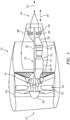
FIG. 1 is a side, cutaway illustration of an offset-core gas turbine engine. -
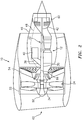
FIG. 2 is a side, cutaway illustration of an offset-core gas turbine engine with an exemplary heat exchanger and air intake configuration according to aspects of the present disclosure -
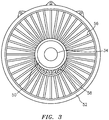
FIG. 3 is a front illustration of the offset-core gas turbine engine ofFIG. 3 . -
FIG. 4 is a side, cutaway illustration of a partial shaft of the gas turbine engine ofFIG. 3 . - It is noted that various connections are set forth between elements in the following description and in the drawings. It is noted that these connections are general and, unless specified otherwise, may be direct or indirect and that this specification is not intended to be limiting in this respect. A coupling between two or more entities may refer to a direct connection or an indirect connection. An indirect connection may incorporate one or more intervening entities. It is further noted that various method or process steps for embodiments of the present disclosure are described in the following description and drawings. The description may present the method and/or process steps as a particular sequence. However, to the extent that the method or process does not rely on the particular order of steps set forth herein, the method or process should not be limited to the particular sequence of steps described. As one of ordinary skill in the art would appreciate, other sequences of steps may be possible. Therefore, the particular order of the steps set forth in the description should not be construed as a limitation.
-
FIG. 1 shows agas turbine engine 10 including apropulsion assembly 22 and an offsetcore 12. Thepropulsion assembly 22 includes afan section 24, having afan 56, ashaft 30, and a low-pressure turbine 26, wherein the low-pressure turbine 26 rotates theshaft 30 which, in turn, rotates thefan 56. The offsetcore 12 is positioned to receive air from thefan 56 via a compressor transition duct 58 (e.g., an inlet duct). The offsetcore 12 includes acompressor section 14, acombustor section 16, and aturbine section 18. While the embodiments disclosed herein relate to aircraft gas turbine engines, the disclosure is not limited to aircraft gas turbine engines and may be used in gas turbine engines of any suitable vehicle. - The
compressor section 14 is driven by theturbine section 18. Thecombustor section 16 is positioned intermediate thecompressor section 14 and theturbine section 18. A turbine transition duct 28 (e.g., an exhaust duct) extends downstream from theturbine section 18 into a low-pressure turbine 26 and further downstream into anexhaust section 60. The products of combustion, downstream of theturbine section 18, pass across the low-pressure turbine 26 which is driven to rotate theshaft 30, thereby rotating thefan 56. In some embodiments, the low-pressure turbine 26 may drive thefan 56 through a speed reducing geared architecture, for example, aplanetary gear system 42, which couples the low-pressure turbine 26 to the shaft 30 (seeFIG. 2 ). - The axis of the offset
core 12 is offset with respect to the axis of thepropulsion assembly 22. For example, at least one of thecompressor section 14 and theturbine section 18 may be configured to rotate about afirst axis 20 while theshaft 30 of thepropulsion assembly 22 is configured to rotate about asecond axis 32, different than thefirst axis 20. In some embodiments, thefirst axis 20 and thesecond axis 32 may be substantially parallel. In some other embodiments, thefirst axis 20 may be angularly skewed relative to thesecond axis 32. - The
gas turbine engine 10 further includes acore cowl 46 arranged substantially around the longitudinal axis of thepropulsion assembly 22, for example, thesecond axis 32. Thecore cowl 46 is generally disposed within thegas turbine engine 10 between thefan section 24 and theaft end 64 of thegas turbine engine 10. Thecore cowl 46 may be positioned so as to envelope at least a portion of the offsetcore 12 and thepropulsion assembly 22. - The
compressor transition duct 58 is disposed just aft of thefan 56 and is configured to convey air from thefan 56 to the offsetcore 12. In some embodiments, thefan section 24 includes a plurality of fanexit guide vanes 54 positioned at the outlet of afan case 52, for example, to direct air flow into thecompressor section 14. Thefan section 24 may further include anosecone 50 disposed on thefan 56 at aforward end 62 of thegas turbine engine 10 and arranged substantially around the longitudinal axis of thepropulsion assembly 22, for example, thesecond axis 32. -
FIGS. 2-4 illustrate thegas turbine engine 10 with an exemplary configuration of at least oneheat exchanger 40. The at least oneheat exchanger 40 is oriented, within thecore cowl 46, between thepropulsion assembly 22 and thecore cowl 46. For example, because of the offset orientation of the offsetcore 12, the at least oneheat exchanger 40 may be oriented so as to extend in a radial direction (e.g., substantially the full radial distance) between thepropulsion assembly 22 and the core cowl 46 (i.e., compared to a typical concentric shaft engine). The radial orientation of the at least oneheat exchanger 40 thereby facilitates greater frontal surface area (i.e., intake area) of the at least oneheat exchanger 40 with respect to total heat exchanger volume as compared to the same relationship found in heat exchanger applications on a typical concentric shaft engine. - As one of ordinary skill in the art will appreciate, the at least one
heat exchanger 40 may be any type, configuration, size, or shape of heat exchanger, for example, the at least oneheat exchanger 40 may use forced air, liquid, etc. as a coolant or any other appropriate cooling medium. The at least oneheat exchanger 40 may include heat exchangers having different types/configurations with respect to one another. Additionally, the at least oneheat exchanger 40 may be used to provide cooling for electronics and/or other loads. - The offset
core 12 may further include anaccessory mount structure 48 configured to hold the at least oneheat exchanger 40. The at least oneheat exchanger 40, as well as other external components, may be mounted on theaccessory mount structure 48, for example, within thecore cowl 46. In some embodiments, theaccessory mount structure 48 and thecore cowl 46 may share the load (i.e., the weight) of the at least oneheat exchanger 40 and other external components, thereby reducing the required size, and accordingly the weight, of theaccessory mount structure 48. For example, theaccessory mount structure 48 may be mounted to the offsetcore 12 and extend outward from the offsetcore 12 into the core cowl 46 (e.g., an exoskeleton). Theaccessory mount structure 48 may include one or more mount points configured to support the load of larger heat exchangers. - As can be seen in
FIG. 2 , theshaft 30 includes anosecone inlet duct 34 disposed within thefan section 24, aninner channel 66, and at least oneshaft vent 36 disposed within at least oneair duct 38. Theinner channel 66 extends along a length of theshaft 30 between thenosecone inlet duct 34 and the at least oneair duct 38. The at least oneair duct 38 is configured to deliver air from thenosecone inlet duct 34 to the at least oneheat exchanger 40 . In some embodiments, theinner channel 66 may extend up to substantially the entire length of theshaft 30. Air passing through theinner channel 66 from thenosecone inlet duct 34 enters the at least oneair duct 38 through at least oneshaft vent 36 disposed within the at least oneair duct 38. Air pulled in through thenosecone inlet duct 34 may be substantially cooler than air which has passed through thefan section 24 of thegas turbine engine 10, thereby providing a reduced heat exchanger source temperature for the at least oneheat exchanger 40. -
FIG. 4 illustrates an exemplary air duct of the at least oneair duct 38. The at least oneair duct 38 may circumscribe theshaft 30. Theshaft 30 may include a plurality of shaft seals 44 configured to provide an air seal between theshaft 30 and the at least oneair duct 38. For example, each shaft seal of the plurality of shaft seals 44 may be disposed in an annular array about the outer circumference of theshaft 30 between theshaft 30 and aninner surface 68 of the at least oneair duct 38. In some embodiments, the at least oneair duct 38 may be disposed about the shaft along a length of the shaft, for example, the at least oneair duct 38 may include a forward air duct and an aft air duct configured to direct air to the at least oneheat exchanger 40. In other embodiments, the at least oneair duct 38 may include air duct segments extending partially around the circumferences of the shaft 30 (e.g., about the second axis 32) in an annular arrangement extending about at least a portion of theshaft 30. - The at least one
shaft vent 36 may be disposed on theshaft 30 within the at least oneair duct 38, for example, between the plurality of shaft seals 44 of theshaft 30 and a respective air duct of the at least oneair duct 38. As one of ordinary skill in the art will appreciate, the at least oneshaft vent 36 may be of any size, shape, or orientation (i.e., longitudinally or circumferentially) within the at least oneair duct 38 so as to direct air from theinner channel 66 of theshaft 30 into the at least oneair duct 38. In some embodiments, the at least oneshaft vent 36 may be configured to facilitate impeller action of theshaft 30 within the at least one air duct 38 (i.e., pumping of the air through the at least one air duct 38). In some embodiments, the at least oneshaft vent 36 may be configured to facilitate pumping of the air with minimal temperature increase (e.g., "aero-shaping" of the at least one shaft vent 36). - As can be seen in
FIG. 4 , air A1 transiting theshaft 30 via theinner channel 66 is directed into the at least oneair duct 38 through the at least oneshaft vent 36. The at least oneair duct 38 direct air A2 into the at least oneheat exchanger 40. In some embodiments, each air duct of the at least oneair duct 38 may direct air A2 into a single heat exchanger of the at least oneheat exchanger 40. In other embodiments, each air duct of the at least oneair duct 38 may direct air A2 into more than one heat exchanger of the at least oneheat exchanger 40. Additionally, in some embodiments, the at least oneair duct 38 may be configured to cool thecore cowl 46 by delivering air A3 from thenosecone inlet duct 34 to thecore cowl 46 - Referring to
FIG. 2 , in some embodiments, thepropulsion assembly 22 may include aplanetary gear system 42 configured to impart a speed ratio between thefan 56 and the low-pressure turbine 26. Theplanetary gear system 42 may be disposed within the propulsion assembly or, alternatively outside thepropulsion assembly 22, for example, within theturbine transition duct 28. - While various embodiments of the present disclosure have been disclosed, it will be apparent to those of ordinary skill in the art that many more embodiments and implementations are possible within the scope of the present disclosure. For example, the present disclosure as described herein includes several aspects and embodiments that include particular features. Although these particular features may be described individually, it is within the scope of the present disclosure that some or all of these features may be combined with any one of the aspects and remain within the scope of the present disclosure. Accordingly, the present disclosure is not to be restricted except in light of the attached claims and their equivalents.
Claims (15)
- A gas turbine engine (10) comprising:an offset core (12) configured to rotate about a first axis (20); anda propulsion assembly (22) comprising a fan section (24) and a low-pressure turbine (26) connected to the offset core (12), the fan section (24) in communication with the low-pressure turbine (26) by a shaft (30) configured to rotate about a second axis (32), different than the first axis (20), the shaft (30) comprisinga nosecone inlet duct (34) disposed within the fan section (24);an inner channel (66) extending along a length of the shaft (30) between the nosecone inlet duct (34) and at least one air duct (38) circumscribing the shaft (30); andat least one shaft vent (36) disposed within the at least one air duct (38);wherein the at least one air duct (38) is configured to deliver air from the nosecone inlet duct (34) to at least one heat exchanger (40).
- The gas turbine engine of claim 1, wherein the propulsion assembly (22) further comprises a planetary gear system (42) coupling the low-pressure turbine (26) to the shaft (30).
- The gas turbine engine of claim 1 or 2, wherein the inner channel (66) extends substantially an entire length of the shaft (30).
- The gas turbine engine of claim 1, 2 or 3, wherein the shaft (30) further comprises a plurality of shaft seals (44) configured to provide an air seal between the shaft (30) and the at least one air duct (38), each shaft seal (44) of the plurality of shaft seals (44) disposed between the shaft (30) and an inner surface (68) of the at least one air duct (38) in an annular array about a circumference of the shaft (30).
- A gas turbine engine comprising:an offset core comprising at least a compressor section, a combustion section, and a turbine section, at least one of the compressor section and the turbine section configured to rotate about a first axis;a propulsion assembly comprising a fan section and a low-pressure turbine connected to the turbine section, the fan section connected to the low-pressure turbine by a shaft configured to rotate about a second axis, different than the first axis, the shaft comprising:a nosecone inlet duct disposed within the fan section;an inner channel extending along a length of the shaft between the nosecone inlet duct and at least one air duct circumscribing the shaft; andat least one shaft vent disposed within the at least one air duct; anda planetary gear system coupling the low-pressure turbine to the shaft;wherein the at least one air duct is configured to deliver air from the nosecone inlet duct to at least one heat exchanger.
- The gas turbine engine of any preceding claim, further comprising a core cowl (36) arranged substantially about the second axis (32) and enveloping at least a portion of the offset core (12) and the propulsion assembly (22).
- The gas turbine engine of claim 6, wherein the at least one air duct (38) is configured to cool the core cowl (36) by delivering air from the nosecone inlet duct (34) to the core cowl (36).
- The gas turbine engine of claim 6 or 7, wherein the offset core (12) further comprises an accessory mount structure (48) configured to hold the at least one heat exchanger (42).
- The gas turbine engine of claim 8, wherein the core cowl (36) and the accessory mount structure (48) are configured to share at least a portion of a weight of the at least one heat exchanger (42).
- The gas turbine engine of any of claims 6 to 9, wherein the at least one heat exchanger (42) is configured to extend in a radial direction substantially a distance between the propulsion assembly (22) and the core cowl (46).
- The gas turbine engine of any preceding claim, wherein the first axis (20) is angularly skewed with respect to the second axis (32).
- The gas turbine engine of any of claims 1 to 10, wherein the first axis (20) is substantially parallel to the second axis (32).
- A gas turbine engine comprising:an offset core comprising at least a compressor section, a combustion section, and a turbine section, at least one of the compressor section and the turbine section configured to rotate about a first axis;a propulsion assembly comprising a fan section and a low-pressure turbine connected to the turbine section, the fan section connected to the low-pressure turbine by a shaft configured to rotate about a second axis, different than the first axis, the shaft comprising:a nosecone inlet duct disposed within the fan section;an inner channel extending along a length of the shaft between the nosecone inlet duct and means for delivering air from the nosecone inlet duct to at least one heat exchanger; at least one air duct circumscribing the shaft; andat least one shaft vent disposed within the at least one air duct; anda core cowl arranged substantially about the second axis and enveloping at least a portion of the offset core and the propulsion assembly;means for delivering air from the nosecone inlet duct to at least one heat exchanger; andwherein the at least one heat exchanger is configured to extend in a radial direction substantially a distance between the propulsion assembly and the core cowl.
- The gas turbine engine of claim 13, wherein the means for delivering air comprises at least one air duct circumscribing the shaft which is further configured to cool the core cowl by delivering air from the nosecone inlet duct to the core cowl.
- The gas turbine engine of claim 13 or 14, wherein the offset core further comprises an accessory mount structure configured to hold the at least one heat exchanger.
Applications Claiming Priority (1)
| Application Number | Priority Date | Filing Date | Title |
|---|---|---|---|
| US16/151,864 US20200109667A1 (en) | 2018-10-04 | 2018-10-04 | Jet engine heat exchanger system |
Publications (2)
| Publication Number | Publication Date |
|---|---|
| EP3633162A1 true EP3633162A1 (en) | 2020-04-08 |
| EP3633162B1 EP3633162B1 (en) | 2021-12-01 |
Family
ID=68158981
Family Applications (1)
| Application Number | Title | Priority Date | Filing Date |
|---|---|---|---|
| EP19201553.5A Active EP3633162B1 (en) | 2018-10-04 | 2019-10-04 | Jet engine heat exchanger system |
Country Status (2)
| Country | Link |
|---|---|
| US (1) | US20200109667A1 (en) |
| EP (1) | EP3633162B1 (en) |
Families Citing this family (3)
| Publication number | Priority date | Publication date | Assignee | Title |
|---|---|---|---|---|
| US12000334B1 (en) | 2023-03-08 | 2024-06-04 | Rtx Corporation | Heat exchanger(s) for recovering water and/or heat energy from turbine engine combustion products |
| US12577904B2 (en) * | 2023-04-28 | 2026-03-17 | Rtx Corporation | Offset core with side ejector nacelle nozzles |
| US20250059933A1 (en) * | 2023-08-14 | 2025-02-20 | The Boeing Company | Method of Nacelle Air Heat Exchanger Integration for a Hydrogen Fueled Fuel Cell Powered Aircraft |
Citations (4)
| Publication number | Priority date | Publication date | Assignee | Title |
|---|---|---|---|---|
| US2940258A (en) * | 1954-01-25 | 1960-06-14 | Rolls Royce | Supplying air to internal components of engines |
| US20130259639A1 (en) * | 2012-04-02 | 2013-10-03 | Gabriel L. Suciu | Turbomachine thermal management |
| EP3015696A2 (en) * | 2014-10-27 | 2016-05-04 | United Technologies Corporation | Offset cores for gas turbine engines |
| US10024235B2 (en) * | 2014-03-03 | 2018-07-17 | United Technologies Corporation | Offset core engine architecture |
Family Cites Families (1)
| Publication number | Priority date | Publication date | Assignee | Title |
|---|---|---|---|---|
| DE102017108597A1 (en) * | 2017-04-21 | 2018-10-25 | Rolls-Royce Deutschland Ltd & Co Kg | Jet engine with a cooling device |
-
2018
- 2018-10-04 US US16/151,864 patent/US20200109667A1/en not_active Abandoned
-
2019
- 2019-10-04 EP EP19201553.5A patent/EP3633162B1/en active Active
Patent Citations (4)
| Publication number | Priority date | Publication date | Assignee | Title |
|---|---|---|---|---|
| US2940258A (en) * | 1954-01-25 | 1960-06-14 | Rolls Royce | Supplying air to internal components of engines |
| US20130259639A1 (en) * | 2012-04-02 | 2013-10-03 | Gabriel L. Suciu | Turbomachine thermal management |
| US10024235B2 (en) * | 2014-03-03 | 2018-07-17 | United Technologies Corporation | Offset core engine architecture |
| EP3015696A2 (en) * | 2014-10-27 | 2016-05-04 | United Technologies Corporation | Offset cores for gas turbine engines |
Also Published As
| Publication number | Publication date |
|---|---|
| EP3633162B1 (en) | 2021-12-01 |
| US20200109667A1 (en) | 2020-04-09 |
Similar Documents
| Publication | Publication Date | Title |
|---|---|---|
| US20210010384A1 (en) | Gas turbine engine electrical generator | |
| US7448199B2 (en) | Self powdered missile turbojet | |
| US10066550B2 (en) | Fan by-pass duct for intercooled turbo fan engines | |
| US20190003488A1 (en) | Electric centrifugal compressor of a turbine engine or aircraft | |
| US10773813B2 (en) | Aircraft with a propulsion unit comprising a fan at the rear of the fuselage | |
| EP3981973B1 (en) | Aircraft | |
| EP3633162B1 (en) | Jet engine heat exchanger system | |
| CN114991963A (en) | Three-flow engine with heat exchanger | |
| US8701385B2 (en) | Method and apparatus for the operation of a turboprop aircraft engine provided with pusher propellers | |
| US11821370B2 (en) | Cooling system for tail cone mounted generator | |
| CN112969843B (en) | Aircraft turbine engine provided with an electric motor | |
| EP4509703A1 (en) | Aircraft powerplant with electric powertrain | |
| US20230021361A1 (en) | Auxiliary power unit comprising a gas generator in direct-drive connection with an electric generator and an accessory gearbox | |
| US20250263173A1 (en) | Exhaust duct mounting structure for hybrid aircraft powerplant | |
| EP4390063A1 (en) | Exhaust duct for hybrid aircraft powerplant | |
| US10941709B2 (en) | Gas turbine engine and cooling air configuration for turbine section thereof | |
| US12116900B2 (en) | Buffer air system for a bearing compartment | |
| US11873758B1 (en) | Gas turbine engine component with integral heat exchanger | |
| US12560133B2 (en) | Multiple-flow aircraft turbine engine | |
| GB2379483A (en) | Augmented gas turbine propulsion system | |
| US12525841B2 (en) | Cooling an electric machine of a turbine engine powerplant | |
| US12522370B2 (en) | Rotorcraft powerplant cooling system | |
| US20250290452A1 (en) | Turbine engine with accessory gearbox | |
| US12397924B2 (en) | Open rotor aircraft propulsion system with bypass flowpath | |
| US20250129747A1 (en) | Nacelle for a gas turbine engine |
Legal Events
| Date | Code | Title | Description |
|---|---|---|---|
| PUAI | Public reference made under article 153(3) epc to a published international application that has entered the european phase |
Free format text: ORIGINAL CODE: 0009012 |
|
| STAA | Information on the status of an ep patent application or granted ep patent |
Free format text: STATUS: THE APPLICATION HAS BEEN PUBLISHED |
|
| AK | Designated contracting states |
Kind code of ref document: A1 Designated state(s): AL AT BE BG CH CY CZ DE DK EE ES FI FR GB GR HR HU IE IS IT LI LT LU LV MC MK MT NL NO PL PT RO RS SE SI SK SM TR |
|
| AX | Request for extension of the european patent |
Extension state: BA ME |
|
| STAA | Information on the status of an ep patent application or granted ep patent |
Free format text: STATUS: REQUEST FOR EXAMINATION WAS MADE |
|
| 17P | Request for examination filed |
Effective date: 20201008 |
|
| RBV | Designated contracting states (corrected) |
Designated state(s): AL AT BE BG CH CY CZ DE DK EE ES FI FR GB GR HR HU IE IS IT LI LT LU LV MC MK MT NL NO PL PT RO RS SE SI SK SM TR |
|
| RAP1 | Party data changed (applicant data changed or rights of an application transferred) |
Owner name: RAYTHEON TECHNOLOGIES CORPORATION |
|
| GRAP | Despatch of communication of intention to grant a patent |
Free format text: ORIGINAL CODE: EPIDOSNIGR1 |
|
| STAA | Information on the status of an ep patent application or granted ep patent |
Free format text: STATUS: GRANT OF PATENT IS INTENDED |
|
| INTG | Intention to grant announced |
Effective date: 20210517 |
|
| GRAS | Grant fee paid |
Free format text: ORIGINAL CODE: EPIDOSNIGR3 |
|
| GRAA | (expected) grant |
Free format text: ORIGINAL CODE: 0009210 |
|
| STAA | Information on the status of an ep patent application or granted ep patent |
Free format text: STATUS: THE PATENT HAS BEEN GRANTED |
|
| AK | Designated contracting states |
Kind code of ref document: B1 Designated state(s): AL AT BE BG CH CY CZ DE DK EE ES FI FR GB GR HR HU IE IS IT LI LT LU LV MC MK MT NL NO PL PT RO RS SE SI SK SM TR |
|
| REG | Reference to a national code |
Ref country code: GB Ref legal event code: FG4D |
|
| REG | Reference to a national code |
Ref country code: AT Ref legal event code: REF Ref document number: 1451970 Country of ref document: AT Kind code of ref document: T Effective date: 20211215 Ref country code: CH Ref legal event code: EP |
|
| REG | Reference to a national code |
Ref country code: IE Ref legal event code: FG4D |
|
| REG | Reference to a national code |
Ref country code: DE Ref legal event code: R096 Ref document number: 602019009686 Country of ref document: DE |
|
| REG | Reference to a national code |
Ref country code: LT Ref legal event code: MG9D |
|
| REG | Reference to a national code |
Ref country code: NL Ref legal event code: MP Effective date: 20211201 |
|
| REG | Reference to a national code |
Ref country code: AT Ref legal event code: MK05 Ref document number: 1451970 Country of ref document: AT Kind code of ref document: T Effective date: 20211201 |
|
| PG25 | Lapsed in a contracting state [announced via postgrant information from national office to epo] |
Ref country code: RS Free format text: LAPSE BECAUSE OF FAILURE TO SUBMIT A TRANSLATION OF THE DESCRIPTION OR TO PAY THE FEE WITHIN THE PRESCRIBED TIME-LIMIT Effective date: 20211201 Ref country code: LT Free format text: LAPSE BECAUSE OF FAILURE TO SUBMIT A TRANSLATION OF THE DESCRIPTION OR TO PAY THE FEE WITHIN THE PRESCRIBED TIME-LIMIT Effective date: 20211201 Ref country code: FI Free format text: LAPSE BECAUSE OF FAILURE TO SUBMIT A TRANSLATION OF THE DESCRIPTION OR TO PAY THE FEE WITHIN THE PRESCRIBED TIME-LIMIT Effective date: 20211201 Ref country code: BG Free format text: LAPSE BECAUSE OF FAILURE TO SUBMIT A TRANSLATION OF THE DESCRIPTION OR TO PAY THE FEE WITHIN THE PRESCRIBED TIME-LIMIT Effective date: 20220301 Ref country code: AT Free format text: LAPSE BECAUSE OF FAILURE TO SUBMIT A TRANSLATION OF THE DESCRIPTION OR TO PAY THE FEE WITHIN THE PRESCRIBED TIME-LIMIT Effective date: 20211201 |
|
| PG25 | Lapsed in a contracting state [announced via postgrant information from national office to epo] |
Ref country code: SE Free format text: LAPSE BECAUSE OF FAILURE TO SUBMIT A TRANSLATION OF THE DESCRIPTION OR TO PAY THE FEE WITHIN THE PRESCRIBED TIME-LIMIT Effective date: 20211201 Ref country code: PL Free format text: LAPSE BECAUSE OF FAILURE TO SUBMIT A TRANSLATION OF THE DESCRIPTION OR TO PAY THE FEE WITHIN THE PRESCRIBED TIME-LIMIT Effective date: 20211201 Ref country code: NO Free format text: LAPSE BECAUSE OF FAILURE TO SUBMIT A TRANSLATION OF THE DESCRIPTION OR TO PAY THE FEE WITHIN THE PRESCRIBED TIME-LIMIT Effective date: 20220301 Ref country code: LV Free format text: LAPSE BECAUSE OF FAILURE TO SUBMIT A TRANSLATION OF THE DESCRIPTION OR TO PAY THE FEE WITHIN THE PRESCRIBED TIME-LIMIT Effective date: 20211201 Ref country code: HR Free format text: LAPSE BECAUSE OF FAILURE TO SUBMIT A TRANSLATION OF THE DESCRIPTION OR TO PAY THE FEE WITHIN THE PRESCRIBED TIME-LIMIT Effective date: 20211201 Ref country code: GR Free format text: LAPSE BECAUSE OF FAILURE TO SUBMIT A TRANSLATION OF THE DESCRIPTION OR TO PAY THE FEE WITHIN THE PRESCRIBED TIME-LIMIT Effective date: 20220302 Ref country code: ES Free format text: LAPSE BECAUSE OF FAILURE TO SUBMIT A TRANSLATION OF THE DESCRIPTION OR TO PAY THE FEE WITHIN THE PRESCRIBED TIME-LIMIT Effective date: 20211201 |
|
| PG25 | Lapsed in a contracting state [announced via postgrant information from national office to epo] |
Ref country code: NL Free format text: LAPSE BECAUSE OF FAILURE TO SUBMIT A TRANSLATION OF THE DESCRIPTION OR TO PAY THE FEE WITHIN THE PRESCRIBED TIME-LIMIT Effective date: 20211201 |
|
| PG25 | Lapsed in a contracting state [announced via postgrant information from national office to epo] |
Ref country code: SM Free format text: LAPSE BECAUSE OF FAILURE TO SUBMIT A TRANSLATION OF THE DESCRIPTION OR TO PAY THE FEE WITHIN THE PRESCRIBED TIME-LIMIT Effective date: 20211201 Ref country code: SK Free format text: LAPSE BECAUSE OF FAILURE TO SUBMIT A TRANSLATION OF THE DESCRIPTION OR TO PAY THE FEE WITHIN THE PRESCRIBED TIME-LIMIT Effective date: 20211201 Ref country code: RO Free format text: LAPSE BECAUSE OF FAILURE TO SUBMIT A TRANSLATION OF THE DESCRIPTION OR TO PAY THE FEE WITHIN THE PRESCRIBED TIME-LIMIT Effective date: 20211201 Ref country code: PT Free format text: LAPSE BECAUSE OF FAILURE TO SUBMIT A TRANSLATION OF THE DESCRIPTION OR TO PAY THE FEE WITHIN THE PRESCRIBED TIME-LIMIT Effective date: 20220401 Ref country code: EE Free format text: LAPSE BECAUSE OF FAILURE TO SUBMIT A TRANSLATION OF THE DESCRIPTION OR TO PAY THE FEE WITHIN THE PRESCRIBED TIME-LIMIT Effective date: 20211201 Ref country code: CZ Free format text: LAPSE BECAUSE OF FAILURE TO SUBMIT A TRANSLATION OF THE DESCRIPTION OR TO PAY THE FEE WITHIN THE PRESCRIBED TIME-LIMIT Effective date: 20211201 |
|
| REG | Reference to a national code |
Ref country code: DE Ref legal event code: R097 Ref document number: 602019009686 Country of ref document: DE |
|
| PG25 | Lapsed in a contracting state [announced via postgrant information from national office to epo] |
Ref country code: IS Free format text: LAPSE BECAUSE OF FAILURE TO SUBMIT A TRANSLATION OF THE DESCRIPTION OR TO PAY THE FEE WITHIN THE PRESCRIBED TIME-LIMIT Effective date: 20220401 |
|
| PLBE | No opposition filed within time limit |
Free format text: ORIGINAL CODE: 0009261 |
|
| STAA | Information on the status of an ep patent application or granted ep patent |
Free format text: STATUS: NO OPPOSITION FILED WITHIN TIME LIMIT |
|
| PG25 | Lapsed in a contracting state [announced via postgrant information from national office to epo] |
Ref country code: DK Free format text: LAPSE BECAUSE OF FAILURE TO SUBMIT A TRANSLATION OF THE DESCRIPTION OR TO PAY THE FEE WITHIN THE PRESCRIBED TIME-LIMIT Effective date: 20211201 Ref country code: AL Free format text: LAPSE BECAUSE OF FAILURE TO SUBMIT A TRANSLATION OF THE DESCRIPTION OR TO PAY THE FEE WITHIN THE PRESCRIBED TIME-LIMIT Effective date: 20211201 |
|
| 26N | No opposition filed |
Effective date: 20220902 |
|
| PG25 | Lapsed in a contracting state [announced via postgrant information from national office to epo] |
Ref country code: SI Free format text: LAPSE BECAUSE OF FAILURE TO SUBMIT A TRANSLATION OF THE DESCRIPTION OR TO PAY THE FEE WITHIN THE PRESCRIBED TIME-LIMIT Effective date: 20211201 |
|
| PG25 | Lapsed in a contracting state [announced via postgrant information from national office to epo] |
Ref country code: MC Free format text: LAPSE BECAUSE OF FAILURE TO SUBMIT A TRANSLATION OF THE DESCRIPTION OR TO PAY THE FEE WITHIN THE PRESCRIBED TIME-LIMIT Effective date: 20211201 Ref country code: IT Free format text: LAPSE BECAUSE OF FAILURE TO SUBMIT A TRANSLATION OF THE DESCRIPTION OR TO PAY THE FEE WITHIN THE PRESCRIBED TIME-LIMIT Effective date: 20211201 |
|
| REG | Reference to a national code |
Ref country code: CH Ref legal event code: PL |
|
| REG | Reference to a national code |
Ref country code: BE Ref legal event code: MM Effective date: 20221031 |
|
| P01 | Opt-out of the competence of the unified patent court (upc) registered |
Effective date: 20230521 |
|
| PG25 | Lapsed in a contracting state [announced via postgrant information from national office to epo] |
Ref country code: LU Free format text: LAPSE BECAUSE OF NON-PAYMENT OF DUE FEES Effective date: 20221004 |
|
| PG25 | Lapsed in a contracting state [announced via postgrant information from national office to epo] |
Ref country code: LI Free format text: LAPSE BECAUSE OF NON-PAYMENT OF DUE FEES Effective date: 20221031 Ref country code: CH Free format text: LAPSE BECAUSE OF NON-PAYMENT OF DUE FEES Effective date: 20221031 |
|
| PG25 | Lapsed in a contracting state [announced via postgrant information from national office to epo] |
Ref country code: BE Free format text: LAPSE BECAUSE OF NON-PAYMENT OF DUE FEES Effective date: 20221031 |
|
| PG25 | Lapsed in a contracting state [announced via postgrant information from national office to epo] |
Ref country code: IE Free format text: LAPSE BECAUSE OF NON-PAYMENT OF DUE FEES Effective date: 20221004 |
|
| PG25 | Lapsed in a contracting state [announced via postgrant information from national office to epo] |
Ref country code: HU Free format text: LAPSE BECAUSE OF FAILURE TO SUBMIT A TRANSLATION OF THE DESCRIPTION OR TO PAY THE FEE WITHIN THE PRESCRIBED TIME-LIMIT; INVALID AB INITIO Effective date: 20191004 |
|
| PG25 | Lapsed in a contracting state [announced via postgrant information from national office to epo] |
Ref country code: CY Free format text: LAPSE BECAUSE OF FAILURE TO SUBMIT A TRANSLATION OF THE DESCRIPTION OR TO PAY THE FEE WITHIN THE PRESCRIBED TIME-LIMIT Effective date: 20211201 |
|
| PG25 | Lapsed in a contracting state [announced via postgrant information from national office to epo] |
Ref country code: MK Free format text: LAPSE BECAUSE OF FAILURE TO SUBMIT A TRANSLATION OF THE DESCRIPTION OR TO PAY THE FEE WITHIN THE PRESCRIBED TIME-LIMIT Effective date: 20211201 |
|
| PG25 | Lapsed in a contracting state [announced via postgrant information from national office to epo] |
Ref country code: MT Free format text: LAPSE BECAUSE OF FAILURE TO SUBMIT A TRANSLATION OF THE DESCRIPTION OR TO PAY THE FEE WITHIN THE PRESCRIBED TIME-LIMIT Effective date: 20211201 |
|
| REG | Reference to a national code |
Ref country code: DE Ref legal event code: R081 Ref document number: 602019009686 Country of ref document: DE Owner name: RTX CORPORATION (N.D.GES.D. STAATES DELAWARE),, US Free format text: FORMER OWNER: RAYTHEON TECHNOLOGIES CORPORATION, FARMINGTON, CT, US |
|
| PGFP | Annual fee paid to national office [announced via postgrant information from national office to epo] |
Ref country code: GB Payment date: 20250923 Year of fee payment: 7 |
|
| PGFP | Annual fee paid to national office [announced via postgrant information from national office to epo] |
Ref country code: FR Payment date: 20250924 Year of fee payment: 7 |
|
| PG25 | Lapsed in a contracting state [announced via postgrant information from national office to epo] |
Ref country code: TR Free format text: LAPSE BECAUSE OF FAILURE TO SUBMIT A TRANSLATION OF THE DESCRIPTION OR TO PAY THE FEE WITHIN THE PRESCRIBED TIME-LIMIT Effective date: 20211201 |
|
| PGFP | Annual fee paid to national office [announced via postgrant information from national office to epo] |
Ref country code: DE Payment date: 20250923 Year of fee payment: 7 |