EP3632910B1 - 3,4-dihydroquinolinones as fxr receptor agonists - Google Patents
3,4-dihydroquinolinones as fxr receptor agonists Download PDFInfo
- Publication number
- EP3632910B1 EP3632910B1 EP18806569.2A EP18806569A EP3632910B1 EP 3632910 B1 EP3632910 B1 EP 3632910B1 EP 18806569 A EP18806569 A EP 18806569A EP 3632910 B1 EP3632910 B1 EP 3632910B1
- Authority
- EP
- European Patent Office
- Prior art keywords
- compound
- acid
- optionally substituted
- present disclosure
- pharmaceutically acceptable
- Prior art date
- Legal status (The legal status is an assumption and is not a legal conclusion. Google has not performed a legal analysis and makes no representation as to the accuracy of the status listed.)
- Active
Links
Images
Classifications
-
- C—CHEMISTRY; METALLURGY
- C07—ORGANIC CHEMISTRY
- C07D—HETEROCYCLIC COMPOUNDS
- C07D413/00—Heterocyclic compounds containing two or more hetero rings, at least one ring having nitrogen and oxygen atoms as the only ring hetero atoms
- C07D413/02—Heterocyclic compounds containing two or more hetero rings, at least one ring having nitrogen and oxygen atoms as the only ring hetero atoms containing two hetero rings
- C07D413/12—Heterocyclic compounds containing two or more hetero rings, at least one ring having nitrogen and oxygen atoms as the only ring hetero atoms containing two hetero rings linked by a chain containing hetero atoms as chain links
-
- C—CHEMISTRY; METALLURGY
- C07—ORGANIC CHEMISTRY
- C07D—HETEROCYCLIC COMPOUNDS
- C07D401/00—Heterocyclic compounds containing two or more hetero rings, having nitrogen atoms as the only ring hetero atoms, at least one ring being a six-membered ring with only one nitrogen atom
- C07D401/02—Heterocyclic compounds containing two or more hetero rings, having nitrogen atoms as the only ring hetero atoms, at least one ring being a six-membered ring with only one nitrogen atom containing two hetero rings
-
- A—HUMAN NECESSITIES
- A61—MEDICAL OR VETERINARY SCIENCE; HYGIENE
- A61K—PREPARATIONS FOR MEDICAL, DENTAL OR TOILETRY PURPOSES
- A61K31/00—Medicinal preparations containing organic active ingredients
- A61K31/33—Heterocyclic compounds
- A61K31/395—Heterocyclic compounds having nitrogen as a ring hetero atom, e.g. guanethidine or rifamycins
- A61K31/41—Heterocyclic compounds having nitrogen as a ring hetero atom, e.g. guanethidine or rifamycins having five-membered rings with two or more ring hetero atoms, at least one of which being nitrogen, e.g. tetrazole
- A61K31/42—Oxazoles
- A61K31/422—Oxazoles not condensed and containing further heterocyclic rings
-
- A—HUMAN NECESSITIES
- A61—MEDICAL OR VETERINARY SCIENCE; HYGIENE
- A61K—PREPARATIONS FOR MEDICAL, DENTAL OR TOILETRY PURPOSES
- A61K31/00—Medicinal preparations containing organic active ingredients
- A61K31/33—Heterocyclic compounds
- A61K31/395—Heterocyclic compounds having nitrogen as a ring hetero atom, e.g. guanethidine or rifamycins
- A61K31/435—Heterocyclic compounds having nitrogen as a ring hetero atom, e.g. guanethidine or rifamycins having six-membered rings with one nitrogen as the only ring hetero atom
- A61K31/44—Non condensed pyridines; Hydrogenated derivatives thereof
- A61K31/4427—Non condensed pyridines; Hydrogenated derivatives thereof containing further heterocyclic ring systems
- A61K31/4439—Non condensed pyridines; Hydrogenated derivatives thereof containing further heterocyclic ring systems containing a five-membered ring with nitrogen as a ring hetero atom, e.g. omeprazole
-
- A—HUMAN NECESSITIES
- A61—MEDICAL OR VETERINARY SCIENCE; HYGIENE
- A61P—SPECIFIC THERAPEUTIC ACTIVITY OF CHEMICAL COMPOUNDS OR MEDICINAL PREPARATIONS
- A61P1/00—Drugs for disorders of the alimentary tract or the digestive system
- A61P1/16—Drugs for disorders of the alimentary tract or the digestive system for liver or gallbladder disorders, e.g. hepatoprotective agents, cholagogues, litholytics
-
- C—CHEMISTRY; METALLURGY
- C07—ORGANIC CHEMISTRY
- C07D—HETEROCYCLIC COMPOUNDS
- C07D401/00—Heterocyclic compounds containing two or more hetero rings, having nitrogen atoms as the only ring hetero atoms, at least one ring being a six-membered ring with only one nitrogen atom
- C07D401/02—Heterocyclic compounds containing two or more hetero rings, having nitrogen atoms as the only ring hetero atoms, at least one ring being a six-membered ring with only one nitrogen atom containing two hetero rings
- C07D401/12—Heterocyclic compounds containing two or more hetero rings, having nitrogen atoms as the only ring hetero atoms, at least one ring being a six-membered ring with only one nitrogen atom containing two hetero rings linked by a chain containing hetero atoms as chain links
-
- C—CHEMISTRY; METALLURGY
- C07—ORGANIC CHEMISTRY
- C07D—HETEROCYCLIC COMPOUNDS
- C07D401/00—Heterocyclic compounds containing two or more hetero rings, having nitrogen atoms as the only ring hetero atoms, at least one ring being a six-membered ring with only one nitrogen atom
- C07D401/14—Heterocyclic compounds containing two or more hetero rings, having nitrogen atoms as the only ring hetero atoms, at least one ring being a six-membered ring with only one nitrogen atom containing three or more hetero rings
-
- C—CHEMISTRY; METALLURGY
- C07—ORGANIC CHEMISTRY
- C07D—HETEROCYCLIC COMPOUNDS
- C07D409/00—Heterocyclic compounds containing two or more hetero rings, at least one ring having sulfur atoms as the only ring hetero atoms
- C07D409/02—Heterocyclic compounds containing two or more hetero rings, at least one ring having sulfur atoms as the only ring hetero atoms containing two hetero rings
-
- C—CHEMISTRY; METALLURGY
- C07—ORGANIC CHEMISTRY
- C07D—HETEROCYCLIC COMPOUNDS
- C07D409/00—Heterocyclic compounds containing two or more hetero rings, at least one ring having sulfur atoms as the only ring hetero atoms
- C07D409/02—Heterocyclic compounds containing two or more hetero rings, at least one ring having sulfur atoms as the only ring hetero atoms containing two hetero rings
- C07D409/12—Heterocyclic compounds containing two or more hetero rings, at least one ring having sulfur atoms as the only ring hetero atoms containing two hetero rings linked by a chain containing hetero atoms as chain links
-
- C—CHEMISTRY; METALLURGY
- C07—ORGANIC CHEMISTRY
- C07D—HETEROCYCLIC COMPOUNDS
- C07D413/00—Heterocyclic compounds containing two or more hetero rings, at least one ring having nitrogen and oxygen atoms as the only ring hetero atoms
- C07D413/02—Heterocyclic compounds containing two or more hetero rings, at least one ring having nitrogen and oxygen atoms as the only ring hetero atoms containing two hetero rings
-
- C—CHEMISTRY; METALLURGY
- C07—ORGANIC CHEMISTRY
- C07D—HETEROCYCLIC COMPOUNDS
- C07D413/00—Heterocyclic compounds containing two or more hetero rings, at least one ring having nitrogen and oxygen atoms as the only ring hetero atoms
- C07D413/14—Heterocyclic compounds containing two or more hetero rings, at least one ring having nitrogen and oxygen atoms as the only ring hetero atoms containing three or more hetero rings
-
- C—CHEMISTRY; METALLURGY
- C07—ORGANIC CHEMISTRY
- C07D—HETEROCYCLIC COMPOUNDS
- C07D417/00—Heterocyclic compounds containing two or more hetero rings, at least one ring having nitrogen and sulfur atoms as the only ring hetero atoms, not provided for by group C07D415/00
- C07D417/02—Heterocyclic compounds containing two or more hetero rings, at least one ring having nitrogen and sulfur atoms as the only ring hetero atoms, not provided for by group C07D415/00 containing two hetero rings
-
- C—CHEMISTRY; METALLURGY
- C07—ORGANIC CHEMISTRY
- C07D—HETEROCYCLIC COMPOUNDS
- C07D417/00—Heterocyclic compounds containing two or more hetero rings, at least one ring having nitrogen and sulfur atoms as the only ring hetero atoms, not provided for by group C07D415/00
- C07D417/14—Heterocyclic compounds containing two or more hetero rings, at least one ring having nitrogen and sulfur atoms as the only ring hetero atoms, not provided for by group C07D415/00 containing three or more hetero rings
-
- C—CHEMISTRY; METALLURGY
- C07—ORGANIC CHEMISTRY
- C07D—HETEROCYCLIC COMPOUNDS
- C07D471/00—Heterocyclic compounds containing nitrogen atoms as the only ring hetero atoms in the condensed system, at least one ring being a six-membered ring with one nitrogen atom, not provided for by groups C07D451/00 - C07D463/00
- C07D471/02—Heterocyclic compounds containing nitrogen atoms as the only ring hetero atoms in the condensed system, at least one ring being a six-membered ring with one nitrogen atom, not provided for by groups C07D451/00 - C07D463/00 in which the condensed system contains two hetero rings
- C07D471/04—Ortho-condensed systems
Definitions
- the present disclosure relates to the field of medicine, and in particular to a compound of formula (III), an optical isomer thereof or a pharmaceutically acceptable salt thereof, and the compound or the optical isomer thereof or a pharmaceutically acceptable salt thereof for use in the treatment of FXR-related diseases.
- FXR Farnesoid X receptor
- RXR retinoid X receptor
- the FXR/RXR heterodimer preferentially binds to a component composed of two nuclear receptor half sites of the consensus AG(G/T)TCA organized as an inverted repeat and separated by a single nucleotide (IR-I motif) ( BM.Forman, et al., Cell 81 : 687-693(1995 )).
- FXR as a bile acid-activated nuclear receptor, is involved in the regulation of various physiological activities, including bile acid metabolism, lipid metabolism, glucose metabolism, liver protection, and is closely related to metabolic syndrome, hepatobiliary disease, type II diabetes and other diseases.
- Cholic acid that serves as an endogenous ligand for FXR includes chenodeoxycholic acid (CDCA), deoxycholic acid (DCA), lithocholic acid (LCA), and the taurine and glycine conjugates of these bile acids.
- WO 2005082925 discloses use of the cholic acid derivative INT747 in the preparation of a medicament for the treatment of FXR-related diseases.
- Other FXR active compounds are disclosed in WO2009/005998 and in Gege et al., Current Topics in Medicinal Chemistry, 2014, 14, pages 2143-2158 .
- the present disclosure provides a compound of formula (III), optical isomer thereof or pharmaceutically acceptable salt, wherein,
- the above R is selected from F, Cl, Br, I, CN, OH, NH 2 , COOH, CONH 2 , Me, Et, CF 3 ,
- R 1 is selected from -COOH, or selected from the following groups which are optionally substituted with 1, 2 or 3 R: phenyl, pyridyl, pyrimidinyl, thienyl, thiazolyl, indolyl, cyclohexanyl, cyclohexenyl, bicyclo[1.1.1]pentanyl, benzopyrazolyl or benzothiazolyl; and R has a definition as defined in the present disclosure.
- R 1 is selected from-COOH, or selected from the following groups which are optionally substituted with 1, 2 or 3 R: ; and R has a definition as defined in the present disclosure.
- R 1 is selected from -COOH
- R 4 is selected from H, F, Cl, Br, I, OH, or NH 2 , or selected from the following groups which are optionally substituted with 1, 2 or 3 R: C 1-3 alkyl, phenyl, or pyridyl; and R has a definition as defined in the present disclosure.
- R 4 is selected from H, F, Cl, Br, I, OH, or NH 2 , or selected from the following groups which are optionally substituted with 1, 2 or 3 R: Me, ; and R has a definition as defined in the present disclosure.
- R 4 is selected from H, Cl, Me, or ; and R has a definition as defined in the present disclosure.
- the above R is selected from F, Cl, Br, I, CN, OH, NH 2 , COOH, CONH 2 , Me, Et, CF 3 , ; the other variables are as defined in the present disclosure.
- R 1 is selected from -COOH, or selected from the following groups which are optionally substituted with 1, 2 or 3 R: phenyl, pyridyl, pyrimidinyl, thienyl, thiazolyl, indolyl, cyclohexanyl, cyclohexenyl, bicyclo[1.1.1]pentanyl, benzopyrazolyl or benzothiazolyl; and the other variables are as defined in the present disclosure.
- R 1 is selected from -COOH, or selected from the following groups which are optionally substituted with 1, 2 or 3 R: ; and the other variables are as defined in the present disclosure.
- R 1 is selected from -COOH, ; the other variables are as defined in the present disclosure.
- R 4 is selected from H, F, Cl, Br, I, OH, NH 2 , or selected from the following groups which are optionally substituted with 1, 2 or 3 R: C 1-3 alkyl, phenyl or pyridyl; and the other variables are as defined in the present disclosure.
- R 4 is selected from H, F, Cl, Br, I, OH, or NH 2 , or selected from the following groups which are optionally substituted with 1, 2 or 3 R: Me, and the other variables are as defined in the present disclosure.
- R 4 is selected from H, Cl, Me, or ; and the other variables are as defined in the present disclosure.
- the above compound, optical isomer thereof or pharmaceutically acceptable salt thereof is selected from , wherein,
- the above compound, optical isomer thereof or pharmaceutically acceptable salt thereof is selected from wherein,
- the above R is selected from F, Cl, Br, I, CN, OH, NH 2 , COOH, CONH 2 , Me, Et, CF 3 ,
- R 1 is selected from -COOH, or selected from the following groups which are optionally substituted with 1, 2 or 3 R: phenyl, pyridyl, pyrimidinyl, thienyl, thiazolyl, indolyl, cyclohexanyl, cyclohexenyl, bicyclo[1.1.1]pentanyl, benzopyrazolyl, benzothiazolyl; and R has a definition as described in the present disclosure.
- R 1 is selected from -COOH, or selected from the following groups which are optionally substituted with 1, 2 or 3 R: ; and R has a definition as described in the present disclosure.
- R 1 is selected from -COOH
- R 4 is selected from H, F, Cl, Br, I, OH, NH 2 , or selected from the following groups which are optionally substituted with 1, 2 or 3 R: C 1-3 alkyl, phenyl, pyridyl; and R has a definition as described in the present disclosure.
- R 4 is selected from H, F, Cl, Br, I, OH, NH 2 , or selected from the following groups which are optionally substituted with 1, 2 or 3 R: Me, ; and R has a definition as described in the present disclosure.
- R 4 is selected from H, Cl, Me, and R has a definition as described in the present disclosure.
- the above R is selected from F, Cl, Br, I, CN, OH, NH 2 , COOH, CONH 2 , Me, Et, CF 3 , ; and the other variables are as defined above.
- R 1 is selected from -COOH, or selected from the following groups which are optionally substituted with 1, 2 or 3 R: phenyl, pyridyl, pyrimidinyl, thienyl, thiazolyl, indolyl, cyclohexanyl, cyclohexenyl, bicyclo[1.1.1]pentanyl, benzopyrazolyl, benzothiazolyl; and the other variables are as defined above.
- R 1 is selected from -COOH, or selected from the following groups which are optionally substituted with 1, 2 or 3 R: ; and the other variables are as defined above.
- R 1 is selected from -COOH, and the other variables are as defined above.
- R 4 is selected from H, F, Cl, Br, I, OH, NH 2 , or selected from the following groups which are optionally substituted with 1, 2 or 3 R: C 1-3 alkyl, phenyl, pyridyl; and the other variables are as defined above.
- R 4 is selected from H, F, Cl, Br, I, OH, or NH 2 , or selected from the following groups which are optionally substituted with 1, 2 or 3 R: Me, ; and the other variables are as defined above.
- R 4 is selected from H, Cl, Me, ; and the other variables are as defined above.
- the above R is selected from F, Cl, Br, I, CN, OH, NH 2 , COOH, CONH 2 , Me, Et, CF 3 ,
- R 1 is selected from -COOH, or selected from the following groups which are optionally substituted with 1, 2 or 3 R: phenyl, pyridyl, pyrimidinyl, thienyl, thiazolyl, indolyl, cyclohexanyl, cyclohexenyl, bicyclo[1.1.1]pentanyl.
- R 1 is selected from -COOH, or selected from the following groups which are optionally substituted with 1, 2 or 3 R:
- R 1 is selected from -COOH
- R 4 is selected from H, F, Cl, Br, I, OH, NH 2 , or selected from the following groups which are optionally substituted with 1, 2 or 3 R: C 1-3 alkyl, phenyl, pyridyl.
- R 4 is selected from H, F, Cl, Br, I, OH, NH 2 , or selected from the following groups which are optionally substituted with 1, 2 or 3 R: Me,
- R 4 is selected from H, Cl, Me,
- the above R is selected from F, Cl, Br, I, CN, OH, NH 2 , COOH, CONH 2 , Me, Et, CF 3 , and the other variables are as defined above.
- R 1 is selected from -COOH, or selected from the following groups which are optionally substituted with 1, 2 or 3 R: phenyl, pyridyl, pyrimidinyl, thienyl, thiazolyl, indolyl, cyclohexanyl, cyclohexenyl, bicyclo[1.1.1]pentanyl.
- R 1 is selected from -COOH, or selected from the following groups which are optionally substituted with 1, 2 or 3 R: ; and the other variables are as defined above.
- R 1 is selected from -COOH, and the other variables are as defined above.
- R 4 is selected from H, F, Cl, Br, I, OH, NH 2 , or selected from the following groups which are optionally substituted with 1, 2 or 3 R: C 1-3 alkyl, phenyl, pyridyl; and the other variables are as defined above.
- R 4 is selected from H, F, Cl, Br, I, OH, or NH 2 , or selected from the following groups which are optionally substituted with 1, 2 or 3 R: Me, and the other variables are as defined above.
- R 4 is selected from H, Cl, Me, and the other variables are as defined above.
- the present disclosure further provides a compound of the following formulas, which is selected from
- the present disclosure further provides use of the above compound, optical isomer thereof or pharmaceutically acceptable salt thereof in the preparation of a medicament for the treatment of FXR receptor-related diseases.
- the present disclosure further provides use of the above compound, optical isomer thereof or pharmaceutically acceptable salt thereof in the preparation of a medicament for the treatment of RXR-related diseases.
- the present disclosure further provides use of the above compound, optical isomer thereof or pharmaceutically acceptable salt thereof in the preparation of a medicament for the treatment of nonalcoholic fatty liver diseases.
- pharmaceutically acceptable salt means a salt of a compound of this disclosure, which is prepared by a compound with specific substituent groups of the present disclosure with a relatively nontoxic acid or alkali.
- an alkaline addition salt can be obtained by using a sufficient quantity of alkali to contact such a compound in neutral form in pure solution or suitable inert solvent.
- Pharmaceutically acceptable alkali addition salts include the sodium salts, potassium salts, calcium salts, ammonia salts, organic ammonia salts, magnesium salts or similar salts.
- an acid addition salt can be obtained by using enough quantity of acid to contact such a compound in neutral form in pure solution or suitable inert solvent.
- Examples of pharmaceutically acceptable acid addition salts include inorganic acid salts, wherein the inorganic acids include hydrochloric acid, hydrobromic acid, nitric acid, carbonic acid, bicarbonate radical, phosphoric acid, mono hydrogen phosphate radical, dihydrogen phosphate radical, sulfuric acid, hydrogen sulfate radical, hydroiodic acid, phosphorous acid, etc.; organic acid salts, wherein the organic acids include acetic acid, propionic acid, isobutyric acid, maleic acid, malonic acid, benzoic acid, succinic acid, octanedioic acid, fumaric acid, lactic acid, mandelic acid, phthalic acid, benzenesulfonic acid, p-toluenesulfonic acid, citric acid, tartaric acid, methanesulfonic acid, and other similar acids; salts of amino acids (such as arginine, etc.); and salts of organic acids (such as glucuronic acid).
- the salt contacts with an alkali or acid conventionally, and then separates the parent compound to produce the neutral form of compound.
- the parent form of compound differs from its various salts in certain physical properties, for example, they have different solubilities in polar solvents.
- pharmaceutically acceptable salt refers to a derivative of a compound of this disclosure, wherein, the described parent compound can be modified in the mode of an acid or alkaline addition salt.
- pharmaceutically acceptable salts include but not limited to: inorganic acid salts or organic acid salts of basic groups such as amines, and alkali metal salts or organic salts of acid radicals such as carboxylic acid.
- the pharmaceutically acceptable salts include regular non-toxic salts of quaternary ammonium salts of parent compounds, such as a salt formed with a non-toxic inorganic acid or organic acid.
- Regular non-toxic salts include but not limited to the salts derived from inorganic acids and organic acids, in which the described inorganic acids or organic acids are selected from 2-acetoxybenzoic acid, 2-hydroxyethanesulfonic acid, acetic acid, ascorbic acid, benzenesulfonic acid, benzoic acid, bicarbonate radical, carbonic acid, citric acid, edetic acid, ethane disulfonic acid, ethane sulfonic acid, fumaric acid, glucoheptonic acid, gluconic acid, glutamic acid, glycolic acid, hydrobromic acid, hydrochloric acid, hydriodate, hydroxyl, hydroxyl naphthalene, isethionic acid, lactic acid, lactose, dodecyl sulfonic acid, maleic acid, malic acid, mandelic acid, methane sulfonic acid, nitric acid, oxalic acid, pamoic acid, pantothe
- the pharmaceutically acceptable salts in this disclosure can be prepared from parent compounds containing acid radical or basic group using conventional methods.
- the preparation of such salts comprises reaction of these compounds in the form of free acid or alkali with stoichiometric amounts of suitable acid or alkali in water or organic solvent or a mixture of both.
- ether, ethyl acetate, ethanol, isopropanol or acetonitrile and other non-aqueous media are preferred.
- Certain compounds in this disclosure may have asymmetric carbon atoms (optical centers) or double bonds. Racemates, diastereomers, geometric isomers and individual isomers are included within the scope of the disclosure.
- the compounds described in this disclosure can contain non-naturally proportional atomic isotopes on one or more atoms constituting such compounds.
- radioisotopes can be used to label the compound, such as tritium ( 3 H), iodine-125 ( 125 I) or C-14 ( 14 C). All isotope-comprising forms of compounds described in this disclosure, whether radioactive or not, are included in the scope of this disclosure.
- substituted means that one or more hydrogen atoms on specific atom are substituted by a substituent group, such a hydrogen atom can include a heavy hydrogen and a variation of hydrogen, so long as the valence state of a specific atom is normal and the post-substitution compound is stable.
- Ketone substitution never occurs on an aryl.
- optionally substituted means that a group can be substituted or unsubstituted. Unless otherwise specified, the type and number of said substituent groups can be arbitrarily selected on the basis of chemistry availability.
- variable such as R
- its definition in each case is independent from other occurrence(s). Therefore, if a group is substituted by 0-2 R groups, the groups described can be optionally substituted by two Rs at most, and the R in each case is independently chosen. A combination of substituent group(s) and/or variant(s) thereof is permitted only under the circumstances that such combination produces a stable compound.
- linking groups When the number of a linking groups is 0, such as -(CRR) 0 -, it means that this linking is a single bond.
- variable When a variable is chosen from a single bond, it means that the two groups linked thereto are linked directly. For example, when L represents a single bond in A-L-Z, it means that this structure is actually A-Z.
- substituent group When a substituent group is absent, it means that this substituent group does not exist, for example, when X is absent in A-X, it means that this structure is actually A.
- a substituent group can be linked to more than one atoms on a ring, it means that this substituent group can be bonded to any atom on this ring.
- the structural units show that the substitution of substituent group R can take place in any position on cyclohexyl or cyclohexadiene. If it does not indicate that through which atom the substituent group enumerated is linked to a substituted group, this substituent group can be bonded by any atom.
- pyridyl can be linked to the substituted group by any one carbon atom on the pyridine cycle.
- the linking direction of the linking group enumerated is not indicated, its linking direction is arbitrary, for example, when the linking group L in is -M-W-, the rings A and B can be linked by -M-W- to either form in the direction the same as reading order from left to right, or form in the opposite direction to the reading order left to right.
- the combination of linking group(s), substituent group(s) and/or variants thereof is permitted only under the circumstances that such combination produces a stable compound.
- a "ring” represents a substituted or unsubstituted cycloalkyl, heterocycloalkyl, cycloalkenyl, heterocycloalkenyl, aryl or heteroaryl.
- the term “ring” includes a monocyclic ring, a linking ring, a spiral ring, a fused ring or a bridged ring.
- the number of atoms on a ring is usually defined as the member number of the ring, for example, "a "5-7 membered ring” means that 5-7 atoms are arranged in an encircling way.
- the ring optionally includes 1-3 heteroatoms.
- 5-7 membered ring includes phenyl, pyridine and piperidyl.
- 5-7 membered heterocycloalkyl ring includes pyridyl and piperidyl, but excludes phenyl.
- ring also includes a ring system containing at least one ring, wherein each "ring" is independent in accordance with the above-mentioned definition.
- heterocyclic ring or “heterocyclic radical” means a stable monocyclic ring, dicyclic ring or tricyclic ring containing a heteroatom or a hetero-radical, which can be saturated, partly unsaturated, or unsaturated (aromatic), and contains carbon atom and one, two, three or four cyclo-heteroatoms which are independently chosen from N, O and S, wherein any above-mentioned heterocyclic ring can be fused to a benzene ring to form a dicyclic compound.
- Nitrogen and sulfur heteroatoms can be optionally oxidized (namely, NO and S(O) p , wherein p is 1 or 2).
- Nitrogen atom can be substituted or unsubstituted (namely, N or NR, in which R is H or the substituent groups as defined herein).
- the heterocyclic ring can be attached to the side-chain group of any heteroatom or carbon atom to form a stable structure. If the compound so-produced is stable, a heterocyclic ring described herein can have substitution on carbon or on nitrogen.
- the nitrogen atom in the heterocyclic ring is optionally quaternized.
- the total number of S and O atoms in a heterocyclic ring is more than 1, and these atoms are not adjacent to each other. In another preferred embodiment, the total number of S and O atoms in the heterocyclic ring is not more than 1.
- heteroaryl means an stable aromatic 5-, 6-, or 7-membered monocyclic ring or bicyclic ring, or stable aromatic 7-, 8-, 9- or 10 membered bicyclic heterocyclic radical which contains carbon atoms and 1, 2, 3 or 4 cyclic-heteroatoms which are independently chosen from N, O and S.
- Nitrogen atom can be substituted or unsubstituted (i.e., being N or NR, wherein R is H or other substituent groups as defined herein).
- Nitrogen and sulphur heteroatoms can optionally be oxidized (i.e., NO and S(O) p , wherein p is 1 or 2).
- the bridge ring is also included in the definition of "heterocycle.”
- the bridged ring is formed when one or more atoms (for example, C, O, N or S) link to two nonadjacent carbon atoms or nitrogen atoms.
- Preferred bridged rings include but not limited to one carbon atom, two carbon atoms, one nitrogen atom, two nitrogen atoms and one carbon-nitrogen radical. It is noteworthy that a bridge always converts a monocycle into a tricycle. Substitutions on the ring can also occur on the bridge in the bridged ring.
- heterocyclic compounds include but not limited to acridinyl, azocinyl, benzimidazolyl, benzofuryl, benzosulfhydryl furyl, benzosulfhydryl phenyl, benzoxazolyl, benzooxazolinyl, benzothiazolyl, benzotriazolyl, benzotetrazolyl, benzoisoxazolyl, benzoisothiazolyl, benzoimidazolinyl, carbazolyl, 4a H -carbazolyl, carbolinyl, benzodihydropyranyl, chromene, cinnolinyl-decahydroquinolinyl, 2H,6H-1,5,2-dithiazinyl, dihydrofuran-[2,3-b]tetrahydrofuranyl, furyl, furazyl, imidazolidinyl, imidazolinyl, imidazolyl, 1 H
- heteroalkyl whether used by itself or in combination with another term represents stable straight-chain or branched-chain hydrocarbon radicals or combinations thereof composed of a certain number of carbon atoms and at least one heteroatom.
- the heteroatom is selected from B, O, N and S, wherein said nitrogen or sulphur atoms are optionally oxidized, and said nitrogen heteroatom is optionally quaternized.
- the heteroatom or hetero-radical can be located in any position of a hetero-hydrocarbyl, including embodiments wherein this hydrocarbyl attaches to a position of another part of a molecule, while the terms "alkoxy”, “alkylamino” and “alkylsulphanyl” (or sulfo-alkoxy) are understood to be customary expressions, and respectively mean that the alkyl groups link to other parts of a molecule through a oxygen atom, amino or sulphur atom.
- At least two heteroatoms can be continuous, such as -CH 2 -NH-OCH 3 .
- alkyl is used to represent a straight-chain or branched-chain saturated hydrocarbyl which can be mono-substituted (such as -CH 2 F) or poly-substituted (such as -CF 3 ), monovalent (such as methyl), divalent (such as methylene) or multivalent (such as methenyl).
- alkyl examples include methyl (Me), ethyl (Et), propyl (such as n-propyl and isopropyl), butyl (such as n-butyl, isobutyl, s-butyl, t-butyl), amyl (such as n-amyl, isoamyl, neo-amyl), etc.
- alkenyl means an alkyl that comprises one or more carbon-carbon double bonds at any site of a chain, which can be mono-substituted or poly-substituted, and monovalent, divalent or multivalent.
- alkenyl include ethenyl, propenyl, butenyl, pentenyl, hexenyl, butadienyl, pentadienyl, hexadienyl, etc.
- cycloalkyl include any stable cyclic or polycyclic hydrocarbyl, wherein all carbon atoms are saturated which can be mono-substituted or poly-substituted, and monovalent, divalent or multivalent.
- examples of these cycloalkyls include but not limited to cyclopropyl, norborneol alkyl, [2.2.2]biocyclooctane, [4.4.0]biocyclodecane, etc.
- cycloalkenyl includes any stable cyclic or polycyclic hydrocarbyl comprising one or more unsaturated carbon-carbon double bonds at any site of a ring that can be mono-substituted or poly-substituted, and monovalent, divalent or multivalent.
- Examples of such a cycloalkenyl include but not limited to cyclopentenyl, cyclohexenyl, etc.
- halogenated element or “halogen” whether used by itself or as a part of another substituent group, represents a fluorine, chlorine, bromine or iodine atom.
- halogenated alkyl is intended to include monohalogenated alkyl and polyhalogenated alkyl.
- halogenated (C 1 -C 4 ) alkyl is intended to include but not limited to trifluoromethyl, 2, 2, 2-trifluoroethyl, 4-chlorobutyl and 3-brominepropyl, etc.
- examples of such a halogenated alkyl include but not limited to trifluoromethyl, trichloromethyl, pentafluoromethyl and pentachloromethyl.
- Alkoxy means an alkyl as defined herein comprising a specific number of carbon atoms and linked by an oxygen bridge. Unless otherwise specified, C 1-6 alkoxy includes alkoxy groups of C 1 , C 2 , C 3 , C 4 , C 5 and C 6 . Examples of such an alkoxy include but not limited to methoxy, ethyoxy, n-propoxy, isopropoxy, n-butoxy, sec-butoxy, tert-butoxy, n-amoxy and S-amoxyl.
- aryl refers to a polyunsaturated aromatic hydrocarbon group that can be mono-substituted or poly-substituted, monovalent, divalent or multivalent, and monocyclic or polycyclic (such as comprising 1-3 rings; wherein, at least one ring is aromatic) that is fused or covalently linked.
- heteroaryl means an aryl (or aromatic ring) containing one to four heteroatoms. In a representative example, the heteroatoms are selected from B, N, O and S, wherein, said nitrogen and sulphur atoms are optionally oxidized, and nitrogen atom is optionally quaternized.
- a heteroaryl can be linked to the rest of a molecule by a heteroatom.
- aryl or heteroaryl include phenyl, naphthyl, biphenyl, pyrrolyl, pyrazolyl, imidazolyl, pyrazinyl, oxazolyl, phenyl-oxazolyl, isoxazolyl, thiazolyl, furyl, thienyl, pyridyl, pyrimidyl, benzothiazolyl, purinyl, benzimidazolyl, indolyl, isoquinolyl, quinoxalinyl, quinolyl, 1-naphthyl, 2-naphthyl, 4-biphenyl, 1-pyrrolyl, 2-pyrrolyl, 3-pyrrolyl, 3-pyrazolyl, 2-imidazolyl, 4-imidazolyl, pyrazinyl, 2-oxazolyl, 4-oxazo
- aryl when used in conjunction with other terms (such as in aryloxy, arsulfenyl, aralkyl), includes aryl and heteroaryl as defined as above. Therefore, the term "aralkyl” is intended to include radicals in which an aryl attaches to an alkyl (such as benzyl, phenethyl, pyridylmethyl), include alkyls wherein a carbon atom (such as methylene) has been substituted by, for example, an oxygen atom, such as phenoxyl-methyl, 2-pyridine-oxymethyl, 3-(1-naphthoxy) propyl.
- alkyl such as benzyl, phenethyl, pyridylmethyl
- an oxygen atom such as phenoxyl-methyl, 2-pyridine-oxymethyl, 3-(1-naphthoxy) propyl.
- aq represents water
- HATU O-(7-azabenzotriazole-1-yl)-N, N, N', N'-tetramethylureahexafluorophosphate
- EDC represents N-(3-dimethylaminopropyl)-N'-ethylcarbodiimide hydrochloride
- m-CPBA 3-chloroperoxybenzoic acid
- eq represents equivalent
- CDI represents carbonyldiimidazole
- DCM dichloromethane
- PE represents petroleum ether
- DIAD represents diisopropyl azodicarboxylate
- DMF represents N,N-dimethylformamide
- DMSO represents dimethylsulfoxide
- EtOAc or EA represents ethyl acetate
- EtOH represents ethyl alcohol
- MeOH represents methyl alcohol
- CBz represents benzyloxycarbonyl which is an amino-protect
- the compounds are named manually or using ChemDraw ® , and commercially available compounds are referred to using the names in the catalog provided by the corresponding supplier.
- the compounds of the present disclosure have high in vitro FXR bioassay activity and the compounds have significant agonistic effects on the FXR receptor.
- the compound has high liver exposure and low plasma exposure, i.e., the liver-to-blood ratio is high, and the drug is mainly concentrated in the target organs.
- the mixture was extracted with ethyl acetate (30 mL) for 3 times.
- the combined organic layer was washed with saturated brine (30 mL) and water (30 mL) respectively, and then dried over anhydrous sodium sulfate, filtered and concentrated to give a crude product.
- the crude product was separated by preparative high performance liquid chromatography to give the target compound 35.
- NASH model was established on mice by two procedures of high-fat diet feeding and CCl 4 induction to test the effects of compounds on treating NASH.
- the modeling process includes feeding C57BL6 mice with high-fat diet to induce obesity in mice and produce non-alcoholic fatty liver disease; selecting 40 obese mice with a body weight >35g when >80% of mice reached 35g or more, continuously feeding with high-fat diet while intraperitoneal injection of CCl 4 twice a week for four weeks; as for 10 normal animals in the same batch, feeding intraperitoneally with olive oil as a healthy control.
- the day when CCl 4 feeding was started was set to the 0 th day, and the time when CCl 4 feeding was started was set to 0 th hour.
- liver samples On the day when CCl 4 feeding was started, the intragastric administration was started, 5 mL/kg once a day for 4 weeks, namely 28 days. Test doses of the compound were 15 mg/kg, 30 mg/kg, 60 mg/kg, respectively; healthy control and vehicle control were given vehicle 1% hydroxypropyl methylcellulose (HPMC). During the whole experiment period, the animals were weighed and their health was monitored every day. If there are special circumstances, the relevant project leader should be notified in time and the corresponding records should be made. On the 28 th day, after all the animals were weighed, they were euthanized after narcotizing and blood collecting, and the liver was taken. After the blood sample was processed into serum, ALT/AST/TG/TC were tested; for parts of the liver samples, liver TG and TC and the relative expression of collagen-1 alpha gene were tested, and for the other part, liver samples was taken for pathological analysis.
- HPMC hydroxypropyl methylcellulose
Landscapes
- Chemical & Material Sciences (AREA)
- Organic Chemistry (AREA)
- Health & Medical Sciences (AREA)
- Veterinary Medicine (AREA)
- Animal Behavior & Ethology (AREA)
- Public Health (AREA)
- General Health & Medical Sciences (AREA)
- Life Sciences & Earth Sciences (AREA)
- Medicinal Chemistry (AREA)
- Pharmacology & Pharmacy (AREA)
- Nuclear Medicine, Radiotherapy & Molecular Imaging (AREA)
- General Chemical & Material Sciences (AREA)
- Engineering & Computer Science (AREA)
- Chemical Kinetics & Catalysis (AREA)
- Bioinformatics & Cheminformatics (AREA)
- Gastroenterology & Hepatology (AREA)
- Epidemiology (AREA)
- Pharmaceuticals Containing Other Organic And Inorganic Compounds (AREA)
- Plural Heterocyclic Compounds (AREA)
- Nitrogen Condensed Heterocyclic Rings (AREA)
Description
- This application claims the priority of
Chinese Patent Application No. 201710384773.8 filed on May, 26, 2017 Chinese Patent Application No. 201710523080.2 filed on June, 26, 2017 Chinese Patent Application No. 201710867863.2 filed on September, 22, 2017 - The present disclosure relates to the field of medicine, and in particular to a compound of formula (III), an optical isomer thereof or a pharmaceutically acceptable salt thereof, and the compound or the optical isomer thereof or a pharmaceutically acceptable salt thereof for use in the treatment of FXR-related diseases.
- Farnesoid X receptor (FXR), a member of the nuclear receptor superfamily, was originally cloned from rat liver cDNA libraries (BM.Forman, et al., Cell 81: 687-693(1995)). FXR has a typical nuclear receptor structure and consists of a ligand-independent transcriptional activation domain, a DNA binding domain, a hinge region, and a ligand binding region. FXR is abundantly expressed in the liver, intestine, kidney, and adrenal glands, forms a heterodimer with retinoid X receptor (RXR), and binds to DNA to regulate gene transcription. The FXR/RXR heterodimer preferentially binds to a component composed of two nuclear receptor half sites of the consensus AG(G/T)TCA organized as an inverted repeat and separated by a single nucleotide (IR-I motif) (BM.Forman, et al., Cell 81 : 687-693(1995)). FXR, as a bile acid-activated nuclear receptor, is involved in the regulation of various physiological activities, including bile acid metabolism, lipid metabolism, glucose metabolism, liver protection, and is closely related to metabolic syndrome, hepatobiliary disease, type II diabetes and other diseases. Cholic acid that serves as an endogenous ligand for FXR includes chenodeoxycholic acid (CDCA), deoxycholic acid (DCA), lithocholic acid (LCA), and the taurine and glycine conjugates of these bile acids.
WO 2005082925 discloses use of the cholic acid derivative INT747 in the preparation of a medicament for the treatment of FXR-related diseases. Other FXR active compounds are disclosed inWO2009/005998 and in Gege et al., Current Topics in Medicinal Chemistry, 2014, 14, pages 2143-2158. - In some embodiments of the present disclosure, the present disclosure provides a compound of formula (III), optical isomer thereof or pharmaceutically acceptable salt,

- L1 is selected from a single bond, -CH2-,

- R1 is selected from -COOH, or selected from the following groups which are optionally substituted with 1, 2 or 3 R: phenyl, 5- to 10-membered heteroaryl, C3-6 cycloalkyl or C3-8 cycloalkenyl;
- R4 is selected from H, halogen, OH, NH2, or selected from the following groups which are optionally substituted with 1, 2 or 3 R: C1-6 alkyl, phenyl or 5- to 6-membered heteroaryl;
- R is respectively independently selected from F, Cl, Br, I, OH, NH2, CN, COOH or CONH2, or selected from the following groups which are optionally substituted with 1, 2 or 3 R': C1-6 alkyl or C1-6 heteroalkyl;
- R' is selected from halogen, CN, OH, NH2, COOH, NH(Me), N(CH3)2 or CF3;
- the "hetero" in the 5- to 10-membered heteroaryl, 5- to 6-membered heteroaryl, and C1-6 heteroalkyl refers to a hetero atom or a hetero atomic group selected from -NH-, -O-, -S-, -N-, - C(=O)NH-, -C(=O)O- or -C(=O)-;
- in any of the above situations, the number of the hetero atoms or hetero atomic groups is each independently selected from 1, 2 or 3.
- In some embodiments of the present disclosure, the above R is selected from F, Cl, Br, I, OH, NH2, CN, COOH, CONH2, or selected from the following groups which are optionally substituted with 1, 2 or 3 R': C1-3 alkyl, C1-3 alkoxy or -C(=O)O-C1-3 alkyl; and R' has a definition as defined in the present disclosure.
- In some embodiments of the present disclosure, the above R is selected from F, Cl, Br, I, CN, OH, NH2, COOH, CONH2, Me, Et, CF3,

- In some embodiments of the present disclosure, the above R1 is selected from -COOH, or selected from the following groups which are optionally substituted with 1, 2 or 3 R: phenyl, pyridyl, pyrimidinyl, thienyl, thiazolyl, indolyl, cyclohexanyl, cyclohexenyl, bicyclo[1.1.1]pentanyl, benzopyrazolyl or benzothiazolyl; and R has a definition as defined in the present disclosure.
- In some embodiments of the present disclosure, the above R1 is selected from-COOH, or selected from the following groups which are optionally substituted with 1, 2 or 3 R:


- In some embodiments of the present disclosure, the above R1 is selected from -COOH,


- In some embodiments of the present disclosure, the above R4 is selected from H, F, Cl, Br, I, OH, or NH2, or selected from the following groups which are optionally substituted with 1, 2 or 3 R: C1-3 alkyl, phenyl, or pyridyl; and R has a definition as defined in the present disclosure.
- In some embodiments of the present disclosure, the above R4 is selected from H, F, Cl, Br, I, OH, or NH2, or selected from the following groups which are optionally substituted with 1, 2 or 3 R: Me,

- In some embodiments of the present disclosure, the above R4 is selected from H, Cl, Me,


- In some embodiments of the present disclosure, the above R is selected from F, Cl, Br, I, OH, NH2, CN, COOH, CONH2, or selected from the following groups which are optionally substituted with 1, 2 or 3 R': C1-3 alkyl, C1-3 alkoxy or -C(=O)O-C1-3 alkyl; and the other variables are as defined in the present disclosure.
- In some embodiments of the present disclosure, the above R is selected from F, Cl, Br, I, CN, OH, NH2, COOH, CONH2, Me, Et, CF3,

- In some embodiments of the present disclosure, the above R1 is selected from -COOH, or selected from the following groups which are optionally substituted with 1, 2 or 3 R: phenyl, pyridyl, pyrimidinyl, thienyl, thiazolyl, indolyl, cyclohexanyl, cyclohexenyl, bicyclo[1.1.1]pentanyl, benzopyrazolyl or benzothiazolyl; and the other variables are as defined in the present disclosure.
- In some embodiments of the present disclosure, the above R1 is selected from -COOH, or selected from the following groups which are optionally substituted with 1, 2 or 3 R:


- In some embodiments of the present disclosure, the above R1 is selected from -COOH,


- In some embodiments of the present disclosure, the above R4 is selected from H, F, Cl, Br, I, OH, NH2, or selected from the following groups which are optionally substituted with 1, 2 or 3 R: C1-3 alkyl, phenyl or pyridyl; and the other variables are as defined in the present disclosure.
- In some embodiments of the present disclosure, the above R4 is selected from H, F, Cl, Br, I, OH, or NH2, or selected from the following groups which are optionally substituted with 1, 2 or 3 R: Me,

- In some embodiments of the present disclosure, the above R4 is selected from H, Cl, Me,


- In some embodiments of the present disclosure, the above compound, optical isomer thereof or pharmaceutically acceptable salt thereof is selected from

- n is each independently selected from 0, 1 or 2;
- R, L1, R1, and R4 are as defined above.
- In some embodiments of the present disclosure, the above compound, optical isomer thereof or pharmaceutically acceptable salt thereof is selected from

- L1 is selected from a single bond, -CH2-,

- R1 is selected from -COOH, or selected from the following groups which are optionally substituted with 1, 2 or 3 R: phenyl, 5- to 10-membered heteroaryl, C3-6 cycloalkyl, C3-8 cycloalkenyl;
- R4 is selected from H, halogen, OH, NH2, or selected from the following groups which are optionally substituted with 1, 2 or 3 R: C1-6 alkyl, phenyl, 5- to 6-membered heteroaryl;
- R is selected from F, Cl, Br, I, OH, NH2, CN, COOH or CONH2, or selected from the following groups which are optionally substituted with 1, 2 or 3 R': C1-6 alkyl, C1-6 heteroalkyl;
- R' is selected from halogen, CN, OH, NH2, COOH, NH(Me), N(CH3)2, CF3;
- the "hetero" in the 5- to 10-membered heteroaryl, 5- to 6-membered heteroaryl, and C1-6 heteroalkyl refers to a hetero atom or a hetero atomic group selected from -NH-, -O-, -S-, -N-, - C(=O)NH-, -C(=O)O-, -C(=O)-;
- in any of the above situations, the number of the hetero atoms or hetero atomic groups is respectively independently selected from 1, 2 or 3.
- In some embodiments of the present disclosure, the above R is selected from F, Cl, Br, I, OH, NH2, CN, COOH, CONH2, or selected from the following groups which are optionally substituted with 1, 2 or 3 R': C1-3 alkyl, Ci.3 alkoxy, -C(=O)O-C1-3 alkyl; and R' has a definition as described in the present disclosure.
- In some embodiments of the present disclosure, the above R is selected from F, Cl, Br, I, CN, OH, NH2, COOH, CONH2, Me, Et, CF3,

- In some embodiments of the present disclosure, the above R1 is selected from -COOH, or selected from the following groups which are optionally substituted with 1, 2 or 3 R: phenyl, pyridyl, pyrimidinyl, thienyl, thiazolyl, indolyl, cyclohexanyl, cyclohexenyl, bicyclo[1.1.1]pentanyl, benzopyrazolyl, benzothiazolyl; and R has a definition as described in the present disclosure.
- In some embodiments of the present disclosure, the above R1 is selected from -COOH, or selected from the following groups which are optionally substituted with 1, 2 or 3 R:


- In some embodiments of the present disclosure, the above R1 is selected from -COOH,


- In some embodiments of the present disclosure, the above R4 is selected from H, F, Cl, Br, I, OH, NH2, or selected from the following groups which are optionally substituted with 1, 2 or 3 R: C1-3 alkyl, phenyl, pyridyl; and R has a definition as described in the present disclosure.
- In some embodiments of the present disclosure, the above R4 is selected from H, F, Cl, Br, I, OH, NH2, or selected from the following groups which are optionally substituted with 1, 2 or 3 R: Me,

- In some embodiments of the present disclosure, the above R4 is selected from H, Cl, Me,


- In some embodiments of the present disclosure, the above R is selected from F, Cl, Br, I, OH, NH2, CN, COOH, CONH2, or selected from the following groups which are optionally substituted with 1, 2 or 3 R': C1-3 alkyl, C1-3 alkoxy, -C(=O)O-C1-3 alkyl; and the other variables are as defined above.
- In some embodiments of the present disclosure, the above R is selected from F, Cl, Br, I, CN, OH, NH2, COOH, CONH2, Me, Et, CF3,

- In some embodiments of the present disclosure, the above R1 is selected from -COOH, or selected from the following groups which are optionally substituted with 1, 2 or 3 R: phenyl, pyridyl, pyrimidinyl, thienyl, thiazolyl, indolyl, cyclohexanyl, cyclohexenyl, bicyclo[1.1.1]pentanyl, benzopyrazolyl, benzothiazolyl; and the other variables are as defined above.
- In some embodiments of the present disclosure, the above R1 is selected from -COOH, or selected from the following groups which are optionally substituted with 1, 2 or 3 R:



- In some embodiments of the present disclosure, the above R1 is selected from -COOH,


- In some embodiments of the present disclosure, the above R4 is selected from H, F, Cl, Br, I, OH, NH2, or selected from the following groups which are optionally substituted with 1, 2 or 3 R: C1-3 alkyl, phenyl, pyridyl; and the other variables are as defined above.
- In some embodiments of the present disclosure, the above R4 is selected from H, F, Cl, Br, I, OH, or NH2, or selected from the following groups which are optionally substituted with 1, 2 or 3 R: Me,

- In some embodiments of the present disclosure, the above R4 is selected from H, Cl, Me,


- In some embodiments of the present disclosure, the above R is selected from F, Cl, Br, I, OH, NH2, CN, COOH, CONH2, or selected from the following groups which are optionally substituted with 1, 2 or 3 R': C1-3 alkyl, C1-3 alkoxy, -C(=O)O-C1-3 alkyl.
- In some embodiments of the present disclosure, the above R is selected from F, Cl, Br, I, CN, OH, NH2, COOH, CONH2, Me, Et, CF3,

- In some embodiments of the present disclosure, the above R1 is selected from -COOH, or selected from the following groups which are optionally substituted with 1, 2 or 3 R: phenyl, pyridyl, pyrimidinyl, thienyl, thiazolyl, indolyl, cyclohexanyl, cyclohexenyl, bicyclo[1.1.1]pentanyl.
- In some embodiments of the present disclosure, the above R1 is selected from -COOH, or selected from the following groups which are optionally substituted with 1, 2 or 3 R:



- In some embodiments of the present disclosure, the above R1 is selected from -COOH,


- In some embodiments of the present disclosure, the above R4 is selected from H, F, Cl, Br, I, OH, NH2, or selected from the following groups which are optionally substituted with 1, 2 or 3 R: C1-3 alkyl, phenyl, pyridyl.
- In some embodiments of the present disclosure, the above R4 is selected from H, F, Cl, Br, I, OH, NH2, or selected from the following groups which are optionally substituted with 1, 2 or 3 R: Me,
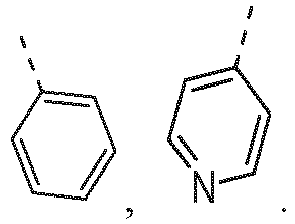
- In some embodiments of the present disclosure, the above R4 is selected from H, Cl, Me,


- In some embodiments of the present disclosure, the above R is selected from F, Cl, Br, I, OH, NH2, CN, COOH, CONH2, or selected from the following groups which are optionally substituted with 1, 2 or 3 R': C1-3 alkyl, C1-3 alkoxy, -C(=O)O-C1-3 alkyl; and the other variables are as defined above.
- In some embodiments of the present disclosure, the above R is selected from F, Cl, Br, I, CN, OH, NH2, COOH, CONH2, Me, Et, CF3,

- In some embodiments of the present disclosure, the above R1 is selected from -COOH, or selected from the following groups which are optionally substituted with 1, 2 or 3 R: phenyl, pyridyl, pyrimidinyl, thienyl, thiazolyl, indolyl, cyclohexanyl, cyclohexenyl, bicyclo[1.1.1]pentanyl.
- In some embodiments of the present disclosure, the above R1 is selected from -COOH, or selected from the following groups which are optionally substituted with 1, 2 or 3 R:


- In some embodiments of the present disclosure, the above R1 is selected from -COOH,


- In some embodiments of the present disclosure, the above R4 is selected from H, F, Cl, Br, I, OH, NH2, or selected from the following groups which are optionally substituted with 1, 2 or 3 R: C1-3 alkyl, phenyl, pyridyl; and the other variables are as defined above.
- In some embodiments of the present disclosure, the above R4 is selected from H, F, Cl, Br, I, OH, or NH2, or selected from the following groups which are optionally substituted with 1, 2 or 3 R: Me,

- In some embodiments of the present disclosure, the above R4 is selected from H, Cl, Me,


- The present disclosure further provides a compound of the following formulas, which is selected from


- The present disclosure further provides use of the above compound, optical isomer thereof or pharmaceutically acceptable salt thereof in the preparation of a medicament for the treatment of FXR receptor-related diseases.
- The present disclosure further provides use of the above compound, optical isomer thereof or pharmaceutically acceptable salt thereof in the preparation of a medicament for the treatment of RXR-related diseases.
- The present disclosure further provides use of the above compound, optical isomer thereof or pharmaceutically acceptable salt thereof in the preparation of a medicament for the treatment of nonalcoholic fatty liver diseases.
- Unless otherwise specified, the following terms and phrases used in this text have the following meanings. A specific term or phrase should not be considered uncertain or unclear in the absence of a specific definition, and should be understood according to the common meaning. The trade name, if occurring in this text, is intended to refer to its corresponding commodity or active ingredients. The term "pharmaceutically acceptable" used herein is specific to those compounds, materials, compositions and/or dosage forms which are suitable for contacting the tissues of human and animals within the range of reliable medical judgement, but have no excessive toxicity, stimulation, allergic reactions, or create other problems or complications, matching with reasonable benefit/risk ratio.
- The term "pharmaceutically acceptable salt" means a salt of a compound of this disclosure, which is prepared by a compound with specific substituent groups of the present disclosure with a relatively nontoxic acid or alkali. When the compound in this disclosure contains relatively acidic functional groups, an alkaline addition salt can be obtained by using a sufficient quantity of alkali to contact such a compound in neutral form in pure solution or suitable inert solvent. Pharmaceutically acceptable alkali addition salts include the sodium salts, potassium salts, calcium salts, ammonia salts, organic ammonia salts, magnesium salts or similar salts. When the compound in this disclosure contains relatively alkaline functional groups, an acid addition salt can be obtained by using enough quantity of acid to contact such a compound in neutral form in pure solution or suitable inert solvent. Examples of pharmaceutically acceptable acid addition salts include inorganic acid salts, wherein the inorganic acids include hydrochloric acid, hydrobromic acid, nitric acid, carbonic acid, bicarbonate radical, phosphoric acid, mono hydrogen phosphate radical, dihydrogen phosphate radical, sulfuric acid, hydrogen sulfate radical, hydroiodic acid, phosphorous acid, etc.; organic acid salts, wherein the organic acids include acetic acid, propionic acid, isobutyric acid, maleic acid, malonic acid, benzoic acid, succinic acid, octanedioic acid, fumaric acid, lactic acid, mandelic acid, phthalic acid, benzenesulfonic acid, p-toluenesulfonic acid, citric acid, tartaric acid, methanesulfonic acid, and other similar acids; salts of amino acids (such as arginine, etc.); and salts of organic acids (such as glucuronic acid). As some specific compounds in this disclosure contain alkaline and acid functional groups, they can be converted into any alkali or acid addition salts.
- Preferably, the salt contacts with an alkali or acid conventionally, and then separates the parent compound to produce the neutral form of compound. The parent form of compound differs from its various salts in certain physical properties, for example, they have different solubilities in polar solvents.
- The term "pharmaceutically acceptable salt" as used herein refers to a derivative of a compound of this disclosure, wherein, the described parent compound can be modified in the mode of an acid or alkaline addition salt. Examples of pharmaceutically acceptable salts include but not limited to: inorganic acid salts or organic acid salts of basic groups such as amines, and alkali metal salts or organic salts of acid radicals such as carboxylic acid. The pharmaceutically acceptable salts include regular non-toxic salts of quaternary ammonium salts of parent compounds, such as a salt formed with a non-toxic inorganic acid or organic acid. Regular non-toxic salts include but not limited to the salts derived from inorganic acids and organic acids, in which the described inorganic acids or organic acids are selected from 2-acetoxybenzoic acid, 2-hydroxyethanesulfonic acid, acetic acid, ascorbic acid, benzenesulfonic acid, benzoic acid, bicarbonate radical, carbonic acid, citric acid, edetic acid, ethane disulfonic acid, ethane sulfonic acid, fumaric acid, glucoheptonic acid, gluconic acid, glutamic acid, glycolic acid, hydrobromic acid, hydrochloric acid, hydriodate, hydroxyl, hydroxyl naphthalene, isethionic acid, lactic acid, lactose, dodecyl sulfonic acid, maleic acid, malic acid, mandelic acid, methane sulfonic acid, nitric acid, oxalic acid, pamoic acid, pantothenic acid, phenylacetic acid, phosphoric acid, polygalacturonic acid, propionic acid, salicylic acid, stearic acid, folinic acid, succinic acid, sulfamic acid, sulfanilic acid, sulfuric acid, tannin, tartaric acid and p-toluenesulfonic acid.
- The pharmaceutically acceptable salts in this disclosure can be prepared from parent compounds containing acid radical or basic group using conventional methods. Generally, the preparation of such salts comprises reaction of these compounds in the form of free acid or alkali with stoichiometric amounts of suitable acid or alkali in water or organic solvent or a mixture of both. Generally, ether, ethyl acetate, ethanol, isopropanol or acetonitrile and other non-aqueous media are preferred.
- Certain compounds in this disclosure may have asymmetric carbon atoms (optical centers) or double bonds. Racemates, diastereomers, geometric isomers and individual isomers are included within the scope of the disclosure.
- The compounds described in this disclosure can contain non-naturally proportional atomic isotopes on one or more atoms constituting such compounds. For example, radioisotopes can be used to label the compound, such as tritium (3H), iodine-125 (125I) or C-14 (14C). All isotope-comprising forms of compounds described in this disclosure, whether radioactive or not, are included in the scope of this disclosure.
- "Optional" or "optionally" means that the events or conditions described subsequently may occur but are not necessary, and this description includes the circumstances that the events or conditions described occur, as well as the circumstances that the events or conditions described do not occur.
- The term "substituted" means that one or more hydrogen atoms on specific atom are substituted by a substituent group, such a hydrogen atom can include a heavy hydrogen and a variation of hydrogen, so long as the valence state of a specific atom is normal and the post-substitution compound is stable. When the substituent group is a keto group (that is, =O), it means that two hydrogen atoms are substituted. Ketone substitution never occurs on an aryl. The term " optionally substituted " means that a group can be substituted or unsubstituted. Unless otherwise specified, the type and number of said substituent groups can be arbitrarily selected on the basis of chemistry availability.
- When a variable (such as R) occurs more than once in the composition or structure of compound, its definition in each case is independent from other occurrence(s). Therefore, if a group is substituted by 0-2 R groups, the groups described can be optionally substituted by two Rs at most, and the R in each case is independently chosen. A combination of substituent group(s) and/or variant(s) thereof is permitted only under the circumstances that such combination produces a stable compound.
- When the number of a linking groups is 0, such as -(CRR)0-, it means that this linking is a single bond.
- When a variable is chosen from a single bond, it means that the two groups linked thereto are linked directly. For example, when L represents a single bond in A-L-Z, it means that this structure is actually A-Z.
- When a substituent group is absent, it means that this substituent group does not exist, for example, when X is absent in A-X, it means that this structure is actually A. When a substituent group can be linked to more than one atoms on a ring, it means that this substituent group can be bonded to any atom on this ring. For example, the structural units


- Unless otherwise specified, a "ring" represents a substituted or unsubstituted cycloalkyl, heterocycloalkyl, cycloalkenyl, heterocycloalkenyl, aryl or heteroaryl. The term "ring" includes a monocyclic ring, a linking ring, a spiral ring, a fused ring or a bridged ring. The number of atoms on a ring is usually defined as the member number of the ring, for example, "a "5-7 membered ring" means that 5-7 atoms are arranged in an encircling way. Unless otherwise specified, the ring optionally includes 1-3 heteroatoms. Therefore, "5-7 membered ring" includes phenyl, pyridine and piperidyl. On the other hand, the term "5-7 membered heterocycloalkyl ring" includes pyridyl and piperidyl, but excludes phenyl. The term "ring" also includes a ring system containing at least one ring, wherein each "ring" is independent in accordance with the above-mentioned definition.
- Unless otherwise specified, the term "heterocyclic ring" or "heterocyclic radical" means a stable monocyclic ring, dicyclic ring or tricyclic ring containing a heteroatom or a hetero-radical, which can be saturated, partly unsaturated, or unsaturated (aromatic), and contains carbon atom and one, two, three or four cyclo-heteroatoms which are independently chosen from N, O and S, wherein any above-mentioned heterocyclic ring can be fused to a benzene ring to form a dicyclic compound. Nitrogen and sulfur heteroatoms can be optionally oxidized (namely, NO and S(O)p, wherein p is 1 or 2). Nitrogen atom can be substituted or unsubstituted (namely, N or NR, in which R is H or the substituent groups as defined herein). The heterocyclic ring can be attached to the side-chain group of any heteroatom or carbon atom to form a stable structure. If the compound so-produced is stable, a heterocyclic ring described herein can have substitution on carbon or on nitrogen. The nitrogen atom in the heterocyclic ring is optionally quaternized. In a preferred embodiment, the total number of S and O atoms in a heterocyclic ring is more than 1, and these atoms are not adjacent to each other. In another preferred embodiment, the total number of S and O atoms in the heterocyclic ring is not more than 1. As used herein, the term "heteroaryl" means an stable aromatic 5-, 6-, or 7-membered monocyclic ring or bicyclic ring, or stable aromatic 7-, 8-, 9- or 10 membered bicyclic heterocyclic radical which contains carbon atoms and 1, 2, 3 or 4 cyclic-heteroatoms which are independently chosen from N, O and S. Nitrogen atom can be substituted or unsubstituted (i.e., being N or NR, wherein R is H or other substituent groups as defined herein). Nitrogen and sulphur heteroatoms can optionally be oxidized (i.e., NO and S(O)p, wherein p is 1 or 2). It is noteworthy that the total number of S and O atoms on aromatic heterocyclic ring is not more than 1. The bridge ring is also included in the definition of "heterocycle." The bridged ring is formed when one or more atoms (for example, C, O, N or S) link to two nonadjacent carbon atoms or nitrogen atoms. Preferred bridged rings include but not limited to one carbon atom, two carbon atoms, one nitrogen atom, two nitrogen atoms and one carbon-nitrogen radical. It is noteworthy that a bridge always converts a monocycle into a tricycle. Substitutions on the ring can also occur on the bridge in the bridged ring.
- Examples of heterocyclic compounds include but not limited to acridinyl, azocinyl, benzimidazolyl, benzofuryl, benzosulfhydryl furyl, benzosulfhydryl phenyl, benzoxazolyl, benzooxazolinyl, benzothiazolyl, benzotriazolyl, benzotetrazolyl, benzoisoxazolyl, benzoisothiazolyl, benzoimidazolinyl, carbazolyl, 4aH-carbazolyl, carbolinyl, benzodihydropyranyl, chromene, cinnolinyl-decahydroquinolinyl, 2H,6H-1,5,2-dithiazinyl, dihydrofuran-[2,3-b]tetrahydrofuranyl, furyl, furazyl, imidazolidinyl, imidazolinyl, imidazolyl, 1H-indazolyl, indolenyl, indolinyl, indolizinyl, indolyl, 3H-indolyl, isobenzofuryl, isoindolyl, isoindolinyl, isoquinolyl, isothiazolyl, isoxazolyl, methylenedioxy phenyl, morpholinyl, naphthyridinyl, octahydro-isoquinolyl, oxadiazolyl, 1,2,3-oxadiazolyl, 1,2,4-oxadiazolyl, 1,2,5-oxadiazolyl, 1,3,4-oxadiazolyl, oxazolidinyl, oxazolyl, hydroxyindolyl, pyrimidyl, phenanthridinyl, phenanthrolinyl, azophenylene, phenothiazine, benzo-xanthinyl, phenoxazinyl, phthalazinyl, piperazinyl, piperidyl, piperidonyl, 4-piperidonyl, piperonyl, pteridinyl, purinyl, pyranyl, pyrazinyl, pyrazolidinyl, pyrazolinyl, pyrazolyl, pyridazinyl, pyridino-oxazole, pyridino-imidazole, pyridino-thiazole, pyridyl, pyrrolidyl, pyrrolinyl, 2H-pyrrolyl, pyrrolyl, quinazolinyl, quinolyl, 4H-quinolizidinyl, quinoxalinyl, quinuclidinyl, tetrahydrofuranyl, tetrahydroisoquinolinyl, tetrahydroquinolinyl, tetrazyl, 6H-1,2,5-thiadiazolyl, 1,2,3-thiadiazolyl, 1,2,4-thiadiazolyl, 1,2,5-thiadiazolyl, 1,3,4-thiadiazolyl, thianthrenyl, thiazolyl, isothiazolithiophenyl, thieno-oxazolyl, thieno-thiazolyl, thieno-imidazolyl, thienyl, triazinyl, 1,2,3-thiazolyl, 1,2,4-thiazolyl, 1,2,5-triazoly, 1,3,4-thiazolyl and xanthenyl. Fused rings and spiro rings compounds are also included.
- In some embodiments, the term "heteroalkyl" whether used by itself or in combination with another term represents stable straight-chain or branched-chain hydrocarbon radicals or combinations thereof composed of a certain number of carbon atoms and at least one heteroatom. In a typical embodiment, the heteroatom is selected from B, O, N and S, wherein said nitrogen or sulphur atoms are optionally oxidized, and said nitrogen heteroatom is optionally quaternized. The heteroatom or hetero-radical can be located in any position of a hetero-hydrocarbyl, including embodiments wherein this hydrocarbyl attaches to a position of another part of a molecule, while the terms "alkoxy", "alkylamino" and "alkylsulphanyl" (or sulfo-alkoxy) are understood to be customary expressions, and respectively mean that the alkyl groups link to other parts of a molecule through a oxygen atom, amino or sulphur atom. Such examples include but not limited to -CH2-CH2-O-CH3, -CH2-CH2-NH-CH3, -CH2-CH2-N(CH3)-CH3, -CH2-S-CH2-CH3, -CH2-CH2, -S(O)-CH3, -CH2-CH2-S(O)2-CH3, -CH2-CH=N-OCH3. At least two heteroatoms can be continuous, such as -CH2-NH-OCH3.
- Unless otherwise specified, the term "alkyl" is used to represent a straight-chain or branched-chain saturated hydrocarbyl which can be mono-substituted (such as -CH2F) or poly-substituted (such as -CF3), monovalent (such as methyl), divalent (such as methylene) or multivalent (such as methenyl). Such examples of alkyl include methyl (Me), ethyl (Et), propyl (such as n-propyl and isopropyl), butyl (such as n-butyl, isobutyl, s-butyl, t-butyl), amyl (such as n-amyl, isoamyl, neo-amyl), etc.
- Unless otherwise specified, "alkenyl" means an alkyl that comprises one or more carbon-carbon double bonds at any site of a chain, which can be mono-substituted or poly-substituted, and monovalent, divalent or multivalent. Such examples of alkenyl include ethenyl, propenyl, butenyl, pentenyl, hexenyl, butadienyl, pentadienyl, hexadienyl, etc.
- Unless otherwise specified, cycloalkyl include any stable cyclic or polycyclic hydrocarbyl, wherein all carbon atoms are saturated which can be mono-substituted or poly-substituted, and monovalent, divalent or multivalent. Examples of these cycloalkyls include but not limited to cyclopropyl, norborneol alkyl, [2.2.2]biocyclooctane, [4.4.0]biocyclodecane, etc.
- Unless otherwise specified, cycloalkenyl includes any stable cyclic or polycyclic hydrocarbyl comprising one or more unsaturated carbon-carbon double bonds at any site of a ring that can be mono-substituted or poly-substituted, and monovalent, divalent or multivalent. Examples of such a cycloalkenyl include but not limited to cyclopentenyl, cyclohexenyl, etc.
- Unless otherwise specified, the term "halogenated element" or "halogen" whether used by itself or as a part of another substituent group, represents a fluorine, chlorine, bromine or iodine atom. In addition, the term "halogenated alkyl" is intended to include monohalogenated alkyl and polyhalogenated alkyl. For example, the term "halogenated (C1-C4) alkyl" is intended to include but not limited to trifluoromethyl, 2, 2, 2-trifluoroethyl, 4-chlorobutyl and 3-brominepropyl, etc. Unless otherwise specified, examples of such a halogenated alkyl include but not limited to trifluoromethyl, trichloromethyl, pentafluoromethyl and pentachloromethyl.
- "Alkoxy" means an alkyl as defined herein comprising a specific number of carbon atoms and linked by an oxygen bridge. Unless otherwise specified, C1-6 alkoxy includes alkoxy groups of C1, C2, C3, C4, C5 and C6. Examples of such an alkoxy include but not limited to methoxy, ethyoxy, n-propoxy, isopropoxy, n-butoxy, sec-butoxy, tert-butoxy, n-amoxy and S-amoxyl.
- Unless otherwise specified, the term "aryl" refers to a polyunsaturated aromatic hydrocarbon group that can be mono-substituted or poly-substituted, monovalent, divalent or multivalent, and monocyclic or polycyclic (such as comprising 1-3 rings; wherein, at least one ring is aromatic) that is fused or covalently linked. The term "heteroaryl" means an aryl (or aromatic ring) containing one to four heteroatoms. In a representative example, the heteroatoms are selected from B, N, O and S, wherein, said nitrogen and sulphur atoms are optionally oxidized, and nitrogen atom is optionally quaternized. A heteroaryl can be linked to the rest of a molecule by a heteroatom. The non-limiting examples of aryl or heteroaryl include phenyl, naphthyl, biphenyl, pyrrolyl, pyrazolyl, imidazolyl, pyrazinyl, oxazolyl, phenyl-oxazolyl, isoxazolyl, thiazolyl, furyl, thienyl, pyridyl, pyrimidyl, benzothiazolyl, purinyl, benzimidazolyl, indolyl, isoquinolyl, quinoxalinyl, quinolyl, 1-naphthyl, 2-naphthyl, 4-biphenyl, 1-pyrrolyl, 2-pyrrolyl, 3-pyrrolyl, 3-pyrazolyl, 2-imidazolyl, 4-imidazolyl, pyrazinyl, 2-oxazolyl, 4-oxazolyl, 2-phenyl-4-oxazolyl, 5-oxazolyl, 3-isoxazolyl, 4-isoxazolyl, 5-isoxazolyl, 2-thiazolyl, 4-thiazolyl, 5-thiazolyl, 2-furyl, 3-furyl, 2-thienyl, 3-thienyl, 2-pyridyl, 3-pyridyl, 4-pyridyl, 2-pyrimidyl, 4-pyrimidyl, 5-benzothiazolyl, purinyl, 2-benzimidazolyl, 5-indolyl, 1-isoquinolyl, 5-isoquinolyl, 2-quinoxalinyl, 5-quinoxalinyl, 3-quinolyl and 6-quinolyl. Substituents of the above-mentioned groups on aryl or heteroaryl ring systems can be chosen from the acceptable substituent groups described hereinafter.
- Unless otherwise specified, aryl, when used in conjunction with other terms (such as in aryloxy, arsulfenyl, aralkyl), includes aryl and heteroaryl as defined as above. Therefore, the term "aralkyl" is intended to include radicals in which an aryl attaches to an alkyl (such as benzyl, phenethyl, pyridylmethyl), include alkyls wherein a carbon atom (such as methylene) has been substituted by, for example, an oxygen atom, such as phenoxyl-methyl, 2-pyridine-oxymethyl, 3-(1-naphthoxy) propyl.
- The compounds described in this disclosure can be prepared by many synthetic methods well known by those skilled in the art, including the embodiments described below, such embodiments used in combination with other chemical synthetic methods, or the equivalents well known by those skilled in the art, and the preferred embodiments include but are not limited to the examples in this disclosure.
- The solvents used in this disclosure are available commercially. The following abbreviations are used in this disclosure: aq represents water; HATU represents O-(7-azabenzotriazole-1-yl)-N, N, N', N'-tetramethylureahexafluorophosphate; EDC represents N-(3-dimethylaminopropyl)-N'-ethylcarbodiimide hydrochloride; m-CPBA represents 3-chloroperoxybenzoic acid; eq represents equivalent; CDI represents carbonyldiimidazole; DCM represents dichloromethane; PE represents petroleum ether; DIAD represents diisopropyl azodicarboxylate; DMF represents N,N-dimethylformamide; DMSO represents dimethylsulfoxide; EtOAc or EA represents ethyl acetate; EtOH represents ethyl alcohol; MeOH represents methyl alcohol; CBz represents benzyloxycarbonyl which is an amino-protecting group; Boc represents t-butyloxycarboryl which is an amino-protecting group; HOAc represents acetic acid; NaCNBH3 represents sodium cyanoborohydride; r.t. represents room temperature; O/N represents staying overnight; THF represents tetrahydrofuran; Boc2O represents di-tert-butyl dicarbonate; TFA represents trifluoroacetic acid; DIPEA represents N-di(isopropyl)ethylamine; SOCl2 represents sulfoxide chloride; CS2 represents carbon disulfide; TsOH represents p-toluenesulfonic acid; NFSI represents N-fluoro-N-(phenylsulfonyl)benzenesulfonamide; NCS represents 1-chlorine pyrrolidine-2,5-diketone; n-Bu4NF represents tetrabutylammonium fluoride; iPrOH represents 2-propanol; mp stands for melting point; LDA represents lithium diisopropylamide; EDCI represents carbodiimide; HOBt represents 1-hydroxybenzotriazole; Pd(dppf)Cl2 represents [1,1'-bis(diphenylphosphine)ferrocene]palladium dichloride; Pd2(dba)3 represents tris(dibenzylideneacetone) dipalladium; PIFA represents bis(trifluoroacetyloxy)phenyliodohydrazide; X-Phos represents 2-dicyclohexylphosphine; DIBAH represents diisobutylaluminum hydride; Pin2B2 represents bis(pinacolato)diboron.
- The compounds are named manually or using ChemDraw®, and commercially available compounds are referred to using the names in the catalog provided by the corresponding supplier.
- The compounds of the present disclosure have high in vitro FXR bioassay activity and the compounds have significant agonistic effects on the FXR receptor. The compound has high liver exposure and low plasma exposure, i.e., the liver-to-blood ratio is high, and the drug is mainly concentrated in the target organs.
-
-
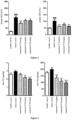
Figure 1 shows detection of blood biochemical ALT/AST indicators. Compound 37 has a significant decrease in ALT/AST at a dose of 15 mg/kg. -
Figure 2 is a graph of detection indicators of total cholesterol (TC) and triglyceride (TG) levels in the liver. Compound 37 has a significant decrease in TC/TG at a dose of 30 mg/kg, 60 mg/kg. -
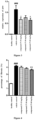
Figure 3 shows alpha graph of gene expression of collagen in the liver. Compound 37 has a significant decrease in collagen-alpha at a dose of 15 mg/kg, 60 mg/kg. -
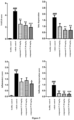
Figure 4 is a graph of pathological tissue analysis of liver fibrosis showing that compound 37 has a significant reduction in liver fibrosis at a dose of 60 mg/kg; -
Figure 5 is a graph of pathological tissue analysis showing that for the overall evaluation of nonalcoholic fatty liver score NAFLD, compound 37 has a significant reduction in NAFLD at a dose of 15 mg/kg, 60 mg/kg; for single steatosis, inflammatory molecules and ballooning change, compound 37 has an remarkable efficacy at 60 mg/kg. - The disclosure has described in detail the present invention, and disclosed specific embodiments thereof.
-

- The synthesis of compound BB-1 refers to the literature (
WO2011/020615 ). -

-

- 31-1 (1 g, 6.13 mmol) and BB-1 (2.23 g, 7.35 mmol) were dissolved in acetone (20 mL), and potassium carbonate (1.69 g, 12.26 mmol) and potassium iodide (200 mg, 1.20 mmol) were added. The reaction mixture was stirred at 60 °C for 12 hours and then stirred at 80 °C for 4 hours. The reaction mixture was directly filtrated and concentrated, and the crude product was separated by thin layer chromatography to give the target compound 31-2. 1H NMR (400MHz, CHLOROFORM-d) δ = 7.75 (br s, 1H), 7.45 - 7.38 (m, 2H), 7.37 - 7.30 (m, 1H), 6.61 (s, 3H), 4.77 (s, 2H), 2.93 - 2.85 (m, 2H), 2.59 (br t, J=7.5 Hz, 2H), 2.21 - 2.12 (m, 1H), 1.28 (br d, J=4.0 Hz, 2H), 1.14 (br d, J=6.0 Hz, 2H).
- 31-2 (200 mg, 465.88 µmοl) and 31-3 (190 mg, 708.67 µmοl) were dissolved in toluene (10 mL), and cuprous iodide (90 mg, 472.56 µmol), cesium carbonate (300 mg, 920.76 µmol) and N1,N2-dimethyl-1,2-cyclohexanediamine (70 mg, 492.13 µmοl) were added. The reaction mixture was stirred at 110 °C for 12 hours, and water (20 ml) and aqueous ammonia (5 ml) were added. The mixture was extracted with ethyl acetate (30 mL× 3). The combined organic layer was washed with saturated brine (30 mL), dried over anhydrous sodium sulfate, filtered and concentrated. The crude product was separated by thin layer chromatography to give the target compound 31-4.
- 31-4 (50 mg, 81.10 µmοl) was dissolved in tetrahydrofuran (2 ml), methanol (2 ml) and water (2 ml), and lithium hydroxide monohydrate (70 mg, 1.67 mmol) was added. The rection mixture was stirred at 20 °C for 12 hours. Water (10 ml) was added to the rection mixture, which was then adjusted with 1 mol/L of diluted hydrochloric acid to pH=6, and then extracted with ethyl acetate (20 ml × 3). The combined organic phase was washed with saturated brine (20 mL), dried over anhydrous sodium sulfate, filtered and concentrated. The crude product was separated by high performance liquid chromatography (formic acid) to give the target compound 31.
- 1H NMR (400MHz, METHANOL-d4) δ = 8.20 (br d, J=8.5 Hz, 1H), 8.00 (s, 1H), 7.52 - 7.34 (m, 4H), 7.01 (br d, J=8.0 Hz, 1H), 6.69 (br s, 1H), 6.44 (br d, J=7.0 Hz, 1H), 6.16 (br d, J=8.5 Hz, 1H), 4.82 - 4.79 (m, 2H), 3.85 (s, 3H), 3.00 (br d, J=6.5 Hz, 2H), 2.78 (br d, J=7.0 Hz, 2H), 2.35 - 2.23 (m, 1H), 1.17 (br d, J=6.5 Hz, 4H).
-

-

- 31-2 (500 mg, 1.16 mmol) and 32-1 (470 mg, 1.75 mmol) were dissolved in toluene (20 mL), and cuprous iodide (220 mg, 1.16 mmol), cesium carbonate (760 mg, 2.33 mmol) and N,N-dimethyl-1,2-cyclohexanediamine (165 mg, 1.16 mmol) were added. The reaction mixture was stirred at 110 °C for 12 hours, and water (10 ml) and aqueous ammonia (5 ml) were added. The mixture was extracted with ethyl acetate (20 mL× 3). The combined organic layer was washed with saturated brine (20 mL), dried over anhydrous sodium sulfate, filtered and concentrated. The crude product was separated by thin layer chromatography to give the target compound 32-2.
- 32-2 (210 mg, 340.09 µmοl) was dissolved in tetrahydrofuran (5 ml), methanol (5 ml) and water (5 ml), and lithium hydroxide monohydrate (150 mg, 3.57 mmoll) was added. The rection mixture was stirred at 20 °C for 12 hours. Water (10 ml) was added to the rection mixture, which was then adjusted with 1 mol/L of diluted hydrochloric acid to pH=6, and then extracted with ethyl acetate (20 ml × 3). The combined organic phase was washed with saturated brine (20 mL), dried over anhydrous sodium sulfate, filtered and concentrated. The crude product was separated by high performance liquid chromatography (formic acid) to give the target compound 32. 1H NMR (400MHz, METHANOL-d4) δ = 8.26 (d, J=9.0 Hz, 1H), 7.63 (s, 1H), 7.52 - 7.38 (m, 3H), 7.14 - 7.06 (m, 1H), 6.71 (d, J=2.5 Hz, 1H), 6.47 (dd, J=2.8, 8.8 Hz, 1H), 6.17 (d, J=9.0 Hz, 1H), 4.83 - 4.79 (m, 2H), 4.14 (s, 3H), 3.06 - 2.98 (m, 2H), 2.82 - 2.73 (m, 2H), 2.29 (quin, J=6.7 Hz, 1H), 1.21 - 1.13 (m, 4H).
-

-

- To a solution of 31-2 (300 mg, 698.82 µmοl) and methyl p-bromobenzoate (301 mg, 1.40 mmol) in toluene (5 mL), cuprous iodide (133 mg, 698.82 µmol), potassium phosphate (445 mg, 2.10 mmol) and trans-N,N-dimethylcyclohexyl-1,2-diamine (274 mg, 698.82 µmol) were added. The reaction mixture was stirred at 100 °C for 14 hours. After the reaction was completed, the mixture was filtered and concentrated, and water (30 ml) was added to the concentrated solution. The mixture was extracted with ethyl acetate (30 mL) for 3 times. The combined organic layer was washed with saturated brine (30 mL) and water (30 mL) in order, and then dried over anhydrous sodium sulfate, filtered and concentrated to give a crude product 33-1.
- To a solution of 33-1 (400 mg, 709.94 µmol) in tetrahydrofuran (2 ml), methanol (2 ml) and water (2 ml), lithium hydroxide monohydrate (149 mg, 3.55 mmol) was added. The rection mixture was stirred at 25 °C for 0.5 hours. After the reaction was completed, water (45 ml) was added to the mixture, which was then adjusted with 1 M of hydrochloric acid to pH=5, and extracted with ethyl acetate (50 ml) for 3 times. The combined organic phase was washed with saturated brine (50 mL) and water (50 mL) respectively, dried over anhydrous sodium sulfate, filtered and concentrated to obtain a crude product. The crude product was separated by preparative high performance liquid chromatography to give the target compound 33. 1H NMR (400MHz, CHLOROFORM-d) δ = 8.22 (d, J=8.5 Hz, 2H), 7.47 - 7.39 (m, 2H), 7.38 - 7.32 (m, 3H), 6.68 (d, J=2.3 Hz, 1H), 6.51 (dd, J=2.9, 8.9 Hz, 1H), 6.24 (d, J=9.0 Hz, 1H), 4.78 (s, 2H), 3.01 (br t, J=6.9 Hz, 2H), 2.85 - 2.79 (m, 2H), 2.19 - 2.15 (m, 1H), 1.34 - 1.28 (m, 2H), 1.19 - 1.12 (m, 2H). MS m/z: 548.9 [M+H]+.
-

-

- To a solution of 31-2 (200 mg, 465.88 µmol) and 34-1 (260 mg, 931.76 µmol) in toluene (5 mL), cuprous iodide (89 mg, 465.88 µmol), cesium carbonate (304 mg, 931.76 µmol) and trans-N,N-dimethylcyclohexyl-1,2-diamine (183 mg, 465.88 µmοl) were added. The reaction mixture was stirred at 100 °C for 14 hours. After the reaction was completed, the mixture was filtered and concentrated, and water (30 ml) was added to the concentrated solution. The mixture was extracted with ethyl acetate (30 mL) for 3 times. The combined organic layer was washed with saturated brine (30 mL) and water (30 mL) in order, and then dried over anhydrous sodium sulfate, filtered and concentrated to give a crude product. The crude product was separated by preparative thin layer chromatography (petroleum ether : ethyl acetate=2 :1) to give the target compound 34-2. MS m/z: 581.1 [M+H]+.
- To a solution of 34-2 (45 mg, 77.40 µmοl) in tetrahydrofuran (2 ml), methanol (2 ml) and water (2 ml), lithium hydroxide monohydrate (16 mg, 386.98 µmοl) was added. The rection mixture was stirred at 25 °C for 0.5 hours. After the reaction was completed, water (45 ml) was added to the mixture, which was then adjusted with 1 M of hydrochloric acid to pH=5, and extracted with ethyl acetate (50 ml) for 3 times. The combined organic phase was washed with saturated brine (50 mL) and water (50 mL) respectively, dried over anhydrous sodium sulfate, filtered and concentrated to obtain a crude product. The crude product was separated by preparative high performance liquid chromatography to give the target compound 34. 1H NMR (400MHz, CHLOROFORM-d) δ = 7.98 (br s, 2H), 7.40 (br s, 4H), 6.84 - 6.40 (m, 2H), 6.24 (br s, 1H), 4.79 (br s, 2H), 3.24 - 2.65 (m, 4H), 2.19 - 2.01 (m, 1H), 1.44 - 1.02 (m, 4H)
-
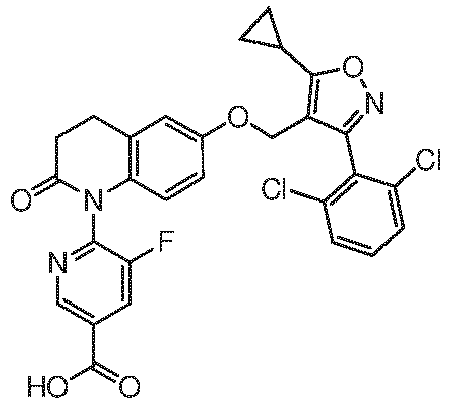
-

- To a solution of 31-2 (200 mg, 465.88 µmol) and 35-1 (162 mg, 698.82 µmοl) in toluene (5 mL), cuprous iodide (89 mg, 465.88 µmol), cesium carbonate (304 mg, 931.76 µmol) and trans-N,N-dimethylcyclohexyl-1,2-diamine (183 mg, 465.88 µmol) were added. The reaction mixture was stirred at 100 °C for 14 hours. After the reaction was completed, the mixture was filtered and concentrated, and water (30 ml) was added to the concentrated solution. The mixture was extracted with ethyl acetate (30 mL) for 3 times. The combined organic layer was washed with saturated brine (30 mL) and water (30 mL) in order, and then dried over anhydrous sodium sulfate, filtered and concentrated to give a crude product. The crude product was separated by thin layer chromatography (petroleum ether : ethyl acetate=1 : 1) to give the target compound 35-2.
To a solution of 35-2 (50 mg, 80.07 µmol) in dichloromethane (6 ml), trifluoroacetic acid (2 ml, 27.01 mmol) was added. The rection mixture was stirred at 25 °C for 0.5 hours. The reaction mixture was concentrated, and water (20 ml) was added to the concentrated solution. The mixture was extracted with ethyl acetate (30 mL) for 3 times. The combined organic layer was washed with saturated brine (30 mL) and water (30 mL) respectively, and then dried over anhydrous sodium sulfate, filtered and concentrated to give a crude product. The crude product was separated by preparative high performance liquid chromatography to give the target compound 35. 1H NMR (400MHz, METHANOL-d4) δ = 9.00 (br s, 1H), 8.34 (br d, J=8.0 Hz, 1H), 7.63 - 7.33 (m, 3H), 6.77 (br s, 1H), 6.56 (br d, J=8.0 Hz, 1H), 6.20 (br d, J=8.3 Hz, 1H), 4.83 - 4.64 (m, 2H), 3.04 (br s, 2H), 2.80 (br s, 2H), 2.32 (br s, 1H), 1.20 (br d, J=5.3 Hz, 4H) MS m/z: 568.0 [M+H]+ -

-

- To a solution of 31-2 (200 mg, 465.88 µmol) and 36-1 (180 mg, 605.64 µmol) in toluene (5 mL), cuprous iodide (89 mg, 465.88 µmol), cesium carbonate (304 mg, 931.76 µmol) and trans-N,N-dimethylcyclohexyl-1,2-diamine (183 mg, 465.88 µmοl) were added. The reaction mixture was stirred at 100 °C for 14 hours. After the reaction was completed, the mixture was filtered and concentrated, and water (30 ml) was added to the concentrated solution. The mixture was extracted with ethyl acetate (30 mL) for 3 times. The combined organic layer was washed with saturated brine (30 mL) and water (30 mL) in order, and then dried over anhydrous sodium sulfate, filtered and concentrated to give a crude product. The crude product was separated by preparative thin layer chromatography (petroleum ether : ethyl acetate=1 :1) to give the target compound 36-2. MS m/z: 597.0 [M+H]+.
- To a solution of 36-2 (40 mg, 67.13 µmol) in tetrahydrofuran (2 ml), methanol (2 ml) and water (2 ml), lithium hydroxide monohydrate (3 mg, 67.13 µmοl) was added. The rection mixture was stirred at 25 °C for 14 hours. After the reaction was completed, water (30 ml) was added to the mixture, which was then adjusted with 1 M of hydrochloric acid to pH=5, and extracted with ethyl acetate (30 ml) for 3 times. The combined organic phase was washed with saturated brine (30 mL) and water (30 mL) respectively, dried over anhydrous sodium sulfate, filtered and concentrated to obtain a crude product. The crude product was separated by preparative chromatography to give the target compound 36. 1H NMR (400MHz, METHANOL-d4) δ = 8.10 (br s, 2H), 7.59 - 7.40 (m, 4H), 6.74 (s, 1H), 6.53 (br d, J=7.5 Hz, 1H), 6.08 (br d, J=9.0 Hz, 1H), 4.77 - 4.50 (m, 1H), 3.12 - 2.94 (m, 2H), 2.84 - 2.72 (m, 2H), 2.40 - 2.27 (m, 1H), 1.20 (d, J=6.8 Hz, 4H)
-

-

- 37-1 (289 mg, 1.16 mmol), Pd2(dba)3 (85 mg, 93 µmol), cesium carbonate (455 mg, 1.40 mmol) and BINAP (58 mg, 93 µmol) were added to a solution of 31-2 (200 mg, 0.47 mmol) in toluene (10 ml). Under nitrogen proteciton, the mixture was heated to 120°C and stirred for 12 hours. After the reaction was completed, the reaction mixture was concentrated. The residue was purified by column chromatography (petroleum ether : ethyl acetate=30:1-3:1) to give the target compound 37-2.
- At 25°C, trifluoroacetic acid (2 ml, 27.01 mmol) was added dropwise to a solution of 37-2 (138 mg, 0.22 mmol) in dichloromethane (10 ml), and the reaction mixture was stirred at 25 °C for 2 hours. After the reaction was completed, the reaction mixture was concentrated under reduced pressure. The residue was separated by high performance liquid chromatography (formic acid) to give the target compound 37. 1H NMR (400MHz, CHLOROFORM-d) δ = 9.00 (br s, 1H), 8.37 (br s, 1H), 7.28 (br s, 1H), 7.23 - 7.11 (m, 2H), 6.58 (br s, 1H), 6.39 (br d, J=7.3 Hz, 1H), 5.94 (br d, J=8.5 Hz, 1H), 4.63 (s, 2H), 2.93 (br d, J=6.3 Hz, 2H), 2.72 (br d, J=6.8 Hz, 2H), 2.02 (br s, 1H), 1.15 (br s, 2H), 1.01 (br d, J=6.3 Hz, 2H).
-
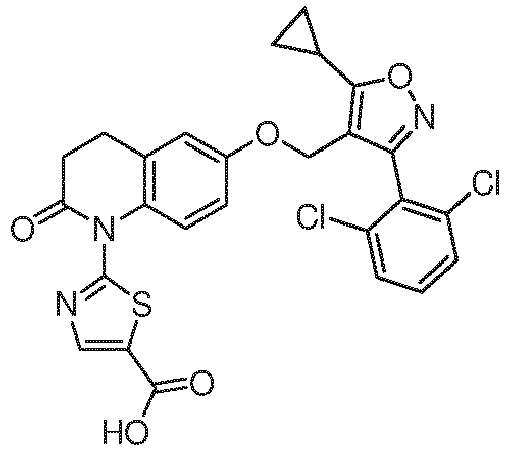
-

- 38-1 (123 mg, 0.47 mmol), Pd2(dba)3 (85 mg, 93 µmol), cesium carbonate (455 mg, 1.40 mmol) and BINAP (58 mg, 93 µmοl) were added to a solution of 31-2 (200 mg, 0.47 mmol) in toluene (10 ml). Under nitrogen protection, the mixture was heated to 120°C and stirred for 12 hours. After the reaction was completed, the reaction mixture was concentrated. The residue was purified by thin layer chromatography (petroleum ether : ethyl acetate=30:1-3:1) to give the target compound 38-.3.
- At 25°C, trifluoroacetic acid (1.5 ml, 20.26 mmol) was added dropwise to a solution of 38-2 (100 mg, 0.16 mmol) in dichloromethane (10 ml), and the reaction mixture was stirred at 25 °C for 2 hours. After the reaction was completed, the reaction mixture was concentrated under reduced pressure. The residue was separated by high performance liquid chromatography (formic acid) to give the target compound 38. 1H NMR (400MHz, CHLOROFORM-d) δ = 8.22 (br s, 1H), 7.63 (br d, J=8.3 Hz, 1H), 7.45 - 7.29 (m, 3H), 6.83 - 6.62 (m, 2H), 4.80 (br s, 2H), 2.96 - 2.76 (m, 3H), 2.54 (br s, 1H), 2.16 (br s, 1H), 1.37 - 1.12 (m, 4H).
-

-

- 31-2 (100 mg, 0.23 mmol), Pd2(dba)3 (25 mg, 27 µmol), cesium carbonate (230 mg, 0.71 mmol) and BINAP (29 mg, 47 µmol) were added to a solution of 39-1 (116 mg, 0.48 mmol) in toluene (8 ml). Under nitrogen proteciton, the mixture was heated to 100°C and stirred for 16 hours. After the reaction was completed, 20 ml water was added to the reaction mixture at 25 °C, which was then extracted with ethyl acetate (20 mL×3). The organic phase was combined, washed with saturated brine (20 mL), dried over anhydrous sodium sulfate, filtered and concentrated under reduced pressure. The residue was purified by thin layer chromatography (petroleum ether : ethyl acetate=1:1) to give the target compound 39-2.
- At 25 °C, lithium hydroxide monohydrate (50 mg, 1.19 mmol) was added in batches to a solution of 39-2 (70 mg, 1.19 mmol) in tetrahydrofuran (5 mL), methanol (2 mL) and water (2). The mixture was stirred at 25 °C for 2 hours. After the reaction was completed, the reaction mixture was diluted with 30 mL water, adjusted with 1 N of hydrochloric acid to pH=3, and extracted with ethyl acetate (30 mL×3). The organic phase was combined, dried over anhydrous sodium sulfate, filtered and concentrated under reduced pressure. The residue was separated by high performance liquid chromatography (formic acid) to give the target compound 39. 1H NMR (400 MHz, CHLOROFORM-d) δ = 8.50 (s, 1H), 8.41 (d, J= 7.8 Hz, 1H), 7.63 - 7.31 (m, 4H), 6.73 ( s, 1H), 6.54 (d, J=7.0 Hz, 1H), 6.11 (d, J=8.8 Hz, 1H), 4.79 (s, 2H), 3.17 - 2.79 (m, 4H), 2.22 - 2.11 (m, 1H), 1.35 - 1.26 (m, 2H), 1.21-1.09 (m, 2H)
-

-

- To a solution of 31-2 (200 mg, 465.88 µmοl) and 40-1 (150 mg, 694.34 µmol) in toluene (10 mL), cuprous iodide (90 mg, 472.56 µmol), cesium carbonate (300 mg, 920.76 µmol) and trans-N,N-dimethylcyclohexyl-1,2-diamine (70 mg, 492.12 µmol) were added. The reaction mixture was stirred at 110 °C for 12 hours. After the reaction was completed, water (20 ml) and aqueous ammonia (3 ml) were added to the mixture. The mixture was extracted with ethyl acetate (20 mL) for 3 times. The combined organic phase was washed with saturated brine (20 mL) and then dried over anhydrous sodium sulfate, filtered and concentrated to give a crude product. The crude product was separated by thin layer chromatography (petroleum ether : ethyl acetate=1 :1) to give the target compound 40-2. MS m/z: 564.1 [M+H]+.
- To a solution of 40-2 (100 mg, 177.17 µmol) in dichloromethane (5 ml), trimethyltin hydroxide (100 mg, 553.03 µmοl) was added. The reaction mixture was stirred at 70 °C for 2 hours. After the reaction was completed, water (20 ml) was added. The mixture was extracted with dichloromethane (20 mL) for 3 times. The combined organic phase was washed with saturated brine (20 mL) and then dried over anhydrous sodium sulfate, filtered and concentrated to give a crude product. The crude product was separated by preparative chromatography to give the target compound 40. 1H NMR (400MHz, METHANOL-d4) δ = 9.12 (br s, 1H), 8.54 (br d, J=5.3 Hz, 1H), 7.64 - 7.38 (m, 4H), 6.73 (br s, 1H), 6.52 (br d, J=7.0 Hz, 1H), 6.12 (br d, J=7.5 Hz, 1H), 4.83 - 4.79 (m, 2H), 3.00 (br s, 2H), 2.75 (br s, 2H), 2.30 (br s, 1H), 1.17 (br s, 4H). MS m/z: 550.0 [M+H]+.
-

-

- To a solution of 31-2 (200 mg, 465.88 µmοl) and 41-1 (190 mg, 688.23 µmol) in toluene (5 mL), cuprous iodide (90 mg, 472.56 µmol), cesium carbonate (300 mg, 920.76 µmol) and trans-N,N-dimethylcyclohexyl-1,2-diamine (70 mg, 492.12 µmοl) were added. The reaction mixture was stirred at 110 °C for 12 hours. After the reaction was completed, water (10 ml) and aqueous ammonia (3 ml) were added to the mixture. The mixture was extracted with ethyl acetate (20 mL) for 3 times. The combined organic phase was washed with saturated brine (30 mL) and then dried over anhydrous sodium sulfate, filtered and concentrated to give a crude product. The crude product was separated by thin layer chromatography (petroleum ether : ethyl acetate=2 : 1) to give the target compound 41-2. MS m/z: 577.1 [M+H]+.
- To a solution of 41-2 (200 mg, 346.35 mmol) in tetrahydrofuran (5 ml) and water (5 ml), lithium hydroxide monohydrate (145 mg, 3.46 mmol) was added. The rection mixture was stirred at 20 °C for 12 hours. After the reaction was completed, water (10 ml) was added to the mixture, which was then adjusted with 1 M of hydrochloric acid to pH=6, and extracted with ethyl acetate (20 ml) for 3 times. The combined organic phase was washed with saturated brine (20 mL), dried over anhydrous sodium sulfate, filtered and concentrated to obtain a crude product. The crude product was separated by preparative chromatography to give the target compound 41. 1H NMR (400MHz, METHANOL-d4) δ = 8.08 (br d, J=7.0 Hz, 1H), 7.84 (br s, 1H), 7.69 - 7.55 (m, 1H), 7.46 (br d, J=11.0 Hz, 4H), 6.70 (br s, 1H), 6.48 (br d, J=8.0 Hz, 1H), 6.13 (br d, J=8.5 Hz, 1H), 4.83 - 4.80 (m, 2H), 2.99 (br s, 2H), 2.74 (br s, 2H), 2.29 (br s, 1H), 1.17 (br d, J=6.0 Hz, 4H). MS m/z: 549.0 [M+H]+ .
-

-

- To a solution of 31-2 (200 mg, 465.88 µmol) and 42-1 (155 mg, 707.74 µmol) in toluene (5 mL), cuprous iodide (90 mg, 472.56 µmol), cesium carbonate (300 mg, 920.75 µmol) and trans-N,N-dimethylcyclohexyl-1,2-diamine (70 mg, 492.12 µmοl) were added. The reaction mixture was stirred at 110 °C for 12 hours. After the reaction was completed, water (20 ml) and aqueous ammonia (3 ml) were added to the mixture. The mixture was extracted with ethyl acetate (30 mL) for 3 times. The combined organic phase was washed with saturated brine (20 mL) and then dried over anhydrous sodium sulfate, filtered and concentrated to give a crude product. The crude product was separated by preparative chromatography to give the target compound 42. 1H NMR (400MHz, METHANOL-d4) δ = 7.76 (br s, 1H), 7.54 - 7.41 (m, 4H), 7.40 - 7.30 (m, 1H), 6.70 (br s, 1H), 6.50 (br d, J=8.0 Hz, 1H), 6.17 (br d, J=8.5 Hz, 1H), 4.84 - 4.83 (m, 2H), 2.98 (br s, 2H), 2.75 (br d, J=6.5 Hz, 2H), 2.30 (br s, 1H), 1.17 (br s, 4H). MS m/z: 567.0 [M+H]+ .
-

-

- To a solution of 31-2 (200 mg, 465.88 µmοl) and 43-1 (120 mg, 709.42 µmοl) in N,N-dimethylformamide (5 ml), cesium carbonate (455 mg, 1.40 mmol) was added. The reaction mixture was stirred at 110 °C for 12 hours. After the reaction was completed, the mixture was added with water (20 ml), adjusted with 1 M of hydrochloric acid to pH=6, and extracted with ethyl acetate (30 ml) for 3 times. The combined organic phase was washed with saturated brine (20 mL), dried over anhydrous sodium sulfate, filtered and concentrated to obtain a crude product. The crude product was separated by preparative chromatography to give the target compound 43. 1H NMR (400MHz, METHANOL-d4) δ = 8.98 (s, 1H), 8.44 (s, 1H), 7.52 - 7.48 (m, 2H), 7.47 - 7.41 (m, 1H), 6.75 (d, J=2.0 Hz, 1H), 6.52 (dd, J=2.8, 8.8 Hz, 1H), 5.98 (d, J=8.5 Hz, 1H), 4.84 - 4.84 (m, 2H), 3.12 - 2.98 (m, 2H), 2.82 - 2.73 (m, 2H), 2.30 (td, J=6.8, 13.6 Hz, 1H), 2.18 (s, 3H), 1.22 - 1.14 (m, 4H). MS m/z: 564.0 [M+H]+ .
-

-
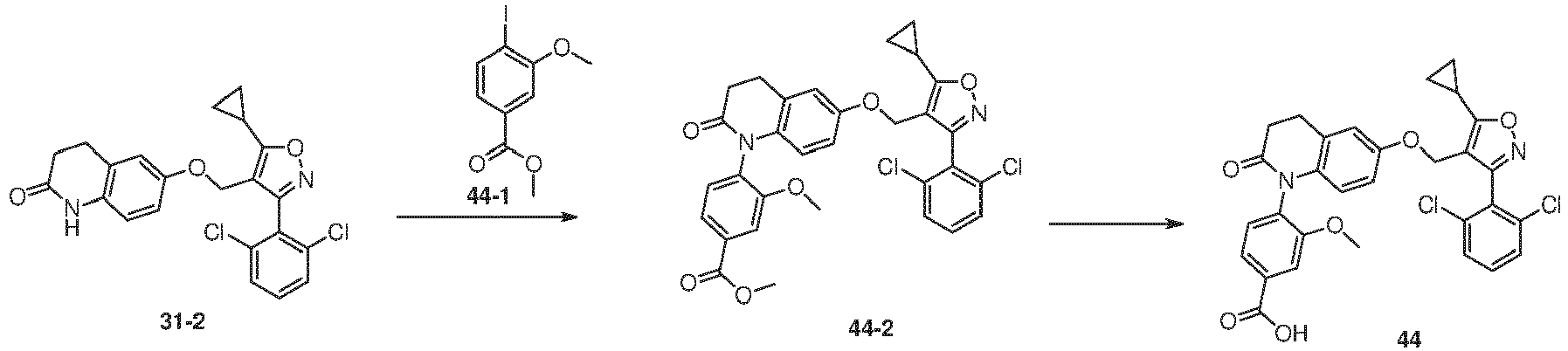
- To a solution of 31-2 (200 mg, 465.88 µmοl) and 44-1 (200 mg, 684.77 µmοl) in toluene (5 mL), cuprous iodide (90 mg, 472.56 µmol), cesium carbonate (300 mg, 920.75 µmοl) and trans-N,N-dimethylcyclohexyl-1,2-diamine (70 mg, 492.12 µmοl) were added. The reaction mixture was stirred at 110 °C for 12 hours. After the reaction was completed, water (20 ml) was added to the mixture. The mixture was extracted with ethyl acetate (30 mL) for 3 times. The combined organic phase was washed with saturated brine (30 mL) and then dried over anhydrous sodium sulfate, filtered and concentrated to give a crude product. The crude product was separated by thin layer chromatography (petroleum ether : ethyl acetate=1 :1) to give the target compound 44-2. MS m/z: 593.0 [M+H]+.
- To a solution of 44-2 (40 mg, 67.40 µmol) in tetrahydrofuran (2 ml), methanol (2 ml) and water (5 ml), lithium hydroxide monohydrate (30 mg, 714.91 µmοl) was added. The rection mixture was stirred at 25 °C for 12 hours. After the reaction was completed, water (20 ml) was added to the mixture, which was then adjusted with 1 M of hydrochloric acid to pH=6, and extracted with ethyl acetate (30 ml) for 3 times. The combined organic phase was washed with saturated brine (20 mL), dried over anhydrous sodium sulfate, filtered and concentrated to obtain a crude product. The crude product was separated by preparative chromatography to give the target compound 44. 1H NMR (400MHz, METHANOL-d4) δ = 7.84 - 7.69 (m, 2H), 7.53 - 7.38 (m, 3H), 7.22 (br d, J=7.5 Hz, 1H), 6.68 (br s, 1H), 6.47 (br d, J=8.5 Hz, 1H), 6.11 (d, J=8.5 Hz, 1H), 4.83 (br s, 2H), 3.78 (s, 3H), 3.04 - 2.92 (m, 2H), 2.78 - 2.65 (m, 2H), 2.35 - 2.22 (m, 1H), 1.17 (br d, J=6.5 Hz, 4H). MS m/z: 579.2 [M+H]+ .
-

-

- 31-2 (200 mg, 0.46 mmol) and 45-1 (115 mg, 0.55 mmol) were dissolved in toluene (5 ml), and cuprous iodide (90 mg, 0.47 mmol), trans-N N-dimethylcyclohexyl-1,2-diamine (67 mg, 0.47 mmol) and cesium carbonate (450 mg, 1.38 mmol) were added. The reaction mixture was stirred at 110 °C for 14 hours under nitrogen atmosphere. The system was adjusted with 1 molar hydrochloric acid to pH=3. The system was extracted with ethyl acetate (30 mL × 2). The organic phase was washed with saturated brine (50 mL × 1). The organic phase was dried over anhydrous sodium sulfate, filtered and concentrated. The crude product was separated by preparative thin layer chromatography (petroleum ether: ethyl acetate = 1:1) and high performance liquid chromatography (formic acid) to give the target compound 45. 1H NMR (400MHz, METHANOL-d4) δ = 8.21 (s, 1H), 7.55 - 7.39 (m, 3H), 7.29 (br s, 1H), 6.69 (d, J=2.5 Hz, 1H), 6.63 - 6.46 (m, 2H), 4.91 - 4.89 (s, 2H), 3.02 - 2.92 (m, 2H), 2.79 - 2.73 (m, 2H), 2.31 (quin, J=6.8 Hz, 1H), 1.20 - 1.13 (m, 4H)
-
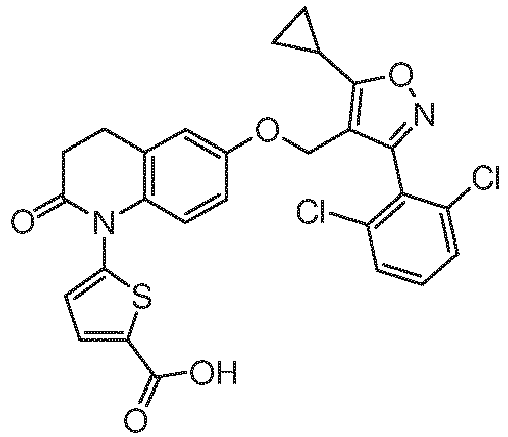
-

- 31-2 (200 mg, 0.46 mmol) and 46-1 (123 mg, 0.55 mmol) were dissolved in toluene (5 mL), and cuprous iodide (90 mg, 0.47 mmol), (1S, 2S))-(+)-1,2-cyclohexanediamine (56 mg, 0.49 mmol) and cesium carbonate (152 mg, 0.46 mmol) were added. The reaction mixture was stirred at 100 °C for 16 hours under a nitrogen atmosphere. Water (50 ml) and a 25% aqueous ammonia solution (1 mL) were added to the reaction mixture. The system was extracted with ethyl acetate (50 mL × 2). The organic phase was washed with saturated brine (50 mL × 1). The organic phase was dried over anhydrous sodium sulfate, filtered and concentrated. The crude product was separated by preparative thin layer chromatography (petroleum ether: ethyl acetate = 3:2) to give the target compound 46-2.
- To a solution of 46-2 (80 mg, 0.14 mmol) in tetrahydrofurane (0.28 mL), aqueous solution of sodium hydroxide (1 mol/L, 0.28 mL) was added. The reaction mixture was stirred at 25 °C for 3 hours. The system was adjusted with 1 mol of hydrochloric acid to pH=3. The system was extracted with ethyl acetate (30 mL × 2).The organic phase was washed with saturated brine (50 mL × 1). The organic phase was dried over anhydrous sodium sulfate, filtered and concentrated. The crude product was separated by preparative thin layer chromatography (petroleum ether: ethyl acetate = 1:1) and separated by high performance liquid chromatography (formic acid) to give the title compound 46. 1H NMR (400MHz, METHANOL-d4) δ = 7.72 (d, J=4.0 Hz, 1H), 7.54 - 7.39 (m, 3H), 6.97 (d, J=4.0 Hz, 1H), 6.70 (d, J=2.0 Hz, 1H), 6.62 - 6.52 (m, 2H), 4.93 - 4.89 (m, 2H), 3.00 - 2.92 (m, 2H), 2.79 - 2.70 (m, 2H), 2.31 (quin, J=6.7 Hz, 1H), 1.19 (d, J=7.0 Hz, 4H).
-

-

- 31-2 (200 mg, 0.46 mmol) and 47-1 (270 mg, 0.69 mmol) were dissolved in toluene (5 mL), and cuprous iodide (90 mg, 0.46 mmol), (1S, 2S))-(+)-1,2-cyclohexanediamine (56 mg, 0.49 mmol) and cesium carbonate (303 mg, 0.93 mmol) were added. The reaction mixture was stirred at 110 °C for 2.5 hours under a nitrogen atmosphere. Water (50 ml) and a 25% aqueous ammonia solution (0.5 mL) were added to the reaction mixture. The system was extracted with ethyl acetate (50 mL × 2). The organic phase was washed with saturated brine (50 mL × 1). The organic phase was dried over anhydrous sodium sulfate, filtered and concentrated. The crude product was separated by preparative thin layer chromatography (petroleum ether: ethyl acetate = 3:2) to give the target compound 47-2. 1H NMR (400MHz, CHLOROFORM-d) δ 7.86 (d, J=8.5 Hz, 1H), 7.42 - 7.38 (m, 2H), 7.36 - 7.29 (m, 1H), 6.83 (dd, J=2.0, 8.5 Hz, 1H), 6.76 (d, J=2.0 Hz, 1H), 6.65 (d, J=3.0 Hz, 1H), 6.49 (dd, J=2.8, 8.8 Hz, 1H), 6.26 (d, J=9.0 Hz, 1H), 4.77 (s, 2H), 3.89 (s, 3H), 3.03 - 2.88 (m, 2H), 2.83 - 2.71 (m, 2H), 2.23 - 2.11 (m, 1H), 1.32 - 1.28 (m, 2H), 1.18 - 1.10 (m, 2H), 1.00 (s, 9H), 0.21 - 0.19 (m, 6H).
- To a solution of 47-2 (152 mg, 0.22 mmol) in tetrahydrofurane (5 mL), a solution of tetrabutylammonium fluoride in tetrahydrofuran (1 mol/L, 0.45 mL) was added. The reaction mixture was stirred at 25 °C for 15 min. Water (50 ml) was added to the mixture. The system was extracted with ethyl acetate (30 mL × 2).The organic phase was washed with saturated brine (50 mL). The organic phase was dried over anhydrous sodium sulfate, filtered and concentrated to give the target compound 47-3.
- 47-3 (121 mg, 0.21 mmol) was dissolved in tetrahydrofuran (2 ml), methanol (2 ml) and water (2 ml), and lithium hydroxide monohydrate (88 mg, 2.1 mmol) was added. The rection mixture was stirred at 25 °C for 2 hours. Water (10 ml) was added to the rection mixture, which was then adjusted with 1 mole of diluted hydrochloric acid to pH=2, and then extracted with ethyl acetate (30 ml× 2). The combined organic phase was washed with saturated brine (50 mL), dried over anhydrous sodium sulfate, filtered and concentrated. The crude product was separated by high performance liquid chromatography (formic acid) to give the target compound 47. 1H NMR (400MHz, CHLOROFORM-d) δ = 11.05 (s, 1H), 7.81 (br d, J=8.5 Hz, 1H), 7.44 - 7.29 (m, 3H), 6.85 (s, 1H), 6.77 - 6.63 (m, 2H), 6.51 (br d, J=9.0 Hz, 1H), 6.32 (d, J=8.5 Hz, 1H), 4.77 (s, 2H), 3.00 (br t, J=7.0 Hz, 2H), 2.87 - 2.79 (m, 2H), 2.15 (br s, 1H), 1.29 (br s, 2H), 1.14 (br d, J=8.0 Hz, 2H).
- To test the effect of the compound on the activation of the FXR binding reaction by a Homogenous Proximity Luminescent Amplified Assay (alphascreen).
-
- 1. Protein: glutathione-S-transferase-labeled FXR human protein (Invitrogen)
- 2. Coactivator: biotin-labeled steroid receptor coactivator (Anaspec)
- 3. Detection reagent: Homogenous Proximity Luminescent Amplified Assay (alphascreen) detection kit (PerkinElmer)
-
- 1. Dilution of compounds: The test compound was prepared as a 40 µM DMSO solution, which was then diluted 3-fold to 10 concentration points. The reference compound was prepared as a 400 µM DMSO solution, and then was 1.5-fold diluted to 10 concentration points. The diluted DMSO solution was added to the micro-wells of a 384-well plate at a volume of 150 nl per well.
- 2. Glutathione-S-transferase-labeled FXR human protein and biotin-labeled steroid receptor coactivator were perpared to a mixed solution at a concentration of 0.4 nM and 30 nM, respectively. The mixed solution was added to the micro-wells of the 384-well plate at a volume of 15 µL per well, and incubated for 1 hour at room temperature.
- 3. The receptor pellet mixture in the Homogenous Proximity Luminescent Amplified Assay (alphascreen) assay kit was 125-fold diluted and added to the micro-wells of a 384-well plate at a volume of 7.5 µL per well. The experiment process was protected from light. It was incubated for 1 hour at room temperature.
- 4. The receptor pellet mixture in the Homogenous Proximity Luminescent Amplified Assay (alphascreen) assay kit was 125-fold diluted and added to the micro-wells of a 384-well plate at a volume of 7.5 µL per well. The experiment process was protected from light. It was incubated for 1 hour at room temperature.
- 5. EC50 test: Envision was used to excite at 680 nm and the absorption signal at 520-620 nm was read.
- 6. Data analysis: Data analysis was conducted using Prism 5.0 to calculate the EC50 value of the activation effect of the compound. Ratio of the highest signal value of the compound to the highest signal value of the reference compound was determined to give the activation efficacy percent of the compound (Efficacy).
- As can be seen from Table 1, the agonistic effect of the compounds in the present disclosure on the FXR receptor was remarkable.
- In this test, NASH model was established on mice by two procedures of high-fat diet feeding and CCl4 induction to test the effects of compounds on treating NASH. Briefly, the modeling process includes feeding C57BL6 mice with high-fat diet to induce obesity in mice and produce non-alcoholic fatty liver disease; selecting 40 obese mice with a body weight >35g when >80% of mice reached 35g or more, continuously feeding with high-fat diet while intraperitoneal injection of CCl4 twice a week for four weeks; as for 10 normal animals in the same batch, feeding intraperitoneally with olive oil as a healthy control. The day when CCl4 feeding was started was set to the 0th day, and the time when CCl4 feeding was started was set to 0th hour. On the day when CCl4 feeding was started, the intragastric administration was started, 5 mL/kg once a day for 4 weeks, namely 28 days. Test doses of the compound were 15 mg/kg, 30 mg/kg, 60 mg/kg, respectively; healthy control and vehicle control were given
vehicle 1% hydroxypropyl methylcellulose (HPMC). During the whole experiment period, the animals were weighed and their health was monitored every day. If there are special circumstances, the relevant project leader should be notified in time and the corresponding records should be made. On the 28th day, after all the animals were weighed, they were euthanized after narcotizing and blood collecting, and the liver was taken. After the blood sample was processed into serum, ALT/AST/TG/TC were tested; for parts of the liver samples, liver TG and TC and the relative expression of collagen-1 alpha gene were tested, and for the other part, liver samples was taken for pathological analysis. - Experimental results: The compounds of the present disclosure have significant in vivo pharmacodynamics activities.
| Tested samples | FXR enzyme activity | |
| Title compounds | EC50 (µM) | Efficacy |
| Chenodeoxycholic acid | 16.21 | 100% |
| Compound 31 | 0.043 | 115% |
| Compound 32 | 0.041 | 117% |
| Compound 33 | 0.143 | 127% |
| Compound 34 | 0.127 | 140% |
| Compound 35 | 0.009 | 161% |
| Compound 36 | 0.069 | 135% |
| Compound 37 | 0.013 | 118% |
| Compound 38 | 0.14 | 118% |
| Compound 39 | 0.035 | 140% |
| Compound 40 | 0.058 | 117% |
| Compound 41 | 0.444 | 95% |
| Compound 42 | 0.189 | 137% |
| Compound 43 | 0.02 | 153% |
| Compound 44 | 0.058 | 117% |
| Compound 45 | 0.108 | 117% |
| Compound 46 | 0.083 | 126% |
| Compound 47 | 0.02 | 153% |
| * The reference compound of activation efficacy percent (Efficacy) in Examples 31-47 is obeticholic acid. |
Claims (9)
- A compound of formula III, optical isomer thereof or pharmaceutically acceptable salt thereof
 L1 is selected from a single bond and -CH2-;R1 is selected from phenyl and 5- to 10-membered heteroaryl which are optionally substituted with 1, 2 or 3 R;R4 is selected from phenyl and 5- to 6-membered heteroaryl which are optionally substituted with 1, 2 or 3 R;R is each independently selected from F, Cl, Br, I, OH, NH2, CN, COOH or CONH2, or selected from the following groups which are optionally substituted with 1, 2 or 3 R': C1-6 alkyl or C1-6 heteroalkyl;R' is each independently selected from halogen, CN, OH, NH2, COOH, NH(Me), N(CH3)2 or CF3;the "hetero" in the 5- to 10-membered heteroaryl, 5- to 6-membered heteroaryl, and C1-6 heteroalkyl refers to a hetero atom or a hetero atomic group selected from - NH-, -O-, -S-, -N-, -C(=O)NH-, -C(=O)O- or -C(=O)-;in any of the above situations, the number of the hetero atoms or hetero atomic groups is respectively independently selected from 1, 2 or 3.
 - The compound, optical isomer thereof or pharmaceutically acceptable salt thereof according to claim 1, wherein R is selected from F, Cl, Br, I, OH, NH2, CN, COOH, CONH2, or selected from the following groups which are optionally substituted with 1, 2 or 3 R': C1-3 alkyl, C1-3 alkoxy or -C(=O)O-C1-3 alkyl.
- The compound, optical isomer thereof or pharmaceutically acceptable salt thereof according to claim 2, wherein R is selected from F, Cl, Br, I, CN, OH, NH2, COOH, CONH2, Me, Et, CF3,

- The compound, optical isomer thereof or pharmaceutically acceptable salt thereof according to any one of claims 1-3, wherein Ri is selected from the following groups which are optionally substituted with 1, 2 or 3 R: phenyl, pyridyl, pyrimidinyl, thienyl, thiazolyl, indolyl, benzopyrazolyl or benzothiazolyl;or R1 is selected from the following groups which are optionally substituted with 1, 2 or 3 R:

 R1 is selected from


- The compound, optical isomer thereof or pharmaceutically acceptable salt thereof according to claim 1, wherein R4 is selected from phenyl, and pyridyl which are optionally substituted with 1, 2 or 3 R;
orwherein R4 is selected from
orwherein R4 is selected from

- The compound, optical isomer thereof or pharmaceutically acceptable salt thereof according to claim 1, which is
 n is selected from 0, 1 or 2;R, L1, and R1 are as defined in any one of claims 1-4.
 - A compound of the following formulas, which is selected from


- A compound, optical isomer thereof or pharmaceutically acceptable salt thereof according to any one of claims 1 to 7 for use in the treatment of nonalcoholic fatty liver diseases.
- A compound, optical isomer thereof or pharmaceutically acceptable salt thereof according to any one of claims 1 to 7 for use in the treatment of FXR-related diseases, wherein the FXR-related diseases are selected from the group consisting of metabolic syndrome, hepatobiliary disease and diabetes.
Applications Claiming Priority (4)
| Application Number | Priority Date | Filing Date | Title |
|---|---|---|---|
| CN201710384773 | 2017-05-26 | ||
| CN201710523080 | 2017-06-26 | ||
| CN201710867863 | 2017-09-22 | ||
| PCT/CN2018/088393 WO2018214959A1 (en) | 2017-05-26 | 2018-05-25 | Lactam compound as fxr receptor agonist |
Publications (3)
| Publication Number | Publication Date |
|---|---|
| EP3632910A1 EP3632910A1 (en) | 2020-04-08 |
| EP3632910A4 EP3632910A4 (en) | 2021-02-24 |
| EP3632910B1 true EP3632910B1 (en) | 2024-07-17 |
Family
ID=64396264
Family Applications (1)
| Application Number | Title | Priority Date | Filing Date |
|---|---|---|---|
| EP18806569.2A Active EP3632910B1 (en) | 2017-05-26 | 2018-05-25 | 3,4-dihydroquinolinones as fxr receptor agonists |
Country Status (8)
| Country | Link |
|---|---|
| US (1) | US11339147B2 (en) |
| EP (1) | EP3632910B1 (en) |
| JP (1) | JP7266538B2 (en) |
| KR (1) | KR102725185B1 (en) |
| CN (1) | CN110662743B (en) |
| AU (1) | AU2018272359B2 (en) |
| CA (1) | CA3064794A1 (en) |
| WO (1) | WO2018214959A1 (en) |
Families Citing this family (20)
| Publication number | Priority date | Publication date | Assignee | Title |
|---|---|---|---|---|
| WO2016161003A1 (en) | 2015-03-31 | 2016-10-06 | Enanta Phamraceuticals, Inc. | Bile acid derivatives as fxr/tgr5 agonists and methods of use thereof |
| WO2018067704A1 (en) | 2016-10-04 | 2018-04-12 | Enanta Pharmaceuticals, Inc. | Isoxazole analogs as fxr agonists and methods of use thereof |
| US10597391B2 (en) | 2016-10-26 | 2020-03-24 | Enanta Pharmaceuticals, Inc. | Urea-containing isoxazole derivatives as FXR agonists and methods of use thereof |
| US10689391B2 (en) | 2017-12-12 | 2020-06-23 | Enanta Pharmaceuticals, Inc. | Isoxazole analogs as FXR agonists and methods of use thereof |
| CN110128432B (en) | 2018-02-02 | 2021-03-02 | 广东东阳光药业有限公司 | Nitrogen-containing tricyclic compounds and their application in medicine |
| US10829486B2 (en) | 2018-02-14 | 2020-11-10 | Enanta Pharmacueticals, Inc. | Isoxazole derivatives as FXR agonists and methods of use thereof |
| KR102889845B1 (en) * | 2018-11-26 | 2025-11-26 | 씨에스피씨 종콰이 팔마씨우티컬 테크놀로지 (스자좡) 컴퍼니 리미티드 | Solid form, crystal form, and crystal form A of FXR agonist, and method for preparing same and application thereof |
| WO2020231917A1 (en) | 2019-05-13 | 2020-11-19 | Enanta Pharmaceuticals, Inc. | Isoxazole derivatives as fxr agonists and methods of use thereof |
| AU2020312735A1 (en) | 2019-07-18 | 2021-12-16 | Enyo Pharma | Method for decreasing adverse-effects of interferon |
| CN114080234A (en) | 2019-07-23 | 2022-02-22 | 诺华股份有限公司 | Treatment comprising FXR agonists |
| EP4003349A1 (en) | 2019-07-23 | 2022-06-01 | Novartis AG | Combination treatment of liver diseases using fxr agonists |
| CA3153062A1 (en) | 2019-09-03 | 2021-03-11 | Novartis Ag | Treatment of liver disease or disorder comprising actrii receptor antagonists |
| WO2021053618A1 (en) | 2019-09-19 | 2021-03-25 | Novartis Ag | Treatment comprising fxr agonists |
| EP4041233A1 (en) | 2019-09-30 | 2022-08-17 | Novartis AG | Treatment comprising the use of fxr agonists |
| TW202135811A (en) | 2019-12-20 | 2021-10-01 | 瑞士商諾華公司 | Combination treatment of liver diseases using integrin inhibitors |
| US20230060715A1 (en) | 2020-01-15 | 2023-03-02 | INSERM (Institut National de la Santé et de la Recherche Médicale) | Use of fxr agonists for treating an infection by hepatitis d virus |
| WO2022101853A1 (en) | 2020-11-16 | 2022-05-19 | Novartis Ag | Method of determining liver fibrosis |
| US20240100125A1 (en) | 2021-01-14 | 2024-03-28 | Enyo Pharma | Synergistic effect of a fxr agonist and ifn for the treatment of hbv infection |
| CN117320722A (en) | 2021-04-28 | 2023-12-29 | 埃尼奥制药公司 | Use of FXR agonists as combination therapy strongly potentiates the effects of TLR3 agonists |
| CN120789063B (en) * | 2025-08-15 | 2026-02-10 | 北京大学第三医院(北京大学第三临床医学院) | A pharmaceutical composition, formulation, preparation method thereof and application |
Family Cites Families (9)
| Publication number | Priority date | Publication date | Assignee | Title |
|---|---|---|---|---|
| US5021576A (en) | 1989-10-27 | 1991-06-04 | American Home Products Corporation | 2-Anilino phenylacetic acid derivatives |
| GB9919411D0 (en) * | 1999-08-18 | 1999-10-20 | Zeneca Ltd | Chemical compounds |
| AU2003300131A1 (en) * | 2003-01-06 | 2004-11-04 | Eli Lilly And Company | Indole derivatives as ppar modulators |
| US20070054902A1 (en) * | 2003-12-02 | 2007-03-08 | Shionogi & Co., Ltd. | Isoxazole derivatives as peroxisome proliferator-activated receptors agonists |
| EP1568706A1 (en) | 2004-02-26 | 2005-08-31 | Intercept Pharmaceuticals, Inc. | Novel steroid agonist for FXR |
| JP4787529B2 (en) * | 2004-04-09 | 2011-10-05 | 大塚製薬株式会社 | Pharmaceutical composition |
| AU2008270784A1 (en) | 2007-07-02 | 2009-01-08 | Glaxosmithkline Llc | Farnesoid X receptor agonists |
| KR100960793B1 (en) | 2009-06-29 | 2010-06-03 | 한국전력공사 | Upgrade method and apparatus of low rank coal |
| EP2289883A1 (en) | 2009-08-19 | 2011-03-02 | Phenex Pharmaceuticals AG | Novel FXR (NR1H4) binding and activity modulating compounds |
-
2018
- 2018-05-25 KR KR1020197038046A patent/KR102725185B1/en active Active
- 2018-05-25 EP EP18806569.2A patent/EP3632910B1/en active Active
- 2018-05-25 CA CA3064794A patent/CA3064794A1/en active Pending
- 2018-05-25 WO PCT/CN2018/088393 patent/WO2018214959A1/en not_active Ceased
- 2018-05-25 AU AU2018272359A patent/AU2018272359B2/en active Active
- 2018-05-25 JP JP2019565423A patent/JP7266538B2/en active Active
- 2018-05-25 CN CN201880034598.2A patent/CN110662743B/en active Active
- 2018-05-25 US US16/616,632 patent/US11339147B2/en active Active
Also Published As
| Publication number | Publication date |
|---|---|
| AU2018272359A1 (en) | 2019-12-19 |
| CN110662743B (en) | 2022-09-30 |
| AU2018272359B2 (en) | 2022-03-03 |
| CN110662743A (en) | 2020-01-07 |
| US20200190074A1 (en) | 2020-06-18 |
| KR20200010483A (en) | 2020-01-30 |
| RU2019139415A3 (en) | 2021-09-03 |
| JP2020521770A (en) | 2020-07-27 |
| CA3064794A1 (en) | 2018-11-29 |
| EP3632910A4 (en) | 2021-02-24 |
| RU2019139415A (en) | 2021-06-28 |
| US11339147B2 (en) | 2022-05-24 |
| JP7266538B2 (en) | 2023-04-28 |
| EP3632910A1 (en) | 2020-04-08 |
| KR102725185B1 (en) | 2024-11-01 |
| WO2018214959A1 (en) | 2018-11-29 |
Similar Documents
| Publication | Publication Date | Title |
|---|---|---|
| AU2018272359B2 (en) | Lactam compound as FXR receptor agonist | |
| EP3466946B1 (en) | Thiophene, manufacturing method thereof, and pharmaceutical application of same | |
| TWI714566B (en) | Preparation method of axis chiral isomers and pharmaceutical purpose thereof | |
| WO2018233633A1 (en) | Ssao inhibitor | |
| PT2334672E (en) | 4,5,6,7-tetrahydroimidazo[4,5-c]pyridine compounds as inhibitors of ssao | |
| EP4053108B1 (en) | Compound containing benzene ring and application thereof | |
| JP6033788B2 (en) | Substituted methylamines, serotonin 5-HT6 receptor antagonists, methods for production and uses thereof | |
| EP3519407B1 (en) | Dimethylaminoethanol salt of a glp-1 receptor modulator | |
| EP2394988A1 (en) | Substituted acylguanidine derivative | |
| Zhao et al. | Design, synthesis and evaluation of 1-benzyl-1H-imidazole-5-carboxamide derivatives as potent TGR5 agonists | |
| AU2023359283A1 (en) | Crystal form of cyano-substituted polypeptide compound and preparation method therefor | |
| RU2776052C2 (en) | Lactam compound as fxr receptor agonist | |
| RU2839610C1 (en) | NOVEL AGONIST OF β-RECEPTOR OF THYROID HORMONES | |
| AU2003221636B2 (en) | Amino acid analogues | |
| HK40017900A (en) | Lactam compound as fxr receptor agonist | |
| HK40017900B (en) | Lactam compound as fxr receptor agonist | |
| CN117126134A (en) | Novel tetrahydroisoquinoline compounds, their preparation methods, pharmaceutical compositions containing such compounds and their uses | |
| WO2026057052A1 (en) | Il-23 receptor inhibitor, preparation method therefor, and use thereof | |
| CN120004758A (en) | Screening and validation method for a class of small molecule inhibitors targeting a specific structural domain of sclerostin | |
| CN118414330A (en) | Naphthalene and quinoline analogs as RXFP1 agonists | |
| HK1241362B (en) | Compounds and methods for inducing browning of white adipose tissue |
Legal Events
| Date | Code | Title | Description |
|---|---|---|---|
| STAA | Information on the status of an ep patent application or granted ep patent |
Free format text: STATUS: THE INTERNATIONAL PUBLICATION HAS BEEN MADE |
|
| PUAI | Public reference made under article 153(3) epc to a published international application that has entered the european phase |
Free format text: ORIGINAL CODE: 0009012 |
|
| STAA | Information on the status of an ep patent application or granted ep patent |
Free format text: STATUS: REQUEST FOR EXAMINATION WAS MADE |
|
| 17P | Request for examination filed |
Effective date: 20191220 |
|
| AK | Designated contracting states |
Kind code of ref document: A1 Designated state(s): AL AT BE BG CH CY CZ DE DK EE ES FI FR GB GR HR HU IE IS IT LI LT LU LV MC MK MT NL NO PL PT RO RS SE SI SK SM TR |
|
| AX | Request for extension of the european patent |
Extension state: BA ME |
|
| DAV | Request for validation of the european patent (deleted) | ||
| DAX | Request for extension of the european patent (deleted) | ||
| RAP1 | Party data changed (applicant data changed or rights of an application transferred) |
Owner name: CSPC ZHONGQI PHARMACEUTICAL TECHNOLOGY (SHIJIAZHUANG) CO., LTD. |
|
| A4 | Supplementary search report drawn up and despatched |
Effective date: 20210121 |
|
| RIC1 | Information provided on ipc code assigned before grant |
Ipc: C07D 417/14 20060101ALI20210115BHEP Ipc: C07D 413/02 20060101AFI20210115BHEP Ipc: C07D 401/02 20060101ALI20210115BHEP Ipc: C07D 409/02 20060101ALI20210115BHEP Ipc: C07D 401/14 20060101ALI20210115BHEP Ipc: C07D 417/02 20060101ALI20210115BHEP Ipc: C07D 413/14 20060101ALI20210115BHEP |
|
| STAA | Information on the status of an ep patent application or granted ep patent |
Free format text: STATUS: EXAMINATION IS IN PROGRESS |
|
| 17Q | First examination report despatched |
Effective date: 20220609 |
|
| REG | Reference to a national code |
Ref legal event code: R079 Ipc: C07D0413140000 Ref country code: DE Ref document number: 602018071932 Country of ref document: DE Free format text: PREVIOUS MAIN CLASS: C07D0413020000 |
|
| RIC1 | Information provided on ipc code assigned before grant |
Ipc: A61P 1/16 20060101ALI20231124BHEP Ipc: C07D 413/12 20060101ALI20231124BHEP Ipc: C07D 409/12 20060101ALI20231124BHEP Ipc: C07D 401/12 20060101ALI20231124BHEP Ipc: C07D 417/14 20060101ALI20231124BHEP Ipc: C07D 413/14 20060101AFI20231124BHEP |
|
| GRAP | Despatch of communication of intention to grant a patent |
Free format text: ORIGINAL CODE: EPIDOSNIGR1 |
|
| STAA | Information on the status of an ep patent application or granted ep patent |
Free format text: STATUS: GRANT OF PATENT IS INTENDED |
|
| INTG | Intention to grant announced |
Effective date: 20240125 |
|
| GRAS | Grant fee paid |
Free format text: ORIGINAL CODE: EPIDOSNIGR3 |
|
| GRAA | (expected) grant |
Free format text: ORIGINAL CODE: 0009210 |
|
| STAA | Information on the status of an ep patent application or granted ep patent |
Free format text: STATUS: THE PATENT HAS BEEN GRANTED |
|
| AK | Designated contracting states |
Kind code of ref document: B1 Designated state(s): AL AT BE BG CH CY CZ DE DK EE ES FI FR GB GR HR HU IE IS IT LI LT LU LV MC MK MT NL NO PL PT RO RS SE SI SK SM TR |
|
| P01 | Opt-out of the competence of the unified patent court (upc) registered |
Free format text: CASE NUMBER: APP_35991/2024 Effective date: 20240617 |
|
| REG | Reference to a national code |
Ref country code: CH Ref legal event code: EP |
|
| REG | Reference to a national code |
Ref country code: DE Ref legal event code: R096 Ref document number: 602018071932 Country of ref document: DE |
|
| REG | Reference to a national code |
Ref country code: IE Ref legal event code: FG4D |
|
| REG | Reference to a national code |
Ref country code: LT Ref legal event code: MG9D |
|
| REG | Reference to a national code |
Ref country code: NL Ref legal event code: MP Effective date: 20240717 |
|
| PG25 | Lapsed in a contracting state [announced via postgrant information from national office to epo] |
Ref country code: PT Free format text: LAPSE BECAUSE OF FAILURE TO SUBMIT A TRANSLATION OF THE DESCRIPTION OR TO PAY THE FEE WITHIN THE PRESCRIBED TIME-LIMIT Effective date: 20241118 |
|
| REG | Reference to a national code |
Ref country code: AT Ref legal event code: MK05 Ref document number: 1704026 Country of ref document: AT Kind code of ref document: T Effective date: 20240717 |
|
| PG25 | Lapsed in a contracting state [announced via postgrant information from national office to epo] |
Ref country code: NL Free format text: LAPSE BECAUSE OF FAILURE TO SUBMIT A TRANSLATION OF THE DESCRIPTION OR TO PAY THE FEE WITHIN THE PRESCRIBED TIME-LIMIT Effective date: 20240717 |
|
| PG25 | Lapsed in a contracting state [announced via postgrant information from national office to epo] |
Ref country code: PT Free format text: LAPSE BECAUSE OF FAILURE TO SUBMIT A TRANSLATION OF THE DESCRIPTION OR TO PAY THE FEE WITHIN THE PRESCRIBED TIME-LIMIT Effective date: 20241118 Ref country code: NL Free format text: LAPSE BECAUSE OF FAILURE TO SUBMIT A TRANSLATION OF THE DESCRIPTION OR TO PAY THE FEE WITHIN THE PRESCRIBED TIME-LIMIT Effective date: 20240717 |
|
| PG25 | Lapsed in a contracting state [announced via postgrant information from national office to epo] |
Ref country code: NO Free format text: LAPSE BECAUSE OF FAILURE TO SUBMIT A TRANSLATION OF THE DESCRIPTION OR TO PAY THE FEE WITHIN THE PRESCRIBED TIME-LIMIT Effective date: 20241017 |
|
| PG25 | Lapsed in a contracting state [announced via postgrant information from national office to epo] |
Ref country code: PL Free format text: LAPSE BECAUSE OF FAILURE TO SUBMIT A TRANSLATION OF THE DESCRIPTION OR TO PAY THE FEE WITHIN THE PRESCRIBED TIME-LIMIT Effective date: 20240717 Ref country code: GR Free format text: LAPSE BECAUSE OF FAILURE TO SUBMIT A TRANSLATION OF THE DESCRIPTION OR TO PAY THE FEE WITHIN THE PRESCRIBED TIME-LIMIT Effective date: 20241018 Ref country code: FI Free format text: LAPSE BECAUSE OF FAILURE TO SUBMIT A TRANSLATION OF THE DESCRIPTION OR TO PAY THE FEE WITHIN THE PRESCRIBED TIME-LIMIT Effective date: 20240717 |
|
| PG25 | Lapsed in a contracting state [announced via postgrant information from national office to epo] |
Ref country code: BG Free format text: LAPSE BECAUSE OF FAILURE TO SUBMIT A TRANSLATION OF THE DESCRIPTION OR TO PAY THE FEE WITHIN THE PRESCRIBED TIME-LIMIT Effective date: 20240717 |
|
| PG25 | Lapsed in a contracting state [announced via postgrant information from national office to epo] |
Ref country code: LV Free format text: LAPSE BECAUSE OF FAILURE TO SUBMIT A TRANSLATION OF THE DESCRIPTION OR TO PAY THE FEE WITHIN THE PRESCRIBED TIME-LIMIT Effective date: 20240717 |
|
| PG25 | Lapsed in a contracting state [announced via postgrant information from national office to epo] |
Ref country code: IS Free format text: LAPSE BECAUSE OF FAILURE TO SUBMIT A TRANSLATION OF THE DESCRIPTION OR TO PAY THE FEE WITHIN THE PRESCRIBED TIME-LIMIT Effective date: 20241117 Ref country code: AT Free format text: LAPSE BECAUSE OF FAILURE TO SUBMIT A TRANSLATION OF THE DESCRIPTION OR TO PAY THE FEE WITHIN THE PRESCRIBED TIME-LIMIT Effective date: 20240717 |
|
| PG25 | Lapsed in a contracting state [announced via postgrant information from national office to epo] |
Ref country code: HR Free format text: LAPSE BECAUSE OF FAILURE TO SUBMIT A TRANSLATION OF THE DESCRIPTION OR TO PAY THE FEE WITHIN THE PRESCRIBED TIME-LIMIT Effective date: 20240717 |
|
| PG25 | Lapsed in a contracting state [announced via postgrant information from national office to epo] |
Ref country code: ES Free format text: LAPSE BECAUSE OF FAILURE TO SUBMIT A TRANSLATION OF THE DESCRIPTION OR TO PAY THE FEE WITHIN THE PRESCRIBED TIME-LIMIT Effective date: 20240717 Ref country code: RS Free format text: LAPSE BECAUSE OF FAILURE TO SUBMIT A TRANSLATION OF THE DESCRIPTION OR TO PAY THE FEE WITHIN THE PRESCRIBED TIME-LIMIT Effective date: 20241017 |
|
| PG25 | Lapsed in a contracting state [announced via postgrant information from national office to epo] |
Ref country code: RS Free format text: LAPSE BECAUSE OF FAILURE TO SUBMIT A TRANSLATION OF THE DESCRIPTION OR TO PAY THE FEE WITHIN THE PRESCRIBED TIME-LIMIT Effective date: 20241017 Ref country code: PL Free format text: LAPSE BECAUSE OF FAILURE TO SUBMIT A TRANSLATION OF THE DESCRIPTION OR TO PAY THE FEE WITHIN THE PRESCRIBED TIME-LIMIT Effective date: 20240717 Ref country code: NO Free format text: LAPSE BECAUSE OF FAILURE TO SUBMIT A TRANSLATION OF THE DESCRIPTION OR TO PAY THE FEE WITHIN THE PRESCRIBED TIME-LIMIT Effective date: 20241017 Ref country code: LV Free format text: LAPSE BECAUSE OF FAILURE TO SUBMIT A TRANSLATION OF THE DESCRIPTION OR TO PAY THE FEE WITHIN THE PRESCRIBED TIME-LIMIT Effective date: 20240717 Ref country code: IS Free format text: LAPSE BECAUSE OF FAILURE TO SUBMIT A TRANSLATION OF THE DESCRIPTION OR TO PAY THE FEE WITHIN THE PRESCRIBED TIME-LIMIT Effective date: 20241117 Ref country code: HR Free format text: LAPSE BECAUSE OF FAILURE TO SUBMIT A TRANSLATION OF THE DESCRIPTION OR TO PAY THE FEE WITHIN THE PRESCRIBED TIME-LIMIT Effective date: 20240717 Ref country code: GR Free format text: LAPSE BECAUSE OF FAILURE TO SUBMIT A TRANSLATION OF THE DESCRIPTION OR TO PAY THE FEE WITHIN THE PRESCRIBED TIME-LIMIT Effective date: 20241018 Ref country code: FI Free format text: LAPSE BECAUSE OF FAILURE TO SUBMIT A TRANSLATION OF THE DESCRIPTION OR TO PAY THE FEE WITHIN THE PRESCRIBED TIME-LIMIT Effective date: 20240717 Ref country code: ES Free format text: LAPSE BECAUSE OF FAILURE TO SUBMIT A TRANSLATION OF THE DESCRIPTION OR TO PAY THE FEE WITHIN THE PRESCRIBED TIME-LIMIT Effective date: 20240717 Ref country code: BG Free format text: LAPSE BECAUSE OF FAILURE TO SUBMIT A TRANSLATION OF THE DESCRIPTION OR TO PAY THE FEE WITHIN THE PRESCRIBED TIME-LIMIT Effective date: 20240717 Ref country code: AT Free format text: LAPSE BECAUSE OF FAILURE TO SUBMIT A TRANSLATION OF THE DESCRIPTION OR TO PAY THE FEE WITHIN THE PRESCRIBED TIME-LIMIT Effective date: 20240717 |
|
| PG25 | Lapsed in a contracting state [announced via postgrant information from national office to epo] |
Ref country code: SM Free format text: LAPSE BECAUSE OF FAILURE TO SUBMIT A TRANSLATION OF THE DESCRIPTION OR TO PAY THE FEE WITHIN THE PRESCRIBED TIME-LIMIT Effective date: 20240717 Ref country code: RO Free format text: LAPSE BECAUSE OF FAILURE TO SUBMIT A TRANSLATION OF THE DESCRIPTION OR TO PAY THE FEE WITHIN THE PRESCRIBED TIME-LIMIT Effective date: 20240717 Ref country code: DK Free format text: LAPSE BECAUSE OF FAILURE TO SUBMIT A TRANSLATION OF THE DESCRIPTION OR TO PAY THE FEE WITHIN THE PRESCRIBED TIME-LIMIT Effective date: 20240717 |
|
| REG | Reference to a national code |
Ref country code: DE Ref legal event code: R097 Ref document number: 602018071932 Country of ref document: DE |
|
| PG25 | Lapsed in a contracting state [announced via postgrant information from national office to epo] |
Ref country code: EE Free format text: LAPSE BECAUSE OF FAILURE TO SUBMIT A TRANSLATION OF THE DESCRIPTION OR TO PAY THE FEE WITHIN THE PRESCRIBED TIME-LIMIT Effective date: 20240717 |
|
| PG25 | Lapsed in a contracting state [announced via postgrant information from national office to epo] |
Ref country code: CZ Free format text: LAPSE BECAUSE OF FAILURE TO SUBMIT A TRANSLATION OF THE DESCRIPTION OR TO PAY THE FEE WITHIN THE PRESCRIBED TIME-LIMIT Effective date: 20240717 |
|
| PG25 | Lapsed in a contracting state [announced via postgrant information from national office to epo] |
Ref country code: SK Free format text: LAPSE BECAUSE OF FAILURE TO SUBMIT A TRANSLATION OF THE DESCRIPTION OR TO PAY THE FEE WITHIN THE PRESCRIBED TIME-LIMIT Effective date: 20240717 |
|
| PLBE | No opposition filed within time limit |
Free format text: ORIGINAL CODE: 0009261 |
|
| STAA | Information on the status of an ep patent application or granted ep patent |
Free format text: STATUS: NO OPPOSITION FILED WITHIN TIME LIMIT |
|
| 26N | No opposition filed |
Effective date: 20250422 |
|
| PGFP | Annual fee paid to national office [announced via postgrant information from national office to epo] |
Ref country code: DE Payment date: 20250519 Year of fee payment: 8 |
|
| PG25 | Lapsed in a contracting state [announced via postgrant information from national office to epo] |
Ref country code: SE Free format text: LAPSE BECAUSE OF FAILURE TO SUBMIT A TRANSLATION OF THE DESCRIPTION OR TO PAY THE FEE WITHIN THE PRESCRIBED TIME-LIMIT Effective date: 20240717 |
|
| REG | Reference to a national code |
Ref country code: CH Ref legal event code: H13 Free format text: ST27 STATUS EVENT CODE: U-0-0-H10-H13 (AS PROVIDED BY THE NATIONAL OFFICE) Effective date: 20251223 |
|
| PG25 | Lapsed in a contracting state [announced via postgrant information from national office to epo] |
Ref country code: LU Free format text: LAPSE BECAUSE OF NON-PAYMENT OF DUE FEES Effective date: 20250525 |
|
| PG25 | Lapsed in a contracting state [announced via postgrant information from national office to epo] |
Ref country code: CH Free format text: LAPSE BECAUSE OF NON-PAYMENT OF DUE FEES Effective date: 20250531 |
|
| PG25 | Lapsed in a contracting state [announced via postgrant information from national office to epo] |
Ref country code: IT Free format text: LAPSE BECAUSE OF FAILURE TO SUBMIT A TRANSLATION OF THE DESCRIPTION OR TO PAY THE FEE WITHIN THE PRESCRIBED TIME-LIMIT Effective date: 20240717 |
|
| REG | Reference to a national code |
Ref country code: BE Ref legal event code: MM Effective date: 20250531 |
|
| PG25 | Lapsed in a contracting state [announced via postgrant information from national office to epo] |
Ref country code: MC Free format text: LAPSE BECAUSE OF FAILURE TO SUBMIT A TRANSLATION OF THE DESCRIPTION OR TO PAY THE FEE WITHIN THE PRESCRIBED TIME-LIMIT Effective date: 20240717 |
|
| PGFP | Annual fee paid to national office [announced via postgrant information from national office to epo] |
Ref country code: GB Payment date: 20260325 Year of fee payment: 9 |
|
| PG25 | Lapsed in a contracting state [announced via postgrant information from national office to epo] |
Ref country code: IE Free format text: LAPSE BECAUSE OF NON-PAYMENT OF DUE FEES Effective date: 20250525 |
|
| PG25 | Lapsed in a contracting state [announced via postgrant information from national office to epo] |
Ref country code: BE Free format text: LAPSE BECAUSE OF NON-PAYMENT OF DUE FEES Effective date: 20250531 |
|
| PGFP | Annual fee paid to national office [announced via postgrant information from national office to epo] |
Ref country code: FR Payment date: 20260325 Year of fee payment: 9 |