EP3632897A1 - Novel biphenyl compound or salt thereof - Google Patents
Novel biphenyl compound or salt thereof Download PDFInfo
- Publication number
- EP3632897A1 EP3632897A1 EP18805830.9A EP18805830A EP3632897A1 EP 3632897 A1 EP3632897 A1 EP 3632897A1 EP 18805830 A EP18805830 A EP 18805830A EP 3632897 A1 EP3632897 A1 EP 3632897A1
- Authority
- EP
- European Patent Office
- Prior art keywords
- fluoro
- methyl
- phenyl
- substituted
- amino
- Prior art date
- Legal status (The legal status is an assumption and is not a legal conclusion. Google has not performed a legal analysis and makes no representation as to the accuracy of the status listed.)
- Pending
Links
- 0 CC*(C[C@@](C)CC[C@](CC)N)N Chemical compound CC*(C[C@@](C)CC[C@](CC)N)N 0.000 description 43
- AVFZOVWCLRSYKC-UHFFFAOYSA-N CN1CCCC1 Chemical compound CN1CCCC1 AVFZOVWCLRSYKC-UHFFFAOYSA-N 0.000 description 3
- WCGNLBCJPBKXCN-UHFFFAOYSA-N Cc(cc1F)ccc1C#N Chemical compound Cc(cc1F)ccc1C#N WCGNLBCJPBKXCN-UHFFFAOYSA-N 0.000 description 3
- ZQEXBVHABAJPHJ-UHFFFAOYSA-N Cc(cc1F)ccc1N Chemical compound Cc(cc1F)ccc1N ZQEXBVHABAJPHJ-UHFFFAOYSA-N 0.000 description 2
- FOEYMRPOKBCNCR-UHFFFAOYSA-N C(C1)C11CCCCC1 Chemical compound C(C1)C11CCCCC1 FOEYMRPOKBCNCR-UHFFFAOYSA-N 0.000 description 1
- JEDHLFKYNNOBNS-OQOOARCMSA-N C([C@@H]1C2)C11C3C2C3CC1 Chemical compound C([C@@H]1C2)C11C3C2C3CC1 JEDHLFKYNNOBNS-OQOOARCMSA-N 0.000 description 1
- XCFUKHJAAIUUPG-UHFFFAOYSA-N C=CC1(C2)N3C2CCC3C1 Chemical compound C=CC1(C2)N3C2CCC3C1 XCFUKHJAAIUUPG-UHFFFAOYSA-N 0.000 description 1
- GOPOEKKCLSWSRT-UHFFFAOYSA-N C=Cc(cc1)cc(F)c1N Chemical compound C=Cc(cc1)cc(F)c1N GOPOEKKCLSWSRT-UHFFFAOYSA-N 0.000 description 1
- XBICLACTDQHIMV-UHFFFAOYSA-N CC(C)(C[n](c1c2)ncc1cc(C)c2F)O Chemical compound CC(C)(C[n](c1c2)ncc1cc(C)c2F)O XBICLACTDQHIMV-UHFFFAOYSA-N 0.000 description 1
- BEKCTRAHWLHTMY-UHFFFAOYSA-N CC(C)(C[n]1c2cc(F)c(C)cc2cc1)O Chemical compound CC(C)(C[n]1c2cc(F)c(C)cc2cc1)O BEKCTRAHWLHTMY-UHFFFAOYSA-N 0.000 description 1
- NKFLQVNETGYANC-UHFFFAOYSA-N CC(C=CC1C#N)=CC1F Chemical compound CC(C=CC1C#N)=CC1F NKFLQVNETGYANC-UHFFFAOYSA-N 0.000 description 1
- KTUNMVSVNRKEHV-UHFFFAOYSA-N CC(C=CC1N)=CC1F Chemical compound CC(C=CC1N)=CC1F KTUNMVSVNRKEHV-UHFFFAOYSA-N 0.000 description 1
- PEGLSFDKAFPCML-UHFFFAOYSA-N CCC(C(ON)=CC1C)=CC1F Chemical compound CCC(C(ON)=CC1C)=CC1F PEGLSFDKAFPCML-UHFFFAOYSA-N 0.000 description 1
- YXJJMLSHEDMKQC-LBPRGKRZSA-N CC[C@@](C)(CNc(c(C)c(cc1)I)c1N)O Chemical compound CC[C@@](C)(CNc(c(C)c(cc1)I)c1N)O YXJJMLSHEDMKQC-LBPRGKRZSA-N 0.000 description 1
- KWBFQSXLPGXDAP-UHFFFAOYSA-N CN(C)c(nc1)ccc1I Chemical compound CN(C)c(nc1)ccc1I KWBFQSXLPGXDAP-UHFFFAOYSA-N 0.000 description 1
- UCWAUSRHBDLEGE-UHFFFAOYSA-N CN(C1)CC11CNCCC1 Chemical compound CN(C1)CC11CNCCC1 UCWAUSRHBDLEGE-UHFFFAOYSA-N 0.000 description 1
- ALOCUZOKRULSAA-UHFFFAOYSA-N CN(CC1)CCC1N Chemical compound CN(CC1)CCC1N ALOCUZOKRULSAA-UHFFFAOYSA-N 0.000 description 1
- STDGBEKVJJKVNB-UHFFFAOYSA-N CN(c(c(S1)c2)ccc2N)C1=O Chemical compound CN(c(c(S1)c2)ccc2N)C1=O STDGBEKVJJKVNB-UHFFFAOYSA-N 0.000 description 1
- XLRPYZSEQKXZAA-GVHYBUMESA-N CN1C2CCC[C@@H]1CC2 Chemical compound CN1C2CCC[C@@H]1CC2 XLRPYZSEQKXZAA-GVHYBUMESA-N 0.000 description 1
- HCDJEIUVNBPQKO-YUMQZZPRSA-N CN[C@@H](CCCC1)C[C@H]1N Chemical compound CN[C@@H](CCCC1)C[C@H]1N HCDJEIUVNBPQKO-YUMQZZPRSA-N 0.000 description 1
- VTDMFEFPHBELRW-IZHMMVMJSA-N C[C@@H](CC/C1=N\C)C[C@H]1N Chemical compound C[C@@H](CC/C1=N\C)C[C@H]1N VTDMFEFPHBELRW-IZHMMVMJSA-N 0.000 description 1
- KLIZPYLBXYZAJZ-NPPUSCPJSA-N C[C@@](C1)(CCC2)N[C@@H]1C2NC Chemical compound C[C@@](C1)(CCC2)N[C@@H]1C2NC KLIZPYLBXYZAJZ-NPPUSCPJSA-N 0.000 description 1
- FRBOBSFJLBYJDX-UHFFFAOYSA-O Cc(cc(C=[NH2+])c(NC)c1)c1F Chemical compound Cc(cc(C=[NH2+])c(NC)c1)c1F FRBOBSFJLBYJDX-UHFFFAOYSA-O 0.000 description 1
- QWKQIEDOMGBHJB-UHFFFAOYSA-N Cc1c2ncc(C=C)c[n]2nc1 Chemical compound Cc1c2ncc(C=C)c[n]2nc1 QWKQIEDOMGBHJB-UHFFFAOYSA-N 0.000 description 1
- ONGSIOOSVORJFY-UHFFFAOYSA-N Cc1cc([I]=C)c(C(F)(F)F)cc1 Chemical compound Cc1cc([I]=C)c(C(F)(F)F)cc1 ONGSIOOSVORJFY-UHFFFAOYSA-N 0.000 description 1
Classifications
-
- A—HUMAN NECESSITIES
- A61—MEDICAL OR VETERINARY SCIENCE; HYGIENE
- A61P—SPECIFIC THERAPEUTIC ACTIVITY OF CHEMICAL COMPOUNDS OR MEDICINAL PREPARATIONS
- A61P35/00—Antineoplastic agents
-
- A—HUMAN NECESSITIES
- A61—MEDICAL OR VETERINARY SCIENCE; HYGIENE
- A61K—PREPARATIONS FOR MEDICAL, DENTAL OR TOILETRY PURPOSES
- A61K31/00—Medicinal preparations containing organic active ingredients
- A61K31/33—Heterocyclic compounds
- A61K31/395—Heterocyclic compounds having nitrogen as a ring hetero atom, e.g. guanethidine or rifamycins
- A61K31/40—Heterocyclic compounds having nitrogen as a ring hetero atom, e.g. guanethidine or rifamycins having five-membered rings with one nitrogen as the only ring hetero atom, e.g. sulpiride, succinimide, tolmetin, buflomedil
-
- A—HUMAN NECESSITIES
- A61—MEDICAL OR VETERINARY SCIENCE; HYGIENE
- A61K—PREPARATIONS FOR MEDICAL, DENTAL OR TOILETRY PURPOSES
- A61K31/00—Medicinal preparations containing organic active ingredients
- A61K31/33—Heterocyclic compounds
- A61K31/395—Heterocyclic compounds having nitrogen as a ring hetero atom, e.g. guanethidine or rifamycins
- A61K31/435—Heterocyclic compounds having nitrogen as a ring hetero atom, e.g. guanethidine or rifamycins having six-membered rings with one nitrogen as the only ring hetero atom
- A61K31/44—Non condensed pyridines; Hydrogenated derivatives thereof
- A61K31/445—Non condensed piperidines, e.g. piperocaine
-
- A—HUMAN NECESSITIES
- A61—MEDICAL OR VETERINARY SCIENCE; HYGIENE
- A61K—PREPARATIONS FOR MEDICAL, DENTAL OR TOILETRY PURPOSES
- A61K31/00—Medicinal preparations containing organic active ingredients
- A61K31/33—Heterocyclic compounds
- A61K31/395—Heterocyclic compounds having nitrogen as a ring hetero atom, e.g. guanethidine or rifamycins
- A61K31/435—Heterocyclic compounds having nitrogen as a ring hetero atom, e.g. guanethidine or rifamycins having six-membered rings with one nitrogen as the only ring hetero atom
- A61K31/44—Non condensed pyridines; Hydrogenated derivatives thereof
- A61K31/445—Non condensed piperidines, e.g. piperocaine
- A61K31/4468—Non condensed piperidines, e.g. piperocaine having a nitrogen directly attached in position 4, e.g. clebopride, fentanyl
-
- A—HUMAN NECESSITIES
- A61—MEDICAL OR VETERINARY SCIENCE; HYGIENE
- A61K—PREPARATIONS FOR MEDICAL, DENTAL OR TOILETRY PURPOSES
- A61K31/00—Medicinal preparations containing organic active ingredients
- A61K31/33—Heterocyclic compounds
- A61K31/395—Heterocyclic compounds having nitrogen as a ring hetero atom, e.g. guanethidine or rifamycins
- A61K31/435—Heterocyclic compounds having nitrogen as a ring hetero atom, e.g. guanethidine or rifamycins having six-membered rings with one nitrogen as the only ring hetero atom
- A61K31/46—8-Azabicyclo [3.2.1] octane; Derivatives thereof, e.g. atropine, cocaine
-
- A—HUMAN NECESSITIES
- A61—MEDICAL OR VETERINARY SCIENCE; HYGIENE
- A61P—SPECIFIC THERAPEUTIC ACTIVITY OF CHEMICAL COMPOUNDS OR MEDICINAL PREPARATIONS
- A61P35/00—Antineoplastic agents
- A61P35/04—Antineoplastic agents specific for metastasis
-
- A—HUMAN NECESSITIES
- A61—MEDICAL OR VETERINARY SCIENCE; HYGIENE
- A61P—SPECIFIC THERAPEUTIC ACTIVITY OF CHEMICAL COMPOUNDS OR MEDICINAL PREPARATIONS
- A61P43/00—Drugs for specific purposes, not provided for in groups A61P1/00-A61P41/00
-
- C—CHEMISTRY; METALLURGY
- C07—ORGANIC CHEMISTRY
- C07D—HETEROCYCLIC COMPOUNDS
- C07D207/00—Heterocyclic compounds containing five-membered rings not condensed with other rings, with one nitrogen atom as the only ring hetero atom
- C07D207/02—Heterocyclic compounds containing five-membered rings not condensed with other rings, with one nitrogen atom as the only ring hetero atom with only hydrogen or carbon atoms directly attached to the ring nitrogen atom
- C07D207/04—Heterocyclic compounds containing five-membered rings not condensed with other rings, with one nitrogen atom as the only ring hetero atom with only hydrogen or carbon atoms directly attached to the ring nitrogen atom having no double bonds between ring members or between ring members and non-ring members
- C07D207/10—Heterocyclic compounds containing five-membered rings not condensed with other rings, with one nitrogen atom as the only ring hetero atom with only hydrogen or carbon atoms directly attached to the ring nitrogen atom having no double bonds between ring members or between ring members and non-ring members with hetero atoms or with carbon atoms having three bonds to hetero atoms with at the most one bond to halogen, e.g. ester or nitrile radicals, directly attached to ring carbon atoms
- C07D207/14—Nitrogen atoms not forming part of a nitro radical
-
- C—CHEMISTRY; METALLURGY
- C07—ORGANIC CHEMISTRY
- C07D—HETEROCYCLIC COMPOUNDS
- C07D211/00—Heterocyclic compounds containing hydrogenated pyridine rings, not condensed with other rings
- C07D211/04—Heterocyclic compounds containing hydrogenated pyridine rings, not condensed with other rings with only hydrogen or carbon atoms directly attached to the ring nitrogen atom
- C07D211/06—Heterocyclic compounds containing hydrogenated pyridine rings, not condensed with other rings with only hydrogen or carbon atoms directly attached to the ring nitrogen atom having no double bonds between ring members or between ring members and non-ring members
- C07D211/36—Heterocyclic compounds containing hydrogenated pyridine rings, not condensed with other rings with only hydrogen or carbon atoms directly attached to the ring nitrogen atom having no double bonds between ring members or between ring members and non-ring members with hetero atoms or with carbon atoms having three bonds to hetero atoms with at the most one bond to halogen, e.g. ester or nitrile radicals, directly attached to ring carbon atoms
- C07D211/56—Nitrogen atoms
-
- C—CHEMISTRY; METALLURGY
- C07—ORGANIC CHEMISTRY
- C07D—HETEROCYCLIC COMPOUNDS
- C07D211/00—Heterocyclic compounds containing hydrogenated pyridine rings, not condensed with other rings
- C07D211/04—Heterocyclic compounds containing hydrogenated pyridine rings, not condensed with other rings with only hydrogen or carbon atoms directly attached to the ring nitrogen atom
- C07D211/06—Heterocyclic compounds containing hydrogenated pyridine rings, not condensed with other rings with only hydrogen or carbon atoms directly attached to the ring nitrogen atom having no double bonds between ring members or between ring members and non-ring members
- C07D211/36—Heterocyclic compounds containing hydrogenated pyridine rings, not condensed with other rings with only hydrogen or carbon atoms directly attached to the ring nitrogen atom having no double bonds between ring members or between ring members and non-ring members with hetero atoms or with carbon atoms having three bonds to hetero atoms with at the most one bond to halogen, e.g. ester or nitrile radicals, directly attached to ring carbon atoms
- C07D211/56—Nitrogen atoms
- C07D211/58—Nitrogen atoms attached in position 4
-
- C—CHEMISTRY; METALLURGY
- C07—ORGANIC CHEMISTRY
- C07D—HETEROCYCLIC COMPOUNDS
- C07D223/00—Heterocyclic compounds containing seven-membered rings having one nitrogen atom as the only ring hetero atom
- C07D223/02—Heterocyclic compounds containing seven-membered rings having one nitrogen atom as the only ring hetero atom not condensed with other rings
- C07D223/06—Heterocyclic compounds containing seven-membered rings having one nitrogen atom as the only ring hetero atom not condensed with other rings with hetero atoms or with carbon atoms having three bonds to hetero atoms with at the most one bond to halogen, e.g. ester or nitrile radicals, directly attached to ring carbon atoms
- C07D223/12—Nitrogen atoms not forming part of a nitro radical
-
- C—CHEMISTRY; METALLURGY
- C07—ORGANIC CHEMISTRY
- C07D—HETEROCYCLIC COMPOUNDS
- C07D243/00—Heterocyclic compounds containing seven-membered rings having two nitrogen atoms as the only ring hetero atoms
- C07D243/06—Heterocyclic compounds containing seven-membered rings having two nitrogen atoms as the only ring hetero atoms having the nitrogen atoms in positions 1 and 4
- C07D243/08—Heterocyclic compounds containing seven-membered rings having two nitrogen atoms as the only ring hetero atoms having the nitrogen atoms in positions 1 and 4 not condensed with other rings
-
- C—CHEMISTRY; METALLURGY
- C07—ORGANIC CHEMISTRY
- C07D—HETEROCYCLIC COMPOUNDS
- C07D295/00—Heterocyclic compounds containing polymethylene-imine rings with at least five ring members, 3-azabicyclo [3.2.2] nonane, piperazine, morpholine or thiomorpholine rings, having only hydrogen atoms directly attached to the ring carbon atoms
- C07D295/16—Heterocyclic compounds containing polymethylene-imine rings with at least five ring members, 3-azabicyclo [3.2.2] nonane, piperazine, morpholine or thiomorpholine rings, having only hydrogen atoms directly attached to the ring carbon atoms acylated on ring nitrogen atoms
- C07D295/18—Heterocyclic compounds containing polymethylene-imine rings with at least five ring members, 3-azabicyclo [3.2.2] nonane, piperazine, morpholine or thiomorpholine rings, having only hydrogen atoms directly attached to the ring carbon atoms acylated on ring nitrogen atoms by radicals derived from carboxylic acids, or sulfur or nitrogen analogues thereof
- C07D295/182—Radicals derived from carboxylic acids
- C07D295/192—Radicals derived from carboxylic acids from aromatic carboxylic acids
-
- C—CHEMISTRY; METALLURGY
- C07—ORGANIC CHEMISTRY
- C07D—HETEROCYCLIC COMPOUNDS
- C07D401/00—Heterocyclic compounds containing two or more hetero rings, having nitrogen atoms as the only ring hetero atoms, at least one ring being a six-membered ring with only one nitrogen atom
- C07D401/02—Heterocyclic compounds containing two or more hetero rings, having nitrogen atoms as the only ring hetero atoms, at least one ring being a six-membered ring with only one nitrogen atom containing two hetero rings
- C07D401/10—Heterocyclic compounds containing two or more hetero rings, having nitrogen atoms as the only ring hetero atoms, at least one ring being a six-membered ring with only one nitrogen atom containing two hetero rings linked by a carbon chain containing aromatic rings
-
- C—CHEMISTRY; METALLURGY
- C07—ORGANIC CHEMISTRY
- C07D—HETEROCYCLIC COMPOUNDS
- C07D403/00—Heterocyclic compounds containing two or more hetero rings, having nitrogen atoms as the only ring hetero atoms, not provided for by group C07D401/00
- C07D403/02—Heterocyclic compounds containing two or more hetero rings, having nitrogen atoms as the only ring hetero atoms, not provided for by group C07D401/00 containing two hetero rings
- C07D403/10—Heterocyclic compounds containing two or more hetero rings, having nitrogen atoms as the only ring hetero atoms, not provided for by group C07D401/00 containing two hetero rings linked by a carbon chain containing aromatic rings
-
- C—CHEMISTRY; METALLURGY
- C07—ORGANIC CHEMISTRY
- C07D—HETEROCYCLIC COMPOUNDS
- C07D405/00—Heterocyclic compounds containing both one or more hetero rings having oxygen atoms as the only ring hetero atoms, and one or more rings having nitrogen as the only ring hetero atom
- C07D405/02—Heterocyclic compounds containing both one or more hetero rings having oxygen atoms as the only ring hetero atoms, and one or more rings having nitrogen as the only ring hetero atom containing two hetero rings
- C07D405/10—Heterocyclic compounds containing both one or more hetero rings having oxygen atoms as the only ring hetero atoms, and one or more rings having nitrogen as the only ring hetero atom containing two hetero rings linked by a carbon chain containing aromatic rings
-
- C—CHEMISTRY; METALLURGY
- C07—ORGANIC CHEMISTRY
- C07D—HETEROCYCLIC COMPOUNDS
- C07D413/00—Heterocyclic compounds containing two or more hetero rings, at least one ring having nitrogen and oxygen atoms as the only ring hetero atoms
- C07D413/02—Heterocyclic compounds containing two or more hetero rings, at least one ring having nitrogen and oxygen atoms as the only ring hetero atoms containing two hetero rings
- C07D413/10—Heterocyclic compounds containing two or more hetero rings, at least one ring having nitrogen and oxygen atoms as the only ring hetero atoms containing two hetero rings linked by a carbon chain containing aromatic rings
-
- C—CHEMISTRY; METALLURGY
- C07—ORGANIC CHEMISTRY
- C07D—HETEROCYCLIC COMPOUNDS
- C07D417/00—Heterocyclic compounds containing two or more hetero rings, at least one ring having nitrogen and sulfur atoms as the only ring hetero atoms, not provided for by group C07D415/00
- C07D417/02—Heterocyclic compounds containing two or more hetero rings, at least one ring having nitrogen and sulfur atoms as the only ring hetero atoms, not provided for by group C07D415/00 containing two hetero rings
- C07D417/10—Heterocyclic compounds containing two or more hetero rings, at least one ring having nitrogen and sulfur atoms as the only ring hetero atoms, not provided for by group C07D415/00 containing two hetero rings linked by a carbon chain containing aromatic rings
-
- C—CHEMISTRY; METALLURGY
- C07—ORGANIC CHEMISTRY
- C07D—HETEROCYCLIC COMPOUNDS
- C07D451/00—Heterocyclic compounds containing 8-azabicyclo [3.2.1] octane, 9-azabicyclo [3.3.1] nonane, or 3-oxa-9-azatricyclo [3.3.1.0<2,4>] nonane ring systems, e.g. tropane or granatane alkaloids, scopolamine; Cyclic acetals thereof
- C07D451/02—Heterocyclic compounds containing 8-azabicyclo [3.2.1] octane, 9-azabicyclo [3.3.1] nonane, or 3-oxa-9-azatricyclo [3.3.1.0<2,4>] nonane ring systems, e.g. tropane or granatane alkaloids, scopolamine; Cyclic acetals thereof containing not further condensed 8-azabicyclo [3.2.1] octane or 3-oxa-9-azatricyclo [3.3.1.0<2,4>] nonane ring systems, e.g. tropane; Cyclic acetals thereof
- C07D451/04—Heterocyclic compounds containing 8-azabicyclo [3.2.1] octane, 9-azabicyclo [3.3.1] nonane, or 3-oxa-9-azatricyclo [3.3.1.0<2,4>] nonane ring systems, e.g. tropane or granatane alkaloids, scopolamine; Cyclic acetals thereof containing not further condensed 8-azabicyclo [3.2.1] octane or 3-oxa-9-azatricyclo [3.3.1.0<2,4>] nonane ring systems, e.g. tropane; Cyclic acetals thereof with hetero atoms directly attached in position 3 of the 8-azabicyclo [3.2.1] octane or in position 7 of the 3-oxa-9-azatricyclo [3.3.1.0<2,4>] nonane ring system
-
- C—CHEMISTRY; METALLURGY
- C07—ORGANIC CHEMISTRY
- C07D—HETEROCYCLIC COMPOUNDS
- C07D471/00—Heterocyclic compounds containing nitrogen atoms as the only ring hetero atoms in the condensed system, at least one ring being a six-membered ring with one nitrogen atom, not provided for by groups C07D451/00 - C07D463/00
- C07D471/02—Heterocyclic compounds containing nitrogen atoms as the only ring hetero atoms in the condensed system, at least one ring being a six-membered ring with one nitrogen atom, not provided for by groups C07D451/00 - C07D463/00 in which the condensed system contains two hetero rings
- C07D471/04—Ortho-condensed systems
-
- C—CHEMISTRY; METALLURGY
- C07—ORGANIC CHEMISTRY
- C07D—HETEROCYCLIC COMPOUNDS
- C07D471/00—Heterocyclic compounds containing nitrogen atoms as the only ring hetero atoms in the condensed system, at least one ring being a six-membered ring with one nitrogen atom, not provided for by groups C07D451/00 - C07D463/00
- C07D471/02—Heterocyclic compounds containing nitrogen atoms as the only ring hetero atoms in the condensed system, at least one ring being a six-membered ring with one nitrogen atom, not provided for by groups C07D451/00 - C07D463/00 in which the condensed system contains two hetero rings
- C07D471/08—Bridged systems
-
- C—CHEMISTRY; METALLURGY
- C07—ORGANIC CHEMISTRY
- C07D—HETEROCYCLIC COMPOUNDS
- C07D471/00—Heterocyclic compounds containing nitrogen atoms as the only ring hetero atoms in the condensed system, at least one ring being a six-membered ring with one nitrogen atom, not provided for by groups C07D451/00 - C07D463/00
- C07D471/02—Heterocyclic compounds containing nitrogen atoms as the only ring hetero atoms in the condensed system, at least one ring being a six-membered ring with one nitrogen atom, not provided for by groups C07D451/00 - C07D463/00 in which the condensed system contains two hetero rings
- C07D471/10—Spiro-condensed systems
-
- C—CHEMISTRY; METALLURGY
- C07—ORGANIC CHEMISTRY
- C07D—HETEROCYCLIC COMPOUNDS
- C07D487/00—Heterocyclic compounds containing nitrogen atoms as the only ring hetero atoms in the condensed system, not provided for by groups C07D451/00 - C07D477/00
- C07D487/02—Heterocyclic compounds containing nitrogen atoms as the only ring hetero atoms in the condensed system, not provided for by groups C07D451/00 - C07D477/00 in which the condensed system contains two hetero rings
- C07D487/04—Ortho-condensed systems
-
- C—CHEMISTRY; METALLURGY
- C07—ORGANIC CHEMISTRY
- C07D—HETEROCYCLIC COMPOUNDS
- C07D487/00—Heterocyclic compounds containing nitrogen atoms as the only ring hetero atoms in the condensed system, not provided for by groups C07D451/00 - C07D477/00
- C07D487/02—Heterocyclic compounds containing nitrogen atoms as the only ring hetero atoms in the condensed system, not provided for by groups C07D451/00 - C07D477/00 in which the condensed system contains two hetero rings
- C07D487/08—Bridged systems
-
- C—CHEMISTRY; METALLURGY
- C07—ORGANIC CHEMISTRY
- C07D—HETEROCYCLIC COMPOUNDS
- C07D487/00—Heterocyclic compounds containing nitrogen atoms as the only ring hetero atoms in the condensed system, not provided for by groups C07D451/00 - C07D477/00
- C07D487/02—Heterocyclic compounds containing nitrogen atoms as the only ring hetero atoms in the condensed system, not provided for by groups C07D451/00 - C07D477/00 in which the condensed system contains two hetero rings
- C07D487/10—Spiro-condensed systems
-
- C—CHEMISTRY; METALLURGY
- C07—ORGANIC CHEMISTRY
- C07D—HETEROCYCLIC COMPOUNDS
- C07D498/00—Heterocyclic compounds containing in the condensed system at least one hetero ring having nitrogen and oxygen atoms as the only ring hetero atoms
- C07D498/02—Heterocyclic compounds containing in the condensed system at least one hetero ring having nitrogen and oxygen atoms as the only ring hetero atoms in which the condensed system contains two hetero rings
- C07D498/10—Spiro-condensed systems
-
- C—CHEMISTRY; METALLURGY
- C07—ORGANIC CHEMISTRY
- C07D—HETEROCYCLIC COMPOUNDS
- C07D519/00—Heterocyclic compounds containing more than one system of two or more relevant hetero rings condensed among themselves or condensed with a common carbocyclic ring system not provided for in groups C07D453/00 or C07D455/00
Definitions
- the present invention relates to a novel biphenyl compound having an LSD1 inhibitory action, or a salt thereof; and a pharmaceutical composition containing the compound or a salt thereof as an active ingredient.
- Histone methylation modification is one of the epigenetic mechanisms, which regulate gene expressions. Histone methylation modification regulates various processes including cellular maintenance, growth, and differentiation.
- LSD1 (KDM1A), one of the enzymes that regulate histone methylation modification, is an FAD (flavin adenine dinucleotide) -dependent histone demethylase, and mainly demethylates the lysine residue at position 4 (K4) and the lysine residue at position 9 (K9) on histone H3 (Non-patent Literature (NPL) 1).
- FAD farnesode demethylase
- NPL Non-patent Literature
- LSD1 which is involved in neuron programs and functions, can also possibly serve as a target in the treatment of diseases other than cancers, such as Alzheimer's disease, Huntington's disease, Rett syndrome, and other cranial nerve diseases (NPL 2); Herpesvirus infections, in which LSD1 function has been implicated (NPL 5); and sickle cell diseases (NPL 6).
- diseases other than cancers such as Alzheimer's disease, Huntington's disease, Rett syndrome, and other cranial nerve diseases (NPL 2); Herpesvirus infections, in which LSD1 function has been implicated (NPL 5); and sickle cell diseases (NPL 6).
- an object of the present invention is to provide a novel compound that exhibits a selective and potent inhibitory activity against LSD1, and that is useful for the treatment of cancer and other diseases in which LSD1 is involved.
- the present inventors conducted extensive research, and found that the biphenyl compound according to the present invention has excellent LSD1 inhibitory activity and cancer-cell-growth inhibitory activity, and is useful as a pharmaceutical preparation for treating cancers.
- the present invention has thus been accomplished.
- the present invention provides the following:
- the present invention provides a novel compound represented by Formula (I) above or a salt thereof, both of which are useful as an LSD1 inhibitor.
- the compound of the present invention or a salt thereof has excellent LSD1 inhibitory activity and a cancer cell growth inhibitory effect, has low toxicity, and is orally administrable. Therefore, the compound of the present invention or a salt thereof is useful as an agent for preventing and/or treating cancer.
- the compound represented by Formula (I) of the present invention is a novel biphenyl compound comprising (i) a benzene ring having a cyclic amino group bound thereto via a carbon atom that may be substituted with a substituent, such as C1-C6 alkyl; (ii) the benzene ring having, at the meta position relative to the carbon atom, a benzene ring having 4-nitro or 4-cyano; and (iii) the benzene ring further having an unsaturated hydrocarbon ring or an unsaturated heterocyclic ring at the para position relative to the carbon atom.
- examples of the "substituent" include halogen, hydroxy, cyano, nitro, alkyl, hydroxyalkyl, halogenoalkyl, cycloalkyl, hydroxycycloalkyl, cycloalkyl-alkyl, aralkyl, alkenyl, alkynyl, alkoxy, halogenoalkoxy, cycloalkoxy, cycloalkyl-alkoxy, unsaturated hydrocarbon ring-alkoxy, alkylthio, cycloalkyl-alkylthio, amino, mono- or di-alkylamino, cycloalkylamino, cycloalkyl-alkylamino, acyl, acyloxy, oxo, carboxy, alkoxycarbonyl, aralkyloxycarbonyl, carbamoyl that may be substituted with an unsaturated hydrocarbon ring, saturated or unsaturated heterocyclic group
- alkyl may be straight or branched.
- Examples include C1-C6 alkyl, such as methyl, ethyl, n-propyl, isopropyl, n-butyl, isobutyl, sec-butyl, tert-butyl, n-pentyl, isopentyl, tert-pentyl, and n-hexyl.
- halogenoalkyl is straight or branched C1-C6 alkyl having 1 to 13 halogen atoms (halogeno C1-C6 alkyl).
- halogeno C1-C6 alkyl such as fluoromethyl, difluoromethyl, trifluoromethyl, trichloromethyl, fluoroethyl, 1,1,1-trifluoroethyl, monofluoro-n-propyl, perfluoro-n-propyl, and perfluoroisopropyl, with halogeno C1-C4 alkyl being preferable, and halogeno C1-C4 alkyl having 1 to 7 halogen atoms being more preferable.
- cycloalkyl examples include C3-C7 cycloalkyl, such as cyclopropyl, cyclobutyl, cyclopentyl, cyclohexyl, and cycloheptyl.
- examples of the "hydroxycycloalkyl” include the above-listed C3-C7 cycloalkyl groups that have at least one hydroxy group (e.g., one or two hydroxy groups). Specific examples include 1-hydroxycyclopropyl, 2-hydroxycyclopropyl, 1-hydroxycyclobutyl, 3-hydroxycyclobutyl, 1-hydroxycyclopentyl, 3,4-dihydroxycyclopentyl, 1-hydroxycyclohexyl, 4-hydroxycyclohexyl, 1-hydroxycycloheptyl, and the like, with hydroxycycloalkyl having one hydroxy group being preferable.
- examples of the "cycloalkyl-alkyl” include C3-C7 cycloalkyl substituted C1-C4 alkyl, such as cyclopropylmethyl, cyclobutylmethyl, cyclopentylmethyl, cyclohexylmethyl, and cycloheptylmethyl.
- examples of the "aralkyl” include C7-C13 aralkyl, such as benzyl, phenethyl, naphthylmethyl, and fluorenylmethyl.
- alkenyl may be straight, branched, or cyclic, and refers to unsaturated hydrocarbon having at least one double bond (e.g., one or two double bonds).
- Examples include C2-C6 alkenyl, such as vinyl, allyl, 1-propenyl, 2-methyl-2-propenyl, isopropenyl, 1-butenyl, 2-butenyl, 3-butenyl, isobutenyl, 2-pentenyl, 3-pentenyl, 4-pentenyl, 2-methyl-2-butenyl, 3-methyl-2-butenyl, 5-hexenyl, 1-cyclopentenyl, 1-cyclohexenyl, and 3-methyl-3-butenyl.
- alkynyl may be straight, branched, or cyclic, and refers to unsaturated hydrocarbon having at least one triple bond (e.g., one or two triple bonds).
- Examples include C2-C6 alkynyl, such as ethynyl, 1-propynyl, 2-propynyl, 1-butynyl, 2-butynyl, 3-butynyl, and 1-methyl-2-propynyl.
- halogenoalkoxy refers to straight or branched C1-C6 alkoxy having 1 to 13 halogen atoms (halogeno C1-C6 alkoxy).
- halogeno C1-C6 alkoxy such as fluoromethoxy, difluoromethoxy, trifluoromethoxy, trichloromethoxy, fluoroethoxy, 1,1,1-trifluoroethoxy, monofluoro-n-propoxy, perfluoro-n-propoxy, and perfluoro-isopropoxy, with halogeno C1-C4 alkoxy being preferable, and halogeno C1-C4 alkoxy having 1 to 7 halogen atoms being more preferable.
- examples of the "cycloalkoxy” include C3-C7 cycloalkoxy, such as cyclopropoxy, cyclobutoxy, cyclopentyloxy, cyclohexyloxy, and cycloheptyloxy.
- examples of the "cycloalkyl-alkoxy” include C3-C7 cycloalkyl substituted C1-C4 alkoxy, such as cyclopropylmethoxy, cyclobutylmethoxy, cyclopentylmethoxy, cyclohexylmethoxy, and cycloheptylmethoxy.
- alkylthio may be straight or branched.
- Examples include C1-C6 alkylthio, such as methylthio, ethylthio, n-propylthio, isopropylthio, n-butylthio, isobutylthio, tert-butylthio, n-pentylthio, isopentylthio, and hexylthio.
- dialkylamino examples include amino disubstituted with the same or different straight or branched C1-C6 alkyl groups, such as dimethylamino, diethylamino, di(n-propyl)amino, diisopropylamino, di(n-butyl)amino, diisobutylamino, di(tert-butyl)amino, di(n-pentyl)amino, diisopentylamino, dihexylamino, methylethylamino, and methylisopropylamino.
- examples of the "cycloalkylamino" include amino having one or two cycloalkyl groups mentioned above. Specific examples include N-cyclopropylamino, N,N-dicyclopropylamino, N-cyclobutylamino, N-cyclopentylamino, N-cyclohexylamino, N-cycloheptylamino, and the like.
- examples of the "cycloalkyl-alkylamino" include C3-C7 cycloalkyl-substituted C1-C4 alkylamino, such as cyclopropylmethylamino, cyclobutylmethylamino, cyclopentylmethylamino, cyclohexylmethylamino, and cycloheptylmethylamino.
- acyl refers to alkylcarbonyl or arylcarbonyl.
- acylamino refers to alkylcarbonylamino or arylcarbonylamino.
- alkylcarbonylamino examples include straight or branched (C1-C6 alkyl)carbonylamino, such as methylcarbonylamino, ethylcarbonylamino, n-propylcarbonylamino, isopropylcarbonylamino, n-butylcarbonylamino, isobutylcarbonylamino, tert-butylcarbonylamino, n-pentylcarbonylamino, isopentylcarbonylamino, and hexylcarbonylamino.
- C1-C6 alkylcarbonylamino straight or branched (C1-C6 alkyl)carbonylamino, such as methylcarbonylamino, ethylcarbonylamino, n-propylcarbonylamino, isopropylcarbonylamino, n-butylcarbonylamino, isobutylcarbonylamino, tert-
- examples of the "arylcarbonylamino" include (C6-C13 aryl)carbonylamino, such as phenylcarbonylamino, naphthylcarbonylamino, fluorenylcarbonylamino, anthrylcarbonylamino, biphenylylcarbonylamino, tetrahydronaphthylcarbonylamino, chromanylcarbonylamino, 2,3-dihydro-1,4-dioxanaphthalenylcarbonylamino, indanylcarbonylamino, and phenanthrylcarbonylamino.
- C6-C13 arylcarbonylamino such as phenylcarbonylamino, naphthylcarbonylamino, fluorenylcarbonylamino, anthrylcarbonylamino, biphenylylcarbonylamino, tetrahydronaphthylcarbonylamino, chromanylcarbon
- acyloxy refers to alkylcarbonyloxy or arylcarbonyloxy.
- alkylcarbonyloxy examples include straight or branched (C1-C6 alkyl)carbonyloxy, such as methylcarbonyloxy, ethylcarbonyloxy, n-propylcarbonyloxy, isopropylcarbonyloxy, n-butylcarbonyloxy, isobutylcarbonyloxy, tert-butylcarbonyloxy, n-pentylcarbonyloxy, isopentylcarbonyloxy, and hexylcarbonyloxy.
- the "unsaturated heterocyclic group” refers to a monocyclic or polycyclic completely or partially unsaturated heterocyclic group having one or more (preferably 1 to 3) heteroatoms selected from nitrogen, oxygen, and sulfur.
- Specific examples include imidazolyl, thienyl, furyl, pyrrolyl, oxazolyl, isoxazolyl, thiazolyl, isothiazolyl, thiadiazolyl, pyrazolyl, triazolyl, tetrazolyl, pyridyl, pyrazyl, pyrimidinyl, pyridazinyl, pyrazolopyridyl, pyrazolopyrimidinyl, indolyl, isoindolyl, indazolyl, triazolopyridyl, benzoimidazolyl, benzoxazolyl, benzoisoxazolyl, benzothiazolyl, benzothienyl, benzofur
- examples of the "monocyclic or bicyclic C5-C14 unsaturated hydrocarbon” include cyclopentadienyl, phenyl, naphthyl, tetrahydronaphthyl, azulenyl, heptalenyl, and the like.
- ring A refers to a nitrogen-containing saturated heterocyclic group that may be crosslinked or spirocyclic. As shown in Formula (I) above, the nitrogen atom of ring A is bonded to a carbon atom that has hydrogen or C1-C6 alkyl as a substituent, or that is substituted with oxo or thioxo formed by R5 and R6 taken together.
- the monocyclic nitrogen-containing saturated heterocyclic group is a monocyclic nitrogen-containing saturated heterocyclic group having 1 to 2 nitrogen atoms as heteroatoms. More preferably, the monocyclic nitrogen-containing saturated heterocyclic group is a monocyclic 4- to 10-membered nitrogen-containing saturated heterocyclic group having 1 to 2 nitrogen atoms as heteroatoms, more preferably a monocyclic 5- to 7-membered nitrogen-containing saturated heterocyclic group having 1 to 2 nitrogen atoms as heteroatoms, and more preferably pyrrolidinyl, piperidinyl, piperazinyl, azepanyl, or diazepanyl. More preferably, the monocyclic nitrogen-containing saturated heterocyclic group is pyrrolidinyl.
- Examples of the spirocyclic nitrogen-containing saturated heterocyclic group in the "monocyclic, bridged cyclic, or spirocyclic nitrogen-containing saturated heterocyclic group" represented by ring A include spirocyclic groups having 0 to 2 oxygen atoms in which any two of 4- to 7-membered nitrogen-containing saturated heterocyclic groups are bonded to each other.
- the spirocyclic nitrogen-containing saturated heterocyclic group is preferably a 7- to 12-membered spirocyclic group having 2 nitrogen atoms and 0 to 1 oxygen atoms in which any two of 4-to 7-membered nitrogen-containing saturated heterocyclic groups are bonded to each other, more preferably diazaspiroheptanyl, diazaspirooctanyl, diazaspirononanyl, diazaspirodecanyl, diazaspiroundecanyl, oxadiazaspiroheptanyl, oxadiazaspirooctanyl, oxadiazaspirononanyl, oxadiazaspirodecanyl, or oxadiazaspiroundecanyl, more preferably diazaspirooctanyl, diazaspirononanyl, diazaspirodecanyl, or oxadiazaspirononanyl, more preferably 2,6-diazaspiro[3.4]oct
- Ring A is preferably a monocyclic, bridged cyclic, or spirocyclic 4- to 14-membered nitrogen-containing saturated heterocyclic group having 1 to 3 nitrogen atoms, 0 to 1 sulfur atoms, and 0 to 2 oxygen atoms as heteroatoms, more preferably a monocyclic 4- to 10-membered nitrogen-containing saturated heterocyclic group having 1 to 2 nitrogen atoms as heteroatoms, a bridged cyclic nitrogen-containing saturated heterocyclic group, such as or a spirocyclic group having 0 to 2 oxygen atoms in which any two of 4- to 7-membered nitrogen-containing saturated heterocyclic groups are bonded to each other.
- Ring A is more preferably pyrrolidinyl, piperidinyl, piperazinyl, azepanyl, diazepanyl,
- Ring A is more preferably pyrrolidinyl, 2,6-diazaspiro[3.4]octanyl or 2,6-diazaspiro[3.5]nonanyl.
- ring A is preferably a monocyclic 5-to 7-membered nitrogen-containing saturated heterocyclic group having 1 to 2 nitrogen atoms as heteroatoms, or a 5- to 9-membered bridged cyclic nitrogen-containing saturated heterocyclic group having 1 to 2 nitrogen atoms as heteroatoms.
- Ring A is more preferably pyrrolidinyl or
- the "monocyclic or bicyclic unsaturated hydrocarbon” represented by ring B is preferably monocyclic or bicyclic C5-C14 unsaturated hydrocarbon, more preferably monocyclic or bicyclic C5-C10 unsaturated hydrocarbon, more preferably phenyl or naphthyl, and more preferably phenyl.
- the "monocyclic or bicyclic unsaturated heterocyclic group" represented by ring B is preferably a monocyclic or bicyclic completely or partially unsaturated heterocyclic group having a heteroatom selected from nitrogen, oxygen, and sulfur.
- the "monocyclic or bicyclic unsaturated heterocyclic group" represented by ring B is preferably a 5- to 14-membered monocyclic or bicyclic completely or partially unsaturated heterocyclic group having 0 to 4 nitrogen atoms, 0 to 2 sulfur atoms, and 0 to 3 oxygen atoms as heteroatoms and having at least one of nitrogen, sulfur, and oxygen.
- the "monocyclic or bicyclic unsaturated heterocyclic group" represented by ring B is more preferably imidazolyl, thienyl, furyl, pyrrolyl, oxazolyl, isoxazolyl, thiazolyl, isothiazolyl, thiadiazolyl, pyrazolyl, triazolyl, tetrazolyl, pyridyl, pyrazyl, pyrimidinyl, pyridazinyl, pyrazolopyridyl, pyrazolopyrimidinyl, indolyl, isoindolyl, indolinyl, indazolyl, triazolopyridyl, benzoimidazolyl, benzoxazolyl, benzoisoxazolyl, benzothiazolyl, benzotriazolyl, benzothienyl, benzofuranyl, purinyl, imidazopyridinyl, quinolinyl
- the "monocyclic or bicyclic unsaturated heterocyclic group" represented by ring B is preferably a 5- to 14-membered monocyclic or bicyclic completely or partially unsaturated heterocyclic group having 1 to 4 nitrogen atoms, 0 to 2 sulfur atoms, and 0 to 3 oxygen atoms as heteroatoms and having at least one nitrogen atom. More preferably, the "monocyclic or bicyclic unsaturated heterocyclic group” represented by ring B is a 5- to 14-membered monocyclic or bicyclic completely or partially unsaturated heterocyclic group having only 1 to 4 nitrogen atoms as hetero atoms.
- the "monocyclic or bicyclic unsaturated heterocyclic group" represented by ring B is more preferably indolyl, indazolyl, or benzotriazolyl.
- the monocyclic or bicyclic unsaturated heterocyclic group represented by ring B may be substituted with oxo.
- Examples of the monocyclic or bicyclic unsaturated heterocyclic group that is substituted with oxo include 2-oxo-indolinyl,
- Ring B is preferably a monocyclic or bicyclic C5-C14 unsaturated hydrocarbon group, or a monocyclic or bicyclic 5- to 14-membered unsaturated heterocyclic group that may be substituted with oxo; that has 0 to 4 nitrogen atoms, 0 to 2 sulfur atoms, and 0 to 3 oxygen atoms as heteroatoms; and that has at least one of nitrogen, sulfur, and oxygen.
- Ring B is more preferably phenyl, naphthyl, pyridyl, pyrazolopyridyl, pyrazolopyrimidinyl, indolyl, indolinyl, 2-oxo-indolinyl, indazolyl, benzoimidazolyl, benzoisoxazolyl, benzothiazolyl, benzotriazolyl, imidazopyridinyl, quinolinyl, isoquinolinyl, quinazolinyl, quinoxalinyl, phthalazinyl, 2-oxo-2,3-dihydrobenzo[d]oxazolyl, 1,3-dihydroisobenzofuranyl, dihydrobenzooxazinyl, benzodioxolyl, dihydrobenzodioxynyl, or 2-oxo-2,3-dihydrobenzo[d]thiazolyl, and more preferably phenyl, nap
- Ring B is more preferably phenyl, indolyl, indazolyl, or benzotriazolyl.
- R1 represents nitro or cyano, and preferably cyano.
- R2 represents halogen, and preferably fluorine. When two or more R2s are present, R2s may be identical or different.
- 1 is an integer of 0 to 2, and preferably an integer of 0 to 1.
- R3 represents substituted or unsubstituted amino, C1-C6 alkyl, halogen, cyano, oxo, hydroxy, carbamoyl, sulfo, C1-C6 alkoxy, or amino(C1-C6 alkyl).
- R3s may be identical or different.
- R3 is preferably substituted or unsubstituted amino, C1-C6 alkyl, halogen, cyano, oxo, hydroxy, carbamoyl, sulfo, C1-C6 alkoxy, or amino(C1-C6 alkyl).
- R3 is more preferably amino that may be substituted with one to two C1-C6 alkyl or C3-C7 cycloalkyl groups, C1-C6 alkyl, halogen, cyano, oxo, hydroxy, carbamoyl, sulfo, C1-C6 alkoxy, or amino(C1-C6 alkyl).
- R3 is more preferably amino, mono- or di(C1-C6 alkyl)amino, (C3-C7 cycloalkyl)amino, or C1-C6 alkyl; more preferably amino, methylamino, ethylamino, isopropylamino, dimethylamino, cyclobutylamino, or methyl.
- R3 is more preferably amino that may be substituted with one to two C1-C6 alkyl or C3-C7 cycloalkyl groups.
- R3 is more preferably amino.
- m is an integer of 0 to 2, and preferably an integer of 0 to 1.
- R4 represents halogen, hydroxy, nitro, cyano, amino, carboxy, (C2-C7 acyl)amino, (C2-C7 acyl)oxy, substituted or unsubstituted C1-C8 alkyl, substituted or unsubstituted C2-C6 alkenyl, substituted or unsubstituted C1-C6 alkoxy, substituted or unsubstituted C3-C7 cycloalkyl, mono- or di(C1-C6 alkyl)amino, substituted or unsubstituted carbamoyl, substituted or unsubstituted C2-C6 alkynyl, substituted or unsubstituted (C1-C6 alkyl)carbonyl, substituted or unsubstituted 4- to 14-membered nitrogen-containing saturated heterocyclic group, or substituted or unsubstituted C6-C14 aromatic hydrocarbon.
- R4 represents substituted C1-C8 alkyl, substituted C2-C6 alkenyl, substituted C1-C6 alkoxy, substituted C3-C7 cycloalkyl, or substituted carbamoyl
- substituents include halogen, carboxy, C1-C6 alkoxy, hydroxy, C1-C6 alkyl that may be substituted with hydroxy, monocyclic C5-C10 unsaturated hydrocarbon, carbamoyl that may be substituted with C1-C6 alkyl or monocyclic C5-C10 unsaturated hydrocarbon, (C2-C7 acyl)oxy, amino that may be substituted with C1-C6 alkyl or C2-C7 acyl, C3-C7 cycloalkyl that may be substituted with hydroxy, (C1-C6 alkoxy)(C1-C6 alkyl), and the like.
- the substituents may be present, the substituents may
- the "C1-C8 alkyl" in the "substituted or unsubstituted C1-C8 alkyl” represented by R4 is preferably methyl, ethyl, n-propyl, isopropyl, n-butyl, isobutyl, sec-butyl, tert-butyl, pentyl, hexyl, heptyl, or octyl, more preferably C1-C6 alkyl, more preferably methyl, ethyl, n-propyl, isopropyl, n-butyl, isobutyl, sec-butyl, tert-butyl, pentyl, or hexyl, and more preferably methyl, ethyl, n-propyl, isopropyl, n-butyl, isobutyl, sec-butyl, or tert-butyl.
- the substituent in the "substituted or unsubstituted C1-C8 alkyl" represented by R4 may be, for example, the substituents mentioned above, preferably halogen, amino, hydroxy, carboxy, carbamoyl, alkylcarbamoyl, acylamino, alkoxy, hydroxycycloalkyl, or acyloxy, more preferably halogen, amino, hydroxy, carboxy, carbamoyl, (C1-C6 alkyl)carbamoyl, (C2-C7 acyl) amino, C1-C6 alkoxy, C3-C7 cycloalkyl, hydroxy(C3-C7 cycloalkyl), or (C2-C7 acyl)oxy, more preferably halogen, amino, hydroxy, carboxy, carbamoyl, (C1-C6 alkyl)carbamoyl, (C1-C6 alkyl)carbonylamino, C1-C6
- the "substituted or unsubstituted C1-C8 alkyl" represented by R4 is preferably unsubstituted C1-C8 alkyl, or C1-C8 alkyl that may be substituted with halogen, amino, hydroxy, carboxy, carbamoyl, (C1-C6 alkyl)carbamoyl, (C1-C6 alkyl)carbonylamino, C1-C6 alkoxy, C3-C7 cycloalkyl, hydroxy(C3-C7 cycloalkyl), or (C1-C6 alkyl)carbonyloxy.
- the "substituted or unsubstituted C1-C8 alkyl” represented by R4 is more preferably methyl, ethyl, n-propyl, isopropyl, tert-butyl, difluoromethyl, trifluoromethyl, fluoroethyl, aminoethyl, hydroxymethyl, hydroxyethyl, hydroxypropyl, hydroxydimethylethyl, hydroxymethylpropyl, hydroxymethylbutyl, hydroxyethylbutyl, carboxymethyl, carbamoylmethyl, methylcarbamoylmethyl, dimethylcarbamoylmethyl, acetylaminoethyl, methoxyethyl, hydroxycyclopropylmethyl, hydroxycyclopropylethyl, hydroxycyclobutylmethyl, or methylcarbonyloxyethyl.
- the "substituted or unsubstituted C2-C6 alkenyl" represented by R4 is preferably unsubstituted C2-C6 alkenyl, more preferably vinyl, allyl, 1-propenyl, 2-methyl-2-propenyl, isopropenyl, 1-, 2- or 3-butenyl, isobutenyl, 2-, 3-, or 4-pentenyl, 2-methyl-2-butenyl, 3-methyl-2-butenyl, 5-hexenyl, 1-cyclopentenyl, 1-cyclohexenyl, or 3-methyl-3-butenyl, and more preferably isobutenyl.
- Examples of the "C2-C6 alkynyl" in the “substituted or unsubstituted C2-C6 alkynyl” represented by R4 include ethynyl, 1- or 2-propynyl, 1-, 2- or 3-butynyl, 1-methyl-2-propynyl, and the like.
- the "substituted or unsubstituted C2-C6 alkynyl” is preferably unsubstituted C2-C6 alkynyl.
- C1-C6 alkoxy in the "substituted or unsubstituted C1-C6 alkoxy” represented by R4 is preferably methoxy, ethoxy, n-propoxy, isopropoxy, n-butoxy, isobutoxy, sec-butoxy, tert-butoxy, pentyloxy, or hexyloxy, and more preferably methoxy, ethoxy, n-propoxy, isopropoxy, n-butoxy, isobutoxy, sec-butoxy, and tert-butoxy.
- the substituent in the "substituted or unsubstituted C1-C6 alkoxy" represented by R4 may be, for example, those mentioned above, and is preferably hydroxy or C5-C14 unsaturated hydrocarbon, more preferably hydroxy or monocyclic C5-C10 unsaturated hydrocarbon, and more preferably hydroxy or phenyl.
- the "substituted or unsubstituted C1-C6 alkoxy" represented by R4 is preferably C1-C6 alkoxy that may be substituted with hydroxy or C5-C14 unsaturated hydrocarbon, more preferably C1-C6 alkoxy that may be substituted with hydroxy or monocyclic C5-C10 unsaturated hydrocarbon, more preferably C1-C6 alkoxy that may be substituted with hydroxy or phenyl, and more preferably methoxy, hydroxypropoxy, or benzyloxy.
- the "substituted or unsubstituted C3-C7 cycloalkyl" represented by R4 is preferably C3-C7 cycloalkyl that may be substituted with hydroxyalkyl, alkoxyalkyl, hydroxycycloalkyl, or unsaturated hydrocarbon carbamoyl, more preferably C3-C7 cycloalkyl that may be substituted with hydroxy(C1-C4 alkyl), (C1-C4 alkoxy)(C1-C4 alkyl), hydroxy(C3-C7 cycloalkyl), or (C6-C14 aromatic hydrocarbon)carbamoyl, more preferably C3-C7 cycloalkyl that may be substituted with hydroxy(C1-C4 alkyl), (C1-C4 alkoxy)(C1-C4 alkyl), hydroxy(C3-C7 cycloalkyl), or phenylcarbamoyl, more preferably cycloprop
- the "mono- or di(C1-C6 alkyl)amino" represented by R4 is preferably methylamino, ethylamino, n-propylamino, isopropylamino, n-butylamino, isobutylamino, tert-butylamino, n-pentylamino, isopentylamino, hexylamino, dimethylamino, diethylamino, di(n-propyl)amino, diisopropylamino, di(n-butyl)amino, diisobutylamino, di(tert-butyl)amino, di(n-pentyl)amino, diisopentylamino, dihexylamino, methylethylamino, or methylisopropylamino, more preferably methylamino, ethylamino, n-propylamin
- the "substituted or unsubstituted carbamoyl” represented by R4 is preferably carbamoyl that may be substituted with alkyl, more preferably carbamoyl that may be substituted with C1-C6 alkyl, and more preferably carbamoyl, methylcarbamoyl, or dimethylcarbamoyl.
- alkylcarbonyl in the "substituted or unsubstituted (C1-C6 alkyl)carbonyl" represented by R4 include straight or branched (C1-C6 alkyl)carbonyl, such as methylcarbonyl, ethylcarbonyl, n-propylcarbonyl, isopropylcarbonyl, n-butylcarbonyl, isobutylcarbonyl, tert-butylcarbonyl, n-pentylcarbonyl, isopentylcarbonyl, and hexylcarbonyl.
- straight or branched (C1-C6 alkyl)carbonyl such as methylcarbonyl, ethylcarbonyl, n-propylcarbonyl, isopropylcarbonyl, n-butylcarbonyl, isobutylcarbonyl, tert-butylcarbonyl, n-pentylcarbonyl, isopen
- nitrogen-containing saturated heterocyclic group in the "substituted or unsubstituted 4- to 14-membered nitrogen-containing saturated heterocyclic group” represented by R4 include morpholinyl, azetidinyl, pyrrolidinyl, piperidinyl, piperazinyl, and the like.
- Examples of the "substituted or unsubstituted C6-C14 aromatic hydrocarbon” represented by R4 include C6-C14 aromatic hydrocarbon that may be substituted with methyl, such as phenyl, tolyl, xylyl, naphthyl, anthracenyl, phenanthryl, fluorenyl, and tetrahydronaphthyl.
- R4 is preferably halogen, hydroxy, nitro, cyano, amino, carboxy, (C2-C7 acyl)amino, (C2-C7 acyl)oxy, substituted or unsubstituted C1-C8 alkyl, substituted or unsubstituted C2-C6 alkenyl, substituted or unsubstituted C1-C6 alkoxy, substituted or unsubstituted C3-C7 cycloalkyl, mono- or di(C1-C6 alkyl)amino, substituted or unsubstituted carbamoyl, substituted or unsubstituted C2-C6 alkynyl, substituted or unsubstituted (C1-C6 alkyl)carbonyl, substituted or unsubstituted 4- to 14-membered nitrogen-containing saturated heterocyclic group, or substituted or unsubstituted C6-C14 aromatic hydrocarbon.
- R4 is more preferably halogen, nitro, cyano, carboxy, substituted or unsubstituted C1-C8 alkyl, substituted or unsubstituted C2-C6 alkenyl, substituted or unsubstituted C1-C6 alkoxy, substituted or unsubstituted C3-C7 cycloalkyl, mono- or di(C1-C6 alkyl)amino, or substituted or unsubstituted carbamoyl.
- R4 is more preferably halogen, nitro, cyano, carboxy, C1-C6 alkyl that may be substituted with halogen, amino, hydroxy, carboxy, carbamoyl, (C1-C6 alkyl)carbamoyl, (C1-C6 alkyl)carbonylamino, C1-C6 alkoxy, C3-C7 cycloalkyl, hydroxy(C3-C7 cycloalkyl), or (C1-C6 alkyl)carbonyloxy, C2-C6 alkenyl, C1-C6 alkoxy that may be substituted with hydroxy or monocyclic C5-C10 unsaturated hydrocarbon, C3-C7 cycloalkyl that may be substituted with hydroxy, hydroxy(C1-C4 alkyl), (C1-C4 alkoxy)(C1-C4 alkyl), hydroxy(C3-C7 cycloalkyl), or (C6-C14 aromatic hydrocarbon
- R4 is more preferably fluorine, chlorine, bromine, iodine, nitro, cyano, carboxy, methyl, ethyl, n-propyl, isopropyl, tert-butyl, difluoromethyl, trifluoromethyl, fluoroethyl, aminoethyl, hydroxymethyl, hydroxyethyl, hydroxypropyl, hydroxydimethylethyl, hydroxymethylpropyl, hydroxymethylbutyl, hydroxyethylbutyl, carboxymethyl, carbamoylmethyl, methylcarbamoylmethyl, dimethylcarbamoylmethyl, acetylaminoethyl, methoxyethyl, hydroxycyclopropylmethyl, hydroxycyclopropylethyl, hydroxycyclobutylmethyl, methylcarbonyloxyethyl, isobutenyl, methoxy, hydroxypropoxy, cyclopropyl, hydroxy
- R4 is more preferably fluorine, chlorine, bromine, methyl, hydroxymethylpropyl, or hydroxyethylbutyl.
- n is an integer of 0 to 5, and preferably an integer of 0 to 3.
- R5 represents hydrogen or C1-C6 alkyl and R6 represents hydrogen, or R5 and R6 are taken together to form oxo or thioxo.
- C1-C6 alkyl represented by R5 is preferably methyl, ethyl, n-propyl, isopropyl, n-butyl, isobutyl, sec-butyl, tert-butyl, pentyl, or hexyl; and more preferably methyl.
- R6 represents hydrogen
- R5 represents hydrogen or C1-C6 alkyl and R6 represents hydrogen, or R5 and R6 are taken together to form oxo or thioxo.
- R5 represents hydrogen or C1-C6 alkyl
- R6 represents hydrogen. More preferably, R5 is hydrogen or methyl, and R6 is hydrogen.
- the compound of the present invention is a compound represented by Formula (I), wherein ring A is a monocyclic, bridged cyclic, or spirocyclic nitrogen-containing saturated heterocyclic group, ring B is a monocyclic or bicyclic unsaturated hydrocarbon, or a monocyclic or bicyclic unsaturated heterocyclic group that may be substituted with oxo, R1 is nitro or cyano, R2 is halogen, R3 is substituted or unsubstituted amino, C1-C6 alkyl, halogen, cyano, oxo, hydroxy, carbamoyl, sulfo, C1-C6 alkoxy, or amino(C1-C6 alkyl), R4 is halogen, hydroxy, nitro, cyano, amino, carboxy, (C2-C7 acyl)amino, (C2-C7 acyl)oxy, substituted or unsubstituted C1-C8 alkyl, substituted or un
- ring A is a monocyclic, bridged cyclic, or spirocyclic 4- to 14-membered nitrogen-containing saturated heterocyclic group having 1 to 3 nitrogen atoms, 0 to 1 sulfur atoms, and 0 to 2 oxygen atoms as heteroatoms
- ring B is monocyclic or bicyclic C5-C14 unsaturated hydrocarbon or a monocyclic or bicyclic 5- to 14-membered unsaturated heterocyclic group that may be substituted with oxo, that has 0 to 4 nitrogen atoms, 0 to 2 sulfur atoms, and 0 to 3 oxygen atoms as heteroatoms, and that has at least one of nitrogen, sulfur, and oxygen
- R1 is nitro or cyano
- R2 is halogen
- R3 is amino, mono- or di(C1-C6 alkyl)amino, (C3-C7 cycloalkyl)amino, or C1-
- ring A is pyrrolidinyl, piperidinyl, piperazinyl, azepanyl, diazepanyl,
- ring B is monocyclic or bicyclic C5-C14 unsaturated hydrocarbon or a monocyclic or bicyclic 5- to 14-membered unsaturated heterocyclic group that may be substituted with oxo, that has 0 to 4 nitrogen atoms, 0 to 2 sulfur atoms, and
- ring A is pyrrolidinyl, piperidinyl, piperazinyl, azepanyl, diazepanyl,
- Ring B is monocyclic or bicyclic C5-C14 unsaturated hydrocarbon or a monocyclic or bicyclic 5- to 14-membered unsaturated heterocyclic group that may be substituted with oxo, that has 0 to 4 nitrogen atoms, 0 to 2 sulfur atoms, and 0
- ring A is pyrrolidinyl, 2,6-diazaspiro[3.4]octanyl, or 2,6-diazaspiro[3.5]nonanyl
- ring B is phenyl, indolyl, indazolyl, or benzotriazolyl
- R1 is cyano
- R2 is fluorine and is present at the ortho position relative to R1 on the phenyl
- R3 is amino (wherein when two or more R3s are present, R3s may be identical or different)
- R4 is fluorine, chlorine, bromine, methyl, hydroxymethylpropyl, hydroxyethylbutyl, or hydroxycyclobutylmethyl
- R5 is hydrogen or methyl
- R6 is hydrogen
- 1 is an integer of 0 to 2
- m is an integer of 0 to 2
- n is an integer of 0 to 3, wherein when m is 2, two R3s may be identical or different, and when n is 2
- Compound (I) of the present invention can be produced, for example, through the production methods below or the methods described in the Examples. However, the methods for producing Compound (I) of the present invention are not limited to these reaction examples. (In steps 1 to 5, ring A, ring B, R1, R2, R3, R4, R5, R6, 1, m, and n in the formulas are as defined above.)
- This step is a process for producing an alcohol compound (III) by a reaction using a carboxylic acid compound represented by Formula (II) and a reducing agent.
- reducing agents include borane, lithium aluminum hydride, and the like.
- sodium borohydride, lithium borohydride, or the like can be used as a reducing agent after an active ester is formed from the carboxylic acid compound represented by Formula (II) in the system.
- active esterifying agents include WSC HCl used together with HATU or HOBt.
- the amount of the reducing agent used is 1 to 10 moles, preferably 1 to 5 moles, per mole of the compound represented by Formula (II).
- the amount of the active esterifying agent used is 1 to 10 moles, preferably 1 to 5 moles, per mole of the compound represented by Formula (II).
- the solvent is not limited as long as it does not adversely affect the reaction. Examples include toluene, acetonitrile, 1,2-dimethoxyethane, tetrahydrofuran, 1,4-dioxane, ethanol, N,N-dimethylformamide, water, mixed solvents thereof, and the like.
- the reaction temperature is usually 0 to 200°C, and preferably 0 to 100°C.
- the reaction time is usually 5 minutes to 3 days, preferably 5 minutes to 10 hours.
- the thus-obtained compound represented by Formula (III) can be subjected to the subsequent step after or without isolation or purification by known isolation and purification means, such as concentration, vacuum concentration, crystallization, solvent extraction, reprecipitation, and chromatography.
- isolation and purification means such as concentration, vacuum concentration, crystallization, solvent extraction, reprecipitation, and chromatography.
- This step is a process for producing an alcohol compound (V) wherein R5 is C1-C6 alkyl by a reaction using an aldehyde compound represented by Formula (IV), and an alkyl metal reagent.
- alkyl metal reagents examples include alkyl lithium, alkyl magnesium reagents, and the like.
- the amount of the alkyl metal reagent added is 1 to 10 moles, preferably 1 to 5 moles, per mole of the compound represented by Formula (IV).
- the solvent can be used in the same manner as in step 1.
- the reaction temperature is usually -78 to 200°C, and preferably -78 to 0°C.
- the reaction time is usually 5 minutes to 3 days, and preferably 5 minutes to 10 hours.
- the thus-obtained compound represented by Formula (V) can be subjected to the subsequent step after or without isolation or purification by known isolation and purification means, such as concentration, vacuum concentration, crystallization, solvent extraction, reprecipitation, and chromatography.
- isolation and purification means such as concentration, vacuum concentration, crystallization, solvent extraction, reprecipitation, and chromatography.
- This step is a process for producing an aldehyde or a ketone compound represented by Formula (VI) using the alcohol compound represented by Formula (V) and an oxidizing agent.
- oxidizing agent examples include Dess-Martin periodinane, manganese dioxide, tetrapropylammonium perruthenate, sulfur trioxide pyridine complex, pyridinium chlorochromate, and the like.
- the amount of the oxidizing agent added is 1 to 10 moles, preferably 1 to 5 moles, per mole of the compound represented by Formula (V).
- the solvent may be the same as in step 1.
- the reaction temperature is usually -78 to 200°C, and preferably 0 to 100°C.
- the reaction time is usually 5 minutes to 3 days, and preferably 5 minutes to 10 hours.
- the thus-obtained compound represented by Formula (VI) can be subjected to the subsequent step after or without isolation or purification by known isolation and purification means, such as concentration, vacuum concentration, crystallization, solvent extraction, reprecipitation, and chromatography.
- isolation and purification means such as concentration, vacuum concentration, crystallization, solvent extraction, reprecipitation, and chromatography.
- This step is a process for producing a compound represented by Formula (I) by reacting an aldehyde or a ketone compound represented by Formula (VI) and an amine compound represented by Formula (VII) using a reducing agent.
- reducing agents include sodium triacetoxyborohydride, sodium cyanoborohydride, sodium borohydride, and the like.
- the amount of the reducing agent added is 1 to 10 moles, preferably 1 to 5 moles, per mole of the compound represented by Formula (VI).
- the solvent is not particularly limited, insofar as it does not interfere with the reaction. Examples include toluene, chloroform, tetrahydrofuran, dichloromethane, methanol, ethanol, and the like; or mixed solvents thereof.
- the thus-obtained compound represented by Formula (I) can be subjected to the subsequent step after or without isolation or purification by known isolation and purification means, such as concentration, vacuum concentration, crystallization, solvent extraction, reprecipitation, and chromatography.
- isolation and purification means such as concentration, vacuum concentration, crystallization, solvent extraction, reprecipitation, and chromatography.
- protection of a substituent, and removal or conversion of the protecting group can be suitably performed.
- functional groups such as amino, imino, hydroxy, carboxy, carbonyl, and amide groups, as well as functional groups having an active proton, such as indole
- protected reagents can be used, or a protecting group can be introduced into such a functional group according to a usual method; afterward, the protecting group can be removed in an appropriate step in each production method.
- the protecting group of an amino group or protecting group of an imino group is not particularly limited, insofar as it has a protecting function.
- protecting groups include aralkyl groups, such as benzyl, p-methoxybenzyl, 3,4-dimethoxybenzyl, o-nitrobenzyl, p-nitrobenzyl, benzhydryl, trityl, and cumyl; lower alkanoyl groups, such as formyl, acetyl, propionyl, butyryl, pivaloyl, trifluoroacetyl, and trichloroacetyl; benzoyl; arylalkanoyl groups, such as phenylacetyl and phenoxyacetyl; lower alkoxycarbonyl groups, such as methoxycarbonyl, ethoxycarbonyl, propyloxycarbonyl, and tert-butoxycarbonyl; aralkyloxycarbonyl groups, such as p
- the protecting group of a hydroxy group is not particularly limited insofar as it has a protecting function.
- protecting groups include lower alkyl groups, such as methyl, ethyl, propyl, isopropyl, and tert-butyl; lower alkylsilyl groups, such as trimethylsilyl and tert-butyldimethylsilyl; lower alkoxymethyl groups, such as methoxymethyl and 2-methoxyethoxymethyl; tetrahydropyranyl; trimethylsilylethoxymethyl; aralkyl groups, such as benzyl, p-methoxybenzyl, 2,3-dimethoxybenzyl, o-nitrobenzyl, p-nitrobenzyl, and trityl; and acyl groups, such as formyl, acetyl, and trifluoroacetyl.
- methyl, methoxymethyl, tetrahydropyranyl, trimethylsilylethoxymethyl such
- the protecting group of a carboxy group is not particularly limited insofar as it has a protecting function.
- protecting groups include lower alkyl groups, such as methyl, ethyl, propyl, isopropyl, and tert-butyl; halo-lower-alkyl groups, such as 2,2,2-trichloroethyl; lower alkenyl groups, such as allyl; trimethylsilylethoxymethyl; and aralkyl groups, such as benzyl, p-methoxybenzyl, p-nitrobenzyl, benzhydryl, and trityl.
- methyl, ethyl, tert-butyl, allyl, benzyl, p-methoxybenzyl, trimethylsilylethoxymethyl, and the like are preferable.
- the protecting group of a carbonyl group is not particularly limited insofar as it has a protecting function.
- protecting groups include ethylene ketal, trimethylene ketal, dimethyl ketal, ethylene acetal, trimethylene acetal, dimethyl acetal, and like ketals and acetals.
- the protecting group of an amide group or the protecting group of a functional group having an active proton, such as indole is not particularly limited, insofar as it has a protecting function.
- protecting groups include lower alkyl groups, such as methyl, ethyl, propyl, isopropyl, and tert-butyl; lower alkylsilyl groups, such as trimethylsilyl and tert-butyldimethylsilyl; lower alkoxymethyl groups, such as methoxymethyl and 2-methoxyethoxymethyl; tetrahydropyranyl; trimethylsilylethoxymethyl; aralkyl groups, such as benzyl, p-methoxybenzyl, 2,3-dimethoxybenzyl, o-nitrobenzyl, p-nitrobenzyl, and trityl; and acyl groups, such as formyl, acetyl, and trifluoroacetyl.
- methyl methyl
- the method for removing such a protecting group may vary depending on the type of protecting group, stability of the target compound, etc.
- the following methods can be used: solvolysis using an acid or a base according to the method disclosed in a publication ( Protective Groups in Organic Synthesis, third edition, T.W.
- the compound of the present invention can be easily isolated and purified by common isolation and purification means.
- isolation and purification means include solvent extraction, recrystallization, preparative reversed-phase high-performance liquid chromatography, column chromatography, preparative thin-layer chromatography, and the like.
- any of the isomers and mixtures thereof is included within the scope of the compound of the present invention, unless otherwise specified.
- the compound of the present invention has optical isomers
- the optical isomer separated from a racemic mixture is also included within the scope of the compound of the present invention, unless otherwise specified.
- Each of such isomers can be obtained as a single compound by known synthesis and separation means (e.g., concentration, solvent extraction, column chromatography, and recrystallization).
- the compound of the present invention includes all of the enantiomers and mixtures thereof.
- the compound of the present invention may be a mixture of R and S enantiomers. Such a mixture may be a mixture comprising 90% or more, 95% or more, or 99% or more of R enantiomer; a mixture comprising 90% or more, 95% or more, or 99% or more of S enantiomer; or the like.
- Methods for chiral resolution include, for example: a diastereomer method of causing a chiral resolving agent to act on the compound of the present invention to form a salt, and resolving one of the enantiomers using a solubility difference etc. of the obtained salt; a preferential crystallization method of adding one of the enantiomers to a supersaturated solution of a racemate as a seed for crystallization; and column chromatography such as HPLC using a chiral column.
- a chiral resolving agent that can be used in the diastereomer method can be appropriately selected from, for example, acid resolving agents such as tartaric acid, malic acid, lactic acid, mandelic acid, 10-camphorsulfonic acid, and derivatives thereof; and basic resolving agents such as brucine, strychnine, quinine, and like alkaloid compounds, amino acid derivatives, cinchonidine, and ⁇ -methylbenzylamine.
- acid resolving agents such as tartaric acid, malic acid, lactic acid, mandelic acid, 10-camphorsulfonic acid, and derivatives thereof
- basic resolving agents such as brucine, strychnine, quinine, and like alkaloid compounds, amino acid derivatives, cinchonidine, and ⁇ -methylbenzylamine.
- One of the enantiomers of the compound of the present invention alone can be obtained not only by obtaining the compound of the present invention as a mixture of enantiomers and then conducting chiral resolution as above, but also by obtaining one enantiomer of the compound of the present invention through chiral resolution as above or by other methods, and using it as a synthetic raw material of the compound of the present invention.
- methods for obtaining one of the enantiomers of the compound of the present invention or its raw material compound include a method of preferentially obtaining one of the enantiomers by adjusting reaction conditions for a catalyst or the like in a reaction step of generating asymmetric carbon.
- the compound of the present invention or a salt thereof may be in the form of crystals. Single crystals and polymorphic crystal mixtures are included within the scope of the compound of the present invention or a salt thereof. Such crystals can be produced by crystallization according to a crystallization method known per se in the art.
- the compound of the present invention or a salt thereof may be a solvate (e.g., a hydrate) or a non-solvate. Any of such forms are included within the scope of the compound of the present invention or a salt thereof.
- Compounds labeled with an isotope e.g., 3H, 14C, 35S, and 125I
- an isotope are also included within the scope of the compound of the present invention or a salt thereof.
- the salts of the compounds of the present invention or of the intermediates thereof refer to common salts used in the field of organic chemistry.
- Examples of such salts include base addition salts to a carboxy group when the compound has a carboxy group, and acid addition salts to an amino or basic heterocyclic group when the compound has an amino or basic heterocyclic group.
- the compounds of the present invention or salts thereof are useful as a pharmaceutical preparation for preventing and treating LSD1-related diseases.
- LSD1-related diseases include diseases whose incidence can be reduced, and whose symptoms can be remitted, relieved, and/or completely cured by eliminating, suppressing, and/or inhibiting LSD1 function.
- diseases include, but are not limited to, malignant tumors etc.
- the type of malignant tumor to be treated by the compound or a salt thereof of the present invention is not particularly limited.
- malignant tumors include head and neck cancers, esophagus cancer, gastric cancer, colon cancer, rectum cancer, liver cancer, gallbladder cancer, cholangiocarcinoma, biliary tract cancer, pancreatic cancer, lung cancer, breast cancer, ovarian cancer, cervical cancer, endometrial cancer, renal cancer, bladder cancer, prostate cancer, testicular tumor, osteosarcoma, soft-tissue sarcoma, leukemia, myelodysplastic syndrome, chronic myeloproliferative disease, malignant lymphoma, multiple myeloma, skin cancer, brain tumor, mesothelioma, and the like.
- Preferable examples include lung cancers (e.g., non-small cell lung cancer and small cell lung cancer), leukemia, and myelodysplastic syndromes; and more preferable examples include lung cancers (non-small-cell lung cancer, small-cell lung cancer, etc.), and leukemia.
- lung cancers e.g., non-small cell lung cancer and small cell lung cancer
- leukemia e.g., leukemia, and myelodysplastic syndromes
- lung cancers non-small-cell lung cancer, small-cell lung cancer, etc.
- a pharmaceutical carrier can be added, if required, thereby forming a suitable dosage form according to prevention and treatment purposes.
- the dosage form include oral preparations, injections, suppositories, ointments, patches, and the like. Of these, oral preparations are preferable.
- Such dosage forms can be formed by methods conventionally known to persons skilled in the art.
- various conventional organic or inorganic carrier materials used as preparation materials may be used.
- such materials can be blended as an excipient, binder, disintegrant, lubricant, or coating agent in solid preparations; or as a solvent, solubilizing agent, suspending agent, isotonizing agent, pH adjuster, buffer, or soothing agent in liquid preparations.
- pharmaceutical preparation additives such as antiseptics, antioxidants, colorants, taste-masking or flavoring agents, and stabilizers, can also be used, if required.
- Oral solid preparations are prepared as follows. After an excipient is added optionally with a binder, disintegrant, lubricant, colorant, taste-masking or flavoring agent, etc., to the compound of the present invention, the resulting mixture is formulated into tablets, coated tablets, granules, powders, capsules, or the like by ordinary methods.
- excipients include lactose, sucrose, D-mannitol, glucose, starch, calcium carbonate, kaolin, microcrystalline cellulose, and silicic acid anhydride.
- binders include water, ethanol, 1-propanol, 2-propanol, simple syrup, liquid glucose, liquid ⁇ -starch, liquid gelatin, D-mannitol, carboxymethyl cellulose, hydroxypropyl cellulose, hydroxypropyl starch, methyl cellulose, ethyl cellulose, shellac, calcium phosphate, polyvinylpyrrolidone, and the like.
- disintegrators include dry starch, sodium alginate, powdered agar, sodium hydrogen carbonate, calcium carbonate, sodium lauryl sulfate, stearic acid monoglyceride, lactose, and the like.
- lubricants include purified talc, sodium stearate, magnesium stearate, borax, polyethylene glycol, and the like.
- colorants include titanium oxide, iron oxide, and the like.
- taste-masking or flavoring agents include sucrose, bitter orange peel, citric acid, tartaric acid, and the like.
- a taste-masking agent When a liquid preparation for oral administration is prepared, a taste-masking agent, a buffer, a stabilizer, a flavoring agent, and the like may be added to the compound of the present invention; and the resulting mixture may be formulated into an oral liquid preparation, syrup, elixir, etc., according to an ordinary method.
- Examples of taste-masking or flavoring agents may be the same as those mentioned above.
- Examples of buffers include sodium citrate and the like.
- Examples of the stabilizer include tragacanth, gum arabic, gelatin, and the like.
- these preparations for oral administration may be coated according to methods known in the art with an enteric coating or other coating for the purpose of, for example, persistence of effects.
- Examples of such coating agents include hydroxypropyl methylcellulose, ethyl cellulose, hydroxymethyl cellulose, hydroxypropyl cellulose, polyoxyethylene glycol, and Tween 80 (registered trademark).
- a pH adjuster When an injection is prepared, a pH adjuster, a buffer, a stabilizer, an isotonizing agent, a topical anesthetic, and the like may be added to the compound of the present invention; and the resulting mixture may be formulated into subcutaneous, intramuscular, and intravenous injections according to an ordinary method.
- Examples of usable pH adjusters and buffers include sodium citrate, sodium acetate, sodium phosphate, and the like.
- examples of usable stabilizers include sodium pyrosulfite, EDTA, thioglycolic acid, thiolactic acid, and the like.
- Examples of usable topical anesthetics include procaine hydrochloride, lidocaine hydrochloride, and the like.
- Examples of usable isotonizing agents include sodium chloride, glucose, D-mannitol, glycerin, and the like.
- the amount of the compound of the present invention to be incorporated in each of such dosage unit forms depends on the condition of the patient to whom the compound is administered, the dosage form, etc.
- the amount of the compound of the present invention is preferably 0.05 to 1000 mg, 0.01 to 500 mg, and 1 to 1000 mg, respectively, per dosage unit form.
- the daily dose of the medicine in such a dosage form depends on the condition, body weight, age, gender, etc., of the patient, and cannot be generalized.
- the daily dose of the compound of the present invention for an adult may be usually 0.05 to 5000 mg, and preferably 0.1 to 1000 mg; and is preferably administered in one dose, or in two to three divided doses, per day.
- the deuterated solvent contained tetramethylsilane
- tetramethylsilane was used as the internal reference. Otherwise, an NMR solvent was used as the internal reference. All of the ⁇ values are shown in ppm.
- the microwave reaction was performed using an Initiator produced by Biotage.
- LCMS spectra were measured using an Acquity SQD (quadrupole) produced by Waters Corporation under the following conditions.
- reaction mixture was then vacuum-concentrated, and the residue was purified by silica gel column chromatography (mobile phase: hexane/ethyl acetate) to give tert-butyl 4-chloro-3-(4-cyanophenyl)benzoate.
- reaction mixture was filtered through NH-silica gel, and the solvent of the filtrate was distilled off to give tert-butyl N-[(3-endo)-8-[3-(4-cyano-3-fluoro-phenyl)-4-(p-tolyl)benzoyl]-8-azabicyclo[3.2.1]octan-3-yl]carbamate.
- reaction mixture was filtered through NH-silica gel, and the solvent of the filtrate was distilled off.
- residue was purified by silica gel column chromatography (mobile phase: hexane/ethyl acetate) to give tert-butyl N-[(3-exo)-8-[3-(4-cyano-3-fluoro-phenyl)-4-(1-methylindol-5-yl)benzoyl]-8-azabicyclo[3.2.1]octan-3-yl] carbamate.
- reaction mixture was stirred in a microwave reactor at 160°C for 45 minutes.
- the reaction mixture was filtered through NH-silica gel, and the solvent of the filtrate was distilled off.
- the residue was purified by silica gel column chromatography (mobile phase: hexane/ethyl acetate) to give tert-butyl N-[(3S)-1-[3-(4-cyanophenyl)-4-[2-fluoro-4-(2-methoxyethyl)phenyl]benzoyl]pyrrolidin-3-yl]carbamate.
- Methyl 2-(4-bromo-3-fluoro-phenyl)acetate 500 mg was dissolved in THF (2.2 mL). At -30°C, a solution of 3 M MeMgBr in diethyl ether (5.40 mL) was added thereto dropwise, followed by stirring at room temperature overnight. The reaction mixture was introduced into an aqueous ammonium chloride solution, ethyl acetate was added thereto, and the mixture was washed sequentially with water and saturated brine. After the organic layer was dried over anhydrous sodium sulfate, the solvent was distilled off.
- step 1 in Example 12 was conducted using (4-benzyloxyphenyl)boronic acid instead of 4-methyl-2-nitrophenylboronic acid pinacol ester to give tert-butyl N-[(3S)-1-[4-(4-benzyloxyphenyl)-3-(4-cyanophenyl)benzoyl]pyrrolidin-3-yl]carbamate.
- the tert-butyl 4-chloro-3-(4-cyano-3-fluorophenyl)benzoate (300 mg) obtained in step 1 of Example 22 was dissolved in 1,4-dioxane (5 mL). At room temperature, Pd(OAc) 2 (40 mg), KOAc (300 mg), bis(pinacolato)diboron (500 mg), and Silica-SMAP (50 mg) were added thereto, followed by stirring at 100°C for 26 hours. The reaction mixture was filtrated, and the solvent was distilled off.
- reaction mixture was vacuum-concentrated, and the residue was purified by silica gel column chromatography (mobile phase: hexane/ethyl acetate) to give tert-butyl N-[(3-endo)-8-[3-(4-cyano-3-fluoro-phenyl)-4-(4,4,5,5-tetramethyl-1,3,2-dioxaborolan-2-yl)benzoyl]-8-azabicyclo[3.2.1]octan-3-yl] carbamate.
- step 1 in Example 29 was conducted using 2-(4-(4,4,5,5-tetramethyl-1,3,2-dioxaborolan-2-yl)phenyl)ethanol instead of [4-(4,4,5,5-tetramethyl-1,3,2-dioxaborolan-2-yl)phenyl]methanol to give 4-(4,4,5,5-tetramethyl-1,3,2-dioxaborolan-2-yl)phenethyl acetate.
- step 3 in Example 29 was conducted using the 2-[4-[2-(4-cyanophenyl)-4-[(3S)-3-(methylamino)pyrrolidine-1-carbonyl]phenyl]phenyl]ethyl acetate obtained in step 1 above instead of [4-[4-[(3S)-3-(tert-butoxycarbonylamino)pyrrolidine-1-carbonyl]-2-(4-cyanophenyl)phenyl]phenyl]methyl acetate to give the title compound.
- Methyl-2-(4-bromo-3-fluoro-phenyl)acetate 500 mg was dissolved in THF (5 mL).
- THF 5 mL
- a solution of 3 M EtMgBr in diethyl ether 1.9 mL was added thereto dropwise, followed by stirring at room temperature overnight.
- Ethyl acetate was added thereto, the mixture was washed sequentially with water and saturated brine, and dried over anhydrous sodium sulfate, and the solvent was distilled off. The residue was purified by silica gel column chromatography (mobile phase: hexane/ethyl acetate) to give 1-[(4-bromo-3-fluoro-phenyl)methyl]cyclopropanol.
- step 1 in Example 67 was conducted using methyl 1-(4-bromophenyl)cyclopropanecarboxylic acid instead of methyl-2-(4-bromo-3-fluoro-phenyl)acetate to give 1-[1-(4-bromophenyl)cyclopropyl]cyclopropanol.
- Example 82 Synthesis of 4-[5-[(1S,4S)-2,5-diazabicyclo[2.2.1]heptane-2-carbonyl]-2-[2-fluoro-4-(2-methoxyethyl)phenyl]phenyl]-2-fluoro-benzonitrile
- Example 84 Synthesis of 4-[5-(2,7-diazaspiro[3.5]nonane-2-carbonyl)-2-[2-fluoro-4-(2-methoxyethyl)phenyl]phenyl]-2-fluoro-benzonitrile
- Example 2 The procedure of Example 2 was conducted using the 4-[5-[(3S)-3-aminopyrrolidine-1-carbonyl]-2-[2-fluoro-4-(2-methoxyethyl)phenyl]phenyl]-2-fluoro-benzonitrile obtained in Example 20 (step 3) instead of 4-[5-[(3S)-3-aminopyrrolidine-1-carbonyl]-2-(p-tolyl)phenyl]benzonitrile to give the title compound.
- Example 102 Synthesis of 4-[5-[(3S)-3-aminopyrrolidine-1-carbonyl]-2-(6,7-difluoro-1-methyl-benzimidazol-5-yl)phenyl]-2-fluoro-benzonitrile
- Example 104 Synthesis of 4-[5- [ (3-exo)-3-amino-8-azabicyclo[3.2.1]octane-8-carbonyl]-2-(2-naphthyl)phenyl]-2-fluoro-benzonitrile
- Example 106 Synthesis of 4-[5-[(3-exo)-3-amino-8-azabicyclo[3.2.1]octane-8-carbonyl]-2-(4-methyl-2,3-dihydro-1,4-benzoxazin-7-yl)phenyl]-2-fluoro-benzonitrile
- Example 112 The procedure of Example 112 was conducted using the 4-[5-[(3-exo)-3-amino-8-azabicyclo[3.2.1]octane-8-carbonyl]-2-[2-fluoro-4-(2-hydroxy-2-methyl-propyl)phenyl]phenyl]-2-fluoro-benzonitrile obtained in Example 28 (step 3) instead of 4-[5-[(3-exo)-3-amino-8-azabicyclo[3.2.1]octane-8-carbonyl]-2-[2-fluoro-4-(2-methoxyethyl)phenyl]phenyl]-2-fluoro-benzonitrile to give the title compound.
- step 2 in Example 26 was conducted using the (S)-tert-butyl (1-(4'-cyano-3'-fluoro-6-(6-fluoro-1-methyl-1H-benzo[d][1,2,3]triazol-5-yl)-[1,1'-biphenyl]-3-carbonyl)pyrrolidin-3-yl)(ethyl)carbamate obtained in step 1 above instead of [(3-exo)-8-[3-(4-cyano-3-fluoro-phenyl)-4-[2-fluoro-4-(2-methoxyethyl)phenyl]benzoyl]-8-azabicyclo[3.2.1]octan-3-yl]carbamate to give the title compound.
- Example 127 Synthesis of 4-[5-[(3-exo)-3-amino-9-azabicyclo[3.3.1]nonane-9-carbonyl]-2-[2-fluoro-4-(2-methoxyethyl)phenyl]phenyl]-2-fluoro-benzonitrile
- Example 129 Synthesis of 4-[5-[(3-endo)-3-amino-9-azabicyclo[3.3.1]nonane-9-carbonyl]-2-[2-fluoro-4-(2- methoxyethyl)phenyl]phenyl]-2-fluoro-benzonitrile
- Example 132 Synthesis of 4-[5-[(3-endo)-3-amino-8-azabicyclo[3.2.1]octane-8-carbonyl]-2-(1,3,3-trimethyl-2-oxo-indolin-5-yl)phenyl]-2-fluoro-benzonitrile
- Example 136 Synthesis of 5'-((3-endo)-3-amino-8-azabicyclo[3.2.1]octane-8-carbonyl)-3-fluoro-2'-(6-fluoro-1-(2-hydroxy-2-methylpropyl)-1H-indol-5-yl)-[1,1'-biphenyl]-4-carbonitrile
- Example 138 Synthesis of 5'-((3-endo)-3-amino-8-azabicyclo[3.2.1]octane-8-carbonyl)-3-fluoro-2'-(3-isopropyl-2-oxo-2,3-dihydrobenzo[d]thiazol-6-yl)-[1,1'-biphenyl]-4-carbonitrile
- 6-Bromo-3H-1,3-benzothiazol-2-one (100 mg) was dissolved in DMF (0.87 mL). At room temperature, potassium carbonate (90 mg) was added thereto, followed by stirring at 0°C for 15 minutes. At room temperature, 2-bromopropane (0.082 mL) was added thereto, followed by stirring at 100°C for 3 hours. The reaction was quenched with a saturated NH 4 Cl aqueous solution, ethyl acetate was added thereto, and the resulting mixture was washed sequentially with water and saturated brine. After the organic layer was dried over anhydrous sodium sulfate, the solvent was distilled off. The residue was purified by silica gel column chromatography (mobile phase: hexane/ethyl acetate) to give 6-bromo-3-isopropyl-1,3-benzothiazol-2-one.
- Example 139 Synthesis of 5'-((3-endo)-3-amino-8-azabicyclo[3.2.1]octane-8-carbonyl)-2'-(1-(tert-butyl)-6-fluoro-1H-benzo[d][1,2,3]triazol-5-yl)-3-fluoro-[1,1'-biphenyl]-4-carbonitrile
- Example 142 Synthesis of 5'-((3-endo)-3-amino-8-azabicyclo[3.2.1]octane-8-carbonyl)-3-fluoro-2'-(6-fluoro-1-(2-hydroxy-2-methylpropyl)-1H-indazol-5-yl)-[1,1'-biphenyl]-4-carbonitrile
- tert-Butyl (1S,3R,4R)-rel-3-amino-7-azabicyclo[2.2.1]heptane-7-carboxylate 50 mg was dissolved in THF (1.2 mL). At 0°C, TEA (0.066 mL) and 2-nitrobenzene sulfonyl chloride (57 mg) were added thereto, followed by stirring at room temperature for 1 hour. Ethyl acetate was added thereto, and the mixture was washed sequentially with water and saturated brine. After the organic layer was dried over anhydrous sodium sulfate, the solvent was distilled off.
- step 3 in Example 22 was conducted using the N-[(1S,3R,4R)-rel-7-azabicyclo[2.2.1]heptan-3-yl]-2-nitrobenzenesulfonamide hydrochloride obtained in step 1 above instead of tert-butyl N-[(3-endo)-8-azabicyclo[3.2.1]octan-3-yl]carbamate to give N-[(1S,3R,4R)-rel-7-[3-(4-cyano-3-fluorophenyl)-4-[2-fluoro-4-(2-methoxyethyl)phenyl]benzoyl]-7-azabicyclo[2.2.1]heptan-3-yl]-2-nitrobenzenesulfonamide.
- Example 145 Synthesis of 5'-((3-endo)-3-amino-8-azabicyclo[3.2.1]octane-8-carbonyl)-2'-(6,7-difluoro-1-methyl-1H-benzo[d][1,2,3]triazol-5-yl)-3-fluoro-[1,1'-biphenyl]-4-carbonitrile
- Example 151 Synthesis of 5'-((3-endo)-3-amino-8-azabicyclo[3.2.1]octane-8-carbonyl)-3-fluoro-2'-(quinolin-6-yl)-[1,1'-biphenyl]-4-carbonitrile
- Example 152 Synthesis of 5'-((3-endo)-3-amino-8-azabicyclo[3.2.1]octane-8-carbonyl)-3-fluoro-2'-(quinazolin-7-yl)-[1,1'-biphenyl]-4-carbonitrile
- Example 154 Synthesis of 5'-((3-endo)-3-amino-8-azabicyclo[3.2.1]octane-8-carbonyl)-3-fluoro-2'-(phthalazin-6-yl)-[1,1'-biphenyl]-4-carbonitrile
- Example 155 Synthesis of 5'-((1R,2R, 4S) -rel-2-amino-7-azabicyclo[2.2.1]heptane-7-carbonyl)-2",3-difluoro-4"-(2-methoxyethyl)-[1,1':2',1"-terphenyl]-4-carbonitrile-isomer-B
- tert-Butyl (1S,3R,4R)-rel-3-amino-7-azabicyclo[2.2.1]heptane-7-carboxylate 550 mg was dissolved in THF (13.0 mL). At 0°C, TEA (0.720 mL) and 2,4-dinitrobenzene sulfonyl chloride (829 mg) were added thereto, followed by stirring at room temperature for 1 hour. Ethyl acetate was added thereto, the mixture was washed sequentially with water and saturated brine, and dried over anhydrous sodium sulfate, and the solvent was distilled off.
- Example 158 Synthesis of 5'-((3-endo)-3-amino-8-azabicyclo[3.2.1]octane-8-carbonyl)-3-fluoro-2'-(3-methlpyrazolo[1,5-a]pyrimidin-6-yl)-[1,1-biphenyl]-4-carbonitrile
- Example 159 Synthesis of 5'-((3-endo)-3-amino-8-azabicyclo[3.2.1]octane-8-carbonyl)-3-fluoro-2'-(6-fluoro-2-(2-hydroxy-2-methylpropyl)-2H-indazol-5-yl)-[1,1'-biphenyl]-4-carbonitrile
- Example 161 Synthesis of 5'-((3-endo)-3-amino-8-azabicyclo[3.2.1]octane-8-carbonyl)-2'-(6,7-difluoro-1-(2-hydroxy-2-methylpropyl)-1H-benzo[d][1,2,3]triazol-5-yl)-3-fluoro-[1,1'-biphenyl]-4-carbonitrile
- Example 166 Synthesis of 5'-((1S,2S,4R)-rel-2-amino-7-azabicyclo[2.2.1]heptane-7-carbonyl)-2",3-difluoro-4"-(2-hydroxy-2-methylpropyl)-[1,1':2',1"-terphenyl]-4-carbonitrile-isomer-B
- Example 168 Synthesis of 5'-((3-endo)-3-amino-8-azabicyclo[3.2.1]octane-8-carbonyl)-3-fluoro-2'-(6-fluoro-1-propyl-1H-benzo[d][1,2,3]triazol-5-yl)-[1,1'-biphenyl]-4-carbonitrile
- Example 171 Synthesis of 5'-((1R,2R,4S)-rel-2-amino-7-azabicyclo[2.2.1]heptane-7-carbonyl)-3-fluoro-2'-(6-fluoro-1-(2-hydroxy-2-methylpropyl)-1H-indol-5-yl)-[1,1'-biphenyl]-4-carbonitrile-isomer-B
- Example 176 Synthesis of 5'-((1S,2S,4R)-rel-2-amino-7-azabicyclo[2.2.1]heptane-7-carbonyl)-3-fluoro-2'-(6-fluoro-1-(2-hydroxy-2-methylpropyl)-1H-indazol-5-yl)-[1,1'-biphenyl]-4-carbonitrile-isomer-B
- Example 177 Synthesis of 5-((1S, 2S, 4R)-rel-2-amino-7-azabicyclo[2.2.1]heptane-7-carbonyl)-2'-(6,7-difluoro-1-(2-hydroxy-2-methylpropyl)-1H-benzo[d][1,2,3]triazol-5-yl)-3-fluoro-[1,1'-biphenyl]-4-carbonitrile-isomer-B
- Example 178 Synthesis of 5'-((3-endo)-3-amino-8-azabicyclo[3.2.1]octane-8-carbonyl)-2'-(3-bromo-6-fluoro-1-(2-hydroxy-2-methylpropyl)-1H-indazol-5-yl)-3-fluoro-[1,1'-biphenyl]-4-carbonitrile
- Example 181 Synthesis of 5'-((3-endo)-3-amino-8-azabicyclo[3.2.1]octane-8-carbonyl)-3-fluoro-2'-(6-fluoro-1-(2-hydroxy-2-methylpropyl)-3-methyl-1H-indazol-5-yl)-[1,1'-biphenyl]-4-carbonitrile
- tert-Butyl (1S,3S,4R)-rel-3-amino-7-azabicyclo[2.2.1]heptane-7-carboxylate 919 mg was dissolved in THF (14.4 mL). At 0°C, TEA (1.81 mL) and 2,4-dinitrobenzenesulfonyl chloride (1.73 g) were added thereto, followed by stirring at room temperature overnight. Ethyl acetate was added thereto, the mixture was washed sequentially with water and saturated brine, and dried over anhydrous sodium sulfate, and the solvent was distilled off.
- Example 184 Synthesis of 5'-((1R,2S,4S)-rel-2-amino-7-azabicyclo[2.2.1]heptane-7-carbonyl)-3-fluoro-2'-(6-fluoro-1-(2-hydroxy-2-methylpropyl)-1H-indol-5-yl)-[1,1'-biphenyl]-4-carbonitrile
- Example 185 Synthesis of 5'-((1S,2S,4R)-rel-2-amino-7-azabicyclo[2.2.1]heptane-7-carbonyl)-2'-(6,7-difluoro-1-methyl-1H-benzo[d][1,2,3]triazol-5-yl)-3-fluoro-[1,1'-biphenyl]-4-carbonitrile
- Example 186 Synthesis of 5'-((3-endo)-3-amino-8-azabicyclo[3.2.1]octane-8-carbonyl)-3-fluoro-2'-(6-fluoro-1-(2-hydroxy-2-methylpropyl)-7-methoxy-1H-indazol-5-yl)-[1,1'-biphenyl]-4-carbonitrile
- 5-Bromo-2,3,4-trifluoro-benzaldehyde (480 mg) was dissolved in 1,2-dimethoxyethane (4.8 mL). At room temperature, hydrazine monohydrate (7.68 mL) was added thereto, followed by stirring at 80°C for 5 hours. Ethyl acetate was added thereto, the mixture was washed sequentially with water and saturated brine, and dried over anhydrous sodium sulfate, and the solvent was distilled off. The residue was purified by silica gel column chromatography (mobile phase: hexane/ethyl acetate) to give 5-bromo-6,7-difluoro-1H-indazole.
- Example 188 Synthesis of 5'-((3-endo)-3-amino-8-azabicyclo[3.2.1]octane-8-carbonyl)-2'-(6, 7-difluoro-1-(2-hydroxy-2-methylpropyl)-1H-indazol-5-yl)-3-fluoro-[1,1'-biphenyl]-4-carbonitrile
- Example 189 Synthesis of 5'-((1S,2S,4R)-rel-2-amino-7-azabicyclo[2.2.1]heptane-7-carbonyl)-3-fluoro-2'-(6-fluoro-1-(2-hydroxy-2-methylpropyl)-1H-indazol-5-yl)-[1,1'-biphenyl]-4-carbonitrile
- Example 192 Synthesis of 5'- ((1S,2S,4R)-rel-2-amino-7-azabicyclo[2.2.1]heptane-7-carbonyl)-2'-(6,7-difluoro-1-(2-hydroxy-2-methylpropyl)-1H-benzo[d][1,2,3]triazol-5-yl)-3-fluoro-[1,1'-biphenyl]-4-carbonitrile
- Example 195 Synthesis of 5'-((1S,2S,4R)-rel-2-amino-7-azabicyclo[2.2.1]heptane-7-carbonyl)-2'-(6,7-difluoro-1-(2-hydroxy-2-methylpropyl)-1H-indazol-5-yl)-3-fluoro-[1,1'-biphenyl]-4-carbonitrile
- Example 196 Synthesis of 5'-((1S,2S,4R)-rel-2-amino-7-azabicyclo[2.2.1]heptane-7-carbonyl)-2'-(6,7-difluoro-1-(2-hydroxy-2-methylpropyl)-1H-indol-5-yl)-3-fluoro-[1,1'-biphenyl]-4-carbonitrile
- Example 200 Synthesis of 2'-(6,7-difluoro-1-(2-hydroxy-2-methylpropyl)-1H-indol-5-yl)-3-fluoro-5'-(2,7-diazaspiro[3.4]octane-6-carbonyl)-[1,1'-biphenyl]-4-carbonitrile
- Example 201 Synthesis of 2'-(6,7-difluoro-1-(2-hydroxy-2-methylpropyl)-1H-indol-5-yl)-3-fluoro-5'-(2,8-diazaspiro[3.5]nonane-2-carbonyl)-[1,1'-biphenyl]-4-carbonitrile
- Example 202 Synthesis of 5'-((1S,2S,4R)-rel-2-amino-7-azabicyclo[2.2.1]heptane-7-carbonyl)-3-fluoro-2'-(5-fluoro-3-methylbenzo[d]isoxazol-6-yl)-[1,1'-biphenyl]-4-carbonitrile- isomer-X
- tert-Butyl ((1S,2S,4R)-rel-7-azabicyclo[2.2.1]heptan-2-yl)carbamate hydrochloride 36 mg was dissolved in DCM (2.89 mL). At room temperature, TEA (40 ⁇ L) and benzyl chloroformate (25 ⁇ L) were added thereto, followed by stirring at room temperature for 1 hour. The solvent was distilled off, and chloroform and water were added thereto. The mixture was extracted twice with chloroform and washed with water and saturated brine.
- the benzyl (1S,2S,4R)-rel-2-((tert-butoxycarbonyl)amino)-7-azabicyclo[2.2.1]heptane-7-carboxylate was obtained as a 10 mg/mL ethanol solution, and separation was performed under the following conditions.
- the isomer having a shorter retention time was defined as “isomer-X,” and the isomer having a longer retention time was defined as “isomer-Y.”
- Example 205 Synthesis of 5'-((3-endo)-3-amino-8-azabicyclo[3.2.1]octane-8-carbonyl)-2'-(1-(2-ethyl-2-hydroxybutyl)-6-fluoro-1H-indazol-5-yl)-3-fluoro-[1,1'-biphenyl]- 4-carbonitrile
- Example 206 Synthesis of 5'-((1S,2S,4R)-rel-2-amino-7-azabicyclo[2.2.1]heptane-7-carbonyl)-2'-(1-(2-ethyl-2-hydroxybutyl)-6-fluoro-1H-indazol-5-yl)-3-fluoro-[1,1'-biphenyl]-4-carbonitrile-isomer-X
- Example 207 Synthesis of 2-(5-(5-((1S,2S,4R)-rel-2-amino-7-azabicyclo[2.2.1]heptane-7-carbonyl)-4'-cyano-3'-fluoro-[1,1'-biphenyl]-2-yl)-6-fluoro-1H-indol-1-yl)acetic acid-isomer-X
- Example 208 Synthesis of 2-(4'-((1S,2S,4R)-rel-2-amino-7-azabicyclo[2.2.1]heptane-7-carbonyl)-4"-cyano-2,3"-difluoro-[1,1':2',1"-terphenyl]-4-yl)acetic acid-isomer-X
Landscapes
- Chemical & Material Sciences (AREA)
- Organic Chemistry (AREA)
- Health & Medical Sciences (AREA)
- General Health & Medical Sciences (AREA)
- Veterinary Medicine (AREA)
- Public Health (AREA)
- Medicinal Chemistry (AREA)
- Pharmacology & Pharmacy (AREA)
- Life Sciences & Earth Sciences (AREA)
- Animal Behavior & Ethology (AREA)
- Nuclear Medicine, Radiotherapy & Molecular Imaging (AREA)
- General Chemical & Material Sciences (AREA)
- Chemical Kinetics & Catalysis (AREA)
- Epidemiology (AREA)
- Oncology (AREA)
- Emergency Medicine (AREA)
- Bioinformatics & Cheminformatics (AREA)
- Engineering & Computer Science (AREA)
- Pharmaceuticals Containing Other Organic And Inorganic Compounds (AREA)
- Nitrogen Condensed Heterocyclic Rings (AREA)
- Acyclic And Carbocyclic Compounds In Medicinal Compositions (AREA)
- Hydrogenated Pyridines (AREA)
- Plural Heterocyclic Compounds (AREA)
- Nitrogen And Oxygen Or Sulfur-Condensed Heterocyclic Ring Systems (AREA)
- Indole Compounds (AREA)
- Pyrrole Compounds (AREA)
Abstract
Description
- The present invention relates to a novel biphenyl compound having an LSD1 inhibitory action, or a salt thereof; and a pharmaceutical composition containing the compound or a salt thereof as an active ingredient.
- Histone methylation modification is one of the epigenetic mechanisms, which regulate gene expressions. Histone methylation modification regulates various processes including cellular maintenance, growth, and differentiation.
- LSD1 (KDM1A), one of the enzymes that regulate histone methylation modification, is an FAD (flavin adenine dinucleotide) -dependent histone demethylase, and mainly demethylates the lysine residue at position 4 (K4) and the lysine residue at position 9 (K9) on histone H3 (Non-patent Literature (NPL) 1). With such functions, LSD1 is believed to positively or negatively regulate various gene transcriptions, and regulate stem cell self-renewal and cell differentiation in each normal tissue.
- In general, abnormalities in cell self-renewal capacity or differentiation are believed to lead to cell cancerization. Thus, aberrant control of LSD1, which plays a key role in these processes, can possibly cause cell cancerization. In fact, in terms of various solid and blood cancers, many reports have been made regarding the correlation of overexpression of LSD1 and their prognosis (NPL 2). Further, in cell lines from carcinomas or in non-clinical models, LSD1 inhibition has been reported to have resulted in induction of cellular differentiation, growth inhibition, and an in vivo antitumor effect (NPL 3 and NPL 4), which strongly suggests that LSD1 serves as one of the important target molecules in cancer therapy. These carcinomas in which LSD1 is involved, such as small-cell lung cancer (SCLC) and acute myeloid leukemia (AML), have an extremely short lifetime, and existing therapeutic methods cannot achieve a satisfactory therapeutic effect.
- Accordingly, LSD1 inhibitory drugs are expected to provide effective therapeutic means based on novel mechanisms to treat intractable cancers, for which no therapeutic methods currently exist.
- Further, according to some reports, LSD1, which is involved in neuron programs and functions, can also possibly serve as a target in the treatment of diseases other than cancers, such as Alzheimer's disease, Huntington's disease, Rett syndrome, and other cranial nerve diseases (NPL 2); Herpesvirus infections, in which LSD1 function has been implicated (NPL 5); and sickle cell diseases (NPL 6).
-
- PTL 1:
WO 2015/089192 - PTL 2:
WO 2015/168466 -
- NPL 1: Biochim. Biophys. Acta, 1829 (10), pp. 981-986 (2013)
- NPL 2: Epigenomics, 7 (4), pp. 609-626 (2015)
- NPL 3: Cancer Cell, 21 (4), pp. 473-487 (2012)
- NPL 4: Cancer Cell, 28 (1), pp. 57-69 (2015)
- NPL 5: Sci. Transl. Med., 6 (265), 265ra169 (2014)
- NPL 6: Nat. Med., 19 (3), pp. 291-294 (2013)
- Thus, an object of the present invention is to provide a novel compound that exhibits a selective and potent inhibitory activity against LSD1, and that is useful for the treatment of cancer and other diseases in which LSD1 is involved.
- The compound of the present invention is a novel biphenyl compound having excellent LSD1 inhibitory activity. More specifically, as shown in Formula (I), the compound of the present invention is a novel biphenyl compound comprising
- (i) a benzene ring having a cyclic amino group bound thereto via a substituted or unsubstituted carbon atom,
- (ii) the benzene ring having, at the meta position relative to the carbon atom, a benzene ring having 4-nitro or 4-cyano,
- (iii) the benzene ring further having, at the para-position relative to the carbon atom, an unsaturated hydrocarbon ring or an unsaturated heterocyclic ring.
- PTL 1 and PTL 2 disclose a substituted heterocyclic compound as a compound having LSD1 inhibitory activity. Specifically, PTL 1 and PTL 2 disclose, for example, a cyanobenzene-containing pyrimidine compound, a cyanobenzene-containing pyrazole compound, or a 6-oxo-1,6-dihydro-pyrimidine compound containing cyanobenzene etc.
- To solve the above problems, the present inventors conducted extensive research, and found that the biphenyl compound according to the present invention has excellent LSD1 inhibitory activity and cancer-cell-growth inhibitory activity, and is useful as a pharmaceutical preparation for treating cancers. The present invention has thus been accomplished.
- More specifically, the present invention provides the following:
- Item 1. A compound represented by Formula (I) or a salt thereof:

ring A represents a monocyclic, bridged cyclic, or spirocyclic nitrogen-containing saturated heterocyclic group,
ring B represents monocyclic or bicyclic unsaturated hydrocarbon or a monocyclic or bicyclic unsaturated heterocyclic group that may be substituted with oxo,
R1 represents nitro or cyano,
R2 represents halogen,
R3 represents substituted or unsubstituted amino, C1-C6 alkyl, halogen, cyano, oxo, hydroxy, carbamoyl, sulfo, C1-C6 alkoxy, or amino(C1-C6 alkyl),
R4 represents halogen, hydroxy, nitro, cyano, amino, carboxy, (C2-C7 acyl)amino, (C2-C7 acyl)oxy, substituted or unsubstituted C1-C8 alkyl, substituted or unsubstituted C2-C6 alkenyl, substituted or unsubstituted C1-C6 alkoxy, substituted or unsubstituted C3-C7 cycloalkyl, mono- or di(C1-C6 alkyl)amino, substituted or unsubstituted carbamoyl, substituted or unsubstituted C2-C6 alkynyl, substituted or unsubstituted (C1-C6 alkyl)carbonyl, substituted or unsubstituted 4- to 14-membered nitrogen-containing saturated heterocyclic group, or substituted or unsubstituted C6-C14 aromatic hydrocarbon,
R5 represents hydrogen or C1-C6 alkyl and R6 represents hydrogen, or R5 and R6 are taken together to form oxo or thioxo,
1 is an integer of 0 to 2,
m is an integer of 0 to 2, and
n is an integer of 0 to 5,
wherein when 1 is 2, two R2s may be identical or different,
when m is 2, two R3s may be identical or different, and
when n is 2 to 5, two to five R4s may be identical or different. - Item 2. The compound or a salt thereof according to Item 1, which satisfies the following conditions in Formula (I): ring A is a monocyclic, bridged cyclic, or spirocyclic 4- to 14-membered nitrogen-containing saturated heterocyclic group having 1 to 3 nitrogen atoms, 0 to 1 sulfur atoms, and 0 to 2 oxygen atoms as heteroatoms,
ring B is monocyclic or bicyclic C5-C14 unsaturated hydrocarbon or a monocyclic or bicyclic 5- to 14-membered unsaturated heterocyclic group that may be substituted with oxo, that has 0 to 4 nitrogen atoms, 0 to 2 sulfur atoms, and 0 to 3 oxygen atoms as heteroatoms, and that has at least one of nitrogen, sulfur, and oxygen,
R1 is nitro or cyano,
R2 is halogen,
R3 is amino, mono- or di(C1-C6 alkyl)amino, (C3-C7 cycloalkyl)amino, or C1-C6 alkyl, and
R4 is halogen, nitro, cyano, carboxy, substituted or unsubstituted C1-C8 alkyl, substituted or unsubstituted C2-C6 alkenyl, substituted or unsubstituted C1-C6 alkoxy, substituted or unsubstituted C3-C7 cycloalkyl, mono- or di(C1-C6 alkyl)amino, or substituted or unsubstituted carbamoyl,
wherein when at least one R4 represents substituted C1-C8 alkyl, substituted C2-C6 alkenyl, substituted C1-C6 alkoxy, substituted C3-C7 cycloalkyl, or substituted carbamoyl, the substituent is halogen, carboxy, C1-C6 alkoxy, hydroxy, C1-C6 alkyl that may be substituted with hydroxy, monocyclic C5-C10 unsaturated hydrocarbon, carbamoyl that may be substituted with C1-C6 alkyl or monocyclic C5-C10 unsaturated hydrocarbon, (C2-C7 acyl)oxy, amino that may be substituted with C1-C6 alkyl or C2-C7 acyl, C3-C7 cycloalkyl that may be substituted with hydroxy, or (C1-C6 alkoxy)(C1-C6 alkyl), wherein when two or more of the substituents are present, the substituents may be identical or different,
R5 is hydrogen or C1-C6 alkyl,
R6 is hydrogen,
1 is an integer of 0 to 2,
m is an integer of 0 to 2, and
n is an integer of 0 to 5,
wherein when 1 is 2, two R2s may be identical or different, when m is 2, two R3s may be identical or different, and when n is 2 to 5, two to five R4s may be identical or different. - Item 3. The compound or a salt thereof according to Item 1 or 2, which satisfies the following conditions in Formula (I) :
ring A is pyrrolidinyl, piperidinyl, piperazinyl, azepanyl, diazepanyl,

R1 is nitro or cyano,
R2 is halogen,
R3 is amino, methylamino, ethylamino, isopropylamino, dimethylamino, cyclobutylamino, or methyl,
R4 is halogen, nitro, cyano, carboxy, substituted or unsubstituted C1-C8 alkyl, substituted or unsubstituted C2-C6 alkenyl, substituted or unsubstituted C1-C6 alkoxy, substituted or unsubstituted C3-C7 cycloalkyl, mono- or di(C1-C6 alkyl)amino, or substituted or unsubstituted carbamoyl,
wherein when at least one R4 is substituted C1-C8 alkyl, substituted C2-C6 alkenyl, substituted C1-C6 alkoxy, substituted C3-C7 cycloalkyl, or substituted carbamoyl, the substituent is halogen, carboxy, C1-C6 alkoxy, hydroxy, C1-C6 alkyl that may be substituted with hydroxy, monocyclic C5-C10 unsaturated hydrocarbon, carbamoyl that may be substituted with C1-C6 alkyl or monocyclic C5-C10 unsaturated hydrocarbon, C2-C7 acyl, amino that may be substituted with C1-C6 alkyl or C2-C7 acyl, C3-C7 cycloalkyl that may be substituted with hydroxy, or (C1-C6 alkoxy) (C1-C6 alkyl),
wherein when two or more of the substituents are present, the substituents may be identical or different,
R5 is hydrogen or C1-C6 alkyl,
R6 is hydrogen, 1 is an integer of 0 to 2,
m is an integer of 0 to 2, and
n is an integer of 0 to 5,
wherein when 1 is 2, two R2s may be identical or different,
when m is 2, two R3s may be identical or different, and when n is 2 to 5, two to five R4s may be identical or different. - Item 4. The compound or a salt thereof according to any one of Items 1 to 3, which satisfies the following conditions in Formula (I):
ring A is pyrrolidinyl,
ring B is phenyl, indolyl, indazolyl, or benzotriazolyl,
R1 is cyano,
R2 is fluorine and is present at the ortho position relative to R1 on the phenyl,
R3 is amino (wherein when two or more R3s are present, R3s may be identical or different),
R4 is fluorine, chlorine, bromine, methyl, hydroxymethylpropyl, hydroxyethylbutyl, or hydroxycyclobutylmethyl,
R5 is hydrogen or methyl,
R6 is hydrogen,
1 is an integer of 0 to 2,
m is an integer of 0 to 2, and
n is an integer of 0 to 3,
wherein when m is 2, two R3s may be identical or different, and when n is 2 to 3, two to three R4s may be identical or different. - Item 5. A compound according to any one of the following (1) to (14) or a salt of the compound according to any one of the following (1) to (19);
- (1) (S)-5((3-aminopyrrolidin-1-yl)methyl)-4"-methyl-[1,1':2',1" -terphenyl]-4-carbonitrile,
- (2) 5'-(((1S,2S,4R)-rel-2-amino-7-azabicyclo[2.2.1]heptan-7-yl)methyl)-2",3-difluoro-4"-methyl-[1,1':2',1"-terphenyl]-4-carbonitrile-isomer-X,
- (3) (S)-5'-((3-amino-3-methylpyrrolidin-1-yl)methyl)-2",3-difluoro-4"-methyl-[1,1':2',1"-terphenyl]-4-carbonitrile,
- (4) 5'-(((1S,2S,4R)-rel-2-amino-7-azabicyclo[2.2.1]heptan-7-yl)methyl)-2'-(6,7-difluoro-1-(2-hydroxy-2-methylpropyl)-1H-benzo[d][1,2,3]triazol-5-yl)-3-fluoro-[1,1'-biphenyl]-4-carbonitrile-isomer-X,
- (5) 5'-(((1S,2S,4R)-rel-2-amino-'7-azabicyclo[2.2.1]heptan-7-yl)methyl) -2'-(7-chloro-6-fluoro-1-((1-hydroxycyclobutyl)methyl)-1H-benzo[d][1,2,3]triazol-5-yl)-3-fluoro-[1,1'-biphenyl]-4-carbonitrile-isomer-X,
- (6) 5'-(((1S,2S,4R)-rel-2-amino-7-azabicyclo[2.2.1]heptan-7-yl)methyl)-3-fluoro-2'-(6-fluoro-1-(2-hydroxy-2-methylpropyl)-1H-indazol-5-yl)-[1,1'-biphenyl]-4-carbonitrile-isomer-X,
- (7) 5'-(((1S,2S,4R)-rel-2-amino-7-azabicyclo[2.2.1]heptan-7-yl)methyl)-2'-(7-chloro-1-(2-ethyl-2'-hydroxybutyl)-6'-fluoro-1H-benzo[d][1,2,3]triazol-5-yl)-3-fluoro-[1,1'-biphenyl]-4-carbonitrile-isomer-X,
- (8) 5)'-(((1S,2S,4R)-rel-2-amino-7-azabicyclo[2.2.1-]heptan-7-yl)methyl)-3-fluoro-2'-(6-fluoro-1-(2-hydroxy-2-methylpropyl)-1H-indol-5-yl)-[1,1'-biphenyl]-4-carbonitrile-isomer-X,
- (9) 5'-(((1S,2S,4R)-rel-2-amino-7-azabicyclo[2.2.1]heptan-7-yl)methyl)-2",3-difluoro-4"-(2-hydroxy-2-methylpropyl)-[1,1':2',1"-terphenyl]-4-carbonitrile-isomer-X,
- (10) (S)-5'-((3-aminopyrrolidin-1-yl)methyl)-2",3-difluoro-4"-(2-hydroxy-2-methylpropyl)-[1,1':2',1"-terphenyl]-4-carbonitrile,
- (11) 5'-(1-((1S,2S,4R)-rel-2-amino-7-azabicyclo[2.2.1]heptan-7-yl)ethyl)-2",3-difluoro-4"-methyl-[1,1':2',1"-terphenyl]-4-carbonitrile-isomer-X,
- (12) 5'-(((1S,2S,4R)-rel-2-amino-7-azabicyclo[2.2.1]heptan-7-yl)methyl)-2(1-(2-ethyl-2-hydroxybutyl)-6,7-difluoro-1H-benzo[d][1,2,3]triazol-5-yl)-3-fluoro-[1,1'-biphenyl]-4-carbonitrile-isomer-X,
- (13) 5'-(((1S,2S,4R)-rel-2-amino-7-azabicyclo[2.2.1]heptan-7-yl)methyl)-2'-(7-bromo-6-fluoro-1-(2-hydroxy-2-methylpropyl)-1H-benzo[d][1,2,3]triazol-5-yl)-3-fluoro-[1,1'-biphenyl]-4-carbonitrile-isomer-X,
- (14) 5'-(((1S,2S,4R)-rel-2-amino-7-azabicyclo[2.2.1]heptan-7-yl)methyl)-2'-(7-bromo-1-(2-ethyl-2-hydroxybutyl)-6-fluoro-1H-benzo[d][1,2,3]triazol-5-yl)-3-fluoro-[1,1'-biphenyl]-4-carbonitrile-isomer-X,
- (15) (1R,2R,4S)-rel-7-((4-methyl-4"-nitro-[1,1':2',1"-terphenyl]-4'-yl)methyl)-7-azabicyclo[2.2.1]heptane-2-amine-isomer-X,
- (16) 3-fluoro-2(6-fluoro-1-(2-hydroxy-2-methylpropyl)-1H-indazol-5-yl)-5'-((hexahydropyrrolo[3,4-c]pyrrol-2(1H)-yl)methyl)-[1,1'-biphenyl]-4-carbonitrile,
- (17) 5'-((2,6-diazaspiro[3.5]nonan-2-yl)methyl)-3-fluoro-2'-(6-fluoro-1-(2-hydroxy-2-methylpropyl)-1H-indazol-5-yl)-[1,1'-biphenyl]-4-carbonitrile,
- (18) 5'-(((3-endo)-amino-8-azabicyclo[3.2.1]octan-8-yl-)methyl)-3-fluoro-2'-(6-fluoro-1-(2-hydroxy-2-methylpropyl)-1H-indazol-5-yl)-[1,1'-biphenyl]-4-carbonitrile, and
- (19) 5'-((2,6-diazaspiro[3.4]octan-6-yl)methyl)-3-fluoro-2'-(6-fluoro-1-(2-hydroxy-2-methylpropyl)-1H-indazol-5-yl)-[1,1 biphenyl]-4-carbonitrile.
- Item 6. An LSD1 inhibitor comprising the compound or a salt thereof according to any one of Items 1 to 5, as an active ingredient.
- Item 7. A pharmaceutical composition comprising the compound or a salt thereof according to any one of Items 1 to 5.
- Item 8. The pharmaceutical composition according to Item 7, which is an orally administered composition.
- Item 9. An antitumor agent comprising the compound or a salt thereof according to any one of Items 1 to 5, as an active ingredient.
- Item 10. A method for treating a cancer patient, the method comprising administering an effective amount of the compound or a salt thereof according to any one of Items 1 to 5 to the patient.
- Item 11. The compound or a salt thereof according to any one of Items 1 to 5, for use in the treatment of a cancer patient.
- Item 12. Use of the compound or a salt thereof according to any one of Items 1 to 5 in the manufacture of an antitumor agent.
- The present invention provides a novel compound represented by Formula (I) above or a salt thereof, both of which are useful as an LSD1 inhibitor.
- It has been revealed that the compound of the present invention or a salt thereof has excellent LSD1 inhibitory activity and a cancer cell growth inhibitory effect, has low toxicity, and is orally administrable. Therefore, the compound of the present invention or a salt thereof is useful as an agent for preventing and/or treating cancer.
- The compound represented by Formula (I) of the present invention is a novel biphenyl compound comprising (i) a benzene ring having a cyclic amino group bound thereto via a carbon atom that may be substituted with a substituent, such as C1-C6 alkyl; (ii) the benzene ring having, at the meta position relative to the carbon atom, a benzene ring having 4-nitro or 4-cyano; and (iii) the benzene ring further having an unsaturated hydrocarbon ring or an unsaturated heterocyclic ring at the para position relative to the carbon atom.
- In the present specification, unless otherwise specified, examples of the "substituent" include halogen, hydroxy, cyano, nitro, alkyl, hydroxyalkyl, halogenoalkyl, cycloalkyl, hydroxycycloalkyl, cycloalkyl-alkyl, aralkyl, alkenyl, alkynyl, alkoxy, halogenoalkoxy, cycloalkoxy, cycloalkyl-alkoxy, unsaturated hydrocarbon ring-alkoxy, alkylthio, cycloalkyl-alkylthio, amino, mono- or di-alkylamino, cycloalkylamino, cycloalkyl-alkylamino, acyl, acyloxy, oxo, carboxy, alkoxycarbonyl, aralkyloxycarbonyl, carbamoyl that may be substituted with an unsaturated hydrocarbon ring, saturated or unsaturated heterocyclic group, unsaturated hydrocarbon ring (e.g., aromatic hydrocarbon), saturated heterocyclic oxy, and the like. The number of the substituents, when present, is typically one, two, or three.
- In the present specification, examples of the "halogen" include fluorine, chlorine, bromine, iodine, and the like, with fluorine, chlorine, bromine, or iodine being preferable, and fluorine, chlorine, or bromine being more preferable.
- In the present specification, the "alkyl" may be straight or branched. Examples include C1-C6 alkyl, such as methyl, ethyl, n-propyl, isopropyl, n-butyl, isobutyl, sec-butyl, tert-butyl, n-pentyl, isopentyl, tert-pentyl, and n-hexyl.
- In the present specification, examples of the "hydroxyalkyl" include the above-listed alkyl groups that have at least one hydroxy group (e.g., one or two hydroxy groups). Specific examples include hydroxymethyl, 2-hydroxyethyl, 1-hydroxyethyl, 3-hydroxypropyl, 2-hydroxypropyl, 1-methyl-2-hydroxyethyl, 4-hydroxybutyl, 2,2-dimethyl-2-hydroxyethyl, 5-hydroxypentyl, 3,3-dimethyl-3-hydroxypropyl, 6-hydroxyhexyl, dihydroxymethyl, 1,2-dihydroxyethyl, 2,3-dihydroxypropyl, 3,4-dihydroxybutyl, 4,5-dihydroxypentyl, 5,6-dihydroxyhexyl, and the like, with hydroxyalkyl having one hydroxy group being preferable.
- In the present specification, the "halogenoalkyl" is straight or branched C1-C6 alkyl having 1 to 13 halogen atoms (halogeno C1-C6 alkyl). Examples include halogeno C1-C6 alkyl, such as fluoromethyl, difluoromethyl, trifluoromethyl, trichloromethyl, fluoroethyl, 1,1,1-trifluoroethyl, monofluoro-n-propyl, perfluoro-n-propyl, and perfluoroisopropyl, with halogeno C1-C4 alkyl being preferable, and halogeno C1-C4 alkyl having 1 to 7 halogen atoms being more preferable.
- In the present specification, specific examples of the "cycloalkyl" include C3-C7 cycloalkyl, such as cyclopropyl, cyclobutyl, cyclopentyl, cyclohexyl, and cycloheptyl.
- In the present specification, examples of the "hydroxycycloalkyl" include the above-listed C3-C7 cycloalkyl groups that have at least one hydroxy group (e.g., one or two hydroxy groups). Specific examples include 1-hydroxycyclopropyl, 2-hydroxycyclopropyl, 1-hydroxycyclobutyl, 3-hydroxycyclobutyl, 1-hydroxycyclopentyl, 3,4-dihydroxycyclopentyl, 1-hydroxycyclohexyl, 4-hydroxycyclohexyl, 1-hydroxycycloheptyl, and the like, with hydroxycycloalkyl having one hydroxy group being preferable.
- In the present specification, examples of the "cycloalkyl-alkyl" include C3-C7 cycloalkyl substituted C1-C4 alkyl, such as cyclopropylmethyl, cyclobutylmethyl, cyclopentylmethyl, cyclohexylmethyl, and cycloheptylmethyl.
- In the present specification, examples of the "aralkyl" include C7-C13 aralkyl, such as benzyl, phenethyl, naphthylmethyl, and fluorenylmethyl.
- In the present specification, the "alkenyl" may be straight, branched, or cyclic, and refers to unsaturated hydrocarbon having at least one double bond (e.g., one or two double bonds). Examples include C2-C6 alkenyl, such as vinyl, allyl, 1-propenyl, 2-methyl-2-propenyl, isopropenyl, 1-butenyl, 2-butenyl, 3-butenyl, isobutenyl, 2-pentenyl, 3-pentenyl, 4-pentenyl, 2-methyl-2-butenyl, 3-methyl-2-butenyl, 5-hexenyl, 1-cyclopentenyl, 1-cyclohexenyl, and 3-methyl-3-butenyl.
- In the present specification, the "alkynyl" may be straight, branched, or cyclic, and refers to unsaturated hydrocarbon having at least one triple bond (e.g., one or two triple bonds). Examples include C2-C6 alkynyl, such as ethynyl, 1-propynyl, 2-propynyl, 1-butynyl, 2-butynyl, 3-butynyl, and 1-methyl-2-propynyl.
- In the present specification, the "alkoxy" may be straight or branched. Examples include C1-C6 alkoxy, such as methoxy, ethoxy, n-propoxy, isopropoxy, n-butoxy, isobutoxy, sec-butoxy, tert-butoxy, pentyloxy, isopentyloxy, and hexyloxy.
- In the present specification, the "halogenoalkoxy" refers to straight or branched C1-C6 alkoxy having 1 to 13 halogen atoms (halogeno C1-C6 alkoxy). Examples include halogeno C1-C6 alkoxy, such as fluoromethoxy, difluoromethoxy, trifluoromethoxy, trichloromethoxy, fluoroethoxy, 1,1,1-trifluoroethoxy, monofluoro-n-propoxy, perfluoro-n-propoxy, and perfluoro-isopropoxy, with halogeno C1-C4 alkoxy being preferable, and halogeno C1-C4 alkoxy having 1 to 7 halogen atoms being more preferable.
- In the present specification, examples of the "cycloalkoxy" include C3-C7 cycloalkoxy, such as cyclopropoxy, cyclobutoxy, cyclopentyloxy, cyclohexyloxy, and cycloheptyloxy.
- In the present specification, examples of the "cycloalkyl-alkoxy" include C3-C7 cycloalkyl substituted C1-C4 alkoxy, such as cyclopropylmethoxy, cyclobutylmethoxy, cyclopentylmethoxy, cyclohexylmethoxy, and cycloheptylmethoxy.
- In the present specification, the "alkylthio" may be straight or branched. Examples include C1-C6 alkylthio, such as methylthio, ethylthio, n-propylthio, isopropylthio, n-butylthio, isobutylthio, tert-butylthio, n-pentylthio, isopentylthio, and hexylthio.
- In the present specification, examples of the "cycloalkyl-alkylthio" include C3-C7 cycloalkyl-substituted C1-C4 alkylthio, such as cyclopropylmethylthio, cyclobutylmethylthio, cyclopentylmethylthio, cyclohexylmethylthio, and cycloheptylmethylthio.
- In the present specification, examples of the "monoalkylamino" include amino monosubstituted with straight or branched C1-C6 alkyl, such as methylamino, ethylamino, n-propylamino, isopropylamino, n-butylamino, isobutylamino, tert-butylamino, n-pentylamino, isopentylamino, and hexylamino.
- In the present specification, examples of the "dialkylamino" include amino disubstituted with the same or different straight or branched C1-C6 alkyl groups, such as dimethylamino, diethylamino, di(n-propyl)amino, diisopropylamino, di(n-butyl)amino, diisobutylamino, di(tert-butyl)amino, di(n-pentyl)amino, diisopentylamino, dihexylamino, methylethylamino, and methylisopropylamino.
- In the present specification, examples of the "cycloalkylamino" include amino having one or two cycloalkyl groups mentioned above. Specific examples include N-cyclopropylamino, N,N-dicyclopropylamino, N-cyclobutylamino, N-cyclopentylamino, N-cyclohexylamino, N-cycloheptylamino, and the like.
- In the present specification, examples of the "cycloalkyl-alkylamino" include C3-C7 cycloalkyl-substituted C1-C4 alkylamino, such as cyclopropylmethylamino, cyclobutylmethylamino, cyclopentylmethylamino, cyclohexylmethylamino, and cycloheptylmethylamino.
- In the present specification, the "acyl" refers to alkylcarbonyl or arylcarbonyl.
- In the present specification, examples of the "alkylcarbonyl" include straight or branched (C1-C6 alkyl)carbonyl, such as methylcarbonyl, ethylcarbonyl, n-propylcarbonyl, isopropylcarbonyl, n-butylcarbonyl, isobutylcarbonyl, tert-butylcarbonyl, n-pentylcarbonyl, isopentylcarbonyl, and hexylcarbonyl.
- In the present specification, examples of the "arylcarbonyl" include (C6-C13 aryl)carbonyl, such as phenylcarbonyl, naphthylcarbonyl, fluorenylcarbonyl, anthrylcarbonyl, biphenylylcarbonyl, tetrahydronaphthylcarbonyl, chromanylcarbonyl, 2,3-dihydro-1,4-dioxanaphthalenylcarbonyl, indanylcarbonyl, and phenanthrylcarbonyl.
- In the present specification, the "acylamino" refers to alkylcarbonylamino or arylcarbonylamino.
- In the present specification, examples of the "alkylcarbonylamino" include straight or branched (C1-C6 alkyl)carbonylamino, such as methylcarbonylamino, ethylcarbonylamino, n-propylcarbonylamino, isopropylcarbonylamino, n-butylcarbonylamino, isobutylcarbonylamino, tert-butylcarbonylamino, n-pentylcarbonylamino, isopentylcarbonylamino, and hexylcarbonylamino.
- In the present specification, examples of the "arylcarbonylamino" include (C6-C13 aryl)carbonylamino, such as phenylcarbonylamino, naphthylcarbonylamino, fluorenylcarbonylamino, anthrylcarbonylamino, biphenylylcarbonylamino, tetrahydronaphthylcarbonylamino, chromanylcarbonylamino, 2,3-dihydro-1,4-dioxanaphthalenylcarbonylamino, indanylcarbonylamino, and phenanthrylcarbonylamino.
- In the present specification, the "acyloxy" refers to alkylcarbonyloxy or arylcarbonyloxy.
- In the present specification, examples of the "alkylcarbonyloxy" include straight or branched (C1-C6 alkyl)carbonyloxy, such as methylcarbonyloxy, ethylcarbonyloxy, n-propylcarbonyloxy, isopropylcarbonyloxy, n-butylcarbonyloxy, isobutylcarbonyloxy, tert-butylcarbonyloxy, n-pentylcarbonyloxy, isopentylcarbonyloxy, and hexylcarbonyloxy.
- In the present specification, examples of the "arylcarbonyloxy" include (C6-C13 aryl)carbonyloxy, such as phenylcarbonyloxy, naphthylcarbonyloxy, fluorenylcarbonyloxy, anthrylcarbonyloxy, biphenylylcarbonyloxy, tetrahydronaphthylcarbonyloxy, chromanylcarbonyloxy, 2,3-dihydro-1,4-dioxanaphthalenylcarbonyloxy, indanylcarbonyloxy, and phenanthrylcarbonyloxy.
- In the present specification, the "alkoxycarbonyl" may be straight or branched. Examples include (C1-C6 alkoxy)carbonyl, such as methoxycarbonyl, ethoxycarbonyl, propoxycarbonyl, isopropoxycarbonyl, butoxycarbonyl, isobutoxycarbonyl, tert-butoxycarbonyl, pentyloxycarbonyl, isopentyloxycarbonyl, and hexyloxycarbonyl.
- In the present specification, examples of the "aralkyloxycarbonyl" include (C7-C13 aralkyl)oxycarbonyl, such as benzyloxycarbonyl, phenethyloxycarbonyl, naphthylmethyloxycarbonyl, and fluorenylmethyloxycarbonyl.
- In the present specification, the "saturated heterocyclic group" refers to a monocyclic or polycyclic saturated heterocyclic group having one or more (preferably 1 to 3) heteroatoms selected from nitrogen, oxygen, and sulfur. Specific examples include morpholinyl, pyrrolidinyl, piperidinyl, piperazinyl, azepanyl, diazepanyl, tetrahydrofuranyl, tetrahydropyranyl, tetrahydrothiophenyl, thiazolidinyl, oxazolidinyl, and the like.
- In the present specification, the "unsaturated heterocyclic group" refers to a monocyclic or polycyclic completely or partially unsaturated heterocyclic group having one or more (preferably 1 to 3) heteroatoms selected from nitrogen, oxygen, and sulfur. Specific examples include imidazolyl, thienyl, furyl, pyrrolyl, oxazolyl, isoxazolyl, thiazolyl, isothiazolyl, thiadiazolyl, pyrazolyl, triazolyl, tetrazolyl, pyridyl, pyrazyl, pyrimidinyl, pyridazinyl, pyrazolopyridyl, pyrazolopyrimidinyl, indolyl, isoindolyl, indazolyl, triazolopyridyl, benzoimidazolyl, benzoxazolyl, benzoisoxazolyl, benzothiazolyl, benzothienyl, benzofuranyl, 1,3-dihydroisobenzofuranyl, purinyl, benzotriazolyl, imidazopyridinyl, quinolinyl, isoquinolinyl, quinazolinyl, quinoxalinyl, phthalazinyl, methylenedioxyphenyl, ethylenedioxyphenyl, dihydrobenzofuranyl, and the like.
- In the present specification, examples of the "unsaturated hydrocarbon" include a monocyclic or polycyclic C5-C14 hydrocarbon ring group having at least one unsaturated bond (e.g., 1 to 8 unsaturated bonds), and the like. The "unsaturated hydrocarbon" is preferably aromatic hydrocarbon, or monocyclic or bicyclic C5-C14 unsaturated hydrocarbon.
- In the present specification, examples of the "aromatic hydrocarbon" include C6-C14 aromatic hydrocarbons, such as phenyl, naphthyl, anthracenyl, phenanthryl, fluorenyl, and tetrahydronaphthyl.
- In the present specification, examples of the "monocyclic or bicyclic C5-C14 unsaturated hydrocarbon" include cyclopentadienyl, phenyl, naphthyl, tetrahydronaphthyl, azulenyl, heptalenyl, and the like.
- In the present specification, examples of the "monocyclic C5-C10 unsaturated hydrocarbon" include cyclopentadienyl, phenyl, cyclooctatetraenyl, and the like.
- In the present specification, the "saturated heterocyclic oxy" refers to saturated heterocyclic oxy having a heteroatom selected from nitrogen, oxygen, and sulfur. Specific examples include morpholinyloxy, 1-pyrrolidinyloxy, piperidinyloxy, piperazinyloxy, 4-methyl-1-piperazinyloxy, tetrahydrofuranyloxy, tetrahydropyranyloxy, tetrahydrothiophenyloxy, thiazolidinyloxy, and oxazolidinyloxy, with saturated heterocyclic oxy having 1 to 3 heteroatoms selected from nitrogen, oxygen, and sulfur being preferable.
- In the present specification, the term "CA-CB" used in the description of a group indicates that the group has A- to B-number of carbon atoms. For example, "C1-C6 alkyl" refers to alkyl having 1 to 6 carbon atoms, and "C6-C14 aromatic hydrocarbon oxy" refers to oxy to which C6-C14 aromatic hydrocarbon is bonded. Further, the term "A- to B-membered" indicates that the number of atoms (number of ring members) that constitute a ring is A to B. For example, "4- to 10-membered nitrogen-containing saturated heterocyclic group" refers to a nitrogen-containing saturated heterocyclic group containing 4 to 10 ring members.
- In the compound represented by Formula (I) of the present invention, ring A refers to a nitrogen-containing saturated heterocyclic group that may be crosslinked or spirocyclic. As shown in Formula (I) above, the nitrogen atom of ring A is bonded to a carbon atom that has hydrogen or C1-C6 alkyl as a substituent, or that is substituted with oxo or thioxo formed by R5 and R6 taken together.
- Examples of the monocyclic nitrogen-containing saturated heterocyclic group in the "monocyclic, bridged cyclic, or spirocyclic nitrogen-containing saturated heterocyclic group" represented by ring A include monocyclic nitrogen-containing saturated heterocyclic groups, such as pyrrolidinyl, piperidinyl, piperazinyl, azepanyl, and diazepanyl. Preferably, the monocyclic nitrogen-containing saturated heterocyclic group is a monocyclic nitrogen-containing saturated heterocyclic group having 1 to 3 nitrogen atoms, 0 to 1 sulfur atoms, and 0 to 2 oxygen atoms as heteroatoms. More preferably, the monocyclic nitrogen-containing saturated heterocyclic group is a monocyclic nitrogen-containing saturated heterocyclic group having 1 to 2 nitrogen atoms as heteroatoms. More preferably, the monocyclic nitrogen-containing saturated heterocyclic group is a monocyclic 4- to 10-membered nitrogen-containing saturated heterocyclic group having 1 to 2 nitrogen atoms as heteroatoms, more preferably a monocyclic 5- to 7-membered nitrogen-containing saturated heterocyclic group having 1 to 2 nitrogen atoms as heteroatoms, and more preferably pyrrolidinyl, piperidinyl, piperazinyl, azepanyl, or diazepanyl. More preferably, the monocyclic nitrogen-containing saturated heterocyclic group is pyrrolidinyl.
- Examples of the bridged cyclic nitrogen-containing saturated heterocyclic group in the "monocyclic, bridged cyclic, or spirocyclic nitrogen-containing saturated heterocyclic group" represented by ring A include


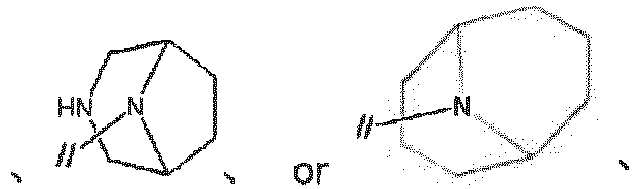


- Examples of the spirocyclic nitrogen-containing saturated heterocyclic group in the "monocyclic, bridged cyclic, or spirocyclic nitrogen-containing saturated heterocyclic group" represented by ring A include spirocyclic groups having 0 to 2 oxygen atoms in which any two of 4- to 7-membered nitrogen-containing saturated heterocyclic groups are bonded to each other. The spirocyclic nitrogen-containing saturated heterocyclic group is preferably a 7- to 12-membered spirocyclic group having 2 nitrogen atoms and 0 to 1 oxygen atoms in which any two of 4-to 7-membered nitrogen-containing saturated heterocyclic groups are bonded to each other, more preferably diazaspiroheptanyl, diazaspirooctanyl, diazaspirononanyl, diazaspirodecanyl, diazaspiroundecanyl, oxadiazaspiroheptanyl, oxadiazaspirooctanyl, oxadiazaspirononanyl, oxadiazaspirodecanyl, or oxadiazaspiroundecanyl, more preferably diazaspirooctanyl, diazaspirononanyl, diazaspirodecanyl, or oxadiazaspirononanyl, more preferably 2,6-diazaspiro[3.4]octanyl, 2,7-diazaspiro[3.4]octanyl, 3,7-diazaspiro[3.4]octanyl, 2,6-diazaspiro[3.5]nonanyl, 2,7-diazaspiro[3.5]nonanyl, 2,8-diazaspiro[3.5]nonanyl, 3,7-diazaspiro[3.5]octanyl, 3,8-diazaspiro[4.4]nonanyl, 3,8-diazaspiro[3.5]decanyl, or 9-oxa-diazaspiro[3.5]nonanyl, more preferably 2,6-diazaspiro[3.4]octanyl, 2,7-diazaspiro[3.4]octanyl, 3,7-diazaspiro[3.4]octanyl, 2,6-diazaspiro[3.5]nonanyl, 2,7-diazaspiro[3.5]nonanyl, 2,8-diazaspiro[3.5]nonanyl, or 9-oxa-diazaspiro[3.5]nonanyl, more preferably 2,6-diazaspiro[3.4]octanyl, 2,7-diazaspiro[3.4]octanyl, 3,7-diazaspiro[3.4]octanyl, 2,6-diazaspiro[3.5]nonanyl, or 2,8-diazaspiro[3.5]nonanyl, and more preferably 2,6-diazaspiro[3.4]octanyl, 2,6-diazaspiro[3.5]nonanyl, or 2,8-diazaspiro[3.5]nonanyl.
- Ring A is preferably a monocyclic, bridged cyclic, or spirocyclic 4- to 14-membered nitrogen-containing saturated heterocyclic group having 1 to 3 nitrogen atoms, 0 to 1 sulfur atoms, and 0 to 2 oxygen atoms as heteroatoms, more preferably a monocyclic 4- to 10-membered nitrogen-containing saturated heterocyclic group having 1 to 2 nitrogen atoms as heteroatoms, a bridged cyclic nitrogen-containing saturated heterocyclic group, such as

- Ring A is more preferably a monocyclic 4- to 10-membered nitrogen-containing saturated heterocyclic group having 1 to 2 nitrogen atoms as heteroatoms, a bridged cyclic nitrogen-containing saturated heterocyclic group, such as

- Ring A is more preferably pyrrolidinyl, piperidinyl, piperazinyl, azepanyl, diazepanyl,


- 2,6-diazaspiro[3.4]octanyl, 2,7-diazaspiro[3.4]octanyl, 3,7-diazaspiro[3.4]octanyl, 2,6-diazaspiro[3.5]nonanyl, 2,7-diazaspiro[3.5]nonanyl, 2,8-diazaspiro[3.5]nonanyl, 3,7-diazaspiro[3.5]nonanyl, 3,8-diazaspiro[4.4]nonanyl, 3,8-diazaspiro[4.5]decanyl, or 9-oxa-diazaspiro[3.5]nonanyl.
- Ring A is more preferably pyrrolidinyl,

- On the other hand, ring A is preferably a monocyclic 5-to 7-membered nitrogen-containing saturated heterocyclic group having 1 to 2 nitrogen atoms as heteroatoms, or a 5- to 9-membered bridged cyclic nitrogen-containing saturated heterocyclic group having 1 to 2 nitrogen atoms as heteroatoms.
- Ring A is more preferably pyrrolidinyl or

- In the compound represented by Formula (I) of the present invention, ring B represents monocyclic or bicyclic unsaturated hydrocarbon, or a monocyclic or bicyclic unsaturated heterocyclic group that may be substituted with oxo.
- The "monocyclic or bicyclic unsaturated hydrocarbon" represented by ring B is preferably monocyclic or bicyclic C5-C14 unsaturated hydrocarbon, more preferably monocyclic or bicyclic C5-C10 unsaturated hydrocarbon, more preferably phenyl or naphthyl, and more preferably phenyl.
- The "monocyclic or bicyclic unsaturated heterocyclic group" represented by ring B is preferably a monocyclic or bicyclic completely or partially unsaturated heterocyclic group having a heteroatom selected from nitrogen, oxygen, and sulfur.
- The "monocyclic or bicyclic unsaturated heterocyclic group" represented by ring B is preferably a 5- to 14-membered monocyclic or bicyclic completely or partially unsaturated heterocyclic group having 0 to 4 nitrogen atoms, 0 to 2 sulfur atoms, and 0 to 3 oxygen atoms as heteroatoms and having at least one of nitrogen, sulfur, and oxygen.
- The "monocyclic or bicyclic unsaturated heterocyclic group" represented by ring B is more preferably imidazolyl, thienyl, furyl, pyrrolyl, oxazolyl, isoxazolyl, thiazolyl, isothiazolyl, thiadiazolyl, pyrazolyl, triazolyl, tetrazolyl, pyridyl, pyrazyl, pyrimidinyl, pyridazinyl, pyrazolopyridyl, pyrazolopyrimidinyl, indolyl, isoindolyl, indolinyl, indazolyl, triazolopyridyl, benzoimidazolyl, benzoxazolyl, benzoisoxazolyl, benzothiazolyl, benzotriazolyl, benzothienyl, benzofuranyl, purinyl, imidazopyridinyl, quinolinyl, isoquinolinyl, quinazolinyl, quinoxalinyl, phthalazinyl, methylenedioxyphenyl, ethylenedioxyphenyl, dihydrobenzofuranyl, 1,3-dihydroisobenzofuranyl, dihydrobenzoxazolyl (e.g., 2,3-dihydrobenzo[d]oxazolyl), dihydrobenzooxazinyl (e.g., 3,4-dihydro-2H-benzo[b][1,4]oxazinyl), benzodioxolyl (e.g., benzo[d][1,3]dioxolyl), dihydrobenzodioxynyl (e.g., 2,3-dihydrobenzo[b][1,4]dioxynyl), or dihydrobenzothiazolyl (e.g., 2,3-dihydrobenzo[d]thiazolyl).
- On the other hand, the "monocyclic or bicyclic unsaturated heterocyclic group" represented by ring B is preferably a 5- to 14-membered monocyclic or bicyclic completely or partially unsaturated heterocyclic group having 1 to 4 nitrogen atoms, 0 to 2 sulfur atoms, and 0 to 3 oxygen atoms as heteroatoms and having at least one nitrogen atom. More preferably, the "monocyclic or bicyclic unsaturated heterocyclic group" represented by ring B is a 5- to 14-membered monocyclic or bicyclic completely or partially unsaturated heterocyclic group having only 1 to 4 nitrogen atoms as hetero atoms.
- The "monocyclic or bicyclic unsaturated heterocyclic group" represented by ring B is more preferably indolyl, indazolyl, or benzotriazolyl. The monocyclic or bicyclic unsaturated heterocyclic group represented by ring B may be substituted with oxo. Examples of the monocyclic or bicyclic unsaturated heterocyclic group that is substituted with oxo include 2-oxo-indolinyl,

- 2-oxo-2,3-dihydrobenzo[d]oxazolyl,

- 2-oxo-2,3-dihydrobenzo[d]thiazolyl,

- Ring B is preferably a monocyclic or bicyclic C5-C14 unsaturated hydrocarbon group, or a monocyclic or bicyclic 5- to 14-membered unsaturated heterocyclic group that may be substituted with oxo; that has 0 to 4 nitrogen atoms, 0 to 2 sulfur atoms, and 0 to 3 oxygen atoms as heteroatoms; and that has at least one of nitrogen, sulfur, and oxygen.
- Ring B is more preferably phenyl, naphthyl, pyridyl, pyrazolopyridyl, pyrazolopyrimidinyl, indolyl, indolinyl, 2-oxo-indolinyl, indazolyl, benzoimidazolyl, benzoisoxazolyl, benzothiazolyl, benzotriazolyl, imidazopyridinyl, quinolinyl, isoquinolinyl, quinazolinyl, quinoxalinyl, phthalazinyl, 2-oxo-2,3-dihydrobenzo[d]oxazolyl, 1,3-dihydroisobenzofuranyl, dihydrobenzooxazinyl, benzodioxolyl, dihydrobenzodioxynyl, or 2-oxo-2,3-dihydrobenzo[d]thiazolyl, and more preferably phenyl, naphthyl, pyridyl, pyrazolopyridyl, indolyl, indolinyl, indazolyl, benzoimidazolyl, benzoisoxazolyl, benzotriazolyl, quinolinyl, 2-oxo-2,3-dihydrobenzo[d]oxazolyl, 1,3-dihydroisobenzofuranyl, dihydrobenzooxazinyl, or 2-oxo-2,3-dihydrobenzo[d]thiazolyl.
- Ring B is more preferably phenyl, indolyl, indazolyl, or benzotriazolyl.
- In the compound represented by Formula (I) of the present invention, R1 represents nitro or cyano, and preferably cyano.
- In the compound represented by Formula (I) of the present invention, R2 represents halogen, and preferably fluorine. When two or more R2s are present, R2s may be identical or different.
- In the compound represented by Formula (I) of the present invention, 1 is an integer of 0 to 2, and preferably an integer of 0 to 1.
- In the compound represented by Formula (I) of the present invention, R3 represents substituted or unsubstituted amino, C1-C6 alkyl, halogen, cyano, oxo, hydroxy, carbamoyl, sulfo, C1-C6 alkoxy, or amino(C1-C6 alkyl). When two or more R3s are present, R3s may be identical or different.
- R3 is preferably substituted or unsubstituted amino, C1-C6 alkyl, halogen, cyano, oxo, hydroxy, carbamoyl, sulfo, C1-C6 alkoxy, or amino(C1-C6 alkyl).
- R3 is more preferably amino that may be substituted with one to two C1-C6 alkyl or C3-C7 cycloalkyl groups, C1-C6 alkyl, halogen, cyano, oxo, hydroxy, carbamoyl, sulfo, C1-C6 alkoxy, or amino(C1-C6 alkyl).
- R3 is more preferably amino, mono- or di(C1-C6 alkyl)amino, (C3-C7 cycloalkyl)amino, or C1-C6 alkyl; more preferably amino, methylamino, ethylamino, isopropylamino, dimethylamino, cyclobutylamino, or methyl.
- R3 is more preferably amino that may be substituted with one to two C1-C6 alkyl or C3-C7 cycloalkyl groups.
- R3 is more preferably amino.
- In the compound represented by Formula (I) of the present invention, m is an integer of 0 to 2, and preferably an integer of 0 to 1.
- In the compound represented by Formula (I) of the present invention, R4 represents halogen, hydroxy, nitro, cyano, amino, carboxy, (C2-C7 acyl)amino, (C2-C7 acyl)oxy, substituted or unsubstituted C1-C8 alkyl, substituted or unsubstituted C2-C6 alkenyl, substituted or unsubstituted C1-C6 alkoxy, substituted or unsubstituted C3-C7 cycloalkyl, mono- or di(C1-C6 alkyl)amino, substituted or unsubstituted carbamoyl, substituted or unsubstituted C2-C6 alkynyl, substituted or unsubstituted (C1-C6 alkyl)carbonyl, substituted or unsubstituted 4- to 14-membered nitrogen-containing saturated heterocyclic group, or substituted or unsubstituted C6-C14 aromatic hydrocarbon. When two or more R4s are present, R4s may be identical or different.
- In the present invention, when at least one R4 represents substituted C1-C8 alkyl, substituted C2-C6 alkenyl, substituted C1-C6 alkoxy, substituted C3-C7 cycloalkyl, or substituted carbamoyl, examples of the substituents include halogen, carboxy, C1-C6 alkoxy, hydroxy, C1-C6 alkyl that may be substituted with hydroxy, monocyclic C5-C10 unsaturated hydrocarbon, carbamoyl that may be substituted with C1-C6 alkyl or monocyclic C5-C10 unsaturated hydrocarbon, (C2-C7 acyl)oxy, amino that may be substituted with C1-C6 alkyl or C2-C7 acyl, C3-C7 cycloalkyl that may be substituted with hydroxy, (C1-C6 alkoxy)(C1-C6 alkyl), and the like. When two or more of the substituents are present, the substituents may be identical or different.
- The "C1-C8 alkyl" in the "substituted or unsubstituted C1-C8 alkyl" represented by R4 is preferably methyl, ethyl, n-propyl, isopropyl, n-butyl, isobutyl, sec-butyl, tert-butyl, pentyl, hexyl, heptyl, or octyl, more preferably C1-C6 alkyl, more preferably methyl, ethyl, n-propyl, isopropyl, n-butyl, isobutyl, sec-butyl, tert-butyl, pentyl, or hexyl, and more preferably methyl, ethyl, n-propyl, isopropyl, n-butyl, isobutyl, sec-butyl, or tert-butyl.
- The substituent in the "substituted or unsubstituted C1-C8 alkyl" represented by R4 may be, for example, the substituents mentioned above, preferably halogen, amino, hydroxy, carboxy, carbamoyl, alkylcarbamoyl, acylamino, alkoxy, hydroxycycloalkyl, or acyloxy, more preferably halogen, amino, hydroxy, carboxy, carbamoyl, (C1-C6 alkyl)carbamoyl, (C2-C7 acyl) amino, C1-C6 alkoxy, C3-C7 cycloalkyl, hydroxy(C3-C7 cycloalkyl), or (C2-C7 acyl)oxy, more preferably halogen, amino, hydroxy, carboxy, carbamoyl, (C1-C6 alkyl)carbamoyl, (C1-C6 alkyl)carbonylamino, C1-C6 alkoxy, C3-C7 cycloalkyl, hydroxy(C3-C7 cycloalkyl), or (C1-C6 alkyl)carbonyloxy, and more preferably fluorine, amino, hydroxy, carboxy, carbamoyl, methylcarbamoyl, dimethylcarbamoyl, acetylamino, methoxy, hydroxycyclopropyl, or methylcarbonyloxy.
- The "substituted or unsubstituted C1-C8 alkyl" represented by R4 is preferably unsubstituted C1-C8 alkyl, or C1-C8 alkyl that may be substituted with halogen, amino, hydroxy, carboxy, carbamoyl, (C1-C6 alkyl)carbamoyl, (C1-C6 alkyl)carbonylamino, C1-C6 alkoxy, C3-C7 cycloalkyl, hydroxy(C3-C7 cycloalkyl), or (C1-C6 alkyl)carbonyloxy.
- The "substituted or unsubstituted C1-C8 alkyl" represented by R4 is more preferably methyl, ethyl, n-propyl, isopropyl, tert-butyl, difluoromethyl, trifluoromethyl, fluoroethyl, aminoethyl, hydroxymethyl, hydroxyethyl, hydroxypropyl, hydroxydimethylethyl, hydroxymethylpropyl, hydroxymethylbutyl, hydroxyethylbutyl, carboxymethyl, carbamoylmethyl, methylcarbamoylmethyl, dimethylcarbamoylmethyl, acetylaminoethyl, methoxyethyl, hydroxycyclopropylmethyl, hydroxycyclopropylethyl, hydroxycyclobutylmethyl, or methylcarbonyloxyethyl. The "substituted or unsubstituted C1-C8 alkyl" represented by R4 is more preferably hydroxymethylpropyl, hydroxyethylbutyl, or hydroxycyclobutylmethyl.
- The "substituted or unsubstituted C2-C6 alkenyl" represented by R4 is preferably unsubstituted C2-C6 alkenyl, more preferably vinyl, allyl, 1-propenyl, 2-methyl-2-propenyl, isopropenyl, 1-, 2- or 3-butenyl, isobutenyl, 2-, 3-, or 4-pentenyl, 2-methyl-2-butenyl, 3-methyl-2-butenyl, 5-hexenyl, 1-cyclopentenyl, 1-cyclohexenyl, or 3-methyl-3-butenyl, and more preferably isobutenyl.
- Examples of the "C2-C6 alkynyl" in the "substituted or unsubstituted C2-C6 alkynyl" represented by R4 include ethynyl, 1- or 2-propynyl, 1-, 2- or 3-butynyl, 1-methyl-2-propynyl, and the like. The "substituted or unsubstituted C2-C6 alkynyl" is preferably unsubstituted C2-C6 alkynyl.
- The "C1-C6 alkoxy" in the "substituted or unsubstituted C1-C6 alkoxy" represented by R4 is preferably methoxy, ethoxy, n-propoxy, isopropoxy, n-butoxy, isobutoxy, sec-butoxy, tert-butoxy, pentyloxy, or hexyloxy, and more preferably methoxy, ethoxy, n-propoxy, isopropoxy, n-butoxy, isobutoxy, sec-butoxy, and tert-butoxy.
- The substituent in the "substituted or unsubstituted C1-C6 alkoxy" represented by R4 may be, for example, those mentioned above, and is preferably hydroxy or C5-C14 unsaturated hydrocarbon, more preferably hydroxy or monocyclic C5-C10 unsaturated hydrocarbon, and more preferably hydroxy or phenyl.
- The "substituted or unsubstituted C1-C6 alkoxy" represented by R4 is preferably C1-C6 alkoxy that may be substituted with hydroxy or C5-C14 unsaturated hydrocarbon, more preferably C1-C6 alkoxy that may be substituted with hydroxy or monocyclic C5-C10 unsaturated hydrocarbon, more preferably C1-C6 alkoxy that may be substituted with hydroxy or phenyl, and more preferably methoxy, hydroxypropoxy, or benzyloxy.
- The "substituted or unsubstituted C3-C7 cycloalkyl" represented by R4 is preferably C3-C7 cycloalkyl that may be substituted with hydroxyalkyl, alkoxyalkyl, hydroxycycloalkyl, or unsaturated hydrocarbon carbamoyl, more preferably C3-C7 cycloalkyl that may be substituted with hydroxy(C1-C4 alkyl), (C1-C4 alkoxy)(C1-C4 alkyl), hydroxy(C3-C7 cycloalkyl), or (C6-C14 aromatic hydrocarbon)carbamoyl, more preferably C3-C7 cycloalkyl that may be substituted with hydroxy(C1-C4 alkyl), (C1-C4 alkoxy)(C1-C4 alkyl), hydroxy(C3-C7 cycloalkyl), or phenylcarbamoyl, more preferably cyclopropyl, hydroxymethyl cyclopropyl, methoxymethyl cyclopropyl, hydroxycyclopropyl cyclopropyl, or phenylcarbamoyl cyclopropyl, more preferably cyclopropyl or hydroxymethyl cyclopropyl, and more preferably cyclopropyl.
- The "mono- or di(C1-C6 alkyl)amino" represented by R4 is preferably methylamino, ethylamino, n-propylamino, isopropylamino, n-butylamino, isobutylamino, tert-butylamino, n-pentylamino, isopentylamino, hexylamino, dimethylamino, diethylamino, di(n-propyl)amino, diisopropylamino, di(n-butyl)amino, diisobutylamino, di(tert-butyl)amino, di(n-pentyl)amino, diisopentylamino, dihexylamino, methylethylamino, or methylisopropylamino, more preferably methylamino, ethylamino, n-propylamino, isopropylamino, n-butylamino, isobutylamino, tert-butylamino, dimethylamino, diethylamino, di(n-propyl)amino, diisopropylamino, di(n-butyl)amino, diisobutylamino, di(tert-butyl)amino, methylethylamino, or methylisopropylamino, and more preferably dimethylamino.
- The "substituted or unsubstituted carbamoyl" represented by R4 is preferably carbamoyl that may be substituted with alkyl, more preferably carbamoyl that may be substituted with C1-C6 alkyl, and more preferably carbamoyl, methylcarbamoyl, or dimethylcarbamoyl.
- Examples of the alkylcarbonyl in the "substituted or unsubstituted (C1-C6 alkyl)carbonyl" represented by R4 include straight or branched (C1-C6 alkyl)carbonyl, such as methylcarbonyl, ethylcarbonyl, n-propylcarbonyl, isopropylcarbonyl, n-butylcarbonyl, isobutylcarbonyl, tert-butylcarbonyl, n-pentylcarbonyl, isopentylcarbonyl, and hexylcarbonyl.
- Examples of the "nitrogen-containing saturated heterocyclic group" in the "substituted or unsubstituted 4- to 14-membered nitrogen-containing saturated heterocyclic group" represented by R4 include morpholinyl, azetidinyl, pyrrolidinyl, piperidinyl, piperazinyl, and the like.
- Examples of the "substituted or unsubstituted C6-C14 aromatic hydrocarbon" represented by R4 include C6-C14 aromatic hydrocarbon that may be substituted with methyl, such as phenyl, tolyl, xylyl, naphthyl, anthracenyl, phenanthryl, fluorenyl, and tetrahydronaphthyl.
- R4 is preferably halogen, hydroxy, nitro, cyano, amino, carboxy, (C2-C7 acyl)amino, (C2-C7 acyl)oxy, substituted or unsubstituted C1-C8 alkyl, substituted or unsubstituted C2-C6 alkenyl, substituted or unsubstituted C1-C6 alkoxy, substituted or unsubstituted C3-C7 cycloalkyl, mono- or di(C1-C6 alkyl)amino, substituted or unsubstituted carbamoyl, substituted or unsubstituted C2-C6 alkynyl, substituted or unsubstituted (C1-C6 alkyl)carbonyl, substituted or unsubstituted 4- to 14-membered nitrogen-containing saturated heterocyclic group, or substituted or unsubstituted C6-C14 aromatic hydrocarbon.
- R4 is more preferably halogen, nitro, cyano, carboxy, substituted or unsubstituted C1-C8 alkyl, substituted or unsubstituted C2-C6 alkenyl, substituted or unsubstituted C1-C6 alkoxy, substituted or unsubstituted C3-C7 cycloalkyl, mono- or di(C1-C6 alkyl)amino, or substituted or unsubstituted carbamoyl.
- R4 is more preferably halogen, nitro, cyano, carboxy, C1-C6 alkyl that may be substituted with halogen, amino, hydroxy, carboxy, carbamoyl, (C1-C6 alkyl)carbamoyl, (C1-C6 alkyl)carbonylamino, C1-C6 alkoxy, C3-C7 cycloalkyl, hydroxy(C3-C7 cycloalkyl), or (C1-C6 alkyl)carbonyloxy, C2-C6 alkenyl, C1-C6 alkoxy that may be substituted with hydroxy or monocyclic C5-C10 unsaturated hydrocarbon, C3-C7 cycloalkyl that may be substituted with hydroxy, hydroxy(C1-C4 alkyl), (C1-C4 alkoxy)(C1-C4 alkyl), hydroxy(C3-C7 cycloalkyl), or (C6-C14 aromatic hydrocarbon)-substituted carbamoyl, mono- or di(C1-C6 alkyl)amino, or carbamoyl that may be substituted with C1-C6 alkyl.
- R4 is more preferably fluorine, chlorine, bromine, iodine, nitro, cyano, carboxy, methyl, ethyl, n-propyl, isopropyl, tert-butyl, difluoromethyl, trifluoromethyl, fluoroethyl, aminoethyl, hydroxymethyl, hydroxyethyl, hydroxypropyl, hydroxydimethylethyl, hydroxymethylpropyl, hydroxymethylbutyl, hydroxyethylbutyl, carboxymethyl, carbamoylmethyl, methylcarbamoylmethyl, dimethylcarbamoylmethyl, acetylaminoethyl, methoxyethyl, hydroxycyclopropylmethyl, hydroxycyclopropylethyl, hydroxycyclobutylmethyl, methylcarbonyloxyethyl, isobutenyl, methoxy, hydroxypropoxy, cyclopropyl, hydroxymethyl cyclopropyl, methoxymethyl cyclopropyl, hydroxycyclopropyl cyclopropyl, phenylcarbamoyl cyclopropyl, benzyloxy, dimethylamino, carbamoyl, methylcarbamoyl, or dimethylcarbamoyl.
- R4 is more preferably fluorine, chlorine, bromine, methyl, hydroxymethylpropyl, or hydroxyethylbutyl.
- In the compound represented by Formula (I) of the present invention, n is an integer of 0 to 5, and preferably an integer of 0 to 3.
- In the compound represented by Formula (I) of the present invention, R5 represents hydrogen or C1-C6 alkyl and R6 represents hydrogen, or R5 and R6 are taken together to form oxo or thioxo.
- The "C1-C6 alkyl" represented by R5 is preferably methyl, ethyl, n-propyl, isopropyl, n-butyl, isobutyl, sec-butyl, tert-butyl, pentyl, or hexyl; and more preferably methyl.
- In the compound represented by Formula (I) of the present invention, R6 represents hydrogen.
- With respect to R5 and R6 in the compound represented by Formula (I) of the present invention, "R5 represents hydrogen or C1-C6 alkyl and R6 represents hydrogen, or R5 and R6 are taken together to form oxo or thioxo." Preferably, R5 represents hydrogen or C1-C6 alkyl, and R6 represents hydrogen. More preferably, R5 is hydrogen or methyl, and R6 is hydrogen.
- The compound of the present invention is a compound represented by Formula (I), wherein
ring A is a monocyclic, bridged cyclic, or spirocyclic nitrogen-containing saturated heterocyclic group,
ring B is a monocyclic or bicyclic unsaturated hydrocarbon, or a monocyclic or bicyclic unsaturated heterocyclic group that may be substituted with oxo,
R1 is nitro or cyano,
R2 is halogen,
R3 is substituted or unsubstituted amino, C1-C6 alkyl, halogen, cyano, oxo, hydroxy, carbamoyl, sulfo, C1-C6 alkoxy, or amino(C1-C6 alkyl),
R4 is halogen, hydroxy, nitro, cyano, amino, carboxy, (C2-C7 acyl)amino, (C2-C7 acyl)oxy, substituted or unsubstituted C1-C8 alkyl, substituted or unsubstituted C2-C6 alkenyl, substituted or unsubstituted C1-C6 alkoxy, substituted or unsubstituted C3-C7 cycloalkyl, mono- or di(C1-C6 alkyl)amino, substituted or unsubstituted carbamoyl, substituted or unsubstituted C2-C6 alkynyl, substituted or unsubstituted (C1-C6 alkyl)carbonyl, substituted or unsubstituted 4- to 14-membered nitrogen-containing saturated heterocyclic group, or substituted or unsubstituted C6-C14 aromatic hydrocarbon,
R5 is hydrogen or C1-C6 alkyl,
R6 is hydrogen, 1 is an integer of 0 to 2,
m is an integer of 0 to 2, and
n is an integer of 0 to 5,
wherein when 1 is 2, two R2s may be identical or different,
when m is 2, two R3s may be identical or different, and
when n is 2 to 5, two to five R4s may be identical or different. - More preferred is a compound represented by Formula (I) or a salt thereof, wherein
ring A is a monocyclic, bridged cyclic, or spirocyclic 4- to 14-membered nitrogen-containing saturated heterocyclic group having 1 to 3 nitrogen atoms, 0 to 1 sulfur atoms, and 0 to 2 oxygen atoms as heteroatoms,
ring B is monocyclic or bicyclic C5-C14 unsaturated hydrocarbon or a monocyclic or bicyclic 5- to 14-membered unsaturated heterocyclic group that may be substituted with oxo, that has 0 to 4 nitrogen atoms, 0 to 2 sulfur atoms, and 0 to 3 oxygen atoms as heteroatoms, and that has at least one of nitrogen, sulfur, and oxygen,
R1 is nitro or cyano,
R2 is halogen,
R3 is amino, mono- or di(C1-C6 alkyl)amino, (C3-C7 cycloalkyl)amino, or C1-C6 alkyl,
R4 is halogen, nitro, cyano, carboxy, substituted or unsubstituted C1-C8 alkyl, substituted or unsubstituted C2-C6 alkenyl, substituted or unsubstituted C1-C6 alkoxy, substituted or unsubstituted C3-C7 cycloalkyl, mono- or di(C1-C6 alkyl)amino, or substituted or unsubstituted carbamoyl,
wherein when at least one R4 is substituted C1-C8 alkyl, substituted C2-C6 alkenyl, substituted C1-C6 alkoxy, substituted C3-C7 cycloalkyl, or substituted carbamoyl, the substituent is halogen, carboxy, C1-C6 alkoxy, hydroxy, C1-C6 alkyl that may be substituted with hydroxy, monocyclic C5-C10 unsaturated hydrocarbon, carbamoyl that may be substituted with C1-C6 alkyl or monocyclic C5-C10 unsaturated hydrocarbon, (C2-C7 acyl)oxy, amino that may be substituted with C1-C6 alkyl or C2-C7 acyl, C3-C7 cycloalkyl that may be substituted with hydroxy, or (C1-C6 alkoxy)(C1-C6 alkyl), wherein when two or more of the substituents are present, the substituents may be identical or different,
R5 is hydrogen or C1-C6 alkyl,
R6 is hydrogen,
1 is an integer of 0 to 2,
m is an integer of 0 to 2, and
n is an integer of 0 to 5,
wherein when 1 is 2, two R2s may be identical or different, when m is 2, two R3s may be identical or different, and
when n is 2 to 5, two to five R4s may be identical or different. - More preferred is a compound represented by Formula (I) or a salt thereof, wherein
ring A is pyrrolidinyl, piperidinyl, piperazinyl, azepanyl, diazepanyl,

- 2,6-di-azaspiro[3.4]octanyl, 2,7-diazaspiro[3.4]octanyl, 3,7-diazaspiro[3.4]octanyl, 2,6-diazaspiro[3.5]nonanyl, 2,7-diazaspiro[3.5]nonanyl, 2,8-diazaspiro[3.5]nonanyl, 3,7-diazaspiro[3.5]nonanyl, 3,8-diazaspiro[4.4]nonanyl, 3,8-diazaspiro[4.5]decanyl, or 9-oxa-diazaspiro[3.5]nonanyl, ring B is monocyclic or bicyclic C5-C14 unsaturated hydrocarbon or a monocyclic or bicyclic 5- to 14-membered unsaturated heterocyclic group that may be substituted with oxo, that has 0 to 4 nitrogen atoms, 0 to 2 sulfur atoms, and 0 to 3 oxygen atoms as heteroatoms, and that has at least one of nitrogen, sulfur, and oxygen,
R1 is nitro or cyano,
R2 is halogen,
R3 is amino, methylamino, ethylamino, isopropylamino, dimethylamino, cyclobutylamino, or methyl,
R4 is halogen, nitro, cyano, carboxy, substituted or unsubstituted C1-C8 alkyl, substituted or unsubstituted C2-C6 alkenyl, substituted or unsubstituted C1-C6 alkoxy, substituted or unsubstituted C3-C7 cycloalkyl, mono- or di(C1-C6 alkyl)amino, or substituted or unsubstituted carbamoyl,
wherein when at least one R4 is substituted C1-C8 alkyl, substituted C2-C6 alkenyl, substituted C1-C6 alkoxy, substituted C3-C7 cycloalkyl, or substituted carbamoyl, the substituent is halogen, carboxy, C1-C6 alkoxy, hydroxy, C1-C6 alkyl that may be substituted with hydroxy, a monocyclic C5-C10 unsaturated hydrocarbon, carbamoyl that may be substituted with C1-C6 alkyl or monocyclic C5-C10 unsaturated hydrocarbon, C2-C7 acyl, amino that may be substituted with C1-C6 alkyl or C2-C7 acyl, C3-C7 cycloalkyl that may be substituted with hydroxy, or (C1-C6 alkoxy)(C1-C6 alkyl),
wherein when two or more of the substituents are present, the substituents may be identical or different,
R5 is hydrogen or C1-C6 alkyl,
R6 is hydrogen,
1 is an integer of 0 to 2,
m is an integer of 0 to 2, and
n is an integer of 0 to 5,
wherein when 1 is 2, two R2s may be identical or different,
when m is 2, two R3s may be identical or different, and
when n is 2 to 5, two to five R4s may be identical or different. - More preferred is a compound represented by Formula (I) or a salt thereof, wherein
ring A is pyrrolidinyl, piperidinyl, piperazinyl, azepanyl, diazepanyl,
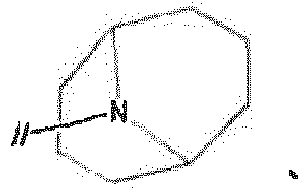
- 2,6-diazaspiro[3.4]octanyl, 2,7-diazaspiro[3.4]octanyl, 3,7-diazaspiro[3.4]octanyl, 2,6-diazaspiro[3.5]nonanyl, 2,7-diazaspiro[3.5]nonanyl, 2,8-diazaspiro[3.5]nonanyl, 3,7-diazaspiro[3.5]nonanyl, 3,8-diazaspiro[4.4]nonanyl, 3,8-diazaspiro[4.5]decanyl, or 9-oxa-diazaspiro[3.5]nonanyl;
Ring B is monocyclic or bicyclic C5-C14 unsaturated hydrocarbon or a monocyclic or bicyclic 5- to 14-membered unsaturated heterocyclic group that may be substituted with oxo, that has 0 to 4 nitrogen atoms, 0 to 2 sulfur atoms, and 0 to 3 oxygen atoms as heteroatoms, and that has at least one of nitrogen, sulfur, and oxygen,
R1 is nitro or cyano,
R2 is halogen,
R3 is amino, methylamino, ethylamino, isopropylamino, dimethylamino, cyclobutylamino, or methyl,
R4 is halogen, nitro, cyano, carboxy, C1-C8 alkyl that may be substituted with halogen, amino, hydroxy, carboxy, carbamoyl, (C1-C6 alkyl)carbamoyl, (C1-C6 alkyl)carbonylamino, C1-C6 alkoxy, (C1-C6 alkyl)carbonyl, C3-C7 cycloalkyl, hydroxy(C3-C7 cycloalkyl), or (C1-C6 alkyl)carbonyloxy, C2-C6 alkenyl, C1-C6 alkoxy that may be substituted with hydroxy or monocyclic C5-C10 unsaturated hydrocarbon, C3-C7 cycloalkyl that may be substituted with hydroxy, hydroxy(C1-C4 alkyl), (C1-C4 alkoxy)(C1-C4 alkyl), hydroxy(C3-C7 cycloalkyl), or (C6-C14 aromatic hydrocarbon)-substituted carbamoyl, mono- or di(C1-C6 alkyl)amino, or carbamoyl that may be substituted with C1-C6 alkyl,
R5 is hydrogen or C1-C6 alkyl,
R6 is hydrogen,
1 is an integer of 0 to 2,
m is an integer of 0 to 2, and
n is an integer of 0 to 5,
wherein when 1 is 2, two R2s may be identical or different,
when m is 2, two R3s may be identical or different, and
when n is 2 to 5, two to five R4s may be identical or different. - More preferably, in Formula (I),
ring A is pyrrolidinyl,
ring B is phenyl, indolyl, indazolyl, or benzotriazolyl,
R1 is cyano,
R2 is fluorine and is present at the ortho position relative to R1 on the phenyl,
R3 is amino (wherein when two or more R3s are present, R3s may be identical or different),
R4 is fluorine, chlorine, bromine, methyl, hydroxymethylpropyl, hydroxyethylbutyl, or hydroxycyclobutylmethyl,
R5 is hydrogen or methyl,
R6 is hydrogen,
1 is an integer of 0 to 2,
m is an integer of 0 to 2, and
n is an integer of 0 to 3,
wherein when m is 2, two R3s may be identical or different, and when n is 2 to 3, two to three R4s may be identical or different. - Specific examples of the compounds of the present invention include, but are not limited to, the compounds produced in the Examples below.
- The following are examples of preferable compounds of the present invention:
- (1) (S)-5'-((3-aminopyrrolidin-1-yl)methyl)-4"-methyl-[1,1':2',1"-terphenyl]-4-carbonitrile,
- (2) 5-(((1S,2S,4R)-rel-2-amino-7-azabicyclo[2.2.1]heptan-7-yl)methyl)-2",3-difluoro-4"-methyl-[1,1':2',1"-terphenyl]-4-carbonitrile-isomer-X,
- (3) (S)-5'-((3-amino-3-methylpyrrolidin-1-yl)methyl)-2",3-difluoro-4"-methyl-[1,1':2',1"-terphenyl]-4-carbonitrile,
- (4) 5'-(((1S,2S,4R)-rel-2-amino-7-azabicyclo[2.2.1]heptan-7-yl)methyl)-2'-(6,7-difluoro-1-(2-hydroxy-2-methylpropyl)-1H-benzo[d][1,2,3]triazol-5-yl)-3-fluoro-[1,1'-biphenyl]-4-carbonitrile-isomer-X,
- (5) 5'-(((1S,2S,4R)-rel-2-amino-7-azabicyclo[2.2.1]heptan-7-yl)methyl)-2'-(7-chloro-6-fluoro-1-((1-hydroxycyclobutyl)methyl)-1H-benzo[d][1,2,3]triazol-5-yl)-3-fluoro-[1,1'-biphenyl]-4-carbonitrile-isomer-X,
- (6) 5'-(((1S,2S,4R)-rel-2-amino-7-azabicyclo[2.2.1]heptan-7-yl)methyl)-3-fluoro-2'-(6-fluoro-1-(2-hydroxy-2-methylpropyl)-1H-indazol-5-yl)-[1,1'-biphenyl]-4-carbonitrile-isomer-X,
- (7) 5'-(((1S,2S,4R)-rel-2-amino-7-azabicyclo[2.2.1]heptan-7-yl)methyl)-2'-(7-chloro-1-(2-ethyl-2-hydroxybutyl)-6-fluoro-1H-benzo[d][1,2,3]triazol-5-yl)-3-fluoro-[1,1'-biphenyl]-4-carbonitrile-isomer-X,
- (8) 5'-(((1S,2S,4R)-rel-2-amino-7-azabicyclo[2.2.1]heptan-7-yl)methyl)-3-fluoro-2'-(6-fluoro-1-(2-hydroxy-2-methylpropyl)-1H-indol-5-yl)-[1,1'-biphenyl]-4-carbonitrile-isomer-X,
- (9) 5'-(((1S,2S,4R)-rel-2-amino-7-azabicyclo[2.2.1]heptan-7-yl)methyl)-2",3-difluoro-4"-(2-hydroxy-2-methylpropyl)-[1,1':2',1"-terphenyl]-4-carbonitrile-isomer-X,
- (10) (S)-5'-((3-aminopyrrolidin-1-yl)methyl)-2",3-difluoro-4"-(2-hydroxy-2-methylpropyl)-[1,1':2',1"-terphenyl]-4-carbonitrile,
- (11) 5'-(1-((1S,2S,4R)-rel-2-amino-7-azabicyclo[2.2.1]heptan-7-yl)ethyl)-2",3-difluoro-4"-methyl-[1,1':2',1"-terphenyl]-4-carbonitrile-isomer-X,
- (12) 5'-(((1S,2S,4R)-rel-2-amino-7-azabicyclo[2.2.1]heptan-7-yl)methyl)-2'-(1-(2-ethyl-2-hydroxybutyl)-6,7-difluoro-1H-benzo[d][1,2,3]triazol-5-yl)-3-fluoro-[1,1'-biphenyl]-4-carbonitrile-isomer-X,
- (13) 5'-(((1S,2S,4R)-rel-2-amino-7-azabicyclo[2.2.1]heptan-7-yl)methyl)-2'-(7-bromo-6-fluoro-1-(2-hydroxy-2-methylpropyl)-1H-benzo[d][1,2,3]triazol-5-yl)-3-fluoro-[1,1'-biphenyl]-4-carbonitrile-isomer-X,
- (14) 5'-(((1S,2S,4R)-rel-2-amino-7-azabicyclo[2.2.1]heptan-7-yl)methyl)-2'-(7-bromo-1-(2-ethyl-2-hydroxybutyl)-6-fluoro-1H-benzo[d][1,2,3]triazol-5-yl)-3-fluoro-[1,1'-biphenyl]-4-carbonitrile-isomer-X,
- (15) (1R,2R,4S)-rel-7-((4-methyl-4"-nitro-[1,1':2',1"-terphenyl]-4'-yl)methyl)-7-azabicyclo[2.2.1]heptane-2-amine-isomer-X,
- (16) 3-fluoro-2'-(6-fluoro-1-(2-hydroxy-2-methylpropyl)-1H-indazol-5-yl)-5'-((hexahydropyrrolo[3,4-c]pyrrol-2(1H)-yl)methyl)-[1,1'-biphenyl]-4-carbonitrile,
- (17) 5'-((2,6-diazaspiro[3.5]nonan-2-yl)methyl)-3-fluoro-2'-(6-fluoro-1-(2-hydroxy-2-methylpropyl)-1H-indazol-5-yl)-[1,1'-biphenyl]-4-carbonitrile,
- (18) 5'-(((3-endo)-amino-8-azabicyclo[3.2.1]octan-8-yl)methyl)-3-fluoro-2'-(6-fluoro-1-(2-hydroxy-2-methylpropyl)-1H-indazol-5-yl)-[1,1'-biphenyl]-4-carbonitrile, and
- (19) 5'-((2,6-diazaspiro[3.4]octan-6-yl)methyl)-3-fluoro-2'-(6-fluoro-1-(2-hydroxy-2-methylpropyl)-1H-indazol-5-yl)-[1,1'-biphenyl]-4-carbonitrile.
- Next, the methods for producing the compounds of the present invention are described.
- Compound (I) of the present invention can be produced, for example, through the production methods below or the methods described in the Examples. However, the methods for producing Compound (I) of the present invention are not limited to these reaction examples.
(In steps 1 to 5, ring A, ring B, R1, R2, R3, R4, R5, R6, 1, m, and n in the formulas are as defined above.)
- This step is a process for producing an alcohol compound (III) by a reaction using a carboxylic acid compound represented by Formula (II) and a reducing agent. Examples of reducing agents include borane, lithium aluminum hydride, and the like. Further, sodium borohydride, lithium borohydride, or the like can be used as a reducing agent after an active ester is formed from the carboxylic acid compound represented by Formula (II) in the system. Examples of active esterifying agents include WSC HCl used together with HATU or HOBt. The amount of the reducing agent used is 1 to 10 moles, preferably 1 to 5 moles, per mole of the compound represented by Formula (II). The amount of the active esterifying agent used is 1 to 10 moles, preferably 1 to 5 moles, per mole of the compound represented by Formula (II). The solvent is not limited as long as it does not adversely affect the reaction. Examples include toluene, acetonitrile, 1,2-dimethoxyethane, tetrahydrofuran, 1,4-dioxane, ethanol, N,N-dimethylformamide, water, mixed solvents thereof, and the like. The reaction temperature is usually 0 to 200°C, and preferably 0 to 100°C. The reaction time is usually 5 minutes to 3 days, preferably 5 minutes to 10 hours.
- The thus-obtained compound represented by Formula (III) can be subjected to the subsequent step after or without isolation or purification by known isolation and purification means, such as concentration, vacuum concentration, crystallization, solvent extraction, reprecipitation, and chromatography.

- This step is a process for producing an alcohol compound (V) wherein R5 is C1-C6 alkyl by a reaction using an aldehyde compound represented by Formula (IV), and an alkyl metal reagent.
- Examples of alkyl metal reagents include alkyl lithium, alkyl magnesium reagents, and the like. The amount of the alkyl metal reagent added is 1 to 10 moles, preferably 1 to 5 moles, per mole of the compound represented by Formula (IV). The solvent can be used in the same manner as in step 1. The reaction temperature is usually -78 to 200°C, and preferably -78 to 0°C. The reaction time is usually 5 minutes to 3 days, and preferably 5 minutes to 10 hours.
- The thus-obtained compound represented by Formula (V) can be subjected to the subsequent step after or without isolation or purification by known isolation and purification means, such as concentration, vacuum concentration, crystallization, solvent extraction, reprecipitation, and chromatography.

- This step is a process for producing an aldehyde or a ketone compound represented by Formula (VI) using the alcohol compound represented by Formula (V) and an oxidizing agent.
- Examples of the oxidizing agent include Dess-Martin periodinane, manganese dioxide, tetrapropylammonium perruthenate, sulfur trioxide pyridine complex, pyridinium chlorochromate, and the like. The amount of the oxidizing agent added is 1 to 10 moles, preferably 1 to 5 moles, per mole of the compound represented by Formula (V). The solvent may be the same as in step 1. The reaction temperature is usually -78 to 200°C, and preferably 0 to 100°C. The reaction time is usually 5 minutes to 3 days, and preferably 5 minutes to 10 hours.
- The thus-obtained compound represented by Formula (VI) can be subjected to the subsequent step after or without isolation or purification by known isolation and purification means, such as concentration, vacuum concentration, crystallization, solvent extraction, reprecipitation, and chromatography.

- This step is a process for producing a compound represented by Formula (I) by reacting an aldehyde or a ketone compound represented by Formula (VI) and an amine compound represented by Formula (VII) using a reducing agent.
- Examples of reducing agents include sodium triacetoxyborohydride, sodium cyanoborohydride, sodium borohydride, and the like. The amount of the reducing agent added is 1 to 10 moles, preferably 1 to 5 moles, per mole of the compound represented by Formula (VI).
- The solvent is not particularly limited, insofar as it does not interfere with the reaction. Examples include toluene, chloroform, tetrahydrofuran, dichloromethane, methanol, ethanol, and the like; or mixed solvents thereof.
- The thus-obtained compound represented by Formula (I) can be subjected to the subsequent step after or without isolation or purification by known isolation and purification means, such as concentration, vacuum concentration, crystallization, solvent extraction, reprecipitation, and chromatography.
- In any of steps 1 to 4, protection of a substituent, and removal or conversion of the protecting group, can be suitably performed. For example, for functional groups such as amino, imino, hydroxy, carboxy, carbonyl, and amide groups, as well as functional groups having an active proton, such as indole, protected reagents can be used, or a protecting group can be introduced into such a functional group according to a usual method; afterward, the protecting group can be removed in an appropriate step in each production method.
- The protecting group of an amino group or protecting group of an imino group is not particularly limited, insofar as it has a protecting function. Examples of such protecting groups include aralkyl groups, such as benzyl, p-methoxybenzyl, 3,4-dimethoxybenzyl, o-nitrobenzyl, p-nitrobenzyl, benzhydryl, trityl, and cumyl; lower alkanoyl groups, such as formyl, acetyl, propionyl, butyryl, pivaloyl, trifluoroacetyl, and trichloroacetyl; benzoyl; arylalkanoyl groups, such as phenylacetyl and phenoxyacetyl; lower alkoxycarbonyl groups, such as methoxycarbonyl, ethoxycarbonyl, propyloxycarbonyl, and tert-butoxycarbonyl; aralkyloxycarbonyl groups, such as p-nitrobenzyloxycarbonyl and phenethyloxycarbonyl; lower alkylsilyl groups, such as trimethylsilyl and tert-butyldimethylsilyl; tetrahydropyranyl; trimethylsilylethoxymethyl; lower alkylsulfonyl groups, such as methylsulfonyl, ethylsulfonyl, and tert-butylsulfonyl; lower alkylsulfinyl groups, such as tert-butylsulfinyl; arylsulfonyl groups, such as benzenesulfonyl and toluenesulfonyl; and imido groups, such as phthalimido. In particular, trifluoroacetyl, acetyl, tert-butoxycarbonyl, benzyloxycarbonyl, trimethylsilylethoxymethyl, cumyl, and the like are preferable.
- The protecting group of a hydroxy group is not particularly limited insofar as it has a protecting function. Examples of such protecting groups include lower alkyl groups, such as methyl, ethyl, propyl, isopropyl, and tert-butyl; lower alkylsilyl groups, such as trimethylsilyl and tert-butyldimethylsilyl; lower alkoxymethyl groups, such as methoxymethyl and 2-methoxyethoxymethyl; tetrahydropyranyl; trimethylsilylethoxymethyl; aralkyl groups, such as benzyl, p-methoxybenzyl, 2,3-dimethoxybenzyl, o-nitrobenzyl, p-nitrobenzyl, and trityl; and acyl groups, such as formyl, acetyl, and trifluoroacetyl. In particular, methyl, methoxymethyl, tetrahydropyranyl, trimethylsilylethoxymethyl, tert-butyldimethylsilyl, and acetyl are preferable.
- The protecting group of a carboxy group is not particularly limited insofar as it has a protecting function. Examples of such protecting groups include lower alkyl groups, such as methyl, ethyl, propyl, isopropyl, and tert-butyl; halo-lower-alkyl groups, such as 2,2,2-trichloroethyl; lower alkenyl groups, such as allyl; trimethylsilylethoxymethyl; and aralkyl groups, such as benzyl, p-methoxybenzyl, p-nitrobenzyl, benzhydryl, and trityl. In particular, methyl, ethyl, tert-butyl, allyl, benzyl, p-methoxybenzyl, trimethylsilylethoxymethyl, and the like are preferable.
- The protecting group of a carbonyl group is not particularly limited insofar as it has a protecting function. Examples of such protecting groups include ethylene ketal, trimethylene ketal, dimethyl ketal, ethylene acetal, trimethylene acetal, dimethyl acetal, and like ketals and acetals.
- The protecting group of an amide group or the protecting group of a functional group having an active proton, such as indole, is not particularly limited, insofar as it has a protecting function. Examples of such protecting groups include lower alkyl groups, such as methyl, ethyl, propyl, isopropyl, and tert-butyl; lower alkylsilyl groups, such as trimethylsilyl and tert-butyldimethylsilyl; lower alkoxymethyl groups, such as methoxymethyl and 2-methoxyethoxymethyl; tetrahydropyranyl; trimethylsilylethoxymethyl; aralkyl groups, such as benzyl, p-methoxybenzyl, 2,3-dimethoxybenzyl, o-nitrobenzyl, p-nitrobenzyl, and trityl; and acyl groups, such as formyl, acetyl, and trifluoroacetyl. In particular, methyl, methoxymethyl, tetrahydropyranyl, trimethylsilylethoxymethyl, tert-butyldimethylsilyl, and acetyl are preferable.
- The method for removing such a protecting group may vary depending on the type of protecting group, stability of the target compound, etc. For example, the following methods can be used: solvolysis using an acid or a base according to the method disclosed in a publication (Protective Groups in Organic Synthesis, third edition, T.W. Green, John Wiley & Sons (1999)) or a similar method, i.e., a method comprising reacting with 0.01 moles or a large excess of an acid, preferably trifluoroacetic acid, formic acid, or hydrochloric acid, or an equimolar to large excessive molar amount of a base, preferably potassium hydroxide or calcium hydroxide; chemical reduction using a metal hydride complex etc.; or catalytic reduction using a palladium-carbon catalyst, Raney nickel catalyst, etc.
- The compound of the present invention can be easily isolated and purified by common isolation and purification means. Examples of such means include solvent extraction, recrystallization, preparative reversed-phase high-performance liquid chromatography, column chromatography, preparative thin-layer chromatography, and the like.
- When the compound of the present invention has isomers such as optical isomers, stereoisomers, rotational isomers, and tautomers, any of the isomers and mixtures thereof is included within the scope of the compound of the present invention, unless otherwise specified. For example, when the compound of the present invention has optical isomers, the optical isomer separated from a racemic mixture is also included within the scope of the compound of the present invention, unless otherwise specified. Each of such isomers can be obtained as a single compound by known synthesis and separation means (e.g., concentration, solvent extraction, column chromatography, and recrystallization).
- As stated above, unless otherwise specified, the compound of the present invention includes all of the enantiomers and mixtures thereof. The compound of the present invention may be a mixture of R and S enantiomers. Such a mixture may be a mixture comprising 90% or more, 95% or more, or 99% or more of R enantiomer; a mixture comprising 90% or more, 95% or more, or 99% or more of S enantiomer; or the like.
- Methods for chiral resolution include, for example: a diastereomer method of causing a chiral resolving agent to act on the compound of the present invention to form a salt, and resolving one of the enantiomers using a solubility difference etc. of the obtained salt; a preferential crystallization method of adding one of the enantiomers to a supersaturated solution of a racemate as a seed for crystallization; and column chromatography such as HPLC using a chiral column. A chiral resolving agent that can be used in the diastereomer method can be appropriately selected from, for example, acid resolving agents such as tartaric acid, malic acid, lactic acid, mandelic acid, 10-camphorsulfonic acid, and derivatives thereof; and basic resolving agents such as brucine, strychnine, quinine, and like alkaloid compounds, amino acid derivatives, cinchonidine, and α-methylbenzylamine. One of the enantiomers of the compound of the present invention alone can be obtained not only by obtaining the compound of the present invention as a mixture of enantiomers and then conducting chiral resolution as above, but also by obtaining one enantiomer of the compound of the present invention through chiral resolution as above or by other methods, and using it as a synthetic raw material of the compound of the present invention. Furthermore, methods for obtaining one of the enantiomers of the compound of the present invention or its raw material compound include a method of preferentially obtaining one of the enantiomers by adjusting reaction conditions for a catalyst or the like in a reaction step of generating asymmetric carbon.
- The compound of the present invention or a salt thereof may be in the form of crystals. Single crystals and polymorphic crystal mixtures are included within the scope of the compound of the present invention or a salt thereof. Such crystals can be produced by crystallization according to a crystallization method known per se in the art. The compound of the present invention or a salt thereof may be a solvate (e.g., a hydrate) or a non-solvate. Any of such forms are included within the scope of the compound of the present invention or a salt thereof. Compounds labeled with an isotope (e.g., 3H, 14C, 35S, and 125I) are also included within the scope of the compound of the present invention or a salt thereof.
- The salts of the compounds of the present invention or of the intermediates thereof refer to common salts used in the field of organic chemistry. Examples of such salts include base addition salts to a carboxy group when the compound has a carboxy group, and acid addition salts to an amino or basic heterocyclic group when the compound has an amino or basic heterocyclic group.
- Due to their excellent LSD1 inhibitory activity, the compounds of the present invention or salts thereof are useful as a pharmaceutical preparation for preventing and treating LSD1-related diseases.
- Examples of the "LSD1-related diseases" include diseases whose incidence can be reduced, and whose symptoms can be remitted, relieved, and/or completely cured by eliminating, suppressing, and/or inhibiting LSD1 function. Examples of such diseases include, but are not limited to, malignant tumors etc. The type of malignant tumor to be treated by the compound or a salt thereof of the present invention is not particularly limited. Examples of such malignant tumors include head and neck cancers, esophagus cancer, gastric cancer, colon cancer, rectum cancer, liver cancer, gallbladder cancer, cholangiocarcinoma, biliary tract cancer, pancreatic cancer, lung cancer, breast cancer, ovarian cancer, cervical cancer, endometrial cancer, renal cancer, bladder cancer, prostate cancer, testicular tumor, osteosarcoma, soft-tissue sarcoma, leukemia, myelodysplastic syndrome, chronic myeloproliferative disease, malignant lymphoma, multiple myeloma, skin cancer, brain tumor, mesothelioma, and the like. Preferable examples include lung cancers (e.g., non-small cell lung cancer and small cell lung cancer), leukemia, and myelodysplastic syndromes; and more preferable examples include lung cancers (non-small-cell lung cancer, small-cell lung cancer, etc.), and leukemia.
- When the compound of the present invention or a salt thereof is used as a pharmaceutical preparation, a pharmaceutical carrier can be added, if required, thereby forming a suitable dosage form according to prevention and treatment purposes. Examples of the dosage form include oral preparations, injections, suppositories, ointments, patches, and the like. Of these, oral preparations are preferable. Such dosage forms can be formed by methods conventionally known to persons skilled in the art.
- As the pharmaceutical carrier, various conventional organic or inorganic carrier materials used as preparation materials may be used. For example, such materials can be blended as an excipient, binder, disintegrant, lubricant, or coating agent in solid preparations; or as a solvent, solubilizing agent, suspending agent, isotonizing agent, pH adjuster, buffer, or soothing agent in liquid preparations. Moreover, pharmaceutical preparation additives, such as antiseptics, antioxidants, colorants, taste-masking or flavoring agents, and stabilizers, can also be used, if required.
- Oral solid preparations are prepared as follows. After an excipient is added optionally with a binder, disintegrant, lubricant, colorant, taste-masking or flavoring agent, etc., to the compound of the present invention, the resulting mixture is formulated into tablets, coated tablets, granules, powders, capsules, or the like by ordinary methods.
- Examples of excipients include lactose, sucrose, D-mannitol, glucose, starch, calcium carbonate, kaolin, microcrystalline cellulose, and silicic acid anhydride. Examples of binders include water, ethanol, 1-propanol, 2-propanol, simple syrup, liquid glucose, liquid α-starch, liquid gelatin, D-mannitol, carboxymethyl cellulose, hydroxypropyl cellulose, hydroxypropyl starch, methyl cellulose, ethyl cellulose, shellac, calcium phosphate, polyvinylpyrrolidone, and the like. Examples of disintegrators include dry starch, sodium alginate, powdered agar, sodium hydrogen carbonate, calcium carbonate, sodium lauryl sulfate, stearic acid monoglyceride, lactose, and the like. Examples of lubricants include purified talc, sodium stearate, magnesium stearate, borax, polyethylene glycol, and the like. Examples of colorants include titanium oxide, iron oxide, and the like. Examples of taste-masking or flavoring agents include sucrose, bitter orange peel, citric acid, tartaric acid, and the like.
- When a liquid preparation for oral administration is prepared, a taste-masking agent, a buffer, a stabilizer, a flavoring agent, and the like may be added to the compound of the present invention; and the resulting mixture may be formulated into an oral liquid preparation, syrup, elixir, etc., according to an ordinary method.
- Examples of taste-masking or flavoring agents may be the same as those mentioned above. Examples of buffers include sodium citrate and the like. Examples of the stabilizer include tragacanth, gum arabic, gelatin, and the like. As necessary, these preparations for oral administration may be coated according to methods known in the art with an enteric coating or other coating for the purpose of, for example, persistence of effects. Examples of such coating agents include hydroxypropyl methylcellulose, ethyl cellulose, hydroxymethyl cellulose, hydroxypropyl cellulose, polyoxyethylene glycol, and Tween 80 (registered trademark).
- When an injection is prepared, a pH adjuster, a buffer, a stabilizer, an isotonizing agent, a topical anesthetic, and the like may be added to the compound of the present invention; and the resulting mixture may be formulated into subcutaneous, intramuscular, and intravenous injections according to an ordinary method.
- Examples of usable pH adjusters and buffers include sodium citrate, sodium acetate, sodium phosphate, and the like. Examples of usable stabilizers include sodium pyrosulfite, EDTA, thioglycolic acid, thiolactic acid, and the like. Examples of usable topical anesthetics include procaine hydrochloride, lidocaine hydrochloride, and the like. Examples of usable isotonizing agents include sodium chloride, glucose, D-mannitol, glycerin, and the like.
- The amount of the compound of the present invention to be incorporated in each of such dosage unit forms depends on the condition of the patient to whom the compound is administered, the dosage form, etc. In general, in the case of an oral agent, an injection, and a suppository, the amount of the compound of the present invention is preferably 0.05 to 1000 mg, 0.01 to 500 mg, and 1 to 1000 mg, respectively, per dosage unit form.
- The daily dose of the medicine in such a dosage form depends on the condition, body weight, age, gender, etc., of the patient, and cannot be generalized. For example, the daily dose of the compound of the present invention for an adult (body weight: 50 kg) may be usually 0.05 to 5000 mg, and preferably 0.1 to 1000 mg; and is preferably administered in one dose, or in two to three divided doses, per day.
- The present invention is described below in more detail with reference to Examples. However, the scope of the present invention is not limited to these Examples. The present invention is fully described below by way of Examples; however, it is understood that various changes and modifications by a skilled artisan are possible. Therefore, such changes and modifications are included in the present invention as long as they do not depart from the scope of the invention.
- The various reagents used in the Examples were obtained from commercial suppliers, unless otherwise specified. For silica gel column chromatography, a SNAP-Ultra (registered trademark) silica prepacked column produced by Biotage was used. For basic silica gel column chromatography, a KP-NH (registered trademark) prepacked column produced by Biotage was used.
NMR spectra were measured by using an AL400 (400 MHz; produced by JEOL), a Mercury 400 (400 MHz; produced by Agilent Technologies, Inc.), or a 500-MHz Bruker Avance III HD NMR Spectrometer (500 MHz; Bruker). When the deuterated solvent contained tetramethylsilane, tetramethylsilane was used as the internal reference. Otherwise, an NMR solvent was used as the internal reference. All of the δ values are shown in ppm. The microwave reaction was performed using an Initiator produced by Biotage. - LCMS spectra were measured using an Acquity SQD (quadrupole) produced by Waters Corporation under the following conditions.
- Column: Acquity UPLC (registered trademark) BEH C18, 2.1 x 50 mm, 1.7 µm (produced by Waters Corporation)
- MS detection: ESI positive
- UV detection: 254 and 280 nm
- Column flow rate: 0.5 mL/min
- Mobile phase: Water/acetonitrile (0.1% formic acid)
- Injection volume: 1 µL
- Preparative reversed-phase HPLC purification was performed under the following conditions using a preparative separation system available from Gilson, Inc.
- Column: Xselect CSH Prep C18 5 µm OBD (19 x 50 mm) + (19 x 100 mm), produced by Waters Corporation
- UV detection: 254 nm
- Column flow rate: 18 mL/min
- Mobile phase: Water/acetonitrile (0.1% formic acid)
- Injection volume: 0.1 to 0.5 mL
- The symbols stand for the following.
- s: Singlet
- d: Doublet
- t: Triplet
- q: Quartet
- dd: Double doublet
- dt: Double triplet
- td: Triple doublet
- tt: Triple triplet
- ddd: Double double doublet
- ddt: Double double triplet
- dtd: Double triple doublet
- tdd: Triple double doublet
- m: Multiplet
- br: Broad
- brs: Broad singlet
- THF: Tetrahydrofuran
- DMF: N,N-dimethylformamide
- DME: 1,2-Dimethoxyethane
- DMSO: Dimethylsulfoxide
- HATU: O-(7-azabenzotriazol-1-yl)-N,N,N',N'-tetramethyluronium hexafluorophosphate
- TEA: Triethylamine
- WSC HCl: 1-Ethyl-3-(3-dimethylaminopropyl)carbodiimide hydrochloride
- t-BuOH: Tertiary butanol
- DMAP: N,N-dimethylaminopyridine
- Pd(PPh3)4: Tetrakis(triphenylphosphine)palladium(0)
- Pd(dba)2: Bis(dibenzylideneacetone)palladium(0)
- PCy3: Tricyclohexylphosphine
- TFA: Trifluoroacetic acid
- Pd(OAc)2: Palladium acetate
- KOAc: Potassium acetate
- PdCl2(dppf): [1,1'-Bis(diphenylphosphino)ferrocene]palladium(II) dichloride
- PdCl2 (dppf) CH2Cl2: [1,1'-Bis(diphenylphosphino)ferrocene]palladium(II) dichloride dichloromethane complex
- DMEAD: Di-2-methoxyethyl azodicarboxylate
- PPh3: Triphenylphosphine
- DMA: Dimethylacetamide
- MeMgBr: Methylmagnesium bromide
- EtMgBr: Ethylmagnesium bromide
- MTBE: Methyltertiary-butyl ether
- DCM: Dichloromethane
- Boc2O: Di-tert-butyl dicarbonate
- NBS: N-bromosuccinimide
- X-phos: 2-Dicyclohexylphosphino-2',4',6'-triisopropylbiphenyl MeOH: Methanol
- EtOH: Ethanol
- IPE: Diisopropyl ether
- TBAF: Tetrabutylammonium fluoride
- Pd2(dba)3: Tris(dibenzylideneacetone)dipalladium (0)
- PdCl2(PPh3)2: Palladium chloride bistriphenylphosphine
- S-Phos: 2-Dicyclohexylphosphino-2,6-dimethoxybiphenyl
- HOBt: 1-Hydroxybenzotriazole
- Pd/C: Carbon-supported palladium
- NMP: N-methyl-2-pyrrolidinone
- Silica-SMAP: Silica-immobilized caged trialkylphosphine.
- 3-Bromo-4-chloro-benzoic acid (19 g) was dissolved in DMF (160 mL). At 25°C, DMAP (20 g) and WSC HCl (31 g) were added thereto, followed by the addition of t-BuOH (38 mL). The resulting mixture was stirred at room temperature overnight. Ethyl acetate was added thereto, and the resulting mixture was washed sequentially with water and saturated brine. After the organic layer was dried over anhydrous sodium sulfate, the solvent was distilled off. The residue was purified by silica gel column chromatography (mobile phase: hexane/ethyl acetate) to give tert-butyl 3-bromo-4-chloro-benzoate.
- The tert-butyl 3-bromo-4-chloro-benzoate (1.3 g) obtained in step 1 above was dissolved in 1,4-dioxane (8.7 mL). At room temperature, (4-cyanophenyl)boronic acid (768 mg), Pd(PPh3)4 (151 mg), and a 2 M sodium carbonate aqueous solution (5.4 mL) were added thereto, and the reaction mixture was stirred in a microwave reactor at 120°C for 30 minutes. The reaction mixture was then vacuum-concentrated, and the residue was purified by silica gel column chromatography (mobile phase: hexane/ethyl acetate) to give tert-butyl 4-chloro-3-(4-cyanophenyl)benzoate.
- The tert-butyl 4-chloro-3-(4-cyanophenyl)benzoate (1.1 g) obtained in step 2 above was dissolved in 1,4-dioxane (17 mL). At room temperature, p-tolylboronic acid (932 mg), Pd(dba)2 (157 mg), tripotassium phosphate (1.5 g), and a solution of 1 M PCy3 in THF (0.57 mL) were added thereto, and the reaction mixture was stirred in a microwave reactor at 160°C for 30 minutes. After the addition of chloroform, the insoluble matter was filtered off, and the solvent was distilled off. The residue was purified by silica gel column chromatography (mobile phase: hexane/ethyl acetate), and the solvent was distilled off. The residue was dissolved in TFA (2 mL). The solvent was distilled off. Ethyl acetate was added thereto, and the mixture was washed sequentially with water and saturated brine. After the organic layer was dried over anhydrous sodium sulfate, the solvent was distilled off to give 3-(4-cyanophenyl)-4-(p-tolyl)benzoic acid.
- The 3-(4-cyanophenyl)-4-(p-tolyl)benzoic acid (10 mg) obtained in step 3 above, tert-butyl N-[(3S)-pyrrolidin-3-yl]carbamate (6 mg), and HATU (24 mg) were dissolved in THF (0.5 mL). At room temperature, TEA (0.013 mL) was added thereto, followed by stirring at 50°C overnight. The reaction mixture was vacuum-concentrated, and the solvent was distilled off. The residue was purified by silica gel column chromatography (mobile phase: hexane/ethyl acetate) to give tert-butyl N-[(3S)-1-[3-(4-cyanophenyl)-4-(p-tolyl)benzoyl]pyrrolidin-3-yl]carbamate.
- The tert-butyl N-[(3S)-1-[3-(4-cyanophenyl)-4-(p-tolyl)benzoyl]pyrrolidin-3-yl]carbamate (15 mg) obtained in step 4 above was dissolved in TFA (0.3 mL), and the progress of the reaction was confirmed by LCMS, followed by vacuum concentration. The residue was purified by reversed-phase HPLC (mobile phase: water/acetonitrile) to give the title compound.
- The 4-[5-[(3S)-3-aminopyrrolidine-1-carbonyl]-2-(p-tolyl)phenyl]benzonitrile (6 mg) obtained in step 5 of Example 1 was dissolved in THF (0.8 mL). At room temperature, Lawesson's reagent (3.8 mg) was added thereto, followed by stirring at room temperature for 30 minutes. Chloroform was added thereto, and the mixture was partitioned with sodium bicarbonate water. After the organic layer was dried over anhydrous sodium sulfate, the solvent was distilled off. The residue was purified by reversed-phase HPLC (mobile phase: water/acetonitrile) to give the title compound.
- The 3-(4-cyanophenyl)-4-(p-tolyl)benzoic acid (20 mg) obtained in step 3 of Example 1 was dissolved in THF (1 mL). At room temperature, tert-butyl N-(4-piperidyl)carbamate (13 mg), HATU (49 mg), and TEA (0.027 mL) were added thereto, followed by stirring at 50°C overnight. The reaction mixture was vacuum-concentrated, and the solvent was distilled off. The residue was purified by silica gel column chromatography (mobile phase: hexane/ethyl acetate) to give tert-butyl N-[1-[3-(4-cyanophenyl)-4-(p-tolyl)benzoyl]-4-piperidyl]carbamate.
- The tert-butyl N-[1-[3-(4-cyanophenyl)-4-(p-tolyl)benzoyl]-4-piperidyl]carbamate (30 mg) obtained in step 1 above was dissolved in TFA (0.3 mL), and the progress of the reaction was confirmed by LCMS, followed by vacuum concentration. The residue was purified by reversed-phase HPLC (mobile phase: water/acetonitrile) to give the title compound.
- The procedure of steps 1 to 5 in Example 1 was conducted using tert-butyl 2,8-diazaspiro[3.5]nonane-8-carboxylate hydrochloride instead of tert-butyl N-[(3S)-pyrrolidin-3-yl]carbamate to give the title compound.
- The procedure of steps 1 to 5 in Example 1 was conducted using tert-butyl 2,7-diazaspiro[3.4]octane-2-carboxylate instead of tert-butyl N-[(3S)-pyrrolidin-3-yl]carbamate to give the title compound.
- The procedure of steps 1 to 5 in Example 1 was conducted using tert-butyl 3,8-diazaspiro[4.4]nonane-8-carboxylate instead of tert-butyl N-[(3S)-pyrrolidin-3-yl]carbamate to give the title compound.
- 3-Bromo-4-chloro-benzoic acid (500 mg) was dissolved in DMA (5.3 mL). At room temperature, HATU (1 g), TEA (0.59 mL), and tert-butyl N-[(3-exo)-8-azabicyclo[3.2.1]octan-3-yl]carbamate (480 mg) were added thereto, followed by stirring at room temperature for 1 hour. Ethyl acetate was added thereto, and the resulting mixture was washed sequentially with water and saturated brine. After the organic layer was dried over anhydrous sodium sulfate, the solvent was distilled off. The residue was purified by silica gel column chromatography (mobile phase: hexane/ethyl acetate) to give tert-butyl N-[(3-exo)-8-(3-bromo-4-chloro-benzoyl)-8-azabicyclo[3.2.1]octan-3-yl]carbamate.
- The tert-butyl N-[(3-exo)-8-(3-bromo-4-chloro-benzoyl)-8-azabicyclo[3.2.1]octan-3-yl]carbamate (200 mg) obtained in step 1 above was dissolved in 1,4-dioxane (2.3 mL). At room temperature, (4-cyanophenyl)boronic acid (60 mg), Pd(PPh3)4 (16 mg), and a 2 M sodium carbonate aqueous solution (1.1 mL) were added thereto, and the reaction mixture was stirred in a microwave reactor at 120°C for 30 minutes. The solvent was distilled off, and the residue was purified by silica gel column chromatography (mobile phase: hexane/ethyl acetate) to give tert-butyl N-[(3-exo)-8-[4-chloro-3-(4-cyanophenyl)benzoyl]-8-azabicyclo[3.2.1]octan-3-yl]carbamate.
- The tert-butyl N-[(3-exo)-8-[4-chloro-3-(4-cyanophenyl)benzoyl]-8-azabicyclo[3.2.1]octan-3-yl]carbamate (15 mg) obtained in step 2 above was dissolved in 1,4-dioxane (0.322 mL). At room temperature, p-tolylboronic acid (5.3 mg), Pd(dba)2 (0.93 mg), a solution of 1 M PCy3 in THF (0.003 mL), and tripotassium phosphate (21 mg) were added thereto, and the reaction mixture was stirred in a microwave reactor at 160°C for 30 minutes. The solvent was distilled off, and the residue was purified by silica gel column chromatography (mobile phase: hexane/ethyl acetate) to give tert-butyl N-[(3-exo)-8-[3-(4-cyanophenyl)-4-(p-tolyl)benzoyl]-8-azabicyclo[3.2.1]octan-3-yl]carbamate.
- The tert-butyl N-[(3-exo)-8-[3-(4-cyanophenyl)-4-(p-tolyl)benzoyl]-8-azabicyclo[3.2.1]octan-3-yl]carbamate (15 mg) obtained in step 3 above was dissolved in TFA (0.3 mL), and the progress of the reaction was confirmed by LCMS, followed by vacuum concentration. The residue was purified by reversed-phase HPLC (mobile phase: water/acetonitrile) to give the title compound.
- The procedure of steps 1 to 5 in Example 1 was conducted using tert-butyl N-[(3S)-3-methylpyrrolidin-3-yl]carbamate instead of tert-butyl N-[(3S)-pyrrolidin-3-yl]carbamate to give the title compound.
- 3-Bromo-4-chloro-benzoic acid (10 g) was dissolved in DMA (85 mL). At room temperature, HATU (24 g), TEA (12 mL), and then tert-butyl N-[(3S)-pyrrolidin-3-yl]carbamate (8.7 g) were added thereto, followed by stirring at room temperature for 1 hour. Ethyl acetate was added thereto, and the resulting mixture was washed sequentially with water and saturated brine. After the organic layer was dried over anhydrous sodium sulfate, the solvent was distilled off. The residue was purified by silica gel column chromatography (mobile phase: hexane/ethyl acetate) to give tert-butyl N-[(3S)-1-(3-bromo-4-chloro-benzoyl)pyrrolidin-3-yl]carbamate.
- The tert-butyl N-[(3S)-1-(3-bromo-4-chlorobenzoyl)pyrrolidin-3-yl]carbamate (2.2 g) obtained in step 1 above was dissolved in 1,4-dioxane (13.6 mL). At room temperature, 4-(4,4,5,5-,tetramethyl-1,3,2-dioxaborolan-2-yl)benzonitrile (1.5 g), Pd(PPh3)4 (189 mg), and a 2 M sodium carbonate aqueous solution (6.8 mL) were added thereto, and the reaction mixture was stirred in a microwave reactor at 120°C for 30 minutes. Ethyl acetate was added thereto, and the resulting mixture was washed sequentially with water and saturated brine. After the organic layer was dried over anhydrous sodium sulfate, the solvent was distilled off. The residue was purified by silica gel column chromatography (mobile phase: hexane/ethyl acetate) to give tert-butyl N-[(3S)-1-[4-chloro-3-(4-cyanophenyl)benzoyl]pyrrolidin-3-yl]carbamate.
- The tert-butyl N-[(3S)-1-[4-chloro-3-(4-cyanophenyl)benzoyl]pyrrolidin-3-yl]carbamate (500 mg) obtained in step 2 above was dissolved in 1,4-dioxane (9.8 mL). At room temperature, Pd(OAc)2 (26 mg), KOAc (346 mg), bis(pinacolato)diboron (596 mg), and Silica-SMAP (150 mg) (produced by Wako Pure Chemical Corporation) were added thereto, followed by stirring at 160°C overnight. The mixture was passed Eresidue was purified by silica gel column chromatography (mobile phase: hexane/ethyl acetate) to give tert-butyl N-[(3S)-1-[3-(4-cyanophenyl)-4-(4,4,5,5-tetramethyl-1,3,2-dioxaborolan-2-yl)benzoyl]pyrrolidin-3-yl]carbamate.
- The tert-butyl N-[(3S)-1-[3-(4-cyanophenyl)-4-(4,4,5,5-tetramethyl-1,3,2-dioxaborolan-2-yl)benzoyl]pyrrolidin-3-yl]carbamate (15 mg) obtained in step 3 above, 1-bromo-2-chloro-4-methyl-benzene (12 mg), and Pd(PPh3)4 (1.7 mg) were suspended in 1,4-dioxane (1.5 mL). At room temperature, a 2 M sodium carbonate aqueous solution (0.7 mL) was added thereto, followed by stirring at 120°C for 30 minutes. After the reaction mixture was filtrated, the solvent was distilled off to give tert-butyl N-[(3S)-1-[4-(2-chloro-4-methyl-phenyl)-3-(4-cyanophenyl)benzoyl]pyrrolidin-3-yl] carbamate.
- The tert-butyl N-[(3S)-1-[4-(2-chloro-4-methyl-phenyl)-3-(4-cyanophenyl)benzoyl]pyrrolidin-3-yl]carbamate (15 mg) obtained in step 4 above was dissolved in TFA (0.3 mL), and the progress of the reaction was confirmed by LCMS, followed by vacuum concentration. The residue was purified by reversed-phase HPLC (mobile phase: water/acetonitrile) to give the title compound.
- The procedure of steps 1 to 5 in Example 9 was conducted using 4-bromo-2-chloro-1-methyl-benzene instead of 1-bromo-2-chloro-4-methyl-benzene to give the title compound.
- The procedure of steps 1 to 5 in Example 9 was conducted using 4-bromo-2-fluoro-1-(trifluoromethyl)benzene instead of 1-bromo-2-chloro-4-methyl-benzene to give the title compound.
- The tert-butyl N-[(3S)-1-[4-chloro-3-(4-cyanophenyl)benzoyl]pyrrolidin-3-yl]carbamate (15 mg) obtained in step 2 of Example 9, 4-methyl-2-nitrophenylboronic acid pinacol ester (18 mg), Pd(dba)2 (1.6 mg), a solution of 1 M PCy3 in THF (0.003 mL), and tripotassium phosphate (15 mg) were added thereto, and the reaction mixture was stirred in a microwave reactor at 160°C for 30 minutes. The solvent was distilled off, and the residue was purified by silica gel column chromatography (mobile phase: hexane/ethyl acetate) to give tert-butyl N-[(3S)-1-[3-(4-cyanophenyl)-4-(4-methyl-2-nitrophenyl)benzoyl]pyrrolidin-3-yl]carbamate.
- The tert-butyl N-[(3S)-1-[3-(4-cyanophenyl)-4-(4-methyl-2-nitro-phenyl)benzoyl]pyrrolidin-3-yl]carbamate (10 mg) obtained in step 1 above was dissolved in TFA (0.3 mL), and the progress of the reaction was confirmed by LCMS, followed by vacuum concentration. The residue was purified by reversed-phase HPLC (mobile phase: water/acetonitrile) to give the title compound.
- The procedure of steps 1 to 5 in Example 9 was conducted using 1-bromo-4-(difluoromethyl)benzene instead of 1-bromo-2-chloro-4-methyl-benzene to give the title compound.
- The procedure of steps 1 to 2 in Example 12 was conducted using [4-(trifluoromethyl)phenyl]boronic acid instead of 4-methyl-2-nitrophenylboronic acid pinacol ester to give the title compound.
- The tert-butyl N-[(3S)-1-[4-chloro-3-(4-cyanophenyl)benzoyl]pyrrolidin-3-yl]carbamate (1.7 g) obtained in step 2 of Example 9 was dissolved in 1,4-dioxane (20 mL). At room temperature, (2-fluoro-4-methyl-phenyl)boronic acid (980 mg), Pd(dba)2 (110 mg), a solution of 1 M PCy3 in THF (0.4 mL), and tripotassium phosphate (2.5 g) were added thereto, and the reaction mixture was stirred in a microwave reactor at 160°C for 45 minutes. The mixture was purified by NH-silica gel and washed with methanol/ethyl acetate, and the solvent was distilled off to give tert-butyl N-[(3S)-1-[3-(4-cyanophenyl)-4-(2-fluoro-4-methyl-phenyl)benzoyl]pyrrolidin-3-yl] carbamate.
- The tert-butyl N-[(3S)-1-[3-(4-cyanophenyl)-4-(2-fluoro-4-methyl-phenyl)benzoyl]pyrrolidin-3-yl]carbamate (1.7 g) obtained in step 1 above was dissolved in TFA (44 mL), followed by stirring for 10 minutes. The solvent was distilled off, and the residue was purified by reversed-phase HPLC (mobile phase: water/acetonitrile) to give the title compound.
- The tert-butyl N-[(3S)-1-(3-bromo-4-chlorobenzoyl)pyrrolidin-3-yl]carbamate (14 g) obtained in step 1 of Example 9 was dissolved in 1,4-dioxane (87 mL). At room temperature, (4-cyano-3-fluoro-phenyl)boronic acid (6.3 g), Pd(PPh3)4 (1.2 g), and a 2 M sodium carbonate aqueous solution (44 mL) were added thereto, followed by stirring at 90°C overnight. Ethyl acetate was added thereto, and the resulting mixture was washed sequentially with water and saturated brine. After the organic layer was dried over anhydrous sodium sulfate, the solvent was distilled off. The residue was purified by silica gel column chromatography (mobile phase: hexane/ethyl acetate) to give tert-butyl N-[(3S)-1-[4-chloro-3-(4-cyano-3-fluorophenyl)benzoyl]pyrrolidin-3-yl]carbamate.
- The tert-butyl N-[(3S)-1-[4-chloro-3-(4-cyano-3-fluorophenyl)benzoyl]pyrrolidin-3-yl]carbamate (48 mg) obtained in step 1 above was dissolved in 1,4-dioxane (0.5 mL). At room temperature, p-tolylboronic acid (29 mg), Pd(dba)2 (3.1 mg), a solution of 1 M PCy3 in THF (0.005 mL), and tripotassium phosphate (68 mg) were added thereto, and the reaction mixture was stirred in a microwave reactor at 160°C for 45 minutes. The mixture was purified by NH-silica gel and washed with methanol/ethyl acetate, and the solvent was distilled off to give tert-butyl N-[(3S)-1-[3-(4-cyano-3-fluoro-phenyl)-4-(p-tolyl)benzoyl]pyrrolidin-3-yl]carbamate.
- TFA (1.2 mL) was added to the tert-butyl N-[(3S)-1-[3-(4-cyano-3-fluoro-phenyl)-4-(p-tolyl)benzoyl]pyrrolidin-3-yl]carbamate (48 mg) obtained in step 2 above, followed by stirring for 10 minutes. The solvent was distilled off, and the residue was purified by reversed-phase HPLC (mobile phase: water/acetonitrile) to give the title compound.
- 3-Bromo-4-chloro-benzoic acid (700 mg) was dissolved in THF (15 mL). At room temperature, HATU (1.2 g), TEA (0.83 mL), and tert-butyl N-[(3-endo)-8-azabicyclo[3.2.1]octan-3-yl]carbamate (700 mg) were added thereto, followed by stirring at 50°C for 1 hour. The solvent was distilled off, and the residue was purified by silica gel column chromatography (mobile phase: hexane/ethyl acetate) to give tert-butyl N-[(3-endo)-8-(3-bromo-4-chloro-benzoyl)-8-azabicyclo[3.2.1]octan-3-yl]carbamate.
- The tert-butyl N-[(3-endo)-8-(3-bromo-4-chlorobenzoyl)-8-azabicyclo[3.2.1]octan-3-yl]carbamate (1.2 g) obtained in step 1 above was dissolved in 1,4-dioxane (6.7 mL). At room temperature, (4-cyano-3-fluoro-phenyl)boronic acid (461 mg), PdCl2 (dppf) (58 mg), and a 2 M sodium carbonate aqueous solution (3.3 mL) were added thereto, followed by stirring at 95°C overnight. Ethyl acetate was added thereto, and the resulting mixture was washed sequentially with water and saturated brine. After the organic layer was dried over anhydrous sodium sulfate, the solvent was distilled off. The residue was purified by silica gel column chromatography (mobile phase: hexane/ethyl acetate) to give tert-butyl N-[(3-endo)-8-[4-chloro-3-(4-cyano-3-fluorophenyl)benzoyl]-8-azabicyclo[3.2.1]octan-3-yl]carbamate.
- The tert-butyl N-[(3-endo)-8-[4-chloro-3-(4-cyano-3-fluoro-phenyl)benzoyl]-8-azabicyclo[3.2.1]octan-3-yl]carbamate (17 mg) obtained in step 2 above was dissolved in 1,4-dioxane (0.5 mL). At room temperature, p-tolylboronic acid (9.6 mg), Pd(dba)2 (1.6 mg), tripotassium phosphate (15 mg), and a solution of 1 M PCy3 in THF (0.004 mL) were added thereto, and the mixture was stirred in a microwave reactor at 160°C for 30 minutes. The reaction mixture was filtered through NH-silica gel, and the solvent of the filtrate was distilled off to give tert-butyl N-[(3-endo)-8-[3-(4-cyano-3-fluoro-phenyl)-4-(p-tolyl)benzoyl]-8-azabicyclo[3.2.1]octan-3-yl]carbamate.
- The tert-butyl N-[(3-endo)-8-[3-(4-cyano-3-fluorophenyl)-4-(p-tolyl)benzoyl]-8-azabicyclo[3.2.1]octan-3-yl]carbamate (15 mg) obtained in step 3 above was dissolved in TFA (0.3 mL), and the progress of the reaction was confirmed by LCMS, followed by vacuum concentration. The residue was purified by reversed-phase HPLC (mobile phase: water/acetonitrile) to give the title compound.
- The tert-butyl N-[(3-exo)-8-(3-bromo-4-chloro-benzoyl)-8-azabicyclo[3.2.1]octan-3-yl]carbamate (300 mg) obtained in step 1 of Example 7 was dissolved in 1,4-dioxane (1.7 mL). At room temperature, (4-cyano-3-fluoro-phenyl)boronic acid (123 mg), PdCl2 (dppf) (17 mg), and a 2 M sodium carbonate aqueous solution (0.85 mL) were added thereto, and the reaction mixture was stirred in a microwave reactor at 120°C for 30 minutes. Ethyl acetate was added thereto, and the resulting mixture was washed sequentially with water and saturated brine. After the organic layer was dried over anhydrous sodium sulfate, the solvent was distilled off. The residue was purified by silica gel column chromatography (mobile phase: hexane/ethyl acetate) to give tert-butyl N-[(3-exo)-8-[4-chloro-3-(4-cyano-3-fluoro-phenyl)benzoyl]-8-azabicyclo[3.2.1]octan-3-yl]carbamate.
- The tert-butyl N-[(3-exo)-8-[4-chloro-3-(4-cyano-3-fluoro-phenyl)benzoyl]-8-azabicyclo[3.2.1]octan-3-yl]carbamate (10 mg) obtained in step 1 above was dissolved in 1,4-dioxane (0.5 mL). At room temperature, (1-methylindol-5-yl)boronic acid (7.2 mg), Pd(dba)2 (0.9 mg), tripotassium phosphate (8.8 mg), and a solution of 1 M PCy3 in THF (0.002 mL) were added thereto, and the reaction mixture was stirred in a microwave reactor at 160°C for 30 minutes. The reaction mixture was filtered through NH-silica gel, and the solvent of the filtrate was distilled off. The residue was purified by silica gel column chromatography (mobile phase: hexane/ethyl acetate) to give tert-butyl N-[(3-exo)-8-[3-(4-cyano-3-fluoro-phenyl)-4-(1-methylindol-5-yl)benzoyl]-8-azabicyclo[3.2.1]octan-3-yl] carbamate.
- The tert-butyl N-[(3-exo)-8-[3-(4-cyano-3-fluorophenyl)-4-(1-methylindol-5-yl)benzoyl]-8-azabicyclo[3.2.1]octan-3-yl]carbamate (15 mg) obtained in step 2 above was dissolved in TFA (0.3 mL), and the progress of the reaction was confirmed with LCMS, followed by vacuum concentration. The residue was purified by reversed-phase HPLC (mobile phase: water/acetonitrile) to give the title compound.
- 4-Bromo-3-chloro-benzoic acid (2 g) was dissolved in DMA (17 mL). At room temperature, HATU (4.8 g), TEA (2.4 mL), and tert-butyl N-[(3S)-pyrrolidin-3-yl]carbamate (1.7 g) were added thereto, followed by stirring at room temperature for 1 hour. Ethyl acetate was added thereto, and the resulting mixture was washed sequentially with water and saturated brine. After the organic layer was dried over anhydrous sodium sulfate, the solvent was distilled off. The residue was purified by silica gel column chromatography (mobile phase: hexane/ethyl acetate) to give tert-butyl N-[(3S)-1-(4-bromo-3-chloro-benzoyl)pyrrolidin-3-yl]carbamate.
- The tert-butyl N-[(3S)-1-(4-bromo-3-chlorobenzoyl)pyrrolidin-3-yl]carbamate obtained in step 1 above was dissolved in 1,4-dioxane (10.6 mL). At room temperature, Pd(PPh3)4 (147 mg), a 2 M sodium carbonate aqueous solution (5.3 mL), and p-tolylboronic acid (693 mg) were added thereto, and the reaction mixture was stirred in a microwave reactor at 120°C for 30 minutes. Ethyl acetate was added thereto, and the resulting mixture was washed sequentially with water and saturated brine. After the organic layer was dried over anhydrous sodium sulfate, the solvent was distilled off. The residue was purified by silica gel column chromatography (mobile phase: hexane/ethyl acetate) to give tert-butyl N-[(3S)-1-[3-chloro-4-(p-tolyl)benzoyl]pyrrolidin-3-yl]carbamate.
- The tert-butyl N-[(3S)-1-[3-chloro-4-(p-tolyl)benzoyl]pyrrolidin-3-yl]carbamate (666 mg) obtained in step 2 above was dissolved in 1,4-dioxane (16 mL). At room temperature, Pd(OAc)2 (36 mg), KOAc (473 mg), bis(pinacolato)diboron (815 mg), and a solution of 1 M PCy3 in THF (0.24 mL) were added thereto. After degassing and nitrogen substitution, the mixture was stirred at 80°C overnight. The reaction mixture was passed through Celite, and the solvent of the filtrate was distilled off. The residue was purified by silica gel column chromatography (mobile phase: hexane/ethyl acetate) to give tert-butyl N-[(3S)-1-[4-(p-tolyl)-3-(4,4,5,5-tetramethyl-1,3,2-dioxaborolan-2-yl)benzoyl]pyrrolidin-3-yl]carbamate.
- The tert-butyl N-[(3S)-1-[4-(p-tolyl)-3-(4,4,5,5-tetramethyl-1,3, 2-dioxaborolan-2-yl)benzoyl]pyrrolidin-3-yl]carbamate (15 mg) obtained in step 3 above, 4-bromo-2,6-difluoro-benzonitrile (12.9 mg), and Pd(PPh3)4 (1.7 mg) were suspended in 1,4-dioxane (1.5 mL). At room temperature, a 2 M sodium carbonate aqueous solution (0.7 mL) was added thereto, and the reaction mixture was stirred in a microwave reactor at 120°C for 30 minutes. The reaction mixture was filtrated, and the solvent was distilled off to give tert-butyl N-[(3S)-1-[3-(4-cyano-3,5-difluoro-phenyl)-4-(p-tolyl)benzoyl]pyrrolidin-3-yl]carbamate.
- The tert-butyl N-[(3S)-1-[3-(4-cyano-3,5-difluorophenyl)-4-(p-tolyl)benzoyl]pyrrolidin-3-yl]carbamate (15 mg) obtained in step 4 above was dissolved in TFA (0.3 mL), and the progress of the reaction was confirmed with LCMS, followed by vacuum concentration. The residue was purified by reversed-phase HPLC (mobile phase: water/acetonitrile) to give the title compound.
- 1-Bromo-2-fluoro-4-(2-methoxyethyl)benzene (4.5 g) was suspended in 1,4-dioxane (48 mL), followed by stirring. Then, bis(pinacolato)diboron (7.4 g), KOAc (3.8 g), and PdCl2(dppf) (0.71 g) were added thereto, followed by stirring at 90°C overnight. Ethyl acetate was added thereto, the mixture was passed through Celite, and the filtrate was washed sequentially with water and saturated brine. After the organic layer was dried over anhydrous sodium sulfate, the solvent was distilled off. The residue was purified by silica gel column chromatography (mobile phase: hexane/ethyl acetate) to give 2-[2-fluoro-4-(2-methoxyethyl)phenyl]-4,4,5,5-tetramethyl-1,3,2-dioxaborolane.
- The tert-butyl N-[(3S)-1-[4-chloro-3-(4-cyano-3-fluorophenyl)benzoyl]pyrrolidin-3-yl]carbamate (150 mg) obtained in step 1 of Example 16, the 2-[2-fluoro-4-(2-methoxyethyl)phenyl]-4,4,5,5-tetramethyl-1,3,2-dioxaborolane (189 mg) obtained in step 1 above, Pd(dba)2 (15 mg), tripotassium phosphate (144 mg), and a solution of 1 M PCy3 in THF (0.034 mL) were dissolved in 1,4-dioxane (3.8 mL). The reaction mixture was stirred in a microwave reactor at 160°C for 45 minutes. The reaction mixture was filtered through NH-silica gel, and the solvent of the filtrate was distilled off. The residue was purified by silica gel column chromatography (mobile phase: hexane/ethyl acetate) to give tert-butyl N-[(3S)-1-[3-(4-cyanophenyl)-4-[2-fluoro-4-(2-methoxyethyl)phenyl]benzoyl]pyrrolidin-3-yl]carbamate.
- The tert-butyl N-[(3S)-1-[3-(4-cyanophenyl)-4-[2-fluoro-4-(2-methoxyethyl)phenyl]benzoyl]pyrrolidin-3-yl] carbamate (150 mg) obtained in step 2 above was dissolved in TFA (10 mL), and the progress of the reaction was confirmed with LCMS, followed by vacuum concentration. The residue was purified by reversed-phase HPLC (mobile phase: water/acetonitrile) to give the title compound.
- The procedure of steps 1 to 4 in Example 17 was conducted using (2-fluoro-4-methyl-phenyl)boronic acid instead of p-tolylboronic acid to give the title compound.
- The tert-butyl 3-bromo-4-chloro-benzoate (1.00 g) obtained in step 1 of Example 1 was dissolved in 1,4-dioxane (8.6 mL). At room temperature, (4-cyano-3-fluoro-phenyl)boronic acid (509 mg), Pd(PPh3)4 (119 mg), and a 2 M sodium carbonate aqueous solution (4.3 mL) were added thereto, and the reaction mixture was stirred in a microwave reactor at 120°C for 30 minutes. The reaction mixture was filtrated, and the solvent was distilled off. The residue was purified by silica gel column chromatography (mobile phase: hexane/ethyl acetate) to give tert-butyl 4-chloro-3-(4-cyano-3-fluoro-phenyl)benzoate.
- The tert-butyl 4-chloro-3-(4-cyano-3-fluorophenyl)benzoate (1.00 g) obtained in step 1 above was dissolved in 1,4-dioxane (15 mL). At room temperature, the 2-[2-fluoro-4-(2-methoxyethyl)phenyl]-4,4,5,5-tetramethyl-1,3,2-dioxaborolane (1.69 g) obtained in step 1 of Example 20, Pd(dba)2 (138 mg), tripotassium phosphate (1.28 g), and a solution of 1 M PCy3 in THF (0.30 mL) were added thereto, and the reaction mixture was stirred in a microwave reactor at 160°C for 30 minutes. After the addition of chloroform, the insoluble matter was filtered off, and the solvent was distilled off. The residue was purified by silica gel column chromatography (mobile phase: hexane/ethyl acetate), and the solvent was distilled off. The residue was dissolved in TFA (2 mL), and the solvent was distilled off. Ethyl acetate was added thereto, and the mixture was washed sequentially with water and saturated brine. After the organic layer was dried over anhydrous sodium sulfate, the solvent was distilled off to give 3-(4-cyano-3-fluoro-phenyl)-4-[2-fluoro-4-(2-methoxyethyl)phenyl]benzoic acid.
- The 3-(4-cyano-3-fluoro-phenyl)-4-[2-fluoro-4-(2-methoxyethyl)phenyl]benzoic acid (10 mg) obtained in step 2 above, tert-butyl N-[(3-endo)-8-azabicyclo[3.2.1]octan-3-yl]carbamate (5.8 mg), and HATU (19 mg) were dissolved in THF (0.5 mL). At room temperature, TEA (0.007 mL) was added thereto, followed by stirring at 50°C overnight. The reaction mixture was vacuum-concentrated, and the solvent was distilled off. The residue was purified by silica gel column chromatography (mobile phase: hexane/ethyl acetate) to give tert-butyl N-[(3-endo)-8-[3-(4-cyano-3-fluoro-phenyl)-4-[2-fluoro-4-(2-methoxyethyl)phenyl]benzoyl]-8-azabicyclo[3.2.1]octan-3-yl]carbamate.
- The tert-butyl N-[(3-endo)-8-[3-(4-cyano-3-fluorophenyl)-4-[2-fluoro-4-(2-methoxyethyl)phenyl]benzoyl]-8-azabicyclo[3.2.1]octan-3-yl]carbamate (10.9 mg) obtained in step 3 above was dissolved in TFA (0.3 mL), and the progress of the reaction was confirmed with LCMS, followed by vacuum concentration. The residue was purified by reversed-phase HPLC (mobile phase: water/acetonitrile) to give the title compound.
- The tert-butyl N-[(3-exo)-8-[4-chloro-3-(4-cyano-3-fluoro-phenyl)benzoyl]-8-azabicyclo[3.2.1]octan-3-yl]carbamate (270 mg) obtained in step 1 of Example 18 was dissolved in 1,4-dioxane (2.8 mL) . At room temperature, Pd(OAc)2 (2.5 mg), KOAc (164 mg), bis(pinacolato)diboron (283 mg), and Silica-SMAP (4.6 mg) were added thereto, followed by stirring at 150°C overnight. The mixture was passed through Celite, and the filtrate was vacuum-concentrated. The residue was purified by silica gel column chromatography (mobile phase: hexane/ethyl acetate) to give tert-butyl N-[(3-exo)-8-[3-(4-cyano-3-fluoro-phenyl)-4-(4,4,5,5-tetramethyl-1,3,2-dioxaborolan-2-yl)benzoyl]-8-azabicyclo[3.2.1]octan-3-yl]carbamate.
- The tert-butyl N-[(3-exo)-8-[3-(4-cyano-3-fluorophenyl)-4-(4,4,5,5-tetramethyl-1,3,2-dioxaborolan-2-yl)benzoyl]-8-azabicyclo[3.2.1]octan-3-yl]carbamate (10 mg) obtained in step 1 above, 5-bromo-6-fluoro-1-methyl-indole (4.8 mg), and PdCl2(dppf) (0.71 mg) were suspended in 1,4-dioxane (0.5 mL). At room temperature, tripotassium phosphate (11 mg) was added thereto, followed by stirring at 125°C for 45 minutes. After the reaction mixture was filtrated, the solvent was distilled off to give tert-butyl N-[(3-exo)-8-[3-(4-cyano-3-fluoro-phenyl)-4-(6-fluoro-1-methyl-indol-5-yl)benzoyl]-8-azabicyclo[3.2.1]octan-3-yl]carbamate.
- The tert-butyl N-[(3-exo)-8-[3-(4-cyano-3-fluorophenyl)-4-(6-fluoro-1-methyl-indol-5-yl)benzoyl]-8-azabicyclo[3.2.1]octan-3-yl]carbamate (8 mg) obtained in step 2 above was dissolved in TFA (0.3 mL), and the progress of the reaction was confirmed with LCMS, followed by vacuum concentration. The residue was purified by reversed-phase HPLC (mobile phase: water/acetonitrile) to give the title compound.
- The tert-butyl N-[(3-exo)-8-[3-(4-cyano-3-fluorophenyl)-4-(4,4,5,5-tetramethyl-1,3,2-dioxaborolan-2-yl)benzoyl]-8-azabicyclo[3.2.1]octan-3-yl]carbamate (10 mg) obtained in step 1 of Example 23 was dissolved in 1,4-dioxane (0.5 mL). At room temperature, 5-bromo-6-fluoro-1-methyl-indazole (4.8 mg), PdCl2(dppf) (0.71 mg), and tripotassium phosphate (11 mg) were added thereto, and the mixture was stirred in a microwave reactor at 125°C for 45 minutes. The reaction mixture was filtrated, and the solvent was distilled off to give tert-butyl N-[(3-exo)-8-[3-(4-cyano-3-fluoro-phenyl)-4-(6-fluoro-1-methyl-indazol-5-yl)benzoyl]-8-azabicyclo[3.2.1]octan-3-yl]carbamate.
- The tert-butyl N-[(3-exo)-8-[3-(4-cyano-3-fluorophenyl)-4-(6-fluoro-1-methyl-indazol-5-yl)benzoyl]-8-azabicyclo[3.2.1]octan-3-yl]carbamate (15 mg) obtained in step 1 above was dissolved in TFA (0.3 mL), and the progress of the reaction was confirmed with LCMS, followed by vacuum concentration. The residue was purified by reversed-phase HPLC (mobile phase: water/acetonitrile) to give the title compound.
- The 3-(4-cyano-3-fluoro-phenyl)-4-[2-fluoro-4-(2-methoxyethyl)phenyl]benzoic acid (10 mg) obtained in step 2 of Example 22 and tert-butyl N-[(3S)-3-methylpyrrolidin-3-yl]carbamate (5.1 mg) were dissolved in THF (0.5 mL). At room temperature, TEA (0.011 mL) and HATU (19 mg) were added thereto, followed by stirring at 50°C overnight. The reaction mixture was vacuum-concentrated, and the solvent was distilled off to give tert-butyl N-[(3S)-1-[3-(4-cyano-3-fluoro-phenyl)-4-[2-fluoro-4-(2-methoxyethyl)phenyl]benzoyl]-3-methyl-pyrrolidin-3-yl]carbamate.
- The tert-butyl N-[(3S)-1-[3-(4-cyano-3-fluoro-phenyl)-4-[2-fluoro-4-(2-methoxyethyl)phenyl]benzoyl]-3-methylpyrrolidin-3-yl]carbamate (15 mg) obtained in step 1 above was dissolved in TFA (0.3 mL), and the progress of the reaction was confirmed with LCMS, followed by vacuum concentration. The residue was purified by reversed-phase HPLC (mobile phase: water/acetonitrile) to give the title compound.
- The 3-(4-cyano-3-fluoro-phenyl)-4-[2-fluoro-4-(2-methoxyethyl)phenyl]benzoic acid (10 mg) obtained in step 2 of Example 22, and tert-butyl N-[(3-exo)-8-azabicyclo[3.2.1]octan-3-yl]carbamate (5.8 mg) were dissolved in THF (0.5 mL). At room temperature, TEA (0.011 mL) and HATU (19 mg) were added thereto, followed by stirring at 50°C overnight. The reaction mixture was vacuum-concentrated, and the solvent was distilled off to give tert-butyl N-[(3-exo)-8-[3-(4-cyano-3-fluoro-phenyl)-4-[2-fluoro-4-(2-methoxyethyl)phenyl]benzoyl]-8-azabicyclo[3.2.1]octan-3-yl]carbamate.
- The tert-butyl N-[(3-exo)-8-[3-(4-cyano-3-fluorophenyl)-4-[2-fluoro-4-(2-methoxyethyl)phenyl]benzoyl]-8-azabicyclo[3.2.1]octan-3-yl]carbamate (15 mg) obtained in step 1 above was dissolved in TFA (0.3 mL), and the progress of the reaction was confirmed with LCMS, followed by vacuum concentration. The residue was purified by reversed-phase HPLC (mobile phase: water/acetonitrile) to give the title compound.
- The procedure of steps 1 to 4 in Example 22 was conducted using tert-butyl 3,8-diazabicyclo[3.2.1]octane-3-carboxylic acid instead of tert-butyl N-[(3-endo)-8-azabicyclo[3.2.1]octan-3-yl]carbamate to give the title compound.
- Methyl 2-(4-bromo-3-fluoro-phenyl)acetate (500 mg) was dissolved in THF (2.2 mL). At -30°C, a solution of 3 M MeMgBr in diethyl ether (5.40 mL) was added thereto dropwise, followed by stirring at room temperature overnight. The reaction mixture was introduced into an aqueous ammonium chloride solution, ethyl acetate was added thereto, and the mixture was washed sequentially with water and saturated brine. After the organic layer was dried over anhydrous sodium sulfate, the solvent was distilled off. The residue was purified by silica gel column chromatography (mobile phase: ethyl acetate/hexane = 10% → 50%) to give 1-(4-bromo-3-fluoro-phenyl)-2-methyl-propan-2-ol.
- The tert-butyl N-[(3-exo)-8-[3-(4-cyano-3-fluorophenyl)-4-(4,4,5,5-tetramethyl-1,3,2-dioxaborolan-2-yl)benzoyl]-8-azabicyclo[3.2.1]octan-3-yl]carbamate (68 mg) obtained in step 1 of Example 23, the 1-(4-bromo-3-fluoro-phenyl)-2-methyl-propan-2-ol (107 mg) obtained in step 1 above, and Pd(PPh3)4 (6.42 mg) were suspended in 1,4-dioxane (0.93 mL). At room temperature, a 2 M sodium carbonate aqueous solution (0.46 mL) was added thereto, followed by stirring at 125°C for 45 minutes. After the reaction mixture was filtrated, the solvent was distilled off to give tert-butyl N-[(3-exo)-8-[3-(4-cyano-3-fluoro-phenyl)-4-[2-fluoro-4-(2-hydroxy-2-methyl-propyl)phenyl]benzoyl]-8-azabicyclo[3.2.1]octan-3-yl]carbamate.
- The tert-butyl N-[(3-exo)-8-[3-(4-cyano-3-fluorophenyl)-4-[2-fluoro-4-(2-hydroxy-2-methyl-propyl)phenyl]benzoyl]-8-azabicyclo[3.2.1]octan-3-yl]carbamate (90 mg) obtained in step 2 above was dissolved in TFA (0.3 mL), and the progress of the reaction was confirmed with LCMS, followed by vacuum concentration. The residue was purified by reversed-phase HPLC (mobile phase: water/acetonitrile) to give the title compound.
- [4-(4,4,5,5-Tetramethyl-1,3,2-dioxaborolan-2-yl)phenyl]methanol (500 mg) and DMAP (26 mg) were dissolved in THF (7.1 mL), followed by the addition of TEA (0.74 mL). At room temperature, acetylchloride (0.23 mL) was added thereto, followed by stirring for 1 hour. Ethyl acetate was added thereto, and the resulting mixture was washed sequentially with water and saturated brine. After the organic layer was dried over anhydrous sodium sulfate, the solvent was distilled off. The residue was purified by silica gel column chromatography (mobile phase: hexane/ethyl acetate) to give [4-(4,4,5,5-tetramethyl-1,3,2-dioxaborolan-2-yl)phenyl]methyl acetate.
- The tert-butyl N-[(3S)-1-[4-chloro-3-(4-cyanophenyl)benzoyl]pyrrolidin-3-yl]carbamate (100 mg) obtained in step 2 of Example 9 and the [4-(4,4,5,5-tetramethyl-1,3,2-dioxaborolan-2-yl)phenyl]methyl acetate (130 mg) obtained in step 1 above were dissolved in 1,4-dioxane (1.2 mL). At room temperature, Pd(dba)2 (6.8 mg), tripotassium phosphate (100 mg), and a solution of 1 M PCy3 in THF (0.02 mL) were added thereto, and the mixture was stirred in a microwave reactor at 160°C for 1 hour. The reaction mixture was filtered through NH-silica gel, and the solvent of the filtrate was distilled off. The residue was purified by silica gel column chromatography (mobile phase: ethyl acetate/hexane = 30% → 100%) to give [4-[4-[(3S)-3-(tert-butoxycarbonylamino)pyrrolidine-1-carbonyl]-2-(4-cyanophenyl)phenyl]phenyl]methyl acetate.
- The [4-[4-[(3S)-3-(tert-butoxycarbonylamino)pyrrolidine-1-carbonyl]-2-(4-cyanophenyl)phenyl]phenyl]methyl acetate (100 mg) obtained in step 2 above was dissolved in MeOH (2 mL) . At room temperature, potassium carbonate (65 mg) was added thereto, followed by stirring at room temperature for 30 minutes. Chloroform was added thereto, the mixture was washed sequentially with a saturated aqueous ammonium chloride solution and saturated brine, and dried over anhydrous sodium sulfate, and the solvent was distilled off. The residue was purified by silica gel column chromatography (mobile phase: ethyl acetate/hexane = 40% → 100%) to give tert-butyl N-[(3S)-1-[3-(4-cyanophenyl)-4-[4-(hydroxymethyl)phenyl]benzoyl]pyrrolidin-3-yl]carbamate.
- The tert-butyl N-[(3S)-1-[3-(4-cyanophenyl)-4-[4-(hydroxymethyl)phenyl]benzoyl]pyrrolidin-3-yl]carbamate (15 mg) obtained in step 3 above was dissolved in TFA (0.3 mL), and the progress of the reaction was confirmed with LCMS, followed by vacuum concentration. The residue was purified by reversed-phase HPLC (mobile phase: water/acetonitrile) to give the title compound.
- 1-Bromo-4-(2-methoxyethyl)benzene (450 mg) was dissolved in 1,4-dioxane (5.2 mL). Then, bis(pinacolato)diboron (797 mg), KOAc (411 mg), and PdCl2(dppf) (77 mg) were added thereto, followed by stirring at 90°C overnight. Ethyl acetate was added thereto, the mixture was passed through Celite, and the filtrate was washed sequentially with water and saturated brine. After the organic layer was dried over anhydrous sodium sulfate, the solvent was distilled off. The residue was purified by silica gel column chromatography (mobile phase: ethyl acetate/hexane = 2% → 20%) to give 2-[4-(2-methoxyethyl)phenyl]-4,4,5,5-tetramethyl-1,3,2-dioxaborolane.
- The tert-butyl N-[(3S)-1-[4-chloro-3-(4-cyanophenyl)benzoyl]pyrrolidin-3-yl]carbamate (300 mg) obtained in step 2 of Example 9 and the 2-[4-(2-methoxyethyl)phenyl]-4,4,5,5-tetramethyl-1,3,2-dioxaborolane (369 mg) obtained in step 1 above were dissolved in 1,4-dioxane (2 mL). At room temperature, Pd(dba)2 (32 mg), tripotassium phosphate (300 mg), and a solution of 1 M PCy3 in THF (0.07 mL) were added thereto, and the mixture was stirred in a microwave reactor at 160°C for 45 minutes. The reaction mixture was passed through Celite, and the solvent of the filtrate was distilled off. The residue was purified by reversed-phase HPLC (mobile phase: water/acetonitrile) to give tert-butyl N-[(3S)-1-[3-(4-cyanophenyl)-4-[4-(2-methoxyethyl)phenyl]benzoyl]pyrrolidin-3-yl]carbamate.
- The tert-butyl N-[(3S)-1-[3-(4-cyanophenyl)-4-[4-(2-methoxyethyl)phenyl]benzoyl]pyrrolidin-3-yl]carbamate (15 mg) obtained in step 2 above was dissolved in TFA (0.3 mL), and the progress of the reaction was confirmed with LCMS, followed by vacuum concentration. The residue was purified by reversed-phase HPLC (mobile phase: water/acetonitrile) to give the title compound.
- The procedure of steps 1 to 4 in Example 29 was conducted using 2-[4-(4,4,5,5-tetramethyl-1,3,2-dioxaborolan-2-yl)phenyl]ethanol instead of [4-(4,4,5,5-tetramethyl-1,3,2-dioxaborolan-2-yl)phenyl]methanol to give the title compound.
- The procedure of steps 1 to 4 in Example 29 was conducted using 3-[4-(4,4,5,5-tetramethyl-1,3,2-dioxaborolan-2-yl)phenyl]propan-1-ol instead of [4-(4,4,5,5-tetramethyl-1,3,2-dioxaborolan-2-yl)phenyl]methanol to give the title compound.
- The procedure of steps 1 to 5 in Example 9 was conducted using (1-(4-bromophenyl)cyclopropyl)methanol instead of 1-bromo-2-chloro-4-methyl-benzene to give the title compound.
- The procedure of steps 1 to 5 in Example 9 was conducted using 1-(4-bromophenyl)-2-methylpropan-2-ol instead of 1-bromo-2-chloro-4-methyl-benzene to give the title compound.
- The procedure of step 1 in Example 12 was conducted using (4-benzyloxyphenyl)boronic acid instead of 4-methyl-2-nitrophenylboronic acid pinacol ester to give tert-butyl N-[(3S)-1-[4-(4-benzyloxyphenyl)-3-(4-cyanophenyl)benzoyl]pyrrolidin-3-yl]carbamate.
- The tert-butyl N-[(3S)-1-[4-(4-benzyloxyphenyl)-3-(4-cyanophenyl)benzoyl]pyrrolidin-3-yl]carbamate (800 mg) obtained in step 1 above and palladium hydroxide-carbon (160 mg) were suspended in EtOH (20 mL), and hydrogen substitution was carried out, followed by stirring at room temperature for 6 hours. The reaction mixture was passed through Celite, and the solvent was distilled off. The residue was purified by silica gel column chromatography (mobile phase: hexane/ethyl acetate) to give tert-butyl N-[(3S)-1-[3-(4-cyanophenyl)-4-(4-hydroxyphenyl)benzoyl]pyrrolidin-3-yl] carbamate.
- The tert-butyl N-[(3S)-1-[3-(4-cyanophenyl)-4-(4-hydroxyphenyl)benzoyl]pyrrolidin-3-yl]carbamate (15 mg) obtained in step 2 above was dissolved in DMF (0.5 mL). At room temperature, potassium carbonate (6.4 mg) and 2-methyloxirane (5.4 mg) were added thereto, followed by stirring at 120°C for 2 hours. Ethyl acetate was added thereto, the resulting mixture was washed sequentially with water and saturated brine, and dried over anhydrous sodium sulfate, and the solvent was distilled off. The residue was purified by silica gel column chromatography (mobile phase: hexane/ethyl acetate) to give tert-butyl N-[(3S)-1-[3-(4-cyanophenyl)-4-[4-(2-hydroxypropoxy)phenyl]benzoyl]pyrrolidin-3-yl]carbamate.
- The tert-butyl N-[(3S)-1-[3-(4-cyanophenyl)-4-[4-(2-hydroxypropoxy)phenyl]benzoyl]pyrrolidin-3-yl]carbamate (15 mg) obtained in step 3 above was dissolved in TFA (0.3 mL), and the progress of the reaction was confirmed with LCMS, followed by vacuum concentration. The residue was purified by reversed-phase HPLC (mobile phase: water/acetonitrile) to give the title compound.
- The procedure of steps 1 to 3 in Example 16 was conducted using (2-fluoro-4-methyl-phenyl)boronic acid instead of p-tolylboronic acid to give the title compound.
- The tert-butyl N-[(3S)-1-[4-chloro-3-(4-cyano-3-fluorophenyl)benzoyl]pyrrolidin-3-yl]carbamate (4 g) obtained in step 1 of Example 16 was dissolved in 1,4-dioxane (45 mL). At room temperature, Pd(OAc)2 (0.40 g), KOAc (2.7 g), bis(pinacolato)diboron (4.6 g), and Silica-SMAP (0.72 g) were added thereto, followed by stirring at 150°C for 18 hours. The reaction mixture was filtrated, and the solvent was distilled off. The residue was purified by silica gel column chromatography (mobile phase: hexane/ethyl acetate) to give tert-butyl N-[(3S)-1-[3-(4-cyano-3-fluoro-phenyl)-4-(4,4,5,5-tetramethyl-1,3,2-dioxaborolan-2-yl)benzoyl]pyrrolidin-3-yl] carbamate.
- The tert-butyl N-[(3S)-1-[3-(4-cyano-3-fluoro-phenyl)-4-(4,4,5,5-tetramethyl-1,3,2-dioxaborolan-2-yl)benzoyl]pyrrolidin-3-yl]carbamate (30 mg) obtained in step 1 above and the 1-(4-bromo-3-fluoro-phenyl)-2-methyl-propan-2-ol (28 mg) obtained in step 1 of Example 28 were dissolved in 1,4-dioxane (0.8 mL). At room temperature, Pd(PPh3)4 (3.2 mg) and a 2 M sodium carbonate aqueous solution (0.4 mL) were added thereto, and the mixture was stirred in a microwave reactor at 120°C for 30 minutes. The reaction mixture was filtrated, and the solvent was distilled off. Ethyl acetate was added thereto, the resulting mixture was washed sequentially with water and saturated brine, and dried over anhydrous sodium sulfate, and the solvent was distilled off. The residue was purified by silica gel column chromatography (mobile phase: chloroform/methanol) to give tert-butyl N-[(3S)-1-[3-(4-cyano-3-fluoro-phenyl)-4-[2-fluoro-4-(2-hydroxy-2-methyl-propyl)phenyl]benzoyl]pyrrolidin-3-yl]carbamate.
- The tert-butyl N-[(3S)-1-[3-(4-cyano-3-fluoro-phenyl)-4-[2-fluoro-4-(2-hydroxy-2-methylpropyl)phenyl]benzoyl]pyrrolidin-3-yl]carbamate (20 mg) obtained in step 2 above was dissolved in methanol (1 mL). At room temperature, a 12 M HCl aqueous solution (1 mL) was added thereto, followed by stirring at room temperature for 30 minutes. The reaction mixture was neutralized by the addition of water (1 mL) and a 2 M aqueous sodium hydroxide solution (6 mL). Chloroform was added thereto, the mixture was washed sequentially with water and saturated brine, and dried over anhydrous sodium sulfate. Thereafter, the solvent was distilled off to give the title compound.
- The procedure of steps 1 to 4 in Example 22 was conducted using tert-butyl 9-oxa-2,6-diazaspiro[3.5]nonane-6-carboxylic acid instead of tert-butyl N-[(3-endo)-8-azabicyclo[3.2.1]octan-3-yl]carbamate to give the title compound.
- The procedure of steps 1 to 4 in Example 22 was conducted using tert-butyl 2,3,3a,4,6,6a-hexahydro-1H-pyrrolo[3,4-c]pyrrole-5-carboxylic acid instead of tert-butyl N-[(3-endo)-8-azabicyclo[3.2.1]octan-3-yl]carbamate to give the title compound.
- The procedure of steps 1 to 3 in Example 37 was conducted using 1-(4-bromophenyl)-2-methylpropan-2-ol instead of 1-(4-bromo-3-fluoro-phenyl)-2-methyl-propan-2-ol to give the title compound.
- The tert-butyl 4-chloro-3-(4-cyano-3-fluorophenyl)benzoate (300 mg) obtained in step 1 of Example 22 was dissolved in 1,4-dioxane (5 mL). At room temperature, Pd(OAc)2 (40 mg), KOAc (300 mg), bis(pinacolato)diboron (500 mg), and Silica-SMAP (50 mg) were added thereto, followed by stirring at 100°C for 26 hours. The reaction mixture was filtrated, and the solvent was distilled off. The residue was purified by silica gel column chromatography (mobile phase: hexane/ethyl acetate) to give tert-butyl 3-(4-cyano-3-fluoro-phenyl)-4-(4,4,5,5-tetramethyl-1,3,2-dioxaborolan-2-yl)benzoate.
- The tert-butyl 3-(4-cyano-3-fluoro-phenyl)-4-(4,4,5,5-tetramethyl-1,3,2-dioxaborolan-2-yl)benzoate (100 mg) obtained in step 1 above was dissolved in DCM (1.2 mL). At room temperature, TFA (1.00 mL) was added thereto, followed by stirring at room temperature for 30 minutes. The reaction mixture was vacuum-concentrated, and the solvent was distilled off. Chloroform was added thereto, the mixture was washed with water and dried over anhydrous sodium sulfate, and the solvent was distilled off to give 3-(4-cyano-3-fluoro-phenyl)-4-(4,4,5,5-tetramethyl-1,3,2-dioxaborolan-2-yl)benzoic acid.
- The 3-(4-cyano-3-fluoro-phenyl)-4-(4,4,5,5-tetramethyl-1,3,2-dioxaborolan-2-yl)benzoic acid (500 mg) obtained in step 2 above and tert-butyl N-[(3-endo)-8-azabicyclo[3.2.1]octan-3-yl]carbamate (308 mg) were dissolved in THF (4.5 mL). At room temperature, TEA (0.57 mL) and HATU (1 g) were added thereto, followed by stirring at 50°C for 1 hour. The reaction mixture was vacuum-concentrated, and the residue was purified by silica gel column chromatography (mobile phase: hexane/ethyl acetate) to give tert-butyl N-[(3-endo)-8-[3-(4-cyano-3-fluoro-phenyl)-4-(4,4,5,5-tetramethyl-1,3,2-dioxaborolan-2-yl)benzoyl]-8-azabicyclo[3.2.1]octan-3-yl] carbamate.
- The tert-butyl N-[(3-endo)-8-[3-(4-cyano-3-fluorophenyl)-4-(4,4,5,5-tetramethyl-1,3,2-dioxaborolan-2-yl)benzoyl]-8-azabicyclo[3.2.1]octan-3-yl]carbamate (30 mg) obtained in step 3 above and the 1-(4-bromo-3-fluoro-phenyl)-2-methyl-propan-2-ol (19 mg) obtained in step 1 of Example 28 were dissolved in 1,4-dioxane (0.5 mL). At room temperature, Pd(PPh3)4 (18 mg) and a 2 M sodium carbonate aqueous solution (0.3 mL) were added thereto, and the mixture was stirred in a microwave reactor at 120°C for 30 minutes. The supernatant of the reaction mixture was collected and filtered through NH-silica gel, and the solvent was distilled off to give tert-butyl-N-[(3-endo)-8-[3-(4-cyano-3-fluorophenyl)-4-[2-fluoro-4-(2-hydroxy-2-methyl-propyl)phenyl]benzoyl]-8-azabicyclo[3.2.1]octan-3-yl]carbamate.
- The tert-butyl-N-[(3-endo)-8-[3-(4-cyano-3-fluorophenyl)-4-[2-fluoro-4-(2-hydroxy-2-methyl-propyl)phenyl]benzoyl]-8-azabicyclo[3.2.1]octan-3-yl]carbamate (15 mg) obtained in step 4 above was dissolved in MeOH (0.5 mL). At room temperature, a 12 M HCl aqueous solution (0.5 mL) was added thereto, followed by stirring at room temperature for 30 minutes. Then, water and a 2 M aqueous sodium hydroxide solution (3 mL) were added thereto, and the mixture was partitioned and extracted with chloroform. After the organic layer was dried over anhydrous sodium sulfate, the solvent was distilled off. The residue was purified by reversed-phase HPLC (mobile phase: water/acetonitrile) to give the title compound.
- The procedure of steps 1 to 5 in Example 1 was conducted using (S)-tert-butyl methyl(pyrrolidin-3-yl)carbamate instead of tert-butyl N-[(3S)-pyrrolidin-3-yl]carbamate to give the title compound.
- The procedure of steps 1 to 5 in Example 9 was conducted using 1-(benzyloxy)-4-bromobenzene instead of 1-bromo-2-chloro-4-methyl-benzene to give the title compound.
- The procedure of steps 1 to 5 in Example 9 was conducted using 1-(4-bromophenyl)-N-phenylcyclopropanecarboxamide instead of 1-bromo-2-chloro-4-methyl-benzene to give the title compound.
- The procedure of step 1 in Example 29 was conducted using 2-(4-(4,4,5,5-tetramethyl-1,3,2-dioxaborolan-2-yl)phenyl)ethanol instead of [4-(4,4,5,5-tetramethyl-1,3,2-dioxaborolan-2-yl)phenyl]methanol to give 4-(4,4,5,5-tetramethyl-1,3,2-dioxaborolan-2-yl)phenethyl acetate.
- The procedure of steps 1 to 2 in Example 12 was conducted using the 4-(4,4,5,5-tetramethyl-1,3,2-dioxaborolan-2-yl)phenethyl acetate obtained in step 1 above instead of 4-methyl-2-nitrophenylboronic acid pinacol ester to give the title compound.
- The procedure of steps 1 to 5 in Example 1 was conducted using the 4-(4,4,5,5-tetramethyl-1,3,2-dioxaborolan-2-yl)phenethyl acetate obtained in step 1 of Example 45 instead of p-tolylboronic acid, and using (S)-tert-butyl methyl(pyrrolidin-3-yl)carbamate instead of tert-butyl N-[(3S)-pyrrolidin-3-yl]carbamate to give 2-[4-[2-(4-cyanophenyl)-4-[(3S)-3-(methylamino)pyrrolidine-1-carbonyl]phenyl]phenyl]ethyl acetate.
- The procedure of step 3 in Example 29 was conducted using the 2-[4-[2-(4-cyanophenyl)-4-[(3S)-3-(methylamino)pyrrolidine-1-carbonyl]phenyl]phenyl]ethyl acetate obtained in step 1 above instead of [4-[4-[(3S)-3-(tert-butoxycarbonylamino)pyrrolidine-1-carbonyl]-2-(4-cyanophenyl)phenyl]phenyl]methyl acetate to give the title compound.
- The procedure of steps 1 to 5 in Example 1 was conducted using (4-(2-methoxyethyl)phenyl)boronic acid instead of p-tolylboronic acid, and using (S)-tert-butyl methyl(pyrrolidin-3-yl)carbamate instead of tert-butyl N-[(3S)-pyrrolidin-3-yl]carbamate to give the title compound.
- The procedure of steps 1 to 4 in Example 1 was conducted using [4-[1-(hydroxymethyl)cyclopropyl]phenyl]boronic acid instead of p-tolylboronic acid, and using (S)-N,N-dimethylpyrrolidin-3-amine instead of tert-butyl N-[(3S)-pyrrolidin-3-yl]carbamate to give the title compound.
- The procedure of steps 1 to 2 in Example 12 was conducted using (3-fluoro-4-methyl-phenyl)boronic acid instead of 4-methyl-2-nitrophenylboronic acid pinacol ester to give the title compound.
- The procedure of steps 1 to 5 in Example 9 was conducted using 1-bromo-4-chloro-benzene instead of 1-bromo-2-chloro-4-methyl-benzene to give the title compound.
- The procedure of steps 1 to 5 in Example 9 was conducted using 1,4-dibromobenzene instead of 1-bromo-2-chloro-4-methyl-benzene to give the title compound.
- The procedure of steps 1 to 5 in Example 1 was conducted using tert-butyl (1S,4S)-2,5-diazabicyclo[2.2.1]heptane-2-carboxylate instead of tert-butyl N-[(3S)-pyrrolidin-3-yl]carbamate to give the title compound.
- The tert-butyl N-[(3S)-1-[3-(4-cyanophenyl)-4-(4,4,5,5-tetramethyl-1,3, 2-dioxaborolan-2-yl)benzoyl]pyrrolidin-3-yl]carbamate (50 mg) obtained in Example 9 (step 3) was dissolved in 1,4-dioxane (0.48 mL). At room temperature, 2-(4-bromophenyl)ethanamine (29 mg), Pd(PPh3)4 (3.4 mg), and a 2 M sodium carbonate aqueous solution (0.24 mL) were added thereto, and the mixture was stirred in a microwave reactor at 120°C for 30 minutes. The residue was purified by silica gel column chromatography (mobile phase: hexane/ethyl acetate) to give tert-butyl N-[(3S)-1-[4-[4-(2-aminoethyl)phenyl]-3-(4-cyanophenyl)benzoyl]pyrrolidin-3-yl]carbamate.
- The tert-butyl N-[(3S)-1-[4-[4-(2-aminoethyl)phenyl]-3-(4-cyanophenyl)benzoyl]pyrrolidin-3-yl]carbamate (15 mg) obtained in step 1 above was dissolved in TFA (0.3 mL), and the progress of the reaction was confirmed with LCMS, followed by vacuum concentration. The residue was purified by reversed-phase HPLC (mobile phase: water/acetonitrile) to give the title compound.
- The procedure of steps 1 to 5 in Example 9 was conducted using 1,4-diiodobenzene instead of 1-bromo-2-chloro-4-methyl-benzene to give the title compound.
- The tert-butyl N-[(3S)-1-[4-[4-(2-aminoethyl)phenyl]-3-(4-cyanophenyl)benzoyl]pyrrolidin-3-yl]carbamate (15 mg) obtained in step 1 of Example 53 was dissolved in THF. At room temperature, TEA (0.02 mL) and then acetylchloride (4.6 mg) were added thereto, followed by stirring at room temperature for 1 hour. TFA was added to the residue, and the progress of the reaction was confirmed with LCMS, followed by vacuum concentration. The residue was purified by reversed-phase HPLC (mobile phase: water/acetonitrile) to give the title compound.
- The procedure of steps 1 to 2 in Example 12 was conducted using (4-propylphenyl)boronic acid instead of 4-methyl-2-nitrophenylboronic acid pinacol ester to give the title compound.
- The procedure of steps 1 to 2 in Example 12 was conducted using 2-naphthyl boronic acid instead of 4-methyl-2-nitrophenylboronic acid pinacol ester to give the title compound.
- The procedure of steps 1 to 5 in Example 1 was conducted using [4-[1-(hydroxymethyl)cyclopropyl]phenyl]boronic acid instead of p-tolylboronic acid, and using (S)-tert-butyl methyl(pyrrolidin-3-yl)carbamate instead of tert-butyl N-[(3S)-pyrrolidin-3-yl]carbamate to give the title compound.
- The procedure of steps 1 to 5 in Example 9 was conducted using 1-[(4-bromophenyl)methyl]cyclopropanol instead of 1-bromo-2-chloro-4-methyl-benzene to give the title compound.
- The procedure of steps 1 to 5 in Example 9 was conducted using 1-bromo-4-(2-methylprop-1-enyl)benzene instead of 1-bromo-2-chloro-4-methyl-benzene to give the title compound.
- The procedure of steps 1 to 5 in Example 9 was conducted using 4-(4-bromophenyl)-2-methyl-butan-2-ol instead of 1-bromo-2-chloro-4-methyl-benzene to give the title compound.
- The procedure of steps 1 to 5 in Example 9 was conducted using 1-[2-(4-bromophenyl)ethyl]cyclopropanol instead of 1-bromo-2-chloro-4-methyl-benzene to give the title compound.
- The procedure of steps 1 to 3 in Example 37 was conducted using 2-(4-bromophenyl)ethanol instead of 1-(4-bromo-3-fluoro-phenyl)-2-methyl-propan-2-ol to give the title compound.
- The procedure of steps 1 to 5 in Example 9 was conducted using the 1-(4-bromo-3-fluoro-phenyl)-2-methyl-propan-2-ol obtained in Example 28 (step 1) instead of 1-bromo-2-chloro-4-methyl-benzene to give the title compound.
- The procedure of steps 1 to 3 in Example 16 was conducted using 2-methyl-4-[4-(4,4,5,5-tetramethyl-1,3,2-dioxaborolan-2-yl)phenyl]butan-2-ol instead of p-tolylboronic acid to give the title compound.
- The procedure of steps 1 to 5 in Example 9 was conducted using 1-bromo-4-[1-(methoxymethyl)cyclopropyl]benzene instead of 1-bromo-2-chloro-4-methyl-benzene to give the title compound.
- Methyl-2-(4-bromo-3-fluoro-phenyl)acetate (500 mg) and titanium isopropoxide (0.84 mL) were dissolved in THF (5 mL). At 0°C, a solution of 3 M EtMgBr in diethyl ether (1.9 mL) was added thereto dropwise, followed by stirring at room temperature overnight. Ethyl acetate was added thereto, the mixture was washed sequentially with water and saturated brine, and dried over anhydrous sodium sulfate, and the solvent was distilled off. The residue was purified by silica gel column chromatography (mobile phase: hexane/ethyl acetate) to give 1-[(4-bromo-3-fluoro-phenyl)methyl]cyclopropanol.
- The procedure of steps 1 to 5 in Example 9 was conducted using the 1-[(4-bromo-3-fluorophenyl)methyl]cyclopropanol obtained in step 1 above instead of 1-bromo-2-chloro-4-methyl-benzene to give the title compound.
- The procedure of step 1 in Example 67 was conducted using methyl 1-(4-bromophenyl)cyclopropanecarboxylic acid instead of methyl-2-(4-bromo-3-fluoro-phenyl)acetate to give 1-[1-(4-bromophenyl)cyclopropyl]cyclopropanol.
- The procedure of steps 1 to 5 in Example 9 was conducted using the 1-[1-(4-bromophenyl)cyclopropyl]cyclopropanol obtained in step 1 above instead of 1-bromo-2-chloro-4-methylbenzene to give the title compound.
- The procedure of steps 1 to 3 in Example 16 was conducted using the 2-[4-(2-methoxyethyl)phenyl]-4,4,5,5-tetramethyl-1,3,2-dioxaborolane obtained in Example 30 (step 1) instead of p-tolylboronic acid to give the title compound.
- The procedure of steps 1 to 5 in Example 9 was conducted using 2-(4-bromo-3-fluoro-phenyl)ethanol instead of 1-bromo-2-chloro-4-methyl-benzene to give the title compound.
- The procedure of steps 1 to 5 in Example 9 was conducted using 1-bromo-2-fluoro-4-(2-methoxyethyl)benzene instead of 1-bromo-2-chloro-4-methyl-benzene to give the title compound.
- The procedure of steps 1 to 5 in Example 9 was conducted using 2-(4-bromophenyl)-2-methyl-propan-1-ol instead of 1-bromo-2-chloro-4-methyl-benzene to give the title compound.
- The procedure of steps 1 to 5 in Example 9 was conducted using 1-bromo-4-(2-fluoroethyl)benzene instead of 1-bromo-2-chloro-4-methyl-benzene to give the title compound.
- The procedure of steps 1 to 4 in Example 22 was conducted using tert-butyl 2,7-diazaspiro[3.4]octane-2-carboxylic acid instead of tert-butyl N-[(3-endo)-8-azabicyclo[3.2.1]octan-3-yl]carbamate to give the title compound.
- The procedure of steps 1 to 4 in Example 22 was conducted using tert-butyl 2,8-diazaspiro[3.5]nonane-8-carboxylic acid instead of tert-butyl N-[(3-endo)-8-azabicyclo[3.2.1]octan-3-yl]carbamate to give the title compound.
- The procedure of steps 1 to 5 in Example 41 was conducted using tert-butyl 2,7-diazaspiro[3.4]octane-2-carboxylic acid instead of tert-butyl N-[(3-endo)-8-azabicyclo[3.2.1]octan-3-yl]carbamate to give the title compound.
- The procedure of steps 1 to 5 in Example 41 was conducted using tert-butyl 2,8-diazaspiro[3.5]nonane-8-carboxylic acid instead of tert-butyl N-[(3-endo)-8-azabicyclo[3.2.1]octan-3-yl]carbamate to give the title compound.
- The procedure of steps 1 to 4 in Example 22 was conducted using tert-butyl 3,8-diazaspiro[4.5]decane-3-carboxylic acid instead of tert-butyl N-[(3-endo)-8-azabicyclo[3.2.1]octan-3-yl]carbamate to give the title compound.
- The procedure of steps 1 to 4 in Example 22 was conducted using tert-butyl 2,8-diazaspiro[3.5]nonane-2-carboxylic acid instead of tert-butyl N-[(3-endo)-8-azabicyclo[3.2.1]octan-3-yl]carbamate to give the title compound.
- The procedure of steps 1 to 4 in Example 22 was conducted using tert-butyl-1,4-diazepane-1-carboxylic acid instead of tert-butyl N-[(3-endo)-8-azabicyclo[3.2.1]octan-3-yl]carbamate to give the title compound.
- The procedure of steps 1 to 4 in Example 22 was conducted using tert-butyl-3,7-diazaspiro[3.4]octane-3-carboxylic acid instead of tert-butyl N-[(3-endo)-8-azabicyclo[3.2.1]octan-3-yl]carbamate to give the title compound.
- The procedure of steps 1 to 4 in Example 22 was conducted using tert-butyl (1S,4S)-2,5-diazabicyclo[2.2.1]heptane-2-carboxylic acid instead of tert-butyl N-[(3-endo)-8-azabicyclo[3.2.1]octan-3-yl]carbamate to give the title compound.
- The procedure of steps 1 to 4 in Example 22 was conducted using tert-butyl 3,7-diazaspiro[3.5]nonane-3-carboxylic acid instead of tert-butyl N-[(3-endo)-8-azabicyclo[3.2.1]octan-3-yl]carbamate to give the title compound.
- The procedure of steps 1 to 4 in Example 22 was conducted using tert-butyl 2,7-diazaspiro[3.5]nonane-7-carboxylic acid hydrochloride instead of tert-butyl N-[(3-endo)-8-azabicyclo[3.2.1]octan-3-yl]carbamate to give the title compound.
- The procedure of steps 1 to 4 in Example 22 was conducted using tert-butyl (1R,4R)-2,5-diazabicyclo[2.2.1]heptane-2-carboxylic acid instead of tert-butyl N-[(3-endo)-8-azabicyclo[3.2.1]octan-3-yl]carbamate to give the title compound.
- The procedure of steps 1 to 4 in Example 22 was conducted using (1S,4S)-2-methyl-2,5-diazabicyclo[2.2.1]heptane instead of tert-butyl N-[(3-endo)-8-azabicyclo[3.2.1]octan-3-yl]carbamate to give the title compound.
- The procedure of steps 1 to 4 in Example 22 was conducted using (1R,4R)-2-methyl-2,5-diazabicyclo[2.2.1]heptane instead of tert-butyl N-[(3-endo)-8-azabicyclo[3.2.1]octan-3-yl]carbamate to give the title compound.
- The procedure of steps 1 to 4 in Example 22 was conducted using tert-butyl 3,8-diazabicyclo[3.2.1]octane-8-carboxylic acid instead of tert-butyl N-[(3-endo)-8-azabicyclo[3.2.1]octan-3-yl]carbamate to give the title compound.
- The procedure of steps 1 to 3 in Example 16 was conducted using 1,3-benzothiazol-5-yl boronic acid instead of p-tolylboronic acid to give the title compound.
- The procedure of steps 1 to 3 in Example 16 was conducted using (1-methylpyrazolo[3,4-b]pyridin-5-yl)boronic acid instead of p-tolylboronic acid to give the title compound.
- The procedure of steps 1 to 3 in Example 37 was conducted using 5-bromo-1-methyl-benzimidazole instead of 1-(4-bromo-3-fluoro-phenyl)-2-methyl-propan-2-ol to give the title compound.
- The procedure of steps 1 to 3 in Example 16 was conducted using (1-methylindazol-5-yl)boronic acid instead of p-tolylboronic acid to give the title compound.
- The procedure of steps 1 to 3 in Example 16 was conducted using 2-methyl-5-(4,4,5,5-tetramethyl-1,3,2-dioxaborolan-2-yl)indazole instead of p-tolylboronic acid to give the title compound.
- The procedure of Example 2 was conducted using the 4-[5-[(3S)-3-aminopyrrolidine-1-carbonyl]-2-[2-fluoro-4-(2-methoxyethyl)phenyl]phenyl]-2-fluoro-benzonitrile obtained in Example 20 (step 3) instead of 4-[5-[(3S)-3-aminopyrrolidine-1-carbonyl]-2-(p-tolyl)phenyl]benzonitrile to give the title compound.
- The procedure of steps 1 to 3 in Example 37 was conducted using 5-bromo-6-fluoro-1-methyl-benzimidazole instead of 1-(4-bromo-3-fluoro-phenyl)-2-methyl-propan-2-ol to give the title compound.
- The tert-butyl N-[(3S)-1-[3-(4-cyano-3-fluoro-phenyl)-4-(4,4,5,5-tetramethyl-1,3,2-dioxaborolan-2-yl)benzoyl]pyrrolidin-3-yl]carbamate (15 mg) obtained in Example 37 (step 1) was dissolved in 1,4-dioxane (0.5 mL). At room temperature, 5-bromo-6-fluoro-1-methyl-benzotriazole (9.7 mg), PdCl2(dppf) (1.0 mg), and tripotassium phosphate (18 mg) were added thereto, and the mixture was stirred in a microwave reactor at 125°C for 30 minutes. Ethyl acetate was added thereto, and the mixture was put on NH-silica gel and washed with ethyl acetate/methanol. The solvent was distilled off to give tert-butyl N-[(3S)-1-[3-(4-cyano-3-fluoro-phenyl)-4-(6-fluoro-1-methyl-benzotriazol-5-yl)benzoyl]pyrrolidin-3-yl]carbamate.
- The tert-butyl N-[(3S)-1-[3-(4-cyano-3-fluoro-phenyl)-4-(6-fluoro-1-methyl-benzotriazol-5-yl)benzoyl]pyrrolidin-3-yl]carbamate (15 mg) obtained in step 1 above was dissolved in TFA (0.3 mL), and the progress of the reaction was confirmed with LCMS, followed by vacuum concentration. The residue was purified by reversed-phase HPLC (mobile phase: water/acetonitrile) to give the title compound.
- The procedure of steps 1 to 3 in Example 23 was conducted using 1-bromo-4-fluorobenzene instead of 5-bromo-6-fluoro-1-methyl-indole to give the title compound.
- The procedure of steps 1 to 3 in Example 23 was conducted using 1-bromo-4-chloro-benzene instead of 5-bromo-6-fluoro-1-methyl-indole to give the title compound.
- The procedure of steps 1 to 5 in Example 19 was conducted using 1-bromo-4-nitro-benzene instead of 4-bromo-2,6-difluoro-benzonitrile to give the title compound.
- The procedure of steps 1 to 3 in Example 37 was conducted using 5-bromo-N,N-dimethylpyridin-2-amine instead of 1-(4-bromo-3-fluoro-phenyl)-2-methyl-propan-2-ol to give the title compound.
- The procedure of steps 1 to 3 in Example 37 was conducted using 5-bromo-1-methyl-benzotriazole instead of 1-(4-bromo-3-fluoro-phenyl)-2-methyl-propan-2-ol to give the title compound.
- The procedure of steps 1 to 3 in Example 37 was conducted using 5-bromo-6,7-difluoro-1-methyl-benzimidazole instead of 1-(4-bromo-3-fluoro-phenyl)-2-methyl-propan-2-ol to give the title compound.
- The procedure of steps 1 to 3 in Example 37 was conducted using 5-bromo-1,2-dimethyl-benzimidazole instead of 1-(4-bromo-3-fluoro-phenyl)-2-methyl-propan-2-ol to give the title compound.
- The procedure of steps 1 to 3 in Example 23 was conducted using 2-bromonaphthalene instead of 5-bromo-6-fluoro-1-methyl-indole to give the title compound.
- The procedure of steps 1 to 3 in Example 23 was conducted using 7-bromo-8-fluoroquinoline instead of 5-bromo-6-fluoro-1-methyl-indole to give the title compound.
- The procedure of steps 1 to 3 in Example 23 was conducted using 7-bromo-4-methyl-3,4-dihydro-2H-benzo[b][1,4]oxazine instead of 5-bromo-6-fluoro-1-methyl-indole to give the title compound.
- The procedure of steps 1 to 3 in Example 23 was conducted using 7-bromoquinoline instead of 5-bromo-6-fluoro-1-methyl-indole to give the title compound.
- The procedure of steps 1 to 3 in Example 23 was conducted using 5-bromo-6-fluoro-1-methyl-benzimidazole instead of 5-bromo-6-fluoro-1-methyl-indole to give the title compound.
- The procedure of steps 1 to 3 in Example 23 was conducted using 5-bromo-6-fluoro-1-methyl-benzotriazole instead of 5-bromo-6-fluoro-1-methyl-indole to give the title compound.
- The procedure of steps 1 to 3 in Example 23 was conducted using 5-bromo-4-fluoro-1-methyl-indazole instead of 5-bromo-6-fluoro-1-methyl-indole to give the title compound.
- The procedure of steps 1 to 3 in Example 23 was conducted using 5-bromo-2-methyl-2H-indazole instead of 5-bromo-6-fluoro-1-methyl-indole to give the title compound.
- Acetone (0.002 mL) was added at 25°C to a solution of the 4-[5-[(3-exo)-3-amino-8-azabicyclo[3.2.1]octane-8-carbonyl]-2-[2-fluoro-4-(2-methoxyethyl)phenyl]phenyl]-2-fluoro-benzonitrile obtained in Example 26 (step 2) in dichloromethane (0.05 mL). Subsequently, NaBH(OAc)3 (8.45 mg) was added thereto, followed by stirring at room temperature for 1 hour. MeOH was added thereto, and the solvent was distilled off. Then, the residue was purified by reversed-phase HPLC (mobile phase: water/acetonitrile) to give the title compound.
- The procedure of Example 112 was conducted using the 4-[5-[(3-exo)-3-amino-8-azabicyclo[3.2.1]octane-8-carbonyl]-2-[2-fluoro-4-(2-hydroxy-2-methyl-propyl)phenyl]phenyl]-2-fluoro-benzonitrile obtained in Example 28 (step 3) instead of 4-[5-[(3-exo)-3-amino-8-azabicyclo[3.2.1]octane-8-carbonyl]-2-[2-fluoro-4-(2-methoxyethyl)phenyl]phenyl]-2-fluoro-benzonitrile to give the title compound.
- The tert-butyl N-[(3S)-1-[3-(4-cyano-3-fluoro-phenyl)-4-(6-fluoro-1-methyl-benzotriazol-5-yl)benzoyl]pyrrolidin-3-yl]carbamate (10 mg) obtained in Example 96 (step 1) was dissolved in THF (0.5 mL). At room temperature, sodium hydride (0.85 mg), and then iodoethane (5.58 mg) were added thereto, the mixture was stirred at 50°C overnight, and the solvent was distilled off to give (S)-tert-butyl (1-(4'-cyano-3'-fluoro-6-(6-fluoro-1-methyl-1H-benzo[d][1,2,3]triazol-5-yl)-[1,1'-biphenyl]-3-carbonyl)pyrrolidin-3-yl)(ethyl)carbamate. The thus obtained product was used in the next step without purification.
- The procedure of step 2 in Example 26 was conducted using the (S)-tert-butyl (1-(4'-cyano-3'-fluoro-6-(6-fluoro-1-methyl-1H-benzo[d][1,2,3]triazol-5-yl)-[1,1'-biphenyl]-3-carbonyl)pyrrolidin-3-yl)(ethyl)carbamate obtained in step 1 above instead of [(3-exo)-8-[3-(4-cyano-3-fluoro-phenyl)-4-[2-fluoro-4-(2-methoxyethyl)phenyl]benzoyl]-8-azabicyclo[3.2.1]octan-3-yl]carbamate to give the title compound.
- The procedure of Example 112 was conducted using the 4-[5-[(3S)-3-aminopyrrolidine-1-carbonyl]-2-(6-fluoro-1-methyl-benzotriazol-5-yl)phenyl]-2-fluoro-benzonitrile obtained in Example 96 (step 2) instead of 4-[5-[(3-exo)-3-amino-8-azabicyclo[3.2.1]octane-8-carbonyl]-2-[2-fluoro-4-(2-methoxyethyl)phenyl]phenyl]-2-fluoro-benzonitrile to give the title compound.
- The procedure of Example 112 was conducted using the 4-[5-[(3S)-3-aminopyrrolidine-1-carbonyl]-2-(6-fluoro-1-methyl-benzotriazol-5-yl)phenyl]-2-fluoro-benzonitrile obtained in Example 96 (step 2) instead of 4-[5-[(3-exo)-3-amino-8-azabicyclo[3.2.1]octane-8-carbonyl]-2-[2-fluoro-4-(2-methoxyethyl)phenyl]phenyl]-2-fluoro-benzonitrile, and using cyclobutanone instead of acetone to give the title compound.
- The procedure of steps 1 to 3 in Example 37 was conducted using 5-bromo-1-methyl-indoline instead of 1-(4-bromo-3-fluoro-phenyl)-2-methyl-propan-2-ol to give the title compound.
- The procedure of steps 1 to 3 in Example 37 was conducted using 7-bromo-4-methyl-3,4-dihydro-2H-benzo[b][1,4]oxazine instead of 1-(4-bromo-3-fluoro-phenyl)-2-methyl-propan-2-ol to give the title compound.
- The procedure of steps 1 to 3 in Example 37 was conducted using 6-bromo-3-methyl-1,3-benzooxazol-2-one instead of 1-(4-bromo-3-fluoro-phenyl)-2-methyl-propan-2-ol to give the title compound.
- The procedure of steps 1 to 3 in Example 37 was conducted using 6-bromo-3-methyl-1,3-benzothiazol-2-one instead of 1-(4-bromo-3-fluoro-phenyl)-2-methyl-propan-2-ol to give the title compound.
- The procedure of steps 1 to 3 in Example 16 was conducted using 2,3-dihydro-1,4-benzodioxan-6-yl boronic acid instead of p-tolylboronic acid to give the title compound.
- The procedure of steps 1 to 3 in Example 16 was conducted using 1,3-benzodioxol-5-yl boronic acid instead of p-tolylboronic acid to give the title compound.
- The procedure of steps 1 to 5 in Example 41 was conducted using 5-bromo-6-fluoro-1-methyl-indole instead of 1-(4-bromo-3-fluoro-phenyl)-2-methyl-propan-2-ol to give the title compound.
- The procedure of steps 1 to 5 in Example 41 was conducted using 5-bromo-6-fluoro-1-methyl-indazole instead of 1-(4-bromo-3-fluoro-phenyl)-2-methyl-propan-2-ol to give the title compound.
- The procedure of steps 1 to 5 in Example 41 was conducted using 5-bromo-6-fluoro-1-methyl-benzotriazole instead of 1-(4-bromo-3-fluoro-phenyl)-2-methyl-propan-2-ol to give the title compound.
- The procedure of steps 1 to 5 in Example 41 was conducted using 5-bromo-6,7-difluoro-1-methyl-benzimidazole instead of 1-(4-bromo-3-fluoro-phenyl)-2-methyl-propan-2-ol to give the title compound.
- The procedure of steps 1 to 4 in Example 22 was conducted using tert-butyl N-[(3-exo)-9-azabicyclo[3.3.1]nonan-3-yl]carbamate instead of tert-butyl N-[(3-endo)-8-azabicyclo[3.2.1]octan-3-yl]carbamate to give the title compound.
- The procedure of steps 1 to 5 in Example 41 was conducted using 7-bromo-4-methyl-3,4-dihydro-2H-benzo[b][1,4]oxazine instead of 1-(4-bromo-3-fluoro-phenyl)-2-methyl-propan-2-ol to give the title compound.
- The procedure of steps 1 to 4 in Example 22 was conducted using tert-butyl N-[(3-endo)-9-azabicyclo[3.3.1]nonan-3-yl]carbamate instead of tert-butyl N-[(3-endo)-8-azabicyclo[3.2.1]octan-3-yl]carbamate to give the title compound.
- The procedure of steps 1 to 5 in Example 41 was conducted using 5-bromo-6-fluoro-1-methyl-benzimidazole instead of 1-(4-bromo-3-fluoro-phenyl)-2-methyl-propan-2-ol to give the title compound.
- The procedure of steps 1 to 5 in Example 41 was conducted using 5-bromo-N,N-dimethylpyridin-2-amine instead of 1-(4-bromo-3-fluoro-phenyl)-2-methyl-propan-2-ol to give the title compound.
- The procedure of steps 1 to 5 in Example 41 was conducted using 5-bromo-1,3,3-trimethyl-indolin-2-one instead of 1-(4-bromo-3-fluoro-phenyl)-2-methyl-propan-2-ol to give the title compound.
- The procedure of steps 1 to 5 in Example 41 was conducted using 6-bromo-3-methyl-1,3-benzothiazol-2-one instead of 1-(4-bromo-3-fluoro-phenyl)-2-methyl-propan-2-ol to give the title compound.
- The procedure of steps 1 to 3 in Example 37 was conducted using 5-bromo-6-fluoro-1-methyl-1H-indole instead of 1-(4-bromo-3-fluoro-phenyl)-2-methyl-propan-2-ol to give the title compound.
- The procedure of steps 1 to 3 in Example 37 was conducted using 5-bromo-6-fluoro-1-methyl-1H-indazole instead of 1-(4-bromo-3-fluoro-phenyl)-2-methyl-propan-2-ol to give the title compound.
- 5-Bromo-6-fluoro-1H-indole (50 mg) was dissolved in DMF (0.78 mL). At room temperature, cesium carbonate (151 mg) and 2,2-dimethyloxirane (42 µL) were added thereto, followed by stirring at 90°C for 16 hours. The reaction was quenched with a saturated NH4Cl aqueous solution, ethyl acetate was added thereto, and the mixture was washed sequentially with water and saturated brine. After the organic layer was dried over anhydrous sodium sulfate, the solvent was distilled off. The residue was purified by silica gel column chromatography (mobile phase: hexane/ethyl acetate) to give 1-(5-bromo-6-fluoro-indol-1-yl)-2-methyl-propan-2-ol.
- The procedure of steps 1 to 5 in Example 41 was conducted using the 1-(5-bromo-6-fluoro-indol-1-yl)-2-methyl-propan-2-ol obtained in step 1 above instead of 1-(4-bromo-3-fluoro-phenyl)-2-methyl-propan-2-ol to give the title compound.
- The procedure of steps 1 to 5 in Example 41 was conducted using 5-bromo-1,3-dihydroisobenzofuran instead of 1-(4-bromo-3-fluoro-phenyl)-2-methyl-propan-2-ol to give the title compound.
- 6-Bromo-3H-1,3-benzothiazol-2-one (100 mg) was dissolved in DMF (0.87 mL). At room temperature, potassium carbonate (90 mg) was added thereto, followed by stirring at 0°C for 15 minutes. At room temperature, 2-bromopropane (0.082 mL) was added thereto, followed by stirring at 100°C for 3 hours. The reaction was quenched with a saturated NH4Cl aqueous solution, ethyl acetate was added thereto, and the resulting mixture was washed sequentially with water and saturated brine. After the organic layer was dried over anhydrous sodium sulfate, the solvent was distilled off. The residue was purified by silica gel column chromatography (mobile phase: hexane/ethyl acetate) to give 6-bromo-3-isopropyl-1,3-benzothiazol-2-one.
- The procedure of steps 1 to 5 in Example 41 was conducted using the 6-bromo-3-isopropyl-1,3-benzothiazol-2-one obtained in step 1 above instead of 1-(4-bromo-3-fluoro-phenyl)-2-methyl-propan-2-ol to give the title compound.
- The procedure of steps 1 to 5 in Example 41 was conducted using 5-bromo-1-(tert-butyl)-6-fluoro-1H-benzo[d][1,2,3]triazole instead of 1-(4-bromo-3-fluoro-phenyl)-2-methyl-propan-2-ol to give the title compound.
- The procedure of steps 1 to 3 in Example 37 was conducted using 5-bromo-1,3-dihydroisobenzofuran instead of 1-(4-bromo-3-fluoro-phenyl)-2-methyl-propan-2-ol to give the title compound.
- 5-Fluoro-3H-1,3-benzothiazol-2-one (200 mg) was suspended in MeCN (1 mL). At room temperature, NBS (231 mg) was added thereto, followed by stirring at room temperature for 1 hour. The solvent was vacuum-concentrated, and the residue was purified by silica gel column chromatography (mobile phase: hexane/ethyl acetate) to give 6-bromo-5-fluoro-3H-1,3-benzothiazol-2-one.
- The 6-bromo-5-fluoro-3H-1,3-benzothiazol-2-one (100 mg) obtained in step 1 above was dissolved in DMF (1.3 mL) . At room temperature, potassium carbonate (84 mg) was added thereto, followed by stirring at 0°C for 15 minutes. At room temperature, iodomethane (0.050 mL) was added thereto, followed by stirring at room temperature for 0.5 hours. The reaction was quenched with a saturated NH4Cl aqueous solution, ethyl acetate was added thereto, and the resulting mixture was washed sequentially with water and saturated brine. After the organic layer was dried over anhydrous sodium sulfate, the solvent was distilled off. The residue was purified by silica gel column chromatography (mobile phase: hexane/ethyl acetate) to give 6-bromo-5-fluoro-3-methyl-1,3-benzothiazol-2-one.
- The procedure of steps 1 to 3 in Example 37 was conducted using the 6-bromo-5-fluoro-3-methyl-1,3-benzothiazol-2-one obtained in step 2 above instead of 1-(4-bromo-3-fluorophenyl)-2-methyl-propan-2-ol to give the title compound.
- 5-Bromo-6-fluoro-1H-indazole (94 mg) was dissolved in DMF (1.5 mL). At room temperature, cesium carbonate (285 mg) and 2,2-dimethyloxirane (0.078 mL) were added thereto, followed by stirring at 90°C for 16 hours. The reaction was quenched with a saturated NH4Cl aqueous solution, ethyl acetate was added thereto, and the resulting mixture was washed sequentially with water and saturated brine. After the organic layer was dried over anhydrous sodium sulfate, the solvent was distilled off. The residue was purified by silica gel column chromatography (mobile phase: hexane/ethyl acetate) to give 1-(5-bromo-6-fluoro-indazol-1-yl)-2-methyl-propan-2-ol.
- The procedure of steps 1 to 5 in Example 41 was conducted using the 1-(5-bromo-6-fluoro-indazol-1-yl)-2-methyl-propan-2-ol obtained in step 1 above instead of 1-(4-bromo-3-fluoro-phenyl)-2-methyl-propan-2-ol to give the title compound.
- tert-Butyl (1S,3R,4R)-rel-3-amino-7-azabicyclo[2.2.1]heptane-7-carboxylate (50 mg) was dissolved in THF (1.2 mL). At 0°C, TEA (0.066 mL) and 2-nitrobenzene sulfonyl chloride (57 mg) were added thereto, followed by stirring at room temperature for 1 hour. Ethyl acetate was added thereto, and the mixture was washed sequentially with water and saturated brine. After the organic layer was dried over anhydrous sodium sulfate, the solvent was distilled off. The residue was purified by silica gel column chromatography (mobile phase: hexane/ethyl acetate), and the solvent was distilled off. The residue was dissolved in a 4 N hydrochloric acid-ethyl acetate solution (2 mL), followed by stirring at room temperature for 30 minutes. The reaction mixture was vacuum-concentrated to give N-[(1S,3R,4R)-rel-7-azabicyclo[2.2.1]heptan-3-yl]-2-nitrobenzenesulfonamide hydrochloride.
- The procedure of step 3 in Example 22 was conducted using the N-[(1S,3R,4R)-rel-7-azabicyclo[2.2.1]heptan-3-yl]-2-nitrobenzenesulfonamide hydrochloride obtained in step 1 above instead of tert-butyl N-[(3-endo)-8-azabicyclo[3.2.1]octan-3-yl]carbamate to give N-[(1S,3R,4R)-rel-7-[3-(4-cyano-3-fluorophenyl)-4-[2-fluoro-4-(2-methoxyethyl)phenyl]benzoyl]-7-azabicyclo[2.2.1]heptan-3-yl]-2-nitrobenzenesulfonamide.
- The N-[(1S,3R,4R)-rel-7-[3-(4-cyano-3-fluoro-phenyl)-4-[2-fluoro-4-(2-methoxyethyl)phenyl]benzoyl]-7-azabicyclo[2.2.1]heptan-3-yl]-2-nitrobenzenesulfonamide (20 mg) obtained in step 2 above was dissolved in DMF (0.5 mL). At room temperature, potassium carbonate (21 mg) and 4-mercaptobenzoic acid (12 mg) were added thereto, followed by stirring at 40°C for 12 hours. Ethyl acetate was added thereto, and the mixture was washed sequentially with water and saturated brine. After the organic layer was dried over anhydrous sodium sulfate, the solvent was distilled off. The residue was purified by reversed-phase HPLC (mobile phase: water/acetonitrile) to give the title compound.
- The procedure of steps 1 to 5 in Example 41 was conducted using 1-bromo-2,3-difluoro-4-methyl-benzene instead of 1-(4-bromo-3-fluoro-phenyl)-2-methyl-propan-2-ol to give the title compound.
- The tert-butyl N-[(3-endo)-8-[3-(4-cyano-3-fluorophenyl)-4-(4,4,5,5-tetramethyl-1,3,2-dioxaborolan-2-yl)benzoyl]-8-azabicyclo[3.2.1]octan-3-yl]carbamate (200 mg) obtained in step 3 in Example 41 and 5-bromo-6,7-difluoro-1-methyl-benzotriazole (129 mg) were dissolved in 1,4-dioxane (1.74 mL). At room temperature, Pd(dba)2 (16.0 mg), X-phos (26.5 mg), and tripotassium phosphate (221 mg) were added thereto, and the mixture was stirred in a microwave reactor at 125°C for 1 hour. The reaction mixture was filtrated, and the solvent was distilled off. The residue was purified by silica gel column chromatography (mobile phase: ethyl acetate/hexane) to give tert-butyl N-[(3-endo)-8-[3-(4-cyano-3-fluoro-phenyl)-4-(6,7-difluoro-1-methyl-benzotriazol-5-yl)benzoyl]-8-azabicyclo[3.2.1]octan-3-yl]carbamate.
- The tert-butyl N-[(3-endo)-8-[3-(4-cyano-3-fluorophenyl)-4-(6,7-difluoro-1-methyl-benzotriazol-5-yl)benzoyl]-8-azabicyclo[3.2.1]octan-3-yl]carbamate (210 mg) obtained in step 1 above was dissolved in MeOH (1.60 mL). At room temperature, a 4 N hydrochloric acid-ethyl acetate solution (2.40 mL) was added thereto, followed by stirring at room temperature for 1 hour. The reaction mixture was vacuum-concentrated, and the solvent was distilled off. The residue was purified by reversed-phase HPLC (mobile phase: water/acetonitrile) to give the title compound.
- The tert-butyl N-[(3S)-1-[3-(4-cyano-3-fluoro-phenyl)-4-(4,4,5,5-tetramethyl-1,3,2-dioxaborolan-2-yl)benzoyl]pyrrolidin-3-yl]carbamate (60 mg) obtained in step 1 of Example 37 and the 1-(5-bromo-6-fluoro-indol-1-yl)-2-methyl-propan-2-ol (48.1 mg) obtained in step 1 of Example 136 were dissolved in 1,4-dioxane (0.50 mL). At room temperature, Pd(dba)2 (3.22 mg), X-phos (5.34 mg), and tripotassium phosphate (71.4 mg) were added thereto, and the mixture was stirred in a microwave reactor at 125°C for 1 hour. The reaction mixture was filtrated, and the solvent was distilled off. The residue was purified by silica gel column chromatography (mobile phase: chloroform/methanol) to give tert-butyl N-[(3S)-1-[3-(4-cyano-3-fluoro-phenyl)-4-[6-fluoro-1-(2-hydroxy-2-methyl-propyl)indol-5-yl]benzoyl]pyrrolidin-3-yl] carbamate.
- The tert-butyl N-[(3S)-1-[3-(4-cyano-3-fluoro-phenyl)-4-[6-fluoro-1-(2-hydroxy-2-methyl-propyl)indol-5-yl]benzoyl]pyrrolidin-3-yl]carbamate (68.0 mg) obtained in step 1 above was dissolved in MeOH (1.0 mL). At room temperature, 12 N hydrochloric acid (1.0 mL) was added thereto, followed by stirring at room temperature for 1 hour. A 2 N aqueous sodium hydroxide solution (6.00 mL) and chloroform were added thereto, the mixture was washed sequentially with water and saturated brine, and dried over anhydrous sodium sulfate, and the solvent was distilled off. The residue was purified by reversed-phase HPLC (mobile phase: water/acetonitrile) to give the title compound.
- The tert-butyl N-[(3S)-1-[3-(4-cyano-3-fluoro-phenyl)-4-(4,4,5,5-tetramethyl-1,3,2-dioxaborolan-2-yl)benzoyl]pyrrolidin-3-yl]carbamate (70 mg) obtained in step 1 of Example 37 and the 1-(5-bromo-6-fluoro-indazol-1-yl)-2-methyl-propan-2-ol (56.3 mg) obtained in step 1 of Example 142 were dissolved in 1,4-dioxane (0.50 mL). At room temperature, Pd(dba)2 (3.76 mg), X-phos (6.23 mg), and tripotassium phosphate (83.3 mg) were added thereto, and the mixture was stirred in a microwave reactor at 125°C for 1 hour. The reaction mixture was filtrated, and the solvent was distilled off. The residue was purified by silica gel column chromatography (mobile phase: chloroform/methanol) to give tert-butyl N-[(3S)-1-[3-(4-cyano-3-fluoro-phenyl)-4-[6-fluoro-1-(2-hydroxy-2-methyl-propyl)indazol-5-yl]benzoyl]pyrrolidin-3-yl]carbamate.
- The tert-butyl N-[(3S)-1-[3-(4-cyano-3-fluoro-phenyl)-4-[6-fluoro-1-(2-hydroxy-2-methyl-propyl)indazol-5-yl]benzoyl]pyrrolidin-3-yl]carbamate (70.0 mg) obtained in step 1 above was dissolved in MeOH (1.0 mL). At room temperature, 12 N hydrochloric acid (1.0 mL) was added thereto, followed by stirring at room temperature for 1 hour. A 2 N aqueous sodium hydroxide solution (6.00 mL) and chloroform were added thereto, the mixture was washed sequentially with water and saturated brine, and dried over anhydrous sodium sulfate, and the solvent was distilled off. The residue was purified by reversed-phase HPLC (mobile phase: water/acetonitrile) to give the title compound.
- The procedure of steps 1 to 5 in Example 41 was conducted using 6-bromoquinoxaline instead of 1-(4-bromo-3-fluoro-phenyl)-2-methyl-propan-2-ol to give the title compound.
- The procedure of steps 1 to 5 in Example 41 was conducted using 6-bromoisoquinoline instead of 1-(4-bromo-3-fluoro-phenyl)-2-methyl-propan-2-ol to give the title compound.
- The procedure of steps 1 to 5 in Example 41 was conducted using 7-bromoisoquinoline instead of 1-(4-bromo-3-fluoro-phenyl)-2-methyl-propan-2-ol to give the title compound.
- The procedure of steps 1 to 5 in Example 41 was conducted using 6-bromoquinoline instead of 1-(4-bromo-3-fluorophenyl)-2-methyl-propan-2-ol to give the title compound.
- The procedure of steps 1 to 5 in Example 41 was conducted using 7-bromoquinazolin instead of 1-(4-bromo-3-fluorophenyl)-2-methyl-propan-2-ol to give the title compound.
- The procedure of steps 1 to 5 in Example 41 was conducted using 6-bromoquinazolin instead of 1-(4-bromo-3-fluorophenyl)-2-methyl-propan-2-ol to give the title compound.
- The procedure of steps 1 to 5 in Example 41 was conducted using 6-bromophthalazine instead of 1-(4-bromo-3-fluoro-phenyl)-2-methyl-propan-2-ol to give the title compound.
- tert-Butyl (1S,3R,4R)-rel-3-amino-7-azabicyclo[2.2.1]heptane-7-carboxylate (550 mg) was dissolved in THF (13.0 mL). At 0°C, TEA (0.720 mL) and 2,4-dinitrobenzene sulfonyl chloride (829 mg) were added thereto, followed by stirring at room temperature for 1 hour. Ethyl acetate was added thereto, the mixture was washed sequentially with water and saturated brine, and dried over anhydrous sodium sulfate, and the solvent was distilled off. The residue was purified by silica gel column chromatography (mobile phase: hexane/ethyl acetate) to give tert-butyl (1S,3R,4R)-rel-3-[(2,4-dinitrophenyl)sulfonylamino]-7-azabicyclo[2.2.1]heptane-7-carboxylate.
- The tert-butyl (1S,3R,4R)-rel-3-[(2,4-dinitrophenyl)sulfonylamino]-7-azabicyclo[2.2.1]heptane-7-carboxylate (440 mg) obtained in step 1 above was subjected to chiral separation using SFC (device: Thar SFC prep 80 system, column: CHIRALPAK IE 20 x 250 mm, flow rate: 50 g/min, mobile phase: CO2/MeOH = 90/10) to give (1S,3R,4R)-rel-3-[(2,4-dinitrophenyl)sulfonylamino]-7-azabicyclo[2.2.1]heptane-7-carboxylate-isomer-A (faster isomer) and (1S,3R,4R)-rel-3-[(2,4-dinitrophenyl)sulfonylamino]-7-azabicyclo[2.2.1]heptane-7-carboxylate-isomer-B (slower isomer).
- Each isomer was analyzed under the following HPLC conditions.
- Column: CHIRALPAK IE 4.6 x 150 mm
- Mobile phase: hexane (0.1% triethylamine)/ethanol = 85/15
- Flow rate: 1.0 mL/min
- Retention time of each isomer: (IS,3R,4R)-rel-3-[(2,4-dinitrophenyl)sulfonylamino]-7-azabicyclo[2.2.1]heptane-7-carboxylate-isomer-A: 10.903 min (faster isomer) (1S,3R,4R)-rel-3-[(2,4-dinitrophenyl)sulfonylamino]-7-azabicyclo[2.2.1]heptane-7-carboxylate-isomer-B: 14.028 min (slower isomer)
- The (1S,3R,4R)-rel-3-[(2,4-dinitrophenyl)sulfonylamino]-7-azabicyclo[2.2.1]heptane-7-carboxylate-isomer-B (200 mg) obtained in step 2 above was dissolved in ethyl acetate (1.00 mL). At room temperature, a 4 N hydrochloric acid-ethyl acetate solution (2.00 mL) was added thereto, followed by stirring at room temperature for 2 hours. The reaction mixture was vacuum-concentrated to give N-((1R,2R,4S)-rel-7-azabicyclo[2.2.1]heptan-2-yl)-2,4-dinitrobenzenesulfonamide-isomer-B hydrochloride.
- The 3-(4-cyano-3-fluoro-phenyl)-4-[2-fluoro-4-(2-methoxyethyl)phenyl]benzoic acid (8 mg) obtained in step 2 of Example 22 and the N-((1R,2R,4S)-rel-7-azabicyclo[2.2.1]heptan-2-yl)-2,4-dinitrobenzenesulfonamide-isomer-B hydrochloride (8.47 mg) obtained in step 3 above were dissolved in THF (0.30 mL). At room temperature, TEA (8.49 µL) and HATU (15.5 mg) were added thereto, followed by stirring at 50°C for 1 hour. The solvent was distilled off under reduced pressure. The residue was purified by silica gel column chromatography (mobile phase: hexane/ethyl acetate) to give N-[(1S,3R,4R)-rel-7-[3-(4-cyano-3-fluorophenyl)-4-[2-fluoro-4-(2-methoxyethyl)phenyl]benzoyl]-7-azabicyclo[2.2.1]heptan-3-yl]-2,4-dinitrobenzenesulfonamide-isomer-B.
- The N-[(1S,3R,4R)-rel-7-[3-(4-cyano-3-fluoro-phenyl)-4-[2-fluoro-4-(2-methoxyethyl)phenyl]benzoyl]-7-azabicyclo[2.2.1]heptan-3-yl]-2,4-dinitrobenzenesulfonamide-isomer-B (14.5 mg) obtained in step 4 above was dissolved in DCM (1 mL). At 0°C, mercaptoacetic acid (2.83 µL) and TEA (7.49 µL) were added thereto, followed by stirring at room temperature for 2 hours. Chloroform was added thereto, the mixture was washed with a 4 N aqueous sodium hydroxide solution, and dried over anhydrous sodium sulfate, and the solvent was distilled off. The residue was purified by reversed-phase HPLC (mobile phase: water/acetonitrile) to give the title compound.
- The (1S,3R,4R)-rel-3-[(2,4-dinitrophenyl)sulfonylamino]-7-azabicyclo[2.2.1]heptane-7-carboxylate-isomer-A (200 mg) obtained in step 2 of Example 155 was dissolved in ethyl acetate (1.00 mL). At room temperature, a 4 N hydrochloric acid-ethyl acetate solution (2.00 mL) was added thereto, followed by stirring at room temperature for 2 hours. The reaction mixture was vacuum-concentrated to give N-((1R,2R,4S)-rel-7-azabicyclo[2.2.1]heptan-2-yl)-2,4-dinitrobenzenesulfonamide-isomer-A hydrochloride.
- The 3-(4-cyano-3-fluoro-phenyl)-4-[2-fluoro-4-(2-methoxyethyl)phenyl]benzoic acid (8 mg) obtained in step 2 of Example 22 and the N-((1r,2r,4s)-rel-7-azabicyclo[2.2.1]heptan-2-yl)-2,4-dinitrobenzenesulfonamide-isomer-A hydrochloride (8.47 mg) obtained in step 1 above were dissolved in THF (0.30 mL). At room temperature, TEA (8.49 µL) and HATU (15.5 mg) were added thereto, followed by stirring at 50°C for 1 hour. The solvent was distilled off under reduced pressure. The residue was purified by silica gel column chromatography (mobile phase: hexane/ethyl acetate) to give N-[(1S,3R,4R)-rel-7-[3-(4-cyano-3-fluorophenyl)-4-[2-fluoro-4-(2-methoxyethyl)phenyl]benzoyl]-7-azabicyclo[2.2.1]heptan-3-yl]-2,4-dinitrobenzenesulfonamide-isomer-A.
- The N-[(1S,3R,4R)-rel-7-[3-(4-cyano-3-fluoro-phenyl)-4-[2-fluoro-4-(2-methoxyethyl)phenyl]benzoyl]-7-azabicyclo[2.2.1]heptan-3-yl]-2,4-dinitrobenzenesulfonamide-isomer-A (14.5 mg) obtained in step 2 above was dissolved in DCM (1 mL). At 0°C, mercaptoacetic acid (2.83 µL) and TEA (7.49 µL) were added thereto, followed by stirring at room temperature for 2 hours. Chloroform was added thereto, the mixture was washed with a 4 N aqueous sodium hydroxide solution, and dried over anhydrous sodium sulfate, and the solvent was distilled off. The residue was purified by reversed-phase HPLC (mobile phase: water/acetonitrile) to give the title compound.
- The procedure of steps 1 to 5 in Example 41 was conducted using 7-bromo-3-methyl-imidazo[1,5-a]pyridine instead of 1-(4-bromo-3-fluoro-phenyl)-2-methyl-propan-2-ol to give the title compound.
- The procedure of steps 1 to 5 in Example 41 was conducted using 6-bromo-3-methyl-pyrazolo[1,5-a]pyrimidine instead of 1-(4-bromo-3-fluoro-phenyl)-2-methyl-propan-2-ol to give the title compound.
- 5-Bromo-6-fluoro-1H-indazole (94 mg) was dissolved in DMF (1.5 mL). At room temperature, cesium carbonate (285 mg) and 2,2-dimethyloxirane (0.078 mL) were added thereto, followed by stirring at 90°C for 16 hours. The reaction was quenched with a saturated NH4Cl aqueous solution, ethyl acetate was added thereto, and the resulting mixture was washed sequentially with water and saturated brine. After the organic layer was dried over anhydrous sodium sulfate, the solvent was distilled off. The residue was purified by silica gel column chromatography (mobile phase: hexane/ethyl acetate) to give 1-(5-bromo-6-fluoro-indazol-2-yl)-2-methyl-propan-2-ol.
- The procedure of steps 1 to 5 in Example 41 was conducted using the 1-(5-bromo-6-fluoro-indazol-2-yl)-2-methyl-propan-2-ol obtained in step 1 above instead of 1-(4-bromo-3-fluoro-phenyl)-2-methyl-propan-2-ol to give the title compound.
- The procedure of steps 1 to 5 in Example 41 was conducted using 5-bromo-1-ethyl-6-fluoro-benzotriazole instead of 1-(4-bromo-3-fluoro-phenyl)-2-methyl-propan-2-ol to give the title compound.
- 1-(2,3-Difluoro-6-nitro-anilino)-2-methyl-propan-2-ol (6.20 g) was dissolved in DMF (84.0 mL). At room temperature, NBS (5.80 g) was added thereto, followed by stirring at 90°C for 1 hour. Ethyl acetate was added thereto, the mixture was washed sequentially with water and saturated brine, and dried over anhydrous sodium sulfate, and the solvent was distilled off. The residue was purified by silica gel column chromatography (mobile phase: hexane/ethyl acetate) to give 1-(4-bromo-2,3-difluoro-6-nitro-anilino)-2-methyl-propan-2-ol.
- The 1-(4-bromo-2,3-difluoro-6-nitro-anilino)-2-methyl-propan-2-ol (5.67 g) obtained in step 1 above was dissolved in ethanol (87.2 mL). At room temperature, ammonium chloride (5.67 g), iron (5.67 g), and water (87.2 mL) were added thereto, followed by stirring at 60°C overnight. The reaction mixture was passed through Celite and washed with ethyl acetate. The filtrate was vacuum-concentrated, ethyl acetate was added thereto, the mixture was washed sequentially with water and saturated brine, and dried over anhydrous sodium sulfate, and the solvent was distilled off. The residue was purified by silica gel column chromatography (mobile phase: hexane/ethyl acetate) to give 1-(6-amino-4-bromo-2,3-difluoro-anilino)-2-methyl-propan-2-ol.
- The 1-(6-amino-4-bromo-2,3-difluoro-anilino)-2-methyl-propan-2-ol (4.36 g) obtained in step 2 above was dissolved in water (28.4 mL) and THF (28.4 mL). At 0°C, 12 N hydrochloric acid (28.4 mL) and sodium nitrite (1.80 g) were added thereto, followed by stirring at room temperature for 1 hour. Ethyl acetate was added thereto, the mixture was washed sequentially with water and saturated brine, and dried over anhydrous sodium sulfate, and the solvent was distilled off. The residue was purified by silica gel column chromatography (mobile phase: hexane/ethyl acetate) to give 1-(5-bromo-6,7-difluoro-benzotriazol-1-yl)-2-methyl-propan-2-ol.
- The tert-butyl N-[(3-endo)-8-[3-(4-cyano-3-fluorophenyl)-4-(4,4,5,5-tetramethyl-1,3,2-dioxaborolan-2-yl)benzoyl]-8-azabicyclo[3.2.1]octan-3-yl]carbamate (50 mg) obtained in step 3 of Example 41 and the 1-(5-bromo-6,7-difluoro-benzotriazol-1-yl)-2-methyl-propan-2-ol (39.9 mg) obtained in step 3 above were dissolved in 1,4-dioxane (0.50 mL). At room temperature, Pd(dba)2 (2.50 mg), X-phos (4.14 mg), and tripotassium phosphate (55.3 mg) were added thereto, and the mixture was stirred in a microwave reactor at 125°C for 1 hour. The reaction mixture was filtrated, and the solvent was distilled off. The residue was purified by silica gel column chromatography (mobile phase: chloroform/methanol) to give tert-butyl N-[(3-endo)-8-[3-(4-cyano-3-fluoro-phenyl)-4-[6,7-difluoro-1-(2-hydroxy-2-methylpropyl)benzotriazol-5-yl]benzoyl]-8-azabicyclo[3.2.1]octan-3-yl]carbamate.
- The tert-butyl N-[(3-endo)-8-[3-(4-cyano-3-fluorophenyl)-4-[6,7-difluoro-1-(2-hydroxy-2-methylpropyl)benzotriazol-5-yl]benzoyl]-8-azabicyclo[3.2.1]octan-3-yl]carbamate (55.0 mg) obtained in step 4 above was dissolved in MeOH (1.0 mL). At room temperature, 12 N hydrochloric acid (1.0 mL) was added thereto, followed by stirring at room temperature for 1 hour. A 2 N aqueous sodium hydroxide solution (6.00 mL) and chloroform were added thereto, the mixture was washed sequentially with water and saturated brine, and dried over anhydrous sodium sulfate, and the solvent was distilled off. The residue was purified by reversed-phase HPLC (mobile phase: water/acetonitrile) to give the title compound.
- The tert-butyl N-[(3S)-1-[3-(4-cyano-3-fluoro-phenyl)-4-(4,4,5,5-tetramethyl-1,3,2-dioxaborolan-2-yl)benzoyl]pyrrolidin-3-yl]carbamate (100 mg) obtained in step 1 of Example 37 and the 1-(5-bromo-6,7-difluoro-benzotriazol-1-yl)-2-methyl-propan-2-ol (85.8 mg) obtained in step 3 of Example 161 were dissolved in 1,4-dioxane (0.934 mL). At room temperature, Pd(dba)2 (5.37 mg), X-phos (8.90 mg), and tripotassium phosphate (119 mg) were added thereto, and the mixture was stirred in a microwave reactor at 125°C for 1 hour. The reaction mixture was filtrated, and the solvent was distilled off. The residue was purified by silica gel column chromatography (mobile phase: chloroform/methanol) to give tert-butyl N-[(3S)-1-[3-(4-cyano-3-fluoro-phenyl)-4-[6,7-difluoro-1-(2-hydroxy-2-methylpropyl)benzotriazol-5-yl]benzoyl]pyrrolidin-3-yl]carbamate.
- The tert-butyl N-[(3S)-1-[3-(4-cyano-3-fluoro-phenyl)-4-[6,7-difluoro-1-(2-hydroxy-2-methyl-propyl)benzotriazol-5-yl]benzoyl]pyrrolidin-3-yl]carbamate (99.8 mg) obtained in step 1 above was dissolved in MeOH (1.0 mL). At room temperature, 12 N hydrochloric acid (1.0 mL) was added thereto, followed by stirring at room temperature for 1 hour. Then, a 2 N aqueous sodium hydroxide solution (6.00 mL) and chloroform were added thereto, the mixture was washed sequentially with water and saturated brine, and dried over anhydrous sodium sulfate, and the solvent was distilled off. The residue was purified by reversed-phase HPLC (mobile phase: water/acetonitrile) to give the title compound.
- The procedure of steps 1 to 4 in Example 22 was conducted using tert-butyl piperazine-1-carboxylate instead of tert-butyl N-[(3-endo)-8-azabicyclo[3.2.1]octan-3-yl]carbamate to give the title compound.
- The procedure of steps 1 to 4 in Example 22 was conducted using tert-butyl N-[(3R)-3-piperidyl]carbamate instead of tert-butyl N-[(3-endo)-8-azabicyclo[3.2.1]octan-3-yl]carbamate to give the title compound.
- The procedure of steps 1 to 4 in Example 22 was conducted using tert-butyl N-(azepan-4-yl)carbamate instead of tert-butyl N-[(3-endo)-8-azabicyclo[3.2.1]octan-3-yl]carbamate to give the title compound.
- The tert-butyl 3-(4-cyano-3-fluoro-phenyl)-4-(4,4,5,5-tetramethyl-1,3,2-dioxaborolan-2-yl)benzoate (500 mg) obtained in step 1 of Example 41 and the 1-(4-bromo-3-fluoro-phenyl)-2-methyl-propan-2-ol (379 mg) obtained in step 1 of Example 28 were dissolved in 1,4-dioxane (5.9 mL). At room temperature, Pd(dba)2 (68 mg), X-phos (113 mg), and tripotassium phosphate (752 mg) were added thereto, followed by stirring at 100°C overnight. The solvent was distilled off, and the residue was purified by silica gel column chromatography (mobile phase: hexane/ethyl acetate) to give tert-butyl 3-(4-cyano-3-fluoro-phenyl)-4-[2-fluoro-4-(2-hydroxy-2-methyl-propyl)phenyl]benzoate.
- The tert-butyl 3-(4-cyano-3-fluoro-phenyl)-4-[2-fluoro-4-(2-hydroxy-2-methyl-propyl)phenyl]benzoate (300 mg) obtained in step 1 above was dissolved in THF (0.9 mL). At 0°C, 12 N hydrochloric acid (0.9 mL) was added thereto, followed by stirring at room temperature for 2 hours. Then, MTBE was added thereto, the mixture was washed with water and dried over anhydrous sodium sulfate, and the solvent was distilled off to give 3-(4-cyano-3-fluoro-phenyl)-4-[2-fluoro-4-(2-hydroxy-2-methyl-propyl)phenyl]benzoic acid.
- The 3-(4-cyano-3-fluoro-phenyl)-4-[2-fluoro-4-(2-hydroxy-2-methyl-propyl)phenyl]benzoic acid (10 mg) obtained in step 2 above and the N-((1R,2R,4S)-rel-7-azabicyclo[2.2.1]heptan-2-yl)-2,4-dinitrobenzenesulfonamide-isomer-B hydrochloride (10.2 mg) obtained in step 3 of Example 155 were dissolved in THF (0.12 mL). At room temperature, TEA (0.014 mL) and HATU (18.7 mg) were added thereto, followed by stirring at 50°C for 1 hour. The reaction mixture was vacuum-concentrated, and the residue was purified by silica gel column chromatography (mobile phase: hexane/ethyl acetate) to give N-[(1S,3R,4R)-rel-7-[3-(4-cyano-3-fluoro-phenyl)-4-[2-fluoro-4-(2-hydroxy-2-methylpropyl)phenyl]benzoyl]-7-azabicyclo[2.2.1]heptan-3-yl]-2,4-dinitrobenzenesulfonamide-isomer-B.
- The N-[(1S,3R,4R)-rel-7-[3-(4-cyano-3-fluoro-phenyl)-4-[2-fluoro-4-(2-hydroxy-2-methyl-propyl)phenyl]benzoyl]-7-azabicyclo[2.2.1]heptan-3-yl]-2,4-dinitrobenzenesulfonamide-isomer-B (15 mg) obtained in step 3 above was dissolved in DCM (0.2 mL). At 0°C, mercaptoacetic acid (2 µL) and TEA (8.6 µL) were added thereto, followed by stirring at room temperature for 2 hours. Ethyl acetate was added thereto, and the mixture was washed sequentially with water and saturated brine. After the organic layer was dried over anhydrous sodium sulfate, the solvent was distilled off. The residue was purified by reversed-phase HPLC (mobile phase: water/acetonitrile) to give the title compound.
- The tert-butyl N-[(3S)-1-[3-(4-cyano-3-fluoro-phenyl)-4-(4,4,5,5-tetramethyl-1,3,2-dioxaborolan-2-yl)benzoyl]pyrrolidin-3-yl]carbamate (60 mg) obtained in step 1 of Example 37 and 5-bromo-6,7-difluoro-1-methyl-benzotriazole (41.7 mg) were dissolved in 1,4-dioxane (0.56 mL). At room temperature, Pd(dba)2 (3.22 mg), X-phos (5.34 mg), and tripotassium phosphate (71.4 mg) were added thereto, and the mixture was stirred in a microwave reactor at 125°C for 1 hour. The reaction mixture was filtrated, and the solvent was distilled off. The residue was purified by silica gel column chromatography (mobile phase: chloroform/methanol) to give tert-butyl N-[(3S)-1-[3-(4-cyano-3-fluoro-phenyl)-4-(6,7-difluoro-1-methyl-benzotriazol-5-yl)benzoyl]pyrrolidin-3-yl]carbamate.
- The tert-butyl N-[(3S)-1-[3-(4-cyano-3-fluoro-phenyl)-4-(6,7-difluoro-1-methyl-benzotriazol-5-yl)benzoyl]pyrrolidin-3-yl]carbamate (20 mg) obtained in step 1 above was dissolved in TFA (0.40 mL), followed by stirring at room temperature for 5 minutes. After the completion of the reaction was confirmed by LCMS, DMSO (1.60 mL) was added thereto, and purification was performed by reversed-phase HPLC (mobile phase: water/acetonitrile) to give the title compound.
- The procedure of steps 1 to 5 in Example 41 was conducted using 5-bromo-6-fluoro-1-propyl-benzotriazole instead of 1-(4-bromo-3-fluoro-phenyl)-2-methyl-propan-2-ol to give the title compound.
- The procedure of steps 1 to 3 in Example 161 was conducted using 2,3-difluoro-N-(2-methoxyethyl)-6-nitro-aniline instead of 1-(2,3-difluoro-6-nitro-anilino)-2-methyl-propan-2-ol to give 5-bromo-6,7-difluoro-1-(2-methoxyethyl)benzotriazole.
- The procedure of steps 1 to 3 in Example 37 was conducted using the 5-bromo-6,7-difluoro-1-(2-methoxyethyl)benzotriazole obtained in step 1 above instead of 1-(4-bromo-3-fluoro-phenyl)-2-methyl-propan-2-ol to give the title compound.
- The procedure of steps 1 to 3 in Example 37 was conducted using 2-(5-bromo-6-fluoro-indol-1-yl)ethanol instead of 1-(4-bromo-3-fluoro-phenyl)-2-methyl-propan-2-ol to give the title compound.
- The tert-butyl 3-(4-cyano-3-fluoro-phenyl)-4-(4,4,5,5-tetramethyl-1,3,2-dioxaborolan-2-yl)benzoate (2.3 g) obtained in step 1 of Example 41 and the 1-(5-bromo-6-fluoro-indol-1-yl)-2-methyl-propan-2-ol (2.02 g) obtained in step 1 of Example 136 were dissolved in 1,4-dioxane (18.1 mL). At room temperature, Pd(dba)2 (250 mg), X-phos (414 mg), and tripotassium phosphate (3.46 g) were added thereto, followed by stirring at 100°C overnight. The solvent was distilled off, the residue was purified by silica gel column chromatography (mobile phase: hexane/ethyl acetate), and the solvent was distilled off. The residue was dissolved in THF (40.0 mL). At 0°C, 12 N hydrochloric acid (30.0 mL) was added thereto, followed by stirring at room temperature for 2 hours. Then, MTBE was added thereto, the mixture was washed with water and dried over anhydrous sodium sulfate, and the solvent was distilled off to give 3-(4-cyano-3-fluoro-phenyl)-4-[6-fluoro-1-(2-hydroxy-2-methyl-propyl)indol-5-yl]benzoic acid.
- The 3-(4-cyano-3-fluoro-phenyl)-4-[6-fluoro-1-(2-hydroxy-2-methyl-propyl)indol-5-yl]benzoic acid (8 mg) obtained in step 1 above and the N-((1R,2R,4S)-rel-7-azabicyclo[2.2.1]heptan-2-yl)-2,4-dinitrobenzenesulfonamide-isomer-B hydrochloride (7.47 mg) obtained in step 3 of Example 155 were dissolved in THF (0.30 mL). At room temperature, TEA (0.00748 mL) and HATU (13.6 mg) were added thereto, followed by stirring at 50°C for 1 hour. The reaction mixture was vacuum-concentrated, and the residue was purified by silica gel column chromatography (mobile phase: hexane/ethyl acetate) to give N-[(1S,3R,4R)-rel-7-[3-(4-cyano-3-fluoro-phenyl)-4-[6-fluoro-1-(2-hydroxy-2-methyl-propyl)indol-5-yl]benzoyl]-7-azabicyclo[2.2.1]heptan-3-yl]-2,4-dinitrobenzenesulfonamide-isomer-B.
- The N-[(1S,3R,4R)-rel-7-[3-(4-cyano-3-fluoro-phenyl)-4-[6-fluoro-1-(2-hydroxy-2-methyl-propyl)indol-5-yl]benzoyl]-7-azabicyclo[2.2.1]heptan-3-yl]-2,4-dinitrobenzenesulfonamide-isomer-B (13.8 mg) obtained in step 2 above was dissolved in DCM (1.0 mL). At 0°C, mercaptoacetic acid (2.49 µL) and TEA (7.48 µL) were added thereto, followed by stirring at room temperature for 1 hour. Chloroform and 4 N sodium hydroxide were added thereto, and the mixture was washed sequentially with water and saturated brine. After the organic layer was dried over anhydrous sodium sulfate, the solvent was distilled off. The residue was purified by reversed-phase HPLC (mobile phase: water/acetonitrile) to give the title compound.
- 5-Bromo-6,7-difluoro-1H-indole (300 mg) was dissolved in DMF (4.31 mL). At room temperature, cesium carbonate (843 mg) and 2,2-dimethyloxirane (0.230 mL) were added thereto, followed by stirring at 80°C for 3 hours. The reaction mixture was filtrated, and the solvent was distilled off. Ethyl acetate was added thereto, the mixture was washed sequentially with a saturated aqueous ammonium chloride solution, water, and saturated brine, and dried over anhydrous sodium sulfate, and the solvent was distilled off. The residue was purified by silica gel column chromatography (mobile phase: hexane/ethyl acetate) to give 1-(5-bromo-6,7-difluoro-indol-1-yl)-2-methyl-propan-2-ol.
- The tert-butyl 3-(4-cyano-3-fluoro-phenyl)-4-(4,4,5,5-tetramethyl-1,3,2-dioxaborolan-2-yl)benzoate (210 mg) obtained in step 1 of Example 41 and the 1-(5-bromo-6,7-difluoro-indol-1-yl)-2-methyl-propan-2-ol (196 mg) obtained in step 1 above were dissolved in 1,4-dioxane (1.65 mL). At room temperature, Pd(dba)2 (22.8 mg), X-phos (37.8 mg), and tripotassium phosphate (316 mg) were added thereto, followed by stirring at 100°C overnight. The solvent was distilled off, the residue was purified by silica gel column chromatography (mobile phase: hexane/ethyl acetate), and the solvent was distilled off. The residue was dissolved in THF (2.63 mL). At 0°C, 12 N hydrochloric acid (2.1 mL) was added thereto, followed by stirring at room temperature for 2 hours. MTBE was added thereto, the mixture was washed with water and dried over anhydrous sodium sulfate, and the solvent was distilled off to give 3-(4-cyano-3-fluoro-phenyl)-4-[6,7-difluoro-1-(2-hydroxy-2-methyl-propyl)indol-5-yl]benzoic acid.
- The 3-(4-cyano-3-fluoro-phenyl)-4-[6,7-difluoro-1-(2-hydroxy-2-methyl-propyl)indol-5-yl]benzoic acid (30 mg) obtained in step 2 above and tert-butyl N-[(3S)-pyrrolidin-3-yl]carbamate (13.2 mg) were dissolved in THF (0.323 mL). At room temperature, TEA (0.027 mL) and HATU (49.1 mg) were added thereto, followed by stirring at 50°C for 1 hour. The solvent was distilled off under reduced pressure. The residue was purified by silica gel column chromatography (mobile phase: hexane/ethyl acetate) to give tert-butyl N-[(3S)-1-[3-(4-cyano-3-fluoro-phenyl)-4-[6,7-difluoro-1-(2-hydroxy-2-methyl-propyl)indol-5-yl]benzoyl]pyrrolidin-3-yl]carbamate.
- The tert-butyl N-[(3S)-1-[3-(4-cyano-3-fluoro-phenyl)-4-[6,7-difluoro-1-(2-hydroxy-2-methyl-propyl)indol-5-yl]benzoyl]pyrrolidin-3-yl]carbamate (40 mg) obtained in step 3 above was dissolved in MeOH (0.80 mL). At room temperature, a 4 N hydrochloric acid-1,4-dioxane solution (0.80 mL) was added thereto, followed by stirring at room temperature for 1 hour. Chloroform and a 2 N aqueous sodium hydroxide solution (1.6 mL) were added thereto, the mixture was washed with water and dried over anhydrous sodium sulfate, and the solvent was distilled off. The residue was purified by reversed-phase HPLC (mobile phase: water/acetonitrile) to give the title compound.
- The 3-(4-cyano-3-fluoro-phenyl)-4-[6-fluoro-1-(2-hydroxy-2-methyl-propyl)indol-5-yl]benzoic acid (8 mg) obtained in step 1 of Example 171 was dissolved in THF (0.3 mL). At room temperature, tert-butyl N-(3-azabicyclo[2.2.1]heptan-7-yl)carbamate (3.80 mg), TEA (0.0075 mL), and HATU (13.6 mg) were added thereto, followed by stirring at 50°C for 3 hours. After the completion of the reaction was confirmed by LCMS, the reaction mixture was concentrated. TFA (0.20 mL) was added to the residue, followed by stirring at room temperature for 5 minutes. After the completion of the reaction was confirmed by LCMS, DMSO (0.8 mL) was added to the reaction mixture, and purification was performed by reversed-phase HPLC (mobile phase: water/acetonitrile) to give the title compound.
- The 3-(4-cyano-3-fluoro-phenyl)-4-[2-fluoro-4-(2-hydroxy-2-methyl-propyl)phenyl]benzoic acid (100 mg) obtained in step 2 of Example 166 was dissolved in THF (0.982 mL). At room temperature, tert-butyl N-(3-azabicyclo[2.2.1]heptan-7-yl)carbamate (52.1 mg), TEA (0.103 mL), and HATU (187 mg) were added thereto, followed by stirring at 50°C for 3 hours. The residue was purified by silica gel column chromatography (mobile phase: hexane/ethyl acetate) to give tert-butyl N-[3-[3-(4-cyano-3-fluoro-phenyl)-4-[2-fluoro-4-(2-hydroxy-2-methylpropyl)phenyl]benzoyl]-3-azabicyclo[2.2.1]heptan-7-yl]carbamate.
- The tert-butyl N-[3-[3-(4-cyano-3-fluoro-phenyl)-4-[2-fluoro-4-(2-hydroxy-2-methyl-propyl)phenyl]benzoyl]-3-azabicyclo[2.2.1]heptan-7-yl]carbamate (30 mg) obtained in step 1 above was dissolved in MeOH (0.5 mL). At room temperature, 12 N hydrochloric acid (0.5 mL) was added thereto. After the mixture was stirred at room temperature for 0.5 hour, water and a 2 N aqueous sodium hydroxide solution (3.0 mL) were added thereto. The mixture was extracted with chloroform, and the solvent was distilled off. The residue was purified by reversed-phase HPLC (mobile phase: water/acetonitrile) to give the title compound.
- The tert-butyl 3-(4-cyano-3-fluoro-phenyl)-4-(4,4,5,5-tetramethyl-1,3,2-dioxaborolan-2-yl)benzoate (90 mg) obtained in step 1 of Example 41 and 5-bromo-6,7-difluoro-1-methylbenzotriazole (68.6 mg) were dissolved in 1,4-dioxane (0.71 mL). At room temperature, Pd(dba)2 (9.8 mg), X-phos (16 mg), and tripotassium phosphate (135 mg) were added thereto, followed by stirring at 100°C overnight. The solvent was distilled off, the residue was purified by silica gel column chromatography (mobile phase: hexane/ethyl acetate), and the solvent was distilled off. The residue was dissolved in TFA (1.0 mL), followed by stirring at room temperature for 2 hours. MTBE was added thereto, the mixture was washed with water and dried over anhydrous sodium sulfate, and the solvent was distilled off to give 3-(4-cyano-3-fluoro-phenyl)-4-(6,7-difluoro-1-methyl-benzotriazol-5-yl) benzoic acid.
- The 3-(4-cyano-3-fluoro-phenyl)-4-(6,7-difluoro-1-methyl-benzotriazol-5-yl)benzoic acid (30 mg) obtained in step 1 above and the N-((1R,2R,4S)-rel-7-azabicyclo[2.2.1]heptan-2-yl)-2,4-dinitrobenzenesulfonamide-isomer-B hydrochloride (30.6 mg) obtained in step 3 of Example 155 were dissolved in THF (0.367 mL). At room temperature, TEA (0.042 mL) and HATU (55.9 mg) were added thereto, followed by stirring at 50°C for 1 hour. The reaction mixture was vacuum-concentrated, and the residue was purified by silica gel column chromatography (mobile phase: hexane/ethyl acetate) to give N-[(1R,3S,4S)-rel-7-[3-(4-cyano-3-fluoro-phenyl)-4-(6,7-difluoro-1-methyl-benzotriazol-5-yl)benzoyl]-7-azabicyclo[2.2.1]heptan-3-yl]-2,4-dinitrobenzenesulfonamide-isomer-B.
- The N-[(1R,3S,4S)-rel-7-[3-(4-cyano-3-fluoro-phenyl)-4-(6,7-difluoro-1-methyl-benzotriazol-5-yl)benzoyl]-7-azabicyclo[2.2.1]heptan-3-yl]-2,4-dinitrobenzenesulfonamide-isomer-B (51 mg) obtained in step 2 above was dissolved in DCM (0.70 mL). At 0°C, mercaptoacetic acid (5.8 µL) and TEA (29.1 µL) were added thereto, followed by stirring at room temperature for 2 hours. Ethyl acetate was added thereto, and the mixture was washed sequentially with water and saturated brine. After the organic layer was dried over anhydrous sodium sulfate, the solvent was distilled off. The residue was purified by reversed-phase HPLC (mobile phase: water/acetonitrile) to give the title compound.
- The tert-butyl 3-(4-cyano-3-fluoro-phenyl)-4-(4, 4, 5, 5-tetramethyl-1,3,2-dioxaborolan-2-yl)benzoate (2.3 g) obtained in step 1 of Example 41 and the 1-(5-bromo-6-fluoro-1H-indazol-1-yl)-2-methylpropan-2-ol (2.03 g) obtained in step 1 of Example 142 were dissolved in 1,4-dioxane (18.7 mL). At room temperature, Pd(dba)2 (250 mg), X-phos (414 mg), and tripotassium phosphate (3.46 g) were added thereto, followed by stirring at 100°C overnight. The solvent was distilled off, the residue was purified by silica gel column chromatography (mobile phase: hexane/ethyl acetate), and the solvent was distilled off. The residue was dissolved in THF (10.0 mL). At 0°C, 12 N hydrochloric acid (10.0 mL) was added thereto, followed by stirring at room temperature for 2 hours. MTBE was added thereto, the mixture was washed with water and dried over anhydrous sodium sulfate, and the solvent was distilled off to give 3-(4-cyano-3-fluorophenyl)-4-[6-fluoro-1-(2-hydroxy-2-methyl-propyl)indazol-5-yl]benzoic acid.
- The 3-(4-cyano-3-fluoro-phenyl)-4-[6-fluoro-1-(2-hydroxy-2-methyl-propyl)indazol-5-yl]benzoic acid (30 mg) obtained in step 1 above and the N-((1R, 2R, 4S)-rel-7-azabicyclo[2.2.1]heptan-2-yl)-2,4-dinitrobenzenesulfonamide-isomer-B hydrochloride (27.9 mg) obtained in step 3 of Example 155 were dissolved in THF (0.34 mL). At room temperature, TEA (0.038 mL) and HATU (51.0 mg) were added thereto, followed by stirring at 50°C for 1 hour. The reaction mixture was vacuum-concentrated, and the residue was purified by silica gel column chromatography (mobile phase: hexane/ethyl acetate) to give N-[(1S, 3R, 4R)-rel-7-[3-(4-cyano-3-fluoro-phenyl)-4-[6-fluoro-1-(2-hydroxy-2-methyl-propyl)indazol-5-yl]benzoyl]-7-azabicyclo[2.2.1]heptan-3-yl]-2,4-dinitrobenzenesulfonamide-isomer-B.
- The N-[(1S, 3R, 4R)-rel-7-[3-(4-cyano-3-fluoro-phenyl)-4-[6-fluoro-1-(2-hydroxy-2-methyl-propyl)indazol-5-yl]benzoyl]-7-azabicyclo[2.2.1]heptan-3-yl]-2,4-dinitrobenzenesulfonamide-isomer-B (45 mg) obtained in step 2 above was dissolved in DCM (0.58 mL). At 0°C, mercaptoacetic acid (4.9 µL) and TEA (24 µL) were added thereto, followed by stirring at room temperature for 2 hours. Ethyl acetate was added thereto, and the mixture was washed sequentially with water and saturated brine. After the organic layer was dried over anhydrous sodium sulfate, the solvent was distilled off. The residue was purified by reversed-phase HPLC (mobile phase: water/acetonitrile) to give the title compound.
- The tert-butyl 3-(4-cyano-3-fluoro-phenyl)-4-(4,4,5,5-tetramethyl-1,3,2-dioxaborolan-2-yl)benzoate (3.2 g) obtained in step 1 of Example 41 and the 1-(5-bromo-6,7-difluorobenzotriazol-1-yl)-2-methyl-propan-2-ol (3.01 g) obtained in step 3 of Example 161 were dissolved in 1,4-dioxane (25.2 mL). At room temperature, Pd(dba)2 (348 mg), X-phos (577 mg), and tripotassium phosphate (4.81 g) were added thereto, followed by stirring at 100°C overnight. The solvent was distilled off, the residue was purified by silica gel column chromatography (mobile phase: hexane/ethyl acetate), and the solvent was distilled off. The residue was dissolved in THF (15.0 mL). At 0°C, 12 N hydrochloric acid (15.0 mL) was added thereto, followed by stirring at room temperature for 2 hours. MTBE was added thereto, the mixture was washed with water and dried over anhydrous sodium sulfate, and the solvent was distilled off to give 3-(4-cyano-3-fluorophenyl)-4-[6,7-difluoro-1-(2-hydroxy-2-methylpropyl)benzotriazol-5-yl]benzoic acid.
- The 3-(4-cyano-3-fluoro-phenyl)-4-[6, 7-difluoro-1-(2-hydroxy-2-methyl-propyl)benzotriazol-5-yl]benzoic acid (30 mg) obtained in step 1 above and the N-((1S,2S,4R)-rel-7-azabicyclo[2.2.1]heptan-2-yl)-2,4-dinitrobenzenesulfonamide-isomer-B hydrochloride (26.8 mg) obtained in step 3 of Example 155 were dissolved in THF (0.33 mL). At room temperature, TEA (0.037 mL) and HATU (48.9 mg) were added thereto, followed by stirring at 50°C for 1 hour. The reaction mixture was vacuum-concentrated, and the residue was purified by silica gel column chromatography (mobile phase: hexane/ethyl acetate) to give N-[(1S,2S,4R)-rel-7-[3-(4-cyano-3-fluoro-phenyl)-4-[6,7-difluoro-1-(2-hydroxy-2-methyl-propyl)benzotriazol-5-yl]benzoyl]-7-azabicyclo[2.2.1]heptan-3-yl]-2,4-dinitrobenzenesulfonamide-isomer-B.
- The N-[(1S, 2S, 4R)-rel-7-[3-(4-cyano-3-fluoro-phenyl)-4-[6,7-difluoro-1-(2-hydroxy-2-methyl-propyl)benzotriazol-5-yl]benzoyl]-7-azabicyclo[2.2.1]heptan-3-yl]-2,4-dinitrobenzenesulfonamide-isomer-B (43 mg) obtained in step 2 above was dissolved in DCM (0.54 mL). At 0°C, mercaptoacetic acid (4.5 µL) and TEA (22.7 µL) were added thereto, followed by stirring at room temperature for 2 hours. Ethyl acetate was added thereto, and the mixture was washed sequentially with water and saturated brine. After the organic layer was dried over anhydrous sodium sulfate, the solvent was distilled off. The residue was purified by reversed-phase HPLC (mobile phase: water/acetonitrile) to give the title compound.
- The procedure of steps 1 to 4 in Example 41 was conducted using the 1-(5-bromo-6-fluoro-indazol-1-yl)-2-methyl-propan-2-ol obtained in step 1 of Example 142 instead of 1-(4-bromo-3-fluoro-phenyl)-2-methyl-propan-2-ol to give tert-butyl N-((3-endo)-8-(4'-cyano-3'-fluoro-6-(6-fluoro-1-(2-hydroxy-2-methylpropyl)-1H-indazol-5-yl)-[1,1'-biphenyl]-3-carbonyl)-8-azabicyclo[3.2.1]octan-3-yl)carbamate.
- The tert-butyl N-((3-endo)-8-(4'-cyano-3'-fluoro-6-(6-fluoro-1-(2-hydroxy-2-methylpropyl)-1H-indazol-5-yl)-[1,1'-biphenyl]-3-carbonyl)-8-azabicyclo[3.2.1]octan-3-yl)carbamate (10 mg) obtained in step 1 above was dissolved in DMF (0.076 mL). NBS (3.5 mg) was added thereto, followed by stirring at 80°C overnight. The reaction mixture was diluted with DMSO to 1 mL, and purification was performed by reversed-phase HPLC (mobile phase: water/acetonitrile) to give the title compound.
- 3-Bromo-4-fluorophenol (5 g) was dissolved in dichloromethane (114 mL). At 0°C, TEA (5.5 mL) was added thereto, and acetyl chloride (2.8 mL) was added thereto dropwise. The reaction mixture was stirred at 20°C for 30 minutes and diluted with dichloromethane (100 mL). The resulting product was washed with 0.5 N hydrochloric acid, a saturated aqueous sodium hydrogen carbonate solution, and saturated brine, and the solvent was distilled off to give 3-bromo-4-fluorophenyl acetate.
- A boron trifluoride-acetic acid complex (53 mL) was added to the 3-bromo-4-fluorophenyl acetate (6.2 g) obtained in step 1 above, followed by stirring at 155°C for 14 hours. The reaction mixture was cooled to 0°C, and ice was added thereto. The precipitate was collected by filtration, washed with water at 0°C, and dried. The obtained solid was purified by silica gel column chromatography (mobile phase: hexane/ethyl acetate) to give 1-(4-bromo-5-fluoro-2-hydroxyphenyl)ethanone.
- MeOH (30 mL) was added to the 1-(4-bromo-5-fluoro-2-hydroxyphenyl)ethanone (2.16 g) obtained in step 2 above, hydroxylamine hydrochloride (1.29 g), and sodium acetate (1.14 g), followed by stirring at 60°C for 1 hour. Ice water was added to the reaction mixture, and the precipitate was collected by filtration, washed with water, and dried. The obtained solid was dissolved in THF (31 mL), and TEA (1.68 mL) and N,N'-carbonyldiimidazole (1.65 g) were added thereto, followed by stirring at 70°C for 1 hour. The solvent was distilled off, and the residue was purified by silica gel column chromatography (mobile phase: chloroform/ethyl acetate) to give 6-bromo-5-fluoro-3-methylbenzo[d]isoxazol.
- The procedure of steps 1 to 5 in Example 41 was conducted using the 6-bromo-5-fluoro-3-methylbenzo[d]isoxazol obtained in step 3 above instead of 1-(4-bromo-3-fluoro-phenyl)-2-methyl-propan-2-ol to give the title compound.
- The procedure of steps 1 to 3 in Example 37 was conducted using the 6-bromo-5-fluoro-3-methylbenzo[d]isoxazol obtained in step 3 of Example 179 instead of 1-(4-bromo-3-fluorophenyl)-2-methyl-propan-2-ol to give the title compound.
- The tert-butyl N-((3-endo)-8-(4'-cyano-3'-fluoro-6-(6-fluoro-1-(2-hydroxy-2-methylpropyl)-1H-indazol-5-yl)-[1,1'-biphenyl]-3-carbonyl)-8-azabicyclo[3.2.1]octan-3-yl)carbamate (69 mg) obtained in step 1 of Example 178 was dissolved in DMF (0.53 mL), and NBS (38 mg) was added thereto, followed by stirring at 80°C overnight. The mixture was cooled to room temperature, and Boc2O (200 mg) and DMAP (1 mg) were added thereto, followed by stirring at room temperature for 2 hours. Ethyl acetate was added thereto, and the resulting mixture was washed sequentially with water and saturated brine. After the organic layer was dried over anhydrous sodium sulfate, the solvent was distilled off. The solvent was distilled off, and the residue was purified by silica gel column chromatography (mobile phase: hexane/ethyl acetate) to give tert-butyl ((3-endo)-8-(4'-cyano-3'-fluoro-6-(6-fluoro-1-(2-hydroxy-2-methylpropyl)-1H-indazol-5-yl)-[1,1'-biphenyl]-3-carbonyl)-8-azabicyclo[3.2.1]octan-3-yl)carbamate.
- The tert-butyl ((3-endo)-8-(4'-cyano-3'-fluoro-6-(6-fluoro-1-(2-hydroxy-2-methylpropyl)-1H-indazol-5-yl)-[1,1'-biphenyl]-3-carbonyl)-8-azabicyclo[3.2.1]octan-3-yl)carbamate (15 mg) obtained in step 1 above, trimethylboroxine (7.7 mg), PdCl2(dppf)CH2Cl2 (1 mg), and cesium carbonate (20 mg) were suspended in 1,4-dioxane, followed by stirring at 125°C for 30 minutes under microwave irradiation. The solvent was distilled off, and trifluoroacetic acid (0.2 mL) was added to the residue, followed by stirring at room temperature for 10 minutes. The reaction mixture was diluted with DMSO to 1 mL, and purification was performed by reversed-phase HPLC (mobile phase: water/acetonitrile) to give the title compound.
- tert-Butyl (1S,3S,4R)-rel-3-amino-7-azabicyclo[2.2.1]heptane-7-carboxylate (919 mg) was dissolved in THF (14.4 mL). At 0°C, TEA (1.81 mL) and 2,4-dinitrobenzenesulfonyl chloride (1.73 g) were added thereto, followed by stirring at room temperature overnight. Ethyl acetate was added thereto, the mixture was washed sequentially with water and saturated brine, and dried over anhydrous sodium sulfate, and the solvent was distilled off. The residue was purified by silica gel column chromatography (mobile phase: hexane/ethyl acetate) to give tert-butyl (1S,3S,4R)-rel-3-[(2,4-dinitrophenyl)sulfonylamino]-7-azabicyclo[2.2.1]heptane-7-carboxylate.
- The tert-butyl (1S,3S,4R)-rel-3-[(2,4-dinitrophenyl)sulfonylamino]-7-azabicyclo[2.2.1]heptane-7-carboxylate (100 mg) obtained in step 1 above was dissolved in ethyl acetate (1.00 mL). At room temperature, a 4 N hydrochloric acid-ethyl acetate solution (2.00 mL) was added thereto, followed by stirring at room temperature for 1 hour. The reaction mixture was vacuum-concentrated to give N-[(1S,3S,4R)-rel-7-azabicycl-o[2.2.1]heptan-3-yl]-2,4-dinitrobenzenesulfonamide hydrochloride.
- The 3-(4-cyano-3-fluoro-phenyl)-4-[2-fluoro-4-(2-hydroxy-2-methyl-propyl)phenyl]benzoic acid (30 mg) obtained in step 2 of Example 166 and the N-[(1S,3S,4R)-rel-7-azabicyclo[2.2.1]heptan-3-yl]-2,4-dinitrobenzenesulfonamide hydrochloride (30.7 mg) obtained in step 2 above were dissolved in THF (0.40 mL). At room temperature, TEA (0.0420 mL) and HATU (56.0 mg) were added thereto, followed by stirring at 50°C for 1 hour. The reaction mixture was vacuum-concentrated, and the residue was purified by silica gel column chromatography (mobile phase: hexane/ethyl acetate) to give N-[(1S,3S,4R)-rel-7-[3-(4-cyano-3-fluoro-phenyl)-4-[2-fluoro-4-(2-hydroxy-2-methylpropyl)phenyl]benzoyl]-7-azabicyclo[2.2.1]heptan-3-yl]-2,4-dinitrobenzenesulfonamide.
- The N-[(1S,3S,4R)-rel-7-[3-(4-cyano-3-fluoro-phenyl)-4-[2-fluoro-4-(2-hydroxy-2-methyl-propyl)phenyl]benzoyl]-7-azabicyclo[2.2.1]heptan-3-yl]-2,4-dinitrobenzenesulfonamide (55 mg) obtained in step 3 above was dissolved in DCM (0.752 mL). At 0°C, mercaptoacetic acid (6.27 µL) and TEA (31.4 µL) were added thereto, followed by stirring at room temperature for 2 hours. Chloroform was added thereto, the mixture was washed with a 4 N aqueous sodium hydroxide solution, and dried over anhydrous sodium sulfate, and the solvent was distilled off. The residue was purified by reversed-phase HPLC (mobile phase: water/acetonitrile) to give the title compound.
- The 3-(4-cyano-3-fluoro-phenyl)-4-[6,7-difluoro-1-(2-hydroxy-2-methyl-propyl)indol-5-yl]benzoic acid (30 mg) obtained in step 2 of Example 172 and tert-butyl N-[(3-endo)-8-azabicyclo[3.2.1]octan-3-yl]carbamate (16.1 mg) were dissolved in THF (0.323 mL). At room temperature, TEA (0.027 mL) and HATU (49.1 mg) were added thereto, followed by stirring at 50°C for 1 hour. The solvent was distilled off under reduced pressure. The residue was purified by silica gel column chromatography (mobile phase: hexane/ethyl acetate) to give tert-butyl N-[(3-endo)-8-[3-(4-cyano-3-fluoro-phenyl)-4-[6,7-difluoro-1-(2-hydroxy-2-methylpropyl)indol-5-yl]benzoyl-1-8-azabicyclo[3.2.1]octan-3-yl]carbamate.
- The tert-butyl N-[(3-endo)-8-[3-(4-cyano-3-fluorophenyl)-4-[6,7-difluoro-1-(2-hydroxy-2-methyl-propyl)indol-5-yl]benzoyl]-8-azabicyclo[3.2.1]octan-3-yl]carbamate (42 mg) obtained in step 1 above was dissolved in MeOH (0.84 mL). At room temperature, a 4 N hydrochloric acid-1,4-dioxane solution (0.84 mL) was added thereto, followed by stirring at room temperature for 1 hour. Chloroform and a 2 N aqueous sodium hydroxide solution (1.68 mL) were added thereto, the mixture was washed with water and dried over anhydrous sodium sulfate, and the solvent was distilled off. The residue was purified by reversed-phase HPLC (mobile phase: water/acetonitrile) to give the title compound.
- The procedure of steps 1 to 3 in Example 171 was conducted using the N-[(1R,2S,4S)-rel-7-azabicyclo[2.2.1]heptan-3-yl]-2,4-dinitrobenzenesulfonamide hydrochloride obtained in step 2 of Example 182 instead of N-((1R,2R,4S)-rel-7-azabicyclo[2.2.1]heptan-2-yl)-2,4-dinitrobenzenesulfonamide-isomer-B hydrochloride to give the title compound.
- The procedure of steps 3 to 4 in Example 172 was conducted using the 3-(4-cyano-3-fluoro-phenyl)-4-(6,7-difluoro-1-methyl-benzotriazol-5-yl)benzoic acid obtained in step 1 of Example 175 instead of 3-(4-cyano-3-fluoro-phenyl)-4-[6,7-difluoro-1-(2-hydroxy-2-methyl-propyl)indol-5-yl]benzoic acid, and using tert-butyl ((1S,2S,4R)-rel-7-azabicyclo[2.2.1]heptan-2-yl)carbamate hydrochloride instead of tert-butyl N-[(3S)-pyrrolidin-3-yl]carbamate to give the title compound.
- 5-Bromo-2,3,4-trifluoro-benzaldehyde (480 mg) was dissolved in 1,2-dimethoxyethane (4.8 mL). At room temperature, hydrazine monohydrate (7.68 mL) was added thereto, followed by stirring at 80°C for 5 hours. Ethyl acetate was added thereto, the mixture was washed sequentially with water and saturated brine, and dried over anhydrous sodium sulfate, and the solvent was distilled off. The residue was purified by silica gel column chromatography (mobile phase: hexane/ethyl acetate) to give 5-bromo-6,7-difluoro-1H-indazole.
- The 5-bromo-6,7-difluoro-1H-indazole (97 mg) obtained in step 1 above was dissolved in DMF (1.38 mL). At room temperature, methanol (0.1 mL), cesium carbonate (271 mg), and 2,2-dimethyloxirane (0.074 mL) were added thereto, followed by stirring at 80°C for 1 hour. Ethyl acetate was added thereto, the mixture was washed sequentially with water and saturated brine, and dried over anhydrous sodium sulfate, and the solvent was distilled off. The residue was purified by silica gel column chromatography (mobile phase: hexane/ethyl acetate) to give 1-(5-bromo-6-fluoro-7-methoxy-indazol-1-yl)-2-methyl-propan-2-ol.
- The tert-butyl 3-(4-cyano-3-fluoro-phenyl)-4-(4,4,5,5-tetramethyl-1,3,2-dioxaborolan-2-yl)benzoate (45.0 mg) obtained in step 1 of Example 41 and the 1-(5-bromo-6-fluoro-7-methoxy-indazol-1-yl)-2-methyl-propan-2-ol (43.8 mg) obtained in step 2 above were dissolved in 1,4-dioxane (0.50 mL). At room temperature, Pd(dba)2 (4.89 mg), X-phos (8.11 mg), and tripotassium phosphate (67.7 mg) were added thereto, followed by stirring at 100°C overnight. The solvent was distilled off, the residue was purified by silica gel column chromatography (mobile phase: hexane/ethyl acetate), and the solvent was distilled off. The residue was dissolved in THF (0.45 mL). At 0°C, 12 N hydrochloric acid (0.56 mL) was added thereto, followed by stirring at room temperature for 2 hours. MTBE was added thereto, and the mixture was washed with water and dried over anhydrous sodium sulfate. Thereafter, the solvent was distilled off to give 3-(4-cyano-3-fluoro-phenyl)-4-[6-fluoro-1-(2-hydroxy-2-methylpropyl)-7-methoxy-indazol-5-yl]benzoic acid.
- The procedure of steps 3 to 4 in Example 172 was conducted using the 3-(4-cyano-3-fluoro-phenyl)-4-[6-fluoro-1-(2-hydroxy-2-methyl-propyl)-7-methoxy-indazol-5-yl]benzoic acid obtained in step 3 above instead of 3-(4-cyano-3-fluoro-phenyl)-4-[6,7-difluoro-1-(2-hydroxy-2-methyl-propyl)indol-5-yl]benzoic acid, and using tert-butyl ((3-endo)-8-azabicyclo[3.2.1]octan-3-yl)carbamate instead of tert-butyl N-[(3S)-pyrrolidin-3-yl]carbamate to give the title compound.
- The 5-bromo-6,7-difluoro-1H-indazole (101 mg) obtained in step 1 of Example 186 was dissolved in DMF (1.44 mL). At room temperature, cesium carbonate (283 mg) and 2,2-dimethyloxirane (0.077 mL) were added thereto, followed by stirring at 80°C overnight. Ethyl acetate was added thereto, and the mixture was washed sequentially with water and saturated brine, and dried over anhydrous sodium sulfate. Thereafter, the solvent was distilled off. The residue was purified by silica gel column chromatography (mobile phase: hexane/ethyl acetate) to give 1-(5-bromo-6,7-difluoro-indazol-1-yl)-2-methyl-propan-2-ol.
- The procedure of steps 2 to 4 in Example 172 was conducted using the 1-(5-bromo-6,7-difluoro-indazol-1-yl)-2-methyl-propan-2-ol obtained in step 1 above instead of 1-(5-bromo-6,7-difluoro-indol-1-yl)-2-methyl-propan-2-ol to give the title compound.
- The procedure of steps 2 to 4 in Example 172 was conducted using the 1-(5-bromo-6,7-difluoro-indazol-1-yl)-2-methyl-propan-2-ol obtained in step 1 of Example 187 instead of 1-(5-bromo-6,7-difluoro-indol-1-yl)-2-methyl-propan-2-ol, and using tert-butyl ((3-endo)-8-azabicyclo[3.2.1]octan-3-yl)carbamate instead of tert-butyl N-[(3S)-pyrrolidin-3-yl]carbamate to give the title compound.
- The procedure of steps 2 to 4 in Example 172 was conducted using the 1-(5-bromo-6-fluoro-indazol-1-yl)-2-methyl-propan-2-ol obtained in step 1 of Example 142 instead of 1-(5-bromo-6,7-difluoro-indol-1-yl)-2-methyl-propan-2-ol, and using tert-butyl ((1S,2S,4R)-rel-7-azabicyclo[2.2.1]heptan-2-yl)carbamate hydrochloride instead of tert-butyl N-[(3S)-pyrrolidin-3-yl]carbamate to give the title compound.
- The procedure of steps 2 to 4 in Example 172 was conducted using the 1-(5-bromo-6-fluoro-indol-1-yl)-2-methyl-propan-2-ol obtained in step 1 of Example 136 instead of 1-(5-bromo-6,7-difluoro-indol-1-yl)-2-methyl-propan-2-ol, and using tert-butyl (S)-(3-methylpyrrolidin-3-yl)carbamate instead of tert-butyl N-[(3S)-pyrrolidin-3-yl]carbamate to give the title compound.
- The procedure of steps 3 to 4 in Example 172 was conducted using the 3-(4-cyano-3-fluoro-phenyl)-4-[6,7-difluoro-1-(2-hydroxy-2-methyl-propyl)benzotriazol-5-yl]benzoic acid obtained in step 1 of Example 177 instead of 3-(4-cyano-3-fluorophenyl)-4-[6,7-difluoro-1-(2-hydroxy-2-methyl-propyl)indol-5-yl]benzoic acid, and using tert-butyl (S)-(3-methylpyrrolidin-3-yl)carbamate instead of tert-butyl N-[(3S)-pyrrolidin-3-yl]carbamate to give the title compound.
- The procedure of steps 3 to 4 in Example 172 was conducted using the 3-(4-cyano-3-fluoro-phenyl)-4-[6,7-difluoro-1-(2-hydroxy-2-methyl-propyl)benzotriazol-5-yl]benzoic acid obtained in step 1 of Example 177 instead of 3-(4-cyano-3-fluorophenyl)-4-[6,7-difluoro-1-(2-hydroxy-2-methyl-propyl)indol-5-yl]benzoic acid, and using tert-butyl ((1S,2S,4R)-rel-7-azabicyclo[2.2.1]heptan-2-yl)carbamate hydrochloride instead of tert-butyl N-[(3S)-pyrrolidin-3-yl]carbamate to give the title compound.
- The procedure of steps 3 to 4 in Example 172 was conducted using the 3-(4-cyano-3-fluoro-phenyl)-4-[2-fluoro-4-(2-hydroxy-2-methyl-propyl)phenyl]benzoic acid obtained in step 2 of Example 166 instead of 3-(4-cyano-3-fluoro-phenyl)-4-[6,7-difluoro-1-(2-hydroxy-2-methyl-propyl)indol-5-yl]benzoic acid, and using tert-butyl ((1S,2S,4R)-rel-7-azabicyclo[2.2.1]heptan-2-yl)carbamate hydrochloride instead of tert-butyl N-[(3S)-pyrrolidin-3-yl]carbamate to give the title compound.
- 5-Bromo-6-fluoro-1H-indazole (200 mg) was dissolved in DMF (3.1 mL). At room temperature, cesium carbonate (606 mg), and 3-hydroxy-3-methyl-butyl ester of 4-methylbenzene sulfonic acid (481 mg) were added thereto, followed by stirring at 90°C for 16 hours. Ethyl acetate was added thereto, and the mixture was washed sequentially with water and saturated brine, and dried over anhydrous sodium sulfate. Thereafter, the solvent was distilled off. The residue was purified by silica gel column chromatography (mobile phase: hexane/ethyl acetate) to give 4-(5-bromo-6-fluoro-indazol-1-yl)-2-methyl-butan-2-ol.
- The procedure of steps 2 to 4 in Example 172 was conducted using the 4-(5-bromo-6-fluoro-indazol-1-yl)-2-methyl-butan-2-ol obtained in step 1 above instead of 1-(5-bromo-6,7-difluoro-indol-1-yl)-2-methyl-propan-2-ol, and using tert-butyl ((3-endo)-8-azabicyclo[3.2.1]octan-3-yl)carbamate instead of tert-butyl N-[(3S)-pyrrolidin-3-yl]carbamate to give the title compound.
- The procedure of steps 2 to 4 in Example 172 was conducted using the 1-(5-bromo-6,7-difluoro-indazol-1-yl)-2-methyl-propan-2-ol obtained in step 1 of Example 187 instead of 1-(5-bromo-6,7-difluoro-indol-1-yl)-2-methyl-propan-2-ol, and using tert-butyl ((1S,2S,4R)-rel-7-azabicyclo[2.2.1]heptan-2-yl)carbamate hydrochloride instead of tert-butyl N-[(3S)-pyrrolidin-3-yl]carbamate to give the title compound.
- The procedure of steps 1 to 4 in Example 172 was conducted using tert-butyl ((1S,2S,4R)-rel-7-azabicyclo[2.2.1]heptan-2-yl)carbamate hydrochloride instead of tert-butyl N-[(3S)-pyrrolidin-3-yl]carbamate to give the title compound.
- The procedure of steps 2 to 4 in Example 172 was conducted using the 1-(5-bromo-6,7-difluoro-indazol-1-yl)-2-methyl-propan-2-ol obtained in step 1 of Example 187 instead of 1-(5-bromo-6,7-difluoro-indol-1-yl)-2-methyl-propan-2-ol, and using tert-butyl (S)-(3-methylpyrrolidin-3-yl)carbamate instead of tert-butyl N-[(3S)-pyrrolidin-3-yl]carbamate to give the title compound.
- The procedure of steps 1 to 4 in Example 172 was conducted using tert-butyl (S)-(3-methylpyrrolidin-3-yl)carbamate instead of tert-butyl N-[(3S)-pyrrolidin-3-yl]carbamate to give the title compound.
- The procedure of steps 2 to 4 in Example 172 was conducted using the 1-(5-bromo-6-fluoro-indazol-1-yl)-2-methyl-propan-2-ol obtained in step 1 of Example 142 instead of 1-(5-bromo-6,7-difluoro-indol-1-yl)-2-methyl-propan-2-ol, and using tert-butyl 2,7-diazaspiro[3.4]octane-2-carboxylate instead of tert-butyl N-[(3S)-pyrrolidin-3-yl]carbamate to give the title compound.
- The procedure of steps 1 to 4 in Example 172 was conducted using tert-butyl 2,7-diazaspiro[3.4]octane-2-carboxylate instead of tert-butyl N-[(3S)-pyrrolidin-3-yl]carbamate to give the title compound.
- The procedure of steps 1 to 4 in Example 172 was conducted using tert-butyl 2,8-diazaspiro[3.5]nonane-6-carboxylate instead of tert-butyl N-[(3S)-pyrrolidin-3-yl]carbamate to give the title compound.
- tert-Butyl ((1S,2S,4R)-rel-7-azabicyclo[2.2.1]heptan-2-yl)carbamate hydrochloride (36 mg) was dissolved in DCM (2.89 mL). At room temperature, TEA (40 µL) and benzyl chloroformate (25 µL) were added thereto, followed by stirring at room temperature for 1 hour. The solvent was distilled off, and chloroform and water were added thereto. The mixture was extracted twice with chloroform and washed with water and saturated brine. The solvent was distilled off, and the residue was purified by silica gel column chromatography (mobile phase: hexane/ethyl acetate) to give benzyl (1S,2S,4R)-rel-2-((tert-butoxycarbonyl)amino)-7-azabicyclo[2.2.1]heptane-7-carboxylate.
- The benzyl (1S,2S,4R)-rel-2-((tert-butoxycarbonyl)amino)-7-azabicyclo[2.2.1]heptane-7-carboxylate was obtained as a 10 mg/mL ethanol solution, and separation was performed under the following conditions.
- The isomer having a shorter retention time was defined as "isomer-X," and the isomer having a longer retention time was defined as "isomer-Y."
- Column: Daicel CHIRALPAK IC 2.0 x 25 cm
- Mobile phase: hexane/2-propanol = 85/15
- Flow rate: 12.5 mL/min
- Retention time of each isomer: benzyl (1S,2S,4R)-rel-2-((tert-butoxycarbonyl)amino)-7-azabicyclo[2.2.1]heptane-7-carboxylate-isomer-X: 16.93 minutes benzyl (1S,2S,4R)-rel-2-((tert-butoxycarbonyl)amino)-7-azabicyclo[2.2.1]heptane-7-carboxylate-isomer-Y: 23.82 minutes.
- Chiral analysis conditions:
- Column: CHIRALPAK IC 4.6 x 150 mm
- Mobile phase: hexane/2-propanol = 85/15
- Flow rate: 1.0 mL/min
- Retention time of each isomer: benzyl (1S,2S,4R)-rel-2-((tert-butoxycarbonyl)amino)-7-azabicyclo[2.2.1]heptane-7-carboxylate-isomer-X: 6.972 minutes benzyl (1S,2S,4R)-rel-2-((tert-butoxycarbonyl)amino)-7-azabicyclo[2.2.1]heptane-7-carboxylate-isomer-Y: 9.895 minutes.
- The benzyl (1S,2S,4R)-rel-2-((tert-butoxycarbonyl)amino)-7-azabicyclo[2.2.1]heptane-7-carboxylate-isomer-X (93 g) obtained in step 1 above and 10% Pd/C (10 g) were suspended in methanol (1.0 L). The mixture was stirred at room temperature for 5 hours under a hydrogen atmosphere (50 psi). The reaction mixture was filtrated, and the filtrate was concentrated to give tert-butyl ((1S,2S,4R)-rel-7-azabicyclo[2.2.1]heptan-2-yl)carbamate-isomer-X.
- The procedure of steps 2 to 4 in Example 172 was conducted using the 6-bromo-5-fluoro-3-methylbenzo[d]isoxazol obtained in step 3 of Example 179 instead of 1-(5-bromo-6,7-difluoro-indol-1-yl)-2-methyl-propan-2-ol, and using the tert-butyl ((1S,2S,4R)-rel-7-azabicyclo[2.2.1]heptan-2-yl)carbamate-isomer-X obtained in step 2 above instead of tert-butyl N-[(3S)-pyrrolidin-3-yl]carbamate to give the title compound.
- The procedure of steps 1 to 4 in Example 172 was conducted using tert-butyl hexahydropyrrolo[3,4-c]pyrrole-2(1H)-carboxylate instead of tert-butyl N-[(3S)-pyrrolidin-3-yl]carbamate to give the title compound.
- 5-Bromo-6-fluoro-1H-indazole (300 mg) was dissolved in DMF (4.65 mL). At room temperature, cesium carbonate (90.9 mg) and 2,2-diethyloxirane (0.20 mL) were added thereto, followed by stirring at 90°C for 16 hours. Ethyl acetate was added thereto, and the mixture was washed sequentially with water and saturated brine, and dried over anhydrous sodium sulfate. Thereafter, the solvent was distilled off. The residue was purified by silica gel column chromatography (mobile phase: hexane/ethyl acetate) to give 3-[(5-bromo-6-fluoro-indazol-1-yl)methyl]pentan-3-ol.
- The procedure of steps 2 to 4 in Example 172 was conducted using the 3-[(5-bromo-6-fluoro-indazol-1-yl)methyl]pentan-3-ol obtained in step 1 above instead of 1-(5-bromo-6,7-difluoro-indol-1-yl)-2-methyl-propan-2-ol to give the title compound.
- The procedure of steps 2 to 4 in Example 172 was conducted using the 3-[(5-bromo-6-fluoro-indazol-1-yl)methyl]pentan-3-ol obtained in step 1 of Example 204 instead of 1-(5-bromo-6,7-difluoro-indol-1-yl)-2-methyl-propan-2-ol, and using tert-butyl ((3-endo)-8-azabicyclo[3.2.1]octan-3-yl)carbamate instead of tert-butyl N-[(3S)-pyrrolidin-3-yl]carbamate to give the title compound.
- The procedure of steps 2 to 4 in Example 172 was conducted using the 3-[(5-bromo-6-fluoro-indazol-1-yl)methyl]pentan-3-ol obtained in step 1 of Example 204 instead of 1-(5-bromo-6,7-difluoro-indol-1-yl)-2-methyl-propan-2-ol, and using the tert-butyl ((1S,2S,4R)-rel-7-azabicyclo[2.2.1]heptan-2-yl)carbamate-isomer-X obtained in step 2 of Example 202 instead of tert-butyl N-[(3S)-pyrrolidin-3-yl]carbamate to give the title compound.
- 5-Bromo-6-fluoro-1H-indole (500 mg) was dissolved in DMF (7.79 mL). At room temperature, cesium carbonate (1.67 g) and ethyl 2-chloro acetate (573 mg) were added thereto, followed by stirring at 90°C for 16 hours. The reaction was terminated with a saturated aqueous ammonium chloride solution. Ethyl acetate was added thereto, and the mixture was washed sequentially with water and saturated brine, and dried over anhydrous sodium sulfate. Thereafter, the solvent was distilled off. The residue was purified by silica gel column chromatography (mobile phase: hexane/ethyl acetate) to give ethyl 2-(5-bromo-6-fluoro-indol-1-yl)acetate.
- The 3-(4-cyano-3-fluoro-phenyl)-4-(4,4,5,5-tetramethyl-1,3,2-dioxaborolan-2--yl)benzoic acid (2 g) obtained in step 2 of Example 41, and the tert-butyl ((1S,2S,4R)-rel-7-azabicyclo[2.2.1]heptan-2-yl)carbamate-isomer-X (1.24 g) obtained in step 2 of Example 202 were dissolved in THF (21.8 mL). At room temperature, TEA (1.52 mL) and HATU (2.28 g) were added thereto, followed by stirring at 50°C for 1 hour. The reaction mixture was vacuum-concentrated, and the residue was purified by silica gel column chromatography (mobile phase: hexane/ethyl acetate) to give tert-butyl ((1S,2S,4R)-rel-7-(4'-cyano-3'-fluoro-6-(4,4,5,5-tetramethyl-1,3,2-dioxaborolan-2-yl)-[1,1'-biphenyl]-3-carbonyl)-7-azabicyclo[2.2.1]heptan-2-yl)carbamate-isomer-X.
- The tert-butyl ((1S,2S,4R)-rel-7-(4'-cyano-3'-fluoro-6-(4,4,5,5-tetramethyl-1,3,2-dioxaborolan-2-yl)-[1,1'-biphenyl]-3-carbonyl)-7-azabicyclo[2.2.1]heptan-2-yl)carbamate-isomer-X (100 mg) obtained in step 2 above, and the ethyl 2-(5-bromo-6-fluoro-indol-1-yl)acetate (69.5 mg) obtained in step 1 above were suspended in 1,4-dioxane (0.59 mL). At room temperature, Pd(dba)2 (8.2 mg), X-phos (13.6 mg), and tripotassium phosphate (113 mg) were added thereto, followed by degassing and nitrogen substitution. Under a nitrogen atmosphere, stirring was performed at an external temperature of 100°C overnight. The solvent was distilled off, and the residue was purified by silica gel column chromatography (mobile phase: chloroform/methanol). The residue was dissolved in MeOH (1.0 mL), and a 5 N aqueous sodium hydroxide solution (1.0 mL) was added thereto, followed by stirring for 1 hour. MTBE was added thereto, and the aqueous layer was extracted. The aqueous layer was acidified with hydrochloric acid, MTBE was added thereto, and the resulting mixture was washed sequentially with water and saturated brine. After the organic layer was dried over anhydrous sodium sulfate, the solvent was distilled off to give 2-(5-(5-((1S,2S,4R)-rel-2-((tert-butoxycarbonyl)amino)-7-azabicyclo[2.2.1]heptane-7-carbonyl)-4'-cyano-3'-fluoro-[1,1'-biphenyl]-2-yl)-6-fluoro-1H-indole-1-yl)acetic acid-isomer-X.
- Acetonitrile (1.0 mL) and a 4 N hydrochloric acid-1,4-dioxane solution (1.0 mL) were added to the 2-(5-(5-((1S,2S,4R)-rel-2-((tert-butoxycarbonyl)amino)-7-azabicyclo[2.2.1]heptane-7-carbonyl)-4'-cyano-3'-fluoro-[1,1'-biphenyl]-2-yl)-6-fluoro-1H-indole-1-yl)acetic acid-isomer-X (10 mg) obtained in step 3 above, followed by stirring for 30 minutes. The solvent was distilled off, and the residue was purified by reversed-phase HPLC (mobile phase: water/acetonitrile) to give the title compound.
- The procedure of steps 3 to 4 in Example 207 was conducted using methyl 2-(4-bromo-3-fluorophenyl)acetate instead of ethyl 2-(5-bromo-6-fluoro-indol-1-yl)acetate to give the title compound.
- 2-Chloro-1,3-difluoro-4-nitro-benzene (1 g) was dissolved in THF (12.9 mL). TEA (1.08 mL) and 1-amino-2-methyl-propan-2-ol (0.59 mL) were added thereto, followed by stirring at room temperature for 1 hour. Ethyl acetate was added thereto, and the mixture was washed sequentially with water and saturated brine. The organic layer was dried over anhydrous sodium sulfate, and the solvent was distilled off to give 1-(2-chloro-3-fluoro-6-nitro-anilino)-2-methyl-propan-2-ol.
- The 1-(2-chloro-3-fluoro-6-nitro-anilino)-2-methyl-propan-2-ol (1.3 g) obtained in step 1 above was dissolved in DMF (9.9 mL). At room temperature, NBS (1.1 g) was added thereto, followed by stirring at 90°C for 1 hour. Ethyl acetate was added thereto, and the mixture was washed sequentially with water and saturated brine, and dried over anhydrous sodium sulfate. Thereafter, the solvent was distilled off. The residue was crystallized from IPE:hexane = 1:1, and washed twice with hexane to give 1-(4-bromo-2-chloro-3-fluoro-6-nitro-anilino)-2-methyl-propan-2-ol.
- The 1-(4-bromo-2-chloro-3-fluoro-6-nitro-anilino)-2-methyl-propan-2-ol (1.6 g) obtained in step 2 above, NH4Cl (1.6 g), and iron (0.8 g) were suspended in EtOH (7.81 mL) and water (7.81 mL), followed by stirring at 60°C overnight. MTBE was added thereto, and the mixture was passed through Celite. MTBE was added thereto, and the mixture was washed sequentially with water and saturated brine, and dried over anhydrous sodium sulfate. The solvent was then distilled off to give 1-(6-amino-4-bromo-2-chloro-3-fluoro-anilino)-2-methyl-propan-2-ol.
- The 1-(6-amino-4-bromo-2-chloro-3-fluoro-anilino)-2-methyl-propan-2-ol (352 mg) obtained in step 3 above was dissolved in water (0.70 mL) and THF (1.76 mL). At 0°C, 12 N hydrochloric acid (1.06 mL) and sodium nitrite (an aqueous solution (0.3 mL) in which 101 mg of sodium nitrite was dissolved) were added thereto dropwise, followed by stirring at room temperature for 1 hour. MTBE was added thereto, and the mixture was washed sequentially with water and saturated brine, and dried over anhydrous sodium sulfate. The solvent was then distilled off. IPE:hexane = 1:1 (68 mL) was added to the residue, and the target compound was collected by filtration and washed with IPE:hexane = 1:1 to give 1-(5-bromo-7-chloro-6-fluoro-benzotriazol-1-yl)-2-methyl-propan-2-ol.
- The tert-butyl ((1S,2S,4R)-rel-7-(4'-cyano-3'-fluoro-6-(4,4,5,5-tetramethyl-1,3,2-dioxaborolan-2-yl)-[1,1'-biphenyl]-3-carbonyl)-7-azabicyclo[2.2.1]heptan-2-yl)carbamate-isomer-X (50 mg) obtained in step 2 of Example 207, and the 1-(5-bromo-7-chloro-6-fluoro-benzotriazol-1-yl)-2-methyl-propan-2-ol (37.4 mg) obtained in step 4 above were suspended in 1,4-dioxane (0.3 mL). At room temperature, Pd(dba)2 (4.1 mg), X-phos (6.8 mg), and tripotassium phosphate (56.7 mg) were added thereto. After nitrogen substitution, the mixture was stirred at 100°C for 2 hours. Ethyl acetate was added thereto, and the mixture was put on NH-silica gel, and washed with ethyl acetate: methanol =10:1. The solvent was distilled off, and acetonitrile (1.0 mL) and a 4 N hydrochloric acid-1,4-dioxane solution (1.0 mL) were added to the residue, followed by stirring for 10 minutes. The solvent was distilled off, the residue was dissolved in DMSO, and purification was performed by reversed-phase HPLC (mobile phase: water/acetonitrile) to give the title compound.
- The procedure of steps 1 to 5 in Example 209 was conducted using the tert-butyl N-[(3S)-1-[3-(4-cyano-3-fluorophenyl)-4-(4,4,5,5-tetramethyl-1,3,2-dioxaborolan-2-yl)benzoyl]pyrrolidin-3-yl]carbamate obtained in step 1 of Example 37 instead of tert-butyl ((1S,2S,4R)-rel-7-(4'-cyano-3'-fluoro-6-(4,4,5,5-tetramethyl-1,3,2-dioxaborolan-2-yl)-[1,1'-biphenyl]-3-carbonyl)-7-azabicyclo[2.2.1]heptan-2-yl)carbamate-isomer-X to give the title compound.
- The procedure of steps 1 to 5 in Example 209 was conducted using the tert-butyl N-[(3-endo)-8-[3-(4-cyano-3-fluoro-phenyl)-4-(4,4,5,5-tetramethyl-1,3,2-dioxaborolan-2-yl)benzoyl]-8-azabicyclo[3.2.1]octan-3-yl]carbamate obtained in step 3 of Example 41 instead of tert-butyl ((1S,2S,4R)-rel-7-(4'-cyano-3'-fluoro-6-(4,4,5,5-tetramethyl-1,3,2-dioxaborolan-2-yl)-[1,1'-biphenyl]-3-carbonyl)-7-azabicyclo[2.2.1]heptan-2-yl)carbamate-isomer-X to give the title compound.
- The 3-(4-cyano-3-fluoro-phenyl)-4-[6-fluoro-1-(2-hydroxy-2-methyl-propyl)indazol-5-yl]benzoic acid (250 mg) obtained in step 1 of Example 176 was dissolved in THF (2.24 mL). At room temperature, HATU (234 mg), the tert-butyl ((1S,2S,4R)-rel-7-azabicyclo[2.2.1]heptan-2-yl)carbamate-isomer-X (125 mg) obtained in step 2 of Example 202, and TEA (0.156 mL) were added thereto, followed by stirring at 50°C for 1 hour. The solvent was distilled off under reduced pressure. The residue was purified by silica gel column chromatography (mobile phase: chloroform/methanol) to give tert-butyl ((1S,2S,4R)-rel-7-(4'-cyano-3'-fluoro-6-(6-fluoro-1-(2-hydroxy-2-methylpropyl)-1H-indazol-5-yl)-[1,1'-biphenyl]-3-carbonyl)-7-azabicyclo[2.2.1]heptan-2-yl)carbamate-isomer-X.
- The tert-butyl ((1S,2S,4R)-rel-7-(4'-cyano-3'-fluoro-6-(6-fluoro-1-(2-hydroxy-2-methylpropyl)-1H-indazol-5-yl)-[1,1'-biphenyl]-3-carbonyl)-7-azabicyclo[2.2.1]heptan-2-yl)carbamate-isomer-X (289 mg) obtained in step 1 above was dissolved in DMF (4.50 mL). At room temperature, NBS (120 mg) was added thereto, followed by stirring at room temperature for 1 hour. Ethyl acetate was added thereto, and the mixture was washed sequentially with water and saturated brine. After the organic layer was dried over anhydrous sodium sulfate, the solvent was distilled off. The residue was purified by silica gel column chromatography (mobile phase: hexane/ethyl acetate) to give tert-butyl ((1S,2S,4R)-rel-7-(6-(3-bromo-6-fluoro-1-(2-hydroxy-2-methylpropyl)-1H-indazol-5-yl)-4'-cyano-3'-fluoro-[1,1'-biphenyl]-3-carbonyl)-7-azabicyclo[2.2.1]heptan-2-yl)carbamate-isomer-X.
- The tert-butyl ((1S,2S,4R)-rel-7-(6-(3-bromo-6-fluoro-1-(2-hydroxy-2-methylpropyl)-1H-indazol-5-yl)-4'-cyano-3'-fluoro-[1,1'-biphenyl]-3-carbonyl)-7-azabicyclo[2.2.1]heptan-2-yl)carbamate-isomer-X (50 mg) obtained in step 2 above and PdCl2 (PPh3)2 (2.4 mg) were suspended in NMP (0.5 mL). At room temperature, N,N-diethylethanolamine (0.046 mL) was added thereto, and after CO substitution, the mixture was stirred at 125°C for 1 hour. t-BuOH (0.5 mL) and a 2 N aqueous sodium hydroxide solution (0.25 mL) were added to the reaction mixture, followed by stirring at room temperature for 1 hour. MTBE was added thereto, and the aqueous layer was separated. The aqueous layer was acidified with hydrochloric acid, and extraction was performed with MTBE. After the organic layer was dried over anhydrous sodium sulfate, the solvent was distilled off. Acetonitrile (0.5 mL) and a 4 N hydrochloric acid-1,4-dioxane solution (0.5 mL) were added to the residue, followed by stirring for 10 minutes. The reaction mixture was concentrated, and the residue was purified by reversed-phase HPLC (mobile phase: water/acetonitrile) to give the title compound.
- The 3-(4-cyano-3-fluoro-phenyl)-4-(4,4,5,5-tetramethyl-1,3,2-dioxaborolan-2-yl)benzoic acid (500 mg) obtained in step 2 of Example 41 and tert-butyl ((1S,2S,4R)-rel-7-azabicyclo[2.2.1]heptan-2-yl)carbamate hydrochloride (303.5 mg) were dissolved in THF (5.45 mL). At room temperature, TEA (0.379 mL) and HATU (569.5 mg) were added thereto, followed by stirring at 50°C for 1 hour. The reaction mixture was vacuum-concentrated, and the residue was purified by silica gel column chromatography (mobile phase: hexane/ethyl acetate) to give tert-butyl ((1S,2S,4R)-rel-7-(4'-cyano-3'-fluoro-6-(4,4,5,5-tetramethyl-1, 3, 2-dioxaborolan-2-yl)-[1,1'-biphenyl]-3-carbonyl)-7-azabicyclo[2.2.1]heptan-2-yl)carbamate.
- The procedure of steps 1 to 5 in Example 209 was conducted using the tert-butyl ((1S,2S,4R)-rel-7-(4'-cyano-3'-fluoro-6-(4,4,5,5-tetramethyl-1,3,2-dioxaborolan-2-yl)-[1,1'-biphenyl]-3-carbonyl)-7-azabicyclo[2.2.1]heptan-2-yl)carbamate obtained in step 1 above instead of tert-butyl ((1S,2S,4R)-rel-7-(4'-cyano-3'-fluoro-6-(4,4,5,5-tetramethyl-1,3,2-dioxaborolan-2-yl)-[1,1'-biphenyl]-3-carbonyl)-7-azabicyclo[2.2.1]heptan-2-yl)carbamate-isomer-X to give the title compound.
- The procedure of steps 1 to 5 in Example 161 was conducted using 3-[(2,3-difluoro-6-nitro-anilino)methyl]pentan-3-ol instead of 1-(2,3-difluoro-6-nitro-anilino)-2-methyl-propan-2-ol, and using the tert-butyl ((1S,2S,4R)-rel-7-(4'-cyano-3'-fluoro-6-(4,4, 5,5-tetramethyl-1,3, 2-dioxaborolan-2-yl)-[1,1'-biphenyl]-3-carbonyl)-7-azabicyclo[2.2.1]heptan-2-yl)carbamate-isomer-X obtained in step 2 of Example 207 instead of tert-butyl N-[(3-endo)-8-[3-(4-cyano-3-fluoro-phenyl)-4-(4,4,5,5-tetramethyl-1,3,2-dioxaborolan-2-yl)benzoyl]-8-azabicyclo[3.2.1]octan-3-yl]carbamate to give the title compound.
- The procedure of steps 1 to 5 in Example 161 was conducted using 3-[(2,3-difluoro-6-nitro-anilino)methyl]pentan-3-ol instead of 1-(2,3-difluoro-6-nitro-anilino)-2-methyl-propan-2-ol, and using the tert-butyl N-[(3S)-1-[3-(4-cyano-3-fluorophenyl)-4-(4,4,5,5-tetramethyl-1,3,2-dioxaborolan-2-yl)benzoyl]pyrrolidin-3-yl]carbamate obtained in step 1 of Example 37 instead of tert-butyl N-[(3-endo)-8-[3-(4-cyano-3-fluoro-phenyl)-4-(4,4,5,5-tetramethyl-1,3,2-dioxaborolan-2-yl)benzoyl]-8-azabicyclo[3.2.1]octan-3-yl]carbamate to give the title compound.
- The procedure of steps 1 to 5 in Example 161 was conducted using 3-[(2,3-difluoro-6-nitro-anilino)methyl]pentan-3-ol instead of 1-(2,3-difluoro-6-nitro-anilino)-2-methyl-propan-2-ol to give the title compound.
- The procedure of steps 1 to 5 in Example 161 was conducted using 3-[(2,3-difluoro-6-nitro-anilino)methyl]pentan-3-ol instead of 1-(2,3-difluoro-6-nitro-anilino)-2-methyl-propan-2-ol, and using the tert-butyl ((1S,2S,4R)-rel-7-(4'-cyano-3'-fluoro-6-(4,4,5,5-tetramethyl-1,3,2-dioxaborolan-2-yl)-[1,1'-biphenyl]-3-carbonyl)-7-azabicyclo[2.2.1]heptan-2-yl)carbamate obtained in step 1 of Example 213 instead of tert-butyl N-[(3-endo)-8-[3-(4-cyano-3-fluoro-phenyl)-4-(4,4,5,5-tetramethyl-1,3,2-dioxaborolan-2-yl)benzoyl]-8-azabicyclo[3.2.1]octan-3-yl]carbamate to give the title compound.
- The procedure of steps 1 to 5 in Example 209 was conducted using 3-(aminomethyl)pentan-3-ol instead of 1-amino-2-methyl-propan-2-ol to give the title compound.
- The procedure of steps 1 to 5 in Example 209 was conducted using 3-(aminomethyl)pentan-3-ol instead of 1-amino-2-methyl-propan-2-ol, and using the tert-butyl N-[(3S)-1-[3-(4-cyano-3-fluoro-phenyl)-4-(4,4,5,5-tetramethyl-1,3,2-dioxaborolan-2-yl)benzoyl]pyrrolidin-3-yl]carbamate obtained in step 1 of Example 37 instead of tert-butyl ((1S,2S,4R)-rel-7-(4'-cyano-3'-fluoro-6-(4,4,5,5-tetramethyl-1,3,2-dioxaborolan-2-yl)-[1,1'-biphenyl]-3-carbonyl)-7-azabicyclo[2.2.1]heptan-2-yl)carbamate-isomer-X to give the title compound.
- The procedure of steps 1 to 5 in Example 209 was conducted using 3-(aminomethyl)pentan-3-ol instead of 1-amino-2-methyl-propan-2-ol, and using the tert-butyl N-[(3-endo)-8-[3-(4-cyano-3-fluoro-phenyl)-4-(4,4,5,5-tetramethyl-1,3,2-dioxaborolan-2-yl)benzoyl]-8-azabicyclo[3.2.1]octan-3-yl]carbamate obtained in step 3 of Example 41 instead of tert-butyl ((1S,2S,4R)-rel-7-(4'-cyano-3'-fluoro-6-(4,4,5,5-tetramethyl-1,3,2-dioxaborolan-2-yl)-[1,1'-biphenyl]-3-carbonyl)-7-azabicyclo[2.2.1]heptan-2-yl)carbamate-isomer-X to give the title compound.
- The procedure of steps 1 to 5 in Example 209 was conducted using 3-(aminomethyl)pentan-3-ol instead of 1-amino-2-methyl-propan-2-ol, and using the tert-butyl ((1S,2S,4R)-rel-7-(4'-cyano-3'-fluoro-6-(4,4,5,5-tetramethyl-1,3,2-dioxaborolan-2-yl)-[1,1'-biphenyl]-3-carbonyl)-7-azabicyclo[2.2.1]heptan-2-yl)carbamate obtained in step 1 of Example 213 instead of tert-butyl ((1S,2S,4R)-rel-7-(4'-cyano-3'-fluoro-6-(4,4,5,5-tetramethyl-1,3,2-dioxaborolan-2-yl)-[1,1'-biphenyl]-3-carbonyl)-7-azabicyclo[2.2.1]heptan-2-yl)carbamate-isomer-X to give the title compound.
- The 3-(4-cyano-3-fluoro-phenyl)-4-[6-fluoro-1-(2-hydroxy-2-methyl-propyl)indol-5-yl]benzoic acid (250 mg) obtained in step 1 of Example 171 was dissolved in THF (2.24 mL). At room temperature, HATU (234 mg), the tert-butyl ((1S,2S,4R)-rel-7-azabicyclo[2.2.1]heptan-2-yl)carbamate-isomer-X (125 mg) obtained in step 2 of Example 202, and TEA (0.156 mL) were added thereto, followed by stirring at 50°C for 1 hour. The solvent was distilled off under reduced pressure. The residue was purified by silica gel column chromatography (mobile phase: chloroform/methanol) to give tert-butyl ((1S,2S,4R)-rel-7-(4'-cyano-3'-fluoro-6-(6-fluoro-1-(2-hydroxy-2-methylpropyl)-1H-indol-5-yl)-[1,1'-biphenyl]-3-carbonyl)-7-azabicyclo[2.2.1]heptan-2-yl)carbamate-isomer-X.
- The tert-butyl ((1S,2S,4R)-rel-7-(4'-cyano-3'-fluoro-6-(6-fluoro-1-(2-hydroxy-2-methylpropyl)-1H-indol-5-yl)-[1,1'-biphenyl]-3-carbonyl)-7-azabicyclo[2.2.1]heptan-2-yl)carbamate-isomer-X (289 mg) obtained in step 1 above was dissolved in DMF (4.50 mL). At room temperature, N-iodosuccinimide (120 mg) was added thereto, followed by stirring at room temperature for 1 hour. Ethyl acetate was added thereto, and the mixture was washed sequentially with water and saturated brine. After the organic layer was dried over anhydrous sodium sulfate, the solvent was distilled off. The residue was purified by silica gel column chromatography (mobile phase: hexane/ethyl acetate) to give tert-butyl ((1S,2S,4R)-rel-7-(4'-cyano-3'-fluoro-6-(6-fluoro-1-(2-hydroxy-2-methylpropyl)-3-iodo-1H-indol-5-yl)-[1,1'-biphenyl]-3-carbonyl)-7-azabicyclo[2.2.1]heptan-2-yl)carbamate-isomer-X.
- The tert-butyl ((1S,2S,4R)-rel-7-(4'-cyano-3'-fluoro-6-(6-fluoro-1-(2-hydroxy-2-methylpropyl)-3-iodo-1H-indol-5-yl)-[1,1'-biphenyl]-3-carbonyl)-7-azabicyclo[2.2.1]heptan-2-yl)carbamate-isomer-X (20 mg) obtained in step 2 above and PdCl2(PPh3)2 (0.92 mg) were suspended in NMP (0.2 mL). At room temperature, N,N-diethylethanolamine (0.0173 mL) was added thereto, and after CO substitution, the mixture was stirred at 100°C for 1 hour. t-BuOH (0.2 mL) and a 2 N aqueous sodium hydroxide solution (0.2 mL) were added to the reaction mixture, followed by stirring at room temperature overnight. MTBE was added thereto, and the aqueous layer was separated. The aqueous layer was acidified with hydrochloric acid, and extraction was performed with MTBE. After the organic layer was dried over anhydrous sodium sulfate, the solvent was distilled off. Acetonitrile (0.5 mL) and a 4 N hydrochloric acid-1,4-dioxane solution (0.5 mL) were added to the residue, followed by stirring for 10 minutes. The reaction mixture was concentrated, and the residue was purified by reversed-phase HPLC (mobile phase: water/acetonitrile) to give the title compound.
- The tert-butyl ((1S,2S,4R)-rel-7-(4'-cyano-3'-fluoro-6-(4,4,5,5-tetramethyl-1,3,2-dioxaborolan-2-yl)-[1,1'-biphenyl]-3-carbonyl)-7-azabicyclo[2.2.1]hept.an-2-yl)carbamate-isomer-X (350 mg) obtained in step 2 of Example 207, and 5-bromo-6-fluoro-1-methyl-indazole (186 mg) were suspended in 1,4-dioxane (2.08 mL). At room temperature, Pd(dba)2 (28.7 mg), X-phos (47.6 mg), and tripotassium phosphate (397 mg) were added thereto, followed by degassing and nitrogen substitution. Under a nitrogen atmosphere, stirring was performed at an external temperature of 100°C overnight. The solvent was distilled off, and the residue was purified by silica gel column chromatography (mobile phase: chloroform/methanol) to give tert-butyl ((1S,2S,4R)-rel-7-(4'-cyano-3'-fluoro-6-(6-fluoro-1-methyl-1H-indazol-5-yl)-[1,1'-biphenyl]-3-carbonyl)-7-azabicyclo[2.2.1]heptan-2-yl)carbamate-isomer-X.
- The procedure of steps 2 to 3 in Example 212 was conducted using the tert-butyl ((1S,2S,4R)-rel-7-(4'-cyano-3'-fluoro-6-(6-fluoro-1-methyl-1H-indazol-5-yl)-[1,1'-biphenyl]-3-carbonyl)-7-azabicyclo[2.2.1]heptan-2-yl)carbamate-isomer-X obtained in step 1 above instead of tert-butyl ((1S,2S,4R)-rel-7-(4'-cyano-3'-fluoro-6-(6-fluoro-1-(2-hydroxy-2-methylpropyl)-1-H-indazol-5-yl)-[1,1'-biphenyl]-3-carbonyl)-7-azabicyclo[2.2.1]heptan-2-yl)carbamate-isomer-X to give the title compound.
- The tert-butyl ((1S,2S,4R)-rel-7-(4'-cyano-3'-fluoro-6-(4,4,5,5-tetramethyl-1, 3, 2-dioxaborolan-2-yl)-[1,1'-biphenyl]-3-carbonyl)-7-azabicyclo[2.2.1]heptan-2-yl)carbamate-isomer-X (350 mg) obtained in step 2 of Example 207, and 5-bromo-6-fluoro-1-methyl-indole (185 mg) were suspended in 1,4-dioxane (2.08 mL). At room temperature, Pd(dba)2 (28.7 mg), X-phos (47.6 mg), and tripotassium phosphate (397 mg) were added thereto, followed by degassing and nitrogen substitution. Under a nitrogen atmosphere, stirring was performed at an external temperature of 100°C overnight. The solvent was distilled off, and the residue was purified by silica gel column chromatography (mobile phase: chloroform/methanol) to give tert-butyl ((1S,2S,4R)-rel-7-(4'-cyano-3'-fluoro-6-(6-fluoro-1-methyl-1H-indol-5-yl)-[1,1'-biphenyl]-3-carbonyl)-7-azabicyclo[2.2.1]heptan-2-yl)carbamate-isomer-X.
- The tert-butyl ((1S,2S,4R)-rel-7-(4'-cyano-3'-fluoro-6-(6-fluoro-1-methyl-1H-indol-5-yl)-[1,1'-biphenyl]-3-carbonyl)-7-azabicyclo[2.2.1]heptan-2-yl)carbamate-isomer-X (209 mg) obtained in step 1 above was dissolved in DMF (3.6 mL). At room temperature, N-iodosuccinimide (121 mg) was added thereto, followed by stirring at room temperature for 1 hour. Ethyl acetate was added thereto, and the resulting mixture was washed sequentially with water and saturated brine. After the organic layer was dried over anhydrous sodium sulfate, the solvent was distilled off. The residue was purified by silica gel column chromatography (mobile phase: hexane/ethyl acetate) to give tert-butyl ((1S,2S,4R)-rel-7-(4'-cyano-3'-fluoro-6-(6-fluoro-3-iodo-1-methyl-1H-indol-5-yl)-[1,1'-biphenyl]-3-carbonyl)-7-azabicyclo[2.2.1]heptan-2-yl) carbamate-isomer-X.
- The tert-butyl ((1S,2S,4R)-rel-7-(4'-cyano-3'-fluoro-6-(6-fluoro-3-iodo-1-methyl-1H-indol-5-yl)-[1,1'-biphenyl]-3-carbonyl)-7-azabicyclo[2.2.1]heptan-2-yl)carbamate-isomer-X (211 mg) obtained in step 2 above and PdCl2(PPh3)2 (10.5 mg) were suspended in NMP (2.11 mL). At room temperature, N,N-diethylethanolamine (0.197 mL) was added thereto, and after CO substitution, the mixture was stirred at 100°C for 1 hour. t-BuOH (0.2 mL) and a 2 N aqueous sodium hydroxide solution (0.2 mL) were added to the reaction mixture, and the resulting mixture was stirred at room temperature overnight. MTBE was added thereto, and the aqueous layer was separated. The aqueous layer was acidified with hydrochloric acid, and extraction was performed with MTBE. The organic layer was dried over anhydrous sodium sulfate, and the solvent was distilled off to give 5-(5-((1S,2S,4R)-rel-2-((tert-butoxycarbonyl)amino)-7-azabicyclo[2.2.1]heptane-7-carbonyl)-4'-cyano-3'-fluoro-[1,1'-biphenyl]-2-yl)-6-fluoro-1-methyl-1H-indole-3-carboxylic acid-isomer-X.
- Acetonitrile (0.5 mL) and a 4 N hydrochloric acid-1,4-dioxane solution (0.5 mL) were added to the 5-(5-((1S,2S,4R)-rel-2-((tert-bu-toxycarbonyl)amino)-7-azabicyclo[2.2.1]heptane-7-carbonyl)-4'-cyano-3'-fluoro-[1,1'-biphenyl]-2-yl)-6-fluoro-1-methyl-1H-indole-3-carboxylic acid-isomer-X (10 mg) obtained in step 3 above, followed by stirring for 10 minutes. The reaction mixture was concentrated, and the residue was purified by reversed-phase HPLC (mobile phase: water/acetonitrile) to give the title compound.
- The tert-butyl ((1S,2S,4R)-rel-7-(4'-cyano-3'-fluoro-6-(4,4,5,5-tetramethyl-1,3,2-dioxaborolan-2-yl)-[1,1'-biphenyl]-3-carbonyl)-7-azabicyclo[2.2.1]heptan-2-yl)carbamate (40 mg) obtained in step 1 of Example 213 and the 3-[(5-bromo-6-fluoro-indazol-1-yl)methyl]pentan-3-ol (29.2 mg) obtained in step 1 of Example 204 were suspended in 1,4-dioxane (0.5 mL). At room temperature, Pd(dba)2 (3.3 mg), X-phos (5.5 mg), and tripotassium phosphate (45.4 mg) were added thereto, followed by stirring at 100°C for 1 hour. The reaction mixture was filtrated, and the solvent was distilled off. The residue was dissolved in acetonitrile (0.5 mL). At room temperature, a 4 N hydrochloric acid-1,4-dioxane solution (0.5 mL) was added thereto, followed by stirring at room temperature for 5 minutes. The reaction mixture was concentrated, and the residue was purified by reversed-phase HPLC (mobile phase: water/acetonitrile) to give the title compound.
- Methyl 5-bromo-4-fluoro-2-iodo-benzoate (2 g) was dissolved in diethyl ether (55.7 mL). At 0°C, a solution of 2.0 M LiBH4 in THF (6.13 mL) and methanol (0.56 mL) were added thereto, followed by stirring at 0°C for 1 hour. MTBE was added thereto, and the mixture was washed sequentially with water and saturated brine, and dried over anhydrous sodium sulfate. Thereafter, the solvent was distilled off. The residue was purified by silica gel column chromatography (mobile phase: hexane/ethyl acetate) to give (5-bromo-4-fluoro-2-iodo-phenyl)methanol.
- The (5-bromo-4-fluoro-2-iodo-phenyl)methanol (1.39 g) obtained in step 1 above and 3,4-dihydro-2H-pyran (0.419 mL) were dissolved in DCM (8.4 mL). At room temperature, pyridinium p-toluenesulfonic acid (106 mg) was added thereto, followed by stirring at room temperature overnight. Ethyl acetate was added thereto, and the mixture was washed sequentially with water and saturated brine, and dried over anhydrous sodium sulfate. Thereafter, the solvent was distilled off. The residue was purified by silica gel column chromatography (mobile phase: hexane/ethyl acetate) to give 2-[(5-bromo-4-fluoro-2-iodophenyl)methoxy]tetrahydropyran.
- The 2-[(5-bromo-4-fluoro-2-iodophenyl)methoxy]tetrahydropyran (1.5 g) obtained in step 2 above, PdCl2(PPh3)2 (130 mg), and CuI (34 mg) were suspended in THF (18 mL). At room temperature, TEA (18 mL) and 2-methyl-3-butyn-2-ol (0.42 mL) were added thereto, followed by stirring at room temperature for 4 hours. The reaction mixture was filtrated, and the solvent was distilled off. The residue was purified by silica gel column chromatography (mobile phase: hexane/ethyl acetate) to give 4-[4-bromo-5-fluoro-2-(tetrahydropyran-2-yloxymethyl)phenyl]-2-methyl-3-butyn-2-ol.
- The tert-butyl ((1S,2S,4R)-rel-7-(4'-cyano-3'-fluoro-6-(4,4,5, 5-tetramethyl-1,3,2-dioxaborolan-2-yl)-[1,1'-biphenyl]-3-carbonyl)-7-azabicyclo[2.2.1]heptan-2-yl)carbamate-isomer-X (150 mg) obtained in step 2 of Example 207, and the 4-[4-bromo-5-fluoro-2-(tetrahydropyran-2-yloxymethyl)phenyl]-2-methyl-3-butyn-2-ol (129 mg) obtained in step 3 above were suspended in 1,4-dioxane (0.89 mL). At room temperature, Pd(dba)2 (12.3 mg) and X-phos (20.4 mg) were added thereto, followed by stirring at 100°C for 1 hour. The reaction mixture was filtrated, and the solvent was distilled off. The residue was purified by silica gel column chromatography (mobile phase: hexane/ethyl acetate). The residue was dissolved in THF (0.92 mL) and water (0.46 mL). At room temperature, p-toluenesulfonic acid monohydrate (6.9 mg) was added thereto, followed by stirring at 70°C for 1 hour. Ethyl acetate was added thereto, and the mixture was washed sequentially with water and saturated brine, and dried over anhydrous sodium sulfate. Then, the solvent was distilled off. The residue was purified by silica gel column chromatography (mobile phase: hexane/ethyl acetate) to give tert-butyl ((1S,2S,4R)-rel-7-(4"-cyano-2,3"-difluoro-4-(3-hydroxy-3-methyl-1-butyn-1-yl)-5-(hydroxymethyl)-[1,1':2',1"terphenyl]-4'-carbonyl)-7-azabicyclo[2.2.1]heptan-2-yl)carbamate-isomer-X.
- The tert-butyl ((1S,2S,4R)-rel-7-(4"-cyano-2,3"-difluoro-4-(3-hydroxy-3-methyl-1-butyn-1-yl)-5-(hydroxymethyl)-[1,1':2',1"-terphenyl]-4'-carbonyl)-7-azabicyclo[2.2.1]heptan-2-yl)carbamate-isomer-X (30 mg) obtained in step 4 above was dissolved in 1,4-dioxane (0.24 mL). At room temperature, a solution of 1.0 M TBAF in THF (0.14 mL) was added thereto, followed by stirring at 100°C for 1 hour. EtOH (0.12 mL) and 10% Pd/C (30 mg) were added to the reaction mixture, and after hydrogen substitution, the resulting mixture was stirred at 70°C for 30 minutes. The reaction mixture was filtrated, and the filtrate was concentrated. The residue was dissolved in THF. At room temperature, TEA (0.013 mL), DMAP (1.1 mg), and Boc2O (20.4 mg) were added thereto, followed by stirring at 70°C for 1 hour. Ethyl acetate was added thereto, the mixture was washed 5 times with phosphoric acid at a concentration of about 0.5 mol/L, washed with saturated brine, and dried over anhydrous sodium sulfate. Thereafter, the solvent was distilled off. The residue was dissolved in acetonitrile (0.5 mL). At room temperature, a 4 N hydrochloric acid-1,4-dioxane solution (0.5 mL) was added thereto, followed by stirring at room temperature for 5 minutes. After the completion of the reaction was confirmed by LCMS, the solvent was distilled off. The residue was purified by reversed-phase HPLC (mobile phase: water/acetonitrile) to give the title compound.
- The tert-butyl 3-(4-cyano-3-fluoro-phenyl)-4-(4,4,5,5-tetramethyl-1,3,2-dioxaborolan-2-yl)benzoate (400 mg) obtained in step 1 of Example 41, and the 4-[4-bromo-5-fluoro-2-(tetrahydropyran-2-yloxymethyl)phenyl]-2-methyl-3-butyn-2-ol (456 mg) obtained in step 3 of Example 226 were suspended in 1,4-dioxane (3.15 mL). At room temperature, Pd(dba)2 (43.5 mg), X-phos (144 mg), and tripotassium phosphate (601 mg) were added thereto, followed by stirring at 100°C for 1 hour. The reaction mixture was filtrated, and the solvent was distilled off. The residue was purified by silica gel column chromatography (mobile phase: chloroform/methanol). The residue was dissolved in THF (1.62 mL). At room temperature, water (0.81 mL) and p-toluenesulfonic acid monohydrate (12.3 mg) were added thereto, followed by stirring at 70°C for 1 hour. Ethyl acetate was added thereto, and the mixture was washed sequentially with water and saturated brine, and dried over anhydrous sodium sulfate. Thereafter, the solvent was distilled off. The residue was purified by silica gel column chromatography (mobile phase: hexane/ethyl acetate) to give tert-butyl 3-(4-cyano-3-fluoro-phenyl)-4-[2-fluoro-5-(hydroxymethyl)-4-(3-hydroxy-3-methyl-1-butenyl)phenyl]benzoate.
- The tert-butyl 3-(4-cyano-3-fluoro-phenyl)-4-[2-fluoro-5-(hydroxymethyl)-4-(3-hydroxy-3-methyl-1-butenyl)phenyl]benzoate (90 mg) obtained in step 1 above was dissolved in 1,4-dioxane (0.9 mL). At room temperature, a solution of 1.0 M TBAF in THF (0.54 mL) was added thereto, followed by stirring at 100°C for 2 hours. EtOH (0.30 mL) and 10% Pd/C (90 mg) were added to the reaction mixture, and after hydrogen substitution, stirring was performed at 70°C overnight. The reaction mixture was filtrated, and the solvent was distilled off. The residue was purified by silica gel column chromatography (mobile phase: hexane/ethyl acetate). The residue was dissolved in THF (1.0 mL). At room temperature, 12 N hydrochloric acid (0.5 mL) was added thereto, followed by stirring at room temperature for 1.5 hours. MTBE was added thereto, and extraction was performed twice with a 2 N aqueous sodium hydroxide solution. The aqueous layer was acidified with 2 N hydrochloric acid, and extraction was performed twice with MTBE. The organic layer was sequentially washed with saturated brine, and dried over anhydrous sodium sulfate, and the solvent was distilled off to give 3-(4-cyano-3-fluoro-phenyl)-4-[6-fluoro-1-(2-hydroxy-2-methyl-propyl)-1,3-dihydroisobenzofuran-5-yl]benzoic acid.
- The 3-(4-cyano-3-fluoro-phenyl)-4-[6-fluoro-1-(2-hydroxy-2-methyl-propyl)-1,3-dihydroisobenzofuran-5-yl]benzole acid (10 mg) obtained in step 2 above was dissolved in THF (0.5 mL) . At room temperature, HATU (9.31 mg), tert-butyl N-[(3S)-pyrrolidin-3-yl]carbamate (43.5 mg), and TEA (6.2 µL) were added thereto, followed by stirring at 50°C for 1 hour. The solvent was distilled off, and MeOH (0.5 mL) and a 4 N hydrochloric acid-1,4-dioxane solution (0.5 mL) were added thereto, followed by stirring at room temperature for 30 minutes. The solvent was distilled off, and the residue was purified by reversed-phase HPLC (mobile phase: water/acetonitrile) to give the title compound.
- The procedure of steps 1 to 5 in Example 209 was conducted using 1,3-difluoro-2-methyl-4-nitro-benzene instead of 2-chloro-1,3-difluoro-4-nitro-benzene to give the title compound.
- The 1-(4-bromo-5-fluoro-2-hydroxyphenyl)ethanone (150 mg) obtained in step 2 of Example 179 was dissolved in THF (3.2 mL). At -25°C, lithium diisopropylamide (1.0 M, a THF solution) (3.2 mL) was added thereto, followed by stirring at -25°C for 1 hour. The mixture was cooled to -40°C, and acetone (0.118 mL) was added thereto, followed by stirring at -40°C for 1 hour. After a phosphoric acid aqueous solution was added thereto, ethyl acetate was added thereto, and the mixture was washed sequentially with water and saturated brine. After the organic layer was dried over anhydrous sodium sulfate, the solvent was distilled off. The residue was purified by silica gel column chromatography (mobile phase: hexane/ethyl acetate) to give 1-(4-bromo-5-fluoro-2-hydroxy-phenyl)-3-hydroxy-3-methyl-butan-1-one.
- The 1-(4-bromo-5-fluoro-2-hydroxy-phenyl)-3-hydroxy-3-methyl-butan-1-one (60 mg) obtained in step 1 above, hydroxylamine hydrochloride (28.6 mg), and sodium acetate (25.4 mg) were dissolved in MeOH (0.69 mL), followed by stirring at 60°C overnight. MTBE was added thereto, and the mixture was washed sequentially with water and saturated brine. After the organic layer was dried over anhydrous sodium sulfate, the solvent was distilled off. The residue was dissolved in THF (0.69 mL), and N,N'-carbonyldiimidazole (36.8 mg) and TEA (0.037 mL) were added thereto, followed by stirring at 70°C for 1 hour. The solvent was distilled off, and the residue was purified by silica gel column chromatography (mobile phase: hexane/ethyl acetate) to give 1-(6-bromo-5-fluoro-1,2-benzooxazol-3-yl)-2-methyl-propan-2-ol.
- The procedure of steps 1 to 3 in Example 37 was conducted using the 1-(6-bromo-5-fluoro-1,2-benzooxazol-3-yl)-2-methyl-propan-2-ol obtained in step 2 above instead of 1-(4-bromo-3-fluoro-phenyl)-2-methyl-propan-2-ol to give the title compound.
- The tert-butyl ((1S,2S,4R)-rel-7-(4'-cyano-3'-fluoro-6-(4,4,5,5-tetramethyl-1,3,2-dioxaborolan-2-yl)-[1,1'-biphenyl]-3-carbonyl)-7-azabicyclo[2.2.1]heptan-2-yl)carbamate (100 mg) obtained in step 1 of Example 213, and the ethyl 2-(5-bromo-6-fluoro-indol-1-yl)acetate (69.5 mg) obtained in step 1 of Example 207 were suspended in 1,4-dioxane (0.59 mL). At room temperature, Pd(dba)2 (8.2 mg), X-phos (13.6 mg), and tripotassium phosphate (113 mg) were added thereto, followed by degassing and nitrogen substitution. Under a nitrogen atmosphere, stirring was performed at an external temperature of 100°C overnight. The solvent was distilled off, and the residue was purified by silica gel column chromatography (mobile phase: chloroform/methanol). The residue was dissolved in MeOH (1.0 mL), and a 5 N aqueous sodium hydroxide solution (1.0 mL) was added thereto, followed by stirring for 1 hour. MTBE was added thereto, and the aqueous layer was extracted. The aqueous layer was acidified with hydrochloric acid, MTBE was added thereto, and the mixture was washed sequentially with water and saturated brine. The organic layer was dried over anhydrous sodium sulfate, and the solvent was distilled off to give 2-(5-(5-((1S,2S,4R)-rel-2-((tert-butoxycarbonyl)amino)-7-azabicyclo[2.2.1]heptane-7-carbonyl)-4'-cyano-3'-fluoro-[1,1'-biphenyl]-2-yl)-6-fluoro-1H-indol-1-yl)acetic acid.
- The 2-(5-(5-((1S,2S,4R)-rel-2-((tert-butoxycarbonyl)amino)-7-azabicyclo[2.2.1]heptane-7-carbonyl)-4'-cyano-3'-fluoro-[1,1'-biphenyl]-2-yl)-6-fluoro-1H-indol-1-yl)acetic acid (10 mg) obtained in step 1 above was dissolved in THF (0.32 mL). Then, N,N'-carbonyldiimidazole (5.2 mg) was added thereto, and the mixture was stirred at room temperature for 20 minutes. Twenty-eight percent aqueous ammonia (0.06 mL) was added thereto, and the mixture was stirred at room temperature for 20 minutes. The solvent was distilled off, and acetonitrile (0.2 mL) and a 4 N hydrochloric acid-1,4-dioxane solution (0.2 mL) were added to the residue, followed by stirring for 30 minutes. The solvent was distilled off, and the residue was purified by reversed-phase HPLC (mobile phase: water/acetonitrile) to give the title compound.
- The 2-(5-(5-((1S,2S,4R)-rel-2-((tert-butoxycarbonyl)amino)-7-azabicyclo[2.2.1]heptane-7-carbonyl)-4'-cyano-3'-fluoro-[1,1'-biphenyl]-2-yl)-6-fluoro-1H-indol-1-yl)acetic acid (10 mg) obtained in step 1 of Example 230 was dissolved in THF (0.064 mL). At room temperature, HATU (6.7 mg), methylamine hydrochloride (2.2 mg), and TEA (6.7 µL) were added thereto, followed by stirring at 50°C for 1 hour. The solvent was distilled off, and acetonitrile (1.0 mL) and a 4 N hydrochloric acid-1,4-dioxane solution (1.0 mL) were added to the residue, followed by stirring for 10 minutes. The solvent was distilled off, the residue was dissolved in DMSO, and purification was performed by reversed-phase HPLC (mobile phase: water/acetonitrile) to give the title compound.
- The procedure of Example 231 was conducted using dimethylamine hydrochloride instead of methylamine hydrochloride to give the title compound.
- 2-(4-Bromo-3-fluoro-phenyl)acetic acid (600 mg) was dissolved in THF (10.3 mL). At room temperature, HATU (1.08 g), NH4Cl (275.4 mg), and TEA (1.08 mL) were added thereto, followed by stirring at 50°C for 1 hour. The solvent was distilled off, and the residue was purified by silica gel column chromatography (mobile phase: chloroform/methanol) to give 2-(4-bromo-3-fluorophenyl)acetamide.
- The procedure of Example 225 was conducted using the 2-(4-bromo-3-fluoro-phenyl)acetamide obtained in step 1 above instead of 3-[(5-bromo-6-fluoro-indazol-1-yl)methyl]pentan-3-ol to give the title compound.
- 2-(4-Bromo-3-fluoro-phenyl)acetic acid (600 mg) was dissolved in THF (10.3 mL). At room temperature, HATU (1.08 g), methylamine (ca. 9.8 mol/L in MeOH) (0.525 mL), and TEA (1.08 mL) were added thereto, followed by stirring at 50°C for 1 hour. The solvent was distilled off, and the residue was purified by silica gel column chromatography (mobile phase: chloroform/methanol) to give 2-(4-bromo-3-fluoro-phenyl)-N-methyl-acetamide.
- The procedure of Example 225 was conducted using the 2-(4-bromo-3-fluoro-phenyl)-N-methyl-acetamide obtained in step 1 above instead of 3-[(5-bromo-6-fluoro-indazol-1-yl)methyl]pentan-3-ol to give the title compound.
- 2-(4-Bromo-3-fluoro-phenyl)acetic acid (600 mg) was dissolved in THF (10.3 mL). At room temperature, HATU (1.08 g), dimethylamine hydrochloride (419.9 mg), and TEA (1.08 mL) were added thereto, followed by stirring at 50°C for 1 hour. The solvent was distilled off, and the residue was purified by silica gel column chromatography (mobile phase: chloroform/methanol) to give 2-(4-bromo-3-fluoro-phenyl)-N,N-dimethyl-acetamide.
- The procedure of Example 225 was conducted using the 2-(4-bromo-3-fluoro-phenyl)-N,N-dimethyl-acetamide obtained in step 1 above instead of 3-[(5-bromo-6-fluoro-indazol-1-yl)methyl]pentan-3-ol to give the title compound.
- The 5-(5-((1S,2S,4R)-rel-2-((tert-butoxycarbonyl)amino)-7-azabicyclo[2.2.1]heptane-7-carbonyl)-4'-cyano-3'-fluoro-[1,1'-biphenyl]-2-yl)-6-fluoro-1-methyl-1H-indole-3-carboxylic acid-isomer-X (10 mg) obtained in step 3 of Example 224 was dissolved in THF (0.32 mL). Then, N,N'-carbonyldiimidazole (5.2 mg) was added thereto, and the mixture was stirred at room temperature for 20 minutes. Twenty-eight percent aqueous ammonia (0.1 mL) was added thereto, and the mixture was stirred at room temperature for 20 minutes. The solvent was distilled off, and acetonitrile (0.2 mL) and a 4 N hydrochloric acid-1,4-dioxane solution (0.2 mL) were added to the residue, followed by stirring for 30 minutes. The solvent was distilled off, and the residue was purified by reversed-phase HPLC (mobile phase: water/acetonitrile) to give the title compound.
- The 5-(5-((1S,2S,4R)-rel-2-((tert-butoxycarbonyl)amino)-7-azabicyclo[2.2.1]heptane-7-carbonyl)-4'-cyano-3'-fluoro-[1,1'-biphenyl]-2-yl)-6-fluoro-1-methyl-1H-indole-3-carboxylic acid-isomer-X (10 mg) obtained in step 3 of Example 224 was dissolved in THF (0.064 mL). At room temperature, HATU (6.7 mg), methylamine hydrochloride (2.2 mg), and TEA (6.7 µL) were added thereto, followed by stirring at 50°C for 1 hour. The solvent was distilled off, and acetonitrile (0.5 mL) and a 4 N hydrochloric acid-1,4-dioxane solution (0.5 mL) were added to the residue, followed by stirring for 10 minutes. The solvent was distilled off, the residue was dissolved in DMSO, and purification was performed by reversed-phase HPLC (mobile phase: water/acetonitrile) to give the title compound.
- The procedure of Example 237 was conducted using dimethylamine hydrochloride instead of methylamine hydrochloride to give the title compound.
- The procedure of steps 1 to 5 of Example 209 was conducted using 1,3-difluoro-2-methyl-4-nitro-benzene instead of 2-chloro-1,3-difluoro-4-nitro-benzene, and using the tert-butyl N-[(3S)-1-[3-(4-cyano-3-fluoro-phenyl)-4-(4,4,5,5-tetramethyl-1,3,2-dioxaborolan-2-yl)benzoyl]pyrrolidin-3-yl]carbamate obtained in step 1 of Example 37 instead of tert-butyl ((1S,2S,4R)-rel-7-(4'-cyano-3'-fluoro-6-(4,4,5,5-tetramethyl-1,3,2-dioxaborolan-2-yl)-[1,1'-biphenyl]-3-carbonyl)-7-azabicyclo[2.2.1]heptan-2-yl)carbamate-isomer-X to give the title compound.
- The procedure of steps 1 to 5 in Example 209 was conducted using 1,3-difluoro-2-methyl-4-nitro-benzene instead of 2-chloro-1,3-difluoro-4-nitro-benzene, and using the tert-butyl N-[(3-endo)-8-[3-(4-cyano-3-fluoro-phenyl)-4-(4,4,5,5-tetramethyl-1,3,2-dioxaborolan-2-yl)benzoyl]-8-azabicyclo[3.2.1]octan-3-yl]carbamate obtained in step 3 of Example 41 instead of tert-butyl ((1S,2S,4R)-rel-7-(4'-cyano-3'-fluoro-6-(4,4,5,5-tetramethyl-1,3,2-dioxaborolan-2-yl)-[1,1'-biphenyl]-3-carbonyl)-7-azabicyclo[2.2.1]heptan-2-yl)carbamate-isomer-X to give the title compound.
- The procedure of steps 1 to 5 in Example 209 was conducted using 1,3-difluoro-2-methyl-4-nitro-benzene instead of 2-chloro-1,3-difluoro-4-nitro-benzene, and using the tert-butyl ((1S,2S,4R)-rel-7-(4'-cyano-3'-fluoro-6-(4,4,5,5-tetramethyl-1, 3, 2-dioxaborolan-2-yl)-[1,1'-biphenyl]-3-carbonyl)-7-azabicyclo[2.2.1]heptan-2-yl)carbamate obtained in step 1 of Example 213 instead of tert-butyl ((1S,2S,4R)-rel-7-(4'-cyano-3'-fluoro-6-(4,4,5,5-tetramethyl-1,3,2-dioxaborolan-2-yl)-[1,1'-biphenyl]-3-carbonyl)-7-azabicyclo[2.2.1]heptan-2-yl)carbamate-isomer-X to give the title compound.
- The tert-butyl ((1S,2S,4R)-rel-7-(4'-cyano-3'-fluoro-6-(4,4,5,5-tetramethyl-1,3,2-dioxaborolan-2-yl)-[1,1'-biphenyl]-3-carbonyl)-7-azabicyclo[2.2.1]heptan-2-yl)carbamate (200 mg) obtained in step 1 of Example 213 and 5-bromo-6-fluoro-1-methylindole (105.6 mg) were suspended in 1,4-dioxane (1.19 mL). At room temperature, Pd(dba)2 (16.4 mg), X-phos (27.2 mg), and tripotassium phosphate (226.9 mg) were added thereto, followed by degassing and nitrogen substitution. Under a nitrogen atmosphere, stirring was performed at an external temperature of 100°C overnight. The solvent was distilled off, and the residue was purified by silica gel column chromatography (mobile phase: chloroform/methanol) to give tert-butyl ((1S,2S,4R)-rel-7-(4'-cyano-3'-fluoro-6-(6-fluoro-1-methyl-1H-indol-5-yl)-[1,1'-biphenyl]-3-carbonyl)-7-azabicyclo[2.2.1]heptan-2-yl)carbamate.
- The tert-butyl ((1S,2S,4R)-rel-7-(4'-cyano-3'-fluoro-6-(6-fluoro-1-methyl-1H-indol-5-yl)-[1,1'-biphenyl]-3-carbonyl)-7-azabicyclo[2.2.1]heptan-2-yl)carbamate (209 mg) obtained in step 1 above was dissolved in DMF (3.6 mL). At room temperature, N-iodosuccinimide (121 mg) was added thereto, followed by stirring at room temperature for 1 hour. Ethyl acetate was added thereto, and the resulting mixture was washed sequentially with water and saturated brine. After the organic layer was dried over anhydrous sodium sulfate, the solvent was distilled off. The residue was purified by silica gel column chromatography (mobile phase: hexane/ethyl acetate) to give tert-butyl ((1S,2S,4R)-rel-7-(4'-cyano-3'-fluoro-6-(6-fluoro-3-iodo-1-methyl-1H-indol-5-yl)-[1,1'-biphenyl]-3-carbonyl)-7-azabicyclo[2.2.1]heptan-2-yl)carbamate.
- The tert-butyl ((1S,2S,4R)-rel-7-(4'-cyano-3'-fluoro-6-(6-fluoro-3-iodo-1-methyl-1H-indol-5-yl)-[1,1'-biphenyl]-3-carbonyl)-7-azabicyclo[2.2.1]heptan-2-yl)carbamate (211 mg) obtained in step 2 above and PdCl2(PPh3)2 (10.5 mg) were suspended in NMP (2.11 mL). At room temperature, N,N-diethylethanolamine (0.197 mL) was added thereto, and after CO substitution, the mixture was stirred at 100°C for 1 hour. t-BuOH (0.2 mL) and a 2 N aqueous sodium hydroxide solution (0.2 mL) were added to the reaction mixture, and the resulting mixture was stirred at room temperature overnight. MTBE was added thereto, and the aqueous layer was separated. The aqueous layer was acidified with hydrochloric acid, and extraction was performed with MTBE. The organic layer was dried over anhydrous sodium sulfate, and the solvent was distilled off to give 5-(5-((1S,2S,4R)-rel-2-((tert-butoxycarbonyl)amino)-7-azabicyclo[2.2.1]heptane-7-carbonyl)-4'-cyano-3'-fluoro-[1,1'-biphenyl]-2-yl)-6-fluoro-1-methyl-1H-indole-3-carboxylic acid.
- Acetonitrile (0.5 mL) and a 4 N hydrochloric acid-1,4-dioxane solution (0.5 mL) were added to the 5-(5-((1S,2S,4R)-rel-2-((tert-butoxycarbonyl)amino)-7-azabicyclo[2.2.1]heptane-7-carbonyl)-4'-cyano-3'-fluoro-[1,1'-biphenyl]-2-yl)-6-fluoro-1-methyl-1H-indole-3-carboxylic acid (10 mg) obtained in step 3 above, followed by stirring for 10 minutes. The reaction mixture was concentrated, and the residue was purified by reversed-phase HPLC (mobile phase: water/acetonitrile) to give the title compound.
- The procedure of Example 237 was conducted using the 5-(5-((1S,2S,4R)-rel-2-((tert-butoxycarbonyl)amino)-7-azabicyclo[2.2.1]heptane-7-carbonyl)-4'-cyano-3'-fluoro-[1,1'-biphenyl]-2-yl)-6-fluoro-1-methyl-1H-indole-3-carboxylic acid obtained in step 3 of Example 242 instead of 5-(5-((1S,2S,4R)-rel-2-((tert-butoxycarbonyl)amino)-7-azabicyclo[2.2.1]heptane-7-carbonyl)-4'-cyano-3'-fluoro-[1,1'-biphenyl]-2-yl)-6-fluoro-1-methyl-1H-indole-3-carboxylic acid-isomer-X to give the title compound.
- The procedure of Example 237 was conducted using the 5-(5-((1S,2S,4R)-rel-2-((tert-butoxycarbonyl)amino)-7-azabicyclo[2.2.1]heptane-7-carbonyl)-4'-cyano-3'-fluoro-[1,1'-biphenyl]-2-yl)-6-fluoro-1-methyl-1H-indole-3-carboxylic acid obtained in step 3 of Example 242 instead of 5-(5-((1S,2S,4R)-rel-2-((tert-butoxycarbonyl)amino)-7-azabicyclo[2.2.1]heptane-7-carbonyl)-4'-cyano-3'-fluoro-[1,1'-biphenyl]-2-yl)-6-fluoro-1-methyl-1H-indole-3-carboxylic acid-isomer-X, and using dimethylamine hydrochloride instead of methylamine hydrochloride to give the title compound.
- The procedure of Example 236 was conducted using the 5-(5-((1S,2S,4R)-rel-2-((tert-butoxycarbonyl)amino)-7-azabicyclo[2.2.1]heptane-7-carbonyl)-4'-cyano-3'-fluoro-[1,1'-biphenyl]-2-yl)-6-fluoro-1-methyl-1H-indole-3-carboxylic acid obtained in step 3 of Example 242 instead of 5-(5-((1S,2S,4R)-rel-2-((tert-butoxycarbonyl)amino)-7-azabicyclo[2.2.1]heptane-7-carbonyl)-4'-cyano-3'-fluoro-[1,1'-biphenyl]-2-yl)-6-fluoro-1-methyl-1H-indole-3-carboxylic acid-isomer-X to give the title compound.
- The procedure of steps 1 to 5 in Example 209 was conducted using 2-(difluoromethyl)-1,3-difluoro-4-nitro-benzene instead of 2-chloro-1,3-difluoro-4-nitro-benzene to give the title compound.
- The procedure of steps 1 to 5 in Example 209 was conducted using 2,6-difluoro-3-nitro-benzonitrile instead of 2-chloro-1,3-difluoro-4-nitro-benzene, and using THF instead of EtOH to give the title compound.
- The procedure of steps 1 to 5 in Example 209 was conducted using 2-(difluoromethyl)-1,3-difluoro-4-nitro-benzene instead of 2-chloro-1,3-difluoro-4-nitro-benzene, and using the tert-butyl N-[(3S)-1-[3-(4-cyano-3-fluoro-phenyl)-4-(4,4,5,5-tetramethyl-1,3,2-dioxaborolan-2-yl)benzoyl]pyrrolidin-3-yl]carbamate obtained in step 1 of Example 37 instead of tert-butyl ((1S,2S,4R)-rel-7-(4'-cyano-3'-fluoro-6-(4,4,5,5-tetramethyl-1,3,2-dioxaborolan-2-yl)-[1,1'-biphenyl]-3-carbonyl)-7-azabicyclo[2.2.1]heptan-2-yl)carbamate-isomer-X to give the title compound.
- The procedure of steps 1 to 5 in Example 209 was conducted using 2,6-difluoro-3-nitro-benzonitrile instead of 2-chloro-1,3-difluoro-4-nitro-benzene, using THF instead of EtOH, and using the tert-butyl N-[(3S)-1-[3-(4-cyano-3-fluoro-phenyl)-4-(4,4,5,5-tetramethyl-1,3,2-dioxaborolan-2-yl)benzoyl]pyrrolidin-3-yl]carbamate obtained in step 1 of Example 37 instead of tert-butyl ((1S,2S,4R)-rel-7-(4'-cyano-3'-fluoro-6-(4,4,5,5-tetramethyl-1,3,2-dioxaborolan-2-yl)-[1,1'-biphenyl]-3-carbonyl)-7-azabicyclo[2.2.1]heptan-2-yl)carbamate-isomer-X to give the title compound.
- The procedure of steps 1 to 5 in Example 209 was conducted using 2-(difluoromethyl)-1,3-difluoro-4-nitro-benzene instead of 2-chloro-1,3-difluoro-4-nitro-benzene, and using the tert-butyl N-[(3-endo)-8-[3-(4-cyano-3-fluoro-phenyl)-4-(4,4,5,5-tetramethyl-1,3,2-dioxaborolan-2-yl)benzoyl]-8-azabicyclo[3.2.1]octan-3-yl]carbamate obtained in step 3 of Example 41 instead of tert-butyl ((1S,2S,4R)-rel-7-(4'-cyano-3'-fluoro-6-(4,4,5,5-tetramethyl-1,3,2-dioxaborolan-2-yl)-[1,1'-biphenyl]-3-carbonyl)-7-azabicyclo[2.2.1]heptan-2-yl)carbamate-isomer-X to give the title compound.
- The procedure of steps 1 to 5 in Example 209 was conducted using 2,6-difluoro-3-nitro-benzonitrile instead of 2-chloro-1,3-difluoro-4-nitro-benzene, using THF instead of EtOH, and using the tert-butyl N-[(3-endo)-8-[3-(4-cyano-3-fluorophenyl)-4-(4,4,5,5-tetramethyl-1,3,2-dioxaborolan-2-yl)benzoyl]-8-azabicyclo[3.2.1]octan-3-yl]carbamate obtained in step 3 of Example 41 instead of tert-butyl ((1S,2S,4R)-rel-7-(4'-cyano-3'-fluoro-6-(4,4,5,5-tetramethyl-1,3,2-dioxaborolan-2-yl)-[1,1'-biphenyl]-3-carbonyl)-7-azabicyclo[2.2.1]heptan-2-yl)carbamate-isomer-X to give the title compound.
- The procedure of steps 1 to 5 in Example 209 was conducted using 2-(difluoromethyl)-1,3-difluoro-4-nitro-benzene instead of 2-chloro-1,3-difluoro-4-nitro-benzene, and using the tert-butyl ((1S,2S,4R)-rel-7-(4'-cyano-3'-fluoro-6-(4,4,5,5-tetramethyl-1,3,2-dioxaborolan-2-yl)-[1,1'-biphenyl]-3-carbonyl)-7-azabicyclo[2.2.1]heptan-2-yl)carbamate obtained in step 1 of Example 213 instead of tert-butyl ((1S,2S,4R)-rel-7-(4'-cyano-3'-fluoro-6-(4,4,5,5-tetramethyl-1,3,2-dioxaborolan-2-yl)-[1,1'-biphenyl]-3-carbonyl)-7-azabicyclo[2.2.1]heptan-2-yl)carbamate-isomer-X to give the title compound.
- The procedure of steps 1 to 5 in Example 209 was conducted using 2,6-difluoro-3-nitro-benzonitrile instead of 2-chloro-1,3-difluoro-4-nitro-benzene, using THF instead of EtOH, and using the tert-butyl ((1S,2S,4R)-rel-7-(4'-cyano-3'-fluoro-6-(4,4,5,5-tetramethyl-1,3,2-dioxaborolan-2-yl)-[1,1'-biphenyl]-3-carbonyl)-7-azabicyclo[2.2.1]heptan-2-yl)carbamate obtained in step 1 of Example 213 instead of tert-butyl ((1S,2S,4R)-rel-7-(4'-cyano-3'-fluoro-6-(4,4,5,5-tetramethyl-1,3,2-dioxaborolan-2-yl)-[1,1'-biphenyl]-3-carbonyl)-7-azabicyclo[2.2.1]heptan-2-yl)carbamate-isomer-X to give the title compound.
- The procedure of steps 1 to 5 in Example 209 was conducted using 1,2,3-trifluoro-4-nitro-benzene instead of 2-chloro-1,3-difluoro-4-nitro-benzene, and using 1-(aminomethyl)cyclobutanol instead of 1-amino-2-methyl-propan-2-ol to give the title compound.
- The procedure of steps 1 to 5 in Example 209 was conducted using 1,2,3-trifluoro-4-nitro-benzene instead of 2-chloro-1,3-difluoro-4-nitro-benzene, using 1-(aminomethyl)cyclobutanol instead of 1-amino-2-methyl-propan-2-ol, and using the tert-butyl N-[(3S)-1-[3-(4-cyano-3-fluoro-phenyl)-4-(4,4,5,5-tetramethyl-1,3,2-dioxaborolan-2-yl)benzoyl]pyrrolidin-3-yl]carbamate obtained in step 1 of Example 37 instead of tert-butyl ((1S,2S,4R)-rel-7-(4'-cyano-3'-fluoro-6-(4,4,5,5-tetramethyl-1,3,2-dioxaborolan-2-yl)-[1,1'-biphenyl]-3-carbonyl)-7-azabicyclo[2.2.1]heptan-2-yl)carbamate-isomer-X to give the title compound.
- The procedure of steps 1 to 5 in Example 209 was conducted using 1,2,3-trifluoro-4-nitro-benzene instead of 2-chloro-1,3-difluoro-4-nitro-benzene, using 1-(aminomethyl)cyclobutanol instead of 1-amino-2-methyl-propan-2-ol, and using the tert-butyl N-[(3-endo)-8-[3-(4-cyano-3-fluorophenyl)-4-(4,4,5,5-tetramethyl-1,3,2-dioxaborolan-2-yl)benzoyl]-8-azabicyclo[3.2.1]octan-3-yl]carbamate obtained in step 3 of Example 41 instead of tert-butyl ((1S,2S,4R)-rel-7-(4'-cyano-3'-fluoro-6-(4,4,5,5-tetramethyl-1,3,2-dioxaborolan-2-yl)-[1,1'-biphenyl]-3-carbonyl)-7-azabicyclo[2.2.1]heptan-2-yl)carbamate-isomer-X to give the title compound.
- The procedure of steps 1 to 5 in Example 209 was conducted using 1-(aminomethyl)cyclobutanol instead of 1-amino-2-methyl-propan-2-ol to give the title compound.
- The procedure of steps 1 to 5 in Example 209 was conducted using 1-(aminomethyl)cyclobutanol instead of 1-amino-2-methyl-propan-2-ol, and using the tert-butyl N-[(3S)-1-[3-(4-cyano-3-fluoro-phenyl)-4-(4,4,5,5-tetramethyl-1,3,2-dioxaborolan-2-yl)benzoyl]pyrrolidin-3-yl]carbamate obtained in step 1 of Example 37 instead of tert-butyl ((1S,2S,4R)-rel-7-(4'-cyano-3'-fluoro-6-(4,4,5,5-tetramethyl-1,3,2-dioxaborolan-2-yl)-[1,1'-biphenyl]-3-carbonyl)-7-azabicyclo[2.2.1]heptan-2-yl)carbamate-isomer-X to give the title compound.
- The procedure of steps 1 to 5 in Example 209 was conducted using 1-(aminomethyl)cyclobutanol instead of 1-amino-2-methyl-propan-2-ol, and using the tert-butyl N-[(3-endo)-8-[3-(4-cyano-3-fluoro-phenyl)-4-(4,4,5,5-tetramethyl-1,3,2-dioxaborolan-2-yl)benzoyl]-8-azabicyclo[3.2.1]octan-3-yl]carbamate obtained in step 3 of Example 41 instead of tert-butyl ((1S,2S,4R)-rel-7-(4'-cyano-3'-fluoro-6-(4,4,5,5-tetramethyl-1,3,2-dioxaborolan-2-yl)-[1,1'-biphenyl]-3-carbonyl)-7-azabicyclo[2.2.1]heptan-2-yl)carbamate-isomer-X to give the title compound.
- The procedure of steps 1 to 5 in Example 209 was conducted using 2-(difluoromethyl)-1,3-difluoro-4-nitro-benzene instead of 2-chloro-1,3-difluoro-4-nitro-benzene, and using 1-(aminomethyl)cyclobutanol instead of 1-amino-2-methyl-propan-2-ol to give the title compound.
- The procedure of steps 1 to 5 in Example 209 was conducted using 2-(difluoromethyl)-1,3-difluoro-4-nitro-benzene instead of 2-chloro-1,3-difluoro-4-nitro-benzene, using 1-(aminomethyl)cyclobutanol instead of 1-amino-2-methyl-propan-2-ol, and using the tert-butyl N-[(3S)-1-[3-(4-cyano-3-fluorophenyl)-4-(4,4,5,5-tetramethyl-1,3,2-dioxaborolan-2-yl)benzoyl]pyrrolidin-3-yl]carbamate obtained in step 1 of Example 37 instead of tert-butyl ((1S,2S,4R)-rel-7-(4'-cyano-3'-fluoro-6-(4,4,5,5-tetramethyl-1,3,2-dioxaborolan-2-yl)-[1,1'-biphenyl]-3-carbonyl)-7-azabicyclo[2.2.1]heptan-2-yl)carbamate-isomer-X to give the title compound.
- The procedure of steps 1 to 5 in Example 209 was conducted using 2-(difluoromethyl)-1,3-difluoro-4-nitro-benzene instead of 2-chloro-1,3-difluoro-4-nitro-benzene, using 1-(aminomethyl)cyclobutanol instead of 1-amino-2-methyl-propan-2-ol, and using the tert-butyl N-[(3-endo)-8-[3-(4-cyano-3-fluorophenyl)-4-(4,4,5,5-tetramethyl-1,3,2-dioxaborolan-2-yl)benzoyl]-8-azabicyclo[3.2.1]octan-3-yl]carbamate obtained in step 3 of Example 41 instead of tert-butyl ((1S,2S,4R)-rel-7-(4'-cyano-3'-fluoro-6-(4,4,5,5-tetramethyl-1,3,2-dioxaborolan-2-yl)-[1,1'-biphenyl]-3-carbonyl)-7-azabicyclo[2.2.1]heptan-2-yl)carbamate-isomer-X to give the title compound.
- The procedure of steps 1 to 5 in Example 209 was conducted using 2-(difluoromethyl)-1,3-difluoro-4-nitro-benzene instead of 2-chloro-1,3-difluoro-4-nitro-benzene, using 1-(aminomethyl)cyclobutanol instead of 1-amino-2-methyl-propan-2-ol, and using the tert-butyl ((1S,2S,4R)-rel-7-(4'-cyano-3'-fluoro-6-(4,4,5,5-tetramethyl-1,3,2-dioxaborolan-2-yl)-[1,1'-biphenyl]-3-carbonyl)-7-azabicyclo[2.2.1]heptan-2-yl)carbamate obtained in step 1 of Example 213 instead of tert-butyl ((1S,2S,4R)-rel-7-(4'-cyano-3'-fluoro-6-(4,4,5,5-tetramethyl-1,3,2-dioxaborolan-2-yl)-[1,1'-biphenyl]-3-carbonyl)-7-azabicyclo[2.2.1]heptan-2-yl)carbamate-isomer-X to give the title compound.
- The procedure of steps 1 to 5 in Example 209 was conducted using 2,6-difluoro-3-nitro-benzonitrile instead of 2-chloro-1,3-difluoro-4-nitro-benzene, and using 1-(aminomethyl)cyclobutanol instead of 1-amino-2-methyl-propan-2-ol to give the title compound.
- The procedure of steps 1 to 5 in Example 209 was conducted using 2,6-difluoro-3-nitro-benzonitrile instead of 2-chloro-1,3-difluoro-4-nitro-benzene, using 1-(aminomethyl)cyclobutanol instead of 1-amino-2-methyl-propan-2-ol, and using the tert-butyl N-[(3S)-1-[3-(4-cyano-3-fluorophenyl)-4-(4,4,5,5-tetramethyl-1,3,2-dioxaborolan-2-yl)benzoyl]pyrrolidin-3-yl]carbamate obtained in step 1 of Example 37 instead of tert-butyl ((1S,2S,4R)-rel-7-(4'-cyano-3'-fluoro-6-(4,4,5,5-tetramethyl-1,3,2-dioxaborolan-2-yl)-[1,1'-biphenyl]-3-carbonyl)-7-azabicyclo[2.2.1]heptan-2-yl)carbamate-isomer-X to give the title compound.
- The procedure of steps 1 to 5 in Example 209 was conducted using 2,6-difluoro-3-nitro-benzonitrile instead of 2-chloro-1,3-difluoro-4-nitro-benzene, using 1-(aminomethyl)cyclobutanol instead of 1-amino-2-methyl-propan-2-ol, and using the tert-butyl N-[(3-endo)-8-[3-(4-cyano-3-fluorophenyl)-4-(4,4,5,5-tetramethyl-1,3,2-dioxaborolan-2-yl)benzoyl]-8-azabicyclo[3.2.1]octan-3-yl]carbamate obtained in step 3 of Example 41 instead of tert-butyl ((1S,2S,4R)-rel-7-(4'-cyano-3'-fluoro-6-(4,4,5,5-tetramethyl-1,3,2-dioxaborolan-2-yl)-[1,1'-biphenyl]-3-carbonyl)-7-azabicyclo[2.2.1]heptan-2-yl)carbamate-isomer-X to give the title compound.
- The procedure of steps 1 to 5 in Example 209 was conducted using 2,6-difluoro-3-nitro-benzonitrile instead of 2-chloro-1,3-difluoro-4-nitro-benzene, using 1-(aminomethyl)cyclobutanol instead of 1-amino-2-methyl-propan-2-ol, and using the tert-butyl ((1S,2S,4R)-rel-7-(4'-cyano-3'-fluoro-6-(4,4,5,5-tetramethyl-1,3,2-dioxaborolan-2-yl)-[1,1'-biphenyl]-3-carbonyl)-7-azabicyclo[2.2.1]heptan-2-yl)carbamate obtained in step 1 of Example 213 instead of tert-butyl ((1S,2S,4R)-rel-7-(4'-cyano-3'-fluoro-6-(4,4,5,5-tetramethyl-1,3,2-dioxaborolan-2-yl)-[1,1'-biphenyl]-3-carbonyl)-7-azabicyclo[2.2.1]heptan-2-yl)carbamate-isomer-X to give the title compound.
- The procedure of steps 1 to 5 in Example 209 was conducted using 1,2,3-trifluoro-4-nitro-benzene instead of 2-chloro-1,3-difluoro-4-nitro-benzene, using 1-(aminomethyl)cyclobutanol instead of 1-amino-2-methyl-propan-2-ol, and using the tert-butyl ((1S,2S,4R)-rel-7-(4'-cyano-3'-fluoro-6-(4,4,5,5-tetramethyl-1,3,2-dioxaborolan-2-yl)-[1,1'-biphenyl]-3-carbonyl)-7-azabicyclo[2.2.1]heptan-2-yl)carbamate obtained in step 1 of Example 213 instead of tert-butyl ((1S,2S,4R)-rel-7-(4'-cyano-3'-fluoro-6-(4,4,5,5-tetramethyl-1,3,2-dioxaborolan-2-yl)-[1,1'-biphenyl]-3-carbonyl)-7-azabicyclo[2.2.1]heptan-2-yl)carbamate-isomer-X to give the title compound.
- The procedure of steps 1 to 5 in Example 209 was conducted using 1-(aminomethyl)cyclobutanol instead of 1-amino-2-methyl-propan-2-ol, and using the tert-butyl ((1S,2S,4R)-rel-7-(4'-cyano-3'-fluoro-6-(4,4,5,5-tetramethyl-1,3,2-dioxaborolan-2-yl)-[1,1'-biphenyl]-3-carbonyl)-7-azabicyclo[2.2.1]heptan-2-yl)carbamate obtained in step 1 of Example 213 instead of tert-butyl ((1S,2S,4R)-rel-7-(4'-cyano-3'-fluoro-6-(4,4,5,5-tetramethyl-1,3,2-dioxaborolan-2-yl)-[1,1'-biphenyl]-3-carbonyl)-7-azabicyclo[2.2.1]heptan-2-yl)carbamate-isomer-X to give the title compound.
- The procedure of steps 1 to 5 in Example 209 was conducted using 1,3-difluoro-2-methyl-4-nitro-benzene instead of 2-chloro-1,3-difluoro-4-nitro-benzene, and using 1-(aminomethyl)cyclobutanol instead of 1-amino-2-methyl-propan-2-ol to give the title compound.
- The procedure of steps 1 to 5 in Example 209 was conducted using 1,3-difluoro-2-methyl-4-nitro-benzene instead of 2-chloro-1,3-difluoro-4-nitro-benzene, using 1-(aminomethyl)cyclobutanol instead of 1-amino-2-methyl-propan-2-ol, and using the tert-butyl N-[(3S)-1-[3-(4-cyano-3-fluorophenyl)-4-(4,4,5,5-tetramethyl-1,3,2-dioxaborolan-2-yl)benzoyl]pyrrolidin-3-yl]carbamate obtained in step 1 of Example 37 instead of tert-butyl ((1S,2S,4R)-rel-7-(4'-cyano-3'-fluoro-6-(4,4,5,5-tetramethyl-1,3,2-dioxaborolan-2-yl)-[1,1'-biphenyl]-3-carbonyl)-7-azabicyclo[2.2.1]heptan-2-yl)carbamate-isomer-X to give the title compound.
- The procedure of steps 1 to 5 in Example 209 was conducted using 1,3-difluoro-2-methyl-4-nitro-benzene instead of 2-chloro-1,3-difluoro-4-nitro-benzene, using 1-(aminomethyl)cyclobutanol instead of 1-amino-2-methyl-propan-2-ol, and using the tert-butyl N-[(3-endo)-8-[3-(4-cyano-3-fluorophenyl)-4-(4,4,5,5-tetramethyl-1,3,2-dioxaborolan-2-yl)benzoyl]-8-azabicyclo[3.2.1]octan-3-yl]carbamate obtained in step 3 of Example 41 instead of tert-butyl ((1S,2S,4R)-rel-7-(4'-cyano-3'-fluoro-6-(4,4,5,5-tetramethyl-1,3,2-dioxaborolan-2-yl)-[1,1'-biphenyl]-3-carbonyl)-7-azabicyclo[2.2.1]heptan-2-yl)carbamate-isomer-X to give the title compound.
- 2-Bromo-1,3-difluoro-4-nitro-benzene (3 g) was dissolved in THF (31.5 mL). TEA (2.6 mL) and 1-amino-2-methyl-propan-2-ol (1.4 mL) were added thereto, followed by stirring at room temperature for 1 hour. Ethyl acetate was added thereto, and the resulting mixture was washed sequentially with water and saturated brine. After the organic layer was dried over anhydrous sodium sulfate, the solvent was distilled off. The residue was purified by silica gel column chromatography (mobile phase: hexane/ethyl acetate) to give 1-(2-bromo-3-fluoro-6-nitro-anilino)-2-methyl-propan-2-ol.
- The 1-(2-bromo-3-fluoro-6-nitro-anilino)-2-methyl-propan-2-ol (1.03 g) obtained in step 1 above was dissolved in acetic acid (6.7 mL). At room temperature, N-iodosuccinimide (981 mg) was added thereto, followed by stirring at 50°C for 3 hours. MTBE and water were added thereto, and extraction was performed twice with MTBE. The combined organic layers were dried over anhydrous sodium sulfate, and the solvent was distilled off. The residue was purified by silica gel column chromatography (mobile phase: hexane/ethyl acetate) to give 1-(2-bromo-3-fluoro-4-iodo-6-nitro-anilino)-2-methyl-propan-2-ol.
- The 1-(2-bromo-3-fluoro-4-iodo-6-nitro-anilino)-2-methyl-propan-2-ol (1.33 g) obtained in step 2 above and iron (1.33 g) were dissolved in THF (10.2 mL) and a 2 N hydrochloric acid (10.2 mL), followed by stirring at 60°C for 1 hour. MTBE was added thereto, and the mixture was passed through Celite. MTBE was added thereto, and the mixture was washed sequentially with water and saturated brine, and dried over anhydrous sodium sulfate. Thereafter, the solvent was distilled off. The residue was purified by silica gel column chromatography (mobile phase: hexane/ethyl acetate) to give 1-(6-amino-2-bromo-3-fluoro-4-iodo-anilino)-2-methyl-propan-2-ol.
- The 1-(6-amino-2-bromo-3-fluoro-4-iodo-anilino)-2-methyl-propan-2-ol (940 mg) obtained in step 3 above was dissolved in water (1.88 mL) and THF (4.7 mL). At 0°C, 12 N hydrochloric acid (2.82 mL) and an aqueous sodium nitrite solution (an aqueous solution obtained by dissolving 209 mg of sodium nitrite in 0.63 mL of water) were added thereto dropwise, followed by stirring at room temperature for 1 hour. MTBE was added thereto, and the mixture was washed sequentially with water and saturated brine, and dried over anhydrous sodium sulfate. Thereafter, the solvent was distilled off. The residue was purified by silica gel column chromatography (mobile phase: hexane/ethyl acetate) to give 1-(7-bromo-6-fluoro-5-iodo-benzotriazol-1-yl)-2-methyl-propan-2-ol.
- The tert-butyl ((1S,2S,4R)-rel-7-(4'-cyano-3'-fluoro-6-(4,4,5,5-tetramethyl-1,3,2-dioxaborolan-2-yl)-[1,1'-biphenyl]-3-carbonyl)-7-azabicyclo[2.2.1]heptan-2-yl)carbamate-isomer-X (50 mg) obtained in step 2 of Example 207 and the 1-(7-bromo-6-fluoro-5-iodo-benzotriazol-1-yl)-2-methyl-propan-2-ol (47.9 mg) obtained in step 4 above were dissolved in 1,4-dioxane (0.3 mL). At room temperature, Pd(dba)2 (4.1 mg), X-phos (6.8 mg), and tripotassium phosphate (56.7 mg) were added thereto. After nitrogen substitution, the mixture was stirred at 90°C overnight. Ethyl acetate was added thereto, and the mixture was put on NH-silica gel, and washed with ethyl acetate:methanol = 10:1. The solvent was distilled off, and acetonitrile (1.0 mL) and a 4 N hydrochloric acid-1,4-dioxane solution (1.0 mL) were added to the residue, followed by stirring for 10 minutes. The solvent was distilled off, the residue was dissolved in DMSO, and purification was performed by reversed-phase HPLC (mobile phase: water/acetonitrile) to give the title compound.
- The procedure of steps 1 to 5 in Example 273 was conducted using the tert-butyl N-[(3S)-1-[3-(4-cyano-3-fluorophenyl)-4-(4,4,5,5-tetramethyl-1,3,2-dioxaborolan-2-yl)benzoyl]pyrrolidin-3-yl]carbamate obtained in step 1 of Example 37 instead of tert-butyl ((1S,2S,4R)-rel-7-(4'-cyano-3'-fluoro-6-(4,4,5,5-tetramethyl-1,3,2-dioxaborolan-2-yl)-[1,1'-biphenyl]-3-carbonyl)-7-azabicyclo[2.2.1]heptan-2-yl)carbamate-isomer-X to give the title compound.
- The procedure of steps 1 to 5 in Example 273 was conducted using the tert-butyl N-[(3-endo)-8-[3-(4-cyano-3-fluoro-phenyl)-4-(4,4,5,5-tetramethyl-1,3,2-dioxaborolan-2-yl)benzoyl]-8-azabicyclo[3.2.1]octan-3-yl]carbamate obtained in step 3 of Example 41 instead of tert-butyl ((1S,2S,4R)-rel-7-(4'-cyano-3'-fluoro-6-(4,4,5,5-tetramethyl-1,3,2-dioxaborolan-2-yl)-[1,1'-biphenyl]-3-carbonyl)-7-azabicyclo[2.2.1]heptan-2-yl)carbamate-isomer-X to give the title compound.
- The procedure of steps 1 to 5 in Example 209 was conducted using 1,3-difluoro-2-methyl-4-nitro-benzene instead of 2-chloro-1,3-difluoro-4-nitro-benzene, using 1-(aminomethyl)cyclobutanol instead of 1-amino-2-methyl-propan-2-ol, and using the tert-butyl ((1S,12S,4R)-rel-7-(4'-cyano-3'-fluoro-6-(4,4,5,5-tetramethyl-1,3,2-dioxaborolan-2-yl)-[1,1'-biphenyl]-3-carbonyl)-7-azabicyclo[2.2.1]heptan-2-yl)carbamate obtained in step 1 of Example 213 instead of tert-butyl ((1S,2S,4R)-rel-7-(4'-cyano-3'-fluoro-6-(4,4,5,5-tetramethyl-1,3,2-dioxaborolan-2-yl)-[1,1'-biphenyl]-3-carbonyl)-7-azabicyclo[2.2.1]heptan-2-yl)carbamate-isomer-X to give the title compound.
- The procedure of steps 1 to 5 in Example 273 was conducted using the tert-butyl ((1S,2S,4R)-rel-7-(4'-cyano-3'-fluoro-6-(4,4,5,5-tetramethyl-1,3,2-dioxaborolan-2-yl)-[1,1'-biphenyl]-3-carbonyl)-7-azabicyclo[2.2.1]heptan-2-yl)carbamate obtained in step 1 of Example 213 instead of tert-butyl ((1S,2S,4R)-rel-7-(4'-cyano-3'-fluoro-6-(4,4,5,5-tetramethyl-1,3,2-dioxaborolan-2-yl)-[1,1'-biphenyl]-3-carbonyl)-7-azabicyclo[2.2.1]heptan-2-yl)carbamate-isomer-X to give the title compound.
- The 1-(2-bromo-3-fluoro-6-nitro-anilino)-2-methyl-propan-2-ol (975 mg) obtained in step 1 of Example 273 was dissolved in 1,4-dioxane (10.6 mL). At room temperature, dichlorobis(tricyclohexylphosphine)palladium(II) (234 mg), cyclopropyl boronic acid (464 mg), and tripotassium phosphate (2.02 g) were added thereto, followed by stirring at 10°C overnight. The solvent was distilled off, and the residue was purified by silica gel column chromatography (mobile phase: hexane/ethyl acetate) to give 1-((2-cyclopropyl-3-fluoro-6-nitrophenyl)amino)-2-methylpropan-2-ol.
- The 1-((2-cyclopropyl-3-fluoro-6-nitrophenyl)amino)-2-methylpropan-2-ol (204 mg) obtained in step 1 above was dissolved in acetonitrile (1.5 mL). At room temperature, NBS (196 mg) was added thereto, followed by stirring at 50°C for 1 hour. The solvent was distilled off, and the residue was purified by silica gel column chromatography (mobile phase: hexane/ethyl acetate) to give 1-((4-bromo-2-cyclopropyl-3-fluoro-6-nitrophenyl)amino)-2-methylpropan-2-ol.
- The 1-((4-bromo-2-cyclopropyl-3-fluoro-6-nitrophenyl)amino)-2-methylpropan-2-ol (250 mg) obtained in step 2 above and iron (250 mg) were dissolved in THF (2.4 mL) and a 2 N hydrochloric acid (2.4 mL), followed by stirring at 60°C for 1 hour. Ethyl acetate was added thereto, and the mixture was passed through Celite. Ethyl acetate was added thereto, and the mixture was washed sequentially with water and saturated brine, and dried over anhydrous sodium sulfate. Thereafter, the solvent was distilled off. The residue was purified by silica gel column chromatography (mobile phase: hexane/ethyl acetate) to give 1-((6-amino-4-bromo-2-cyclopropyl-3-fluorophenyl)amino)-2-methylpropan-2-ol.
- The 1-((6-amino-4-bromo-2-cyclopropyl-3-fluorophenyl)amino)-2-methylpropan-2-ol (192 mg) obtained in step 3 above was dissolved in THF (2.0 mL) and a 2 N hydrochloric acid (2.0 mL) . An aqueous sodium nitrite solution (an aqueous solution obtained by dissolving 54 mg of sodium nitrite in 0.16 mL of water) was added thereto dropwise, followed by stirring at room temperature for 1 hour. Ethyl acetate was added thereto, and the mixture was washed sequentially with water and saturated brine, and dried over anhydrous sodium sulfate. Thereafter, the solvent was distilled off. The residue was purified by silica gel column chromatography (mobile phase: hexane/ethyl acetate) to give 1-(5-bromo-7-cyclopropyl-6-fluoro-1H-benzo[d][1,2,3]triazol-1-yl)-2-methylpropan-2-ol.
- The tert-butyl ((1S,2S,4R)-rel-7-(4'-cyano-3'-fluoro-6-(4,4,5,5-tetramethyl-1,3,2-dioxaborolan-2-yl)-[1,1'-biphenyl]-3-carbonyl)-7-azabicyclo[2.2.1]heptan-2-yl)carbamate (15 mg) obtained in step 1 of Example 213, and the 1-(5-bromo-7-cyclopropyl-6-fluoro-1H-benzo[d][1,2,3]triazol-1-yl)-2-methylpropan-2-ol (10.5 mg) obtained in step 4 above were dissolved in 1,4-dioxane (0.2 mL). Pd(dba)2 (1.2 mg), X-phos (2.0 mg), and tripotassium phosphate (17 mg) were added thereto. After nitrogen substitution, the mixture was stirred at 100°C overnight. Ethyl acetate was added thereto, and the mixture was put on NH-silica gel, and washed with ethyl acetate:methanol = 10:1. The solvent was distilled off, and acetonitrile (1.0 mL) and a 4 N hydrochloric acid-1,4-dioxane solution (1.0 mL) were added to the residue, followed by stirring for 10 minutes. The solvent was distilled off, the residue was dissolved in DMSO, and purification was performed by reversed-phase HPLC (mobile phase: water/acetonitrile) to give the title compound.
- The procedure of steps 1 to 5 in Example 278 was conducted using the tert-butyl ((1S,2S,4R)-rel-7-(4'-cyano-3'-fluoro-6-(4,4,5,5-tetramethyl-1,3,2-dioxaborolan-2-yl)-[1,1'-biphenyl]-3-carbonyl)-7-azabicyclo[2.2.1]heptan-2-yl)carbamate-isomer-X obtained in step 2 of Example 207 instead of tert-butyl ((1S,2S,4R)-rel-7-(4'-cyano-3'-fluoro-6-(4,4,5,5-tetramethyl-1,3,2-dioxaborolan-2-yl)-[1,1'-biphenyl]-3-carbonyl)-7-azabicyclo[2.2.1]heptan-2-yl)carbamate to give the title compound.
- The procedure of steps 1 to 5 in Example 278 was conducted using the tert-butyl N-[(3S)-1-[3-(4-cyano-3-fluorophenyl)-4-(4,4,5,5-tetramethyl-1,3,2-dioxaborolan-2-yl)benzoyl]pyrrolidin-3-yl]carbamate obtained in step 1 of Example 37 instead of tert-butyl ((1S,2S,4R)-rel-7-(4'-cyano-3'-fluoro-6-(4,4,5,5-tetramethyl-1,3,2-dioxaborolan-2-yl)-[1,1'-biphenyl]-3-carbonyl)-7-azabicyclo[2.2.1]heptan-2-yl)carbamate to give the title compound.
- The procedure of steps 1 to 5 in Example 278 was conducted using the tert-butyl N-[(3-endo)-8-[3-(4-cyano-3-fluoro-phenyl)-4-(4,4,5,5-tetramethyl-1,3,2-dioxaborolan-2-yl)benzoyl]-8-azabicyclo[3.2.1]octan-3-yl]carbamate obtained in step 3 of Example 41 instead of tert-butyl ((1S,2S,4R)-rel-7-(4'-cyano-3'-fluoro-6-(4,4,5,5-tetramethyl-1,3,2-dioxaborolan-2-yl)-[1,1'-biphenyl]-3-carbonyl)-7-azabicyclo[2.2.1]heptan-2-yl)carbamate to give the title compound.
- 3-Bromo-4-chloro-benzaldehyde (100 mg) and tert-butyl N-[(3S)-pyrrolidin-3-yl]carbamate (93.4 mg) were dissolved in MeOH (1.0 mL). At 0°C, acetic acid (0.1 mL) and borane-2-picoline complex (146 mg) were added thereto, followed by stirring at room temperature overnight. Ethyl acetate was added thereto, and the resulting mixture was washed sequentially with water and saturated brine, and dried over anhydrous sodium sulfate. The solvent was then distilled off. The residue was purified by silica gel column chromatography (mobile phase: hexane/ethyl acetate) to give tert-butyl N-[(3S)-1-[(3-bromo-4-chlorophenyl)methyl]pyrrolidin-3-yl]carbamate.
- The tert-butyl N-[(3S)-1-[(3-bromo-4-chlorophenyl)methyl]pyrrolidin-3-yl]carbamate (60 mg) obtained in step 1 above and (4-cyanophenyl)boronic acid (24.9 mg) were dissolved in 1,4-dioxane (0.77 mL). At room temperature, PdCl2 (dppf) CH2Cl2 (3.4 mg) and tripotassium phosphate (97.9 mg) were added thereto, followed by stirring at 125°C for 45 minutes. The reaction mixture was filtrated, and the solvent was distilled off. The residue was purified by silica gel column chromatography (mobile phase: hexane/ethyl acetate) to give tert-butyl N-[(3S)-1-[[4-chloro-3-(4-cyanophenyl)phenyl]methyl]pyrrolidin-3-yl]carbamate.
- The tert-butyl N-[(3S)-1-[[4-chloro-3-(4-cyanophenyl)phenyl]methyl]pyrrolidin-3-yl]carbamate (20 mg) obtained in step 2 above, p-tolylboronic acid (13.2 mg), Pd2(dba)3 (2.23 mg), tripotassium phosphate (20.6 mg), and a solution of 1 M PCy3 in THF (0.1 mL) were suspended in 1,4-dioxane (0.5 mL), followed by stirring at 160°C for 45 minutes. The reaction mixture was filtered through NH-silica gel, and the solvent of the filtrate was distilled off. The residue was purified by silica gel column chromatography (mobile phase: hexane/ethyl acetate) to give tert-butyl N-[(3S)-1-[[3-(4-cyanophenyl)-4-(p-tolyl)phenyl]methyl]pyrrolidin-3-yl]carbamate.
- The tert-butyl N-[(3S)-1-[[3-(4-cyanophenyl)-4-(p-tolyl)phenyl]methyl]pyrrolidin-3-yl]carbamate (10 mg) obtained in step 3 above was dissolved in TFA (0.3 mL), and the progress of the reaction was confirmed by LCMS, followed by vacuum concentration. The residue was purified by reversed-phase HPLC (mobile phase: water/acetonitrile) to give the title compound.
- 3-Bromo-4-chloro-benzaldehyde (1.1 g) was dissolved in 1,4-dioxane (13 mL). At room temperature, (4-cyano-3-fluorophenyl)boronic acid (870 mg), PdCl2(dppf)CH2Cl2 (110 mg), and a 2 M aqueous sodium carbonate solution (6.3 mL) were added thereto, followed by stirring at 90°C for 5 hours. Ethyl acetate was added thereto, and the resulting mixture was washed sequentially with water and saturated brine. After the organic layer was dried over anhydrous sodium sulfate, the solvent was distilled off. The residue was purified by silica gel column chromatography (mobile phase: hexane/ethyl acetate) to give 4-(2-chloro-5-formylphenyl)-2-fluoro-benzonitrile.
- The 4-(2-chloro-5-formyl-phenyl)-2-fluoro-benzonitrile (505 mg) obtained in step 1 above was dissolved in 1,4-dioxane (19.45 mL). At room temperature, (2-fluoro-4-methylphenyl)boronic acid (599 mg), Pd2dba3 (89 mg), a solution of 1 M PCy3 in THF (0.1 mL), and tripotassium phosphate (1.24 g) were added thereto, and the mixture was stirred in a microwave reactor at 160°C for 1 hour. The solvent was distilled off, and the residue was purified by silica gel column chromatography (mobile phase: hexane/ethyl acetate) to give 2-fluoro-4-[2-(2-fluoro-4-methyl-phenyl)-5-formyl-phenyl]benzonitrile.
- The 2-fluoro-4-[2-(2-fluoro-4-methyl-phenyl)-5-formylphenyl]benzonitrile (10 mg) obtained in step 2 above was dissolved in DCM (0.6 mL). At room temperature, the tert-butyl ((1S,2S,4R)-rel-7-azabicyclo[2.2.1]heptan-2-yl)carbamate-isomer-X (9.55 mg) synthesized in step 2 of Example 202 and sodium triacetoxyborohydride (25.4 mg) were added thereto, followed by stirring at room temperature for 1 hour. The solvent was distilled off, chloroform was added thereto, and the insoluble matter was filtered off. The solvent was distilled off, and acetonitrile (0.2 mL) and 4 N hydrochloric acid-1,4-dioxane solution (0.2 mL) were added thereto, followed by stirring for 10 minutes. DMSO (0.6 mL) was added thereto, and purification was performed by reversed-phase HPLC (mobile phase: water/acetonitrile) to give the title compound.
- The procedure of step 3 in Example 283 was conducted using tert-butyl (S)-(3-methylpyrrolidin-3-yl)carbamate instead of tert-butyl ((1S,2S,4R)-rel-7-azabicyclo[2.2.1]heptan-2-yl)carbamate-isomer-X to give the title compound.
- 3-Bromo-4-chlorobenzoic acid (19 g) was dissolved in DMF (160 mL). At 25°C, DMAP (20 g) and WSC HCl (31 g) were added thereto, followed by the addition of t-BuOH (38 mL). The resulting mixture was stirred at room temperature overnight. Ethyl acetate was added thereto, and the resulting mixture was washed sequentially with water and saturated brine. After the organic layer was dried over anhydrous sodium sulfate, the solvent was distilled off. The residue was purified by silica gel column chromatography (mobile phase: hexane/ethyl acetate) to give tert-butyl 3-bromo-4-chloro-benzoate.
- The tert-butyl 3-bromo-4-chloro-benzoate (1.00 g) obtained in step 1 above was dissolved in 1,4-dioxane (8.6 mL). At room temperature, (4-cyano-3-fluoro-phenyl)boronic acid (509 mg), Pd(PPh3)4 (119 mg), and a 2 M aqueous sodium carbonate solution (4.3 mL) were added thereto, and the reaction mixture was stirred in a microwave reactor at 120°C for 30 minutes. The reaction mixture was filtrated, and the solvent was distilled off. The residue was purified by silica gel column chromatography (mobile phase: hexane/ethyl acetate) to give tert-butyl 4-chloro-3-(4-cyano-3-fluoro-phenyl)benzoate.
- The tert-butyl 4-chloro-3-(4-cyano-3-fluorophenyl)benzoate (300 mg) obtained in step 2 above was dissolved in 1,4-dioxane (5 mL). At room temperature, Pd(OAc)2 (40 mg), KOAc (300 mg), bispinacolatodiboron (500 mg), and Silica-SMAP (50 mg) were added thereto, followed by stirring at 100°C for 26 hours. The reaction mixture was filtrated, and the solvent was distilled off. The residue was purified by silica gel column chromatography (mobile phase: hexane/ethyl acetate) to give tert-butyl 3-(4-cyano-3-fluoro-phenyl)-4-(4,4,5,5-tetramethyl-1,3,2-dioxaborolan-2-yl)benzoate.
- 1,2,3-Trifluoro-4-nitro-benzene (500 mg), 1-amino-2-methyl-propan-2-ol (302 mg), and triethylamine (0.590 mL) were dissolved in THF (5.65 mL), followed by stirring at 45°C for 5 hours. Ethyl acetate was added thereto, and the resulting mixture was washed sequentially with water and saturated brine. After the organic layer was dried over anhydrous sodium sulfate, the solvent was distilled off. The residue was purified by silica gel column chromatography (mobile phase: hexane/ethyl acetate) to give 1-(2,3-difluoro-6-nitro-anilino)-2-methyl-propan-2-ol.
- The 1- (2, 3-difluoro-6-nitro-anilino) -2--methyl-propan-2-ol (74.1 g) obtained in step 4 above was dissolved in DMF (602 mL). At room temperature, NBS (64.3 g) was added thereto, followed by stirring at 90°C for 1 hour. Ethyl acetate was added thereto, and the mixture was washed 3 times with water. Subsequently, washing was performed with saturated brine, drying was performed over anhydrous sodium sulfate, and the solvent was then distilled off. The residue was crystallized from IPE:hexane = 1:1, and the crystals were washed twice with hexane. The obtained crystals were dried to give 1-(4-bromo-2,3-difluoro-6-nitro-anilino)-2-methyl-propan-2-ol.
- The 1-(4-bromo-2,3-difluoro-6-nitro-anilino)-2-methyl-propan-2-ol (82.2 g) obtained in step 5 above, ammonium chloride (82.2 g), and iron powder (41.1 g) were suspended in EtOH (421 mL) and water (421 mL), followed by stirring at 60°C overnight. MTBE was added thereto, and the mixture was passed through Celite. MTBE was added thereto, and the mixture was washed sequentially with water and saturated brine, and dried over anhydrous sodium sulfate. The solvent was then distilled off to give 1-(6-amino-4-bromo-2,3-difluoro-anilino)-2-methyl-propan-2-ol.
- The 1-(6-amino-4-bromo-2,3-difluoro-anilino)-2-methyl-propan-2-ol (68.1 g) obtained in step 6 above was dissolved in water (136 mL) and THF (341 mL). At 0°C, 12 N hydrochloric acid (204 mL) and sodium nitrite (an aqueous solution (60 mL) in which 20.7 g of sodium nitrite was dissolved) were added thereto dropwise over 3 minutes, followed by stirring at room temperature for 1 hour. MTBE was added thereto, and the mixture was washed sequentially with water and saturated brine, and dried over anhydrous sodium sulfate. The solvent was then distilled off. IPE:hexane = 1:1 (68 mL) was added to the residue, and the generated solid was collected by filtration and washed with IPE:hexane = 1:1. The obtained solid was dried to give 1-(5-bromo-6,7-difluoro-benzotriazol-1-yl)-2-methyl-propan-2-ol.
- The tert-butyl 3-(4-cyano-3-fluoro-phenyl)-4-(4,4,5,5-tetramethyl-1,3,2-dioxaborolan-2-yl)benzoate (3.2 g) obtained in step 3 above and the 1-(5-bromo-6,7-difluoro-benzotriazol-1-yl)-2-methyl-propan-2-ol (3.01 g) obtained in step 7 above were dissolved in 1,4-dioxane (25.2 mL). At room temperature, Pd(dba)2 (348 mg), X-Phos (577 mg), and tripotassium phosphate (4.81 g) were added thereto, followed by stirring at 100°C overnight. The solvent was distilled off, the residue was purified by silica gel column chromatography (mobile phase: hexane/ethyl acetate), and the solvent was distilled off. The residue was dissolved in THF (15.0 mL). At 0°C, 12 N hydrochloric acid (15.0 mL) was added thereto, followed by stirring at room temperature for 2 hours. MTBE was added thereto, the mixture was washed with water, and dried over anhydrous sodium sulfate, and the solvent was distilled off to give 3-(4-cyano-3-fluoro-phenyl)-4-[6,7-difluoro-1-(2-hydroxy-2-methyl-propyl)benzotriazol-5-yl]benzoic acid.
- The 3-(4-cyano-3-fluoro-phenyl)-4-[6,7-difluoro-1-(2-hydroxy-2-methyl-propyl)benzotriazol-5-yl]benzoic acid (120 mg) obtained in step 8 above was dissolved in THF (1.29 mL). At room temperature, WSC HCl (98.6 mg) and HOBt (78.8 mg) were added thereto, followed by stirring at room temperature for 20 minutes. Sodium borohydride (19.5 mg) was added thereto, followed by stirring for 1 hour. The solvent was distilled off under reduced pressure. The residue was purified by silica gel column chromatography (mobile phase: chloroform/methanol) to give 4-[2-[6,7-difluoro-1-(2-hydroxy-2-methyl-propyl)benzotriazol-5-yl]-5-(hydroxymethyl)phenyl]-2-fluoro-benzonitrile.
- The 4-[2-[6,7-difluoro-1-(2-hydroxy-2-methyl-propyl)benzotriazol-5-yl]-5-(hydroxymethyl)phenyl]-2-fluoro-benzonitrile (100 mg) obtained in step 9 above was dissolved in DCM (2.21 mL). At room temperature, Dess-Martin periodinane (103 mg) was added thereto, followed by stirring at room temperature overnight. The reaction mixture was vacuum-concentrated, and the residue was purified by silica gel column chromatography (mobile phase: hexane/ethyl acetate) to give 4-[2-[6,7-difluoro-1-(2-hydroxy-2-methyl-propyl)benzotriazol-5-yl]-5-formyl-phenyl]-2-fluoro-benzonitrile.
- The 4-[2-[6,7-difluoro-1-(2-hydroxy-2-methylpropyl)benzotriazol-5-yl]-5-formyl-phenyl]-2-fluoro-benzonitrile (50 mg) obtained in step 10 above was dissolved in DCM (1.11 mL). At room temperature, the tert-butyl ((1S,2S,4R)-rel-7-azabicyclo[2.2.1]heptan-2-yl)carbamate-isomer-X (47.1 mg) synthesized in step 2 of Example 202 was added thereto, followed by stirring at room temperature for 30 minutes. At room temperature, sodium triacetoxyborohydride (94.1 mg) was added thereto, followed by stirring at room temperature overnight. After the addition of chloroform, the insoluble matter was filtered off, and the solvent was distilled off. The residue was purified by silica gel column chromatography (NH-silica gel, mobile phase: hexane/ethyl acetate), and the solvent was distilled off. The residue was dissolved in MeOH (1.0 mL), and a 4 N hydrochloric acid-1,4-dioxane solution (1.0 mL) was added thereto, followed by stirring for 30 minutes. The solvent was removed from the reaction mixture to give the title compound.
- The procedure of steps 4 to 11 in Example 285 was conducted using 2-chloro-1,3-difluoro-4-nitro-benzene instead of 1,2,3-trifluoro-4-nitro-benzene, and using 1-(aminomethyl)cyclobutanol instead of 1-amino-2-methyl-propan-2-ol to give the title compound.
- 5-Bromo-6-fluoro-1H-indazole (94 mg) was dissolved in DMF (1.5 ml). At room temperature, cesium carbonate (285 mg) and 2,2-dimethyloxirane (0.078 mL) were added thereto, followed by stirring at 90°C for 16 hours. The reaction was quenched with a saturated aqueous ammonium chloride solution, ethyl acetate was added thereto, and the resulting mixture was washed sequentially with water and saturated brine. After the organic layer was dried over anhydrous sodium sulfate, the solvent was distilled off. The residue was purified by silica gel column chromatography (mobile phase: hexane/ethyl acetate) to give 1-(5-bromo-6-fluoro-indazol-1-yl)-2-methyl-propan-2-ol.
- The procedure of steps 8 to 11 in Example 285 was conducted using the 1-(5-bromo-6-fluoro-indazol-1-yl)-2-methyl-propan-2-ol obtained in step 1 above instead of 1-(5-bromo-6,7-difluoro-benzotriazol-1-yl)-2-methyl-propan-2-ol to give the title compound.
- The procedure of steps 4 to 11 in Example 285 was conducted using 2-chloro-1,3-difluoro-4-nitro-benzene instead of 1,2,3-trifluoro-4-nitro-benzene, and using 3-(aminomethyl)pentan-3-ol instead of 1-amino-2-methyl-propan-2-ol to give the title compound.
- 5-Bromo-6-fluoro-1H-indole (50 mg) was dissolved in DMF (0.78 mL). At room temperature, cesium carbonate (151 mg) and 2,2-dimethyloxirane (42 µL) were added thereto, followed by stirring at 90°C for 16 hours. The reaction was quenched with a saturated aqueous ammonium chloride solution, ethyl acetate was added thereto, and the resulting mixture was washed sequentially with water and saturated brine. After the organic layer was dried over anhydrous sodium sulfate, the solvent was distilled off. The residue was purified by silica gel column chromatography (mobile phase: hexane/ethyl acetate) to give 1-(5-bromo-6-fluoro-indol-1-yl)-2-methyl-propan-2-ol.
- The procedure of steps 8 to 11 in Example 285 was conducted using the 1-(5-bromo-6-fluoro-indol-1-yl)-2-methyl-propan-2-ol obtained in step 1 above instead of 1-(5-bromo-6,7-difluoro-benzotriazol-1-yl)-2-methyl-propan-2-ol to give the title compound.
- Methyl 2-(4-bromo-3-fluoro-phenyl)acetate (500 mg) was dissolved in THF (2.2 mL). At -30°C, a solution of 3 M MeMgBr in diethyl ether (5.40 mL) was added thereto dropwise, followed by stirring at room temperature overnight. The reaction mixture was introduced into an aqueous ammonium chloride solution, ethyl acetate was added thereto, and the mixture was washed sequentially with water and saturated brine. After the organic layer was dried over anhydrous sodium sulfate, the solvent was distilled off. The residue was purified by silica gel column chromatography (mobile phase: hexane/ethyl acetate) to give 1-(4-bromo-3-fluoro-phenyl)-2-methyl-propan-2-ol.
- The procedure of steps 8 to 11 in Example 285 was conducted using the 1-(4-bromo-3-fluoro-phenyl)-2-methyl-propan-2-ol obtained in step 1 above instead of 1-(5-bromo-6,7-difluoro-benzotriazol-1-yl)-2-methyl-propan-2-ol to give the title compound.
- The procedure of steps 8 to 11 in Example 285 was conducted using the 1-(4-bromo-3-fluoro-phenyl)-2-methyl-propan-2-ol obtained in step 1 of Example 290 instead of 1-(5-bromo-6,7-difluoro-benzotriazol-1-yl)-2-methyl-propan-2-ol, and using tert-butyl N-[(3S)-pyrrolidin-3-yl]carbamate instead of tert-butyl ((1S,2S,4R)-rel-7-azabicyclo[2.2.1]heptan-2-yl)carbamate-isomer-X to give the title compound.
- 1-(3-Bromo-4-chloro-phenyl)ethanone (2.00 g) was dissolved in 1,4-dioxane (14.3 mL). At room temperature, (4-cyano-3-fluoro-phenyl)boronic acid (1.55 g), PdCl2 (dppf) CH2Cl2 (188 mg), and a 2 M aqueous sodium carbonate solution (10.7 mL) were added thereto, followed by stirring at 90°C overnight. Ethyl acetate was added thereto, and the resulting mixture was washed sequentially with water and saturated brine. After the organic layer was dried over anhydrous sodium sulfate, the solvent was distilled off. Diethyl ether was added thereto, and the precipitate was collected by filtration to give 4-(5-acetyl-2-chloro-phenyl)-2-fluoro-benzonitrile.
- The 4-(5-acetyl-2-chloro-phenyl)-2-fluoro-benzonitrile (200 mg) obtained in step 1 above and the tert-butyl ((1S,2S,4R)-rel-7-azabicyclo[2.2.1]heptan-2-yl)carbamate-isomer-X (160 mg) synthesized in step 2 of Example 202 were suspended in titanium isopropoxide (1.0 mL), followed by stirring for 3 days. EtOH (5 mL) and sodium borohydride (138 mg) were added thereto, followed by stirring for 1 hour. The mixture was diluted with THF, Celite was added thereto, filtration was performed through a Celite bed, and the solvent was distilled off. The residue was purified by silica gel column chromatography (NH silica, mobile phase: hexane/ethyl acetate) to give tert-butyl N-[(1S,3R,4R)-7-[1-[4-chloro-3-(4-cyano-3-fluoro-phenyl)phenyl]ethyl]-7-azabicyclo[2.2.1]heptan-3-yl]carbamate.
- The tert-butyl N-[(1S,3R,4R)-7-[1-[4-chloro-3-(4-cyano-3-fluoro-phenyl)phenyl]ethyl]-7-azabicyclo[2.2.1]heptan-3-yl]carbamate (20 mg) obtained in step 2 above was dissolved in DMF (0.50 mL). At room temperature, (2-fluoro-4-methylphenyl)boronic acid (19.7 mg), S-Phos (1.75 mg), Pd(dba)2 (1.22 mg), and tripotassium phosphate (27.1 mg) were added thereto, and the mixture was stirred in a microwave reactor at 160°C for 45 minutes. MTBE was added thereto, and the mixture was washed 3 times with water. Subsequently, washing was performed with saturated brine, drying was performed over anhydrous sodium sulfate, and the solvent was then distilled off. The residue was purified by reversed-phase HPLC (mobile phase: water/acetonitrile), and the target fractions were combined, neutralized with an aqueous sodium hydrogen carbonate solution, and extracted twice with chloroform. The solvent was distilled off, the residue was dissolved in MeOH (1.0 mL), and a 4 N hydrochloric acid-1,4-dioxane solution (1.0 mL) was added thereto, followed by stirring for 30 minutes. The solvent was removed from the reaction mixture to give the title compound.
- The procedure of steps 4 to 11 in Example 285 was conducted using 3-(aminomethyl)pentan-3-ol instead of 1-amino-2-methyl-propan-2-ol to give the title compound.
- 2-Bromo-1,3-difluoro-4-nitro-benzene (3.00 g) was dissolved in THF (31.5 mL). TEA (2.63 mL) and 1-amino-2-methyl-propan-2-ol (1.40 mL) were added thereto, followed by stirring at room temperature for 1 hour. Ethyl acetate was added thereto, and the resulting mixture was washed sequentially with water and saturated brine. After the organic layer was dried over anhydrous sodium sulfate, the solvent was distilled off. The residue was purified by silica gel column chromatography (mobile phase: hexane/ethyl acetate) to give 1-(2-bromo-3-fluoro-6-nitro-anilino)-2-methyl-propan-2-ol.
- The 1-(2-bromo-3-fluoro-6-nitro-anilino)-2-methyl-propan-2-ol (1.03 g) obtained in step 1 above was dissolved in acetic acid (6.7 mL). At room temperature, N-iodosuccinimide (981 mg) was added thereto, followed by stirring at 50°C for 3 hours. MTBE and water were added thereto, and the mixture was extracted twice with MTBE. After the combined organic layers were dried over anhydrous sodium sulfate, the solvent was distilled off. The residue was purified by silica gel column chromatography (mobile phase: hexane/ethyl acetate) to give 1-(2-bromo-3-fluoro-4-iodo-6-nitro-anilino)-2-methyl-propan-2-ol.
- The 1-(2-bromo-3-fluoro-4-iodo-6-nitro-anilino)-2-methyl-propan-2-ol (1.33 g) obtained in step 2 above and iron powder (1.33 g) were suspended in THF (10.2 mL) and a 2 N hydrochloric acid (10.2 mL), followed by stirring at 60°C for 1 hour. MTBE was added thereto, and the mixture was passed through Celite. MTBE was added thereto, and the mixture was washed sequentially with water and saturated brine, and dried over anhydrous sodium sulfate. The solvent was then distilled off. The residue was purified by silica gel column chromatography (mobile phase: hexane/ethyl acetate) to give 1-(6-amino-2-bromo-3-fluoro-4-iodo-anilino)-2-methyl-propan-2-ol.
- The 1-(6-amino-2-bromo-3-fluoro-4-iodo-anilino)-2-methyl-propan-2-ol (940 mg) obtained in step 3 above was dissolved in water (1.88 mL) and THF (4.7 mL). At 0°C, 12 N hydrochloric acid (2.82 mL) and an aqueous sodium nitrite solution (an aqueous solution obtained by dissolving 209 mg of sodium nitrite in 0.63 mL of water) were added thereto, followed by stirring at room temperature for 1 hour. MTBE was added thereto, and the mixture was washed sequentially with water and saturated brine, and dried over anhydrous sodium sulfate. The solvent was then distilled off. The residue was purified by silica gel column chromatography (mobile phase: hexane/ethyl acetate) to give 1-(7-bromo-6-fluoro-5-iodo-benzotriazol-1-yl)-2-methyl-propan-2-ol.
- The tert-butyl 3-(4-cyano-3-fluoro-phenyl)-4-(4,4,5,5-tetramethyl-1,3,2-dioxaborolan-2-yl)benzoate (3 g) obtained in step 3 of Example 285 and the 1-(7-bromo-6-fluoro-5-iodo-benzotriazol-1-yl)-2-methyl-propan-2-ol (3.228 g) obtained in step 5 above were dissolved in 1,4-dioxane (23.6 mL). At room temperature, PdCl2(PPh3)2 (398 mg) and tripotassium phosphate (4.513 g) were added thereto. After nitrogen substitution and degassing, the mixture was stirred at 100°C overnight. The reaction mixture was passed through Celite, and the solvent was distilled off. The residue was purified by silica gel column chromatography (mobile phase: hexane/ethyl acetate), and the solvent was distilled off. THF (45.0 mL) and 12 N hydrochloric acid (45.0 mL) were added to the residue, followed by stirring at room temperature for 2 hours. MTBE and water were added thereto for partition. After the organic layer was washed with saturated brine and dried over anhydrous sodium sulfate, the solvent was distilled off. The residue was crystallized from diethyl ether/hexane to give 4-[7-bromo-6-fluoro-1-(2-hydroxy-2-methylpropyl)benzotriazol-5-yl]-3-(4-cyano-3-fluoro-phenyl)benzoic acid.
- The 4-[7-bromo-6-fluoro-1-(2-hydroxy-2-methyl-propyl)benzotriazol-5-yl]-3-(4-cyano-3-fluoro-phenyl)benzoic acid (88.0 mg) obtained in step 5 above was dissolved in THF (0.834 mL). At room temperature, WSC HCl (64.0 mg) and HOBt (51.1 mg) were added thereto, followed by stirring at room temperature for 20 minutes. Sodium borohydride (18.9 mg) was added thereto, followed by stirring for 1 hour. The solvent was distilled off under reduced pressure. The residue was purified by silica gel column chromatography (mobile phase: hexane/ethyl acetate) to give 4-[2-[7-bromo-6-fluoro-1-(2-hydroxy-2-methyl-propyl)benzotriazol-5-yl]-5-(hydroxymethyl)phenyl]-2-fluoro-benzonitrile.
- The 4-[2-[7-bromo-6-fluoro-1-(2-hydroxy-2-methylpropyl)benzotriazol-5-yl]-5-(hydroxymethyl)phenyl]-2-fluoro-benzonitrile (43.5 mg) obtained in step 6 above was dissolved in DCM (0.847 mL). At room temperature, Dess-Martin periodinane (39.5 mg) was added thereto, followed by stirring at room temperature overnight. The reaction mixture was vacuum-concentrated, and the residue was purified by silica gel column chromatography (mobile phase: hexane/ethyl acetate) to give 4-[2-[7-bromo-6-fluoro-1-(2-hydroxy-2-methyl-propyl)benzotriazol-5-yl]-5-formyl-phenyl]-2-fluoro-benzonitrile.
- The 4-[2-[7-bromo-6-fluoro-1-(2-hydroxy-2-methyl-propyl)benzotriazol-5-yl]-5-formyl-phenyl]-2-fluoro-benzonitrile (37.2 mg) obtained in step 7 above was dissolved in DCM (1.00 mL). At room temperature, the tert-butyl ((1S,2S,4R)-rel-7-azabicyclo[2.2.1]heptan-2-yl)carbamate-isomer-X (30.9 mg) synthesized in step 2 of Example 202 was added thereto, followed by stirring at room temperature for 30 minutes. At room temperature, sodium triacetoxyborohydride (27.8 mg) was added thereto, followed by stirring at room temperature overnight. After the addition of chloroform, the insoluble matter was filtered off, and the solvent was distilled off. The residue was purified by silica gel column chromatography (NH-silica gel, mobile phase: hexane/ethyl acetate), and the solvent was distilled off. The residue was dissolved in MeOH (1.0 mL), and a 4 N hydrochloric acid-1,4-dioxane solution (1.0 mL) was added thereto, followed by stirring for 30 minutes. The solvent was removed from the reaction mixture to give the title compound.
- The procedure of steps 1 to 8 in Example 294 was conducted using 3-(aminomethyl)pentan-3-ol instead of 1-amino-2-methyl-propan-2-ol to give the title compound.
- The procedure of steps 1 to 3 in Example 283 was conducted using 4-nitrophenylboronic acid instead of (4-cyano-3-fluoro-phenyl)boronic acid, and using 4-methylphenylboronic acid instead of (2-fluoro-4-methyl-phenyl)boronic acid to give the title compound.
- The procedure of steps 8 to 11 in Example 285 was conducted using the 1-(5-bromo-6-fluoro-indazol-1-yl)-2-methyl-propan-2-ol obtained in step 1 of Example 287 instead of 1-(5-bromo-6,7-difluoro-benzotriazol-1-yl)-2-methyl-propan-2-ol, and using tert-butyl hexahydropyrrolo[3,4-c]pyrrole-2(1H)-carboxylate instead of tert-butyl ((1S,2S,4R)-rel-7-azabicyclo[2.2.1]heptan-2-yl)carbamate-isomer-X to give the title compound.
- The procedure of steps 8 to 11 in Example 285 was conducted using the 1-(5-bromo-6-fluoro-indazol-1-yl)-2-methyl-propan-2-ol obtained in step 1 of Example 287 instead of 1-(5-bromo-6,7-difluoro-benzotriazol-1-yl)-2-methyl-propan-2-ol, and using tert-butyl 2,6-diazaspiro[3.5]nonane-2-carboxylate instead of tert-butyl ((1S,2S,4R)-rel-7-azabicyclo[2.2.1]heptan-2-yl)carbamate-isomer-X to give the title compound.
- The procedure of steps 8 to 11 in Example 285 was conducted using the 1-(5-bromo-6-fluoro-indazol-1-yl)-2-methyl-propan-2-ol obtained in step 1 of Example 287 instead of 1-(5-bromo-6,7-difluoro-benzotriazol-1-yl)-2-methyl-propan-2-ol, and using tert-butyl N-[(3-endo)-8-azabicyclo[3.2.1]octan-3-yl]carbamate instead of tert-butyl ((1S,2S,4R)-rel-7-azabicyclo[2.2.1]heptan-2-yl)carbamate-isomer-X to give the title compound.
- The procedure of steps 8 to 11 in Example 285 was conducted using the 1-(5-bromo-6-fluoro-indazol-1-yl)-2-methyl-propan-2-ol obtained in step 1 of Example 287 instead of 1-(5-bromo-6,7-difluoro-benzotriazol-1-yl)-2-methyl-propan-2-ol, and using tert-butyl 2,6-diazaspiro[3.4]octane-6-carboxylate instead of tert-butyl ((1S,2S,4R)-rel-7-azabicyclo[2.2.1]heptan-2-yl)carbamate-isomer-X to give the title compound.
- The following are lists of the compounds of Examples 1 to 300.

- In the following tables, if the structure:
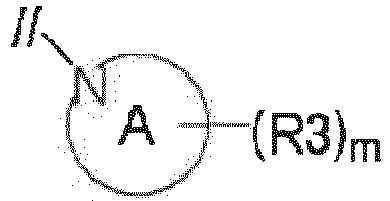

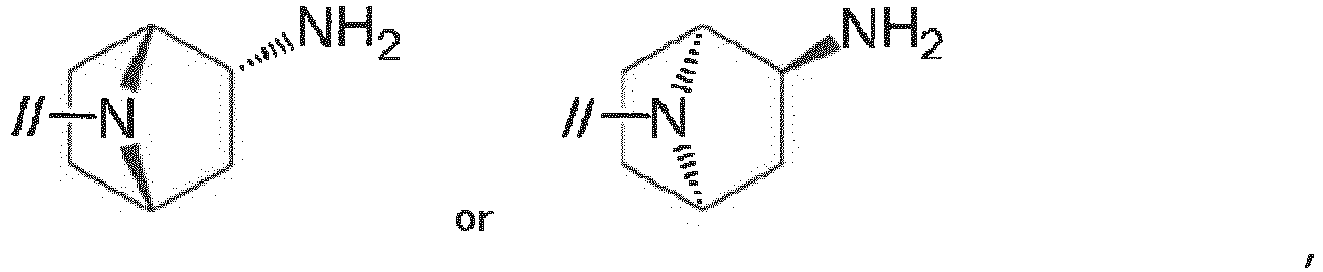
- if the structure is shown as:


Table 1 Ex. No. 


salt form MS m/z (M+1) 1H-NMR 1 


free 382.4 1H-NMR (DMSO-D6) δ: 7.74 (2H, d, J = 8.1 Hz), 7.66-7.61 (1H, m), 7.53 (1H, d, J = 8.4 Hz), 7.49 (1H, d, J = 8.1 Hz), 7.33 (2H, d, J = 8.1 Hz), 7.09 (2H, d, J = 8.1 Hz), 7.01 (2H, d, J = 7.7 Hz), 3.70-3.40 (4H, m), 3.24-3.13 (1H, m), 2.27 (3H, s), 2.03-1.90 (1H, m), 1.70-1.59 (1H, m). 2 
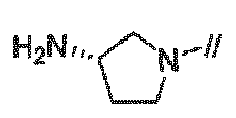

free 398.2 1H-NMR (DMSO-D6) δ: 7.74 (2H, d, J = 8.2 Hz), 7.52-7.49 (1H, m), 7.45-7.41 (2H, m), 7.32 (2H, dd, J = 8.4, 2.3 Hz), 7.09 (2H, d, J = 8.2 Hz), 7.01 (2H, d, J = 8.2 Hz), 3.99-3.51 (4H, m), 2.27 (3H, s), 2.15-2.01 (1H, m), 1.83-1.70 (1H, m), 1.31-1.19 (1H, m). 3 


free 396.4 1H-NMR (DMSO-D6) δ: 7.74 (2H, d, J = 8.1 Hz), 7.49 (2H, s), 7.38 (1H, s), 7.33 (2H, d, J = 8.1 Hz), 7.09 (2H, d, J = 8.1 Hz), 7.01 (2H, d, J = 8.1 Hz), 4.38-4.23 (1H, m), 3.73-3.61 (1H, m), 3.18-3.05 (1H, m), 3.01-2.69 (1H, m), 2.87-2.79 (1H, m), 2.27 (3H, s), 1.87-1.64 (4H, m). 4 


free 422.5 1H-NMR (DMSO-D6) δ: 7.76 (3H, d, J = 8.2 Hz), 7.63 (1H, s), 7.53 (1H, d, J = 7.6 Hz), 7.32 (2H, d, J = 8.2 Hz), 7.10 (2H, d, J = 7.6 Hz), 7.00 (2H, d, J = 7.6 Hz), 4.24 (1H, d, J = 8.9 Hz), 4.12 (1H, d, J = 8.9 Hz), 3.95 (1H, d, J = 9.5 Hz), 3.78 (1H, d, J = 10.2 Hz), 3.51 (2H, s), 2.96 (2H, s), 2.27 (3H, s), 1.86-1.80 (2H, m), 1.71-1.60 (2H, m). 5 


free 408.5 1H-NMR (DMSO-D6) δ: 7.76 (2H, d, J = 8.2 Hz), 7.67-7.61 (1H, m), 7.58-7.47 (2H, m), 7.35-7.29 (2H, m), 7.14-7.07 (2H, m), 7.00 (2H, d, J = 8.2 Hz), 4.12-4.03 (1H, m), 3.96-3.84 (2H, m), 3.76-3.71 (2H, m), 3.59-3.47 (3H, m), 2.28 (3H, s), 2.19-2.11 (2H, m). 6 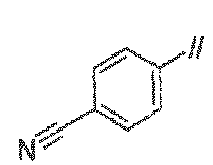


free 422.2 1H-NMR (DMSO-D6) δ: 7.76 (2H, t, J = 4.3 Hz), 7.65 (1H, dd, J = 7.9, 1.8 Hz), 7.56 (1H, dd, J = 18.9, 1.5 Hz), 7.50 (1H, d, J = 7.9 Hz), 7.34 (2H, d, J = 8.2 Hz), 7.11 (2H, d, J = 7.6 Hz), 7.01 (2H, dd, J = 8.2, 2.4 Hz), 3.61-3.47 (4H, m), 2.95 (4H, t, J = 1.7 Hz), 2.28 (3H, 5), 1.92-1.72 (4H, m). 7 


free 422.3 1H-NMR (DMSO-D6) δ: 7.73 (2H, d, J = 8.4 HZ), 7.56 (1H, d, J = 7.7 Hz), 7.50 (1H, d, J = 7.7 Hz), 7.44 (1H, s), 7.32 (2H, d, J = 8.4 Hz), 7.08 (2H, d, J = 8.1 Hz), 6.99 (2H, d, J = 7.7 Hz), 4.65-4.57 (1H, m), 4.19-4.11 (1H, m), 3.47-3.35 (2H, m), 2.26 (2H, s), 2.04-1.44 (8H, m). 8 


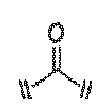
free 396.1 1H-NMR (DMSO-D6) δ: 7.76 (2H, d, J = 8.2 Hz), 7.69-7.61 (1H, m), 7.51 (2H, d, J = 7.9 Hz), 7.33-7.32 (2H, m), 7.10 (2H, d, J = 7.9 Hz), 7.01 (2H, d, J = 7.0 Hz), 3.81-3.40 (4H, m), 2.27 (3H, s), 2.03-1.90 (2H, m), 1.44-1.22 (3H, m). 9 


free 416.0 418.0 1H-NMR (DMSO-D6) δ: 7.74 (2H, d, J = 8.2 Hz), 7.67-7.59 (2H, m), 7.44 (1H, d, J = 7.9 Hz), 7.34-7.23 (3H, m), 7.16-7.10 (2H, m), 3.95-3.45 (5H, m), 2.29 (3H, s), 2.28-2.19 (1H, m), 2.06-1.96 (1H, m). 10 


free 416.2 418.1 1H-NMR (DMSO-D6) δ: 7.72 (2H, d, J = 8.2 Hz), 7.62-7.57 (1H, m), 7.50 (2H, d, J = 8.2 Hz), 7.28 (2H, d, J = 7.6 Hz), 7.17 (2H, d, J = 9.5 Hz), 6.85 (1H, d, J = 7.0 Hz), 3.82-3.52 (5H, m), 2.22 (3H, s), 2.19-2.12 (1H, m), 1.95-1.87 (1H, m). Table 2 11 


free 454.2 1H-NMR (DMSO-D6) δ: 7.74 (2H, d, J = 8.2 Hz), 7.66-7.52 (4H, m), 7.35-7.26 (3H, m), 7.01 (1H, d, J = 8.2 Hz), 3.86-3.47 (5H, m), 2.23-2.10 (1H, m), 1.98-1.87 (1H, m). 12 


free 427.2 1H-NMR (DMSO-D6) δ: 7.80 (2H, d, J = 8.2 Hz), 7.76 (1H, s), 7.73-7.67 (1H, m), 7.66-7.58 (2H, m), 7.43-7.35 (3H, m), 7.31 (1H, d, J = 7.6 Hz), 4.13-4.07 (1H, m), 3.92-3.67 (2H, m), 3.64-3.49 (2H, m), 3.16 (3H, s), 2.28-2.15 (1H, m), 2.02-1.91 (1H, m). 13 


free 418.2 1H-NMR (DMSO-D6) δ: 7.70 (2H, d, J = 8.2 Hz), 7.65-7.59 (1H, m), 7.52 (2H, d, J = 8.2 Hz), 7.43 (2H, d, J = 8.2 Hz), 7.27 pH, d, J = 7.0 Hz), 7.20 (2H, d, J = 8.2 Hz), 3.87-3.48 (5H, m), 3.14-3.06 (1H, m), 2.22-2.10 (1H, m), 1.99-1.86 (1H, m). 14 


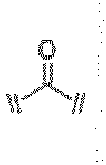
free 436.2 1H-NMR (DMSO-D6) δ: 7.71 (2H, d, J = 8.2 Hz), 7.65-7.58 (3H, m), 7.54 (2H, d, J = 7.6 Hz), 7.33-7.24 (4H, m), 3.83-3.53 (5H, m), 2.23-2.11 (1H, m), 1.98-1.89 (1H, m). 15 


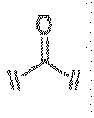
free 400.2 1H-NMR (DMSO-D6) δ: 7.68 (2H, d, J = 8.2 Hz), 7.63-7.56 (1H, m), 7.56-7.49 (1H, m), 7.44 (1H, d, J = 8.2 Hz), 7.24 (2H, d, J = 7.6 Hz), 7.10 (1H, t, J = 7.9 Hz), 6.95 (1H, d, J = 7.6 Hz), 6.85 (1H, d, J = 10.8 Hz), 3.83-3.53 (5H, m), 2.22 (3H, s), 2.19-2.10 (1H, m), 1.98-1.88 (1H, m). 16 


free 400.1 1H-NMR (DMSO-D6) δ: 7.75 (1H, t, J = 7.6 Hz), 7.60 (1H, d, J = 7.6 Hz), 7.47 (1H, d, J = 7.6 Hz), 7.33-7.24 (1H, m), 7.07-6.95 (6H, m), 4.02-3.52 (5H, m), 2.22 (3H, s), 2.18-2.11 (1H, m), 1.98-1.87 (1H, m). 17 


free 440.2 1H-NMR (DMSO-D6) δ: 7.80 (1H, t, J = 7.5 Hz), 7.61-7.58 (1H, m), 7.52-7.49 (2H, m), 7.38 (1H, dd, J = 10.5, 1.4 Hz), 7.12 (2H, d, J = 7.9 Hz), 7.11-7.09 (1H, m), 7.04 (2H, d, J = 7.9 Hz), 4.63-4.57 (1H, m), 4.14-4.06 (1H, m), 2.28 (3H, s), 2.24-2.02 (2H, m), 2.00-1.89 (1H, m), 1.84-1.51 (3H, m), 1.34-1.14 (3H, m). 18 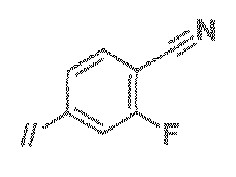


free 479.2 1H-NMR (DMSO-D6) δ: 7.76 (1H, t, J = 7.5 Hz), 7.62-7.56 (2H, m), 7.51-7.50 (1H, m), 7.44-7.42 (1H, m), 7.41-7.37 (1H, m), 7.35-7.31 (2H, m), 7.11 (1H, d, J = 8.2 Hz), 6.83 (1H, d, J = 8.2 Hz), 6.40 (1H, d, J = 3.1 Hz), 4.65-4.58 (1H, m), 4.22-4.10 (1H, m), 3.77 (3H, s), 3.74-3.72 (1H, m), 2.04-1.19 (8H, m). 19 


free 418.1 1H-NMR (DMSO-D6) δ: 7.71-7.68 (1H, m), 7.62 (1H, s), 7.55 (1H, d, J = 7.9 Hz), 7.24-7.13 (4H, m), 7.06 (2H, d, J = 7.9 Hz), 3.90-3.53 (4H, m), 3.49-3.41 (1H, m), 2.30 (3H, s), 2.25-2.16 (1H, m), 1.99-1.93 (1H, m). 20 


free 462.1 1H-NMR (DMSO-D6) δ: 7.80 (1H, t, J = 7.5 Hz), 7.70-7.66 (1H, m), 7.62 (1H, dd, J = 6.6, 1.5 Hz), 7.51 (1H, d, J = 7.7 Hz), 7.33 (1H, d, J = 10.6 Hz), 7.24 (1H, t, J = 7.9 Hz), 7.13-7.08 (2H, m), 7.00 (1H, d, J = 10.3 Hz), 3.68-3.56 (2H, m), 3.55-3.40 (4H, m), 3.23 (3H, s), 3.22-3.11 (1H, m), 2.81 (2H, t, J = 6.6 Hz), 2.03-1.88 (1H, m), 1.69-1.57 (1H, m). Table 3 21 


free 458.2 1H-NMR (DMSO-D6) δ: 7.81 (1H, t, J = 7.6 Hz), 7.61 (1H, dd, J = 7.8, 1.7 Hz), 7.54 (1H, d, J = 1.5 Hz), 7.50 (1H, d, J = 7.6 Hz), 7.37 (1H, d, J = 9.2 Hz), 7.21 (1H, t, J = 7.9 Hz), 7.11 (1H, dd, J = 7.9, 1.5 Hz), 7.05 (1H, d, J = 8.2 Hz), 6.95 (1H, d, J = 11.3 Hz), 4.63-4.57 (1H, m), 4.12-4.05 (1H, m), 2.31 (3H, s), 2.25-2.02 (3H, m), 2.00-1.69 (3H, m), 1.65-1.50 (2H, m), 1.47-1.34 (1H, m). 22 


free 502.2 1H-NMR (DMSO-D6) δ: 7.81 (1H, t, J = 7.5 Hz), 7.62 (1H, dd, J = 7.8, 1.7 Hz), 7.56-7.52 (2H, m), 7.35 (1H, dd, J = 10.5, 1.4 Hz), 7.24 (1H, t, J = 7.9 Hz), 7.13-7.09 (2H, m), 7.02-6.99 (1H, m), 4.62 (1H, s), 4.10 (1H, s), 3.53 (2H, t, J = 6.7 Hz), 3.40-3.34 (1H, m), 3.23 (3H, s), 2.81 (2H, t, J = 6.7 Hz), 2.33-1.90 (6H, m), 1.70-1.55 (2H, m). 23 


free 497.2 1H-NMR (DMSO-D6) δ: 7.76 (1H, t, J = 7.6 Hz), 7.62 (1H, dd, J = 7.8, 1.7 Hz), 7.57-7.50 (3H, m), 7.39-7.34 (2H, m), 7.22 (1H, d, J = 11.3 Hz), 7.13-7.09 (1H, m), 6.46-6.43 (1H, m), 4.63 (1H, s), 4.15 (1H, s), 3.74 (3H, s), 3.19-3.13 (1H, m), 2.05-1.78 (4H, m), 1.77-1.67 (2H, m), 1.65-1.56 (1H, m), 1.48-1.39 (1H, m), 24 


free 498.2 1H-NMR (DMSO-D6) δ: 8.09 (1H, d, J = 0.9 Hz), 7.81-7.75 (2H, m), 7.65 (1H, dd, J = 7.8, 1.7 Hz), 7.60-7.55 (2H, m), 7.46 (1H, d, J = 10.7 Hz), 7.41 (1H, dd, J = 10.5, 1.4 Hz), 7.11 (1H, dd, J = 7.9, 1.5 Hz), 4.64 (1H, s), 4.14 (1H, s), 3.99 (3H, s), 3.36-3.30 (1H, m), 2.06-1.44 (8H, m). 25 


free 476.1 1H-NMR (DMSO-D6) δ: 7.85-7.80 (1H, m), 7.74-7.59 (2H, m), 7.55 (1H, d, J = 7.9 Hz), 7.35-7.29 (1H, m), 7.26-7.21 (1H, m), 7.11 (2H, d, J = 7.9 Hz), 7.01 (1H, d, J = 11.0 Hz), 3.79-3.44 (6H, m), 3.23 (3H, s), 2.85-2.79 (2H, m), 2.10-1.98 (2H, m), 1.47-1.27 (3H, m). 26 


free 502.1 1H-NMR (DMSO-D6) δ: 7.82 (1H, t, J = 7.5 Hz), 7.63 (1H, d, J = 7.9 Hz), 7.57-7.52 (2H, m), 7.34 (1H, d, J = 9.8 Hz), 7.24 (1H, t, J = 7.9 Hz), 7.15-7.09 (2H, m), 7.01 (1H, d, J = 11.3 Hz), 4.63 (1H, s), 4.13 (1H, s), 3.53 (2H, t, J = 6.6 Hz), 3.42-3.36 (1H, m), 3.23 (3H, s), 2.81 (2H, t, J = 6.6 Hz), 2.09-1.45 (8H, m). 27 


free 488.2 1H-NMR (DMSO-D6) δ: 7.83-7.78 (1H, m), 7.71-7.48 (3H, m), 7.39-7.31 (1H, m), 7.27-7.21 (1H, m), 7.15-7.08 (2H, m), 7.03-6.98 (1H, m), 4.77-4.47 (1H, m), 4.29-3.95 (1H, m), 3.66-3.38 (4H, m), 3.23 (3H, d, J = 0.9 Hz), 2.99-2.88 (1H, m), 2.81 (2H, t, J = 6.5 Hz), 2.72-2.55 (1H, m), 2.01-1.43 (4H, m). 28 


free 516.3 1H-NMR (DMSO-D6) δ: 7.80 (1H, t, J = 7.5 Hz), 7.64-7.61 (1H, m), 7.57-7.52 (2H, m), 7.29-7.26 (1H, m), 7.21 (1H, t, J = 7.9 Hz), 7.15 (1H, dd, J = 8.2, 1.2 Hz), 7.07 (1H, dd, J = 7.9, 0.9 Hz), 6.95 (1H, d, J = 11.3 Hz), 4.61 (1H, s), 4.40 (1H, s), 4.09 (1H, s), 3.19-3.11 (1H, m), 2.65 (2H, s), 2.11-1.59 (6H, m), 1.58-1.48 (1H, m), 1.41-1.33 (1H, m), 1.04 (6H, s). 29 


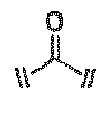
free 398.6 1H-NMR (DMSO-D6) δ: 7.74 (2H, d, J = 8.5 Hz), 7.67-7.63 (1H, m), 7.54 (1H, dd, J = 10.5, 1.7 Hz), 7.50 (1H, d, J = 7.9 Hz), 7.34 (2H, d, J = 8.2 Hz), 7.22 (2H, d, J = 8.2 Hz), 7.08 (2H, d, J = 8.2 Hz), 5.19 (1H, t, J = 5.6 Hz), 4.47 (2H, d, J = 5.8 Hz), 3.71-3.50 (2H, m), 3.27-3.13 (2H, m), 2.55-2.53 (1H, m), 2.04-1.90 (1H, m), 1.70-1.61 (1H, m). Table 4 30 


free 426.2 1H-NMR (DMSO-D6) δ: 7.73 (2H, d, J = 8.5 Hz), 7.66-7.62 (1H, m), 7.55-7.49 (2H, m), 7.32 (2H, d, J = 7.3 Hz), 7.15 (2H, d, J = 8.2 Hz), 7.03 (2H, d, J = 8.2 Hz), 3.68-3.46 (6H, m), 3.22 (3H, s), 3.20-3.12 (1H, m), 2.77 (2H, t, J = 6.9 Hz), 2.02-1.37 (1H, rn), 1.69-1.57 (1H, m). 31 


free 412.1 1H-NMR (DMSO-D6) δ: 7.74 (2H, d, J = 8.5 Hz), 7.66-7.62 (1H, m), 7.55-7.49 (2H, m), 7.35-7.32 (2H, m), 7.13 (2H, d, J = 7.9 Hz), 7.03 (2H, d, J = 8.2 Hz), 4.63 (1H, t, J = 5.2 Hz), 3.62-3.56 (2H, m), 3.30-3.14 (4H, m), 2.73-2.66 (2H, m), 2.55-2.53 (1H, m), 2.03-1.90 (1H, m), 1.67-1.59 (1H, m), 32 


free 426.2 1H-NMR (DMSO-D6) δ: 7.49-7.38 (2H, m), 7.39-7.30 (1H, m), 7.27-7.14 (2H, m), 7.10-6.98 (2H, m), 6.90-6.67 (4H, m), 4.26-4.08 (1H, m), 3.47-3.11 (5H, m), 2.93-2.75 (2H, m), 2.38-2.14 (2H, m), 1.78-1.44 (2H, m), 1.42-1.27 (2H, m). 33 


free 438.2 1H-NMR (DMSO-D6) δ: 7.68 (2H, d, J = 8.2 Hz), 7.63-7.53 (1H, m), 7.46 (2H, t, J = 8.2 Hz), 7.26 (2H, d, J = 7.0 Hz), 7.12 (2H, d, J = 7.6 Hz), 6.95 (2H, d, J = 8.2 Hz), 4.65 (1H, s), 3.92-3.60 (5H, m), 3.09 (2H, s), 2.24-2.08 (1H, m), 2.01-1.86 (1H, m), 0.77 (2H, s), 0.65 (2H, s). 34 


free 440.2 1H-NMR (DMSO-D6) δ: 7.63 (2H, d, J = 7.0 Hz), 7.56 (1H, d, J = 5.7 Hz), 7.46 (2H, t, J = 10.2 Hz), 7.24 (2H, d, J = 7.6 Hz), 7.04 (2H, d, J = 7.6 Hz), 6.93 (2H, d, J = 7.0 Hz), 4.28 (1H, s), 3.64-3.48 (5H, m), 2.55 (2H, s), 1.98-1.87 (1H, m), 1.65-1.54 (1H, m), 0.96 (6H, s). 35 


free 442.2 1H-NMR (DMSO-D6) δ: 7.78 (2H, d, J = 8.5 Hz), 7.67-7.61 (1H, m), 7.57-7.51 (2H, m), 7.36-7.30 (2H, m), 7.03 (2H, d, J = 8.5 Hz), 6.85 (2H, d, J = 8.5 Hz), 3.96-3.87 (1H, m), 3.85-3.68 (4H, m), 3.66-3.46 (2H, m), 3.27-3.21 (1H, m), 2..59-2.51 (1H, m), 2.29-2.17 (1H, m), 2.04-1.94 (1H, m), 1.13 (3H, d, J = 6.4 Hz). 36 


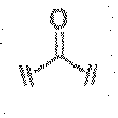
free 418.1 1H-NMR (DMSO-D6) δ: 7.85-7.81 (1H, m), 7.71-7.67 (1H, m), 7.63 (1H, s), 7.54 (1H, d, J = 7.6 Hz), 7.38-7.32 (1H, m), 7.24-7.18 (1H, m), 7.10 (1H, d, J = 7.6 Hz), 7.06 (1H, d, J = 8.2 Hz), 6.96 (1H, d, J = 11.4 Hz), 4.12-4.07 (1H, m), 3.92-3.53 (4H, m), 2.31 (3H, s), 2.26-2.17 (1H, m), 2.02-1.91 (1H, m). 37 


free 476.1 1H-NMR (DMSO-D6) δ: 7.79 (1H, t, J = 7.5 Hz), 7.70-7.67 (1H, m), 7.63 (1H, dd, J = 6.6, 1.5 Hz), 7.52 (1H, d, J = 8.1 Hz), 7.27 (1H, d, J = 10.3 Hz), 7.21 (1H, t, J = 7.9 Hz), 7.14 (1H, dd, J = 8.1, 1.5 Hz), 7.06 (1H, d, J = 7.7 Hz), 6.95 (1H, d, J = 11.4 Hz), 4.39 (1H, s), 3.68-3.55 (2H, m), 3.54-3.41 (2H, m), 3.21-3.12 (1H, m), 2.65 (2H, s), 2.03-1.88 (1H, m), 1.70-1.59 (1H, m), 1.04 (6H, s). 38 


free 504.2 1H-NMR (CDCl3) δ: 7.76-7.69 (2H, m), 7.49-7.43 (2H, m), 7.09-6.96 (4H, m), 6.83 (1H, dd, J = 10.8, 0.9 Hz), 4.23 (2H, dd, J = 23.5, 9.2 Hz), 4.10 (2H, s), 3.75-3.64 (2H, m), 3.60 (2H, t, J = 6.6 Hz), 3.35 (3H, s), 3.00 (2H, s), 2.90-2.80 (4H, m). Table 5 39 


free 488.1 1H-NMR (DMSO-D6) δ: 7.80 (1H, t, J = 7.6 Hz), 7.65 (1H, d, J = 7.0 Hz), 7.57 (1H, d, J = 10.8 Hz), 7.51 (1H, d, J = 7.6 Hz), 7.33 (1H, d, J = 10.2 Hz), 7.23 (1H, t, J = 7.9 Hz), 7.14-7.06 (2H, m), 7.00 (1H, d, J = 11.4 Hz), 3.86-3.64 (2H, m), 3.58-3.47 (4H, m), 3.23 (3H, s), 3.03-2.86 (2H, m), 2.81 (2H, t, J = 6.7 Hz), 2.77-2.55 (4H, m). 40 


free 458.3 1H-NMR (DMSO-D6) δ: 7.82-7.77 (1H, m), 7.69-7.64 (1H, m), 7.60 (1H, d, J = 8.9 Hz), 7.54 (1H, d, J = 7.6 Hz), 7.27 (1H, d, J = 10.8 Hz), 7.15 (3H, d, J = 7.0 Hz), 7.03 (2H, d, J = 7.0 Hz), 3.74-3.53 (4H, m), 3.52-3.49 (1H, m), 3.22-3.13 (1H, m), 2.63 (2H, s), 2.07-1.97 (1H, m), 1.76-1.67 (1H, m), 1.03 (6H, s). 41 


free 516.2 1H-NMR (DMSO-D6) δ: 7.80 (1H, t, J = 7.6 Hz), 7.61 (1H, dd, J = 7.8, 1.7 Hz), 7.53 (2H, dd, J = 10.8, 4.7 Hz), 7.29 (1H, dd, J = 10.7, 1.2 Hz), 7.22 (1H, t, J = 7.9 Hz), 7.15 (1H, dd, J = 7.9, 1.5 Hz), 7.07 (1H, dd, J = 7.9, 1.2 Hz), 6.96 (1H, d, J = 11.3 Hz), 4.57 (1H, br s), 4.40 (1H, s), 4.05 (1H, br s), 2,65 (2H, s), 2.35-2.21 (2H, m), 2.12-2.03 (1H, m), 1.99-1.81 (3H, m), 1.61-1.47 (3H, m), 1.06 (6H, d, J = 14.6 Hz). 42 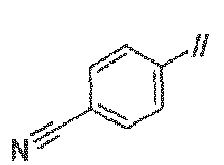


free 396.3 1H-NMR (DMSO-D6) δ: 7.71 (2H, d, J = 7.7 Hz), 7.61 (1H, dd, J = 7.7, 1.5 Hz), 7.50 (1H, s), 7.46 (1H, dd, J = 8.1, 2.6 Hz), 7.30 (2H, d, J = 8.4 Hz), 7.07 (2H, d, J = 8.1 Hz), 6.98 (2H, d, J = 7.7 Hz), 3.63-3.44 (3H, m), 3.26-3.07 (2H, m), 2.27-2.16 (6H, m), 1.94-1.85 (1H, m), 1.75-1.68 (1H, m). 43 


free 474.5 1H-NMR (DMSO-D6) δ: 7.76 (2H, d, J = 7.6 Hz), 7.67-7.61 (1H, m), 7.56-7.50 (2H, m), 7.45-7.30 (7H, m), 7.04 (2H, d, J = 7.6 Hz), 6.93 (2H, d, J = 7.6 Hz), 5.07 (2H, s), 4.17-4.07 (1H, m), 3.91-3.52 (4H, m), 2.26-2.15 (1H, m), 2.00-1.90 (1H, m). 44 


free 527.2 1H-NMR (DMSO-D6) δ: 8.96 (1H, s), 7.74 (2H, dd, J = 6.7, 1.8 Hz), 7.67-7.64 (1H, m), 7.54 (4H, tt, J = 12.7, 4.8 Hz), 7.37 (2H, dd, J = 8.2, 1.5 Hz), 7.32-7.28 (4H, m), 7.13 (2H, d, J = 8.2 Hz), 7.07-7.04 (1H, m), 3.68-3.43 (5H, m), 1.99 (1H, d, J = 6.1 Hz), 1.66 (1H, dt, J = 7.0, 2.2 Hz), 1.44 (2H, dd, J = 6.7, 4.3 Hz), 1.12 (2H, dd, J = 6.9, 4.4 Hz). 45 


free 454.5 1H-NMR (DMSO-D6) δ: 7.73 (2H, d, J = 8.2 Hz), 7.67-7.62 (1H, m), 7.56-7.50 (2H, m), 7.32 (2H, d, J = 6.7 Hz), 7.16 (2H, d, J = 8.2 Hz), 7.05 (2H, d, J = 8.2 Hz), 4.19 (2H, t, J = 6.9 Hz), 3.72-3.43 (4H, m), 3.22-3.13 (1H, m), 2.86 (2H, t, J = 6.9 Hz), 2.06-1.88 (4H, m), 1.69-1.58 (1H, m). 46 


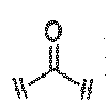
free 426.5 1H-NMR (DMSO-D6) δ: 7.74 (2H, d, J = 8.2 Hz), 7.64 (1H, d, J = 8.2 Hz), 7.53 (1H, s), 7.49 (1H, d, J = 8.2 Hz), 7.33 (2H, d, J = 8.2 Hz), 7.13 (2H, d, J = 8.2 Hz), 7.03 (2H, d, J = 7.6 Hz), 3.71-3.45 (7H, m), 3.26-3.12 (1H, m), 2.69 (2H, t, J = 6.7 Hz), 2.34-2.19 (3H, m), 2.06-1.90 (1H, m), 1.83-1.72 (1H, m). 47 
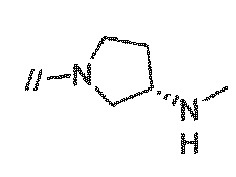


free 440.5 1H-NMR (DMSO-D6) δ: 7.73 (2H, d, J = 8.2 Hz), 7.64 (1H, d, J = 8.9 Hz), 7.56-7.47 (2H, m), 7.33 (2H, d, J = 8.2 Hz), 7.15 (2H, d, J = 7.6 Hz), 7.03 (2H, d, J = 7.6 Hz), 3.69-3.38 (6H, m), 3.26-3.08 (4H, m), 2.78 (2H, t, J = 6.7 Hz), 2.32-2.19 (3H, m), 2.04-1.87 (1H, m), 1.81-1.69 (1H, m). Table 6 48 


free 466.2 1H-NMR (DMSO-D6) δ: 7,67 (2H, d, J = 7.6 Hz), 7.57 (1H, t, ] = 8.6 Hz), 7.43 (2H, dd, J = 19.4, 4.8 Hz), 7.27 (2H, d, J = 8.2 Hz), 7.11 (2H, d, J = 8.2 Hz), 6.95 (2H, d, J = 5.7 Hz), 4.65-4.53 (1H, m), 3.68-3,38 (5H, m), 3.17-3.08 (1H, m), 2.71-2.58 (1H, m), 2.11 (3H, s), 2.04 (3H, s), 1.99-1.91 (1H, m), 1.74-1.58 (1H, m), 0.76 (2H, s), 0.65 (2H, s). 49 


free 400.2 1H-NMR (DMSO-D6) δ: 7.71 (2H, d, J = 8.2 Hz), 7.67-7.56 (1H, m), 7.49 (2H, d, J = 8.2 Hz), 7.28 (2H, d, J = 7.0 Hz), 7.11 (1H, t, J = 7.9 Hz), 6.87 (1H, d, J = 10.8 Hz), 6.73 (1H, d, J = 7.6 Hz), 3.86-3.47 (5H, m), 2.21-2.09 (4H, m), 2.00-1.86 (1H, m). 50 


free 402.1 404.1 1H-NMR (DMSO-D6) δ: 7.71 (2H, d, J = 8.2 Hz), 7.64-7.56 (1H, m), 7.54-7.46 (2H, m), 7.33-7.22 (4H, m), 7.07 (2H, d, J = 8.2 Hz), 4.04-3.50 (5H, m), 2.20-2.04 (1H, m), 1.96-1.82 (1H m). 51 


free 446.0 448.0 1H-NMR (DMSO-D6) δ: 7.71 (2H, d, J = 7.6 Hz), 7.65-7.57 (1H, m), 7.55-7.46 (2H, m), 7.43 (2H, d, J = 8.2 Hz), 7.27 (2H, d, J = 7.0 Hz), 7.01 (2H, d, J = 8.2 Hz), 3.78-3.50 (5H, m), 2.17-2.06 (1H, m), 1.92-1.82 (1H, m). 52 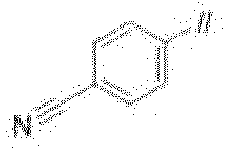


free 394.5 1H-NMR (DMSO-D6) δ: 7.75 (2H, d, J = 8.2 Hz), 7.67-7.50 (3H, m), 7.33 (2H, t, J = 8.6 Hz), 7.10 (2H, d, J = 7.6 Hz), 7.01 (2H, d, J = 7.6 Hz), 4.79-4.75 (1H, m), 4.51-4.47 (1H, m), 4.06 (1H, d, J = 18.4 Hz), 3.73-3.52 (2H, m), 3.15-3.02 (1H, m), 2.27 (3H, s), 2.04-1.91 (1H, m), 1.82-1.66 (1H, m). 53 


free 411.1 1H-NMR (DMSO-D6) δ: 7.74 (2H, dd, J = 6.6, 2.0 Hz), 7.65 (1H, s), 7.54-7.50 (2H, m), 7.34-7.33 (2H, m), 7.14 (2H, d, J = 8.2 Hz), 7.06 (2H, d, J = 8.2 Hz), 3.59 (5H, ddd, J = 14.0, 4.3, 2.5 Hz), 2.85 (2H, s), 2.69-2.67 (2H, m), 1.70-1.60 (1H, rn), 1.24 (1H s). 54 


free 494.0 1H-NMR (DMSO-D6) δ: 7.71 (2H, d, J = 8.2 Hz), 7.63-7.56 (3H, rn), 7.53-7.45 (2H, m), 7.26 (2H, d, J = 7.6 Hz), 6.86 (2H, d, J = 8.2 Hz), 3.87-3.47 (5H, m), 2.23-2.08 (1H, m), 1.98-1.86 (1H, m). 55 


free 453.2 1H-NMR (DMSO-D6) δ: 7.85-7.79 (1H, m), 7.68 (2H, d, J = 8.2 Hz), 7.61-7.55 (1H, m), 7.52-7.44 (2H, m), 7.27-7.22 (2H, m), 7.06 (2H, d, J = 7.6 Hz), 6.97 (2H, d, J = 7.6 Hz), 3.83-3.52 (5H, m), 3.17-3.12 (2H, m), 2.60 (2H, t, J = 7.3 Hz), 2.22-2.10 (1H, m), 1.98-1.86 (1H, m), 1.69 (3H, s). 56 


free 410.2 1H-NMR (DMSO-D6) δ: 7.67 (2H, d, J = 8.2 Hz), 7.63-7.55 (1H, m), 7.54-7.45 (2H, m), 7.25 (2H, d, J = 8.2 Hz), 7.04 (2H, d, J = 8.2 Hz), 6.95 (2H, d, J = 7.6 Hz), 3.88-3.48 (5H, m), 2.48-2.44 (2H, m), 2.22-2.08 (1H, m), 1.97-1.86 (1H, m), 1.49 (2H, dd, J = 14.9, 7.3 Hz), 0.60 (3H, t, J = 7.3 Hz). 57 


free 418.2 1H-NMR (DMSO-D6) δ: 7.83-7.76 (3H, m), 7.73-7.61 (5H, m), 7.59-7.53 (1H, m), 7.49-7.41 (2H, m), 7.29 (2H, d, J = 7.6 Hz), 7.03 (1H, d, J = 8.9 Hz), 4.03-3.55 (5H, m), 2.24-2.12 (1H, m), 1.98-1.88 (1H, m). Table 7 58 

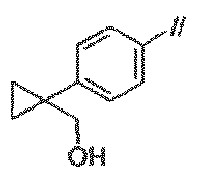
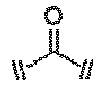
free 452.1 1H-NMR (DMSO-D6) δ: 7.74 (2H, d, J = 8.2 Hz), 7.63 (1H, d, J = 8.2 Hz), 7.53-7.51 (1H, m), 7.49 (1H, d, J = 7.9 Hz), 7.34 (2H, d, J = 8.5 Hz), 7.19 (2H, d, J = 8.2 Hz), 7.03 (2H, d, J = 8.2 Hz), 4.67 (1H, t, J = 5.5 Hz), 3.71-3.47 (6H, m), 3.27-3.16 (1H, m), 2.35-2.21 (3H, m), 2.03-1.94 (1H, m), 1.81-1.72 (1H, m), 0.85-0.82 (2H, m), 0.74-0.70 (2H, m). 59 


free 438.1 1H-NMR (DMSO-D6) δ: 7.76-7.62 (3H. m), 7.58-7.50 (2H, m), 7.36-7.26 (2H, m), 7.14-7.02 (4H, m), 5.34-5.31 (1H, m), 3.89-3.58 (6H, m), 3.23-3.13 (1H, m), 2.05-1.95 (1H, m), 1.74-1.66 (1H, m), 0.94-0.84 (4H, m). 60 
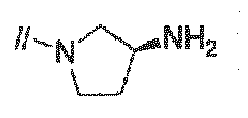


free 422.1 1H-NMR (DMSO-D6) δ: 7.67 (2H, d, J = 7.6 Hz), 7.62-7.55 (1H, m), 7.51-7.43 (2H, m), 7.26 (2H, d, J = 7.6 Hz), 7.03 (4H, dd, J = 28.6, 7.6 Hz), 6.15 (1H, s), 3.68-3.48 (5H, m), 2.01-1.89 (1H, m), 1.79 (3H, s), 1.74 (3H, s), 1.67-1.59 (1H, m). 61 


free 454.3 1H-NHR (DMSO-D6) δ: 7.74 (2H, d, J = 7.0 Hz), 7.67-7.61 (1H, m), 7.57-7.49 (2H, m), 7.33 (2H, d, J = 7.6 Hz), 7.11 (2H, d, J = 7.6 Hz), 7.02 (2H, d, J = 7.0 Hz), 3.82-3.56 (4H, m), 3.53-3.47 (1H, m), 3.21-3.13 (1H, m), 2.62-2.55 (2H, m), 2.13-2.03 (1H, m), 1.86-1.75 (1H, m), 1.64-1.57 (2H, m), 1.12 (6H, s). 62 
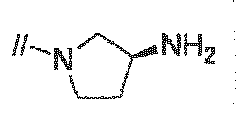


free 452.2 1H-NMR (DMSO-D6) δ: 7.74 (2H, d, J = 8.2 Hz), 7.68-7.62 (1H, m), 7.58-7.51 (2H, m), 7.32 (2H, d, J = 7.0 Hz), 7.12 (2H, d, J = 7.6 Hz), 7.02 (2H, d, J = 7.0 Hz), 4.15-4.08 (1H, m), 3.94-3.55 (4H, m), 3.53-3.48 (2H, m), 3.19-3.14 (1H, m), 2.77-2.69 (2H, m), 2.41-2.39 (2H, m), 2.31-2.17 (1H, m), 2.02-1.94 (1H, m), 0.91-0.89 (2H, m). 63 


free 430.3 1H-NMR (DMSO-D6) δ: 8.30 (1H, s), 7.80 (1H, t, J = 7.0 Hz), 7.69-7.64 (1H, m), 7.58 (1H, d, J = 7.6 Hz), 7.51 (1H, d, J = 8.2 Hz), 7.35 (1H, d, J = 11.4 Hz), 7.16 (2H, d, J = 7.6 Hz), 7.11 (1H, d, J = 8.2 Hz), 7.05 (2H, d, J = 7.0 Hz), 3.69-3.52 (6H, m), 3.24-3.17 (1H, m), 2.71 (2H, t, J = 6.3 Hz), 2.04-1.93 (1H, m), 1.73-1.63 (1H, m). 64 


free 458.2 1H-NMR (DMSO-D6) δ: 7.73-7.63 (3H, m), 7.59 (1H, d, J = 10.8 Hz), 7.51 (1H, d, J = 8.2 Hz), 7.31 (2H, d, J = 7.6 Hz), 7.20-7.14 (1H, m), 7.03 (1H, d, J = 7.6 Hz), 6.92 (1H, d, J = 11.4 Hz), 3.70-3.54 (4H, m), 3.52-3.49 (1H, m), 3.24-3.20 (1H, m), 2.64 (2H, s), 2.08-1.96 (1H, m), 1.76-1.66 (1H, m), 1.04 (6H, s). 65 


free 472.2 1H-NMR (DMSO-D6) δ: 7.80 (1H, t, J = 7.3 Hz), 7.69-7.64 (1H, m), 7.59 (1H, d, J = 8.2 Hz), 7.52 (1H, d, J = 8.2 Hz), 7.33 (1H, d, J = 10.8 Hz), 7.15-7.09 (3H, m), 7.04 (2H, d, J = 7.6 Hz), 3.70-3.57 (4H, m), 3.54-3.49 (1H, m), 3.24-3.17 (1H, m), 2.63-2.57 (2H, m), 2.07-1.93 (1H, m), 1.77-1.64 (1H, m), 1.64-1.58 (2H, m), 1.12 (6H, s). 66 


free 452.2 1H-NMR (DMSO-D6) δ: 7.74 (2H, d, J = 7.6 Hz), 7.67-7.61 (1H, m), 7.56-7.49 (2H, m), 7.33 (2H, d, J = 8.2 Hz), 7.17 (2H, d, J = 7.0 Hz), 7.03 (2H, d, J = 7.0 Hz), 3.82-3.52 (5H, m), 3.51 (2H, s), 3.21 (3H, s), 2.15-2.01 (1H, m), 1.89-1.75 (1H, m), 0.89-0.78 (4H, m). Table 8 67 


free 456.2 1H-NMR (DMSO-D6) δ: 7.73 (2H, d, J = 6.3 Hz), 7.67-7.61 (1H, m), 7.57-7.48 (2H, m), 7.39-7.24 (4H, m), 7.02 (1H, d, J = 7.6 Hz), 3.73-3.53 (4H, m), 3.51 (1H, s), 3.19-3.10 (1H, m), 2.54 (2H, s), 1.72-1.58 (1H, m), 1.48-1.35 (1H, m), 0.83-0.42 (4H, m). 68 


free 464.2 1H-NMR (DMSO-D6) δ: 7.74 (2H, d, J = 8.5 Hz), 7.67-7.61 (1H, m), 7.57-7.48 (2H, m), 7.39-7.33 (3H, m), 7.28 (2H, d, J = 8.2 Hz), 7.02 (1H, d, J = 8.2 Hz), 5.16 (1H, s), 3.78-3.54 (4H, m), 3.21-3.13 (1H, m), 2.04-1.95 (1H, m), 1.67-1.58 (1H, m), 0.82-0.70 (4H, m), 0.57-0.42 (4H, m). 69 


free 444.1 1H-NMR (DMSO-D6) δ: 7.81 (1H, s), 7.72-7.47 (3H, m), 7.37-7.31 (1H, m), 7.18 (2H, d, J = 7.6 Hz), 7.13-7.01 (3H, m), 4.29-4.11 (1H, m), 3.88-3.56 (4H, m), 3.52 (2H, t, J = 6.7 Hz), 3.22 (3H, s), 2.79 (2H, t, J = 6.4 Hz), 2.23-2.03 (1H, m), 1.54-1.34 (1H, m). 70 


free 430.0 1H-NMR (DMSO-D6) δ: 7.74 (2H, d, J = 8.2 Hz), 7.69-7.63 (1H, m), 7.58 (1H, d, J = 12.5 Hz), 7.49 (1H, d, J = 7.9 Hz), 7.32 (2H, d, J = 7.6 Hz), 7.19 (1H, t, J = 7.9 Hz), 7.06 (1H, d, J = 7.6 Hz), 6.96 (1H, d, J = 11.0 Hz), 4.70-4.64 (1H, m), 3.72-3.46 (6H, m), 3.26-3.18 (1H, m), 2.74-2.68 (2H, m), 2.08-1.98 (1H, m), 1.78-1.68 (1H, m). 71 


free 444.1 1H-NMR (DMSO-D6) δ: 7.73 (2H, d, J = 6.7 Hz), 7.67-7.64 (1H, m), 7.57 (1H, dd, J = 10.8, 1.4 Hz), 7.50 (1H, d, J = 7.9 Hz), 7.31 (2H, d, J = 7,6 Hz), 7.20 (1H, t, J = 7.8 Hz), 7.07 (1H, dd, J = 7.9, 1.2 Hz), 6.97 (1H, d, J = 11.3 Hz), 3.68-3.45 (6H, m), 3.23 (3H, s), 3.21-3.15 (1H, m), 2.80 (2H, t, J = 6.6 Hz), 2.04-1.93 (1H, m), 1.72-1.62 (1H, m). 72 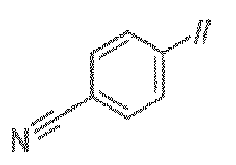
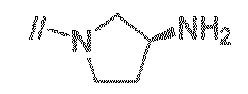


free 440.1 1H-NMR (DMSO-D6) δ: 7.74 (2H, d, J = 8.2 Hz), 7.64 (1H, t, J = 7.3 Hz), 7.55-7.49 (2H, m), 7.34 (2H, d, J = 7.0 Hz), 7.28 (2H, d, J = 8.2 Hz), 7.05 (2H, d, J = 8.2 Hz), 4.69-4.65 (1H, m), 3.70-3.37 (6H, m), 3.25-3.18 (1H, m), 2.08-1.95 (1H, m), 1.76-1.68 (1H, m), 1.19 (6H, s). 73 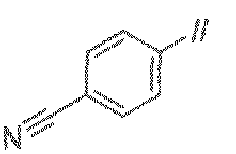


free 414.1 1H-NMR (DMSO-D6) δ: 7.75 (2H, d, J = 7.9 Hz), 7.65 (1H, t, J = 7.6 Hz), 7.58-7.49 (2H, m), 7.33 (2H, d, J = 7.3 Hz), 7.19 (2H, d, J = 7.9 Hz), 7.07 (2H, d, J = 7.6 Hz), 4.63 (2H, dt, J = 47.2, 6.2 Hz), 3.72-3.47 (4H, m), 3.27-3.21 (1H, m), 2.95 (2H, dt, J = 25.2, 6.2 Hz), 2.10-1.99 (1H, m), 1.81-1.71 (1H, m). 74 


free 488.1 1H-NMR (DMSO-D6) δ: 7.84-7.78 (1H, m), 7.71-7.62 (2H, m), 7.56-7.51 (1H, m), 7.36-7.30 (1H, m), 7.25-7.21 (1H, m), 7.13-7.09 (2H, m), 7.03-6.98 (1H, m), 4.09-3,49 (10H, m), 3.22 (3H, s), 2.84-2.78 (2H, m), 2.19-2.10 (2H, m). 75 


free 502.1 1H-NMR (DMSO-D6) δ: 7.84-7.79 (2H, m), 7.73-7.70 (1H, m), 7.57-7.52 (1H, m), 7.32 (1H, d, J = 10.4 Hz), 7.25-7.20 (1H, m), 7.11 (2H, d, J = 7.3 Hz), 7.00 (1H, d, J = 11.0 Hz), 4.19 (1H, d, J = 8.2 Hz), 4.10 (1H, d, J = 8.2 Hz), 3.90 (1H, d, J = 9.8 Hz), 3.75 (1H, d, J = 10.1 Hz), 3.55-3.50 (2H, m), 3.25-3.07 (7H, m), 2.88-2.78 (2H, m), 1.86-1.73 (2H, m), 1.67-1.52 (2H, m). 76 


free 502.1 1H-NMR (DMSO-D6) δ: 7.82-7.77 (1 H, m), 7.72-7.62 (2H, m), 7,57-7.51 (1H, m), 7.29-7.25 (1H, m), 7.22-7.18 (1H, m), 7.16-7.11 (1H, m), 7.09-7.05 (1H, m), 6.98-6.92 (1H, m), 4.40 (1H, s), 3.90-3.44 (6H, m), 2.67-2.64 (2H, m), 2.18-2.06 (2H, m), 2.04-1.90 (2H, m), 1.04 (6H, s). Table 9 77 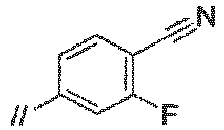


free 516.1 1H-NMR (DMSO-D6) δ: 7.84-7.71 (3H, m), 7.57-7.54 (1H, m), 7.29-7.24 (1H, m), 7.21-7.17 (1H, m), 7.15-7.11 (1H, m), 7.08-7.05 (1H, m), 6.97-6.93 (1H, m), 4.39 (1H, s), 4.14-4.02 (2H, m), 3.85-3.68 (2H, m), 2.95-2.84 (2H, m), 2.71-2.62 (4H, m), 1.78-1.68 (2H, m), 1.52-1.42 (2H, m), 1.04 (6H, 5). 78 


HCl 516.2 1H-NMR (CD3OD) δ: 7.64-7.55 (4H, m), 7.22-7.08 (4H, m), 6.92 (1H, d, J = 11.0 Hz), 4.01-3.88 (1H, m), 3.77-3.71 (2H, m), 3.67 (3H, s), 3.63-3.58 (3H, m), 3.47-3.40 (2H, m), 3.23-3.15 (2H, m), 2.87 (2H, t, ) = 6.6 Hz), 2.09-2.01 (2H, m), 1.83-1.65 (4H, m). 79 


free 502.1 1H-NMR (DMSO-D6) δ: 7.83-7.00 (9H, m), 3.82 (12H, tt, J = 147.2, 54.5 Hz), 3.24 (3H, d, J = 5.5 Hz), 2.82 (2H, t, J = 6.4 Hz), 1.76 (1H, s), 1.48 (1H, s). 80 


HCl 476.2 1H-NMR (CD3OD) δ: 7.65-7.54 (4H, m), 7.13 (4H, ddd, J = 29.3, 15.0, 6.6 Hz), 6.90 (1H, d, J = 11.4 Hz), 4.02-3.97 (1H, m), 3.90-3.82 (1H, m), 3.74-3.67 (2H, m), 3.59 (2H, t, J = 6.4 Hz), 3.49-3.43 (211, m), 3.39-3.35 (2H, m), 3.31 (3H, s), 2.85 (2H, t, J = 6.6 Hz), 2.24-2.05 (2H, m). 81 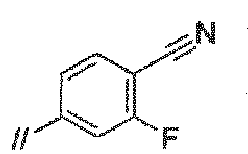


free 488.2 1H-NMR (DMSO-D6) δ: 7.83-7.79 (1H, m), 7.72-7.60 (2H, m), 7.55-7.51 (1H, m), 7.36-7.30 (1H, m), 7.27-7.21 (1H, m), 7.15-7.08 (2H, m), 7.03-6.98 (1H, m), 3.86-3.38 (10H, m), 3.23 (3H, s), 2.85-2.79 (2H, m), 2.38-2.02 (2H, m). 82 


free 474.1 1H-NMR (DMSO-D6) δ: 7.82 (1H, t, J = 7.3 Hz), 7.74-7.60 (2H, m), 7.56 (1H, d, J = 7.9 Hz), 7.39-7.30 (1H, m), 7.24 (1H, t, J = 7.6 Hz), 7.14-7.09 (2H, m), 7.01 (1H, d, J = 11.0 Hz), 4.57 (1H, s), 4.27 (1H, s), 3.79-3.72 (1H, m), 3.66-3.61 (1H, m), 3.57-3.51 (2H, m), 3.46-3.40 (1H, m), 3.22 (3H, s), 3.21-3.17 (1H, m), 2.84-2.79 (2H, m), 2.14-2.05 (1H, m), 1.90-1.73 (1H, m). 83 
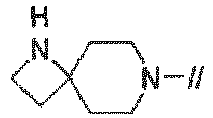


free 502.1 1H-NMR (DMSO-D6) δ: 7.81 (1H, t, J = 7.6 Hz), 7.59-7.51 (3H, m), 7.33 (1H, dd, J = 10.7, 1.2 Hz), 7.24 (1H, t, J = 7.9 Hz), 7.11 (2H, d, J = 8.2 Hz), 7.00 (1H, d, J = 10.4 Hz), 3.79-3.57 (6H, m), 3.53 (2H, t, J = 6.7 Hz), 3.23 (3H, s), 2.81 (2H, t, J = 6.7 Hz), 2.25-2.17 (2H, m), 2.01-1.81 (4H, m). 84 


free 502.2 1H-NMR (DMSO-D6) δ: 7.84-7.79 (2H, m), 7.72 (1H, s), 7.54 (1H, d, J = 7.9 Hz), 7.33 (1H, d, J = 10.4 Hz), 7.22 (1H, t, J = 7.9 Hz), 7.14-7.09 (2H, m), 7.00 (1H, d, J = 11.3 Hz), 4.15 (2H, s), 3.83 (2H, s), 3.53 (2H, t, J = 6.6 Hz), 3.22 (3H, s), 2.97-2.85 (4H, m), 2.81 (2H, t, J = 6.6 Hz), 1.89-1.63 (4H, m). 85 
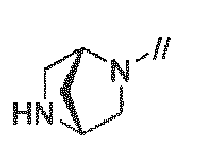


free 474.2 1H-NMR (DMSO-D6) δ: 7.81 (1H, t, J = 7.6 Hz), 7.71-7.62 (2H, m), 7.59-7.51 (1H, m), 7.38-7.30 (1H, m), 7.27-7.22 (1H, m), 7.15-7.08 (2H, m), 7.03-6.98 (1H, m), 4.72 (1H, s), 4.89 (1H, s), 3.86-3.61 (2H, m), 3.56-3.49 (2H, m), 3.22 (3H, s), 3.10-2.93 (2H, m), 2.84-2.79 (2H, m), 1.91-1.60 (2H, m). Table 10 86 


free 488.2 1H-NMR (DMSO-D6) δ: 7.81 (1H, t, J = 7.5 Hz), 7.74-7.53 (3H, m), 7.38-7.31 (1H, m), 7.24 (1H, t, J = 7.9 Hz), 7.14-7.09 (2H, m), 7.01 (1H, d, J = 11.0 Hz), 4.76 (1H, s), 4.44 (1H, s), 4.02-3.85 (1H, m), 3.72-3.57 (1H, m), 3.53 (2H, t, J = 6.7 Hz), 3.22 (3H, s), 3.12-2.97 (2H, m), 2.81 (2H, t, J = 6.7 Hz), 2.63 (3H,s), (3H, s), 2.18-1.91 (2H, m). 87 


free 488.1 1H-NMR (DMSO-D6) δ: 7.81 (1H, t, J = 7.5 Hz), 7.75-7.51 (3H, m), 7.34 (1H, t, J = 10.5 Hz), 7.24 (1H, t, J = 7.9 Hz), 7.14-7.08 (2H, m), 7.01 (1H, d, J = 11.3 Hz), 4.72 (1H, s), 4.39 (1H, s), 3.89-3.59 (2H, m), 3.53 (2H, t, J = 6.6 Hz), 3.22 (3H, s), 3.08-2.90 (2H, m), 2.81 (2H, t, J = 6.7 Hz), 2.54 (3H, s), 2.16-1.84 (2H, m). 88 


free 488.1 1H-NMR (DMSO-D6) δ: 7.80-7.75 (1H, m), 7.55-7.49 (2H, m), 7.47 (1H, d, J = 1.5 Hz), 7.28 (1H, dd, J = 10.5, 1.4 Hz), 7.22 (1H, t, J = 7.9 Hz), 7.10 (2H, dt, J = 10.5, 3.8 Hz), 6.97 (1H, d, J = 11.3 Hz), 4.31-4.2.1 (1H, m), 3.54-3.29 (6H, m), 3.21 (3H, s), 3.00-2.93 (1H, m), 2.79 (2H, t, J = 6.6 Hz), 1.76-1.48 (4H, m). 89 


free 443.1 1H-NMR (DMSO-D6) δ: 9.34 (1H, s), 7.89 (1H, s), 7.73-7.58 (5H, m), 7.42-7.33 (1H, m), 7.11 (1H, d, J = 8.2 Hz), 7.07-7.01 (1H, m), 3.85-3.50 (5H, m), 2.20-2.07 (1H, m), 1.97-1.82 (1H, m). 90 


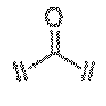
free 441.2 1H-NMR (DMSO-D6) δ: 8.19 (1H, d, J = 1.9 Hz), 8.08 (1H, s), 8.04 (1H, d, J = 1.9 Hz), 7.72 (1H, t, J = 7.6 Hz), 7.68-7.65 7.37 (1H,m), 7.07-6.99 (1H, m), 3.97 (3H, s), 3.86-3.42 (5H, m), 2,23-2.09 (1H, m), 1.99-1.86 (1H, m). 91 


free 440.2 1H-NMR (DMSO-D6) δ: 8.23 (1H, s), 7.69 (1H, t, J = 7.6 Hz), 7.66-7.60 (1H, m), 7.54 (2H, d, J = 7.6 Hz), 7.43 (2H, d, J = 6.3 Hz), 7.35-7.28 (1H, m), 7.06-7.00 (1H, m), 6.98-6.91 (1H, m), 3.86-3.53 (8H, m), 2.22.-2.10 (1H, m), 1.99-1.89 (1H, m). 92 


free 440.2 1H-NMR (DMSO-D6) δ: 7.75-7.71 (1H, m), 7.70-7.66 (1H, m), 7.64 (1H, s), 7.62-7.58 (2H, m), 7.50 (1H, d, J = 8.9 Hz), 7.37-7.32 (2H, m), 7.08 (1H, d, J = 7.9 Hz), 7.04 (1H, d, J = 8.5 Hz), 4.41-4.12 (4H, m), 3.32-3.74 (1H, m), 3.16 (3H, s), 2.21-2.10 (1H, m), 1.82-1.59 (1H, m). 93 

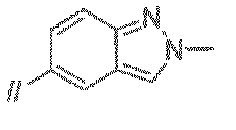

free 440.2 1H-NMR (DMSO-D6) δ: 8.30 (1H, s), 7.75 (1H, t, J = 7.5 Hz), 7.69-7.64 (1H, m), 7.62-7.58 (2H, m), 7.55 (1H, s), 7.44 (3H, d, J = 9.2 Hz), 7.40-7.33 (1H, m), 7.08 (1H, d, J = 8.4 Hz), 6.86 (1H, d, J = 9.2 Hz), 4.13 (3H, s), 3.91-3.40 (4H, m), 3.19-3.09 (1H, rn), 2.27-2.17 (1H, m), 2.06-1.93 (1H, m). 94 


free 478.2 1H-NMR (DMSO-D6) δ: 7.80 (1H, t, J = 7.5 Hz), 7.57-7.54 (1H, m), 7.51-7.49 (1H, m), 7.47 (1H, d, J = 7.9 Hz), 7.31 (1H, ddd, J = 10.6, 5.3, 1.4Hz), 7.24 (1H, td, J = 7.9, 2.4 Hz), 7.10 (2H, d, J = 7.6 Hz), 7.00 (1H, d, J = 11.3 Hz), 4.00-3.56 (4H, m), 3.53 (2H, t, J = 6.7 Hz), 3.32-3.27 (1H, m), 3.23 (3H, s), 2.81 (2H, t, J = 6.6 Hz), 2.18-2.04 (1H, m), 1.85-1.74 (1H, m). Table 11 95 


free 458.2 1H-NMR (DMSO-D6) δ: 8.34 (1H, s), 7.78 (1H, t, J = 7.5 Hz), 7.71 (1H, t, J = 6.4 Hz), 7.67-7.63 (2H, m), 7.60 (1H, d, J = 7.9 Hz), 7.47-7.35 (2H, m), 7.11 (1H, d, J = 7.9 Hz), 3.81 (3H, s), 3.78-3.60 (5H, m), 2.31-2.19 (1H, m), 2.07-1.96 (1H, m). 96 


free 459.2 1H-NMR (DMSO-D6) δ: 7.95-8.15 (2H, m), 7.60-7.79 (4H, m), 7.37-7.46 (1H, m), 7.07-7.13 (1H, m), 4.24 (3H, s), 4.09-3.49 (5H, m), 1.95-2.20(2H, m). 97 


free 426.3 1H-NMR (DMSO-D6) δ: 8.30 (1H, d, J = 9.9 Hz), 7.75 (2H, d, J = 8.4 Hz), 7.57 (1H, d, J = 8.1 Hz), 7.52 (1H, d, J = 7.7 Hz), 7.46 (1H, s), 7.32 (2H, d, J = 8.1 Hz), 7.16-7.09 (3H, m), 4.64-4.52 (1H, m), 4.19-4.07 (1H, m), 3.45-3.37 (1H, m), 2.11-1.40 (8H, m). 98 


free 442.2 444.2 1H-NMR (DMSO-D6) δ: 8.30 (1H, d, J = 8.4 Hz), 7.76 (2H, d, J = 8.4 Hz), 7.58 (1H, d, J = 7.7 Hz), 7.53 (1H, d, J = 8.1 Hz), 7.46 (1H, s), 7.35-7.32 (3H, m), 7.13 (2H, d, J = 8.4 Hz), 4.65-4.58 (1H, m), 4.16-4.08 (1H, m), 3.44-3.38 (1H, m), 2.04-1.47 (8H, m). 99 


free 402.2 1H-NMR (DMSO-D6) δ: 8.36 (2H, d, J = 6.7 Hz), 7.90 (1H, t, J = 7.8 Hz), 7.81 (1H, d, J = 13.1 Hz), 7.75 (1H, dd, J = 7.9, 1.8 Hz), 7.64 (2H, d, J = 7.6 Hz), 7.33 (2H, d, J = 6.7 Hz), 7.26 (2H, d, J = 6.4 Hz), 3.95-3.72 (4H, m), 3.51-3.45 (1H, m), 2.50 (3H, s), 2.31-2.21 (1H, m), 2.02-1.93 (1H, m). 100 


free 430.3 1H-NMR (DMSO-D6) δ: 7.94-7.86 (3H, m), 7.73-7.65 (1H, m), 7.62-7.54 (2H, m), 7.50-7.43 (1H, m), 7.29-7.22 (1H, m), 7.19-7.14 (1H, m), 3.93-3.57 (5H, m), 3.03 (6H, s), 2.30-2.18 (1H, m), 2.06-1.94 (1H, m). 101 


free 441.2 1H-NMR (DMSO-D6) δ: 7.93-7.88 (2H, m), 7.76-7.62 (4H, m), 7.41 (1H, t, J = 9.5 Hz), 7.19 (1H, d, J = 8.8 Hz), 7.10-7.05 (1H, m), 4.28 (3H, s), 3.72-3.41 (5H, m), 2.27-2.18 (1H, m), 2.05-1.95 (1H, m). 102 


free 476.2 1H-NMR (DMSO-D6) δ: 8.27 (1H, s), 7.80 (1H, t, J = 7.6 Hz), 7.73 (1H, t, J = 5.5 Hz), 7.67 (1H, s), 7.63 (1H, d, J = 7.9 Hz), 7.48-7.40 (2H, m), 7.16-7.10 (1H, m), 3.98 (3H, s), 3.92-3.44 (5H, m), 2.31-2.20 (1H, m), 2.07-1.96 (1H, m). 103 


free 454.2 1H-NMR (DMSO-D6) δ: 7.79-7.73 (1H, m), 7.70-7.65 (1H, m), 7.63-7.55 (2H, m), 7.39 (2H, d, J = 8.2 Hz), 7.32 (1H, d, J = 1.2 Hz), 7.12-7.07 (1H, m), 6.96-6.91 (1H, m), 3.72 (3H, t, J = 6.7 Hz), 3.67-3.48 (5H, m), 2.54 (3H, s), 1.99 (1H, dd, J = 9.0, 3.8 Hz), 1.67-1.62 (1H, m). 104 


free 476.2 1H-NMR (DMSO-D6) δ: 7.91-7.86 (3H, m), 7.81-7.65 (4H, m), 7.57 (1H, d, J = 1.5 Hz), 7.53 (2H, td, J = 6.6, 3.4 Hz), 7.46 (1H, dd, J = 10.4, 1.2 Hz), 7.16-7.12 (2H, m), 4.65 (1H, s), 4.19 (1H, s), 3.51-3.43 (1H, m), 2.11-1.49 (8H, m). 105 


free 495.2 1H-NMR (DMSO-D6) δ: 8.93 (1H, d, J = 2.1 Hz), 8.44 (1H, d, J = 8.9 Hz), 7.81 (1H, d, J = 8.5 Hz), 7.78-7.61 (5H, m), 7.50-7.43 (2H, m), 7.13 (1H, d, J = 6.7 Hz), 4.65 (1H, s), 4.18 (1H, s), 3.49-3.40 (1H, m), 2.09-1.17 (8H, m). Table 12 106 


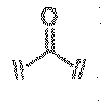
free 497.3 1H-NMR (DMSO-D6) δ: 7.85 (11-1, t, J = 7.6 Hz), 7.59-7.38 (4H, m), 7.16 (1H, dd, J = 7.9, 0.9 Hz), 6.58 (1H, d, J = 8.2 Hz), 6.52 (1H, d, J = 1.8 Hz), 6.48 (1H, dd, J = 8.2, 1.8 Hz), 4.61 (1H, s), 4.22-4.13 (3H, m), 3.45-3.40 (1H, m), 3.26-3.22 (2H, m), 2.81 (3H, s), 2.06-1.15 (8H, m). 107 


free 477.3 1H-NMR (DMSO-D6) δ: 8.92 (1H, dd, J = 4.3, 1.8 Hz), 8.39-8.35 (1H, m), 7.95-7.88 (2H, m), 7.80-7.73 (2H, m), 7.69 (1H, dd, J = 7.8, 1.7 Hz), 7.59-7.55 (2H, m), 7.50 (1H, dd, J = 10.4, 1.5 Hz), 7.30 (1H, dd, J = 8.4, 1.7 Hz), 7.15 (1H, dd, J = 8.2, 1.5 Hz), 4.68 (1H, s), 4.25 (1H, s), 3.69-3.57 (1H, m), 2.14-1.56 (8H, m). 108 


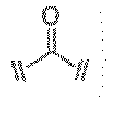
free 498.2 1H-NMR (DMSO-D6) δ: 8.23 (1H, s), 7.77 (1H, t, J = 7.5 Hz), 7.65-7.62 (2H, m), 7.59 (1H, d, 3 = 7.9 Hz), 7.55 (1H, d, J = 1.5 Hz), 7.43-7.38 (2H, m), 7.12 (1H, dd, J = 7.9, 1.5 Hz), 4.65 (1H, s), 4.18 (1H, s), 3.80 (3H, s), 3.39-3.35 (1H, m), 2.11-1.66 (7H, m), 1.58-1.44 (1H, m). 109 


free 499.3 1H-NMR (DMSO-D6) δ: 8.14 (1H, d, J = 6.4 Hz), 7.77 (1H, t, J = 7.5 Hz), 7.72-7.63 (3H, m), 7.58 (1H, d, J = 1.5 Hz), 7.46 (1H, d, J = 10.4 Hz), 7.14 (1H, dd, J = 8.1, 1.4 Hz), 4.65 (1H, s), 4.26 (3H, s), 4.16 (1H, s), 3.37-3.33 (1H, m), 2.12-1.46 (8H, m). 110 

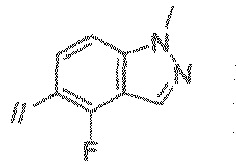

free 498.2 1H-NMR (DMSO-D6) δ: 8.11 (1H, s), 7.76 (1H, t, J = 7.5 Hz), 7.65 (1H, dd, J = 7.9, 1.8 Hz), 7.61 (1H, d, J = 7.9 Hz), 7.58 (1H, d, J = 1.5 Hz), 7.50 (1H, d, J = 8.5 Hz), 7.42 (1H, dd, J = 10.5, 1.4 Hz), 7.25 (1H, dd, J = 8.5, 7.0 Hz), 7.10 (1H, dd, J = 7.9, 1.5 Hz), 4.64 (1H, s), 4.16 (1H, s), 4.06 (3H, s), 3.42-3.36 (1H, m), 2.08-1.44 (8H, m). 111 


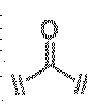
free 462.2 1H-NMR (DMSO-D6) δ: 8.32 (1H, s), 7.74 (2H, d, J = 8.5 Hz), 7.63 (2H, t, J = 5.5 Hz), 7.56 (1H, s), 7.50 (1H, s), 7.45 (1H, d, J = 8.9 Hz), 7.37 (2H, d, J = 8.5 Hz), 6.88 (1H, dd, J = 8.9, 1.8 Hz), 4.72-4.65 (1H, m), 4.32-4.22 (1H, m), 4.15 (3H, s), 2.12-1.54 (9H, m). 112 


free 544.2 1H-NMR (DMSO-D6) δ: 7.82 (1H, t, J = 7.5 Hz), 7.64 (1H, dd, J = 7.8, 1.7 Hz), 7.56-7.53 (2H, m), 7.35 (1H, d, J = 10.7 Hz), 7.25 (1H, t, J = 7.9 Hz), 7.15-7.10 (2H, m), 7.01 (1H, d, J = 11.9 Hz), 4.67-4.61 (1H, m), 4.17-4.10 (1H, m), 3.54 (2H, t, J = 6.7 Hz), 3.47-3.45 (1H, m), 3.23 (3H, s), 3.02-2.94 (1H, m), 2.82 (2H, t, J = 6.7 Hz), 2.04-1.31 (8H, m), 1.01 (6H, d, J = 6.1 Hz). 113 
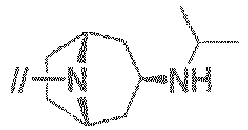


free 558.2 1H-NMR (DMSO-D6) δ: 7.81 (1H, t, J = 7.5 Hz), 7.64 (1H, dd, J = 7.8, 1.7 Hz), 7.58-7.54 (2H, m), 7.29 (1H, d, J = 9.2 Hz), 7.22 (1H, t, J = 7.8 Hz), 7.16 (1H, dd, J = 8.1, 1.4 Hz), 7.07 (1H, d, J = 7.9 Hz), 6.96 (1H, d, J = 11.3 Hz), 4.66-4.61 (1H, m), 4.42-4.38 (1H, m), 4.16-4.10 (1H, m), 3.48-3.43 (1H, m), 3.02-2.93 (1H, m), 2.68-2.65 (2H, m), 2.06-1.32 (8H, m), 1.04 (6H, s), 1.00 (6H, d, J = 5.8 Hz). 114 


free 487.2 1H-NMR (DMSO-D6) δ: 7.82-7.63 (6H, m), 7.49-7.40 (1H, m), 7.13 (1H, d, J = 7.6 Hz), 4.27 (3H, s), 3.77-3.57 (5H, m), 2.50-2.49 (2H, m), 1.15 (2H, s), 1.06 (3H, t, J = 6.9 Hz). Table 13 115 


free 501.3 1H-NMR (DMSO-D6) δ: 8.16-8.14 (1H, m), 7.79-7.72 (2H, m), 7.70 (1H, d, J = 9.2 Hz), 7.66 (1H, s), 7.62 (1H, d, J = 7.6 Hz), 7.47-7.43 (1H, m), 7.14-7.12 (1H, m), 4.28 (3H, s), 3.74-3.52 (6H, m), 2.13-2.03 (1H, m), 1.81-1.72 (1H, m), 1.07-0.96 (6H, m). 116 


free 513.2 1H-NMR (DMSO-D6) δ: 8.14-8.13 (1H, m), 7.78-7.61 (5H, m), 7.45 (1H, dd, J = 9.9, 4.7 Hz), 7.13 (1H, dd, J = 7.9, 1.5 Hz), 4.27 (3H, s), 3.68-3.48 (6H, m), 2.18-1.95 (4H, m), 1.79-1.58 (4H, m). 117 


free 441.2 1H-NMR (DMSO-D6) δ: 7.84 (1H, t, J = 7.5 Hz), 7.65-7.60 (1H, m), 7.55 (1H, s), 7.50 (1H, d, J = 8.2 Hz), 7.39-7.34 (1H, m), 7.12 (1H, d, J = 7.3 Hz), 6.88 (1H, s), 6.69 (1H, d, J = 8.2 Hz), 6.38 (1H, d, J = 7.9 Hz), 3.93-3.54 (6H, m), 3.20-3.15 (1H, m), 2.82 (2H, t, J = 8.1 Hz), 2.69 (3H, s), 2.30-2.18 (1H, m), 2.06-1.92 (1H, m). 118 


free 457.2 1H-NMR (DMSO-D6) δ: 7.86 (1H, t, J = 7.5 Hz), 7.64-7.60 (1H, m), 7.54 (1H, s), 7.50 (1H, d, J = 7.9 Hz), 7.42-7.36 (1H, m), 7.17-7.11 (1H, m), 6.58 (1H, d, J = 8.5 Hz), 6.52 (1H, d, J = 2.1 Hz), 6.47 (1H, d, J = 9.8 Hz), 4.22-4.17 (2H, m), 3.94-3.53 (4H, m), 3.30-3.21 (3H, m), 2.81 (3H, s), 2.29-2.15 (1H, m), 2.02-1.89 (1H, m). 119 


free 457.2 1H-NMR (DMSO-D6) δ: 7.82 (1H, t, J = 7.5 Hz), 7.71-7.67 (1H, m), 7.62-7.57 (2H, m), 7.41 (1H, t, J = 10.7 Hz), 7.22 (1H, s), 7.18 (1H, d, J = 8.2 Hz), 7.13-7.08 (1H, m), 6.94 (1H, d, J = 9.5 Hz), 3.96-3.56 (4H, m), 3.30-3.26 (3H, m), 3.24-3.17 (1H, m), 2.31-2.18 (1H, m), 2.07-1.95 (1H, m). 120 


free 473.2 1H-NMR (DMSO-D6) δ: 7.82 (1H, t, J = 7.5 Hz), 7.69 (1H, t, J = 6.1 Hz), 7.63-7.56 (3H, m), 7.44 (1H, t, J = 9.2 Hz), 7.22 (1H, d, J = 8.2 Hz), 7.11-7.07 (1H, m), 7.07-7.04 (1H, rn), 3.84-3.52 (4H, m), 3.31-3.28 (3H, m), 3.28-3.23 (1H, m), 2.21-2.12 (1H, m), 1.94-1.85 (1H, m). 121 


free 444.1 1H-NMR (DMSO-D6) δ: 7.85 (1H, t, J = 7.5 Hz), 7.67-7.63 (1H, m), 7.57 (1H, s), 7.53 (1H, d, J = 7.6 Hz), 7.42-7.35 (1H, m), 7.14-7.11 (1H, m), 6.76 (1H, d, J = 8.5 Hz), 6.72 (1H, d, J = 2.1 Hz), 6.50 (1H, d, J = 7.3 Hz), 4.25-4.20 (4H, m), 3.98-3.56 (4H, m), 3.30-3.25 (1H, m), 2.33-2.15 (1H, m), 2.07-1.95 (1H, m). 122 


free 430.2 1H-NMR (DMSO-D6) δ: 7.83 (1H, t, J = 7.5 Hz), 7.68-7.62 (1H, m), 7.59-7.55 (1H, m), 7.53 (1H, d, J = 7.9 Hz), 7.40-7.34 (1H, m), 7.14-7.10 (1H, m), 6.84 (1H, d, J = 7.9 Hz), 6.74 (1H, d, J = 1.5 Hz), 6.56 (1H, d, J = 7.9 Hz), 6.01 (2H, s), 4.23-3.74 (4H, m), 3.36-3.28 (1H, m), 2.30-2.14 (1H, m), 2.11-1.95 (1H, m). 123 


free 497.2 1H-NMR (DMSO-D6) δ: 7.74 (1H, t, J = 7.5 Hz), 7.60 (1H, dd, J = 7.9, 1.8 Hz), 7.55-7.49 (3H, m), 7.37-7.33 (2H, m), 7.21 (1H, d, J = 11.0 Hz), 7.10 (1H, dd, J = 8.2, 1.5 Hz), 6.45 (1H, d, J = 3.1 Hz), 4.59 (1H, s), 4.09 (1H, s), 3.75-3.69 (3H, m), 2.22-1.50 (9H, m). Table 14 124 


free 498.2 1H-NMR (DMSO-D6) δ: 8.09 (1H, d, J = 0.9 Hz), 7.79 (1H, d, J = 7.3 Hz), 7.75 (1H, t, J = 7.5 Hz), 7.63 (1H, dd, J = 7.9, 1.8 Hz), 7.58-7.54 (2H, m), 7.44 (1H, d, J = 10.7 Hz), 7.39 (1H, dd, J = 10.5, 1.4 Hz), 7.10 (1H, dd, J = 7.9, 1.5 Hz), 4.61 (1H, s), 4.10 (1H, s), 3.98 (3H, s), 2.61-2.57 (2H, m), 2.47-2.42 (1H, m), 2.27-1.52 (6H, m). 125 


free 499.2 1H-NMR (DMSO-D6) δ: 8.12 (1H, d, J = 6.4 Hz), 7.74 (1H, t, J = 7.5 Hz), 7.69-7.65 (1H, m), 7.62 (1H, d, J = 7.9 Hz), 7.58 (1H, d, J = 1.5 Hz), 7.44 (2H, dd, J 1.5 Hz), 4.64 (1H, s), 4.25 (3H, s), 4.11 (1H, s), 2.34-2.10 (3H, m), 2.07-1.94 (3H, m), 1.93-1.52 (3H, m). 126 


free 516.2 1H-NMR (DMSO-D6) δ: 8.25 (1H, s), 7.76 (1H, t, J = 7.5 Hz), 7.66-7.63 (1H, m), 7.60-7.56 (2H, m), 7.45-7.41 (2H, m), 7.12 (1H, dd, J = 7.9, 1.5 Hz), 4.61 (1H, s), 4.10 (1H, s), 3.96 (3H, s), 2.30-2.17 (2H, m), 2.14-2.04 (1H, m), 2.01-1.51 (6H, m). 127 


free 516.2 1H-NMR (DMSO-D6) δ: 7.83 (1H, t, J = 7.5 Hz), 7.56 (2H, d, J = 0.9 Hz), 7.48 (1H, d, J = 0.9 Hz), 7.34 (1H, dd, J = 10.5, 1.4 Hz), 7.25 (1H, t, J = 7.9 Hz), 7.13-7.10 (2H, m), 7.04-6.99 (1H, m), 4.78-4.72 (1H, m), 3.97-3.92 (1H, m), 3.54 (2H, t, J = 8.5 Hz), 3.29-3.28 (1H, m), 3.23 (3H, s), 2.82 (2H, t, J = 6.7 Hz), 2.07-1.56 (10H, m). 128 


free 497.2 1H-NMR (DMSO-D6) δ: 7.84 (1H, t, J = 7.5 Hz), 7.54 (1H, dd, J = 7.9, 1.5 Hz), 7.44 (3H, dt, J = 17.3, 7.9 Hz), 7.16 (1H, dd, J = 8.1, 1.4 Hz), 6.59 (1H, d, J = 8.2 Hz), 6.53 (1H, d, J = 2.1 Hz), 6.48 (1H, dd, J = 8.2, 2.1 Hz), 4.58 (1H, s), 4.20 (2H, t, J = 4.4 Hz), 4.10 (1H, s), 3.24 (2H, t, J = 4.4 Hz), 2.82 (3H, s), 2.40-1.90 (7H, m), 1.60-1.52 (2H, m). 129 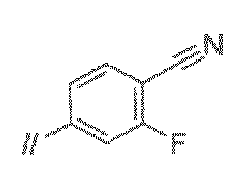


free 516.2 1H-NMR (DMSO-D6) δ: 7.82 (1H, t, J = 7.5 Hz), 7.54 (2H, s), 7.48 (1H, s), 7.34 (1H, d, J = 10.7 Hz), 7.25 (1H, t, J = 7.9 Hz), 7.16-7.08 (2H, m), 7.01 (1H, d, J = 11.0 Hz), 4.91-4.84 (1H, m), 4.07-4.01 (1H, m), 3.54 (2H, t, J = 6.6 Hz), 3.24 (3H, s), 2.93-2.86 (1H, m), 2.82 (2H, t, 3 = 6.6 Hz), 2.31-1.96 (3H, m), 1.67-1.50 (4H, m), 1.43-1.24 (3H, m). 130 


free 498.1 1H-NMR (DMSO-D6) 5: 8.28 (1H, s), 7.77-7.73 (1H, m), 7.64 (2H, dd, J 9.8, 7.9 Hz), 7.58 (2H, d, J = 7.9 Hz), 7.42 (2H, d, J = 9.8 Hz), 7.11 (1H, d, J = 7.9 Hz), 4.69 (1H, s), 3.80 (3H, s), 2.45-2.28 (3H, m), 2.13-2.02 (2H, m), 1.88-1.80 (2H, m), 1.73-1.59 (2H, m). 131 
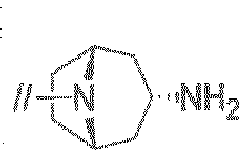


free 470.2 1H-NMR (DMSO-D6) δ: 7.91 (1H, d, J = 2.4 Hz), 7.87 (1 H, t, J = 7.5 Hz), 7.79-7.74 (1H, m), 7.60 (1H, d, J = 7.9 Hz), 7.55-7.46 (2H, m), 7.22 (1H, d, J = 7.9 Hz), 7.17 (1H, d, J = 7.9 Hz), 6.60-6.56 (1H, m), 4.66 (1H, s), 4.17 (1H, s), 3.02 (6H, s), 2.40-2.25 (3H, m), 2.10-2.01 (2H, m), 1.84-1.78 (2H, m), 1.70-1.59 (2H, m). 132 
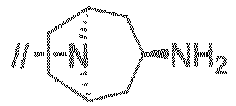


free 523.2 1H-NMR (DMSO-D6) δ: 7.80 (1H, t, J = 7.5 Hz), 7.62-7.55 (2H, m), 7.51 (1H, d, J = 1.5 Hz), 7.36 (1H, d, J = 10.4 Hz), 7.22 (1H, dd, J = 7.9, 1.8 Hz), 7.09 (1H, dd, J = 8.1, 1.4 Hz), 7.02 (1H, d, J = 8.2 Hz), 6.90 (1H, d, J = 1.8 Hz), 4.58 (1H, s), 4.07 (1H, s), 3.13 (3H, s), 2.25-1.84 (7H, m), 1.63-1.48 (2H, m), 1.07 (6H, s). Table 15 133 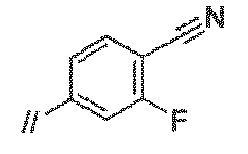


free 513.1 1H-NMR (DMSO-D6) δ: 7.81 (1H, t, J = 7.6 Hz), 7.62-7.58 (2H, m), 7.55 (1H, d, J = 7.9 Hz), 7.51 (1H, d, J = 1.8 Hz), 7.46 (1H, dd, J = 10.5, 1.4 Hz), 7.22 (1H, d, J = 8.2 Hz), 7.10 (1H, dd, J = 8.2, 1.5 Hz), 7.06 (1H, dd, J = 8.2, 1.8 Hz), 4.58 (1H, s), 4.07 (1H, s), 3.27-3.24 (3H, m), 2.27-1.84 (7H, m), 1.63-1.48 (2H, m). 134 


free 457.1 1H-NMR (DMSO-D6) δ: 7.79-7.73 (1H, m), 7.72-7.66 (1H, m), 7.65-7.59 (1H, m), 7.58-7.49 (2H, m), 7.39-7.32 (2H, m), 7.22 (1H, d, J = 11.0 Hz), 7.14-7.09 (1H, m), 6.45 (1H, d, J = 3.1 Hz), 3.74 (3H, s), 3.69-3.60 (5H, m), 2.04-1.94 (1H, m), 1.71-1.65 (1H, m). 135 


free 458.1 1H-NMR (DMSO-D6) δ: 8.10 (1H, s), 7.81-7.75 (2H, m), 7.71 (1H, t, J = 7.0 Hz), 7.66 (1H, d, J = 5.2 Hz), 7.59 (1H, d, J = 7.9 Hz), 7.46 (1H, d, J = 10.4 Hz), 7.42-7.38 (1H, m), 7.10 (1H, d, J = 8.2 Hz), 4.00 (3H, s), 3.79-3.66 (5H, m), 2.16-2.09 (1H, m), 1.88-1.80 (1H, m). 136 
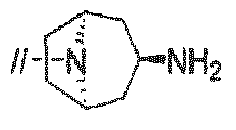


free 555.1 1H-NMR (DMSO-D6) δ: 7.74 (1H, t, J = 7.6 Hz), 7.61 (1H, dd, J = 7.9, 1.8 Hz), 7.58-7.53 (2H, m), 7.48 (1H, d, J = 7.6 Hz), 7.33 (3H, dd, J = 21.4, 7.0 Hz), 7.13 (1H, dd, J = 7.9, 1.5 Hz), 6.45 (1H, d, J = 3.1 Hz), 4.64 (1H, s), 4.62-4.57 (1H, m), 4.13-4.08 (1H, m), 4.02 (2H, s), 2.25-2.14 (2H, m), 2.03-1.86 (3H, m), 1.80-1.68 (1H, m), 1.63-1.51 (2H, m), 1.46-1.33 (1H, m), 1.06 (6H, s). 137 


free 468.1 1H-NMR (DMSO-D6) δ: 7.81 (1H, t, J = 7.5 Hz), 7.61 (1H, d, J = 9.8 Hz), 7.56-7.50 (2H, m), 7.42 (1H, d, J = 10.7 Hz), 7.22 (1H, d, J = 7.9 Hz), 7.18 (1H, s), 7.11 (1H, d, J = 8.2 Hz), 6.98 (1H, d, J = 7.9 Hz), 4.99 (2H, s), 4.95 (2H, s), 4.62-4.56 (1H, m), 4.12-4.07 (1H, m), 2.23-2.10 (2H, m), 2.05-1.86 (3H, m), 1.82-1.69 (1H, m), 1.63-1.50 (2H, m), 1.45-1.34 (1H, m). 138 


free 541.1 1H-NMR (DMSO-D6) δ: 7.82 (1H, t, J = 7.6 Hz), 7.62 (1H, d, J = 7.9 Hz), 7.58-7.54 (2H, m), 7.52 (1H, s), 7.48 (1H, d, J = 10.7 Hz), 7.40 (1H, d, J = 8.5 Hz), 7.12 (1H, d, J = 7.9 Hz), 7.04 (1H, d, J = 8.5 Hz), 4.78-4.71 (1H, m), 4.65-4.58 (1H, m), 4.14-4.08 (1H, m), 2.28-2.19 (1H, m), 2.15-1.90 (3H, m), 1.87-1.70 (2H, m), 1.65-1.52 (3H, m), 1.47 (6H, d, J = 7.0 Hz). 139 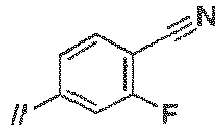


free 541.2 1H-NMR (DMSO-D6) δ: 8.13 (1H, d, J = 7.0 Hz), 7.93 (1H, d, J = 10.4 Hz), 7.77 (1H, t, J = 7.6 Hz), 7.67-7.62 (2H, m), 7.59 (1H, s), 7.48 (1H, d, J = 10.7 Hz), 7.15 (1H, dd, J = 8.1, 1.4 Hz), 4.66-4.59 (1H, m), 4.14-4.08 (1H, m), 2.24-2.05 (4H, m), 2.01-1.86 (3H, m), 1.77 (9H, s), 1.66-1.53 (2H, m). 140 


free 428.1 1H-NMR (DMSO-D6) δ: 7.82 (1H, t, J = 7.6 Hz), 7.69 (1H, t, J = 7.6 Hz), 7.61 (1H, d, J = 6.4 Hz), 7.55 (1H, d, J = 7.9 Hz), 7.45-7.38 (1H, m), 7.23 (1H, d, J = 7.9 Hz), 7.18 (1H, s), 7.10 (1H, d, J = 7.6 Hz), 6.98 (1H, d, J - 6.4 Hz), 4.99 (2H, s), 4.95 (2H, s), 3.82-3.67 (5H, m), 2.13-2.06 (1H, m), 1.85-1.78 (1H, m). Table 16 141 


free 491.0 1H-NMR (DMSO-D6) δ: 7.82 (1H, t, J = 7.3 Hz), 7.75 (1H, d, J = 7.0 Hz), 7.72-7.69 (1H, m), 7.64 (1H, t, J = 4.7 Hz), 7.54 (1H, d, J = 7.9 Hz), 7.45 (1H, d, J = 10.4 Hz), 7.24 (1H, d, J = 10.7 Hz), 7.12 (1H, dd, J = 8.2, 1.5 Hz), 3.67-3.48 (5H, m), 3.37 (3H, s), 2.02-1.91 (1H, m), 1.69-1.61 (1H, m). 142 


free 556.1 1H-NMR (DMSO-D6) δ: 8.10 (1H, d, J = 0.9 Hz), 7.79-7.74 (2H, m), 7.63 (1H, dd, J = 7.8, 1.7 Hz), 7.59-7.55 (2H, m), 7.45 (1H, d, J = 11.0 Hz), 7.39 (1H, dd, J = 10.7, 1.5 Hz), 7.13 (1H, dd, J = 8.2, 1.5 Hz), 4.62 (1H, s), 4.60-4.56 (1H, m), 4.26 (2H, s), 4.08-4.05 (1H, m), 2.35-2.21 (2H, m), 2.12-2.06 (1H, m), 1.99-1.83 (3H, m), 1.64-1.48 (3H, m), 1.11 (6H, s). 143 


free 448.1 1H-NMR (DMSO-D6) δ: 7.82 (1H, t, J = 7.5 Hz), 7.73-7.58 (2H, m), 7.53 (1H, d, J = 7.9 Hz), 7.39-7.33 (1H, m), 7.25 (1H, t, J = 7.9 Hz), 7.16-7.10 (2H, m), 7.01 (1H, d, J = 11.3 Hz), 4.49-3.86 (3H, m), 3.54 (2H, t, J = 6.6 Hz), 3.23 (3H, s), 2.82 (2H, t, J = 6.6 Hz), 2.22-2.10 (2H, m), 1.89-1.70 (1H, m), 1.64-1.48 (2H, m), 0.91 (1H, dd, J = 12.2, 4.3 Hz). 144 


free 476.0 1H-NMR (DMSO-D6) δ: 7.83 (1H, dd, J = 7.9, 7.0 Hz), 7.63 (1H, dd, J = 7.8, 1.7 Hz), 7.57-7.53 (2H, m), 7.43 (1H, dd, J = 10.5, 1.4 Hz), 7.13-7.10 (2H, m), 7.03-6.99 (1H, m), 4.59 (1H, s), 4.05 (1H, s), 2.27 (3H, d, J = 1.2 Hz), 2.23-2.09 (3H, m), 2.04-1.85 (3H, m), 1.63-1.49 (3H, m). 145 


free 517.0 1H-NMR (DMSO-D6) δ: 7.97 (1H, d, J = 4.6 Hz), 7.78 (1H, dd, J = 7.9, 7.0 Hz), 7.67 (1H, dd, J = 7.9, 1.8 Hz), 7.63 (1H, d, J = 7.6 Hz), 7.59 (1H, d, J = 1.5 Hz), 7.50 (1H, dd, J = 10.5, 1.4 Hz), 7.16 (1H, dd, J = 7.9, 1.5 Hz), 4.61 (1H, s), 4.40 (3H, s), 4.06 (1H, s), 2.24-1.86 (6H, m), 1.66-1.51 (3H, m). 146 


free 515.0 1H-NMR (DMSO-D6) δ: 7.74 (1H, t, J = 7.5 Hz), 7.68 (1H, t, J = 7.2 Hz), 7.62 (1H, d, J = 8.5 Hz), 7.55 (1H, d, J = 7.9 Hz), 7.47 (1H, d, J = 7.6 Hz), 7.35 (1H, d, J = 3.1 Hz), 7.30 (2H, d, J = 11.9 Hz), 7.11 (1H, t, J = 4.7 Hz), 6.44 (1H, d, J = 3.1 Hz), 4.62 (1H, s), 4.01 (2H, s), 3.78-3.58 (4H, m), 3.13-2.96 (1H, m), 2.03-1.93 (1H m), 1.72-1.61 (1H, m), 1.05 (6H, 5). 147 


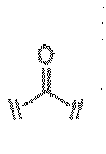
free 516.0 1H-NMR (DMSO-D6) δ: 8.10 (1H, d, J = 0.9 Hz), 7.77-7.74 (2H, m), 7.71-7.69 (1H, m), 7.64 (1H, dd, J = 7.8, 1.7 Hz), 7.57-7.57 (1H, m), 7.44 (1H d, J = 11.0 Hz), 7.37 (1H, d, J = 10.7 Hz), 7.11 (1H, dd, J = 8.1, 1.7 Hz), 4.61 (1H, s), 4.25 (2H, s), 3.69-3.57 (2H, m), 3.56-3.43 (2H, m), 3.24-3.14 (1H, m), 2.02-1.90 (1H, m), 1.68-1.61 (1H, m), 1.10 (6H, s). 148 


free 478.1 1H-NMR (DMSO-D6) δ: 8.97 (2H, s), 8.03-7.98 (2H, m), 7.80-7.74 (2H, m), 7.70 (1H, dd, J = 7.9, 1.5 Hz), 7.62 (1H, d, J = 1.5 Hz), 7.57-7.52 (2H, m), 7.15 (1H, dd, J = 8.1, 1.7 Hz), 4.69-4.62 (1H, m), 4.20-4.13 (1H, m), 2.33-1.91 (7H, m), 1.74-1.53 (2H, m). 149 


free 477.0 1H-NMR (DMSO-D6) δ: 9.40-9.31 (1H, m), 8.60-8.53 (1H, m), 8.07-7.95 (2H, m), 7.78-7.68 (4H, m), 7.62 (1H, s), 7.51 (1H, d, J = 9.8 Hz), 7.39-7.30 (1H, m), 7.09 (1H, d, J = 7.6 Hz), 4.76-4.63 (1H, m), 4.24-4.15 (3H, m), 2.36-1.81 (7H, m), 1.78-1.58 (2H, m). Table 17 150 


free 477.0 1H-NMR (DMSO-D6) δ: 9.37-9.31 (1H, m), 8.56-8.52 (1H, m), 8.13-8.08 (1H, m), 7.92-7.85 (2H, m), 7.76-7.70 (3H, m), 7.62 (1H, s), 7.50 (1H, d, J = 10.4 Hz), 7.46-7.40 (1H, m), 7.10 (1H, d, J = 7.9 Hz), 4.73-4.66 (1H, m), 4.24-4.17 (1H, m), 2.34-2.00 (5H, m), 1.92-1.57 (4H, m). 151 


free 477.0 1H-NMR (DMSO-D6) δ: 8.93 (1H, d, J = 4.3 Hz), 8.36 (1H, d, J = 8.5 Hz), 7.94 (1H, s), 7.90 (1H, d, J = 8.5 Hz), 7.76-7.69 (3H, m), 7.61 (1H, d, J = 1.5 Hz), 7.60-7.55 (1H, m), 7.51 (1H, d, J = 10.4 Hz), 7.40 (1H, d, J = 9.2 Hz), 7.10 (1H, dd, J = 7.9, 1.5 Hz), 4.74-4.65 (1H, m), 4.25-4.16 (1H, m), 2.31-1.58 (9H, m). 152 


free 478.0 1H-NMR (DMSO-D6) δ: 9.60 (1H, s), 8.06 (1H, d, J = 8.5 Hz), 7.93 (1H, s), 7.75-7.74 (1H, m), 7.73-7.69 (1H, m), 7.63 (1H, s), 7.58-7.52 (2H, m), 7.45-7.41 (1H, m), 7.15-7.12 (2H, m), 4.72-4.63 (1H, m), 4.22-4.15 (1H, m), 2.13-2.04 (2H, m), 1.88-1.60 (7H, m). 153 


free 478.0 1H-NMR (DMSO-D6) δ: 9.32 (1H, s), 8.12 (1H, d, J = 2.7 Hz), 7.90 (1H, d, J = 8.5 Hz), 7.75-7.71 (3H, m), 7.69-7.62 (3H, m), 7.53 (1H, d, J = 10.1 Hz), 7.11-7.09 (1H, m), 4.73-4.65 (1H, m), 4.24-4.15 (1H, m), 2.14-2.01 (3H, m), 1.87-1.65 (6H, m). 154 


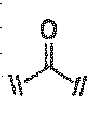
free 478.0 1H-NMR (DMSO-D6) δ: 9.66 (2H, d, J = 3.4 Hz), 8.20 (1H, s), 8.12 (1H, s), 8.03 (1H, d, J = 8.5 Hz), 7.75-7.66 (4H, m), 7.62 (1H, s), 7.51 (1H, d, J = 9.2 Hz), 7.07 (1H, dd, J = 7.9, 1.5 Hz), 4.66-4.58 (1H, m), 4.15-4.07 (1H, m), 2.31-1.88 (7H, m), 1.67-1.50 (2H, m). 155 

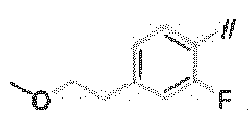

free 488.0 1H-NMR (DMSO-D6) δ: 7.81 (1H, t, J = 7.5 Hz), 7.73-7.56 (2H, m), 7.52 (1H, d, J = 7.9 Hz), 7.35 (1H, d, J = 10.4 Hz), 7.24 (1H, t, J = 7.9 Hz), 7.14-7.09 (2H, m), 7.01 (1H, d, J = 11.3 Hz), 4.42-3.89 (3H, m), 3.53 (2H, t, J = 6.6 Hz), 3.23 (3H, s), 2.81 (2H, t, J = 6.6 Hz), 2.25-2.08 (2H, m), 1.79-1.68 (1H, m), 1.64-1.44 (2H, m), 0.91-0.87 (1H, m). 156 


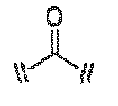
free 488.0 1H-NMR (DMSO-D6) δ: 7.81 (1H, t, J = 7.5 Hz), 7.73-7.56 (2H, m), 7.52 (1H, d, J = 7.6 Hz), 7.35 (1H, d, J = 10.7 Hz), 7.24 (1H, t, J = 7.9 Hz), 7.15-7.09 (2H, m), 7.01 (1H, d, J = 11.0 Hz), 4.46-3.85 (3H, m), 3.53 (2H, t, J = 6.7 Hz), 3.23 (3H, s), 2.81 (2H, t, J = 6.6 Hz), 2.21-2.10 (2H, m), 1.79-1.68 (1H, m), 1.64-1.46 (2H, m), 0.93-0.87 (1H, m). 157 


free 480.0 1H-NMR (DMSO-D6) δ: 7.87 (1H, t, J = 7.5 Hz), 7.78 (3H, s), 7.65 (2H, s), 7.59-7.51 (3H, m), 7.24 (1H, d, J = 7.0 Hz), 4.67 (1H, s), 4.16 (1H, s), 2.52 (3H, s), 2.34-2.22 (2H, m), 2.14-2.02 (1H, m), 1.89-1.80 (3H, m), 1.76-1.57 (3H, m). 158 


free 481.1 1H-NMR (DMSO-D6) δ: 9.04 (1H, d, J = 2.1 Hz), 8.11 (1H, d, J = 0.6 Hz), 8.02 (1H, d, J = 2.1 Hz), 7.86 (1H, t, J = 7.5 Hz), 7.75 (1H, d, J = 7.9 Hz), 7.67 (1H, dd, J = 7.8, 1.7 Hz), 7.62 (1H, dd, J = 10.4, 1.2 Hz), 7.59 (1H, d, J = 1.5 Hz), 7.28 (1H, dd, J = 7.9, 1.5 Hz), 4.62 (1H, s), 4.08 (1H, s), 2.26 (3H, s), 2.15-1.91 (6H, m), 1.68-1.51 (3H, m). Table 18 159 


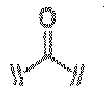
free 556.0 1H-NMR (DMSO-D6) δ: 8.37 (1H, d, J = 0.9 Hz), 7.81-7.75 (2H, m), 7.62 (1H, dd, J = 7.9, 1.8 Hz), 7.58-7.54 (2H, m), 7.41 (1H, dd, J = 10.7, 1.5 Hz), 7.26 (1H, d, J = 11.6 Hz), 7.14 (1H, dd, J = 8.2, 1.5 Hz), 4.87 (1H, s), 4.59 (1H, s), 4.32 (2H, s), 4.08 (1H, s), 2.28-2.10 (3H, m), 2.02-1.83 (3H, m), 1.63-1.49 (3H, m), 1.11 (6H, s). 160 


free 513.0 1H-NMR (DMSO-D6) δ: 8.14 (1H, d, J = 6.4 Hz), 7.77-7.74 (2H, m), 7.62 (3H, ddd, J = 29.6, 12.8, 3.2 Hz), 7.46 (1H, dd, J = 10.5, 1.4 Hz), 7.14 (1H, dd, J = 7.9, 1.5 Hz), 4.68 (2H, q, J = 7.3 Hz), 4.61 (1H, s), 4.09 (1H, s), 2.23-1.88 (6H, m), 1.65-1.52 (3H, m), 1.49 (3H, t, J = 7.2 Hz). 161 


free 575.0 1H-NMR (DMSO-D6) δ: 7.97 (1H, d, J = 4.6 Hz), 7.76 (1H, t, J = 7.6 Hz), 7.67-7.64 (2H, m), 7.59 (1H, d, J = 0.9 Hz), 7.48 (1H, dd, J = 10.5, 1.4 Hz), 7.16 (1H, dd, J = 7.9, 1.5 Hz), 4.81 (1H, s), 4.61 (2H, s), 4.57 (1H, s), 4.05 (1H, s), 2.34-2.21 (2H, m), 2.12-2.05 (1H, m), 1.99-1.83 (3H, m), 1.62-1.46 (3H, m), 1.15 (6H, s). 162 


free 535.0 1H-NMR (DMSO-D6) δ: 7.97 (1H, d, J = 5.2 Hz), 7.78-7.64 (4H, m), 7.46 (1H, d, J = 10.4 Hz), 7.15 (1H, dd, J = 8.2, 1.5 Hz), 4.81 (1H, s), 4.61 (2H, s), 3.69-3.57 (2H, m), 3.55-3.46 (2H, m), 3.23-3.15 (1H, m), 2.04-1.90 (1H, m), 1.68-1.56 (1H, m), 1.15 (6H, s). 163 


free 462.0 1H-NMR (DMSO-D6) δ: 7.82 (1H, t, J = 7.5 Hz), 7.63-7.60 (1H, m), 7.57-7.53 (2H, m), 7.34 (1H, d, J = 10.4 Hz), 7.26-7.21 (1H, m), 7.13-7.09 (2H, m), 7.01 (1H, d, J = 11.3 Hz), 3.76-3.42 (8H, m), 3.23 (3H, s), 3.13-2.92 (2H, m), 2.81 (2H, t, J = 6.7 Hz). 164 


free 476.1 1H-NMR (DMSO-D6) δ: 7.82 (1H, t, J = 7.5 Hz), 7.59 (1H, dd, J = 7.8, 1.7 Hz), 7.56-7.52 (2H, m), 7.37 (1H, dd, J = 10.5, 1.4 Hz), 7.24 (1H, t, J = 7.9 Hz), 7.11 (2H, dd, J = 7.9, 1.5 Hz), 7.01 (1H, d, J = 11.3 Hz), 4.34-3.71 (2H, m), 3.53 (2H, t, J = 6.6 Hz), 3.23 (3H, s), 3.12-2.94 (2H, m), 2.82 (2H, t, J = 6.7 Hz), 1.99-1.91 (1H, m), 1.81-1.64 (1H, m), 1.56-1.41 (2H, m), 0.88-0.80 (1H, m). 165 


free 490.1 1H-NMR (DMSO-D6) δ: 7.81 (1H, t, J = 7.5 Hz), 7.57-7.48 (3H, m), 7.35-7.31 (1H, m), 7.24 (1H, t, J = 7.9 Hz), 7.11 (2H, dd, J = 8.1, 1.4 Hz), 7.01 (1H, d, J = 11.3 Hz), 3.92-3.62 (2H, m), 3.58-3.41 (4H, m), 3.23 (3H, s), 2.81 (2H, t, J = 6.7 Hz), 2.14-2.03 (1H, m), 1.91-1.49 (5H, m), 0.88-0.80 (1H, m). 166 


free 502.0 1H-NMR (DMSO-D6) δ: 7.80 (1H, t, J = 7.6 Hz), 7.68 (1H, s), 7.60 (1H, s), 7.53 (1H, d, J = 7.9 Hz), 7.29 (1H, t, 3 = 5.3 Hz), 7.21 (1H, t, J = 7.9 Hz), 7.15 (1H, dd, J = 8.2, 1.5 Hz), 7.07 (1H, d, J = 7.9 Hz), 6.95 (1H, d, J = 11.6 Hz), 4.46-3.86 (3H, m), 2.65 (2H, s), 2.25-2.10 (2H, m), 1.74-1.49 (4H, m), 1.04 (6H, s), 0.87 (1H, dd, J = 12.2, 4.6 Hz). 167 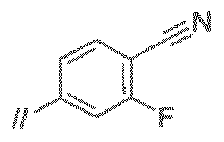


free 477.0 1H-NMR (DMSO-D6) δ: 7.99-7.96 (1H, m), 7.80-7.73 (2H, m), 7.69-7.67 (1H, m), 7.64 (1H, d, J = 7.9 Hz), 7.50-7.46 (1H, m), 7.18-7.14 (1H, m), 4.40 (3H, d, J = 6.7 Hz), 3.70-3.64 (2H, m), 3.58-3.48 (2H, m), 3.25-3.16 (1H, m), 2.08-2.04 (1H, m), 1.78-1.74 (1H, m). Table 19 168 


free 527.0 1H-NMR (DMSO-D6) δ: 8.14 (1H, d, J = 6.7 Hz), 7.77-7.74 (2H, m), 7.68-7.59 (3H, m), 7.45 (1H, dd, J = 10.4, 1.5 Hz), 7.14 (1H, dd, J = 7.9, 1.5 Hz), 4.64-4.60 (3H, m), 4.14-4.07 (1H, m), 2.30-1.87 (9H, m), 1.66-1.55 (2H, m), 0.84 (3H, t, J = 7.3 Hz). 169 


free 521.0 1H-NMR (DMSO-D6) δ: 7.99 (1H, d, J = 4.9 Hz), 7.79-7.73 (2H, m), 7.70-7.64 (2H, m), 7.48-7.45 (1H, m), 7.16 (1H, dd, J = 8.2, 1.5 Hz), 4.91 (2H, t, J = 5.2 Hz), 3.81 (2H, t, J = 5.0 Hz), 3.69-3.45 (4H, m), 3.18-3.16 (4H, m), 2.01-1.94 (1H, m), 1.68-1.63 (1H, m). 170 


free 487.0 1H-NMR (DMSO-D6) δ: 7.75 (1H, dd, J = 7.8, 7.2 Hz), 7.69-7.66 (1H, m), 7.62 (1H, dd, J = 7.9, 1.5 Hz), 7.51 (2H, dd, J = 18.9, 7.6 Hz), 7.39-7.35 (2H, m), 7.25 (1H, d, J = 11.3 Hz), 7.11 (1H, dd, J = 7.9, 1.5 Hz), 6.44 (1H, dd, J = 3.1, 0.6 Hz), 4.86 (1H, t, J = 5.2 Hz), 4.15 (2H, t, J = 5.3 Hz), 3.69-3.59 (4H, m), 3.54-3.47 (2H, m), 3.22-3.18 (1H, m), 1.99-1.94 (1H, m), 1.73-1.66 (1H, m). 171 


free 541.0 1H-NMR (DMSO-D6) δ: 7.74 (1H, t, J = 7.5 Hz), 7.68 (1H, d, J = 7.9 Hz), 7.61-7.55 (2H, m), 7.47 (1H, d, J = 7.6 Hz), 7.36-7.29 (3H, m), 7.13 (1H, dd, J = 7.9, 1.5 Hz), 6.44 (1H, d, J = 3.4 Hz), 4.62 (1H, s), 4.48-3.87 (5H, m), 2.19-2.14 (2H, m), 1.78-1.73 (1H, m), 1.62-1.49 (2H, m), 1.05 (6H, s), 0.88 (1H, dd, J = 12.1, 4.7 Hz). 172 
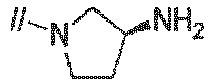

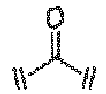
free 533.0 1H-NMR (DMSO-D6) δ: 7.76 (1H, t, J = 7.6 Hz), 7.71-7.68 (1H, m), 7.66-7.64 (1H, m), 7.59 (1H, d, J = 7.9 Hz), 7.38 (1H, d, J = 3.4 Hz), 7.35-7.30 (2H, m), 7.12 (1H, dd, J = 7.9, 1.5 Hz), 6.51 (1H, t, J = 2.4 Hz), 4.70 (1H, s), 4.13 (2H, s), 3.70-3.55 (4H, m), 3.24-3.18 (1H, m), 2.01-1.99 (1H, m), 1.71-1.67 (1H, m), 1.05 (6H, s). 173 


free 541.0 1H-NMR (DMSO-D6) δ: 7.76-7.53 (5H, m), 7.50-7.44 (1H, m), 7.35-7.28 (2H, m), 7.15-7.08 (1H, m), 6.44 (1H, t, J = 2.7 Hz), 4.62 (1H, s), 4.30-3.84 (3H, m), 3.78-3.59 (1H, m), 3.20-3.15 (1H, m), 3.09-3.04 (1H, m), 2.25-1.50 (5H, m), 1.05 (6H, dd, J = 12.4, 4.7 Hz). 174 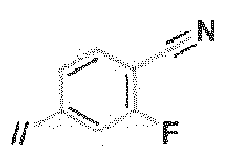


free 502.1 1H-NMR (DMSO-D6) δ: 7.83-7.77 (1H, m), 7.67-7.49 (3H, m), 7.28-7.12 (3H, m), 7.09-7.05 (1H, m), 6.98-6.93 (1H, m), 4.40 (1H, d, J = 3.1 Hz), 4.11-3.72 (1H, m), 3.61-3.48 (1H, m), 3.22-3.16 (1H, m), 3.10-3.03 (1H, m), 2.66 (2H, s), 2.21-1.55 (5H, m), 1.04 (6H, s). 175 

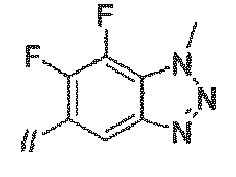

free 503.0 1H-NMR (DMSO-D6) δ: 7.98 (1H, d, J = 5.2 Hz), 7.78 (1H, t, J = 7.5 Hz), 7.75-7.70 (1H, m), 7.63 (2H, d, J = 7.6 Hz), 7.55-7.48 (1H, m), 7.17 (1H, dd, J = 8.2, 1.5 Hz), 4.48-3.88 (6H, m), 2.24-2.12 (2H, m), 1.75-1.51 (3H, m), 0.89 (1H, dd, J = 12.1, 4.7 Hz). 176 


free 542.0 1H-NMR (DMSO-D6) δ: 8.10 (1H, d, J = 0.9 Hz), 7.80-7.74 (2H, m), 7.73-7.67 (1H, m), 7.64-7.56 (2H, m), 7.45 (1H, d, J = 11.0 Hz), 7.40 (1H, dd, J = 10.5, 1.4 Hz), 7.13 (1H, dd, J = 7.9, 1.5 Hz), 4.61 (1H, s), 4.49-3.89 (5H, m), 2.26-2.13 (2H, m), 1.81-1.50 (4H, m), 1.10 (6H, s). Table 20 177 


free 561.0 1H-MMR (DMSO-D6) δ: 7.97 (1H, d, J = 5.2 Hz), 7.78-7.73 (2H, m), 7.66 (2H, d, J = 7.6 Hz), 7.49 (1H, dd, J = 10.4, 1.2 Hz), 7.17 (1H, dd, J = 8.2, 1.5 Hz), 4.81 (1H, s), 4.61 (2H, s), 4.49-3.87 (3H, m), 2.28-2.11 (2H, m), 1.80-1.51 (3H, m), 1.15 (6H, s), 0.89 (1H, dd, J = 11.7, 4.7 Hz). 178 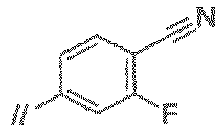
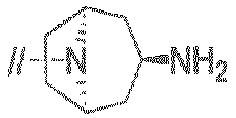


free 635.9 1H-NMR (DMSO-D6) δ: 7.77 (1H, t, J = 7.5 Hz), 7.64-7.56 (4H, m), 7.51 (1H, d, J = 10.7 Hz), 7.44 (1H, d, J = 11.6 Hz), 7.14 (1H, d, J = 9.2 Hz), 4.64 (1H, s), 4.58 (1H, s), 4.25 (2H, s), 4.06 (1H, s), 2.34-1.85 (6H, m), 1.64-1.44 (2H, m), 1.16-1.15 (1H, m), 1.13-1.08 (6H, m). 179 


free 499.0 1H-NMR (DMSO-D6) δ: 7.84 (1H, d, J = 5.2 Hz), 7.78 (1H, t, J = 7.5 Hz), 7.69-7.64 (2H, m), 7.63-7.58 (2H, m), 7.47 (1H, d, J = 10.4 Hz), 7.13 (1H, dd, J = 8.2, 1.5 Hz), 4. 63-4.57 (1H, m), 4.11-4.02 (1H, m), 2.53 (3H, s), 2.24-1.90 (7H, m), 1.64-1.48 (2H, m). 180 


free 459.0 1H-NMR (DMSO-D6) δ: 7.83 (1H, d, J = 5.5 Hz), 7.79 (1H, t, J = 7.6 Hz), 7.74 (1H t, J = 6.7 Hz), 7.70-7.62 (3H, m), 7.45 (1H, t, J = 9.0 Hz), 7.12 (1H, d, J = 8.9 Hz), 3.82-3.49 (5H, m), 2.53 (3H, s), 2.20-2.12 (1H, m), 1.94-1.84 (1H, m). 181 


free 570.0 1H-NMR (DMSO-D6) δ: 7.80-7.73 (2H, m), 7.66-7.52 (3H, m), 7.39 (1H, d, J = 10.7 Hz), 7.32 (1H, d, J = 11.3 Hz), 7.12 (1H, dd, J = 8.2, 1.5 Hz), 4.62-4.55 (2H, m), 4.18-4.11 (2H, m), 4.10-4.03 (1H, m), 2.47 (3H, s), 2.35-1.84 (7H, m), 1.64-1.49 (2H, m), 1.10 (6H, s). 182 


free 502.0 1H-NMR (DMSO-D6) δ: 7.83-7.64 (3H, m), 7.51 (1H, d, J = 7.3 Hz), 7.30-7.25 (1H, m), 7.21 (1H, t, J = 7.9 Hz), 7.16 (1H, dd, J = 8.2, 1.5 Hz), 7.07 (1H, dd, J = 7.9, 1.2 Hz), 6.95 (1H, d, J = 11.6 Hz), 4.51-3.85 (3H, m), 3.08-2.95 (1H, m), 2.65 (2H, s), 1.82-1.68 (2H, m), 1.36-1.23 (4H, m), 1.04 (6H, s). 183 


free 573.1 1H-NMR (DMSO-D6) δ: 7.76 (1H, t, J = 7.6 Hz), 7.62 (1H, dd, J = 7.9, 1.5 Hz), 7.59 (1H, d, J = 7.9 Hz), 7.56 (1H, d, J = 1.5 Hz), 7.38 (1H, d, J = 3.1 Hz), 7.34 (1H, dd, J = 10.5, 1.4 Hz), 7.31 (1H, d, J = 5.8 Hz), 7.13 (1H, dd, J = 7.9, 1.5 Hz), 6.51 (1H, t, J = 2.4 Hz), 4.70 (1H, s), 4.59 (1H, s), 4.13 (2H, s), 4.09 (1H, s), 2.27-2.11 (3H, m), 2.03-1.85 (4H, m), 1.64-1.48 (2H, m), 1.05 (6H, s). 184 
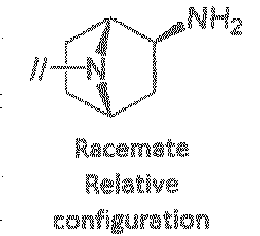


free 541.1 1H-NMR (DMSO-D6) δ: 7.79-7.72 (3H, m), 7.60-7.53 (1H, m), 7.47 (1H, d, J = 7.3 Hz), 7.37-7.28 (3H, m), 7.14-7.12 (1H, m), 6.45 (1H, d, J = 2.4 Hz), 4.62 (1H, s), 4.53-3.89 (4H, m), 3.10-3.04 (1H, m), 2.45-2.39 (1H, m), 1.87-1.79 (1H, m), 1.72-1.69 (2H, m), 1.41-1.17 (2H, m), 1.05 (6H, s). 185 


free 503.0 1H-NMR (DMSO-D6) δ: 7.98 (1H, d, J = 5.2 Hz), 7.78 (1H, t, J = 7.5 Hz), 7.75-7.70 (1H, m), 7.63 (2H, d, J = 7.6 Hz), 7.55-7.48 (1H, m), 7.17 (1H, dd, J = 8.2, 1.5 Hz), 4.48-3.88 (6H, m), 2.24-2.12 (2H, m), 1.75-1.51 (3H, m), 0.89 (1H, dd, J = 12.1, 4.7 Hz). Table 21 186 


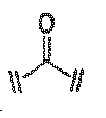
free 586.1 1H-NMR (DMSO-D6) δ: 8.12 (1H, s), 7.76 (1H, t, J = 7.6 Hz), 7.65-7.59 (2H, m), 7.57 (1H, d, J = 1.2 Hz), 7.50 (1H, d, J = 6.1 Hz), 7.36 (1H, dd, J = 10.5, 1.4 Hz), 7.12 (1H, dd, J = 8.1, 1.7 Hz), 4.62 (1H, s), 4.58 (1H, s), 4.41 (2H, s), 4.06 (1H, s), 3.72 (3H, d, J = 1.5 Hz), 2.30-2.18 (2H, m), 2.14-2.08 (1H, m), 2.00-1.84 (3H, m), 1.62-1.49 (3H, m), 1.09 (6H, s). 187 


free 534.1 1H-NMR (DMSO-D6) δ: 8.19 (1H, d, J = 1.8 Hz), 7.78-7.75 (1H, m), 7.73-7.70 (1H, m), 7.66 (1H, dd, J = 8.5, 1.5 Hz), 7.62-7.58 (2H, m), 7.42-7.39 (1H, m), 7.12 (1H, dd, J = 7.9, 1.5 Hz), 4.68 (1H, s), 4.33 (2H, s), 3.72-3.59 (4H, m), 3.20-3.15 (1H, m), 2.01-1.94 (1H, m), 1.69-1.63 (1H, m), 1.10 (6H, s). 188 

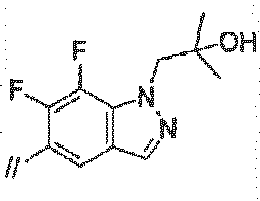

free 574.1 1H-NMR (DMSO-D6) δ: 8.19 (1H, d, J = 1.8 Hz), 7.76 (1H, dd, J = 8.1, 7.2 Hz), 7.64 (1H, dd, J = 7.9, 1.5 Hz), 7.61-7.57 (3H, m), 7.42 (1H, dd, J = 10.5, 1.4 Hz), 7.14-7.11 (1H, m), 4.68 (1H, s), 4.57 (1H, s), 4.33 (2H, s), 4.05 (1H, s), 2.33-2.20 (2H, m), 2.12-2.07 (1H, m), 1.97-1.83 (3H, m), 1.61-1.48 (3H, m), 1.10 (6H, s). 189 


free 542.1 1H-NMR (DMSO-D6) δ: 8.10 (1H, d, J = 0.9 Hz), 7.80-7.74 (2H, m), 7.73-7.67 (1H, m), 7.64-7.56 (2H, m), 7.45 (1H, d, J = 11.0 Hz), 7.40 (1H, dd, J = 10.5, 1.4 Hz), 7.13 (1H, dd, J = 7.9, 1.5 Hz), 4.61 (1H, s), 4.49-3.89 (5H, m), 2.26-2.13 (2H, m), 1.81-1.50 (4H, m), 1.10 (6H, s). 190 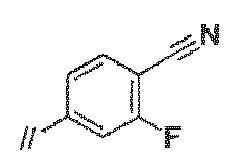
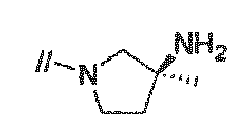


free 529.2 1H-NMR (DMSO-D6) δ: 7.76-7.73 (1H, m), 7.70-7.60 (2H, m), 7.56-7.54 (1H, m), 7.47 (1H, d, J = 7.3 Hz), 7.35 (1H, d, J = 3.1 Hz), 7.32-7.28 (2H, m), 7.11 (1H, d, J = 8.2 Hz), 6.44 (1H, d, J = 3.1 Hz), 4.62 (1H, s), 4.01 (2H, s), 3.75-3.50 (4H, m), 1.77-1.73 (2H, m), 1.25-1.16 (3H, m), 1.05 (6H, s). 191 
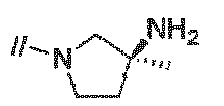


free 549.1 1H-NMR (DMSO-D6) δ: 7.98-7.95 (1H, m), 7.78-7.64 (4H, m), 7.48-7.44 (1H, m), 7.17-7.14 (1H, m), 4.82-4.81 (1H, m), 4.63-4.60 (2H, m), 3.72-3.50 (4H, m), 1.80-1.73 (2H, m), 1.26-1.15 (9H, m). 192 
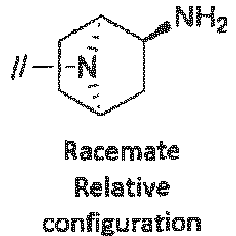


free 561.1 1H-NMR (DMSO-D6) δ: 7.97 (1H, d, J = 5.2 Hz), 7.78-7.73 (2H, m), 7.66 (2H, d, J = 7.6 Hz), 7.49 (1H, dd, J = 10.4, 1.2 Hz), 7.17 (1H, dd, J = 8.2, 1.5 Hz), 4.81 (1H, s), 4.61 (2H, s), 4.49-3.87 (3H, m), 2.28-2.11 (2H, m), 1.80-1.51 (3H, m), 1.15 (6H, s), 0.89 (1H, dd, J = 11.7, 4.7 Hz). 193 


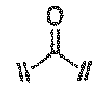
free 502.2 1H-NMR (DMSO-D6) δ: 7.80 (1H, t, J = 7.6 Hz), 7.68 (1H, s), 7.60 (1H, s), 7.53 (1H, d, J = 7.9 Hz), 7.29 (1H, t, J = 5.3 Hz), 7.21 (1H, t, J = 7.9 Hz), 7.15 (1H, dd, J = 8.2, 1.5 Hz), 7.07 (1H, d, J = 7.9 Hz), 6.95 (1H, d, J = 11.6 Hz), 4.46-3.86 (3H, m), 2.65 (2H, s), 2.25-2.10 (2H, m), 1.74-1.49 (4H, m), 1.04 (6H, s), 0.87 (1H, dd, J = 12.2, 4.6 Hz). 194 


free 570.2 1H-NMR (DMSO-D6) δ: 8.09 (1H, d, J = 0.6 Hz), 7.79-7.74 (2H, m), 7.63 (1H, dd, J = 7.9, 1.5 Hz), 7.57-7.55 (2H, m), 7.43 (1H, d, J = 10.7 Hz), 7.39 (1H, dd, J = 10.5, 1.4 Hz), 7.12 (1H, dd, J = 8.2, 1.5 Hz), 4.59 (1H, s), 4.48 (1H, s), 4.42-4.38 (2H, m), 4.08 (1H, s), 2.23-2.12 (3H, m), 1.98-1.87 (5H, m), 1.62-1.51 (3H, m), 1.12 (6H, s). Table 22 195 


free 560.1 1H-NMR (DMSO-D6) δ: 8.19 (1H, d, J = 1.8 Hz), 7.79-7.75 (1H, m), 7.73-7.70 (1H, m), 7.64-7.57 (3H, m), 7.43 (1H, dd, J = 10.5, 1.4 Hz), 7.14 (1H, dd, J = 8.1, 1.7 Hz), 4.69 (1H, s), 4.33-3.66 (5H, m), 2.20-2.14 (2H, m), 1.78-1.72 (1H, m), 1.65-1.50 (2H, m), 1.10 (6H, s), 0.93-0.89 (1H, m). 196 


free 559.1 1H-NMR (DMSO-D6) δ: 7.76 (1H, t, J = 7.6 Hz), 7.62-7.58 (2H, m), 7.38-7.30 (4H, m), 7.14 (1H, dd, J = 8.2, 1.5 Hz), 6.52-6.50 (1H, m), 4.71 (1H, s), 4.44-3.93 (5H, m), 2.19-2.13 (2H, m), 1.78-1.72 (1H, m), 1.64-150 (2H, m), 1.04 (6H, s), 0.92-0.88 (1H m). 197 


free 548.2 1H-NMR (DMSO-D6) δ: 8.19 (1H, d, J = 1.8 Hz), 7.79-7.69 (3H, m), 7.64-7.58 (2H, m), 7.40 (1H, dd, J = 9.9, 4.1 Hz), 7.12 (1H, dd, J = 8.1, 1.7 Hz), 4.69 (1H, s), 4.33 (2H, s), 3.75-3.64 (4H, m), 1.80 (2H, t, J = 7.3 Hz), 1.30-1.18 (3H, m), 1.10 (6H, s). 198 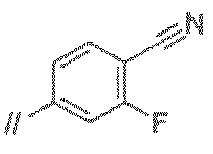


free 547.2 1H-NMR (DMSO-D6) δ: 7.76 (1H, t, J = 7.5 Hz), 7.71-7.58 (3H, m), 7.37 (1H, d, J = 3.1 Hz), 7.31-7.29 (1H, m), 7.12 (1H, dd, J = 8.1, 1.4 Hz), 6.56 (1H, s), 6.52-6.50 (1H, m), 4.71 (1H, s), 4.13 (2H, s), 3.74-3.63 (4H, m), 1.81-1.78 (2H, m), 1.29-1.17 (3H, m), 1.04 (6H, s). 199 


free 542.1 1H-NMR (DMSO-D6) δ: 8.10 (1H, d, J = 3.7 Hz), 7.77-7.74 (2H, m), 7.72-7.69 (1H, m), 7.65 (1H, d, J = 9.2 Hz), 7.58 (1H, dd, J = 12.5, 7.9 Hz), 7.45 (1H, dd, J = 10.7, 4.6 Hz), 7.40-7.36 (1H, m), 7.13-7.09 (1H, m), 4.61 (1H, s), 4.25 (2H, s), 3.82-3.52 (8H, m), 2.13-2.07 (2H, m), 1.10 (6H, s). 200 
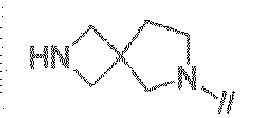


free 559.1 1H-NMR (DMSO-D6) δ: 7.78-7.74 (1H, m), 7.72-7.68 (1H, m), 7.66-7.64 (1H, m), 7.62-7.58 (1H, m), 7.39-7.29 (3H, m), 7.14-7.10 (1H, m), 6.51 (1H, s), 4.71 (1H, s), 4.13 (2H, s), 3.76-3.50 (8H, m), 2.11-2.07 (2H, m), 1.05 (6H, s). 201 


free 573.2 1H-NMR (DMSO-D6) δ: 7.82 (1H, dd, J = 7.9, 1.8 Hz), 7.77 (1H, t, J = 7.5 Hz), 7.74 (1H, d, J = 1.8 Hz), 7.61 (1H, d, J = 7.9 Hz), 7.38 (1H, d, J = 3.1 Hz), 7.34-7.29 (2H, m), 7.12 (1H, dd, J = 7.9, 1.5 Hz), 6.52-6.50 (1H, m), 4.71 (1H, s), 4.13-4.04 (4H, m), 3.75 (2H, dd, J = 46.2, 9.9 Hz), 3.25-3.16 (2H, m), 2.86-2.81 (2H, m), 1.73-1.68 (2H, m), 1.47-1.41 (2H, m), 1.04 (6H, s). 202 


free 485.2 1H-NMR (DMSO-D6) δ: 7.83 (1H, d, J = 5.5 Hz), 7.78 (1H, t, J = 7.5 Hz), 7.74-7.72 (1H, m), 7.66-7.61 (3H, m), 7.47 (1H, dd, J = 10.5, 1.4 Hz), 7.14 (1H, dd, J = 7.9, 1.5 Hz), 4.46-3.90 (2H, m), 3.22-3.16 (1H, m), 2.52 (3H, s), 2.21-2.12 (2H, m), 1.78-1.72 (1H, m), 1.64-1.50 (2H, m), 0.93-0.90 (1H, m). 203 


free 559.1 1H-NMR (DMSO-D6) δ: 7.76 (1H, t, J = 7.5 Hz), 7.67 (1H, dd, J = 7.9, 1.8 Hz), 7.62-7.58 (2H, m), 7.38 (1H, d, J = 3.1 Hz), 7.33 (1H, dd, J = 10.5, 1.4 Hz), 7.30 (1H, d, J = 5.8 Hz), 7.12 (1H, dd, J = 7.9, 1.5 Hz), 6.52-6.50 (1H, m), 4.70 (1H, s), 4.13 (2H, s), 3.85-3.70 (4H, m), 3.07-2.75 (6H, m), 1.05 (6H, s). Table 23 204 


free 544.2 1H-NMR (DMSO-D6) δ: 8.10 (1H, d, J = 0.6 Hz), 7.77-7.74 (2H, m), 7.71-7.68 (1H, m), 7.65-7.63 (1H, m), 7.57 (1H, d, J = 8.2 Hz), 7.43 (1H, d, J = 11.0 Hz), 7.37 (1H, dd, J = 10.5, 2.3 Hz), 7.12 (1H, dd, J = 8.2, 1.5 Hz), 4.33 (1H, s), 4.24 (2H, s), 3.68-3.60 (4H, m), 3.21-3.18 (1H, m), 2.04-1.99 (1H, m), 1.74-1.67 (1H, m), 1.38-1.30 (4H, m), 0.85 (6H, t, J = 7.3 Hz). 205 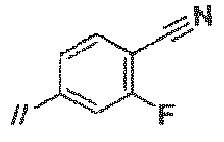
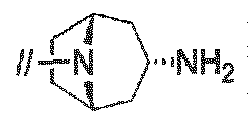


free 584.2 1H-NMR (DMSO-D6) δ: 8.10 (1H, d, J = 0.6 Hz), 7.77-7.74 (2H, m), 7.63 (1H, dd, J = 7.9, 1.8 Hz), 7.58-7.55 (2H, m), 7.44 (1H, d, J = 11.0 Hz), 7.38 (1H, dd, J = 10.7, 1.2 Hz), 7.12 (1H, dd, J = 8.1, 1.4 Hz), 4.59 (1H, s), 4.34 (1H, s), 4.24 (2H, s), 4.08 (1H, s), 2.23-2.13 (3H, m), 2.02-1.88 (3H, m), 1.80-1.50 (3H, m), 1.39-1.31 (4H, m), 0.85 (6H, t, J = 7.5 Hz). 206 


free 570.2 1H-NMR (DMSO-D6) δ: 8.10 (1H, d, J = 0.9 Hz), 7.77-7.74 (2H, m), 7.72-7.69 (1H, m), 7.62-7.56 (2H, m), 7.44 (1H, d, J = 11.0 Hz), 7.39 (1H, dd, J = 10.5, 1.4 Hz), 7.13 (1H, dd, J = 8.2, 1.5 Hz), 4.45-3.64 (6H, m), 2.19-2.13 (2H, m), 1.79-1.73 (1H, m), 1.65-1.51 (2H, m), 1.37-1.31 (4H, m), 0.92 (1H, dd, J = 12.1, 4.1 Hz), 0.85 (6H, t, J = 7.3 Hz). 207 


free 527.2 1H-NMR (DMSO-D6) δ: 7.75 (1H, t, J = 7.5 Hz), 7.70 (1H, d, J = 7.9 Hz), 7.61 (1H, s), 7.54 (1H, d, J = 7.9 Hz), 7.48 (1H, d, J = 7.3 Hz), 7.38 (1H, d, J = 10.1 Hz), 7.33 (1H, d, J = 3.1 Hz), 7.15 (1H, d, J = 11.0 Hz), 7.12 (1H, d, J = 8.9 Hz), 6.43 (1H, d, J = 2.7 Hz), 4.79 (2H, s), 4.46-3.48 (3H, m), 2.24-2.05 (2H, m), 1.80-1.76 (1H, m), 1.69-1.64 (1H, m), 1.57-1.53 (1H, m), 1.06-1.01 (1H, m). 208 


free 488.2 1H-NMR (DMSO-D6) δ: 7.80 (1H, t, J = 7.5 Hz), 7.71-7.68 (1H, m), 7.61-7.58 (1H, m), 7.53 (1H, d, J = 7.9 Hz), 7.37 (1H, dd, J = 10.5, 1.4 Hz), 7.26 (1H, t, J = 7.9 Hz), 7.14-7.11 (2H, m), 7.03 (1H, d, J = 11.3 Hz), 4.43-3.57 (5H, m), 2.19-2.13 (2H, m), 1.78-1.72 (1H, m), 1.59-1.50 (2H, m), 0.90 (1H, dd, J = 11.9, 4.3 Hz). 209 


free 577.2 1H-NMR (DMSO-D6) δ: 8.10 (1H, d, J = 6.1 Hz), 7.74-7.69 (2H, m), 7.63-7.59 (2H, m), 7.44 (1H, d, J = 10.4 Hz), 7.11 (1H, dd, J = 7.9, 1.5 Hz), 4.78 (2H, s), 4.71 (1H, s), 4.41-3.56 (3H, m), 2.18-2.10 (2H, m), 1.75-1.68 (1H, m), 1.60-1.54 (1H, m), 1.51-1.46 (1H, m), 1.13 (6H, s), 0.86 (1H, dd, J = 12.1, 4.7 Hz). 579.2 210 

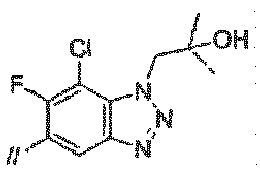

free 551.2 1H-NMR (DMSO-D6) δ: 8.10 (1H, d, J = 6.1 Hz), 7.73-7.68 (2H, m), 7.65-7.61 (2H, m), 7.43-7.40 (1H, m), 7.10 (1H, dd, J = 8.1, 1.4 Hz), 4.78 (2H, s), 4.71 (1H, s), 3.65-3.46 (4H, m), 3.24-3.23 (1H, m), 1.98-1.93 (1H, m), 1.63-1.59 (1H, m), 1.13 (6H, s). 553.2 211 


free 591.2 1H-NMR (DMSO-D6) δ: 8.10 (1H, d, J = 6.1 Hz), 7.71 (1H, t, J = 7.5 Hz), 7.62-7.60 (2H, m), 7.55 (1H, s), 7.42 (1H, dd, J = 10.5, 1.4 Hz), 7.10 (1H, dd, J = 7.9, 1.5 Hz), 4.77 (2H, s), 4.70 (1H, s), 4.53 (1H, s), 4.01 (1H, s), 2.22-2.04 (3H, m), 1.92-1.80 (3H, m), 1.56-1.45 (3H, m), 1.12 (6H, s). 593.2 Table 24 212 

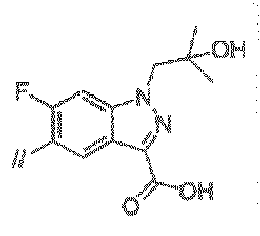

free 586.2 1H-NMR (DMSO-D6) δ: 8.1.0 (1H, d, J = 7.3 Hz), 7.76-7.70 (2H, m), 7.63-7.58 (2H, m), 7.48 (1H, d, J = 10.7 Hz), 7.41 (1H, d, J = 10.4 Hz), 7.12 (1H, dd, J = 7.9,1.5 Hz), 4.67 (1H, s), 4.46-3.50 (5H, m), 2.21-2.12 (2H, m), 1.80-1.74 (1H, m), 1.66-1.60 (1H, m), 1.56-1.51 (1H, m), 1.11 (6H, s), 0.98-0.93 (1H, m). 213 


free 577.3 579.2 1H-NMR (DMSO-D6) δ: 8.14 (1H, d, J = 6.1 Hz), 7.78-7.73 (2H, m), 7.68-7.63 (2H, m), 7.48 (1H, d, J = 9.2 Hz), 7.15 (1H, dd, J = 8.1, 1.1 Hz), 4.81 (2H, s), 4.75 (1H, s), 4.45-3.82 (3H, m), 2.22-2.12 (2H, m), 1.79-1.73 (1H, m), 1.64-1.59 (1H, m), 1.55-1.50 (1H, m), 1.17 (6H, s), 0.91 (1H, dd, J = 11.7, 4.4 Hz), 214 


free 589.3 1H-NMR (DMSO-D6) δ: 7.97 (1H, d, J = 5.2 Hz), 7.79-7.72 (2H, m), 7.66-7.63 (2H, m), 7.49 (1H, dd, J = 10.4, 1.2 Hz), 7.17 (1H, dd, J = 7.9, 1.5 Hz), 4.61 (2H, s), 4.45 (1H, s), 4.33-3.50 (3H, m), 2.21-2.15 (2H, m), 1.79-1.72 (1H, m), 1.64-1.50 (2H, m), 1.44-1.35 (4H, m), 0.91-0.87 (7H, m). 215 


free 563.3 1H-NMR (DMSO-D6) δ: 7.97 (1H, d, J = 4.9 Hz), 7.78-7.72 (2H, m), 7.68 (1H, d, J = 8.2 Hz), 7.64 (1H, d, J = 7.6 Hz), 7.47 (1H, d, J = 10.4 Hz), 7.15 (1H, dd, J = 7.9, 1.5 Hz), 4.61 (2H, s), 4.46 (1H, s), 3.67-3.43 (4H, m), 3.22-3.16 (1H, m), 2.04-1.90 (1H, m), 1.70-1.62 (1H, m), 1.44-1.35 (4H, m), 0.89 (6H, t, J = 7.5 Hz). 216 


free 603.3 1H-NMR (DMSO-D6) δ: 7.97 (1H, d, J = 5.2 Hz), 7.77 (1H, t, J = 7.5 Hz), 7.67-7.59 (3H, m), 7.48 (1H, d, J = 11.3 Hz), 7.16 (1H, d, J = 8.9 Hz), 4.61 (2H, s), 4.58 (1H, s), 4.46 (1H, s), 4.05 (1H, s), 2.33-2.20 (2H, m), 2.12-2.07 (1H, m), 1.96-1.84 (3H, m), 1.61-1.49 (3H, m), 1.42-1.37 (4H, m), 0.89 (6H, t, J = 7.3 Hz). 217 

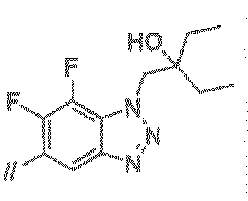

free 589.3 1H-NMR (DMSO-D6) δ: 7.97 (1H, d, J - 5.2 Hz), 7.79-7.72 (2H, m), 7.66-7.63 (2H, m), 7.49 (1H, dd, J = 10.4, 1.2 Hz), 7.17 (1H, dd, J = 7.9, 1.5 Hz), 4.61 (2H, s), 4.45 (1H, s), 4.33-3.50 (3H, m), 2.21-2.15 (2H, m), 1,79-1.72 (1H, m), 1.64-1.50 (2H, m), 1.44-1.35 (4H, m), 0.91-0.87 (7H, m). 218 


free 605.2 1H-NMR (DMSO-D6) δ: 8.14 (1H, d, J = 6.1 Hz), 7.79-7.72 (2H, m), 7.67-7.63 (2H, m), 7.50-7.48 (1H, m), 7.15 (1H, dd, J = 7.9, 1.5 Hz), 4.81 (2H, s), 4.45-3.92 (4H, m), 2.22-2.13 (2H, m), 1.79-1.73 (1H, m), 1.64-1.59 (1H, m), 1.55-1.37 (5H, m), 0.93-0.87 (7H, m). 607.2 219 


free 579.2 1H-NMR (DMSO-D6) δ: 8.14 (1H, d, J = 5.5 Hz), 7.78-7.72 (2H, m), 7.68 (1H, d, J = 7.9 Hz), 7.65 (1H, d, J = 7.9 Hz), 7.47 (1H, dd, J = 10.4, 3.7 Hz), 7.14 (1H, d, J = 7,9 Hz), 4.82 (2H, s), 4.37 (1H, s), 3.69-3.49 (4H, m), 3.23-3.20 (1H, m), 2.06-1.97 (1H, m), 1.75-1.67 (1H, m), 1.52-1.35 (4H, m), 0.90 (6H, t, J = 7.3 Hz). 581.3 Table 25 220 


free 619.3 1H-NMR (DMSO-D6) δ: 8.14 (1H, d, J = 6.1 Hz), 7.18-7.74 (1H, m), 7.68-7.59 (3H, m), 7.50-7.47 (1H, m), 7.14 (1H, dd, J = 7.9, 1.5 Hz), 4.82 (2H, s), 4.60 (1H, s), 4.37 (1H, s), 4.07 (1H, s), 2.24-2.13 (3H, m), 2.02-1.88 (3H, m), 1.63-1.38 (7H, m), 0.90 (6H, t, J = 7.5 Hz). 621.2 221 


free 605.2 1H-NMR (DMSO-D6) δ: 8.14 (1H, d, J = 6.1 Hz), 7.79-7.72 (2H, m), 7.67-7.63 (2H, m), 7.50-7.48 (1H, m), 7.15 (1H, dd, J = 7.9, 1.5 Hz), 4.81 (2H, s), 4.45-3.92 (4H, m), 2.22-2.13 (2H, m), 1.79-1.73 (1H, m), 1.64-1.59 (1H, m), 1.55-1.37 (5H, m), 0.93-0.87 (7H, m). 607.2 222 


free 585.3 1H-NMR (DMSO-D6) δ: 7.99 (1H, s), 7.94 (1H, d, J = 7.6 Hz), 7.76-7.68 (2H, m), 7.62-7.58 (2H, m), 7.46 (1H, d, J = 11.3 Hz), 7.34 (1H, t, J = 5.3 Hz), 7.11 (1H, dd, J = 7.9, 1.5 Hz), 4.73 (1H, s), 4.44-3.51 (5H, m), 2.21-2.13 (2H, m), 1.78-1.72 (1H, m), 1.60-1.50 (2H, m), 1.06 (6H, s), 0.89 (1H, dd, J = 12.1, 4.4 Hz). 223 


free 528.2 1H-NMR (DMSO-D6) δ: 8.16 (1H, d, J = 7.3 Hz), 7.77-7.70 (2H, m), 7.62-7.60 (1H, m), 7.57 (1H, d, J = 7.9 Hz), 7.43 (2H, d, J = 10.4 Hz), 7.09 (1H, dd, J = 7.9, 1.5 Hz), 4.44-3.50 (6H, m), 2.19-2.14 (2H, m), 1.79-1.74 (1H, m), 1.64-1.59 (1H, m), 1.55-1.50 (1H, m), 0.94-0.90 (1H, m). 224 


free 527.2 1H-NMR (DMSO-D6) δ: 8.07 (1H, s), 7.96 (1H, d, J = 7.3 Hz), 7.77-7.69 (2H, m), 7.62-7.55 (2H, m), 7.41 (1H, dd, J = 10.5, 1.4 Hz), 7.36 (1H, d, J = 10.7 Hz), 7.10 (1H, dd, J = 8.2, 1.5 Hz), 4.44-3.51 (6H, m), 2.20-2.13 (2H, m), 1.79-1.73 (1H, m), 1.60-1.50 (2H, m), 0.91 (1H, dd, J = 12.2, 4.6 Hz). 225 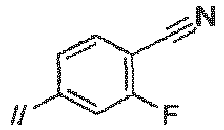


free 570.3 1H-NMR (DMSO-D6) δ: 8.10 (1H, d, J = 0.9 Hz), 7.77-7.74 (2H, m), 7.72-7.69 (1H, m), 7.62-7.56 (2H, m), 7.44 (1H, d, J = 11.0 Hz), 7.39 (1H, dd, J = 10.5, 1.4 Hz), 7.13 (1H, dd, J = 8.2, 1.5 Hz), 4.45-3.64 (6H, m), 2.19-2.13 (2H, m), 1.79-1.73 (1H, m), 1.65-1.51 (2H, m), 1.37-1.31 (4H, m), 0.92 (1H, dd, J = 12.1, 4.1 Hz), 0.85 (6H, t, J = 7.3 Hz). 226 


free 544.3 1H-NMR (DMSO-D6) δ: 7.83-7.80 (1H, m), 7.70-7.67 (1H, m), 7.61-7.58 (1H, m), 7.53 (1H, d, J = 7.9 Hz), 7.41-7.38 (1H, m), 7.28 (1H, d, J = 6.7 Hz), 7.13 (1H, d, J = 7.9 Hz), 7.02 (1H, d, J = 10.1 Hz), 5.30 (1H, d, J = 8.9 Hz), 4.99-4.87 (2H, m), 4.44-3.53 (4H, m), 2.21-2.11 (2H, m), 1.92-1.88 (1H, m), 1.77-1.49 (4H, m), 1.23-1.18 (6H, m), 0.88 (1H, dd, J = 12.1, 4.7 Hz). 227 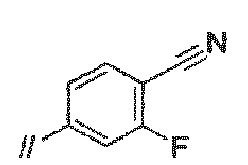


free 518.2 1H-NMR (DMSO-D6) δ: 7.83-7.80 (1H, m), 7.70-7.67 (1H, m), 7.64-7.62 (1H, m), 7.52 (1H, dd, J = 7.9, 2.1 Hz), 7.37 (1H, d, J = 9.5 Hz), 7.29 (1H, d, J = 6.4 Hz), 7.11 (1H, dd, J = 7.9, 1.5 Hz), 7.01 (1H, d, J = 9.8 Hz), 5.30 (1H, d, J = 7.3 Hz), 4.99-4.88 (2H, m), 4.35-4.33 (1H, m), 3.67-3.50 (4H, m), 3.17-3.12 (1H, m), 2.01-1.88 (2H, m), 1.71-1.62 (2H, m), 1.22-1.19 (6H, m). 228 


free 557.2 1H-NMR (DMSO-D6) δ: 7.87 (1H, d, J = 6.1 Hz), 7.79-7.68 (2H, m), 7.65-7.56 (2H, m), 7.46 (1H, d, J = 10.4 Hz), 7.15 (1H, dd, J = 8.2, 1.5 Hz), 4.78 (1H, s), 4.69 (2H, s), 4.49-3.87 (3H, m), 2.49 (3H, s), 2.24-2.11 (2H, m), 1.81-1.48 (3H, m), 1.20 (6H, s), 0.90 (1H, dd, J = 12.2, 4.3 Hz). Table 26 229 


free 517.2 1H-NMR (DMSO-D6) δ: 7.81-7.62 (6H, m), 7.44 (1H, d, J = 8.9 Hz), 7.16-7.13 (1H, m), 4.70 (1H, s), 3.73-3.51 (5H, m), 3.03 (2H, s), 2.03-1.93 (1H, m), 1.70-1.61 (1H, m), 1.18 (6H, s). 230 


free 526.2 1H-NMR (DMSO-D6) δ: 8.34 (2H, s), 7.76 (1H, t, J = 7.5 Hz), 7.53 (3H, dd, J = 15.4, 7.5 Hz), 7.40 (1H, d, J = 10.4 Hz), 7.34 (1H, d, J = 3.1 Hz), 7.24 (1H, s), 7.14 (2H, dd, J = 12.8, 6.1 Hz), 6.47 (1H, d, J = 3.4 Hz), 4.76 (2H, s), 4.45-3.94 (3H, m), 2.262.14 (2H, m), 1.82-1.70 (1H, m), 1.66-1.46 (2H, m), 0.90 (1H, dd, J = 12.2, 4.6 Hz). 231 


free 540.2 1H-NMR (DMSO-D6) δ: 8.03 (1H, d, J = 4.6 Hz), 7.91 (1H, d, J = 7.0 Hz), 7.76 (1H, t, J = 7.5 Hz), 7.56-7.48 (2H, m), 7.47-7.38 (2H, m), 7.34 (1H, d, J = 3.1 Hz), 7.20-7.09 (2H, m), 6.47 (1H, d, J = 2.7 Hz), 4.76 (2H, s), 4.48-3.92 (3H, m), 2.61 (3H, d, J = 4.6 Hz), 2.26-2.13 (2H, m), 1.82-1.72 (1H, m) 1.68-1.46 (2H, m), 0.90 (1H, dd, J = 12.1, 4.4 Hz). 232 


free 554.2 1H-NMR (DMSO-D6) δ: 7.93 (1H, t, J - 4.1 Hz), 7.77 (1H, t, J = 7.6 Hz), 7.53 (2H, dd, J = 19.1, 7.5 Hz), 7.47 (1H, d, J = 7.9 Hz), 7.39 (1H, d, J = 10.4 Hz), 7.27 (1H, d, J = 3.1 Hz), 7.15 (2H, dt, J = 13.2, 6.0 Hz), 6.46 (1H, d, J = 3.4 Hz), 5.11 (2H, s), 4.46-3.87 (3H, m), 3.08 (3H, d, J = 12.2 Hz), 2.85 (3H, s), 2.25-2.15 (2H, m), 1.82-1.71 (1H, m), 1.67-1.50 (2H, m), 0.95-0.87 (1H, m). 233 


free 487.2 1H-NMR (DMSO-D6) δ: 7.83 (1H, dd, J = 23.7, 7.2 Hz), 7.72-7.56 (1H, m), 7.52 (1H, t, J = 7.5 Hz), 7.33 (3H, ddd, J = 33.5, 19.8, 8.0 Hz), 7.05 (3H, dq, J = 53.3, 15.3 Hz), 4.40-3.87 (3H, m), 3.01 (2H, s), 2.22-2.14 (2H, m), 1.83-1.57 (3H, m), 0.91-0.85 (1H, m). 234 


free 501.2 1H-NMR (DMSO-D6) δ: 7.83-7.79 (2H, m), 7.56-7.45 (2H, m), 7.38 (1H, d, J = 10.7 Hz), 7.27 (1H, t, J = 7.9 Hz), 7.12 (2H, td, J = 9.1, 3.7 Hz), 7.00 (1H, d, J = 11.0 Hz), 4.45-4.07 (3H, m), 3.02 (2H, s), 2.58 (3H, d, J = 4.6 Hz), 2. 21-2.15 (2H, m), 1.79-1.72 (1H, m), 1.64-1.51 (2H, m), 0.93-0.85 (1H, m). 235 
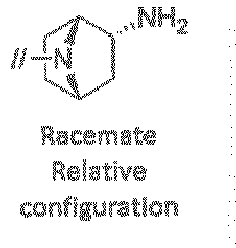


free 515.2 1H-NMR (DMSO-D6) δ: 7.96-7.91 (1H, m), 7.82 (1H, t, J = 7.6 Hz), 7.54 (1H, d, J = 7.9 Hz), 7.49-7.44 (1H, m), 7.35 (1H, d, J = 10.7 Hz), 7.27 (1H, t, J = 7.9 Hz), 7.15 (1H, dd, J = 8.2, 1.5 Hz), 7.08 (1H, d, J = 7.6 Hz), 6.97 (1H, d, J = 11.3 Hz), 4.47-3.89 (3H, m), 3.72 (2H, s), 3.00 (3H, s), 2.84 (3H, s), 2.22-2.13 (2H, m). 1.79-1.72 (1H, m), 1.67-1.48 (2H, m), 0.89 (1H, s). 236 


free 526.2 1H-NMR (DMSO-D6) δ: 8.14 (1H, d, J = 7.6 Hz), 8.01 (1H, s), 7.76 (1H, t, J = 7.6 Hz), 7.72-7.69 (1H, m), 7.60 (1H, s), 7.56 (1H, d, J = 7.9 Hz), 7.40 (1H, d, J = 10.4 Hz), 7.30 (1H, d, J = 10.7 Hz), 7.11 (1H, dd, J = 7.9, 1.5 Hz), 4.46-3.93 (3H, m), 3.77 (3H, s), 2.25-2.14 (2H, m), 1.81-1.72 (1H, m), 1.67-1.49 (2H, m), 0.93-0.86 (1H, m). Table 27 237 

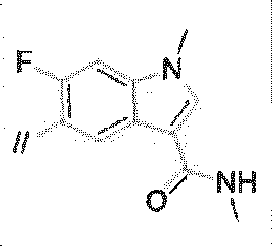

free 540.2 1H-NMR (DMSO-D6) δ: 8.13 (1H, d, J = 7.6 Hz), 7.94 (1H, s), 7.92-7.89 (1H, m), 7.78-7.55 (4H, m), 7.39 (1H, d, J = 9.2 Hz), 7.30 (1H, d, J = 10.7 Hz), 7.12 (1H, d, J = 7.9 Hz), 4.47-3.91 (3H, m), 3.77 (3H, s), 2.76 (3H, d, J = 4.6 Hz), 2.23-2.15 (2H, m), 1.80-1.74 (1H, m), 1.66-1.50 (2H, m), 0.90 (1H, dd, J = 12.1, 4.7 Hz). 238 


free 554.2 1H-NMR (DMSO-D6) δ: 7.83 (1H, s), 7.80-7.75 (2H, m), 7.73-7.68 (1H, m), 7.57 (2H, t, J = 18.3 Hz), 7.40 (1H, dd, J = 10.7, 1.5 Hz), 7.32 (1H, d, J = 11.0 Hz), 7.11 (1H, dd, J = 7.9, 1.5 Hz), 4.48-3.92 (3H, m), 3.80 (3H, d, J = 7.0 Hz), 3.06 (6H, s), 2.25-2.14 (2H, m), 1.80-1.70 (1H, m), 1.65-1.48 (2H, m), 0.90 (1H, t, J = 8.4 Hz). 239 


free 531.1 1H-NMR (DMSO-D6) δ: 7.87 (1H, d, J = 6.7 Hz), 7.80-7.64 (3H, m), 7.58 (1H, d, J = 7.9 Hz), 7.44 (1H, d, J = 10.4 Hz), 7.13 (1H, dd, J = 8.2, 1.5 Hz), 4.78 (1H, s), 4.69 (2H, s), 3.75-3.58 (5H, m), 2.49 (3H, s), 2.04-1.93 (1H, m), 1.74-1.64 (1H, m), 1.20 (6H, s). 240 


free 571.2 1H-NMR (DMSO-D6) δ: 7.87 (1H, d, J = 6.7 Hz), 7.75 (1H, t, J = 7.5 Hz), 7.63 (1H, d, J = 7.3 Hz), 7.60-7.55 (2H, m), 7.45 (1H, d, J = 10.4 Hz), 7.14 (1H, d, J = 7.9 Hz), 4.78 (1H, s), 4.69 (2H, s), 4.64-4.56 (1H, m), 4.11-4.04 (1H, m), 2.49 (3H, s), 2.34-2.20 (2H, m), 2.13-2.06 (1H, m), 1.99-1.85 (3H, m), 1.66-1.47 (3H, m), 1.20 (6H, s). 241 


free 557.2 1H-NMR (DMSO-D6) δ: 7.87 (1H, d, J = 6.1 Hz), 7.79-7.68 (2H, m), 7.65-7.56 (2H, m), 7.46 (1H, d, J = 10.4 Hz), 7.15 (1H, dd, J = 8.2, 1.5 Hz), 4.78 (1H, s), 4.69 (2H, s), 4.49-3.87 (3H, m), 2.49 (3H, s), 2.24-2.11 (2H, m), 1.81-1.48 (3H, m), 1.20 (6H, s), 0.90 (1H, dd, J = 12.2, 4.3 Hz). 242 

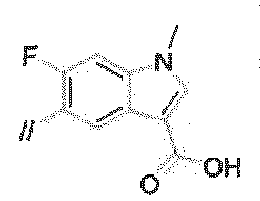

free 527.1 1H-NMR (DMSO-D6) δ: 8.07 (1H, s), 7.96 (1H, d, J = 7.3 Hz), 7.77-7.69 (2H, m), 7.62-7.55 (2H, m), 7.41 (1H, dd, J = 10.5, 1.4 Hz), 7.36 (1H, d, J = 10.7 Hz), 7.10 (1H, dd, J = 8.2, 1.5 Hz), 4.44-3.51 (6H, m), 2.20-2.13 (2H, m), 1.79-1.73 (1H, m), 1.60-1.50 (2H, m), 0.91 (1H, dd, J = 12.2, 4.6 Hz). 243 


free 540.3 1H-NMR (DMSO-D6) δ: 8.13 (1H, d, J = 7.6 Hz), 7.94 (1H, s), 7.92-7.89 (1H, m), 7.78-7.55 (4H, m), 7.39 (1H, d, J = 9.2 Hz), 7.30 (1H, d, J = 10.7 Hz), 7.12 (1H, d, J = 7.9 Hz), 4.47-3.91 (3H, m), 3.77 (3H, s), 2.76 (3H, d, J = 4.6 Hz), 2.23-2.15 (2H, m), 1.80-1.74 (1H, m), 1.66-1.50 (2H, m), 0.90 (1H, dd, J = 12.1, 4.7 Hz). 244 


free 554.2 1H-NMR (DMSO-D6) δ: 7.83 (1H, s), 7.80-7.75 (2H, m), 7.73-7.68 (1H, m), 7.57 (2H, t, J = 18.3 Hz), 7.40 (1H, dd, J = 10.7, 1.5 Hz), 7.32 (1H, d, J = 11.0 Hz), 7.11 (1H, dd, J = 7.9, 1.5 Hz), 4.48-3.92 (3H, m), 3.80 (3H, d, J = 7.0 Hz), 3.06 (6H, s), 2.25-2.14 (2H, m), 1.80-1.70 (1H, m), 1.65-1.48 (2H, m), 0.90 (1H, t, J = 8.4 Hz). 245 


free 526.3 1H-NMR (DMSO-D6) δ: 8.14 (1H, d, J = 7.6 Hz), 8.01 (1H, s), 7.76 (1H, t, J = 7.6 Hz), 7.72-7.69 (1H, m), 7.60 (1H, s), 7.56 (1H, d, J = 7.9 HZ), 7.40 (1H, d, J = 10.4 Hz), 7.30 (1H, d, J = 10.7 Hz), 7.11 (1H, dd, J = 7.9, 1.5 Hz), 4.46-3.93 (3H, m), 3.77 (3H, s), 2.25-2.14 (2H, m), 1.81-1.72 (1H, m), 1.67-1.49 (2H, m), 0.93-0.86 (1H, m). Table 28 246 


free 593.3 1H-NMR (DMSO-D6) δ: 8.40 (1H, d, J = 6.1 Hz), 7.80-7.62 (5H, m), 7.51-7.42 (1H, m), 7.15 (1H, dd, J = 8.1, 1.4 Hz), 5.03 (1H, s), 4.75 (2H, s), 4.48-3.87 (3H, m), 2.27-2.12 (2H, m), 1.81-1.72 (1H, m), 1.68-1.50 (2H, m), 1.16 (6H, s), 0.91-0.86 (1H, m). 247 


free 568.3 1H-NMR (DMSO-D6) δ: 8.55 (1H, d, J = 6.7 Hz), 7.80-7.67 (4H, m), 7.53 (1H, d, J = 9.2 Hz), 7.19 (1H, dd, J = 8.2, 1.5 Hz), 4.83 (1H, s), 4.73 (2H, s), 4.52-3.87 (3H, m), 2.29-2.10 (2H, m), 1.83-1.72 (1H, m), 1.69-1.49 (2H, m), 1.22 (6H, s), 0.95-0.86 (1H, m). 248 


free 567.3 1H-NMR (DMSO-D6) δ: 8.40 (1H, d, J = 5.5 Hz), 7.87-7.62 (5H, m), 7.43 (1H, d, J = 10.4 Hz), 7.14 (1H, dd, J = 8.1, 1.4 Hz), 5.03 (1H, s), 4.75 (2H, s), 3.79-3.60 (5H, m), 2.06-1.92 (1H, m), 1.75-1.62 (1H, m), 1.17 (6H, s). 249 


free 542.3 1H-NMR (DMSO-D6) δ: 8.56 (1H, d, J = 6.4 Hz), 7.83-7.66 (4H, m), 7.51 (1H, d, J = 10.4 Hz), 7.22-7.14 (1H, m), 4.83 (1H, s), 4.73 (2H, s), 3.80-3.60 (5H, m), 2.06-1.92 (1H, m), 1.77-1.59 (1H, m), 1.22 (6H, s). 250 


free 607.3 1H-NMR (DMSO-D6) δ: 8.41 (1H, d, J = 6.1 Hz), 7.89-7.59 (5H, m), 7.45 (1H, d, J = 10.4 Hz), 7.15 (1H, dd, J = 7.9, 1.5 Hz), 5.03 (1H, s), 4.75 (2H, s), 4.64-4.56 (1H, m), 4.11-4.02 (1H, m), 2.33-1.84 (6H, m), 1.66-1.46 (3H, m), 1.17 (6H, s). 251 


free 582.3 1H-NMR (DMSO-D6) δ: 8.56 (1H, d, J = 6.4 Hz), 7.84-7.76 (1H, m), 7.68 (2H, s), 7.61 (1H, s), 7.52 (1H, d, J = 10.4 Hz), 7.19 (1H, dd, J = 8.1, 1.4 Hz), 4.83 (1H, s), 4.73 (2H, s), 4.63-4.55 (1H, m), 4.11-4.02 (1H, m), 2.33-1.82 (6H, m), 1.65-1.46 (3H, m), 1.22 (6H, s). 252 

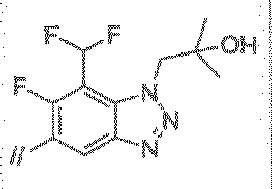

free 593.3 1H-NMR (DMSO-D6) δ: 8.40 (1H, d, J = 6.1 Hz). 7.80-7.62 (5H, m), 7.51-7.42 (1H, m), 7.15 (1H, dd, J = 8.1, 1.4 Hz), 5.03 (1H, s), 4.75 (2H, s), 4.48-3.87 (3H, m), 2.27-2.12 (2H, m), 1.81-1.72 (1H, m), 1.68-1.50 (2H, m), 1.16 (6H, s), 0.91-0.86 (1H, m). 253 


free 568.3 1H-NMR (DMSO-D6) δ: 8.55 (1H, d, J = 6.7 Hz), 7.80-7.67 (4H, m), 7.53 (1H, d, J = 9.2 Hz), 7.19 (1H, dd, J = 8.2, 1.5 Hz), 4.83 (1H, s), 4.73 (2H, s), 4.52-3.87 (3H, m), 2.29-2.10 (2H, m), 1.83-1.72 (1H, m), 1.69-1.49 (2H, m), 1.22 (6H, s), 0.95-0.86 (1H, m). 254 


free 573.2 1H-NMR (DMSO-D6) δ: 7.96 (1H, d, J = 5.5 Hz), 7.83-7.61 (4H, m), 7.50 (1H, d, J = 10.4 Hz), 7.17 (1H, d, J = 7.9 Hz), 5.43 (1H, s), 4.78 (2H, s), 4.49-3.87 (3H, m), 2.21-1.96 (6H, m), 1.82-1.50 (5H, m), 0.99-0.79 (1H, m). 255 


free 547.3 1H-NMR (DMSO-D6) δ: 7.96 (1H, d, J = 4.9 Hz), 7.81-7.72 (2H, m), 7.70-7.63 (2H, m), 7.48 (1H, d, J = 10.7 Hz), 7.16 (1H, d, J = 8.5 Hz), 5.43 (1H, s), 4.78 (2H, s), 3.75-3.59 (5H, m), 2.26-2.17 (2H, m), 2.04-1.91 (3H, m), 1.77-1.59 (3H, m). Table 29 256 


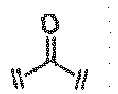
free 587.2 1H-NMR (DMSO-D6) δ: 7.97 (1H, d, J = 5.2 Hz),7.77 (1H, t, J = 7.5 Hz), 7.69- 7.63 (2H, m),7.59 (1H, s), 7.49 (1H, d, J = 10.7 Hz), 7.17 (1H, d, J = 8.5 Hz), 5.44 (1H, s), 4.78 (2H, s), 4.62-4.55 (1H, m), 4.07-4.01 (1H, m), 2.32-1.50 (15H, m). 257 
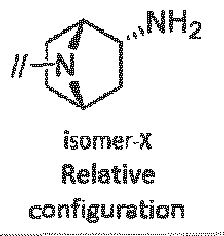


free 589.2 1H-NMR (DMSO-D6) δ: 8.14 (1H, d, J = 5.8 Hz), 7.79-7.63 (4H, m), 7.50 (1H, d, J = 9.8 Hz), 7.16 (1H, d, J = 8.5 Hz), 5.38 (1H, s), 4.97 (2H, s), 4.49-3.87 (3H, m), 2.25-1.97 (6H, m), 1.76-1.50 (5H, m), 0.95-0.83 (1H, m). 591.2 258 


free 563.2 1H-NMR (DMSO-D6) δ: 8.14 (1H, d, J =6.4 Hz), 7.78-7.73 (2H, m), 7.71-7.64 (2H, m), 7.47 (1H, d, J = 9.8 Hz), 7.14 (1H, d, J = 8.2 Hz), 5.38 (1H, s), 4.97 (2H, s), 3.68-3.59 (5H, m), 2.31-2.21 (2H, m), 2.10-1.93 (3H, m), 1.76-1.55 (3H, m). 565.2 259 


free 603.2 1H-NMR (DMSO-D6) δ: 8.14 (1H, d, J = 5.8 Hz), 7.77 (1H, t, J = 7.6 Hz), 7.69- 7.59 (3H, m), 7.49 (1H, d, J = 10.4 Hz), 7.15 (1H, d, J = 8.2 Hz), 5.38 (1H, s), 4.97 (2H, s), 4.63-4.57 (1H, m), 4.08- 4.02 (1H, m), 2.33-1.47 (15H, m). 605.2 260 


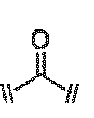
free 605.2 1H-NMR (DMSO-D6) δ: 8.40 (1H, d, J = 5.8 Hz), 7.85-7.59 (5H, m), 7.47 (1H, d, J = 10.4 Hz), 7.15 (1H, d, J = 7.9 Hz), 5.77 (1H, s), 4.92 (2H, s), 4.50-3.89 (3H, m), 2.17-1.45 (11H, m), 0.90 (1H, dd, J = 12.1, 4.4 Hz). J 261 


free 579.3 1H-NMR (DMSO-D6) δ: 8.40 (1H, d, = 5.2 Hz), 7.82-7.62 (5H, m), 7.44 (1H, d, J = 10.7 Hz), 7.14 (1H, d, J = 7.9 Hz), 5.77 (1H, s), 4.92 (2H, s), 3.63-3.39 (5H, m), 2.21-1.66 (8H, m). 262 


free 619.3 1H-NMR (DMSO-D6) δ: 8.40 (1H, d, J = 6.1 Hz),7.84-7.59 (5H, m), 7.46 (1H, d, J = 10.7 Hz), 7.15 (1H, dd, J = 8.1, 1.4 Hz), 5.78 (1H, s), 4.92 (2H, s), 4.65-4.54 (1H, m), 4.11-4.02 (1H, m), 2.29-1.47 (15H, m). 263 
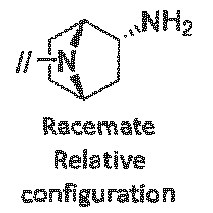


free 605.2 1H-NMR (DMSO-D6) δ: 8.40 (1H, d, J = 5.8 Hz), 7.85-7.59 (5H, m), 7.47 (1H, d, J = 10.4 Hz), 7.15 (1H, d, J = 7.9 Hz), 5.77 (1H, s), 4.92 (2H, s), 4.50-3.89 (3H, m), 2.17-1.45 (11H, m), 0.90 (1H, dd, J = 12.1, 4.4 Hz). 264 


free 580.2 1H-NMR (DMSO-D6) δ: 8.54 (1H, d, J = 6.7 Hz), 7.91-7.38 (5H, m), 7.19 (1H, dd, J = 7.9, 1.5 Hz), 5.56 (1H, s), 4.89 (2H, s), 4.47-3.88 (3H, m), 2.27-1.48 (11H, m), 0.96-0.85 (1H, m). Table 30 265 


free 554.2 1H-NMR (DMSO-D6) δ: 8.55 (1H, d, J = 6.4 Hz), 7.80-7.68 (4H, m), 7.57-7.49 (1H, m), 7.18 (1H, dd, J = 8.1, 1.4 Hz), 5.55 (1H, s), 4.89 (2H, s), 3.67-3.46 (5H, m), 2.26-1.67 (8H, m). 266 


free 594.2 1H-NMR (DMSO-D6) δ: 8.55 (1H, d, J = 6.4 Hz), 7.78 (1H, t, J = 7.5 Hz), 7.70-7.60 (3H, m), 7.53 (1H, dd, J = 10.4, 1.5 Hz), 7.21-7.16 (1H, m), 5.55 (1H, s), 4.89 (2H, s), 4.61-4.55 (1H, m), 4.08- 4.02 (1H, m), 2.31-1.50 (15H, m). 267 
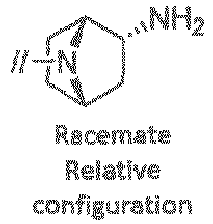


free 580.2 1H-NMR (DMSO-D6) δ: 8.54 (1H, d, J = 6.7 Hz), 7.91-7.38 (5H, m), 7.19 (1H, dd, J = 7.9, 1.5 Hz), 5.56 (1H, s), 4.89 (2H, s), 4.47-3.88 (3H, m), 2.27-1.48 (11H, m), 0.96-0.85 (1H, m). 268 


free 573.2 1H-NMR (DMSO-D6) δ: 7.96 (1H, d, J = 5.5 Hz), 7.83-7.61 (4H, m), 7.50 (1H, d, J = 10.4 Hz), 7.17 (1H, d, J = 7.9 Hz), 5.43 (1H, s), 4.78 (2H, s), 4.49-3.87 (3H, m), 2.21-1.96 (6H, m), 1.82-1.50 (5H, m), 0.99-0.79 (1H, m). 269 


free 589.2 1H-NMR (DMSO-D6) δ: 8.14 (1H, d, J = 5.8 Hz), 7.79-7.63 (4H, m), 7.50 (1H, d, J = 9.8 Hz), 7.16 (1H, d, J = 8.5 Hz), 5.38 (1H, s), 4.97 (2H, s), 4.49-3.87 (3H, m), 2.25-1.97 (6H, m), 1.76-1.50 (5H, m), 0.95-0.83 (1H, m). 591.4 270 


free 569.4 1H-NMR (DMSO-D6) δ: 7.86 (1H, d, J = 6.4 Hz), 7.79-7.57 (4H, m), 7.46 (1H, dd, J = 10.5, 1.4 Hz), 7.17-7.14 (1H, m), 5.52 (1H, s), 4.84 (2H, s), 4.45-3.89 (3H, m), 2.54 (3H, s), 2.30-1.96 (6H, m), 1.79-1.51 (5H, m), 0.89 (1H, dd, J = 11.9, 4.6 Hz). 271 


free 543.2 1H-NMR (DMSO-D6) δ: 7.86 (1H, d, J = 6.4 Hz), 7.76-7.69 (2H, m), 7.68-7.63 (1H, m), 7.60-7.56 (1H, m), 7.44 (1H, d, J = 10.7 Hz), 7.13 (1H, dd, J = 8.2, 1.5 Hz), 5.52 (1H, s), 4.84 (2H, s), 3.68-3.49 (5H, m), 2.52 (3H, s), 2.30-2.24 (2H, m), 2.02-1.93 (3H, m), 1.75-1.60 (3H, m). 272 


free 583.2 1H-NMR (DMSO-D6) δ: 7.87 (1H, d, J = 6.4 Hz), 7.75 (1H, t, J = 7.6 Hz), 7.63 (1H, dd, J = 7.8, 1.7 Hz), 7.60-7.53 (2H, m), 7.45 (1H, dd, J = 10.5, 1.4 Hz), 7.14 (1H, dd, J = 7.9, 1.5 Hz), 5.52 (1H, s), 4.84 (2H, s), 4.64-4.54 (1H, m), 4.11-4.01 (1H, m), 2.52 (3H, s), 2.28-1.50 (15H, m). 273 


free 621.1 1H-NMR (DMSO-D6) δ: 8.17 (1H, d, J = 6.1 Hz), 7.80-7.62 (4H, m), 7.47 (1H, d, J = 9.5 Hz), 7.15 (1H, d, J = 8.2 Hz), 4.88 (2H, s), 4.74 (1H, s), 4.49-3.86 (3H, m), 2.27-2.12 (2H, m), 1.79-1.50 (3H, m), 1.18 (6H, s), 0.89 (1H, dd, J = 12.4, 4.4 Hz). 623.1 Table 31 274 


free 595.1 1H-NMR (DMSO-D6) δ: 8.21-8.16 (1H, m), 7.78-7.65 (4H, m), 7.45 (1H, d, J = 10.7 Hz), 7.13 (1H, dd, J = 8.2, 1.5 Hz), 4.88 (2H, s), 4.74 (1H, s), 3.70-3.48 (5H, m), 2.03-1.94 (1H, m), 1.71-1.63 (1H, m), 1.18 (6H, s). 597.1 275 


free 635.1 1H-NMR (DMSO-D6) δ: 8.18 (1H, d, J = 6.1 Hz), 7.76 (1H, t, J = 7.5 Hz), 7.68-7.59 (3H, m), 7.46 (1H, dd, J = 10.5, 1.4 Hz), 7.14 (1H, dd, J = 7.9, 1.5 Hz), 4.88 (2H, s), 4.74 (1H, s), 4.62-4.55 (1H, m), 4.10-4.02 (1H, m), 2.26-1.88 (6H, m), 1.65-1.47 (3H, m), 1.18 (6H, s). 637.1 276 

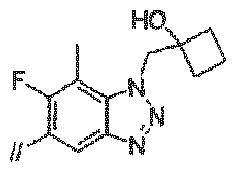
free 569.4 1H-NMR (DMSO-D6) δ: 7.86 (1H, d, J = 6.4 Hz), 7.79-7.57 (4H, m), 7.46 (1H, dd, J = 10.5, 1.4 Hz), 7.17-7.14 (1H, m), 5.52 (1H, s), 4.84 (2H, s), 4.45-3.89 (3H, m), 2.54 (3H, s), 2.30-1.96 (6H, m), 1.79-1.51 (5H, m), 0.89 (1H, dd, J = 11.9, 4.6 Hz). 277 


free 621.1 1H-NMR (DMSO-D6) δ: 8.17 (1H, d, J = 6.1 Hz), 7.80-7.62 (4H, m), 7.47 (1H, d, J = 9.5 Hz), 7.15 (1H, d, J = 8.2 Hz), 4.88 (2H, s), 4.74 (1H, s), 4.49-3.86 (3H, m), 2.27-2.12 (2H, m), 1.79-1.50 (3H, m), 1.18 (6H, s), 0.89 (1H, dd, J = 12.4, 4.4 Hz). 623.1 278 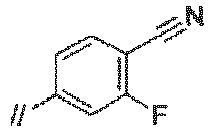


free 583.4 1H-NMR (DMSO-D6) δ: 7.99 (1H, d, J = 5.8 Hz), 7.83-7.58 (4H, m), 7.38 (1H, dd, J = 10.5, 1.4 Hz), 7.09 (1H, dd, J = 8.2, 1.5 Hz), 5.10-4.83 (2H, m), 4.72 (1H, s), 4.53-3.88 (3H, m), 2.29-2.13 (3H, m), 1.80-1.50 (3H, m), 1.15 (6H, s), 1.02-0.96 (2H, m), 0.89 (1H, dd, J = 11.9, 4.6 Hz), 0.53-0.12 (2H, m). 279 


free 583.4 1H-NMR (DMSO-D6) δ: 7.99 (1H, d, J = 5.8 Hz), 7.83-7.58 (4H, m), 7.38 (1H, dd, J = 10.5, 1.4 Hz), 7.09 (1H, dd, J = 8.2, 1.5 Hz), 5.10-4.83 (2H, m), 4.72 (1H, s), 4.53-3.88 (3H, m), 2.29-2.13 (3H, m), 1.80-1.50 (3H, m), 1.15 (6H, s), 1.02-0.96 (2H, m), 0.89 (1H, dd, J = 11.9, 4.6 Hz), 0.53-0.12 (2H, m). 280 


free 557.4 1H-NMR (DMSO-D6) δ: 7.99 (1H, d, J = 5.5 Hz), 7.76-7.64 (4H, m), 7.36 (1H, dd, J = 10.5, 2.9 Hz), 7.07 (1H, dd, J = 8.2, 1.5 Hz), 5.05-4.81 (2H, m), 4.72 (1H, s), 3.70-3.44 (5H, m), 2.26-2.17 (1H, m), 2.11-1.97 (1H, m), 1.78-1.67 (1H, m), 1.15 (6H, s), 1.03-0.95 (2H, m), 0.40-0.16 (2H, m). 281 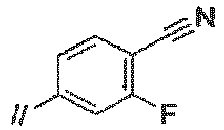


free 597.5 1H-NMR (DMSO-D6) δ: 7.99 (1H, d, J = 6.1 Hz), 7.74 (1H, t, J = 7.5 Hz), 7.68-7.56 (3H, m), 7.37 (1H, d, J = 10.7 Hz), 7.08 (1H, d, J = 7.9 Hz), 5.04-4.81 (2H, m), 4.72 (1H, s), 4.65-4.57 (1H, m), 4.13-4.05 (1H, m), 2.24-1.51 (10H, m), 1.15 (6H, s), 1.02-0.94 (2H, m), 0.42-0.16 (2H, m). Table 32 282 


//-CH2-// free 368.2 1H-NMR (DMSO-D6) δ: 8.23-7.56 (5H, m), 7.37-7.28 (2H, m), 7.17-.7.09 (2H, m), 7.02-6.89 (2H, m), 5.76 (2H, s), 4.65-3.85 (5H, m), 2.28 (3H, s), 1.99-1.64 (2H, m). 283 


//-CH2-// free 430.1 1H-NMR (DMSO-D6) δ: 7.80 (1H, t, J = 7.3 Hz), 7.53 (1H, d, J = 7.9 Hz), 7.44 (1H, s), 7.36 (1H, d, J = 7.6 Hz), 7.29 (1H, d, J = 10.4 Hz), 7.18 (1H, t, J = 7.8 Hz), 7.09 (1H, d, J = 7.9 Hz), 7.03 (1H, d, J = 7.9 Hz), 6.93 (1H, d, J = 11.3 Hz), 3.62 (2H, s), 3.29-3.25 (1H, m), 3.15-3.10 (1H, m), 3.05-2.99 (1H, m), 2.30 (3H, s), 2.06-1.96 (2H, m), 1.89-1.76 (1H, m), 1.66-1.56 (1H, m), 1.39-1.29 (1H, m), 0.64 (1H, dd, J = 11.6, 4.0 Hz). 284 

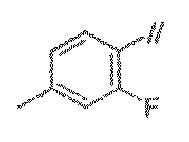
//-CH2-// free 418.2 1H-NMR (DMSO-D6) δ: 7.81 (1H, t, J = 7.5 Hz), 7.52 (1H, d, J - 7.6 Hz), 7.47 (1H, s), 7.39 (1H, d, J = 7.9 Hz), 7.31 (1H, d, J = 10.4 Hz), 7.18 (1H, t, J = 8.1 Hz), 7.09 (1H, d, J = 7.9 Hz), 7.03 (1H, d, J = 7.3 Hz), 6.93 (1H, d, J = 11.0 Hz), 3.70 (2H, dd, J = 37.4, 13.6 Hz), 2.89-2.78 (1H, m), 2.64-2.60 (2H, m), 2.38-2.34 (1H, m), 2.31 (3H, s), 1.86-1.73 (2H, m), 1.28 (3H, s). 285 


//-CH2-// 2HCl 547.2 1H-NMR (DMSO-D6) δ: 7.94-7.72 (5H, m), 7.54-7.43 (1H, m), 7.22-7.09 (1H, m), 4.90-4.74 (1H, m), 4.63 (2H, s), 4.53-4.40 (1H, m), 4.29-3.98 (3H, m), 2.24-1.33 (5H, m), 1.16 (6H, s), 0.93-0.81 (1H, m). 286 


//-CH2-// 2HCl 575.1 1H-NMR (DMSO-D6) δ: 8.09 (1H, d, J = 5.8 Hz), 7.91-7.51 (5H, m), 7.15 (1H, d, J = 8.2 Hz), 5.45-5.34 (1H, m), 4.98 (2H, s), 4.49-4.03 (5H, m), 2.34-2.21 (3H, m), 2.05-1.87 (3H, m), 1.79-1.49 (3H, m), 1.28-1.2.3 (1H, m), 1.04 (1H, d, J = 6.1 Hz), 0.92-0.81 (1H, m). 576.1 287 


// -CH2-// 2HCl 528.2 1H-NMR (DMSO-D6) δ: 8.16-8.08 (1H, m), 8.01-7.31 (8H, m), 7.19-6.98 (1H, m), 4.77-4.39 (3H, m), 4.30-3.96 (6H, m), 2.13-1.39 (4H, m), 1.11 (6H, s). 288 


//-CH2-// 2HCl 591.1 592.0 1H-NMR (DMSO-D6) δ: 8.10 (1H, s), 7.97-7.36 (5H, m), 7.18-7.13 (1H, m), 4.82 (2H, s), 4.52-3.95 (6H, m), 2.33-1.37 (9H, m), 0.90 (6H, t, J = 7.3 Hz). 289 


//-CH2-// 2HCl 527.1 1H-NMR (DMSO-D6) δ: 7.91-7.75 (3H, m), 7.64-7.59 (1H, m), 7.53-7.31 (4H, m), 7.17-7.11 (1H, m), 6.46-6.43 (1H, m), 4.70-3.94 (9H, m), 2.18-1.50 (4H, m), 1.06 (6H, s). 290 


//-CH2-// 2HCl 488.2 1H-NMR (DMSO-D6) δ: 7.97-7.80 (3H, m), 7.66-7.54 (1H, m), 7.35-6.93 (5H, m), 4.53-3.92 (7H, m), 2.32-1.48 (6H, m), 1.05 (6H, s). Table 33 291 


// -CH2-// 2HCl 462.2 1H-NMR (DMSO-D6) δ: 7.72 (4H, t, J = 62.6 Hz), 7.12 (5H, ddd, J = 96.0, 48.2, 18.5 Hz), 4.58-3.75 (6H, m), 2.66 (2H, s), 2.30-1.99 (2H, m), 1.29-1.16 (1H, m), 1.05 (6H, s). 292 


2HCl 444.1 1H-NMR (DMSO-D6) δ: 7.97-6.93 (9H, m), 4.63-4.49 (1H, m), 4.23-3.86 (3H, m), 2.32 (3H, s), 2.21-1.97 (2H, m), 1.83-1.64 (3H, m), 1.31-1.24 (2H, m), 1.07-0.82 (2H, m). 293 


//-CH2-// 2HCl 575.1 1H-NMR (DMSO-D6) δ: 7.94-7.49 (6H, m), 7.18-7.11 (1H, m), 4.63 (2H, s), 4.52-4.40 (2H, m), 4.19-3.70 (4H, m), 2.37-1.66 (5H, m), 1.44-1.35 (4H, m), 0.90 (6H, t, J = 7.3 HZ). 294 


//-CH2-// 2HCl 607.0 609.0 1H-NMR (DMSO-D6) δ: 8.13 (1H, d, J = 5.8 Hz), 8.00-7.71 (4H, m), 7.50-7.44 (1H, m), 7.19-7.10 (1H, m), 4.88 (2H, s), 4.75 (1H, s), 4.51-3.98 (5H, m), 2.30-1.64 (5H, m), 1.18 (6H, s), 0.92-0.82 (1H, m). 295 


//-CH2-// 2HCl 635.1 637.0 1H-NMR (DMSO-D6) δ: 8.13 (1H, d, J = 5.8 Hz), 7.96-7.69 (4H, m), 7.52-7.46 (1H, m), 7.14 (1H, d, J = 7.9 Hz), 4.89 (2H, s), 4.48-4.01 (5H, m), 2.14-1.24 (11H, m), 0.91 (6H, t, J = 7.5 Hz). 296 


//-CH2-// 2HCl 415.2 1H-NMR (DMSO-D6) δ: 8.11 (2H, d, J = 8.4 Hz), 7.89-7.74 (2H, m), 7.49 (1H, d, J = 8.1 Hz), 7.42 (2H, d, J = 8.8 Hz), 7.07 (2H, d, J = 8.1 Hz), 6.98 (2H, d, J = 8.1 Hz), 4.46-3.96 (4H, m), 2.29-2.07 (5H, m), 2.01-1.88 (1H, m), 1.77-1.61 (1H, m). 297 


//-CH2-// 2HCl 528.0 1H-NMR (DMSO-D6) δ: 8.11 (1H, d, J = 0.6 Hz), 7.89-7.69 (4H, m), 7.62-7.57 (1H, m), 7.43 (2H, dd, J = 23.8, 10.4 Hz), 7.13 (1H, d, J = 7.9 Hz), 4.48 (2H, s), 4.26 (2H, s), 3.74-3.54 (5H, m), 3.32-3.13 (4H, m), 1.10 (6H, s). 298 


//-CH2-// 2HCl 528.3 1H-NMR (DMSO-D6) δ: 8.10 (1H, s), 7.81-7.72 (4H, m), 7.59 (1H, d, J = 8.9 Hz), 7.45 (1H, d, J = 11.0 Hz), 7.39 (1H, dd, J = 10.7, 1.5 Hz), 7.13 (1H, d, J = 8.2 Hz), 4.53 (2H, dd, J = 17.7, 5.5 Hz), 4.26 (2H, s), 4.13-4.02 (3H, m), 3.87-3.78 (1H, m), 3.01-2.86 (3H, m), 2.05-1.87 (2H, m), 1.73-1.60 (2H, m), 1.10 (6H, s). 299 


//-CH2-// 2HCl 542.3 1H-NMR (DMSO-D6) δ: 8.11 (1H, d, J = 0.6 Hz), 7.97-7.84 (2H, m), 7.79-7.73 (2H, m), 7.60 (1H, d, J = 7.9 Hz), 7.50-7.37 (2H, m), 7.14 (1H, dd, J = 8.2, 1.5 Hz), 4.33-4.21 (4H, m), 3.92 (2H, s), 2.77-2.67 (2H, m), 2.13 (4H, dd, J = 75.1 12.2 Hz) 1.11 (6H, s) 300 


//-CH2-// 2HCl 528.0 1H-NMR (DMSO-D6) δ: 8.11 (1H, d, J = 0.9 Hz), 7.86 (1H, d, J = 1.2 Hz), 7.80-7.72 (3H, m), 7.59 (1H, d, J = 7.6 Hz), 7.49-7.40 (2H, m), 7.14 (1H, dd, J = 8.2, 1.5 Hz), 4.59-4.42 (2H, m), 4.26 (2H, s), 4.15-3.99 (3H, m), 3.92-3.75 (2H, m), 3.33-3.13 (2H, m), 2.48-2.29 (2H, m), 1.10 (6H, s). - The conditions for measuring inhibitory activity of compounds against LSD1 activity were determined with reference to a document available from the website of PerkinElmer (U-TRF #38) and a patent of GlaxoSmithKline (
WO2012135113 ). - To measure the inhibitory activity, first, the compound of the present invention was serially diluted in dimethylsulfoxide (DMSO). Sequentially, the solution of the compound of the present invention in DMSO (final concentration of DMSO: 5%) and human LSD1 protein (Abcam, ab80379) were added to a reaction buffer (25 mM Tris-HCl (pH 7.5), 50 mM KCl, 2 mM CHAPS, 1 mM DTT, 0.02% BSA). The mixture was preincubated at 25°C for 30 minutes. Thereafter, a H3K4 (Mel)-biotin-labeled peptide (Anaspec #64355) (final concentration: 200 nM) was added thereto and reacted for 60 minutes. Tranylcypromine (final concentration: 3 mM) was then added thereto to terminate the reaction. Thereafter, a detection solution containing an Eu-labeled anti-H3K4 antibody (PerkinElmer, TRF0404) and Streptavidin Alexa Fluor 647 (Thermo Fisher Scientific, S21374) was added thereto, and the mixture was allowed to stand at room temperature for 1 hour. Finally, the intensity of fluorescence under the excitation light with a wavelength of 337 nm was measured with a PHERAstar FS (BMG Labtech) at two wavelengths: 620 nm and 665 nm. The demethylation level was calculated from the ratio of the fluorescence intensity at the two wavelengths, and the compound concentration at which demethylation was inhibited by 50% was defined as IC50 (nM). The following tables show the results.
Table 34 Example No. LSD1 inhibitory activity IC50 (nM) Example No. LSD1 inhibitory activity IC50 (nM) Example No. LSD1 inhibitory activity IC50 (nM) Example No. LSD1 inhibitory activity IC50 (nM) 1 7.02 38 16.0 77 1.54 115 2.81 3 10.6 39 1.91 78 9.65 116 3.03 4 4.93 40 5.96 79 17.9 117 1.97 5 1.59 41 1.57 80 12.8 118 1.57 6 10.7 42 11.6 81 3.30 119 1.98 7 0.78 45 7.71 82 3.04 120 0.90 8 5.92 46 19.7 83 9.29 121 9.46 9 4.45 47 9.15 84 9.33 122 8.61 10 3.74 48 17.9 85 6.27 123 0.12 11 17.4 49 5.51 86 6.58 124 0.36 12 5.83 51 11.0 87 5.12 125 0.29 13 14.9 52 8.31 89 11.2 126 0.41 14 11.0 53 10.9 90 14.0 127 17.0 15 2.41 54 4.58 91 4.85 128 0.62 16 1.97 55 20.0 92 2.78 130 0.29 17 3.51 56 11.3 93 20.3 131 1.81 18 0.40 57 3.42 94 5.10 132 10.8 19 2.67 58 13.5 95 0.75 133 0.91 20 1.31 59 6.78 96 0.49 134 0.21 21 0.87 60 13.8 97 10.1 135 0.30 22 1.18 61 15.5 98 2.18 136 0.30 23 0.18 62 6.34 100 3.13 137 3.18 24 0.29 63 3.48 101 3.70 138 2.83 25 1.83 64 6.69 102 0.63 139 1.68 26 0.45 65 2.80 103 9.65 140 5.98 27 11.4 66 6.99 104 0.44 141 0.25 28 0.57 67 10.4 105 0.51 142 0.38 29 19.8 68 17.3 106 0.34 143 0.25 30 4.31 69 11.1 107 1.05 144 0.51 31 16.0 70 3.68 108 0.21 145 0.38 32 17.7 71 3.04 109 0.28 146 0.42 33 11.0 72 7.57 110 0.47 147 0.35 34 15.1 73 9.23 111 9.45 148 19.8 35 10.0 74 1.53 112 1.80 150 2.99 36 1.04 75 1.54 113 1.56 151 5.02 37 2.40 76 2.09 114 1.42 155 0.51 Table 35 Example No. LSD1 inhibitory activity IC50 (nM) Example No. LSD1 inhibitory activity IC50 (nM) Example No. LSD1 inhibitory activity IC50 (nM) Example No. LSD1 inhibitory activity IC50(nM) 156 12.8 194 0.34 232 0.63 269 0.41 158 6.35 195 0.20 233 4.88 270 0.15 159 17.7 196 0.14 234 2.43 271 0.23 160 0.92 197 0.11 235 2.09 272 0.32 161 0.74 198 0.18 236 0.28 273 0.19 162 1.09 199 1.00 237 0.20 274 0.32 164 12.8 200 0.91 238 2.35 275 0.21 165 11.2 201 0.40 239 0.59 276 0.39 166 0.63 202 0.09 240 0.34 277 0.42 167 1.79 203 0.24 241 0.29 278 0.87 168 1.05 204 0.45 242 2.69 279 0.46 169 0.90 205 1.28 243 0.65 280 2.13 170 0.72 206 0.30 244 6.54 281 2.62 171 0.35 207 6.89 245 0.39 282 3.51 172 0.55 208 16.8 246 0.17 283 0.062 173 1.84 209 0.06 247 0.23 284 0.74 174 13.8 210 0.16 248 0.46 285 0.091 175 0.33 211 0.14 249 0.88 286 0.093 176 0.30 213 0.15 250 0.38 287 0.10 177 0.23 214 0.10 251 0.96 288 0.075 178 1.24 215 0.25 252 0.36 289 0.18 179 0.69 216 0.50 254 0.13 290 0.23 180 0.88 217 0.21 255 0.23 291 0.80 181 2.70 218 0.07 256 0.24 292 0.36 182 17.6 219 0.10 257 0.12 293 0.076 183 0.67 220 0.12 258 0.13 294 0.14 184 0.25 221 0.20 259 0.14 295 0.15 185 0.14 222 8.31 260 0.14 296 0.47 186 0.43 224 0.49 261 0.37 297 0.40 187 0.26 225 0.20 262 0.30 298 0.20 188 0.61 226 0.54 263 0.52 299 0.20 189 0.33 227 11.7 264 0.24 300 0.23 190 0.16 228 0.11 265 0.43 191 0.22 229 0.43 266 0.35 192 0.40 230 0.94 267 0.49 193 2.35 231 0.65 268 0.29 - The results of the test clarified that the compounds of the present invention exhibit LSD1 inhibitory activity.
- Under the following conditions, an in vitro cell-growth inhibition test was performed with respect to HEL cells (human acute myelocytic leukemia cell lines), NCI-H1417 cells (human small-cell lung cancer cell lines), and NCI-H146 cells (human small-cell lung cancer cell lines).
- HEL cells (JCRB, Cat#: JCRB0062), NCI-H1417 cells (ATCC, Cat#: CRL-5869), or NCI-H146 cells (ATCC, Cat#: HTB-173) cultured in a 10% FBS-containing RPMI1640 medium (Thermo Fisher Scientific, Cat#: A10491-01) were seeded in a 96-well flat-bottom microplate (Thermo Fisher Scientific, Cat#: 165305) so that each well contained 1500 HEL cells (100 µL), 5000 NCI-H1417 cells (100 µL), or 1200 NCI-H146 cells (100 µL). The compound of the present invention was serially diluted in dimethylsulfoxide to a concentration that was 500 times higher than the final concentration. The serially diluted compound of the present invention or dimethylsulfoxide alone was added to a 10% FBS-containing RPMI1640 medium to a concentration that was 2 times higher than the final concentration, and the resulting product was added in an amount of 100 µL to each well of the culture plate containing HEL cells, NCI-H1417 cells, or NCI-H146 cells, so that the final concentrations of the compound of the present invention were 3000, 1000, 300, 100, 30, 10, 3, 1, 0.3, 0.1, 0.03, and 0.01 nM. The final concentration of dimethylsulfoxide was adjusted to 0.2%. The cells with the compound of the present invention or with dimethylsulfoxide alone were cultured at 37°C in a 5% carbon-dioxide-containing incubator for 5 days (HEL cells) or 10 days (NCI-H1417 cells and NCI-H146 cells). After culture, the plate was allowed to stand at room temperature for 30 minutes, and 100 µL of the supernatant was removed from each well to leave 100 µL of the cell culture solution. To each well containing the remaining 100 µL of the cell culture solution, the same amount of CellTiter-Glo 2.0 Assay (Promega, Cat#: G9242) was added. The microplate was shaken with a plate mixer for 1 minute and then allowed to stand in a dark place for 10 minutes. Thereafter, the luminescence intensity of viable cells in each well was measured using a microplate reader (PerkinElmer, EnSpire). The cell growth rate was determined in accordance with the following equation, and the concentration at which the cell growth rate was 50%, i.e.; the concentration of each compound of the present invention at which the cell growth was inhibited by 50% (IC50 (nM)) was determined.

- T: The luminescence intensity in a well to which the compound of the present invention was added (count per second)
- C: The luminescence intensity in a well to which dimethylsulfoxide alone was added (count per second)
- The tables below show the results.
Table 36 Cell-Growth Inhibition Test: HEL Cells Example No. IC50 (nM) Example No. IC50 (nM) Example No. IC50 (nM) 1 39.8 74 20.4 143 0.95 4 28.8 75 5.78 144 6.37 5 34.5 77 12.6 145 1.61 7 14.8 80 43.6 146 1.15 8 42.7 81 11.7 147 3.04 9 38.7 82 11.1 155 0.83 10 31.7 84 41.7 160 7.03 12 36.7 85 32.2 161 6.88 15 17.3 86 13.4 162 17.7 16 34.3 87 17.4 166 0.62 18 3.55 92 9.91 167 4.05 19 24.4 94 25.4 168 5.29 20 7.73 96 11.0 170 3.44 21 8.34 102 12.8 171 0.090 22 3.51 104 28.8 172 0.47 23 0.73 106 5.74 173 1.65 24 3.56 108 36.4 175 0.20 25 4.72 109 15.1 176 0.20 26 4.83 110 7.41 177 0.38 27 24.7 113 9.00 178 3.57 28 15.7 117 8.54 179 1.52 30 27.1 120 7.60 180 1.16 36 15.4 123 1.39 181 9.06 37 10.1 124 2.84 183 0.54 38 34.0 125 7.57 184 2.26 39 17.4 126 5.39 185 0.68 40 27.2 128 5.70 186 5.30 41 4.98 . 130 22.2 187 1.99 47 29.3 131 15.2 188 1.95 48 28.9 133 17.7 189 0.59 49 32.1 134 1.06 190 0.41 59 33.0 135 2.37 191 3.91 63 28.3 136 0.90 192 1.11 65 23.9 139 16.9 193 2.31 69 29.9 141 1.50 194 15.5 71 19.5 142 3.86 195 0.45 Table 37 Cell-Growth Inhibition Test: HEL Cells Example No. IC50 (nM) Example No. IC50 (nM) Example No. IC50 (nM) 196 0.33 239 12.5 279 1.59 197 1.0 240 4.20 280 36.6 198 0.43 241 2.54 281 23.9 199 22.0 246 0.37 282 40.7 200 3.72 247 3.02 283 0.79 201 1.55 248 6.94 284 5.78 202 0.24 249 41.6 285 0.046 203 2.48 250 2.36 286 0.036 204 2.14 251 23.9 287 0.045 205 4.95 252 0.77 288 0.062 206 0.40 253 6.11 289 0.038 209 0.24 254 0.20 290 0.18 210 3.30 255 2.73 291 1.21 211 1.41 256 1.31 292 0.91 213 0.65 257 0.13 293 0.081 214 0.44 258 1.27 294 0.04 215 4.91 259 0.58 295 0.049 216 4.19 260 0.13 296 5.83 217 0.86 261 2.67 297 2.68 218 0.22 262 0.93 298 0.46 219 1.70 263 0.39 299 0.43 220 1.09 264 0.84 300 0.60 221 0.49 265 17.6 222 38.0 266 4.63 224 46.2 267 1.98 225 0.69 268 0.40 226 2.56 269 0.29 227 23.6 270 0.26 228 0.68 271 4.29 229 2.55 272 1.52 231 13.4 273 0.27 232 2.04 274 3.15 234 42.6 275 0.99 235 8.42 276 0.62 237 28.5 277 0.65 238 26.1 278 3.76 Table 38 Cell-Growth Inhibition Test: NCI-H146 Cells Example No. IC50 (nM) Example No. IC50 (nM) Example No. IC50 (nM) 18 8.13 205 15.1 259 2.08 22 15.0 206 1.09 260 0.48 23 9.33 209 0.22 261 3.35 24 4.04 210 4.26 262 3.1 37 10.1 211 1.40 263 0.62 41 9.76 213 0.87 264 0.96 123 1.39 214 2.58 265 24.6 146 3.15 215 6.99 266 17.5 161 1.09 216 5.02 267 3.14 166 2.37 217 1.32 268 0.94 171 0.19 218 0.33 269 0.53 172 0.52 219 1.45 270 0.37 175 0.16 220 1.81 271 3.08 176 0.27 221 0.94 272 3.17 177 0.11 225 5.47 273 0.63 178 1.22 226 10.1 274 2.23 179 1.05 228 0.51 275 1.78 180 0.94 229 1.26 276 0.89 181 2.93 231 16.7 277 1.81 182 13.2 233 41.4 278 6.18 183 0.25 234 19.1 279 3.36 184 2.51 235 8.12 280 16.8 185 1.32 236 28.5 281 32.3 186 3.21 237 5.14 283 11.1 187 1.06 238 17.7 284 21.9 188 1.58 239 5.39 285 0.49 189 0.33 240 4.81 286 0.17 190 1.17 241 2.89 287 0.20 191 3.84 246 1.32 288 1.29 192 0.83 247 3.84 289 0.97 193 5.33 248 10.3 290 2.12 194 11.3 249 24.7 291 10.4 195 1.26 250 9.30 292 10.3 196 0.82 251 13.2 293 0.08 197 1.62 252 1.48 294 4.05 198 1.10 253 7.59 295 0.24 199 5.45 254 0.36 297 8.26 200 2.31 255 4.41 298 1.00 201 3.25 256 2.54 299 <1.37 202 0.73 257 0.39 300 0.70 203 4.73 258 1.83 Table 39 Cell-Growth Inhibition Test: NCI-H1417 Cells Example No. IC50 (nM) Example No. IC50 (nM) Example No. IC50 (nM) 7 28.0 109 1.81 173 3.81 18 4.73 110 3.54 175 0.60 20 17.4 112 20.5 176 0.27 21 32.6 113 13.7 177 0.24 22 8.20 114 30.6 178 3.03 23 0.99 117 38.1 179 3.36 24 0.97 118 29.5 180 3.12 25 13.4 119 23.8 181 4.60 26 3.15 120 15.7 183 1.01 27 22.5 123 3.57 184 2.73 28 4.40 124 9.02 185 1.43 37 19.2 125 8.43 186 5.95 39 22.7 126 5.02 187 1.52 41 6.12 130 8.25 188 1.96 65 47.6 131 30.9 189 0.71 74 20.7 133 17.9 190 0.55 75 14.1 134 6.93 191 1.98 76 43.3 135 9.08 192 0.75 77 16.5 136 2.39 193 6.66 81 26.7 141 2.95 194 5.63 82 26.6 142 3.79 195 0.79 86 26.4 143 4.88 196 0.78 87 49.9 145 3.29 197 0.92 88 40.5 146 1.42 198 0.61 91 30.3 147 1.66 199 4.55 92 26.8 155 2.80 200 1.23 95 11.8 160 9.20 201 2.23 96 7.14 161 2.49 202 0.62 100 42.8 162 4.69 203 2.14 101 53.2 166 1.42 204 1.99 102 4.99 167 4.45 205 6.25 104 49.8 168 7.29 206 0.95 105 11.7 169 8.20 209 0.18 106 6.15 170 2.51 210 1.27 107 18.2 171 0.15 211 0.79 108 3.99 172 0.70 213 0.57 Table 40 Cell-Growth Inhibition Test: NCI-H1417 Cells Example No. IC50 (nM) Example No. IC50 (nM) Example No. IC50(nM) 214 0.47 256 0.94 294 0.055 215 2.67 257 0.12 295 0.066 216 4.40 258 0.65 296 37.6 217 1.10 259 0.46 297 3.80 218 0.21 260 0.13 298 1.72 219 1.11 261 1.30 299 0.949 220 1.03 263 0.38 300 1.53 221 0.64 264 0.30 222 41.8 265 4.40 225 1.99 266 1.85 226 5.36 267 0.86 227 26.5 268 0.30 228 0.30 269 0.27 229 1.30 270 0.18 230 16.4 271 1.42 231 7.11 272 0.81 232 1.55 273 0.19 233 36.5 274 1.25 234 14.8 275 0.59 235 6.99 276 0.50 236 11.0 277 0.53 237 6.63 278 2.68 238 10.8 279 0.90 239 3.8 280 9.71 240 2.55 281 8.50 241 2.89 283 2.10 246 0.81 284 13.0 247 1.4 285 0.090 248 6.06 286 0.083 249 16.1 287 0.10 250 1.2 288 0.22 251 2.7 289 0.094 252 0.5 290 1.06 253 1.47 291 4.65 254 0.18 292 3.29 255 1.52 293 0.22 - The results of this test revealed that the compound of the present invention exhibits in vitro cell growth inhibitory effects, and that the compound of the present invention not only inhibits the activity of recombinant human LSD1 protein but also inhibits cancer cell growth, suggesting that the compound of the present invention is useful as an antitumor agent.
- NCI-H146 cells, 3.5 x 10⁶ cells (100 µL), were subcutaneously implanted into BALB/cAJcl-nu/nu mice, and mice with a tumor volume within a range of 100 to 300 mm3 were divided into groups so that the groups had a uniform average tumor volume. To 5 mice in each group, a vehicle (0.5% hydroxymethylpropylcellulose containing 0.1 N HCL) or each Example compound was orally administered. The administration was performed once a day for 21 consecutive days (Example compound 41) or 28 consecutive days (Example compounds 37, 161, 166, 175, 176, and 177). The major axis and the minor axis of each tumor were measured twice a week with an electric caliper to calculate the tumor volume (TV). According to the tumor volumes thus obtained, a relative tumor volume (RTV) and a relative tumor volume change (T/C (%)) were calculated. The TV, RTV, and T/C (%) were calculated using the following equations.


- The table below shows the results.
Table 39 Example compound No. Dose (mg/kg) T/C (%) 37 50 22 41 25 19 161 40 14 166 20 19 175 2 41 176 20 27 177 10 22 - The final measurement day was the day following the final administration day. The compound of the present invention showed an antitumor effect on the above models for efficacy evaluation, and the percentage of body weight reduction on the final measurement day was less than 20% of the body weight before administration (day 0).
- The results revealed that the compound of the present invention or a salt thereof exhibits excellent LSD1 inhibitory activity, shows a cancer cell growth inhibitory effect, has low toxicity, and is orally administrable. Therefore, the compound of the present invention or a salt thereof is useful as an agent for preventing and/or treating cancer.
| Time (min) | Water | Acetonitrile |
| 0 | 95 | 5 |
| 0.1 | 95 | 5 |
| 2.1 | 5 | 95 |
| 3.0 | STOP |
Claims (12)
- A compound represented by Formula (I) or a salt thereof:

ring A represents a monocyclic, bridged cyclic, or spirocyclic nitrogen-containing saturated heterocyclic group,
ring B represents monocyclic or bicyclic unsaturated hydrocarbon or a monocyclic or bicyclic unsaturated heterocyclic group that may be substituted with oxo,
R1 represents nitro or cyano,
R2 represents halogen,
R3 represents substituted or unsubstituted amino, C1-C6 alkyl, halogen, cyano, oxo, hydroxy, carbamoyl, sulfo, C1-C6 alkoxy, or amino(C1-C6 alkyl),
R4 represents halogen, hydroxy, nitro, cyano, amino, carboxy, (C2-C7 acyl)amino, (C2-C7 acyl)oxy, substituted or unsubstituted C1-C8 alkyl, substituted or unsubstituted C2-C6 alkenyl, substituted or unsubstituted C1-C6 alkoxy, substituted or unsubstituted C3-C7 cycloalkyl, mono- or di(C1-C6 alkyl)amino, substituted or unsubstituted carbamoyl, substituted or unsubstituted C2-C6 alkynyl, substituted or unsubstituted (C1-C6 alkyl)carbonyl, substituted or unsubstituted 4- to 14-membered nitrogen-containing saturated heterocyclic group, or substituted or unsubstituted C6-C14 aromatic hydrocarbon,
R5 represents hydrogen or C1-C6 alkyl,
R6 represents hydrogen,
1 is an integer of 0 to 2,
m is an integer of 0 to 2, and
n is an integer of 0 to 5,
wherein when 1 is 2, two R2s may be identical or different, when m is 2, two R3s may be identical or different, and when n is 2 to 5, two to five R4s may be identical or different. - The compound or a salt thereof according to claim 1, which satisfies the following conditions in Formula (I):
ring A is a monocyclic, bridged cyclic, or spirocyclic 4- to 14-membered nitrogen-containing saturated heterocyclic group having 1 to 3 nitrogen atoms, 0 to 1 sulfur atoms, and 0 to 2 oxygen atoms as heteroatoms,
ring B is monocyclic or bicyclic C5-C14 unsaturated hydrocarbon or a monocyclic or bicyclic 5- to 14-membered unsaturated heterocyclic group that may be substituted with oxo, that has 0 to 4 nitrogen atoms, 0 to 2 sulfur atoms, and 0 to 3 oxygen atoms as heteroatoms, and that has at least one of nitrogen, sulfur, and oxygen,
R1 is nitro or cyano,
R2 is halogen,
R3 is amino, mono- or di(C1-C6 alkyl)amino, (C3-C7 cycloalkyl)amino, or C1-C6 alkyl, and
R4 is halogen, nitro, cyano, carboxy, substituted or unsubstituted C1-C8 alkyl, substituted or unsubstituted C2-C6 alkenyl, substituted or unsubstituted C1-C6 alkoxy, substituted or unsubstituted C3-C7 cycloalkyl, mono- or di(C1-C6 alkyl)amino, or substituted or unsubstituted carbamoyl,
wherein when at least one R4 represents substituted C1-C8 alkyl, substituted C2-C6 alkenyl, substituted C1-C6 alkoxy, substituted C3-C7 cycloalkyl, or substituted carbamoyl, the substituent is halogen, carboxy, C1-C6 alkoxy, hydroxy, C1-C6 alkyl that may be substituted with hydroxy, monocyclic C5-C10 unsaturated hydrocarbon, carbamoyl that may be substituted with C1-C6 alkyl or monocyclic C5-C10 unsaturated hydrocarbon, (C2-C7 acyl)oxy, amino that may be substituted with C1-C6 alkyl or C2-C7 acyl, C3-C7 cycloalkyl that may be substituted with hydroxy, or (C1-C6 alkoxy)(C1-C6 alkyl), wherein when two or more of the substituents are present, the substituents may be identical or different,
R5 is hydrogen or C1-C6 alkyl,
R6 is hydrogen,
1 is an integer of 0 to 2,
m is an integer of 0 to 2, and
n is an integer of 0 to 5,
wherein when 1 is 2, two R2s may be identical or different, when m is 2, two R3s may be identical or different, and when n is 2 to 5, two to five R4s may be identical or different. - The compound or a salt thereof according to claim 1 or 2, which satisfies the following conditions in Formula (I):
ring A is pyrrolidinyl, piperidinyl, piperazinyl, azepanyl, diazepanyl,

R1 is nitro or cyano,
R2 is halogen,
R3 is amino, methylamino, ethylamino, isopropylamino, dimethylamino, cyclobutylamino, or methyl,
R4 is halogen, nitro, cyano, carboxy, substituted or unsubstituted C1-C8 alkyl, substituted or unsubstituted C2-C6 alkenyl, substituted or unsubstituted C1-C6 alkoxy, substituted or unsubstituted C3-C7 cycloalkyl, mono- or di(C1-C6 alkyl)amino, or substituted or unsubstituted carbamoyl,
wherein when at least one R4 is substituted C1-C8 alkyl, substituted C2-C6 alkenyl, substituted C1-C6 alkoxy, substituted C3-C7 cycloalkyl, or substituted carbamoyl, the substituent is halogen, carboxy, C1-C6 alkoxy, hydroxy, C1-C6 alkyl that may be substituted with hydroxy, monocyclic C5-C10 unsaturated hydrocarbon, carbamoyl that may be substituted with C1-C6 alkyl or monocyclic C5-C10 unsaturated hydrocarbon, C2-C7 acyl, amino that may be substituted with C1-C6 alkyl or C2-C7 acyl, C3-C7 cycloalkyl that may be substituted with hydroxy, or (C1-C6 alkoxy)(C1-C6 alkyl),
wherein when two or more of the substituents are present, the substituents may be identical or different,
R5 is hydrogen or C1-C6 alkyl,
R6 is hydrogen,
1 is an integer of 0 to 2,
m is an integer of 0 to 2, and
n is an integer of 0 to 5,
wherein when 1 is 2, two R2s may be identical or different, when
m is 2, two R3s may be identical or different, and
when n is 2 to 5, two to five R4s may be identical or different. - The compound or a salt thereof according to any one of claims 1 to 3, which satisfies the following conditions in Formula (I) :
ring A is pyrrolidinyl,
ring B is phenyl, indolyl, indazolyl, or benzotriazolyl,
R1 is cyano,
R2 is fluorine and is present at the ortho position relative to R1 on the phenyl,
R3 is amino (wherein when two or more R3s are present, R3s may be identical or different),
R4 is fluorine, chlorine, bromine, methyl, hydroxymethylpropyl, hydroxyethylbutyl, or hydroxycyclobutylmethyl,
R5 is hydrogen or methyl,
R6 is hydrogen,
1 is an integer of 0 to 2,
m is an integer of 0 to 2, and
n is an integer of 0 to 3,
wherein when m is 2, two R3s may be identical or different, and
when n is 2 to 3, two to three R4s may be identical or different. - A compound according to any one of the following (1) to (14) or a salt of the compound according to any one of the following (1) to (19);(1) (S)-5'-((3-aminopyrrolidin-1-yl)methyl)-4"-methyl-[1,1':2',1" -terphenyl]-4-carbonitrile,(2) 5'-(((1S,2S,4R)-rel-2-amino-7-azabicyclo[2.2.1]heptan-7-yl)methyl)-2",3-difluoro-4"-methyl-[1,1':2',1"-terphenyl]-4-carbonitrile-isomer-X,(3) (S)-5'-((3-amino-3-methylpyrrolidin-1-yl)methyl)-2",3-difluoro-4"-methyl-[1,1':2',1"-terphenyl]-4-carbonitrile,(4) 5'-(((1S,2S,4R)-rel-2-amino-7-azabicyclo[2.2.1]heptan-7-yl)methyl)-2'-(6,7-difluoro-1-(2-hydroxy-2-methylpropyl)-1H-benzo[d][1,2,3]triazol-5-yl)-3-fluoro-[1,1'-biphenyl]-4-carbonitrile-isomer-X,(5) 5'-(((1S,2S,4R)-rel-2-amino-7-azabicyclo[2.2.1]heptan-7-yl)methyl)-2'-(7-chloro-6-fluoro-1-((1-hydroxycyclobutyl)methyl)-1H-benzo[d][1,2,3]triazol-5-yl)-3-fluoro-[1,1'-biphenyl]-4-carbonitrile-isomer-X,(6) 5'-(((1S,2S,4R)-rel-2-amino-7-azabicyclo[2.2.1]heptan-7-yl)methyl)-3-fluoro-2'-(6-fluoro-1-(2-hydroxy-2-methylpropyl)-1H-indazol-5-yl)-[1,1'-biphenyl]-4-carbonitrile-isomer-X,(7) 5'-(((1S,2S,4R)-rel-2-amino-7-azabicyclo[2.2.1]heptan-7-yl)methyl)-2'-(7-chloro-1-(2-ethyl-2-hydroxybutyl)-6-fluoro-1H-benzo[d][1,2,3]triazol-5-yl)-3-fluoro-[1,1'-biphenyl]-4-carbonitrile-isomer-X,(8) 5'-(((1S,2S,4R)-rel-2-amino-7-azabicyclo[2.2.1]heptan-7-yl)methyl)-3-fluoro-2(6-fluoro-1-(2-hydroxy-2-methylpropyl)-1H-indol-5-yl)-[1,1'-biphenyl]-4-carbonitrile-isomer-X,(9) 5'-(((1S,2S,4R)-rel-2-amino-7-azabicyclo[2.2.1]heptan-7-yl)methyl)-2",3-difluoro-4"-(2-hydroxy-2-methylpropyl)-[1,1':2',1"-terphenyl]-4-carbonitrile-isomer-X,(10) (S)-5'-((3-aminopyrrolidin-1-yl)methyl)-2",3-difluoro-4"-(2-hydroxy-2-methylpropyl)-[1,1':2',1"-terphenyl]-4-carbonitrile,(11) 5'-(1-((1S,2S,4R)-rel-2-amino-7-azabicyclo[2.2.1]heptan-7-yl)ethyl)-2",3-difluoro-4"-methyl-[1,1':2',1"-terphenyl]-4-carbonitrile-isomer-X,(12) 5'-(((1S,2S,4R)-rel-2-amino-7-azabicyclo[2.2.1]heptan-7-yl)methyl)-2'-(1-(2-ethyl-2-hydroxybutyl)-6,7-difluoro-1H-benzo[d][1,2,3]triazol-5-yl)-3-fluoro-[1,1'-biphenyl]-4-carbonitrile-isomer-X,(13) 5'-(((1S,2S,4R)-rel-2-amino-7-azabicyclo[2.2.1]heptan-7-yl)methyl)-2'-(7-bromo-6-fluoro-1-(2-hydroxy-2-methylpropyl)-1H-benzo[d][1,2,3]triazol-5-yl)-3-fluoro-[1,1'-biphenyl]-4-carbonitrile-isomer-X,(14) 5'-(((1S,2S,4R)-rel-2-amino-7-azabicyclo[2.2.1]heptan-7-yl)methyl)-2'-(7-bromo-1-(2-ethyl-2-hydroxybutyl)-6-fluoro-1H-benzo[d][1,2,3]triazol-5-yl)-3-fluoro-[1,1'-biphenyl]-4-carbonitrile-isomer-X,(15) (1R,2R,4S)-rel-7-((4-methyl-4"-nitro-[1,1':2',1"-terphenyl]-4'-yl)methyl)-7-azabicyclo[2.2.1]heptane-2-amine-isomer-X,(16) 3-fluoro-2'-(6-fluoro-1-(2-hydroxy-2-methylpropyl)-1H-indazol-5-yl)-5((hexahydropyrrolo[3,4-c]pyrrol-2(1H)-yl)methyl)-[1,1'-biphenyl]-4-carbonitrile,(17) 5'-((2,6-diazaspiro[3.5]nonan-2-yl)methyl)-3-fluoro-2'-(6-fluoro-1-(2-hydroxy-2-methylpropyl)-1H-indazol-5-yl)-[1,1'-biphenyl]-4-carbonitrile,(18) 5'-(((3-endo)-amino-8-azabicyclo[3.2.1]octan-8-yl)methyl)-3-fluoro-2'-(6-fluoro-1-(2-hydroxy-2-methylpropyl)-1H-indazol-5-yl)-[1,1'-biphenyl]-4-carbonitrile, and(19) 5'-((2,6-diazaspiro[3.4]octan-6-yl)methyl)-3-fluoro-2'-(6-fluoro-1-(2-hydroxy-2-methylpropyl)-1H-indazol-5-yl)-[1,1'-biphenyl]-4-carbonitrile.
- An LSD1 inhibitor comprising the compound or a salt thereof according to any one of claims 1 to 5, as an active ingredient.
- A pharmaceutical composition comprising the compound or a salt thereof according to any one of claims 1 to 5.
- The pharmaceutical composition according to claim 7, which is an orally administered composition.
- An antitumor agent comprising the compound or a salt thereof according to any one of claims 1 to 5, as an active ingredient.
- A method for treating a cancer patient, the method comprising administering an effective amount of the compound or a salt thereof according to any one of claims 1 to 5 to the patient.
- The compound or a salt thereof according to any one of claims 1 to 5, for use in the treatment of a cancer patient.
- Use of the compound or a salt thereof according to any one of claims 1 to 5 in the manufacture of an antitumor agent.
Applications Claiming Priority (2)
| Application Number | Priority Date | Filing Date | Title |
|---|---|---|---|
| JP2017104798 | 2017-05-26 | ||
| PCT/JP2018/020158 WO2018216800A1 (en) | 2017-05-26 | 2018-05-25 | Novel biphenyl compound or salt thereof |
Publications (2)
| Publication Number | Publication Date |
|---|---|
| EP3632897A1 true EP3632897A1 (en) | 2020-04-08 |
| EP3632897A4 EP3632897A4 (en) | 2020-10-21 |
Family
ID=64395590
Family Applications (1)
| Application Number | Title | Priority Date | Filing Date |
|---|---|---|---|
| EP18805830.9A Pending EP3632897A4 (en) | 2017-05-26 | 2018-05-25 | NOVEL BIPHENYL COMPOUND OR SALT THEREOF |
Country Status (12)
| Country | Link |
|---|---|
| US (1) | US11479563B2 (en) |
| EP (1) | EP3632897A4 (en) |
| JP (1) | JP6843979B2 (en) |
| KR (1) | KR102361918B1 (en) |
| CN (1) | CN110740991B (en) |
| AU (1) | AU2018272591B2 (en) |
| CA (1) | CA3065077C (en) |
| MA (1) | MA50466A (en) |
| MX (1) | MX391414B (en) |
| RU (1) | RU2765152C2 (en) |
| TW (1) | TWI727172B (en) |
| WO (1) | WO2018216800A1 (en) |
Cited By (5)
| Publication number | Priority date | Publication date | Assignee | Title |
|---|---|---|---|---|
| WO2022214303A1 (en) | 2021-04-08 | 2022-10-13 | Oryzon Genomics, S.A. | Combinations of lsd1 inhibitors for treating myeloid cancers |
| WO2023217784A1 (en) | 2022-05-09 | 2023-11-16 | Oryzon Genomics, S.A. | Methods of treating nf1-mutant tumors using lsd1 inhibitors |
| WO2023217758A1 (en) | 2022-05-09 | 2023-11-16 | Oryzon Genomics, S.A. | Methods of treating malignant peripheral nerve sheath tumor (mpnst) using lsd1 inhibitors |
| WO2024110649A1 (en) | 2022-11-24 | 2024-05-30 | Oryzon Genomics, S.A. | Combinations of lsd1 inhibitors and menin inhibitors for treating cancer |
| EP4393919A1 (en) * | 2022-12-27 | 2024-07-03 | Exscientia Al Limited | Lsd1 modulators |
Families Citing this family (8)
| Publication number | Priority date | Publication date | Assignee | Title |
|---|---|---|---|---|
| CA3006434C (en) | 2015-11-27 | 2021-03-16 | Taiho Pharmaceutical Co., Ltd. | Biphenyl compound or salt thereof |
| HUE062769T2 (en) * | 2017-05-26 | 2023-12-28 | Taiho Pharmaceutical Co Ltd | Anti-tumor effect potentiator using a biphenyl compound |
| CN110740991B (en) | 2017-05-26 | 2023-07-04 | 大鹏药品工业株式会社 | Novel biphenyl compound or salt thereof |
| EP3633380A4 (en) * | 2017-05-31 | 2021-02-24 | Taiho Pharmaceutical Co., Ltd. | METHOD OF PREDICTING THE THERAPEUTIC EFFECT OF AN LSD1 INHIBITOR BASED ON INSM1 EXPRESSION |
| US20220151998A1 (en) | 2019-03-20 | 2022-05-19 | Oryzon Genomics, S.A. | Methods of treating borderline personality disorder |
| US20220151999A1 (en) | 2019-03-20 | 2022-05-19 | Oryzon Genomics, S.A. | Methods of treating attention deficit hyperactivity disorder using kdm1a inhibitors such as the compound vafidemstat |
| WO2021095840A1 (en) * | 2019-11-13 | 2021-05-20 | Taiho Pharmaceutical Co., Ltd. | METHODS OF TREATING LSD1-RELATED DISEASES and Disorders WITH LSD1 INHIBITORS |
| CN114163360B (en) * | 2021-12-15 | 2023-03-24 | 天津师范大学 | Synthesis and taste masking application of water-soluble biphenyl aromatic hydrocarbon |
Family Cites Families (25)
| Publication number | Priority date | Publication date | Assignee | Title |
|---|---|---|---|---|
| WO2003051900A1 (en) | 2001-12-13 | 2003-06-26 | Natrogen Therapeutics, Inc. | Derivatives of isoindigo, indigo and indirubin and use in treating cancer |
| PT1537878E (en) | 2002-07-03 | 2010-11-18 | Ono Pharmaceutical Co | IMMUNOPOTENTIAL COMPOSITIONS |
| EP1792622A1 (en) | 2005-11-11 | 2007-06-06 | GPC Biotech AG | Anti-proliferative combination therapy comprising a platinum-based chemotherapeutic agent and EGFR inhibitors or pyrimidine analogues |
| EP2320907A4 (en) | 2008-08-05 | 2012-09-05 | Merck Sharp & Dohme | THERAPEUTIC COMPOUNDS |
| EP2350317A4 (en) | 2008-10-20 | 2012-06-27 | Univ Colorado Regents | BIOLOGICAL MARKERS PREDICTIVE OF AN ANTICANCER RESPONSE TO INSULIN GROWTH FACTOR 1 RECEPTOR KINASE INHIBITORS |
| EP2375904B1 (en) | 2008-12-09 | 2014-05-28 | Merck Sharp & Dohme Corp. | Biaryl carboxamides |
| JP2012524280A (en) | 2009-04-17 | 2012-10-11 | オーエスアイ・ファーマシューティカルズ,エルエルシー | Biological markers for predicting anticancer responses to epidermal growth factor receptor kinase inhibitors |
| US8859555B2 (en) * | 2009-09-25 | 2014-10-14 | Oryzon Genomics S.A. | Lysine Specific Demethylase-1 inhibitors and their use |
| AU2011244478B2 (en) | 2010-04-20 | 2014-07-17 | Fondazione IEO-CCM | Tranylcypromine derivatives as inhibitors of histone demethylase LSD1 and/or LSD2 |
| SI2598482T1 (en) | 2010-07-29 | 2018-09-28 | Oryzon Genomics, S.A. | Arylcyclopropylamine based demethylase inhibitors of lsd1 and their medical use |
| CA2831143C (en) | 2011-03-25 | 2019-05-21 | Glaxosmithkline Intellectual Property Development Limited | Cyclopropylamines as lsd1 inhibitors |
| US9834521B2 (en) * | 2013-03-15 | 2017-12-05 | Ariad Pharmaceuticals, Inc. | Choline kinase inhibitors |
| AU2014306149B2 (en) | 2013-08-06 | 2019-09-19 | Imago Biosciences Inc. | KDM1A inhibitors for the treatment of disease |
| PL3080100T3 (en) | 2013-12-11 | 2023-03-06 | Celgene Quanticel Research, Inc. | Inhibitors of lysine specific demethylase-1 |
| CA2936111C (en) | 2014-01-06 | 2023-03-14 | Algomedix, Inc. | Trpa1 modulators |
| HUE057895T2 (en) | 2014-05-01 | 2022-06-28 | Celgene Quanticel Res Inc | Inhibitors of lysine specific demethylase-1 |
| US9758523B2 (en) | 2014-07-10 | 2017-09-12 | Incyte Corporation | Triazolopyridines and triazolopyrazines as LSD1 inhibitors |
| AU2015309686B2 (en) | 2014-08-25 | 2020-05-14 | Epiaxis Therapeutics Pty Ltd | Compositions for modulating cancer stem cells and uses therefor |
| ES2935114T3 (en) * | 2014-09-05 | 2023-03-01 | Celgene Quanticel Res Inc | Lysine-specific demethylase 1 inhibitors |
| WO2017013061A1 (en) | 2015-07-17 | 2017-01-26 | Oryzon Genomics, S.A. | Biomarkers associated with lsd1 inhibitors and uses thereof |
| CN108367260B (en) * | 2015-11-09 | 2021-07-20 | Ifp 新能源公司 | Filtration and distribution units for catalytic reactors |
| CA3006434C (en) | 2015-11-27 | 2021-03-16 | Taiho Pharmaceutical Co., Ltd. | Biphenyl compound or salt thereof |
| HUE062769T2 (en) * | 2017-05-26 | 2023-12-28 | Taiho Pharmaceutical Co Ltd | Anti-tumor effect potentiator using a biphenyl compound |
| CN110740991B (en) | 2017-05-26 | 2023-07-04 | 大鹏药品工业株式会社 | Novel biphenyl compound or salt thereof |
| EP3633380A4 (en) | 2017-05-31 | 2021-02-24 | Taiho Pharmaceutical Co., Ltd. | METHOD OF PREDICTING THE THERAPEUTIC EFFECT OF AN LSD1 INHIBITOR BASED ON INSM1 EXPRESSION |
-
2018
- 2018-05-25 CN CN201880035878.5A patent/CN110740991B/en active Active
- 2018-05-25 CA CA3065077A patent/CA3065077C/en active Active
- 2018-05-25 US US16/616,854 patent/US11479563B2/en active Active
- 2018-05-25 KR KR1020197037555A patent/KR102361918B1/en active Active
- 2018-05-25 TW TW107117940A patent/TWI727172B/en active
- 2018-05-25 MA MA050466A patent/MA50466A/en unknown
- 2018-05-25 MX MX2019014104A patent/MX391414B/en unknown
- 2018-05-25 AU AU2018272591A patent/AU2018272591B2/en active Active
- 2018-05-25 RU RU2019143759A patent/RU2765152C2/en active
- 2018-05-25 EP EP18805830.9A patent/EP3632897A4/en active Pending
- 2018-05-25 JP JP2019520326A patent/JP6843979B2/en active Active
- 2018-05-25 WO PCT/JP2018/020158 patent/WO2018216800A1/en not_active Ceased
Cited By (6)
| Publication number | Priority date | Publication date | Assignee | Title |
|---|---|---|---|---|
| WO2022214303A1 (en) | 2021-04-08 | 2022-10-13 | Oryzon Genomics, S.A. | Combinations of lsd1 inhibitors for treating myeloid cancers |
| WO2023217784A1 (en) | 2022-05-09 | 2023-11-16 | Oryzon Genomics, S.A. | Methods of treating nf1-mutant tumors using lsd1 inhibitors |
| WO2023217758A1 (en) | 2022-05-09 | 2023-11-16 | Oryzon Genomics, S.A. | Methods of treating malignant peripheral nerve sheath tumor (mpnst) using lsd1 inhibitors |
| WO2024110649A1 (en) | 2022-11-24 | 2024-05-30 | Oryzon Genomics, S.A. | Combinations of lsd1 inhibitors and menin inhibitors for treating cancer |
| EP4393919A1 (en) * | 2022-12-27 | 2024-07-03 | Exscientia Al Limited | Lsd1 modulators |
| WO2024141757A1 (en) * | 2022-12-27 | 2024-07-04 | Exscientia Ai Limited | Lsd1 modulators |
Also Published As
| Publication number | Publication date |
|---|---|
| CA3065077A1 (en) | 2018-11-29 |
| AU2018272591A1 (en) | 2019-12-19 |
| TWI727172B (en) | 2021-05-11 |
| BR112019024785A2 (en) | 2020-06-09 |
| JP6843979B2 (en) | 2021-03-17 |
| JPWO2018216800A1 (en) | 2020-01-09 |
| KR102361918B1 (en) | 2022-02-14 |
| US11479563B2 (en) | 2022-10-25 |
| KR20200009068A (en) | 2020-01-29 |
| CN110740991A (en) | 2020-01-31 |
| MX2019014104A (en) | 2020-02-07 |
| MA50466A (en) | 2020-09-02 |
| RU2019143759A3 (en) | 2021-06-28 |
| TW201900608A (en) | 2019-01-01 |
| US20210179634A1 (en) | 2021-06-17 |
| WO2018216800A1 (en) | 2018-11-29 |
| MX391414B (en) | 2025-03-21 |
| RU2765152C2 (en) | 2022-01-26 |
| RU2019143759A (en) | 2021-06-28 |
| CN110740991B (en) | 2023-07-04 |
| CA3065077C (en) | 2022-09-20 |
| AU2018272591B2 (en) | 2020-05-28 |
| EP3632897A4 (en) | 2020-10-21 |
Similar Documents
| Publication | Publication Date | Title |
|---|---|---|
| EP3381896B1 (en) | Biphenyl compound or salt thereof | |
| US11479563B2 (en) | Biphenyl compound or salt thereof | |
| EP3632443B1 (en) | Anti-tumor effect potentiator using a biphenyl compound | |
| EP4667458A1 (en) | Pharmaceutical composition for treatment of cancer, comprising sos1 inhibitor and anticancer drug | |
| EP3633380A1 (en) | Method for predicting therapeutic effect of lsd1 inhibitor based on expression of insm1 | |
| BR112019024785B1 (en) | BIPHENYL COMPOUND OR SALT THEREOF, PHARMACEUTICAL COMPOSITION, ANTINEOPLASTIC AGENT AND USE | |
| HK40015013B (en) | Novel biphenyl compound or salt thereof | |
| BR112018010371B1 (en) | BIPHENYL COMPOUNDS, THEIR USE, AND PHARMACEUTICAL COMPOSITION COMPRISING THEM | |
| HK40015013A (en) | Novel biphenyl compound or salt thereof | |
| HK1260831A1 (en) | Novel biphenyl compound or salt thereof |
Legal Events
| Date | Code | Title | Description |
|---|---|---|---|
| STAA | Information on the status of an ep patent application or granted ep patent |
Free format text: STATUS: THE INTERNATIONAL PUBLICATION HAS BEEN MADE |
|
| PUAI | Public reference made under article 153(3) epc to a published international application that has entered the european phase |
Free format text: ORIGINAL CODE: 0009012 |
|
| STAA | Information on the status of an ep patent application or granted ep patent |
Free format text: STATUS: REQUEST FOR EXAMINATION WAS MADE |
|
| 17P | Request for examination filed |
Effective date: 20191128 |
|
| AK | Designated contracting states |
Kind code of ref document: A1 Designated state(s): AL AT BE BG CH CY CZ DE DK EE ES FI FR GB GR HR HU IE IS IT LI LT LU LV MC MK MT NL NO PL PT RO RS SE SI SK SM TR |
|
| AX | Request for extension of the european patent |
Extension state: BA ME |
|
| RAV | Requested validation state of the european patent: fee paid |
Extension state: MA Effective date: 20191128 Extension state: TN Effective date: 20191128 Extension state: MD Effective date: 20191128 |
|
| A4 | Supplementary search report drawn up and despatched |
Effective date: 20200917 |
|
| RIC1 | Information provided on ipc code assigned before grant |
Ipc: C07D 471/04 20060101ALI20200911BHEP Ipc: C07D 487/04 20060101ALI20200911BHEP Ipc: C07D 207/14 20060101AFI20200911BHEP Ipc: C07D 471/10 20060101ALI20200911BHEP Ipc: C07D 487/10 20060101ALI20200911BHEP Ipc: A61P 35/02 20060101ALI20200911BHEP Ipc: C07D 519/00 20060101ALI20200911BHEP Ipc: C07D 498/10 20060101ALI20200911BHEP |
|
| STAA | Information on the status of an ep patent application or granted ep patent |
Free format text: STATUS: EXAMINATION IS IN PROGRESS |
|
| 17Q | First examination report despatched |
Effective date: 20220510 |