EP3632438A1 - Lewy body disease therapeutic agent containing pyrazoloquinoline derivative - Google Patents
Lewy body disease therapeutic agent containing pyrazoloquinoline derivative Download PDFInfo
- Publication number
- EP3632438A1 EP3632438A1 EP18810202.4A EP18810202A EP3632438A1 EP 3632438 A1 EP3632438 A1 EP 3632438A1 EP 18810202 A EP18810202 A EP 18810202A EP 3632438 A1 EP3632438 A1 EP 3632438A1
- Authority
- EP
- European Patent Office
- Prior art keywords
- dementia
- lewy body
- disease
- test
- pharmaceutically acceptable
- Prior art date
- Legal status (The legal status is an assumption and is not a legal conclusion. Google has not performed a legal analysis and makes no representation as to the accuracy of the status listed.)
- Granted
Links
Classifications
-
- A—HUMAN NECESSITIES
- A61—MEDICAL OR VETERINARY SCIENCE; HYGIENE
- A61K—PREPARATIONS FOR MEDICAL, DENTAL OR TOILETRY PURPOSES
- A61K31/00—Medicinal preparations containing organic active ingredients
- A61K31/33—Heterocyclic compounds
- A61K31/395—Heterocyclic compounds having nitrogen as a ring hetero atom, e.g. guanethidine or rifamycins
- A61K31/435—Heterocyclic compounds having nitrogen as a ring hetero atom, e.g. guanethidine or rifamycins having six-membered rings with one nitrogen as the only ring hetero atom
- A61K31/47—Quinolines; Isoquinolines
- A61K31/4738—Quinolines; Isoquinolines ortho- or peri-condensed with heterocyclic ring systems
- A61K31/4745—Quinolines; Isoquinolines ortho- or peri-condensed with heterocyclic ring systems condensed with ring systems having nitrogen as a ring hetero atom, e.g. phenantrolines
-
- A—HUMAN NECESSITIES
- A61—MEDICAL OR VETERINARY SCIENCE; HYGIENE
- A61P—SPECIFIC THERAPEUTIC ACTIVITY OF CHEMICAL COMPOUNDS OR MEDICINAL PREPARATIONS
- A61P25/00—Drugs for disorders of the nervous system
- A61P25/14—Drugs for disorders of the nervous system for treating abnormal movements, e.g. chorea, dyskinesia
- A61P25/16—Anti-Parkinson drugs
-
- A—HUMAN NECESSITIES
- A61—MEDICAL OR VETERINARY SCIENCE; HYGIENE
- A61P—SPECIFIC THERAPEUTIC ACTIVITY OF CHEMICAL COMPOUNDS OR MEDICINAL PREPARATIONS
- A61P25/00—Drugs for disorders of the nervous system
- A61P25/28—Drugs for disorders of the nervous system for treating neurodegenerative disorders of the central nervous system, e.g. nootropic agents, cognition enhancers, drugs for treating Alzheimer's disease or other forms of dementia
-
- C—CHEMISTRY; METALLURGY
- C07—ORGANIC CHEMISTRY
- C07D—HETEROCYCLIC COMPOUNDS
- C07D471/00—Heterocyclic compounds containing nitrogen atoms as the only ring hetero atoms in the condensed system, at least one ring being a six-membered ring with one nitrogen atom, not provided for by groups C07D451/00 - C07D463/00
- C07D471/02—Heterocyclic compounds containing nitrogen atoms as the only ring hetero atoms in the condensed system, at least one ring being a six-membered ring with one nitrogen atom, not provided for by groups C07D451/00 - C07D463/00 in which the condensed system contains two hetero rings
- C07D471/04—Ortho-condensed systems
Definitions
- the present invention relates to a therapeutic agent for dementia with Lewy bodies and Parkinson disease with dementia, comprising a pyrazoloquinoline derivative or a pharmaceutically acceptable salt thereof, which has an phosphodiesterase 9 (PDE9) inhibitory action on, as an active ingredient.
- PDE9 phosphodiesterase 9
- Dementia with Lewy bodies (DLB) and Parkinson disease (PD) are a progressive neurodegenerative disease in which an abnormal inclusion body primarily composed of ⁇ -synuclein (Lewy body) appears inside a neuron, leading to degeneration and loss of the neuron.
- Distribution of many Lewy bodies in the cerebral cortex leads to development of, for example, cognitive impairment, and distribution of many Lewy bodies in the brainstem leads to development of parkinsonism
- psychiatric symptoms such as visual hallucinations, hallucinations, delusions, and depressive symptoms, sleep disorders, and autonomic symptoms are seen.
- LBD Lewy body disease
- the characteristic of dementia with Lewy bodies is that, in brain SPECT or FDG PET, reduced blood flow and abnormal glucose metabolism, which are observed in the posterior cingulate gyrus and the parietotemporal association area in Alzheimer disease, are also observed in the occipital lobe including a visual area in addition to the posterior cingulate gyrus and the parietotemporal association.
- DAT dopamine transporter
- An animal to which scopolamine or 6-OHDA (6-hydroxydopamine) was administered can be used as an animal model of cognitive impairment seen in Lewy body disease.
- Scopolamine is a muscarinic receptor inhibitor and blocks transduction of the acetylcholinergic nervous system The acetylcholinergic nervous system is responsible for memory, attention, and the like, and a healthy subject or an animal to which scopolamine was administered develops a dementia-like amnestic symptom, which is alleviated by an medicament used for treating cognitive impairment of Lewy body disease (see Non Patent Literatures 11 and 12).
- 6-OHDA is a neurotoxin that selectively degenerates a dopaminergic nerve and a noradrenergic nerve.
- 6-OHDA act specifically on the dopaminergic nerve by using 6-OHDA with a selective noradrenaline reuptake inhibitor (e.g., desipramine).
- a selective noradrenaline reuptake inhibitor e.g., desipramine.
- An animal to which 6-OHDA was administered develops cognitive impairment, which is alleviated by a medicament used for treating cognitive impairment of Lewy body disease (see Non Patent Literature 13).
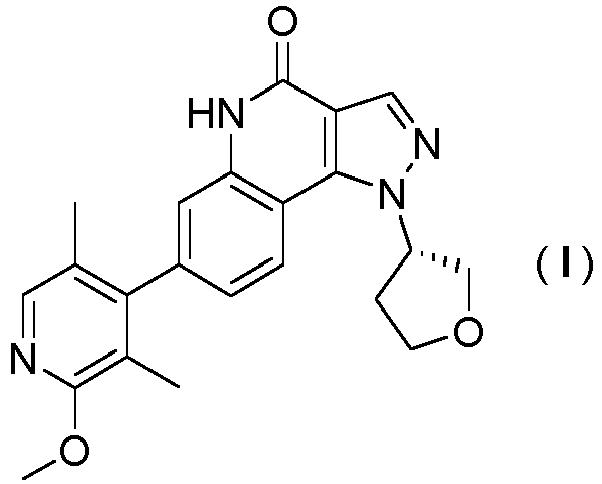
- a compound represented by formula (I) (referred to as Compound (I) hereinafter) or a pharmaceutically acceptable salt thereof exhibits a PDE9 inhibitory action and is expected to be efficacious against Alzheimer-type dementia (Patent Literature 1).
- Patent Literature 1 There is a report stating that a PDE9 inhibitor exhibited the effect of improving cognitive function in a novel object recognition test using rats with scopolamine-induced cognitive impairment (see Non Patent Literature 14), but there is no known pyrazoloquinoline derivative that exhibited the effect of improving cognitive function.
- Patent Literature 1 U.S. Patent No. 8563565
- the present inventors conducted intensive research by using a rat model of scopolamine-induced cognitive impairment for achieving the above-mentioned object and consequently found that a pyrazoloquinoline derivative represented by formula (I) or a pharmaceutically acceptable salt thereof had the effect of suppressing cognitive impairment induced by scopolamine.
- the present inventors also found that the effect of improving cognitive function in Lewy body disease could be confirmed by assessment using a 6-OHDA model and completed the present invention.
- the present invention relates to the following ⁇ 1> to ⁇ 4>.
- the pyrazoloquinoline derivative or a pharmaceutically acceptable salt thereof of the present invention exhibits the effect of suppressing cognitive impairment induced by scopolamine in the rat model of scopolamine-induced cognitive impairment, which is an animal model of Lewy body disease. Furthermore, the pyrazoloquinoline derivative or a pharmaceutically acceptable salt thereof of the present invention is expected to exhibit the effect of suppressing cognitive impairment in the 6-OHDA model, which is an animal model of Lewy body disease. Accordingly, the compound or a pharmaceutically acceptable salt thereof of the present invention has potential use as a therapeutic agent for Lewy body disease.
- “Pharmaceutically acceptable salt” as used herein is not particularly limited as long as the salt is a salt formed with the compound of the present invention and specific examples thereof include an acid addition salt such as a salt of an inorganic acid, a salt of an organic acid, and a salt of an acidic amino acid.
- the number of acid molecules per one molecule of the above described compound in a formed salt is not particularly limited as long as the salt is formed at an appropriate ratio of the acid to the above described compound, unless specifically stated otherwise.
- the number of acid molecules per one molecule of the above described compound is about 0.1 to about 5; in another embodiment, the number of acid molecules per one molecule of the above described compound is about 0.5 to about 2; and in still another embodiment, the number of acid molecules per one molecule of the above described compound is about 0.5, about 1, or about 2.
- salt of an inorganic acid examples include hydrochloride, hydrobromide, sulfate, nitrate, and phosphate
- salt of an organic acid examples include acetate, succinate, fumarate, maleate, tartrate, citrate, lactate, stearate, benzoate, methanesulfonate, p-toluenesulfonate, and benzenesulfonate.
- salt of an acidic amino acid include aspartate and glutamate.
- the pharmaceutical composition of the present invention can be produced by mixing a pharmaceutically acceptable additive with Compound (I) or a pharmaceutically acceptable salt thereof
- the pharmaceutical composition of the present invention can be produced in accordance with an already known method such as a method described in General Rules for Preparations of the Japanese Pharmacopoeia, 16th Editi on.
- composition of the present invention can be administered to a patient in an appropriate manner depending on the dosage form thereof
- the dosage of Compound (I) or a pharmaceutically acceptable salt thereof varies depending on the severity of the symptom, the age, the gender, the weight, the type of the dosage form and the salt, the specific type of the disease, and the like; and usually, in adults, about 30 ⁇ g to 10 g, in one embodiment 100 ⁇ g to 5 g, and in another embodiment 100 ⁇ g to 1 g is administered orally per day, in a single dose or in several divided doses; and about 30 ⁇ g to 1 g, in one embodiment 100 ⁇ g to 500 mg, and in another embodiment 100 ⁇ g to 300 mg is administered by injection per day, in a single dose or in several divided doses.
- Compound (I) can be produced for example by the method described in Patent Literature 1.
- the present inventors performed or can perform the following tests to confirm the effect of improving cognitive function in Lewy body disease.
- a novel object recognition test using rats with scopolamine-induced cognitive impairment was performed to confirm the effect of improving cognitive impairment induced by an acetylcholine nerve disorder.
- the novel object recognition test is a test system for assessing cognitive function based on the spontaneous behavioral characteristic of a rodent in which the rodent spends more time exploring a novel object than a familiar object.
- the test method described in Ennacer etc. Behavioural Brain Research, 31 (1988) pp. 47-51 was partially modified and performed.
- T1 On the day of the test, an acquisition trial (T1) was performed. Compound (I) was administered orally by using a solution of 0.5% methylcellulose in 0.01 M hydrochloric acid as a vehicle 2 hours before T1. Scopolamine (Wako Pure Chemical Industries, Ltd.) was administered subcutaneously by using a saline as a vehicle at a dose of 0.7 mg/kg 30 minutes before T1. In T1, the rat was habituated to the empty test apparatus for 3 minutes, and then was transferred into the waiting chamber. After two identical objects were placed in the test apparatus, the rat was returned into the test apparatus again and allowed to explore the two identical objects freely for 5 minutes. Then, the rat was returned into a home cage. Two hours later, a retention trial (T2) was performed.
- T2 Two hours later, a retention trial
- the rat was placed in the empty test apparatus for 3 minutes for habituation and then was transferred into the waiting chamber. After one of the objects used in T1 (a "familiar” object) and one object not used in T1 (a "novel” object) were placed in the test apparatus, the rat was returned into the test apparatus again and allowed to explore these objects freely for 3 minutes. The objects were wiped with a wet wipe impregnated with ethanol after each experiment so that a smell serving as a clue did not stay. The behaviors of the rat during T1 and T2 were recorded by a digital video camera and the total exploration time for each object was measured manually using a stopwatch. Exploratory behavior was defined as the behavior of a rat in which the rat brings its nose within 2 cm of an object and directs its nose toward the object.
- a percentage of exploration of the novel object during T2 is considered as an amnesia index that reflects discrimination between the familiar object and the novel object.
- the percentage of exploration of the novel object was calculated in accordance with the following equation.
- the percentage of exploration of the novel object % N / N + F ⁇ 100
- results were expressed as mean ⁇ standard error.
- the difference between a normal control group untreated with scopolamine and a disease control group treated with scopolamine was analyzed by an unpaired t-test (significantly different: *).
- the difference between the disease control group and a group treated with a single medicament was analyzed using Dunnett's multiple comparison test (significantly different: #).
- p ⁇ 0.05 was judged to be a statistically significant difference.
- Statistical analysis was performed by using GraphPad Prism version 5.04 or 6.02.
- Examples of a preclinical disease model of Lewy body disease include a cell model or an animal model produced by modifying a Lewy body disease-related gene or introducing a Lewy body disease-related substance (for example, ⁇ -synuclein transgenic, overexpression of ⁇ -synuclein by using an AAV vector, Parkin knockout, DJ-1 knockout, and a model injected with an ⁇ -synuclein aggregate); an agent-administered model reflecting the disorder of nervous system identified in a patient with Lewy body disease (for example, a model administered with a neurotoxin such as 6-OHDA, MPTP, paraquat, rotenone, LPS, and a saporin toxin, and a model administered with a neuroleptic drug such as scopolamine); a neuron model derived from iPS cells of a patient.
- a neurotoxin such as 6-OHDA, MPTP, paraquat, rotenone, LPS, and
- 6-OHDA 6-OHDA dissolved in a saline containing ascorbic acid is injected by a microinjection pump over several minutes. Desipramine is administered before the injection of 6-OHDA to protect a noradrenergic nerve.
- a rat untreated with 6-OHDA is produced by inserting a cannula into the same site in the brain.
- a novel object recognition test or an object location recognition test is performed. The novel object recognition test is performed by using the test method described in Ennacer etc. Behavioural Brain Research, 31 (1988) pp.
- the object location recognition test is performed by using the test method described in Dix Behavioural Brain Research 99 (1999) pp. 191-200 , with some modifications.
- the object location recognition test is a test system for assessing cognitive function based on the spontaneous behavioral characteristic of a rodent in which exploratory behavior of the rodent increases when the environment surrounding an object is changed even though the object is a familiar object.
- a process for habituating the rodent to the experimental procedure is performed before the test day.
- administration of a vehicle to the rat is performed, and the rat is allowed to explore freely in an empty test apparatus (40 cm ⁇ 30 cm ⁇ H 45 cm) for a certain period of time (from several minutes to several tens of minutes).
- T1 On the day of the test, Compound (I) is administered orally before an acquisition trial (T1).
- T2 the rat is allowed to freely explore two identical objects placed in the test apparatus for a certain period of time (for several minutes) during T1.
- the rat is returned into a home cage, and then a retention trial (T2) is performed.
- T2 of the novel object recognition test one of the objects used in T1 (a "familiar" object) and one object not used in T1 (a "novel” object) are placed in the test apparatus, and the rat is allowed to explore these objects freely for a certain period of time (for several minutes).
- T2 of the object location recognition test one of the two identical objects presented in T1 is placed in the test apparatus at a novel location.
- the rat is allowed to explore these objects freely for a certain period of time (for several minutes). In both tests, the objects are wiped with a wet wipe impregnated with ethanol after each experiment so that a smell serving as a clue do not stay.
- the behaviors of the rat during T1 and T2 are recorded by a digital video camera and the total exploration time for each object is measured manually using a stopwatch. Exploratory behavior is defined as the behavior of a rat in which the rat brings its nose within 2 cm of an object and directs its nose toward the object.
- a percentage of exploration of the novel object during T2 is considered as an amnesia index that reflects discrimination between the familiar object and the novel object.
- a percentage of exploration of the novel location during T2 is considered as an amnesia index that reflects discrimination between the familiar location and the novel location.
- the percentage of exploration of the novel object and the percentage of exploration of the object at the novel location are calculated in accordance with the following equations.
- the percentage of exploration of the novel object % N O / N O + F O ⁇ 100
Landscapes
- Health & Medical Sciences (AREA)
- Chemical & Material Sciences (AREA)
- Organic Chemistry (AREA)
- Neurosurgery (AREA)
- Engineering & Computer Science (AREA)
- Bioinformatics & Cheminformatics (AREA)
- Biomedical Technology (AREA)
- Neurology (AREA)
- Public Health (AREA)
- Life Sciences & Earth Sciences (AREA)
- Veterinary Medicine (AREA)
- General Health & Medical Sciences (AREA)
- Medicinal Chemistry (AREA)
- Animal Behavior & Ethology (AREA)
- Pharmacology & Pharmacy (AREA)
- Nuclear Medicine, Radiotherapy & Molecular Imaging (AREA)
- General Chemical & Material Sciences (AREA)
- Chemical Kinetics & Catalysis (AREA)
- Psychiatry (AREA)
- Hospice & Palliative Care (AREA)
- Epidemiology (AREA)
- Psychology (AREA)
- Pharmaceuticals Containing Other Organic And Inorganic Compounds (AREA)
- Nitrogen Condensed Heterocyclic Rings (AREA)
Abstract
Description
- The present invention relates to a therapeutic agent for dementia with Lewy bodies and Parkinson disease with dementia, comprising a pyrazoloquinoline derivative or a pharmaceutically acceptable salt thereof, which has an phosphodiesterase 9 (PDE9) inhibitory action on, as an active ingredient.
- Dementia with Lewy bodies (DLB) and Parkinson disease (PD) are a progressive neurodegenerative disease in which an abnormal inclusion body primarily composed of α-synuclein (Lewy body) appears inside a neuron, leading to degeneration and loss of the neuron. Distribution of many Lewy bodies in the cerebral cortex leads to development of, for example, cognitive impairment, and distribution of many Lewy bodies in the brainstem leads to development of parkinsonism In addition to these, psychiatric symptoms such as visual hallucinations, hallucinations, delusions, and depressive symptoms, sleep disorders, and autonomic symptoms are seen. When a person developed dementia before the onset of parkinsonism or within one year of the onset thereof, the person is diagnosed as dementia with Lewy bodies; and when parkinsonism was present for one or more years before the onset of dementia, the person is diagnosed as Parkinson disease with dementia (PDD). In this way, different diagnoses, which are dementia with Lewy bodies, Parkinson disease with dementia, and Parkinson disease, are given depending on, for example, the temporal order of appearance and difference in the extent of cognitive impairment and parkinsonism However, these diseases are pathologically considered as the same disease and are collectively referred to as Lewy body disease (LBD). The characteristic of dementia with Lewy bodies is that, in brain SPECT or FDG PET, reduced blood flow and abnormal glucose metabolism, which are observed in the posterior cingulate gyrus and the parietotemporal association area in Alzheimer disease, are also observed in the occipital lobe including a visual area in addition to the posterior cingulate gyrus and the parietotemporal association. When dopamine transporter (DAT) imaging that assesses the function of an intracerebral dopamine nervous system is performed, reduced uptake of DAT in the striatum in a brain is observed in not only Parkinson disease but also dementia with Lewy bodies before the onset of parkinsonism (see Non Patent Literature 1). It is also reported that, in dementia with Lewy bodies and Parkinson disease, neurons of a basal nucleus of Meynert, which is a nucleus of origin of an acetylcholinergic nerve, are degenerated or lost, and a severe disorder of the acetylcholinergic nervous system is observed in the hippocampus, the cortex, and the like (see Non Patent Literatures 2, 3, and 4).
- Currently there is no curative therapy that modifies the progress process itself of a brain lesion in dementia with Lewy bodies and Parkinson disease, and symptomatic treatment depending on symptoms has been administered. For a parkinsonian symptom, dopamine replacement therapy for example by taking L-DOPA, surgical therapy, and the like are used. For the cognitive impairment, only donepezil is approved for the indication of dementia with Lewy bodies and only rivastigmine is approved for the indication of Parkinson disease with dementia, and these are also effective against change of a cognitive function and a psychiatric symptom (hallucinations, delusions, apathy, depressive symptoms, or behavioral symptoms) (see Non Patent Literatures 5, 6, 7, and 8). However, there is a report that an acetylcholinesterase inhibitor aggravates the parkinsonian symptom (see Non Patent Literature 9), and currently there is no therapy that is available when the acetylcholinesterase inhibitor cannot be used from the viewpoint of a side effect and tolerability. Pimavanserin, which is a 5-HT2A inverse agonist, is approved as a therapeutic drug for the psychiatric symptom such as hallucinations and delusions experienced by a patient with Parkinson disease (see Non Patent Literature 10). However, as is the case with an atypical antipsychotic agent such as olanzapine, quetiapine, and risperidone, a black box warning indicates that mortality risk is increased when pimavanserin is used for treating the psychiatric symptom of dementia of elderly people. As described above, there is currently no fully satisfactory therapy for the cognitive impairment and the psychiatric symptom of dementia with Lewy bodies or Parkinson disease, and thus, development of an effective medicament has been long awaited.
- An animal to which scopolamine or 6-OHDA (6-hydroxydopamine) was administered can be used as an animal model of cognitive impairment seen in Lewy body disease. Scopolamine is a muscarinic receptor inhibitor and blocks transduction of the acetylcholinergic nervous system The acetylcholinergic nervous system is responsible for memory, attention, and the like, and a healthy subject or an animal to which scopolamine was administered develops a dementia-like amnestic symptom, which is alleviated by an medicament used for treating cognitive impairment of Lewy body disease (see Non Patent Literatures 11 and 12). 6-OHDA is a neurotoxin that selectively degenerates a dopaminergic nerve and a noradrenergic nerve. It is possible to make 6-OHDA act specifically on the dopaminergic nerve by using 6-OHDA with a selective noradrenaline reuptake inhibitor (e.g., desipramine). An animal to which 6-OHDA was administered develops cognitive impairment, which is alleviated by a medicament used for treating cognitive impairment of Lewy body disease (see Non Patent Literature 13).
- A compound represented by formula (I) (referred to as Compound (I) hereinafter) or a pharmaceutically acceptable salt thereof exhibits a PDE9 inhibitory action and is expected to be efficacious against Alzheimer-type dementia (Patent Literature 1). There is a report stating that a PDE9 inhibitor exhibited the effect of improving cognitive function in a novel object recognition test using rats with scopolamine-induced cognitive impairment (see Non Patent Literature 14), but there is no known pyrazoloquinoline derivative that exhibited the effect of improving cognitive function.
- Patent Literature 1:
U.S. Patent No. 8563565 -
- Non Patent Literature 1: McKeith et al., Neurology, 65, pp. 1863-1872 2005
- Non Patent Literature 2: Shimada et al., Neurology, vol. 73, pp. 273-278, 2009
- Non Patent Literature 3: Tiraboschi et al., Neurology 54 (2000) 407-411
- Non Patent Literature 4: Perry et. al., NeuroReport, vol. 5, pp. 747-749 (1994)
- Non Patent Literature 5: Mori et al., Ann. Neurol, vol. 72, pp. 41-52 (2012)
- Non Patent Literature 6: Dubois et al., Movement Disorders, vol. 27, pp. 1230-1238 (2012)
- Non Patent Literature 7: Bergman et al., Clin. Neuropharmacol., vol. 25, pp. 107-110 (2002)
- Non Patent Literature 8: McKeith, et al, Lancet, vol. 356, pp. 2031-2036 (2000)
- Non Patent Literature 9: Bourke et al., Ann. Pharmacother. Vol. 32, pp. 610-611 (1998)
- Non Patent Literature 10: Cummings et al., Lancet 2014, vol. 383, pp. 533-540
- Non Patent Literature 11: Snyder et al., Alzheimer's & Dementia 1 (2005) 126-135
- Non Patent Literature 12: Sambeth et al., European Journal of Pharmacology, vol. 572 (2007) pp. 151-159
- Non Patent Literature 13: Kadowaki et al., Psychopharmacology (2013), 230, pp. 345-352
- Non Patent Literature 14: Hutson et al., Neuropharmacology, 61 (2011) pp. 665-676
- It is an object of the present invention to provide a compound or a pharmaceutically acceptable salt thereof that exhibits an anti-dementia action in an animal model and has potential use as a therapeutic agent for Lewy body disease.
- The present inventors conducted intensive research by using a rat model of scopolamine-induced cognitive impairment for achieving the above-mentioned object and consequently found that a pyrazoloquinoline derivative represented by formula (I) or a pharmaceutically acceptable salt thereof had the effect of suppressing cognitive impairment induced by scopolamine. The present inventors also found that the effect of improving cognitive function in Lewy body disease could be confirmed by assessment using a 6-OHDA model and completed the present invention.
- Specifically, the present invention relates to the following <1> to <4>.
- <1> A therapeutic agent for dementia with Lewy bodies or Parkinson disease with dementia, comprising (S)-7-(2-methoxy-3,5-dimethylpyridin-4-yl)-1-(tetrahydrofuran-3-yl)-1H-pyrazolo[4,3-c]quinolin-4(5H)-one

- <2> A method for treating dementia with Lewy bodies or Parkinson disease with dementia, comprising administering (S)-7-(2-methoxy-3,5-dimethylpyridin-4-yl)-1-(tetrahydrofuran-3-yl)-1H-pyrazol[4,3-c]quinolin-4(5H)-one

- <3> (S)-7-(2-Methoxy-3,5-dimethylpyridin-4-yl)-1-(tetrahydrofuran-3-yl)-1H-pyrazolo[4,3-c]quinolin-4(5H)-one

- <4> Use of (S)-7-(2-methoxy-3,5-dimethylpyridin-4-yl)-1-(tetrahydrofuran-3-yl)-1H-pyrazolo[4,3-c]quinolin-4(5H)-one

- The pyrazoloquinoline derivative or a pharmaceutically acceptable salt thereof of the present invention exhibits the effect of suppressing cognitive impairment induced by scopolamine in the rat model of scopolamine-induced cognitive impairment, which is an animal model of Lewy body disease. Furthermore, the pyrazoloquinoline derivative or a pharmaceutically acceptable salt thereof of the present invention is expected to exhibit the effect of suppressing cognitive impairment in the 6-OHDA model, which is an animal model of Lewy body disease. Accordingly, the compound or a pharmaceutically acceptable salt thereof of the present invention has potential use as a therapeutic agent for Lewy body disease.
- Hereinafter, the content of the present invention is described in detail.
- "Pharmaceutically acceptable salt" as used herein is not particularly limited as long as the salt is a salt formed with the compound of the present invention and specific examples thereof include an acid addition salt such as a salt of an inorganic acid, a salt of an organic acid, and a salt of an acidic amino acid.
- In the context of "pharmaceutically acceptable salt" as used herein, the number of acid molecules per one molecule of the above described compound in a formed salt is not particularly limited as long as the salt is formed at an appropriate ratio of the acid to the above described compound, unless specifically stated otherwise. In one embodiment, the number of acid molecules per one molecule of the above described compound is about 0.1 to about 5; in another embodiment, the number of acid molecules per one molecule of the above described compound is about 0.5 to about 2; and in still another embodiment, the number of acid molecules per one molecule of the above described compound is about 0.5, about 1, or about 2.
- Specific examples of the salt of an inorganic acid include hydrochloride, hydrobromide, sulfate, nitrate, and phosphate; specific examples of the salt of an organic acid include acetate, succinate, fumarate, maleate, tartrate, citrate, lactate, stearate, benzoate, methanesulfonate, p-toluenesulfonate, and benzenesulfonate.
- Specific examples of the salt of an acidic amino acid include aspartate and glutamate.
- The pharmaceutical composition of the present invention can be produced by mixing a pharmaceutically acceptable additive with Compound (I) or a pharmaceutically acceptable salt thereof The pharmaceutical composition of the present invention can be produced in accordance with an already known method such as a method described in General Rules for Preparations of the Japanese Pharmacopoeia, 16th Edition.
- The pharmaceutical composition of the present invention can be administered to a patient in an appropriate manner depending on the dosage form thereof
- The dosage of Compound (I) or a pharmaceutically acceptable salt thereof varies depending on the severity of the symptom, the age, the gender, the weight, the type of the dosage form and the salt, the specific type of the disease, and the like; and usually, in adults, about 30 µg to 10 g, in one embodiment 100 µg to 5 g, and in another embodiment 100 µg to 1 g is administered orally per day, in a single dose or in several divided doses; and about 30 µg to 1 g, in one embodiment 100 µg to 500 mg, and in another embodiment 100 µg to 300 mg is administered by injection per day, in a single dose or in several divided doses.
- Compound (I) can be produced for example by the method described in Patent Literature 1.
- The present inventors performed or can perform the following tests to confirm the effect of improving cognitive function in Lewy body disease.
- A novel object recognition test using rats with scopolamine-induced cognitive impairment was performed to confirm the effect of improving cognitive impairment induced by an acetylcholine nerve disorder. The novel object recognition test is a test system for assessing cognitive function based on the spontaneous behavioral characteristic of a rodent in which the rodent spends more time exploring a novel object than a familiar object. The test method described in Ennacer etc. Behavioural Brain Research, 31 (1988) pp. 47-51 was partially modified and performed.
- Six-week-old male Long Evans rats (the Institute for Animal Reproduction) were subjected to the test. For two days before the test, a process for habituating the rat to the experimental procedure was performed once daily. In the habituation process, administration of a vehicle to the rat was performed, and subsequently, the rat was placed in an empty test apparatus (40 cm × 30 cm × H 45 cm) and allowed to explore for 3 minutes, was transferred into a waiting chamber (13 cm × 30 cm × H 45 cm) for about 1 minute, and then was returned into the empty test apparatus again and allowed to stay for 5 minutes.
- On the day of the test, an acquisition trial (T1) was performed. Compound (I) was administered orally by using a solution of 0.5% methylcellulose in 0.01 M hydrochloric acid as a vehicle 2 hours before T1. Scopolamine (Wako Pure Chemical Industries, Ltd.) was administered subcutaneously by using a saline as a vehicle at a dose of 0.7 mg/kg 30 minutes before T1. In T1, the rat was habituated to the empty test apparatus for 3 minutes, and then was transferred into the waiting chamber. After two identical objects were placed in the test apparatus, the rat was returned into the test apparatus again and allowed to explore the two identical objects freely for 5 minutes. Then, the rat was returned into a home cage. Two hours later, a retention trial (T2) was performed. The rat was placed in the empty test apparatus for 3 minutes for habituation and then was transferred into the waiting chamber. After one of the objects used in T1 (a "familiar" object) and one object not used in T1 (a "novel" object) were placed in the test apparatus, the rat was returned into the test apparatus again and allowed to explore these objects freely for 3 minutes. The objects were wiped with a wet wipe impregnated with ethanol after each experiment so that a smell serving as a clue did not stay. The behaviors of the rat during T1 and T2 were recorded by a digital video camera and the total exploration time for each object was measured manually using a stopwatch. Exploratory behavior was defined as the behavior of a rat in which the rat brings its nose within 2 cm of an object and directs its nose toward the object.
- In the novel object recognition test, a percentage of exploration of the novel object during T2 is considered as an amnesia index that reflects discrimination between the familiar object and the novel object. The percentage of exploration of the novel object was calculated in accordance with the following equation.

- F: time spent in exploring the familiar object
- N: time spent in exploring the novel object
- Rats whose total time spent in exploring the objects during T1 or T2 was 10 seconds or less or rats whose percentage of the time spent in exploring either of the objects during T1 was not less than 70% or not more than 30% of the total exploration time were excluded from data analysis.
- The results were expressed as mean ± standard error. The difference between a normal control group untreated with scopolamine and a disease control group treated with scopolamine was analyzed by an unpaired t-test (significantly different: *). The difference between the disease control group and a group treated with a single medicament was analyzed using Dunnett's multiple comparison test (significantly different: #). p < 0.05 was judged to be a statistically significant difference. Statistical analysis was performed by using GraphPad Prism version 5.04 or 6.02.
- In T2, rats in the disease control group showed a significant decrease in the percentage of exploration of the novel object compared with rats in the normal control group. This means that memory impairment was induced in the rats by scopolamine. Compound (I) exhibited a significant effect of improving the percentage of exploration of the novel object at 3.3 mg/kg and 10 mg/kg.
[Table 1] Normal control group Scopolamine-administered group Disease control group Compound (I) 3.3 mg/kg Compound (I) 10 mg/kg 73.8±3.0 53.3±2.2* 68.5±2.0# 68.5±1,6# - Examples of a preclinical disease model of Lewy body disease include a cell model or an animal model produced by modifying a Lewy body disease-related gene or introducing a Lewy body disease-related substance (for example, α-synuclein transgenic, overexpression of α-synuclein by using an AAV vector, Parkin knockout, DJ-1 knockout, and a model injected with an α-synuclein aggregate); an agent-administered model reflecting the disorder of nervous system identified in a patient with Lewy body disease (for example, a model administered with a neurotoxin such as 6-OHDA, MPTP, paraquat, rotenone, LPS, and a saporin toxin, and a model administered with a neuroleptic drug such as scopolamine); a neuron model derived from iPS cells of a patient. The effect of a medicament on Lewy body disease can be confirmed by using these preclinical disease models.
- Herein, it is shown that the therapeutic effect on Lewy body disease can be confirmed by using the 6-OHDA model.
- Male SD rats are used to produce the 6-OHDA model. The rat is secured in a brain stereotaxic apparatus under anesthesia, and a cannula is inserted into the brain after exposing the skull. 6-OHDA dissolved in a saline containing ascorbic acid is injected by a microinjection pump over several minutes. Desipramine is administered before the injection of 6-OHDA to protect a noradrenergic nerve. A rat untreated with 6-OHDA is produced by inserting a cannula into the same site in the brain. Several days after the operation, a novel object recognition test or an object location recognition test is performed. The novel object recognition test is performed by using the test method described in Ennacer etc. Behavioural Brain Research, 31 (1988) pp. 47-51, with some modifications. The object location recognition test is performed by using the test method described in Dix Behavioural Brain Research 99 (1999) pp. 191-200, with some modifications. The object location recognition test is a test system for assessing cognitive function based on the spontaneous behavioral characteristic of a rodent in which exploratory behavior of the rodent increases when the environment surrounding an object is changed even though the object is a familiar object.
- In both tests, a process for habituating the rodent to the experimental procedure is performed before the test day. In the habituating process, administration of a vehicle to the rat is performed, and the rat is allowed to explore freely in an empty test apparatus (40 cm × 30 cm × H 45 cm) for a certain period of time (from several minutes to several tens of minutes).
- On the day of the test, Compound (I) is administered orally before an acquisition trial (T1). In both tests, the rat is allowed to freely explore two identical objects placed in the test apparatus for a certain period of time (for several minutes) during T1. The rat is returned into a home cage, and then a retention trial (T2) is performed. In T2 of the novel object recognition test, one of the objects used in T1 (a "familiar" object) and one object not used in T1 (a "novel" object) are placed in the test apparatus, and the rat is allowed to explore these objects freely for a certain period of time (for several minutes). In T2 of the object location recognition test, one of the two identical objects presented in T1 is placed in the test apparatus at a novel location. The rat is allowed to explore these objects freely for a certain period of time (for several minutes). In both tests, the objects are wiped with a wet wipe impregnated with ethanol after each experiment so that a smell serving as a clue do not stay. The behaviors of the rat during T1 and T2 are recorded by a digital video camera and the total exploration time for each object is measured manually using a stopwatch. Exploratory behavior is defined as the behavior of a rat in which the rat brings its nose within 2 cm of an object and directs its nose toward the object.
- In the novel object recognition test, a percentage of exploration of the novel object during T2 is considered as an amnesia index that reflects discrimination between the familiar object and the novel object. In the object location recognition test, a percentage of exploration of the novel location during T2 is considered as an amnesia index that reflects discrimination between the familiar location and the novel location. The percentage of exploration of the novel object and the percentage of exploration of the object at the novel location are calculated in accordance with the following equations.

- Fo: time spent in exploring the familiar object
- No: time spent in exploring the novel object
- F1: time spent in exploring the object at the familiar location
- N1: time spent in exploring the object at the novel location

Claims (4)
- A therapeutic agent for dementia with Lewy bodies or Parkinson disease with dementia, comprising (S)-7-(2-methoxy-3,5-dimethylpyridin-4-yl)-1-(tetrahydrofuran-3-yl)-1H-pyrazolo[4,3-c]qumo!in-4(5H)-one represented by formula (I),

- A method for treating dementia with Lewy bodies or Parkinson disease with dementia, comprising administering (S)-7-(2-methoxy-3,5-dimethylpyridin-4-yl)-1-(tetrahydrofuran-3-yl)-1H-pyrazolo[4,3-c]quinolin-4(5H)-one represented by formula (I)

- (S)-7-(2-Methoxy-3,5-dimethylpyridin-4-yl)-1-(tetrahydrofuran-3-yl)-1H-pyrazolo[4,3-c]quinolin-4(5H)-one represented by formula (I)
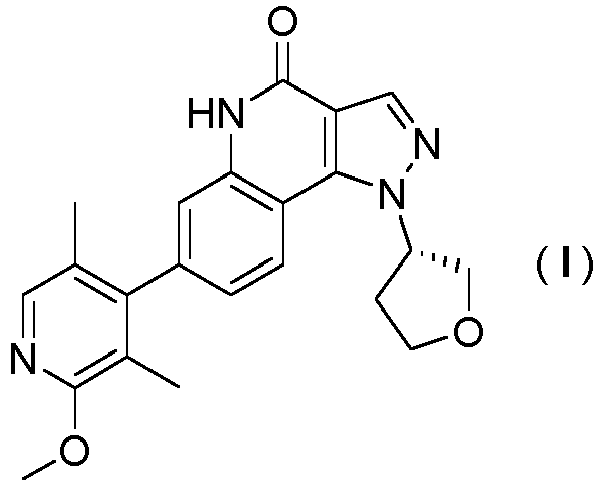
- Use of (S)-7-(2-methoxy-3,5-dimethylpyridin-4-yl)-1-(tetrahydrofuran-3-yl)-1H-pyrazolo[4,3-c]quinolin-4(5H)-one represented by formula (I)

Applications Claiming Priority (2)
| Application Number | Priority Date | Filing Date | Title |
|---|---|---|---|
| US201762513727P | 2017-06-01 | 2017-06-01 | |
| PCT/JP2018/020650 WO2018221551A1 (en) | 2017-06-01 | 2018-05-30 | Lewy body disease therapeutic agent containing pyrazoloquinoline derivative |
Publications (3)
| Publication Number | Publication Date |
|---|---|
| EP3632438A1 true EP3632438A1 (en) | 2020-04-08 |
| EP3632438A4 EP3632438A4 (en) | 2020-12-23 |
| EP3632438B1 EP3632438B1 (en) | 2023-08-23 |
Family
ID=64456542
Family Applications (1)
| Application Number | Title | Priority Date | Filing Date |
|---|---|---|---|
| EP18810202.4A Active EP3632438B1 (en) | 2017-06-01 | 2018-05-30 | Lewy body disease therapeutic agent containing pyrazoloquinoline derivative |
Country Status (13)
| Country | Link |
|---|---|
| US (1) | US11311530B2 (en) |
| EP (1) | EP3632438B1 (en) |
| JP (1) | JP7269875B2 (en) |
| KR (1) | KR20200010220A (en) |
| CN (1) | CN110612102A (en) |
| AU (1) | AU2018278422B2 (en) |
| BR (1) | BR112019023552A2 (en) |
| CA (1) | CA3061884A1 (en) |
| ES (1) | ES2961554T3 (en) |
| IL (1) | IL270357B2 (en) |
| MX (1) | MX394435B (en) |
| TW (1) | TWI784006B (en) |
| WO (1) | WO2018221551A1 (en) |
Families Citing this family (4)
| Publication number | Priority date | Publication date | Assignee | Title |
|---|---|---|---|---|
| KR20200010211A (en) | 2017-06-01 | 2020-01-30 | 에자이 알앤드디 매니지먼트 가부시키가이샤 | Pharmaceutical composition comprising a PDE9 inhibitor |
| RU2019135834A (en) | 2017-06-01 | 2021-07-13 | Эйсай Ар Энд Ди Менеджмент Ко., Лтд. | THERAPEUTIC AGENT FOR THE TREATMENT OF DEMENTIA, PRESENTING A COMBINATION OF A PYRAZOLOQUINOLINE DERIVATIVES AND DONEEPESIL |
| SG10202113199RA (en) | 2017-06-01 | 2021-12-30 | Eisai R&D Man Co Ltd | Dementia therapeutic agent combining pyrazoloquinoline derivative and memantine |
| CA3235146A1 (en) | 2021-10-14 | 2023-04-20 | Incyte Corporation | Quinoline compounds as inhibitors of kras |
Family Cites Families (32)
| Publication number | Priority date | Publication date | Assignee | Title |
|---|---|---|---|---|
| JPS5318759A (en) | 1976-08-02 | 1978-02-21 | Nisshin Oil Mills Ltd | Method of making fried beancurd |
| JPH05132484A (en) | 1991-04-26 | 1993-05-28 | Otsuka Pharmaceut Factory Inc | Pyrazoloquinoline and pyrazolonaphthyridine derivatives |
| EP0760819B1 (en) | 1994-05-24 | 2000-07-19 | F. Hoffmann-La Roche Ag | Tricyclic dicarbonyl derivatives |
| DE19642591A1 (en) | 1996-10-15 | 1998-04-16 | Basf Ag | New piperidine-ketocarboxylic acid derivatives, their production and use |
| HN2002000317A (en) | 2001-11-02 | 2003-05-21 | Pfizer | PDE9 INHIBITORS FOR TREATMENT OF CARDIOVASCULAR DISORDERS |
| AU2003250539A1 (en) | 2002-08-07 | 2004-02-25 | Mitsubishi Pharma Corporation | Dihydropyrazolopyridine compounds |
| DE10238722A1 (en) * | 2002-08-23 | 2004-03-11 | Bayer Ag | Improving attention, concentration, cognition, learning and/or memory performance, using selective phosphodiesterase 9A inhibitors, preferably 4H-pyrazolo-(3,4-d)-pyrimidin-4-one derivatives |
| DE102004004142A1 (en) | 2003-05-09 | 2004-11-25 | Bayer Healthcare Ag | 6-Cyclylmethyl- and 6-alkylmethyl-substituted pyrazolopyrimidines |
| RU2426734C2 (en) | 2003-10-03 | 2011-08-20 | Зм Инновейтив Пропертиз Компани | Pyrazolopyridines and analogues thereof |
| US20060035920A1 (en) | 2004-05-28 | 2006-02-16 | Millennium Pharmaceuticals, Inc. | Chk-1 inhibitors |
| JP2006045118A (en) | 2004-08-04 | 2006-02-16 | Mochida Pharmaceut Co Ltd | New pyrazoloquinolone derivatives |
| KR20080046728A (en) | 2005-09-15 | 2008-05-27 | 아스카 세이야쿠 가부시키가이샤 | Heterocyclic Compounds, Methods for Making And Uses thereof |
| WO2008072778A1 (en) | 2006-12-13 | 2008-06-19 | Aska Pharmaceutical Co., Ltd. | Therapeutic agent for urinary tract disease |
| US8299080B2 (en) | 2006-12-13 | 2012-10-30 | Aska Pharmaceutical Co., Ltd. | Substituted imidazo[1,5-A] quinoxalines as a PDE9 inhibitor |
| RS52166B (en) | 2007-05-11 | 2012-08-31 | Pfizer Inc. | AMINO-HETEROCYCLIC COMPOUNDS |
| UA105362C2 (en) | 2008-04-02 | 2014-05-12 | Бьорингер Ингельхайм Интернациональ Гмбх | 1-heterocyclyl-1, 5-dihydro-pyrazolo [3, 4-d] pyrimidin-4-one derivatives and their use as pde9a modulators |
| KR20110063447A (en) | 2008-09-08 | 2011-06-10 | 베링거 인겔하임 인터내셔날 게엠베하 | Pyrazolopyrimidines and Their Uses for the Treatment of CNS Disorders |
| TWI404721B (en) | 2009-01-26 | 2013-08-11 | Pfizer | Amino-heterocyclic compounds |
| MX2011009314A (en) | 2009-03-05 | 2011-10-11 | Astellas Pharma Inc | Quinoxaline compounds. |
| PT2414363E (en) | 2009-03-31 | 2014-02-26 | Boehringer Ingelheim Int | 1-heterocyclyl-1,5-dihydro-pyrazolo[3,4-d]pyrimidin-4-one derivatives and their use as pde9a modulators |
| US8880976B2 (en) | 2009-09-25 | 2014-11-04 | Stmicroelectronics, Inc. | Method and apparatus for encoding LBA information into the parity of a LDPC system |
| EP2603511B1 (en) | 2010-08-12 | 2017-03-15 | Boehringer Ingelheim International GmbH | 6-cycloalkyl-1, 5-dihydro-pyrazolo [3, 4-d] pyrimidin-4-one derivatives and their use as pde9a inhibitors |
| RS54834B1 (en) | 2010-09-07 | 2016-10-31 | Astellas Pharma Inc | Pyrazoloquinoline compounds |
| US20130040971A1 (en) | 2011-02-14 | 2013-02-14 | Boehringer Ingelheim International Gmbh | 6-cycloalkyl-pyrazolopyrimidinones for the treatment of cns disorders |
| JP6042060B2 (en) | 2011-09-26 | 2016-12-14 | サノフイ | Pyrazoloquinolinone derivatives, their preparation and therapeutic use |
| SI2573073T1 (en) | 2011-09-26 | 2015-02-27 | Sanofi | Pyrazoloquinolinone derivatives, preparation thereof and therapeutic use thereof |
| JO3116B1 (en) * | 2011-10-07 | 2017-09-20 | Eisai R&D Man Co Ltd | Pyrazolokinoline is derived as inhibitors for PDE9 |
| US9573947B2 (en) | 2013-04-05 | 2017-02-21 | Eisai R&D Management Co., Ltd. | Salt of pyrazoloquinoline derivative, and crystal thereof |
| JP6244353B2 (en) | 2013-04-05 | 2017-12-06 | エーザイ・アール・アンド・ディー・マネジメント株式会社 | Pyridinylpyrazoloquinoline compounds |
| RU2019135834A (en) | 2017-06-01 | 2021-07-13 | Эйсай Ар Энд Ди Менеджмент Ко., Лтд. | THERAPEUTIC AGENT FOR THE TREATMENT OF DEMENTIA, PRESENTING A COMBINATION OF A PYRAZOLOQUINOLINE DERIVATIVES AND DONEEPESIL |
| SG10202113199RA (en) | 2017-06-01 | 2021-12-30 | Eisai R&D Man Co Ltd | Dementia therapeutic agent combining pyrazoloquinoline derivative and memantine |
| KR20200010211A (en) | 2017-06-01 | 2020-01-30 | 에자이 알앤드디 매니지먼트 가부시키가이샤 | Pharmaceutical composition comprising a PDE9 inhibitor |
-
2018
- 2018-05-30 KR KR1020197033124A patent/KR20200010220A/en not_active Ceased
- 2018-05-30 MX MX2019013397A patent/MX394435B/en unknown
- 2018-05-30 BR BR112019023552-3A patent/BR112019023552A2/en not_active IP Right Cessation
- 2018-05-30 IL IL270357A patent/IL270357B2/en unknown
- 2018-05-30 EP EP18810202.4A patent/EP3632438B1/en active Active
- 2018-05-30 JP JP2019521251A patent/JP7269875B2/en active Active
- 2018-05-30 TW TW107118423A patent/TWI784006B/en active
- 2018-05-30 CA CA3061884A patent/CA3061884A1/en active Pending
- 2018-05-30 WO PCT/JP2018/020650 patent/WO2018221551A1/en not_active Ceased
- 2018-05-30 AU AU2018278422A patent/AU2018278422B2/en active Active
- 2018-05-30 ES ES18810202T patent/ES2961554T3/en active Active
- 2018-05-30 CN CN201880030146.7A patent/CN110612102A/en active Pending
- 2018-05-30 US US16/611,374 patent/US11311530B2/en active Active
Also Published As
| Publication number | Publication date |
|---|---|
| IL270357A (en) | 2020-02-27 |
| EP3632438B1 (en) | 2023-08-23 |
| IL270357B1 (en) | 2023-10-01 |
| TWI784006B (en) | 2022-11-21 |
| JP7269875B2 (en) | 2023-05-09 |
| CA3061884A1 (en) | 2019-10-29 |
| MX394435B (en) | 2025-03-12 |
| MX2019013397A (en) | 2020-02-07 |
| ES2961554T3 (en) | 2024-03-12 |
| KR20200010220A (en) | 2020-01-30 |
| BR112019023552A2 (en) | 2020-06-02 |
| RU2019135690A3 (en) | 2021-08-25 |
| RU2019135690A (en) | 2021-07-13 |
| CN110612102A (en) | 2019-12-24 |
| TW201902479A (en) | 2019-01-16 |
| AU2018278422B2 (en) | 2022-03-17 |
| US11311530B2 (en) | 2022-04-26 |
| US20200155541A1 (en) | 2020-05-21 |
| EP3632438A4 (en) | 2020-12-23 |
| AU2018278422A1 (en) | 2019-11-21 |
| WO2018221551A1 (en) | 2018-12-06 |
| JPWO2018221551A1 (en) | 2020-04-02 |
| IL270357B2 (en) | 2024-02-01 |
Similar Documents
| Publication | Publication Date | Title |
|---|---|---|
| Nguyen et al. | Sigma-1 receptors and neurodegenerative diseases: towards a hypothesis of sigma-1 receptors as amplifiers of neurodegeneration and neuroprotection | |
| Arendash et al. | Caffeine and coffee as therapeutics against Alzheimer's disease | |
| EP3632439B1 (en) | Dementia therapeutic agent combining pyrazoloquinoline derivative and donepezil | |
| US20220354822A1 (en) | Mdma enantiomers | |
| EP3632438B1 (en) | Lewy body disease therapeutic agent containing pyrazoloquinoline derivative | |
| KR20160067103A (en) | Composition comprising torasemide and baclofen for treating neurological disorders | |
| Anand et al. | The animal models of dementia and Alzheimer’s disease for pre-clinical testing and clinical translation | |
| EP3632437B1 (en) | Dementia therapeutic agent combining pyrazoloquinoline derivative and memantine | |
| EA037187B1 (en) | Method and composition for treating a cognitive disorder | |
| Chhabra et al. | Pre-clinical aspects and contemporary treatments of Parkinson's disease | |
| US20230226020A1 (en) | Mdma enantiomers | |
| US20230226019A1 (en) | Mdma enantiomers | |
| DE60029463T2 (en) | TREATMENT OF DYSKINESIA | |
| WO2024196772A2 (en) | Mdma enantiomers | |
| EP3628315A1 (en) | Combination of acetylcholinesterase inhibitor and 5-ht4 receptor agonist as neuroprotective agent in the treatment of neurodegenerative diseases | |
| RU2802212C2 (en) | Therapeutic for the treatment of lewy body disease containing pyrazoloquinoline derivative | |
| EP1244351A1 (en) | Animal models for neurodegenerative disease | |
| WO2021108720A1 (en) | Lobinaline n-oxides as positive allosteric modulators of the dopamine transporter with potential value in the treatment of substance abuse disorders | |
| Dumont et al. | P. 1. c. 001 Acute psychomotor, memory and subjective effects of MDMA and THC (co-) administration over time in healthy volunteers | |
| Sanjakdar | INVESTIGATING THE ROLE OF α6 and α4 CONTAINING NEURONAL NICOTINIC ACETYLCHOLINE RECEPTORS IN NICOTINE AND COCAINE CONDITIONED PLACE PREFERENCE TESTS IN MICE. |
Legal Events
| Date | Code | Title | Description |
|---|---|---|---|
| STAA | Information on the status of an ep patent application or granted ep patent |
Free format text: STATUS: THE INTERNATIONAL PUBLICATION HAS BEEN MADE |
|
| PUAI | Public reference made under article 153(3) epc to a published international application that has entered the european phase |
Free format text: ORIGINAL CODE: 0009012 |
|
| STAA | Information on the status of an ep patent application or granted ep patent |
Free format text: STATUS: REQUEST FOR EXAMINATION WAS MADE |
|
| 17P | Request for examination filed |
Effective date: 20191106 |
|
| AK | Designated contracting states |
Kind code of ref document: A1 Designated state(s): AL AT BE BG CH CY CZ DE DK EE ES FI FR GB GR HR HU IE IS IT LI LT LU LV MC MK MT NL NO PL PT RO RS SE SI SK SM TR |
|
| AX | Request for extension of the european patent |
Extension state: BA ME |
|
| DAV | Request for validation of the european patent (deleted) | ||
| DAX | Request for extension of the european patent (deleted) | ||
| A4 | Supplementary search report drawn up and despatched |
Effective date: 20201123 |
|
| RIC1 | Information provided on ipc code assigned before grant |
Ipc: A61P 25/28 20060101ALI20201117BHEP Ipc: A61K 31/4745 20060101AFI20201117BHEP Ipc: A61P 25/16 20060101ALI20201117BHEP |
|
| STAA | Information on the status of an ep patent application or granted ep patent |
Free format text: STATUS: EXAMINATION IS IN PROGRESS |
|
| 17Q | First examination report despatched |
Effective date: 20211115 |
|
| GRAP | Despatch of communication of intention to grant a patent |
Free format text: ORIGINAL CODE: EPIDOSNIGR1 |
|
| STAA | Information on the status of an ep patent application or granted ep patent |
Free format text: STATUS: GRANT OF PATENT IS INTENDED |
|
| INTG | Intention to grant announced |
Effective date: 20230320 |
|
| P01 | Opt-out of the competence of the unified patent court (upc) registered |
Effective date: 20230510 |
|
| GRAS | Grant fee paid |
Free format text: ORIGINAL CODE: EPIDOSNIGR3 |
|
| GRAA | (expected) grant |
Free format text: ORIGINAL CODE: 0009210 |
|
| STAA | Information on the status of an ep patent application or granted ep patent |
Free format text: STATUS: THE PATENT HAS BEEN GRANTED |
|
| AK | Designated contracting states |
Kind code of ref document: B1 Designated state(s): AL AT BE BG CH CY CZ DE DK EE ES FI FR GB GR HR HU IE IS IT LI LT LU LV MC MK MT NL NO PL PT RO RS SE SI SK SM TR |
|
| REG | Reference to a national code |
Ref country code: GB Ref legal event code: FG4D |
|
| REG | Reference to a national code |
Ref country code: CH Ref legal event code: EP |
|
| REG | Reference to a national code |
Ref country code: DE Ref legal event code: R096 Ref document number: 602018056037 Country of ref document: DE |
|
| REG | Reference to a national code |
Ref country code: IE Ref legal event code: FG4D |
|
| REG | Reference to a national code |
Ref country code: SE Ref legal event code: TRGR |
|
| REG | Reference to a national code |
Ref country code: NL Ref legal event code: FP |
|
| REG | Reference to a national code |
Ref country code: LT Ref legal event code: MG9D |
|
| REG | Reference to a national code |
Ref country code: AT Ref legal event code: MK05 Ref document number: 1601767 Country of ref document: AT Kind code of ref document: T Effective date: 20230823 |
|
| PG25 | Lapsed in a contracting state [announced via postgrant information from national office to epo] |
Ref country code: GR Free format text: LAPSE BECAUSE OF FAILURE TO SUBMIT A TRANSLATION OF THE DESCRIPTION OR TO PAY THE FEE WITHIN THE PRESCRIBED TIME-LIMIT Effective date: 20231124 |
|
| PG25 | Lapsed in a contracting state [announced via postgrant information from national office to epo] |
Ref country code: IS Free format text: LAPSE BECAUSE OF FAILURE TO SUBMIT A TRANSLATION OF THE DESCRIPTION OR TO PAY THE FEE WITHIN THE PRESCRIBED TIME-LIMIT Effective date: 20231223 |
|
| PG25 | Lapsed in a contracting state [announced via postgrant information from national office to epo] |
Ref country code: RS Free format text: LAPSE BECAUSE OF FAILURE TO SUBMIT A TRANSLATION OF THE DESCRIPTION OR TO PAY THE FEE WITHIN THE PRESCRIBED TIME-LIMIT Effective date: 20230823 Ref country code: PT Free format text: LAPSE BECAUSE OF FAILURE TO SUBMIT A TRANSLATION OF THE DESCRIPTION OR TO PAY THE FEE WITHIN THE PRESCRIBED TIME-LIMIT Effective date: 20231226 Ref country code: NO Free format text: LAPSE BECAUSE OF FAILURE TO SUBMIT A TRANSLATION OF THE DESCRIPTION OR TO PAY THE FEE WITHIN THE PRESCRIBED TIME-LIMIT Effective date: 20231123 Ref country code: LV Free format text: LAPSE BECAUSE OF FAILURE TO SUBMIT A TRANSLATION OF THE DESCRIPTION OR TO PAY THE FEE WITHIN THE PRESCRIBED TIME-LIMIT Effective date: 20230823 Ref country code: LT Free format text: LAPSE BECAUSE OF FAILURE TO SUBMIT A TRANSLATION OF THE DESCRIPTION OR TO PAY THE FEE WITHIN THE PRESCRIBED TIME-LIMIT Effective date: 20230823 Ref country code: IS Free format text: LAPSE BECAUSE OF FAILURE TO SUBMIT A TRANSLATION OF THE DESCRIPTION OR TO PAY THE FEE WITHIN THE PRESCRIBED TIME-LIMIT Effective date: 20231223 Ref country code: HR Free format text: LAPSE BECAUSE OF FAILURE TO SUBMIT A TRANSLATION OF THE DESCRIPTION OR TO PAY THE FEE WITHIN THE PRESCRIBED TIME-LIMIT Effective date: 20230823 Ref country code: GR Free format text: LAPSE BECAUSE OF FAILURE TO SUBMIT A TRANSLATION OF THE DESCRIPTION OR TO PAY THE FEE WITHIN THE PRESCRIBED TIME-LIMIT Effective date: 20231124 Ref country code: FI Free format text: LAPSE BECAUSE OF FAILURE TO SUBMIT A TRANSLATION OF THE DESCRIPTION OR TO PAY THE FEE WITHIN THE PRESCRIBED TIME-LIMIT Effective date: 20230823 Ref country code: AT Free format text: LAPSE BECAUSE OF FAILURE TO SUBMIT A TRANSLATION OF THE DESCRIPTION OR TO PAY THE FEE WITHIN THE PRESCRIBED TIME-LIMIT Effective date: 20230823 |
|
| PG25 | Lapsed in a contracting state [announced via postgrant information from national office to epo] |
Ref country code: PL Free format text: LAPSE BECAUSE OF FAILURE TO SUBMIT A TRANSLATION OF THE DESCRIPTION OR TO PAY THE FEE WITHIN THE PRESCRIBED TIME-LIMIT Effective date: 20230823 |
|
| REG | Reference to a national code |
Ref country code: ES Ref legal event code: FG2A Ref document number: 2961554 Country of ref document: ES Kind code of ref document: T3 Effective date: 20240312 |
|
| PG25 | Lapsed in a contracting state [announced via postgrant information from national office to epo] |
Ref country code: SM Free format text: LAPSE BECAUSE OF FAILURE TO SUBMIT A TRANSLATION OF THE DESCRIPTION OR TO PAY THE FEE WITHIN THE PRESCRIBED TIME-LIMIT Effective date: 20230823 Ref country code: RO Free format text: LAPSE BECAUSE OF FAILURE TO SUBMIT A TRANSLATION OF THE DESCRIPTION OR TO PAY THE FEE WITHIN THE PRESCRIBED TIME-LIMIT Effective date: 20230823 Ref country code: EE Free format text: LAPSE BECAUSE OF FAILURE TO SUBMIT A TRANSLATION OF THE DESCRIPTION OR TO PAY THE FEE WITHIN THE PRESCRIBED TIME-LIMIT Effective date: 20230823 Ref country code: DK Free format text: LAPSE BECAUSE OF FAILURE TO SUBMIT A TRANSLATION OF THE DESCRIPTION OR TO PAY THE FEE WITHIN THE PRESCRIBED TIME-LIMIT Effective date: 20230823 Ref country code: CZ Free format text: LAPSE BECAUSE OF FAILURE TO SUBMIT A TRANSLATION OF THE DESCRIPTION OR TO PAY THE FEE WITHIN THE PRESCRIBED TIME-LIMIT Effective date: 20230823 Ref country code: SK Free format text: LAPSE BECAUSE OF FAILURE TO SUBMIT A TRANSLATION OF THE DESCRIPTION OR TO PAY THE FEE WITHIN THE PRESCRIBED TIME-LIMIT Effective date: 20230823 |
|
| REG | Reference to a national code |
Ref country code: DE Ref legal event code: R097 Ref document number: 602018056037 Country of ref document: DE |
|
| PLBE | No opposition filed within time limit |
Free format text: ORIGINAL CODE: 0009261 |
|
| STAA | Information on the status of an ep patent application or granted ep patent |
Free format text: STATUS: NO OPPOSITION FILED WITHIN TIME LIMIT |
|
| 26N | No opposition filed |
Effective date: 20240524 |
|
| PG25 | Lapsed in a contracting state [announced via postgrant information from national office to epo] |
Ref country code: SI Free format text: LAPSE BECAUSE OF FAILURE TO SUBMIT A TRANSLATION OF THE DESCRIPTION OR TO PAY THE FEE WITHIN THE PRESCRIBED TIME-LIMIT Effective date: 20230823 |
|
| PG25 | Lapsed in a contracting state [announced via postgrant information from national office to epo] |
Ref country code: BG Free format text: LAPSE BECAUSE OF FAILURE TO SUBMIT A TRANSLATION OF THE DESCRIPTION OR TO PAY THE FEE WITHIN THE PRESCRIBED TIME-LIMIT Effective date: 20230823 |
|
| PG25 | Lapsed in a contracting state [announced via postgrant information from national office to epo] |
Ref country code: BG Free format text: LAPSE BECAUSE OF FAILURE TO SUBMIT A TRANSLATION OF THE DESCRIPTION OR TO PAY THE FEE WITHIN THE PRESCRIBED TIME-LIMIT Effective date: 20230823 |
|
| PG25 | Lapsed in a contracting state [announced via postgrant information from national office to epo] |
Ref country code: MC Free format text: LAPSE BECAUSE OF FAILURE TO SUBMIT A TRANSLATION OF THE DESCRIPTION OR TO PAY THE FEE WITHIN THE PRESCRIBED TIME-LIMIT Effective date: 20230823 |
|
| PG25 | Lapsed in a contracting state [announced via postgrant information from national office to epo] |
Ref country code: LU Free format text: LAPSE BECAUSE OF NON-PAYMENT OF DUE FEES Effective date: 20240530 |
|
| PG25 | Lapsed in a contracting state [announced via postgrant information from national office to epo] |
Ref country code: MC Free format text: LAPSE BECAUSE OF FAILURE TO SUBMIT A TRANSLATION OF THE DESCRIPTION OR TO PAY THE FEE WITHIN THE PRESCRIBED TIME-LIMIT Effective date: 20230823 Ref country code: LU Free format text: LAPSE BECAUSE OF NON-PAYMENT OF DUE FEES Effective date: 20240530 |
|
| REG | Reference to a national code |
Ref country code: BE Ref legal event code: MM Effective date: 20240531 |
|
| PG25 | Lapsed in a contracting state [announced via postgrant information from national office to epo] |
Ref country code: IE Free format text: LAPSE BECAUSE OF NON-PAYMENT OF DUE FEES Effective date: 20240530 |
|
| PG25 | Lapsed in a contracting state [announced via postgrant information from national office to epo] |
Ref country code: BE Free format text: LAPSE BECAUSE OF NON-PAYMENT OF DUE FEES Effective date: 20240531 |
|
| PGFP | Annual fee paid to national office [announced via postgrant information from national office to epo] |
Ref country code: NL Payment date: 20250521 Year of fee payment: 8 |
|
| PGFP | Annual fee paid to national office [announced via postgrant information from national office to epo] |
Ref country code: DE Payment date: 20250521 Year of fee payment: 8 |
|
| PGFP | Annual fee paid to national office [announced via postgrant information from national office to epo] |
Ref country code: GB Payment date: 20250527 Year of fee payment: 8 |
|
| PGFP | Annual fee paid to national office [announced via postgrant information from national office to epo] |
Ref country code: IT Payment date: 20250527 Year of fee payment: 8 |
|
| PGFP | Annual fee paid to national office [announced via postgrant information from national office to epo] |
Ref country code: FR Payment date: 20250528 Year of fee payment: 8 |
|
| PGFP | Annual fee paid to national office [announced via postgrant information from national office to epo] |
Ref country code: CH Payment date: 20250601 Year of fee payment: 8 |
|
| PGFP | Annual fee paid to national office [announced via postgrant information from national office to epo] |
Ref country code: SE Payment date: 20250521 Year of fee payment: 8 |
|
| PG25 | Lapsed in a contracting state [announced via postgrant information from national office to epo] |
Ref country code: CY Free format text: LAPSE BECAUSE OF FAILURE TO SUBMIT A TRANSLATION OF THE DESCRIPTION OR TO PAY THE FEE WITHIN THE PRESCRIBED TIME-LIMIT; INVALID AB INITIO Effective date: 20180530 |
|
| PGFP | Annual fee paid to national office [announced via postgrant information from national office to epo] |
Ref country code: ES Payment date: 20250630 Year of fee payment: 8 |
|
| PG25 | Lapsed in a contracting state [announced via postgrant information from national office to epo] |
Ref country code: HU Free format text: LAPSE BECAUSE OF FAILURE TO SUBMIT A TRANSLATION OF THE DESCRIPTION OR TO PAY THE FEE WITHIN THE PRESCRIBED TIME-LIMIT; INVALID AB INITIO Effective date: 20180530 |