EP3631450B1 - Cd8 t cell subsets as a biomarker for predicting non-fusion after spinal fusion surgery - Google Patents
Cd8 t cell subsets as a biomarker for predicting non-fusion after spinal fusion surgery Download PDFInfo
- Publication number
- EP3631450B1 EP3631450B1 EP18725881.9A EP18725881A EP3631450B1 EP 3631450 B1 EP3631450 B1 EP 3631450B1 EP 18725881 A EP18725881 A EP 18725881A EP 3631450 B1 EP3631450 B1 EP 3631450B1
- Authority
- EP
- European Patent Office
- Prior art keywords
- cells
- fusion
- sample
- spinal
- antibody
- Prior art date
- Legal status (The legal status is an assumption and is not a legal conclusion. Google has not performed a legal analysis and makes no representation as to the accuracy of the status listed.)
- Active
Links
Images



Classifications
-
- G—PHYSICS
- G01—MEASURING; TESTING
- G01N—INVESTIGATING OR ANALYSING MATERIALS BY DETERMINING THEIR CHEMICAL OR PHYSICAL PROPERTIES
- G01N33/00—Investigating or analysing materials by specific methods not covered by groups G01N1/00 - G01N31/00
- G01N33/48—Biological material, e.g. blood, urine; Haemocytometers
- G01N33/50—Chemical analysis of biological material, e.g. blood, urine; Testing involving biospecific ligand binding methods; Immunological testing
- G01N33/53—Immunoassay; Biospecific binding assay; Materials therefor
- G01N33/569—Immunoassay; Biospecific binding assay; Materials therefor for microorganisms, e.g. protozoa, bacteria, viruses
- G01N33/56966—Animal cells
- G01N33/56972—White blood cells
-
- A—HUMAN NECESSITIES
- A61—MEDICAL OR VETERINARY SCIENCE; HYGIENE
- A61K—PREPARATIONS FOR MEDICAL, DENTAL OR TOILETRY PURPOSES
- A61K49/00—Preparations for testing in vivo
- A61K49/0004—Screening or testing of compounds for diagnosis of disorders, assessment of conditions, e.g. renal clearance, gastric emptying, testing for diabetes, allergy, rheuma, pancreas functions
-
- C—CHEMISTRY; METALLURGY
- C07—ORGANIC CHEMISTRY
- C07K—PEPTIDES
- C07K14/00—Peptides having more than 20 amino acids; Gastrins; Somatostatins; Melanotropins; Derivatives thereof
- C07K14/435—Peptides having more than 20 amino acids; Gastrins; Somatostatins; Melanotropins; Derivatives thereof from animals; from humans
- C07K14/475—Growth factors; Growth regulators
- C07K14/51—Bone morphogenetic factor; Osteogenins; Osteogenic factor; Bone-inducing factor
-
- A—HUMAN NECESSITIES
- A61—MEDICAL OR VETERINARY SCIENCE; HYGIENE
- A61K—PREPARATIONS FOR MEDICAL, DENTAL OR TOILETRY PURPOSES
- A61K38/00—Medicinal preparations containing peptides
-
- C—CHEMISTRY; METALLURGY
- C12—BIOCHEMISTRY; BEER; SPIRITS; WINE; VINEGAR; MICROBIOLOGY; ENZYMOLOGY; MUTATION OR GENETIC ENGINEERING
- C12N—MICROORGANISMS OR ENZYMES; COMPOSITIONS THEREOF; PROPAGATING, PRESERVING, OR MAINTAINING MICROORGANISMS; MUTATION OR GENETIC ENGINEERING; CULTURE MEDIA
- C12N2501/00—Active agents used in cell culture processes, e.g. differentation
- C12N2501/10—Growth factors
- C12N2501/155—Bone morphogenic proteins [BMP]; Osteogenins; Osteogenic factor; Bone inducing factor
-
- G—PHYSICS
- G01—MEASURING; TESTING
- G01N—INVESTIGATING OR ANALYSING MATERIALS BY DETERMINING THEIR CHEMICAL OR PHYSICAL PROPERTIES
- G01N2333/00—Assays involving biological materials from specific organisms or of a specific nature
- G01N2333/435—Assays involving biological materials from specific organisms or of a specific nature from animals; from humans
- G01N2333/705—Assays involving receptors, cell surface antigens or cell surface determinants
- G01N2333/70503—Immunoglobulin superfamily, e.g. VCAMs, PECAM, LFA-3
- G01N2333/70517—CD8
-
- G—PHYSICS
- G01—MEASURING; TESTING
- G01N—INVESTIGATING OR ANALYSING MATERIALS BY DETERMINING THEIR CHEMICAL OR PHYSICAL PROPERTIES
- G01N2333/00—Assays involving biological materials from specific organisms or of a specific nature
- G01N2333/435—Assays involving biological materials from specific organisms or of a specific nature from animals; from humans
- G01N2333/705—Assays involving receptors, cell surface antigens or cell surface determinants
- G01N2333/70503—Immunoglobulin superfamily, e.g. VCAMs, PECAM, LFA-3
- G01N2333/70521—CD28, CD152
-
- G—PHYSICS
- G01—MEASURING; TESTING
- G01N—INVESTIGATING OR ANALYSING MATERIALS BY DETERMINING THEIR CHEMICAL OR PHYSICAL PROPERTIES
- G01N2333/00—Assays involving biological materials from specific organisms or of a specific nature
- G01N2333/435—Assays involving biological materials from specific organisms or of a specific nature from animals; from humans
- G01N2333/705—Assays involving receptors, cell surface antigens or cell surface determinants
- G01N2333/70596—Molecules with a "CD"-designation not provided for elsewhere in G01N2333/705
-
- G—PHYSICS
- G01—MEASURING; TESTING
- G01N—INVESTIGATING OR ANALYSING MATERIALS BY DETERMINING THEIR CHEMICAL OR PHYSICAL PROPERTIES
- G01N2800/00—Detection or diagnosis of diseases
- G01N2800/10—Musculoskeletal or connective tissue disorders
-
- G—PHYSICS
- G01—MEASURING; TESTING
- G01N—INVESTIGATING OR ANALYSING MATERIALS BY DETERMINING THEIR CHEMICAL OR PHYSICAL PROPERTIES
- G01N2800/00—Detection or diagnosis of diseases
- G01N2800/52—Predicting or monitoring the response to treatment, e.g. for selection of therapy based on assay results in personalised medicine; Prognosis
Definitions
- the present invention relates to a method for predicting or detecting non-fusion, particularly before undergoing or after a spinal fusion surgery.
- Chronic low back pain is one of the major reasons for disability or early work retirement in the industrial world. There are multiple reasons for the lower back pain (e.g. biological, anatomical, degeneration) resulting in serious problems like spondylisthesis, spondylosis, osteochondrosis or spinal stenosis. After an intensive long term conservative treatment with physiotherapy most of these affected patients have to undergo a spinal bone fusion surgery in terms of arthrodesis to relieve intractable pain.
- Fusion rates following the surgical treatment for spinal fusion surgery shows a wide range of successful de novo bone formation from 46% to almost 100%. Based on the FDA guidelines, a delayed union is characterized "when healing has not advanced at the average rate for the location between 3-6 months". A non-fusion (pseudarthrosis) is defined by a "healing time of > 9 month with no radiographic progression for 3 months.” There are several factors that affect the success of fusion like patient co-morbidities, implant position and biologic deficiencies. Moreover, the various available bone graft materials can also affect the outcome of spinal fusion. Normally, the most used graft material comes from iliac crest bone.
- a first aspect of the invention relates to a method for predicting the probability of having or developing a non-fusion, particularly before undergoing a spinal fusion surgery or before revision surgery in failed spinal fusion or after a spinal fusion surgery.
- the method comprises determining the frequency of a subpopulation of CD8+ cells or CD8+CD3+CD45+ cells selected from CD8+CD57+, CD8+CD28- and CD8+CD57+CD28-in a sample obtained from a patient.
- CD8+ effector T cells expressing the phenotype CD45+CD3+CD8+CD28- or CD45+CD3+CD8+ CD57+ or CD45+CD3+CD8+CD57+CD28-(CD8+ TEMRA).
- CD45+CD3+CD8+CD28- or CD45+CD3+CD8+ CD57+ or CD45+CD3+CD8+CD57+CD28-(CD8+ TEMRA CD45+CD3+CD8+CD28- or CD45+CD3+CD8+CD57+CD28-(CD8+ TEMRA).
- Damage-associated molecular pattern (DAMPs) interaction can trigger the release of inflammatory cytokines (e.g. IFN-gamma) by these CD8+ TEMRA that support overwhelming inflammation and fibrosis.
- these CD8+ TEMRA do not need T-cell receptor (TCR)-crosslinking for activation.
- any cell population is designated "positive” with respect to a certain marker molecule herein, this designation shall particularly mean that said cell population can be stained by a common fluorescent-dye-labelled antibody against the marker molecule and will give a fluorescence signal of at least one, two or three log higher intensity compared to unlabeled cells or cells labelled with the same antibody but commonly known as not expressing said marker molecule or an isotype control antibody.
- any cell population that is designated "negative” with respect to certain marker molecule cannot be stained by a fluorescent-dye labelled antibody as described above against the marker molecule.
- a second aspect of the invention relates to a method for monitoring the course of treatment of a non-fusion, particularly after spinal fusion surgery.
- the method comprises determining the frequency of a subpopulation of CD8+ T cells or CD8+CD3+CD45+ cells selected from CD8+CD57+, CD8+CD28- and CD8+CD57+CD28- in a sample obtained from said patient.
- the first and the second aspect of the invention relate to a method for
- non-fusion or "nonunion” is used in its meaning known in the field of medicine, more particular in the field of orthopaedic surgery. It particularly refers to the absence of a consolidation of two bone segments within 9 months with no radiographic progression for 3 months, wherein particularly the two bone segments are naturally not connected by osseous tissue. Nonunion or non-fusion is also referred to as pseudoarthrosis.
- low doses of, e.g., BMP can be administered to a patient with a confirmed high risk of having or developing non-fusion.
- the non-fusion is a non-fusion between two or more bones or bone segments naturally not connected by osseous tissue.
- the non-fusion is a non-fusion between two or more vertebrae.
- the sample is a blood sample, particularly a sample from the peripheral blood.
- the sample is a sample that has been obtained from the patient before, during or after the spinal fusion surgery.
- a sample exhibiting an at least 1.5 higher frequency of the subpopulation of CD8+ T cells or CD8+CD3+CD45+ cells when compared to a standard value determined for a large population with normal fusion after spinal fusion surgery is assigned to a patient having an elevated probability for having or developing non-fusion after spinal fusion surgery.
- a sample exhibiting an at least 1.8 higher frequency of the subpopulation of CD8+ T cells or CD8+CD3+CD45+ cells when compared to a standard value determined for a large population with normal union after spinal fusion is assigned to a patient having an elevated probability for having or developing non-fusion after spinal fusion surgery.
- a sample exhibiting an at least two-fold higher frequency of the subpopulation of CD8+ T cells or CD8+CD3+CD45+ cells when compared to a standard value determined for a large population with normal union after spinal fusion is assigned to a patient having an elevated probability for having or developing non-fusion after spinal fusion surgery.
- a sample exhibiting a fraction of CD8+CD57+CD28- cells referred to the total sum of all CD8+ cell in the sample of at least 22.7 % more particular of at least 33.1 % is assigned to a patient having an elevated probability for having or developing non-fusion after spinal fusion surgery.
- a sample exhibiting a summed fraction of CD8+CD57 cells and CD8+CD28- cells referred to the total sum of all CD8+ cells in the sample of at least 85.6 % is assigned to a patient having an elevated probability for having or developing non-fusion after spinal fusion surgery.
- a sample exhibiting a fraction of CD8+CD28- cells referred to the total sum of all CD8+ cells in the sample of at least 28.0%, more particular of at least 42.9 % is assigned to a patient having an elevated probability for having or developing non-fusion after spinal fusion surgery.
- a sample exhibiting a fraction of CD8+CD57+ cells referred to the total sum of all CD8+cells in the sample of at least 24.4%, more particular of at least 37.6%, is assigned to a patient having an elevated probability for having or developing non-fusion after spinal fusion.
- the method according to the first or second aspect of the invention is performed by contacting a sample with a first ligand specifically reactive to a marker molecule selected from a marker group comprised of CD8 (UniProt P01732, P10966), CD28 (UniProt P10747) and CD57 (UniProt Q9P2W7), and determining the frequency of a cell presenting the marker molecule marked with the first ligand or determining the frequency of the first ligand bound to the marker molecule.
- a marker group comprised of CD8 (UniProt P01732, P10966), CD28 (UniProt P10747) and CD57 (UniProt Q9P2W7)
- the first ligand is selected from the group comprised of an antibody, an antibody fragment, an antibody-like-molecule, an oligopeptide of 6 to 30 amino acids, and a nucleic acid aptamer molecule of 10 to 75 nucleotides in length, wherein the ligand is capable to bind to a member of the marker group described in the preceding paragraph with a dissociation constant of 10 -8 mol/l or smaller.
- the antibody fragment is the Fab domain of an antibody (the antigen binding region of an antibody) or a single chain antibody (scFv), a fusion protein consisting of the variable regions of light and heavy chains of an antibody connected by a peptide linker.
- An antibody fragment or an antibody-like molecule may be manufactured by suitable methods such as recombinant protein expression.
- Such first ligand may also be developed by evolutive methods such as phage display, ribosome display or SELEX, wherein polypeptides or oligonucleotides are selected according to their binding affinity to a target of interest. Additionally, higher affinity inhibitors may be identified by reiterative rounds of evolution and selection of the amino acid sequence or nucleotide sequence.
- the oligopeptide of 6 to 30 amino acids as referred to above is a peptide derived from the part of a ligand, which is recognized by a member of the marker group described above.
- the ligand that is recognized by a member of the marker group described above is selected from CD80 (Uniprot ID P33681) or CD86 (Uniprot ID P42081), which are ligands of CD28.
- the first ligand is an antibody reactive to CD8, CD28, or CD57 and further comprises a fluorescent moiety for optical detection, wherein a marker molecule according to the preceding paragraphs is bound to such antibody, and cells presenting that marker molecule can be counted by a fluorescence based flow cytometric method such as fluorescence activated cell sorting.
- the first ligand is specifically bound by a second ligand, wherein the second ligand comprises an enzymatic activity or a fluorescent moiety.
- a plurality of different marker molecules may be determined by use of a plurality of different first ligands, wherein each ligand specifically binds to a particular marker molecule.
- each first ligand of the plurality comprises a certain enzymatic activity or fluorescent moiety as described above that can be spectroscopically distinguished form the enzymatic activity or fluorescent moiety of each other first ligand of the plurality.
- each first ligand is bound be a specific second ligand having a certain enzymatic activity or fluorescent moiety that can be spectroscopically distinguished for the enzymatic activity or fluorescent moiety of each other second ligand.
- the first and second ligand or pluralities thereof are antibodies and used in an Enzyme-linked immunosorbent assay.
- the frequency of a subpopulation according to the preceding aspect of the invention is determined by counting cells that are marked with a fluorescent antibody directed to a marker molecule selected from group comprised of CD8, CD28 and CD57 in a flow cytometric assay.
- the antibodies according to the above aspects or embodiments of the invention are monoclonal antibodies of murine origin and comprise a fluorescent moiety for optical detection in the flow cytometry such as APC (allophycocyanin), FITC (fluorescein isothiocyanate) or PE (phycoerythrin).
- APC allophycocyanin
- FITC fluorescein isothiocyanate
- PE phycoerythrin
- the antibody is selected from the group comprised of APC-Cy7-labelled mouse anti-human CD8 IgG1, a murine monoclonal antibody conjugated with the tandem fluorophor APC-Cy7, FITC-labelled mouse anti-human CD57 IgM, a murine monoclonal antibody, and APC-H7 mouse anti-human CD28 IgG1, a murine monoclonal antibody conjugated with the tandem fluorophor APC-H7 being an analogue of APC-Cy7 and having the same spectroscopic properties.
- the use of a combination of antibodies for predicting the probability of having or developing a non-fusion, particularly after spinal fusion surgery comprises an anti-CD8-antibody and an anti-CD57-antibody, or an anti-CD8-antibody and an anti-CD28 antibody, or an anti-CD8-antibody, an anti-CD28-antibody and an anti-CD57-antibody, and wherein said antibodies are suitable for fluorescence based flow cytometry.
- the antibodies according to the above aspect of the invention are monoclonal antibodies of murine origin and comprise a fluorescent moiety for optical detection in the flow cytometry such as APC (allophycocyanin), FITC (fluorescein isothiocyanate) or PE (phycoerythrin).
- APC allophycocyanin
- FITC fluorescein isothiocyanate
- PE phycoerythrin
- the antibody is selected from the group comprised of APC-Cy7-labelled mouse anti-human CD8 IgG1, a murine monoclonal antibody conjugated with the tandem fluorophor APC-Cy7, FITC-labelled mouse anti-human CD57 IgM, a murine monoclonal antibody, and APC-H7 mouse anti-human CD28 IgG1, a murine monoclonal antibody conjugated with the tandem fluorophor APC-H7 being an analogue of APC-Cy7 and having the same spectroscopic properties.
- a bone morphogenetic protein for use in a method for preventing or treating non-fusion after spinal fusion surgery is provided, wherein the bone morphogenetic protein is administered during or after undergoing a spinal fusion surgery to a patient that has an elevated probability of developing or having a non-fusion after spinal bone fusion surgery.
- the bone morphogenetic protein is BMP2 or BMP7.
- the elevated probability of developing or having a non-fusion after spinal bone fusion surgery have been determined by a method according to the first aspect or any embodiment thereof.
- the non-fusion patients showed differences in immune and inflammatory parameters in peripheral blood.
- the spinal non-fusion was strongly associated with a significantly enhanced frequency (>2 fold) of terminally differentiated CD8+ effector T cells expressing the phenotype CD45+CD3+CD8+CD28- and/or CD45+CD3+CD8+CD57+ (CD8+ TEMRA).
- patients with enhanced levels of CD8+ TEMRA cells because of a personal history of chronic immunostimulation (e.g. by persistent and frequently reactivating viruses like CMV/EBV), have a worse vertebral body fusion or quality following spinal fusion surgery as a result of an overwhelming inflammation that inhibits normal vertebral body fusion.
- chronic immunostimulation e.g. by persistent and frequently reactivating viruses like CMV/EBV
- the data presented herein demonstrate that the individual immune profile (frequency of CD8+ TEMRA) is a reliable biomarker for predicting impaired bone fusion patients allowing early interventions with known and established methods.
Landscapes
- Health & Medical Sciences (AREA)
- Life Sciences & Earth Sciences (AREA)
- Chemical & Material Sciences (AREA)
- Engineering & Computer Science (AREA)
- Immunology (AREA)
- Cell Biology (AREA)
- Hematology (AREA)
- Molecular Biology (AREA)
- General Health & Medical Sciences (AREA)
- Urology & Nephrology (AREA)
- Biomedical Technology (AREA)
- Medicinal Chemistry (AREA)
- Biochemistry (AREA)
- Zoology (AREA)
- Pathology (AREA)
- Organic Chemistry (AREA)
- Gastroenterology & Hepatology (AREA)
- Toxicology (AREA)
- General Physics & Mathematics (AREA)
- Tropical Medicine & Parasitology (AREA)
- Virology (AREA)
- Proteomics, Peptides & Aminoacids (AREA)
- Biotechnology (AREA)
- Microbiology (AREA)
- Food Science & Technology (AREA)
- Physics & Mathematics (AREA)
- Analytical Chemistry (AREA)
- Animal Behavior & Ethology (AREA)
- Public Health (AREA)
- Veterinary Medicine (AREA)
- Epidemiology (AREA)
- Orthopedic Medicine & Surgery (AREA)
- Genetics & Genomics (AREA)
- Biophysics (AREA)
- Endocrinology (AREA)
- Rheumatology (AREA)
- Diabetes (AREA)
- Pharmacology & Pharmacy (AREA)
- Bioinformatics & Cheminformatics (AREA)
- Measuring Or Testing Involving Enzymes Or Micro-Organisms (AREA)
Description
- The present invention relates to a method for predicting or detecting non-fusion, particularly before undergoing or after a spinal fusion surgery.
- Chronic low back pain is one of the major reasons for disability or early work retirement in the industrial world. There are multiple reasons for the lower back pain (e.g. biological, anatomical, degeneration) resulting in serious problems like spondylisthesis, spondylosis, osteochondrosis or spinal stenosis. After an intensive long term conservative treatment with physiotherapy most of these affected patients have to undergo a spinal bone fusion surgery in terms of arthrodesis to relieve intractable pain.
- Between 1998 and 2008, the annual number of spinal fusion surgeries in the US increased 2.4-fold (137%) from 174,223 to 413,171. [Rajaee SS et al.: Spinal fusion in the United States: analysis of trends from 1998 to 2008. 2012 Jan 1;37(1):67-76]. In 2011, 488,000 spinal fusion surgeries were reported in the United States of America, representing 3.1% (6th rank) all residential treatments. Moreover, with around 27,000$ per case, the surgical treatment of spinal fusion patient is most expensive [Agency for Healthcare Research and Quality (AHRQ)]. In Germany, a total of approx 230.000 spinal operations were conducted in 2011 representing an increase of 136% compared to 2008 [Deutsches Ärzteblatt]
- Fusion rates following the surgical treatment for spinal fusion surgery shows a wide range of successful de novo bone formation from 46% to almost 100%. Based on the FDA guidelines, a delayed union is characterized "when healing has not advanced at the average rate for the location between 3-6 months". A non-fusion (pseudarthrosis) is defined by a "healing time of > 9 month with no radiographic progression for 3 months." There are several factors that affect the success of fusion like patient co-morbidities, implant position and biologic deficiencies. Moreover, the various available bone graft materials can also affect the outcome of spinal fusion. Normally, the most used graft material comes from iliac crest bone.
- However, assessing the patients function and quality of life, high rates of post-operative pain and morbidity often result from this additional procedure. Together with the abovementioned limited fusion rates due the biologic deficiencies of the patient this represents a serious medical problem with a high socio-economic impact. The usage of bone morphogenetic protein (BMP-2), is so far authorized in a revision scenario only, due to high costs and different side effects. Chun et al. reported in 2015: "The best treatment for pseudarthrosis is to prevent it from occurring after the initial operation". [Chun DS et al.; Lumbar pseudarthrosis: a review of current diagnosis and treatment. Neurosurg Focus. 2015 Oct;39(4).]
- Therefore, there is an unmet need for predicting the outcome after spinal fusion surgery to personalize as early as possible the therapeutic use of supporting growth factors, like BMP's, which are costly and not free of adverse effects.
- It is therefore the objective of the present invention to provide means and methods for an accurate prediction or detection of non-fusion, particularly before or after a spinal fusion surgery.
- The above objective is attained by a method having the features of
claim 1. Preferred embodiments are stated in the sub claims and the description below. - According thereto, a first aspect of the invention relates to a method for predicting the probability of having or developing a non-fusion, particularly before undergoing a spinal fusion surgery or before revision surgery in failed spinal fusion or after a spinal fusion surgery. The method comprises determining the frequency of a subpopulation of CD8+ cells or CD8+CD3+CD45+ cells selected from CD8+CD57+, CD8+CD28- and CD8+CD57+CD28-in a sample obtained from a patient.
- During the course of investigation of non-fusion after spinal fusion, it was surprisingly found that the spinal non-fusion was accompanied by a significantly elevated frequency of terminally differentiated CD8+ effector T cells expressing the phenotype CD45+CD3+CD8+CD28- or CD45+CD3+CD8+ CD57+ or CD45+CD3+CD8+CD57+CD28-(CD8+ TEMRA). These cells are characterized by their tissue homing properties and strong bystander activity. They can be triggered independent on their T -cell receptor in an antigen-independent matter by cytokines delivered from cells of innate immunity (like macrophages or dendritic cells) triggered within the inflamed tissue as result of Toll Receptor (TLR). Damage-associated molecular pattern (DAMPs) interaction (e.g. IL-12, IL-18) can trigger the release of inflammatory cytokines (e.g. IFN-gamma) by these CD8+ TEMRA that support overwhelming inflammation and fibrosis. In contrast to other T cells, these CD8+ TEMRA do not need T-cell receptor (TCR)-crosslinking for activation.
- If any cell population is designated "positive" with respect to a certain marker molecule herein, this designation shall particularly mean that said cell population can be stained by a common fluorescent-dye-labelled antibody against the marker molecule and will give a fluorescence signal of at least one, two or three log higher intensity compared to unlabeled cells or cells labelled with the same antibody but commonly known as not expressing said marker molecule or an isotype control antibody. Vice versa, any cell population that is designated "negative" with respect to certain marker molecule cannot be stained by a fluorescent-dye labelled antibody as described above against the marker molecule.
- A second aspect of the invention relates to a method for monitoring the course of treatment of a non-fusion, particularly after spinal fusion surgery. The method comprises determining the frequency of a subpopulation of CD8+ T cells or CD8+CD3+CD45+ cells selected from CD8+CD57+, CD8+CD28- and CD8+CD57+CD28- in a sample obtained from said patient.
- The first and the second aspect of the invention relate to a method for
- a. predicting the probability of having or developing a non-fusion, particularly before undergoing a spinal fusion surgery or after a spinal fusion surgery, or
- b. for monitoring the course of treatment of a non-fusion in a patient, particularly after spinal fusion surgery,
wherein said method comprises determining the frequency of a subpopulation of CD8+ T cells selected from CD8+CD57+, CD8+CD28- and CD8+CD57+CD28- in a sample obtained from a patient, wherein an elevated probability for having or developing non-fusion after spinal fusion surgery is assigned to the patient if the sample exhibits:- i. an at least two-fold higher frequency of said subpopulation of CD8+ T cell when compared to a standard value determined for a large population with normal fusion after spinal fusion surgery, and/or
- ii. a fraction of CD8+CD57+CD28- cells of at least 22.7 % when compared to the total sum of all CD8+ cells in said sample, and/or
- iii. a summed fraction of CD8+CD57+ cells and CD8+CD28- cells of at least 85.6 % when compared to the total sum of all CD8+ cells in said sample, and/or
- iv. a fraction of CD8+CD57+ cells in said sample of at least 24.4% when compared to the total sum of all CD8+ cells in said sample, and/or
- v. a fraction of CD8+CD28- cells of at least 28.0% when compared to the total sum of all CD8+ cells in said sample.
- The term "non-fusion" or "nonunion" is used in its meaning known in the field of medicine, more particular in the field of orthopaedic surgery. It particularly refers to the absence of a consolidation of two bone segments within 9 months with no radiographic progression for 3 months, wherein particularly the two bone segments are naturally not connected by osseous tissue. Nonunion or non-fusion is also referred to as pseudoarthrosis.
- Advantageously in case of revision surgery in failed spinal fusion, low doses of, e.g., BMP can be administered to a patient with a confirmed high risk of having or developing non-fusion.
- In certain embodiments of the first or second aspect of the invention, the non-fusion is a non-fusion between two or more bones or bone segments naturally not connected by osseous tissue.
- In certain embodiments of the first or second aspect of the invention, the non-fusion is a non-fusion between two or more vertebrae.
- In certain embodiments of the first or second aspect of the invention, the sample is a blood sample, particularly a sample from the peripheral blood.
- In certain embodiments of the first or second aspect of the invention, the sample is a sample that has been obtained from the patient before, during or after the spinal fusion surgery.
- In certain embodiments of the first or second aspect of the invention, a sample exhibiting an at least 1.5 higher frequency of the subpopulation of CD8+ T cells or CD8+CD3+CD45+ cells when compared to a standard value determined for a large population with normal fusion after spinal fusion surgery is assigned to a patient having an elevated probability for having or developing non-fusion after spinal fusion surgery.
- In certain embodiments of the first or second aspect of the invention, a sample exhibiting an at least 1.8 higher frequency of the subpopulation of CD8+ T cells or CD8+CD3+CD45+ cells when compared to a standard value determined for a large population with normal union after spinal fusion is assigned to a patient having an elevated probability for having or developing non-fusion after spinal fusion surgery.
- In certain embodiments of the first or second aspect of the invention, a sample exhibiting an at least two-fold higher frequency of the subpopulation of CD8+ T cells or CD8+CD3+CD45+ cells when compared to a standard value determined for a large population with normal union after spinal fusion is assigned to a patient having an elevated probability for having or developing non-fusion after spinal fusion surgery.
- In certain embodiments of the first or second aspect of the invention, a sample exhibiting a fraction of CD8+CD57+CD28- cells referred to the total sum of all CD8+ cell in the sample of at least 22.7 % more particular of at least 33.1 %, is assigned to a patient having an elevated probability for having or developing non-fusion after spinal fusion surgery.
- In certain embodiments of the first or second aspect of the invention, a sample exhibiting a summed fraction of CD8+CD57 cells and CD8+CD28- cells referred to the total sum of all CD8+ cells in the sample of at least 85.6 % is assigned to a patient having an elevated probability for having or developing non-fusion after spinal fusion surgery. In certain embodiments of the first or second aspect of the invention, a sample exhibiting a fraction of CD8+CD28- cells referred to the total sum of all CD8+ cells in the sample of at least 28.0%, more particular of at least 42.9 %, is assigned to a patient having an elevated probability for having or developing non-fusion after spinal fusion surgery.
- In certain embodiments of the first or second aspect of the invention, a sample exhibiting a fraction of CD8+CD57+ cells referred to the total sum of all CD8+cells in the sample of at least 24.4%, more particular of at least 37.6%, is assigned to a patient having an elevated probability for having or developing non-fusion after spinal fusion.
- In certain embodiments, the method according to the first or second aspect of the invention is performed by contacting a sample with a first ligand specifically reactive to a marker molecule selected from a marker group comprised of CD8 (UniProt P01732, P10966), CD28 (UniProt P10747) and CD57 (UniProt Q9P2W7), and determining the frequency of a cell presenting the marker molecule marked with the first ligand or determining the frequency of the first ligand bound to the marker molecule.
- In certain embodiments of the first or second aspect of the invention, the first ligand is selected from the group comprised of an antibody, an antibody fragment, an antibody-like-molecule, an oligopeptide of 6 to 30 amino acids, and a nucleic acid aptamer molecule of 10 to 75 nucleotides in length, wherein the ligand is capable to bind to a member of the marker group described in the preceding paragraph with a dissociation constant of 10-8 mol/l or smaller.
- In certain embodiments of the first or second aspect of the invention, the antibody fragment is the Fab domain of an antibody (the antigen binding region of an antibody) or a single chain antibody (scFv), a fusion protein consisting of the variable regions of light and heavy chains of an antibody connected by a peptide linker. An antibody fragment or an antibody-like molecule may be manufactured by suitable methods such as recombinant protein expression.
- Such first ligand may also be developed by evolutive methods such as phage display, ribosome display or SELEX, wherein polypeptides or oligonucleotides are selected according to their binding affinity to a target of interest. Additionally, higher affinity inhibitors may be identified by reiterative rounds of evolution and selection of the amino acid sequence or nucleotide sequence.
- In certain embodiments of the first or second aspect of the invention, the oligopeptide of 6 to 30 amino acids as referred to above is a peptide derived from the part of a ligand, which is recognized by a member of the marker group described above.
- In certain embodiments of the first or second aspect of the invention, the ligand that is recognized by a member of the marker group described above is selected from CD80 (Uniprot ID P33681) or CD86 (Uniprot ID P42081), which are ligands of CD28.
- In certain embodiments of the first or second aspect of the invention, the first ligand is an antibody reactive to CD8, CD28, or CD57 and further comprises a fluorescent moiety for optical detection, wherein a marker molecule according to the preceding paragraphs is bound to such antibody, and cells presenting that marker molecule can be counted by a fluorescence based flow cytometric method such as fluorescence activated cell sorting.
- In certain embodiments of the first or second aspect of the invention, the first ligand is specifically bound by a second ligand, wherein the second ligand comprises an enzymatic activity or a fluorescent moiety. A plurality of different marker molecules may be determined by use of a plurality of different first ligands, wherein each ligand specifically binds to a particular marker molecule.
- In certain embodiments of the first or second aspect of the invention, each first ligand of the plurality comprises a certain enzymatic activity or fluorescent moiety as described above that can be spectroscopically distinguished form the enzymatic activity or fluorescent moiety of each other first ligand of the plurality.
- In certain embodiments of the first or second aspect of the invention, each first ligand is bound be a specific second ligand having a certain enzymatic activity or fluorescent moiety that can be spectroscopically distinguished for the enzymatic activity or fluorescent moiety of each other second ligand.
- In certain embodiments of the first or second aspect of the invention, the first and second ligand or pluralities thereof are antibodies and used in an Enzyme-linked immunosorbent assay.
- In certain embodiments of the first or second aspect of the invention, the frequency of a subpopulation according to the preceding aspect of the invention, particularly of CD8+CD57+, CD8+CD28- or CD8+CD57+CD28- T cells, is determined by counting cells that are marked with a fluorescent antibody directed to a marker molecule selected from group comprised of CD8, CD28 and CD57 in a flow cytometric assay.
- In certain embodiments of the first or second aspect of the invention, the antibodies according to the above aspects or embodiments of the invention are monoclonal antibodies of murine origin and comprise a fluorescent moiety for optical detection in the flow cytometry such as APC (allophycocyanin), FITC (fluorescein isothiocyanate) or PE (phycoerythrin).
- In certain embodiments of the first or second aspect of the invention, the antibody is selected from the group comprised of APC-Cy7-labelled mouse anti-human CD8 IgG1, a murine monoclonal antibody conjugated with the tandem fluorophor APC-Cy7, FITC-labelled mouse anti-human CD57 IgM, a murine monoclonal antibody, and APC-H7 mouse anti-human CD28 IgG1, a murine monoclonal antibody conjugated with the tandem fluorophor APC-H7 being an analogue of APC-Cy7 and having the same spectroscopic properties.
- According to another aspect of the invention, the use of a combination of antibodies for predicting the probability of having or developing a non-fusion, particularly after spinal fusion surgery is provided, wherein the combination comprises an anti-CD8-antibody and an anti-CD57-antibody, or an anti-CD8-antibody and an anti-CD28 antibody, or an anti-CD8-antibody, an anti-CD28-antibody and an anti-CD57-antibody, and wherein said antibodies are suitable for fluorescence based flow cytometry.
- In certain embodiments of above aspect of the invention, the antibodies according to the above aspect of the invention are monoclonal antibodies of murine origin and comprise a fluorescent moiety for optical detection in the flow cytometry such as APC (allophycocyanin), FITC (fluorescein isothiocyanate) or PE (phycoerythrin).
- In certain embodiments of the above aspect of the invention, the antibody is selected from the group comprised of APC-Cy7-labelled mouse anti-human CD8 IgG1, a murine monoclonal antibody conjugated with the tandem fluorophor APC-Cy7, FITC-labelled mouse anti-human CD57 IgM, a murine monoclonal antibody, and APC-H7 mouse anti-human CD28 IgG1, a murine monoclonal antibody conjugated with the tandem fluorophor APC-H7 being an analogue of APC-Cy7 and having the same spectroscopic properties.
- Within the disclosure, but not claimed, is a bone morphogenetic protein for use in a method for preventing or treating non-fusion after spinal fusion surgery is provided, wherein the bone morphogenetic protein is administered during or after undergoing a spinal fusion surgery to a patient that has an elevated probability of developing or having a non-fusion after spinal bone fusion surgery.
- In certain non-claimed embodiments, the bone morphogenetic protein is BMP2 or BMP7.
- In certain non-claimed embodiments, the elevated probability of developing or having a non-fusion after spinal bone fusion surgery have been determined by a method according to the first aspect or any embodiment thereof.
-
- Fig. 1
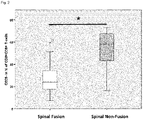
- shows the results of flow cytometric analyses of the circulating immune cell subset CD45+CD3+CD8+CD57+ T cells in the peripheral blood of patients with spinal non-fusion and normal fusion. Spinal non-fusion patients (healing class 2) showed a significantly higher frequency of CD45+CD3+CD8+CD57+ T cells (CD57+ in % of CD45+CD3+CD8+ T cells) compared to normal healing patients (healing class 1) indicates a dramatic increase of terminally differentiated CD8+ effector cells (TEMRA CD8+). * = P < 0.001; Mann- Whitney U test.
- Fig. 2
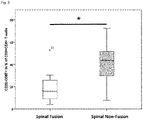
- Results of flow cytometric analyses of the circulating immune cell subset CD45+CD3+CD8+CD28- T cells in the peripheral blood of patients with spinal non-fusion and normal fusion. Spinal non-fusion patients (healing class 2) showed a significantly higher frequency of CD45+CD3+CD8+CD28- T cells (CD28- in % of CD45+CD3+CD8+ T cells) compared to normal healing patients (healing class 1) indicates a dramatic increase of terminally differentiated CD8+ effector cells (TEMRA CD8+). * = P < 0.001; Mann- Whitney U test.
- Fig. 3
- shows the results of flow cytometric analyses of the circulating immune cell subset CD45+CD3+CD8+CD57+28- T cells in the peripheral blood of patients with spinal non-fusion and normal fusion. Spinal non-fusion patients (healing class 2) showed a significantly higher frequency of CD45+CD3+CD8+CD57+28- T cells (CD57CD28-+ in % of CD45+CD3+CD8+ T cells) compared to normal healing patients (healing class 1) indicates a dramatic increase of terminally differentiated CD8+ effector cells (TEMRA CD8+). * = P < 0.001; Mann-Whitney U test.
- Fig. 4
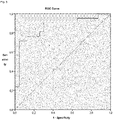
- illustrates the receiver operating characteristics (ROC) based on the summation of the expression of CD57+ in % of CD45+CD3+CD8+ T cells and CD28- in % of CD45+CD3+CD8+ T cells. The ROC analysis showed a high sensitivity (76%) as well as specificity (96%) in the detection of the affected patients based on their blood levels using a cut-off level of 85.6 % with an area under the curve (AUC): 0.886 and p<0.001.
- Fig. 5
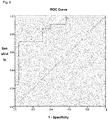
- illustrates the receiver operating characteristic (ROC) based on the expression of CD57+CD28- in % of CD45+CD3+CD8+ T cells with an area under the curve (AUC): 0.859 and p<0.001. The ROC analysis showed a high sensitivity (90%) as well as a specificity (71%) in the detection of the affected patients based on their blood levels using a cut-off level of 22.7%. A cut-off level of 33.1% showed a sensitivity of 71% with a higher specificity (96%)
- Fig. 6
- illustrates the receiver operating characteristics (ROC) based on the expression of CD57+ in % of CD45+CD3+CD8+ T cells with an area under the curve (AUC): 0.863 and p<0.001. The ROC analysis showed a high sensitivity (90%) as well as a specificity (61%) in the detection of the affected patients based on their blood levels using a cut-off level of 24.4%. A cut-off level of 37.6% showed a sensitivity of 71% with a higher specificity (96%)
- Fig. 7
- illustrates the receiver operating characteristics (ROC) based on the expression of CD28- in % of CD45+CD3+CD8+ T cells with an area under the curve (AUC): 0.876 and p<0.001. The ROC analysis showed a high sensitivity (90%) as well as a specificity (66%) in the detection of the affected patients based on their blood levels using a cut-off level of 28.0%. A cut-off level of 42.9% showed a sensitivity of 76% with a higher specificity (91%)
- In order to define novel biomarkers for predicting the individual risk and to identify novel therapeutic targets, the inventors included 44 patients that received a spinal bone fusion surgery with secured vertebral body fusion results into a retrospective study. These patients were classified in patients with normal vertebral body fusion (n=23) and patients with pseudarthrosis/non-fusion (n=21), based on their CT-scan results.
Table 1 shows the characterization and blood parameters of the patients involved in the retrospective study (spinal fusion and spinal non-fusion patients) Parameter Spinal non-fusion (n=21) Spinal fusion (n=23) p-value Age (y) 70.7 ± 8.1 63.7 ± 10.1 0.01 Sex 6 male / 15 female (28.6%) / (71.4%) 10 male / 13 female (43.5%) / (56.5%) 0.3 Time to revision or revision free (month) 21.7±12.7 27.0±10.3 0.1 Minimum: 8 Minimum: 12 Maximum: 47 Maximum: 57 Height (m) 1.62±0.1 1.66±0.1 0.3 Weight (kg) 76.9±10.7 79.6±13.7 0.5 BMI 29.1±3.2 29.3±6.4 0.9 Leucocytes (/nL) 8.5±3.9 6.7±2.0 0.06 Haemoglobin (g/L) 13.2±1.9 14.2±1.3 0.06 Haematocrite (%) 0.39±0.05 0.41±0.03 0.07 Erythrocytes (/pL) 4.4±0.6 4.6±0.5 0.2 Thrombocytes (/nL) 271.5±77.8 253.0±53.0 0.3 Sodium (mmol/L) 139.0±3.9 139.0±2.9 0.9 Potassium (mmol/L) 4.2±0.4 4.1±0.3 0.6 Calcium (mmol/L) 2.4±0.1 2.3±0.1 0.4 Glucose (mg/dL) 102.3±24.1 109.1±41.8 0.5 Creatinin (mg/dL) 0.88±0.2 0.81±0.2 0.3 Urea (mg/dL) 32.8±9.2 32.4±11.3 0.9 Albumin (g/L) 42.9±9.3 44.5±2.7 0.4 GPT (U/L) 24.5±19.9 28.4±16.0 0.5 GOT (U/L) 26.5±14.2 31.0±28.8 0.5 CRP (mg/L) 0.9±1.1 4.0±6.0 0.03 Table 2: shows the blood parameters and time to diagnosis of spinal non-fusion at the initial and revision surgery for non-fusion patients. Parameter Spinal non-fusion Initial Surgery Spinal non-fusion Revision Surgery p-value Time to diagnose non-fusion (month) 8 month = n=2 = 9.5% 10 month = n= 2 = 9.5% 11 month = n= 2 = 9.5% 12 month = n=3 = 14.3% 13 month = n=1 = 4.8% 18 month = n= 1 = 4.8% 19 month =n= 1 = 4.8% 24 month =n= 1 = 4.8% 26 month =n= 1 = 4.8% 31 month =n= 1 = 4.8% 33 month =n= 1 = 4.8% 36 month =n= 2 = 9.5% 40 month =n= 2 = 9.5% 47 month =n= 1 = 4.8% Revision performed - 15/21 (71.4%) - Spongiosa + BMP-2 - 8/15(53.3%) - Spongiosa 7/15 (46.7%) - Leucocytes (/nL) 8.5±3.9 6.5±1.6 0.9 Haemoglobin (g/L) 13.2±1.9 13.9±1.9 0.6 Haematocrite (%) 0.39±0.05 0.41±0.06 0.8 Erythrocytes (/pL) 4.4±0.6 4.4±0.7 0.7 Thrombocytes (/nL) 271.5±77.8 261.4±68.1 0.5 Sodium (mmol/L) 139.0±3.9 137.7±4.4 0.4 Potassium (mmol/L) 4.2±0.4 4.2±0.4 0.7 Calcium (mmol/L) 2.4±0.1 2.4±0.1 0.5 Glucose (mg/dL) 102.3±24.1 106.4±23.8 0.3 Creatinin (mg/dL) 0.88±0.2 0.87±0.2 0.7 Urea (mg/dL) 32.8±9.2 36.5±9.1 0.3 Albumin (g/L) 42.9±9.3 43.8±2.9 0.4 GPT (U/L) 24.5±19.9 19.6±9.7 0.2 GOT (U/L) 26.5±14.2 22.7±4.9 0.2 CRP (mg/L) 0.9±1.1 4.4±9.5 0.01 - As established in literature and routinely used in clinics, there are time dependent and radiological criteria for the classification of a non-fusion. To fulfil the definition of a non-fusion process, the patients have to meet one or more of the following criteria.
- An incomplete vertebral body fusion after at least 24 post-operative weeks based on the presence of scar tissue formation in the intervertebral zone. (Zenya Ito et al., SPINE Volume 35, Number 21, pp E1101 - E1105; 2010)
-
- 1) no bridging of the trabecular bone connecting the two vertebral bodies,
- 2) angular motion in excess of 5 degrees
- 3) sagittal translation in excess of 3 mm
- 4) radiolucencies that involve more than half of the interfaces between the dowels and the host vertebral end plates
- Based on this former classification, the non-fusion patients showed differences in immune and inflammatory parameters in peripheral blood. Particularly, the spinal non-fusion was strongly associated with a significantly enhanced frequency (>2 fold) of terminally differentiated CD8+ effector T cells expressing the phenotype CD45+CD3+CD8+CD28- and/or CD45+CD3+CD8+CD57+ (CD8+ TEMRA).
- Accordingly, patients with enhanced levels of CD8+ TEMRA cells, because of a personal history of chronic immunostimulation (e.g. by persistent and frequently reactivating viruses like CMV/EBV), have a worse vertebral body fusion or quality following spinal fusion surgery as a result of an overwhelming inflammation that inhibits normal vertebral body fusion.
- The data presented herein demonstrate that the individual immune profile (frequency of CD8+ TEMRA) is a reliable biomarker for predicting impaired bone fusion patients allowing early interventions with known and established methods.
Claims (6)
- A method fora. predicting the probability of having or developing a non-fusion, particularly before undergoing a spinal fusion surgery or after a spinal fusion surgery, orb. monitoring the course of treatment of a non-fusion in a patient, particularly after spinal fusion surgery,wherein said method comprises determining the frequency of a subpopulation of CD8+ T cells selected from CD8+CD57+, CD8+CD28- and CD8+CD57+CD28- in a sample obtained from a patient, wherein an elevated probability for having or developing non-fusion after spinal fusion surgery is assigned to the patient if the sample exhibits:i. an at least two-fold higher frequency of said subpopulation of CD8+ T cells when compared to a standard value determined for a large population with normal fusion after spinal fusion surgery, and/orii. a fraction of CD8+CD57+CD28- cells of at least 22.7 % when compared to the total sum of all CD8+ cells in said sample, and/oriii. a summed fraction of CD8+CD57+ cells and CD8+CD28- cells of at least 85.6 % when compared to the total sum of all CD8+ cells in said sample, and/oriv. a fraction of CD8+CD57+ cells in said sample of at least 24.4% when compared to the total sum of all CD8+ cells in said sample, and/orv. a fraction of CD8+CD28- cells of at least 28.0% when compared to the total sum of all CD8+ cells in said sample.
- The method according to claim 1, wherein an elevated probability for having or developing non-fusion after spinal fusion surgery is assigned to the patient if the sample exhibits:- a fraction of CD8+CD57+CD28- cells of at least 33.1 % when compared to the total sum of all CD8+ cells in said sample, and/or- a fraction of CD8+CD57+ cells in said sample of at least 37.6 % when compared to the total sum of all CD8+ cells in said sample, and/or- a fraction of CD8+CD28- cells of at least 42.9 % when compared to the total sum of all CD8+ cells in said sample.
- The method according to claim 1 or 2, wherein said non-fusion is a non-fusion between two or more bones or bone segments naturally not connected by osseous tissue, particularly a non-fusion between two or more vertebrae.
- The method according to any one of the preceding claims, wherein said sample is a blood sample.
- The method according to claim to any one of the preceding claims, wherein said sample is a sample that has been obtained before, during or after spinal fusion surgery from said patient.
- Use of a combination of antibodies for predicting, according to a method as specified in any one of the preceding claims, the probability of having or developing a non-fusion,
particularly before undergoing a spinal fusion surgery or after a spinal fusion surgery,
wherein said combination comprises an anti-CD8-antibody and an anti-CD57-antibody, or an anti-CD8-antibody and an anti-CD28 antibody, or an anti-CD8-antibody, an anti-CD28-antibody and an anti-CD57-antibody, and wherein said antibodies are suitable for fluorescence based flow cytometry.
Applications Claiming Priority (3)
| Application Number | Priority Date | Filing Date | Title |
|---|---|---|---|
| EP17173320 | 2017-05-29 | ||
| EP17206698.7A EP3499236A1 (en) | 2017-12-12 | 2017-12-12 | Cd8 t cell subsets as a biomarker for predicting non-fusion after spinal fusion surgery |
| PCT/EP2018/064085 WO2018219959A1 (en) | 2017-05-29 | 2018-05-29 | Cd8 t cell subsets as a biomarker for predicting non-fusion after spinal fusion surgery |
Publications (2)
| Publication Number | Publication Date |
|---|---|
| EP3631450A1 EP3631450A1 (en) | 2020-04-08 |
| EP3631450B1 true EP3631450B1 (en) | 2022-11-23 |
Family
ID=62200471
Family Applications (1)
| Application Number | Title | Priority Date | Filing Date |
|---|---|---|---|
| EP18725881.9A Active EP3631450B1 (en) | 2017-05-29 | 2018-05-29 | Cd8 t cell subsets as a biomarker for predicting non-fusion after spinal fusion surgery |
Country Status (5)
| Country | Link |
|---|---|
| US (1) | US11802873B2 (en) |
| EP (1) | EP3631450B1 (en) |
| JP (1) | JP7229541B2 (en) |
| CN (1) | CN110945358B (en) |
| WO (1) | WO2018219959A1 (en) |
Families Citing this family (3)
| Publication number | Priority date | Publication date | Assignee | Title |
|---|---|---|---|---|
| CN113166202B (en) | 2018-10-12 | 2024-09-13 | 治疗调适公司 | Polypeptides comprising beta-tricalcium phosphate-binding sequences and uses thereof |
| AU2021254751B2 (en) | 2020-04-15 | 2025-01-30 | Theradaptive, Inc. | Compositions and methods for targeted therapeutic delivery to bone |
| WO2021255652A1 (en) * | 2020-06-16 | 2021-12-23 | Endotact Sas | Intelligent assessment and analysis of medical patients |
Family Cites Families (8)
| Publication number | Priority date | Publication date | Assignee | Title |
|---|---|---|---|---|
| US5492697A (en) | 1990-03-05 | 1996-02-20 | Board Of Regents, Univ. Of Texas System | Biodegradable implant for fracture nonunions |
| US20080019970A1 (en) * | 2006-07-07 | 2008-01-24 | Gorman James R | Methods for preventing, postponing or improving the outcome of spinal device and fusion procedures |
| CA2657934C (en) * | 2006-07-19 | 2017-04-04 | The Trustees Of The University Of Pennsylvania | Wsx-1/p28 as a target for anti-inflammatory responses |
| EP2470906A4 (en) * | 2009-08-24 | 2013-10-02 | Univ Columbia | ASSAY FOR DETERMINING THE HEALTH OF CD8 + T CELLS |
| MX2012012833A (en) * | 2010-05-07 | 2012-11-30 | Baylor Res Inst | Dendritic cell immunoreceptors (dcir)-mediated crosspriming of human cd8+ t cells. |
| WO2012115885A1 (en) * | 2011-02-22 | 2012-08-30 | Caris Life Sciences Luxembourg Holdings, S.A.R.L. | Circulating biomarkers |
| EP2623978A1 (en) * | 2012-02-03 | 2013-08-07 | Charité - Universitätsmedizin Berlin | CD8+ T-cell subsets as markers for prediction of delayed fracture healing |
| US20170275344A1 (en) * | 2014-08-26 | 2017-09-28 | Compugen Ltd. | Polypeptides and uses thereof as a drug for treatment of autoimmune disorders |
-
2018
- 2018-05-29 EP EP18725881.9A patent/EP3631450B1/en active Active
- 2018-05-29 WO PCT/EP2018/064085 patent/WO2018219959A1/en not_active Ceased
- 2018-05-29 US US16/618,118 patent/US11802873B2/en active Active
- 2018-05-29 CN CN201880048733.9A patent/CN110945358B/en active Active
- 2018-05-29 JP JP2019565847A patent/JP7229541B2/en active Active
Also Published As
| Publication number | Publication date |
|---|---|
| EP3631450A1 (en) | 2020-04-08 |
| CN110945358A (en) | 2020-03-31 |
| JP2020521976A (en) | 2020-07-27 |
| US20200182872A1 (en) | 2020-06-11 |
| CN110945358B (en) | 2023-07-25 |
| WO2018219959A1 (en) | 2018-12-06 |
| JP7229541B2 (en) | 2023-02-28 |
| US11802873B2 (en) | 2023-10-31 |
Similar Documents
| Publication | Publication Date | Title |
|---|---|---|
| CN104081205B (en) | It is used for predicting the CD8+T cell subsets of fracture delayed union as label | |
| So et al. | Regulation of PI-3-kinase and Akt signaling in T lymphocytes and other cells by TNFR family molecules | |
| Paiva et al. | Immune status of high-risk smoldering multiple myeloma patients and its therapeutic modulation under LenDex: a longitudinal analysis | |
| US11802873B2 (en) | CD8 T cell subsets as a biomarker for predicting non-fusion after spinal fusion surgery | |
| Coutant | Pathogenic effects of anti-citrullinated protein antibodies in rheumatoid arthritis–role for glycosylation | |
| JP2013503204A (en) | B7-H4 fusion protein and methods of use thereof | |
| EP1721162B1 (en) | Method of assessing rheumatoid arthritis by measuring anti-ccp and serum amyloid a | |
| Šenolt et al. | Interleukin-20 is triggered by TLR ligands and associates with disease activity in patients with rheumatoid arthritis | |
| WO2015110989A1 (en) | Biomarker panel for assessment of mucosal healing | |
| EP3499236A1 (en) | Cd8 t cell subsets as a biomarker for predicting non-fusion after spinal fusion surgery | |
| EP2148934B1 (en) | Matrix marker model and methods for assessing and treating rheumatoid arthritis | |
| Niki et al. | Five types of inflammatory arthritis following total knee arthroplasty | |
| El-Fetouh et al. | Serum interleukin-18 and interleukin-10 levels in systemic lupus erythematosus: correlation with SLEDAI score and disease activity parameters | |
| Niki et al. | Phenotypic characteristics of joint fluid cells from patients with continuous joint effusion after total knee arthroplasty | |
| Çiçekler et al. | New Treatment Approaches and Biomarkers in Severe Asthma: An Updated Review | |
| Dorogin et al. | Discovery and Characterization of Interleukin-4-Specific Affibodies for Affinity-Controlled Protein Release and Macrophage Polarization | |
| Pulik et al. | Periprosthetic joint infection and heterotopic ossification after total hip arthroplasty: systematic review and meta-analysis | |
| WO2024002914A1 (en) | Prediction of, and composition to improve, tendon healing | |
| Abd El-Gwad et al. | Expression of intracellular interleukin-17 in systemic lupus erythematosus patients | |
| HK1140797B (en) | Matrix marker model and methods for assessing and treating rheumatoid arthritis |
Legal Events
| Date | Code | Title | Description |
|---|---|---|---|
| STAA | Information on the status of an ep patent application or granted ep patent |
Free format text: STATUS: UNKNOWN |
|
| STAA | Information on the status of an ep patent application or granted ep patent |
Free format text: STATUS: THE INTERNATIONAL PUBLICATION HAS BEEN MADE |
|
| PUAI | Public reference made under article 153(3) epc to a published international application that has entered the european phase |
Free format text: ORIGINAL CODE: 0009012 |
|
| STAA | Information on the status of an ep patent application or granted ep patent |
Free format text: STATUS: REQUEST FOR EXAMINATION WAS MADE |
|
| 17P | Request for examination filed |
Effective date: 20191217 |
|
| AK | Designated contracting states |
Kind code of ref document: A1 Designated state(s): AL AT BE BG CH CY CZ DE DK EE ES FI FR GB GR HR HU IE IS IT LI LT LU LV MC MK MT NL NO PL PT RO RS SE SI SK SM TR |
|
| AX | Request for extension of the european patent |
Extension state: BA ME |
|
| RIN1 | Information on inventor provided before grant (corrected) |
Inventor name: DUDA, GEORG Inventor name: VOLK, HANS-DIETER Inventor name: FUCHS, MICHAEL Inventor name: REINKE, SIMON Inventor name: GEISSLER, SVEN Inventor name: STRUBE, PATRICK Inventor name: PUMBERGER, MATTHIAS Inventor name: SCHMIDT-BLEEK, KATHARINA |
|
| DAV | Request for validation of the european patent (deleted) | ||
| DAX | Request for extension of the european patent (deleted) | ||
| REG | Reference to a national code |
Ref country code: HK Ref legal event code: DE Ref document number: 40016520 Country of ref document: HK |
|
| STAA | Information on the status of an ep patent application or granted ep patent |
Free format text: STATUS: EXAMINATION IS IN PROGRESS |
|
| 17Q | First examination report despatched |
Effective date: 20201016 |
|
| GRAP | Despatch of communication of intention to grant a patent |
Free format text: ORIGINAL CODE: EPIDOSNIGR1 |
|
| STAA | Information on the status of an ep patent application or granted ep patent |
Free format text: STATUS: GRANT OF PATENT IS INTENDED |
|
| INTG | Intention to grant announced |
Effective date: 20220224 |
|
| GRAJ | Information related to disapproval of communication of intention to grant by the applicant or resumption of examination proceedings by the epo deleted |
Free format text: ORIGINAL CODE: EPIDOSDIGR1 |
|
| STAA | Information on the status of an ep patent application or granted ep patent |
Free format text: STATUS: EXAMINATION IS IN PROGRESS |
|
| GRAP | Despatch of communication of intention to grant a patent |
Free format text: ORIGINAL CODE: EPIDOSNIGR1 |
|
| STAA | Information on the status of an ep patent application or granted ep patent |
Free format text: STATUS: GRANT OF PATENT IS INTENDED |
|
| INTC | Intention to grant announced (deleted) | ||
| INTG | Intention to grant announced |
Effective date: 20220718 |
|
| GRAS | Grant fee paid |
Free format text: ORIGINAL CODE: EPIDOSNIGR3 |
|
| GRAA | (expected) grant |
Free format text: ORIGINAL CODE: 0009210 |
|
| STAA | Information on the status of an ep patent application or granted ep patent |
Free format text: STATUS: THE PATENT HAS BEEN GRANTED |
|
| AK | Designated contracting states |
Kind code of ref document: B1 Designated state(s): AL AT BE BG CH CY CZ DE DK EE ES FI FR GB GR HR HU IE IS IT LI LT LU LV MC MK MT NL NO PL PT RO RS SE SI SK SM TR |
|
| REG | Reference to a national code |
Ref country code: GB Ref legal event code: FG4D |
|
| REG | Reference to a national code |
Ref country code: CH Ref legal event code: EP |
|
| REG | Reference to a national code |
Ref country code: AT Ref legal event code: REF Ref document number: 1533439 Country of ref document: AT Kind code of ref document: T Effective date: 20221215 Ref country code: DE Ref legal event code: R096 Ref document number: 602018043362 Country of ref document: DE |
|
| REG | Reference to a national code |
Ref country code: IE Ref legal event code: FG4D |
|
| REG | Reference to a national code |
Ref country code: LT Ref legal event code: MG9D |
|
| REG | Reference to a national code |
Ref country code: NL Ref legal event code: MP Effective date: 20221123 |
|
| REG | Reference to a national code |
Ref country code: AT Ref legal event code: MK05 Ref document number: 1533439 Country of ref document: AT Kind code of ref document: T Effective date: 20221123 |
|
| PG25 | Lapsed in a contracting state [announced via postgrant information from national office to epo] |
Ref country code: SE Free format text: LAPSE BECAUSE OF FAILURE TO SUBMIT A TRANSLATION OF THE DESCRIPTION OR TO PAY THE FEE WITHIN THE PRESCRIBED TIME-LIMIT Effective date: 20221123 Ref country code: PT Free format text: LAPSE BECAUSE OF FAILURE TO SUBMIT A TRANSLATION OF THE DESCRIPTION OR TO PAY THE FEE WITHIN THE PRESCRIBED TIME-LIMIT Effective date: 20230323 Ref country code: NO Free format text: LAPSE BECAUSE OF FAILURE TO SUBMIT A TRANSLATION OF THE DESCRIPTION OR TO PAY THE FEE WITHIN THE PRESCRIBED TIME-LIMIT Effective date: 20230223 Ref country code: LT Free format text: LAPSE BECAUSE OF FAILURE TO SUBMIT A TRANSLATION OF THE DESCRIPTION OR TO PAY THE FEE WITHIN THE PRESCRIBED TIME-LIMIT Effective date: 20221123 Ref country code: FI Free format text: LAPSE BECAUSE OF FAILURE TO SUBMIT A TRANSLATION OF THE DESCRIPTION OR TO PAY THE FEE WITHIN THE PRESCRIBED TIME-LIMIT Effective date: 20221123 Ref country code: ES Free format text: LAPSE BECAUSE OF FAILURE TO SUBMIT A TRANSLATION OF THE DESCRIPTION OR TO PAY THE FEE WITHIN THE PRESCRIBED TIME-LIMIT Effective date: 20221123 Ref country code: AT Free format text: LAPSE BECAUSE OF FAILURE TO SUBMIT A TRANSLATION OF THE DESCRIPTION OR TO PAY THE FEE WITHIN THE PRESCRIBED TIME-LIMIT Effective date: 20221123 |
|
| PG25 | Lapsed in a contracting state [announced via postgrant information from national office to epo] |
Ref country code: RS Free format text: LAPSE BECAUSE OF FAILURE TO SUBMIT A TRANSLATION OF THE DESCRIPTION OR TO PAY THE FEE WITHIN THE PRESCRIBED TIME-LIMIT Effective date: 20221123 Ref country code: PL Free format text: LAPSE BECAUSE OF FAILURE TO SUBMIT A TRANSLATION OF THE DESCRIPTION OR TO PAY THE FEE WITHIN THE PRESCRIBED TIME-LIMIT Effective date: 20221123 Ref country code: LV Free format text: LAPSE BECAUSE OF FAILURE TO SUBMIT A TRANSLATION OF THE DESCRIPTION OR TO PAY THE FEE WITHIN THE PRESCRIBED TIME-LIMIT Effective date: 20221123 Ref country code: IS Free format text: LAPSE BECAUSE OF FAILURE TO SUBMIT A TRANSLATION OF THE DESCRIPTION OR TO PAY THE FEE WITHIN THE PRESCRIBED TIME-LIMIT Effective date: 20230323 Ref country code: HR Free format text: LAPSE BECAUSE OF FAILURE TO SUBMIT A TRANSLATION OF THE DESCRIPTION OR TO PAY THE FEE WITHIN THE PRESCRIBED TIME-LIMIT Effective date: 20221123 Ref country code: GR Free format text: LAPSE BECAUSE OF FAILURE TO SUBMIT A TRANSLATION OF THE DESCRIPTION OR TO PAY THE FEE WITHIN THE PRESCRIBED TIME-LIMIT Effective date: 20230224 |
|
| PG25 | Lapsed in a contracting state [announced via postgrant information from national office to epo] |
Ref country code: NL Free format text: LAPSE BECAUSE OF FAILURE TO SUBMIT A TRANSLATION OF THE DESCRIPTION OR TO PAY THE FEE WITHIN THE PRESCRIBED TIME-LIMIT Effective date: 20221123 |
|
| P01 | Opt-out of the competence of the unified patent court (upc) registered |
Effective date: 20230526 |
|
| PG25 | Lapsed in a contracting state [announced via postgrant information from national office to epo] |
Ref country code: SM Free format text: LAPSE BECAUSE OF FAILURE TO SUBMIT A TRANSLATION OF THE DESCRIPTION OR TO PAY THE FEE WITHIN THE PRESCRIBED TIME-LIMIT Effective date: 20221123 Ref country code: RO Free format text: LAPSE BECAUSE OF FAILURE TO SUBMIT A TRANSLATION OF THE DESCRIPTION OR TO PAY THE FEE WITHIN THE PRESCRIBED TIME-LIMIT Effective date: 20221123 Ref country code: EE Free format text: LAPSE BECAUSE OF FAILURE TO SUBMIT A TRANSLATION OF THE DESCRIPTION OR TO PAY THE FEE WITHIN THE PRESCRIBED TIME-LIMIT Effective date: 20221123 Ref country code: DK Free format text: LAPSE BECAUSE OF FAILURE TO SUBMIT A TRANSLATION OF THE DESCRIPTION OR TO PAY THE FEE WITHIN THE PRESCRIBED TIME-LIMIT Effective date: 20221123 Ref country code: CZ Free format text: LAPSE BECAUSE OF FAILURE TO SUBMIT A TRANSLATION OF THE DESCRIPTION OR TO PAY THE FEE WITHIN THE PRESCRIBED TIME-LIMIT Effective date: 20221123 |
|
| REG | Reference to a national code |
Ref country code: DE Ref legal event code: R097 Ref document number: 602018043362 Country of ref document: DE |
|
| PG25 | Lapsed in a contracting state [announced via postgrant information from national office to epo] |
Ref country code: SK Free format text: LAPSE BECAUSE OF FAILURE TO SUBMIT A TRANSLATION OF THE DESCRIPTION OR TO PAY THE FEE WITHIN THE PRESCRIBED TIME-LIMIT Effective date: 20221123 Ref country code: AL Free format text: LAPSE BECAUSE OF FAILURE TO SUBMIT A TRANSLATION OF THE DESCRIPTION OR TO PAY THE FEE WITHIN THE PRESCRIBED TIME-LIMIT Effective date: 20221123 |
|
| PLBE | No opposition filed within time limit |
Free format text: ORIGINAL CODE: 0009261 |
|
| STAA | Information on the status of an ep patent application or granted ep patent |
Free format text: STATUS: NO OPPOSITION FILED WITHIN TIME LIMIT |
|
| 26N | No opposition filed |
Effective date: 20230824 |
|
| PG25 | Lapsed in a contracting state [announced via postgrant information from national office to epo] |
Ref country code: SI Free format text: LAPSE BECAUSE OF FAILURE TO SUBMIT A TRANSLATION OF THE DESCRIPTION OR TO PAY THE FEE WITHIN THE PRESCRIBED TIME-LIMIT Effective date: 20221123 |
|
| REG | Reference to a national code |
Ref country code: CH Ref legal event code: PL |
|
| PG25 | Lapsed in a contracting state [announced via postgrant information from national office to epo] |
Ref country code: MC Free format text: LAPSE BECAUSE OF FAILURE TO SUBMIT A TRANSLATION OF THE DESCRIPTION OR TO PAY THE FEE WITHIN THE PRESCRIBED TIME-LIMIT Effective date: 20221123 |
|
| REG | Reference to a national code |
Ref country code: BE Ref legal event code: MM Effective date: 20230531 |
|
| PG25 | Lapsed in a contracting state [announced via postgrant information from national office to epo] |
Ref country code: MC Free format text: LAPSE BECAUSE OF FAILURE TO SUBMIT A TRANSLATION OF THE DESCRIPTION OR TO PAY THE FEE WITHIN THE PRESCRIBED TIME-LIMIT Effective date: 20221123 Ref country code: LU Free format text: LAPSE BECAUSE OF NON-PAYMENT OF DUE FEES Effective date: 20230529 Ref country code: LI Free format text: LAPSE BECAUSE OF NON-PAYMENT OF DUE FEES Effective date: 20230531 Ref country code: CH Free format text: LAPSE BECAUSE OF NON-PAYMENT OF DUE FEES Effective date: 20230531 |
|
| REG | Reference to a national code |
Ref country code: IE Ref legal event code: MM4A |
|
| PG25 | Lapsed in a contracting state [announced via postgrant information from national office to epo] |
Ref country code: IE Free format text: LAPSE BECAUSE OF NON-PAYMENT OF DUE FEES Effective date: 20230529 |
|
| PG25 | Lapsed in a contracting state [announced via postgrant information from national office to epo] |
Ref country code: IE Free format text: LAPSE BECAUSE OF NON-PAYMENT OF DUE FEES Effective date: 20230529 |
|
| PG25 | Lapsed in a contracting state [announced via postgrant information from national office to epo] |
Ref country code: IT Free format text: LAPSE BECAUSE OF FAILURE TO SUBMIT A TRANSLATION OF THE DESCRIPTION OR TO PAY THE FEE WITHIN THE PRESCRIBED TIME-LIMIT Effective date: 20221123 Ref country code: BE Free format text: LAPSE BECAUSE OF NON-PAYMENT OF DUE FEES Effective date: 20230531 |
|
| PG25 | Lapsed in a contracting state [announced via postgrant information from national office to epo] |
Ref country code: BG Free format text: LAPSE BECAUSE OF FAILURE TO SUBMIT A TRANSLATION OF THE DESCRIPTION OR TO PAY THE FEE WITHIN THE PRESCRIBED TIME-LIMIT Effective date: 20221123 |
|
| PG25 | Lapsed in a contracting state [announced via postgrant information from national office to epo] |
Ref country code: BG Free format text: LAPSE BECAUSE OF FAILURE TO SUBMIT A TRANSLATION OF THE DESCRIPTION OR TO PAY THE FEE WITHIN THE PRESCRIBED TIME-LIMIT Effective date: 20221123 |
|
| PGFP | Annual fee paid to national office [announced via postgrant information from national office to epo] |
Ref country code: DE Payment date: 20250519 Year of fee payment: 8 |
|
| PGFP | Annual fee paid to national office [announced via postgrant information from national office to epo] |
Ref country code: GB Payment date: 20250522 Year of fee payment: 8 |
|
| PGFP | Annual fee paid to national office [announced via postgrant information from national office to epo] |
Ref country code: FR Payment date: 20250521 Year of fee payment: 8 |
|
| PG25 | Lapsed in a contracting state [announced via postgrant information from national office to epo] |
Ref country code: CY Free format text: LAPSE BECAUSE OF FAILURE TO SUBMIT A TRANSLATION OF THE DESCRIPTION OR TO PAY THE FEE WITHIN THE PRESCRIBED TIME-LIMIT; INVALID AB INITIO Effective date: 20180529 |
|
| PG25 | Lapsed in a contracting state [announced via postgrant information from national office to epo] |
Ref country code: HU Free format text: LAPSE BECAUSE OF FAILURE TO SUBMIT A TRANSLATION OF THE DESCRIPTION OR TO PAY THE FEE WITHIN THE PRESCRIBED TIME-LIMIT; INVALID AB INITIO Effective date: 20180529 |
|
| PG25 | Lapsed in a contracting state [announced via postgrant information from national office to epo] |
Ref country code: TR Free format text: LAPSE BECAUSE OF FAILURE TO SUBMIT A TRANSLATION OF THE DESCRIPTION OR TO PAY THE FEE WITHIN THE PRESCRIBED TIME-LIMIT Effective date: 20221123 |