EP3630756B1 - Process for the preparation of an umeclidinium synthesis intermediate - Google Patents
Process for the preparation of an umeclidinium synthesis intermediate Download PDFInfo
- Publication number
- EP3630756B1 EP3630756B1 EP18731525.4A EP18731525A EP3630756B1 EP 3630756 B1 EP3630756 B1 EP 3630756B1 EP 18731525 A EP18731525 A EP 18731525A EP 3630756 B1 EP3630756 B1 EP 3630756B1
- Authority
- EP
- European Patent Office
- Prior art keywords
- compound
- formula
- phenyl
- preparation
- quinuclidin
- Prior art date
- Legal status (The legal status is an assumption and is not a legal conclusion. Google has not performed a legal analysis and makes no representation as to the accuracy of the status listed.)
- Active
Links
Images

Classifications
-
- C—CHEMISTRY; METALLURGY
- C07—ORGANIC CHEMISTRY
- C07D—HETEROCYCLIC COMPOUNDS
- C07D453/00—Heterocyclic compounds containing quinuclidine or iso-quinuclidine ring systems, e.g. quinine alkaloids
- C07D453/02—Heterocyclic compounds containing quinuclidine or iso-quinuclidine ring systems, e.g. quinine alkaloids containing not further condensed quinuclidine ring systems
Definitions
- the present invention relates to a process for the preparation of a novel and versatile synthesis intermediate and its use in the preparation of umeclidinium.
- Umeclidinium in particular umeclidinium bromide, is a compound used in the therapy of subjects affected by chronic obstructive pulmonary disease.
- WO2005/104745 and WO2014/027045 describe a process for the preparation of a key intermediate in the synthesis of umeclidinium, providing the following reaction: wherein Hal is a halogen atom and the subsequent treatment of compound (b) with phenyllithium in excess to the compound of formula (b).
- the cyclization, to give the quinuclidine ring is generally carried out in the presence of bis(trimethylsilyl)amides of alkaline metals, for example lithium, or diisopropylamide of alkaline metals.
- bases in addition to being very expensive, are highly unstable and must be prepared in situ or, alternatively, purchased as very diluted solutions in organic solvents.
- the subsequent reaction bringing to the simultaneous introduction of the two phenyls that is conventionally carried out with phenyllithium, uses two or more phenyllithium equivalents, as it is evident.
- the Applicant further found that impurities of the biphenyllithium type are present in the commercial phenyllithium and generate corresponding impurities in the reaction product and that such impurities, being similar to the desired compound, are very difficult to eliminate.
- a purpose of the invention is to provide novel and versatile synthesis intermediates in highly purified form, and a process for their preparation.
- a further purpose of the invention is to provide the use of such intermediates in the preparation of umeclidinium.
- a further purpose of the invention is to provide a process for the preparation of umeclidinium, giving good yields and purity and being industrially convenient.
- a further purpose of the invention is to provide a very versatile novel intermediate compound, that can be functionalized in different ways to give, on one side, a key intermediate of umeclidinium, on the other side to give the umeclidinium impurities more frequently detected.
- object of the invention is a process for the preparation of a compound of formula (I) and its salts which comprises reacting a compound of formula (II) with a compound selected from phenyllithium and phenyl magnesium bromide, in a suitable solvent, optionally isolating the compound and optionally transforming it into one of its salts.
- the reaction is preferably carried out in a solvent preferably selected among aprotic solvents, for example ethers, in particular tetrahydrofuran (THF) or methyl- tert -butyl ether (MTBE) or aliphatic or aromatic hydrocarbons, preferably toluene.
- aprotic solvents for example ethers, in particular tetrahydrofuran (THF) or methyl- tert -butyl ether (MTBE) or aliphatic or aromatic hydrocarbons, preferably toluene.
- solvent mixtures can also be used.
- the reaction is carried out under inert atmosphere, for example under nitrogen atmosphere.
- Phenyllithium is used in stoichiometric amount to the compound of formula (II) or, preferably in slight excess, for example 1.2-1.3 moles phenyllithium per mole compound of formula (II).
- phenyllithium is added dropwise to the reaction mixture containing the compound of formula (II) and the solvent.
- reaction can be carried out at room temperature and is completed in very short time, in practice, at the end of the dripping, and the compound of formula (I) can be isolated according to the conventional techniques, for example by extraction.
- the compound of formula (II) is a novel compound and is a further object of the invention, together with its salts.
- Such salts can be pharmaceutically acceptable or non-pharmaceutically acceptable; anyway the pharmaceutically acceptable salts are preferred.
- the salts of the compound of formula (II) are preferably selected among hydrochloride, hydrobromide, sulphate, and phosphate. obviously other salts can be prepared.
- the compound of formula (II) can be prepared by reacting the compound of formula (III) wherein X represents a leaving group, for example a halogen, tosyl, mesyl, triflate and the like, preferably a halogen and more preferably chlorine, in a suitable solvent, in the presence of a strong base.
- X represents a leaving group, for example a halogen, tosyl, mesyl, triflate and the like, preferably a halogen and more preferably chlorine, in a suitable solvent, in the presence of a strong base.
- an alkaline metal hydride for example sodium hydride
- the solvent that can be used in the above described reaction is preferably selected among toluene, tetrahydrofuran, dimethylformamide, tert -butanol, more preferably dimethylformamide.
- the reaction is carried out under inert atmosphere, for example under nitrogen atmosphere.
- the reaction mixture is preferably heated at 40-70°C, advantageously 45-55°C.
- the compound (II) is prepared starting from the Weinreb amide of quinuclidine, depicted hereinbelow. Said amide is reacted with phenyllithium, or else phenyl magnesium bromide, in one or more suitable solvents, for example in tetrahydrofuran, to give the compound (II), according to the following reaction scheme.
- Object of the invention is also a process for the preparation of the compound of formula (I) comprising:
- object of the invention is also a process for the preparation of the compounds of formula (I) and (II)
- the compound of formula (III) is known in the art and can be prepared for example as described in Eur. J. Med. Chem. (1997), 3:651-659 (therein described as compound 5).
- object of the invention is the use of the compound of formula (II) and the compound of formula (III) for the preparation of the compound of formula (I) and as synthesis intermediates, in particular but not only, of umeclidinium.
- the reaction of the invention for the preparation of the compound of formula (I) provides some advantages to the known art, as it allows using less phenyllithium and consequently obtaining less reaction by-products. Furthermore, the alpha hydrogen to the ketone in the compound of formula (II) is more activated than the corresponding hydrogen of the ethyl isonipecotate derivative used in the prior art and therefore the carbanion necessary for the reaction is more easily formed, and allows the use of conventional bases (such as alkaline hydrides), thus avoiding the need to use particular and problematic bases such as those previously cited.
- conventional bases such as alkaline hydrides
- the compound of formula (I) obtained according to the invention contains less reaction by-products, in particular less impurities of general formula (IV)
- the compound of formula (I) and umeclidinium prepared according to the processes of the known art contain many impurities. It is well know that, mainly in the pharmaceutical field, the presence of impurities must be as low as possible.
- the purity of the compound of formula (I), obtained by the compound of formula (II) has been compared to the purity of the same compound obtained according to known art ( WO2005/104745 ) by using the same raw materials, and it can be observed that the compound obtained according to the present invention contains about half the impurities of the general formula (IV).
- the presence of such impurities has been detected and quantified by UPLC-MS.
- the compound of formula (I) can be transformed into the umeclidinium according to the methods known in the art, for example as described in WO2014/027045 .
- the compounds of the general formula (IV) and (VIII) in particular the compounds (VI), (VI), (VII), (IX), (X) and (XI) and their use as reference standards to detect the presence and quantity of such impurities in the compound of formula (I), in the umeclidinium and in the pharmaceutical compositions containing it.
- a process for the preparation of a compound of formula (IV), in particular a compound of formula (V), (VI) and (VII), comprising reacting the compound (II) with biphenyllithium isomers, in a suitable solvent, for example tetrahydrofuran.
- the compounds of formula (IX), (X) and (XI) can be prepared for example by quaternization of the compounds (V), (VI) and (VII) with ethyl benzyl ether bromide.
- N-methoxy-N-methylquinuclidin-4-carboxyamide (828 mg, 84.12% by weight, 3.51 mmol, 1 eq) is loaded in THF (18 ml) and the solution is cooled to - 20°C.
- a solution of phenyllithium (1.9M in dibutyl ether, 6.27 mmol, 3.3 ml, 1.79 eq) is added dropwise.
- the reaction is quenched with water (1 ml) and concentrated under vacuum to eliminate THF.
- the residue is reworked with ethyl acetate and Na 2 CO 3 (aq) saturated solution.
- the organic phase is separated and the product is extracted again with ethyl acetate.
- the title compound is prepared as described in WO2005/104745 , by using the same batch of phenyllithium of Example 3 (therefore containing the same impurities).
- 2-bromobiphenyl (112.9 mg, 0.484 mmol, 1.90 eq) is dissolved in anhydrous THF (1.5 ml), the solution is cooled to -78°C and n-butyllithium (1.6M in n-esane, 0.504 mmol, 0.315 ml, 1.98 eq) is added dropwise. After 7 minutes it is added dropwise to a solution of phenyl(quinuclidin-4-yl)methanone (55 mg, 0.255 mmol, 1 eq) in toluene (1.5 ml) at -26°C. The solution is quenched with water.
- 3-bromobiphenyl (37 mg, 0.159 mmol, 1.36 eq) is dissolved in anhydrous THF (0.9 ml), the solution is cooled to -78°C and n-butyllithium (1.6M in n-esane, 0.160 mmol, 0.100 ml, 1.37 eq) is added dropwise. After 10 minutes it is added dropwise to a solution of phenyl(quinuclidin-4-yl)methanone (25.2 mg, 0.117 mmol, 1 eq) in toluene (0.7 ml) at -26°C. The solution is quenched with water (0.3 ml).
Landscapes
- Chemical & Material Sciences (AREA)
- Organic Chemistry (AREA)
- Nitrogen Condensed Heterocyclic Rings (AREA)
- Pharmaceuticals Containing Other Organic And Inorganic Compounds (AREA)
Description
- The present invention relates to a process for the preparation of a novel and versatile synthesis intermediate and its use in the preparation of umeclidinium.
- Umeclidinium, in particular umeclidinium bromide, is a compound used in the therapy of subjects affected by chronic obstructive pulmonary disease.
-
WO2005/104745 andWO2014/027045 describe a process for the preparation of a key intermediate in the synthesis of umeclidinium, providing the following reaction:
- The cyclization, to give the quinuclidine ring, is generally carried out in the presence of bis(trimethylsilyl)amides of alkaline metals, for example lithium, or diisopropylamide of alkaline metals. These bases, in addition to being very expensive, are highly unstable and must be prepared in situ or, alternatively, purchased as very diluted solutions in organic solvents.
- Furthermore, the subsequent reaction bringing to the simultaneous introduction of the two phenyls, that is conventionally carried out with phenyllithium, uses two or more phenyllithium equivalents, as it is evident. The Applicant further found that impurities of the biphenyllithium type are present in the commercial phenyllithium and generate corresponding impurities in the reaction product and that such impurities, being similar to the desired compound, are very difficult to eliminate.
- All of the above mentioned factors are drawbacks reducing yields, increasing costs and industrial resources needed for producing such synthesis intermediates of umeclidinium.
- Therefore a need exists to provide an alternative process for the preparation of the umeclidinium intermediates, that obviates the drawbacks of the known art.
- A purpose of the invention is to provide novel and versatile synthesis intermediates in highly purified form, and a process for their preparation.
- A further purpose of the invention is to provide the use of such intermediates in the preparation of umeclidinium.
- A further purpose of the invention is to provide a process for the preparation of umeclidinium, giving good yields and purity and being industrially convenient.
- A further purpose of the invention is to provide a very versatile novel intermediate compound, that can be functionalized in different ways to give, on one side, a key intermediate of umeclidinium, on the other side to give the umeclidinium impurities more frequently detected.
- According to one of its aspects, object of the invention is a process for the preparation of a compound of formula (I) and its salts


- The reaction is preferably carried out in a solvent preferably selected among aprotic solvents, for example ethers, in particular tetrahydrofuran (THF) or methyl-tert-butyl ether (MTBE) or aliphatic or aromatic hydrocarbons, preferably toluene. Solvent mixtures can also be used.
- According to a preferred embodiment, the reaction is carried out under inert atmosphere, for example under nitrogen atmosphere.
- Phenyllithium is used in stoichiometric amount to the compound of formula (II) or, preferably in slight excess, for example 1.2-1.3 moles phenyllithium per mole compound of formula (II). Advantageously, phenyllithium is added dropwise to the reaction mixture containing the compound of formula (II) and the solvent.
- The reaction can be carried out at room temperature and is completed in very short time, in practice, at the end of the dripping, and the compound of formula (I) can be isolated according to the conventional techniques, for example by extraction.
- The compound of formula (II) is a novel compound and is a further object of the invention, together with its salts. Such salts can be pharmaceutically acceptable or non-pharmaceutically acceptable; anyway the pharmaceutically acceptable salts are preferred.
- The salts of the compound of formula (II) are preferably selected among hydrochloride, hydrobromide, sulphate, and phosphate. Anyway other salts can be prepared.
- The compound of formula (II) can be prepared by reacting the compound of formula (III)

- As a strong base for example an alkaline metal hydride, for example sodium hydride, can be used. However, as opposed to the processes of the known art, it is not necessary to use bases such as LDA or LiHMDS, that have the drawbacks described above. The solvent that can be used in the above described reaction is preferably selected among toluene, tetrahydrofuran, dimethylformamide, tert-butanol, more preferably dimethylformamide.
- According to a preferred embodiment, the reaction is carried out under inert atmosphere, for example under nitrogen atmosphere.
- The reaction mixture is preferably heated at 40-70°C, advantageously 45-55°C.
- Its completion can be followed by the known methods, for example by using chromatographic techniques. The compound of formula (II) can then be isolated according to conventional techniques, for example by extraction.
- Alternatively, according to another embodiment of the invention, the compound (II) is prepared starting from the Weinreb amide of quinuclidine, depicted hereinbelow. Said amide is reacted with phenyllithium, or else phenyl magnesium bromide, in one or more suitable solvents, for example in tetrahydrofuran, to give the compound (II), according to the following reaction scheme.

- Some examples of the reactions of the invention are set forth in the Experimental Section of the present description.
- Object of the invention is also a process for the preparation of the compound of formula (I) comprising:
- reacting a compound of formula (III), as defined above, with a strong base in a suitable solvent, to give the compound of formula (II) and, subsequently
- reacting the compound of formula (II) with phenyllithium in a suitable solvent, to give the compound of formula (I).
- Alternatively, object of the invention is also a process for the preparation of the compounds of formula (I) and (II)
- reacting the Weinreb amide of quinuclidine with phenyllithium or phenyl magnesium bromide, thus obtaining the compound of formula (II) and
- reacting the compound of formula (II) with phenyl lithium or phenyl magnesium bromide in a suitable solvent, to obtain the compound of formula (I). The preferred and advantageous embodiments mentioned above apply also to the latter process.
- The compound of formula (III) is known in the art and can be prepared for example as described in Eur. J. Med. Chem. (1997), 3:651-659 (therein described as compound 5).
- The above mentioned Weinreb amide of quinuclidine is also itself known in the art and is described for example in
WO99/21855 - According to another of its aspects, object of the invention is the use of the compound of formula (II) and the compound of formula (III) for the preparation of the compound of formula (I) and as synthesis intermediates, in particular but not only, of umeclidinium.
- It is easily understood that the reaction of the invention for the preparation of the compound of formula (I) provides some advantages to the known art, as it allows using less phenyllithium and consequently obtaining less reaction by-products. Furthermore, the alpha hydrogen to the ketone in the compound of formula (II) is more activated than the corresponding hydrogen of the ethyl isonipecotate derivative used in the prior art and therefore the carbanion necessary for the reaction is more easily formed, and allows the use of conventional bases (such as alkaline hydrides), thus avoiding the need to use particular and problematic bases such as those previously cited.
- Furthermore, with respect to what has been obtained with the prior art processes, the compound of formula (I) obtained according to the invention contains less reaction by-products, in particular less impurities of general formula (IV)

- Also described, but not part of the invention, are the compounds of the general formula (IV) and in particular the compounds having the following formulas:

- As it will be demonstrated in the Experimental Section, the compound of formula (I) and umeclidinium prepared according to the processes of the known art, contain many impurities. It is well know that, mainly in the pharmaceutical field, the presence of impurities must be as low as possible.
- As it will be demonstrated in the following Experimental Section, the purity of the compound of formula (I), obtained by the compound of formula (II) has been compared to the purity of the same compound obtained according to known art (
WO2005/104745 ) by using the same raw materials, and it can be observed that the compound obtained according to the present invention contains about half the impurities of the general formula (IV). - The presence of such impurities has been detected and quantified by UPLC-MS. The compound of formula (I) can be transformed into the umeclidinium according to the methods known in the art, for example as described in
WO2014/027045 . - When the compound of formula (I) is converted into the umeclidinium, it transports with itself the impurities (compounds of formula (IV)) that are converted in the corresponding compounds of the general formula (VIII)


- Also described, but not part of the invention, are the compounds of the general formula (IV) and (VIII), in particular the compounds (VI), (VI), (VII), (IX), (X) and (XI) and their use as reference standards to detect the presence and quantity of such impurities in the compound of formula (I), in the umeclidinium and in the pharmaceutical compositions containing it.
- Also described, but not part of the invention, is a process for the preparation of a compound of formula (IV), in particular a compound of formula (V), (VI) and (VII), comprising reacting the compound (II) with biphenyllithium isomers, in a suitable solvent, for example tetrahydrofuran.
- The compounds of formula (IX), (X) and (XI) can be prepared for example by quaternization of the compounds (V), (VI) and (VII) with ethyl benzyl ether bromide. Some of the examples of the processes of the invention are set forth in the following Experimental Section, by way of illustration only.
-
-
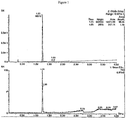
Figure 1 shows UPLC-MS of diphenyl-quinuclidin-4-yl-methanol prepared starting from the compound of formula (II). -
Figure 2 shows UPLC-MS of diphenyl-quinuclidin-4-yl-methanol prepared according to the known art. -
- UPLC-MS: SWaters AcquityTM Ultra Performance Liquid Chromatography (UPLC).
- Stationary phase: Acquity UPLCTM BEH SHIELD RP18, 1.7 um 2.1x50 mm.
- Gradient: Acetonitrile with Water + TFA 5-100% in 4 min).
- NMR:
mBruker Avance 2, 300 MHz. - To a suspension of NaH (60% dispersion in mineral oil, 64.3 mg, 1.61 mmoles, 1.5 eq) in dimethylformamide (1 ml) under inert nitrogen atmosphere, a solution of phenyl-1-(2-chloroethyl)piperidin-4-yl-methanone (270 mg, 1.07 mmoles, 1 eq) in dimethylformamide (3 ml) is added. The reaction mass is heated to 50°C until complete reaction, then H2O (3 ml) is dropped and is extracted with ethyl acetate (10 ml). The organic phase is dried on Na2SO4 and evaporated under vacuum, obtaining 148 mg title compound.
- In order to fully characterize it, the product has been purified and Mass (
Figure 1 ) and NMR (Figure 2 ) spectra were acquired.
1H NMR (DMSO-d6 + TFA, 300 MHz): δ ppm: 9.55 (br s, 1H); 7.78-7.75 (m, 2H); 7.62-7.56 (m, 1H); 7.53-7.48 (m, 2H); 3.37-3.32 (m, 6H); 2.18-2.13 (m, 6H) - In a glass flask N-methoxy-N-methylquinuclidin-4-carboxyamide (828 mg, 84.12% by weight, 3.51 mmol, 1 eq) is loaded in THF (18 ml) and the solution is cooled to - 20°C. A solution of phenyllithium (1.9M in dibutyl ether, 6.27 mmol, 3.3 ml, 1.79 eq) is added dropwise. The reaction is quenched with water (1 ml) and concentrated under vacuum to eliminate THF. The residue is reworked with ethyl acetate and Na2CO3(aq) saturated solution. The organic phase is separated and the product is extracted again with ethyl acetate. The organic phases are put together, washed with a 1M NaOH solution, then anhydrified on sodium sulphate, filtered and concentrated under vacuum. After chromatographic purification, phenyl(quinuclidin-4-yl)methanone has been obtained as yellow oil (496 mg, 96.94% UPLC purity, 64% yield).
- Mass and NMR confirm the structure:
- UPLC MS: m/z 216.31 (MH+)
1H (DMSO-d6, 300 MHz): δ ppm: 7.66-7.63 (m, 2H); 7.52-7.42 (m, 3H); 3.82-2.78 (t, 6H), 1.77-1.72 (t, 6H). - Note. δ ppm: 3.32 (s): H2O; 2.51 (quint): DMSO
- To a solution of phenyl-quinuclidin-4-yl-methanone (28 mg, 0.130 mmoles, 1 eq) in 1.2 ml toluene and under nitrogen atmosphere, a solution of phenyllithium (1.9M in dibutylether, 0.082 ml, 0.156 mmoles, 1.2 eq) is dropped. H2O (1.5 ml) is added and is extracted with ethyl acetate (2x7 ml). The organic phases put together are dried on Na2SO4 and concentrated under vacuum up to half the volume, thus obtaining the precipitation of a solid that is filtered and dried. 25 mg title compound is obtained as white solid.
- The product has been characterized by acquiring the Mass (Figure 3) and NMR (Figure 4) spectra.
1H NMR (DMSO-d6, 300 MHz): δ ppm: 7.54-7.52 (m, 4H); 7.29-7.24 (m, 4H); 7.19-7.14 (m, 2H); 5.37 (s, 1H); 2.70-2.65 (m, 6H); 1.64-1.59 (m, 6H). - By UPLC-MS it has been observed that the impurities of formula (IV) (sum of the compounds (V), (VI), (VII)) is lower than 1.5% in the obtained compound (
Figure 1 ). In said figure, at 1.65 minutes, a peak that integers 1.16% (in a lower percentage than what is obtained by the ester directly from the quinuclidine ethyl ester according toWO2005/104745 (see comparative example)) is obtained. - The title compound is prepared as described in
WO2005/104745 , by using the same batch of phenyllithium of Example 3 (therefore containing the same impurities). - By UPLC-MS it has been observed that the impurities of formula (IV) are higher (as a sum) than 2.5% (
Figure 2 ). - 2-bromobiphenyl (112.9 mg, 0.484 mmol, 1.90 eq) is dissolved in anhydrous THF (1.5 ml), the solution is cooled to -78°C and n-butyllithium (1.6M in n-esane, 0.504 mmol, 0.315 ml, 1.98 eq) is added dropwise. After 7 minutes it is added dropwise to a solution of phenyl(quinuclidin-4-yl)methanone (55 mg, 0.255 mmol, 1 eq) in toluene (1.5 ml) at -26°C. The solution is quenched with water. A Na2CO3(aq) saturated solution is added and it is extracted once with EtOAc. The organic phase is anhydrified on sodium sulphate and the solvent evaporated under vacuum, providing crude [1,1'-biphenyl]-2-yl(phenyl)(quinuclidin-4-yl)methanol. The product has been purified by chromatography to perform the NMR characterization. [1,1'-Biphenyl]-2-yl(phenyl)(quinuclidin-4-yl)methanol trifluoroacetate has been obtained as white solid (26.21 mg, 100% chromatographic purity, 21% yield)
- Mass and NMR confirm the structure:
- UPLC MS: m/z 370.31 (MH+)
1H NMR (DMSO-d6 +TFA, 300 MHz, 343K): δ ppm: 9.13 (br s, 1H); 8.02-7.99 (d, 1H); 7.40-7.35 (td, 1H); 7.30-7.25 (td, 1H); 7.15-6.90 (m, 10H), 6.52 (br m, 1H), 3.28-3.23 (t, 6H); 2.07-2.02 (t, 6H). - Note 1: δ ppm: 2.51 (quint): DMSO
- Note 2: for reasons of resolution, TFA has been added in the NMR tube and, consequently, the OH proton is not visible.
- 3-bromobiphenyl (37 mg, 0.159 mmol, 1.36 eq) is dissolved in anhydrous THF (0.9 ml), the solution is cooled to -78°C and n-butyllithium (1.6M in n-esane, 0.160 mmol, 0.100 ml, 1.37 eq) is added dropwise. After 10 minutes it is added dropwise to a solution of phenyl(quinuclidin-4-yl)methanone (25.2 mg, 0.117 mmol, 1 eq) in toluene (0.7 ml) at -26°C. The solution is quenched with water (0.3 ml). A Na2CO3(aq) saturated solution is added and it is extracted 2 times with EtOAc. The organic phases are put together, are anhydrified on sodium sulphate and the solvent is evaporated under vacuum, providing [1,1'-biphenyl]-3-yl(phenyl)(quinuclidin-4-yl)methanol. The product has been purified by chromatography to perform the NMR characterization. [1,1'-Biphenyl]-3-yl(phenyl)(quinuclidin-4-yl)methanol trifluoroacetate has been obtained as white solid (24.3mg, 99.7% chromatographic purity, 43% yield)
- Mass and NMR confirm the structure:
- UPLC MS: m/z 370.31 (MH+)
1H NMR (DMSO-d6, 300 MHz): δ ppm: 9.21 (s, 1H); 7.74 (s, 1H); 7.64-7.23 (m, 13H); 6.03 (s, 1H), 3.26-3.21 (br t, 6H); 2.02-1.97 (br t, 6H). - Note: δ ppm: 2.51 (quint): DMSO, with satellite peaks
- 4-bromobiphenyl (482 mg, 2.07 mmol, 1.07 eq) is dissolved in anhydrous THF (5 ml), the solution is cooled to -78°C and n-butyllithium (1.6M in n-esane, 2.08 mmol, 1.3 ml, 1.08 eq) is added dropwise. After 5 minutes it is added dropwise to a solution of phenyl(quinuclidin-4-yl)methanone (416 mg, 1.93 mmol, 1 eq) in toluene (7 ml) at - 26°C. The solution is quenched with water (1 ml). A Na2CO3(aq) (20 ml) saturated solution is added and it is extracted with EtOAc (2x40 ml). The organic phases are put together, are anhydrified on sodium sulphate and the solvent is evaporated under vacuum, providing [1,1'-biphenyl]-4-yl(phenyl)(quinuclidin-4-yl)methanol as white solid (816 mg, 77.5% chromatographic purity, 88.6% yield).
- A portion has been purified by chromatography to perform the NMR characterization: Mass and NMR confirm the structure:
- UPLC MS: m/z 370.28 (MH+)
1H NMR (DMSO-d6, 300 MHz): δ ppm: 9.17 (s, 1H); 7.67-7.58 (m, 8H); 7.49-7.44 (t, 2H); 7.39-7.32 (m, 3H), 7.28-7.23 (m, 1H); 5.97 (s, 1H); 3.24 (br t, 6H), 2.01-1.96 (br t, 6H). - Note: δ ppm: 3.46 (s): H2O; 2.51 (quint): DMSO, with satellite peaks.
- [1,1'-biphenyl]-2-yl(phenyl)(quinuclidin-4-yl)methanol (3.08 mg, 0.00834 mmol, 1 eq) is suspended in acetone (0.6 ml), ((2-bromoethoxy)methyl)benzene (2.5 mg, 0.0116 mmol, 1.39 eq) is added and it is refluxed for 11 hours. It is cooled to room temperature, the mixture is centrifuged, the supernatant is removed and the operation is repeated by washing the white solid with acetone. 4-([1,1'-Biphenyl]-2-yl(hydroxy)(phenyl)methyl)-1-(2-(benzyloxy)ethyl)quinuclidin-1-io bromide is obtained (1.6 mg, 98.35% chromatographic purity, 32% yield). By concentrating the supernatant it is possible to precipitate additional 5.3 mg product, having 71% purity).
- Mass and NMR confirm the structure:
- UPLC MS: m/z 504.50 (M+)
1H NMR (DMSO-d6, 300 MHz, 342K): δ ppm: 8.01-7.98 (d, 1H); 7.42-6.91 (m, 17H); 6.53 (br s, 1H); 4.87 (s, 1H); 4.53 (s, 2H); 3.87-3.84 (t, 2H); 3.53-3.48 (t, 6H); 3.40-3.37 (t, 2H); 2.15-2.10 (br t, 6H) - Note: δ ppm: 3.10 (s): H2O; 2.51 (quint): DMSO
- [1,1'-biphenyl]-3-yl(phenyl)(quinuclidin-4-yl)methanol (14.13 mg, 0.0382 mmol, 1 eq) is solubilized in acetone (1 ml), ((2-bromoethoxy)methyl)benzene (11 mg, 0.0511 mmol, 1.34 eq) is added and it is refluxed for 11 hours. It is cooled to room temperature, diethyl ether is added, it is concentrated under vacuum to a small volume and filtered by washing the solid with the minimum amount of a 6/1 diethyl ether/acetone mixture. 4-([1,1'-Biphenyl]-3-yl(hydroxy)(phenyl)methyl)-1-(2-(benzyloxy)ethyl)quinuclidin-1-io bromide is obtained (20 mg, 90% chromatographic purity, 80% yield).
- Mass and NMR confirm the structure:
- UPLC MS: m/z 504.57 (M+)
1H NMR (DMSO-d6, 300 MHz): δ ppm: 7.74 (br t, 1H); 7.65-7.23 (m, 18H); 6.07 (s, 1H); 4.50 (s, 2H); 3.82 (br t, 2H); 3.51-3.46 (t, 6H); 3.37 (br t, 2H); 2.08-2.03 (br t, 6H). - Note: δ ppm: 3.32 (s): H2O; 2.51 (quint): DMSO, with satellite peaks; 2.09 (s): acetone
- [1,1'-biphenyl]-4-yl(phenyl)(quinuclidin-4-yl)methanol (6.74 mg, 0.0182 mmol, 1 eq) is suspended in acetone (0.5 ml), ((2-bromoethoxy)methyl)benzene (4.7 mg, 0.0219 mmol, 1.2 eq) is added and it is refluxed for 11 hours. The solution is concentrated under vacuum to a small volume and the product is filtered, by washing it with the minimum amount of acetone. 4-([1,1'-Biphenyl]-4-yl(hydroxy)(phenyl)methyl)-1-(2-(benzyloxy)ethyl)quinuclidin-1-io bromide is obtained (9.91 mg, 93% chromatographic purity, 87% yield).
- Mass and NMR confirm the structure:
- UPLC MS: m/z 504.50 (M+)
1H NMR (DMSO-d6, 300 MHz): δ ppm: 7.67-7.59 (m, 8H); 7.49-7.44 (t, 2H); 7.39-7.24 (m, 9H); 6.01 (s, 1H); 4.50 (s, 2H); 3.83 (br t, 2H); 3.51-3.47 (br t, 6H); 3.38 (br t, 2H); 2.07-2.02 (br t, 6H) - Note: δ ppm: 3.32 (s): H2O; 2.51 (quint): DMSO, with satellite peaks
Claims (9)
- A process for the preparation of a compound of formula (I) or one of its salts


- The process according to claim 1, characterized in that said solvent is selected from aprotic solvents.
- The process according to claim 1 or 2, characterized in that phenyl lithium is used at a rate of 1.2-1.3 moles per mole of compound of formula (II).
- The process according to claim 1 which comprises:- reacting a compound of formula (III)

with a strong base in a suitable solvent, to give the compound of formula (II) and, subsequently- reacting the compound of formula (II) with a compound selected from phenyl lithium and phenyl magnesium bromide, in a suitable solvent, to give the compound of formula (I). - The process according to claim 4, characterized in that X is a halogen.
- The process according to claim 5, characterized in that X is chlorine.
- A process for the preparation of the compounds of formula (I) and (II) according to claim 1, which comprises:- reacting the Weinreb amide of quinuclidine with phenyl lithium or phenyl magnesium bromide, thus obtaining the compound of formula (II), and- reacting the compound of formula (II) with phenyl lithium or phenyl magnesium bromide in a suitable solvent, to obtain the compound of formula (I).
- A compound of formula (II)

- Use of the compound of formula (II) and/or the compound of formula (III) as intermediates in the preparation of the compound of formula (I) and/or umeclidinium, wherein the compounds of formula (I), (II) and (III) are as defined in the preceding claims.
Applications Claiming Priority (2)
| Application Number | Priority Date | Filing Date | Title |
|---|---|---|---|
| IT102017000058796A IT201700058796A1 (en) | 2017-05-30 | 2017-05-30 | Procedure for the preparation of a new intermediate of synthesis of umeclidinium. |
| PCT/IB2018/053767 WO2018220501A1 (en) | 2017-05-30 | 2018-05-28 | Process for the preparation of a novel umeclidinium synthesis intermediate |
Publications (2)
| Publication Number | Publication Date |
|---|---|
| EP3630756A1 EP3630756A1 (en) | 2020-04-08 |
| EP3630756B1 true EP3630756B1 (en) | 2021-12-29 |
Family
ID=59812060
Family Applications (1)
| Application Number | Title | Priority Date | Filing Date |
|---|---|---|---|
| EP18731525.4A Active EP3630756B1 (en) | 2017-05-30 | 2018-05-28 | Process for the preparation of an umeclidinium synthesis intermediate |
Country Status (7)
| Country | Link |
|---|---|
| US (1) | US11028082B2 (en) |
| EP (1) | EP3630756B1 (en) |
| JP (1) | JP7126744B2 (en) |
| CA (1) | CA3065152A1 (en) |
| ES (1) | ES2908618T3 (en) |
| IT (1) | IT201700058796A1 (en) |
| WO (1) | WO2018220501A1 (en) |
Citations (1)
| Publication number | Priority date | Publication date | Assignee | Title |
|---|---|---|---|---|
| CN108069956A (en) * | 2016-11-18 | 2018-05-25 | 扬州奥锐特药业有限公司 | 1- azabicyclos [2,2,2] octyl- 4- base phenyl ketone compounds and its preparation method and application |
Family Cites Families (4)
| Publication number | Priority date | Publication date | Assignee | Title |
|---|---|---|---|---|
| US5626798A (en) * | 1996-01-05 | 1997-05-06 | Fmc Corporation | Aryllithium products and processes |
| AR050902A1 (en) * | 2004-04-27 | 2006-12-06 | Glaxo Group Ltd | QUINUCLIDINE COMPOSITE, PHARMACEUTICAL COMPOSITION THAT INCLUDES IT AND ITS USOPRATION TO PREPARE SUCH COMPOSITION |
| JP6389174B2 (en) * | 2012-08-15 | 2018-09-12 | グラクソ グループ リミテッドGlaxo Group Limited | Chemical method |
| CN105461710A (en) * | 2015-10-23 | 2016-04-06 | 安徽德信佳生物医药有限公司 | Preparation method of umeclidinium bromide |
-
2017
- 2017-05-30 IT IT102017000058796A patent/IT201700058796A1/en unknown
-
2018
- 2018-05-28 US US16/617,928 patent/US11028082B2/en active Active
- 2018-05-28 WO PCT/IB2018/053767 patent/WO2018220501A1/en not_active Ceased
- 2018-05-28 CA CA3065152A patent/CA3065152A1/en active Pending
- 2018-05-28 ES ES18731525T patent/ES2908618T3/en active Active
- 2018-05-28 EP EP18731525.4A patent/EP3630756B1/en active Active
- 2018-05-28 JP JP2019566363A patent/JP7126744B2/en active Active
Patent Citations (1)
| Publication number | Priority date | Publication date | Assignee | Title |
|---|---|---|---|---|
| CN108069956A (en) * | 2016-11-18 | 2018-05-25 | 扬州奥锐特药业有限公司 | 1- azabicyclos [2,2,2] octyl- 4- base phenyl ketone compounds and its preparation method and application |
Non-Patent Citations (1)
| Title |
|---|
| JIANHUI GU ET AL: "Convenient new synthesis of umeclidinium bromide", SYNTHETIC COMMUNICATIONS, vol. 48, no. 9, 3 May 2018 (2018-05-03), pages 995 - 1000, XP055754295, ISSN: 0039-7911, DOI: 10.1080/00397911.2017.1348525 * |
Also Published As
| Publication number | Publication date |
|---|---|
| WO2018220501A1 (en) | 2018-12-06 |
| EP3630756A1 (en) | 2020-04-08 |
| ES2908618T3 (en) | 2022-05-03 |
| JP2020521802A (en) | 2020-07-27 |
| IT201700058796A1 (en) | 2018-11-30 |
| US20200102300A1 (en) | 2020-04-02 |
| CA3065152A1 (en) | 2018-12-06 |
| JP7126744B2 (en) | 2022-08-29 |
| US11028082B2 (en) | 2021-06-08 |
Similar Documents
| Publication | Publication Date | Title |
|---|---|---|
| RU2682660C9 (en) | Method of obtaining pde4 inhibitor | |
| JP2010503611A (en) | Process for preparing asenapine and intermediate products used in said process | |
| JP6001112B2 (en) | Process for the preparation of derivatives of 1- (2-halobiphenyl-4-yl) -cyclopropanecarboxylic acid | |
| AU2016213768A1 (en) | Chemical process | |
| WO2016121777A1 (en) | Method for producing pyrazine carboxamide compound, and synthetic intermediate thereof | |
| US11028082B2 (en) | Process for the preparation of a novel umeclidinium synthesis intermediate | |
| DE69513414T2 (en) | METHOD FOR PRODUCING (E) -2-FLUORMETHYLENE-4- (4-FLUORPHENYL) BUTAN-1-OL | |
| JP2022529000A (en) | Method for Producing Substituted 2- [2- (Phenyl) Ethylamino] Alkaneamide Derivative | |
| KR101628946B1 (en) | Improved Process of Silodosin | |
| KR101865868B1 (en) | Process for large scale production of 1-isopropyl-3-[5-[1-(3-methoxypropyl) piperidin-4-yl]-[1,3,4]oxadiazol-2-yl]-1h-indazole oxalate | |
| CN114805161B (en) | Preparation method of 3-fluolobidine hydrochloride | |
| CN114315726B (en) | Preparation method of gem-difluoroallyl compound | |
| JP4564135B2 (en) | High-purity phenothiazine compound, method for producing the same, method for producing the intermediate, and hydrate and novel crystal of the raw material for the intermediate | |
| JP2659587B2 (en) | 4-aziridinyl pyrimidine derivatives and their production | |
| JP6660393B2 (en) | Method for preparing 4-cyanopiperidine hydrochloride | |
| US6479672B1 (en) | Diastereoselective preparation of Michael adducts | |
| JPWO2004035520A1 (en) | Method for producing acetylene compound | |
| JP2014196299A (en) | Synthesis method of 7,8-dimethoxy-1,3-dihydro-2h-3-benzazepine-2-on compound and application to synthesis of ivabradine | |
| JP4507390B2 (en) | 1-alkyl-1-substituted-3-organosulfonyloxyazetidinium salts and process for producing the same | |
| EP4126796A1 (en) | Process for production of terpenoid-intermediates | |
| JP3495774B2 (en) | Method for producing 1-hydroxyindoles | |
| EP2420487A1 (en) | Novel method for producing optically active pyrrolidine compound | |
| JPS62153296A (en) | 2'-deoxy-5-trifluoromethyluridine derivative | |
| JPH1072398A (en) | Production of 1-indanone | |
| HUE029470T2 (en) | Preparation process of carboxylic acid derivatives and intermediates thereof |
Legal Events
| Date | Code | Title | Description |
|---|---|---|---|
| STAA | Information on the status of an ep patent application or granted ep patent |
Free format text: STATUS: UNKNOWN |
|
| STAA | Information on the status of an ep patent application or granted ep patent |
Free format text: STATUS: THE INTERNATIONAL PUBLICATION HAS BEEN MADE |
|
| PUAI | Public reference made under article 153(3) epc to a published international application that has entered the european phase |
Free format text: ORIGINAL CODE: 0009012 |
|
| STAA | Information on the status of an ep patent application or granted ep patent |
Free format text: STATUS: REQUEST FOR EXAMINATION WAS MADE |
|
| 17P | Request for examination filed |
Effective date: 20191122 |
|
| AK | Designated contracting states |
Kind code of ref document: A1 Designated state(s): AL AT BE BG CH CY CZ DE DK EE ES FI FR GB GR HR HU IE IS IT LI LT LU LV MC MK MT NL NO PL PT RO RS SE SI SK SM TR |
|
| AX | Request for extension of the european patent |
Extension state: BA ME |
|
| DAV | Request for validation of the european patent (deleted) | ||
| DAX | Request for extension of the european patent (deleted) | ||
| STAA | Information on the status of an ep patent application or granted ep patent |
Free format text: STATUS: EXAMINATION IS IN PROGRESS |
|
| 17Q | First examination report despatched |
Effective date: 20201202 |
|
| GRAP | Despatch of communication of intention to grant a patent |
Free format text: ORIGINAL CODE: EPIDOSNIGR1 |
|
| STAA | Information on the status of an ep patent application or granted ep patent |
Free format text: STATUS: GRANT OF PATENT IS INTENDED |
|
| INTG | Intention to grant announced |
Effective date: 20210720 |
|
| GRAS | Grant fee paid |
Free format text: ORIGINAL CODE: EPIDOSNIGR3 |
|
| GRAA | (expected) grant |
Free format text: ORIGINAL CODE: 0009210 |
|
| STAA | Information on the status of an ep patent application or granted ep patent |
Free format text: STATUS: THE PATENT HAS BEEN GRANTED |
|
| AK | Designated contracting states |
Kind code of ref document: B1 Designated state(s): AL AT BE BG CH CY CZ DE DK EE ES FI FR GB GR HR HU IE IS IT LI LT LU LV MC MK MT NL NO PL PT RO RS SE SI SK SM TR |
|
| REG | Reference to a national code |
Ref country code: GB Ref legal event code: FG4D |
|
| REG | Reference to a national code |
Ref country code: CH Ref legal event code: EP |
|
| REG | Reference to a national code |
Ref country code: AT Ref legal event code: REF Ref document number: 1458596 Country of ref document: AT Kind code of ref document: T Effective date: 20220115 |
|
| REG | Reference to a national code |
Ref country code: IE Ref legal event code: FG4D |
|
| REG | Reference to a national code |
Ref country code: DE Ref legal event code: R096 Ref document number: 602018028802 Country of ref document: DE |
|
| REG | Reference to a national code |
Ref country code: LT Ref legal event code: MG9D |
|
| PG25 | Lapsed in a contracting state [announced via postgrant information from national office to epo] |
Ref country code: RS Free format text: LAPSE BECAUSE OF FAILURE TO SUBMIT A TRANSLATION OF THE DESCRIPTION OR TO PAY THE FEE WITHIN THE PRESCRIBED TIME-LIMIT Effective date: 20211229 Ref country code: LT Free format text: LAPSE BECAUSE OF FAILURE TO SUBMIT A TRANSLATION OF THE DESCRIPTION OR TO PAY THE FEE WITHIN THE PRESCRIBED TIME-LIMIT Effective date: 20211229 Ref country code: FI Free format text: LAPSE BECAUSE OF FAILURE TO SUBMIT A TRANSLATION OF THE DESCRIPTION OR TO PAY THE FEE WITHIN THE PRESCRIBED TIME-LIMIT Effective date: 20211229 Ref country code: BG Free format text: LAPSE BECAUSE OF FAILURE TO SUBMIT A TRANSLATION OF THE DESCRIPTION OR TO PAY THE FEE WITHIN THE PRESCRIBED TIME-LIMIT Effective date: 20220329 |
|
| REG | Reference to a national code |
Ref country code: ES Ref legal event code: FG2A Ref document number: 2908618 Country of ref document: ES Kind code of ref document: T3 Effective date: 20220503 |
|
| REG | Reference to a national code |
Ref country code: NL Ref legal event code: MP Effective date: 20211229 |
|
| REG | Reference to a national code |
Ref country code: AT Ref legal event code: MK05 Ref document number: 1458596 Country of ref document: AT Kind code of ref document: T Effective date: 20211229 |
|
| PG25 | Lapsed in a contracting state [announced via postgrant information from national office to epo] |
Ref country code: SE Free format text: LAPSE BECAUSE OF FAILURE TO SUBMIT A TRANSLATION OF THE DESCRIPTION OR TO PAY THE FEE WITHIN THE PRESCRIBED TIME-LIMIT Effective date: 20211229 Ref country code: NO Free format text: LAPSE BECAUSE OF FAILURE TO SUBMIT A TRANSLATION OF THE DESCRIPTION OR TO PAY THE FEE WITHIN THE PRESCRIBED TIME-LIMIT Effective date: 20220329 Ref country code: LV Free format text: LAPSE BECAUSE OF FAILURE TO SUBMIT A TRANSLATION OF THE DESCRIPTION OR TO PAY THE FEE WITHIN THE PRESCRIBED TIME-LIMIT Effective date: 20211229 Ref country code: HR Free format text: LAPSE BECAUSE OF FAILURE TO SUBMIT A TRANSLATION OF THE DESCRIPTION OR TO PAY THE FEE WITHIN THE PRESCRIBED TIME-LIMIT Effective date: 20211229 Ref country code: GR Free format text: LAPSE BECAUSE OF FAILURE TO SUBMIT A TRANSLATION OF THE DESCRIPTION OR TO PAY THE FEE WITHIN THE PRESCRIBED TIME-LIMIT Effective date: 20220330 |
|
| PG25 | Lapsed in a contracting state [announced via postgrant information from national office to epo] |
Ref country code: NL Free format text: LAPSE BECAUSE OF FAILURE TO SUBMIT A TRANSLATION OF THE DESCRIPTION OR TO PAY THE FEE WITHIN THE PRESCRIBED TIME-LIMIT Effective date: 20211229 |
|
| PG25 | Lapsed in a contracting state [announced via postgrant information from national office to epo] |
Ref country code: SM Free format text: LAPSE BECAUSE OF FAILURE TO SUBMIT A TRANSLATION OF THE DESCRIPTION OR TO PAY THE FEE WITHIN THE PRESCRIBED TIME-LIMIT Effective date: 20211229 Ref country code: SK Free format text: LAPSE BECAUSE OF FAILURE TO SUBMIT A TRANSLATION OF THE DESCRIPTION OR TO PAY THE FEE WITHIN THE PRESCRIBED TIME-LIMIT Effective date: 20211229 Ref country code: RO Free format text: LAPSE BECAUSE OF FAILURE TO SUBMIT A TRANSLATION OF THE DESCRIPTION OR TO PAY THE FEE WITHIN THE PRESCRIBED TIME-LIMIT Effective date: 20211229 Ref country code: PT Free format text: LAPSE BECAUSE OF FAILURE TO SUBMIT A TRANSLATION OF THE DESCRIPTION OR TO PAY THE FEE WITHIN THE PRESCRIBED TIME-LIMIT Effective date: 20220429 Ref country code: EE Free format text: LAPSE BECAUSE OF FAILURE TO SUBMIT A TRANSLATION OF THE DESCRIPTION OR TO PAY THE FEE WITHIN THE PRESCRIBED TIME-LIMIT Effective date: 20211229 Ref country code: CZ Free format text: LAPSE BECAUSE OF FAILURE TO SUBMIT A TRANSLATION OF THE DESCRIPTION OR TO PAY THE FEE WITHIN THE PRESCRIBED TIME-LIMIT Effective date: 20211229 |
|
| PG25 | Lapsed in a contracting state [announced via postgrant information from national office to epo] |
Ref country code: PL Free format text: LAPSE BECAUSE OF FAILURE TO SUBMIT A TRANSLATION OF THE DESCRIPTION OR TO PAY THE FEE WITHIN THE PRESCRIBED TIME-LIMIT Effective date: 20211229 Ref country code: AT Free format text: LAPSE BECAUSE OF FAILURE TO SUBMIT A TRANSLATION OF THE DESCRIPTION OR TO PAY THE FEE WITHIN THE PRESCRIBED TIME-LIMIT Effective date: 20211229 |
|
| PG25 | Lapsed in a contracting state [announced via postgrant information from national office to epo] |
Ref country code: IS Free format text: LAPSE BECAUSE OF FAILURE TO SUBMIT A TRANSLATION OF THE DESCRIPTION OR TO PAY THE FEE WITHIN THE PRESCRIBED TIME-LIMIT Effective date: 20220429 |
|
| REG | Reference to a national code |
Ref country code: DE Ref legal event code: R097 Ref document number: 602018028802 Country of ref document: DE |
|
| PG25 | Lapsed in a contracting state [announced via postgrant information from national office to epo] |
Ref country code: DK Free format text: LAPSE BECAUSE OF FAILURE TO SUBMIT A TRANSLATION OF THE DESCRIPTION OR TO PAY THE FEE WITHIN THE PRESCRIBED TIME-LIMIT Effective date: 20211229 Ref country code: AL Free format text: LAPSE BECAUSE OF FAILURE TO SUBMIT A TRANSLATION OF THE DESCRIPTION OR TO PAY THE FEE WITHIN THE PRESCRIBED TIME-LIMIT Effective date: 20211229 |
|
| PLBE | No opposition filed within time limit |
Free format text: ORIGINAL CODE: 0009261 |
|
| STAA | Information on the status of an ep patent application or granted ep patent |
Free format text: STATUS: NO OPPOSITION FILED WITHIN TIME LIMIT |
|
| 26N | No opposition filed |
Effective date: 20220930 |
|
| REG | Reference to a national code |
Ref country code: CH Ref legal event code: PL |
|
| REG | Reference to a national code |
Ref country code: BE Ref legal event code: MM Effective date: 20220531 |
|
| PG25 | Lapsed in a contracting state [announced via postgrant information from national office to epo] |
Ref country code: MC Free format text: LAPSE BECAUSE OF FAILURE TO SUBMIT A TRANSLATION OF THE DESCRIPTION OR TO PAY THE FEE WITHIN THE PRESCRIBED TIME-LIMIT Effective date: 20211229 Ref country code: LU Free format text: LAPSE BECAUSE OF NON-PAYMENT OF DUE FEES Effective date: 20220528 Ref country code: LI Free format text: LAPSE BECAUSE OF NON-PAYMENT OF DUE FEES Effective date: 20220531 Ref country code: CH Free format text: LAPSE BECAUSE OF NON-PAYMENT OF DUE FEES Effective date: 20220531 |
|
| PG25 | Lapsed in a contracting state [announced via postgrant information from national office to epo] |
Ref country code: SI Free format text: LAPSE BECAUSE OF FAILURE TO SUBMIT A TRANSLATION OF THE DESCRIPTION OR TO PAY THE FEE WITHIN THE PRESCRIBED TIME-LIMIT Effective date: 20211229 |
|
| PG25 | Lapsed in a contracting state [announced via postgrant information from national office to epo] |
Ref country code: IE Free format text: LAPSE BECAUSE OF NON-PAYMENT OF DUE FEES Effective date: 20220528 |
|
| PG25 | Lapsed in a contracting state [announced via postgrant information from national office to epo] |
Ref country code: BE Free format text: LAPSE BECAUSE OF NON-PAYMENT OF DUE FEES Effective date: 20220531 |
|
| P01 | Opt-out of the competence of the unified patent court (upc) registered |
Effective date: 20230622 |
|
| PG25 | Lapsed in a contracting state [announced via postgrant information from national office to epo] |
Ref country code: MK Free format text: LAPSE BECAUSE OF FAILURE TO SUBMIT A TRANSLATION OF THE DESCRIPTION OR TO PAY THE FEE WITHIN THE PRESCRIBED TIME-LIMIT Effective date: 20211229 Ref country code: CY Free format text: LAPSE BECAUSE OF FAILURE TO SUBMIT A TRANSLATION OF THE DESCRIPTION OR TO PAY THE FEE WITHIN THE PRESCRIBED TIME-LIMIT Effective date: 20211229 |
|
| PG25 | Lapsed in a contracting state [announced via postgrant information from national office to epo] |
Ref country code: HU Free format text: LAPSE BECAUSE OF FAILURE TO SUBMIT A TRANSLATION OF THE DESCRIPTION OR TO PAY THE FEE WITHIN THE PRESCRIBED TIME-LIMIT; INVALID AB INITIO Effective date: 20180528 |
|
| PG25 | Lapsed in a contracting state [announced via postgrant information from national office to epo] |
Ref country code: MT Free format text: LAPSE BECAUSE OF FAILURE TO SUBMIT A TRANSLATION OF THE DESCRIPTION OR TO PAY THE FEE WITHIN THE PRESCRIBED TIME-LIMIT Effective date: 20211229 |
|
| PGFP | Annual fee paid to national office [announced via postgrant information from national office to epo] |
Ref country code: DE Payment date: 20250402 Year of fee payment: 8 |
|
| PGFP | Annual fee paid to national office [announced via postgrant information from national office to epo] |
Ref country code: GB Payment date: 20250401 Year of fee payment: 8 Ref country code: ES Payment date: 20250605 Year of fee payment: 8 |
|
| PGFP | Annual fee paid to national office [announced via postgrant information from national office to epo] |
Ref country code: IT Payment date: 20250505 Year of fee payment: 8 |
|
| PGFP | Annual fee paid to national office [announced via postgrant information from national office to epo] |
Ref country code: FR Payment date: 20250401 Year of fee payment: 8 |
|
| PG25 | Lapsed in a contracting state [announced via postgrant information from national office to epo] |
Ref country code: TR Free format text: LAPSE BECAUSE OF FAILURE TO SUBMIT A TRANSLATION OF THE DESCRIPTION OR TO PAY THE FEE WITHIN THE PRESCRIBED TIME-LIMIT Effective date: 20211229 |