EP3628333A1 - Bionconjugates of polysaccharides and elastin-like polypeptides and uses thereof - Google Patents
Bionconjugates of polysaccharides and elastin-like polypeptides and uses thereof Download PDFInfo
- Publication number
- EP3628333A1 EP3628333A1 EP18306238.9A EP18306238A EP3628333A1 EP 3628333 A1 EP3628333 A1 EP 3628333A1 EP 18306238 A EP18306238 A EP 18306238A EP 3628333 A1 EP3628333 A1 EP 3628333A1
- Authority
- EP
- European Patent Office
- Prior art keywords
- block copolymer
- elp
- formula
- radical
- following formula
- Prior art date
- Legal status (The legal status is an assumption and is not a legal conclusion. Google has not performed a legal analysis and makes no representation as to the accuracy of the status listed.)
- Withdrawn
Links
- XCGQLCSQGLZWID-UHFFFAOYSA-N CCC(C(CCN(CCCN)OC)O)O Chemical compound CCC(C(CCN(CCCN)OC)O)O XCGQLCSQGLZWID-UHFFFAOYSA-N 0.000 description 1
Images






Classifications
-
- A—HUMAN NECESSITIES
- A61—MEDICAL OR VETERINARY SCIENCE; HYGIENE
- A61K—PREPARATIONS FOR MEDICAL, DENTAL OR TOILETRY PURPOSES
- A61K47/00—Medicinal preparations characterised by the non-active ingredients used, e.g. carriers or inert additives; Targeting or modifying agents chemically bound to the active ingredient
- A61K47/50—Medicinal preparations characterised by the non-active ingredients used, e.g. carriers or inert additives; Targeting or modifying agents chemically bound to the active ingredient the non-active ingredient being chemically bound to the active ingredient, e.g. polymer-drug conjugates
- A61K47/69—Medicinal preparations characterised by the non-active ingredients used, e.g. carriers or inert additives; Targeting or modifying agents chemically bound to the active ingredient the non-active ingredient being chemically bound to the active ingredient, e.g. polymer-drug conjugates the conjugate being characterised by physical or galenical forms, e.g. emulsion, particle, inclusion complex, stent or kit
- A61K47/6921—Medicinal preparations characterised by the non-active ingredients used, e.g. carriers or inert additives; Targeting or modifying agents chemically bound to the active ingredient the non-active ingredient being chemically bound to the active ingredient, e.g. polymer-drug conjugates the conjugate being characterised by physical or galenical forms, e.g. emulsion, particle, inclusion complex, stent or kit the form being a particulate, a powder, an adsorbate, a bead or a sphere
- A61K47/6927—Medicinal preparations characterised by the non-active ingredients used, e.g. carriers or inert additives; Targeting or modifying agents chemically bound to the active ingredient the non-active ingredient being chemically bound to the active ingredient, e.g. polymer-drug conjugates the conjugate being characterised by physical or galenical forms, e.g. emulsion, particle, inclusion complex, stent or kit the form being a particulate, a powder, an adsorbate, a bead or a sphere the form being a solid microparticle having no hollow or gas-filled cores
- A61K47/6929—Medicinal preparations characterised by the non-active ingredients used, e.g. carriers or inert additives; Targeting or modifying agents chemically bound to the active ingredient the non-active ingredient being chemically bound to the active ingredient, e.g. polymer-drug conjugates the conjugate being characterised by physical or galenical forms, e.g. emulsion, particle, inclusion complex, stent or kit the form being a particulate, a powder, an adsorbate, a bead or a sphere the form being a solid microparticle having no hollow or gas-filled cores the form being a nanoparticle, e.g. an immuno-nanoparticle
- A61K47/6931—Medicinal preparations characterised by the non-active ingredients used, e.g. carriers or inert additives; Targeting or modifying agents chemically bound to the active ingredient the non-active ingredient being chemically bound to the active ingredient, e.g. polymer-drug conjugates the conjugate being characterised by physical or galenical forms, e.g. emulsion, particle, inclusion complex, stent or kit the form being a particulate, a powder, an adsorbate, a bead or a sphere the form being a solid microparticle having no hollow or gas-filled cores the form being a nanoparticle, e.g. an immuno-nanoparticle the material constituting the nanoparticle being a polymer
- A61K47/6939—Medicinal preparations characterised by the non-active ingredients used, e.g. carriers or inert additives; Targeting or modifying agents chemically bound to the active ingredient the non-active ingredient being chemically bound to the active ingredient, e.g. polymer-drug conjugates the conjugate being characterised by physical or galenical forms, e.g. emulsion, particle, inclusion complex, stent or kit the form being a particulate, a powder, an adsorbate, a bead or a sphere the form being a solid microparticle having no hollow or gas-filled cores the form being a nanoparticle, e.g. an immuno-nanoparticle the material constituting the nanoparticle being a polymer the polymer being a polysaccharide, e.g. starch, chitosan, chitin, cellulose or pectin
-
- A—HUMAN NECESSITIES
- A61—MEDICAL OR VETERINARY SCIENCE; HYGIENE
- A61K—PREPARATIONS FOR MEDICAL, DENTAL OR TOILETRY PURPOSES
- A61K47/00—Medicinal preparations characterised by the non-active ingredients used, e.g. carriers or inert additives; Targeting or modifying agents chemically bound to the active ingredient
- A61K47/50—Medicinal preparations characterised by the non-active ingredients used, e.g. carriers or inert additives; Targeting or modifying agents chemically bound to the active ingredient the non-active ingredient being chemically bound to the active ingredient, e.g. polymer-drug conjugates
- A61K47/69—Medicinal preparations characterised by the non-active ingredients used, e.g. carriers or inert additives; Targeting or modifying agents chemically bound to the active ingredient the non-active ingredient being chemically bound to the active ingredient, e.g. polymer-drug conjugates the conjugate being characterised by physical or galenical forms, e.g. emulsion, particle, inclusion complex, stent or kit
- A61K47/6921—Medicinal preparations characterised by the non-active ingredients used, e.g. carriers or inert additives; Targeting or modifying agents chemically bound to the active ingredient the non-active ingredient being chemically bound to the active ingredient, e.g. polymer-drug conjugates the conjugate being characterised by physical or galenical forms, e.g. emulsion, particle, inclusion complex, stent or kit the form being a particulate, a powder, an adsorbate, a bead or a sphere
- A61K47/6927—Medicinal preparations characterised by the non-active ingredients used, e.g. carriers or inert additives; Targeting or modifying agents chemically bound to the active ingredient the non-active ingredient being chemically bound to the active ingredient, e.g. polymer-drug conjugates the conjugate being characterised by physical or galenical forms, e.g. emulsion, particle, inclusion complex, stent or kit the form being a particulate, a powder, an adsorbate, a bead or a sphere the form being a solid microparticle having no hollow or gas-filled cores
- A61K47/6929—Medicinal preparations characterised by the non-active ingredients used, e.g. carriers or inert additives; Targeting or modifying agents chemically bound to the active ingredient the non-active ingredient being chemically bound to the active ingredient, e.g. polymer-drug conjugates the conjugate being characterised by physical or galenical forms, e.g. emulsion, particle, inclusion complex, stent or kit the form being a particulate, a powder, an adsorbate, a bead or a sphere the form being a solid microparticle having no hollow or gas-filled cores the form being a nanoparticle, e.g. an immuno-nanoparticle
- A61K47/6931—Medicinal preparations characterised by the non-active ingredients used, e.g. carriers or inert additives; Targeting or modifying agents chemically bound to the active ingredient the non-active ingredient being chemically bound to the active ingredient, e.g. polymer-drug conjugates the conjugate being characterised by physical or galenical forms, e.g. emulsion, particle, inclusion complex, stent or kit the form being a particulate, a powder, an adsorbate, a bead or a sphere the form being a solid microparticle having no hollow or gas-filled cores the form being a nanoparticle, e.g. an immuno-nanoparticle the material constituting the nanoparticle being a polymer
- A61K47/6935—Medicinal preparations characterised by the non-active ingredients used, e.g. carriers or inert additives; Targeting or modifying agents chemically bound to the active ingredient the non-active ingredient being chemically bound to the active ingredient, e.g. polymer-drug conjugates the conjugate being characterised by physical or galenical forms, e.g. emulsion, particle, inclusion complex, stent or kit the form being a particulate, a powder, an adsorbate, a bead or a sphere the form being a solid microparticle having no hollow or gas-filled cores the form being a nanoparticle, e.g. an immuno-nanoparticle the material constituting the nanoparticle being a polymer the polymer being obtained otherwise than by reactions involving carbon to carbon unsaturated bonds, e.g. polyesters, polyamides or polyglycerol
-
- C—CHEMISTRY; METALLURGY
- C07—ORGANIC CHEMISTRY
- C07K—PEPTIDES
- C07K14/00—Peptides having more than 20 amino acids; Gastrins; Somatostatins; Melanotropins; Derivatives thereof
- C07K14/435—Peptides having more than 20 amino acids; Gastrins; Somatostatins; Melanotropins; Derivatives thereof from animals; from humans
- C07K14/78—Connective tissue peptides, e.g. collagen, elastin, laminin, fibronectin, vitronectin or cold insoluble globulin [CIG]
-
- C—CHEMISTRY; METALLURGY
- C08—ORGANIC MACROMOLECULAR COMPOUNDS; THEIR PREPARATION OR CHEMICAL WORKING-UP; COMPOSITIONS BASED THEREON
- C08B—POLYSACCHARIDES; DERIVATIVES THEREOF
- C08B37/00—Preparation of polysaccharides not provided for in groups C08B1/00 - C08B35/00; Derivatives thereof
- C08B37/0006—Homoglycans, i.e. polysaccharides having a main chain consisting of one single sugar, e.g. colominic acid
- C08B37/0009—Homoglycans, i.e. polysaccharides having a main chain consisting of one single sugar, e.g. colominic acid alpha-D-Glucans, e.g. polydextrose, alternan, glycogen; (alpha-1,4)(alpha-1,6)-D-Glucans; (alpha-1,3)(alpha-1,4)-D-Glucans, e.g. isolichenan or nigeran; (alpha-1,4)-D-Glucans; (alpha-1,3)-D-Glucans, e.g. pseudonigeran; Derivatives thereof
- C08B37/0021—Dextran, i.e. (alpha-1,4)-D-glucan; Derivatives thereof, e.g. Sephadex, i.e. crosslinked dextran
-
- C—CHEMISTRY; METALLURGY
- C08—ORGANIC MACROMOLECULAR COMPOUNDS; THEIR PREPARATION OR CHEMICAL WORKING-UP; COMPOSITIONS BASED THEREON
- C08B—POLYSACCHARIDES; DERIVATIVES THEREOF
- C08B37/00—Preparation of polysaccharides not provided for in groups C08B1/00 - C08B35/00; Derivatives thereof
- C08B37/0006—Homoglycans, i.e. polysaccharides having a main chain consisting of one single sugar, e.g. colominic acid
- C08B37/0024—Homoglycans, i.e. polysaccharides having a main chain consisting of one single sugar, e.g. colominic acid beta-D-Glucans; (beta-1,3)-D-Glucans, e.g. paramylon, coriolan, sclerotan, pachyman, callose, scleroglucan, schizophyllan, laminaran, lentinan or curdlan; (beta-1,6)-D-Glucans, e.g. pustulan; (beta-1,4)-D-Glucans; (beta-1,3)(beta-1,4)-D-Glucans, e.g. lichenan; Derivatives thereof
-
- C—CHEMISTRY; METALLURGY
- C08—ORGANIC MACROMOLECULAR COMPOUNDS; THEIR PREPARATION OR CHEMICAL WORKING-UP; COMPOSITIONS BASED THEREON
- C08B—POLYSACCHARIDES; DERIVATIVES THEREOF
- C08B37/00—Preparation of polysaccharides not provided for in groups C08B1/00 - C08B35/00; Derivatives thereof
- C08B37/0006—Homoglycans, i.e. polysaccharides having a main chain consisting of one single sugar, e.g. colominic acid
- C08B37/0024—Homoglycans, i.e. polysaccharides having a main chain consisting of one single sugar, e.g. colominic acid beta-D-Glucans; (beta-1,3)-D-Glucans, e.g. paramylon, coriolan, sclerotan, pachyman, callose, scleroglucan, schizophyllan, laminaran, lentinan or curdlan; (beta-1,6)-D-Glucans, e.g. pustulan; (beta-1,4)-D-Glucans; (beta-1,3)(beta-1,4)-D-Glucans, e.g. lichenan; Derivatives thereof
- C08B37/0027—2-Acetamido-2-deoxy-beta-glucans; Derivatives thereof
- C08B37/003—Chitin, i.e. 2-acetamido-2-deoxy-(beta-1,4)-D-glucan or N-acetyl-beta-1,4-D-glucosamine; Chitosan, i.e. deacetylated product of chitin or (beta-1,4)-D-glucosamine; Derivatives thereof
-
- C—CHEMISTRY; METALLURGY
- C08—ORGANIC MACROMOLECULAR COMPOUNDS; THEIR PREPARATION OR CHEMICAL WORKING-UP; COMPOSITIONS BASED THEREON
- C08B—POLYSACCHARIDES; DERIVATIVES THEREOF
- C08B37/00—Preparation of polysaccharides not provided for in groups C08B1/00 - C08B35/00; Derivatives thereof
- C08B37/0006—Homoglycans, i.e. polysaccharides having a main chain consisting of one single sugar, e.g. colominic acid
- C08B37/0036—Galactans; Derivatives thereof
-
- C—CHEMISTRY; METALLURGY
- C08—ORGANIC MACROMOLECULAR COMPOUNDS; THEIR PREPARATION OR CHEMICAL WORKING-UP; COMPOSITIONS BASED THEREON
- C08B—POLYSACCHARIDES; DERIVATIVES THEREOF
- C08B37/00—Preparation of polysaccharides not provided for in groups C08B1/00 - C08B35/00; Derivatives thereof
- C08B37/006—Heteroglycans, i.e. polysaccharides having more than one sugar residue in the main chain in either alternating or less regular sequence; Gellans; Succinoglycans; Arabinogalactans; Tragacanth or gum tragacanth or traganth from Astragalus; Gum Karaya from Sterculia urens; Gum Ghatti from Anogeissus latifolia; Derivatives thereof
- C08B37/0063—Glycosaminoglycans or mucopolysaccharides, e.g. keratan sulfate; Derivatives thereof, e.g. fucoidan
-
- C—CHEMISTRY; METALLURGY
- C08—ORGANIC MACROMOLECULAR COMPOUNDS; THEIR PREPARATION OR CHEMICAL WORKING-UP; COMPOSITIONS BASED THEREON
- C08B—POLYSACCHARIDES; DERIVATIVES THEREOF
- C08B37/00—Preparation of polysaccharides not provided for in groups C08B1/00 - C08B35/00; Derivatives thereof
- C08B37/006—Heteroglycans, i.e. polysaccharides having more than one sugar residue in the main chain in either alternating or less regular sequence; Gellans; Succinoglycans; Arabinogalactans; Tragacanth or gum tragacanth or traganth from Astragalus; Gum Karaya from Sterculia urens; Gum Ghatti from Anogeissus latifolia; Derivatives thereof
- C08B37/0063—Glycosaminoglycans or mucopolysaccharides, e.g. keratan sulfate; Derivatives thereof, e.g. fucoidan
- C08B37/0072—Hyaluronic acid, i.e. HA or hyaluronan; Derivatives thereof, e.g. crosslinked hyaluronic acid (hylan) or hyaluronates
-
- C—CHEMISTRY; METALLURGY
- C08—ORGANIC MACROMOLECULAR COMPOUNDS; THEIR PREPARATION OR CHEMICAL WORKING-UP; COMPOSITIONS BASED THEREON
- C08G—MACROMOLECULAR COMPOUNDS OBTAINED OTHERWISE THAN BY REACTIONS ONLY INVOLVING UNSATURATED CARBON-TO-CARBON BONDS
- C08G69/00—Macromolecular compounds obtained by reactions forming a carboxylic amide link in the main chain of the macromolecule
- C08G69/40—Polyamides containing oxygen in the form of ether groups
-
- C—CHEMISTRY; METALLURGY
- C08—ORGANIC MACROMOLECULAR COMPOUNDS; THEIR PREPARATION OR CHEMICAL WORKING-UP; COMPOSITIONS BASED THEREON
- C08G—MACROMOLECULAR COMPOUNDS OBTAINED OTHERWISE THAN BY REACTIONS ONLY INVOLVING UNSATURATED CARBON-TO-CARBON BONDS
- C08G81/00—Macromolecular compounds obtained by interreacting polymers in the absence of monomers, e.g. block polymers
-
- C—CHEMISTRY; METALLURGY
- C08—ORGANIC MACROMOLECULAR COMPOUNDS; THEIR PREPARATION OR CHEMICAL WORKING-UP; COMPOSITIONS BASED THEREON
- C08L—COMPOSITIONS OF MACROMOLECULAR COMPOUNDS
- C08L5/00—Compositions of polysaccharides or of their derivatives not provided for in groups C08L1/00 or C08L3/00
-
- C—CHEMISTRY; METALLURGY
- C08—ORGANIC MACROMOLECULAR COMPOUNDS; THEIR PREPARATION OR CHEMICAL WORKING-UP; COMPOSITIONS BASED THEREON
- C08L—COMPOSITIONS OF MACROMOLECULAR COMPOUNDS
- C08L5/00—Compositions of polysaccharides or of their derivatives not provided for in groups C08L1/00 or C08L3/00
- C08L5/02—Dextran; Derivatives thereof
-
- C—CHEMISTRY; METALLURGY
- C08—ORGANIC MACROMOLECULAR COMPOUNDS; THEIR PREPARATION OR CHEMICAL WORKING-UP; COMPOSITIONS BASED THEREON
- C08L—COMPOSITIONS OF MACROMOLECULAR COMPOUNDS
- C08L5/00—Compositions of polysaccharides or of their derivatives not provided for in groups C08L1/00 or C08L3/00
- C08L5/08—Chitin; Chondroitin sulfate; Hyaluronic acid; Derivatives thereof
-
- A—HUMAN NECESSITIES
- A61—MEDICAL OR VETERINARY SCIENCE; HYGIENE
- A61K—PREPARATIONS FOR MEDICAL, DENTAL OR TOILETRY PURPOSES
- A61K38/00—Medicinal preparations containing peptides
-
- C—CHEMISTRY; METALLURGY
- C08—ORGANIC MACROMOLECULAR COMPOUNDS; THEIR PREPARATION OR CHEMICAL WORKING-UP; COMPOSITIONS BASED THEREON
- C08G—MACROMOLECULAR COMPOUNDS OBTAINED OTHERWISE THAN BY REACTIONS ONLY INVOLVING UNSATURATED CARBON-TO-CARBON BONDS
- C08G69/00—Macromolecular compounds obtained by reactions forming a carboxylic amide link in the main chain of the macromolecule
- C08G69/02—Polyamides derived from amino-carboxylic acids or from polyamines and polycarboxylic acids
- C08G69/08—Polyamides derived from amino-carboxylic acids or from polyamines and polycarboxylic acids derived from amino-carboxylic acids
- C08G69/10—Alpha-amino-carboxylic acids
Definitions
- the present invention concerns bioconjugates of polysaccharides and elastin-like polypeptides, their preparation processes and uses thereof.
- ELPs elastin-like polypeptides
- T t transition temperature
- the lower critical solution temperature (LCST) corresponding to the minimum temperature in the phase diagram, can be controlled by the length and the primary sequence of the polypeptide, so that the transition temperature at a specific concentration can be adjusted as required.
- polysaccharides and polypeptides based block copolymers are widely applied in the biomedical and biomaterials fields, for tissue engineering or drug delivery.
- Some polysaccharides recognize specific receptors (e.g. galactan / galectine or, hyaluronan / CD44), denoting great interest for the design of targeting copolymers.
- Another aim of the present invention is to provide block copolymers with a tunable LCST, and able to form nanoparticles depending on the temperature.
- Another aim of the present invention is to provide materials with precise bioactivities and stimuli-responsive self-assembled properties in aqueous condition above a specific and tunable LCST.
- the present invention relates to a block copolymer having at least one oligo- or polysaccharide block and at least one elastin-like polypeptide block, wherein said block copolymer comprises at least one repetitive unit having the following formula (I): wherein R' is the side chain of a natural or synthetic amino acid other than proline and derivatives thereof.
- the block copolymers according to the invention are thus conjugates comprising a polysaccharide (or oligosaccharide) block as well as a derivative of elastin-like polypeptide (ELP) corresponding to the repetitive unit of formula (I).
- ELPs are repeating sequences of [-Val-Pro-Gly- Xaa -Gly-] pentapeptide, the guest residue Xaa being any amino acid except proline, originally inspired from the hydrophobic domain of tropoelastin (in the repetitive unit of formula (I) according to the invention, R' corresponds to the side chain of said Xaa amino acid).
- ELPs exhibit a lower critical solution temperature (LCST ), also referred as an inverse temperature transition ( Tt ), similar to synthetic polymers such as poly( N- isopropylacrylamide) (pNIPAM).
- LCST critical solution temperature
- Tt inverse temperature transition
- ELP chains are fully soluble in water below the LCST, while switching to an insoluble state above the LCST. Fully reversible, the aggregation is influenced by different parameters such as the nature of the Xaa guest residues within the ELP repeats, the overall molecular weight and molar concentration of the ELP, and the ionic strength of the solution ( Meyer, D. E.; Chilkoti, A. Biomacromolecules 2004, 5, 846-851 ; McDaniel, J. R.; Radford, D.
- proline and derivatives refers to proline as well as any cyclic ⁇ -amino acid.
- the Xaa amino acid is valine or methionine.
- the block copolymer of the invention comprises at least one repetitive unit having the formula (I) wherein R' is -CH(CH 3 ) 2 or -(CH 2 ) 2 SCH 3 .
- the oligo- or polysaccharide block and the elastin-like polypeptide block are linked together by a linker, said linker including a radical Y obtainable by click chemistry.
- the radical Y is thus obtained by a click chemistry reaction.
- click chemistry reactions include in particular the cycloadditions of unsaturated compounds, among which one may cite the Diels-Alder reactions between a dienophile and a diene, and especially also the azide-alkyne 1,3-dipolar cycloadditions, and preferably the copper-catalyzed azide-alkyne cycloaddition (CuAAC).
- click chemistry reactions include reactions involving a thiol function such as the formation of thioethers from an alkene and mixed disulfides, and also reactions involving an electrophilic carbonyl group of the non-aldol type, for example the formation of oxime ethers from an oxyamine, of hydrazones from a hydrazine or also the formation of thiosemicarbazones from a thiosemicarbazine.
- a thiol function such as the formation of thioethers from an alkene and mixed disulfides
- electrophilic carbonyl group of the non-aldol type for example the formation of oxime ethers from an oxyamine, of hydrazones from a hydrazine or also the formation of thiosemicarbazones from a thiosemicarbazine.
- the radical Y is obtained by the reaction between two reactive functions, said reaction being selected from the group consisting of:
- the block copolymer of the invention has the following formula (II): wherein:
- (C t -C z )alkyl means an alkyl group which can have from t to z carbon atoms.
- an alkyl group means a linear or branched, saturated or unsaturated, hydrocarbon-based aliphatic group comprising, unless otherwise mentioned, from 1 to 6, preferably from 1 to 4 carbon atoms.
- alkylene refers to a divalent radical comprising from 1 to 6, preferably from 1 to 4 carbon atoms. When said radical is linear, it may be represented by the formula (CH 2 ) i wherein i is an integer varying from 1 to 6.
- alkylene radicals may be cited as example: methylene, ethylene, propylene, butylene, pentylene, or hexylene.
- the radical Y as defined above is obtained from:
- Y is selected from the triazole radicals, and most preferably having the formula (A).
- the block copolymer of the invention has the following formula (III): wherein:
- the block copolymer of the invention has the following formula (III-1): wherein:
- X is a oligosaccharide or polysaccharide selected from the group consisting of: galactans, glycoaminoglycans, cellulose, chitosan, fucoidan, and derivatives thereof.
- said oligosaccharide or polysaccharide is hyaluronan, laminarihexaose, dextran or a galactan, and most preferably is hyaluronan, laminarihexaose or a galactan.
- the block copolymer according to the invention has one of the following formulae:
- the present invention also relates to a method for the preparation of a block copolymer as defined above, comprising the reaction of a compound (1) carrying the oligo- or polysaccharide block and a functional group G1 with a compound (2) carrying at least one elastin-like polypeptide block and a functional group G2, wherein the functional groups G1 and G2 react together in order to form a linker by click chemistry.
- the present invention relates to a method for the preparation of a block copolymer as defined above, and having preferably the formula (II), comprising the reaction of a compound having the formula (IV): wherein i, X 1 , X 2 , and R' are as defined above in formula (II), with an azide compound having the formula (V):
- the compound of formula (IV) is obtained by the reaction of a compound having the following formula (VI): wherein X 1 , X 2 , and R' are as defined above in formula (II), with a compound having the following formula (VII): wherein:
- R" represents any leaving group, well-known in the art.
- this radical is selected from the group consisting of the followings:
- the present invention also relates to the use of a block copolymer as defined above, in particular having one of the formulae (II), (III) or (111-1), for the preparation of particles, such as nanoparticles or microparticles.
- said particles have an average diameter comprised between 10 nm and 10 ⁇ m, and more preferably between 50 nm and 500 nm, as measured by scattering (light, neutron) or microscopy techniques (AFM, Cryo-TEM).
- scattering light, neutron
- AFM microscopy techniques
- the present invention also relates to a method for the preparation of (nano)particles of a block copolymer as defined above, comprising a step of heating the block copolymer above its transition temperature.
- the particles, in particular micro- or nanoparticles, as obtained are particularly advantageous in that they may be used in various fields, such as for the stabilization of emulsions, but also for personal care or as nanocarrier in the healthcare. They may also be used in the cosmetic field.
- these nanoparticles made of the block copolymer as defined above have an enhanced lectin-binding affinity as compared to the soluble form of said block copolymer.
- N,N- Diisopropylethylamine (DIPEA, 99%), sodium acetate (AcONa, 99%) and sodium ascorbate (NaAsc, 99%) were obtained from Alfa Aesar.
- Methoxypolyethylene glycol (mPEG), tris(benzyltriazolylmethyl)amine (TBTA, 97%) and 4-toluenesulfonyl chloride (TsCI, 99%) were purchased from TCl.
- Cuprisorb® was purchased from Seachem.
- Dextran (Dex, T10) was purchased from pharmacosmos.
- HA Sodium hyaluronate
- Water was purified using an ELGA PURELAB Classic system.
- Solvent was purified using PureSolv MD-5 solvent purification system from innovative Technology.
- Dialysis was conducted using a Spectra/Por®6 dialysis membrane.
- N-(3-azidopropyl)-O-methylhydroxylamine (azide-linker).
- Acetic acid (4 mL) in a round- bottom flask was cooled to -20°C and acrolein (1.84 mL, 27.4 mmol) was added, followed by dropwise addition of a solution of sodium azide (2.38 g, 41.2 mmol) in H 2 O (10.4 mL).
- the mixture was continuously stirred at -20°C for 1.5 h. Then it was quenched by addition of saturated sodium bicarbonate solution (sat. aq. NaHCO 3 80 mL) and the resulting mixture was extracted with DCM (2 ⁇ 100mL). The combined organic extracts were washed with sat.
- Dextran-azide Dextran-azide (Dex-azide).
- a solution of dextran (MW 8000) (1 g, 0.125 mmol) in acetate buffer (AcOH / AcONa, 2M, pH 4.6, 4.2 mL) azide-linker (380 mg, 2.9 mmol) was added and the reaction mixture was shaken on thermomixer at 40°C for 9 days (vortexing 3 times per day). Then the mixture was purified by dialysis with a dialysis bag (MWCO 1000) against pure water for 24 h (changing water 3 times per day). The final product was obtained by lyophilization (white powder, 805 mg, 79% yield).
- Laminarihexaose-azide (Hex-azide). To a solution of laminarihexaose (500 mg, 0.5 mmol) in acetate buffer (AcOH / AcONa, 2M, pH 4.6, 5 mL), azide-linker (900 mg, 6.9 mmol) was added and the reaction mixture was shaken on thermomixer at 40°C for 8 days (vortexing 3 times per day). Then the mixture was lyophilized and redissolved in water 5 mL, purified by dialysis with a dialysis bag (MWCO 100) against pure water for 36 h (changing water 3 times per day). The final product was obtained by lyophilization (white powder, 302 mg, 54% yield).
- Hyaluronan-azide (HA-azide).
- a solution of sodium hyaluronate (MW 7000) (1 g, 0.14 mmol) in acetate buffer (AcOH / AcONa, 2M, pH 5.5, 5 mL) azide-linker (520 mg, 4 mmol) and sodium cyanoborohydride (65 mg, 1 mmol) were added and the reaction mixture was shaken on thermomixer at 50°C for 5 days (vortexing 3 times per day). Then the mixture was diluted with water 5 mL, followed by dialyzing with a dialysis bag (MWCO 1000) against pure water for 24 h (changing water 3 times per day).
- MWCO 1000 dialysis bag
- Pentynoic NHS-ester To a solution of pentynoic acid (210 mg, 2.14 mmol) in DCM (8mL) was added N, N'-dicyclohexylcarbodiimide (480 mg, 2.3 mmol). The mixture was stirred for 5 mins and then N-hydroxysuccinimide (260 mg, 2.3 mmol) was added. The reaction was continuously stirred at r.t for 3h. Afterwards, the precipitated dicyclohexylcarbamide was filtered off with Celite and the filter cake was washed with cold DCM (2 ⁇ 10mL). The filtrate was collected and DCM was removed in vacuo.
- Alkyne-ELP Alkyne-ELP (Alk-ELP).
- ELP 225 mg, 13.2 ⁇ mol
- DMSO dimethyl methoxysulfoxide
- pentynoic NHS-ester 92 mg, 0.47 mmol
- N,N-diisopropylethylamine 1.7 mg, 13.2 ⁇ mol
- the reaction was stirred at r.t for 72h.
- the mixture was diluted with water (20 mL) and the resulted solution was dialyzed against pure water in a dialysis bag (MWCO 15000) for 2 days (changing water 3 times per day).
- the final product was obtained by lyophilization (white powder, 210 mg, 93% yield).
- Dextran- b -ELP Dextran- b -ELP
- Alkyne-ELP 65 mg, 3.8 ⁇ mol
- dextran-azide 46 mg, 5.7 ⁇ mol
- copper sulfate 6 mg, 22.8 ⁇ mol
- sodium ascorbate 10 mg, 45.6 ⁇ mol
- TBTA 12 mg, 22.8 ⁇ mol
- Cuprisorb 120 mg was added to the supernatant and the resulted solution was shaken at r.t for overnight to remove the copper. Cuprisorb was removed by centrifuge and the supernatant was dialyzed against pure water in a dialysis bag (MWCO 15000) for 5 days (changing water 3 times per day). The final product was obtained by lyophilization (white powder, 92 mg, 90% yield).
- Laminarihexaose- b -ELP (Hex-ELP). Alkyne-ELP (62 mg, 3.6 ⁇ mol), laminarihexaose-azide (20 mg, 18.1 ⁇ mol), copper sulfate (5.5 mg, 22 ⁇ mol) and sodium ascorbate (9 mg, 45.4 ⁇ mol) were dissolved in anhydrous DMSO (8mL) under argon atmosphere. The reaction was stirred at r.t for 3 days. Then the mixture was diluted with cold water (20 mL). Cuprisorb (110 mg) was added to the mixture and the resulted solution was shaked at r.t for overnight to remove the copper.
- Cuprisorb was removed by centrifuge and the supernatant was dialyzed against pure water in a dialysis bag (MWCO 15000) for 5 days (changing water 3 times per day). The final product was obtained by lyophilization (white powder, 60 mg, 93% yield).
- Hyaluronan- b -ELP Hyaluronan-azide was first acidified by adding aq. HCI, so as to be totally soluble in DMSO.
- Alkyne-ELP 60 mg, 3.5 ⁇ mol
- copper sulfate 9 mg, 36 ⁇ mol
- sodium ascorbate 18 mg, 90 ⁇ mol
- TBTA tris(benzyltriazolylmethyl)amine
- the reaction was stirred at 40°C for 4 days. Then the mixture was diluted with cold water (20 mL) and cooled in a refrigerator at 4°C for 20 mins. TBTA was precipitated and removed by centrifuge. Cuprisorb (180 mg) was added to the supernatant and the resulted solution was shaken at r.t for overnight to remove the copper. Cuprisorb was removed by centrifuge and the supernatant was dialyzed against pure water in a dialysis bag (MWCO 15000) for 5 days (changing water 3 times per day). The crude product was obtained by lyophilization (white powder, 53 mg). Deionized water (5.3 mL) was added and the solution was heated to 40°C and kept for 1 h.
- Dynamic light scattering measurements were performed on NanoZS instrument (Malvern, U.K.) at a 90° angle at a constant position in the cuvette (constant scattering volume).
- the derived count rate (DCR) was defined as the mean scattered intensity normalized by the attenuation factor.
- the DCR was plotted against temperature and the T t is defined as the temperature corresponding to the point where the DCR starts increasing on this plot.
- SLS Static light scattering
- the data were acquired with the ALV correlator software, the counting time was typically 15 seconds at each different scattering angles ranging from 30o to 150o, in 10 increments.
- Hydrodynamic radius (Rh) was determined from the apparent diffusion coefficient and the Stokes-Einstein equation.
- the radius of gyration (Rg) was determined from a Guinier plot resulting from the measurement of the average scattered intensity at the same angles.
- Temperature-controlled liquid atomic force microscopy measurements were performed using a Dimension FastScan Bruker AFM system.
- the topography images of the bioconjugates were obtained in Peak Force tapping mode, using a Silicon cantilever (ScanAsyst-Fluid+, Bruker) with a typical tip radius of 5 nm.
- the cantilever resonance was 150 kHz and the spring constant was 0.7 N/m.
- Substrates were purchased from Agar Scientific. Samples were prepared by drop-casting a bioconjugates water solution of 50 ⁇ M (150 ⁇ M for HA-ELP) onto a freshly cleaved mica or HOPG surface, which was directly applied for imaging.
- AFM imaging process was conducted in liquid environment at specific temperature.
- An external heating stage (Bruker) was used to achieve the target temperature at the substrate surface.
- Dex-ELP stability of the Dex-ELP assemblies above transition temperature was investigated by conducting various heating methods. The whole heating ways reached a D h around 300-330 nm in 30 mins and did not show significant difference on PDI. DLS cooling ramp showed slow disassemble behavior of Dex-ELP. Repeated heating and cooling DLS measurements were performed on the Dex-ELP solution to test the reversibility of the temperature-responsive system ( Figure 2 ). At beginning, Dex-ELP was fast assembled to nanoparticles and stabled after 5 mins with an average diameter around 250 nm at 45°C. Afterwards, Dex-ELP nanoparticles were cooled to 25°C and kept for 10-15 mins in order to fully disassemble the assemblies. Small objects with an average diameter below 25 nm and high PDI were observed at 25°C. Repeated heating and cooling again showing similar behavior illustrated that this temperature-responsive behavior is fully reversible which offering a simple method for controlling the temperature transition of ELPs.
- Dex-ELP assemblies were analyzed by SLS at 45°C to determine the radium of gyration (R g ) and the hydrodynamic radius (R h ).
- R g /R h ratio was calculated to be 0.72, indicating micelle structure.
- Liquid atomic force microscopy was conducted to investigate the morphology of the nanostructures formed by the transition of ELP below/above T t . Consistent with the DLS results, very small objects were showed below T t at 35°C, and spherical-shaped particles were observed with an average diameter of approximately 280-300 nm above T t at 65°C ( Figure 4 ).
- the transition temperature (T t ) of Hex-ELP was found around 33°C, which is slightly higher when compared to the T t of ELP.
- T t transition temperature
- small objects and a few aggregates were observed with very low scattering intensity (30°C).
- the scattering intensity sharply increased at transition temperature (around 33°C) and triggered the self-assembly to form structures with hydrodynamic diameter (D h ) around 210 nm.
- D h hydrodynamic diameter
- the temperature-responsive behavior of Hex-ELP is fully reversible. When temperature was heated above 45°C, the nanoparticles showed little changes in scattering intensity and displayed diameter with a D h of approximately 400-500 nm ( Figure 3 ).
- Hex-ELP assemblies were further analyzed by static light scattering at room temperature (25°C), T t (33°C), peak temperature (37°C) and high temperature (45°C). Consistent with DLS, Hex-ELP assemblies showed D h of approximately 250 nm and 500 at T t and 45°C respectively ( Figure 5 ). R g and R h at T t and high temperature were similar revealing relatively stable of the assemblies at high temperature. Similar to the SLS data, liquid AFM showed big diameters (500-900) for the aggregates of Hex-ELP ( Figure 4 ). Table - Value of R g and R h and R g / R h ratio of Hex-ELP (125 ⁇ M in water). T (°C) R g (nm) R h (nm) R g /R h 25 36 24 1.5 33 100 130 0.77 37 140 259 0.54 45 128 252 0.51
- the self-assembly process was fully reversible by controlling the temperature which allows using these polysaccharide-ELP bioconjugates in biomaterial, drug delivery and receptor recognition.
Landscapes
- Chemical & Material Sciences (AREA)
- Health & Medical Sciences (AREA)
- Life Sciences & Earth Sciences (AREA)
- Organic Chemistry (AREA)
- Medicinal Chemistry (AREA)
- Polymers & Plastics (AREA)
- Chemical Kinetics & Catalysis (AREA)
- General Health & Medical Sciences (AREA)
- Engineering & Computer Science (AREA)
- Molecular Biology (AREA)
- Biochemistry (AREA)
- Materials Engineering (AREA)
- Nanotechnology (AREA)
- Gastroenterology & Hepatology (AREA)
- Zoology (AREA)
- Biophysics (AREA)
- Genetics & Genomics (AREA)
- Proteomics, Peptides & Aminoacids (AREA)
- Toxicology (AREA)
- Epidemiology (AREA)
- Bioinformatics & Cheminformatics (AREA)
- Pharmacology & Pharmacy (AREA)
- Immunology (AREA)
- Animal Behavior & Ethology (AREA)
- Public Health (AREA)
- Veterinary Medicine (AREA)
- Peptides Or Proteins (AREA)
- Medicinal Preparation (AREA)
- Polysaccharides And Polysaccharide Derivatives (AREA)
- Polyamides (AREA)
- Other Resins Obtained By Reactions Not Involving Carbon-To-Carbon Unsaturated Bonds (AREA)
Abstract
Description
- The present invention concerns bioconjugates of polysaccharides and elastin-like polypeptides, their preparation processes and uses thereof.
- Recent advances in glycochemistry have led to the preparation of linear block copolymers, where polysaccharide chains are combined with a second, either synthetic or natural, block. A high degree of functionality can be obtained when the carbohydrate chains are copolymerized via click-chemistry with a predefined peptidic sequence, obtained for instance by recombinant DNA technology, which allows to obtain polypeptides with an exact primary structure.
- This approach allows designing block copolymers with well-defined functionalities, and possibly intrinsic bioactivity, as well as stimuli responsiveness, which can be integrated in either or both blocks. By design, the solubility in water of the blocks can strongly differ and/or respond to changes in the physicochemical environment, leading to the formation of compartmentalized aggregates such as core-corona spherical or cylindrical aggregates, or vesicles.
- In particular, elastin-like polypeptides (ELPs) have recently attracted much attention as temperature-responsive peptidic sequence, as they undergo a phase transition from an hydrated coil to a collapsed coacervate at a specific temperature (transition temperature, Tt). The lower critical solution temperature (LCST), corresponding to the minimum temperature in the phase diagram, can be controlled by the length and the primary sequence of the polypeptide, so that the transition temperature at a specific concentration can be adjusted as required.
- In addition, due to their natural biocompatibility and biodegradability, polysaccharides and polypeptides based block copolymers are widely applied in the biomedical and biomaterials fields, for tissue engineering or drug delivery. Some polysaccharides recognize specific receptors (e.g. galactan / galectine or, hyaluronan / CD44), denoting great interest for the design of targeting copolymers.
- The aim of the present invention is to provide new block copolymers with temperature-induced self-assembly properties.
- Another aim of the present invention is to provide block copolymers with a tunable LCST, and able to form nanoparticles depending on the temperature.
- Another aim of the present invention is to provide materials with precise bioactivities and stimuli-responsive self-assembled properties in aqueous condition above a specific and tunable LCST.
- Therefore, the present invention relates to a block copolymer having at least one oligo- or polysaccharide block and at least one elastin-like polypeptide block, wherein said block copolymer comprises at least one repetitive unit having the following formula (I):

- The block copolymers according to the invention are thus conjugates comprising a polysaccharide (or oligosaccharide) block as well as a derivative of elastin-like polypeptide (ELP) corresponding to the repetitive unit of formula (I).
- ELPs are repeating sequences of [-Val-Pro-Gly-Xaa-Gly-] pentapeptide, the guest residue Xaa being any amino acid except proline, originally inspired from the hydrophobic domain of tropoelastin (in the repetitive unit of formula (I) according to the invention, R' corresponds to the side chain of said Xaa amino acid).
- ELPs exhibit a lower critical solution temperature (LCST), also referred as an inverse temperature transition (Tt), similar to synthetic polymers such as poly(N-isopropylacrylamide) (pNIPAM). ELP chains are fully soluble in water below the LCST, while switching to an insoluble state above the LCST. Fully reversible, the aggregation is influenced by different parameters such as the nature of the Xaa guest residues within the ELP repeats, the overall molecular weight and molar concentration of the ELP, and the ionic strength of the solution (Meyer, D. E.; Chilkoti, A. Biomacromolecules 2004, 5, 846-851; McDaniel, J. R.; Radford, D. C.; Chilkoti, A. Biomacromolecules 2013, 14(8), 2866-2872). This solubility switch has proven to be a major advantage for the purification of recombinant ELPs from bacterial lysates, as well as for the controlled self-assembly of individual ELP blocks.
- According to the present invention, the expression "proline and derivatives" refers to proline as well as any cyclic α-amino acid.
- Preferably, the Xaa amino acid is valine or methionine.
- According to an advantageous embodiment, the block copolymer of the invention comprises at least one repetitive unit having the formula (I) wherein R' is -CH(CH3)2 or -(CH2)2SCH3.
- According to an embodiment, in the block copolymer of the invention, the oligo- or polysaccharide block and the elastin-like polypeptide block are linked together by a linker, said linker including a radical Y obtainable by click chemistry.
- The radical Y is thus obtained by a click chemistry reaction. These click chemistry reactions include in particular the cycloadditions of unsaturated compounds, among which one may cite the Diels-Alder reactions between a dienophile and a diene, and especially also the azide-
alkyne 1,3-dipolar cycloadditions, and preferably the copper-catalyzed azide-alkyne cycloaddition (CuAAC). - Other click chemistry reactions include reactions involving a thiol function such as the formation of thioethers from an alkene and mixed disulfides, and also reactions involving an electrophilic carbonyl group of the non-aldol type, for example the formation of oxime ethers from an oxyamine, of hydrazones from a hydrazine or also the formation of thiosemicarbazones from a thiosemicarbazine.
- As click chemistry reactions, one may also cite reactions involving thiocarboxylic acids or thioesters to lead to the formation of thioesters and amides, and also the reactions between azides and phosphines (such as Staudinger ligations).
- Preferably, the radical Y is obtained by the reaction between two reactive functions, said reaction being selected from the group consisting of:
- the reaction between an azide and an alkyne,
- the reaction between an aldehyde or ketone and an hydrazide,
- the reaction between an aldehyde or ketone and an oxyamine,
- the reaction between an azide and a phosphine,
- the reaction between an alkene and a tetrazine,
- the reaction between an isonitrile and a tetrazine, and
- the reaction between a thiol and an alkene (thiol-ene reaction).
- According to an embodiment, the block copolymer of the invention has the following formula (II):

- R is a (C1-C6)alkyl group;
- X is a oligo- or polysaccharide,
- X' is a (C1-C6)alkylene radical,
- Y is a radical selected from the group consisting of the following radicals:

- R1 and R2 being H or forming together with the carbon atoms carrying them a cyclohexyl radical;
- R3 and R4 being H or forming together with the carbon atoms carrying them a cyclohexyl radical; and
- R5 being H or an alkyl group;
- i is an integer between 1 and 6,
- X1 is a covalent bond or a radical of formula

- X2 is a covalent bond or a radical of formula -(AA)j-, j being an integer comprised between 1 and 6, and AA being independently a natural or synthetic amino acid,
X2 being preferably a radical of formula
- n is an integer between 1 and 200,
- R' is as defined above in formula (I), and is preferably independently -CH(CH3)2 or -(CH2)2SCH3.
- According to the present invention, the expression "(Ct-Cz)alkyl" means an alkyl group which can have from t to z carbon atoms.
- Within the present application, the term "an alkyl group" means a linear or branched, saturated or unsaturated, hydrocarbon-based aliphatic group comprising, unless otherwise mentioned, from 1 to 6, preferably from 1 to 4 carbon atoms. By way of examples, mention may be made of methyl, ethyl, n-propyl, isopropyl, butyl, isobutyl, tert-butyl or pentyl groups.
- As used herein, the term "alkylene" (or "alkylidene") refers to a divalent radical comprising from 1 to 6, preferably from 1 to 4 carbon atoms. When said radical is linear, it may be represented by the formula (CH2)i wherein i is an integer varying from 1 to 6. The following alkylene radicals may be cited as example: methylene, ethylene, propylene, butylene, pentylene, or hexylene.
- According to an embodiment, the radical Y as defined above is obtained from:
- the reaction between an azide and an alkyne, in particular by copper-catalyzed azide-alkyne Huisgen 1,3-dipolar cycloaddition (CuAAc); preferably, such radical has the formula (A) as mentioned above;
- the reaction between an azide and a cyclooctyne, in particular by strain promoted copper-free azide-alkyne [3 + 2] cycloaddition (SPAAc); preferably, such radical has the formula (B) as mentioned above; or
- the reaction between a tetrazine and a transcyclooctyne, in particular by inverse electron demand Diels-Alder cycloaddition (iEDDA); preferably, such radical has the formula (C) as mentioned above.
- More preferably, Y is selected from the triazole radicals, and most preferably having the formula (A).
- According to an embodiment, the block copolymer of the invention has the following formula (III):

- k is an integer between 1 and 6, and
- i, n, X, X1, X2, R, and R' are as defined above in formula (II).
- According to an embodiment, the block copolymer of the invention has the following formula (III-1):

- k is an integer between 1 and 6, and
- n, X, R, and R' are as defined above in formula (II).
- Preferably, in the block copolymer according to the invention, in particular in formulae (II), (III) or (111-1), X is a oligosaccharide or polysaccharide selected from the group consisting of: galactans, glycoaminoglycans, cellulose, chitosan, fucoidan, and derivatives thereof.
- More preferably, said oligosaccharide or polysaccharide is hyaluronan, laminarihexaose, dextran or a galactan, and most preferably is hyaluronan, laminarihexaose or a galactan.
- According to an embodiment, the block copolymer according to the invention has one of the following formulae:



- The present invention also relates to a method for the preparation of a block copolymer as defined above, comprising the reaction of a compound (1) carrying the oligo- or polysaccharide block and a functional group G1 with a compound (2) carrying at least one elastin-like polypeptide block and a functional group G2, wherein the functional groups G1 and G2 react together in order to form a linker by click chemistry.
- More preferably, the present invention relates to a method for the preparation of a block copolymer as defined above, and having preferably the formula (II), comprising the reaction of a compound having the formula (IV):

with an azide compound having the formula (V):
- X, R, and X' being as defined in formula (II).
- According to a preferred embodiment, the compound of formula (IV) is obtained by the reaction of a compound having the following formula (VI):

with a compound having the following formula (VII):
- i is as defined above in formula (II), and
- R" is a leaving group.
- In the above formula (VII), R" represents any leaving group, well-known in the art. Preferably, this radical is selected from the group consisting of the followings:
- a radical derived from N-hydroxysuccinimide (NHS), such as the following radical:

- or a radical derived of pentafluorophenol, such as the following radical:

- Other leaving groups also include chlorine atoms or radicals -OC(=O)-OAlk, Alk representing an alkyl group.
- The present invention also relates to the use of a block copolymer as defined above, in particular having one of the formulae (II), (III) or (111-1), for the preparation of particles, such as nanoparticles or microparticles.
- Preferably, said particles have an average diameter comprised between 10 nm and 10 µm, and more preferably between 50 nm and 500 nm, as measured by scattering (light, neutron) or microscopy techniques (AFM, Cryo-TEM).
- The present invention also relates to a method for the preparation of (nano)particles of a block copolymer as defined above, comprising a step of heating the block copolymer above its transition temperature.
- The particles, in particular micro- or nanoparticles, as obtained are particularly advantageous in that they may be used in various fields, such as for the stabilization of emulsions, but also for personal care or as nanocarrier in the healthcare. They may also be used in the cosmetic field.
- According to an embodiment, these nanoparticles made of the block copolymer as defined above have an enhanced lectin-binding affinity as compared to the soluble form of said block copolymer.
-
-
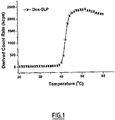
Figure 1 represents the dynamic light scattering analysis of the assembly of Dex-ELP (125 µm) in water. (A) Scattering intensity as a function of temperature upon fast heating. (B) Size distribution in intensity at various temperatures (30°C, 40°C, 45°C, 55°C, and 60°C). -
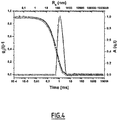
Figure 2 represents (A) Z-average size and polydispersity as a function of time upon repeated fast heating (45°C) and cooling (25°C) of Dex-ELP (125 µM) in water on DLS. (B) DLS autocorrelation function (g2(t)-1) and relaxation-time distribution (A(q,t)) for Dex-ELP (125 µM) in water at 45°C, 90°. -
Figure 3 represents the dynamic light scattering analysis of the assembly of Hex-ELP (125 µM) in water. (A) Scattering intensity as a function of temperature upon fast heating. (B) Size distribution in intensity at various temperatures (30°C, 33°C, 37°C, 42°C, 50°C, and 60°C). -
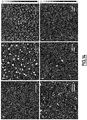
Figure 4 represents liquid AFM images of Dex-ELP (50 µM in water) on mica substrate at (A) 35°C or (B) 65°C, and of Hex-ELP (50 µM in water) on HOPG substrate at (C) 30°C or (D) 55°C The scale bar indicates 1 µm. -
Figure 5 represents DLS autocorrelation function (g2(t)-1) and relaxation-time distribution (A(q,t)) for Hex-ELP at 90°, (A) 33°C, (B) 37°C, and (C) 45°C. -
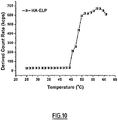
Figure 6 represents the dynamic light scattering analysis of the assembly of HA-ELP (150 µM) in water. (A) Scattering intensity as a function of temperature upon fast heating. (B) Size distribution in intensity at various temperatures (25°C, 35°C, 48°C, and 60°C). -
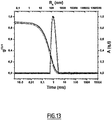
Figure 7 represents (A) Z-average size and polydispersity as a function of time upon repeated fast heating (48°C) and cooling (25°C) of HA-ELP (125 µM) in water on DLS. (B) DLS autocorrelation function (g2(t)-1) and relaxation-time distribution (A(q,t)) for HA-ELP (125 µM) in water at 50°C, 90°. -
Figure 8 represents liquid AFM images of HA-ELP (150 µM in water) on mica substrate at (A) 25°C, (B) 52°C or (C) 55°C. The scale bar indicates 1 µm. - Acrolein (95%), sodium azide (NaN3, 99.5%), acetic acid (AcOH, 99.8%), methoxylamine hydrochloride (98%), sodium cyanoborohydride (NaBH3CN, 95%), hydrochloric acid (HCI, 37%), 4-pentynoic acid (97%), N,N'-dicyclohexylcarbodiimide (DCC, 99%), N-hydroxysuccinimide (NHS, 98%), trimethylamine (TEA, 99%), copper(II) sulfate pentahydrate (CuSO4, 99%), dichloromethane (DCM, 99.9%), N,N-dimethylformamide (DMF, 99.8%), dimethyl sulfoxide (DMSO, 99.7%), methanol (MeOH, 99.8%), diethyl ether (99.9%) and anhydrous magnesium sulfate (MgSO4, 99.5%) were purchased from Sigma-Aldrich. N,N- Diisopropylethylamine (DIPEA, 99%), sodium acetate (AcONa, 99%) and sodium ascorbate (NaAsc, 99%) were obtained from Alfa Aesar. Methoxypolyethylene glycol (mPEG), tris(benzyltriazolylmethyl)amine (TBTA, 97%) and 4-toluenesulfonyl chloride (TsCI, 99%) were purchased from TCl. Cuprisorb® was purchased from Seachem. Dextran (Dex, T10) was purchased from pharmacosmos. Laminarihexaose (Hex) was purchased from Megazyme. Sodium hyaluronate (HA) was purchased from Lifecore Biomedical. Water was purified using an ELGA PURELAB Classic system. Solvent was purified using PureSolv MD-5 solvent purification system from Innovative Technology. Dialysis was conducted using a Spectra/Por®6 dialysis membrane.
-

- N-(3-azidopropyl)-O-methylhydroxylamine (azide-linker). Acetic acid (4 mL) in a round- bottom flask was cooled to -20°C and acrolein (1.84 mL, 27.4 mmol) was added, followed by dropwise addition of a solution of sodium azide (2.38 g, 41.2 mmol) in H2O (10.4 mL). The mixture was continuously stirred at -20°C for 1.5 h. Then it was quenched by addition of saturated sodium bicarbonate solution (sat. aq. NaHCO3 80 mL) and the resulting mixture was extracted with DCM (2 × 100mL). The combined organic extracts were washed with sat. aq. NaHCO3 (150mL), dried over anhydrous MgSO4, filtered and concentrated in vacuo to 100 mL. To the solution in DCM, methoxylamine hydrochloride (2.68 g, 31.68 mmol) and sodium acetate (4.42 g, 54 mmol) were added and the mixture was stirred at r.t for overnight. Sat. aq. NaHCO3 (150 mL) was added to quench the reaction and the resulted mixture was then extracted with DCM (2 × 100mL). The combined organic extracts were washed with Sat. aq. NaHCO3 (150mL), dried over anhydrous MgSO4, filtered and concentrated in vacuo to 100 mL. To the solution in DCM, NaBH3CN (2 g, 32 mmol) was added, followed by dropwise addition of 1M ethanolic HCI (32 mL, freshly prepared by adding acetyl chloride to ethanol). The resulting mixture was stirred at r.t for 1.5h. Afterwards the solvent was removed by evaporator and the resulted white solid was suspended in sat. aq. NaHCO3 (150 mL) and extracted with DCM (2 × 100mL). The combined organic extracts were washed with sat. aq. NaHCO3 (150 mL), dried over anhydrous MgSO4, filtered and concentrated in vacuo to afford the crude N-(3-azidopropyl)-O-methylhydroxylamine as a yellow oil. Purification of the crude product by silica gel column chromatography (1-3% MeOH in DCM) yielded N-(3-azidopropyl)-O-methylhydroxylamine (azide-linker, 1.1 g, 62% over 3 steps) as a colorless oil.
1H NMR (400 MHz, CDCl3): δ 3.55 (s, 3H, CH 3O), 3.41 (t, 2H, CH 2N3), 3.00 (t, 2H, NHCH 2), 1.83 (p, 2H, CH2CH 2CH2).
13C NMR (101 MHz, CDCl3): δ 62.01 (CH3O), 49.44 (CH2N3), 48.94 (NHCH2), 26.87 (CH2 CH2CH2). -

- Dextran-azide (Dex-azide). To a solution of dextran (MW 8000) (1 g, 0.125 mmol) in acetate buffer (AcOH / AcONa, 2M, pH 4.6, 4.2 mL), azide-linker (380 mg, 2.9 mmol) was added and the reaction mixture was shaken on thermomixer at 40°C for 9 days (
vortexing 3 times per day). Then the mixture was purified by dialysis with a dialysis bag (MWCO 1000) against pure water for 24 h (changingwater 3 times per day). The final product was obtained by lyophilization (white powder, 805 mg, 79% yield).
1H NMR (400 MHz, D2O): δ 4.98 (d, H-1), 4.18 (d,CHN(OCH3)CH2), 4.04-3.97 (m, H-6), 3.95-3.89 (m, H-5), 3.69-3.80 (br m, H-6', H-3), 3.61-3.37 (br m, H-2, H-4, CH 2N3), 3.20-3.13 (dt, CHN(OCH3)CH 2), 3.01-2.93 (dt, CHN(OCH3)CH 2'), 1.92-1.88 (m, CH2CH 2CH2).
FT-IR (ATR): 3368, 2906, 2106 (Uazide), 1351, 1148, 1164, 1007, 915, 846, 763, 545, 429 cm-1. -

- Laminarihexaose-azide (Hex-azide). To a solution of laminarihexaose (500 mg, 0.5 mmol) in acetate buffer (AcOH / AcONa, 2M, pH 4.6, 5 mL), azide-linker (900 mg, 6.9 mmol) was added and the reaction mixture was shaken on thermomixer at 40°C for 8 days (
vortexing 3 times per day). Then the mixture was lyophilized and redissolved inwater 5 mL, purified by dialysis with a dialysis bag (MWCO 100) against pure water for 36 h (changingwater 3 times per day). The final product was obtained by lyophilization (white powder, 302 mg, 54% yield).
1H NMR (400 MHz, D2O): δ 4.81 (d, H-1), 4.23 (m, CHN(OCH3)CH2), 3.97-3.88 (m, H-6), 3.86-3.68 (br m, H-6', H-3), 3.67-3.33 (br m, H-2,H-4,H-5, CH 2N3), 3.22-3.13 (m, CHN(OCH3)CH 2'), 3.03-2.95 (m, CHN(OCH3)CH 2), 1.91 (m, CH2CH 2CH2).
FT-IR (ATR): 3434, 3151, 2890, 2100 (uazide), 1568, 1403, 1308, 1159, 1072, 1022, 896, 557 cm-1. -

- Hyaluronan-azide (HA-azide). To a solution of sodium hyaluronate (MW 7000) (1 g, 0.14 mmol) in acetate buffer (AcOH / AcONa, 2M, pH 5.5, 5 mL), azide-linker (520 mg, 4 mmol) and sodium cyanoborohydride (65 mg, 1 mmol) were added and the reaction mixture was shaken on thermomixer at 50°C for 5 days (
vortexing 3 times per day). Then the mixture was diluted withwater 5 mL, followed by dialyzing with a dialysis bag (MWCO 1000) against pure water for 24 h (changingwater 3 times per day). The final product was obtained by lyophilization (white powder, 610 mg, 60% yield).
1H NMR (400 MHz, D2O): δ 4.56 (d, GlcNAc H-1), 4.48 (d, GlcUA H-1), 3.99-3.67 (br m, GlcNAc H-6, H-2, H-3, H-5, GlcUA H-4), 3.66-3.41 (br m, GlcNAc H-4, GlcUA H-3, H-5, CH 2N3), 3.35 (t, GlcUA H-2), 2.94-2.86 (m, CH2N(OCH3)CH 2), 2.03 (s, GlcNAc COCH3), 1.87 (m, CH2CH 2CH2).
FT-IR (ATR): 3323, 2892, 2107 (uazide), 1729, 1642, 1555, 1376, 1315, 1152, 1042, 610 cm-1. -
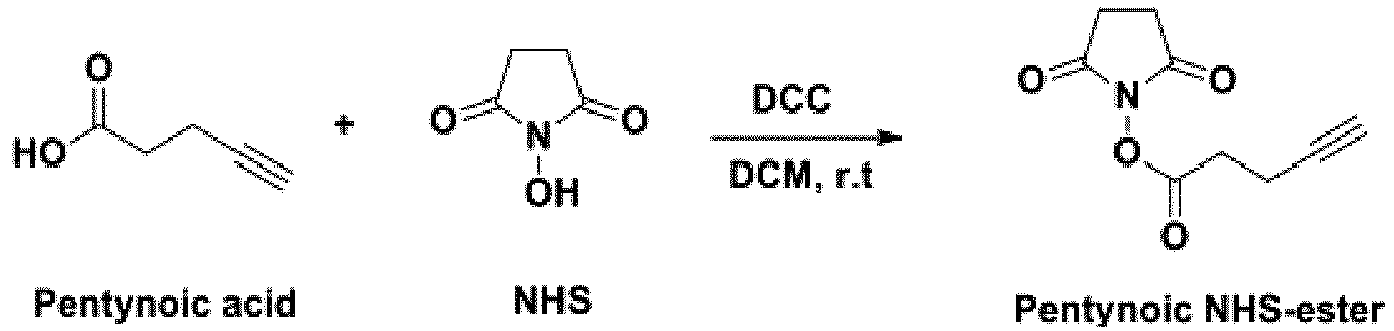
- Pentynoic NHS-ester. To a solution of pentynoic acid (210 mg, 2.14 mmol) in DCM (8mL) was added N, N'-dicyclohexylcarbodiimide (480 mg, 2.3 mmol). The mixture was stirred for 5 mins and then N-hydroxysuccinimide (260 mg, 2.3 mmol) was added. The reaction was continuously stirred at r.t for 3h. Afterwards, the precipitated dicyclohexylcarbamide was filtered off with Celite and the filter cake was washed with cold DCM (2×10mL). The filtrate was collected and DCM was removed in vacuo. The product was redissolved in EtOAc (10 mL) and cooled in a refrigerator at 0°C for 20 mins. The precipitate was filtered off again with Celite and the filtrate was washed with saturated NaHCO3 (2×50 mL) and brine (2×50 mL), dried over anhydrous MgSO4, filtered and concentrated in vacuo to give crude product as colorless oil. Purification of the residue by silica gel column chromatography (petroleum ether: EtOAc= 2:1) yield pentynoic NHS-ester as a white solid (300 mg, 72% yield).
1H NMR (400 MHz, CDCl3): δ 2.90-2.82 (m, 6H, COCH 2CH 2CO, OCOCH 2CH2), 2.62 (ddd, 2H, CH 2C≡CH), 2.05 (t, 1H, C≡CH).
13C NMR (101 MHz, CDCl3): δ 168.89 (COCH2CH2 CO), 167.02 (OCOCH2), 80.84 (CH2 C≡CH), 70.04 (CH2C≡CH), 30.31 (OCOCH2), 25.57 (COCH2 CH2CO), 14.09 (CH2C≡CH). -

- Alkyne-ELP (Alk-ELP). To a solution of ELP (225 mg, 13.2 µmol) in anhydrous DMSO (18 mL) was added pentynoic NHS-ester (92 mg, 0.47 mmol) and N,N-diisopropylethylamine (1.7 mg, 13.2 µmol). The reaction was stirred at r.t for 72h. Then the mixture was diluted with water (20 mL) and the resulted solution was dialyzed against pure water in a dialysis bag (MWCO 15000) for 2 days (changing
water 3 times per day). The final product was obtained by lyophilization (white powder, 210 mg, 93% yield).
1H NMR (400 MHz, D2O): δ 7.63-7.09 (br, indole H Trp), 4.57 (m, CHα Met), 4.45 (m, CHα Val, Pro), 4.19 (d, CHα Val Xaa), 4.06-3.89 (br m, CH 2α Gly, CH 2δ Pro), 3.75 (m, CH 2'δ Pro), 2.69- 2.46 (br m, CH2γ Met, CH 2CH 2C≡CH), 2.33 (m, CH 2β Pro), 2.18-1.91 (m, CH 2β Met, CH 2'β Pro CH 2γ Pro, CHβ Val, CH 3ε Met, CH2C≡CH), 1.05-0.91 (m, CH3γ Val).
MALDI-TOF: Theoretical MW= 17115 Da, Experimental [M+H]+ = 17120.5 Da. -

- Dextran-b-ELP (Dex-ELP). Alkyne-ELP (65 mg, 3.8 µmol), dextran-azide (46 mg, 5.7 µmol), copper sulfate (6 mg, 22.8 µmol), sodium ascorbate (10 mg, 45.6 µmol) and TBTA (12 mg, 22.8 µmol) were dissolved in anhydrous DMSO (8mL) under argon atmosphere. The mixture was stirred at r.t for 3 days. Then the mixture was diluted with cold water (20 mL) and cooled in a refrigerator at 4°C for 20 mins. TBTA was precipitated and removed by centrifuge. Cuprisorb (120 mg) was added to the supernatant and the resulted solution was shaken at r.t for overnight to remove the copper. Cuprisorb was removed by centrifuge and the supernatant was dialyzed against pure water in a dialysis bag (MWCO 15000) for 5 days (changing
water 3 times per day). The final product was obtained by lyophilization (white powder, 92 mg, 90% yield).
1H NMR (400 MHz, D2O): δ 7.75 (s, triazole H), 7.63-7.09 (br, indole H Trp), 4.99 (d, Dex H-1), 4.55 (m, CHα Met), 4.44 (m, CHα Val, Pro), 4.17 (d, CHα ValXaa), 4.06-3.87 (br m, CH 2α Gly, CH 2δ Pro, Dex H-6,H-5), 3.82-3.67 (m, CH 2'δ Pro, Dex H-6',H-3), 3.62-3.49 (Dex H-2,H-4), 2.69-2.48 (br m, CH2γ Met), 2.31 (m, CH 2β Pro), 2.18-1.89 (m, CH 2β Met, CH 2'β Pro CH 2γ Pro, CHβ Val, CH 3ε Met), 1.03-0.88 (m, CH3γ Val).
FT-IR (ATR): 3332, 2929, 1653, 1527, 1443, 1342, 1152, 1106, 1017, 917, 547 cm-1. -

- Laminarihexaose-b-ELP (Hex-ELP). Alkyne-ELP (62 mg, 3.6 µmol), laminarihexaose-azide (20 mg, 18.1 µmol), copper sulfate (5.5 mg, 22 µmol) and sodium ascorbate (9 mg, 45.4 µmol) were dissolved in anhydrous DMSO (8mL) under argon atmosphere. The reaction was stirred at r.t for 3 days. Then the mixture was diluted with cold water (20 mL). Cuprisorb (110 mg) was added to the mixture and the resulted solution was shaked at r.t for overnight to remove the copper. Cuprisorb was removed by centrifuge and the supernatant was dialyzed against pure water in a dialysis bag (MWCO 15000) for 5 days (changing
water 3 times per day). The final product was obtained by lyophilization (white powder, 60 mg, 93% yield).
1H NMR (400 MHz, D2O): δ 7.74 (s, triazole H), 7.60-7.09 (br, indole H Trp), 4.80 (m, Hex H-1), 4.55 (m, CHα Met), 4.43 (m, CHα Val, Pro), 4.17 (d, CHα ValXaa), 4.05-3.85 (br m, CH2α Gly, CH 2δ Pro, Hex H-6), 3.82-3.66 (m, CH 2'δ Pro, Hex H-6',H-3), 3.62-3.34 (Hex H-2,H-4, H-5), 2.69-2.48 (br m, CH2γ Met), 2.41-2.24 (m, CH 2β Pro), 2.19-1.88 (m, CH 2β Met, CH 2'β Pro CH 2γ Pro, CHβ Val, CH 3ε Met), 1.05-0.85 (m, CH3γ Val).
FT-IR (ATR): 3322, 2917, 1654, 1522, 1440, 1221, 1105, 1063, 1027, 562 cm-1. -

- Hyaluronan-b-ELP (HA-ELP). Hyaluronan-azide was first acidified by adding aq. HCI, so as to be totally soluble in DMSO. Alkyne-ELP (60 mg, 3.5 µmol), copper sulfate (9 mg, 36 µmol), sodium ascorbate (18 mg, 90 µmol) and tris(benzyltriazolylmethyl)amine (TBTA, 22 mg, 41 µmol) were dissolved in anhydrous DMSO (4 mL) under argon atmosphere. A solution of hyaluronan-azide (18mg, 3.5 µmol) fully soluble in anhydrous DMSO (2 mL) was added. The reaction was stirred at 40°C for 4 days. Then the mixture was diluted with cold water (20 mL) and cooled in a refrigerator at 4°C for 20 mins. TBTA was precipitated and removed by centrifuge. Cuprisorb (180 mg) was added to the supernatant and the resulted solution was shaken at r.t for overnight to remove the copper. Cuprisorb was removed by centrifuge and the supernatant was dialyzed against pure water in a dialysis bag (MWCO 15000) for 5 days (changing
water 3 times per day). The crude product was obtained by lyophilization (white powder, 53 mg). Deionized water (5.3 mL) was added and the solution was heated to 40°C and kept for 1 h. The insoluble unreacted ELPs were removed by centrifuge at 40°C and the supernatant was lyophilized to give the final product (white powder, 42 mg, 54% yield).
1H NMR (400 MHz, D2O): δ 7.75 (s, triazole H), 7.60-7.09 (br, indole H Trp), 4.62-4.37 (br, CHα Met, Val, Pro, GlcUA H-1, GlcNAc H-1), 4.17 (d, CHα ValXaa), 4.04-3.66 (br, CH 2α Gly, CH 2δ Pro, CH 2'δ Pro, GlcUA H-4, GlcNAc H-2, H-3, H-5, H-6), 3.65-3.42 (GlcUA H-3, H-5), 3.41-3.30 (t, GlcUA H-2), 2.69-2.48 (br m, CH2γ Met), 2.41-2.25 (m, CH 2β Pro), 2.20-1.89 (m, CH 2β Met, CH2'β Pro CH 2γ Pro, CHβ Val, CH 3ε Met), 1.06*0.88 (m, CH3γ Val).
FT-IR (ATR): 3298, 2964, 1631, 1528, 1440, 1232, 1153, 1044, 541 cm-1. - The temperature-induced self-assembly of polysaccharide-ELP bioconjugates (corresponding to the block copolymers according to the invention) in water were studied via dynamic light scattering (DLS), static light scattering (SLS) and liquid atomic force microscopy (liquid AFM).
- Dynamic light scattering measurements were performed on NanoZS instrument (Malvern, U.K.) at a 90° angle at a constant position in the cuvette (constant scattering volume). The derived count rate (DCR) was defined as the mean scattered intensity normalized by the attenuation factor. The DCR was plotted against temperature and the Tt is defined as the temperature corresponding to the point where the DCR starts increasing on this plot.
- Static light scattering measurements were performed using an ALV/CG6-8F goniometer, with a full digital correlator in combination with a Spectra Physics laser (emitting vertically polarized light at λ= 632.8 nm) and a thermostated bath controller (ranging from 20 to 50°C).The data were acquired with the ALV correlator software, the counting time was typically 15 seconds at each different scattering angles ranging from 30º to 150º, in 10 increments. Hydrodynamic radius (Rh) was determined from the apparent diffusion coefficient and the Stokes-Einstein equation. The radius of gyration (Rg) was determined from a Guinier plot resulting from the measurement of the average scattered intensity at the same angles.
- Temperature-controlled liquid atomic force microscopy measurements were performed using a Dimension FastScan Bruker AFM system. The topography images of the bioconjugates were obtained in Peak Force tapping mode, using a Silicon cantilever (ScanAsyst-Fluid+, Bruker) with a typical tip radius of 5 nm. The cantilever resonance was 150 kHz and the spring constant was 0.7 N/m. Substrates were purchased from Agar Scientific. Samples were prepared by drop-casting a bioconjugates water solution of 50 µM (150 µM for HA-ELP) onto a freshly cleaved mica or HOPG surface, which was directly applied for imaging. AFM imaging process was conducted in liquid environment at specific temperature. An external heating stage (Bruker) was used to achieve the target temperature at the substrate surface.
- Upon fast heating ramp on DLS, the transition temperature (Tt) of Dex-ELP (125 µM in water) was found around 40°C, which is higher when compared to the Tt of ELP and physical mixture. Indeed, conjugation of a hydrophilic block to ELP resulted in an addition of the Tt.
- At low temperature below Tt of Dex-ELP, small objects and a few aggregates were observed with very low scattering intensity (30°C). The scattering intensity sharply increased at transition temperature (around 40°C) and triggered the self-assembly to form structures with hydrodynamic diameter (Dh) around 165 nm. Once Dex-ELP was heated above 45°C, the nanoparticles showed little changes in diameter with a Dh of approximately 290 nm (
Figure 1 ). - The stability of the Dex-ELP assemblies above transition temperature was investigated by conducting various heating methods. The whole heating ways reached a Dh around 300-330 nm in 30 mins and did not show significant difference on PDI. DLS cooling ramp showed slow disassemble behavior of Dex-ELP. Repeated heating and cooling DLS measurements were performed on the Dex-ELP solution to test the reversibility of the temperature-responsive system (
Figure 2 ). At beginning, Dex-ELP was fast assembled to nanoparticles and stabled after 5 mins with an average diameter around 250 nm at 45°C. Afterwards, Dex-ELP nanoparticles were cooled to 25°C and kept for 10-15 mins in order to fully disassemble the assemblies. Small objects with an average diameter below 25 nm and high PDI were observed at 25°C. Repeated heating and cooling again showing similar behavior illustrated that this temperature-responsive behavior is fully reversible which offering a simple method for controlling the temperature transition of ELPs. - Subsequently, the Dex-ELP assemblies were analyzed by SLS at 45°C to determine the radium of gyration (Rg) and the hydrodynamic radius (Rh). Rg/Rh ratio was calculated to be 0.72, indicating micelle structure.
- Liquid atomic force microscopy was conducted to investigate the morphology of the nanostructures formed by the transition of ELP below/above Tt. Consistent with the DLS results, very small objects were showed below Tt at 35°C, and spherical-shaped particles were observed with an average diameter of approximately 280-300 nm above Tt at 65°C (
Figure 4 ). - Due to the small hydrophilic fraction of Hex-ELP, the transition temperature (Tt) of Hex-ELP was found around 33°C, which is slightly higher when compared to the Tt of ELP. At low temperature below Tt of Hex-ELP, small objects and a few aggregates were observed with very low scattering intensity (30°C). The scattering intensity sharply increased at transition temperature (around 33°C) and triggered the self-assembly to form structures with hydrodynamic diameter (Dh) around 210 nm. The temperature-responsive behavior of Hex-ELP is fully reversible. When temperature was heated above 45°C, the nanoparticles showed little changes in scattering intensity and displayed diameter with a Dh of approximately 400-500 nm (
Figure 3 ). - Hex-ELP assemblies were further analyzed by static light scattering at room temperature (25°C), Tt (33°C), peak temperature (37°C) and high temperature (45°C). Consistent with DLS, Hex-ELP assemblies showed Dh of approximately 250 nm and 500 at Tt and 45°C respectively (
Figure 5 ). Rg and Rh at Tt and high temperature were similar revealing relatively stable of the assemblies at high temperature. Similar to the SLS data, liquid AFM showed big diameters (500-900) for the aggregates of Hex-ELP (Figure 4 ).Table - Value of Rg and Rh and Rg / Rh ratio of Hex-ELP (125 µM in water). T (°C) Rg (nm) Rh (nm) Rg/ R h25 36 24 1.5 33 100 130 0.77 37 140 259 0.54 45 128 252 0.51 - Similar to the UV-vis measurements, the Tt of HA-ELP on DLS heating ramp was found around 45°C. At low temperature below Tt of HA-ELP, small objects were observed with very low scattering intensity (35°C). The scattering intensity sharply increased at transition temperature and triggered the self-assembly to form structures with Dh around 300 nm at 48-50°C (
Figure 6 ). Once HA-ELP was heated above 55°C, the diameter of nanoparticles became unstable and separated into two size distributions, which is also confirmed by liquid AFM (Figure 8C ). - The stability of the HA-ELP assemblies at 48°C was investigated by repeated heating and cooling on DLS. This temperature-responsive system is also fully reversible and HA-ELP showed relatively stable at 48°C in 20 mins with average diameter around 280 nm on every single heating time (
Figure 7A ). Further analysis by static light scattering at 50°C likewise illustrated Dh at 304 nm (Figure 7B ). Rg/Rh ratio was calculated to be 0.79, indicating maybe micelle structure. Nanoparticles with an average diameter of approximately 220-280 nm were observed by liquid AFM at 50°C (Figure 8B ) at the same concentration. - In conclusion, the bioconjugates mentioned above were able to self-assemble into particles in different sizes. The self-assembly characteristics were summarized in the below table:
Copolymer Conc. µM Tt DLS DLS SLS AFM T/°C Rh nm T/°C Rg nm Rh nm ρ* T/°C size/nm Dex-ELP 125 39° C 45 300 45 132 183 0.72 35 - 65 190-340 Hex-ELP 125 33°C 33 210 33 100 130 0.77 30 - 45 520 45 128 252 0.51 55 500-900 HA- ELP 150 46°C 48 300 50 120 152 0.79 25 - 52 200-300 - The self-assembly process was fully reversible by controlling the temperature which allows using these polysaccharide-ELP bioconjugates in biomaterial, drug delivery and receptor recognition.
Claims (12)
- A block copolymer having at least one oligo- or polysaccharide block and at least one elastin-like polypeptide block, wherein said block copolymer comprises at least one repetitive unit having the following formula (I):

- The block copolymer of claim 1, wherein R' is -CH(CH3)2 or -(CH2)2SCH3.
- The block copolymer of claim 1 or 2, having the following formula (II):
 - R is a (C1-C6)alkyl group;- X is a oligo- or polysaccharide,- X' is a (C1-C6)alkylene radical,- Y is a radical selected from the group consisting of the following radicals:
 R1 and R2 being H or forming together with the carbon atoms carrying them a cyclohexyl radical;R3 and R4 being H or forming together with the carbon atoms carrying them a cyclohexyl radical; andR5 being H or an alkyl group;- i is an integer between 1 and 6,- X1 is a covalent bond or a radical of formula
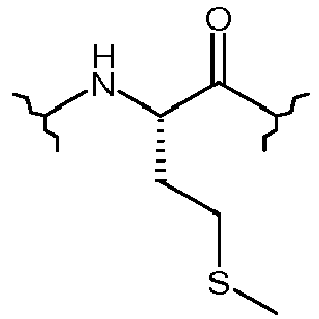 - X2 is a covalent bond or a radical of formula -(AA)j-, j being an integer comprised between 1 and 6, and AA being independently a natural or synthetic amino acid,- n is an integer between 1 and 200, and- R' is as defined in claim 1.
 - The block copolymer of any one of claims 1 to 3, having the following formula (III):
 - k is an integer between 1 and 6, and- i, n, X, X1, X2, R, and R' are as defined in claim 3.
 - The block copolymer of any one of claims 1 to 4, having the following formula (III-1):
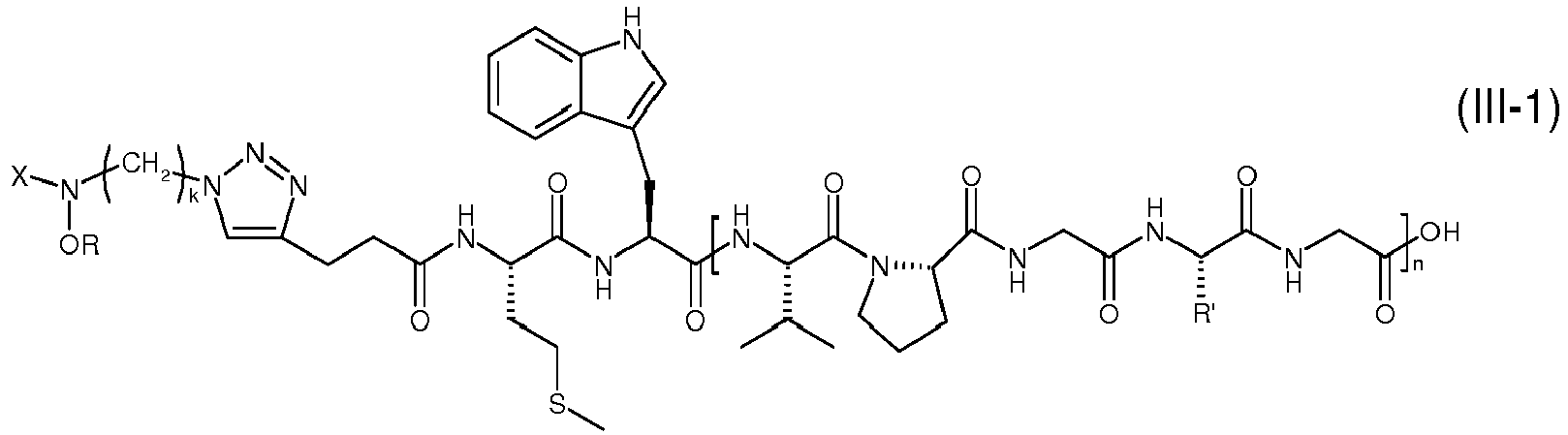 - k is an integer between 1 and 6, and- n, X, R, and R' are as defined in claim 3.
 - The block copolymer of any one of claims 3 to 5, wherein X is a oligosaccharide or polysaccharide selected from the group consisting of: galactans, glycoaminoglycans, cellulose, chitosan, fucoidan, and derivatives thereof.
- The block copolymer of claim 6, wherein the oligosaccharide or polysaccharide is hyaluronan, laminarihexaose, dextran or a galactan.
- The block copolymer of any one of claims 1 to 7, having one of the following formulae:


- A method for the preparation of a block copolymer of any one of claims 3 to 8, comprising the reaction of a compound having the formula (IV):

with an azide compound having the formula (V):
- The method of claim 9, wherein the compound of formula (IV) is obtained by the reaction of a compound having the following formula (VI):

with a compound having the following formula (VII): - i is as defined in claim 3, and- R" is a leaving group.
 - The use of a block copolymer of any one of claims 1 to 8, for the preparation of nanoparticles.
- A method for the preparation of nanoparticles of a block copolymer as defined in any one of claims 1 to 8, comprising a step of heating the block copolymer above its transition temperature.
Priority Applications (7)
| Application Number | Priority Date | Filing Date | Title |
|---|---|---|---|
| EP18306238.9A EP3628333A1 (en) | 2018-09-25 | 2018-09-25 | Bionconjugates of polysaccharides and elastin-like polypeptides and uses thereof |
| US17/279,653 US12084488B2 (en) | 2018-09-25 | 2019-09-25 | Bioconjugates of polysaccharides and elastin-like polypeptides and uses thereof |
| CN201980069697.9A CN112955183B (en) | 2018-09-25 | 2019-09-25 | Bioconjugates of polysaccharides and elastin-like polypeptides and their uses |
| PCT/EP2019/075865 WO2020064836A1 (en) | 2018-09-25 | 2019-09-25 | Bloconjugates of polysacchari des and elasti n-li ke polypepti des and uses thereof |
| JP2021541316A JP7431834B2 (en) | 2018-09-25 | 2019-09-25 | Bioconjugates of polysaccharides and elastin-like polypeptides and uses thereof |
| EP19773093.0A EP3856259B1 (en) | 2018-09-25 | 2019-09-25 | Bioconjugates of polysaccharides and elastin-like polypeptides and uses thereof |
| ES19773093T ES2973460T3 (en) | 2018-09-25 | 2019-09-25 | Bioconjugates of polysaccharides and elastin-type polypeptides and uses thereof |
Applications Claiming Priority (1)
| Application Number | Priority Date | Filing Date | Title |
|---|---|---|---|
| EP18306238.9A EP3628333A1 (en) | 2018-09-25 | 2018-09-25 | Bionconjugates of polysaccharides and elastin-like polypeptides and uses thereof |
Publications (1)
| Publication Number | Publication Date |
|---|---|
| EP3628333A1 true EP3628333A1 (en) | 2020-04-01 |
Family
ID=63713791
Family Applications (2)
| Application Number | Title | Priority Date | Filing Date |
|---|---|---|---|
| EP18306238.9A Withdrawn EP3628333A1 (en) | 2018-09-25 | 2018-09-25 | Bionconjugates of polysaccharides and elastin-like polypeptides and uses thereof |
| EP19773093.0A Active EP3856259B1 (en) | 2018-09-25 | 2019-09-25 | Bioconjugates of polysaccharides and elastin-like polypeptides and uses thereof |
Family Applications After (1)
| Application Number | Title | Priority Date | Filing Date |
|---|---|---|---|
| EP19773093.0A Active EP3856259B1 (en) | 2018-09-25 | 2019-09-25 | Bioconjugates of polysaccharides and elastin-like polypeptides and uses thereof |
Country Status (6)
| Country | Link |
|---|---|
| US (1) | US12084488B2 (en) |
| EP (2) | EP3628333A1 (en) |
| JP (1) | JP7431834B2 (en) |
| CN (1) | CN112955183B (en) |
| ES (1) | ES2973460T3 (en) |
| WO (1) | WO2020064836A1 (en) |
Families Citing this family (1)
| Publication number | Priority date | Publication date | Assignee | Title |
|---|---|---|---|---|
| JP2023163607A (en) * | 2022-04-28 | 2023-11-10 | 国立大学法人京都大学 | Polysarcosine and its uses |
Citations (2)
| Publication number | Priority date | Publication date | Assignee | Title |
|---|---|---|---|---|
| EP1422242A1 (en) * | 2002-11-22 | 2004-05-26 | Emory University | Plastic and elastic protein copolymers |
| WO2007146228A2 (en) * | 2006-06-09 | 2007-12-21 | Abbott Cardiovascular Systems Inc. | Elastin-based copolymers |
Family Cites Families (4)
| Publication number | Priority date | Publication date | Assignee | Title |
|---|---|---|---|---|
| JP2004231633A (en) * | 2002-11-22 | 2004-08-19 | Emory Univ | Plastic and elastic protein copolymer |
| WO2006001806A2 (en) * | 2004-06-15 | 2006-01-05 | Duke University | Method for non-invasive thermometry using elastin-like polypeptide conjugates |
| FR2937974B1 (en) * | 2008-10-30 | 2013-01-11 | Univ Bordeaux 1 | BLOCK COPOLYMERS BASED ON POLYSACCHARIDE AND POLYPEPTIDE, VESICLES COMPRISING THESE COPOLYMERS AND THEIR USE |
| CN106279439A (en) * | 2016-08-26 | 2017-01-04 | 易金阳 | A kind of oligopeptide 1 fusion protein containing cell-penetrating peptide and preparation method thereof |
-
2018
- 2018-09-25 EP EP18306238.9A patent/EP3628333A1/en not_active Withdrawn
-
2019
- 2019-09-25 CN CN201980069697.9A patent/CN112955183B/en active Active
- 2019-09-25 US US17/279,653 patent/US12084488B2/en active Active
- 2019-09-25 WO PCT/EP2019/075865 patent/WO2020064836A1/en not_active Ceased
- 2019-09-25 ES ES19773093T patent/ES2973460T3/en active Active
- 2019-09-25 EP EP19773093.0A patent/EP3856259B1/en active Active
- 2019-09-25 JP JP2021541316A patent/JP7431834B2/en active Active
Patent Citations (2)
| Publication number | Priority date | Publication date | Assignee | Title |
|---|---|---|---|---|
| EP1422242A1 (en) * | 2002-11-22 | 2004-05-26 | Emory University | Plastic and elastic protein copolymers |
| WO2007146228A2 (en) * | 2006-06-09 | 2007-12-21 | Abbott Cardiovascular Systems Inc. | Elastin-based copolymers |
Non-Patent Citations (4)
| Title |
|---|
| HUIYUAN WANG ET AL: "Covalently Adaptable Elastin-Like Protein-Hyaluronic Acid (ELP-HA) Hybrid Hydrogels with Secondary Thermoresponsive Crosslinking for Injectable Stem Cell Delivery", ADVANCED FUNCTIONAL MATERIALS, vol. 27, no. 28, 19 May 2017 (2017-05-19), DE, pages 1605609, XP055572689, ISSN: 1616-301X, DOI: 10.1002/adfm.201605609 * |
| JANI-MARKUS MALHO ET AL: "Multifunctional Stimuli-Responsive Cellulose Nanocrystals via Dual Surface Modification with Genetically Engineered Elastin-Like Polypeptides and Poly(acrylic acid)", ACS MACRO LETTERS, vol. 7, no. 6, 18 May 2018 (2018-05-18), pages 646 - 650, XP055571243, ISSN: 2161-1653, DOI: 10.1021/acsmacrolett.8b00321 * |
| MCDANIEL, J. R.; RADFORD, D. C.; CHILKOTI, A., BIOMACROMOLECULES, vol. 14, no. 8, 2013, pages 2866 - 2872 |
| MEYER, D. E.; CHILKOTI, A., BIOMACROMOLECULES, vol. 5, 2004, pages 846 - 851 |
Also Published As
| Publication number | Publication date |
|---|---|
| ES2973460T3 (en) | 2024-06-20 |
| JP7431834B2 (en) | 2024-02-15 |
| EP3856259C0 (en) | 2024-02-07 |
| CN112955183A (en) | 2021-06-11 |
| US20210388056A1 (en) | 2021-12-16 |
| WO2020064836A1 (en) | 2020-04-02 |
| JP2022502559A (en) | 2022-01-11 |
| US12084488B2 (en) | 2024-09-10 |
| EP3856259A1 (en) | 2021-08-04 |
| EP3856259B1 (en) | 2024-02-07 |
| CN112955183B (en) | 2024-04-30 |
Similar Documents
| Publication | Publication Date | Title |
|---|---|---|
| Cafaggi et al. | Preparation and evaluation of nanoparticles made of chitosan or N-trimethyl chitosan and a cisplatin–alginate complex | |
| Guo et al. | Self-assembled nanoparticles based on galactosylated O-carboxymethyl chitosan-graft-stearic acid conjugates for delivery of doxorubicin | |
| US7041818B2 (en) | DDS compound and method for measurement thereof | |
| JP4820758B2 (en) | Novel block copolymer, micelle preparation, and anticancer agent containing the same as an active ingredient | |
| Fu et al. | Conjugating an anticancer drug onto thiolated hyaluronic acid by acid liable hydrazone linkage for its gelation and dual stimuli-response release | |
| CN102145173B (en) | Human serum albumin complex hydrophobically modified pullulan nanoparticles and preparation method thereof | |
| EP4101860A1 (en) | Hyaluronic acid derivative, pharmaceutical composition, and hyaluronic acid derivative-drug conjugate | |
| EP3284474B1 (en) | Polyion complex of poly(l-arginine) segment-containing block copolymer and polyanionic polymer | |
| US20110207686A1 (en) | Polysaccharide-and polypeptide-based block copolymers, vesicles constituted by these copolymers and use thereof | |
| Zhao et al. | Hierarchy of complex Glycomacromolecules: from controlled topologies to biomedical applications | |
| JP2005535604A (en) | Polymer nano-articles containing therapeutic agents | |
| Liu et al. | zwitterionic Pluronic analog-coated PLGA nanoparticles for oral insulin delivery | |
| Khuphe et al. | Glucose-bearing biodegradable poly (amino acid) and poly (amino acid)-poly (ester) conjugates for controlled payload release | |
| Wang et al. | Tuning stiffness of hyaluronan-cholesterol nanogels by mussel-inspired dopamine-Fe3+ coordination: Preparation and properties evaluation | |
| Kang et al. | pH and glutathione dual-triggered supramolecular assemblies as synergistic and controlled drug release carriers | |
| CN111265478A (en) | Adriamycin poly-prodrug nano-micelle with reductive response and preparation method and application thereof | |
| EP3856259B1 (en) | Bioconjugates of polysaccharides and elastin-like polypeptides and uses thereof | |
| Filippov et al. | Modified hydroxyethyl starch protects cells from oxidative damage | |
| Wali et al. | Tailoring the supramolecular structure of amphiphilic glycopolypeptide analogue toward liver targeted drug delivery systems | |
| Diget et al. | Direct synthesis of well-defined zwitterionic cyclodextrin polymers via atom transfer radical polymerization | |
| CN105688221B (en) | The preparation method of HA/RGD amboceptor mediation multiple target point drug delivery system | |
| EP2420518A1 (en) | Polycationic amphiphilic cyclooligosaccharides and the use thereof as molecular transporters | |
| Bao et al. | Modulation of protein activity and assembled structure by polymer conjugation: PEGylation vs glycosylation | |
| Li et al. | Targeted delivery of a guanidine-pendant Pt (iv)-backboned poly-prodrug by an anisamide-functionalized polypeptide | |
| Raganato et al. | Self-assembling nanowires from a linear l, d-peptide conjugated to the dextran end group |
Legal Events
| Date | Code | Title | Description |
|---|---|---|---|
| PUAI | Public reference made under article 153(3) epc to a published international application that has entered the european phase |
Free format text: ORIGINAL CODE: 0009012 |
|
| STAA | Information on the status of an ep patent application or granted ep patent |
Free format text: STATUS: THE APPLICATION HAS BEEN PUBLISHED |
|
| AK | Designated contracting states |
Kind code of ref document: A1 Designated state(s): AL AT BE BG CH CY CZ DE DK EE ES FI FR GB GR HR HU IE IS IT LI LT LU LV MC MK MT NL NO PL PT RO RS SE SI SK SM TR |
|
| AX | Request for extension of the european patent |
Extension state: BA ME |
|
| STAA | Information on the status of an ep patent application or granted ep patent |
Free format text: STATUS: REQUEST FOR EXAMINATION WAS MADE |
|
| 17P | Request for examination filed |
Effective date: 20200330 |
|
| RBV | Designated contracting states (corrected) |
Designated state(s): AL AT BE BG CH CY CZ DE DK EE ES FI FR GB GR HR HU IE IS IT LI LT LU LV MC MK MT NL NO PL PT RO RS SE SI SK SM TR |
|
| STAA | Information on the status of an ep patent application or granted ep patent |
Free format text: STATUS: EXAMINATION IS IN PROGRESS |
|
| 17Q | First examination report despatched |
Effective date: 20201023 |
|
| STAA | Information on the status of an ep patent application or granted ep patent |
Free format text: STATUS: THE APPLICATION IS DEEMED TO BE WITHDRAWN |
|
| 18D | Application deemed to be withdrawn |
Effective date: 20251105 |