EP3626846A1 - Turbine wheel incorporating nickel-based alloy - Google Patents
Turbine wheel incorporating nickel-based alloy Download PDFInfo
- Publication number
- EP3626846A1 EP3626846A1 EP19177475.1A EP19177475A EP3626846A1 EP 3626846 A1 EP3626846 A1 EP 3626846A1 EP 19177475 A EP19177475 A EP 19177475A EP 3626846 A1 EP3626846 A1 EP 3626846A1
- Authority
- EP
- European Patent Office
- Prior art keywords
- nickel
- amount
- based alloy
- turbine wheel
- turbocharger turbine
- Prior art date
- Legal status (The legal status is an assumption and is not a legal conclusion. Google has not performed a legal analysis and makes no representation as to the accuracy of the status listed.)
- Granted
Links
Images



Classifications
-
- C—CHEMISTRY; METALLURGY
- C22—METALLURGY; FERROUS OR NON-FERROUS ALLOYS; TREATMENT OF ALLOYS OR NON-FERROUS METALS
- C22C—ALLOYS
- C22C19/00—Alloys based on nickel or cobalt
- C22C19/03—Alloys based on nickel or cobalt based on nickel
- C22C19/05—Alloys based on nickel or cobalt based on nickel with chromium
- C22C19/051—Alloys based on nickel or cobalt based on nickel with chromium and Mo or W
- C22C19/056—Alloys based on nickel or cobalt based on nickel with chromium and Mo or W with the maximum Cr content being at least 10% but less than 20%
-
- C—CHEMISTRY; METALLURGY
- C22—METALLURGY; FERROUS OR NON-FERROUS ALLOYS; TREATMENT OF ALLOYS OR NON-FERROUS METALS
- C22C—ALLOYS
- C22C19/00—Alloys based on nickel or cobalt
- C22C19/03—Alloys based on nickel or cobalt based on nickel
- C22C19/05—Alloys based on nickel or cobalt based on nickel with chromium
- C22C19/051—Alloys based on nickel or cobalt based on nickel with chromium and Mo or W
- C22C19/057—Alloys based on nickel or cobalt based on nickel with chromium and Mo or W with the maximum Cr content being less 10%
-
- F—MECHANICAL ENGINEERING; LIGHTING; HEATING; WEAPONS; BLASTING
- F01—MACHINES OR ENGINES IN GENERAL; ENGINE PLANTS IN GENERAL; STEAM ENGINES
- F01D—NON-POSITIVE DISPLACEMENT MACHINES OR ENGINES, e.g. STEAM TURBINES
- F01D5/00—Blades; Blade-carrying members; Heating, heat-insulating, cooling or antivibration means on the blades or the members
- F01D5/02—Blade-carrying members, e.g. rotors
-
- F—MECHANICAL ENGINEERING; LIGHTING; HEATING; WEAPONS; BLASTING
- F01—MACHINES OR ENGINES IN GENERAL; ENGINE PLANTS IN GENERAL; STEAM ENGINES
- F01D—NON-POSITIVE DISPLACEMENT MACHINES OR ENGINES, e.g. STEAM TURBINES
- F01D5/00—Blades; Blade-carrying members; Heating, heat-insulating, cooling or antivibration means on the blades or the members
- F01D5/12—Blades
- F01D5/28—Selecting particular materials; Particular measures relating thereto; Measures against erosion or corrosion
-
- F—MECHANICAL ENGINEERING; LIGHTING; HEATING; WEAPONS; BLASTING
- F02—COMBUSTION ENGINES; HOT-GAS OR COMBUSTION-PRODUCT ENGINE PLANTS
- F02C—GAS-TURBINE PLANTS; AIR INTAKES FOR JET-PROPULSION PLANTS; CONTROLLING FUEL SUPPLY IN AIR-BREATHING JET-PROPULSION PLANTS
- F02C6/00—Plural gas-turbine plants; Combinations of gas-turbine plants with other apparatus; Adaptations of gas-turbine plants for special use
- F02C6/04—Gas-turbine plants providing heated or pressurised working fluid for other apparatus, e.g. without mechanical power output
- F02C6/10—Gas-turbine plants providing heated or pressurised working fluid for other apparatus, e.g. without mechanical power output supplying working fluid to a user, e.g. a chemical process, which returns working fluid to a turbine of the plant
- F02C6/12—Turbochargers, i.e. plants for augmenting mechanical power output of internal-combustion piston engines by increase of charge pressure
-
- C—CHEMISTRY; METALLURGY
- C22—METALLURGY; FERROUS OR NON-FERROUS ALLOYS; TREATMENT OF ALLOYS OR NON-FERROUS METALS
- C22C—ALLOYS
- C22C2202/00—Physical properties
-
- F—MECHANICAL ENGINEERING; LIGHTING; HEATING; WEAPONS; BLASTING
- F05—INDEXING SCHEMES RELATING TO ENGINES OR PUMPS IN VARIOUS SUBCLASSES OF CLASSES F01-F04
- F05D—INDEXING SCHEME FOR ASPECTS RELATING TO NON-POSITIVE-DISPLACEMENT MACHINES OR ENGINES, GAS-TURBINES OR JET-PROPULSION PLANTS
- F05D2220/00—Application
- F05D2220/40—Application in turbochargers
-
- F—MECHANICAL ENGINEERING; LIGHTING; HEATING; WEAPONS; BLASTING
- F05—INDEXING SCHEMES RELATING TO ENGINES OR PUMPS IN VARIOUS SUBCLASSES OF CLASSES F01-F04
- F05D—INDEXING SCHEME FOR ASPECTS RELATING TO NON-POSITIVE-DISPLACEMENT MACHINES OR ENGINES, GAS-TURBINES OR JET-PROPULSION PLANTS
- F05D2240/00—Components
- F05D2240/20—Rotors
- F05D2240/24—Rotors for turbines
-
- F—MECHANICAL ENGINEERING; LIGHTING; HEATING; WEAPONS; BLASTING
- F05—INDEXING SCHEMES RELATING TO ENGINES OR PUMPS IN VARIOUS SUBCLASSES OF CLASSES F01-F04
- F05D—INDEXING SCHEME FOR ASPECTS RELATING TO NON-POSITIVE-DISPLACEMENT MACHINES OR ENGINES, GAS-TURBINES OR JET-PROPULSION PLANTS
- F05D2300/00—Materials; Properties thereof
- F05D2300/10—Metals, alloys or intermetallic compounds
- F05D2300/13—Refractory metals, i.e. Ti, V, Cr, Zr, Nb, Mo, Hf, Ta, W
-
- F—MECHANICAL ENGINEERING; LIGHTING; HEATING; WEAPONS; BLASTING
- F05—INDEXING SCHEMES RELATING TO ENGINES OR PUMPS IN VARIOUS SUBCLASSES OF CLASSES F01-F04
- F05D—INDEXING SCHEME FOR ASPECTS RELATING TO NON-POSITIVE-DISPLACEMENT MACHINES OR ENGINES, GAS-TURBINES OR JET-PROPULSION PLANTS
- F05D2300/00—Materials; Properties thereof
- F05D2300/10—Metals, alloys or intermetallic compounds
- F05D2300/17—Alloys
-
- F—MECHANICAL ENGINEERING; LIGHTING; HEATING; WEAPONS; BLASTING
- F05—INDEXING SCHEMES RELATING TO ENGINES OR PUMPS IN VARIOUS SUBCLASSES OF CLASSES F01-F04
- F05D—INDEXING SCHEME FOR ASPECTS RELATING TO NON-POSITIVE-DISPLACEMENT MACHINES OR ENGINES, GAS-TURBINES OR JET-PROPULSION PLANTS
- F05D2300/00—Materials; Properties thereof
- F05D2300/10—Metals, alloys or intermetallic compounds
- F05D2300/17—Alloys
- F05D2300/175—Superalloys
-
- F—MECHANICAL ENGINEERING; LIGHTING; HEATING; WEAPONS; BLASTING
- F05—INDEXING SCHEMES RELATING TO ENGINES OR PUMPS IN VARIOUS SUBCLASSES OF CLASSES F01-F04
- F05D—INDEXING SCHEME FOR ASPECTS RELATING TO NON-POSITIVE-DISPLACEMENT MACHINES OR ENGINES, GAS-TURBINES OR JET-PROPULSION PLANTS
- F05D2300/00—Materials; Properties thereof
- F05D2300/50—Intrinsic material properties or characteristics
- F05D2300/502—Thermal properties
- F05D2300/5023—Thermal capacity
-
- F—MECHANICAL ENGINEERING; LIGHTING; HEATING; WEAPONS; BLASTING
- F05—INDEXING SCHEMES RELATING TO ENGINES OR PUMPS IN VARIOUS SUBCLASSES OF CLASSES F01-F04
- F05D—INDEXING SCHEME FOR ASPECTS RELATING TO NON-POSITIVE-DISPLACEMENT MACHINES OR ENGINES, GAS-TURBINES OR JET-PROPULSION PLANTS
- F05D2300/00—Materials; Properties thereof
- F05D2300/50—Intrinsic material properties or characteristics
- F05D2300/518—Ductility
-
- F—MECHANICAL ENGINEERING; LIGHTING; HEATING; WEAPONS; BLASTING
- F05—INDEXING SCHEMES RELATING TO ENGINES OR PUMPS IN VARIOUS SUBCLASSES OF CLASSES F01-F04
- F05D—INDEXING SCHEME FOR ASPECTS RELATING TO NON-POSITIVE-DISPLACEMENT MACHINES OR ENGINES, GAS-TURBINES OR JET-PROPULSION PLANTS
- F05D2300/00—Materials; Properties thereof
- F05D2300/60—Properties or characteristics given to material by treatment or manufacturing
- F05D2300/608—Microstructure
Definitions
- the present disclosure is generally directed to metal alloys with improved high-temperature oxidation and fatigue resistance for use in turbocharger applications. More particularly, the present disclosure is directed to nickel-based alloys and turbine wheels including nickel-based alloys.
- the turbine wheel usually a cast nickel-based alloy, used in turbocharger is a highspeed rotating component that is exposed to high temperature combustion gasses between temperatures of about 980°C to about 1020°C, depending upon the application.
- the nickel-based alloy material should be oxidation resistant as well as dwell-fatigue resistant while rotating in the approximately 200,000 - 300,000 RPM range.
- Existing alloys for such applications all have various deficiencies: For example, the Mar-M-246 nickel-based alloy is relatively expensive, whereas the IN-713C nickel-based alloy exhibits inferior high-temperature properties.
- a nickel-based alloy includes or consists of, on a weight basis of the overall alloy: about 10.5% to about 11.5% cobalt, about 9.0% to about 10.0% chromium, about 5.75% to about 6.25% aluminum, about 2.8% to about 3.3% tantalum, about 4.0% to about 4.5% molybdenum, about 2.2% to about 2.4% titanium, about 0.13% to about 0.15% carbon, about 0.03 to about 0.09% zirconium, and a majority of nickel, with the understanding that there may be inevitable/unavoidable impurities.
- the nickel-based alloy excludes tungsten except in unavoidable trace amounts.
- the nickel-based alloy may include or further consist of silicon in an amount of less than about 0.2%, boron in an amount of less than about 0.02%, manganese in an amount of less than about 0.2%, and sulfur in an amount of less than about 0.015%.
- the amount of cobalt may be limited to about 10.7% to about 11.3%; alternatively or additionally, the amount of chromium may be limited to about 9.2% to about 9.8%; alternatively or additionally, the amount of aluminum may be limited to about 5.9% to about 6.1%; alternatively or additionally, the amount of tantalum may be limited to about 2.9% to about 3.2%; alternatively or additionally, the amount of molybdenum may be limited to about 4.1% to about 4.4%; alternatively or additionally, the amount of titanium may be limited to about 2.25% to about 2.35%.
- a turbocharger turbine wheel includes or consists of, at least as a part of its overall composition, a nickel-based alloy, wherein the nickel-based alloy includes or consists of, on a weight basis of the overall alloy: about 10.5% to about 11.5% cobalt, about 9.0% to about 10.0% chromium, about 5.75% to about 6.25% aluminum, about 2.8% to about 3.3% tantalum, about 4.0% to about 4.5% molybdenum, about 2.2% to about 2.4% titanium, about 0.13% to about 0.15% carbon, about 0.03 to about 0.09% zirconium, and a majority of nickel, with the understanding that there may be inevitable/unavoidable impurities in trace amounts, as is generally appreciated in the art.
- the nickel-based alloy excludes tungsten except in unavoidable trace amounts. Additionally, in some examples, the nickel-based alloy may include or further consist of silicon in an amount of less than about 0.2%, boron in an amount of less than about 0.02%, manganese in an amount of less than about 0.2%, and sulfur in an amount of less than about 0.015%. Such a turbine wheel may find application for operating at temperatures of 980°C (constant) and 1020°C (peak).
- the amount of cobalt may be limited to about 10.7% to about 11.3%; alternatively or additionally, the amount of chromium may be limited to about 9.2% to about 9.8%; alternatively or additionally, the amount of aluminum may be limited to about 5.9% to about 6.1%; alternatively or additionally, the amount of tantalum may be limited to about 2.9% to about 3.2%; alternatively or additionally, the amount of molybdenum may be limited to about 4.1% to about 4.4%; alternatively or additionally, the amount of titanium may be limited to about 2.25% to about 2.35%.
- a nickel-based alloy consists of, on a weight basis of the overall alloy: about 10.7% to about 11.3% cobalt, about 9.2% to about 9.8% chromium, about 5.9% to about 6.1% aluminum, about 2.9% to about 3.2% tantalum, about 4.1% to about 4.4% molybdenum, about 2.25% to about 2.35% titanium, about 0.13% to about 0.15% carbon, about 0.03 to about 0.09% zirconium, silicon in an amount of less than about 0.2%, boron in an amount of less than about 0.02%, manganese in an amount of less than about 0.2%, sulfur in an amount of less than about 0.015%, and a balance of nickel, with the understanding that there may be inevitable/unavoidable impurities, as is known in the art.
- This alloy may be used in making a turbocharger turbine wheel. Such a turbine wheel may find application for operating at temperatures of 980°C (constant) and 1020°C (peak).
- Embodiments of the present disclosure provide an improved nickel-based alloy and turbocharger turbine housings made with this nickel-based alloy.
- the disclosed embodiments detail an improved nickel-based alloy chemistry that is less expensive than Mar-M-246 yet has better high-temperature properties as compared with IN-713C.
- an exemplary nickel-based alloy is now provided below with respect to its constituent elements (all percentages being provided on a weight basis of the overall alloy composition, unless otherwise noted).
- elements that are associated with grain boundary cracking and embrittlement should be minimized.
- the content of silicon (Si) is maintained below or equal to about 0.2%.
- the content of phosphorous (P) is maintained below or equal to about 0.015%.
- the content of sulfur (S) is maintained below or equal to about 0.015%.
- the master heat alloy that is used to process the alloy to ingot form desirably does not contain any casting revert or scrap having detrimental tramp or trace elements.
- Elements that are associated with grain boundary strengthening, including carbon (C), boron (B), and zirconium (Zr) are melting point depressants. Grain boundary liquation during welding of alloys is linked to carbides and borides. Since C (but not B) achieves a "carbon boil" during master alloy refining, embodiments of the nickel-based alloy retain some carbon, likely in the form of carbides (as described below) but not a significant content of borides. Accordingly, the content of B is maintained in a range of about 0.01% to about 0.02%, the content of carbon is maintained in a range of about 0.13% to about 0.15%, and the content of zirconium is maintained in a range of about 0.03% to about 0.09%.
- TCP topologically close-packed
- Cr chromium
- Mo molybdenum
- Co cobalt
- W tungsten
- reducing the Cr lower limit is desirably avoided because Cr plays a role in oxidation/sulfidation resistance. Accordingly, in one embodiment, the content of Cr is from 9.0% to about 10.0%. In another embodiment, the content of Cr is from about 9.2% to about 9.8%.
- Co is a solid solution strengthening element, but it can contribute to TCP phase formation. Accordingly, permitting a lower Co content has been discovered to be beneficial.
- the content of Co is from about 10.5% to about 11.5%. In another embodiment, the content of Co is from about 10.7% to about 11.3%.
- W is known to be an element that forms carbides, that acts as a solid solution strengthening element, and that forms TCP phases. W is also a relatively expensive element. Accordingly, in order to achieve significant cost reductions as compared with Mar-M-246, W is desirably excluded from the alloy to the greatest extent possible, and may only be present in unavoidable trace/impurity amounts.
- Titanium (Ti) is both a carbide and gamma-prime phase forming element.
- the gamma-prime phase is favorable for high-temperature oxidation resistance. Accordingly, in some embodiments, titanium is provided in a range of about 2.2% to about 2.4%. In other embodiments, titanium is provided in a range of about 2.25% to about 2.35%.
- Mo is a solid solution strengthening element and increases the Al partitioning to the gamma-prime phase, but there is evidence in the art that Mo may be detrimental to hot corrosion or oxidation resistance. Mo oxide volatility may also be a negative factor. Accordingly, the content of Mo is desirably maintained within a range of about 4.0% to about 4.5%. In another embodiment, the content of Mo is maintained with a range of about 4.1% to about 4.4%.
- tantalum is known to be an element that forms carbides and a solid solution strengthening element that also partitions to the gamma-prime phase. Allowing a higher content of Ta will favor Ta-rich carbides and make up for the absence of Ti in the gamma-prime phase while contributing to solid solution strengthening. Accordingly, in an embodiment, the content of Ta is from about 2.8% to about 3.3%. In another embodiment, the content of Ta is from about 2.9% to about 3.2%.
- Al as a gamma-prime phase forming element, is also included in the alloy composition of the present disclosure.
- the content of Al is from about 5.75% to about 6.25%. In another embodiment, the content of Al is from about 5.9% to about 6.1%
- nickel forms a majority of the content (i.e., greater than about 50%) of the described alloy. That is, nickel typically accounts for the balance of the content not otherwise described above, while accounting for inevitable/unavoidable impurities not otherwise set forth above as are commonly understood in the art.
- Table 1 set forth below, provides the elemental content of a nickel-based alloy of the present disclosure in accordance with the description provided above, while also specifying the maximum content of additional detrimental tramp or trace elements commonly encountered in nickel-based alloys.
- Each weight percentage included in Table 1 is understood to be preceded by the term “about.”
- a minimum of zero means “low as possible”, not to exceed the maximum. It should be acknowledged that trace amounts of inevitable/unavoidable impurities may be present (in trace amounts), although not explicitly listed in Table 1, as is known in the art.
- an example alloy composition within the scope of the present disclosure was analyzed for its phase constituency and material properties, in comparison with the previously-known Mar-M-246 and IN-713C materials.
- the analyzed alloy (“Alloy-4") had the formula: 6.0% Al, 11.0% Co, 9.5% Cr, 0.14% C, 0.1% Mn, 4.25% Mo, 0.1% Si, 3.05% Ta, 2.3% Ti, 0.06% Zr, 0.015% S, balance Ni and impurities.
- the exact formulations of the prior art alloys are included on their respective graphs.
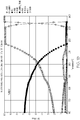
- FIGS. 1A , 1B , and 1C are graphs that compare the material phases of the alloys (A) IN-713C, (B) Mar-M-246, and (C) the alloy of the present disclosure, respectively. As illustrated, the gamma and gamma prime phases of the alloy of the present disclosure ( FIG. 1C ) compare favorably with the prior art alloys across a wide range of temperatures.
- FIGS. 2A , 2B , and 2C are graphs that compare the (A) density, (B) coefficient of thermal expansion, and (C) thermal conductivity of the alloys IN-713C, Mar-M-246, and the alloy of the present disclosure, respectively.
- higher thermal conductivity, lower coefficient of thermal expansion (CTE), lower density and higher mechanical properties are desirable for turbine wheel materials.
- the alloy of the present disclosure exhibited lower density and similar CTE and thermal conductivity in comparison with Mar-M-246.
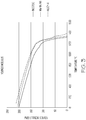
- FIG. 3 is a graph that compares the Youngs' Modulus of the alloys IN-713C, Mar-M-246, and the alloy of the present disclosure. As illustrated, the alloy in accordance with the present disclosure exhibits an improved Modulus up to about 1050°C, in comparison with the prior art alloys.
- the described herein are embodiments of improved nickel-based alloys and turbocharger turbine wheels made with such nickel-based alloys.
- the described embodiments provide a high-temperature oxidation and fatigue-resistant nickel-based alloy that is achieved, in part, with increased in molybdenum, chromium, tantalum, and titanium, with no tungsten, in comparison to Mar-M-246.
- the resultant alloy has a reduced cost, wherein the raw material is about 30% less than Mar-M-246.
- the inventive alloy described herein will have a better dwell-fatigue resistance and better oxidation resistance with lesser cost, and will be a suitable alternative to the prior art options.
- the alloy of the present disclosure can be used to make turbine wheels for applications reaching temperatures of 980°C (constant) and 1020°C (peak) with lower cost than existing commercial alloys.
- All of the nickel-based alloys described herein may be understood as either: (1) “comprising” the listed elements in their various percentages, in an open-ended context or (2) “consisting of' the listed elements in their various percentages, in a closed-ended context.
- the alloys described herein may be understood as (3) “consisting essentially of' the listed elements in their various percentages, wherein other elements may be present in amounts not effecting the novel/nonobvious characteristics of the alloy.
- the terms “comprising,” “consisting of,” and “consisting essentially of' should be understood as applicable to all of the ranges of alloy compositions disclosed herein.
Landscapes
- Engineering & Computer Science (AREA)
- Chemical & Material Sciences (AREA)
- Mechanical Engineering (AREA)
- Materials Engineering (AREA)
- General Engineering & Computer Science (AREA)
- Metallurgy (AREA)
- Organic Chemistry (AREA)
- Chemical Kinetics & Catalysis (AREA)
- General Chemical & Material Sciences (AREA)
- Combustion & Propulsion (AREA)
- Supercharger (AREA)
- Turbine Rotor Nozzle Sealing (AREA)
Abstract
Description
- The present disclosure is generally directed to metal alloys with improved high-temperature oxidation and fatigue resistance for use in turbocharger applications. More particularly, the present disclosure is directed to nickel-based alloys and turbine wheels including nickel-based alloys.
- The turbine wheel, usually a cast nickel-based alloy, used in turbocharger is a highspeed rotating component that is exposed to high temperature combustion gasses between temperatures of about 980°C to about 1020°C, depending upon the application. To withstand such a high temperature, the nickel-based alloy material should be oxidation resistant as well as dwell-fatigue resistant while rotating in the approximately 200,000 - 300,000 RPM range. Existing alloys for such applications all have various deficiencies: For example, the Mar-M-246 nickel-based alloy is relatively expensive, whereas the IN-713C nickel-based alloy exhibits inferior high-temperature properties.
- Therefore, it will become apparent to those skilled in the art that there remains a present and continuing need for the provision of improved nickel-based alloys and turbine wheels included such nickel-based alloys. Particularly, it would be desirable to provide an alloy based on Mar-M-246 but with an improved chemistry that reduces costs significantly while still retaining the desirable high-temperature oxidation and dwell-fatigue resistance of Mar-M-246. Furthermore, other desirable features and characteristics of the inventive subject matter will become apparent from the subsequent detailed description of the inventive subject matter and the appended claims, taken in conjunction with the accompanying drawings and this background of the disclosure.
- Nickel-based alloys and turbocharger turbine wheels including nickel-based alloys are disclosed herein. In one exemplary embodiment, a nickel-based alloy includes or consists of, on a weight basis of the overall alloy: about 10.5% to about 11.5% cobalt, about 9.0% to about 10.0% chromium, about 5.75% to about 6.25% aluminum, about 2.8% to about 3.3% tantalum, about 4.0% to about 4.5% molybdenum, about 2.2% to about 2.4% titanium, about 0.13% to about 0.15% carbon, about 0.03 to about 0.09% zirconium, and a majority of nickel, with the understanding that there may be inevitable/unavoidable impurities. The nickel-based alloy excludes tungsten except in unavoidable trace amounts. Additionally, in some examples, the nickel-based alloy may include or further consist of silicon in an amount of less than about 0.2%, boron in an amount of less than about 0.02%, manganese in an amount of less than about 0.2%, and sulfur in an amount of less than about 0.015%.
- With regard to the foregoing alloy embodiments: the amount of cobalt may be limited to about 10.7% to about 11.3%; alternatively or additionally, the amount of chromium may be limited to about 9.2% to about 9.8%; alternatively or additionally, the amount of aluminum may be limited to about 5.9% to about 6.1%; alternatively or additionally, the amount of tantalum may be limited to about 2.9% to about 3.2%; alternatively or additionally, the amount of molybdenum may be limited to about 4.1% to about 4.4%; alternatively or additionally, the amount of titanium may be limited to about 2.25% to about 2.35%.
- In another exemplary embodiment, a turbocharger turbine wheel includes or consists of, at least as a part of its overall composition, a nickel-based alloy, wherein the nickel-based alloy includes or consists of, on a weight basis of the overall alloy: about 10.5% to about 11.5% cobalt, about 9.0% to about 10.0% chromium, about 5.75% to about 6.25% aluminum, about 2.8% to about 3.3% tantalum, about 4.0% to about 4.5% molybdenum, about 2.2% to about 2.4% titanium, about 0.13% to about 0.15% carbon, about 0.03 to about 0.09% zirconium, and a majority of nickel, with the understanding that there may be inevitable/unavoidable impurities in trace amounts, as is generally appreciated in the art. The nickel-based alloy excludes tungsten except in unavoidable trace amounts. Additionally, in some examples, the nickel-based alloy may include or further consist of silicon in an amount of less than about 0.2%, boron in an amount of less than about 0.02%, manganese in an amount of less than about 0.2%, and sulfur in an amount of less than about 0.015%. Such a turbine wheel may find application for operating at temperatures of 980°C (constant) and 1020°C (peak).
- With regard to the foregoing turbine wheel embodiments: the amount of cobalt may be limited to about 10.7% to about 11.3%; alternatively or additionally, the amount of chromium may be limited to about 9.2% to about 9.8%; alternatively or additionally, the amount of aluminum may be limited to about 5.9% to about 6.1%; alternatively or additionally, the amount of tantalum may be limited to about 2.9% to about 3.2%; alternatively or additionally, the amount of molybdenum may be limited to about 4.1% to about 4.4%; alternatively or additionally, the amount of titanium may be limited to about 2.25% to about 2.35%.
- In a particular embodiment, a nickel-based alloy consists of, on a weight basis of the overall alloy: about 10.7% to about 11.3% cobalt, about 9.2% to about 9.8% chromium, about 5.9% to about 6.1% aluminum, about 2.9% to about 3.2% tantalum, about 4.1% to about 4.4% molybdenum, about 2.25% to about 2.35% titanium, about 0.13% to about 0.15% carbon, about 0.03 to about 0.09% zirconium, silicon in an amount of less than about 0.2%, boron in an amount of less than about 0.02%, manganese in an amount of less than about 0.2%, sulfur in an amount of less than about 0.015%, and a balance of nickel, with the understanding that there may be inevitable/unavoidable impurities, as is known in the art. This alloy may be used in making a turbocharger turbine wheel. Such a turbine wheel may find application for operating at temperatures of 980°C (constant) and 1020°C (peak).
- This brief summary is provided to introduce a selection of concepts in a simplified form that are further described below in the detailed description and the Figures. This summary is not intended to identify key features or essential features of the claimed subject matter, nor is it intended to be used as an aid in determining the scope of the claimed subject matter.
- The present disclosure will hereinafter be described in conjunction with the following drawing figures, wherein like numerals denote like elements, and wherein:
-
FIGS. 1A ,1B , and1C are graphs that compare the material phases of the alloys (A) IN-713C, (B) Mar-M-246, and (C) the alloy of the present disclosure, respectively; -
FIGS. 2A ,2B , and2C are graphs that compare the (A) density, (B) coefficient of thermal expansion, and (C) thermal conductivity of the alloys IN-713C, Mar-M-246, and the alloy of the present disclosure, respectively; and -
FIG. 3 is a graph that compares the Youngs' Modulus of the alloys IN-713C, Mar-M-246, and the alloy of the present disclosure. - The following detailed description is merely exemplary in nature and is not intended to limit the invention or the application and uses of the invention. As used herein, the word "exemplary" means "serving as an example, instance, or illustration." Thus, any embodiment described herein as "exemplary" is not necessarily to be construed as preferred or advantageous over other embodiments. All of the embodiments described herein are exemplary embodiments provided to enable persons skilled in the art to make or use the invention and not to limit the scope of the invention which is defined by the claims. Furthermore, there is no intention to be bound by any expressed or implied theory presented in the preceding technical field, background, brief summary, or the following detailed description.
- Unless specifically stated or obvious from context, as used herein, the term "about" is understood as within a range of normal tolerance in the art, for example within 2 standard deviations of the mean. "About" can be understood as within 10%, 5%, 1%, 0.5%, 0.1%, 0.05%, or 0.01% of the stated value. "About" can alternatively be understood as implying the exact value stated. Unless otherwise clear from the context, all numerical values provided herein are modified by the term "about."
- Embodiments of the present disclosure provide an improved nickel-based alloy and turbocharger turbine housings made with this nickel-based alloy. The disclosed embodiments detail an improved nickel-based alloy chemistry that is less expensive than Mar-M-246 yet has better high-temperature properties as compared with IN-713C.
- The composition of an exemplary nickel-based alloy is now provided below with respect to its constituent elements (all percentages being provided on a weight basis of the overall alloy composition, unless otherwise noted). In one embodiment, elements that are associated with grain boundary cracking and embrittlement should be minimized. For example, in this embodiment, the content of silicon (Si) is maintained below or equal to about 0.2%. The content of phosphorous (P) is maintained below or equal to about 0.015%. Further, the content of sulfur (S) is maintained below or equal to about 0.015%. As an additional matter, to reduce cracking, the master heat alloy that is used to process the alloy to ingot form desirably does not contain any casting revert or scrap having detrimental tramp or trace elements.
- Elements that are associated with grain boundary strengthening, including carbon (C), boron (B), and zirconium (Zr) are melting point depressants. Grain boundary liquation during welding of alloys is linked to carbides and borides. Since C (but not B) achieves a "carbon boil" during master alloy refining, embodiments of the nickel-based alloy retain some carbon, likely in the form of carbides (as described below) but not a significant content of borides. Accordingly, the content of B is maintained in a range of about 0.01% to about 0.02%, the content of carbon is maintained in a range of about 0.13% to about 0.15%, and the content of zirconium is maintained in a range of about 0.03% to about 0.09%.
- With the aforementioned relatively lower C and B content, the undesirable formation of topologically close-packed (TCP) brittle phases requires concomitant lowering of the minimum amounts of several refractory elements known to form TCP phases. For example, chromium (Cr), molybdenum (Mo), cobalt (Co), and tungsten (W) can combine to form TCP phases. Of these, reducing the Cr lower limit is desirably avoided because Cr plays a role in oxidation/sulfidation resistance. Accordingly, in one embodiment, the content of Cr is from 9.0% to about 10.0%. In another embodiment, the content of Cr is from about 9.2% to about 9.8%.
- Co is a solid solution strengthening element, but it can contribute to TCP phase formation. Accordingly, permitting a lower Co content has been discovered to be beneficial. Thus, in one embodiment, the content of Co is from about 10.5% to about 11.5%. In another embodiment, the content of Co is from about 10.7% to about 11.3%.
- Furthermore, W is known to be an element that forms carbides, that acts as a solid solution strengthening element, and that forms TCP phases. W is also a relatively expensive element. Accordingly, in order to achieve significant cost reductions as compared with Mar-M-246, W is desirably excluded from the alloy to the greatest extent possible, and may only be present in unavoidable trace/impurity amounts.
- Titanium (Ti) is both a carbide and gamma-prime phase forming element. The gamma-prime phase is favorable for high-temperature oxidation resistance. Accordingly, in some embodiments, titanium is provided in a range of about 2.2% to about 2.4%. In other embodiments, titanium is provided in a range of about 2.25% to about 2.35%.
- Mo is a solid solution strengthening element and increases the Al partitioning to the gamma-prime phase, but there is evidence in the art that Mo may be detrimental to hot corrosion or oxidation resistance. Mo oxide volatility may also be a negative factor. Accordingly, the content of Mo is desirably maintained within a range of about 4.0% to about 4.5%. In another embodiment, the content of Mo is maintained with a range of about 4.1% to about 4.4%.
- Continuing with the description of an exemplary embodiment of the nickel-based alloy, tantalum (Ta) is known to be an element that forms carbides and a solid solution strengthening element that also partitions to the gamma-prime phase. Allowing a higher content of Ta will favor Ta-rich carbides and make up for the absence of Ti in the gamma-prime phase while contributing to solid solution strengthening. Accordingly, in an embodiment, the content of Ta is from about 2.8% to about 3.3%. In another embodiment, the content of Ta is from about 2.9% to about 3.2%.
- Al, as a gamma-prime phase forming element, is also included in the alloy composition of the present disclosure. In one embodiment, the content of Al is from about 5.75% to about 6.25%. In another embodiment, the content of Al is from about 5.9% to about 6.1%
- Moreover, as the described alloys are nickel-based, it will be appreciated that nickel (Ni) forms a majority of the content (i.e., greater than about 50%) of the described alloy. That is, nickel typically accounts for the balance of the content not otherwise described above, while accounting for inevitable/unavoidable impurities not otherwise set forth above as are commonly understood in the art.
- Table 1, set forth below, provides the elemental content of a nickel-based alloy of the present disclosure in accordance with the description provided above, while also specifying the maximum content of additional detrimental tramp or trace elements commonly encountered in nickel-based alloys. Each weight percentage included in Table 1 is understood to be preceded by the term "about." In addition, a minimum of zero means "low as possible", not to exceed the maximum. It should be acknowledged that trace amounts of inevitable/unavoidable impurities may be present (in trace amounts), although not explicitly listed in Table 1, as is known in the art.
TABLE 1 Application Temperature (C) 980°C-1020°C Chemical Element % Carbon, C 0.13-0.15 Manganese, Mn <0.2 Sulfur, S <0.015 Silicon, Si <0.2 Chromium, Cr 9.00-10.00 Molybdenum, Mo 4.00-4.50 Tantalum, Ta 2.80-3.30 Titanium, Ti 2.20-2.40 Boron, B 0.01-0.02 Aluminum, Al 5.75-6.25 Zirconium, Zr 0.03-0.09 Cobalt, Co 10.5-11.5 Nickel, Ni Balance - The present disclosure is now illustrated by the following non-limiting example. It should be noted that various changes and modifications may be applied to the following example and process without departing from the scope of this invention, which is defined in the appended claims. Therefore, it should be noted that the following example should be interpreted as illustrative only and not limiting in any sense.
- Using the materials simulation software JMatPro® (available from Sente Software Ltd.), an example alloy composition within the scope of the present disclosure was analyzed for its phase constituency and material properties, in comparison with the previously-known Mar-M-246 and IN-713C materials. In particular, the analyzed alloy ("Alloy-4") had the formula: 6.0% Al, 11.0% Co, 9.5% Cr, 0.14% C, 0.1% Mn, 4.25% Mo, 0.1% Si, 3.05% Ta, 2.3% Ti, 0.06% Zr, 0.015% S, balance Ni and impurities. The exact formulations of the prior art alloys are included on their respective graphs.
-
FIGS. 1A ,1B , and1C are graphs that compare the material phases of the alloys (A) IN-713C, (B) Mar-M-246, and (C) the alloy of the present disclosure, respectively. As illustrated, the gamma and gamma prime phases of the alloy of the present disclosure (FIG. 1C ) compare favorably with the prior art alloys across a wide range of temperatures. -
FIGS. 2A ,2B , and2C are graphs that compare the (A) density, (B) coefficient of thermal expansion, and (C) thermal conductivity of the alloys IN-713C, Mar-M-246, and the alloy of the present disclosure, respectively. Among other properties, higher thermal conductivity, lower coefficient of thermal expansion (CTE), lower density and higher mechanical properties are desirable for turbine wheel materials. As illustrated, the alloy of the present disclosure exhibited lower density and similar CTE and thermal conductivity in comparison with Mar-M-246. -
FIG. 3 is a graph that compares the Youngs' Modulus of the alloys IN-713C, Mar-M-246, and the alloy of the present disclosure. As illustrated, the alloy in accordance with the present disclosure exhibits an improved Modulus up to about 1050°C, in comparison with the prior art alloys. - As such, described herein are embodiments of improved nickel-based alloys and turbocharger turbine wheels made with such nickel-based alloys. The described embodiments provide a high-temperature oxidation and fatigue-resistant nickel-based alloy that is achieved, in part, with increased in molybdenum, chromium, tantalum, and titanium, with no tungsten, in comparison to Mar-M-246. The resultant alloy has a reduced cost, wherein the raw material is about 30% less than Mar-M-246. Thus, the inventive alloy described herein will have a better dwell-fatigue resistance and better oxidation resistance with lesser cost, and will be a suitable alternative to the prior art options. As such, the alloy of the present disclosure can be used to make turbine wheels for applications reaching temperatures of 980°C (constant) and 1020°C (peak) with lower cost than existing commercial alloys.
- All of the nickel-based alloys described herein may be understood as either: (1) "comprising" the listed elements in their various percentages, in an open-ended context or (2) "consisting of' the listed elements in their various percentages, in a closed-ended context. Alternatively, the alloys described herein may be understood as (3) "consisting essentially of' the listed elements in their various percentages, wherein other elements may be present in amounts not effecting the novel/nonobvious characteristics of the alloy. Thus, as used herein, the terms "comprising," "consisting of," and "consisting essentially of' should be understood as applicable to all of the ranges of alloy compositions disclosed herein.
- While at least one exemplary embodiment has been presented in the foregoing detailed description of the invention, it should be appreciated that a vast number of variations exist. It should also be appreciated that the exemplary embodiment or exemplary embodiments are only examples, and are not intended to limit the scope, applicability, or configuration of the invention in any way. Rather, the foregoing detailed description will provide those skilled in the art with a convenient road map for implementing an exemplary embodiment of the invention, it being understood that various changes may be made in the function and arrangement of elements described in an exemplary embodiment without departing from the scope as set forth in the appended claims and their legal equivalents.
Claims (15)
- A turbocharger turbine wheel comprising, at least as a part of its overall composition, a nickel-based alloy, wherein the nickel-based alloy comprises, on a weight basis of the overall alloy:about 10.5% to about 11.5% cobalt;about 9.0% to about 10.0% chromium;about 5.75% to about 6.25% aluminum;about 2.8% to about 3.3% tantalum;about 4.0% to about 4.5% molybdenum;about 2.2% to about 2.4% titanium;about 0.13% to about 0.15% carbon;about 0.03% to about 0.09% zirconium; anda majority of nickel, with the proviso that tungsten is not included beyond impurity levels.
- The turbocharger turbine wheel of claim 1, wherein the nickel-based alloy comprises cobalt in an amount of about 11.7% to about 11.3%.
- The turbocharger turbine wheel of claim 1 or 2, wherein the nickel-based alloy comprises chromium in an amount of about 9.2% to about 9.8%.
- The turbocharger turbine wheel of claim 1, 2 or 3, wherein the nickel-based alloy comprises aluminum in an amount of about 5.9% to about 6.1%.
- The turbocharger turbine wheel of any preceding claim, wherein the nickel-based alloy comprises tantalum in an amount of about 2.9% to about 3.2%.
- The turbocharger turbine wheel of any preceding claim, wherein the nickel-based alloy comprises molybdenum in an amount of about 4.1% to about 4.4%, and/or wherein the nickel-based alloy comprises titanium in an amount of about 2.25% to about 2.35%.
- The turbocharger turbine wheel of any preceding claim, wherein the turbocharger turbine wheel is configured for operation at a temperature range of about 980°C to about 1020°C.
- A turbocharger turbine wheel comprising, at least as a part of its overall composition, a nickel-based alloy, wherein the nickel-based alloy consists of, on a weight basis of the overall alloy:about 10.5% to about 11.5% cobalt;about 9.0% to about 10.0% chromium;about 5.75% to about 6.25% aluminum;about 2.8% to about 3.3% tantalum;about 4.0% to about 4.5% molybdenum;about 2.2% to about 2.4% titanium;about 0.13% to about 0.15% carbon;about 0.03% to about 0.09% zirconium; andsilicon in an amount of less than about 0.2%;boron in an amount of less than about 0.02%;manganese in an amount of less than about 0.2%;sulfur in an amount of less than about 0.015%; anda majority of nickel, with the proviso that inevitable/unavoidable impurities may be present in trace amounts.
- The turbocharger turbine wheel of claim 8, wherein the nickel-based alloy consists of cobalt in an amount of about 11.7% to about 11.3%.
- The turbocharger turbine wheel of claim 8 or 9, wherein the nickel-based alloy consists of chromium in an amount of about 9.2% to about 9.8%.
- The turbocharger turbine wheel of claim 8, 9 or 10, wherein the nickel-based alloy consists of aluminum in an amount of about 5.9% to about 6.1%.
- The turbocharger turbine wheel of claim 8, 9, 10 or 11, wherein the nickel-based alloy consists of tantalum in an amount of about 2.9% to about 3.2%.
- The turbocharger turbine wheel of claim 8, 9, 10, 11 or 12, wherein the nickel-based alloy consists of molybdenum in an amount of about 4.1% to about 4.4%, and/or wherein the nickel-based alloy consists of titanium in an amount of about 2.25% to about 2.35%.
- The turbocharger turbine wheel of claim 8, 9, 10, 11, 12 or 13, wherein the turbocharger turbine wheel is configured for operation at a temperature range of about 980°C to about 1020°C.
- A turbocharger turbine wheel comprising, at least as a part of its overall composition, a nickel-based alloy consisting of, on a weight basis of the overall alloy:about 10.7% to about 11.3% cobalt;about 9.2% to about 9.8% chromium;about 5.9% to about 6.1% aluminum;about 2.9% to about 3.2% tantalum;about 4.1% to about 4.4% molybdenum;about 2.25% to about 2.35% titanium;about 0.13% to about 0.15% carbon;about 0.03% to about 0.09% zirconium;silicon in an amount of less than about 0.2%;boron in an amount of less than about 0.02%;manganese in an amount of less than about 0.2%;sulfur in an amount of less than about 0.015%; anda majority of nickel, with the proviso that inevitable/unavoidable impurities may be present in trace amounts, wherein, optionally, the turbocharger turbine wheel is configured for operation at a temperature range of about 980°C to about 1020°C.
Applications Claiming Priority (1)
| Application Number | Priority Date | Filing Date | Title |
|---|---|---|---|
| US16/136,597 US10344357B1 (en) | 2018-09-20 | 2018-09-20 | Turbine wheel incorportating nickel-based alloy |
Publications (2)
| Publication Number | Publication Date |
|---|---|
| EP3626846A1 true EP3626846A1 (en) | 2020-03-25 |
| EP3626846B1 EP3626846B1 (en) | 2024-08-07 |
Family
ID=66677043
Family Applications (1)
| Application Number | Title | Priority Date | Filing Date |
|---|---|---|---|
| EP19177475.1A Active EP3626846B1 (en) | 2018-09-20 | 2019-05-30 | Turbine wheel incorporating nickel-based alloy |
Country Status (3)
| Country | Link |
|---|---|
| US (1) | US10344357B1 (en) |
| EP (1) | EP3626846B1 (en) |
| CN (1) | CN110923511A (en) |
Citations (3)
| Publication number | Priority date | Publication date | Assignee | Title |
|---|---|---|---|---|
| EP1462533A1 (en) * | 2003-03-24 | 2004-09-29 | Daido Steel Co., Ltd. | Nickel base heat resistant cast alloy and turbine wheels made thereof |
| EP1903121A1 (en) * | 2006-09-21 | 2008-03-26 | Honeywell International, Inc. | Nickel-based alloys and articles made therefrom |
| WO2018069666A1 (en) * | 2016-10-12 | 2018-04-19 | Oxford University Innovation Limited | A nickel-based alloy |
Family Cites Families (5)
| Publication number | Priority date | Publication date | Assignee | Title |
|---|---|---|---|---|
| US4895201A (en) * | 1987-07-07 | 1990-01-23 | United Technologies Corporation | Oxidation resistant superalloys containing low sulfur levels |
| EP1536026A1 (en) * | 2003-11-27 | 2005-06-01 | Siemens Aktiengesellschaft | High temperature resistant article |
| US8226886B2 (en) * | 2009-08-31 | 2012-07-24 | General Electric Company | Nickel-based superalloys and articles |
| US20160348216A1 (en) * | 2014-12-16 | 2016-12-01 | Honeywell International Inc. | Nickel-based superalloys and additive manufacturing processes using nickel-based superalloys |
| JP6057363B1 (en) * | 2015-02-12 | 2017-01-11 | 日立金属株式会社 | Method for producing Ni-base superalloy |
-
2018
- 2018-09-20 US US16/136,597 patent/US10344357B1/en active Active
-
2019
- 2019-05-30 EP EP19177475.1A patent/EP3626846B1/en active Active
- 2019-05-31 CN CN201910469091.6A patent/CN110923511A/en active Pending
Patent Citations (3)
| Publication number | Priority date | Publication date | Assignee | Title |
|---|---|---|---|---|
| EP1462533A1 (en) * | 2003-03-24 | 2004-09-29 | Daido Steel Co., Ltd. | Nickel base heat resistant cast alloy and turbine wheels made thereof |
| EP1903121A1 (en) * | 2006-09-21 | 2008-03-26 | Honeywell International, Inc. | Nickel-based alloys and articles made therefrom |
| WO2018069666A1 (en) * | 2016-10-12 | 2018-04-19 | Oxford University Innovation Limited | A nickel-based alloy |
Also Published As
| Publication number | Publication date |
|---|---|
| US10344357B1 (en) | 2019-07-09 |
| CN110923511A (en) | 2020-03-27 |
| EP3626846B1 (en) | 2024-08-07 |
Similar Documents
| Publication | Publication Date | Title |
|---|---|---|
| EP2503013B1 (en) | Heat-resistant superalloy | |
| KR102165364B1 (en) | Cast nickel-based superalloy including iron | |
| CN102002612B (en) | Nickel based super alloy and goods thereof | |
| EP1842934B1 (en) | Heat-resistant superalloy | |
| JP5869034B2 (en) | Nickel superalloys and parts made from nickel superalloys | |
| US11155910B2 (en) | High-strength, heat-resistant Ni-base alloy, method for producing same, and gas turbine blade | |
| US8685316B2 (en) | Ni-based heat resistant alloy, gas turbine component and gas turbine | |
| US20140373979A1 (en) | Nickel-based heat-resistant superalloy | |
| EP2039789A1 (en) | Nickel-based alloy for turbine rotor of steam turbine and turbine rotor of steam turbine | |
| JP2004307999A (en) | Ni-based super heat-resistant cast alloy and turbine wheel using the same | |
| EP3031938B1 (en) | Cobalt - nickel alloy | |
| JP2018131667A (en) | Ni-BASED ALLOY, GAS TURBINE MATERIAL, AND METHOD FOR PRODUCING Ni-BASED ALLOY HAVING EXCELLENT CREEP PROPERTY | |
| EP3626846B1 (en) | Turbine wheel incorporating nickel-based alloy | |
| EP3366794B1 (en) | Ni-based superalloy | |
| EP2449140B1 (en) | Nickel base superalloy compositions and articles thereof | |
| EP2944704B1 (en) | Nickel alloy composition | |
| KR20190102393A (en) | Ni based superalloy with high creep strength and manufacturing method thereof | |
| RU2737835C1 (en) | Nickel-based heat-resistant wrought alloy and article made from it | |
| US20250043394A1 (en) | Nickel-based alloy | |
| US20250043393A1 (en) | Nickel-based alloy comprising tantalum | |
| US20240240288A1 (en) | Alloy, powder, method and component | |
| KR20240006628A (en) | Alloys, Powders, Methods and Components | |
| WO2022213084A1 (en) | Alloy, powder, process and component | |
| JP2003064434A (en) | Ti-based heat-resistant material |
Legal Events
| Date | Code | Title | Description |
|---|---|---|---|
| PUAI | Public reference made under article 153(3) epc to a published international application that has entered the european phase |
Free format text: ORIGINAL CODE: 0009012 |
|
| STAA | Information on the status of an ep patent application or granted ep patent |
Free format text: STATUS: REQUEST FOR EXAMINATION WAS MADE |
|
| 17P | Request for examination filed |
Effective date: 20190530 |
|
| AK | Designated contracting states |
Kind code of ref document: A1 Designated state(s): AL AT BE BG CH CY CZ DE DK EE ES FI FR GB GR HR HU IE IS IT LI LT LU LV MC MK MT NL NO PL PT RO RS SE SI SK SM TR |
|
| AX | Request for extension of the european patent |
Extension state: BA ME |
|
| P01 | Opt-out of the competence of the unified patent court (upc) registered |
Effective date: 20230424 |
|
| GRAP | Despatch of communication of intention to grant a patent |
Free format text: ORIGINAL CODE: EPIDOSNIGR1 |
|
| STAA | Information on the status of an ep patent application or granted ep patent |
Free format text: STATUS: GRANT OF PATENT IS INTENDED |
|
| INTG | Intention to grant announced |
Effective date: 20240529 |
|
| GRAS | Grant fee paid |
Free format text: ORIGINAL CODE: EPIDOSNIGR3 |
|
| GRAA | (expected) grant |
Free format text: ORIGINAL CODE: 0009210 |
|
| STAA | Information on the status of an ep patent application or granted ep patent |
Free format text: STATUS: THE PATENT HAS BEEN GRANTED |
|
| AK | Designated contracting states |
Kind code of ref document: B1 Designated state(s): AL AT BE BG CH CY CZ DE DK EE ES FI FR GB GR HR HU IE IS IT LI LT LU LV MC MK MT NL NO PL PT RO RS SE SI SK SM TR |
|
| REG | Reference to a national code |
Ref country code: GB Ref legal event code: FG4D |
|
| REG | Reference to a national code |
Ref country code: CH Ref legal event code: EP |
|
| REG | Reference to a national code |
Ref country code: IE Ref legal event code: FG4D |
|
| REG | Reference to a national code |
Ref country code: DE Ref legal event code: R096 Ref document number: 602019056445 Country of ref document: DE |
|
| REG | Reference to a national code |
Ref country code: LT Ref legal event code: MG9D |
|
| REG | Reference to a national code |
Ref country code: NL Ref legal event code: MP Effective date: 20240807 |
|
| PG25 | Lapsed in a contracting state [announced via postgrant information from national office to epo] |
Ref country code: NO Free format text: LAPSE BECAUSE OF FAILURE TO SUBMIT A TRANSLATION OF THE DESCRIPTION OR TO PAY THE FEE WITHIN THE PRESCRIBED TIME-LIMIT Effective date: 20241107 |
|
| REG | Reference to a national code |
Ref country code: AT Ref legal event code: MK05 Ref document number: 1711004 Country of ref document: AT Kind code of ref document: T Effective date: 20240807 |
|
| PG25 | Lapsed in a contracting state [announced via postgrant information from national office to epo] |
Ref country code: NL Free format text: LAPSE BECAUSE OF FAILURE TO SUBMIT A TRANSLATION OF THE DESCRIPTION OR TO PAY THE FEE WITHIN THE PRESCRIBED TIME-LIMIT Effective date: 20240807 Ref country code: FI Free format text: LAPSE BECAUSE OF FAILURE TO SUBMIT A TRANSLATION OF THE DESCRIPTION OR TO PAY THE FEE WITHIN THE PRESCRIBED TIME-LIMIT Effective date: 20240807 Ref country code: PL Free format text: LAPSE BECAUSE OF FAILURE TO SUBMIT A TRANSLATION OF THE DESCRIPTION OR TO PAY THE FEE WITHIN THE PRESCRIBED TIME-LIMIT Effective date: 20240807 Ref country code: GR Free format text: LAPSE BECAUSE OF FAILURE TO SUBMIT A TRANSLATION OF THE DESCRIPTION OR TO PAY THE FEE WITHIN THE PRESCRIBED TIME-LIMIT Effective date: 20241108 Ref country code: PT Free format text: LAPSE BECAUSE OF FAILURE TO SUBMIT A TRANSLATION OF THE DESCRIPTION OR TO PAY THE FEE WITHIN THE PRESCRIBED TIME-LIMIT Effective date: 20241209 |
|
| PG25 | Lapsed in a contracting state [announced via postgrant information from national office to epo] |
Ref country code: BG Free format text: LAPSE BECAUSE OF FAILURE TO SUBMIT A TRANSLATION OF THE DESCRIPTION OR TO PAY THE FEE WITHIN THE PRESCRIBED TIME-LIMIT Effective date: 20240807 |
|
| PG25 | Lapsed in a contracting state [announced via postgrant information from national office to epo] |
Ref country code: LV Free format text: LAPSE BECAUSE OF FAILURE TO SUBMIT A TRANSLATION OF THE DESCRIPTION OR TO PAY THE FEE WITHIN THE PRESCRIBED TIME-LIMIT Effective date: 20240807 |
|
| PG25 | Lapsed in a contracting state [announced via postgrant information from national office to epo] |
Ref country code: AT Free format text: LAPSE BECAUSE OF FAILURE TO SUBMIT A TRANSLATION OF THE DESCRIPTION OR TO PAY THE FEE WITHIN THE PRESCRIBED TIME-LIMIT Effective date: 20240807 Ref country code: IS Free format text: LAPSE BECAUSE OF FAILURE TO SUBMIT A TRANSLATION OF THE DESCRIPTION OR TO PAY THE FEE WITHIN THE PRESCRIBED TIME-LIMIT Effective date: 20241207 |
|
| PG25 | Lapsed in a contracting state [announced via postgrant information from national office to epo] |
Ref country code: HR Free format text: LAPSE BECAUSE OF FAILURE TO SUBMIT A TRANSLATION OF THE DESCRIPTION OR TO PAY THE FEE WITHIN THE PRESCRIBED TIME-LIMIT Effective date: 20240807 |
|
| PG25 | Lapsed in a contracting state [announced via postgrant information from national office to epo] |
Ref country code: RS Free format text: LAPSE BECAUSE OF FAILURE TO SUBMIT A TRANSLATION OF THE DESCRIPTION OR TO PAY THE FEE WITHIN THE PRESCRIBED TIME-LIMIT Effective date: 20241107 Ref country code: ES Free format text: LAPSE BECAUSE OF FAILURE TO SUBMIT A TRANSLATION OF THE DESCRIPTION OR TO PAY THE FEE WITHIN THE PRESCRIBED TIME-LIMIT Effective date: 20240807 |
|
| PG25 | Lapsed in a contracting state [announced via postgrant information from national office to epo] |
Ref country code: RS Free format text: LAPSE BECAUSE OF FAILURE TO SUBMIT A TRANSLATION OF THE DESCRIPTION OR TO PAY THE FEE WITHIN THE PRESCRIBED TIME-LIMIT Effective date: 20241107 Ref country code: PT Free format text: LAPSE BECAUSE OF FAILURE TO SUBMIT A TRANSLATION OF THE DESCRIPTION OR TO PAY THE FEE WITHIN THE PRESCRIBED TIME-LIMIT Effective date: 20241209 Ref country code: PL Free format text: LAPSE BECAUSE OF FAILURE TO SUBMIT A TRANSLATION OF THE DESCRIPTION OR TO PAY THE FEE WITHIN THE PRESCRIBED TIME-LIMIT Effective date: 20240807 Ref country code: NO Free format text: LAPSE BECAUSE OF FAILURE TO SUBMIT A TRANSLATION OF THE DESCRIPTION OR TO PAY THE FEE WITHIN THE PRESCRIBED TIME-LIMIT Effective date: 20241107 Ref country code: NL Free format text: LAPSE BECAUSE OF FAILURE TO SUBMIT A TRANSLATION OF THE DESCRIPTION OR TO PAY THE FEE WITHIN THE PRESCRIBED TIME-LIMIT Effective date: 20240807 Ref country code: LV Free format text: LAPSE BECAUSE OF FAILURE TO SUBMIT A TRANSLATION OF THE DESCRIPTION OR TO PAY THE FEE WITHIN THE PRESCRIBED TIME-LIMIT Effective date: 20240807 Ref country code: IS Free format text: LAPSE BECAUSE OF FAILURE TO SUBMIT A TRANSLATION OF THE DESCRIPTION OR TO PAY THE FEE WITHIN THE PRESCRIBED TIME-LIMIT Effective date: 20241207 Ref country code: HR Free format text: LAPSE BECAUSE OF FAILURE TO SUBMIT A TRANSLATION OF THE DESCRIPTION OR TO PAY THE FEE WITHIN THE PRESCRIBED TIME-LIMIT Effective date: 20240807 Ref country code: GR Free format text: LAPSE BECAUSE OF FAILURE TO SUBMIT A TRANSLATION OF THE DESCRIPTION OR TO PAY THE FEE WITHIN THE PRESCRIBED TIME-LIMIT Effective date: 20241108 Ref country code: FI Free format text: LAPSE BECAUSE OF FAILURE TO SUBMIT A TRANSLATION OF THE DESCRIPTION OR TO PAY THE FEE WITHIN THE PRESCRIBED TIME-LIMIT Effective date: 20240807 Ref country code: ES Free format text: LAPSE BECAUSE OF FAILURE TO SUBMIT A TRANSLATION OF THE DESCRIPTION OR TO PAY THE FEE WITHIN THE PRESCRIBED TIME-LIMIT Effective date: 20240807 Ref country code: BG Free format text: LAPSE BECAUSE OF FAILURE TO SUBMIT A TRANSLATION OF THE DESCRIPTION OR TO PAY THE FEE WITHIN THE PRESCRIBED TIME-LIMIT Effective date: 20240807 Ref country code: AT Free format text: LAPSE BECAUSE OF FAILURE TO SUBMIT A TRANSLATION OF THE DESCRIPTION OR TO PAY THE FEE WITHIN THE PRESCRIBED TIME-LIMIT Effective date: 20240807 |
|
| PG25 | Lapsed in a contracting state [announced via postgrant information from national office to epo] |
Ref country code: DK Free format text: LAPSE BECAUSE OF FAILURE TO SUBMIT A TRANSLATION OF THE DESCRIPTION OR TO PAY THE FEE WITHIN THE PRESCRIBED TIME-LIMIT Effective date: 20240807 Ref country code: SM Free format text: LAPSE BECAUSE OF FAILURE TO SUBMIT A TRANSLATION OF THE DESCRIPTION OR TO PAY THE FEE WITHIN THE PRESCRIBED TIME-LIMIT Effective date: 20240807 Ref country code: RO Free format text: LAPSE BECAUSE OF FAILURE TO SUBMIT A TRANSLATION OF THE DESCRIPTION OR TO PAY THE FEE WITHIN THE PRESCRIBED TIME-LIMIT Effective date: 20240807 |
|
| PG25 | Lapsed in a contracting state [announced via postgrant information from national office to epo] |
Ref country code: EE Free format text: LAPSE BECAUSE OF FAILURE TO SUBMIT A TRANSLATION OF THE DESCRIPTION OR TO PAY THE FEE WITHIN THE PRESCRIBED TIME-LIMIT Effective date: 20240807 |
|
| PG25 | Lapsed in a contracting state [announced via postgrant information from national office to epo] |
Ref country code: CZ Free format text: LAPSE BECAUSE OF FAILURE TO SUBMIT A TRANSLATION OF THE DESCRIPTION OR TO PAY THE FEE WITHIN THE PRESCRIBED TIME-LIMIT Effective date: 20240807 |
|
| PG25 | Lapsed in a contracting state [announced via postgrant information from national office to epo] |
Ref country code: SK Free format text: LAPSE BECAUSE OF FAILURE TO SUBMIT A TRANSLATION OF THE DESCRIPTION OR TO PAY THE FEE WITHIN THE PRESCRIBED TIME-LIMIT Effective date: 20240807 |
|
| REG | Reference to a national code |
Ref country code: DE Ref legal event code: R097 Ref document number: 602019056445 Country of ref document: DE |
|
| PLBE | No opposition filed within time limit |
Free format text: ORIGINAL CODE: 0009261 |
|
| STAA | Information on the status of an ep patent application or granted ep patent |
Free format text: STATUS: NO OPPOSITION FILED WITHIN TIME LIMIT |
|
| PGFP | Annual fee paid to national office [announced via postgrant information from national office to epo] |
Ref country code: DE Payment date: 20250528 Year of fee payment: 7 |
|
| PGFP | Annual fee paid to national office [announced via postgrant information from national office to epo] |
Ref country code: GB Payment date: 20250520 Year of fee payment: 7 |
|
| 26N | No opposition filed |
Effective date: 20250508 |
|
| PGFP | Annual fee paid to national office [announced via postgrant information from national office to epo] |
Ref country code: FR Payment date: 20250526 Year of fee payment: 7 |
|
| PG25 | Lapsed in a contracting state [announced via postgrant information from national office to epo] |
Ref country code: SE Free format text: LAPSE BECAUSE OF FAILURE TO SUBMIT A TRANSLATION OF THE DESCRIPTION OR TO PAY THE FEE WITHIN THE PRESCRIBED TIME-LIMIT Effective date: 20240807 |
|
| REG | Reference to a national code |
Ref country code: CH Ref legal event code: H13 Free format text: ST27 STATUS EVENT CODE: U-0-0-H10-H13 (AS PROVIDED BY THE NATIONAL OFFICE) Effective date: 20251223 |
|
| PG25 | Lapsed in a contracting state [announced via postgrant information from national office to epo] |
Ref country code: LU Free format text: LAPSE BECAUSE OF NON-PAYMENT OF DUE FEES Effective date: 20250530 |
|
| PG25 | Lapsed in a contracting state [announced via postgrant information from national office to epo] |
Ref country code: CH Free format text: LAPSE BECAUSE OF NON-PAYMENT OF DUE FEES Effective date: 20250531 |
|
| PG25 | Lapsed in a contracting state [announced via postgrant information from national office to epo] |
Ref country code: IT Free format text: LAPSE BECAUSE OF FAILURE TO SUBMIT A TRANSLATION OF THE DESCRIPTION OR TO PAY THE FEE WITHIN THE PRESCRIBED TIME-LIMIT Effective date: 20240807 |
|
| REG | Reference to a national code |
Ref country code: BE Ref legal event code: MM Effective date: 20250531 |
|
| PG25 | Lapsed in a contracting state [announced via postgrant information from national office to epo] |
Ref country code: MC Free format text: LAPSE BECAUSE OF FAILURE TO SUBMIT A TRANSLATION OF THE DESCRIPTION OR TO PAY THE FEE WITHIN THE PRESCRIBED TIME-LIMIT Effective date: 20240807 |
|
| PG25 | Lapsed in a contracting state [announced via postgrant information from national office to epo] |
Ref country code: IE Free format text: LAPSE BECAUSE OF NON-PAYMENT OF DUE FEES Effective date: 20250530 |
|
| PG25 | Lapsed in a contracting state [announced via postgrant information from national office to epo] |
Ref country code: BE Free format text: LAPSE BECAUSE OF NON-PAYMENT OF DUE FEES Effective date: 20250531 |