EP3626718A1 - Five- and six-membered aza-aromatic compound, preparation method therefor, pharmaceutical composition, and application - Google Patents
Five- and six-membered aza-aromatic compound, preparation method therefor, pharmaceutical composition, and application Download PDFInfo
- Publication number
- EP3626718A1 EP3626718A1 EP18802111.7A EP18802111A EP3626718A1 EP 3626718 A1 EP3626718 A1 EP 3626718A1 EP 18802111 A EP18802111 A EP 18802111A EP 3626718 A1 EP3626718 A1 EP 3626718A1
- Authority
- EP
- European Patent Office
- Prior art keywords
- piperidinyl
- piperazinyl
- alkyl
- amino
- halogen
- Prior art date
- Legal status (The legal status is an assumption and is not a legal conclusion. Google has not performed a legal analysis and makes no representation as to the accuracy of the status listed.)
- Granted
Links
- 0 Cc1c(*)c(*)c(*)c(*)c1* Chemical compound Cc1c(*)c(*)c(*)c(*)c1* 0.000 description 18
- KFBROSSSMQJHKH-UHFFFAOYSA-N CCC(NN=C)=N Chemical compound CCC(NN=C)=N KFBROSSSMQJHKH-UHFFFAOYSA-N 0.000 description 3
- UKOWLIGHMFVYFW-UHFFFAOYSA-N CCOC(c1c[s]c(B2OC(C)(C)C(C)(C)O2)c1)=O Chemical compound CCOC(c1c[s]c(B2OC(C)(C)C(C)(C)O2)c1)=O UKOWLIGHMFVYFW-UHFFFAOYSA-N 0.000 description 2
- XKXVBWLYSGMTCK-UHFFFAOYSA-N Cc1nnc2[n]1cccc2 Chemical compound Cc1nnc2[n]1cccc2 XKXVBWLYSGMTCK-UHFFFAOYSA-N 0.000 description 2
- RMPRHYDTURRWHR-UHFFFAOYSA-N O=C(c1cccc(-c2n[nH]c3c2cccn3)c1)Nc1ccccc1 Chemical compound O=C(c1cccc(-c2n[nH]c3c2cccn3)c1)Nc1ccccc1 RMPRHYDTURRWHR-UHFFFAOYSA-N 0.000 description 2
- APYSHMNJHJRIDR-UHFFFAOYSA-N Brc1cnc2[n]1cccc2 Chemical compound Brc1cnc2[n]1cccc2 APYSHMNJHJRIDR-UHFFFAOYSA-N 0.000 description 1
- OZNGJOXLTIENCF-UHFFFAOYSA-N Brc1cnc2[n]1ccnc2 Chemical compound Brc1cnc2[n]1ccnc2 OZNGJOXLTIENCF-UHFFFAOYSA-N 0.000 description 1
- UJOLBPODUDCKDS-UHFFFAOYSA-N CC(C)(C)[n]1nc(-c2cc(C(Nc3ccccc3)=O)c[o]2)c2c(N)ncnc12 Chemical compound CC(C)(C)[n]1nc(-c2cc(C(Nc3ccccc3)=O)c[o]2)c2c(N)ncnc12 UJOLBPODUDCKDS-UHFFFAOYSA-N 0.000 description 1
- ZOCFLRQDOIUVHP-UHFFFAOYSA-N CC(C)(C)[n]1nc(-c2ccc(C(NCc(c(F)ccc3)c3Cl)=O)[s]2)c2c(N)ncnc12 Chemical compound CC(C)(C)[n]1nc(-c2ccc(C(NCc(c(F)ccc3)c3Cl)=O)[s]2)c2c(N)ncnc12 ZOCFLRQDOIUVHP-UHFFFAOYSA-N 0.000 description 1
- DXDOLWDANKQJAX-UHFFFAOYSA-N CN(C)c(cc1)ccc1NC(c1c[s]c(-c2n[nH]c3c2cccc3)c1)=O Chemical compound CN(C)c(cc1)ccc1NC(c1c[s]c(-c2n[nH]c3c2cccc3)c1)=O DXDOLWDANKQJAX-UHFFFAOYSA-N 0.000 description 1
- WLBNVSIQCFHAQB-UHFFFAOYSA-N COC(c1c[nH]cc1)=O Chemical compound COC(c1c[nH]cc1)=O WLBNVSIQCFHAQB-UHFFFAOYSA-N 0.000 description 1
- IBIRPZGWNLTISA-UHFFFAOYSA-N COc1cc(CNC(c2c[nH]c(-c3n[nH]c4ncccc34)c2)=O)ccc1 Chemical compound COc1cc(CNC(c2c[nH]c(-c3n[nH]c4ncccc34)c2)=O)ccc1 IBIRPZGWNLTISA-UHFFFAOYSA-N 0.000 description 1
- BQBVVZSHDDPUSJ-UHFFFAOYSA-N C[n]1nc(-c2cc(C(NCc3cc(C(F)(F)F)cc(C(F)(F)F)c3)=O)c[nH]2)c2cccnc12 Chemical compound C[n]1nc(-c2cc(C(NCc3cc(C(F)(F)F)cc(C(F)(F)F)c3)=O)c[nH]2)c2cccnc12 BQBVVZSHDDPUSJ-UHFFFAOYSA-N 0.000 description 1
- MQMSNKGPFXFGKL-UHFFFAOYSA-N Cc(nc1)ccc1NC(c1c[nH]c(-c2n[nH]c3ncccc23)c1)=O Chemical compound Cc(nc1)ccc1NC(c1c[nH]c(-c2n[nH]c3ncccc23)c1)=O MQMSNKGPFXFGKL-UHFFFAOYSA-N 0.000 description 1
- CYXRNEJAEHCUMV-UHFFFAOYSA-N Cc1cnc2[n]1C=[I]C=C2 Chemical compound Cc1cnc2[n]1C=[I]C=C2 CYXRNEJAEHCUMV-UHFFFAOYSA-N 0.000 description 1
- IHTFADRCBNPZPG-UHFFFAOYSA-N Cc1ncccc1C(c1cc(S(O)(=O)=O)c[nH]1)=O Chemical compound Cc1ncccc1C(c1cc(S(O)(=O)=O)c[nH]1)=O IHTFADRCBNPZPG-UHFFFAOYSA-N 0.000 description 1
- KQVVWXSIPZGIAN-UHFFFAOYSA-N Clc1c2c(Br)n[nH]c2ccc1 Chemical compound Clc1c2c(Br)n[nH]c2ccc1 KQVVWXSIPZGIAN-UHFFFAOYSA-N 0.000 description 1
- LSXJPJGBWSZHTM-UHFFFAOYSA-N Fc1c(CBr)c(F)ccc1 Chemical compound Fc1c(CBr)c(F)ccc1 LSXJPJGBWSZHTM-UHFFFAOYSA-N 0.000 description 1
- FQVDXLYJTMHMCG-UHFFFAOYSA-N Ic1c[nH]c2ccccc12 Chemical compound Ic1c[nH]c2ccccc12 FQVDXLYJTMHMCG-UHFFFAOYSA-N 0.000 description 1
- GQECKCVJILLWQG-UHFFFAOYSA-N N#Cc1ccc(CNC(c2c[nH]c(-c3n[nH]c4ncccc34)c2)=O)cc1 Chemical compound N#Cc1ccc(CNC(c2c[nH]c(-c3n[nH]c4ncccc34)c2)=O)cc1 GQECKCVJILLWQG-UHFFFAOYSA-N 0.000 description 1
- IIFVWLUQBAIPMJ-UHFFFAOYSA-N NCc(cc1)ccc1F Chemical compound NCc(cc1)ccc1F IIFVWLUQBAIPMJ-UHFFFAOYSA-N 0.000 description 1
- HZDVQEUISWBXPV-UHFFFAOYSA-N NCc(cc1C(F)(F)F)ccc1F Chemical compound NCc(cc1C(F)(F)F)ccc1F HZDVQEUISWBXPV-UHFFFAOYSA-N 0.000 description 1
- SUYJXERPRICYRX-UHFFFAOYSA-N NCc1cc(Br)ccc1 Chemical compound NCc1cc(Br)ccc1 SUYJXERPRICYRX-UHFFFAOYSA-N 0.000 description 1
- WIQWADYBGSRGCF-UHFFFAOYSA-N NCc1cc(C(F)(F)F)ccc1F Chemical compound NCc1cc(C(F)(F)F)ccc1F WIQWADYBGSRGCF-UHFFFAOYSA-N 0.000 description 1
- QVSVMNXRLWSNGS-UHFFFAOYSA-N NCc1cc(F)ccc1 Chemical compound NCc1cc(F)ccc1 QVSVMNXRLWSNGS-UHFFFAOYSA-N 0.000 description 1
- BJFPYGGTDAYECS-UHFFFAOYSA-N NCc1cccc(Cl)c1 Chemical compound NCc1cccc(Cl)c1 BJFPYGGTDAYECS-UHFFFAOYSA-N 0.000 description 1
- ZSKQIFWUTUZAGF-UHFFFAOYSA-N NCc1ccccc1C(F)(F)F Chemical compound NCc1ccccc1C(F)(F)F ZSKQIFWUTUZAGF-UHFFFAOYSA-N 0.000 description 1
- DGHKQIIHTKRMNZ-UHFFFAOYSA-N O=C(c(cc1)ccc1-c1cnc2[n]1ccnc2)NC1CCCCC1 Chemical compound O=C(c(cc1)ccc1-c1cnc2[n]1ccnc2)NC1CCCCC1 DGHKQIIHTKRMNZ-UHFFFAOYSA-N 0.000 description 1
- SBGHBQJQHFKIES-UHFFFAOYSA-N O=C(c(cc1)ccc1-c1n[nH]c2ncccc12)Nc(c(Cl)ccc1)c1F Chemical compound O=C(c(cc1)ccc1-c1n[nH]c2ncccc12)Nc(c(Cl)ccc1)c1F SBGHBQJQHFKIES-UHFFFAOYSA-N 0.000 description 1
- LVIISWBCVBCMGQ-UHFFFAOYSA-N O=C(c1c[nH]c(-c2c[nH]c3c2cccc3)c1)NC1CCCCC1 Chemical compound O=C(c1c[nH]c(-c2c[nH]c3c2cccc3)c1)NC1CCCCC1 LVIISWBCVBCMGQ-UHFFFAOYSA-N 0.000 description 1
- ARYXVMTXCBSXNU-UHFFFAOYSA-N O=C(c1c[nH]c(-c2cnc3[n]2cccc3)c1)Nc1ccccc1 Chemical compound O=C(c1c[nH]c(-c2cnc3[n]2cccc3)c1)Nc1ccccc1 ARYXVMTXCBSXNU-UHFFFAOYSA-N 0.000 description 1
- HPACRXYNJAHASQ-UHFFFAOYSA-N O=C(c1c[nH]c(-c2cnc3[n]2ccnc3)c1)NC1CCCCC1 Chemical compound O=C(c1c[nH]c(-c2cnc3[n]2ccnc3)c1)NC1CCCCC1 HPACRXYNJAHASQ-UHFFFAOYSA-N 0.000 description 1
- BHAGUCPIAMBPOL-UHFFFAOYSA-N O=C(c1c[nH]c(-c2cnc3[n]2ccnc3)c1)NCc(c(Cl)ccc1)c1F Chemical compound O=C(c1c[nH]c(-c2cnc3[n]2ccnc3)c1)NCc(c(Cl)ccc1)c1F BHAGUCPIAMBPOL-UHFFFAOYSA-N 0.000 description 1
- RFZJQRJCCVBGHC-UHFFFAOYSA-N O=C(c1c[nH]c(-c2n[nH]c3c2cccn3)c1)NCc(cc1Cl)ccc1Cl Chemical compound O=C(c1c[nH]c(-c2n[nH]c3c2cccn3)c1)NCc(cc1Cl)ccc1Cl RFZJQRJCCVBGHC-UHFFFAOYSA-N 0.000 description 1
- IONNYQJEVQZICQ-UHFFFAOYSA-N O=C(c1c[nH]c(-c2n[nH]c3ncccc23)c1)NCCc(cc1)ccc1Cl Chemical compound O=C(c1c[nH]c(-c2n[nH]c3ncccc23)c1)NCCc(cc1)ccc1Cl IONNYQJEVQZICQ-UHFFFAOYSA-N 0.000 description 1
- HSPPHHSHWAGYDQ-UHFFFAOYSA-N O=C(c1c[nH]c(-c2n[nH]c3ncccc23)c1)NCc1ccccc1OC(F)(F)F Chemical compound O=C(c1c[nH]c(-c2n[nH]c3ncccc23)c1)NCc1ccccc1OC(F)(F)F HSPPHHSHWAGYDQ-UHFFFAOYSA-N 0.000 description 1
- GDWXRPGIJPHHIE-UHFFFAOYSA-N O=C(c1c[nH]c(-c2nnc3[n]2cccc3)c1)NCc(c(Cl)ccc1)c1F Chemical compound O=C(c1c[nH]c(-c2nnc3[n]2cccc3)c1)NCc(c(Cl)ccc1)c1F GDWXRPGIJPHHIE-UHFFFAOYSA-N 0.000 description 1
- DQGBBFLZAIRTHJ-UHFFFAOYSA-N O=C(c1c[nH]c(-c2nnc3[n]2cccc3)c1)Nc1ccccc1 Chemical compound O=C(c1c[nH]c(-c2nnc3[n]2cccc3)c1)Nc1ccccc1 DQGBBFLZAIRTHJ-UHFFFAOYSA-N 0.000 description 1
- FLSLAAQQKULDLB-UHFFFAOYSA-N O=C(c1c[o]c(-c2c[nH]c3ccccc23)c1)NCc(c(F)ccc1)c1Cl Chemical compound O=C(c1c[o]c(-c2c[nH]c3ccccc23)c1)NCc(c(F)ccc1)c1Cl FLSLAAQQKULDLB-UHFFFAOYSA-N 0.000 description 1
- KEHHJAVWCINAJH-UHFFFAOYSA-N O=C(c1c[o]c(-c2cnc3[n]2cccc3)c1)Nc1ccccc1 Chemical compound O=C(c1c[o]c(-c2cnc3[n]2cccc3)c1)Nc1ccccc1 KEHHJAVWCINAJH-UHFFFAOYSA-N 0.000 description 1
- HSDHDMPLDLGGQH-UHFFFAOYSA-N O=C(c1c[s]c(-c2c[nH]c3ccccc23)c1)NCc(c(Cl)ccc1)c1F Chemical compound O=C(c1c[s]c(-c2c[nH]c3ccccc23)c1)NCc(c(Cl)ccc1)c1F HSDHDMPLDLGGQH-UHFFFAOYSA-N 0.000 description 1
- MSCZFBXVEMUTQE-UHFFFAOYSA-N O=C(c1c[s]c(-c2c[nH]c3ccccc23)c1)Nc1ccccc1 Chemical compound O=C(c1c[s]c(-c2c[nH]c3ccccc23)c1)Nc1ccccc1 MSCZFBXVEMUTQE-UHFFFAOYSA-N 0.000 description 1
- QMQZTWVFIAPWJB-UHFFFAOYSA-N O=C(c1c[s]c(-c2cnc3[n]2ccnc3)c1)NCc(cc(C(F)(F)F)cc1)c1F Chemical compound O=C(c1c[s]c(-c2cnc3[n]2ccnc3)c1)NCc(cc(C(F)(F)F)cc1)c1F QMQZTWVFIAPWJB-UHFFFAOYSA-N 0.000 description 1
- OFYARKLZVOULLJ-UHFFFAOYSA-N O=C(c1c[s]c(-c2cnc3[n]2ccnc3)c1)NCc1cc(C(F)(F)F)ccc1 Chemical compound O=C(c1c[s]c(-c2cnc3[n]2ccnc3)c1)NCc1cc(C(F)(F)F)ccc1 OFYARKLZVOULLJ-UHFFFAOYSA-N 0.000 description 1
- UREDKUYXAZLXPT-UHFFFAOYSA-N O=C(c1c[s]c(-c2n[nH]c3c2cccn3)c1)NCc1cccc(C(F)(F)F)c1 Chemical compound O=C(c1c[s]c(-c2n[nH]c3c2cccn3)c1)NCc1cccc(C(F)(F)F)c1 UREDKUYXAZLXPT-UHFFFAOYSA-N 0.000 description 1
- DLTQJYNRZHZWKJ-UHFFFAOYSA-N O=C(c1c[s]c(-c2n[nH]c3ccccc23)c1)NC1CCCCC1 Chemical compound O=C(c1c[s]c(-c2n[nH]c3ccccc23)c1)NC1CCCCC1 DLTQJYNRZHZWKJ-UHFFFAOYSA-N 0.000 description 1
- YDCYIWXSUZHJCH-UHFFFAOYSA-N O=C(c1c[s]c(-c2n[nH]c3ccccc23)c1)NCc(c(F)ccc1)c1Cl Chemical compound O=C(c1c[s]c(-c2n[nH]c3ccccc23)c1)NCc(c(F)ccc1)c1Cl YDCYIWXSUZHJCH-UHFFFAOYSA-N 0.000 description 1
- MQLBHJMLKWANBR-UHFFFAOYSA-N O=C(c1c[s]c(-c2n[nH]c3ccccc23)c1)NCc(cc1)ccc1Cl Chemical compound O=C(c1c[s]c(-c2n[nH]c3ccccc23)c1)NCc(cc1)ccc1Cl MQLBHJMLKWANBR-UHFFFAOYSA-N 0.000 description 1
- GYSHDJFMLBUGKT-UHFFFAOYSA-N O=C(c1c[s]c(-c2n[nH]c3ncccc23)c1)Nc1ccccc1 Chemical compound O=C(c1c[s]c(-c2n[nH]c3ncccc23)c1)Nc1ccccc1 GYSHDJFMLBUGKT-UHFFFAOYSA-N 0.000 description 1
- OBQHDVATZPPTEV-UHFFFAOYSA-N O=C(c1c[s]c(-c2nnc3[n]2cccc3)c1)NCc(c(F)ccc1)c1Cl Chemical compound O=C(c1c[s]c(-c2nnc3[n]2cccc3)c1)NCc(c(F)ccc1)c1Cl OBQHDVATZPPTEV-UHFFFAOYSA-N 0.000 description 1
- JXCMGIIRYICJNF-UHFFFAOYSA-N O=C(c1ccc(-c2c[nH]c3c2cccc3)[s]1)NC1CCCCC1 Chemical compound O=C(c1ccc(-c2c[nH]c3c2cccc3)[s]1)NC1CCCCC1 JXCMGIIRYICJNF-UHFFFAOYSA-N 0.000 description 1
- GPQKKWHYZHGSGN-UHFFFAOYSA-N O=C(c1ccc(-c2n[nH]c3ccccc23)[nH]1)NCc(c(F)ccc1)c1Cl Chemical compound O=C(c1ccc(-c2n[nH]c3ccccc23)[nH]1)NCc(c(F)ccc1)c1Cl GPQKKWHYZHGSGN-UHFFFAOYSA-N 0.000 description 1
- BFCJKAZMOSACLW-UHFFFAOYSA-N O=C(c1ccc(-c2nnc3[n]2cccc3)[nH]1)NCc(c(F)ccc1)c1Cl Chemical compound O=C(c1ccc(-c2nnc3[n]2cccc3)[nH]1)NCc(c(F)ccc1)c1Cl BFCJKAZMOSACLW-UHFFFAOYSA-N 0.000 description 1
- FRQYHYLPFKWJFO-UHFFFAOYSA-N O=C(c1cccc(-c2c[nH]c3ncccc23)c1)Nc1ccccc1 Chemical compound O=C(c1cccc(-c2c[nH]c3ncccc23)c1)Nc1ccccc1 FRQYHYLPFKWJFO-UHFFFAOYSA-N 0.000 description 1
- XJUTZUNDMBTFJP-UHFFFAOYSA-N O=S(Cc1ccccc1)(c1c[nH]c(-c2n[nH]c3c2cccn3)c1)=O Chemical compound O=S(Cc1ccccc1)(c1c[nH]c(-c2n[nH]c3c2cccn3)c1)=O XJUTZUNDMBTFJP-UHFFFAOYSA-N 0.000 description 1
- ZFIWVULBHHZMCO-UHFFFAOYSA-N O=S(c1c[nH]c(-c2n[nH]c3ncccc23)c1)(NCc(c(Cl)ccc1)c1Cl)=O Chemical compound O=S(c1c[nH]c(-c2n[nH]c3ncccc23)c1)(NCc(c(Cl)ccc1)c1Cl)=O ZFIWVULBHHZMCO-UHFFFAOYSA-N 0.000 description 1
- DWTKZPOCSNINQB-UHFFFAOYSA-N O=S(c1c[nH]c(-c2n[nH]c3ncccc23)c1)(NCc(c(F)ccc1)c1Cl)=O Chemical compound O=S(c1c[nH]c(-c2n[nH]c3ncccc23)c1)(NCc(c(F)ccc1)c1Cl)=O DWTKZPOCSNINQB-UHFFFAOYSA-N 0.000 description 1
- WWBAFRJPBDFRBJ-UHFFFAOYSA-N OS(c1c[nH]c(C(c2cccnc2Cl)=O)c1)(=O)=O Chemical compound OS(c1c[nH]c(C(c2cccnc2Cl)=O)c1)(=O)=O WWBAFRJPBDFRBJ-UHFFFAOYSA-N 0.000 description 1
- JUKJZBGTZKOXPG-UHFFFAOYSA-N [O-][N+](c1ccc2c(Br)n[nH]c2c1)=O Chemical compound [O-][N+](c1ccc2c(Br)n[nH]c2c1)=O JUKJZBGTZKOXPG-UHFFFAOYSA-N 0.000 description 1
Images

Classifications
-
- C—CHEMISTRY; METALLURGY
- C07—ORGANIC CHEMISTRY
- C07D—HETEROCYCLIC COMPOUNDS
- C07D471/00—Heterocyclic compounds containing nitrogen atoms as the only ring hetero atoms in the condensed system, at least one ring being a six-membered ring with one nitrogen atom, not provided for by groups C07D451/00 - C07D463/00
- C07D471/02—Heterocyclic compounds containing nitrogen atoms as the only ring hetero atoms in the condensed system, at least one ring being a six-membered ring with one nitrogen atom, not provided for by groups C07D451/00 - C07D463/00 in which the condensed system contains two hetero rings
- C07D471/04—Ortho-condensed systems
-
- A—HUMAN NECESSITIES
- A61—MEDICAL OR VETERINARY SCIENCE; HYGIENE
- A61P—SPECIFIC THERAPEUTIC ACTIVITY OF CHEMICAL COMPOUNDS OR MEDICINAL PREPARATIONS
- A61P35/00—Antineoplastic agents
-
- A—HUMAN NECESSITIES
- A61—MEDICAL OR VETERINARY SCIENCE; HYGIENE
- A61P—SPECIFIC THERAPEUTIC ACTIVITY OF CHEMICAL COMPOUNDS OR MEDICINAL PREPARATIONS
- A61P35/00—Antineoplastic agents
- A61P35/04—Antineoplastic agents specific for metastasis
-
- C—CHEMISTRY; METALLURGY
- C07—ORGANIC CHEMISTRY
- C07D—HETEROCYCLIC COMPOUNDS
- C07D209/00—Heterocyclic compounds containing five-membered rings, condensed with other rings, with one nitrogen atom as the only ring hetero atom
- C07D209/02—Heterocyclic compounds containing five-membered rings, condensed with other rings, with one nitrogen atom as the only ring hetero atom condensed with one carbocyclic ring
- C07D209/04—Indoles; Hydrogenated indoles
- C07D209/10—Indoles; Hydrogenated indoles with substituted hydrocarbon radicals attached to carbon atoms of the hetero ring
- C07D209/18—Radicals substituted by carbon atoms having three bonds to hetero atoms with at the most one bond to halogen, e.g. ester or nitrile radicals
-
- C—CHEMISTRY; METALLURGY
- C07—ORGANIC CHEMISTRY
- C07D—HETEROCYCLIC COMPOUNDS
- C07D231/00—Heterocyclic compounds containing 1,2-diazole or hydrogenated 1,2-diazole rings
- C07D231/54—Heterocyclic compounds containing 1,2-diazole or hydrogenated 1,2-diazole rings condensed with carbocyclic rings or ring systems
- C07D231/56—Benzopyrazoles; Hydrogenated benzopyrazoles
-
- C—CHEMISTRY; METALLURGY
- C07—ORGANIC CHEMISTRY
- C07D—HETEROCYCLIC COMPOUNDS
- C07D403/00—Heterocyclic compounds containing two or more hetero rings, having nitrogen atoms as the only ring hetero atoms, not provided for by group C07D401/00
- C07D403/02—Heterocyclic compounds containing two or more hetero rings, having nitrogen atoms as the only ring hetero atoms, not provided for by group C07D401/00 containing two hetero rings
- C07D403/04—Heterocyclic compounds containing two or more hetero rings, having nitrogen atoms as the only ring hetero atoms, not provided for by group C07D401/00 containing two hetero rings directly linked by a ring-member-to-ring-member bond
-
- C—CHEMISTRY; METALLURGY
- C07—ORGANIC CHEMISTRY
- C07D—HETEROCYCLIC COMPOUNDS
- C07D405/00—Heterocyclic compounds containing both one or more hetero rings having oxygen atoms as the only ring hetero atoms, and one or more rings having nitrogen as the only ring hetero atom
- C07D405/02—Heterocyclic compounds containing both one or more hetero rings having oxygen atoms as the only ring hetero atoms, and one or more rings having nitrogen as the only ring hetero atom containing two hetero rings
- C07D405/04—Heterocyclic compounds containing both one or more hetero rings having oxygen atoms as the only ring hetero atoms, and one or more rings having nitrogen as the only ring hetero atom containing two hetero rings directly linked by a ring-member-to-ring-member bond
-
- C—CHEMISTRY; METALLURGY
- C07—ORGANIC CHEMISTRY
- C07D—HETEROCYCLIC COMPOUNDS
- C07D409/00—Heterocyclic compounds containing two or more hetero rings, at least one ring having sulfur atoms as the only ring hetero atoms
- C07D409/02—Heterocyclic compounds containing two or more hetero rings, at least one ring having sulfur atoms as the only ring hetero atoms containing two hetero rings
- C07D409/04—Heterocyclic compounds containing two or more hetero rings, at least one ring having sulfur atoms as the only ring hetero atoms containing two hetero rings directly linked by a ring-member-to-ring-member bond
-
- C—CHEMISTRY; METALLURGY
- C07—ORGANIC CHEMISTRY
- C07D—HETEROCYCLIC COMPOUNDS
- C07D409/00—Heterocyclic compounds containing two or more hetero rings, at least one ring having sulfur atoms as the only ring hetero atoms
- C07D409/14—Heterocyclic compounds containing two or more hetero rings, at least one ring having sulfur atoms as the only ring hetero atoms containing three or more hetero rings
-
- C—CHEMISTRY; METALLURGY
- C07—ORGANIC CHEMISTRY
- C07D—HETEROCYCLIC COMPOUNDS
- C07D413/00—Heterocyclic compounds containing two or more hetero rings, at least one ring having nitrogen and oxygen atoms as the only ring hetero atoms
- C07D413/14—Heterocyclic compounds containing two or more hetero rings, at least one ring having nitrogen and oxygen atoms as the only ring hetero atoms containing three or more hetero rings
-
- C—CHEMISTRY; METALLURGY
- C07—ORGANIC CHEMISTRY
- C07D—HETEROCYCLIC COMPOUNDS
- C07D487/00—Heterocyclic compounds containing nitrogen atoms as the only ring hetero atoms in the condensed system, not provided for by groups C07D451/00 - C07D477/00
- C07D487/02—Heterocyclic compounds containing nitrogen atoms as the only ring hetero atoms in the condensed system, not provided for by groups C07D451/00 - C07D477/00 in which the condensed system contains two hetero rings
- C07D487/04—Ortho-condensed systems
Definitions
- the invention relates to the field of medicinal chemistry, and in particular to a type of compounds capable of specifically enhancing ubiquitination degradation of Ras proteins, a method for the preparation thereof, a pharmaceutical composition comprising the same, and use of these compounds in the manufacture of a medicament for preventing or treating a disease associated with Ras activity in vivo, in particular in the manufacture of a medicament for preventing or treating tumor growth and metastasis.
- Ras protein as a molecular switch in cells, plays a key role in numerous physiological and biochemical regulation processes in cells, including gene expression, cell growth and differentiation, cell cycle, cytoskeleton and cell migration, membrane vesicle transport, transport between nucleus and cytoplasm and the like.
- Ras proteins include H-Ras, K-Ras and N-Ras
- RAS gene mutations are found in 20%-30% of all human tumors.
- Ubiquitination of protein molecules is an important covalent modification of intracellular proteins after translation, which regulates many important biological functions including degradation of protein molecules, DNA repair, gene transcription, cell cycle, endocytosis and the like (1).
- Ubiquitination-mediated protein degradation plays an extremely important role in maintaining normal biological functions of cells, and abnormal protein degradation can cause many diseases including cancer ( Biochim Biophys Acta 2004, 1695, 3-17 ).
- the results of recent studies have shown that the inhibition of activity of protease complex has a certain therapeutic effect on diseases such as cancer, autoimmune diseases, inflammation, and cardiovascular diseases.
- Proteasome inhibitors such as Bortezomib are currently approved by the FDA in the United States for clinical tumor treatment, and are used for treating malignant tumors such as multiple myeloma ( Chemistry & biology 2012, 19, 99-115 ).
- protease complex inhibitors non-specifically affect the degradation of almost all proteins, they inevitably cause strong toxic side effects , so that their use is greatly restricted ( Cancer Biol Ther 2003, 2, 623-629 ). Therefore, the specific ubiquitination control of proteins that play an important role in cancer development is currently a focus of research in the biomedical field.
- Nedd4-1 E3 ubiquitin ligase Nedd4-1 can ubiquitously degrade three major types of Ras proteins, H-Ras, K-Ras and N-Ras, to maintain the homeostasis of Ras signals in cells, and that disorder of this regulatory mechanism may enhance the development of tumors ( Cell Rep 2014, 7, 871-882 ).
- Ras when Ras is continuously activated due to mutation or stimulation of upstream signals, it can resist ubiquitination regulation by Nedd4-1, thereby maintaining relatively high Ras activity and level, and further enhancing tumor development.
- the inventors of the present invention have obtained a series of five-membered-fused-six-membered aza-aromatic ring compounds through extensive large-scale screening, and have designed and synthesized after in-depth research a series of derivatives having novel structures, high safety and capable of enhancing ubiquitination degradation of Ras in active form by Nedd4-1, and have studied antitumor activity of this novel type of derivatives.
- the present invention provides a compound having the general formula: or a stereoisomer thereof, a prodrug thereof, a pharmaceutically acceptable salt thereof or a pharmaceutically acceptable solvate thereof.
- the present invention provides a compound having the general formula: or a stereoisomer thereof, a prodrug thereof, a pharmaceutically acceptable salt thereof or a pharmaceutically acceptable solvate thereof.
- One object of the present invention is to provide a compound having Ras inhibitory activity, and a stereoisomer thereof, a prodrug thereof, a pharmaceutically acceptable salt thereof or a pharmaceutically acceptable solvate thereof.
- Another object of the present invention is to provide a method for the preparation of the above compound.
- Another object of the present invention is to provide a pharmaceutical composition comprising the above compound.
- Another object of the present invention is to provide use of the above compound and a pharmaceutical composition comprising the above compound in the manufacture of a medicament for preventing or treating cancers and other diseases caused by Ras overactivation.
- the present invention is achieved by the following technical solutions.
- the present invention provides a compound having the general formula: wherein,
- the compound, or a stereoisomer thereof, a prodrug thereof, a pharmaceutically acceptable salt thereof or a pharmaceutically acceptable solvate thereof has the following structure: wherein,
- the compound, or a stereoisomer thereof, a prodrug thereof, a pharmaceutically acceptable salt thereof or a pharmaceutically acceptable solvate thereof has the following structure: wherein,
- the compound, or a stereoisomer thereof, a prodrug thereof, a pharmaceutically acceptable salt thereof or a pharmaceutically acceptable solvate thereof has the following structure: wherein,
- the compound, or a stereoisomer thereof, a prodrug thereof, a pharmaceutically acceptable salt thereof or a pharmaceutically acceptable solvate thereof has the following structure: wherein,
- the compound, or a stereoisomer thereof, a prodrug thereof, a pharmaceutically acceptable salt thereof or a pharmaceutically acceptable solvate thereof has the following structure: wherein,
- the compound, or a stereoisomer thereof, a prodrug thereof, a pharmaceutically acceptable salt thereof or a pharmaceutically acceptable solvate thereof has the following structure: wherein,
- the compound, or a stereoisomer thereof, a prodrug thereof, a pharmaceutically acceptable salt thereof or a pharmaceutically acceptable solvate thereof has the following structure: wherein,
- the compound, or a stereoisomer thereof, a prodrug thereof, a pharmaceutically acceptable salt thereof or a pharmaceutically acceptable solvate thereof has the following structure:
- the compound, or a stereoisomer thereof, a prodrug thereof, a pharmaceutically acceptable salt thereof or a pharmaceutically acceptable solvate thereof has the following structure:
- the compound, or a stereoisomer thereof, a prodrug thereof, a pharmaceutically acceptable salt thereof or a pharmaceutically acceptable solvate thereof has the following structure:
- C1-C6 oxygen-containing alkyl refers to a group in which C1-C6 alkyl skeleton is substituted by one or more C1-C6 alkoxy groups, for example, methoxyethyl, methoxyethoxymethyl and the like.
- aryl refers to a C6-10 mono-, di- or poly-carbocyclic hydrocarbon having from 1 to 2 ring systems which are optionally further fused or attached to each other by a single bond, wherein at least one of the carbon rings is "aromatic", and the term “aromatic” refers to a fully conjugated ⁇ -electron bond system.
- the aryl ring may be optionally further fused or attached to aromatic or non-aromatic carbocyclic rings or heterocyclic rings.
- Non-limiting examples of the aryl group are phenyl, ⁇ - or ⁇ -naphthyl.
- heteroaryl refers to an aromatic heterocyclic ring, which is usually a 5- to 8-membered heterocyclic ring having from 1 to 3 heteroatoms selected from N, O or S; a heteroaryl ring may be optionally further fused or attached to aromatic or non-aromatic carbocyclic rings or heterocyclic rings.
- Non-limiting examples of the heteroaryl group are, for example, pyridyl, pyrazinyl, pyrimidinyl, pyridazinyl, indolyl, imidazolyl, thiazolyl, isothiazolyl, thioxazolyl, pyrrolyl, phenyl-pyrrolyl, furyl, phenyl-furyl, oxazolyl, isoxazolyl, pyrazolyl, thienyl, benzothienyl, isoindolinyl, benzoimidazolyl, indazolyl, quinolyl, isoquinolyl, 1,2,3-triazolyl, 1-phenyl-1,2,3-triazolyl, 2,3-indolinyl, 2,3-dihydrobenzofuryl, 2,3-dihydrobenzothienyl, benzopyranyl, 2,3-dihydrobenzoxazinyl, 2,3-
- heterocyclyl (also referred to as “heterocycloalkyl”) refers to 3-, 4-, 5-, 6- and 7-membered saturated or partially unsaturated carbocyclic rings, wherein one or more carbon atoms are replaced by heteroatoms such as nitrogen, oxygen and sulfur.
- Non-limiting examples of the heterocyclic group are, for example, pyranyl, pyrrolidinyl, pyrrolinyl, imidazolinyl, imidazolidinyl, pyrazolidinyl, pyrazolinyl, thiazolinyl, thiazolidinyl, dihydrofuryl, tetrahydrofuryl, 1,3-dioxolanyl, piperidinyl, piperazinyl, morpholino, morpholinyl, tetrahydropyrrolyl, thiomorpholinyl and the like.
- heterocyclyl refers to that the above-mentioned “heterocyclyl” is substituted by one or more "C1-C6 alkyl", “C1-C3 alkyl”, “C3-C6 cycloalkyl” and the like.
- C1-C6 alkyl refers to any straight-chain or branched-chain group having 1 to 6 carbon atoms, such as methyl, ethyl, n-propyl, isopropyl, n-butyl, isobutyl, t-butyl, sec-butyl, n-pentyl, tert-amyl, n-hexyl and the like.
- C1-C3 alkyl refers to any straight-chain or branched-chain group having 1 to 3 carbon atoms, such as methyl, ethyl, n-propyl, isopropyl and the like.
- C3-C6 cycloalkyl refers to a 3- to 6-membered all-carbon monocyclic ring that may contain one or more double bonds, but does not have a fully conjugated ⁇ -electron system.
- Examples of cycloalkyl include, but are not limited to, cyclopropyl, cyclobutyl, cyclopentyl, cyclopentenyl, cyclohexyl, cyclohexenyl, cyclohexadienyl.
- C1-C3 fluorine-containing alkyl refers to a group in which C1-C3 alkyl skeleton is substituted by one or more fluoro groups, for example, monofluoromethyl, difluoroethyl, trifluoromethyl, and the like.
- alkoxy refers to any of the above-mentioned alkyl (for example, C 1 -C 24 alkyl, C 1 -C 6 alkyl, C 1 -C 3 alkyl and the like), cycloalkyl (for example, C 3 -C 6 cycloalkyl), which is attached to the remainder of molecules through oxygen atom (-O-).
- fluorine-containing oxygen-containing alkyl shall mean to conventionally construct from the moiety that is derived, such as the oxygen-containing alkyl substituted by the fluoro, wherein the alkyl is as defined above.
- arylamino shall mean to conventionally construct from the moiety that is derived, such as the amino substituted by the aryl, wherein the aryl is as defined above.
- heteroarylamino can be understood.
- any term such as alkylthio, alkylamino, dialkylamino, alkoxycarbonyl, alkoxycarbonylamino, heterocyclylcarbonyl, heterocyclyl carbonylamino, cycloalkyloxycarbonyl and the like includes groups, wherein alkyl, alkoxy, aryl, C3-C7 cycloalkyl and heterocyclyl moieties are as defined above.
- each of the above substituents may be further substituted by one or more of the above-exemplified groups.
- halogen atom refers to a fluoro (F), chloro (CI), bromo (Br) or iodine (I) atom.
- cyano refers to -CN residue.
- nitro refers to -NO 2 group.
- prodrug refers to a derivative that can be hydrolyzed, oxidized or otherwise reacted under biological conditions ( in vitro or in vivo ) to provide a compound of the invention.
- Prodrugs can become active compounds only by carrying out the reaction under biological conditions, or they are inactive in their non-reacted form.
- Prodrugs can be generally prepared using known methods, for example, those methods described in Burger's Medicinal Chemistry and Drug Discovery (1995) 172-178, 949-982 (Manfred E. Wolff, ed. 5th editi on).
- examples of the term "pharmaceutically acceptable salts of the compounds of formula (I)" are organic acid addition salts formed from organic acids that form pharmaceutically acceptable anions, including but not limited to formate, acetate, propionate, benzoate, maleate, fumarate, succinate, tartrate, citrate, ascorbate, ⁇ -ketoglutarate, ⁇ -glycerophosphate, alkyl sulfonate or aryl sulfonate; preferably, said alkyl sulfonate is methyl sulfonate or ethyl sulfonate; said aryl sulfonate is benzenesulfonate or p-toluenesulfonate.
- Suitable inorganic acid salts may also be formed, including but not limited to hydrochloride, hydrobromide, hydroiodide, nitrate, bicarbonate and carbonate, sulfate or phosphate and the like.
- compositions can be obtained using standard procedures well known in the art, for example, by reacting a sufficient amount of an alkaline compound with a suitable acid that provides a pharmaceutically acceptable anion.
- treatment generally refers to obtaining the desired pharmacological and/or physiological effect.
- the effect may be preventive according to complete or partial prevention of disease or its symptoms; and/or may be therapeutic according to partial or complete stabilization or cure of disease and/or side effects due to the disease.
- treatment encompasses any treatment on a patient's disease, including: (a) preventing the disease or symptom that occurs in a patient who is susceptible to the disease or symptom but not yet diagnosed to suffer from the disease; (b) suppressing symptoms of the disease, i.e., stopping its development; or (c) relieving symptoms of the disease, i.e., causing degeneration of the disease or symptom.
- the compound is one of the compounds described in the examples below.
- the present invention provides a pharmaceutical composition
- a pharmaceutical composition comprising the compound, a stereoisomer thereof, a prodrug thereof, or a pharmaceutically acceptable salt thereof or pharmaceutically acceptable solvate thereof according to any one of the above embodiments, and a pharmaceutically acceptable carrier, diluent or excipient.
- Methods for preparing a pharmaceutical composition comprising a certain amount of an active ingredient are known or are obvious for a person skilled in the art according to the contents as disclosed in the invention.
- methods for preparing a pharmaceutical composition comprise incorporating a suitable pharmaceutically acceptable excipient, carrier, diluent, etc.
- the known methods for preparing a pharmaceutical preparation according to the invention include the conventional mixing, dissolving or freeze-drying methods.
- the compound according to the invention can be used to prepare into a pharmaceutical composition, which is administered to a patient by various routes suitable for the selected administration mode, for example, oral, or parenteral route (intravenous, intramuscular, topical, or subcutaneous route).
- the compound of the invention in combination with a pharmaceutically acceptable carrier can be administered systemically, e.g., orally. They can be encapsulated into a hard or soft shell gelatin capsule, or pressed into a table.
- a pharmaceutically acceptable carrier such as an inert diluent or an assimilable edible carrier
- an active compound may be combined with one or more excipients, and be used in a form of a deglutible tablet, a buccal tablet, a troche, a capsule, an elixir, a suspension, a syrup, a wafer, etc.
- the composition and preparation shall comprise at least 0.1% of an active compound.
- the ratio of the composition to the preparation can be varied certainly, and the composition may account for about 1 wt% to about 99 wt% of a given unit dosage form.
- the active compound is in an amount sufficient to obtain an effective dosage level.
- a tablet, a troche, a pill, a capsule, and the like may include: a binder, such as tragacanth gum, arabic gum, maize starch or gelatin; an excipient, such as dicalcium phosphate; a disintegrant, such as maize starch, potato starch, and alginic acid etc; a lubricant, such as magnesium stearate; and a sweeting agent, such as sucrose, fructose, lactose or aspartame; or a flavoring agent, such as peppermint, winter green oil or cherry flavor.
- a binder such as tragacanth gum, arabic gum, maize starch or gelatin
- an excipient such as dicalcium phosphate
- a disintegrant such as maize starch, potato starch, and alginic acid etc
- a lubricant such as magnesium stearate
- a sweeting agent such as sucrose, fructose, lactose or aspartam
- a tablet, a pill or a capsule may be coated with gelatin, wax, shellac or sugar etc.
- a syrup or elixir may comprise an active compound, sucrose or fructose as a sweeting agent, methyl p-hydroxybenzoate or propyl p-hydroxybenzoate as preservative, a dye and a flavoring agent (such as a cherry flavor or an orange flavor).
- sucrose or fructose as a sweeting agent
- methyl p-hydroxybenzoate or propyl p-hydroxybenzoate as preservative
- a dye and a flavoring agent such as a cherry flavor or an orange flavor.
- any material for preparing any unit dosage form should be pharmaceutically acceptable and be substantively not toxic in its applied amount.
- an active compound may be incorporated into a sustained release preparation and a sustained release device.
- An active compound may also be administered intravenously or intraperitoneally by infusion or injection.
- An aqueous solution of an active compound or a salt thereof may be prepared, optionally, by mixing it with a non-toxic surfactant.
- a dispersible formulation in glycerol, liquid polyethylene glycol, glycerin triacetate and a mixture thereof and in oil may also be prepared. Under the common conditions of storage and use, the preparations may comprise a preservative in order to suppress the growth of microbes.
- a pharmaceutical dosage form suitable for injection or infusion may include a sterile aqueous solution or a dispersible formulation or a sterile powder comprising an active ingredient (optionally encapsulated into a liposome) of an immediate preparation such as a solution or a dispersible formulation suitable for sterile injection or infusion.
- the final dosage form shall be sterile, liquid and stable under the production and storage conditions.
- a liquid carrier may be a solution or a liquid disperse medium, including, for example, water, ethanol, polyols (such as glycerol, propylene glycol, and liquid macrogol, etc), vegetable oil, a non-toxic glyceride and a suitable mixture thereof.
- a suitable fluidity may be retained, for example, by the formation of liposome, by retaining the desired particle size in the presence of a dispersing agent, or by using a surfactant.
- the effect of suppressing microbes can be obtained by various antibacterial agents and antifungal agents (such as paraben, chlorbutol, phenol, sorbic acid, and thiomersal, etc).
- an isotonizing agent such as sugar, buffer agent or NaCl, is preferably comprised.
- a composition of delayed absorbents e.g., aluminium monostearate and gelatin
- an extended absorption of an injectable composition can be obtained.
- a sterile injectable solution can be prepared by mixing a desired amount of an active compound in a suitable solvent with the desired various other ingredients as listed above, and then performing filtration and sterilization.
- the preferred preparation method is vacuum drying and freeze drying techniques, which will result in the production of the powder of the active ingredient and any other desired ingredient present in the previous sterile filtration solution.
- a useful solid carrier includes crushed solid (such as talc, clay, microcrystalline cellulose, silicon dioxide, and aluminum oxide etc).
- a useful liquid carrier includes water, ethanol or ethylene glycol or water-ethanol/ ethylene glycol mixture, in which the compound of the invention may be dissolved or dispersed in an effective amount, optionally, with the aid of a non-toxic surfactant.
- An adjuvant such as a flavor
- an additional antimicrobial agent may be added to optimize the property for a given use.
- a thickener (such as synthetic polymer, fatty acid, fatty acid salt and ester, fatty alcohol, modified cellulose or modified inorganic material) may also be used with a liquid carrier to form a coatable paste, gel, ointment, soap and the like, and be directly applied to the skin of a user.
- a therapeutically effective amount of a compound or an active salt or derivative thereof not only depends on the specific salt selected, but also depends on the administration mode, the nature of the disease to be treated and the age and state of a patient, and finally depends on the decision made by an attending physician or a clinical physician.
- a unit dosage form which is a physical dispersion unit comprising a unit dose, suitable for administration to a human body and other mammalian body.
- a unit dosage form may be capsule(s) or tablet(s).
- the amount of an active ingredient in a unit dose may be varied or adjusted between about 0.1 and about 1000 mg or more.
- the present invention further includes use of various new drug dosage forms such as milk liposomes, microspheres and nanospheres, for example, medicaments prepared with the use of a particulate dispersion system including polymeric micelles, nanoemulsions, submicroemulsions, microcapsules, microspheres, liposomes and niosomes (also known as nonionic surfactant vesicles), etc.
- a particulate dispersion system including polymeric micelles, nanoemulsions, submicroemulsions, microcapsules, microspheres, liposomes and niosomes (also known as nonionic surfactant vesicles), etc.
- the present invention further provides a preparation method of the compounds (I, II, III-a ⁇ III-f, IV, VI, VII, VIII, IX, X) according to any of the above embodiments, comprising the following steps: reaction conditions: (a) coupling reaction of carbon-carbon bond formation catalyzed by metal palladium; (b) ester hydrolysis under alkaline condition (LiOH or NaOH, etc.); (c) amide condensation reaction under alkaline condition (HOBT or HATU; triethylamine or diisopropylethylamine, etc.).
- reaction conditions (a) coupling reaction of carbon-carbon bond formation catalyzed by metal palladium; (b) ester hydrolysis under alkaline condition (LiOH or NaOH, etc.); (c) amide condensation reaction under alkaline condition (HOBT or HATU; triethylamine or diisopropylethylamine, etc.).
- the present invention further provides use of the compound according to any one of the above embodiments, a stereoisomer thereof, a prodrug thereof, or a pharmaceutically acceptable salt thereof or a pharmaceutically acceptable solvate thereof, and a pharmaceutical composition comprising the compound in the manufacture of a medicament for preventing or treating cancers and other diseases caused by Ras overactivation.
- the compounds of the present invention are synthesized using the methods described herein or other methods well known in the art.
- Thin layer chromatography was carried out on a silica gel GF254 precoated plate (Qingdao Marine Chemical Plant). Column chromatography was carried out by silica gel (300-400 mesh, Yantai Zhihuangwu Silica Gel Development Reagent Factory) under medium pressure or by a pre-packed silica gel cartridge (ISCO or Welch) with the use of an ISCO Combiflash Rf200 rapid purification system. The ingredient was developed by UV light ( ⁇ : 254 nm) or iodine vapor.
- the compound was prepared by preparative HPLC and purified by a Waters Symmetry C18 (19 x 50 mm, 5 ⁇ m) column or a Waters X Terra RP 18 (30 x 150 mm, 5 ⁇ m) column, wherein a Waters preparative HPLC 600 equipped with a 996 Waters PDA detector and Micromass mod. ZMD single quadrupole mass spectrometry (electrospray ionization, cationic mode) were used.
- Method 1 Phase A: 0.1% TFA/MeOH 95/5; Phase B: MeOH/H 2 O 95/5. Gradient: proceeding at 10 to 90% B for 8 min, keeping at 90% B for 2 min; flow rate 20 mL/min.
- Method 2 Phase A: 0.05% NH 4 OH/MeOH 95/5; Phase B: MeOH/H 2 O 95/5. Gradient: proceeding at 10 to 100% B for 8 min, keeping at 100% B for 2 min. Flow rate 20 mL/min.
- Electrospray (ESI) mass spectra were obtained via Finnigan LCQ ion trap.
- HPLC-UV-MS analysis for evaluation of compound purity was performed by combining an ion trap MS device and an HPLC system SSP4000 (Thermo Separation Products) equipped with an autosampler LC Pal (CTC Analytics) and a UV6000LP diode array detector (UV detection 215-400 nm). Device control, data acquisition and processing were performed with Xcalibur 1.2 software (Finnigan). HPLC chromatography was carried out at room temperature and a flow rate of 1 mL/min using a Waters X Terra RP 18 column (4.6 x 50 mm; 3.5 ⁇ m).
- Mobile phase A was ammonium acetate 5 mM buffer (pH 5.5 with acetic acid): acetonitrile 90:10
- mobile phase B was ammonium acetate 5 mM buffer (pH 5.5 with acetic acid): acetonitrile 10:90; proceeding at a gradient of 0 to 100% B for 7 min and then keeping at 100% B for 2 min before rebalancing.
- reaction system was extracted with water/ethyl acetate (3 x 15 mL), then the organic phase was washed with saturated sodium chloride solution, dried with anhydrous sodium sulfate, concentrated, purified by reverse phase preparative HPLC (using 0.35% trifluoroacetic acid-containing aqueous solution and methanol as mobile phase), and vacuum concentrated to obtain compound I-a.
- R 3 -NH 2 (CAS: 68220-26-8, Bide, Shanghai) (CAS: 6575-27-5, Energy, Shanghai) (CAS: 69385-30-4, Energy, Shanghai) (CAS: 102-49-8, Energy, Shanghai) (CAS: 20781-20-8, Energy, Shanghai) (CAS: 104-86-9, Energy, Shanghai) (CAS: 140-75-0, Energy, Shanghai) (CAS: 2740-83-2, Energy, Shanghai) (CAS: 199296-61-2, Aikon, Suzhou) (CAS: 100-46-9, Energy, Shanghai) (CAS: 62-53-3, Energy, Shanghai) (CAS: 372-19-0, Energy, Shanghai) (CAS: 108-42-9, Energy, Shanghai) (CAS: 98-16-8, Energy, Shanghai) (CAS: 106-49-0, Energy, Shanghai) (CAS: 104-94-9, Energy, Shanghai) (CAS: 7664-66-6, Energy, Shanghai) (CAS: 371-40-4, Energy, Shanghai
- the preparation method was the same as that of compound I-a.
- Arylamine (0.35 mmol), triethylamine (1.4 mmol) were dissolved in dichloromethane (1.5 mL), and a solution of compound 14 (0.35 mmol) in dichloromethane (1.5 mL) was slowly added dropwise to the mixed solution at 0 °C.
- the mixture was allowed to react for 4 h after returning to room temperature, and extracted with water/dichloromethane three times, then the organic phase was washed with saturated sodium chloride solution, dried with anhydrous sodium sulfate, concentrated, and separated by silica gel column chromatography (ammonia in methanol/dichloromethane) to obtain compound 15.
- the preparation method was the same as that of compound III-g.
- 1 H-indole (5 mmol, 585.75 mg) (CAS: 120-72-9, Bide, Shanghai) was dissolved in 5 mL of N,N-dimethylformamide (DMF), to which was added potassium hydroxide (12.5 mmol, 1725 mg), followed by stirring at room temperature for 30 min; I 2 (5 mmol, 1269 mg) was dissolved in 2.5 mL of N,N-dimethylformamide (DMF), and then added dropwise to a solution of 1 H-indole in DMF, followed by reacting at room temperature for 1 h. The reaction system was poured into 100 mL of ice water, to precipitate out a solid. After centrifugation, the obtained solid was washed with water, and collected to obtain 840 mg of 3-iodo-1 H-indole.
- DMF N,N-dimethylformamide
- 3-Bromo-1H-pyrazolo[3,4-d]pyrimidine-4-amine (5 mmol, 1.35 g) (CAS: 83255-86-1, Energy, Shanghai) was dissolved in 5 mL of N,N-dimethylformamide.
- lodoisopropane (5 mmol, 920.1 mg) was added dropwise in an ice bath, followed by returning to room temperature, and standing by overnight.
- the reaction system was extracted with water/ethyl acetate, then the organic phase was washed with saturated sodium chloride solution, dried with anhydrous sodium sulfate, concentrated, to obtain 1.05 g of 3-bromo-1-(t-butyl)-1H-pyrazolo[3,4-d]pyrimidine-4-amine.
- Inhibitory activity of compounds on K-RAS was evaluated by the degradation rate of protein level of administration group relative to control group ( Cell Rep 2014, 7, 871-882 ). Specifically, the Western blot method was used for activity test, the activity data were as shown in Table 6, and the results of representative compounds were as shown in Fig. 1 .
- the reagents used were formulated as follows:
- PBS Phosphate buffer solution
- Trypsin A digestive solution of 0.02% ethylenediaminetetraacetic acid (EDTA) containing 0.25% trypsin was prepared in phosphate buffer, sterilized by a 0.22 ⁇ m pore size filter and stored in a refrigerator at 4°C.
- EDTA ethylenediaminetetraacetic acid
Landscapes
- Chemical & Material Sciences (AREA)
- Organic Chemistry (AREA)
- Health & Medical Sciences (AREA)
- Pharmacology & Pharmacy (AREA)
- Animal Behavior & Ethology (AREA)
- General Chemical & Material Sciences (AREA)
- Medicinal Chemistry (AREA)
- Nuclear Medicine, Radiotherapy & Molecular Imaging (AREA)
- Veterinary Medicine (AREA)
- Life Sciences & Earth Sciences (AREA)
- Chemical Kinetics & Catalysis (AREA)
- General Health & Medical Sciences (AREA)
- Public Health (AREA)
- Oncology (AREA)
- Pharmaceuticals Containing Other Organic And Inorganic Compounds (AREA)
- Nitrogen Condensed Heterocyclic Rings (AREA)
- Plural Heterocyclic Compounds (AREA)
- Indole Compounds (AREA)
- Pyridine Compounds (AREA)
Abstract
Description
- The invention relates to the field of medicinal chemistry, and in particular to a type of compounds capable of specifically enhancing ubiquitination degradation of Ras proteins, a method for the preparation thereof, a pharmaceutical composition comprising the same, and use of these compounds in the manufacture of a medicament for preventing or treating a disease associated with Ras activity in vivo, in particular in the manufacture of a medicament for preventing or treating tumor growth and metastasis.
- Ras protein, as a molecular switch in cells, plays a key role in numerous physiological and biochemical regulation processes in cells, including gene expression, cell growth and differentiation, cell cycle, cytoskeleton and cell migration, membrane vesicle transport, transport between nucleus and cytoplasm and the like. Meanwhile, Ras proteins (including H-Ras, K-Ras and N-Ras) are also the most common protooncoproteins in humans, closely related to tumor growth and transformation activity. RAS gene mutations are found in 20%-30% of all human tumors. Specifically, point mutation of RAS gene was found in 90% of pancreatic cancer, 50% of colon cancer, 30% of lung cancer, 50% of thyroid cancer and 30% of myelogenous leukemia (Nat Rev Cancer 2003, 3, 459-465; Nat Rev Cancer 2011, 11, 761-774). Therefore, studies on Ras family proteins have received a great deal of attention from researchers all the time (Nat Rev Cancer 2003, 3, 11-22; Nature reviews. Drug discovery 2014, 13, 928-942).
- Ubiquitination of protein molecules is an important covalent modification of intracellular proteins after translation, which regulates many important biological functions including degradation of protein molecules, DNA repair, gene transcription, cell cycle, endocytosis and the like (1). Ubiquitination-mediated protein degradation plays an extremely important role in maintaining normal biological functions of cells, and abnormal protein degradation can cause many diseases including cancer (Biochim Biophys Acta 2004, 1695, 3-17). The results of recent studies have shown that the inhibition of activity of protease complex has a certain therapeutic effect on diseases such as cancer, autoimmune diseases, inflammation, and cardiovascular diseases. Proteasome inhibitors such as Bortezomib are currently approved by the FDA in the United States for clinical tumor treatment, and are used for treating malignant tumors such as multiple myeloma (Chemistry & biology 2012, 19, 99-115). However, since protease complex inhibitors non-specifically affect the degradation of almost all proteins, they inevitably cause strong toxic side effects , so that their use is greatly restricted (Cancer Biol Ther 2003, 2, 623-629). Therefore, the specific ubiquitination control of proteins that play an important role in cancer development is currently a focus of research in the biomedical field.
- We have recently found that E3 ubiquitin ligase Nedd4-1 can ubiquitously degrade three major types of Ras proteins, H-Ras, K-Ras and N-Ras, to maintain the homeostasis of Ras signals in cells, and that disorder of this regulatory mechanism may enhance the development of tumors (Cell Rep 2014, 7, 871-882). In this study, we found that when Ras is continuously activated due to mutation or stimulation of upstream signals, it can resist ubiquitination regulation by Nedd4-1, thereby maintaining relatively high Ras activity and level, and further enhancing tumor development.
- Therefore, the development of small molecular compounds capable of enhancing ubiquitination degradation of Ras, which can be used for preventing and treating cancers and other diseases caused by Ras overactivation, has higher economic and social values.
- In order to find compounds capable of enhancing ubiquitination degradation of Ras in active form by Nedd4-1, the inventors of the present invention have obtained a series of five-membered-fused-six-membered aza-aromatic ring compounds through extensive large-scale screening, and have designed and synthesized after in-depth research a series of derivatives having novel structures, high safety and capable of enhancing ubiquitination degradation of Ras in active form by Nedd4-1, and have studied antitumor activity of this novel type of derivatives.
- Accordingly, the present invention provides a compound having the general formula:

- More specifically, the present invention provides a compound having the general formula:


- The definitions of substituents and symbols are described in detail below.
- One object of the present invention is to provide a compound having Ras inhibitory activity, and a stereoisomer thereof, a prodrug thereof, a pharmaceutically acceptable salt thereof or a pharmaceutically acceptable solvate thereof.
- Another object of the present invention is to provide a method for the preparation of the above compound.
- Another object of the present invention is to provide a pharmaceutical composition comprising the above compound.
- Another object of the present invention is to provide use of the above compound and a pharmaceutical composition comprising the above compound in the manufacture of a medicament for preventing or treating cancers and other diseases caused by Ras overactivation.
-
-
Fig. 1 shows that compound I-a-1 is effective in lowering K-RAS protein levels in cells.- a) 293T cells overexpress K-RAS-G12V proteins, and compound I-a-1 can effectively enhance the degradation of exogenous overexpressed RAS proteins and has good concentration dependence;
- b) in SW620 cells, compound I-a-1 can effectively enhance the degradation of endogenous K-RAS-G12V proteins and has good concentration dependence.
-
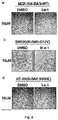
Fig. 2 shows that representative compounds are effective in inhibiting colony formation of RAS positive tumor cells on soft agar.- a) In MCF-7 cells with a K-RAS-WT genetic background, compound I-a-1 can effectively inhibit colony formation of the cells;
- b) in SW620 cells with a K-RAS-G12V genetic background, compound III-a-1 can effectively inhibit colony formation of the cells;
- c) in HT-29 cells with a genetic background of RAF mutation, compound I-a-1 does not inhibit colony formation of the cells.
-
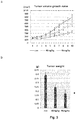
Fig. 3 shows that the representative compound I-a-1 is effective in inhibiting tumor growth in a xenograft model of RAS-positive tumor cells (SW620). In the constructed SW620 xenograft mouse model, the administration is carried out via tail vein at a dose of 40 mg/kg, 80 mg/kg per day. a) In the administration group, the compound can effectively inhibit the increase of tumor volume and has good dose dependence; b) the final tumor weight of the administration group is obviously smaller than that of the control group, and the administration group has good dose dependence. - Various specific embodiments, modes and examples are described herein, including exemplary embodiments and definitions, to understand the claimed invention. While the following detailed description sets forth specific preferred embodiments, those skilled in the art will appreciate that these embodiments are illustrative only, and that the present invention can be practiced in other ways. For the purpose of determining infringement, the scope of the present invention will cover any one or more of the appended claims, including equivalents thereof, and elements or limitations equivalent to those recited.
- The present invention is achieved by the following technical solutions.
- In one aspect, the present invention provides a compound having the general formula:

- X1, X2, X3, X4, X5, X6 may comprise a combination of:


- X is selected from O, S, NH;
- preferably, X is selected from O, S;
- Y is selected from C, S, P; preferably, Y is selected from C, S;
- m = 1 or 2;
- R1 is selected from H, C1-C6 alkyl, C3-C6 cycloalkyl;
- preferably, R1 is selected from H, C1-C6 alkyl;
- R2 is selected from:
- 1)

- 2)

- 1)
- preferably, R2 is selected from:
- 1)


- 2)

- 1)
- R3 is selected from:
- 1) amino, cyclopropylamino, cyclobutylamino, cyclopentylamino, cyclohexylamino, N,N-dimethylamino, N,N-diethylamino, N,N-diisopropylamino, 2-N,N-dimethylaminoethylamino, 2-hydroxyethylamino, 2-morpholinylethylamino, 2-thiomorpholinylethylamino, 2-(4-N-methylpiperazinyl)ethylamino, 3-N,N-dimethylaminopropylamino, 3-N,N-diethylaminopropylamino, 3-N,N-diisopropylaminopropylamino, 3-hydroxypropylamino, 3-morpholinylpropylamino, 3-thiomorpholinylpropylamino, 3-(4-N-methylpiperazinyl)propylamino, N-methylpiperidinyl-4-amino, N-ethylpiperidinyl-4-amino, N-isopropylpiperidinyl-4-amino, N-acetylpiperidinyl-4-amino;
- 2) arylamino or heteroarylamino, which is optionally substituted by C1-C6 alkyl, C1-C6 alkoxy, C1-C6 oxygen-containing alkyl, C1-C3 fluorine-containing alkyl, C3-C6 cycloalkyl, halogen, nitro, cyano, amino, hydroxy, optionally substituted heterocyclyl, C1-C6 alkoxycarbonyl, C1-C6 acyl;
- 3) phenylmethylamino, which is optionally substituted by C1-C6 alkyl, C1-C6 alkoxy, C1-C6 oxygen-containing alkyl, C1-C3 fluorine-containing alkyl, C3-C6 cycloalkyl, halogen, nitro, cyano, amino, hydroxy, optionally substituted heterocyclyl, C1-C6 alkoxycarbonyl, C1-C6 acyl;
- 4) phenylethylamino, which is optionally substituted by C1-C6 alkyl, C1-C6 alkoxy, C1-C6 oxygen-containing alkyl, C1-C3 fluorine-containing alkyl, C3-C6 cycloalkyl, halogen, nitro, cyano, amino, hydroxy, optionally substituted heterocyclyl, C1-C6 alkoxycarbonyl, C1-C6 acyl;
- 5) a five- or six-membered heterocyclic ring comprising one or more heteroatoms selected from N, O and S, said five- or six-membered heterocyclic ring being optionally substituted by C1-C6 alkyl, C1-C6 alkoxy, hydroxy, amino, C1-C6 alkoxycarbonyl, C1-C6 acyl, cyano, optionally substituted heterocyclyl,
- including but not limited to: piperidinyl, 4-N,N-dimethylaminopiperidinyl, 4-N,N-diethylaminopiperidinyl, 4-N,N-diisopropylaminopiperidinyl, 4-hydroxypiperidinyl, 4-(N-methylpiperazinyl)piperidinyl, 4-(N-ethylpiperazinyl)piperidinyl, 4-(N-isopropylpiperazinyl)piperidinyl, 4-(N-acetylpiperazinyl)piperidinyl, 4-(N-t-butoxyformylpiperazinyl)piperidinyl, 4-(N-methanesulfonylpiperazinyl)piperidinyl, 4-(N-(2-hydroxyethyl)piperazinyl)piperidinyl, 4-(N-(2-cyanoethyl)piperazinyl)piperidinyl, 4-(N-(3-hydroxypropyl)piperazinyl)piperidinyl, 4-(N-(2-N,N-dimethylethyl)piperazinyl)piperidinyl, 4-(N-(2-N,N-diethylethyl)piperazinyl)piperidinyl, 4-(N-(3-N,N-dimethylpropyl)piperazinyl)piperidinyl, 4-(N-(3-N,N-diethylpropyl)piperazinyl)piperidinyl, 4-(tetrahydropyrrolyl)piperidinyl, 4-(3-N,N-dimethyltetrahydropyrrolyl)piperidinyl;
- N-methylpiperazinyl, N-ethylpiperazinyl, N-isopropylpiperazinyl, N-acetylpiperazinyl, N-t-butoxyformylpiperazinyl, N-methanesulfonylpiperazinyl, N-(2-hydroxyethyl)piperazinyl, N-(2-cyanoethyl)piperazinyl, N-(3-hydroxypropyl)piperazinyl, N-(2-N,N-dimethylethyl)piperazinyl, N-(2-N,N-diethylethyl)piperazinyl, N-(3-N,N-dimethylpropyl)piperazinyl, N-(3-N,N-diethylpropyl)piperazinyl, 2-oxo-piperazin-4-yl, N-(N-methyl-4-piperidinyl)piperazinyl, N-(N-ethyl-4-piperidinyl)piperazinyl, N-(N-acetyl-4-piperidinyl)piperazinyl;
- morpholinyl, 3,5-dimethylmorpholinyl, thiomorpholinyl, tetrahydropyrrolyl, 3-N,N-dimethyltetrahydropyrrolyl, 3-N,N-diethyltetrahydropyrrolyl;
- 6) benzyl, which is optionally substituted by C1-C6 alkyl, C1-C6 alkoxy, C1-C6 oxygen-containing alkyl, C1-C3 fluorine-containing alkyl, C3-C6 cycloalkyl, halogen, nitro, cyano, amino, hydroxy, optionally substituted heterocyclyl, C1-C6 alkoxycarbonyl, C1-C6 acyl;
- 7) hydroxy, 2-N,N-dimethylaminoethoxy, 2-N,N-diethylaminoethoxy, 2-N,N-diisopropylaminoethoxy, 2-(N-methylpiperazinyl)ethoxy, 2-(N-acetylpiperazinyl)ethoxy, 2-morpholinylethoxy, 2-thiomorpholinylethoxy, 2-piperidinylethoxy, 3-N,N-dimethylaminopropoxy, 3-N,N-diethylaminopropoxy, 3-N,N-diisopropylaminopropoxy, 3-(N-methylpiperazinyl)propoxy, 3-(N-acetylpiperazinyl)propoxy, 3-morpholinylpropoxy, 3-thiomorpholinylpropoxy, 3-piperidinylpropoxy, 2-pyridylmethoxy, 3-pyridylmethoxy, 4-pyridylmethoxy, phenylmethoxy, monohalo-substituted phenylmethoxy, gem-dihalo-substituted phenylmethoxy, hetero-dihalo-substituted phenylmethoxy;
- preferably, R3 is selected from:
- 1)

- 1)
- wherein, n = 0 or 1,
- when n = 0, any one of Z1, Z2, Z3, Z4, Z5 is selected from halogen, C1-C3 fluorine-containing alkyl, C1-C3 fluorine-containing alkoxy, C1-C6 alkyl, C1-C6 alkoxy, di(C1-C6 alkyl)amino, C1-C6 alkoxycarbonyl, the rest being H; or,
- any two of Z1, Z2, Z3, Z4, Z5 each are independently selected from halogen, C1-C3 fluorine-containing alkyl, optionally substituted heterocyclyl, said heterocyclyl being selected from pyranyl, pyrrolidinyl, pyrrolinyl, imidazolinyl, imidazolidinyl, pyrazolidinyl, pyrazolinyl, thiazolinyl, thiazolidinyl, dihydrofuranyl, tetrahydrofuranyl, 1,3-dioxolanyl, piperidinyl, piperazinyl, morpholino, morpholinyl, tetrahydropyrrolyl, thiomorpholinyl, the rest being H; or,
- Z1, Z2, Z3, Z4, Z5 are all H;
- when n = 1, any two of Z1, Z2, Z3, Z4, Z5 each are independently selected from halogen, C1-C6 alkyl, C1-C6 alkoxy, C1-C3 fluorine-containing alkyl, the rest being H; or,
- any one of Z1, Z2, Z3, Z4, Z5 is selected from halogen, C1-C3 fluorine-containing alkyl, the rest being H; or,
- Z1, Z2, Z3, Z4, Z5 are all H;
- 2) C3-C6 cycloalkylamino;
- 3) HN-heteroaryl, wherein said heteroaryl is selected from pyridyl, pyrazinyl, pyrimidinyl, pyrrolyl, phenyl-pyrrolyl, furyl, phenyl-furyl, oxazolyl, isoxazolyl, pyrazolyl, thienyl, benzothienyl;
- 4) heterocyclyl, wherein said heterocyclyl is selected from pyranyl, pyrrolidinyl, pyrrolinyl, imidazolinyl, imidazolidinyl, pyrazolidinyl, pyrazolinyl, thiazolinyl, thiazolidinyl, dihydrofuranyl, tetrahydrofuranyl, 1,3-dioxolanyl, piperidinyl, piperazinyl, morpholino, morpholinyl, tetrahydropyrrolyl, thiomorpholinyl;
- 5) -NH-C2H4-R6, wherein R6 is selected from hydroxy, phenyl, halo-substituted phenyl;
- R4 is selected from H, C1-C3 alkyl, C1-C3 alkoxy, C1-C3 oxygen-containing alkyl, C1-C3 fluorine-containing alkyl, halogen, nitro, cyano, amino, hydroxy;
- preferably, R4 is selected from H, halogen, amino, hydroxy.
- preferably, the pharmaceutically acceptable salt is: an inorganic acid salt, selected from hydrochloride, hydrobromide, hydroiodide, nitrate, bicarbonate and carbonate, sulfate or phosphate; or an organic acid salt, selected from formate, acetate, propionate, benzoate, maleate, fumarate, succinate, tartrate, citrate, ascorbate, α-ketoglutarate, α-glycerophosphate, alkyl sulfonate or aryl sulfonate; preferably, said alkyl sulfonate is methyl sulfonate or ethyl sulfonate; said aryl sulfonate is benzenesulfonate or p-toluenesulfonate and the like.
- However, the compound of the general formula excludes the following compounds:

- In one aspect, according to a specific embodiment of the present invention, the compound, or a stereoisomer thereof, a prodrug thereof, a pharmaceutically acceptable salt thereof or a pharmaceutically acceptable solvate thereof has the following structure:

- X1, X2, X3, X4, X5, X6 may comprise a combination of:

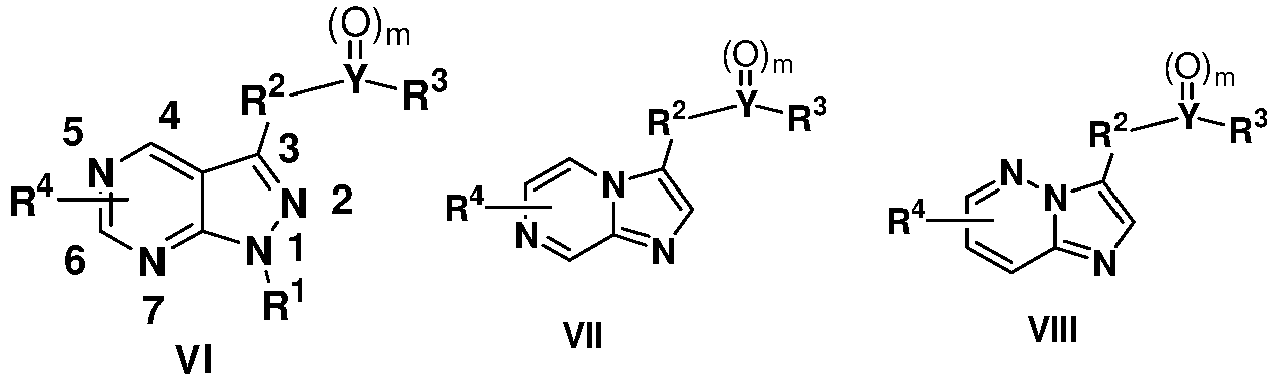

- for some of the parent nuclei of the general formulas, the positions in the rings are numbered, so as to indicate the position of the most preferred group of R4;
- R1 is selected from H, C1-C6 alkyl, C3-C6 cycloalkyl;
- R2 is selected from:
- 1)

- 2)

- 1)
- Y is selected from C, S, P;
- m = 1 or 2;
- R3 is selected from:
- 1) amino, cyclopropylamino, cyclobutylamino, cyclopentylamino, cyclohexylamino, N,N-dimethylamino, N,N-diethylamino, N,N-diisopropylamino, 2-N,N-dimethylaminoethylamino, 2-hydroxyethylamino, 2-morpholinylethylamino, 2-thiomorpholinylethylamino, 2-(4-N-methylpiperazinyl)ethylamino, 3-N,N-dimethylaminopropylamino, 3-N,N-diethylaminopropylamino, 3-N,N-diisopropylaminopropylamino, 3-hydroxypropylamino, 3-morpholinylpropylamino, 3-thiomorpholinylpropylamino, 3-(4-N-methylpiperazinyl)propylamino, N-methylpiperidinyl-4-amino, N-ethylpiperidinyl-4-amino, N-isopropylpiperidinyl-4-amino, N-acetylpiperidinyl-4-amino;
- 2) arylamino or heteroarylamino, which is optionally substituted by C1-C6 alkyl, C1-C6 alkoxy, C1-C6 oxygen-containing alkyl, C1-C3 fluorine-containing alkyl, C3-C6 cycloalkyl, halogen, nitro, cyano, amino, hydroxy, optionally substituted heterocyclyl, C1-C6 alkoxycarbonyl, C1-C6 acyl;
- 3) phenylmethylamino, which is optionally substituted by C1-C6 alkyl, C1-C6 alkoxy, C1-C6 oxygen-containing alkyl, C1-C3 fluorine-containing alkyl, C3-C6 cycloalkyl, halogen, nitro, cyano, amino, hydroxy, optionally substituted heterocyclyl, C1-C6 alkoxycarbonyl, C1-C6 acyl;
- 4) phenylethylamino, which is optionally substituted by C1-C6 alkyl, C1-C6 alkoxy, C1-C6 oxygen-containing alkyl, C1-C3 fluorine-containing alkyl, C3-C6 cycloalkyl, halogen, nitro, cyano, amino, hydroxy, optionally substituted heterocyclyl, C1-C6 alkoxycarbonyl, C1-C6 acyl;
- 5) a five- or six-membered heterocyclic ring comprising one or more heteroatoms selected from N, O and S, said five- or six-membered heterocyclic ring being optionally substituted by C1-C6 alkyl, C1-C6 alkoxy, hydroxy, amino, C1-C6 alkoxycarbonyl, C1-C6 acyl, cyano, optionally substituted heterocyclyl,
- including but not limited to: piperidinyl, 4-N,N-dimethylaminopiperidinyl, 4-N,N-diethylaminopiperidinyl, 4-N,N-diisopropylaminopiperidinyl, 4-hydroxypiperidinyl, 4-(N-methylpiperazinyl)piperidinyl, 4-(N-ethylpiperazinyl)piperidinyl, 4-(N-isopropylpiperazinyl)piperidinyl, 4-(N-acetylpiperazinyl)piperidinyl, 4-(N-t-butoxyformylpiperazinyl)piperidinyl, 4-(N-methanesulfonylpiperazinyl)piperidinyl, 4-(N-(2-hydroxyethyl)piperazinyl)piperidinyl, 4-(N-(2-cyanoethyl)piperazinyl)piperidinyl, 4-(N-(3-hydroxypropyl)piperazinyl)piperidinyl, 4-(N-(2-N,N-dimethylethyl)piperazinyl)piperidinyl, 4-(N-(2-N,N-diethylethyl)piperazinyl)piperidinyl, 4-(N-(3-N,N-dimethylpropyl)piperazinyl)piperidinyl, 4-(N-(3-N,N-diethylpropyl)piperazinyl)piperidinyl, 4-(tetrahydropyrrolyl)piperidinyl, 4-(3-N,N-dimethyltetrahydropyrrolyl)piperidinyl;
- N-methylpiperazinyl, N-ethylpiperazinyl, N-isopropylpiperazinyl, N-acetylpiperazinyl, N-t-butoxyformylpiperazinyl, N-methanesulfonylpiperazinyl, N-(2-hydroxyethyl)piperazinyl, N-(2-cyanoethyl)piperazinyl, N-(3-hydroxypropyl)piperazinyl, N-(2-N,N-dimethylethyl)piperazinyl, N-(2-N,N-diethylethyl)piperazinyl,N-(3-N,N-dimethylpropyl)piperazinyl, N-(3-N,N-diethylpropyl)piperazinyl, 2-oxo-piperazin-4-yl, N-(N-methyl-4-piperidinyl)piperazinyl, N-(N-ethyl-4-piperidinyl)piperazinyl, N-(N-acetyl-4-piperidinyl)piperazinyl;
- morpholinyl, 3,5-dimethylmorpholinyl, thiomorpholinyl, tetrahydropyrrolyl, 3-N,N-dimethyltetrahydropyrrolyl, 3-N,N-diethyltetrahydropyrrolyl;
- 6) benzyl, which is optionally substituted by C1-C6 alkyl, C1-C6 alkoxy, C1-C6 oxygen-containing alkyl, C1-C3 fluorine-containing alkyl, C3-C6 cycloalkyl, halogen, nitro, cyano, amino, hydroxy, optionally substituted heterocyclyl, C1-C6 alkoxycarbonyl, C1-C6 acyl;
- 7) hydroxy, 2-N,N-dimethylaminoethoxy, 2-N,N-diethylaminoethoxy, 2-N,N-diisopropylaminoethoxy, 2-(N-methylpiperazinyl)ethoxy, 2-(N-acetylpiperazinyl)ethoxy, 2-morpholinylethoxy, 2-thiomorpholinylethoxy, 2-piperidinylethoxy, 3-N,N-dimethylaminopropoxy, 3-N,N-diethylaminopropoxy, 3-N,N-diisopropylaminopropoxy, 3-(N-methylpiperazinyl)propoxy, 3-(N-acetylpiperazinyl)propoxy, 3-morpholinylpropoxy, 3-thiomorpholinylpropoxy, 3-piperidinylpropoxy, 2-pyridylmethoxy, 3-pyridylmethoxy, 4-pyridylmethoxy, phenylmethoxy, monohalo-substituted phenylmethoxy, gem-dihalo-substituted phenylmethoxy, hetero-dihalo-substituted phenylmethoxy;
- R4 is selected from H, C1-C3 alkyl, C1-C3 alkoxy, C1-C3 oxygen-containing alkyl, C1-C3 fluorine-containing alkyl, halogen, nitro, cyano, amino, hydroxy.
- preferably, the pharmaceutically acceptable salt is: an inorganic acid salt, selected from hydrochloride, hydrobromide, hydroiodide, nitrate, bicarbonate and carbonate, sulfate or phosphate; or an organic acid salt, selected from formate, acetate, propionate, benzoate, maleate, fumarate, succinate, tartrate, citrate, ascorbate, α-ketoglutarate, α-glycerophosphate, alkyl sulfonate or aryl sulfonate; preferably, said alkyl sulfonate is methyl sulfonate or ethyl sulfonate; said aryl sulfonate is benzenesulfonate or p-toluenesulfonate and the like.
- In a first aspect, according to a specific embodiment of the present invention, the compound, or a stereoisomer thereof, a prodrug thereof, a pharmaceutically acceptable salt thereof or a pharmaceutically acceptable solvate thereof has the following structure:

- R1 is selected from H, C1-C6 alkyl, C3-C6 cycloalkyl;
- preferably, R1 is selected from H, C1-C6 alkyl;
- most preferably, R1 is selected from H, methyl;
- R2 is selected from:
- 1)

- 2)

- 1)
- preferably, R2 is selected from:
- 1)


- 2)

- 1)
- Y is selected from C, S, P; preferably, Y is C;
- m = 1 or 2; preferably, m = 1 ;
- R3 is selected from:
- 1) amino, cyclopropylamino, cyclobutylamino, cyclopentylamino, cyclohexylamino, N,N-dimethylamino, N,N-diethylamino, N,N-diisopropylamino, 2-N,N-dimethylaminoethylamino, 2-hydroxyethylamino, 2-morpholinylethylamino, 2-thiomorpholinylethylamino, 2-(4-N-methylpiperazinyl)ethylamino, 3-N,N-dimethylaminopropylamino, 3-N,N-diethylaminopropylamino, 3-N,N-diisopropylaminopropylamino, 3-hydroxypropylamino, 3-morpholinylpropylamino, 3-thiomorpholinylpropylamino, 3-(4-N-methylpiperazinyl)propylamino, N-methylpiperidinyl-4-amino, N-ethylpiperidinyl-4-amino, N-isopropylpiperidinyl-4-amino, N-acetylpiperidinyl-4-amino;
- 2) arylamino or heteroarylamino, which is optionally substituted by C1-C6 alkyl, C1-C6 alkoxy, C1-C6 oxygen-containing alkyl, C1-C3 fluorine-containing alkyl, C3-C6 cycloalkyl, halogen, nitro, cyano, amino, hydroxy, optionally substituted heterocyclyl, C1-C6 alkoxycarbonyl, C1-C6 acyl;
- 3) phenylmethylamino, which is optionally substituted by C1-C6 alkyl, C1-C6 alkoxy, C1-C6 oxygen-containing alkyl, C1-C3 fluorine-containing alkyl, C3-C6 cycloalkyl, halogen, nitro, cyano, amino, hydroxy, optionally substituted heterocyclyl, C1-C6 alkoxycarbonyl, C1-C6 acyl;
- 4) phenylethylamino, which is optionally substituted by C1-C6 alkyl, C1-C6 alkoxy, C1-C6 oxygen-containing alkyl, C1-C3 fluorine-containing alkyl, C3-C6 cycloalkyl, halogen, nitro, cyano, amino, hydroxy, optionally substituted heterocyclyl, C1-C6 alkoxycarbonyl, C1-C6 acyl;
- 5) a five- or six-membered heterocyclic ring comprising one or more heteroatoms selected from N, O and S, said five- or six-membered heterocyclic ring being optionally substituted by C1-C6 alkyl, C1-C6 alkoxy, hydroxy, amino, C1-C6 alkoxycarbonyl, C1-C6 acyl, cyano, optionally substituted heterocyclyl,
- including but not limited to: piperidinyl, 4-N,N-dimethylaminopiperidinyl, 4-N,N-diethylaminopiperidinyl, 4-N,N-diisopropylaminopiperidinyl, 4-hydroxypiperidinyl, 4-(N-methylpiperazinyl)piperidinyl, 4-(N-ethylpiperazinyl)piperidinyl, 4-(N-isopropylpiperazinyl)piperidinyl, 4-(N-acetylpiperazinyl)piperidinyl, 4-(N-t-butoxyformylpiperazinyl)piperidinyl, 4-(N-methanesulfonylpiperazinyl)piperidinyl, 4-(N-(2-hydroxyethyl)piperazinyl)piperidinyl, 4-(N-(2-cyanoethyl)piperazinyl)piperidinyl, 4-(N-(3-hydroxypropyl)piperazinyl)piperidinyl, 4-(N-(2-N,N-dimethylethyl)piperazinyl)piperidinyl, 4-(N-(2-N,N-diethylethyl)piperazinyl)piperidinyl, 4-(N-(3-N,N-dimethylpropyl)piperazinyl)piperidinyl, 4-(N-(3-N,N-diethylpropyl)piperazinyl)piperidinyl, 4-(tetrahydropyrrolyl)piperidinyl, 4-(3-N,N-dimethyltetrahydropyrrolyl)piperidinyl;
- N-methylpiperazinyl, N-ethylpiperazinyl, N-isopropylpiperazinyl, N-acetylpiperazinyl, N-t-butoxyformylpiperazinyl, N-methanesulfonylpiperazinyl, N-(2-hydroxyethyl)piperazinyl, N-(2-cyanoethyl)piperazinyl, N-(3-hydroxypropyl)piperazinyl, N-(2-N,N-dimethylethyl)piperazinyl, N-(2-N,N-diethylethyl)piperazinyl, N-(3-N,N-dimethylpropyl)piperazinyl, N-(3-N,N-diethylpropyl)piperazinyl, 2-oxo-piperazin-4-yl, N-(N-methyl-4-piperidinyl)piperazinyl, N-(N-ethyl-4-piperidinyl)piperazinyl, N-(N-acetyl-4-piperidinyl)piperazinyl;
- morpholinyl, 3,5-dimethylmorpholinyl, thiomorpholinyl, tetrahydropyrrolyl, 3-N,N-dimethyltetrahydropyrrolyl, 3-N,N-diethyltetrahydropyrrolyl;
- 6) benzyl, which is optionally substituted by C1-C6 alkyl, C1-C6 alkoxy, C1-C6 oxygen-containing alkyl, C1-C3 fluorine-containing alkyl, C3-C6 cycloalkyl, halogen, nitro, cyano, amino, hydroxy, optionally substituted heterocyclyl, C1-C6 alkoxycarbonyl, C1-C6 acyl;
- 7) hydroxy, 2-N,N-dimethylaminoethoxy, 2-N,N-diethylaminoethoxy, 2-N,N-diisopropylaminoethoxy, 2-(N-methylpiperazinyl)ethoxy, 2-(N-acetylpiperazinyl)ethoxy, 2-morpholinylethoxy, 2-thiomorpholinylethoxy, 2-piperidinylethoxy, 3-N,N-dimethylaminopropoxy, 3-N,N-diethylaminopropoxy, 3-N,N-diisopropylaminopropoxy, 3-(N-methylpiperazinyl)propoxy, 3-(N-acetylpiperazinyl)propoxy, 3-morpholinylpropoxy, 3-thiomorpholinylpropoxy, 3-piperidinylpropoxy, 2-pyridylmethoxy, 3-pyridylmethoxy, 4-pyridylmethoxy, phenylmethoxy, monohalo-substituted phenylmethoxy, gem-dihalo-substituted phenylmethoxy, hetero-dihalo-substituted phenylmethoxy;
- preferably, R3 is selected from:
- 1)
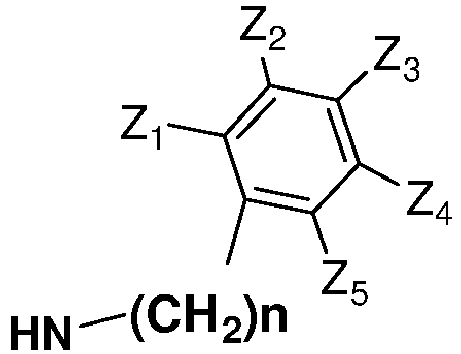
- wherein, n = 0 or 1,
- when n = 0, any one of Z1, Z2, Z3, Z4, Z5 is selected from halogen, C1-C3 fluorine-containing alkyl, C1-C6 alkyl, C1-C6 alkoxy, di(C1-C6 alkyl)amino, the rest being H; or,
- Z1, Z2, Z3, Z4, Z5 are all H;
- when n = 1, any two of Z1, Z2, Z3, Z4, Z5 each are independently selected from halogen, C1-C3 fluorine-containing alkyl, C1-C6 alkyl, C1-C6 alkoxy, the rest being H; or,
- any one of Z1, Z2, Z3, Z4, Z5 is selected from halogen, C1-C3 fluorine-containing alkyl, the rest being H; or,
- Z1, Z2, Z3, Z4, Z5 are all H;
- 2) C3-C6 cycloalkylamino;
- 3) HN-heteroaryl, wherein said heteroaryl is selected from pyridyl, pyrazinyl, pyrimidinyl, pyrrolyl, phenyl-pyrrolyl, furyl, phenyl-furyl, oxazolyl, isoxazolyl, pyrazolyl, thienyl, benzothienyl;
- 4) heterocyclyl, wherein said heterocyclyl is selected from pyranyl, pyrrolidinyl, pyrrolinyl, imidazolinyl, imidazolidinyl, pyrazolidinyl, pyrazolinyl, thiazolinyl, thiazolidinyl, dihydrofuranyl, tetrahydrofuranyl, 1,3-dioxolanyl, piperidinyl, piperazinyl, morpholino, morpholinyl, tetrahydropyrrolyl, thiomorpholinyl;
- 5) -NH-C2H4-R6, wherein R6 is selected from phenyl, halo-substituted phenyl;
- 1)
- more preferably, R3 is selected from:
- 1)

- wherein, n = 0 or 1,
- when n = 0, Z2 in Z1, Z2, Z3, Z4, Z5 is selected from halogen, C1-C3 fluorine-containing alkyl, the rest being H; or,
- Z3 in Z1, Z2, Z3, Z4, Z5 is selected from C1-C6 alkyl, C1-C6 alkoxy, halogen, di(C1-C6 alkyl)amino, the rest being H; or,
- Z1, Z2, Z3, Z4, Z5 are all H;
- when n = 1, Z1, Z5 in Z1, Z2, Z3, Z4, Z5 each are independently selected from halogen, the rest being H; or,
- Z2, Z3 in Z1, Z2, Z3, Z4, Z5 each are independently selected from halogen, the rest being H; or,
- Z1, Z3 in Z1, Z2, Z3, Z4, Z5 each are independently selected from C1-C6 alkoxy, the rest being H; or,
- Z1, Z4 in Z1, Z2, Z3, Z4, Z5 each are independently selected from halogen, C1-C3 fluorine-containing alkyl, the rest being H; or,
- Z1, Z5 in Z1, Z2, Z3, Z4, Z5 each are independently selected from halogen, C1-C3 fluorine-containing alkyl, the rest being H; or,
- Z3 in Z1, Z2, Z3, Z4, Z5 is selected from halogen, the rest being H; or,
- Z2 in Z1, Z2, Z3, Z4, Z5 is selected from C1-C3 fluorine-containing alkyl, the rest being H; or,
- Z1, Z2, Z3, Z4, Z5 are all H;
- 2) C3-C6 cycloalkylamino;
- 3) HN-heteroaryl, wherein said heteroaryl is selected from pyridyl, pyrazinyl, pyrimidinyl, pyrrolyl, phenyl-pyrrolyl, furyl, phenyl-furyl, oxazolyl, isoxazolyl, pyrazolyl, thienyl, benzothienyl;
- 4) heterocyclyl, wherein said heterocyclyl is selected from pyranyl, pyrrolidinyl, pyrrolinyl, imidazolinyl, imidazolidinyl, pyrazolidinyl, pyrazolinyl, thiazolinyl, thiazolidinyl, dihydrofuranyl, tetrahydrofuranyl, 1,3-dioxolanyl, piperidinyl, piperazinyl, morpholino, morpholinyl, tetrahydropyrrolyl, thiomorpholinyl;
- 5) -NH-C2H4-R6, wherein R6 is selected from phenyl, halo-substituted phenyl;
- 1)
- most preferably, R3 is selected from:
- 1)

- 1)
- wherein, n = 0 or 1,
- when n = 0, Z2 in Z1, Z2, Z3, Z4, Z5 is selected from fluoro, chloro, trifluoromethyl, the rest being H; or,
- Z3 in Z1, Z2, Z3, Z4, Z5 is selected from methyl, methoxy, isopropoxy, fluoro, dimethylamino, the rest being H; or,
- Z1, Z2, Z3, Z4, Z5 are all H;
- when n = 1, Z1, Z5 in Z1, Z2, Z3, Z4, Z5 each are independently selected from fluoro, chloro, the rest being H; or,
- Z2, Z3 in Z1, Z2, Z3, Z4, Z5 each are independently selected from chloro, the rest being H; or,
- Z1, Z3 in Z1, Z2, Z3, Z4, Z5 each are independently selected from methoxy, the rest being H; or,
- Z1, Z4 in Z1, Z2, Z3, Z4, Z5 each are independently selected from fluoro, trifluoromethyl, the rest being H; or,
- Z1, Z5 in Z1, Z2, Z3, Z4, Z5 each are independently selected from fluoro, trifluoromethyl, the rest being H; or,
- Z3 in Z1, Z2, Z3, Z4, Z5 is selected from chloro, fluoro, the rest being H; or,
- Z2 in Z1, Z2, Z3, Z4, Z5 is selected from trifluoromethyl, the rest being H; or,
- Z1, Z2, Z3, Z4, Z5 are all H;
- 2)

- 3) HN-heteroaryl, wherein said heteroaryl is selected from 2-methyl-pyrid-5-yl, pyrid-3-yl;
- 4) heterocyclyl, wherein said heterocyclyl is selected from 4-methylpiperazin-1-yl, morpholin-4-yl;
- 5) -NH-C2H4-R6, wherein R6 is selected from phenyl, 4-fluorophenyl; R4 is selected from H, C1-C3 alkyl, C1-C3 alkoxy, C1-C3 oxygen-containing alkyl, C1-C3 fluorine-containing alkyl, halogen, nitro, cyano, amino, hydroxy;
- 2)
- more preferably, R4 is selected from H, fluoro, chloro, bromo, amino;
- most preferably, R4 is selected from H, 4-chloro, 6-amino.
- preferably, the pharmaceutically acceptable salt is: an inorganic acid salt, selected from hydrochloride, hydrobromide, hydroiodide, nitrate, bicarbonate and carbonate, sulfate or phosphate; or an organic acid salt, selected from formate, acetate, propionate, benzoate, maleate, fumarate, succinate, tartrate, citrate, ascorbate, α-ketoglutarate, α-glycerophosphate, alkyl sulfonate or aryl sulfonate; preferably, said alkyl sulfonate is methyl sulfonate or ethyl sulfonate; said aryl sulfonate is benzenesulfonate or p-toluenesulfonate and the like.
- In a second aspect, according to a specific embodiment of the present invention, the compound, or a stereoisomer thereof, a prodrug thereof, a pharmaceutically acceptable salt thereof or a pharmaceutically acceptable solvate thereof has the following structure:

- R1 is selected from H, C1-C6 alkyl, C3-C6 cycloalkyl;
- preferably, R1 is selected from H, C1-C3 alkyl;
- most preferably, R1 is selected from H;
- R2 is selected from:
- 1)
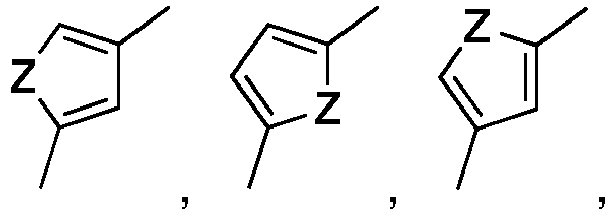
- 2)

- 1)
- preferably, R2 is selected from:
- 1)


- 2)

- 1)
- Y is selected from C, S, P; preferably, Y is selected from C;
- m = 1 or 2; preferably, m = 1 ;
- R3 is selected from:
- 1) amino, cyclopropylamino, cyclobutylamino, cyclopentylamino, cyclohexylamino, N,N-dimethylamino, N,N-diethylamino, N,N-diisopropylamino, 2-N,N-dimethylaminoethylamino, 2-hydroxyethylamino, 2-morpholinylethylamino, 2-thiomorpholinylethylamino, 2-(4-N-methylpiperazinyl)ethylamino, 3-N,N-dimethylaminopropylamino, 3-N,N-diethylaminopropylamino, 3-N,N-diisopropylaminopropylamino, 3-hydroxypropylamino, 3-morpholinylpropylamino, 3-thiomorpholinylpropylamino, 3-(4-N-methylpiperazinyl)propylamino, N-methylpiperidinyl-4-amino, N-ethylpiperidinyl-4-amino, N-isopropylpiperidinyl-4-amino, N-acetylpiperidinyl-4-amino;
- 2) arylamino or heteroarylamino, which is optionally substituted by C1-C6 alkyl, C1-C6 alkoxy, C1-C6 oxygen-containing alkyl, C1-C3 fluorine-containing alkyl, C3-C6 cycloalkyl, halogen, nitro, cyano, amino, hydroxy, optionally substituted heterocyclyl, C1-C6 alkoxycarbonyl, C1-C6 acyl;
- 3) phenylmethylamino, which is optionally substituted by C1-C6 alkyl, C1-C6 alkoxy, C1-C6 oxygen-containing alkyl, C1-C3 fluorine-containing alkyl, C3-C6 cycloalkyl, halogen, nitro, cyano, amino, hydroxy, optionally substituted heterocyclyl, C1-C6 alkoxycarbonyl, C1-C6 acyl;
- 4) phenylethylamino, which is optionally substituted by C1-C6 alkyl, C1-C6 alkoxy, C1-C6 oxygen-containing alkyl, C1-C3 fluorine-containing alkyl, C3-C6 cycloalkyl, halogen, nitro, cyano, amino, hydroxy, optionally substituted heterocyclyl, C1-C6 alkoxycarbonyl, C1-C6 acyl;
- 5) a five- or six-membered heterocyclic ring comprising one or more heteroatoms selected from N, O and S, said five- or six-membered heterocyclic ring being optionally substituted by C1-C6 alkyl, C1-C6 alkoxy, hydroxy, amino, C1-C6 alkoxycarbonyl, C1-C6 acyl, cyano, optionally substituted heterocyclyl,
- including but not limited to: piperidinyl, 4-N,N-dimethylaminopiperidinyl, 4-N,N-diethylaminopiperidinyl, 4-N,N-diisopropylaminopiperidinyl, 4-hydroxypiperidinyl, 4-(N-methylpiperazinyl)piperidinyl, 4-(N-ethylpiperazinyl)piperidinyl, 4-(N-isopropylpiperazinyl)piperidinyl, 4-(N-acetylpiperazinyl)piperidinyl, 4-(N-t-butoxyformylpiperazinyl)piperidinyl, 4-(N-methanesulfonylpiperazinyl)piperidinyl, 4-(N-(2-hydroxyethyl)piperazinyl)piperidinyl, 4-(N-(2-cyanoethyl)piperazinyl)piperidinyl, 4-(N-(3-hydroxypropyl)piperazinyl)piperidinyl, 4-(N-(2-N,N-dimethylethyl)piperazinyl)piperidinyl, 4-(N-(2-N,N-diethylethyl)piperazinyl)piperidinyl, 4-(N-(3-N,N-dimethylpropyl)piperazinyl)piperidinyl, 4-(N-(3-N,N-diethylpropyl)piperazinyl)piperidinyl, 4-(tetrahydropyrrolyl)piperidinyl, 4-(3-N,N-dimethyltetrahydropyrrolyl)piperidinyl;
- N-methylpiperazinyl, N-ethylpiperazinyl, N-isopropylpiperazinyl, N-acetylpiperazinyl, N-t-butoxyformylpiperazinyl, N-methanesulfonylpiperazinyl, N-(2-hydroxyethyl)piperazinyl, N-(2-cyanoethyl)piperazinyl, N-(3-hydroxypropyl)piperazinyl, N-(2-N,N-dimethylethyl)piperazinyl, N-(2-N,N-diethylethyl)piperazinyl, N-(3-N,N-dimethylpropyl)piperazinyl, N-(3-N,N-diethylpropyl)piperazinyl, 2-oxo-piperazin-4-yl, N-(N-methyl-4-piperidinyl)piperazinyl, N-(N-ethyl-4-piperidinyl)piperazinyl, N-(N-acetyl-4-piperidinyl)piperazinyl;
- morpholinyl, 3,5-dimethylmorpholinyl, thiomorpholinyl, tetrahydropyrrolyl, 3-N,N-dimethyltetrahydropyrrolyl, 3-N,N-diethyltetrahydropyrrolyl;
- 6) benzyl, which is optionally substituted by C1-C6 alkyl, C1-C6 alkoxy, C1-C6 oxygen-containing alkyl, C1-C3 fluorine-containing alkyl, C3-C6 cycloalkyl, halogen, nitro, cyano, amino, hydroxy, optionally substituted heterocyclyl, C1-C6 alkoxycarbonyl, C1-C6 acyl;
- 7) hydroxy, 2-N,N-dimethylaminoethoxy, 2-N,N-diethylaminoethoxy, 2-N,N-diisopropylaminoethoxy, 2-(N-methylpiperazinyl)ethoxy, 2-(N-acetylpiperazinyl)ethoxy, 2-morpholinylethoxy, 2-thiomorpholinylethoxy, 2-piperidinylethoxy, 3-N,N-dimethylaminopropoxy, 3-N,N-diethylaminopropoxy, 3-N,N-diisopropylaminopropoxy, 3-(N-methylpiperazinyl)propoxy, 3-(N-acetylpiperazinyl)propoxy, 3-morpholinylpropoxy, 3-thiomorpholinylpropoxy, 3-piperidinylpropoxy, 2-pyridylmethoxy, 3-pyridylmethoxy, 4-pyridylmethoxy, phenylmethoxy, monohalo-substituted phenylmethoxy, gem-dihalo-substituted phenylmethoxy, hetero-dihalo-substituted phenylmethoxy;
- preferably, R3 is selected from:

- wherein, n = 0 or 1;
- when n = 0, Z1, Z2, Z3, Z4, Z5 are all H;
- when n = 1, any two of Z1, Z2, Z3, Z4, Z5 each are independently selected from halogen, C1-C6 alkyl, C1-C6 alkoxy, the rest being H; or
- any one of Z1, Z2, Z3, Z4, Z5 is selected from C1-C3 fluorine-containing alkyl, the rest being H;
- more preferably, R3 is selected from:

- wherein, n = 0 or 1;
- when n = 0, Z1, Z2, Z3, Z4, Z5 are all H;
- when n = 1, Z1, Z5 in Z1, Z2, Z3, Z4, Z5 each are independently selected from halogen, the rest being H; or
- Z2 in Z1, Z2, Z3, Z4, Z5 is selected from C1-C3 fluorine-containing alkyl, the rest being H;
- most preferably, R3 is selected from:

- wherein, n = 0 or 1;
- when n = 0, Z1, Z2, Z3, Z4, Z5 are all H;
- when n = 1, Z1, Z5 in Z1, Z2, Z3, Z4, Z5 each are independently selected from fluoro, chloro, the rest being H; or
- Z2 in Z1, Z2, Z3, Z4, Z5 is selected from trifluoromethyl, the rest being H;
- R4 is selected from H, C1-C3 alkyl, C1-C3 alkoxy, C1-C3 oxygen-containing alkyl, C1-C3 fluorine-containing alkyl, halogen, nitro, cyano, amino, hydroxy;
- preferably, R4 is selected from H, C1-C3 alkyl, amino, hydroxy;
- most preferably, R4 is H.
- preferably, the pharmaceutically acceptable salt is: an inorganic acid salt, selected from hydrochloride, hydrobromide, hydroiodide, nitrate, bicarbonate and carbonate, sulfate or phosphate; or an organic acid salt, selected from formate, acetate, propionate, benzoate, maleate, fumarate, succinate, tartrate, citrate, ascorbate, α-ketoglutarate, α-glycerophosphate, alkyl sulfonate or aryl sulfonate; preferably, said alkyl sulfonate is methyl sulfonate or ethyl sulfonate; said aryl sulfonate is benzenesulfonate or p-toluenesulfonate and the like.
- In a third aspect, according to a specific embodiment of the present invention, the compound, or a stereoisomer thereof, a prodrug thereof, a pharmaceutically acceptable salt thereof or a pharmaceutically acceptable solvate thereof has the following structure:

- R1 is selected from H, C1-C6 alkyl, C3-C6 cycloalkyl;
- preferably, R1 is selected from H, C1-C3 alkyl;
- most preferably, R1 is selected from H;
- R2 is selected from:
- 1)

- 2)

- 1)
- preferably, R2 is selected from:
- 1)


- 2)

- 1)
- Y is selected from C, S, P; preferably, Y is selected from C, S;
- m = 1 or 2;
- wherein,when Y is C, m = 1;
- when Y is S, m =2;
- R3 is selected from:
- 1) amino, cyclopropylamino, cyclobutylamino, cyclopentylamino, cyclohexylamino, N,N-dimethylamino, N,N-diethylamino, N,N-diisopropylamino, 2-N,N-dimethylaminoethylamino, 2-hydroxyethylamino, 2-morpholinylethylamino, 2-thiomorpholinylethylamino, 2-(4-N-methylpiperazinyl)ethylamino, 3-N,N-dimethylaminopropylamino, 3-N,N-diethylaminopropylamino, 3-N,N-diisopropylaminopropylamino, 3-hydroxypropylamino, 3-morpholinylpropylamino, 3-thiomorpholinylpropylamino, 3-(4-N-methylpiperazinyl)propylamino, N-methylpiperidinyl-4-amino, N-ethylpiperidinyl-4-amino, N-isopropylpiperidinyl-4-amino, N-acetylpiperidinyl-4-amino;
- 2) arylamino or heteroarylamino, which is optionally substituted by C1-C6 alkyl, C1-C6 alkoxy, C1-C6 oxygen-containing alkyl, C1-C3 fluorine-containing alkyl, C3-C6 cycloalkyl, halogen, nitro, cyano, amino, hydroxy, optionally substituted heterocyclyl, C1-C6 alkoxycarbonyl, C1-C6 acyl;
- 3) phenylmethylamino, which is optionally substituted by C1-C6 alkyl, C1-C6 alkoxy, C1-C6 oxygen-containing alkyl, C1-C3 fluorine-containing alkyl, C3-C6 cycloalkyl, halogen, nitro, cyano, amino, hydroxy, optionally substituted heterocyclyl, C1-C6 alkoxycarbonyl, C1-C6 acyl;
- 4) phenylethylamino, which is optionally substituted by C1-C6 alkyl, C1-C6 alkoxy, C1-C6 oxygen-containing alkyl, C1-C3 fluorine-containing alkyl, C3-C6 cycloalkyl, halogen, nitro, cyano, amino, hydroxy, optionally substituted heterocyclyl, C1-C6 alkoxycarbonyl, C1-C6 acyl;
- 5) a five- or six-membered heterocyclic ring comprising one or more heteroatoms selected from N, O and S, said five- or six-membered heterocyclic ring being optionally substituted by C1-C6 alkyl, C1-C6 alkoxy, hydroxy, amino, C1-C6 alkoxycarbonyl, C1-C6 acyl, cyano, optionally substituted heterocyclyl,
- including but not limited to: piperidinyl, 4-N,N-dimethylaminopiperidinyl, 4-N,N-diethylaminopiperidinyl, 4-N,N-diisopropylaminopiperidinyl, 4-hydroxypiperidinyl, 4-(N-methylpiperazinyl)piperidinyl, 4-(N-ethylpiperazinyl)piperidinyl, 4-(N-isopropylpiperazinyl)piperidinyl, 4-(N-acetylpiperazinyl)piperidinyl, 4-(N-t-butoxyformylpiperazinyl)piperidinyl, 4-(N-methanesulfonylpiperazinyl)piperidinyl, 4-(N-(2-hydroxyethyl)piperazinyl)piperidinyl, 4-(N-(2-cyanoethyl)piperazinyl)piperidinyl, 4-(N-(3-hydroxypropyl)piperazinyl)piperidinyl, 4-(N-(2-N,N-dimethylethyl)piperazinyl)piperidinyl, 4-(N-(2-N,N-diethylethyl)piperazinyl)piperidinyl, 4-(N-(3-N,N-dimethylpropyl)piperazinyl)piperidinyl, 4-(N-(3-N,N-diethylpropyl)piperazinyl)piperidinyl, 4-(tetrahydropyrrolyl)piperidinyl, 4-(3-N,N-dimethyltetrahydropyrrolyl)piperidinyl;
- N-methylpiperazinyl, N-ethylpiperazinyl, N-isopropylpiperazinyl, N-acetylpiperazinyl, N-t-butoxyformylpiperazinyl, N-methanesulfonylpiperazinyl, N-(2-hydroxyethyl)piperazinyl, N-(2-cyanoethyl)piperazinyl, N-(3-hydroxypropyl)piperazinyl, N-(2-N,N-dimethylethyl)piperazinyl, N-(2-N,N-diethylethyl)piperazinyl,N-(3-N,N-dimethylpropyl)piperazinyl, N-(3-N,N-diethylpropyl)piperazinyl, 2-oxo-piperazin-4-yl, N-(N-methyl-4-piperidinyl)piperazinyl, N-(N-ethyl-4-piperidinyl)piperazinyl, N-(N-acetyl-4-piperidinyl)piperazinyl;
- morpholinyl, 3,5-dimethylmorpholinyl, thiomorpholinyl, tetrahydropyrrolyl, 3-N,N-dimethyltetrahydropyrrolyl, 3-N,N-diethyltetrahydropyrrolyl;
- 6) benzyl, which is optionally substituted by C1-C6 alkyl, C1-C6 alkoxy, C1-C6 oxygen-containing alkyl, C1-C3 fluorine-containing alkyl, C3-C6 cycloalkyl, halogen, nitro, cyano, amino, hydroxy, optionally substituted heterocyclyl, C1-C6 alkoxycarbonyl, C1-C6 acyl;
- 7) hydroxy, 2-N,N-dimethylaminoethoxy, 2-N,N-diethylaminoethoxy, 2-N,N-diisopropylaminoethoxy, 2-(N-methylpiperazinyl)ethoxy, 2-(N-acetylpiperazinyl)ethoxy, 2-morpholinylethoxy, 2-thiomorpholinylethoxy, 2-piperidinylethoxy, 3-N,N-dimethylaminopropoxy, 3-N,N-diethylaminopropoxy, 3-N,N-diisopropylaminopropoxy, 3-(N-methylpiperazinyl)propoxy, 3-(N-acetylpiperazinyl)propoxy, 3-morpholinylpropoxy, 3-thiomorpholinylpropoxy, 3-piperidinylpropoxy, 2-pyridylmethoxy, 3-pyridylmethoxy, 4-pyridylmethoxy, phenylmethoxy, monohalo-substituted phenylmethoxy, gem-dihalo-substituted phenylmethoxy, hetero-dihalo-substituted phenylmethoxy;
- preferably, R3 is selected from:
- 1)

- 1)
- when n = 0, any two of Z1, Z2, Z3, Z4, Z5 each are independently selected from halogen, C1-C3 fluorine-containing alkyl, optionally substituted heterocyclyl, said heterocyclyl being selected from pyranyl, pyrrolidinyl, pyrrolinyl, imidazolinyl, imidazolidinyl, pyrazolidinyl, pyrazolinyl, thiazolinyl, thiazolidinyl, dihydrofuranyl, tetrahydrofuranyl, 1,3-dioxolanyl, piperidinyl, piperazinyl, morpholino, morpholinyl, tetrahydropyrrolyl, thiomorpholinyl, the rest being H; or,
- any one of Z1, Z2, Z3, Z4, Z5 is selected from halogen, C1-C3 fluorine-containing alkyl, C1-C3 fluorine-containing alkoxy, C1-C6 alkyl, C1-C6 alkoxy, the rest being H; or,
- Z1, Z2, Z3, Z4, Z5 are all H;
- when n = 1, any two of Z1, Z2, Z3, Z4, Z5 each are independently selected from halogen, C1-C6 alkyl, C1-C6 alkoxy, C1-C3 fluorine-containing alkyl, the rest being H; or,
- any one of Z1, Z2, Z3, Z4, Z5 is independently selected from halogen, C1-C6 alkyl, C1-C3 fluorine-containing alkyl, C1-C6 alkoxy, C1-C3 fluorine-containing alkoxy, hydroxy, cyano, amino, nitro, the rest being H; or,
- Z1-Z5 are all H;
- 2) C3-C6 cycloalkylamino;
- 3) HN-heteroaryl, wherein said heteroaryl is selected from pyridyl, pyrazinyl, pyrimidinyl, pyrrolyl, phenyl-pyrrolyl, furyl, phenyl-furyl, oxazolyl, isoxazolyl, pyrazolyl, thienyl, benzothienyl;
- 4) heterocyclyl, wherein said heterocyclyl is selected from pyranyl, pyrrolidinyl, pyrrolinyl, imidazolinyl, imidazolidinyl, pyrazolidinyl, pyrazolinyl, thiazolinyl, thiazolidinyl, dihydrofuranyl, tetrahydrofuranyl, 1,3-dioxolanyl, piperidinyl, piperazinyl, morpholino, morpholinyl, tetrahydropyrrolyl, thiomorpholinyl;
- 5) -NH-C2H4-R6, wherein R6 is selected from hydroxy, halo-substituted phenyl;
- more preferably, R3 is selected from:
- 1)

- 1)
- when n = 0, Z1, Z5 in Z1, Z2, Z3, Z4, Z5 each are independently selected from halogen, the rest being H; or,
- Z2 in Z1, Z2, Z3, Z4, Z5 is selected from halogen, C1-C3 fluorine-containing alkyl, the rest being H; or,
- Z2, Z3 in Z1, Z2, Z3, Z4, Z5 each are independently selected from C1-C3 fluorine-containing alkyl, optionally substituted heterocyclyl, said heterocyclyl being selected from pyranyl, pyrrolidinyl, pyrrolinyl, imidazolinyl, imidazolidinyl, pyrazolidinyl, pyrazolinyl, thiazolinyl, thiazolidinyl, dihydrofuranyl, tetrahydrofuranyl, 1,3-dioxolanyl, piperidinyl, piperazinyl, morpholino, morpholinyl, tetrahydropyrrolyl, thiomorpholinyl, the rest being H; or,
- Z3 in Z1, Z2, Z3, Z4, Z5 is selected from C1-C6 alkyl, C1-C6 alkoxy, halogen, C1-C3 fluorine-containing alkoxy, the rest being H; or,
- Z1, Z2, Z3, Z4, Z5 are all H;
- when n = 1, Z1, Z5 in Z1, Z2, Z3, Z4, Z5 each are independently selected from halogen, the rest being H; or,
- Z1, Z3 in Z1, Z2, Z3, Z4, Z5 each are independently selected from C1-C6 alkoxy, the rest being H; or,
- Z2, Z3 in Z1, Z2, Z3, Z4, Z5 each are independently selected from halogen, C1-C3 fluorine-containing alkyl, the rest being H; or,
- Z3, Z4 in Z1, Z2, Z3, Z4, Z5 each are independently selected from halogen, the rest being H; or,
- Z1, Z4 in Z1, Z2, Z3, Z4, Z5 each are independently selected from halogen, C1-C3 fluorine-containing alkyl, the rest being H; or,
- Z2, Z4 in Z1, Z2, Z3, Z4, Z5 each are independently selected from halogen, C1-C3 fluorine-containing alkyl, the rest being H; or,
- Z1, Z2 in Z1, Z2, Z3, Z4, Z5 each are independently selected from halogen, C1-C3 fluorine-containing alkyl, the rest being H; or,
- Z1 in Z1, Z2, Z3, Z4, Z5 is selected from halogen, C1-C6 alkyl, C1-C3 fluorine-containing alkyl, C1-C6 alkoxy, C1-C3 fluorine-containing alkoxy, hydroxy, the rest being H; or
- Z2 in Z1, Z2, Z3, Z4, Z5 is selected from C1-C3 fluorine-containing alkyl, C1-C3 fluorine-containing alkoxy, cyano, halogen, amino, nitro, C1-C6 alkyl, C1-C6 alkoxy, the rest being H; or
- Z3 in Z1, Z2, Z3, Z4, Z5 is selected from cyano, C1-C6 alkyl, C1-C3 fluorine-containing alkyl, C1-C6 alkoxy, C1-C3 fluorine-containing alkoxy, hydroxy, halogen, the rest being H; or
- Z1-Z5 are all H;
- 2) C3-C6 cycloalkylamino;
- 3) HN-heteroaryl, wherein said heteroaryl is selected from pyridyl, pyrazinyl, pyrimidinyl, pyrrolyl, phenyl-pyrrolyl, furyl, phenyl-furyl, oxazolyl, isoxazolyl, pyrazolyl, thienyl, benzothienyl;
- 4) heterocyclyl, wherein said heterocyclyl is selected from pyranyl, pyrrolidinyl, pyrrolinyl, imidazolinyl, imidazolidinyl, pyrazolidinyl, pyrazolinyl, thiazolinyl, thiazolidinyl, dihydrofuranyl, tetrahydrofuranyl, 1,3-dioxolanyl, piperidinyl, piperazinyl, morpholino, morpholinyl, tetrahydropyrrolyl, thiomorpholinyl;
- 5) -NH-C2H4-R6, wherein R6 is selected from hydroxy, halo-substituted phenyl;
- most preferably, R3 is selected from:
- 1)

- 1)
- when n = 0, Z1, Z5 in Z1, Z2, Z3, Z4, Z5 each are independently selected from fluoro, chloro, the rest being H; or,
- Z2 in Z1, Z2, Z3, Z4, Z5 is selected from fluoro, chloro, trifluoromethyl, the rest being H; or,
- Z2, Z3 in Z1, Z2, Z3, Z4, Z5 each are independently selected from trifluoromethyl, 4-methylpiperazin-1-yl-methyl, the rest being H; or,
- Z3 in Z1, Z2, Z3, Z4, Z5 is selected from methyl, methoxy, isopropoxy, fluoro, trifluoromethoxy, the rest being H; or,
- Z1, Z2, Z3, Z4, Z5 are all H;
- when n = 1, Z1, Z5 in Z1, Z2, Z3, Z4, Z5 each are independently selected from fluoro, chloro, the rest being H; or,
- Z1, Z3 in Z1, Z2, Z3, Z4, Z5 each are independently selected from methoxy, the rest being H; or,
- Z2, Z3 in Z1, Z2, Z3, Z4, Z5 each are independently selected from chloro, fluoro, trifluoromethyl, the rest being H; or,
- Z3, Z4 in Z1, Z2, Z3, Z4, Z5 each are independently selected from fluoro, the rest being H; or,
- Z1, Z4 in Z1, Z2, Z3, Z4, Z5 each are independently selected from fluoro, trifluoromethyl, the rest being H; or,
- Z2, Z4 in Z1, Z2, Z3, Z4, Z5 each are independently selected from fluoro, trifluoromethyl, the rest being H; or,
- Z1, Z2 in Z1, Z2, Z3, Z4, Z5 each are independently selected from fluoro, trifluoromethyl, the rest being H; or,
- Z1 in Z1, Z2, Z3, Z4, Z5 is selected from fluoro, chloro, bromo, methyl, trifluoromethyl, methoxy, trifluoromethoxy, hydroxy, the rest being H; or,
- Z2 in Z1, Z2, Z3, Z4, Z5 is selected from trifluoromethyl, trifluoromethoxy, cyano, fluoro, chloro, bromo, amino, nitro, methyl, methoxy, the rest being H; or,
- Z3 in Z1, Z2, Z3, Z4, Z5 is selected from cyano, methyl, trifluoromethyl, methoxy, trifluoromethoxy, hydroxy, bromo, the rest being H; or,
- Z2 in Z1, Z2, Z3, Z4, Z5 is selected from trifluoromethyl, the rest being H; or,
- Z1-Z5 are all H;
- 2)

- 3) HN-heteroaryl, wherein said heteroaryl is selected from 2-methyl-pyrid-5-yl, pyrid-3-yl, pyrid-2-yl;
- 4) heterocyclyl, wherein said heterocyclyl is selected from 4-methylpiperazin-1-yl, morpholin-4-yl;
- 5) -NH-C2H4-R6, wherein R6 is selected from 4-chlorophenyl, 4-fluorophenyl;
- 2)
- R4 is selected from H, C1-C3 alkyl, C1-C3 alkoxy, C1-C3 oxygen-containing alkyl, C1-C3 fluorine-containing alkyl, halogen, nitro, cyano, amino, hydroxy;
- preferably, R4 is selected from H, fluoro, chloro, bromo, amino;
- most preferably, R4 is selected from H, 6-chloro.
- preferably, the pharmaceutically acceptable salt is: an inorganic acid salt, selected from hydrochloride, hydrobromide, hydroiodide, nitrate, bicarbonate and carbonate, sulfate or phosphate; or an organic acid salt, selected from formate, acetate, propionate, benzoate, maleate, fumarate, succinate, tartrate, citrate, ascorbate, α-ketoglutarate, α-glycerophosphate, alkyl sulfonate or aryl sulfonate; preferably, said alkyl sulfonate is methyl sulfonate or ethyl sulfonate; said aryl sulfonate is benzenesulfonate or p-toluenesulfonate and the like.
- In a fourth aspect, according to a specific embodiment of the present invention, the compound, or a stereoisomer thereof, a prodrug thereof, a pharmaceutically acceptable salt thereof or a pharmaceutically acceptable solvate thereof has the following structure:

- R1 is H;
- R2 is selected from:
- 1)

- 2)
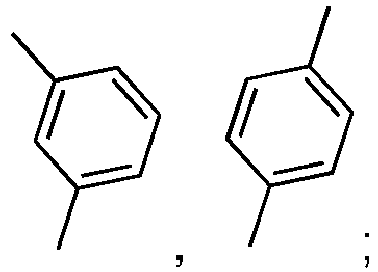
- 1)
- preferably, R2 is selected from:
- 1)


- 2)

- 1)
- Y is selected from C, S, P;
- preferably, Y is C;
- m = 1 or 2;
- preferably, m = 1;
- R3 is selected from:
- 1) amino, cyclopropylamino, cyclobutylamino, cyclopentylamino, cyclohexylamino, N,N-dimethylamino, N,N-diethylamino, N,N-diisopropylamino, 2-N,N-dimethylaminoethylamino, 2-hydroxyethylamino, 2-morpholinylethylamino, 2-thiomorpholinylethylamino, 2-(4-N-methylpiperazinyl)ethylamino, 3-N,N-dimethylaminopropylamino, 3-N,N-diethylaminopropylamino, 3-N,N-diisopropylaminopropylamino, 3-hydroxypropylamino, 3-morpholinylpropylamino, 3-thiomorpholinylpropylamino, 3-(4-N-methylpiperazinyl)propylamino, N-methylpiperidinyl-4-amino, N-ethylpiperidinyl-4-amino, N-isopropylpiperidinyl-4-amino, N-acetylpiperidinyl-4-amino;
- 2) arylamino or heteroarylamino, which is optionally substituted by C1-C6 alkyl, C1-C6 alkoxy, C1-C6 oxygen-containing alkyl, C1-C3 fluorine-containing alkyl, C3-C6 cycloalkyl, halogen, nitro, cyano, amino, hydroxy, optionally substituted heterocyclyl, C1-C6 alkoxycarbonyl, C1-C6 acyl;
- 3) phenylmethylamino, which is optionally substituted by C1-C6 alkyl, C1-C6 alkoxy, C1-C6 oxygen-containing alkyl, C1-C3 fluorine-containing alkyl, C3-C6 cycloalkyl, halogen, nitro, cyano, amino, hydroxy, optionally substituted heterocyclyl, C1-C6 alkoxycarbonyl, C1-C6 acyl;
- 4) phenylethylamino, which is optionally substituted by C1-C6 alkyl, C1-C6 alkoxy, C1-C6 oxygen-containing alkyl, C1-C3 fluorine-containing alkyl, C3-C6 cycloalkyl, halogen, nitro, cyano, amino, hydroxy, optionally substituted heterocyclyl, C1-C6 alkoxycarbonyl, C1-C6 acyl;
- 5) a five- or six-membered heterocyclic ring comprising one or more heteroatoms selected from N, O and S, said five- or six-membered heterocyclic ring being optionally substituted by C1-C6 alkyl, C1-C6 alkoxy, hydroxy, amino, C1-C6 alkoxycarbonyl, C1-C6 acyl, cyano, optionally substituted heterocyclyl,
- including but not limited to: piperidinyl, 4-N,N-dimethylaminopiperidinyl, 4-N,N-diethylaminopiperidinyl, 4-N,N-diisopropylaminopiperidinyl, 4-hydroxypiperidinyl, 4-(N-methylpiperazinyl)piperidinyl, 4-(N-ethylpiperazinyl)piperidinyl, 4-(N-isopropylpiperazinyl)piperidinyl, 4-(N-acetylpiperazinyl)piperidinyl, 4-(N-t-butoxyformylpiperazinyl)piperidinyl, 4-(N-methanesulfonylpiperazinyl)piperidinyl, 4-(N-(2-hydroxyethyl)piperazinyl)piperidinyl, 4-(N-(2-cyanoethyl)piperazinyl)piperidinyl, 4-(N-(3-hydroxypropyl)piperazinyl)piperidinyl, 4-(N-(2-N,N-dimethylethyl)piperazinyl)piperidinyl, 4-(N-(2-N,N-diethylethyl)piperazinyl)piperidinyl, 4-(N-(3-N,N-dimethylpropyl)piperazinyl)piperidinyl, 4-(N-(3-N,N-diethylpropyl)piperazinyl)piperidinyl, 4-(tetrahydropyrrolyl)piperidinyl, 4-(3-N,N-dimethyltetrahydropyrrolyl)piperidinyl;
- N-methylpiperazinyl, N-ethylpiperazinyl, N-isopropylpiperazinyl, N-acetylpiperazinyl, N-t-butoxyformylpiperazinyl, N-methanesulfonylpiperazinyl, N-(2-hydroxyethyl)piperazinyl, N-(2-cyanoethyl)piperazinyl, N-(3-hydroxypropyl)piperazinyl, N-(2-N,N-dimethylethyl)piperazinyl, N-(2-N,N-diethylethyl)piperazinyl, N-(3-N,N-dimethylpropyl)piperazinyl, N-(3-N,N-diethylpropyl)piperazinyl, 2-oxo-piperazin-4-yl, N-(N-methyl-4-piperidinyl)piperazinyl, N-(N-ethyl-4-piperidinyl)piperazinyl, N-(N-acetyl-4-piperidinyl)piperazinyl;
- morpholinyl, 3,5-dimethylmorpholinyl, thiomorpholinyl, tetrahydropyrrolyl, 3-N,N-dimethyltetrahydropyrrolyl, 3-N,N-diethyltetrahydropyrrolyl;
- 6) benzyl, which is optionally substituted by C1-C6 alkyl, C1-C6 alkoxy, C1-C6 oxygen-containing alkyl, C1-C3 fluorine-containing alkyl, C3-C6 cycloalkyl, halogen, nitro, cyano, amino, hydroxy, optionally substituted heterocyclyl, C1-C6 alkoxycarbonyl, C1-C6 acyl;
- 7) hydroxy, 2-N,N-dimethylaminoethoxy, 2-N,N-diethylaminoethoxy, 2-N,N-diisopropylaminoethoxy, 2-(N-methylpiperazinyl)ethoxy, 2-(N-acetylpiperazinyl)ethoxy, 2-morpholinylethoxy, 2-thiomorpholinylethoxy, 2-piperidinylethoxy, 3-N,N-dimethylaminopropoxy, 3-N,N-diethylaminopropoxy, 3-N,N-diisopropylaminopropoxy, 3-(N-methylpiperazinyl)propoxy, 3-(N-acetylpiperazinyl)propoxy, 3-morpholinylpropoxy, 3-thiomorpholinylpropoxy, 3-piperidinylpropoxy, 2-pyridylmethoxy, 3-pyridylmethoxy, 4-pyridylmethoxy, phenylmethoxy, monohalo-substituted phenylmethoxy, gem-dihalo-substituted phenylmethoxy, hetero-dihalo-substituted phenylmethoxy;
- preferably, R3 is selected from:
- 1)
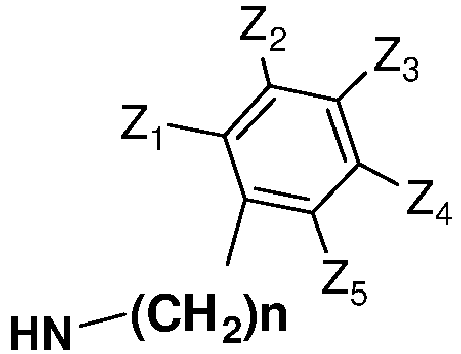
- 1)
- wherein, n = 0 or 1;
- when n = 0, Z1, Z2, Z3, Z4, Z5 are all H;
- when n = 1, any two of Z1, Z2, Z3, Z4, Z5 each are independently selected from halogen, C1-C6 alkyl, C1-C6 alkoxy, the rest being H;
2) C3-C6 cycloalkylamino; - more preferably, R3 is selected from:
- 1)

- 1)
- wherein, n = 0 or 1;
- when n = 0, Z1, Z2, Z3, Z4, Z5 are all H;
- when n = 1, Z1, Z5 in Z1, Z2, Z3, Z4, Z5 each are independently selected from halogen, the rest being H;
2) C3-C6 cycloalkylamino; - most preferably, R3 is selected from:
- 1)

- 1)
- wherein, n = 0 or 1;
- when n = 0, Z1, Z2, Z3, Z4, Z5 are all H;
- when n = 1, Z1, Z5 in Z1, Z2, Z3, Z4, Z5 each are independently selected from fluoro, chloro, the rest being H;
2)
- R4 is selected from H, C1-C3 alkyl, C1-C3 alkoxy, C1-C3 oxygen-containing alkyl, C1-C3 fluorine-containing alkyl, halogen, nitro, cyano, amino, hydroxy;
- preferably, R4 is selected from H, C1-C3 alkyl, amino, hydroxy;
- most preferably, R4 is H.
- preferably, the pharmaceutically acceptable salt is: an inorganic acid salt, selected from hydrochloride, hydrobromide, hydroiodide, nitrate, bicarbonate and carbonate, sulfate or phosphate; or an organic acid salt, selected from formate, acetate, propionate, benzoate, maleate, fumarate, succinate, tartrate, citrate, ascorbate, α-ketoglutarate, α-glycerophosphate, alkyl sulfonate or aryl sulfonate; preferably, said alkyl sulfonate is methyl sulfonate or ethyl sulfonate; said aryl sulfonate is benzenesulfonate or p-toluenesulfonate and the like.
- In a fifth aspect, according to a specific embodiment of the present invention, the compound, or a stereoisomer thereof, a prodrug thereof, a pharmaceutically acceptable salt thereof or a pharmaceutically acceptable solvate thereof has the following structure:

- wherein,R1 is selected from H, C1-C6 alkyl, C3-C6 cycloalkyl;
- preferably, R1 is selected from H, t-butyl;
- R2 is selected from:
- 1)

- 2)

- 1)
- preferably, R2 is selected from:
- 1)


- 2)

- 1)
- Y is selected from C, S, P;
- preferably, Y is C;
- m = 1 or 2;
- preferably, m = 1;
- R3 is selected from:
- 1) amino, cyclopropylamino, cyclobutylamino, cyclopentylamino, cyclohexylamino, N,N-dimethylamino, N,N-diethylamino, N,N-diisopropylamino, 2-N,N-dimethylaminoethylamino, 2-hydroxyethylamino, 2-morpholinylethylamino, 2-thiomorpholinylethylamino, 2-(4-N-methylpiperazinyl)ethylamino, 3-N,N-dimethylaminopropylamino, 3-N,N-diethylaminopropylamino, 3-N,N-diisopropylaminopropylamino, 3-hydroxypropylamino, 3-morpholinylpropylamino, 3-thiomorpholinylpropylamino, 3-(4-N-methylpiperazinyl)propylamino, N-methylpiperidinyl-4-amino, N-ethylpiperidinyl-4-amino, N-isopropylpiperidinyl-4-amino, N-acetylpiperidinyl-4-amino;
- 2) arylamino or heteroarylamino, which is optionally substituted by C1-C6 alkyl, C1-C6 alkoxy, C1-C6 oxygen-containing alkyl, C1-C3 fluorine-containing alkyl, C3-C6 cycloalkyl, halogen, nitro, cyano, amino, hydroxy, optionally substituted heterocyclyl, C1-C6 alkoxycarbonyl, C1-C6 acyl;
- 3) phenylmethylamino, which is optionally substituted by C1-C6 alkyl, C1-C6 alkoxy, C1-C6 oxygen-containing alkyl, C1-C3 fluorine-containing alkyl, C3-C6 cycloalkyl, halogen, nitro, cyano, amino, hydroxy, optionally substituted heterocyclyl, C1-C6 alkoxycarbonyl, C1-C6 acyl;
- 4) phenylethylamino, which is optionally substituted by C1-C6 alkyl, C1-C6 alkoxy, C1-C6 oxygen-containing alkyl, C1-C3 fluorine-containing alkyl, C3-C6 cycloalkyl, halogen, nitro, cyano, amino, hydroxy, optionally substituted heterocyclyl, C1-C6 alkoxycarbonyl, C1-C6 acyl;
- 5) a five- or six-membered heterocyclic ring comprising one or more heteroatoms selected from N, O and S, said five- or six-membered heterocyclic ring being optionally substituted by C1-C6 alkyl, C1-C6 alkoxy, hydroxy, amino, C1-C6 alkoxycarbonyl, C1-C6 acyl, cyano, optionally substituted heterocyclyl,
- including but not limited to: piperidinyl, 4-N,N-dimethylaminopiperidinyl, 4-N,N-diethylaminopiperidinyl, 4-N,N-diisopropylaminopiperidinyl, 4-hydroxypiperidinyl, 4-(N-methylpiperazinyl)piperidinyl, 4-(N-ethylpiperazinyl)piperidinyl, 4-(N-isopropylpiperazinyl)piperidinyl, 4-(N-acetylpiperazinyl)piperidinyl, 4-(N-t-butoxyformylpiperazinyl)piperidinyl, 4-(N-methanesulfonylpiperazinyl)piperidinyl, 4-(N-(2-hydroxyethyl)piperazinyl)piperidinyl, 4-(N-(2-cyanoethyl)piperazinyl)piperidinyl, 4-(N-(3-hydroxypropyl)piperazinyl)piperidinyl, 4-(N-(2-N,N-dimethylethyl)piperazinyl)piperidinyl, 4-(N-(2-N,N-diethylethyl)piperazinyl)piperidinyl, 4-(N-(3-N,N-dimethylpropyl)piperazinyl)piperidinyl, 4-(N-(3-N,N-diethylpropyl)piperazinyl)piperidinyl, 4-(tetrahydropyrrolyl)piperidinyl, 4-(3-N,N-dimethyltetrahydropyrrolyl)piperidinyl;
- N-methylpiperazinyl, N-ethylpiperazinyl, N-isopropylpiperazinyl, N-acetylpiperazinyl, N-t-butoxyformylpiperazinyl, N-methanesulfonylpiperazinyl, N-(2-hydroxyethyl)piperazinyl, N-(2-cyanoethyl)piperazinyl, N-(3-hydroxypropyl)piperazinyl, N-(2-N,N-dimethylethyl)piperazinyl, N-(2-N,N-diethylethyl)piperazinyl, N-(3-N,N-dimethylpropyl)piperazinyl, N-(3-N,N-diethylpropyl)piperazinyl, 2-oxo-piperazin-4-yl, N-(N-methyl-4-piperidinyl)piperazinyl, N-(N-ethyl-4-piperidinyl)piperazinyl, N-(N-acetyl-4-piperidinyl)piperazinyl;
- morpholinyl, 3,5-dimethylmorpholinyl, thiomorpholinyl, tetrahydropyrrolyl, 3-N,N-dimethyltetrahydropyrrolyl, 3-N,N-diethyltetrahydropyrrolyl;
- 6) benzyl, which is optionally substituted by C1-C6 alkyl, C1-C6 alkoxy, C1-C6 oxygen-containing alkyl, C1-C3 fluorine-containing alkyl, C3-C6 cycloalkyl, halogen, nitro, cyano, amino, hydroxy, optionally substituted heterocyclyl, C1-C6 alkoxycarbonyl, C1-C6 acyl;
- 7) hydroxy, 2-N,N-dimethylaminoethoxy, 2-N,N-diethylaminoethoxy, 2-N,N-diisopropylaminoethoxy, 2-(N-methylpiperazinyl)ethoxy, 2-(N-acetylpiperazinyl)ethoxy, 2-morpholinylethoxy, 2-thiomorpholinylethoxy, 2-piperidinylethoxy, 3-N,N-dimethylaminopropoxy, 3-N,N-diethylaminopropoxy, 3-N,N-diisopropylaminopropoxy, 3-(N-methylpiperazinyl)propoxy, 3-(N-acetylpiperazinyl)propoxy, 3-morpholinylpropoxy, 3-thiomorpholinylpropoxy, 3-piperidinylpropoxy, 2-pyridylmethoxy, 3-pyridylmethoxy, 4-pyridylmethoxy, phenylmethoxy, monohalo-substituted phenylmethoxy, gem-dihalo-substituted phenylmethoxy, hetero-dihalo-substituted phenylmethoxy;
- preferably, R3 is selected from: 1)

- wherein, n = 0 or 1;
- when n = 0, Z1, Z2, Z3, Z4, Z5 are all H;
- when n = 1, any two of Z1, Z2, Z3, Z4, Z5 each are independently selected from halogen, C1-C6 alkyl, C1-C6 alkoxy, the rest being H;
2) C3-C6 cycloalkylamino; - more preferably, R3 is selected from: 1)

- wherein, n = 0 or 1;
- when n = 0, Z1, Z2, Z3, Z4, Z5 are all H;
- when n = 1, Z1, Z5 in Z1, Z2, Z3, Z4, Z5 each are independently selected from halogen, the rest being H;
2) C3-C6 cycloalkylamino; - most preferably, R3 is selected from:
- 1)

- 1)
- wherein, n = 0 or 1;
- when n = 0, Z1, Z2, Z3, Z4, Z5 are all H;
- when n = 1, Z1, Z5 in Z1, Z2, Z3, Z4, Z5 each are independently selected from fluoro, chloro, the rest being H;
2)
- R4 is selected from H, C1-C3 alkyl, C1-C3 alkoxy, C1-C3 oxygen-containing alkyl, C1-C3 fluorine-containing alkyl, halogen, nitro, cyano, amino, hydroxy;
- preferably, R4 is selected from H, C1-C3 alkyl, amino, hydroxy;
- most preferably, R4 is selected from H, 4-amino.
- preferably, the pharmaceutically acceptable salt is: an inorganic acid salt, selected from hydrochloride, hydrobromide, hydroiodide, nitrate, bicarbonate and carbonate, sulfate or phosphate; or an organic acid salt, selected from formate, acetate, propionate, benzoate, maleate, fumarate, succinate, tartrate, citrate, ascorbate, α-ketoglutarate, α-glycerophosphate, alkyl sulfonate or aryl sulfonate; preferably, said alkyl sulfonate is methyl sulfonate or ethyl sulfonate; said aryl sulfonate is benzenesulfonate or p-toluenesulfonate and the like.
- In a sixth aspect, according to a specific embodiment of the present invention, the compound, or a stereoisomer thereof, a prodrug thereof, a pharmaceutically acceptable salt thereof or a pharmaceutically acceptable solvate thereof has the following structure:

- R2 is selected from:
- 1)

- 2)

- 1)
- preferably, R2 is selected from:
- 1)


- 2)
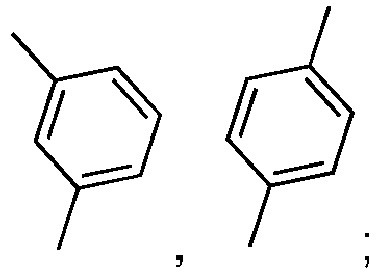
- 1)
- Y is selected from C, S, P;
- preferably, Y is C;
- m = 1 or 2;
- preferably, m = 1;
- R3 is selected from:
- 1) amino, cyclopropylamino, cyclobutylamino, cyclopentylamino, cyclohexylamino, N,N-dimethylamino, N,N-diethylamino, N,N-diisopropylamino, 2-N,N-dimethylaminoethylamino, 2-hydroxyethylamino, 2-morpholinylethylamino, 2-thiomorpholinylethylamino, 2-(4-N-methylpiperazinyl)ethylamino, 3-N,N-dimethylaminopropylamino, 3-N,N-diethylaminopropylamino, 3-N,N-diisopropylaminopropylamino, 3-hydroxypropylamino, 3-morpholinylpropylamino, 3-thiomorpholinylpropylamino, 3-(4-N-methylpiperazinyl)propylamino, N-methylpiperidinyl-4-amino, N-ethylpiperidinyl-4-amino, N-isopropylpiperidinyl-4-amino, N-acetylpiperidinyl-4-amino;
- 2) arylamino or heteroarylamino, which is optionally substituted by C1-C6 alkyl, C1-C6 alkoxy, C1-C6 oxygen-containing alkyl, C1-C3 fluorine-containing alkyl, C3-C6 cycloalkyl, halogen, nitro, cyano, amino, hydroxy, optionally substituted heterocyclyl, C1-C6 alkoxycarbonyl, C1-C6 acyl;
- 3) phenylmethylamino, which is optionally substituted by C1-C6 alkyl, C1-C6 alkoxy, C1-C6 oxygen-containing alkyl, C1-C3 fluorine-containing alkyl, C3-C6 cycloalkyl, halogen, nitro, cyano, amino, hydroxy, optionally substituted heterocyclyl, C1-C6 acyl;
- 4) phenylethylamino, which is optionally substituted by C1-C6 alkyl, C1-C6 alkoxy, C1-C6 oxygen-containing alkyl, C1-C3 fluorine-containing alkyl, C3-C6 cycloalkyl, halogen, nitro, cyano, amino, hydroxy, optionally substituted heterocyclyl, C1-C6 acyl;
- 5) a five- or six-membered heterocyclic ring comprising one or more heteroatoms selected from N, O and S, said five- or six-membered heterocyclic ring being optionally substituted by C1-C6 alkyl, C1-C6 alkoxy, hydroxy, amino, C1-C6 acyl, cyano, optionally substituted heterocyclyl,
- including but not limited to: piperidinyl, 4-N,N-dimethylaminopiperidinyl, 4-N,N-diethylaminopiperidinyl, 4-N,N-diisopropylaminopiperidinyl, 4-hydroxypiperidinyl, 4-(N-methylpiperazinyl)piperidinyl, 4-(N-ethylpiperazinyl)piperidinyl, 4-(N-isopropylpiperazinyl)piperidinyl, 4-(N-acetylpiperazinyl)piperidinyl, 4-(N-t-butoxyformylpiperazinyl)piperidinyl, 4-(N-methanesulfonylpiperazinyl)piperidinyl, 4-(N-(2-hydroxyethyl)piperazinyl)piperidinyl, 4-(N-(2-cyanoethyl)piperazinyl)piperidinyl, 4-(N-(3-hydroxypropyl)piperazinyl)piperidinyl, 4-(N-(2-N,N-dimethylethyl)piperazinyl)piperidinyl, 4-(N-(2-N,N-diethylethyl)piperazinyl)piperidinyl, 4-(N-(3-N,N-dimethylpropyl)piperazinyl)piperidinyl, 4-(N-(3-N,N-diethylpropyl)piperazinyl)piperidinyl, 4-(tetrahydropyrrolyl)piperidinyl, 4-(3-N,N-dimethyltetrahydropyrrolyl)piperidinyl;
- N-methylpiperazinyl, N-ethylpiperazinyl, N-isopropylpiperazinyl, N-acetylpiperazinyl, N-t-butoxyformylpiperazinyl, N-methanesulfonylpiperazinyl, N-(2-hydroxyethyl)piperazinyl, N-(2-cyanoethyl)piperazinyl, N-(3-hydroxypropyl)piperazinyl, N-(2-N,N-dimethylethyl)piperazinyl, N-(2-N,N-diethylethyl)piperazinyl, N-(3-N,N-dimethylpropyl)piperazinyl, N-(3-N,N-diethylpropyl)piperazinyl, 2-oxo-piperazin-4-yl, N-(N-methyl-4-piperidinyl)piperazinyl, N-(N-ethyl-4-piperidinyl)piperazinyl, N-(N-acetyl-4-piperidinyl)piperazinyl;
- morpholinyl, 3,5-dimethylmorpholinyl, thiomorpholinyl, tetrahydropyrrolyl, 3-N,N-dimethyltetrahydropyrrolyl, 3-N,N-diethyltetrahydropyrrolyl;
- 6) benzyl, which is optionally substituted by C1-C6 alkyl, C1-C6 alkoxy, C1-C6 oxygen-containing alkyl, C1-C3 fluorine-containing alkyl, C3-C6 cycloalkyl, halogen, nitro, cyano, amino, hydroxy, optionally substituted heterocyclyl, C1-C6 acyl;
- 7) hydroxy, 2-N,N-dimethylaminoethoxy, 2-N,N-diethylaminoethoxy, 2-N,N-diisopropylaminoethoxy, 2-(N-methylpiperazinyl)ethoxy, 2-(N-acetylpiperazinyl)ethoxy, 2-morpholinylethoxy, 2-thiomorpholinylethoxy, 2-piperidinylethoxy, 3-N,N-dimethylaminopropoxy, 3-N,N-diethylaminopropoxy, 3-N,N-diisopropylaminopropoxy, 3-(N-methylpiperazinyl)propoxy, 3-(N-acetylpiperazinyl)propoxy, 3-morpholinylpropoxy, 3-thiomorpholinylpropoxy, 3-piperidinylpropoxy, 2-pyridylmethoxy, 3-pyridylmethoxy, 4-pyridylmethoxy, phenylmethoxy, monohalo-substituted phenylmethoxy, gem-dihalo-substituted phenylmethoxy, hetero-dihalo-substituted phenylmethoxy;
- preferably, R3 is selected from:
- 1)
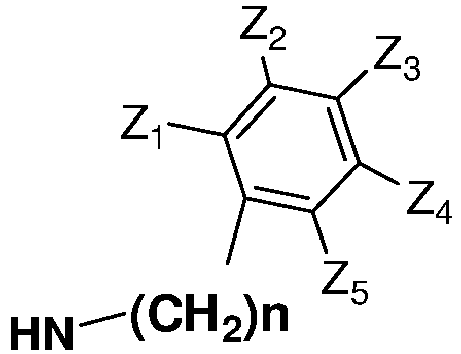
- 1)
- wherein, n = 0 or 1;
- when n = 0, Z1, Z2, Z3, Z4, Z5 are all H;
- when n = 1, any two of Z1, Z2, Z3, Z4, Z5 each are independently selected from halogen, C1-C6 alkyl, C1-C6 alkoxy, the rest being H; or
- any one of Z1, Z2, Z3, Z4, Z5 is selected from C1-C3 fluorine-containing alkyl, the rest being H; or
- any two of Z1, Z2, Z3, Z4, Z5 each are independently selected from halogen, C1-C3 fluorine-containing alkyl, the rest being H;
2) C3-C6 cycloalkylamino; - more preferably, R3 is selected from:
- 1)

- 1)
- wherein, n = 0 or 1;
- when n = 0, Z1, Z2, Z3, Z4, Z5 are all H;
- when n = 1, Z1, Z5 in Z1, Z2, Z3, Z4, Z5 each are independently selected from halogen, the rest being H; or
- Z2 in Z1, Z2, Z3, Z4, Z5 is selected from C1-C3 fluorine-containing alkyl, the rest being H; or
- Z3, Z4 in Z1, Z2, Z3, Z4, Z5 each are independently selected from halogen, C1-C3 fluorine-containing alkyl, the rest being H;
2) C3-C6 cycloalkylamino; - most preferably, R3 is selected from:
- 1)

- 1)
- wherein, n = 0 or 1;
- when n = 0, Z1, Z2, Z3, Z4, Z5 are all H;
- when n = 1, Z1, Z5 in Z1, Z2, Z3, Z4, Z5 each are independently selected from fluoro, chloro, the rest being H; or
- Z2 in Z1, Z2, Z3, Z4, Z5 is selected from trifluoromethyl, the rest being H; or
- Z3, Z4 in Z1, Z2, Z3, Z4, Z5 each are independently selected from fluoro, trifluoromethyl, the rest being H;
2)
- R4 is selected from H, C1-C3 alkyl, C1-C3 alkoxy, C1-C3 oxygen-containing alkyl, C1-C3 fluorine-containing alkyl, halogen, nitro, cyano, amino, hydroxy;
- preferably, R4 is selected from H, C1-C3 alkyl, amino, hydroxy;
- most preferably, R4 is H.
- preferably, the pharmaceutically acceptable salt is: an inorganic acid salt, selected from hydrochloride, hydrobromide, hydroiodide, nitrate, bicarbonate and carbonate, sulfate or phosphate; or an organic acid salt, selected from formate, acetate, propionate, benzoate, maleate, fumarate, succinate, tartrate, citrate, ascorbate, α-ketoglutarate, α-glycerophosphate, alkyl sulfonate or aryl sulfonate; preferably, said alkyl sulfonate is methyl sulfonate or ethyl sulfonate; said aryl sulfonate is benzenesulfonate or p-toluenesulfonate and the like.
- In a seventh aspect, according to a specific embodiment of the present invention, the compound, or a stereoisomer thereof, a prodrug thereof, a pharmaceutically acceptable salt thereof or a pharmaceutically acceptable solvate thereof has the following structure:

- wherein, R2 is selected from:
- 1)

- 2)

- 1)
- preferably, R2 is selected from:
- 1)
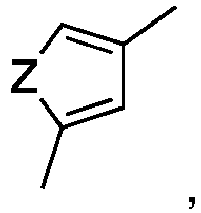

- 2)

- 1)
- Y is selected from C, S, P;
- preferably, Y is C;
- m = 1 or 2;
- preferably, m = 1;
- R3 is selected from:
- 1) amino, cyclopropylamino, cyclobutylamino, cyclopentylamino, cyclohexylamino, N,N-dimethylamino, N,N-diethylamino, N,N-diisopropylamino, 2-N,N-dimethylaminoethylamino, 2-hydroxyethylamino, 2-morpholinylethylamino, 2-thiomorpholinylethylamino, 2-(4-N-methylpiperazinyl)ethylamino, 3-N,N-dimethylaminopropylamino, 3-N,N-diethylaminopropylamino, 3-N,N-diisopropylaminopropylamino, 3-hydroxypropylamino, 3-morpholinylpropylamino, 3-thiomorpholinylpropylamino, 3-(4-N-methylpiperazinyl)propylamino, N-methylpiperidinyl-4-amino, N-ethylpiperidinyl-4-amino, N-isopropylpiperidinyl-4-amino, N-acetylpiperidinyl-4-amino;
- 2) arylamino or heteroarylamino, which is optionally substituted by C1-C6 alkyl, C1-C6 alkoxy, C1-C6 oxygen-containing alkyl, C1-C3 fluorine-containing alkyl, C3-C6 cycloalkyl, halogen, nitro, cyano, amino, hydroxy, optionally substituted heterocyclyl, C1-C6 alkoxycarbonyl, C1-C6 acyl;
- 3) phenylmethylamino, which is optionally substituted by C1-C6 alkyl, C1-C6 alkoxy, C1-C6 oxygen-containing alkyl, C1-C3 fluorine-containing alkyl, C3-C6 cycloalkyl, halogen, nitro, cyano, amino, hydroxy, optionally substituted heterocyclyl, C1-C6 alkoxycarbonyl, C1-C6 acyl;
- 4) phenylethylamino, which is optionally substituted by C1-C6 alkyl, C1-C6 alkoxy, C1-C6 oxygen-containing alkyl, C1-C3 fluorine-containing alkyl, C3-C6 cycloalkyl, halogen, nitro, cyano, amino, hydroxy, optionally substituted heterocyclyl, C1-C6 alkoxycarbonyl, C1-C6 acyl;
- 5) a five- or six-membered heterocyclic ring comprising one or more heteroatoms selected from N, O and S, said five- or six-membered heterocyclic ring being optionally substituted by C1-C6 alkyl, C1-C6 alkoxy, hydroxy, amino, C1-C6 alkoxycarbonyl, C1-C6 acyl, cyano, optionally substituted heterocyclyl,
- including but not limited to: piperidinyl, 4-N,N-dimethylaminopiperidinyl, 4-N,N-diethylaminopiperidinyl, 4-N,N-diisopropylaminopiperidinyl, 4-hydroxypiperidinyl, 4-(N-methylpiperazinyl)piperidinyl, 4-(N-ethylpiperazinyl)piperidinyl, 4-(N-isopropylpiperazinyl)piperidinyl, 4-(N-acetylpiperazinyl)piperidinyl, 4-(N-t-butoxyformylpiperazinyl)piperidinyl, 4-(N-methanesulfonylpiperazinyl)piperidinyl, 4-(N-(2-hydroxyethyl)piperazinyl)piperidinyl, 4-(N-(2-cyanoethyl)piperazinyl)piperidinyl, 4-(N-(3-hydroxypropyl)piperazinyl)piperidinyl, 4-(N-(2-N,N-dimethylethyl)piperazinyl)piperidinyl, 4-(N-(2-N,N-diethylethyl)piperazinyl)piperidinyl, 4-(N-(3-N,N-dimethylpropyl)piperazinyl)piperidinyl, 4-(N-(3-N,N-diethylpropyl)piperazinyl)piperidinyl, 4-(tetrahydropyrrolyl)piperidinyl, 4-(3-N,N-dimethyltetrahydropyrrolyl)piperidinyl;
- N-methylpiperazinyl, N-ethylpiperazinyl, N-isopropylpiperazinyl, N-acetylpiperazinyl,N-t-butoxyformylpiperazinyl, N-methanesulfonylpiperazinyl, N-(2-hydroxyethyl)piperazinyl, N-(2-cyanoethyl)piperazinyl, N-(3-hydroxypropyl)piperazinyl, N-(2-N,N-dimethylethyl)piperazinyl, N-(2-N,N-diethylethyl)piperazinyl, N-(3-N,N-dimethylpropyl)piperazinyl, N-(3-N,N-diethylpropyl)piperazinyl, 2-oxo-piperazin-4-yl, N-(N-methyl-4-piperidinyl)piperazinyl, N-(N-ethyl-4-piperidinyl)piperazinyl, N-(N-acetyl-4-piperidinyl)piperazinyl;
- morpholinyl, 3,5-dimethylmorpholinyl, thiomorpholinyl, tetrahydropyrrolyl, 3-N,N-dimethyltetrahydropyrrolyl, 3-N,N-diethyltetrahydropyrrolyl;
- 6) benzyl, which is optionally substituted by C1-C6 alkyl, C1-C6 alkoxy, C1-C6 oxygen-containing alkyl, C1-C3 fluorine-containing alkyl, C3-C6 cycloalkyl, halogen, nitro, cyano, amino, hydroxy, optionally substituted heterocyclyl, C1-C6 alkoxycarbonyl, C1-C6 acyl;
- 7) hydroxy, 2-N,N-dimethylaminoethoxy, 2-N,N-diethylaminoethoxy, 2-N,N-diisopropylaminoethoxy, 2-(N-methylpiperazinyl)ethoxy, 2-(N-acetylpiperazinyl)ethoxy, 2-morpholinylethoxy, 2-thiomorpholinylethoxy, 2-piperidinylethoxy, 3-N,N-dimethylaminopropoxy, 3-N,N-diethylaminopropoxy, 3-N,N-diisopropylaminopropoxy, 3-(N-methylpiperazinyl)propoxy, 3-(N-acetylpiperazinyl)propoxy, 3-morpholinylpropoxy, 3-thiomorpholinylpropoxy, 3-piperidinylpropoxy, 2-pyridylmethoxy, 3-pyridylmethoxy, 4-pyridylmethoxy, phenylmethoxy, monohalo-substituted phenylmethoxy, gem-dihalo-substituted phenylmethoxy, hetero-dihalo-substituted phenylmethoxy;
- preferably, R3 is selected from:
- 1)

- 1)
- wherein, n = 0 or 1;
- when n = 0, Z1, Z2, Z3, Z4, Z5 are all H;
- when n = 1, any two of Z1, Z2, Z3, Z4, Z5 each are independently selected from halogen, C1-C6 alkyl, C1-C6 alkoxy, the rest being H; or
- any one of Z1, Z2, Z3, Z4, Z5 is selected from C1-C3 fluorine-containing alkyl, the rest being H; or
- any two of Z1, Z2, Z3, Z4, Z5 each are independently selected from halogen, C1-C3 fluorine-containing alkyl, the rest being H;
2) C3-C6 cycloalkylamino; - more preferably, R3 is selected from:
- 1)

- 1)
- wherein, n = 0 or 1;
- when n = 0, Z1, Z2, Z3, Z4, Z5 are all H;
- when n = 1, Z1, Z5 in Z1, Z2, Z3, Z4, Z5 each are independently selected from halogen, the rest being H; or
- Z2 in Z1, Z2, Z3, Z4, Z5 is selected from C1-C3 fluorine-containing alkyl, the rest being H; or
- Z3, Z4 in Z1, Z2, Z3, Z4, Z5 each are independently selected from halogen, C1-C3 fluorine-containing alkyl, the rest being H;
2) C3-C6 cycloalkylamino; - most preferably, R3 is selected from:
- 1)

- 1)
- wherein, n = 0 or 1;
- when n = 0, Z1, Z2, Z3, Z4, Z5 are all H;
- when n = 1, Z1, Z5 in Z1, Z2, Z3, Z4, Z5 each are independently selected from fluoro, chloro, the rest being H; or
- Z2 in Z1, Z2, Z3, Z4, Z5 is selected from trifluoromethyl, the rest being H; or
- Z3, Z4 in Z1, Z2, Z3, Z4, Z5 each are independently selected from fluoro, trifluoromethyl, the rest being H;
2)
- R4 is selected from H, C1-C3 alkyl, C1-C3 alkoxy, C1-C3 oxygen-containing alkyl, C1-C3 fluorine-containing alkyl, halogen, nitro, cyano, amino, hydroxy;
- preferably, R4 is selected from H, C1-C3 alkyl, amino, hydroxy;
- most preferably, R4 is H.
- preferably, the pharmaceutically acceptable salt is: an inorganic acid salt, selected from hydrochloride, hydrobromide, hydroiodide, nitrate, bicarbonate and carbonate, sulfate or phosphate; or an organic acid salt, selected from formate, acetate, propionate, benzoate, maleate, fumarate, succinate, tartrate, citrate, ascorbate, α-ketoglutarate, α-glycerophosphate, alkyl sulfonate or aryl sulfonate; preferably, said alkyl sulfonate is methyl sulfonate or ethyl sulfonate; said aryl sulfonate is benzenesulfonate or p-toluenesulfonate and the like.
- In an eighth aspect, according to a specific embodiment of the present invention, the compound, or a stereoisomer thereof, a prodrug thereof, a pharmaceutically acceptable salt thereof or a pharmaceutically acceptable solvate thereof has the following structure:

- wherein, R2 is selected from:
- 1)

- 2)

- 1)
- preferably, R2 is selected from:
- 1)

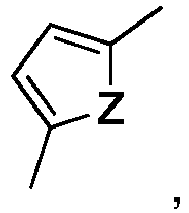
- 2)

- 1)
- Y is selected from C, S, P;
- preferably, Y is C;
- m = 1 or 2;
- preferably, m = 1;
- R3 is selected from:
- 1) amino, cyclopropylamino, cyclobutylamino, cyclopentylamino, cyclohexylamino, N,N-dimethylamino, N,N-diethylamino, N,N-diisopropylamino, 2-N,N-dimethylaminoethylamino, 2-hydroxyethylamino, 2-morpholinylethylamino, 2-thiomorpholinylethylamino, 2-(4-N-methylpiperazinyl)ethylamino, 3-N,N-dimethylaminopropylamino, 3-N,N-diethylaminopropylamino, 3-N,N-diisopropylaminopropylamino, 3-hydroxypropylamino, 3-morpholinylpropylamino, 3-thiomorpholinylpropylamino, 3-(4-N-methylpiperazinyl)propylamino, N-methylpiperidinyl-4-amino, N-ethylpiperidinyl-4-amino, N-isopropylpiperidinyl-4-amino, N-acetylpiperidinyl-4-amino;
- 2) arylamino or heteroarylamino, which is optionally substituted by C1-C6 alkyl, C1-C6 alkoxy, C1-C6 oxygen-containing alkyl, C1-C3 fluorine-containing alkyl, C3-C6 cycloalkyl, halogen, nitro, cyano, amino, hydroxy, optionally substituted heterocyclyl, C1-C6 alkoxycarbonyl, C1-C6 acyl;
- 3) phenylmethylamino, which is optionally substituted by C1-C6 alkyl, C1-C6 alkoxy, C1-C6 oxygen-containing alkyl, C1-C3 fluorine-containing alkyl, C3-C6 cycloalkyl, halogen, nitro, cyano, amino, hydroxy, optionally substituted heterocyclyl, C1-C6 alkoxycarbonyl, C1-C6 acyl;
- 4) phenylethylamino, which is optionally substituted by C1-C6 alkyl, C1-C6 alkoxy, C1-C6 oxygen-containing alkyl, C1-C3 fluorine-containing alkyl, C3-C6 cycloalkyl, halogen, nitro, cyano, amino, hydroxy, optionally substituted heterocyclyl, C1-C6 alkoxycarbonyl, C1-C6 acyl;
- 5) a five- or six-membered heterocyclic ring comprising one or more heteroatoms selected from N, O and S, said five- or six-membered heterocyclic ring being optionally substituted by C1-C6 alkyl, C1-C6 alkoxy, hydroxy, amino, C1-C6 alkoxycarbonyl, C1-C6 acyl, cyano, optionally substituted heterocyclyl,
- including but not limited to: piperidinyl, 4-N,N-dimethylaminopiperidinyl, 4-N,N-diethylaminopiperidinyl, 4-N,N-diisopropylaminopiperidinyl, 4-hydroxypiperidinyl, 4-(N-methylpiperazinyl)piperidinyl, 4-(N-ethylpiperazinyl)piperidinyl, 4-(N-isopropylpiperazinyl)piperidinyl, 4-(N-acetylpiperazinyl)piperidinyl, 4-(N-t-butoxyformylpiperazinyl)piperidinyl, 4-(N-methanesulfonylpiperazinyl)piperidinyl, 4-(N-(2-hydroxyethyl)piperazinyl)piperidinyl, 4-(N-(2-cyanoethyl)piperazinyl)piperidinyl, 4-(N-(3-hydroxypropyl)piperazinyl)piperidinyl, 4-(N-(2-N,N-dimethylethyl)piperazinyl)piperidinyl, 4-(N-(2-N,N-diethylethyl)piperazinyl)piperidinyl, 4-(N-(3-N,N-dimethylpropyl)piperazinyl)piperidinyl, 4-(N-(3-N,N-diethylpropyl)piperazinyl)piperidinyl, 4-(tetrahydropyrrolyl)piperidinyl, 4-(3-N,N-dimethyltetrahydropyrrolyl)piperidinyl;
- N-methylpiperazinyl, N-ethylpiperazinyl, N-isopropylpiperazinyl, N-acetylpiperazinyl, N-t-butoxyformylpiperazinyl, N-methanesulfonylpiperazinyl, N-(2-hydroxyethyl)piperazinyl, N-(2-cyanoethyl)piperazinyl, N-(3-hydroxypropyl)piperazinyl, N-(2-N,N-dimethylethyl)piperazinyl, N-(2-N,N-diethylethyl)piperazinyl, N-(3-N,N-dimethylpropyl)piperazinyl, N-(3-N,N-diethylpropyl)piperazinyl, 2-oxo-piperazin-4-yl, N-(N-methyl-4-piperidinyl)piperazinyl, N-(N-ethyl-4-piperidinyl)piperazinyl, N-(N-acetyl-4-piperidinyl)piperazinyl;
- morpholinyl, 3,5-dimethylmorpholinyl, thiomorpholinyl, tetrahydropyrrolyl, 3-N,N-dimethyltetrahydropyrrolyl, 3-N,N-diethyltetrahydropyrrolyl;
- 6) benzyl, which is optionally substituted by C1-C6 alkyl, C1-C6 alkoxy, C1-C6 oxygen-containing alkyl, C1-C3 fluorine-containing alkyl, C3-C6 cycloalkyl, halogen, nitro, cyano, amino, hydroxy, optionally substituted heterocyclyl, C1-C6 alkoxycarbonyl, C1-C6 acyl;
- 7) hydroxy, 2-N,N-dimethylaminoethoxy, 2-N,N-diethylaminoethoxy, 2-N,N-diisopropylaminoethoxy, 2-(N-methylpiperazinyl)ethoxy, 2-(N-acetylpiperazinyl)ethoxy, 2-morpholinylethoxy, 2-thiomorpholinylethoxy, 2-piperidinylethoxy, 3-N,N-dimethylaminopropoxy, 3-N,N-diethylaminopropoxy, 3-N,N-diisopropylaminopropoxy, 3-(N-methylpiperazinyl)propoxy, 3-(N-acetylpiperazinyl)propoxy, 3-morpholinylpropoxy, 3-thiomorpholinylpropoxy, 3-piperidinylpropoxy, 2-pyridylmethoxy, 3-pyridylmethoxy, 4-pyridylmethoxy, phenylmethoxy, monohalo-substituted phenylmethoxy, gem-dihalo-substituted phenylmethoxy, hetero-dihalo-substituted phenylmethoxy;
- preferably, R3 is selected from:

- wherein, n = 0 or 1;
- when n = 0, Z1, Z2, Z3, Z4, Z5 are all H;
- when n = 1, any two of Z1, Z2, Z3, Z4, Z5 each are independently selected from halogen, C1-C6 alkyl, C1-C6 alkoxy, the rest being H;
- more preferably, R3 is selected from:

- wherein, n = 0 or 1;
- when n = 0, Z1, Z2, Z3, Z4, Z5 are all H;
- when n = 1, Z1, Z5 in Z1, Z2, Z3, Z4, Z5 each are independently selected from halogen, the rest being H;
- most preferably, R3 is selected from:

- wherein, n = 0 or 1;
- when n = 0, Z1, Z2, Z3, Z4, Z5 are all H;
- when n = 1, Z1, Z5 in Z1, Z2, Z3, Z4, Z5 each are independently selected from fluoro, chloro, the rest being H;
- R4 is selected from H, C1-C3 alkyl, C1-C3 alkoxy, C1-C3 oxygen-containing alkyl, C1-C3 fluorine-containing alkyl, halogen, nitro, cyano, amino, hydroxy;
- preferably, R4 is selected from H, C1-C3 alkyl, amino, hydroxy;
- most preferably, R4 is H.
- preferably, the pharmaceutically acceptable salt is: an inorganic acid salt, selected from hydrochloride, hydrobromide, hydroiodide, nitrate, bicarbonate and carbonate, sulfate or phosphate; or an organic acid salt, selected from formate, acetate, propionate, benzoate, maleate, fumarate, succinate, tartrate, citrate, ascorbate, α-ketoglutarate, α-glycerophosphate, alkyl sulfonate or aryl sulfonate; preferably, said alkyl sulfonate is methyl sulfonate or ethyl sulfonate; said aryl sulfonate is benzenesulfonate or p-toluenesulfonate and the like.
- In a ninth aspect, according to a specific embodiment of the present invention, the compound, or a stereoisomer thereof, a prodrug thereof, a pharmaceutically acceptable salt thereof or a pharmaceutically acceptable solvate thereof has the following structure:
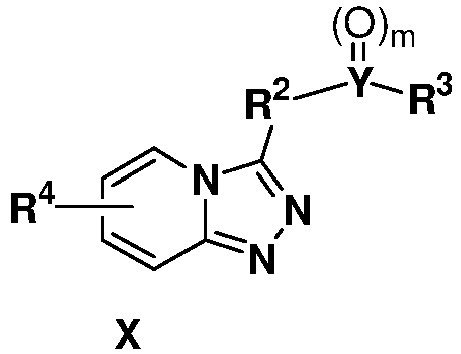
- wherein, R2 is selected from:
- 1)

- 2)

- 1)
- preferably, R2 is selected from:
- 1)


- 2)

- 1)
- Y is selected from C, S, P;
- preferably, Y is C;
- m = 1 or 2;
- preferably, m = 1;
- R3 is selected from:
- 1) amino, cyclopropylamino, cyclobutylamino, cyclopentylamino, cyclohexylamino, N,N-dimethylamino, N,N-diethylamino, N,N-diisopropylamino, 2-N,N-dimethylaminoethylamino, 2-hydroxyethylamino, 2-morpholinylethylamino, 2-thiomorpholinylethylamino, 2-(4-N-methylpiperazinyl)ethylamino, 3-N,N-dimethylaminopropylamino, 3-N,N-diethylaminopropylamino, 3-N,N-diisopropylaminopropylamino, 3-hydroxypropylamino, 3-morpholinylpropylamino, 3-thiomorpholinylpropylamino, 3-(4-N-methylpiperazinyl)propylamino, N-methylpiperidinyl-4-amino, N-ethylpiperidinyl-4-amino, N-isopropylpiperidinyl-4-amino, N-acetylpiperidinyl-4-amino;
- 2) arylamino or heteroarylamino, which is optionally substituted by C1-C6 alkyl, C1-C6 alkoxy, C1-C6 oxygen-containing alkyl, C1-C3 fluorine-containing alkyl, C3-C6 cycloalkyl, halogen, nitro, cyano, amino, hydroxy, optionally substituted heterocyclyl, C1-C6 alkoxycarbonyl, C1-C6 acyl;
- 3) phenylmethylamino, which is optionally substituted by C1-C6 alkyl, C1-C6 alkoxy, C1-C6 oxygen-containing alkyl, C1-C3 fluorine-containing alkyl, C3-C6 cycloalkyl, halogen, nitro, cyano, amino, hydroxy, optionally substituted heterocyclyl, C1-C6 alkoxycarbonyl, C1-C6 acyl;
- 4) phenylethylamino, which is optionally substituted by C1-C6 alkyl, C1-C6 alkoxy, C1-C6 oxygen-containing alkyl, C1-C3 fluorine-containing alkyl, C3-C6 cycloalkyl, halogen, nitro, cyano, amino, hydroxy, optionally substituted heterocyclyl, C1-C6 alkoxycarbonyl, C1-C6 acyl;
- 5) a five- or six-membered heterocyclic ring comprising one or more heteroatoms selected from N, O and S, said five- or six-membered heterocyclic ring being optionally substituted by C1-C6 alkyl, C1-C6 alkoxy, hydroxy, amino, C1-C6 alkoxycarbonyl, C1-C6 acyl, cyano, optionally substituted heterocyclyl,
- including but not limited to: piperidinyl, 4-N,N-dimethylaminopiperidinyl, 4-N,N-diethylaminopiperidinyl, 4-N,N-diisopropylaminopiperidinyl, 4-hydroxypiperidinyl, 4-(N-methylpiperazinyl)piperidinyl, 4-(N-ethylpiperazinyl)piperidinyl, 4-(N-isopropylpiperazinyl)piperidinyl, 4-(N-acetylpiperazinyl)piperidinyl, 4-(N-t-butoxyformylpiperazinyl)piperidinyl, 4-(N-methanesulfonylpiperazinyl)piperidinyl, 4-(N-(2-hydroxyethyl)piperazinyl)piperidinyl, 4-(N-(2-cyanoethyl)piperazinyl)piperidinyl, 4-(N-(3-hydroxypropyl)piperazinyl)piperidinyl, 4-(N-(2-N,N-dimethylethyl)piperazinyl)piperidinyl, 4-(N-(2-N,N-diethylethyl)piperazinyl)piperidinyl, 4-(N-(3-N,N-dimethylpropyl)piperazinyl)piperidinyl, 4-(N-(3-N,N-diethylpropyl)piperazinyl)piperidinyl, 4-(tetrahydropyrrolyl)piperidinyl, 4-(3-N,N-dimethyltetrahydropyrrolyl)piperidinyl;
- N-methylpiperazinyl, N-ethylpiperazinyl, N-isopropylpiperazinyl, N-acetylpiperazinyl, N-t-butoxyformylpiperazinyl, N-methanesulfonylpiperazinyl, N-(2-hydroxyethyl)piperazinyl, N-(2-cyanoethyl)piperazinyl, N-(3-hydroxypropyl)piperazinyl, N-(2-N,N-dimethylethyl)piperazinyl, N-(2-N,N-diethylethyl)piperazinyl, N-(3-N,N-dimethylpropyl)piperazinyl, N-(3-N,N-diethylpropyl)piperazinyl, 2-oxo-piperazin-4-yl, N-(N-methyl-4-piperidinyl)piperazinyl, N-(N-ethyl-4-piperidinyl)piperazinyl, N-(N-acetyl-4-piperidinyl)piperazinyl;
- morpholinyl, 3,5-dimethylmorpholinyl, thiomorpholinyl, tetrahydropyrrolyl, 3-N,N-dimethyltetrahydropyrrolyl, 3-N,N-diethyltetrahydropyrrolyl;
- 6) benzyl, which is optionally substituted by C1-C6 alkyl, C1-C6 alkoxy, C1-C6 oxygen-containing alkyl, C1-C3 fluorine-containing alkyl, C3-C6 cycloalkyl, halogen, nitro, cyano, amino, hydroxy, optionally substituted heterocyclyl, C1-C6 alkoxycarbonyl, C1-C6 acyl;
- 7) hydroxy, 2-N,N-dimethylaminoethoxy, 2-N,N-diethylaminoethoxy, 2-N,N-diisopropylaminoethoxy, 2-(N-methylpiperazinyl)ethoxy, 2-(N-acetylpiperazinyl)ethoxy, 2-morpholinylethoxy, 2-thiomorpholinylethoxy, 2-piperidinylethoxy, 3-N,N-dimethylaminopropoxy, 3-N,N-diethylaminopropoxy, 3-N,N-diisopropylaminopropoxy, 3-(N-methylpiperazinyl)propoxy, 3-(N-acetylpiperazinyl)propoxy, 3-morpholinylpropoxy, 3-thiomorpholinylpropoxy, 3-piperidinylpropoxy, 2-pyridylmethoxy, 3-pyridylmethoxy, 4-pyridylmethoxy, phenylmethoxy, monohalo-substituted phenylmethoxy, gem-dihalo-substituted phenylmethoxy, hetero-dihalo-substituted phenylmethoxy;
- preferably, R3 is selected from:

- wherein, n = 0 or 1;
- when n = 0, Z1, Z2, Z3, Z4, Z5 are all H;
- when n = 1, any two of Z1, Z2, Z3, Z4, Z5 each are independently selected from halogen, C1-C6 alkyl, C1-C6 alkoxy, the rest being H;
- more preferably, R3 is selected from:

- wherein, n = 0 or 1;
- when n = 0, Z1, Z2, Z3, Z4, Z5 are all H;
- when n = 1, Z1, Z5 in Z1, Z2, Z3, Z4, Z5 each are independently selected from halogen, the rest being H;
- most preferably, R3 is selected from:

- wherein, n = 0 or 1;
- when n = 0, Z1, Z2, Z3, Z4, Z5 are all H;
- when n = 1, Z1, Z5 in Z1, Z2, Z3, Z4, Z5 each are independently selected from fluoro, chloro, the rest being H;
- R4 is selected from H, C1-C3 alkyl, C1-C3 alkoxy, C1-C3 oxygen-containing alkyl, C1-C3 fluorine-containing alkyl, halogen, nitro, cyano, amino, hydroxy;
- preferably, R4 is selected from H, C1-C3 alkyl, amino, hydroxy;
- most preferably, R4 is H.
- preferably, the pharmaceutically acceptable salt is: an inorganic acid salt, selected from hydrochloride, hydrobromide, hydroiodide, nitrate, bicarbonate and carbonate, sulfate or phosphate; or an organic acid salt, selected from formate, acetate, propionate, benzoate, maleate, fumarate, succinate, tartrate, citrate, ascorbate, α-ketoglutarate, α-glycerophosphate, alkyl sulfonate or aryl sulfonate; preferably, said alkyl sulfonate is methyl sulfonate or ethyl sulfonate; said aryl sulfonate is benzenesulfonate or p-toluenesulfonate and the like.
- Unless otherwise indicated, the above groups and substituents have the ordinary meanings in the field of medicinal chemistry.
- It should be noted that C1-C6 oxygen-containing alkyl refers to a group in which C1-C6 alkyl skeleton is substituted by one or more C1-C6 alkoxy groups, for example, methoxyethyl, methoxyethoxymethyl and the like.
- The term "aryl" refers to a C6-10 mono-, di- or poly-carbocyclic hydrocarbon having from 1 to 2 ring systems which are optionally further fused or attached to each other by a single bond, wherein at least one of the carbon rings is "aromatic", and the term "aromatic" refers to a fully conjugated π-electron bond system. The aryl ring may be optionally further fused or attached to aromatic or non-aromatic carbocyclic rings or heterocyclic rings. Non-limiting examples of the aryl group are phenyl, α- or β-naphthyl.
- The term "heteroaryl" refers to an aromatic heterocyclic ring, which is usually a 5- to 8-membered heterocyclic ring having from 1 to 3 heteroatoms selected from N, O or S; a heteroaryl ring may be optionally further fused or attached to aromatic or non-aromatic carbocyclic rings or heterocyclic rings. Non-limiting examples of the heteroaryl group are, for example, pyridyl, pyrazinyl, pyrimidinyl, pyridazinyl, indolyl, imidazolyl, thiazolyl, isothiazolyl, thioxazolyl, pyrrolyl, phenyl-pyrrolyl, furyl, phenyl-furyl, oxazolyl, isoxazolyl, pyrazolyl, thienyl, benzothienyl, isoindolinyl, benzoimidazolyl, indazolyl, quinolyl, isoquinolyl, 1,2,3-triazolyl, 1-phenyl-1,2,3-triazolyl, 2,3-indolinyl, 2,3-dihydrobenzofuryl, 2,3-dihydrobenzothienyl, benzopyranyl, 2,3-dihydrobenzoxazinyl, 2,3-dihydroquinoxalinyl and the like.
- The term "heterocyclyl" (also referred to as "heterocycloalkyl") refers to 3-, 4-, 5-, 6- and 7-membered saturated or partially unsaturated carbocyclic rings, wherein one or more carbon atoms are replaced by heteroatoms such as nitrogen, oxygen and sulfur. Non-limiting examples of the heterocyclic group are, for example, pyranyl, pyrrolidinyl, pyrrolinyl, imidazolinyl, imidazolidinyl, pyrazolidinyl, pyrazolinyl, thiazolinyl, thiazolidinyl, dihydrofuryl, tetrahydrofuryl, 1,3-dioxolanyl, piperidinyl, piperazinyl, morpholino, morpholinyl, tetrahydropyrrolyl, thiomorpholinyl and the like.
- The term "optionally substituted heterocyclyl" refers to that the above-mentioned "heterocyclyl" is substituted by one or more "C1-C6 alkyl", "C1-C3 alkyl", "C3-C6 cycloalkyl" and the like.
- The term "C1-C6 alkyl" refers to any straight-chain or branched-chain group having 1 to 6 carbon atoms, such as methyl, ethyl, n-propyl, isopropyl, n-butyl, isobutyl, t-butyl, sec-butyl, n-pentyl, tert-amyl, n-hexyl and the like.
- The term "C1-C3 alkyl" refers to any straight-chain or branched-chain group having 1 to 3 carbon atoms, such as methyl, ethyl, n-propyl, isopropyl and the like.
- Unless otherwise provided, the term "C3-C6 cycloalkyl" refers to a 3- to 6-membered all-carbon monocyclic ring that may contain one or more double bonds, but does not have a fully conjugated π-electron system. Examples of cycloalkyl include, but are not limited to, cyclopropyl, cyclobutyl, cyclopentyl, cyclopentenyl, cyclohexyl, cyclohexenyl, cyclohexadienyl.
- The term "C1-C3 fluorine-containing alkyl" refers to a group in which C1-C3 alkyl skeleton is substituted by one or more fluoro groups, for example, monofluoromethyl, difluoroethyl, trifluoromethyl, and the like.
- The term "C1-C6 acyl" refers to -C(=O)-H and -C(=O)-C1-C5 alkyl, for example, formyl, acetyl, propionyl, butyryl, and the like.
- The terms "alkoxy", "cycloalkoxy" and derivatives thereof refer to any of the above-mentioned alkyl (for example, C1-C24 alkyl, C1-C6 alkyl, C1-C3 alkyl and the like), cycloalkyl (for example, C3-C6 cycloalkyl), which is attached to the remainder of molecules through oxygen atom (-O-).
- From all of the above description, it will be apparent to those skilled in the art that any group whose name is a compound name, for example, "fluorine-containing oxygen-containing alkyl" shall mean to conventionally construct from the moiety that is derived, such as the oxygen-containing alkyl substituted by the fluoro, wherein the alkyl is as defined above. For another example, "arylamino" shall mean to conventionally construct from the moiety that is derived, such as the amino substituted by the aryl, wherein the aryl is as defined above. Similarly, the meaning of "heteroarylamino" can be understood.
- Similarly, any term such as alkylthio, alkylamino, dialkylamino, alkoxycarbonyl, alkoxycarbonylamino, heterocyclylcarbonyl, heterocyclyl carbonylamino, cycloalkyloxycarbonyl and the like includes groups, wherein alkyl, alkoxy, aryl, C3-C7 cycloalkyl and heterocyclyl moieties are as defined above.
- According to the present invention and unless otherwise provided, any of the above groups may optionally be substituted at any of its free positions by one or more groups, for example by 1 to 6 groups, the groups being independently selected from: halogen atom, nitro, oxo (=O), cyano, C1-C6 alkyl, polyfluorinated alkyl, polyfluorinated alkoxy, alkenyl, alkynyl, hydroxyalkyl, hydroxyalkylamino, hydroxyheterocyclyl, aryl, aryl-alkyl, heteroaryl, heteroaryl-alkyl, heterocyclyl, heterocyclyl-alkyl, C3-C7 cycloalkyl, cycloalkyl-alkyl, alkyl-aryl, alkyl-heteroaryl, alkyl-heterocyclyl, alkyl-cycloalkyl, alkyl-aryl-alkyl, alkyl-heteroaryl-alkyl, alkyl-heterocyclyl-alkyl, alkyl-cycloalkyl-alkyl, alkyl-heterocyclyl-heterocyclyl, heterocyclyl-heterocyclyl, heterocyclyl-alkyl-heterocyclyl, heterocyclyl-alkylamino, alkyl-heterocyclyl-alkyl-amino, hydroxy, alkoxy, aryloxy, heterocyclyloxy, alkyl-heterocyclyloxy, methylenedioxy, alkylcarbonyloxy, arylcarbonyloxy, cycloalkenyloxy, heterocyclylcarbonyloxy, alkyleneaminooxy, carboxy, alkoxycarbonyl, aryloxycarbonyl, cycloalkyloxycarbonyl, heterocyclyloxycarbonyl, amino, ureido, alkylamino, amino-alkylamino, dialkylamino, dialkylamino-heterocyclyl, dialkylamino-alkylamino, arylamino, arylalkylamino, diarylamino, heterocyclylamino, alkyl-heterocyclylamino, alkyl-heterocyclylcarbonyl, formamido, alkylcarbonylamino, arylcarbonylamino, heterocyclylcarbonylamino, alkyl-heterocyclylcarbonylamino, aminocarbonyl, alkylaminocarbonyl, dialkylaminocarbonyl, arylaminocarbonyl, heterocyclylaminocarbonyl, alkoxycarbonylamino, alkoxycarbonylamino-alkylamino, alkoxycarbonylheterocyclyl-alkylamino, alkoxy-aryl-alkyl, hydroxyaminocarbonyl, alkoxyimino, alkylsulfonylamino, arylsulfonylamino, heterocyclylsulfonylamino, formyl, alkylcarbonyl, arylcarbonyl, cycloalkylcarbonyl, heterocyclylcarbonyl, alkylsulfonyl, arylsulfonyl, aminosulfonyl, alkylaminosulfonyl, dialkylaminosulfonyl, arylaminosulfonyl, heterocyclylaminosulfonyl, arylthio, alkylthio, phosphonate and alkylphosphonate.
- Further, if appropriate, each of the above substituents may be further substituted by one or more of the above-exemplified groups.
- In this respect, the term "halogen atom" refers to a fluoro (F), chloro (CI), bromo (Br) or iodine (I) atom.
- The term "cyano" refers to -CN residue.
- The term "nitro" refers to -NO2 group.
- As used herein, unless otherwise indicated, the term "prodrug" refers to a derivative that can be hydrolyzed, oxidized or otherwise reacted under biological conditions (in vitro or in vivo) to provide a compound of the invention. Prodrugs can become active compounds only by carrying out the reaction under biological conditions, or they are inactive in their non-reacted form. Prodrugs can be generally prepared using known methods, for example, those methods described in Burger's Medicinal Chemistry and Drug Discovery (1995) 172-178, 949-982 (Manfred E. Wolff, ed. 5th edition).
- As used herein, examples of the term "pharmaceutically acceptable salts of the compounds of formula (I)" are organic acid addition salts formed from organic acids that form pharmaceutically acceptable anions, including but not limited to formate, acetate, propionate, benzoate, maleate, fumarate, succinate, tartrate, citrate, ascorbate, α-ketoglutarate, α-glycerophosphate, alkyl sulfonate or aryl sulfonate; preferably, said alkyl sulfonate is methyl sulfonate or ethyl sulfonate; said aryl sulfonate is benzenesulfonate or p-toluenesulfonate. Suitable inorganic acid salts may also be formed, including but not limited to hydrochloride, hydrobromide, hydroiodide, nitrate, bicarbonate and carbonate, sulfate or phosphate and the like.
- Pharmaceutically acceptable salts can be obtained using standard procedures well known in the art, for example, by reacting a sufficient amount of an alkaline compound with a suitable acid that provides a pharmaceutically acceptable anion.
- The term "treatment" as used herein generally refers to obtaining the desired pharmacological and/or physiological effect. The effect may be preventive according to complete or partial prevention of disease or its symptoms; and/or may be therapeutic according to partial or complete stabilization or cure of disease and/or side effects due to the disease. The term "treatment" as used herein encompasses any treatment on a patient's disease, including: (a) preventing the disease or symptom that occurs in a patient who is susceptible to the disease or symptom but not yet diagnosed to suffer from the disease; (b) suppressing symptoms of the disease, i.e., stopping its development; or (c) relieving symptoms of the disease, i.e., causing degeneration of the disease or symptom.
- According to a specific embodiment of the present invention relating to the compound, a stereoisomer thereof, a prodrug thereof, or a pharmaceutically acceptable salt thereof or a pharmaceutically acceptable solvate thereof, the compound is one of the compounds described in the examples below.
- In another aspect, the present invention provides a pharmaceutical composition comprising the compound, a stereoisomer thereof, a prodrug thereof, or a pharmaceutically acceptable salt thereof or pharmaceutically acceptable solvate thereof according to any one of the above embodiments, and a pharmaceutically acceptable carrier, diluent or excipient.
- Methods for preparing a pharmaceutical composition comprising a certain amount of an active ingredient are known or are obvious for a person skilled in the art according to the contents as disclosed in the invention. For example, as described in REMINGTON'S PHARMACEUTICAL SCIENCES, Martin, E.W., ed., Mack Publishing Company, 19th ed. (1995), methods for preparing a pharmaceutical composition comprise incorporating a suitable pharmaceutically acceptable excipient, carrier, diluent, etc.
- The known methods for preparing a pharmaceutical preparation according to the invention include the conventional mixing, dissolving or freeze-drying methods. The compound according to the invention can be used to prepare into a pharmaceutical composition, which is administered to a patient by various routes suitable for the selected administration mode, for example, oral, or parenteral route (intravenous, intramuscular, topical, or subcutaneous route).
- Therefore, the compound of the invention in combination with a pharmaceutically acceptable carrier (such as an inert diluent or an assimilable edible carrier) can be administered systemically, e.g., orally. They can be encapsulated into a hard or soft shell gelatin capsule, or pressed into a table. For the treatment by oral administration, an active compound may be combined with one or more excipients, and be used in a form of a deglutible tablet, a buccal tablet, a troche, a capsule, an elixir, a suspension, a syrup, a wafer, etc. The composition and preparation shall comprise at least 0.1% of an active compound. The ratio of the composition to the preparation can be varied certainly, and the composition may account for about 1 wt% to about 99 wt% of a given unit dosage form. In such a therapeutically active composition, the active compound is in an amount sufficient to obtain an effective dosage level.
- A tablet, a troche, a pill, a capsule, and the like may include: a binder, such as tragacanth gum, arabic gum, maize starch or gelatin; an excipient, such as dicalcium phosphate; a disintegrant, such as maize starch, potato starch, and alginic acid etc; a lubricant, such as magnesium stearate; and a sweeting agent, such as sucrose, fructose, lactose or aspartame; or a flavoring agent, such as peppermint, winter green oil or cherry flavor. When the unit dosage form is a capsule, in addition to the above types of materials, it may comprise a liquid carrier, such as vegetable oil or polyethylene glycol. Various other materials may be present as a coating or change the physical form of a solid unit dosage form in other manners. For example, a tablet, a pill or a capsule may be coated with gelatin, wax, shellac or sugar etc. A syrup or elixir may comprise an active compound, sucrose or fructose as a sweeting agent, methyl p-hydroxybenzoate or propyl p-hydroxybenzoate as preservative, a dye and a flavoring agent (such as a cherry flavor or an orange flavor). Certainly, any material for preparing any unit dosage form should be pharmaceutically acceptable and be substantively not toxic in its applied amount. In addition, an active compound may be incorporated into a sustained release preparation and a sustained release device.
- An active compound may also be administered intravenously or intraperitoneally by infusion or injection. An aqueous solution of an active compound or a salt thereof may be prepared, optionally, by mixing it with a non-toxic surfactant. A dispersible formulation in glycerol, liquid polyethylene glycol, glycerin triacetate and a mixture thereof and in oil may also be prepared. Under the common conditions of storage and use, the preparations may comprise a preservative in order to suppress the growth of microbes.
- A pharmaceutical dosage form suitable for injection or infusion may include a sterile aqueous solution or a dispersible formulation or a sterile powder comprising an active ingredient (optionally encapsulated into a liposome) of an immediate preparation such as a solution or a dispersible formulation suitable for sterile injection or infusion. Under all the conditions, the final dosage form shall be sterile, liquid and stable under the production and storage conditions. A liquid carrier may be a solution or a liquid disperse medium, including, for example, water, ethanol, polyols (such as glycerol, propylene glycol, and liquid macrogol, etc), vegetable oil, a non-toxic glyceride and a suitable mixture thereof. A suitable fluidity may be retained, for example, by the formation of liposome, by retaining the desired particle size in the presence of a dispersing agent, or by using a surfactant. The effect of suppressing microbes can be obtained by various antibacterial agents and antifungal agents (such as paraben, chlorbutol, phenol, sorbic acid, and thiomersal, etc). In many conditions, an isotonizing agent, such as sugar, buffer agent or NaCl, is preferably comprised. By the use of a composition of delayed absorbents (e.g., aluminium monostearate and gelatin), an extended absorption of an injectable composition can be obtained.
- A sterile injectable solution can be prepared by mixing a desired amount of an active compound in a suitable solvent with the desired various other ingredients as listed above, and then performing filtration and sterilization. In the case of a sterile powder for the preparation of a sterile injectable solution, the preferred preparation method is vacuum drying and freeze drying techniques, which will result in the production of the powder of the active ingredient and any other desired ingredient present in the previous sterile filtration solution.
- A useful solid carrier includes crushed solid (such as talc, clay, microcrystalline cellulose, silicon dioxide, and aluminum oxide etc). A useful liquid carrier includes water, ethanol or ethylene glycol or water-ethanol/ ethylene glycol mixture, in which the compound of the invention may be dissolved or dispersed in an effective amount, optionally, with the aid of a non-toxic surfactant. An adjuvant (such as a flavor) and an additional antimicrobial agent may be added to optimize the property for a given use.
- A thickener (such as synthetic polymer, fatty acid, fatty acid salt and ester, fatty alcohol, modified cellulose or modified inorganic material) may also be used with a liquid carrier to form a coatable paste, gel, ointment, soap and the like, and be directly applied to the skin of a user.
- A therapeutically effective amount of a compound or an active salt or derivative thereof not only depends on the specific salt selected, but also depends on the administration mode, the nature of the disease to be treated and the age and state of a patient, and finally depends on the decision made by an attending physician or a clinical physician.
- Above preparation may be present in a unit dosage form, which is a physical dispersion unit comprising a unit dose, suitable for administration to a human body and other mammalian body. A unit dosage form may be capsule(s) or tablet(s). Depending on the particular treatment involved, the amount of an active ingredient in a unit dose may be varied or adjusted between about 0.1 and about 1000 mg or more.
- In addition, the present invention further includes use of various new drug dosage forms such as milk liposomes, microspheres and nanospheres, for example, medicaments prepared with the use of a particulate dispersion system including polymeric micelles, nanoemulsions, submicroemulsions, microcapsules, microspheres, liposomes and niosomes (also known as nonionic surfactant vesicles), etc.
- In another aspect, the present invention further provides a preparation method of the compounds (I, II, III-a ∼ III-f, IV, VI, VII, VIII, IX, X) according to any of the above embodiments, comprising the following steps:

- A preparation method of the compound (III-g), comprising the following steps:

- A preparation method of the compound (III-h), comprising the following steps:

- In another aspect, the present invention further provides use of the compound according to any one of the above embodiments, a stereoisomer thereof, a prodrug thereof, or a pharmaceutically acceptable salt thereof or a pharmaceutically acceptable solvate thereof, and a pharmaceutical composition comprising the compound in the manufacture of a medicament for preventing or treating cancers and other diseases caused by Ras overactivation.
- Regarding the examples described below, the compounds of the present invention are synthesized using the methods described herein or other methods well known in the art.
- Thin layer chromatography was carried out on a silica gel GF254 precoated plate (Qingdao Marine Chemical Plant). Column chromatography was carried out by silica gel (300-400 mesh, Yantai Zhihuangwu Silica Gel Development Reagent Factory) under medium pressure or by a pre-packed silica gel cartridge (ISCO or Welch) with the use of an ISCO Combiflash Rf200 rapid purification system. The ingredient was developed by UV light (λ: 254 nm) or iodine vapor. When necessary, the compound was prepared by preparative HPLC and purified by a Waters Symmetry C18 (19 x 50 mm, 5 µm) column or a Waters X Terra RP 18 (30 x 150 mm, 5 µm) column, wherein a Waters
preparative HPLC 600 equipped with a 996 Waters PDA detector and Micromass mod. ZMD single quadrupole mass spectrometry (electrospray ionization, cationic mode) were used. Method 1: Phase A: 0.1% TFA/MeOH 95/5; Phase B: MeOH/H2O 95/5. Gradient: proceeding at 10 to 90% B for 8 min, keeping at 90% B for 2 min; flow rate 20 mL/min. Method 2: Phase A: 0.05% NH4OH/MeOH 95/5; Phase B: MeOH/H2O 95/5. Gradient: proceeding at 10 to 100% B for 8 min, keeping at 100% B for 2 min. Flow rate 20 mL/min. - 1H-NMR spectra were recorded via a
Bruker Avance 600 spectrometer (for 1H) operated at 600 MHz. The tetramethylsilane signal was used as a reference (δ = 0 ppm). Chemical shift (δ) was reported in parts per million (ppm) and coupling constant (J) in Hz. The following abbreviations were used for peak splitting: s = single; br. s. = wide signal; d = double; t = triple; m = multiple; dd = double double. - Electrospray (ESI) mass spectra were obtained via Finnigan LCQ ion trap.
- Unless otherwise indicated, all final compounds were homogeneous (with purity not less than 95%), as determined by high performance liquid chromatography (HPLC). HPLC-UV-MS analysis for evaluation of compound purity was performed by combining an ion trap MS device and an HPLC system SSP4000 (Thermo Separation Products) equipped with an autosampler LC Pal (CTC Analytics) and a UV6000LP diode array detector (UV detection 215-400 nm). Device control, data acquisition and processing were performed with Xcalibur 1.2 software (Finnigan). HPLC chromatography was carried out at room temperature and a flow rate of 1 mL/min using a Waters X Terra RP 18 column (4.6 x 50 mm; 3.5 µm). Mobile phase A was
ammonium acetate 5 mM buffer (pH 5.5 with acetic acid): acetonitrile 90:10, mobile phase B wasammonium acetate 5 mM buffer (pH 5.5 with acetic acid): acetonitrile 10:90; proceeding at a gradient of 0 to 100% B for 7 min and then keeping at 100% B for 2 min before rebalancing. - Reagent purification was carried out in accordance with the book Purification of Laboratory Chemicals (Perrin, D. D., Armarego, W. L. F. and Perrins Eds, D. R.; Pergamon Press: Oxford, 1980). Petroleum ether was 60-90°C fraction, ethyl acetate, methanol, dichloromethane were all analytically pure.
- The abbreviations hereinafter have the following meanings:
- HPLC:
- high performance liquid chromatography
- TFA:
- trifluoroacetic acid
- DIEA:
- N,N-diisopropylethylamine
- EDCl·HCl:
- 1-ethyl-(3-dimethylaminopropyl) carbodiimide hydrochloride
- HOBt:
- 1-hydroxybenzotriazole
- rt:
- room temperature
- DMSO:
- dimethyl sulfoxide
- The embodiments of the present invention are described in detail below by way of specific examples, but in any case they cannot be construed as limiting the present invention.

- The above compound of formula was divided into several types for preparation.
-


-

- Compound 1a (1 mmol), compound 2 (1.5 mmol), PdCl2(dppf)•CH2Cl2 (20%m%), K2CO3 (4 mmol) were added to 10 mL of 1,4-dioxane and 3.3 mL of H2O, the system was purged with nitrogen, and placed in an oil bath preheated to 110°C and stirred with heating overnight. The reaction system was filtered to remove solids and concentrated, followed by separation with silica gel column chromatography to obtain compound 3a. (white solid, 83 mg, 30.5%). MS (ESI) m/z 273 [M+H]+.
- Compound 3a (0.3 mmol) was dissolved in MeOH (0.3 mL) /THF (0.3 mL), to which was added 0.3 mL of 1N NaOH aqueous solution, followed by heating to 52°C and stirring overnight. The organic solvent was removed under reduced pressure, the reaction system was adjusted with dilute hydrochloric acid to pH=6, to precipitate out a solid, then the solid was washed with water, and dried to obtain compound 4a. (beige solid, 72 mg, 96.7%). MS (ESI) m/z 245 [M+H]+.
- Compound 4a (0.14 mmol) was dissolved in dimethyl sulfoxide, to which were added HOBt (0.35 mmol), EDCl · HCl (0.35 mmol), DIEA (0.56 mmol). After stirring at room temperature for 15 minutes, arylamine (0.14 mmol) was added. The reaction was carried out at room temperature for 5 hours. The reaction system was extracted with water/ethyl acetate (3 x 15 mL), then the organic phase was washed with saturated sodium chloride solution, dried with anhydrous sodium sulfate, concentrated, and separated by silica gel column chromatography (dichloromethane/methanol) to obtain compound I-a.
- Compound 4a (0.14 mmol) was dissolved in dimethyl sulfoxide, to which were added HOBt (0.35 mmol), EDCl · HCl (0.35 mmol), DIEA (0.56 mmol). After stirring at room temperature for 15 minutes, arylamine (0.14 mmol) was added. The reaction was carried out at room temperature for 5 hours. The reaction system was extracted with water/ethyl acetate (3 x 15 mL), then the organic phase was washed with saturated sodium chloride solution, dried with anhydrous sodium sulfate, concentrated, purified by reverse phase preparative HPLC (using 0.35% trifluoroacetic acid-containing aqueous solution and methanol as mobile phase), and vacuum concentrated to obtain compound I-a.
- Compounds I-b, I-c, I-d, I-e, I-f, I-g all could be synthesized by a similar method.
- The table below lists the specific compounds and structure identification data.
- The synthesis of the compounds of examples is described in detail below. R3-NH2:

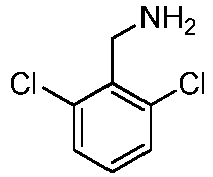
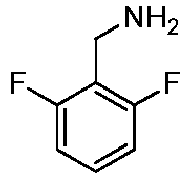


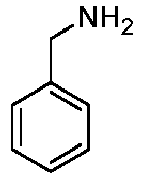


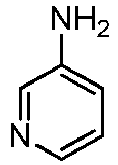


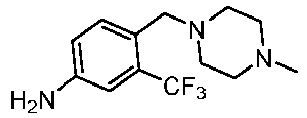


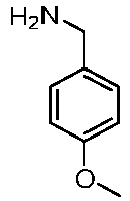


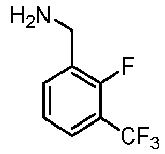

- 1. Compound I-a-1:
Synthesis of intermediate:
Compound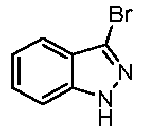

Ethyl 5-(1H-indazol-3-yl)thiophene-3-carboxylate (0.3 mmol, 83 mg) was dissolved in MeOH (0.3 mL) /THF (0.3 mL), then 0.3 mL of 1N NaOH aqueous solution was added, heated to 52°C, and stirred overnight. The organic solvent was removed under reduced pressure, the reaction system was adjusted with dilute hydrochloric acid to pH=6, to precipitate out a solid, then the solid was washed with water, and dried to obtain 72 mg of 5-(1H-indazol-3-yl)thiophene-3-carboxylic acid.
The above intermediate

- 2. Using compound


- 3. Using compound


- 4. Using compound


- 5. Compound I-a-30:
Synthesis of intermediate:
Using compound


Compound
- 6. Using compound
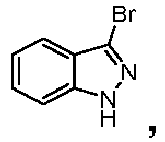

- 7. Using compound
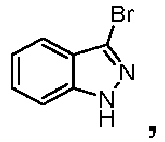

- 8. Using compound


- 9. Using compound


- 10. Using compound
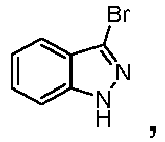

- 11. Compound I-g-1 :
Synthesis of intermediate:
- Compound methyl 5-bromo-1H-pyrrole-2-carboxylate (0.5 mmol, 102 mg) (CAS: 934-07-6, Accela ChemBio, Shanghai), bis(pinacolato)diboron (0.55 mmol, 139.6 mg) (CAS: 73183-34-3, Energy, Shanghai), palladium [1,1'-bis(diphenylphosphino)ferrocene]dichloride (10.2 mg) (CAS: 72287-26-4, Energy, Shanghai) and potassium acetate (1 mmol, 98.1 mg) were dissolved in 3 mL of
anhydrous 1,4-dioxane. The system was purged with nitrogen, and placed in an oil bath preheated to 105°C and stirred with heating overnight. The reaction system was filtered to remove solids and concentrated to obtain a crude product of methyl 5-(4,4,5,5-tetramethyl-1,3,2-dioxaborolan-2-yl)-1H-pyrrole-2-carboxylate. - Using compound


Table 1. Structure and characterization of compounds I No. Structure 1H NMR and/or MS data I-a-1 
1H NMR (600 MHz, Methanol-d 4) δ 8.10 (dd, J = 8.3, 1.0 Hz, 1H), 8.08 (d, J = 2.0 Hz, 2H), 7.56 (dt, J = 8.5, 0.9 Hz, 1H), 7.44 (ddd, J = 8.3, 6.9, 1.0 Hz, 1H), 7.34 (dd, J = 8.2, 5.8 Hz, 1H), 7.30 (dt, J = 8.2, 1.1 Hz, 1H), 7.25 (ddd, J = 8.0, 6.8, 0.9 Hz, 1H), 7.14 (ddd, J = 9.6, 8.2, 1.3 Hz, 1H), 4.77 (d, J = 1.6 Hz, 2H). MS (ESI) m/z: 386[M+H]+. I-a-2 
MS (ESI) m/z: 403[M+H]+. I-a-3 
MS (ESI) m/z: 370[M+H]+. I-a-4 
MS (ESI) m/z: 403[M+H]+. I-a-5 
MS (ESI) m/z: 394[M+H]+. I-a-6 
MS (ESI) m/z: 368[M+H]+. I-a-7 
MS (ESI) m/z: 352[M+H]+. I-a-8 
1H NMR (600 MHz, DMSO-d 6) δ 9.12 (t, J = 6.0 Hz, 1H), 8.17 (dd, J = 4.9, 1.4 Hz, 3H), 7.71 (d, J = 2.1 Hz, 1H), 7.67 (d, J = 7.4 Hz, 1H), 7.65 - 7.57 (m, 3H), 7.44 (ddd, J = 8.2, 6.9, 1.0 Hz, 1H), 7.27 (ddd, J = 7.9, 6.8, 0.9 Hz, 1H), 4.60 (d, J = 5.9 Hz, 2H). MS (ESI) m/z: 402[M+H]+. I-a-9 
1H NMR (600 MHz, DMSO-d6) δ 9.08 (t, J = 5.8 Hz, 1H), 8.19 - 8.10 (m, 3H), 7.79 (dd, J = 6.8, 2.4 Hz, 1H), 7.77 - 7.72 (m, 1H), 7.61 (dt, J = 8.4, 0.9 Hz, 1H), 7.51 - 7.40 (m, 2H), 7.27 (ddd, J = 7.9, 6.8, 0.9 Hz, 1H), 4.60 (d, J = 5.7 Hz, 2H). MS (ESI) m/z:420[M+H]+. I-a-10 
MS (ESI) m/z: 334[M+H]+. I-a-11 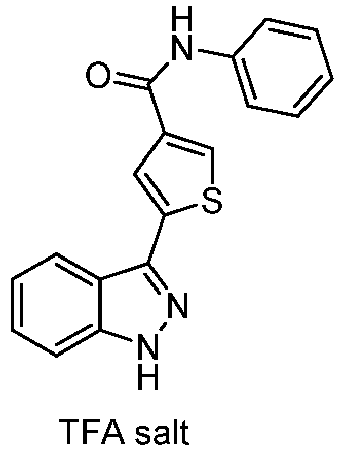
1H NMR (600 MHz, Methanol-d 4) δ 8.25 (d, J = 1.4 Hz, 1H), 8.21 (d, J = 1.4 Hz, 1H), 8.20 - 8.17 (m, 1H), 7.79 - 7.69 (m, 2H), 7.59 (dt, J = 8.4, 0.9 Hz, 1H), 7.47 (ddd, J = 8.2, 6.8, 1.0 Hz, 1H), 7.39 (dd, J = 8.5, 7.4 Hz, 2H), 7.30 (ddd, J = 7.9, 6.8, 0.9 Hz, 1H), 7.21 - 7.13 (m, 1H). MS (ESI) m/z: 320[M+H]+. I-a-12 
MS (ESI) m/z: 338[M+H]+. I-a-13 
MS (ESI) m/z: 354[M+H]+. I-a-14 
MS (ESI) m/z: 388[M+H]+. I-a-15 
MS (ESI) m/z: 334[M+H]+. I-a-16 
MS (ESI) m/z: 350[M+H]+. I-a-17 
MS (ESI) m/z: 378[M+H]+. I-a-18 
MS (ESI) m/z: 338[M+H]+. I-a-19 
MS (ESI) m/z: 363[M+H]+. I-a-20 
MS (ESI) m/z: 335[M+H]+. I-a-21 
MS (ESI) m/z: 321[M+H]+. I-a-22 
MS (ESI) m/z: 326[M+H]+. I-a-23 
MS (ESI) m/z: 327[M+H]+. I-a-24 
MS (ESI) m/z: 314[M+H]+. I-a-25 
MS (ESI) m/z: 284[M+H]+. I-a-26 
MS (ESI) m/z: 348[M+H]+. I-a-27 
MS (ESI) m/z: 366[M+H]+. I-a-28 
1H NMR (600 MHz, DMSO-d 6) δ 8.74 (t, J = 4.9 Hz, 1H), 8.19 - 8.07 (m, 3H), 7.70 (dt, J = 8.5, 0.9 Hz, 1H), 7.48 (ddd, J = 8.3, 6.9, 1.0 Hz, 1H), 7.41 (td, J = 8.2, 6.0 Hz, 1H), 7.36 (dt, J = 8.1, 1.0 Hz, 1H), 7.31 - 7.23 (m, 2H), 4.61 (d, J = 1.5 Hz, 2H), 4.08 (s, 3H). MS (ESI) m/z: 400[M+H]+. I-a-29 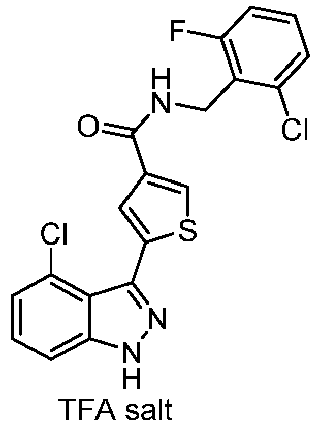
1H NMR (600 MHz, Methanol-d 4) δ 8.12 (d, J = 1.4 Hz, 1H), 7.91 (d, J = 1.4 Hz, 1H), 7.51 (d, J = 8.4 Hz, 1H), 7.39 - 7.30 (m, 2H), 7.30 - 7.27 (m, 1H), 7.19 (d, J = 7.3 Hz, 1H), 7.12 (ddd, J = 9.5, 8.2, 1.3 Hz, 1H), 4.73 (d, J = 1.6 Hz, 2H).MS (ESI) m/z: 421 [M+H]+. I-a-30 
1H NMR (600 MHz, DMSO-d 6) δ 12.85 (s, 1H), 8.71 (t, J = 5.0 Hz, 1H), 8.11 (d, J = 1.3 Hz, 1H), 8.03 (d, J = 1.3 Hz, 1H), 7.91 (d, J = 8.6 Hz, 1H), 7.44 - 7.38 (m, 1H), 7.37 - 7.34 (m, 1H), 7.30 - 7.19 (m, 1H), 6.91 (s, 1H), 6.83 (dd, J = 8.7, 1.9 Hz, 1H), 4.61 (dd, J = 4.9, 1.4 Hz, 2H). MS (ESI) m/z: 401 [M+H]+. I-b-1 
1H NMR (600 MHz, DMSO-d 6) δ 11.72 (s, 1H), 8.12 (t, J = 5.0 Hz, 1H), 8.01 (d, J = 8.2 Hz, 1H), 7.53 (d, J = 8.4 Hz, 1H), 7.42 - 7.31 (m, 4H), 7.27 - 7.15 (m, 3H), 4.56 (d, J = 4.8 Hz, 2H). MS (ESI) m/z: 369[M+H]+. I-b-2 
1H NMR (600 MHz, DMSO-d 6) δ 11.92 (s, 1H), 9.62 (s, 1H), 8.11 (d, J = 8.2 Hz, 1H), 7.82 - 7.72 (m, 2H), 7.62 - 7.53 (m, 2H), 7.42 (ddd, J = 8.1, 6.7, 1.0 Hz, 1H), 7.39 - 7.29 (m, 4H), 7.23 (ddd, J = 7.9, 6.8, 0.9 Hz, 1H), 7.09 - 7.00 (m, 1H). MS (ESI) m/z: 303[M+H]+. I-c-1 
1H NMR (600 MHz, Methanol-d 4) δ 8.64 (s, 1H), 8.22 (s 1H), 8.09 (d, J = 8.3 Hz, 1H), 7.60 - 7.54 (m, 1H), 7.46 (ddd, J = 8.3, 6.9, 1.0 Hz, 1H), 7.39 - 7.33 (m, 3H), 7.33 - 7.29 (m, 1H), 7.26 (ddd, J = 8.0, 6.8, 0.9 Hz, 1H), 7.15 (ddd, J = 9.5, 8.2, 1.2 Hz, 1H), 4.76 (d, J = 1.5 Hz, 2H). MS (ESI) m/z: 370[M+H]+. I-c-2 
1H NMR (600 MHz, Methanol-d 4) δ 8.38 (s, 1H), 8.15 (dt, J = 8.2, 1.0 Hz, 1H), 7.76 - 7.69 (m, 2H), 7.60 (dt, J = 8.3, 0.9 Hz, 1H), 7.53 - 7.44 (m, 2H), 7.39 (dd, J = 8.5, 7.3 Hz, 2H), 7.30 (ddd, J = 8.0, 6.8, 0.9 Hz, 1H), 7.21 - 7.11 (m, 1H). MS (ESI) m/z: 304[M+H]+. I-d-1 
1H NMR (600 MHz, Methanol-d 4) δ 8.40 (d, J = 1.9 Hz, 1H), 8.12 (dt, J = 7.8, 1.5 Hz, 1H), 8.08 (d, J = 8.2 Hz, 1H), 7.85 (dt, J = 7.8, 1.5 Hz, 1H), 7.68 - 7.55 (m, 2H), 7.45 (ddd, J = 8.3, 6.8, 0.9 Hz, 1H), 7.35 (td, J = 8.2, 5.8 Hz, 1H), 7.31 (d, J = 8.0 Hz, 1H), 7.25 (dd, J = 8.1, 6.9 Hz, 1H), 7.14 (td, J = 8.7, 8.0, 1.3 Hz, 1H), 4.80 (d, J = 1.5 Hz, 2H). MS (ESI) m/z: 380[M+H]+. I-d-2 
1H NMR (600 MHz, Methanol-d 4) δ 8.54 (t, J = 1.8 Hz, 1H), 8.20 (dt, J = 7.7, 1.3 Hz, 1H), 8.13 (dd, J = 8.2, 1.0 Hz, 1H), 7.99 (ddd, J = 7.8, 1.9, 1.1 Hz, 1H), 7.78 - 7.73 (m, 2H), 7.69 (t, J = 7.7 Hz, 1H), 7.61 (dt, J = 8.4, 1.0 Hz, 1H), 7.49 - 7.44 (m, 1H), 7.42 - 7.38 (m, 2H), 7.28 (ddd, J = 8.0, 6.8, 0.9 Hz, 1H), 7.18 (tt, J = 7.5, 1.1 Hz, 1H). MS (ESI) m/z: 316[M+H]+. I-e-1 
1H NMR (600 MHz, Methanol-d 4) δ 8.10 - 8.04 (m, 3H), 8.01 - 7.93 (m, 2H), 7.60 (dt, J = 8.4, 0.9 Hz, 1H), 7.45 (ddd, J = 8.5, 6.8, 1.0 Hz, 1H), 7.36 (td, J = 8.2, 5.8 Hz, 1H), 7.32 (dt, J = 8.2, 1.1 Hz, 1H), 7.27 (ddd, J = 7.9, 6.9, 0.9 Hz, 1H), 7.15 (ddd, J = 9.5, 8.2, 1.3 Hz, 1H), 4.80 (d, J = 1.5 Hz, 2H). MS (ESI) m/z: 380[M+H]+. I-e-2 
1H NMR (600 MHz, Methanol-d 4) δ 8.17 - 8.03 (m, 5H), 7.77 - 7.69 (m, 2H), 7.61 (dt, J = 8.4, 0.9 Hz, 1H), 7.48 - 7.44 (m, 1H), 7.42 - 7.35 (m, 2H), 7.27 (ddd, J = 7.9, 6.8, 0.9 Hz, 1H), 7.18 (tt, J = 7.5, 1.1 Hz, 1H). MS (ESI) m/z: 314[M+H]+. I-f-1 
1H NMR (600 MHz, DMSO-d 6) δ 8.84 (t, J = 4.9 Hz, 1H), 8.12 (d, J = 8.2 Hz, 1H), 7.85 (d, J = 3.9 Hz, 1H), 7.74 (d, J = 4.0 Hz, 1H), 7.60 (d, J = 8.4 Hz, 1H), 7.46 - 7.38 (m, 2H), 7.36 (d, J = 8.0 Hz, 1H), 7.29 - 7.22 (m, 2H), 4.59 (dd, J = 4.9, 1.4 Hz, 2H).MS (ESI) m/z: 386[M+H]+. I-f-2 
1H NMR (600 MHz, DMSO-d 6) δ 10.27 (s, 1H), 8.17 (d, J = 8.1 Hz, 1H), 8.11 (d, J = 3.9 Hz, 1H), 7.86 (d, J = 4.0 Hz, 1H), 7.76 (d, J = 8.0 Hz, 2H), 7.62 (d, J = 8.4 Hz, 1H), 7.45 (t, J = 7.6 Hz, 1H), 7.37 (t, J = 7.7 Hz, 2H), 7.28 (t, J = 7.5 Hz, 1H), 7.12 (t, J = 7.4 Hz, 1H). MS (ESI) m/z: 320[M+H]+. I-f-3 
1H NMR (600 MHz, DMSO-d 6) δ 8.28 (d, J = 8.0 Hz, 1H), 8.13 (d, J = 8.3 Hz, 1H), 7.87 (d, J = 3.8 Hz, 1H), 7.76 (d, J = 3.9 Hz, 1H), 7.61 (d, J = 8.4 Hz, 1H), 7.44 (ddd, J = 8.1, 6.8, 0.9 Hz, 1H), 7.26 (ddd, J = 7.9, 6.8, 0.8 Hz, 1H), 3.84 - 3.65 (m, 1H), 1.85 (dt, J = 7.3, 3.6 Hz, 2H), 1.78 - 1.64 (m, 2H), 1.66 - 1.55 (m, 1H), 1.32 (ddt, J = 14.3, 12.0, 7.9 Hz, 4H), 1.23 - 1.00 (m, 1H). MS (ESI) m/z: 326[M+H]+. I-g-1 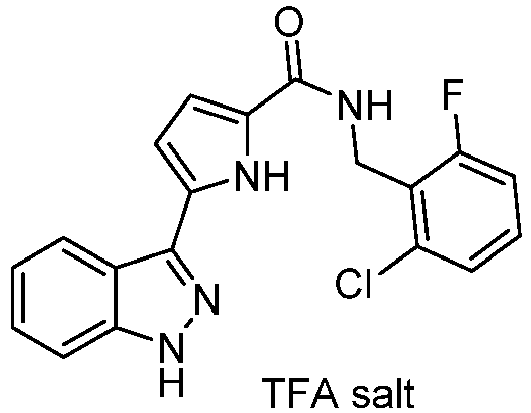
1H NMR (600 MHz, DMSO-d 6) δ 11.58 (t, J = 2.6 Hz, 1H), 8.44 (t, J = 4.8 Hz, 1H), 8.01 (d, J = 8.2 Hz, 1H), 7.56 (dd, J = 8.4, 0.9 Hz, 1H), 7.45 - 7.34 (m, 3H), 7.27 (ddd, J = 9.6, 8.1, 1.3 Hz, 1H), 7.19 (ddd, J = 7.9, 6.8, 0.9 Hz, 1H), 6.90 (dd, J = 3.7, 2.5 Hz, 1H), 6.78 (dd, J = 3.8, 2.3 Hz, 1H), 4.59 (d, J = 4.9 Hz, 2H). MS (ESI) m/z: 369[M+H]+ -


- Compound II was synthesized by a method similar to that for the synthesis of compound I.
- The synthesis of the compounds of examples is described in detail below.
- Using compound

- The table below lists the specific compounds and structure identification data.
Table 2. Structure and characterization of compounds II No. Structure 1H NMR and/or MS data II-a-1 
1H NMR (600 MHz, Methanol-d 4) δ 8.58 (dd, J = 8.0, 1.4 Hz, 1H), 8.36 (d, J = 5.1 Hz, 1H), 8.00 (d, J = 1.4 Hz, 1H), 7.81 (s, 1H), 7.75 (d, J = 1.4 Hz, 1H), 7.39-7.35 (m, 2H), 7.33 - 7.30 (m, 1H), 7.15 (ddd, J = 9.5, 8.2, 1.3 Hz, 1H), 4.77 (d, J = 1.6 Hz, 2H). MS (ESI) m/z: 386[M+H]+. II-a-2 
1H NMR (600 MHz, DMSO-d 6) δ 12.08 (s, 1H), 10.08 (s, 1H), 8.36 (d, J = 7.9 Hz, 1H), 8.33 (d, J = 4.5 Hz, 1H), 8.21 (d, J = 1.4 Hz, 1H), 7.97 (d, J = 2.5 Hz, 1H), 7.88 (d, J = 1.3 Hz, 1H), 7.78 (d, J = 8.1 Hz, 2H), 7.38 (t, J = 7.7 Hz, 2H), 7.24 (dd, J = 8.0, 4.7 Hz, 1H), 7.12 (t, J = 7.4 Hz, 1H). MS (ESI) m/z: 320[M+H]+. II-a-3 
1H NMR (600 MHz, DMSO-d 6) δ 12.33 - 11.88 (m, 1H), 9.02 (t, J = 6.0 Hz, 1H), 8.35 - 8.28 (m, 2H), 8.04 (d, J = 1.4 Hz, 1H), 7.91 (d, J = 2.4 Hz, 1H), 7.79 (d, J = 1.4 Hz, 1H), 7.69 (d, J = 2.1 Hz, 1H), 7.68 - 7.57 (m, 3H), 7.21 (dd, J = 7.7, 4.8 Hz, 1H), 4.58 (d, J = 5.9 Hz, 2H). MS (ESI) m/z: 402[M+H]+. II-b-1 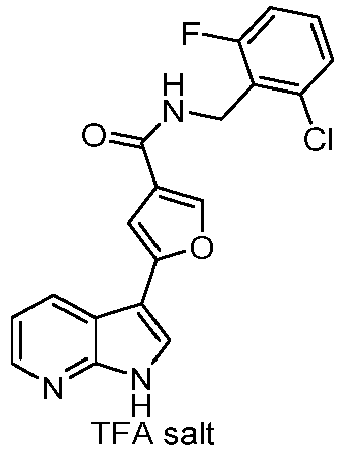
1H NMR (600 MHz, Methanol-d 4) δ 8.75 - 8.69 (m, 1H), 8.42 (dd, J = 5.4, 1.4 Hz, 1H), 8.13 (d, J = 0.8 Hz, 1H), 7.94 (s, 1H), 7.50 (dd, J = 7.9, 5.5 Hz, 1 H), 7.37 (td, J = 8.2, 5.9 Hz, 1H), 7.32 (dt, J = 8.2, 1.1 Hz, 1H), 7.16 (ddd, J = 9.5, 8.2, 1.2 Hz, 1H), 7.11 (d, J = 0.9 Hz, 1H), 4.75 (d, J = 1.5 Hz, 2H). MS (ESI) m/z: 370[M+H]+. II-b-2 
1H NMR (600 MHz, Methanol-d 4) δ 8.74 (dd, J = 8.0, 1.4 Hz, 1H), 8.43 (dd, J = 5.3, 1.4 Hz, 1H), 8.29 (s, 1H), 7.97 (s, 1H), 7.76 - 7.65 (m, 2H), 7.50 (dd, J = 8.0, 5.3 Hz, 1H), 7.44 - 7.33 (m, 2H), 7.24 (s, 1H), 7.18 (tt, J = 7.4, 1.2 Hz, 1H). MS (ESI) m/z: 304[M+H]+. II-c-1 
1H NMR (600 MHz, Methanol-d 4) δ 8.41 (dd, J = 7.9, 1.4 Hz, 1H), 8.28 (d, J = 4.7 Hz, 1H), 8.14 (d, J= 1.9 Hz, 1H), 7.87 (d, J = 7.9 Hz, 1H), 7.75 (s, 1H), 7.72 (d, J = 7.8 Hz, 1H), 7.54 (t, J = 7.7 Hz, 1H), 7.35 (dd, J = 8.2, 5.8 Hz, 1H), 7.32 (s, 1H), 7.23 (dd, J = 8.0, 4.7 Hz, 1H), 7.19 - 7.11 (m, 1H), 4.80 (s, J = 1.5 Hz, 2H). MS (ESI) m/z: 380[M+H]+. II-c-2 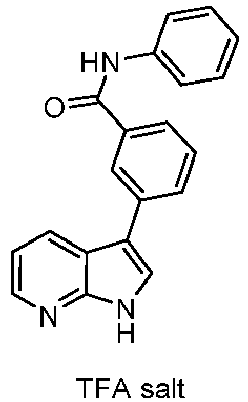
11H NMR (600 MHz, DMSO-d 6) δ 7.92 (s, 1H), 7.52-7.46 (m, 2H), 7.13 (s, 4H), 6.92-6.81 (m, 2H), 6.61-6.58 (m, 4H), 6.38 (s, 1H). MS (ESI) m/z: 314 [M+H]+. II-d-1 
1H NMR (600 MHz, Methanol-d 4) δ 8.61 (dd, J = 8.0, 1.3 Hz, 1H), 8.37 (s, 1H), 7.95 - 7.91 (m, 2H), 7.90 (s, 1H), 7.84 - 7.76 (m, 2H), 7.43 - 7.34 (m, 2H), 7.32 (dt, J = 8.1, 1.1 Hz, 1H), 7.15 (ddd, J = 9.6, 8.2, 1.3 Hz, 1H), 4.79 ((d, J = 1.5 Hz, 2H). MS (ESI) m/z: 380 [M+H]+. II-d-2 
1H NMR (600 MHz, DMSO-d 6) δ 12.09 (s, 1H), 10.23 (s, 1H), 8.39 (dd, J = 8.2, 1.4 Hz, 1H), 8.31 (dd, J = 4.6, 1.5 Hz, 1H), 8.08 (d, J = 2.7 Hz, 1H), 8.07 - 8.04 (m, 2H), 7.93 - 7.87 (m, 2H), 7.84 - 7.78 (m, 2H), 7.41 - 7.32 (m, 2H), 7.21 (dd, J = 7.9, 4.6 Hz, 1H), 7.14 - 7.06 (m, 1H). MS (ESI) m/z: 314[M+H]+. II-e-1 
1H NMR (600 MHz, DMSO-d 6) δ 12.15 - 11.90 (m, 1H), 8.71 (t, J = 5.0 Hz, 1H), 8.37 - 8.22 (m, 2H), 8.00 (d, J = 2.7 Hz, 1H), 7.79 (d, J = 3.9 Hz, 1H), 7.45 - 7.38 (m, 2H), 7.36 (dt, J = 8.2, 1.0 Hz, 1H), 7.26 (ddd, J = 9.6, 8.2, 1.3 Hz, 1H), 7.21 (dd, J = 8.0, 4.7 Hz, 1H), 4.59 (dd, J= 4.9, 1.5 Hz, 2H).MS (ESI) m/z: 386[M+H]+. II-e-2 
1H NMR (600 MHz, DMSO-d 6) δ 12.17 (d, J = 2.5 Hz, 1H), 10.18 (s, 1H), 8.41 - 8.27 (m, 2H), 8.06 (dd, J = 13.2, 3.3 Hz, 2H), 7.80 - 7.70 (m, 2H), 7.52(d, J = 4.0 Hz, 1H), 7.37 (dd, J = 8.5, 7.3 Hz, 2H), 7.24 (dd, J = 7.9, 4.6 Hz, 1H), 7.16 - 7.00 (m, 1H).MS (ESI) m/z: 320[M+H]+. -


compounds III-a, III-b, III-c, III-d, III-e, III-i were synthesized by a method similar to that for the synthesis of compound I. -

- A solution of compound 5 (20 mmol) in toluene (30 mL) was slowly added dropwise at 0°C to a mixed solution of compound 6 (30 mmol) and tin tetrachloride (20 mmol) in toluene (20 mL), and the mixture was allowed to react for 1 h after returning to room temperature. The reaction system was extracted with water/ethyl acetate three times, then the organic phase was washed with saturated sodium chloride solution, dried with anhydrous sodium sulfate, concentrated, and separated by silica gel column chromatography (ethyl acetate/petroleum ether) to obtain
compound 7. - Compound 7 (8 mmol) was dissolved in ethanol (25 mL), to which was added hydrazine hydrate (7.76 mL). The system was allowed to react at 80°C for 24 h. The organic solvent was removed under reduced pressure, water was added to precipitate out a solid, then the solid was washed with water, and dried to obtain
compound 8. - Compound 8 (6 mmol) was dissolved in MeOH (6 mL) /THF (6 mL), to which was added 6 mL of 1N NaOH aqueous solution, followed by heating to 52°C, and stirring overnight. The organic solvent was removed under reduced pressure, the reaction system was adjusted with dilute hydrochloric acid to pH=6, to precipitate out a solid, then the solid was washed with water, and dried to obtain
compound 9. - The preparation method was the same as that of compound I-a.
-

- The preparation method was the same as that of
compound 7. - Compound 12 (6.6 mL, 100 mmol) was slowly added dropwise at 0°C to compound 11 (2.06 g, 10 mmol), and the mixture was allowed to react at 0°C for 24 h. The reaction system was poured into ice water, to precipitate out a solid, then the solid was washed with water, and dried to obtain compound 13. (brown solid, 2.67g, 93.4%). MS (ESI) m/z 287 [M+H]+.
- Thionyl chloride (0.871 mL, 12 mmol) was slowly added dropwise at 0°C to compound 13 (2,29 g, 8 mmol), followed by returning to room temperature. After refluxing for 30 min, unreacted thionyl chloride was removed under reduced pressure to obtain compound 14 (white solid, 1.95 g, 79.8%). MS (ESI) m/z 306 [M+H]+.
- Arylamine (0.35 mmol), triethylamine (1.4 mmol) were dissolved in dichloromethane (1.5 mL), and a solution of compound 14 (0.35 mmol) in dichloromethane (1.5 mL) was slowly added dropwise to the mixed solution at 0 °C. The mixture was allowed to react for 4 h after returning to room temperature, and extracted with water/dichloromethane three times, then the organic phase was washed with saturated sodium chloride solution, dried with anhydrous sodium sulfate, concentrated, and separated by silica gel column chromatography (ammonia in methanol/dichloromethane) to obtain compound 15.
- Compound 15 (0.12 mmol) was dissolved in ethanol (2.5 mL), to which was added hydrazine hydrate (0.073 mL), followed by reacting at 80°C for 24 h. The reaction system was concentrated, purified by reverse phase preparative HPLC (using 0.035% trifluoroacetic acid-containing aqueous solution and methanol as mobile phase), and vacuum concentrated to obtain compound III-g.
-

- Compound 13 (0.2 mmol), Na2SO3 (0.4 mmol), NaHPO4 (0.2 mmol) were mixed in 1 mL of water. The mixture was heated to react at 60°C for 16 h, during which the reaction system changed from turbid to clear and then became turbid. A solution of arylbenzyl bromide (0.15 mmol) in acetone (1 mL) was slowly added dropwise to the above system, followed by reacting at 60°C for 4 h. The reaction system was cooled to room temperature, then the organic solvent was removed under reduced pressure, and the precipitate was washed with a mixture of methanol and water. The precipitate was collected, and dried to obtain compound 16.
- The preparation method was the same as that of compound III-g.
- The synthesis of the compounds of examples is described in detail below.
- 1. Using compound

- 2. Compound III-f-1:
Synthesis of intermediate:
A solution of compound 2-chloronicotinyl chloride (20 mmol, 3.52 g) (CAS: 49609-84-9, PharmaBlock, Nanjing) in toluene (30 mL), at 0°C, was slowly added dropwise to a mixed solution of compound methyl 1H-pyrrole-3-carboxylate (30 mmol, 3.75 g) (CAS: 2703-17-5, PharmaBlock, Nanjing) and tin tetrachloride (20 mmol, 2.34 mL) (CAS: 7646-78-8, Bide, Shanghai) in toluene (20 mL), and the mixture was allowed to react for 1 h after returning to room temperature. The reaction system was extracted with water/ethyl acetate three times, then the organic phase was washed with saturated sodium chloride solution, dried with anhydrous sodium sulfate, concentrated, and separated by silica gel column chromatography (ethyl acetate/petroleum ether) to obtain 2.11 g of methyl 5-(2-chloronicotinyl)-1H-pyrrole-3-carboxylate.
Methyl 5-(2-chloronicotinyl)-1H-pyrrole-3-carboxylate (7.97 mmol, 2.11 g) was dissolved in ethanol (25 mL), to which was added hydrazine hydrate (7.76 mL). The mixture was allowed to react at 80°C for 24 h. The organic solvent was removed under reduced pressure, water was added to precipitate out a solid, then the solid was washed with water, and dried to obtain 1.8 g of methyl 5-(1H-pyrazolo[3,4-b]pyrid-3-yl)-1H-pyrrole-3-carboxylate.
Methyl 5-(1H-pyrazolo[3,4-b]pyrid-3-yl)-1H-pyrrole-3-carboxylate (6 mmol, 1.45 g) was dissolved in MeOH (6 mL) /THF (6 mL), to which was added 6 mL of 1N NaOH aqueous solution, followed by heating to 52 °C, and stirring overnight. The organic solvent was removed under reduced pressure, the reaction system was adjusted with dilute hydrochloric acid to pH=6, to precipitate out a solid, then the solid was washed with water, and dried to obtain 1.1 g of 5-(1H-pyrazolo[3,4-b]pyrid-3-yl)-1H-pyrrole-3-carboxylic acid.

- 3. Using the intermediate

- 4. Compound III-g-1:
Synthesis of intermediate
A solution of compound 2-chloronicotinyl chloride (20 mmol, 3.52 g) (CAS: 49609-84-9, PharmaBlock, Nanjing) in toluene (30 mL), at 0°C, was slowly added dropwise to a mixed solution of compound pyrrole (20 mmol, 1.34 g) (CAS: 109-97-7, Macklin) and tin tetrachloride (20 mmol, 2.34 mL) (CAS: 7646-78-8, Bide, Shanghai) in toluene (20 mL), and the mixture was allowed to react for 1 h after returning to room temperature. The reaction system was extracted with water/ethyl acetate three times, then the organic phase was washed with saturated sodium chloride solution, dried with anhydrous sodium sulfate, concentrated, and separated by silica gel column chromatography (ethyl acetate/petroleum ether) to obtain 2.06 g of (2-chloropyrid-3-yl) (1H-pyrrol-2-yl)methanone.
Chlorosulfonic acid (6.6 mL, 100 mmol) (CAS: 7790-94-5, Energy, Shanghai), at 0°C, was slowly added dropwise to (2-chloropyrid-3-yl) (1H-pyrrole-2-yl)methanone (10 mmol, 2.06 g), followed by reacting at 0°C for 24 h. The reaction system was poured into ice water, to precipitate out a solid, then the solid was washed with water, and dried to obtain 2.67 g of
Thionyl chloride (0.871 mL, 12 mmol) (CAS: 7719-09-7, Aladdin), at 0°C, was slowly added dropwise to compound


The compound, 5-(2-chloronicotinyl)-N-phenyl-1 H-pyrrole-3-sulfonamide (0.12 mmol, 43.4 mg) was dissolved in ethanol (2.5 mL), to which was added hydrazine hydrate (0.073 mL), followed by reacting at 80°C for 24 h. The reaction system was concentrated, purified by reverse phase preparative HPLC (using 0.35% trifluoroacetic acid-containing aqueous solution and methanol as mobile phase), and vacuum concentrated to obtain compound III-g-1 (20.2 mg, 49.6%). - 5. Using the intermediate

- 6. Compound III-h-1:
The intermediate

The compound, (4-(benzylsulfonyl)-1 H-pyrrol-2-yl) (2-chloropyrid-3-yl)methanone (0.08 mmol, 30.4 mg) was dissolved in ethanol (2 mL), to which was added hydrazine hydrate (0.073 mL), followed by reacting at 80°C for 24 h. The reaction system was concentrated, purified by reverse phase preparative HPLC (using 0.35% trifluoroacetic acid-containing aqueous solution and methanol as mobile phase), and vacuum concentrated to obtain compound III-h-1 (25.2 mg, 93%). - 7. Using the intermediate

- 8. Using the intermediate

- 9. Using the intermediate

- 10. Using the intermediate

- The table below lists the specific compounds and structure identification data.
Table 3. Structure and characterization of compounds III No. Structure 1H NMR and/or MS data III-a-1 
1H NMR (600 MHz, DMSO-d 6) δ 8.71 (t, J = 4.9 Hz, 1H), 8.63 - 8.56 (m, 2H), 8.17 (dd, J = 15.2, 1.3 Hz, 2H), 7.42 (td, J = 8.1, 5.9 Hz, 1H), 7.38 - 7.31 (m, 2H), 7.27 (ddd, J = 9.5, 8.2, 1.3 Hz, 1H), 4.63 (d, J = 1.4 Hz, 2H). MS (ESI) m/z: 387[M+H]+. III-a-2 
1H NMR (600 MHz, DMSO-d 6) δ 10.15 (s, 1H), 8.69 (dd, J = 8.2, 1.6 Hz, 1H), 8.63 (dd, J = 4.4, 1.5 Hz, 1H), 8.36 (d, J = 1.4 Hz, 1H), 8.29 (d, J = 1.5 Hz, 1H), 7.85 - 7.72 (m, 2H), 7.45 - 7.33 (m, 3H), 7.18 - 7.05 (m, 1H). MS (ESI) m/z: 321[M+H]+. III-a-3 
1H NMR (600 MHz, DMSO-d 6) δ 9.10 (t, J = 6.0 Hz, 1H), 8.63 (d, J = 8.2 Hz, 1H), 8.61 (d, J = 4.3 Hz, 1H), 8.20 (d, J = 4.9 Hz, 2H), 7.70 (s, 1H), 7.58 - 7.55 (m, 1H), 7.52- 7.43 (m, 2H), 7.34 (dd, J = 8.1, 4.4 Hz, 1H), 4.60 (d, J = 5.9 Hz, 2H). MS (ESI) m/z: 403[M+H]+. III-a-4 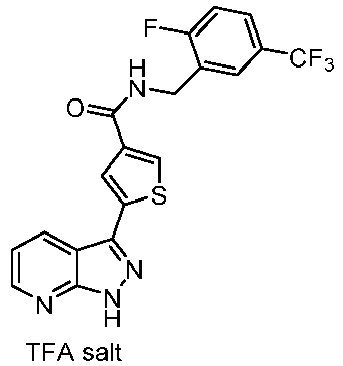
1H NMR (600 MHz, DMSO-d6) δ 9.05 (t, J = 5.8 Hz, 1H), 8.66 - 8.57 (m, 2H), 8.24-8.13 (m, 2H), 7.79 (dd, J = 6.8, 2.4 Hz, 1H), 7.76 - 7.71 (m, 1H), 7.47 (t, J = 9.1 Hz, 1H), 7.34 (dd, J = 8.1, 4.5 Hz, 1H), 4.60 (d, J = 5.7 Hz, 2H). MS (ESI) m/z: 421 [M+H]+ III-b-1 
1H NMR (600 MHz, DMSO-d 6) δ 8.60 (dd, J = 4.5, 1.5 Hz, 1H), 8.55 (t, J = 4.9 Hz, 1H), 8.48 (dd, J = 8.2, 1.5 Hz, 1H), 8.36 (d, J = 0.8 Hz, 1H), 7.49 (d, J = 0.8 Hz, 1H), 7.42 (td, J = 8.2, 6.0 Hz, 1H), 7.37 (dt, J = 8.0, 0.9 Hz, 1H), 7.31 (dd, J = 8.1, 4.5 Hz, 1H), 7.27 (ddd, J = 9.5, 8.2, 1.2 Hz, 1H), 4.60 (d, J = 4.9, 1.5 Hz, 2H), MS (ESI) m/z 371[M+H]+. III-b-2 
1H NMR (600 MHz, DMSO-d 6) δ 10.04 (s, 1H), 8.62 (dd, J = 4.4, 1.5 Hz, 1H), 8.58 - 8.53 (m, 2H), 7.81 - 7.74 (m, 2H), 7.63 (d, J = 0.9 Hz, 1H), 7.38 (dd, J = 8.5, 7.4 Hz, 2H), 7.12 (td, J = 7.3, 1.2 Hz, 1H). MS (ESI) m/z: 305[M+H]+. III-c-1 
1H NMR (600 MHz, DMSO-d 6) δ 7.87 - 7.66 (m, 2H), 7.63 (s, 1H), 7.37 (d, J = 7.6 Hz, 1H), 7.07 (d, J = 7.7 Hz, 1H), 6.82 (t, J = 7.7 Hz, 1H), 6.58 - 6.45 (m, 3H), 6.34 (t, J = 8.8 Hz, 1H), 4.00 (d, J = 1.5 Hz, 2H). MS (ESI) m/z: 381[M+H]+. III-c-2 
1H NMR (600 MHz, DMSO-d 6) δ 7.86 (d, J = 8.2 Hz, 1H), 7.82 - 7.72 (m, 2H), 7.44 (d, J = 7.8 Hz, 1H), 7.22 (d, J = 7.8 Hz, 1H), 6.98 - 6.85 (m, 3H), 6.60 (t, J = 7.9 Hz, 2H), 6.55 (dd, J = 8.3, 4.5 Hz, 1H), 6.38 (t, J = 7.5 Hz, 1H), 3.80 (s, 2H). MS (ESI) m/z: 315[M+H]+. III-c-3 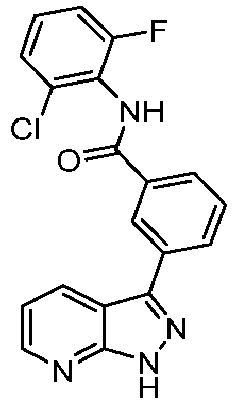
1H NMR (600 MHz, DMSO-d 6) δ 10.39 (s, 1H), 8.65 (d, J = 8.0 Hz, 1H), 8.62 - 8.58 (m, 2H), 8.29 (dd, J = 7.7, 1.6 Hz, 1H), 8.04 (d, J = 7.8 Hz, 1H), 7.72 (t, J = 7.7 Hz, 1H), 7.49 - 7.42 (m, 2H), 7.40 - 7.36 (m, 1H), 7.34 (dd, J = 8.2, 4.5 Hz, 1H). MS (ESI) m/z: 367[M+H]+. III-d-1 
1H NMR (600 MHz, Methanol-d 4) δ 8.65 - 8.55 (m, 2H), 8.16 - 8.07 (m, 2H), 8.02 - 7.94 (m, 2H), 7.40 - 7.29 (m, 3H), 7.16 (ddd, J = 9.6, 8.2, 1.3 Hz, 1H), 4.80 (d, J = 1.4 Hz, 2H). MS (ESI) m/z: 381[M+H]+. III-d-2 
1H NMR (600 MHz, Methanol-d 4) δ 8.63 (dd, J = 8.2, 1.5 Hz, 1H), 8.60 (dd, J = 4.6, 1.5 Hz, 1H), 8.21 - 8.17 (m, 2H), 8.15 - 8.11 (m, 2H), 7.78 - 7.72 (m, 2H), 7.44 - 7.35 (m, 3H), 7.25 - 7.12 (m, 1H), 4.61 (s, 2H). MS (ESI) m/z: 315[M+H]+. III-d-3 
1H NMR (600 MHz, DMSO-d 6) δ 10.28 (s, 1H), 8.68 (dd, J = 8.2, 1.5 Hz, 1H), 8.61 (dd, J = 4.5, 1.5 Hz, 1H), 8.26 - 8.21 (m, 2H), 8.19 - 8.13 (m, 2H), 7.48 - 7.41 (m, 2H), 7.37 (ddd, J = 9.7, 8.2, 1.6 Hz, 1H), 7.33 (dd, J = 8.1, 4.4 Hz, 1H). MS (ESI)m/z:367[M+H]+. III-e-1 
1H NMR (600 MHz, DMSO-d 6) δ 8.87 (t, J = 5.0 Hz, 1H), 8.64 - 8.58 (m, 2H), 7.87 (d, J = 4.0 Hz, 1H), 7.81 (d, J = 4.0 Hz, 1H), 7.42 (td, J = 8.2, 6.0 Hz, 1H), 7.37 (dt, J = 8.1, 1.0 Hz, 1H), 7.32 (dd, J = 8.1, 4.5 Hz, 1H), 7.27 (ddd, J = 9.6, 8.2, 1.2 Hz, 1H), 4.60 (dd, J = 4.9, 1.5 Hz, 2H). MS (ESI)m/z:387[M+H]+. III-e-2 
1H NMR (600 MHz, DMSO-d 6) δ 10.30 (s, 1H), 8.68 (dd, J = 8.1, 1.5 Hz, 1H), 8.62 (dd, J = 4.5, 1.5 Hz, 1H), 8.12 (d, J = 4.0 Hz, 1H), 7.92 (d, J = 4.0 Hz, 1H), 7.78 - 7.73 (m, 2H), 7.40 - 7.36 (m, 2H), 7.40 - 7.33 (m, 1H), 7.15 - 7.10 (m, 1H). MS (ESI)m/z:321[M+H]+. III-f-1 
1H NMR (600 MHz, DMSO-d 6) δ 11.84 (t, J = 2.9 Hz, 1H), 8.55 (dd, J = 4.5, 1.6 Hz, 1H), 8.47 (dd, J = 8.1, 1.6 Hz, 1H), 8.10 (t, J = 5.0 Hz, 1H), 7.42 (dd, J = 3.0, 1.6 Hz, 1H), 7.41 - 7.37 (m, 1H), 7.35 (d, J = 8.0 Hz, 1H), 7.28 - 7.22 (m, 3H), 4.57 (d, J = 1.5 Hz, 2H). MS (ESI) m/z: 370 [M+H]+. III-f-2 
1H NMR (600 MHz, Methanol-d 4) δ 8.58 - 8.48 (m, 2H), 7.53 (d, J = 1.6 Hz, 1H), 7.44 (d, J = 8.1 Hz, 2H), 7.34 - 7.28 (m, 2H), 7.28 - 7.25 (m, 2H), 4.87 (d, J = 1.4 Hz, 2H). MS (ESI) m/z: 387 [M+H]+. III-f-3 
1H NMR (600 MHz, Methanol-d 4) δ 8.53 (s, 1H), 8.54 - 8.50 (m, 1H), 7.51 (d, J = 1.5 Hz, 1H), 7.39 - 7.31 (m, 1H), 7.28 (dd, J = 7.9, 4.8 Hz, 1H), 7.24 (d, J = 1.7 Hz, 1H), 7.05 (s, 1H), 6.99 (t, J = 8.0 Hz, 2H), 4.85(d, J = 1.5 Hz, 2H). MS (ESI) m/z: 354 [M+H]+. III-f -4 
1H NMR (600 MHz, DMSO-d 6) δ 8.60 - 8.54 (m, 2H), 8.50 (d, J = 8.1 Hz, 1H), 7.61 (d, J = 8.3 Hz, 1H), 7.57 (d, J = 2.0 Hz, 1H), 7.45 (d, J = 1.8 Hz, 1H), 7.33 (dd, J = 8.5, 1.9 Hz, 1H), 7.28 (q, J = 5.1 Hz, 2H), 4.46 (d, J = 5.9 Hz, 2H). MS (ESI) m/z: 387[M+H]+. III-f-5 
1H NMR (600 MHz, DMSO-d 6) δ 11.88 (s, 1H), 8.58 - 8.53 (m, 1H), 8.51 (d, J = 8.3 Hz, 1H), 8.19 (d, J = 6.3 Hz, 1H), 7.43 (s, 1H), 7.31 (s, 1H), 7.30 - 7.23 (m, 1H), 7.13 (d, J = 8.5 Hz, 1H), 6.59 - 6.53 (m, 1H), 6.49 (d, J = 8.5 Hz, 1H), 4.35 (d, J = 5.7 Hz, 2H), 3.81 (s, 3H), 3.74 (s, 3H). MS (ESI) m/z: 378[M+H]+. III-f-6 
1H NMR (600 MHz, DMSO-d 6) δ 11.92 (s, 1H), 8.56 (dd, J = 4.6, 1.5 Hz, 1H), 8.53 - 8.47 (m, 2H), 7.44 (dd, J = 3.0, 1.6 Hz, 1H), 7.40 (d, J = 8.4 Hz, 2H), 7.35 (d, J = 8.5 Hz, 2H), 7.31 - 7.25 (m, 2H), 4.45 (d, J = 6.0 Hz, 2H). MS (ESI) m/z: 352[M+H]+. III-f-7 
1H NMR (600 MHz, Methanol-d 4) δ 8.61 - 8.49 (m, 2H), 7.55 (d, J = 1.6 Hz, 1H), 7.41 (dd, J = 8.6, 5.5 Hz, 2H), 7.30 (dd, J = 8.1, 4.6 Hz, 1H), 7.27 (d, J = 1.6 Hz, 1H), 7.08 (t, J = 8.8 Hz, 2H), 4.57 (s, 2H). MS (ESI) m/z: 336[M+H]+. III-f-8 
1H NMR (600 MHz, Methanol-d 4) δ 8.52(dd, J = 4.6, 1.5 Hz, 1H), 8.48 (dd, J = 8.1, 1.6 Hz, 1H), 7.69 (s, 1H), 7.64 (d, J = 7.6 Hz, 1H), 7.57 (d, J = 1.6 Hz, 1H), 7.54 (dt, J = 15.2, 7.9 Hz, 2H), 7.28 - 7.26 (m, 1H), 7.26 - 7.24 (m, 1H), 4.65 (s, 2H). MS (ESI) m/z: 386[M+H]+. III-f-9 
1H NMR (600 MHz, Methanol-d 4) δ 8.56 - 8.48 (m, 2H), 7.54 (d, J = 1.6 Hz, 1H), 7.37 (d, J = 8.3 Hz, 2H), 7.33 (t, J = 7.6 Hz, 2H), 7.31 - 7.27 (m, 1H), 7.27 - 7.22 (m, 2H), 4.58 (s, 2H). MS (ESI) m/z: 318 [M+H]+. III-f-10 
1H NMR (600 MHz, Methanol-d 4) δ 8.59 - 8.57 (m, 1H), 8.57 - 8.53 (m, 1H), 7.71 (d, J = 1.1 Hz, 1H), 7.70 (d, J = 1.1 Hz, 1H), 7.67 (d, J = 1.7 Hz, 1H), 7.41 (d, J = 1.6 Hz, 1H), 7.35 (m, 2H), 7.33 - 7.29 (m, 1H), 7.12 (tt, J = 7.4, 1.1 Hz, 1H). MS (ESI) m/z: 304[M+H]+. III-f-11 
1H NMR (600 MHz, Methanol-d 4) δ 8.59 (dd, J = 8.1, 1.5 Hz, 1H), 8.58 - 8.56 (m, 1H), 8.21 (d, J = 2.0 Hz, 1H), 8.01 - 7.96 (m, 1H), 7.72 (d, J = 1.6 Hz, 1H), 7.56 (t, J = 8.0 Hz, 1H), 7.44 (d, J = 1.7 Hz, 1H), 7.42 (d, J = 7.8 Hz, 1H), 7.34 (dd, J = 8.1, 4.6 Hz, 1H). MS (ESI) m/z: 372 [M+H]+. III-f-12 
1H NMR (600 MHz, Methanol-d 4) δ 8.60 (dd, J = 8.1, 1.5 Hz, 1H), 8.57 (dd, J = 4.7, 1.4 Hz, 1H), 7.92 (s, 1H), 7.70 (d, J = 1.7 Hz, 1H), 7.63 (dd, J = 8.2, 2.0 Hz, 1H), 7.42 (d, J = 1.8 Hz, 1H), 7.34 (ddd, J = 8.3, 6.4, 1.9 Hz, 2H), 7.13 (dd, J = 8.1, 2.0 Hz, 1H). MS (ESI) m/z: 338[M+H]+. III-f-13 
1H NMR (600 MHz, DMSO-d 6) δ 12.12 (s, 1H), 9.82 (s, 1H), 8.59-8.56 (m, 2H), 7.96 (s, 1H), 7.80-7.78 (m, 1H), 7.67 (s, 1H), 7.54 (d, J = 8.4 Hz, 1H), 7.38 (d, J = 7.4 Hz, 2H), 7.34 - 7.28 (m, 1H), 6.88 (s, 1H). MS (ESI) m/z: 322[M+H]+. III-f-14 
1H NMR (600 MHz, Methanol-d 4) δ 8.61 - 8.53 (m, 2H), 7.76 - 7.69 (m, 2H), 7.68 (d, J = 1.6 Hz, 1H), 7.40 (d, J = 1.7 Hz, 1H), 7.32 (dd, J = 8.0, 4.6 Hz, 1H), 7.11 (t, J = 8.8 Hz, 2H). MS (ESI) m/z: 322[M+H]+. III-f-15 
1H NMR (600 MHz, DMSO-d 6) δ 12.02 (d, J = 2.9 Hz, 1H), 9.52(s, 1H), 8.59 - 8.54 (m, 2H), 7.66 - 7.61 (m, 2H), 7.60 (dd, J = 3.0, 1.6 Hz, 1H), 7.38 (t, J = 2.1 Hz, 1H), 7.30 (dd, J = 8.1, 4.5 Hz, 1H), 6.93 - 6.84 (m, 2H), 4.56 (p, J = 6.0 Hz, 1H), 1.26 (d, J = 6.0 Hz, 6H). MS (ESI) m/z: 362[M+H]+. III-f-16 
1H NMR (600 MHz, DMSO-d 6) δ 12.04 (s, 1H), 9.57 (s, 1H), 8.64 - 8.52(m, 2H), 7.66 (dd, J = 8.4, 3.7 Hz, 2H), 7.61 (d, J = 1.8 Hz, 1H), 7.40 (dd, J = 2.6, 1.6 Hz, 1H), 7.30 (dd, J = 8.0, 4.5 Hz, 1H), 7.14 (dd, J = 7.9, 1.2 Hz, 2H), 2.28 (s, 3H). MS (ESI) m/z: 318[M+H]+. III-f-17 
1H NMR (600 MHz, DMSO-d 6) δ 12.11 - 11.95 (m, 1H), 9.53 (s, 1H), 8.62 - 8.49 (m, 2H), 7.69 - 7.63 (m, 2H), 7.59 (dd, J = 3.1, 1.6 Hz, 1H), 7.38 (dd, J = 2.5, 1.6 Hz, 1H), 7.30 (dd, J = 8.0, 4.5 Hz, 1H), 7.01 - 6.81 (m, 2H), 3.75 (s, 3H). MS (ESI) m/z: 334[M+H]+. III-f-18 
1H NMR (600 MHz, DMSO-d 6) δ 12.10 (s, 1H), 9.83 (s, 1H), 8.65 - 8.40 (m, 2H), 7.91 - 7.87 (m, 2H), 7.67 (dd, J = 3.1, 1.6 Hz, 1H), 7.38 (dd, J = 2.6,1.7 Hz, 1H), 7.36 (d, J = 8.6 Hz, 2H), 7.31 (dd, J = 8.0, 4.5 Hz, 1H). MS (ESI) m/z: 388[M+H]+. III-f-19 
1H NMR (600 MHz, DMSO-d 6) δ 12.08 (s, 1H), 9.78 (s, 1H), 8.80 (d, J = 2.6 Hz, 1H), 8.59 (dd, J = 4.5, 1.6 Hz, 1H), 8.56 (dd, J = 8.0, 1.5 Hz, 1H), 8.09 (dd, J = 8.3, 2.7 Hz, 1H), 7.65 (dd, J = 3.0, 1.7 Hz, 1H), 7.38 (dd, J = 2.6, 1.7 Hz, 1H), 7.31 (dd, J = 8.1, 4.5 Hz, 1H), 7.26 (d, J = 8.3 Hz, 1H), 2.45 (s, 3H). MS (ESI) m/z: 319[M+H]+. III-f-20 
1H NMR (600 MHz, DMSO-d 6) δ 12.17 (s, 1H), 10.12 (s, 1H), 9.14 (s, 1H), 8.59 (dd, J = 4.5, 1.5 Hz, 1H), 8.56 (dd, J = 8.1, 1.6 Hz, 1H), 8.42-8.40 (m, 2H), 7.72 (dd, J = 3.1, 1.6 Hz, 1H), 7.69 - 7.62 (m, 1H), 7.39 (dd, J = 2.6, 1.7 Hz, 1H), 7.31 (dd, J = 8.0, 4.5 Hz, 1H). MS (ESI) m/z: 305[M+H]+. III-f-21 
1H NMR (600 MHz, DMSO-d 6) δ 12.10 (s, 1H), 9.90 (s, 1H), 8.60 - 8.54 (m, 1H), 8.20 (d, J = 2.3 Hz, 1H), 8.05 (dd, J = 8.5, 2.2 Hz, 1H), 7.71 - 7.63 (m, 2H), 7.39 (d, J = 2.3 Hz, 1H), 7.31 (dd, J = 8.1, 4.5 Hz, 1H), 3.57 (s, 2H), 2.20 (s,3H). MS (ESI) m/z: 484[M+H]+. III-f-22 
1H NMR (600 MHz, Methanol-d 4) δ 8.55 (dd, J = 4.5, 1.5 Hz, 1H), 8.51 (dd, J = 8.1, 1.5 Hz, 1H), 7.49 (d, J = 1.7 Hz, 1H), 7.33 - 7.25 (m, 5H), 7.19 (d, J = 1.6 Hz, 1H), 3.59 (t 2H), 2.93 (t, J = 7.4 Hz, 2H). MS (ESI) m/z: 366 [M+H]+. III-f-23 
1H NMR (600 MHz, Methanol-d 4) δ 8.59 - 8.50 (m, 2H), 7.51 (d, J = 1.6 Hz, 1H), 7.31 (dd, J = 8.0, 4.7 Hz, 1H), 7.29 - 7.26 (m, 2H), 7.21 (d, J = 1.6 Hz, 1H), 7.02 (t, J = 8.8 Hz, 2H), 3.58 t, J =7.4 Hz, 2H), 2.92 (t, J = 7.4 Hz, 2H). MS (ESI) m/z: 350[M+H]+. III-f-24 
1H NMR (600 MHz, Methanol-d 4) δ 8.64 - 8.47 (m, 2H), 7.51 (d, J = 1.8 Hz, 1H), 7.35 - 7.25 (m, 5H), 7.23 - 7.17 (m, 2H), 3.60 (dd, J = 8.4, 6.7 Hz, 2H), 2.94 (t, J = 7.5 Hz, 2H). MS (ESI) m/z: 332[M+H]+. III-f-25 
1H NMR (600 MHz, DMSO-d 6) δ 11.92 (t, J = 2.8 Hz, 1H), 8.56 - 8.51 (m, 2H), 7.24 (dd, J = 8.1, 4.5 Hz, 1H), 7.18 (dd, J = 2.9, 1.6 Hz, 1H), 6.92 (dd, J = 2.6, 1.6 Hz, 1H), 3.68 (s, 4H), 2.38 (d, J = 5.2 Hz, 4H), 2.23 (s, 3H). MS (ESI) m/z:311[M+H]+ III-f-26 
1H NMR (600 MHz, DMSO-d 6) δ 11.95 (s, 1H), 8.67 - 8.40 (m, 2H), 7.27 - 7.24 (m, 1H), 7.22 - 7.19 (m, 1H), 7.00 - 6.84 (m, 1H), 2.89 (s, 4H), 2.73 (s, 4H). MS (ESI) m/z: 298 [M+H]+. III-f-27 
1H NMR (600 MHz, Methanol-d 4) δ 8.59 (dd, J = 8.1, 1.5 Hz, 1H), 8.56 (d, J = 4.6 Hz, 1H), 7.54 (d, J = 1.6 Hz, 1H), 7.32 (dd, J = 8.1, 4.6 Hz, 1H), 7.29 (d, J = 1.6 Hz, 1H), 3.88 (m, 1H), 2.06 -1.93 (m, 2H), 1.88 - 1.76 (m, 2H), 1.74-1.69 (m, 2H), 1.43-1.38 (m, 2H). MS (ESI) m/z: 310[M+H]+. III-f-28 
1H NMR (600 MHz, Methanol-d 4) δ 8.50 (dd, J = 4.6, 1.5 Hz, 1H), 8.38 (dd, J = 8.1, 1.5 Hz, 1H), 7.52(d, J = 1.7 Hz, 1H), 7.32 (td, J = 8.2, 5.8 Hz, 1H), 7.27 (dt, J = 8.2, 1.1 Hz, 1H), 7.23 - 7.19 (m, 2H), 7.11 (ddd, J = 9.6, 8.2, 1.3 Hz, 1H), 4.74 (d, J = 1.5 Hz, 2H), 4.08 (s, 3H). MS (ESI) m/z: 384[M+H]+. III-f-29 
1H NMR (600 MHz, DMSO-d 6) δ 11.89 (t, J = 2.8 Hz, 1H), 8.50 (d, J = 8.3 Hz, 1H), 8.09 (t, J = 4.9 Hz, 1H), 7.44 - 7.37 (m, 2H), 7.36 - 7.31 (m, 2H), 7.28 - 7.22 (m, 2H), 4.57 (d, J = 4.9, 1.5 Hz, 2H). MS (ESI) m/z: 405[M+H]+. III-f-30 
1H NMR (600 MHz, DMSO-d 6) δ 12.07 (s, 1H), 9.62 (s, 1H), 8.61 (d, J = 8.4 Hz, 1H), 7.76 (d, J = 8.0 Hz, 2H), 7.65 (dd, J = 2.9, 1.5 Hz, 1H), 7.41 (t, J = 2.1 Hz, 1H), 7.39 - 7.30 (m, 3H), 7.05 (t, J = 7.4 Hz, 1H). MS (ESI) m/z: 338[M+H]+. III-f-31 
1H NMR (600 MHz, DMSO-d 6) δ 11.92 (t, J = 2.8 Hz, 1H), 8.58 (t, J = 6.1 Hz, 1H), 8.56 (dd, J = 4.5, 1.5 Hz, 1H), 8.49 (ddd, J = 8.2, 1.6, 0.7 Hz, 1H), 7.86 - 7.77 (m, 2H), 7.53 - 7.50 (m, 2H), 7.45 (dd, J = 3.1, 1.6 Hz, 1H), 7.29 - 7.25 (m, 2H), 4.54 (d, J = 6.0 Hz, 2H). MS (ESI) m/z: 343[M+H]+. III-f-32 
1H NMR (600 MHz, DMSO-d 6) δ 11.92 (d, J = 3.5 Hz, 1H), 8.60 - 8.52(m, 2H), 8.49 (dd, J = 8.1, 1.5 Hz, 1H), 7.76 - 7.74 (m, 1H), 7.73 - 7.65 (m, 2H), 7.56 (t, J = 7.7 Hz, 1H), 7.45 (dd, J = 3.0, 1.6 Hz, 1H), 7.30 - 7.21 (m, 2H), 4.51 (d, J = 6.0 Hz, 2H). MS (ESI) m/z: 343[M+H]+ III-f-33 
1H NMR (600 MHz, DMSO-d 6) δ 11.94 (s, 1H), 8.57 - 8.52(m, 2H), 8.50 (dd, J = 8.1, 1.6 Hz, 1H), 7.73 (dd, J = 7.9, 1.2 Hz, 1H), 7.67 (t, J = 7.6 Hz, 1H), 7.56 (d, J = 7.8 Hz, 1H), 7.50 - 7.42 (m, 2H), 7.32 (dd, J = 2.6, 1.6 Hz, 1H), 7.29 - 7.25 (m, 1H), 4.65 (d, J = 5.8 Hz, 2H). MS (ESI) m/z: 386[M+H]+ III-f-34 
1H NMR (600 MHz, DMSO-d 6) δ 11.91 (s, 1H), 8.59 - 8.54 (m, 2H), 8.49 (ddd, J = 8.1, 1.6, 0.7 Hz, 1H), 7.70 (d, J = 8.1 Hz, 2H), 7.55 (d, J = 8.0 Hz, 2H), 7.45 (dd, J = 3.0, 1.6 Hz, 1H), 7.30 - 7.23 (m, 2H), 4.54 (d, J = 6.0 Hz, 2H). MS (ESI) m/z: 386[M+H]+ III-f-35 
1H NMR (600 MHz, DMSO-d 6) δ 11.92 (t, J = 2.9 Hz, 1H), 9.82 (s, 1H), 8.56 (dd, J = 4.5, 1.5 Hz, 1H), 8.54 - 8.47 (m, 2H), 7.46 (dd, J = 3.1, 1.6 Hz, 1H), 7.31 (dd, J = 2.6, 1.6 Hz, 1H), 7.27 (dd, J = 8.1, 4.5 Hz, 1H), 7.17 (dd, J = 7.6, 1.7 Hz, 1H), 7.12 - 7.05 (m, 1H), 6.81 (dd, J = 8.0,1.2 Hz, 1H), 6.77 (td, J = 7.4,1.2 Hz, 1H), 4.39 (d, J = 6.0 Hz, 2H). MS (ESI) m/z: 334[M+H]+. III-f-36 
1H NMR (600 MHz, DMSO-d 6) δ 11.85 (t, J = 2.8 Hz, 1H), 9.25 (s, 1H), 8.55 (dd, J = 4.5, 1.5 Hz, 1H), 8.49 (dd, J = 8.0, 1.5 Hz, 1H), 8.31 (t, J = 6.0 Hz, 1H), 7.41 (dd, J = 3.1, 1.6 Hz, 1H), 7.28 (dd, J = 2.6, 1.6 Hz, 1H), 7.26 (dd, J = 8.1, 4.5 Hz, 1H), 7.16 - 7.10 (m, 2H), 6.75 - 6.68 (m, 2H), 4.34 (d, J = 6.0 Hz, 2H). MS (ESI) m/z: 334[M+H]+. III-f-37 
1H NMR (600 MHz, DMSO-d 6) δ 11.90 (d, J = 3.4 Hz, 1H), 8.56 (dt, J = 5.6, 2.6 Hz, 2H), 8.54 - 8.48 (m, 2H), 7.76 (td, J = 7.7, 1.8 Hz, 1H), 7.46 (dd, J = 3.0, 1.6 Hz, 1H), 7.34 (dt, J = 7.9, 1.0 Hz, 1H), 7.32 (s, 1H), 7.26 (ddd, J = 7.4, 6.0, 4.1 Hz, 2H), 4.55 (d, J = 6.0 Hz, 2H). MS (ESI) m/z: 319[M+H]+. III-f-38 
1H NMR (600 MHz, DMSO-d 6) δ 11.91 (s, 1H), 8.58 - 8.53 (m, 2H), 8.49 (dd, J = 8.1, 1.5 Hz, 1H), 7.47 (t, J = 7.9 Hz, 1H), 7.45 (dd, J = 3.1, 1.6 Hz, 1H), 7.39 - 7.35 (m, 1H), 7.31 - 7.25 (m, 3H), 7.25 - 7.22 (m, 1H), 4.51 (d, J = 6.0 Hz, 2H). MS (ESI) m/z: 402[M+H]+. III-f-39 
1H NMR (600 MHz, DMSO-d 6) δ 11.92 (s, 1H), 8.56 (dd, J = 4.5, 1.5 Hz, 1H), 8.52- 8.43 (m, 2H), 7.47 (ddd, J = 4.6, 3.3, 1.8 Hz, 2H), 7.43 - 7.34 (m, 3H), 7.30 (dd, J = 2.6, 1.6 Hz, 1H), 7.27 (dd, J = 8.1, 4.5 Hz, 1H), 4.53 (d, J = 5.8 Hz, 2H). MS (ESI) m/z: 402[M+H]+. III-f-40 
1H NMR (600 MHz, DMSO-d 6) δ 11.90 (s, 1H), 8.56 (dd, J = 4.5, 1.5 Hz, 1H), 8.51 (t, J = 6.1 Hz, 1H), 8.49 (dd, J = 8.1, 1.5 Hz, 1H), 7.48 - 7.41 (m, 3H), 7.33 (dt, J = 7.5, 1.1 Hz, 2H), 7.29 - 7.23 (m, 2H), 4.48 (d, J = 6.0 Hz, 2H). MS (ESI) m/z: 402[M+H]+. III-f-41 
1H NMR (600 MHz, DMSO-d 6) δ 11.90 (s, 1H), 8.56 (dd, J = 4.5, 1.5 Hz, 1H), 8.52- 8.48 (m, 2H), 7.51 (t, J = 1.8 Hz, 1H), 7.46 - 7.41 (m, 2H), 7.35 - 7.32 (m, 1H), 7.31 (d, J = 7.7 Hz, 1H), 7.28 - 7.25 (m, 2H), 4.46 (d, J = 6.0 Hz, 2H). MS (ESI) m/z: 397[M+H]+. III-f-42 
1H NMR (600 MHz, DMSO-d 6) δ 11.92 (s, 1H), 8.56 (dd, J = 4.5, 1.5 Hz, 1H), 8.53 - 8.46 (m, 2H), 7.62 (dd, J = 7.8, 1.0 Hz, 1H), 7.47 (dd, J = 3.1, 1.6 Hz, 1H), 7.41 - 7.32 (m, 2H), 7.31 (dd, J = 2.6, 1.7 Hz, 1H), 7.30 - 7.25 (m, 1H), 7.24 - 7.18 (m, 1H), 4.49 (d, J = 5.9 Hz, 2H). MS (ESI) m/z: 397[M+H]+. III-f-43 
1H NMR (600 MHz, DMSO-d 6) δ 11.91 (s, 1H), 8.56 (dd, J = 4.5, 1.5 Hz, 1H), 8.53 - 8.45 (m, 2H), 7.57 - 7.50 (m, 2H), 7.43 (dd, J = 3.0, 1.6 Hz, 1H), 7.32 - 7.24 (m, 4H), 4.42 (d, J = 6.0 Hz, 2H). MS (ESI) m/z: 397[M+H]+. III-f-44 
1H NMR (600 MHz, DMSO-d 6) δ 11.90 (s, 1H), 8.56 (dd, J = 4.5, 1.5 Hz, 1H), 8.52- 8.46 (m, 2H), 7.45 (dd, J = 3.0, 1.6 Hz, 1H), 7.38 (td, J = 7.9, 6.1 Hz, 1H), 7.31 - 7.23 (m, 2H), 7.20 - 7.15 (m, 1H), 7.15 - 7.09 (m, 1H), 7.06 (td, J = 8.7, 2.5 Hz, 1H), 4.48 (d, J = 6.0 Hz, 2H). MS (ESI) m/z: 336[M+H]+. III-f-45 
1H NMR (600 MHz, DMSO-d 6) δ 11.91 (s, 1H), 8.56 (dd, J = 4.5, 1.5 Hz, 1H), 8.50 (dd, J = 8.1, 1.5 Hz, 1H), 8.45 (t, J = 6.0 Hz, 1H), 7.44 (dd, J = 3.0, 1.6 Hz, 1H), 7.39 (td, J = 7.7, 1.7 Hz, 1H), 7.34 - 7.25 (m, 3H), 7.22 - 7.12 (m, 2H), 4.50 (d, J = 5.8 Hz, 2H). MS (ESI) m/z: 336[M+H]+. III-f-46 
1H NMR (600 MHz, DMSO-d 6) δ 11.91 (s, 1H), 8.56 (dd, J = 4.5, 1.5 Hz, 1H), 8.53 - 8.47 (m, 2H), 7.46 (dd, J = 3.0, 1.6 Hz, 1H), 7.40 - 7.35 (m, 2H), 7.33 - 7.25 (m, 4H), 4.47 (d, J = 6.0 Hz, 2H). MS (ESI) m/z: 352[M+H] + III-f-47 
1H NMR (600 MHz, DMSO-d 6) δ 11.94 (s, 1H), 8.56 (dd, J = 4.5, 1.5 Hz, 1H), 8.53 - 8.45 (m, 2H), 7.53 - 7.43 (m, 2H), 7.39 (dd, J = 7.6, 1.8 Hz, 1H), 7.36 - 7.28 (m, 4H), 4.52(d, J = 5.9 Hz, 2H). MS (ESI) m/z: 352[M+H]+. III-f-48 
1H NMR (600 MHz, DMSO-d 6) δ 11.92 (s, 1H), 8.65 (t, J = 6.1 Hz, 1H), 8.55 (dd, J = 4.5, 1.5 Hz, 1H), 8.48 (dd, J = 8.0, 1.5 Hz, 1H), 8.18 (t, J = 2.0 Hz, 1H), 8.12 (ddd, J = 8.2, 2.5, 1.0 Hz, 1H), 7.80 (dt, J = 7.8, 1.2 Hz, 1H), 7.64 (t, J = 7.9 Hz, 1H), 7.46 (dd, J = 3.1, 1.6 Hz, 1H), 7.33 - 7.23 (m, 2H), 4.58 (d, J = 6.0 Hz, 2H). MS (ESI) m/z: 363[M+H]+. III-f-49 
1H NMR (600 MHz, DMSO-d 6) δ 11.85 (s, 1H), 8.55 (dd, J = 4.5, 1.5 Hz, 1H), 8.50 (dd, J = 8.1, 1.5 Hz, 1H), 8.32 (t, J = 6.1 Hz, 1H), 7.43 (dd, J = 3.1, 1.6 Hz, 1H), 7.32 - 7.28 (m, 1H), 7.26 (dd, J = 8.1, 4.5 Hz, 1H), 6.95 (t, J = 7.7 Hz, 1H), 6.53 (d, J = 1.9 Hz, 1H), 6.50 - 6.41 (m, 2H), 5.01 (s, 2H), 4.33 (d, J = 6.0 Hz, 2H). MS (ESI) m/z: 333[M+H]+. III-f-50 
1H NMR (600 MHz, DMSO-d 6) δ 11.87 (s, 1H), 8.55 (dd, J = 4.5, 1.5 Hz, 1H), 8.49 (dd, J = 8.1, 1.5 Hz, 1H), 8.41 (t, J = 6.1 Hz, 1H), 7.43 (dd, J = 3.0, 1.6 Hz, 1H), 7.29 (dd, J = 2.6, 1.6 Hz, 1H), 7.26 (dd, J = 8.1, 4.5 Hz, 1H), 7.21 (t, J = 7.5 Hz, 1H), 7.15 - 7.10 (m, 2H), 7.05 (d, J = 7.4 Hz, 1H), 4.43 (d, J = 6.1 Hz, 2H), 2.29 (s, 3H). MS (ESI) m/z: 332[M+H]+. III-f-51 
1H NMR (600 MHz, DMSO-d 6) δ 11.88 (s, 1H), 8.55 (dd, J = 4.5, 1.6 Hz, 1H), 8.50 (dd, J = 8.1, 1.6 Hz, 1H), 8.29 (t, J = 5.8 Hz, 1H), 7.45 (dd, J = 3.0, 1.6 Hz, 1H), 7.31 (dd, J = 2.6, 1.6 Hz, 1H), 7.29 - 7.25 (m, 2H), 7.19-7.136 (m, 3H), 4.44 (d, J = 5.7 Hz, 2H), 2.29 (s, 3H).MS (ESI) m/z: 332[M+H]+. III-f-52 
1H NMR (600 MHz, DMSO-d 6) δ 11.88 (t, J = 2.9 Hz, 1H), 8.55 (dd, J = 4.5, 1.6 Hz, 1H), 8.51-8.47 (m, 1H), 8.40 (t, J = 6.1 Hz, 1H), 7.43 (dd, J = 3.0, 1.6 Hz, 1H), 7.30 (dd, J = 2.6, 1.6 Hz, 1H), 7.26 (dd, J = 8.1, 4.5 Hz, 1H), 7.23 - 7.19 (m, 2H), 7.13 (d, J = 7.8 Hz, 2H), 4.42 (d, J = 6.0 Hz, 2H), 2.27 (s, 3H).MS (ESI) m/z: 332[M+H]+. III-f-53 
1H NMR (600 MHz, DMSO-d 6) δ 11.87 (s, 1H), 8.55 (dd, J = 4.5, 1.5 Hz, 1H), 8.49 (dd, J = 8.1, 1.5 Hz, 1H), 8.42 (t, J = 6.1 Hz, 1H), 7.43 (dd, J = 3.0, 1.6 Hz, 1H), 7.29 (dd, J = 2.6, 1.6 Hz, 1H), 7.28 - 7.22 (m, 2H), 6.92 - 6.88 (m, 2H), 6.81 (ddd, J = 8.2, 2.6, 0.9 Hz, 1H), 4.43 (d, J = 6.0 Hz, 2H), 3.73 (s, 3H). MS (ESI) m/z: 348[M+H]+. III-f-54 
1H NMR (600 MHz, DMSO-d 6) δ 11.89 (s, 1H), 8.56 (dd, J = 4.5, 1.5 Hz, 1H), 8.51 (ddd, J = 8.1, 1.6, 0.7 Hz, 1H), 8.28 (t, J = 6.0 Hz, 1H), 7.44 (dd, J = 3.0, 1.6 Hz, 1H), 7.32 (dd, J = 2.6, 1.6 Hz, 1H), 7.27 (dd, J = 8.1, 4.5 Hz, 1H), 7.25 - 7.18 (m, 2H), 6.99 (dd, J = 8.2, 1.1 Hz, 1H), 6.91 (td, J = 7.4, 1.1 Hz, 1H), 4.42 (d, J = 5.9 Hz, 2H), 3.83 (s, 3H).MS (ESI) m/z: 348[M+H]+. III-f-55 
1H NMR (600 MHz, DMSO-d 6) δ 11.88 (s, 1H), 8.55 (dd, J = 4.5, 1.5 Hz, 1H), 8.49 (ddd, J = 8.1, 1.6, 0.8 Hz, 1H), 8.39 (t, J = 6.0 Hz, 1H), 7.42 (dd, J = 3.0, 1.6 Hz, 1H), 7.29 - 7.24 (m, 4H), 6.98 - 6.84 (m, 2H), 4.39 (d, J = 6.0 Hz, 2H), 3.72 (s, 3H). MS (ESI) m/z: 348[M+H]+. III-f-56 
1H NMR (600 MHz, DMSO-d 6) δ 11.93 (d, J = 3.5 Hz, 1H), 8.56 (dd, J = 4.5, 1.6 Hz, 1H), 8.52- 8.45 (m, 2H), 7.46 (dd, J = 3.0, 1.6 Hz, 1H), 7.29 (dd, J = 2.6, 1.6 Hz, 1H), 7.28 - 7.23 (m, 2H), 7.20 - 7.10 (m, 2H), 4.48 (d, J = 5.8 Hz, 2H). MS (ESI) m/z: 354[M+H]+. III-f-57 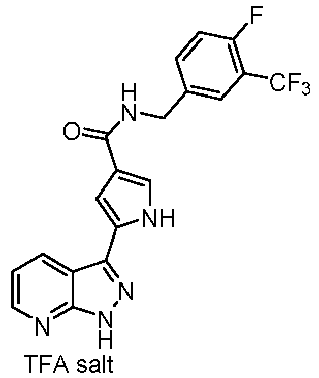
1H NMR (600 MHz, DMSO-d 6) δ 11.92 (s, 1H), 8.57 - 8.53 (m, 2H), 8.49 (dd, J = 8.1, 1.5 Hz, 1H), 7.75 - 7.66 (m, 2H), 7.52-7.46 (m, 1H), 7.44 (dd, J = 3.0, 1.6 Hz, 1H), 7.29 - 7.23 (m, 2H), 4.50 (d, J = 6.0 Hz, 2H). MS (ESI) m/z: 404[M+H]+. III-f-58 
1H NMR (600 MHz, DMSO-d 6) δ 11.92 (s, 1H), 8.59 (t, J = 6.1 Hz, 1H), 8.55 (dd, J = 4.5, 1.5 Hz, 1H), 8.49 (dd, J = 8.1, 1.5 Hz, 1H), 7.57 - 7.53 (m, 2H), 7.51 - 7.44 (m, 2H), 7.31 - 7.22 (m, 2H), 4.55 (d, J = 6.0 Hz, 2H). MS (ESI) m/z: 404[M+H]+. III-f-59 
1H NMR (600 MHz, DMSO-d 6) δ 11.94 (s, 1H), 8.65 (t, J = 6.1 Hz, 1H), 8.56 (dd, J = 4.5, 1.6 Hz, 1H), 8.49 (ddd, J = 8.2, 1.6, 0.7 Hz, 1H), 8.02 (d, J = 1.4 Hz, 2H), 8.00 (s, 1H), 7.46 (dd, J = 3.0, 1.6 Hz, 1H), 7.28 - 7.26 (m, 1H), 7.26 - 7.24 (m, 1H), 4.63 (d, J = 6.0 Hz, 2H). MS (ESI) m/z: 454[M+H]+. III-f-60 
1H NMR (600 MHz, DMSO-d 6) δ 11.92 (t, J = 2.9 Hz, 1H), 8.57 - 8.53 (m, 2H), 8.49 (dd, J = 8.1, 1.5 Hz, 1H), 7.76 - 7.65 (m, 2H), 7.45 (dd, J = 3.0, 1.6 Hz, 1H), 7.40 (t, J = 7.8 Hz, 1H), 7.27 (dd, J = 8.2, 4.0 Hz, 2H), 4.55 (d, J = 5.8 Hz, 2H). MS (ESI) m/z: 404[M+H]+. III-f-61 
1H NMR (600 MHz, DMSO-d 6) δ 11.93 (s, 1H), 8.60 (t, J = 6.1 Hz, 1H), 8.57 - 8.54 (m, 1H), 8.49 (dd, J = 8.1, 1.5 Hz, 1H), 7.84 (d, J = 8.2 Hz, 1H), 7.64 (s, 1H), 7.49 (d, J = 8.1 Hz, 1H), 7.45 (dd, J = 3.1, 1.6 Hz, 1H), 7.29 - 7.25 (m, 2H), 4.53 (d, J = 6.0 Hz, 2H). MS (ESI) m/z: 420[M+H] +. III-f-62 
1H NMR (600 MHz, DMSO-d 6) δ 11.93 (d, J = 3.1 Hz, 1H), 8.59 - 8.51 (m, 2H), 8.49 (dd, J = 8.1, 1.6 Hz, 1H), 7.73 (ddd, J = 11.4, 6.0, 2.2 Hz, 2H), 7.50 - 7.43 (m, 2H), 7.31 - 7.22 (m, 2H), 4.55 (d, J = 5.8 Hz, 2H). MS (ESI) m/z: 404[M+H] +. III-g-1 
1H NMR (600 MHz, DMSO-d 6) δ 12.25 (s, 1H), 9.89 (s, 1H), 8.57 (dd, J = 4.5, 1.4 Hz, 1H), 8.44 - 8.29 (m, 1H), 7.31 -7.29 (m, 1H), 7.29 - 7.26 (m, 1H), 7.24 (t, J = 7.8 Hz, 2H), 7.21 - 7.17 (m, 2H), 7.00 (t, J = 7.3 Hz, 1H), 6.90 (t, J = 2.1 Hz, 1H). MS (ESI) m/z: 340[M+H]+. III-g-2 
1H NMR (600 MHz, DMSO-d 6) δ 12.25 (s, 1H), 8.59 (dd, J = 4.5, 1.4 Hz, 1H), 8.48 - 8.43 (m, 1H), 7.46 (t, J = 5.5 Hz, 1H), 7.43 (d, J = 8.0 Hz, 2H), 7.37 (dd, J = 3.1, 1.6 Hz, 1H), 7.34 - 7.28 (m, 2H), 7.04 (t, J = 2.2 Hz, 1H), 4.26 (d, J = 5.5 Hz, 2H). MS (ESI) m/z: 390[M+H]+. III-g-3 
1H NMR (600 MHz, DMSO-d 6) δ 12.25 (s, 1H), 8.59 (dd, J = 4.5, 1.5 Hz, 1H), 8.46 (dd, J = 7.9, 1.4 Hz, 1H), 7.46 (t, J = 5.5 Hz, 1H), 7.43 (d, J = 8.0 Hz, 2H), 7.37 (dd, J = 3.0, 1.6 Hz, 1H), 7.34 - 7.28 (m, 2H), 7.04 (t, J = 2.2 Hz, 1H), 4.26 (d, J = 5.5 Hz, 2H). MS (ESI) m/z: 423[M+H]+. III-g - 4 
1H NMR (600 MHz, DMSO-d 6) δ 12.26 (s, 1H), 8.59 (dd, J = 4.5, 1.6 Hz, 1H), 8.45 (dd, J = 8.1, 1.5 Hz, 1H), 7.56 (t, J = 5.7 Hz, 1H), 7.35 (t, J = 1.6 Hz, 1H), 7.32 - 7.27 (m, 2H), 7.18 (ddd, J = 9.3, 8.1, 1.2 Hz, 1H), 7.01 (dd, J = 2.6, 1.6 Hz, 1H), 4.14 (dd, J = 5.7, 1.6 Hz, 2H). MS (ESI) m/z: 406[M+H]+. III-h-1 
1H NMR (600 MHz, DMSO-d 6) δ 12.39 (s, 1H), 8.59 (dd, J = 4.5, 1.5 Hz, 1H), 8.49 (dd, J = 8.1, 1.5 Hz, 1H), 7.32 (dd, J = 5.1, 2.0 Hz, 3H), 7.29 (dd, J = 8.1, 4.4 Hz, 1H), 7.27 - 7.23 (m, 2H), 7.20 - 7.18 (m, 1H), 7.01 (dd, J = 2.6, 1.6 Hz, 1H), 4.59 (s, 2H). MS (ESI) m/z: 339[M+H]+. III-h-2 
1H NMR (600 MHz, DMSO-d 6) δ 12.48 (s, 1H), 8.58 (dd, J = 4.5, 1.5 Hz, 1H), 8.54 - 8.45 (m, 1H), 7.50-7.45 (m, 1H), 7.32 (dd, J = 3.4, 1.6 Hz, 1H), 7.28 (dd, J = 8.1, 4.4 Hz, 1H), 7.11 (t, J = 8.0 Hz, 2H), 7.02 (t, J = 2.1 Hz, 1H), 4.63 (s, 2H). MS (ESI) m/z: 375[M+H]+. III-h-3 
1H NMR (600 MHz, DMSO-d 6) δ 12.50 (s, 1H), 8.58 (dd, J = 4.5, 1.5 Hz, 1H), 8.48 (dd, J = 8.1, 1.4 Hz, 1H), 7.50 (d, J = 8.0 Hz, 2H), 7.40 (dd, J = 8.6, 7.5 Hz, 1H), 7.31 (dd, J = 3.1, 1.6 Hz, 1H), 7.28 (dd, J = 8.1, 4.5 Hz, 1H), 6.97 (t, J = 2.0 Hz, 1H), 4.89 (s, 2H). MS (ESI) m/z: 408[M+H]+. III-h-4 
1H NMR (600 MHz, DMSO-d 6) δ 12.49 (s, 1H), 8.58 (dd, J = 4.5, 1.5 Hz, 1H), 8.48 (dd, J = 8.1, 1.4 Hz, 1H), 7.45 (td, J = 8.3, 6.0 Hz, 1H), 7.35 (d, J = 8.1 Hz, 1H), 7.30 (dd, J = 3.2, 1.6 Hz, 1H), 7.29 - 7.24 (m, 2H), 6.97 (t, J = 2.1 Hz, 1H), 4.73 (s, 2H). MS (ESI) m/z: 391 [M+H]+. III-h-5 
1H NMR (600 MHz, DMSO-d 6) δ 12.41 (s, 1H), 8.59 (dd, J = 4.5, 1.5 Hz, 1H), 8.50 - 8.45 (m, 1H), 7.42 - 7.38 (m, 2H), 7.29 (dd, J = 8.1, 4.5 Hz, 1H), 7.27 - 7.24 (m, 2H), 7.20 (dd, J = 3.2, 1.6 Hz, 1H), 6.99 (t, J = 2.1 Hz, 1H), 4.62 (s, 2H). MS (ESI) m/z: 373[M+H]+. III-i-1 
1H NMR (600 MHz, DMSO-d 6) δ 11.71 (s, 1H), 8.55 (dd, J = 4.5, 1.5 Hz, 1H), 8.51 (dd, J = 8.1, 1.5 Hz, 1H), 8.45 (t, J = 4.9 Hz, 1H), 7.45 - 7.39 (m, 1H), 7.39 - 7.34 (m, 1H), 7.29 - 7.23 (m, 2H), 6.90 (dd, J = 3.8, 2.5 Hz, 1H), 6.84 (dd, J = 3.8, 2.3 Hz, 1H), 4.59 (d, J = 4.8 Hz, 2H). MS (ESI) m/z: 370[M+H]+ -

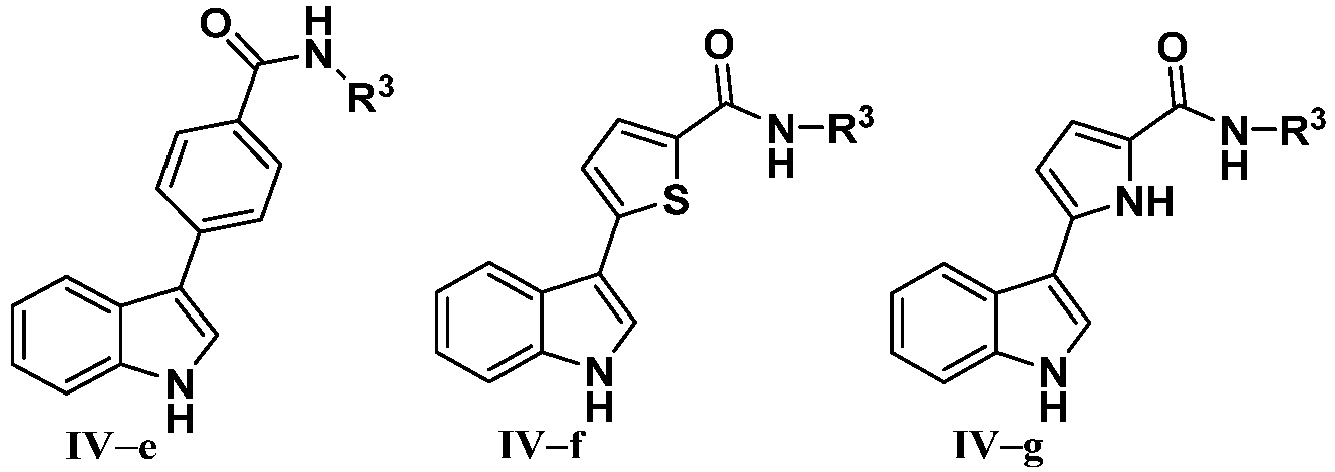
- Compound IV was synthesized by a method similar to that for the synthesis of compound I.
- The synthesis of the compounds of examples is described in detail below.
-

- 1 H-indole (5 mmol, 585.75 mg) (CAS: 120-72-9, Bide, Shanghai) was dissolved in 5 mL of N,N-dimethylformamide (DMF), to which was added potassium hydroxide (12.5 mmol, 1725 mg), followed by stirring at room temperature for 30 min;
I2 (5 mmol, 1269 mg) was dissolved in 2.5 mL of N,N-dimethylformamide (DMF), and then added dropwise to a solution of 1 H-indole in DMF, followed by reacting at room temperature for 1 h. The reaction system was poured into 100 mL of ice water, to precipitate out a solid. After centrifugation, the obtained solid was washed with water, and collected to obtain 840 mg of 3-iodo-1 H-indole. - Using the intermediate

- The table below lists the specific compounds and structure identification data.
Table 4. Structure and characterization of compounds IV No. Structure 1H NMR and/or MS data IV-a-1 
1H NMR (600 MHz, DMSO-d 6) δ 11.47 (d, J = 2.7 Hz, 1H), 8.62 (t, J = 4.9 Hz, 1H), 7.98 (d, J = 1.3 Hz, 1H), 7.89 (d, J = 7.7 Hz, 1H), 7.74 (d, J = 2.6 Hz, 1H), 7.71 (d, J = 1.4 Hz, 1H), 7.46 (d, J = 7.9 Hz, 1H), 7.41 (td, J = 8.2, 5.9 Hz, 1H), 7.36 (d, J = 8.0 Hz, 1H), 7.26 (ddd, J = 9.5, 8.2, 1.2 Hz, 1H), 7.21 - 7.17 (m, 1H), 7.17 - 7.11 (m, 1H), 4.60 (dd, J = 4.9, 1.4 Hz, 2H).MS (ESI) m/z: 385[M+H]+. IV-a-2 
1H NMR (600 MHz, DMSO-d 6) δ 11.53 (d, J = 2.5 Hz, 1H), 10.10 (s, 1H), 8.19 (d, J = 1.4 Hz, 1H), 7.99 - 7.93 (m, 1H), 7.85 (d, J = 1.5 Hz, 1H), 7.82 (d, J = 2.6 Hz, 1H), 7.81 - 7.77 (m, 2H), 7.49 (dt, J = 8.2, 0.9 Hz, 1H), 7.40 - 7.34 (m, 2H), 7.20 (dddd, J = 19.1, 8.1, 7.0, 1.3 Hz, 2H), 7.12 (ddt, J = 8.5, 7.3, 1.2 Hz, 1H). MS (ESI) m/z: 319[M+H]+. IV-a-3 
1H NMR (600 MHz, DMSO-d 6) δ 11.47 (d, J = 2.5 Hz, 1H), 8.05 (d, J = 8.0 Hz, 1H), 7.94 (d, J = 1.3 Hz, 1H), 7.93 - 7.90 (m, 1H), 7.75 (d, J = 2.6 Hz, 1H), 7.71 (d, J = 1.4 Hz, 1H), 7.49 - 7.43 (m, 1H), 7.18 (dddd, J = 20.9, 8.1, 7.0, 1.2 Hz, 2H), 3.81 - 3.69 (m, 1H), 1.90 - 1.80 (m, 2H), 1.79 -1.70 (m, 2H), 1.67 -1.57 (m, 1H), 1.35 -1.29 (m, 4H), 1.20 - 1.08 (m, 1H). MS (ESI) m/z: 325[M+H]+. IV-b-1 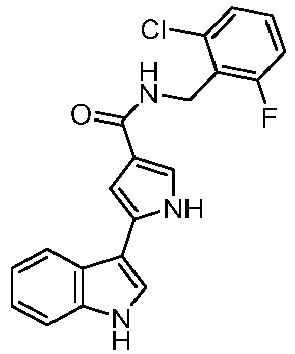
MS (ESI) m/z: 368[M+H]+. IV-b-2 
MS (ESI) m/z: 302[M+H]+. IV-b-3 
MS (ESI) m/z: 308[M+H]+. IV-c-1 
1H NMR (600 MHz, Methanol-d 4) δ 8.03 (d, J = 0.8 Hz, 1H), 7.88 (dt, J = 8.0, 1.0 Hz, 1H), 7.60 (s, 1H), 7.43 (dt, J = 8.1, 0.9 Hz, 1H), 7.33 (td, J = 8.1, 5.8 Hz, 1H), 7.29 (dt, J = 8.2, 1.1 Hz, 1H), 7.19 (ddd, J = 8.2, 7.0, 1.2 Hz, 1H), 7.16 - 7.09 (m, 2H), 6.96 (d, J = 0.9 Hz, 1H), 4.74 (d, J = 1.5 Hz, 2H).MS (ESI) m/z: 369[M+H]+. IV-c-2 
1H NMR (600 MHz, DMSO-d 6) δ 11.53 (s, 1H), 9.93 (s, 1H), 8.34 (d, J = 0.8 Hz, 1H), 7.98 - 7.90 (m, 1H), 7.81 (d, J = 2.6 Hz, 1H), 7.78 - 7.73 (m, 2H), 7.49 (dt, J = 8.0, 1.0 Hz, 1H), 7.41 - 7.33 (m, 2H), 7.24 - 7.16 (m, 3H), 7.11 (tt, J = 7.4, 1.2 Hz, 1 H).MS (ESI) m/z: 303[M+H]+. IV-c-3 
MS (ESI) m/z: 309[M+H]+. IV-d-1 
1H NMR (600 MHz, DMSO-d 6) δ 11.52-11.26 (m, 1H), 8.85 (t, J = 4.9 Hz, 1H), 8.15 (t, J = 1.8 Hz, 1H), 7.90 - 7.85 (m, 1H), 7.85 - 7.81 (m, 1H), 7.75 (d, J = 2.6 Hz, 1H), 7.70 (ddd, J = 7.7, 1.7, 1.1 Hz, 1H), 7.52- 7.45 (m, 2H), 7.43 - 7.36 (m, 1H), 7.37 - 7.33 (m, 1H), 7.25 (ddd, J = 9.5, 8.2, 1.2 Hz, 1H), 7.17 (ddd, J = 8.1, 7.0, 1.2 Hz, 1H), 7.12 (ddd, J = 8.0, 6.9, 1.1 Hz, 1H), 4.37 (dd, J = 4.2 Hz, 2H). MS (ESI) m/z: 379[M+H]+. IV-d-2 
1H NMR (600 MHz, DMSO-d 6) δ 11.46 (s, 1H), 10.31 (s, 1H), 8.24 (t, J = 1.8 Hz, 1H), 7.96 - 7.90 (m, 2H), 7.83 (d, J = 2.6 Hz, 1H), 7.82 - 7.78 (m, 3H), 7.59 (t, J = 7.7 Hz, 1H), 7.49 (dt, J = 8.2, 1.0 Hz, 1H), 7.40 - 7.34 (m, 2H), 7.19 (ddd, J = 8.1, 6.9, 1.2 Hz, 1H), 7.16 - 7.08 (m, 2H).MS (ESI) m/z: 313[M+H]+. IV-d-3 
MS (ESI) m/z: 319[M+H]+. IV-e-1 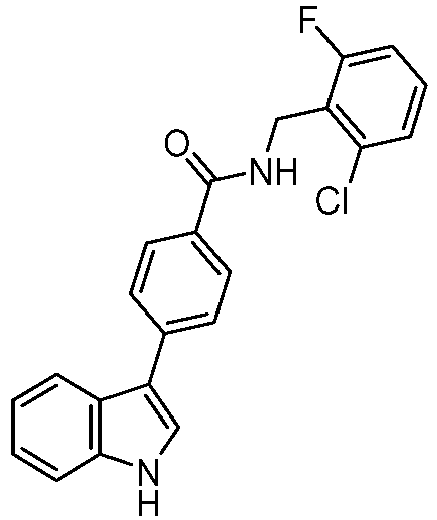
1H NMR (600 MHz, DMSO-d 6) δ 11.49 (s, 1H), 8.74 (t, J = 4.9 Hz, 1H), 7.95 - 7.89 (m, 3H), 7.83 (d, J = 2.7 Hz, 1H), 7.80 - 7.75 (m, 2H), 7.47 (dt, J = 8.1,1.0 Hz, 1H), 7.40 (td, J = 8.2, 5.9 Hz, 1H), 7.35 (dt, J = 8.1, 1.0 Hz, 1H), 7.25 (ddd, J = 9.6, 8.2, 1.3 Hz, 1H), 7.18 (ddd, J = 8.1, 7.0, 1.2 Hz, 1H), 7.13 (ddd, J = 8.1, 7.0, 1.1 Hz, 1H), 4.62 (dd, J = 4.9, 1.4 Hz, 2H).MS (ESI) m/z: 379[M+H]+. IV-e-2 
1H NMR (600 MHz, DMSO-d 6) δ 11.56 (d, J = 2.6 Hz, 1H), 10.23 (s, 1H), 8.09 - 8.01 (m, 2H), 7.97 (d, J = 7.9 Hz, 1H), 7.90 - 7.86 (m, 3H), 7.83 (ddd, J = 8.4, 4.0, 1.3 Hz, 2H), 7.52- 7.48 (m, 1H), 7.37 (dd, J = 8.5, 7.3 Hz, 2H), 7.20 (ddd, J = 8.1, 6.9, 1.2 Hz, 1H), 7.16 (ddd, J = 8.0, 7.0, 1.1 Hz, 1H), 7.11 (tt, J = 7.3, 1.2 Hz, 1H).MS (ESI) m/z: 313[M+H]+. IV-e-3 
1H NMR (600 MHz, DMSO-d 6) δ 11.49 (d, J = 2.6 Hz, 1H), 8.16 (d, J = 8.0 Hz, 1H), 7.96 - 7.87 (m, 3H), 7.82 (d, J = 2.7 Hz, 1H), 7.80 - 7.75 (m, 2H), 7.48 (dt, J = 8.1, 1.0 Hz, 1H), 7.18 (ddd, J = 8.2, 7.0, 1.2 Hz, 1H), 7.13 (ddd, J = 8.0, 7.0, 1.1 Hz, 1H), 3.83 - 3.72 (m, 1H), 1.90 - 1.80 (m, 2H), 1.79 - 1.68 (m, 2H), 1.67 - 1.57 (m, 1H), 1.41 - 1.23 (m, 5H), 1.20 - 1.05 (m, 1 H).MS (ESI) m/z: 319[M+H]+. IV-f-1 
1H NMR (600 MHz, DMSO-d 6) δ 11.57 (d, J = 3.3 Hz, 1H), 8.69 (d, J = 4.4 Hz, 1H), 7.90 (d, J = 7.9 Hz, 1H), 7.86 (d, J = 2.5 Hz, 1H), 7.78 (d, J = 3.9 Hz, 1H), 7.47 (d, J = 8.0 Hz, 1H), 7.41 (td, J = 8.1, 6.0 Hz, 1H), 7.37 - 7.33 (m, 2H), 7.26 (t, J = 8.7 Hz, 1H), 7.22 - 7.12 (m, 2H), 4.59 (d, J = 3 Hz, 2H).MS (ESI) m/z: 385[M+H]+. IV-f-2 
MS (ESI) m/z: 319[M+H]+. IV-f-3 
MS (ESI) m/z: 325[M+H]+. IV-g-1 
MS (ESI) m/z: 368[M+H]+. -


- Compound VI was synthesized by a method similar to that for the synthesis of compound I.
- The synthesis of the compounds of examples is described in detail below.
-

- 3-Bromo-1H-pyrazolo[3,4-d]pyrimidine-4-amine (5 mmol, 1.35 g) (CAS: 83255-86-1, Energy, Shanghai) was dissolved in 5 mL of N,N-dimethylformamide. lodoisopropane (5 mmol, 920.1 mg) was added dropwise in an ice bath, followed by returning to room temperature, and standing by overnight. The reaction system was extracted with water/ethyl acetate, then the organic phase was washed with saturated sodium chloride solution, dried with anhydrous sodium sulfate, concentrated, to obtain 1.05 g of 3-bromo-1-(t-butyl)-1H-pyrazolo[3,4-d]pyrimidine-4-amine.
- Using the intermediate

- The table below lists the specific compounds and structure identification data.
Table 5. Structure and characterization of compounds VI No. Structure 1H NMR and/or MS data VI-a-1 
1H NMR (600 MHz, Methanol-d 4) δ 8.22 (s, 1H), 8.16 (d, J = 1.4 Hz, 1H), 7.76 (d, J = 1.4 Hz, 1H), 7.35 (td, J = 8.2, 5.8 Hz, 1H), 7.32 - 7.28 (m, 1H), 7.14 (ddd, J = 9.4, 8.1, 1.2 Hz, 1H), 4.75 (d, J = 1.6 Hz, 2H), 1.80 (s, 9H). MS (ESI) m/z: 360[M+H]+. VI-a-2 
1H NMR (600 MHz, DMSO-d 6) δ10.13 (s, 1H), 8.41 (d, J = 1.4 Hz, 1H), 8.28 (s, 1H), 7.89 (d, J = 1.4 Hz, 1H), 7.82 - 7.70 (m, 2H), 7.37 (dd, J = 8.5, 7.3 Hz, 2H), 7.21 - 7.02 (m, 1H), 1.76 (s, 9H).MS (ESI) m/z: 393[M+H]+. VI-a-3 
1H NMR (600 MHz, DMSO-d 6) δ 8.39 (s, 1H), 8.25 (d, J = 1.3 Hz, 1H), 8.12 (d, J = 7.9 Hz, 1H), 7.77 (d, J = 1.4 Hz, 1H), 3.84 - 3.65 (m, 1H), 1.88 - 1.81 (m, 2H), 1.75 (s, 9H), 1.75-1.71 (m,2H), 1.65- 1.59 (m, 1H), 1.37-1.24 (m,4H), 1.19 - 1.09 (m, 1 H).MS (ESI) m/z: 399[M+H]+. VI-b-1 
MS (ESI) m/z: 443[M+H]+. VI-b-2 
MS (ESI) m/z: 376[M+H]+. VI-c-1 
MS (ESI) m/z: 443[M+H]+. VI-c-2 
MS (ESI) m/z: 377[M+H]+. VI-d-1 
1H NMR (600 MHz, DMSO-d 6) δ 8.89 (t, J = 4.9 Hz, 1H), 8.39 (s, 1H), 8.13 (t, J = 1.8 Hz, 1H), 7.98 (dt, J = 8.0, 1.4 Hz, 1H), 7.78 (dt, J = 7.6, 1.4 Hz, 1H), 7.62 (t, J = 7.7 Hz, 1H), 7.40 (td, J = 8.2, 5.9 Hz, 1H), 7.34 (d, J = 8.0 Hz, 1H), 7.24 (ddd, J = 9.5, 8.2, 1.2 Hz, 1H), 4.62 (dd, J = 4.9, 1.3 Hz, 2H), 1.77 (s,9H).MS (ESI) m/z: 454[M+H]+. VI-d-2 
1H NMR (600 MHz, DMSO-d 6) δ 10.34 (s, 1H), 8.40 (s, 1H), 8.23 (t, J = 1.8 Hz, 1H), 8.10 (ddd, J = 7.8, 1.8, 1.1 Hz, 1H), 7.88 (ddd, J = 7.6, 1.8, 1.1 Hz, 1H), 7.83 - 7.76 (m, 2H), 7.72 (t, J = 7.7 Hz, 1H), 7.37 (dd, J = 8.5, 7.4 Hz, 2H), 7.12 (tt, J = 7.4, 1.2 Hz, 1H), 1.79 (s,9H). MS (ESI) m/z: 387[M+H]+. VI-e-1 
MS (ESI) m/z: 454[M+H]+. VI-e-2 
MS (ESI) m/z: 387[M+H]+. VI-f-1 
MS (ESI) m/z: 500[M+H]+. VI-f-2 
MS (ESI) m/z: 393[M+H]+. -


- Compound VII was synthesized by a method similar to that for the synthesis of compound I.
- The synthesis of the compounds of examples is described in detail below.
- Using compound

- The table below lists the specific compounds and structure identification data.
Table 6. Structure and characterization of compounds VII No. Structure 1H NMR and/or MS data VII-a-1 
1H NMR (600 MHz, Methanol-d 4) δ 9.08 (d, J = 1.5 Hz, 1H), 8.64 (dd, J = 4.7, 1.5 Hz, 1H), 8.26 (d, J = 1.4 Hz, 1H), 8.04 (s, 1H), 8.01 (d, J = 4.8 Hz, 1H), 7.90 (d, J = 1.4 Hz, 1H), 7.40 - 7.32 (m, 1H), 7.32 - 7.28 (m, 1H), 7.14 (ddd, J = 9.5, 8.2, 1.2 Hz, 1H), 4.76 (d, J = 1.6 Hz, 2H). MS (ESI) m/z: 387[M+H]+. VII-a-2 
1H NMR (600 MHz, DMSO-d 6) δ 9.20 - 9.15 (m, 1H), 9.11 (t, J = 6.0 Hz, 1H), 8.69 (dd, J = 4.7, 1.5 Hz, 1H), 8.36 (d, J = 1.4 Hz, 1H), 8.15 (s, 1H), 8.06 (d, J = 4.7 Hz, 1H), 7.99 (d, J = 1.4 Hz, 1H), 7.70 (s, 1H), 7.69 - 7.54 (m, 3H), 4.59 (d, J = 6.0 Hz, 2H). MS (ESI) m/z: 403[M+H]+. VII-a-3 
1H NMR (600 MHz, DMSO-d 6) δ 9.14 (d, J = 1.5 Hz, 1H), 9.05 (t, J = 5.8 Hz, 1H), 8.66 (dd, J = 4.7, 1.5 Hz, 1H), 8.34 (d, J = 1.4 Hz, 1H), 8.11 (s, 1H), 8.03 (d, J = 4.7 Hz, 1H), 7.96 (d, J = 1.5 Hz, 1H), 7.77 (dd, J = 6.8, 2.4 Hz, 1H), 7.75 - 7.67 (m, 1H), 7.44 (t, J = 9.1 Hz, 1H), 4.57 (d, J = 5.7 Hz, 2H). MS (ESI) m/z: 421[M+H]+ VII-b-1 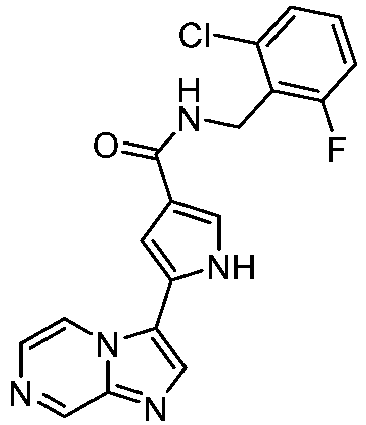
1H NMR (600 MHz, DMSO-d 6) δ 11.99 (s, 1H), 9.12 (s, 1H), 8.56 (dd, J = 4.7, 1.5 Hz, 1H), 8.13 (t, J = 5.0 Hz, 1H), 8.06 (s, 1H), 8.01 (d, J = 4.7 Hz, 1H), 7.60 (dd, J = 3.0, 1.5 Hz, 1H), 7.44 - 7.38 (m, 1H), 7.37 - 7.33 (m, 1H), 7.26 (ddd, J = 9.5, 8.2, 1.3 Hz, 1H), 7.15 (dd, J = 2.6, 1.5 Hz, 1H), 4.59 (dd, J = 4.9, 1.5 Hz, 2H). MS (ESI) m/z: 370[M+H]+. VII-b-2 
1H NMR (600 MHz, DMSO-d 6) δ 12.17 (s, 1H), 9.16 (s, 1H), 8.67 (d, J = 4.7 Hz, 1H), 8.12 (s, 1H), 8.05 (d, J = 4.5 Hz, 1H), 7.90 - 7.88 (m, 1H), 7.85 - 7.84 (m, 1H), 7.80 (dd, J = 3.0, 1.5 Hz, 1H), 7.79 - 7.72 (m, 2H), 7.38 - 7.32 (m, 2H), 7.07 (t, J = 7.4 Hz, 1H). MS (ESI) m/z: 304[M+H]+. VII-b-3 
1H NMR (600 MHz, DMSO-d6) δ 11.95 (s, 1H), 9.12 (d, J = 1.4 Hz, 1H), 8.60 (dd, J = 4.7, 1.5 Hz, 1H), 8.07 (s, 1H), 8.03 (d, J = 4.7 Hz, 1H), 7.61 (d, J = 8.0 Hz, 1H), 7.57 (dd, J = 3.0, 1.5 Hz, 1H), 7.15 (dd, J = 2.6, 1.6 Hz, 1H), 3.85 - 3.65 (m, 1H), 1.87-1.82 (m,2H), 1.77 - 1.72 (m, 2H), 1.67-1.59 (m,1H), 1.37 -1.25 (m, 4H), 1.19 -1.08 (m, 1 H).MS (ESI) m/z: 310[M+H]+. VII-c-1 
1H NMR (600 MHz, DMSO-d 6) δ 9.18 (d, J = 1.5 Hz, 1H), 8.70 (dd, J = 4.7, 1.5 Hz, 1H), 8.56 (t, J = 4.9 Hz, 1H), 8.42 (d, J = 0.7 Hz, 1H), 8.21 (s, 1H), 8.06 (d, J = 4.7 Hz, 1H), 7.48 (d, J = 0.8 Hz, 1H), 7.45 - 7.40 (m, 1H), 7.37 (dt, J = 8.1, 0.9 Hz, 1H), 7.27 (ddd, J = 9.4, 8.2, 1.2 Hz, 1H), 4.61 (dd, J = 5.0, 1.6 Hz, 2H). MS (ESI) m/z: 371[M+H]+. VII-c-2 
1H NMR (600 MHz, DMSO-d 6) δ 10.08 (s, 1H), 9.21 (d, J = 1.5 Hz, 1H), 8.80 (dd, J = 4.6, 1.5 Hz, 1H), 8.61 (d, J = 0.8 Hz, 1H), 8.28 (s, 1H), 8.10 (d, J = 4.7 Hz, 1H), 7.81 - 7.62 (m, 2H), 7.60 (d, J = 0.8 Hz, 1H), 7.38 (dd, J = 8.5, 7.3 Hz, 2H), 7.13 (tt, J = 7.4, 1.2 Hz, 1H). MS (ESI) m/z: 305[M+H]+. VII-c-3 
MS (ESI) m/z: 311 [M+H]+. VII-d-1 
1H NMR (600 MHz, DMSO-d 6) δ 9.16 (d, J = 1.5 Hz, 1H), 8.91 (t, J = 4.9 Hz, 1H), 8.63 (dd, J = 4.7, 1.5 Hz, 1H), 8.16 (t, J = 1.8 Hz, 1H), 8.10 (s, 1H), 7.98 - 7.95 (m, 2H), 7.90 (ddd, J = 7.7, 1.7, 1.1 Hz, 1H), 7.67 (t, J = 7.8 Hz, 1H), 7.40 (td, J = 8.1, 5.9 Hz, 1H), 7.35 (dt, J = 8.2, 1.0 Hz, 1H), 7.25 (ddd, J = 9.6, 8.2, 1.3 Hz, 1H), 4.64 (dd, J = 5.0, 1.5 Hz, 2H). MS (ESI) m/z: 381[M+H]+. VII-d-2 
1H NMR (600 MHz, DMSO-d 6) δ 10.36 (s, 1H), 9.18 (d, J = 1.4 Hz, 1H), 8.75 (dd, J = 4.7, 1.5 Hz, 1H), 8.28 (t, J = 1.8 Hz, 1H), 8.17 (s, 1H), 8.05 (dt, J = 7.8, 1.4 Hz, 1H), 7.99 (d, J = 4.7 Hz, 1H), 7.97 (dt, J = 7.7, 1.3 Hz, 1H), 7.82 - 7.78 (m, 2H), 7.75 (t, J = 7.7 Hz, 1H), 7.38 (dd, J = 8.5, 7.3 Hz, 2H), 7.13 (tt, J = 7.3, 1.2 Hz, 1H). MS (ESI) m/z: 315[M+H]+. VII-d-3 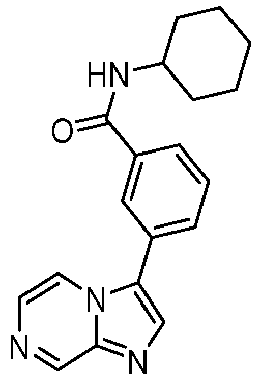
MS (ESI) m/z: 321 [M+H]+. VII-e-1 
1H NMR (600 MHz, Methanol-d 4) δ 9.29 - 9.16 (m, 1H), 8.71 (s, 1H), 8.20 (s, 1H), 8.12 - 8.06 (m, 1H), 8.07 - 7.99 (m, 2H), 7.87 - 7.77 (m, 2H), 7.35 (td, J = 8.2, 5.9 Hz, 1H), 7.30 (dt, J = 8.2, 1.1 Hz, 1H), 7.14 (ddd, J = 9.6, 8.2, 1.2 Hz, 1H), 4.79 (d, J = 1.4 Hz, 2H).MS (ESI) m/z: 381[M+H]+. VII-e-2 
1H NMR (600 MHz, DMSO-d 6) δ 10.38 (s, 1H), 9.19 (d, J = 1.4 Hz, 1H), 8.71 (dd, J = 4.7, 1.5 Hz, 1H), 8.21 (s, 1H), 8.17 (d, J = 8.4 Hz, 2H), 8.01 (d, J = 4.7 Hz, 1H), 7.97 - 7.90 (m, 2H), 7.85 - 7.79 (m, 2H), 7.38 (dd, J = 8.5, 7.3 Hz, 2H), 7.15 - 7.08 (m, 1H).MS (ESI) m/z: 315[M+H]+. VII-e-3 
1H NMR (600 MHz, DMSO-d 6) δ 9.17 (d, J = 1.5 Hz, 1H), 8.67 (dd, J = 4.7, 1.5 Hz, 1H), 8.34 (d, J = 7.9 Hz, 1H), 8.16 (s, 1H), 8.08 - 8.02 (m, 2H), 7.99 (d, J = 4.7 Hz, 1H), 7.88 - 7.81 (m, 2H), 3.87 - 3.71 (m, 1H), 1.89- 1.83 (m, 2H), 1.66 - 1.56 (m, 1H), 1.79 - 1.72 (m, 2H), 1.67 - 1.58 (m, 1H), 1.39 - 1.28 (m, 4H), 1.20 - 1.08 (m, 1 H).MS (ESI) m/z: 321 [M+H]+. VII-f-1 
1H NMR (600 MHz, DMSO-d 6) δ 9.18 (d, J = 1.5 Hz, 1H), 8.93 (t, J = 4.9 Hz, 1H), 8.72 (dd, J = 4.8, 1.5 Hz, 1H), 8.21 (s, 1H), 8.05 (d, J = 4.7 Hz, 1H), 7.94 (d, J = 3.9 Hz, 1H), 7.66 (d, J = 4.0 Hz, 1H), 7.43 (td, J = 8.2, 6.0 Hz, 1H), 7.37 (dt, J = 8.1, 1.0 Hz, 1H), 7.27 (ddd, J = 9.6, 8.3, 1.2 Hz, 1H), 4.62 (dd, J = 5.0, 1.5 Hz, 2H).MS (ESI) m/z: 387[M+H]+. VII-f-2 
1H NMR (600 MHz, DMSO-d 6) δ 10.37 (s, 1H), 9.21 (d, J = 1.4 Hz, 1H), 8.78 (dd, J = 4.8, 1.4 Hz, 1H), 8.28 (s, 1H), 8.19 (d, J = 4.0 Hz, 1H), 8.09 (d, J = 4.6 Hz, 1H), 7.78 (d, J = 4.0 Hz, 1H), 7.77 - 7.74 (m, 2H), 7.38 (dd, J = 8.5, 7.4 Hz, 2H), 7.21 - 7.08 (m, 1H). MS (ESI) m/z: 321[M+H]+. VII-f-3 
1H NMR (600 MHz, DMSO-d 6) δ 9.19 (d, J = 1.4 Hz, 1H), 8.74 (dd, J = 4.8, 1.4 Hz, 1H), 8.38 (d, J = 8.0 Hz, 1H), 8.23 (s, 1H), 8.06 (d, J = 4.7 Hz, 1H), 7.94 (d, J = 3.9 Hz, 1H), 7.68 (d, J = 4.0 Hz, 1H), 3.81 - 3.71 (m, 1H), 1.89 - 1.80 (m, 2H), 1.80 - 1.70 (m, 2H), 1.63 (dd, J = 13.6, 3.5 Hz, 1H), 1.39 - 1.23 (m, 4H), 1.20 - 1.09 (m, 1H). MS (ESI) m/z: 327[M+H]+. VII-g-1 
1H NMR (600 MHz, DMSO-d 6) δ 12.14 (s, 1H), 9.11 (s, 1H), 8.67 - 8.51 (m, 1H), 8.45 (t, J = 5.0 Hz, 1H), 8.24 (s, 1H), 7.96 (d, J = 4.7 Hz, 1H), 7.43 - 7.37 (m, 1H), 7.35 (d, J = 8.0 Hz, 1H), 7.29 - 7.17 (m, 1H), 7.04 (dd, J= 3.8, 2.4 Hz, 1H), 6.72 (dd, J = 3.9, 2.5 Hz, 1H), 4.60 (d, J = 5.1 Hz, 2H). MS (ESI) m/z: 370[M+H]+ -


- Compound VIII was synthesized by a method similar to that for the synthesis of compound I.
- The synthesis of the compounds of examples is described in detail below.
- Using compound
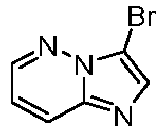
- The table below lists the specific compounds and structure identification data.
Table 7. Structure and characterization of compounds VIII No. Structure 1H NMR and/or MS data VIII-a-1 
1H NMR (600 MHz, DMSO-d 6) δ 8.73 (dd, J = 4.5, 1.6 Hz, 1H), 8.69 (t, J = 4.9 Hz, 1H), 8.32 (s, 1H), 8.26 - 8.23 (m, 2H), 8.21 (d, J = 1.4 Hz, 1H), 7.44 - 7.38 (m, 1H), 7.36 (dt, J = 8.1, 1.0 Hz, 1H), 7.32 (dd, J = 9.2, 4.5 Hz, 1H), 7.26 (ddd, J = 9.6, 8.3, 1.3 Hz, 1H), 4.60 (dd, J = 4.9, 1.5 Hz, 2H).MS (ESI) m/z: 387[M+H]+. VIII--a-2 
1H NMR (600 MHz, DMSO-d 6) δ 9.09 (t, J = 6.0 Hz, 1H), 8.76 (dd, J = 4.5, 1.5 Hz, 1H), 8.37 (s, 1H), 8.31 - 8.21 (m, 3H), 7.71 - 7.56 (m, 4H), 7.36 (dd, J = 9.2, 4.5 Hz, 1H), 4.57 (d, J = 5.9 Hz, 2H). MS (ESI) m/z: 403[M+H]+. VIII--a-3 
1H NMR (600 MHz, DMSO-d 6) δ 9.04 (t, J = 5.8 Hz, 1H), 8.74 (dd, J = 4.5, 1.6 Hz, 1H), 8.34 (s, 1H), 8.27 - 8.24 (m, 2H), 8.23 (d, J = 1.4 Hz, 1H), 7.78 (dd, J = 6.8, 2.4 Hz, 1H), 7.77 - 7.71 (m, 1H), 7.46 (t, J = 9.1 Hz, 1H), 7.33 (dd, J = 9.2, 4.5 Hz, 1H), 4.58 (d, J = 5.7 Hz, 2H). MS (ESI) m/z: 421[M+H]+ VIII-b-1 
1H NMR (600 MHz, Methanol-d 4) δ 8.82 (d, J = 4.5 Hz, 1H), 8.27 (d, J = 9.2 Hz, 1H), 8.21 (s, 1H), 7.63 - 7.54 (m, 2H), 7.43 (d, J = 1.6 Hz, 1H), 7.32 (td, J = 8.2, 5.7 Hz, 1H), 7.27 (dd, J = 8.3, 1.1 Hz, 1H), 7.15 - 7.05 (m, 1H), 4.72 (d, J = 1.4 Hz, 2H).MS (ESI) m/z: 370[M+H]+. VIII-b-2 
1H NMR (600 MHz, DMSO-d 6) δ 12.02 (s, 1H), 9.73 (s, 1H), 8.71 (dd, J = 4.4, 1.6 Hz, 1H), 8.22 - 8.18 (m, 2H), 7.79 (dt, J = 6.2, 1.3 Hz, 3H), 7.53 (dd, J = 2.6, 1.7 Hz, 1H), 7.36 - 7.30 (m, 2H), 7.28 (dd, J = 9.1, 4.4 Hz, 1H), 7.09 - 7.01 (m, 1 H).MS (ESI) m/z: 304[M+H]+. VIII-b-3 
1H NMR (600 MHz, DMSO-d 6) δ 11.81 (d, J = 3.5 Hz, 1H), 8.68 (dd, J = 4.5, 1.6 Hz, 1H), 8.24 - 8.08 (m, 2H), 7.67 (d, J = 8.1 Hz, 1H), 7.54 (dd, J = 3.0, 1.7 Hz, 1H), 7.36 (t, J = 2.1 Hz, 1H), 7.25 (dd, J = 9.2, 4.4 Hz, 1H), 3.85 - 3.66 (m, 1H), 1.87 - 1.67 (m, 4H), 1.68 - 1.55 (m, 1H), 1.38 - 1.19 (m, 5H), 1.13 (td, J = 12.2, 3.5 Hz, 1 H).MS (ESI) m/z: 310[M+H]+. VIII-c-1 
1H NMR (600 MHz, DMSO-d 6) δ 8.77 (dd, J = 4.5, 1.6 Hz, 1H), 8.68 (t, J = 4.9 Hz, 1H), 8.36 (d, J = 0.8 Hz, 1H), 8.30 (dd, J = 9.2, 1.6 Hz, 1H), 8.23 (s, 1H), 7.63 (d, J = 0.8 Hz, 1H), 7.46 - 7.34 (m, 3H), 7.27 (ddd, J = 9.5, 8.2, 1.2 Hz, 1H), 4.59 (dd, J= 4.9,1.5 Hz, 2H).MS (ESI) m/z: 371[M+H]+. VIII-c-2 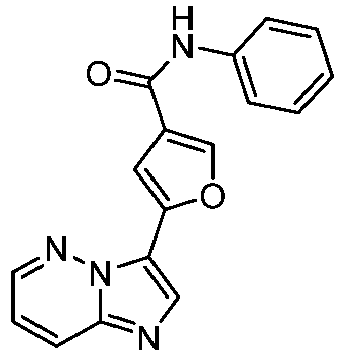
1H NMR (600 MHz, DMSO-d 6) δ 10.15 (s, 1H), 8.79 (dd, J = 4.5, 1.6 Hz, 1H), 8.55 (d, J = 1.0 Hz, 1H), 8.30 (dd, J = 9.2, 1.6 Hz, 1H), 8.24 (s, 1H), 7.81 - 7.71 (m, 3H), 7.45 - 7.28 (m, 3H), 7.12 (tt, J = 7.3, 1.2 Hz, 1H).MS (ESI) m/z: 305[M+H]+. VIII-c-3 
1H NMR (600 MHz, DMSO-d 6) δ 8.75 (dd, J = 4.4, 1.5 Hz, 1H), 8.32 (d, J = 0.9 Hz, 1H), 8.28 (dd, J = 9.2, 1.6 Hz, 1H), 8.19 (s, 1H), 8.15 (d, J = 7.9 Hz, 1H), 7.61 (d, J = 0.9 Hz, 1H), 7.36 (dd, J = 9.2, 4.5 Hz, 1H), 3.85 - 3.67 (m, 1H), 1.89 - 1.69 (m, 5H), 1.67 - 1.57 (m, 1H), 1.31 (q, J = 9.8 Hz, 4H), 1.13 (dq, J = 8.1, 3.7 Hz, 1H).MS (ESI) m/z: 311 [M+H]+. VIII-d-1 
1H NMR (600 MHz, DMSO-d 6) δ 8.90 (t, J = 4.9 Hz, 1H), 8.79 (dd, J = 4.4, 1.6 Hz, 1H), 8.56 (t, J = 1.8 Hz, 1H), 8.44 (s, 1H), 8.33 (dd, J = 9.2, 1.6 Hz, 1H), 8.28 (dt, J = 7.8, 1.3 Hz, 1H), 7.90 (dt, J = 7.8, 1.4 Hz, 1H), 7.62 (t, J = 7.8 Hz, 1H), 7.48 (dd, J = 9.2, 4.4 Hz, 1H), 7.40 (td, J = 8.2, 5.9 Hz, 1H), 7.35 (dt, J = 8.0, 1.0 Hz, 1H), 7.25 (ddd, J = 9.6, 8.2, 1.3 Hz, 1H), 4.64 (dd, J = 4.9, 1.4 Hz, 2H). MS (ESI) m/z: 381[M+H]+. VIII-d-2 
1H NMR (600 MHz, DMSO-d 6) δ 10.36 (s, 1H), 8.70 (dt, J = 4.0, 1.9 Hz, 2H), 8.44 - 8.34 (m, 2H), 8.26 (dd, J = 9.2, 1.7 Hz, 1H), 7.96 (dt, J = 7.8, 1.4 Hz, 1H), 7.81 (d, J = 7.9 Hz, 2H), 7.69 (t, J = 7.8 Hz, 1H), 7.44 - 7.27 (m, 3H), 7.13 (t, J = 7.3 Hz, 1 H).MS (ESI) m/z: 315[M+H]+. VIII-d-3 
1H NMR (600 MHz, DMSO-d 6) δ 8.72 (dd, J = 4.4, 1.6 Hz, 1H), 8.53 (t, J = 1.8 Hz, 1H), 8.38 (s, 1H), 8.33 - 8.25 (m, 3H), 7.86 (dt, J = 7.8, 1.3 Hz, 1H), 7.62 (t, J = 7.8 Hz, 1H), 7.39 (dd, J = 9.2, 4.4 Hz, 1H), 3.87 - 3.72 (m, 1H), 1.87 (d, J = 9.1 Hz, 2H), 1.76 (d, J = 9.0 Hz, 2H), 1.63 (d, J = 13.0 Hz, 1H), 1.43 -1.27 (m, 4H), 1.27 - 1.21 (m, 1H), 1.20 - 1.09 (m, 1H).MS (ESI) m/z: 321[M+H]+. VIII-e-1 
1H NMR (600 MHz, DMSO-d 6) δ 8.86 (t, J = 4.9 Hz, 1H), 8.72 (dd, J = 4.4, 1.6 Hz, 1H), 8.42 (s, 1H), 8.32 - 8.23 (m, 3H), 8.04 - 7.96 (m, 2H), 7.44 - 7.32 (m, 3H), 7.25 (ddd, J = 9.5, 8.2, 1.2 Hz, 1H), 4.63 (dd, J = 4.9, 1.4 Hz, 2H).MS (ESI) m/z: 381[M+H]+. VIII-e-2 
1H NMR (600 MHz, DMSO-d 6) δ 10.33 (s, 1H), 8.79 (dd, J = 4.4, 1.6 Hz, 1H), 8.53 (s, 1H), 8.42 - 8.28 (m, 3H), 8.17 - 8.06 (m, 2H), 7.85 - 7.74 (m, 2H), 7.46 (dd, J = 9.2, 4.4 Hz, 1H), 7.41 - 7.34 (m, 2H), 7.12 (tt, J = 7.3, 1.2 Hz, 1 H).MS (ESI) m/z: 315[M+H]+. VIII-e-3 
1H NMR (600 MHz, DMSO-d 6) δ 8.77 (dd, J = 4.4, 1.6 Hz, 1H), 8.48 (s, 1H), 8.32 (dd, J = 9.2, 1.6 Hz, 1H), 8.29 - 8.24 (m, 3H), 8.08 - 7.91 (m, 2H), 7.44 (dd, J = 9.2, 4.5 Hz, 1H), 3.80 (dt, J = 7.3, 3.7 Hz, 1H), 1.85 (dt, J = 7.9, 3.5 Hz, 2H), 1.81 - 1.69 (m, 2H), 1.63 (dd, J = 12.3, 4.0 Hz, 1H), 1.39 - 1.27 (m, 4H), 1.25 - 1.05 (m, 1 H).MS (ESI) m/z: 321[M+H]+. VIII-f-1 
1H NMR (600 MHz, DMSO-d 6) δ 8.83 (t, J = 4.9 Hz, 1H), 8.79 (dd, J = 4.5, 1.5 Hz, 1H), 8.46 (s, 1H), 8.28 (dd, J = 9.1, 1.6 Hz, 1H), 7.90 - 7.84 (m, 2H), 7.44 - 7.33 (m, 3H), 7.27 (ddd, J = 9.6, 8.3, 1.3 Hz, 1H), 4.61 (dd, J = 5.0, 1.5 Hz, 2H).MS (ESI) m/z: 387[M+H]+. VIII-f-2 
1H NMR (600 MHz, DMSO-d 6) δ 10.28 (s, 1H), 8.81 (dd, J = 4.5, 1.6 Hz, 1H), 8.50 (s, 1H), 8.30 (dd, J = 9.2, 1.6 Hz, 1H), 8.13 (d, J = 4.0 Hz, 1H), 7.96 (d, J = 4.0 Hz, 1H), 7.76 (dd, J = 8.6, 1.2 Hz, 2H), 7.46 - 7.31 (m, 3H), 7.12 (t, J = 7.3 Hz, 1H).MS (ESI) m/z: 321[M+H]+. VIII-f-3 
1H NMR (600 MHz, DMSO-d 6) δ 8.78 (dd, J = 4.5, 1.6 Hz, 1H), 8.43 (s, 1H), 8.33 - 8.20 (m, 2H), 7.87 (q, J = 4.0 Hz, 2H), 7.36 (dd, J = 9.2, 4.5 Hz, 1H), 3.74 (d, J = 10.1 Hz, 1H), 1.85 (d, J = 7.3 Hz, 2H), 1.75 (s, 2H), 1.62 (d, J = 12.9 Hz, 1H), 1.38 - 1.24 (m, 4H), 1.14 (t, J = 6.5 Hz, 1H). MS (ESI) m/z: 327[M+H]+. VIII-g-1 
1H NMR (600 MHz, DMSO-d 6) δ 11.85 (s, 1H), 8.66 (dd, J = 4.5, 1.6 Hz, 1H), 8.45 (t, J = 5.1 Hz, 1H), 8.43 (s, 1H), 8.18 (dd, J = 9.2, 1.6 Hz, 1H), 7.43 - 7.36 (m, 1H), 7.36 - 7.32 (m, 1H), 7.27 - 7.23 (m, 2H), 7.11 - 6.90 (m, 2H), 4.60 (d, J = 5.1 Hz, 2H). MS (ESI) m/z: 370[M+H]+ -


- Compound IX was synthesized by a method similar to that for the synthesis of compound I.
- The synthesis of the compounds of examples is described in detail below.
- Using compound

- The table below lists the specific compounds and structure identification data.
Table 8. Structure and characterization of compounds IX No. Structure 1H NMR and/or MS data IX-a-1 
1H NMR (600 MHz, DMSO-d6) δ 8.78 - 8.69 (m, 1H), 8.43 - 8.34 (m, 1H), 8.25 (s, 1H), 8.19 (s, 1H), 7.93 (d, J = 1.4 Hz, 1H), 7.87 (d, J = 9.1 Hz, 1H), 7.68 (d, J = 8.4 Hz, 1H), 7.42 - 7.41 (m, 1H), 7.37 - 7.37 (m, 2H), 7.28 - 7.26 (m, 1H), 4.61 (dd, J = 4.8, 1.4 Hz, 2H). MS (ESI) m/z: 386[M+H]+. IX-a-2 
1H NMR (600 MHz, DMSO-d 6) δ 10.24 (s, 1H), 8.87 (d, J = 6.8 Hz, 1H), 8.60 (d, J = 1.4 Hz, 1H), 8.40 (s, 1H), 8.10 (d, J = 1.4 Hz, 1H), 7.98 (d, J = 9.0 Hz, 1H), 7.85 (ddd, J = 9.1, 6.8, 1.1 Hz, 1H), 7.79 - 7.75 (m, 2H), 7.45 (td, J = 6.9, 0.9 Hz, 1H), 7.41 - 7.34 (m, 2H), 7.13 (tt, J = 7.4, 1.2 Hz, 1H). MS (ESI) m/z: 320[M+H]+. IX-b-1 
1H NMR (600 MHz, DMSO-d6) δ 12.00 (s, 1H), 8.73 (d, J = 6.9 Hz, 1H), 8.18 (t, J = 5.0 Hz, 1H), 8.15 (s, 1H), 7.92 (d, J = 9.1 Hz, 1H), 7.78 (dd, J = 9.0, 6.9 Hz, 1H), 7.67 - 7.61 (m, 1H), 7.43 - 7.38 (m, 2H), 7.37 - 7.34 (m, 1H), 7.25 (t, J = 8.8 Hz, 1H), 7.12 (t, J = 2.2 Hz, 1H), 4.58 (d, J = 4.8 Hz, 2H).MS (ESI) m/z: 369[M+H]+. IX-b-2 
MS (ESI) m/z: 303[M+H]+. IX-c-1 
1H NMR (600 MHz, DMSO-d6) δ 8.66 (dt, J = 6.9, 1.2 Hz, 1H), 8.53 (t, J = 4.9 Hz, 1H), 8.36 (d, J = 0.8 Hz, 1H), 7.97 (s, 1H), 7.71 (dt, J = 9.1, 1.2 Hz, 1H), 7.45 - 7.36 (m, 3H), 7.33 (d, J = 0.8 Hz, 1H), 7.28 (ddd, J = 9.6, 8.2, 1.3 Hz, 1H), 7.10 (td, J = 6.9, 1.3 Hz, 1H), 4.60 (dd, J = 5.0, 1.5 Hz, 2H).MS (ESI) m/z: 370[M+H]+. IX-c-2 
1H NMR (600 MHz, DMSO-d6) δ 10.04 (s, 1H), 8.75 (dt, J = 6.8, 1.2 Hz, 1H), 8.55 (d, J = 0.8 Hz, 1H), 8.04 (s, 1H), 7.78 - 7.70 (m, 3H), 7.46 (d, J = 0.8 Hz, 1H), 7.43 - 7.34 (m, 3H), 7.19 - 7.05 (m, 2H).MS (ESI) m/z: 304[M+H]+. IX-d-1 
1H NMR (600 MHz, DMSO-d6) δ 8.85 (t, J = 4.9 Hz, 1H), 8.59 (dt, J = 7.0, 1.2 Hz, 1H), 8.02 - 7.94 (m, 2H), 7.83 (s, 1H), 7.76 - 7.68 (m, 2H), 7.64 (dt, J = 9.0, 1.2 Hz, 1H), 7.39 - 7.33 (m, 1H), 7.32 - 7.27 (m, 2H), 7.21 (ddd, J = 9.6, 8.2, 1.3 Hz, 1H), 6.96 (td, J = 6.8, 1.3 Hz, 1H), 4.58 (dd, J = 4.9, 1.4 Hz, 2H).MS (ESI) m/z: 380[M+H]+. IX-d-2 
MS (ESI) m/z: 314[M+H]+. IX-e-1 
1H NMR (600 MHz, DMSO-d6) δ 8.90 (t, J = 4.9 Hz, 1H), 8.58 (dt, J = 6.9, 1.2 Hz, 1H), 8.11 (t, J = 1.8 Hz, 1H), 7.93 - 7.88 (m, 1H), 7.85 - 7.78 (m, 2H), 7.70 - 7.58 (m, 2H), 7.40 (td, J = 8.2, 6.0 Hz, 1H), 7.36 - 7.30 (m, 2H), 7.25 (ddd, J = 9.6, 8.2, 1.2 Hz, 1H), 6.99 (td, J = 6.8, 1.2 Hz, 1H), 4.63 (dd, J = 4.9, 1.4 Hz, 2H).MS (ESI) m/z: 380[M+H]+. IX-e-2 
1H NMR (600 MHz, DMSO-d6) δ 10.34 (s, 1H), 8.68 (dt, J = 6.9, 1.2 Hz, 1H), 8.23 (t, J = 1.8 Hz, 1H), 8.00 (dt, J = 7.8, 1.4 Hz, 1H), 7.91 - 7.88 (m, 2H), 7.82 - 7.78 (m, 2H), 7.74 - 7.66 (m, 2H), 7.41 - 7.30 (m, 3H), 7.16 - 7.06 (m, 1H), 7.01 (td, J = 6.8, 1.3 Hz, 1H).MS (ESI) m/z: 314[M+H]+. IX-f-1 
1H NMR (600 MHz, DMSO-d6) δ 8.94 (d, J = 4.9 Hz, 1H), 8.76 (d, J = 7.0 Hz, 1H), 8.13 (d, J = 5.1 Hz, 1H), 7.92 (d, J = 3.9 Hz, 1H), 7.81 (d, J = 9.1 Hz, 1H), 7.60 - 7.54 (m, 2H), 7.42 (dd, J = 8.3, 6.1 Hz, 1H), 7.36 (m, 1H), 7.30 - 7.20 (m, 2H), 4.61 (d, J = 4.9 Hz, 2H).MS (ESI) m/z: 386[M+H]+. IX-f-2 
MS (ESI) m/z: 320[M+H]+. IX-g-1 
MS (ESI) m/z: 369[M+H]+. -


- Compound X was synthesized by a method similar to that for the synthesis of compound I.
- The synthesis of the compounds of examples is described in detail below.
- Using compound

- The table below lists the specific compounds and structure identification data.
Table 9. Structure and characterization of compounds X No. Structure 1H NMR and/or MS data X-a-1 
1H NMR (600 MHz, Methanol-d 4) δ 8.72 (dd, J = 7.1, 1.1 Hz, 1H), 8.35 (d, J = 1.3 Hz, 1H), 8.17 (d, J = 1.3 Hz, 1H), 7.85 (dt, J = 9.3, 1.1 Hz, 1H), 7.56 (ddd, J = 9.3, 6.6, 1.0 Hz, 1H), 7.40 - 7.35 (m, 1H), 7.34 - 7.32 (m, 1H), 7.20 - 7.15 (m, 2H), 4.79 (dd, J = 1.6 Hz, 2H).MS (ESI) m/z: 387[M+H]+. X-a-2 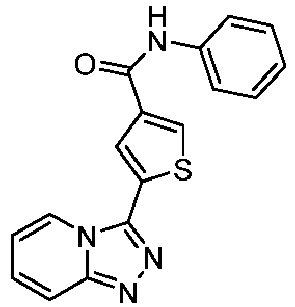
MS (ESI) m/z: 321 [M+H]+. X-b-1 
MS (ESI) m/z: 370[M+H]+. X-b-2 
MS (ESI) m/z: 304[M+H]+. X-c-1 
1H NMR (600 MHz, DMSO-d6) δ 8.73 (dt, J = 6.9, 1.2 Hz, 1H), 8.66 (t, J = 4.9 Hz, 1H), 8.50 (d, J = 0.8 Hz, 1H), 7.90 (dt, J = 9.2, 1.1 Hz, 1H), 7.68 (d, J = 0.8 Hz, 1H), 7.49 (ddd, J = 9.2, 6.6, 1.1 Hz, 1H), 7.43 (td, J = 8.2, 6.0 Hz, 1H), 7.39 - 7.36 (m, 1H), 7.28 (ddd, J = 9.5, 8.2, 1.2 Hz, 1H), 7.15 (td, J = 6.8, 1.1 Hz, 1H), 4.61 (dd, J = 4.9, 1.5 Hz, 2H).MS (ESI) m/z: 371[M+H]+. X-c-2 
MS (ESI) m/z: 305[M+H]+. X-d-1 
1H NMR (600 MHz, DMSO-d 6) δ 8.99 (t, J = 4.9 Hz, 1H), 8.59 (dt, J = 7.1, 1.1 Hz, 1H), 8.35 (t, J = 1.8 Hz, 1H), 8.06 (dp, J = 7.8, 1.3 Hz, 2H), 7.88 (dt, J = 9.3, 1.2 Hz, 1H), 7.72 (t, J = 7.8 Hz, 1H), 7.45 (ddd, J = 9.3, 6.5, 1.1 Hz, 1H), 7.40 (td, J = 8.2, 6.0 Hz, 1H), 7.35 (dt, J = 8.1, 1.0 Hz, 1H), 7.25 (ddd, J = 9.5, 8.2, 1.2 Hz, 1H), 7.06 (td, J = 6.8, 1.1 Hz, 1H), 4.64 (dd, J = 3.9, 1.4 Hz, 2H). MS (ESI) m/z: 381[M+H]+. X-d-2 
1H NMR (600 MHz, DMSO-d 6) δ 10.43 (s, 1H), 8.70 (dt, J = 7.1, 1.2 Hz, 1H), 8.47 (t, J = 1.8 Hz, 1H), 8.15 (ddt, J = 16.1, 7.7, 1.4 Hz, 2H), 7.90 (dt, J = 9.2, 1.2 Hz, 1H), 7.83 - 7.78 (m, 3H), 7.48 (ddd, J = 9.2, 6.5, 1.1 Hz, 1H), 7.41 - 7.35 (m, 2H), 7.16 - 7.11 (m, 1H), 7.08 (td, J = 6.8, 1.1 Hz, 1H). MS (ESI) m/z: 315[M+H]+. X-d-3 
1H NMR (600 MHz, DMSO-d 6) δ 8.68 (dt, J = 6.9, 1.1 Hz, 1H), 8.45 - 8.41 (m, 1H), 8.34 (t, J = 1.8 Hz, 1H), 8.08 (dt, J = 7.9, 1.4 Hz, 1H), 8.05 (dt, J = 7.7, 1.4 Hz, 1H), 7.96 (dt, J = 9.2, 1.1 Hz, 1H), 7.74 (t, J = 7.8 Hz, 1H), 7.62 (ddd, J = 9.3, 6.6, 1.1 Hz, 1H), 7.18 (td, J = 6.8, 1.1 Hz, 1H), 3.91 - 3.72 (m, 1H), 1.92 - 1.83 (m, 2H), 1.79 - 1.71 (m, 2H), 1.67 - 1.57 (m, 1H), 1.41 - 1.24 (m, 4H), 1.20 - 1.05 (m, 1H). MS (ESI) m/z: 321[M+H]+. X-e-1 
1H NMR (600 MHz, DMSO-d6) δ 8.99 (t, J = 4.9 Hz, 1H), 8.63 (dt, J = 7.1, 1.2 Hz, 1H), 8.09 (d, J = 8.5 Hz, 2H), 8.04 - 7.98 (m, 2H), 7.89 (d, J = 9.2 Hz, 1H), 7.46 (ddd, J = 9.3, 6.6, 1.1 Hz, 1H), 7.42 (td, J = 8.2, 6.0 Hz, 1H), 7.36 (dt, J = 8.1, 1.0 Hz, 1H), 7.27 (ddd, J = 9.5, 8.2, 1.3 Hz, 1H), 7.07 (td, J = 6.8, 1.1 Hz, 1H), 4.65 (dd, J = 4.9, 1.5 Hz, 2H).MS (ESI) m/z: 381 [M+H]+. X-e-2 
MS (ESI) m/z: 315[M+H]+. X-f-1 
1H NMR (600 MHz, DMSO-d6) δ 8.99 (t, J = 5.0 Hz, 1H), 8.78 (d, J = 7.0 Hz, 1H), 7.97 - 7.95 (m, 1H), 7.92 (s, 1H), 7.91 - 7.89 (m, 1H), 7.53 - 7.47 (m, 1H), 7.43 (td, J = 8.2, 5.9 Hz, 1H), 7.38 (d, J = 8.0 Hz, 1H), 7.28 (t, J = 8.9 Hz, 1H), 7.15 (t, J = 6.8 Hz, 1H), 4.62 (dd, J = 4.1 Hz, 2H).MS (ESI) m/z: 387[M+H]+. X-f-2 
MS (ESI) m/z: 321 [M+H]+. X-g-1 
MS (ESI) m/z: 370[M+H]+. - Inhibitory activity of compounds on K-RAS was evaluated by the degradation rate of protein level of administration group relative to control group (
Cell Rep 2014, 7, 871-882Fig. 1 . - The specific method was as follows:
- 1. Cell plating: SW-620 cells in logarithmic growth phase were inoculated into a 24-well plate at 2 × 10⁴/well, and cultured in a 37°C, 5% CO2 incubator.
- 2. Administing drug to cells: after 24 h of culture, various drug stocks were diluted with RPM1640 medium containing 10% FBS to obtain a drug solution having a final concentration of 10 mM; the original solution in the 24-well plate was discarded, to which was added the obtained drug solution, with the DMSO group as the blank control; after the drug solution was added, the 24-well plate was transferred to the 37°C CO2 incubator to continue the culture.
- 3. Detection of K-Ras protein level: after 24 h of administration and culture, the liquid in the well was discarded, the cells were routinely collected, and rinsed twice with 1X PBS, a cell lysate was added to extract the total cellular protein, and the protein concentration was determined by BCA method. 30 µg of the protein sample was taken for SDS-polyacrylamide gel electrophoretic transmembrane, the membrane was blocked sequentially, incubated with K-Ras antibody (1:1000) and internal reference antibody β-actin (1:2000) respectively overnight at 4°C, rinsed with TBST for 5 min x 3 times, then inculated with the addition of the corresponding horseradish peroxidase-labeled secondary antibody (1 :5000) for 1-2 h, and rinsed with TBST for 5 min x 3 times. Finally, chemiluminescence image was acquired using Image Lab software.
- 4. Calculation of single-point K-Ras protein degradation rate: quantitative and calibration analysis of K-Ras and β-actin were conducted using Image-Lab software, and then the intracellular K-Ras degradation rate was calculated according to the following formula: single-point K-Ras protein degradation rate (%) = (control group - administration group) / control group x 100%. The drug with degradation rate ≥ 20% was selected for soft agar experiment.
- RPM1640 medium:
10.4 g of RPM1640 powder and 2.0 g of NaHCO3 were weighed in a 1 L Solvent reservoir, an appropriate amount of ultrapure water was added, then the system was stirred with a magnetic stirrer until completely dissolved, adjusted to pH = 7.2-7.4 with 1 mol/L HCl, and finally made up to 1 L with ultrapure water. Then, the obtained solution was sterilized by a 0.22 µm pore size filter, and stored in a refrigerator at 4°C. 10% fetal bovine serum was added to the solution before use. - 1 X PBS:
8 g of NaCl, 0.2 g of KCl, 1.44 g of Na2HPO4 and 0.24 g of KH2PO4 were weighed in a 1 L Solvent reservoir, an appropriate amount of ultrapure water was added, then the system was stirred with a magnetic stirrer until completely dissolved, adjusted to pH = 7.2 with 1 mol/L HCl, and finally made up to 1 L with ultrapure water. After autoclaving, the obtained solution was stored at room temperature. - 1 X Trypsin:
A digestive solution of 0.02% ethylenediaminetetraacetic acid (EDTA) containing 0.25% trypsin was prepared in phosphate buffer, sterilized by a 0.22 µm pore size filter and stored in a refrigerator at 4°C. - Cell lysate:
50 mL of 1 mol/L Tris-HCl (pH 7.4), 37.5 mL of 4 mol/L NaCl, 2 mL of 0.5 mol/L EDTA and 5 mL of Triton X-100 were pipette in a 1 L Solvent reservoir, which was made up to 1 L with ultrapure water. The obtained solution was taken out in a required buffer amount, and 1 mmol/L PMSF was added therein before use. - 4 X loading buffer:
4 g of SDS, 0.04 g of bromo phenol blue, 6.16 g of DTT were weighed, and 20 mL of 1 mol/L Tris-HCl (pH 6.8), 20 mL of glycerol were pipette in a 100 mL tube, which was made up to 100 mL with ultrapure water. The obtained solution was sub-packed in small tubes and stored at -20°C. - 4 X seperating buffer:
84.5 g of Tris and 1.25 g of SDS were weighed in a 500 mL Solvent reservoir, an appropriate amount of ultrapure water was added for complete dissolution, then the obtained solution was adjusted to pH = 8.8, finally made up to 500 mL and stored at 4°C. - 4 X stacking buffer:
6.06 g of Tris was weighed, and 4 mL of 10% SDS was pipette in a 100 mL Solvent reservoir, an appropriate amount of ultrapure water was added for complete dissolution, then the obtained solution was adjusted to pH = 6.8, finally made up to 100 mL and stored at 4°C. - 10 X running buffer:
30.3 g of Tris, 10 g of SDS and 144 g of glycine were weighed in a 1 L Solvent reservoir, and ultrapure water was added to make up to 1 L. - 10 Xtransfer buffer:
30.3 g of Tris and 144 g of glycine were weighed in a 1 L Solvent reservoir, and ultrapure water was added to make up to 1 L. - 10 X TBST:
24.2 g of Tris, 80 g of NaCl were weighed, and 10 mL of Tween-20 was measured in a 1 L Solvent reservoir, an appropriate amount of ultrapure water was added for complete dissolution, then the obtained solution was adjusted to pH = 7.6, and finally made up to 1 L. - Blocking solution:
50 g of BSA was weighed, and 10 mL of 1% NaN3 was pipette in a 1 L Solvent reservoir, TBST was added to make up to 1 L, and the obtained solution was stored at 4°C. - The specific method was as follows:
- 1. Bottom agar
- 1) 1% agar was formulated, and autoclaved. 1% agar was heated and melted in a boiling water bath before use, and then cooled in a 40°C water bath (by holding in the bath for at least 30 minutes, the agar was cooled to a temperature of 40°C); at the same time, 2 × DMEM/FBS was placed in a warm bath.
- 2) A bottom agar with 0.5% agar was prepred by mixing 1% agar with 2 × DMEM/FBS in a sterile tube at a volume ratio of 1:1. The mixed solution was added to a 6-well plate rapidly at 1.5 ml per well, shaked slightly, and placed at room temperature for solidification (after solidification, the bottom agar could be stored at 4°C for 1 week. Before use, it was placed at room temperature for at least 30 minutes to return to room temperature).
- 2. Upper agar
- 1) A mixed solution with a final concentration of 0.3% agar + 1 × DMEM/FBS was formulated in a sterile tube using 1% agar, 2 × DMEM/FBS and sterile water at a temperature of 40°C. The prepared mixed solution was placed in a 40°C water bath for use.
- 2) The cells were trypsinized and counted. The cell density was adjusted according to the needs of the experiment.
- 3) The formulated mixed solution of 0.3% agar + 1 × DMEM/FBS was taken out of the 40°C water bath, and the cells were added in the corresponding number, and blown gently till uniform with a gun; then the solution was added onto the solidified bottom agar, 1.5 ml per well.
- 4) The 6-well plate was placed in a 37°C, 5% CO2 incubator to conduct the culture for 10-30 days, while replenishing fresh medium every 3-6 days, 200 µl per well.
- The reagents used were formulated as follows:
- 1% agar:
1 g of agar powder was dissolved in 100 ml of sterile water and sterilized for use. - 2× DMEM:
13.4 g of DMEM powder and 3.7 g of NaHCO3 were weighed in a 500 ml Solvent reservoir, an appropriate amount of ultrapure water was added, then the system was stirred with a magnetic stirrer until completely dissolved, adjusted to pH = 7.2-7.4 with 1 mol/L HCl, and finally made up to 500 ml with ultrapure water. Then, the obtained solution was sterilized by a 0.22 µm pore size filter, and stored in a refrigerator at 4°C. 20% fetal bovine serum was added to the solution before use. - Phosphate buffer solution (PBS):
8 g of NaCl, 0.2 g of KCI, 1.44 g of Na2HPO4 and 0.24 g of KH2PO4 were weighed in a 1 L Solvent reservoir, an appropriate amount of ultrapure water was added, then the system was stirred with a magnetic stirrer until completely dissolved, adjusted to pH = 7.2 with 1 mol/L HCl, and finally made up to 1 L with ultrapure water. After autoclaving, the obtained solution was stored at room temperature. - Trypsin:
A digestive solution of 0.02% ethylenediaminetetraacetic acid (EDTA) containing 0.25% trypsin was prepared in phosphate buffer, sterilized by a 0.22 µm pore size filter and stored in a refrigerator at 4°C. - The specific method was as follows:
- 1. 4-5 weeks old nude mice were subcutaneously injected with a SW620 cell suspension with a cell number controlled at about 5 x 10⁶.
- 2. The tumor-bearing condition was observed after two to three days, and the mice were administered when the tumor volume was about 150 mm3.
- 3. The initial volume of tumor was recorded, the mice were randomly divided into three groups: the control group, the drug-administered group of 40 mg/kg once a day, and the drug-administered group of 40 mg/kg twice a day, and it was ensured that the initial tumor volume did not differ greatly.
- 4. The mice were injected intravenously regularly with drug or control solvent every day, and the daily tumor volume was recorded.
- 5. The mice were continuously administered for 10 days, and the changes in tumor volume of the drug-administered group and the control group were observed.
- 6. 10 days later, eyeball blood was taken from all mice, and blood samples were kept for subsequent testing. After the mice were killed, the subcutaneously growing tumors were completely taken out, the tumor weights were recorded, and the tumors were stored in liquid nitrogen for subsequent testing.
| No. | Degradation rate of compounds at 10 µM on Ras protein (%) |
| I-a-1 | 52% |
| I-a-8 | 20% |
| I-a-9 | 30% |
| I-a-11 | 30% |
| I-b-1 | 50% |
| I-b-2 | 56% |
| I-c-1 | 11% |
| I-d-1 | 2% |
| I-e-2 | 12% |
| I-f-1 | 20% |
| I-f-2 | 25% |
| I-g-1 | 30% |
| II-b-1 | 52% |
| II-b-2 | 50% |
| II-d-1 | 2% |
| II-e-1 | 15% |
| III-a-1 | 21% |
| III-a-2 | 9% |
| III-a-3 | 60% |
| III-a-4 | 60% |
| III-b-1 | 35% |
| III-c-3 | 16% |
| III-d-2 | 18% |
| III-d-3 | 27% |
| III-e-1 | 40% |
| III-e-2 | 40% |
| III-e-7 | 38% |
| III-e-8 | 44% |
| III-e-12 | 29% |
| III-e-14 | 27% |
| III-e-19 | 32% |
| III-e-22 | 31% |
| III-e-23 | 39% |
| III-e-26 | 26% |
| III-e-29 | 30% |
| III-f-1 | 60% |
| III-f-3 | 6% |
| III-f-4 | 19% |
| III-f-6 | 15% |
| III-f-10 | 18% |
| III-f-11 | 13% |
| III-f-13 | 16% |
| III-f-15 | 14% |
| III-f-16 | 15% |
| III-f-17 | 19% |
| III-f-18 | 15% |
| III-f-24 | 13% |
| III-f-27 | 14% |
| III-f-31 | 45% |
| III-f-32 | 60% |
| III-f-34 | 60% |
| III-f-35 | 50% |
| III-f-37 | 35% |
| III-f-38 | 50% |
| III-f-39 | 60% |
| III-f-40 | 30% |
| III-f-41 | 60% |
| III-f-42 | 70% |
| III-f-43 | 40% |
| III-f-44 | 70% |
| III-f-45 | 50% |
| III-f-46 | 60% |
| III-f-47 | 50% |
| III-f-48 | 60% |
| III-f-49 | 50% |
| III-f-50 | 40% |
| III-f-51 | 70% |
| III-f-52 | 35% |
| III-f-53 | 50% |
| III-f-54 | 50% |
| III-f-55 | 25% |
| III-f-56 | 70% |
| III-f-57 | 70% |
| III-f-58 | 75% |
| III-f-59 | 60% |
| III-f-60 | 65% |
| III-f-61 | 50% |
| III-f-62 | 70% |
| III-g-4 | 12% |
| III-h-1 | 14% |
| III-h-3 | 18% |
| III-h-4 | 41% |
| III-h-5 | 16% |
| IV-a-1 | 10% |
| IV-a-2 | 50% |
| IV-a-3 | 35% |
| IV-c-1 | 30% |
| IV-c-2 | 50% |
| IV-e-1 | 30% |
| IV-e-2 | 20% |
| IV-e-3 | 40% |
| IV-f-1 | 10% |
| VI-a -1 | 20% |
| VI-a -2 | 30% |
| VI-d-1 | 30% |
| VI-d-2 | 30% |
| VII-a -1 | 5% |
| VII-a -2 | 60% |
| VII-a -3 | 30% |
| VII-b-1 | 20% |
| VII-b-2 | 20% |
| VII-b -3 | 10% |
| VII-e -1 | 30% |
| VII-e-2 | 20% |
| VII-e-3 | 30% |
| VII-f-1 | 25% |
| VII-f-2 | 30% |
| VII-f-3 | 20% |
| VIII-a-1 | 40% |
| VIII-a-2 | 60% |
| VIII-a-3 | 50% |
| VIII-b-1 | 20% |
| VIII-b-2 | 10% |
| VIII-b-3 | 2% |
| VIII-c-1 | 12% |
| VIII-c-2 | 10% |
| VIII-d-1 | 2% |
| VIII-e-3 | 20% |
| VIII-f-3 | 15% |
| IX-c-1 | 40% |
| IX-c-2 | 40% |
| IX-d-1 | 30% |
| IX-e-1 | 40% |
| IX-e-2 | 50% |
| IX-f-1 | 50% |
| X-c-1 | 10% |
| X-e-1 | 10% |
| X-f-1 | 20% |
Claims (14)
- A compound having the general formula:
 or a stereoisomer thereof, a prodrug thereof, a pharmaceutically acceptable salt thereof or a pharmaceutically acceptable solvate thereof,wherein, X1, X2, X3, X4, X5, X6 may comprise a combination of:

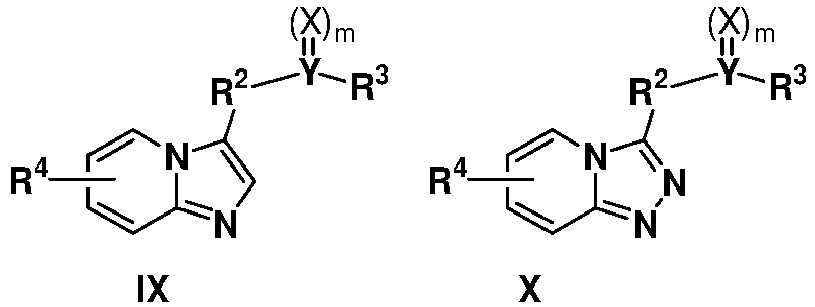 X is selected from O, S, NH;preferably, X is selected from O, S;R1 is selected from H, C1-C6 alkyl, C3-C6 cycloalkyl;preferably, R1 is selected from H, C1-C6 alkyl;R2 is selected from:1)
 2)
2) preferably, R2 is selected from:1)
 2)
2) Y is selected from C, S, P;preferably, Y is selected from C, S;m = 1 or 2;R3 is selected from:1) amino, cyclopropylamino, cyclobutylamino, cyclopentylamino, cyclohexylamino, N,N-dimethylamino, N,N-diethylamino, N,N-diisopropylamino, 2-N,N-dimethylaminoethylamino, 2-hydroxyethylamino, 2-morpholinylethylamino, 2-thiomorpholinylethylamino, 2-(4-N-methylpiperazinyl)ethylamino, 3-N,N-dimethylaminopropylamino, 3-N,N-diethylaminopropylamino, 3-N,N-diisopropylaminopropylamino, 3-hydroxypropylamino, 3-morpholinylpropylamino, 3-thiomorpholinylpropylamino, 3-(4-N-methylpiperazinyl)propylamino, N-methylpiperidinyl-4-amino, N-ethylpiperidinyl-4-amino, N-isopropylpiperidinyl-4-amino, N-acetylpiperidinyl-4-amino;2) arylamino or heteroarylamino, which is optionally substituted by C1-C6 alkyl, C1-C6 alkoxy, C1-C6 oxygen-containing alkyl, C1-C3 fluorine-containing alkyl, C3-C6 cycloalkyl, halogen, nitro, cyano, amino, hydroxy, optionally substituted heterocyclyl, C1-C6 alkoxycarbonyl, C1-C6 acyl;3) phenylmethylamino, which is optionally substituted by C1-C6 alkyl, C1-C6 alkoxy, C1-C6 oxygen-containing alkyl, C1-C3 fluorine-containing alkyl, C3-C6 cycloalkyl, halogen, nitro, cyano, amino, hydroxy, optionally substituted heterocyclyl, C1-C6 alkoxycarbonyl, C1-C6 acyl;4) phenylethylamino, which is optionally substituted by C1-C6 alkyl, C1-C6 alkoxy, C1-C6 oxygen-containing alkyl, C1-C3 fluorine-containing alkyl, C3-C6 cycloalkyl, halogen, nitro, cyano, amino, hydroxy, optionally substituted heterocyclyl, C1-C6 alkoxycarbonyl, C1-C6 acyl;5) a five- or six-membered heterocyclic ring comprising one or more heteroatoms selected from N, O and S, said five- or six-membered heterocyclic ring being optionally substituted by C1-C6 alkyl, C1-C6 alkoxy, hydroxy, amino, C1-C6 alkoxycarbonyl, C1-C6 acyl, cyano, optionally substituted heterocyclyl,including but not limited to: piperidinyl, 4-N,N-dimethylaminopiperidinyl, 4-N,N-diethylaminopiperidinyl, 4-N,N-diisopropylaminopiperidinyl, 4-hydroxypiperidinyl, 4-(N-methylpiperazinyl)piperidinyl, 4-(N-ethylpiperazinyl)piperidinyl, 4-(N-isopropylpiperazinyl)piperidinyl, 4-(N-acetylpiperazinyl)piperidinyl, 4-(N-t-butoxyformylpiperazinyl)piperidinyl, 4-(N-methanesulfonylpiperazinyl)piperidinyl, 4-(N-(2-hydroxyethyl)piperazinyl)piperidinyl, 4-(N-(2-cyanoethyl)piperazinyl)piperidinyl, 4-(N-(3-hydroxypropyl)piperazinyl)piperidinyl, 4-(N-(2-N,N-dimethylethyl)piperazinyl)piperidinyl, 4-(N-(2-N,N-diethylethyl)piperazinyl)piperidinyl, 4-(N-(3-N,N-dimethylpropyl)piperazinyl)piperidinyl, 4-(N-(3-N,N-diethylpropyl)piperazinyl)piperidinyl, 4-(tetrahydropyrrolyl)piperidinyl, 4-(3-N,N-dimethyltetrahydropyrrolyl)piperidinyl;N-methylpiperazinyl, N-ethylpiperazinyl, N-isopropylpiperazinyl, N-acetylpiperazinyl, N-t-butoxyformylpiperazinyl, N-methanesulfonylpiperazinyl, N-(2-hydroxyethyl)piperazinyl, N-(2-cyanoethyl)piperazinyl, N-(3-hydroxypropyl)piperazinyl, N-(2-N,N-dimethylethyl)piperazinyl, N-(2-N,N-diethylethyl)piperazinyl, N-(3-N,N-dimethylpropyl)piperazinyl, N-(3-N,N-diethylpropyl)piperazinyl, 2-oxo-piperazin-4-yl, N-(N-methyl-4-piperidinyl)piperazinyl, N-(N-ethyl-4-piperidinyl)piperazinyl, N-(N-acetyl-4-piperidinyl)piperazinyl;morpholinyl, 3,5-dimethylmorpholinyl, thiomorpholinyl, tetrahydropyrrolyl, 3-N,N-dimethyltetrahydropyrrolyl, 3-N,N-diethyltetrahydropyrrolyl;6) benzyl, which is optionally substituted by C1-C6 alkyl, C1-C6 alkoxy, C1-C6 oxygen-containing alkyl, C1-C3 fluorine-containing alkyl, C3-C6 cycloalkyl, halogen, nitro, cyano, amino, hydroxy, optionally substituted heterocyclyl, C1-C6 alkoxycarbonyl, C1-C6 acyl;7) hydroxy, 2-N,N-dimethylaminoethoxy, 2-N,N-diethylaminoethoxy, 2-N,N-diisopropylaminoethoxy, 2-(N-methylpiperazinyl)ethoxy, 2-(N-acetylpiperazinyl)ethoxy, 2-morpholinylethoxy, 2-thiomorpholinylethoxy, 2-piperidinylethoxy, 3-N,N-dimethylaminopropoxy, 3-N,N-diethylaminopropoxy, 3-N,N-diisopropylaminopropoxy, 3-(N-methylpiperazinyl)propoxy, 3-(N-acetylpiperazinyl)propoxy, 3-morpholinylpropoxy, 3-thiomorpholinylpropoxy, 3-piperidinylpropoxy, 2-pyridylmethoxy, 3-pyridylmethoxy, 4-pyridylmethoxy, phenylmethoxy, monohalo-substituted phenylmethoxy, gem-dihalo-substituted phenylmethoxy, hetero-dihalo-substituted phenylmethoxy;preferably, R3 is selected from:1)
 wherein, n = 0 or 1,when n = 0, any one of Z1, Z2, Z3, Z4, Z5 is selected from halogen, C1-C3 fluorine-containing alkyl, C1-C3 fluorine-containing alkoxy, C1-C6 alkyl, C1-C6 alkoxy, di(C1-C6 alkyl)amino, C1-C6 alkoxycarbonyl, the rest being H; or,any two of Z1, Z2, Z3, Z4, Z5 each are independently selected from halogen, C1-C3 fluorine-containing alkyl, optionally substituted heterocyclyl, said heterocyclyl being selected from pyranyl, pyrrolidinyl, pyrrolinyl, imidazolinyl, imidazolidinyl, pyrazolidinyl, pyrazolinyl, thiazolinyl, thiazolidinyl, dihydrofuranyl, tetrahydrofuranyl, 1,3-dioxolanyl, piperidinyl, piperazinyl, morpholino, morpholinyl, tetrahydropyrrolyl, thiomorpholinyl, the rest being H; or,Z1, Z2, Z3, Z4, Z5 are all H;when n = 1, any two of Z1, Z2, Z3, Z4, Z5 each are independently selected from halogen, C1-C6 alkyl, C1-C6 alkoxy, C1-C3 fluorine-containing alkyl, the rest being H; or,any one of Z1, Z2, Z3, Z4, Z5 is selected from halogen, C1-C3 fluorine-containing alkyl, the rest being H; or,Z1, Z2, Z3, Z4, Z5 are all H;2) C3-C6 cycloalkylamino;3) HN-heteroaryl, wherein said heteroaryl is selected from pyridyl, pyrazinyl, pyrimidinyl, pyrrolyl, phenyl-pyrrolyl, furyl, phenyl-furyl, oxazolyl, isoxazolyl, pyrazolyl, thienyl, benzothienyl;4) heterocyclyl, wherein said heterocyclyl is selected from pyranyl, pyrrolidinyl, pyrrolinyl, imidazolinyl, imidazolidinyl, pyrazolidinyl, pyrazolinyl, thiazolinyl, thiazolidinyl, dihydrofuranyl, tetrahydrofuranyl, 1,3-dioxolanyl, piperidinyl, piperazinyl, morpholino, morpholinyl, tetrahydropyrrolyl, thiomorpholinyl;5) -NH-C2H4-R6, wherein R6 is selected from hydroxy, phenyl, halo-substituted phenyl;R4 is selected from H, C1-C3 alkyl, C1-C3 alkoxy, C1-C3 oxygen-containing alkyl, C1-C3 fluorine-containing alkyl, halogen, nitro, cyano, amino, hydroxy;preferably, R4 is selected from H, halogen, amino, hydroxy;preferably, the pharmaceutically acceptable salt is: an inorganic acid salt, selected from hydrochloride, hydrobromide, hydroiodide, nitrate, bicarbonate and carbonate, sulfate or phosphate; or an organic acid salt, selected from formate, acetate, propionate, benzoate, maleate, fumarate, succinate, tartrate, citrate, ascorbate, α-ketoglutarate, α-glycerophosphate, alkyl sulfonate or aryl sulfonate; preferably, said alkyl sulfonate is methyl sulfonate or ethyl sulfonate; said aryl sulfonate is benzenesulfonate or p-toluenesulfonate;however, the compound of the general formula excludes the following compounds:

- A compound according to claim 1, which is:
 wherein, R1 is selected from H, C1-C6 alkyl, C3-C6 cycloalkyl;preferably, R1 is selected from H, C1-C6 alkyl;most preferably, R1 is selected from H, methyl;R2 is selected from:1)
 2)
2) preferably, R2 is selected from:1)
 2)
2) Y is selected from C, S, P;preferably, Y is C;m = 1 or 2;preferably, m = 1;R3 is selected from:1) amino, cyclopropylamino, cyclobutylamino, cyclopentylamino, cyclohexylamino, N,N-dimethylamino, N,N-diethylamino, N,N-diisopropylamino, 2-N,N-dimethylaminoethylamino, 2-hydroxyethylamino, 2-morpholinylethylamino, 2-thiomorpholinylethylamino, 2-(4-N-methylpiperazinyl)ethylamino, 3-N,N-dimethylaminopropylamino, 3-N,N-diethylaminopropylamino, 3-N,N-diisopropylaminopropylamino, 3-hydroxypropylamino, 3-morpholinylpropylamino, 3-thiomorpholinylpropylamino, 3-(4-N-methylpiperazinyl)propylamino, N-methylpiperidinyl-4-amino, N-ethylpiperidinyl-4-amino, N-isopropylpiperidinyl-4-amino, N-acetylpiperidinyl-4-amino;2) arylamino or heteroarylamino, which is optionally substituted by C1-C6 alkyl, C1-C6 alkoxy, C1-C6 oxygen-containing alkyl, C1-C3 fluorine-containing alkyl, C3-C6 cycloalkyl, halogen, nitro, cyano, amino, hydroxy, optionally substituted heterocyclyl, C1-C6 alkoxycarbonyl, C1-C6 acyl;3) phenylmethylamino, which is optionally substituted by C1-C6 alkyl, C1-C6 alkoxy, C1-C6 oxygen-containing alkyl, C1-C3 fluorine-containing alkyl, C3-C6 cycloalkyl, halogen, nitro, cyano, amino, hydroxy, optionally substituted heterocyclyl, C1-C6 alkoxycarbonyl, C1-C6 acyl;4) phenylethylamino, which is optionally substituted by C1-C6 alkyl, C1-C6 alkoxy, C1-C6 oxygen-containing alkyl, C1-C3 fluorine-containing alkyl, C3-C6 cycloalkyl, halogen, nitro, cyano, amino, hydroxy, optionally substituted heterocyclyl, C1-C6 alkoxycarbonyl, C1-C6 acyl;5) a five- or six-membered heterocyclic ring comprising one or more heteroatoms selected from N, O and S, said five- or six-membered heterocyclic ring being optionally substituted by C1-C6 alkyl, C1-C6 alkoxy, hydroxy, amino, C1-C6 alkoxycarbonyl, C1-C6 acyl, cyano, optionally substituted heterocyclyl,including but not limited to: piperidinyl, 4-N,N-dimethylaminopiperidinyl, 4-N,N-diethylaminopiperidinyl, 4-N,N-diisopropylaminopiperidinyl, 4-hydroxypiperidinyl, 4-(N-methylpiperazinyl)piperidinyl, 4-(N-ethylpiperazinyl)piperidinyl, 4-(N-isopropylpiperazinyl)piperidinyl, 4-(N-acetylpiperazinyl)piperidinyl, 4-(N-t-butoxyformylpiperazinyl)piperidinyl, 4-(N-methanesulfonylpiperazinyl)piperidinyl, 4-(N-(2-hydroxyethyl)piperazinyl)piperidinyl, 4-(N-(2-cyanoethyl)piperazinyl)piperidinyl, 4-(N-(3-hydroxypropyl)piperazinyl)piperidinyl, 4-(N-(2-N,N-dimethylethyl)piperazinyl)piperidinyl, 4-(N-(2-N,N-diethylethyl)piperazinyl)piperidinyl, 4-(N-(3-N,N-dimethylpropyl)piperazinyl)piperidinyl, 4-(N-(3-N,N-diethylpropyl)piperazinyl)piperidinyl, 4-(tetrahydropyrrolyl)piperidinyl, 4-(3-N,N-dimethyltetrahydropyrrolyl)piperidinyl;N-methylpiperazinyl, N-ethylpiperazinyl, N-isopropylpiperazinyl, N-acetylpiperazinyl, N-t-butoxyformylpiperazinyl, N-methanesulfonylpiperazinyl, N-(2-hydroxyethyl)piperazinyl, N-(2-cyanoethyl)piperazinyl, N-(3-hydroxypropyl)piperazinyl, N-(2-N,N-dimethylethyl)piperazinyl, N-(2-N,N-diethylethyl)piperazinyl, N-(3-N,N-dimethylpropyl)piperazinyl, N-(3-N,N-diethylpropyl)piperazinyl, 2-oxo-piperazin-4-yl, N-(N-methyl-4-piperidinyl)piperazinyl, N-(N-ethyl-4-piperidinyl)piperazinyl, N-(N-acetyl-4-piperidinyl)piperazinyl;morpholinyl, 3,5-dimethylmorpholinyl, thiomorpholinyl, tetrahydropyrrolyl, 3-N,N-dimethyltetrahydropyrrolyl, 3-N,N-diethyltetrahydropyrrolyl;6) benzyl, which is optionally substituted by C1-C6 alkyl, C1-C6 alkoxy, C1-C6 oxygen-containing alkyl, C1-C3 fluorine-containing alkyl, C3-C6 cycloalkyl, halogen, nitro, cyano, amino, hydroxy, optionally substituted heterocyclyl, C1-C6 alkoxycarbonyl, C1-C6 acyl;7) hydroxy, 2-N,N-dimethylaminoethoxy, 2-N,N-diethylaminoethoxy, 2-N,N-diisopropylaminoethoxy, 2-(N-methylpiperazinyl)ethoxy, 2-(N-acetylpiperazinyl)ethoxy, 2-morpholinylethoxy, 2-thiomorpholinylethoxy, 2-piperidinylethoxy, 3-N,N-dimethylaminopropoxy, 3-N,N-diethylaminopropoxy, 3-N,N-diisopropylaminopropoxy, 3-(N-methylpiperazinyl)propoxy, 3-(N-acetylpiperazinyl)propoxy, 3-morpholinylpropoxy, 3-thiomorpholinylpropoxy, 3-piperidinylpropoxy, 2-pyridylmethoxy, 3-pyridylmethoxy, 4-pyridylmethoxy, phenylmethoxy, monohalo-substituted phenylmethoxy, gem-dihalo-substituted phenylmethoxy, hetero-dihalo-substituted phenylmethoxy;preferably, R3 is selected from:1)
 wherein, n = 0 or 1,when n = 0, any one of Z1, Z2, Z3, Z4, Z5 is selected from halogen, C1-C3 fluorine-containing alkyl, C1-C6 alkyl, C1-C6 alkoxy, di(C1-C6 alkyl)amino, the rest being H; or,Z1, Z2, Z3, Z4, Z5 are all H;when n = 1, any two of Z1, Z2, Z3, Z4, Z5 each are independently selected from halogen, C1-C3 fluorine-containing alkyl, C1-C6 alkyl, C1-C6 alkoxy, the rest being H; or,any one of Z1, Z2, Z3, Z4, Z5 is selected from halogen, C1-C3 fluorine-containing alkyl, the rest being H; or,Z1, Z2, Z3, Z4, Z5 are all H;2) C3-C6 cycloalkylamino;3) HN-heteroaryl, wherein said heteroaryl is selected from pyridyl, pyrazinyl, pyrimidinyl, pyrrolyl, phenyl-pyrrolyl, furyl, phenyl-furyl, oxazolyl, isoxazolyl, pyrazolyl, thienyl, benzothienyl;4) heterocyclyl, wherein said heterocyclyl is selected from pyranyl, pyrrolidinyl, pyrrolinyl, imidazolinyl, imidazolidinyl, pyrazolidinyl, pyrazolinyl, thiazolinyl, thiazolidinyl, dihydrofuranyl, tetrahydrofuranyl, 1,3-dioxolanyl, piperidinyl, piperazinyl, morpholino, morpholinyl, tetrahydropyrrolyl, thiomorpholinyl;5) -NH-C2H4-R6, wherein R6 is selected from phenyl, halo-substituted phenyl;more preferably, R3 is selected from:1)
 wherein, n = 0 or 1,when n = 0, Z2 in Z1, Z2, Z3, Z4, Z5 is selected from halogen, C1-C3 fluorine-containing alkyl, the rest being H; or,Z3 in Z1, Z2, Z3, Z4, Z5 is selected from C1-C6 alkyl, C1-C6 alkoxy, halogen, di(C1-C6 alkyl)amino, the rest being H; or,Z1, Z2, Z3, Z4, Z5 are all H;when n = 1, Z1, Z5 in Z1, Z2, Z3, Z4, Z5 each are independently selected from halogen, the rest being H; or,Z2, Z3 in Z1, Z2, Z3, Z4, Z5 each are independently selected from halogen, the rest being H; or,Z1, Z3 in Z1, Z2, Z3, Z4, Z5 each are independently selected from C1-C6 alkoxy, the rest being H; or,Z1, Z4 in Z1, Z2, Z3, Z4, Z5 each are independently selected from halogen, C1-C3 fluorine-containing alkyl, the rest being H; or,Z1, Z5 in Z1, Z2, Z3, Z4, Z5 each are independently selected from halogen, C1-C3 fluorine-containing alkyl, the rest being H; or,Z3 in Z1, Z2, Z3, Z4, Z5 is selected from halogen, the rest being H; or,Z2 in Z1, Z2, Z3, Z4, Z5 is selected from C1-C3 fluorine-containing alkyl, the rest being H; or,Z1, Z2, Z3, Z4, Z5 are all H;2) C3-C6 cycloalkylamino;3) HN-heteroaryl, wherein said heteroaryl is selected from pyridyl, pyrazinyl, pyrimidinyl, pyrrolyl, phenyl-pyrrolyl, furyl, phenyl-furyl, oxazolyl, isoxazolyl, pyrazolyl, thienyl, benzothienyl;4) heterocyclyl, wherein said heterocyclyl is selected from pyranyl, pyrrolidinyl, pyrrolinyl, imidazolinyl, imidazolidinyl, pyrazolidinyl, pyrazolinyl, thiazolinyl, thiazolidinyl, dihydrofuranyl, tetrahydrofuranyl, 1,3-dioxolanyl, piperidinyl, piperazinyl, morpholino, morpholinyl, tetrahydropyrrolyl, thiomorpholinyl;5) -NH-C2H4-R6, wherein R6 is selected from phenyl, halo-substituted phenyl;most preferably, R3 is selected from:1)
 wherein, n = 0 or 1,when n = O, Z2 in Z1, Z2, Z3, Z4, Z5 is selected from fluoro, chloro, trifluoromethyl, the rest being H; or,Z3 in Z1, Z2, Z3, Z4, Z5 is selected from methyl, methoxy, isopropoxy, fluoro, dimethylamino, the rest being H; or,Z1, Z2, Z3, Z4, Z5 are all H;when n = 1, Z1, Z5 in Z1, Z2, Z3, Z4, Z5 each are independently selected from fluoro, chloro, the rest being H; or,Z2, Z3 in Z1, Z2, Z3, Z4, Z5 each are independently selected from chloro, the rest being H; or,Z1, Z3 in Z1, Z2, Z3, Z4, Z5 each are independently selected from methoxy, the rest being H; or,Z1, Z4 in Z1, Z2, Z3, Z4, Z5 each are independently selected from fluoro, trifluoromethyl, the rest being H; or,Z1, Z5 in Z1, Z2, Z3, Z4, Z5 each are independently selected from fluoro, trifluoromethyl, the rest being H; or,Z3 in Z1, Z2, Z3, Z4, Z5 is selected from chloro, fluoro, the rest being H; or,Z2 in Z1, Z2, Z3, Z4, Z5 is selected from trifluoromethyl, the rest being H; or,Z1, Z2, Z3, Z4, Z5 are all H;2)
 3) HN-heteroaryl, wherein said heteroaryl is selected from 2-methyl-pyrid-5-yl, pyrid-3-yl;4) heterocyclyl, wherein said heterocyclyl is selected from 4-methylpiperazin-1-yl, morpholin-4-yl;5) -NH-C2H4-R6, wherein R6 is selected from phenyl, 4-fluorophenyl;R4 is selected from H, C1-C3 alkyl, C1-C3 alkoxy, C1-C3 oxygen-containing alkyl, C1-C3 fluorine-containing alkyl, halogen, nitro, cyano, amino, hydroxy;preferably, R4 is selected from H, C1-C3 alkyl, halogen, amino, hydroxy;more preferably, R4 is selected from H, fluoro, chloro, bromo, amino;most preferably, R4 is selected from H, 4-chloro, 6-amino.
 - A compound according to claim 1, which is:
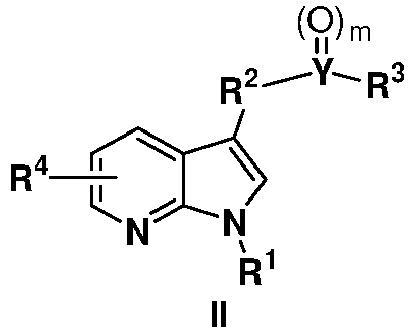 R1 is selected from H, C1-C6 alkyl, C3-C6 cycloalkyl;preferably, R1 is selected from H, C1-C3 alkyl;most preferably, R1 is selected from H;R2 is selected from:1)
 2)
2) preferably, R2 is selected from:1)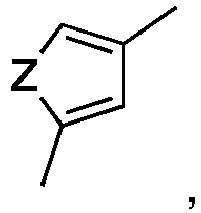
 2)
2) Y is selected from C, S, P;preferably, Y is selected from C;m = 1 or 2;preferably, m = 1;R3 is selected from:1) amino, cyclopropylamino, cyclobutylamino, cyclopentylamino, cyclohexylamino, N,N-dimethylamino, N,N-diethylamino, N,N-diisopropylamino, 2-N,N-dimethylaminoethylamino, 2-hydroxyethylamino, 2-morpholinylethylamino, 2-thiomorpholinylethylamino, 2-(4-N-methylpiperazinyl)ethylamino, 3-N,N-dimethylaminopropylamino, 3-N,N-diethylaminopropylamino, 3-N,N-diisopropylaminopropylamino, 3-hydroxypropylamino, 3-morpholinylpropylamino, 3-thiomorpholinylpropylamino, 3-(4-N-methylpiperazinyl)propylamino, N-methylpiperidinyl-4-amino, N-ethylpiperidinyl-4-amino, N-isopropylpiperidinyl-4-amino, N-acetylpiperidinyl-4-amino;2) arylamino or heteroarylamino, which is optionally substituted by C1-C6 alkyl, C1-C6 alkoxy, C1-C6 oxygen-containing alkyl, C1-C3 fluorine-containing alkyl, C3-C6 cycloalkyl, halogen, nitro, cyano, amino, hydroxy, optionally substituted heterocyclyl, C1-C6 alkoxycarbonyl, C1-C6 acyl;3) phenylmethylamino, which is optionally substituted by C1-C6 alkyl, C1-C6 alkoxy, C1-C6 oxygen-containing alkyl, C1-C3 fluorine-containing alkyl, C3-C6 cycloalkyl, halogen, nitro, cyano, amino, hydroxy, optionally substituted heterocyclyl, C1-C6 alkoxycarbonyl, C1-C6 acyl;4) phenylethylamino, which is optionally substituted by C1-C6 alkyl, C1-C6 alkoxy, C1-C6 oxygen-containing alkyl, C1-C3 fluorine-containing alkyl, C3-C6 cycloalkyl, halogen, nitro, cyano, amino, hydroxy, optionally substituted heterocyclyl, C1-C6 alkoxycarbonyl, C1-C6 acyl;5) a five- or six-membered heterocyclic ring comprising one or more heteroatoms selected from N, O and S, said five- or six-membered heterocyclic ring being optionally substituted by C1-C6 alkyl, C1-C6 alkoxy, hydroxy, amino, C1-C6 alkoxycarbonyl, C1-C6 acyl, cyano, optionally substituted heterocyclyl,including but not limited to: piperidinyl, 4-N,N-dimethylaminopiperidinyl, 4-N,N-diethylaminopiperidinyl, 4-N,N-diisopropylaminopiperidinyl, 4-hydroxypiperidinyl, 4-(N-methylpiperazinyl)piperidinyl, 4-(N-ethylpiperazinyl)piperidinyl, 4-(N-isopropylpiperazinyl)piperidinyl, 4-(N-acetylpiperazinyl)piperidinyl, 4-(N-t-butoxyformylpiperazinyl)piperidinyl, 4-(N-methanesulfonylpiperazinyl)piperidinyl, 4-(N-(2-hydroxyethyl)piperazinyl)piperidinyl, 4-(N-(2-cyanoethyl)piperazinyl)piperidinyl, 4-(N-(3-hydroxypropyl)piperazinyl)piperidinyl, 4-(N-(2-N,N-dimethylethyl)piperazinyl)piperidinyl, 4-(N-(2-N,N-diethylethyl)piperazinyl)piperidinyl, 4-(N-(3-N,N-dimethylpropyl)piperazinyl)piperidinyl, 4-(N-(3-N,N-diethylpropyl)piperazinyl)piperidinyl, 4-(tetrahydropyrrolyl)piperidinyl, 4-(3-N,N-dimethyltetrahydropyrrolyl)piperidinyl;N-methylpiperazinyl, N-ethylpiperazinyl, N-isopropylpiperazinyl, N-acetylpiperazinyl, N-t-butoxyformylpiperazinyl, N-methanesulfonylpiperazinyl, N-(2-hydroxyethyl)piperazinyl, N-(2-cyanoethyl)piperazinyl, N-(3-hydroxypropyl)piperazinyl, N-(2-N,N-dimethylethyl)piperazinyl, N-(2-N,N-diethylethyl)piperazinyl, N-(3-N,N-dimethylpropyl)piperazinyl, N-(3-N,N-diethylpropyl)piperazinyl, 2-oxo-piperazin-4-yl, N-(N-methyl-4-piperidinyl)piperazinyl, N-(N-ethyl-4-piperidinyl)piperazinyl, N-(N-acetyl-4-piperidinyl)piperazinyl;morpholinyl, 3,5-dimethylmorpholinyl, thiomorpholinyl, tetrahydropyrrolyl, 3-N,N-dimethyltetrahydropyrrolyl, 3-N,N-diethyltetrahydropyrrolyl;6) benzyl, which is optionally substituted by C1-C6 alkyl, C1-C6 alkoxy, C1-C6 oxygen-containing alkyl, C1-C3 fluorine-containing alkyl, C3-C6 cycloalkyl, halogen, nitro, cyano, amino, hydroxy, optionally substituted heterocyclyl, C1-C6 alkoxycarbonyl, C1-C6 acyl;7) hydroxy, 2-N,N-dimethylaminoethoxy, 2-N,N-diethylaminoethoxy, 2-N,N-diisopropylaminoethoxy, 2-(N-methylpiperazinyl)ethoxy, 2-(N-acetylpiperazinyl)ethoxy, 2-morpholinylethoxy, 2-thiomorpholinylethoxy, 2-piperidinylethoxy, 3-N,N-dimethylaminopropoxy, 3-N,N-diethylaminopropoxy, 3-N,N-diisopropylaminopropoxy, 3-(N-methylpiperazinyl)propoxy, 3-(N-acetylpiperazinyl)propoxy, 3-morpholinylpropoxy, 3-thiomorpholinylpropoxy, 3-piperidinylpropoxy, 2-pyridylmethoxy, 3-pyridylmethoxy, 4-pyridylmethoxy, phenylmethoxy, monohalo-substituted phenylmethoxy, gem-dihalo-substituted phenylmethoxy, hetero-dihalo-substituted phenylmethoxy;preferably, R3 is selected from:
 wherein, n = 0 or 1;when n = 0, Z1, Z2, Z3, Z4, Z5 are all H;when n = 1, any two of Z1, Z2, Z3, Z4, Z5 each are independently selected from halogen, C1-C6 alkyl, C1-C6 alkoxy, the rest being H; orany one of Z1, Z2, Z3, Z4, Z5 is selected from C1-C3 fluorine-containing alkyl, the rest being H;more preferably, R3 is selected from:
 wherein, n = 0 or 1;when n = 0, Z1, Z2, Z3, Z4, Z5 are all H;when n = 1, Z1, Z5 in Z1, Z2, Z3, Z4, Z5 each are independently selected from halogen, the rest being H; orZ2 in Z1, Z2, Z3, Z4, Z5 is selected from C1-C3 fluorine-containing alkyl, the rest being H;most preferably, R3 is selected from:
 wherein, n = 0 or 1;when n = 0, Z1, Z2, Z3, Z4, Z5 are all H;when n = 1, Z1, Z5 in Z1, Z2, Z3, Z4, Z5 each are independently selected from fluoro, chloro, the rest being H; orZ2 in Z1, Z2, Z3, Z4, Z5 is selected from trifluoromethyl, the rest being H;R4 is selected from H, C1-C3 alkyl, C1-C3 alkoxy, C1-C3 oxygen-containing alkyl, C1-C3 fluorine-containing alkyl, halogen, nitro, cyano, amino, hydroxy;preferably, R4 is selected from H, C1-C3 alkyl, amino, hydroxy;most preferably, R4 is H.
 - A compound according to claim 1, which is:
 wherein, R1 is selected from H, C1-C6 alkyl, C3-C6 cycloalkyl;preferably, R1 is selected from H, C1-C3 alkyl;most preferably, R1 is selected from H;R2 is selected from:1)
 2)
2) preferably, R2 is selected from:1)
 2)
2) Y is selected from C, S, P;preferably, Y is selected from C, S;m = 1 or 2;wherein, when Y is C, m = 1;when Y is S, m =2;R3 is selected from:1) amino, cyclopropylamino, cyclobutylamino, cyclopentylamino, cyclohexylamino, N,N-dimethylamino, N,N-diethylamino, N,N-diisopropylamino, 2-N,N-dimethylaminoethylamino, 2-hydroxyethylamino, 2-morpholinylethylamino, 2-thiomorpholinylethylamino, 2-(4-N-methylpiperazinyl)ethylamino, 3-N,N-dimethylaminopropylamino, 3-N,N-diethylaminopropylamino, 3-N,N-diisopropylaminopropylamino, 3-hydroxypropylamino, 3-morpholinylpropylamino, 3-thiomorpholinylpropylamino, 3-(4-N-methylpiperazinyl)propylamino, N-methylpiperidinyl-4-amino, N-ethylpiperidinyl-4-amino, N-isopropylpiperidinyl-4-amino, N-acetylpiperidinyl-4-amino;2) arylamino or heteroarylamino, which is optionally substituted by C1-C6 alkyl, C1-C6 alkoxy, C1-C6 oxygen-containing alkyl, C1-C3 fluorine-containing alkyl, C3-C6 cycloalkyl, halogen, nitro, cyano, amino, hydroxy, optionally substituted heterocyclyl, C1-C6 alkoxycarbonyl, C1-C6 acyl;3) phenylmethylamino, which is optionally substituted by C1-C6 alkyl, C1-C6 alkoxy, C1-C6 oxygen-containing alkyl, C1-C3 fluorine-containing alkyl, C3-C6 cycloalkyl, halogen, nitro, cyano, amino, hydroxy, optionally substituted heterocyclyl, C1-C6 alkoxycarbonyl, C1-C6 acyl;4) phenylethylamino, which is optionally substituted by C1-C6 alkyl, C1-C6 alkoxy, C1-C6 oxygen-containing alkyl, C1-C3 fluorine-containing alkyl, C3-C6 cycloalkyl, halogen, nitro, cyano, amino, hydroxy, optionally substituted heterocyclyl, C1-C6 alkoxycarbonyl, C1-C6 acyl;5) a five- or six-membered heterocyclic ring comprising one or more heteroatoms selected from N, O and S, said five- or six-membered heterocyclic ring being optionally substituted by C1-C6 alkyl, C1-C6 alkoxy, hydroxy, amino, C1-C6 alkoxycarbonyl, C1-C6 acyl, cyano, optionally substituted heterocyclyl,including but not limited to: piperidinyl, 4-N,N-dimethylaminopiperidinyl, 4-N,N-diethylaminopiperidinyl, 4-N,N-diisopropylaminopiperidinyl, 4-hydroxypiperidinyl, 4-(N-methylpiperazinyl)piperidinyl, 4-(N-ethylpiperazinyl)piperidinyl, 4-(N-isopropylpiperazinyl)piperidinyl, 4-(N-acetylpiperazinyl)piperidinyl, 4-(N-t-butoxyformylpiperazinyl)piperidinyl, 4-(N-methanesulfonylpiperazinyl)piperidinyl, 4-(N-(2-hydroxyethyl)piperazinyl)piperidinyl, 4-(N-(2-cyanoethyl)piperazinyl)piperidinyl, 4-(N-(3-hydroxypropyl)piperazinyl)piperidinyl, 4-(N-(2-N,N-dimethylethyl)piperazinyl)piperidinyl, 4-(N-(2-N,N-diethylethyl)piperazinyl)piperidinyl, 4-(N-(3-N,N-dimethylpropyl)piperazinyl)piperidinyl, 4-(N-(3-N,N-diethylpropyl)piperazinyl)piperidinyl, 4-(tetrahydropyrrolyl)piperidinyl, 4-(3-N,N-dimethyltetrahydropyrrolyl)piperidinyl;N-methylpiperazinyl, N-ethylpiperazinyl, N-isopropylpiperazinyl, N-acetylpiperazinyl, N-t-butoxyformylpiperazinyl, N-methanesulfonylpiperazinyl, N-(2-hydroxyethyl)piperazinyl, N-(2-cyanoethyl)piperazinyl, N-(3-hydroxypropyl)piperazinyl, N-(2-N,N-dimethylethyl)piperazinyl, N-(2-N,N-diethylethyl)piperazinyl, N-(3-N,N-dimethylpropyl)piperazinyl, N-(3-N,N-diethylpropyl)piperazinyl, 2-oxo-piperazin-4-yl, N-(N-methyl-4-piperidinyl)piperazinyl, N-(N-ethyl-4-piperidinyl)piperazinyl, N-(N-acetyl-4-piperidinyl)piperazinyl;morpholinyl, 3,5-dimethylmorpholinyl, thiomorpholinyl, tetrahydropyrrolyl, 3-N,N-dimethyltetrahydropyrrolyl, 3-N,N-diethyltetrahydropyrrolyl;6) benzyl, which is optionally substituted by C1-C6 alkyl, C1-C6 alkoxy, C1-C6 oxygen-containing alkyl, C1-C3 fluorine-containing alkyl, C3-C6 cycloalkyl, halogen, nitro, cyano, amino, hydroxy, optionally substituted heterocyclyl, C1-C6 alkoxycarbonyl, C1-C6 acyl;7) hydroxy, 2-N,N-dimethylaminoethoxy, 2-N,N-diethylaminoethoxy, 2-N,N-diisopropylaminoethoxy, 2-(N-methylpiperazinyl)ethoxy, 2-(N-acetylpiperazinyl)ethoxy, 2-morpholinylethoxy, 2-thiomorpholinylethoxy, 2-piperidinylethoxy, 3-N,N-dimethylaminopropoxy, 3-N,N-diethylaminopropoxy, 3-N,N-diisopropylaminopropoxy, 3-(N-methylpiperazinyl)propoxy, 3-(N-acetylpiperazinyl)propoxy, 3-morpholinylpropoxy, 3-thiomorpholinylpropoxy, 3-piperidinylpropoxy, 2-pyridylmethoxy, 3-pyridylmethoxy, 4-pyridylmethoxy, phenylmethoxy, monohalo-substituted phenylmethoxy, gem-dihalo-substituted phenylmethoxy, hetero-dihalo-substituted phenylmethoxy;preferably, R3 is selected from:1)
 when n = 0, any two of Z1, Z2, Z3, Z4, Z5 each are independently selected from halogen, C1-C3 fluorine-containing alkyl, optionally substituted heterocyclyl, said heterocyclyl being selected from pyranyl, pyrrolidinyl, pyrrolinyl, imidazolinyl, imidazolidinyl, pyrazolidinyl, pyrazolinyl, thiazolinyl, thiazolidinyl, dihydrofuranyl, tetrahydrofuranyl, 1,3-dioxolanyl, piperidinyl, piperazinyl, morpholino, morpholinyl, tetrahydropyrrolyl, thiomorpholinyl, the rest being H; or,any one of Z1, Z2, Z3, Z4, Z5 is selected from halogen, C1-C3 fluorine-containing alkyl, C1-C3 fluorine-containing alkoxy, C1-C6 alkyl, C1-C6 alkoxy, the rest being H; or,Z1, Z2, Z3, Z4, Z5 are all H;when n = 1, any two of Z1, Z2, Z3, Z4, Z5 each are independently selected from halogen, C1-C6 alkoxy, C1-C3 fluorine-containing alkyl, the rest being H; or,any one of Z1, Z2, Z3, Z4, Z5 is independently selected from halogen, C1-C6 alkyl, C1-C3 fluorine-containing alkyl, C1-C6 alkoxy, C1-C3 fluorine-containing alkoxy, hydroxy, cyano, amino, nitro, the rest being H; or,Z1-Z5 are all H;2) C3-C6 cycloalkylamino;3) HN-heteroaryl, wherein said heteroaryl is selected from pyridyl, pyrazinyl, pyrimidinyl, pyrrolyl, phenyl-pyrrolyl, furyl, phenyl-furyl, oxazolyl, isoxazolyl, pyrazolyl, thienyl, benzothienyl;4) heterocyclyl, wherein said heterocyclyl is selected from pyranyl, pyrrolidinyl, pyrrolinyl, imidazolinyl, imidazolidinyl, pyrazolidinyl, pyrazolinyl, thiazolinyl, thiazolidinyl, dihydrofuranyl, tetrahydrofuranyl, 1,3-dioxolanyl, piperidinyl, piperazinyl, morpholino, morpholinyl, tetrahydropyrrolyl, thiomorpholinyl;5) -NH-C2H4-R6, wherein R6 is selected from hydroxy, halo-substituted phenyl;more preferably, R3 is selected from:1)
 when n = 0, Z1, Z5 in Z1, Z2, Z3, Z4, Z5 each are independently selected from halogen, the rest being H; or,Z2 in Z1, Z2, Z3, Z4, Z5 is selected from halogen, C1-C3 fluorine-containing alkyl, the rest being H; or,Z2, Z3 in Z1, Z2, Z3, Z4, Z5 each are independently selected from C1-C3 fluorine-containing alkyl, optionally substituted heterocyclyl, said heterocyclyl being selected from pyranyl, pyrrolidinyl, pyrrolinyl, imidazolinyl, imidazolidinyl, pyrazolidinyl, pyrazolinyl, thiazolinyl, thiazolidinyl, dihydrofuranyl, tetrahydrofuranyl, 1,3-dioxolanyl, piperidinyl, piperazinyl, morpholino, morpholinyl, tetrahydropyrrolyl, thiomorpholinyl, the rest being H; or,Z3 in Z1, Z2, Z3, Z4, Z5 is selected from C1-C6 alkyl, C1-C6 alkoxy, halogen, C1-C3 fluorine-containing alkoxy, the rest being H; or,Z1, Z2, Z3, Z4, Z5 are all H;when n = 1, Z1, Z5 in Z1, Z2, Z3, Z4, Z5 each are independently selected from halogen, the rest being H; or,Z1, Z3 in Z1, Z2, Z3, Z4, Z5 each are independently selected from C1-C6 alkoxy, the rest being H; or,Z2, Z3 in Z1, Z2, Z3, Z4, Z5 each are independently selected from halogen, C1-C3 fluorine-containing alkyl, the rest being H; or,Z3, Z4 in Z1, Z2, Z3, Z4, Z5 each are independently selected from halogen, the rest being H; or,Z1, Z4 in Z1, Z2, Z3, Z4, Z5 each are independently selected from halogen, C1-C3 fluorine-containing alkyl, the rest being H; or,Z2, Z4 in Z1, Z2, Z3, Z4, Z5 each are independently selected from halogen, C1-C3 fluorine-containing alkyl, the rest being H; or,Z1, Z2 in Z1, Z2, Z3, Z4, Z5 each are independently selected from halogen, C1-C3 fluorine-containing alkyl, the rest being H; or,Z1 in Z1, Z2, Z3, Z4, Z5 is selected from halogen, C1-C6 alkyl, C1-C3 fluorine-containing alkyl, C1-C6 alkoxy, C1-C3 fluorine-containing alkoxy, hydroxy, the rest being H; orZ2 in Z1, Z2, Z3, Z4, Z5 is selected from C1-C3 fluorine-containing alkyl, C1-C3 fluorine-containing alkoxy, cyano, halogen, amino, nitro, C1-C6 alkyl, C1-C6 alkoxy, the rest being H; orZ3 in Z1, Z2, Z3, Z4, Z5 is selected from cyano, C1-C6 alkyl, C1-C3 fluorine-containing alkyl, C1-C6 alkoxy, C1-C3 fluorine-containing alkoxy, hydroxy, halogen, the rest being H; orZ1-Z5 are all H;2) C3-C6 cycloalkylamino;3) HN-heteroaryl, wherein said heteroaryl is selected from pyridyl, pyrazinyl, pyrimidinyl, pyrrolyl, phenyl-pyrrolyl, furyl, phenyl-furyl, oxazolyl, isoxazolyl, pyrazolyl, thienyl, benzothienyl;4) heterocyclyl, wherein said heterocyclyl is selected from pyranyl, pyrrolidinyl, pyrrolinyl, imidazolinyl, imidazolidinyl, pyrazolidinyl, pyrazolinyl, thiazolinyl, thiazolidinyl, dihydrofuranyl, tetrahydrofuranyl, 1,3-dioxolanyl, piperidinyl, piperazinyl, morpholino, morpholinyl, tetrahydropyrrolyl, thiomorpholinyl;5) -NH-C2H4-R6, wherein R6 is selected from hydroxy, halo-substituted phenyl;most preferably, R3 is selected from:1)
 when n = 0, Z1, Z5 in Z1, Z2, Z3, Z4, Z5 each are independently selected from fluoro, chloro, the rest being H; or,Z2 in Z1, Z2, Z3, Z4, Z5 is selected from fluoro, chloro, trifluoromethyl, the rest being H; or,Z2, Z3 in Z1, Z2, Z3, Z4, Z5 each are independently selected from trifluoromethyl, 4-methylpiperazin-1-yl-methyl, the rest being H; or,Z3 in Z1, Z2, Z3, Z4, Z5 is selected from methyl, methoxy, isopropoxy, fluoro, trifluoromethoxy, the rest being H; or,Z1, Z2, Z3, Z4, Z5 are all H;when n = 1, Z1, Z5 in Z1, Z2, Z3, Z4, Z5 each are independently selected from fluoro, chloro, the rest being H; or,Z1, Z3 in Z1, Z2, Z3, Z4, Z5 each are independently selected from methoxy, the rest being H; or,Z2, Z3 in Z1, Z2, Z3, Z4, Z5 each are independently selected from chloro, fluoro, trifluoromethyl, the rest being H; or,Z3, Z4 in Z1, Z2, Z3, Z4, Z5 each are independently selected from fluoro, the rest being H; or,Z1, Z4 in Z1, Z2, Z3, Z4, Z5 each are independently selected from fluoro, trifluoromethyl, the rest being H; or,Z2, Z4 in Z1, Z2, Z3, Z4, Z5 each are independently selected from fluoro, trifluoromethyl, the rest being H; or,Z1, Z2 in Z1, Z2, Z3, Z4, Z5 each are independently selected from fluoro, trifluoromethyl, the rest being H; or,Z1 in Z1, Z2, Z3, Z4, Z5 is selected from fluoro, chloro, bromo, methyl, trifluoromethyl, methoxy, trifluoromethoxy, hydroxy, the rest being H; or,Z2 in Z1, Z2, Z3, Z4, Z5 is selected from trifluoromethyl, trifluoromethoxy, cyano, fluoro, chloro, bromo, amino, nitro, methyl, methoxy, the rest being H; or,Z3 in Z1, Z2, Z3, Z4, Z5 is selected from cyano, methyl, trifluoromethyl, methoxy, trifluoromethoxy, hydroxy, bromo, the rest being H; or,Z2 in Z1, Z2, Z3, Z4, Z5 is selected from trifluoromethyl, the rest being H; or,Z1-Z5 are all H;2)
 3) HN-heteroaryl, wherein said heteroaryl is selected from 2-methyl-pyrid-5-yl, pyrid-3-yl, pyrid-2-yl;4) heterocyclyl, wherein said heterocyclyl is selected from 4-methylpiperazin-1-yl, morpholin-4-yl;5) -NH-C2H4-R6, wherein R6 is selected from 4-chlorophenyl, 4-fluorophenyl;R4 is selected from H, C1-C3 alkyl, C1-C3 alkoxy, C1-C3 oxygen-containing alkyl, C1-C3 fluorine-containing alkyl, halogen, nitro, cyano, amino, hydroxy;preferably, R4 is selected from H, fluoro, chloro, bromo, amino;most preferably, R4 is selected from H, 6-chloro.
 - A compound according to claim 1, which is:
 R1 is H;R2 is selected from:1)
 2)
2) preferably, R2 is selected from:1)
 2)
2) Y is selected from C, S, P;preferably, Y is C;m = 1 or 2;preferably, m = 1;R3 is selected from:1) amino, cyclopropylamino, cyclobutylamino, cyclopentylamino, cyclohexylamino, N,N-dimethylamino, N,N-diethylamino, N,N-diisopropylamino, 2-N,N-dimethylaminoethylamino, 2-hydroxyethylamino, 2-morpholinylethylamino, 2-thiomorpholinylethylamino, 2-(4-N-methylpiperazinyl)ethylamino, 3-N,N-dimethylaminopropylamino, 3-N,N-diethylaminopropylamino, 3-N,N-diisopropylaminopropylamino, 3-hydroxypropylamino, 3-morpholinylpropylamino, 3-thiomorpholinylpropylamino, 3-(4-N-methylpiperazinyl)propylamino, N-methylpiperidinyl-4-amino, N-ethylpiperidinyl-4-amino, N-isopropylpiperidinyl-4-amino, N-acetylpiperidinyl-4-amino;2) arylamino or heteroarylamino, which is optionally substituted by C1-C6 alkyl, C1-C6 alkoxy, C1-C6 oxygen-containing alkyl, C1-C3 fluorine-containing alkyl, C3-C6 cycloalkyl, halogen, nitro, cyano, amino, hydroxy, optionally substituted heterocyclyl, C1-C6 alkoxycarbonyl, C1-C6 acyl;3) phenylmethylamino, which is optionally substituted by C1-C6 alkyl, C1 - C6 alkoxy, C1-C6 oxygen-containing alkyl, C1-C3 fluorine-containing alkyl, C3-C6 cycloalkyl, halogen, nitro, cyano, amino, hydroxy, optionally substituted heterocyclyl, C1-C6 alkoxycarbonyl, C1-C6 acyl;4) phenylethylamino, which is optionally substituted by C1-C6 alkyl, C1-C6 alkoxy, C1-C6 oxygen-containing alkyl, C1-C3 fluorine-containing alkyl, C3-C6 cycloalkyl, halogen, nitro, cyano, amino, hydroxy, optionally substituted heterocyclyl, C1-C6 alkoxycarbonyl, C1-C6 acyl;5) a five- or six-membered heterocyclic ring comprising one or more heteroatoms selected from N, O and S, said five- or six-membered heterocyclic ring being optionally substituted by C1-C6 alkyl, C1-C6 alkoxy, hydroxy, amino, C1-C6 alkoxycarbonyl, C1-C6 acyl, cyano, optionally substituted heterocyclyl,including but not limited to: piperidinyl, 4-N,N-dimethylaminopiperidinyl, 4-N,N-diethylaminopiperidinyl, 4-N,N-diisopropylaminopiperidinyl, 4-hydroxypiperidinyl, 4-(N-methylpiperazinyl)piperidinyl, 4-(N-ethylpiperazinyl)piperidinyl, 4-(N-isopropylpiperazinyl)piperidinyl, 4-(N-acetylpiperazinyl)piperidinyl, 4-(N-t-butoxyformylpiperazinyl)piperidinyl, 4-(N-methanesulfonylpiperazinyl)piperidinyl, 4-(N-(2-hydroxyethyl)piperazinyl)piperidinyl, 4-(N-(2-cyanoethyl)piperazinyl)piperidinyl, 4-(N-(3-hydroxypropyl)piperazinyl)piperidinyl, 4-(N-(2-N,N-dimethylethyl)piperazinyl)piperidinyl, 4-(N-(2-N,N-diethylethyl)piperazinyl)piperidinyl, 4-(N-(3-N,N-dimethylpropyl)piperazinyl)piperidinyl, 4-(N-(3-N,N-diethylpropyl)piperazinyl)piperidinyl, 4-(tetrahydropyrrolyl)piperidinyl, 4-(3-N,N-dimethyltetrahydropyrrolyl)piperidinyl;N-methylpiperazinyl, N-ethylpiperazinyl, N-isopropylpiperazinyl, N-acetylpiperazinyl, N-t-butoxyformylpiperazinyl, N-methanesulfonylpiperazinyl, N-(2-hydroxyethyl)piperazinyl, N-(2-cyanoethyl)piperazinyl, N-(3-hydroxypropyl)piperazinyl, N-(2-N,N-dimethylethyl)piperazinyl, N-(2-N,N-diethylethyl)piperazinyl, N-(3-N,Ndimethylpropyl)piperazinyl, N-(3-N,N-diethylpropyl)piperazinyl, 2-oxo-piperazin-4-yl, N-(N-methyl-4-piperidinyl)piperazinyl, N-(N-ethyl-4-piperidinyl)piperazinyl, N-(N-acetyl-4-piperidinyl)piperazinyl;morpholinyl, 3,5-dimethylmorpholinyl, thiomorpholinyl, tetrahydropyrrolyl, 3-N,N-dimethyltetrahydropyrrolyl, 3-N,N-diethyltetrahydropyrrolyl;6) benzyl, which is optionally substituted by C1-C6 alkyl, C1-C6 alkoxy, C1-C6 oxygen-containing alkyl, C1-C3 fluorine-containing alkyl, C3-C6 cycloalkyl, halogen, nitro, cyano, amino, hydroxy, optionally substituted heterocyclyl, C1-C6 alkoxycarbonyl, C1-C6 acyl;7) hydroxy, 2-N,N-dimethylaminoethoxy, 2-N,N-diethylaminoethoxy, 2-N,N-diisopropylaminoethoxy, 2-(N-methylpiperazinyl)ethoxy, 2-(N-acetylpiperazinyl)ethoxy, 2-morpholinylethoxy, 2-thiomorpholinylethoxy, 2-piperidinylethoxy, 3-N,Ndimethylaminopropoxy, 3-N,N-diethylaminopropoxy, 3-N,N-diisopropylaminopropoxy, 3-(N-methylpiperazinyl)propoxy, 3-(N-acetylpiperazinyl)propoxy, 3-morpholinylpropoxy, 3-thiomorpholinylpropoxy, 3-piperidinylpropoxy, 2-pyridylmethoxy, 3-pyridylmethoxy, 4-pyridylmethoxy, phenylmethoxy, monohalo-substituted phenylmethoxy, gem-dihalo-substituted phenylmethoxy, hetero-dihalo-substituted phenylmethoxy;preferably, R3 is selected from:1)
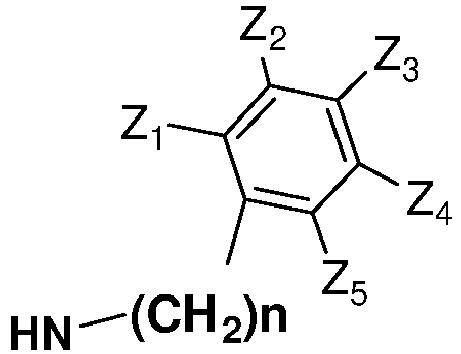 wherein, n = 0 or 1;when n = 0, Z1, Z2, Z3, Z4, Z5 are all H;when n = 1, any two of Z1, Z2, Z3, Z4, Z5 each are independently selected from halogen, C1-C6 alkyl, C1-C6 alkoxy, the rest being H;
2) C3-C6 cycloalkylamino;more preferably, R3 is selected from:1) wherein, n = 0 or 1;when n = 0, Z1, Z2, Z3, Z4, Z5 are all H;when n = 1, Z1, Z5 in Z1, Z2, Z3, Z4, Z5 each are independently selected from halogen, the rest being H;
2) C3-C6 cycloalkylamino;most preferably, R3 is selected from:1)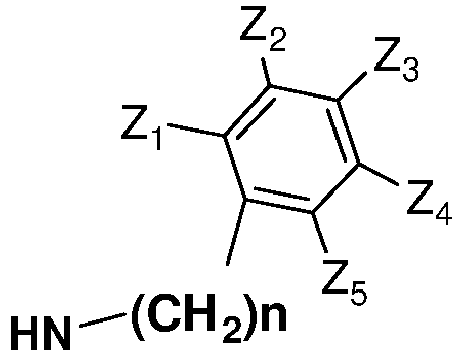 wherein, n = 0 or 1;when n = 0, Z1, Z2, Z3, Z4, Z5 are all H;when n = 1, Z1, Z5 in Z1, Z2, Z3, Z4, Z5 each are independently selected from fluoro, chloro, the rest being H;
2) R4 is selected from H, C1-C3 alkyl, C1-C3 alkoxy, C1-C3 oxygen-containing alkyl, C1-C3 fluorine-containing alkyl, halogen, nitro, cyano, amino, hydroxy;preferably, R4 is selected from H, C1-C3 alkyl, amino, hydroxy;most preferably, R4 is H.
 - A compound according to claim 1, which is,
 wherein, R1 is selected from H, C1-C6 alkyl, C3-C6 cycloalkyl;preferably, R1 is selected from H, t-butyl;R2 is selected from:1)
 2)
2) preferably, R2 is selected from:1)
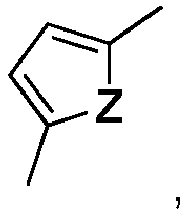 2)
2)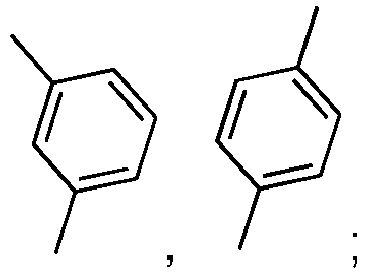 Y is selected from C, S, P;preferably, Y is C;m = 1 or 2;preferably, m = 1;R3 is selected from:1) amino, cyclopropylamino, cyclobutylamino, cyclopentylamino, cyclohexylamino, N,N-dimethylamino, N,N-diethylamino, N,N-diisopropylamino, 2-N,N-dimethylaminoethylamino, 2-hydroxyethylamino, 2-morpholinylethylamino, 2-thiomorpholinylethylamino, 2-(4-N-methylpiperazinyl)ethylamino, 3-N,N-dimethylaminopropylamino, 3-N,N-diethylaminopropylamino, 3-N,N-diisopropylaminopropylamino, 3-hydroxypropylamino, 3-morpholinylpropylamino, 3-thiomorpholinylpropylamino, 3-(4-N-methylpiperazinyl)propylamino, N-methylpiperidinyl-4-amino, N-ethylpiperidinyl-4-amino, N-isopropylpiperidinyl-4-amino, N-acetylpiperidinyl-4-amino,2) arylamino or heteroarylamino, which is optionally substituted by C1-C6 alkyl, C1-C6 alkoxy, C1-C6 oxygen-containing alkyl, C1-C3 fluorine-containing alkyl, C3-C6 cycloalkyl, halogen, nitro, cyano, amino, hydroxy, optionally substituted heterocyclyl, C1-C6 alkoxycarbonyl, C1-C6 acyl;3) phenylmethylamino, which is optionally substituted by C1-C6 alkyl, C1-C6 alkoxy, C1-C6 oxygen-containing alkyl, C1-C3 fluorine-containing alkyl, C3-C6 cycloalkyl, halogen, nitro, cyano, amino, hydroxy, optionally substituted heterocyclyl, C1-C6 alkoxycarbonyl, C1-C6 acyl;4) phenylethylamino, which is optionally substituted by C1-C6 alkyl, C1-C6 alkoxy, C1-C6 oxygen-containing alkyl, C1-C3 fluorine-containing alkyl, C3-C6 cycloalkyl, halogen, nitro, cyano, amino, hydroxy, optionally substituted heterocyclyl, C1-C6 alkoxycarbonyl, C1-C6 acyl;5) a five- or six-membered heterocyclic ring comprising one or more heteroatoms selected from N, O and S, said five- or six-membered heterocyclic ring being optionally substituted by C1-C6 alkyl, C1-C6 alkoxy, hydroxy, amino, C1-C6 alkoxycarbonyl, C1-C6 acyl, cyano, optionally substituted heterocyclyl,including but not limited to: piperidinyl, 4-N,N-dimethylaminopiperidinyl, 4-N,N-diethylaminopiperidinyl, 4-N,N-diisopropylaminopiperidinyl, 4-hydroxypiperidinyl, 4-(N-methylpiperazinyl)piperidinyl, 4-(N-ethylpiperazinyl)piperidinyl, 4-(N-isopropylpiperazinyl)piperidinyl, 4-(N-acetylpiperazinyl)piperidinyl, 4-(N-t-butoxyformylpiperazinyl)piperidinyl, 4-(N-methanesulfonylpiperazinyl)piperidinyl, 4-(N-(2-hydroxyethyl)piperazinyl)piperidinyl, 4-(N-(2-cyanoethyl)piperazinyl)piperidinyl, 4-(N-(3-hydroxypropyl)piperazinyl)piperidinyl, 4-(N-(2-N,N-dimethylethyl)piperazinyl)piperidinyl, 4-(N-(2-N,N-diethylethyl)piperazinyl)piperidinyl, 4-(N-(3-N,N-dimethylpropyl)piperazinyl)piperidinyl, 4-(N-(3-N,N-diethylpropyl)piperazinyl)piperidinyl, 4-(tetrahydropyrrolyl)piperidinyl, 4-(3-N,N-dimethyltetrahydropyrrolyl)piperidinyl;N-methylpiperazinyl, N-ethylpiperazinyl, N-isopropylpiperazinyl, N-acetylpiperazinyl, N-t-butoxyformylpiperazinyl, N-methanesulfonylpiperazinyl, N-(2-hydroxyethyl)piperazinyl, N-(2-cyanoethyl)piperazinyl, N-(3-hydroxypropyl)piperazinyl, N-(2-N,Ndimethylethyl)piperazinyl, N-(2-N,N-diethylethyl)piperazinyl, N-(3-N,N-dimethylpropyl)piperazinyl, N-(3-N,N-diethylpropyl)piperazinyl, 2-oxo-piperazin-4-yl, N-(N-methyl-4-piperidinyl)piperazinyl, N-(N-ethyl-4-piperidinyl)piperazinyl, N-(N-acetyl-4-piperidinyl)piperazinyl;morpholinyl, 3,5-dimethylmorpholinyl, thiomorpholinyl, tetrahydropyrrolyl, 3-N,N-dimethyltetrahydropyrrolyl, 3-N,N-diethyltetrahydropyrrolyl;6) benzyl, which is optionally substituted by C1-C6 alkyl, C1-C6 alkoxy, C1-C6 oxygen-containing alkyl, C1-C3 fluorine-containing alkyl, C3-C6 cycloalkyl, halogen, nitro, cyano, amino, hydroxy, optionally substituted heterocyclyl, C1-C6 alkoxycarbonyl, C1-C6 acyl;7) hydroxy, 2-N,N-dimethylaminoethoxy, 2-N,N-diethylaminoethoxy, 2-N,N-diisopropylaminoethoxy, 2-(N-methylpiperazinyl)ethoxy, 2-(N-acetylpiperazinyl)ethoxy, 2-morpholinylethoxy, 2-thiomorpholinylethoxy, 2-piperidinylethoxy, 3-N,N-dimethylaminopropoxy, 3-N,N-diethylaminopropoxy, 3-N,N-diisopropylaminopropoxy, 3-(N-methylpiperazinyl)propoxy, 3-(N-acetylpiperazinyl)propoxy, 3-morpholinylpropoxy, 3-thiomorpholinylpropoxy, 3-piperidinylpropoxy, 2-pyridylmethoxy, 3-pyridylmethoxy, 4-pyridylmethoxy, phenylmethoxy, monohalo-substituted phenylmethoxy, gem-dihalo-substituted phenylmethoxy, hetero-dihalo-substituted phenylmethoxy;preferably, R3 is selected from: 1)
 wherein, n = 0 or 1;when n = 0, Z1, Z2, Z3, Z4, Z5 are all H;when n = 1, any two of Z1, Z2, Z3, Z4, Z5 each are independently selected from halogen, C1-C6 alkyl, C1-C6 alkoxy, the rest being H;
2) C3-C6 cycloalkylamino;more preferably, R3 is selected from: 1) wherein, n = 0 or 1;when n = 0, Z1, Z2, Z3, Z4, Z5 are all H;when n = 1, Z1, Z5 in Z1, Z2, Z3, Z4, Z5 each are independently selected from halogen, the rest being H;
2) C3-C6 cycloalkylamino;most preferably, R3 is selected from:1)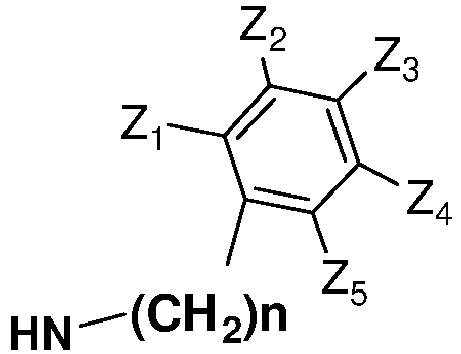 wherein, n = 0 or 1;when n = 0, Z1, Z2, Z3, Z4, Z5 are all H;when n = 1, Z1, Z5 in Z1, Z2, Z3, Z4, Z5 each are independently selected from fluoro, chloro, the rest being H;
2) R4 is selected from H, C1-C3 alkyl, C1-C3 alkoxy, C1-C3 oxygen-containing alkyl, C1-C3 fluorine-containing alkyl, halogen, nitro, cyano, amino, hydroxy;preferably, R4 is selected from H, C1-C3 alkyl, amino, hydroxy;most preferably, R4 is selected from H, 4-amino.
 - A compound according to claim 1, which is,
 R2 is selected from:1)
 2)
2) preferably, R2 is selected from:1)
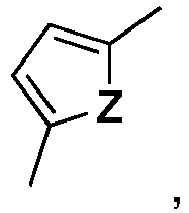 2)
2) Y is selected from C, S, P;preferably, Y is C;m = 1 or 2;preferably, m = 1;R3 is selected from:1) amino, cyclopropylamino, cyclobutylamino, cyclopentylamino, cyclohexylamino, N,N-dimethylamino, N,N-diethylamino, N,N-diisopropylamino, 2-N,N-dimethylaminoethylamino, 2-hydroxyethylamino, 2-morpholinylethylamino, 2-thiomorpholinylethylamino, 2-(4-N-methylpiperazinyl)ethylamino, 3-N,N-dimethylaminopropylamino, 3-N,N-diethylaminopropylamino, 3-N,N-diisopropylaminopropylamino, 3-hydroxypropylamino, 3-morpholinylpropylamino, 3-thiomorpholinylpropylamino, 3-(4-N-methylpiperazinyl)propylamino, N-methylpiperidinyl-4-amino, N-ethylpiperidinyl-4-amino, N-isopropylpiperidinyl-4-amino, N-acetylpiperidinyl-4-amino-,2) arylamino or heteroarylamino, which is optionally substituted by C1-C6 alkyl, C1-C6 alkoxy, C1-C6 oxygen-containing alkyl, C1-C3 fluorine-containing alkyl, C3-C6 cycloalkyl, halogen, nitro, cyano, amino, hydroxy, optionally substituted heterocyclyl, C1-C6 alkoxycarbonyl, C1-C6 acyl;3) phenylmethylamino, which is optionally substituted by C1-C6 alkyl, C1-C6 alkoxy, C1-C6 oxygen-containing alkyl, C1-C3 fluorine-containing alkyl, C3-C6 cycloalkyl, halogen, nitro, cyano, amino, hydroxy, optionally substituted heterocyclyl, C1-C6 alkoxycarbonyl, C1-C6 acyl;4) phenylethylamino, which is optionally substituted by C1-C6 alkyl, C1-C6 alkoxy, C1-C6 oxygen-containing alkyl, C1-C3 fluorine-containing alkyl, C3-C6 cycloalkyl, halogen, nitro, cyano, amino, hydroxy, optionally substituted heterocyclyl, C1-C6 alkoxycarbonyl, C1-C6 acyl;5) a five- or six-membered heterocyclic ring comprising one or more heteroatoms selected from N, O and S, said five- or six-membered heterocyclic ring being optionally substituted by C1-C6 alkyl, C1-C6 alkoxy, hydroxy, amino, C1-C6 alkoxycarbonyl, C1-C6 acyl, cyano, optionally substituted heterocyclyl,including but not limited to: piperidinyl, 4-N,N-dimethylaminopiperidinyl, 4-N,N-diethylaminopiperidinyl, 4-N,N-diisopropylaminopiperidinyl, 4-hydroxypiperidinyl, 4-(N-methylpiperazinyl)piperidinyl, 4-(N-ethylpiperazinyl)piperidinyl, 4-(N-isopropylpiperazinyl)piperidinyl, 4-(N-acetylpiperazinyl)piperidinyl, 4-(N-t-butoxyformylpiperazinyl)piperidinyl, 4-(N-methanesulfonylpiperazinyl)piperidinyl, 4-(N-(2-hydroxyethyl)piperazinyl)piperidinyl, 4-(N-(2-cyanoethyl)piperazinyl)piperidinyl, 4-(N-(3-hydroxypropyl)piperazinyl)piperidinyl, 4-(N-(2-N,N-dimethylethyl)piperazinyl)piperidinyl, 4-(N-(2-N,N-diethylethyl)piperazinyl)piperidinyl, 4-(N-(3-N,N-dimethylpropyl)piperazinyl)piperidinyl, 4-(N-(3-N,N-diethylpropyl)piperazinyl)piperidinyl, 4-(tetrahydropyrrolyl)piperidinyl, 4-(3-N,N-dimethyltetrahydropyrrolyl)piperidinyl;N-methylpiperazinyl, N-ethylpiperazinyl, N-isopropylpiperazinyl, N-acetylpiperazinyl,N-t-butoxyformylpiperazinyl, N-methanesulfonylpiperazinyl, N-(2-hydroxyethyl)piperazinyl, N-(2-cyanoethyl)piperazinyl, N-(3-hydroxypropyl)piperazinyl, N-(2-N,Ndimethylethyl)piperazinyl, N-(2-N,N-diethylethyl)piperazinyl, N-(3-N,N-dimethylpropyl)piperazinyl, N-(3-N,N-diethylpropyl)piperazinyl, 2-oxo-piperazin-4-yl, N-(N-methyl-4-piperidinyl)piperazinyl, N-(N-ethyl-4-piperidinyl)piperazinyl, N-(N-acetyl-4-piperidinyl)piperazinyl;morpholinyl, 3,5-dimethylmorpholinyl, thiomorpholinyl, tetrahydropyrrolyl, 3-N,N-dimethyltetrahydropyrrolyl, 3-N,N-diethyltetrahydropyrrolyl;6) benzyl, which is optionally substituted by C1-C6 alkyl, C1-C6 alkoxy, C1-C6 oxygen-containing alkyl, C1-C3 fluorine-containing alkyl, C3-C6 cycloalkyl, halogen, nitro, cyano, amino, hydroxy, optionally substituted heterocyclyl, C1-C6 alkoxycarbonyl, C1-C6 acyl;7) hydroxy, 2-N,N-dimethylaminoethoxy, 2-N,N-diethylaminoethoxy, 2-N,N-diisopropylaminoethoxy, 2-(N-methylpiperazinyl)ethoxy, 2-(N-acetylpiperazinyl)ethoxy, 2-morpholinylethoxy, 2-thiomorpholinylethoxy, 2-piperidinylethoxy, 3-N,Ndimethylaminopropoxy, 3-N,N-diethylaminopropoxy, 3-N,N-diisopropylaminopropoxy, 3-(N-methylpiperazinyl)propoxy, 3-(N-acetylpiperazinyl)propoxy, 3-morpholinylpropoxy, 3-thiomorpholinylpropoxy, 3-piperidinylpropoxy, 2-pyridylmethoxy, 3-pyridylmethoxy, 4-pyridylmethoxy, phenylmethoxy, monohalo-substituted phenylmethoxy, gem-dihalo-substituted phenylmethoxy, hetero-dihalo-substituted phenylmethoxy;preferably, R3 is selected from1)
 wherein, n = 0 or 1;when n = 0, Z1, Z2, Z3, Z4, Z5 are all H;when n = 1, any two of Z1, Z2, Z3, Z4, Z5 each are independently selected from halogen, C1-C6 alkyl, C1-C6 alkoxy, the rest being H; orany one of Z1, Z2, Z3, Z4, Z5 is selected from C1-C3 fluorine-containing alkyl, the rest being H; orany two of Z1, Z2, Z3, Z4, Z5 each are independently selected from halogen, C1-C3 fluorine-containing alkyl, the rest being H;
2) C3-C6 cycloalkylamino;more preferably, R3 is selected from:1) wherein, n = 0 or 1;when n = 0, Z1, Z2, Z3, Z4, Z5 are all H;when n = 1, Z1, Z5 in Z1, Z2, Z3, Z4, Z5 each are independently selected from halogen, the rest being H; orZ2 in Z1, Z2, Z3, Z4, Z5 is selected from C1-C3 fluorine-containing alkyl, the rest being H; orZ3, Z4 in Z1, Z2, Z3, Z4, Z5 is selected from halogen, C1-C3 fluorine-containing alkyl, the rest being H;
2) C3-C6 cycloalkylamino;most preferably, R3 is selected from:1)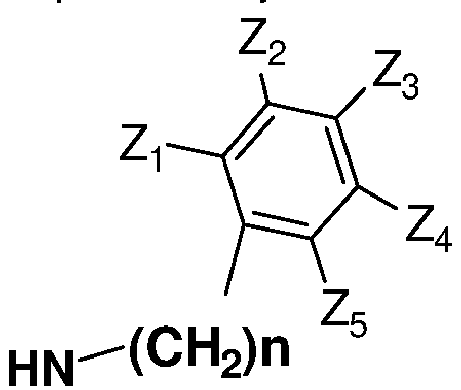 wherein, n = 0 or 1;when n = 0, Z1, Z2, Z3, Z4, Z5 are all H;when n = 1, Z1, Z5 in Z1, Z2, Z3, Z4, Z5 each are independently selected from fluoro, chloro, the rest being H; orZ2 in Z1, Z2, Z3, Z4, Z5 is selected from trifluoromethyl, the rest being H; orZ3, Z4 in Z1, Z2, Z3, Z4, Z5 is selected from fluoro, trifluoromethyl, the rest being H;
2) R4 is selected from H, C1-C3 alkyl, C1-C3 alkoxy, C1-C3 oxygen-containing alkyl, C1-C3 fluorine-containing alkyl, halogen, nitro, cyano, amino, hydroxy;preferably, R4 is selected from H, C1-C3 alkyl, amino, hydroxy;most preferably, R4 is H.
 - A compound according to claim 1, which is,
 R2 is selected from:1)
 2)
2) preferably, R2 is selected from:1)
 2)
2) Y is selected from C, S, P;preferably, Y is C;m = 1 or 2;preferably, m = 1;R3 is selected from:1) amino, cyclopropylamino, cyclobutylamino, cyclopentylamino, cyclohexylamino, N,N-dimethylamino, N,N-diethylamino, N,N-diisopropylamino, 2-N,N-dimethylaminoethylamino, 2-hydroxyethylamino, 2-morpholinylethylamino, 2-thiomorpholinylethylamino, 2-(4-N-methylpiperazinyl)ethylamino, 3-N,N-dimethylaminopropylamino, 3-N,N-diethylaminopropylamino, 3-N,N-diisopropylaminopropylamino, 3-hydroxypropylamino, 3-morpholinylpropylamino, 3-thiomorpholinylpropylamino, 3-(4-N-methylpiperazinyl)propylamino, N-methylpiperidinyl-4-amino, N-ethylpiperidinyl-4-amino, N-isopropylpiperidinyl-4-amino, N-acetylpiperidinyl-4-amino-,2) arylamino or heteroarylamino, which is optionally substituted by C1-C6 alkyl, C1-C6 alkoxy, C1-C6 oxygen-containing alkyl, C1-C3 fluorine-containing alkyl, C3-C6 cycloalkyl, halogen, nitro, cyano, amino, hydroxy, optionally substituted heterocyclyl, C1-C6 alkoxycarbonyl, C1-C6 acyl;3) phenylmethylamino, which is optionally substituted by C1-C6 alkyl, C1-C6 alkoxy, C1-C6 oxygen-containing alkyl, C1-C3 fluorine-containing alkyl, C3-C6 cycloalkyl, halogen, nitro, cyano, amino, hydroxy, optionally substituted heterocyclyl, C1-C6 alkoxycarbonyl, C1-C6 acyl;4) phenylethylamino, which is optionally substituted by C1-C6 alkyl, C1-C6 alkoxy, C1-C6 oxygen-containing alkyl, C1-C3 fluorine-containing alkyl, C3-C6 cycloalkyl, halogen, nitro, cyano, amino, hydroxy, optionally substituted heterocyclyl, C1-C6 alkoxycarbonyl, C1-C6 acyl;5) a five- or six-membered heterocyclic ring comprising one or more heteroatoms selected from N, O and S, said five- or six-membered heterocyclic ring being optionally substituted by C1-C6 alkyl, C1-C6 alkoxy, hydroxy, amino, C1-C6 alkoxycarbonyl, C1-C6 acyl, cyano, optionally substituted heterocyclyl,including but not limited to: piperidinyl, 4-N,N-dimethylaminopiperidinyl, 4-N,N-diethylaminopiperidinyl, 4-N,N-diisopropylaminopiperidinyl, 4-hydroxypiperidinyl, 4-(N-methylpiperazinyl)piperidinyl, 4-(N-ethylpiperazinyl)piperidinyl, 4-(N-isopropylpiperazinyl)piperidinyl, 4-(N-acetylpiperazinyl)piperidinyl, 4-(N-t-butoxyformylpiperazinyl)piperidinyl, 4-(N-methanesulfonylpiperazinyl)piperidinyl, 4-(N-(2-hydroxyethyl)piperazinyl)piperidinyl, 4-(N-(2-cyanoethyl)piperazinyl)piperidinyl, 4-(N-(3-hydroxypropyl)piperazinyl)piperidinyl, 4-(N-(2-N,N-dimethylethyl)piperazinyl)piperidinyl, 4-(N-(2-N,N-diethylethyl)piperazinyl)piperidinyl, 4-(N-(3-N,N-dimethylpropyl)piperazinyl)piperidinyl, 4-(N-(3-N,N-diethylpropyl)piperazinyl)piperidinyl, 4-(tetrahydropyrrolyl)piperidinyl, 4-(3-N,N-dimethyltetrahydropyrrolyl)piperidinyl;N-methylpiperazinyl, N-ethylpiperazinyl, N-isopropylpiperazinyl, N-acetylpiperazinyl, N-t-butoxyformylpiperazinyl, N-methanesulfonylpiperazinyl, N-(2-hydroxyethyl)piperazinyl, N-(2-cyanoethyl)piperazinyl, N-(3-hydroxypropyl)piperazinyl, N-(2-N,Ndimethylethyl)piperazinyl, N-(2-N,N-diethylethyl)piperazinyl, N-(3-N,Ndimethylpropyl)piperazinyl, N-(3-N,N-diethylpropyl)piperazinyl, 2-oxo-piperazin-4-yl, N-(N-methyl-4-piperidinyl)piperazinyl, N-(N-ethyl-4-piperidinyl)piperazinyl, N-(N-acetyl-4-piperidinyl)piperazinyl;morpholinyl, 3,5-dimethylmorpholinyl, thiomorpholinyl, tetrahydropyrrolyl, 3-N,N-dimethyltetrahydropyrrolyl, 3-N,N-diethyltetrahydropyrrolyl;6) benzyl, which is optionally substituted by C1-C6 alkyl, C1-C6 alkoxy, C1-C6 oxygen-containing alkyl, C1-C3 fluorine-containing alkyl, C3-C6 cycloalkyl, halogen, nitro, cyano, amino, hydroxy, optionally substituted heterocyclyl, C1-C6 alkoxycarbonyl, C1-C6 acyl;7) hydroxy, 2-N,N-dimethylaminoethoxy, 2-N,N-diethylaminoethoxy, 2-N,N-diisopropylaminoethoxy, 2-(N-methylpiperazinyl)ethoxy, 2-(N-acetylpiperazinyl)ethoxy, 2-morpholinylethoxy, 2-thiomorpholinylethoxy, 2-piperidinylethoxy, 3-N,Ndimethylaminopropoxy, 3-N,N-diethylaminopropoxy, 3-N,N-diisopropylaminopropoxy, 3-(N-methylpiperazinyl)propoxy, 3-(N-acetylpiperazinyl)propoxy, 3-morpholinylpropoxy, 3-thiomorpholinylpropoxy, 3-piperidinylpropoxy, 2-pyridylmethoxy, 3-pyridylmethoxy, 4-pyridylmethoxy, phenylmethoxy, monohalo-substituted phenylmethoxy, gem-dihalo-substituted phenylmethoxy, hetero-dihalo-substituted phenylmethoxy;preferably, R3 is selected from:1)
 wherein, n = 0 or 1;when n = 0, Z1, Z2, Z3, Z4, Z5 are all H;when n = 1, any two of Z1, Z2, Z3, Z4, Z5 each are independently selected from halogen, C1-C6 alkyl, C1-C6 alkoxy, the rest being H; orany one of Z1, Z2, Z3, Z4, Z5 is selected from C1-C3 fluorine-containing alkyl, the rest being H; orany two of Z1, Z2, Z3, Z4, Z5 each are independently selected from halogen, C1-C3 fluorine-containing alkyl, the rest being H;
2) C3-C6 cycloalkylamino;more preferably, R3 is selected from:1) wherein, n = 0 or 1;when n = 0, Z1, Z2, Z3, Z4, Z5 are all H;when n = 1, Z1, Z5 in Z1, Z2, Z3, Z4, Z5 each are independently selected from halogen, the rest being H; orZ2 in Z1, Z2, Z3, Z4, Z5 is selected from C1-C3 fluorine-containing alkyl, the rest being H; orZ3, Z4 in Z1, Z2, Z3, Z4, Z5 is selected from halogen, C1-C3 fluorine-containing alkyl, the rest being H;
2) C3-C6 cycloalkylamino;most preferably, R3 is selected from:1)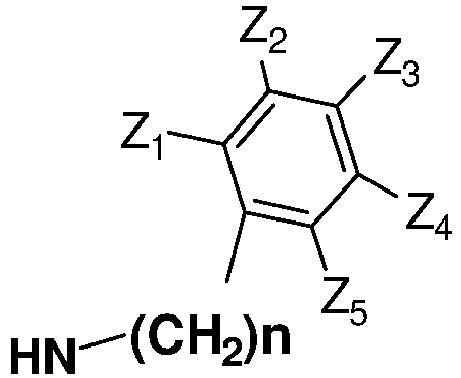 wherein, n = 0 or 1;when n = 0, Z1, Z2, Z3, Z4, Z5 are all H;when n = 1, Z1, Z5 in Z1, Z2, Z3, Z4, Z5 each are independently selected from fluoro, chloro, the rest being H; orZ2 in Z1, Z2, Z3, Z4, Z5 is selected from trifluoromethyl, the rest being H; orZ3, Z4 in Z1, Z2, Z3, Z4, Z5 is selected from fluoro, trifluoromethyl, the rest being H;
2) R4 is selected from H, C1-C3 alkyl, C1-C3 alkoxy, C1-C3 oxygen-containing alkyl, C1-C3 fluorine-containing alkyl, halogen, nitro, cyano, amino, hydroxy;preferably, R4 is selected from H, C1-C3 alkyl, amino, hydroxy;most preferably, R4 is H.
 - A compound according to claim 1, which is,
 R2 is selected from:1)
 2)
2) preferably, R2 is selected from:1)
 2)
2) Y is selected from C, S, P;preferably, Y is C;m = 1 or 2;preferably, m = 1;R3 is selected from:1) amino, cyclopropylamino, cyclobutylamino, cyclopentylamino, cyclohexylamino, N,N-dimethylamino, N,N-diethylamino, N,N-diisopropylamino, 2-N,N-dimethylaminoethylamino, 2-hydroxyethylamino, 2-morpholinylethylamino, 2-thiomorpholinylethylamino, 2-(4-N-methylpiperazinyl)ethylamino, 3-N,N-dimethylaminopropylamino, 3-N,N-diethylaminopropylamino, 3-N,N-diisopropylaminopropylamino, 3-hydroxypropylamino, 3-morpholinylpropylamino, 3-thiomorpholinylpropylamino, 3-(4-N-methylpiperazinyl)propylamino, N-methylpiperidinyl-4-amino, N-ethylpiperidinyl-4-amino, N-isopropylpiperidinyl-4-amino, N-acetylpiperidinyl-4-amino;2) arylamino or heteroarylamino, which is optionally substituted by C1-C6 alkyl, C1-C6 alkoxy, C1-C6 oxygen-containing alkyl, C1-C3 fluorine-containing alkyl, C3-C6 cycloalkyl, halogen, nitro, cyano, amino, hydroxy, optionally substituted heterocyclyl, C1-C6 alkoxycarbonyl, C1-C6 acyl;3) phenylmethylamino, which is optionally substituted by C1-C6 alkyl, C1-C6 alkoxy, C1-C6 oxygen-containing alkyl, C1-C3 fluorine-containing alkyl, C3-C6 cycloalkyl, halogen, nitro, cyano, amino, hydroxy, optionally substituted heterocyclyl, C1-C6 alkoxycarbonyl, C1-C6 acyl;4) phenylethylamino, which is optionally substituted by C1-C6 alkyl, C1-C6 alkoxy, C1-C6 oxygen-containing alkyl, C1-C3 fluorine-containing alkyl, C3-C6 cycloalkyl, halogen, nitro, cyano, amino, hydroxy, optionally substituted heterocyclyl, C1-C6 alkoxycarbonyl, C1-C6 acyl;5) a five- or six-membered heterocyclic ring comprising one or more heteroatoms selected from N, O and S, said five- or six-membered heterocyclic ring being optionally substituted by C1-C6 alkyl, C1-C6 alkoxy, hydroxy, amino, C1-C6 alkoxycarbonyl, C1-C6 acyl, cyano, optionally substituted heterocyclyl,including but not limited to: piperidinyl, 4-N,N-dimethylaminopiperidinyl, 4-N,N-diethylaminopiperidinyl, 4-N,N-diisopropylaminopiperidinyl, 4-hydroxypiperidinyl, 4-(N-methylpiperazinyl)piperidinyl, 4-(N-ethylpiperazinyl)piperidinyl, 4-(N-isopropylpiperazinyl)piperidinyl, 4-(N-acetylpiperazinyl)piperidinyl, 4-(N-t-butoxyformylpiperazinyl)piperidinyl, 4-(N-methanesulfonylpiperazinyl)piperidinyl, 4-(N-(2-hydroxyethyl)piperazinyl)piperidinyl, 4-(N-(2-cyanoethyl)piperazinyl)piperidinyl, 4-(N-(3-hydroxypropyl)piperazinyl)piperidinyl, 4-(N-(2-N,N-dimethylethyl)piperazinyl)piperidinyl, 4-(N-(2-N,N-diethylethyl)piperazinyl)piperidinyl, 4-(N-(3-N,N-dimethylpropyl)piperazinyl)piperidinyl, 4-(N-(3-N,N-diethylpropyl)piperazinyl)piperidinyl, 4-(tetrahydropyrrolyl)piperidinyl, 4-(3-N,N-dimethyltetrahydropyrrolyl)piperidinyl;N-methylpiperazinyl, N-ethylpiperazinyl, N-isopropylpiperazinyl, N-acetylpiperazinyl, N-t-butoxyformylpiperazinyl, N-methanesulfonylpiperazinyl, N-(2-hydroxyethyl)piperazinyl, N-(2-cyanoethyl)piperazinyl, N-(3-hydroxypropyl)piperazinyl, N-(2-N,Ndimethylethyl)piperazinyl, N-(2-N,N-diethylethyl)piperazinyl, N-(3-N,Ndimethylpropyl)piperazinyl, N-(3-N,N-diethylpropyl)piperazinyl, 2-oxo-piperazin-4-yl, N-(N-methyl-4-piperidinyl)piperazinyl, N-(N-ethyl-4-piperidinyl)piperazinyl, N-(N-acetyl-4-piperidinyl)piperazinyl;morpholinyl, 3,5-dimethylmorpholinyl, thiomorpholinyl, tetrahydropyrrolyl, 3-N,N-dimethyltetrahydropyrrolyl, 3-N,N-diethyltetrahydropyrrolyl;6) benzyl, which is optionally substituted by C1-C6 alkyl, C1-C6 alkoxy, C1-C6 oxygen-containing alkyl, C1-C3 fluorine-containing alkyl, C3-C6 cycloalkyl, halogen, nitro, cyano, amino, hydroxy, optionally substituted heterocyclyl, C1-C6 alkoxycarbonyl, C1-C6 acyl;7) hydroxy, 2-N,N-dimethylaminoethoxy, 2-N,N-diethylaminoethoxy, 2-N,N-diisopropylaminoethoxy, 2-(N-methylpiperazinyl)ethoxy, 2-(N-acetylpiperazinyl)ethoxy, 2-morpholinylethoxy, 2-thiomorpholinylethoxy, 2-piperidinylethoxy, 3-N,Ndimethylaminopropoxy, 3-N,N-diethylaminopropoxy, 3-N,N-diisopropylaminopropoxy, 3-(N-methylpiperazinyl)propoxy, 3-(N-acetylpiperazinyl)propoxy, 3-morpholinylpropoxy, 3-thiomorpholinylpropoxy, 3-piperidinylpropoxy, 2-pyridylmethoxy, 3-pyridylmethoxy, 4-pyridylmethoxy, phenylmethoxy, monohalo-substituted phenylmethoxy, gem-dihalo-substituted phenylmethoxy, hetero-dihalo-substituted phenylmethoxy;preferably, R3 is selected from:
 wherein, n = 0 or 1;when n = 0, Z1, Z2, Z3, Z4, Z5 are all H;when n = 1, any two of Z1, Z2, Z3, Z4, Z5 each are independently selected from halogen, C1-C6 alkyl, C1-C6 alkoxy, the rest being H;more preferably, R3 is selected from:
 wherein, n = 0 or 1;when n = 0, Z1, Z2, Z3, Z4, Z5 are all H;when n = 1, Z1, Z5 in Z1, Z2, Z3, Z4, Z5 each are independently selected from halogen, the rest being H;most preferably, R3 is selected from:
 wherein, n = 0 or 1;when n = 0, Z1, Z2, Z3, Z4, Z5 are all H;when n = 1, Z1, Z5 in Z1, Z2, Z3, Z4, Z5 each are independently selected from fluoro, chloro, the rest being H;R4 is selected from H, C1-C3 alkyl, C1-C3 alkoxy, C1-C3 oxygen-containing alkyl, C1-C3 fluorine-containing alkyl, halogen, nitro, cyano, amino, hydroxy;preferably, R4 is selected from H, C1-C3 alkyl, amino, hydroxy;most preferably, R4 is H.
 - A compound according to claim 1, which is,
 R2 is selected from:1)
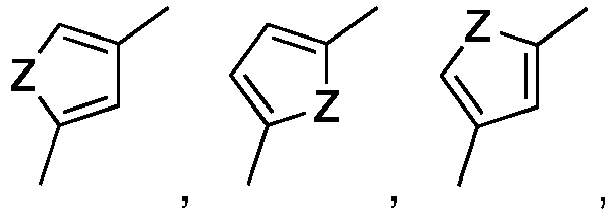 2)
2) preferably, R2 is selected from:1)
 2)
2) Y is selected from C, S, P;preferably, Y is C;m = 1 or 2;preferably, m = 1;R3 is selected from:1) amino, cyclopropylamino, cyclobutylamino, cyclopentylamino, cyclohexylamino, N,N-dimethylamino, N,N-diethylamino, N,N-diisopropylamino, 2-N,N-dimethylaminoethylamino, 2-hydroxyethylamino, 2-morpholinylethylamino, 2-thiomorpholinylethylamino, 2-(4-N-methylpiperazinyl)ethylamino, 3-N,N-dimethylaminopropylamino, 3-N,N-diethylaminopropylamino, 3-N,N-diisopropylaminopropylamino, 3-hydroxypropylamino, 3-morpholinylpropylamino, 3-thiomorpholinylpropylamino, 3-(4-N-methylpiperazinyl)propylamino, N-methylpiperidinyl-4-amino, N-ethylpiperidinyl-4-amino, N-isopropylpiperidinyl-4-amino, N-acetylpiperidinyl-4-amino-,2) arylamino or heteroarylamino, which is optionally substituted by C1-C6 alkyl, C1-C6 alkoxy, C1-C6 oxygen-containing alkyl, C1-C3 fluorine-containing alkyl, C3-C6 cycloalkyl, halogen, nitro, cyano, amino, hydroxy, optionally substituted heterocyclyl, C1-C6 alkoxycarbonyl, C1-C6 acyl;3) phenylmethylamino, which is optionally substituted by C1-C6 alkyl, C1-C6 alkoxy, C1-C6 oxygen-containing alkyl, C1-C3 fluorine-containing alkyl, C3-C6 cycloalkyl, halogen, nitro, cyano, amino, hydroxy, optionally substituted heterocyclyl, C1-C6 alkoxycarbonyl, C1-C6 acyl;4) phenylethylamino, which is optionally substituted by C1-C6 alkyl, C1-C6 alkoxy, C1-C6 oxygen-containing alkyl, C1-C3 fluorine-containing alkyl, C3-C6 cycloalkyl, halogen, nitro, cyano, amino, hydroxy, optionally substituted heterocyclyl, C1-C6 alkoxycarbonyl, C1-C6 acyl;5) a five- or six-membered heterocyclic ring comprising one or more heteroatoms selected from N, O and S, said five- or six-membered heterocyclic ring being optionally substituted by C1-C6 alkyl, C1-C6 alkoxy, hydroxy, amino, C1-C6 alkoxycarbonyl, C1-C6 acyl, cyano, optionally substituted heterocyclyl,including but not limited to: piperidinyl, 4-N,N-dimethylaminopiperidinyl, 4-N,N-diethylaminopiperidinyl, 4-N,N-diisopropylaminopiperidinyl, 4-hydroxypiperidinyl, 4-(N-methylpiperazinyl)piperidinyl, 4-(N-ethylpiperazinyl)piperidinyl, 4-(N-isopropylpiperazinyl)piperidinyl, 4-(N-acetylpiperazinyl)piperidinyl, 4-(N-t-butoxyformylpiperazinyl)piperidinyl, 4-(N-methanesulfonylpiperazinyl)piperidinyl, 4-(N-(2-hydroxyethyl)piperazinyl)piperidinyl, 4-(N-(2-cyanoethyl)piperazinyl)piperidinyl, 4-(N-(3-hydroxypropyl)piperazinyl)piperidinyl, 4-(N-(2-N,N-dimethylethyl)piperazinyl)piperidinyl, 4-(N-(2-N,N-diethylethyl)piperazinyl)piperidinyl, 4-(N-(3-N,N-dimethylpropyl)piperazinyl)piperidinyl, 4-(N-(3-N,N-diethylpropyl)piperazinyl)piperidinyl, 4-(tetrahydropyrrolyl)piperidinyl, 4-(3-N,N-dimethyltetrahydropyrrolyl)piperidinyl;N-methylpiperazinyl, N-ethylpiperazinyl, N-isopropylpiperazinyl, N-acetylpiperazinyl, N-t-butoxyformylpiperazinyl, N-methanesulfonylpiperazinyl, N-(2-hydroxyethyl)piperazinyl, N-(2-cyanoethyl)piperazinyl, N-(3-hydroxypropyl)piperazinyl, N-(2-N,Ndimethylethyl)piperazinyl, N-(2-N,N-diethylethyl)piperazinyl, N-(3-N,N-dimethylpropyl)piperazinyl, N-(3-N,N-diethylpropyl)piperazinyl, 2-oxo-piperazin-4-yl, N-(N-methyl-4-piperidinyl)piperazinyl, N-(N-ethyl-4-piperidinyl)piperazinyl, N-(N-acetyl-4-piperidinyl)piperazinyl;morpholinyl, 3,5-dimethylmorpholinyl, thiomorpholinyl, tetrahydropyrrolyl, 3-N,N-dimethyltetrahydropyrrolyl, 3-N,N-diethyltetrahydropyrrolyl;6) benzyl, which is optionally substituted by C1-C6 alkyl, C1-C6 alkoxy, C1-C6 oxygen-containing alkyl, C1-C3 fluorine-containing alkyl, C3-C6 cycloalkyl, halogen, nitro, cyano, amino, hydroxy, optionally substituted heterocyclyl, C1-C6 alkoxycarbonyl, C1-C6 acyl;7) hydroxy, 2-N,N-dimethylaminoethoxy, 2-N,N-diethylaminoethoxy, 2-N,N-diisopropylaminoethoxy, 2-(N-methylpiperazinyl)ethoxy, 2-(N-acetylpiperazinyl)ethoxy, 2-morpholinylethoxy, 2-thiomorpholinylethoxy, 2-piperidinylethoxy, 3-N,N-dimethylaminopropoxy, 3-N,N-diethylaminopropoxy, 3-N,N-diisopropylaminopropoxy, 3-(N-methylpiperazinyl)propoxy, 3-(N-acetylpiperazinyl)propoxy, 3-morpholinylpropoxy, 3-thiomorpholinylpropoxy, 3-piperidinylpropoxy, 2-pyridylmethoxy, 3-pyridylmethoxy, 4-pyridylmethoxy, phenylmethoxy, monohalo-substituted phenylmethoxy, gem-dihalo-substituted phenylmethoxy, hetero-dihalo-substituted phenylmethoxy;preferably, R3 is selected from:
 wherein, n = 0 or 1;when n = 0, Z1, Z2, Z3, Z4, Z5 are all H;when n = 1, any two of Z1, Z2, Z3, Z4, Z5 each are independently selected from halogen, C1-C6 alkyl, C1-C6 alkoxy, the rest being H;more preferably, R3 is selected from:
 wherein, n = 0 or 1;when n = 0, Z1, Z2, Z3, Z4, Z5 are all H;when n = 1, Z1, Z5 in Z1, Z2, Z3, Z4, Z5 each are independently selected from halogen, the rest being H;most preferably, R3 is selected from:
 wherein, n = 0 or 1;when n = 0, Z1, Z2, Z3, Z4, Z5 are all H;when n = 1, Z1, Z5 in Z1, Z2, Z3, Z4, Z5 each are independently selected from fluoro, chloro, the rest being H;R4 is selected from H, C1-C3 alkyl, C1-C3 alkoxy, C1-C3 oxygen-containing alkyl, C1-C3 fluorine-containing alkyl, halogen, nitro, cyano, amino, hydroxy;preferably, R4 is selected from H, C1-C3 alkyl, amino, hydroxy;most preferably, R4 is H.
 - A compound according to any one of claims 1-10, which is selected from:
No. Structure No. Structure No. Structure I-a-1 
I-a-2 
I-a-3 
I-a-4 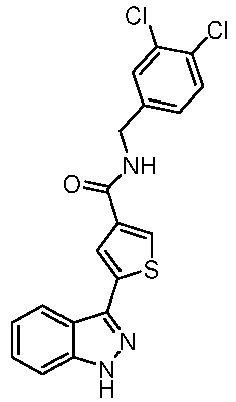
I-a-5 
I-a-6 
I-a-7 
I-a-8 
I-a-9 
I-a-10 
I-a-11 
I-a-12 
I-a-13 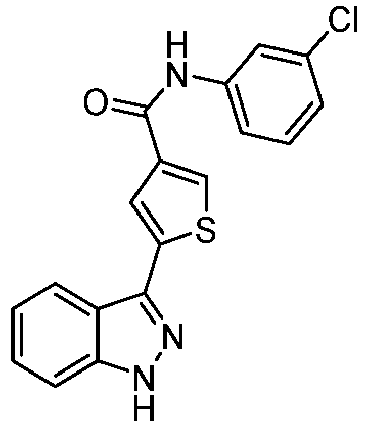
I-a-14 
I-a-15 
I-a-16 
I-a-17 
I-a-18 
I-a-19 
I-a-20 
I-a-21 
I-a-22 
I-a-23 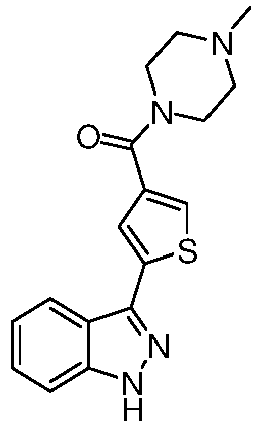
I-a-24 
I-a-25 
I-a-26 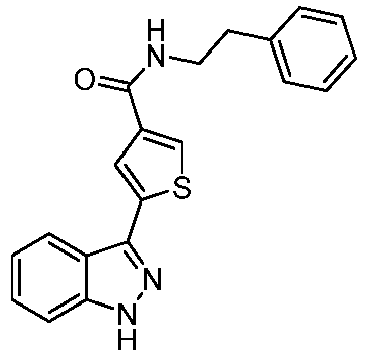
I-a-27 
I-a-28 
I-a-29 
I-a-30 
I-b-1 
I-b-2 
I-c-1 
l-c-2 
I-d-1 
I-d-2 
I-e-1 
I-e-2 
I-f-1 
l-f-2 
I-f-3 
I-g-1 
II-a-1 
II-a-2 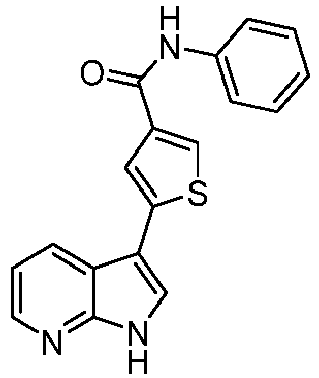
II-a-3 
II-b-1 
II-b-2 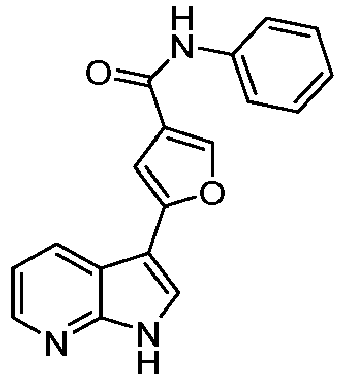
II-c-1 
II-c-2 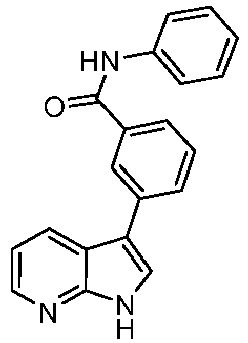
II-d-1 
II-d-2 
II-e-1 
II-e-2 
III-a-1 
III-a-2 
III-a-3 
III-a-4 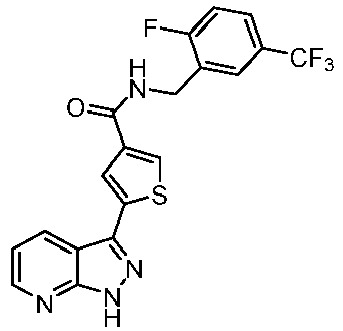
III-b-1 
III-b-2 
III-c-1 
III-c-2 
III-c-3 
III-d-1 
III-d-2 
III-d-3 
III-e-1 
III-e-2 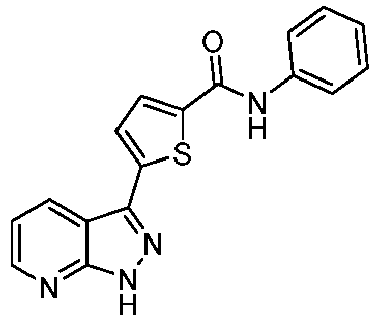
III-f-1 
III-f -2 
III-f-3 
III-f-4 
III-f-5 
III-f-8 
III-f-11 
III-f-12 
III-f-13 
III-f-14 
III-f-15 
III-f-16 
III-f-17 
III-f-18 
III-f-19 
III-f-20 
III-f-21 
III-f-22 
III-f-23 
III-f-25 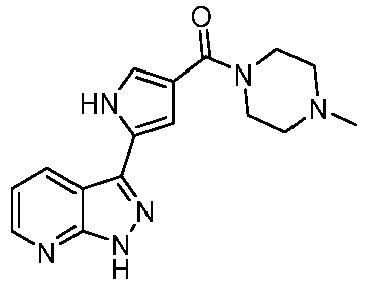
III-f-26 
III-f-27 
III-f-28 
III-f-29 
III-f-30 
III-f-31 
III-f-32 
III-f-33 
III-f-34 
III-f-35 
III-f-36 
III-f-37 
III-f-38 
III-f-39 
III-f-40 
III-f-41 
III-f-42 
III-f-43 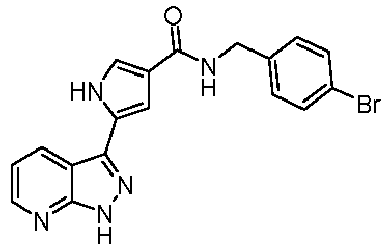
III-f-44 
III-f-45 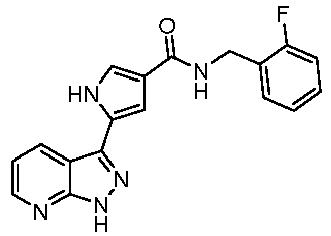
III-f-46 
III-f-47 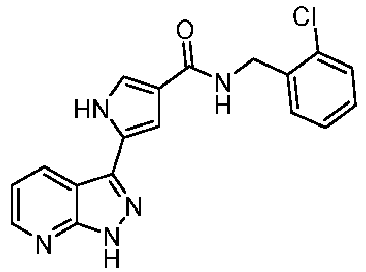
III-f-48 
III-f-49 
III-f-50 
III-f-51 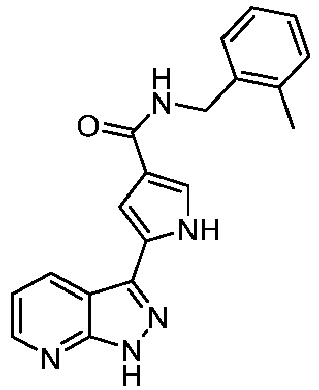
III-f-52 
III-f-53 
III-f-54 
III-f-55 
III-f-56 
III-f-57 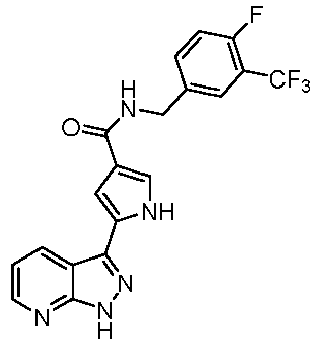
III-f-58 
III-f-59 
III-f-60 
III-f-61 
III-f-62 
III-g-1 
III-g-3 
III-g -4 
III-h-1 
III-h-3 
III-h-4 
III-i-1 
IV-a-1 
IV-a-2 
IV-a-3 
IV-b-1 
IV-b-2 
IV-b-3 
IV-c-1 
IV-c-2 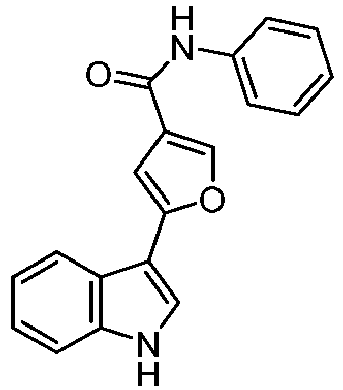
IV-c-3 
IV-d-1 
IV-d-2 
IV-d-3 
IV-e-1 
IV-e-2 
IV-e-3 
IV-f-1 
IV-f-2 
IV-f-3 
IV-g-1 
VI-a-1 
VI-a-2 
VI-a-3 
VI-b-1 
VI-b-2 
VI-c-1 
VI-c-2 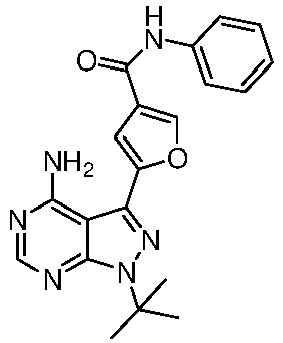
VI-d-1 
VI-d-2 
VI-e-1 
VI-e-2 
VI-f-1 
VI-f-2 
VII-a-1 
VII-a-2 
VII-a-3 
VII-b-1 
VII-b-2 
VII-b-3 
VII-c-1 
VII-c-2 
VII-c-3 
VII-d-1 
VII-d-2 
VII-d-3 
VII-e-1 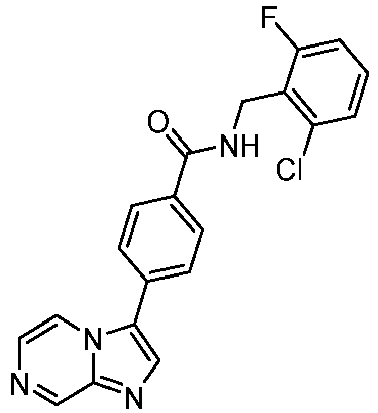
VII-e-2 
VII-e-3 
VII-f-1 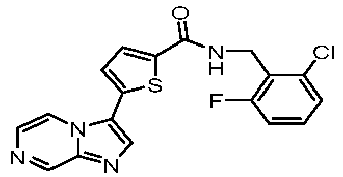
VII-f-2 
VII-f-3 
VII-g-1 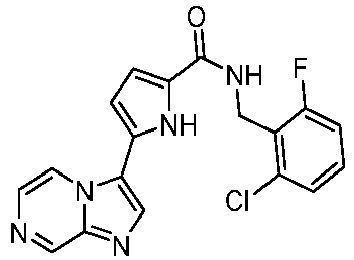
VIII-a-1 
VIII--a-2 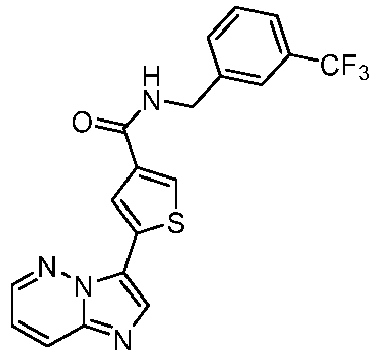
VIII--a-3 
VIII-b-1 
VIII-b-2 
VIII-b-3 
VIII-c-1 
VIII-c-2 
VIII-c-3 
VIII-d-1 
VIII-d-2 
VIII-d-3 
VIII-e-1 
VIII-e-2 
VIII-e-3 
VIII-f-1 
VIII-f-2 
VIII-f-3 
VIII-g-1 
IX-a-1 
IX-a-2 
IX-b-1 
IX-b-2 
IX-c-1 
IX-c-2 
IX-d-1 
IX-d-2 
IX-e-1 
IX-e-2 
IX-f-1 
IX-f-2 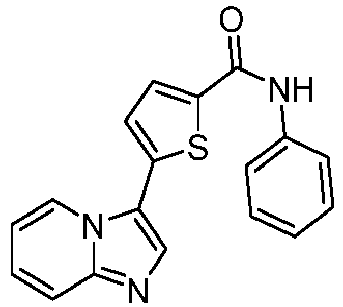
IX-g-1 
X-a-1 
X-a-2 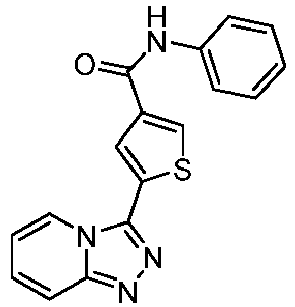
X-b-1 
X-b-2 
X-c-1 
X-c-2 
X-d-1 
X-d-2 
X-d-3 
X-e-1 
X-e-2 
X-f-1 
X-f-2 
X-g-1 
- A preparation method for the compound according to any one of claims 1-11, comprising the following steps:


 reaction conditions: (a) coupling reaction of carbon-carbon bond formation catalyzed by metal palladium; (b) ester hydrolysis under alkaline condition (LiOH or NaOH, etc.); (c) amide condensation reaction under alkaline condition (HOBT or HATU; triethylamine or diisopropylethylamine, etc.);a preparation method of the compound (III-g), comprising the following steps:
 a preparation method of the compound (III-h), comprising the following steps:


- A pharmaceutical composition comprising the compound according to any one of claims 1-11 or a stereoisomer thereof, a prodrug thereof, a pharmaceutically acceptable salt thereof or a pharmaceutically acceptable solvate thereof and and optionally a pharmaceutically acceptable excipient.
- Use of the compound according to any one of claims 1-11 and the following concrete compounds or a stereoisomer thereof, a prodrug thereof, a pharmaceutically acceptable salt thereof or a pharmaceutically acceptable solvate thereof or the pharmaceutical composition according to claim 13 in the manufacture of a medicament for preventing or treating a disease associated with Ras activity in vivo, in particular in the manufacture of a medicament for preventing or treating tumor growth and metastasis:

Applications Claiming Priority (2)
| Application Number | Priority Date | Filing Date | Title |
|---|---|---|---|
| CN201710357938.2A CN108948002A (en) | 2017-05-19 | 2017-05-19 | Five yuan and hexa-atomic nitrogen heteroaromatic rings class compound, preparation method, Pharmaceutical composition and its application |
| PCT/CN2018/087336 WO2018210314A1 (en) | 2017-05-19 | 2018-05-17 | Five- and six-membered aza-aromatic compound, preparation method therefor, pharmaceutical composition, and application |
Publications (3)
| Publication Number | Publication Date |
|---|---|
| EP3626718A1 true EP3626718A1 (en) | 2020-03-25 |
| EP3626718A4 EP3626718A4 (en) | 2021-03-03 |
| EP3626718B1 EP3626718B1 (en) | 2024-05-15 |
Family
ID=64273371
Family Applications (1)
| Application Number | Title | Priority Date | Filing Date |
|---|---|---|---|
| EP18802111.7A Active EP3626718B1 (en) | 2017-05-19 | 2018-05-17 | Five-membered-fused-six-membered aza-aromatic ring compound, preparation method thereof, pharmaceutical composition and application thereof |
Country Status (6)
| Country | Link |
|---|---|
| US (1) | US11292787B2 (en) |
| EP (1) | EP3626718B1 (en) |
| JP (2) | JP7145873B2 (en) |
| CN (2) | CN108948002A (en) |
| AU (1) | AU2018269275B2 (en) |
| WO (1) | WO2018210314A1 (en) |
Cited By (2)
| Publication number | Priority date | Publication date | Assignee | Title |
|---|---|---|---|---|
| EP3786304A4 (en) * | 2018-04-27 | 2022-01-05 | Xiamen University | PROCEDURE FOR ADAPTING THE RAS UBIQUITINATION |
| US12428416B2 (en) | 2018-11-16 | 2025-09-30 | California Institute Of Technology | ERK inhibitors and uses thereof |
Families Citing this family (9)
| Publication number | Priority date | Publication date | Assignee | Title |
|---|---|---|---|---|
| CN108948002A (en) * | 2017-05-19 | 2018-12-07 | 厦门大学 | Five yuan and hexa-atomic nitrogen heteroaromatic rings class compound, preparation method, Pharmaceutical composition and its application |
| EP3740490A1 (en) * | 2018-01-18 | 2020-11-25 | Array Biopharma, Inc. | Substituted pyrazolo[3,4-d]pyrimidine compounds as ret kinase inhibitors |
| CN111574521A (en) * | 2019-02-18 | 2020-08-25 | 深圳市塔吉瑞生物医药有限公司 | Substituted aromatic fused ring derivatives, compositions and uses thereof |
| CN111662232B (en) * | 2019-03-06 | 2022-08-02 | 中国科学院上海药物研究所 | Small molecule compound with 2H-indazole structure and synthesis and application thereof |
| KR20220054286A (en) * | 2019-06-25 | 2022-05-02 | 시놉세 테라페우틱스 | Compounds for the treatment of eye disorders |
| WO2022254027A1 (en) * | 2021-06-04 | 2022-12-08 | Rewind Therapeutics Nv | 3-pyrrolylsulfonamide compounds as gpr17 antagonists |
| EP4480479A4 (en) * | 2022-02-18 | 2026-02-11 | Xizang Haisco Pharmaceutical Co Ltd | Pyrazolomyridine derivative and its use in medicine |
| WO2024073502A1 (en) * | 2022-09-28 | 2024-04-04 | Accutar Biotechnology Inc. | Heterocyclic compounds as e3 ligase inhibitors |
| CN121001723A (en) * | 2023-04-27 | 2025-11-21 | 海思科医药集团股份有限公司 | A pharmaceutical composition of a pyridopyrazole derivative and its pharmaceutical application |
Family Cites Families (15)
| Publication number | Priority date | Publication date | Assignee | Title |
|---|---|---|---|---|
| DE19744026A1 (en) * | 1997-10-06 | 1999-04-08 | Hoechst Marion Roussel De Gmbh | Pyrazole derivatives, their preparation and their use in medicinal products |
| MXPA05001688A (en) | 2002-08-12 | 2005-04-19 | Sugen Inc | 3-pyrrolyl-pyridopyrazoles and 3-pyrrolyl-indazoles as novel kinase inhibitors. |
| WO2005103050A2 (en) * | 2004-04-02 | 2005-11-03 | Vertex Pharmaceuticals Incorporated | Azaindoles useful as inhibitors of rock and other protein kinases |
| ZA200704888B (en) | 2004-11-22 | 2009-02-25 | Vertex Pharma | Pyrrolopyrazines and pyrazolopyrazines useful as inhibitors of protein kinases |
| EP1968568A4 (en) * | 2005-12-22 | 2011-04-13 | Glaxosmithkline Llc | INHIBITORS OF Akt ACTIVITY |
| MX2008011220A (en) | 2006-03-07 | 2008-09-11 | Array Biopharma Inc | Heterobicyclic pyrazole compounds and methods of use. |
| JP2010111624A (en) | 2008-11-06 | 2010-05-20 | Shionogi & Co Ltd | Indazole derivative having ttk inhibitory action |
| WO2010126002A1 (en) * | 2009-04-28 | 2010-11-04 | 塩野義製薬株式会社 | Pharmaceutical product containing heterocyclic sulfonamide compound |
| WO2011123937A1 (en) | 2010-04-06 | 2011-10-13 | University Health Network | Kinase inhibitors and method of treating cancer with same |
| EP2818471A1 (en) * | 2013-06-27 | 2014-12-31 | Max-Planck-Gesellschaft zur Förderung der Wissenschaften e.V. | Nitrogen bicyclic compounds as inhibitors for Scyl1 and Grk5 |
| WO2016026078A1 (en) | 2014-08-19 | 2016-02-25 | Changzhou Jiekai Pharmatech Co., Ltd. | Heterocyclic compounds as erk inhibitors |
| US10544095B2 (en) * | 2015-08-10 | 2020-01-28 | Pfizer Inc. | 3-indol substituted derivatives, pharmaceutical compositions and methods for use |
| EP3269714A1 (en) * | 2016-07-13 | 2018-01-17 | Netherlands Translational Research Center B.V. | Inhibitors of tryptophan 2,3-dioxygenase |
| CN108948002A (en) | 2017-05-19 | 2018-12-07 | 厦门大学 | Five yuan and hexa-atomic nitrogen heteroaromatic rings class compound, preparation method, Pharmaceutical composition and its application |
| CN108546731A (en) * | 2018-04-27 | 2018-09-18 | 厦门大学 | The method for adjusting Ras ubiquitinations |
-
2017
- 2017-05-19 CN CN201710357938.2A patent/CN108948002A/en active Pending
-
2018
- 2018-05-17 AU AU2018269275A patent/AU2018269275B2/en active Active
- 2018-05-17 JP JP2019550252A patent/JP7145873B2/en active Active
- 2018-05-17 CN CN201880033034.7A patent/CN110869369B/en active Active
- 2018-05-17 US US16/614,716 patent/US11292787B2/en active Active
- 2018-05-17 EP EP18802111.7A patent/EP3626718B1/en active Active
- 2018-05-17 WO PCT/CN2018/087336 patent/WO2018210314A1/en not_active Ceased
-
2021
- 2021-07-05 JP JP2021111828A patent/JP7410087B2/en active Active
Cited By (2)
| Publication number | Priority date | Publication date | Assignee | Title |
|---|---|---|---|---|
| EP3786304A4 (en) * | 2018-04-27 | 2022-01-05 | Xiamen University | PROCEDURE FOR ADAPTING THE RAS UBIQUITINATION |
| US12428416B2 (en) | 2018-11-16 | 2025-09-30 | California Institute Of Technology | ERK inhibitors and uses thereof |
Also Published As
| Publication number | Publication date |
|---|---|
| CN110869369A (en) | 2020-03-06 |
| AU2018269275B2 (en) | 2021-04-01 |
| EP3626718B1 (en) | 2024-05-15 |
| AU2018269275A1 (en) | 2019-12-19 |
| JP7145873B2 (en) | 2022-10-03 |
| US20200172521A1 (en) | 2020-06-04 |
| US11292787B2 (en) | 2022-04-05 |
| JP2021176853A (en) | 2021-11-11 |
| CN108948002A (en) | 2018-12-07 |
| JP2020520890A (en) | 2020-07-16 |
| CN110869369B (en) | 2022-06-28 |
| EP3626718A4 (en) | 2021-03-03 |
| WO2018210314A1 (en) | 2018-11-22 |
| JP7410087B2 (en) | 2024-01-09 |
Similar Documents
| Publication | Publication Date | Title |
|---|---|---|
| US11292787B2 (en) | Five-membered-fused-six-membered aza-aromatic ring compound, preparation method thereof, pharmaceutical composition and application thereof | |
| US11352354B2 (en) | Substituted penta-fused hexa-heterocyclic compounds, preparation method therefor, drug combination and use thereof | |
| TWI527800B (en) | 1-(arylmethyl)quinazoline-2,4(1h,3h)-diones as parp inhibitors and the use thereof | |
| CN118930533A (en) | Substituted pyrazole compounds and methods of using the same to treat hyperproliferative diseases | |
| CN107151250B (en) | Pyrimidine seven-membered ring compound, preparation method thereof, medicinal composition and application thereof | |
| US11319322B2 (en) | Substituted aryl ether compound, preparation method thereof, pharmaceutical composition and use thereof | |
| US10174023B2 (en) | Heterocyclic-imidazole compounds, pharmaceutical compositions thereof, preparation method therefor and use thereof | |
| AU2018359934A1 (en) | Heteroaryl amide compounds, preparation method therefor, pharmaceutical compositions thereof, and applications thereof | |
| JP2018087173A (en) | Malignant brain tumor drug | |
| CN109666022B (en) | Triazole derivatives and their preparation methods and uses | |
| WO2024173234A1 (en) | Inhibitors of parg | |
| CN102617502A (en) | Benzoxazole derivatives and application of benzoxazole derivatives to medicines | |
| HK40017950A (en) | Five-membered-fused-six-membered aza-aromatic ring compound, preparation method thereof, pharmaceutical composition and application thereof | |
| HK40017950B (en) | Five-membered-fused-six-membered aza-aromatic ring compound, preparation method thereof, pharmaceutical composition and application thereof | |
| CN113493436B (en) | Amino-substituted pyridine derivatives and preparation methods, pharmaceutical compositions and uses thereof | |
| CA3071900C (en) | Substituted penta- fused hexa-heterocyclic compounds, preparation method therefor, drug combination and use thereof | |
| HK40079301A (en) | Alkenyl pyrimidine compound, preparation method therefor, and application thereof | |
| WO2021254464A1 (en) | Substituted quinazoline compound, and preparation method therefor, pharmaceutical composition thereof, and use thereof | |
| HK1249499B (en) | Pyrimidine seven-membered-ring compounds, preparation method therefor, pharmaceutical composition thereof, and uses thereof |
Legal Events
| Date | Code | Title | Description |
|---|---|---|---|
| STAA | Information on the status of an ep patent application or granted ep patent |
Free format text: STATUS: THE INTERNATIONAL PUBLICATION HAS BEEN MADE |
|
| PUAI | Public reference made under article 153(3) epc to a published international application that has entered the european phase |
Free format text: ORIGINAL CODE: 0009012 |
|
| STAA | Information on the status of an ep patent application or granted ep patent |
Free format text: STATUS: REQUEST FOR EXAMINATION WAS MADE |
|
| 17P | Request for examination filed |
Effective date: 20191206 |
|
| AK | Designated contracting states |
Kind code of ref document: A1 Designated state(s): AL AT BE BG CH CY CZ DE DK EE ES FI FR GB GR HR HU IE IS IT LI LT LU LV MC MK MT NL NO PL PT RO RS SE SI SK SM TR |
|
| AX | Request for extension of the european patent |
Extension state: BA ME |
|
| DAV | Request for validation of the european patent (deleted) | ||
| DAX | Request for extension of the european patent (deleted) | ||
| REG | Reference to a national code |
Ref country code: HK Ref legal event code: DE Ref document number: 40017950 Country of ref document: HK |
|
| A4 | Supplementary search report drawn up and despatched |
Effective date: 20210128 |
|
| RIC1 | Information provided on ipc code assigned before grant |
Ipc: C07D 487/04 20060101ALI20210122BHEP Ipc: A61P 35/00 20060101ALI20210122BHEP Ipc: A61K 31/437 20060101ALI20210122BHEP Ipc: A61K 31/4745 20060101ALI20210122BHEP Ipc: C07D 471/04 20060101AFI20210122BHEP Ipc: C07D 417/04 20060101ALI20210122BHEP |
|
| STAA | Information on the status of an ep patent application or granted ep patent |
Free format text: STATUS: EXAMINATION IS IN PROGRESS |
|
| 17Q | First examination report despatched |
Effective date: 20220104 |
|
| GRAP | Despatch of communication of intention to grant a patent |
Free format text: ORIGINAL CODE: EPIDOSNIGR1 |
|
| STAA | Information on the status of an ep patent application or granted ep patent |
Free format text: STATUS: GRANT OF PATENT IS INTENDED |
|
| INTG | Intention to grant announced |
Effective date: 20240206 |
|
| GRAS | Grant fee paid |
Free format text: ORIGINAL CODE: EPIDOSNIGR3 |
|
| P01 | Opt-out of the competence of the unified patent court (upc) registered |
Effective date: 20240224 |
|
| GRAA | (expected) grant |
Free format text: ORIGINAL CODE: 0009210 |
|
| STAA | Information on the status of an ep patent application or granted ep patent |
Free format text: STATUS: THE PATENT HAS BEEN GRANTED |
|
| AK | Designated contracting states |
Kind code of ref document: B1 Designated state(s): AL AT BE BG CH CY CZ DE DK EE ES FI FR GB GR HR HU IE IS IT LI LT LU LV MC MK MT NL NO PL PT RO RS SE SI SK SM TR |
|
| REG | Reference to a national code |
Ref country code: CH Ref legal event code: EP |
|
| REG | Reference to a national code |
Ref country code: DE Ref legal event code: R096 Ref document number: 602018069560 Country of ref document: DE |
|
| REG | Reference to a national code |
Ref country code: IE Ref legal event code: FG4D |
|
| REG | Reference to a national code |
Ref country code: LT Ref legal event code: MG9D |
|
| REG | Reference to a national code |
Ref country code: NL Ref legal event code: MP Effective date: 20240515 |
|
| PG25 | Lapsed in a contracting state [announced via postgrant information from national office to epo] |
Ref country code: IS Free format text: LAPSE BECAUSE OF FAILURE TO SUBMIT A TRANSLATION OF THE DESCRIPTION OR TO PAY THE FEE WITHIN THE PRESCRIBED TIME-LIMIT Effective date: 20240915 |
|
| PG25 | Lapsed in a contracting state [announced via postgrant information from national office to epo] |
Ref country code: BG Free format text: LAPSE BECAUSE OF FAILURE TO SUBMIT A TRANSLATION OF THE DESCRIPTION OR TO PAY THE FEE WITHIN THE PRESCRIBED TIME-LIMIT Effective date: 20240515 |
|
| PG25 | Lapsed in a contracting state [announced via postgrant information from national office to epo] |
Ref country code: FI Free format text: LAPSE BECAUSE OF FAILURE TO SUBMIT A TRANSLATION OF THE DESCRIPTION OR TO PAY THE FEE WITHIN THE PRESCRIBED TIME-LIMIT Effective date: 20240515 Ref country code: HR Free format text: LAPSE BECAUSE OF FAILURE TO SUBMIT A TRANSLATION OF THE DESCRIPTION OR TO PAY THE FEE WITHIN THE PRESCRIBED TIME-LIMIT Effective date: 20240515 |
|
| PG25 | Lapsed in a contracting state [announced via postgrant information from national office to epo] |
Ref country code: GR Free format text: LAPSE BECAUSE OF FAILURE TO SUBMIT A TRANSLATION OF THE DESCRIPTION OR TO PAY THE FEE WITHIN THE PRESCRIBED TIME-LIMIT Effective date: 20240816 |
|
| PG25 | Lapsed in a contracting state [announced via postgrant information from national office to epo] |
Ref country code: PT Free format text: LAPSE BECAUSE OF FAILURE TO SUBMIT A TRANSLATION OF THE DESCRIPTION OR TO PAY THE FEE WITHIN THE PRESCRIBED TIME-LIMIT Effective date: 20240916 |
|
| REG | Reference to a national code |
Ref country code: AT Ref legal event code: MK05 Ref document number: 1686852 Country of ref document: AT Kind code of ref document: T Effective date: 20240515 |
|
| PG25 | Lapsed in a contracting state [announced via postgrant information from national office to epo] |
Ref country code: NL Free format text: LAPSE BECAUSE OF FAILURE TO SUBMIT A TRANSLATION OF THE DESCRIPTION OR TO PAY THE FEE WITHIN THE PRESCRIBED TIME-LIMIT Effective date: 20240515 |
|
| PG25 | Lapsed in a contracting state [announced via postgrant information from national office to epo] |
Ref country code: ES Free format text: LAPSE BECAUSE OF FAILURE TO SUBMIT A TRANSLATION OF THE DESCRIPTION OR TO PAY THE FEE WITHIN THE PRESCRIBED TIME-LIMIT Effective date: 20240515 |
|
| PG25 | Lapsed in a contracting state [announced via postgrant information from national office to epo] |
Ref country code: AT Free format text: LAPSE BECAUSE OF FAILURE TO SUBMIT A TRANSLATION OF THE DESCRIPTION OR TO PAY THE FEE WITHIN THE PRESCRIBED TIME-LIMIT Effective date: 20240515 |
|
| PG25 | Lapsed in a contracting state [announced via postgrant information from national office to epo] |
Ref country code: PL Free format text: LAPSE BECAUSE OF FAILURE TO SUBMIT A TRANSLATION OF THE DESCRIPTION OR TO PAY THE FEE WITHIN THE PRESCRIBED TIME-LIMIT Effective date: 20240515 |
|
| PG25 | Lapsed in a contracting state [announced via postgrant information from national office to epo] |
Ref country code: LV Free format text: LAPSE BECAUSE OF FAILURE TO SUBMIT A TRANSLATION OF THE DESCRIPTION OR TO PAY THE FEE WITHIN THE PRESCRIBED TIME-LIMIT Effective date: 20240515 |
|
| PG25 | Lapsed in a contracting state [announced via postgrant information from national office to epo] |
Ref country code: PT Free format text: LAPSE BECAUSE OF FAILURE TO SUBMIT A TRANSLATION OF THE DESCRIPTION OR TO PAY THE FEE WITHIN THE PRESCRIBED TIME-LIMIT Effective date: 20240916 Ref country code: PL Free format text: LAPSE BECAUSE OF FAILURE TO SUBMIT A TRANSLATION OF THE DESCRIPTION OR TO PAY THE FEE WITHIN THE PRESCRIBED TIME-LIMIT Effective date: 20240515 Ref country code: NO Free format text: LAPSE BECAUSE OF FAILURE TO SUBMIT A TRANSLATION OF THE DESCRIPTION OR TO PAY THE FEE WITHIN THE PRESCRIBED TIME-LIMIT Effective date: 20240815 Ref country code: NL Free format text: LAPSE BECAUSE OF FAILURE TO SUBMIT A TRANSLATION OF THE DESCRIPTION OR TO PAY THE FEE WITHIN THE PRESCRIBED TIME-LIMIT Effective date: 20240515 Ref country code: LV Free format text: LAPSE BECAUSE OF FAILURE TO SUBMIT A TRANSLATION OF THE DESCRIPTION OR TO PAY THE FEE WITHIN THE PRESCRIBED TIME-LIMIT Effective date: 20240515 Ref country code: IS Free format text: LAPSE BECAUSE OF FAILURE TO SUBMIT A TRANSLATION OF THE DESCRIPTION OR TO PAY THE FEE WITHIN THE PRESCRIBED TIME-LIMIT Effective date: 20240915 Ref country code: HR Free format text: LAPSE BECAUSE OF FAILURE TO SUBMIT A TRANSLATION OF THE DESCRIPTION OR TO PAY THE FEE WITHIN THE PRESCRIBED TIME-LIMIT Effective date: 20240515 Ref country code: GR Free format text: LAPSE BECAUSE OF FAILURE TO SUBMIT A TRANSLATION OF THE DESCRIPTION OR TO PAY THE FEE WITHIN THE PRESCRIBED TIME-LIMIT Effective date: 20240816 Ref country code: FI Free format text: LAPSE BECAUSE OF FAILURE TO SUBMIT A TRANSLATION OF THE DESCRIPTION OR TO PAY THE FEE WITHIN THE PRESCRIBED TIME-LIMIT Effective date: 20240515 Ref country code: ES Free format text: LAPSE BECAUSE OF FAILURE TO SUBMIT A TRANSLATION OF THE DESCRIPTION OR TO PAY THE FEE WITHIN THE PRESCRIBED TIME-LIMIT Effective date: 20240515 Ref country code: BG Free format text: LAPSE BECAUSE OF FAILURE TO SUBMIT A TRANSLATION OF THE DESCRIPTION OR TO PAY THE FEE WITHIN THE PRESCRIBED TIME-LIMIT Effective date: 20240515 Ref country code: AT Free format text: LAPSE BECAUSE OF FAILURE TO SUBMIT A TRANSLATION OF THE DESCRIPTION OR TO PAY THE FEE WITHIN THE PRESCRIBED TIME-LIMIT Effective date: 20240515 Ref country code: RS Free format text: LAPSE BECAUSE OF FAILURE TO SUBMIT A TRANSLATION OF THE DESCRIPTION OR TO PAY THE FEE WITHIN THE PRESCRIBED TIME-LIMIT Effective date: 20240815 |
|
| REG | Reference to a national code |
Ref country code: CH Ref legal event code: PL |
|
| PG25 | Lapsed in a contracting state [announced via postgrant information from national office to epo] |
Ref country code: DK Free format text: LAPSE BECAUSE OF FAILURE TO SUBMIT A TRANSLATION OF THE DESCRIPTION OR TO PAY THE FEE WITHIN THE PRESCRIBED TIME-LIMIT Effective date: 20240515 |
|
| PG25 | Lapsed in a contracting state [announced via postgrant information from national office to epo] |
Ref country code: LU Free format text: LAPSE BECAUSE OF NON-PAYMENT OF DUE FEES Effective date: 20240517 |
|
| PG25 | Lapsed in a contracting state [announced via postgrant information from national office to epo] |
Ref country code: EE Free format text: LAPSE BECAUSE OF FAILURE TO SUBMIT A TRANSLATION OF THE DESCRIPTION OR TO PAY THE FEE WITHIN THE PRESCRIBED TIME-LIMIT Effective date: 20240515 |
|
| PG25 | Lapsed in a contracting state [announced via postgrant information from national office to epo] |
Ref country code: CZ Free format text: LAPSE BECAUSE OF FAILURE TO SUBMIT A TRANSLATION OF THE DESCRIPTION OR TO PAY THE FEE WITHIN THE PRESCRIBED TIME-LIMIT Effective date: 20240515 |
|
| PG25 | Lapsed in a contracting state [announced via postgrant information from national office to epo] |
Ref country code: SK Free format text: LAPSE BECAUSE OF FAILURE TO SUBMIT A TRANSLATION OF THE DESCRIPTION OR TO PAY THE FEE WITHIN THE PRESCRIBED TIME-LIMIT Effective date: 20240515 Ref country code: RO Free format text: LAPSE BECAUSE OF FAILURE TO SUBMIT A TRANSLATION OF THE DESCRIPTION OR TO PAY THE FEE WITHIN THE PRESCRIBED TIME-LIMIT Effective date: 20240515 |
|
| PG25 | Lapsed in a contracting state [announced via postgrant information from national office to epo] |
Ref country code: SM Free format text: LAPSE BECAUSE OF FAILURE TO SUBMIT A TRANSLATION OF THE DESCRIPTION OR TO PAY THE FEE WITHIN THE PRESCRIBED TIME-LIMIT Effective date: 20240515 |
|
| PG25 | Lapsed in a contracting state [announced via postgrant information from national office to epo] |
Ref country code: SM Free format text: LAPSE BECAUSE OF FAILURE TO SUBMIT A TRANSLATION OF THE DESCRIPTION OR TO PAY THE FEE WITHIN THE PRESCRIBED TIME-LIMIT Effective date: 20240515 Ref country code: SK Free format text: LAPSE BECAUSE OF FAILURE TO SUBMIT A TRANSLATION OF THE DESCRIPTION OR TO PAY THE FEE WITHIN THE PRESCRIBED TIME-LIMIT Effective date: 20240515 Ref country code: RO Free format text: LAPSE BECAUSE OF FAILURE TO SUBMIT A TRANSLATION OF THE DESCRIPTION OR TO PAY THE FEE WITHIN THE PRESCRIBED TIME-LIMIT Effective date: 20240515 Ref country code: LU Free format text: LAPSE BECAUSE OF NON-PAYMENT OF DUE FEES Effective date: 20240517 Ref country code: EE Free format text: LAPSE BECAUSE OF FAILURE TO SUBMIT A TRANSLATION OF THE DESCRIPTION OR TO PAY THE FEE WITHIN THE PRESCRIBED TIME-LIMIT Effective date: 20240515 Ref country code: DK Free format text: LAPSE BECAUSE OF FAILURE TO SUBMIT A TRANSLATION OF THE DESCRIPTION OR TO PAY THE FEE WITHIN THE PRESCRIBED TIME-LIMIT Effective date: 20240515 Ref country code: CZ Free format text: LAPSE BECAUSE OF FAILURE TO SUBMIT A TRANSLATION OF THE DESCRIPTION OR TO PAY THE FEE WITHIN THE PRESCRIBED TIME-LIMIT Effective date: 20240515 Ref country code: CH Free format text: LAPSE BECAUSE OF NON-PAYMENT OF DUE FEES Effective date: 20240531 |
|
| PG25 | Lapsed in a contracting state [announced via postgrant information from national office to epo] |
Ref country code: IT Free format text: LAPSE BECAUSE OF FAILURE TO SUBMIT A TRANSLATION OF THE DESCRIPTION OR TO PAY THE FEE WITHIN THE PRESCRIBED TIME-LIMIT Effective date: 20240515 Ref country code: MC Free format text: LAPSE BECAUSE OF FAILURE TO SUBMIT A TRANSLATION OF THE DESCRIPTION OR TO PAY THE FEE WITHIN THE PRESCRIBED TIME-LIMIT Effective date: 20240515 |
|
| REG | Reference to a national code |
Ref country code: DE Ref legal event code: R097 Ref document number: 602018069560 Country of ref document: DE |
|
| REG | Reference to a national code |
Ref country code: BE Ref legal event code: MM Effective date: 20240531 |
|
| PLBE | No opposition filed within time limit |
Free format text: ORIGINAL CODE: 0009261 |
|
| STAA | Information on the status of an ep patent application or granted ep patent |
Free format text: STATUS: NO OPPOSITION FILED WITHIN TIME LIMIT |
|
| PG25 | Lapsed in a contracting state [announced via postgrant information from national office to epo] |
Ref country code: IE Free format text: LAPSE BECAUSE OF NON-PAYMENT OF DUE FEES Effective date: 20240517 |
|
| 26N | No opposition filed |
Effective date: 20250218 |
|
| PG25 | Lapsed in a contracting state [announced via postgrant information from national office to epo] |
Ref country code: SI Free format text: LAPSE BECAUSE OF FAILURE TO SUBMIT A TRANSLATION OF THE DESCRIPTION OR TO PAY THE FEE WITHIN THE PRESCRIBED TIME-LIMIT Effective date: 20240515 Ref country code: BE Free format text: LAPSE BECAUSE OF NON-PAYMENT OF DUE FEES Effective date: 20240531 |
|
| PGFP | Annual fee paid to national office [announced via postgrant information from national office to epo] |
Ref country code: DE Payment date: 20250513 Year of fee payment: 8 |
|
| PGFP | Annual fee paid to national office [announced via postgrant information from national office to epo] |
Ref country code: GB Payment date: 20250521 Year of fee payment: 8 |
|
| PGFP | Annual fee paid to national office [announced via postgrant information from national office to epo] |
Ref country code: FR Payment date: 20250530 Year of fee payment: 8 |
|
| REG | Reference to a national code |
Ref country code: DE Ref legal event code: R081 Ref document number: 602018069560 Country of ref document: DE Owner name: CHANGZHOU AMPK HEALTH BIOTECHNOLOGY CO., LTD.,, CN Free format text: FORMER OWNER: XIAMEN UNIVERSITY, XIAMEN, FUJIAN, CN Ref country code: DE Ref legal event code: R081 Ref document number: 602018069560 Country of ref document: DE Owner name: AMCURE BIOSCIENCES PTE. LTD., SG Free format text: FORMER OWNER: XIAMEN UNIVERSITY, XIAMEN, FUJIAN, CN |
|
| PG25 | Lapsed in a contracting state [announced via postgrant information from national office to epo] |
Ref country code: CY Free format text: LAPSE BECAUSE OF FAILURE TO SUBMIT A TRANSLATION OF THE DESCRIPTION OR TO PAY THE FEE WITHIN THE PRESCRIBED TIME-LIMIT; INVALID AB INITIO Effective date: 20180517 |
|
| PG25 | Lapsed in a contracting state [announced via postgrant information from national office to epo] |
Ref country code: HU Free format text: LAPSE BECAUSE OF FAILURE TO SUBMIT A TRANSLATION OF THE DESCRIPTION OR TO PAY THE FEE WITHIN THE PRESCRIBED TIME-LIMIT; INVALID AB INITIO Effective date: 20180517 |
|
| REG | Reference to a national code |
Ref country code: GB Ref legal event code: 732E Free format text: REGISTERED BETWEEN 20250807 AND 20250813 |
|
| PG25 | Lapsed in a contracting state [announced via postgrant information from national office to epo] |
Ref country code: SE Free format text: LAPSE BECAUSE OF FAILURE TO SUBMIT A TRANSLATION OF THE DESCRIPTION OR TO PAY THE FEE WITHIN THE PRESCRIBED TIME-LIMIT Effective date: 20240515 |
|
| REG | Reference to a national code |
Ref country code: DE Ref legal event code: R081 Ref document number: 602018069560 Country of ref document: DE Owner name: AMCURE BIOSCIENCES PTE. LTD., SG Free format text: FORMER OWNER: CHANGZHOU AMPK HEALTH BIOTECHNOLOGY CO., LTD., CHANGZHOU CITY, JIANGSU, CN |
|
| REG | Reference to a national code |
Ref country code: GB Ref legal event code: 732E Free format text: REGISTERED BETWEEN 20251120 AND 20251126 |