EP3623394A1 - Metallacycloalkylene complexes and use for alkyne polymerization to cyclic polyacetylenes - Google Patents
Metallacycloalkylene complexes and use for alkyne polymerization to cyclic polyacetylenes Download PDFInfo
- Publication number
- EP3623394A1 EP3623394A1 EP19193802.6A EP19193802A EP3623394A1 EP 3623394 A1 EP3623394 A1 EP 3623394A1 EP 19193802 A EP19193802 A EP 19193802A EP 3623394 A1 EP3623394 A1 EP 3623394A1
- Authority
- EP
- European Patent Office
- Prior art keywords
- cyclic
- polymerization
- poly
- metal
- phenylacetylene
- Prior art date
- Legal status (The legal status is an assumption and is not a legal conclusion. Google has not performed a legal analysis and makes no representation as to the accuracy of the status listed.)
- Granted
Links
- 0 CC(C)(C)c(cccc1-c2c(C)c(-c3cccc(I)c3OC(**)=C)ccc2)c1OC Chemical compound CC(C)(C)c(cccc1-c2c(C)c(-c3cccc(I)c3OC(**)=C)ccc2)c1OC 0.000 description 2
- UHOVQNZJYSORNB-UHFFFAOYSA-N c1ccccc1 Chemical compound c1ccccc1 UHOVQNZJYSORNB-UHFFFAOYSA-N 0.000 description 1
Images




Classifications
-
- C—CHEMISTRY; METALLURGY
- C08—ORGANIC MACROMOLECULAR COMPOUNDS; THEIR PREPARATION OR CHEMICAL WORKING-UP; COMPOSITIONS BASED THEREON
- C08F—MACROMOLECULAR COMPOUNDS OBTAINED BY REACTIONS ONLY INVOLVING CARBON-TO-CARBON UNSATURATED BONDS
- C08F4/00—Polymerisation catalysts
- C08F4/42—Metals; Metal hydrides; Metallo-organic compounds; Use thereof as catalyst precursors
- C08F4/72—Metals; Metal hydrides; Metallo-organic compounds; Use thereof as catalyst precursors selected from metals not provided for in group C08F4/44
- C08F4/74—Metals; Metal hydrides; Metallo-organic compounds; Use thereof as catalyst precursors selected from metals not provided for in group C08F4/44 selected from refractory metals
- C08F4/78—Metals; Metal hydrides; Metallo-organic compounds; Use thereof as catalyst precursors selected from metals not provided for in group C08F4/44 selected from refractory metals selected from chromium, molybdenum or tungsten
-
- C—CHEMISTRY; METALLURGY
- C08—ORGANIC MACROMOLECULAR COMPOUNDS; THEIR PREPARATION OR CHEMICAL WORKING-UP; COMPOSITIONS BASED THEREON
- C08F—MACROMOLECULAR COMPOUNDS OBTAINED BY REACTIONS ONLY INVOLVING CARBON-TO-CARBON UNSATURATED BONDS
- C08F30/00—Homopolymers or copolymers of compounds having one or more unsaturated aliphatic radicals, each having only one carbon-to-carbon double bond, and containing phosphorus, selenium, tellurium or a metal
- C08F30/04—Homopolymers or copolymers of compounds having one or more unsaturated aliphatic radicals, each having only one carbon-to-carbon double bond, and containing phosphorus, selenium, tellurium or a metal containing a metal
- C08F30/08—Homopolymers or copolymers of compounds having one or more unsaturated aliphatic radicals, each having only one carbon-to-carbon double bond, and containing phosphorus, selenium, tellurium or a metal containing a metal containing silicon
-
- C—CHEMISTRY; METALLURGY
- C08—ORGANIC MACROMOLECULAR COMPOUNDS; THEIR PREPARATION OR CHEMICAL WORKING-UP; COMPOSITIONS BASED THEREON
- C08F—MACROMOLECULAR COMPOUNDS OBTAINED BY REACTIONS ONLY INVOLVING CARBON-TO-CARBON UNSATURATED BONDS
- C08F38/00—Homopolymers and copolymers of compounds having one or more carbon-to-carbon triple bonds
-
- C—CHEMISTRY; METALLURGY
- C08—ORGANIC MACROMOLECULAR COMPOUNDS; THEIR PREPARATION OR CHEMICAL WORKING-UP; COMPOSITIONS BASED THEREON
- C08F—MACROMOLECULAR COMPOUNDS OBTAINED BY REACTIONS ONLY INVOLVING CARBON-TO-CARBON UNSATURATED BONDS
- C08F4/00—Polymerisation catalysts
- C08F4/42—Metals; Metal hydrides; Metallo-organic compounds; Use thereof as catalyst precursors
- C08F4/44—Metals; Metal hydrides; Metallo-organic compounds; Use thereof as catalyst precursors selected from light metals, zinc, cadmium, mercury, copper, silver, gold, boron, gallium, indium, thallium, rare earths or actinides
- C08F4/60—Metals; Metal hydrides; Metallo-organic compounds; Use thereof as catalyst precursors selected from light metals, zinc, cadmium, mercury, copper, silver, gold, boron, gallium, indium, thallium, rare earths or actinides together with refractory metals, iron group metals, platinum group metals, manganese, rhenium technetium or compounds thereof
- C08F4/62—Refractory metals or compounds thereof
- C08F4/62003—Refractory metals or compounds thereof the metallic compound containing a multidentate ligand, i.e. a ligand capable of donating two or more pairs of electrons to form a coordinate or ionic bond
- C08F4/62082—Tridentate ligand
-
- C—CHEMISTRY; METALLURGY
- C08—ORGANIC MACROMOLECULAR COMPOUNDS; THEIR PREPARATION OR CHEMICAL WORKING-UP; COMPOSITIONS BASED THEREON
- C08F—MACROMOLECULAR COMPOUNDS OBTAINED BY REACTIONS ONLY INVOLVING CARBON-TO-CARBON UNSATURATED BONDS
- C08F4/00—Polymerisation catalysts
- C08F4/42—Metals; Metal hydrides; Metallo-organic compounds; Use thereof as catalyst precursors
- C08F4/44—Metals; Metal hydrides; Metallo-organic compounds; Use thereof as catalyst precursors selected from light metals, zinc, cadmium, mercury, copper, silver, gold, boron, gallium, indium, thallium, rare earths or actinides
- C08F4/60—Metals; Metal hydrides; Metallo-organic compounds; Use thereof as catalyst precursors selected from light metals, zinc, cadmium, mercury, copper, silver, gold, boron, gallium, indium, thallium, rare earths or actinides together with refractory metals, iron group metals, platinum group metals, manganese, rhenium technetium or compounds thereof
- C08F4/62—Refractory metals or compounds thereof
- C08F4/62003—Refractory metals or compounds thereof the metallic compound containing a multidentate ligand, i.e. a ligand capable of donating two or more pairs of electrons to form a coordinate or ionic bond
- C08F4/62082—Tridentate ligand
- C08F4/62141—Dianionic ligand
-
- C—CHEMISTRY; METALLURGY
- C08—ORGANIC MACROMOLECULAR COMPOUNDS; THEIR PREPARATION OR CHEMICAL WORKING-UP; COMPOSITIONS BASED THEREON
- C08G—MACROMOLECULAR COMPOUNDS OBTAINED OTHERWISE THAN BY REACTIONS ONLY INVOLVING UNSATURATED CARBON-TO-CARBON BONDS
- C08G2261/00—Macromolecular compounds obtained by reactions forming a carbon-to-carbon link in the main chain of the macromolecule
- C08G2261/40—Polymerisation processes
- C08G2261/41—Organometallic coupling reactions
- C08G2261/418—Ring opening metathesis polymerisation [ROMP]
-
- C—CHEMISTRY; METALLURGY
- C08—ORGANIC MACROMOLECULAR COMPOUNDS; THEIR PREPARATION OR CHEMICAL WORKING-UP; COMPOSITIONS BASED THEREON
- C08G—MACROMOLECULAR COMPOUNDS OBTAINED OTHERWISE THAN BY REACTIONS ONLY INVOLVING UNSATURATED CARBON-TO-CARBON BONDS
- C08G61/00—Macromolecular compounds obtained by reactions forming a carbon-to-carbon link in the main chain of the macromolecule
- C08G61/02—Macromolecular compounds containing only carbon atoms in the main chain of the macromolecule, e.g. polyxylylenes
- C08G61/04—Macromolecular compounds containing only carbon atoms in the main chain of the macromolecule, e.g. polyxylylenes only aliphatic carbon atoms
- C08G61/06—Macromolecular compounds containing only carbon atoms in the main chain of the macromolecule, e.g. polyxylylenes only aliphatic carbon atoms prepared by ring-opening of carbocyclic compounds
- C08G61/08—Macromolecular compounds containing only carbon atoms in the main chain of the macromolecule, e.g. polyxylylenes only aliphatic carbon atoms prepared by ring-opening of carbocyclic compounds of carbocyclic compounds containing one or more carbon-to-carbon double bonds in the ring
Definitions
- alkylidene and alkylidyne metal complexes have been known for about 40 years. Alkene and alkyne metathesis via these metal complexes has been studied extensively. Alkylidyne metal complexes have been studied to a lesser extent than their alkylidene analogues, but they are of particular interest for their potential to promote nitrile-alkyne cross metathesis (NACM), which constitutes a potentially valuable tool to prepare novel alkynes from readily accessible nitriles.
- NACM nitrile-alkyne cross metathesis
- Metal-alkylidynes contain a metal-carbon triple bond. Metal-alkylidynes, having a metal in its highest oxidation state, are known as Schrock-type metal-alkylidynes, and have been widely investigated. In high-oxidation state metal-alkylidynes, the alkylidyne carbon is a 6-electron donor that provides ⁇ -donation to the metal center. In spite of extensive ⁇ -donation, most high-oxidation state metal-alkylidynes are electron deficient and must be stabilized by additional ligands.
- Schrock-type metal-alkylidynes are generally formed by the deprotonation of an ⁇ -CH, where a base deprotonates the ⁇ -carbon to form an alkylidyne from the alkylidene, or by an ⁇ -elimination reaction, in which bulky alkyl groups promote deprotonation of the ⁇ -CH to release steric crowding during formation of metal-alkylidynes.
- these complexes have been formed by a metathesis reaction between an alkyne and a metal-metal triple bond, or by a reductive recycle series of reactions, where a gem -dichloride reacts with a metal complex, to form a mixture of a metal chloride complex and a metal alkylidene, followed by reduction of the metal chloride complex back to the original metal complex.
- Polyacetylenes are organic polymers that can display electrical conductivity, paramagnetic susceptibility, optical nonlinearity, photoconductivity, gas permeability, liquid-crystallinity, and chain-helicity.
- Polymerization of acetylenes employs a transition metal catalyst, generally with a cocatalyst.
- the metal-alkylidyne, (R 3 CO) 3 W ⁇ CC(CH 3 ) 3 has been shown to promote alkyne metathesis and alkyne polymerization, as reported by Mortreux et al., J. Mol. Catal. A: Chem. 1995, 96, 95-105 , where the product composition varied with the substitution. Polymerization was shown to be the exclusive path only with phenyl or trimethylsilyl monosubstituted acetylenes.
- the metal-alkylidyne, H 5 C 6 C ⁇ W(CO) 4 Br promotes a slow alkyne polymerization without alkyne metathesis as reported by Katz et al., J. Am. Chem. Soc. 1984, 106, 2659-68 , but only low monomer conversion is observed after periods of days.
- OCO pincer ligand supported metal-alkylidynes should be well suited as metathesis or polymerization catalysts for alkynes, as: the trianionic nature of the OCO pincer ligand allows access to a +6 oxidation state required for a metal-alkylidyne; the rigid planarity of the OCO pincer ligand imposes geometric restraints around the metal center, which might permit an increase in reactivity; and the strong M-C bond should distort the metal-alkylidyne out of the plane of the ligand, which might further increase the reactivity of the resulting complex.
- Ring-expansion polymerization is another method for accessing cyclic polymers.
- the mechanism involves the insertion of monomer into a growing ring at a labile bond, such as a metal-carbon or metal-oxygen bond.
- Ring expansion method does not suffer the same stringent concentration limitations as ring closure, making it an appealing approach for synthesizing cyclic polymers.
- a dibutyltin catalyst disclosed in Kricheldorf Macromolecules 1995, 28, 6718-6725 was an early example of this type of polymerization with lactones. In many cases, catalysts must be tuned to specific monomers.
- Ring-expansion olefin metathesis polymerization (REMP), introduced by Grubbs, and described in Bielawski et al., Science 2002, 297, 2041-2044 , and Xia, Y. et al., J. Am. Chem. Soc. 2009, 131, 2670-2677 addresses producing cyclic polymers efficiently. While the ring-expansion method of creating cyclic polymers is much preferred to the post-polymerization processing required in ring-closure for larger scale syntheses, ring-expansion can suffer from backbiting as the degree of polymerization increases and linear polymers can form during the reaction if trace linear alkenes are present in the monomer feedstock.
- RMP Ring-expansion olefin metathesis polymerization
- REMP catalyst systems require a cyclic monomer, for example cyclooctene and its derivatives. It would be beneficial to employ more readily available and cheaper substrates.
- a longstanding general challenge in polymer chemistry is to synthesize cyclic polymers efficiently, with diverse compositions, high purity, high molecular weights, and from readily available and inexpensive monomers.
- An embodiment of the invention is directed to a method for preparation of tetra-anionic pincer-ligand supported metallacycloalkylene complexes from the trianionic pincer ligand supported metal-alkylidyne complexes, according to an embodiment of the invention.
- Another embodiment of the invention is directed to the use of the tridentate pincer ligand metal complexes as initiators for the polymerization of alkynes.
- High molecular weight polymers are formed at high rates using the tridentate pincer ligand metal complexes.
- the poly(alkyne) is a macrocyclic poly(alkyne).
- Another embodiment of the invention is directed to hydrogenation of the poly-unsaturated cyclic poly(alkyne) to a saturated polymer.
- a macrocyclic poly(phenylacetylene) can be hydrogenated to cyclic poly(styrene).
- the tetra-anionic pincer-ligand supported metallacycloalkylene complex is a metallacyclopropylene complex formed by the addition of an alkyne to the trianionic pincer ligand supported metal-alkylidyne complex.
- FIG. 1 the preparation of the tetra-anionic pincer-ligand supported metallacycloalkylene complex at low temperature with two equivalents of an acetylene monomer gives a mixture of products toward polymerization.
- multiple equivalents of the acetylene monomer is included with the trianionic pincer ligand supported metal-alkylidyne complex at room temperature results in a single tetra-anionic pincer-ligand supported metallacycloalkylene complex with two like monomers on the resulting tetra-anionic pincer-ligand supported metallacycloalkylene complex, as indicated in Equation 1, below.
- An embodiment of the invention is directed to a method for the polymerization of alkynes using a trianionic pincer ligand supported metal-alkylidyne complex or a tetraanionic pincer ligand supported metallacyclopropene complex as the polymerization catalyst.
- the poly(alkyne)s prepared by this method can display one or more geometries across the resulting double bonds of the poly(alkyne) backbone.
- the all cis alkylene chain, indicated by Equation 2 is for illustrative purposes only, and is not intended to suggest the geometry to be expected upon polymerization of all possible monomers, using all possible trianionic pincer ligand supported metal-alkylidyne complexes, or under any set of reaction conditions.
- the polymerization reaction occurs upon combining the trianionic pincer ligand supported metal-alkylidyne complex to an alkyne monomer, in a fluid state, which can be in solution.
- the alkyne can be unsubstituted, monosubstituted, or disubstituted.
- the trianionic pincer ligand supported metal-alkylidyne complex can be a neutral complex or an anion of a salt when employed with a strong electrophile, such as methyl triflate.
- the polymerization can be carried out at relatively mild conditions, for example, ambient temperatures at dry conditions under an inert atmosphere.
- the polymerization can occur with a large turnover of monomer per catalyst, a high degree of polymerization, and a high yield of polymer.
- the rate of polymerization and the practical conversion varies with the nature of the monomer, catalyst and conditions for the polymerization.
- the resulting poly(alkyne) can be a cyclic polymer.
- Complex 4 maintains a high activity that is similar to that observed for catalyst 2. Loading either catalyst 2, 3, or the catalyst 4 in a 10,000:1 phenylacetylene to catalyst ratio in 2 mL of toluene results in polymerization and a product we now understand to be cyclic poly(phenylacetylene).
- FIG. 7 shows a scheme for a ring-expansion polymerization of alkynes.
- Cyclic polymers have a smaller hydrodynamic volume and thus longer elution time by GPC compared to linear analogs. Also, static and dynamic light scattering techniques can confirm that cyclic polymers have smaller particle radii versus linear equivalents. Calculations indicate the root mean square (rms) radius of gyration ( ⁇ Rg 2 > 0.5 ) of a cyclic polymer is half that of the same polymer in a linear topology. In some cases, it is possible to open the resulting macrocycle through bond cleavage, resulting in a linear topology and a subsequent change in physical properties.
- Linear poly(phenylacetylene) synthesized using (acetylacetonato)(1,5-cyclooctadiene)rhodium(I) as a catalyst offers a comparison to the cyclic polymers produced by 4 , and by matching molecular weights and polydispersities, the effect of topology can be determined unambiguously.
- Molecular weight and polydispersity were determined by size exclusion chromatography (SEC) in dimethylacetamide (DMAc) with 50 mM LiCl at 50 °C and a flow rate of 1.0 mL/min (Agilent isocratic pump, degasser, and auto-sampler, columns: PLgel 5 ⁇ m guard + two ViscoGel I-series G3078 mixed bed columns: molecular weight range 0-20 ⁇ 10 3 and 0-100 ⁇ 10 4 g mol -1 ).
- Detection consisted of a Wyatt Optilab T-rEX refractive index detector operating at 658 nm and a Wyatt miniDAWN Treos light scattering detector operating at 659 nm. Absolute molecular weights and polydispersities were calculated using Wyatt ASTRA software.
- a most remarkable feature of the catalysis is the exceptionally high activity and turnover number.
- Complexes 1 , 2 and 3 were screened to find the highest attainable turnover number and catalytic activity.
- Complex 2 supplies the best catalytic values in all cases. With a substrate-to-catalyst loading of 25,000 to 1, complex 2 turns over approximately 17,233 phenylacetylene monomer units, as indicated in Table 2, below. Additionally, 2 polymerizes phenylacetylene and 1-decyne with catalytic activities up to 5.64 x 10 6 g PPA mol -1 h -1 and 7.98 x 10 6 g PA mol -1 h -1 , respectively.
- toluene (2.0 mL) was added to a glass vial equipped with a stir bar. Phenylacetylene (218 ⁇ L, 2.00 mmol) was added via micropipete with stirring. A stock solution (1 mg/mL) of 4 (157 ⁇ L, 0.20 ⁇ mol) was added to the stirring solution in one shot to initiate polymerization. Polymerization was terminated via addition into tenfold excess of stirring methanol. Turnover number with time are given for catalysts 1, 2, and 3 are shown in FIG. 4A , and for 2, 3, and 4 in FIG. 4B . The resulting polymer samples were isolated via vacuum filtration and residual solvent removed in vacuo.
- Table 3 and Table 4 give kinetic data as yield per polymerization duration for three trials where the GPC and dynamic light scattering plots are shown in FIGs 5A and 6A , respectively, for cyclic polymer from 4 with FIGs. 5B and 6B display the linear equivalents, respectively.
- Rudimentary kinetic data and the tabulated hydrodynamic volume dependent characterization data is provided in Tables 3 and 4, below.
- Table 3 Triplicate polymerization of phenylacetylene by 4 .
- Hydrogenation was performed using a 150 mL Parr high-pressure stainless steel reaction vessel equipped with a 50 mL glass round bottom flask and a Teflon stirring bar. Unsaturated polymers were dissolved in anhydrous toluene and degassed for 1 h before adding Pd/C. The round bottom flask was placed into the reactor and then sealed. The Parr vessel was purged with 500 psi of H 2 three times. The pressure reactor was then charged to the desired psi, and the mixture was stirred. Pd/C added every two days in the process.
- the cyclic and linear poly(phenylacetylene) samples were partially hydrogenated (saturated) using palladium on carbon.
- the partial hydrogenation enables the ring to be cleaved via ozonolysis.
- cleavage of a cyclic polymer will result in a linear fragment that will have a larger hydrodynamic volume, thus a shorter elution time on a GPC column.
- FIG. 8 shows GPC traces of polymer fragments from ozonolysis of cyclic poly(phenylacetylene) FIG. 8A and linear FIG. 8B .
- ozonolysis leads to a fraction of polymers exhibiting shorter elution times, a result only possible if the polymer was cyclic. Since the hydrogenation is not selective, there is a growth in higher elution time fragments as well, as rings with multiple double bonds are opened and then cleaved into smaller and smaller fragments.
- ozonolysis of linear poly(phenylacetylene) produces only smaller fragments with longer elution times.
- Dynamic light scattering provides an alternative experimental verification of the cyclic topology.
- the average hydrodynamic radius of the hydrogenated cyclic polymer before ozonolysis is 10.14 nm; however, after ozonolysis the average hydrodynamic radius increases to 12.49 nm, a result only possible for a cyclic polymer.
- the hydrogenated polymers display the cyclic nature of the polymers produced from catalyst 4.
- cyclic poly(phenylacetylene) cyclic polystyrene is obtained.
- the cyclic polystyrene are compared with authentic and well characterized linear polystyrene standards.
- the two samples exhibit significantly different retention times despite having nearly identical absolute molecular weights.
Landscapes
- Chemical & Material Sciences (AREA)
- Health & Medical Sciences (AREA)
- Chemical Kinetics & Catalysis (AREA)
- Medicinal Chemistry (AREA)
- Polymers & Plastics (AREA)
- Organic Chemistry (AREA)
- Engineering & Computer Science (AREA)
- Materials Engineering (AREA)
- Addition Polymer Or Copolymer, Post-Treatments, Or Chemical Modifications (AREA)
- Polymerization Catalysts (AREA)
- Catalysts (AREA)
- Organic Low-Molecular-Weight Compounds And Preparation Thereof (AREA)
Abstract
Description
- This application is a continuation-in-part of
U.S. Utility Application Serial No. 14/299,449, filed June 9, 2014 PCT/US2012/065841, filed November 19, 2012 , which claims the benefit ofU.S. Provisional Application Serial No. 61/567,909, filed December 7, 2011 U.S. Provisional Application Serial No. 61/845,764, filed July 12, 2013 - This invention was made with government support under CHE-0748408 awarded by the National Science Foundation. The government has certain rights in the invention.
- High oxidation state alkylidene and alkylidyne metal complexes have been known for about 40 years. Alkene and alkyne metathesis via these metal complexes has been studied extensively. Alkylidyne metal complexes have been studied to a lesser extent than their alkylidene analogues, but they are of particular interest for their potential to promote nitrile-alkyne cross metathesis (NACM), which constitutes a potentially valuable tool to prepare novel alkynes from readily accessible nitriles.
- Metal-alkylidynes contain a metal-carbon triple bond. Metal-alkylidynes, having a metal in its highest oxidation state, are known as Schrock-type metal-alkylidynes, and have been widely investigated. In high-oxidation state metal-alkylidynes, the alkylidyne carbon is a 6-electron donor that provides π-donation to the metal center. In spite of extensive π-donation, most high-oxidation state metal-alkylidynes are electron deficient and must be stabilized by additional ligands.
- Schrock-type metal-alkylidynes are generally formed by the deprotonation of an α-CH, where a base deprotonates the α-carbon to form an alkylidyne from the alkylidene, or by an α-elimination reaction, in which bulky alkyl groups promote deprotonation of the α-CH to release steric crowding during formation of metal-alkylidynes. In rare cases, these complexes have been formed by a metathesis reaction between an alkyne and a metal-metal triple bond, or by a reductive recycle series of reactions, where a gem-dichloride reacts with a metal complex, to form a mixture of a metal chloride complex and a metal alkylidene, followed by reduction of the metal chloride complex back to the original metal complex.
- A catalytic NACM was reported by Geyer et al., J. Am. Chem. Soc. 2007, 129, 3800-1, where a tungsten-nitride of the form (RO)3W≡N was found to reversibly convert to the corresponding metal-alkylidyne upon treatment with an alkyne. Unfortunately, rates of reaction were very slow and a very limited substrate scope was observed. Using a novel titanium alkylidene-alkyl complex (PNP)Ti=CH t Bu(CH2 t Bu), where PNP is a phosphorous-nitrogen-phosphorous tridentate pincer-type ligand, and bulky nitriles, NACM was achieved. However, the catalyst required an external electrophile to liberate the alkyne, as reported by Bailey et al., J. Am. Chem. Soc. 2007, 129, 2234-5.
- Polyacetylenes are organic polymers that can display electrical conductivity, paramagnetic susceptibility, optical nonlinearity, photoconductivity, gas permeability, liquid-crystallinity, and chain-helicity. Polymerization of acetylenes employs a transition metal catalyst, generally with a cocatalyst. High molecular weight polyacetylenes (>106 g/mol) have been produced from catalysts, such as M(CO)6-CCl4-hv (M = Mo, W), where the active species has been determined to be a metal-alkylidene, with polymerization involving a metathesis pathway. The metal-alkylidyne, (R3CO)3W≡CC(CH3)3, has been shown to promote alkyne metathesis and alkyne polymerization, as reported by Mortreux et al., J. Mol. Catal. A: Chem. 1995, 96, 95-105, where the product composition varied with the substitution. Polymerization was shown to be the exclusive path only with phenyl or trimethylsilyl monosubstituted acetylenes. The metal-alkylidyne, H5C6C≡W(CO)4Br, promotes a slow alkyne polymerization without alkyne metathesis as reported by Katz et al., J. Am. Chem. Soc. 1984, 106, 2659-68, but only low monomer conversion is observed after periods of days.
- One might expect that OCO pincer ligand supported metal-alkylidynes should be well suited as metathesis or polymerization catalysts for alkynes, as: the trianionic nature of the OCO pincer ligand allows access to a +6 oxidation state required for a metal-alkylidyne; the rigid planarity of the OCO pincer ligand imposes geometric restraints around the metal center, which might permit an increase in reactivity; and the strong M-C bond should distort the metal-alkylidyne out of the plane of the ligand, which might further increase the reactivity of the resulting complex.
- The polymerization of monomers into cyclic polymers that do not contain end groups provides polymers that demonstrate unique physical properties. For example, the density, refractive index, T g, viscoelasticity, solution dynamics, and surface properties of cyclic polymers all differ from those of their more common linear analogs. Despite research in this area for over half a century there still remains a lack of knowledge regarding the properties and fundamental behavior of cyclic analogs of important commercial polymers. Ring closing of large chains is one method of creating cyclic polymers, but requires infinite dilution conditions to be efficient, thus precluding large scale synthesis. Intermolecular cross coupling of two separate chains inevitably leads to linear impurities, where even trace noncyclic impurities can have pronounced effects on the physical properties of a sample. Exhaustive purification to remove linear byproducts, biphasic conditions, or preparatory scale GPC is often necessary and limits the large scale synthesis of cyclic polymers.
- Ring-expansion polymerization is another method for accessing cyclic polymers. The mechanism involves the insertion of monomer into a growing ring at a labile bond, such as a metal-carbon or metal-oxygen bond. Ring expansion method does not suffer the same stringent concentration limitations as ring closure, making it an appealing approach for synthesizing cyclic polymers. A dibutyltin catalyst disclosed in Kricheldorf Macromolecules 1995, 28, 6718-6725, was an early example of this type of polymerization with lactones. In many cases, catalysts must be tuned to specific monomers. Ring-expansion olefin metathesis polymerization (REMP), introduced by Grubbs, and described in Bielawski et al., Science 2002, 297, 2041-2044, and Xia, Y. et al., J. Am. Chem. Soc. 2009, 131, 2670-2677 addresses producing cyclic polymers efficiently. While the ring-expansion method of creating cyclic polymers is much preferred to the post-polymerization processing required in ring-closure for larger scale syntheses, ring-expansion can suffer from backbiting as the degree of polymerization increases and linear polymers can form during the reaction if trace linear alkenes are present in the monomer feedstock.
- Additionally, REMP catalyst systems require a cyclic monomer, for example cyclooctene and its derivatives. It would be beneficial to employ more readily available and cheaper substrates. Thus, a longstanding general challenge in polymer chemistry is to synthesize cyclic polymers efficiently, with diverse compositions, high purity, high molecular weights, and from readily available and inexpensive monomers.
- An embodiment of the invention is directed to a method for preparation of tetra-anionic pincer-ligand supported metallacycloalkylene complexes from the trianionic pincer ligand supported metal-alkylidyne complexes, according to an embodiment of the invention.
- Another embodiment of the invention is directed to the use of the tridentate pincer ligand metal complexes as initiators for the polymerization of alkynes. High molecular weight polymers are formed at high rates using the tridentate pincer ligand metal complexes. In an embodiment of the invention the poly(alkyne) is a macrocyclic poly(alkyne).
- Another embodiment of the invention is directed to hydrogenation of the poly-unsaturated cyclic poly(alkyne) to a saturated polymer. A macrocyclic poly(phenylacetylene) can be hydrogenated to cyclic poly(styrene).
-
-
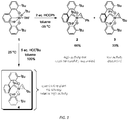
FIG. 1 shows the synthesis of tetraanionic pincer ligand supportedmetallacycloalkylene complexes alkylidyne complex 1, according to an embodiment of the invention. -
FIG 2 shows the X-ray determined molecular structure of 4 with ellipsoids drawn at the 50% probability level and disordered THF atoms and lattice solvent molecule (pentane) removed for clarity with selected bond distances [Å]: W1-O1 1.990(1), W1-O2 1.984(1), W1-O3 2.328(1), W1-C27 2.045(2), W1-C32 2.014(2), W1-C33 1.902(2). Bond Angles [°]: O1-W1-O2 152.37(6), C32-W1-C27 37.47(8). -
FIG. 3 gives 1H, and 13C NMR signals for 4. -
FIG. 4 shows slots of TON determined by quantitative yield of poly(phenylacetylene) vs. time (min) for 2, 3, and 4, where averages of data in triplicate are plotted. Shows dynamic light scattering plots of a) cyclic polyphenylacetylene prepared according to an embodiment of the invention, and b) linear polyphenylacetylene of the same molecular weight. -
FIG. 5A shows GPC traces for cyclic poly(phenylacetylene) according to an embodiment of the invention, andFIG. 5B with matched molecular weight linear. -
FIG. 6A shows Dynamic light scattering volume plots for cyclic poly(phenylacetylene) according to an embodiment of the invention, andFIG. 5B with matched molecular weight linear. -
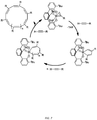
FIG. 7 shows a catalyst loop for the polymerization process carried out be 4. -
FIG. 8A shows ozonolysis of cyclic Poly(phenylacetylene) andFIG. 8B for linear poly(phenylacetylene), and samples for 30s and 16 min. -
FIG. 9A shows overlaid GPC trace of cyclic and linear PS. With cyclic PS Mw = 31,000, PDI = 1.28; Blue: linear standard PS Mw = 30,000, PDI = 1.06; andFIG. 9B shows overlaid GPC trace of cyclic and linear PS. Black: cyclic PS Mw = 31000, PDI = 1.28; Red: linear standard PS Mw = 20,000, PDI = 1.02. - U.S. International Patent Application No.
PCT/US2012/065841, filed November 19, 2012 teaches the preparation of trianionic pincer ligand supported metal-alkylidyne complex. It is disclosed therein that upon addition of an alkyne to a trianionic pincer ligand supported metal-alkylidyne complex, conversion occurs into a tetra-anionic pincer-ligand supported metal-alkyne or, as shown below, a tetraanionic pincer ligand supported metallacycloalkylene complex of the structure:
- The tetra-anionic pincer-ligand supported metallacycloalkylene complex is a metallacyclopropylene complex formed by the addition of an alkyne to the trianionic pincer ligand supported metal-alkylidyne complex. As shown in
FIG. 1 , the preparation of the tetra-anionic pincer-ligand supported metallacycloalkylene complex at low temperature with two equivalents of an acetylene monomer gives a mixture of products toward polymerization. In an embodiment of the invention, multiple equivalents of the acetylene monomer is included with the trianionic pincer ligand supported metal-alkylidyne complex at room temperature results in a single tetra-anionic pincer-ligand supported metallacycloalkylene complex with two like monomers on the resulting tetra-anionic pincer-ligand supported metallacycloalkylene complex, as indicated inEquation 1, below.
- An embodiment of the invention is directed to a method for the polymerization of alkynes using a trianionic pincer ligand supported metal-alkylidyne complex or a tetraanionic pincer ligand supported metallacyclopropene complex as the polymerization catalyst. The poly(alkyne)s prepared by this method can display one or more geometries across the resulting double bonds of the poly(alkyne) backbone. The all cis alkylene chain, indicated by
Equation 2, is for illustrative purposes only, and is not intended to suggest the geometry to be expected upon polymerization of all possible monomers, using all possible trianionic pincer ligand supported metal-alkylidyne complexes, or under any set of reaction conditions. The polymerization reaction occurs upon combining the trianionic pincer ligand supported metal-alkylidyne complex to an alkyne monomer, in a fluid state, which can be in solution. The alkyne can be unsubstituted, monosubstituted, or disubstituted. The trianionic pincer ligand supported metal-alkylidyne complex can be a neutral complex or an anion of a salt when employed with a strong electrophile, such as methyl triflate. The polymerization can be carried out at relatively mild conditions, for example, ambient temperatures at dry conditions under an inert atmosphere. The polymerization can occur with a large turnover of monomer per catalyst, a high degree of polymerization, and a high yield of polymer. As would be expected by those skilled in the art, the rate of polymerization and the practical conversion varies with the nature of the monomer, catalyst and conditions for the polymerization. In an embodiment of the invention, the resulting poly(alkyne) can be a cyclic polymer.
Complex 4 maintains a high activity that is similar to that observed forcatalyst 2. Loading eithercatalyst catalyst 4 in a 10,000:1 phenylacetylene to catalyst ratio in 2 mL of toluene results in polymerization and a product we now understand to be cyclic poly(phenylacetylene). In the first two minutes of polymerization, 2 averages 6.89 x 10⁶ gpol/mol/h, 3 averages 4.39 x 10⁶ gpol/mol/h, but incredibly 4 averages 9.00 x 10⁶ gpol/mol/h. Not only does 4 have excellent activity, it achieves complete conversion under these conditions with a TON ≈ 10,000 after 22 min. The polymerization carried out in the presence of styrene or excess TEMPO (a radical trap) does not alter or inhibit the polymerization of phenylacetylene. The first indication that the catalysts produce cyclic poly(phenylacetylene) came from the observation that 1-phenyl-1-propyne inserts into the W-alkene bond of 2 to produce a five membered metallacyclopentadiene complex.FIG. 7 shows a scheme for a ring-expansion polymerization of alkynes. - Cyclic polymers have a smaller hydrodynamic volume and thus longer elution time by GPC compared to linear analogs. Also, static and dynamic light scattering techniques can confirm that cyclic polymers have smaller particle radii versus linear equivalents. Calculations indicate the root mean square (rms) radius of gyration (<Rg2>0.5) of a cyclic polymer is half that of the same polymer in a linear topology. In some cases, it is possible to open the resulting macrocycle through bond cleavage, resulting in a linear topology and a subsequent change in physical properties. Linear poly(phenylacetylene) synthesized using (acetylacetonato)(1,5-cyclooctadiene)rhodium(I) as a catalyst offers a comparison to the cyclic polymers produced by 4, and by matching molecular weights and polydispersities, the effect of topology can be determined unambiguously. Using DLS and SLS techniques, the hydrodynamic radius (RH) and rms radius of gyration (<Rg 2>0.5) were determined for the linear and cyclic polymers. It is well understood that the ratio of


catalyst 4 are cyclic. The experimental ratios of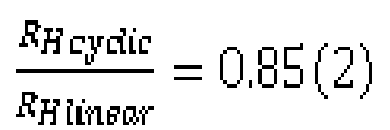

- Unless specified otherwise, all manipulations were performed under an inert atmosphere using glove-box techniques. Toluene and pentane were dried using a GlassCountour drying column. Phenylacetylene was purchased from Sigma-Aldrich, and doubly distilled from calcium hydride, degassed by freeze pump thawing, and filtered through a column of basic alumina immediately prior to use. Toluene-d8 was dried over phosphorous pentoxide (P2O5), distilled, degassed by freeze pump thawing, and stored over 4Å molecular sieves. [ t BuOCO]W=C( t Bu)(THF)2 (1) was prepared according to literature procedure. NMR spectra were obtained on Varian INOVA 500 MHz and Varian INOVA2 500 MHz spectrometers. Chemical shifts are reported in δ (ppm). For 1H and 13C NMR spectra, the residual solvent peaks were used as an internal reference. Molecular weight and polydispersity were determined by size exclusion chromatography (SEC) in dimethylacetamide (DMAc) with 50 mM LiCl at 50 °C and a flow rate of 1.0 mL/min (Agilent isocratic pump, degasser, and auto-sampler, columns:
PLgel 5 µm guard + two ViscoGel I-series G3078 mixed bed columns: molecular weight range 0-20 × 103 and 0-100 × 104 g mol-1). Detection consisted of a Wyatt Optilab T-rEX refractive index detector operating at 658 nm and a Wyatt miniDAWN Treos light scattering detector operating at 659 nm. Absolute molecular weights and polydispersities were calculated using Wyatt ASTRA software. - In a nitrogen filled glove box, a glass vial was charged with [ t BuOCO]H3 (140 mg, 0.37 mmol) in THF (1 mL); and subsequently cooled to -35 °C. In a second vial, ( t BUO)3W≡CC(CH3)3 (200 mg, 0.42 mmol) was dissolved in THF (1 mL) and the solution was added dropwise to the first solution while stirring. As the solution warmed to room temperature, a gradual color change from brown to dark yellow was observed. Stirring was continued for 30 min at room temperature. A tacky dark yellow material was obtained after removal of volatiles. Cold pentane (4 mL) was added to form a brown suspension, from which a bright yellow precipitate was filtered. The filtrate was washed with additional cold pentane. Single crystals were obtained by cooling a dilute pentane solution at -35 °C for 12 h; yield (206 mg, 72%). 1H NMR (300 MHz, C6D6, δ (ppm)): 8.94 (s, tol-d 8, -65 °C, Cipso-H), 7.46 (d, J = 7.8 Hz, 4H, Ar-H), 7.33-7.27 (m, 4H, Ar-H), 6.96 (t, J = 8.0 Hz, 2H, Ar-H), 3.43(m, 4H, OCH2CH 2/THF), 1.67 (s, 18H, -C(CH 3)3), 1.49 (bs, 9H, -OC(CH 3)3), 1.29 (m, 4H, OCH 2CH2/THF), 0.86 (s, 9H, W≡CC(CH 3)3). 13C{1H}NMR (75.36 MHz, C6D6, δ (ppm)): 297.1 (s, W≡CC(CH3)3), 165.2(s, C, aromatic), 144.8(s, C, aromatic), 138.0(s, C, aromatic), 130.5(s, C, aromatic), 127.5(s, C, aromatic), 126.9(s, C, aromatic), 121.7(s, C, aromatic), 80.7 (s, -OC(CH3)3), 50.3 (s, W≡CC(CH3)3), 35.7 (s, -C(CH3)3), 32.9 (s, W≡CC(CH3)3), 32.2 (s, -OC(CH3)3), 31.3 (s, -C(CH3)3). Anal. Calcd for C35H46O3W: C, 60.18; H, 6.64. Found: C, 59.76, H, 6.74.
- A glass vial was charged with [ t BuOCHO]W≡C(CH3)3(O t Bu)(THF) (206 mg, 0.267 mmol) and Et2O (1 mL), and subsequently cooled to -35 °C. A solution of Ph3P=CH2 (74 mg, 0.267 mmol) in Et2O (0.5 mL) was prepared and added to the cold solution. The resulting mixture was warmed to 25 °C where the solution changed in color from a "dark" yellow to "canary" yellow. The solution was stirred for 45 min at room temperature, during which time, the salt product precipitated as a yellow solid. The product was filtered, and the filtrate was washed with pentanes (3 x 1 mL) to yield (216 mg, 83%). 1H NMR (500 MHz, C6D6, δ (ppm)): 7.77 (d, J = 7.2 Hz, 2H, Ar-H), 7.52 (t, J = 7.2 Hz, 4H, Ar-H), 7.04 (d, J = 7.3 Hz, 2H, Ar-H), 6.96(t, J = 7.9 Hz, 3H, Ar-H), 6.84 (dt, J = 2.5 Hz, J = 7.7 Hz, 6H, Ar-H), 6.78 (t, J = 7.3 Hz, 1H, Ar-H), 6.58(d, J = 7.9 Hz, 3H, Ar-H), 6.55(d, J = 7.7 Hz, 3H, Ar-H), 2.03 (s, 9H, -OC(CH 3)3), 1.97 (s, 18H, -C(CH 3)3), 1.83 (d, J PH = 12.8 Hz, 3H, P-CH 3), 0.91 (s, 9H, W≡CC(CH 3)3). 13C{1H} NMR (126 MHz, C6D6, δ (ppm)): 305.3 (s, W≡CC(CH3)3), 205.3 (s, W-C pincer), 164.8(s, C, aromatic), 143.1(s, C, aromatic), 137.2, 135.2 (d, J CP = 2.7 Hz, C, aromatic), 133.1 (d, J CP = 10.1 Hz, C, aromatic), 130.7 (d, J CP = 12.8 Hz, C, aromatic), 127.9 (s, C, aromatic), 124.7 (s, C, aromatic), 124.4 (s, C, aromatic), 124.0 (s, C, aromatic), 119.6 (s, C, aromatic), 118.5 (d, J CP = 7.3 Hz, C, aromatic), 76.2 (s, - OC(CH3)3), 50.2 (s, W≡CC(CH3)3), 36.5(s, -C(CH3)3), 34.9 (-OC(CH3)3), 34.0 (s, W≡CC(CH3)3), 31.8 (s, -C(CH3)3), 9.1 (d, J CP = 56.7 Hz). 31P{1H} NMR (121M Hz, C6D6, δ (ppm)): 21.6. Anal. Calcd for C54H63O3PW: C, 66.53; H, 6.51. Found: C, 66.57, H, 6.51.
- Attempts to obtain single crystals of the complex were unsuccessful. The combination of 1H, 13C, 31P, and correlation experiments using NMR spectroscopy and combustion analysis allowed for unambiguous identification.
- A glass vial was charged with {[ t BuOCO]W≡CC(CH3)3(O t Bu)}{Ph3PCH3} (115 mg, 0.164 mmol) and Et2O (5 mL) to provide an orange suspension. THF (0.1 mL) was added to precipitate phosphoniumtriflate as a white solid. The solution was filtered and concentrated under reduced pressure. Cooling the solution to -35 °C for 12 h yielded
compound 1 as a "dark" red crystalline material; yield (100 mg, 78%). 1H NMR (500 MHz, C6D6, δ (ppm)): 8.00 (d, J = 7.4 Hz, 2H, Ar-H), 7.84 (d, J = 8.5 Hz, 2H, Ar-H), 7.46 (d, J = 7.9 Hz, 2H, Ar-H), 7.35(t, J = 8.5 Hz, 1H, Ar-H), 7.05(t, J = 7.5 Hz, 2H, Ar-H), 4.07 (br, 4H, OCH 2CH2/THF), 3.40 (br, 4H, CH 2CH2/THF), 1.65 (s, 18H, -C(CH 3)3), 1.45(br, 4H, OCH2CH 2/THF), 1.16(br, 4H, OCH2CH 2/THF), 0.61 (s, 9H, W≡CC(CH 3)3). 13C{1H}NMR (126 MHz, C6D6, δ (ppm)): 320.7 (s, W≡CC(CH3)3), , 193.5 (s, W-C ipso), 163.1 (s, C, aromatic), 139.2 (s, C, aromatic), 135.4 (s, C, aromatic), 134.5 (s, C, aromatic),128.0 (s, C, aromatic), 126.4 (s, C, aromatic), 125.3 (s, C, aromatic),124.3 (s, C, aromatic), 119.9 (s, C, aromatic), 76.8 (s, OCH2CH2/THF), 67.3 (s, OCH2CH2/THF), 48.6 (s, W≡CC(CH3)3), 35.3 (s, -C(CH3)3), 32.5 (s, W≡CC(CH3)3), 30.6(s, -C(CH3)3) , 25.6 (s, OCH2 CH2/THF), 24.9 (s, OCH2 CH2/THF). Anal. Calcd for C39H52O4: C, 60.94; H, 6.82. Found: C, 60.88, H, 6.87. - A combination of 1H and 13C NMR spectroscopy with combustion analysis allowed the unambiguous identification of 1. X-Ray Intensity data were collected at 100 K on a Bruker DUO diffractometer using MoKα radiation (λ = 0.71073 Å) and an APEXII CCD area detector. Raw data frames were analyzed by the program SAINT and integrated using 3D profiling algorithms. Reducing the resulting data produced the hkl reflections and their corresponding intensities and estimated standard deviations. The data were corrected for Lorentz and polarization effects and numerical absorption corrections were applied based on indexed and measured faces.
-
Complex 1 reacts instantaneously with 2 equiv. of phenylacetylene in toluene-d 8 at - 35 °C to yield [O2C( t BuC=)W(η 2-HC≡CPh)] (2) and [O2C(PhC=)W(η 2-HC≡C t Bu)] (3) in a 2:1 ratio, along with small amounts of polyphenylacetylene (PPA) (Scheme 1). Adding Et2O to the mixture of compounds selectively dissolves the two complexes, and filtering results in the separation of Et2O-insoluble PPA. Adding pentane to the mixture of 2 and 3 selectively dissolves 2, and filtering results in the segregation of 3, a pentane-insoluble orange solid in 33% yield. The pentane soluble solution of 2 was reduced under vacuum to yield a yellow solid in 40% yield. - Single crystals amenable to an X-ray diffraction experiment deposit from a concentrated solution of 3 in Et2O at -35 °C. 3 and 2 feature the unusual combination of a tridentate tetra-anionic pincer-type ligand comprising two phenolate and an alkylidene connection.
-
Complexes 
- In a nitrogen filled glove-box a stock solution of [ t BuOCO]W≡CC(CH3)3(THF)2 (1) (0.2 µmol in 50 µL toluene) was added to anhydrousmonomer dissolved in toluene (1000 µmol). The mixture was allowed to stir at room temperature for 30 minutes. The reaction mixture was removed from the glove-box and precipitated in either methanol or diethyl ether (20 mL). The polymeric material was collected by filtration and dried under vacuum at 80 °C for 2 hours prior to weighing to obtain the yield
-
Complex 1 catalyzes phenylacetylene polymerization,complexes - In a typical reaction, a toluene solution of the catalyst was added to the stirring solution of acetylene monomer and toluene. The reaction was vigorously stirred for 1 h and quenched with methanol. The resulting polymer was dried in vacuo and weighed to provide the quantitative percent yield and turnover number (TON). Polymer characterization includes FTIR and 1H NMR as well as gel permeation chromatography (GPC) for all samples soluble in THF to determine Mw and Mw/Mn. Polymerization results using 1 are given in Table 1, below.
Table 1 Acetylene polymerization results using 1 [a] Monomer % Yield TON Mw [b] Mw/Mn [b] 1-ethynyl-4-methoxybenzene 91 4540 39056 2.24 Phenylacetylene 99 4994 33692 3.17 1-ethnyl-4-fluorobenzene 70 3497 34980 3.16 1-ethnyl-3,5-bis(trifluoro-methyl) benzene 10 525 10980 1.46 1-decyne 96 4810 165915 1.27 3,3-dimethyl-1-butyne[c] 95 950 3235 1.56 trimethylsilylacetylene [c][d]66 672 - - [a] 1 (0.2 µmol) in toluene was added to acetylene monomer (1000 µmol) in toluene for 1 h at 25 °C. [b] Determined by GPC. [c] 1 (1.0 µmol) in toluene was added to acetylene monomer (1000 µmol) in toluene and heated for 1 h at 75 °C. [d]Mw and Mw/Mn could not be determined due to polymer insolubility in THF. - A most remarkable feature of the catalysis is the exceptionally high activity and turnover number.
Complexes Complex 2 supplies the best catalytic values in all cases. With a substrate-to-catalyst loading of 25,000 to 1, complex 2 turns over approximately 17,233 phenylacetylene monomer units, as indicated in Table 2, below. Additionally, 2 polymerizes phenylacetylene and 1-decyne with catalytic activities up to 5.64 x 10⁶ gPPA mol-1 h-1 and 7.98 x 10⁶ gPA mol-1 h-1, respectively.Table 2 Optimized polymerization results using 2 Monomer mon:cat % Yield t (min) TON gPA/mol/h Phenylacetylene 25,000 : 1 69 60 17,233 1,760,000 Phenylacetylene 10,000 : 1 92 10 9,204 5,640,000 1-Decyne 10,000 : 1 96 10 9,620 7,980,000 - In a nitrogen filled glovebox, a glass vial equipped with a stir bar was charged with 1 (400 mg, 0.52 mmol) and dissolved in toluene (5.0 mL). 3,3-dimethyl-1-butyne (214 mg, 321 µL, 2.60 mmol) was added via micropipette with stirring. After 5 min, the solvent and residual 3,3-dimethyl-1-butyne were removed in vacuo to yield the light brown solid 4 in >99% yield (405 mg, 0.52 mmol), for the reaction indicated in
Equation 2, above. The resulting solid was dissolved in minimal pentane and cooled to -35 °C to yield single crystals amenable to X-ray diffraction, where the molecular structure is shown inFIG. 2 . 1H NMR (500 MHz, C7D8, δ (ppm)): 11.61 (s, 1H, W-CH32), 7.41 (d, 2H, Ar-H8,10), 7.28 (dd, 2H, Ar-H3,16), 7.26 (t, 1H, Ar-H9), 7.19 (dd, 2H, Ar-H5,14), 6.77 (t, 2H, Ar-H4,15), 3.60 (t, 4H, THF-H38,41), 1.66 (s, 9H, W-C-C(CH 3)3 (H29-31)), 1.20 (s, 18H, ligand C(CH 3)3 (H20-22,24-26)), 1.16 (t, 4H, THF-H39,40), 0.90 (s, 9H, W=C(CH 3)3 (H35-37)). 13C NMR: 268.8 (s, W=CC(CH3)3 (C33)), 213.0 (s, WCCC(CH3)3 (C27)), 184.0 (s, WCCC(CH3)3 (C32)), 168.5 (s, C1,18), 153.7 (s, Ar-C7,11), 137.4 (s, Ar-C6,13), 137.3 (s, Ar-C2,17), 132.5 (s, Ar-C12), 130.9 (s, Ar-C9), 129.2 (s, Ar-C8,10), 128.2 (s, Ar-C3,16), 125.7 (s, Ar-C5,14), 118.7 (s, Ar-C4,15), 71.3 (s, THF-C38,41), 46.0 (s, W=CC(CH3)3 (C34)), 39.2 (s, WCCC(CH3)3 (C28)), 36.0 (s, W=CC(CH3)3 (C35-37)), 34.3 (s, ligand C(CH3)3 (C19,23)), 31.1 (s, WCCC(CH3)3 (C29-31)), 30.1 (s, ligand C(CH3)3 (C20-22,24-26)), 25.00 (s, THF C39,40). Anal. Calcd.: C: 63.24% H: 6.99%, Found: C: 63.28%, H: 7.09%.FIG. 3 gives the structure of 4 with tabulation of the 1H and 13C chemical shifts. - In an inert atmosphere glove box, toluene (2.0 mL) was added to a glass vial equipped with a stir bar. Phenylacetylene (218 µL, 2.00 mmol) was added via micropipete with stirring. A stock solution (1 mg/mL) of 4 (157 µL, 0.20 µmol) was added to the stirring solution in one shot to initiate polymerization. Polymerization was terminated via addition into tenfold excess of stirring methanol. Turnover number with time are given for
catalysts FIG. 4A , and for 2, 3, and 4 inFIG. 4B . The resulting polymer samples were isolated via vacuum filtration and residual solvent removed in vacuo. Table 3 and Table 4 give kinetic data as yield per polymerization duration for three trials where the GPC and dynamic light scattering plots are shown inFIGs 5A and6A , respectively, for cyclic polymer from 4 withFIGs. 5B and6B display the linear equivalents, respectively. Rudimentary kinetic data and the tabulated hydrodynamic volume dependent characterization data is provided in Tables 3 and 4, below.Table 3 Triplicate polymerization of phenylacetylene by 4. Time (s) Trial 1 Yield (mg)Trial 2 Yield (mg)Trial 3 Yield (mg)Average 30 50 34 67 50.3 150 77 73 75 75.0 300 98 93 90 93.7 600 111 133 104 116.0 900 134 146 168 149.3 Table 4 Mn, Mw/Mn, RH, and (<Rg2>0.5) values for linear and cyclic poly(phenylacetylene). Catalyst M n(absolute) M w lM n Radius (RH ) Radius (<Rg2>0.5) 4 (cyclic) 68,000 Da 1.77 8.4(1) nm 11.7(1.8) nm (COD)RhI(acac) (linear) 70,000 Da 1.83 9.8(2) nm 19.8(1.0) nm - Hydrogenation was performed using a 150 mL Parr high-pressure stainless steel reaction vessel equipped with a 50 mL glass round bottom flask and a Teflon stirring bar. Unsaturated polymers were dissolved in anhydrous toluene and degassed for 1 h before adding Pd/C. The round bottom flask was placed into the reactor and then sealed. The Parr vessel was purged with 500 psi of H2 three times. The pressure reactor was then charged to the desired psi, and the mixture was stirred. Pd/C added every two days in the process. The resultant polymer was filtered through Celite® and precipitated into cold methanol to obtain a solid, which was then filtered and transferred to a vial and dried under high vacuum (3 X 10⁻⁴ mmHg) overnight. Different hydrogenation conditions are shown in supplementary Table 5.
Entry entry 4 is full hydrogenation conditions.Table 5 Catalytic hydrogenation via Pd/C Entry Loading (wt%) Temperature (°C) Time (days) psi Color 1 10 75 2 750 yellow 2 10,10 75 4 900 Light yellow 3 15,15 90 5 900 Trace color 4 15,15,15 90 6 900 white - The cyclic and linear poly(phenylacetylene) samples were partially hydrogenated (saturated) using palladium on carbon. The partial hydrogenation enables the ring to be cleaved via ozonolysis. Subjecting a partially hydrogenated sample of linear poly(phenylacetylene) to ozonolysis will only result in C=C bond cleavage to provide fragments with smaller hydrodynamic volumes, and consequently lower molecular weights. It is impossible to create polymers with larger hydrodynamic volumes upon cleavage of a linear polymer. However, cleavage of a cyclic polymer will result in a linear fragment that will have a larger hydrodynamic volume, thus a shorter elution time on a GPC column.
FIG. 8 shows GPC traces of polymer fragments from ozonolysis of cyclic poly(phenylacetylene)FIG. 8A and linearFIG. 8B . As evident from the shoulder at 14 min, ozonolysis leads to a fraction of polymers exhibiting shorter elution times, a result only possible if the polymer was cyclic. Since the hydrogenation is not selective, there is a growth in higher elution time fragments as well, as rings with multiple double bonds are opened and then cleaved into smaller and smaller fragments. By comparison, in b, ozonolysis of linear poly(phenylacetylene) produces only smaller fragments with longer elution times. Dynamic light scattering provides an alternative experimental verification of the cyclic topology. The average hydrodynamic radius of the hydrogenated cyclic polymer before ozonolysis is 10.14 nm; however, after ozonolysis the average hydrodynamic radius increases to 12.49 nm, a result only possible for a cyclic polymer. - The hydrogenated polymers display the cyclic nature of the polymers produced from
catalyst 4. By fully hydrogenating cyclic poly(phenylacetylene) cyclic polystyrene is obtained. The cyclic polystyrene are compared with authentic and well characterized linear polystyrene standards.FIG. 9A shows GPC traces of cyclic polystyrene (Mn = 31,000; PDI = 1.28) with closely matched linear polystyrene (Mn = 30,000; PDI = 1.06). The two samples exhibit significantly different retention times despite having nearly identical absolute molecular weights. Moreover, in an attempt to match elution times,FIG. 9B displays overlapping GPC traces of cyclic polystyrene (Mn = 31,000; PDI = 1.28) with dramatically smaller linear polystyrene (Mn= 20,000; PDI = 1.02). - All publications referred to or cited herein are incorporated by reference in their entirety, including all figures and tables, to the extent they are not inconsistent with the explicit teachings of this specification.
- It should be understood that the examples and embodiments described herein are for illustrative purposes only and that various modifications or changes in light thereof will be suggested to persons skilled in the art and are to be included within the spirit and purview of this application.
- The invention is now further described by reference to the following embodiments of the invention.
- 1. A method of preparing a poly-unsaturated cyclic polymer, comprising:
- providing catalyst consisting of a trianionic pincer ligand supported metal-alkylidyne complex or a tetra-anionic pincer-ligand supported metal-alkyne or a tetra-anionic pincer-ligand supported metallacycloalkylene complex;
- providing a multiplicity of an alkyne monomers; and
- mixing the alkyne monomers with the catalyst wherein the alkyne monomers polymerizes to a poly-unsaturated cyclic polymer.
- 2. The method of preparing a poly-unsaturated cyclic polymer according to
embodiment 1, wherein the catalyst is [ t BuOCO]W≡CC(CH3)3(THF)2 (1), [O2C( t BuC=)W(η 2-HC≡CPh)] (2), [O2C(PhC=)W(η 2-HC≡C t Bu)] (3), or [O2C( t BuC=)W(η 2-HC≡C t Bu)] (4). - 3. The method of preparing a poly-unsaturated cyclic polymer according to
embodiment 1, wherein the catalyst is [O2C( t BuC=)W(η 2-HC≡C t Bu)] (4). - 4. The method of preparing a poly-unsaturated cyclic polymer according to
embodiment 1, further comprising an aprotic solvent. - 5. The method of preparing a poly-unsaturated cyclic polymer according to
embodiment 1, wherein the alkyne monomer is phenylacetylene. - 6. The method of preparing a poly-unsaturated cyclic polymer according to
embodiment 1, wherein the poly-unsaturated cyclic polymer is free of linear impuries. - 7. A method of preparing a saturated cyclic polymer, comprising:
- preparing a poly-unsaturated cyclic polymer by the method of
embodiment 1; and - hydrogenating the poly-unsaturated cyclic polymer to form a saturated cyclic polymer.
- preparing a poly-unsaturated cyclic polymer by the method of
- 8. The method of preparing a saturated cyclic polymer according to
embodiment 7, wherein the poly-unsaturated cyclic polymer is cyclic polyphenylacetylene and the saturated cyclic polymer is poly(styrene). - 9. A method of preparing [O2C( t BuC=)W(η 2-HC≡C t Bu)] (4); comprising:
- providing [ t BuOCO]W≡CC(CH3)3(THF)2 (1); and
- mixing the [ t BuOCO]W≡CC(CH3)3(THF)2 (1) with about five equivalents of 3,3-dimethyl-1-butyne (HCCtBu), wherein [O2C( t BuC=)W(η 2-HC≡C t Bu)] (4) is formed.
Claims (4)
- A catalyst having the structure of:

- A complex comprising the catalyst of claim 1 and an alkyne monomer.
- The complex of claim 2, wherein the alkyne monomer comprises phenylacetylene, 1-ethynyl-4-methoxybenzene, 1-ethynyl-4-fluorobenzene, 1-ethynyl-3,5-bis(trifluoro-methyl) benzene, 1-decyne, 3,3-dimethyl-1-butyne, triimethylsilylacetylene, or a combination thereof.
- The complex of claim 2, wherein the alkyne monomer comprises phenylacetylene.
Applications Claiming Priority (5)
| Application Number | Priority Date | Filing Date | Title |
|---|---|---|---|
| US201161567909P | 2011-12-07 | 2011-12-07 | |
| US201361845764P | 2013-07-12 | 2013-07-12 | |
| US14/299,449 US9206266B2 (en) | 2011-12-07 | 2014-06-09 | Tridentate pincer ligand supported metal-alkylidyne and metallacycloalkylene complexes for alkyne polymerization |
| EP15806814.8A EP3152241B1 (en) | 2011-12-07 | 2015-06-09 | Metallacycloalkylene complexes and use for alkyne polymerization to cyclic polyacetylenes |
| PCT/US2015/034888 WO2015191571A1 (en) | 2011-12-07 | 2015-06-09 | Metallacycloalkylene complexes and use for alkyne polymerization to cyclic polyacetylenes |
Related Parent Applications (1)
| Application Number | Title | Priority Date | Filing Date |
|---|---|---|---|
| EP15806814.8A Division EP3152241B1 (en) | 2011-12-07 | 2015-06-09 | Metallacycloalkylene complexes and use for alkyne polymerization to cyclic polyacetylenes |
Publications (3)
| Publication Number | Publication Date |
|---|---|
| EP3623394A1 true EP3623394A1 (en) | 2020-03-18 |
| EP3623394C0 EP3623394C0 (en) | 2024-07-24 |
| EP3623394B1 EP3623394B1 (en) | 2024-07-24 |
Family
ID=51687218
Family Applications (2)
| Application Number | Title | Priority Date | Filing Date |
|---|---|---|---|
| EP19193802.6A Active EP3623394B1 (en) | 2011-12-07 | 2015-06-09 | Metallacycloalkylene complexes and use for alkyne polymerization to cyclic polyacetylenes |
| EP15806814.8A Active EP3152241B1 (en) | 2011-12-07 | 2015-06-09 | Metallacycloalkylene complexes and use for alkyne polymerization to cyclic polyacetylenes |
Family Applications After (1)
| Application Number | Title | Priority Date | Filing Date |
|---|---|---|---|
| EP15806814.8A Active EP3152241B1 (en) | 2011-12-07 | 2015-06-09 | Metallacycloalkylene complexes and use for alkyne polymerization to cyclic polyacetylenes |
Country Status (6)
| Country | Link |
|---|---|
| US (1) | US9206266B2 (en) |
| EP (2) | EP3623394B1 (en) |
| JP (3) | JP6588040B2 (en) |
| ES (1) | ES2746873T3 (en) |
| SG (1) | SG11201609553WA (en) |
| WO (1) | WO2015191571A1 (en) |
Families Citing this family (14)
| Publication number | Priority date | Publication date | Assignee | Title |
|---|---|---|---|---|
| US9206266B2 (en) * | 2011-12-07 | 2015-12-08 | University Of Florida Research Foundation, Inc. | Tridentate pincer ligand supported metal-alkylidyne and metallacycloalkylene complexes for alkyne polymerization |
| DE102015216000A1 (en) * | 2015-08-21 | 2017-02-23 | Evonik Degussa Gmbh | Process for the preparation of symmetrical pincer ligands from the group of m-terphenyl compounds |
| US10639620B2 (en) | 2015-09-18 | 2020-05-05 | University Of Florida Research Foundation, Inc. | Catalyst for ring expansion metathesis polymerization of cyclic monomers |
| CN106513048A (en) * | 2016-11-02 | 2017-03-22 | 四川大学 | Catalyst for nonterminal olefin hydroformylation reaction and preparation method and application of catalyst |
| CN111344312A (en) | 2017-09-22 | 2020-06-26 | 佛罗里达大学研究基金会股份有限公司 | Macrocyclic poly(alkanes) and poly(alkane-co-olefins) |
| JP7416428B2 (en) * | 2017-12-01 | 2024-01-17 | ユニバーシティ オブ フロリダ リサーチ ファンデーション インコーポレーティッド | Compositions and methods for stereoregular ring expansion metathesis polymerization |
| US12077626B2 (en) | 2019-03-04 | 2024-09-03 | University Of Florida Research Foundation, Incorporated | Metallacyclopentadiene initiators for cyclic polymer synthesis from alkynes |
| WO2020223426A1 (en) * | 2019-04-30 | 2020-11-05 | University Of Florida Research Foundation, Inc. | Catalysts and methods of polymerizing |
| WO2020223672A1 (en) * | 2019-05-01 | 2020-11-05 | University Of Florida Researchfoundation, Inc. | Functionalized cyclic polymers and methods of preparing same |
| US11542215B2 (en) * | 2019-09-27 | 2023-01-03 | University Of Florida Research Foundation, Incorporated | Removing acetylene from ethylene gas streams during polyethylene synthesis |
| US20230096942A1 (en) * | 2020-02-14 | 2023-03-30 | University Of Florida Research Foundation, Incorporated | Cyclic polyacetylene and methods of preparing the same |
| US11708430B2 (en) | 2020-06-11 | 2023-07-25 | Exxonmobil Chemical Patents Inc. | Production of ring polymers from terminal alkynes by alkylidynes |
| WO2022104029A1 (en) * | 2020-11-12 | 2022-05-19 | University Of Florida Research Foundation, Incorporated | Tethered alkylidene and methods of making the same |
| WO2023043910A1 (en) * | 2021-09-15 | 2023-03-23 | University Of Florida Research Foundation, Incorporated | Tethered alkylidyne and methods of making the same |
Citations (2)
| Publication number | Priority date | Publication date | Assignee | Title |
|---|---|---|---|---|
| US20040260130A1 (en) * | 2003-01-31 | 2004-12-23 | Christope Chau | Process for total hydrogenation using a catalytic reactor with a hydrogen-selective membrane |
| WO2013085707A1 (en) * | 2011-12-07 | 2013-06-13 | University Of Florida Research Foundation, Inc. | Tridentate pincer ligand supported metal-alkylidyne and metallacycloalkylene complexes for alkyne polymerization |
Family Cites Families (10)
| Publication number | Priority date | Publication date | Assignee | Title |
|---|---|---|---|---|
| JPS6049013A (en) * | 1983-08-29 | 1985-03-18 | Asahi Chem Ind Co Ltd | Polymerization of diethynyl compound |
| FR2577216B1 (en) * | 1985-02-12 | 1987-09-11 | Elf Aquitaine | OLEFIN METATHESIS IMPROVEMENT WITH A TUNGSTEN COMPLEX-BASED CATALYST |
| JPH0748419A (en) * | 1993-06-04 | 1995-02-21 | Sagami Chem Res Center | Polymerization catalyst for acetylenes |
| DE19804673A1 (en) * | 1998-02-06 | 1999-08-12 | Studiengesellschaft Kohle Mbh | Process for the preparation of macrocyclic products by ring-closing diine metathesis |
| DE19820652A1 (en) * | 1998-05-08 | 1999-11-11 | Basf Ag | Cationic ruthenium complexes used as catalyst for metathesis reactions |
| EP1543043B1 (en) | 2002-08-01 | 2013-10-02 | California Institute Of Technology | Synthesis of macrocyclic polymers by ring insertion polymerization of cyclic olefin monomers |
| US8063236B2 (en) * | 2008-05-08 | 2011-11-22 | University Of Florida Research Foundation, Inc. | Method for transferring N-atoms from metal complexes to organic and inorganic substrates |
| US8846950B2 (en) * | 2009-03-03 | 2014-09-30 | University Of Florida Research Foundation, Inc. | Trianionic pincer ligands, a CR(III)/CR(V) catalytic system and its use for catalytic aerobic oxidation of organic substrates |
| JP2013014562A (en) * | 2011-07-06 | 2013-01-24 | Nippon Zeon Co Ltd | Tungsten complex, metathesis reaction catalyst, and method for producing cyclic olefin ring-opening polymer |
| US9206266B2 (en) * | 2011-12-07 | 2015-12-08 | University Of Florida Research Foundation, Inc. | Tridentate pincer ligand supported metal-alkylidyne and metallacycloalkylene complexes for alkyne polymerization |
-
2014
- 2014-06-09 US US14/299,449 patent/US9206266B2/en active Active
-
2015
- 2015-06-09 EP EP19193802.6A patent/EP3623394B1/en active Active
- 2015-06-09 WO PCT/US2015/034888 patent/WO2015191571A1/en not_active Ceased
- 2015-06-09 EP EP15806814.8A patent/EP3152241B1/en active Active
- 2015-06-09 SG SG11201609553WA patent/SG11201609553WA/en unknown
- 2015-06-09 ES ES15806814T patent/ES2746873T3/en active Active
- 2015-06-09 JP JP2016572261A patent/JP6588040B2/en active Active
-
2019
- 2019-09-11 JP JP2019165103A patent/JP2020019956A/en active Pending
-
2020
- 2020-09-10 JP JP2020151852A patent/JP7132295B2/en active Active
Patent Citations (2)
| Publication number | Priority date | Publication date | Assignee | Title |
|---|---|---|---|---|
| US20040260130A1 (en) * | 2003-01-31 | 2004-12-23 | Christope Chau | Process for total hydrogenation using a catalytic reactor with a hydrogen-selective membrane |
| WO2013085707A1 (en) * | 2011-12-07 | 2013-06-13 | University Of Florida Research Foundation, Inc. | Tridentate pincer ligand supported metal-alkylidyne and metallacycloalkylene complexes for alkyne polymerization |
Non-Patent Citations (10)
| Title |
|---|
| BAILEY ET AL., J. AM. CHEM. SOC., vol. 129, 2007, pages 2234 - 5 |
| BAKER P K ET AL: "3,3-Dimethyl-1-butyne complexes of tungsten(II). Crystal structures of [WI2(CO)(NCPh)(eta^2-HC2Bu^t)2] and [WI2(CO){P(OR)3}2(eta^2-HC2Bu^t)] (R=Me and Et)", JOURNAL OF ORGANOMETALLIC CHEMIS, ELSEVIER-SEQUOIA S.A. LAUSANNE, CH, vol. 658, no. 1-2, 16 September 2002 (2002-09-16), pages 77 - 87, XP004381097, ISSN: 0022-328X, DOI: 10.1016/S0022-328X(02)01630-3 * |
| BIELAWSKI ET AL., SCIENCE, vol. 297, 2002, pages 2041 - 2044 |
| CHRISTOPHER D. ROLAND ET AL: "Cyclic polymers from alkynes", NATURE CHEMISTRY, vol. 8, no. 8, 16 May 2016 (2016-05-16), GB, pages 791 - 796, XP055441318, ISSN: 1755-4330, DOI: 10.1038/nchem.2516 * |
| KATZ ET AL., J. AM. CHEM. SOC., vol. 106, 1984, pages 2659 - 68 |
| KEVIN P. MCGOWAN ET AL: "Compelling mechanistic data and identification of the active species in tungsten-catalyzed alkyne polymerizations: conversion of a trianionic pincer into a new tetraanionic pincer-type ligand", CHEMICAL SCIENCE, vol. 4, no. 3, 1 January 2013 (2013-01-01), United Kingdom, pages 1145, XP055441337, ISSN: 2041-6520, DOI: 10.1039/c2sc21750c * |
| KRICHELDORF, MACROMOLECULES, vol. 28, 1995, pages 6718 - 6725 |
| MATTHEW E. O'REILLY ET AL: "Unusually stable tungstenacyclobutadienes featuring an ONO trianionic pincer-type ligand", DALTON TRANSACTIONS, vol. 42, no. 10, 18 December 2012 (2012-12-18), GB, pages 3326, XP055479248, ISSN: 1477-9226, DOI: 10.1039/c2dt32653a * |
| MORTREUX ET AL., J. MOL. CATAL. A: CHEM., vol. 96, 1995, pages 95 - 105 |
| XIA, Y. ET AL., J. AM. CHERN. SOC., vol. 131, 2009, pages 2670 - 2677 |
Also Published As
| Publication number | Publication date |
|---|---|
| JP2020019956A (en) | 2020-02-06 |
| EP3152241A4 (en) | 2018-07-11 |
| EP3152241A1 (en) | 2017-04-12 |
| US20140309389A1 (en) | 2014-10-16 |
| EP3152241B1 (en) | 2019-08-28 |
| EP3623394C0 (en) | 2024-07-24 |
| EP3623394B1 (en) | 2024-07-24 |
| SG11201609553WA (en) | 2016-12-29 |
| JP2017524756A (en) | 2017-08-31 |
| US9206266B2 (en) | 2015-12-08 |
| JP7132295B2 (en) | 2022-09-06 |
| JP6588040B2 (en) | 2019-10-09 |
| WO2015191571A1 (en) | 2015-12-17 |
| JP2020204042A (en) | 2020-12-24 |
| ES2746873T3 (en) | 2020-03-09 |
Similar Documents
| Publication | Publication Date | Title |
|---|---|---|
| EP3152241B1 (en) | Metallacycloalkylene complexes and use for alkyne polymerization to cyclic polyacetylenes | |
| Yang et al. | Pyrrolide-supported lanthanide alkyl complexes. influence of ligands on molecular structure and catalytic activity toward isoprene polymerization | |
| Britovsek et al. | Cationic 2, 6-bis (imino) pyridine iron and cobalt complexes: synthesis, structures, ethylene polymerisation and ethylene/polar monomer co-polymerisation studies | |
| Soobrattee et al. | Dinucleating amino-phenolate platform for zinc catalysts: Impact on lactide polymerization | |
| Yuan et al. | Living and block polymerization of α-olefins using a Ni (II)-α-diimine catalyst containing OSiPh2tBu groups | |
| Karpov et al. | Reactions of bis (alkyl) yttrium complexes supported by bulky N, N ligands with 2, 6-diisopropylaniline and phenylacetylene | |
| Abu-Surrah et al. | Chiral palladium (II) complexes bearing tetradentate nitrogen ligands: synthesis, crystal structure and reactivity towards the polymerization of norbornene | |
| Liu et al. | Aluminum complexes with bidentate amido ligands: synthesis, structure and performance on ligand-initiated ring-opening polymerization of rac-lactide | |
| Li et al. | Controlled iso-specific polymerization of 2-vinylpyridine catalyzed by arylamide-ligated rare-earth metal aminobenzyl complexes | |
| JP2008520813A (en) | Polymer containing isotactic polypropylene | |
| Deng et al. | Novel lanthanide (II) complexes supported by carbon-bridged biphenolate ligands: synthesis, structure and catalytic activity | |
| Lindner et al. | Palladium (II) complexes with hemilabile etherdiphos ligands in the alternating copolymerization of carbon monoxide with olefins | |
| Okada et al. | Synthesis of anilinonaphthoquinone-based nickel complexes and their application for olefin polymerization | |
| Bastero et al. | New catalysts for the alternating copolymerization of 4-tert-butylstyrene/CO | |
| WO2013085707A1 (en) | Tridentate pincer ligand supported metal-alkylidyne and metallacycloalkylene complexes for alkyne polymerization | |
| Kiriratnikom et al. | Synthesis and characterization of neutral and cationic aluminum complexes supported by a furfuryl-containing aminophenolate ligand for ring-opening polymerization of ε-caprolactone | |
| Stoccoro et al. | New complexes of palladium (II) with chelating heterocyclic nitrogen ligands.: Characterization and catalytic activity in CO–styrene copolymerization. Crystal structure of [Pd (bipy) 2][BAr′ 4] 2, Ar′=[3, 5-(CF3) 2C6H3] | |
| Rodrigues et al. | (t-BuC5H4) 3Nd: A triscyclopentadienyl rare earth compound as non-classical isoprene polymerization pre-catalyst | |
| EP3239157B1 (en) | Novel group 4 transition metal compound and use thereof | |
| Gallardo-Villagrán et al. | Aluminium (iii) dialkyl 2, 6-bisimino-4 R-dihydropyridinates (− 1): selective synthesis, structure and controlled dimerization | |
| JPH06322106A (en) | Preparation of polyketone | |
| Ogbe et al. | Tuning High Temperature Performance Through Targeted Halide Substitution in a Bis (Imino) Pyridine‐Iron Ethylene Polymerization Catalyst | |
| Soro et al. | Effect of 5-Me substituent (s) on the catalytic activity of palladium (II) 2, 2′-bipyridine complexes in CO/4-tert-butylstyrene copolymerization | |
| Beauvois et al. | Synthesis and characterization of borohydride rare-earth complexes supported by 2-pyridinemethanamido ligands and their application in the ring-opening polymerization of cyclic esters | |
| US20200291051A1 (en) | Compositions and methods for stereoregular ring expansion metathesis polymerization |
Legal Events
| Date | Code | Title | Description |
|---|---|---|---|
| PUAI | Public reference made under article 153(3) epc to a published international application that has entered the european phase |
Free format text: ORIGINAL CODE: 0009012 |
|
| STAA | Information on the status of an ep patent application or granted ep patent |
Free format text: STATUS: THE APPLICATION HAS BEEN PUBLISHED |
|
| AC | Divisional application: reference to earlier application |
Ref document number: 3152241 Country of ref document: EP Kind code of ref document: P |
|
| AK | Designated contracting states |
Kind code of ref document: A1 Designated state(s): AL AT BE BG CH CY CZ DE DK EE ES FI FR GB GR HR HU IE IS IT LI LT LU LV MC MK MT NL NO PL PT RO RS SE SI SK SM TR |
|
| RIN1 | Information on inventor provided before grant (corrected) |
Inventor name: ROLAND, CHRISTOPHER D. Inventor name: VEIGE, ADAM STEVEN Inventor name: MCGOWAN, KEVIN PATRICK Inventor name: KUPPUSWAMY, SUBRAMANIAM Inventor name: SARKAR, SOUMYA |
|
| RIN1 | Information on inventor provided before grant (corrected) |
Inventor name: VEIGE, ADAM STEVEN Inventor name: MCGOWAN, KEVIN PATRICK Inventor name: SARKAR, SOUMYA Inventor name: ROLAND, CHRISTOPHER D. Inventor name: KUPPUSWAMY, SUBRAMANIAM |
|
| STAA | Information on the status of an ep patent application or granted ep patent |
Free format text: STATUS: REQUEST FOR EXAMINATION WAS MADE |
|
| 17P | Request for examination filed |
Effective date: 20200918 |
|
| RBV | Designated contracting states (corrected) |
Designated state(s): AL AT BE BG CH CY CZ DE DK EE ES FI FR GB GR HR HU IE IS IT LI LT LU LV MC MK MT NL NO PL PT RO RS SE SI SK SM TR |
|
| STAA | Information on the status of an ep patent application or granted ep patent |
Free format text: STATUS: EXAMINATION IS IN PROGRESS |
|
| 17Q | First examination report despatched |
Effective date: 20230509 |
|
| P01 | Opt-out of the competence of the unified patent court (upc) registered |
Effective date: 20230508 |
|
| REG | Reference to a national code |
Ref country code: DE Ref legal event code: R079 Free format text: PREVIOUS MAIN CLASS: C08F0004690000 Ipc: C08F0004620000 Ref country code: DE Ref legal event code: R079 Ref document number: 602015089349 Country of ref document: DE Free format text: PREVIOUS MAIN CLASS: C08F0004690000 Ipc: C08F0004620000 |
|
| GRAP | Despatch of communication of intention to grant a patent |
Free format text: ORIGINAL CODE: EPIDOSNIGR1 |
|
| STAA | Information on the status of an ep patent application or granted ep patent |
Free format text: STATUS: GRANT OF PATENT IS INTENDED |
|
| RIC1 | Information provided on ipc code assigned before grant |
Ipc: C08G 61/08 20060101ALI20231124BHEP Ipc: C08F 4/78 20060101ALI20231124BHEP Ipc: C08F 38/00 20060101ALI20231124BHEP Ipc: C08F 30/08 20060101ALI20231124BHEP Ipc: C08F 4/62 20060101AFI20231124BHEP |
|
| INTG | Intention to grant announced |
Effective date: 20240102 |
|
| GRAS | Grant fee paid |
Free format text: ORIGINAL CODE: EPIDOSNIGR3 |
|
| GRAA | (expected) grant |
Free format text: ORIGINAL CODE: 0009210 |
|
| STAA | Information on the status of an ep patent application or granted ep patent |
Free format text: STATUS: THE PATENT HAS BEEN GRANTED |
|
| AC | Divisional application: reference to earlier application |
Ref document number: 3152241 Country of ref document: EP Kind code of ref document: P |
|
| AK | Designated contracting states |
Kind code of ref document: B1 Designated state(s): AL AT BE BG CH CY CZ DE DK EE ES FI FR GB GR HR HU IE IS IT LI LT LU LV MC MK MT NL NO PL PT RO RS SE SI SK SM TR |
|
| P04 | Withdrawal of opt-out of the competence of the unified patent court (upc) registered |
Free format text: CASE NUMBER: APP_30238/2024 Effective date: 20240614 |
|
| REG | Reference to a national code |
Ref country code: GB Ref legal event code: FG4D |
|
| REG | Reference to a national code |
Ref country code: CH Ref legal event code: EP |
|
| REG | Reference to a national code |
Ref country code: DE Ref legal event code: R096 Ref document number: 602015089349 Country of ref document: DE |
|
| REG | Reference to a national code |
Ref country code: IE Ref legal event code: FG4D |
|
| U01 | Request for unitary effect filed |
Effective date: 20240822 |
|
| U07 | Unitary effect registered |
Designated state(s): AT BE BG DE DK EE FI FR IT LT LU LV MT NL PT RO SE SI Effective date: 20240902 |
|
| PG25 | Lapsed in a contracting state [announced via postgrant information from national office to epo] |
Ref country code: NO Free format text: LAPSE BECAUSE OF FAILURE TO SUBMIT A TRANSLATION OF THE DESCRIPTION OR TO PAY THE FEE WITHIN THE PRESCRIBED TIME-LIMIT Effective date: 20241024 |
|
| PG25 | Lapsed in a contracting state [announced via postgrant information from national office to epo] |
Ref country code: GR Free format text: LAPSE BECAUSE OF FAILURE TO SUBMIT A TRANSLATION OF THE DESCRIPTION OR TO PAY THE FEE WITHIN THE PRESCRIBED TIME-LIMIT Effective date: 20241025 Ref country code: PL Free format text: LAPSE BECAUSE OF FAILURE TO SUBMIT A TRANSLATION OF THE DESCRIPTION OR TO PAY THE FEE WITHIN THE PRESCRIBED TIME-LIMIT Effective date: 20240724 |
|
| PG25 | Lapsed in a contracting state [announced via postgrant information from national office to epo] |
Ref country code: IS Free format text: LAPSE BECAUSE OF FAILURE TO SUBMIT A TRANSLATION OF THE DESCRIPTION OR TO PAY THE FEE WITHIN THE PRESCRIBED TIME-LIMIT Effective date: 20241124 |
|
| PG25 | Lapsed in a contracting state [announced via postgrant information from national office to epo] |
Ref country code: HR Free format text: LAPSE BECAUSE OF FAILURE TO SUBMIT A TRANSLATION OF THE DESCRIPTION OR TO PAY THE FEE WITHIN THE PRESCRIBED TIME-LIMIT Effective date: 20240724 |
|
| PG25 | Lapsed in a contracting state [announced via postgrant information from national office to epo] |
Ref country code: RS Free format text: LAPSE BECAUSE OF FAILURE TO SUBMIT A TRANSLATION OF THE DESCRIPTION OR TO PAY THE FEE WITHIN THE PRESCRIBED TIME-LIMIT Effective date: 20241024 Ref country code: ES Free format text: LAPSE BECAUSE OF FAILURE TO SUBMIT A TRANSLATION OF THE DESCRIPTION OR TO PAY THE FEE WITHIN THE PRESCRIBED TIME-LIMIT Effective date: 20240724 |
|
| PG25 | Lapsed in a contracting state [announced via postgrant information from national office to epo] |
Ref country code: RS Free format text: LAPSE BECAUSE OF FAILURE TO SUBMIT A TRANSLATION OF THE DESCRIPTION OR TO PAY THE FEE WITHIN THE PRESCRIBED TIME-LIMIT Effective date: 20241024 Ref country code: PL Free format text: LAPSE BECAUSE OF FAILURE TO SUBMIT A TRANSLATION OF THE DESCRIPTION OR TO PAY THE FEE WITHIN THE PRESCRIBED TIME-LIMIT Effective date: 20240724 Ref country code: NO Free format text: LAPSE BECAUSE OF FAILURE TO SUBMIT A TRANSLATION OF THE DESCRIPTION OR TO PAY THE FEE WITHIN THE PRESCRIBED TIME-LIMIT Effective date: 20241024 Ref country code: IS Free format text: LAPSE BECAUSE OF FAILURE TO SUBMIT A TRANSLATION OF THE DESCRIPTION OR TO PAY THE FEE WITHIN THE PRESCRIBED TIME-LIMIT Effective date: 20241124 Ref country code: HR Free format text: LAPSE BECAUSE OF FAILURE TO SUBMIT A TRANSLATION OF THE DESCRIPTION OR TO PAY THE FEE WITHIN THE PRESCRIBED TIME-LIMIT Effective date: 20240724 Ref country code: GR Free format text: LAPSE BECAUSE OF FAILURE TO SUBMIT A TRANSLATION OF THE DESCRIPTION OR TO PAY THE FEE WITHIN THE PRESCRIBED TIME-LIMIT Effective date: 20241025 Ref country code: ES Free format text: LAPSE BECAUSE OF FAILURE TO SUBMIT A TRANSLATION OF THE DESCRIPTION OR TO PAY THE FEE WITHIN THE PRESCRIBED TIME-LIMIT Effective date: 20240724 |
|
| PG25 | Lapsed in a contracting state [announced via postgrant information from national office to epo] |
Ref country code: SM Free format text: LAPSE BECAUSE OF FAILURE TO SUBMIT A TRANSLATION OF THE DESCRIPTION OR TO PAY THE FEE WITHIN THE PRESCRIBED TIME-LIMIT Effective date: 20240724 |
|
| PG25 | Lapsed in a contracting state [announced via postgrant information from national office to epo] |
Ref country code: CZ Free format text: LAPSE BECAUSE OF FAILURE TO SUBMIT A TRANSLATION OF THE DESCRIPTION OR TO PAY THE FEE WITHIN THE PRESCRIBED TIME-LIMIT Effective date: 20240724 |
|
| PG25 | Lapsed in a contracting state [announced via postgrant information from national office to epo] |
Ref country code: SK Free format text: LAPSE BECAUSE OF FAILURE TO SUBMIT A TRANSLATION OF THE DESCRIPTION OR TO PAY THE FEE WITHIN THE PRESCRIBED TIME-LIMIT Effective date: 20240724 |
|
| PLBE | No opposition filed within time limit |
Free format text: ORIGINAL CODE: 0009261 |
|
| STAA | Information on the status of an ep patent application or granted ep patent |
Free format text: STATUS: NO OPPOSITION FILED WITHIN TIME LIMIT |
|
| 26N | No opposition filed |
Effective date: 20250425 |
|
| PGFP | Annual fee paid to national office [announced via postgrant information from national office to epo] |
Ref country code: GB Payment date: 20250627 Year of fee payment: 11 |
|
| U20 | Renewal fee for the european patent with unitary effect paid |
Year of fee payment: 11 Effective date: 20250628 |
|
| REG | Reference to a national code |
Ref country code: CH Ref legal event code: H13 Free format text: ST27 STATUS EVENT CODE: U-0-0-H10-H13 (AS PROVIDED BY THE NATIONAL OFFICE) Effective date: 20260127 |
|
| PG25 | Lapsed in a contracting state [announced via postgrant information from national office to epo] |
Ref country code: MC Free format text: LAPSE BECAUSE OF FAILURE TO SUBMIT A TRANSLATION OF THE DESCRIPTION OR TO PAY THE FEE WITHIN THE PRESCRIBED TIME-LIMIT Effective date: 20240724 |
|
| PG25 | Lapsed in a contracting state [announced via postgrant information from national office to epo] |
Ref country code: IE Free format text: LAPSE BECAUSE OF NON-PAYMENT OF DUE FEES Effective date: 20250609 |
|
| PG25 | Lapsed in a contracting state [announced via postgrant information from national office to epo] |
Ref country code: CH Free format text: LAPSE BECAUSE OF NON-PAYMENT OF DUE FEES Effective date: 20250630 |