EP3623376A1 - Secondary amine, radical, and alkoxy amine compound - Google Patents
Secondary amine, radical, and alkoxy amine compound Download PDFInfo
- Publication number
- EP3623376A1 EP3623376A1 EP19160161.6A EP19160161A EP3623376A1 EP 3623376 A1 EP3623376 A1 EP 3623376A1 EP 19160161 A EP19160161 A EP 19160161A EP 3623376 A1 EP3623376 A1 EP 3623376A1
- Authority
- EP
- European Patent Office
- Prior art keywords
- alkyl group
- sub
- radical
- sup
- alkoxy
- Prior art date
- Legal status (The legal status is an assumption and is not a legal conclusion. Google has not performed a legal analysis and makes no representation as to the accuracy of the status listed.)
- Granted
Links
- 0 *C(N(*)OCC(*)(*)[*+])P(c(c(*)c(*)c(*)c1*)c1-c1c(*)c(*)c2*)(Oc1c2I)=O Chemical compound *C(N(*)OCC(*)(*)[*+])P(c(c(*)c(*)c(*)c1*)c1-c1c(*)c(*)c2*)(Oc1c2I)=O 0.000 description 1
- SXTCRXDIXQWKHW-UHFFFAOYSA-N CC(C)C(N(CCO)O)P1(Oc(cccc2)c2-c2c1cccc2)=O Chemical compound CC(C)C(N(CCO)O)P1(Oc(cccc2)c2-c2c1cccc2)=O SXTCRXDIXQWKHW-UHFFFAOYSA-N 0.000 description 1
- CTPQSQIXSPLLBK-UHFFFAOYSA-N CCCCOC(C(CC(C)(C)ON(CCO)C(C(C)C)P1(Oc(cccc2)c2-c2c1cccc2)=O)C(C)(C)C(C)(C)C#N)=O Chemical compound CCCCOC(C(CC(C)(C)ON(CCO)C(C(C)C)P1(Oc(cccc2)c2-c2c1cccc2)=O)C(C)(C)C(C)(C)C#N)=O CTPQSQIXSPLLBK-UHFFFAOYSA-N 0.000 description 1
Classifications
-
- C—CHEMISTRY; METALLURGY
- C07—ORGANIC CHEMISTRY
- C07F—ACYCLIC, CARBOCYCLIC OR HETEROCYCLIC COMPOUNDS CONTAINING ELEMENTS OTHER THAN CARBON, HYDROGEN, HALOGEN, OXYGEN, NITROGEN, SULFUR, SELENIUM OR TELLURIUM
- C07F9/00—Compounds containing elements of Groups 5 or 15 of the Periodic Table
- C07F9/02—Phosphorus compounds
- C07F9/547—Heterocyclic compounds, e.g. containing phosphorus as a ring hetero atom
- C07F9/6564—Heterocyclic compounds, e.g. containing phosphorus as a ring hetero atom having phosphorus atoms, with or without nitrogen, oxygen, sulfur, selenium or tellurium atoms, as ring hetero atoms
- C07F9/6571—Heterocyclic compounds, e.g. containing phosphorus as a ring hetero atom having phosphorus atoms, with or without nitrogen, oxygen, sulfur, selenium or tellurium atoms, as ring hetero atoms having phosphorus and oxygen atoms as the only ring hetero atoms
- C07F9/657163—Heterocyclic compounds, e.g. containing phosphorus as a ring hetero atom having phosphorus atoms, with or without nitrogen, oxygen, sulfur, selenium or tellurium atoms, as ring hetero atoms having phosphorus and oxygen atoms as the only ring hetero atoms the ring phosphorus atom being bound to at least one carbon atom
- C07F9/657172—Heterocyclic compounds, e.g. containing phosphorus as a ring hetero atom having phosphorus atoms, with or without nitrogen, oxygen, sulfur, selenium or tellurium atoms, as ring hetero atoms having phosphorus and oxygen atoms as the only ring hetero atoms the ring phosphorus atom being bound to at least one carbon atom the ring phosphorus atom and one oxygen atom being part of a (thio)phosphinic acid ester: (X = O, S)
-
- C—CHEMISTRY; METALLURGY
- C08—ORGANIC MACROMOLECULAR COMPOUNDS; THEIR PREPARATION OR CHEMICAL WORKING-UP; COMPOSITIONS BASED THEREON
- C08F—MACROMOLECULAR COMPOUNDS OBTAINED BY REACTIONS ONLY INVOLVING CARBON-TO-CARBON UNSATURATED BONDS
- C08F293/00—Macromolecular compounds obtained by polymerisation on to a macromolecule having groups capable of inducing the formation of new polymer chains bound exclusively at one or both ends of the starting macromolecule
- C08F293/005—Macromolecular compounds obtained by polymerisation on to a macromolecule having groups capable of inducing the formation of new polymer chains bound exclusively at one or both ends of the starting macromolecule using free radical "living" or "controlled" polymerisation, e.g. using a complexing agent
-
- C—CHEMISTRY; METALLURGY
- C07—ORGANIC CHEMISTRY
- C07F—ACYCLIC, CARBOCYCLIC OR HETEROCYCLIC COMPOUNDS CONTAINING ELEMENTS OTHER THAN CARBON, HYDROGEN, HALOGEN, OXYGEN, NITROGEN, SULFUR, SELENIUM OR TELLURIUM
- C07F9/00—Compounds containing elements of Groups 5 or 15 of the Periodic Table
- C07F9/02—Phosphorus compounds
- C07F9/547—Heterocyclic compounds, e.g. containing phosphorus as a ring hetero atom
- C07F9/655—Heterocyclic compounds, e.g. containing phosphorus as a ring hetero atom having oxygen atoms, with or without sulfur, selenium, or tellurium atoms, as the only ring hetero atoms
- C07F9/6552—Heterocyclic compounds, e.g. containing phosphorus as a ring hetero atom having oxygen atoms, with or without sulfur, selenium, or tellurium atoms, as the only ring hetero atoms the oxygen atom being part of a six-membered ring
- C07F9/65522—Heterocyclic compounds, e.g. containing phosphorus as a ring hetero atom having oxygen atoms, with or without sulfur, selenium, or tellurium atoms, as the only ring hetero atoms the oxygen atom being part of a six-membered ring condensed with carbocyclic rings or carbocyclic ring systems
-
- C—CHEMISTRY; METALLURGY
- C07—ORGANIC CHEMISTRY
- C07F—ACYCLIC, CARBOCYCLIC OR HETEROCYCLIC COMPOUNDS CONTAINING ELEMENTS OTHER THAN CARBON, HYDROGEN, HALOGEN, OXYGEN, NITROGEN, SULFUR, SELENIUM OR TELLURIUM
- C07F9/00—Compounds containing elements of Groups 5 or 15 of the Periodic Table
- C07F9/02—Phosphorus compounds
- C07F9/547—Heterocyclic compounds, e.g. containing phosphorus as a ring hetero atom
- C07F9/6564—Heterocyclic compounds, e.g. containing phosphorus as a ring hetero atom having phosphorus atoms, with or without nitrogen, oxygen, sulfur, selenium or tellurium atoms, as ring hetero atoms
- C07F9/6571—Heterocyclic compounds, e.g. containing phosphorus as a ring hetero atom having phosphorus atoms, with or without nitrogen, oxygen, sulfur, selenium or tellurium atoms, as ring hetero atoms having phosphorus and oxygen atoms as the only ring hetero atoms
- C07F9/6574—Esters of oxyacids of phosphorus
- C07F9/65744—Esters of oxyacids of phosphorus condensed with carbocyclic or heterocyclic rings or ring systems
-
- C—CHEMISTRY; METALLURGY
- C08—ORGANIC MACROMOLECULAR COMPOUNDS; THEIR PREPARATION OR CHEMICAL WORKING-UP; COMPOSITIONS BASED THEREON
- C08F—MACROMOLECULAR COMPOUNDS OBTAINED BY REACTIONS ONLY INVOLVING CARBON-TO-CARBON UNSATURATED BONDS
- C08F112/00—Homopolymers of compounds having one or more unsaturated aliphatic radicals, each having only one carbon-to-carbon double bond, and at least one being terminated by an aromatic carbocyclic ring
- C08F112/02—Monomers containing only one unsaturated aliphatic radical
- C08F112/04—Monomers containing only one unsaturated aliphatic radical containing one ring
- C08F112/06—Hydrocarbons
- C08F112/08—Styrene
-
- C—CHEMISTRY; METALLURGY
- C08—ORGANIC MACROMOLECULAR COMPOUNDS; THEIR PREPARATION OR CHEMICAL WORKING-UP; COMPOSITIONS BASED THEREON
- C08F—MACROMOLECULAR COMPOUNDS OBTAINED BY REACTIONS ONLY INVOLVING CARBON-TO-CARBON UNSATURATED BONDS
- C08F2/00—Processes of polymerisation
- C08F2/38—Polymerisation using regulators, e.g. chain terminating agents, e.g. telomerisation
-
- C—CHEMISTRY; METALLURGY
- C08—ORGANIC MACROMOLECULAR COMPOUNDS; THEIR PREPARATION OR CHEMICAL WORKING-UP; COMPOSITIONS BASED THEREON
- C08F—MACROMOLECULAR COMPOUNDS OBTAINED BY REACTIONS ONLY INVOLVING CARBON-TO-CARBON UNSATURATED BONDS
- C08F120/00—Homopolymers of compounds having one or more unsaturated aliphatic radicals, each having only one carbon-to-carbon double bond, and only one being terminated by only one carboxyl radical or a salt, anhydride, ester, amide, imide or nitrile thereof
- C08F120/02—Monocarboxylic acids having less than ten carbon atoms; Derivatives thereof
- C08F120/10—Esters
- C08F120/12—Esters of monohydric alcohols or phenols
- C08F120/14—Methyl esters, e.g. methyl (meth)acrylate
-
- C—CHEMISTRY; METALLURGY
- C08—ORGANIC MACROMOLECULAR COMPOUNDS; THEIR PREPARATION OR CHEMICAL WORKING-UP; COMPOSITIONS BASED THEREON
- C08F—MACROMOLECULAR COMPOUNDS OBTAINED BY REACTIONS ONLY INVOLVING CARBON-TO-CARBON UNSATURATED BONDS
- C08F120/00—Homopolymers of compounds having one or more unsaturated aliphatic radicals, each having only one carbon-to-carbon double bond, and only one being terminated by only one carboxyl radical or a salt, anhydride, ester, amide, imide or nitrile thereof
- C08F120/02—Monocarboxylic acids having less than ten carbon atoms; Derivatives thereof
- C08F120/10—Esters
- C08F120/12—Esters of monohydric alcohols or phenols
- C08F120/16—Esters of monohydric alcohols or phenols of phenols or of alcohols containing two or more carbon atoms
- C08F120/18—Esters of monohydric alcohols or phenols of phenols or of alcohols containing two or more carbon atoms with acrylic or methacrylic acids
-
- C—CHEMISTRY; METALLURGY
- C08—ORGANIC MACROMOLECULAR COMPOUNDS; THEIR PREPARATION OR CHEMICAL WORKING-UP; COMPOSITIONS BASED THEREON
- C08F—MACROMOLECULAR COMPOUNDS OBTAINED BY REACTIONS ONLY INVOLVING CARBON-TO-CARBON UNSATURATED BONDS
- C08F2438/00—Living radical polymerisation
- C08F2438/02—Stable Free Radical Polymerisation [SFRP]; Nitroxide Mediated Polymerisation [NMP] for, e.g. using 2,2,6,6-tetramethylpiperidine-1-oxyl [TEMPO]
Definitions
- the technical field relates to secondary amine, radical formed from the secondary amine, and alkoxy amine compound formed from the radical.
- the major conventional method of forming block copolymers is controlled/living radical polymerization (CRP), which includes nitroxide mediated polymerization (NMP), atom transfer radical polymerization (ATRP), or reversible addition fragmentation chain transfer (RAFT).
- CRP controlled/living radical polymerization
- NMP nitroxide mediated polymerization
- ATRP atom transfer radical polymerization
- RAFT reversible addition fragmentation chain transfer
- the requirements for the NMP condition are lower than those for the ATRP condition, meaning that the NMP is more feasible.
- the NMP initiator is free of sulfur atoms, and the color of the NMP product is lighter than the color of the RAFT product.
- nitroxide initiator (the critical technology of NMP) is usually synthesized in several steps. Accordingly, a simplified method of synthesizing a novel nitroxide for NMP is called for.
- One embodiment of the disclosure provides a secondary amine, having a chemical structure of: wherein each of R 1 is independently H, C 1-6 alkyl group, or C 1-6 alkoxy group; R 2 is C 1-6 alkyl group; and R 3 is -(C x H 2x )-OH or - (C x H 2x+1 ), and x is 1 to 8.
- One embodiment of the disclosure provides a radical, having a chemical structure of: wherein each of R 1 is independently H, C 1-6 alkyl group, or C 1-6 alkoxy group; R 2 is C 1-6 alkyl group; and R 3 is -(C x H 2x )-OH or -(C x H 2x + 1 ), and x is 1 to 8.
- R 1 is independently H, C 1-6 alkyl group, or C 1-6 alkoxy group
- R 2 is C 1-6 alkyl group
- R 3 is -(C x H 2x )-OH or -(C x H 2x+1 ), and x is 1 to 8
- R 4 is H or C 1-6 alkyl group
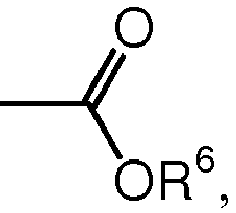
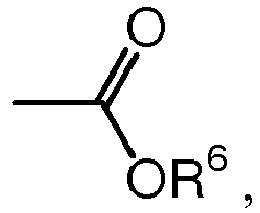
- R 5 is and R 6 is H or C 1-8 alkyl group
- R 7 is H or C 1-6 alkyl group
- R 8 is Ini is a residual group of a radical initiator
- n is an integer of 1 to 10000.
- One embodiment of the disclosure provides a secondary amine and a method of forming the same.
- a primary amine and an aldehyde can react with each other at room temperature to form an intermediate, which can further react with a derivative of DOPO (9,10-dihydro-9-oxa-10-phosphaphenanthrene 10-oxide) at room temperature to form the secondary amine.
- DOPO 9,10-dihydro-9-oxa-10-phosphaphenanthrene 10-oxide
- each of R 1 is independently H, C 1-6 alkyl group, or C 1-6 alkoxy group.
- R 2 is C 1-6 alkyl group.
- R 3 is -(C x H 2x )-OH or -(C x H 2x+1 ), and x is 1 to 8.
- R 2 is C 2-4 alkyl group.
- x is 2 to 5.
- each R 1 is H, R 2 is isopropyl group (e.g. the aldehyde is isobutyraldehyde), and R 3 is hydroxyethyl group (e.g. the primary amine is ethanolamine) or butyl group (e.g. the primary amine is butyl amine).
- the above reaction may form the secondary amine compound of high purity at room temperature without additional purification (e.g. column chromatography), thereby dramatically lowering the manufacturing cost.
- the secondary amine can be further oxidized to form a radical, which has a chemical structure of
- each of R 1 is independently H, C 1-6 alkyl group, or C 1-6 alkoxy group
- R 2 is C 1-6 alkyl group
- R 3 is -(C x H 2x )-OH or -(C x H 2x+1 ), and x is 1 to 8.
- R 2 is C 2-4 alkyl group.
- x is 2 to 5.
- each R 1 is H, R 2 is is isopropyl group, and R 3 is hydroxyethyl group or butyl group.
- the secondary amine can be oxidized by an oxidant such as hydrogen peroxide, peracetic acid, pertrifluoroacetic acid, nitric acid, oxone, the like, or a combination thereof to form the radical.
- the radical may stably exist, and can collocate with another radical initiator (e.g. azobisisobutyronitrile (AIBN) or benzoyl peroxide (BPO)) to perform a NMP reaction of monomer having a double bond.
- AIBN azobisisobutyronitrile
- BPO benzoyl peroxide
- R 1 is independently H, C 1-6 alkyl group, or C 1-6 alkoxy group
- R 2 is C 1-6 alkyl group
- R 3 is -(C x H 2x )-OH or -(C x H 2x+1 ), and x is 1 to 8
- R 4 is H or C 1-6 alkyl group
- R 5 is and R 6 is H or C 1-8 alkyl group
- R 7 is H or C 1-6 alkyl group
- R 8 is Ini is a residual group of a radical initiator
- n is an integer of 1 to 10000.
- R 2 is C 2-4 alkyl group.
- x is 2 to 5.
- each R 1 is H, R 2 is isopropyl group, and R 3 is hydroxyethyl group or butyl group.
- the radical initiator may include AIBN or BPO.
- AIBN, the described radical, and monomer having a double bond can be heated and reacted under nitrogen to form the alkoxy amine compound, and the heating temperature is determined by the monomer having a double bond.
- the heating temperature can be about 60°C.
- the heating temperature can be about 80°C.
- the heating temperature can be about 110°C.
- R 4 , R 5 , R 7 , and R 8 are determined by the monomer having a double bond. For example, when the monomer having a double bond is butyl acrylate, R 4 will be H, R 5 will be and R 6 will be butyl group. When the monomer having a double bond is styrene, R 7 will be H, R 8 will be When the monomer having a double bond is methyl methacrylate, R 4 will be methyl group, R 5 will be and R 6 will be methyl group.
- the heating temperature is lower and the polymerization period is shorter for the radical in the disclosure, and the alkoxy amine compound of the disclosure has a higher number average molecular weight (Mn).
- Mn number average molecular weight
- reaction of forming the alkoxy amine compound can be any reaction of forming the alkoxy amine compound.
- the reaction of forming the alkoxy amine compound can be
- Ini is a residual group of a radical initiator, which is determined by the radical initiator type.
- a radical initiator which is determined by the radical initiator type.
- suitable reagents and reactions not limited to the above reagents and reactions
- the secondary amine, radical, and alkoxy amine compound formed from the other reagents and reactions are still included within the scope and spirit of the disclosure.
- Dimethylacetamide (DMAc) serving as solvent was added to the reaction bottle for preparing solution (50wt%).
- the solution was bubbled with nitrogen to deoxygenate for 30 minutes, and then heated to 60°C and stirred to be reacted for about 2.5 hours.
- DMAc serving as solvent was added to the reaction bottle for preparing solution (50wt%).
- the solution was bubbled with nitrogen to deoxygenate for 30 minutes, and then heated to 60°C and stirred to be reacted for about 1 hour.
- NMP reagents TIPNO and TIPNO • commercially available from Sigma-Aldrich
- DMAc serving as solvent was added to the reaction bottle for preparing solution (50wt%).
- the solution was bubbled with nitrogen to deoxygenate for 30 minutes, and then heated to 75°C and stirred to be reacted for about 16 hours.
- the reaction result was analyzed by GPC to prove that no new reaction occurred.
- DMAc serving as solvent was added to the reaction bottle for preparing solution (50wt%).
- the solution was bubbled with nitrogen to deoxygenate for 30 minutes, and then heated to 125°C and stirred to be reacted for about 24 hours.
- Example 2 As shown in the comparison between Example 1, Example 2, and Comparative Example 2, Mn of the polymers formed at a lower temperature during shorter periods in Examples 1 and 2 were dramatically larger than Mn of the polymer formed at a higher temperature during a longer period in Comparative Example 2.
- DMAc serving as solvent was added to the reaction bottle for preparing solution (50wt%).
- the solution was bubbled with nitrogen to deoxygenate for 30 minutes, and then heated to 80°C and stirred to be reacted for about 16 hours.
- Example 4 As shown in the comparison between Example 3, Example 4, and Comparative Example 3, Mn of the polymers formed during shorter periods in Examples 3 and 4 were dramatically larger than Mn of the polymer formed during a longer period in Comparative Example 3.
- DMAc serving as solvent was added to the reaction bottle for preparing solution (50wt%).
- the solution was bubbled with nitrogen to deoxygenate for 30 minutes, and then heated to 110°C and stirred to be reacted for about 1 hour.
- DMAc serving as solvent was added to the reaction bottle for preparing solution (50wt%).
- the solution was bubbled with nitrogen to deoxygenate for 30 minutes, and then heated to 75°C and stirred to be reacted for about 12 hours.
- the reaction result was analyzed by GPC to prove that no new reaction was occurred.
- DMAc serving as solvent was added to the reaction bottle for preparing solution (50wt%).
- the solution was bubbled with nitrogen to deoxygenate for 30 minutes, and then heated to 125°C and stirred to be reacted for about 24 hours.
- Example 5 As shown in the comparison between Example 5 and Comparative Example 5, Mn of the polymer formed at a lower temperature during a shorter period in Example 5 was dramatically larger than Mn of the polymer formed at a higher temperature during a longer period in Comparative Example 5.
Landscapes
- Chemical & Material Sciences (AREA)
- Organic Chemistry (AREA)
- Health & Medical Sciences (AREA)
- Chemical Kinetics & Catalysis (AREA)
- Medicinal Chemistry (AREA)
- Polymers & Plastics (AREA)
- Life Sciences & Earth Sciences (AREA)
- Biochemistry (AREA)
- General Health & Medical Sciences (AREA)
- Molecular Biology (AREA)
- Organic Low-Molecular-Weight Compounds And Preparation Thereof (AREA)
- Addition Polymer Or Copolymer, Post-Treatments, Or Chemical Modifications (AREA)
Abstract
Description
- This application claims the benefit of
U.S. Provisional Application No. 62/729,658 filed on September 11, 2018 107137351, filed on October 23, 2018 - The technical field relates to secondary amine, radical formed from the secondary amine, and alkoxy amine compound formed from the radical.
- The major conventional method of forming block copolymers is controlled/living radical polymerization (CRP), which includes nitroxide mediated polymerization (NMP), atom transfer radical polymerization (ATRP), or reversible addition fragmentation chain transfer (RAFT). The requirements for the NMP condition are lower than those for the ATRP condition, meaning that the NMP is more feasible. The NMP initiator is free of sulfur atoms, and the color of the NMP product is lighter than the color of the RAFT product. As such, NMP has inherent advantages for application in optical PMMA. However, nitroxide initiator (the critical technology of NMP) is usually synthesized in several steps. Accordingly, a simplified method of synthesizing a novel nitroxide for NMP is called for.
- One embodiment of the disclosure provides a secondary amine, having a chemical structure of:

- One embodiment of the disclosure provides a radical, having a chemical structure of:

- One embodiment of the disclosure provides an alkoxy amine compound, having a chemical structure of:


- A detailed description is given in the following embodiments.
- In the following detailed description, for purposes of explanation, numerous specific details are set forth in order to provide a thorough understanding of the disclosed embodiments. It will be apparent, however, that one or more embodiments may be practiced without these specific details.
- One embodiment of the disclosure provides a secondary amine and a method of forming the same. For example, a primary amine and an aldehyde can react with each other at room temperature to form an intermediate, which can further react with a derivative of DOPO (9,10-dihydro-9-oxa-10-phosphaphenanthrene 10-oxide) at room temperature to form the secondary amine. The reaction is shown below:

- In the above reaction, each of R1 is independently H, C1-6 alkyl group, or C1-6 alkoxy group. R2 is C1-6 alkyl group. R3 is -(CxH2x)-OH or -(CxH2x+1), and x is 1 to 8. In some embodiments, R2 is C2-4 alkyl group. In some embodiments, x is 2 to 5. For example, each R1 is H, R2 is isopropyl group (e.g. the aldehyde is isobutyraldehyde), and R3 is hydroxyethyl group (e.g. the primary amine is ethanolamine) or butyl group (e.g. the primary amine is butyl amine). The above reaction may form the secondary amine compound of high purity at room temperature without additional purification (e.g. column chromatography), thereby dramatically lowering the manufacturing cost.
- In one embodiment, the secondary amine can be further oxidized to form a radical, which has a chemical structure of

- One embodiment of the disclosure provides an alkoxy amine compound, having a chemical structure of:




- Alternatively, the reaction of forming the alkoxy amine compound can be

- Ini is a residual group of a radical initiator, which is determined by the radical initiator type. On the other hand, one skilled in the art should understand that the above reaction is only illustrative and not intended to limit the disclosure. One skilled in the art may select suitable reagents and reactions (not limited to the above reagents and reactions) to form the described secondary amine, radical, and alkoxy amine compound. In other words, the secondary amine, radical, and alkoxy amine compound formed from the other reagents and reactions are still included within the scope and spirit of the disclosure.
- Below, exemplary embodiments will be described in detail so as to be easily realized by a person having ordinary knowledge in the art. The inventive concept may be embodied in various forms without being limited to the exemplary embodiments set forth herein. Descriptions of well-known parts are omitted for clarity, and like reference numerals refer to like elements throughout.
- 11.81g of isobutyraldehyde (0.1637mole) was stirred at room temperature. Then, 10g of ehanolamine (0.1637mole) was added to the isobutyraldehyde in an ice bath. The ice bath was removed after the addition of ethanolamine, and the reaction was performed at room temperature (25°C) for 12 hours to form an intermediate. About 50mL of ethanol solution of DOPO (35.39g, 0.1637mole) was added to the intermediate, and then stirred at room temperature for 24 hours to form a white solid, which was naturally precipitated. The white solid was collected by vacuum filtering to obtain a filtered cake, which was a secondary amine product with high purity (yield was about 95%). The hydrogen spectrum of the secondary amine product was as follows: 1H-NMR (400 MHz, DMSO-d6 , δ, ppm): 10.93 (1H, NH), 8.03, 7.45, 7.26, 7.08, 6.91 (8H, aromatic H), 5.07 (1H, OH), 3.44, 2.76, 2.50, 1.87, 0.82 (12H, aliphatic H). The above reaction is shown below:

- 1g of the secondary amine product (3.018mmole) in Preparation Example 1-1 was dissolved in 10mL of dichloromethane and 3mL of acetic acid to form a clear solution. 5mL of hydrogen peroxide (30%) was added to the clear solution, and the mixture was stirred at room temperature and reacted for about 3 hours. The reacted aqueous solution was vigorously stirred, and 5% Na2CO3 solution was then added thereto for fine-tuning its pH value to about 5 to 6, thereby precipitating a large amount of white solid. The white solid was collected by vacuum filtering to obtain a filtered cake, which was washed by dichloromethane and then dried under vacuum at 50°C for 1 hour, which was the radical product (yield was about 90%). The hydrogen spectrum and the mass spectrum of the radical product are as follows: 1H-NMR (400 MHz, DMSO-d6 , δ, ppm): 8.02, 7.42, 7.23, 7.05, 6.87 (8H, aromatic H), 3.80 (1H, OH), 3.60, 2.56, 2.50, 1.80, 0.60 (12H, aliphatic H). LC-HR/MS (ESI) m/z: [M+2]+ calcd. for C18H21NO4P. 346.3; anal., 465.0855. The above reaction is shown below:

- 11.81 g of isobutyraldehyde (0.1637mole) was stirred at room temperature. Then, 11.98g of butylamine (0.1637mole) was added to isobutyraldehyde in an ice bath. The ice bath was removed after the addition of butylamine, and the reaction was performed at room temperature (25°C) for 12 hours to form an intermediate. About 50mL of ethanol solution of DOPO (35.39g, 0.1637mole) was added to the intermediate, and then stirred at room temperature for 24 hours to form a white solid, which was naturally precipitated. The white solid was collected by vacuum filtering to obtain a filtered cake, which was a secondary amine product with high purity (yield was about 95%). The hydrogen spectrum of the secondary amine product is as follows: 1H-NMR (400 MHz, CDCl3, δ, ppm): 9.94 (1H, NH), 8.11, 7.51, 7.30, 7.22 (8H, aromatic H), 2.72, 2.31, 1.90, 1.25, 0.93, 0.78 (16H, aliphatic H). The above reaction is shown below:

- 1.04g of the secondary amine product (3.018mmole) in Preparation Example 2-1 was dissolved in 10mL of dichloromethane and 3mL of acetic acid to form a clear solution. 5mL of hydrogen peroxide (30%) was added to the clear solution, and the mixture was stirred at room temperature and reacted for about 3 hours. The reacted aqueous solution was vigorously stirred, and 5% Na2CO3 solution was then added thereto for fine-tuning its pH value to about 5 to 6, thereby precipitating a large amount of white solid. The white solid was collected by vacuum filtering to obtain a filtered cake, which was washed by dichloromethane and then dried under vacuum at 50°C for 1 hour, which was the radical product (yield was about 90%). The hydrogen spectrum of the radical product is as follows: 1H-NMR (400 MHz, CDCl3, δ, ppm): 8.11, 7.51, 7.30, 7.20, 7.03 (8H, aromatic H), 2.78, 2.43, 2.26, 1.32, 1.21, 0.87 (16H, aliphatic H). The above reaction is shown below:

- n-Butylacrylate/the radical product in Preparation Example 1-2/AIBN (molar ratio=100/1/0.1) were added into a reaction bottle. Dimethylacetamide (DMAc) serving as solvent was added to the reaction bottle for preparing solution (50wt%). The solution was bubbled with nitrogen to deoxygenate for 30 minutes, and then heated to 60°C and stirred to be reacted for about 2.5 hours. The reaction result was analyzed by GPC to measure its Mn, Mn=161857. The above reaction is shown below:

- n-Butylacrylate/the radical product in Preparation Example 2-2/AIBN (molar ratio=100/1/0.1) were added into a reaction bottle. DMAc serving as solvent was added to the reaction bottle for preparing solution (50wt%). The solution was bubbled with nitrogen to deoxygenate for 30 minutes, and then heated to 60°C and stirred to be reacted for about 1 hour. The reaction result was analyzed by GPC to measure its Mn, Mn=107857. The above reaction is shown below:

- Commercially available NMP reagents TIPNO and TIPNO • (commercially available from Sigma-Aldrich) and n-butylacrylate were polymerized for comparison. n-Butylacrylate/TIPNO • /TIPNO (molar ratio=100/1/0.1) were added into a reaction bottle. DMAc serving as solvent was added to the reaction bottle for preparing solution (50wt%). The solution was bubbled with nitrogen to deoxygenate for 30 minutes, and then heated to 75°C and stirred to be reacted for about 16 hours. The reaction result was analyzed by GPC to prove that no new reaction occurred.
- n-Butylacrylate/TIPNO • /TIPNO (molar ratio=100/1/0.1) were added into a reaction bottle. DMAc serving as solvent was added to the reaction bottle for preparing solution (50wt%). The solution was bubbled with nitrogen to deoxygenate for 30 minutes, and then heated to 125°C and stirred to be reacted for about 24 hours. The reaction result was analyzed by GPC to measure its Mn, Mn=14981. The above reaction is shown below:

- As shown in the comparison between Example 1, Example 2, and Comparative Example 2, Mn of the polymers formed at a lower temperature during shorter periods in Examples 1 and 2 were dramatically larger than Mn of the polymer formed at a higher temperature during a longer period in Comparative Example 2.
- Styrene/the radical product in Preparation Example 1-2/AIBN (molar ratio=100/1/0.1) were added into a reaction bottle. DMAc serving as solvent was added to the reaction bottle for preparing solution (50wt%). The solution was bubbled with nitrogen to deoxygenate for 30 minutes, and then heated to 80°C and stirred to be reacted for about 4 hours. The reaction result was analyzed by GPC to measure its Mn, Mn=18036. The above reaction is shown below:

- Styrene/the radical product in Preparation Example 2-2/AIBN (molar ratio=100/1/0.1) were added into a reaction bottle. DMAc serving as solvent was added to the reaction bottle for preparing solution (50wt%). The solution was bubbled with nitrogen to deoxygenate for 30 minutes, and then heated to 80°C and stirred to be reacted for about 2 hours. The reaction result was analyzed by GPC to measure its Mn, Mn=12643. The above reaction is shown below:

- Styrene/TIPNO • /TIPNO (molar ratio=100/1/0.1) were added into a reaction bottle. DMAc serving as solvent was added to the reaction bottle for preparing solution (50wt%). The solution was bubbled with nitrogen to deoxygenate for 30 minutes, and then heated to 80°C and stirred to be reacted for about 16 hours. The reaction result was analyzed by GPC to measure its Mn, Mn=910. The above reaction is shown below:

- As shown in the comparison between Example 3, Example 4, and Comparative Example 3, Mn of the polymers formed during shorter periods in Examples 3 and 4 were dramatically larger than Mn of the polymer formed during a longer period in Comparative Example 3.
- Methyl methacrylate/the radical product in Preparation Example 1-2/BPO (molar ratio=100/1/0.1) were added into a reaction bottle. DMAc serving as solvent was added to the reaction bottle for preparing solution (50wt%). The solution was bubbled with nitrogen to deoxygenate for 30 minutes, and then heated to 110°C and stirred to be reacted for about 1 hour. The reaction result was analyzed by GPC to measure its Mn, Mn=15823. The above reaction is shown below:

- Methyl methacrylate/TIPNO • /TIPNO (molar ratio=100/1/0.1) were added into a reaction bottle. DMAc serving as solvent was added to the reaction bottle for preparing solution (50wt%). The solution was bubbled with nitrogen to deoxygenate for 30 minutes, and then heated to 75°C and stirred to be reacted for about 12 hours. The reaction result was analyzed by GPC to prove that no new reaction was occurred.
- Methyl methacrylate/TIPNO • /TIPNO (molar ratio=100/1/0.1) were added into a reaction bottle. DMAc serving as solvent was added to the reaction bottle for preparing solution (50wt%). The solution was bubbled with nitrogen to deoxygenate for 30 minutes, and then heated to 125°C and stirred to be reacted for about 24 hours. The reaction result was analyzed by GPC to measure its Mn, Mn=5822. The above reaction is shown below:

- As shown in the comparison between Example 5 and Comparative Example 5, Mn of the polymer formed at a lower temperature during a shorter period in Example 5 was dramatically larger than Mn of the polymer formed at a higher temperature during a longer period in Comparative Example 5.
- It will be apparent to those skilled in the art that various modifications and variations can be made to the disclosed methods and materials. It is intended that the specification and examples be considered as exemplary only, with the true scope of the disclosure being indicated by the following claims and their equivalents.
Claims (10)
- A secondary amine, having a chemical structure of:
 wherein each of R1 is independently H, C1-6 alkyl group, or C1-6 alkoxy group;R2 is C1-6 alkyl group; andR3 is -(CxH2x)-OH or -(CxH2x+1), and x is 1 to 8.
 - The secondary amine as claimed in claim 1, wherein R2 is C2-4 alkyl group.
- The secondary amine as claimed in claim 1 or 2, wherein x is 2 to 5.
- A radical, having a chemical structure of:
 wherein each of R1 is independently H, C1-6 alkyl group, or C1-6 alkoxy group;R2 is C1-6 alkyl group; andR3 is -(CxH2x)-OH or -(CxH2x+1), and x is 1 to 8.
 - The radical as claimed in claim 4, wherein R2 is C2-4 alkyl group.
- The radical as claimed in claim 4 or 5, wherein x is 2 to 5.
- An alkoxy amine compound, having a chemical structure of:
 wherein each of R1 is independently H, C1-6 alkyl group, or C1-6 alkoxy group;R2 is C1-6 alkyl group;R3 is -(CxH2x)-OH or -(CxH2x+1), and x is 1 to 8;R4 is H or C1-6 alkyl group;R5 is
 R7 is H or C1-6 alkyl group,R8 is
 n is an integer of 1 to 10000.
 - The alkoxy amine compound as claimed in claim 7, wherein R2 is C2-4 alkyl group.
- The alkoxy amine compound as claimed in claim 7 or 8, wherein x is 2 to 5.
- The alkoxy amine compound as claimed in any one of claims 7 to 9, wherein the radical initiator comprises azobisisobutyronitrile or benzoyl peroxide.
Applications Claiming Priority (2)
| Application Number | Priority Date | Filing Date | Title |
|---|---|---|---|
| US201862729658P | 2018-09-11 | 2018-09-11 | |
| TW107137351A TWI701256B (en) | 2018-09-11 | 2018-10-23 | Radical and alkoxy amine compound |
Publications (2)
| Publication Number | Publication Date |
|---|---|
| EP3623376A1 true EP3623376A1 (en) | 2020-03-18 |
| EP3623376B1 EP3623376B1 (en) | 2021-11-24 |
Family
ID=65818156
Family Applications (1)
| Application Number | Title | Priority Date | Filing Date |
|---|---|---|---|
| EP19160161.6A Active EP3623376B1 (en) | 2018-09-11 | 2019-02-28 | Secondary amine, radical, and alkoxy amine compound |
Country Status (3)
| Country | Link |
|---|---|
| US (1) | US10913812B2 (en) |
| EP (1) | EP3623376B1 (en) |
| CN (1) | CN110885345B (en) |
Families Citing this family (2)
| Publication number | Priority date | Publication date | Assignee | Title |
|---|---|---|---|---|
| CN112194683B (en) * | 2020-10-12 | 2022-06-17 | 福建师范大学 | Preparation of phosphorus-containing polyhydroxy flame retardant and application of phosphorus-containing polyhydroxy flame retardant in flame-retardant polylactic acid |
| CN112645983B (en) * | 2020-12-19 | 2023-02-24 | 中国民用航空飞行学院 | Additive type crosslinkable flame retardant and preparation method thereof |
Citations (1)
| Publication number | Priority date | Publication date | Assignee | Title |
|---|---|---|---|---|
| CN105254866A (en) * | 2015-11-13 | 2016-01-20 | 四川大学 | Carboxyl-terminated phosphorus-containing copolyester, preparation method, halogen-free flame retardant biology-based pressure sensitive adhesive composed of carboxyl-terminated phosphorus-containing copolyester and application |
Family Cites Families (12)
| Publication number | Priority date | Publication date | Assignee | Title |
|---|---|---|---|---|
| KR890002086B1 (en) | 1986-09-12 | 1989-06-16 | 주식회사 코오롱 | Process for preparing nitrogen-containing flame retardant |
| FR2788270B1 (en) | 1999-01-08 | 2001-03-16 | Atochem Elf Sa | PROCESS FOR THE PREPARATION OF BETA-PHOSPHORUS NITROXIDE RADIALS |
| DE10332291A1 (en) * | 2003-07-16 | 2005-02-17 | Schill + Seilacher "Struktol" Ag | Derivatives of 9,10-dihydro-9-oxa-10-phosphaphenanthrene-10-oxide |
| JP2005076147A (en) * | 2003-09-01 | 2005-03-24 | Kaneka Corp | Flame-retardant polyester fiber for artificial hair |
| CN101709137B (en) | 2009-11-25 | 2011-09-14 | 四川大学 | Phosphorus-containing PTT fire-resistant copolyesters/ nano composite material and preparation method thereof |
| CN103694434B (en) | 2013-12-16 | 2016-02-10 | 中国林业科学研究院林产化学工业研究所 | For the non-halogen reacting fire-retardant agent and its preparation method and application of polyurethane foam |
| CN103965247A (en) | 2014-05-23 | 2014-08-06 | 厦门大学 | Phosphor-containing nitrogen-containing structural type flame retardant polyhydric alcohol as well as preparation method and application thereof |
| TWI540126B (en) | 2014-12-25 | 2016-07-01 | 財團法人工業技術研究院 | Compound, and polymer prepared thererfrom |
| CN104592475A (en) | 2015-01-28 | 2015-05-06 | 中国科学技术大学 | Method for preparing flame-retardant waterborne polyurethane containing phosphaphenanthrene and/or phenyl phosphate groups |
| CN104910327B (en) | 2015-06-16 | 2018-02-27 | 厦门大学 | A kind of phosphorus nitrogen cooperative flame retardant epoxy polymer and preparation method thereof |
| CN107459957A (en) | 2017-09-26 | 2017-12-12 | 安徽大松树脂有限公司 | A kind of high fire-retardance epoxy resin adhesive |
| CN107400492A (en) | 2017-09-26 | 2017-11-28 | 安徽大松树脂有限公司 | A kind of heat-proof combustion-resistant epoxy resin adhesive |
-
2018
- 2018-12-19 CN CN201811553639.7A patent/CN110885345B/en active Active
-
2019
- 2019-01-30 US US16/262,667 patent/US10913812B2/en active Active
- 2019-02-28 EP EP19160161.6A patent/EP3623376B1/en active Active
Patent Citations (1)
| Publication number | Priority date | Publication date | Assignee | Title |
|---|---|---|---|---|
| CN105254866A (en) * | 2015-11-13 | 2016-01-20 | 四川大学 | Carboxyl-terminated phosphorus-containing copolyester, preparation method, halogen-free flame retardant biology-based pressure sensitive adhesive composed of carboxyl-terminated phosphorus-containing copolyester and application |
Non-Patent Citations (1)
| Title |
|---|
| GARTH, KIM ET AL: "Synthesis of a new phosphorylated ethylamine, thereon based phosphonamidates and their application as flame retardants", HETEROATOM CHEMISTRY, vol. 28, no. 6, 10 December 2017 (2017-12-10), pages 1 - 9, XP002793411, ISSN: 1042-7163, DOI: 10.1002/HC.21407 10.1002/HC.21407 * |
Also Published As
| Publication number | Publication date |
|---|---|
| CN110885345A (en) | 2020-03-17 |
| US20200079889A1 (en) | 2020-03-12 |
| CN110885345B (en) | 2022-06-28 |
| EP3623376B1 (en) | 2021-11-24 |
| US10913812B2 (en) | 2021-02-09 |
Similar Documents
| Publication | Publication Date | Title |
|---|---|---|
| EP0882071B1 (en) | Branched polymer synthesis | |
| KR102182889B1 (en) | Sugar containing, amphiphilic copolymers | |
| EP3623376B1 (en) | Secondary amine, radical, and alkoxy amine compound | |
| Bergerbit et al. | Synthesis of PMMA-based block copolymers by consecutive irreversible and reversible addition–fragmentation chain transfer polymerizations | |
| JP4138024B2 (en) | Macromonomer synthesis method | |
| JP5000904B2 (en) | Method for producing polyvinyl alcohol polymer having mercapto group at terminal | |
| JP6127521B2 (en) | Process for producing block copolymer | |
| TWI701256B (en) | Radical and alkoxy amine compound | |
| US6455645B1 (en) | Process for the production of telechelic polymers, telechelic polymers produced in this manner and use thereof | |
| EP1652838B1 (en) | Diol (meth)acrylate compound having urethane bond method for producing the same and polymer thereof | |
| KR101383066B1 (en) | Preparation of dinitroacrylate block copolymer containing poly(alkylene glycol) | |
| EP0591025B1 (en) | Process for the manufacture of glutarimide copolymers and intermediate compounds thereof | |
| WO2001096411A1 (en) | Water soluble ampiphilic heteratom star polymers and their use as emulsion stabilizers in emulsion polymerization | |
| JP4787418B2 (en) | Copolymer of (meth) acrylic acid oligostyrene ester and methyl (meth) acrylate and method for producing the same | |
| TWI540126B (en) | Compound, and polymer prepared thererfrom | |
| US20080274074A1 (en) | Method for Controlled Free Radical Polymerization or Copolymerization of Methacrylic and/or Methacrylate Monomers or Exclusively Methacrylic and/or Methacrylate Copolymers | |
| WO2024204690A1 (en) | Polymerizable composition, copolymer, method for producing copolymer, and kit for producing copolymer | |
| JP2827304B2 (en) | (Meth) acrylate copolymer | |
| EP4493614A1 (en) | Method for radical polymerisation of thionolactides | |
| CN119365502A (en) | Polymer emulsion, one-liquid thermosetting resin composition, two-liquid thermosetting resin composition, coating material, resin cured film and coating film using the same | |
| WO2020254638A1 (en) | Polymerization process for production of polydisulfide | |
| JP2021001134A (en) | Compound, compound manufacturing method, polymer manufacturing method and polymer | |
| US20010056163A1 (en) | Macromonomer compounds, their preparation from diene compounds and their use | |
| JPH08176114A (en) | Azo compound, its production and production of graft polymer | |
| JPWO2015162666A1 (en) | Method for producing block polymer |
Legal Events
| Date | Code | Title | Description |
|---|---|---|---|
| PUAI | Public reference made under article 153(3) epc to a published international application that has entered the european phase |
Free format text: ORIGINAL CODE: 0009012 |
|
| STAA | Information on the status of an ep patent application or granted ep patent |
Free format text: STATUS: REQUEST FOR EXAMINATION WAS MADE |
|
| 17P | Request for examination filed |
Effective date: 20190314 |
|
| AK | Designated contracting states |
Kind code of ref document: A1 Designated state(s): AL AT BE BG CH CY CZ DE DK EE ES FI FR GB GR HR HU IE IS IT LI LT LU LV MC MK MT NL NO PL PT RO RS SE SI SK SM TR |
|
| AX | Request for extension of the european patent |
Extension state: BA ME |
|
| STAA | Information on the status of an ep patent application or granted ep patent |
Free format text: STATUS: EXAMINATION IS IN PROGRESS |
|
| 17Q | First examination report despatched |
Effective date: 20201104 |
|
| GRAP | Despatch of communication of intention to grant a patent |
Free format text: ORIGINAL CODE: EPIDOSNIGR1 |
|
| STAA | Information on the status of an ep patent application or granted ep patent |
Free format text: STATUS: GRANT OF PATENT IS INTENDED |
|
| INTG | Intention to grant announced |
Effective date: 20210729 |
|
| GRAS | Grant fee paid |
Free format text: ORIGINAL CODE: EPIDOSNIGR3 |
|
| GRAA | (expected) grant |
Free format text: ORIGINAL CODE: 0009210 |
|
| STAA | Information on the status of an ep patent application or granted ep patent |
Free format text: STATUS: THE PATENT HAS BEEN GRANTED |
|
| AK | Designated contracting states |
Kind code of ref document: B1 Designated state(s): AL AT BE BG CH CY CZ DE DK EE ES FI FR GB GR HR HU IE IS IT LI LT LU LV MC MK MT NL NO PL PT RO RS SE SI SK SM TR |
|
| REG | Reference to a national code |
Ref country code: GB Ref legal event code: FG4D |
|
| REG | Reference to a national code |
Ref country code: AT Ref legal event code: REF Ref document number: 1449805 Country of ref document: AT Kind code of ref document: T Effective date: 20211215 |
|
| REG | Reference to a national code |
Ref country code: DE Ref legal event code: R096 Ref document number: 602019009434 Country of ref document: DE |
|
| REG | Reference to a national code |
Ref country code: IE Ref legal event code: FG4D |
|
| REG | Reference to a national code |
Ref country code: LT Ref legal event code: MG9D |
|
| REG | Reference to a national code |
Ref country code: NL Ref legal event code: MP Effective date: 20211124 |
|
| REG | Reference to a national code |
Ref country code: AT Ref legal event code: MK05 Ref document number: 1449805 Country of ref document: AT Kind code of ref document: T Effective date: 20211124 |
|
| PG25 | Lapsed in a contracting state [announced via postgrant information from national office to epo] |
Ref country code: RS Free format text: LAPSE BECAUSE OF FAILURE TO SUBMIT A TRANSLATION OF THE DESCRIPTION OR TO PAY THE FEE WITHIN THE PRESCRIBED TIME-LIMIT Effective date: 20211124 Ref country code: LT Free format text: LAPSE BECAUSE OF FAILURE TO SUBMIT A TRANSLATION OF THE DESCRIPTION OR TO PAY THE FEE WITHIN THE PRESCRIBED TIME-LIMIT Effective date: 20211124 Ref country code: FI Free format text: LAPSE BECAUSE OF FAILURE TO SUBMIT A TRANSLATION OF THE DESCRIPTION OR TO PAY THE FEE WITHIN THE PRESCRIBED TIME-LIMIT Effective date: 20211124 Ref country code: BG Free format text: LAPSE BECAUSE OF FAILURE TO SUBMIT A TRANSLATION OF THE DESCRIPTION OR TO PAY THE FEE WITHIN THE PRESCRIBED TIME-LIMIT Effective date: 20220224 Ref country code: AT Free format text: LAPSE BECAUSE OF FAILURE TO SUBMIT A TRANSLATION OF THE DESCRIPTION OR TO PAY THE FEE WITHIN THE PRESCRIBED TIME-LIMIT Effective date: 20211124 |
|
| PG25 | Lapsed in a contracting state [announced via postgrant information from national office to epo] |
Ref country code: IS Free format text: LAPSE BECAUSE OF FAILURE TO SUBMIT A TRANSLATION OF THE DESCRIPTION OR TO PAY THE FEE WITHIN THE PRESCRIBED TIME-LIMIT Effective date: 20220324 Ref country code: SE Free format text: LAPSE BECAUSE OF FAILURE TO SUBMIT A TRANSLATION OF THE DESCRIPTION OR TO PAY THE FEE WITHIN THE PRESCRIBED TIME-LIMIT Effective date: 20211124 Ref country code: PT Free format text: LAPSE BECAUSE OF FAILURE TO SUBMIT A TRANSLATION OF THE DESCRIPTION OR TO PAY THE FEE WITHIN THE PRESCRIBED TIME-LIMIT Effective date: 20220324 Ref country code: PL Free format text: LAPSE BECAUSE OF FAILURE TO SUBMIT A TRANSLATION OF THE DESCRIPTION OR TO PAY THE FEE WITHIN THE PRESCRIBED TIME-LIMIT Effective date: 20211124 Ref country code: NO Free format text: LAPSE BECAUSE OF FAILURE TO SUBMIT A TRANSLATION OF THE DESCRIPTION OR TO PAY THE FEE WITHIN THE PRESCRIBED TIME-LIMIT Effective date: 20220224 Ref country code: NL Free format text: LAPSE BECAUSE OF FAILURE TO SUBMIT A TRANSLATION OF THE DESCRIPTION OR TO PAY THE FEE WITHIN THE PRESCRIBED TIME-LIMIT Effective date: 20211124 Ref country code: LV Free format text: LAPSE BECAUSE OF FAILURE TO SUBMIT A TRANSLATION OF THE DESCRIPTION OR TO PAY THE FEE WITHIN THE PRESCRIBED TIME-LIMIT Effective date: 20211124 Ref country code: HR Free format text: LAPSE BECAUSE OF FAILURE TO SUBMIT A TRANSLATION OF THE DESCRIPTION OR TO PAY THE FEE WITHIN THE PRESCRIBED TIME-LIMIT Effective date: 20211124 Ref country code: GR Free format text: LAPSE BECAUSE OF FAILURE TO SUBMIT A TRANSLATION OF THE DESCRIPTION OR TO PAY THE FEE WITHIN THE PRESCRIBED TIME-LIMIT Effective date: 20220225 Ref country code: ES Free format text: LAPSE BECAUSE OF FAILURE TO SUBMIT A TRANSLATION OF THE DESCRIPTION OR TO PAY THE FEE WITHIN THE PRESCRIBED TIME-LIMIT Effective date: 20211124 |
|
| PG25 | Lapsed in a contracting state [announced via postgrant information from national office to epo] |
Ref country code: SM Free format text: LAPSE BECAUSE OF FAILURE TO SUBMIT A TRANSLATION OF THE DESCRIPTION OR TO PAY THE FEE WITHIN THE PRESCRIBED TIME-LIMIT Effective date: 20211124 Ref country code: SK Free format text: LAPSE BECAUSE OF FAILURE TO SUBMIT A TRANSLATION OF THE DESCRIPTION OR TO PAY THE FEE WITHIN THE PRESCRIBED TIME-LIMIT Effective date: 20211124 Ref country code: RO Free format text: LAPSE BECAUSE OF FAILURE TO SUBMIT A TRANSLATION OF THE DESCRIPTION OR TO PAY THE FEE WITHIN THE PRESCRIBED TIME-LIMIT Effective date: 20211124 Ref country code: EE Free format text: LAPSE BECAUSE OF FAILURE TO SUBMIT A TRANSLATION OF THE DESCRIPTION OR TO PAY THE FEE WITHIN THE PRESCRIBED TIME-LIMIT Effective date: 20211124 Ref country code: DK Free format text: LAPSE BECAUSE OF FAILURE TO SUBMIT A TRANSLATION OF THE DESCRIPTION OR TO PAY THE FEE WITHIN THE PRESCRIBED TIME-LIMIT Effective date: 20211124 Ref country code: CZ Free format text: LAPSE BECAUSE OF FAILURE TO SUBMIT A TRANSLATION OF THE DESCRIPTION OR TO PAY THE FEE WITHIN THE PRESCRIBED TIME-LIMIT Effective date: 20211124 |
|
| REG | Reference to a national code |
Ref country code: DE Ref legal event code: R097 Ref document number: 602019009434 Country of ref document: DE |
|
| PG25 | Lapsed in a contracting state [announced via postgrant information from national office to epo] |
Ref country code: MC Free format text: LAPSE BECAUSE OF FAILURE TO SUBMIT A TRANSLATION OF THE DESCRIPTION OR TO PAY THE FEE WITHIN THE PRESCRIBED TIME-LIMIT Effective date: 20211124 |
|
| PLBE | No opposition filed within time limit |
Free format text: ORIGINAL CODE: 0009261 |
|
| STAA | Information on the status of an ep patent application or granted ep patent |
Free format text: STATUS: NO OPPOSITION FILED WITHIN TIME LIMIT |
|
| REG | Reference to a national code |
Ref country code: CH Ref legal event code: PL |
|
| REG | Reference to a national code |
Ref country code: BE Ref legal event code: MM Effective date: 20220228 |
|
| PG25 | Lapsed in a contracting state [announced via postgrant information from national office to epo] |
Ref country code: LU Free format text: LAPSE BECAUSE OF NON-PAYMENT OF DUE FEES Effective date: 20220228 Ref country code: AL Free format text: LAPSE BECAUSE OF FAILURE TO SUBMIT A TRANSLATION OF THE DESCRIPTION OR TO PAY THE FEE WITHIN THE PRESCRIBED TIME-LIMIT Effective date: 20211124 |
|
| 26N | No opposition filed |
Effective date: 20220825 |
|
| PG25 | Lapsed in a contracting state [announced via postgrant information from national office to epo] |
Ref country code: SI Free format text: LAPSE BECAUSE OF FAILURE TO SUBMIT A TRANSLATION OF THE DESCRIPTION OR TO PAY THE FEE WITHIN THE PRESCRIBED TIME-LIMIT Effective date: 20211124 |
|
| PG25 | Lapsed in a contracting state [announced via postgrant information from national office to epo] |
Ref country code: LI Free format text: LAPSE BECAUSE OF NON-PAYMENT OF DUE FEES Effective date: 20220228 Ref country code: IE Free format text: LAPSE BECAUSE OF NON-PAYMENT OF DUE FEES Effective date: 20220228 Ref country code: CH Free format text: LAPSE BECAUSE OF NON-PAYMENT OF DUE FEES Effective date: 20220228 |
|
| PG25 | Lapsed in a contracting state [announced via postgrant information from national office to epo] |
Ref country code: BE Free format text: LAPSE BECAUSE OF NON-PAYMENT OF DUE FEES Effective date: 20220228 |
|
| PG25 | Lapsed in a contracting state [announced via postgrant information from national office to epo] |
Ref country code: IT Free format text: LAPSE BECAUSE OF FAILURE TO SUBMIT A TRANSLATION OF THE DESCRIPTION OR TO PAY THE FEE WITHIN THE PRESCRIBED TIME-LIMIT Effective date: 20211124 |
|
| GBPC | Gb: european patent ceased through non-payment of renewal fee |
Effective date: 20230228 |
|
| PG25 | Lapsed in a contracting state [announced via postgrant information from national office to epo] |
Ref country code: GB Free format text: LAPSE BECAUSE OF NON-PAYMENT OF DUE FEES Effective date: 20230228 |
|
| PG25 | Lapsed in a contracting state [announced via postgrant information from national office to epo] |
Ref country code: GB Free format text: LAPSE BECAUSE OF NON-PAYMENT OF DUE FEES Effective date: 20230228 |
|
| PG25 | Lapsed in a contracting state [announced via postgrant information from national office to epo] |
Ref country code: MK Free format text: LAPSE BECAUSE OF FAILURE TO SUBMIT A TRANSLATION OF THE DESCRIPTION OR TO PAY THE FEE WITHIN THE PRESCRIBED TIME-LIMIT Effective date: 20211124 Ref country code: CY Free format text: LAPSE BECAUSE OF FAILURE TO SUBMIT A TRANSLATION OF THE DESCRIPTION OR TO PAY THE FEE WITHIN THE PRESCRIBED TIME-LIMIT Effective date: 20211124 |
|
| PG25 | Lapsed in a contracting state [announced via postgrant information from national office to epo] |
Ref country code: HU Free format text: LAPSE BECAUSE OF FAILURE TO SUBMIT A TRANSLATION OF THE DESCRIPTION OR TO PAY THE FEE WITHIN THE PRESCRIBED TIME-LIMIT; INVALID AB INITIO Effective date: 20190228 |
|
| PG25 | Lapsed in a contracting state [announced via postgrant information from national office to epo] |
Ref country code: TR Free format text: LAPSE BECAUSE OF FAILURE TO SUBMIT A TRANSLATION OF THE DESCRIPTION OR TO PAY THE FEE WITHIN THE PRESCRIBED TIME-LIMIT Effective date: 20211124 |
|
| PG25 | Lapsed in a contracting state [announced via postgrant information from national office to epo] |
Ref country code: MT Free format text: LAPSE BECAUSE OF FAILURE TO SUBMIT A TRANSLATION OF THE DESCRIPTION OR TO PAY THE FEE WITHIN THE PRESCRIBED TIME-LIMIT Effective date: 20211124 |
|
| PGFP | Annual fee paid to national office [announced via postgrant information from national office to epo] |
Ref country code: DE Payment date: 20260227 Year of fee payment: 8 |
|
| PGFP | Annual fee paid to national office [announced via postgrant information from national office to epo] |
Ref country code: FR Payment date: 20260225 Year of fee payment: 8 |