EP3620859A1 - Image forming apparatus and image forming method - Google Patents
Image forming apparatus and image forming method Download PDFInfo
- Publication number
- EP3620859A1 EP3620859A1 EP19181497.9A EP19181497A EP3620859A1 EP 3620859 A1 EP3620859 A1 EP 3620859A1 EP 19181497 A EP19181497 A EP 19181497A EP 3620859 A1 EP3620859 A1 EP 3620859A1
- Authority
- EP
- European Patent Office
- Prior art keywords
- sheet
- function
- conveyance
- image forming
- forming apparatus
- Prior art date
- Legal status (The legal status is an assumption and is not a legal conclusion. Google has not performed a legal analysis and makes no representation as to the accuracy of the status listed.)
- Withdrawn
Links
Images

Classifications
-
- H—ELECTRICITY
- H04—ELECTRIC COMMUNICATION TECHNIQUE
- H04N—PICTORIAL COMMUNICATION, e.g. TELEVISION
- H04N1/00—Scanning, transmission or reproduction of documents or the like, e.g. facsimile transmission; Details thereof
- H04N1/00567—Handling of original or reproduction media, e.g. cutting, separating, stacking
- H04N1/0057—Conveying sheets before or after scanning
- H04N1/00599—Using specific components
- H04N1/00604—Transport trays
-
- G—PHYSICS
- G03—PHOTOGRAPHY; CINEMATOGRAPHY; ANALOGOUS TECHNIQUES USING WAVES OTHER THAN OPTICAL WAVES; ELECTROGRAPHY; HOLOGRAPHY
- G03G—ELECTROGRAPHY; ELECTROPHOTOGRAPHY; MAGNETOGRAPHY
- G03G15/00—Apparatus for electrographic processes using a charge pattern
- G03G15/65—Apparatus which relate to the handling of copy material
- G03G15/6555—Handling of sheet copy material taking place in a specific part of the copy material feeding path
- G03G15/6558—Feeding path after the copy sheet preparation and up to the transfer point, e.g. registering; Deskewing; Correct timing of sheet feeding to the transfer point
- G03G15/6567—Feeding path after the copy sheet preparation and up to the transfer point, e.g. registering; Deskewing; Correct timing of sheet feeding to the transfer point for deskewing or aligning
-
- B—PERFORMING OPERATIONS; TRANSPORTING
- B65—CONVEYING; PACKING; STORING; HANDLING THIN OR FILAMENTARY MATERIAL
- B65H—HANDLING THIN OR FILAMENTARY MATERIAL, e.g. SHEETS, WEBS, CABLES
- B65H7/00—Controlling article feeding, separating, pile-advancing, or associated apparatus, to take account of incorrect feeding, absence of articles, or presence of faulty articles
- B65H7/02—Controlling article feeding, separating, pile-advancing, or associated apparatus, to take account of incorrect feeding, absence of articles, or presence of faulty articles by feelers or detectors
- B65H7/04—Controlling article feeding, separating, pile-advancing, or associated apparatus, to take account of incorrect feeding, absence of articles, or presence of faulty articles by feelers or detectors responsive to absence of articles, e.g. exhaustion of pile
-
- B—PERFORMING OPERATIONS; TRANSPORTING
- B65—CONVEYING; PACKING; STORING; HANDLING THIN OR FILAMENTARY MATERIAL
- B65H—HANDLING THIN OR FILAMENTARY MATERIAL, e.g. SHEETS, WEBS, CABLES
- B65H1/00—Supports or magazines for piles from which articles are to be separated
- B65H1/04—Supports or magazines for piles from which articles are to be separated adapted to support articles substantially horizontally, e.g. for separation from top of pile
-
- G—PHYSICS
- G03—PHOTOGRAPHY; CINEMATOGRAPHY; ANALOGOUS TECHNIQUES USING WAVES OTHER THAN OPTICAL WAVES; ELECTROGRAPHY; HOLOGRAPHY
- G03G—ELECTROGRAPHY; ELECTROPHOTOGRAPHY; MAGNETOGRAPHY
- G03G15/00—Apparatus for electrographic processes using a charge pattern
- G03G15/65—Apparatus which relate to the handling of copy material
- G03G15/6502—Supplying of sheet copy material; Cassettes therefor
-
- H—ELECTRICITY
- H04—ELECTRIC COMMUNICATION TECHNIQUE
- H04N—PICTORIAL COMMUNICATION, e.g. TELEVISION
- H04N1/00—Scanning, transmission or reproduction of documents or the like, e.g. facsimile transmission; Details thereof
- H04N1/00127—Connection or combination of a still picture apparatus with another apparatus, e.g. for storage, processing or transmission of still picture signals or of information associated with a still picture
- H04N1/00129—Connection or combination of a still picture apparatus with another apparatus, e.g. for storage, processing or transmission of still picture signals or of information associated with a still picture with a display device, e.g. CRT or LCD monitor
-
- B—PERFORMING OPERATIONS; TRANSPORTING
- B65—CONVEYING; PACKING; STORING; HANDLING THIN OR FILAMENTARY MATERIAL
- B65H—HANDLING THIN OR FILAMENTARY MATERIAL, e.g. SHEETS, WEBS, CABLES
- B65H2701/00—Handled material; Storage means
- B65H2701/10—Handled articles or webs
- B65H2701/11—Dimensional aspect of article or web
- B65H2701/113—Size
- B65H2701/1131—Size of sheets
-
- G—PHYSICS
- G03—PHOTOGRAPHY; CINEMATOGRAPHY; ANALOGOUS TECHNIQUES USING WAVES OTHER THAN OPTICAL WAVES; ELECTROGRAPHY; HOLOGRAPHY
- G03G—ELECTROGRAPHY; ELECTROPHOTOGRAPHY; MAGNETOGRAPHY
- G03G15/00—Apparatus for electrographic processes using a charge pattern
- G03G15/50—Machine control of apparatus for electrographic processes using a charge pattern, e.g. regulating differents parts of the machine, multimode copiers, microprocessor control
- G03G15/5016—User-machine interface; Display panels; Control console
-
- H—ELECTRICITY
- H04—ELECTRIC COMMUNICATION TECHNIQUE
- H04N—PICTORIAL COMMUNICATION, e.g. TELEVISION
- H04N2201/00—Indexing scheme relating to scanning, transmission or reproduction of documents or the like, and to details thereof
- H04N2201/0077—Types of the still picture apparatus
- H04N2201/0094—Multifunctional device, i.e. a device capable of all of reading, reproducing, copying, facsimile transception, file transception
Definitions
- the present invention relates to image forming technologies in general, and embodiments described herein relate in particular to an image forming apparatus and an image forming method.
- a sheet feed tray of an image forming apparatus performs a tray-up operation at a timing at which a power supply of the image forming apparatus is turned on or at a timing at which a sheet feed tray is opened or closed.
- the image forming apparatus detects a remaining quantity of sheets in a sheet housing section in the tray-up operation.
- a user of the image forming apparatus may use a part of the sheet feed tray as a container.
- an image forming apparatus comprising: a function controller configured to
- At least two sheet feed trays may be provided, and the function controller may be configured to control whether or not the conveyance function is executed in each of the sheet feed trays based on the function information for each of the sheet feed trays.
- the function controller may be configured to output a warning indicating that no sheet is fed to the image forming apparatus when the function information indicates that the conveyance function is not executed in all sheet feed trays.
- the invention further relates to an image forming method, comprising:
- the image forming method may further comprise:
- the image forming method may further comprise: controlling whether or not the conveyance function is executed in each of a plurality of sheet feed trays based on the function information for each of the plurality of sheet feed trays.
- the image forming method may further comprise: outputting a warning indicating that no sheet is fed to the image forming apparatus when the function information indicates that the conveyance function is not executed in all of the plurality of sheet feed trays.
- a user of the image forming apparatus may use a part of the sheet feed tray as a container. For this reason, there is a case in which in the image forming apparatus, the sheet feed tray is damaged due to the tray-up operation.
- an image forming apparatus comprises a function controller.
- the function controller performs control so as not to execute a conveyance function if function information, which indicates whether to restrict execution of a conveyance function for conveying a sheet for each conveyance source of the sheet or each conveyance destination of the sheet, indicates that the execution of the conveyance function is restricted, or performs control to execute the conveyance function if the function information indicates that the execution of the conveyance function is not restricted.
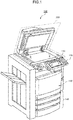
- Fig. 1 is an external view illustrating an example of an overall configuration of an image forming apparatus 100 according to at least one embodiment.
- the image forming apparatus 100 may be a multi-functional peripheral.
- the image forming apparatus 100 includes a display 110, a control panel 120, a printer section 130, a sheet housing section 140 and an image reading section 200.
- the printer section 130 of the image forming apparatus 100 may be a device for fixing a toner image or an inkjet type device.
- the image forming apparatus 100 forms an image on a sheet using a developer such as a toner.
- the sheet is, for example, a paper or a label paper. Any sheet-type recording medium can be used for the image formation as long as the image forming apparatus 100 can form an image on a surface thereof.
- the display 110 is an image display device such as a liquid crystal display, an organic EL (Electro Luminescence) display and the like.
- the display 110 displays various information relating to the image forming apparatus 100.
- the control panel 120 includes a plurality of buttons.
- the control panel 120 receives an operation input by a user.
- the control panel 120 outputs a signal in response to an operation executed by the user to a controller of the image forming apparatus 100.
- the display 110 and the control panel 120 may be integrally formed as a touch panel.
- the printer section 130 forms an image on the sheet based on image information generated by the image reading section 200 or image information received through a communication path.
- the printer section 130 forms an image through the following processes, for example.
- An image forming section of the printer section 130 forms an electrostatic latent image on a photoconductive drum based on the image information.
- the image forming section of the printer section 130 forms a visible image by attaching the developer to the electrostatic latent image.
- the toner is provided as the developer.
- a transfer section of the printer section 130 transfers the visible image onto the sheet.
- a fixing section of the printer section 130 fixes the visible image on the sheet by heating and pressurizing the sheet.
- the sheet on which the image is formed may be a sheet housed in the sheet housing section 140, or a sheet that is manually fed.
- the sheet housing section 140 houses the sheet subjected to the image formation by the printer section 130.
- the image reading section 200 reads the image information of a reading object as intensity of light.
- the image reading section 200 records the read image information.
- the recorded image information may be transmitted to another information processing apparatus via a network.
- the recorded image information may be used to form an image on the sheet by the printer section 130.
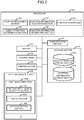
- Fig. 2 is a functional block diagram illustrating a configuration of the image forming apparatus according to at least one embodiment.
- the image forming apparatus 100 comprises a communication section 101, a storage section 102, the display 110, the control panel 120, the printer section 130, the sheet housing section 140 and a processor 150.
- the description of the configurations of the display 110, the control panel 120 and the printer section 130 is omitted.
- the communication section 101 is a network interface.
- the communication section 101 is connected to an external terminal such as a personal computer, a smartphone, a tablet computer, a server or the like via a network in a communicable manner.
- the communication section 101 is connected according to a communication method such as a LAN (Local Area Network) or PSTN (Public Switched Telephone Networks), for example.
- LAN Local Area Network
- PSTN Public Switched Telephone Networks
- the storage section 102 stores various data used to control functions of the image forming apparatus 100.
- the storage section 102 is a storage device such as a magnetic hard disk device, a semiconductor storage device, a RAM (Random Access Memory) or the like.
- the storage section 102 includes a mode information storage section 103 and a function information storage section 104.
- the mode information storage section 103 records mode information.
- the mode information is used for determining an operation mode of the image forming apparatus 100.
- Information indicating a packaging mode or a normal mode is contained in the mode information.
- the image forming apparatus 100 executes a predetermined operation according to the mode information.
- the mode information may be determined when the image forming apparatus 100 is manufactured or may be determined manually by a user.
- the mode information is not limited to two types, i.e., the packaging mode and the normal mode.
- the mode information may store other modes such as a non-communication mode in which no communication is performed.
- the user refers to a user who purchases, leases or rents the image forming apparatus 100 to use.
- the packaging mode is a mode designated when the image forming apparatus 100 is transported from a factory or when it is transported from an unpacking center. If the mode information indicates the packaging mode, equipment making up the image forming apparatus 100 is moved to a place designated in advance. For example, in the image forming apparatus 100, a carriage may be moved to an end of a document table. If the mode information indicates the packaging mode, the image forming apparatus 100 erases predetermined information from information recorded in a storage device such as a RAM in the image forming apparatus 100. The predetermined information may be, for example, the number of printed sheets or a remaining quantity of toner.
- the normal mode is the mode designated when the image forming apparatus 100 is used by the user. If the mode information indicates the normal mode, the image forming apparatus 100 executes various functions of the image forming apparatus 100, such as a printing function, a scan function, a copying function, a facsimile transmission function and the like.
- the function information storage section 104 records a function information table.
- Fig. 3 is a diagram illustrating a specific example of the function information table according to at least one embodiment.
- the function information table has a function information record.
- the function information record includes values of a mode, an execution mode, a first tray, a second tray, a third tray, a fourth tray, a sheet discharge section, a scanner sheet discharge section, and an in-body sheet discharge section, where the respective trays and discharge sections (which may also be referred to as dischargers) may be a source or destination.
- the function information record records whether to restrict the execution of a conveyance function for conveying a sheet for one or more of the sheet conveyance sources or one or more of the sheet conveyance destinations. In at least one embodiment, the function information record records whether to restrict the execution of a conveyance function for conveying a sheet for each sheet conveyance source or each sheet conveyance destination.
- the mode is identification information for identifying each record in the function information table.
- the mode is uniquely assigned to each record.
- the mode is associated with a value stored in the mode information. For example, if the normal mode is stored in the mode information, the normal mode is associated as the value of the mode. For example, if the packaging mode is stored in the mode information, the packaging mode is associated as the value of the mode.
- the execution mode is identification information for identifying the operation mode of the image forming apparatus 100.
- the execution mode is represented by binary values such as 1 or 0.
- the image forming apparatus 100 operates in the mode in which the value of the execution mode is 1.
- the first tray in the function information record holds a value of function information of a first tray of the sheet housing section 140.
- the function information indicates whether to restrict the function of the device.
- the function information is represented by binary values such as 1 or 0. If the value of the function information is 0, the function of a target device is restricted. If the value of the function information is 1, the function of the target device is not restricted. For example, if the value of the first tray is 0, the function of the first tray is restricted. For example, if the value of the first tray is 1, the function of the first tray is not restricted.
- the function may be, for example, a tray-up operation described later, a function of detecting the presence or absence of the sheet, or a function of detecting a remaining quantity of sheets. If the value of the function information is 0, all the functions may be restricted or a part of the functions may be restricted. Since the second tray to the fourth tray are the same as the first tray, a description thereof is omitted.
- the sheet discharge section in the function information record holds a value of the function information of a sheet discharge section of the image forming apparatus 100.
- the sheet discharge section of the image forming apparatus 100 is a place to which the sheet printed by the printer section 130 is discharged.
- the sheet discharge section supports the placed sheets. A space in which the discharged sheet is held is provided above the sheet discharge section.
- the sheet discharge section may be provided in a predetermined place of the image forming apparatus 100 or may be provided in a peripheral device such as a post-processing apparatus or the like.
- the scanner sheet discharge section in the function information record holds a value of the function information of a scanner sheet discharge section of the image reading section 200.
- the scanner sheet discharge section of the image forming apparatus 100 is a place to which a sheet an image on which is read by the image reading section 200 is discharged.
- the scanner sheet discharge section supports the placed sheets. A space in which the discharged sheet is held is provided above the scanner sheet discharge section.
- the scanner sheet discharge section is provided in a predetermined place of the image reading section 200.
- the in-body sheet discharge section in the function information record holds a value of the function information of an in-body sheet discharge section of the image forming apparatus 100.
- the in-body sheet discharge section of the image forming apparatus 100 is a place to which the sheet printed by the printer section 130 is discharged and on which the sheets are stacked.
- the in-body sheet discharge section supports the placed sheet.
- the in-body sheet discharge section is arranged at a position not protruding from the image forming apparatus 100.
- the in-body sheet discharge section is provided with a space in which the discharged sheets are stacked.
- the value of the mode is the "normal mode”
- the value of the execution mode is "1”
- the value of the first tray is “0”
- the value of the second tray is “0”
- the value of the third tray is “1”
- the value of the fourth tray is "1”
- the value of the sheet discharge section is "0”
- the value of the scanner sheet discharge section is "0”
- the value of the in-body sheet discharge section is "1".
- the current operation mode of the image forming apparatus 100 is the "normal mode"; the values of function information of the first tray, the second tray, the sheet discharge section and the scanner sheet discharge are "0"; and the values of the third tray, the fourth tray and the in-body sheet discharge section are "1". Therefore, it can be known that the functions of the first tray, the second tray, the sheet discharge section and the scanner sheet discharge section are restricted, and the functions of the third tray, the fourth tray, and the in-body sheet discharge section are not restricted.
- the function information table shown in Fig. 3 is merely a specific example. Therefore, the function information table may have a configuration different from that shown in Fig. 3 .
- the function information record may record a value of function information in association with a roller in the image forming apparatus 100 as information indicating the conveyance source of the sheet or the conveyance destination of the sheet.
- the sheet housing section 140 includes a plurality of the sheet feed trays.
- the sheet feed tray accommodates a sheet on which an image is formed.
- one sheet feed tray among the plural sheet feed trays is described as a first sheet feed tray 140a.
- the first sheet feed tray 140a includes an opening and closing detection section (detector) 141a, a raising section 142a and a sheet detection section (detector) 143a.
- the sheet feed trays, the opening and closing detection sections, the raising sections or the sheet detection sections are not specifically distinguished, they are simply merely referred to as the sheet feed tray, the opening and closing detection section, the raising section or the sheet detection section.
- the opening and closing detection section 141a detects whether the first sheet feed tray 140a is opened or closed.
- the opening and closing detection section 141a is used for detecting opening and closing of the first sheet feed tray 140a. For example, if the first sheet feed tray 140a is opened, the opening and closing detection section 141a transmits an open signal indicating the first sheet feed tray 140a is opened to the processor 150. For example, if the first sheet feed tray 140a is closed, the opening and closing detection section 141a transmits a close signal indicating that the first sheet feed tray 140a is closed to the processor 150.
- the processor 150 detects opening or closing of the first sheet feed tray 140a by receiving an open signal or a close signal.
- the raising section 142a is installed at the inner bottom of the first sheet feed tray 140a.
- the raising section 142a raises the bottom of the first sheet feed tray 140a in response to an instruction from the processor 150.
- the raising section 142a raises the bottom of the first sheet feed tray 140a by moving a sheet metal installed at the bottom of the first sheet feed tray 140a upwards.
- the raising section 142a rotates a motor installed in the first sheet feed tray 140a.
- the raising section 142a may raise the bottom by moving the sheet metal upwards by a screw rotating manner with the rotated motor.
- the raising section 142a may raise the bottom by moving the sheet metal upwards using the elasticity of a spring.
- the raising section 142a may raise the bottom by moving the sheet metal uniformly upwards, or by tilting the sheet metal.
- the sheet detection section 143a detects the presence or absence of the sheet placed on the first sheet feed tray 140a.
- the sheet detection section 143a outputs a sheet non-detection signal to the processor 150 if no sheet is placed on the first sheet feed tray 140a.
- the sheet detection section 143a outputs a sheet detection signal to the processor 150 when the sheet is placed on the first sheet feed tray 140a.
- the sheet detection section 143a detects that a sheet placed on the bottom or the bottom raised by the raising section 142a contacts with the sheet detection section 143a.
- the sheet detection section 143a detects a remaining quantity of the sheets at a time when the sheet placed on the bottom or the bottom contacts with the sheet detection section 143a.
- the sheet detection section 143a detects the remaining quantity of the sheets based on at least one of (1) a time at which the bottom is raised by the raising section 142a, (2) an angle of the raised bottom or (3) a raised height of the raised bottom.
- the sheet detection section 143a may detect a remaining quantity of sheets by acquiring a value of the remaining quantity from a table in which a value of any one of the raised time, an angle of the raised bottom or raised height of the raised bottom, and the value of the remaining quantity are associated with each other.
- the sheet detection section 143a outputs a sheet non-detection signal to the processor 150 when the remaining quantity of the sheets is zero.
- the sheet detection section 143a outputs the sheet detection signal to the processor 150 when the remaining quantity of the sheets is one or more.
- the first sheet feed tray 140a executes a plurality of functions under the control of the processor 150.
- the plurality of functions may include, for example, a function of detecting the presence or absence of the sheet, a function of detecting the remaining quantity of the sheets, or the tray-up operation.
- the function of detecting the presence or absence of the sheet refers to a function of detecting the presence or absence of the sheet in the sheet feed tray by the sheet detection section.
- the function of detecting the remaining quantity of the sheets refers to a function of detecting the remaining quantity of sheets in the sheet feed tray by the sheet detection section.
- the tray-up operation is executed when the power supply of the image forming apparatus 100 is turned on or when the sheet feed tray is opened or closed.
- the raising section of the sheet feed tray raises the bottom of the sheet feed tray.
- the sheet detection section detects the remaining quantity of the sheet based on the angle or the raised height of the raised bottom.
- the sheet detection section outputs the sheet detection signal or the sheet non-detection signal to the processor 150 based on the detected remaining quantity of the sheets.
- the tray-up operation is an aspect of a conveyance function.
- the conveyance function is realized along with the movement of the sheet performed by the image forming apparatus 100. In the tray-up operation, by raising the bottom of the sheet feed tray, the sheet accommodated in the sheet feed tray is moved.
- the processor 150 controls the operation of each section of the image forming apparatus 100.
- the processor 150 may be a device including a processor such as a CPU (Central Processing Unit) and a RAM, for example.
- the processor 150 By executing the function control program, the processor 150 functions as a startup processing section 151, a function information acquisition section 152, a function controller 153, a mode information determining section 154, and a function information determining section 155.
- the startup processing section 151 executes a startup process when the power supply of the image forming apparatus 100 is turned on.
- the startup processing section 151 acquires the mode information recorded in the mode information storage section 103 in the startup process.
- the startup processing section 151 determines the value of the execution mode in the function information table recorded in the function information storage section 104 based on the acquired mode information.
- the startup processing section 151 acquires the function information record in which the value of the mode is the packaging mode from the function information table when the acquired mode information is the packaging mode.
- the startup processing section 151 records 1 as the value of the execution mode of the acquired start information record. If the acquired mode information is the packaging mode, the startup processing section 151 acquires the function information record in which the value of the mode is the normal mode from the function information table.
- the startup processing section 151 records 0 as the value of the execution mode of the acquired start information record. If the acquired mode information is the normal mode, the startup processing section 151 acquires the function information record in which the value of the mode is the normal mode from the function information table. The startup processing section 151 records 1 as the value of the execution mode of the acquired start information record. If the acquired mode information is the normal mode, the startup processing section 151 acquires the function information record in which the value of the mode is the packaging mode from the function information table. The startup processing section 151 records 0 as the value of the execution mode of the acquired start information record. In the startup process, the startup processing section 151 instructs the processor 150 to perform the tray-up operation for each sheet feed tray of the sheet housing section 140.
- the function information acquisition section 152 acquires the value of the function information from the function information table recorded in the function information storage section 104. For example, the function information acquisition section 152 acquires the value of the function information when the function controller 153 performs the tray-up operation. The function information acquisition section 152 acquires the value of the function information based on the value of the execution mode held in the function information record and the sheet feed tray on which the tray-up operation is executed. Specifically, the function information acquisition section 152 acquires the value of the function information from the function information record holding 1 as the value of the execution mode. The function information acquisition section 152 acquires the value of the function information of the sheet feed tray associated with the sheet feed tray on which the tray-up operation is performed. The function information acquisition section 152 acquires the value of the function information of the first tray if the tray-up operation is performed on the first sheet feed tray 140a. The function information acquisition section 152 outputs the acquired value of the function information to the function controller 153.
- the function controller 153 controls execution of each function of the image forming apparatus 100.
- the function controller 153 controls the execution of the tray-up operation.
- the function controller 153 controls the execution of the tray-up operation if the startup process is executed by the startup processing section 151 or if the open signal is output from any one of the sheet feed trays of the sheet housing section 140.
- the function controller 153 controls the execution of the tray-up operation based on the value of the function information acquired by the function information acquisition section 152. If the acquired value of the function information is 1, the function controller 153 executes the tray-up operation. If the acquired value of the function information is 0, the function controller 153 does not execute the tray-up operation.
- the function controller 153 controls the execution of the tray-up operation for all sheet feed trays when the startup process is executed. In this case, the function controller 153 instructs the function information acquisition section 152 to acquire the function information of all sheet feed trays. Based on the value of the function information, the function controller 153 controls the execution of the tray-up operation for all sheet feed trays.
- the function controller 153 controls the execution of the tray-up operation on the sheet feed tray from which the open signal is output. In this case, the function controller 153 instructs the function information acquisition section 152 to acquire the function information of the sheet feed tray from which the open signal is output. The function controller 153 controls the execution of the tray-up operation based on the acquired value of the function information of the sheet feed tray.
- the mode information determining section 154 determines the value of the mode information recorded in the mode information storage section 103. Specifically, the mode information determining section 154 determines the value of the mode information based on a received mode determination instruction. The mode information determining section 154 records the determined value of the mode information in the mode information storage section 103. The mode determination instruction includes the value of the mode information. The mode determination instruction may be received from the user via the control panel 120, for example. In this case, the control panel 120 receives an input for designating either one of the packaging mode and the normal mode. The control panel 120 outputs the received input as the mode determination instruction to the mode information determining section 154.
- the function information determining section 155 determines the value of the function information recorded in the function information storage section 104. Specifically, the function information determining section 155 determines the value of the function information based on the received function information determination instruction. The function information determining section 155 records the determined value of the function information in the function information table stored in the function information storage section 104. The function information determination instruction includes the value of the function information and information for identifying the sheet feed tray. The function information determination instruction may be received from the user via the control panel 120, for example. The function information determining section 155 records the value of the function information for the sheet feed tray specified by the information for specifying the sheet feed tray among the values of the function information.
- the function information determining section 155 may record the value of the function information in the function information record in which the value of mode is the normal mode or in the function information record in which the value of the execution mode is 1.
- the function information determining section 155 is an aspect of a function information generating section (i.e., a function information generator).
- the function information generating section generates the function information based on the function information determination instruction.
- Fig. 4 is a diagram illustrating a specific example of input of the function information according to at least one embodiment.
- a screen for receiving a size of the sheet accommodated in the sheet feed tray is displayed.
- the display 110 includes an area 111, an area 112 and an area 113.
- the area 111 is used for displaying a container image.
- the container image is selected when the user wants to restrict the function of the sheet feed tray.
- the container image is selected by being touched or by the user operating the control panel 120. If the container image is selected, the control panel 120 may receive 0 as the value of the function information.
- the area 112 is used for displaying sheet size images.
- the sheet size image is selected when the user designates a size of the sheet accommodated in the sheet feed tray.
- the sheet size image is selected by being touched or by the user operating the control panel 120. If the sheet size image is selected, the control panel 120 may receive 1 as the value of the function information.
- the area 111 may display text such as "FUNCTION RESTRICTION" instead of "CONTAINER,” for example.
- the area 113 is used for displaying a tray identification image indicating the designated sheet feed tray.
- the sheet feed tray indicated by the tray identification image is associated with the information for specifying the sheet feed tray.
- the tray identification image in the area 113 indicates the first tray. Therefore, the first tray is associated as the information for specifying the sheet feed tray.
- the control panel 120 Upon receiving the value of the function information, the control panel 120 outputs the received value of the function information and the information for specifying the sheet feed tray to the function information determining section 155 as the function information determination instruction.
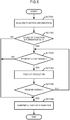
- Fig. 5 is a flowchart for depicting a flow of the control of the tray-up operation according to at least one embodiment.
- the process of the flowchart is executed if the power supply of the image forming apparatus 100 is turned on or if the open signal is output from any one of the sheet feed trays of the sheet housing section 140. Specifically, the flowchart is executed at a timing at which the tray-up operation is executed.
- the tray-up operation is performed on the first sheet feed tray 140a is described as an example.
- the function information acquisition section 152 of the image forming apparatus 100 acquires the function information table from the function information storage section 104 (ACT 101).
- the function information acquisition section 152 acquires the function information record in which 1 is held as the value of the execution mode.
- the function information acquisition section 152 acquires the value of the function information of the first sheet feed tray 140a on which the tray-up operation is executed from the function information record.
- the function controller 153 of the image forming apparatus 100 determines whether or not the acquired value of the function information is 1 (ACT 102). If the value of the function information is not 1 (No in ACT 102), the flow proceeds to the process in ACT 106. If the value of the function information is 1 (Yes in ACT 102), the function controller 153 determines whether or not the close signal is received from the first sheet feed tray 140a (ACT 103). The close signal is output from the opening and closing detection section 141a if the first sheet feed tray 140a is closed. If the close signal is not received (No in ACT 103), the flow proceeds to the process in ACT 106.
- the function controller 153 executes the tray-up operation on the first sheet feed tray 140a (ACT 104). If the sheet detection section 143a detects that there is the sheet in the sheet feed tray by the tray-up operation, the sheet detection section 143a outputs the sheet detection signal to the function controller 153. If the sheet detection section 143a does not detect the existence of the sheet in the sheet feed tray by the tray-up operation, the sheet detection section 143a outputs the sheet non-detection signal to the function controller 153.
- the function controller 153 determines whether or not the sheet detection signal or the sheet non-detection signal is received (ACT 105). If neither the sheet detection signal nor the sheet non-detection signal is received (No in ACT 105), the flow proceeds to the process in ACT 103. If the sheet detection signal or the sheet non-detection signal is received (Yes in ACT 105), the function controller 153 terminates the tray-up operation (ACT 106).
- the function information acquisition section 152 acquires the value of the function information relating to the sheet feed tray on which the tray-up operation is performed.
- the function controller 153 controls the execution of the tray-up operation based on the acquired value of the function information. For example, if the acquired value of the function information is 1, the function controller 153 performs the tray-up operation. For example, if the acquired value of the function information is 0, the function controller 153 does not perform the tray-up operation. If the sheet feed tray is used for other purposes such as a container, the user may set 0 as the value of the function information.
- the user can set 0 as the value of the function information by selecting the container image displayed on the display 110 through touching the container image on the display 110 or operating the control panel 120. Therefore, even if the sheet feed tray is used for other purposes such as the container, it is possible to prevent the sheet feed tray from being damaged by executing the tray-up operation.
- the image forming apparatus 100 operates in the packaging mode when it is transported from the factory or from the unpacking center.
- 0 is set as the value of the function information of all sheet feed trays in the image forming apparatus 100. Therefore, in a case of operating in the packaging mode, the function controller 153 does not perform the tray-up operation on all sheet feed trays.
- packaging material is accommodated in the sheet feed tray.
- the function controller 153 does not have the function of controlling the execution of the tray-up operation, if the tray-up operation is executed while the packaging material remains in the sheet feed tray, there is a possibility of damaging the sheet feed tray. Therefore, in the packaging mode, by setting 0 as the value of the function information of all sheet feed trays in the image forming apparatus 100, even when the packaging material is left behind when unpacking, it is possible to prevent the sheet feed tray from being damaged.
- the function controller 153 may issue a warning when the value of the function information relating to the sheet feed tray satisfies a predetermined condition for the function information record in which the value of the mode held by the function information record is the normal mode.
- the predetermined condition is, for example, a case in which all the values of the function information are 0.
- the predetermined condition is a state in which sheet is not fed from the sheet feed tray when the image forming apparatus 100 operates in the normal mode.
- a warning may be issued by enabling a buzzer to sound, by displaying an image indicating that the sheet is not fed to the display 110, or by lighting a lamp.
- the function controller 153 may control other functions of the image forming apparatus 100.
- the function controller 153 may control a sheet discharge place.
- the function controller 153 may perform control so as not to discharge sheet from the sheet discharge section or the in-body sheet discharge section.
- the function information acquisition section 152 acquires the value of the function information of the sheet discharge section or the in-body sheet discharge section from the function information record in which 1 is held as the value of the execution mode.
- the function information acquisition section 152 outputs the acquired value of the function information to the function controller 153. If the value of the function information of the sheet discharge section or the in-body sheet discharge section is 1, the function controller 153 performs control to discharge the sheet. If the value of the function information of the sheet discharge section or the in-body sheet discharge section is 0, the function controller 153 performs control so as not to discharge the sheet.
- the discharge of the sheet to the sheet discharge section or the in-body sheet discharge section is an aspect of the conveyance function.
- the function controller 153 may control an image reading function by the image reading section (image reader) 200.
- the function information acquisition section 152 acquires the value of the function information of the scanner sheet discharge section from the function information record in which 1 is held as the value of the execution mode.
- the function information acquisition section 152 outputs the acquired value of the function information to the function controller 153. If the value of the function information of the scanner sheet discharge section is 1, the function controller 153 performs control so as to execute image reading. If the value of the function information of the scanner sheet discharge section is 0, the function controller 153 performs control so as not to perform image reading.
- the discharge of the sheet to the scanner sheet discharge section is an aspect of the conveyance function.
Landscapes
- Engineering & Computer Science (AREA)
- Physics & Mathematics (AREA)
- General Physics & Mathematics (AREA)
- Multimedia (AREA)
- Signal Processing (AREA)
- Microelectronics & Electronic Packaging (AREA)
- Mechanical Engineering (AREA)
- Control Or Security For Electrophotography (AREA)
- Accessory Devices And Overall Control Thereof (AREA)
- Sheets, Magazines, And Separation Thereof (AREA)
Abstract
An image forming apparatus includes a function controller. The function controller performs control so as not to execute a conveyance function when function information, which indicates whether to restrict execution of a conveyance function for conveying a sheet for each conveyance source of the sheet or each conveyance destination of the sheet, indicates that the execution of the conveyance function is restricted. The function controller performs control to execute the conveyance function when the function information indicates that the execution of the conveyance function is not restricted.
Description
- The present invention relates to image forming technologies in general, and embodiments described herein relate in particular to an image forming apparatus and an image forming method.
- A sheet feed tray of an image forming apparatus performs a tray-up operation at a timing at which a power supply of the image forming apparatus is turned on or at a timing at which a sheet feed tray is opened or closed. The image forming apparatus detects a remaining quantity of sheets in a sheet housing section in the tray-up operation. A user of the image forming apparatus may use a part of the sheet feed tray as a container.
- To this end, there is provided an image forming apparatus, comprising:
a function controller configured to - perform a control so as not to execute a conveyance function when function information, which indicates whether to restrict execution of a conveyance function for conveying a sheet for at least one conveyance source of the sheet or at least one conveyance destination of the sheet, indicates that the execution of the conveyance function is restricted, or
- perform control to execute the conveyance function when the function information indicates that the execution of the conveyance function is not restricted.
- Preferred embodiments are defined in claims 2 to 8.
- Further, at least two sheet feed trays may be provided, and
the function controller may be configured to control whether or not the conveyance function is executed in each of the sheet feed trays based on the function information for each of the sheet feed trays. - Further yet, the function controller may be configured to output a warning indicating that no sheet is fed to the image forming apparatus when the function information indicates that the conveyance function is not executed in all sheet feed trays.
- The invention further relates to an image forming method, comprising:
- performing control of an image forming apparatus so as not to execute a conveyance function when function information, which indicates whether to restrict execution of a conveyance function for conveying a sheet for at least one conveyance source of the sheet or at least one conveyance destination of the sheet, indicates that the execution of the conveyance function is restricted, or
- performing control to execute the conveyance function when the function information indicates that the execution of the conveyance function is not restricted.
- Preferred embodiments are defined in claims 10 to 15.
- Further, the image forming method may further comprise:
- storing the function information;
- receiving an input of an instruction for determining whether to restrict the execution of the conveyance function when a screen for receiving a setting of a size of the sheet accommodated in the sheet feed tray is displayed; and
- generating the function information based on the instruction.
- Further still, the image forming method may further comprise:
controlling whether or not the conveyance function is executed in each of a plurality of sheet feed trays based on the function information for each of the plurality of sheet feed trays. - Further yet, the image forming method may further comprise:
outputting a warning indicating that no sheet is fed to the image forming apparatus when the function information indicates that the conveyance function is not executed in all of the plurality of sheet feed trays. - The above and other objects, features and advantages of the present invention will be made apparent from the following description of the preferred embodiments, given as non-limiting examples, with reference to the accompanying drawings, in which:
-
Fig. 1 is an external view illustrating an example of an overall configuration of an image forming apparatus according to at least one embodiment; -
Fig. 2 is a functional block diagram illustrating a configuration of the image forming apparatus according to at least one embodiment; -
Fig. 3 is a diagram illustrating a function information table according to at least one embodiment; -
Fig. 4 is a diagram illustrating an input of function information according to at least one embodiment; and -
Fig. 5 is a flowchart for depicting a flow of a control of a tray-up operation according to at least one embodiment. - As noted above, a user of the image forming apparatus may use a part of the sheet feed tray as a container. For this reason, there is a case in which in the image forming apparatus, the sheet feed tray is damaged due to the tray-up operation.
- In accordance with at least one embodiment, an image forming apparatus comprises a function controller. The function controller performs control so as not to execute a conveyance function if function information, which indicates whether to restrict execution of a conveyance function for conveying a sheet for each conveyance source of the sheet or each conveyance destination of the sheet, indicates that the execution of the conveyance function is restricted, or performs control to execute the conveyance function if the function information indicates that the execution of the conveyance function is not restricted.
-
Fig. 1 is an external view illustrating an example of an overall configuration of animage forming apparatus 100 according to at least one embodiment. For example, theimage forming apparatus 100 may be a multi-functional peripheral. Theimage forming apparatus 100 includes adisplay 110, acontrol panel 120, aprinter section 130, asheet housing section 140 and animage reading section 200. Theprinter section 130 of theimage forming apparatus 100 may be a device for fixing a toner image or an inkjet type device. - The
image forming apparatus 100 forms an image on a sheet using a developer such as a toner. The sheet is, for example, a paper or a label paper. Any sheet-type recording medium can be used for the image formation as long as theimage forming apparatus 100 can form an image on a surface thereof. - The
display 110 is an image display device such as a liquid crystal display, an organic EL (Electro Luminescence) display and the like. Thedisplay 110 displays various information relating to theimage forming apparatus 100. - The
control panel 120 includes a plurality of buttons. Thecontrol panel 120 receives an operation input by a user. Thecontrol panel 120 outputs a signal in response to an operation executed by the user to a controller of theimage forming apparatus 100. Furthermore, thedisplay 110 and thecontrol panel 120 may be integrally formed as a touch panel. - The
printer section 130 forms an image on the sheet based on image information generated by theimage reading section 200 or image information received through a communication path. Theprinter section 130 forms an image through the following processes, for example. An image forming section of theprinter section 130 forms an electrostatic latent image on a photoconductive drum based on the image information. The image forming section of theprinter section 130 forms a visible image by attaching the developer to the electrostatic latent image. The toner is provided as the developer. A transfer section of theprinter section 130 transfers the visible image onto the sheet. A fixing section of theprinter section 130 fixes the visible image on the sheet by heating and pressurizing the sheet. The sheet on which the image is formed may be a sheet housed in thesheet housing section 140, or a sheet that is manually fed. - The
sheet housing section 140 houses the sheet subjected to the image formation by theprinter section 130. - The
image reading section 200 reads the image information of a reading object as intensity of light. Theimage reading section 200 records the read image information. The recorded image information may be transmitted to another information processing apparatus via a network. The recorded image information may be used to form an image on the sheet by theprinter section 130. -
Fig. 2 is a functional block diagram illustrating a configuration of the image forming apparatus according to at least one embodiment. Theimage forming apparatus 100 comprises acommunication section 101, astorage section 102, thedisplay 110, thecontrol panel 120, theprinter section 130, thesheet housing section 140 and aprocessor 150. The description of the configurations of thedisplay 110, thecontrol panel 120 and theprinter section 130 is omitted. - The
communication section 101 is a network interface. Thecommunication section 101 is connected to an external terminal such as a personal computer, a smartphone, a tablet computer, a server or the like via a network in a communicable manner. Thecommunication section 101 is connected according to a communication method such as a LAN (Local Area Network) or PSTN (Public Switched Telephone Networks), for example. - The
storage section 102 stores various data used to control functions of theimage forming apparatus 100. Thestorage section 102 is a storage device such as a magnetic hard disk device, a semiconductor storage device, a RAM (Random Access Memory) or the like. Thestorage section 102 includes a modeinformation storage section 103 and a functioninformation storage section 104. - The mode
information storage section 103 records mode information. The mode information is used for determining an operation mode of theimage forming apparatus 100. Information indicating a packaging mode or a normal mode is contained in the mode information. Theimage forming apparatus 100 executes a predetermined operation according to the mode information. The mode information may be determined when theimage forming apparatus 100 is manufactured or may be determined manually by a user. The mode information is not limited to two types, i.e., the packaging mode and the normal mode. For example, the mode information may store other modes such as a non-communication mode in which no communication is performed. The user refers to a user who purchases, leases or rents theimage forming apparatus 100 to use. - The packaging mode is a mode designated when the
image forming apparatus 100 is transported from a factory or when it is transported from an unpacking center. If the mode information indicates the packaging mode, equipment making up theimage forming apparatus 100 is moved to a place designated in advance. For example, in theimage forming apparatus 100, a carriage may be moved to an end of a document table. If the mode information indicates the packaging mode, theimage forming apparatus 100 erases predetermined information from information recorded in a storage device such as a RAM in theimage forming apparatus 100. The predetermined information may be, for example, the number of printed sheets or a remaining quantity of toner. - The normal mode is the mode designated when the
image forming apparatus 100 is used by the user. If the mode information indicates the normal mode, theimage forming apparatus 100 executes various functions of theimage forming apparatus 100, such as a printing function, a scan function, a copying function, a facsimile transmission function and the like. - The function
information storage section 104 records a function information table.Fig. 3 is a diagram illustrating a specific example of the function information table according to at least one embodiment. The function information table has a function information record. The function information record includes values of a mode, an execution mode, a first tray, a second tray, a third tray, a fourth tray, a sheet discharge section, a scanner sheet discharge section, and an in-body sheet discharge section, where the respective trays and discharge sections (which may also be referred to as dischargers) may be a source or destination. The function information record records whether to restrict the execution of a conveyance function for conveying a sheet for one or more of the sheet conveyance sources or one or more of the sheet conveyance destinations. In at least one embodiment, the function information record records whether to restrict the execution of a conveyance function for conveying a sheet for each sheet conveyance source or each sheet conveyance destination. - The mode is identification information for identifying each record in the function information table. The mode is uniquely assigned to each record. The mode is associated with a value stored in the mode information. For example, if the normal mode is stored in the mode information, the normal mode is associated as the value of the mode. For example, if the packaging mode is stored in the mode information, the packaging mode is associated as the value of the mode.
- The execution mode is identification information for identifying the operation mode of the
image forming apparatus 100. The execution mode is represented by binary values such as 1 or 0. Theimage forming apparatus 100 operates in the mode in which the value of the execution mode is 1. - The first tray in the function information record holds a value of function information of a first tray of the
sheet housing section 140. The function information indicates whether to restrict the function of the device. The function information is represented by binary values such as 1 or 0. If the value of the function information is 0, the function of a target device is restricted. If the value of the function information is 1, the function of the target device is not restricted. For example, if the value of the first tray is 0, the function of the first tray is restricted. For example, if the value of the first tray is 1, the function of the first tray is not restricted. The function may be, for example, a tray-up operation described later, a function of detecting the presence or absence of the sheet, or a function of detecting a remaining quantity of sheets. If the value of the function information is 0, all the functions may be restricted or a part of the functions may be restricted. Since the second tray to the fourth tray are the same as the first tray, a description thereof is omitted. - The sheet discharge section in the function information record holds a value of the function information of a sheet discharge section of the
image forming apparatus 100. The sheet discharge section of theimage forming apparatus 100 is a place to which the sheet printed by theprinter section 130 is discharged. The sheet discharge section supports the placed sheets. A space in which the discharged sheet is held is provided above the sheet discharge section. The sheet discharge section may be provided in a predetermined place of theimage forming apparatus 100 or may be provided in a peripheral device such as a post-processing apparatus or the like. - The scanner sheet discharge section in the function information record holds a value of the function information of a scanner sheet discharge section of the
image reading section 200. The scanner sheet discharge section of theimage forming apparatus 100 is a place to which a sheet an image on which is read by theimage reading section 200 is discharged. The scanner sheet discharge section supports the placed sheets. A space in which the discharged sheet is held is provided above the scanner sheet discharge section. The scanner sheet discharge section is provided in a predetermined place of theimage reading section 200. - The in-body sheet discharge section in the function information record holds a value of the function information of an in-body sheet discharge section of the
image forming apparatus 100. The in-body sheet discharge section of theimage forming apparatus 100 is a place to which the sheet printed by theprinter section 130 is discharged and on which the sheets are stacked. The in-body sheet discharge section supports the placed sheet. The in-body sheet discharge section is arranged at a position not protruding from theimage forming apparatus 100. The in-body sheet discharge section is provided with a space in which the discharged sheets are stacked. - In an example shown in
Fig. 3 , in the function information record in an uppermost row of the function information table, the value of the mode is the "normal mode", the value of the execution mode is "1", the value of the first tray is "0", the value of the second tray is "0", the value of the third tray is "1", the value of the fourth tray is "1", the value of the sheet discharge section is "0", the value of the scanner sheet discharge section is "0", and the value of the in-body sheet discharge section is "1". Therefore, according to the record in the uppermost row of the function information table, the current operation mode of theimage forming apparatus 100 is the "normal mode"; the values of function information of the first tray, the second tray, the sheet discharge section and the scanner sheet discharge are "0"; and the values of the third tray, the fourth tray and the in-body sheet discharge section are "1". Therefore, it can be known that the functions of the first tray, the second tray, the sheet discharge section and the scanner sheet discharge section are restricted, and the functions of the third tray, the fourth tray, and the in-body sheet discharge section are not restricted. The function information table shown inFig. 3 is merely a specific example. Therefore, the function information table may have a configuration different from that shown inFig. 3 . For example, if the sheet housing section has five sheet feed trays, a value of a fifth tray may be held in the function information table. For example, the function information record may record a value of function information in association with a roller in theimage forming apparatus 100 as information indicating the conveyance source of the sheet or the conveyance destination of the sheet. - Returning again to
Fig. 2 , and the description of theimage forming apparatus 100 is continued. Thesheet housing section 140 includes a plurality of the sheet feed trays. The sheet feed tray accommodates a sheet on which an image is formed. In the present embodiment, one sheet feed tray among the plural sheet feed trays is described as a firstsheet feed tray 140a. The firstsheet feed tray 140a includes an opening and closing detection section (detector) 141a, araising section 142a and a sheet detection section (detector) 143a. Hereinafter, if the sheet feed trays, the opening and closing detection sections, the raising sections or the sheet detection sections are not specifically distinguished, they are simply merely referred to as the sheet feed tray, the opening and closing detection section, the raising section or the sheet detection section. - The opening and
closing detection section 141a detects whether the firstsheet feed tray 140a is opened or closed. The opening andclosing detection section 141a is used for detecting opening and closing of the firstsheet feed tray 140a. For example, if the firstsheet feed tray 140a is opened, the opening andclosing detection section 141a transmits an open signal indicating the firstsheet feed tray 140a is opened to theprocessor 150. For example, if the firstsheet feed tray 140a is closed, the opening andclosing detection section 141a transmits a close signal indicating that the firstsheet feed tray 140a is closed to theprocessor 150. Theprocessor 150 detects opening or closing of the firstsheet feed tray 140a by receiving an open signal or a close signal. - The
raising section 142a is installed at the inner bottom of the firstsheet feed tray 140a. Theraising section 142a raises the bottom of the firstsheet feed tray 140a in response to an instruction from theprocessor 150. Theraising section 142a raises the bottom of the firstsheet feed tray 140a by moving a sheet metal installed at the bottom of the firstsheet feed tray 140a upwards. For example, the raisingsection 142a rotates a motor installed in the firstsheet feed tray 140a. Theraising section 142a may raise the bottom by moving the sheet metal upwards by a screw rotating manner with the rotated motor. Theraising section 142a may raise the bottom by moving the sheet metal upwards using the elasticity of a spring. Theraising section 142a may raise the bottom by moving the sheet metal uniformly upwards, or by tilting the sheet metal. - The
sheet detection section 143a detects the presence or absence of the sheet placed on the firstsheet feed tray 140a. Thesheet detection section 143a outputs a sheet non-detection signal to theprocessor 150 if no sheet is placed on the firstsheet feed tray 140a. Thesheet detection section 143a outputs a sheet detection signal to theprocessor 150 when the sheet is placed on the firstsheet feed tray 140a. - The
sheet detection section 143a detects that a sheet placed on the bottom or the bottom raised by the raisingsection 142a contacts with thesheet detection section 143a. Thesheet detection section 143a detects a remaining quantity of the sheets at a time when the sheet placed on the bottom or the bottom contacts with thesheet detection section 143a. Thesheet detection section 143a detects the remaining quantity of the sheets based on at least one of (1) a time at which the bottom is raised by the raisingsection 142a, (2) an angle of the raised bottom or (3) a raised height of the raised bottom. For example, thesheet detection section 143a may detect a remaining quantity of sheets by acquiring a value of the remaining quantity from a table in which a value of any one of the raised time, an angle of the raised bottom or raised height of the raised bottom, and the value of the remaining quantity are associated with each other. - The
sheet detection section 143a outputs a sheet non-detection signal to theprocessor 150 when the remaining quantity of the sheets is zero. Thesheet detection section 143a outputs the sheet detection signal to theprocessor 150 when the remaining quantity of the sheets is one or more. - The first
sheet feed tray 140a executes a plurality of functions under the control of theprocessor 150. The plurality of functions may include, for example, a function of detecting the presence or absence of the sheet, a function of detecting the remaining quantity of the sheets, or the tray-up operation. The function of detecting the presence or absence of the sheet refers to a function of detecting the presence or absence of the sheet in the sheet feed tray by the sheet detection section. The function of detecting the remaining quantity of the sheets refers to a function of detecting the remaining quantity of sheets in the sheet feed tray by the sheet detection section. - The tray-up operation is executed when the power supply of the
image forming apparatus 100 is turned on or when the sheet feed tray is opened or closed. In the tray-up operation, the raising section of the sheet feed tray raises the bottom of the sheet feed tray. In the tray-up operation, the sheet detection section detects the remaining quantity of the sheet based on the angle or the raised height of the raised bottom. The sheet detection section outputs the sheet detection signal or the sheet non-detection signal to theprocessor 150 based on the detected remaining quantity of the sheets. The tray-up operation is an aspect of a conveyance function. The conveyance function is realized along with the movement of the sheet performed by theimage forming apparatus 100. In the tray-up operation, by raising the bottom of the sheet feed tray, the sheet accommodated in the sheet feed tray is moved. - The
processor 150 controls the operation of each section of theimage forming apparatus 100. Theprocessor 150 may be a device including a processor such as a CPU (Central Processing Unit) and a RAM, for example. By executing the function control program, theprocessor 150 functions as astartup processing section 151, a functioninformation acquisition section 152, afunction controller 153, a modeinformation determining section 154, and a functioninformation determining section 155. - The
startup processing section 151 executes a startup process when the power supply of theimage forming apparatus 100 is turned on. Thestartup processing section 151 acquires the mode information recorded in the modeinformation storage section 103 in the startup process. Thestartup processing section 151 determines the value of the execution mode in the function information table recorded in the functioninformation storage section 104 based on the acquired mode information. Thestartup processing section 151 acquires the function information record in which the value of the mode is the packaging mode from the function information table when the acquired mode information is the packaging mode. Thestartup processing section 151records 1 as the value of the execution mode of the acquired start information record. If the acquired mode information is the packaging mode, thestartup processing section 151 acquires the function information record in which the value of the mode is the normal mode from the function information table. Thestartup processing section 151records 0 as the value of the execution mode of the acquired start information record. If the acquired mode information is the normal mode, thestartup processing section 151 acquires the function information record in which the value of the mode is the normal mode from the function information table. Thestartup processing section 151records 1 as the value of the execution mode of the acquired start information record. If the acquired mode information is the normal mode, thestartup processing section 151 acquires the function information record in which the value of the mode is the packaging mode from the function information table. Thestartup processing section 151records 0 as the value of the execution mode of the acquired start information record. In the startup process, thestartup processing section 151 instructs theprocessor 150 to perform the tray-up operation for each sheet feed tray of thesheet housing section 140. - The function
information acquisition section 152 acquires the value of the function information from the function information table recorded in the functioninformation storage section 104. For example, the functioninformation acquisition section 152 acquires the value of the function information when thefunction controller 153 performs the tray-up operation. The functioninformation acquisition section 152 acquires the value of the function information based on the value of the execution mode held in the function information record and the sheet feed tray on which the tray-up operation is executed. Specifically, the functioninformation acquisition section 152 acquires the value of the function information from the function information record holding 1 as the value of the execution mode. The functioninformation acquisition section 152 acquires the value of the function information of the sheet feed tray associated with the sheet feed tray on which the tray-up operation is performed. The functioninformation acquisition section 152 acquires the value of the function information of the first tray if the tray-up operation is performed on the firstsheet feed tray 140a. The functioninformation acquisition section 152 outputs the acquired value of the function information to thefunction controller 153. - The
function controller 153 controls execution of each function of theimage forming apparatus 100. For example, thefunction controller 153 controls the execution of the tray-up operation. Thefunction controller 153 controls the execution of the tray-up operation if the startup process is executed by thestartup processing section 151 or if the open signal is output from any one of the sheet feed trays of thesheet housing section 140. Thefunction controller 153 controls the execution of the tray-up operation based on the value of the function information acquired by the functioninformation acquisition section 152. If the acquired value of the function information is 1, thefunction controller 153 executes the tray-up operation. If the acquired value of the function information is 0, thefunction controller 153 does not execute the tray-up operation. - The
function controller 153 controls the execution of the tray-up operation for all sheet feed trays when the startup process is executed. In this case, thefunction controller 153 instructs the functioninformation acquisition section 152 to acquire the function information of all sheet feed trays. Based on the value of the function information, thefunction controller 153 controls the execution of the tray-up operation for all sheet feed trays. - If the open signal is output from the sheet feed tray, the
function controller 153 controls the execution of the tray-up operation on the sheet feed tray from which the open signal is output. In this case, thefunction controller 153 instructs the functioninformation acquisition section 152 to acquire the function information of the sheet feed tray from which the open signal is output. Thefunction controller 153 controls the execution of the tray-up operation based on the acquired value of the function information of the sheet feed tray. - The mode
information determining section 154 determines the value of the mode information recorded in the modeinformation storage section 103. Specifically, the modeinformation determining section 154 determines the value of the mode information based on a received mode determination instruction. The modeinformation determining section 154 records the determined value of the mode information in the modeinformation storage section 103. The mode determination instruction includes the value of the mode information. The mode determination instruction may be received from the user via thecontrol panel 120, for example. In this case, thecontrol panel 120 receives an input for designating either one of the packaging mode and the normal mode. Thecontrol panel 120 outputs the received input as the mode determination instruction to the modeinformation determining section 154. - The function
information determining section 155 determines the value of the function information recorded in the functioninformation storage section 104. Specifically, the functioninformation determining section 155 determines the value of the function information based on the received function information determination instruction. The functioninformation determining section 155 records the determined value of the function information in the function information table stored in the functioninformation storage section 104. The function information determination instruction includes the value of the function information and information for identifying the sheet feed tray. The function information determination instruction may be received from the user via thecontrol panel 120, for example. The functioninformation determining section 155 records the value of the function information for the sheet feed tray specified by the information for specifying the sheet feed tray among the values of the function information. The functioninformation determining section 155 may record the value of the function information in the function information record in which the value of mode is the normal mode or in the function information record in which the value of the execution mode is 1. The functioninformation determining section 155 is an aspect of a function information generating section (i.e., a function information generator). The function information generating section generates the function information based on the function information determination instruction. -
Fig. 4 is a diagram illustrating a specific example of input of the function information according to at least one embodiment. On thedisplay 110, a screen for receiving a size of the sheet accommodated in the sheet feed tray is displayed. Thedisplay 110 includes anarea 111, anarea 112 and anarea 113. - The
area 111 is used for displaying a container image. The container image is selected when the user wants to restrict the function of the sheet feed tray. The container image is selected by being touched or by the user operating thecontrol panel 120. If the container image is selected, thecontrol panel 120 may receive 0 as the value of the function information. - The
area 112 is used for displaying sheet size images. The sheet size image is selected when the user designates a size of the sheet accommodated in the sheet feed tray. The sheet size image is selected by being touched or by the user operating thecontrol panel 120. If the sheet size image is selected, thecontrol panel 120 may receive 1 as the value of the function information. In some embodiments, thearea 111 may display text such as "FUNCTION RESTRICTION" instead of "CONTAINER," for example. - The
area 113 is used for displaying a tray identification image indicating the designated sheet feed tray. The sheet feed tray indicated by the tray identification image is associated with the information for specifying the sheet feed tray. For example, the tray identification image in thearea 113 indicates the first tray. Therefore, the first tray is associated as the information for specifying the sheet feed tray. Upon receiving the value of the function information, thecontrol panel 120 outputs the received value of the function information and the information for specifying the sheet feed tray to the functioninformation determining section 155 as the function information determination instruction. -
Fig. 5 is a flowchart for depicting a flow of the control of the tray-up operation according to at least one embodiment. The process of the flowchart is executed if the power supply of theimage forming apparatus 100 is turned on or if the open signal is output from any one of the sheet feed trays of thesheet housing section 140. Specifically, the flowchart is executed at a timing at which the tray-up operation is executed. In the present flowchart, a case in which the tray-up operation is performed on the firstsheet feed tray 140a is described as an example. - The function
information acquisition section 152 of theimage forming apparatus 100 acquires the function information table from the function information storage section 104 (ACT 101). The functioninformation acquisition section 152 acquires the function information record in which 1 is held as the value of the execution mode. The functioninformation acquisition section 152 acquires the value of the function information of the firstsheet feed tray 140a on which the tray-up operation is executed from the function information record. - The
function controller 153 of theimage forming apparatus 100 determines whether or not the acquired value of the function information is 1 (ACT 102). If the value of the function information is not 1 (No in ACT 102), the flow proceeds to the process in ACT 106. If the value of the function information is 1 (Yes in ACT 102), thefunction controller 153 determines whether or not the close signal is received from the firstsheet feed tray 140a (ACT 103). The close signal is output from the opening andclosing detection section 141a if the firstsheet feed tray 140a is closed. If the close signal is not received (No in ACT 103), the flow proceeds to the process in ACT 106. - If the close signal is received (Yes in ACT 103), the
function controller 153 executes the tray-up operation on the firstsheet feed tray 140a (ACT 104). If thesheet detection section 143a detects that there is the sheet in the sheet feed tray by the tray-up operation, thesheet detection section 143a outputs the sheet detection signal to thefunction controller 153. If thesheet detection section 143a does not detect the existence of the sheet in the sheet feed tray by the tray-up operation, thesheet detection section 143a outputs the sheet non-detection signal to thefunction controller 153. - The
function controller 153 determines whether or not the sheet detection signal or the sheet non-detection signal is received (ACT 105). If neither the sheet detection signal nor the sheet non-detection signal is received (No in ACT 105), the flow proceeds to the process inACT 103. If the sheet detection signal or the sheet non-detection signal is received (Yes in ACT 105), thefunction controller 153 terminates the tray-up operation (ACT 106). - In the
image forming apparatus 100 with such the above-described configuration, the functioninformation acquisition section 152 acquires the value of the function information relating to the sheet feed tray on which the tray-up operation is performed. Thefunction controller 153 controls the execution of the tray-up operation based on the acquired value of the function information. For example, if the acquired value of the function information is 1, thefunction controller 153 performs the tray-up operation. For example, if the acquired value of the function information is 0, thefunction controller 153 does not perform the tray-up operation. If the sheet feed tray is used for other purposes such as a container, the user may set 0 as the value of the function information. Specifically, the user can set 0 as the value of the function information by selecting the container image displayed on thedisplay 110 through touching the container image on thedisplay 110 or operating thecontrol panel 120. Therefore, even if the sheet feed tray is used for other purposes such as the container, it is possible to prevent the sheet feed tray from being damaged by executing the tray-up operation. - The
image forming apparatus 100 operates in the packaging mode when it is transported from the factory or from the unpacking center. In the packaging mode, 0 is set as the value of the function information of all sheet feed trays in theimage forming apparatus 100. Therefore, in a case of operating in the packaging mode, thefunction controller 153 does not perform the tray-up operation on all sheet feed trays. During the transportation of theimage forming apparatus 100, packaging material is accommodated in the sheet feed tray. - In a case in which the
function controller 153 does not have the function of controlling the execution of the tray-up operation, if the tray-up operation is executed while the packaging material remains in the sheet feed tray, there is a possibility of damaging the sheet feed tray. Therefore, in the packaging mode, by setting 0 as the value of the function information of all sheet feed trays in theimage forming apparatus 100, even when the packaging material is left behind when unpacking, it is possible to prevent the sheet feed tray from being damaged. - The
function controller 153 may issue a warning when the value of the function information relating to the sheet feed tray satisfies a predetermined condition for the function information record in which the value of the mode held by the function information record is the normal mode. The predetermined condition is, for example, a case in which all the values of the function information are 0. Specifically, the predetermined condition is a state in which sheet is not fed from the sheet feed tray when theimage forming apparatus 100 operates in the normal mode. For example, a warning may be issued by enabling a buzzer to sound, by displaying an image indicating that the sheet is not fed to thedisplay 110, or by lighting a lamp. - With such a configuration, it is possible for the user to prevent the state in which the printing cannot be performed by setting 0 as the values of all the function information of the sheet feed tray.
- In addition to the tray-up operation, the
function controller 153 may control other functions of theimage forming apparatus 100. For example, thefunction controller 153 may control a sheet discharge place. - Specifically, the
function controller 153 may perform control so as not to discharge sheet from the sheet discharge section or the in-body sheet discharge section. In this case, the functioninformation acquisition section 152 acquires the value of the function information of the sheet discharge section or the in-body sheet discharge section from the function information record in which 1 is held as the value of the execution mode. The functioninformation acquisition section 152 outputs the acquired value of the function information to thefunction controller 153. If the value of the function information of the sheet discharge section or the in-body sheet discharge section is 1, thefunction controller 153 performs control to discharge the sheet. If the value of the function information of the sheet discharge section or the in-body sheet discharge section is 0, thefunction controller 153 performs control so as not to discharge the sheet. The discharge of the sheet to the sheet discharge section or the in-body sheet discharge section is an aspect of the conveyance function. - With such a configuration, even when the user uses the sheet discharge section or the in-body sheet discharge section for other purposes such as storage, it is possible to prevent the discharged sheet from being damaged.
- The
function controller 153 may control an image reading function by the image reading section (image reader) 200. In this case, the functioninformation acquisition section 152 acquires the value of the function information of the scanner sheet discharge section from the function information record in which 1 is held as the value of the execution mode. The functioninformation acquisition section 152 outputs the acquired value of the function information to thefunction controller 153. If the value of the function information of the scanner sheet discharge section is 1, thefunction controller 153 performs control so as to execute image reading. If the value of the function information of the scanner sheet discharge section is 0, thefunction controller 153 performs control so as not to perform image reading. The discharge of the sheet to the scanner sheet discharge section is an aspect of the conveyance function. - With such a configuration, even when the user uses the scanner sheet discharge section for other purposes such as storage, it is possible to prevent a document on which the image reading operation is performed from being damaged.
- While certain embodiments have been described these embodiments have been presented by way of example only, and are not intended to limit the scope of the inventions. Indeed, the novel embodiments described herein may be embodied in a variety of other forms: furthermore various omissions, substitutions and changes in the form of embodiments described herein may be made without departing from the scope of the inventions. The accompanying claims and their equivalents are intended to cover such forms or modifications as would fall within the scope of the invention.
Claims (15)
- An image forming apparatus, comprising:
a function controller configured toperform a control so as not to execute a conveyance function when function information, which indicates whether to restrict execution of a conveyance function for conveying a sheet for at least one conveyance source of the sheet or at least one conveyance destination of the sheet, indicates that the execution of the conveyance function is restricted, orperform control to execute the conveyance function when the function information indicates that the execution of the conveyance function is not restricted. - The image forming apparatus according to claim 1, further comprising:a sheet feed tray configured to accommodate a sheet on which an image is formed, and in which the conveyance function is performed, whereinthe function controller is configured to control performance of the conveyance function for the sheet feed tray.
- The image forming apparatus according to claim 2, wherein
the sheet feed tray comprises a sheet detector configured to detect whether or not a sheet is accommodated in the sheet feed tray, and
the conveyance function comprises a function of raising the sheet feed tray to contact the sheet detector, thereby enabling the sheet detector to detect whether or not the sheet is accommodated in the sheet feed tray. - The image forming apparatus according to claim 2, further comprising:a function information storage configured to store the function information;a control panel configured to receive an input of an instruction for determining whether to restrict the execution of the conveyance function; anda function information generator configured to generate the function information based on the instruction, whereinthe control panel is configured to receive the input of the instruction when a screen for receiving a setting of a size of the sheet accommodated in the sheet feed tray is displayed.
- The image forming apparatus according to any one of claims 1 to 4, further comprising:a mode information storage configured to store mode information indicating an operation mode of the image forming apparatus, whereinwhen the mode information indicates a packaging mode showing a state in which the image forming apparatus is packaged, the function information indicates that the execution of the conveyance function is restricted.
- The image forming apparatus according to any one of claims 1 to 5, further comprising:a sheet discharger to which a printed sheet is discharged, whereinthe function controller is configured to control whether or not the conveyance function is executed in the sheet discharger.
- The image forming apparatus according to any one of claims 1 to 6, further comprising:an image reader configured to read image information of a reading object, whereinthe function controller is configured to control whether or not the conveyance function is executed in the image reader.
- The image forming apparatus according to any one of claims 1 to 7, wherein the function controller is configured to perform a control so as not to execute the conveyance function when function information, which indicates whether to restrict execution of the conveyance function for conveying a sheet for each conveyance source of the sheet or each conveyance destination of the sheet, indicates that the execution of the conveyance function is restricted.
- An image forming method, comprising:performing control of an image forming apparatus so as not to execute a conveyance function when function information, which indicates whether to restrict execution of a conveyance function for conveying a sheet for at least one conveyance source of the sheet or at least one conveyance destination of the sheet, indicates that the execution of the conveyance function is restricted, orperforming control to execute the conveyance function when the function information indicates that the execution of the conveyance function is not restricted.
- The image forming method according to claim 9, further comprising:accommodating, in a sheet feed tray, a sheet on which an image is formed, wherein the conveyance function is performed in the sheet feed tray, andcontrolling performance of the conveyance function for the sheet feed tray.
- The image forming method according to claim 10, further comprising:detecting, by a sheet detector, whether or not a sheet is accommodated in the sheet feed tray, andraising the sheet feed tray to contact the sheet detector, thereby enabling the sheet detector to detect whether or not the sheet is accommodated in the sheet feed tray.
- The image forming apparatus according to any one of claims 9 to 11, further comprising:storing mode information indicating an operation mode of the image forming apparatus, andindicating that the execution of the conveyance function is restricted when the mode information indicates a packaging mode showing a state in which the image forming apparatus is packaged.
- The image forming method according to any one of claims 9 to 12, further comprising:
controlling whether or not the conveyance function is executed in a sheet discharger to which a printed sheet is discharged. - The image forming method according to any one of claims 9 to 13, further comprising:reading, by an image reader, image information of a reading object, andcontrolling whether or not the conveyance function is executed in the image reader.
- The image forming method according to any one of claims 9 to 14, further comprising:
performing a control so as not to execute the conveyance function when function information, which indicates whether to restrict execution of the conveyance function for conveying a sheet for each conveyance source of the sheet or each conveyance destination of the sheet, indicates that the execution of the conveyance function is restricted.
Applications Claiming Priority (1)
| Application Number | Priority Date | Filing Date | Title |
|---|---|---|---|
| US16/033,762 US10547756B1 (en) | 2018-07-12 | 2018-07-12 | Image forming apparatus and image forming method |
Publications (1)
| Publication Number | Publication Date |
|---|---|
| EP3620859A1 true EP3620859A1 (en) | 2020-03-11 |
Family
ID=66999741
Family Applications (1)
| Application Number | Title | Priority Date | Filing Date |
|---|---|---|---|
| EP19181497.9A Withdrawn EP3620859A1 (en) | 2018-07-12 | 2019-06-20 | Image forming apparatus and image forming method |
Country Status (3)
| Country | Link |
|---|---|
| US (2) | US10547756B1 (en) |
| EP (1) | EP3620859A1 (en) |
| CN (1) | CN110713036A (en) |
Families Citing this family (1)
| Publication number | Priority date | Publication date | Assignee | Title |
|---|---|---|---|---|
| JP2026126723A (en) * | 2025-01-24 | 2026-08-05 | 京セラドキュメントソリューションズ株式会社 | Image processing device control method, image processing device |
Citations (2)
| Publication number | Priority date | Publication date | Assignee | Title |
|---|---|---|---|---|
| EP1695924A1 (en) * | 2005-02-28 | 2006-08-30 | Brother Kogyo Kabushiki Kaisha | Package, packing assembly, and packing method for used process cartridge |
| US20140061995A1 (en) * | 2012-08-28 | 2014-03-06 | Kyocera Document Solutions Inc. | Paper sheet conveying apparatus and image forming apparatus |
Family Cites Families (10)
| Publication number | Priority date | Publication date | Assignee | Title |
|---|---|---|---|---|
| JP2004133070A (en) | 2002-10-09 | 2004-04-30 | Ricoh Co Ltd | Image forming apparatus and its recycling collection system |
| JP5448766B2 (en) * | 2009-12-08 | 2014-03-19 | キヤノン株式会社 | Image processing apparatus, image processing apparatus control method, and program |
| JP2011230896A (en) | 2010-04-28 | 2011-11-17 | Sharp Corp | Image forming apparatus, and method for setting dedicated paper supply unit |
| JP5991747B2 (en) * | 2012-08-28 | 2016-09-14 | キヤノン株式会社 | Image forming apparatus, sheet selection method, and program |
| US10035616B1 (en) * | 2014-03-12 | 2018-07-31 | Amazon Technologies, Inc. | Exit control mechanism for reducing processing station errors |
| JP6482156B2 (en) * | 2014-05-21 | 2019-03-13 | キヤノンファインテックニスカ株式会社 | Paper feeder |
| JP6150078B2 (en) * | 2014-12-18 | 2017-06-21 | コニカミノルタ株式会社 | Image forming apparatus, image forming system, and image forming control method |
| US9383708B1 (en) * | 2015-04-22 | 2016-07-05 | Kabushiki Kaisha Toshiba | Image forming apparatus providing continued processing in the event of sensor failure |
| JP6354738B2 (en) * | 2015-12-03 | 2018-07-11 | コニカミノルタ株式会社 | Paper feeding device, image forming apparatus, and image forming system |
| JP6610312B2 (en) * | 2016-02-05 | 2019-11-27 | コニカミノルタ株式会社 | Image forming apparatus, image forming management apparatus, and image forming control program |
-
2018
- 2018-07-12 US US16/033,762 patent/US10547756B1/en not_active Expired - Fee Related
-
2019
- 2019-06-20 CN CN201910537260.5A patent/CN110713036A/en not_active Withdrawn
- 2019-06-20 EP EP19181497.9A patent/EP3620859A1/en not_active Withdrawn
-
2020
- 2020-01-10 US US16/739,501 patent/US20200153989A1/en not_active Abandoned
Patent Citations (2)
| Publication number | Priority date | Publication date | Assignee | Title |
|---|---|---|---|---|
| EP1695924A1 (en) * | 2005-02-28 | 2006-08-30 | Brother Kogyo Kabushiki Kaisha | Package, packing assembly, and packing method for used process cartridge |
| US20140061995A1 (en) * | 2012-08-28 | 2014-03-06 | Kyocera Document Solutions Inc. | Paper sheet conveying apparatus and image forming apparatus |
Also Published As
| Publication number | Publication date |
|---|---|
| CN110713036A (en) | 2020-01-21 |
| US10547756B1 (en) | 2020-01-28 |
| US20200153989A1 (en) | 2020-05-14 |
| US20200021702A1 (en) | 2020-01-16 |
Similar Documents
| Publication | Publication Date | Title |
|---|---|---|
| US9794432B2 (en) | Image forming system including image forming apparatus and portable terminal | |
| US8866862B2 (en) | Image forming apparatus | |
| EP4095620A1 (en) | Printing device, method for controlling the same, and program | |
| US8031361B2 (en) | Image forming apparatus | |
| US7706710B2 (en) | Image forming apparatus | |
| US20130088734A1 (en) | Image forming apparatus, image forming method, and computer-readable recording medium | |
| US20150104211A1 (en) | Image forming apparatus, work support method of image forming apparatus, storage medium and program | |
| US20140300910A1 (en) | Image forming system, image forming method, and recording medium | |
| US10547756B1 (en) | Image forming apparatus and image forming method | |
| US20210303239A1 (en) | Image forming apparatus and display method | |
| US20200004189A1 (en) | Image formation device, image formation method, and image formation program | |
| US10732557B2 (en) | Image forming system capable of notifying shortage of consumable, information processing apparatus, notification method | |
| US11711475B2 (en) | Automatic copy operation based on timing of detection of document and recoding medium | |
| US10999458B2 (en) | Image forming apparatus and image forming method | |
| US20120201557A1 (en) | Image forming apparatus | |
| US9645780B2 (en) | Data storage apparatus and data storage method | |
| US20240388665A1 (en) | Information processing device, display control method for information processing device, and recording medium with display control program recorded thereon | |
| US20260093424A1 (en) | Image forming apparatus and control method for image forming apparatus | |
| US11206337B2 (en) | Image output apparatus, recording medium having control program for image output apparatus, and method for controlling image output apparatus | |
| US8634084B2 (en) | Data processing system and image forming apparatus | |
| CN103227882B (en) | Image processing system | |
| JP6140571B2 (en) | Image forming apparatus | |
| US20210281694A1 (en) | Printing device including a non-contact memory tag to detect fraudulent use thereof | |
| JP2017072737A (en) | Image forming apparatus | |
| JP2017094588A (en) | Image formation apparatus and image formation system |
Legal Events
| Date | Code | Title | Description |
|---|---|---|---|
| PUAI | Public reference made under article 153(3) epc to a published international application that has entered the european phase |
Free format text: ORIGINAL CODE: 0009012 |
|
| STAA | Information on the status of an ep patent application or granted ep patent |
Free format text: STATUS: THE APPLICATION HAS BEEN PUBLISHED |
|
| AK | Designated contracting states |
Kind code of ref document: A1 Designated state(s): AL AT BE BG CH CY CZ DE DK EE ES FI FR GB GR HR HU IE IS IT LI LT LU LV MC MK MT NL NO PL PT RO RS SE SI SK SM TR |
|
| AX | Request for extension of the european patent |
Extension state: BA ME |
|
| STAA | Information on the status of an ep patent application or granted ep patent |
Free format text: STATUS: THE APPLICATION IS DEEMED TO BE WITHDRAWN |
|
| 18D | Application deemed to be withdrawn |
Effective date: 20200912 |