EP3619690B1 - Smartphones based vehicle access - Google Patents
Smartphones based vehicle access Download PDFInfo
- Publication number
- EP3619690B1 EP3619690B1 EP18733700.1A EP18733700A EP3619690B1 EP 3619690 B1 EP3619690 B1 EP 3619690B1 EP 18733700 A EP18733700 A EP 18733700A EP 3619690 B1 EP3619690 B1 EP 3619690B1
- Authority
- EP
- European Patent Office
- Prior art keywords
- car
- key
- access
- request
- authentication key
- Prior art date
- Legal status (The legal status is an assumption and is not a legal conclusion. Google has not performed a legal analysis and makes no representation as to the accuracy of the status listed.)
- Active
Links
Images




Classifications
-
- G—PHYSICS
- G07—CHECKING-DEVICES
- G07C—TIME OR ATTENDANCE REGISTERS; REGISTERING OR INDICATING THE WORKING OF MACHINES; GENERATING RANDOM NUMBERS; VOTING OR LOTTERY APPARATUS; ARRANGEMENTS, SYSTEMS OR APPARATUS FOR CHECKING NOT PROVIDED FOR ELSEWHERE
- G07C9/00—Individual registration on entry or exit
- G07C9/00174—Electronically operated locks; Circuits therefor; Nonmechanical keys therefor, e.g. passive or active electrical keys or other data carriers without mechanical keys
- G07C9/00857—Electronically operated locks; Circuits therefor; Nonmechanical keys therefor, e.g. passive or active electrical keys or other data carriers without mechanical keys where the code of the data carrier can be programmed
-
- B—PERFORMING OPERATIONS; TRANSPORTING
- B60—VEHICLES IN GENERAL
- B60R—VEHICLES, VEHICLE FITTINGS, OR VEHICLE PARTS, NOT OTHERWISE PROVIDED FOR
- B60R25/00—Fittings or systems for preventing or indicating unauthorised use or theft of vehicles
- B60R25/20—Means to switch the anti-theft system on or off
- B60R25/24—Means to switch the anti-theft system on or off using electronic identifiers containing a code not memorised by the user
- B60R25/241—Means to switch the anti-theft system on or off using electronic identifiers containing a code not memorised by the user whereby access privileges are related to the identifiers
-
- G—PHYSICS
- G07—CHECKING-DEVICES
- G07C—TIME OR ATTENDANCE REGISTERS; REGISTERING OR INDICATING THE WORKING OF MACHINES; GENERATING RANDOM NUMBERS; VOTING OR LOTTERY APPARATUS; ARRANGEMENTS, SYSTEMS OR APPARATUS FOR CHECKING NOT PROVIDED FOR ELSEWHERE
- G07C9/00—Individual registration on entry or exit
- G07C9/00174—Electronically operated locks; Circuits therefor; Nonmechanical keys therefor, e.g. passive or active electrical keys or other data carriers without mechanical keys
- G07C9/00309—Electronically operated locks; Circuits therefor; Nonmechanical keys therefor, e.g. passive or active electrical keys or other data carriers without mechanical keys operated with bidirectional data transmission between data carrier and locks
-
- G—PHYSICS
- G07—CHECKING-DEVICES
- G07C—TIME OR ATTENDANCE REGISTERS; REGISTERING OR INDICATING THE WORKING OF MACHINES; GENERATING RANDOM NUMBERS; VOTING OR LOTTERY APPARATUS; ARRANGEMENTS, SYSTEMS OR APPARATUS FOR CHECKING NOT PROVIDED FOR ELSEWHERE
- G07C9/00—Individual registration on entry or exit
- G07C9/00174—Electronically operated locks; Circuits therefor; Nonmechanical keys therefor, e.g. passive or active electrical keys or other data carriers without mechanical keys
- G07C9/00817—Electronically operated locks; Circuits therefor; Nonmechanical keys therefor, e.g. passive or active electrical keys or other data carriers without mechanical keys where the code of the lock can be programmed
-
- H—ELECTRICITY
- H04—ELECTRIC COMMUNICATION TECHNIQUE
- H04L—TRANSMISSION OF DIGITAL INFORMATION, e.g. TELEGRAPHIC COMMUNICATION
- H04L9/00—Cryptographic mechanisms or cryptographic arrangements for secret or secure communications; Network security protocols
- H04L9/06—Cryptographic mechanisms or cryptographic arrangements for secret or secure communications; Network security protocols the encryption apparatus using shift registers or memories for block-wise or stream coding, e.g. DES systems or RC4; Hash functions; Pseudorandom sequence generators
- H04L9/0643—Hash functions, e.g. MD5, SHA, HMAC or f9 MAC
-
- H—ELECTRICITY
- H04—ELECTRIC COMMUNICATION TECHNIQUE
- H04L—TRANSMISSION OF DIGITAL INFORMATION, e.g. TELEGRAPHIC COMMUNICATION
- H04L9/00—Cryptographic mechanisms or cryptographic arrangements for secret or secure communications; Network security protocols
- H04L9/08—Key distribution or management, e.g. generation, sharing or updating, of cryptographic keys or passwords
- H04L9/0861—Generation of secret information including derivation or calculation of cryptographic keys or passwords
- H04L9/0866—Generation of secret information including derivation or calculation of cryptographic keys or passwords involving user or device identifiers, e.g. serial number, physical or biometrical information, DNA, hand-signature or measurable physical characteristics
-
- H—ELECTRICITY
- H04—ELECTRIC COMMUNICATION TECHNIQUE
- H04L—TRANSMISSION OF DIGITAL INFORMATION, e.g. TELEGRAPHIC COMMUNICATION
- H04L9/00—Cryptographic mechanisms or cryptographic arrangements for secret or secure communications; Network security protocols
- H04L9/08—Key distribution or management, e.g. generation, sharing or updating, of cryptographic keys or passwords
- H04L9/088—Usage controlling of secret information, e.g. techniques for restricting cryptographic keys to pre-authorized uses, different access levels, validity of crypto-period, different key- or password length, or different strong and weak cryptographic algorithms
-
- H—ELECTRICITY
- H04—ELECTRIC COMMUNICATION TECHNIQUE
- H04L—TRANSMISSION OF DIGITAL INFORMATION, e.g. TELEGRAPHIC COMMUNICATION
- H04L9/00—Cryptographic mechanisms or cryptographic arrangements for secret or secure communications; Network security protocols
- H04L9/08—Key distribution or management, e.g. generation, sharing or updating, of cryptographic keys or passwords
- H04L9/0891—Revocation or update of secret information, e.g. encryption key update or rekeying
-
- H—ELECTRICITY
- H04—ELECTRIC COMMUNICATION TECHNIQUE
- H04L—TRANSMISSION OF DIGITAL INFORMATION, e.g. TELEGRAPHIC COMMUNICATION
- H04L9/00—Cryptographic mechanisms or cryptographic arrangements for secret or secure communications; Network security protocols
- H04L9/08—Key distribution or management, e.g. generation, sharing or updating, of cryptographic keys or passwords
- H04L9/0894—Escrow, recovery or storing of secret information, e.g. secret key escrow or cryptographic key storage
-
- H—ELECTRICITY
- H04—ELECTRIC COMMUNICATION TECHNIQUE
- H04L—TRANSMISSION OF DIGITAL INFORMATION, e.g. TELEGRAPHIC COMMUNICATION
- H04L9/00—Cryptographic mechanisms or cryptographic arrangements for secret or secure communications; Network security protocols
- H04L9/32—Cryptographic mechanisms or cryptographic arrangements for secret or secure communications; Network security protocols including means for verifying the identity or authority of a user of the system or for message authentication, e.g. authorization, entity authentication, data integrity or data verification, non-repudiation, key authentication or verification of credentials
- H04L9/3226—Cryptographic mechanisms or cryptographic arrangements for secret or secure communications; Network security protocols including means for verifying the identity or authority of a user of the system or for message authentication, e.g. authorization, entity authentication, data integrity or data verification, non-repudiation, key authentication or verification of credentials using a predetermined code, e.g. password, passphrase or PIN
-
- H—ELECTRICITY
- H04—ELECTRIC COMMUNICATION TECHNIQUE
- H04L—TRANSMISSION OF DIGITAL INFORMATION, e.g. TELEGRAPHIC COMMUNICATION
- H04L9/00—Cryptographic mechanisms or cryptographic arrangements for secret or secure communications; Network security protocols
- H04L9/32—Cryptographic mechanisms or cryptographic arrangements for secret or secure communications; Network security protocols including means for verifying the identity or authority of a user of the system or for message authentication, e.g. authorization, entity authentication, data integrity or data verification, non-repudiation, key authentication or verification of credentials
- H04L9/3236—Cryptographic mechanisms or cryptographic arrangements for secret or secure communications; Network security protocols including means for verifying the identity or authority of a user of the system or for message authentication, e.g. authorization, entity authentication, data integrity or data verification, non-repudiation, key authentication or verification of credentials using cryptographic hash functions
- H04L9/3242—Cryptographic mechanisms or cryptographic arrangements for secret or secure communications; Network security protocols including means for verifying the identity or authority of a user of the system or for message authentication, e.g. authorization, entity authentication, data integrity or data verification, non-repudiation, key authentication or verification of credentials using cryptographic hash functions involving keyed hash functions, e.g. message authentication codes [MACs], CBC-MAC or HMAC
-
- H—ELECTRICITY
- H04—ELECTRIC COMMUNICATION TECHNIQUE
- H04L—TRANSMISSION OF DIGITAL INFORMATION, e.g. TELEGRAPHIC COMMUNICATION
- H04L9/00—Cryptographic mechanisms or cryptographic arrangements for secret or secure communications; Network security protocols
- H04L9/32—Cryptographic mechanisms or cryptographic arrangements for secret or secure communications; Network security protocols including means for verifying the identity or authority of a user of the system or for message authentication, e.g. authorization, entity authentication, data integrity or data verification, non-repudiation, key authentication or verification of credentials
- H04L9/3247—Cryptographic mechanisms or cryptographic arrangements for secret or secure communications; Network security protocols including means for verifying the identity or authority of a user of the system or for message authentication, e.g. authorization, entity authentication, data integrity or data verification, non-repudiation, key authentication or verification of credentials involving digital signatures
-
- B—PERFORMING OPERATIONS; TRANSPORTING
- B60—VEHICLES IN GENERAL
- B60R—VEHICLES, VEHICLE FITTINGS, OR VEHICLE PARTS, NOT OTHERWISE PROVIDED FOR
- B60R2325/00—Indexing scheme relating to vehicle anti-theft devices
- B60R2325/20—Communication devices for vehicle anti-theft devices
- B60R2325/205—Mobile phones
-
- G—PHYSICS
- G07—CHECKING-DEVICES
- G07C—TIME OR ATTENDANCE REGISTERS; REGISTERING OR INDICATING THE WORKING OF MACHINES; GENERATING RANDOM NUMBERS; VOTING OR LOTTERY APPARATUS; ARRANGEMENTS, SYSTEMS OR APPARATUS FOR CHECKING NOT PROVIDED FOR ELSEWHERE
- G07C9/00—Individual registration on entry or exit
- G07C9/00174—Electronically operated locks; Circuits therefor; Nonmechanical keys therefor, e.g. passive or active electrical keys or other data carriers without mechanical keys
- G07C9/00309—Electronically operated locks; Circuits therefor; Nonmechanical keys therefor, e.g. passive or active electrical keys or other data carriers without mechanical keys operated with bidirectional data transmission between data carrier and locks
- G07C2009/00388—Electronically operated locks; Circuits therefor; Nonmechanical keys therefor, e.g. passive or active electrical keys or other data carriers without mechanical keys operated with bidirectional data transmission between data carrier and locks code verification carried out according to the challenge/response method
-
- G—PHYSICS
- G07—CHECKING-DEVICES
- G07C—TIME OR ATTENDANCE REGISTERS; REGISTERING OR INDICATING THE WORKING OF MACHINES; GENERATING RANDOM NUMBERS; VOTING OR LOTTERY APPARATUS; ARRANGEMENTS, SYSTEMS OR APPARATUS FOR CHECKING NOT PROVIDED FOR ELSEWHERE
- G07C9/00—Individual registration on entry or exit
- G07C9/00174—Electronically operated locks; Circuits therefor; Nonmechanical keys therefor, e.g. passive or active electrical keys or other data carriers without mechanical keys
- G07C9/00309—Electronically operated locks; Circuits therefor; Nonmechanical keys therefor, e.g. passive or active electrical keys or other data carriers without mechanical keys operated with bidirectional data transmission between data carrier and locks
- G07C2009/0042—Electronically operated locks; Circuits therefor; Nonmechanical keys therefor, e.g. passive or active electrical keys or other data carriers without mechanical keys operated with bidirectional data transmission between data carrier and locks the transmitted data signal containing a code which is changed
- G07C2009/00428—Electronically operated locks; Circuits therefor; Nonmechanical keys therefor, e.g. passive or active electrical keys or other data carriers without mechanical keys operated with bidirectional data transmission between data carrier and locks the transmitted data signal containing a code which is changed periodically after a time period
- G07C2009/00452—Electronically operated locks; Circuits therefor; Nonmechanical keys therefor, e.g. passive or active electrical keys or other data carriers without mechanical keys operated with bidirectional data transmission between data carrier and locks the transmitted data signal containing a code which is changed periodically after a time period by the lock
-
- G—PHYSICS
- G07—CHECKING-DEVICES
- G07C—TIME OR ATTENDANCE REGISTERS; REGISTERING OR INDICATING THE WORKING OF MACHINES; GENERATING RANDOM NUMBERS; VOTING OR LOTTERY APPARATUS; ARRANGEMENTS, SYSTEMS OR APPARATUS FOR CHECKING NOT PROVIDED FOR ELSEWHERE
- G07C9/00—Individual registration on entry or exit
- G07C9/00174—Electronically operated locks; Circuits therefor; Nonmechanical keys therefor, e.g. passive or active electrical keys or other data carriers without mechanical keys
- G07C9/00309—Electronically operated locks; Circuits therefor; Nonmechanical keys therefor, e.g. passive or active electrical keys or other data carriers without mechanical keys operated with bidirectional data transmission between data carrier and locks
- G07C2009/0042—Electronically operated locks; Circuits therefor; Nonmechanical keys therefor, e.g. passive or active electrical keys or other data carriers without mechanical keys operated with bidirectional data transmission between data carrier and locks the transmitted data signal containing a code which is changed
- G07C2009/00428—Electronically operated locks; Circuits therefor; Nonmechanical keys therefor, e.g. passive or active electrical keys or other data carriers without mechanical keys operated with bidirectional data transmission between data carrier and locks the transmitted data signal containing a code which is changed periodically after a time period
- G07C2009/00468—Electronically operated locks; Circuits therefor; Nonmechanical keys therefor, e.g. passive or active electrical keys or other data carriers without mechanical keys operated with bidirectional data transmission between data carrier and locks the transmitted data signal containing a code which is changed periodically after a time period after n uses
-
- G—PHYSICS
- G07—CHECKING-DEVICES
- G07C—TIME OR ATTENDANCE REGISTERS; REGISTERING OR INDICATING THE WORKING OF MACHINES; GENERATING RANDOM NUMBERS; VOTING OR LOTTERY APPARATUS; ARRANGEMENTS, SYSTEMS OR APPARATUS FOR CHECKING NOT PROVIDED FOR ELSEWHERE
- G07C9/00—Individual registration on entry or exit
- G07C9/00174—Electronically operated locks; Circuits therefor; Nonmechanical keys therefor, e.g. passive or active electrical keys or other data carriers without mechanical keys
- G07C2009/00753—Electronically operated locks; Circuits therefor; Nonmechanical keys therefor, e.g. passive or active electrical keys or other data carriers without mechanical keys operated by active electrical keys
- G07C2009/00769—Electronically operated locks; Circuits therefor; Nonmechanical keys therefor, e.g. passive or active electrical keys or other data carriers without mechanical keys operated by active electrical keys with data transmission performed by wireless means
-
- G—PHYSICS
- G07—CHECKING-DEVICES
- G07C—TIME OR ATTENDANCE REGISTERS; REGISTERING OR INDICATING THE WORKING OF MACHINES; GENERATING RANDOM NUMBERS; VOTING OR LOTTERY APPARATUS; ARRANGEMENTS, SYSTEMS OR APPARATUS FOR CHECKING NOT PROVIDED FOR ELSEWHERE
- G07C9/00—Individual registration on entry or exit
- G07C9/00174—Electronically operated locks; Circuits therefor; Nonmechanical keys therefor, e.g. passive or active electrical keys or other data carriers without mechanical keys
- G07C9/00857—Electronically operated locks; Circuits therefor; Nonmechanical keys therefor, e.g. passive or active electrical keys or other data carriers without mechanical keys where the code of the data carrier can be programmed
- G07C2009/00865—Electronically operated locks; Circuits therefor; Nonmechanical keys therefor, e.g. passive or active electrical keys or other data carriers without mechanical keys where the code of the data carrier can be programmed remotely by wireless communication
-
- H—ELECTRICITY
- H04—ELECTRIC COMMUNICATION TECHNIQUE
- H04L—TRANSMISSION OF DIGITAL INFORMATION, e.g. TELEGRAPHIC COMMUNICATION
- H04L2209/00—Additional information or applications relating to cryptographic mechanisms or cryptographic arrangements for secret or secure communication H04L9/00
- H04L2209/80—Wireless
-
- H—ELECTRICITY
- H04—ELECTRIC COMMUNICATION TECHNIQUE
- H04L—TRANSMISSION OF DIGITAL INFORMATION, e.g. TELEGRAPHIC COMMUNICATION
- H04L2209/00—Additional information or applications relating to cryptographic mechanisms or cryptographic arrangements for secret or secure communication H04L9/00
- H04L2209/84—Vehicles
-
- H—ELECTRICITY
- H04—ELECTRIC COMMUNICATION TECHNIQUE
- H04W—WIRELESS COMMUNICATION NETWORKS
- H04W88/00—Devices specially adapted for wireless communication networks, e.g. terminals, base stations or access point devices
- H04W88/02—Terminal devices
Definitions
- This disclosure relates to a vehicle access authentication framework. Particularly, this disclosure relates to a method and system for generating and distributing keys among various entities for vehicle access.
- vehicles access e.g., car door opening, immobilizer/engine ignition
- physical keys or physical fobs While having been in use for many years, physical keys/fobs become inconvenient for vehicle sharing which is a common phenomenon for family use and for car rental services.
- An example of vehicle sharing is that several family members may drive a family car at different times.
- Another example is that a car of a rental company is rented by different users over a time period.
- Vehicle sharing requires the sharing of the key for vehicle access, but physical keys are cumbersome to share, as pre-planning may be needed in order to pass the physical key from one person to another.
- a usual requirement in vehicle sharing is delegation of access rights for a short period of time.
- Physical keys are especially inconvenient or unsafe for granting temporary vehicle access rights.
- a physical key is passed to a delegated user, it is nearly impossible to prevent the delegated user from physically copying the key.
- the authentication keys (for vehicle access) of all the car owners, delegated users and the vehicles are issued by or known to a trusted third party server.
- the system disclosed in both publications adopts a token-based authentication method, where a car owner gets the authentication key and delegation key from the server, along with a sealed e-envelope containing these keys, which can only be opened by the car owner.
- a car owner gets the authentication key and delegation key from the server, along with a sealed e-envelope containing these keys, which can only be opened by the car owner.
- the content in the sealed e-envelope must be communicated to the car, together with the actual authentication data.
- the sealed envelope adds to the communication overhead.
- Document WO 2016/156681 A1 discloses a method for loading a virtual key in a user terminal, comprising the following steps: - receiving, by the user terminal, of a piece of matching data from another user terminal; - transmitting a piece of data dependent on the matching data to an electronic unit of a vehicle; - receiving, by the user terminal, from the electronic unit, of a virtual key for controlling at least one function of the vehicle.
- a user terminal is also proposed.
- a first advantage of embodiments of systems and methods in accordance with the disclosure is that physical keys for vehicle access are replaced with portable device such as a mobile device. In view of the prevalent use of portable device in our daily life, this removes the need to carry a physical key around.
- a second advantage of embodiments of systems and methods in accordance with the disclosure is that it allows car owners to flexibly and securely delegate their access rights to other users, under fine-grained access policies. This overcomes the hindrance physical keys face in the scenario of car sharing.
- a third advantage of embodiments of systems and methods in accordance with the disclosure is that car owners and delegated users are able to use their portable devices for secured vehicle access.
- a fourth advantage of embodiments of systems and methods in accordance with the disclosure is that the cars independently generate their own secret keys and in turn the corresponding car owners' authentication keys. As a car belongs to the car owner, doing so basically means that the car owner controls all secret keys associated with his/her car. In addition, even if a car is compromised and the secret key it contains is exposed, no other cars will be affected, so there is no a single point of vulnerability of the entire system. In brief, this is a decentralised key generation and distribution system and method.
- This disclosure relates to a vehicle access authentication framework. Particularly, this disclosure relates to a method and system for generating and distributing keys among various entities for vehicle access.
- This invention relates to a vehicle access system using a portable device-based electronic key system.
- users do not obtain physical keys, but use their portable devices such as smart phones to securely access vehicles with the help of electronic access credentials stored on the portable devices.
- the vehicle owners' access rights can be delegated to other users at the owners' discretion, either temporarily or for long term, or bound to certain access policy.
- the targeted applications for this invention are vehicle sharing for family use or fleet management, and the proposed system is especially applicable in scenarios where a highly dynamic or large set of users exist such as in car rental services.
- the system allows for multiple owners sharing a car, and allows a car owner to flexibly delegate the access right to other people, governed by an access policy stipulated by the car owner.
- FIG. 1 illustrates the architecture of the system 100.
- the system 100 includes a mobile device of a car owner 110, processing unit residing in a car 120, mobile device of a delegated user 130, and a remote server 140.
- processing unit in the car 120 may also be a mobile device without departing from the system.
- the mobile devices and processing unit are communicatively connected via short distance communication such as Bluetooth.
- the mobile devices and processing unit are communicatively connected to the remote server 140 via a connected network, in particular Internet.
- a connected network in particular Internet.
- system 100 is designed to allow for multiple car owners, but without loss of generality, we assume a master car owner who takes charge of administrating the car, e.g., manages a blacklist stored on the processing unit residing in the car.
- the system 100 consists of the following processes, where the car owner access protocol and the Delegated User access protocol are online processes shown in solid lines in figure 1 while the others are offline processes shown in dotted lines in figure 1 .
- the car 120 executes a process to generate car key 150. This process is initiated by the car owner in which a secret key (K) will be generated. This is the only secret key (K) securely kept by the car, and all other authentication keys are derivable from this secret key. In particular, the car would generate keys for an owner and the owner may use its key to further generate keys for delegated users.
- K secret key
- This process 160 is executed between a car owner and the car.
- the car issues an authentication key K id O to the car owner, based on the owner's identity ( id O ) and optionally an access policy ( P O ).
- the authentication key is securely managed on the car owner's portable device 110 such as a mobile device or a secure hardware such as a token.
- the access policy P O may, for example, stipulate the validity period of the authentication key.
- This process 165 is essentially an authentication protocol between a car owner 110 and the car 120, where the car owner 110 uses its authentication key K id O and the car 120 uses its secret key (K). If the car 120 successfully verifies the authenticity of the car owner 110, then the car 120 grants access to the car owner 110. For purposes of this disclosure, granting access may refers to opening the car door and/or powering up the car engine. Otherwise, the car 120 refuses granting access to the car owner 160.
- This process 170 or 175 is executed between a car owner 110 and a delegated user 130.
- the car owner 110 generates a delegated authentication K id U based on the car owner's ID ( id O ), the delegated user's ID ( id U ), and an access policy ( P U ).
- the access policy ( P U ) can be fine-grained, e.g., stipulating the validity period of the delegation, the limit of driving speed, the range within which the car can be drove, and so on.
- Two ways are distinguished on how the car owner transmits K id U to the delegated user, namely, (1) direct delegation 170 and remote delegation 175.
- direct delegation 170 the car owner directly sends K id U to the delegate user. This occurs where both car owner and delegated user meet in person and both of them may use their mobile devices to communication directly through short distance communication means such as Near Field Communication (NFC) or bluetooth.
- NFC Near Field Communication
- remote delegation 175 the car owner first sends K id U to the remote server 140, and the delegated user retrieves the key ( K id U ) from the remote server 140.
- This process 180 is essentially an authentication protocol between a mobile device of the delegated user and the processing unit in the car, where the delegated user uses its delegated authentication key K id U and the car uses its secret key K. If the car successfully verifies the authenticity of the delegated user, then the car grants access to the delegated user according to the policy. Otherwise, the car refuses granting access to the non-authorised user.
- This process 190 enables the master car owner to administrate a blacklist maintained at the processing unit 120 in the car by adding an item on the revoked user, through the remote server 140. Both car owners and delegated users can be revoked.
- FIG. 2 illustrates an example of a processing system 200 in the processing unit 120 residing in the car or the mobile devices 110 and 130 of the car owner or delegated user.
- Processing system 200 represents the processing systems in the processing unit 120 residing in the car or the mobile devices 110 and 130 of the car owner or delegated user that execute instructions to perform the processes described below in accordance with embodiments of this invention.
- the instructions may be stored and/or performed as hardware, firmware, or software without departing from this invention.
- the exact configuration of each processing system may be different and the exact configuration of the processing system executing processes in accordance with this invention may vary and processing system 200 shown in figure 2 is provided by way of example only.
- Processing system 200 includes a processor 210, a radio transceiver 220, an image capturing device 230, a display 240, a keypad 250, a memory 260, a Bluetooth module 270, a Near Field Communication (NFC) module 280, and an I/O device 290.
- a processor 210 a radio transceiver 220, an image capturing device 230, a display 240, a keypad 250, a memory 260, a Bluetooth module 270, a Near Field Communication (NFC) module 280, and an I/O device 290.
- NFC Near Field Communication
- the radio transceiver 220, image capturing device 230, display 240, keypad 250, memory 260, Bluetooth module 270, NFC module 280, I/O device 290 and any number of other peripheral devices connect to processor 210 to exchange data with processor 210 for use in applications being executed by processor 210.
- the radio transceiver 220 is connected to an antenna which is configured to transmit outgoing voice and data signals and receive incoming voice and data signals over a radio communication channel.
- the radio communication channel can be a digital radio communication channel such as a CDMA, GSM or LTE channels that employs both voice and data messages in a conventional techniques.
- the image capturing device 230 is any device capable of capturing still and/or moving images such as complementary metal-oxide semiconductor (CMOS) or charge-coupled sensor (CCD) type cameras.
- CMOS complementary metal-oxide semiconductor
- CCD charge-coupled sensor
- the display 240 receives display data from processor 210 and display images on a screen for a user to see.
- the display 240 may be a liquid crystal display (LCD) or organic light-emitting diode (OLED) display.
- the keypad 250 receives user input and transmits the input to processor 210.
- the display 240 may be a touch sensitive surface that functions as a keypad to receive user input.
- the memory 260 is a device that transmits and receives data to and from processor 210 for storing data to a memory.
- the Bluetooth module 270 is a module that allows processing unit 110 to establish communication with another similar device based on Bluetooth technology standard.
- the NFC module 280 is a module that allows processing unit 110 to establish radio communication with another similar device by touching them together or by bringing the devices within a close proximity.
- peripheral devices that may be connected to processor 210 include a Wi-Fi transceiver, a Global Positioning System (GPS), a RFID transceiver, an ultra wideband transceiver and other positioning transceivers.
- GPS Global Positioning System
- RFID RFID
- ultra wideband transceiver and other positioning transceivers.
- the processor 210 is a processor, microprocessor, or any combination of processors and microprocessors that execute instructions to perform the processes in accordance with the present disclosure.
- the processor has the capability to execute various application programs that are stored in the memory 260. These application programs can receive inputs from the user via the display 240 having a touch sensitive surface or directly from a keypad 250.
- Some application programs stored in the memory 260 that can be performed by the processor 210 are application programs developed for Android, IOS, Windows Mobile, Blackberry or other mobile platforms.
- the remote server 140 is essentially a computing system or a virtual machine running on the computing system that is communicatively connected to the processing unit 120 residing in the car or the mobile devices 110 and 130 of the car owner or delegated user.
- the remote server 140 is able to receive and transmit information such that the processing unit 120 residing in the car or the mobile devices 110 and 130 of the car owner or delegated user are able to communicate with each other.
- the remote server is similar to the processing system 200 in that the remote server also includes a processor 210, a display 240, a keypad 250, a memory 260, and an I/O device 290.
- the remote server should also include a network device that connects the remote server to a network for transmission of data to and from other processing systems such as the processing unit 120 residing in the car or the mobile devices 110 and 130 of the car owner or delegated user.
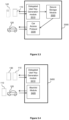
- Figure 3.1 illustrates a program 3100 stored in memory in processing unit residing in the car for performing the processes in accordance with the present disclosure.
- Program 3100 includes a Key Generation Module 3110, a Secure Storage module 3120, an Owner Key Generation module 3130, a Car Access Protocol module 3140 and a Blacklist module 3150.
- the processes executed by 5 modules are as follows:
- Figure 3.2 illustrates a program 3200 stored in a memory in the mobile device of a car owner for performing the processes in accordance with the present disclosure.
- Program 3200 includes an Owner Key Generation module 3210, a Secure Storage module 3220, a Delegated User Key Generation module 3230, a Car Access Protocol module 3140 and a Blacklist administration module 3250.
- the processes executed by 5 modules are as follows:
- FIG. 3.3 illustrates a program 3300 stored in memory in the mobile device of a delegated user for performing the processes in accordance with the present disclosure.
- Program 3300 includes a Delegated user Key Generation module 3310, a Secure Storage module 3320, and a Car Access Protocol module 3330. Briefly, the processes executed by 3 modules are as follows:
- FIG. 3.4 illustrates a program 3400 stored in memory in the remote server for performing the processes in accordance with the present disclosure.
- Program 3400 includes a Delegated user Key Generation module 3410, and a Blacklist administration module 3420. Briefly, the processes executed by 2 modules are as follows:
- the following first embodiment presents a symmetric key based instantiation of the above processes, based on the idea of hierarchical identity-based key generation.
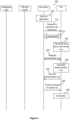
- Figure 4 illustrates a timing diagram 400 to illustrate the information flow between the car, car owner, delegated user and remote server.
- a key generation Application is installed on the car and only the master car owner can initiate the key generation Application, which is governed by password such as a superuser password.
- the superuser password can be delivered to the master car owner in a sealed physical envelope, together with other documents related to the car.
- the master car owner should be allowed to change the password.
- the new master car owner can run the key generation Application again to generate a new secret key, which will overwrite the old one.
- the process of generating the new secret key is as follows.
- Timing diagram 400 begins with step 405 where the car owner runs an application on his mobile device to initiate the car to run the key generation module 3110 to generate a new secret key.
- the owner key generation module 3210 would generate and transmit a request to generate new secret key to the key generation module 3110 in step 410.
- the car In response to receiving the request, the car would perform an authentication with the car owner in step 415.
- the key generation module 3110 would request the owner key generation module 3210 for the superuser password. If authentication is successful, the key generation module 3110 would generate a secret key (K) in step 420. Otherwise, the car would not generate a secret key.
- the car manages the secret key securely in the secure storage module 3120, e.g., in a secure hardware.
- the car owner After the secret key is generated, the car owner would request for an authentication key in order to access the car.
- the authentication key for the car owner is generated in the following manner.
- the owner key generation module 3210 sends a request to the owner key generation module 3130 for authentication key.
- the request includes the car owner's ID ( id O ) .
- the authentication key is transmitted to the owner key generation module 3210 in step 440.
- the car owner's mobile device manages the authentication key securely in the secure storage module 3220, e.g., in a secure hardware.
- a key rotation strategy can be implemented where after each car access or a fixed number of car accesses, the car generates a new authentication key for the car owner.
- the request includes [0, id O , vd ] where 0 denotes "owner access”.
- the car verifies the blacklist and vd.
- steps 445-450 may be modified as follows.
- the car access protocol module 3140 would broadcasts its ID id Car and a random number r in a fixed frequency, e.g., once every 2 seconds.
- the car access protocol module 3240 chooses a random number r 1 , and then sends a message containing [0, id O , r 1 ] to the car, where 0 denotes "owner access".
- the car access protocol module 3140 first checks the blacklist to determine whether id O is revoked, and aborts if it is.
- the car access protocol module 3140 checks whether vd 2 is equal to MAC( K' id O , r ), and if the check passes, the car access protocol module 3140 grants the access to the car, e.g., open the car door. Otherwise, the car access protocol module 3140 rejects granting access to the car.
- the delegated user key generation module 3310 transmits his/her ID id U to the delegated user key generation module 3230 in step 460.
- the delegated user key generation module 3230 transmits the delegated authentication key to the delegated user key generation module 3310 via either direct delivery or remote delivery in step 470.
- the request includes [1, id U , id O , P U , vd ] where 1 denotes "delegated user access”.
- the car access protocol module 3140 verifies the P U , blacklist and vd. In particular, upon receipt of the message, the car access protocol module 3140 first checks whether P U is still valid, and aborts if P U does not hold any more. Otherwise, the car access protocol module 3140 checks the blacklist in the blacklist module 3150 to determine whether id O or id U is revoked, and aborts if it is. Otherwise, the car access protocol module 3140 continues to check whether vd is equal to MAC ( h ( h ( K , id Car , id O ), id U , P U ), r ). If the check passes, then the car access protocol module 3140 grants the access, e.g., open the car door. Otherwise, the car access protocol module 3140 rejects granting access.
- the master car owner can revoke a car owner or a delegated user from accessing the car by adding the ID of the car owner and delegated user in the blacklist.
- the blacklist module 3250 transmits a revoke request containing ID of the car owner to the remote server or directly to the car.
- the blacklist module 3250 transmits a revoke request containing ID of the delegated user, ID of the car owner who delegated the ID, and the associated access policy P to the blacklist module 3420 of the remote server or directly to the blacklist module 3150 of the car.
- the master car owner can directly administer the blacklist in the blacklist module 3150 if an operational interface is provided within the car and the master car owner physically has access to the car. Under such scenario, the master car owner can transmit the revoke request directly to the blacklist module 3150 of the car in step 490.
- the master car owner manages the blacklist via the remote server. In such a scenario, the master car owner transmits the revoke request to the blacklist module 3420 of the remote server in step 495.
- the blacklist module 3420 of the remote server updates the blacklist associated to the ID of the master car owner. The car would synchronize its blacklist with the remote server soonest possible.
- the remote server sends the updated blacklist to the car in step 498.
- the master car owner registers to the remote server and thus has an account with the remote server.
- the car also registers to the remote server and communicates with the server. Timing diagram ends after step 498.
- FIG. 5 illustrates a process 500 performed by the mobile device of the master car owner in accordance with this disclosure.
- Process 500 begins with step 505 by requesting for the car owner to select an option.
- the options available are (1) access car, (2) add car owner, (3) new delegated user, (4) revoke key, and (5) new setup.
- process 500 proceeds to step 510 which is executed by the car access protocol 3240; if the option selected is option (2), process 500 proceeds to step 520 which is executed for the owner key generation module 3210; if the option selected is option (3), process 500 proceeds to step 530 which is executed for the delegated user key generation module 3230; if the option selected is option (4), process 500 proceeds to step 540 which is executed for the blacklist module 3250; and if the option selected is option (5), process 500 proceeds to step 550 which is executed for the owner key generation module 3210.
- MAC Message Authentication Code
- a key rotation strategy can be implemented where after each car access or a fixed number of car accesses, the car generates a new authentication key for the car owner.
- process 500 would continue after step 514 by receiving K O from the processing unit residing in the car.
- res is computed via a Message Authentication Code (MAC) using a MAC generation function with K id O , FALSE and r as the input.
- MAC Message Authentication Code
- process 500 generates and transmits a request for authentication key.
- the request includes the car owner's ID ( id O ) .
- Process 500 then stores the authentication key in a secured memory in step 524.
- process 500 receives an ID of a delegated user id U .
- process 500 requests for input on the access policy P U in step 532.
- the access policy may include validity period of the delegated authentication key.
- Other access policy that may be added comprises speed limit, mileage, etc.
- step 540 process 500 request ID of the car owner or delegated user to be revoked. If the user wishes to revoke a car owner, process 500 generates a revoke request containing ID of the car owner in step 542. If the master car owner wishes to revoke a delegated user, process 500 generates a revoke request containing ID of the delegated user, ID of the car owner who delegated the ID, and the associated access policy P in step 542 instead. Depending on the connectivity, process 500 transmits the revoke request directly to the processing unit residing in the car if the mobile device of the master car owner is communicatively connected to the processing unit residing in the car via Bluetooth or NFC in step 544. Alternatively, process 500 transmits the revoke request to the remote server in step 544 instead.
- process 500 generates and transmits a request to the processing unit residing in the car to generate new secret key.
- process 500 receives a request from the processing unit residing in the car owner for the superuser password.
- process 500 prompts the user to enter the superuser password in step 554.
- process 500 receives the input from the user.
- process 500 generates and transmits the superuser password to the processing unit residing in the car.
- process 500 receives a confirmation message from the processing unit residing in the car. The confirmation message contains information on whether the secret key has been successfully created.
- Process 500 ends after steps 514, 524, 536, 544 and 559.
- Process 500 is also applicable for the mobile device of a car owner except that in option 4, it would only be able to revoke a delegated user.
- FIG. 6 illustrates a process 600 performed by the processing unit residing in the car in accordance with this disclosure.
- the processing unit residing in the car has to boot up and retrieve a blacklist associated to the ID of the car from the remote server.
- Process 600 begins with step 605 to receive a request.
- step 610 which is executed by the key generation module 3110; if the request is for generating an authentication key, process 600 proceeds to step 620 which is executed by the owner key generation module 3130; if the request is for accessing the car, process 600 proceeds to step 630 which is executed by the car access protocol 3140; and if the request for updating the blacklist, process 600 proceeds to step 640 which is executed by the blacklist module 3150.
- process 600 transmits a request for the superuser password.
- process 600 receives the superuser password from the mobile device of the master car owner.
- process 600 verifies the superuser password with the password stored on its memory. If the superuser password is correct, the car would generate a secret key (K) in step 616. Otherwise, the car would not generate a secret key.
- process 600 stores the new secret key securely in a secured hardware.
- process 600 transmits a confirmation message to the mobile device of the master car owner.
- the confirmation message contains information on whether the secret key has been successfully created.
- the communication channel between the mobile device and the processing unit residing in the car is secured. This assumption is justified because this process is expected to be executed by the mobile device of the master car owner in a private environment, e.g., in the car owner's garage, and the distance between the mobile device and the processing unit is quite near via either NFC or Bluetooth.
- the authentication key is transmitted to the mobile device of the car owner.
- process 600 would be broadcasting its ID id Car and a random number r in a fixed frequency via either NFC or Bluetooth.
- process 600 may first be broadcasting its ID id Car and a random number r in a fixed frequency via either NFC or Bluetooth any time after step 624 and before step 630 without departing from the disclosure.
- process 600 identifies whether this is an "owner access” or "delegated user access” based on the first integer in the request. If the first integer in the request is 0, process 600 determines that this is an "owner access” proceeds to step 634. If the first integer in the request is 1, process 600 determines that this is a "delegated user access” and proceeds to step 632.
- step 632 process 600 checks whether P U is still valid, and aborts if P U does not hold any more. If P U is still valid, process 600 proceeds to step 634. P U contains the validity period.
- a new authentication key is going to be generated and transmitted to mobile device of the car owner in step 638.
- the new authentication key is generated in the following manner.
- the response comprises MAC( K ' id O , FALSE, r ).
- steps 630-638 may be rearranged such that vd is verified first prior to verifying the blacklist. Further, other permutation may be implemented without departing from the disclosure. Still further, steps 630-638 may be implemented in a single step without departing from the disclosure.
- Steps 630-638 are based on NFC communication channel between the car owner or delegated user and the car. In another embodiment where the communication channel between the car owner and the car is not that short, i.e. over Bluetooth, steps 630-638 may be performed in the following manner instead.
- Process 600 receives a message containing [0, id O , r 1 ] from the car owner, where 0 denotes "owner access”. Upon receipt of the message, process 600 checks the blacklist to determine whether id O is revoked, and aborts if it is.
- process 600 checks whether vd 2 is equal to MAC( K ' id O , r ), and if the check passes, process 600 grants access to the car, e.g., open the car door. Otherwise process 600 rejects granting access.
- process 600 updates the blacklist accordingly.
- process 600 updates the blacklist by appending the ID of the car owner or ID of the delegated user, ID of the car owner who delegated access to the delegated user, and the associated access policy P U .
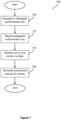
- FIG. 7 illustrates a process 700 performed by the mobile device of the delegated user in accordance with this disclosure.
- Process 700 begins with step 705 by requesting for a delegated authentication key.
- the request includes his/her ID id U .
- the request for delegated authentication key may be via direct delivery or remote delivery.
- direct delivery the request would be transmitted to the mobile device of the car owner via Bluetooth or NFC and no authentication is required.
- the request for delegated authentication key is transmitted to the remote server in step 605.
- the mobile device of the delegated user prior to step 705, the mobile device of the delegated user has to first register with the remote server and setup an authentication password for subsequent login to request for delegated authentication key from a car owner.
- the delegated user After the delegated user registers with the remote server, he/she can establish a connection with the remote server through a password authentication and transmits the request to the remote server.
- the request In the remote delivery, the request would also include the car ID or the car owner ID in order for the remote server to direct the request to the right user.
- the delegated authentication key would be received from the mobile device of the car owner via Bluetooth or NFC.
- the request for delegated authentication key would be received from the remote server.
- Steps 705-710 are executable by the delegated user key generation module 3310.
- vd is computed via a Message Authentication Code (MAC) using a MAC generation function with K id U and r as the input.
- MAC Message Authentication Code
- the request includes [1, id U , id O , P U , vd ] where 1 denotes "delegated user access”.
- the car should grant access to the car by opening the car door. Otherwise, the car would reject granting access.
- Process 700 ends after step 720. Steps 715-720 are executable by the car access protocol module 3330.
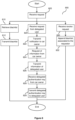
- FIG. 8 illustrates a process 800 performed by the remote server in accordance with this disclosure.
- Process 800 begins with step 805 by receiving a request from either the processing unit residing in the car or mobile devices of either car owners or delegated users. If the request is from the processing unit residing in the car to update blacklist, process 800 proceeds to step 810 which is executed by the blacklist module 3420. If the request is from the mobile device of the car owners and delegated user for remote delivery of delegated authentication key, process 800 proceeds to step 820 which is executed by the delegated user key generation module 3410. If the request is from the mobile device of the car owner to revoke a user, process 800 proceeds to step 830 which is executed by the blacklist module 3420.
- process 800 retrieves the blacklist associated to the car ID upon receiving a request for blacklist from the processing unit residing in the car.
- the request includes the car ID and/or the ID of the car owner.
- process 800 transmits the blacklist to the processing unit residing in the car.
- Step 820 involves handling the remote delivery of delegated authentication key between the delegated user and the car owner.
- the mobile devices of the delegated user and car owner have to be registered with the remote server and subsequently login with their respective password in order to transmit data to and receive data from the remote server.
- process 700 receives a request from the delegated user comprising its ID together with the car ID or the car owner ID.
- the remote server transmits a notification to the car owner in step 822.
- the car owner would login to the remote server and request for information.
- process 800 receives a request of information from the car owner.
- process 800 In response to receiving the request for information, process 800 generates and transmits information pertaining to the delegated user in step 826.
- the information may include, name of the delegated user and ID of the delegated user.
- process 800 receives the delegated authentication key from the car owner.
- process 800 transmits the delegated authentication key from the delegated user.
- Step 830 involves a request to revoke a user from is the mobile device of the car owner.
- process 800 retrieves the blacklist associated to the ID of the requestor and appends the blacklist accordingly in step 832.
- process 800 appends the blacklist to include the ID of the car owner, i.e. [id O ]. If the revoke request contains ID of the delegated user, ID of the car owner who delegated the ID, and the associated access policy P U , process 800 append the blacklist to include ID of the delegated user, ID of the car owner who delegated the ID, and the associated access policy P U , i.e. [ id U , id O , P U ] .
- Process 800 ends after step 812, 829 or 832.
- the following second embodiment presents another instantiation based on hierarchical Identity Based Signature (IBS).
- IBS Identity Based Signature
- a user's identity acts as the user's public key, without the reliance on Public Key Infrastructure (PKI) and in turn public-key certificates.
- PKI Public Key Infrastructure
- the user's private key corresponding to the user's identity is issued by a Key Generation Center (KGC) which has a global public key/private key pair.
- KGC Key Generation Center
- a hierarchical IBS scheme consists of the following algorithms:
- Step 420 is modified such that the car would generate a secret key (GSK) by executing HSetUp (1 k ) to generate ( GPK , GSK ).
- GPK secret key
- HSetUp (1 k ) HSetUp (1 k )
- GPK secure storage module
- GSK GSK
- Step 435 is modified such that in response to receiving the request from the car owner, the car executes the key generation algorithm HKeyGen ( GSK , id O ,1 , NULL), taking as input the GSK , the ID of the first device to generate a level 1 authentication key sk id O, 1 . It should be noted that the car owner is at level 1. The level 1 authentication key and the GPK are transmitted to the car owner in step 440.
- HKeyGen GSK , id O ,1 , NULL
- step 445 instead of computing vd, the car owner generates ⁇ instead.
- the car owner taps his/her mobile device to the car and receives the broadcast message containing ID id Car and a random number r .
- the car owner executes the signing algorithm, HSign ( sk id O ,1 , r ), taking as input the first level authentication key of the car owner and the random number r , to generate ⁇ , and then sends [0, id O , ⁇ ] to the car, where 0 denotes "owner access”.
- the car verifies the blacklist and ⁇ .
- the car checks the blacklist to determine whether id O is revoked, and aborts if it is. If the id O is not in the blacklist, the car continues to execute the signature verification algorithm, HVerify ( ⁇ , r , id O ,1 , NULL , GPK ), taking as input the signature ⁇ , the random number r , the ID of the first device, and GPK and grant the access if the output is 1. Otherwise, the car rejects granting access.
- HVerify ⁇ , r , id O ,1 , NULL , GPK
- step 465 in response to receiving the ID of the delegated user, the car owner determines an access policy P id U ,2 , and executes the key generation algorithm, HKeyGen ( sk id O ,1 , id U , 2 , P id U , 2 ) taking as input the first level authentication key, the ID of the second device and the access policy P id U, 2 for id U,2 to generate a level 2 authentication key sk id U, 2 . Thereafter, the car owner transmits the level 2 authentication key and the GPK to the delegated user via either direct delivery or remote delivery in step 470.
- HKeyGen sk id O ,1 , id U , 2 , P id U , 2
- step 480 instead of computing vd, the delegated user generates ⁇ instead.
- the delegated user taps his/her mobile device to the car and receives the broadcast message containing ID id Car and a random number r .
- the delegated user execute the signing algorithm HSign ( sk id U, 2 , r ), taking as input the second level authentication key and the random number r , to generate the signature ⁇ .
- the car verifies the P id U ,2 , blacklist and ⁇ .
- the car upon receipt of the message, the car first checks whether P id U ,2 is still valid, and aborts if P id U ,2 does not hold any more. Otherwise, the car checks the blacklist to determine whether id O ,1 or id U ,2 is revoked, and aborts if it is.
- the car executes the signature verification algorithm, HVerify ( ⁇ , r , id U, 2 , P id U ,2 , id O ,1 , NULL , GPK ), taking as input the signature ⁇ , the random number r , the ID of the second device, the P id U ,2 , the ID of the first device, and GPK.
- b 1
- the car grants the access, e.g., open the car door. Otherwise, the car rejects granting access.
- the following third embodiment presents another instantiation based on digital signature.
- the digital signature scheme consists of the following algorithms:
- Step 420 is modified such that the car would generate a secret key ( SK C ) by executing KeyGen (1 k ) to generate a pair of keys ( PK C , SK C ) .
- the car then stores the SK C securely in the secure storage module while leaving PK C public.
- Step 430 is modified such that car owner executes KeyGen (1 k ) to generate a pair of keys ( PK O , SK O ) for the car owner; transmits the public key of the car owner, PK O , to car; and stores the private key, SK O , securely in secure storage module.
- Step 435 is modified such that in response to receiving the public key of the car owner PK O from the car owner, the car executes the signing algorithm, Sign ( SK C , PK O ) taking as input the SK C , and the public key of the car owner to generate ⁇ C,O where ⁇ C,O serves as a digital certificate for the PK O .
- the digital certificate is transmitted to the car owner in step 440.
- the car owner digital certificate ⁇ C,O and the pair of keys for the car ( PK C , SK C ) are not required when a whitelist containing the public key of the car owner PK O is maintained in the car.
- step 445 instead of computing vd, the car owner generates ⁇ instead.
- the car owner taps his/her mobile device to the car and receives the broadcast message containing ID id Car and a random number r .
- the car owner executes the signing algorithm, Sign ( SK O , r ) taking as input the private key of the car owner, SK O and the random number r to generate ⁇ , and then sends [0, PK O , ⁇ C , O , ⁇ ] to the car, where 0 denotes "owner access”.
- the car verifies the blacklist and ⁇ .
- the car checks the blacklist to determine whether PK O is revoked, and aborts if it is. If the PK O is not in the blacklist, the car continues to execute both a first verification algorithm, Verify ( ⁇ C , O , PK O , PK C ) taking as input the signature ⁇ C , O , the public key of the car owner and the public key of the car and a second verification algorithm, Verify ( ⁇ , r , PK O ) taking as input the signature ⁇ , the random number r , the public key of the car owner, and grant the access if both output 1. Otherwise, the car rejects granting access.
- the car would check whether PK O is in the whitelist. If PK O is in the whitelist, the car continues to verify ⁇ by executing the second verification algorithm, Verify ( ⁇ , r , PK O ) taking as input the signature ⁇ , the random number r, the public key of the car owner, and grant the access result from the second verification algorithm is 1. Otherwise, the car rejects granting access.
- Step 460 is modified such that the delegated user executes KeyGen (1 k ) to generate a pair of keys ( PK U , SK U ); transmits public key PK U to car owner; and stores the private key SK U securely in secure storage module.
- Step 465 is modified such that in response to receiving PK U from the delegated user, the car owner determines an access policy P U and executes the signing algorithm Sign ( SK O , PK U ⁇ P U ) taking as input the SK O , and the public key of the delegated user and the access policy PK U ⁇ P U to generate ⁇ O , U where ⁇ O , U serves as a digital certificate for the PK U .
- step 470 The digital certificate ⁇ O , U together with the PK O and ⁇ C , O are transmitted to the delegated user via either direct delivery or remote delivery in step 470.
- step 470 would be modified such that the digital signature of the car owner ⁇ C , O is not transmitted to the delegated user.
- step 480 instead of computing vd, the delegated user generates ⁇ instead.
- the delegated user taps his/her mobile device to the car and receives the broadcast message containing ID id Car and a random number r .
- the delegated user executes the signing algorithm, Sign ( SK U , r ) taking as input the private key of the delegated user, SK U and the random number r , to generate ⁇ and then sends a request containing [1, PK U , P U , ⁇ O , U , PK O , ⁇ C , O , ⁇ ] to the car, where 1 denotes "delegated user access".
- step 485 the car verifies the PK O , P U , blacklist and ⁇ .
- the car first checks whether P U is still valid, and aborts if P U does not hold any more. Otherwise, the car checks the blacklist to determine whether PK O or PK U is revoked, and aborts if it is.
- the car continues to execute a third signature verification algorithm Verify ( ⁇ C , O , PK O , PK C ) taking as input the signature ⁇ C , O , the public key of the car owner, and the public key of the car, a fourth signature verification algorithm Verify ( ⁇ O , U , PK U ⁇ P U , PK O ) taking as input the signature ⁇ O , U , the public key of the delegated user and the policy PK U ⁇ P U , and the public key of the car owner, and a fifth signature verification algorithm Verify ( ⁇ , r , PK U ) taking as input the signature ⁇ , the random number r , the public key of the delegated user.
- Verify ⁇ C , O , PK O , PK C
- Verify ⁇ O , U , PK U ⁇ P U , PK O
- Verify ⁇ O , U , the public key of the delegated user and the policy PK
- step 480 would be modified such that the delegated user sends a request containing [1, PK U , P U , ⁇ O , U , PK O , ⁇ ].
- the car will first check: 1) whether PK O is in the whitelist; 2) whether P U is still valid; 3) whether PK O or PK U is in the blacklist.
- the car continues to verify ⁇ O , U by executing a signature verification algorithm, Verify ( ⁇ O , U , PK U , PK O ) taking as input the digital signature of the delegated user ⁇ O , U , the public key of the delegated user PK U , the public key of the car owner PK O . and verify ⁇ , by executing another signature verification algorithm, Verify ( ⁇ , r , PK U ) taking as input the signature ⁇ , the random number r , the public key of the user PK U . If all return 1, the car grants the access, e.g., open the car door. Otherwise, the car rejects granting access.
- the user revocation remains the same as the first embodiment except that for revoking a car owner, the car owner's public key is stored on the blacklist instead of ID.
- the user's public key PK U , the delegator owner's public PK O and the access policy P U are stored in the blacklist instead of car owner's ID and delegator user's ID.
- the car owner's public key PK O are removed from the whitelist.
Landscapes
- Engineering & Computer Science (AREA)
- Computer Security & Cryptography (AREA)
- Computer Networks & Wireless Communication (AREA)
- Signal Processing (AREA)
- Power Engineering (AREA)
- Physics & Mathematics (AREA)
- General Physics & Mathematics (AREA)
- Mechanical Engineering (AREA)
- Lock And Its Accessories (AREA)
Description
- This disclosure relates to a vehicle access authentication framework. Particularly, this disclosure relates to a method and system for generating and distributing keys among various entities for vehicle access.
- Currently, vehicles access (e.g., car door opening, immobilizer/engine ignition) relies on physical keys or physical fobs. While having been in use for many years, physical keys/fobs become inconvenient for vehicle sharing which is a common phenomenon for family use and for car rental services. An example of vehicle sharing is that several family members may drive a family car at different times. Another example is that a car of a rental company is rented by different users over a time period. Vehicle sharing requires the sharing of the key for vehicle access, but physical keys are cumbersome to share, as pre-planning may be needed in order to pass the physical key from one person to another. A usual requirement in vehicle sharing is delegation of access rights for a short period of time. For example, a tourist touring foreign country only needs to rent a car for a certain period. Physical keys are especially inconvenient or unsafe for granting temporary vehicle access rights. In particular, once a physical key is passed to a delegated user, it is nearly impossible to prevent the delegated user from physically copying the key.
- The landscape of the consumer electronics has changed drastically in recent years and portable devices, e.g., smart phones, smart watches, and smart pads, have become our daily necessity. This makes it possible for portable device-carried electronic keys to replace physical keys, so as to do away with the hassle of physical keys. In this regard, there have been a number of demonstrations and commercial products of electronic access key systems available, but without technical details revealed. Also, there is a plethora of research that is related to electronic access keys, and some of the typical examples are as follows.
- In the publications "Christoph Busold, et al: Smart keys for cyber-cars: secure smartphone-based NFC-enabled Car Immobilizer, ACM CODASPY'13, Feb 2013" and "
US 2014/0365781 A1 ", both publications also focus on car sharing and delegation of access rights. Particularly, it assumes a trusted server issue keys for vehicle access to car owners and in addition, to avoid directly registering a car owner's authentication key to the car owner's vehicle, a token containing the key (i.e. the token can be understood to be a sealed e-envelope) is also issued and the token can only be decrypted by the vehicle. In the vehicle access protocol, authentication data generated by using the authentication key together with the token is sent to the vehicle, which then decrypts the token to get the authentication key, and in turn uses the key to check against the authentication data. - In the systems disclosed in both publications, the authentication keys (for vehicle access) of all the car owners, delegated users and the vehicles are issued by or known to a trusted third party server. This creates vulnerability where a rouge insider of the trusted third party server can expose all the keys in the server due to the implementation of a centralised third party server for storing all the keys.
- Further, the system disclosed in both publications adopts a token-based authentication method, where a car owner gets the authentication key and delegation key from the server, along with a sealed e-envelope containing these keys, which can only be opened by the car owner. When accessing the car by the car owner or a delegated user, the content in the sealed e-envelope must be communicated to the car, together with the actual authentication data. The sealed envelope adds to the communication overhead.
- Hence, those skilled in the art are striving to provide a method of vehicle sharing without the hassle of passing physical keys or physical fobs to a car renter.
- Document
WO 2016/156681 A1 discloses a method for loading a virtual key in a user terminal, comprising the following steps: - receiving, by the user terminal, of a piece of matching data from another user terminal; - transmitting a piece of data dependent on the matching data to an electronic unit of a vehicle; - receiving, by the user terminal, from the electronic unit, of a virtual key for controlling at least one function of the vehicle. Such a user terminal is also proposed. - The above and other problems are solved and an advance in the state of art is made by systems and methods provided by embodiments in accordance with the disclosure and as defined in the attached claims. A first advantage of embodiments of systems and methods in accordance with the disclosure is that physical keys for vehicle access are replaced with portable device such as a mobile device. In view of the prevalent use of portable device in our daily life, this removes the need to carry a physical key around. A second advantage of embodiments of systems and methods in accordance with the disclosure is that it allows car owners to flexibly and securely delegate their access rights to other users, under fine-grained access policies. This overcomes the hindrance physical keys face in the scenario of car sharing. A third advantage of embodiments of systems and methods in accordance with the disclosure is that car owners and delegated users are able to use their portable devices for secured vehicle access. A fourth advantage of embodiments of systems and methods in accordance with the disclosure is that the cars independently generate their own secret keys and in turn the corresponding car owners' authentication keys. As a car belongs to the car owner, doing so basically means that the car owner controls all secret keys associated with his/her car. In addition, even if a car is compromised and the secret key it contains is exposed, no other cars will be affected, so there is no a single point of vulnerability of the entire system. In brief, this is a decentralised key generation and distribution system and method.
- The above advantages and features in accordance with this invention are described in the following detailed description and are shown in the following drawings:
-
Figure 1 illustrating the architecture of the system in accordance with an embodiment of this disclosure; -
Figure 2 illustrating an example of a processing system in the processing unit residing in the car or the mobile devices of car owners or delegated users that perform processes in accordance with an embodiment of this disclosure -
Figure 3.1 illustrating a program stored in a memory in the processing unit residing in the car for performing the processes in accordance with an embodiment of this disclosure; -
Figure 3.2 illustrating a program stored in a memory in the mobile device of a car owner for performing the processes in accordance with an embodiment of this disclosure; -
Figure 3.3 illustrating a program stored in a memory in the mobile device of a delegated user for performing the processes in accordance with an embodiment of this disclosure; -
Figure 3.4 illustrating a program stored in a memory in a remote server for performing the processes in accordance with an embodiment of this disclosure; -
Figure 4 illustrating a timing diagram to illustrate the information flow between the car, car owner, delegated user and remote server in accordance with an embodiment of this disclosure; -
Figure 5 illustrating a process performed by the mobile device of the master car owner in accordance with an embodiment of this disclosure; -
Figure 6 illustrating a process performed by the processing unit residing in the car in accordance with an embodiment of this disclosure; -
Figure 7 illustrating a process performed by the mobile device of the delegated user in accordance with an embodiment of this disclosure; and -
Figure 8 illustrating a process performed by the remote server in accordance with an embodiment of this disclosure. - This disclosure relates to a vehicle access authentication framework. Particularly, this disclosure relates to a method and system for generating and distributing keys among various entities for vehicle access.
- This invention relates to a vehicle access system using a portable device-based electronic key system. In the system, users do not obtain physical keys, but use their portable devices such as smart phones to securely access vehicles with the help of electronic access credentials stored on the portable devices. Further, the vehicle owners' access rights can be delegated to other users at the owners' discretion, either temporarily or for long term, or bound to certain access policy.
- The targeted applications for this invention are vehicle sharing for family use or fleet management, and the proposed system is especially applicable in scenarios where a highly dynamic or large set of users exist such as in car rental services. The system allows for multiple owners sharing a car, and allows a car owner to flexibly delegate the access right to other people, governed by an access policy stipulated by the car owner.
-
Figure 1 illustrates the architecture of thesystem 100. Thesystem 100 includes a mobile device of acar owner 110, processing unit residing in acar 120, mobile device of a delegateduser 130, and aremote server 140. One skilled in the art will recognise that the processing unit in thecar 120 may also be a mobile device without departing from the system. - The mobile devices and processing unit are communicatively connected via short distance communication such as Bluetooth. The mobile devices and processing unit are communicatively connected to the
remote server 140 via a connected network, in particular Internet. For purposes of this disclosure, we will usecar owner 110,car 120 and delegateduser 130 to describe the processes and interactions executed by thesystem 100. - It should be noted that the
system 100 is designed to allow for multiple car owners, but without loss of generality, we assume a master car owner who takes charge of administrating the car, e.g., manages a blacklist stored on the processing unit residing in the car. - The
system 100 consists of the following processes, where the car owner access protocol and the Delegated User access protocol are online processes shown in solid lines infigure 1 while the others are offline processes shown in dotted lines infigure 1 . - The
car 120 executes a process to generatecar key 150. This process is initiated by the car owner in which a secret key (K) will be generated. This is the only secret key (K) securely kept by the car, and all other authentication keys are derivable from this secret key. In particular, the car would generate keys for an owner and the owner may use its key to further generate keys for delegated users. - This
process 160 is executed between a car owner and the car. As a result, the car issues an authentication key KidO to the car owner, based on the owner's identity (idO ) and optionally an access policy (P O ). The authentication key is securely managed on the car owner'sportable device 110 such as a mobile device or a secure hardware such as a token. The access policy P O may, for example, stipulate the validity period of the authentication key. - This
process 165 is essentially an authentication protocol between acar owner 110 and thecar 120, where thecar owner 110 uses its authentication key KidO and thecar 120 uses its secret key (K). If thecar 120 successfully verifies the authenticity of thecar owner 110, then thecar 120 grants access to thecar owner 110. For purposes of this disclosure, granting access may refers to opening the car door and/or powering up the car engine. Otherwise, thecar 120 refuses granting access to thecar owner 160. - This
process car owner 110 and a delegateduser 130. As a result, thecar owner 110 generates a delegated authentication KidU based on the car owner's ID (idO ), the delegated user's ID (idU ), and an access policy (P U ). The access policy (P U ) can be fine-grained, e.g., stipulating the validity period of the delegation, the limit of driving speed, the range within which the car can be drove, and so on. Two ways are distinguished on how the car owner transmits KidU to the delegated user, namely, (1)direct delegation 170 andremote delegation 175. Indirect delegation 170, the car owner directly sends KidU to the delegate user. This occurs where both car owner and delegated user meet in person and both of them may use their mobile devices to communication directly through short distance communication means such as Near Field Communication (NFC) or bluetooth. Inremote delegation 175, the car owner first sends KidU to theremote server 140, and the delegated user retrieves the key (KidU ) from theremote server 140. - This
process 180 is essentially an authentication protocol between a mobile device of the delegated user and the processing unit in the car, where the delegated user uses its delegated authentication key KidU and the car uses its secret key K. If the car successfully verifies the authenticity of the delegated user, then the car grants access to the delegated user according to the policy. Otherwise, the car refuses granting access to the non-authorised user. - This
process 190 enables the master car owner to administrate a blacklist maintained at theprocessing unit 120 in the car by adding an item on the revoked user, through theremote server 140. Both car owners and delegated users can be revoked. -
Figure 2 illustrates an example of aprocessing system 200 in theprocessing unit 120 residing in the car or themobile devices Processing system 200 represents the processing systems in theprocessing unit 120 residing in the car or themobile devices processing system 200 shown infigure 2 is provided by way of example only. -
Processing system 200 includes aprocessor 210, aradio transceiver 220, animage capturing device 230, adisplay 240, akeypad 250, amemory 260, aBluetooth module 270, a Near Field Communication (NFC)module 280, and an I/O device 290. - The
radio transceiver 220,image capturing device 230,display 240,keypad 250,memory 260,Bluetooth module 270,NFC module 280, I/O device 290 and any number of other peripheral devices connect toprocessor 210 to exchange data withprocessor 210 for use in applications being executed byprocessor 210. - The
radio transceiver 220 is connected to an antenna which is configured to transmit outgoing voice and data signals and receive incoming voice and data signals over a radio communication channel. The radio communication channel can be a digital radio communication channel such as a CDMA, GSM or LTE channels that employs both voice and data messages in a conventional techniques. - The
image capturing device 230 is any device capable of capturing still and/or moving images such as complementary metal-oxide semiconductor (CMOS) or charge-coupled sensor (CCD) type cameras. Thedisplay 240 receives display data fromprocessor 210 and display images on a screen for a user to see. Thedisplay 240 may be a liquid crystal display (LCD) or organic light-emitting diode (OLED) display. Thekeypad 250 receives user input and transmits the input toprocessor 210. In some embodiments, thedisplay 240 may be a touch sensitive surface that functions as a keypad to receive user input. - The
memory 260 is a device that transmits and receives data to and fromprocessor 210 for storing data to a memory. TheBluetooth module 270 is a module that allows processingunit 110 to establish communication with another similar device based on Bluetooth technology standard. TheNFC module 280 is a module that allows processingunit 110 to establish radio communication with another similar device by touching them together or by bringing the devices within a close proximity. - Other peripheral devices that may be connected to
processor 210 include a Wi-Fi transceiver, a Global Positioning System (GPS), a RFID transceiver, an ultra wideband transceiver and other positioning transceivers. - The
processor 210 is a processor, microprocessor, or any combination of processors and microprocessors that execute instructions to perform the processes in accordance with the present disclosure. The processor has the capability to execute various application programs that are stored in thememory 260. These application programs can receive inputs from the user via thedisplay 240 having a touch sensitive surface or directly from akeypad 250. Some application programs stored in thememory 260 that can be performed by theprocessor 210 are application programs developed for Android, IOS, Windows Mobile, Blackberry or other mobile platforms. - The
remote server 140 is essentially a computing system or a virtual machine running on the computing system that is communicatively connected to theprocessing unit 120 residing in the car or themobile devices remote server 140 is able to receive and transmit information such that theprocessing unit 120 residing in the car or themobile devices processing system 200 in that the remote server also includes aprocessor 210, adisplay 240, akeypad 250, amemory 260, and an I/O device 290. The remote server should also include a network device that connects the remote server to a network for transmission of data to and from other processing systems such as theprocessing unit 120 residing in the car or themobile devices -
Figure 3.1 illustrates aprogram 3100 stored in memory in processing unit residing in the car for performing the processes in accordance with the present disclosure.Program 3100 includes aKey Generation Module 3110, aSecure Storage module 3120, an OwnerKey Generation module 3130, a CarAccess Protocol module 3140 and aBlacklist module 3150. Briefly, the processes executed by 5 modules are as follows: - 1)
Key Generation Module 3110 implements the car'skey generation process 150 initiated by themaster car owner 110. - 2)
Secure Storage module 3120 manages generated secret key. - 3) Owner
Key Generation module 3130 implements the car owner'skey generation process 160 initiated by thecar owner 110. - 4) Car
Access Protocol module 3140 implements theowner access protocol 165 and the delegateduser access protocol 180 initiated by either thecar owner 110 or delegateduser 130. - 5)
Blacklist module 3150 manages the blacklist containing revoked IDs. -
Figure 3.2 illustrates aprogram 3200 stored in a memory in the mobile device of a car owner for performing the processes in accordance with the present disclosure.Program 3200 includes an Owner Key Generation module 3210, aSecure Storage module 3220, a Delegated UserKey Generation module 3230, a CarAccess Protocol module 3140 and aBlacklist administration module 3250. Briefly, the processes executed by 5 modules are as follows: - 1) Owner Key Generation module 3210 implements the Owner's
key generation process 160 - 2)
Secure storage module 3220 manages the generated secret key - 3) Delegated User
Key Generation module 3230 implements the delegation ofaccess rights process - 4) Car
access protocol module 3240 implements the carowner access protocol 165. - 5)
Blacklist administration module 3250 enables the master car owner to administrate the blacklist containing revoked IDs (only master car owner has the Blacklist administration module). -
Figure 3.3 illustrates aprogram 3300 stored in memory in the mobile device of a delegated user for performing the processes in accordance with the present disclosure.Program 3300 includes a Delegated user Key Generation module 3310, aSecure Storage module 3320, and a CarAccess Protocol module 3330. Briefly, the processes executed by 3 modules are as follows: - 1) Delegated user Key Generation module 3310 implements the delegation of
access rights process - 2)
Secure storage module 3320 manages the generated secret key. - 3) Car
access protocol module 3330 implements the delegateduser access protocol 180. -
Figure 3.4 illustrates aprogram 3400 stored in memory in the remote server for performing the processes in accordance with the present disclosure.Program 3400 includes a Delegated user Key Generation module 3410, and aBlacklist administration module 3420. Briefly, the processes executed by 2 modules are as follows: - 1) Delegated user Key Generation module 3410 implements the remote delivery scheme of the delegation of access right 175.
- 2)
Blacklist administration module 3420 implements theuser revocation process 190 to allow the master car owner to administer the blacklist containing revoked IDs. - The following first embodiment presents a symmetric key based instantiation of the above processes, based on the idea of hierarchical identity-based key generation.
-
Figure 4 illustrates a timing diagram 400 to illustrate the information flow between the car, car owner, delegated user and remote server. - A key generation Application is installed on the car and only the master car owner can initiate the key generation Application, which is governed by password such as a superuser password. The superuser password can be delivered to the master car owner in a sealed physical envelope, together with other documents related to the car. The master car owner should be allowed to change the password. When the car is resold, the new master car owner can run the key generation Application again to generate a new secret key, which will overwrite the old one. The process of generating the new secret key is as follows.
- Timing diagram 400 begins with
step 405 where the car owner runs an application on his mobile device to initiate the car to run thekey generation module 3110 to generate a new secret key. Particularly, the owner key generation module 3210 would generate and transmit a request to generate new secret key to thekey generation module 3110 instep 410. In response to receiving the request, the car would perform an authentication with the car owner instep 415. In particular, thekey generation module 3110 would request the owner key generation module 3210 for the superuser password. If authentication is successful, thekey generation module 3110 would generate a secret key (K) instep 420. Otherwise, the car would not generate a secret key. The car manages the secret key securely in thesecure storage module 3120, e.g., in a secure hardware. - After the secret key is generated, the car owner would request for an authentication key in order to access the car. The authentication key for the car owner is generated in the following manner. In
step 430, the owner key generation module 3210 sends a request to the ownerkey generation module 3130 for authentication key. The request includes the car owner's ID (idO ). In response to receiving the request from the car owner, the ownerkey generation module 3130 generates an authentication key KidO = h(K, idCar , idO ) instep 435, where h(.) is a cryptographic hash function, idCar is the ID of the car. The authentication key is transmitted to the owner key generation module 3210 instep 440. The car owner's mobile device manages the authentication key securely in thesecure storage module 3220, e.g., in a secure hardware. For added security, a key rotation strategy can be implemented where after each car access or a fixed number of car accesses, the car generates a new authentication key for the car owner. Under the key rotation strategy, KidO would be computed as = h(K, idCar , idO , Seq), where Seq is an integer value, initially set to be 0. - After the car owner received the authentication key, he/she is able to access the car with the authentication key. The process of accessing the car is as follows. The car
access protocol module 3140 would trigger the NFC to broadcasts its ID idCar and a random number r in a fixed frequency. Based on the idCar and random number r, the caraccess protocol module 3240 computes vd = MAC(KidO , r), and then sends a request to access the car instep 445. The request includes [0, idO , vd] where 0 denotes "owner access". Instep 450, the car verifies the blacklist and vd. In particular, the caraccess protocol module 3140 checks the blacklist to determine whether idO is revoked, and aborts if it is. If the idO is not in the blacklist, the caraccess protocol module 3140 continues to check whether vd = MAC(h(K, idCar , idO ), r). If the check passes, then the caraccess protocol module 3140 grants the access, e.g., open the car door. Otherwise, the caraccess protocol module 3140 rejects granting access. If the key rotation strategy is implemented, a new key is going to be generated for the car owner after each access. Alternatively, the new key can be generated after a certain number of accesses. Further details on the car owner access would be described below. - In another embodiment where the communication channel between the car owner and the car is not that short, i.e. over Bluetooth, steps 445-450 may be modified as follows. The car
access protocol module 3140 would broadcasts its ID idCar and a random number r in a fixed frequency, e.g., once every 2 seconds. Upon receiving the broadcast message, the caraccess protocol module 3240 chooses a random number r 1, and then sends a message containing [0, idO , r 1] to the car, where 0 denotes "owner access". In response to receiving the message, the caraccess protocol module 3140 first checks the blacklist to determine whether idO is revoked, and aborts if it is. Otherwise, the caraccess protocol module 3140 computes K'idO = h(K, idCar , idO ) and vd 1 = MAC(K'idO , r 1, r) and transmits vd 1 to the car owner. In response to receiving the message, the caraccess protocol module 3240 checks whether vd 1 is equal to MAC(KidO , r 1, r), and aborts if the check fails. Otherwise, the caraccess protocol module 3240 computes vd 2 = MAC(KidO , r) and transmits a message containing vd 2 to the caraccess protocol module 3140. In response to receiving the message, the caraccess protocol module 3140 checks whether vd 2 is equal to MAC(K'idO , r), and if the check passes, the caraccess protocol module 3140 grants the access to the car, e.g., open the car door. Otherwise, the caraccess protocol module 3140 rejects granting access to the car. - After the car owner received the authentication key, he/she is able to delegate access to the car with the authentication key. The process of delegation of access rights is as follows. The delegated user key generation module 3310 transmits his/her ID idU to the delegated user
key generation module 3230 instep 460. In response to receiving the ID, the delegated userkey generation module 3230 determines an access policy P U , and generates a delegated authentication key KidU = h(KidO , idU , P U ) instep 465. Thereafter, the delegated userkey generation module 3230 transmits the delegated authentication key to the delegated user key generation module 3310 via either direct delivery or remote delivery in step 470. - After the delegated user received the delegated authentication key, he/she is able to access the car with the delegated authentication key. The process of accessing the car is as follows. The car
access protocol module 3140 would trigger the NFC to broadcasts its ID idCar and a random number r in a fixed frequency. Based on the idCar and random number r, the caraccess protocol module 3330 computes vd = MAC(KidU , r), and then sends a request to access the car instep 480. The request includes [1, idU , id O , P U , vd] where 1 denotes "delegated user access". Instep 485, the caraccess protocol module 3140 verifies the P U , blacklist and vd. In particular, upon receipt of the message, the caraccess protocol module 3140 first checks whether P U is still valid, and aborts if P U does not hold any more. Otherwise, the caraccess protocol module 3140 checks the blacklist in theblacklist module 3150 to determine whether idO or idU is revoked, and aborts if it is. Otherwise, the caraccess protocol module 3140 continues to check whether vd is equal to MAC(h(h(K, idCar , idO ), idU , P U ), r). If the check passes, then the caraccess protocol module 3140 grants the access, e.g., open the car door. Otherwise, the caraccess protocol module 3140 rejects granting access. - The master car owner can revoke a car owner or a delegated user from accessing the car by adding the ID of the car owner and delegated user in the blacklist. For revoking a car owner, the
blacklist module 3250 transmits a revoke request containing ID of the car owner to the remote server or directly to the car. For revoking a delegated user, theblacklist module 3250 transmits a revoke request containing ID of the delegated user, ID of the car owner who delegated the ID, and the associated access policy P to theblacklist module 3420 of the remote server or directly to theblacklist module 3150 of the car. The master car owner can directly administer the blacklist in theblacklist module 3150 if an operational interface is provided within the car and the master car owner physically has access to the car. Under such scenario, the master car owner can transmit the revoke request directly to theblacklist module 3150 of the car instep 490. In an alternate scenario, the master car owner manages the blacklist via the remote server. In such a scenario, the master car owner transmits the revoke request to theblacklist module 3420 of the remote server instep 495. In response to receiving the revoke request, theblacklist module 3420 of the remote server updates the blacklist associated to the ID of the master car owner. The car would synchronize its blacklist with the remote server soonest possible. When the car request to synchronise its blacklist with the remote server, the remote server sends the updated blacklist to the car instep 498. In this scenario, it is assumed that the master car owner registers to the remote server and thus has an account with the remote server. In addition, the car also registers to the remote server and communicates with the server. Timing diagram ends afterstep 498. - The processes performed by the mobile devices and processing unit of the car owner, delegated user, car and remote server would now be described below.
-
Figure 5 illustrates aprocess 500 performed by the mobile device of the master car owner in accordance with this disclosure.Process 500 begins withstep 505 by requesting for the car owner to select an option. The options available are (1) access car, (2) add car owner, (3) new delegated user, (4) revoke key, and (5) new setup. If the option selected is option (1),process 500 proceeds to step 510 which is executed by thecar access protocol 3240; if the option selected is option (2),process 500 proceeds to step 520 which is executed for the owner key generation module 3210; if the option selected is option (3),process 500 proceeds to step 530 which is executed for the delegated userkey generation module 3230; if the option selected is option (4),process 500 proceeds to step 540 which is executed for theblacklist module 3250; and if the option selected is option (5),process 500 proceeds to step 550 which is executed for the owner key generation module 3210. - In
step 510,process 500 receives idCar and a random number r in a predetermined frequency via NFC. Based on the idCar and random number r,process 500 retrieves its authentication key KidO and computes vd = MAC(K idO ' r) instep 512. vd is computed via a Message Authentication Code (MAC) using a MAC generation function with KidO and r as the input. After vd is computed,process 500 generates and transmits a request to access the car instep 512. The request includes [0, idO , vd] where 0 denotes "owner access". With the correct information in the request, the car should grant access. Optionally, for added security, a key rotation strategy can be implemented where after each car access or a fixed number of car accesses, the car generates a new authentication key for the car owner. Under the key rotation strategy, process 500 would continue afterstep 514 by receiving KO from the processing unit residing in the car. KO is essentially authenticated encryption of new key K'idO using the previous key KidO , i.e. KO =AEnc(KidO , K'idO ).Process 500 would decrypt KO to get and verify the new key K'idO . If the new K'idO is authentic,process 500 updates its new authentication key, i.e. KidO = K'idO . If K'idO is not authentic,process 500 generates and transmits a response res = MAC(KidO , FALSE, r) to the car. res is computed via a Message Authentication Code (MAC) using a MAC generation function with KidO , FALSE and r as the input. - In
step 520,process 500 generates and transmits a request for authentication key. The request includes the car owner's ID (idO ). Instep 522,process 500 receives an authentication key KidO = h(K, idCar , idO ), where h(.) is a cryptographic hash function, idCar is the ID of the car.Process 500 then stores the authentication key in a secured memory instep 524. Optionally, for added security, a key rotation strategy can be implemented where after each car access or a fixed number of car accesses, the car generates a new authentication key for the car owner. Under the key rotation strategy, the authentication key would be KidO = h(K, idCar , idO , Seq), where Seq is an integer value initially set to be 0. - In
step 530,process 500 receives an ID of a delegated user idU. In response to receiving the ID,process 500 requests for input on the access policy P U instep 532. The access policy may include validity period of the delegated authentication key. Other access policy that may be added comprises speed limit, mileage, etc. Instep 534,process 500 generates a delegated authentication key KidU = h(KidO , idU , P U ) after receiving the access policy. Thereafter,process 500 transmits the delegated authentication key to the delegated user via either direct delivery or remote delivery instep 536. - In
step 540,process 500 request ID of the car owner or delegated user to be revoked. If the user wishes to revoke a car owner,process 500 generates a revoke request containing ID of the car owner instep 542. If the master car owner wishes to revoke a delegated user,process 500 generates a revoke request containing ID of the delegated user, ID of the car owner who delegated the ID, and the associated access policy P instep 542 instead. Depending on the connectivity,process 500 transmits the revoke request directly to the processing unit residing in the car if the mobile device of the master car owner is communicatively connected to the processing unit residing in the car via Bluetooth or NFC instep 544. Alternatively,process 500 transmits the revoke request to the remote server instep 544 instead. - In
step 550,process 500 generates and transmits a request to the processing unit residing in the car to generate new secret key. Instep 552,process 500 receives a request from the processing unit residing in the car owner for the superuser password. In response to receiving the request,process 500 prompts the user to enter the superuser password instep 554. Instep 556,process 500 receives the input from the user. Instep 558,process 500 generates and transmits the superuser password to the processing unit residing in the car. Instep 559,process 500 receives a confirmation message from the processing unit residing in the car. The confirmation message contains information on whether the secret key has been successfully created. -
Process 500 ends aftersteps Process 500 is also applicable for the mobile device of a car owner except that inoption 4, it would only be able to revoke a delegated user. -
Figure 6 illustrates aprocess 600 performed by the processing unit residing in the car in accordance with this disclosure. Before beginning withprocess 600, the processing unit residing in the car has to boot up and retrieve a blacklist associated to the ID of the car from the remote server.Process 600 begins withstep 605 to receive a request. If the request is for generating a new secret key,process 600 proceeds to step 610 which is executed by thekey generation module 3110; if the request is for generating an authentication key,process 600 proceeds to step 620 which is executed by the ownerkey generation module 3130; if the request is for accessing the car,process 600 proceeds to step 630 which is executed by thecar access protocol 3140; and if the request for updating the blacklist,process 600 proceeds to step 640 which is executed by theblacklist module 3150. - In
step 610,process 600 transmits a request for the superuser password. Instep 612,process 600 receives the superuser password from the mobile device of the master car owner. Instep 614,process 600 verifies the superuser password with the password stored on its memory. If the superuser password is correct, the car would generate a secret key (K) instep 616. Otherwise, the car would not generate a secret key. Instep 617,process 600 stores the new secret key securely in a secured hardware. Instep 618,process 600 transmits a confirmation message to the mobile device of the master car owner. The confirmation message contains information on whether the secret key has been successfully created. The communication channel between the mobile device and the processing unit residing in the car is secured. This assumption is justified because this process is expected to be executed by the mobile device of the master car owner in a private environment, e.g., in the car owner's garage, and the distance between the mobile device and the processing unit is quite near via either NFC or Bluetooth. - In
step 620,process 600 generates an authentication key KidO = h(K, idCar , idO ) with the car owner's ID (idO ), the new secret key and its ID (idCar ), where h(.) is a cryptographic hash function. Instep 622, the authentication key is transmitted to the mobile device of the car owner. For added security, a key rotation strategy can be implemented where after each car access or a fixed number of car accesses, the car generates a new authentication key for the car owner. Under the key rotation strategy, KidO would be computed as = h(K, idCar , idO , Seq), where Seq is an integer value, initially set to be 0. Instep 624,process 600 would be broadcasting its ID idCar and a random number r in a fixed frequency via either NFC or Bluetooth. One skilled in the art will recognise thatprocess 600 may first be broadcasting its ID idCar and a random number r in a fixed frequency via either NFC or Bluetooth any time afterstep 624 and beforestep 630 without departing from the disclosure. - In
step 630,process 600 identifies whether this is an "owner access" or "delegated user access" based on the first integer in the request. If the first integer in the request is 0,process 600 determines that this is an "owner access" proceeds to step 634. If the first integer in the request is 1,process 600 determines that this is a "delegated user access" and proceeds to step 632. - In
step 632,process 600 checks whether P U is still valid, and aborts if P U does not hold any more. If P U is still valid,process 600 proceeds to step 634. P U contains the validity period. - In
step 634,process 600 verifies the blacklist to determine whether idO or idU is revoked. If the idO or idU is revoked,process 600 ends. If the idO or idU is not in the blacklist, the car continues to verify vd instep 636. For "owner access",process 600 check whether vd = MAC(h(K, idCar , idO ), r). For "delegated user access",process 600 checks whether vd = MAC(h(h(K, idCar , idO ), idU , P U ), r). If the check passes,process 600 grants access to the car, e.g., open the car door. If the check fails,process 600 rejects granting access. - If the key rotation strategy is implemented, a new authentication key is going to be generated and transmitted to mobile device of the car owner in
step 638. The new authentication key is generated in the following manner. The process updates Seq = Seq +1 and computes a new key K'idO = h(K, idCar , idO , Seq) and encrypts the new key K'idO with the car owner's old key KidO under an authenticated encryption scheme KO =AEnc(KidO , K'idO ) and sends KO to the mobile device of the car owner. If a response is subsequently received by the processing unit, the processing unit verifies res. The response comprises MAC(K' idO , FALSE, r). To verify the res, the processing unit generates a MAC using the same MAC generation function with K' idO , FALSE and r as the input, and see whether MAC is equal to res. If verification is successful, the processing unit computes Seq = Seq -1. - One skilled in the art will recognise that steps 630-638 may be rearranged such that vd is verified first prior to verifying the blacklist. Further, other permutation may be implemented without departing from the disclosure. Still further, steps 630-638 may be implemented in a single step without departing from the disclosure.
- Steps 630-638 are based on NFC communication channel between the car owner or delegated user and the car. In another embodiment where the communication channel between the car owner and the car is not that short, i.e. over Bluetooth, steps 630-638 may be performed in the following manner instead.
Process 600 receives a message containing [0, idO , r 1] from the car owner, where 0 denotes "owner access". Upon receipt of the message,process 600 checks the blacklist to determine whether idO is revoked, and aborts if it is. Otherwise,process 500 computes K' idO = h(K, idCar , idO ) and vd 1 = MAC(K'idO , r 1, r) and transmits vd 1 to the car owner.Process 600 then receives a message containing vd 2 from the car owner where vd 2 = MAC(KidO , r). Upon receiving the message,process 600 checks whether vd 2 is equal to MAC(K' idO , r), and if the check passes,process 600 grants access to the car, e.g., open the car door. Otherwiseprocess 600 rejects granting access. - In
step 640,process 600 updates the blacklist accordingly. In particular,process 600 updates the blacklist by appending the ID of the car owner or ID of the delegated user, ID of the car owner who delegated access to the delegated user, and the associated access policy P U . -
Figure 7 illustrates aprocess 700 performed by the mobile device of the delegated user in accordance with this disclosure.Process 700 begins withstep 705 by requesting for a delegated authentication key. The request includes his/her ID idU. As mentioned above, the request for delegated authentication key may be via direct delivery or remote delivery. Hence, under direct delivery the request would be transmitted to the mobile device of the car owner via Bluetooth or NFC and no authentication is required. Under the remote delivery, the request for delegated authentication key is transmitted to the remote server instep 605. In the remote delivery scheme, prior to step 705, the mobile device of the delegated user has to first register with the remote server and setup an authentication password for subsequent login to request for delegated authentication key from a car owner. After the delegated user registers with the remote server, he/she can establish a connection with the remote server through a password authentication and transmits the request to the remote server. In the remote delivery, the request would also include the car ID or the car owner ID in order for the remote server to direct the request to the right user. - In
step 710,process 700 receives a delegated authentication key KidU = (KidO , idU , P u). Under direct delivery, the delegated authentication key would be received from the mobile device of the car owner via Bluetooth or NFC. Under the remote delivery, the request for delegated authentication key would be received from the remote server. Steps 705-710 are executable by the delegated user key generation module 3310. - After the delegated user received the delegated authentication key, he/she is able to access the car with the delegated authentication key. To access the car,
process 700 receives the car ID idCar and a random number r in a fixed frequency via either NFC or Bluetooth instep 715. Based on the idCar and random number r, the delegated user computes vd = MAC(KidU , r), and then transmits a request to access the car instep 720. vd is computed via a Message Authentication Code (MAC) using a MAC generation function with KidU and r as the input. The request includes [1, idU , idO , P U , vd] where 1 denotes "delegated user access". With the correct request, the car should grant access to the car by opening the car door. Otherwise, the car would reject granting access.Process 700 ends afterstep 720. Steps 715-720 are executable by the caraccess protocol module 3330. -
Figure 8 illustrates aprocess 800 performed by the remote server in accordance with this disclosure.Process 800 begins withstep 805 by receiving a request from either the processing unit residing in the car or mobile devices of either car owners or delegated users. If the request is from the processing unit residing in the car to update blacklist,process 800 proceeds to step 810 which is executed by theblacklist module 3420. If the request is from the mobile device of the car owners and delegated user for remote delivery of delegated authentication key,process 800 proceeds to step 820 which is executed by the delegated user key generation module 3410. If the request is from the mobile device of the car owner to revoke a user,process 800 proceeds to step 830 which is executed by theblacklist module 3420. - In
step 810,process 800 retrieves the blacklist associated to the car ID upon receiving a request for blacklist from the processing unit residing in the car. The request includes the car ID and/or the ID of the car owner. Instep 812,process 800 transmits the blacklist to the processing unit residing in the car. - Step 820 involves handling the remote delivery of delegated authentication key between the delegated user and the car owner. In the remote delivery scheme, prior to step 820, the mobile devices of the delegated user and car owner have to be registered with the remote server and subsequently login with their respective password in order to transmit data to and receive data from the remote server. In
step 820,process 700 receives a request from the delegated user comprising its ID together with the car ID or the car owner ID. In response to receiving the request, the remote server transmits a notification to the car owner instep 822. Upon receiving the notification from the remote server, the car owner would login to the remote server and request for information. Hence, instep 824,process 800 receives a request of information from the car owner. In response to receiving the request for information,process 800 generates and transmits information pertaining to the delegated user instep 826. The information may include, name of the delegated user and ID of the delegated user. Instep 828,process 800 receives the delegated authentication key from the car owner. Instep 829,process 800 transmits the delegated authentication key from the delegated user. - Step 830 involves a request to revoke a user from is the mobile device of the car owner. In
step 830, receives a revoke request from the mobile device of the car owner. If a master car owner wishes to revoke a car owner, the revoke request contains ID of the car owner instep 830. If the car owner wishes to revoke a delegated user, the revoke request contains ID of the delegated user, ID of the car owner who delegated the ID, and the associated access policy P U instep 830 instead. In response to receiving the revoke request from the car owner,process 800 retrieves the blacklist associated to the ID of the requestor and appends the blacklist accordingly instep 832. Particularly, if the revoke request contains ID of the car owner,process 800 appends the blacklist to include the ID of the car owner, i.e. [id O ]. If the revoke request contains ID of the delegated user, ID of the car owner who delegated the ID, and the associated access policy P U ,process 800 append the blacklist to include ID of the delegated user, ID of the car owner who delegated the ID, and the associated access policy P U , i.e. [idU , idO , P U ]. -
Process 800 ends afterstep - The following second embodiment presents another instantiation based on hierarchical Identity Based Signature (IBS). In an IBS system, a user's identity acts as the user's public key, without the reliance on Public Key Infrastructure (PKI) and in turn public-key certificates. The user's private key corresponding to the user's identity is issued by a Key Generation Center (KGC) which has a global public key/private key pair.
- In hierarchical IBS, the KGC can be seen at level 0, and it issues level-1 private keys corresponding to user identities while a level-1 private key issues level-2 private keys, and so on. In particular, a hierarchical IBS scheme consists of the following algorithms:
- 1. HSetUp(1 k ) → (GPK, GSK): This is a system setup algorithm that generates the global key pair GPK and GSK, where k is the security parameter.
- 2. HKeyGen(sk id
i,L , id j,L+1, P idj,L+1 ) → sk idj,L+1 : This is a key generation algorithm, taking as input a level-L private key corresponding to id i,L , an identity id j,L+1 and a policy P idj,L+1 for id j,L+1, and outputting a level-(L+1) private key sk idj,L+1 corresponding to id j,L+1, and bounded by P idj,L+1 . It is noted that GSK can be viewed as a level-0 private key corresponding to a special identity. The subscript "L" in id i,L is immaterial and it simply logically denotes that idi is a level-L identity. - 3. HSign(skid
j,L , m) → σ. This is a signing algorithm, taking as input a level-L private key corresponding to idj,L and a message m, outputting a signature σ on m. - 4. HVerify(σ, m, idj,L , P id
j,L , id i,L-1, P idi,L-1 , id k,L-2, P idk,L-2 ,..., GPK) → {0, 1}: This is a signature verification algorithm, taking as input a signature σ, the message m, and a chain of identities and the associated access policies including the identity corresponding to the level-L private key that generates the signature, and the identity corresponding to the level-(L-1) private key that generates the level-L private key, and all the way down to GPK. The algorithm outputs a bit either 0 or 1. - Based on a hierarchical IBS scheme, the instantiation can be described using
figure 4 . All the assumptions in the first embodiment remain, unless otherwise specified. - Step 420 is modified such that the car would generate a secret key (GSK) by executing HSetUp(1 k ) to generate (GPK, GSK). The car then stores the GSK securely in the secure storage module while leaving GPK public. The car is at level 0.
- Step 435 is modified such that in response to receiving the request from the car owner, the car executes the key generation algorithm HKeyGen(GSK, id O,1, NULL), taking as input the GSK, the ID of the first device to generate a
level 1 authentication key sk idO,1 . It should be noted that the car owner is atlevel 1. Thelevel 1 authentication key and the GPK are transmitted to the car owner instep 440. - In
step 445, instead of computing vd, the car owner generates σ instead. Particularly, the car owner taps his/her mobile device to the car and receives the broadcast message containing ID idCar and a random number r. Based on the idCar and random number r, the car owner executes the signing algorithm, HSign(sk idO,1 , r), taking as input the first level authentication key of the car owner and the random number r, to generate σ, and then sends [0, idO , σ] to the car, where 0 denotes "owner access". Instep 450, the car verifies the blacklist and σ. In particular, the car checks the blacklist to determine whether idO is revoked, and aborts if it is. If the idO is not in the blacklist, the car continues to execute the signature verification algorithm, HVerify(σ, r, id O,1, NULL, GPK), taking as input the signature σ, the random number r, the ID of the first device, and GPK and grant the access if the output is 1. Otherwise, the car rejects granting access. - In
step 465, in response to receiving the ID of the delegated user, the car owner determines an access policy P idU,2 , and executes the key generation algorithm, HKeyGen(sk idO,1 , id U,2 , P idU, 2 ) taking as input the first level authentication key, the ID of the second device and the access policy P idU,2 for idU,2 to generate alevel 2 authentication key sk idU,2 . Thereafter, the car owner transmits thelevel 2 authentication key and the GPK to the delegated user via either direct delivery or remote delivery in step 470. - In
step 480, instead of computing vd, the delegated user generates σ instead. Particularly, the delegated user taps his/her mobile device to the car and receives the broadcast message containing ID idCar and a random number r. Based on the idCar and random number r, the delegated user computes σ = HSign(sk idU,2 , r), and then sends a request containing [1, id U,2 , id O,1, P idU,2 , σ] to the car, where 1 denotes "delegated user access". Particularly, the delegated user execute the signing algorithm HSign(sk idU,2 , r), taking as input the second level authentication key and the random number r, to generate the signature σ. Instep 485, the car verifies the P idU,2 , blacklist and σ. In particular, upon receipt of the message, the car first checks whether P idU,2 is still valid, and aborts if P idU,2 does not hold any more. Otherwise, the car checks the blacklist to determine whether id O,1 or id U,2 is revoked, and aborts if it is. Otherwise, the car continues to compute b = HVerify(σ, r, id U,2, P idU,2 , id O,1, NULL, GPK). Particular, the car executes the signature verification algorithm, HVerify(σ, r, id U,2, P idU,2 , id O,1, NULL, GPK), taking as input the signature σ, the random number r, the ID of the second device, the P idU,2 , the ID of the first device, and GPK. If b = 1, the car grants the access, e.g., open the car door. Otherwise, the car rejects granting access. - The user revocation remains the same as the first embodiment
- The following third embodiment presents another instantiation based on digital signature. The digital signature scheme consists of the following algorithms:
- 1. KeyGen(1 k ) → (PK, SK): it is key generation algorithm, which takes as
input security parameter 1 k , and outputs a public/private key pair (PK, SK). - 2. Sign(SK, m) → σ. it is a signing algorithm, which takes as input private key SK and a message m, and outputs a signature σ on m.
- 3. Verify(σ, m, PK) → {0, 1}: this is signature verification algorithm, which takes as input a signature σ, message m, and public key PK, and outputs a bit either 0 or 1.
- Based on the digital signature scheme, the instantiation can be described using
figure 4 . All the assumptions in the first embodiment remain, unless otherwise specified. - Step 420 is modified such that the car would generate a secret key (SKC ) by executing KeyGen(1 k ) to generate a pair of keys (PKC , SKC ). The car then stores the SKC securely in the secure storage module while leaving PKC public.
- Step 430 is modified such that car owner executes KeyGen(1 k ) to generate a pair of keys (PKO , SKO ) for the car owner; transmits the public key of the car owner, PKO , to car; and stores the private key, SKO , securely in secure storage module. Step 435 is modified such that in response to receiving the public key of the car owner PKO from the car owner, the car executes the signing algorithm, Sign(SKC , PKO ) taking as input the SKC , and the public key of the car owner to generate σC,O where σC,O serves as a digital certificate for the PKO . The digital certificate is transmitted to the car owner in
step 440. In an alternative embodiment, the car owner digital certificate σC,O and the pair of keys for the car (PKC , SKC ) are not required when a whitelist containing the public key of the car owner PKO is maintained in the car. - In
step 445, instead of computing vd, the car owner generates σ instead. Particularly, the car owner taps his/her mobile device to the car and receives the broadcast message containing ID idCar and a random number r. Based on the idCar and random number r, the car owner executes the signing algorithm, Sign(SKO , r) taking as input the private key of the car owner, SKO and the random number r to generate σ, and then sends [0, PKO , σ C,O , σ] to the car, where 0 denotes "owner access". Instep 450, the car verifies the blacklist and σ. In particular, the car checks the blacklist to determine whether PKO is revoked, and aborts if it is. If the PKO is not in the blacklist, the car continues to execute both a first verification algorithm, Verify(σ C,O , PKO , PKC ) taking as input the signature σ C,O , the public key of the car owner and the public key of the car and a second verification algorithm, Verify(σ, r, PKO ) taking as input the signature σ, the random number r, the public key of the car owner, and grant the access if bothoutput 1. Otherwise, the car rejects granting access. In the alternative embodiment, steps 445-450 would be modified such that the car owner sends [0, PKO , σ] to the car, where σ = Sign(SKO , r). In response, the car would check whether PKO is in the whitelist. If PKO is in the whitelist, the car continues to verify σ by executing the second verification algorithm, Verify(σ, r, PKO ) taking as input the signature σ, the random number r, the public key of the car owner, and grant the access result from the second verification algorithm is 1. Otherwise, the car rejects granting access. - Step 460 is modified such that the delegated user executes KeyGen(1 k ) to generate a pair of keys (PKU , SKU ); transmits public key PKU to car owner; and stores the private key SKU securely in secure storage module. Step 465 is modified such that in response to receiving PKU from the delegated user, the car owner determines an access policy P U and executes the signing algorithm Sign(SKO , PKU ∥P U ) taking as input the SKO , and the public key of the delegated user and the access policy PKU ∥P U to generate σ O,U where σ O,U serves as a digital certificate for the PKU. The digital certificate σ O,U together with the PKO and σ C,O are transmitted to the delegated user via either direct delivery or remote delivery in step 470. In the alternative embodiment, step 470 would be modified such that the digital signature of the car owner σ C,O is not transmitted to the delegated user.
- In
step 480, instead of computing vd, the delegated user generates σ instead. Particularly, the delegated user taps his/her mobile device to the car and receives the broadcast message containing ID idCar and a random number r. Based on the idCar and random number r, the delegated user executes the signing algorithm, Sign(SKU , r) taking as input the private key of the delegated user, SKU and the random number r, to generate σ and then sends a request containing [1, PKU , P U , σ O,U , PKO , σ C,O , σ] to the car, where 1 denotes "delegated user access". Instep 485, the car verifies the PKO , P U , blacklist and σ. In particular, upon receipt of the message, the car first checks whether P U is still valid, and aborts if P U does not hold any more. Otherwise, the car checks the blacklist to determine whether PKO or PKU is revoked, and aborts if it is. Otherwise, the car continues to execute a third signature verification algorithm Verify(σ C,O , PKO , PKC ) taking as input the signature σ C,O , the public key of the car owner, and the public key of the car, a fourth signature verification algorithm Verify(σ O,U , PKU ∥P U , PKO ) taking as input the signature σ O,U , the public key of the delegated user and the policy PKU ∥P U , and the public key of the car owner, and a fifth signature verification algorithm Verify(σ, r, PKU ) taking as input the signature σ, the random number r, the public key of the delegated user. If allreturn 1, the car grants the access, e.g., open the car door. Otherwise, the car rejects granting access. In the alternative embodiment, step 480 would be modified such that the delegated user sends a request containing [1, PKU , P U , σ O,U , PKO , σ]. Instep 485, the car will first check: 1) whether PKO is in the whitelist; 2) whether P U is still valid; 3) whether PKO or PKU is in the blacklist. If the PKO is in the whitelist, P U is still valid and PKO or PKU is not in the blacklist, the car continues to verify σ O,U by executing a signature verification algorithm, Verify(σ O,U , PKU , PKO ) taking as input the digital signature of the delegated user σ O,U , the public key of the delegated user PKU , the public key of the car owner PKO . and verify σ, by executing another signature verification algorithm, Verify(σ, r, PKU ) taking as input the signature σ, the random number r, the public key of the user PKU. If allreturn 1, the car grants the access, e.g., open the car door. Otherwise, the car rejects granting access. - The user revocation remains the same as the first embodiment except that for revoking a car owner, the car owner's public key is stored on the blacklist instead of ID. For revoking a delegated user, the user's public key PKU , the delegator owner's public PKO and the access policy P U are stored in the blacklist instead of car owner's ID and delegator user's ID. In the alternative embodiment, instead of adding car owner's public key onto the blacklist, the car owner's public key PKO are removed from the whitelist.
Claims (10)
- A key generating method for a vehicle access authentication framework having a first device (110, 200) operated by a vehicle owner, a second device (130) operated by a delegated user, and a third device (120) residing in a vehicle, wherein the first device (110, 200) and the second device (130) are mobile devices; characterised in that the method is performed by the first device (110, 200), and comprises:running (405) an application to initiate the third device (120);transmit (410) a first request to generate a new secret key K to the third device (120);sending (430) a second request for an authentication key to the third device (120), the second request for the authentication key comprising an ID of the first device (110, 200), idO ;receiving (440) an authentication key Kid
O from the third device (120) and store the authentication key KidO in a secured memory (3220); wherein the authentication key KidO is used for the first device accessing the vehicle, and KidO = h(K, idCar , idO ), where h(.) is a cryptographic hash function, idCar is an ID of the third device, K is the new secret key;generating (465) a delegated authentication key KidU , where KidU = h(KidO , idU , P U ), in response to receiving a request for delegated authentication key from the second device (130), the request for delegated authentication key comprising an ID of the second device (130); wherein idU is the ID of the second device (130), and P U is an access policy determined by the first device; andtransmitting (470) the delegated authentication key to the second device (130) for the second device (130) to access the vehicle. - The method according to claim 1, wherein the method further comprises:receiving the ID of the third device (120) and a random number r from the third device (120);computing vd using a Message Authentication Code, MAC, generation function with Kid
O and r as the input; andtransmitting (445) a request containing 0 which denotes "owner access", idO and vd to the third device (120). - The method according to claim 2, further comprising:receiving a new authentication key K'id
O from the third device (120);updating the authentication key in the secured memory (3220) with the new authentication key K'idO . - The method according to any one of claims 1 to 3, wherein the access policy PU includes one or more of validity period of the delegated authentication key, speed limit, and mileage limit.
- A system comprising a first device (110, 200) operated by a vehicle owner, a second device (130) operated by a delegated user, and a third device (120) residing in a vehicle, whereinthe first device (110, 200) is configured torun an application to initiate the third device (120);transmit a first request to generate a new secret key K to the third device (120); send a second request for an authentication key to the third device (120), the request for the authentication key comprising an ID of the first device (110, 200), idO ;receive an authentication key Kid
O from the third device (120); wherein the authentication key KidO is used for the first device accessing the vehicle, and KidO = h(K, idCar , idO ), where h(.) is a cryptographic hash function, idCar is an ID of the third device, K is the new secret key;generate a delegated authentication key KidU , where KidU = h(KidO , idU , P U ), in response to receiving a third request for delegated authentication key from the second device (130), the third request for delegated authentication key comprising an ID of the second device (130); wherein idU is the ID of the second device (130), and P U is an access policy determined by the first device; andtransmit the delegated authentication key KidU to the second device (130);the second device (130) is configured toreceive the delegated authentication key KidU from the first device; andsend an access request to the third device (120) for accessing the vehicle by using the delegated authentication key KidU ;the third device (120) is configured to
verify a validity of information in the access request in response to receiving the access request; and unlock the vehicle in response to determining the access request is valid. - The system according to claim 5, whereinthe second device (130) is configured toreceive an ID of the third device (120) and a random number r from the third device (120);compute vd using a Message Authentication Code, MAC, generation function with Kid
U and r as the input; andtransmit the access request containing 1 which denotes "delegated user access", idU , idO , P U , and vd to the third device (120);the third device (120) is configured toin response to determining the access request as "delegated user access", check a validity of the P U ;verify a blacklist to determine whether the idU is in the blacklist;verify vd is equal to MAC(h(h(K, idCar , idO ), idU , P U ), r) in response to the idU being not in the blacklist; andgrant access to the vehicle in response to vd being equal to MAC(h(h(K, idCar , idO ), idU , P U ), r). - The system according to claim 5 or 6, wherein the access policy PU includes one or more of validity period of the delegated authentication key, speed limit, and mileage limit.
- The system according to claim 5, wherein the third device (120) comprises:a key generation module (3110) configured to receive (410) the first request to generate the new secret key K sent by the first device (110, 200) operated by the vehicle owner;the key generation module (3110) further configured to generate (420) the new secret key K in responding to the first request when authentication with the vehicle owner is successful, and store the secret key K in a secured storage module (3120);an owner key generation module (3130) configured to receive (430) the second request for the authentication key sent by the first device (110, 200), wherein the second request for the authentication key comprising the ID of the first device (110, 200), idO ;the owner key generation module (3130) further configured to generate (435) the authentication key Kid
O , wherein the authentication key KidO is used for the first device accessing the vehicle, and KidO = h(K, idCar , idO ), where h(.) is the cryptographic hash function, idCar is the ID of the third device, K is the new secret key; andtransmit (440) the authentication key KidO to the first device (110, 200). - The system according to claim 8, wherein the third device (120) further comprises:
a car access protocol module (3140) configured to trigger a Near Field Communication, NFC, to broadcast the idCar and a random number r in a fixed frequency. - The system according to claim 9, wherein the car access protocol module (3140) is further configured to:receive (480) the access request sent by the second device (130, 200) operated by the delegated user, wherein the access request comprises 1 which denotes "delegated user access", idO, , idU , P U and vd, wherein vd is computed using a Message Authentication Code, MAC, generation function with Kid
U and r as the input;verify (485) the access request using a blacklist, P U and vd, wherein P U is an access policy determined by the first device.
Applications Claiming Priority (2)
| Application Number | Priority Date | Filing Date | Title |
|---|---|---|---|
| SG10201704077UA SG10201704077UA (en) | 2017-05-18 | 2017-05-18 | Electronic key system for vehicles access based on portable devices |
| PCT/SG2018/050244 WO2018212717A1 (en) | 2017-05-18 | 2018-05-18 | Smartphones based vehicle access |
Publications (2)
| Publication Number | Publication Date |
|---|---|
| EP3619690A1 EP3619690A1 (en) | 2020-03-11 |
| EP3619690B1 true EP3619690B1 (en) | 2025-04-02 |
Family
ID=62713058
Family Applications (1)
| Application Number | Title | Priority Date | Filing Date |
|---|---|---|---|
| EP18733700.1A Active EP3619690B1 (en) | 2017-05-18 | 2018-05-18 | Smartphones based vehicle access |
Country Status (5)
| Country | Link |
|---|---|
| US (1) | US11258598B2 (en) |
| EP (1) | EP3619690B1 (en) |
| CN (1) | CN110637328B (en) |
| SG (1) | SG10201704077UA (en) |
| WO (1) | WO2018212717A1 (en) |
Families Citing this family (33)
| Publication number | Priority date | Publication date | Assignee | Title |
|---|---|---|---|---|
| WO2018104384A1 (en) * | 2016-12-06 | 2018-06-14 | Assa Abloy Ab | Providing access to a lock by service consumer device |
| EP3425946A1 (en) * | 2017-07-04 | 2019-01-09 | Gemalto Sa | A method for granting access to a service provided by a connected device |
| US11146407B2 (en) * | 2018-04-17 | 2021-10-12 | Digicert, Inc. | Digital certificate validation using untrusted data |
| JP2019190111A (en) * | 2018-04-24 | 2019-10-31 | 株式会社東海理化電機製作所 | Key information generation system and key information generation method |
| CN112150682A (en) * | 2019-06-27 | 2020-12-29 | 北京小米移动软件有限公司 | Intelligent access control card, intelligent door lock terminal and intelligent access control card identification method |
| CN113347133B (en) * | 2020-02-18 | 2023-04-28 | 华为技术有限公司 | Authentication method and device of vehicle-mounted equipment |
| US11343139B2 (en) * | 2020-03-23 | 2022-05-24 | Microsoft Technology Licensing, Llc | Device provisioning using a supplemental cryptographic identity |
| CN111447601B (en) * | 2020-04-07 | 2023-06-20 | 北京四维智联科技有限公司 | Implementation method and device of automobile Bluetooth key |
| CN111540089A (en) * | 2020-04-22 | 2020-08-14 | 广东邦盛北斗科技股份公司 | Digital car key sharing system, computer readable storage medium |
| CN111669399B (en) * | 2020-06-17 | 2022-04-22 | 上海越域智能科技有限公司 | Symmetric encryption system and method for vehicle Bluetooth key identity authentication mode |
| US11414049B2 (en) | 2020-09-08 | 2022-08-16 | Ford Global Technologies, Llc | Key delivery and connectivity management for phone-based keys |
| CN112087295B (en) * | 2020-09-17 | 2023-03-10 | 湖南三一中型起重机械有限公司 | Encryption and decryption method and device for electronic lock, electronic lock and storage medium |
| US11804958B2 (en) * | 2020-12-30 | 2023-10-31 | Synchronoss Technologies, Inc | Method and system for initial secret delivery for scalable and restart-able collocated containers with shared resources |
| US12202434B2 (en) * | 2021-03-01 | 2025-01-21 | Toyota Motor North America, Inc. | Vehicle and method for granting access to vehicle functionalities |
| US11284255B1 (en) * | 2021-04-27 | 2022-03-22 | The Florida International University Board Of Trustees | Systems and methods for distributed authentication of devices |
| EP4105086B1 (en) * | 2021-06-14 | 2025-08-20 | Volkswagen Ag | Method for a mobile relay system, corresponding mobile relay system and computer program |
| US12184628B2 (en) * | 2021-06-24 | 2024-12-31 | Evq Technologies Private Limited | Cloud-based sharing of digital keys |
| US11991278B2 (en) | 2021-07-15 | 2024-05-21 | Red Hat, Inc. | Secrets rotation for vehicles |
| US20230065987A1 (en) * | 2021-09-02 | 2023-03-02 | Rivian Ip Holdings, Llc | Ephemeral key exchange between vehicle software nodes |
| JP7702077B2 (en) * | 2021-09-17 | 2025-07-03 | スズキ株式会社 | Vehicle Management Server |
| CN114039771B (en) * | 2021-11-08 | 2023-12-29 | 阿波罗智联(北京)科技有限公司 | A data processing method, device, system, electronic equipment and storage medium |
| US12143512B2 (en) * | 2022-07-01 | 2024-11-12 | GM Global Technology Operations LLC | Cascaded key delegation system for sharing a digital key associated with a vehicle |
| JP7685974B2 (en) * | 2022-07-14 | 2025-05-30 | Kddi株式会社 | Authentication system, authentication device, and authentication program |
| US11814010B1 (en) * | 2022-08-29 | 2023-11-14 | Geotab Inc. | Devices for shared vehicle access |
| US12054118B2 (en) * | 2022-08-29 | 2024-08-06 | Geotab Inc. | Methods for shared vehicle access |
| EP4332924A1 (en) * | 2022-08-29 | 2024-03-06 | GEOTAB Inc. | System, devices, and methods for shared vehicle access |
| US11970135B2 (en) * | 2022-08-29 | 2024-04-30 | Geotab Inc. | Methods for shared vehicle access |
| US12358465B2 (en) | 2023-01-10 | 2025-07-15 | Volvo Car Corporation | Keyless key |
| US12261965B2 (en) * | 2023-01-27 | 2025-03-25 | Passivebolt, Inc. | Decentralized identity-based access control systems and methods |
| GB2632828A (en) * | 2023-08-22 | 2025-02-26 | Mercedes Benz Group Ag | A method for granting access to an autonomous motor vehicle by an access system, a computer program product, a non-transitory computer-readable storage med |
| EP4529250A1 (en) * | 2023-09-21 | 2025-03-26 | dormakaba Schweiz AG | Method for updating configuration parameters of an access control device |
| DE102024109108A1 (en) * | 2024-03-28 | 2025-10-02 | Bayerische Motoren Werke Aktiengesellschaft | Method and device for providing a new digital access key for a motor vehicle |
| CN120264273B (en) * | 2025-04-16 | 2025-09-30 | 天津星航奇联科技有限公司 | Rights management system of electric vehicle Bluetooth terminal |
Citations (1)
| Publication number | Priority date | Publication date | Assignee | Title |
|---|---|---|---|---|
| US20130099892A1 (en) * | 2011-10-20 | 2013-04-25 | Apple Inc. | Accessing a vehicle using portable devices |
Family Cites Families (15)
| Publication number | Priority date | Publication date | Assignee | Title |
|---|---|---|---|---|
| DE19643759C2 (en) * | 1996-10-23 | 1998-10-15 | Daimler Benz Ag | Electronic vehicle key |
| DE60109340T2 (en) | 2000-04-03 | 2006-04-06 | Nissan Motor Co., Ltd., Yokohama | Electronic key system for vehicle |
| JP4078087B2 (en) * | 2002-02-04 | 2008-04-23 | 株式会社東海理化電機製作所 | Electronic key system |
| WO2008086821A1 (en) * | 2007-01-17 | 2008-07-24 | Gm Global Technology Operations, Inc. | Safety system for control of the access to an object |
| US8052060B2 (en) * | 2008-09-25 | 2011-11-08 | Utc Fire & Security Americas Corporation, Inc. | Physical access control system with smartcard and methods of operating |
| CN102510333B (en) * | 2011-09-30 | 2014-07-30 | 飞天诚信科技股份有限公司 | Authorization method and system |
| US8768565B2 (en) | 2012-05-23 | 2014-07-01 | Enterprise Holdings, Inc. | Rental/car-share vehicle access and management system and method |
| US20140365781A1 (en) | 2013-06-07 | 2014-12-11 | Technische Universitaet Darmstadt | Receiving a Delegated Token, Issuing a Delegated Token, Authenticating a Delegated User, and Issuing a User-Specific Token for a Resource |
| JP6036638B2 (en) | 2013-10-17 | 2016-11-30 | 株式会社デンソー | Electronic key system, in-vehicle device, and portable device |
| FR3033204B1 (en) * | 2015-02-27 | 2018-03-23 | Valeo Comfort And Driving Assistance | METHOD OF SECURING A SERVICE FOR CONTROLLING MOTOR VEHICLES USING MOBILE TERMINALS |
| FR3034549B1 (en) * | 2015-04-01 | 2018-03-30 | Valeo Comfort And Driving Assistance | METHOD FOR LOADING A VIRTUAL KEY AND ASSOCIATED USER TERMINAL |
| US10038723B2 (en) * | 2015-11-10 | 2018-07-31 | Telefonaktiebolaget Lm Ericsson (Publ) | Method and apparatus for reliable token revocation |
| KR20170077328A (en) * | 2015-12-28 | 2017-07-06 | 현대자동차주식회사 | System and method for management of vehicle |
| CN105763558B (en) * | 2016-01-20 | 2018-08-24 | 华东师范大学 | Distributed polymerization authentication method with secret protection in vehicular ad hoc net |
| US10647294B2 (en) * | 2016-08-31 | 2020-05-12 | Faraday & Future Inc. | Remotely granting vehicle permissions |
-
2017
- 2017-05-18 SG SG10201704077UA patent/SG10201704077UA/en unknown
-
2018
- 2018-05-18 EP EP18733700.1A patent/EP3619690B1/en active Active
- 2018-05-18 WO PCT/SG2018/050244 patent/WO2018212717A1/en not_active Ceased
- 2018-05-18 CN CN201880033027.7A patent/CN110637328B/en active Active
-
2019
- 2019-11-18 US US16/686,861 patent/US11258598B2/en active Active
Patent Citations (1)
| Publication number | Priority date | Publication date | Assignee | Title |
|---|---|---|---|---|
| US20130099892A1 (en) * | 2011-10-20 | 2013-04-25 | Apple Inc. | Accessing a vehicle using portable devices |
Also Published As
| Publication number | Publication date |
|---|---|
| WO2018212717A1 (en) | 2018-11-22 |
| SG10201704077UA (en) | 2018-12-28 |
| CN110637328B (en) | 2022-04-12 |
| US11258598B2 (en) | 2022-02-22 |
| US20200099522A1 (en) | 2020-03-26 |
| CN110637328A (en) | 2019-12-31 |
| EP3619690A1 (en) | 2020-03-11 |
Similar Documents
| Publication | Publication Date | Title |
|---|---|---|
| US11258598B2 (en) | Smartphones based vehicle access | |
| US10437977B2 (en) | System and method for digital key sharing for access control | |
| CN109428875B (en) | Discovery methods and devices based on service-oriented architecture | |
| EP2338296B1 (en) | Ticket-based configuration parameters validation | |
| US8978097B2 (en) | Method and system for authentication based on wireless identification, wireless identification and server | |
| US8862872B2 (en) | Ticket-based spectrum authorization and access control | |
| US10080136B2 (en) | Credibility token system for over the air multi-programming of a wireless device and method of operation | |
| US11057195B2 (en) | Method and system for providing security for the first time a mobile device makes contact with a device | |
| US11316898B2 (en) | Method and apparatus for policy-based management of assets | |
| US11588622B2 (en) | Securing outside-vehicle communication using IBC | |
| US20250175353A1 (en) | Communication Method and Related Device | |
| KR20230125227A (en) | Method and Apparatus for Providing Authorization to Access Interactive Goods | |
| CN119563172A (en) | Methods used to validate data |
Legal Events
| Date | Code | Title | Description |
|---|---|---|---|
| STAA | Information on the status of an ep patent application or granted ep patent |
Free format text: STATUS: UNKNOWN |
|
| STAA | Information on the status of an ep patent application or granted ep patent |
Free format text: STATUS: THE INTERNATIONAL PUBLICATION HAS BEEN MADE |
|
| PUAI | Public reference made under article 153(3) epc to a published international application that has entered the european phase |
Free format text: ORIGINAL CODE: 0009012 |
|
| STAA | Information on the status of an ep patent application or granted ep patent |
Free format text: STATUS: REQUEST FOR EXAMINATION WAS MADE |
|
| 17P | Request for examination filed |
Effective date: 20191203 |
|
| AK | Designated contracting states |
Kind code of ref document: A1 Designated state(s): AL AT BE BG CH CY CZ DE DK EE ES FI FR GB GR HR HU IE IS IT LI LT LU LV MC MK MT NL NO PL PT RO RS SE SI SK SM TR |
|
| AX | Request for extension of the european patent |
Extension state: BA ME |
|
| RIN1 | Information on inventor provided before grant (corrected) |
Inventor name: SHI, JIE Inventor name: WEI, ZHUO Inventor name: YANG, YANJIANG Inventor name: CHU, CHENG KANG |
|
| DAV | Request for validation of the european patent (deleted) | ||
| DAX | Request for extension of the european patent (deleted) | ||
| STAA | Information on the status of an ep patent application or granted ep patent |
Free format text: STATUS: EXAMINATION IS IN PROGRESS |
|
| 17Q | First examination report despatched |
Effective date: 20210608 |
|
| GRAP | Despatch of communication of intention to grant a patent |
Free format text: ORIGINAL CODE: EPIDOSNIGR1 |
|
| STAA | Information on the status of an ep patent application or granted ep patent |
Free format text: STATUS: GRANT OF PATENT IS INTENDED |
|
| INTG | Intention to grant announced |
Effective date: 20241023 |
|
| RAP1 | Party data changed (applicant data changed or rights of an application transferred) |
Owner name: SHENZHEN YINWANG INTELLIGENTTECHNOLOGIES CO., LTD. |
|
| GRAS | Grant fee paid |
Free format text: ORIGINAL CODE: EPIDOSNIGR3 |
|
| GRAA | (expected) grant |
Free format text: ORIGINAL CODE: 0009210 |
|
| STAA | Information on the status of an ep patent application or granted ep patent |
Free format text: STATUS: THE PATENT HAS BEEN GRANTED |
|
| AK | Designated contracting states |
Kind code of ref document: B1 Designated state(s): AL AT BE BG CH CY CZ DE DK EE ES FI FR GB GR HR HU IE IS IT LI LT LU LV MC MK MT NL NO PL PT RO RS SE SI SK SM TR |
|
| REG | Reference to a national code |
Ref country code: GB Ref legal event code: FG4D |
|
| P01 | Opt-out of the competence of the unified patent court (upc) registered |
Free format text: CASE NUMBER: APP_10178/2025 Effective date: 20250227 |
|
| REG | Reference to a national code |
Ref country code: CH Ref legal event code: EP |
|
| REG | Reference to a national code |
Ref country code: IE Ref legal event code: FG4D |
|
| REG | Reference to a national code |
Ref country code: DE Ref legal event code: R096 Ref document number: 602018080699 Country of ref document: DE |
|
| PGFP | Annual fee paid to national office [announced via postgrant information from national office to epo] |
Ref country code: DE Payment date: 20250408 Year of fee payment: 8 |
|
| REG | Reference to a national code |
Ref country code: NL Ref legal event code: MP Effective date: 20250402 |
|
| PG25 | Lapsed in a contracting state [announced via postgrant information from national office to epo] |
Ref country code: NL Free format text: LAPSE BECAUSE OF FAILURE TO SUBMIT A TRANSLATION OF THE DESCRIPTION OR TO PAY THE FEE WITHIN THE PRESCRIBED TIME-LIMIT Effective date: 20250402 |
|
| REG | Reference to a national code |
Ref country code: AT Ref legal event code: MK05 Ref document number: 1782062 Country of ref document: AT Kind code of ref document: T Effective date: 20250402 |
|
| PG25 | Lapsed in a contracting state [announced via postgrant information from national office to epo] |
Ref country code: PT Free format text: LAPSE BECAUSE OF FAILURE TO SUBMIT A TRANSLATION OF THE DESCRIPTION OR TO PAY THE FEE WITHIN THE PRESCRIBED TIME-LIMIT Effective date: 20250804 Ref country code: FI Free format text: LAPSE BECAUSE OF FAILURE TO SUBMIT A TRANSLATION OF THE DESCRIPTION OR TO PAY THE FEE WITHIN THE PRESCRIBED TIME-LIMIT Effective date: 20250402 Ref country code: ES Free format text: LAPSE BECAUSE OF FAILURE TO SUBMIT A TRANSLATION OF THE DESCRIPTION OR TO PAY THE FEE WITHIN THE PRESCRIBED TIME-LIMIT Effective date: 20250402 |
|
| REG | Reference to a national code |
Ref country code: LT Ref legal event code: MG9D |
|
| PG25 | Lapsed in a contracting state [announced via postgrant information from national office to epo] |
Ref country code: GR Free format text: LAPSE BECAUSE OF FAILURE TO SUBMIT A TRANSLATION OF THE DESCRIPTION OR TO PAY THE FEE WITHIN THE PRESCRIBED TIME-LIMIT Effective date: 20250703 Ref country code: NO Free format text: LAPSE BECAUSE OF FAILURE TO SUBMIT A TRANSLATION OF THE DESCRIPTION OR TO PAY THE FEE WITHIN THE PRESCRIBED TIME-LIMIT Effective date: 20250702 |
|
| PG25 | Lapsed in a contracting state [announced via postgrant information from national office to epo] |
Ref country code: PL Free format text: LAPSE BECAUSE OF FAILURE TO SUBMIT A TRANSLATION OF THE DESCRIPTION OR TO PAY THE FEE WITHIN THE PRESCRIBED TIME-LIMIT Effective date: 20250402 |
|
| PG25 | Lapsed in a contracting state [announced via postgrant information from national office to epo] |
Ref country code: BG Free format text: LAPSE BECAUSE OF FAILURE TO SUBMIT A TRANSLATION OF THE DESCRIPTION OR TO PAY THE FEE WITHIN THE PRESCRIBED TIME-LIMIT Effective date: 20250402 |
|
| PG25 | Lapsed in a contracting state [announced via postgrant information from national office to epo] |
Ref country code: HR Free format text: LAPSE BECAUSE OF FAILURE TO SUBMIT A TRANSLATION OF THE DESCRIPTION OR TO PAY THE FEE WITHIN THE PRESCRIBED TIME-LIMIT Effective date: 20250402 |
|
| PG25 | Lapsed in a contracting state [announced via postgrant information from national office to epo] |
Ref country code: AT Free format text: LAPSE BECAUSE OF FAILURE TO SUBMIT A TRANSLATION OF THE DESCRIPTION OR TO PAY THE FEE WITHIN THE PRESCRIBED TIME-LIMIT Effective date: 20250402 |
|
| PG25 | Lapsed in a contracting state [announced via postgrant information from national office to epo] |
Ref country code: RS Free format text: LAPSE BECAUSE OF FAILURE TO SUBMIT A TRANSLATION OF THE DESCRIPTION OR TO PAY THE FEE WITHIN THE PRESCRIBED TIME-LIMIT Effective date: 20250702 |
|
| PG25 | Lapsed in a contracting state [announced via postgrant information from national office to epo] |
Ref country code: IS Free format text: LAPSE BECAUSE OF FAILURE TO SUBMIT A TRANSLATION OF THE DESCRIPTION OR TO PAY THE FEE WITHIN THE PRESCRIBED TIME-LIMIT Effective date: 20250802 |
|
| PG25 | Lapsed in a contracting state [announced via postgrant information from national office to epo] |
Ref country code: LV Free format text: LAPSE BECAUSE OF FAILURE TO SUBMIT A TRANSLATION OF THE DESCRIPTION OR TO PAY THE FEE WITHIN THE PRESCRIBED TIME-LIMIT Effective date: 20250402 |
|
| REG | Reference to a national code |
Ref country code: CH Ref legal event code: H13 Free format text: ST27 STATUS EVENT CODE: U-0-0-H10-H13 (AS PROVIDED BY THE NATIONAL OFFICE) Effective date: 20251223 |
|
| REG | Reference to a national code |
Ref country code: DE Ref legal event code: R097 Ref document number: 602018080699 Country of ref document: DE |
|
| PG25 | Lapsed in a contracting state [announced via postgrant information from national office to epo] |
Ref country code: DK Free format text: LAPSE BECAUSE OF FAILURE TO SUBMIT A TRANSLATION OF THE DESCRIPTION OR TO PAY THE FEE WITHIN THE PRESCRIBED TIME-LIMIT Effective date: 20250402 Ref country code: SM Free format text: LAPSE BECAUSE OF FAILURE TO SUBMIT A TRANSLATION OF THE DESCRIPTION OR TO PAY THE FEE WITHIN THE PRESCRIBED TIME-LIMIT Effective date: 20250402 |
|
| PG25 | Lapsed in a contracting state [announced via postgrant information from national office to epo] |
Ref country code: LU Free format text: LAPSE BECAUSE OF NON-PAYMENT OF DUE FEES Effective date: 20250518 |
|
| PG25 | Lapsed in a contracting state [announced via postgrant information from national office to epo] |
Ref country code: CH Free format text: LAPSE BECAUSE OF NON-PAYMENT OF DUE FEES Effective date: 20250531 |
|
| PG25 | Lapsed in a contracting state [announced via postgrant information from national office to epo] |
Ref country code: CZ Free format text: LAPSE BECAUSE OF FAILURE TO SUBMIT A TRANSLATION OF THE DESCRIPTION OR TO PAY THE FEE WITHIN THE PRESCRIBED TIME-LIMIT Effective date: 20250402 |
|
| PG25 | Lapsed in a contracting state [announced via postgrant information from national office to epo] |
Ref country code: EE Free format text: LAPSE BECAUSE OF FAILURE TO SUBMIT A TRANSLATION OF THE DESCRIPTION OR TO PAY THE FEE WITHIN THE PRESCRIBED TIME-LIMIT Effective date: 20250402 |
|
| PG25 | Lapsed in a contracting state [announced via postgrant information from national office to epo] |
Ref country code: RO Free format text: LAPSE BECAUSE OF FAILURE TO SUBMIT A TRANSLATION OF THE DESCRIPTION OR TO PAY THE FEE WITHIN THE PRESCRIBED TIME-LIMIT Effective date: 20250402 Ref country code: SK Free format text: LAPSE BECAUSE OF FAILURE TO SUBMIT A TRANSLATION OF THE DESCRIPTION OR TO PAY THE FEE WITHIN THE PRESCRIBED TIME-LIMIT Effective date: 20250402 |
|
| PG25 | Lapsed in a contracting state [announced via postgrant information from national office to epo] |
Ref country code: IT Free format text: LAPSE BECAUSE OF FAILURE TO SUBMIT A TRANSLATION OF THE DESCRIPTION OR TO PAY THE FEE WITHIN THE PRESCRIBED TIME-LIMIT Effective date: 20250402 |
|
| REG | Reference to a national code |
Ref country code: BE Ref legal event code: MM Effective date: 20250531 |
|
| PG25 | Lapsed in a contracting state [announced via postgrant information from national office to epo] |
Ref country code: MC Free format text: LAPSE BECAUSE OF FAILURE TO SUBMIT A TRANSLATION OF THE DESCRIPTION OR TO PAY THE FEE WITHIN THE PRESCRIBED TIME-LIMIT Effective date: 20250402 |
|
| PLBE | No opposition filed within time limit |
Free format text: ORIGINAL CODE: 0009261 |
|
| STAA | Information on the status of an ep patent application or granted ep patent |
Free format text: STATUS: NO OPPOSITION FILED WITHIN TIME LIMIT |
|
| REG | Reference to a national code |
Ref country code: CH Ref legal event code: L10 Free format text: ST27 STATUS EVENT CODE: U-0-0-L10-L00 (AS PROVIDED BY THE NATIONAL OFFICE) Effective date: 20260211 |
|
| 26N | No opposition filed |
Effective date: 20260105 |
|
| GBPC | Gb: european patent ceased through non-payment of renewal fee |
Effective date: 20250702 |
|
| PG25 | Lapsed in a contracting state [announced via postgrant information from national office to epo] |
Ref country code: GB Free format text: LAPSE BECAUSE OF NON-PAYMENT OF DUE FEES Effective date: 20250702 |
|
| PG25 | Lapsed in a contracting state [announced via postgrant information from national office to epo] |
Ref country code: IE Free format text: LAPSE BECAUSE OF NON-PAYMENT OF DUE FEES Effective date: 20250518 |
|
| PG25 | Lapsed in a contracting state [announced via postgrant information from national office to epo] |
Ref country code: BE Free format text: LAPSE BECAUSE OF NON-PAYMENT OF DUE FEES Effective date: 20250531 |
|
| PG25 | Lapsed in a contracting state [announced via postgrant information from national office to epo] |
Ref country code: FR Free format text: LAPSE BECAUSE OF NON-PAYMENT OF DUE FEES Effective date: 20250602 |