EP3619137B1 - Mineral entrained plastic formulations as puncturing elements - Google Patents
Mineral entrained plastic formulations as puncturing elements Download PDFInfo
- Publication number
- EP3619137B1 EP3619137B1 EP18794294.1A EP18794294A EP3619137B1 EP 3619137 B1 EP3619137 B1 EP 3619137B1 EP 18794294 A EP18794294 A EP 18794294A EP 3619137 B1 EP3619137 B1 EP 3619137B1
- Authority
- EP
- European Patent Office
- Prior art keywords
- package
- optionally
- cover
- puncture element
- sharp
- Prior art date
- Legal status (The legal status is an assumption and is not a legal conclusion. Google has not performed a legal analysis and makes no representation as to the accuracy of the status listed.)
- Active
Links
Images


Classifications
-
- B—PERFORMING OPERATIONS; TRANSPORTING
- B01—PHYSICAL OR CHEMICAL PROCESSES OR APPARATUS IN GENERAL
- B01D—SEPARATION
- B01D53/00—Separation of gases or vapours; Recovering vapours of volatile solvents from gases; Chemical or biological purification of waste gases, e.g. engine exhaust gases, smoke, fumes, flue gases, aerosols
- B01D53/02—Separation of gases or vapours; Recovering vapours of volatile solvents from gases; Chemical or biological purification of waste gases, e.g. engine exhaust gases, smoke, fumes, flue gases, aerosols by adsorption, e.g. preparative gas chromatography
-
- B—PERFORMING OPERATIONS; TRANSPORTING
- B01—PHYSICAL OR CHEMICAL PROCESSES OR APPARATUS IN GENERAL
- B01D—SEPARATION
- B01D53/00—Separation of gases or vapours; Recovering vapours of volatile solvents from gases; Chemical or biological purification of waste gases, e.g. engine exhaust gases, smoke, fumes, flue gases, aerosols
- B01D53/26—Drying gases or vapours
- B01D53/261—Drying gases or vapours by adsorption
-
- B—PERFORMING OPERATIONS; TRANSPORTING
- B01—PHYSICAL OR CHEMICAL PROCESSES OR APPARATUS IN GENERAL
- B01D—SEPARATION
- B01D53/00—Separation of gases or vapours; Recovering vapours of volatile solvents from gases; Chemical or biological purification of waste gases, e.g. engine exhaust gases, smoke, fumes, flue gases, aerosols
- B01D53/26—Drying gases or vapours
- B01D53/28—Selection of materials for use as drying agents
-
- B—PERFORMING OPERATIONS; TRANSPORTING
- B65—CONVEYING; PACKING; STORING; HANDLING THIN OR FILAMENTARY MATERIAL
- B65D—CONTAINERS FOR STORAGE OR TRANSPORT OF ARTICLES OR MATERIALS, e.g. BAGS, BARRELS, BOTTLES, BOXES, CANS, CARTONS, CRATES, DRUMS, JARS, TANKS, HOPPERS, FORWARDING CONTAINERS; ACCESSORIES, CLOSURES, OR FITTINGS THEREFOR; PACKAGING ELEMENTS; PACKAGES
- B65D81/00—Containers, packaging elements, or packages, for contents presenting particular transport or storage problems, or adapted to be used for non-packaging purposes after removal of contents
- B65D81/24—Adaptations for preventing deterioration or decay of contents; Applications to the container or packaging material of food preservatives, fungicides, pesticides or animal repellants
- B65D81/26—Adaptations for preventing deterioration or decay of contents; Applications to the container or packaging material of food preservatives, fungicides, pesticides or animal repellants with provision for draining away, or absorbing, or removing by ventilation, fluids, e.g. exuded by contents; Applications of corrosion inhibitors or desiccators
- B65D81/264—Adaptations for preventing deterioration or decay of contents; Applications to the container or packaging material of food preservatives, fungicides, pesticides or animal repellants with provision for draining away, or absorbing, or removing by ventilation, fluids, e.g. exuded by contents; Applications of corrosion inhibitors or desiccators for absorbing liquids
-
- B—PERFORMING OPERATIONS; TRANSPORTING
- B01—PHYSICAL OR CHEMICAL PROCESSES OR APPARATUS IN GENERAL
- B01D—SEPARATION
- B01D2251/00—Reactants
- B01D2251/30—Alkali metal compounds
- B01D2251/302—Alkali metal compounds of lithium
-
- B—PERFORMING OPERATIONS; TRANSPORTING
- B01—PHYSICAL OR CHEMICAL PROCESSES OR APPARATUS IN GENERAL
- B01D—SEPARATION
- B01D2251/00—Reactants
- B01D2251/40—Alkaline earth metal or magnesium compounds
-
- B—PERFORMING OPERATIONS; TRANSPORTING
- B01—PHYSICAL OR CHEMICAL PROCESSES OR APPARATUS IN GENERAL
- B01D—SEPARATION
- B01D2251/00—Reactants
- B01D2251/40—Alkaline earth metal or magnesium compounds
- B01D2251/404—Alkaline earth metal or magnesium compounds of calcium
-
- B—PERFORMING OPERATIONS; TRANSPORTING
- B01—PHYSICAL OR CHEMICAL PROCESSES OR APPARATUS IN GENERAL
- B01D—SEPARATION
- B01D2251/00—Reactants
- B01D2251/40—Alkaline earth metal or magnesium compounds
- B01D2251/408—Alkaline earth metal or magnesium compounds of barium
-
- B—PERFORMING OPERATIONS; TRANSPORTING
- B01—PHYSICAL OR CHEMICAL PROCESSES OR APPARATUS IN GENERAL
- B01D—SEPARATION
- B01D2251/00—Reactants
- B01D2251/60—Inorganic bases or salts
- B01D2251/606—Carbonates
-
- B—PERFORMING OPERATIONS; TRANSPORTING
- B01—PHYSICAL OR CHEMICAL PROCESSES OR APPARATUS IN GENERAL
- B01D—SEPARATION
- B01D2252/00—Absorbents, i.e. solvents and liquid materials for gas absorption
- B01D2252/20—Organic absorbents
- B01D2252/202—Alcohols or their derivatives
- B01D2252/2023—Glycols, diols or their derivatives
- B01D2252/2026—Polyethylene glycol, ethers or esters thereof, e.g. Selexol
-
- B—PERFORMING OPERATIONS; TRANSPORTING
- B01—PHYSICAL OR CHEMICAL PROCESSES OR APPARATUS IN GENERAL
- B01D—SEPARATION
- B01D2253/00—Adsorbents used in seperation treatment of gases and vapours
- B01D2253/10—Inorganic adsorbents
- B01D2253/102—Carbon
-
- B—PERFORMING OPERATIONS; TRANSPORTING
- B01—PHYSICAL OR CHEMICAL PROCESSES OR APPARATUS IN GENERAL
- B01D—SEPARATION
- B01D2253/00—Adsorbents used in seperation treatment of gases and vapours
- B01D2253/10—Inorganic adsorbents
- B01D2253/104—Alumina
-
- B—PERFORMING OPERATIONS; TRANSPORTING
- B01—PHYSICAL OR CHEMICAL PROCESSES OR APPARATUS IN GENERAL
- B01D—SEPARATION
- B01D2253/00—Adsorbents used in seperation treatment of gases and vapours
- B01D2253/10—Inorganic adsorbents
- B01D2253/106—Silica or silicates
-
- B—PERFORMING OPERATIONS; TRANSPORTING
- B01—PHYSICAL OR CHEMICAL PROCESSES OR APPARATUS IN GENERAL
- B01D—SEPARATION
- B01D2253/00—Adsorbents used in seperation treatment of gases and vapours
- B01D2253/10—Inorganic adsorbents
- B01D2253/112—Metals or metal compounds not provided for in B01D2253/104 or B01D2253/106
- B01D2253/1124—Metal oxides
-
- B—PERFORMING OPERATIONS; TRANSPORTING
- B01—PHYSICAL OR CHEMICAL PROCESSES OR APPARATUS IN GENERAL
- B01D—SEPARATION
- B01D2255/00—Catalysts
- B01D2255/10—Noble metals or compounds thereof
- B01D2255/104—Silver
-
- B—PERFORMING OPERATIONS; TRANSPORTING
- B01—PHYSICAL OR CHEMICAL PROCESSES OR APPARATUS IN GENERAL
- B01D—SEPARATION
- B01D2255/00—Catalysts
- B01D2255/10—Noble metals or compounds thereof
- B01D2255/106—Gold
-
- B—PERFORMING OPERATIONS; TRANSPORTING
- B01—PHYSICAL OR CHEMICAL PROCESSES OR APPARATUS IN GENERAL
- B01D—SEPARATION
- B01D2255/00—Catalysts
- B01D2255/20—Metals or compounds thereof
- B01D2255/207—Transition metals
- B01D2255/20707—Titanium
-
- B—PERFORMING OPERATIONS; TRANSPORTING
- B01—PHYSICAL OR CHEMICAL PROCESSES OR APPARATUS IN GENERAL
- B01D—SEPARATION
- B01D2255/00—Catalysts
- B01D2255/20—Metals or compounds thereof
- B01D2255/207—Transition metals
- B01D2255/2073—Manganese
-
- B—PERFORMING OPERATIONS; TRANSPORTING
- B01—PHYSICAL OR CHEMICAL PROCESSES OR APPARATUS IN GENERAL
- B01D—SEPARATION
- B01D2255/00—Catalysts
- B01D2255/20—Metals or compounds thereof
- B01D2255/207—Transition metals
- B01D2255/20753—Nickel
-
- B—PERFORMING OPERATIONS; TRANSPORTING
- B01—PHYSICAL OR CHEMICAL PROCESSES OR APPARATUS IN GENERAL
- B01D—SEPARATION
- B01D2255/00—Catalysts
- B01D2255/20—Metals or compounds thereof
- B01D2255/207—Transition metals
- B01D2255/20761—Copper
-
- B—PERFORMING OPERATIONS; TRANSPORTING
- B01—PHYSICAL OR CHEMICAL PROCESSES OR APPARATUS IN GENERAL
- B01D—SEPARATION
- B01D2257/00—Components to be removed
- B01D2257/10—Single element gases other than halogens
- B01D2257/104—Oxygen
-
- B—PERFORMING OPERATIONS; TRANSPORTING
- B01—PHYSICAL OR CHEMICAL PROCESSES OR APPARATUS IN GENERAL
- B01D—SEPARATION
- B01D2257/00—Components to be removed
- B01D2257/50—Carbon oxides
- B01D2257/504—Carbon dioxide
-
- B—PERFORMING OPERATIONS; TRANSPORTING
- B01—PHYSICAL OR CHEMICAL PROCESSES OR APPARATUS IN GENERAL
- B01D—SEPARATION
- B01D2257/00—Components to be removed
- B01D2257/80—Water
-
- B—PERFORMING OPERATIONS; TRANSPORTING
- B01—PHYSICAL OR CHEMICAL PROCESSES OR APPARATUS IN GENERAL
- B01D—SEPARATION
- B01D2257/00—Components to be removed
- B01D2257/90—Odorous compounds not provided for in groups B01D2257/00 - B01D2257/708
-
- B—PERFORMING OPERATIONS; TRANSPORTING
- B01—PHYSICAL OR CHEMICAL PROCESSES OR APPARATUS IN GENERAL
- B01D—SEPARATION
- B01D2258/00—Sources of waste gases
- B01D2258/06—Polluted air
-
- B—PERFORMING OPERATIONS; TRANSPORTING
- B01—PHYSICAL OR CHEMICAL PROCESSES OR APPARATUS IN GENERAL
- B01J—CHEMICAL OR PHYSICAL PROCESSES, e.g. CATALYSIS OR COLLOID CHEMISTRY; THEIR RELEVANT APPARATUS
- B01J20/00—Solid sorbent compositions or filter aid compositions; Sorbents for chromatography; Processes for preparing, regenerating or reactivating thereof
- B01J20/28—Solid sorbent compositions or filter aid compositions; Sorbents for chromatography; Processes for preparing, regenerating or reactivating thereof characterised by their form or physical properties
- B01J20/28014—Solid sorbent compositions or filter aid compositions; Sorbents for chromatography; Processes for preparing, regenerating or reactivating thereof characterised by their form or physical properties characterised by their form
- B01J20/28042—Shaped bodies; Monolithic structures
-
- B—PERFORMING OPERATIONS; TRANSPORTING
- B26—HAND CUTTING TOOLS; CUTTING; SEVERING
- B26D—CUTTING; DETAILS COMMON TO MACHINES FOR PERFORATING, PUNCHING, CUTTING-OUT, STAMPING-OUT OR SEVERING
- B26D1/00—Cutting through work characterised by the nature or movement of the cutting member or particular materials not otherwise provided for; Apparatus or machines therefor; Cutting members therefor
- B26D1/0006—Cutting members therefor
- B26D2001/002—Materials or surface treatments therefor, e.g. composite materials
-
- B—PERFORMING OPERATIONS; TRANSPORTING
- B29—WORKING OF PLASTICS; WORKING OF SUBSTANCES IN A PLASTIC STATE IN GENERAL
- B29B—PREPARATION OR PRETREATMENT OF THE MATERIAL TO BE SHAPED; MAKING GRANULES OR PREFORMS; RECOVERY OF PLASTICS OR OTHER CONSTITUENTS OF WASTE MATERIAL CONTAINING PLASTICS
- B29B7/00—Mixing; Kneading
- B29B7/80—Component parts, details or accessories; Auxiliary operations
- B29B7/88—Adding charges, i.e. additives
- B29B7/90—Fillers or reinforcements, e.g. fibres
-
- B—PERFORMING OPERATIONS; TRANSPORTING
- B29—WORKING OF PLASTICS; WORKING OF SUBSTANCES IN A PLASTIC STATE IN GENERAL
- B29C—SHAPING OR JOINING OF PLASTICS; SHAPING OF MATERIAL IN A PLASTIC STATE, NOT OTHERWISE PROVIDED FOR; AFTER-TREATMENT OF THE SHAPED PRODUCTS, e.g. REPAIRING
- B29C45/00—Injection moulding, i.e. forcing the required volume of moulding material through a nozzle into a closed mould; Apparatus therefor
- B29C45/16—Making multilayered or multicoloured articles
-
- B—PERFORMING OPERATIONS; TRANSPORTING
- B65—CONVEYING; PACKING; STORING; HANDLING THIN OR FILAMENTARY MATERIAL
- B65D—CONTAINERS FOR STORAGE OR TRANSPORT OF ARTICLES OR MATERIALS, e.g. BAGS, BARRELS, BOTTLES, BOXES, CANS, CARTONS, CRATES, DRUMS, JARS, TANKS, HOPPERS, FORWARDING CONTAINERS; ACCESSORIES, CLOSURES, OR FITTINGS THEREFOR; PACKAGING ELEMENTS; PACKAGES
- B65D2543/00—Lids or covers essentially for box-like containers
- B65D2543/00009—Details of lids or covers for rigid or semi-rigid containers
- B65D2543/00018—Overall construction of the lid
- B65D2543/00259—Materials used
- B65D2543/00296—Plastic
-
- B—PERFORMING OPERATIONS; TRANSPORTING
- B65—CONVEYING; PACKING; STORING; HANDLING THIN OR FILAMENTARY MATERIAL
- B65D—CONTAINERS FOR STORAGE OR TRANSPORT OF ARTICLES OR MATERIALS, e.g. BAGS, BARRELS, BOTTLES, BOXES, CANS, CARTONS, CRATES, DRUMS, JARS, TANKS, HOPPERS, FORWARDING CONTAINERS; ACCESSORIES, CLOSURES, OR FITTINGS THEREFOR; PACKAGING ELEMENTS; PACKAGES
- B65D81/00—Containers, packaging elements, or packages, for contents presenting particular transport or storage problems, or adapted to be used for non-packaging purposes after removal of contents
- B65D81/24—Adaptations for preventing deterioration or decay of contents; Applications to the container or packaging material of food preservatives, fungicides, pesticides or animal repellants
- B65D81/26—Adaptations for preventing deterioration or decay of contents; Applications to the container or packaging material of food preservatives, fungicides, pesticides or animal repellants with provision for draining away, or absorbing, or removing by ventilation, fluids, e.g. exuded by contents; Applications of corrosion inhibitors or desiccators
- B65D81/266—Adaptations for preventing deterioration or decay of contents; Applications to the container or packaging material of food preservatives, fungicides, pesticides or animal repellants with provision for draining away, or absorbing, or removing by ventilation, fluids, e.g. exuded by contents; Applications of corrosion inhibitors or desiccators for absorbing gases, e.g. oxygen absorbers or desiccants
-
- B—PERFORMING OPERATIONS; TRANSPORTING
- B65—CONVEYING; PACKING; STORING; HANDLING THIN OR FILAMENTARY MATERIAL
- B65D—CONTAINERS FOR STORAGE OR TRANSPORT OF ARTICLES OR MATERIALS, e.g. BAGS, BARRELS, BOTTLES, BOXES, CANS, CARTONS, CRATES, DRUMS, JARS, TANKS, HOPPERS, FORWARDING CONTAINERS; ACCESSORIES, CLOSURES, OR FITTINGS THEREFOR; PACKAGING ELEMENTS; PACKAGES
- B65D81/00—Containers, packaging elements, or packages, for contents presenting particular transport or storage problems, or adapted to be used for non-packaging purposes after removal of contents
- B65D81/24—Adaptations for preventing deterioration or decay of contents; Applications to the container or packaging material of food preservatives, fungicides, pesticides or animal repellants
- B65D81/28—Applications of food preservatives, fungicides, pesticides or animal repellants
-
- B—PERFORMING OPERATIONS; TRANSPORTING
- B65—CONVEYING; PACKING; STORING; HANDLING THIN OR FILAMENTARY MATERIAL
- B65D—CONTAINERS FOR STORAGE OR TRANSPORT OF ARTICLES OR MATERIALS, e.g. BAGS, BARRELS, BOTTLES, BOXES, CANS, CARTONS, CRATES, DRUMS, JARS, TANKS, HOPPERS, FORWARDING CONTAINERS; ACCESSORIES, CLOSURES, OR FITTINGS THEREFOR; PACKAGING ELEMENTS; PACKAGES
- B65D83/00—Containers or packages with special means for dispensing contents
- B65D83/06—Containers or packages with special means for dispensing contents for dispensing powdered or granular material
-
- F—MECHANICAL ENGINEERING; LIGHTING; HEATING; WEAPONS; BLASTING
- F26—DRYING
- F26B—DRYING SOLID MATERIALS OR OBJECTS BY REMOVING LIQUID THEREFROM
- F26B21/00—Arrangements for supplying or controlling air or other gases for drying solid materials or objects
- F26B21/30—Controlling, e.g. regulating, parameters of gas supply
- F26B21/33—Humidity
- F26B21/331—Humidity by using sorbent or hygroscopic materials, e.g. chemical substances or molecular sieves
-
- Y—GENERAL TAGGING OF NEW TECHNOLOGICAL DEVELOPMENTS; GENERAL TAGGING OF CROSS-SECTIONAL TECHNOLOGIES SPANNING OVER SEVERAL SECTIONS OF THE IPC; TECHNICAL SUBJECTS COVERED BY FORMER USPC CROSS-REFERENCE ART COLLECTIONS [XRACs] AND DIGESTS
- Y02—TECHNOLOGIES OR APPLICATIONS FOR MITIGATION OR ADAPTATION AGAINST CLIMATE CHANGE
- Y02C—CAPTURE, STORAGE, SEQUESTRATION OR DISPOSAL OF GREENHOUSE GASES [GHG]
- Y02C20/00—Capture or disposal of greenhouse gases
- Y02C20/40—Capture or disposal of greenhouse gases of CO2
Definitions
- This invention relates generally to desiccant entrained plastic formulations. More particularly, the invention relates to use of such formulations as puncturing elements in product packaging, e.g., for puncturing foil, paper, cardboard or plastic membranes or layers.
- such active entrained polymers may include channeling agents, such as polyethylene glycol (PEG), which form channels between the surface of the entrained polymer and its interior to transmit a selected material (e.g., moisture) to the entrained active agent (e.g., desiccant to absorb the moisture).
- entity may be two phase formulations (i.e., comprising a base polymer and active agent, without a channeling agent) or three phase formulations (i.e., comprising a base polymer, active agent and channeling agent). Entrained polymers are described, for example, in U.S. Pat. Nos.
- Entrained polymers may be advantageously molded to form parts of specific geometry.
- high loading of desiccant material may make such parts brittle. This is due to the fact that typical desiccant materials are in mineral form, such as silica gel, molecular sieve and bentonite clay. The more desiccant, the more moisture absorption capacity, but also the more brittle the resulting product.
- Desiccant loading of 60-70% are typical of desiccant entrained polymers that are in the form of pucks, liners and film for product packaging.
- desiccants generally serve the sole function of desiccating or possibly will provide a defined cavity for product storage (e.g., a desiccant liner in a diagnostic test strip vial). Due to the brittle nature of high mineral desiccant loaded parts, they are not generally adapted to actively and physically engage (e.g., puncture) other components due to risk of breakage.
- the disclosed concept is directed to a package puncturing element made from a specially formulated desiccant plastic part having appropriate puncturing geometry, e.g., at least one sharp.
- the sharp should preferably have sufficient modulus to puncture standard packaging foil or plastic laminate upon application of a puncture force.
- the entire part is made from a formulation comprising desiccant 30%-50% by weight.
- the desiccant is optionally molecular sieve.
- the base polymer is optionally polypropylene or nylon.
- the channeling agent may be ethylene vinyl acetate (EVA) if used as part of a food contact surface or alternatively polyethylene glycol (PEG) or any other channeling agent disclosed in the patent references cited above.
- EVA ethylene vinyl acetate
- PEG polyethylene glycol
- a portion of the part is made as set forth above and is overmolded onto a rigid metal or plastic component that itself comprises a sharp for puncturing.
- a rigid metal or plastic component that itself comprises a sharp for puncturing.
- a method of puncturing packaging foil or laminate comprises providing a puncturing element according to any embodiment disclosed herein and applying a force between the puncturing element and a packaging layer(s) until the puncturing element breaks through the packaging layer(s).
- active is defined as capable of acting on, interacting with or reacting with a selected material (e.g., moisture or oxygen) according to the invention. Examples of such actions or interactions may include absorption, adsorption or release of the selected material.
- a selected material e.g., moisture or oxygen
- active agent is defined as a material that (1) is immiscible with the base polymer and when mixed and heated with the base polymer and the channeling agent, will not melt, i.e., has a melting point that is higher than the melting point for either the base polymer or the channeling agent, and (2) acts on, interacts or reacts with a selected material.
- active agent may include but is not limited to materials that absorb, adsorb or release the selected material(s). Active agents according to the invention may be in the form of particles, preferably minerals, but the invention should generally not be viewed as limited only to particulate active agents (unless a respective claim recites otherwise).
- base polymer is a polymer optionally having a gas transmission rate of a selected material that is substantially lower than, lower than or substantially equivalent to, that of the channeling agent.
- a transmission rate would be a water vapor transmission rate in embodiments where the selected material is moisture and the active agent is a water absorbing desiccant.
- the primary function of the base polymer is to provide structure for the entrained polymer.
- Suitable base polymers may include thermoplastic polymers, e.g., polyolefins such as polypropylene and polyethylene, polyisoprene, polybutadiene, polybutene, polysiloxane, polycarbonates, polyamides, ethylene-vinyl acetate copolymers, ethylene-methacrylate copolymer, poly(vinyl chloride), polystyrene, polyesters, polyanhydrides, polyacrylianitrile, polysulfones, polyacrylic ester, acrylic, polyurethane and polyacetal, or copolymers or mixtures thereof.
- thermoplastic polymers e.g., polyolefins such as polypropylene and polyethylene, polyisoprene, polybutadiene, polybutene, polysiloxane, polycarbonates, polyamides, ethylene-vinyl acetate copolymers, ethylene-methacrylate copolymer, poly(vinyl chloride), polys
- the channeling agent has a water vapor transmission rate of at least two times that of the base polymer. In another embodiment, the channeling agent has a water vapor transmission rate of at least five times that of the base polymer. In another embodiment, the channeling agent has a water vapor transmission rate of at least ten times that of the base polymer. In still another embodiment, the channeling agent has a water vapor transmission rate of at least twenty times that of the base polymer. In still another embodiment, the channeling agent has a water vapor transmission rate of at least fifty times that of the base polymer. In still another embodiment, the channeling agent has a water vapor transmission rate of at least one hundred times that of the base polymer.
- channeling agent or “channeling agents” is defined as a material that is immiscible with the base polymer and has an affinity to transport a gas phase substance at a faster rate than the base polymer.
- a channeling agent is capable of forming channels through the entrained polymer when formed by mixing the channeling agent with the base polymer.
- such channels are capable of transmitting a selected material through the entrained polymer at a faster rate than in solely the base polymer.
- channels or "interconnecting channels” is defined as passages formed of the channeling agent that penetrate through the base polymer and may be interconnected with each other.
- the term "entrained polymer” is defined as a monolithic material formed of at least a base polymer with an active agent and optionally also a channeling agent entrained or distributed throughout.
- An entrained polymer thus includes two-phase polymers and three phase polymers.
- a "mineral loaded polymer” or “mineral loaded entrained polymer” is a type of entrained polymer, wherein the active agent is in the form of minerals, e.g., mineral particles such as molecular sieve or silica gel.
- the term "monolithic,” “monolithic structure” or “monolithic composition” is defined as a composition or material that does not consist of two or more discrete macroscopic layers or portions. Accordingly, a “monolithic composition” does not include a multi-layer composite.
- phase is defined as a portion or component of a monolithic structure or composition that is uniformly distributed throughout, to give the structure or composition it's monolithic characteristics.
- the term "selected material” is defined as a material that is acted upon by, or interacts or reacts with an active agent and is capable of being transmitted through the channels of an entrained polymer.
- the selected material may be moisture or a gas that can be absorbed by the desiccant.
- the selected material may be an agent released by the releasing material, such as moisture, fragrance, or an antimicrobial agent.
- an adsorbing material is used as an active agent, the selected material may be certain volatile organic compounds and the adsorbing material may be activated carbon.
- three phase is defined as a monolithic composition or structure comprising three or more phases.
- An example of a three phase composition according to the invention would be an entrained polymer formed of a base polymer, active agent, and channeling agent.
- a three phase composition or structure may include an additional phase, e.g., a colorant.
- Figs. 1-4 illustrate exemplary entrained polymers 10, which may be usable according to aspects of the disclosed concept.
- the entrained polymers 10 each include a base polymer 25, a channeling agent 35 and an active agent 30.
- the channeling agent 35 forms interconnecting channels 45 through the entrained polymer 10.
- At least some of the active agent 30 is contained within these channels 45, such that the channels 45 communicate between the active agent 30 and the exterior of the entrained polymer 10 via channel openings 48 formed at outer surfaces of the entrained polymer 25.
- the active agent 30 can be, for example, any one of a variety of absorbing, adsorbing or releasing materials, as described in further detail below. While a channeling agent, e.g., 35, is preferred, the invention broadly includes entrained polymers that optionally do not include channeling agents.
- Suitable channeling agents may include a polyglycol such as polyethylene glycol (PEG), ethylene-vinyl alcohol (EVOH), polyvinyl alcohol (PVOH), glycerin polyamine, polyurethane and polycarboxylic acid including polyacrylic acid or polymethacrylic acid.
- the channeling agent 35 can be, for example, a water insoluble polymer, such as a propylene oxide polymerisate-monobutyl ether, such as Polyglykol B01/240, produced by CLARIANT.
- the channeling agent could be a propylene oxide polymerisate monobutyl ether, such as Polyglykol B01/20, produced by CLARIANT, propylene oxide polymerisate, such as Polyglykol D01/240, produced by CLARIANT, ethylene vinyl acetate, nylon 6, nylon 66, or any combination of the foregoing.
- Suitable active agents according to the invention include absorbing materials, such as desiccating compounds.
- Fig. 4 illustrates an embodiment of an entrained polymer 10 according to the disclosed concept, in which the active agent 30 is an absorbing or adsorbing material, e.g., a desiccant.
- the arrows indicate the path of the selected material, for example moisture or gas, from an exterior of the entrained polymer 10, through the channels 45, to the particles of active agent 30, which absorb or adsorb the selected material.
- the active agent is a desiccant
- any suitable desiccant for a given application may be used.
- physical absorption desiccants are preferred for many applications. These may include molecular sieves, silica gels, clays and starches.
- the desiccant may be a chemical compound that forms crystals containing water or compounds which react with water to form new compounds.
- the desiccant is a mineral.
- the active agent may be an oxygen scavenger.
- Suitable absorbing materials may also include: (1) metals and alloys such as, but not limited to, nickel, copper, aluminum, silicon, solder, silver, gold; (2) metal-plated particulates such as silver-plated copper, silver-placed nickel, silver-plated glass microspheres; (3) inorganics such as BaTiO 3 , SrTiO 3 , SiO 2 , Al 2 O 3 , ZnO, TiO 2 , MnO, CuO, Sb 2 O 3 , WC, fused silica, fumed silica, amorphous fused silica, sol-gel silica, sol-gel titanates, mixed titanates, ion exchange resins, lithium-containing ceramics, hollow glass microspheres; (4) carbon-based materials such as carbon, activated charcoal, carbon black, ketchem black, diamond powder; (5) elastomers, such as polybutadiene, polysiloxane, and semi-metals, ceramic and; (6) other fillers and pigments.
- the absorbing material may be a carbon dioxide scavenger, such as calcium oxide.
- the calcium oxide In the presence of moisture and carbon dioxide, the calcium oxide is converted to calcium carbonate. Accordingly, calcium oxide may be used as the absorbing material in applications where absorption of carbon dioxide is needed. Such applications include preserving fresh foods (e.g., fruits and vegetables) that give off carbon dioxide.
- suitable active agents include releasing materials.
- Such materials may comprise any suitable material that will release the selected material from the releasing material.
- the selected material released from the releasing material could be in the form of a solid, gel, liquid or gas.
- These substances can perform a variety of functions including: serving as a fragrance, flavor, or perfume source; supplying a biologically active ingredient such as pesticide, pest repellent, antimicrobials, bait, aromatic medicines, etc.; providing humidifying or desiccating substances; delivering air-borne active chemicals, such as corrosion inhibitors; ripening agents and odor-making agents.
- Suitable biocides for use as releasing materials in the entrained polymers of the present invention may include, but are not limited to, pesticides, herbicides, nematacides, fungicides, rodenticides and/or mixtures thereof.
- the covering of the present invention can also release nutrients, plant growth regulators, pheromones, defoliants and/or mixture thereof.
- Quaternary ammonium compounds can also be used as releasing materials according to the invention. Such compounds not only function as surfactants, but also impart to the surface of the entrained polymer aseptic properties or establish conditions for reducing the number of microbial organisms, some of which can be pathogenic. Numerous other antimicrobial agents, such as benzalkonium chloride and related types of compounds as hexachlorophene, may also be used as releasing agents according to the invention. Other antimicrobial agents, such as chlorine dioxide releasing agents may be used.
- the percent (by weight) mineral loading of the entrained polymer should preferably be only so much as is absolutely needed to perform its active function, e.g., moisture absorption.
- the mineral active agent loading level can range from 20% to 50%, preferably 30% to 50%, by weight with respect to the total weight of the entrained polymer.
- a channeling agent may be provided in a range of 2% to 10% by weight.
- the base polymer may range from 50% to 80% by weight of the total composition.
- a colorant is added, e.g., at about 2% by weight of the total composition.
- an insert 20 constructed from an entrained polymer that may be used according to an optional aspect of the disclosed concept is illustrated.
- the insert 20 is in the form of a plug 55.
- the plug 55 is only representative of an optional configuration of an entrained polymer part and that the entrained polymer may be formed into different configurations and shapes, such as a puncturing element, as discussed below.
- FIG. 2 a cross-sectional view is shown of the plug 55 that has been constructed from an entrained polymer 10 comprising the base polymer 25 that has been uniformly blended with the active agent 30 and the hydrophilic agent or channeling agent 35.
- the entrained polymer has been solidified so that interconnecting channels 45 have formed throughout the entrained polymer 10 to establish passages throughout the solidified plug 55.
- the passages terminate in channel openings 48 at exterior surfaces of the plug 55.
- FIG. 3 illustrates the embodiment of a plug 55 similar in construction and makeup to the plug 55 of FIG. 2 , where interconnecting channels 45 are very fine compared to those of FIG. 2 .
- a dimer agent i.e., a plasticizer
- the dimer agent may enhance the compatibility between the base polymer 25 and the channeling agent 35. This enhanced compatibility is facilitated by a lowered viscosity of the blend, which may promote a more thorough blending of the base polymer 25 and channeling agent 35, which under normal conditions can resist combination into a uniform solution.
- the interconnecting channels 45 which are formed therethrough have a greater dispersion and a smaller porosity, thereby establishing a greater density of interconnecting channels throughout the plug 55.
- Interconnecting channels 45 such as those disclosed herein, facilitate transmission of a desired material, such as moisture, gas or odor, through the base polymer 25, which generally resists permeation of these materials, thus acting as a barrier thereto. For this reason, the base polymer 25 itself acts as a barrier substance within which an active agent 30 may be entrained.
- the interconnecting channels 45 formed of the channeling agent 35 provide pathways for the desired material to move through the entrained polymer 10. Without these interconnecting channels 45, it is believed that relatively small quantities of the desired material would be transmitted through the base polymer 25 to or from the active agent 30.
- the desired material In the case in which the desired material is transmitted to the active agent 30, it may be absorbed by the active agent 30, for example in embodiments in which the active agent 30 is an active agent such as a desiccant or an oxygen absorber. In the case in which the desired material is transmitted from the active agent 30, it may be released from the active agent 30, for example in embodiments in which the active agent 30 is a releasing material, such as a fragrance or gas releasing material.
- Figs. 5 and 6 there is shown an optional embodiment of a package 110 according to the disclosed concept.
- Fig. 5 shows the package 110 prior to being filled with product and sealed.
- Fig. 6 shows the package 110 in a sealed position.
- the package 110 has a base 112 and sidewall 114 extending therefrom, defining an interior 118 of the package 110.
- the package 110 prior to being sealed, includes an opening 116 leading to the interior 118.
- the package 110 when in the sealed position, includes a cover 120 that encloses a product 126 stored within the interior 118.
- the product 126 is a powder, for example a powder sensitive to moisture.
- the cover is optionally secured to a periphery of the opening 116, optionally by a heat seal 122.
- the heat seal 122 (if used) may be applied by an induction sealing process, as would be familiar to a skilled artisan.
- the package 110 further includes a puncture element 130 disposed within the interior 118.
- the puncture element 130 includes a cutting edge or a sharp 132 facing the cover 120.
- the cutting edge or sharp 132 is optionally adjacent to the cover 120 or even touches the cover 120 when the package 110 is in the sealed position.
- the puncture element 130, optionally including the cutting edge or sharp 132 is composed of a mineral loaded polymer comprising a monolithic material formed of at least a base polymer and an active agent comprising minerals, as herein described.
- the monolithic material comprises a channeling agent.
- the active agent in the monolithic material is a desiccant, for example a molecular sieve or a silica gel.
- the mineral loaded polymer has a mineral loading level of up to 50%, optionally from 20% to 50%, optionally from 30% to 50% by weight of the monolithic material.
- the active agent is a desiccant that absorbs moisture from the interior 118 of the package 110 to maintain desired qualities of the product 126, such as extending freshness of the product and/or (in the case of a powder) preventing clumping or agglomerating of the product.
- the cover 120 comprises one or more layers that may include paper, cardboard, plastic, foil or a combination of one or more of the foregoing.
- the cover is flexible and has a thickness of from 0.01 mm to 1.00 mm, optionally from 0.01 mm to 0.40 mm.
- an optional dispensing apparatus 124 which may be used according to methods for dispensing product 126 from the package 110. According to such methods, the package 110 is inserted into the dispensing apparatus 124. The dispensing apparatus 124 may be actuated to transition the package 110 from the sealed position to a dispensing position for dispensing the product 126 from the package 110.
- pressure is applied onto the cover 120 in a direction normal to the cutting edge or the sharp 132.
- this may be done by a pressure member 128 pressing upward against the cover 120 and/or the package 110 being forced downward such that the pressure member 128 applies a force against the cover 120.
- the aforementioned pressure applied onto the cover 120 in a direction normal to the cutting edge or sharp 132 causes the cutting edge or sharp 132 to puncture the cover 120 or detach a portion of the cover 120 from the package 110. This, in turn, transitions the package 110 from the sealed position to a dispensing position in which the product 126 is dispensed through the opening 116.
- the product 126 is dispensed into a receptacle 134 below the package 110 and filled with a liquid 136.
- the product 126 is mixed with the liquid 136 to form a solution.
- the base polymer is a polypropylene, e.g., S-1005 P.
- the disclosed concept is broadly directed to a puncture element (e.g., 130) having a cutting edge or a sharp (e.g., 132), wherein the puncture element (optionally, the entire puncture element, preferably including the cutting edge or sharp) is composed of a mineral loaded polymer comprising a monolithic material formed of at least a base polymer and an active agent comprising minerals.
- a puncture element e.g., 130
- the puncture element (optionally, the entire puncture element, preferably including the cutting edge or sharp) is composed of a mineral loaded polymer comprising a monolithic material formed of at least a base polymer and an active agent comprising minerals.
- the disclosed concept is not limited to use of the puncture element in a package (e.g., 110), although that is currently its preferred application.
- the active agent in the puncture element is a desiccant, e.g., molecular sieve or silica gel.
- the mineral loaded polymer has a mineral loading level of up to 50%, optionally from 20% to 50%, optionally from 30% to 50% by weight of the monolithic material.
- the puncture element if the puncture element has a sharp (i.e., a point or the like), the sharp has a diameter or cross sectional width of less than 1.0 mm, optionally less than 0.75 mm, optionally from 0.01 mm to 0.75 mm, optionally from 0.03 mm to 0.5 mm.
- the puncture element if the puncture element has a cutting edge (i.e., a blade), the cutting edge has a width of less than 1.0 mm, optionally less than 0.75 mm, optionally from 0.01 mm to 0.75 mm, optionally from 0.03 mm to 0.5 mm.
- the puncture element is configured to puncture, without breaking and upon a sufficient application of pressure, a 40 micron thick aluminum foil cover.
- the disclosed concept is directed to use of any embodiment of a puncture element as disclosed herein to puncture a cover, optionally a cover (e.g., 120) sealing a package (e.g., 110).
Landscapes
- Engineering & Computer Science (AREA)
- Chemical & Material Sciences (AREA)
- Analytical Chemistry (AREA)
- General Chemical & Material Sciences (AREA)
- Oil, Petroleum & Natural Gas (AREA)
- Chemical Kinetics & Catalysis (AREA)
- Food Science & Technology (AREA)
- Mechanical Engineering (AREA)
- Packages (AREA)
- Solid-Sorbent Or Filter-Aiding Compositions (AREA)
Description
- This invention relates generally to desiccant entrained plastic formulations. More particularly, the invention relates to use of such formulations as puncturing elements in product packaging, e.g., for puncturing foil, paper, cardboard or plastic membranes or layers.
- There are many items that are preferably stored, shipped and/or utilized in an environment that must be controlled and/or regulated. For example, in the moisture control field, containers and/or packages having the ability to absorb excess moisture trapped therein have been recognized as desirable. The control of moisture, oxygen, ethylene and other gaseous substances may be desirable in medical, electronics and food packaging applications.
- Conventionally, desiccants, oxygen absorbers and other active agents have been used in raw form, e.g., as loose particulates housed in sachets or canisters within packaging, to control the internal environment of the package. For many applications, it is not desired to have such loosely stored active substances. To address this problem, the assignee of the present application had developed active entrained polymers comprising active agents, wherein such polymers can be extruded and/or molded into desired forms, e.g., container liners, plugs, film sheets, pellets and other such structures. Optionally, such active entrained polymers may include channeling agents, such as polyethylene glycol (PEG), which form channels between the surface of the entrained polymer and its interior to transmit a selected material (e.g., moisture) to the entrained active agent (e.g., desiccant to absorb the moisture). Entrained polymers may be two phase formulations (i.e., comprising a base polymer and active agent, without a channeling agent) or three phase formulations (i.e., comprising a base polymer, active agent and channeling agent). Entrained polymers are described, for example, in
U.S. Pat. Nos. 5,911,937 ,6,080,350 ,6,124,006 ,6,130,263 ,6,194,079 ,6,214,255 ,6,486,231 ,7,005,459 , andU.S. Pat. Pub. No. 2016/0039955 . Furthermore, a dosing capsule for additives for mixed drinks bottles is described inDE 20 2016 002273 U1US 6 543 612 B2 . - Entrained polymers may be advantageously molded to form parts of specific geometry. However high loading of desiccant material may make such parts brittle. This is due to the fact that typical desiccant materials are in mineral form, such as silica gel, molecular sieve and bentonite clay. The more desiccant, the more moisture absorption capacity, but also the more brittle the resulting product. Desiccant loading of 60-70% are typical of desiccant entrained polymers that are in the form of pucks, liners and film for product packaging. However, such desiccants generally serve the sole function of desiccating or possibly will provide a defined cavity for product storage (e.g., a desiccant liner in a diagnostic test strip vial). Due to the brittle nature of high mineral desiccant loaded parts, they are not generally adapted to actively and physically engage (e.g., puncture) other components due to risk of breakage.
- Where a package volume is small and where manual or automated puncturing of a plastic, paper, foil or cardboard membrane or layer(s) of the package is needed, it would be desired to provide a puncturing member that doubles up as a desiccant element. However, determining the appropriate formulation proportions can be challenging, especially due to the brittleness discussed above.
- There thus exists a need for a desiccant entrained polymer that is capable of puncturing a seal, e.g., foil, while also providing a desiccating effect within an enclosed space.
- Accordingly, in one aspect, the disclosed concept is directed to a package puncturing element made from a specially formulated desiccant plastic part having appropriate puncturing geometry, e.g., at least one sharp. The sharp should preferably have sufficient modulus to puncture standard packaging foil or plastic laminate upon application of a puncture force.
- In an optional embodiment, the entire part is made from a formulation comprising desiccant 30%-50% by weight. The desiccant is optionally molecular sieve. The base polymer is optionally polypropylene or nylon. The channeling agent may be ethylene vinyl acetate (EVA) if used as part of a food contact surface or alternatively polyethylene glycol (PEG) or any other channeling agent disclosed in the patent references cited above. The aforementioned desiccant loading advantageously provides sufficient moisture absorption for the intended application without making the part too brittle to function as a puncture element.
- In an optional embodiment, a portion of the part is made as set forth above and is overmolded onto a rigid metal or plastic component that itself comprises a sharp for puncturing. In this way, the desired rigidity (without brittleness) is provided to facilitate puncturing of the foil or plastic package layer(s).
- Optionally, a method of puncturing packaging foil or laminate is provided. The method comprises providing a puncturing element according to any embodiment disclosed herein and applying a force between the puncturing element and a packaging layer(s) until the puncturing element breaks through the packaging layer(s).
- The invention will be described in conjunction with the following drawings in which like reference numerals designate like elements and wherein:
-
Fig. 1 is a perspective view of a plug formed of an entrained polymer, for purposes of illustrating the construction of an entrained polymer. -
Fig. 2 is a cross section taken along line 2-2 ofFig. 1 ; -
Fig. 3 is a cross section similar to that ofFig. 2 , showing a plug formed of another embodiment of an entrained polymer; -
Fig. 4 is a schematic illustration of an entrained polymer according to an optional embodiment, in which the active agent is an absorbing or adsorbing material, e.g., a desiccant. -
Fig. 5 is a schematic illustration of an optional package according to the disclosed concept, prior to filling of the package with product and without a cover. -
Fig. 6 is a schematic illustration of the package ofFig. 5 filled with product and including a cover over an opening of the package, thereby providing a sealed position. -
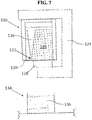
Fig. 7 is a schematic illustration of the filled and sealed package ofFig. 6 , disposed within a dispensing apparatus. -
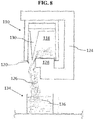
Fig. 8 is a schematic illustration of the package and dispensing apparatus ofFig. 7 , showing a dispensing operation of product from the package. - As used herein, the term "active" is defined as capable of acting on, interacting with or reacting with a selected material (e.g., moisture or oxygen) according to the invention. Examples of such actions or interactions may include absorption, adsorption or release of the selected material.
- As used herein, the term "active agent" is defined as a material that (1) is immiscible with the base polymer and when mixed and heated with the base polymer and the channeling agent, will not melt, i.e., has a melting point that is higher than the melting point for either the base polymer or the channeling agent, and (2) acts on, interacts or reacts with a selected material. The term "active agent" may include but is not limited to materials that absorb, adsorb or release the selected material(s). Active agents according to the invention may be in the form of particles, preferably minerals, but the invention should generally not be viewed as limited only to particulate active agents (unless a respective claim recites otherwise).
- As used herein, the term "base polymer" is a polymer optionally having a gas transmission rate of a selected material that is substantially lower than, lower than or substantially equivalent to, that of the channeling agent. By way of example, such a transmission rate would be a water vapor transmission rate in embodiments where the selected material is moisture and the active agent is a water absorbing desiccant. The primary function of the base polymer is to provide structure for the entrained polymer. Suitable base polymers may include thermoplastic polymers, e.g., polyolefins such as polypropylene and polyethylene, polyisoprene, polybutadiene, polybutene, polysiloxane, polycarbonates, polyamides, ethylene-vinyl acetate copolymers, ethylene-methacrylate copolymer, poly(vinyl chloride), polystyrene, polyesters, polyanhydrides, polyacrylianitrile, polysulfones, polyacrylic ester, acrylic, polyurethane and polyacetal, or copolymers or mixtures thereof.
- Referring to such a comparison of the base polymer and channeling agent water vapor transmission rate, in one embodiment, the channeling agent has a water vapor transmission rate of at least two times that of the base polymer. In another embodiment, the channeling agent has a water vapor transmission rate of at least five times that of the base polymer. In another embodiment, the channeling agent has a water vapor transmission rate of at least ten times that of the base polymer. In still another embodiment, the channeling agent has a water vapor transmission rate of at least twenty times that of the base polymer. In still another embodiment, the channeling agent has a water vapor transmission rate of at least fifty times that of the base polymer. In still another embodiment, the channeling agent has a water vapor transmission rate of at least one hundred times that of the base polymer.
- As used herein, the term "channeling agent" or "channeling agents" is defined as a material that is immiscible with the base polymer and has an affinity to transport a gas phase substance at a faster rate than the base polymer. Optionally, a channeling agent is capable of forming channels through the entrained polymer when formed by mixing the channeling agent with the base polymer. Optionally, such channels are capable of transmitting a selected material through the entrained polymer at a faster rate than in solely the base polymer.
- As used herein, the term "channels" or "interconnecting channels" is defined as passages formed of the channeling agent that penetrate through the base polymer and may be interconnected with each other.
- As used herein, the term "entrained polymer" is defined as a monolithic material formed of at least a base polymer with an active agent and optionally also a channeling agent entrained or distributed throughout. An entrained polymer thus includes two-phase polymers and three phase polymers. A "mineral loaded polymer" or "mineral loaded entrained polymer" is a type of entrained polymer, wherein the active agent is in the form of minerals, e.g., mineral particles such as molecular sieve or silica gel.
- As used herein, the term "monolithic," "monolithic structure" or "monolithic composition" is defined as a composition or material that does not consist of two or more discrete macroscopic layers or portions. Accordingly, a "monolithic composition" does not include a multi-layer composite.
- As used herein, the term "phase" is defined as a portion or component of a monolithic structure or composition that is uniformly distributed throughout, to give the structure or composition it's monolithic characteristics.
- As used herein, the term "selected material" is defined as a material that is acted upon by, or interacts or reacts with an active agent and is capable of being transmitted through the channels of an entrained polymer. For example, in embodiments in which a desiccant is used as an active agent, the selected material may be moisture or a gas that can be absorbed by the desiccant. In embodiments in which a releasing material is used as an active agent, the selected material may be an agent released by the releasing material, such as moisture, fragrance, or an antimicrobial agent. In embodiments in which an adsorbing material is used as an active agent, the selected material may be certain volatile organic compounds and the adsorbing material may be activated carbon.
- As used herein, the term "three phase" is defined as a monolithic composition or structure comprising three or more phases. An example of a three phase composition according to the invention would be an entrained polymer formed of a base polymer, active agent, and channeling agent. Optionally, a three phase composition or structure may include an additional phase, e.g., a colorant.
-
Figs. 1-4 illustrate exemplary entrained polymers 10, which may be usable according to aspects of the disclosed concept. The entrained polymers 10 each include a base polymer 25, a channeling agent 35 and an active agent 30. As shown, the channeling agent 35 forms interconnecting channels 45 through the entrained polymer 10. At least some of the active agent 30 is contained within these channels 45, such that the channels 45 communicate between the active agent 30 and the exterior of the entrained polymer 10 via channel openings 48 formed at outer surfaces of the entrained polymer 25. The active agent 30 can be, for example, any one of a variety of absorbing, adsorbing or releasing materials, as described in further detail below. While a channeling agent, e.g., 35, is preferred, the invention broadly includes entrained polymers that optionally do not include channeling agents. - Suitable channeling agents may include a polyglycol such as polyethylene glycol (PEG), ethylene-vinyl alcohol (EVOH), polyvinyl alcohol (PVOH), glycerin polyamine, polyurethane and polycarboxylic acid including polyacrylic acid or polymethacrylic acid. Alternatively, the channeling agent 35 can be, for example, a water insoluble polymer, such as a propylene oxide polymerisate-monobutyl ether, such as Polyglykol B01/240, produced by CLARIANT. In other embodiments, the channeling agent could be a propylene oxide polymerisate monobutyl ether, such as Polyglykol B01/20, produced by CLARIANT, propylene oxide polymerisate, such as Polyglykol D01/240, produced by CLARIANT, ethylene vinyl acetate, nylon 6, nylon 66, or any combination of the foregoing.
- Suitable active agents according to the invention include absorbing materials, such as desiccating compounds.
Fig. 4 illustrates an embodiment of an entrained polymer 10 according to the disclosed concept, in which the active agent 30 is an absorbing or adsorbing material, e.g., a desiccant. The arrows indicate the path of the selected material, for example moisture or gas, from an exterior of the entrained polymer 10, through the channels 45, to the particles of active agent 30, which absorb or adsorb the selected material. - If the active agent is a desiccant, any suitable desiccant for a given application may be used. Typically, physical absorption desiccants are preferred for many applications. These may include molecular sieves, silica gels, clays and starches. Alternatively, the desiccant may be a chemical compound that forms crystals containing water or compounds which react with water to form new compounds. Optionally, in any embodiment, the desiccant is a mineral.
- Optionally, in any embodiment, the active agent may be an oxygen scavenger.
- Suitable absorbing materials may also include: (1) metals and alloys such as, but not limited to, nickel, copper, aluminum, silicon, solder, silver, gold; (2) metal-plated particulates such as silver-plated copper, silver-placed nickel, silver-plated glass microspheres; (3) inorganics such as BaTiO3, SrTiO3, SiO2, Al2O3, ZnO, TiO2, MnO, CuO, Sb2O3, WC, fused silica, fumed silica, amorphous fused silica, sol-gel silica, sol-gel titanates, mixed titanates, ion exchange resins, lithium-containing ceramics, hollow glass microspheres; (4) carbon-based materials such as carbon, activated charcoal, carbon black, ketchem black, diamond powder; (5) elastomers, such as polybutadiene, polysiloxane, and semi-metals, ceramic and; (6) other fillers and pigments.
- In another example, the absorbing material may be a carbon dioxide scavenger, such as calcium oxide. In the presence of moisture and carbon dioxide, the calcium oxide is converted to calcium carbonate. Accordingly, calcium oxide may be used as the absorbing material in applications where absorption of carbon dioxide is needed. Such applications include preserving fresh foods (e.g., fruits and vegetables) that give off carbon dioxide.
- Other suitable active agents according to the invention include releasing materials. Such materials may comprise any suitable material that will release the selected material from the releasing material. The selected material released from the releasing material could be in the form of a solid, gel, liquid or gas. These substances can perform a variety of functions including: serving as a fragrance, flavor, or perfume source; supplying a biologically active ingredient such as pesticide, pest repellent, antimicrobials, bait, aromatic medicines, etc.; providing humidifying or desiccating substances; delivering air-borne active chemicals, such as corrosion inhibitors; ripening agents and odor-making agents.
- Suitable biocides for use as releasing materials in the entrained polymers of the present invention may include, but are not limited to, pesticides, herbicides, nematacides, fungicides, rodenticides and/or mixtures thereof. In addition to the biocides, the covering of the present invention can also release nutrients, plant growth regulators, pheromones, defoliants and/or mixture thereof.
- Quaternary ammonium compounds can also be used as releasing materials according to the invention. Such compounds not only function as surfactants, but also impart to the surface of the entrained polymer aseptic properties or establish conditions for reducing the number of microbial organisms, some of which can be pathogenic. Numerous other antimicrobial agents, such as benzalkonium chloride and related types of compounds as hexachlorophene, may also be used as releasing agents according to the invention. Other antimicrobial agents, such as chlorine dioxide releasing agents may be used.
- It is believed that the higher the active agent concentration in the mixture, the greater the absorption, adsorption or releasing capacity (as the case may be) will be of the final composition. However, too high an active agent concentration, particularly an active agent in the form of mineral particles, could cause the entrained polymer to be brittle once solidified. In addition, high mineral loading of an entrained polymer can render the molten mixture of active agent, base polymer and channeling agent to more difficult to either thermally form, extrude or injection mold. Applicant has found, therefore, that when brittleness of a mineral loaded entrained polymer is a concern, the percent (by weight) mineral loading of the entrained polymer should preferably be only so much as is absolutely needed to perform its active function, e.g., moisture absorption. In one embodiment, the mineral active agent loading level can range from 20% to 50%, preferably 30% to 50%, by weight with respect to the total weight of the entrained polymer. Optionally, if used, a channeling agent may be provided in a range of 2% to 10% by weight. Optionally, the base polymer may range from 50% to 80% by weight of the total composition. Optionally, a colorant is added, e.g., at about 2% by weight of the total composition.
- Referring to
FIG. 1 , aninsert 20 constructed from an entrained polymer that may be used according to an optional aspect of the disclosed concept, is illustrated. Theinsert 20 is in the form of a plug 55. It should be understood that the plug 55 is only representative of an optional configuration of an entrained polymer part and that the entrained polymer may be formed into different configurations and shapes, such as a puncturing element, as discussed below. - Referring to
FIG. 2 , a cross-sectional view is shown of the plug 55 that has been constructed from an entrained polymer 10 comprising the base polymer 25 that has been uniformly blended with the active agent 30 and the hydrophilic agent or channeling agent 35. In the illustration ofFIG. 2 , the entrained polymer has been solidified so that interconnecting channels 45 have formed throughout the entrained polymer 10 to establish passages throughout the solidified plug 55. As may be appreciated from bothFIGS. 1 and 2 , the passages terminate in channel openings 48 at exterior surfaces of the plug 55. -
FIG. 3 illustrates the embodiment of a plug 55 similar in construction and makeup to the plug 55 ofFIG. 2 , where interconnecting channels 45 are very fine compared to those ofFIG. 2 . This can result from the use of a dimer agent (i.e., a plasticizer) together with a channeling agent 35. The dimer agent may enhance the compatibility between the base polymer 25 and the channeling agent 35. This enhanced compatibility is facilitated by a lowered viscosity of the blend, which may promote a more thorough blending of the base polymer 25 and channeling agent 35, which under normal conditions can resist combination into a uniform solution. Upon solidification of the entrained polymer 10 having a dimer agent added thereto, the interconnecting channels 45 which are formed therethrough have a greater dispersion and a smaller porosity, thereby establishing a greater density of interconnecting channels throughout the plug 55. - Interconnecting channels 45, such as those disclosed herein, facilitate transmission of a desired material, such as moisture, gas or odor, through the base polymer 25, which generally resists permeation of these materials, thus acting as a barrier thereto. For this reason, the base polymer 25 itself acts as a barrier substance within which an active agent 30 may be entrained. The interconnecting channels 45 formed of the channeling agent 35 provide pathways for the desired material to move through the entrained polymer 10. Without these interconnecting channels 45, it is believed that relatively small quantities of the desired material would be transmitted through the base polymer 25 to or from the active agent 30. In the case in which the desired material is transmitted to the active agent 30, it may be absorbed by the active agent 30, for example in embodiments in which the active agent 30 is an active agent such as a desiccant or an oxygen absorber. In the case in which the desired material is transmitted from the active agent 30, it may be released from the active agent 30, for example in embodiments in which the active agent 30 is a releasing material, such as a fragrance or gas releasing material.
- Referring now to
Figs. 5 and 6 , there is shown an optional embodiment of apackage 110 according to the disclosed concept.Fig. 5 shows thepackage 110 prior to being filled with product and sealed.Fig. 6 shows thepackage 110 in a sealed position. - The
package 110 has abase 112 andsidewall 114 extending therefrom, defining an interior 118 of thepackage 110. Thepackage 110, prior to being sealed, includes anopening 116 leading to theinterior 118. As shown inFig. 6 , thepackage 110, when in the sealed position, includes acover 120 that encloses aproduct 126 stored within theinterior 118. Optionally, in any embodiment, theproduct 126 is a powder, for example a powder sensitive to moisture. The cover is optionally secured to a periphery of theopening 116, optionally by aheat seal 122. The heat seal 122 (if used) may be applied by an induction sealing process, as would be familiar to a skilled artisan. - The
package 110 further includes apuncture element 130 disposed within theinterior 118. Thepuncture element 130 includes a cutting edge or a sharp 132 facing thecover 120. The cutting edge or sharp 132 is optionally adjacent to thecover 120 or even touches thecover 120 when thepackage 110 is in the sealed position. Thepuncture element 130, optionally including the cutting edge or sharp 132 is composed of a mineral loaded polymer comprising a monolithic material formed of at least a base polymer and an active agent comprising minerals, as herein described. - Optionally, in any embodiment, the monolithic material comprises a channeling agent. Optionally, in any embodiment, the active agent in the monolithic material is a desiccant, for example a molecular sieve or a silica gel. Optionally, in any embodiment, the mineral loaded polymer has a mineral loading level of up to 50%, optionally from 20% to 50%, optionally from 30% to 50% by weight of the monolithic material. Optionally, in any embodiment, the active agent is a desiccant that absorbs moisture from the
interior 118 of thepackage 110 to maintain desired qualities of theproduct 126, such as extending freshness of the product and/or (in the case of a powder) preventing clumping or agglomerating of the product. Optionally, in any embodiment, thecover 120 comprises one or more layers that may include paper, cardboard, plastic, foil or a combination of one or more of the foregoing. Optionally, in any embodiment, the cover is flexible and has a thickness of from 0.01 mm to 1.00 mm, optionally from 0.01 mm to 0.40 mm. - Referring now to
Figs. 7 and8 , there is shown anoptional dispensing apparatus 124, which may be used according to methods fordispensing product 126 from thepackage 110. According to such methods, thepackage 110 is inserted into the dispensingapparatus 124. The dispensingapparatus 124 may be actuated to transition thepackage 110 from the sealed position to a dispensing position for dispensing theproduct 126 from thepackage 110. - In one optional method, once the
package 110 is inserted in thedispensing apparatus 124 and thedispensing apparatus 124 is actuated, pressure is applied onto thecover 120 in a direction normal to the cutting edge or the sharp 132. Optionally, this may be done by apressure member 128 pressing upward against thecover 120 and/or thepackage 110 being forced downward such that thepressure member 128 applies a force against thecover 120. In any event, the aforementioned pressure applied onto thecover 120 in a direction normal to the cutting edge or sharp 132 causes the cutting edge or sharp 132 to puncture thecover 120 or detach a portion of thecover 120 from thepackage 110. This, in turn, transitions thepackage 110 from the sealed position to a dispensing position in which theproduct 126 is dispensed through theopening 116. - Optionally, the
product 126 is dispensed into areceptacle 134 below thepackage 110 and filled with a liquid 136. Optionally, theproduct 126 is mixed with the liquid 136 to form a solution. - Optionally, in any embodiment, the base polymer is a polypropylene, e.g., S-1005 P.
- Optionally, in any embodiment, the disclosed concept is broadly directed to a puncture element (e.g., 130) having a cutting edge or a sharp (e.g., 132), wherein the puncture element (optionally, the entire puncture element, preferably including the cutting edge or sharp) is composed of a mineral loaded polymer comprising a monolithic material formed of at least a base polymer and an active agent comprising minerals. The disclosed concept is not limited to use of the puncture element in a package (e.g., 110), although that is currently its preferred application.
- Optionally, in any embodiment, the active agent in the puncture element is a desiccant, e.g., molecular sieve or silica gel. Optionally, in any embodiment of the puncture element, the mineral loaded polymer has a mineral loading level of up to 50%, optionally from 20% to 50%, optionally from 30% to 50% by weight of the monolithic material. Optionally, in any embodiment of the puncture element, if the puncture element has a sharp (i.e., a point or the like), the sharp has a diameter or cross sectional width of less than 1.0 mm, optionally less than 0.75 mm, optionally from 0.01 mm to 0.75 mm, optionally from 0.03 mm to 0.5 mm. Optionally, in any embodiment of the puncture element, if the puncture element has a cutting edge (i.e., a blade), the cutting edge has a width of less than 1.0 mm, optionally less than 0.75 mm, optionally from 0.01 mm to 0.75 mm, optionally from 0.03 mm to 0.5 mm. Optionally, in any embodiment, the puncture element is configured to puncture, without breaking and upon a sufficient application of pressure, a 40 micron thick aluminum foil cover. Optionally, the disclosed concept is directed to use of any embodiment of a puncture element as disclosed herein to puncture a cover, optionally a cover (e.g., 120) sealing a package (e.g., 110).
Claims (15)
- A method for dispensing a product (126) from a package (110), the method comprising the steps of:a. providing a package (110) having a base (112) and a sidewall (114) extending therefrom defining an interior (118) of the package (110), the package (110) further having an opening (116) leading to the interior (118) and a cover (120), sealing the opening (116) when the package (110) is in a sealed position to enclose a product (126) therein, the package (110) further comprising a puncture element (130) disposed within the interior (118), the puncture element (130) having a cutting edge or a sharp (132) facing the cover (120);b. inserting the package (110) in a dispensing apparatus (124); andc. actuating the dispensing apparatus (124) so that pressure is applied onto the cover (120) in a direction normal to the cutting edge or the sharp (132) until the cutting edge or the sharp (132) punctures or detaches at least part of the cover (120) so as to transition the package (110) from the sealed position to a dispensing position in which the product (126) is dispensed through the opening (116), characterized in that the puncture element (130) is composed of a mineral loaded polymer comprising a monolithic material formed of at least a base polymer and an active agent comprising minerals.
- The method of claim 1, wherein the monolithic material comprises a channeling agent.
- The method of claim 1 or 2, wherein the active agent is a desiccant, optionally a molecular sieve or a silica gel.
- The method of any previous claim, wherein the mineral loaded polymer has a mineral loading level of from 20% to 50%, optionally from 30% to 50% by weight of the monolithic material.
- The method of claim 4, wherein the active agent is a desiccant that absorbs moisture from the interior (118) of the package (110) in order to maintain desired qualities of the product (126).
- The method of any previous claim, wherein the product (126) is a powder.
- The method of any previous claim, wherein the cover (120), when in the sealed position, is secured about the opening (116) by a heat seal.
- The method of any previous claim, wherein the cover (120) comprises one or more layers selected from the group consisting of: paper, cardboard, plastic and foil.
- The method of any previous claim, wherein the cover (120) is flexible and has a thickness of from 0.01 mm to 1.00 mm, optionally from 0.01 mm to 0.50 mm.
- A package (110) having a base (112) and a sidewall (114) extending therefrom defining an interior (118) of the package (110), the package (110) further having an opening (116) leading to the interior (118) and a cover (120), sealing the opening (116) when the package (110) is in a sealed position, the package (110) further comprising a puncture element (130) disposed within the interior (118), the puncture element (130) having a cutting edge or a sharp (132) facing the cover (120), the package (110) being configured for insertion into a dispensing apparatus (124) such that when the dispensing apparatus (124) applies sufficient pressure onto the cover (120) in a direction normal to the cutting edge or the sharp (132), the cutting edge or the sharp (132) is configured to puncture or detach at least part of the cover (120) so as to transition the package (110) from the sealed position to a dispensing position in which a product (126) housed in the interior (118) may be dispensed through the opening (116), characterized in that the puncture element (130) is composed of a mineral loaded polymer comprising a monolithic material formed of at least a base polymer and an active agent comprising minerals.
- A puncture element (130) having a cutting edge or a sharp (132), wherein the puncture element (130) is composed of a mineral loaded polymer comprising a monolithic material formed of at least a base polymer and an active agent comprising minerals.
- The puncture element (130) of claim 11, wherein if the puncture element (130) has a sharp (132), the sharp (132) has a diameter or cross sectional width of less than 1.0 mm, optionally less than 0.75 mm, optionally from 0.01 mm to 0.75 mm, optionally from 0.03 mm to 0.5 mm.
- The puncture element (130) of claim 11, wherein if the puncture element (130) has a cutting edge (132), the cutting edge (132) has a width of less than 1.0 mm, optionally less than 0.75 mm, optionally from 0.01 mm to 0.75 mm, optionally from 0.03 mm to 0.5 mm.
- The puncture element (130) of claim 11, wherein the puncture element (130) is configured to puncture, without breaking and upon a sufficient application of pressure, a 40 micron thick aluminum foil cover.
- Use of the puncture element (130) of any of claims 11 to 14 to puncture a cover (120), optionally a cover (120) sealing a package (110).
Applications Claiming Priority (2)
| Application Number | Priority Date | Filing Date | Title |
|---|---|---|---|
| US201762500425P | 2017-05-02 | 2017-05-02 | |
| PCT/US2018/030709 WO2018204525A1 (en) | 2017-05-02 | 2018-05-02 | Mineral entrained plastic formulations as puncturing elements |
Publications (3)
| Publication Number | Publication Date |
|---|---|
| EP3619137A1 EP3619137A1 (en) | 2020-03-11 |
| EP3619137A4 EP3619137A4 (en) | 2020-12-30 |
| EP3619137B1 true EP3619137B1 (en) | 2021-10-13 |
Family
ID=64016626
Family Applications (1)
| Application Number | Title | Priority Date | Filing Date |
|---|---|---|---|
| EP18794294.1A Active EP3619137B1 (en) | 2017-05-02 | 2018-05-02 | Mineral entrained plastic formulations as puncturing elements |
Country Status (6)
| Country | Link |
|---|---|
| US (2) | US20200071054A1 (en) |
| EP (1) | EP3619137B1 (en) |
| JP (1) | JP7159207B2 (en) |
| CN (1) | CN110582452B (en) |
| CA (1) | CA3061175A1 (en) |
| WO (1) | WO2018204525A1 (en) |
Families Citing this family (2)
| Publication number | Priority date | Publication date | Assignee | Title |
|---|---|---|---|---|
| EP4659842A3 (en) * | 2019-04-17 | 2026-03-11 | CSP Technologies, Inc. | Polymer compositions comprising active carbon for formaldehyde sorption |
| WO2025101858A1 (en) * | 2023-11-08 | 2025-05-15 | Csp Technologies, Inc. | Packages containing desiccant entrained polymer components |
Family Cites Families (28)
| Publication number | Priority date | Publication date | Assignee | Title |
|---|---|---|---|---|
| US3347410A (en) * | 1966-08-31 | 1967-10-17 | Schwartzman Gilbert | Mixing assemblies for applicators |
| DE2539291C2 (en) | 1975-09-04 | 1983-07-28 | Henkel KGaA, 4000 Düsseldorf | Two-component packaging |
| US5255812A (en) * | 1992-07-01 | 1993-10-26 | Hsu Yu T | Container cap |
| GB9405249D0 (en) * | 1994-03-17 | 1994-04-27 | Smithkline Beecham Plc | Container |
| US6613405B1 (en) | 1995-04-19 | 2003-09-02 | Csp Technologies, Inc. | Monolithic composition having the capability of maintaining constant relative humidity in a package |
| US6194079B1 (en) | 1995-04-19 | 2001-02-27 | Capitol Specialty Plastics, Inc. | Monolithic polymer composition having an absorbing material |
| US6486231B1 (en) | 1995-04-19 | 2002-11-26 | Csp Technologies, Inc. | Co-continuous interconnecting channel morphology composition |
| US5911937A (en) * | 1995-04-19 | 1999-06-15 | Capitol Specialty Plastics, Inc. | Desiccant entrained polymer |
| US6124006A (en) | 1995-04-19 | 2000-09-26 | Capitol Specialty Plastics, Inc. | Modified polymers having controlled transmission rates |
| US6130263A (en) | 1995-04-19 | 2000-10-10 | Capitol Specialty Plastics, Inc. | Desiccant entrained polymer |
| US6080350A (en) * | 1995-04-19 | 2000-06-27 | Capitol Specialty Plastics, Inc. | Dessicant entrained polymer |
| US6214255B1 (en) | 1995-04-19 | 2001-04-10 | Capitol Specialty Plastics, Inc. | Desiccant entrained polymer |
| US5941380A (en) | 1998-01-10 | 1999-08-24 | Rothman; David | Device for dispensing flowable material |
| AU6066799A (en) | 1999-11-26 | 2001-05-31 | Lily Hsu | Container device for separately enclosing two different substances |
| CN1314295A (en) * | 2000-03-21 | 2001-09-26 | 吴振东 | Lateral press opened pneumatic pipe-like container |
| US6543612B2 (en) | 2001-05-21 | 2003-04-08 | 3M Innovative Properties Company | Container for compositions made of two or more components |
| KR200256383Y1 (en) | 2001-09-19 | 2001-12-14 | 송감섭 | A case cam use separayion charge and mix to powder or solution of different each otater ponenit |
| US6926138B1 (en) | 2003-08-18 | 2005-08-09 | Mark Floyd Basham | Bottle cap including an additive dispenser |
| AU2005291427A1 (en) * | 2004-10-06 | 2006-04-13 | Boehringer Ingelheim International Gmbh | Dispensing device, storage device and method for dispensing powder |
| NZ540021A (en) | 2005-05-16 | 2008-01-31 | Sji Ltd | Dispensing closure, or cap, for use on containers such as bottles |
| JP5124411B2 (en) | 2008-09-29 | 2013-01-23 | 株式会社吉野工業所 | Refill container |
| US8701906B1 (en) * | 2008-12-31 | 2014-04-22 | Blast Max Llc | Ingredient dispensing cap for mixing beverages with push-pull drinking spout |
| JP5674352B2 (en) | 2010-06-29 | 2015-02-25 | 日本クロージャー株式会社 | Mixing container lid |
| FR2971770B1 (en) * | 2011-02-21 | 2013-03-22 | Eric Noel | PACKAGED INTERNAL POCKET WITH A BREAKING MEANS |
| CN103391887A (en) | 2011-03-08 | 2013-11-13 | Csp技术公司 | Cap and container assembly for a dosage product |
| FR2973355B1 (en) | 2011-03-30 | 2014-05-23 | Cadorit Ag | PACKING DEVICE SUITABLE FOR PACKING SEPARATELY A FIRST AND A SECOND FLUID |
| CN105073876A (en) | 2013-03-14 | 2015-11-18 | Csp技术公司 | Agent for the formation of channels in an entrained polymer, entrained polymer containing such an agent, process for producing such an entrained polymer and product containing the same |
| DE202016002273U1 (en) | 2016-04-06 | 2016-05-24 | Bosch + Wagner Gmbh | Dosing capsule for additives for mix beverage bottles |
-
2018
- 2018-05-02 CA CA3061175A patent/CA3061175A1/en active Pending
- 2018-05-02 CN CN201880028483.2A patent/CN110582452B/en active Active
- 2018-05-02 JP JP2019560302A patent/JP7159207B2/en active Active
- 2018-05-02 WO PCT/US2018/030709 patent/WO2018204525A1/en not_active Ceased
- 2018-05-02 EP EP18794294.1A patent/EP3619137B1/en active Active
- 2018-05-02 US US16/609,848 patent/US20200071054A1/en not_active Abandoned
-
2021
- 2021-07-16 US US17/305,866 patent/US11767153B2/en active Active
Also Published As
| Publication number | Publication date |
|---|---|
| US20200071054A1 (en) | 2020-03-05 |
| EP3619137A1 (en) | 2020-03-11 |
| JP2020518523A (en) | 2020-06-25 |
| CA3061175A1 (en) | 2018-11-08 |
| EP3619137A4 (en) | 2020-12-30 |
| US11767153B2 (en) | 2023-09-26 |
| CN110582452B (en) | 2021-03-26 |
| WO2018204525A1 (en) | 2018-11-08 |
| JP7159207B2 (en) | 2022-10-24 |
| CN110582452A (en) | 2019-12-17 |
| US20210339937A1 (en) | 2021-11-04 |
Similar Documents
| Publication | Publication Date | Title |
|---|---|---|
| JP6991160B2 (en) | How to make containers, container inserts, and related containers | |
| EP1732812B2 (en) | Active film adhered to flexible packages and method thereof | |
| JP2019218555A (en) | Material for forming channels in entrained polymer, entrained polymer containing such material, process for producing such entrained polymer and product containing the same | |
| US20250178265A1 (en) | Blow molded containers and methods of making the same | |
| EP0892673B1 (en) | Desiccant entrained polymer | |
| US11767153B2 (en) | Mineral entrained plastic formulations as puncturing elements | |
| US20180290453A1 (en) | Agent for the formation of channels in an entrained polymer, entrained polymer containing such an agent, process for producing such an entrained polymer and product containing the same | |
| HK40026089A (en) | Mineral entrained plastic formulations as puncturing elements | |
| HK40026089B (en) | Mineral entrained plastic formulations as puncturing elements | |
| EP3813790B1 (en) | LOW-ODOR OR ODOR-FREE DRYING AGENT POLYMER | |
| WO2025101858A1 (en) | Packages containing desiccant entrained polymer components | |
| KR20230010627A (en) | Addition of Active Compounds to Keep Products in Package, and Methods of Making and Using The Same |
Legal Events
| Date | Code | Title | Description |
|---|---|---|---|
| STAA | Information on the status of an ep patent application or granted ep patent |
Free format text: STATUS: THE INTERNATIONAL PUBLICATION HAS BEEN MADE |
|
| PUAI | Public reference made under article 153(3) epc to a published international application that has entered the european phase |
Free format text: ORIGINAL CODE: 0009012 |
|
| STAA | Information on the status of an ep patent application or granted ep patent |
Free format text: STATUS: REQUEST FOR EXAMINATION WAS MADE |
|
| 17P | Request for examination filed |
Effective date: 20191121 |
|
| AK | Designated contracting states |
Kind code of ref document: A1 Designated state(s): AL AT BE BG CH CY CZ DE DK EE ES FI FR GB GR HR HU IE IS IT LI LT LU LV MC MK MT NL NO PL PT RO RS SE SI SK SM TR |
|
| AX | Request for extension of the european patent |
Extension state: BA ME |
|
| RIN1 | Information on inventor provided before grant (corrected) |
Inventor name: KIBELE, RALF Inventor name: ERTZSCHEID, ANDRE |
|
| DAV | Request for validation of the european patent (deleted) | ||
| DAX | Request for extension of the european patent (deleted) | ||
| A4 | Supplementary search report drawn up and despatched |
Effective date: 20201130 |
|
| RIC1 | Information provided on ipc code assigned before grant |
Ipc: B01D 53/26 20060101ALI20201124BHEP Ipc: B29B 7/00 20060101ALI20201124BHEP Ipc: F26B 21/08 20060101ALI20201124BHEP Ipc: B65D 81/26 20060101AFI20201124BHEP Ipc: F26B 25/16 20060101ALI20201124BHEP Ipc: C08J 9/00 20060101ALI20201124BHEP Ipc: F26B 5/16 20060101ALI20201124BHEP Ipc: B01J 20/28 20060101ALI20201124BHEP Ipc: B65D 83/00 20060101ALI20201124BHEP Ipc: B65D 47/38 20060101ALI20201124BHEP |
|
| REG | Reference to a national code |
Ref country code: HK Ref legal event code: DE Ref document number: 40026089 Country of ref document: HK |
|
| GRAP | Despatch of communication of intention to grant a patent |
Free format text: ORIGINAL CODE: EPIDOSNIGR1 |
|
| STAA | Information on the status of an ep patent application or granted ep patent |
Free format text: STATUS: GRANT OF PATENT IS INTENDED |
|
| INTG | Intention to grant announced |
Effective date: 20210518 |
|
| GRAS | Grant fee paid |
Free format text: ORIGINAL CODE: EPIDOSNIGR3 |
|
| GRAA | (expected) grant |
Free format text: ORIGINAL CODE: 0009210 |
|
| STAA | Information on the status of an ep patent application or granted ep patent |
Free format text: STATUS: THE PATENT HAS BEEN GRANTED |
|
| AK | Designated contracting states |
Kind code of ref document: B1 Designated state(s): AL AT BE BG CH CY CZ DE DK EE ES FI FR GB GR HR HU IE IS IT LI LT LU LV MC MK MT NL NO PL PT RO RS SE SI SK SM TR |
|
| REG | Reference to a national code |
Ref country code: GB Ref legal event code: FG4D |
|
| REG | Reference to a national code |
Ref country code: CH Ref legal event code: EP |
|
| REG | Reference to a national code |
Ref country code: DE Ref legal event code: R096 Ref document number: 602018025080 Country of ref document: DE |
|
| REG | Reference to a national code |
Ref country code: IE Ref legal event code: FG4D |
|
| REG | Reference to a national code |
Ref country code: AT Ref legal event code: REF Ref document number: 1438060 Country of ref document: AT Kind code of ref document: T Effective date: 20211115 |
|
| REG | Reference to a national code |
Ref country code: LT Ref legal event code: MG9D |
|
| REG | Reference to a national code |
Ref country code: NL Ref legal event code: MP Effective date: 20211013 |
|
| REG | Reference to a national code |
Ref country code: AT Ref legal event code: MK05 Ref document number: 1438060 Country of ref document: AT Kind code of ref document: T Effective date: 20211013 |
|
| PG25 | Lapsed in a contracting state [announced via postgrant information from national office to epo] |
Ref country code: RS Free format text: LAPSE BECAUSE OF FAILURE TO SUBMIT A TRANSLATION OF THE DESCRIPTION OR TO PAY THE FEE WITHIN THE PRESCRIBED TIME-LIMIT Effective date: 20211013 Ref country code: LT Free format text: LAPSE BECAUSE OF FAILURE TO SUBMIT A TRANSLATION OF THE DESCRIPTION OR TO PAY THE FEE WITHIN THE PRESCRIBED TIME-LIMIT Effective date: 20211013 Ref country code: FI Free format text: LAPSE BECAUSE OF FAILURE TO SUBMIT A TRANSLATION OF THE DESCRIPTION OR TO PAY THE FEE WITHIN THE PRESCRIBED TIME-LIMIT Effective date: 20211013 Ref country code: BG Free format text: LAPSE BECAUSE OF FAILURE TO SUBMIT A TRANSLATION OF THE DESCRIPTION OR TO PAY THE FEE WITHIN THE PRESCRIBED TIME-LIMIT Effective date: 20220113 Ref country code: AT Free format text: LAPSE BECAUSE OF FAILURE TO SUBMIT A TRANSLATION OF THE DESCRIPTION OR TO PAY THE FEE WITHIN THE PRESCRIBED TIME-LIMIT Effective date: 20211013 |
|
| PG25 | Lapsed in a contracting state [announced via postgrant information from national office to epo] |
Ref country code: IS Free format text: LAPSE BECAUSE OF FAILURE TO SUBMIT A TRANSLATION OF THE DESCRIPTION OR TO PAY THE FEE WITHIN THE PRESCRIBED TIME-LIMIT Effective date: 20220213 Ref country code: SE Free format text: LAPSE BECAUSE OF FAILURE TO SUBMIT A TRANSLATION OF THE DESCRIPTION OR TO PAY THE FEE WITHIN THE PRESCRIBED TIME-LIMIT Effective date: 20211013 Ref country code: PT Free format text: LAPSE BECAUSE OF FAILURE TO SUBMIT A TRANSLATION OF THE DESCRIPTION OR TO PAY THE FEE WITHIN THE PRESCRIBED TIME-LIMIT Effective date: 20220214 Ref country code: PL Free format text: LAPSE BECAUSE OF FAILURE TO SUBMIT A TRANSLATION OF THE DESCRIPTION OR TO PAY THE FEE WITHIN THE PRESCRIBED TIME-LIMIT Effective date: 20211013 Ref country code: NO Free format text: LAPSE BECAUSE OF FAILURE TO SUBMIT A TRANSLATION OF THE DESCRIPTION OR TO PAY THE FEE WITHIN THE PRESCRIBED TIME-LIMIT Effective date: 20220113 Ref country code: NL Free format text: LAPSE BECAUSE OF FAILURE TO SUBMIT A TRANSLATION OF THE DESCRIPTION OR TO PAY THE FEE WITHIN THE PRESCRIBED TIME-LIMIT Effective date: 20211013 Ref country code: LV Free format text: LAPSE BECAUSE OF FAILURE TO SUBMIT A TRANSLATION OF THE DESCRIPTION OR TO PAY THE FEE WITHIN THE PRESCRIBED TIME-LIMIT Effective date: 20211013 Ref country code: HR Free format text: LAPSE BECAUSE OF FAILURE TO SUBMIT A TRANSLATION OF THE DESCRIPTION OR TO PAY THE FEE WITHIN THE PRESCRIBED TIME-LIMIT Effective date: 20211013 Ref country code: GR Free format text: LAPSE BECAUSE OF FAILURE TO SUBMIT A TRANSLATION OF THE DESCRIPTION OR TO PAY THE FEE WITHIN THE PRESCRIBED TIME-LIMIT Effective date: 20220114 Ref country code: ES Free format text: LAPSE BECAUSE OF FAILURE TO SUBMIT A TRANSLATION OF THE DESCRIPTION OR TO PAY THE FEE WITHIN THE PRESCRIBED TIME-LIMIT Effective date: 20211013 |
|
| REG | Reference to a national code |
Ref country code: DE Ref legal event code: R097 Ref document number: 602018025080 Country of ref document: DE |
|
| PG25 | Lapsed in a contracting state [announced via postgrant information from national office to epo] |
Ref country code: SM Free format text: LAPSE BECAUSE OF FAILURE TO SUBMIT A TRANSLATION OF THE DESCRIPTION OR TO PAY THE FEE WITHIN THE PRESCRIBED TIME-LIMIT Effective date: 20211013 Ref country code: SK Free format text: LAPSE BECAUSE OF FAILURE TO SUBMIT A TRANSLATION OF THE DESCRIPTION OR TO PAY THE FEE WITHIN THE PRESCRIBED TIME-LIMIT Effective date: 20211013 Ref country code: RO Free format text: LAPSE BECAUSE OF FAILURE TO SUBMIT A TRANSLATION OF THE DESCRIPTION OR TO PAY THE FEE WITHIN THE PRESCRIBED TIME-LIMIT Effective date: 20211013 Ref country code: EE Free format text: LAPSE BECAUSE OF FAILURE TO SUBMIT A TRANSLATION OF THE DESCRIPTION OR TO PAY THE FEE WITHIN THE PRESCRIBED TIME-LIMIT Effective date: 20211013 Ref country code: DK Free format text: LAPSE BECAUSE OF FAILURE TO SUBMIT A TRANSLATION OF THE DESCRIPTION OR TO PAY THE FEE WITHIN THE PRESCRIBED TIME-LIMIT Effective date: 20211013 Ref country code: CZ Free format text: LAPSE BECAUSE OF FAILURE TO SUBMIT A TRANSLATION OF THE DESCRIPTION OR TO PAY THE FEE WITHIN THE PRESCRIBED TIME-LIMIT Effective date: 20211013 |
|
| PLBE | No opposition filed within time limit |
Free format text: ORIGINAL CODE: 0009261 |
|
| STAA | Information on the status of an ep patent application or granted ep patent |
Free format text: STATUS: NO OPPOSITION FILED WITHIN TIME LIMIT |
|
| 26N | No opposition filed |
Effective date: 20220714 |
|
| PG25 | Lapsed in a contracting state [announced via postgrant information from national office to epo] |
Ref country code: AL Free format text: LAPSE BECAUSE OF FAILURE TO SUBMIT A TRANSLATION OF THE DESCRIPTION OR TO PAY THE FEE WITHIN THE PRESCRIBED TIME-LIMIT Effective date: 20211013 |
|
| PG25 | Lapsed in a contracting state [announced via postgrant information from national office to epo] |
Ref country code: SI Free format text: LAPSE BECAUSE OF FAILURE TO SUBMIT A TRANSLATION OF THE DESCRIPTION OR TO PAY THE FEE WITHIN THE PRESCRIBED TIME-LIMIT Effective date: 20211013 |
|
| REG | Reference to a national code |
Ref country code: BE Ref legal event code: MM Effective date: 20220531 |
|
| PG25 | Lapsed in a contracting state [announced via postgrant information from national office to epo] |
Ref country code: MC Free format text: LAPSE BECAUSE OF FAILURE TO SUBMIT A TRANSLATION OF THE DESCRIPTION OR TO PAY THE FEE WITHIN THE PRESCRIBED TIME-LIMIT Effective date: 20211013 Ref country code: LU Free format text: LAPSE BECAUSE OF NON-PAYMENT OF DUE FEES Effective date: 20220502 |
|
| PG25 | Lapsed in a contracting state [announced via postgrant information from national office to epo] |
Ref country code: IE Free format text: LAPSE BECAUSE OF NON-PAYMENT OF DUE FEES Effective date: 20220502 |
|
| PG25 | Lapsed in a contracting state [announced via postgrant information from national office to epo] |
Ref country code: IT Free format text: LAPSE BECAUSE OF FAILURE TO SUBMIT A TRANSLATION OF THE DESCRIPTION OR TO PAY THE FEE WITHIN THE PRESCRIBED TIME-LIMIT Effective date: 20211013 Ref country code: BE Free format text: LAPSE BECAUSE OF NON-PAYMENT OF DUE FEES Effective date: 20220531 |
|
| P01 | Opt-out of the competence of the unified patent court (upc) registered |
Effective date: 20230523 |
|
| PG25 | Lapsed in a contracting state [announced via postgrant information from national office to epo] |
Ref country code: MK Free format text: LAPSE BECAUSE OF FAILURE TO SUBMIT A TRANSLATION OF THE DESCRIPTION OR TO PAY THE FEE WITHIN THE PRESCRIBED TIME-LIMIT Effective date: 20211013 Ref country code: CY Free format text: LAPSE BECAUSE OF FAILURE TO SUBMIT A TRANSLATION OF THE DESCRIPTION OR TO PAY THE FEE WITHIN THE PRESCRIBED TIME-LIMIT Effective date: 20211013 |
|
| PG25 | Lapsed in a contracting state [announced via postgrant information from national office to epo] |
Ref country code: HU Free format text: LAPSE BECAUSE OF FAILURE TO SUBMIT A TRANSLATION OF THE DESCRIPTION OR TO PAY THE FEE WITHIN THE PRESCRIBED TIME-LIMIT; INVALID AB INITIO Effective date: 20180502 |
|
| PG25 | Lapsed in a contracting state [announced via postgrant information from national office to epo] |
Ref country code: TR Free format text: LAPSE BECAUSE OF FAILURE TO SUBMIT A TRANSLATION OF THE DESCRIPTION OR TO PAY THE FEE WITHIN THE PRESCRIBED TIME-LIMIT Effective date: 20211013 |
|
| PG25 | Lapsed in a contracting state [announced via postgrant information from national office to epo] |
Ref country code: MT Free format text: LAPSE BECAUSE OF FAILURE TO SUBMIT A TRANSLATION OF THE DESCRIPTION OR TO PAY THE FEE WITHIN THE PRESCRIBED TIME-LIMIT Effective date: 20211013 |
|
| PGFP | Annual fee paid to national office [announced via postgrant information from national office to epo] |
Ref country code: DE Payment date: 20250529 Year of fee payment: 8 |
|
| PGFP | Annual fee paid to national office [announced via postgrant information from national office to epo] |
Ref country code: GB Payment date: 20250527 Year of fee payment: 8 |
|
| PGFP | Annual fee paid to national office [announced via postgrant information from national office to epo] |
Ref country code: FR Payment date: 20250526 Year of fee payment: 8 |
|
| PGFP | Annual fee paid to national office [announced via postgrant information from national office to epo] |
Ref country code: CH Payment date: 20250601 Year of fee payment: 8 |