EP3618560A1 - Wireless communication method and device - Google Patents
Wireless communication method and device Download PDFInfo
- Publication number
- EP3618560A1 EP3618560A1 EP17913519.9A EP17913519A EP3618560A1 EP 3618560 A1 EP3618560 A1 EP 3618560A1 EP 17913519 A EP17913519 A EP 17913519A EP 3618560 A1 EP3618560 A1 EP 3618560A1
- Authority
- EP
- European Patent Office
- Prior art keywords
- secondary service
- service node
- cell
- terminal device
- node
- Prior art date
- Legal status (The legal status is an assumption and is not a legal conclusion. Google has not performed a legal analysis and makes no representation as to the accuracy of the status listed.)
- Withdrawn
Links
Images


Classifications
-
- H—ELECTRICITY
- H04—ELECTRIC COMMUNICATION TECHNIQUE
- H04W—WIRELESS COMMUNICATION NETWORKS
- H04W24/00—Supervisory, monitoring or testing arrangements
- H04W24/10—Scheduling measurement reports ; Arrangements for measurement reports
-
- H—ELECTRICITY
- H04—ELECTRIC COMMUNICATION TECHNIQUE
- H04W—WIRELESS COMMUNICATION NETWORKS
- H04W48/00—Access restriction; Network selection; Access point selection
- H04W48/18—Selecting a network or a communication service
-
- H—ELECTRICITY
- H04—ELECTRIC COMMUNICATION TECHNIQUE
- H04W—WIRELESS COMMUNICATION NETWORKS
- H04W76/00—Connection management
- H04W76/10—Connection setup
- H04W76/15—Setup of multiple wireless link connections
Definitions
- the present disclosure relates to the field of communication technology, in particular, relates to a wireless communication method and a wireless communication device.
- the primary service node can implement main control functions for terminals, including functions such as accessing, paging, and adding/deleting/modifying an secondary service node, carrier configuration and measurement reporting configuration.
- the secondary service node mainly implements data transmission to and from the terminals.
- Embodiments of the present application provides a wireless communication method and a wireless communication device, and a terminal device performs measurement and/or measurement result reporting on the secondary service node in the network according to the indication of the primary service node, so that the measurement and/or measurement result reporting of the secondary service node can be implemented.
- a wireless communication method including: sending, by a primary service node serving a terminal device in a first network, first information to the terminal device, wherein the first information is used to indicate the terminal device to perform measurement and/or measurement result reporting on a secondary service node in a second network.
- the secondary service node corresponding to the single measurement and/or the single measurement result reporting indicated by the first information includes at least two secondary service nodes.
- the at least two secondary service nodes include a first secondary service node and a second secondary service node; and the first secondary service node is a node that is currently serving the terminal device, and the second secondary service node is a node that is not currently serving the terminal device.
- the first information is further used to indicate to the terminal device a first event for triggering the measurement result reporting; and the first event is used to indicate to perform measurement result reporting when a comparison result between measurement results of the at least two secondary service nodes satisfies a triggering condition, and/or, to perform measurement result reporting when comparison results respectively between the measurement results of the at least two secondary service nodes and predetermined values satisfy a triggering condition.
- the first event is: a channel quality of a first cell of the second secondary service node being better than a channel quality of a second cell of the first secondary service node by at least a first predetermined value.
- the first cell includes at least one cell in which the second secondary service node being able to provide service for the terminal device; and the second cell includes all secondary service cells or the secondary service cell with the best channel quality in which the first secondary service node providing service for the terminal device.
- the first cell includes at least one cell in which the second secondary service node being able to provide service for the terminal device;
- the second cell includes all cells, a cell having a channel quality, all service cell, the secondary service cell with the best channel quality, a primary service cell or a secondary service cell in which the first secondary service node providing service for the terminal device.
- the first event is: a channel quality of a third cell of the first secondary service node being worse than or equal to a second predetermined value, and a channel quality of a fourth cell of the second secondary service node being better than or equal to a third predetermined value.
- the third cell is all cells, a cell with the best channel quality, all service cells, a service cell with the best channel quality, a primary service cell or a secondary service cell of the first secondary service node; and the fourth cell is at least one cell in which the second secondary service node being able to provide service for the terminal device.
- the first information indicates that the secondary service node that needs to be measured includes a third secondary service node, wherein the third secondary service node is a node that is currently serving the terminal device; the first information is further used to indicate to the terminal device a second event for triggering the measurement result reporting; and the second event is used to indicate that a channel quality of a service cell of the third secondary service node is better than or equal to a fourth predetermined value.
- the first information indicates that the secondary service node on which the measurement and/or the measurement result reporting needs to be performed includes a fourth secondary service node, wherein the fourth secondary service node is a node that is currently serving the terminal device; the first information is further used to indicate to the terminal device a third event for triggering the measurement result reporting; and the third event is used to indicate that a channel quality of a fifth cell of the fourth service node is worse than or equal to a fifth predetermined value.
- the fifth cell is all cells, a cell with the best channel quality, all service cells or a service cell with the best channel quality of the fourth secondary service node.
- the first information includes a first field, wherein the first field identifies a network to which the secondary service node corresponding to the first information belongs and/or a number of the secondary service nodes corresponding to the first information.
- the first information includes a second field, and the second field identifies a network to which the secondary service node corresponding to the measurement and/or the measurement result reporting belongs and/or a number of secondary service nodes that need to be measured.
- the first information carries at least one of a frequency identifier, a node identifier ID, a cell ID, and a network type of the secondary service node.
- a network type of the first network is different from a network type of the second network.
- the method further includes:
- a wireless communication method including:
- the secondary service node corresponding to the single measurement and/or the single measurement result reporting indicated by the first information includes at least two secondary service nodes.
- the at least two secondary service nodes include a first secondary service node and a second secondary service node
- the first secondary service node is a node that is currently serving the terminal device
- the second secondary service node is a node that is not currently serving the terminal device.
- the first information is further used to indicate to the terminal device a first event for triggering the measurement result reporting; and the first event is used to indicate to perform measurement result reporting when a comparison result between the measurement results of the at least two secondary service nodes satisfies a triggering condition, and/or, to perform measurement result reporting when comparison results respectively between the measurement results of the at least two secondary service nodes and predetermined values satisfy a triggering condition.
- the first event is: a channel quality of a first cell of the second secondary service node being better than a channel quality of a second cell of the first secondary service node by at least a first predetermined value.
- the first cell includes at least one cell in which the second secondary service node being able to provide service for the terminal device; and the second cell includes all secondary service cells or the secondary service cell with the best channel quality in which the first secondary service node providing service for the terminal device.
- the first cell includes at least one cell in which the second secondary service node being able to provide service for the terminal device; and the second cell includes all cells, a cell having a channel quality, all service cell, the secondary service cell with the best channel quality, a primary service cell or a secondary service cell in which the first secondary service node providing service for the terminal device.
- the first event is: a channel quality of a third cell of the first secondary service node being worse than or equal to a second predetermined value, and a channel quality of a fourth cell of the second secondary service node being better than or equal to a third predetermined value.
- the third cell is all cells, a cell with the best channel quality, all service cells, a service cell with the best channel quality, a primary service cell or a secondary service cell of the first secondary service node; and the fourth cell is at least one cell in which the second secondary service node being able to provide service for the terminal device.
- the first information indicates that the secondary service node that needs to be measured includes a third service node, wherein the third service node is a node that is currently serving the terminal device; the first information is further used to indicate to the terminal device a second event for triggering the measurement result reporting; and the second event is used to indicate that a channel quality of a service cell of the third secondary service node is better than or equal to a fourth predetermined value.
- the first information indicates that the secondary service node on which the measurement and/or the measurement result reporting needs to be performed includes a fourth secondary service node, wherein the fourth secondary service node is a node that is currently serving the terminal device; the first information is further used to indicate to the terminal device a third event for triggering the measurement result reporting; and the third event is used to indicate that a channel quality of a fifth cell of the fourth secondary service node is worse than or equal to a fifth predetermined value.
- the fifth cell is all cells, a cell with the best channel quality, all service cells or a service cell with the best channel quality of the fourth secondary service node.
- the first information includes a first field, and the first field identifies a network to which the secondary service node corresponding to the first information belongs and/or a number of the secondary service nodes corresponding to the first information.
- the first information includes a second field
- the second field identifies a network to which the secondary service node corresponding to the measurement and/or the measurement result reporting belongs and/or a number of secondary service nodes that need to be measured.
- the first information carries at least one of a frequency identifier, a node identifier ID, a cell ID, and a network type of the secondary service node.
- a network type of the first network is different from a network type of the second network.
- a service node for performing any of the above first aspect or any of the possible implementations of the first aspect.
- the service node includes functional modules for performing the method of the first aspect or any of the possible implementations of the first aspect described above.
- a terminal device for performing any of the above second aspect or any of the possible implementations of the second aspect.
- the terminal device includes functional modules for performing the method of the second aspect or any of the possible implementations of the second aspect described above.
- a service node including a processor, a memory, and a transceiver.
- the processor, the memory, and the transceiver communicate with each other through an internal connection path to transfer control and/or data signals, such that the service node performs the method of the first aspect or any of the possible implementations of the first aspect described above.
- a terminal device including a processor, a memory, and a transceiver.
- the processor, the memory, and the transceiver communicate with each other through an internal connection path to transfer control and/or data signals, such that the service node performs the method of the second aspect or any of the possible implementations of the second aspect described above.
- a computer readable medium for storing a computer program, the computer program including instructions for performing any of the above methods or any possible implementations.
- a computer program product including instructions, when being executed on a computer, causes the computer to perform any of the above methods or method in any possible implementations.
- the terminal device performs measurement and/or measurement result reporting on the secondary service node in the network according to the indication of the primary service node, so that the primary service node can configure a proper secondary service node for the terminal device.
- GSM Global System of Mobile communication
- CDMA Code Division Multiple Access
- WCDMA Wideband Code Division Multiple Access
- GPRS General Packet Radio Service
- LTE Long Term Evolution
- FDD Frequency Division Duplex
- TDD Time Division Duplex
- UMTS Universal Mobile Telecommunication System
- WiMAX Worldwide Interoperability for Microwave Access
- NR New Radio
- FIG. 1 is a schematic flow diagram of a wireless communication system 100 according to an embodiment of the present application.
- the system shown in FIG. 1 includes a primary service node 10, a secondary service node 20, and a terminal device 30.
- the primary service node 10 can implement the main control functions for the terminal device 30, including accessing, paging, adding/deleting/modifying an secondary service node 20, carrier configuration, measurement reporting configuration, and the like; and the secondary service node 20 can implement data transmission to and from the terminal device 30.
- the primary service node can perform configuration of the measurement and/or measurement result reporting on the terminal device 30.
- the primary service node 10 when the primary service node 10 adds, deletes, or modifies the secondary service node 20 for the terminal device 30, the primary service node 10 configures the terminal device 30 to perform measurement and/or measurement result reporting on the secondary service node 20, so that the terminal device 30 can perform measurement on the secondary service node 20 and report the measurement result to the primary service node 10, to assist the primary service node 10 in performing the configuration operation of the secondary service node.
- the primary service node 10 or the secondary service node 20 can be a device that is in communication with a terminal device.
- the primary service node 10 or the secondary service node 20 can provide communication coverage for a particular geographic area and can communicate with a terminal device (e.g., UE) located within the coverage area.
- a terminal device e.g., UE
- the primary service node 10 or the secondary service node 20 can be a base station (Base Transceiver Station, BTS) in a GSM system or a CDMA system, or can be a base station (NodeB, NB) in a WCDMA system, or can be an evolved base station (Evolutional Node B, eNB or eNodeB) in an LTE system, or a wireless controller in a Cloud Radio Access Network (CRAN), or can be a relay station, an access point, an in-vehicle device, a wearable device, a network side device in a future 5G network or a network device in a Public Land Mobile Network (PLMN) evolved in the future, and the like.
- BTS Base Transceiver Station
- NodeB, NB base station
- Evolutional Node B, eNB or eNodeB evolved base station
- CRAN Cloud Radio Access Network
- PLMN Public Land Mobile Network
- the terminal device 30 can be mobile or fixed.
- the terminal device 30 can refer to an access terminal, a user equipment (User Equipment, UE), a subscriber unit, a subscriber station, a mobile station, a mobile platform, a remote station, a remote terminal, a mobile device, a user terminal, a terminal, a wireless communication device, a user agent, or a user device.
- UE User Equipment
- the access terminal can be a cellular phone, a cordless phone, a Session Initiation Protocol (SIP) phone, a Wireless Local Loop (WLL) station, a Personal Digital Assistant (PDA), a handheld device with wireless communication functional, a computing device or other processing device connected to a wireless modem, an in-vehicle device, a wearable device, a terminal device in future 5G networks, or a terminal device in future evolved PLMNs, and the like.
- SIP Session Initiation Protocol
- WLL Wireless Local Loop
- PDA Personal Digital Assistant
- the 5G system or network can also be referred to as a New Radio (NR) system or network.
- NR New Radio
- the wireless communication system 100 can further include other network entities, such as a network controller, a mobility management entity, and the like, which the embodiment of the present application does not limit.
- network entities such as a network controller, a mobility management entity, and the like, which the embodiment of the present application does not limit.
- system and “network” are used interchangeably herein.
- a and/or B can indicate three situations that: respectively only A exists, both A and B exist, and only B exists.
- character “/” herein generally indicates that the associated objects in the context are in an "or” relationship.
- FIG. 2 is a schematic flowchart of a wireless communication method 200 according to an embodiment of the present application.
- the method 200 is optionally applicable to the system shown in FIG. 1 , but is not limited thereto.
- the method 200 includes at least some of the following.
- a primary service node serving a terminal device in a first network sends first information to the terminal device, wherein the first information is used to indicate the terminal device to perform measurement and/or measurement result reporting on a secondary service node in a second network.
- network types of the first network and the second network can be different.
- the first network can be an NR network
- the second network can be an LTE network
- the first network can be an LTE network
- the second network can be an NR network.
- the secondary service node corresponding to the single measurement and/or the single measurement result reporting indicated by the first information includes at least two secondary service nodes.
- the single measurement result reporting is triggered by a single event, and the object that needs to be measured for the event can include a plurality of secondary service nodes.
- a single measurement is a measurement required for a single measurement result report, and can include measurements on a plurality of secondary service nodes.
- the at least two secondary service nodes can be in the same network; or can be in different networks.
- the first network can include two types of networks.
- the network device can implicitly or explicitly indicate a secondary service node on which the measurement and/or the measurement result reporting is performed.
- the first information carries at least one of a frequency identifier (Identifier, ID), a node identifier ID, a cell ID, and a network type of the secondary service node.
- the primary service node indicates the frequency ID of the secondary service node
- the terminal device can directly perform the measurement and/or the measurement result reporting with respect to the corresponding frequency according to the frequency ID, and can implement the measurement and/or the measurement result reporting with respect to the corresponding secondary service node.
- the primary service node indicates a cell ID of the secondary service node
- the terminal device can perform measurement and/or measurement result reporting with respect to the corresponding cell according to the cell ID, and can implement the measurement and/or the measurement result reporting with respect to the corresponding secondary service node to which the cell ID belongs.
- the primary service node indicates a network type to be measured
- the terminal device can perform measurement and/or measurement result reporting with respect to a currently serving secondary service cell of the network type and/or a detectable secondary service cell of the network type.
- the primary service node indicates a node ID of the secondary service node to be measured
- the terminal device can perform measurement and/or measurement result reporting with respect to the secondary service node corresponding to the node ID.
- the first message can further carry at least two of a frequency ID, a node ID, a cell ID, and a network type of the secondary service node.
- the first information can be used to indicate an event that triggers the terminal device to report the measurement result. If the event is met, the terminal device can report the measurement result.
- the at least two secondary service nodes can be secondary service nodes that are currently serving the terminal device, and by configuring the terminal device to perform measurement or measurement result reporting on the secondary service nodes that are currently serving the terminal device, the primary service node can determine which secondary service node to be deleted from the at least two secondary service nodes based on the measurement results of the at least two secondary service nodes.
- the at least two secondary service nodes can be secondary service nodes that are not currently serving the terminal device, and by configuring the terminal device to perform measurement or measurement result reporting on the secondary service nodes that are not currently serving the terminal device, the primary service node can determine which secondary service node to be configured for the terminal device from the at least two secondary service nodes based on the measurement results of the at least two secondary service nodes.
- the at least two service nodes can include at least one secondary service node that is currently serving the terminal device and a secondary service node that is not currently serving the terminal device.
- the terminal device can measure the at least one secondary service node that is currently serving the terminal device and the secondary service node that is not currently serving the terminal device, and report the measurement results to the network device, and the network device can determine whether to switch the secondary service node for the terminal device.
- the first information is used to indicate to the terminal device a first event for triggering the measurement result reporting; and the first event is used to indicate to perform measurement result reporting when a comparison result between the measurement results of the at least two secondary service nodes satisfies a triggering condition, and/or, to perform measurement result reporting when comparison results respectively between the measurement results of the at least two secondary service nodes and predetermined values satisfy a triggering condition.
- the predetermined values respectively for comparing can be the same or can also be different.
- the at least two secondary service nodes includes at least one secondary service node (a first secondary service node) that is currently serving the terminal device and at least one secondary service node (second secondary service node) that is not currently serving the terminal device.
- the first event is: a channel quality of a first cell of the second secondary service node being better than a channel quality of a second cell of the first secondary service node by at least a first predetermined value.
- the first cell includes at least one cell in which the second secondary service node being able to provide service for the terminal device, and the second cell includes all secondary service cells or the secondary service cell with the best channel quality in which the first secondary service node providing service for the terminal device.
- the first cell includes at least one cell in which the second secondary service node being able to provide service for the terminal device, and the second cell includes all cells, a cell having a channel quality, all service cell, the secondary service cell with the best channel quality, a primary service cell or a secondary service cell in which the first secondary service node providing service for the terminal device.
- the first event is: a channel quality of a third cell of the first secondary service node being worse than or equal to a second predetermined value, and a channel quality of a fourth cell of the second secondary service node being better than or equal to a third predetermined value.
- the third cell is all cells, a cell with the best channel quality, all service cells, a service cell with the best channel quality, or a primary service cell or a secondary service cell of the first secondary service node; and the fourth cell is at least one cell in which the second secondary service node being able to provide service for the terminal device.
- the triggering of the event can be that a channel quality of a secondary service node satisfies a predetermined condition, and secondary service node configuration is performed on the terminal device according to the measurement result of the terminal device.
- the first information indicates that the secondary service node that needs to be measured includes a third secondary service node, wherein the third secondary service node is a node that is currently serving the terminal device; the first information is further used to indicate to the terminal device a second event for triggering the measurement result reporting; and the second event is used to indicate that a channel quality of a service cell of the third secondary service node is better than or equal to a fourth predetermined value.
- the first information indicates that the secondary service node on which the measurement and/or the measurement result reporting is to be performed includes a fourth secondary service node, wherein the fourth secondary service node is a node that is currently serving the terminal device; the first information is further used to indicate to the terminal device a third event for triggering the measurement result reporting; and the third event is used to indicate that a channel quality of a fifth cell of the fourth secondary service node is worse than or equal to a fifth predetermined value.
- the fifth cell is all cells, a cell with the best channel quality, all service cells or a service cell with the best channel quality of the fourth secondary service node.
- a number of the secondary service nodes corresponding to the single measurement and/or measurement result reporting configured by the primary service node can be different, and/or the networks to which belong the secondary service nodes corresponding to the single measurement and/or measurement result reporting configured by the primary service node can be different.
- a secondary service node corresponding to the single measurement and/or the single measurement result reporting configured by the primary service node is a secondary service node in the same network as the primary service node.
- the corresponding trigger event can be the following events, wherein a neighboring cell can be a cell of the secondary service node.
- a secondary service node corresponding to the single measurement and/or the single measurement result reporting configured by the primary service node is a secondary service node in a different network from that of the primary service node.
- the corresponding triggering event can be as follows.
- a secondary service node corresponding to the single measurement and/or the single measurement result reporting configured by the primary service node is at least two secondary service nodes in different networks from that of the primary service node.
- the corresponding triggering event can be an event in any implementation of the above first events.
- the first information includes a second field, wherein the second field identifies a network to which the secondary service node corresponding to the measurement belongs and/or measurement result reporting, and/or a number of the secondary service nodes to be measured.
- the second field identifies a type of the network to which the secondary service node corresponding to the measurement and/or measurement result reporting belongs, or identifies the similarity and difference between the network to which the secondary service node corresponding to the measurement and/or measurement result reporting and that of the primary service node belongs.
- the first message includes at least two second fields, and different second fields of the at least two second fields indicate different networks to which belong the secondary service nodes corresponding to the measurement and/or measurement result reporting and/or different numbers of secondary service nodes that need to be measured.
- one field is for configuring measurement and/or measurement result reporting with respect to a secondary service node of the same network
- one field is for configuring measurement and/or measurement result reporting with respect to a secondary service node of a different network
- one field is for configuring measurement and/or measurement result reporting with respect to at least two secondary service nodes of different networks.
- the first information includes a first field, wherein the first field identifies a network to which a secondary service node corresponding to the first information belongs and/or a number of the secondary service nodes corresponding to the first information.
- the network to which a secondary service node corresponding to the first information belongs and/or the number of the secondary service nodes corresponding to the first information is identified by a first field, which means that when the values in the first field are different, the network (for example, the network type) to which a secondary service node corresponding to the first information belongs is different and/or the number of the secondary service nodes corresponding to the first information is different.
- the first message includes a field A and a field B.
- the network to which a secondary service node indicated by the field B on which the measurement and/or the measurement result reporting is to be performed belongs and/or the number of the secondary service nodes need to be measured is different.
- the field A can include at least one bit; and the field B can include at least one bit.
- the field A includes 1 bit.
- the value of the field A is 1, it indicates that the measurement and/or measurement result reporting configured in the field B is with respect one secondary service node of a different network.
- the value of the field A is 0, it indicates that the measurement and/or measurement result reporting configured in the field B is with respect one secondary service node of the same network.
- the field A includes 1 bit.
- the value of the field A is 1, it indicates that the measurement and/or measurement result reporting configured in the field B is with respect one secondary service node of a different network.
- the value of the field A is 0, it indicates that the measurement and/or measurement result reporting configured in the field B is with respect two secondary service nodes of different networks.
- the field A includes 1 bit.
- the value of the field A is 1, it indicates that the measurement and/or measurement result reporting configured in the field B is with respect one secondary service node of the same network.
- the value of the field A is 0, it indicates that the measurement and/or measurement result reporting configured in the field B is with respect one secondary service nodes of a different network.
- the primary service node can perform deletion, addition, and modification of the secondary service node according to the measurement result reported by the terminal device, and can also perform handover of the primary service node according to the measurement result, that is, switching a secondary service node to a primary service node.
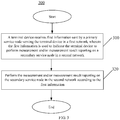
- FIG. 3 is a schematic flowchart of a wireless communication method 300 according to an embodiment of the present application. As shown in FIG. 3 , the method 300 includes at least some of the following.
- a terminal device receives first information sent by a primary service node serving the terminal device in a first network, wherein the first information is used to indicate the terminal device to perform measurement and/or measurement result reporting on a secondary service node in a second network.
- the measurement and/or measurement result reporting is performed on the secondary service node in the second network according to the first information.
- the secondary service node indicated by the first information on which the measurement and/or the measurement result reporting is to be performed includes at least two secondary service nodes.
- the at least two secondary service nodes include a first secondary service node and a second secondary service node; wherein, the first secondary service node is a node that is currently serving the terminal device, and the second secondary service node is a node that is not currently serving the terminal device.
- the first information is further used to indicate to the terminal device a first event for triggering the measurement result reporting; and the first event is used to indicate to perform measurement result reporting when a comparison result between the measurement results of the at least two secondary service nodes satisfies a triggering condition, and/or, to perform measurement result reporting when comparison results respectively between the measurement results of the at least two secondary service nodes and predetermined values satisfy a triggering condition.
- the first event is: a channel quality of a first cell of the second secondary service node being better than a channel quality of a second cell of the first secondary service node by at least a first predetermined value.
- the first cell includes at least one cell in which the second secondary service node being able to provide service for the terminal device; and the second cell includes all secondary service cells or the secondary service cell with the best channel quality in which the first secondary service node providing service for the terminal device.
- the first cell includes at least one cell in which the second secondary service node being able to provide service for the terminal device; and the second cell includes all cells, a cell having a channel quality, all service cell, the secondary service cell with the best channel quality, a primary service cell or a secondary service cell in which the first secondary service node providing service for the terminal device.
- the first event is: a channel quality of a third cell of the first secondary service node being worse than or equal to a second predetermined value, and a channel quality of a fourth cell of the second secondary service node being better than or equal to a third predetermined value.
- the third cell is all cells, a cell with the best channel quality, all service cells, a service cell with the best channel quality, or a primary service cell or a secondary service cell of the first secondary service node; and the fourth cell is at least one cell in which the second secondary service node being able to provide service for the terminal device.
- the first information indicates that the secondary service node that needs to be measured includes a third secondary service node, wherein the third secondary service node is a node that is currently serving the terminal device; the first information is further used to indicate to the terminal device a second event for triggering the measurement result reporting; and the second event is used to indicate that a channel quality of a service cell of the third secondary service node is better than or equal to a fourth predetermined value.
- the first information indicates that the secondary service node on which the measurement and/or the measurement result reporting needs to be performed includes a fourth service node, wherein the fourth service node is a node currently serving the terminal device.
- the first information is further used to indicate to the terminal device a third event for triggering the measurement result reporting; and the third event is used to indicate that a channel quality of a fifth cell of the third service node is worse than or equal to a fifth predetermined value.
- the fifth cell is all cells, a cell with the best channel quality, all service cells or a service cell with the best channel quality of the fourth secondary service node.
- the first information is carried in a first message, wherein the first message includes a field A and a field B.
- the first message includes a field A and a field B.
- the first information includes a first field, wherein the first field identifies a network to which the secondary service node corresponding to the first information belongs and/or a number of the secondary service nodes corresponding to the first information.
- the first information includes a second field, wherein the second field identifies a network to which the secondary service node corresponding to the measurement and/or the measurement result reporting belongs and/or a number of secondary service nodes that need to be measured.
- the first information is carried in a first message, wherein the first message includes at least two third fields, and different third fields in the at least two third fields indicate different networks to which belong the secondary service nodes on which the measurement and/or the measurement result reporting is to be performed and/or numbers of secondary service nodes to be measured are different.
- the first information carries at least one of a frequency identifier, a node identifier ID, a cell ID, and a network type of the secondary service node.
- a network type of the first network is different from a network type of the second network.
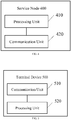
- FIG. 4 is a schematic block diagram of a service node 400 according to an embodiment of the present application.
- the service node is a primary service node serving a terminal device in a first network.
- the service node 400 includes a processing unit 410 and a communication unit 420.
- the processing unit is configured to determine first information, wherein the first information is used to indicate the terminal device to perform measurement and/or measurement result reporting on a secondary service node in a second network; and the communication unit 420 is configured to send the first information to the terminal device.
- the secondary service node corresponding to the single measurement and/or the single measurement result reporting indicated by the first information includes at least two secondary service nodes.
- the at least two secondary service nodes include a first secondary service node and a second secondary service node; wherein the first secondary service node is a node that is currently serving the terminal device, and the second secondary service node is a node that is not currently serving the terminal device.
- the first information is further used to indicate to the terminal device a first event for triggering the measurement result reporting; and the first event is used to indicate to perform measurement result reporting when a comparison result between the measurement results of the at least two secondary service nodes satisfies a triggering condition, and/or, to perform measurement result reporting when comparison results respectively between the measurement results of the at least two secondary service nodes and predetermined values satisfy a triggering condition.
- the first event is: a channel quality of a first cell of the second secondary service node being better than a channel quality of a second cell of the first secondary service node by at least a first predetermined value.
- the first cell includes at least one cell in which the second secondary service node being able to provide service for the terminal device; and the second cell includes all secondary service cells or the secondary service cell with the best channel quality in which the first secondary service node providing service for the terminal device.
- the first cell includes at least one cell in which the second secondary service node being able to provide service for the terminal device; and the second cell includes all cells, a cell having a channel quality, all service cell, the secondary service cell with the best channel quality, a primary service cell or a secondary service cell in which the first secondary service node providing service for the terminal device.
- the first event is: a channel quality of a third cell of the first secondary service node being worse than or equal to a second predetermined value, and a channel quality of a fourth cell of the second secondary service node being better than or equal to a third predetermined value.
- the third cell is all cells, a cell with the best channel quality, all service cells, a service cell with the best channel quality, or a primary service cell or a secondary service cell of the first secondary service node; and the fourth cell is at least one cell in which the second secondary service node being able to provide service for the terminal device.
- the first information indicates that the secondary service node that needs to be measured includes a third secondary service node, wherein the third secondary service node is a node that is currently serving the terminal device; the first information is further used to indicate to the terminal device a second event for triggering the measurement result reporting; and the second event is used to indicate that a channel quality of a service cell of the third secondary service node is better than or equal to a fourth predetermined value.
- the first information indicates that the secondary service node on which the measurement and/or the measurement result reporting needs to be performed includes a fourth service node, wherein the fourth service node is a node currently serving the terminal device.
- the first information is further used to indicate to the terminal device a third event for triggering the measurement result reporting; and the third event is used to indicate that a channel quality of a fifth cell of the third service node is worse than or equal to a fifth predetermined value.
- the fifth cell is all cells, a cell with the best channel quality, all service cells or a service cell with the best channel quality of the fourth secondary service node.
- the first information includes a first field, wherein the first field identifies a network to which the secondary service node corresponding to the first information belongs and/or a number of the secondary service nodes corresponding to the first information.
- the first information is carried in a first message, wherein the first information includes a second field, and the second field identifies a network to which the secondary service node corresponding to the measurement and/or the measurement result reporting belongs and/or a number of secondary service nodes that need to be measured.
- the first information carries at least one of a frequency identifier, a node identifier ID, a cell ID, and a network type of the secondary service node.
- a network type of the first network is different from a network type of the second network.
- the communication unit 420 is further configured to receive a measurement report sent by the terminal device; and the processing unit 410 is further configured to perform secondary service node configuration for the terminal device according to the measurement report, and the configuration includes adding, modifying, and deleting the secondary service node.
- service node 400 can correspond to the primary service node in the method embodiment, and can the implement corresponding operations implemented by the primary service node in the method embodiment, details of which will not be repeated herein for brevity.
- FIG. 5 is a schematic block diagram of a terminal device 500 according to an embodiment of the present application. As shown in FIG. 5 , the terminal device 500 includes a communication unit 510 and a processing unit 520.
- the communication unit 510 is configured to receive first information sent by a primary service node serving the terminal device in a first network, wherein the first information is used to indicate the terminal device to perform measurement and/or measurement result reporting on a secondary service node in a second network.
- the processing unit 520 is configured to perform measurement and/or measurement result reporting on the secondary service node in the second network according to the first information.
- the secondary service node corresponding to the single measurement and/or the single measurement result reporting indicated by the first information includes at least two secondary service nodes.
- the at least two secondary service nodes include a first secondary service node and a second secondary service node; wherein the first secondary service node is a node that is currently serving the terminal device, and the second secondary service node is a node that is not currently serving the terminal device.
- the first information is further used to indicate to the terminal device a first event for triggering the measurement result reporting; and the first event is used to indicate to perform measurement result reporting when a comparison result between the measurement results of the at least two secondary service nodes satisfies a triggering condition, and/or, to perform measurement result reporting when comparison results respectively between the measurement results of the at least two secondary service nodes and predetermined values satisfy a triggering condition.
- the first event is: a channel quality of a first cell of the second secondary service node being better than a channel quality of a second cell of the first secondary service node by at least a first predetermined value.
- the first cell includes at least one cell in which the second secondary service node being able to provide service for the terminal device; and the second cell includes all secondary service cells or the secondary service cell with the best channel quality in which the first secondary service node providing service for the terminal device.
- the first cell includes at least one cell in which the second secondary service node being able to provide service for the terminal device; and the second cell includes all cells, a cell having a channel quality, all service cell, the secondary service cell with the best channel quality, a primary service cell or a secondary service cell in which the first secondary service node providing service for the terminal device.
- the first event is: a channel quality of a third cell of the first secondary service node being worse than or equal to a second predetermined value, and a channel quality of a fourth cell of the second secondary service node being better than or equal to a third predetermined value.
- the third cell is all cells, a cell with the best channel quality, all service cells, a service cell with the best channel quality, or a primary service cell or a secondary service cell of the first secondary service node; and the fourth cell is at least one cell in which the second secondary service node being able to provide service for the terminal device.
- the first information indicates that the secondary service node that needs to be measured includes a third secondary service node, wherein the third secondary service node is a node that is currently serving the terminal device; the first information is further used to indicate to the terminal device a second event for triggering the measurement result reporting; and the second event is used to indicate that a channel quality of a service cell of the third secondary service node is better than or equal to a fourth predetermined value.
- the first information indicates that the secondary service node on which the measurement and/or the measurement result reporting needs to be performed includes a fourth service node, wherein the fourth service node is a node currently serving the terminal device.
- the first information is further used to indicate to the terminal device a third event for triggering the measurement result reporting; and the third event is used to indicate that a channel quality of a fifth cell of the third service node is worse than or equal to a fifth predetermined value.
- the fifth cell is all cells, a cell with the best channel quality, all service cells or a service cell with the best channel quality of the fourth secondary service node.
- the first information is carried in the first message, where the first message includes a first field and a second field, and when the first field takes a different value, a network to which the secondary service node and/or a number of secondary service nodes corresponding to the single measurement belongs and/or the single measurement result reporting indicated by the second field is different.
- the first information includes a second field
- the second field identifies a network to which the secondary service node corresponding to the measurement and/or the measurement result reporting belongs and/or a number of secondary service nodes that need to be measured.
- a network type of the first network is different from a network type of the second network.
- terminal device 500 can correspond to the terminal device in the method embodiment, and can implement the corresponding operations implemented by the terminal device in the method embodiment, details of which will not be repeated herein for brevity.
- FIG. 6 is a schematic structural diagram of a system chip 600 according to an embodiment of the present application.
- the system chip 600 of FIG. 6 includes an input interface 601, an output interface 602, a processor 603, and a memory 604 that can be connected by an internal communication connection line.
- the processor 603 is configured to execute codes in the memory 604.
- the processor 603 when the codes are executed, the processor 603 implements a method performed by the primary service node in the method embodiment. For the sake of brevity, it will not be repeated herein.
- the processor 603 when the codes are executed, the processor 603 implements a method performed by the terminal device in the method embodiment. For the sake of brevity, it will not be repeated herein.
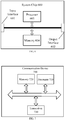
- FIG. 7 is a schematic block diagram of a communication device 700 according to an embodiment of the present application.
- the communication device 700 includes a processor 710 and a memory 720.
- the memory 720 can store program codes, and the processor 710 can execute the program codes stored in the memory 720.
- the communication device 700 can include a transceiver 730, and the processor 710 can control the transceiver 730 to communicate with external entities.
- the processor 710 can call the program codes stored in the memory 720 to perform the corresponding operations of the primary service node in the method embodiment.
- the processor 710 can call the program codes stored in the memory 720 to perform the corresponding operations of the primary service node in the method embodiment.
- the processor 710 can call the program codes stored in the memory 720 to perform the corresponding operations of the primary service node in the method embodiment.
- the processor 710 can call the program codes stored in the memory 720 to perform the corresponding operations of the primary service node in the method embodiment.
- the processor 710 can call the program codes stored in the memory 720 to perform the corresponding operations of the terminal device in the method embodiment.
- the processor 710 can call the program codes stored in the memory 720 to perform the corresponding operations of the terminal device in the method embodiment.
- the processor 710 can call the program codes stored in the memory 720 to perform the corresponding operations of the terminal device in the method embodiment.
- the processor 710 can call the program codes stored in the memory 720 to perform the corresponding operations of the terminal device in the method embodiment.
- the processor of the embodiment of the present application can be an integrated circuit chip with signal processing capability.
- each step of the above method embodiment can be completed by an integrated logic circuit of hardware in a processor or an instruction in a form of software.
- the processor can be a general-purpose processor, a digital signal processor (DSP), an application specific integrated circuit (ASIC), a Field Programmable Gate Array (FPGA), a programmable logic device, discrete gates or transistor logic devices, discrete hardware components.
- DSP digital signal processor
- ASIC application specific integrated circuit
- FPGA Field Programmable Gate Array
- the methods, steps, and logical block diagrams disclosed in embodiments of the present application can be implemented or executed.
- the general purpose processor can be a microprocessor or the processor or any conventional processor or the like.
- the steps of the method disclosed in embodiments of the present application can be directly implemented by the hardware decoding processor, or can be performed by a combination of hardware and software modules in the decoding processor.
- the software module can be located in a conventional storage medium such as a random access memory, a flash memory, a read only memory, a programmable read only memory or an electrically erasable programmable memory, a register, and the like.
- the storage medium is located in the memory, and the processor reads the information in the memory and combines the hardware to complete the steps of the above method.
- the memory in embodiments of the present application can be a volatile memory or a non-volatile memory, or can include both volatile and non-volatile memory.
- the non-volatile memory can be a read-only memory (ROM), a programmable read only memory (PROM), an erasable programmable read only memory (Erasable PROM, EPROM), or an electric Erase programmable read only memory (EEPROM) or a flash memory.
- the volatile memory can be a Random Access Memory (RAM) that acts as an external cache.
- RAMs such as a static random access memory (SRAM), a dynamic random access memory (DRAM), a synchronous dynamic random access memory (Synchronous DRAM, SDRAM), a Double Data Rate SDRAM (DDR SDRAM), an Enhanced Synchronous Dynamic Random Access Memory (Enhanced SDRAM, ESDRAM), a Synchronous Connection Dynamic Random Access Memory (Synchlink DRAM, SLDRAM) and a direct memory bus random access memory (Direct Rambus RAM, DR RAM).
- SRAM static random access memory
- DRAM dynamic random access memory
- DDR SDRAM synchronous dynamic random access memory
- DDR SDRAM Double Data Rate SDRAM
- ESDRAM Enhanced Synchronous Dynamic Random Access Memory
- Synchlink DRAM Synchronous Connection Dynamic Random Access Memory
- DR RAM direct memory bus random access memory
- the disclosed systems, devices, and methods can be implemented in other manners.
- the device embodiments described above are merely illustrative.
- the division of the unit is only a logical function division.
- there can be another division manner for example, multiple units or components can be combined or can be integrated into another system, or some features can be ignored or not executed.
- the mutual coupling or direct coupling or communication connection shown or discussed can be an indirect coupling or communication connection through some interfaces, devices or units, and can be in an electrical, mechanical or other form.
- the units described as separate components can or cannot be physically separated, and the components displayed as units can or cannot be physical units, that is, can be located in one place, or can be distributed to a plurality of network units. Some or all of the units can be selected according to actual needs to achieve the purpose of the solution of the embodiment.
- each functional unit in each embodiment of the present application can be integrated into one processing unit, or each unit can exist physically separately, or two or more units can be integrated into one unit.
- the functions can be stored in a computer readable storage medium if implemented in the form of a software functional unit and sold or used as a standalone product.
- the technical solution of the present application in its essential or with a part contributing to the prior art or a part of the technical solution, can be embodied in the form of a software product, which is stored in a storage medium, including instructions to cause a computer device (which can be a personal computer, a server, or a network device, etc.) to perform all or part of the steps of the methods described in various embodiments of the present application.
- the above storage medium includes: a U disk, a mobile hard disk, a read-only memory (ROM), a random access memory (RAM), a magnetic disk, or an optical disk, and the like, which can store program codes.
Landscapes
- Engineering & Computer Science (AREA)
- Computer Networks & Wireless Communication (AREA)
- Signal Processing (AREA)
- Computer Security & Cryptography (AREA)
- Mobile Radio Communication Systems (AREA)
- Small-Scale Networks (AREA)
Abstract
Description
- The present disclosure relates to the field of communication technology, in particular, relates to a wireless communication method and a wireless communication device.
- In a future communication network, in order to ensure continuity in movement of terminals, enhance cooperation between networks, and increase transmission rates of terminals, it is necessary to coordinate between multiple networks to perform dual-way connection or even multiple-way connection, thereby ensuring transmission performance of the terminals.
- In a dual-way connection or multiple-way connection process, there is one primary service node and one or more secondary service nodes, and the primary service node can implement main control functions for terminals, including functions such as accessing, paging, and adding/deleting/modifying an secondary service node, carrier configuration and measurement reporting configuration. The secondary service node mainly implements data transmission to and from the terminals.
- How to perform measurement for the secondary service node is an urgent problem to be solved.
- Embodiments of the present application provides a wireless communication method and a wireless communication device, and a terminal device performs measurement and/or measurement result reporting on the secondary service node in the network according to the indication of the primary service node, so that the measurement and/or measurement result reporting of the secondary service node can be implemented.
- In a first aspect, there is provided a wireless communication method, including:
sending, by a primary service node serving a terminal device in a first network, first information to the terminal device, wherein the first information is used to indicate the terminal device to perform measurement and/or measurement result reporting on a secondary service node in a second network. - In connection with the first aspect, in a possible implementation of the first aspect, the secondary service node corresponding to the single measurement and/or the single measurement result reporting indicated by the first information includes at least two secondary service nodes.
- In connection with the first aspect and any of the above possible implementations, in another possible implementation of the first aspect, the at least two secondary service nodes include a first secondary service node and a second secondary service node; and
the first secondary service node is a node that is currently serving the terminal device, and the second secondary service node is a node that is not currently serving the terminal device. - In connection with the first aspect and any of the above possible implementations, in another possible implementation of the first aspect, the first information is further used to indicate to the terminal device a first event for triggering the measurement result reporting; and
the first event is used to indicate to perform measurement result reporting when a comparison result between measurement results of the at least two secondary service nodes satisfies a triggering condition, and/or,
to perform measurement result reporting when comparison results respectively between the measurement results of the at least two secondary service nodes and predetermined values satisfy a triggering condition. - In connection with the first aspect and any of the above possible implementations, in another possible implementation of the first aspect, the first event is:
a channel quality of a first cell of the second secondary service node being better than a channel quality of a second cell of the first secondary service node by at least a first predetermined value. - In connection with the first aspect and any of the above possible implementations, in another possible implementation of the first aspect, the first cell includes at least one cell in which the second secondary service node being able to provide service for the terminal device; and
the second cell includes all secondary service cells or the secondary service cell with the best channel quality in which the first secondary service node providing service for the terminal device. - In connection with the first aspect and any of the above possible implementations, in another possible implementation of the first aspect, the first cell includes at least one cell in which the second secondary service node being able to provide service for the terminal device; and
- the second cell includes all cells, a cell having a channel quality, all service cell, the secondary service cell with the best channel quality, a primary service cell or a secondary service cell in which the first secondary service node providing service for the terminal device.
- In connection with the first aspect and any of the above possible implementations, in another possible implementation of the first aspect, the first event is:
a channel quality of a third cell of the first secondary service node being worse than or equal to a second predetermined value, and a channel quality of a fourth cell of the second secondary service node being better than or equal to a third predetermined value. - In connection with the first aspect and any of the above possible implementations, in another possible implementation of the first aspect, the third cell is all cells, a cell with the best channel quality, all service cells, a service cell with the best channel quality, a primary service cell or a secondary service cell of the first secondary service node; and
the fourth cell is at least one cell in which the second secondary service node being able to provide service for the terminal device. - In connection with the first aspect and any of the above possible implementations, in another possible implementation of the first aspect, the first information indicates that the secondary service node that needs to be measured includes a third secondary service node, wherein the third secondary service node is a node that is currently serving the terminal device;
the first information is further used to indicate to the terminal device a second event for triggering the measurement result reporting; and
the second event is used to indicate that a channel quality of a service cell of the third secondary service node is better than or equal to a fourth predetermined value. - In connection with the first aspect and any of the above possible implementations, in another possible implementation of the first aspect, the first information indicates that the secondary service node on which the measurement and/or the measurement result reporting needs to be performed includes a fourth secondary service node, wherein the fourth secondary service node is a node that is currently serving the terminal device;
the first information is further used to indicate to the terminal device a third event for triggering the measurement result reporting; and
the third event is used to indicate that a channel quality of a fifth cell of the fourth service node is worse than or equal to a fifth predetermined value. - In connection with the first aspect and any of the above possible implementations, in another possible implementation of the first aspect, the fifth cell is all cells, a cell with the best channel quality, all service cells or a service cell with the best channel quality of the fourth secondary service node.
- In connection with the first aspect and any of the above possible implementations, in another possible implementation of the first aspect, the first information includes a first field, wherein the first field identifies a network to which the secondary service node corresponding to the first information belongs and/or a number of the secondary service nodes corresponding to the first information.
- In connection with the first aspect and any of the above possible implementations, in another possible implementation of the first aspect, the first information includes a second field, and the second field identifies a network to which the secondary service node corresponding to the measurement and/or the measurement result reporting belongs and/or a number of secondary service nodes that need to be measured.
- In connection with the first aspect and any of the above possible implementations, in another possible implementation of the first aspect, the first information carries at least one of a frequency identifier, a node identifier ID, a cell ID, and a network type of the secondary service node.
- In connection with the first aspect and any of the above possible implementations, in another possible implementation of the first aspect, a network type of the first network is different from a network type of the second network.
- In connection with the first aspect and any of the above possible implementations, in another possible implementation of the first aspect, the method further includes:
- receiving, by the primary service node, a measurement report sent by the terminal device;
- performing, by the primary service node, secondary service node configuration for the terminal device according to the measurement report, wherein the configuration includes adding, modifying, and deleting the secondary service node.
- In a second aspect, there is provided a wireless communication method, including:
- receiving, by a terminal device, first information sent by a primary service node serving the terminal device in a first network, wherein the first information is used to indicate the terminal device to perform measurement and/or measurement result reporting on a secondary service node in a second network; and
- performing the measurement and/or measurement result reporting on the secondary service node in the second network according to the first information.
- In connection with the second aspect, in a possible implementation of the second aspect, the secondary service node corresponding to the single measurement and/or the single measurement result reporting indicated by the first information includes at least two secondary service nodes.
- In connection with the second aspect and any of the above possible implementations, in another possible implementation of the second aspect, the at least two secondary service nodes include a first secondary service node and a second secondary service node; and
- the first secondary service node is a node that is currently serving the terminal device, and the second secondary service node is a node that is not currently serving the terminal device.
- In connection with the second aspect and any of the above possible implementations, in another possible implementation of the second aspect, the first information is further used to indicate to the terminal device a first event for triggering the measurement result reporting; and
the first event is used to indicate to perform measurement result reporting when a comparison result between the measurement results of the at least two secondary service nodes satisfies a triggering condition, and/or,
to perform measurement result reporting when comparison results respectively between the measurement results of the at least two secondary service nodes and predetermined values satisfy a triggering condition. - In connection with the second aspect and any of the above possible implementations, in another possible implementation of the second aspect, the first event is:
a channel quality of a first cell of the second secondary service node being better than a channel quality of a second cell of the first secondary service node by at least a first predetermined value. - In connection with the second aspect and any of the above possible implementations, in another possible implementation of the second aspect, the first cell includes at least one cell in which the second secondary service node being able to provide service for the terminal device; and
the second cell includes all secondary service cells or the secondary service cell with the best channel quality in which the first secondary service node providing service for the terminal device. - In connection with the second aspect and any of the above possible implementations, in another possible implementation of the second aspect, the first cell includes at least one cell in which the second secondary service node being able to provide service for the terminal device; and
the second cell includes all cells, a cell having a channel quality, all service cell, the secondary service cell with the best channel quality, a primary service cell or a secondary service cell in which the first secondary service node providing service for the terminal device. - In connection with the second aspect and any of the above possible implementations, in another possible implementation of the second aspect, the first event is:
a channel quality of a third cell of the first secondary service node being worse than or equal to a second predetermined value, and a channel quality of a fourth cell of the second secondary service node being better than or equal to a third predetermined value. - In connection with the second aspect and any of the above possible implementations, in another possible implementation of the second aspect, the third cell is all cells, a cell with the best channel quality, all service cells, a service cell with the best channel quality, a primary service cell or a secondary service cell of the first secondary service node; and
the fourth cell is at least one cell in which the second secondary service node being able to provide service for the terminal device. - In connection with the second aspect and any of the above possible implementations, in another possible implementation of the second aspect, the first information indicates that the secondary service node that needs to be measured includes a third service node, wherein the third service node is a node that is currently serving the terminal device;
the first information is further used to indicate to the terminal device a second event for triggering the measurement result reporting; and
the second event is used to indicate that a channel quality of a service cell of the third secondary service node is better than or equal to a fourth predetermined value. - In connection with the second aspect and any of the above possible implementations, in another possible implementation of the second aspect, the first information indicates that the secondary service node on which the measurement and/or the measurement result reporting needs to be performed includes a fourth secondary service node, wherein the fourth secondary service node is a node that is currently serving the terminal device;
the first information is further used to indicate to the terminal device a third event for triggering the measurement result reporting; and
the third event is used to indicate that a channel quality of a fifth cell of the fourth secondary service node is worse than or equal to a fifth predetermined value. - In connection with the second aspect and any of the above possible implementations, in another possible implementation of the second aspect, the fifth cell is all cells, a cell with the best channel quality, all service cells or a service cell with the best channel quality of the fourth secondary service node.
- In connection with the second aspect and any of the above possible implementations, in another possible implementation of the second aspect, the first information includes a first field, and the first field identifies a network to which the secondary service node corresponding to the first information belongs and/or a number of the secondary service nodes corresponding to the first information.
- In connection with the second aspect and any of the above possible implementations, in another possible implementation of the second aspect, the first information includes a second field, and the second field identifies a network to which the secondary service node corresponding to the measurement and/or the measurement result reporting belongs and/or a number of secondary service nodes that need to be measured.
- In connection with the second aspect and any of the above possible implementations, in another possible implementation of the second aspect, the first information carries at least one of a frequency identifier, a node identifier ID, a cell ID, and a network type of the secondary service node.
- In connection with the second aspect and any of the above possible implementations, in another possible implementation of the second aspect, a network type of the first network is different from a network type of the second network.
- In a third aspect, a service node is provided for performing any of the above first aspect or any of the possible implementations of the first aspect. In particular, the service node includes functional modules for performing the method of the first aspect or any of the possible implementations of the first aspect described above.
- In a fourth aspect, a terminal device is provided for performing any of the above second aspect or any of the possible implementations of the second aspect. In particular, the terminal device includes functional modules for performing the method of the second aspect or any of the possible implementations of the second aspect described above.
- In a fifth aspect, a service node is provided, including a processor, a memory, and a transceiver. The processor, the memory, and the transceiver communicate with each other through an internal connection path to transfer control and/or data signals, such that the service node performs the method of the first aspect or any of the possible implementations of the first aspect described above.
- In a sixth aspect, a terminal device is provided, including a processor, a memory, and a transceiver. The processor, the memory, and the transceiver communicate with each other through an internal connection path to transfer control and/or data signals, such that the service node performs the method of the second aspect or any of the possible implementations of the second aspect described above.
- In a seventh aspect, a computer readable medium is provided for storing a computer program, the computer program including instructions for performing any of the above methods or any possible implementations.
- In an eighth aspect, there is provided a computer program product including instructions, when being executed on a computer, causes the computer to perform any of the above methods or method in any possible implementations.
- Therefore, in the embodiments of the present application, the terminal device performs measurement and/or measurement result reporting on the secondary service node in the network according to the indication of the primary service node, so that the primary service node can configure a proper secondary service node for the terminal device.
- In order to more clearly illustrate the technical solutions of the embodiments of the present application, the drawings to be used in the embodiments or the prior art description will be briefly described below. Apparently, the drawings in the following description are only some embodiments of the present application. Those skilled in the art can obtain other drawings according to the drawings without any creative work.
-
FIG. 1 is a schematic diagram of a wireless communication system according to an embodiment of the present application. -
FIG. 2 is a schematic flowchart of a wireless communication method according to an embodiment of the present application. -
FIG. 3 is a schematic flowchart of a wireless communication method according to an embodiment of the present application. -
FIG. 4 is a schematic block diagram of a service node according to an embodiment of the present application. -
FIG. 5 is a schematic block diagram of a terminal device according to an embodiment of the present application. -
FIG. 6 is a schematic block diagram of a system chip according to an embodiment of the present application. -
FIG. 7 is a schematic block diagram of a communication device according to an embodiment of the present application. - The technical solutions in the embodiments of the present application are described in conjunction with the accompanying drawings in the embodiments of the present application. It is apparent that the described embodiments are a part of the embodiments of the present application, and not all of the embodiments. All other embodiments obtained by a person of ordinary skill in the art based on the embodiments of the present application without paying creative work all fall in the protection scope of the present application.
- The technical solution of the embodiment of the present application can be applied to various communication systems, for example, Global System of Mobile communication ("GSM") system, Code Division Multiple Access ("CDMA") system, Wideband Code Division Multiple Access ("WCDMA") system, General Packet Radio Service ("GPRS"), Long Term Evolution ("LTE") system, LTE Frequency Division Duplex ("FDD") system, LTE Time Division Duplex ("TDD"), Universal Mobile Telecommunication System ("UMTS"), Worldwide Interoperability for Microwave Access ("WiMAX") communication system, or a future 5G system (also known as a New Radio (NR) system).
-
FIG. 1 is a schematic flow diagram of awireless communication system 100 according to an embodiment of the present application. The system shown inFIG. 1 includes aprimary service node 10, asecondary service node 20, and aterminal device 30. - The
primary service node 10 can implement the main control functions for theterminal device 30, including accessing, paging, adding/deleting/modifying ansecondary service node 20, carrier configuration, measurement reporting configuration, and the like; and thesecondary service node 20 can implement data transmission to and from theterminal device 30. - In addition, since the
terminal device 30 needs to perform movement within or between the secondary service nodes, the primary service node can perform configuration of the measurement and/or measurement result reporting on theterminal device 30. - Also, when the
primary service node 10 adds, deletes, or modifies thesecondary service node 20 for theterminal device 30, theprimary service node 10 configures theterminal device 30 to perform measurement and/or measurement result reporting on thesecondary service node 20, so that theterminal device 30 can perform measurement on thesecondary service node 20 and report the measurement result to theprimary service node 10, to assist theprimary service node 10 in performing the configuration operation of the secondary service node. - Optionally, in the embodiment of the present application, the
primary service node 10 or thesecondary service node 20 can be a device that is in communication with a terminal device. Theprimary service node 10 or thesecondary service node 20 can provide communication coverage for a particular geographic area and can communicate with a terminal device (e.g., UE) located within the coverage area. Optionally, theprimary service node 10 or thesecondary service node 20 can be a base station (Base Transceiver Station, BTS) in a GSM system or a CDMA system, or can be a base station (NodeB, NB) in a WCDMA system, or can be an evolved base station (Evolutional Node B, eNB or eNodeB) in an LTE system, or a wireless controller in a Cloud Radio Access Network (CRAN), or can be a relay station, an access point, an in-vehicle device, a wearable device, a network side device in a future 5G network or a network device in a Public Land Mobile Network (PLMN) evolved in the future, and the like. - Optionally, in the embodiment of the present application, the
terminal device 30 can be mobile or fixed. Optionally, theterminal device 30 can refer to an access terminal, a user equipment (User Equipment, UE), a subscriber unit, a subscriber station, a mobile station, a mobile platform, a remote station, a remote terminal, a mobile device, a user terminal, a terminal, a wireless communication device, a user agent, or a user device. The access terminal can be a cellular phone, a cordless phone, a Session Initiation Protocol (SIP) phone, a Wireless Local Loop (WLL) station, a Personal Digital Assistant (PDA), a handheld device with wireless communication functional, a computing device or other processing device connected to a wireless modem, an in-vehicle device, a wearable device, a terminal device in future 5G networks, or a terminal device in future evolved PLMNs, and the like. - Optionally, the 5G system or network can also be referred to as a New Radio (NR) system or network.
- Optionally, the
wireless communication system 100 can further include other network entities, such as a network controller, a mobility management entity, and the like, which the embodiment of the present application does not limit. - It should be understood that the terms "system" and "network" are used interchangeably herein. The term "and/or" herein only describes an association between associated objects, indicating that there can be three relationships. For example, A and/or B can indicate three situations that: respectively only A exists, both A and B exist, and only B exists. In addition, the character "/" herein generally indicates that the associated objects in the context are in an "or" relationship.
-
FIG. 2 is a schematic flowchart of awireless communication method 200 according to an embodiment of the present application. Themethod 200 is optionally applicable to the system shown inFIG. 1 , but is not limited thereto. As shown inFIG. 2 , themethod 200 includes at least some of the following. - In 210, a primary service node serving a terminal device in a first network sends first information to the terminal device, wherein the first information is used to indicate the terminal device to perform measurement and/or measurement result reporting on a secondary service node in a second network.
- Optionally, network types of the first network and the second network can be different. For example, the first network can be an NR network, and the second network can be an LTE network; or the first network can be an LTE network, or the second network can be an NR network.
- Optionally, the secondary service node corresponding to the single measurement and/or the single measurement result reporting indicated by the first information includes at least two secondary service nodes.
- Optionally, in an embodiment of the present application, the single measurement result reporting is triggered by a single event, and the object that needs to be measured for the event can include a plurality of secondary service nodes. A single measurement is a measurement required for a single measurement result report, and can include measurements on a plurality of secondary service nodes.
- Optionally, the at least two secondary service nodes can be in the same network; or can be in different networks. In this case, the first network can include two types of networks.
- Optionally, in an embodiment of the present application, the network device can implicitly or explicitly indicate a secondary service node on which the measurement and/or the measurement result reporting is performed.
- Optionally, in an embodiment of the present application, the first information carries at least one of a frequency identifier (Identifier, ID), a node identifier ID, a cell ID, and a network type of the secondary service node.
- In an implementation, the primary service node indicates the frequency ID of the secondary service node, and the terminal device can directly perform the measurement and/or the measurement result reporting with respect to the corresponding frequency according to the frequency ID, and can implement the measurement and/or the measurement result reporting with respect to the corresponding secondary service node.
- In an implementation, the primary service node indicates a cell ID of the secondary service node, and the terminal device can perform measurement and/or measurement result reporting with respect to the corresponding cell according to the cell ID, and can implement the measurement and/or the measurement result reporting with respect to the corresponding secondary service node to which the cell ID belongs.
- In an implementation, the primary service node indicates a network type to be measured, and the terminal device can perform measurement and/or measurement result reporting with respect to a currently serving secondary service cell of the network type and/or a detectable secondary service cell of the network type.
- In an implementation, the primary service node indicates a node ID of the secondary service node to be measured, and the terminal device can perform measurement and/or measurement result reporting with respect to the secondary service node corresponding to the node ID.
- Of course, in an embodiment of the present application, the first message can further carry at least two of a frequency ID, a node ID, a cell ID, and a network type of the secondary service node.
- Optionally, in an embodiment of the present application, the first information can be used to indicate an event that triggers the terminal device to report the measurement result. If the event is met, the terminal device can report the measurement result.
- Optionally, the at least two secondary service nodes can be secondary service nodes that are currently serving the terminal device, and by configuring the terminal device to perform measurement or measurement result reporting on the secondary service nodes that are currently serving the terminal device, the primary service node can determine which secondary service node to be deleted from the at least two secondary service nodes based on the measurement results of the at least two secondary service nodes.
- Optionally, the at least two secondary service nodes can be secondary service nodes that are not currently serving the terminal device, and by configuring the terminal device to perform measurement or measurement result reporting on the secondary service nodes that are not currently serving the terminal device, the primary service node can determine which secondary service node to be configured for the terminal device from the at least two secondary service nodes based on the measurement results of the at least two secondary service nodes.
- Optionally, in an embodiment of the present application, the at least two service nodes can include at least one secondary service node that is currently serving the terminal device and a secondary service node that is not currently serving the terminal device. The terminal device can measure the at least one secondary service node that is currently serving the terminal device and the secondary service node that is not currently serving the terminal device, and report the measurement results to the network device, and the network device can determine whether to switch the secondary service node for the terminal device.
- Optionally, the first information is used to indicate to the terminal device a first event for triggering the measurement result reporting; and the first event is used to indicate to perform measurement result reporting when a comparison result between the measurement results of the at least two secondary service nodes satisfies a triggering condition, and/or,
to perform measurement result reporting when comparison results respectively between the measurement results of the at least two secondary service nodes and predetermined values satisfy a triggering condition. The predetermined values respectively for comparing can be the same or can also be different. - In order to understand the present application more clearly, the following will described in connection with an example in which the at least two secondary service nodes includes at least one secondary service node (a first secondary service node) that is currently serving the terminal device and at least one secondary service node (second secondary service node) that is not currently serving the terminal device.
- In an implementation, the first event is: a channel quality of a first cell of the second secondary service node being better than a channel quality of a second cell of the first secondary service node by at least a first predetermined value.
- Optionally, the first cell includes at least one cell in which the second secondary service node being able to provide service for the terminal device, and the second cell includes all secondary service cells or the secondary service cell with the best channel quality in which the first secondary service node providing service for the terminal device.
- Optionally, the first cell includes at least one cell in which the second secondary service node being able to provide service for the terminal device, and the second cell includes all cells, a cell having a channel quality, all service cell, the secondary service cell with the best channel quality, a primary service cell or a secondary service cell in which the first secondary service node providing service for the terminal device.
- In an implementation, the first event is: a channel quality of a third cell of the first secondary service node being worse than or equal to a second predetermined value, and a channel quality of a fourth cell of the second secondary service node being better than or equal to a third predetermined value.
- Optionally, the third cell is all cells, a cell with the best channel quality, all service cells, a service cell with the best channel quality, or a primary service cell or a secondary service cell of the first secondary service node; and the fourth cell is at least one cell in which the second secondary service node being able to provide service for the terminal device.
- Optionally, in an embodiment of the present application, the triggering of the event can be that a channel quality of a secondary service node satisfies a predetermined condition, and secondary service node configuration is performed on the terminal device according to the measurement result of the terminal device.
- In an implementation, the first information indicates that the secondary service node that needs to be measured includes a third secondary service node, wherein the third secondary service node is a node that is currently serving the terminal device;
the first information is further used to indicate to the terminal device a second event for triggering the measurement result reporting; and
the second event is used to indicate that a channel quality of a service cell of the third secondary service node is better than or equal to a fourth predetermined value. - In an implementation, the first information indicates that the secondary service node on which the measurement and/or the measurement result reporting is to be performed includes a fourth secondary service node, wherein the fourth secondary service node is a node that is currently serving the terminal device; the first information is further used to indicate to the terminal device a third event for triggering the measurement result reporting; and
the third event is used to indicate that a channel quality of a fifth cell of the fourth secondary service node is worse than or equal to a fifth predetermined value. - Optionally, the fifth cell is all cells, a cell with the best channel quality, all service cells or a service cell with the best channel quality of the fourth secondary service node.
- Optionally, in an embodiment of the present application, in different scenarios, a number of the secondary service nodes corresponding to the single measurement and/or measurement result reporting configured by the primary service node can be different, and/or the networks to which belong the secondary service nodes corresponding to the single measurement and/or measurement result reporting configured by the primary service node can be different.
- For example, in a scenario, a secondary service node corresponding to the single measurement and/or the single measurement result reporting configured by the primary service node is a secondary service node in the same network as the primary service node.
- At this time, the corresponding trigger event can be the following events, wherein a neighboring cell can be a cell of the secondary service node.
- Event A1 (serving becomes better than threshold), which means that the signal quality of the service cell of the primary service node is higher than a certain threshold. When an event that satisfies this condition is reported, the primary service node stops different-frequency/different-system measurement.
- Event A2 (serving becomes worse than threshold), which means that the signal quality of the service cell of the primary service node is below a certain threshold. When an event that satisfies this condition is reported, the primary service node initiates different-frequency/different-system measurement.
- Event A3 (neighbor becomes offset better than PCell/ PSCell), which means that a quality of a neighboring cell is higher than that of the service cell of the primary service node by a certain threshold and for a certain period of time. When an event that satisfies this condition is reported, the primary service node can initiate a handover request.
- Event A4 (neighbor becomes better than threshold), which means that a quality of a neighboring area is higher than a certain threshold. When an event that satisfies this condition is reported, the primary service node can initiate a handover request.
- Event A5 (PCell/ PSCell becomes worse than threshold 1 and neighbor becomes better than threshold 2), which means that the quality of the service cell is below a certain threshold and a quality of a neighboring cell is above a certain threshold.
- Event A6 (Neighbor becomes offset better than SCell), which means that a quality of a neighboring cell is higher than that of the service cell of the primary service node by a certain threshold.
- In another scenario, a secondary service node corresponding to the single measurement and/or the single measurement result reporting configured by the primary service node is a secondary service node in a different network from that of the primary service node.
- In this case, the corresponding triggering event can be as follows.
- Event B1 (Inter RAT neighbor becomes better than threshold), which means that a quality of a neighboring cell of a different system is higher than a certain threshold. an event that satisfies this condition is reported, the primary service node can initiate a different-system handover request.
- Event B2 (PCell becomes worse than threshold 1 and inter RAT neighbor becomes better than threshold 2), which means that the quality of the service cell is below a certain threshold and a quality of a neighboring cell of a different system is above a certain threshold.
- In another scenario, a secondary service node corresponding to the single measurement and/or the single measurement result reporting configured by the primary service node is at least two secondary service nodes in different networks from that of the primary service node.
- In this case, the corresponding triggering event can be an event in any implementation of the above first events.
- For this or other similar situations, how to implement the transmission of a message (a first message, the first message including the first information) will be described below.
- In an implementation, the first information includes a second field, wherein the second field identifies a network to which the secondary service node corresponding to the measurement belongs and/or measurement result reporting, and/or a number of the secondary service nodes to be measured.
- Specifically, the second field identifies a type of the network to which the secondary service node corresponding to the measurement and/or measurement result reporting belongs, or identifies the similarity and difference between the network to which the secondary service node corresponding to the measurement and/or measurement result reporting and that of the primary service node belongs.
- In an implementation, the first message includes at least two second fields, and different second fields of the at least two second fields indicate different networks to which belong the secondary service nodes corresponding to the measurement and/or measurement result reporting and/or different numbers of secondary service nodes that need to be measured.
- For example, there are three second fields, one field is for configuring measurement and/or measurement result reporting with respect to a secondary service node of the same network, one field is for configuring measurement and/or measurement result reporting with respect to a secondary service node of a different network, and one field is for configuring measurement and/or measurement result reporting with respect to at least two secondary service nodes of different networks.
- In an implementation, the first information includes a first field, wherein the first field identifies a network to which a secondary service node corresponding to the first information belongs and/or a number of the secondary service nodes corresponding to the first information.
- Optionally, the network to which a secondary service node corresponding to the first information belongs and/or the number of the secondary service nodes corresponding to the first information is identified by a first field, which means that when the values in the first field are different, the network (for example, the network type) to which a secondary service node corresponding to the first information belongs is different and/or the number of the secondary service nodes corresponding to the first information is different.
- Specifically, the first message includes a field A and a field B. When the value of the field A has a different value, the network to which a secondary service node indicated by the field B on which the measurement and/or the measurement result reporting is to be performed belongs and/or the number of the secondary service nodes need to be measured is different.
- Wherein, the field A can include at least one bit; and the field B can include at least one bit.
- For example, the field A includes 1 bit. When the value of the field A is 1, it indicates that the measurement and/or measurement result reporting configured in the field B is with respect one secondary service node of a different network. When the value of the field A is 0, it indicates that the measurement and/or measurement result reporting configured in the field B is with respect one secondary service node of the same network.
- For example, the field A includes 1 bit. When the value of the field A is 1, it indicates that the measurement and/or measurement result reporting configured in the field B is with respect one secondary service node of a different network. When the value of the field A is 0, it indicates that the measurement and/or measurement result reporting configured in the field B is with respect two secondary service nodes of different networks.
- For example, the field A includes 1 bit. When the value of the field A is 1, it indicates that the measurement and/or measurement result reporting configured in the field B is with respect one secondary service node of the same network. When the value of the field A is 0, it indicates that the measurement and/or measurement result reporting configured in the field B is with respect one secondary service nodes of a different network.
- Optionally, in the embodiment of the present application, the primary service node can perform deletion, addition, and modification of the secondary service node according to the measurement result reported by the terminal device, and can also perform handover of the primary service node according to the measurement result, that is, switching a secondary service node to a primary service node.
-
FIG. 3 is a schematic flowchart of awireless communication method 300 according to an embodiment of the present application. As shown inFIG. 3 , themethod 300 includes at least some of the following. - In 310, a terminal device receives first information sent by a primary service node serving the terminal device in a first network, wherein the first information is used to indicate the terminal device to perform measurement and/or measurement result reporting on a secondary service node in a second network.
- In 320, the measurement and/or measurement result reporting is performed on the secondary service node in the second network according to the first information.
- Optionally, the secondary service node indicated by the first information on which the measurement and/or the measurement result reporting is to be performed includes at least two secondary service nodes.
- Optionally, the at least two secondary service nodes include a first secondary service node and a second secondary service node;
wherein, the first secondary service node is a node that is currently serving the terminal device, and the second secondary service node is a node that is not currently serving the terminal device. - Optionally, the first information is further used to indicate to the terminal device a first event for triggering the measurement result reporting; and
the first event is used to indicate to perform measurement result reporting when a comparison result between the measurement results of the at least two secondary service nodes satisfies a triggering condition, and/or,
to perform measurement result reporting when comparison results respectively between the measurement results of the at least two secondary service nodes and predetermined values satisfy a triggering condition. - Optionally, the first event is:
a channel quality of a first cell of the second secondary service node being better than a channel quality of a second cell of the first secondary service node by at least a first predetermined value. - Optionally, the first cell includes at least one cell in which the second secondary service node being able to provide service for the terminal device; and
the second cell includes all secondary service cells or the secondary service cell with the best channel quality in which the first secondary service node providing service for the terminal device. - Optionally, the first cell includes at least one cell in which the second secondary service node being able to provide service for the terminal device; and
the second cell includes all cells, a cell having a channel quality, all service cell, the secondary service cell with the best channel quality, a primary service cell or a secondary service cell in which the first secondary service node providing service for the terminal device. - Optionally, the first event is:
a channel quality of a third cell of the first secondary service node being worse than or equal to a second predetermined value, and a channel quality of a fourth cell of the second secondary service node being better than or equal to a third predetermined value. - Optionally, the third cell is all cells, a cell with the best channel quality, all service cells, a service cell with the best channel quality, or a primary service cell or a secondary service cell of the first secondary service node; and
the fourth cell is at least one cell in which the second secondary service node being able to provide service for the terminal device. - Optionally, the first information indicates that the secondary service node that needs to be measured includes a third secondary service node, wherein the third secondary service node is a node that is currently serving the terminal device;
the first information is further used to indicate to the terminal device a second event for triggering the measurement result reporting; and
the second event is used to indicate that a channel quality of a service cell of the third secondary service node is better than or equal to a fourth predetermined value. - Optionally, the first information indicates that the secondary service node on which the measurement and/or the measurement result reporting needs to be performed includes a fourth service node, wherein the fourth service node is a node currently serving the terminal device.
- The first information is further used to indicate to the terminal device a third event for triggering the measurement result reporting; and
the third event is used to indicate that a channel quality of a fifth cell of the third service node is worse than or equal to a fifth predetermined value. - Optionally, the fifth cell is all cells, a cell with the best channel quality, all service cells or a service cell with the best channel quality of the fourth secondary service node.
- Optionally, the first information is carried in a first message, wherein the first message includes a field A and a field B. When the value of the field A has a different value, the network to which a secondary service node indicated by the field B on which the measurement belongs and/or the measurement result reporting is to be performed and/or the number of the secondary service nodes need to be measured is different.
- Optionally, the first information includes a first field, wherein the first field identifies a network to which the secondary service node corresponding to the first information belongs and/or a number of the secondary service nodes corresponding to the first information.
- Optionally, the first information includes a second field, wherein the second field identifies a network to which the secondary service node corresponding to the measurement and/or the measurement result reporting belongs and/or a number of secondary service nodes that need to be measured.
- Optionally, the first information is carried in a first message, wherein the first message includes at least two third fields, and different third fields in the at least two third fields indicate different networks to which belong the secondary service nodes on which the measurement and/or the measurement result reporting is to be performed and/or numbers of secondary service nodes to be measured are different.
- Optionally, the first information carries at least one of a frequency identifier, a node identifier ID, a cell ID, and a network type of the secondary service node.
- Optionally, a network type of the first network is different from a network type of the second network.
- It should be understood that, in an embodiment of the present application, the description of the
method 300 shown inFIG. 3 can refer to themethod 200 shown inFIG. 2 , and details are not repeated herein for brevity. -
FIG. 4 is a schematic block diagram of aservice node 400 according to an embodiment of the present application. The service node is a primary service node serving a terminal device in a first network. As shown inFIG. 4 , theservice node 400 includes aprocessing unit 410 and acommunication unit 420. - The processing unit is configured to determine first information, wherein the first information is used to indicate the terminal device to perform measurement and/or measurement result reporting on a secondary service node in a second network; and the
communication unit 420 is configured to send the first information to the terminal device. - Optionally, the secondary service node corresponding to the single measurement and/or the single measurement result reporting indicated by the first information includes at least two secondary service nodes.
- Optionally, the at least two secondary service nodes include a first secondary service node and a second secondary service node;
wherein the first secondary service node is a node that is currently serving the terminal device, and the second secondary service node is a node that is not currently serving the terminal device. - Optionally, the first information is further used to indicate to the terminal device a first event for triggering the measurement result reporting; and
the first event is used to indicate to perform measurement result reporting when a comparison result between the measurement results of the at least two secondary service nodes satisfies a triggering condition, and/or,
to perform measurement result reporting when comparison results respectively between the measurement results of the at least two secondary service nodes and predetermined values satisfy a triggering condition. - Optionally, the first event is:
a channel quality of a first cell of the second secondary service node being better than a channel quality of a second cell of the first secondary service node by at least a first predetermined value. - Optionally, the first cell includes at least one cell in which the second secondary service node being able to provide service for the terminal device; and
the second cell includes all secondary service cells or the secondary service cell with the best channel quality in which the first secondary service node providing service for the terminal device. - Optionally, the first cell includes at least one cell in which the second secondary service node being able to provide service for the terminal device; and
the second cell includes all cells, a cell having a channel quality, all service cell, the secondary service cell with the best channel quality, a primary service cell or a secondary service cell in which the first secondary service node providing service for the terminal device. - Optionally, the first event is:
a channel quality of a third cell of the first secondary service node being worse than or equal to a second predetermined value, and a channel quality of a fourth cell of the second secondary service node being better than or equal to a third predetermined value. - Optionally, the third cell is all cells, a cell with the best channel quality, all service cells, a service cell with the best channel quality, or a primary service cell or a secondary service cell of the first secondary service node; and
the fourth cell is at least one cell in which the second secondary service node being able to provide service for the terminal device. - Optionally, the first information indicates that the secondary service node that needs to be measured includes a third secondary service node, wherein the third secondary service node is a node that is currently serving the terminal device;
the first information is further used to indicate to the terminal device a second event for triggering the measurement result reporting; and
the second event is used to indicate that a channel quality of a service cell of the third secondary service node is better than or equal to a fourth predetermined value. - Optionally, the first information indicates that the secondary service node on which the measurement and/or the measurement result reporting needs to be performed includes a fourth service node, wherein the fourth service node is a node currently serving the terminal device.
- The first information is further used to indicate to the terminal device a third event for triggering the measurement result reporting; and
the third event is used to indicate that a channel quality of a fifth cell of the third service node is worse than or equal to a fifth predetermined value. - Optionally, the fifth cell is all cells, a cell with the best channel quality, all service cells or a service cell with the best channel quality of the fourth secondary service node.
- Optionally, the first information includes a first field, wherein the first field identifies a network to which the secondary service node corresponding to the first information belongs and/or a number of the secondary service nodes corresponding to the first information.
- Optionally, the first information is carried in a first message, wherein the first information includes a second field, and the second field identifies a network to which the secondary service node corresponding to the measurement and/or the measurement result reporting belongs and/or a number of secondary service nodes that need to be measured.
- Optionally, the first information carries at least one of a frequency identifier, a node identifier ID, a cell ID, and a network type of the secondary service node.
- Optionally, a network type of the first network is different from a network type of the second network.
- Optionally, the
communication unit 420 is further configured to receive a measurement report sent by the terminal device; and
theprocessing unit 410 is further configured to perform secondary service node configuration for the terminal device according to the measurement report, and the configuration includes adding, modifying, and deleting the secondary service node. - It should be understood that the
service node 400 can correspond to the primary service node in the method embodiment, and can the implement corresponding operations implemented by the primary service node in the method embodiment, details of which will not be repeated herein for brevity. -
FIG. 5 is a schematic block diagram of aterminal device 500 according to an embodiment of the present application. As shown inFIG. 5 , theterminal device 500 includes acommunication unit 510 and aprocessing unit 520. - The
communication unit 510 is configured to receive first information sent by a primary service node serving the terminal device in a first network, wherein the first information is used to indicate the terminal device to perform measurement and/or measurement result reporting on a secondary service node in a second network. - The
processing unit 520 is configured to perform measurement and/or measurement result reporting on the secondary service node in the second network according to the first information. - Optionally, the secondary service node corresponding to the single measurement and/or the single measurement result reporting indicated by the first information includes at least two secondary service nodes.
- Optionally, the at least two secondary service nodes include a first secondary service node and a second secondary service node;
wherein the first secondary service node is a node that is currently serving the terminal device, and the second secondary service node is a node that is not currently serving the terminal device. - Optionally, the first information is further used to indicate to the terminal device a first event for triggering the measurement result reporting; and
the first event is used to indicate to perform measurement result reporting when a comparison result between the measurement results of the at least two secondary service nodes satisfies a triggering condition, and/or,
to perform measurement result reporting when comparison results respectively between the measurement results of the at least two secondary service nodes and predetermined values satisfy a triggering condition. - Optionally, the first event is:
a channel quality of a first cell of the second secondary service node being better than a channel quality of a second cell of the first secondary service node by at least a first predetermined value. - Optionally, the first cell includes at least one cell in which the second secondary service node being able to provide service for the terminal device; and
the second cell includes all secondary service cells or the secondary service cell with the best channel quality in which the first secondary service node providing service for the terminal device. - Optionally, the first cell includes at least one cell in which the second secondary service node being able to provide service for the terminal device; and
the second cell includes all cells, a cell having a channel quality, all service cell, the secondary service cell with the best channel quality, a primary service cell or a secondary service cell in which the first secondary service node providing service for the terminal device. - Optionally, the first event is:
a channel quality of a third cell of the first secondary service node being worse than or equal to a second predetermined value, and a channel quality of a fourth cell of the second secondary service node being better than or equal to a third predetermined value. - Optionally, the third cell is all cells, a cell with the best channel quality, all service cells, a service cell with the best channel quality, or a primary service cell or a secondary service cell of the first secondary service node; and
the fourth cell is at least one cell in which the second secondary service node being able to provide service for the terminal device. - Optionally, the first information indicates that the secondary service node that needs to be measured includes a third secondary service node, wherein the third secondary service node is a node that is currently serving the terminal device;
the first information is further used to indicate to the terminal device a second event for triggering the measurement result reporting; and
the second event is used to indicate that a channel quality of a service cell of the third secondary service node is better than or equal to a fourth predetermined value. - Optionally, the first information indicates that the secondary service node on which the measurement and/or the measurement result reporting needs to be performed includes a fourth service node, wherein the fourth service node is a node currently serving the terminal device.
- The first information is further used to indicate to the terminal device a third event for triggering the measurement result reporting; and
the third event is used to indicate that a channel quality of a fifth cell of the third service node is worse than or equal to a fifth predetermined value. - Optionally, the fifth cell is all cells, a cell with the best channel quality, all service cells or a service cell with the best channel quality of the fourth secondary service node.
- Optionally, the first information is carried in the first message, where the first message includes a first field and a second field, and when the first field takes a different value, a network to which the secondary service node and/or a number of secondary service nodes corresponding to the single measurement belongs and/or the single measurement result reporting indicated by the second field is different.
- Optionally, the first information includes a second field, and the second field identifies a network to which the secondary service node corresponding to the measurement and/or the measurement result reporting belongs and/or a number of secondary service nodes that need to be measured.
- Optionally, a network type of the first network is different from a network type of the second network.
- It should be understood that the
terminal device 500 can correspond to the terminal device in the method embodiment, and can implement the corresponding operations implemented by the terminal device in the method embodiment, details of which will not be repeated herein for brevity. -
FIG. 6 is a schematic structural diagram of asystem chip 600 according to an embodiment of the present application. Thesystem chip 600 ofFIG. 6 includes aninput interface 601, anoutput interface 602, aprocessor 603, and amemory 604 that can be connected by an internal communication connection line. Theprocessor 603 is configured to execute codes in thememory 604. - Optionally, when the codes are executed, the
processor 603 implements a method performed by the primary service node in the method embodiment. For the sake of brevity, it will not be repeated herein. - Optionally, when the codes are executed, the
processor 603 implements a method performed by the terminal device in the method embodiment. For the sake of brevity, it will not be repeated herein. -
FIG. 7 is a schematic block diagram of acommunication device 700 according to an embodiment of the present application. As shown inFIG. 7 , thecommunication device 700 includes aprocessor 710 and amemory 720. Thememory 720 can store program codes, and theprocessor 710 can execute the program codes stored in thememory 720. - Optionally, as shown in
FIG. 7 , thecommunication device 700 can include atransceiver 730, and theprocessor 710 can control thetransceiver 730 to communicate with external entities. - Optionally, the
processor 710 can call the program codes stored in thememory 720 to perform the corresponding operations of the primary service node in the method embodiment. For the sake of brevity, it will not be repeated herein. - Optionally, the
processor 710 can call the program codes stored in thememory 720 to perform the corresponding operations of the terminal device in the method embodiment. For the sake of brevity, it will not be repeated herein. - It should be understood that the processor of the embodiment of the present application can be an integrated circuit chip with signal processing capability. In the implementation process, each step of the above method embodiment can be completed by an integrated logic circuit of hardware in a processor or an instruction in a form of software. The processor can be a general-purpose processor, a digital signal processor (DSP), an application specific integrated circuit (ASIC), a Field Programmable Gate Array (FPGA), a programmable logic device, discrete gates or transistor logic devices, discrete hardware components. The methods, steps, and logical block diagrams disclosed in embodiments of the present application can be implemented or executed. The general purpose processor can be a microprocessor or the processor or any conventional processor or the like. The steps of the method disclosed in embodiments of the present application can be directly implemented by the hardware decoding processor, or can be performed by a combination of hardware and software modules in the decoding processor. The software module can be located in a conventional storage medium such as a random access memory, a flash memory, a read only memory, a programmable read only memory or an electrically erasable programmable memory, a register, and the like. The storage medium is located in the memory, and the processor reads the information in the memory and combines the hardware to complete the steps of the above method.
- It is to be understood that the memory in embodiments of the present application can be a volatile memory or a non-volatile memory, or can include both volatile and non-volatile memory. The non-volatile memory can be a read-only memory (ROM), a programmable read only memory (PROM), an erasable programmable read only memory (Erasable PROM, EPROM), or an electric Erase programmable read only memory (EEPROM) or a flash memory. The volatile memory can be a Random Access Memory (RAM) that acts as an external cache. By way of example and not limitation, many forms of RAMs are available, such as a static random access memory (SRAM), a dynamic random access memory (DRAM), a synchronous dynamic random access memory (Synchronous DRAM, SDRAM), a Double Data Rate SDRAM (DDR SDRAM), an Enhanced Synchronous Dynamic Random Access Memory (Enhanced SDRAM, ESDRAM), a Synchronous Connection Dynamic Random Access Memory (Synchlink DRAM, SLDRAM) and a direct memory bus random access memory (Direct Rambus RAM, DR RAM). It should be noted that the memories of the systems and methods described herein are intended to include, without being limited to, these and any other suitable types of memories.
- Those of ordinary skill in the art will appreciate that the units and algorithm steps of the various examples described in connection with the embodiments disclosed herein can be implemented in electronic hardware or a combination of computer software and electronic hardware. Whether these functions are performed in hardware or software depends on the specific application and design constraints of the technical solution. A person skilled in the art can use different methods to implement the described functions for each particular application, but such implementation should not be considered to be beyond the scope of the present application.
- A person skilled in the art can clearly understand that for the convenience and brevity of the description, the specific working process of the system, the device and the unit described above can refer to the corresponding process in the above method embodiment, and details are not described herein again.
- In the several embodiments provided by the present application, it should be understood that the disclosed systems, devices, and methods can be implemented in other manners. For example, the device embodiments described above are merely illustrative. For example, the division of the unit is only a logical function division. In actual implementation, there can be another division manner, for example, multiple units or components can be combined or can be integrated into another system, or some features can be ignored or not executed. In addition, the mutual coupling or direct coupling or communication connection shown or discussed can be an indirect coupling or communication connection through some interfaces, devices or units, and can be in an electrical, mechanical or other form.
- The units described as separate components can or cannot be physically separated, and the components displayed as units can or cannot be physical units, that is, can be located in one place, or can be distributed to a plurality of network units. Some or all of the units can be selected according to actual needs to achieve the purpose of the solution of the embodiment.
- In addition, each functional unit in each embodiment of the present application can be integrated into one processing unit, or each unit can exist physically separately, or two or more units can be integrated into one unit.
- The functions can be stored in a computer readable storage medium if implemented in the form of a software functional unit and sold or used as a standalone product. Based on such understanding, the technical solution of the present application, in its essential or with a part contributing to the prior art or a part of the technical solution, can be embodied in the form of a software product, which is stored in a storage medium, including instructions to cause a computer device (which can be a personal computer, a server, or a network device, etc.) to perform all or part of the steps of the methods described in various embodiments of the present application. The above storage medium includes: a U disk, a mobile hard disk, a read-only memory (ROM), a random access memory (RAM), a magnetic disk, or an optical disk, and the like, which can store program codes.
- The above is only a specific embodiment of the present application, but the scope of protection of the present application is not limited thereto, and changes or substitutions that could be easily contemplated by any person skilled in the art within the technical scope disclosed in the present application should be covered by the scope of protection of this application. Therefore, the scope of protection of the present application should be determined by the scope of the claims.
Claims (66)
- A wireless communication method, comprising:
sending, by a primary service node serving a terminal device in a first network, first information to the terminal device, wherein the first information is used to indicate the terminal device to perform measurement and/or measurement result reporting on a secondary service node in a second network. - The method according to claim 1, wherein the secondary service node corresponding to a single measurement and/or a single measurement result reporting indicated by the first information comprises at least two secondary service nodes.
- The method according to claim 2, wherein the at least two secondary service nodes comprise a first secondary service node and a second secondary service node; and
the first secondary service node is a node that is currently serving the terminal device, and the second secondary service node is a node that is not currently serving the terminal device. - The method according to claim 2 or 3, wherein the first information is further used to indicate to the terminal device a first event for triggering the measurement result reporting; and
the first event is used to indicate to perform measurement result reporting when a comparison result between measurement results of the at least two secondary service nodes satisfies a triggering condition, and/or,
to perform measurement result reporting when comparison results respectively between the measurement results of the at least two secondary service nodes and predetermined values satisfy a triggering condition. - The method according to claim 4, wherein the first event is:
a channel quality of a first cell of the second secondary service node being better than a channel quality of a second cell of the first secondary service node by at least a first predetermined value. - The method according to claim 5, wherein
the first cell comprises at least one cell in the second secondary service node being able to provide service for the terminal device; and
the second cell comprises all secondary service cells or the secondary service cell with the best channel quality in the first secondary service node providing service for the terminal device. - The method according to claim 5, wherein
the first cell comprises at least one cell in the second secondary service node being able to provide service for the terminal device; and
the second cell comprises all cells, a cell having a channel quality, all service cell, the secondary service cell with the best channel quality, a primary service cell or a secondary service cell in the first secondary service node providing service for the terminal device. - The method according to claim 4, wherein the first event is:
a channel quality of a third cell of the first secondary service node being worse than or equal to a second predetermined value, and a channel quality of a fourth cell of the second secondary service node being better than or equal to a third predetermined value. - The method according to claim 8, wherein the third cell comprises all cells, a cell with the best channel quality, all service cells, a service cell with the best channel quality, a primary service cell or a secondary service cell of the first secondary service node; and
the fourth cell comprises at least one cell in the second secondary service node being able to provide service for the terminal device. - The method according to any one of claims 1 to 3, wherein the first information indicates that the secondary service node that needs to be measured comprises a third secondary service node, wherein the third secondary service node is a node that is currently serving the terminal device;
the first information is further used to indicate to the terminal device a second event for triggering the measurement result reporting; and
the second event is used to indicate that a channel quality of a secondary service cell of the third secondary service node is better than or equal to a fourth predetermined value. - The method according to any one of claims 1 to 3, wherein the first information indicates that the secondary service node on which the measurement and/or the measurement result reporting needs to be performed comprises a fourth secondary service node, wherein the fourth secondary service node is a node that is currently serving the terminal device;
the first information is further used to indicate to the terminal device a third event for triggering the measurement result reporting; and
the third event is used to indicate that a channel quality of a fifth cell of the fourth secondary service node is worse than or equal to a fifth predetermined value. - The method according to claim 11, wherein the fifth cell comprises all cells, a cell with the best channel quality, all service cells or a service cell with the best channel quality of the fourth secondary service node.
- The method according to any one of claims 1 to 12, wherein the first information comprises a first field, wherein the first field identifies a network to which the secondary service node corresponding to the first information belongs and/or a number of the secondary service nodes corresponding to the first information.
- The method according to any one of claims 1 to 12, wherein the first information comprises a second field, and the second field identifies a network to which the secondary service node corresponding to the measurement and/or the measurement result reporting belongs and/or a number of secondary service nodes that need to be measured.
- The method according to any one of claims 1 to 14, wherein the first information carries at least one of a frequency identifier, a node identifier ID, a cell ID, and a network type of the secondary service node.
- The method according to any one of claims 1 to 15, wherein a network type of the first network is different from a network type of the second network.
- The method according to any one of claims 1 to 16, further comprising:receiving, by the primary service node, a measurement report sent by the terminal device;performing, by the primary service node, secondary service node configuration for the terminal device according to the measurement report, wherein the configuration comprises adding, modifying, and deleting the secondary service node.
- A wireless communication method, comprising:receiving, by a terminal device, first information sent by a primary service node serving the terminal device in a first network, wherein the first information is used to indicate the terminal device to perform measurement and/or measurement result reporting on a secondary service node in a second network; andperforming the measurement and/or measurement result reporting on the secondary service node in the second network according to the first information.
- The method according to claim 18, wherein the secondary service node corresponding to a single measurement and/or a single measurement result reporting indicated by the first information comprises at least two secondary service nodes.
- The method according to claim 19, wherein the at least two secondary service nodes comprise a first secondary service node and a second secondary service node; and
the first secondary service node is a node that is currently serving the terminal device, and the second secondary service node is a node that is not currently serving the terminal device. - The method according to claim 19 or 20, wherein the first information is further used to indicate to the terminal device a first event for triggering the measurement result reporting; and
the first event is used to indicate to perform measurement result reporting when a comparison result between the measurement results of the at least two secondary service nodes satisfies a triggering condition, and/or,
to perform measurement result reporting when comparison results respectively between the measurement results of the at least two secondary service nodes and predetermined values satisfy a triggering condition. - The method according to claim 21, wherein the first event is:
a channel quality of a first cell of the second secondary service node being better than a channel quality of a second cell of the first secondary service node by at least a first predetermined value. - The method according to claim 22, wherein
the first cell comprises at least one cell in the second secondary service node being able to provide service for the terminal device; and
the second cell comprises all secondary service cells or the secondary service cell with the best channel quality in the first secondary service node providing service for the terminal device. - The method according to claim 22, wherein
the first cell comprises at least one cell in the second secondary service node being able to provide service for the terminal device; and
the second cell comprises all cells, a cell having a channel quality, all service cell, the secondary service cell with the best channel quality, a primary service cell or a secondary service cell in the first secondary service node providing service for the terminal device. - The method according to claim 21, wherein the first event is:
a channel quality of a third cell of the first secondary service node being worse than or equal to a second predetermined value, and a channel quality of a fourth cell of the second secondary service node being better than or equal to a third predetermined value. - The method according to claim 25, wherein the third cell comprises all cells, a cell with the best channel quality, all service cells, a service cell with the best channel quality, a primary service cell or a secondary service cell of the first secondary service node; and
the fourth cell comprises at least one cell in the second secondary service node being able to provide service for the terminal device. - The method according to any one of claims 18 to 20, wherein the first information indicates that the secondary service node that needs to be measured comprises a third secondary service node, wherein the third secondary service node is a node that is currently serving the terminal device;
the first information is further used to indicate to the terminal device a second event for triggering the measurement result reporting; and
the second event is used to indicate that a channel quality of a service cell of the third secondary service node is better than or equal to a fourth predetermined value. - The method according to any one of claims 18 to 20, wherein the first information indicates that the secondary service node on which the measurement and/or the measurement result reporting needs to be performed comprises a fourth secondary service node, wherein the fourth secondary service node is a node that is currently serving the terminal device;
the first information is further used to indicate to the terminal device a third event for triggering the measurement result reporting; and
the third event is used to indicate that a channel quality of a fifth cell of the fourth secondary service node is worse than or equal to a fifth predetermined value. - The method according to claim 28, wherein the fifth cell comprises all cells, a cell with the best channel quality, all service cells or a service cell with the best channel quality of the fourth secondary service node.
- The method according to any one of claims 18 to 29, wherein the first information comprises a first field, and the first field identifies a network to which the secondary service node corresponding to the first information belongs and/or a number of the secondary service nodes corresponding to the first information.
- The method according to any one of claims 18 to 29, wherein the first information comprises a second field, and the second field identifies a network to which the secondary service node corresponding to the measurement and/or the measurement result reporting belongs and/or a number of secondary service nodes that need to be measured.
- The method according to any one of claims 18 to 31, wherein the first information carries at least one of a frequency identifier, a node identifier ID, a cell ID, and a network type of the secondary service node.
- The method according to any one of claims 18 to 32, wherein a network type of the first network is different from a network type of the second network.
- A service node, wherein the service node is a primary service node serving a terminal device in a first network, and the service node comprises a processing unit and a communication unit;
the processing unit is configured to determine first information, wherein the first information is used to indicate the terminal device to perform measurement and/or measurement result reporting on a secondary service node in a second network; and
the communication unit is configured to send the first information to the terminal device. - The service node according to claim 34, wherein the secondary service node corresponding to a single measurement and/or a single measurement result reporting indicated by the first information comprises at least two secondary service nodes.
- The service node according to claim 35, wherein the at least two secondary service nodes comprise a first secondary service node and a second secondary service node; and
the first secondary service node is a node that is currently serving the terminal device, and the second secondary service node is a node that is not currently serving the terminal device. - The service node according to claim 35 or claim 36, wherein the first information is further used to indicate to the terminal device a first event for triggering the measurement result reporting; and
the first event is used to indicate to perform measurement result reporting when a comparison result between measurement results of the at least two secondary service nodes satisfies a triggering condition, and/or,
to perform measurement result reporting when comparison results respectively between the measurement results of the at least two secondary service nodes and predetermined values satisfy a triggering condition. - The service node according to claim 37, wherein the first event is:
a channel quality of a first cell of the second secondary service node being better than a channel quality of a second cell of the first secondary service node by at least a first predetermined value. - The service node according to claim 38, wherein
the first cell comprises at least one cell in the second secondary service node being able to provide service for the terminal device; and
the second cell comprises all secondary service cells or the secondary service cell with the best channel quality in the first secondary service node providing service for the terminal device. - The service node according to claim 38, wherein
the first cell comprises at least one cell in the second secondary service node being able to provide service for the terminal device; and
the second cell comprises all cells, a cell having a channel quality, all service cell, the secondary service cell with the best channel quality, a primary service cell or a secondary service cell in the first secondary service node providing service for the terminal device. - The service node according to claim 37, wherein the first event is:
a channel quality of a third cell of the first secondary service node being worse than or equal to a second predetermined value, and a channel quality of a fourth cell of the second secondary service node being better than or equal to a third predetermined value. - The service node according to claim 41, wherein the third cell comprises all cells, a cell with the best channel quality, all service cells, a service cell with the best channel quality, a primary service cell or a secondary service cell of the first secondary service node; and
the fourth cell comprises at least one cell in the second secondary service node being able to provide service for the terminal device. - The service node according to any one of claims 34 to 36, wherein the first information indicates that the secondary service node that needs to be measured comprises a third secondary service node, wherein the third secondary service node is a node that is currently serving the terminal device;
the first information is further used to indicate to the terminal device a second event for triggering the measurement result reporting; and
the second event is used to indicate that a channel quality of a service cell of the third secondary service node is better than or equal to a fourth predetermined value. - The service node according to any one of claims 34 to 36, wherein the first information indicates that the secondary service node on which the measurement and/or the measurement result reporting needs to be performed comprises a fourth secondary service node, wherein the fourth secondary service node is a node that is currently serving the terminal device;
the first information is further used to indicate to the terminal device a third event for triggering the measurement result reporting; and
the third event is used to indicate that a channel quality of a fifth cell of the fourth secondary service node is worse than or equal to a fifth predetermined value. - The service node according to claim 44, wherein the fifth cell comprises all cells, a cell with the best channel quality, all service cells or a service cell with the best channel quality of the fourth secondary service node.
- The service node according to any one of claims 34 to 45, wherein the first information comprises a first field, wherein the first field identifies a network to which the secondary service node corresponding to the first information belongs and/or a number of the secondary service nodes corresponding to the first information.
- The service node according to any one of claims 34 to 45, wherein the first information comprises a second field, and the second field identifies a network to which the secondary service node corresponding to the measurement and/or the measurement result reporting belongs and/or a number of secondary service nodes that need to be measured.
- The service node according to any one of claims 34 to 47, wherein the first information carries at least one of a frequency identifier, a node identifier ID, a cell ID, and a network type of the secondary service node.
- The service node according to any one of claims 34 to 48, wherein a network type of the first network is different from a network type of the second network.
- The service node according to any one of claims 34 to 49, wherein the communication unit is further configured to receive a measurement report sent by the terminal device; and
the processing unit is further configured to perform secondary service node configuration for the terminal device according to the measurement report, wherein the configuration comprises adding, modifying, and deleting the secondary service node. - A terminal device comprising a communication unit and a processing unit; wherein
the communication unit is configured to receive first information sent by a primary service node serving the terminal device in a first network, wherein the first information is used to indicate the terminal device to perform measurement and/or measurement result reporting on a secondary service node in a second network; and
the processing unit is configured to perform the measurement and/or measurement result reporting on the secondary service node in the second network according to the first information. - The terminal device according to claim 51, wherein the secondary service node corresponding to a single measurement and/or a single measurement result reporting indicated by the first information comprises at least two secondary service nodes.
- The terminal device according to claim 52, wherein the at least two secondary service nodes comprise a first secondary service node and a second secondary service node; and
the first secondary service node is a node that is currently serving the terminal device, and the second secondary service node is a node that is not currently serving the terminal device. - The terminal device according to claim 52 or 53, wherein the first information is further used to indicate to the terminal device a first event for triggering the measurement result reporting; and
the first event is used to indicate to perform measurement result reporting when a comparison result between the measurement results of the at least two secondary service nodes satisfies a triggering condition, and/or,
to perform measurement result reporting when comparison results respectively between the measurement results of the at least two secondary service nodes and predetermined values satisfy a triggering condition. - The terminal device according to claim 54, wherein the first event is:
a channel quality of a first cell of the second secondary service node being better than a channel quality of a second cell of the first secondary service node by at least a first predetermined value. - The terminal device according to claim 55, wherein
the first cell comprises at least one cell in the second secondary service node being able to provide service for the terminal device; and
the second cell comprises all secondary service cells or the secondary service cell with the best channel quality in the first secondary service node providing service for the terminal device. - The terminal device according to claim 55, wherein
the first cell comprises at least one cell in the second secondary service node being able to provide service for the terminal device; and
the second cell comprises all cells, a cell having a channel quality, all service cell, the secondary service cell with the best channel quality, a primary service cell or a secondary service cell in the first secondary service node providing service for the terminal device. - The terminal device according to claim 54, wherein the first event is:
a channel quality of a third cell of the first secondary service node being worse than or equal to a second predetermined value, and a channel quality of a fourth cell of the second secondary service node being better than or equal to a third predetermined value. - The terminal device according to claim 58, wherein the third cell comprises all cells, a cell with the best channel quality, all service cells, a service cell with the best channel quality, a primary service cell or a secondary service cell of the first secondary service node; and
the fourth cell comprises at least one cell in the second secondary service node being able to provide service for the terminal device. - The terminal device according to any one of claims 51 to 53, wherein the first information indicates that the secondary service node that needs to be measured comprises a third secondary service node, wherein the third secondary service node is a node that is currently serving the terminal device;
the first information is further used to indicate to the terminal device a second event for triggering the measurement result reporting; and
the second event is used to indicate that a channel quality of a service cell of the third secondary service node is better than or equal to a fourth predetermined value. - The terminal device according to any one of claims 51 to 53, wherein the first information indicates that the secondary service node on which the measurement and/or the measurement result reporting needs to be performed comprises a fourth secondary service node, wherein the fourth secondary service node is a node that is currently serving the terminal device;
the first information is further used to indicate to the terminal device a third event for triggering the measurement result reporting; and
the third event is used to indicate that a channel quality of a fifth cell of the fourth secondary service node is worse than or equal to a fifth predetermined value. - The terminal device according to claim 61, wherein the fifth cell is all cells, a cell with the best channel quality, all service cells or a service cell with the best channel quality of the fourth secondary service node.
- The terminal device according to any one of claims 51 to 62, wherein the first information comprises a first field, and the first field identifies a network to which the secondary service node corresponding to the first information belongs and/or a number of the secondary service nodes corresponding to the first information.
- The terminal device according to any one of claims 51 to 62, wherein the first information comprises a second field, and the second field identifies a network to which the secondary service node corresponding to the measurement and/or the measurement result reporting belongs and/or a number of secondary service nodes that need to be measured.
- The terminal device according to any one of claims 51 to 64, wherein the first information carries at least one of a frequency identifier, a node identifier ID, a cell ID, and a network type of the secondary service node.
- The terminal device according to any one of claims 51 to 65, wherein a network type of the first network is different from a network type of the second network.
Applications Claiming Priority (1)
| Application Number | Priority Date | Filing Date | Title |
|---|---|---|---|
| PCT/CN2017/088485 WO2018227487A1 (en) | 2017-06-15 | 2017-06-15 | Wireless communication method and device |
Publications (2)
| Publication Number | Publication Date |
|---|---|
| EP3618560A1 true EP3618560A1 (en) | 2020-03-04 |
| EP3618560A4 EP3618560A4 (en) | 2020-04-08 |
Family
ID=64659508
Family Applications (1)
| Application Number | Title | Priority Date | Filing Date |
|---|---|---|---|
| EP17913519.9A Withdrawn EP3618560A4 (en) | 2017-06-15 | 2017-06-15 | WIRELESS COMMUNICATION METHOD AND DEVICE |
Country Status (10)
| Country | Link |
|---|---|
| US (1) | US11259199B2 (en) |
| EP (1) | EP3618560A4 (en) |
| CN (1) | CN110419236B (en) |
| AU (1) | AU2017419026A1 (en) |
| BR (1) | BR112019025470A2 (en) |
| CA (1) | CA3064135A1 (en) |
| MX (1) | MX2019014910A (en) |
| RU (1) | RU2738670C1 (en) |
| WO (1) | WO2018227487A1 (en) |
| ZA (1) | ZA202000120B (en) |
Families Citing this family (4)
| Publication number | Priority date | Publication date | Assignee | Title |
|---|---|---|---|---|
| JP7118098B2 (en) | 2017-06-27 | 2022-08-15 | エルジー エレクトロニクス インコーポレイティド | Method and apparatus for reporting measurement results |
| US12082023B2 (en) * | 2018-08-31 | 2024-09-03 | Everest Networks, Inc. | Radio resource management in wireless networks with multiple access points |
| WO2021174388A1 (en) * | 2020-03-02 | 2021-09-10 | Nec Corporation | Method, device and computer storage medium of communication |
| CN115988590B (en) * | 2022-08-24 | 2023-10-03 | 深圳市摩尔环宇通信技术有限公司 | System test method and related computer storage medium |
Family Cites Families (13)
| Publication number | Priority date | Publication date | Assignee | Title |
|---|---|---|---|---|
| CN102238619B (en) * | 2010-05-06 | 2015-06-10 | 中兴通讯股份有限公司 | Method and system for processing measurement event in multi-carrier system |
| CN102271360B (en) * | 2010-06-04 | 2015-08-12 | 中兴通讯股份有限公司 | Task processing method and system is measured in carrier aggregation system |
| CN102300250B (en) * | 2010-06-23 | 2015-03-11 | 电信科学技术研究院 | Method for reporting measurement report by UE (User Equipment) and main service cell reconfiguration method and system |
| CN102340888A (en) * | 2010-07-23 | 2012-02-01 | 中兴通讯股份有限公司 | Multi-base-station collaboration method and system, mobile terminal and main service base station |
| EP2445155B1 (en) * | 2010-10-20 | 2016-11-30 | Intel Deutschland GmbH | Method and arrangement for asynchronous RSRP measurement in an LTE UE receiver |
| WO2012064250A1 (en) * | 2010-11-08 | 2012-05-18 | Telefonaktiebolaget L M Ericsson (Publ) | Measurement requesting and reporting |
| US20130344869A1 (en) * | 2012-06-22 | 2013-12-26 | Sharp Laboratories Of America, Inc. | Coordinated multipoint resource management measurement |
| US20160219473A1 (en) * | 2013-08-23 | 2016-07-28 | Telefonaktiebolaget L M Ericsson (Publ) | Radio Access Node, Wireless Device and Methods for Handling Mobility Of The Wireless Device in a Radio Communication Network |
| KR102354498B1 (en) * | 2014-04-16 | 2022-01-21 | 엘지전자 주식회사 | Method and apparatus for processing aperiodic channel state information in wireless communication system |
| CN107113891B (en) * | 2014-10-24 | 2020-05-19 | 诺基亚技术有限公司 | Network-controlled and deployment-based incremental primary cell measurements |
| ES2765246T3 (en) * | 2014-12-03 | 2020-06-08 | Nokia Solutions & Networks Oy | Detecting hidden nodes in LTE licensed assisted access |
| CN106162729B (en) * | 2015-04-09 | 2019-08-30 | 电信科学技术研究院 | A kind of instruction measurement reports and measures the method and apparatus reported |
| CN106559825A (en) * | 2015-09-24 | 2017-04-05 | 中兴通讯股份有限公司 | A kind of measuring method and device of unauthorized carrier wave |
-
2017
- 2017-06-15 WO PCT/CN2017/088485 patent/WO2018227487A1/en not_active Ceased
- 2017-06-15 BR BR112019025470-6A patent/BR112019025470A2/en not_active IP Right Cessation
- 2017-06-15 MX MX2019014910A patent/MX2019014910A/en unknown
- 2017-06-15 AU AU2017419026A patent/AU2017419026A1/en not_active Abandoned
- 2017-06-15 CA CA3064135A patent/CA3064135A1/en not_active Abandoned
- 2017-06-15 RU RU2019141053A patent/RU2738670C1/en active
- 2017-06-15 EP EP17913519.9A patent/EP3618560A4/en not_active Withdrawn
- 2017-06-15 CN CN201780088366.0A patent/CN110419236B/en active Active
-
2019
- 2019-11-21 US US16/691,162 patent/US11259199B2/en active Active
-
2020
- 2020-01-08 ZA ZA2020/00120A patent/ZA202000120B/en unknown
Also Published As
| Publication number | Publication date |
|---|---|
| US11259199B2 (en) | 2022-02-22 |
| RU2738670C1 (en) | 2020-12-15 |
| US20200092743A1 (en) | 2020-03-19 |
| CN110419236A (en) | 2019-11-05 |
| MX2019014910A (en) | 2020-02-13 |
| BR112019025470A2 (en) | 2020-06-23 |
| EP3618560A4 (en) | 2020-04-08 |
| WO2018227487A1 (en) | 2018-12-20 |
| ZA202000120B (en) | 2021-08-25 |
| CA3064135A1 (en) | 2018-12-20 |
| AU2017419026A1 (en) | 2019-12-12 |
| CN110419236B (en) | 2024-12-27 |
Similar Documents
| Publication | Publication Date | Title |
|---|---|---|
| US11259199B2 (en) | Wireless communication method and device | |
| KR20210024101A (en) | Measuring method and measuring device | |
| US11553384B2 (en) | Wireless communication method and device | |
| US11330485B2 (en) | Method and device for cell change | |
| EP3611964A1 (en) | Cell measurement method, terminal device and network device | |
| CN111294955B (en) | Wireless communication method and device | |
| AU2018402131A1 (en) | Resource allocation method and device | |
| US20200128603A1 (en) | Method for acquiring context configuration information, terminal device and access network device | |
| US11576162B2 (en) | Method and device for radio communication | |
| CN108810953A (en) | Measure processing method, network side equipment and the user equipment reported | |
| US11696219B2 (en) | Data transmission method, terminal apparatus, and network apparatus | |
| WO2020191681A1 (en) | Information processing method and terminal, and network device | |
| CN113261329B (en) | Method for switching network equipment, terminal equipment and network equipment | |
| WO2019080111A1 (en) | Radio communication method and device | |
| CN110741670B (en) | Wireless communication method and device | |
| US11638183B2 (en) | Method for transmitting data, network device and terminal device |
Legal Events
| Date | Code | Title | Description |
|---|---|---|---|
| STAA | Information on the status of an ep patent application or granted ep patent |
Free format text: STATUS: THE INTERNATIONAL PUBLICATION HAS BEEN MADE |
|
| PUAI | Public reference made under article 153(3) epc to a published international application that has entered the european phase |
Free format text: ORIGINAL CODE: 0009012 |
|
| STAA | Information on the status of an ep patent application or granted ep patent |
Free format text: STATUS: REQUEST FOR EXAMINATION WAS MADE |
|
| REG | Reference to a national code |
Ref country code: DE Ref legal event code: R079 Free format text: PREVIOUS MAIN CLASS: H04W0076000000 Ipc: H04W0024100000 |
|
| 17P | Request for examination filed |
Effective date: 20191127 |
|
| AK | Designated contracting states |
Kind code of ref document: A1 Designated state(s): AL AT BE BG CH CY CZ DE DK EE ES FI FR GB GR HR HU IE IS IT LI LT LU LV MC MK MT NL NO PL PT RO RS SE SI SK SM TR |
|
| AX | Request for extension of the european patent |
Extension state: BA ME |
|
| A4 | Supplementary search report drawn up and despatched |
Effective date: 20200309 |
|
| RIC1 | Information provided on ipc code assigned before grant |
Ipc: H04W 48/18 20090101ALN20200303BHEP Ipc: H04W 76/15 20180101ALN20200303BHEP Ipc: H04W 24/10 20090101AFI20200303BHEP |
|
| DAV | Request for validation of the european patent (deleted) | ||
| DAX | Request for extension of the european patent (deleted) | ||
| STAA | Information on the status of an ep patent application or granted ep patent |
Free format text: STATUS: EXAMINATION IS IN PROGRESS |
|
| 17Q | First examination report despatched |
Effective date: 20211103 |
|
| STAA | Information on the status of an ep patent application or granted ep patent |
Free format text: STATUS: THE APPLICATION IS DEEMED TO BE WITHDRAWN |
|
| 18D | Application deemed to be withdrawn |
Effective date: 20230103 |