EP3617946A1 - Context acquisition method and device based on voice interaction - Google Patents
Context acquisition method and device based on voice interaction Download PDFInfo
- Publication number
- EP3617946A1 EP3617946A1 EP19802029.9A EP19802029A EP3617946A1 EP 3617946 A1 EP3617946 A1 EP 3617946A1 EP 19802029 A EP19802029 A EP 19802029A EP 3617946 A1 EP3617946 A1 EP 3617946A1
- Authority
- EP
- European Patent Office
- Prior art keywords
- face
- face feature
- conversation
- voice
- user
- Prior art date
- Legal status (The legal status is an assumption and is not a legal conclusion. Google has not performed a legal analysis and makes no representation as to the accuracy of the status listed.)
- Granted
Links
Images

Classifications
-
- G—PHYSICS
- G10—MUSICAL INSTRUMENTS; ACOUSTICS
- G10L—SPEECH ANALYSIS TECHNIQUES OR SPEECH SYNTHESIS; SPEECH RECOGNITION; SPEECH OR VOICE PROCESSING TECHNIQUES; SPEECH OR AUDIO CODING OR DECODING
- G10L15/00—Speech recognition
- G10L15/22—Procedures used during a speech recognition process, e.g. man-machine dialogue
-
- G—PHYSICS
- G10—MUSICAL INSTRUMENTS; ACOUSTICS
- G10L—SPEECH ANALYSIS TECHNIQUES OR SPEECH SYNTHESIS; SPEECH RECOGNITION; SPEECH OR VOICE PROCESSING TECHNIQUES; SPEECH OR AUDIO CODING OR DECODING
- G10L25/00—Speech or voice analysis techniques not restricted to a single one of groups G10L15/00 - G10L21/00
- G10L25/48—Speech or voice analysis techniques not restricted to a single one of groups G10L15/00 - G10L21/00 specially adapted for particular use
- G10L25/51—Speech or voice analysis techniques not restricted to a single one of groups G10L15/00 - G10L21/00 specially adapted for particular use for comparison or discrimination
- G10L25/57—Speech or voice analysis techniques not restricted to a single one of groups G10L15/00 - G10L21/00 specially adapted for particular use for comparison or discrimination for processing of video signals
-
- G—PHYSICS
- G06—COMPUTING OR CALCULATING; COUNTING
- G06F—ELECTRIC DIGITAL DATA PROCESSING
- G06F3/00—Input arrangements for transferring data to be processed into a form capable of being handled by the computer; Output arrangements for transferring data from processing unit to output unit, e.g. interface arrangements
- G06F3/16—Sound input; Sound output
- G06F3/167—Audio in a user interface, e.g. using voice commands for navigating, audio feedback
-
- G—PHYSICS
- G06—COMPUTING OR CALCULATING; COUNTING
- G06V—IMAGE OR VIDEO RECOGNITION OR UNDERSTANDING
- G06V10/00—Arrangements for image or video recognition or understanding
- G06V10/70—Arrangements for image or video recognition or understanding using pattern recognition or machine learning
- G06V10/764—Arrangements for image or video recognition or understanding using pattern recognition or machine learning using classification, e.g. of video objects
-
- G—PHYSICS
- G06—COMPUTING OR CALCULATING; COUNTING
- G06V—IMAGE OR VIDEO RECOGNITION OR UNDERSTANDING
- G06V10/00—Arrangements for image or video recognition or understanding
- G06V10/70—Arrangements for image or video recognition or understanding using pattern recognition or machine learning
- G06V10/82—Arrangements for image or video recognition or understanding using pattern recognition or machine learning using neural networks
-
- G—PHYSICS
- G06—COMPUTING OR CALCULATING; COUNTING
- G06V—IMAGE OR VIDEO RECOGNITION OR UNDERSTANDING
- G06V40/00—Recognition of biometric, human-related or animal-related patterns in image or video data
- G06V40/10—Human or animal bodies, e.g. vehicle occupants or pedestrians; Body parts, e.g. hands
- G06V40/16—Human faces, e.g. facial parts, sketches or expressions
- G06V40/168—Feature extraction; Face representation
-
- G—PHYSICS
- G06—COMPUTING OR CALCULATING; COUNTING
- G06V—IMAGE OR VIDEO RECOGNITION OR UNDERSTANDING
- G06V40/00—Recognition of biometric, human-related or animal-related patterns in image or video data
- G06V40/10—Human or animal bodies, e.g. vehicle occupants or pedestrians; Body parts, e.g. hands
- G06V40/16—Human faces, e.g. facial parts, sketches or expressions
- G06V40/172—Classification, e.g. identification
- G06V40/173—Classification, e.g. identification face re-identification, e.g. recognising unknown faces across different face tracks
-
- G—PHYSICS
- G10—MUSICAL INSTRUMENTS; ACOUSTICS
- G10L—SPEECH ANALYSIS TECHNIQUES OR SPEECH SYNTHESIS; SPEECH RECOGNITION; SPEECH OR VOICE PROCESSING TECHNIQUES; SPEECH OR AUDIO CODING OR DECODING
- G10L15/00—Speech recognition
- G10L15/24—Speech recognition using non-acoustical features
- G10L15/25—Speech recognition using non-acoustical features using position of the lips, movement of the lips or face analysis
-
- G—PHYSICS
- G10—MUSICAL INSTRUMENTS; ACOUSTICS
- G10L—SPEECH ANALYSIS TECHNIQUES OR SPEECH SYNTHESIS; SPEECH RECOGNITION; SPEECH OR VOICE PROCESSING TECHNIQUES; SPEECH OR AUDIO CODING OR DECODING
- G10L25/00—Speech or voice analysis techniques not restricted to a single one of groups G10L15/00 - G10L21/00
- G10L25/78—Detection of presence or absence of voice signals
- G10L25/87—Detection of discrete points within a voice signal
-
- H—ELECTRICITY
- H04—ELECTRIC COMMUNICATION TECHNIQUE
- H04L—TRANSMISSION OF DIGITAL INFORMATION, e.g. TELEGRAPHIC COMMUNICATION
- H04L12/00—Data switching networks
- H04L12/02—Details
- H04L12/16—Arrangements for providing special services to substations
- H04L12/18—Arrangements for providing special services to substations for broadcast or conference, e.g. multicast
- H04L12/1813—Arrangements for providing special services to substations for broadcast or conference, e.g. multicast for computer conferences, e.g. chat rooms
- H04L12/1831—Tracking arrangements for later retrieval, e.g. recording contents, participants activities or behavior, network status
-
- H—ELECTRICITY
- H04—ELECTRIC COMMUNICATION TECHNIQUE
- H04M—TELEPHONIC COMMUNICATION
- H04M3/00—Automatic or semi-automatic exchanges
- H04M3/42—Systems providing special services or facilities to subscribers
- H04M3/42221—Conversation recording systems
-
- H—ELECTRICITY
- H04—ELECTRIC COMMUNICATION TECHNIQUE
- H04M—TELEPHONIC COMMUNICATION
- H04M3/00—Automatic or semi-automatic exchanges
- H04M3/42—Systems providing special services or facilities to subscribers
- H04M3/56—Arrangements for connecting several subscribers to a common circuit, i.e. affording conference facilities
- H04M3/568—Arrangements for connecting several subscribers to a common circuit, i.e. affording conference facilities audio processing specific to telephonic conferencing, e.g. spatial distribution, mixing of participants
- H04M3/569—Arrangements for connecting several subscribers to a common circuit, i.e. affording conference facilities audio processing specific to telephonic conferencing, e.g. spatial distribution, mixing of participants using the instant speaker's algorithm
-
- G—PHYSICS
- G06—COMPUTING OR CALCULATING; COUNTING
- G06F—ELECTRIC DIGITAL DATA PROCESSING
- G06F40/00—Handling natural language data
- G06F40/30—Semantic analysis
-
- G—PHYSICS
- G10—MUSICAL INSTRUMENTS; ACOUSTICS
- G10L—SPEECH ANALYSIS TECHNIQUES OR SPEECH SYNTHESIS; SPEECH RECOGNITION; SPEECH OR VOICE PROCESSING TECHNIQUES; SPEECH OR AUDIO CODING OR DECODING
- G10L15/00—Speech recognition
- G10L15/22—Procedures used during a speech recognition process, e.g. man-machine dialogue
- G10L2015/226—Procedures used during a speech recognition process, e.g. man-machine dialogue using non-speech characteristics
- G10L2015/228—Procedures used during a speech recognition process, e.g. man-machine dialogue using non-speech characteristics of application context
-
- H—ELECTRICITY
- H04—ELECTRIC COMMUNICATION TECHNIQUE
- H04L—TRANSMISSION OF DIGITAL INFORMATION, e.g. TELEGRAPHIC COMMUNICATION
- H04L51/00—User-to-user messaging in packet-switching networks, transmitted according to store-and-forward or real-time protocols, e.g. e-mail
- H04L51/07—User-to-user messaging in packet-switching networks, transmitted according to store-and-forward or real-time protocols, e.g. e-mail characterised by the inclusion of specific contents
- H04L51/10—Multimedia information
-
- H—ELECTRICITY
- H04—ELECTRIC COMMUNICATION TECHNIQUE
- H04M—TELEPHONIC COMMUNICATION
- H04M2201/00—Electronic components, circuits, software, systems or apparatus used in telephone systems
- H04M2201/50—Telephonic communication in combination with video communication
-
- H—ELECTRICITY
- H04—ELECTRIC COMMUNICATION TECHNIQUE
- H04M—TELEPHONIC COMMUNICATION
- H04M2203/00—Aspects of automatic or semi-automatic exchanges
- H04M2203/30—Aspects of automatic or semi-automatic exchanges related to audio recordings in general
- H04M2203/301—Management of recordings
-
- H—ELECTRICITY
- H04—ELECTRIC COMMUNICATION TECHNIQUE
- H04M—TELEPHONIC COMMUNICATION
- H04M2203/00—Aspects of automatic or semi-automatic exchanges
- H04M2203/60—Aspects of automatic or semi-automatic exchanges related to security aspects in telephonic communication systems
- H04M2203/6045—Identity confirmation
-
- H—ELECTRICITY
- H04—ELECTRIC COMMUNICATION TECHNIQUE
- H04M—TELEPHONIC COMMUNICATION
- H04M2203/00—Aspects of automatic or semi-automatic exchanges
- H04M2203/60—Aspects of automatic or semi-automatic exchanges related to security aspects in telephonic communication systems
- H04M2203/6054—Biometric subscriber identification
-
- H—ELECTRICITY
- H04—ELECTRIC COMMUNICATION TECHNIQUE
- H04M—TELEPHONIC COMMUNICATION
- H04M3/00—Automatic or semi-automatic exchanges
- H04M3/42—Systems providing special services or facilities to subscribers
- H04M3/56—Arrangements for connecting several subscribers to a common circuit, i.e. affording conference facilities
- H04M3/567—Multimedia conference systems
Definitions
- Embodiments of the present invention relate to the field of voice interaction technology, and in particular to a context acquiring method based on voice interaction and a device.
- the intelligent voice interaction is an interaction mode based on voice input, and a user can input his own request by voice, and the product can respond with corresponding content according to intention of the request.
- an intelligent service robot such as a welcome robot, a police robot, etc.
- a plurality of people talk to the robot, if the source of content of a conversation cannot be identified, context of the conversation cannot be accurately acquired, and accurate service cannot be provided to the user, resulting in a bad conversation experience.
- a user is identified by natural language understanding based on meaning of the conversation under the assumption that there is no content of different topics in the conversation content of a same user and that the themes of the conversation content of two users do not overlap, so as to acquire the conversation context of the same user.
- Embodiments of the present invention provides a context acquiring method based on voice interaction and a device, so as to overcome a problem of high error rate in acquiring a voice conversation context.
- an embodiment of the present invention provides a context acquiring method based on voice interaction, including:
- the method further includes:
- a context can be acquired in the stored conversation based on the content in the face database and the voice database when the user performs voice interaction with the terminal again,.
- the face database and the voice database are set separately to facilitate separate storage and maintenance of the face database and the voice database.
- determining a context of a voice interaction according to the current conversation and the stored conversation includes:
- time interval is less than the preset interval, it means that the last conversation and the current conversation are more likely to be a context conversation, and if the time interval is greater than or equal to the preset interval, it indicates that the conversation is a previous conversation of the user for a topic, and cannot be regarded as a current context conversation.
- the method further includes: deleting the first user identifier and a corresponding stored conversation stored associated from the voice database.
- the time interval is greater than or equal to the preset interval, it indicates that the conversation is the last conversation of the user for a topic, and cannot be regarded as the current context conversation. Thereby, the first user identifier and the corresponding stored conversation stored associatedly are deleted from the voice database, so that the data in the voice database can be kept as new data.
- the method further includes: deleting a third user identifier which is not matched within a preset time period and a corresponding face feature from the face database.
- associatedly stored the user identifier and the face feature may be deleted in batches, thereby improving deletion efficiency, enabling data in the face database to be kept new, avoiding redundancy of the face database.
- extracting the face feature of each user in the scene image includes:
- the method before inputting the plurality of face regions into the preset face feature model, the method further includes:
- the initial face feature model is obtained, and the classification layer in the initial face feature model is deleted to acquire the preset face feature model. Since the classification layer is deleted, when the preset face feature model is used, when the face image is acquired from the scene image and input into the face feature model, the face feature model can output the face feature directly instead of outputting a classification result.
- the face feature model is a deep convolutional neural network model, the feature layer including a convolution layer, a pooling layer, and a fully connected layer.
- an embodiment of the present invention provides a context acquiring device based on voice interaction, including:
- the matching module is further configured to,
- the acquiring module is specifically configured to:
- the acquiring module is further configured to: if it is determined that the time interval between the voice end point of the last conversation and the voice start point of the current conversation is greater than or equal to the preset interval, delete the first user identifier and a corresponding stored conversation stored associatedly from the voice database.
- the matching module is further configured to: delete a third user identifier which is not matched within a preset time period and a corresponding face feature from the face database.
- the extracting module is specifically configured to:
- a modeling module further including: a modeling module;
- the face feature model is a deep convolutional neural network model
- the feature layer includes a convolution layer, a pooling layer, and a fully connected layer.
- an embodiment of the present invention provides a context acquiring device based on voice interaction, includes: at least one processor and a memory; the memory stores computer-executable instructions; the at least one processor executes the computer-executable instructions stored in the memory, to cause the at least one processor to perform the context acquiring method based on voice interaction as described in the first aspect or various possible designs of the first aspect.
- an embodiment of the present invention provides a computer readable storage medium, the computer readable storage medium stores computer-executable instructions, and when a processor executes the computer-executable instructions, the context acquiring method based on voice interaction as described in the first aspect or various possible designs of the first aspect is implemented.
- the context acquiring method based on voice interaction and the device provided by the embodiments, acquire a scene image collected by an image collection device at a voice start point of a current conversation, and extract a face feature of each user in the scene image. If it is determined that there is a second face feature matching a first face feature according to the face feature of each user and a face database, a first user identifier corresponding to the second face feature is acquired from the face database, where the first face feature is a face feature of the user, and the second face feature is a face feature of the user in a conversation state stored in the face database, and accurate identification of the user is achieved through face recognition.
- the context of the voice interaction is determined according to the current conversation and the stored conversation, and after a voice end point of the current conversation is obtained, the current conversation is stored into the voice database.
- a stored conversation belonging to the same user as the current conversation can be acquired by the user identifier, and the context of the voice interaction is acquired based on the conversation of the same user, thereby avoiding use of the conversation of different users as the context, and improving the accuracy of the context.
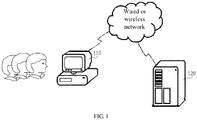
- FIG. 1 is a system architecture diagram of a context acquiring method based on voice interaction according to an embodiment of the present invention.
- the system includes a terminal 110 and a server 120.
- the terminal 110 can be a device with a voice interaction function, such as a story machine, a mobile phone, a tablet, a vehicle-mounted terminal, a welcome robot, a police robot, and the like.
- the implementation manner of the terminal 110 in this embodiment is not particularly limited, as long as the terminal 110 can perform voice interaction with a user.
- the terminal 110 further includes an image collection device.
- the image collection device can collect images of users who are in conversation with the terminal 110.
- the image collection device can be a camera, a video camera, etc.
- the server 120 can provide various online services, and can provide corresponding question and answer results for the user's questions.
- the embodiment of the present invention is also applicable to a process in which a plurality of users have conversations with the terminal 110.
- the process in which a plurality of users have conversations with the terminal 110 involved in the embodiment may be: when a user A and the terminal 110 are in a conversation, a user B pipes up and talks to the terminal 110 in a gap of the conversation between the user A and the terminal 110. At this time, the user A and the user B interact with the terminal 110 alternately, thereby forming a multi-person conversation scene.
- the embodiment of the invention identifies a user based on a voiceprint, and can acquire the context of the user, for example, can acquire the context of the user A and the context of the user B in a process where the user A and the user B interact with the terminal simultaneously, thereby reducing the error rate of context acquisition.
- a question and answer result is fed back to the user to improve the user experience.
- the execution body of the embodiment of the present invention may be the server, where the terminal sends a conversation to the server after acquiring the conversation input by the user, and the server returns a question and answer result of the conversation.
- the terminal sends a conversation to the server after acquiring the conversation input by the user, and the server returns a question and answer result of the conversation.
- the terminal can also feedback the question and answer result by itself after acquiring the conversation.
- a context acquiring method based on voice interaction provided by the embodiments of the present invention is described in detail below by taking a server as an execution body.
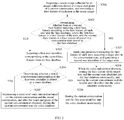
- FIG. 2 is a first flowchart of a context acquiring method based on voice interaction according to an embodiment of the present invention, As shown in FIG. 2 , the method includes:
- voice endpoint detection technology is a very important technology, which is also commonly known as voice activity detection (VAD).
- VAD voice activity detection
- Voice endpoint detection refers to find a voice start point and a voice end point of a voice part in a continuous sound signal.
- the specific implementation of the voice activity detection technology is not specifically limited in this embodiment.
- the execution entity of the voice activity detection technology may be the terminal mentioned above, or the terminal may send the voice to the server in real time and the server performs.
- a current conversation and a stored conversation in this embodiment refer to a continuous voice input by the user to the terminal, i.e. a sentence.
- the “conversation” can be understood as an action performed.
- the “conversation” of this embodiment can also be expressed as a noun in some scenes. For word class of the "conversation", it can be determined according to the language description scene.
- a scene image is acquired which is collected by the image collection device at the voice start point. That is, when a user performs a voice interaction with the terminal and speaks to the terminal, the scene image collected in the current scene is acquired. If there are a plurality of people facing the terminal, since there is a conversation, so in the image of the current scene, there is a user facing the terminal's microphone with the user's lip shape being a speaking lip shape, and at the same time, there may also be users with lateral or other orientations relative to the microphone of the terminal.
- the face feature of each user is extracted from the scene image, for example, a face feature may be extracted by a face feature model.
- the face feature of the user is extracted per single user. Specifically, a matting process is performed on a scene image to acquire the face image of each face; a plurality of face images are input into the preset face feature model in turn, and the face feature of each user is sequentially outputted by the face feature model.
- the face feature may be a multi-dimensional feature, for example, a multi-dimensional vector, with a vector of each dimension representing a feature, such as an eyebrow feature, an eye feature, a nose feature, etc., which will not be listed herein one by one in this embodiment.
- the terminal can also schedule the server according to a load of each server, that is, the steps of the embodiment are performed by a server with a light load.
- the face feature of each user is matched with the face feature in the face database to determine whether a user's first face feature can match the second face feature in the face database.
- the matching in this embodiment can be understood as two face features with the highest similarity under the premise that the similarity of the face features is greater than a preset value, and the similarity can be a cosine similarity of the two face features.
- a first user identifier corresponding to the second face feature is acquired from the face database, then execute S204, S205 and S206 in sequence.
- the face feature in the conversation state and the corresponding user identifier are stored associatedly in the face database.
- the face database When there is a face feature of a user capable of matching the second face feature in the conversation state (the state of opening mouth and speaking) in the face database, it is determined whether there is a stored conversation corresponding to the first user identifier stored in the voice database.
- the user identifier and corresponding conversation are stored associatedly in the voice database.
- the context of voice interaction is determined based on the current conversation and the stored conversation, i.e., determining the context of the current conversation in the stored conversation.
- the stored conversation related to the current conversation can be acquired, that is, the context is acquired.
- the current conversation is the first sentence voice input by the user to the terminal within a preset time period, where the preset time period is a preset time period before the current time, for example, half an hour before the current time. At this time, it is considered that the current conversation does not have a context, and then the current conversation and the first user identifier are stored into the voice database associatedly.
- the voice database and the face database can also be combined into one database, that is, user identifier, corresponding face feature, and user conversation are stored associatedly in one database.
- the face feature and corresponding user conversation can also be stored associatedly in the database directly.
- the stored conversation corresponding to the second face feature is acquired from the database, the context of voice interaction is determined based on the current conversation and the stored conversation, and after the voice end point of the current conversation is obtained, the current conversation is stored into the voice database.
- the face database and the voice database are set separately to facilitate separate storage and maintenance of the face database and the voice database.
- the parameters including the face feature of each user are analyzed to acquire the target user in the conversation state, and the second user identifier of the target user is generated.
- the user identifier can be a number, a letter, etc. or a combination thereof.
- the user identifier of the target user may also be generated by using a hash algorithm. This embodiment does not specifically limit the implementation of the user identifier.
- the face feature of the target user and the second user identifier are stored into the face database associatedly, and the current conversation and the second user identifier are stored into the voice database associatedly, so that a context can be acquired in the stored conversation based on the content in the face database and the voice database when the user performs voice interaction with the terminal again.
- the context acquiring method based on voice interaction acquires a scene image collected by an image collection device at a voice start point of a current conversation, and extracts a face feature of each user in the scene image. If it is determined that there is a second face feature matching a first face feature according to the face feature of each user and a face database, the first user identifier corresponding to the second face feature is acquired from the face database, where the first face feature is a face feature of a user, and the second face feature is a face feature of a user in a conversation state stored in the face database, and accurate identification of users is achieved by face recognition.
- the context of the voice interaction is determined according to the current conversation and the stored conversation, and after the voice end point of the current conversation is obtained, the current conversation is stored into the voice database.
- the stored conversation belonging to the same user as the current conversation can be acquired by the user identifier, and the context of the voice interaction is obtained based on the conversation of the same user, thereby avoiding use of the conversation of different users as the context, and improving the accuracy of the context.
- FIG. 3 is a second flowchart of a context acquiring method based on voice interaction according to an embodiment of the present invention. As shown in FIG. 3 , the method including:
- the voice database stores a user identifier and each sentence corresponding to the user identifier, that is, the user identifier and at least one conversation of the user are stored associatedly.
- the time of the voice start point and the time of the voice end point of the conversation are correspondingly stored.
- the voice start point and the voice end point of the last conversation corresponding to the first user identifier are acquiring from the voice database according to the first user identifier.
- the time interval between the voice end point of the last conversation and the voice start point of the current conversation is acquired according to the occurrence time of the voice end point of the last conversation and the occurrence time of the voice start point of the current conversation.
- the preset interval may be 10 minutes, 30 minutes, etc., and the implementation manner of the preset interval is not limited in this embodiment.
- the time interval is greater than or equal to the preset interval, it indicates that the conversation is a previous conversation of the user for a topic, and it is not regarded as a current context conversation.
- the first user identifier and corresponding stored conversation stored associatedly are deleted from the voice database, and there is no context for the current conversation.
- the first user identifier and corresponding face feature stored associatedly can also be deleted from the face database.
- both can also be deleted asynchronously, an third user identifier that is unmatched within a preset time period and a corresponding face feature can be deleted from the face database.
- the user identifier and the face feature stored associatedly may be deleted in batches, thereby improving the deletion efficiency.
- a person skilled in the art can understand that each time a user's conversation is acquired, the above operations are performed, so that multiple conversations of each user stored in the voice database are conversations with a time interval smaller than the preset interval. Therefore, based on all of the stored conversations of the user and the current conversation, the context of the current conversation is obtained. For example, the current conversation and all the stored conversations of the user can be used as the context of the voice interaction, and for the conversation of the same user, the context of the current conversation can also be acquired from all the stored conversations based on natural language understanding.
- the context of the current conversation can be more accurately determined, and the accuracy of context acquiring is improved.
- the embodiment of the present invention acquires the face feature of each user by using the face feature model.
- the process of constructing the face feature model is illustrated by the following detailed embodiment.
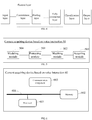
- FIG. 4 is a schematic structural diagram of a face feature model according to an embodiment of the present invention.
- the face feature model can use a Deep Convolutional Neural Network (Deep CNN).
- the model includes an input layer, a feature layer, a classification layer, and an output layer.
- the feature layer includes a convolution layer, a pooling layer, and a fully connected layer. There may be a plurality of alternating convolution layers and pooling layers in the feature layer.
- a deep neural network model may be designed with different depths, different numbers of neurons, and different convolutional pooling modes.
- a face training sample is acquired, the face training sample including a face image and a label.
- the label is a pre-labelled classification result of each feature in the face image, and the label may be a vector in a matrix form.
- the face image is input from the input layer, the input is actually a vector of matrixes, and then the convolution layer performs scanning convolution on the original image or feature map by using convolution kernels with different weights, to extract features of various meanings from the original image or feature map and output them to the feature map.
- the pooling layer is sandwiched between successive convolutional layers to compress the amount of data and parameters, reduce over-fitting, that is, reducing dimensionality of the feature map, and retain main features in the feature map. All neurons between the two layers have weighted connections, and generally, the fully connected layer is arranged at the end of the convolutional neural network. Finally, a result is output after the feature passing the classification layer.
- an initial face feature model is obtained, and the classification layer in the initial face feature model is deleted to obtain the preset face feature model. Since the classification layer is deleted, when the preset face feature model is used, when the face image is acquired from the scene image by matting, the face image is input into the face feature model, the face feature model can output the face feature directly, instead of outputting the classification result.
- This embodiment extracts the face feature by using a deep convolutional neural network model, to perform identity recognition, which can accurately distinguish the source of the conversation, find the conversation context of each person, and improve the conversation experience in a multi-person scene.
- FIG. 5 is a schematic structural diagram of a context acquiring device based on voice interaction, according to an embodiment of the present invention.
- the context acquiring device based on voice interaction 50 includes: an extracting module 501, a matching module 502, and an acquiring module 503.
- a modeling module 504 is further included.
- the extracting module 501 is configured to acquire a scene image collected by an image collection device at a voice start point of a current conversation, and extract a face feature of each user in the scene image.
- the matching module 502 is configured to, if it is determined that there is a second face feature matching a first face feature according to the face feature of each user and a face database, acquire a first user identifier corresponding to the second face feature from the face database, where the first face feature is a face feature of a user and the second face feature is a face feature of a user in conversation state stored in the face database.
- the acquiring module 503 is configured to, if it is determined that a stored conversation corresponding to the first user identifier is stored in a voice database, determine a context of a voice interaction according to the current conversation and the stored conversation, and after a voice end point of the current conversation is obtained, store the current conversation into the voice database.
- the matching module 502 is further configured to, if it is determined that there is no second face feature matching the first face feature according to the face feature of each user and the face database, analyze parameters including the face feature of each user, acquire a target user in the conversation state, and generating a second user identifier of the target user; and when the voice end point is detected, store the current conversation and the second user identifier into the voice database associatedly, and store the face feature of the target user and the second user identifier into the face database associatedly.
- the acquiring module 503 is specifically configured to: acquire a voice start point and a voice end point of a last conversation corresponding to the first user identifier from the voice database according to the first user identifier; and if it is determined that a time interval between the voice end point of the last conversation and the voice start point of the current conversation is less than a preset interval, determine the context of the voice interaction according to the current conversation and the stored conversation.
- the acquiring module 503 is further configured to: if it is determined that the time interval between the voice end point of the last conversation and the voice start point of the current conversation is greater than or equal to the preset interval, delete the first user identifier and a corresponding stored conversation stored associatedly in the voice database.
- the matching module 502 is further configured to: delete a third user identifier which is not matched within a preset time period and a corresponding face feature in the face database.
- the extracting module 501 is specifically configured to:
- the modeling module 504 is configured to, before sequentially input the plurality of face regions into the preset face feature model, acquire a face training sample, the face training sample including a face image and a label; according to the face training sample, obtain an initial face feature model after training; the initial face feature model including an input layer, a feature layer, a classification layer, and an output layer; delete the classification layer in the initial face feature model to obtain the preset face feature model.
- the face feature model is a deep convolutional neural network model
- the feature layer includes a convolution layer, a pooling layer, and a fully connected layer.
- the context acquiring device based on voice interaction provided in this embodiment is similar to the method embodiment in the foregoing, and the details is not described in this embodiment again.
- FIG. 6 is a schematic hardware structural diagram of a context acquiring device based on voice interaction, according to an embodiment of the present invention.
- the context acquiring device based on voice interaction 60 includes: at least one processor 601 and a memory 602.
- the context acquiring device based on voice interaction 60 further includes a communication component 603.
- the processor 601, the memory 602, and the communication component 603 are connected by a bus 604.
- the at least one processor 601 executes computer-executable instructions stored by the memory 602, to cause the at least one processor 601 to perform the context acquiring method based on voice interaction as above.
- the communication component 603 can perform data interaction with other devices.
- the processor may be a Central Processing Unit (CPU), or may be other general-purpose processor, Digital Signal Processor (DSP), Application Specific Integrated Circuit (ASIC) etc.
- the general-purpose processor may be a microprocessor or the processor may be any conventional processor, etc.
- the steps of the method disclosed in the embodiments of the present application may be directly implemented by hardware processor, or performed by a combination of hardware and software modules in the processor.
- the memory may include a high-speed RAM memory, and may also include a non-volatile memory NVM, such as at least one disk memory.
- NVM non-volatile memory
- the bus may be an Industry Standard Architecture (ISA) bus, a Peripheral Component (PCI) bus, or an Extended Industry Standard Architecture (ESA) bus.
- ISA Industry Standard Architecture
- PCI Peripheral Component
- ESA Extended Industry Standard Architecture
- the bus can be divided into an address bus, a data bus, a control bus, etc.
- the bus in the drawing of the present application does not limit to only one bus or one type of bus.
- the present application further provides a computer readable storage medium, the computer readable storage medium stores computer-executable instructions, and when a processor executes the computer-executable instructions, a context acquiring method based on voice interaction is implemented as described above.
- the readable storage medium may be implemented by any type of volatile or non-volatile storage device or a combination thereof, such as a static random access memory (SRAM), an electrically erasable programmable read only memory (EEPROM), an erasable programmable read only memory (EPROM), a programmable read only memory (PROM), a read only memory (ROM), a magnetic memory, a flash memory, a disk or an optical disc.
- SRAM static random access memory
- EEPROM electrically erasable programmable read only memory
- EPROM erasable programmable read only memory
- PROM programmable read only memory
- ROM read only memory
- magnetic memory a magnetic memory
- flash memory a flash memory
- disk or an optical disc a magnetic memory
- ROM read only memory
- the readable storage medium can be any available medium that can be accessed by a general purpose or special purpose computer.
- An exemplary readable storage medium is coupled to the processor, such that the processor can read information from the readable storage medium and can write information to the readable storage medium.
- the readable storage medium may also be an integral part of the processor.
- the processor and the readable storage medium may be located in an Application Specific Integrated Circuits (ASIC).
- ASIC Application Specific Integrated Circuits
- the processor and the readable storage medium may also exist as discrete components in the device.
- the division of the unit is only a logical function division, and actual implementation may have another division manner. For example, multiple units or components can be combined or can be integrated into another system, or some features can be ignored, or not executed.
- the mutual coupling or direct coupling or communication connection shown or discussed may be an indirect coupling or communication connection through some interface, device or unit, and may be electrical, mechanical or otherwise.
- the unit described as a separate component may or may not be physically separated, the component displayed as a unit may be or may not be a physical unit, that is, may be located in one place, or may be distributed to multiple network units. Part or all of the units may be selected according to actual needs to achieve the purpose of the solution of the embodiment.
- each functional unit in each embodiment of the present application may be integrated into one processing unit, or each unit may exist physically separately, or two or more units may be integrated into one unit.
- the functions may be stored in a computer readable storage medium if implemented in the form of a software functional unit and sold or used as a standalone product.
- the essential part or the part that contributes to the prior art or the part of the technical solution can be embodied in a form of software product
- the computer software product is stored in a storage medium and includes instructions for causing a computer device (which may be a personal computer, a server, or a network device, etc.) to perform all or part of the steps of the methods described in various embodiments of the present application.
- the foregoing storage medium includes: a U disk, a mobile hard disk, a Read-Only Memory (ROM), a Random Access Memory (RAM), a disk or an optical disk and other media that can store program codes.
- the aforementioned program can be stored in a computer readable storage medium.
- the program when executed, performs the steps including the foregoing method embodiments; and the foregoing storage medium includes: various medium that can store program codes, such as a ROM, a RAM, a magnetic disk, or an optical disk.
Landscapes
- Engineering & Computer Science (AREA)
- Multimedia (AREA)
- Health & Medical Sciences (AREA)
- Physics & Mathematics (AREA)
- Theoretical Computer Science (AREA)
- Human Computer Interaction (AREA)
- General Physics & Mathematics (AREA)
- General Health & Medical Sciences (AREA)
- Signal Processing (AREA)
- Audiology, Speech & Language Pathology (AREA)
- Computer Vision & Pattern Recognition (AREA)
- Evolutionary Computation (AREA)
- Oral & Maxillofacial Surgery (AREA)
- Acoustics & Sound (AREA)
- Computational Linguistics (AREA)
- Databases & Information Systems (AREA)
- Computing Systems (AREA)
- Artificial Intelligence (AREA)
- Medical Informatics (AREA)
- Software Systems (AREA)
- General Engineering & Computer Science (AREA)
- Computer Networks & Wireless Communication (AREA)
- User Interface Of Digital Computer (AREA)
- Collating Specific Patterns (AREA)
- Image Analysis (AREA)
- Telephonic Communication Services (AREA)
Abstract
Description
- This application claims priority to Chinese Patent Application No.
201810709792.8 - Embodiments of the present invention relate to the field of voice interaction technology, and in particular to a context acquiring method based on voice interaction and a device.
- With development of artificial intelligence technology, research and use of intelligent voice interactive products have attracted much attention. The intelligent voice interaction is an interaction mode based on voice input, and a user can input his own request by voice, and the product can respond with corresponding content according to intention of the request.
- In the prior art, in an application scene of an intelligent service robot, such as a welcome robot, a police robot, etc., there are often scenes in which a plurality of people simultaneously interact with the intelligent service robot. When a plurality of people talk to the robot, if the source of content of a conversation cannot be identified, context of the conversation cannot be accurately acquired, and accurate service cannot be provided to the user, resulting in a bad conversation experience. At present, a user is identified by natural language understanding based on meaning of the conversation under the assumption that there is no content of different topics in the conversation content of a same user and that the themes of the conversation content of two users do not overlap, so as to acquire the conversation context of the same user.
- However, the assumption based on natural language understanding in practical applications is not always true, resulting in a higher error rate in acquiring a voice conversation context.
- Embodiments of the present invention provides a context acquiring method based on voice interaction and a device, so as to overcome a problem of high error rate in acquiring a voice conversation context.
- In a first aspect, an embodiment of the present invention provides a context acquiring method based on voice interaction, including:
- acquiring a scene image collected by an image collection device at a voice start point of a current conversation, and extracting a face feature of each user in the scene image;
- if it is determined that there is a second face feature matching a first face feature according to the face feature of each user and a face database, acquiring a first user identifier corresponding to the second face feature from the face database, wherein the first face feature is a face feature of a user, and the second face feature is a face feature of a user in conversation state stored in the face database; and
- if it is determined that a stored conversation corresponding to the first user identifier is stored in a voice database, determining a context of a voice interaction according to the current conversation and the stored conversation, and after a voice end point of the current conversation is obtained, storing the current conversation into the voice database.
- In a possible design, if it is determined that there is no second face feature matching the first face feature according to the face feature of each user and the face database, the method further includes:
- analyzing parameters including the face feature of each user, acquiring a target user in the conversation state, and generating a second user identifier of the target user; and
- when the voice end point is detected, storing the current conversation and the second user identifier into the voice database associatedly, and storing the face feature of the target user and the second user identifier into the face database associatedly.
- By storing the current conversation and the second user identifier into the voice database associatedly, and storing the face feature of the target user and the second user identifier into the face database associatedly, a context can be acquired in the stored conversation based on the content in the face database and the voice database when the user performs voice interaction with the terminal again,. The face database and the voice database are set separately to facilitate separate storage and maintenance of the face database and the voice database.
- In a possible design, determining a context of a voice interaction according to the current conversation and the stored conversation, includes:
- acquiring a voice start point and a voice end point of a last conversation corresponding to the first user identifier from the voice database according to the first user identifier; and
- if it is determined that a time interval between the voice end point of the last conversation and the voice start point of the current conversation is less than a preset interval, determining the context of the voice interaction according to the current conversation and the stored conversation.
- If the time interval is less than the preset interval, it means that the last conversation and the current conversation are more likely to be a context conversation, and if the time interval is greater than or equal to the preset interval, it indicates that the conversation is a previous conversation of the user for a topic, and cannot be regarded as a current context conversation. By determining whether the time interval between the voice end point of the last conversation and the voice start point of the current conversation is less than the preset interval, the context of the current conversation can be more accurately determined, and the accuracy of context acquiring is improved.
- In a possible design, if it is determined that the time interval between the voice end point of the last conversation and the voice start point of the current conversation is greater than or equal to the preset interval, the method further includes:
deleting the first user identifier and a corresponding stored conversation stored associated from the voice database. - If the time interval is greater than or equal to the preset interval, it indicates that the conversation is the last conversation of the user for a topic, and cannot be regarded as the current context conversation. Thereby, the first user identifier and the corresponding stored conversation stored associatedly are deleted from the voice database, so that the data in the voice database can be kept as new data.
- In a possible design, the method further includes:
deleting a third user identifier which is not matched within a preset time period and a corresponding face feature from the face database. - By using the deletion method, associatedly stored the user identifier and the face feature may be deleted in batches, thereby improving deletion efficiency, enabling data in the face database to be kept new, avoiding redundancy of the face database.
- In a possible design, extracting the face feature of each user in the scene image, includes:
- performing a matting process on the scene image to obtain a face image of each face; and
- inputting a plurality of face images into a preset face feature model sequentially, and acquiring the face feature of each user sequentially output by the face feature model.
- Acquiring the user's face feature by the face feature model, has not only a faster processing speed, but also high accuracy.
- In a possible design, before inputting the plurality of face regions into the preset face feature model, the method further includes:
- acquiring a face training sample, the face training sample including a face image and a label;
- acquiring, according to the face training sample, an initial face feature model after training; the initial face feature model including an input layer, a feature layer, a classification layer, and an output layer; and
- deleting the classification layer in the initial face feature model to obtain the preset face feature model.
- Through the above model training process, the initial face feature model is obtained, and the classification layer in the initial face feature model is deleted to acquire the preset face feature model. Since the classification layer is deleted, when the preset face feature model is used, when the face image is acquired from the scene image and input into the face feature model, the face feature model can output the face feature directly instead of outputting a classification result.
- In a possible design, the face feature model is a deep convolutional neural network model, the feature layer including a convolution layer, a pooling layer, and a fully connected layer.
- Using such a deep neural network model with convolution and pooling operations, it is highly robust to image deformation, blur, noise, etc., and has higher generalization for classification tasks.
- In a second aspect, an embodiment of the present invention provides a context acquiring device based on voice interaction, including:
- an extracting module, configured to acquire a scene image collected by an image collection device at a voice start point of a current conversation, and extract a face feature of each user in the scene image;
- a matching module, configured to if it is determined that there is a second face feature matching a first face feature according to the face feature of each user and the face database, acquire a first user identifier corresponding to the second face feature from the face database, where the first face feature is a face feature of a user, and the second face feature is a face feature of a user in conversation state stored in the face database; and
- an acquiring module, configured to, if it is determined that a stored conversation corresponding to the first user identifier is stored in the voice database, determine a context of a voice interaction according to the current conversation and the stored conversation, and after a voice end point of the current conversation is obtained, store the current conversation into the voice database.
- In a possible design, the matching module is further configured to,
- if it is determined that there is no second face feature matching the first face feature according to the face feature of each user and a face database, analyze parameters comprising the face feature of each user, acquire a target user in conversation state, and generate a second user identifier of the target user; and
- when the voice end point is detected, store the current conversation and the second user identifier into the voice database associatedly, and store the face feature of the target user and the second user identifier into the face database associatedly.
- In a possible design, the acquiring module is specifically configured to:
- acquire a voice start point and a voice end point of a last conversation corresponding to the first user identifier from the voice database according to the first user identifier; and
- if it is determined that a time interval between the voice end point of the last conversation and the voice start point of the current conversation is less than a preset interval, determine the context of the voice interaction according to the current conversation and the stored conversation.
- In a possible design, the acquiring module is further configured to:
if it is determined that the time interval between the voice end point of the last conversation and the voice start point of the current conversation is greater than or equal to the preset interval, delete the first user identifier and a corresponding stored conversation stored associatedly from the voice database. - In a possible design, the matching module is further configured to:
delete a third user identifier which is not matched within a preset time period and a corresponding face feature from the face database. - In a possible design, the extracting module is specifically configured to:
- perform a matting process on the scene image to obtain a face image of each face; and
- input a plurality of face images into a preset face feature model sequentially, and acquire the face feature of each user sequentially output by the face feature model.
- In a possible design, further including: a modeling module;
- the modeling module is configured to, before sequentially input the plurality of face regions into the preset face feature model,
- acquire a face training sample, the face training sample including a face image and a label;
- acquire, according to the face training sample, an initial face feature model after training; the initial face feature model including an input layer, a feature layer, a classification layer, and an output layer; and
- delete the classification layer in the initial face feature model to obtain the preset face feature model.
- In a possible design, the face feature model is a deep convolutional neural network model, and the feature layer includes a convolution layer, a pooling layer, and a fully connected layer.
- In a third aspect, an embodiment of the present invention provides a context acquiring device based on voice interaction, includes: at least one processor and a memory;
the memory stores computer-executable instructions;
the at least one processor executes the computer-executable instructions stored in the memory, to cause the at least one processor to perform the context acquiring method based on voice interaction as described in the first aspect or various possible designs of the first aspect. - In a fourth aspect, an embodiment of the present invention provides a computer readable storage medium, the computer readable storage medium stores computer-executable instructions, and when a processor executes the computer-executable instructions, the context acquiring method based on voice interaction as described in the first aspect or various possible designs of the first aspect is implemented.
- The context acquiring method based on voice interaction and the device provided by the embodiments, acquire a scene image collected by an image collection device at a voice start point of a current conversation, and extract a face feature of each user in the scene image. If it is determined that there is a second face feature matching a first face feature according to the face feature of each user and a face database, a first user identifier corresponding to the second face feature is acquired from the face database, where the first face feature is a face feature of the user, and the second face feature is a face feature of the user in a conversation state stored in the face database, and accurate identification of the user is achieved through face recognition. If it is determined that a stored conversation corresponding to the first user identifier is stored in a voice database, the context of the voice interaction is determined according to the current conversation and the stored conversation, and after a voice end point of the current conversation is obtained, the current conversation is stored into the voice database. A stored conversation belonging to the same user as the current conversation can be acquired by the user identifier, and the context of the voice interaction is acquired based on the conversation of the same user, thereby avoiding use of the conversation of different users as the context, and improving the accuracy of the context.
- In order to illustrate the embodiments of the present invention or the technical solutions in the prior art more clearly, a brief description of the drawings used in the embodiments or the prior art description will be briefly described below. Obviously, the drawings in following description are some embodiments of the present invention, and those skilled in the art can acquire other drawings according to the drawings without any inventive labor.
-
FIG. 1 is a system architecture diagram of a context acquiring method based on voice interaction according to an embodiment of the present invention; -
FIG. 2 is a first flowchart of a context acquiring method based on voice interaction according to an embodiment of the present invention; -
FIG. 3 is a second flowchart of a context acquiring method based on voice interaction according to an embodiment of the present invention; -
FIG. 4 is a schematic structural diagram of a face feature model according to an embodiment of the present invention; -
FIG. 5 is a schematic structural diagram of a context acquiring device based on voice interaction according to an embodiment of the present invention; -
FIG. 6 is a schematic hardware structural diagram of a context acquiring device based on voice interaction according to an embodiment of the present invention. - In order to make the objectives, technical solutions, and advantages of the embodiments of the present invention more clear, the technical solutions in the embodiments of the present invention are clearly and completely described below in conjunction with the drawings in the embodiments of the present invention. Obviously, the described embodiments are a part of the embodiments of the invention, rather than all of the embodiments. All other embodiments acquired by those skilled in the art based on the embodiments of the present invention without creative efforts are within the scope of the present invention.
-
FIG. 1 is a system architecture diagram of a context acquiring method based on voice interaction according to an embodiment of the present invention. As shown inFIG.1 , the system includes a terminal 110 and aserver 120. The terminal 110 can be a device with a voice interaction function, such as a story machine, a mobile phone, a tablet, a vehicle-mounted terminal, a welcome robot, a police robot, and the like. - The implementation manner of the terminal 110 in this embodiment is not particularly limited, as long as the terminal 110 can perform voice interaction with a user. In this embodiment, the terminal 110 further includes an image collection device. The image collection device can collect images of users who are in conversation with the terminal 110. The image collection device can be a camera, a video camera, etc. The
server 120 can provide various online services, and can provide corresponding question and answer results for the user's questions. - The embodiment of the present invention is also applicable to a process in which a plurality of users have conversations with the terminal 110. The process in which a plurality of users have conversations with the terminal 110 involved in the embodiment may be: when a user A and the terminal 110 are in a conversation, a user B pipes up and talks to the terminal 110 in a gap of the conversation between the user A and the terminal 110. At this time, the user A and the user B interact with the terminal 110 alternately, thereby forming a multi-person conversation scene.
- The embodiment of the invention identifies a user based on a voiceprint, and can acquire the context of the user, for example, can acquire the context of the user A and the context of the user B in a process where the user A and the user B interact with the terminal simultaneously, thereby reducing the error rate of context acquisition. After acquiring the context of a same user's voice interaction, combined with the context, a question and answer result is fed back to the user to improve the user experience.
- The execution body of the embodiment of the present invention may be the server, where the terminal sends a conversation to the server after acquiring the conversation input by the user, and the server returns a question and answer result of the conversation. Those skilled in the art can understand that when the function of the terminal is sufficiently powerful, the terminal can also feedback the question and answer result by itself after acquiring the conversation. A context acquiring method based on voice interaction provided by the embodiments of the present invention is described in detail below by taking a server as an execution body.
-
FIG. 2 is a first flowchart of a context acquiring method based on voice interaction according to an embodiment of the present invention, As shown inFIG. 2 , the method includes: - S201, acquiring a scene image collected by an image collection device at a voice start point of a current conversation, and extracting a face feature of each user in the scene image.
- With the development of human-computer interaction technology, voice recognition technology shows its importance. In voice recognition systems, voice endpoint detection technology is a very important technology, which is also commonly known as voice activity detection (VAD). Voice endpoint detection refers to find a voice start point and a voice end point of a voice part in a continuous sound signal. The specific implementation of the voice activity detection technology is not specifically limited in this embodiment. The execution entity of the voice activity detection technology may be the terminal mentioned above, or the terminal may send the voice to the server in real time and the server performs.
- A current conversation and a stored conversation in this embodiment refer to a continuous voice input by the user to the terminal, i.e. a sentence. When describing "having a conversation", the "conversation" can be understood as an action performed. The "conversation" of this embodiment can also be expressed as a noun in some scenes. For word class of the "conversation", it can be determined according to the language description scene.
- When the voice start point of the current conversation is detected, a scene image is acquired which is collected by the image collection device at the voice start point. That is, when a user performs a voice interaction with the terminal and speaks to the terminal, the scene image collected in the current scene is acquired. If there are a plurality of people facing the terminal, since there is a conversation, so in the image of the current scene, there is a user facing the terminal's microphone with the user's lip shape being a speaking lip shape, and at the same time, there may also be users with lateral or other orientations relative to the microphone of the terminal.
- After acquiring the scene image, the face feature of each user is extracted from the scene image, for example, a face feature may be extracted by a face feature model.
- In the extraction process, the face feature of the user is extracted per single user. Specifically, a matting process is performed on a scene image to acquire the face image of each face; a plurality of face images are input into the preset face feature model in turn, and the face feature of each user is sequentially outputted by the face feature model.
- The face feature may be a multi-dimensional feature, for example, a multi-dimensional vector, with a vector of each dimension representing a feature, such as an eyebrow feature, an eye feature, a nose feature, etc., which will not be listed herein one by one in this embodiment.
- In this embodiment, the terminal can also schedule the server according to a load of each server, that is, the steps of the embodiment are performed by a server with a light load.
- S202, determining whether there is a second face feature matching a first face feature according to the face feature of each user and a face database, where the first face feature is a face feature of the user, and the second face feature is a face feature of a user in a conversation state stored in the face database; if yes, executing S203, if no, executing S207;
- S203, acquiring a first user identifier corresponding to the second face feature from the face database.
- After acquiring the face feature of each user, the face feature of each user is matched with the face feature in the face database to determine whether a user's first face feature can match the second face feature in the face database.
- It can be understood by those skilled in the art that when a user faces the microphone in the forward direction, other users cannot face the microphone in the forward direction, so there is one user who is in the conversation state with the microphone in the collected scene image, therefore, it can be determined whether there is a user whose first face feature matches the second face feature. The matching in this embodiment can be understood as two face features with the highest similarity under the premise that the similarity of the face features is greater than a preset value, and the similarity can be a cosine similarity of the two face features.
- When there is a face feature of a user capable of matching a second face feature in the conversation state (a state of opening mouth and speaking) in the face database, a first user identifier corresponding to the second face feature is acquired from the face database, then execute S204, S205 and S206 in sequence. The face feature in the conversation state and the corresponding user identifier are stored associatedly in the face database.
- When there is no user's face feature that can match the second face feature in the conversation state (a state of opening mouth and speaking) in the face database, S207 and S208 are sequentially executed.
- S204, determining whether a stored conversation corresponding to the first user identifier is stored in the voice database, and if yes, executing S205; if not, executing S206;
- S205, determining a context of voice interaction based on the current conversation and the stored conversation, and after a voice end point of the current conversation is obtained, storing the current conversation into the voice database;
- S206, storing the current conversation and the first user identifier into the voice database associatedly.
- When there is a face feature of a user capable of matching the second face feature in the conversation state (the state of opening mouth and speaking) in the face database, it is determined whether there is a stored conversation corresponding to the first user identifier stored in the voice database. The user identifier and corresponding conversation are stored associatedly in the voice database.
- If the stored conversation corresponding to the first user identifier is stored in the voice database, it indicates that the current conversation is not a first sentence input by the user to the terminal within a preset time period, then the context of voice interaction is determined based on the current conversation and the stored conversation, i.e., determining the context of the current conversation in the stored conversation. At this time, in a limited number of conversations, combined with natural language understanding, the stored conversation related to the current conversation can be acquired, that is, the context is acquired. After acquiring the voice end point of the current conversation, the current conversation is stored into the voice database, and an association between the current conversation and the first user identifier is established in the voice database.
- If the stored conversation corresponding to the first user identifier is not stored in the voice database, the current conversation is the first sentence voice input by the user to the terminal within a preset time period, where the preset time period is a preset time period before the current time, for example, half an hour before the current time. At this time, it is considered that the current conversation does not have a context, and then the current conversation and the first user identifier are stored into the voice database associatedly.
- Optionally, in this embodiment, the voice database and the face database can also be combined into one database, that is, user identifier, corresponding face feature, and user conversation are stored associatedly in one database. Optionally, the face feature and corresponding user conversation can also be stored associatedly in the database directly.
- At this time, if it is determined, according to the face feature of each user and the database, that there is a second face feature matching the first face feature, then the stored conversation corresponding to the second face feature is acquired from the database, the context of voice interaction is determined based on the current conversation and the stored conversation, and after the voice end point of the current conversation is obtained, the current conversation is stored into the voice database.
- In this embodiment, the face database and the voice database are set separately to facilitate separate storage and maintenance of the face database and the voice database.
- S207, analyzing parameters including the face feature of each user, acquiring a target user in the conversation state, and generating a second user identifier of the target user.
- S208, when the voice end point is detected, storing the face feature of the target user and the second user identifier into the face database associatedly, and storing the current conversation and the second user identifier into the voice database associatedly.
- When there is no user's face feature that can match the second face feature in the conversation state (the state of opening mouth and speaking) in the face database, it is indicated that the current user has never had a voice interaction with the terminal before, and at this time, the parameters including the face feature of each user are analyzed to acquire the target user in the conversation state, and the second user identifier of the target user is generated. The user identifier can be a number, a letter, etc. or a combination thereof. For another example, the user identifier of the target user may also be generated by using a hash algorithm. This embodiment does not specifically limit the implementation of the user identifier.
- From this, when the voice end point is detected, the face feature of the target user and the second user identifier are stored into the face database associatedly, and the current conversation and the second user identifier are stored into the voice database associatedly, so that a context can be acquired in the stored conversation based on the content in the face database and the voice database when the user performs voice interaction with the terminal again.
- The context acquiring method based on voice interaction provided by this embodiment, acquires a scene image collected by an image collection device at a voice start point of a current conversation, and extracts a face feature of each user in the scene image. If it is determined that there is a second face feature matching a first face feature according to the face feature of each user and a face database, the first user identifier corresponding to the second face feature is acquired from the face database, where the first face feature is a face feature of a user, and the second face feature is a face feature of a user in a conversation state stored in the face database, and accurate identification of users is achieved by face recognition. If it is determined that the stored conversation corresponding to the first user identifier is stored in the voice database, the context of the voice interaction is determined according to the current conversation and the stored conversation, and after the voice end point of the current conversation is obtained, the current conversation is stored into the voice database. The stored conversation belonging to the same user as the current conversation can be acquired by the user identifier, and the context of the voice interaction is obtained based on the conversation of the same user, thereby avoiding use of the conversation of different users as the context, and improving the accuracy of the context.
- Following describes an implementation of determining context of voice interaction.
FIG. 3 is a second flowchart of a context acquiring method based on voice interaction according to an embodiment of the present invention. As shown inFIG. 3 , the method including: - S301, acquiring a voice start point and a voice end point of a last conversation corresponding to a first user identifier from a voice database according to the first user identifier;
- S302, determining whether a time interval between the voice end point of the last conversation and a voice start point of a current conversation is less than a preset interval, if yes, executing S303, if not, executing S304;
- S303, determining a context of voice interaction based on the current conversation and the stored conversation;
- S304, deleting the first user identifier and the corresponding stored conversation stored associatedly from the voice database.
- In a specific implementation process, the voice database stores a user identifier and each sentence corresponding to the user identifier, that is, the user identifier and at least one conversation of the user are stored associatedly. When each conversation is stored, the time of the voice start point and the time of the voice end point of the conversation are correspondingly stored.
- After acquiring the first user identifier according to the face feature of the target user, the voice start point and the voice end point of the last conversation corresponding to the first user identifier are acquiring from the voice database according to the first user identifier.
- Then the time interval between the voice end point of the last conversation and the voice start point of the current conversation is acquired according to the occurrence time of the voice end point of the last conversation and the occurrence time of the voice start point of the current conversation.
- If the time interval is less than the preset interval, it means that the last conversation and the current conversation are more likely to be the context conversation, for example, the preset interval may be 10 minutes, 30 minutes, etc., and the implementation manner of the preset interval is not limited in this embodiment.
- If the time interval is greater than or equal to the preset interval, it indicates that the conversation is a previous conversation of the user for a topic, and it is not regarded as a current context conversation. Thus, the first user identifier and corresponding stored conversation stored associatedly are deleted from the voice database, and there is no context for the current conversation.
- Optionally, when deleting the first user identifier and corresponding stored conversation stored associatedly from the voice database, the first user identifier and corresponding face feature stored associatedly can also be deleted from the face database.
- Optionally, both can also be deleted asynchronously, an third user identifier that is unmatched within a preset time period and a corresponding face feature can be deleted from the face database. By using the deletion method, the user identifier and the face feature stored associatedly may be deleted in batches, thereby improving the deletion efficiency.
- A person skilled in the art can understand that each time a user's conversation is acquired, the above operations are performed, so that multiple conversations of each user stored in the voice database are conversations with a time interval smaller than the preset interval. Therefore, based on all of the stored conversations of the user and the current conversation, the context of the current conversation is obtained. For example, the current conversation and all the stored conversations of the user can be used as the context of the voice interaction, and for the conversation of the same user, the context of the current conversation can also be acquired from all the stored conversations based on natural language understanding.
- In this embodiment, by determining whether the time interval between the voice end point of the last conversation and the voice start point of the current conversation is less than a preset interval, the context of the current conversation can be more accurately determined, and the accuracy of context acquiring is improved.
- In the above embodiment, the embodiment of the present invention acquires the face feature of each user by using the face feature model. The process of constructing the face feature model is illustrated by the following detailed embodiment.
-
FIG. 4 is a schematic structural diagram of a face feature model according to an embodiment of the present invention. As shown inFIG. 4 , the face feature model can use a Deep Convolutional Neural Network (Deep CNN). The model includes an input layer, a feature layer, a classification layer, and an output layer. Optionally, the feature layer includes a convolution layer, a pooling layer, and a fully connected layer. There may be a plurality of alternating convolution layers and pooling layers in the feature layer. - In a specific implementation process, for different usage scenes, based on the face feature model, a deep neural network model may be designed with different depths, different numbers of neurons, and different convolutional pooling modes.
- When training the model, a face training sample is acquired, the face training sample including a face image and a label. The label is a pre-labelled classification result of each feature in the face image, and the label may be a vector in a matrix form.
- The face image is input from the input layer, the input is actually a vector of matrixes, and then the convolution layer performs scanning convolution on the original image or feature map by using convolution kernels with different weights, to extract features of various meanings from the original image or feature map and output them to the feature map. The pooling layer is sandwiched between successive convolutional layers to compress the amount of data and parameters, reduce over-fitting, that is, reducing dimensionality of the feature map, and retain main features in the feature map. All neurons between the two layers have weighted connections, and generally, the fully connected layer is arranged at the end of the convolutional neural network. Finally, a result is output after the feature passing the classification layer.
- Stop training when the error value between the output of the model and the label is less than a predetermined threshold that meets the business requirements. Using such a deep neural network model with convolution and pooling operations, it is highly robust to image deformation, blur, noise, etc., and has higher generalization for classification tasks.
- Through the above model training process, an initial face feature model is obtained, and the classification layer in the initial face feature model is deleted to obtain the preset face feature model. Since the classification layer is deleted, when the preset face feature model is used, when the face image is acquired from the scene image by matting, the face image is input into the face feature model, the face feature model can output the face feature directly, instead of outputting the classification result.
- This embodiment extracts the face feature by using a deep convolutional neural network model, to perform identity recognition, which can accurately distinguish the source of the conversation, find the conversation context of each person, and improve the conversation experience in a multi-person scene.
-
FIG. 5 is a schematic structural diagram of a context acquiring device based on voice interaction, according to an embodiment of the present invention. As shown inFIG. 5 , the context acquiring device based onvoice interaction 50 includes: an extractingmodule 501, amatching module 502, and an acquiringmodule 503. Optionally, amodeling module 504 is further included. - The extracting
module 501 is configured to acquire a scene image collected by an image collection device at a voice start point of a current conversation, and extract a face feature of each user in the scene image. - The
matching module 502 is configured to, if it is determined that there is a second face feature matching a first face feature according to the face feature of each user and a face database, acquire a first user identifier corresponding to the second face feature from the face database, where the first face feature is a face feature of a user and the second face feature is a face feature of a user in conversation state stored in the face database. - The acquiring
module 503 is configured to, if it is determined that a stored conversation corresponding to the first user identifier is stored in a voice database, determine a context of a voice interaction according to the current conversation and the stored conversation, and after a voice end point of the current conversation is obtained, store the current conversation into the voice database. - Optionally, the
matching module 502 is further configured to,
if it is determined that there is no second face feature matching the first face feature according to the face feature of each user and the face database, analyze parameters including the face feature of each user, acquire a target user in the conversation state, and generating a second user identifier of the target user; and
when the voice end point is detected, store the current conversation and the second user identifier into the voice database associatedly, and store the face feature of the target user and the second user identifier into the face database associatedly. - Optionally, the acquiring
module 503 is specifically configured to:
acquire a voice start point and a voice end point of a last conversation corresponding to the first user identifier from the voice database according to the first user identifier; and
if it is determined that a time interval between the voice end point of the last conversation and the voice start point of the current conversation is less than a preset interval, determine the context of the voice interaction according to the current conversation and the stored conversation. - Optionally, the acquiring
module 503 is further configured to:
if it is determined that the time interval between the voice end point of the last conversation and the voice start point of the current conversation is greater than or equal to the preset interval, delete the first user identifier and a corresponding stored conversation stored associatedly in the voice database. - Optionally, the
matching module 502 is further configured to:
delete a third user identifier which is not matched within a preset time period and a corresponding face feature in the face database. - Optionally, the extracting
module 501 is specifically configured to: - perform a matting process on the scene image to acquire a face image of each face; and
- input a plurality of face images into a preset face feature model sequentially, and acquire the face feature of each user sequentially output by the face feature model.
- The
modeling module 504 is configured to, before sequentially input the plurality of face regions into the preset face feature model, acquire a face training sample, the face training sample including a face image and a label;
according to the face training sample, obtain an initial face feature model after training; the initial face feature model including an input layer, a feature layer, a classification layer, and an output layer;
delete the classification layer in the initial face feature model to obtain the preset face feature model. - Optionally, the face feature model is a deep convolutional neural network model, and the feature layer includes a convolution layer, a pooling layer, and a fully connected layer.
- The context acquiring device based on voice interaction provided in this embodiment is similar to the method embodiment in the foregoing, and the details is not described in this embodiment again.
-
FIG. 6 is a schematic hardware structural diagram of a context acquiring device based on voice interaction, according to an embodiment of the present invention. As shown inFIG. 6 , the context acquiring device based onvoice interaction 60 includes: at least oneprocessor 601 and amemory 602. Optionally, the context acquiring device based onvoice interaction 60 further includes acommunication component 603. Theprocessor 601, thememory 602, and thecommunication component 603 are connected by abus 604. - In a specific implementation process, the at least one
processor 601 executes computer-executable instructions stored by thememory 602, to cause the at least oneprocessor 601 to perform the context acquiring method based on voice interaction as above. - The
communication component 603 can perform data interaction with other devices. - For a specific implementation process of the
processor 601, refer to the foregoing method embodiment, and the implementation principle and technical effects are similar, and the details are not described herein. - In the embodiment shown in the above
FIG. 6 , it should be understood that the processor may be a Central Processing Unit (CPU), or may be other general-purpose processor, Digital Signal Processor (DSP), Application Specific Integrated Circuit (ASIC) etc. The general-purpose processor may be a microprocessor or the processor may be any conventional processor, etc. The steps of the method disclosed in the embodiments of the present application may be directly implemented by hardware processor, or performed by a combination of hardware and software modules in the processor. - The memory may include a high-speed RAM memory, and may also include a non-volatile memory NVM, such as at least one disk memory.
- The bus may be an Industry Standard Architecture (ISA) bus, a Peripheral Component (PCI) bus, or an Extended Industry Standard Architecture (ESA) bus. The bus can be divided into an address bus, a data bus, a control bus, etc. For convenience of representation, the bus in the drawing of the present application does not limit to only one bus or one type of bus.
- The present application further provides a computer readable storage medium, the computer readable storage medium stores computer-executable instructions, and when a processor executes the computer-executable instructions, a context acquiring method based on voice interaction is implemented as described above.
- The above computer readable storage medium, the readable storage medium may be implemented by any type of volatile or non-volatile storage device or a combination thereof, such as a static random access memory (SRAM), an electrically erasable programmable read only memory (EEPROM), an erasable programmable read only memory (EPROM), a programmable read only memory (PROM), a read only memory (ROM), a magnetic memory, a flash memory, a disk or an optical disc. The readable storage medium can be any available medium that can be accessed by a general purpose or special purpose computer.
- An exemplary readable storage medium is coupled to the processor, such that the processor can read information from the readable storage medium and can write information to the readable storage medium. Of course, the readable storage medium may also be an integral part of the processor. The processor and the readable storage medium may be located in an Application Specific Integrated Circuits (ASIC). Of course, the processor and the readable storage medium may also exist as discrete components in the device.
- The division of the unit is only a logical function division, and actual implementation may have another division manner. For example, multiple units or components can be combined or can be integrated into another system, or some features can be ignored, or not executed. In addition, the mutual coupling or direct coupling or communication connection shown or discussed may be an indirect coupling or communication connection through some interface, device or unit, and may be electrical, mechanical or otherwise.
- The unit described as a separate component may or may not be physically separated, the component displayed as a unit may be or may not be a physical unit, that is, may be located in one place, or may be distributed to multiple network units. Part or all of the units may be selected according to actual needs to achieve the purpose of the solution of the embodiment.
- In addition, each functional unit in each embodiment of the present application may be integrated into one processing unit, or each unit may exist physically separately, or two or more units may be integrated into one unit.
- The functions may be stored in a computer readable storage medium if implemented in the form of a software functional unit and sold or used as a standalone product. Based on such understanding, in the technical solution of the present invention, the essential part or the part that contributes to the prior art or the part of the technical solution can be embodied in a form of software product, the computer software product is stored in a storage medium and includes instructions for causing a computer device (which may be a personal computer, a server, or a network device, etc.) to perform all or part of the steps of the methods described in various embodiments of the present application. The foregoing storage medium includes: a U disk, a mobile hard disk, a Read-Only Memory (ROM), a Random Access Memory (RAM), a disk or an optical disk and other media that can store program codes.
- A person of ordinary skill in the art may understand that all or part of steps of implementing the foregoing method embodiments may be completed by the program instructing relevant hardware. The aforementioned program can be stored in a computer readable storage medium. The program, when executed, performs the steps including the foregoing method embodiments; and the foregoing storage medium includes: various medium that can store program codes, such as a ROM, a RAM, a magnetic disk, or an optical disk.
- Finally, it should be noted that the above embodiments are only used to explain the technical solutions of the present invention, but not to limit; although the present application has been described in detail with reference to the foregoing embodiments, those skilled in the art should understand that the technical solutions described in the foregoing embodiments may be modified, or some or all of the technical features may be equivalently replaced; however, these modifications or substitutions do not make the essence of corresponding technical solutions depart from of the scope of the embodiments of the present application.
Claims (18)
- A context acquiring method based on voice interaction, comprising:acquiring a scene image collected by an image collection device at a voice start point of a current conversation, and extracting a face feature of each user in the scene image;if it is determined that there is a second face feature matching a first face feature according to the face feature of each user and a face database, acquiring a first user identifier corresponding to the second face feature from the face database, wherein the first face feature is a face feature of a user, the second face feature is a face feature of a user in a conversation state stored in the face database; andif it is determined that a stored conversation corresponding to the first user identifier is stored in a voice database, determining a context of a voice interaction according to the current conversation and the stored conversation, and after a voice end point of the current conversation is obtained, storing the current conversation into the voice database.
- The method according to claim 1, wherein if it is determined that there is no second face feature matching the first face feature according to the face feature of each user and the face database, the method further comprises:analyzing parameters comprising the face feature of each user, acquiring a target user in the conversation state, and generating a second user identifier of the target user; andwhen the voice end point is detected, storing the current conversation and the second user identifier into the voice database associatedly, and storing the face feature of the target user and the second user identifier into the face database associatedly.
- The method according to claim 1, wherein the determining a context of a voice interaction according to the current conversation and the stored conversation, comprises:acquiring a voice start point and a voice end point of a last conversation corresponding to the first user identifier from the voice database according to the first user identifier; andif it is determined that a time interval between the voice end point of the last conversation and the voice start point of the current conversation is less than a preset interval, determining the context of the voice interaction according to the current conversation and the stored conversation.
- The method according to claim 3, wherein if it is determined that the time interval between the voice end point of the last conversation and the voice start point of the current conversation is greater than or equal to the preset interval, the method further comprises:
deleting the first user identifier and a corresponding stored conversation stored associatedly from the voice database. - The method according to claim 1, wherein the method further comprises:
deleting a third user identifier which is not matched within a preset time period and a corresponding face feature from the face database. - The method according to claim 1, wherein the extracting a face feature of each user in the scene image, comprises:performing a matting process on the scene image to acquire a face image of each face; andinputting a plurality of face images into a preset face feature model sequentially, to acquire the face feature of each user sequentially output by the face feature model.
- The method according to claim 6, wherein before inputting the plurality of face regions into the preset face feature model sequentially, the method further comprises:acquiring a face training sample, the face training sample comprising a face image and a label;acquiring, according to the face training sample, an initial face feature model after training; the initial face feature model comprising an input layer, a feature layer, a classification layer, and an output layer; anddeleting the classification layer in the initial face feature model to obtain the preset face feature model.
- The method according to claim 7, wherein the face feature model is a deep convolutional neural network model, and the feature layer comprises a convolution layer, a pooling layer, and a fully connected layer.
- A context acquiring device based on voice interaction, comprising:an extracting module, configured to acquire a scene image collected by an image collection device at a voice start point of a current conversation, and extract a face feature of each user in the scene image;a matching module, configured to, if it is determined that there is a second face feature matching a first face feature according to the face feature of each user and the face database, acquire a first user identifier corresponding to the second face feature from the face database, wherein the first face feature is a face feature of a user, and the second face feature is a face feature of a user in conversation state stored in the face database; andan acquiring module, configured to, if it is determined that a stored conversation corresponding to the first user identifier is stored in the voice database, determine a context of a voice interaction according to the current conversation and the stored conversation, and after a voice end point of the current conversation is obtained, store the current conversation into the voice database.
- The method according to claim 9, wherein the matching module is configured to:if determining that there is no second face feature matching the first face feature according to the face feature of each user and a face database, analyze parameters comprising the face feature of each user, acquire a target user in conversation state, and generate a second user identifier of the target user; andwhen the voice end point is detected, store the current conversation and the second user identifier into the voice database associatedly, and store the face feature of the target user and the second user identifier into the face database associatedly.
- The device according to claim 9, wherein the acquiring module is specifically configured to:acquire a voice start point and a voice end point of a last conversation corresponding to the first user identifier from the voice database according to the first user identifier; andif it is determined that a time interval between the voice end point of the last conversation and the voice start point of the current conversation is less than a preset interval, determine the context of the voice interaction according to the current conversation and the stored conversation.
- The device according to claim 11, wherein the acquiring module is further configured to:
if it is determined that the time interval between the voice end point of the last conversation and the voice start point of the current conversation is greater than or equal to the preset interval, delete the first user identifier and corresponding stored conversation stored associatedly from the voice database. - The device according to claim 9, wherein the matching module is further configured to:
delete a third user identifier which is not matched within a preset time period and a corresponding face feature from the face database. - The device according to claim 9, wherein the extracting module is specifically configured to:perform a matting process on the scene image to acquire a face image of each face; andinput a plurality of face images into a preset face feature model sequentially, and acquire the face feature of each user sequentially output by the face feature model.
- The device according to claim 14, further comprises: a modeling module;
the modeling module is configured to, before sequentially input the plurality of face regions into the preset face feature model,
acquire a face training sample, the face training sample comprising a face image and a label;
acquire, according to the face training sample, an initial face feature model after training; the initial face feature model comprising an input layer, a feature layer, a classification layer, and an output layer; and
delete the classification layer in the initial face feature model to obtain the preset face feature model. - The device according to claim 15, wherein the face feature model is a deep convolutional neural network model, and the feature layer comprises a convolution layer, a pooling layer and a fully connected layer.
- A context acquiring device based on voice interaction, comprising: at least one processor and a memory;
the memory stores computer-executable instructions;
the at least one processor executes the computer-executable instructions stored in the memory to cause the at least one processor to perform the context acquiring method based on voice interaction according to any one of claims 1 to 8. - A computer readable storage medium, wherein the computer readable storage medium stores computer-executable instructions, and when a processor executes the computer-executable instructions, the context acquiring method based on voice interaction according to any one of claims 1 to 8 is implemented.
Applications Claiming Priority (2)
| Application Number | Priority Date | Filing Date | Title |
|---|---|---|---|
| CN201810709792.8A CN108920639B (en) | 2018-07-02 | 2018-07-02 | Context obtaining method and device based on voice interaction |
| PCT/CN2019/087203 WO2020007129A1 (en) | 2018-07-02 | 2019-05-16 | Context acquisition method and device based on voice interaction |
Publications (3)
| Publication Number | Publication Date |
|---|---|
| EP3617946A1 true EP3617946A1 (en) | 2020-03-04 |
| EP3617946A4 EP3617946A4 (en) | 2020-12-30 |
| EP3617946B1 EP3617946B1 (en) | 2024-01-03 |
Family
ID=64424805
Family Applications (1)
| Application Number | Title | Priority Date | Filing Date |
|---|---|---|---|
| EP19802029.9A Active EP3617946B1 (en) | 2018-07-02 | 2019-05-16 | Context acquisition method and device based on voice interaction |
Country Status (6)
| Country | Link |
|---|---|
| US (1) | US20210012777A1 (en) |
| EP (1) | EP3617946B1 (en) |
| JP (1) | JP6968908B2 (en) |
| KR (1) | KR20200004826A (en) |
| CN (1) | CN108920639B (en) |
| WO (1) | WO2020007129A1 (en) |
Families Citing this family (16)
| Publication number | Priority date | Publication date | Assignee | Title |
|---|---|---|---|---|
| US10565982B2 (en) | 2017-11-09 | 2020-02-18 | International Business Machines Corporation | Training data optimization in a service computing system for voice enablement of applications |
| US10553203B2 (en) | 2017-11-09 | 2020-02-04 | International Business Machines Corporation | Training data optimization for voice enablement of applications |
| CN108920639B (en) * | 2018-07-02 | 2022-01-18 | 北京百度网讯科技有限公司 | Context obtaining method and device based on voice interaction |
| CN109559761A (en) * | 2018-12-21 | 2019-04-02 | 广东工业大学 | A kind of risk of stroke prediction technique based on depth phonetic feature |
| CN109462546A (en) * | 2018-12-28 | 2019-03-12 | 苏州思必驰信息科技有限公司 | A kind of voice dialogue history message recording method, apparatus and system |
| CN111475206B (en) * | 2019-01-04 | 2023-04-11 | 优奈柯恩(北京)科技有限公司 | Method and apparatus for waking up wearable device |
| WO2020214844A1 (en) * | 2019-04-19 | 2020-10-22 | Magic Leap, Inc. | Identifying input for speech recognition engine |
| CN110210307B (en) * | 2019-04-30 | 2023-11-28 | 中国银联股份有限公司 | Face sample library deployment method, face-recognition-based service processing method and device |
| CN110223718B (en) * | 2019-06-18 | 2021-07-16 | 联想(北京)有限公司 | Data processing method, device and storage medium |
| CN110825765B (en) * | 2019-10-23 | 2022-10-04 | 中国建设银行股份有限公司 | Face recognition method and device |
| CN112598840A (en) * | 2020-12-16 | 2021-04-02 | 广州云从鼎望科技有限公司 | Passing equipment control method and device based on face recognition and voice interaction, machine readable medium and equipment |
| CN114356275B (en) * | 2021-12-06 | 2023-12-29 | 上海小度技术有限公司 | Interactive control method and device, intelligent voice equipment and storage medium |
| CN118737138A (en) * | 2023-03-30 | 2024-10-01 | 北京罗克维尔斯科技有限公司 | Voice conversation method, device and related equipment |
| US12149493B1 (en) * | 2023-07-25 | 2024-11-19 | Cisco Technology, Inc. | Automatic poll generation based on user communications |
| CN118072376B (en) * | 2024-04-18 | 2024-07-12 | 三峡高科信息技术有限责任公司 | Method, device, storage medium and computer equipment for generating secure handover documents |
| CN118093835A (en) * | 2024-04-23 | 2024-05-28 | 国网山东省电力公司滨州市滨城区供电公司 | Power supply service question-answering method, system and medium based on large language model cloud service |
Family Cites Families (26)
| Publication number | Priority date | Publication date | Assignee | Title |
|---|---|---|---|---|
| JP3437492B2 (en) * | 1999-06-21 | 2003-08-18 | 松下電器産業株式会社 | Voice recognition method and apparatus |
| JP2001331799A (en) * | 2000-03-16 | 2001-11-30 | Toshiba Corp | Image processing apparatus and image processing method |
| US20030154084A1 (en) * | 2002-02-14 | 2003-08-14 | Koninklijke Philips Electronics N.V. | Method and system for person identification using video-speech matching |
| US9053750B2 (en) * | 2011-06-17 | 2015-06-09 | At&T Intellectual Property I, L.P. | Speaker association with a visual representation of spoken content |
| US9318129B2 (en) * | 2011-07-18 | 2016-04-19 | At&T Intellectual Property I, Lp | System and method for enhancing speech activity detection using facial feature detection |
| JP5845686B2 (en) * | 2011-07-26 | 2016-01-20 | ソニー株式会社 | Information processing apparatus, phrase output method, and program |
| US9214157B2 (en) * | 2011-12-06 | 2015-12-15 | At&T Intellectual Property I, L.P. | System and method for machine-mediated human-human conversation |
| US10509829B2 (en) * | 2015-01-21 | 2019-12-17 | Microsoft Technology Licensing, Llc | Contextual search using natural language |
| TWI526879B (en) * | 2015-01-30 | 2016-03-21 | 原相科技股份有限公司 | Interactive system, remote controller and operating method thereof |
| WO2016173326A1 (en) * | 2015-04-30 | 2016-11-03 | 北京贝虎机器人技术有限公司 | Subject based interaction system and method |
| EP3311286A4 (en) * | 2015-06-17 | 2019-01-16 | Intel Corporation | Computing apparatus and method with persistent memory |
| KR20170000748A (en) * | 2015-06-24 | 2017-01-03 | 삼성전자주식회사 | Method and apparatus for face recognition |
| CN104951077A (en) * | 2015-06-24 | 2015-09-30 | 百度在线网络技术(北京)有限公司 | Man-machine interaction method and device based on artificial intelligence and terminal equipment |
| JP6562790B2 (en) * | 2015-09-11 | 2019-08-21 | 株式会社Nttドコモ | Dialogue device and dialogue program |
| EP3312762B1 (en) * | 2016-10-18 | 2023-03-01 | Axis AB | Method and system for tracking an object in a defined area |
| CN108154153B (en) * | 2016-12-02 | 2022-02-22 | 北京市商汤科技开发有限公司 | Scene analysis method and system and electronic equipment |
| CN106782545B (en) * | 2016-12-16 | 2019-07-16 | 广州视源电子科技股份有限公司 | A system and method for converting audio and video data into text records |
| CN106782563B (en) * | 2016-12-28 | 2020-06-02 | 上海百芝龙网络科技有限公司 | Smart home voice interaction system |
| CN106683680B (en) * | 2017-03-10 | 2022-03-25 | 百度在线网络技术(北京)有限公司 | Speaker recognition method and device, computer equipment and computer readable medium |
| CN107086041A (en) * | 2017-03-27 | 2017-08-22 | 竹间智能科技(上海)有限公司 | Speech emotional analysis method and device based on computations |
| CN107799126B (en) * | 2017-10-16 | 2020-10-16 | 苏州狗尾草智能科技有限公司 | Voice endpoint detection method and device based on supervised machine learning |
| CN107808145B (en) * | 2017-11-13 | 2021-03-30 | 河南大学 | Interactive identity authentication and tracking method and system based on multi-mode intelligent robot |
| CN108172225A (en) * | 2017-12-27 | 2018-06-15 | 浪潮金融信息技术有限公司 | Voice interactive method and robot, computer readable storage medium, terminal |
| CN110309691B (en) * | 2018-03-27 | 2022-12-27 | 腾讯科技(深圳)有限公司 | Face recognition method, face recognition device, server and storage medium |
| CN108920639B (en) * | 2018-07-02 | 2022-01-18 | 北京百度网讯科技有限公司 | Context obtaining method and device based on voice interaction |
| CN108920640B (en) * | 2018-07-02 | 2020-12-22 | 北京百度网讯科技有限公司 | Context acquisition method and device based on voice interaction |
-
2018
- 2018-07-02 CN CN201810709792.8A patent/CN108920639B/en active Active
-
2019
- 2019-05-16 WO PCT/CN2019/087203 patent/WO2020007129A1/en not_active Ceased
- 2019-05-16 KR KR1020197034483A patent/KR20200004826A/en not_active Ceased
- 2019-05-16 JP JP2019563817A patent/JP6968908B2/en active Active
- 2019-05-16 EP EP19802029.9A patent/EP3617946B1/en active Active
-
2020
- 2020-07-23 US US16/936,967 patent/US20210012777A1/en not_active Abandoned
Also Published As
| Publication number | Publication date |
|---|---|
| JP2020529033A (en) | 2020-10-01 |
| EP3617946B1 (en) | 2024-01-03 |
| CN108920639B (en) | 2022-01-18 |
| US20210012777A1 (en) | 2021-01-14 |
| KR20200004826A (en) | 2020-01-14 |
| CN108920639A (en) | 2018-11-30 |
| EP3617946A4 (en) | 2020-12-30 |
| WO2020007129A1 (en) | 2020-01-09 |
| JP6968908B2 (en) | 2021-11-17 |
Similar Documents
| Publication | Publication Date | Title |
|---|---|---|
| EP3617946B1 (en) | Context acquisition method and device based on voice interaction | |
| CN110444198B (en) | Retrieval method, retrieval device, computer equipment and storage medium | |
| CN108920640B (en) | Context acquisition method and device based on voice interaction | |
| US12609123B2 (en) | Audio processing method and apparatus | |
| US11138903B2 (en) | Method, apparatus, device and system for sign language translation | |
| CN112233698B (en) | Character emotion recognition method, device, terminal equipment and storage medium | |
| CN112395979B (en) | Image-based health state identification method, device, equipment and storage medium | |
| CN112632248B (en) | Question and answer method, device, computer equipment and storage medium | |
| CN112784670A (en) | Object detection based on pixel differences | |
| CN110020009B (en) | Online question and answer method, device and system | |
| CN112052375B (en) | Public opinion acquisition and word viscosity model training method and equipment, server and medium | |
| CN112632244A (en) | Man-machine conversation optimization method and device, computer equipment and storage medium | |
| GB2574098A (en) | Interactive systems and methods | |
| CN113094478B (en) | Expression reply method, device, equipment and storage medium | |
| KR102894520B1 (en) | Method and device for generating conversation image based on deep learning based natural language processing | |
| CN114138960A (en) | User intention identification method, device, equipment and medium | |
| CN112804558B (en) | Video splitting method, device and device | |
| CN108986825A (en) | Context acquisition methods and equipment based on interactive voice | |
| CN114268747A (en) | Interview service processing method based on virtual digital people and related device | |
| CN112151027B (en) | Method, device and storage medium for querying specific person based on digital person | |
| CN111383138A (en) | Catering data processing method, device, computer equipment and storage medium | |
| CN110287912A (en) | Method, device and medium for determining emotional state of target object based on deep learning | |
| CN116861926A (en) | Intention recognition method, device, electronic equipment and storage medium | |
| CN113762056A (en) | Singing video recognition method, device, equipment and storage medium | |
| CN109961152B (en) | Personalized interaction method and system of virtual idol, terminal equipment and storage medium |
Legal Events
| Date | Code | Title | Description |
|---|---|---|---|
| STAA | Information on the status of an ep patent application or granted ep patent |
Free format text: STATUS: UNKNOWN |
|
| STAA | Information on the status of an ep patent application or granted ep patent |
Free format text: STATUS: THE INTERNATIONAL PUBLICATION HAS BEEN MADE |
|
| PUAI | Public reference made under article 153(3) epc to a published international application that has entered the european phase |
Free format text: ORIGINAL CODE: 0009012 |
|
| STAA | Information on the status of an ep patent application or granted ep patent |
Free format text: STATUS: REQUEST FOR EXAMINATION WAS MADE |
|
| 17P | Request for examination filed |
Effective date: 20191122 |
|
| AK | Designated contracting states |
Kind code of ref document: A1 Designated state(s): AL AT BE BG CH CY CZ DE DK EE ES FI FR GB GR HR HU IE IS IT LI LT LU LV MC MK MT NL NO PL PT RO RS SE SI SK SM TR |
|
| AX | Request for extension of the european patent |
Extension state: BA ME |
|
| RIC1 | Information provided on ipc code assigned before grant |
Ipc: G06F 3/16 20060101ALN20200728BHEP Ipc: G10L 25/57 20130101ALI20200728BHEP Ipc: H04L 12/18 20060101ALI20200728BHEP Ipc: G10L 25/87 20130101ALN20200728BHEP Ipc: H04M 1/656 20060101AFI20200728BHEP Ipc: G06K 9/00 20060101ALN20200728BHEP Ipc: H04N 7/15 20060101ALI20200728BHEP |
|
| A4 | Supplementary search report drawn up and despatched |
Effective date: 20201127 |
|
| RIC1 | Information provided on ipc code assigned before grant |
Ipc: G06F 3/16 20060101ALN20201123BHEP Ipc: H04L 12/18 20060101ALI20201123BHEP Ipc: H04M 3/56 20060101ALN20201123BHEP Ipc: H04N 7/15 20060101ALI20201123BHEP Ipc: H04L 12/58 20060101ALN20201123BHEP Ipc: G06K 9/00 20060101ALN20201123BHEP Ipc: H04M 1/656 20060101AFI20201123BHEP Ipc: G10L 25/87 20130101ALN20201123BHEP Ipc: G06K 9/62 20060101ALI20201123BHEP Ipc: G10L 25/57 20130101ALI20201123BHEP Ipc: H04M 3/42 20060101ALI20201123BHEP |
|
| DAV | Request for validation of the european patent (deleted) | ||
| DAX | Request for extension of the european patent (deleted) | ||
| STAA | Information on the status of an ep patent application or granted ep patent |
Free format text: STATUS: EXAMINATION IS IN PROGRESS |
|
| 17Q | First examination report despatched |
Effective date: 20220510 |
|
| REG | Reference to a national code |
Ref country code: DE Ref legal event code: R079 Free format text: PREVIOUS MAIN CLASS: G06K0009000000 Ipc: H04M0001656000 Ref country code: DE Ref legal event code: R079 Ref document number: 602019044533 Country of ref document: DE Free format text: PREVIOUS MAIN CLASS: G06K0009000000 Ipc: H04M0001656000 |
|
| GRAP | Despatch of communication of intention to grant a patent |
Free format text: ORIGINAL CODE: EPIDOSNIGR1 |
|
| STAA | Information on the status of an ep patent application or granted ep patent |
Free format text: STATUS: GRANT OF PATENT IS INTENDED |
|
| RIC1 | Information provided on ipc code assigned before grant |
Ipc: H04M 3/56 20060101ALN20230825BHEP Ipc: G06F 3/16 20060101ALN20230825BHEP Ipc: G10L 25/87 20130101ALN20230825BHEP Ipc: G06V 40/16 20220101ALI20230825BHEP Ipc: G06V 10/764 20220101ALI20230825BHEP Ipc: G06V 10/82 20220101ALI20230825BHEP Ipc: H04M 3/42 20060101ALI20230825BHEP Ipc: G10L 25/57 20130101ALI20230825BHEP Ipc: H04N 7/15 20060101ALI20230825BHEP Ipc: H04L 12/18 20060101ALI20230825BHEP Ipc: H04M 1/656 20060101AFI20230825BHEP |
|
| INTG | Intention to grant announced |
Effective date: 20230927 |
|
| GRAS | Grant fee paid |
Free format text: ORIGINAL CODE: EPIDOSNIGR3 |
|
| GRAA | (expected) grant |
Free format text: ORIGINAL CODE: 0009210 |
|
| STAA | Information on the status of an ep patent application or granted ep patent |
Free format text: STATUS: THE PATENT HAS BEEN GRANTED |
|
| P01 | Opt-out of the competence of the unified patent court (upc) registered |
Effective date: 20231114 |
|
| AK | Designated contracting states |
Kind code of ref document: B1 Designated state(s): AL AT BE BG CH CY CZ DE DK EE ES FI FR GB GR HR HU IE IS IT LI LT LU LV MC MK MT NL NO PL PT RO RS SE SI SK SM TR |
|
| REG | Reference to a national code |
Ref country code: GB Ref legal event code: FG4D |
|
| REG | Reference to a national code |
Ref country code: CH Ref legal event code: EP |
|
| REG | Reference to a national code |
Ref country code: DE Ref legal event code: R096 Ref document number: 602019044533 Country of ref document: DE |
|
| REG | Reference to a national code |
Ref country code: IE Ref legal event code: FG4D |
|
| REG | Reference to a national code |
Ref country code: LT Ref legal event code: MG9D |
|
| PG25 | Lapsed in a contracting state [announced via postgrant information from national office to epo] |
Ref country code: ES Free format text: LAPSE BECAUSE OF FAILURE TO SUBMIT A TRANSLATION OF THE DESCRIPTION OR TO PAY THE FEE WITHIN THE PRESCRIBED TIME-LIMIT Effective date: 20240103 |
|
| PG25 | Lapsed in a contracting state [announced via postgrant information from national office to epo] |
Ref country code: ES Free format text: LAPSE BECAUSE OF FAILURE TO SUBMIT A TRANSLATION OF THE DESCRIPTION OR TO PAY THE FEE WITHIN THE PRESCRIBED TIME-LIMIT Effective date: 20240103 |
|
| REG | Reference to a national code |
Ref country code: NL Ref legal event code: MP Effective date: 20240103 |
|
| REG | Reference to a national code |
Ref country code: AT Ref legal event code: MK05 Ref document number: 1647937 Country of ref document: AT Kind code of ref document: T Effective date: 20240103 |
|
| PG25 | Lapsed in a contracting state [announced via postgrant information from national office to epo] |
Ref country code: NL Free format text: LAPSE BECAUSE OF FAILURE TO SUBMIT A TRANSLATION OF THE DESCRIPTION OR TO PAY THE FEE WITHIN THE PRESCRIBED TIME-LIMIT Effective date: 20240103 |
|
| PG25 | Lapsed in a contracting state [announced via postgrant information from national office to epo] |
Ref country code: NL Free format text: LAPSE BECAUSE OF FAILURE TO SUBMIT A TRANSLATION OF THE DESCRIPTION OR TO PAY THE FEE WITHIN THE PRESCRIBED TIME-LIMIT Effective date: 20240103 |
|
| PG25 | Lapsed in a contracting state [announced via postgrant information from national office to epo] |
Ref country code: IS Free format text: LAPSE BECAUSE OF FAILURE TO SUBMIT A TRANSLATION OF THE DESCRIPTION OR TO PAY THE FEE WITHIN THE PRESCRIBED TIME-LIMIT Effective date: 20240503 |
|
| PG25 | Lapsed in a contracting state [announced via postgrant information from national office to epo] |
Ref country code: LT Free format text: LAPSE BECAUSE OF FAILURE TO SUBMIT A TRANSLATION OF THE DESCRIPTION OR TO PAY THE FEE WITHIN THE PRESCRIBED TIME-LIMIT Effective date: 20240103 |
|
| PG25 | Lapsed in a contracting state [announced via postgrant information from national office to epo] |
Ref country code: GR Free format text: LAPSE BECAUSE OF FAILURE TO SUBMIT A TRANSLATION OF THE DESCRIPTION OR TO PAY THE FEE WITHIN THE PRESCRIBED TIME-LIMIT Effective date: 20240404 |
|
| PG25 | Lapsed in a contracting state [announced via postgrant information from national office to epo] |
Ref country code: RS Free format text: LAPSE BECAUSE OF FAILURE TO SUBMIT A TRANSLATION OF THE DESCRIPTION OR TO PAY THE FEE WITHIN THE PRESCRIBED TIME-LIMIT Effective date: 20240403 Ref country code: HR Free format text: LAPSE BECAUSE OF FAILURE TO SUBMIT A TRANSLATION OF THE DESCRIPTION OR TO PAY THE FEE WITHIN THE PRESCRIBED TIME-LIMIT Effective date: 20240103 |
|
| PG25 | Lapsed in a contracting state [announced via postgrant information from national office to epo] |
Ref country code: AT Free format text: LAPSE BECAUSE OF FAILURE TO SUBMIT A TRANSLATION OF THE DESCRIPTION OR TO PAY THE FEE WITHIN THE PRESCRIBED TIME-LIMIT Effective date: 20240103 Ref country code: CZ Free format text: LAPSE BECAUSE OF FAILURE TO SUBMIT A TRANSLATION OF THE DESCRIPTION OR TO PAY THE FEE WITHIN THE PRESCRIBED TIME-LIMIT Effective date: 20240103 |
|
| PG25 | Lapsed in a contracting state [announced via postgrant information from national office to epo] |
Ref country code: RS Free format text: LAPSE BECAUSE OF FAILURE TO SUBMIT A TRANSLATION OF THE DESCRIPTION OR TO PAY THE FEE WITHIN THE PRESCRIBED TIME-LIMIT Effective date: 20240403 Ref country code: NO Free format text: LAPSE BECAUSE OF FAILURE TO SUBMIT A TRANSLATION OF THE DESCRIPTION OR TO PAY THE FEE WITHIN THE PRESCRIBED TIME-LIMIT Effective date: 20240403 Ref country code: LT Free format text: LAPSE BECAUSE OF FAILURE TO SUBMIT A TRANSLATION OF THE DESCRIPTION OR TO PAY THE FEE WITHIN THE PRESCRIBED TIME-LIMIT Effective date: 20240103 Ref country code: IS Free format text: LAPSE BECAUSE OF FAILURE TO SUBMIT A TRANSLATION OF THE DESCRIPTION OR TO PAY THE FEE WITHIN THE PRESCRIBED TIME-LIMIT Effective date: 20240503 Ref country code: HR Free format text: LAPSE BECAUSE OF FAILURE TO SUBMIT A TRANSLATION OF THE DESCRIPTION OR TO PAY THE FEE WITHIN THE PRESCRIBED TIME-LIMIT Effective date: 20240103 Ref country code: GR Free format text: LAPSE BECAUSE OF FAILURE TO SUBMIT A TRANSLATION OF THE DESCRIPTION OR TO PAY THE FEE WITHIN THE PRESCRIBED TIME-LIMIT Effective date: 20240404 Ref country code: CZ Free format text: LAPSE BECAUSE OF FAILURE TO SUBMIT A TRANSLATION OF THE DESCRIPTION OR TO PAY THE FEE WITHIN THE PRESCRIBED TIME-LIMIT Effective date: 20240103 Ref country code: BG Free format text: LAPSE BECAUSE OF FAILURE TO SUBMIT A TRANSLATION OF THE DESCRIPTION OR TO PAY THE FEE WITHIN THE PRESCRIBED TIME-LIMIT Effective date: 20240103 Ref country code: AT Free format text: LAPSE BECAUSE OF FAILURE TO SUBMIT A TRANSLATION OF THE DESCRIPTION OR TO PAY THE FEE WITHIN THE PRESCRIBED TIME-LIMIT Effective date: 20240103 |
|
| PG25 | Lapsed in a contracting state [announced via postgrant information from national office to epo] |
Ref country code: PL Free format text: LAPSE BECAUSE OF FAILURE TO SUBMIT A TRANSLATION OF THE DESCRIPTION OR TO PAY THE FEE WITHIN THE PRESCRIBED TIME-LIMIT Effective date: 20240103 Ref country code: PT Free format text: LAPSE BECAUSE OF FAILURE TO SUBMIT A TRANSLATION OF THE DESCRIPTION OR TO PAY THE FEE WITHIN THE PRESCRIBED TIME-LIMIT Effective date: 20240503 |
|
| PG25 | Lapsed in a contracting state [announced via postgrant information from national office to epo] |
Ref country code: SE Free format text: LAPSE BECAUSE OF FAILURE TO SUBMIT A TRANSLATION OF THE DESCRIPTION OR TO PAY THE FEE WITHIN THE PRESCRIBED TIME-LIMIT Effective date: 20240103 Ref country code: PT Free format text: LAPSE BECAUSE OF FAILURE TO SUBMIT A TRANSLATION OF THE DESCRIPTION OR TO PAY THE FEE WITHIN THE PRESCRIBED TIME-LIMIT Effective date: 20240503 Ref country code: PL Free format text: LAPSE BECAUSE OF FAILURE TO SUBMIT A TRANSLATION OF THE DESCRIPTION OR TO PAY THE FEE WITHIN THE PRESCRIBED TIME-LIMIT Effective date: 20240103 Ref country code: LV Free format text: LAPSE BECAUSE OF FAILURE TO SUBMIT A TRANSLATION OF THE DESCRIPTION OR TO PAY THE FEE WITHIN THE PRESCRIBED TIME-LIMIT Effective date: 20240103 |
|
| REG | Reference to a national code |
Ref country code: DE Ref legal event code: R097 Ref document number: 602019044533 Country of ref document: DE |
|
| PG25 | Lapsed in a contracting state [announced via postgrant information from national office to epo] |
Ref country code: DK Free format text: LAPSE BECAUSE OF FAILURE TO SUBMIT A TRANSLATION OF THE DESCRIPTION OR TO PAY THE FEE WITHIN THE PRESCRIBED TIME-LIMIT Effective date: 20240103 |
|
| PG25 | Lapsed in a contracting state [announced via postgrant information from national office to epo] |
Ref country code: SM Free format text: LAPSE BECAUSE OF FAILURE TO SUBMIT A TRANSLATION OF THE DESCRIPTION OR TO PAY THE FEE WITHIN THE PRESCRIBED TIME-LIMIT Effective date: 20240103 |
|
| PG25 | Lapsed in a contracting state [announced via postgrant information from national office to epo] |
Ref country code: EE Free format text: LAPSE BECAUSE OF FAILURE TO SUBMIT A TRANSLATION OF THE DESCRIPTION OR TO PAY THE FEE WITHIN THE PRESCRIBED TIME-LIMIT Effective date: 20240103 |
|
| PG25 | Lapsed in a contracting state [announced via postgrant information from national office to epo] |
Ref country code: SK Free format text: LAPSE BECAUSE OF FAILURE TO SUBMIT A TRANSLATION OF THE DESCRIPTION OR TO PAY THE FEE WITHIN THE PRESCRIBED TIME-LIMIT Effective date: 20240103 |
|
| PG25 | Lapsed in a contracting state [announced via postgrant information from national office to epo] |
Ref country code: SM Free format text: LAPSE BECAUSE OF FAILURE TO SUBMIT A TRANSLATION OF THE DESCRIPTION OR TO PAY THE FEE WITHIN THE PRESCRIBED TIME-LIMIT Effective date: 20240103 Ref country code: SK Free format text: LAPSE BECAUSE OF FAILURE TO SUBMIT A TRANSLATION OF THE DESCRIPTION OR TO PAY THE FEE WITHIN THE PRESCRIBED TIME-LIMIT Effective date: 20240103 Ref country code: RO Free format text: LAPSE BECAUSE OF FAILURE TO SUBMIT A TRANSLATION OF THE DESCRIPTION OR TO PAY THE FEE WITHIN THE PRESCRIBED TIME-LIMIT Effective date: 20240103 Ref country code: EE Free format text: LAPSE BECAUSE OF FAILURE TO SUBMIT A TRANSLATION OF THE DESCRIPTION OR TO PAY THE FEE WITHIN THE PRESCRIBED TIME-LIMIT Effective date: 20240103 Ref country code: DK Free format text: LAPSE BECAUSE OF FAILURE TO SUBMIT A TRANSLATION OF THE DESCRIPTION OR TO PAY THE FEE WITHIN THE PRESCRIBED TIME-LIMIT Effective date: 20240103 |
|
| PLBE | No opposition filed within time limit |
Free format text: ORIGINAL CODE: 0009261 |
|
| STAA | Information on the status of an ep patent application or granted ep patent |
Free format text: STATUS: NO OPPOSITION FILED WITHIN TIME LIMIT |
|
| PG25 | Lapsed in a contracting state [announced via postgrant information from national office to epo] |
Ref country code: IT Free format text: LAPSE BECAUSE OF FAILURE TO SUBMIT A TRANSLATION OF THE DESCRIPTION OR TO PAY THE FEE WITHIN THE PRESCRIBED TIME-LIMIT Effective date: 20240103 |
|
| 26N | No opposition filed |
Effective date: 20241007 |
|
| REG | Reference to a national code |
Ref country code: CH Ref legal event code: PL |
|
| PG25 | Lapsed in a contracting state [announced via postgrant information from national office to epo] |
Ref country code: IT Free format text: LAPSE BECAUSE OF FAILURE TO SUBMIT A TRANSLATION OF THE DESCRIPTION OR TO PAY THE FEE WITHIN THE PRESCRIBED TIME-LIMIT Effective date: 20240103 |
|
| PG25 | Lapsed in a contracting state [announced via postgrant information from national office to epo] |
Ref country code: MC Free format text: LAPSE BECAUSE OF FAILURE TO SUBMIT A TRANSLATION OF THE DESCRIPTION OR TO PAY THE FEE WITHIN THE PRESCRIBED TIME-LIMIT Effective date: 20240103 |
|
| PG25 | Lapsed in a contracting state [announced via postgrant information from national office to epo] |
Ref country code: LU Free format text: LAPSE BECAUSE OF NON-PAYMENT OF DUE FEES Effective date: 20240516 |
|
| PG25 | Lapsed in a contracting state [announced via postgrant information from national office to epo] |
Ref country code: MC Free format text: LAPSE BECAUSE OF FAILURE TO SUBMIT A TRANSLATION OF THE DESCRIPTION OR TO PAY THE FEE WITHIN THE PRESCRIBED TIME-LIMIT Effective date: 20240103 Ref country code: LU Free format text: LAPSE BECAUSE OF NON-PAYMENT OF DUE FEES Effective date: 20240516 Ref country code: CH Free format text: LAPSE BECAUSE OF NON-PAYMENT OF DUE FEES Effective date: 20240531 |
|
| REG | Reference to a national code |
Ref country code: BE Ref legal event code: MM Effective date: 20240531 |
|
| PG25 | Lapsed in a contracting state [announced via postgrant information from national office to epo] |
Ref country code: IE Free format text: LAPSE BECAUSE OF NON-PAYMENT OF DUE FEES Effective date: 20240516 |
|
| PG25 | Lapsed in a contracting state [announced via postgrant information from national office to epo] |
Ref country code: BE Free format text: LAPSE BECAUSE OF NON-PAYMENT OF DUE FEES Effective date: 20240531 Ref country code: SI Free format text: LAPSE BECAUSE OF FAILURE TO SUBMIT A TRANSLATION OF THE DESCRIPTION OR TO PAY THE FEE WITHIN THE PRESCRIBED TIME-LIMIT Effective date: 20240103 |
|
| PGFP | Annual fee paid to national office [announced via postgrant information from national office to epo] |
Ref country code: FR Payment date: 20250305 Year of fee payment: 7 |
|
| PGFP | Annual fee paid to national office [announced via postgrant information from national office to epo] |
Ref country code: DE Payment date: 20250519 Year of fee payment: 7 |
|
| PG25 | Lapsed in a contracting state [announced via postgrant information from national office to epo] |
Ref country code: CY Free format text: LAPSE BECAUSE OF FAILURE TO SUBMIT A TRANSLATION OF THE DESCRIPTION OR TO PAY THE FEE WITHIN THE PRESCRIBED TIME-LIMIT; INVALID AB INITIO Effective date: 20190516 |
|
| PG25 | Lapsed in a contracting state [announced via postgrant information from national office to epo] |
Ref country code: HU Free format text: LAPSE BECAUSE OF FAILURE TO SUBMIT A TRANSLATION OF THE DESCRIPTION OR TO PAY THE FEE WITHIN THE PRESCRIBED TIME-LIMIT; INVALID AB INITIO Effective date: 20190516 |
|
| PG25 | Lapsed in a contracting state [announced via postgrant information from national office to epo] |
Ref country code: FI Free format text: LAPSE BECAUSE OF FAILURE TO SUBMIT A TRANSLATION OF THE DESCRIPTION OR TO PAY THE FEE WITHIN THE PRESCRIBED TIME-LIMIT Effective date: 20240103 |
|
| PGFP | Annual fee paid to national office [announced via postgrant information from national office to epo] |
Ref country code: GB Payment date: 20260302 Year of fee payment: 8 |