EP3617308A1 - Phi29 dna polymerase mutant with increased thermostability - Google Patents
Phi29 dna polymerase mutant with increased thermostability Download PDFInfo
- Publication number
- EP3617308A1 EP3617308A1 EP17907603.9A EP17907603A EP3617308A1 EP 3617308 A1 EP3617308 A1 EP 3617308A1 EP 17907603 A EP17907603 A EP 17907603A EP 3617308 A1 EP3617308 A1 EP 3617308A1
- Authority
- EP
- European Patent Office
- Prior art keywords
- dna polymerase
- phi29 dna
- protein
- acid sequence
- amino acid
- Prior art date
- Legal status (The legal status is an assumption and is not a legal conclusion. Google has not performed a legal analysis and makes no representation as to the accuracy of the status listed.)
- Granted
Links
Images


Classifications
-
- C—CHEMISTRY; METALLURGY
- C12—BIOCHEMISTRY; BEER; SPIRITS; WINE; VINEGAR; MICROBIOLOGY; ENZYMOLOGY; MUTATION OR GENETIC ENGINEERING
- C12N—MICROORGANISMS OR ENZYMES; COMPOSITIONS THEREOF; PROPAGATING, PRESERVING, OR MAINTAINING MICROORGANISMS; MUTATION OR GENETIC ENGINEERING; CULTURE MEDIA
- C12N9/00—Enzymes; Proenzymes; Compositions thereof; Processes for preparing, activating, inhibiting, separating or purifying enzymes
- C12N9/10—Transferases (2.)
- C12N9/12—Transferases (2.) transferring phosphorus containing groups, e.g. kinases (2.7)
- C12N9/1241—Nucleotidyltransferases (2.7.7)
- C12N9/1252—DNA-directed DNA polymerase (2.7.7.7), i.e. DNA replicase
-
- C—CHEMISTRY; METALLURGY
- C12—BIOCHEMISTRY; BEER; SPIRITS; WINE; VINEGAR; MICROBIOLOGY; ENZYMOLOGY; MUTATION OR GENETIC ENGINEERING
- C12N—MICROORGANISMS OR ENZYMES; COMPOSITIONS THEREOF; PROPAGATING, PRESERVING, OR MAINTAINING MICROORGANISMS; MUTATION OR GENETIC ENGINEERING; CULTURE MEDIA
- C12N7/00—Viruses; Bacteriophages; Compositions thereof; Preparation or purification thereof
-
- C—CHEMISTRY; METALLURGY
- C12—BIOCHEMISTRY; BEER; SPIRITS; WINE; VINEGAR; MICROBIOLOGY; ENZYMOLOGY; MUTATION OR GENETIC ENGINEERING
- C12N—MICROORGANISMS OR ENZYMES; COMPOSITIONS THEREOF; PROPAGATING, PRESERVING, OR MAINTAINING MICROORGANISMS; MUTATION OR GENETIC ENGINEERING; CULTURE MEDIA
- C12N2795/00—Bacteriophages
- C12N2795/00011—Details
-
- C—CHEMISTRY; METALLURGY
- C12—BIOCHEMISTRY; BEER; SPIRITS; WINE; VINEGAR; MICROBIOLOGY; ENZYMOLOGY; MUTATION OR GENETIC ENGINEERING
- C12Y—ENZYMES
- C12Y207/00—Transferases transferring phosphorus-containing groups (2.7)
- C12Y207/07—Nucleotidyltransferases (2.7.7)
- C12Y207/07007—DNA-directed DNA polymerase (2.7.7.7), i.e. DNA replicase
Definitions
- the present disclosure relates to the field of biotechnology, in particular to phi29 DNA polymerase mutant with increased thermo stability.
- Phi29 DNA polymerase is a mesophilic DNA polymerase cloned from Bacillus subtilis phage phi29. It is a monomeric protein with a molecular weight of 66 kDa and has two domains, i.e., one domain located at the N-terminus having 3'-5' exonuclease activity, and the other domain located at the C-terminus having DNA-amplification and polymerization activity. Phi29 DNA polymerase has many properties, such as strong and continuous synthesis ability, strong proofreading activity, isothermal amplification, strand displacement, high coverage of amplification, unbiased amplification and the like.
- the technical problem to be solved in the present disclosure is to improve the stability of phi29 DNA polymerase.
- the present disclosure in embodiments provides a protein to solve the technical problem as described above.
- the protein provided in embodiments of the present disclosure is any one of (1) to (17) as follows:
- the phi29 DNA polymerase is a protein of a) or b), wherein
- the protein has increased stability compared to the phi29 DNA polymerase.
- the stability is thermal stability.
- the protein having increased stability compared to the phi29 DNA polymerase is specifically reflected by at least one feature of a1) to a3).
- the present disclosure in embodiments also provides a nucleic acid molecule encoding the protein as described above so as to solve the technical problem.
- the nucleic acid molecule as described above is a gene selected from 1) to 18).
- the present disclosure in embodiments further provides a biomaterial being any one of a1) to a4) so as to solve the technical problem.
- the recombinant vector may be a recombinant plasmid obtained by inserting the nucleic acid molecule as described above into an expression vector or a cloning vector.
- the expression vector may be vector pET28a proposed in examples.
- the recombinant vector may be recombinant vector T140S, recombinant vector T140N, recombinant vector Q171E, recombinant vector G197N, recombinant vector S215D, recombinant vector L216K, recombinant vector G217D, recombinant vector G217E, recombinant vector Y224K, recombinant vector E239W, recombinant vector Y369R, recombinant vector I323N, recombinant vector V470K, recombinant vector I474K, recombinant vector F526K or recombinant vector V470K-I474K proposed in examples.
- the recombinant bacterium is a bacterium obtained by inserting the recombinant vector into an original bacterium.
- the original bacterium can be Escherichia coli.
- the Escherichia coli can be Escherichia coli BL21 (DE3).
- the transgenic cell line can be obtained by transforming the recombinant vector into recipient cells.
- the transgenic cell line is a non-plant propagative material.
- the present disclosure in embodiments further provides use of the protein as described above, the nucleic acid molecule as described above, or the biomaterial as described above so as to solve the technical problem.
- the present disclosure in embodiments provides use of the protein as described above, the nucleic acid molecule as described above or the biomaterial as described above in the preparation of phi29 DNA polymerase.
- the present disclosure in embodiments also provides use of the protein as described above, the nucleic acid molecule as described above or the biomaterial as described above in PCR amplification.
- the present disclosure in embodiments also provides use of the protein as described above, the nucleic acid molecule as described above or the biomaterial as described above in sequencing.
- the present disclosure in embodiments also provides use of the protein as described above, the nucleic acid molecule as described above or the biomaterial as described above in the preparation of a sequencing product.
- the sequencing product is a kit.
- the present disclosure in embodiments further provides a method for improving stability of phi29 DNA polymerase so as to solve the technical problem.
- the method for improving stability of phi29 DNA polymerase according to the present disclosure comprises mutating one or more amino acids at positions 140, 171, 197, 215, 216, 217, 224, 239, 369, 323, 470, 474 and 526 of the amino acid sequence of phi29 DNA polymerase.
- the stability is thermal stability.
- Lysis mixture used in examples is of a formulation comprising 440 ⁇ L lysate (20 mM Tris-HCl, TB0194-500G, BBI), 500 mM NaCl (Analytial Reagent from Guangzhou Chemicalreagent Co., Lmt.), 0.5% Tween-20 (TB0560-500ML, BBI), 5% Glycerol (G5516-1L, SIGMA), 50 ⁇ L 10 mg/ml lysozyme (1mg/ml of final concentration, A610308-0005, BBI) and 10 ⁇ L 0.1M Phenylmethanesulfonyl fluoride (PMSF, 10 mM of final concentration, 16A6063-25G, BBI). The lysis mixture is used right after it was ready.
- lysis mixture is used right after it was ready.
- Reaction Buffer 10 ⁇ phi29 used in examples (1L) is of a formulation comprising 60.57g Tris (TB0194-500G, BBI), 6.17g Dithiothreitol (DTT, A620058-0100, BBI), 13.2g (NH 4 ) 2 SO 4 (A610060-0500, BBI), 9.5 g MgCl 2' 6H 2 O (M0250-500, SIGMA) and 25 mM dNTP Solution Mix (1 ml, ENZYMATICS), pH 7.5.
- 141Ad ssDNA used in examples is made by BGI, which is a single-stranded loop library within a certain length range and has no fixed sequence.
- a recombinant vector WT was obtained by replacing the sequence between the BamHI and NdeI restriction sites of the pET28a vector (from Novagen) with the encoding gene of phi29 DNA polymerase shown in SEQ ID NO: 1, which can express a phi29 DNA polymerase having an amino acid sequence shown in SEQ ID NO: 2.
- a recombinant vector T140S was obtained by mutating C base at position 419 into G base relative to the encoding gene of phi29 DNA polymerase in the recombinant vector WT, which can express a phi29 DNA polymerase having an amino acid sequence which includes a mutation at position 140 from threonine (Thr, T) to serine (Ser, S) and unchanged remaining amino acids compared to the amino acid sequence shown in SEQ ID NO: 2.
- a recombinant vector T140N was obtained by mutating C base at position 419 into A base relative to the encoding gene of phi29 DNA polymerase in the recombinant vector WT, which can express a phi29 DNA polymerase having an amino acid sequence which includes a mutation at position 140 from threonine (Thr, T) to asparagine (Asn, N) and unchanged remaining amino acids compared to the amino acid sequence shown in SEQ ID NO: 2.
- a recombinant vector Q171E was obtained by mutating C base at position 511 into G base and G base at position 513 into A base relative to the encoding gene of phi29 DNA polymerase in the recombinant vector WT, which can express a phi29 DNA polymerase having an amino acid sequence which includes a mutation at position 171 from glutamine (Gln, Q) to glutamic acid (Glu, E) and unchanged remaining amino acids compared to the amino acid sequence shown in SEQ ID NO: 2.
- a recombinant vector G197N was obtained by mutating G base at position 589 into A base and G base at position 590 into A base relative to the encoding gene of phi29 DNA polymerase in the recombinant vector WT, which can express a phi29 DNA polymerase having an amino acid sequence which includes a mutation at position 197 from glycine (Gly, G) to asparagine (Asn, N) and unchanged remaining amino acids compared to the amino acid sequence shown in SEQ ID NO: 2.
- a recombinant vector S215D was obtained by mutating A base at position 643 into G base, G base at position 644 into A base, and C base at position 645 into T base relative to the encoding gene of phi29 DNA polymerase in the recombinant vector WT, which can express a phi29 DNA polymerase having an amino acid sequence which includes a mutation at position 215 from serine (Ser, S) to aspartic acid (Asp, D) and unchanged remaining amino acids compared to the amino acid sequence shown in SEQ ID NO: 2.
- a recombinant vector L216K was obtained by mutating C base at position 646 into A base, T base at position 647 into A base, and G base at position 648 into A base relative to the encoding gene of phi29 DNA polymerase in the recombinant vector WT, which can express a phi29 DNA polymerase having an amino acid sequence which includes a mutation at position 216 from leucine (Leu, L) to lysine (Lys, K) and unchanged remaining amino acids compared to the amino acid sequence shown in SEQ ID NO: 2.
- a recombinant vector G217D was obtained by mutating G base at position 650 into A base and C base at position 651 into T base relative to the encoding gene of phi29 DNA polymerase in the recombinant vector WT, which can express a phi29 DNA polymerase having an amino acid sequence which includes a mutation at position 217 from glycine (Gly, G) to aspartic acid (Asp, D) and unchanged remaining amino acids compared to the amino acid sequence shown in SEQ ID NO: 2.
- a recombinant vector G217E was obtained by mutating G base at position 650 into A base and C base at position 651 into A base relative to the encoding gene of phi29 DNA polymerase in the recombinant vector WT, which can express a phi29 DNA polymerase having an amino acid sequence which includes a mutation at position 217 from glycine (Gly, G) to glutamic acid (Glu, E) and unchanged remaining amino acids compared to the amino acid sequence shown in SEQ ID NO: 2.
- a recombinant vector Y224K was obtained by mutating T base at position 670 into A base and T base at position 672 into A base relative to the encoding gene of phi29 DNA polymerase in the recombinant vector WT, which can express a phi29 DNA polymerase having an amino acid sequence which includes a mutation at position 224 from tyrosine (Tyr, Y) to lysine (Lys, K) and unchanged remaining amino acids compared to the amino acid sequence shown in SEQ ID NO: 2.
- a recombinant vector E239W was obtained by mutating G base at position 715 into T base, A base at position 716 into G base and A base at position 717 into G base relative to the encoding gene of phi29 DNA polymerase in the recombinant vector WT, which can express a phi29 DNA polymerase having an amino acid sequence which includes a mutation at position 239 from glutamic acid (Glu, E) to tryptophan (Trp, W) and unchanged remaining amino acids compared to the amino acid sequence shown in SEQ ID NO: 2.
- a recombinant vector Y369R was obtained by mutating T base at position 1105 into C base and A base at position 1106 into G base relative to the encoding gene of phi29 DNA polymerase in the recombinant vector WT, which can express a phi29 DNA polymerase having an amino acid sequence which includes a mutation at position 369 from tyrosine (Tyr, Y) to arginine (Arg, R) and unchanged remaining amino acids compared to the amino acid sequence shown in SEQ ID NO: 2.
- a recombinant vector I323N was obtained by mutating T base at position 968 into A base relative to the encoding gene of phi29 DNA polymerase in the recombinant vector WT, which can express a phi29 DNA polymerase having an amino acid sequence which includes a mutation at position 323 from isoleucine (Ile, I) to asparagine (Asn, N) and unchanged remaining amino acids compared to the amino acid sequence shown in SEQ ID NO: 2.
- a recombinant vector V470K was obtained by mutating G base at position 1408 into A base, T base at position 1409 into A base and G base at position 1410 into A base relative to the encoding gene of phi29 DNA polymerase in the recombinant vector WT, which can express a phi29 DNA polymerase having an amino acid sequence which includes a mutation at position 470 from valine (Val, V) to lysine (Lys, K) and unchanged remaining amino acids compared to the amino acid sequence shown in SEQ ID NO: 2.
- a recombinant vector I474K was obtained by mutating T base at position 1421 into A base and T base at position 1422 into A base relative to the encoding gene of phi29 DNA polymerase in the recombinant vector WT, which can express a phi29 DNA polymerase having an amino acid sequence which includes a mutation at position 474 from isoleucine (Ile, I) to lysine (Lys, K) and unchanged remaining amino acids compared to the amino acid sequence shown in SEQ ID NO: 2.
- a recombinant vector F526K was obtained by mutating T base at position 1576 into A base, T base at position 1577 into A base and C base at position 1578 into A base relative to the encoding gene of phi29 DNA polymerase in the recombinant vector WT, which can express a phi29 DNA polymerase having an amino acid sequence which includes a mutation at position 526 from phenylalanine (Phe, F) to lysine (Lys, K) and unchanged remaining amino acids compared to the amino acid sequence shown in SEQ ID NO: 2.
- Recombinant bacteria were obtained by transforming the recombinant vector WT, the recombinant vector T140S, the recombinant vector T140N, the recombinant vector Q171E, the recombinant vector G197N, the recombinant vector S215D, the recombinant vector L216K, the recombinant vector G217D, the recombinant vector G217E, the recombinant vector Y224K, the recombinant vector E239W, the recombinant vector Y369R, the recombinant vector I323N, the recombinant vector V470K, the recombinant vector I474K and the recombinant vector F526K constructed in 1.1 into Escherichia coli BL21 (DE3) (TIANGEN, CB105-02) respectively.
- the recombinant bacteria obtained in 1.2.1 were individually induced to express corresponding phi29 DNA polymerase, and wild-type phi29 DNA polymerase (WT), phi29 DNA polymerase mutant T140S, phi29 DNA polymerase mutant T140N, phi29 DNA polymerase mutant Q171E, phi29 DNA polymerase mutation G197N, phi29 DNA polymerase mutant S215D, phi29 DNA polymerase mutant L216K, phi29 DNA polymerase mutant G217D, phi29 DNA polymerase mutant G217E, phi29 DNA polymerase mutant Y224K, phi29 DNA polymerase mutant E239W, phi29 DNA polymerase mutant Y369R, phi29 DNA polymerase mutant I323N, phi29 DNA polymerase mutant V470K, phi29 DNA polymerase mutant I474K and phi29 DNA polymerase mutant F526K were respectively obtained.
- WT wild-type phi29 DNA polymerase
- the glycerol stocks of Escherichia coli BL21 (DE3) transformed with wild-type phi29 DNA polymerase or phi29 DNA polymerase mutant were seeded into 3ml of liquid LB medium containing kanamycin and cultured overnight.
- the bacterial solution obtained in step 1 was transferred into 2 ml of liquid LB medium containing kanamycin at a volume ratio of 1:100 and cultured in a shaker at 37°C for 3 hours.
- IPTG Isopropyl-beta-D-thiogalactopyranoside
- the bacterial solution was centrifuged at 12,000 rpm for 1 minute and bacterial pellets were collected.
- the bacterial pellets obtained in step 1.2.2 were mixed with the lysis mixture, lysed in a water bath at 30°C for 10 minutes and centrifuged at 12000 rpm and 4°C for 10 minutes, and the supernatant was collected as crude phi29 DNA polymerase which was placed on ice for use.
- the detection results are shown in Table 2 and Figure 1 , which indicate that the wild-type phi29 DNA polymerase (WT) and the phi29 DNA polymerase mutants Y369R and I323N respectively have a remaining activity ratio of 43.26%, 52.03% and 67.13%, showing the remaining activity ratio of the phi29 DNA polymerase mutants Y369R and I323N has increased by 9% and 24% respectively compared to the wild-type phi29 DNA polymerase.
- the results demonstrate that the phi29 DNA polymerase mutants have increased stability compared to the wild-type phi29 DNA polymerase.
- Other heat-treated crude phi29 DNA polymerase mutants also have an increased remaining activity ratio compared to the wild-type phi29 DNA polymerase, for example, the phi29 DNA polymerase mutants T140S, T140N, Q171E, G197N, S215D, L216K, G217E, G217D, Y224K, E239W, V470K, V474K and F526K respectively have a remaining activity ratio of 52%, 73%, 51%, 47.7%, 63%, 47.27%, 65.24%, 59%, 74.76%, 69.83%, 63.98%, 85.54% and 60.5%, etc.
- 1 L of bacterial pellets containing wild-type phi29 DNA polymerase (WT) or individual phi29 DNA polymerase mutants subjected to IPTG-induction were respectively purified through the affinity chromatography and ion exchange by using the ⁇ KTA pure system, thereby obtaining pure wild-type phi29 DNA polymerase (WT) and individual phi29 DNA polymerase mutants respectively.
- 20 ⁇ L of obtained pure enzyme solution was individually subjected to heat treatment at -20°C, 34°C and 37°C respectively for 10 minutes.
- 1 ⁇ L of the pure enzyme solution after heat treatment at different temperatures was respectively added into 80.8 ⁇ L of denatured RCA reaction system (with twice volume of that listed in Table 1) and subjected to RCA reaction at 30°C for 30 minutes.
- phi29 DNA polymerase mutants after treatment at 37°C for 10 minutes also has an increased remaining activity ratio compared to the wild-type phi29 DNA polymerase
- the phi29 DNA polymerase mutants T140S, T140N, Q171E, G197N, S215D, L216K, G217E, E239W, G217D, Y224K, F526K, I323N and Y369R respectively have a remaining activity ratio of 3.81%, 1.51%, 6.06%, 3.18%, 1.40%, 5.04%, 14.76%, 15.27%, 5.21%, 12.84%, 10%, 1.25% and 1.1%, etc.
- a recombinant vector V470K-I474K was obtained by mutating G base at position 1408 into A base, T base at position 1409 into A base, G base at position 1410 into A base, T base at position 1421 into A base and T base at position 1422 into A base relative to the encoding gene of phi29 DNA polymerase in the recombinant vector WT, which can express phi29 DNA polymerase mutant V470K-I474K having an amino acid sequence which includes a mutation at position 470 from valine (Val, V) to lysine (Lys, K), a mutation at position 474 from isoleucine (Ile, I) to lysine (Lys, K) and unchanged remaining amino acids compared to the amino acid sequence shown in SEQ ID NO: 2.
- Recombinant bacteria were obtained by transforming the recombinant vector V470K-I474K constructed in 2.1 into Escherichia coli BL21 (DE3), which was then induced to express phi29 DNA polymerase mutant V470K-I474K according to the method in 1.2.2, and bacterial pellts were obtained.
- the bacterial pellets subjected to induction and obtained in 2.2 were purified according to the method in 1.3, thus obtaining pure phi29 DNA polymerase mutant V470K-I474K.
- 20 ⁇ L of obtained pure phi29 DNA polymerase mutant V470K-I474K was subjected to heat treatment at 37°C for 5 minutes and 10 minutes respectively.
- 1 ⁇ L of the pure enzyme solution after heat treatment at different treatment times was respectively added into 40.4 ⁇ L of denatured RCA reaction system (refer to Table 1) and subjected to RCA reaction at 30°C for 30 minutes. After that, 5 ⁇ L of 0.5M EDTA as a stop solution was added to terminate the RCA reaction. All samples obtained were detected by using Qubit ssDNA Kit for DNB concentration produced in the presence of the phi29 DNA polymerase mutant V470K-I474K, and the remaining activity ratio of enzyme was calculated.
- the results are shown in Table 4 and Figure 3 .
- the phi29 DNA polymerase mutant V470K-I474K (i.e. Mut_1) has a remaining activity ratio of 62.02% and 17.48% respectively, while the wild-type phi29 DNA polymerase has a remaining activity ratio of 37.56% and 4.55% respectively.
- the results demonstrate that the stability of phi29 DNA polymerase mutant V470K-I474K is significantly higher than that of the wild-type of phi29 DNA polymerase, which is also higher than that of phi29 DNA polymerase mutants V470K and I474K with a single-point mutation.
- the present disclosure has improved the stability of wild-type phi29 DNA polymerase through amino acid mutating, and a group of phi29 DNA polymerase mutants with increased stability have been obtained after screening.
- the present disclosure realizes to prepare and store the obtained phi29 DNA polymerase mutants under a reduced condition by mutating the amino acid sequence of wild-type phi29 DNA polymerase, which has reduced the production cost and the phi29 DNA polymerase mutants produced have prolonged validity period and improved efficiency.
Landscapes
- Health & Medical Sciences (AREA)
- Life Sciences & Earth Sciences (AREA)
- Chemical & Material Sciences (AREA)
- Organic Chemistry (AREA)
- Engineering & Computer Science (AREA)
- Bioinformatics & Cheminformatics (AREA)
- Zoology (AREA)
- Wood Science & Technology (AREA)
- Genetics & Genomics (AREA)
- Molecular Biology (AREA)
- Microbiology (AREA)
- Biotechnology (AREA)
- Biomedical Technology (AREA)
- Biochemistry (AREA)
- General Engineering & Computer Science (AREA)
- General Health & Medical Sciences (AREA)
- Medicinal Chemistry (AREA)
- Immunology (AREA)
- Virology (AREA)
- Enzymes And Modification Thereof (AREA)
- Micro-Organisms Or Cultivation Processes Thereof (AREA)
Abstract
Description
- The present disclosure relates to the field of biotechnology, in particular to phi29 DNA polymerase mutant with increased thermo stability.
- Phi29 DNA polymerase is a mesophilic DNA polymerase cloned from Bacillus subtilis phage phi29. It is a monomeric protein with a molecular weight of 66 kDa and has two domains, i.e., one domain located at the N-terminus having 3'-5' exonuclease activity, and the other domain located at the C-terminus having DNA-amplification and polymerization activity. Phi29 DNA polymerase has many properties, such as strong and continuous synthesis ability, strong proofreading activity, isothermal amplification, strand displacement, high coverage of amplification, unbiased amplification and the like. Therefore, it has been widely used in the fields of multiple displacement amplification (MDA), rolling cycle amplification (RCA), pair-end sequencing, single-cell sequencing and the like. However, the mesophilic nature of phi29 DNA polymerase causes a poor stability, resulting in a short storage period, thereby greatly increasing the cost of production, storage and transportation.
- The existing solutions for overcoming the poor stability of phi29 DNA polymerase and disadvantages thereof are described as follows.
- 1) A 4°C of refrigerator or chromatography cabinet is used to purify phi29 DNA polymerase, with deficiencies of high preparation cost and strict operation process.
- 2) The stock solution containing phi29 DNA polymerase is stored at a temperature of -20°C or -80°C, with deficiencies such as a limited validity period at a low temperature and decreased activity with time.
- 3) Phi29 DNA polymerase in combination with reaction solution is stored in a kit, which will deteriorate its stability relative to separate storage of phi29 DNA polymerase, though being beneficial to customer use.
- 4) The stock solution containing phi29 DNA polymerase is optimized, such as addition of trehalose, bovine serum albumin (BSA) and the like. Addition of additive may be good for a low enzyme concentration, but cannot improve stability for a high enzyme concentration, thus the disadvantages of the current phi29 DNA polymerase cannot be solved fundamentally.
- The technical problem to be solved in the present disclosure is to improve the stability of phi29 DNA polymerase.
- First, the present disclosure in embodiments provides a protein to solve the technical problem as described above.
- The protein provided in embodiments of the present disclosure is any one of (1) to (17) as follows:
- (1) a protein obtained by mutating glutamic acid at position 239 into tryptophan and keeping remaining amino acids unchanged relative to the amino acid sequence of phi29 DNA polymerase;
- (2) a protein obtained by mutating glycine at position 217 into glutamic acid and keeping remaining amino acids unchanged relative to the amino acid sequence of phi29 DNA polymerase;
- (3) a protein obtained by mutating tyrosine at position 224 into lysine and keeping remaining amino acids unchanged relative to the amino acid sequence of phi29 DNA polymerase;
- (4) a protein obtained by mutating phenylalanine at position 526 into lysine and keeping remaining amino acids unchanged relative to the amino acid sequence of phi29 DNA polymerase;
- (5) a protein obtained by mutating glutamine at position 171 into glutamic acid and keeping remaining amino acids unchanged relative to the amino acid sequence of phi29 DNA polymerase;
- (6) a protein obtained by mutating valine at position 470 into lysine and keeping remaining amino acids unchanged relative to the amino acid sequence of phi29 DNA polymerase;
- (7) a protein obtained by mutating glycine at position 217 into aspartic acid and keeping remaining amino acids unchanged relative to the amino acid sequence of phi29 DNA polymerase;
- (8) a protein obtained by mutating leucine at position 216 into lysine and keeping remaining amino acids unchanged relative to the amino acid sequence of phi29 DNA polymerase;
- (9) a protein obtained by mutating isoleucine at position 474 into lysine and keeping remaining amino acids unchanged relative to the amino acid sequence of phi29 DNA polymerase;
- (10) a protein obtained by mutating threonine at position 140 into serine and keeping remaining amino acids unchanged relative to the amino acid sequence of phi29 DNA polymerase;
- (11) a protein obtained by mutating glycine at position 197 into asparagine and keeping remaining amino acids unchanged relative to the amino acid sequence of phi29 DNA polymerase;
- (12) a protein obtained by mutating threonine at position 140 into asparagine and keeping remaining amino acids unchanged relative to the amino acid sequence of phi29 DNA polymerase;
- (13) a protein obtained by mutating serine at position 215 into aspartic acid and keeping remaining amino acids unchanged relative to the amino acid sequence of phi29 DNA polymerase;
- (14) a protein obtained by mutating isoleucine at position 323 into asparagine and keeping remaining amino acids unchanged relative to the amino acid sequence of phi29 DNA polymerase;
- (15) a protein obtained by mutating tyrosine at position 369 into arginine and keeping remaining amino acids unchanged relative to the amino acid sequence of phi29 DNA polymerase;
- (16) a protein obtained by mutating valine at position 470 into lysine, isoleucine at position 474 into lysine and keeping remaining amino acids unchanged relative to the amino acid sequence of phi29 DNA polymerase; and
- (17) a fusion protein obtained by ligating a tag at the N-terminus or/and the C-terminus of the protein being any one of (1) to (16).
- According to the protein as described above, the phi29 DNA polymerase is a protein of a) or b), wherein
- a) is a protein consisting of the amino acid sequence shown in SEQ ID NO: 2 in the sequence listing; and
- b) is a protein derived from a) and has same function with a), formed by substituting, deleting and/or adding one or more amino acid residues of the amino acid sequence shown in SEQ ID NO: 2 in the sequence listing.
- According to the protein as described above, the protein has increased stability compared to the phi29 DNA polymerase.
- According to the protein as described above, the stability is thermal stability.
- The protein having increased stability compared to the phi29 DNA polymerase is specifically reflected by at least one feature of a1) to a3).
- a1) The protein has a lower activity loss rate than that of phi29 DNA polymerase.
- a2) The protein has a lower activity deterioration rate than that of phi29 DNA polymerase.
- a3) The protein has a higher remaining activity ratio than that of phi29 DNA polymerase.
- The present disclosure in embodiments also provides a nucleic acid molecule encoding the protein as described above so as to solve the technical problem.
- The nucleic acid molecule as described above is a gene selected from 1) to 18).
- 1) is a DNA molecule having an encoding sequence which includes a mutation at position 715 from guanine (G) base to thymine (T) base, a mutation at position 716 from adenine (A) base to G base, and a mutation at position 717 from A base to G base relative to the DNA molecule shown in SEQ ID NO: 1 in the sequence listing.
- 2) is a DNA molecule having an encoding sequence which includes a mutation at position 650 from G base to A base and a mutation at position 651 from cytosine (C) base to A base relative to the DNA molecule shown in SEQ ID NO: 1 in the sequence listing.
- 3) is a DNA molecule having an encoding sequence which includes a mutation at position 670 from T base to A base and a mutation at position 672 from T base to A base relative to the DNA molecule shown in SEQ ID NO: 1 in the sequence listing.
- 4) is a DNA molecule having an encoding sequence which includes a mutation at position 1576 from T base to A base, a mutation at position 1577 from T base to A base and a mutation at position 1578 from C base to A base relative to the DNA molecule shown in SEQ ID NO: 1 in the sequence listing.
- 5) is a DNA molecule having an encoding sequence which includes a mutation at position 511 from C base to G base and a mutation at position 513 from G base to A base relative to the DNA molecule shown in SEQ ID NO: 1 in the sequence listing.
- 6) is a DNA molecule having an encoding sequence which includes a mutation at position 1408 from G base to A base, a mutation at position 1409 from T base to A base, and a mutation at position 1410 from G base to A base relative to the DNA molecule shown in SEQ ID NO: 1 in the sequence listing.
- 7) is a DNA molecule having an encoding sequence which includes a mutation at position 650 from G base to A base and a mutation at position 651 from C base to T base relative to the DNA molecule shown in SEQ ID NO: 1 in the sequence listing.
- 8) is a DNA molecule having an encoding sequence which includes a mutation at position 646 from C base to A base, a mutation at position 647 from T base to A base, and a mutation at position 648 from G base to A base relative to the DNA molecule shown in SEQ ID NO: 1 in the sequence listing.
- 9) is a DNA molecule having an encoding sequence which includes a mutation at position 1421 from T base to A base and a mutation at position 1422 from T base to A base relative to the DNA molecule shown in SEQ ID NO: 1 in the sequence listing.
- 10) is a DNA molecule having an encoding sequence which includes a mutation at position 419 from C base to G base relative to the DNA molecule shown in SEQ ID NO: 1 in the sequence listing.
- 11) is a DNA molecule having an encoding sequence which includes a mutation at position 589 from G base to A base and a mutation at position 590 from G base to A base relative to the DNA molecule shown in SEQ ID NO: 1 in the sequence listing.
- 12) is a DNA molecule having an encoding sequence which includes a mutation at position 419 from C base to A base relative to the DNA molecule shown in SEQ ID NO: 1 in the sequence listing.
- 13) is a DNA molecule having an encoding sequence which includes a mutation at position 643 from A base to G base, a mutation at position 644 from G base to A base and a mutation at position 645 from C base to T base relative to the DNA molecule shown in SEQ ID NO: 1 in the sequence listing.
- 14) is a DNA molecule having an encoding sequence which includes a mutation at position 968 from T base to A base relative to the DNA molecule shown in SEQ ID NO: 1 in the sequence listing.
- 15) is a DNA molecule having an encoding sequence which includes a mutation at position 1105 from T base to C base and a mutation at position 1106 from A base to G base relative to the DNA molecule shown in SEQ ID NO: 1 in the sequence listing.
- 16) is a DNA molecule having an encoding sequence which includes a mutation at position 1408 from G base to A base, a mutation at position 1409 from T base to A base, a mutation at position 1410 from G base to A base, a mutation at position 1421 from T base to A base and a mutation at position 1422 from T base to A base relative to the DNA molecule shown in SEQ ID NO: 1 in the sequence listing.
- 17) is a DNA molecule which hybridizes with the DNA molecule as defined in 1) to 16) under stringency conditions and encodes the protein as described above.
- 18) is a DNA molecule having 90% or more sequence homology with the DNA molecule as defined in 1) to 16) and encoding the protein as described above.
- The present disclosure in embodiments further provides a biomaterial being any one of a1) to a4) so as to solve the technical problem.
- a1) is an expression cassette comprising the nucleic acid molecule as described above.
- a2) is a recombinant vector comprising the nucleic acid molecule as described above.
- a3) is a recombinant bacterium comprising the nucleic acid molecule as described above.
- a4) is a transgenic cell line comprising the nucleic acid molecule as described above.
- The recombinant vector may be a recombinant plasmid obtained by inserting the nucleic acid molecule as described above into an expression vector or a cloning vector. Specifically, the expression vector may be vector pET28a proposed in examples.
- Specifically, the recombinant vector may be recombinant vector T140S, recombinant vector T140N, recombinant vector Q171E, recombinant vector G197N, recombinant vector S215D, recombinant vector L216K, recombinant vector G217D, recombinant vector G217E, recombinant vector Y224K, recombinant vector E239W, recombinant vector Y369R, recombinant vector I323N, recombinant vector V470K, recombinant vector I474K, recombinant vector F526K or recombinant vector V470K-I474K proposed in examples.
- The recombinant bacterium is a bacterium obtained by inserting the recombinant vector into an original bacterium.
- The original bacterium can be Escherichia coli.
- Specifically, the Escherichia coli can be Escherichia coli BL21 (DE3).
- The transgenic cell line can be obtained by transforming the recombinant vector into recipient cells. The transgenic cell line is a non-plant propagative material.
- The present disclosure in embodiments further provides use of the protein as described above, the nucleic acid molecule as described above, or the biomaterial as described above so as to solve the technical problem.
- The present disclosure in embodiments provides use of the protein as described above, the nucleic acid molecule as described above or the biomaterial as described above in the preparation of phi29 DNA polymerase.
- The present disclosure in embodiments also provides use of the protein as described above, the nucleic acid molecule as described above or the biomaterial as described above in PCR amplification.
- The present disclosure in embodiments also provides use of the protein as described above, the nucleic acid molecule as described above or the biomaterial as described above in sequencing.
- The present disclosure in embodiments also provides use of the protein as described above, the nucleic acid molecule as described above or the biomaterial as described above in the preparation of a sequencing product.
- According to the use as described above, the sequencing product is a kit.
- The present disclosure in embodiments further provides a method for improving stability of phi29 DNA polymerase so as to solve the technical problem.
- The method for improving stability of phi29 DNA polymerase according to the present disclosure comprises mutating one or more amino acids at positions 140, 171, 197, 215, 216, 217, 224, 239, 369, 323, 470, 474 and 526 of the amino acid sequence of phi29 DNA polymerase.
- According to the method as described above, the stability is thermal stability.
-
-
Figure 1 shows the DNA Nano ball (DNB) concentration produced in the presence of crude wild-type phi29 DNA polymerase and phi29 DNA polymerase mutant Y369R and remaining activity ratio thereof in the stability assay. -
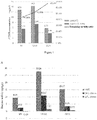
Figure 2 shows the detection results of pure wild-type phi29 DNA polymerase and phi29 DNA polymerase mutants V470K and I474K for stability, wherefigure 2A shows the comparison of enzyme activity of the pure wild-type phi29 DNA polymerase and phi29 DNA polymerase mutants V470K and I474K under different treatment conditions, andfigure 2B shows the comparison of remaining activity ratio of the pure wild-type phi29 DNA polymerase and phi29 DNA polymerase mutants V470K and I474K. -
Figure 3 shows the detection results of pure wild-type phi29 DNA polymerase and phi29 DNA polymerase mutant V470K-I474K for stability, wherefigure 2A shows the comparison of enzyme activity of the pure wild-type phi29 DNA polymerase and phi29 DNA polymerase mutant V470K-I474K under different treatment conditions, andfigure 2B shows the comparison of remaining activity ratio of the pure wild-type phi29 DNA polymerase and phi29 DNA polymerase mutant V470K-I474K. - The experimental methods used in the examples as below are all conventional methods unless otherwise specified.
- The materials, reagents and the like used in the examples are all commercially available unless otherwise specified.
- The quantitative assays in the examples are all conducted in triplicate, and the results were averaged.
- Lysis mixture used in examples (500 µL per tube) is of a formulation comprising 440 µL lysate (20 mM Tris-HCl, TB0194-500G, BBI), 500 mM NaCl (Analytial Reagent from Guangzhou Chemicalreagent Co., Lmt.), 0.5% Tween-20 (TB0560-500ML, BBI), 5% Glycerol (G5516-1L, SIGMA), 50 µL 10 mg/ml lysozyme (1mg/ml of final concentration, A610308-0005, BBI) and 10 µL 0.1M Phenylmethanesulfonyl fluoride (PMSF, 10 mM of final concentration, 16A6063-25G, BBI). The lysis mixture is used right after it was ready.
-
Reaction Buffer 10×phi29 used in examples (1L) is of a formulation comprising 60.57g Tris (TB0194-500G, BBI), 6.17g Dithiothreitol (DTT, A620058-0100, BBI), 13.2g (NH4)2SO4 (A610060-0500, BBI), 9.5 g MgCl2'6H2O (M0250-500, SIGMA) and 25 mM dNTP Solution Mix (1 ml, ENZYMATICS), pH 7.5. - 141 RCA Primer used in examples is TCTTAAGACCGCTTGGCCTCCGACT.
- 141Ad ssDNA used in examples is made by BGI, which is a single-stranded loop library within a certain length range and has no fixed sequence.
- A recombinant vector WT was obtained by replacing the sequence between the BamHI and NdeI restriction sites of the pET28a vector (from Novagen) with the encoding gene of phi29 DNA polymerase shown in SEQ ID NO: 1, which can express a phi29 DNA polymerase having an amino acid sequence shown in SEQ ID NO: 2.
- A recombinant vector T140S was obtained by mutating C base at position 419 into G base relative to the encoding gene of phi29 DNA polymerase in the recombinant vector WT, which can express a phi29 DNA polymerase having an amino acid sequence which includes a mutation at position 140 from threonine (Thr, T) to serine (Ser, S) and unchanged remaining amino acids compared to the amino acid sequence shown in SEQ ID NO: 2.
- A recombinant vector T140N was obtained by mutating C base at position 419 into A base relative to the encoding gene of phi29 DNA polymerase in the recombinant vector WT, which can express a phi29 DNA polymerase having an amino acid sequence which includes a mutation at position 140 from threonine (Thr, T) to asparagine (Asn, N) and unchanged remaining amino acids compared to the amino acid sequence shown in SEQ ID NO: 2.
- A recombinant vector Q171E was obtained by mutating C base at position 511 into G base and G base at position 513 into A base relative to the encoding gene of phi29 DNA polymerase in the recombinant vector WT, which can express a phi29 DNA polymerase having an amino acid sequence which includes a mutation at position 171 from glutamine (Gln, Q) to glutamic acid (Glu, E) and unchanged remaining amino acids compared to the amino acid sequence shown in SEQ ID NO: 2.
- A recombinant vector G197N was obtained by mutating G base at position 589 into A base and G base at position 590 into A base relative to the encoding gene of phi29 DNA polymerase in the recombinant vector WT, which can express a phi29 DNA polymerase having an amino acid sequence which includes a mutation at position 197 from glycine (Gly, G) to asparagine (Asn, N) and unchanged remaining amino acids compared to the amino acid sequence shown in SEQ ID NO: 2.
- A recombinant vector S215D was obtained by mutating A base at position 643 into G base, G base at position 644 into A base, and C base at position 645 into T base relative to the encoding gene of phi29 DNA polymerase in the recombinant vector WT, which can express a phi29 DNA polymerase having an amino acid sequence which includes a mutation at position 215 from serine (Ser, S) to aspartic acid (Asp, D) and unchanged remaining amino acids compared to the amino acid sequence shown in SEQ ID NO: 2.
- A recombinant vector L216K was obtained by mutating C base at position 646 into A base, T base at position 647 into A base, and G base at position 648 into A base relative to the encoding gene of phi29 DNA polymerase in the recombinant vector WT, which can express a phi29 DNA polymerase having an amino acid sequence which includes a mutation at position 216 from leucine (Leu, L) to lysine (Lys, K) and unchanged remaining amino acids compared to the amino acid sequence shown in SEQ ID NO: 2.
- A recombinant vector G217D was obtained by mutating G base at position 650 into A base and C base at position 651 into T base relative to the encoding gene of phi29 DNA polymerase in the recombinant vector WT, which can express a phi29 DNA polymerase having an amino acid sequence which includes a mutation at position 217 from glycine (Gly, G) to aspartic acid (Asp, D) and unchanged remaining amino acids compared to the amino acid sequence shown in SEQ ID NO: 2.
- A recombinant vector G217E was obtained by mutating G base at position 650 into A base and C base at position 651 into A base relative to the encoding gene of phi29 DNA polymerase in the recombinant vector WT, which can express a phi29 DNA polymerase having an amino acid sequence which includes a mutation at position 217 from glycine (Gly, G) to glutamic acid (Glu, E) and unchanged remaining amino acids compared to the amino acid sequence shown in SEQ ID NO: 2.
- A recombinant vector Y224K was obtained by mutating T base at position 670 into A base and T base at position 672 into A base relative to the encoding gene of phi29 DNA polymerase in the recombinant vector WT, which can express a phi29 DNA polymerase having an amino acid sequence which includes a mutation at position 224 from tyrosine (Tyr, Y) to lysine (Lys, K) and unchanged remaining amino acids compared to the amino acid sequence shown in SEQ ID NO: 2.
- A recombinant vector E239W was obtained by mutating G base at position 715 into T base, A base at position 716 into G base and A base at position 717 into G base relative to the encoding gene of phi29 DNA polymerase in the recombinant vector WT, which can express a phi29 DNA polymerase having an amino acid sequence which includes a mutation at position 239 from glutamic acid (Glu, E) to tryptophan (Trp, W) and unchanged remaining amino acids compared to the amino acid sequence shown in SEQ ID NO: 2.
- A recombinant vector Y369R was obtained by mutating T base at position 1105 into C base and A base at position 1106 into G base relative to the encoding gene of phi29 DNA polymerase in the recombinant vector WT, which can express a phi29 DNA polymerase having an amino acid sequence which includes a mutation at position 369 from tyrosine (Tyr, Y) to arginine (Arg, R) and unchanged remaining amino acids compared to the amino acid sequence shown in SEQ ID NO: 2.
- A recombinant vector I323N was obtained by mutating T base at position 968 into A base relative to the encoding gene of phi29 DNA polymerase in the recombinant vector WT, which can express a phi29 DNA polymerase having an amino acid sequence which includes a mutation at position 323 from isoleucine (Ile, I) to asparagine (Asn, N) and unchanged remaining amino acids compared to the amino acid sequence shown in SEQ ID NO: 2.
- A recombinant vector V470K was obtained by mutating G base at position 1408 into A base, T base at position 1409 into A base and G base at position 1410 into A base relative to the encoding gene of phi29 DNA polymerase in the recombinant vector WT, which can express a phi29 DNA polymerase having an amino acid sequence which includes a mutation at position 470 from valine (Val, V) to lysine (Lys, K) and unchanged remaining amino acids compared to the amino acid sequence shown in SEQ ID NO: 2.
- A recombinant vector I474K was obtained by mutating T base at position 1421 into A base and T base at position 1422 into A base relative to the encoding gene of phi29 DNA polymerase in the recombinant vector WT, which can express a phi29 DNA polymerase having an amino acid sequence which includes a mutation at position 474 from isoleucine (Ile, I) to lysine (Lys, K) and unchanged remaining amino acids compared to the amino acid sequence shown in SEQ ID NO: 2.
- A recombinant vector F526K was obtained by mutating T base at position 1576 into A base, T base at position 1577 into A base and C base at position 1578 into A base relative to the encoding gene of phi29 DNA polymerase in the recombinant vector WT, which can express a phi29 DNA polymerase having an amino acid sequence which includes a mutation at position 526 from phenylalanine (Phe, F) to lysine (Lys, K) and unchanged remaining amino acids compared to the amino acid sequence shown in SEQ ID NO: 2.
- Recombinant bacteria were obtained by transforming the recombinant vector WT, the recombinant vector T140S, the recombinant vector T140N, the recombinant vector Q171E, the recombinant vector G197N, the recombinant vector S215D, the recombinant vector L216K, the recombinant vector G217D, the recombinant vector G217E, the recombinant vector Y224K, the recombinant vector E239W, the recombinant vector Y369R, the recombinant vector I323N, the recombinant vector V470K, the recombinant vector I474K and the recombinant vector F526K constructed in 1.1 into Escherichia coli BL21 (DE3) (TIANGEN, CB105-02) respectively.
- The recombinant bacteria obtained in 1.2.1 were individually induced to express corresponding phi29 DNA polymerase, and wild-type phi29 DNA polymerase (WT), phi29 DNA polymerase mutant T140S, phi29 DNA polymerase mutant T140N, phi29 DNA polymerase mutant Q171E, phi29 DNA polymerase mutation G197N, phi29 DNA polymerase mutant S215D, phi29 DNA polymerase mutant L216K, phi29 DNA polymerase mutant G217D, phi29 DNA polymerase mutant G217E, phi29 DNA polymerase mutant Y224K, phi29 DNA polymerase mutant E239W, phi29 DNA polymerase mutant Y369R, phi29 DNA polymerase mutant I323N, phi29 DNA polymerase mutant V470K, phi29 DNA polymerase mutant I474K and phi29 DNA polymerase mutant F526K were respectively obtained. The induction was conducted according to the following specific steps.
- The glycerol stocks of Escherichia coli BL21 (DE3) transformed with wild-type phi29 DNA polymerase or phi29 DNA polymerase mutant were seeded into 3ml of liquid LB medium containing kanamycin and cultured overnight.
- The bacterial solution obtained in
step 1 was transferred into 2 ml of liquid LB medium containing kanamycin at a volume ratio of 1:100 and cultured in a shaker at 37°C for 3 hours. - Isopropyl-beta-D-thiogalactopyranoside (IPTG) with a final concentration of 0.5 mM was added for inducing expression and the mixture was cultured in a shake at 30°C for another 2 to 2.5 hours.
- The bacterial solution was centrifuged at 12,000 rpm for 1 minute and bacterial pellets were collected.
- The bacterial pellets obtained in step 1.2.2 were mixed with the lysis mixture, lysed in a water bath at 30°C for 10 minutes and centrifuged at 12000 rpm and 4°C for 10 minutes, and the supernatant was collected as crude phi29 DNA polymerase which was placed on ice for use.
- 20µL of crude enzyme solution of wild-type phi29 DNA polymerase (WT) or individual phi29 DNA polymerase mutants obtained in step 1.3.1 was subjected to heat treatment at 37°C for 10 minutes. 1µL of the crude enzyme solution before and after heat treatment was respectively added into 40.4 µL of denatured RCA reaction system (refer to Table 1), and subjected to RCA reaction at 30°C for 30 minutes. After that, 2.5 µL of 0.5M EDTA as a stop solution (AM9261, INVITROGEN) was added to terminate the RCA reaction. Besides, a group of denatured RCA reaction system containing the heat-treated crude enzyme was added with the stop solution before the initiation of RCA reaction, which was used as a negative control group. All samples obtained were detected by using Qubit ssDNA Assay Kit (Q10212, INVITROGEN) for DNA Nano ball (DNB) concentration produced.
- The remaining activity ratio of wild-type phi29 DNA polymerase or individual phi29 DNA polymerase mutants was calculated according to the following formula:

Table 1 RCA reaction system Reagent Volume (×1) Volume (×10) 10×phi29 Reaction Buffer 4.0 µL 40 µL 5µM 141 RCA Primer 0.2 µL 2.0 µL 25mM dNTPs Mix 1.0 µL 10 µL 141Ad ssDNA 3 ng 30 ng H2O (35.2-sample) µL (35.2-sample) × 10 µL - The detection results are shown in Table 2 and
Figure 1 , which indicate that the wild-type phi29 DNA polymerase (WT) and the phi29 DNA polymerase mutants Y369R and I323N respectively have a remaining activity ratio of 43.26%, 52.03% and 67.13%, showing the remaining activity ratio of the phi29 DNA polymerase mutants Y369R and I323N has increased by 9% and 24% respectively compared to the wild-type phi29 DNA polymerase. The results demonstrate that the phi29 DNA polymerase mutants have increased stability compared to the wild-type phi29 DNA polymerase.Table 2 Detection results of crude phi29 DNA polymerase mutants Y369R and I323N for stability Polymerase type Heat treatment temperature DNB concentration after RCA reaction (ng/µL) Remaining activity ratio 0 min 10 min WT 37°C 12.9 5.58 43.26% Y369R 37°C 14.3 7.44 52.03% I323N 37°C 5.75 3.86 67.13% - Other heat-treated crude phi29 DNA polymerase mutants also have an increased remaining activity ratio compared to the wild-type phi29 DNA polymerase, for example, the phi29 DNA polymerase mutants T140S, T140N, Q171E, G197N, S215D, L216K, G217E, G217D, Y224K, E239W, V470K, V474K and F526K respectively have a remaining activity ratio of 52%, 73%, 51%, 47.7%, 63%, 47.27%, 65.24%, 59%, 74.76%, 69.83%, 63.98%, 85.54% and 60.5%, etc.
- 1 L of bacterial pellets containing wild-type phi29 DNA polymerase (WT) or individual phi29 DNA polymerase mutants subjected to IPTG-induction were respectively purified through the affinity chromatography and ion exchange by using the ÄKTA pure system, thereby obtaining pure wild-type phi29 DNA polymerase (WT) and individual phi29 DNA polymerase mutants respectively. 20 µL of obtained pure enzyme solution was individually subjected to heat treatment at -20°C, 34°C and 37°C respectively for 10 minutes. 1µL of the pure enzyme solution after heat treatment at different temperatures was respectively added into 80.8µL of denatured RCA reaction system (with twice volume of that listed in Table 1) and subjected to RCA reaction at 30°C for 30 minutes. After that, 5 µL of 0.5M EDTA as a stop solution was added to terminate the RCA reaction. All samples obtained were detected by using Qubit ssDNA Kit for DNB concentration produced in the presence of wild-type phi29 DNA polymerase or individual phi29 DNA polymerase mutants, and the remaining activity ratio of enzyme was calculated.
- The results are shown in
Figure 2 and Table 3. After treatment at 34°C and 37°C for 10 minutes, the wild-type phi29 DNA polymerase respectively has a remaining activity ratio of 25.3% and 0%, the phi29 DNA polymerase mutant V470K respectively has a remaining activity ratio of 39.27% and 5.6%, and the phi29 DNA polymerase mutant I474K respectively has a remaining activity ratio of 23.16% and 4.68%. It can be seen that the phi29 DNA polymerase mutants V470K and I474K each have increased thermal stability compared to the wild-type of phi29 DNA polymerase. In addition, the commercial enzyme Enzymatics after treatment at 37°C for 10 minutes and 5 minutes has a remaining activity ratio of 5.02% and 17.06% respectively, which may slightly higher than some mutants with single-point mutation, but has no significant advantages.Table 3 Detection results of pure phi29 DNA polymerase mutants V470K and I474K and commercial enzyme Enzymatics for stability Polymerase type Heat treatment temperature Heat treatment time Enzyme activity (D/µL) Remaining activity ratio WT -20°C N/A 9.29 N/A 34° C 10 min 2.35 25.30% 37° C 10 min -0.09 0.00% V470K -20°C N/A 27.68 N/A 34° C 10 min 10.87 39.27% 37° C 10 min 1.55 5.60% I474K -20°C N/A 15.37 N/A 34° C 10 min 3.56 23.16% 37° C 10 min 0.72 4.68% Enzymatics -20°C N/A 88.85 N/A 37° C 5 min 15.16 17.06% 10 min 4.46 5.02% - Other pure phi29 DNA polymerase mutants after treatment at 37°C for 10 minutes also has an increased remaining activity ratio compared to the wild-type phi29 DNA polymerase, for example, the phi29 DNA polymerase mutants T140S, T140N, Q171E, G197N, S215D, L216K, G217E, E239W, G217D, Y224K, F526K, I323N and Y369R respectively have a remaining activity ratio of 3.81%, 1.51%, 6.06%, 3.18%, 1.40%, 5.04%, 14.76%, 15.27%, 5.21%, 12.84%, 10%, 1.25% and 1.1%, etc.
- A recombinant vector V470K-I474K was obtained by mutating G base at position 1408 into A base, T base at position 1409 into A base, G base at position 1410 into A base, T base at position 1421 into A base and T base at position 1422 into A base relative to the encoding gene of phi29 DNA polymerase in the recombinant vector WT, which can express phi29 DNA polymerase mutant V470K-I474K having an amino acid sequence which includes a mutation at position 470 from valine (Val, V) to lysine (Lys, K), a mutation at position 474 from isoleucine (Ile, I) to lysine (Lys, K) and unchanged remaining amino acids compared to the amino acid sequence shown in SEQ ID NO: 2.
- Recombinant bacteria were obtained by transforming the recombinant vector V470K-I474K constructed in 2.1 into Escherichia coli BL21 (DE3), which was then induced to express phi29 DNA polymerase mutant V470K-I474K according to the method in 1.2.2, and bacterial pellts were obtained.
- The bacterial pellets subjected to induction and obtained in 2.2 were purified according to the method in 1.3, thus obtaining pure phi29 DNA polymerase mutant V470K-I474K. 20µL of obtained pure phi29 DNA polymerase mutant V470K-I474K was subjected to heat treatment at 37°C for 5 minutes and 10 minutes respectively. 1µL of the pure enzyme solution after heat treatment at different treatment times was respectively added into 40.4 µL of denatured RCA reaction system (refer to Table 1) and subjected to RCA reaction at 30°C for 30 minutes. After that, 5 µL of 0.5M EDTA as a stop solution was added to terminate the RCA reaction. All samples obtained were detected by using Qubit ssDNA Kit for DNB concentration produced in the presence of the phi29 DNA polymerase mutant V470K-I474K, and the remaining activity ratio of enzyme was calculated.
- The results are shown in Table 4 and
Figure 3 . The phi29 DNA polymerase mutant V470K-I474K (i.e. Mut_1) has a remaining activity ratio of 62.02% and 17.48% respectively, while the wild-type phi29 DNA polymerase has a remaining activity ratio of 37.56% and 4.55% respectively. The results demonstrate that the stability of phi29 DNA polymerase mutant V470K-I474K is significantly higher than that of the wild-type of phi29 DNA polymerase, which is also higher than that of phi29 DNA polymerase mutants V470K and I474K with a single-point mutation.Table 4 Detection results of pure phi29 DNA polymerase mutant V470K-I474K for stability Polymerase type Heat treatment temperature Heat treatment time Enzyme activity (U/µL) Remaining activity ratio WT 37°C 0 min 6.15 N/ A 5 min 2.31 37.56% 10 min 0.28 4.55% V470K-I474 K 37°C 0 min 40.05 N/ A 5 min 24.84 62.02% 10 min 7.00 17.48% - The present disclosure has improved the stability of wild-type phi29 DNA polymerase through amino acid mutating, and a group of phi29 DNA polymerase mutants with increased stability have been obtained after screening. The present disclosure realizes to prepare and store the obtained phi29 DNA polymerase mutants under a reduced condition by mutating the amino acid sequence of wild-type phi29 DNA polymerase, which has reduced the production cost and the phi29 DNA polymerase mutants produced have prolonged validity period and improved efficiency.


Claims (13)
- A protein being any one selected from(1) a protein obtained by mutating glutamic acid at position 239 into tryptophan and keeping remaining amino acids unchanged relative to the amino acid sequence of phi29 DNA polymerase;(2) a protein obtained by mutating glycine at position 217 into glutamic acid and keeping remaining amino acids unchanged relative to the amino acid sequence of phi29 DNA polymerase;(3) a protein obtained by mutating tyrosine at position 224 into lysine and keeping remaining amino acids unchanged relative to the amino acid sequence of phi29 DNA polymerase;(4) a protein obtained by mutating phenylalanine at position 526 into lysine and keeping remaining amino acids unchanged relative to the amino acid sequence of phi29 DNA polymerase;(5) a protein obtained by mutating glutamine at position 171 into glutamic acid and keeping remaining amino acids unchanged relative to the amino acid sequence of phi29 DNA polymerase;(6) a protein obtained by mutating valine at position 470 into lysine and keeping remaining amino acids unchanged relative to the amino acid sequence of phi29 DNA polymerase;(7) a protein obtained by mutating glycine at position 217 into aspartic acid and keeping remaining amino acids unchanged relative to the amino acid sequence of phi29 DNA polymerase;(8) a protein obtained by mutating leucine at position 216 into lysine and keeping remaining amino acids unchanged relative to the amino acid sequence of phi29 DNA polymerase;(9) a protein obtained by mutating isoleucine at position 474 into lysine and keeping remaining amino acids unchanged relative to the amino acid sequence of phi29 DNA polymerase;(10) a protein obtained by mutating threonine at position 140 into serine and keeping remaining amino acids unchanged relative to the amino acid sequence of phi29 DNA polymerase;(11) a protein obtained by mutating glycine at position 197 into asparagine and keeping remaining amino acids unchanged relative to the amino acid sequence of phi29 DNA polymerase;(12) a protein obtained by mutating threonine at position 140 into asparagine and keeping remaining amino acids unchanged relative to the amino acid sequence of phi29 DNA polymerase;(13) a protein obtained by mutating serine at position 215 into aspartic acid and keeping remaining amino acids unchanged relative to the amino acid sequence of phi29 DNA polymerase;(14) a protein obtained by mutating isoleucine at position 323 into asparagine and keeping remaining amino acids unchanged relative to the amino acid sequence of phi29 DNA polymerase;(15) a protein obtained by mutating tyrosine at position 369 into arginine and keeping remaining amino acids unchanged relative to the amino acid sequence of phi29 DNA polymerase;(16) a protein obtained by mutating valine at position 470 into lysine, isoleucine at position 474 into lysine and keeping remaining amino acids unchanged relative to the amino acid sequence of phi29 DNA polymerase; and(17) a fusion protein obtained by ligating a tag at the N-terminus or/and the C-terminus of the protein being any one of (1) to (16).
- The protein according to claim 1, wherein the phi29 DNA polymerase is a protein of a) or b), whereina) is a protein consisting of the amino acid sequence shown in SEQ ID NO: 2 in the sequence listing; andb) is a protein derived from a) and has same function with a), formed by substituting, deleting and/or adding one or more amino acid residues of the amino acid sequence shown in SEQ ID NO: 2 in the sequence listing.
- The protein according to claim 1 or 2, wherein the protein has increased stability compared to the phi29 DNA polymerase.
- The protein according to claim 3, wherein the stability is thermal stability.
- A nucleic acid molecule encoding the protein as defined in any of claims 1 to 4.
- A biomaterial being any one of a1) to a4), whereina1) is an expression cassette comprising the nucleic acid molecule of claim 5;a2) is a recombinant vector comprising the nucleic acid molecule of claim 5;a3) is a recombinant bacterium comprising the nucleic acid molecule of claim 5; anda4) is a transgenic cell line comprising the nucleic acid molecule of claim 5.
- Use of the protein as defined in any one of claims 1 to 4, the nucleic acid molecule as defined in claim 5 or the biomaterial as defined in claim 6 in the preparation of phi29 DNA polymerase.
- Use of the protein as defined in any one of claims 1 to 4, the nucleic acid molecule as defined in claim 5 or the biomaterial as defined in claim 6 in PCR amplification.
- Use of the protein as defined in any one of claims 1 to 4, the nucleic acid molecule as defined in claim 5 or the biomaterial as defined in claim 6 in sequencing.
- Use of the protein as defined in any one of claims 1 to 4, the nucleic acid molecule as defined in claim 5 or the biomaterial as defined in claim 6 in the preparation of a sequencing product.
- The use according to claim 10, wherein the sequencing product is a kit.
- A method for improving stability of phi29 DNA polymerase comprising: mutating one or more amino acids at positions 140, 171, 197, 215, 216, 217, 224, 239, 369, 323, 470, 474 and 526 of the amino acid sequence of phi29 DNA polymerase.
- The method according to claim 12, wherein the stability is thermal stability.
Applications Claiming Priority (1)
| Application Number | Priority Date | Filing Date | Title |
|---|---|---|---|
| PCT/CN2017/082180 WO2018195850A1 (en) | 2017-04-27 | 2017-04-27 | Phi29 dna polymerase mutant with increased thermostability |
Publications (3)
| Publication Number | Publication Date |
|---|---|
| EP3617308A1 true EP3617308A1 (en) | 2020-03-04 |
| EP3617308A4 EP3617308A4 (en) | 2021-05-12 |
| EP3617308B1 EP3617308B1 (en) | 2023-10-25 |
Family
ID=63917872
Family Applications (1)
| Application Number | Title | Priority Date | Filing Date |
|---|---|---|---|
| EP17907603.9A Active EP3617308B1 (en) | 2017-04-27 | 2017-04-27 | Phi29 dna polymerase mutant with increased thermostability |
Country Status (4)
| Country | Link |
|---|---|
| US (1) | US10961519B2 (en) |
| EP (1) | EP3617308B1 (en) |
| CN (1) | CN110892067B (en) |
| WO (1) | WO2018195850A1 (en) |
Cited By (2)
| Publication number | Priority date | Publication date | Assignee | Title |
|---|---|---|---|---|
| EP4166659A4 (en) * | 2020-06-10 | 2024-11-13 | BGI Shenzhen | STABLE PHI29 DNA POLYMERASE WITH HIGH ENZYME ACTIVITY AND ENCODING GENE AND APPLICATION THEREOF |
| US12509719B2 (en) | 2022-08-16 | 2025-12-30 | Aldevron, L.L.C. | Cell-free method of producing synthetic circular nucleic acid |
Families Citing this family (8)
| Publication number | Priority date | Publication date | Assignee | Title |
|---|---|---|---|---|
| US10934533B1 (en) | 2018-10-10 | 2021-03-02 | New England Biolabs, Inc. | Variant DNA polymerases having improved properties and method for improved isothermal amplification of a target DNA |
| EP3854872A4 (en) * | 2018-10-11 | 2022-06-22 | BGI Shenzhen | Phi29 dna polymerase mutant with improved thermal stability and application thereof in sequencing |
| CN113564141B (en) * | 2021-07-23 | 2023-08-11 | 中国科学院青岛生物能源与过程研究所 | Single-cell genome amplification enzyme mutant and application thereof |
| CN119301685B (en) | 2023-08-15 | 2026-01-30 | 上海金斯康生物科技有限公司 | Predicting the effect of mutations on protease activity |
| CN117264981A (en) * | 2023-11-09 | 2023-12-22 | 杭州云心质力生物科技有限公司 | Production method of Phi29DNA polymerase for rolling circle amplification reaction |
| CN118222536B (en) * | 2024-04-12 | 2026-01-02 | 湖南艾科瑞生物工程有限公司 | phi29 DNA polymerase mutant, its preparation method and application |
| CN118185902B (en) * | 2024-04-23 | 2024-08-23 | 湖南艾科瑞生物工程有限公司 | Bst DNA polymerase mutant with enhanced thermal stability and preparation method and application thereof |
| WO2025222397A1 (en) * | 2024-04-24 | 2025-10-30 | 深圳华大生命科学研究院 | Dna polymerase and use thereof |
Family Cites Families (5)
| Publication number | Priority date | Publication date | Assignee | Title |
|---|---|---|---|---|
| US8999676B2 (en) * | 2008-03-31 | 2015-04-07 | Pacific Biosciences Of California, Inc. | Recombinant polymerases for improved single molecule sequencing |
| US8906660B2 (en) * | 2012-02-01 | 2014-12-09 | Pacific Biosciences Of California, Inc. | Recombinant polymerases with increased phototolerance |
| US9399766B2 (en) * | 2012-10-01 | 2016-07-26 | Pacific Biosciences Of California, Inc. | Recombinant polymerases for incorporation of protein shield nucleotide analogs |
| US20140094374A1 (en) * | 2012-10-01 | 2014-04-03 | Pacific Biosciences Of California, Inc. | Recombinant Polymerases with Increased Readlength and Stability for Single-Molecule Sequencing |
| US9422535B2 (en) * | 2013-04-25 | 2016-08-23 | Thermo Fisher Scientific Baltics Uab | phi29 DNA polymerase mutants having increased thermostability and processivity |
-
2017
- 2017-04-27 EP EP17907603.9A patent/EP3617308B1/en active Active
- 2017-04-27 WO PCT/CN2017/082180 patent/WO2018195850A1/en not_active Ceased
- 2017-04-27 CN CN201780086099.3A patent/CN110892067B/en active Active
-
2019
- 2019-10-18 US US16/657,713 patent/US10961519B2/en active Active
Cited By (2)
| Publication number | Priority date | Publication date | Assignee | Title |
|---|---|---|---|---|
| EP4166659A4 (en) * | 2020-06-10 | 2024-11-13 | BGI Shenzhen | STABLE PHI29 DNA POLYMERASE WITH HIGH ENZYME ACTIVITY AND ENCODING GENE AND APPLICATION THEREOF |
| US12509719B2 (en) | 2022-08-16 | 2025-12-30 | Aldevron, L.L.C. | Cell-free method of producing synthetic circular nucleic acid |
Also Published As
| Publication number | Publication date |
|---|---|
| EP3617308B1 (en) | 2023-10-25 |
| EP3617308A4 (en) | 2021-05-12 |
| CN110892067A (en) | 2020-03-17 |
| US10961519B2 (en) | 2021-03-30 |
| US20200115686A1 (en) | 2020-04-16 |
| WO2018195850A1 (en) | 2018-11-01 |
| CN110892067B (en) | 2023-05-02 |
Similar Documents
| Publication | Publication Date | Title |
|---|---|---|
| US10961519B2 (en) | PHi29 DNA polymerase mutant with increased thermostability | |
| JP7256280B2 (en) | Phi29 DNA polymerase mutants with enhanced thermostability and their application in sequencing | |
| US11104889B2 (en) | Phi29 DNA polymerase mutant having increased thermal stability and use thereof | |
| Sweasy et al. | Detection and characterization of mammalian DNA polymerase beta mutants by functional complementation in Escherichia coli. | |
| JP6963238B2 (en) | DNA polymerase mutant | |
| US20250002877A1 (en) | Polymerizing enzymes for sequencing reactions | |
| CN109072202B (en) | marine DNA polymer | |
| CN118792276A (en) | T7 RNA polymerase mutant and its preparation method and application | |
| US8399240B2 (en) | Method and gene for providing or enhancing nonspecific adhesive property and/or autoagglutinating property for microorganisms | |
| EP4230723A1 (en) | Polypeptide with aspartate kinase activity and use thereof in production of amino acid | |
| CA2404293C (en) | Variants of an erwinia-type creatinase | |
| JP4054871B2 (en) | Thermostable DNA ligase | |
| CN109880840B (en) | In vivo biotinylation labeling system for recombinant protein escherichia coli | |
| CN111051508A (en) | D-type amino acid dehydrogenase | |
| KR102594174B1 (en) | DNA polymerase | |
| CN116555204B (en) | Mutant luciferase with improved performance and application thereof | |
| CN116083393B (en) | A DNA assembly molecular machine and its application | |
| US20240247241A1 (en) | Taq enzyme mutant, preparation method, and application thereof | |
| US20240392266A1 (en) | Taq polymerase mutant, and preparation method therefor and use thereof | |
| CN116334027A (en) | Nicotinamide mononucleotide adenylyltransferase mutants and methods and uses thereof | |
| EP1298213A1 (en) | Variants of an Erwinia-type creatinase | |
| US20020119506A1 (en) | Genes encoding UMP kinase, methods for purifying UMP kinase and methods of characterizing UMP kinase | |
| WO2025118178A1 (en) | Dna polymerase mutant and use thereof | |
| CN121538205A (en) | A mutant of a nylon-degrading enzyme and its application | |
| WO2025138498A1 (en) | Anthranilate synthase mutant and use thereof |
Legal Events
| Date | Code | Title | Description |
|---|---|---|---|
| STAA | Information on the status of an ep patent application or granted ep patent |
Free format text: STATUS: THE INTERNATIONAL PUBLICATION HAS BEEN MADE |
|
| PUAI | Public reference made under article 153(3) epc to a published international application that has entered the european phase |
Free format text: ORIGINAL CODE: 0009012 |
|
| STAA | Information on the status of an ep patent application or granted ep patent |
Free format text: STATUS: REQUEST FOR EXAMINATION WAS MADE |
|
| 17P | Request for examination filed |
Effective date: 20191029 |
|
| AK | Designated contracting states |
Kind code of ref document: A1 Designated state(s): AL AT BE BG CH CY CZ DE DK EE ES FI FR GB GR HR HU IE IS IT LI LT LU LV MC MK MT NL NO PL PT RO RS SE SI SK SM TR |
|
| AX | Request for extension of the european patent |
Extension state: BA ME |
|
| DAV | Request for validation of the european patent (deleted) | ||
| DAX | Request for extension of the european patent (deleted) | ||
| RIC1 | Information provided on ipc code assigned before grant |
Ipc: C12N 15/63 20060101ALI20201030BHEP Ipc: C12N 9/22 20060101ALI20201030BHEP Ipc: C12P 19/34 20060101ALI20201030BHEP Ipc: C12N 9/12 20060101AFI20201030BHEP Ipc: C12Q 1/68 20180101ALI20201030BHEP Ipc: C12N 15/52 20060101ALI20201030BHEP |
|
| A4 | Supplementary search report drawn up and despatched |
Effective date: 20210414 |
|
| RIC1 | Information provided on ipc code assigned before grant |
Ipc: C12N 9/12 20060101AFI20210408BHEP Ipc: C12N 9/22 20060101ALI20210408BHEP Ipc: C12N 15/52 20060101ALI20210408BHEP Ipc: C12N 15/63 20060101ALI20210408BHEP Ipc: C12Q 1/68 20180101ALI20210408BHEP Ipc: C12P 19/34 20060101ALI20210408BHEP |
|
| STAA | Information on the status of an ep patent application or granted ep patent |
Free format text: STATUS: EXAMINATION IS IN PROGRESS |
|
| 17Q | First examination report despatched |
Effective date: 20220928 |
|
| GRAP | Despatch of communication of intention to grant a patent |
Free format text: ORIGINAL CODE: EPIDOSNIGR1 |
|
| STAA | Information on the status of an ep patent application or granted ep patent |
Free format text: STATUS: GRANT OF PATENT IS INTENDED |
|
| INTG | Intention to grant announced |
Effective date: 20230519 |
|
| GRAS | Grant fee paid |
Free format text: ORIGINAL CODE: EPIDOSNIGR3 |
|
| GRAA | (expected) grant |
Free format text: ORIGINAL CODE: 0009210 |
|
| STAA | Information on the status of an ep patent application or granted ep patent |
Free format text: STATUS: THE PATENT HAS BEEN GRANTED |
|
| AK | Designated contracting states |
Kind code of ref document: B1 Designated state(s): AL AT BE BG CH CY CZ DE DK EE ES FI FR GB GR HR HU IE IS IT LI LT LU LV MC MK MT NL NO PL PT RO RS SE SI SK SM TR |
|
| REG | Reference to a national code |
Ref country code: GB Ref legal event code: FG4D |
|
| REG | Reference to a national code |
Ref country code: CH Ref legal event code: EP |
|
| REG | Reference to a national code |
Ref country code: DE Ref legal event code: R096 Ref document number: 602017075852 Country of ref document: DE |
|
| REG | Reference to a national code |
Ref country code: IE Ref legal event code: FG4D |
|
| REG | Reference to a national code |
Ref country code: LT Ref legal event code: MG9D |
|
| REG | Reference to a national code |
Ref country code: NL Ref legal event code: MP Effective date: 20231025 |
|
| REG | Reference to a national code |
Ref country code: AT Ref legal event code: MK05 Ref document number: 1624693 Country of ref document: AT Kind code of ref document: T Effective date: 20231025 |
|
| PG25 | Lapsed in a contracting state [announced via postgrant information from national office to epo] |
Ref country code: NL Free format text: LAPSE BECAUSE OF FAILURE TO SUBMIT A TRANSLATION OF THE DESCRIPTION OR TO PAY THE FEE WITHIN THE PRESCRIBED TIME-LIMIT Effective date: 20231025 |
|
| PG25 | Lapsed in a contracting state [announced via postgrant information from national office to epo] |
Ref country code: GR Free format text: LAPSE BECAUSE OF FAILURE TO SUBMIT A TRANSLATION OF THE DESCRIPTION OR TO PAY THE FEE WITHIN THE PRESCRIBED TIME-LIMIT Effective date: 20240126 |
|
| PG25 | Lapsed in a contracting state [announced via postgrant information from national office to epo] |
Ref country code: IS Free format text: LAPSE BECAUSE OF FAILURE TO SUBMIT A TRANSLATION OF THE DESCRIPTION OR TO PAY THE FEE WITHIN THE PRESCRIBED TIME-LIMIT Effective date: 20240225 |
|
| PG25 | Lapsed in a contracting state [announced via postgrant information from national office to epo] |
Ref country code: LT Free format text: LAPSE BECAUSE OF FAILURE TO SUBMIT A TRANSLATION OF THE DESCRIPTION OR TO PAY THE FEE WITHIN THE PRESCRIBED TIME-LIMIT Effective date: 20231025 |
|
| PG25 | Lapsed in a contracting state [announced via postgrant information from national office to epo] |
Ref country code: AT Free format text: LAPSE BECAUSE OF FAILURE TO SUBMIT A TRANSLATION OF THE DESCRIPTION OR TO PAY THE FEE WITHIN THE PRESCRIBED TIME-LIMIT Effective date: 20231025 |
|
| PG25 | Lapsed in a contracting state [announced via postgrant information from national office to epo] |
Ref country code: ES Free format text: LAPSE BECAUSE OF FAILURE TO SUBMIT A TRANSLATION OF THE DESCRIPTION OR TO PAY THE FEE WITHIN THE PRESCRIBED TIME-LIMIT Effective date: 20231025 |
|
| PG25 | Lapsed in a contracting state [announced via postgrant information from national office to epo] |
Ref country code: LT Free format text: LAPSE BECAUSE OF FAILURE TO SUBMIT A TRANSLATION OF THE DESCRIPTION OR TO PAY THE FEE WITHIN THE PRESCRIBED TIME-LIMIT Effective date: 20231025 Ref country code: IS Free format text: LAPSE BECAUSE OF FAILURE TO SUBMIT A TRANSLATION OF THE DESCRIPTION OR TO PAY THE FEE WITHIN THE PRESCRIBED TIME-LIMIT Effective date: 20240225 Ref country code: GR Free format text: LAPSE BECAUSE OF FAILURE TO SUBMIT A TRANSLATION OF THE DESCRIPTION OR TO PAY THE FEE WITHIN THE PRESCRIBED TIME-LIMIT Effective date: 20240126 Ref country code: ES Free format text: LAPSE BECAUSE OF FAILURE TO SUBMIT A TRANSLATION OF THE DESCRIPTION OR TO PAY THE FEE WITHIN THE PRESCRIBED TIME-LIMIT Effective date: 20231025 Ref country code: BG Free format text: LAPSE BECAUSE OF FAILURE TO SUBMIT A TRANSLATION OF THE DESCRIPTION OR TO PAY THE FEE WITHIN THE PRESCRIBED TIME-LIMIT Effective date: 20240125 Ref country code: AT Free format text: LAPSE BECAUSE OF FAILURE TO SUBMIT A TRANSLATION OF THE DESCRIPTION OR TO PAY THE FEE WITHIN THE PRESCRIBED TIME-LIMIT Effective date: 20231025 Ref country code: PT Free format text: LAPSE BECAUSE OF FAILURE TO SUBMIT A TRANSLATION OF THE DESCRIPTION OR TO PAY THE FEE WITHIN THE PRESCRIBED TIME-LIMIT Effective date: 20240226 |
|
| PG25 | Lapsed in a contracting state [announced via postgrant information from national office to epo] |
Ref country code: SE Free format text: LAPSE BECAUSE OF FAILURE TO SUBMIT A TRANSLATION OF THE DESCRIPTION OR TO PAY THE FEE WITHIN THE PRESCRIBED TIME-LIMIT Effective date: 20231025 Ref country code: RS Free format text: LAPSE BECAUSE OF FAILURE TO SUBMIT A TRANSLATION OF THE DESCRIPTION OR TO PAY THE FEE WITHIN THE PRESCRIBED TIME-LIMIT Effective date: 20231025 Ref country code: PL Free format text: LAPSE BECAUSE OF FAILURE TO SUBMIT A TRANSLATION OF THE DESCRIPTION OR TO PAY THE FEE WITHIN THE PRESCRIBED TIME-LIMIT Effective date: 20231025 Ref country code: NO Free format text: LAPSE BECAUSE OF FAILURE TO SUBMIT A TRANSLATION OF THE DESCRIPTION OR TO PAY THE FEE WITHIN THE PRESCRIBED TIME-LIMIT Effective date: 20240125 Ref country code: LV Free format text: LAPSE BECAUSE OF FAILURE TO SUBMIT A TRANSLATION OF THE DESCRIPTION OR TO PAY THE FEE WITHIN THE PRESCRIBED TIME-LIMIT Effective date: 20231025 Ref country code: HR Free format text: LAPSE BECAUSE OF FAILURE TO SUBMIT A TRANSLATION OF THE DESCRIPTION OR TO PAY THE FEE WITHIN THE PRESCRIBED TIME-LIMIT Effective date: 20231025 |
|
| PG25 | Lapsed in a contracting state [announced via postgrant information from national office to epo] |
Ref country code: DK Free format text: LAPSE BECAUSE OF FAILURE TO SUBMIT A TRANSLATION OF THE DESCRIPTION OR TO PAY THE FEE WITHIN THE PRESCRIBED TIME-LIMIT Effective date: 20231025 |
|
| PG25 | Lapsed in a contracting state [announced via postgrant information from national office to epo] |
Ref country code: CZ Free format text: LAPSE BECAUSE OF FAILURE TO SUBMIT A TRANSLATION OF THE DESCRIPTION OR TO PAY THE FEE WITHIN THE PRESCRIBED TIME-LIMIT Effective date: 20231025 |
|
| REG | Reference to a national code |
Ref country code: DE Ref legal event code: R097 Ref document number: 602017075852 Country of ref document: DE |
|
| PG25 | Lapsed in a contracting state [announced via postgrant information from national office to epo] |
Ref country code: SK Free format text: LAPSE BECAUSE OF FAILURE TO SUBMIT A TRANSLATION OF THE DESCRIPTION OR TO PAY THE FEE WITHIN THE PRESCRIBED TIME-LIMIT Effective date: 20231025 |
|
| PG25 | Lapsed in a contracting state [announced via postgrant information from national office to epo] |
Ref country code: SM Free format text: LAPSE BECAUSE OF FAILURE TO SUBMIT A TRANSLATION OF THE DESCRIPTION OR TO PAY THE FEE WITHIN THE PRESCRIBED TIME-LIMIT Effective date: 20231025 Ref country code: SK Free format text: LAPSE BECAUSE OF FAILURE TO SUBMIT A TRANSLATION OF THE DESCRIPTION OR TO PAY THE FEE WITHIN THE PRESCRIBED TIME-LIMIT Effective date: 20231025 Ref country code: RO Free format text: LAPSE BECAUSE OF FAILURE TO SUBMIT A TRANSLATION OF THE DESCRIPTION OR TO PAY THE FEE WITHIN THE PRESCRIBED TIME-LIMIT Effective date: 20231025 Ref country code: IT Free format text: LAPSE BECAUSE OF FAILURE TO SUBMIT A TRANSLATION OF THE DESCRIPTION OR TO PAY THE FEE WITHIN THE PRESCRIBED TIME-LIMIT Effective date: 20231025 Ref country code: EE Free format text: LAPSE BECAUSE OF FAILURE TO SUBMIT A TRANSLATION OF THE DESCRIPTION OR TO PAY THE FEE WITHIN THE PRESCRIBED TIME-LIMIT Effective date: 20231025 Ref country code: DK Free format text: LAPSE BECAUSE OF FAILURE TO SUBMIT A TRANSLATION OF THE DESCRIPTION OR TO PAY THE FEE WITHIN THE PRESCRIBED TIME-LIMIT Effective date: 20231025 Ref country code: CZ Free format text: LAPSE BECAUSE OF FAILURE TO SUBMIT A TRANSLATION OF THE DESCRIPTION OR TO PAY THE FEE WITHIN THE PRESCRIBED TIME-LIMIT Effective date: 20231025 |
|
| PLBE | No opposition filed within time limit |
Free format text: ORIGINAL CODE: 0009261 |
|
| STAA | Information on the status of an ep patent application or granted ep patent |
Free format text: STATUS: NO OPPOSITION FILED WITHIN TIME LIMIT |
|
| 26N | No opposition filed |
Effective date: 20240726 |
|
| PG25 | Lapsed in a contracting state [announced via postgrant information from national office to epo] |
Ref country code: SI Free format text: LAPSE BECAUSE OF FAILURE TO SUBMIT A TRANSLATION OF THE DESCRIPTION OR TO PAY THE FEE WITHIN THE PRESCRIBED TIME-LIMIT Effective date: 20231025 |
|
| PG25 | Lapsed in a contracting state [announced via postgrant information from national office to epo] |
Ref country code: SI Free format text: LAPSE BECAUSE OF FAILURE TO SUBMIT A TRANSLATION OF THE DESCRIPTION OR TO PAY THE FEE WITHIN THE PRESCRIBED TIME-LIMIT Effective date: 20231025 |
|
| PG25 | Lapsed in a contracting state [announced via postgrant information from national office to epo] |
Ref country code: MC Free format text: LAPSE BECAUSE OF FAILURE TO SUBMIT A TRANSLATION OF THE DESCRIPTION OR TO PAY THE FEE WITHIN THE PRESCRIBED TIME-LIMIT Effective date: 20231025 |
|
| PG25 | Lapsed in a contracting state [announced via postgrant information from national office to epo] |
Ref country code: MC Free format text: LAPSE BECAUSE OF FAILURE TO SUBMIT A TRANSLATION OF THE DESCRIPTION OR TO PAY THE FEE WITHIN THE PRESCRIBED TIME-LIMIT Effective date: 20231025 |
|
| REG | Reference to a national code |
Ref country code: CH Ref legal event code: PL |
|
| PG25 | Lapsed in a contracting state [announced via postgrant information from national office to epo] |
Ref country code: LU Free format text: LAPSE BECAUSE OF NON-PAYMENT OF DUE FEES Effective date: 20240427 |
|
| REG | Reference to a national code |
Ref country code: BE Ref legal event code: MM Effective date: 20240430 |
|
| PG25 | Lapsed in a contracting state [announced via postgrant information from national office to epo] |
Ref country code: LU Free format text: LAPSE BECAUSE OF NON-PAYMENT OF DUE FEES Effective date: 20240427 |
|
| PG25 | Lapsed in a contracting state [announced via postgrant information from national office to epo] |
Ref country code: BE Free format text: LAPSE BECAUSE OF NON-PAYMENT OF DUE FEES Effective date: 20240430 |
|
| PG25 | Lapsed in a contracting state [announced via postgrant information from national office to epo] |
Ref country code: BE Free format text: LAPSE BECAUSE OF NON-PAYMENT OF DUE FEES Effective date: 20240430 Ref country code: CH Free format text: LAPSE BECAUSE OF NON-PAYMENT OF DUE FEES Effective date: 20240430 |
|
| PG25 | Lapsed in a contracting state [announced via postgrant information from national office to epo] |
Ref country code: IE Free format text: LAPSE BECAUSE OF NON-PAYMENT OF DUE FEES Effective date: 20240427 |
|
| PGFP | Annual fee paid to national office [announced via postgrant information from national office to epo] |
Ref country code: DE Payment date: 20250411 Year of fee payment: 9 |
|
| PGFP | Annual fee paid to national office [announced via postgrant information from national office to epo] |
Ref country code: GB Payment date: 20250417 Year of fee payment: 9 |
|
| PGFP | Annual fee paid to national office [announced via postgrant information from national office to epo] |
Ref country code: FR Payment date: 20250429 Year of fee payment: 9 |
|
| PG25 | Lapsed in a contracting state [announced via postgrant information from national office to epo] |
Ref country code: CY Free format text: LAPSE BECAUSE OF FAILURE TO SUBMIT A TRANSLATION OF THE DESCRIPTION OR TO PAY THE FEE WITHIN THE PRESCRIBED TIME-LIMIT; INVALID AB INITIO Effective date: 20170427 |
|
| PG25 | Lapsed in a contracting state [announced via postgrant information from national office to epo] |
Ref country code: HU Free format text: LAPSE BECAUSE OF FAILURE TO SUBMIT A TRANSLATION OF THE DESCRIPTION OR TO PAY THE FEE WITHIN THE PRESCRIBED TIME-LIMIT; INVALID AB INITIO Effective date: 20170427 |
|
| PG25 | Lapsed in a contracting state [announced via postgrant information from national office to epo] |
Ref country code: FI Free format text: LAPSE BECAUSE OF FAILURE TO SUBMIT A TRANSLATION OF THE DESCRIPTION OR TO PAY THE FEE WITHIN THE PRESCRIBED TIME-LIMIT Effective date: 20231025 |