EP3617146A1 - Linear porous titanium dioxide material and preparation and use thereof - Google Patents
Linear porous titanium dioxide material and preparation and use thereof Download PDFInfo
- Publication number
- EP3617146A1 EP3617146A1 EP19194328.1A EP19194328A EP3617146A1 EP 3617146 A1 EP3617146 A1 EP 3617146A1 EP 19194328 A EP19194328 A EP 19194328A EP 3617146 A1 EP3617146 A1 EP 3617146A1
- Authority
- EP
- European Patent Office
- Prior art keywords
- titanium dioxide
- dioxide material
- titanium
- linear
- compositing
- Prior art date
- Legal status (The legal status is an assumption and is not a legal conclusion. Google has not performed a legal analysis and makes no representation as to the accuracy of the status listed.)
- Granted
Links
Images


Classifications
-
- C—CHEMISTRY; METALLURGY
- C01—INORGANIC CHEMISTRY
- C01G—COMPOUNDS CONTAINING METALS NOT COVERED BY SUBCLASSES C01D OR C01F
- C01G23/00—Compounds of titanium
- C01G23/04—Oxides; Hydroxides
- C01G23/047—Titanium dioxide
-
- C—CHEMISTRY; METALLURGY
- C01—INORGANIC CHEMISTRY
- C01G—COMPOUNDS CONTAINING METALS NOT COVERED BY SUBCLASSES C01D OR C01F
- C01G23/00—Compounds of titanium
- C01G23/04—Oxides; Hydroxides
- C01G23/047—Titanium dioxide
- C01G23/08—Drying; Calcining ; After treatment of titanium oxide
-
- B—PERFORMING OPERATIONS; TRANSPORTING
- B01—PHYSICAL OR CHEMICAL PROCESSES OR APPARATUS IN GENERAL
- B01J—CHEMICAL OR PHYSICAL PROCESSES, e.g. CATALYSIS OR COLLOID CHEMISTRY; THEIR RELEVANT APPARATUS
- B01J21/00—Catalysts comprising the elements, oxides, or hydroxides of magnesium, boron, aluminium, carbon, silicon, titanium, zirconium, or hafnium
- B01J21/06—Silicon, titanium, zirconium or hafnium; Oxides or hydroxides thereof
- B01J21/063—Titanium; Oxides or hydroxides thereof
-
- B—PERFORMING OPERATIONS; TRANSPORTING
- B01—PHYSICAL OR CHEMICAL PROCESSES OR APPARATUS IN GENERAL
- B01J—CHEMICAL OR PHYSICAL PROCESSES, e.g. CATALYSIS OR COLLOID CHEMISTRY; THEIR RELEVANT APPARATUS
- B01J35/00—Catalysts, in general, characterised by their form or physical properties
- B01J35/30—Catalysts, in general, characterised by their form or physical properties characterised by their physical properties
- B01J35/39—Photocatalytic properties
-
- B—PERFORMING OPERATIONS; TRANSPORTING
- B01—PHYSICAL OR CHEMICAL PROCESSES OR APPARATUS IN GENERAL
- B01J—CHEMICAL OR PHYSICAL PROCESSES, e.g. CATALYSIS OR COLLOID CHEMISTRY; THEIR RELEVANT APPARATUS
- B01J35/00—Catalysts, in general, characterised by their form or physical properties
- B01J35/40—Catalysts, in general, characterised by their form or physical properties characterised by dimensions, e.g. grain size
- B01J35/45—Nanoparticles
-
- B—PERFORMING OPERATIONS; TRANSPORTING
- B01—PHYSICAL OR CHEMICAL PROCESSES OR APPARATUS IN GENERAL
- B01J—CHEMICAL OR PHYSICAL PROCESSES, e.g. CATALYSIS OR COLLOID CHEMISTRY; THEIR RELEVANT APPARATUS
- B01J37/00—Processes, in general, for preparing catalysts; Processes, in general, for activation of catalysts
- B01J37/02—Impregnation, coating or precipitation
- B01J37/03—Precipitation; Co-precipitation
- B01J37/031—Precipitation
- B01J37/033—Using Hydrolysis
-
- B—PERFORMING OPERATIONS; TRANSPORTING
- B01—PHYSICAL OR CHEMICAL PROCESSES OR APPARATUS IN GENERAL
- B01J—CHEMICAL OR PHYSICAL PROCESSES, e.g. CATALYSIS OR COLLOID CHEMISTRY; THEIR RELEVANT APPARATUS
- B01J37/00—Processes, in general, for preparing catalysts; Processes, in general, for activation of catalysts
- B01J37/04—Mixing
-
- B—PERFORMING OPERATIONS; TRANSPORTING
- B01—PHYSICAL OR CHEMICAL PROCESSES OR APPARATUS IN GENERAL
- B01J—CHEMICAL OR PHYSICAL PROCESSES, e.g. CATALYSIS OR COLLOID CHEMISTRY; THEIR RELEVANT APPARATUS
- B01J37/00—Processes, in general, for preparing catalysts; Processes, in general, for activation of catalysts
- B01J37/08—Heat treatment
- B01J37/082—Decomposition and pyrolysis
-
- B—PERFORMING OPERATIONS; TRANSPORTING
- B82—NANOTECHNOLOGY
- B82Y—SPECIFIC USES OR APPLICATIONS OF NANOSTRUCTURES; MEASUREMENT OR ANALYSIS OF NANOSTRUCTURES; MANUFACTURE OR TREATMENT OF NANOSTRUCTURES
- B82Y30/00—Nanotechnology for materials or surface science, e.g. nanocomposites
-
- B—PERFORMING OPERATIONS; TRANSPORTING
- B82—NANOTECHNOLOGY
- B82Y—SPECIFIC USES OR APPLICATIONS OF NANOSTRUCTURES; MEASUREMENT OR ANALYSIS OF NANOSTRUCTURES; MANUFACTURE OR TREATMENT OF NANOSTRUCTURES
- B82Y40/00—Manufacture or treatment of nanostructures
-
- C—CHEMISTRY; METALLURGY
- C01—INORGANIC CHEMISTRY
- C01G—COMPOUNDS CONTAINING METALS NOT COVERED BY SUBCLASSES C01D OR C01F
- C01G23/00—Compounds of titanium
- C01G23/003—Titanates
- C01G23/005—Alkali titanates
-
- C—CHEMISTRY; METALLURGY
- C01—INORGANIC CHEMISTRY
- C01G—COMPOUNDS CONTAINING METALS NOT COVERED BY SUBCLASSES C01D OR C01F
- C01G23/00—Compounds of titanium
- C01G23/04—Oxides; Hydroxides
- C01G23/047—Titanium dioxide
- C01G23/053—Producing by wet processes, e.g. hydrolysing titanium salts
-
- C—CHEMISTRY; METALLURGY
- C01—INORGANIC CHEMISTRY
- C01G—COMPOUNDS CONTAINING METALS NOT COVERED BY SUBCLASSES C01D OR C01F
- C01G23/00—Compounds of titanium
- C01G23/04—Oxides; Hydroxides
- C01G23/047—Titanium dioxide
- C01G23/053—Producing by wet processes, e.g. hydrolysing titanium salts
- C01G23/0532—Producing by wet processes, e.g. hydrolysing titanium salts by hydrolysing sulfate-containing salts
-
- C—CHEMISTRY; METALLURGY
- C01—INORGANIC CHEMISTRY
- C01G—COMPOUNDS CONTAINING METALS NOT COVERED BY SUBCLASSES C01D OR C01F
- C01G23/00—Compounds of titanium
- C01G23/04—Oxides; Hydroxides
- C01G23/047—Titanium dioxide
- C01G23/053—Producing by wet processes, e.g. hydrolysing titanium salts
- C01G23/0536—Producing by wet processes, e.g. hydrolysing titanium salts by hydrolysing chloride-containing salts
-
- H—ELECTRICITY
- H01—ELECTRIC ELEMENTS
- H01M—PROCESSES OR MEANS, e.g. BATTERIES, FOR THE DIRECT CONVERSION OF CHEMICAL ENERGY INTO ELECTRICAL ENERGY
- H01M10/00—Secondary cells; Manufacture thereof
- H01M10/05—Accumulators with non-aqueous electrolyte
- H01M10/054—Accumulators with insertion or intercalation of metals other than lithium, e.g. with magnesium or aluminium
-
- H—ELECTRICITY
- H01—ELECTRIC ELEMENTS
- H01M—PROCESSES OR MEANS, e.g. BATTERIES, FOR THE DIRECT CONVERSION OF CHEMICAL ENERGY INTO ELECTRICAL ENERGY
- H01M4/00—Electrodes
- H01M4/02—Electrodes composed of, or comprising, active material
- H01M4/36—Selection of substances as active materials, active masses, active liquids
- H01M4/48—Selection of substances as active materials, active masses, active liquids of inorganic oxides or hydroxides
- H01M4/485—Selection of substances as active materials, active masses, active liquids of inorganic oxides or hydroxides of mixed oxides or hydroxides for inserting or intercalating light metals, e.g. LiTi2O4 or LiTi2OxFy
-
- B—PERFORMING OPERATIONS; TRANSPORTING
- B01—PHYSICAL OR CHEMICAL PROCESSES OR APPARATUS IN GENERAL
- B01J—CHEMICAL OR PHYSICAL PROCESSES, e.g. CATALYSIS OR COLLOID CHEMISTRY; THEIR RELEVANT APPARATUS
- B01J35/00—Catalysts, in general, characterised by their form or physical properties
- B01J35/60—Catalysts, in general, characterised by their form or physical properties characterised by their surface properties or porosity
- B01J35/64—Pore diameter
- B01J35/647—2-50 nm
-
- C—CHEMISTRY; METALLURGY
- C01—INORGANIC CHEMISTRY
- C01P—INDEXING SCHEME RELATING TO STRUCTURAL AND PHYSICAL ASPECTS OF SOLID INORGANIC COMPOUNDS
- C01P2002/00—Crystal-structural characteristics
- C01P2002/70—Crystal-structural characteristics defined by measured X-ray, neutron or electron diffraction data
- C01P2002/72—Crystal-structural characteristics defined by measured X-ray, neutron or electron diffraction data by d-values or two theta-values, e.g. as X-ray diagram
-
- C—CHEMISTRY; METALLURGY
- C01—INORGANIC CHEMISTRY
- C01P—INDEXING SCHEME RELATING TO STRUCTURAL AND PHYSICAL ASPECTS OF SOLID INORGANIC COMPOUNDS
- C01P2002/00—Crystal-structural characteristics
- C01P2002/70—Crystal-structural characteristics defined by measured X-ray, neutron or electron diffraction data
- C01P2002/74—Crystal-structural characteristics defined by measured X-ray, neutron or electron diffraction data by peak-intensities or a ratio thereof only
-
- C—CHEMISTRY; METALLURGY
- C01—INORGANIC CHEMISTRY
- C01P—INDEXING SCHEME RELATING TO STRUCTURAL AND PHYSICAL ASPECTS OF SOLID INORGANIC COMPOUNDS
- C01P2002/00—Crystal-structural characteristics
- C01P2002/70—Crystal-structural characteristics defined by measured X-ray, neutron or electron diffraction data
- C01P2002/76—Crystal-structural characteristics defined by measured X-ray, neutron or electron diffraction data by a space-group or by other symmetry indications
-
- C—CHEMISTRY; METALLURGY
- C01—INORGANIC CHEMISTRY
- C01P—INDEXING SCHEME RELATING TO STRUCTURAL AND PHYSICAL ASPECTS OF SOLID INORGANIC COMPOUNDS
- C01P2002/00—Crystal-structural characteristics
- C01P2002/80—Crystal-structural characteristics defined by measured data other than those specified in group C01P2002/70
- C01P2002/85—Crystal-structural characteristics defined by measured data other than those specified in group C01P2002/70 by XPS, EDX or EDAX data
-
- C—CHEMISTRY; METALLURGY
- C01—INORGANIC CHEMISTRY
- C01P—INDEXING SCHEME RELATING TO STRUCTURAL AND PHYSICAL ASPECTS OF SOLID INORGANIC COMPOUNDS
- C01P2004/00—Particle morphology
- C01P2004/01—Particle morphology depicted by an image
- C01P2004/03—Particle morphology depicted by an image obtained by SEM
-
- C—CHEMISTRY; METALLURGY
- C01—INORGANIC CHEMISTRY
- C01P—INDEXING SCHEME RELATING TO STRUCTURAL AND PHYSICAL ASPECTS OF SOLID INORGANIC COMPOUNDS
- C01P2004/00—Particle morphology
- C01P2004/01—Particle morphology depicted by an image
- C01P2004/04—Particle morphology depicted by an image obtained by TEM, STEM, STM or AFM
-
- C—CHEMISTRY; METALLURGY
- C01—INORGANIC CHEMISTRY
- C01P—INDEXING SCHEME RELATING TO STRUCTURAL AND PHYSICAL ASPECTS OF SOLID INORGANIC COMPOUNDS
- C01P2004/00—Particle morphology
- C01P2004/10—Particle morphology extending in one dimension, e.g. needle-like
- C01P2004/16—Nanowires or nanorods, i.e. solid nanofibres with two nearly equal dimensions between 1-100 nanometer
-
- C—CHEMISTRY; METALLURGY
- C01—INORGANIC CHEMISTRY
- C01P—INDEXING SCHEME RELATING TO STRUCTURAL AND PHYSICAL ASPECTS OF SOLID INORGANIC COMPOUNDS
- C01P2004/00—Particle morphology
- C01P2004/60—Particles characterised by their size
- C01P2004/62—Submicrometer sized, i.e. from 0.1-1 micrometer
-
- C—CHEMISTRY; METALLURGY
- C01—INORGANIC CHEMISTRY
- C01P—INDEXING SCHEME RELATING TO STRUCTURAL AND PHYSICAL ASPECTS OF SOLID INORGANIC COMPOUNDS
- C01P2004/00—Particle morphology
- C01P2004/60—Particles characterised by their size
- C01P2004/64—Nanometer sized, i.e. from 1-100 nanometer
-
- C—CHEMISTRY; METALLURGY
- C01—INORGANIC CHEMISTRY
- C01P—INDEXING SCHEME RELATING TO STRUCTURAL AND PHYSICAL ASPECTS OF SOLID INORGANIC COMPOUNDS
- C01P2006/00—Physical properties of inorganic compounds
- C01P2006/16—Pore diameter
-
- C—CHEMISTRY; METALLURGY
- C01—INORGANIC CHEMISTRY
- C01P—INDEXING SCHEME RELATING TO STRUCTURAL AND PHYSICAL ASPECTS OF SOLID INORGANIC COMPOUNDS
- C01P2006/00—Physical properties of inorganic compounds
- C01P2006/40—Electric properties
-
- H—ELECTRICITY
- H01—ELECTRIC ELEMENTS
- H01G—CAPACITORS; CAPACITORS, RECTIFIERS, DETECTORS, SWITCHING DEVICES, LIGHT-SENSITIVE OR TEMPERATURE-SENSITIVE DEVICES OF THE ELECTROLYTIC TYPE
- H01G9/00—Electrolytic capacitors, rectifiers, detectors, switching devices, light-sensitive or temperature-sensitive devices; Processes of their manufacture
- H01G9/20—Light-sensitive devices
- H01G9/2027—Light-sensitive devices comprising an oxide semiconductor electrode
- H01G9/2031—Light-sensitive devices comprising an oxide semiconductor electrode comprising titanium oxide, e.g. TiO2
-
- H—ELECTRICITY
- H01—ELECTRIC ELEMENTS
- H01M—PROCESSES OR MEANS, e.g. BATTERIES, FOR THE DIRECT CONVERSION OF CHEMICAL ENERGY INTO ELECTRICAL ENERGY
- H01M10/00—Secondary cells; Manufacture thereof
- H01M10/05—Accumulators with non-aqueous electrolyte
- H01M10/052—Li-accumulators
- H01M10/0525—Rocking-chair batteries, i.e. batteries with lithium insertion or intercalation in both electrodes; Lithium-ion batteries
-
- H—ELECTRICITY
- H01—ELECTRIC ELEMENTS
- H01M—PROCESSES OR MEANS, e.g. BATTERIES, FOR THE DIRECT CONVERSION OF CHEMICAL ENERGY INTO ELECTRICAL ENERGY
- H01M4/00—Electrodes
- H01M4/02—Electrodes composed of, or comprising, active material
- H01M2004/021—Physical characteristics, e.g. porosity, surface area
-
- Y—GENERAL TAGGING OF NEW TECHNOLOGICAL DEVELOPMENTS; GENERAL TAGGING OF CROSS-SECTIONAL TECHNOLOGIES SPANNING OVER SEVERAL SECTIONS OF THE IPC; TECHNICAL SUBJECTS COVERED BY FORMER USPC CROSS-REFERENCE ART COLLECTIONS [XRACs] AND DIGESTS
- Y02—TECHNOLOGIES OR APPLICATIONS FOR MITIGATION OR ADAPTATION AGAINST CLIMATE CHANGE
- Y02E—REDUCTION OF GREENHOUSE GAS [GHG] EMISSIONS, RELATED TO ENERGY GENERATION, TRANSMISSION OR DISTRIBUTION
- Y02E10/00—Energy generation through renewable energy sources
- Y02E10/50—Photovoltaic [PV] energy
- Y02E10/542—Dye sensitized solar cells
-
- Y—GENERAL TAGGING OF NEW TECHNOLOGICAL DEVELOPMENTS; GENERAL TAGGING OF CROSS-SECTIONAL TECHNOLOGIES SPANNING OVER SEVERAL SECTIONS OF THE IPC; TECHNICAL SUBJECTS COVERED BY FORMER USPC CROSS-REFERENCE ART COLLECTIONS [XRACs] AND DIGESTS
- Y02—TECHNOLOGIES OR APPLICATIONS FOR MITIGATION OR ADAPTATION AGAINST CLIMATE CHANGE
- Y02E—REDUCTION OF GREENHOUSE GAS [GHG] EMISSIONS, RELATED TO ENERGY GENERATION, TRANSMISSION OR DISTRIBUTION
- Y02E60/00—Enabling technologies; Technologies with a potential or indirect contribution to GHG emissions mitigation
- Y02E60/10—Energy storage using batteries
Definitions
- the invention relates to a linear porous titanium dioxide material and the preparation and use thereof, which pertains to the field of semi-conductive functional materials and material preparation.
- Titanium dioxide is a hot research topic in the field of materials due to its broad application prospects in water photolysis, catalysis, photocatalysis, lithium ion batteries, sodium ion batteries, potassium ion batteries, dye-sensitized solar cells and sensors, etc.
- the linear structure of titanium dioxide nanomaterials can reduce the grain boundary between particles and facilitate the transport of carriers in the long axis direction, which has the following advantages: (1) in the field of photocatalysis, the linear structure facilitates the free migration of photogenerated electron-hole pairs in the long axis direction, reduces the probability of electron-hole recombination, and improves the photocatalytic efficiency; (2) in the field of battery electrode materials, the linear long axis is beneficial to effective electron migration, while the short axis facilitates the rapid intercalation and deintercalation of lithium, sodium, or potassium ions, and the linear structure has better charging and discharging performance than the nanoparticles; (3) in the field of dye-sensitized solar cell, the linear structure can reduce the grain boundary between particles, which facilitates the transport of electrons on the photo-anode and greatly improves battery efficiency.
- Anatase phase titanium dioxide with highly-active crystal planes (such as the ⁇ 100 ⁇ or ⁇ 001 ⁇ crystal plane) exposed can exhibit better applied effects such as photocatalysis.
- a thermodynamically-stable anatase phase titanium dioxide tends to form a small number of truncated octahedral particles, i.e., particles consisted of eight low activity ⁇ 101 ⁇ crystal planes and two highly-active ⁇ 001 ⁇ crystal planes.
- the ⁇ 101 ⁇ crystal planes accounts for as high as up to 94% and tends to easily vanish in the growing process of the material, primarily due to the properties including high activity and low stability of the high-activity crystal planes.
- porous titanium dioxide materials have a large specific surface area and a high porosity which provide them with many excellent properties in application.
- the specific surface area and active sites of porous titanium dioxide may increase drastically, which greatly accelerates reaction on its surface and its interaction with media, and improves the applied properties of the material.
- a titanium dioxide material with a porous structure has high light absorption and light scattering utilization, and, in general, anatase phase titanium dioxide having a porous structure exhibits high photocatalytic efficiency.
- the porous titanium dioxide materials reported insofar are in granular forms, such as porous spheres, porous crystalline nanoparticles and the like, having a large grain boundary, and may easily become a recombination center of photogenerated electron-holes.
- an objective of the present invention is to provide a linear porous titanium dioxide material and the preparation method thereof, by which an anatase phase titanium dioxide nanomaterial having a linear, porous, single crystal structure with active crystal planes structure is obtained by combining a linear structure, a single crystal structure, a porous structure, active ⁇ 100 ⁇ and ⁇ 001 ⁇ crystal planes, thereby greatly increasing the specific surface area of the material, enhancing the surface activity of the material, reducing the grain boundary between particles, improving effective carrier transport in the long axis direction, and enhancing the applied properties of the material.
- the present invention provides a linear porous titanium dioxide material, wherein the linear porous titanium dioxide material has an anatase phase structure and a single crystal structure; the structure of the linear porous titanium dioxide material is composed of a plurality of particles having an oriented growth direction (i.e., arranged in an oriented direction), preferably a growth direction in the ⁇ 001> direction.
- the linear porous titanium dioxide material is consisted of many small particles.
- the linear porous titanium dioxide material (a structure of an assembly of the particles) has a structure of one or more rectangular columns which have flat side surfaces that are perpendicular to each other.
- the side surfaces of the linear porous titanium dioxide material are highly-active anatase phase ⁇ 100 ⁇ and ⁇ 001 ⁇ crystal planes.
- the linear porous titanium dioxide material has a linear structure having a diameter of 20 nm to 5 ⁇ m and a length of 1 ⁇ m to 50 ⁇ m; more preferably, the linear porous titanium dioxide material has a linear structure having a diameter of 100 nm to 1,000 nm and a length of 5 ⁇ m to 20 ⁇ m.
- the pores in the linear porous structure of the linear porous titanium dioxide material have a size of 2 nm to 50 nm; more preferably, the pores have a size of 5 nm to 20 nm.
- the long-axis of the single crystal of the linear porous titanium dioxide material is oriented in the ⁇ 010> direction.
- the linear porous titanium dioxide material provided by the present invention has a structure that may improve the application effect of the titanium dioxide material in the fields of battery electrodes, catalysis, photocatalysis, sensing, solar cells, hydrophilicity and hydrophobicity, biology and the like.
- the present invention also provides a method of preparing the above-mentioned linear porous titanium dioxide material, with the procedure thereof shown in Fig. 8 . This preparation method comprises the steps of:
- the temperature of the low temperature annealing treatment is 150 to 250°C; and the duration of the low temperature annealing treatment is 1 to 24 hours.
- the hydrogen ion exchange includes: washing and separating the lithium titanate having a linear structure; adding the separated lithium titanate having a linear structure in an acid solution for hydrogen ion exchange to obtain a titanic acid having a linear structure, and washing the titanic acid having a linear structure before being separated and dried.
- the acid solution used may be one or more selected from nitric acid, hydrochloric acid, sulfuric acid, acetic acid, and the like. The concentration of the acid solution may be controlled at 0.001 to 0.1 mol/L.
- the temperature of the hydrothermal reaction is 105 to 240°C; and the duration of the hydrothermal reaction is 1 to 48 hours.
- the system of the hydrothermal reaction may be one of an acidic system, a neutral system, an alkaline system, and the like.
- the temperature of the high temperature annealing is 300 to 1000°C, preferably from 350 to 1000°C; and the duration of the high temperature annealing treatment is 1 to 24 hours.
- the present invention also provides a method for surface modification of the above-mentioned linear porous titanium dioxide material.
- the surface modification comprises one or more of carbon loading, graphene loading, black phosphorus loading, ruthenium oxide loading, lead oxide loading, nickel oxide loading, metal platinum loading, metal gold loading, metal silver loading, and metal copper loading.
- the present invention also provides a method for semiconductor compositing of the above linear porous titanium dioxide material; preferably, the semiconductor compositing includes one or more of cadmium sulfide-semiconductor compositing, lead sulfide-semiconductor compositing, copper oxide-semiconductor compositing, cuprous oxide-semiconductor compositing, iron oxide-semiconductor compositing, ferrous oxide-semiconductor compositing, tungsten oxide-semiconductor compositing, zinc oxide-semiconductor compositing, gallium phosphide-semiconductor compositing, cadmium stannide-semicon
- the invention also provides the use of the above-mentioned linear porous titanium dioxide material in the field of one or more of lithium ion battery materials, sodium ion battery materials, potassium ion battery materials, catalytic hydrogenation materials, organic pollutant photocatalytic degradation, water photocatalytic decomposition for hydrogen production, gas sensing, dye-sensitized solar cells, perovskite solar cells, hydrophilic and hydrophobic materials, and biomedicines.
- the advantages of the present invention are as follows:
- the anatase phase titanium dioxide material provided by the present invention has a linear, single crystal, porous structure and active ⁇ 100 ⁇ and ⁇ 001 ⁇ crystal planes, wherein the porous structure may increase the specific surface area of the titanium dioxide material and increase reactive sites, the linear single crystal structure may reduce the grain boundary between particles, facilitates the transport of carriers in the long axis direction, and improves the applied effect of the material, and exposure of a large number of highly active ⁇ 100 ⁇ and ⁇ 001 ⁇ crystal planes is favorable to increase the surface activity of the material and improve the applied effect of the material.
- the preparation method of the anatase phase titanium dioxide material provided by the present invention cannot be realized by other approaches. With a simple production process, easily controllable process parameters and readily available raw materials, this preparation method has low production cost and can be easily scaled up for industrial production.
- the titanium dioxide porous nanowire of the present invention has the following advantages in application:
- the number of a component or a process variable (e.g., temperature, pressure, time, etc.) is recited to be from 1 to 90, preferably from 20 to 80, more preferably from 30 to 70, it is intended that values such as from 15 to 85, from 22 to 68, from 43 to 51, from 30 to 32 and the like are also explicitly recited in the specification. For values smaller than 1, 0.0001, 0.001, 0.01, 0.1 is appropriately considered as one unit. These are merely examples intended to be expressly illustrated, and all possible combinations of the numerical values listed between the minimum and maximum values are considered to be explicitly recited in the present specification in a similar manner. All ranges include endpoints and all numbers between the endpoints unless otherwise indicated.
- This example provides a method of preparing a linear porous titanium dioxide material, which comprises the following steps: 1 g of titanium sulfate was dispersed and dissolved under stirring in 100 ml of an aqueous solution to form a solution, and aqueous ammonia at a concentration of 0.1 mol/L was slowly added dropwise to the above solution until the solution was neutral (about pH 7). The titanium sulfate was gradually and completely hydrolyzed to form a titanic acid hydrate precipitate, and the titanic acid hydrate precipitate was ultrasonically dispersed, washed with deionized water for several times, and then separated by centrifugation.
- the above white solid was dried and placed in an oven at 220 °C for annealing treatment for 12 hours to remove any hydrogen peroxide adsorbed or included in the white solid. Then, the treated white solid was washed with deionized water for several times and placed in a 0.01 mol/L nitric acid solution for hydrogen ion exchange. After hydrogen ion exchange, the solid was washed with deionized water for several times until the pH of the washing solution was close to neutral and then dried.
- the dried white solid was placed in a muffle furnace and annealed at 650 °C for 3 hours to obtain an anatase phase linear porous titanium dioxide material.
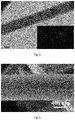
- the SEM image of the titanium dioxide material prepared in this example is shown in Fig. 1 .
- the titanium dioxide material is linear, with a diameter of 20 nm to 5 ⁇ m, mostly populated within 100 nm to 1000 nm, and a length of 1 ⁇ m to 50 ⁇ m, mostly populated within 5 ⁇ m to 20 ⁇ m.
- the TEM image of the titanium dioxide material prepared in this example is shown in Fig. 2 .
- the titanium dioxide material has a porous structure, with a pore size of about 5 nm to 20 nm.
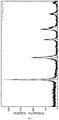
- the XRD pattern of the titanium dioxide material prepared in this example is shown in Fig. 3 .
- the linear porous titanium dioxide material of this example has an anatase phase structure.
- the transmission electron microscopy and electron diffraction pattern of the titanium dioxide material prepared in this example is shown in Fig. 4 .
- the titanium dioxide material of this example has a single crystal structure, and the long axis of the single crystal is oriented in the ⁇ 010> direction.
- the linear porous structure is consisted of a plurality of small particles, and the particles have an oriented growth direction.
- FIG. 5 A high-magnification SEM image of the titanium dioxide material prepared in this example is shown in Fig. 5 .
- the titanium dioxide material of this example has a structure of one or more rectangular columns which have flat side surfaces that are perpendicular to each other, the side surfaces being highly-active anatase phase ⁇ 100 ⁇ and ⁇ 001 ⁇ crystal planes.
- the titanium dioxide material prepared in this example is a linear porous anatase phase single crystal titanium dioxide material and has a structure of one or more rectangular columns.
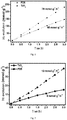
- the hydrogen generation efficiency by photocatalytic water decomposition with the titanium dioxide material prepared in this example is shown in Fig. 6 .
- the hydrogen generation efficiency by photocatalytic water decomposition was determined as follows: 50 mg of the sample was added to 90 mL of water, followed by addition of chloroplatinic acid with a mass ratio of platinum to titanium dioxide of 5,000 ppm; after irradiation for 30 minutes with a simulated sun light source, 10 mL of ethanol was added and the amount of the hydrogen generated was calculated. As seen from Fig.
- the hydrogen generation efficiency under standard sun light irradiation is as high as 78 mmol ⁇ g -1 ⁇ h -1 , which is 1.7 times higher as compared to a commercial P25 material.
- the hydrogen generation efficiency by photocatalytic water decomposition with the titanium dioxide material prepared in this example is shown in Fig. 7 .
- the hydrogen generation efficiency by photocatalytic water decomposition was determined as follows: 50 mg of the sample was added to 90 mL of water, followed by addition of chloroplatinic acid with a mass ratio of platinum to titanium dioxide of 5,000 ppm; after irradiation for 30 minutes with a simulated sun light source, 10 mL of triethanolamine was added and the amount of the hydrogen generated was calculated. As seen from Fig.
- the hydrogen generation efficiency under standard sun light irradiation is as high as 13 mmol ⁇ g -1 ⁇ h -1 , which is 2.6 times higher as compared to a commercial P25 material.
- This example provides a method of preparing a linear porous titanium dioxide material, which comprises the following steps: 0.1 g of titanium oxysulfate was dispersed and dissolved under stirring in 100 ml of an aqueous solution to form a solution, and aqueous ammonia at a concentration of 0.01 mol/L was slowly added dropwise to the above solution until the solution was neutral (about pH 7). The titanium oxysulfate was gradually and completely hydrolyzed to form a titanic acid hydrate precipitate, and the titanic acid hydrate precipitate was ultrasonically dispersed, washed with deionized water for several times, and then separated by centrifugation.
- the above white solid was dried and placed in an oven at 150 °C for annealing treatment for 24 hours to remove any hydrogen peroxide adsorbed or included in the white solid. Then, the treated white solid was washed with deionized water for several times and placed in a 0.001 mol/L hydrochloric acid solution for hydrogen ion exchange. After hydrogen ion exchange, the solid was washed with deionized water for several times until the pH of the washing solution was close to neutral and then dried.
- the dried white solid was placed in a muffle furnace and annealed at 300 °C for 24 hours to obtain an anatase phase linear porous titanium dioxide material.
- This example provides a method of preparing a linear porous titanium dioxide material, which comprises the following steps: 6 g of titanium tetrachloride was dispersed and dissolved under stirring in 100 ml of an aqueous solution to form a solution, and aqueous ammonia at a concentration of 0.2 mol/L was slowly added dropwise to the above solution until the solution was neutral (about pH 7). The titanium tetrachloride was gradually and completely hydrolyzed to form a titanic acid hydrate precipitate, and the titanic acid hydrate precipitate was ultrasonically dispersed, washed with deionized water for several times, and then separated by centrifugation.
- the above white solid was dried and placed in an oven at 250 °C for annealing treatment for 1 hour to remove any hydrogen peroxide adsorbed or included in the white solid. Then, the treated white solid was washed with deionized water for several times and placed in a 0.1 mol/L acetic acid solution for hydrogen ion exchange. After hydrogen ion exchange, the solid was washed with deionized water for several times until the pH of the washing solution was close to neutral and then dried.
- the dried white solid was placed in a muffle furnace and annealed at 1000 °C for 1 hour to obtain an anatase phase linear porous titanium dioxide material.
- This example provides a method of preparing a linear porous titanium dioxide material, which comprises the following steps: 2 g of titanium tetrafluoride was dispersed and dissolved under stirring in 100 ml of an aqueous solution to form a solution, and aqueous ammonia at a concentration of 0.1 mol/L was slowly added dropwise to the above solution until the solution was neutral (about pH 7). The titanium tetrafluoride was gradually and completely hydrolyzed to form a titanic acid hydrate precipitate, and the titanic acid hydrate precipitate was ultrasonically dispersed, washed with deionized water for several times, and then separated by centrifugation.
- the above white solid was dried and placed in an oven at 200 °C for annealing treatment for 20 hours to remove any hydrogen peroxide adsorbed or included in the white solid. Then, the treated white solid was washed with deionized water for several times and placed in a 0.01 mol/L sulfuric acid solution for hydrogen ion exchange. After hydrogen ion exchange, the solid was washed with deionized water for several times until the pH of the washing solution was close to neutral and then dried.
- the dried white solid was placed in a muffle furnace and annealed at 500 °C for 8 hours to obtain an anatase phase linear porous titanium dioxide material.
- This example provides a method of preparing a linear porous titanium dioxide material, which comprises the following steps: Under stirring, 1.5 g of titanium propoxide was dispersed in 100 ml of an aqueous solution prepared by dissolving hydrogen peroxide and lithium hydroxide in water, and a clear yellow solution was formed under stirring. The lithium hydroxide concentration therein was 0.5 mol/L and the hydrogen peroxide concentration was 1.0 mol/L. Then, the clear yellow solution was heated to 90 °C and kept at constant temperature under stirring for 4 hours, the reaction was terminated, and a white solid was obtained after separation.
- the above white solid was dried and placed in an oven at 180 °C for annealing treatment for 24 hours to remove any hydrogen peroxide adsorbed or included in the white solid. Then, the treated white solid was washed with deionized water for several times and placed in a 0.01 mol/L nitric acid solution for hydrogen ion exchange. After hydrogen ion exchange, the solid was washed with deionized water for several times until the pH of the washing solution was close to neutral and then dried.
- the dried white solid was dispersed into 100 ml of pure water, and a hydrothermal reaction was carried out at 160 °C for 24 hours to obtain an anatase phase linear porous titanium dioxide material.
- This example provides a method of preparing a linear porous titanium dioxide material, which comprises the following steps: Under stirring, 1.5 g of titanium ethoxide was dispersed in 100 ml of an aqueous solution prepared by dissolving hydrogen peroxide and lithium hydroxide in water, and a clear yellow solution was formed under stirring. The lithium hydroxide concentration therein was 0.7 mol/L and the hydrogen peroxide concentration was 0.8 mol/L. Then, the clear yellow solution was heated to 100 °C and kept at constant temperature under stirring for 2 hours, the reaction was terminated, and a white solid was obtained after separation.
- the above white solid was dried and placed in an oven at 230 °C for annealing treatment for 10 hours to remove any hydrogen peroxide adsorbed or included in the white solid. Then, the treated white solid was washed with deionized water for several times and placed in a 0.05 mol/L hydrochloric acid solution for hydrogen ion exchange. After hydrogen ion exchange, the solid was washed with deionized water for several times until the pH of the washing solution was close to neutral and then dried.
- the dried white solid was dispersed into 100 ml of an aqueous solution of nitric acid at a concentration of 0.01 mol/L, and a hydrothermal reaction was carried out at 200 °C for 10 hours to obtain an anatase phase linear porous titanium dioxide material.
- This example provides a method of preparing a linear porous titanium dioxide material, which comprises the following steps: Under stirring, 2 g of tetrabutyl titanate was dispersed in 100 ml of an aqueous solution for direct hydrolysis to form a titanic acid hydrate precipitate, and the titanic acid hydrate precipitate was ultrasonically dispersed, washed with deionized water for several times, and then separated by centrifugation.
- the above white solid was dried and placed in an oven at 200 °C for annealing treatment for 24 hours to remove any hydrogen peroxide adsorbed or included in the white solid. Then, the treated white solid was washed with deionized water for several times and placed in a 0.01 mol/L sulfuric acid solution for hydrogen ion exchange. After hydrogen ion exchange, the solid was washed with deionized water for several times until the pH of the washing solution was close to neutral and then dried.
- the dried white solid was dispersed into 100 ml of an aqueous solution of hydrofluoric acid at a concentration of 0.01 mol/L, and a hydrothermal reaction was carried out at 105 °C for 48 hours to obtain an anatase phase linear porous titanium dioxide material.
- This example provides a method of preparing a linear porous titanium dioxide material, which comprises the following steps: Under stirring, 2 g of titanium glyceroxide was dispersed in 100 ml of an aqueous solution for direct hydrolysis to form a titanic acid hydrate precipitate, and the titanic acid hydrate precipitate was ultrasonically dispersed, washed with deionized water for several times, and then separated by centrifugation.
- the above white solid was dried and placed in an oven at 250 °C for annealing treatment for 4 hours to remove any hydrogen peroxide adsorbed or included in the white solid. Then, the treated white solid was washed with deionized water for several times and placed in a 0.01 mol/L nitric acid solution for hydrogen ion exchange. After hydrogen ion exchange, the solid was washed with deionized water for several times until the pH of the washing solution was close to neutral and then dried.
- the dried white solid was dispersed into 100 ml of an aqueous solution of diethylamine at a concentration of 0.0001 mol/L, and a hydrothermal reaction was carried out at 240 °C for 1 hour to obtain an anatase phase linear porous titanium dioxide material.
- This example provides a method of preparing a linear porous titanium dioxide material, which comprises the following steps: Under stirring, 2 g of tetrabutyl titanate was dispersed in 100 ml of an aqueous solution for direct hydrolysis to form a titanic acid hydrate precipitate, and the titanic acid hydrate precipitate was ultrasonically dispersed, washed with deionized water for several times, and then separated by centrifugation.
- the above white solid was dried and placed in an oven at 200 °C for annealing treatment for 24 hours to remove any hydrogen peroxide adsorbed or included in the white solid. Then, the treated white solid was washed with deionized water for several times and placed in a 0.01 mol/L sulfuric acid solution for hydrogen ion exchange. After hydrogen ion exchange, the solid was washed with deionized water for several times until the pH of the washing solution was close to neutral and then dried.
- This example provides a method for surface modification of a linear porous titanium dioxide material, which comprises the following steps: Under stirring, 1 g of titanium sulfate was dispersed and dissolved under stirring in 100 ml of an aqueous solution to form a solution, and aqueous ammonia at a concentration of 0.1 mol/L was slowly added dropwise to the above solution until the solution was neutral (about pH 7). The titanium sulfate was gradually and completely hydrolyzed to form a titanic acid hydrate precipitate, and the titanic acid hydrate precipitate was ultrasonically dispersed, washed with deionized water for several times, and then separated by centrifugation.
- the above white solid was dried and placed in an oven at 220 °C for annealing treatment for 12 hours to remove any hydrogen peroxide adsorbed or included in the white solid. Then, the treated white solid was washed with deionized water for several times and placed in a 0.01 mol/L nitric acid solution for hydrogen ion exchange. After hydrogen ion exchange, the solid was washed with deionized water for several times until the pH of the washing solution was close to neutral and then dried.
- the dried white solid was dispersed in 100 ml of an aqueous solution containing graphene oxide at a mass fraction of 500 ppm, and a hydrothermal reaction was carried out at 180 °C for 12 hours to obtain a graphene-loaded anatase phase linear porous titanium dioxide material.
- This example provides a method for surface modification of a linear porous titanium dioxide material, which comprises the following steps: Under stirring, 1 g of titanium sulfate was dispersed and dissolved under stirring in 100 ml of an aqueous solution to form a solution, and aqueous ammonia at a concentration of 0.1 mol/L was slowly added dropwise to the above solution until the solution was neutral (about pH 7). The titanium sulfate was gradually and completely hydrolyzed to form a titanic acid hydrate precipitate, and the titanic acid hydrate precipitate was ultrasonically dispersed, washed with deionized water for several times, and then separated by centrifugation.
- the above white solid was dried and placed in an oven at 220 °C for annealing treatment for 12 hours to remove any hydrogen peroxide adsorbed or included in the white solid. Then, the treated white solid was washed with deionized water for several times and placed in a 0.01 mol/L nitric acid solution for hydrogen ion exchange. After hydrogen ion exchange, the solid was washed with deionized water for several times until the pH of the washing solution was close to neutral and then dried.
- the dried white solid was dispersed in 100 ml of an aqueous solution containing nickel acetate at a mass fraction of 1,000 ppm, and then separated and dried.
- the separated and dried solid power was placed in a muffle furnace and annealed at 600 °C for 4 hours to obtain a nickel oxide-loaded anatase phase linear porous titanium dioxide material.
- This example provides a method for semiconductor compositing of a linear porous titanium dioxide material, which comprises the following steps: Under stirring, 1 g of titanium sulfate was dispersed and dissolved under stirring in 100 ml of an aqueous solution to form a solution, and aqueous ammonia at a concentration of 0.1 mol/L was slowly added dropwise to the above solution until the solution was neutral (about pH 7). The titanium sulfate was gradually and completely hydrolyzed to form a titanic acid hydrate precipitate, and the titanic acid hydrate precipitate was ultrasonically dispersed, washed with deionized water for several times, and then separated by centrifugation.
- the above white solid was dried and placed in an oven at 220 °C for annealing treatment for 12 hours to remove any hydrogen peroxide adsorbed or included in the white solid. Then, the treated white solid was washed with deionized water for several times and placed in a 0.01 mol/L nitric acid solution for hydrogen ion exchange. After hydrogen ion exchange, the solid was washed with deionized water for several times until the pH of the washing solution was close to neutral and then dried.
- the dried white solid was dispersed in 100 ml of an aqueous solution containing copper acetate at a mass fraction of 5,000 ppm, and then separated and dried.
- the separated and dried solid power was placed in a muffle furnace and annealed at 650 °C for 3 hours to obtain a composite material of a copper oxide semiconductor and anatase phase linear porous titanium dioxide.
- This example provides a method for semiconductor compositing of a linear porous titanium dioxide material, which comprises the following steps: 1 g of titanium sulfate was dispersed and dissolved under stirring in 100 ml of an aqueous solution to form a solution, and aqueous ammonia at a concentration of 0.1 mol/L was slowly added dropwise to the above solution until the solution was neutral (about pH 7). The titanium sulfate was gradually and completely hydrolyzed to form a titanic acid hydrate precipitate, and the titanic acid hydrate precipitate was ultrasonically dispersed, washed with deionized water for several times, and then separated by centrifugation.
- the above white solid was dried and placed in an oven at 220 °C for annealing treatment for 12 hours to remove any hydrogen peroxide adsorbed or included in the white solid. Then, the treated white solid was washed with deionized water for several times and placed in a 0.01 mol/L nitric acid solution for hydrogen ion exchange. After hydrogen ion exchange, the solid was washed with deionized water for several times until the pH of the washing solution was close to neutral and then dried.
- the dried white solid was mixed with 0.5 g urea by grinding and then placed in a muffle furnace and annealed at 550 °C for 3 hours to obtain a composite material of a carbon nitride semiconductor and anatase phase linear porous titanium dioxide.
Landscapes
- Chemical & Material Sciences (AREA)
- Organic Chemistry (AREA)
- Engineering & Computer Science (AREA)
- Inorganic Chemistry (AREA)
- Chemical Kinetics & Catalysis (AREA)
- Materials Engineering (AREA)
- Life Sciences & Earth Sciences (AREA)
- Environmental & Geological Engineering (AREA)
- General Life Sciences & Earth Sciences (AREA)
- Geology (AREA)
- Electrochemistry (AREA)
- General Chemical & Material Sciences (AREA)
- Nanotechnology (AREA)
- Physics & Mathematics (AREA)
- Manufacturing & Machinery (AREA)
- General Physics & Mathematics (AREA)
- Crystallography & Structural Chemistry (AREA)
- Condensed Matter Physics & Semiconductors (AREA)
- Power Engineering (AREA)
- Thermal Sciences (AREA)
- Composite Materials (AREA)
- Microelectronics & Electronic Packaging (AREA)
- Inorganic Compounds Of Heavy Metals (AREA)
- Crystals, And After-Treatments Of Crystals (AREA)
- Battery Electrode And Active Subsutance (AREA)
- Solid-Sorbent Or Filter-Aiding Compositions (AREA)
- Dispersion Chemistry (AREA)
Abstract
Description
- The invention relates to a linear porous titanium dioxide material and the preparation and use thereof, which pertains to the field of semi-conductive functional materials and material preparation.
- Titanium dioxide is a hot research topic in the field of materials due to its broad application prospects in water photolysis, catalysis, photocatalysis, lithium ion batteries, sodium ion batteries, potassium ion batteries, dye-sensitized solar cells and sensors, etc.
- The applied properties of anatase phase titanium dioxide are closely related to its morphology. For example, as compared to titanium dioxide nanoparticles, the linear structure of titanium dioxide nanomaterials can reduce the grain boundary between particles and facilitate the transport of carriers in the long axis direction, which has the following advantages: (1) in the field of photocatalysis, the linear structure facilitates the free migration of photogenerated electron-hole pairs in the long axis direction, reduces the probability of electron-hole recombination, and improves the photocatalytic efficiency; (2) in the field of battery electrode materials, the linear long axis is beneficial to effective electron migration, while the short axis facilitates the rapid intercalation and deintercalation of lithium, sodium, or potassium ions, and the linear structure has better charging and discharging performance than the nanoparticles; (3) in the field of dye-sensitized solar cell, the linear structure can reduce the grain boundary between particles, which facilitates the transport of electrons on the photo-anode and greatly improves battery efficiency.
- Both experimental and theoretical calculations show that the highly-active {100} and {001} crystal planes have higher crystal plane energy than the {101} crystal plane.
- Anatase phase titanium dioxide with highly-active crystal planes (such as the {100} or {001} crystal plane) exposed can exhibit better applied effects such as photocatalysis. A thermodynamically-stable anatase phase titanium dioxide tends to form a small number of truncated octahedral particles, i.e., particles consisted of eight low activity {101} crystal planes and two highly-active {001} crystal planes. Among them, the {101} crystal planes accounts for as high as up to 94% and tends to easily vanish in the growing process of the material, primarily due to the properties including high activity and low stability of the high-activity crystal planes. Therefore, it is very likely that the {101} crystal plane with low activity of the anatase phase titanium dioxide is exposed in the growing process to form octahedral particles. Currently, nothing has been reported on linear anatase phase titanium dioxide materials having a large proportion of active {100} and {001} crystal planes.
- In addition, porous titanium dioxide materials have a large specific surface area and a high porosity which provide them with many excellent properties in application. The specific surface area and active sites of porous titanium dioxide may increase drastically, which greatly accelerates reaction on its surface and its interaction with media, and improves the applied properties of the material. A titanium dioxide material with a porous structure has high light absorption and light scattering utilization, and, in general, anatase phase titanium dioxide having a porous structure exhibits high photocatalytic efficiency. However, the porous titanium dioxide materials reported insofar are in granular forms, such as porous spheres, porous crystalline nanoparticles and the like, having a large grain boundary, and may easily become a recombination center of photogenerated electron-holes.
- In order to solve the above technical problems, an objective of the present invention is to provide a linear porous titanium dioxide material and the preparation method thereof, by which an anatase phase titanium dioxide nanomaterial having a linear, porous, single crystal structure with active crystal planes structure is obtained by combining a linear structure, a single crystal structure, a porous structure, active {100} and {001} crystal planes, thereby greatly increasing the specific surface area of the material, enhancing the surface activity of the material, reducing the grain boundary between particles, improving effective carrier transport in the long axis direction, and enhancing the applied properties of the material.
In order to achieve the above objective, the present invention provides a linear porous titanium dioxide material, wherein the linear porous titanium dioxide material has an anatase phase structure and a single crystal structure; the structure of the linear porous titanium dioxide material is composed of a plurality of particles having an oriented growth direction (i.e., arranged in an oriented direction), preferably a growth direction in the <001> direction.
According to a particular embodiment of the present invention, the linear porous titanium dioxide material is consisted of many small particles. Preferably, the linear porous titanium dioxide material (a structure of an assembly of the particles) has a structure of one or more rectangular columns which have flat side surfaces that are perpendicular to each other.
According to a particular embodiment of the present invention, preferably, the side surfaces of the linear porous titanium dioxide material are highly-active anatase phase {100} and {001} crystal planes.
According to a particular embodiment of the present invention, preferably, the linear porous titanium dioxide material has a linear structure having a diameter of 20 nm to 5 µm and a length of 1 µm to 50 µm; more preferably, the linear porous titanium dioxide material has a linear structure having a diameter of 100 nm to 1,000 nm and a length of 5 µm to 20 µm. According to a particular embodiment of the present invention, preferably, the pores in the linear porous structure of the linear porous titanium dioxide material have a size of 2 nm to 50 nm; more preferably, the pores have a size of 5 nm to 20 nm.
According to a particular embodiment of the invention, preferably, the long-axis of the single crystal of the linear porous titanium dioxide material is oriented in the <010> direction.
The linear porous titanium dioxide material provided by the present invention has a structure that may improve the application effect of the titanium dioxide material in the fields of battery electrodes, catalysis, photocatalysis, sensing, solar cells, hydrophilicity and hydrophobicity, biology and the like.
The present invention also provides a method of preparing the above-mentioned linear porous titanium dioxide material, with the procedure thereof shown inFig. 8 .
This preparation method comprises the steps of: - dispersing a titanium source in an aqueous solution of a peroxide containing a lithium compound under stirring to form a solution;
- subjecting the solution to a heating reaction to obtain lithium titanate peroxide having a linear structure;
- subjecting the lithium titanate peroxide to a low temperature annealing treatment to obtain lithium titanate having a linear structure;
- dispersing the lithium titanate in an acid solution for hydrogen ion exchange to obtain titanic acid having a linear structure;
- subjecting the titanic acid to heat treatment to obtain the linear porous titanium dioxide material; preferably, the heat treatment includes hydrothermal treatment and/or high temperature annealing.
- In the above preparation method, preferably, the temperature of the low temperature annealing treatment is 150 to 250°C; and the duration of the low temperature annealing treatment is 1 to 24 hours.
In the above preparation method, preferably, the hydrogen ion exchange includes: washing and separating the lithium titanate having a linear structure; adding the separated lithium titanate having a linear structure in an acid solution for hydrogen ion exchange to obtain a titanic acid having a linear structure, and washing the titanic acid having a linear structure before being separated and dried. Here, the acid solution used may be one or more selected from nitric acid, hydrochloric acid, sulfuric acid, acetic acid, and the like. The concentration of the acid solution may be controlled at 0.001 to 0.1 mol/L.
In the above preparation method, preferably, the temperature of the hydrothermal reaction is 105 to 240°C; and the duration of the hydrothermal reaction is 1 to 48 hours. The system of the hydrothermal reaction may be one of an acidic system, a neutral system, an alkaline system, and the like.
In the above preparation method, preferably, the temperature of the high temperature annealing is 300 to 1000°C, preferably from 350 to 1000°C; and the duration of the high temperature annealing treatment is 1 to 24 hours.
The present invention also provides a method for surface modification of the above-mentioned linear porous titanium dioxide material. Preferably, the surface modification comprises one or more of carbon loading, graphene loading, black phosphorus loading, ruthenium oxide loading, lead oxide loading, nickel oxide loading, metal platinum loading, metal gold loading, metal silver loading, and metal copper loading.
The present invention also provides a method for semiconductor compositing of the above linear porous titanium dioxide material; preferably, the semiconductor compositing includes one or more of cadmium sulfide-semiconductor compositing, lead sulfide-semiconductor compositing, copper oxide-semiconductor compositing, cuprous oxide-semiconductor compositing, iron oxide-semiconductor compositing, ferrous oxide-semiconductor compositing, tungsten oxide-semiconductor compositing, zinc oxide-semiconductor compositing, gallium phosphide-semiconductor compositing, cadmium stannide-semiconductor compositing, molybdenum sulfide-semiconductor compositing, carbon nitride-semiconductor compositing, and the like.
The invention also provides the use of the above-mentioned linear porous titanium dioxide material in the field of one or more of lithium ion battery materials, sodium ion battery materials, potassium ion battery materials, catalytic hydrogenation materials, organic pollutant photocatalytic degradation, water photocatalytic decomposition for hydrogen production, gas sensing, dye-sensitized solar cells, perovskite solar cells, hydrophilic and hydrophobic materials, and biomedicines. - The advantages of the present invention are as follows:
The anatase phase titanium dioxide material provided by the present invention has a linear, single crystal, porous structure and active {100} and {001} crystal planes, wherein the porous structure may increase the specific surface area of the titanium dioxide material and increase reactive sites, the linear single crystal structure may reduce the grain boundary between particles, facilitates the transport of carriers in the long axis direction, and improves the applied effect of the material, and exposure of a large number of highly active {100} and {001} crystal planes is favorable to increase the surface activity of the material and improve the applied effect of the material. The preparation method of the anatase phase titanium dioxide material provided by the present invention cannot be realized by other approaches. With a simple production process, easily controllable process parameters and readily available raw materials, this preparation method has low production cost and can be easily scaled up for industrial production.
The titanium dioxide porous nanowire of the present invention has the following advantages in application: - (1) The structure of the titanium dioxide porous nanowire of the invention is favorable for electron-hole separation, increases active sites for catalytic reaction, has high photocatalytic activity, and is favorable for water photolysis for hydrogen generation or photocatalytic degradation of organic pollutants.
- (2) The long axis of the structure of the titanium dioxide porous nanowire of the invention facilitates effective electron migration, the porous structure facilitates the rapid intercalation and deintercalation process of lithium ions, sodium ions, or potassium ions, while the large specific surface area is favorable to reduce the contact area between electrolyte and electrodes and lower the current density, providing good battery charging and discharging performance.
- (3) The structure of the titanium dioxide porous nanowire of the present invention has a large specific surface area that is capable of adsorbing more dyes while the one-dimensional structure facilitates electron transport, which is advantageous in dye-sensitized solar cells.
- (4) The structure of the titanium dioxide porous nanowire of the present invention is favorable for gas sensing, for example, applications in sensing gases such as hydrogen, oxygen, formaldehyde, propane, ethane, methane, carbon monoxide, carbon dioxide, and water vapor.
- (5) The titanium dioxide porous nanowire of the present invention has a large specific surface area that is capable of adsorbing a large amount of organic species or heavy metal ions, provide an adsorption and separation effect.
-
-
Fig. 1 is an SEM image of the titanium dioxide material prepared in Example 1. -
Fig. 2 is a TEM image of the titanium dioxide material prepared in Example 1. -
Fig. 3 is an XRD pattern of the titanium dioxide material prepared in Example 1. -
Fig. 4 is a transmission electron microscopy and electron diffraction pattern of the titanium oxide material prepared in Example 1. -
Fig. 5 is an SEM image of the titanium dioxide material prepared in Example 1. -
Fig. 6 is a graph showing the hydrogen generation efficiency by photocatalytic water decomposition with the titanium dioxide material prepared in Example 1 using ethanol as a sacrificial agent. -
Fig. 7 is a graph showing the hydrogen generation efficiency by photocatalytic water decomposition with the titanium dioxide material prepared in Example 1 using triethanolamine as a sacrificial agent. -
Fig. 8 is a diagram of the procedure for preparing a linear porous titanium dioxide material. - The technical solutions in the embodiments of the present invention will be set forth clearly and wholly in the following description of the embodiments of the present invention to provide those skilled in the art a better understanding of the technical solution. Obviously, only some of the embodiments, but not all, of the present invention are illustrated. All other embodiments obtainable by a person of ordinary skill in the art based on the embodiments of the present invention without making creative efforts are intended to be encompassed in the scope of the present invention.
Unless otherwise defined, all technical and scientific terms used herein have the same meaning as commonly understood by one of ordinary skill in the art to which this invention belongs. The terminology used in the description of the present invention is for the sole purpose of illustrating particular embodiments and is not intended to limit the invention. The term "and/or" as used herein includes any and all combinations of one or more of the associated items listed.
Particular embodiments of the invention are disclosed herein in details with reference to the description hereinafter. It should be understood that the scope of the embodiments of the invention are not limited thereto. Many variations, modifications, and equivalents are included in the embodiments of the present invention without departing from the scope and spirit of the appended claims.
Features described and/or illustrated with respect to one embodiment may be used in one or more other embodiments in the same or similar manner in combination with, or in place of, features in other embodiments.
It should be emphasized that the term "comprise/include" as used herein indicates the presence of a feature, assembly, step, or component, but does not exclude the presence or addition of one or more other features, assembly, steps, or components. Any numerical value recited herein includes all values between the lower and upper values in increments of one unit from the lower limit to the upper limit, provided an interval of at least two units is present between any lower value and any higher value. - For example, if the number of a component or a process variable (e.g., temperature, pressure, time, etc.) is recited to be from 1 to 90, preferably from 20 to 80, more preferably from 30 to 70, it is intended that values such as from 15 to 85, from 22 to 68, from 43 to 51, from 30 to 32 and the like are also explicitly recited in the specification. For values smaller than 1, 0.0001, 0.001, 0.01, 0.1 is appropriately considered as one unit. These are merely examples intended to be expressly illustrated, and all possible combinations of the numerical values listed between the minimum and maximum values are considered to be explicitly recited in the present specification in a similar manner.
All ranges include endpoints and all numbers between the endpoints unless otherwise indicated. "about" or "approximately" as used with a range applies to both endpoints of the range. Thus, "about 20 to 30" is intended to encompass "about 20 to about 30", including at least the indicated endpoints.
All articles and references disclosed, including patent applications and publications, are hereby incorporated by reference for all purposes. The term "essentially consisted of" that describes a combination shall include the identified elements, components, parts, or steps and other elements, components, parts, or steps that do not have any substantial impact on the fundamental novel features of the combination. When using the term "comprise/include" or "comprising/including" to describe a combination of the elements, components, parts, or steps, embodiments that are essentially consisted of these elements, components, parts, or steps are also contemplated. Herein, by using the term "may", it is intended to indicate that any of the attributes described as "may" are optional.
A plurality of elements, components, parts, or steps can be provided in a single integrated element, component, part, or step. Alternatively, a single integrated component, component, part, or step may be divided into elements, components, parts, or steps. The use of the term "a" or "an" is not intended for exclusion of other elements, components, parts, or steps. - The principle of the present invention is described in details below with reference to a number of embodiments.
- This example provides a method of preparing a linear porous titanium dioxide material, which comprises the following steps:
1 g of titanium sulfate was dispersed and dissolved under stirring in 100 ml of an aqueous solution to form a solution, and aqueous ammonia at a concentration of 0.1 mol/L was slowly added dropwise to the above solution until the solution was neutral (about pH 7). The titanium sulfate was gradually and completely hydrolyzed to form a titanic acid hydrate precipitate, and the titanic acid hydrate precipitate was ultrasonically dispersed, washed with deionized water for several times, and then separated by centrifugation. - Next, hydrogen peroxide and lithium hydroxide were dissolved in water to a lithium hydroxide concentration of 0.6 mol/L and a hydrogen peroxide concentration of 0.8 mol/L. Subsequently, the above titanic acid hydrate precipitate upon centrifugation was dispersed in 100 ml of the hydrogen peroxide aqueous solution containing lithium hydroxide prepared as above, and a clear yellow solution was formed under stirring. Then, this clear yellow solution was heated to 80 °C and kept at constant temperature under stirring for 6 hours, the reaction was terminated, and a white solid was obtained after separation. Subsequently, the above white solid was dried and placed in an oven at 220 °C for annealing treatment for 12 hours to remove any hydrogen peroxide adsorbed or included in the white solid. Then, the treated white solid was washed with deionized water for several times and placed in a 0.01 mol/L nitric acid solution for hydrogen ion exchange. After hydrogen ion exchange, the solid was washed with deionized water for several times until the pH of the washing solution was close to neutral and then dried.
- Finally, the dried white solid was placed in a muffle furnace and annealed at 650 °C for 3 hours to obtain an anatase phase linear porous titanium dioxide material.
- The SEM image of the titanium dioxide material prepared in this example is shown in
Fig. 1 . As can be seen fromFig. 1 , the titanium dioxide material is linear, with a diameter of 20 nm to 5 µm, mostly populated within 100 nm to 1000 nm, and a length of 1 µm to 50 µm, mostly populated within 5 µm to 20 µm. - The TEM image of the titanium dioxide material prepared in this example is shown in
Fig. 2 . As can be seen fromFig. 2 , the titanium dioxide material has a porous structure, with a pore size of about 5 nm to 20 nm. - The XRD pattern of the titanium dioxide material prepared in this example is shown in
Fig. 3 . As can be seen fromFig. 3 , the linear porous titanium dioxide material of this example has an anatase phase structure. - The transmission electron microscopy and electron diffraction pattern of the titanium dioxide material prepared in this example is shown in
Fig. 4 . As can be seen fromFig. 4 , the titanium dioxide material of this example has a single crystal structure, and the long axis of the single crystal is oriented in the <010> direction. The linear porous structure is consisted of a plurality of small particles, and the particles have an oriented growth direction. - A high-magnification SEM image of the titanium dioxide material prepared in this example is shown in
Fig. 5 . As can be seen fromFig. 5 , the titanium dioxide material of this example has a structure of one or more rectangular columns which have flat side surfaces that are perpendicular to each other, the side surfaces being highly-active anatase phase {100} and {001} crystal planes. - It can be seen from the above results that the titanium dioxide material prepared in this example is a linear porous anatase phase single crystal titanium dioxide material and has a structure of one or more rectangular columns.
- The hydrogen generation efficiency by photocatalytic water decomposition with the titanium dioxide material prepared in this example is shown in
Fig. 6 . The hydrogen generation efficiency by photocatalytic water decomposition was determined as follows: 50 mg of the sample was added to 90 mL of water, followed by addition of chloroplatinic acid with a mass ratio of platinum to titanium dioxide of 5,000 ppm; after irradiation for 30 minutes with a simulated sun light source, 10 mL of ethanol was added and the amount of the hydrogen generated was calculated. As seen fromFig. 6 , when ethanol is used as the sacrificial agent, the hydrogen generation efficiency under standard sun light irradiation is as high as 78 mmol·g-1·h-1, which is 1.7 times higher as compared to a commercial P25 material. - The hydrogen generation efficiency by photocatalytic water decomposition with the titanium dioxide material prepared in this example is shown in
Fig. 7 . The hydrogen generation efficiency by photocatalytic water decomposition was determined as follows: 50 mg of the sample was added to 90 mL of water, followed by addition of chloroplatinic acid with a mass ratio of platinum to titanium dioxide of 5,000 ppm; after irradiation for 30 minutes with a simulated sun light source, 10 mL of triethanolamine was added and the amount of the hydrogen generated was calculated. As seen fromFig. 6 , when triethanolamine is used as the sacrificial agent, the hydrogen generation efficiency under standard sun light irradiation is as high as 13 mmol·g-1·h-1, which is 2.6 times higher as compared to a commercial P25 material. - This example provides a method of preparing a linear porous titanium dioxide material, which comprises the following steps:
0.1 g of titanium oxysulfate was dispersed and dissolved under stirring in 100 ml of an aqueous solution to form a solution, and aqueous ammonia at a concentration of 0.01 mol/L was slowly added dropwise to the above solution until the solution was neutral (about pH 7). The titanium oxysulfate was gradually and completely hydrolyzed to form a titanic acid hydrate precipitate, and the titanic acid hydrate precipitate was ultrasonically dispersed, washed with deionized water for several times, and then separated by centrifugation. - Next, hydrogen peroxide and lithium hydroxide were dissolved in water to a lithium hydroxide concentration of 0.4 mol/L and a hydrogen peroxide concentration of 0.1 mol/L. Subsequently, the above titanic acid hydrate precipitate upon centrifugation was dispersed in 100 ml of the hydrogen peroxide aqueous solution containing lithium hydroxide prepared as above, and a clear yellow solution was formed under stirring. Then, this clear yellow solution was heated to 60 °C and kept at constant temperature under stirring for 24 hours, the reaction was terminated, and a white solid was obtained after separation. Subsequently, the above white solid was dried and placed in an oven at 150 °C for annealing treatment for 24 hours to remove any hydrogen peroxide adsorbed or included in the white solid. Then, the treated white solid was washed with deionized water for several times and placed in a 0.001 mol/L hydrochloric acid solution for hydrogen ion exchange. After hydrogen ion exchange, the solid was washed with deionized water for several times until the pH of the washing solution was close to neutral and then dried.
- Finally, the dried white solid was placed in a muffle furnace and annealed at 300 °C for 24 hours to obtain an anatase phase linear porous titanium dioxide material.
- This example provides a method of preparing a linear porous titanium dioxide material, which comprises the following steps:
6 g of titanium tetrachloride was dispersed and dissolved under stirring in 100 ml of an aqueous solution to form a solution, and aqueous ammonia at a concentration of 0.2 mol/L was slowly added dropwise to the above solution until the solution was neutral (about pH 7). The titanium tetrachloride was gradually and completely hydrolyzed to form a titanic acid hydrate precipitate, and the titanic acid hydrate precipitate was ultrasonically dispersed, washed with deionized water for several times, and then separated by centrifugation. - Next, hydrogen peroxide and lithium hydroxide were dissolved in water to a lithium hydroxide concentration of 1.0 mol/L and a hydrogen peroxide concentration of 2.0 mol/L. Subsequently, the above titanic acid hydrate precipitate upon centrifugation was dispersed in 100 ml of the hydrogen peroxide aqueous solution containing lithium hydroxide prepared as above, and a clear yellow solution was formed under stirring. Then, this clear yellow solution was heated to 100 °C and kept at constant temperature under stirring for 0.5 hour, the reaction was terminated, and a white solid was obtained after separation. Subsequently, the above white solid was dried and placed in an oven at 250 °C for annealing treatment for 1 hour to remove any hydrogen peroxide adsorbed or included in the white solid. Then, the treated white solid was washed with deionized water for several times and placed in a 0.1 mol/L acetic acid solution for hydrogen ion exchange. After hydrogen ion exchange, the solid was washed with deionized water for several times until the pH of the washing solution was close to neutral and then dried.
- Finally, the dried white solid was placed in a muffle furnace and annealed at 1000 °C for 1 hour to obtain an anatase phase linear porous titanium dioxide material.
- This example provides a method of preparing a linear porous titanium dioxide material, which comprises the following steps:
2 g of titanium tetrafluoride was dispersed and dissolved under stirring in 100 ml of an aqueous solution to form a solution, and aqueous ammonia at a concentration of 0.1 mol/L was slowly added dropwise to the above solution until the solution was neutral (about pH 7). The titanium tetrafluoride was gradually and completely hydrolyzed to form a titanic acid hydrate precipitate, and the titanic acid hydrate precipitate was ultrasonically dispersed, washed with deionized water for several times, and then separated by centrifugation. - Next, peracetic acid and lithium peroxide were dissolved in water to a lithium peroxide concentration of 0.4 mol/L and a peracetic acid concentration of 1.0 mol/L. Subsequently, the above titanic acid hydrate precipitate upon centrifugation was dispersed in 100 ml of the aqueous solution containing peracetic acid and lithium peroxide prepared as above, and a clear yellow solution was formed under stirring. Then, this clear yellow solution was heated to 70 °C and kept at constant temperature under stirring for 12 hours, the reaction was terminated, and a white solid was obtained after separation. Subsequently, the above white solid was dried and placed in an oven at 200 °C for annealing treatment for 20 hours to remove any hydrogen peroxide adsorbed or included in the white solid. Then, the treated white solid was washed with deionized water for several times and placed in a 0.01 mol/L sulfuric acid solution for hydrogen ion exchange. After hydrogen ion exchange, the solid was washed with deionized water for several times until the pH of the washing solution was close to neutral and then dried.
- Finally, the dried white solid was placed in a muffle furnace and annealed at 500 °C for 8 hours to obtain an anatase phase linear porous titanium dioxide material.
- This example provides a method of preparing a linear porous titanium dioxide material, which comprises the following steps:
Under stirring, 1.5 g of titanium propoxide was dispersed in 100 ml of an aqueous solution prepared by dissolving hydrogen peroxide and lithium hydroxide in water, and a clear yellow solution was formed under stirring. The lithium hydroxide concentration therein was 0.5 mol/L and the hydrogen peroxide concentration was 1.0 mol/L. Then, the clear yellow solution was heated to 90 °C and kept at constant temperature under stirring for 4 hours, the reaction was terminated, and a white solid was obtained after separation. Subsequently, the above white solid was dried and placed in an oven at 180 °C for annealing treatment for 24 hours to remove any hydrogen peroxide adsorbed or included in the white solid. Then, the treated white solid was washed with deionized water for several times and placed in a 0.01 mol/L nitric acid solution for hydrogen ion exchange. After hydrogen ion exchange, the solid was washed with deionized water for several times until the pH of the washing solution was close to neutral and then dried. - Finally, the dried white solid was dispersed into 100 ml of pure water, and a hydrothermal reaction was carried out at 160 °C for 24 hours to obtain an anatase phase linear porous titanium dioxide material.
- This example provides a method of preparing a linear porous titanium dioxide material, which comprises the following steps:
Under stirring, 1.5 g of titanium ethoxide was dispersed in 100 ml of an aqueous solution prepared by dissolving hydrogen peroxide and lithium hydroxide in water, and a clear yellow solution was formed under stirring. The lithium hydroxide concentration therein was 0.7 mol/L and the hydrogen peroxide concentration was 0.8 mol/L. Then, the clear yellow solution was heated to 100 °C and kept at constant temperature under stirring for 2 hours, the reaction was terminated, and a white solid was obtained after separation. Subsequently, the above white solid was dried and placed in an oven at 230 °C for annealing treatment for 10 hours to remove any hydrogen peroxide adsorbed or included in the white solid. Then, the treated white solid was washed with deionized water for several times and placed in a 0.05 mol/L hydrochloric acid solution for hydrogen ion exchange. After hydrogen ion exchange, the solid was washed with deionized water for several times until the pH of the washing solution was close to neutral and then dried. - Finally, the dried white solid was dispersed into 100 ml of an aqueous solution of nitric acid at a concentration of 0.01 mol/L, and a hydrothermal reaction was carried out at 200 °C for 10 hours to obtain an anatase phase linear porous titanium dioxide material.
- This example provides a method of preparing a linear porous titanium dioxide material, which comprises the following steps:
Under stirring, 2 g of tetrabutyl titanate was dispersed in 100 ml of an aqueous solution for direct hydrolysis to form a titanic acid hydrate precipitate, and the titanic acid hydrate precipitate was ultrasonically dispersed, washed with deionized water for several times, and then separated by centrifugation. - Next, hydrogen peroxide and lithium hydroxide were dissolved in water to a lithium hydroxide concentration of 0.8 mol/L and a hydrogen peroxide concentration of 0.9 mol/L. Subsequently, the above titanic acid hydrate precipitate upon centrifugation was dispersed in 100 ml of the hydrogen peroxide aqueous solution containing lithium hydroxide prepared as above, and a clear yellow solution was formed under stirring. Then, the clear yellow solution was heated to 80 °C and kept at constant temperature under stirring for 8 hours, the reaction was terminated, and a white solid was obtained after separation. Subsequently, the above white solid was dried and placed in an oven at 200 °C for annealing treatment for 24 hours to remove any hydrogen peroxide adsorbed or included in the white solid. Then, the treated white solid was washed with deionized water for several times and placed in a 0.01 mol/L sulfuric acid solution for hydrogen ion exchange. After hydrogen ion exchange, the solid was washed with deionized water for several times until the pH of the washing solution was close to neutral and then dried.
- Finally, the dried white solid was dispersed into 100 ml of an aqueous solution of hydrofluoric acid at a concentration of 0.01 mol/L, and a hydrothermal reaction was carried out at 105 °C for 48 hours to obtain an anatase phase linear porous titanium dioxide material.
- This example provides a method of preparing a linear porous titanium dioxide material, which comprises the following steps:
Under stirring, 2 g of titanium glyceroxide was dispersed in 100 ml of an aqueous solution for direct hydrolysis to form a titanic acid hydrate precipitate, and the titanic acid hydrate precipitate was ultrasonically dispersed, washed with deionized water for several times, and then separated by centrifugation. - Next, hydrogen peroxide and lithium superoxide were dissolved in water to a lithium hydroxide concentration of 0.7 mol/L and a hydrogen peroxide concentration of 0.8 mol/L. Subsequently, the above titanic acid hydrate precipitate upon centrifugation was dispersed in 100 ml of the hydrogen peroxide aqueous solution containing lithium hydroxide prepared as above, and a clear yellow solution was formed under stirring. Then, the clear yellow solution was heated to 80 °C and kept at constant temperature under stirring for 10 hours, the reaction was terminated, and a white solid was obtained after separation. Subsequently, the above white solid was dried and placed in an oven at 250 °C for annealing treatment for 4 hours to remove any hydrogen peroxide adsorbed or included in the white solid. Then, the treated white solid was washed with deionized water for several times and placed in a 0.01 mol/L nitric acid solution for hydrogen ion exchange. After hydrogen ion exchange, the solid was washed with deionized water for several times until the pH of the washing solution was close to neutral and then dried.
- Finally, the dried white solid was dispersed into 100 ml of an aqueous solution of diethylamine at a concentration of 0.0001 mol/L, and a hydrothermal reaction was carried out at 240 °C for 1 hour to obtain an anatase phase linear porous titanium dioxide material.
- This example provides a method of preparing a linear porous titanium dioxide material, which comprises the following steps:
Under stirring, 2 g of tetrabutyl titanate was dispersed in 100 ml of an aqueous solution for direct hydrolysis to form a titanic acid hydrate precipitate, and the titanic acid hydrate precipitate was ultrasonically dispersed, washed with deionized water for several times, and then separated by centrifugation. - Next, hydrogen peroxide and lithium hydroxide were dissolved in water to a lithium hydroxide concentration of 0.8 mol/L and a hydrogen peroxide concentration of 0.9 mol/L. Subsequently, the above titanic acid hydrate precipitate upon centrifugation was dispersed in 100 ml of the hydrogen peroxide aqueous solution containing lithium hydroxide prepared as above, into which polyethylene glycol with a content of 0.5% was added, and a clear yellow solution was formed under stirring. Then, the clear yellow solution was heated to 80 °C and kept at constant temperature under stirring for 8 hours, the reaction was terminated, and a white solid was obtained after separation. Subsequently, the above white solid was dried and placed in an oven at 200 °C for annealing treatment for 24 hours to remove any hydrogen peroxide adsorbed or included in the white solid. Then, the treated white solid was washed with deionized water for several times and placed in a 0.01 mol/L sulfuric acid solution for hydrogen ion exchange. After hydrogen ion exchange, the solid was washed with deionized water for several times until the pH of the washing solution was close to neutral and then dried.
- Finally, the dried white solid was dispersed into 100 ml of an aqueous solution of hydrofluoric acid at a concentration of 0.01 mol/L, and a hydrothermal reaction was carried out at 180 °C for 12 hours to obtain an anatase phase linear porous titanium dioxide material.
- This example provides a method for surface modification of a linear porous titanium dioxide material, which comprises the following steps:
Under stirring, 1 g of titanium sulfate was dispersed and dissolved under stirring in 100 ml of an aqueous solution to form a solution, and aqueous ammonia at a concentration of 0.1 mol/L was slowly added dropwise to the above solution until the solution was neutral (about pH 7). The titanium sulfate was gradually and completely hydrolyzed to form a titanic acid hydrate precipitate, and the titanic acid hydrate precipitate was ultrasonically dispersed, washed with deionized water for several times, and then separated by centrifugation. - Next, hydrogen peroxide and lithium hydroxide were dissolved in water to a lithium hydroxide concentration of 0.6 mol/L and a hydrogen peroxide concentration of 0.8 mol/L. Subsequently, the above titanic acid hydrate precipitate upon centrifugation was dispersed in 100 ml of the hydrogen peroxide aqueous solution containing lithium hydroxide prepared as above, and a clear yellow solution was formed under stirring. Then, this clear yellow solution was heated to 80 °C and kept at constant temperature under stirring for 6 hours, the reaction was terminated, and a white solid was obtained after separation. Subsequently, the above white solid was dried and placed in an oven at 220 °C for annealing treatment for 12 hours to remove any hydrogen peroxide adsorbed or included in the white solid. Then, the treated white solid was washed with deionized water for several times and placed in a 0.01 mol/L nitric acid solution for hydrogen ion exchange. After hydrogen ion exchange, the solid was washed with deionized water for several times until the pH of the washing solution was close to neutral and then dried.
- Finally, the dried white solid was dispersed in 100 ml of an aqueous solution containing graphene oxide at a mass fraction of 500 ppm, and a hydrothermal reaction was carried out at 180 °C for 12 hours to obtain a graphene-loaded anatase phase linear porous titanium dioxide material.
- This example provides a method for surface modification of a linear porous titanium dioxide material, which comprises the following steps:
Under stirring, 1 g of titanium sulfate was dispersed and dissolved under stirring in 100 ml of an aqueous solution to form a solution, and aqueous ammonia at a concentration of 0.1 mol/L was slowly added dropwise to the above solution until the solution was neutral (about pH 7). The titanium sulfate was gradually and completely hydrolyzed to form a titanic acid hydrate precipitate, and the titanic acid hydrate precipitate was ultrasonically dispersed, washed with deionized water for several times, and then separated by centrifugation. - Next, hydrogen peroxide and lithium hydroxide were dissolved in water to a lithium hydroxide concentration of 0.6 mol/L and a hydrogen peroxide concentration of 0.8 mol/L. Subsequently, the above titanic acid hydrate precipitate upon centrifugation was dispersed in 100 ml of the hydrogen peroxide aqueous solution containing lithium hydroxide prepared as above, and a clear yellow solution was formed under stirring. Then, this clear yellow solution was heated to 80 °C and kept at constant temperature under stirring for 6 hours, the reaction was terminated, and a white solid was obtained after separation. Subsequently, the above white solid was dried and placed in an oven at 220 °C for annealing treatment for 12 hours to remove any hydrogen peroxide adsorbed or included in the white solid. Then, the treated white solid was washed with deionized water for several times and placed in a 0.01 mol/L nitric acid solution for hydrogen ion exchange. After hydrogen ion exchange, the solid was washed with deionized water for several times until the pH of the washing solution was close to neutral and then dried.
- The dried white solid was dispersed in 100 ml of an aqueous solution containing nickel acetate at a mass fraction of 1,000 ppm, and then separated and dried.
- Finally, the separated and dried solid power was placed in a muffle furnace and annealed at 600 °C for 4 hours to obtain a nickel oxide-loaded anatase phase linear porous titanium dioxide material.
- This example provides a method for semiconductor compositing of a linear porous titanium dioxide material, which comprises the following steps:
Under stirring, 1 g of titanium sulfate was dispersed and dissolved under stirring in 100 ml of an aqueous solution to form a solution, and aqueous ammonia at a concentration of 0.1 mol/L was slowly added dropwise to the above solution until the solution was neutral (about pH 7). The titanium sulfate was gradually and completely hydrolyzed to form a titanic acid hydrate precipitate, and the titanic acid hydrate precipitate was ultrasonically dispersed, washed with deionized water for several times, and then separated by centrifugation. - Next, hydrogen peroxide and lithium hydroxide were dissolved in water to a lithium hydroxide concentration of 0.6 mol/L and a hydrogen peroxide concentration of 0.8 mol/L. Subsequently, the above titanic acid hydrate precipitate upon centrifugation was dispersed in 100 ml of the hydrogen peroxide aqueous solution containing lithium hydroxide prepared as above, and a clear yellow solution was formed under stirring. Then, this clear yellow solution was heated to 80 °C and kept at constant temperature under stirring for 6 hours, the reaction was terminated, and a white solid was obtained after separation. Subsequently, the above white solid was dried and placed in an oven at 220 °C for annealing treatment for 12 hours to remove any hydrogen peroxide adsorbed or included in the white solid. Then, the treated white solid was washed with deionized water for several times and placed in a 0.01 mol/L nitric acid solution for hydrogen ion exchange. After hydrogen ion exchange, the solid was washed with deionized water for several times until the pH of the washing solution was close to neutral and then dried.
- The dried white solid was dispersed in 100 ml of an aqueous solution containing copper acetate at a mass fraction of 5,000 ppm, and then separated and dried.
- Finally, the separated and dried solid power was placed in a muffle furnace and annealed at 650 °C for 3 hours to obtain a composite material of a copper oxide semiconductor and anatase phase linear porous titanium dioxide.
- This example provides a method for semiconductor compositing of a linear porous titanium dioxide material, which comprises the following steps:
1 g of titanium sulfate was dispersed and dissolved under stirring in 100 ml of an aqueous solution to form a solution, and aqueous ammonia at a concentration of 0.1 mol/L was slowly added dropwise to the above solution until the solution was neutral (about pH 7). The titanium sulfate was gradually and completely hydrolyzed to form a titanic acid hydrate precipitate, and the titanic acid hydrate precipitate was ultrasonically dispersed, washed with deionized water for several times, and then separated by centrifugation.
Next, hydrogen peroxide and lithium hydroxide were dissolved in water to a lithium hydroxide concentration of 0.6 mol/L and a hydrogen peroxide concentration of 0.8 mol/L. Subsequently, the above titanic acid hydrate precipitate upon centrifugation was dispersed in 100 ml of the hydrogen peroxide aqueous solution containing lithium hydroxide prepared as above, and a clear yellow solution was formed under stirring. Then, this clear yellow solution was heated to 80 °C and kept at constant temperature under stirring for 6 hours, the reaction was terminated, and a white solid was obtained after separation. Subsequently, the above white solid was dried and placed in an oven at 220 °C for annealing treatment for 12 hours to remove any hydrogen peroxide adsorbed or included in the white solid. Then, the treated white solid was washed with deionized water for several times and placed in a 0.01 mol/L nitric acid solution for hydrogen ion exchange. After hydrogen ion exchange, the solid was washed with deionized water for several times until the pH of the washing solution was close to neutral and then dried.
The dried white solid was mixed with 0.5 g urea by grinding and then placed in a muffle furnace and annealed at 550 °C for 3 hours to obtain a composite material of a carbon nitride semiconductor and anatase phase linear porous titanium dioxide. - It is to be understood that the above description is for the purpose of illustration, but not for limitation. Various embodiments and various applications other than the examples as provided will be apparent to those skilled in the art after reading the above description. Thus, the scope of the present invention should not be determined with reference to the above description, but dictated by the overall scope with reference to the claims and equivalents encompassed by the claims. For all purposes, all literatures and references, including disclosure of patent applications and publications, are hereby incorporated by reference in its entirety. The omission in the following claims of any aspects of a subject matter disclosed herein is not intended to be an exclusion of this subject matter, and it should not be construed that this subject matter is not contemplated by the inventor as part of the inventive subject matters disclosed herein.
The polymer used is one or more selected from chitosan, guar gum, methyl cellulose, ethyl cellulose, hydroxyethyl cellulose, hydroxypropyl cellulose, hydroxypropyl methyl cellulose, polyvinyl alcohol, polyacrylamide, polyethylene oxide, polyethylene glycol, polyvinylpyrrolidone, and the like. In the above-mentioned solution, the amount of polymer added may be controlled at 100 ppm to 100,000 ppm, more preferably 1,000 ppm to 10,000 ppm. The polymer may be added in the form of a solid or an aqueous solution.
In the above preparation method, preferably, the titanium source is one or more selected from titanium ethoxide, titanium propoxide, tetrabutyl titanate, titanium glycolate, titanium glyceroxide, titanium sulfate, titanium oxysulfate, titanium tetrachloride, titanium tetrafluoride, ammonium fluorotitanate, titanium nitride, titanium dioxide, metatitanic acid, orthotitanic acid, and the like.
In the above preparation method, the titanium source may also be titanic acid hydrate; and the titanic acid hydrate is obtained by a hydrolysis reaction of a titanium-containing compound. The titanium-containing compound may be one or more selected from titanium ethoxide, titanium propoxide, tetrabutyl titanate, titanium glycolate, titanium glyceroxide, titanium sulfate, titanium oxysulfate, titanium tetrachloride, titanium tetrafluoride, ammonium fluorotitanate, industrial titanium-containing compounds, and the like. Here, the hydrolysis reaction is conducted by dispersing the titanium-containing compound in pure water for direct hydrolysis to produce the titanic acid hydrate; alternatively, the hydrolysis reaction is conducted by dispersing the titanium-containing compound in an aqueous solution containing an alkali substance for hydrolysis to produce the titanic acid hydrate. The alkali substance is one or more selected from aqueous ammonia, sodium hydroxide, potassium hydroxide, tetramethylammonium hydroxide, tetraethylammonium hydroxide, tetrapropylammonium hydroxide, tetrabutylammonium hydroxide, ethylenediamine, diethylamine, triethylamine, ethylamine, ethanolamine, diethanolamine, and the like. The titanic acid hydrate is obtained by purification after the hydrolysis reaction of the titanium-containing compound; the purification is done to remove impurity ions to obtain a titanic acid hydrate with a purity of 97% or more; the purification may be conducted in a manner of one or more of water washing-centrifuge separation, water washing-membrane separation, water washing-filtration, dialysis, and the like.
In the above preparation method, preferably, the lithium compound in the aqueous solution of the lithium compound-containing peroxide is one or more selected from lithium hydroxide, lithium oxide, lithium peroxide, lithium superoxide, and the like. In the aqueous solution of the lithium compound-containing peroxide, the concentration of the lithium compound may be 0.4 to 1.0 mol/L.
In the above preparation method, preferably, in the aqueous solution of the lithium compound-containing peroxide, the peroxide is one or more selected from hydrogen peroxide, urea peroxide, peracetic acid, and the like. The concentration of the peroxide may be controlled at 0.1 to 2.0 mol/L.
In the above preparation method, preferably, the temperature of the heating reaction is 60 to 100°C; and the duration of the heating reaction is 0.5 to 24 hours.
Claims (20)
- A linear porous titanium dioxide material, wherein the linear porous titanium dioxide material has an anatase phase structure and a single crystal structure;
the structure of the linear porous titanium dioxide material is composed of a plurality of particles having an oriented growth direction, preferably a growth direction in the <001> direction. - The linear porous titanium dioxide material according to claim 1, wherein the linear porous titanium dioxide material has a structure of one or more rectangular columns which have flat side surfaces that are perpendicular to each other.
- The linear porous titanium dioxide material according to claim 1, wherein the side surfaces of the linear porous titanium dioxide material are highly-active anatase phase {100} and {001} crystal planes.
- The linear porous titanium dioxide material according to claim 1, wherein the linear porous titanium dioxide material has a linear structure having a diameter of 20 nm to 5 µm and a length of 1 µm to 50 µm;
preferably, the linear porous titanium dioxide material has a linear structure having a diameter of 100 nm to 1,000 nm and a length of 5 µm to 20 µm. - The linear porous titanium dioxide material according to claim 1, wherein the pores in the linear porous structure of the linear porous titanium dioxide material have a size of 2 nm to 50 nm;
preferably, the pores have a size of 5 nm to 20 nm. - The linear porous titanium dioxide material according to claim 1, wherein the long-axis of the single crystal of the linear porous titanium dioxide material is oriented in the <010> direction.
- A method of preparing a linear porous titanium dioxide material according to any one of claims 1 to 6, wherein the preparation method comprises the steps of:dispersing a titanium source in an aqueous solution of a peroxide containing a lithium compound under stirring to form a solution; preferably the titanium source is one or more selected from the group consisting of titanium ethoxide, titanium propoxide, tetrabutyl titanate, titanium glycolate, titanium glyceroxide, titanium sulfate, titanium oxysulfate, titanium tetrachloride, titanium tetrafluoride, ammonium fluorotitanate, titanium nitride, titanium dioxide, metatitanic acid, and orthotitanic acid; preferably the lithium compound in the aqueous solution of the lithium compound-containing peroxide is one or more selected from the group consisting of lithium hydroxide, lithium oxide, lithium peroxide, and lithium superoxide; the concentration of the lithium compound is 0.4 to 1.0 mol/L; preferably in the aqueous solution of the lithium compound-containing peroxide, the peroxide is one or more selected from the group consisting of hydrogen peroxide, urea peroxide, and peracetic acid; the concentration of the peroxide is 0.1 to 2.0 mol/L.subjecting the solution to a heating reaction to obtain lithium titanate peroxide having a linear structure; preferably the temperature of the heating reaction is 60 to 100°C; and the duration of the heating reaction is 0.5 to 24 hours;subjecting the lithium titanate peroxide to a low temperature annealing treatment to obtain lithium titanate having a linear structure;dispersing the lithium titanate in an acid solution for hydrogen ion exchange to obtain titanic acid having a linear structure;subjecting the titanic acid to heat treatment to obtain the linear porous titanium dioxide material; preferably, the heat treatment includes hydrothermal treatment and/or high temperature annealing.
- The preparation method according to claim 7, wherein a polymer is added to the solution while the titanium source is being dispersed in an aqueous solution of a peroxide containing a lithium compound under stirring to form a solution;
wherein the polymer is one or more selected from the group consisting of chitosan, guar gum, methyl cellulose, ethyl cellulose, hydroxyethyl cellulose, hydroxypropyl cellulose, hydroxypropyl methyl cellulose, polyvinyl alcohol, polyacrylamide, polyethylene oxide, polyethylene glycol, and polyvinylpyrrolidone;
the mass fraction of the polymer in the solution is 100 ppm to 100,000 ppm, more preferably 1,000 ppm to 10,000 ppm. - The preparation method according to claim 7, wherein the titanium source is selected from titanic acid hydrate; and the titanic acid hydrate is obtained by a hydrolysis reaction of a titanium-containing compound.
- The preparation method according to claim 9, wherein the titanium-containing compound is one or more selected from the group consisting of titanium ethoxide, titanium propoxide, tetrabutyl titanate, titanium glycolate, titanium glyceroxide, titanium sulfate, titanium oxysulfate, titanium tetrachloride, titanium tetrafluoride, and ammonium fluorotitanate; the hydrolysis reaction is conducted by dispersing the titanium-containing compound in pure water for direct hydrolysis to produce the titanic acid hydrate; alternatively, the hydrolysis reaction is conducted by dispersing the titanium-containing compound in an aqueous solution containing an alkali substance for hydrolysis to produce the titanic acid hydrate.
- The preparation method according to claim 9, wherein the titanic acid hydrate is obtained by purification after the hydrolysis reaction of the titanium-containing compound; the purification is done to remove impurity ions to obtain a titanic acid hydrate with a purity of 97% or more; the purification is conducted in a manner of one or more of water washing-centrifuge separation, water washing-membrane separation, water washing-filtration, and dialysis.
- The preparation method according to claim 7, wherein the temperature of the low temperature annealing treatment is 150 to 250°C; and the duration of the low temperature annealing treatment is 1 to 24 hours.
- The preparation method according to claim 7, wherein the hydrogen ion exchange includes:washing and separating the lithium titanate having a linear structure;adding the separated lithium titanate having a linear structure in an acid solution for hydrogen ion exchange to obtain a titanic acid having a linear structure, and washing the titanic acid having a linear structure before being separated and dried.
- The preparation method according to claim 13, wherein the acid solution is one or more selected from the group consisting of nitric acid, hydrochloric acid, sulfuric acid, and acetic acid; wherein the concentration of the acid solution is 0.001 to 0.1 mol/L.
- The preparation method according to claim 7, wherein the temperature of the hydrothermal reaction is 105 to 240°C; and the duration of the hydrothermal reaction is 1 to 48 hours.
- The preparation method according to claim 15, wherein the system of the hydrothermal reaction is one of an acidic system, a neutral system, and an alkaline system.
- The preparation method according to claim 7, wherein the temperature of the high temperature annealing is 300 to 1000°C, preferably from 350 to 1000°C; and the duration of the high temperature annealing treatment is 1 to 24 hours.
- A method for surface modification of a linear porous titanium dioxide material according to any one of claims 1-6;
preferably the surface modification comprises one or more of carbon loading, graphene loading, black phosphorus loading, ruthenium oxide loading, lead oxide loading, nickel oxide loading, metal platinum loading, metal gold loading, metal silver loading, and metal copper loading. - A method for semiconductor compositing of a linear porous titanium dioxide material according to any one of claims 1-6;
preferably the semiconductor compositing includes one or more of semiconductor compositing with cadmium sulfide, cadmium sulfide-semiconductor compositing, lead sulfide-semiconductor compositing, copper oxide-semiconductor compositing, cuprous oxide-semiconductor compositing, iron oxide-semiconductor compositing, ferrous oxide-semiconductor compositing, tungsten oxide-semiconductor compositing, zinc oxide-semiconductor compositing, gallium phosphide-semiconductor compositing, cadmium stannide-semiconductor compositing, molybdenum sulfide-semiconductor compositing, and carbon nitride-semiconductor compositing. - Use of the linear porous titanium dioxide material according to any one of claims 1 to 6 in the field of one or more of lithium ion battery materials, sodium ion battery materials, potassium ion battery materials, catalytic hydrogenation materials, organic pollutant photocatalytic degradation, water photocatalytic decomposition for hydrogen production, gas sensing, dye-sensitized solar cells, perovskite solar cells, hydrophilic and hydrophobic materials, and biomedicines.
Applications Claiming Priority (1)
| Application Number | Priority Date | Filing Date | Title |
|---|---|---|---|
| CN201811001842.3A CN109319832B (en) | 2018-08-30 | 2018-08-30 | Linear porous titanium dioxide material and preparation method and application thereof |
Publications (2)
| Publication Number | Publication Date |
|---|---|
| EP3617146A1 true EP3617146A1 (en) | 2020-03-04 |
| EP3617146B1 EP3617146B1 (en) | 2022-10-26 |
Family
ID=65264465
Family Applications (1)
| Application Number | Title | Priority Date | Filing Date |
|---|---|---|---|
| EP19194328.1A Active EP3617146B1 (en) | 2018-08-30 | 2019-08-29 | Linear porous titanium dioxide material and preparation and use thereof |
Country Status (7)
| Country | Link |
|---|---|
| US (1) | US20200071186A1 (en) |
| EP (1) | EP3617146B1 (en) |
| JP (1) | JP6887470B2 (en) |
| CN (1) | CN109319832B (en) |
| ES (1) | ES2932366T3 (en) |
| HU (1) | HUE060432T2 (en) |
| PT (1) | PT3617146T (en) |
Cited By (4)
| Publication number | Priority date | Publication date | Assignee | Title |
|---|---|---|---|---|
| CN113480789A (en) * | 2021-06-29 | 2021-10-08 | 北京化工大学 | Double-component composite reinforcing agent for rubber and preparation method thereof |
| CN113522332A (en) * | 2021-03-15 | 2021-10-22 | 青岛能链光电科技有限公司 | Preparation method of composite photoelectric disinfection and sterilization catalyst |
| CN115417578A (en) * | 2022-08-05 | 2022-12-02 | 浙江理工大学 | Flocculant for sludge dewatering and preparation method thereof |
| CN119793511A (en) * | 2024-12-31 | 2025-04-11 | 浙江工业大学 | A nitrogen-fluorine co-doped titanium dioxide supported palladium-zirconium bimetallic catalyst and its preparation and application |
Families Citing this family (30)
| Publication number | Priority date | Publication date | Assignee | Title |
|---|---|---|---|---|
| JP7217514B2 (en) * | 2019-01-23 | 2023-02-03 | 国立研究開発法人産業技術総合研究所 | Titanium oxide, method for producing titanium oxide, and lithium secondary battery using electrode active material containing titanium oxide |
| CN109850940B (en) * | 2019-04-08 | 2021-03-26 | 福建师范大学 | Layered porous hybrid TiO2In-situ synthesis and application of TiO nanosheet |
| CN110136978B (en) * | 2019-05-23 | 2020-11-17 | 周口师范学院 | Reduced graphene/alpha-Fe2O3Super capacitor material and preparation method and application thereof |
| WO2020253843A1 (en) * | 2019-06-21 | 2020-12-24 | 中国科学院上海硅酸盐研究所 | A class of porous metal oxide based electrochemical energy storage materials, preparation method therefor and use thereof |
| CN112110419B (en) * | 2019-06-21 | 2024-06-18 | 北京大学 | A metal oxide energy storage material with special microstructure and preparation method thereof |
| CN111418608A (en) * | 2020-04-16 | 2020-07-17 | 杜燃(佛山)环保科技发展有限公司 | Ag-MoS2@TiO2Nano photocatalytic bactericidal material and preparation method thereof |
| US20230191370A1 (en) * | 2020-05-15 | 2023-06-22 | Rutgers, The State University Of New Jersey | Titanium dioxide particles and methods of making the same |
| CN111729681A (en) * | 2020-06-28 | 2020-10-02 | 河海大学 | A novel nano-iron oxide carbon nitride composite photocatalytic film material and preparation method thereof |
| CN112191262B (en) * | 2020-10-19 | 2023-03-24 | 西安工程大学 | Preparation method of silver-doped carbon nitride-titanium dioxide composite material loaded by cotton fibers |
| CN113209975A (en) * | 2021-05-13 | 2021-08-06 | 合肥工业大学 | P/N heterojunction ZnO @ CuO/Cu2Preparation method of O nano composite material |
| CN113340954B (en) * | 2021-05-14 | 2023-04-11 | 江苏大学 | Construction method of photo-assisted bipolar self-powered aptamer sensor for detecting lincomycin |
| CN113213533A (en) * | 2021-06-11 | 2021-08-06 | 辽宁石油化工大学 | TiO with polyhedral structure2Preparation method of nano material |
| CN115672318B (en) * | 2021-07-30 | 2024-05-17 | 中国石油化工股份有限公司 | Titanium dioxide photocatalyst and preparation method thereof |
| CN113789095A (en) * | 2021-09-16 | 2021-12-14 | 长沙民德消防工程涂料有限公司 | A kind of vehicle glass thermal insulation coating and preparation method thereof |
| CN113937272B (en) * | 2021-10-15 | 2023-03-31 | 佛山科学技术学院 | Titanium dioxide nano composite material, preparation method and application |
| CN113948695B (en) * | 2021-10-15 | 2023-03-07 | 佛山科学技术学院 | A kind of preparation method and product of titanium dioxide battery negative electrode material |
| CN114002282B (en) * | 2021-11-01 | 2025-06-03 | 扬州工业职业技术学院 | A biosensor and its application in detecting bromophos |
| CN114009456B (en) * | 2021-11-04 | 2022-10-18 | 淮南联合大学 | A kind of photocatalytic mite removal antibacterial disinfectant and preparation method thereof |
| CN114162912B (en) * | 2021-11-04 | 2023-09-26 | 泉州南京大学环保产业研究院 | Preparation method of high {001} crystal face-loaded titanium dioxide particle electrode |
| CN114029078B (en) * | 2021-11-26 | 2022-05-31 | 齐齐哈尔大学 | A catalyst for rapidly activating persulfate oxidative degradation of antibiotic wastewater and its preparation and application methods |
| CN114335634B (en) * | 2021-12-28 | 2023-09-22 | 中南大学 | Illumination hydrogen evolution water system battery and preparation method and application thereof |
| CN115260682B (en) * | 2022-07-25 | 2024-02-06 | 山东农业大学 | Preparation method of recyclable and renewable photocatalytic preservative film |
| CN115748030A (en) * | 2022-10-21 | 2023-03-07 | 石狮市益明染织有限公司 | Terylene linen-like yarn and preparation method thereof |
| CN115637436B (en) * | 2022-11-22 | 2025-04-04 | 山东乐和家日用品有限公司 | A method for removing titanium nitride coating on the surface of glass forming mold and recovering titanium element |
| CN116237029B (en) * | 2023-02-28 | 2023-09-05 | 福建省杭氟电子材料有限公司 | Photocatalysts for methane fluorination |
| CN117085676B (en) * | 2023-06-16 | 2026-03-13 | 东营科技职业学院 | Titanium dioxide-based catalysts and their preparation methods |
| CN117026519A (en) * | 2023-08-10 | 2023-11-10 | 厦门大学 | Antibacterial fiber membrane mother liquor, antibacterial fiber membrane and preparation method thereof |
| CN117718031B (en) * | 2023-12-06 | 2024-06-21 | 凯里学院 | Titanium dioxide composite material and preparation method thereof |
| CN117886352B (en) * | 2023-12-29 | 2026-04-28 | 耐酷时(北京)科技有限公司 | Methods and applications for preparing two-dimensional titanium dioxide microwires using high viscosity systems |
| CN119698105B (en) * | 2024-12-09 | 2026-04-14 | 北京航空航天大学 | Low-temperature preparation of TiO for perovskite solar cell2Method for electron transport layer |
Citations (2)
| Publication number | Priority date | Publication date | Assignee | Title |
|---|---|---|---|---|
| US20130102458A1 (en) * | 2006-12-18 | 2013-04-25 | The Research Foundation Of State University Of New York | Titanate and titania nanostructures and nanostructure assemblies, and methods of making same |
| CN109326791A (en) * | 2018-09-03 | 2019-02-12 | 中国石油天然气股份有限公司 | A linear porous lithium titanate material and its preparation and products |
Family Cites Families (12)
| Publication number | Priority date | Publication date | Assignee | Title |
|---|---|---|---|---|
| JPS5795871A (en) * | 1980-12-03 | 1982-06-14 | Matsushita Electric Industrial Co Ltd | Zinc titanate sintered body and manufacture |
| RU2128734C1 (en) * | 1997-02-17 | 1999-04-10 | Конструкторско-технологический институт монокристаллов СО РАН | METHOD OF PREPARING MONOCRYSTALS OF POTASSIUM TITANYL ARSENATE KTiOAsO4 |
| JP2008201655A (en) * | 2007-01-25 | 2008-09-04 | National Institute Of Advanced Industrial & Technology | Titanium oxide fine particles, dispersion, structure, and production method thereof |
| JP4997569B2 (en) * | 2007-09-14 | 2012-08-08 | 独立行政法人産業技術総合研究所 | Nanocrystal integrated TiO2 and manufacturing method thereof |
| JP2009221090A (en) * | 2008-03-19 | 2009-10-01 | Osaka Gas Co Ltd | Method for producing tubular titanium oxide |
| CN100554521C (en) * | 2008-05-29 | 2009-10-28 | 南京航空航天大学 | Preparation Method of Titanium Dioxide Nanotube Composite Electrode at Room Temperature |
| KR20110104517A (en) * | 2009-01-07 | 2011-09-22 | 스미또모 가가꾸 가부시끼가이샤 | Porous Ceramics Molded Body and Manufacturing Method Thereof |
| JP6328365B2 (en) * | 2012-03-28 | 2018-05-23 | 大阪瓦斯株式会社 | High crystalline high specific surface area titanium oxide structure |
| CN103933957B (en) * | 2014-04-30 | 2016-03-30 | 上海师范大学 | Porous monocrystalline nano titanium dioxide photocatalyst that a kind of high crystallization, size are controlled, high-energy surface exposes and its preparation method and application |
| CN105948111B (en) * | 2016-04-21 | 2017-06-16 | 中国科学院生态环境研究中心 | Preparation method of specific crystal plane titanium dioxide material |
| CN107326335B (en) * | 2016-04-28 | 2019-05-10 | 大连交通大学 | A kind of preparation method of titanium dioxide thin film material with (004) crystal plane preferred |
| CN106082321B (en) * | 2016-06-24 | 2018-02-13 | 中国科学院长春应用化学研究所 | Anatase titanium dioxide nano material of the controllable high activity crystal face of exposure and its preparation method and application |
-
2018
- 2018-08-30 CN CN201811001842.3A patent/CN109319832B/en active Active
-
2019
- 2019-08-27 JP JP2019154685A patent/JP6887470B2/en active Active
- 2019-08-29 HU HUE19194328A patent/HUE060432T2/en unknown
- 2019-08-29 PT PT191943281T patent/PT3617146T/en unknown
- 2019-08-29 EP EP19194328.1A patent/EP3617146B1/en active Active
- 2019-08-29 ES ES19194328T patent/ES2932366T3/en active Active
- 2019-08-29 US US16/555,147 patent/US20200071186A1/en not_active Abandoned
Patent Citations (2)
| Publication number | Priority date | Publication date | Assignee | Title |
|---|---|---|---|---|
| US20130102458A1 (en) * | 2006-12-18 | 2013-04-25 | The Research Foundation Of State University Of New York | Titanate and titania nanostructures and nanostructure assemblies, and methods of making same |
| CN109326791A (en) * | 2018-09-03 | 2019-02-12 | 中国石油天然气股份有限公司 | A linear porous lithium titanate material and its preparation and products |
Non-Patent Citations (3)
| Title |
|---|
| HAN XIGUANG ET AL: "Facile preparation of hybrid anatase/rutile TiO2nanorods with exposed (010) facets for lithium ion batteries", MATERIALS CHEMISTRY AND PHYSICS, ELSEVIER SA, SWITZERLAND, TAIWAN, REPUBLIC OF CHINA, vol. 171, 30 December 2015 (2015-12-30), pages 11 - 15, XP029401950, ISSN: 0254-0584, DOI: 10.1016/J.MATCHEMPHYS.2015.11.048 * |
| MIAO YIGAO ET AL: "Synthesis of {010}-faceted cuboid-like anatase TiO2nanorods by the hydrothermal method", MICRO AND NANO LETTERS, THE INSTITUTION OF ENGINEERING AND TECHNOLOGY, MICHAEL FARADAY HOUSE, SIX HILLS WAY, STEVENAGE, HERTS. SG1 2AY, UK, vol. 6, no. 10, 31 October 2011 (2011-10-31), pages 848 - 851, XP006042113, DOI: 10.1049/MNL.2011.0484 * |
| WEIGUANG YANG ET AL: "Three-dimensional self-branching anatase TiO 2 nanorods: morphology control, growth mechanism and dye-sensitized solar cell application", JOURNAL OF MATERIALS CHEMISTRY A, vol. 2, no. 38, 1 January 2014 (2014-01-01), GB, pages 16030 - 16038, XP055648276, ISSN: 2050-7488, DOI: 10.1039/C4TA02761B * |
Cited By (5)
| Publication number | Priority date | Publication date | Assignee | Title |
|---|---|---|---|---|
| CN113522332A (en) * | 2021-03-15 | 2021-10-22 | 青岛能链光电科技有限公司 | Preparation method of composite photoelectric disinfection and sterilization catalyst |
| CN113480789A (en) * | 2021-06-29 | 2021-10-08 | 北京化工大学 | Double-component composite reinforcing agent for rubber and preparation method thereof |
| CN115417578A (en) * | 2022-08-05 | 2022-12-02 | 浙江理工大学 | Flocculant for sludge dewatering and preparation method thereof |
| CN115417578B (en) * | 2022-08-05 | 2023-06-27 | 浙江理工大学 | Flocculant for sludge dewatering and preparation method thereof |
| CN119793511A (en) * | 2024-12-31 | 2025-04-11 | 浙江工业大学 | A nitrogen-fluorine co-doped titanium dioxide supported palladium-zirconium bimetallic catalyst and its preparation and application |
Also Published As
| Publication number | Publication date |
|---|---|
| US20200071186A1 (en) | 2020-03-05 |
| ES2932366T3 (en) | 2023-01-18 |
| JP2020033250A (en) | 2020-03-05 |
| PT3617146T (en) | 2022-11-28 |
| CN109319832B (en) | 2021-04-30 |
| EP3617146B1 (en) | 2022-10-26 |
| HUE060432T2 (en) | 2023-03-28 |
| CN109319832A (en) | 2019-02-12 |
| JP6887470B2 (en) | 2021-06-16 |
Similar Documents
| Publication | Publication Date | Title |
|---|---|---|
| EP3617146B1 (en) | Linear porous titanium dioxide material and preparation and use thereof | |
| You et al. | State-of-the-art recent progress in MXene-based photocatalysts: a comprehensive review | |
| EP3617147B1 (en) | Process for preparing titanic acid salt, titanic acid, and titanium oxide having controllable particle size and hierarchical structure | |
| Sahoo et al. | Black titania an emerging photocatalyst: review highlighting the synthesis techniques and photocatalytic activity for hydrogen generation | |
| Wei et al. | Spontaneous photoelectric field-enhancement effect prompts the low cost hierarchical growth of highly ordered heteronanostructures for solar water splitting | |
| CN108946805B (en) | A kind of preparation method of porous titanium dioxide nanowires | |
| CN105363483A (en) | Preparation method of titanium dioxide nanowire/two-dimensional layered titanium carbide composite material | |
| EP3617148B1 (en) | Preparation method of a hierarchically structured lithium titanate nanotube | |
| JP2020040873A (en) | Linear fractionated structure lithium titanate material and its preparation and application | |
| CN115970715B (en) | Z-type heterojunction Cs2AgBiBr6/TiO2Composite material and preparation method thereof | |
| CN106179418A (en) | A kind of preparation method of load type double-metal co-doped nano photocatalyst | |
| CN109133166B (en) | A kind of titanium dioxide porous nanowire and preparation method thereof | |
| CN109326790B (en) | One-dimensional nanowire-shaped sodium titanate and its preparation method and application | |
| CN114054016B (en) | A kind of porous niobium oxide nanomaterial and its preparation method and application in carbon neutralization | |
| CN108654607A (en) | The preparation method of silver nano-grain/carbon/nano titania compound of nucleocapsid | |
| Chimmikuttanda et al. | Processing of hybrid TiO2 semiconducting materials and their environmental application | |
| CN112827484B (en) | Preparation of composite photoelectric catalytic material and method for treating unsymmetrical dimethylhydrazine wastewater | |
| CN109179492B (en) | A kind of lithium titanate nanoparticle and its preparation method and application | |
| CN118477653A (en) | WO (WO)3FeOOH heterojunction composite film and preparation method and application thereof | |
| CN113117697A (en) | Photocatalyst, preparation method thereof and method for preparing hydrogen by photolyzing water | |
| CN108975390B (en) | A kind of linear hierarchical structure lithium titanate and its preparation method and application | |
| CN109046302B (en) | Porous petal-shaped anatase TiO2Nanocrystalline thin film and preparation method thereof | |
| CN113151890A (en) | Single crystal titanium dioxide nano-particle with (001) surface exposed, and preparation method and application thereof | |
| Ren et al. | Preparation methods of an MoS2/GO photocatalyst for the oxidation of ammonia nitrogen in photoelectric microbial cells | |
| CN115709059B (en) | Mulberry bismuth vanadate-carbon nano tube composite photocatalyst and preparation method and application thereof |
Legal Events
| Date | Code | Title | Description |
|---|---|---|---|
| PUAI | Public reference made under article 153(3) epc to a published international application that has entered the european phase |
Free format text: ORIGINAL CODE: 0009012 |
|
| STAA | Information on the status of an ep patent application or granted ep patent |
Free format text: STATUS: REQUEST FOR EXAMINATION WAS MADE |
|
| 17P | Request for examination filed |
Effective date: 20190829 |
|
| AK | Designated contracting states |
Kind code of ref document: A1 Designated state(s): AL AT BE BG CH CY CZ DE DK EE ES FI FR GB GR HR HU IE IS IT LI LT LU LV MC MK MT NL NO PL PT RO RS SE SI SK SM TR |
|
| AX | Request for extension of the european patent |
Extension state: BA ME |
|
| STAA | Information on the status of an ep patent application or granted ep patent |
Free format text: STATUS: EXAMINATION IS IN PROGRESS |
|
| 17Q | First examination report despatched |
Effective date: 20201112 |
|
| RIC1 | Information provided on ipc code assigned before grant |
Ipc: H01M 10/0525 20100101ALI20211206BHEP Ipc: H01M 4/485 20100101ALI20211206BHEP Ipc: H01M 4/48 20100101ALI20211206BHEP Ipc: C01G 23/08 20060101ALI20211206BHEP Ipc: C01G 23/053 20060101ALI20211206BHEP Ipc: C01G 23/00 20060101AFI20211206BHEP |
|
| GRAP | Despatch of communication of intention to grant a patent |
Free format text: ORIGINAL CODE: EPIDOSNIGR1 |
|
| STAA | Information on the status of an ep patent application or granted ep patent |
Free format text: STATUS: GRANT OF PATENT IS INTENDED |
|
| INTG | Intention to grant announced |
Effective date: 20220201 |
|
| GRAJ | Information related to disapproval of communication of intention to grant by the applicant or resumption of examination proceedings by the epo deleted |
Free format text: ORIGINAL CODE: EPIDOSDIGR1 |
|
| STAA | Information on the status of an ep patent application or granted ep patent |
Free format text: STATUS: EXAMINATION IS IN PROGRESS |
|
| INTC | Intention to grant announced (deleted) | ||
| GRAP | Despatch of communication of intention to grant a patent |
Free format text: ORIGINAL CODE: EPIDOSNIGR1 |
|
| STAA | Information on the status of an ep patent application or granted ep patent |
Free format text: STATUS: GRANT OF PATENT IS INTENDED |
|
| INTG | Intention to grant announced |
Effective date: 20220622 |
|
| GRAS | Grant fee paid |
Free format text: ORIGINAL CODE: EPIDOSNIGR3 |
|
| GRAA | (expected) grant |
Free format text: ORIGINAL CODE: 0009210 |
|
| STAA | Information on the status of an ep patent application or granted ep patent |
Free format text: STATUS: THE PATENT HAS BEEN GRANTED |
|
| AK | Designated contracting states |
Kind code of ref document: B1 Designated state(s): AL AT BE BG CH CY CZ DE DK EE ES FI FR GB GR HR HU IE IS IT LI LT LU LV MC MK MT NL NO PL PT RO RS SE SI SK SM TR |
|
| REG | Reference to a national code |
Ref country code: GB Ref legal event code: FG4D |
|
| REG | Reference to a national code |
Ref country code: CH Ref legal event code: EP |
|
| REG | Reference to a national code |
Ref country code: AT Ref legal event code: REF Ref document number: 1526945 Country of ref document: AT Kind code of ref document: T Effective date: 20221115 |
|
| REG | Reference to a national code |
Ref country code: DE Ref legal event code: R096 Ref document number: 602019021004 Country of ref document: DE |
|
| REG | Reference to a national code |
Ref country code: IE Ref legal event code: FG4D |
|
| REG | Reference to a national code |
Ref country code: PT Ref legal event code: SC4A Ref document number: 3617146 Country of ref document: PT Date of ref document: 20221128 Kind code of ref document: T Free format text: AVAILABILITY OF NATIONAL TRANSLATION Effective date: 20221121 |
|
| REG | Reference to a national code |
Ref country code: NL Ref legal event code: FP |
|
| REG | Reference to a national code |
Ref country code: SE Ref legal event code: TRGR |
|
| REG | Reference to a national code |
Ref country code: NO Ref legal event code: T2 Effective date: 20221026 |
|
| REG | Reference to a national code |
Ref country code: ES Ref legal event code: FG2A Ref document number: 2932366 Country of ref document: ES Kind code of ref document: T3 Effective date: 20230118 |
|
| REG | Reference to a national code |
Ref country code: LT Ref legal event code: MG9D |
|
| REG | Reference to a national code |
Ref country code: AT Ref legal event code: MK05 Ref document number: 1526945 Country of ref document: AT Kind code of ref document: T Effective date: 20221026 |
|
| REG | Reference to a national code |
Ref country code: HU Ref legal event code: AG4A Ref document number: E060432 Country of ref document: HU |
|
| PG25 | Lapsed in a contracting state [announced via postgrant information from national office to epo] |
Ref country code: LT Free format text: LAPSE BECAUSE OF FAILURE TO SUBMIT A TRANSLATION OF THE DESCRIPTION OR TO PAY THE FEE WITHIN THE PRESCRIBED TIME-LIMIT Effective date: 20221026 Ref country code: FI Free format text: LAPSE BECAUSE OF FAILURE TO SUBMIT A TRANSLATION OF THE DESCRIPTION OR TO PAY THE FEE WITHIN THE PRESCRIBED TIME-LIMIT Effective date: 20221026 Ref country code: AT Free format text: LAPSE BECAUSE OF FAILURE TO SUBMIT A TRANSLATION OF THE DESCRIPTION OR TO PAY THE FEE WITHIN THE PRESCRIBED TIME-LIMIT Effective date: 20221026 |
|
| PG25 | Lapsed in a contracting state [announced via postgrant information from national office to epo] |
Ref country code: RS Free format text: LAPSE BECAUSE OF FAILURE TO SUBMIT A TRANSLATION OF THE DESCRIPTION OR TO PAY THE FEE WITHIN THE PRESCRIBED TIME-LIMIT Effective date: 20221026 Ref country code: PL Free format text: LAPSE BECAUSE OF FAILURE TO SUBMIT A TRANSLATION OF THE DESCRIPTION OR TO PAY THE FEE WITHIN THE PRESCRIBED TIME-LIMIT Effective date: 20221026 Ref country code: LV Free format text: LAPSE BECAUSE OF FAILURE TO SUBMIT A TRANSLATION OF THE DESCRIPTION OR TO PAY THE FEE WITHIN THE PRESCRIBED TIME-LIMIT Effective date: 20221026 Ref country code: IS Free format text: LAPSE BECAUSE OF FAILURE TO SUBMIT A TRANSLATION OF THE DESCRIPTION OR TO PAY THE FEE WITHIN THE PRESCRIBED TIME-LIMIT Effective date: 20230226 Ref country code: HR Free format text: LAPSE BECAUSE OF FAILURE TO SUBMIT A TRANSLATION OF THE DESCRIPTION OR TO PAY THE FEE WITHIN THE PRESCRIBED TIME-LIMIT Effective date: 20221026 Ref country code: GR Free format text: LAPSE BECAUSE OF FAILURE TO SUBMIT A TRANSLATION OF THE DESCRIPTION OR TO PAY THE FEE WITHIN THE PRESCRIBED TIME-LIMIT Effective date: 20230127 |
|
| REG | Reference to a national code |
Ref country code: DE Ref legal event code: R097 Ref document number: 602019021004 Country of ref document: DE |
|
| PG25 | Lapsed in a contracting state [announced via postgrant information from national office to epo] |
Ref country code: SM Free format text: LAPSE BECAUSE OF FAILURE TO SUBMIT A TRANSLATION OF THE DESCRIPTION OR TO PAY THE FEE WITHIN THE PRESCRIBED TIME-LIMIT Effective date: 20221026 Ref country code: RO Free format text: LAPSE BECAUSE OF FAILURE TO SUBMIT A TRANSLATION OF THE DESCRIPTION OR TO PAY THE FEE WITHIN THE PRESCRIBED TIME-LIMIT Effective date: 20221026 Ref country code: EE Free format text: LAPSE BECAUSE OF FAILURE TO SUBMIT A TRANSLATION OF THE DESCRIPTION OR TO PAY THE FEE WITHIN THE PRESCRIBED TIME-LIMIT Effective date: 20221026 Ref country code: DK Free format text: LAPSE BECAUSE OF FAILURE TO SUBMIT A TRANSLATION OF THE DESCRIPTION OR TO PAY THE FEE WITHIN THE PRESCRIBED TIME-LIMIT Effective date: 20221026 Ref country code: CZ Free format text: LAPSE BECAUSE OF FAILURE TO SUBMIT A TRANSLATION OF THE DESCRIPTION OR TO PAY THE FEE WITHIN THE PRESCRIBED TIME-LIMIT Effective date: 20221026 |
|
| PG25 | Lapsed in a contracting state [announced via postgrant information from national office to epo] |
Ref country code: SK Free format text: LAPSE BECAUSE OF FAILURE TO SUBMIT A TRANSLATION OF THE DESCRIPTION OR TO PAY THE FEE WITHIN THE PRESCRIBED TIME-LIMIT Effective date: 20221026 Ref country code: AL Free format text: LAPSE BECAUSE OF FAILURE TO SUBMIT A TRANSLATION OF THE DESCRIPTION OR TO PAY THE FEE WITHIN THE PRESCRIBED TIME-LIMIT Effective date: 20221026 |
|
| PLBE | No opposition filed within time limit |
Free format text: ORIGINAL CODE: 0009261 |
|
| STAA | Information on the status of an ep patent application or granted ep patent |
Free format text: STATUS: NO OPPOSITION FILED WITHIN TIME LIMIT |
|
| 26N | No opposition filed |
Effective date: 20230727 |
|
| PG25 | Lapsed in a contracting state [announced via postgrant information from national office to epo] |
Ref country code: SI Free format text: LAPSE BECAUSE OF FAILURE TO SUBMIT A TRANSLATION OF THE DESCRIPTION OR TO PAY THE FEE WITHIN THE PRESCRIBED TIME-LIMIT Effective date: 20221026 |
|
| PG25 | Lapsed in a contracting state [announced via postgrant information from national office to epo] |
Ref country code: MC Free format text: LAPSE BECAUSE OF FAILURE TO SUBMIT A TRANSLATION OF THE DESCRIPTION OR TO PAY THE FEE WITHIN THE PRESCRIBED TIME-LIMIT Effective date: 20221026 |
|
| REG | Reference to a national code |
Ref country code: CH Ref legal event code: PL |
|
| PG25 | Lapsed in a contracting state [announced via postgrant information from national office to epo] |
Ref country code: MC Free format text: LAPSE BECAUSE OF FAILURE TO SUBMIT A TRANSLATION OF THE DESCRIPTION OR TO PAY THE FEE WITHIN THE PRESCRIBED TIME-LIMIT Effective date: 20221026 |
|
| PG25 | Lapsed in a contracting state [announced via postgrant information from national office to epo] |
Ref country code: LU Free format text: LAPSE BECAUSE OF NON-PAYMENT OF DUE FEES Effective date: 20230829 |
|
| PG25 | Lapsed in a contracting state [announced via postgrant information from national office to epo] |
Ref country code: LU Free format text: LAPSE BECAUSE OF NON-PAYMENT OF DUE FEES Effective date: 20230829 Ref country code: CH Free format text: LAPSE BECAUSE OF NON-PAYMENT OF DUE FEES Effective date: 20230831 |
|
| REG | Reference to a national code |
Ref country code: BE Ref legal event code: MM Effective date: 20230831 |
|
| REG | Reference to a national code |
Ref country code: IE Ref legal event code: MM4A |
|
| PG25 | Lapsed in a contracting state [announced via postgrant information from national office to epo] |
Ref country code: IE Free format text: LAPSE BECAUSE OF NON-PAYMENT OF DUE FEES Effective date: 20230829 |
|
| PG25 | Lapsed in a contracting state [announced via postgrant information from national office to epo] |
Ref country code: IE Free format text: LAPSE BECAUSE OF NON-PAYMENT OF DUE FEES Effective date: 20230829 |
|
| PG25 | Lapsed in a contracting state [announced via postgrant information from national office to epo] |
Ref country code: BE Free format text: LAPSE BECAUSE OF NON-PAYMENT OF DUE FEES Effective date: 20230831 |
|
| PG25 | Lapsed in a contracting state [announced via postgrant information from national office to epo] |
Ref country code: BG Free format text: LAPSE BECAUSE OF FAILURE TO SUBMIT A TRANSLATION OF THE DESCRIPTION OR TO PAY THE FEE WITHIN THE PRESCRIBED TIME-LIMIT Effective date: 20221026 |
|
| PG25 | Lapsed in a contracting state [announced via postgrant information from national office to epo] |
Ref country code: BG Free format text: LAPSE BECAUSE OF FAILURE TO SUBMIT A TRANSLATION OF THE DESCRIPTION OR TO PAY THE FEE WITHIN THE PRESCRIBED TIME-LIMIT Effective date: 20221026 |
|
| PG25 | Lapsed in a contracting state [announced via postgrant information from national office to epo] |
Ref country code: CY Free format text: LAPSE BECAUSE OF FAILURE TO SUBMIT A TRANSLATION OF THE DESCRIPTION OR TO PAY THE FEE WITHIN THE PRESCRIBED TIME-LIMIT; INVALID AB INITIO Effective date: 20190829 |
|
| PGFP | Annual fee paid to national office [announced via postgrant information from national office to epo] |
Ref country code: NL Payment date: 20250704 Year of fee payment: 7 |
|
| PGFP | Annual fee paid to national office [announced via postgrant information from national office to epo] |
Ref country code: HU Payment date: 20250728 Year of fee payment: 7 |
|
| PGFP | Annual fee paid to national office [announced via postgrant information from national office to epo] |
Ref country code: PT Payment date: 20250822 Year of fee payment: 7 Ref country code: ES Payment date: 20250909 Year of fee payment: 7 |
|
| PGFP | Annual fee paid to national office [announced via postgrant information from national office to epo] |
Ref country code: DE Payment date: 20250702 Year of fee payment: 7 |
|
| PGFP | Annual fee paid to national office [announced via postgrant information from national office to epo] |
Ref country code: NO Payment date: 20250808 Year of fee payment: 7 |
|
| PGFP | Annual fee paid to national office [announced via postgrant information from national office to epo] |
Ref country code: IT Payment date: 20250722 Year of fee payment: 7 |
|
| PGFP | Annual fee paid to national office [announced via postgrant information from national office to epo] |
Ref country code: GB Payment date: 20250703 Year of fee payment: 7 |
|
| PGFP | Annual fee paid to national office [announced via postgrant information from national office to epo] |
Ref country code: FR Payment date: 20250703 Year of fee payment: 7 |
|
| PGFP | Annual fee paid to national office [announced via postgrant information from national office to epo] |
Ref country code: SE Payment date: 20250702 Year of fee payment: 7 |
|
| PG25 | Lapsed in a contracting state [announced via postgrant information from national office to epo] |
Ref country code: TR Free format text: LAPSE BECAUSE OF FAILURE TO SUBMIT A TRANSLATION OF THE DESCRIPTION OR TO PAY THE FEE WITHIN THE PRESCRIBED TIME-LIMIT Effective date: 20221026 |