EP3616722A1 - Pharmaceutical composition - Google Patents
Pharmaceutical composition Download PDFInfo
- Publication number
- EP3616722A1 EP3616722A1 EP18791303.3A EP18791303A EP3616722A1 EP 3616722 A1 EP3616722 A1 EP 3616722A1 EP 18791303 A EP18791303 A EP 18791303A EP 3616722 A1 EP3616722 A1 EP 3616722A1
- Authority
- EP
- European Patent Office
- Prior art keywords
- pharmaceutical composition
- comparative example
- poorly
- mol
- polyvinyl alcohol
- Prior art date
- Legal status (The legal status is an assumption and is not a legal conclusion. Google has not performed a legal analysis and makes no representation as to the accuracy of the status listed.)
- Granted
Links
Images



Classifications
-
- A—HUMAN NECESSITIES
- A61—MEDICAL OR VETERINARY SCIENCE; HYGIENE
- A61K—PREPARATIONS FOR MEDICAL, DENTAL OR TOILETRY PURPOSES
- A61K9/00—Medicinal preparations characterised by special physical form
- A61K9/14—Particulate form, e.g. powders, Processes for size reducing of pure drugs or the resulting products, Pure drug nanoparticles
- A61K9/16—Agglomerates; Granulates; Microbeadlets ; Microspheres; Pellets; Solid products obtained by spray drying, spray freeze drying, spray congealing,(multiple) emulsion solvent evaporation or extraction
- A61K9/1605—Excipients; Inactive ingredients
- A61K9/1629—Organic macromolecular compounds
- A61K9/1635—Organic macromolecular compounds obtained by reactions only involving carbon-to-carbon unsaturated bonds, e.g. polyvinyl pyrrolidone, poly(meth)acrylates
-
- A—HUMAN NECESSITIES
- A61—MEDICAL OR VETERINARY SCIENCE; HYGIENE
- A61K—PREPARATIONS FOR MEDICAL, DENTAL OR TOILETRY PURPOSES
- A61K47/00—Medicinal preparations characterised by the non-active ingredients used, e.g. carriers or inert additives; Targeting or modifying agents chemically bound to the active ingredient
- A61K47/30—Macromolecular organic or inorganic compounds, e.g. inorganic polyphosphates
- A61K47/32—Macromolecular compounds obtained by reactions only involving carbon-to-carbon unsaturated bonds, e.g. carbomers, poly(meth)acrylates, or polyvinyl pyrrolidone
-
- A—HUMAN NECESSITIES
- A61—MEDICAL OR VETERINARY SCIENCE; HYGIENE
- A61K—PREPARATIONS FOR MEDICAL, DENTAL OR TOILETRY PURPOSES
- A61K31/00—Medicinal preparations containing organic active ingredients
- A61K31/33—Heterocyclic compounds
- A61K31/395—Heterocyclic compounds having nitrogen as a ring hetero atom, e.g. guanethidine or rifamycins
- A61K31/41—Heterocyclic compounds having nitrogen as a ring hetero atom, e.g. guanethidine or rifamycins having five-membered rings with two or more ring hetero atoms, at least one of which being nitrogen, e.g. tetrazole
- A61K31/4245—Oxadiazoles
-
- A—HUMAN NECESSITIES
- A61—MEDICAL OR VETERINARY SCIENCE; HYGIENE
- A61K—PREPARATIONS FOR MEDICAL, DENTAL OR TOILETRY PURPOSES
- A61K31/00—Medicinal preparations containing organic active ingredients
- A61K31/33—Heterocyclic compounds
- A61K31/395—Heterocyclic compounds having nitrogen as a ring hetero atom, e.g. guanethidine or rifamycins
- A61K31/435—Heterocyclic compounds having nitrogen as a ring hetero atom, e.g. guanethidine or rifamycins having six-membered rings with one nitrogen as the only ring hetero atom
- A61K31/4353—Heterocyclic compounds having nitrogen as a ring hetero atom, e.g. guanethidine or rifamycins having six-membered rings with one nitrogen as the only ring hetero atom ortho- or peri-condensed with heterocyclic ring systems
- A61K31/436—Heterocyclic compounds having nitrogen as a ring hetero atom, e.g. guanethidine or rifamycins having six-membered rings with one nitrogen as the only ring hetero atom ortho- or peri-condensed with heterocyclic ring systems the heterocyclic ring system containing a six-membered ring having oxygen as a ring hetero atom, e.g. rapamycin
-
- A—HUMAN NECESSITIES
- A61—MEDICAL OR VETERINARY SCIENCE; HYGIENE
- A61K—PREPARATIONS FOR MEDICAL, DENTAL OR TOILETRY PURPOSES
- A61K31/00—Medicinal preparations containing organic active ingredients
- A61K31/33—Heterocyclic compounds
- A61K31/395—Heterocyclic compounds having nitrogen as a ring hetero atom, e.g. guanethidine or rifamycins
- A61K31/435—Heterocyclic compounds having nitrogen as a ring hetero atom, e.g. guanethidine or rifamycins having six-membered rings with one nitrogen as the only ring hetero atom
- A61K31/439—Heterocyclic compounds having nitrogen as a ring hetero atom, e.g. guanethidine or rifamycins having six-membered rings with one nitrogen as the only ring hetero atom the ring forming part of a bridged ring system, e.g. quinuclidine
-
- A—HUMAN NECESSITIES
- A61—MEDICAL OR VETERINARY SCIENCE; HYGIENE
- A61K—PREPARATIONS FOR MEDICAL, DENTAL OR TOILETRY PURPOSES
- A61K31/00—Medicinal preparations containing organic active ingredients
- A61K31/33—Heterocyclic compounds
- A61K31/395—Heterocyclic compounds having nitrogen as a ring hetero atom, e.g. guanethidine or rifamycins
- A61K31/435—Heterocyclic compounds having nitrogen as a ring hetero atom, e.g. guanethidine or rifamycins having six-membered rings with one nitrogen as the only ring hetero atom
- A61K31/44—Non condensed pyridines; Hydrogenated derivatives thereof
- A61K31/4422—1,4-Dihydropyridines, e.g. nifedipine, nicardipine
Definitions
- the present invention relates to a pharmaceutical composition, in which the solubility of a poorly-soluble drug is improved.
- the present invention relates to a pharmaceutical composition
- a pharmaceutical composition comprising a poorly-soluble drug and polyvinyl alcohol having a saponification degree of 63 mol% or more and 67 mol% or less.
- compositions in which the solubility of a drug is improved by using polyvinyl alcohol as a carrier of a solid dispersion, are known (Non-patent literatures 1 and 2), but they do not necessarily show a sufficient effect on increasing the solubility of a drug.
- An object of the present invention is to provide a pharmaceutical composition in which the solubility of a poorly-soluble drug is improved.
- the present invention relates to:
- a pharmaceutical composition in which the solubility of a poorly-soluble drug is improved can be provided.
- to improve solubility means that the solubility, the dissolved concentration, or the dissolution rate of a poorly-soluble drug in a solvent is increased. More particularly, as an embodiment, when a pharmaceutical composition comprising a poorly-soluble drug is evaluated by a dissolution test of Experimental Example 1, Experimental Example 2, or Experimental Example 3 described below, it is defined that the dissolved concentration of the poorly-soluble drug dissolved from the pharmaceutical composition during a predetermined period of time is higher than the solubility of the crystalline drug substance in water. With respect to methods for measuring the solubility, the dissolved concentration, and the dissolution rate of a poorly-soluble drug in a solvent, appropriate test methods for each drug may be used.
- solid dispersion means a dispersion comprising a poorly-soluble drug and polyvinyl alcohol having a saponification degree of 63 mol% or more and 67 mol% or less, wherein most of the poorly-soluble drug exists in an amorphous form.
- amorphous as used herein means, in addition to the amorphous form, their transition states.
- the amorphous poorly-soluble drug exists as a solid solution that is homogeneously dispersed throughout polyvinyl alcohol having a saponification degree of 63 mol% or more and 67 mol% or less.
- the term "most" as used herein means that the crystal of the poorly-soluble drug accounts for 40% or less, preferably 20% or less, when the dispersion is prepared. As another embodiment, it means that the amount of the poorly-soluble drug crystal is 40% or less, preferably 20% or less, and more preferably 10% or less, when measured by powder X-ray diffraction, differential scanning calorimetry (DSC), or any other standard quantitative means. When it is measured by powder X-ray diffraction, a measurement using a ⁇ / ⁇ rotating anode XRD diffractometer is preferable.
- polymerization degree means an "average polymerization degree", and is defined as a value calculated on the basis of a viscosity value when evaluated according to the Japanese Pharmaceutical Excipients or a molecular weight measured by gel filtration or the like, or a value measured according to a measurement method correlated with the measurement method. Alternatively, it is defined as a value measured by (4) Measurement Method of Average Polymerization Degree in JIS K6726 "Testing methods for polyvinyl alcohol", or a value measured according to a measurement method correlated with the measurement method.
- the measurement method correlated with the measurement method of a viscosity value when evaluated according to the Japanese Pharmaceutical Excipients or gel filtration or the like is a measurement method having a correlation coefficient of 0.5 or more, and 0.6 or more in an embodiment, with the measurement method of a viscosity value when evaluated according to the Japanese Pharmaceutical Excipients or gel filtration or the like.
- the measurement method correlated with (4) Measurement Method of Average Polymerization Degree in JIS K6726 "Testing methods for polyvinyl alcohol” is a measurement method having a correlation coefficient of 0.5 or more, and 0.6 or more in an embodiment, with (4) Measurement Method of Average Polymerization Degree in JIS K6726 "Testing methods for polyvinyl alcohol”.
- the term "poorly-soluble drug” as used herein means a drug having a low solubility in water. It should not be interpreted limitedly, so long as it is an active ingredient with a therapeutic effect or an active ingredient with a prophylactic effect.
- the poorly-soluble drug include a drug having a drug solubility in water of 10 ⁇ g/mL or less, preferably 0.01 ⁇ g/mL to 10 ⁇ g/mL, more preferably 0.1 ⁇ g/mL to 10 ⁇ g/mL, and still more preferably 1 ⁇ g/mL to 10 ⁇ g/mL.
- the drug solubility in water of a drug may be determined, for example, in accordance with the method described in the General Notices of The Japanese Pharmacopoeia, Seventeenth Edition. More particularly, for example, it can be calculated as follows: After a drug is powdered and put into water, it is vigorously shaken at a temperature of 20 ⁇ 5°C for 30 seconds each time at 5-minute intervals, and the drug solubility in water can be calculated from an amount dissolved within 30 minutes.
- the poorly-soluble drug may be used in any form of a free form, a hydrate, or a pharmaceutically acceptable salt.
- the poorly-soluble drug may be used alone, or as a combination of two or more.
- the saponification degree is 63 mol% or more and 67 mol% or less.
- the polymerization degree of polyvinyl alcohol used in the present invention is not particularly limited, so long as it is pharmaceutically acceptable. More particularly, the polymerization degree is, for example, 50 or more and less than 1000, 50 or more and less than 600 in an embodiment, 100 or more and less than 500 in an embodiment, 100 or more and less than 300 in an embodiment, and 200 or more and less than 280 in an embodiment. Each lower limit and each upper limit above can be arbitrarily combined as desired.
- polyvinyl alcohol has a function to improve the solubility of a poorly-soluble drug.
- the solubility of a poorly-soluble drug can be improved in a pH-independent manner by using polyvinyl alcohol in the present invention.
- polyvinyl alcohol having a saponification degree of 63 mol% or more and 67 mol% or less examples include POVAL (registered trademark) JMR-10M (JAPAN VAM & POVAL CO., LTD., polymerization degree: 200 to 280, saponification degree: 63.0 to 67.0 mol%), and the like.
- the content ratio of polyvinyl alcohol is not particularly limited, so long as the solubility of a poorly-soluble drug is improved.
- the content ratio of polyvinyl alcohol is, for example, 50% by weight to 700% by weight in an embodiment, and 100% by weight to 500% by weight in an embodiment, with respect to the weight of the poorly-soluble drug.
- the pharmaceutical composition of the present invention may be a solid dispersion comprising a poorly-soluble drug and polyvinyl alcohol having a saponification degree of 63 mol% or more and 67 mol% or less.
- the poorly-soluble drug contained in the pharmaceutical composition of the present invention may be in an amorphous state.
- Examples of the pharmaceutical composition of the present invention include a solid preparation, such as tablets, capsules, granules, powder, or the like; and a liquid preparation, such as elixirs, suspensions, emulsions, or the like.
- composition of the present invention it may be formulated by appropriately using various pharmaceutical additives, if desired, to the extent that the desired effects of the present invention can be achieved.
- each pharmaceutical additive may be appropriately added alone, or as a combination of two or more, in appropriate amounts.
- each pharmaceutical additive may be contained in an amount such that the desired effects of the present invention may be achieved.
- the pharmaceutical composition of the present invention can be produced in accordance with methods including, for example, amorphization of a poorly-soluble drug, and the like.
- the method of preparing a solid dispersion of a poorly-soluble drug and polyvinyl alcohol having a saponification degree of 63 mol% or more and 67 mol% or less is not particularly limited, so long as it is a conventional method of preparing a solid dispersion.
- Examples of the method include a solvent method, a hot melt extrusion method, a pulverization method, and the like.
- Examples of the solvent method include a method in which after a poorly-soluble drug and polyvinyl alcohol having a saponification degree of 63 mol% or more and 67 mol% or less are dissolved and/or suspended in a solvent, the solvent is removed; and the like.
- the solvent used is not particularly limited, so long as the poorly-soluble drug and polyvinyl alcohol having a saponification degree of 63 mol% or more and 67 mol% or less can be dissolved and/or suspended in the solvent. More particularly, examples of the solvent include methanol, dichloromethane, water, ethanol, acetone, propylene glycol, dimethyl sulfoxide, and the like; and the examples include methanol and water in an embodiment. These solvents can be appropriately used alone, or as a combination of two or more, in appropriate amounts.
- Examples of a method of removing the solvent include spray drying, evaporation, freeze drying, and the like; and the examples include spray drying in an embodiment.
- steps for preparing a spray solution include the steps of:
- An apparatus for spray drying is not particularly limited, so long as a poorly-soluble drug can be formed into an amorphous form, or a solid dispersion of a poorly-soluble drug and polyvinyl alcohol having a saponification degree of 63 mol% or more and 67 mol% or less can be obtained.
- Examples of the apparatus include a spray dryer.
- the conditions for spray drying are not particularly limited, so long as the solid dispersion of a poorly-soluble drug and polyvinyl alcohol having a saponification degree of 63 mol% or more and 67 mol% or less can be obtained.
- a method for drying is not particularly limited, so long as it is a conventional method in which it can be pharmaceutically dried.
- Examples of an apparatus include a forced-air dryer, a dryer under reduced pressure, a vacuum dryer, a fluidized bed dryer, and the like.
- a poorly-soluble drug and polyvinyl alcohol having a saponification degree of 63 mol% or more and 67 mol% or less are heated and melted, and then, cooled.
- the temperature during heating and melting can be appropriately set in accordance with the melting point of the poorly-soluble drug, or the glass transition temperature of the polyvinyl alcohol.
- An apparatus is not particularly limited, so long as a poorly-soluble drug can be formed into an amorphous form, or the solid dispersion of a poorly-soluble drug and polyvinyl alcohol having a saponification degree of 63 mol% or more and 67 mol% or less can be obtained. Examples thereof include a twin-screw extruder.
- a method for pulverization is not particularly limited, so long as it is a conventional method in which it can be pharmaceutically pulverized.
- Examples of an apparatus include an impact mill (Hosokawa Micron Corporation; Fine Impact Mill), a dry & wet mill (Powrex Corporation: Comil), a cutting mill granulator (Dalton Corporation; Power Mill), and the like.
- a poorly-soluble drug and polyvinyl alcohol having a saponification degree of 63 mol% or more and 67 mol% or less are mixed and pulverized.
- An apparatus is not particularly limited, so long as a poorly-soluble drug can be formed into an amorphous form, or a solid dispersion of a poorly-soluble drug and polyvinyl alcohol having a saponification degree of 63 mol% or more and 67 mol% or less can be obtained.
- Examples thereof include a planetary ball mill (for example, a ball mill manufactured by Ito Seisakusho Co., Ltd.), and the like.
- the present invention includes a use of polyvinyl alcohol having a saponification degree of 63 mol% or more and 67 mol% or less in the manufacture of a pharmaceutical composition comprising a poorly-soluble drug and having an improved solubility.
- Example 1 To 40 mL of water, 2 g of polyvinyl alcohol (POVAL, JMR-10M, JAPAN VAM & POVAL CO., LTD., saponification degree: 63.0 mol% to 67.0 mol%, hereinafter sometimes abbreviated as "A1") was added, and stirred until polyvinyl alcohol was dissolved. Further, 160 mL of methanol was added to prepare a mixed solution. To the mixed solution, 2 g of nifedipine (Wako Pure Chemical Industries, Ltd., Solubility in water: 10 ⁇ g/mL, unless otherwise stated, the same compound was used in the following) was added as a drug, and stirred until nifedipine was dissolved to prepare a spray solution. The spray solution was spray-dried with a spray dryer (Niro SD-MicroTM Spray Dryer, GEA, unless otherwise stated, the same apparatus was used in the following) to obtain a pharmaceutical composition (a solid dispersion) of Example 1.
- Example 1 A dissolution test of the pharmaceutical compositions (solid dispersions) prepared in Example 1, Comparative Example 1, and Comparative Example 2 (containing 30 mg equivalent of nifedipine) was carried out.
- the formulation of each pharmaceutical composition is shown in Table 1.
- a pharmaceutical composition (a solid dispersion) of Example 2 was obtained by mixing and pulverizing 750 mg of amenamevir (Astellas Pharma Inc., Solubility in water: 5 ⁇ g/mL, unless otherwise stated, the same compound was used in the following) as a drug and 2250 mg of "A1" powder using a planetary ball mill (LA-PO, Ito Seisakusho Co., Ltd.).
- the pharmaceutical composition (solid dispersion) of Example 2 was subjected to an X-ray diffraction measurement to confirm that no peak derived from the crystalline drug was detected.
- a pharmaceutical composition (a solid dispersion) of Comparative Example 3 was obtained by mixing and pulverizing 750 mg of amenamevir as a drug and 2250 mg of polyvinyl alcohol (GOHSENOL, NK-05R, The Nippon Synthetic Chemical Industry Co., Ltd., saponification degree: 71.0 mol% to 75.0 mol%, hereinafter sometimes abbreviated as "B3") using a planetary ball mill (LA-PO, Ito Seisakusho Co., Ltd.).
- the pharmaceutical composition (solid dispersion) of Comparative Example 3 was subjected to an X-ray diffraction measurement to confirm that no peak derived from the crystalline drug was detected.
- a pharmaceutical composition (a solid dispersion) of Comparative Example 4 was obtained by mixing and pulverizing 750 mg of amenamevir as a drug and 2250 mg of polyvinyl alcohol (GOHSENOL, KL-05, The Nippon Synthetic Chemical Industry Co., Ltd., saponification degree: 78.5 mol% to 82.0 mol%, hereinafter sometimes abbreviated as "B4") using a planetary ball mill (LA-PO, Ito Seisakusho Co., Ltd.).
- the pharmaceutical composition (solid dispersion) of Comparative Example 4 was subjected to an X-ray diffraction measurement to confirm that no peak derived from the crystalline drug was detected.
- a pharmaceutical composition (a solid dispersion) of Comparative Example 5 was obtained by mixing and pulverizing 750 mg of amenamevir as a drug and 2250 mg of polyvinyl alcohol (GOHSENOL, EG-05P, The Nippon Synthetic Chemical Industry Co., Ltd., saponification degree: 86.5 mol% to 89.0 mol%, hereinafter sometimes abbreviated as "B5") using a planetary ball mill (LA-PO, Ito Seisakusho Co., Ltd.).
- the pharmaceutical composition (solid dispersion) of Comparative Example 5 was subjected to an X-ray diffraction measurement to confirm that no peak derived from the crystalline drug was detected.
- a pharmaceutical composition (a solid dispersion) of Comparative Example 6 was obtained by mixing and pulverizing 750 mg of amenamevir as a drug and 2250 mg of polyvinyl alcohol (GOHSENOL, NL-05, The Nippon Synthetic Chemical Industry Co., Ltd., saponification degree: 98.5 mol% or more, hereinafter sometimes abbreviated as "B6") using a planetary ball mill (LA-PO, Ito Seisakusho Co., Ltd.).
- the pharmaceutical composition (solid dispersion) of Comparative Example 6 was subjected to an X-ray diffraction measurement to confirm that no peak derived from the crystalline drug was detected.
- Dissolution test a Dissolution Test, a paddle method of the Japanese Pharmacopoeia was used. The dissolution test was carried out, using water (test fluid volume: 500 mL, fluid temperature: 37°C) as a dissolution test fluid, at a paddle rotation speed of 50 rpm (250 rpm for 0 to 3 minutes from the beginning of the test, and 200 rpm for 3 to 5 minutes).
- a dissolution test of the pharmaceutical composition (solid dispersion) prepared in Example 3 (containing 20 mg equivalent of tacrolimus) was carried out.
- the formulation of the pharmaceutical composition is shown in Table 5.
- Dissolution test a Dissolution Test, a paddle method of the Japanese Pharmacopoeia was used. The dissolution test was carried out, using water (test fluid volume: 100 mL, fluid temperature: 37°C) as a dissolution test fluid, at a paddle rotation speed of 50 rpm. Sampling was carried out using a Syringe 1 mL (Terumo Corporation) at regular intervals, and each sample was centrifuged at 12720 ⁇ g for 5 minutes using a centrifuge. The drug concentration in each supernatant after centrifugation was analyzed by high performance liquid chromatography (HPLC, Waters), and the dissolution rate was calculated from the peak area. The HPLC analysis was carried out under the following conditions:
- polyvinyl alcohol (GOHSENX (registered trademark) LL-810, The Nippon Synthetic Chemical Industry Co., Ltd., saponification degree: 45.0 mol% to 51.0mol%, hereinafter sometimes abbreviated as "B7") was added to 40 mL of water, and stirred for 1 hour, polyvinyl alcohol was not dissolved. When 160 mL of methanol was further added and stirred for 1 hour, polyvinyl alcohol was not dissolved.
- a pharmaceutical composition (a solid dispersion) of Comparative Example 9 was obtained by mixing and pulverizing 750 mg of amenamevir as a drug and 2250 mg of "B7" powder using a planetary ball mill (LA-PO, Ito Seisakusho Co., Ltd.).
- a crystalline form confirmation test of the pharmaceutical compositions (solid dispersions) prepared in Example 1, Comparative Example 1, Comparative Example 2, and Comparative Example 8 was carried out. Measurement samples in which each pharmaceutical composition was uniformly fixed on a glass plate were prepared, and the measurement was carried out using a ⁇ / ⁇ rotating anode XRD diffractometer (Rigaku, RINT - TTRII).
- a crystalline form confirmation test of the pharmaceutical compositions (solid dispersions) prepared in Example 2, Comparative Example 3, Comparative Example 4, Comparative Example 5, and Comparative Example 6 was carried out. Measurement samples in which each pharmaceutical composition was uniformly fixed on a glass plate were prepared, and the measurement was carried out using a ⁇ / ⁇ rotating anode XRD diffractometer (Rigaku, RINT-TTRII).
- a crystalline form confirmation test of the pharmaceutical compositions (solid dispersions) prepared in Example 3, Comparative Example 10, Comparative Example 11, and Comparative Example 12 was carried out. Measurement samples in which each pharmaceutical composition was uniformly fixed on a glass plate were prepared, and the measurement was carried out using a ⁇ / ⁇ rotating anode XRD diffractometer (Rigaku, RINT - TTRII).
- a pharmaceutical composition wherein the solubility of a poorly-soluble drug is improved can be provided.
Landscapes
- Health & Medical Sciences (AREA)
- Chemical & Material Sciences (AREA)
- General Health & Medical Sciences (AREA)
- Public Health (AREA)
- Pharmacology & Pharmacy (AREA)
- Epidemiology (AREA)
- Life Sciences & Earth Sciences (AREA)
- Animal Behavior & Ethology (AREA)
- Veterinary Medicine (AREA)
- Medicinal Chemistry (AREA)
- Engineering & Computer Science (AREA)
- Bioinformatics & Cheminformatics (AREA)
- Inorganic Chemistry (AREA)
- Medicinal Preparation (AREA)
- Pharmaceuticals Containing Other Organic And Inorganic Compounds (AREA)
- Medicines That Contain Protein Lipid Enzymes And Other Medicines (AREA)
Abstract
Description
- The present invention relates to a pharmaceutical composition, in which the solubility of a poorly-soluble drug is improved.
- More particularly, the present invention relates to a pharmaceutical composition comprising a poorly-soluble drug and polyvinyl alcohol having a saponification degree of 63 mol% or more and 67 mol% or less.
- In recent drug discovery research, poorly water-soluble drugs often become candidates for development. Alternatively, there is also a need to improve medical opportunities through early provision of therapeutic drugs in clinical settings, and general-purpose solubilization technology remains an important issue.
- As methods of solubilizing a poorly-soluble drug, a method of amorphizing a poorly-soluble drug, and a method of preparing a solid dispersion of a poorly-soluble drug with a carrier, are known. Further, compositions, in which the solubility of a drug is improved by using polyvinyl alcohol as a carrier of a solid dispersion, are known (Non-patent
literatures 1 and 2), but they do not necessarily show a sufficient effect on increasing the solubility of a drug. -
- [Non-patent literature 1] W. De Jaeghere et al, International Journal of Pharmaceutics, 492 (2015) 1-9, "Hot-melt extrusion of polyvinyl alcohol for oral immediate release applications"
- [Non-patent literature 2] Chris Brough et al, AAPS PharmSciTech, Vol. 17, No. 1, February 2016, "Use of Polyvinyl Alcohol as a Solubility-Enhancing Polymer for Poorly Water Soluble Drug Delivery (Part 1)"
- Even in the current situation, formulation design to improve the solubility of poorly-soluble drugs is an important technical problem for the pharmacological effect expression of these drugs, and there is room for further improvement.
- An object of the present invention is to provide a pharmaceutical composition in which the solubility of a poorly-soluble drug is improved.
- By preparing a solid dispersion using a poorly-soluble drug and polyvinyl alcohol having a saponification degree of 63 mol% or more and 67 mol% or less, a high solubility was observed.
- The present invention relates to:
- [1] a pharmaceutical composition comprising a poorly-soluble drug, and polyvinyl alcohol having a saponification degree of 63 mol% or more and 67 mol% or less,
- [2] the pharmaceutical composition according to
claim 1, wherein the poorly-soluble drug has a solubility of 10 µg/mL or less in water, - [3] the pharmaceutical composition of [1] or [2], comprising a solid dispersion comprising the poorly-soluble drug and the polyvinyl alcohol,
- [4] the pharmaceutical composition of any one of [1] to [3], wherein the poorly-soluble drug is amorphous, and
- [5] use of polyvinyl alcohol having a saponification degree of 63 mol% or more and 67 mol% or less in the manufacture of a pharmaceutical composition comprising a poorly-soluble drug and having an improved solubility.
- According to the present invention, a pharmaceutical composition in which the solubility of a poorly-soluble drug is improved can be provided.
-
- [
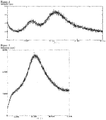
Fig. 1] Figure 1 is an X-ray diffraction profile obtained by X-ray diffraction measurement of a pharmaceutical composition prepared in Example 1. - [
Fig. 2] Figure 2 is an X-ray diffraction profile obtained by X-ray diffraction measurement of a pharmaceutical composition prepared in Comparative Example 1. - [
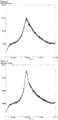
Fig. 3] Figure 3 is an X-ray diffraction profile obtained by X-ray diffraction measurement of a pharmaceutical composition prepared in Comparative Example 2. - [
Fig. 4] Figure 4 is an X-ray diffraction profile obtained by X-ray diffraction measurement of a pharmaceutical composition prepared in Comparative Example 8. - [
Fig. 5] Figure 5 is an X-ray diffraction profile obtained by X-ray diffraction measurement of a pharmaceutical composition prepared in Example 2. - [
Fig. 6] Figure 6 is an X-ray diffraction profile obtained by X-ray diffraction measurement of a pharmaceutical composition prepared in Comparative Example 3. - [
Fig. 7] Figure 7 is an X-ray diffraction profile obtained by X-ray diffraction measurement of a pharmaceutical composition prepared in Comparative Example 4. - [
Fig. 8] Figure 8 is an X-ray diffraction profile obtained by X-ray diffraction measurement of a pharmaceutical composition prepared in Comparative Example 5. - [
Fig. 9] Figure 9 is an X-ray diffraction profile obtained by X-ray diffraction measurement of a pharmaceutical composition prepared in Comparative Example 6. - [
Fig. 10] Figure 10 is an X-ray diffraction profile obtained by X-ray diffraction measurement of a pharmaceutical composition prepared in Example 3. - [
Fig. 11] Figure 11 is an X-ray diffraction profile obtained by X-ray diffraction measurement of a pharmaceutical composition prepared in Comparative Example 10. - [
Fig. 12] Figure 12 is an X-ray diffraction profile obtained by X-ray diffraction measurement of a pharmaceutical composition prepared in Comparative Example 11. - [
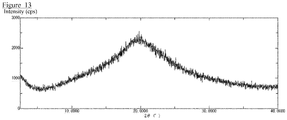
Fig. 13] Figure 13 is an X-ray diffraction profile obtained by X-ray diffraction measurement of a pharmaceutical composition prepared in Comparative Example 12. - The term "to improve solubility" as used herein means that the solubility, the dissolved concentration, or the dissolution rate of a poorly-soluble drug in a solvent is increased. More particularly, as an embodiment, when a pharmaceutical composition comprising a poorly-soluble drug is evaluated by a dissolution test of Experimental Example 1, Experimental Example 2, or Experimental Example 3 described below, it is defined that the dissolved concentration of the poorly-soluble drug dissolved from the pharmaceutical composition during a predetermined period of time is higher than the solubility of the crystalline drug substance in water. With respect to methods for measuring the solubility, the dissolved concentration, and the dissolution rate of a poorly-soluble drug in a solvent, appropriate test methods for each drug may be used.
- The term "solid dispersion" as used herein means a dispersion comprising a poorly-soluble drug and polyvinyl alcohol having a saponification degree of 63 mol% or more and 67 mol% or less, wherein most of the poorly-soluble drug exists in an amorphous form. The term "amorphous" as used herein means, in addition to the amorphous form, their transition states. The amorphous poorly-soluble drug exists as a solid solution that is homogeneously dispersed throughout polyvinyl alcohol having a saponification degree of 63 mol% or more and 67 mol% or less. The term "most" as used herein means that the crystal of the poorly-soluble drug accounts for 40% or less, preferably 20% or less, when the dispersion is prepared. As another embodiment, it means that the amount of the poorly-soluble drug crystal is 40% or less, preferably 20% or less, and more preferably 10% or less, when measured by powder X-ray diffraction, differential scanning calorimetry (DSC), or any other standard quantitative means. When it is measured by powder X-ray diffraction, a measurement using a θ/θ rotating anode XRD diffractometer is preferable.
- The term "saponification degree" of polyvinyl alcohol as used herein means a saponification value determined by a measurement method described in The Japanese Pharmacopoeia, Seventeenth Edition, or a measurement method correlated with the measurement method, and can be calculated by the following equation (1). In connection with this, it is desirable that the measurement method has a correlation coefficient of 0.5 or more, and 0.6 or more in an embodiment, with the measurement method described in The Japanese Pharmacopoeia, Seventeenth Edition.


- The term "polymerization degree" as used herein means an "average polymerization degree", and is defined as a value calculated on the basis of a viscosity value when evaluated according to the Japanese Pharmaceutical Excipients or a molecular weight measured by gel filtration or the like, or a value measured according to a measurement method correlated with the measurement method. Alternatively, it is defined as a value measured by (4) Measurement Method of Average Polymerization Degree in JIS K6726 "Testing methods for polyvinyl alcohol", or a value measured according to a measurement method correlated with the measurement method. In connection with this, it is desirable that the measurement method correlated with the measurement method of a viscosity value when evaluated according to the Japanese Pharmaceutical Excipients or gel filtration or the like is a measurement method having a correlation coefficient of 0.5 or more, and 0.6 or more in an embodiment, with the measurement method of a viscosity value when evaluated according to the Japanese Pharmaceutical Excipients or gel filtration or the like. Further, it is desirable that the measurement method correlated with (4) Measurement Method of Average Polymerization Degree in JIS K6726 "Testing methods for polyvinyl alcohol" is a measurement method having a correlation coefficient of 0.5 or more, and 0.6 or more in an embodiment, with (4) Measurement Method of Average Polymerization Degree in JIS K6726 "Testing methods for polyvinyl alcohol".
- The term "poorly-soluble drug" as used herein means a drug having a low solubility in water. It should not be interpreted limitedly, so long as it is an active ingredient with a therapeutic effect or an active ingredient with a prophylactic effect. Examples of the poorly-soluble drug include a drug having a drug solubility in water of 10 µg/mL or less, preferably 0.01 µg/mL to 10 µg/mL, more preferably 0.1 µg/mL to 10 µg/mL, and still more preferably 1 µg/mL to 10 µg/mL.
- The drug solubility in water of a drug may be determined, for example, in accordance with the method described in the General Notices of The Japanese Pharmacopoeia, Seventeenth Edition. More particularly, for example, it can be calculated as follows: After a drug is powdered and put into water, it is vigorously shaken at a temperature of 20±5°C for 30 seconds each time at 5-minute intervals, and the drug solubility in water can be calculated from an amount dissolved within 30 minutes.
- The poorly-soluble drug may be used in any form of a free form, a hydrate, or a pharmaceutically acceptable salt. The poorly-soluble drug may be used alone, or as a combination of two or more.
- As polyvinyl alcohol used in the present invention, the saponification degree is 63 mol% or more and 67 mol% or less.
- The polymerization degree of polyvinyl alcohol used in the present invention is not particularly limited, so long as it is pharmaceutically acceptable. More particularly, the polymerization degree is, for example, 50 or more and less than 1000, 50 or more and less than 600 in an embodiment, 100 or more and less than 500 in an embodiment, 100 or more and less than 300 in an embodiment, and 200 or more and less than 280 in an embodiment. Each lower limit and each upper limit above can be arbitrarily combined as desired.
- In connection with this, polyvinyl alcohol has a function to improve the solubility of a poorly-soluble drug. The solubility of a poorly-soluble drug can be improved in a pH-independent manner by using polyvinyl alcohol in the present invention.
- Examples of polyvinyl alcohol having a saponification degree of 63 mol% or more and 67 mol% or less include POVAL (registered trademark) JMR-10M (JAPAN VAM & POVAL CO., LTD., polymerization degree: 200 to 280, saponification degree: 63.0 to 67.0 mol%), and the like.
- The content ratio of polyvinyl alcohol is not particularly limited, so long as the solubility of a poorly-soluble drug is improved. The content ratio of polyvinyl alcohol is, for example, 50% by weight to 700% by weight in an embodiment, and 100% by weight to 500% by weight in an embodiment, with respect to the weight of the poorly-soluble drug.
- The pharmaceutical composition of the present invention may be a solid dispersion comprising a poorly-soluble drug and polyvinyl alcohol having a saponification degree of 63 mol% or more and 67 mol% or less.
- The poorly-soluble drug contained in the pharmaceutical composition of the present invention may be in an amorphous state.
- Examples of the pharmaceutical composition of the present invention include a solid preparation, such as tablets, capsules, granules, powder, or the like; and a liquid preparation, such as elixirs, suspensions, emulsions, or the like.
- In the pharmaceutical composition of the present invention, it may be formulated by appropriately using various pharmaceutical additives, if desired, to the extent that the desired effects of the present invention can be achieved.
- These pharmaceutical additives may be appropriately added alone, or as a combination of two or more, in appropriate amounts. With respect to the content ratios of the pharmaceutical additives, each pharmaceutical additive may be contained in an amount such that the desired effects of the present invention may be achieved.
- The pharmaceutical composition of the present invention can be produced in accordance with methods including, for example, amorphization of a poorly-soluble drug, and the like.
- The process of manufacturing the pharmaceutical composition of the present invention will be explained below.
- The method of preparing a solid dispersion of a poorly-soluble drug and polyvinyl alcohol having a saponification degree of 63 mol% or more and 67 mol% or less is not particularly limited, so long as it is a conventional method of preparing a solid dispersion. Examples of the method include a solvent method, a hot melt extrusion method, a pulverization method, and the like.
- Examples of the solvent method include a method in which after a poorly-soluble drug and polyvinyl alcohol having a saponification degree of 63 mol% or more and 67 mol% or less are dissolved and/or suspended in a solvent, the solvent is removed; and the like.
- The solvent used is not particularly limited, so long as the poorly-soluble drug and polyvinyl alcohol having a saponification degree of 63 mol% or more and 67 mol% or less can be dissolved and/or suspended in the solvent. More particularly, examples of the solvent include methanol, dichloromethane, water, ethanol, acetone, propylene glycol, dimethyl sulfoxide, and the like; and the examples include methanol and water in an embodiment. These solvents can be appropriately used alone, or as a combination of two or more, in appropriate amounts.
- Examples of a method of removing the solvent include spray drying, evaporation, freeze drying, and the like; and the examples include spray drying in an embodiment.
- Examples of steps for preparing a spray solution, which is used in the spray drying, include the steps of:
- (1) dissolving and/or suspending polyvinyl alcohol having a saponification degree of 63 mol% or more and 67 mol% or less in water,
- (2) adding methanol to (1) to prepare a mixed solution, and
- (3) adding a poorly-soluble drug to the mixed solution of (2) to prepare a spray solution.
- An apparatus for spray drying is not particularly limited, so long as a poorly-soluble drug can be formed into an amorphous form, or a solid dispersion of a poorly-soluble drug and polyvinyl alcohol having a saponification degree of 63 mol% or more and 67 mol% or less can be obtained. Examples of the apparatus include a spray dryer. The conditions for spray drying are not particularly limited, so long as the solid dispersion of a poorly-soluble drug and polyvinyl alcohol having a saponification degree of 63 mol% or more and 67 mol% or less can be obtained.
- A method for drying is not particularly limited, so long as it is a conventional method in which it can be pharmaceutically dried. Examples of an apparatus include a forced-air dryer, a dryer under reduced pressure, a vacuum dryer, a fluidized bed dryer, and the like.
- In the hot melt extrusion method, a poorly-soluble drug and polyvinyl alcohol having a saponification degree of 63 mol% or more and 67 mol% or less are heated and melted, and then, cooled.
- The temperature during heating and melting can be appropriately set in accordance with the melting point of the poorly-soluble drug, or the glass transition temperature of the polyvinyl alcohol.
- An apparatus is not particularly limited, so long as a poorly-soluble drug can be formed into an amorphous form, or the solid dispersion of a poorly-soluble drug and polyvinyl alcohol having a saponification degree of 63 mol% or more and 67 mol% or less can be obtained. Examples thereof include a twin-screw extruder.
- A method for pulverization is not particularly limited, so long as it is a conventional method in which it can be pharmaceutically pulverized. Examples of an apparatus include an impact mill (Hosokawa Micron Corporation; Fine Impact Mill), a dry & wet mill (Powrex Corporation: Comil), a cutting mill granulator (Dalton Corporation; Power Mill), and the like.
- In the pulverization method, a poorly-soluble drug and polyvinyl alcohol having a saponification degree of 63 mol% or more and 67 mol% or less are mixed and pulverized.
- An apparatus is not particularly limited, so long as a poorly-soluble drug can be formed into an amorphous form, or a solid dispersion of a poorly-soluble drug and polyvinyl alcohol having a saponification degree of 63 mol% or more and 67 mol% or less can be obtained. Examples thereof include a planetary ball mill (for example, a ball mill manufactured by Ito Seisakusho Co., Ltd.), and the like.
- The present invention includes a use of polyvinyl alcohol having a saponification degree of 63 mol% or more and 67 mol% or less in the manufacture of a pharmaceutical composition comprising a poorly-soluble drug and having an improved solubility.
- With respect to the terms "a poorly-soluble drug" and "polyvinyl alcohol having a saponification degree of 63 mol% or more and 67 mol% or less", which are used in the use of the present invention, the explanations therefor described in the pharmaceutical composition of the present invention can be directly applied.
- The present invention will now be further illustrated by, but is by no means limited to, the following Examples, Comparative Examples, and Experimental Examples.
- <<Example 1>>
- To 40 mL of water, 2 g of polyvinyl alcohol (POVAL, JMR-10M, JAPAN VAM & POVAL CO., LTD., saponification degree: 63.0 mol% to 67.0 mol%, hereinafter sometimes abbreviated as "A1") was added, and stirred until polyvinyl alcohol was dissolved. Further, 160 mL of methanol was added to prepare a mixed solution. To the mixed solution, 2 g of nifedipine (Wako Pure Chemical Industries, Ltd., Solubility in water: 10 µg/mL, unless otherwise stated, the same compound was used in the following) was added as a drug, and stirred until nifedipine was dissolved to prepare a spray solution. The spray solution was spray-dried with a spray dryer (Niro SD-Micro™ Spray Dryer, GEA, unless otherwise stated, the same apparatus was used in the following) to obtain a pharmaceutical composition (a solid dispersion) of Example 1.
- To 40 mL of water, 2 g of polyvinyl alcohol (GOHSENOL (registered trademark) OKS-5059, The Nippon Synthetic Chemical Industry Co., Ltd., saponification degree: 78.5 mol% to 82.0 mol%, hereinafter sometimes abbreviated as "B1") was added, and stirred until polyvinyl alcohol was dissolved. Further, 160 mL of methanol was added to prepare a mixed solution. To the mixed solution, 2 g of nifedipine was added as a drug, and stirred until nifedipine was dissolved to prepare a spray solution. The spray solution was spray-dried with a spray dryer to obtain a pharmaceutical composition (a solid dispersion) of Comparative Example 1.
- To 40 mL of water, 2 g of hypromellose 2910 (TC-5R, Shin-Etsu Chemical Co., Ltd., hereinafter sometimes abbreviated as "B2") was added, and stirred until B2 was dissolved. Further, 160 mL of methanol was added to prepare a mixed solution. To the mixed solution, 2 g of nifedipine was added as a drug, and stirred until nifedipine was dissolved to prepare a spray solution. The spray solution was spray-dried with a spray dryer to obtain a pharmaceutical composition (a solid dispersion) of Comparative Example 2.
- A dissolution test of the pharmaceutical compositions (solid dispersions) prepared in Example 1, Comparative Example 1, and Comparative Example 2 (containing 30 mg equivalent of nifedipine) was carried out. The formulation of each pharmaceutical composition is shown in Table 1.
- Mixed powder prepared by weighing the same weight of mannitol (PEARLITOL 200SD, Roquette, unless otherwise stated, the same compound was used in the following) as that of each pharmaceutical composition (solid dispersion) into a mortar, and mixing them using a pestle was used for the test. As the dissolution test, a Dissolution Test, a paddle method of the Japanese Pharmacopoeia was used. The dissolution test was carried out, using water (test fluid volume: 500 mL, fluid temperature: 37°C) as a dissolution test fluid, at a paddle rotation speed of 50 rpm (250 rpm for 0 to 3 minutes from the beginning of the test, and 200 rpm for 3 to 5 minutes).
- Sampling was carried out at regular intervals through a fine filter (F-72, Toyama Sangyo Co., Ltd., unless otherwise stated, the same filter was used in the following), and the ultraviolet absorbance of nifedipine was measured at 354 nm and 450 nm using an ultraviolet spectrophotometer (UV-1800, Shimadzu Corporation).
[Table 1] Ex. 1 Comp. 1 Comp. 2 Nifedipine 30 30 30 A1 30 - - B1 - 30 - B2 - - 30 (Unit: mg) - The result of calculating the ratio of the dissolved concentration after 10 minutes from the beginning of the dissolution test with respect to the solubility (10 µg/mL) of the crystalline drug substance as an increasing ratio in dissolved concentration is shown in Table 2. A 6-fold or more increase in dissolved concentration was observed compared to the crystalline drug substance in the pharmaceutical composition (solid dispersion) of Example 1, whereas the increasing ratios in dissolved concentration were respectively approximately 2.6 and approximately 3.4 in the pharmaceutical compositions (solid dispersions) of Comparative Example 1 and Comparative Example 2.
[Table 2] Ex. 1 Comp. 1 Comp. 2 Increasing ratio in dissolved concentration 6.6 2.6 3.4 - A pharmaceutical composition (a solid dispersion) of Example 2 was obtained by mixing and pulverizing 750 mg of amenamevir (Astellas Pharma Inc., Solubility in water: 5 µg/mL, unless otherwise stated, the same compound was used in the following) as a drug and 2250 mg of "A1" powder using a planetary ball mill (LA-PO, Ito Seisakusho Co., Ltd.). The pharmaceutical composition (solid dispersion) of Example 2 was subjected to an X-ray diffraction measurement to confirm that no peak derived from the crystalline drug was detected.
- A pharmaceutical composition (a solid dispersion) of Comparative Example 3 was obtained by mixing and pulverizing 750 mg of amenamevir as a drug and 2250 mg of polyvinyl alcohol (GOHSENOL, NK-05R, The Nippon Synthetic Chemical Industry Co., Ltd., saponification degree: 71.0 mol% to 75.0 mol%, hereinafter sometimes abbreviated as "B3") using a planetary ball mill (LA-PO, Ito Seisakusho Co., Ltd.). The pharmaceutical composition (solid dispersion) of Comparative Example 3 was subjected to an X-ray diffraction measurement to confirm that no peak derived from the crystalline drug was detected.
- A pharmaceutical composition (a solid dispersion) of Comparative Example 4 was obtained by mixing and pulverizing 750 mg of amenamevir as a drug and 2250 mg of polyvinyl alcohol (GOHSENOL, KL-05, The Nippon Synthetic Chemical Industry Co., Ltd., saponification degree: 78.5 mol% to 82.0 mol%, hereinafter sometimes abbreviated as "B4") using a planetary ball mill (LA-PO, Ito Seisakusho Co., Ltd.). The pharmaceutical composition (solid dispersion) of Comparative Example 4 was subjected to an X-ray diffraction measurement to confirm that no peak derived from the crystalline drug was detected.
- A pharmaceutical composition (a solid dispersion) of Comparative Example 5 was obtained by mixing and pulverizing 750 mg of amenamevir as a drug and 2250 mg of polyvinyl alcohol (GOHSENOL, EG-05P, The Nippon Synthetic Chemical Industry Co., Ltd., saponification degree: 86.5 mol% to 89.0 mol%, hereinafter sometimes abbreviated as "B5") using a planetary ball mill (LA-PO, Ito Seisakusho Co., Ltd.). The pharmaceutical composition (solid dispersion) of Comparative Example 5 was subjected to an X-ray diffraction measurement to confirm that no peak derived from the crystalline drug was detected.
- A pharmaceutical composition (a solid dispersion) of Comparative Example 6 was obtained by mixing and pulverizing 750 mg of amenamevir as a drug and 2250 mg of polyvinyl alcohol (GOHSENOL, NL-05, The Nippon Synthetic Chemical Industry Co., Ltd., saponification degree: 98.5 mol% or more, hereinafter sometimes abbreviated as "B6") using a planetary ball mill (LA-PO, Ito Seisakusho Co., Ltd.). The pharmaceutical composition (solid dispersion) of Comparative Example 6 was subjected to an X-ray diffraction measurement to confirm that no peak derived from the crystalline drug was detected.
- A dissolution test of the pharmaceutical compositions (solid dispersions) prepared in Example 2, Comparative Example 3, Comparative Example 4, Comparative Example 5, and Comparative Example 6 (containing 100 mg equivalent of amenamevir) was carried out. The formulation of each pharmaceutical composition is shown in Table 3.
- Mixed powder prepared by weighing the same weight of mannitol as that of each pharmaceutical composition (solid dispersion) into a mortar, and mixing them using a pestle was used for the test. As the dissolution test, a Dissolution Test, a paddle method of the Japanese Pharmacopoeia was used. The dissolution test was carried out, using water (test fluid volume: 500 mL, fluid temperature: 37°C) as a dissolution test fluid, at a paddle rotation speed of 50 rpm (250 rpm for 0 to 3 minutes from the beginning of the test, and 200 rpm for 3 to 5 minutes).
- Sampling was carried out at regular intervals through a fine filter, and the ultraviolet absorbance of amenamevir was measured at 273 nm and 450 nm using an ultraviolet spectrophotometer (UV-1800, Shimadzu Corporation).
[Table 3] Ex. 2 Comp. 3 Comp. 4 Comp. 5 Comp. 6 Amenamevir 100 100 100 100 100 A1 300 - - - - B3 - 300 - - - B4 - - 300 - - B5 - - - 300 - B6 - - - - 300 (Unit: mg) - The results of calculating the ratio of the dissolved concentration after 10 minutes from the beginning of the dissolution test with respect to the solubility (5 µg/mL) of the crystalline drug substance as an increasing ratio in dissolved concentration are shown in Table 4. An approximately 33.1-fold increase in dissolved concentration was observed compared to the crystalline drug substance in the pharmaceutical composition (solid dispersion) of Example 2, whereas the increasing ratios in dissolved concentration were approximately 8.7 to 33.1 in the pharmaceutical compositions (solid dispersions) of Comparative Example 3, Comparative Example 4, Comparative Example 5, and Comparative Example 6.
[Table 4] Ex. 2 Comp. 3 Comp. 4 Comp. 5 Comp. 6 Increasing ratio in dissolved concentration 33.1 28.4 28.0 22.0 8.7 - In 270 mL of water, 22.5 g of "A1" was stirred until dissolved. To a mixed solution prepared by further adding 1080 mL of methanol to the "A1" solution, 4.5 g of tacrolimus (Astellas Pharma Inc., Solubility in water: 4 µg/mL, unless otherwise stated, the same compound was used in the following) was added and stirred until dissolved to prepare a spray solution. The spray solution was spray-dried with a spray dryer to obtain a pharmaceutical composition (a solid dispersion) of Example 3.
- A dissolution test of the pharmaceutical composition (solid dispersion) prepared in Example 3 (containing 20 mg equivalent of tacrolimus) was carried out. The formulation of the pharmaceutical composition is shown in Table 5.
- Mixed powder prepared by weighing the same weight of mannitol as that of the pharmaceutical composition (solid dispersion) into a mortar, and mixing them using a pestle was used for the test. As the dissolution test, a Dissolution Test, a paddle method of the Japanese Pharmacopoeia was used. The dissolution test was carried out, using water (test fluid volume: 100 mL, fluid temperature: 37°C) as a dissolution test fluid, at a paddle rotation speed of 50 rpm. Sampling was carried out using a
Syringe 1 mL (Terumo Corporation) at regular intervals, and each sample was centrifuged at 12720×g for 5 minutes using a centrifuge. The drug concentration in each supernatant after centrifugation was analyzed by high performance liquid chromatography (HPLC, Waters), and the dissolution rate was calculated from the peak area. The HPLC analysis was carried out under the following conditions: - As a column, ChemcoPak NUCLEOSIL 5C8 (inner diameter: 4.6 mm, length: 15 cm, GL Sciences Inc.) was used, and the column temperature was 50°C.
- As a mobile phase, acetonitrile (for HPLC, Kanto Chemical Co., Inc.)/methanol (for HPLC, Kanto Chemical Co., Inc.)/phosphoric acid (Kanto Chemical Co., Inc.)/water was used at a ratio of 460/180/1/360.
- The measurement was carried out at a flow rate of 0.5 mL/min., and the injection volume was 100 µL.
- The result of an increasing ratio in dissolved concentration after 30 minutes from the beginning of the dissolution test, compared to the crystalline drug substance, is shown in Table 6. An approximately 29-fold increase in dissolved concentration was observed compared to the crystalline drug substance in the pharmaceutical composition (solid dispersion) of Example 3.
[Table 6] Ex. 3 Increasing ratio in dissolved concentration 28.6 - Although 2 g of polyvinyl alcohol (GOHSENX (registered trademark) LL-810, The Nippon Synthetic Chemical Industry Co., Ltd., saponification degree: 45.0 mol% to 51.0mol%, hereinafter sometimes abbreviated as "B7") was added to 40 mL of water, and stirred for 1 hour, polyvinyl alcohol was not dissolved. When 160 mL of methanol was further added and stirred for 1 hour, polyvinyl alcohol was not dissolved.
- From the results, since polyvinyl alcohol having a saponification degree of 45.0 mol% to 51.0mol% and a poorly-soluble drug cannot be homogeneously mixed, it is inferred that a poorly-soluble drug does not become amorphous, or the amorphous state cannot be maintained, and thus, the solubility cannot be improved.
- To 40 mL of water, 2 g of "B3" was added, and stirred until polyvinyl alcohol was dissolved. To a mixed solution prepared by further adding 160 mL of methanol to the "B3" solution, 2 g of nifedipine as a drug was added, and stirred until nifedipine was dissolved to prepare a spray solution. The spray solution was spray-dried with a spray dryer to obtain a pharmaceutical composition (a solid dispersion) of comparative Example 8.
- A pharmaceutical composition (a solid dispersion) of Comparative Example 9 was obtained by mixing and pulverizing 750 mg of amenamevir as a drug and 2250 mg of "B7" powder using a planetary ball mill (LA-PO, Ito Seisakusho Co., Ltd.).
- To 270 mL of water, 22.5 g of "B1" was added and stirred until dissolved. To a mixed solution prepared by further adding 1080 mL of methanol to the "B1" solution, 4.5 g of tacrolimus was added and stirred until dissolved to prepare a spray solution. The spray solution was spray-dried with a spray dryer to obtain a pharmaceutical composition (a solid dispersion) of comparative Example 10.
- To 270 mL of water, 22.5 g of "B2" was added and stirred until dissolved. To a mixed solution prepared by further adding 1080 mL of methanol to the "B2" solution, 4.5 g of tacrolimus was added and stirred until dissolved to prepare a spray solution. The spray solution was spray-dried with a spray dryer to obtain a pharmaceutical composition (a solid dispersion) of comparative Example 11.
- To 120 mL of water, 10.0 g of "B3" was added and stirred until dissolved. To a mixed solution prepared by further adding 480 mL of methanol to the "B3" solution, 2.0 g of tacrolimus was added and stirred until dissolved to prepare a spray solution. The spray solution was spray-dried with a spray dryer to obtain a pharmaceutical composition (a solid dispersion) of comparative Example 12.
- A dissolution test of the pharmaceutical composition (solid dispersion) prepared in Comparative Example 8 (containing 30 mg equivalent of nifedipine) was carried out, as similar to Experimental Example 1. The formulation of the pharmaceutical composition is shown in Table 7.
[Table 7] Comp. 8 Nifedipine 30 B3 30 (Unit: mg) - The result of calculating the ratio of the dissolved concentration after 10 minutes from the beginning of the dissolution test with respect to the solubility of the crystalline drug substance as an increasing ratio in dissolved concentration is shown in Table 8. The increasing ratio in dissolved concentration of the pharmaceutical composition (solid dispersion) of Comparative Example 8 was approximately 3.8.
[Table 8] Comp. 8 Increasing ratio in dissolved concentration 3.8 - A crystalline form confirmation test of the pharmaceutical compositions (solid dispersions) prepared in Example 1, Comparative Example 1, Comparative Example 2, and Comparative Example 8 was carried out. Measurement samples in which each pharmaceutical composition was uniformly fixed on a glass plate were prepared, and the measurement was carried out using a θ/θ rotating anode XRD diffractometer (Rigaku, RINT - TTRII).
- The results of the crystalline form confirmation test are shown in
Figure 1 to Figure 4 . The pharmaceutical compositions (solid dispersions) of Example 1, Comparative Example 1, Comparative Example 2, and Comparative Example 8 were subjected to an X-ray diffraction measurement to confirm that no peak derived from the crystalline drug was detected. - A dissolution test of the pharmaceutical composition (solid dispersion) prepared in Comparative Example 9 (containing 100 mg equivalent of amenamevir) was carried out, as similar to Experimental Example 2. The formulation of the pharmaceutical composition is shown in Table 9.
[Table 9] Comp. 9 Amenamevir 100 B7 300 (Unit: mg) - The result of calculating the ratio of the dissolved concentration after 10 minutes from the beginning of the dissolution test with respect to the solubility of the crystalline drug substance as an increasing ratio in dissolved concentration is shown in Table 10. The increasing ratio in dissolved concentration of the pharmaceutical composition (solid dispersion) of Comparative Example 9 was approximately 5.0.
[Table 10] Comp. 9 Increasing ratio in dissolved concentration 5.0 - A crystalline form confirmation test of the pharmaceutical compositions (solid dispersions) prepared in Example 2, Comparative Example 3, Comparative Example 4, Comparative Example 5, and Comparative Example 6 was carried out. Measurement samples in which each pharmaceutical composition was uniformly fixed on a glass plate were prepared, and the measurement was carried out using a θ/θ rotating anode XRD diffractometer (Rigaku, RINT-TTRII).
- The results of the crystalline form confirmation test are shown in
Figure 5 to Figure 9 . The pharmaceutical compositions (solid dispersions) of Example 2, Comparative Example 3, Comparative Example 4, Comparative Example 5, and Comparative Example 6 were subjected to an X-ray diffraction measurement to confirm that no peak derived from the crystalline drug was detected. - A dissolution test of the pharmaceutical compositions (solid dispersions) prepared in Comparative Example 10, Comparative Example 11, and Comparative Example 12 (containing 20 mg equivalent of tacrolimus) was carried out, as similar to Experimental Example 3. The formulation of each pharmaceutical composition is shown in Table 11.
[Table 11] Comp. 10 Comp. 11 Comp. 12 Tacrolimus 20 20 20 B1 100 - - B2 - 100 - B3 - - 100 (Unit: mg) - The results of calculating the ratio of the dissolved concentration after 30 minutes from the beginning of the dissolution test with respect to the solubility of the crystalline drug substance as an increasing ratio in dissolved concentration are shown in Table 12. The increasing ratio in dissolved concentration of the pharmaceutical composition (solid dispersion) of Comparative Example 10 was approximately 19.4, and the increasing ratios in dissolved concentration of Comparative Example 11 and Comparative Example 12 were respectively approximately 18.9 and approximately 22.5.
[Table 12] Comp. 10 Comp. 11 Comp. 12 Increasing ratio in dissolved concentration 19.4 18.9 22.5 - A crystalline form confirmation test of the pharmaceutical compositions (solid dispersions) prepared in Example 3, Comparative Example 10, Comparative Example 11, and Comparative Example 12 was carried out. Measurement samples in which each pharmaceutical composition was uniformly fixed on a glass plate were prepared, and the measurement was carried out using a θ/θ rotating anode XRD diffractometer (Rigaku, RINT - TTRII).
- The results of the crystalline form confirmation test are shown in
Figure 10 to Figure 13 . The pharmaceutical compositions (solid dispersions) of Example 3, Comparative Example 10, Comparative Example 11, and Comparative Example 12 were subjected to an X-ray diffraction measurement to confirm that no peak derived from the crystalline drug was detected. - According to the present invention, a pharmaceutical composition wherein the solubility of a poorly-soluble drug is improved can be provided.
- Although the present invention has been described with reference to specific embodiments, various changes and modifications obvious to those skilled in the art are possible without departing from the scope of the appended claims.
| Ex. 3 | |
| | 20 |
| A1 | 100 |
| (Unit: mg) |
Claims (5)
- A pharmaceutical composition comprising a poorly-soluble drug, and polyvinyl alcohol having a saponification degree of 63 mol% or more and 67 mol% or less.
- The pharmaceutical composition according to claim 1, wherein the poorly-soluble drug has a solubility of 10 µg/mL or less in water.
- The pharmaceutical composition according to claim 1 or 2, comprising a solid dispersion comprising the poorly-soluble drug and the polyvinyl alcohol.
- The pharmaceutical composition according to any one of claims 1 to 3, wherein the poorly-soluble drug is amorphous.
- Use of polyvinyl alcohol having a saponification degree of 63 mol% or more and 67 mol% or less in the manufacture of a pharmaceutical composition comprising a poorly-soluble drug and having an improved solubility.
Applications Claiming Priority (2)
| Application Number | Priority Date | Filing Date | Title |
|---|---|---|---|
| JP2017090299 | 2017-04-28 | ||
| PCT/JP2018/017158 WO2018199281A1 (en) | 2017-04-28 | 2018-04-27 | Pharmaceutical composition |
Publications (3)
| Publication Number | Publication Date |
|---|---|
| EP3616722A1 true EP3616722A1 (en) | 2020-03-04 |
| EP3616722A4 EP3616722A4 (en) | 2021-01-06 |
| EP3616722B1 EP3616722B1 (en) | 2023-10-25 |
Family
ID=63918418
Family Applications (1)
| Application Number | Title | Priority Date | Filing Date |
|---|---|---|---|
| EP18791303.3A Active EP3616722B1 (en) | 2017-04-28 | 2018-04-27 | Pharmaceutical composition |
Country Status (5)
| Country | Link |
|---|---|
| US (1) | US11376328B2 (en) |
| EP (1) | EP3616722B1 (en) |
| JP (1) | JP7180592B2 (en) |
| ES (1) | ES2965481T3 (en) |
| WO (1) | WO2018199281A1 (en) |
Cited By (1)
| Publication number | Priority date | Publication date | Assignee | Title |
|---|---|---|---|---|
| EP3960161A1 (en) * | 2020-08-28 | 2022-03-02 | Shin-Etsu Chemical Co., Ltd. | Polyvinyl alcohol-containing granulated product and solid preparation |
Families Citing this family (2)
| Publication number | Priority date | Publication date | Assignee | Title |
|---|---|---|---|---|
| JP7238509B2 (en) * | 2019-03-19 | 2023-03-14 | 三菱ケミカル株式会社 | pharmaceutical tablet |
| JP2023057068A (en) * | 2021-10-08 | 2023-04-20 | 三菱ケミカル株式会社 | Base for solid dispersion |
Family Cites Families (4)
| Publication number | Priority date | Publication date | Assignee | Title |
|---|---|---|---|---|
| JP4072597B2 (en) | 1994-12-27 | 2008-04-09 | ナムローゼ・フェンノートシャップ・オルガノン | Sustained formulation |
| WO2005103186A1 (en) * | 2004-04-22 | 2005-11-03 | Sekisui Plastics Co., Ltd. | Gel adhesive composition |
| GB0703627D0 (en) | 2007-02-24 | 2007-04-04 | Agt Sciences Ltd | Aqueous formulations |
| JP6245786B2 (en) * | 2011-10-17 | 2017-12-13 | 大同化成工業株式会社 | Pharmaceutical binding agent and preparation using the binding agent |
-
2018
- 2018-04-27 ES ES18791303T patent/ES2965481T3/en active Active
- 2018-04-27 US US16/609,029 patent/US11376328B2/en active Active
- 2018-04-27 JP JP2019514650A patent/JP7180592B2/en active Active
- 2018-04-27 WO PCT/JP2018/017158 patent/WO2018199281A1/en not_active Ceased
- 2018-04-27 EP EP18791303.3A patent/EP3616722B1/en active Active
Cited By (1)
| Publication number | Priority date | Publication date | Assignee | Title |
|---|---|---|---|---|
| EP3960161A1 (en) * | 2020-08-28 | 2022-03-02 | Shin-Etsu Chemical Co., Ltd. | Polyvinyl alcohol-containing granulated product and solid preparation |
Also Published As
| Publication number | Publication date |
|---|---|
| JPWO2018199281A1 (en) | 2020-03-12 |
| US11376328B2 (en) | 2022-07-05 |
| ES2965481T3 (en) | 2024-04-15 |
| WO2018199281A1 (en) | 2018-11-01 |
| JP7180592B2 (en) | 2022-11-30 |
| EP3616722B1 (en) | 2023-10-25 |
| EP3616722A4 (en) | 2021-01-06 |
| US20200138957A1 (en) | 2020-05-07 |
Similar Documents
| Publication | Publication Date | Title |
|---|---|---|
| EP3616696B1 (en) | Orally administrable enzalutamide-containing pharmaceutical composition | |
| Sarode et al. | Low-viscosity hydroxypropylcellulose (HPC) grades SL and SSL: Versatile pharmaceutical polymers for dissolution enhancement, controlled release, and pharmaceutical processing | |
| US20150004237A1 (en) | Cellulose derivatives for inhibiting crystallization of poorly water-soluble drugs | |
| EP3616722B1 (en) | Pharmaceutical composition | |
| EP1572157A1 (en) | Formulation for fast dissolution of lipophilic compounds | |
| US9073857B2 (en) | Aripiprazole type I microcrystal, aripiprazole solid preparations, and preparation method | |
| US9655885B2 (en) | Amorphous mirabegron and processes for crystal forms of mirabegron | |
| WO2013034040A1 (en) | Celecoxib solid dispersion and preparation method therefor | |
| AU2016280280A1 (en) | Improved formulations of deferasirox and methods of making the same | |
| CN107278152A (en) | Abiraterone acetate compound, preparation method thereof and pharmaceutical composition containing abiraterone acetate compound | |
| US20120141561A1 (en) | Nanoparticulate candesartan cilexitil compositions, process for the preparation thereof and pharmaceutical compositions containing them | |
| US10383872B2 (en) | Pharmaceutical compositions comprising phenylaminopyrimidine derivative | |
| US10660963B2 (en) | Pharmaceutical composition containing tacrolimus and preparation methods thereof | |
| WO2016161995A1 (en) | Solid forms of amorphous dapagliflozin | |
| Arregui et al. | Carvedilol solid dispersion for enhanced oral bioavailability using rat model | |
| KR20040101437A (en) | Solid dispersion composition | |
| EP3267977B1 (en) | Solid dispersions | |
| Hong et al. | Solid dispersion formulations of megestrol acetate with copovidone for enhanced dissolution and oral bioavailability | |
| KR20200078498A (en) | Lenalidomide immediate release formulation | |
| JP2016193908A (en) | Composition comprising organic liquid diluent and cellulose ether of very low viscosity | |
| US9775832B2 (en) | Pharmaceutical composition for oral administration | |
| KR100539706B1 (en) | Solid dispersion comprising tacrolimus and enteric-coated macromolecule | |
| AU2015200516B2 (en) | Novel forms of CDDO methyl ester | |
| HK40025159A (en) | Orally administrable enzalutamide-containing pharmaceutical composition | |
| HK40025159B (en) | Orally administrable enzalutamide-containing pharmaceutical composition |
Legal Events
| Date | Code | Title | Description |
|---|---|---|---|
| STAA | Information on the status of an ep patent application or granted ep patent |
Free format text: STATUS: THE INTERNATIONAL PUBLICATION HAS BEEN MADE |
|
| PUAI | Public reference made under article 153(3) epc to a published international application that has entered the european phase |
Free format text: ORIGINAL CODE: 0009012 |
|
| STAA | Information on the status of an ep patent application or granted ep patent |
Free format text: STATUS: REQUEST FOR EXAMINATION WAS MADE |
|
| 17P | Request for examination filed |
Effective date: 20191126 |
|
| AK | Designated contracting states |
Kind code of ref document: A1 Designated state(s): AL AT BE BG CH CY CZ DE DK EE ES FI FR GB GR HR HU IE IS IT LI LT LU LV MC MK MT NL NO PL PT RO RS SE SI SK SM TR |
|
| AX | Request for extension of the european patent |
Extension state: BA ME |
|
| DAV | Request for validation of the european patent (deleted) | ||
| DAX | Request for extension of the european patent (deleted) | ||
| A4 | Supplementary search report drawn up and despatched |
Effective date: 20201208 |
|
| RIC1 | Information provided on ipc code assigned before grant |
Ipc: A61K 31/4422 20060101ALI20201202BHEP Ipc: A61K 31/436 20060101ALI20201202BHEP Ipc: A61K 45/00 20060101AFI20201202BHEP Ipc: A61K 47/32 20060101ALI20201202BHEP Ipc: A61K 9/16 20060101ALI20201202BHEP |
|
| GRAP | Despatch of communication of intention to grant a patent |
Free format text: ORIGINAL CODE: EPIDOSNIGR1 |
|
| STAA | Information on the status of an ep patent application or granted ep patent |
Free format text: STATUS: GRANT OF PATENT IS INTENDED |
|
| INTG | Intention to grant announced |
Effective date: 20230512 |
|
| GRAS | Grant fee paid |
Free format text: ORIGINAL CODE: EPIDOSNIGR3 |
|
| GRAA | (expected) grant |
Free format text: ORIGINAL CODE: 0009210 |
|
| STAA | Information on the status of an ep patent application or granted ep patent |
Free format text: STATUS: THE PATENT HAS BEEN GRANTED |
|
| AK | Designated contracting states |
Kind code of ref document: B1 Designated state(s): AL AT BE BG CH CY CZ DE DK EE ES FI FR GB GR HR HU IE IS IT LI LT LU LV MC MK MT NL NO PL PT RO RS SE SI SK SM TR |
|
| REG | Reference to a national code |
Ref country code: GB Ref legal event code: FG4D |
|
| REG | Reference to a national code |
Ref country code: CH Ref legal event code: EP |
|
| REG | Reference to a national code |
Ref country code: DE Ref legal event code: R096 Ref document number: 602018060042 Country of ref document: DE |
|
| REG | Reference to a national code |
Ref country code: IE Ref legal event code: FG4D |
|
| REG | Reference to a national code |
Ref country code: NL Ref legal event code: FP |
|
| REG | Reference to a national code |
Ref country code: LT Ref legal event code: MG9D |
|
| REG | Reference to a national code |
Ref country code: AT Ref legal event code: MK05 Ref document number: 1623994 Country of ref document: AT Kind code of ref document: T Effective date: 20231025 |
|
| PG25 | Lapsed in a contracting state [announced via postgrant information from national office to epo] |
Ref country code: GR Free format text: LAPSE BECAUSE OF FAILURE TO SUBMIT A TRANSLATION OF THE DESCRIPTION OR TO PAY THE FEE WITHIN THE PRESCRIBED TIME-LIMIT Effective date: 20240126 |
|
| PG25 | Lapsed in a contracting state [announced via postgrant information from national office to epo] |
Ref country code: IS Free format text: LAPSE BECAUSE OF FAILURE TO SUBMIT A TRANSLATION OF THE DESCRIPTION OR TO PAY THE FEE WITHIN THE PRESCRIBED TIME-LIMIT Effective date: 20240225 |
|
| PG25 | Lapsed in a contracting state [announced via postgrant information from national office to epo] |
Ref country code: LT Free format text: LAPSE BECAUSE OF FAILURE TO SUBMIT A TRANSLATION OF THE DESCRIPTION OR TO PAY THE FEE WITHIN THE PRESCRIBED TIME-LIMIT Effective date: 20231025 |
|
| REG | Reference to a national code |
Ref country code: ES Ref legal event code: FG2A Ref document number: 2965481 Country of ref document: ES Kind code of ref document: T3 Effective date: 20240415 |
|
| PG25 | Lapsed in a contracting state [announced via postgrant information from national office to epo] |
Ref country code: AT Free format text: LAPSE BECAUSE OF FAILURE TO SUBMIT A TRANSLATION OF THE DESCRIPTION OR TO PAY THE FEE WITHIN THE PRESCRIBED TIME-LIMIT Effective date: 20231025 |
|
| PG25 | Lapsed in a contracting state [announced via postgrant information from national office to epo] |
Ref country code: LT Free format text: LAPSE BECAUSE OF FAILURE TO SUBMIT A TRANSLATION OF THE DESCRIPTION OR TO PAY THE FEE WITHIN THE PRESCRIBED TIME-LIMIT Effective date: 20231025 Ref country code: IS Free format text: LAPSE BECAUSE OF FAILURE TO SUBMIT A TRANSLATION OF THE DESCRIPTION OR TO PAY THE FEE WITHIN THE PRESCRIBED TIME-LIMIT Effective date: 20240225 Ref country code: GR Free format text: LAPSE BECAUSE OF FAILURE TO SUBMIT A TRANSLATION OF THE DESCRIPTION OR TO PAY THE FEE WITHIN THE PRESCRIBED TIME-LIMIT Effective date: 20240126 Ref country code: BG Free format text: LAPSE BECAUSE OF FAILURE TO SUBMIT A TRANSLATION OF THE DESCRIPTION OR TO PAY THE FEE WITHIN THE PRESCRIBED TIME-LIMIT Effective date: 20240125 Ref country code: AT Free format text: LAPSE BECAUSE OF FAILURE TO SUBMIT A TRANSLATION OF THE DESCRIPTION OR TO PAY THE FEE WITHIN THE PRESCRIBED TIME-LIMIT Effective date: 20231025 Ref country code: PT Free format text: LAPSE BECAUSE OF FAILURE TO SUBMIT A TRANSLATION OF THE DESCRIPTION OR TO PAY THE FEE WITHIN THE PRESCRIBED TIME-LIMIT Effective date: 20240226 |
|
| PG25 | Lapsed in a contracting state [announced via postgrant information from national office to epo] |
Ref country code: SE Free format text: LAPSE BECAUSE OF FAILURE TO SUBMIT A TRANSLATION OF THE DESCRIPTION OR TO PAY THE FEE WITHIN THE PRESCRIBED TIME-LIMIT Effective date: 20231025 Ref country code: RS Free format text: LAPSE BECAUSE OF FAILURE TO SUBMIT A TRANSLATION OF THE DESCRIPTION OR TO PAY THE FEE WITHIN THE PRESCRIBED TIME-LIMIT Effective date: 20231025 Ref country code: PL Free format text: LAPSE BECAUSE OF FAILURE TO SUBMIT A TRANSLATION OF THE DESCRIPTION OR TO PAY THE FEE WITHIN THE PRESCRIBED TIME-LIMIT Effective date: 20231025 Ref country code: NO Free format text: LAPSE BECAUSE OF FAILURE TO SUBMIT A TRANSLATION OF THE DESCRIPTION OR TO PAY THE FEE WITHIN THE PRESCRIBED TIME-LIMIT Effective date: 20240125 Ref country code: LV Free format text: LAPSE BECAUSE OF FAILURE TO SUBMIT A TRANSLATION OF THE DESCRIPTION OR TO PAY THE FEE WITHIN THE PRESCRIBED TIME-LIMIT Effective date: 20231025 Ref country code: HR Free format text: LAPSE BECAUSE OF FAILURE TO SUBMIT A TRANSLATION OF THE DESCRIPTION OR TO PAY THE FEE WITHIN THE PRESCRIBED TIME-LIMIT Effective date: 20231025 |
|
| PG25 | Lapsed in a contracting state [announced via postgrant information from national office to epo] |
Ref country code: DK Free format text: LAPSE BECAUSE OF FAILURE TO SUBMIT A TRANSLATION OF THE DESCRIPTION OR TO PAY THE FEE WITHIN THE PRESCRIBED TIME-LIMIT Effective date: 20231025 |
|
| PG25 | Lapsed in a contracting state [announced via postgrant information from national office to epo] |
Ref country code: CZ Free format text: LAPSE BECAUSE OF FAILURE TO SUBMIT A TRANSLATION OF THE DESCRIPTION OR TO PAY THE FEE WITHIN THE PRESCRIBED TIME-LIMIT Effective date: 20231025 |
|
| REG | Reference to a national code |
Ref country code: DE Ref legal event code: R097 Ref document number: 602018060042 Country of ref document: DE |
|
| PG25 | Lapsed in a contracting state [announced via postgrant information from national office to epo] |
Ref country code: SK Free format text: LAPSE BECAUSE OF FAILURE TO SUBMIT A TRANSLATION OF THE DESCRIPTION OR TO PAY THE FEE WITHIN THE PRESCRIBED TIME-LIMIT Effective date: 20231025 |
|
| PG25 | Lapsed in a contracting state [announced via postgrant information from national office to epo] |
Ref country code: SM Free format text: LAPSE BECAUSE OF FAILURE TO SUBMIT A TRANSLATION OF THE DESCRIPTION OR TO PAY THE FEE WITHIN THE PRESCRIBED TIME-LIMIT Effective date: 20231025 Ref country code: SK Free format text: LAPSE BECAUSE OF FAILURE TO SUBMIT A TRANSLATION OF THE DESCRIPTION OR TO PAY THE FEE WITHIN THE PRESCRIBED TIME-LIMIT Effective date: 20231025 Ref country code: RO Free format text: LAPSE BECAUSE OF FAILURE TO SUBMIT A TRANSLATION OF THE DESCRIPTION OR TO PAY THE FEE WITHIN THE PRESCRIBED TIME-LIMIT Effective date: 20231025 Ref country code: EE Free format text: LAPSE BECAUSE OF FAILURE TO SUBMIT A TRANSLATION OF THE DESCRIPTION OR TO PAY THE FEE WITHIN THE PRESCRIBED TIME-LIMIT Effective date: 20231025 Ref country code: DK Free format text: LAPSE BECAUSE OF FAILURE TO SUBMIT A TRANSLATION OF THE DESCRIPTION OR TO PAY THE FEE WITHIN THE PRESCRIBED TIME-LIMIT Effective date: 20231025 Ref country code: CZ Free format text: LAPSE BECAUSE OF FAILURE TO SUBMIT A TRANSLATION OF THE DESCRIPTION OR TO PAY THE FEE WITHIN THE PRESCRIBED TIME-LIMIT Effective date: 20231025 |
|
| PLBE | No opposition filed within time limit |
Free format text: ORIGINAL CODE: 0009261 |
|
| STAA | Information on the status of an ep patent application or granted ep patent |
Free format text: STATUS: NO OPPOSITION FILED WITHIN TIME LIMIT |
|
| 26N | No opposition filed |
Effective date: 20240726 |
|
| PG25 | Lapsed in a contracting state [announced via postgrant information from national office to epo] |
Ref country code: SI Free format text: LAPSE BECAUSE OF FAILURE TO SUBMIT A TRANSLATION OF THE DESCRIPTION OR TO PAY THE FEE WITHIN THE PRESCRIBED TIME-LIMIT Effective date: 20231025 |
|
| PG25 | Lapsed in a contracting state [announced via postgrant information from national office to epo] |
Ref country code: SI Free format text: LAPSE BECAUSE OF FAILURE TO SUBMIT A TRANSLATION OF THE DESCRIPTION OR TO PAY THE FEE WITHIN THE PRESCRIBED TIME-LIMIT Effective date: 20231025 |
|
| PG25 | Lapsed in a contracting state [announced via postgrant information from national office to epo] |
Ref country code: MC Free format text: LAPSE BECAUSE OF FAILURE TO SUBMIT A TRANSLATION OF THE DESCRIPTION OR TO PAY THE FEE WITHIN THE PRESCRIBED TIME-LIMIT Effective date: 20231025 |
|
| PG25 | Lapsed in a contracting state [announced via postgrant information from national office to epo] |
Ref country code: MC Free format text: LAPSE BECAUSE OF FAILURE TO SUBMIT A TRANSLATION OF THE DESCRIPTION OR TO PAY THE FEE WITHIN THE PRESCRIBED TIME-LIMIT Effective date: 20231025 |
|
| REG | Reference to a national code |
Ref country code: CH Ref legal event code: PL |
|
| PG25 | Lapsed in a contracting state [announced via postgrant information from national office to epo] |
Ref country code: LU Free format text: LAPSE BECAUSE OF NON-PAYMENT OF DUE FEES Effective date: 20240427 |
|
| REG | Reference to a national code |
Ref country code: BE Ref legal event code: MM Effective date: 20240430 |
|
| PG25 | Lapsed in a contracting state [announced via postgrant information from national office to epo] |
Ref country code: LU Free format text: LAPSE BECAUSE OF NON-PAYMENT OF DUE FEES Effective date: 20240427 |
|
| PG25 | Lapsed in a contracting state [announced via postgrant information from national office to epo] |
Ref country code: BE Free format text: LAPSE BECAUSE OF NON-PAYMENT OF DUE FEES Effective date: 20240430 |
|
| PG25 | Lapsed in a contracting state [announced via postgrant information from national office to epo] |
Ref country code: BE Free format text: LAPSE BECAUSE OF NON-PAYMENT OF DUE FEES Effective date: 20240430 Ref country code: CH Free format text: LAPSE BECAUSE OF NON-PAYMENT OF DUE FEES Effective date: 20240430 |
|
| PG25 | Lapsed in a contracting state [announced via postgrant information from national office to epo] |
Ref country code: IE Free format text: LAPSE BECAUSE OF NON-PAYMENT OF DUE FEES Effective date: 20240427 |
|
| PG25 | Lapsed in a contracting state [announced via postgrant information from national office to epo] |
Ref country code: CY Free format text: LAPSE BECAUSE OF FAILURE TO SUBMIT A TRANSLATION OF THE DESCRIPTION OR TO PAY THE FEE WITHIN THE PRESCRIBED TIME-LIMIT; INVALID AB INITIO Effective date: 20180427 |
|
| PG25 | Lapsed in a contracting state [announced via postgrant information from national office to epo] |
Ref country code: HU Free format text: LAPSE BECAUSE OF FAILURE TO SUBMIT A TRANSLATION OF THE DESCRIPTION OR TO PAY THE FEE WITHIN THE PRESCRIBED TIME-LIMIT; INVALID AB INITIO Effective date: 20180427 |
|
| PG25 | Lapsed in a contracting state [announced via postgrant information from national office to epo] |
Ref country code: FI Free format text: LAPSE BECAUSE OF FAILURE TO SUBMIT A TRANSLATION OF THE DESCRIPTION OR TO PAY THE FEE WITHIN THE PRESCRIBED TIME-LIMIT Effective date: 20231025 |
|
| PGFP | Annual fee paid to national office [announced via postgrant information from national office to epo] |
Ref country code: GB Payment date: 20260319 Year of fee payment: 9 |
|
| PGFP | Annual fee paid to national office [announced via postgrant information from national office to epo] |
Ref country code: IT Payment date: 20260319 Year of fee payment: 9 |
|
| PGFP | Annual fee paid to national office [announced via postgrant information from national office to epo] |
Ref country code: NL Payment date: 20260319 Year of fee payment: 9 |
|
| PGFP | Annual fee paid to national office [announced via postgrant information from national office to epo] |
Ref country code: FR Payment date: 20260320 Year of fee payment: 9 |
|
| PG25 | Lapsed in a contracting state [announced via postgrant information from national office to epo] |
Ref country code: TR Free format text: LAPSE BECAUSE OF FAILURE TO SUBMIT A TRANSLATION OF THE DESCRIPTION OR TO PAY THE FEE WITHIN THE PRESCRIBED TIME-LIMIT Effective date: 20231025 |
|
| PGFP | Annual fee paid to national office [announced via postgrant information from national office to epo] |
Ref country code: ES Payment date: 20260504 Year of fee payment: 9 |
|
| PGFP | Annual fee paid to national office [announced via postgrant information from national office to epo] |
Ref country code: DE Payment date: 20260319 Year of fee payment: 9 |