EP3616209B1 - System for monitoring personal health - Google Patents
System for monitoring personal health Download PDFInfo
- Publication number
- EP3616209B1 EP3616209B1 EP18791652.3A EP18791652A EP3616209B1 EP 3616209 B1 EP3616209 B1 EP 3616209B1 EP 18791652 A EP18791652 A EP 18791652A EP 3616209 B1 EP3616209 B1 EP 3616209B1
- Authority
- EP
- European Patent Office
- Prior art keywords
- health
- indicator
- session
- measurement data
- data
- Prior art date
- Legal status (The legal status is an assumption and is not a legal conclusion. Google has not performed a legal analysis and makes no representation as to the accuracy of the status listed.)
- Active
Links
Images
Classifications
-
- A—HUMAN NECESSITIES
- A61—MEDICAL OR VETERINARY SCIENCE; HYGIENE
- A61M—DEVICES FOR INTRODUCING MEDIA INTO, OR ONTO, THE BODY; DEVICES FOR TRANSDUCING BODY MEDIA OR FOR TAKING MEDIA FROM THE BODY; DEVICES FOR PRODUCING OR ENDING SLEEP OR STUPOR
- A61M21/00—Other devices or methods to cause a change in the state of consciousness; Devices for producing or ending sleep by mechanical, optical, or acoustical means, e.g. for hypnosis
- A61M21/02—Other devices or methods to cause a change in the state of consciousness; Devices for producing or ending sleep by mechanical, optical, or acoustical means, e.g. for hypnosis for inducing sleep or relaxation, e.g. by direct nerve stimulation, hypnosis, analgesia
-
- A—HUMAN NECESSITIES
- A61—MEDICAL OR VETERINARY SCIENCE; HYGIENE
- A61B—DIAGNOSIS; SURGERY; IDENTIFICATION
- A61B5/00—Measuring for diagnostic purposes; Identification of persons
- A61B5/40—Detecting, measuring or recording for evaluating the nervous system
- A61B5/4029—Detecting, measuring or recording for evaluating the nervous system for evaluating the peripheral nervous systems
- A61B5/4035—Evaluating the autonomic nervous system
-
- A—HUMAN NECESSITIES
- A61—MEDICAL OR VETERINARY SCIENCE; HYGIENE
- A61B—DIAGNOSIS; SURGERY; IDENTIFICATION
- A61B5/00—Measuring for diagnostic purposes; Identification of persons
- A61B5/02—Detecting, measuring or recording for evaluating the cardiovascular system, e.g. pulse, heart rate, blood pressure or blood flow
- A61B5/0205—Simultaneously evaluating both cardiovascular conditions and different types of body conditions, e.g. heart and respiratory condition
-
- A—HUMAN NECESSITIES
- A61—MEDICAL OR VETERINARY SCIENCE; HYGIENE
- A61B—DIAGNOSIS; SURGERY; IDENTIFICATION
- A61B5/00—Measuring for diagnostic purposes; Identification of persons
- A61B5/16—Devices for psychotechnics; Testing reaction times ; Devices for evaluating the psychological state
-
- A—HUMAN NECESSITIES
- A61—MEDICAL OR VETERINARY SCIENCE; HYGIENE
- A61B—DIAGNOSIS; SURGERY; IDENTIFICATION
- A61B5/00—Measuring for diagnostic purposes; Identification of persons
- A61B5/24—Detecting, measuring or recording bioelectric or biomagnetic signals of the body or parts thereof
- A61B5/316—Modalities, i.e. specific diagnostic methods
- A61B5/388—Nerve conduction study, e.g. detecting action potential of peripheral nerves
-
- A—HUMAN NECESSITIES
- A61—MEDICAL OR VETERINARY SCIENCE; HYGIENE
- A61B—DIAGNOSIS; SURGERY; IDENTIFICATION
- A61B5/00—Measuring for diagnostic purposes; Identification of persons
- A61B5/48—Other medical applications
- A61B5/486—Biofeedback
-
- A—HUMAN NECESSITIES
- A61—MEDICAL OR VETERINARY SCIENCE; HYGIENE
- A61B—DIAGNOSIS; SURGERY; IDENTIFICATION
- A61B5/00—Measuring for diagnostic purposes; Identification of persons
- A61B5/72—Signal processing specially adapted for physiological signals or for diagnostic purposes
- A61B5/7271—Specific aspects of physiological measurement analysis
- A61B5/7275—Determining trends in physiological measurement data; Predicting development of a medical condition based on physiological measurements, e.g. determining a risk factor
-
- A—HUMAN NECESSITIES
- A61—MEDICAL OR VETERINARY SCIENCE; HYGIENE
- A61B—DIAGNOSIS; SURGERY; IDENTIFICATION
- A61B5/00—Measuring for diagnostic purposes; Identification of persons
- A61B5/74—Details of notification to user or communication with user or patient; User input means
- A61B5/7405—Details of notification to user or communication with user or patient; User input means using sound
-
- A—HUMAN NECESSITIES
- A61—MEDICAL OR VETERINARY SCIENCE; HYGIENE
- A61B—DIAGNOSIS; SURGERY; IDENTIFICATION
- A61B5/00—Measuring for diagnostic purposes; Identification of persons
- A61B5/74—Details of notification to user or communication with user or patient; User input means
- A61B5/742—Details of notification to user or communication with user or patient; User input means using visual displays
-
- G—PHYSICS
- G16—INFORMATION AND COMMUNICATION TECHNOLOGY [ICT] SPECIALLY ADAPTED FOR SPECIFIC APPLICATION FIELDS
- G16H—HEALTHCARE INFORMATICS, i.e. INFORMATION AND COMMUNICATION TECHNOLOGY [ICT] SPECIALLY ADAPTED FOR THE HANDLING OR PROCESSING OF MEDICAL OR HEALTHCARE DATA
- G16H10/00—ICT specially adapted for the handling or processing of patient-related medical or healthcare data
- G16H10/20—ICT specially adapted for the handling or processing of patient-related medical or healthcare data for electronic clinical trials or questionnaires
-
- G—PHYSICS
- G16—INFORMATION AND COMMUNICATION TECHNOLOGY [ICT] SPECIALLY ADAPTED FOR SPECIFIC APPLICATION FIELDS
- G16H—HEALTHCARE INFORMATICS, i.e. INFORMATION AND COMMUNICATION TECHNOLOGY [ICT] SPECIALLY ADAPTED FOR THE HANDLING OR PROCESSING OF MEDICAL OR HEALTHCARE DATA
- G16H20/00—ICT specially adapted for therapies or health-improving plans, e.g. for handling prescriptions, for steering therapy or for monitoring patient compliance
- G16H20/70—ICT specially adapted for therapies or health-improving plans, e.g. for handling prescriptions, for steering therapy or for monitoring patient compliance relating to mental therapies, e.g. psychological therapy or autogenous training
-
- G—PHYSICS
- G16—INFORMATION AND COMMUNICATION TECHNOLOGY [ICT] SPECIALLY ADAPTED FOR SPECIFIC APPLICATION FIELDS
- G16H—HEALTHCARE INFORMATICS, i.e. INFORMATION AND COMMUNICATION TECHNOLOGY [ICT] SPECIALLY ADAPTED FOR THE HANDLING OR PROCESSING OF MEDICAL OR HEALTHCARE DATA
- G16H50/00—ICT specially adapted for medical diagnosis, medical simulation or medical data mining; ICT specially adapted for detecting, monitoring or modelling epidemics or pandemics
- G16H50/30—ICT specially adapted for medical diagnosis, medical simulation or medical data mining; ICT specially adapted for detecting, monitoring or modelling epidemics or pandemics for calculating health indices; for individual health risk assessment
-
- G—PHYSICS
- G16—INFORMATION AND COMMUNICATION TECHNOLOGY [ICT] SPECIALLY ADAPTED FOR SPECIFIC APPLICATION FIELDS
- G16H—HEALTHCARE INFORMATICS, i.e. INFORMATION AND COMMUNICATION TECHNOLOGY [ICT] SPECIALLY ADAPTED FOR THE HANDLING OR PROCESSING OF MEDICAL OR HEALTHCARE DATA
- G16H50/00—ICT specially adapted for medical diagnosis, medical simulation or medical data mining; ICT specially adapted for detecting, monitoring or modelling epidemics or pandemics
- G16H50/70—ICT specially adapted for medical diagnosis, medical simulation or medical data mining; ICT specially adapted for detecting, monitoring or modelling epidemics or pandemics for mining of medical data, e.g. analysing previous cases of other patients
-
- A—HUMAN NECESSITIES
- A61—MEDICAL OR VETERINARY SCIENCE; HYGIENE
- A61B—DIAGNOSIS; SURGERY; IDENTIFICATION
- A61B2560/00—Constructional details of operational features of apparatus; Accessories for medical measuring apparatus
- A61B2560/02—Operational features
- A61B2560/0242—Operational features adapted to measure environmental factors, e.g. temperature, pollution
-
- A—HUMAN NECESSITIES
- A61—MEDICAL OR VETERINARY SCIENCE; HYGIENE
- A61B—DIAGNOSIS; SURGERY; IDENTIFICATION
- A61B2562/00—Details of sensors; Constructional details of sensor housings or probes; Accessories for sensors
- A61B2562/02—Details of sensors specially adapted for in-vivo measurements
- A61B2562/0219—Inertial sensors, e.g. accelerometers, gyroscopes, tilt switches
-
- A—HUMAN NECESSITIES
- A61—MEDICAL OR VETERINARY SCIENCE; HYGIENE
- A61B—DIAGNOSIS; SURGERY; IDENTIFICATION
- A61B2562/00—Details of sensors; Constructional details of sensor housings or probes; Accessories for sensors
- A61B2562/02—Details of sensors specially adapted for in-vivo measurements
- A61B2562/0271—Thermal or temperature sensors
-
- A—HUMAN NECESSITIES
- A61—MEDICAL OR VETERINARY SCIENCE; HYGIENE
- A61B—DIAGNOSIS; SURGERY; IDENTIFICATION
- A61B5/00—Measuring for diagnostic purposes; Identification of persons
- A61B5/0002—Remote monitoring of patients using telemetry, e.g. transmission of vital signals via a communication network
- A61B5/0015—Remote monitoring of patients using telemetry, e.g. transmission of vital signals via a communication network characterised by features of the telemetry system
- A61B5/0022—Monitoring a patient using a global network, e.g. telephone networks, internet
-
- A—HUMAN NECESSITIES
- A61—MEDICAL OR VETERINARY SCIENCE; HYGIENE
- A61B—DIAGNOSIS; SURGERY; IDENTIFICATION
- A61B5/00—Measuring for diagnostic purposes; Identification of persons
- A61B5/02—Detecting, measuring or recording for evaluating the cardiovascular system, e.g. pulse, heart rate, blood pressure or blood flow
- A61B5/024—Measuring pulse rate or heart rate
- A61B5/02405—Determining heart rate variability
-
- A—HUMAN NECESSITIES
- A61—MEDICAL OR VETERINARY SCIENCE; HYGIENE
- A61B—DIAGNOSIS; SURGERY; IDENTIFICATION
- A61B5/00—Measuring for diagnostic purposes; Identification of persons
- A61B5/103—Measuring devices for testing the shape, pattern, colour, size or movement of the body or parts thereof, for diagnostic purposes
- A61B5/11—Measuring movement of the entire body or parts thereof, e.g. head or hand tremor or mobility of a limb
- A61B5/1118—Determining activity level
-
- A—HUMAN NECESSITIES
- A61—MEDICAL OR VETERINARY SCIENCE; HYGIENE
- A61B—DIAGNOSIS; SURGERY; IDENTIFICATION
- A61B5/00—Measuring for diagnostic purposes; Identification of persons
- A61B5/16—Devices for psychotechnics; Testing reaction times ; Devices for evaluating the psychological state
- A61B5/165—Evaluating the state of mind, e.g. depression, anxiety
-
- A—HUMAN NECESSITIES
- A61—MEDICAL OR VETERINARY SCIENCE; HYGIENE
- A61B—DIAGNOSIS; SURGERY; IDENTIFICATION
- A61B5/00—Measuring for diagnostic purposes; Identification of persons
- A61B5/48—Other medical applications
- A61B5/4803—Speech analysis specially adapted for diagnostic purposes
-
- A—HUMAN NECESSITIES
- A61—MEDICAL OR VETERINARY SCIENCE; HYGIENE
- A61B—DIAGNOSIS; SURGERY; IDENTIFICATION
- A61B5/00—Measuring for diagnostic purposes; Identification of persons
- A61B5/48—Other medical applications
- A61B5/4806—Sleep evaluation
-
- A—HUMAN NECESSITIES
- A61—MEDICAL OR VETERINARY SCIENCE; HYGIENE
- A61B—DIAGNOSIS; SURGERY; IDENTIFICATION
- A61B5/00—Measuring for diagnostic purposes; Identification of persons
- A61B5/68—Arrangements of detecting, measuring or recording means, e.g. sensors, in relation to patient
- A61B5/6801—Arrangements of detecting, measuring or recording means, e.g. sensors, in relation to patient specially adapted to be attached to or worn on the body surface
- A61B5/6802—Sensor mounted on worn items
- A61B5/681—Wristwatch-type devices
-
- A—HUMAN NECESSITIES
- A61—MEDICAL OR VETERINARY SCIENCE; HYGIENE
- A61B—DIAGNOSIS; SURGERY; IDENTIFICATION
- A61B5/00—Measuring for diagnostic purposes; Identification of persons
- A61B5/68—Arrangements of detecting, measuring or recording means, e.g. sensors, in relation to patient
- A61B5/6887—Arrangements of detecting, measuring or recording means, e.g. sensors, in relation to patient mounted on external non-worn devices, e.g. non-medical devices
- A61B5/6898—Portable consumer electronic devices, e.g. music players, telephones, tablet computers
-
- A—HUMAN NECESSITIES
- A61—MEDICAL OR VETERINARY SCIENCE; HYGIENE
- A61M—DEVICES FOR INTRODUCING MEDIA INTO, OR ONTO, THE BODY; DEVICES FOR TRANSDUCING BODY MEDIA OR FOR TAKING MEDIA FROM THE BODY; DEVICES FOR PRODUCING OR ENDING SLEEP OR STUPOR
- A61M2205/00—General characteristics of the apparatus
- A61M2205/50—General characteristics of the apparatus with microprocessors or computers
-
- A—HUMAN NECESSITIES
- A61—MEDICAL OR VETERINARY SCIENCE; HYGIENE
- A61M—DEVICES FOR INTRODUCING MEDIA INTO, OR ONTO, THE BODY; DEVICES FOR TRANSDUCING BODY MEDIA OR FOR TAKING MEDIA FROM THE BODY; DEVICES FOR PRODUCING OR ENDING SLEEP OR STUPOR
- A61M2205/00—General characteristics of the apparatus
- A61M2205/50—General characteristics of the apparatus with microprocessors or computers
- A61M2205/52—General characteristics of the apparatus with microprocessors or computers with memories providing a history of measured variating parameters of apparatus or patient
-
- A—HUMAN NECESSITIES
- A61—MEDICAL OR VETERINARY SCIENCE; HYGIENE
- A61M—DEVICES FOR INTRODUCING MEDIA INTO, OR ONTO, THE BODY; DEVICES FOR TRANSDUCING BODY MEDIA OR FOR TAKING MEDIA FROM THE BODY; DEVICES FOR PRODUCING OR ENDING SLEEP OR STUPOR
- A61M2230/00—Measuring parameters of the user
- A61M2230/04—Heartbeat characteristics, e.g. ECG, blood pressure modulation
- A61M2230/06—Heartbeat rate only
-
- A—HUMAN NECESSITIES
- A61—MEDICAL OR VETERINARY SCIENCE; HYGIENE
- A61M—DEVICES FOR INTRODUCING MEDIA INTO, OR ONTO, THE BODY; DEVICES FOR TRANSDUCING BODY MEDIA OR FOR TAKING MEDIA FROM THE BODY; DEVICES FOR PRODUCING OR ENDING SLEEP OR STUPOR
- A61M2230/00—Measuring parameters of the user
- A61M2230/08—Other bio-electrical signals
- A61M2230/10—Electroencephalographic signals
-
- A—HUMAN NECESSITIES
- A61—MEDICAL OR VETERINARY SCIENCE; HYGIENE
- A61M—DEVICES FOR INTRODUCING MEDIA INTO, OR ONTO, THE BODY; DEVICES FOR TRANSDUCING BODY MEDIA OR FOR TAKING MEDIA FROM THE BODY; DEVICES FOR PRODUCING OR ENDING SLEEP OR STUPOR
- A61M2230/00—Measuring parameters of the user
- A61M2230/50—Temperature
-
- A—HUMAN NECESSITIES
- A61—MEDICAL OR VETERINARY SCIENCE; HYGIENE
- A61M—DEVICES FOR INTRODUCING MEDIA INTO, OR ONTO, THE BODY; DEVICES FOR TRANSDUCING BODY MEDIA OR FOR TAKING MEDIA FROM THE BODY; DEVICES FOR PRODUCING OR ENDING SLEEP OR STUPOR
- A61M2230/00—Measuring parameters of the user
- A61M2230/63—Motion, e.g. physical activity
Definitions
- the invention relates to a health monitoring system of monitoring the health of a person according to claim 1.
- the invention relates to monitoring of autonomic nervous system related dysfunctions.
- Depression treatment relies currently on paper based (self-report) diagnosis of depression which is very inaccurate and produces "one-size-fits-all” treatment for people, which again leads to poorly effective treatment. It is said that most commonly used methods for treating depression: antidepressants and Cognitive Behavioural Therapy produce desired results with roughly 40 % of people.
- One aim is to provide a monitoring system which provide objective information on autonomic nervous system related dysfunctions and therefore to allow for systematic and personalized treatment actions.
- EEG brain electricity
- HRV HRV data revealed patterns (indicators of autonomic nervous system state).
- Other objective measures such as person's mobile phone accelerometer data (activity, step count etc) or features of written or spoken language of a person (semantic analysis), can be analysed to better understand the person and to create an individual treatment plan for optimal results.
- first health indicators examples include self-report data, smart-phone sensor data, data provided by an accelerometer, a thermometer, or a light sensor for tracking amounts of light, as well as audio input, or air pressure changes, sleep sensor data, exercise sensor data, written or spoken data from the person, such as. text analysis. Any data of which relate to the status of the individual and which can be used for tailoring his treatment program can be utilized.
- Reference indicator is an indicator typically determined before the actual monitoring or treatment program or at least using data collected before the start of the program.
- the reference indicator can reflect the state of the autonomic nervous system before the monitoring program (i.e. "pre-monitoring indicator") or, for example, a target state to which the program aims at (i.e. "target indicator”).
- the reference indicator can be defined automatically using pre-monitoring measurement data or manually or semi-automatically by a therapist having access to the pre-monitoring measurement data.
- Heart rate variability (HRV) index means an index that describes the variation of heart beat-to-beat interval.
- the health indicator typically comprises a plurality of first health indicators separately determined based on each measurement data set and representing the state of the autonomic nervous system.
- This kind of indicators may be used as such to give feedback on the state of the autonomic nervous system for the person through automatic analysis or therapist-aided analysis, or for computing e.g. a trend indicators describing long-term temporal development of the state of the autonomic nervous system.
- the at least one health indicator comprises a health trend indicator determined based on a plurality of measurement data sets from a plurality of health-maintenance sessions, for example using the first and/or second health indicators.
- the data processing system may, for example, be configured to determine the temporal health trend indicator based on the plurality of first or second health indicators and time values associated therewith.
- the comparison comprises determining if the health indicators have changed at a predefined rate using the reference indicator, using data one the times of conducting the health-maintenance sessions.
- the trend indicator may be used in this process.
- the method performed by the system comprises collecting at least one pre-monitoring data set during at least one first pre-monitoring health session before said health-maintenance sessions and determining the reference indicator based on the pre-monitoring data set.
- the reference indicator can be used as the comparison criteria, or part thereof, to evaluate whether the target of the monitoring or treatment program have been achieved.
- the data processing system comprises at least two user accounts having access to monitoring data of the person, the first user account allowing storage of measurement data sets and the second user account allowing reading of measurement data sets and/or health indicators.
- collecting the data sets is carried out using the first user account and evaluation of the data and giving feedback for the user and/or changing the session plan is carried out using the second user account.
- the monitoring system comprises a storage medium comprising first software means executable on a computer, such as mobile computing device, the first software means being functionally connectable with the sensor.
- the first software means comprises computer-executable instructions for performing said step of receiving, and optionally one or more of the steps of storing the measurement data sets, determining indicators and comparing of indicators.
- the first software means may also comprise computer-executable instructions for providing visual or audial guidance for the person on conducting the health-maintenance sessions.
- the monitoring system further comprises second software means executable on a cloud data server, so that the first and the second software means are capable of exchanging data over a network connection.
- the second software means comprise computer-executable instructions for performing at least one, typically all, of the steps of storing the measurement data sets, determining indicators and comparing of indicators.
- the system may further comprise user access control means in the first and/or second software means capable of containing at least a first and second user access levels, wherein the first access level authorizes the person to initiate data collection for said health-maintenance sessions, and the second user access level authorizes another person to define said reference indicator and/or to define a session plan for the person conducting the health-maintenance sessions.
- the second user access level also may authorize access to the measurement data sets and/or the health indicators and/or the result of the comparison.
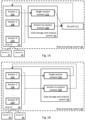
- Figure 1A depicts one embodiment of the present system in a general level.
- the system comprises a data processing system 5A comprising a first user interface (UI) 1A, which is capable of collecting measurement data from a plurality of sessions 10A, 10B, ... 10N using one or more sensors 4A, 4B.
- the first UI 1A is accessible by the person to be monitored or treated.
- the data collected is processed in a data storage and analysis system 3A.
- the data fed to the data storage and analysis system 3A and/or produced therein is accessible to a second UI 2.
- the second user interface 2 is accessible by a professional therapist, who may study the data and give feedback to the person, typically in the form of data feed used by the first UI 1A.
- Figures 1A and 1B can also be combined, i.e., both automated feedback and a second user interface plus professional feedback may be possible with the same system.
- the data processing system 5A may be a centralized or distributed system.
- the data storage and analysis system 3A can be run in the same device as the first UI 1A or, for example, on a data server, which is functionally connected to the first UI 1A.
- the first UI 1A is run in a mobile device and the data storage and analysis system 3A is implemented at least partly in a network server.
- the second UI 2 can be run either as a mobile application or network server application.
- the second UI 2 can comprise a mobile application or a desktop interface connected with the data storage and analysis system 3A.
- the second UI 2 is a dashboard software program that is capable of displaying all patients connected to a single therapist with their measurement and/or analysis data.
- the session-to-session analysis results in an indicator representing a developing profile of heart rate, heart rate variability or brain activity status or changes therein.
- the profile can be a trend indicator calculated from the change of measurement data over time, i.e. from session to session.
- the trend data of morning-to-morning stationary measurements e.g. HR and/or EEG measured 2-10 minutes at a time
- the system may be configured to calculate one or more second health indicator descriptive of temporal variation of measurement data within one or more single measurement data sets.
- the second health indicator may be calculated, for example, by comparing first measurement data contained in the first half of a measurement data set, corresponding to the first half of a health-maintenance session, and a second measurement data contained in the second half of a measurement data set, corresponding to the second half of the health-maintenance session.
- the health indicator or indicators whether in the form of a single index, set of parameters or more complex function, and whether based on single session data or multiple session data, can be used either automatically or by a professional therapist to adjust the session plan and treatment individually.
- the system may also be adapted for carrying out at least one operation selected from the group of storing, displaying and communicating over a data network, of the indicators and any result of indicator evaluation, such as comparison with a reference indicator.
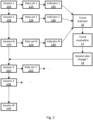
- Figure 2 illustrates a multi-session data collection and processing system in more detail.
- the user carries out, according to a session plan, a plurality of health-maintenance sessions 10A, 10B, ... 10N, from which data is collected as data sets 12A, 12B ... 10N, respectively.
- a session plan a plurality of health-maintenance sessions 10A, 10B, ... 10N, from which data is collected as data sets 12A, 12B ... 10N, respectively.
- at least one single-session indicator 14A, 14B, ... 14N is calculated, respectively.
- the single-session indicators 14A, 14B, ... 14N are used to determine a temporal trend indicator 16.
- the trend indicator 16 is evaluated in step 17, which typically includes comparison with a predefined reference indicator to see if the sessions have had a desired effect.
- step 18 If there is a need to change the session plan, it can be changed in step 18, after which the user continues, in a similar fashion, with the changed plan (sessions 10A', 10B', ... 10N') to collect further data sets 12A'... until the monitoring program ends.
- the system is configured to associate a health-maintenance session time value to each health indicator and to determine a temporal health trend indicator based on the first health indicators and the time values associated therewith. Further, the health trend indicator may be displayed and/or compared with a reference health trend indicator.
- the system may also comprise means for providing feedback for the person on the during a session based on the measurement data, in particular based on a health indicator calculated therefrom.
- audio feedback or neuro feedback may be provided to the user based on single session HR and/or EEG (or skin conductance sensor) data to further affect brains to learn the right kind of session practicing technique.
- the data storage and analysis system is adapted to collect and analyze measurement data sets and/or first/second health indicators or trend indicators from health-maintenance sessions of a plurality of different persons for obtaining population data.
- the population data can be used to give instructions as input for further individualization instructions to patient via the first UI and/or displayed to therapist via the second UI for decision making support.
- the senor comprises a heart rate (HR) sensor
- the physiological signal comprises a heart rate signal
- the first health indicator comprises a heart rate variability (HRV) indicator.
- HR heart rate
- HRV heart rate variability
- the senor comprises an electroencephalographic (EEG) sensor
- the physiological signal comprises an EEG signal
- the first health indicator comprises a brain activity indicator
- the sensor is preferably connected to the mobile application serving as the first user UI via a wireless or wired communication channel. Also several different types of sensors either within single sessions or in different sessions, to provide more representative data on the autonomic nervous system.
- step 36 it is compared if a target of the program is achieved, after which the program can either be ended, continued as such or continued with amended session plan. In case of changes, a new profile can be formed at the end of the program, or during the program one or more times, to assess the situation.
Landscapes
- Health & Medical Sciences (AREA)
- Life Sciences & Earth Sciences (AREA)
- Engineering & Computer Science (AREA)
- Public Health (AREA)
- Medical Informatics (AREA)
- General Health & Medical Sciences (AREA)
- Biomedical Technology (AREA)
- Pathology (AREA)
- Veterinary Medicine (AREA)
- Animal Behavior & Ethology (AREA)
- Physics & Mathematics (AREA)
- Heart & Thoracic Surgery (AREA)
- Molecular Biology (AREA)
- Surgery (AREA)
- Biophysics (AREA)
- Physiology (AREA)
- Cardiology (AREA)
- Neurology (AREA)
- Psychiatry (AREA)
- Primary Health Care (AREA)
- Epidemiology (AREA)
- Neurosurgery (AREA)
- Psychology (AREA)
- Data Mining & Analysis (AREA)
- Databases & Information Systems (AREA)
- Social Psychology (AREA)
- Child & Adolescent Psychology (AREA)
- Hospice & Palliative Care (AREA)
- Developmental Disabilities (AREA)
- Anesthesiology (AREA)
- Biodiversity & Conservation Biology (AREA)
- Signal Processing (AREA)
- Computer Vision & Pattern Recognition (AREA)
- Artificial Intelligence (AREA)
- Pulmonology (AREA)
- Educational Technology (AREA)
- Acoustics & Sound (AREA)
- Hematology (AREA)
- Pain & Pain Management (AREA)
- Measuring And Recording Apparatus For Diagnosis (AREA)
Description
- The invention relates to a health monitoring system of monitoring the health of a person according to
claim 1. - In particular, the invention relates to monitoring of autonomic nervous system related dysfunctions.
- Depression treatment relies currently on paper based (self-report) diagnosis of depression which is very inaccurate and produces "one-size-fits-all" treatment for people, which again leads to poorly effective treatment. It is said that most commonly used methods for treating depression: antidepressants and Cognitive Behavioural Therapy produce desired results with roughly 40 % of people.
- There is an ongoing paradigm shift in mental healthcare, moving towards 'precision medicine in mental health'. This can be achieved by individualizing care for each person based on their physiological, behavioral or other particular features which can be measured and which data can be analysed to create an individual care plan.
- It has also been studied that treating these psychological dysfunctions improves the health of the person also from a physiological standpoint, not just psychologically.
- The connection between sleep and the autonomic nervous system has been studied in the medical research field. For example, Cortelli at al., in "Autonomic dysfunction in sleep disorders", MedLink, July 21, 2003, suggest that sleep and the autonomic nervous system are closely related from an anatomical, physiological, and neurochemical point of view and that sleep disorders may cause or be associated with clinically relevant autonomic dysfunctions.
- It has also been suggested that there is a correlation between mood during daily life and autonomic nervous system activity during sleep (Yoshino et al., Proceedings of Measuring Behavior, Maastricht, 2008) and that several psychological and physiological factors contribute to the onset and perpetuation of insomnia (Basta et al., Sleep Med Clin. 2007 Jun; 2(2): 279-291.).
- The research suggests that autonomic nervous system dysfunction is connected to poor sleep or hypersomnia.
- There are medical professionals and therapists that are experts in diagnosis, monitoring and treatment of autonomic nervous system related dysfunctions, such as those mentioned above. For the public, however, detecting and monitoring, not to speak about treatment of such dysfunctions is relatively difficult and costly since typically continued personal therapy sessions and subjective assessment of symptoms and progress are needed.
- On the other hand pharmachotherapies may be effective but often cause unwanted side effects and on a population level are relatively poorly performing, cf. https://www.ncbi.nlm.nih.gov/pubmedhealth/PMH0087089/.
- Document
US 2012/289791A1 discloses: In particular embodiments, a method includes accessing data streams from at least two of an accelerometer, a heart-rate monitor, a blood-pressure monitor, a pulse oximeter, or a mood sensor monitoring a person, analyzing data sets collected from the person when the person is engage and not engaged in a therapy, and determining a current stress factor for the therapy on the person based on the analysis. - Document
US 2017/071551A1 discloses: A method for determining a stress level of a user based on a sympathovagal balance (SVB) value calculated based on a set of measurement data may include determining a heartrate variability (HRV) characteristic as a ratio involving a number of autonomic nervous system (ANS) activity markers within a first portion of the set of measurement data and the number of ANS activity markers within a second portion of the set of measurement data, and then determining the stress level of the user based on the HRV characteristic. The first and second portions of the set of measurement data may be selected based on a user-specific baseline SVB value that divides a histogram representation of the set of measurement data into the first and second portions. - Document
US 2011/245633A1 discloses: A wearable biosensor device gathers physiological data from the wearer and uses this information over time to diagnose, detect, monitor, and treat psychological disorders. The device triggers real-time psychological treatments based on personalized estimates of the wearer stored on the biosensor device. A therapeutic stimulus is selected from a library based on the data received from the wearable biosensor device and relating to psychological condition(s), and that stimulus is delivered to the wearer via an associated display. The aggregate data from use of the device is provided to clinicians and/or patients, in detail and in summary report forms, to indicate the symptoms of, detect and diagnose among disorders or subtypes, to analyze treatment effects, and to isolate the underlying causes of one or more psychological disorders or states. - Document
US 2006/178588A1 discloses: an apparatus, method, and system that can be used to (1) simultaneously monitor HRV and other physiological parameters, (2) determine whether HRV can be reliably collected, (3) detect ANS arousal, (4) determine the effects of the ANS arousal on HRV, (5) determine the minimum extent to which a timed HRV study should be extended after an ANS arousal, and (6) analyze the effects of ANS arousal on HRV. - It is an aim of the invention to provide a system for monitoring personal health. One aim is to provide a monitoring system which provide objective information on autonomic nervous system related dysfunctions and therefore to allow for systematic and personalized treatment actions.
- A further aim is to provide a system that supports both self-maintenance of health and professional advice.
- The present invention relies on the basic finding that there is a connection between psychological dysfunctions such as stress, anxiety and depression and the autonomic nervous system.
- Further, in the invention there is an understanding that several objective measures can be used to create an accurate picture of a person with depressive (or other mental illness related) symptoms. These types of measures can be brain electricity (EEG) patterns or HRV data revealed patterns (indicators of autonomic nervous system state). Other objective measures such as person's mobile phone accelerometer data (activity, step count etc) or features of written or spoken language of a person (semantic analysis), can be analysed to better understand the person and to create an individual treatment plan for optimal results.
- The invention is based on the use of a sensor that is capable of measuring at least one physiological signal reflecting or correlating with the state of the autonomic nervous system of the person for providing measurement data and using the sensor during a plurality of consecutive health-maintenance sessions in order to collect a plurality of measurement data sets. The data sets are analyzed to determine health indicators that reflect the physiological state and development of the autonomic nervous system.
- In particular, it is possible to determine a reference indicator, such as a target health indicator, through measurements, whereby the session-based health indicator can be compared with the reference indicator to gain knowledge of the health-maintenance sessions have the desired effect.
- The present system for monitoring the health of a person is defined in
claim 1. - Considerable advantages are attained by the present invention. Thus, depending on the sensor(s) and indicator(s) chosen, the present system can be used to characterize several different autonomic nerve system related dysfunctions that are caused by or manifested as sleep disorders, stress, depression or chronic pain, and to guide the user towards right exercises for self-maintenance of health. In particular, a personal long-term health-monitoring and/or dysfunction treatment program may be planned and conducted utilizing the system.
- Next, embodiments of the invention are described in more detail with reference to the attached drawings.
-
-
Figure 1A shows schematic block representation of the system and method according to one embodiment of the invention. -
Figure 1B shows schematic block representation of the system and method according to another embodiment of the invention. -
Figure 2 illustrates in detail data analysis according to one embodiment of the invention. -
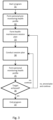
Figure 3 depicts a personal health-monitoring program that can be carried using the present system and method. - The term "health-maintenance session" refers to a session where the person conducts activities that has or supposedly has effects on his or her health and in particular reflected in physiological changes of the autonomic nervous system. A health-maintenance session can, in particular, be a meditation session, exercise session, controlled breathing session, resting session or sleeping session (referred to as "type" of session). A health maintenance program includes a plurality of health-maintenance sessions, as well as evaluation of results.
- The "Autonomic nervous system" stands for the system of nerves and ganglia that innervates the blood vessels, heart, smooth muscles, viscera, and glands and controls their involuntary functions, consisting of sympathetic and parasympathetic portions.
- A "session plan" is a data structure capable of defining the types and/or times and/or durations and/or any other contents of health-maintenance sessions. A session plan can include sessions of one type only or sessions of many types. Changing of a session plan comprises adding or removing sessions or changing any of the parameters of any existing sessions.
- An "indicator" (as in first/second health indicator or health trend indicator) refers to a parameter or index, a set of parameters or indices, or a function, generally speaking any characterizing data that depends on the measurement data and describes the physiological state of or changes in the autonomic nervous system based on the measurement data. In other words, a health indicator is sensitive to physiological state of or changes in the autonomic nervous system. An indicator may be computed based on a single session data set ("single session indicator") or a plurality of session data sets ("trend indicator" or "session-to-session indicator"). The indicator can be e.g. a heart beat (HR) heart rate variability (HRV) index or HRV trend (computed based on heart rate data) or brain activity index or brain activity trend (computed based on EEG data).
- "First health indicator" refers to an indicator computed based on single session data, representing current state of the autonomic nervous system. For example, the first health indicator can be an HRV index value or some other value averaged over a selected portion of a measurement data set from a single session.
- Examples of other indicators, which can be processed as "first health indicators" are self-report data, smart-phone sensor data, data provided by an accelerometer, a thermometer, or a light sensor for tracking amounts of light, as well as audio input, or air pressure changes, sleep sensor data, exercise sensor data, written or spoken data from the person, such as. text analysis. Any data of which relate to the status of the individual and which can be used for tailoring his treatment program can be utilized.
- In this respect reference can be made to findings that features extracted from mobile phone sensor data, including GPS and phone usage, provide behavioral markers that are related to depressive symptom severity: Sohrab Saeb et al., "Mobile Phone Sensor Correlates of Depressive Symptom Severity in Daily-Life Behavior: An Exploratory Study", J Med Internet Res. 2015 Jul; 17(7): e175.
- In embodiments, combinations of a various indicators are used.
- In preferred embodiments, HRV is used as an indicator optionally together with one or more indicators listed above.
- "Second health indicator" refers to an indicator computed based on single session data using different temporal regions thereof, such as data measured at the start (first half) and end (second half) of the session, therefore representing short-term temporal variation of data and fast reacting of the autonomic nervous system to session activities. For example, the second health indicator can be proportional to the difference between a first HRV index (or some other value) at the beginning of a session and a second HRV index (or some other value) at the end of a session.
- Similar computed indicators can be provided for the other indicators listed above in connection with the first health indicators.
- "Health trend indicator" refers to an indicator computed based on multiple session data either directly or using previously computed first and/or second health indicators. A health trend indicator therefore represents slow changes in the autonomic nervous system, typically in the scale starting from 4 weeks to 12 months. For example, the health trend indicator can be a slope of a line fitted to several first or second health indicator values, therefore describing the rate of changes in the autonomic nervous system.
- "Reference indicator" is an indicator typically determined before the actual monitoring or treatment program or at least using data collected before the start of the program. The reference indicator can reflect the state of the autonomic nervous system before the monitoring program (i.e. "pre-monitoring indicator") or, for example, a target state to which the program aims at (i.e. "target indicator"). The reference indicator can be defined automatically using pre-monitoring measurement data or manually or semi-automatically by a therapist having access to the pre-monitoring measurement data.
- "Comparing" the at least one health indicator with said reference indicator covers all actions that utilizes both these indicators, typically yielding a result that depends on the difference between the indicators.
- "Heart rate variability (HRV) index" means an index that describes the variation of heart beat-to-beat interval.
- "Brain activity index" refers to an index that describes the level or nature of electric activity of one or more sections of the brain.
- In the present technology, a system is provided for monitoring the health of a person.
- Typically, the system comprises one or more sensors capable of measuring physiological signals generated by the autonomic nervous system of the person for providing measurement data.
- There is also provided a data processing system configured to store a reference indicator; to receive measurement data from the sensor during a plurality of consecutive health-maintenance sessions in order to collect a plurality of measurement data sets corresponding to the health-maintenance sessions; and to determine at last one health indicator based on the measurement data sets. In particular, the health indicator is sensitive to physiological state of or changes in the autonomic nervous system.
- The data processing system is finally configured to compare the one or more health indicators with the one or more reference indicators.
- The health indicator typically comprises a plurality of first health indicators separately determined based on each measurement data set and representing the state of the autonomic nervous system.
- This kind of indicators may be used as such to give feedback on the state of the autonomic nervous system for the person through automatic analysis or therapist-aided analysis, or for computing e.g. a trend indicators describing long-term temporal development of the state of the autonomic nervous system.
- In the present context, the term "therapist" is to be given a broad interpretation, cover also other professionals in the healthcare field.
- Thus, health indicator data are retrieved more frequently or less frequently, or in different ways, depending of the patient's condition. The actual retrieval of data can be made dependent on the indicator data obtained. If, for example, preset criteria are fulfilled during the program, e.g. if the condition of the patient is worsening, it is possible to shorten the intervals between measuring sessions to ensure that treatment is adapted to the patient's condition and gravity thereof and made efficient. By contrast, improvement in the patient's condition can be reflected in longer intervals between retrieval of indicator data so as to reduce intervention.
- In some embodiments, the at least one health indicator comprises a plurality of second health indicators separately determined based on each measurement data set and representing temporal variation of measurement data within said measurement data sets. This kind of indicators may also be used as such to give feedback on the short term response of the autonomic nervous system for the person through automatic analysis or therapist-aided analysis, or for computing e.g. a trend indicators describing long-term temporal development of the short-term response capability of the autonomic nervous system.
- Is some embodiments, the at least one health indicator comprises a health trend indicator determined based on a plurality of measurement data sets from a plurality of health-maintenance sessions, for example using the first and/or second health indicators. The data processing system may, for example, be configured to determine the temporal health trend indicator based on the plurality of first or second health indicators and time values associated therewith.
- In some embodiments, the comparison comprises determining if the health indicators have changed at a predefined rate using the reference indicator, using data one the times of conducting the health-maintenance sessions. The trend indicator may be used in this process.
- In some embodiments, the method performed by the system comprises collecting at least one pre-monitoring data set during at least one first pre-monitoring health session before said health-maintenance sessions and determining the reference indicator based on the pre-monitoring data set. When the measurement data sets have been collected, the reference indicator can be used as the comparison criteria, or part thereof, to evaluate whether the target of the monitoring or treatment program have been achieved.
- In some embodiments, the data processing system comprises at least two user accounts having access to monitoring data of the person, the first user account allowing storage of measurement data sets and the second user account allowing reading of measurement data sets and/or health indicators. In further embodiments, collecting the data sets is carried out using the first user account and evaluation of the data and giving feedback for the user and/or changing the session plan is carried out using the second user account.
- In some embodiments, the monitoring system comprises a storage medium comprising first software means executable on a computer, such as mobile computing device, the first software means being functionally connectable with the sensor. The first software means comprises computer-executable instructions for performing said step of receiving, and optionally one or more of the steps of storing the measurement data sets, determining indicators and comparing of indicators. The first software means may also comprise computer-executable instructions for providing visual or audial guidance for the person on conducting the health-maintenance sessions.
- In some embodiments, the monitoring system further comprises second software means executable on a cloud data server, so that the first and the second software means are capable of exchanging data over a network connection. The second software means comprise computer-executable instructions for performing at least one, typically all, of the steps of storing the measurement data sets, determining indicators and comparing of indicators.
- The system may further comprise user access control means in the first and/or second software means capable of containing at least a first and second user access levels, wherein the first access level authorizes the person to initiate data collection for said health-maintenance sessions, and the second user access level authorizes another person to define said reference indicator and/or to define a session plan for the person conducting the health-maintenance sessions. The second user access level also may authorize access to the measurement data sets and/or the health indicators and/or the result of the comparison.
- In typical embodiments, the system is suitable for collecting at least four measurement data sets from separate health-maintenance sessions over a period of at least four weeks, such as at least six sets over a period of six weeks.
- Turning next to the working embodiments according to the drawings, the following can be noted.
-
Figure 1A depicts one embodiment of the present system in a general level. The system comprises adata processing system 5A comprising a first user interface (UI) 1A, which is capable of collecting measurement data from a plurality ofsessions more sensors first UI 1A is accessible by the person to be monitored or treated. The data collected is processed in a data storage andanalysis system 3A. There may be provided means for conducting a session-to-session analysis 20A and/orsingle session analysis 22A. The data fed to the data storage andanalysis system 3A and/or produced therein is accessible to asecond UI 2. Thesecond user interface 2 is accessible by a professional therapist, who may study the data and give feedback to the person, typically in the form of data feed used by thefirst UI 1A. - The professional feedback may be in the form of notifications, changes to the session plan, or educational material (text / audio / video), to mention some examples. Thus, a structured treatment program, remotely supervised by a professional therapist, is formed.
-
Figure 1B shows an alternative system with afirst UI 1B and data storage andanalysis system 3B capable of conducting session-to-session data analysis 20B and/or singlesession data analysis 22B. In this example, the analysis or analyses 20B, 22B result in automated feedback to thefirst UI 1B. - The embodiments of
Figures 1A and 1B can also be combined, i.e., both automated feedback and a second user interface plus professional feedback may be possible with the same system. - The
first UI 1A comprises software means containing the session plan, controls the sensor or sensors used to measure the session data sets, and associates the data sets to the respective sessions. Typically, the software means is in the form of a mobile application executable in a mobile device, such as smart phone or a smart watch or other wearable device. In particular, the first UI may be implemented with the first software means referred to above. - In one embodiment, the
first UI 1A is capable of controlling HR and/or EEG-measurement process for a patient to evaluate status and/or progress of depression or anxiety or chronic pain decline and progress of positive meditative or treatment effects, as reflected in the heart rate and/or in the brain waves. - The
data processing system 5A may be a centralized or distributed system. - The data storage and
analysis system 3A can be run in the same device as thefirst UI 1A or, for example, on a data server, which is functionally connected to thefirst UI 1A. As discussed later in more detail, in a typical setup, thefirst UI 1A is run in a mobile device and the data storage andanalysis system 3A is implemented at least partly in a network server. Thesecond UI 2 can be run either as a mobile application or network server application. Thus, thesecond UI 2 can comprise a mobile application or a desktop interface connected with the data storage andanalysis system 3A. In one embodiment, thesecond UI 2 is a dashboard software program that is capable of displaying all patients connected to a single therapist with their measurement and/or analysis data. - In one embodiment, the session-to-session analysis results in an indicator representing a developing profile of heart rate, heart rate variability or brain activity status or changes therein. The profile can be a trend indicator calculated from the change of measurement data over time, i.e. from session to session. For example, the trend data of morning-to-morning stationary measurements (e.g. HR and/or EEG measured 2-10 minutes at a time) can be calculated and analyzed to reliably see changes in physiology.
- In one embodiment, also data on the starting point and the end point of a session are used to calculate a single session trend indicator. More generally speaking, the system may be configured to calculate one or more second health indicator descriptive of temporal variation of measurement data within one or more single measurement data sets. The second health indicator may be calculated, for example, by comparing first measurement data contained in the first half of a measurement data set, corresponding to the first half of a health-maintenance session, and a second measurement data contained in the second half of a measurement data set, corresponding to the second half of the health-maintenance session.
- The health indicator or indicators, whether in the form of a single index, set of parameters or more complex function, and whether based on single session data or multiple session data, can be used either automatically or by a professional therapist to adjust the session plan and treatment individually.
- The system may also be adapted for carrying out at least one operation selected from the group of storing, displaying and communicating over a data network, of the indicators and any result of indicator evaluation, such as comparison with a reference indicator.
-
Figure 2 illustrates a multi-session data collection and processing system in more detail. - As will appear, the user carries out, according to a session plan, a plurality of health-
maintenance sessions data sets session indicator session indicators temporal trend indicator 16. Thetrend indicator 16 is evaluated instep 17, which typically includes comparison with a predefined reference indicator to see if the sessions have had a desired effect. If there is a need to change the session plan, it can be changed instep 18, after which the user continues, in a similar fashion, with the changed plan (sessions 10A', 10B', ... 10N') to collectfurther data sets 12A'... until the monitoring program ends. - In some embodiments, the data processing system is configured to collect, in addition to the actual session data sets, one or more pre-monitoring data sets during one or more first pre-monitoring health session before said health-maintenance sessions and to use the pre-monitoring data set for determining said reference indicator. Using of the pre-monitoring data set may comprise determining a pre-monitoring health indicator based on the pre-monitoring data set and computing the reference indicator based on the pre-monitoring health indicator and storing reference indicator. Alternatively or in addition to that the pre-monitoring data or any value derived therefrom may be sent to the second UI used for example by a therapist, and the reference indicator associated with the pre-monitoring data may be received from the second UI.
- In some embodiments, the system is configured to store at least one reference time value associated with the pre-monitoring data set or any reference indicator derived therefrom. In addition, the system is configured to associate a health-maintenance session time value to each health indicator derived from the actual measurement data sets. When evaluating the progress, the comparison of the indicators may include determining if the health indicator has changed at a desired rate using the reference indicator, the health-maintenance session time values and the reference time value.
- In one example, the system is configured to associate a health-maintenance session time value to each health indicator and to determine a temporal health trend indicator based on the first health indicators and the time values associated therewith. Further, the health trend indicator may be displayed and/or compared with a reference health trend indicator.
- The system may also comprise means for providing feedback for the person on the during a session based on the measurement data, in particular based on a health indicator calculated therefrom. For example, audio feedback or neuro feedback may be provided to the user based on single session HR and/or EEG (or skin conductance sensor) data to further affect brains to learn the right kind of session practicing technique.
- According to some embodiments, the data storage and analysis system is adapted to collect and analyze measurement data sets and/or first/second health indicators or trend indicators from health-maintenance sessions of a plurality of different persons for obtaining population data. The population data can be used to give instructions as input for further individualization instructions to patient via the first UI and/or displayed to therapist via the second UI for decision making support.
- In some embodiments of the present system, the sensor comprises a heart rate (HR) sensor, the physiological signal comprises a heart rate signal, and the first health indicator comprises a heart rate variability (HRV) indicator.
- The heart rate sensor can be based on any HR measurement technology, such as electric measurement (typically a chestband), optical measurement (typically wristband or ear clip) or pressure sensor. The heart rate sensor is used to determine in particular heart rate variability (HRV), which in turn can be used
- as a measure of physiological stress state of the body, correlating with e.g. depression, anxiety and chronic pain, and/or
- to provide the patient with a feedback-loop
- o for meditation exercises (how well body responds to meditation),
- o for controlled breathing exercises or combinations thereof, and
- to provide the therapist with physiological and objective data on patient program adherence and program effectiveness, as well as how well patients are learning different techniques for health-maintenance or improvement
- In some embodiments of the present system the sensor comprises an electroencephalographic (EEG) sensor, the physiological signal comprises an EEG signal, and the first health indicator comprises a brain activity indicator.
- The EEG sensor can be an EEG headband capable of measuring brain activity at a plurality of measurement points. EEG data can be used
- to measure meditation related brain changes and meditation training progress, and/or
- be used to measure depression and anxiety intensity and quality, and/or
- to provide the patient and healthcare professional with an objective feedback loop, and/or
- for neurofeedback for improving training effectiveness.
- The sensor is preferably connected to the mobile application serving as the first user UI via a wireless or wired communication channel. Also several different types of sensors either within single sessions or in different sessions, to provide more representative data on the autonomic nervous system.
-
Fig. 3 illustrates exemplary basic steps of a health-monitoring program. Instep 31, a participant starts the program. Instep 32, a pre-monitoring health profile is formed. This typically involves measurements using the same monitoring setup as used later in the program and forming a session plan for the participant to conduct during the program. Also a target for the program, for example in the form of a reference indicator based on the measurements can be determined. In one embodiment, forming the pre-monitoring profile involves collecting of biosignal or other form of individual data during a plurality of days and/or from a plurality of pre-monitoring sessions using e.g. wearable sensors and/or questionnaires. After that, a profile is formed for the participant based on his/her personal data collected. The individual profile indicates specific characteristics in person's behavior and/or physiology and helps to customize the program and upcoming exercises, i.e. the session plan. - In
step 34, the participant conducts the session plan determined. Typically, this part of the program lasts for several weeks or months. When the plan has been followed for a predefined time or sessions, or after each health-maintenance session, a monitoring heath profile is formed instep 35, the monitoring profile being comparable with the pre-monitoring profile. - In
step 36, it is compared if a target of the program is achieved, after which the program can either be ended, continued as such or continued with amended session plan. In case of changes, a new profile can be formed at the end of the program, or during the program one or more times, to assess the situation. - Next, two examples of potential program participants, their pre-monitoring health profiles and session plans are given.
- Starting profile (pre-monitoring profile)
- Male, 50 years old
- HRV (rMSSD) average over 4 resting state measurements: 45 (significantly lowered vs. average healthy person: 65)
- Sleep data indicating excessive sleep (avg. over 7 days over 9 hours / night)
- Activity data indicating reduced activity (average less than 3000 steps / day)
- Self-report data indicating severe depressive symptoms (PHQ-9 score of 21)
- Treatment plan
- Short (5-10 minutes) daily paced breathing sessions to improve autonomic nervous system state
- Weekly behavioral activation focused therapy to improve severe depression symptoms and get patient activated
- Daily therapist chat and weekly calls focused on these areas
-
- Starting profile (pre-monitoring profile)
female, 30 years old - HRV (rMSSD) average over 4 resting state measurements: 60 (moderately lowered vs average healthy person: 80)
- Sleep data indicating inadequate sleep (average under 7 hours / night)
- Activity data indicating a lot of activity (average >10000 steps / day)
- Self-report data indicating mediocre depressive symptoms (PHQ-9 score of 14)
- Treatment plan
- Medium length (10-20 minutes) to long (20-40 minutes) meditation sessions prior to bed-time
- Deep breathing exercises to address potential co-morbid anxiety symptoms
- Cognitive behavioral therapy exercises and lessons to improve understanding of harmful thought patterns and behaviors
- Weekly therapist chat and monthly calls focused on these areas
- It should be understood that terminology employed herein is used for the purpose of describing particular embodiments only and is not intended to be limiting.
- Reference throughout this specification to "one embodiment" or "an embodiment" means that a particular feature, structure, or characteristic described in connection with the embodiment is included in at least one embodiment of the present invention. Thus, appearances of the phrases "in one embodiment" or "in an embodiment" in various places throughout this specification are not necessarily all referring to the same embodiment.
- As used herein, a plurality of items, structural elements, compositional elements, and/or materials may be presented in a common list for convenience. However, these lists should be construed as though each member of the list is individually identified as a separate and unique member. Thus, no individual member of such list should be construed as a de facto equivalent of any other member of the same list solely based on their presentation in a common group without indications to the contrary. In addition, various embodiments and example of the present invention may be referred to herein along with alternatives for the various components thereof. It is understood that such embodiments, examples, and alternatives are not to be construed as de facto equivalents of one another, but are to be considered as separate and autonomous representations of the present invention. Furthermore, the described features, structures, or characteristics may be combined in any suitable manner in one or more embodiments. In the following description, numerous specific details are provided, such as examples of lengths, widths, shapes, etc., to provide a thorough understanding of embodiments of the invention. One skilled in the relevant art will recognize, however, that the invention can be practiced without one or more of the specific details, or with other methods, components, materials, etc. In other instances, well-known structures, materials, or operations are not shown or described in detail to avoid obscuring aspects of the invention.
- While the forgoing examples are illustrative of the principles of the present invention in one or more particular applications, it will be apparent to those of ordinary skill in the art that numerous modifications in form, usage and details of implementation can be made without the exercise of inventive faculty, and without departing from the principles and concepts of the invention. Accordingly, it is not intended that the invention be limited, except as by the claims set forth below.
- The verbs "to comprise" and "to include" are used in this document as open limitations that neither exclude nor require the existence of also un-recited features. The features recited in depending claims are mutually freely combinable unless otherwise explicitly stated. Furthermore, it is to be understood that the use of "a" or "an", i.e. a singular form, throughout this document does not exclude a plurality.
-
- UI
- user interface
- HRV
- heart rate variability
- HR
- heart rate
- EEG
- electroencephalography
-
- 1A, 1B, 2
- user interface (UI)
- 10A, 10B,
- sessions
- 10A', 10B'
- sessions
- 3A, 3B
- data storage and analysis system
- 4A, 4B
- sensors
- 5A
- data processing system
- 12A, 12B
- data sets
- 12A', 12B'
- modified data sets
- 14A, 14B,
- single-session indicator
- 16
- temporal trend indicator
- 17
- evaluation step
- 18
- change step
- 20A, 20B
- session-to-session analysis
- 22A, 22B
- single session analysis
- 31
- step for starting the program.
- 32
- a pre-monitoring health profile forming step
- 34
- step in which session plan is conducted
- 35
- monitoring heath profile forming step
-
- Cortelli at al., MedLink, July 21, 2003.
- Yoshino et al, Proceedings of Measuring Behavior, Maastricht, 2008. https://www.ncbi.nlm.nih.gov/pubmedhealth/PMH0087089/.
- Basta et al., Sleep Med Clin. 2007 Jun; 2(2): 279-291.
- Sohrab Saeb et al., J Med Internet Res. 2015 Jul; 17(7): e175.
Claims (11)
- A system for monitoring the health of a person, the system comprising- at least one sensor (4A, 4B) capable of measuring at least one physiological signal generated by the autonomic nervous system of the person for providing measurement data,- data processing system (5A, 5B) configured to∘ store a reference indicator,∘ store a health-monitoring session plan,∘ receive measurement data from the sensor (4A, 4B) during a plurality of consecutive health-maintenance sessions (10A...N, 10A'...N') in order to collect a plurality of measurement data sets corresponding to said health-maintenance sessions (10A...N, 10A'...N'),∘ determine at least one health indicator based on the measurement data sets, said at least one health indicator being sensitive to physiological state of or changes in the autonomic nervous system,∘ compare the at least one health indicator with said reference indicator, and∘ change the stored health-monitoring session plan based on the comparison of the health indicator with said reference indicator,wherein- the at least one health indicator comprises a plurality of second health indicators separately determined based on each measurement data set and representing temporal variation of measurement data within said measurement data sets, andwherein- the at least one sensor (4A, 4B) comprises a heart rate (HR) sensor, the at least one physiological signal comprises a heart rate signal, and the at least one health indicator comprises a heart rate variability (HRV) index,
or wherein- the at least one sensor (4A, 4B) comprises an electroencephalographic (EEG) sensor, the at least one physiological signal comprises an EEG signal, and the at least one health indicator comprises a brain activity index,wherein the data processing system (5A, 5B) is configured to calculate the second health indicators based on∘ first measurement data contained in the first half of a measurement data set, corresponding to the first half of a single health-maintenance session (10A...N, 10A'...N'), and∘ second measurement data contained in the second half of a measurement data set, corresponding to the second half of the single health-maintenance session (10A...N, 10A'...N'),wherein the single health-maintenance session is a single meditation session, a single exercise session, or a single controlled breathing session. - The system according to claim 1, wherein the at least one health indicator comprises a plurality of first health indicators separately determined based on each measurement data set and representing state of the autonomic nervous system.
- The system according to any of the preceding claims, wherein the at least one health indicator comprises a health trend indicator determined based on a plurality of measurement data sets from a plurality of health-maintenance sessions (10A...N, 10A'...N').
- The system according to claim 3, wherein said measurement data sets comprise session time values and the data processing system (5A, 5B) is configured to calculate the health trend indicator using said session time values and measurement data, whereby the health trend indicator is proportional to the rate of change of the said physiological changes of autonomic nervous system.
- The system according to any of the preceding claims, wherein the data processing system (5A, 5B) is configured to- determine a plurality of health indicators based on each measurement data set separately and associate a health-maintenance session time value to the health indicators determined,- in said comparison, to determine if the health indicators have changed at a predefined rate using the reference indicator and the health-maintenance session time values.
- The system according to claim 5, wherein the data processing system (5A, 5B) is configured to determine a temporal health trend indicator based on the separate health indicators and said time values associated therewith.
- The system according to any of the preceding claim, wherein the data processing system (5A, 5B) is configured to- collect at least one pre-monitoring data set during at least one first pre-monitoring health session before said health-maintenance sessions (10A...N, 10A'...N'),- use the pre-monitoring data set for determining said reference indicator.
- The system according to claim 7, wherein said using of the pre-monitoring data set comprises- determining a pre-monitoring health indicator based on the at least one pre-monitoring data set and computing and storing the reference indicator based on the pre-monitoring health indicator, and/or- sending the pre-monitoring data or any value derived therefrom over a data network, and receiving the reference indicator associated with the pre-monitoring data over a data network.
- The system according to any of the preceding claims, wherein the data processing system (5A, 5B) is further configured to store and/or display and/or communicate over a data network the result of comparison of the at least one health indicator and the reference indicator.
- The system according to any of the preceding claims, wherein the data processing system (5A, 5B) is further configured to- store a session plan capable of containing session data including the timing and content of said health-maintenance sessions (10A...N, 10A'...N'),- associate said measurement data sets and/or health indicators with said session data,- after said comparison of the at least one health indicator with said reference indicator, to allow for changing of the session plan.
- The system according to any of the preceding claims, wherein- the data processing system (5A, 5B) comprises a storage medium comprising first software means executable on a mobile computing device, the first software means being functionally connectable with said sensor (4A, 4B), and- the first software means comprise computer-executable instructions for performing said step of receiving, and optionally one or more of said steps of storing, determining and comparing.
Applications Claiming Priority (2)
| Application Number | Priority Date | Filing Date | Title |
|---|---|---|---|
| FI20175377A FI127893B (en) | 2017-04-28 | 2017-04-28 | A system and method for monitoring individual health status and a method for treating autonomic nervous system disorders |
| PCT/FI2018/050303 WO2018197754A1 (en) | 2017-04-28 | 2018-04-26 | System and method for monitoring personal health and a method for treatment of autonomic nervous system related dysfunctions |
Publications (3)
| Publication Number | Publication Date |
|---|---|
| EP3616209A1 EP3616209A1 (en) | 2020-03-04 |
| EP3616209A4 EP3616209A4 (en) | 2020-04-22 |
| EP3616209B1 true EP3616209B1 (en) | 2024-07-03 |
Family
ID=63919586
Family Applications (1)
| Application Number | Title | Priority Date | Filing Date |
|---|---|---|---|
| EP18791652.3A Active EP3616209B1 (en) | 2017-04-28 | 2018-04-26 | System for monitoring personal health |
Country Status (4)
| Country | Link |
|---|---|
| US (1) | US10960174B2 (en) |
| EP (1) | EP3616209B1 (en) |
| FI (1) | FI127893B (en) |
| WO (1) | WO2018197754A1 (en) |
Families Citing this family (3)
| Publication number | Priority date | Publication date | Assignee | Title |
|---|---|---|---|---|
| GB201905294D0 (en) * | 2019-04-15 | 2019-05-29 | Sphera London Ltd | Personal monitoring device |
| CN113398424A (en) * | 2021-07-13 | 2021-09-17 | 正岸(北京)科技有限公司 | Insomnia treatment system and working method thereof |
| CN116019429B (en) * | 2021-10-27 | 2024-06-28 | 深圳宏芯宇电子股份有限公司 | Health monitoring method, device, equipment and storage medium based on physiological indicators |
Family Cites Families (17)
| Publication number | Priority date | Publication date | Assignee | Title |
|---|---|---|---|---|
| US6212427B1 (en) * | 1999-02-02 | 2001-04-03 | J&J Engineering | Heart rate variability feedback monitor system |
| US7647234B1 (en) * | 1999-03-24 | 2010-01-12 | Berkeley Heartlab, Inc. | Cardiovascular healthcare management system and method |
| IL130818A (en) | 1999-07-06 | 2005-07-25 | Intercure Ltd | Interventive-diagnostic device |
| WO2008002941A2 (en) | 2002-03-01 | 2008-01-03 | Christine Ross | Analysis of heart rate variability data in animals for health condition assessment |
| US20060178588A1 (en) * | 2005-01-03 | 2006-08-10 | Lee Brody | System and method for isolating effects of basal autonomic nervous system activity on heart rate variability |
| US8666482B2 (en) | 2009-01-08 | 2014-03-04 | Simon Christopher Wegerif | Method, system and software product for the measurement of heart rate variability |
| KR20130051922A (en) * | 2010-03-04 | 2013-05-21 | 뉴미트라 엘엘씨 | Devices and methods for treating psychological disorders |
| US9017256B2 (en) | 2010-09-22 | 2015-04-28 | Milieu Institute, Llc | System and method for physiological monitoring |
| US8617067B2 (en) | 2011-05-13 | 2013-12-31 | Fujitsu Limited | Continuous monitoring of stress using environmental data |
| JP5492247B2 (en) | 2012-05-08 | 2014-05-14 | 株式会社Gm3 | INDEX GENERATION DEVICE FOR EVALUATING MENTAL SYMPTOMS AND MENTAL DISEASES RISK RISKS USING HEART RATE VARIETY |
| ITBO20130541A1 (en) | 2013-10-02 | 2015-04-03 | Armelle Sylvie Melloni | DEVICE AND METHOD OF MONITORING PHYSIOLOGICAL PARAMETERS |
| EP2862509B1 (en) | 2013-10-16 | 2021-01-06 | GM3 Co., Ltd. | Psychiatric symptom and psychiatric disorder onset risk evaluator using heart rate variability index |
| WO2016061513A1 (en) * | 2014-10-16 | 2016-04-21 | The Arizona Board Of Regents Of Behalf Of The University Of Arizona | Real-time vagal monitoring and intervention |
| US20160113526A1 (en) | 2014-10-23 | 2016-04-28 | Dyansys, Inc. | Generating user information from autonomic nervous system parameters |
| US20160379668A1 (en) * | 2015-06-24 | 2016-12-29 | THINK'n Corp. | Stress reduction and resiliency training tool |
| US10231673B2 (en) * | 2015-07-16 | 2019-03-19 | Samsung Electronics Company, Ltd. | Stress detection based on sympathovagal balance |
| US20170251967A1 (en) * | 2016-03-04 | 2017-09-07 | FlourishiQ Inc. | System, apparatus and method for individualized stress management |
-
2017
- 2017-04-28 FI FI20175377A patent/FI127893B/en active IP Right Grant
-
2018
- 2018-04-26 US US16/341,453 patent/US10960174B2/en active Active
- 2018-04-26 WO PCT/FI2018/050303 patent/WO2018197754A1/en not_active Ceased
- 2018-04-26 EP EP18791652.3A patent/EP3616209B1/en active Active
Also Published As
| Publication number | Publication date |
|---|---|
| WO2018197754A1 (en) | 2018-11-01 |
| FI20175377A1 (en) | 2018-10-29 |
| US10960174B2 (en) | 2021-03-30 |
| EP3616209A1 (en) | 2020-03-04 |
| US20190358427A1 (en) | 2019-11-28 |
| FI127893B (en) | 2019-05-15 |
| EP3616209A4 (en) | 2020-04-22 |
Similar Documents
| Publication | Publication Date | Title |
|---|---|---|
| JP6755356B2 (en) | Detection device | |
| Laborde et al. | Heart rate variability and cardiac vagal tone in psychophysiological research–recommendations for experiment planning, data analysis, and data reporting | |
| Cowley et al. | The psychophysiology primer: a guide to methods and a broad review with a focus on human–computer interaction | |
| Zheng et al. | Unobtrusive and multimodal wearable sensing to quantify anxiety | |
| Quintana et al. | Heart rate variability is associated with emotion recognition: Direct evidence for a relationship between the autonomic nervous system and social cognition | |
| Sharma et al. | Objective measures, sensors and computational techniques for stress recognition and classification: A survey | |
| Fennell et al. | A single session of meditation reduces of physiological indices of anger in both experienced and novice meditators | |
| EP3723598B1 (en) | System and method for determining sleep onset latency | |
| US20150025335A1 (en) | Method and system for monitoring pain of patients | |
| US10307100B2 (en) | Methods and systems of controlling a subject's body feature having a periodic wave function | |
| US20240090807A1 (en) | Wearable device and method for stress detection, emotion recognition and emotion management | |
| Rojo et al. | Through your skin to your heart and brain: A critical evaluation of physiological methods in Cognitive Translation and Interpreting Studies | |
| Paradiso et al. | PSYCHE: Personalised monitoring systems for care in mental health | |
| EP3915478B1 (en) | Consciousness level determination method and computer program | |
| Hanshans et al. | Inducing and measuring acute stress in virtual reality: Evaluation of canonical physiological stress markers and measuring methods | |
| KR102709493B1 (en) | Digital clinic system and method for providing evaluation tool and comprehensive treatment intervention for depressive disorder | |
| US12539078B2 (en) | System and method for personalized biofeedback from a wearable device | |
| US10960174B2 (en) | System and method for monitoring personal health and a method for treatment of autonomic nervous system related dysfunctions | |
| Maier et al. | Smartcoping-A mobile solution for stress recognition and prevention | |
| Yiu et al. | Fatigue-related change in surface electromyographic activities of the perilaryngeal muscles | |
| Coelli et al. | Modulation of autonomic responses to cognitive tasks under acute mental stress | |
| KR102760818B1 (en) | Heart rate variability individual characteristic change information processing method | |
| Secerbegovic et al. | At-home biofeedback therapy with wearable sensor and smartphone application: proof of concept | |
| Guan | Wearable Automatic Pain Assessment for Olfaction-Based Chronic Pain Management | |
| Kwa et al. | Exploring Autonomic Modulation through Deep Breathing: Immediate and Long-term Effects on Heart Rate Variability in Visually Impaired Individuals |
Legal Events
| Date | Code | Title | Description |
|---|---|---|---|
| STAA | Information on the status of an ep patent application or granted ep patent |
Free format text: STATUS: THE INTERNATIONAL PUBLICATION HAS BEEN MADE |
|
| PUAI | Public reference made under article 153(3) epc to a published international application that has entered the european phase |
Free format text: ORIGINAL CODE: 0009012 |
|
| STAA | Information on the status of an ep patent application or granted ep patent |
Free format text: STATUS: REQUEST FOR EXAMINATION WAS MADE |
|
| 17P | Request for examination filed |
Effective date: 20191115 |
|
| AK | Designated contracting states |
Kind code of ref document: A1 Designated state(s): AL AT BE BG CH CY CZ DE DK EE ES FI FR GB GR HR HU IE IS IT LI LT LU LV MC MK MT NL NO PL PT RO RS SE SI SK SM TR |
|
| AX | Request for extension of the european patent |
Extension state: BA ME |
|
| A4 | Supplementary search report drawn up and despatched |
Effective date: 20200320 |
|
| RIC1 | Information provided on ipc code assigned before grant |
Ipc: A61B 5/0205 20060101ALI20200316BHEP Ipc: A61B 5/00 20060101ALI20200316BHEP Ipc: G16H 20/00 20180101ALI20200316BHEP Ipc: A61B 5/04 20060101ALI20200316BHEP Ipc: A61B 5/16 20060101ALI20200316BHEP Ipc: G16H 20/70 20180101AFI20200316BHEP Ipc: A61B 5/024 20060101ALI20200316BHEP |
|
| DAV | Request for validation of the european patent (deleted) | ||
| DAX | Request for extension of the european patent (deleted) | ||
| RAP3 | Party data changed (applicant data changed or rights of an application transferred) |
Owner name: MERU HEALTH OY |
|
| RIN1 | Information on inventor provided before grant (corrected) |
Inventor name: PALONEN, MARKUS Inventor name: NAZANDER, ALBERT Inventor name: RANTA, KRISTIAN |
|
| STAA | Information on the status of an ep patent application or granted ep patent |
Free format text: STATUS: EXAMINATION IS IN PROGRESS |
|
| 17Q | First examination report despatched |
Effective date: 20230214 |
|
| REG | Reference to a national code |
Ref country code: DE Ref legal event code: R079 Free format text: PREVIOUS MAIN CLASS: G16H0020700000 Ipc: A61B0005110000 Ref country code: DE Ref legal event code: R079 Ref document number: 602018071337 Country of ref document: DE Free format text: PREVIOUS MAIN CLASS: G16H0020700000 Ipc: A61B0005110000 |
|
| RIC1 | Information provided on ipc code assigned before grant |
Ipc: A61B 5/024 20060101ALI20231211BHEP Ipc: A61B 5/0205 20060101ALI20231211BHEP Ipc: G16H 50/30 20180101ALI20231211BHEP Ipc: G16H 20/70 20180101ALI20231211BHEP Ipc: A61B 5/16 20060101ALI20231211BHEP Ipc: A61B 5/00 20060101ALI20231211BHEP Ipc: A61B 5/369 20210101ALI20231211BHEP Ipc: A61B 5/24 20210101ALI20231211BHEP Ipc: G16H 50/70 20180101ALI20231211BHEP Ipc: G16H 10/20 20180101ALI20231211BHEP Ipc: A61B 5/11 20060101AFI20231211BHEP |
|
| GRAP | Despatch of communication of intention to grant a patent |
Free format text: ORIGINAL CODE: EPIDOSNIGR1 |
|
| STAA | Information on the status of an ep patent application or granted ep patent |
Free format text: STATUS: GRANT OF PATENT IS INTENDED |
|
| INTG | Intention to grant announced |
Effective date: 20240129 |
|
| RIN1 | Information on inventor provided before grant (corrected) |
Inventor name: PALONEN, MARKUS Inventor name: NAZANDER, ALBERT Inventor name: RANTA, KRISTIAN |
|
| GRAS | Grant fee paid |
Free format text: ORIGINAL CODE: EPIDOSNIGR3 |
|
| GRAA | (expected) grant |
Free format text: ORIGINAL CODE: 0009210 |
|
| STAA | Information on the status of an ep patent application or granted ep patent |
Free format text: STATUS: THE PATENT HAS BEEN GRANTED |
|
| AK | Designated contracting states |
Kind code of ref document: B1 Designated state(s): AL AT BE BG CH CY CZ DE DK EE ES FI FR GB GR HR HU IE IS IT LI LT LU LV MC MK MT NL NO PL PT RO RS SE SI SK SM TR |
|
| REG | Reference to a national code |
Ref country code: CH Ref legal event code: EP |
|
| REG | Reference to a national code |
Ref country code: DE Ref legal event code: R096 Ref document number: 602018071337 Country of ref document: DE |
|
| REG | Reference to a national code |
Ref country code: LT Ref legal event code: MG9D |
|
| REG | Reference to a national code |
Ref country code: NL Ref legal event code: MP Effective date: 20240703 |
|
| PG25 | Lapsed in a contracting state [announced via postgrant information from national office to epo] |
Ref country code: PT Free format text: LAPSE BECAUSE OF FAILURE TO SUBMIT A TRANSLATION OF THE DESCRIPTION OR TO PAY THE FEE WITHIN THE PRESCRIBED TIME-LIMIT Effective date: 20241104 |
|
| REG | Reference to a national code |
Ref country code: AT Ref legal event code: MK05 Ref document number: 1698946 Country of ref document: AT Kind code of ref document: T Effective date: 20240703 |
|
| PG25 | Lapsed in a contracting state [announced via postgrant information from national office to epo] |
Ref country code: NL Free format text: LAPSE BECAUSE OF FAILURE TO SUBMIT A TRANSLATION OF THE DESCRIPTION OR TO PAY THE FEE WITHIN THE PRESCRIBED TIME-LIMIT Effective date: 20240703 |
|
| PG25 | Lapsed in a contracting state [announced via postgrant information from national office to epo] |
Ref country code: PT Free format text: LAPSE BECAUSE OF FAILURE TO SUBMIT A TRANSLATION OF THE DESCRIPTION OR TO PAY THE FEE WITHIN THE PRESCRIBED TIME-LIMIT Effective date: 20241104 Ref country code: NL Free format text: LAPSE BECAUSE OF FAILURE TO SUBMIT A TRANSLATION OF THE DESCRIPTION OR TO PAY THE FEE WITHIN THE PRESCRIBED TIME-LIMIT Effective date: 20240703 |
|
| PG25 | Lapsed in a contracting state [announced via postgrant information from national office to epo] |
Ref country code: NO Free format text: LAPSE BECAUSE OF FAILURE TO SUBMIT A TRANSLATION OF THE DESCRIPTION OR TO PAY THE FEE WITHIN THE PRESCRIBED TIME-LIMIT Effective date: 20241003 |
|
| PG25 | Lapsed in a contracting state [announced via postgrant information from national office to epo] |
Ref country code: GR Free format text: LAPSE BECAUSE OF FAILURE TO SUBMIT A TRANSLATION OF THE DESCRIPTION OR TO PAY THE FEE WITHIN THE PRESCRIBED TIME-LIMIT Effective date: 20241004 Ref country code: FI Free format text: LAPSE BECAUSE OF FAILURE TO SUBMIT A TRANSLATION OF THE DESCRIPTION OR TO PAY THE FEE WITHIN THE PRESCRIBED TIME-LIMIT Effective date: 20240703 Ref country code: PL Free format text: LAPSE BECAUSE OF FAILURE TO SUBMIT A TRANSLATION OF THE DESCRIPTION OR TO PAY THE FEE WITHIN THE PRESCRIBED TIME-LIMIT Effective date: 20240703 |
|
| PG25 | Lapsed in a contracting state [announced via postgrant information from national office to epo] |
Ref country code: BG Free format text: LAPSE BECAUSE OF FAILURE TO SUBMIT A TRANSLATION OF THE DESCRIPTION OR TO PAY THE FEE WITHIN THE PRESCRIBED TIME-LIMIT Effective date: 20240703 |
|
| PG25 | Lapsed in a contracting state [announced via postgrant information from national office to epo] |
Ref country code: LV Free format text: LAPSE BECAUSE OF FAILURE TO SUBMIT A TRANSLATION OF THE DESCRIPTION OR TO PAY THE FEE WITHIN THE PRESCRIBED TIME-LIMIT Effective date: 20240703 |
|
| PG25 | Lapsed in a contracting state [announced via postgrant information from national office to epo] |
Ref country code: IS Free format text: LAPSE BECAUSE OF FAILURE TO SUBMIT A TRANSLATION OF THE DESCRIPTION OR TO PAY THE FEE WITHIN THE PRESCRIBED TIME-LIMIT Effective date: 20241103 Ref country code: AT Free format text: LAPSE BECAUSE OF FAILURE TO SUBMIT A TRANSLATION OF THE DESCRIPTION OR TO PAY THE FEE WITHIN THE PRESCRIBED TIME-LIMIT Effective date: 20240703 |
|
| PG25 | Lapsed in a contracting state [announced via postgrant information from national office to epo] |
Ref country code: CZ Free format text: LAPSE BECAUSE OF FAILURE TO SUBMIT A TRANSLATION OF THE DESCRIPTION OR TO PAY THE FEE WITHIN THE PRESCRIBED TIME-LIMIT Effective date: 20240703 Ref country code: HR Free format text: LAPSE BECAUSE OF FAILURE TO SUBMIT A TRANSLATION OF THE DESCRIPTION OR TO PAY THE FEE WITHIN THE PRESCRIBED TIME-LIMIT Effective date: 20240703 |
|
| PG25 | Lapsed in a contracting state [announced via postgrant information from national office to epo] |
Ref country code: ES Free format text: LAPSE BECAUSE OF FAILURE TO SUBMIT A TRANSLATION OF THE DESCRIPTION OR TO PAY THE FEE WITHIN THE PRESCRIBED TIME-LIMIT Effective date: 20240703 Ref country code: RS Free format text: LAPSE BECAUSE OF FAILURE TO SUBMIT A TRANSLATION OF THE DESCRIPTION OR TO PAY THE FEE WITHIN THE PRESCRIBED TIME-LIMIT Effective date: 20241003 |
|
| PG25 | Lapsed in a contracting state [announced via postgrant information from national office to epo] |
Ref country code: RS Free format text: LAPSE BECAUSE OF FAILURE TO SUBMIT A TRANSLATION OF THE DESCRIPTION OR TO PAY THE FEE WITHIN THE PRESCRIBED TIME-LIMIT Effective date: 20241003 Ref country code: PL Free format text: LAPSE BECAUSE OF FAILURE TO SUBMIT A TRANSLATION OF THE DESCRIPTION OR TO PAY THE FEE WITHIN THE PRESCRIBED TIME-LIMIT Effective date: 20240703 Ref country code: NO Free format text: LAPSE BECAUSE OF FAILURE TO SUBMIT A TRANSLATION OF THE DESCRIPTION OR TO PAY THE FEE WITHIN THE PRESCRIBED TIME-LIMIT Effective date: 20241003 Ref country code: LV Free format text: LAPSE BECAUSE OF FAILURE TO SUBMIT A TRANSLATION OF THE DESCRIPTION OR TO PAY THE FEE WITHIN THE PRESCRIBED TIME-LIMIT Effective date: 20240703 Ref country code: IS Free format text: LAPSE BECAUSE OF FAILURE TO SUBMIT A TRANSLATION OF THE DESCRIPTION OR TO PAY THE FEE WITHIN THE PRESCRIBED TIME-LIMIT Effective date: 20241103 Ref country code: HR Free format text: LAPSE BECAUSE OF FAILURE TO SUBMIT A TRANSLATION OF THE DESCRIPTION OR TO PAY THE FEE WITHIN THE PRESCRIBED TIME-LIMIT Effective date: 20240703 Ref country code: GR Free format text: LAPSE BECAUSE OF FAILURE TO SUBMIT A TRANSLATION OF THE DESCRIPTION OR TO PAY THE FEE WITHIN THE PRESCRIBED TIME-LIMIT Effective date: 20241004 Ref country code: FI Free format text: LAPSE BECAUSE OF FAILURE TO SUBMIT A TRANSLATION OF THE DESCRIPTION OR TO PAY THE FEE WITHIN THE PRESCRIBED TIME-LIMIT Effective date: 20240703 Ref country code: ES Free format text: LAPSE BECAUSE OF FAILURE TO SUBMIT A TRANSLATION OF THE DESCRIPTION OR TO PAY THE FEE WITHIN THE PRESCRIBED TIME-LIMIT Effective date: 20240703 Ref country code: CZ Free format text: LAPSE BECAUSE OF FAILURE TO SUBMIT A TRANSLATION OF THE DESCRIPTION OR TO PAY THE FEE WITHIN THE PRESCRIBED TIME-LIMIT Effective date: 20240703 Ref country code: BG Free format text: LAPSE BECAUSE OF FAILURE TO SUBMIT A TRANSLATION OF THE DESCRIPTION OR TO PAY THE FEE WITHIN THE PRESCRIBED TIME-LIMIT Effective date: 20240703 Ref country code: AT Free format text: LAPSE BECAUSE OF FAILURE TO SUBMIT A TRANSLATION OF THE DESCRIPTION OR TO PAY THE FEE WITHIN THE PRESCRIBED TIME-LIMIT Effective date: 20240703 |
|
| REG | Reference to a national code |
Ref country code: DE Ref legal event code: R097 Ref document number: 602018071337 Country of ref document: DE |
|
| PG25 | Lapsed in a contracting state [announced via postgrant information from national office to epo] |
Ref country code: DK Free format text: LAPSE BECAUSE OF FAILURE TO SUBMIT A TRANSLATION OF THE DESCRIPTION OR TO PAY THE FEE WITHIN THE PRESCRIBED TIME-LIMIT Effective date: 20240703 Ref country code: SM Free format text: LAPSE BECAUSE OF FAILURE TO SUBMIT A TRANSLATION OF THE DESCRIPTION OR TO PAY THE FEE WITHIN THE PRESCRIBED TIME-LIMIT Effective date: 20240703 Ref country code: RO Free format text: LAPSE BECAUSE OF FAILURE TO SUBMIT A TRANSLATION OF THE DESCRIPTION OR TO PAY THE FEE WITHIN THE PRESCRIBED TIME-LIMIT Effective date: 20240703 |
|
| PG25 | Lapsed in a contracting state [announced via postgrant information from national office to epo] |
Ref country code: EE Free format text: LAPSE BECAUSE OF FAILURE TO SUBMIT A TRANSLATION OF THE DESCRIPTION OR TO PAY THE FEE WITHIN THE PRESCRIBED TIME-LIMIT Effective date: 20240703 |
|
| PG25 | Lapsed in a contracting state [announced via postgrant information from national office to epo] |
Ref country code: SK Free format text: LAPSE BECAUSE OF FAILURE TO SUBMIT A TRANSLATION OF THE DESCRIPTION OR TO PAY THE FEE WITHIN THE PRESCRIBED TIME-LIMIT Effective date: 20240703 Ref country code: IT Free format text: LAPSE BECAUSE OF FAILURE TO SUBMIT A TRANSLATION OF THE DESCRIPTION OR TO PAY THE FEE WITHIN THE PRESCRIBED TIME-LIMIT Effective date: 20240703 |
|
| PLBE | No opposition filed within time limit |
Free format text: ORIGINAL CODE: 0009261 |
|
| STAA | Information on the status of an ep patent application or granted ep patent |
Free format text: STATUS: NO OPPOSITION FILED WITHIN TIME LIMIT |
|
| 26N | No opposition filed |
Effective date: 20250404 |
|
| PGFP | Annual fee paid to national office [announced via postgrant information from national office to epo] |
Ref country code: DE Payment date: 20250422 Year of fee payment: 8 |
|
| PGFP | Annual fee paid to national office [announced via postgrant information from national office to epo] |
Ref country code: GB Payment date: 20250423 Year of fee payment: 8 |
|
| PGFP | Annual fee paid to national office [announced via postgrant information from national office to epo] |
Ref country code: FR Payment date: 20250425 Year of fee payment: 8 |
|
| PG25 | Lapsed in a contracting state [announced via postgrant information from national office to epo] |
Ref country code: SE Free format text: LAPSE BECAUSE OF FAILURE TO SUBMIT A TRANSLATION OF THE DESCRIPTION OR TO PAY THE FEE WITHIN THE PRESCRIBED TIME-LIMIT Effective date: 20240703 |
|
| REG | Reference to a national code |
Ref country code: CH Ref legal event code: H13 Free format text: ST27 STATUS EVENT CODE: U-0-0-H10-H13 (AS PROVIDED BY THE NATIONAL OFFICE) Effective date: 20251125 |
|
| PG25 | Lapsed in a contracting state [announced via postgrant information from national office to epo] |
Ref country code: LU Free format text: LAPSE BECAUSE OF NON-PAYMENT OF DUE FEES Effective date: 20250426 |
|
| PG25 | Lapsed in a contracting state [announced via postgrant information from national office to epo] |
Ref country code: MC Free format text: LAPSE BECAUSE OF FAILURE TO SUBMIT A TRANSLATION OF THE DESCRIPTION OR TO PAY THE FEE WITHIN THE PRESCRIBED TIME-LIMIT Effective date: 20240703 |
|
| REG | Reference to a national code |
Ref country code: BE Ref legal event code: MM Effective date: 20250430 |
|
| PG25 | Lapsed in a contracting state [announced via postgrant information from national office to epo] |
Ref country code: BE Free format text: LAPSE BECAUSE OF NON-PAYMENT OF DUE FEES Effective date: 20250430 |
|
| PG25 | Lapsed in a contracting state [announced via postgrant information from national office to epo] |
Ref country code: CH Free format text: LAPSE BECAUSE OF NON-PAYMENT OF DUE FEES Effective date: 20250430 |
|
| PG25 | Lapsed in a contracting state [announced via postgrant information from national office to epo] |
Ref country code: IE Free format text: LAPSE BECAUSE OF NON-PAYMENT OF DUE FEES Effective date: 20250426 |