EP3616062B1 - Anomaly and causation detection in computing environments using counterfactual processing - Google Patents
Anomaly and causation detection in computing environments using counterfactual processing Download PDFInfo
- Publication number
- EP3616062B1 EP3616062B1 EP18790780.3A EP18790780A EP3616062B1 EP 3616062 B1 EP3616062 B1 EP 3616062B1 EP 18790780 A EP18790780 A EP 18790780A EP 3616062 B1 EP3616062 B1 EP 3616062B1
- Authority
- EP
- European Patent Office
- Prior art keywords
- anomaly
- data instances
- categorical
- categorical attributes
- data
- Prior art date
- Legal status (The legal status is an assumption and is not a legal conclusion. Google has not performed a legal analysis and makes no representation as to the accuracy of the status listed.)
- Active
Links
Images


Classifications
-
- H—ELECTRICITY
- H04—ELECTRIC COMMUNICATION TECHNIQUE
- H04L—TRANSMISSION OF DIGITAL INFORMATION, e.g. TELEGRAPHIC COMMUNICATION
- H04L63/00—Network architectures or network communication protocols for network security
- H04L63/14—Network architectures or network communication protocols for network security for detecting or protecting against malicious traffic
- H04L63/1408—Network architectures or network communication protocols for network security for detecting or protecting against malicious traffic by monitoring network traffic
- H04L63/1425—Traffic logging, e.g. anomaly detection
-
- G—PHYSICS
- G06—COMPUTING OR CALCULATING; COUNTING
- G06N—COMPUTING ARRANGEMENTS BASED ON SPECIFIC COMPUTATIONAL MODELS
- G06N20/00—Machine learning
-
- H—ELECTRICITY
- H04—ELECTRIC COMMUNICATION TECHNIQUE
- H04L—TRANSMISSION OF DIGITAL INFORMATION, e.g. TELEGRAPHIC COMMUNICATION
- H04L2463/00—Additional details relating to network architectures or network communication protocols for network security covered by H04L63/00
- H04L2463/121—Timestamp
Definitions
- the present technology relates generally to digital security, and more particularly, but not by limitation, to systems and methods that detect anomalies in computing environments that are indicative of malicious or otherwise unwanted behavior within, or performed by, the computing environment. This anomaly detection process is enhanced using methodologies for detecting and isolating sources of the anomalies.
- U.S. Patent Application Publication No. US 2006/167917 A1 proposes a system that automates the self-organization of collectives of computational entities.
- One variant of the proposed solution provides a multi-agent system architecture with a plurality of interconnected system layers, including structural components, analytical functions, active functions and functional applications.
- these system layers consist of a distributed computer and communications network of multi-functional Intelligent Mobile Software Agents (IMSAs) in a multi-agent system.
- IMSA analytical methods and group learning processes are organized.
- active IMSA simulation modeling and group scenario generation and decision-making processes are organized.
- IMSA cooperation for aggregation and re-aggregation processes is organized on a further layer.
- IMSA inter-team rivalry and coalition formation and evolution are organized in an additional layer. The combination of these complex processes allows active network plasticity and automated programming functionality of later layers.
- functional applications are at the final layer.
- an electronic device that performs counterfactual testing.
- the electronic device accesses a functional representation of a financial history of a user, where the functional representation specifies a financial output value based on input values and a behavioral pattern, and the behavioral pattern specifies a relationship between at least a pair of the variables associated with a dimension in the financial history.
- the electronic device modifies the functional representation based on a financial circumstance that is different than financial circumstances in the financial history.
- the electronic device calculates the financial output value using the functional representation and the input values, and a modified financial output value using the modified functional representation and the input values.
- the electronic device compares the financial output value and the modified financial output value. Based on the comparison and a testing metric, the electronic device determines a result of the counterfactual testing.
- the present disclosure is directed to various embodiments of systems and methods that use unsupervised machine learning to detect anomalous activity and isolate a source or sources thereof.
- an input stream of data instances is received.
- the input stream can include data instances of behavior or activity of a computer environment.
- a computer environment can include an individual computing system as well as a plurality of computers or other computing devices such as a network.
- the input stream can be obtained from any method that would be known to one skilled in the art.
- the data instances are obtained over a period of time and each of the data instances are time stamped.
- Various analyses described herein examine the data instances over all or a portion of the period of time for which the input stream is collected. Anomalies can be detected within this input stream by examining and comparing principal values (or at least one principal value) and their corresponding categorical attributes as they changed over time. These changes are identified as anomalies, according to various embodiments. Further inspection of the anomalies may confirm or eliminate the anomalies as indicative of malicious behavior or other computing environment issues.
- a cause or causes of the anomaly are located through a process of counterfactual processing.
- An exemplary process of counterfactual processing uses reductionism and elimination to isolate principal values and/or corresponding categorical attributes that contribute to the anomaly.
- these anomalous principal values and/or corresponding categorical attributes are then traced back to a source such as a user, a computing system, a network component, or the like (generally referred to as a source point).
- This source point can then be identified and flagged for further review.
- the source point is automatically remediated. For example, if the source point is a computing system and the anomaly that is detected is a spike in traffic between the computing system and a foreign server, the remediation can comprise automatically blocking network access for the computing system until a full review of the computing system has been conducted.
- FIG. 1 is a high level schematic diagram of an exemplary computing architecture (hereinafter architecture 100) of the present technology.
- the exemplary architecture 100 comprises an exemplary anomaly detection and causation detection system 105 (hereinafter also referred to as exemplary system 105 or system 105 for short), which in some embodiments comprises a server or cloud-based computing device configured specifically to perform the analyses described herein. That is, the system 105 in some embodiments is a particular purpose computing device that is specifically designed and programmed (e.g., configured or adapted) to perform any of the methods described herein.
- the system 105 can also comprise a plurality of distributed computing systems that cooperatively provide the features of the system 105. For example, individual ones of the plurality of distributed computing systems can provide one or more unique functions or services.
- the system 105 can comprise a cloud computing environment or other similar networked computing system.
- the system 105 can be coupled with an input source 110 that provides an input stream to the system 105.
- An input source 110 can comprise, for example, a computing system, an enterprise network, a plurality of computing systems arranged as a network, virtual machines, application(s), network tap(s), services, a cloud, containers, or other similar computing environment that creates data instances.
- the input source 110 comprises a database or data store that stores pre-obtained data from any of the aforementioned sources for use in accordance with the present disclosure.
- the system 105 comprises a processor 115 and memory 120 for storing instructions.
- the memory 120 can include an input stream interface module 125, an input stream parser module 130, an anomaly detection module 135, a counterfactual processing module 140, and a remediation module 145.
- the terms "module” may also refer to any of an application-specific integrated circuit ("ASIC"), an electronic circuit, a processor (shared, dedicated, or group) that executes one or more software or firmware programs, a combinational logic circuit, and/or other suitable components that provide the described functionality.
- ASIC application-specific integrated circuit
- the system 105 receives an input stream from the input source 110 via the input stream interface module 125.
- An input stream may include a plurality of data instances that are collected over a period of time.
- the individual data instances (or components thereof) may be time stamped so that a chronological order can be maintained for the data instances.
- the exemplary system 105 can evaluate the data instances over time to detect anomalous behavior.
- anomalous behavior can include any deviation in the data instances as viewed over time. For example, if the data instances are collected for a network such as a cloud, changes in resource utilization of a service within the cloud can be identified as anomalous. In another example, a brief spike in file transfer rates between a computing device and another computing device (possibly in a foreign country) can be flagged as anomalous.
- the present disclosure is not intended to be limited to unsupervised machine learning and in some embodiments can incorporate other machine learning methods.
- user feedback can be incorporated into an anomaly score via supervised machine learning techniques, or at least partially supervised or a mixture that is based on how unusual the deviation/anomaly is relative to models of historical behavior of the system 105, as well as how it compares to other anomaly instances that have been indicated as important.
- unsupervised machine learning allows the system 105 to evaluate only the data instances available and examine these data instances for anomalous behavior in a self-referential manner. That is, in various embodiments, the data instances are modeled for the time period for which data instances are collected and these data instances are used without referencing pre-generated behavior profiles or other similar profiles.
- pre-generated behavior profiles may be advantageous in some embodiments, if available, but these profiles are not required.
- Changes in data instances over time can be flagged as anomalous if the changes have a magnitude that is unexpected.
- the exemplary system 105 need not rely on rigid thresholds or rules for determining if changes in the data instances are anomalous, but such information can be used to confirm or validate the anomaly.
- the system 105 can calculate a probability of a current behavior based on historical behavior, where low probability events are classified as anomalies. Again, the use of thresholds or rules is not required, but is also not prohibited.
- each data instance is comprised of at least one principal value that represents an aspect or object of the computing environment that is to be measured for anomalies.
- principal values include network traffic volume, memory access and/or usage, processor usage rates, file transfer, file access, device access, and so forth.
- the at least one principal values selected can be a subset of all available principal values in the data instances.
- the principal values selected for the data instances can be user-selected or user-defined, or can be based on prior knowledge, such as prior instances of anomalous network activity. For example, if prior anomalies in increased CPU usage in a cloud were linked to malicious behavior, the principal values could include CPU usage aspects.
- the data instances can be selected based on predefined understanding of the data type, or automatically by the system 105 based on data characteristics.
- a principal value comprises corresponding categorical attributes and values thereof.
- categorical attributes could include users, system ID, login locations, and so forth.
- the exemplary input stream parser module 130 may be executed to separate or parse the input stream into data instances that are ordered in time. That is, in various embodiments, the data instances are collected over a period of time and time stamped as noted above.
- the input stream parser module 130 can determine the influence that instances of the collected data have on the computing environment using the principal values ⁇ (or at least one principal value) and corresponding set of categorical attributes a j i .
- a principal value ⁇ is log on time and two categorical attributes a j 1 ⁇ jim jill greg , which are indicative of users and a j 2 ⁇ home work , which are indicative of a location. Additional or fewer categorical attributes can be considered.
- the input stream parser module 130 converts the principal value and categorical attributes into a collection of sets (8:50am, jim, work); (7:40am, jill, work); and (6:45pm greg, home).
- Other similar tuples can be created for other types of data sets, and can include a combination of numerical and/or non-numerical values.
- anomaly influence aims to understand the way that the categorical attributes are influencing the anomalies that are located by analyzing the principal value ⁇ .
- bucketing e.g., grouping
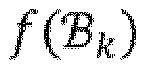
- the anomaly detection module 135 then applies one or more set functions f : U ⁇ R where U ⁇ v i : t i v i , ... ⁇ D to generate a set of features.
- the value of a feature for the kth bucket is thus f B k .
- the principal value can include any of numerical values, categorical values, combinations thereof, or other similar principal value types that would be known to one of ordinary skill in the art with the present disclosure before them.
- Examples of a numerical principal values as provided above would include 8:50 (am), 100 (gigabits of data), 30 (memory access operations), 80% (CPU usage), and so forth.
- Examples of categorical principal values include names, locations, or other non-numerical data.
- the suitable anomaly detection algorithm will take as inputs bucket features f B i for buckets chronologically earlier in time than a current bucket j, i.e., for i ⁇ j, and then generate an anomaly score which corresponds to how anomalous is the value f B j for the current bucket j.
- the operation for the exemplary algorithm can be expressed as f B j , f ( B i : i ⁇ j ⁇ s where s is the anomaly score.
- an exemplary anomaly detection algorithm tries to predict a distribution for a new feature value based on relevant historical data and the time the feature value occurs.
- the exemplary anomaly detection algorithm can account for multiple effects, such as slowly changing level, periodic patterns, weekday/weekend differences and recurrent patterns that relate to the calendar. For example, if a prediction is being made for 10 am on Monday morning, the anomaly distribution algorithm will estimate the probability distribution of values for the feature based on historical behavior for Monday mornings around that time and may also account for differences between days of the month or Mondays of the month. In some embodiments, a test is made to check if there is a statistically significant over occurrence of large predictions errors which coincide with a particular calendar feature.
- the exemplary algorithm can calculate the chance of seeing a given count (or higher) of large prediction errors for a particular day of month, day of week and week of month, say the 2nd Monday of each month, and so on. In various embodiments, if this chance is small then it is typically appropriate to estimate a correction to the predicted distribution which depends on this feature, i.e., correct the predictions with information about previous of the same type of calendar day.
- a * 1 denotes any value from the set of possible values for the first type of categorical attribute.
- Examples of the type of categorical attribute include user and location.
- the exemplary counterfactual processing module 140 may selectively remove portions of the data instances corresponding to each categorical attribute, recalculate the anomaly scores, and determine if removal of the categorical attributes reduces or removes the anomaly. If removal does reduce or remove the anomaly, it can be determined that the object of the computing environment responsible for producing the removed categorical attributes is likely a source (could be one of many) for the anomaly. This process, in various embodiments, does not categorize the detection of an anomaly as a malicious or nefarious event, but instead detects the anomaly and flags associated portions of the computing environment for further consideration or review.
- the counterfactual processing module 140 can provide a mechanism for asking and answering questions such as, for example, what would the situation be like if all the data labelled with a given attribute were removed, or what would it be like if all the data except that labelled with a given attribute were removed.
- these counterfactual processing can be executed very efficiently depending on the function.
- a mean e.g., numerical principal value
- the system 105 is not required to store all the data in a bucket, but only additionally maintain a count and mean of values for each distinct value of each categorical attribute.
- various embodiments ask whether the anomaly scores are lower when a portion of the data instances with specific categorical attributes are removed and the remaining data instances are rescored. If yes, the specific categorical attributes whose data instances were removed likely contributed to the discrepant anomaly score.
- counterfactual reasoning agrees with knowledge available for countably additive functions like count or sum. For example, if it is observed first that the count is unusually high, and then observed that, if a particular category had not occurred, the count is normal. In this example, it seems reasonable to conclude that the "behavior" of that particular category caused the anomalous score.
- the system 105 may use a regularity approach for understanding causation (i.e. "B causes C” if "whenever B occurs C occurs"). More specifically, it is known that the categorical attribute a j i influences an anomaly score of a bucket B k if the output of an anomaly detection algorithm (i.e., score of the bucket) is roughly the same in all alternative worlds (such as removing any subset of the data instances which are not labeled with a j i ) in which all the data instances labeled a j i exist (e.g., whenever B occurred, C also occurred).
- a regularity approach for understanding causation i.e. "B causes C” if "whenever B occurs C occurs”
- the categorical attribute a j i influences an anomaly score of a bucket B k if the output of an anomaly detection algorithm (i.e., score of the bucket) is roughly the same in all alternative worlds (such as removing any subset of the data instances which
- Examples of such set functions include determining maximum or minimum values of the principal values in the bucket, i.e., max v i : t i v i , ... ⁇ B k and min ⁇ v i : t i v i , ... ⁇ B k ⁇ .
- the system 105 may determine that a bucket minimum is unusually low and that the bucket minimum coincides with a particular categorical attribute. In that case, it seems reasonable to conclude that the "behavior" of that categorical attribute caused the anomalously low score in this example.
- exemplary processes above can be generally referred to as a process for creating and using a behavioral profile of a computing environment.
- the behaviors of the computing environment are assessed for anomalous activity/behaviors.
- the remediation module 145 may be executed to remediate the cause or causes in some embodiments.
- the specific methods by which the remediation module 145 remediates a cause are highly dependent upon the type of anomaly detected. For example, if the anomaly includes a high rate of access to a particular database, the remediation module 145 may restrict access privileges for the database until the anomaly is reviewed. If the anomaly is unusually frequent file transfers (e.g., exfiltration) of high volumes of data outside a protected network, the remediation module 145 may restrict file transfers by specifically identified machines in the network. This could occur through changing firewall policies or preventing access to any external network by the machines.
- the present disclosure provides various embodiments of systems and methods to detect anomalies within computing environments and deduce the cause or causes of those anomalies.
- the systems and methods can detect unusual events, rates, metrics and so forth for any computing environment.
- multiple anomalies can be present and detected by the systems and methods herein.
- the systems and methods can detect both exfiltration of data and excessive login attempts.
- FIG. 2 is a flowchart of an example method 200 of detecting anomalous activity in a computing environment and determining one or more causes for the anomalous activity.
- the example method 200 comprises a step 205 of receiving an input stream of data instances for a time series.
- an input stream can be received from a computing environment.
- the time series can include any span of time desired.
- the method includes evaluating the input stream that includes data that spans over a period of time.
- the example method 200 can involve using unsupervised machine learning, inasmuch as the data utilized is that which is included in the input stream only. That is, the entirety of the analysis, in some embodiments, involves the input stream without using pre-determined or pre-configured metrics for assessing the data instances of the input stream.
- the data instances of the input stream are time stamped.
- the data instances also comprise at least one principal value, and each principal value comprises a set of categorical attributes.
- the example method 200 includes a step 210 of generating anomaly scores for each of the data instances over continuous time intervals. That is, the data instances may be scored in a chronological manner such that anomaly scores along the timeline are calculated.
- the example method 200 then includes a step 215 of detecting a change in the anomaly scores over the continuous time intervals for the data instances. Stated otherwise, the example method 200 examines the scores calculated for the buckets of data instances (as described above) and locates variances in the scores that are indicative of an anomaly. In some embodiments, the user can specify how much scores can deviate over time before the deviations are flagged as an anomaly.
- the principal value is network traffic volume
- the network traffic volume rates change only slightly (e.g., +/- 5%)
- these discrepancies in network traffic volume are not anomalous, whereas a change of more than 10% may be flagged as anomalous.
- an anomaly score is a normalized measure of how big the deviation is, and the larger the score the more unusual the deviation.
- the system 105 characterizes historical deviations using a density function, i.e., a chance f(x) of seeing a deviation x in the value of the set function.
- the anomaly score in some embodiments, is related to the chance of seeing a deviation which is at least as unlikely, i.e. the total chance of seeing any value y for which f(y) ⁇ f(x).
- a fixed cutoff on the anomaly score can be utilized, i.e., an anomaly is something which should occur rarely based on historical data, so has a score greater than a fixed threshold.
- the score may therefore amount to a dynamic threshold since it is based on the data characteristics.
- the system 105 separately and precisely controls the rate at which the system 105 generate alerts at a specific severity based on the anomaly score, i.e., the system 105 does not allow this to exceed (over a very long time frame, although it can exceed it for shorter time frames) more than a certain value. Higher severity alerts are allowed less frequently, according to some embodiments.
- the example method 200 includes a step 220 of identifying which of the set of categorical attributes of the data instances caused the change in the anomaly scores using a counterfactual analysis.
- FIG. 3 illustrates an example method 300 of counterfactual analysis.
- the example method 200 can include an optional step 225 of generating recommendations for remediating the set of categorical attributes to remediate a malicious behavior or other underlying cause of the anomaly.
- the system can suggest that users not be allowed to log in from remote locations if categorical attributes indicate that users are logging in after permissible log in hours when remote.
- the system can suggest that all devices that are used to access a particular database use a higher level of authentication in response to detecting anomalous activity (e.g., high level of access requests) with respect to the database.
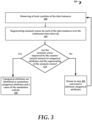
- FIG. 3 is a flowchart of an example method 300 of counterfactual analysis, which is an example embodiment of the identifying step 220 in FIG. 2 .
- the example method 300 comprises a step 305 of removing at least a portion of the data instances. For example, data instances associated with a device on a network can be removed.
- the example method 300 includes a step 310 of regenerating anomaly scores for each of the data instances over the continuous time intervals.
- a determination is made in step 315 if the regenerated anomaly scores are improved (e.g., by the removal that used "counterfactual" processing) compared to the anomaly scores.
- anomaly scores are improved (e.g., variances in anomaly scores are removed and the anomaly scores are substantially consistent with one another), then at least a portion of the categorical attributes are identified as anomalous categorical attributes and a cause of the anomalous activity in step 320 of the example in FIG. 3 . Stated otherwise, an improvement in an anomaly store is a lower score (e.g., the deviation is less unusual), according to various embodiments.
- the example method 300 returns to step 305 and a second portion of the categorical attributes are removed and steps 310 and 315 are repeated. This process may continue until a cause or causes of an anomaly are determined.
- the system 105 allows for multiple causes of an anomaly, i.e. it is possible that two distinct categorical attributes both contribute to the anomaly, and the system 105 will report each cause.
- the system 105 can order the attributes in such a way that testing can terminate when the system 105 locates an attribute which doesn't "cause" an anomaly.
- the system 105 can compute a positive score for how influential a categorical attribute is, with zero meaning not influential at all.
- the counterfactual processing comprises efficiently subtracting components from a behavioral profile (e.g., analysis of the input stream) until the component contributing to the unusual behavior is isolated and located.
- a behavioral profile e.g., analysis of the input stream
- the systems and methods can utilize a regularity analysis rather than a counterfactual analysis.
- the regularity analysis comprises identifying when a categorical attribute of the set of categorical attributes influences the anomaly score for the set of categorical attributes if an output of an anomaly detection algorithm is approximately identical to alternative instances in which the set of categorical attributes exists.
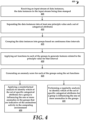
- FIG. 4 is a flowchart of another example method, example method 400, of anomaly and causation detection according to various embodiments.
- the example method 400 includes a step 405 of receiving an input stream of data instances.
- the data instances in the input stream are time stamped.
- the example method 400 includes a step 410 of separating the data instances into at least one principal value and a set of categorical attributes, as well as a step 415 of grouping the data instances into groups based on continuous time intervals. It will be understood that, in various embodiments, each of the continuous time intervals has a length that represents a duration of the interval.
- the example method 400 includes a step 420 of applying set functions to each of the groups to generate features related to the principal value for that interval, and a step 425 of generating an anomaly score for each of the groups using an anomaly detection algorithm.
- the example method 400 comprises either (or both) a step 430 of applying a counterfactual analysis to identify which of the set of specific categorical attributes for a group is influencing the one or more anomalies in the groups that are indicative of the anomalous activity in the computing environment; or a step 435 of performing a regularity analysis to identify which of the set of specific categorical attributes for a group is influencing the one or more anomalies in the groups.
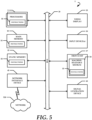
- FIG. 5 is a diagrammatic representation of an example machine in the form of a computer system 1, within which a set of instructions for causing the machine to perform any one or more of the methodologies discussed herein may be executed.
- the machine operates as a standalone device or may be connected (e.g., networked) to other machines.
- the machine may operate in the capacity of a server or a client machine in a server-client network environment, or as a peer machine in a peer-to-peer (or distributed) network environment.
- the machine may be a personal computer (PC), a tablet PC, a set-top box (STB), a personal digital assistant (PDA), a cellular telephone, a portable music player (e.g., a portable hard drive audio device such as an Moving Picture Experts Group Audio Layer 3 (MP3) player), a web appliance, a network router, switch or bridge, or any machine capable of executing a set of instructions (sequential or otherwise) that specify actions to be taken by that machine.
- PC personal computer
- PDA personal digital assistant
- MP3 Moving Picture Experts Group Audio Layer 3
- MP3 Moving Picture Experts Group Audio Layer 3
- web appliance e.g., a web appliance, a network router, switch or bridge, or any machine capable of executing a set of instructions (sequential or otherwise) that specify actions to be taken by that machine.
- machine shall also be taken to include any collection of machines that individually or jointly execute a set (or multiple sets) of instructions to perform any one or more of the methodologies discussed herein.
- the example computer system 1 includes a processor or multiple processor(s) 5 (e.g., a central processing unit (CPU), a graphics processing unit (GPU), or both), and a main memory 10 and static memory 15, which communicate with each other via a bus 20.
- the computer system 1 may further include a video display 35 (e.g., a liquid crystal display (LCD)).
- a processor or multiple processor(s) 5 e.g., a central processing unit (CPU), a graphics processing unit (GPU), or both
- main memory 10 and static memory 15 which communicate with each other via a bus 20.
- the computer system 1 may further include a video display 35 (e.g., a liquid crystal display (LCD)).
- LCD liquid crystal display
- the computer system 1 may also include input device(s) 30 (also referred to as alpha-numeric input device(s), e.g., a keyboard), a cursor control device (e.g., a mouse), a voice recognition or biometric verification unit (not shown), a drive unit 37 (also referred to as disk drive unit), a signal generation device 40 (e.g., a speaker), and a network interface device 45.
- the computer system 1 may further include a data encryption module (not shown) to encrypt data.
- the drive unit 37 includes a machine-readable medium 50 (which may be a computer readable medium) on which is stored one or more sets of instructions and data structures (e.g., instructions 55) embodying or utilizing any one or more of the methodologies or functions described herein.
- the instructions 55 may also reside, completely or at least partially, within the main memory 10 and/or within the processor(s) 5 during execution thereof by the computer system 1.
- the main memory 10 and the processor(s) 5 may also constitute machine-readable media.
- the instructions 55 may further be transmitted or received over a network (e.g., network 150 or network 520, see FIG. 1 and FIG. 5 , respectively) via the network interface device 45 utilizing any one of a number of well-known transfer protocols (e.g., Hyper Text Transfer Protocol (HTTP)).
- HTTP Hyper Text Transfer Protocol
- machine-readable medium 50 is shown in an example embodiment to be a single medium, the term "computer-readable medium" should be taken to include a single medium or multiple media (e.g., a centralized or distributed database and/or associated caches and servers) that store the one or more sets of instructions.
- computer-readable medium shall also be taken to include any medium that is capable of storing, encoding, or carrying a set of instructions for execution by the machine and that causes the machine to perform any one or more of the methodologies of the present application, or that is capable of storing, encoding, or carrying data structures utilized by or associated with such a set of instructions.
- the term “computer-readable medium” shall accordingly be taken to include, but not be limited to, solid-state memories, optical and magnetic media, and carrier wave signals. Such media may also include, without limitation, hard disks, floppy disks, flash memory cards, digital video disks, random access memory (RAM), read only memory (ROM), and the like.
- RAM random access memory
- ROM read only memory
- the example embodiments described herein may be implemented in an operating environment comprising software installed on a computer, in hardware, or in a combination of software and hardware.
- the Internet service may be configured to provide Internet access to one or more computing devices that are coupled to the Internet service, and that the computing devices may include one or more processors, buses, memory devices, display devices, input/output devices, and the like.
- the Internet service may be coupled to one or more databases, repositories, servers, and the like, which may be utilized in order to implement any of the embodiments of the disclosure as described herein.
- These computer program instructions may also be stored in a computer readable medium that can direct a computer, other programmable data processing apparatus, or other devices to function in a particular manner, such that the instructions stored in the computer readable medium produce an article of manufacture including instructions which implement the function/act specified in the flowchart and/or block diagram block or blocks.
- the computer program instructions may also be loaded onto a computer, other programmable data processing apparatus, or other devices to cause a series of operational steps to be performed on the computer, other programmable apparatus or other devices to produce a computer implemented process such that the instructions which execute on the computer or other programmable apparatus provide processes for implementing the functions/acts specified in the flowchart and/or block diagram block or blocks.
- each block in the flowchart or block diagrams may represent a module, segment, or portion of code, which comprises one or more executable instructions for implementing the specified logical function(s).
- the functions noted in the block may occur out of the order noted in the figures. For example, two blocks shown in succession may, in fact, be executed substantially concurrently, or the blocks may sometimes be executed in the reverse order, depending upon the functionality involved.
- a hyphenated term (e.g., "on-demand”) may be occasionally interchangeably used with its non-hyphenated version (e.g., "on demand")
- a capitalized entry e.g., "Software”
- a non-capitalized version e.g., "software”
- a plural term may be indicated with or without an apostrophe (e.g., PE's or PEs)
- an italicized term e.g., "N+1” may be interchangeably used with its non-italicized version (e.g., "N+1”).
- Such occasional interchangeable uses shall not be considered inconsistent with each other.
- a “means for” performing a task or set of tasks. It will be understood that a “means for” may be expressed herein in terms of a structure, such as a processor, a memory, an I/O device such as a camera, or combinations thereof. Alternatively, the “means for” may include an algorithm that is descriptive of a function or method step, while in yet other embodiments the “means for” is expressed in terms of a mathematical formula, prose, or as a flow chart or signal diagram.
- Coupled means “coupled,” “connected”, “connecting,” “electrically connected,” etc., are used interchangeably herein to generally refer to the condition of being electrically/electronically connected.
- a first entity is considered to be in "communication” with a second entity (or entities) when the first entity electrically sends and/or receives (whether through wireline or wireless means) information signals (whether containing data information or non-data/control information) to the second entity regardless of the type (analog or digital) of those signals.
- various figures (including component diagrams) shown and discussed herein are for illustrative purpose only, and are not drawn to scale.
Landscapes
- Engineering & Computer Science (AREA)
- Computer Security & Cryptography (AREA)
- Computing Systems (AREA)
- General Engineering & Computer Science (AREA)
- Theoretical Computer Science (AREA)
- Software Systems (AREA)
- Computer Hardware Design (AREA)
- Computer Networks & Wireless Communication (AREA)
- Signal Processing (AREA)
- Evolutionary Computation (AREA)
- Data Mining & Analysis (AREA)
- Medical Informatics (AREA)
- Computer Vision & Pattern Recognition (AREA)
- Physics & Mathematics (AREA)
- General Physics & Mathematics (AREA)
- Mathematical Physics (AREA)
- Artificial Intelligence (AREA)
- Information Retrieval, Db Structures And Fs Structures Therefor (AREA)
- Burglar Alarm Systems (AREA)
- Testing And Monitoring For Control Systems (AREA)
- Debugging And Monitoring (AREA)
Description
- The present technology relates generally to digital security, and more particularly, but not by limitation, to systems and methods that detect anomalies in computing environments that are indicative of malicious or otherwise unwanted behavior within, or performed by, the computing environment. This anomaly detection process is enhanced using methodologies for detecting and isolating sources of the anomalies.
- U.S. Patent Application Publication No.
US 2006/167917 A1 proposes a system that automates the self-organization of collectives of computational entities. One variant of the proposed solution provides a multi-agent system architecture with a plurality of interconnected system layers, including structural components, analytical functions, active functions and functional applications. Specifically, these system layers consist of a distributed computer and communications network of multi-functional Intelligent Mobile Software Agents (IMSAs) in a multi-agent system. In additional layers, IMSA analytical methods and group learning processes are organized. In further layers, active IMSA simulation modeling and group scenario generation and decision-making processes are organized. IMSA cooperation for aggregation and re-aggregation processes is organized on a further layer. IMSA inter-team rivalry and coalition formation and evolution are organized in an additional layer. The combination of these complex processes allows active network plasticity and automated programming functionality of later layers. Finally, functional applications are at the final layer. - In U.S. Patent Application Publication No.
US 2013/0238476 A1 an electronic device that performs counterfactual testing is disclosed. During operation, the electronic device accesses a functional representation of a financial history of a user, where the functional representation specifies a financial output value based on input values and a behavioral pattern, and the behavioral pattern specifies a relationship between at least a pair of the variables associated with a dimension in the financial history. Then, the electronic device modifies the functional representation based on a financial circumstance that is different than financial circumstances in the financial history. Moreover, the electronic device calculates the financial output value using the functional representation and the input values, and a modified financial output value using the modified functional representation and the input values. Next, the electronic device compares the financial output value and the modified financial output value. Based on the comparison and a testing metric, the electronic device determines a result of the counterfactual testing. - The invention is defined in the independent claims. Particular embodiments are set out in the dependent claims.
- Certain embodiments of the present technology are illustrated by the accompanying figures. It will be understood that the figures are not necessarily to scale and that details not necessary for an understanding of the technology or that render other details difficult to perceive may be omitted. It will be understood that the technology is not necessarily limited to the particular embodiments illustrated herein.
-
FIG. 1 is a high level schematic diagram of computing architecture for practicing aspects of the present technology. -
FIG. 2 is a flowchart of an example method for detecting anomalous activity in a computing environment and determining a cause(s) thereof. -
FIG. 3 is a flowchart of an example method of counterfactual analysis for determining a cause or causes of an anomalous activity. -
FIG. 4 is a flowchart of another example method of anomaly and causation detection. -
FIG. 5 is a schematic diagram of a computing system that is used to implement embodiments according to the present technology. - The present disclosure is directed to various embodiments of systems and methods that use unsupervised machine learning to detect anomalous activity and isolate a source or sources thereof. In more detail, an input stream of data instances is received. The input stream can include data instances of behavior or activity of a computer environment. Generally, a computer environment can include an individual computing system as well as a plurality of computers or other computing devices such as a network. The input stream can be obtained from any method that would be known to one skilled in the art.
- In various embodiments, the data instances are obtained over a period of time and each of the data instances are time stamped. Various analyses described herein examine the data instances over all or a portion of the period of time for which the input stream is collected. Anomalies can be detected within this input stream by examining and comparing principal values (or at least one principal value) and their corresponding categorical attributes as they changed over time. These changes are identified as anomalies, according to various embodiments. Further inspection of the anomalies may confirm or eliminate the anomalies as indicative of malicious behavior or other computing environment issues.
- In accordance with various embodiments of the present disclosure, when an anomaly is detected, a cause or causes of the anomaly are located through a process of counterfactual processing. An exemplary process of counterfactual processing uses reductionism and elimination to isolate principal values and/or corresponding categorical attributes that contribute to the anomaly. In various embodiments, these anomalous principal values and/or corresponding categorical attributes are then traced back to a source such as a user, a computing system, a network component, or the like (generally referred to as a source point). This source point can then be identified and flagged for further review. In some embodiments, the source point is automatically remediated. For example, if the source point is a computing system and the anomaly that is detected is a spike in traffic between the computing system and a foreign server, the remediation can comprise automatically blocking network access for the computing system until a full review of the computing system has been conducted.
- These and other advantages of the present technology are provided below with reference to the collective drawings.
-
FIG. 1 is a high level schematic diagram of an exemplary computing architecture (hereinafter architecture 100) of the present technology. Theexemplary architecture 100 comprises an exemplary anomaly detection and causation detection system 105 (hereinafter also referred to as exemplary system 105 or system 105 for short), which in some embodiments comprises a server or cloud-based computing device configured specifically to perform the analyses described herein. That is, the system 105 in some embodiments is a particular purpose computing device that is specifically designed and programmed (e.g., configured or adapted) to perform any of the methods described herein. The system 105 can also comprise a plurality of distributed computing systems that cooperatively provide the features of the system 105. For example, individual ones of the plurality of distributed computing systems can provide one or more unique functions or services. In some embodiments, the system 105 can comprise a cloud computing environment or other similar networked computing system. - The system 105 can be coupled with an
input source 110 that provides an input stream to the system 105. Aninput source 110 can comprise, for example, a computing system, an enterprise network, a plurality of computing systems arranged as a network, virtual machines, application(s), network tap(s), services, a cloud, containers, or other similar computing environment that creates data instances. In some embodiments, theinput source 110 comprises a database or data store that stores pre-obtained data from any of the aforementioned sources for use in accordance with the present disclosure. - In one embodiment, the system 105 comprises a
processor 115 andmemory 120 for storing instructions. Thememory 120 can include an inputstream interface module 125, an inputstream parser module 130, ananomaly detection module 135, acounterfactual processing module 140, and aremediation module 145. As used herein, the terms "module" may also refer to any of an application-specific integrated circuit ("ASIC"), an electronic circuit, a processor (shared, dedicated, or group) that executes one or more software or firmware programs, a combinational logic circuit, and/or other suitable components that provide the described functionality. - In some embodiments, the system 105 receives an input stream from the
input source 110 via the inputstream interface module 125. An input stream may include a plurality of data instances that are collected over a period of time. The individual data instances (or components thereof) may be time stamped so that a chronological order can be maintained for the data instances. - In some embodiments, using unsupervised machine learning, the exemplary system 105 can evaluate the data instances over time to detect anomalous behavior. In general, anomalous behavior can include any deviation in the data instances as viewed over time. For example, if the data instances are collected for a network such as a cloud, changes in resource utilization of a service within the cloud can be identified as anomalous. In another example, a brief spike in file transfer rates between a computing device and another computing device (possibly in a foreign country) can be flagged as anomalous. The present disclosure is not intended to be limited to unsupervised machine learning and in some embodiments can incorporate other machine learning methods. In one embodiment, user feedback can be incorporated into an anomaly score via supervised machine learning techniques, or at least partially supervised or a mixture that is based on how unusual the deviation/anomaly is relative to models of historical behavior of the system 105, as well as how it compares to other anomaly instances that have been indicated as important.
- The use of unsupervised machine learning in various embodiments allows the system 105 to evaluate only the data instances available and examine these data instances for anomalous behavior in a self-referential manner. That is, in various embodiments, the data instances are modeled for the time period for which data instances are collected and these data instances are used without referencing pre-generated behavior profiles or other similar profiles. The use of pre-generated behavior profiles may be advantageous in some embodiments, if available, but these profiles are not required.
- Changes in data instances over time can be flagged as anomalous if the changes have a magnitude that is unexpected. The exemplary system 105 need not rely on rigid thresholds or rules for determining if changes in the data instances are anomalous, but such information can be used to confirm or validate the anomaly. In some embodiments, the system 105 can calculate a probability of a current behavior based on historical behavior, where low probability events are classified as anomalies. Again, the use of thresholds or rules is not required, but is also not prohibited.
- In various embodiments, each data instance is comprised of at least one principal value that represents an aspect or object of the computing environment that is to be measured for anomalies. Non-limiting examples of principal values include network traffic volume, memory access and/or usage, processor usage rates, file transfer, file access, device access, and so forth. In various embodiments, the at least one principal values selected can be a subset of all available principal values in the data instances. The principal values selected for the data instances can be user-selected or user-defined, or can be based on prior knowledge, such as prior instances of anomalous network activity. For example, if prior anomalies in increased CPU usage in a cloud were linked to malicious behavior, the principal values could include CPU usage aspects.
- In other embodiments, the data instances can be selected based on predefined understanding of the data type, or automatically by the system 105 based on data characteristics.
- In some embodiments, a principal value comprises corresponding categorical attributes and values thereof. In one example, if the principal value is "log on time", categorical attributes could include users, system ID, login locations, and so forth.
- When the input stream is received, the exemplary input
stream parser module 130, shown in the example inFIG. 1 , may be executed to separate or parse the input stream into data instances that are ordered in time. That is, in various embodiments, the data instances are collected over a period of time and time stamped as noted above. The inputstream parser module 130 can determine the influence that instances of the collected data have on the computing environment using the principal values υ (or at least one principal value) and corresponding set of categorical attributes
stream parser module 130 considers the data as a collection


stream parser module 130 converts the principal value and categorical attributes into a collection of sets (8:50am, jim, work); (7:40am, jill, work); and (6:45pm greg, home). Other similar tuples can be created for other types of data sets, and can include a combination of numerical and/or non-numerical values. - In some embodiments, anomaly influence aims to understand the way that the categorical attributes are influencing the anomalies that are located by analyzing the principal value υ.
- Anomaly detection as disclosed in various embodiments herein involves the comparison and evaluation of the at least one principal value changing over time. According to some embodiments, once sets are created from the data instances, the
anomaly detection module 135 is executed to detect anomalies for the data:

- In various embodiments, the
anomaly detection module 135 creates features in order to perform anomaly detection by bucketing (e.g., grouping) the data instances into continuous time intervals, where a kth bucket or group is defined according to the equation:
- The
anomaly detection module 135 then applies one or more set functions f :



- The
anomaly detection module 135, in the above example, then applies a suitable anomaly detection algorithm to the bucketed data instances. - In various embodiments, the suitable anomaly detection algorithm will take as inputs bucket features


- In various embodiments, an exemplary anomaly detection algorithm tries to predict a distribution for a new feature value based on relevant historical data and the time the feature value occurs. The exemplary anomaly detection algorithm can account for multiple effects, such as slowly changing level, periodic patterns, weekday/weekend differences and recurrent patterns that relate to the calendar. For example, if a prediction is being made for 10 am on Monday morning, the anomaly distribution algorithm will estimate the probability distribution of values for the feature based on historical behavior for Monday mornings around that time and may also account for differences between days of the month or Mondays of the month. In some embodiments, a test is made to check if there is a statistically significant over occurrence of large predictions errors which coincide with a particular calendar feature. For example, it is expected on average there to be "n" x "p"/100 "p" percentile prediction errors given "n" predictions. Furthermore, (assuming independence), this must follow a binomial distribution. Therefore, the exemplary algorithm can calculate the chance of seeing a given count (or higher) of large prediction errors for a particular day of month, day of week and week of month, say the 2nd Monday of each month, and so on. In various embodiments, if this chance is small then it is typically appropriate to estimate a correction to the predicted distribution which depends on this feature, i.e., correct the predictions with information about previous of the same type of calendar day.
- In order to understand what the impact of one of the categorical attributes is on an anomaly, it is noted that the distinct values of the attribute create a partition of the data instances in the bucket, i.e., the data instances for which the ith categorical attribute is


- Using the aforementioned algorithms and the separation of data instances by their categorical attributes, the exemplary
counterfactual processing module 140 may selectively remove portions of the data instances corresponding to each categorical attribute, recalculate the anomaly scores, and determine if removal of the categorical attributes reduces or removes the anomaly. If removal does reduce or remove the anomaly, it can be determined that the object of the computing environment responsible for producing the removed categorical attributes is likely a source (could be one of many) for the anomaly. This process, in various embodiments, does not categorize the detection of an anomaly as a malicious or nefarious event, but instead detects the anomaly and flags associated portions of the computing environment for further consideration or review. - In various embodiments, the
counterfactual processing module 140 can provide a mechanism for asking and answering questions such as, for example, what would the situation be like if all the data labelled with a given attribute were removed, or what would it be like if all the data except that labelled with a given attribute were removed. - In various embodiments, these counterfactual processing can be executed very efficiently depending on the function. For example, to do this process for a mean (e.g., numerical principal value) the system 105 is not required to store all the data in a bucket, but only additionally maintain a count and mean of values for each distinct value of each categorical attribute. Specifically, for each equivalence class we need


- This counterfactual approach for understanding causation, according to various embodiments, falls under logical principles of "if B does not happen, C does not happen" and thus "B causes C" by logical extension. Specifically, for certain types of set functions (e.g., countably additive functions) it is understood that the attribute


- In general, counterfactual reasoning agrees with knowledge available for countably additive functions like count or sum. For example, if it is observed first that the count is unusually high, and then observed that, if a particular category had not occurred, the count is normal. In this example, it seems reasonable to conclude that the "behavior" of that particular category caused the anomalous score.
- For other types of set functions, for example, where the presence of a single example data instance can cause an anomaly of a similar score, then the system 105 may use a regularity approach for understanding causation (i.e. "B causes C" if "whenever B occurs C occurs"). More specifically, it is known that the categorical attribute


- Examples of such set functions include determining maximum or minimum values of the principal values in the bucket, i.e.,


- These exemplary processes above can be generally referred to as a process for creating and using a behavioral profile of a computing environment. In various embodiments, the behaviors of the computing environment are assessed for anomalous activity/behaviors.
- Once an anomaly has been detected and a cause or causes isolated, the
remediation module 145 may be executed to remediate the cause or causes in some embodiments. In various embodiments, the specific methods by which theremediation module 145 remediates a cause are highly dependent upon the type of anomaly detected. For example, if the anomaly includes a high rate of access to a particular database, theremediation module 145 may restrict access privileges for the database until the anomaly is reviewed. If the anomaly is unusually frequent file transfers (e.g., exfiltration) of high volumes of data outside a protected network, theremediation module 145 may restrict file transfers by specifically identified machines in the network. This could occur through changing firewall policies or preventing access to any external network by the machines. - In sum, the present disclosure provides various embodiments of systems and methods to detect anomalies within computing environments and deduce the cause or causes of those anomalies. The systems and methods can detect unusual events, rates, metrics and so forth for any computing environment. In some embodiments, multiple anomalies can be present and detected by the systems and methods herein. For example, the systems and methods can detect both exfiltration of data and excessive login attempts.
-
FIG. 2 is a flowchart of anexample method 200 of detecting anomalous activity in a computing environment and determining one or more causes for the anomalous activity. Theexample method 200 comprises astep 205 of receiving an input stream of data instances for a time series. For example, an input stream can be received from a computing environment. The time series can include any span of time desired. The method includes evaluating the input stream that includes data that spans over a period of time. Theexample method 200 can involve using unsupervised machine learning, inasmuch as the data utilized is that which is included in the input stream only. That is, the entirety of the analysis, in some embodiments, involves the input stream without using pre-determined or pre-configured metrics for assessing the data instances of the input stream. - In some embodiments, the data instances of the input stream are time stamped. The data instances also comprise at least one principal value, and each principal value comprises a set of categorical attributes.
- After the input stream is received, the
example method 200 includes astep 210 of generating anomaly scores for each of the data instances over continuous time intervals. That is, the data instances may be scored in a chronological manner such that anomaly scores along the timeline are calculated. Theexample method 200 then includes a step 215 of detecting a change in the anomaly scores over the continuous time intervals for the data instances. Stated otherwise, theexample method 200 examines the scores calculated for the buckets of data instances (as described above) and locates variances in the scores that are indicative of an anomaly. In some embodiments, the user can specify how much scores can deviate over time before the deviations are flagged as an anomaly. For example, if the principal value is network traffic volume, and the network traffic volume rates change only slightly (e.g., +/- 5%), these discrepancies in network traffic volume are not anomalous, whereas a change of more than 10% may be flagged as anomalous. - In various embodiments, an anomaly score is a normalized measure of how big the deviation is, and the larger the score the more unusual the deviation. In some embodiments, the system 105 characterizes historical deviations using a density function, i.e., a chance f(x) of seeing a deviation x in the value of the set function. The anomaly score, in some embodiments, is related to the chance of seeing a deviation which is at least as unlikely, i.e. the total chance of seeing any value y for which f(y) < f(x). A fixed cutoff on the anomaly score can be utilized, i.e., an anomaly is something which should occur rarely based on historical data, so has a score greater than a fixed threshold. The score may therefore amount to a dynamic threshold since it is based on the data characteristics. In various embodiments, the system 105 separately and precisely controls the rate at which the system 105 generate alerts at a specific severity based on the anomaly score, i.e., the system 105 does not allow this to exceed (over a very long time frame, although it can exceed it for shorter time frames) more than a certain value. Higher severity alerts are allowed less frequently, according to some embodiments.
- The
example method 200 includes astep 220 of identifying which of the set of categorical attributes of the data instances caused the change in the anomaly scores using a counterfactual analysis.FIG. 3 illustrates anexample method 300 of counterfactual analysis. - In some embodiments, the
example method 200 can include anoptional step 225 of generating recommendations for remediating the set of categorical attributes to remediate a malicious behavior or other underlying cause of the anomaly. For example, the system can suggest that users not be allowed to log in from remote locations if categorical attributes indicate that users are logging in after permissible log in hours when remote. In another example, the system can suggest that all devices that are used to access a particular database use a higher level of authentication in response to detecting anomalous activity (e.g., high level of access requests) with respect to the database. -
FIG. 3 is a flowchart of anexample method 300 of counterfactual analysis, which is an example embodiment of the identifyingstep 220 inFIG. 2 . Theexample method 300 comprises astep 305 of removing at least a portion of the data instances. For example, data instances associated with a device on a network can be removed. Next, theexample method 300 includes astep 310 of regenerating anomaly scores for each of the data instances over the continuous time intervals. Next, a determination is made instep 315 if the regenerated anomaly scores are improved (e.g., by the removal that used "counterfactual" processing) compared to the anomaly scores. If the anomaly scores are improved (e.g., variances in anomaly scores are removed and the anomaly scores are substantially consistent with one another), then at least a portion of the categorical attributes are identified as anomalous categorical attributes and a cause of the anomalous activity instep 320 of the example inFIG. 3 . Stated otherwise, an improvement in an anomaly store is a lower score (e.g., the deviation is less unusual), according to various embodiments. - If the anomaly scores are not improved, the
example method 300 returns to step 305 and a second portion of the categorical attributes are removed andsteps - The counterfactual processing, in various embodiments, e.g., as used in
step 220 andmethod 300, comprises efficiently subtracting components from a behavioral profile (e.g., analysis of the input stream) until the component contributing to the unusual behavior is isolated and located. - The systems and methods can utilize a regularity analysis rather than a counterfactual analysis. The regularity analysis comprises identifying when a categorical attribute of the set of categorical attributes influences the anomaly score for the set of categorical attributes if an output of an anomaly detection algorithm is approximately identical to alternative instances in which the set of categorical attributes exists.
-
FIG. 4 is a flowchart of another example method,example method 400, of anomaly and causation detection according to various embodiments. Theexample method 400 includes astep 405 of receiving an input stream of data instances. In various embodiments, the data instances in the input stream are time stamped. Theexample method 400 includes astep 410 of separating the data instances into at least one principal value and a set of categorical attributes, as well as astep 415 of grouping the data instances into groups based on continuous time intervals. It will be understood that, in various embodiments, each of the continuous time intervals has a length that represents a duration of the interval. - Next, the
example method 400 includes astep 420 of applying set functions to each of the groups to generate features related to the principal value for that interval, and astep 425 of generating an anomaly score for each of the groups using an anomaly detection algorithm. - In some embodiments, the
example method 400 comprises either (or both) astep 430 of applying a counterfactual analysis to identify which of the set of specific categorical attributes for a group is influencing the one or more anomalies in the groups that are indicative of the anomalous activity in the computing environment; or astep 435 of performing a regularity analysis to identify which of the set of specific categorical attributes for a group is influencing the one or more anomalies in the groups. -
FIG. 5 is a diagrammatic representation of an example machine in the form of acomputer system 1, within which a set of instructions for causing the machine to perform any one or more of the methodologies discussed herein may be executed. In various example embodiments, the machine operates as a standalone device or may be connected (e.g., networked) to other machines. In a networked deployment, the machine may operate in the capacity of a server or a client machine in a server-client network environment, or as a peer machine in a peer-to-peer (or distributed) network environment. The machine may be a personal computer (PC), a tablet PC, a set-top box (STB), a personal digital assistant (PDA), a cellular telephone, a portable music player (e.g., a portable hard drive audio device such as an Moving Picture Experts Group Audio Layer 3 (MP3) player), a web appliance, a network router, switch or bridge, or any machine capable of executing a set of instructions (sequential or otherwise) that specify actions to be taken by that machine. Further, while only a single machine is illustrated, the term "machine" shall also be taken to include any collection of machines that individually or jointly execute a set (or multiple sets) of instructions to perform any one or more of the methodologies discussed herein. - The
example computer system 1 includes a processor or multiple processor(s) 5 (e.g., a central processing unit (CPU), a graphics processing unit (GPU), or both), and amain memory 10 andstatic memory 15, which communicate with each other via abus 20. Thecomputer system 1 may further include a video display 35 (e.g., a liquid crystal display (LCD)). Thecomputer system 1 may also include input device(s) 30 (also referred to as alpha-numeric input device(s), e.g., a keyboard), a cursor control device (e.g., a mouse), a voice recognition or biometric verification unit (not shown), a drive unit 37 (also referred to as disk drive unit), a signal generation device 40 (e.g., a speaker), and anetwork interface device 45. Thecomputer system 1 may further include a data encryption module (not shown) to encrypt data. - The
drive unit 37 includes a machine-readable medium 50 (which may be a computer readable medium) on which is stored one or more sets of instructions and data structures (e.g., instructions 55) embodying or utilizing any one or more of the methodologies or functions described herein. Theinstructions 55 may also reside, completely or at least partially, within themain memory 10 and/or within the processor(s) 5 during execution thereof by thecomputer system 1. Themain memory 10 and the processor(s) 5 may also constitute machine-readable media. - The
instructions 55 may further be transmitted or received over a network (e.g.,network 150 ornetwork 520, seeFIG. 1 andFIG. 5 , respectively) via thenetwork interface device 45 utilizing any one of a number of well-known transfer protocols (e.g., Hyper Text Transfer Protocol (HTTP)). While the machine-readable medium 50 is shown in an example embodiment to be a single medium, the term "computer-readable medium" should be taken to include a single medium or multiple media (e.g., a centralized or distributed database and/or associated caches and servers) that store the one or more sets of instructions. The term "computer-readable medium" shall also be taken to include any medium that is capable of storing, encoding, or carrying a set of instructions for execution by the machine and that causes the machine to perform any one or more of the methodologies of the present application, or that is capable of storing, encoding, or carrying data structures utilized by or associated with such a set of instructions. The term "computer-readable medium" shall accordingly be taken to include, but not be limited to, solid-state memories, optical and magnetic media, and carrier wave signals. Such media may also include, without limitation, hard disks, floppy disks, flash memory cards, digital video disks, random access memory (RAM), read only memory (ROM), and the like. The example embodiments described herein may be implemented in an operating environment comprising software installed on a computer, in hardware, or in a combination of software and hardware. - One skilled in the art will recognize that the Internet service may be configured to provide Internet access to one or more computing devices that are coupled to the Internet service, and that the computing devices may include one or more processors, buses, memory devices, display devices, input/output devices, and the like. Furthermore, those skilled in the art may appreciate that the Internet service may be coupled to one or more databases, repositories, servers, and the like, which may be utilized in order to implement any of the embodiments of the disclosure as described herein.
- The corresponding structures, materials, acts, and equivalents of all means or step plus function elements in the claims below are intended to include any structure, material, or act for performing the function in combination with other claimed elements as specifically claimed. The description of the present technology has been presented for purposes of illustration and description, but is not intended to be exhaustive or limited to the present technology in the form disclosed. Many modifications and variations will be apparent to those of ordinary skill in the art without departing from the scope of the present technology. Exemplary embodiments were chosen and described in order to best explain the principles of the present technology and its practical application, and to enable others of ordinary skill in the art to understand the present technology for various embodiments with various modifications as are suited to the particular use contemplated.
- Aspects of the present technology are described above with reference to flowchart illustrations and/or block diagrams of methods, apparatus (systems) and computer program products according to embodiments of the present technology. It will be understood that each block of the flowchart illustrations and/or block diagrams, and combinations of blocks in the flowchart illustrations and/or block diagrams, can be implemented by computer program instructions. These computer program instructions may be provided to a processor of a general purpose computer, special purpose computer, or other programmable data processing apparatus to produce a machine, such that the instructions, which execute via the processor of the computer or other programmable data processing apparatus, create means for implementing the functions/acts specified in the flowchart and/or block diagram block or blocks.
- These computer program instructions may also be stored in a computer readable medium that can direct a computer, other programmable data processing apparatus, or other devices to function in a particular manner, such that the instructions stored in the computer readable medium produce an article of manufacture including instructions which implement the function/act specified in the flowchart and/or block diagram block or blocks.
- The computer program instructions may also be loaded onto a computer, other programmable data processing apparatus, or other devices to cause a series of operational steps to be performed on the computer, other programmable apparatus or other devices to produce a computer implemented process such that the instructions which execute on the computer or other programmable apparatus provide processes for implementing the functions/acts specified in the flowchart and/or block diagram block or blocks.
- The flowchart and block diagrams in the Figures illustrate the architecture, functionality, and operation of possible implementations of systems, methods and computer program products according to various embodiments of the present technology. In this regard, each block in the flowchart or block diagrams may represent a module, segment, or portion of code, which comprises one or more executable instructions for implementing the specified logical function(s). It should also be noted that, in some alternative implementations, the functions noted in the block may occur out of the order noted in the figures. For example, two blocks shown in succession may, in fact, be executed substantially concurrently, or the blocks may sometimes be executed in the reverse order, depending upon the functionality involved. It will also be noted that each block of the block diagrams and/or flowchart illustration, and combinations of blocks in the block diagrams and/or flowchart illustration, can be implemented by special purpose hardware-based systems that perform the specified functions or acts, or combinations of special purpose hardware and computer instructions.
- In the following description, for purposes of explanation and not limitation, specific details are set forth, such as particular embodiments, procedures, techniques, etc. in order to provide a thorough understanding of the present invention. However, it will be apparent to one skilled in the art that the present invention may be practiced in other embodiments that depart from these specific details.
- Reference throughout this specification to "one embodiment" or "an embodiment" means that a particular feature, structure, or characteristic described in connection with the embodiment is included in at least one embodiment of the present invention. Thus, the appearances of the phrases "in one embodiment" or "in an embodiment" or "according to one embodiment" (or other phrases having similar import) at various places throughout this specification are not necessarily all referring to the same embodiment. Furthermore, the particular features, structures, or characteristics may be combined in any suitable manner in one or more embodiments. Furthermore, depending on the context of discussion herein, a singular term may include its plural forms and a plural term may include its singular form. Similarly, a hyphenated term (e.g., "on-demand") may be occasionally interchangeably used with its non-hyphenated version (e.g., "on demand"), a capitalized entry (e.g., "Software") may be interchangeably used with its non-capitalized version (e.g., "software"), a plural term may be indicated with or without an apostrophe (e.g., PE's or PEs), and an italicized term (e.g., "N+1") may be interchangeably used with its non-italicized version (e.g., "N+1"). Such occasional interchangeable uses shall not be considered inconsistent with each other.
- Also, some embodiments may be described in terms of "means for" performing a task or set of tasks. It will be understood that a "means for" may be expressed herein in terms of a structure, such as a processor, a memory, an I/O device such as a camera, or combinations thereof. Alternatively, the "means for" may include an algorithm that is descriptive of a function or method step, while in yet other embodiments the "means for" is expressed in terms of a mathematical formula, prose, or as a flow chart or signal diagram.
- The terminology used herein is for the purpose of describing particular embodiments only and is not intended to be limiting of the invention. As used herein, the singular forms "a", "an" and "the" are intended to include the plural forms as well, unless the context clearly indicates otherwise. It will be further understood that the terms "comprises" and/ or "comprising," when used in this specification, specify the presence of stated features, integers, steps, operations, elements, and/or components, but do not preclude the presence or addition of one or more other features, integers, steps, operations, elements, components, and/or groups thereof.
- It is noted at the outset that the terms "coupled," "connected", "connecting," "electrically connected," etc., are used interchangeably herein to generally refer to the condition of being electrically/electronically connected. Similarly, a first entity is considered to be in "communication" with a second entity (or entities) when the first entity electrically sends and/or receives (whether through wireline or wireless means) information signals (whether containing data information or non-data/control information) to the second entity regardless of the type (analog or digital) of those signals. It is further noted that various figures (including component diagrams) shown and discussed herein are for illustrative purpose only, and are not drawn to scale.
- While specific embodiments of, and examples for, the system are described above for illustrative purposes, various equivalent modifications are possible,
as those skilled in the relevant art will recognize. For example, while processes or steps are presented in a given order, alternative embodiments may perform routines having steps in a different order, and some processes or steps may be deleted, moved, added, subdivided, combined, and/or modified to provide alternative or sub-combinations. Each of these processes or steps may be implemented in a variety of different ways. Also, while processes or steps are at times shown as being performed in series, these processes or steps may instead be performed in parallel, or may be performed at different times.
Claims (13)
- A computer-implemented method for detecting anomalous activity in a computing environment (100), the method comprising:receiving (205) an input stream of data instances for a time series, where the data instances in the input stream are time stamped, each of the data instances comprising at least one principal value and a set of categorical attributes;generating (210) anomaly scores for each of the data instances over continuous time intervals;detecting (215) a change in the anomaly scores over the continuous time intervals for the data instances; andidentifying (220) which of the set of categorical attributes of the data instances caused the change in the anomaly scores;wherein the identification (220) uses a counterfactual analysis comprising:removing (305) at least a portion of the data instances;regenerating (310) the anomaly scores for each of the data instances, that remained after the removing (305), over the continuous time intervals; andwherein if the regenerated anomaly scores are improved compared to the anomaly scores, at least a portion of the categorical attributes are identified (320) as anomalous categorical attributes and a cause of the anomalous activity; or wherein the identification (220) uses a regularity analysis comprising:
identifying when a categorical attribute of the set of categorical attributes influences the anomaly score for the set of categorical attributes if an output of an anomaly detection algorithm is approximately identical to alternative instances in which the set of categorical attributes exists. - The method of claim 1, wherein the change in the anomaly scores is indicative of malicious behavior in the computing environment (100).
- The method of claim 1 or 2, further comprising generating (225) recommendations for remediating the set of categorical attributes to remediate the malicious behavior.
- The method of any of the preceding claims, wherein the set of categorical attributes comprises a tuple created from at least two categorical attributes.
- The method of any of the preceding claims, further comprising grouping (415) the data instances into groups based on the continuous time intervals, each of the groups having a time length for its corresponding continuous time interval.
- The method of any of the preceding claims, wherein the at least one principal value is categorical or numerical, wherein, for the numerical principal value, a set function is applied to calculate a mean value, and wherein, for the categorical principal value, a set function is applied to calculate any of an equivalence class count or a distinct count.
- The method of any of the preceding claims, wherein generating (210) the anomaly scores comprises:creating features for a current group of the data instances;applying an anomaly detection algorithm that takes as inputs the features for the current group, and group features calculated using set functions for groups earlier than the current group; andgenerating the anomaly scores, the anomaly scores being indicative of how anomalous are the features for the current group.
- The method of any of the preceding claims, further comprising enacting changes in the computing environment (100) relative to at least a portion of the categorical attributes to prevent future instances of the anomalous activity.
- The method of any of the preceding claims, wherein the data instances correspond to selected features to be analyzed for anomalous behavior.
- The method of any of the preceding claims, further comprising:separating (410) the data instances into the at least one principal value and the set of categorical attributes;grouping (415) the data instances into groups based on continuous time intervals, each of the continuous time intervals having a length;applying set functions to each of the groups;generating an anomaly score for each of the groups using the set functions; andapplying the counterfactual analysis or the regularity analysis to identify which of the set of categorical attributes for a group is influencing one or more anomalies in the groups that are indicative of the anomalous activity in the computing environment (100).
- The method of claim 10, wherein generating the anomaly score further comprises applying an anomaly detection algorithm to values generated using the set function to detect changes in the groups over the continuous time intervals.
- A system for detecting anomalous activity in a computing environment (100), comprising:a processor (115); anda memory (120) for storing executable instructions, the processor (115) executing the instructions to perform the method of any of claims 1-11.
- A computer-readable storage medium comprising instructions which, when executed by a computer, cause the computer to carry out the method of any of claims 1-11.
Applications Claiming Priority (2)
| Application Number | Priority Date | Filing Date | Title |
|---|---|---|---|
| US15/498,406 US10986110B2 (en) | 2017-04-26 | 2017-04-26 | Anomaly and causation detection in computing environments using counterfactual processing |
| PCT/US2018/024613 WO2018200111A1 (en) | 2017-04-26 | 2018-03-27 | Anomaly and causation detection in computing environments using counterfactual processing |
Publications (3)
| Publication Number | Publication Date |
|---|---|
| EP3616062A1 EP3616062A1 (en) | 2020-03-04 |
| EP3616062A4 EP3616062A4 (en) | 2020-10-14 |
| EP3616062B1 true EP3616062B1 (en) | 2023-06-28 |
Family
ID=63917297
Family Applications (1)
| Application Number | Title | Priority Date | Filing Date |
|---|---|---|---|
| EP18790780.3A Active EP3616062B1 (en) | 2017-04-26 | 2018-03-27 | Anomaly and causation detection in computing environments using counterfactual processing |
Country Status (4)
| Country | Link |
|---|---|
| US (2) | US10986110B2 (en) |
| EP (1) | EP3616062B1 (en) |
| ES (1) | ES2953489T3 (en) |
| WO (1) | WO2018200111A1 (en) |
Families Citing this family (24)
| Publication number | Priority date | Publication date | Assignee | Title |
|---|---|---|---|---|
| US11621969B2 (en) | 2017-04-26 | 2023-04-04 | Elasticsearch B.V. | Clustering and outlier detection in anomaly and causation detection for computing environments |
| US10986110B2 (en) | 2017-04-26 | 2021-04-20 | Elasticsearch B.V. | Anomaly and causation detection in computing environments using counterfactual processing |
| US11783046B2 (en) | 2017-04-26 | 2023-10-10 | Elasticsearch B.V. | Anomaly and causation detection in computing environments |
| US10225275B1 (en) * | 2017-06-29 | 2019-03-05 | Syniverse Technologies, Llc | Method for computationally detecting anomalies of digital device behavior on a communications network |
| US11122063B2 (en) * | 2017-11-17 | 2021-09-14 | Accenture Global Solutions Limited | Malicious domain scoping recommendation system |
| US11587073B1 (en) * | 2017-12-15 | 2023-02-21 | Worldpay, Llc | Systems and methods for encryption and decryption service for electronic transaction monitoring and reporting |
| WO2020043267A1 (en) * | 2018-08-27 | 2020-03-05 | Huawei Technologies Co., Ltd. | Device and method for anomaly detection on an input stream of events |
| CN113095340B (en) * | 2019-12-23 | 2024-04-16 | 神讯电脑(昆山)有限公司 | Abnormality early warning method of production machine and mass production method of objects |
| CN113469363A (en) * | 2020-03-31 | 2021-10-01 | 日本电气株式会社 | Method, apparatus, device and storage medium for information processing |
| WO2021253003A1 (en) * | 2020-06-12 | 2021-12-16 | Virginia Tech Intellectual Properties, Inc. | Probabilistic evidence based insider threat detection and reasoning |
| US12254388B2 (en) * | 2020-10-27 | 2025-03-18 | Accenture Global Solutions Limited | Generation of counterfactual explanations using artificial intelligence and machine learning techniques |
| US20220253733A1 (en) * | 2021-02-05 | 2022-08-11 | Mingming Zuo | Abnormality detection based on causal graphs representing causal relationships of abnormalities |
| US11973779B2 (en) * | 2021-05-11 | 2024-04-30 | Bank Of America Corporation | Detecting data exfiltration and compromised user accounts in a computing network |
| US20220374782A1 (en) * | 2021-05-21 | 2022-11-24 | Jpmorgan Chase Bank, N.A. | Method and system for providing counterfactual explanations for artificial intelligence regression models |
| CN113609388B (en) * | 2021-07-27 | 2024-02-06 | 浙江大学 | Sequence recommendation method based on anti-facts user behavior sequence generation |
| TWI782645B (en) * | 2021-07-29 | 2022-11-01 | 中華電信股份有限公司 | System and method for evaluating network component quality degradation based on mobile network |
| US11930000B2 (en) * | 2021-08-02 | 2024-03-12 | Cisco Technology, Inc. | Detection of anomalous authentications |
| CN113824725B (en) * | 2021-09-24 | 2023-04-07 | 中国人民解放军国防科技大学 | Network safety monitoring analysis method and system based on causal machine learning |
| US12341791B1 (en) | 2021-09-27 | 2025-06-24 | Liberty Mutual Insurance Company | Machine learning techniques for predictive anomaly detection |
| US12335276B2 (en) * | 2021-12-31 | 2025-06-17 | Kount Inc. | Exponentially smoothed categorical encoding to control access to a network resource |
| TWI802413B (en) * | 2022-05-17 | 2023-05-11 | 中華電信股份有限公司 | Electronic device and method of detecting abnormal equipment in telecommunication network |
| US12541418B2 (en) * | 2023-04-20 | 2026-02-03 | Nec Corporation | Temporal graph-based incident analysis and control in cyber physical systems |
| US12395511B2 (en) | 2023-06-26 | 2025-08-19 | Microsoft Technology Licensing, Llc | Proactively detecting and remediating anomalous devices using supervised machine learning model and automated counterfactual generator |
| CN118199988B (en) * | 2024-03-25 | 2024-12-13 | 北京宇信智臻信息技术有限公司 | Data mining system and method based on computer network security |
Family Cites Families (26)
| Publication number | Priority date | Publication date | Assignee | Title |
|---|---|---|---|---|
| US9306966B2 (en) | 2001-12-14 | 2016-04-05 | The Trustees Of Columbia University In The City Of New York | Methods of unsupervised anomaly detection using a geometric framework |
| US20060167917A1 (en) | 2005-01-21 | 2006-07-27 | Solomon Research Llc | System, methods and apparatus for complex behaviors of collectives of intelligent mobile software agents |
| US8326819B2 (en) | 2006-11-13 | 2012-12-04 | Exegy Incorporated | Method and system for high performance data metatagging and data indexing using coprocessors |
| US20090077663A1 (en) | 2007-09-17 | 2009-03-19 | Alcatel Lucent | Score-based intrusion prevention system |
| US20120137367A1 (en) | 2009-11-06 | 2012-05-31 | Cataphora, Inc. | Continuous anomaly detection based on behavior modeling and heterogeneous information analysis |
| US8606608B2 (en) * | 2010-12-17 | 2013-12-10 | Microsoft Corporation | Offline counterfactual analysis |
| US9038172B2 (en) | 2011-05-06 | 2015-05-19 | The Penn State Research Foundation | Robust anomaly detection and regularized domain adaptation of classifiers with application to internet packet-flows |
| US8625757B1 (en) * | 2011-06-24 | 2014-01-07 | Amazon Technologies, Inc. | Monitoring services and service consumers |
| US8881289B2 (en) * | 2011-10-18 | 2014-11-04 | Mcafee, Inc. | User behavioral risk assessment |
| US9224067B1 (en) | 2012-01-23 | 2015-12-29 | Hrl Laboratories, Llc | System and methods for digital artifact genetic modeling and forensic analysis |
| US8650110B2 (en) | 2012-03-12 | 2014-02-11 | Intuit Inc. | Counterfactual testing of finances using financial objects |
| US20150047026A1 (en) | 2012-03-22 | 2015-02-12 | Los Alamos National Security, Llc | Anomaly detection to identify coordinated group attacks in computer networks |
| US20130325584A1 (en) * | 2012-06-04 | 2013-12-05 | David Taylor Bogaty | Methods and systems for attributing changes in an advertising metric of interest to other advertising metrics |
| US8914317B2 (en) * | 2012-06-28 | 2014-12-16 | International Business Machines Corporation | Detecting anomalies in real-time in multiple time series data with automated thresholding |
| US9215240B2 (en) | 2013-07-25 | 2015-12-15 | Splunk Inc. | Investigative and dynamic detection of potential security-threat indicators from events in big data |
| GB2519941B (en) | 2013-09-13 | 2021-08-25 | Elasticsearch Bv | Method and apparatus for detecting irregularities on device |
| US9210183B2 (en) | 2013-12-19 | 2015-12-08 | Microsoft Technology Licensing, Llc | Detecting anomalous activity from accounts of an online service |
| US9269162B1 (en) * | 2014-08-25 | 2016-02-23 | Raytheon Company | Rapid anomaly detection (RAND) |
| US10320784B1 (en) * | 2014-11-12 | 2019-06-11 | F5 Networks, Inc. | Methods for utilizing fingerprinting to manage network security and devices thereof |
| US9565203B2 (en) * | 2014-11-13 | 2017-02-07 | Cyber-Ark Software Ltd. | Systems and methods for detection of anomalous network behavior |
| US9544321B2 (en) | 2015-01-30 | 2017-01-10 | Securonix, Inc. | Anomaly detection using adaptive behavioral profiles |
| US9699205B2 (en) | 2015-08-31 | 2017-07-04 | Splunk Inc. | Network security system |
| US11049039B2 (en) * | 2016-09-30 | 2021-06-29 | Mcafee, Llc | Static and dynamic device profile reputation using cloud-based machine learning |
| US11783046B2 (en) | 2017-04-26 | 2023-10-10 | Elasticsearch B.V. | Anomaly and causation detection in computing environments |
| US10986110B2 (en) | 2017-04-26 | 2021-04-20 | Elasticsearch B.V. | Anomaly and causation detection in computing environments using counterfactual processing |
| US11621969B2 (en) | 2017-04-26 | 2023-04-04 | Elasticsearch B.V. | Clustering and outlier detection in anomaly and causation detection for computing environments |
-
2017
- 2017-04-26 US US15/498,406 patent/US10986110B2/en active Active
-
2018
- 2018-03-27 WO PCT/US2018/024613 patent/WO2018200111A1/en not_active Ceased
- 2018-03-27 EP EP18790780.3A patent/EP3616062B1/en active Active
- 2018-03-27 ES ES18790780T patent/ES2953489T3/en active Active
-
2021
- 2021-03-04 US US17/192,787 patent/US20210194910A1/en not_active Abandoned
Also Published As
| Publication number | Publication date |
|---|---|
| EP3616062A1 (en) | 2020-03-04 |
| US20210194910A1 (en) | 2021-06-24 |
| WO2018200111A1 (en) | 2018-11-01 |
| ES2953489T3 (en) | 2023-11-13 |
| US10986110B2 (en) | 2021-04-20 |
| US20180314965A1 (en) | 2018-11-01 |
| EP3616062A4 (en) | 2020-10-14 |
Similar Documents
| Publication | Publication Date | Title |
|---|---|---|
| US20210194910A1 (en) | Anomaly and Causation Detection in Computing Environments Using Counterfactual Processing | |
| EP3616096B1 (en) | Anomaly and causation detection in computing environments | |
| EP3622402B1 (en) | Real time detection of cyber threats using behavioral analytics | |
| US20250077383A1 (en) | System to track and measure machine learning model efficacy | |
| US10375095B1 (en) | Modeling behavior in a network using event logs | |
| US12613972B2 (en) | Flexible risk assessment and management system for integrated risk and value analysis | |
| EP3490223A1 (en) | System and method for simulating and foiling attacks on a vehicle on-board network | |
| KR20190109427A (en) | Ongoing Learning for Intrusion Detection | |
| US10986012B1 (en) | System for generating alerts based on alert condition and optimistic concurrency control procedure | |
| CN108182515B (en) | Intelligent rule engine rule output method, equipment and computer readable storage medium | |
| US20250238306A1 (en) | Interactive data processing system failure management using hidden knowledge from predictive models | |
| CN119358039B (en) | Sensitive data dynamic desensitization method and related equipment in cloud environment | |
| US20250238303A1 (en) | Interactive data processing system failure management using hidden knowledge from predictive models | |
| CN117830009A (en) | Insurance product pricing and risk assessment method, apparatus and storage medium | |
| CN117332425A (en) | Security risk prediction methods, devices, equipment and storage media | |
| Ottun et al. | The spatial architecture: Design and development experiences from gauging and monitoring the ai inference capabilities of modern applications | |
| CN111815442B (en) | Link prediction method and device and electronic equipment | |
| US20250238307A1 (en) | Interactive data processing system failure management using hidden knowledge from predictive models | |
| US11792075B2 (en) | State-based entity behavior analysis | |
| EP4398152A1 (en) | Analytics platform optimisation | |
| US20250117703A1 (en) | Monitoring ai infrastructure | |
| Sivakrishna et al. | QUANT-IT: Quantum Embeddings with NGBoost for Insider Threat Detection | |
| Ng et al. | Federated Unlearning in Edge Networks: A Survey of Fundamentals, Challenges, Practical Applications and Future Directions | |
| Alamuri | A Self-Evolving, Reinforcement Learning-Driven Architecture for Cost-Aware and Self-Healing Real-Time Data Pipelines | |
| Ali et al. | A Novel Deep Learning Technique to Model and Predict the Spread of Cybersecurity Threats |
Legal Events
| Date | Code | Title | Description |
|---|---|---|---|
| STAA | Information on the status of an ep patent application or granted ep patent |
Free format text: STATUS: THE INTERNATIONAL PUBLICATION HAS BEEN MADE |
|
| PUAI | Public reference made under article 153(3) epc to a published international application that has entered the european phase |
Free format text: ORIGINAL CODE: 0009012 |
|
| STAA | Information on the status of an ep patent application or granted ep patent |
Free format text: STATUS: REQUEST FOR EXAMINATION WAS MADE |
|
| 17P | Request for examination filed |
Effective date: 20191120 |
|
| AK | Designated contracting states |
Kind code of ref document: A1 Designated state(s): AL AT BE BG CH CY CZ DE DK EE ES FI FR GB GR HR HU IE IS IT LI LT LU LV MC MK MT NL NO PL PT RO RS SE SI SK SM TR |
|
| AX | Request for extension of the european patent |
Extension state: BA ME |
|
| DAV | Request for validation of the european patent (deleted) | ||
| DAX | Request for extension of the european patent (deleted) | ||
| A4 | Supplementary search report drawn up and despatched |
Effective date: 20200910 |
|
| RIC1 | Information provided on ipc code assigned before grant |
Ipc: G06F 21/55 20130101ALI20200904BHEP Ipc: G06F 21/50 20130101ALI20200904BHEP Ipc: G06F 11/00 20060101AFI20200904BHEP Ipc: H04L 29/06 20060101ALI20200904BHEP Ipc: G06F 21/56 20130101ALI20200904BHEP |
|
| GRAP | Despatch of communication of intention to grant a patent |
Free format text: ORIGINAL CODE: EPIDOSNIGR1 |
|
| RIC1 | Information provided on ipc code assigned before grant |
Ipc: G06F 21/50 20130101ALI20220210BHEP Ipc: G06F 11/00 20060101AFI20220210BHEP |
|
| STAA | Information on the status of an ep patent application or granted ep patent |
Free format text: STATUS: GRANT OF PATENT IS INTENDED |
|
| INTG | Intention to grant announced |
Effective date: 20220317 |
|
| GRAJ | Information related to disapproval of communication of intention to grant by the applicant or resumption of examination proceedings by the epo deleted |
Free format text: ORIGINAL CODE: EPIDOSDIGR1 |
|
| STAA | Information on the status of an ep patent application or granted ep patent |
Free format text: STATUS: REQUEST FOR EXAMINATION WAS MADE |
|
| GRAS | Grant fee paid |
Free format text: ORIGINAL CODE: EPIDOSNIGR3 |
|
| STAA | Information on the status of an ep patent application or granted ep patent |
Free format text: STATUS: GRANT OF PATENT IS INTENDED |
|
| GRAP | Despatch of communication of intention to grant a patent |
Free format text: ORIGINAL CODE: EPIDOSNIGR1 |
|
| INTC | Intention to grant announced (deleted) | ||
| INTG | Intention to grant announced |
Effective date: 20220810 |
|
| GRAJ | Information related to disapproval of communication of intention to grant by the applicant or resumption of examination proceedings by the epo deleted |
Free format text: ORIGINAL CODE: EPIDOSDIGR1 |
|
| GRAL | Information related to payment of fee for publishing/printing deleted |
Free format text: ORIGINAL CODE: EPIDOSDIGR3 |
|
| STAA | Information on the status of an ep patent application or granted ep patent |
Free format text: STATUS: REQUEST FOR EXAMINATION WAS MADE |
|
| INTC | Intention to grant announced (deleted) | ||
| GRAP | Despatch of communication of intention to grant a patent |
Free format text: ORIGINAL CODE: EPIDOSNIGR1 |
|
| STAA | Information on the status of an ep patent application or granted ep patent |
Free format text: STATUS: GRANT OF PATENT IS INTENDED |
|
| RAP3 | Party data changed (applicant data changed or rights of an application transferred) |
Owner name: ELASTICSEARCH B.V. |
|
| RIN1 | Information on inventor provided before grant (corrected) |
Inventor name: VEASEY, THOMAS Inventor name: DODSON, STEPHEN |
|
| INTG | Intention to grant announced |
Effective date: 20230131 |
|
| GRAA | (expected) grant |
Free format text: ORIGINAL CODE: 0009210 |
|
| STAA | Information on the status of an ep patent application or granted ep patent |
Free format text: STATUS: THE PATENT HAS BEEN GRANTED |
|
| AK | Designated contracting states |
Kind code of ref document: B1 Designated state(s): AL AT BE BG CH CY CZ DE DK EE ES FI FR GB GR HR HU IE IS IT LI LT LU LV MC MK MT NL NO PL PT RO RS SE SI SK SM TR |
|
| REG | Reference to a national code |
Ref country code: CH Ref legal event code: EP |
|
| REG | Reference to a national code |
Ref country code: AT Ref legal event code: REF Ref document number: 1583320 Country of ref document: AT Kind code of ref document: T Effective date: 20230715 |
|
| REG | Reference to a national code |
Ref country code: IE Ref legal event code: FG4D |
|
| REG | Reference to a national code |
Ref country code: DE Ref legal event code: R096 Ref document number: 602018052504 Country of ref document: DE |
|
| REG | Reference to a national code |
Ref country code: LT Ref legal event code: MG9D |
|
| REG | Reference to a national code |
Ref country code: NL Ref legal event code: FP |
|
| PG25 | Lapsed in a contracting state [announced via postgrant information from national office to epo] |
Ref country code: SE Free format text: LAPSE BECAUSE OF FAILURE TO SUBMIT A TRANSLATION OF THE DESCRIPTION OR TO PAY THE FEE WITHIN THE PRESCRIBED TIME-LIMIT Effective date: 20230628 Ref country code: NO Free format text: LAPSE BECAUSE OF FAILURE TO SUBMIT A TRANSLATION OF THE DESCRIPTION OR TO PAY THE FEE WITHIN THE PRESCRIBED TIME-LIMIT Effective date: 20230928 |
|
| REG | Reference to a national code |
Ref country code: ES Ref legal event code: FG2A Ref document number: 2953489 Country of ref document: ES Kind code of ref document: T3 Effective date: 20231113 |
|
| REG | Reference to a national code |
Ref country code: AT Ref legal event code: MK05 Ref document number: 1583320 Country of ref document: AT Kind code of ref document: T Effective date: 20230628 |
|
| PG25 | Lapsed in a contracting state [announced via postgrant information from national office to epo] |
Ref country code: RS Free format text: LAPSE BECAUSE OF FAILURE TO SUBMIT A TRANSLATION OF THE DESCRIPTION OR TO PAY THE FEE WITHIN THE PRESCRIBED TIME-LIMIT Effective date: 20230628 Ref country code: LV Free format text: LAPSE BECAUSE OF FAILURE TO SUBMIT A TRANSLATION OF THE DESCRIPTION OR TO PAY THE FEE WITHIN THE PRESCRIBED TIME-LIMIT Effective date: 20230628 Ref country code: LT Free format text: LAPSE BECAUSE OF FAILURE TO SUBMIT A TRANSLATION OF THE DESCRIPTION OR TO PAY THE FEE WITHIN THE PRESCRIBED TIME-LIMIT Effective date: 20230628 Ref country code: HR Free format text: LAPSE BECAUSE OF FAILURE TO SUBMIT A TRANSLATION OF THE DESCRIPTION OR TO PAY THE FEE WITHIN THE PRESCRIBED TIME-LIMIT Effective date: 20230628 Ref country code: GR Free format text: LAPSE BECAUSE OF FAILURE TO SUBMIT A TRANSLATION OF THE DESCRIPTION OR TO PAY THE FEE WITHIN THE PRESCRIBED TIME-LIMIT Effective date: 20230929 |
|
| PG25 | Lapsed in a contracting state [announced via postgrant information from national office to epo] |
Ref country code: FI Free format text: LAPSE BECAUSE OF FAILURE TO SUBMIT A TRANSLATION OF THE DESCRIPTION OR TO PAY THE FEE WITHIN THE PRESCRIBED TIME-LIMIT Effective date: 20230628 |
|
| PG25 | Lapsed in a contracting state [announced via postgrant information from national office to epo] |
Ref country code: SK Free format text: LAPSE BECAUSE OF FAILURE TO SUBMIT A TRANSLATION OF THE DESCRIPTION OR TO PAY THE FEE WITHIN THE PRESCRIBED TIME-LIMIT Effective date: 20230628 |
|
| PG25 | Lapsed in a contracting state [announced via postgrant information from national office to epo] |
Ref country code: IS Free format text: LAPSE BECAUSE OF FAILURE TO SUBMIT A TRANSLATION OF THE DESCRIPTION OR TO PAY THE FEE WITHIN THE PRESCRIBED TIME-LIMIT Effective date: 20231028 |
|
| PG25 | Lapsed in a contracting state [announced via postgrant information from national office to epo] |
Ref country code: SM Free format text: LAPSE BECAUSE OF FAILURE TO SUBMIT A TRANSLATION OF THE DESCRIPTION OR TO PAY THE FEE WITHIN THE PRESCRIBED TIME-LIMIT Effective date: 20230628 Ref country code: SK Free format text: LAPSE BECAUSE OF FAILURE TO SUBMIT A TRANSLATION OF THE DESCRIPTION OR TO PAY THE FEE WITHIN THE PRESCRIBED TIME-LIMIT Effective date: 20230628 Ref country code: RO Free format text: LAPSE BECAUSE OF FAILURE TO SUBMIT A TRANSLATION OF THE DESCRIPTION OR TO PAY THE FEE WITHIN THE PRESCRIBED TIME-LIMIT Effective date: 20230628 Ref country code: PT Free format text: LAPSE BECAUSE OF FAILURE TO SUBMIT A TRANSLATION OF THE DESCRIPTION OR TO PAY THE FEE WITHIN THE PRESCRIBED TIME-LIMIT Effective date: 20231030 Ref country code: IS Free format text: LAPSE BECAUSE OF FAILURE TO SUBMIT A TRANSLATION OF THE DESCRIPTION OR TO PAY THE FEE WITHIN THE PRESCRIBED TIME-LIMIT Effective date: 20231028 Ref country code: EE Free format text: LAPSE BECAUSE OF FAILURE TO SUBMIT A TRANSLATION OF THE DESCRIPTION OR TO PAY THE FEE WITHIN THE PRESCRIBED TIME-LIMIT Effective date: 20230628 Ref country code: CZ Free format text: LAPSE BECAUSE OF FAILURE TO SUBMIT A TRANSLATION OF THE DESCRIPTION OR TO PAY THE FEE WITHIN THE PRESCRIBED TIME-LIMIT Effective date: 20230628 Ref country code: AT Free format text: LAPSE BECAUSE OF FAILURE TO SUBMIT A TRANSLATION OF THE DESCRIPTION OR TO PAY THE FEE WITHIN THE PRESCRIBED TIME-LIMIT Effective date: 20230628 |
|
| PG25 | Lapsed in a contracting state [announced via postgrant information from national office to epo] |
Ref country code: PL Free format text: LAPSE BECAUSE OF FAILURE TO SUBMIT A TRANSLATION OF THE DESCRIPTION OR TO PAY THE FEE WITHIN THE PRESCRIBED TIME-LIMIT Effective date: 20230628 |
|
| REG | Reference to a national code |
Ref country code: DE Ref legal event code: R097 Ref document number: 602018052504 Country of ref document: DE |
|
| PG25 | Lapsed in a contracting state [announced via postgrant information from national office to epo] |
Ref country code: DK Free format text: LAPSE BECAUSE OF FAILURE TO SUBMIT A TRANSLATION OF THE DESCRIPTION OR TO PAY THE FEE WITHIN THE PRESCRIBED TIME-LIMIT Effective date: 20230628 |
|
| PLBE | No opposition filed within time limit |
Free format text: ORIGINAL CODE: 0009261 |
|
| STAA | Information on the status of an ep patent application or granted ep patent |
Free format text: STATUS: NO OPPOSITION FILED WITHIN TIME LIMIT |
|
| PG25 | Lapsed in a contracting state [announced via postgrant information from national office to epo] |
Ref country code: IT Free format text: LAPSE BECAUSE OF FAILURE TO SUBMIT A TRANSLATION OF THE DESCRIPTION OR TO PAY THE FEE WITHIN THE PRESCRIBED TIME-LIMIT Effective date: 20230628 |
|
| 26N | No opposition filed |
Effective date: 20240402 |
|
| PG25 | Lapsed in a contracting state [announced via postgrant information from national office to epo] |
Ref country code: SI Free format text: LAPSE BECAUSE OF FAILURE TO SUBMIT A TRANSLATION OF THE DESCRIPTION OR TO PAY THE FEE WITHIN THE PRESCRIBED TIME-LIMIT Effective date: 20230628 |
|
| REG | Reference to a national code |
Ref country code: CH Ref legal event code: PL |
|
| PG25 | Lapsed in a contracting state [announced via postgrant information from national office to epo] |
Ref country code: BG Free format text: LAPSE BECAUSE OF FAILURE TO SUBMIT A TRANSLATION OF THE DESCRIPTION OR TO PAY THE FEE WITHIN THE PRESCRIBED TIME-LIMIT Effective date: 20230628 |
|
| PG25 | Lapsed in a contracting state [announced via postgrant information from national office to epo] |
Ref country code: LU Free format text: LAPSE BECAUSE OF NON-PAYMENT OF DUE FEES Effective date: 20240327 |
|
| PG25 | Lapsed in a contracting state [announced via postgrant information from national office to epo] |
Ref country code: MC Free format text: LAPSE BECAUSE OF FAILURE TO SUBMIT A TRANSLATION OF THE DESCRIPTION OR TO PAY THE FEE WITHIN THE PRESCRIBED TIME-LIMIT Effective date: 20230628 |
|
| PG25 | Lapsed in a contracting state [announced via postgrant information from national office to epo] |
Ref country code: MC Free format text: LAPSE BECAUSE OF FAILURE TO SUBMIT A TRANSLATION OF THE DESCRIPTION OR TO PAY THE FEE WITHIN THE PRESCRIBED TIME-LIMIT Effective date: 20230628 Ref country code: LU Free format text: LAPSE BECAUSE OF NON-PAYMENT OF DUE FEES Effective date: 20240327 Ref country code: BG Free format text: LAPSE BECAUSE OF FAILURE TO SUBMIT A TRANSLATION OF THE DESCRIPTION OR TO PAY THE FEE WITHIN THE PRESCRIBED TIME-LIMIT Effective date: 20230628 |
|
| REG | Reference to a national code |
Ref country code: BE Ref legal event code: MM Effective date: 20240331 |
|
| PG25 | Lapsed in a contracting state [announced via postgrant information from national office to epo] |
Ref country code: BE Free format text: LAPSE BECAUSE OF NON-PAYMENT OF DUE FEES Effective date: 20240331 |
|
| PG25 | Lapsed in a contracting state [announced via postgrant information from national office to epo] |
Ref country code: FR Free format text: LAPSE BECAUSE OF NON-PAYMENT OF DUE FEES Effective date: 20240331 |
|
| PG25 | Lapsed in a contracting state [announced via postgrant information from national office to epo] |
Ref country code: FR Free format text: LAPSE BECAUSE OF NON-PAYMENT OF DUE FEES Effective date: 20240331 Ref country code: BE Free format text: LAPSE BECAUSE OF NON-PAYMENT OF DUE FEES Effective date: 20240331 Ref country code: CH Free format text: LAPSE BECAUSE OF NON-PAYMENT OF DUE FEES Effective date: 20240331 |
|
| PGFP | Annual fee paid to national office [announced via postgrant information from national office to epo] |
Ref country code: ES Payment date: 20250411 Year of fee payment: 8 |
|
| PG25 | Lapsed in a contracting state [announced via postgrant information from national office to epo] |
Ref country code: CY Free format text: LAPSE BECAUSE OF FAILURE TO SUBMIT A TRANSLATION OF THE DESCRIPTION OR TO PAY THE FEE WITHIN THE PRESCRIBED TIME-LIMIT; INVALID AB INITIO Effective date: 20180327 |
|
| PG25 | Lapsed in a contracting state [announced via postgrant information from national office to epo] |
Ref country code: HU Free format text: LAPSE BECAUSE OF FAILURE TO SUBMIT A TRANSLATION OF THE DESCRIPTION OR TO PAY THE FEE WITHIN THE PRESCRIBED TIME-LIMIT; INVALID AB INITIO Effective date: 20180327 |
|
| PG25 | Lapsed in a contracting state [announced via postgrant information from national office to epo] |
Ref country code: TR Free format text: LAPSE BECAUSE OF FAILURE TO SUBMIT A TRANSLATION OF THE DESCRIPTION OR TO PAY THE FEE WITHIN THE PRESCRIBED TIME-LIMIT Effective date: 20230628 |
|
| PGFP | Annual fee paid to national office [announced via postgrant information from national office to epo] |
Ref country code: GB Payment date: 20260325 Year of fee payment: 9 |
|
| PGFP | Annual fee paid to national office [announced via postgrant information from national office to epo] |
Ref country code: DE Payment date: 20260317 Year of fee payment: 9 Ref country code: IE Payment date: 20260324 Year of fee payment: 9 |
|
| PGFP | Annual fee paid to national office [announced via postgrant information from national office to epo] |
Ref country code: NL Payment date: 20260327 Year of fee payment: 9 |