EP3614309A1 - Method and apparatus for clustering data stream - Google Patents
Method and apparatus for clustering data stream Download PDFInfo
- Publication number
- EP3614309A1 EP3614309A1 EP18808698.7A EP18808698A EP3614309A1 EP 3614309 A1 EP3614309 A1 EP 3614309A1 EP 18808698 A EP18808698 A EP 18808698A EP 3614309 A1 EP3614309 A1 EP 3614309A1
- Authority
- EP
- European Patent Office
- Prior art keywords
- clustering
- category
- data partition
- data
- model
- Prior art date
- Legal status (The legal status is an assumption and is not a legal conclusion. Google has not performed a legal analysis and makes no representation as to the accuracy of the status listed.)
- Ceased
Links
Images


Classifications
-
- G—PHYSICS
- G06—COMPUTING OR CALCULATING; COUNTING
- G06N—COMPUTING ARRANGEMENTS BASED ON SPECIFIC COMPUTATIONAL MODELS
- G06N7/00—Computing arrangements based on specific mathematical models
- G06N7/01—Probabilistic graphical models, e.g. probabilistic networks
-
- G—PHYSICS
- G06—COMPUTING OR CALCULATING; COUNTING
- G06F—ELECTRIC DIGITAL DATA PROCESSING
- G06F16/00—Information retrieval; Database structures therefor; File system structures therefor
- G06F16/20—Information retrieval; Database structures therefor; File system structures therefor of structured data, e.g. relational data
- G06F16/21—Design, administration or maintenance of databases
- G06F16/211—Schema design and management
- G06F16/212—Schema design and management with details for data modelling support
-
- G—PHYSICS
- G06—COMPUTING OR CALCULATING; COUNTING
- G06F—ELECTRIC DIGITAL DATA PROCESSING
- G06F16/00—Information retrieval; Database structures therefor; File system structures therefor
- G06F16/20—Information retrieval; Database structures therefor; File system structures therefor of structured data, e.g. relational data
- G06F16/24—Querying
- G06F16/245—Query processing
- G06F16/2455—Query execution
- G06F16/24568—Data stream processing; Continuous queries
-
- G—PHYSICS
- G06—COMPUTING OR CALCULATING; COUNTING
- G06F—ELECTRIC DIGITAL DATA PROCESSING
- G06F16/00—Information retrieval; Database structures therefor; File system structures therefor
- G06F16/20—Information retrieval; Database structures therefor; File system structures therefor of structured data, e.g. relational data
- G06F16/24—Querying
- G06F16/245—Query processing
- G06F16/2458—Special types of queries, e.g. statistical queries, fuzzy queries or distributed queries
- G06F16/2477—Temporal data queries
-
- G—PHYSICS
- G06—COMPUTING OR CALCULATING; COUNTING
- G06F—ELECTRIC DIGITAL DATA PROCESSING
- G06F16/00—Information retrieval; Database structures therefor; File system structures therefor
- G06F16/20—Information retrieval; Database structures therefor; File system structures therefor of structured data, e.g. relational data
- G06F16/27—Replication, distribution or synchronisation of data between databases or within a distributed database system; Distributed database system architectures therefor
- G06F16/278—Data partitioning, e.g. horizontal or vertical partitioning
-
- G—PHYSICS
- G06—COMPUTING OR CALCULATING; COUNTING
- G06F—ELECTRIC DIGITAL DATA PROCESSING
- G06F16/00—Information retrieval; Database structures therefor; File system structures therefor
- G06F16/20—Information retrieval; Database structures therefor; File system structures therefor of structured data, e.g. relational data
- G06F16/28—Databases characterised by their database models, e.g. relational or object models
- G06F16/284—Relational databases
- G06F16/285—Clustering or classification
-
- G—PHYSICS
- G06—COMPUTING OR CALCULATING; COUNTING
- G06F—ELECTRIC DIGITAL DATA PROCESSING
- G06F18/00—Pattern recognition
- G06F18/20—Analysing
- G06F18/23—Clustering techniques
- G06F18/232—Non-hierarchical techniques
- G06F18/2321—Non-hierarchical techniques using statistics or function optimisation, e.g. modelling of probability density functions
Definitions
- the specification relates to the field of data processing technologies, particularly to a method and an apparatus for clustering a data stream.
- the constantly generated data forms data streams. Finding meaningful patterns or rules from a data stream as soon as possible and providing near-real-time support for business decision-making and business process control become important ways to utilize the data.
- Clustering is widely used in user classification, text analysis, and other applications.
- Clustering divides a data set (also referred to as a point set, where each point of which is a data record) into multiple categories according to inherent similarities among the data records, so that the similarity of points in one category is relatively large, while the similarity of points in different categories is relatively small.
- a method for clustering a data stream is as follows: a segment of data is extracted from a data stream generated by a system according to a rule (such as a tapering time window, a sliding window, etc.). A data set formed by the segment of data is clustered by some clustering algorithm. Then a next segment of data is extracted according to the same rule, and the same clustering algorithm is used to cluster a data set formed by the next segment of data. Since each segment of data reflects a business situation in a different period, and the business situation tends to change temporarily, the clustering results obtained by clustering all data segments will greatly change accordingly, resulting in severe jitters of the clustering results. Therefore, the business carried out according to the clustering results tends to jump, which affects the stability and effect of the business.
- a rule such as a tapering time window, a sliding window, etc.
- the specification provides a method for clustering a data stream.
- the data stream comprises a plurality of data partitions having a temporal relationship.
- the method comprises:
- the specification further provides an apparatus for clustering a data stream.
- the data stream comprises a plurality of data partitions having a temporal relationship.
- the apparatus comprises:
- the starting model of the current data partition in a data stream is determined according to the resulting models of at least two preceding data partitions prior to the current data partition, and the category in the starting model is used as a starting point to cluster the current data partition, so that the historical data of the preceding data partition can affect the clustering of the current data partition.
- the technical solution of the specification enables a clustering result of a current data partition to have both long-term efficacy and timeliness, thus preventing severe jitters of the clustering result, and improving the stability of a business associated with the data stream while providing support to timeliness of the business.
- the division in different categories formed by a point set in a clustering process can correspond to a clustering model, including an initial value of a category division when some clustering algorithms are started, a category division during an iterative process of the clustering algorithms, and a category division as a clustering result.
- the abstract representation in different categories is recorded in a clustering model.
- the abstract representation of the category is determined by all the points belonging to the category.
- the abstract expression of the category is used in a clustering algorithm to calculate a degree of similarity between the points and the categories and/or a degree of similarity among the categories, thereby determining an attribution relationship between the points and the categories and a division relationship between the categories.
- the abstract representation of the category is constructed by two parts: a representation form and a representative parameter.
- the representation form of the category is determined by the clustering algorithm used. For example, in the GMM (Gaussian Mixture Model) clustering algorithm, the representation form of a category is a type of Gaussian distribution.
- the representation form of a category in the k-means clustering algorithm is the central point of the category. Since all the categories in a clustering model use the same representation, and the difference among the categories is in that they have different representative parameters; therefore, the representative parameter in different categories can uniquely identify a category.
- the representative parameter also determines the degree of similarity between the points in the point set and the category to which the representative parameter belongs, and the degree of similarity between the category to which the representative parameter belongs and other categories.
- the representative parameter usually change with an increase of the number of the points in the category to which the points belong.
- a representative parameter of a category in the GMM clustering algorithm is usually the mean and standard deviation of the category
- a representative parameter of a category in the k-means clustering algorithm is usually the location of the central point of the category (such as a coordinate point in a K-dimensional space, where K is a natural number).
- a clustering model generated in a clustering process of a first point set can be used to cluster a second point set having the same or similar data intrinsic property, in which situation the clustering result of the second point set not only depends on the distribution of data in the second set of points, but also is affected by the distribution of data in the first point set.
- a resulting model of the first point set (e.g., a clustering model generated according to a clustering result of a point set is referred to as a resulting model of the point set in the specification) can be used as a starting model of the second point set having a similar data intrinsic property (e.g., when a point set is to be clustered, a clustering model used to determine an initial value of a category in the clustering algorithm is referred to as a starting model of the point set in the specification).
- This is equivalent to the clustering of the union of the first point set and the second point set, and the data distribution of the first point set will be fully reflected in the clustering result of the second point set.
- point sets are segments of the data stream respectively corresponding to different time periods, which are referred to as data partitions in the specification, each data partition being a point set. Since the points in the data stream are usually from the same business system or even from the same business process, the points in the data partitions corresponding to different time periods often have a similar intrinsic data property. Therefore, the clustering models, generated in a clustering process based on the data partitions corresponding the preceding time periods, can be borrowed to cluster the current data partition.
- the clustering result of the current data partition will reflect the data distribution characteristics of the preceding data partitions, thereby bringing the continuity of the business into the clustering of the current data partition. Accordingly, the clustering results can change smoothly with time, preventing severe jitters of the clustering results.
- the embodiments of the specification propose a new method for clustering a data stream.
- representative parameters of the same category in a starting model of the current data partition are generated according to representative parameters in different categories in resulting models of at least two preceding data partitions, so as to determine the starting model of the current data partition.
- the starting model is used to cluster the current data partition, so that the historical data of the preceding data partitions can affect the clustering of the current data partition, thereby not only enabling the clustering result of the current data partition to have the long-term data characteristics in a long time window, but also capturing the short-term data changes in the current time period. Accordingly, severe jitters of the clustering results due to the short-term data changes can be prevented, solving the problems in the prior art.
- the embodiments of the specification can be implemented on any computing and storage device, such as a mobile phone, a tablet, a PC (personal computer), a notebook, a server.
- the various functions in the embodiments of the specification can be implemented by logical nodes operated by two or more devices.
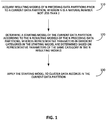
- the flow of the method for clustering a data stream is as shown in FIG. 1 .
- Step 110 acquiring resulting models of N preceding data partitions prior to a current data partition, wherein N is a natural number not less than 2.
- the data stream comprises a plurality of data partitions having a temporal relationship, and each data partition is equivalent to a segment of data intercepted from the data stream based on a time window.
- the time windows of two temporally adjacent data partitions can be partially overlapping. For example, some data belong to both of the two data partitions, as shown in FIG. 2 and labeled as 2-1. In another example, the time windows of two temporally adjacent data partitions can be adjacent, that is, the data stream is divided into separate data partitions, as shown in FIG. 2 and labeled as 2-2.
- the time windows of two temporally adjacent data partitions can be spaced, that is, some data in the data stream does not belong to any of the two data partitions, as shown in FIG. 2 and labeled as 2-3. which is not limited.
- the lengths of the time windows of the data partitions may be the same or different, and the numbers of the points included in the data partitions may be the same or different, which is also not limited.
- the current data partition is the data partition to be clustered
- a preceding data partition is a data partition which has been clustered and is prior to the current data partition in the time sequence.
- a resulting model of each preceding data partition is generated from a clustering result of the corresponding preceding data partition.
- the resulting model of a data partition may include representative parameters for each category when the clustering is completed for the data partition.
- the resulting model of each data partition can be generated, and the resulting model can be stored, so that the stored resulting model of the each preceding data partition can be read in this step 110.
- Step 120 determining a starting model of the current data partition according to the N resulting models of the N preceding data partitions, wherein representative parameters in different categories in the starting model are determined based on representative parameters of the same category in the N resulting models.
- the manner of generating the starting model of the current data partition from the N resulting models may be determined based on the type of the clustering algorithm, the business change speed of the data stream, which is not limited in the embodiments of the specification.
- the following two application scenarios are taken as examples for description.
- the clustering algorithm used for data stream clustering is a clustering algorithm with a fixed number of categories.
- the clustering algorithm with a fixed number of categories has a set number of categories, and each resulting model has the same M (M is a natural number greater than or equal to 2) categories. But usually the same category has different representative parameters in different resulting models.
- the starting model of the current data partition also has the same M categories as in the resulting models, and the representative parameters in different categories in the N resulting models are used to calculate the representative parameters of the category in the starting model according to a predetermined fusion algorithm, so as to determine the starting model.
- a representative parameter of the category in the starting model can be determined by a weighted sum of the same representative parameters of the same category in the resulting models of the N online data partitions.
- the weight of a representative parameter may be set to be related to the time interval between the preceding data partition corresponding to the resulting model to which the representative parameter belongs and the current data partition. The smaller the time interval is, the higher the weight is.
- the clustering results of the corresponding time periods can be reflected in the clustering of the current data partition, not only representing the long-term influence of the historical data, but also emphasizing the data distribution of the adjacent time periods to fully reflect short-term data changes.
- the clustering of the data stream uses the k-means algorithm, and the fixed number of the categories is M.
- a representative parameter of a category is the location of the central point of the category.
- Equation 1 D t is the central point location of the t-th category in the starting model of the current data partition, and D i , t pre is the central point location of the t-th category in the resulting model of the i-th preceding data partition, and ⁇ i is the weight of the resulting model of the i-th preceding data partition.
- the clustering algorithm used for clustering a data stream is a clustering algorithm with a non-fixed number of categories.
- the clustering algorithm with a non-fixed number of categories determines how many categories the point set is divided into according to the distribution of points in the point set, such as the Density-Based Spatial Clustering of DBSCAN (Applications with Noise) algorithm.
- the resulting models of N preceding data partitions may include different categories.
- each category included in the N resulting models may be taken as a category in the starting model of the current data partition (i.e., the set of categories in the starting model is the union of the sets of the categories in the N resulting models), and then the representative parameters in different categories in the resulting models are used to calculate the representative parameters of the category in the starting model according to a predetermined fusion algorithm, to determine the starting model.
- the predetermined fusion algorithm in the second application scenario may be implemented by referring to the first application scenario, e.g., using a weighted sum calculation method. Since a new category may be generated in the clustering process, in the second application, there may be a category in a starting model which only exists in P (P is a natural number smaller than N) resulting models. In this situation, the predetermined fusion algorithm may calculate the representative parameters of the category in the starting model according to the representative parameters of the category in the P resulting models.
- some categories may be no longer suitable for the current data distribution with time.
- the clustering results of the preceding data partitions can be monitored.
- the clustering result of a category in at least one preceding data partition satisfies a predetermined deletion condition
- the category is deleted from the starting model of the current data partition.
- the predetermined deletion condition may be set according to factors such as the speed and degree of data changes in the application. For example, the predetermined deletion condition may be set that in the clustering results of consecutive P preceding data partitions, the number of points belonging to the category is less than a percentage threshold of the total number of points.
- the first N resulting models i.e., the resulting models of the first to the N-th data partitions in the data stream
- the first N resulting models can be used as a starting model to cluster the point sets in which the points have been marked with categories.
- the categories of points marked with the same category in the N clustering results are the same category.
- the same category in the first N resulting models can be manually labeled.
- the distances between a category a in the first resulting model and M categories in the second resulting model can be calculated respectively, and the category in the second resulting model having the nearest distance to the category a is determined to be the same as Category a; similarly, all the same categories can be obtained.
- Step 130 applying the starting model to cluster data records in the current data partition.
- the categories in the starting model are used as initial values to apply the clustering algorithm on the current data partition, and the points in the current data partition are clustered.
- the clustering result of the current data partition is obtained.
- the resulting model of the current data partition can be generated according to the clustering result of the current data partition, so as to be used for clustering the subsequent data partitions.
- the first to N-th data partitions of the data stream are to be clustered, that is, when the first to N-th data partitions are current data partitions to be clustered, the numbers of their respective preceding data partitions are less than N.
- the first to N-th data partitions may be clustered according to the prior art, and the clustering model generated by the N clustering results is used as the basis of the starting model of the (N+1)-th data partition.
- the clustering result of the first data partition can be obtained according to the prior art, and then the resulting models of the first to the (L-1)-th (L is any natural number greater than or equal to 2 and less than N) data partitions determine the starting model of the L-th data partition.
- the first to the N-th data partitions may be clustered in other manners, which is not limited to the embodiments of the specification.
- the representative parameters of the same categories in the starting model of the current data partition are generated according to the representative parameters of the categories in the resulting models of the preceding N data partitions, so that the starting model of the current data partition is determined, and the categories in the starting model are used as a starting point to cluster the current data partition. Therefore, the historical data of the preceding data partition can affect the clustering of the current data partition, which not only can reflect the long-term data characteristics in a long time window in the clustering results of the current data partition, but also timely reflect the short-term data changes in the current time period. Accordingly, severe jitters of the clustering result can be prevented, and the stability of a business associated with the data stream can be improved, while providing support to timeliness of the business.
- the data stream is clustered by using a GMM clustering algorithm.
- the streaming data from the business system is divided into multiple data partitions according to the time segment set by the user (for example, data generated every 10 minutes is stored as one data partition) and stored in a chronological order.
- the stored data partition can be deleted after the aging time set by the user, to save the storage space.
- the processing flow for clustering each data partition is shown in FIG. 3 .
- the preset number of categories is set to be M, and for the GMM clustering algorithm, each category is a Gaussian distribution.
- Step 310 clustering the first, second, and third data partitions by using a GMM algorithm, and generating resulting models according to the clustering results, wherein each resulting model comprises means and standard deviations of M Gaussian distributions (the representative parameters of the category).
- Step 320 storing the resulting models of the first, second, and third data partitions in a historical model library.
- Step 340 reading the resulting models of the three data partitions prior to the current data partition from the historical model library, extracting the means and standard deviations of the M Gaussian distributions, and determining the mean and standard deviation of M Gaussian distributions of the starting model of the current data partition according to Equation 2 and 3:
- ⁇ Q , t ⁇ Q ⁇ 1 , t pre + 1 2 ⁇ Q ⁇ 2 , t pre + 1 3 ⁇ Q ⁇ 3 , t pre , ⁇ t ⁇ 1 M
- ⁇ Q , t ⁇ Q ⁇ 1 , t pre + 1 2 ⁇ Q ⁇ 2 , t pre + 1 3 ⁇ Q ⁇ 3 , t pre , ⁇ t ⁇ 1 M
- Equation 2 ⁇ Q,t is the mean of the t-th Gaussian distribution in the starting model of the Q-th data partition (i.e., the current data partition), and ⁇ i , t pre is the mean of the t-th Gaussian distribution in the resulting model of the i-th data partition.
- Equation 3 ⁇ Q,t is the standard deviation of the t-th Gaussian distribution in the starting model of the Q-th data partition, and ⁇ Q ⁇ 1 , t pre is the standard deviation of the t-th Gaussian distribution in the resulting model of the i-th data partition.
- Step 350 executing the GMM clustering algorithm, taking the starting model of the current data partition as the initial value of the GMM clustering algorithm, to cluster the points in the current data partition.
- Step 360 generating a resulting model of the current data partition according to the clustering result of the current data partition, and saving the resulting model in the historical model library.
- Step 370 Q is incremented by 1, and the following data partition is taken as the current data partition, so that the process proceeds to Step 340.
- inventions of the specification further provide an apparatus for clustering a data stream.
- the apparatus may be implemented by software or by hardware or by a combination of hardware and software.
- the apparatus is achieved by the CPU (Central Process Unit), of the device where it is located, which reads the corresponding computer program instructions into the memory and executes the instructions.
- the device where the apparatus for clustering a data stream is located usually comprises other hardware such as a chip for transmitting and receiving wireless signals, and/or other hardware such as a media board for implementing network communication functions.
- FIG. 5 is a logical structure diagram of an apparatus for clustering a data stream according to some embodiments of the specification.
- the data stream comprises a plurality of data partitions having a temporal relationship.
- the apparatus comprises a preceding resulting model acquiring unit and a starting model generating unit, and a current partition clustering unit, wherein a preceding resulting model acquiring unit is configured for acquiring N resulting models of N preceding data partitions prior to a current data partition, wherein N is a natural number not less than 2, each of the resulting models is generated according to a clustering result of a corresponding preceding data partition, and each of the resulting models comprises representative parameters in different categories; a starting model generating unit is configured for determining a starting model of the current data partition according to the N resulting models, wherein representative parameters in different categories in the starting model are determined based on representative parameters of the same category in the N resulting models; and a current partition clustering unit is configured for clustering data records in the current data partition by using the starting model.
- that representative parameters in different categories in the starting model are determined based on representative parameters of the same category in the N resulting models comprises that each representative parameter in different categories in the starting model is determined by a weighted sum of the same representative parameters of the same category in the N resulting models.
- the weight of the representative parameter is related to the time interval between the preceding data partition corresponding to the resulting model to which the representative parameter belongs and the current data partition, and the smaller the time interval is, the higher the weight is.
- the apparatus further comprises a current resulting model generating unit for generating a resulting model of the current data partition according to the clustering result of the current data partition, to be used for clustering the subsequent data partition.
- the clustering of the data stream adopts a k-means clustering algorithm, wherein the representative parameters of a category comprises a location of a central point of the category; or the clustering of the data stream adopts a Gaussian mixture model clustering algorithm, and the representative parameters of a category comprises a mean and standard deviation of the category.
- the clustering of the data stream adopts a clustering algorithm with a non-fixed number of categories;
- the starting model generating unit comprises: a category combining module for taking each category included in the N resulting models as a category in the starting model.
- the starting model generating unit may further include: a category deleting module for deleting a category from the starting model of the current data partition when a clustering result of a category in at least one preceding data partition satisfies a predetermined deletion condition.
- the computer device comprises one or more processors (CPU), I/O interfaces, network interfaces and internal memories.
- the internal memory may be in the form of volatile memory, random access memory (RAM) and/or non-volatile memory such as read-only memory (ROM) or flash memory (flash RAM) in the computer readable media.
- RAM random access memory
- ROM read-only memory
- flash RAM flash memory
- Computer readable media include non-volatile and volatile, movable and non-movable media and may achieve information storage by any method or technology. Information may be computer readable instructions, data structures, program modules or other data. Examples of computer storage media include, but are not limited to, phase change random access memory (PRAM), static random access memory (SRAM), dynamic random access memory (DRAM) and other types of random access memory (RAM), read only memory (ROM), electrically erasable programmable read only memory (EEPROM), flash memory or other memory technologies, compact disc - read only memory (CD-ROM), digital versatile disc (DVD) or other optical memory, cassette type magnetic tape, magnetic disk memory, magnetic tape, magnetic disc storage or other magnetic storage devices or any other non-transfer media.
- the computer storage media may be used to store information that is accessible to computer devices. According to the description in the specification, computer readable media do not include transitory media, such as modulated data signals and carriers.
- the embodiments of the specification may be provided as a method, a system or a computer program product. Therefore, the specification may include hardware-only embodiments, software-only embodiments or embodiments combining hardware aspects and software aspects. Further, the specification may adopt the form of a computer program product implemented on one or more computer usable storage media (including, but not limited to magnetic disk memory, CD-ROM and optical memory) containing computer usable programs.
- a computer usable storage media including, but not limited to magnetic disk memory, CD-ROM and optical memory
Landscapes
- Engineering & Computer Science (AREA)
- Theoretical Computer Science (AREA)
- Physics & Mathematics (AREA)
- Data Mining & Analysis (AREA)
- General Physics & Mathematics (AREA)
- Databases & Information Systems (AREA)
- General Engineering & Computer Science (AREA)
- Probability & Statistics with Applications (AREA)
- Computational Linguistics (AREA)
- Artificial Intelligence (AREA)
- Evolutionary Computation (AREA)
- Computing Systems (AREA)
- Mathematical Physics (AREA)
- Software Systems (AREA)
- Bioinformatics & Cheminformatics (AREA)
- Mathematical Optimization (AREA)
- Mathematical Analysis (AREA)
- Computational Mathematics (AREA)
- Algebra (AREA)
- Life Sciences & Earth Sciences (AREA)
- Pure & Applied Mathematics (AREA)
- Bioinformatics & Computational Biology (AREA)
- Computer Vision & Pattern Recognition (AREA)
- Evolutionary Biology (AREA)
- Fuzzy Systems (AREA)
- Information Retrieval, Db Structures And Fs Structures Therefor (AREA)
Abstract
Description
- The specification relates to the field of data processing technologies, particularly to a method and an apparatus for clustering a data stream.
- With the development and popularization of the Internet, various network-based activities are constantly generating data. The constantly generated data forms data streams. Finding meaningful patterns or rules from a data stream as soon as possible and providing near-real-time support for business decision-making and business process control become important ways to utilize the data.
- As a common data mining method, clustering is widely used in user classification, text analysis, and other applications. Clustering divides a data set (also referred to as a point set, where each point of which is a data record) into multiple categories according to inherent similarities among the data records, so that the similarity of points in one category is relatively large, while the similarity of points in different categories is relatively small.
- In the prior art, a method for clustering a data stream is as follows: a segment of data is extracted from a data stream generated by a system according to a rule (such as a tapering time window, a sliding window, etc.). A data set formed by the segment of data is clustered by some clustering algorithm. Then a next segment of data is extracted according to the same rule, and the same clustering algorithm is used to cluster a data set formed by the next segment of data. Since each segment of data reflects a business situation in a different period, and the business situation tends to change temporarily, the clustering results obtained by clustering all data segments will greatly change accordingly, resulting in severe jitters of the clustering results. Therefore, the business carried out according to the clustering results tends to jump, which affects the stability and effect of the business.
- In light of the above, the specification provides a method for clustering a data stream. The data stream comprises a plurality of data partitions having a temporal relationship. The method comprises:
- acquiring N resulting models of preceding data partitions prior to a current data partition, wherein N is a natural number not less than 2, each of the resulting models is generated according to a clustering result of a corresponding preceding data partition, and each of the resulting models comprises one or more representative parameters in different categories;
- determining a starting model of the current data partition according to the N resulting models, wherein one or more representative parameters in different categories in the starting model are determined based on representative parameters of the same category in the N resulting models; and
- clustering data records in the current data partition by using the starting model.
- The specification further provides an apparatus for clustering a data stream. The data stream comprises a plurality of data partitions having a temporal relationship. The apparatus comprises:
- a preceding result model acquiring unit for acquiring N resulting models of preceding data partitions prior to a current data partition, wherein N is a natural number not less than 2, each of the resulting models is generated according to a clustering result of a corresponding preceding data partition, and each of the resulting models comprises one or more representative parameters in different categories;
- a starting model generating unit for determining a starting model of the current data partition according to the N resulting models, wherein one or more representative parameters in different categories in the starting model are determined based on representative parameters of the same category in the N resulting models; and
- a preceding partition clustering unit for clustering data records in the current data partition by using the starting model.
- According to the above technical solution, in the embodiments of the specification, the starting model of the current data partition in a data stream is determined according to the resulting models of at least two preceding data partitions prior to the current data partition, and the category in the starting model is used as a starting point to cluster the current data partition, so that the historical data of the preceding data partition can affect the clustering of the current data partition. The technical solution of the specification enables a clustering result of a current data partition to have both long-term efficacy and timeliness, thus preventing severe jitters of the clustering result, and improving the stability of a business associated with the data stream while providing support to timeliness of the business.
-
-
FIG. 1 is a flow chart of a method for clustering a data stream according to some embodiments of the specification. -
FIG. 2 is a schematic diagram of three manners of extracting data partitions in a data stream according to some embodiments of the specification. -
FIG. 3 is a flow chart of an application example for clustering data partitions according to some embodiments of the specification. -
FIG. 4 is a hardware structure diagram of a device for clustering a data stream according to some embodiments of the specification. -
FIG. 5 is a logical structure diagram of an apparatus for clustering a data stream according to some embodiments of the specification. - In a clustering analysis, the division in different categories formed by a point set in a clustering process can correspond to a clustering model, including an initial value of a category division when some clustering algorithms are started, a category division during an iterative process of the clustering algorithms, and a category division as a clustering result. The abstract representation in different categories is recorded in a clustering model. The abstract representation of the category is determined by all the points belonging to the category. The abstract expression of the category is used in a clustering algorithm to calculate a degree of similarity between the points and the categories and/or a degree of similarity among the categories, thereby determining an attribution relationship between the points and the categories and a division relationship between the categories.
- The abstract representation of the category is constructed by two parts: a representation form and a representative parameter. The representation form of the category is determined by the clustering algorithm used. For example, in the GMM (Gaussian Mixture Model) clustering algorithm, the representation form of a category is a type of Gaussian distribution. The representation form of a category in the k-means clustering algorithm is the central point of the category. Since all the categories in a clustering model use the same representation, and the difference among the categories is in that they have different representative parameters; therefore, the representative parameter in different categories can uniquely identify a category. Similarly, the representative parameter also determines the degree of similarity between the points in the point set and the category to which the representative parameter belongs, and the degree of similarity between the category to which the representative parameter belongs and other categories. In the iterative process of a clustering algorithm, the representative parameter usually change with an increase of the number of the points in the category to which the points belong.
- There may be one or more representative parameters. The number and forms of the representative parameters are related to the clustering algorithm adopted. Still taking the clustering of data streams by the GMM and k-means clustering algorithms as examples, a representative parameter of a category in the GMM clustering algorithm is usually the mean and standard deviation of the category, while a representative parameter of a category in the k-means clustering algorithm is usually the location of the central point of the category (such as a coordinate point in a K-dimensional space, where K is a natural number).
- A clustering model generated in a clustering process of a first point set can be used to cluster a second point set having the same or similar data intrinsic property, in which situation the clustering result of the second point set not only depends on the distribution of data in the second set of points, but also is affected by the distribution of data in the first point set. For example, a resulting model of the first point set (e.g., a clustering model generated according to a clustering result of a point set is referred to as a resulting model of the point set in the specification) can be used as a starting model of the second point set having a similar data intrinsic property (e.g., when a point set is to be clustered, a clustering model used to determine an initial value of a category in the clustering algorithm is referred to as a starting model of the point set in the specification). This is equivalent to the clustering of the union of the first point set and the second point set, and the data distribution of the first point set will be fully reflected in the clustering result of the second point set.
- When a data stream is being clustered, since the points in the data stream are generated successively with time, point sets, as clustering objects, are segments of the data stream respectively corresponding to different time periods, which are referred to as data partitions in the specification, each data partition being a point set. Since the points in the data stream are usually from the same business system or even from the same business process, the points in the data partitions corresponding to different time periods often have a similar intrinsic data property. Therefore, the clustering models, generated in a clustering process based on the data partitions corresponding the preceding time periods, can be borrowed to cluster the current data partition. In this way, the clustering result of the current data partition will reflect the data distribution characteristics of the preceding data partitions, thereby bringing the continuity of the business into the clustering of the current data partition. Accordingly, the clustering results can change smoothly with time, preventing severe jitters of the clustering results.
- In light of the above, the embodiments of the specification propose a new method for clustering a data stream. In the method, representative parameters of the same category in a starting model of the current data partition are generated according to representative parameters in different categories in resulting models of at least two preceding data partitions, so as to determine the starting model of the current data partition. The starting model is used to cluster the current data partition, so that the historical data of the preceding data partitions can affect the clustering of the current data partition, thereby not only enabling the clustering result of the current data partition to have the long-term data characteristics in a long time window, but also capturing the short-term data changes in the current time period. Accordingly, severe jitters of the clustering results due to the short-term data changes can be prevented, solving the problems in the prior art.
- The embodiments of the specification can be implemented on any computing and storage device, such as a mobile phone, a tablet, a PC (personal computer), a notebook, a server. Alternatively, the various functions in the embodiments of the specification can be implemented by logical nodes operated by two or more devices.
- In the embodiments of the specification, the flow of the method for clustering a data stream is as shown in
FIG. 1 . -
Step 110, acquiring resulting models of N preceding data partitions prior to a current data partition, wherein N is a natural number not less than 2. - In some embodiments, the data stream comprises a plurality of data partitions having a temporal relationship, and each data partition is equivalent to a segment of data intercepted from the data stream based on a time window. The time windows of two temporally adjacent data partitions can be partially overlapping. For example, some data belong to both of the two data partitions, as shown in
FIG. 2 and labeled as 2-1. In another example, the time windows of two temporally adjacent data partitions can be adjacent, that is, the data stream is divided into separate data partitions, as shown inFIG. 2 and labeled as 2-2. In still another example, the time windows of two temporally adjacent data partitions can be spaced, that is, some data in the data stream does not belong to any of the two data partitions, as shown inFIG. 2 and labeled as 2-3. which is not limited. In addition, the lengths of the time windows of the data partitions may be the same or different, and the numbers of the points included in the data partitions may be the same or different, which is also not limited. - The current data partition is the data partition to be clustered, and a preceding data partition is a data partition which has been clustered and is prior to the current data partition in the time sequence. A resulting model of each preceding data partition is generated from a clustering result of the corresponding preceding data partition. The resulting model of a data partition may include representative parameters for each category when the clustering is completed for the data partition.
- At the end of the clustering of each data partition, the resulting model of each data partition can be generated, and the resulting model can be stored, so that the stored resulting model of the each preceding data partition can be read in this
step 110. - Returning to
FIG. 1 ,Step 120, determining a starting model of the current data partition according to the N resulting models of the N preceding data partitions, wherein representative parameters in different categories in the starting model are determined based on representative parameters of the same category in the N resulting models. - The manner of generating the starting model of the current data partition from the N resulting models may be determined based on the type of the clustering algorithm, the business change speed of the data stream, which is not limited in the embodiments of the specification. The following two application scenarios are taken as examples for description.
- In the first application scenario, the clustering algorithm used for data stream clustering is a clustering algorithm with a fixed number of categories. The clustering algorithm with a fixed number of categories has a set number of categories, and each resulting model has the same M (M is a natural number greater than or equal to 2) categories. But usually the same category has different representative parameters in different resulting models. The starting model of the current data partition also has the same M categories as in the resulting models, and the representative parameters in different categories in the N resulting models are used to calculate the representative parameters of the category in the starting model according to a predetermined fusion algorithm, so as to determine the starting model.
- For example, a representative parameter of the category in the starting model can be determined by a weighted sum of the same representative parameters of the same category in the resulting models of the N online data partitions. When setting the weight, the weight of a representative parameter may be set to be related to the time interval between the preceding data partition corresponding to the resulting model to which the representative parameter belongs and the current data partition. The smaller the time interval is, the higher the weight is. In this way, by using the representative parameters of the N resulting models, the clustering results of the corresponding time periods can be reflected in the clustering of the current data partition, not only representing the long-term influence of the historical data, but also emphasizing the data distribution of the adjacent time periods to fully reflect short-term data changes.
- In an example of the first application scenario, the clustering of the data stream uses the k-means algorithm, and the fixed number of the categories is M. In the k-means algorithm, a representative parameter of a category is the location of the central point of the category. The starting model of the current data partition can be determined by Equation 1:

- In
Equation 1, Dt is the central point location of the t-th category in the starting model of the current data partition, and
- In the second application scenario, the clustering algorithm used for clustering a data stream is a clustering algorithm with a non-fixed number of categories. The clustering algorithm with a non-fixed number of categories determines how many categories the point set is divided into according to the distribution of points in the point set, such as the Density-Based Spatial Clustering of DBSCAN (Applications with Noise) algorithm. In the specification, the resulting models of N preceding data partitions may include different categories. When a starting model is to be determined for the current data partition, each category included in the N resulting models may be taken as a category in the starting model of the current data partition (i.e., the set of categories in the starting model is the union of the sets of the categories in the N resulting models), and then the representative parameters in different categories in the resulting models are used to calculate the representative parameters of the category in the starting model according to a predetermined fusion algorithm, to determine the starting model.
- The predetermined fusion algorithm in the second application scenario may be implemented by referring to the first application scenario, e.g., using a weighted sum calculation method. Since a new category may be generated in the clustering process, in the second application, there may be a category in a starting model which only exists in P (P is a natural number smaller than N) resulting models. In this situation, the predetermined fusion algorithm may calculate the representative parameters of the category in the starting model according to the representative parameters of the category in the P resulting models.
- Similarly, in the clustering process of the second application scenario, some categories may be no longer suitable for the current data distribution with time. The clustering results of the preceding data partitions can be monitored. When the clustering result of a category in at least one preceding data partition satisfies a predetermined deletion condition, the category is deleted from the starting model of the current data partition. The predetermined deletion condition may be set according to factors such as the speed and degree of data changes in the application. For example, the predetermined deletion condition may be set that in the clustering results of consecutive P preceding data partitions, the number of points belonging to the category is less than a percentage threshold of the total number of points.
- It should be noted that for the businesses processed according to the clustering results, when the processing of the businesses belonging to some categories in different resulting models is consistent, these categories are referred to as the same category in the different resulting models. When the procedures of the businesses belonging to some categories in different resulting models are consistent, these categories are referred to as the same category in the different resulting models. In other words, for the purpose of a clustering analysis, these categories belonging to different resulting models can be considered to be the same category. The way to determine which categories in the different resulting models are the same category can be determined according to the characteristics of the application scenarios. For example, in the first application scenario described above, the first N resulting models (i.e., the resulting models of the first to the N-th data partitions in the data stream) can be used as a starting model to cluster the point sets in which the points have been marked with categories. The categories of points marked with the same category in the N clustering results are the same category. In another example, in the second application scenario described above, the same category in the first N resulting models can be manually labeled. In the third example, for the first application scenario, the distances between a category a in the first resulting model and M categories in the second resulting model can be calculated respectively, and the category in the second resulting model having the nearest distance to the category a is determined to be the same as Category a; similarly, all the same categories can be obtained.
-
Step 130, applying the starting model to cluster data records in the current data partition. - After the starting model of the current data partition is determined, the categories in the starting model are used as initial values to apply the clustering algorithm on the current data partition, and the points in the current data partition are clustered.
- After the execution of the clustering algorithm is completed, the clustering result of the current data partition is obtained. The resulting model of the current data partition can be generated according to the clustering result of the current data partition, so as to be used for clustering the subsequent data partitions.
- It should be noted that when the first to N-th data partitions of the data stream are to be clustered, that is, when the first to N-th data partitions are current data partitions to be clustered, the numbers of their respective preceding data partitions are less than N. Thus, the first to N-th data partitions may be clustered according to the prior art, and the clustering model generated by the N clustering results is used as the basis of the starting model of the (N+1)-th data partition. The clustering result of the first data partition can be obtained according to the prior art, and then the resulting models of the first to the (L-1)-th (L is any natural number greater than or equal to 2 and less than N) data partitions determine the starting model of the L-th data partition. The first to the N-th data partitions may be clustered in other manners, which is not limited to the embodiments of the specification.
- As seen in the application, in the embodiments of the specification, the representative parameters of the same categories in the starting model of the current data partition are generated according to the representative parameters of the categories in the resulting models of the preceding N data partitions, so that the starting model of the current data partition is determined, and the categories in the starting model are used as a starting point to cluster the current data partition. Therefore, the historical data of the preceding data partition can affect the clustering of the current data partition, which not only can reflect the long-term data characteristics in a long time window in the clustering results of the current data partition, but also timely reflect the short-term data changes in the current time period. Accordingly, severe jitters of the clustering result can be prevented, and the stability of a business associated with the data stream can be improved, while providing support to timeliness of the business.
- In one application example of the specification, the data stream is clustered by using a GMM clustering algorithm. The streaming data from the business system is divided into multiple data partitions according to the time segment set by the user (for example, data generated every 10 minutes is stored as one data partition) and stored in a chronological order. The stored data partition can be deleted after the aging time set by the user, to save the storage space.
- The processing flow for clustering each data partition is shown in
FIG. 3 . The preset number of categories is set to be M, and for the GMM clustering algorithm, each category is a Gaussian distribution. -
Step 310, clustering the first, second, and third data partitions by using a GMM algorithm, and generating resulting models according to the clustering results, wherein each resulting model comprises means and standard deviations of M Gaussian distributions (the representative parameters of the category). -
Step 320, storing the resulting models of the first, second, and third data partitions in a historical model library. -
Step 330, when Q=4, taking the fourth data partition as the current data partition. -
Step 340, reading the resulting models of the three data partitions prior to the current data partition from the historical model library, extracting the means and standard deviations of the M Gaussian distributions, and determining the mean and standard deviation of M Gaussian distributions of the starting model of the current data partition according toEquation 2 and 3:

- In
Equation 2, µQ,t is the mean of the t-th Gaussian distribution in the starting model of the Q-th data partition (i.e., the current data partition), and

-
Step 350, executing the GMM clustering algorithm, taking the starting model of the current data partition as the initial value of the GMM clustering algorithm, to cluster the points in the current data partition. -
Step 360, generating a resulting model of the current data partition according to the clustering result of the current data partition, and saving the resulting model in the historical model library. -
Step 370, Q is incremented by 1, and the following data partition is taken as the current data partition, so that the process proceeds to Step 340. - Corresponding to the foregoing flow implementation, embodiments of the specification further provide an apparatus for clustering a data stream. The apparatus may be implemented by software or by hardware or by a combination of hardware and software. Taking the software implementation as an example, as a logical apparatus, the apparatus is achieved by the CPU (Central Process Unit), of the device where it is located, which reads the corresponding computer program instructions into the memory and executes the instructions. At the hardware level, in addition to CPU, memory, and non-volatile storage shown in
FIG. 4 , the device where the apparatus for clustering a data stream is located usually comprises other hardware such as a chip for transmitting and receiving wireless signals, and/or other hardware such as a media board for implementing network communication functions. -
FIG. 5 is a logical structure diagram of an apparatus for clustering a data stream according to some embodiments of the specification. The data stream comprises a plurality of data partitions having a temporal relationship. The apparatus comprises a preceding resulting model acquiring unit and a starting model generating unit, and a current partition clustering unit, wherein a preceding resulting model acquiring unit is configured for acquiring N resulting models of N preceding data partitions prior to a current data partition, wherein N is a natural number not less than 2, each of the resulting models is generated according to a clustering result of a corresponding preceding data partition, and each of the resulting models comprises representative parameters in different categories; a starting model generating unit is configured for determining a starting model of the current data partition according to the N resulting models, wherein representative parameters in different categories in the starting model are determined based on representative parameters of the same category in the N resulting models; and a current partition clustering unit is configured for clustering data records in the current data partition by using the starting model. - In one example, that representative parameters in different categories in the starting model are determined based on representative parameters of the same category in the N resulting models comprises that each representative parameter in different categories in the starting model is determined by a weighted sum of the same representative parameters of the same category in the N resulting models.
- In the above example, the weight of the representative parameter is related to the time interval between the preceding data partition corresponding to the resulting model to which the representative parameter belongs and the current data partition, and the smaller the time interval is, the higher the weight is.
- Optionally, the apparatus further comprises a current resulting model generating unit for generating a resulting model of the current data partition according to the clustering result of the current data partition, to be used for clustering the subsequent data partition.
- Optionally, the clustering of the data stream adopts a k-means clustering algorithm, wherein the representative parameters of a category comprises a location of a central point of the category; or the clustering of the data stream adopts a Gaussian mixture model clustering algorithm, and the representative parameters of a category comprises a mean and standard deviation of the category.
- In an embodiment, the clustering of the data stream adopts a clustering algorithm with a non-fixed number of categories; the starting model generating unit comprises: a category combining module for taking each category included in the N resulting models as a category in the starting model.
- In the foregoing embodiment, the starting model generating unit may further include: a category deleting module for deleting a category from the starting model of the current data partition when a clustering result of a category in at least one preceding data partition satisfies a predetermined deletion condition.
- The foregoing descriptions are preferred embodiments of the specification and are not intended to limit the specification. All modifications, identical replacements and improvements made without departing from the spirit and principle of the specification shall fall within the scope of the specification.
- In a typical configuration, the computer device comprises one or more processors (CPU), I/O interfaces, network interfaces and internal memories.
- The internal memory may be in the form of volatile memory, random access memory (RAM) and/or non-volatile memory such as read-only memory (ROM) or flash memory (flash RAM) in the computer readable media. Internal memory is an example of computer readable media.
- Computer readable media include non-volatile and volatile, movable and non-movable media and may achieve information storage by any method or technology. Information may be computer readable instructions, data structures, program modules or other data. Examples of computer storage media include, but are not limited to, phase change random access memory (PRAM), static random access memory (SRAM), dynamic random access memory (DRAM) and other types of random access memory (RAM), read only memory (ROM), electrically erasable programmable read only memory (EEPROM), flash memory or other memory technologies, compact disc - read only memory (CD-ROM), digital versatile disc (DVD) or other optical memory, cassette type magnetic tape, magnetic disk memory, magnetic tape, magnetic disc storage or other magnetic storage devices or any other non-transfer media. The computer storage media may be used to store information that is accessible to computer devices. According to the description in the specification, computer readable media do not include transitory media, such as modulated data signals and carriers.
- It should be noted that terms "include," "contain" or any variants of these terms are intended to cover non-exclusive inclusion so that a process, method, product or equipment including a series of elements not only comprises these elements but also comprises other elements not explicitly listed, or also include the elements inherent to such process, method, product or equipment. Unless otherwise with more limitations, the elements described by a sentence "include one..." do not exclude that the process, method, product or equipment including the elements also have other same elements.
- Those skilled in this art should understand that the embodiments of the specification may be provided as a method, a system or a computer program product. Therefore, the specification may include hardware-only embodiments, software-only embodiments or embodiments combining hardware aspects and software aspects. Further, the specification may adopt the form of a computer program product implemented on one or more computer usable storage media (including, but not limited to magnetic disk memory, CD-ROM and optical memory) containing computer usable programs.
Claims (14)
- A method for clustering a data stream, wherein the data stream comprises a plurality of data partitions having a temporal relationship, and the method comprises:acquiring N resulting models of preceding data partitions prior to a current data partition, wherein N is a natural number not less than 2, each of the resulting models is generated according to a clustering result of a corresponding preceding data partition, and each of the resulting models comprises one or more representative parameters in different categories;determining a starting model of the current data partition according to the N resulting models, wherein one or more representative parameters in different categories in the starting model are determined based on representative parameters of the same category in the N resulting models; andclustering data records in the current data partition by using the starting model.
- The method according to claim 1, wherein each of the one or more representative parameters in different categories in the starting model is determined by a weighted sum of the same representative parameters of the same category in the N resulting models.
- The method according to claim 2, wherein a weight of one of the representative parameters is related to a time interval between the preceding data partition corresponding to the resulting model to which the representative parameter belongs and the current data partition, and the smaller the time interval is, the higher the weight is.
- The method according to claim 1, wherein the method further comprises: generating a resulting model of the current data partition according to a clustering result of the current data partition, for clustering a subsequent data partition.
- The method according to claim 1, wherein the clustering of the data stream uses a k-means clustering algorithm, and the one or more representative parameters in different categories comprise a location of a central point of a category;
or
the clustering of the data stream uses a Gaussian mixture model clustering algorithm, and the one or more representative parameters in different categories comprise a mean and standard deviation of a category. - The method according to claim 1, wherein the clustering of the data stream uses a clustering algorithm with a non-fixed number of categories; and
determining a starting model of the current data partition according to the N resulting models comprises taking each category included in the N resulting models as a category in the starting model. - The method according to claim 6, wherein determining a starting model of the current data partition according to the N resulting models further comprises: deleting a category from the starting model of the current data partition when a clustering result of a category in at least one of the N preceding data partitions satisfies a predetermined deletion condition.
- An apparatus for clustering a data stream, wherein the data stream comprises a plurality of data partitions having a temporal relationship, and the apparatus comprises:a preceding resulting model acquiring unit for acquiring N resulting models of preceding data partitions prior to a current data partition, wherein N is a natural number not less than 2, each of the resulting models is generated according to a clustering result of a corresponding preceding data partition, and each of the resulting models comprises one or more representative parameters in different categories;a starting model generating unit for determining a starting model of the current data partition according to the N resulting models, wherein one or more representative parameters in different categories in the starting model are determined based on a plurality of representative parameters of the same category in the N resulting models; anda preceding partition clustering unit for clustering data records in the current data partition by using the starting model.
- The apparatus according to claim 8, wherein each of the one or more representative parameters in different categories in the starting model is determined by a weighted sum of the same representative parameters of the same category in the N resulting models.
- The apparatus according to claim 9, wherein a weight of one of the plurality of representative parameters is related to a time interval between the preceding data partition corresponding to the resulting model to which the representative parameter belongs and the current data partition, and the smaller the time interval is, the higher the weight is.
- The apparatus according to claim 8, wherein the apparatus further comprises: a current resulting model generating unit for generating a resulting model of the current data partition according to a clustering result of the current data partition, for clustering a subsequent data partition.
- The apparatus according to claim 8, wherein the clustering of the data stream uses a k-means clustering algorithm, wherein the one or more representative parameters in different categories comprise a location of a central point of a category;
or
the clustering of the data stream uses a Gaussian mixture model clustering algorithm, and the one or more representative parameters in different categories comprise a mean and standard deviation of a category. - The apparatus according to claim 8, wherein the clustering of the data stream uses a clustering algorithm with a non-fixed number of categories; and
the starting model generating unit comprises: a category combining module for taking each category included in the N resulting models as a category in the starting model. - The apparatus according to claim 13, wherein the starting model generating unit further comprises: a category deleting module for deleting a category from the starting model of the current data partition when a clustering result of a category in at least one of the N preceding data partitions satisfies a predetermined deletion condition.
Applications Claiming Priority (2)
| Application Number | Priority Date | Filing Date | Title |
|---|---|---|---|
| CN201710400902.8A CN107392220B (en) | 2017-05-31 | 2017-05-31 | Data flow clustering method and device |
| PCT/CN2018/088948 WO2018219284A1 (en) | 2017-05-31 | 2018-05-30 | Method and apparatus for clustering data stream |
Publications (2)
| Publication Number | Publication Date |
|---|---|
| EP3614309A1 true EP3614309A1 (en) | 2020-02-26 |
| EP3614309A4 EP3614309A4 (en) | 2020-04-29 |
Family
ID=60331776
Family Applications (1)
| Application Number | Title | Priority Date | Filing Date |
|---|---|---|---|
| EP18808698.7A Ceased EP3614309A4 (en) | 2017-05-31 | 2018-05-30 | METHOD AND DEVICE FOR CLUSTERING DATA FLOWS |
Country Status (5)
| Country | Link |
|---|---|
| US (1) | US11226993B2 (en) |
| EP (1) | EP3614309A4 (en) |
| CN (1) | CN107392220B (en) |
| TW (1) | TWI665568B (en) |
| WO (1) | WO2018219284A1 (en) |
Families Citing this family (4)
| Publication number | Priority date | Publication date | Assignee | Title |
|---|---|---|---|---|
| CN107392220B (en) * | 2017-05-31 | 2020-05-05 | 创新先进技术有限公司 | Data flow clustering method and device |
| US11429616B2 (en) * | 2019-04-02 | 2022-08-30 | Keysight Technologies, Inc. | Data recording and analysis system |
| US12032600B1 (en) * | 2021-06-29 | 2024-07-09 | Keysight Technologies, Inc. | Method and system for recording and analyzing large amounts of data |
| CN119848143B (en) * | 2025-01-15 | 2025-08-19 | 广州宽恒信息科技有限公司 | Data processing method and device based on distributed computing model |
Family Cites Families (30)
| Publication number | Priority date | Publication date | Assignee | Title |
|---|---|---|---|---|
| US20020029207A1 (en) | 2000-02-28 | 2002-03-07 | Hyperroll, Inc. | Data aggregation server for managing a multi-dimensional database and database management system having data aggregation server integrated therein |
| US6917839B2 (en) | 2000-06-09 | 2005-07-12 | Intellectual Assets Llc | Surveillance system and method having an operating mode partitioned fault classification model |
| AU2001273306A1 (en) | 2000-07-05 | 2002-01-14 | Camo, Inc. | Method and system for the dynamic analysis of data |
| US6687696B2 (en) | 2000-07-26 | 2004-02-03 | Recommind Inc. | System and method for personalized search, information filtering, and for generating recommendations utilizing statistical latent class models |
| JP2006350730A (en) | 2005-06-16 | 2006-12-28 | Toshiba Corp | Clustering apparatus, clustering method and program |
| FR2892252B1 (en) * | 2005-10-17 | 2008-01-25 | Oberthur Card Syst Sa | METHOD AND DEVICE FOR CREATING A GROUP SIGNATURE AND METHOD AND DEVICE FOR VERIFYING AN ASSOCIATED GROUP SIGNATURE. |
| US20130254787A1 (en) | 2006-05-02 | 2013-09-26 | Invidi Technologies Corporation | Method and apparatus to perform real-time audience estimation and commercial selection suitable for targeted advertising |
| US20080031587A1 (en) * | 2006-08-02 | 2008-02-07 | Chia-Hung Chen | Methods for searching data recorded in a storage and recording systems that allow playback utilizing trick-mode operations |
| US8392418B2 (en) | 2009-06-25 | 2013-03-05 | University Of Tennessee Research Foundation | Method and apparatus for predicting object properties and events using similarity-based information retrieval and model |
| US8069190B2 (en) | 2007-12-27 | 2011-11-29 | Cloudscale, Inc. | System and methodology for parallel stream processing |
| CA2730543C (en) | 2008-07-16 | 2014-04-22 | Nokia Corporation | Method and apparatus for track and track subset grouping |
| US9767427B2 (en) | 2009-04-30 | 2017-09-19 | Hewlett Packard Enterprise Development Lp | Modeling multi-dimensional sequence data over streams |
| US8595234B2 (en) | 2010-05-17 | 2013-11-26 | Wal-Mart Stores, Inc. | Processing data feeds |
| US9015084B2 (en) | 2011-10-20 | 2015-04-21 | Gil Thieberger | Estimating affective response to a token instance of interest |
| CN103136247B (en) | 2011-11-29 | 2015-12-02 | 阿里巴巴集团控股有限公司 | Attribute data interval division method and device |
| TWI574558B (en) * | 2011-12-28 | 2017-03-11 | 財團法人工業技術研究院 | Method and player for rendering condensed streaming content |
| US9336302B1 (en) | 2012-07-20 | 2016-05-10 | Zuci Realty Llc | Insight and algorithmic clustering for automated synthesis |
| US20140280065A1 (en) | 2013-03-13 | 2014-09-18 | Salesforce.Com, Inc. | Systems and methods for predictive query implementation and usage in a multi-tenant database system |
| US9495395B2 (en) | 2013-04-11 | 2016-11-15 | Oracle International Corporation | Predictive diagnosis of SLA violations in cloud services by seasonal trending and forecasting with thread intensity analytics |
| CN103353883B (en) | 2013-06-19 | 2017-02-22 | 华南师范大学 | Big data stream type cluster processing system and method for on-demand clustering |
| CN103577602A (en) * | 2013-11-18 | 2014-02-12 | 浪潮(北京)电子信息产业有限公司 | Secondary clustering method and system |
| US9244978B2 (en) | 2014-06-11 | 2016-01-26 | Oracle International Corporation | Custom partitioning of a data stream |
| US20160071027A1 (en) * | 2014-09-08 | 2016-03-10 | Pivotal Software, Inc. | Compute intensive stream processing with concept drift detection |
| CN106156030A (en) | 2014-09-18 | 2016-11-23 | 华为技术有限公司 | The method and apparatus that in social networks, information of forecasting is propagated |
| US9886486B2 (en) | 2014-09-24 | 2018-02-06 | Oracle International Corporation | Enriching events with dynamically typed big data for event processing |
| CN105989852A (en) * | 2015-02-16 | 2016-10-05 | 杜比实验室特许公司 | Method for separating sources from audios |
| US20160379134A1 (en) * | 2015-06-24 | 2016-12-29 | International Business Machines Corporation | Cluster based desktop management services |
| CN105468669B (en) * | 2015-10-13 | 2019-05-21 | 中国科学院信息工程研究所 | An adaptive microblog topic tracking method integrating user relationships |
| US10832168B2 (en) * | 2017-01-10 | 2020-11-10 | Crowdstrike, Inc. | Computational modeling and classification of data streams |
| CN107392220B (en) * | 2017-05-31 | 2020-05-05 | 创新先进技术有限公司 | Data flow clustering method and device |
-
2017
- 2017-05-31 CN CN201710400902.8A patent/CN107392220B/en active Active
-
2018
- 2018-03-13 TW TW107108413A patent/TWI665568B/en active
- 2018-05-30 WO PCT/CN2018/088948 patent/WO2018219284A1/en not_active Ceased
- 2018-05-30 EP EP18808698.7A patent/EP3614309A4/en not_active Ceased
-
2019
- 2019-11-15 US US16/684,831 patent/US11226993B2/en active Active
Also Published As
| Publication number | Publication date |
|---|---|
| TWI665568B (en) | 2019-07-11 |
| CN107392220B (en) | 2020-05-05 |
| WO2018219284A1 (en) | 2018-12-06 |
| TW201903631A (en) | 2019-01-16 |
| EP3614309A4 (en) | 2020-04-29 |
| US20200081905A1 (en) | 2020-03-12 |
| US11226993B2 (en) | 2022-01-18 |
| CN107392220A (en) | 2017-11-24 |
Similar Documents
| Publication | Publication Date | Title |
|---|---|---|
| US11226993B2 (en) | Method and apparatus for clustering data stream | |
| US20210326885A1 (en) | Method and Apparatus of Identifying a Transaction Risk | |
| CN110322349B (en) | Data processing method, device and equipment | |
| ES3059703T3 (en) | Updating attribute data structures to indicate trends in attribute data provided to automated modeling systems | |
| US20190065738A1 (en) | Detecting anomalous entities | |
| CN108596410B (en) | A kind of wind control event automatic processing method and device | |
| CN113538154A (en) | Risk object identification method and device, storage medium and electronic equipment | |
| CN109561052B (en) | Method and device for detecting abnormal flow of website | |
| US11403550B2 (en) | Classifier | |
| CN111222994A (en) | Client risk assessment method, device, medium and electronic equipment | |
| CN111737266B (en) | Block data access method, block data storage method and device | |
| US20220012535A1 (en) | Augmenting Training Data Sets for ML Classifiers Using Classification Metadata | |
| WO2025060606A1 (en) | Time-series prediction method and apparatus, and electronic device and storage medium | |
| CN112927091A (en) | Complaint early warning method and device for annuity insurance, computer equipment and medium | |
| Buda et al. | ADE: an ensemble approach for early anomaly detection | |
| CN111275106B (en) | Countermeasure sample generation method and device and computer equipment | |
| US20240104083A1 (en) | Data anomaly detection | |
| US20250335507A1 (en) | Method and device for generating temporal graph with time-bound communities | |
| CN113282839B (en) | Internet data push processing method and system | |
| CN112308282A (en) | Data processing method and device, electronic equipment and computer storage medium | |
| CN114090535A (en) | A model training method, data storage method, device and electronic device | |
| CN119444232A (en) | A digital economy risk management assessment method and system based on cloud computing | |
| De Salve et al. | Exploiting homophily to characterize communities in online social networks | |
| CN115130537A (en) | Detection method, detection device, storage medium, equipment and program product | |
| HK1247375A1 (en) | Data flow clustering method and apparatus |
Legal Events
| Date | Code | Title | Description |
|---|---|---|---|
| STAA | Information on the status of an ep patent application or granted ep patent |
Free format text: STATUS: THE INTERNATIONAL PUBLICATION HAS BEEN MADE |
|
| PUAI | Public reference made under article 153(3) epc to a published international application that has entered the european phase |
Free format text: ORIGINAL CODE: 0009012 |
|
| STAA | Information on the status of an ep patent application or granted ep patent |
Free format text: STATUS: REQUEST FOR EXAMINATION WAS MADE |
|
| 17P | Request for examination filed |
Effective date: 20191118 |
|
| AK | Designated contracting states |
Kind code of ref document: A1 Designated state(s): AL AT BE BG CH CY CZ DE DK EE ES FI FR GB GR HR HU IE IS IT LI LT LU LV MC MK MT NL NO PL PT RO RS SE SI SK SM TR |
|
| AX | Request for extension of the european patent |
Extension state: BA ME |
|
| A4 | Supplementary search report drawn up and despatched |
Effective date: 20200401 |
|
| RIC1 | Information provided on ipc code assigned before grant |
Ipc: G06F 16/2455 20190101ALI20200326BHEP Ipc: G06N 20/00 20190101ALI20200326BHEP Ipc: G06K 9/62 20060101AFI20200326BHEP |
|
| STAA | Information on the status of an ep patent application or granted ep patent |
Free format text: STATUS: EXAMINATION IS IN PROGRESS |
|
| 17Q | First examination report despatched |
Effective date: 20200710 |
|
| DAV | Request for validation of the european patent (deleted) | ||
| DAX | Request for extension of the european patent (deleted) | ||
| RAP1 | Party data changed (applicant data changed or rights of an application transferred) |
Owner name: ADVANCED NEW TECHNOLOGIES CO., LTD. |
|
| P01 | Opt-out of the competence of the unified patent court (upc) registered |
Effective date: 20230511 |
|
| REG | Reference to a national code |
Ref country code: DE Ref legal event code: R003 |
|
| STAA | Information on the status of an ep patent application or granted ep patent |
Free format text: STATUS: THE APPLICATION HAS BEEN REFUSED |
|
| 18R | Application refused |
Effective date: 20240130 |