EP3613040B1 - Speaker recognition method and system - Google Patents
Speaker recognition method and system Download PDFInfo
- Publication number
- EP3613040B1 EP3613040B1 EP18724466.0A EP18724466A EP3613040B1 EP 3613040 B1 EP3613040 B1 EP 3613040B1 EP 18724466 A EP18724466 A EP 18724466A EP 3613040 B1 EP3613040 B1 EP 3613040B1
- Authority
- EP
- European Patent Office
- Prior art keywords
- speaker
- frame
- frames
- module
- speech
- Prior art date
- Legal status (The legal status is an assumption and is not a legal conclusion. Google has not performed a legal analysis and makes no representation as to the accuracy of the status listed.)
- Active
Links
Images


Classifications
-
- G—PHYSICS
- G10—MUSICAL INSTRUMENTS; ACOUSTICS
- G10L—SPEECH ANALYSIS TECHNIQUES OR SPEECH SYNTHESIS; SPEECH RECOGNITION; SPEECH OR VOICE PROCESSING TECHNIQUES; SPEECH OR AUDIO CODING OR DECODING
- G10L17/00—Speaker identification or verification techniques
- G10L17/06—Decision making techniques; Pattern matching strategies
-
- G—PHYSICS
- G10—MUSICAL INSTRUMENTS; ACOUSTICS
- G10L—SPEECH ANALYSIS TECHNIQUES OR SPEECH SYNTHESIS; SPEECH RECOGNITION; SPEECH OR VOICE PROCESSING TECHNIQUES; SPEECH OR AUDIO CODING OR DECODING
- G10L25/00—Speech or voice analysis techniques not restricted to a single one of groups G10L15/00 - G10L21/00
- G10L25/78—Detection of presence or absence of voice signals
- G10L25/84—Detection of presence or absence of voice signals for discriminating voice from noise
-
- G—PHYSICS
- G10—MUSICAL INSTRUMENTS; ACOUSTICS
- G10L—SPEECH ANALYSIS TECHNIQUES OR SPEECH SYNTHESIS; SPEECH RECOGNITION; SPEECH OR VOICE PROCESSING TECHNIQUES; SPEECH OR AUDIO CODING OR DECODING
- G10L17/00—Speaker identification or verification techniques
-
- G—PHYSICS
- G10—MUSICAL INSTRUMENTS; ACOUSTICS
- G10L—SPEECH ANALYSIS TECHNIQUES OR SPEECH SYNTHESIS; SPEECH RECOGNITION; SPEECH OR VOICE PROCESSING TECHNIQUES; SPEECH OR AUDIO CODING OR DECODING
- G10L17/00—Speaker identification or verification techniques
- G10L17/02—Preprocessing operations, e.g. segment selection; Pattern representation or modelling, e.g. based on linear discriminant analysis [LDA] or principal components; Feature selection or extraction
-
- G—PHYSICS
- G10—MUSICAL INSTRUMENTS; ACOUSTICS
- G10L—SPEECH ANALYSIS TECHNIQUES OR SPEECH SYNTHESIS; SPEECH RECOGNITION; SPEECH OR VOICE PROCESSING TECHNIQUES; SPEECH OR AUDIO CODING OR DECODING
- G10L17/00—Speaker identification or verification techniques
- G10L17/20—Pattern transformations or operations aimed at increasing system robustness, e.g. against channel noise or different working conditions
-
- G—PHYSICS
- G10—MUSICAL INSTRUMENTS; ACOUSTICS
- G10L—SPEECH ANALYSIS TECHNIQUES OR SPEECH SYNTHESIS; SPEECH RECOGNITION; SPEECH OR VOICE PROCESSING TECHNIQUES; SPEECH OR AUDIO CODING OR DECODING
- G10L21/00—Speech or voice signal processing techniques to produce another audible or non-audible signal, e.g. visual or tactile, in order to modify its quality or its intelligibility
- G10L21/02—Speech enhancement, e.g. noise reduction or echo cancellation
- G10L21/0208—Noise filtering
- G10L21/0216—Noise filtering characterised by the method used for estimating noise
- G10L21/0232—Processing in the frequency domain
-
- G—PHYSICS
- G10—MUSICAL INSTRUMENTS; ACOUSTICS
- G10L—SPEECH ANALYSIS TECHNIQUES OR SPEECH SYNTHESIS; SPEECH RECOGNITION; SPEECH OR VOICE PROCESSING TECHNIQUES; SPEECH OR AUDIO CODING OR DECODING
- G10L25/00—Speech or voice analysis techniques not restricted to a single one of groups G10L15/00 - G10L21/00
- G10L25/03—Speech or voice analysis techniques not restricted to a single one of groups G10L15/00 - G10L21/00 characterised by the type of extracted parameters
- G10L25/21—Speech or voice analysis techniques not restricted to a single one of groups G10L15/00 - G10L21/00 characterised by the type of extracted parameters the extracted parameters being power information
-
- G—PHYSICS
- G10—MUSICAL INSTRUMENTS; ACOUSTICS
- G10L—SPEECH ANALYSIS TECHNIQUES OR SPEECH SYNTHESIS; SPEECH RECOGNITION; SPEECH OR VOICE PROCESSING TECHNIQUES; SPEECH OR AUDIO CODING OR DECODING
- G10L25/00—Speech or voice analysis techniques not restricted to a single one of groups G10L15/00 - G10L21/00
- G10L25/03—Speech or voice analysis techniques not restricted to a single one of groups G10L15/00 - G10L21/00 characterised by the type of extracted parameters
- G10L25/18—Speech or voice analysis techniques not restricted to a single one of groups G10L15/00 - G10L21/00 characterised by the type of extracted parameters the extracted parameters being spectral information of each sub-band
Definitions
- the present invention generally relates to the speaker recognition field. More particularly, the present invention relates to a method and a system for identifying or confirming the identity of individuals based on the voice thereof.
- Speaker recognition is a process that allows to recognize the identity of speakers based on an analysis carried out on features of the voices thereof. Practical applications of speaker recognition may be subdivided into two broad categories, namely the so-called “speaker identification” and the so-called “speaker verification”. Speaker identification is used to find out the identity of a speaker among a predefined set of known speakers, while speaker verification is used to verify whether a speaker is an authorized person or not.
- speaker recognition is wide ranging, including enabling context-aware applications in different scenarios, verifying identity in e-commerce applications as well as in general business interactions, enabling biometric access control to restricted facilities and electronic devices. Moreover, speaker recognition may be advantageously exploited also in forensics, and law enforcement applications.
- speaker identification may be exploited for improving the efficiency of a meeting.
- a single microphone e.g. , located on the meeting table
- Speaker identification may be advantageously exploited to automatically assess who is speaking (even if he/she is far from the microphone itself), in order to provide corresponding useful information related, for example, to the amount of time each speaker has spoken.
- Speaker verification may be for example exploited to selectively grant/deny access to a restricted area.
- a restricted area may be accessed by only a group of authorized individuals.
- Speaker verification may be advantageously used to implement a biometric authentication procedure for assessing whether an individual belongs or not to such group based on his/her voice, and then accordingly grant/deny access to such restricted area according to the result of the biometric authentication.
- EP 2713367 discloses a method for text-dependent speaker recognition using a speaker adapted universal background model, wherein the speaker adapted universal background model is a speaker adapted hidden Markov model comprising channel correction.
- EP 2048656 is directed to a method for automatic speaker recognition based on a received speech input, wherein a speaker model set comprising at least a speaker-independent speaker model is provided.
- the method comprises the steps of detecting whether the received speech input matches a speaker model of the speaker model set according to a predetermined criterion; and, if no match is detected, creating a speaker model for the speaker model set based on the received speech input.
- US 2008/0312926 discloses an automatic dual-step, text independent, language-independent speaker voice-print creation and speaker recognition method.
- a neural network-based technique is used in a first step and a Markov model-based technique is used in a second step.
- the first step uses a neural network-based technique for decoding the content of what is uttered by the speaker in terms of language independent acoustic-phonetic classes
- the second step uses the sequence of language-independent acoustic-phonetic classes from the first step and employs a Markov model-based technique for creating the speaker voice-print and for recognizing the speaker.
- US 2012/303369A1 discloses speaker identification based on frames and discarding frames if not meeting certain criteria.
- EP 2713367 employs a text-dependent approach, which compels speakers to utter specific sentences in order to train classifiers. Moreover, the method of EP 2713367 requires a Universal Background Model (UBM) implemented with a Hidden Markov Model (HMM); as it is known to those skilled in the art, in order to generate a UBM, a large amount of speech samples are required. Moreover, the efficiency of the method of EP 2713367 is strongly reduced when the speech signal captured from the speakers is affected by noise and/or when it comprises portions which do not comprise any speech.
- UBM Universal Background Model
- HMM Hidden Markov Model
- both the methods of EP 2048656 and US 2008/0312926 have a strongly reduced efficiency when the speech signal captured from the speakers is affected by noise or when it comprises noise portions.
- the object of the invention is increasing the efficiency of the known speaker recognition methods and systems, as well as reducing the computational burden thereof.
- This object of the invention is solved by the independent claims. Specific embodiments are defined in the dependent claims.
- the Applicant has found that the efficiency of a speaker recognition method/system can be strongly increased if the speech signal captured from the speakers is prefiltered in order to remove portions thereof comprising high levels of noise and portions thereof which do not comprise a speech.
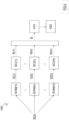
- Figure 1 illustrates in terms of functional modules a speaker recognition system 100 according to an embodiment of the present invention.
- the speaker recognition system 100 which will be described in detail in the following of the present description is configured to assess the identity of a speaker among a predefined set of known speakers. For example, the speaker recognition system 100 may be exploited in a meeting to automatically assess who is speaking among the participants of the meeting. Moreover, the speaker recognition system 100 is also capable of assessing whether the speaker does not belong to any one among the predefined set of known speakers. In this latter case, the speaker recognition system 100 is configured to classify the speaker as "unknown speaker".
- speaker verification scenario can be viewed also as a special case of the previously mentioned scenario of assessing the identity of a speaker among a predefined set of known speakers, with such predefined set of known speakers that comprises only a single known speaker ( i.e., the speaker to be verified).
- the speaker recognition system 100 comprises a speech acquisition module 105, a framing module 110, a pre-filtering module 115, a feature extraction module 120, a model training module 125, a model database module 130, and a classification module 140.
- module' is herein intended to comprise, but not limited to, hardware, firmware, a combination of hardware and software, software.
- a module may be, but is not limited to being, a process running on a processor, a processor, an object, an executable, a thread of execution, a program, and/or a computing device (such as for example a computer, a smartphone, a tablet, a set top box, a conference station, a speaker phone systems, and so on).
- a computing device such as for example a computer, a smartphone, a tablet, a set top box, a conference station, a speaker phone systems, and so on).
- a module may comprise an application being executed on a computing device and/or the computing device itself.
- One or more modules may be localized on one computing device and/or distributed between two or more computing devices.
- Modules may comprise and/or interact with computer readable media having storing data according to various data structures.
- the modules may communicate by exploiting local and/or remote processes, preferably by means of electrical, electromagnetic and/or optical signals providing one or more data packets, such as data packets from one module interacting with another module in a local system, in a distributed system, and/or across a telecommunication and/or data network, such as the Internet.
- the speech acquisition module 105 is configured to acquire speech uttered by a speaker and to convert the sound of the speech into a corresponding speech signal SS.
- the speech acquisition module 105 comprises one or more microphones.
- the speech acquisition module 105 may be comprised in a conference station located in a conference room.
- the speech acquisition module 105 may be instead the microphone which is integrated in a device such as a computer, a smartphone or a tablet.
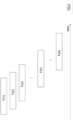
- the generic frame F(n) of the sequence of frames - except for the last frame F(N) - partially overlaps (over time) the next frame F(n + 1) in the sequence.
- each frame F(n) may last from 20 ms to 40 ms.
- two consecutive frames F(n), F(n + 1) are overlapped over time by a percentage between 50% and 90%.
- the duration in time of each frame F(n) and the overlapping percentage of each pair of consecutive frames F(n), F(n + 1) are the same for each frame F(n) and for each pair of consecutive frames F(n), F(n + 1).
- such duration and/or such overlapping percentage may instead vary.
- the segmentation of the speech signal SS into frames F(n) is carried out in order to obtain fragments of the speech signal SS having a limited duration for guaranteeing that within each frame F(n) the statistical properties of the speaker voice are kept constant as much as possible.
- the overlapping is used to avoid or at least reduce the arising of spurious frequency caused by the segmentation.
- the pre-filtering module 115 is configured to carry out a spectral analysis of the frames F(n) and accordingly discard the frames F(n) which are assessed to comprise high levels of noise and the frames F(n) which are assessed as not comprising a speech.
- the operations carried out by the other modules of the speaker recognition system 100 are performed only on frames F(n) which contains voice and which are not affected by high amounts of noise. This allows to avoid (or at least reduce) speaker recognition accuracy detriment when the speaker is speaking from a position which is not close to the speech acquisition module 105.
- Figure 3 illustrates in greater detail the pre-filtering module 115 according to an embodiment of the present invention.
- the pre-filtering module 115 comprises a Discrete Fourier Transform (DFT) module 205 configured to calculate for each received frame F(n) a sequence of (complex) samples which correspond to the DFT of the frame F(n).
- the samples of the DFT outputted by the DTF module 205 are fed to a squaring module 210 configured to output a further sequence of samples corresponding to the squares of the magnitudes of the DFT samples outputted by the DTF module 205. Therefore, the sequence of samples outputted by the squaring module 210 corresponding to a generic frame F(n) form the energy density D(n) of such frame F(n) over frequency.
- DFT Discrete Fourier Transform
- the energy density D(n) of the generic frame F(n) is concurrently fed to a flatness estimator module 215 and to an energy estimator module 220.
- both the flatness estimator module 215 and the energy estimator module 220 are configured to assess whether the frame F(n) corresponding to the received energy density D(n) has to be discarded because it does not comprise a speech or is affected by an excessive amount of noise.
- Both the flatness estimator module 215 and the energy estimator module 220 are configured to perform the same assessment provided above, but under a respective different point of view.
- the flatness estimator module 215 is configured to assess whether a generic frame F(n) has to be discarded based on the flatness of the spectrum of the frame F(n). Indeed, the spectrum of human voice exhibits three separate peaks in the frequency domain. Consequently, if the energy density D(n) of a generic frame F(n) is assessed to be flat, it means that such frame F(n) does not comprise a speech, and/or such frame is too noisy (and therefore needs to be discarded).
- the energy estimator module 220 is configured to assess whether a generic frame F(n) has to be discarded based on how the spectral energy of the frame F(n) is distributed over frequency. Indeed, human voice has the majority of its energy (about 90%) which is below 1 KHz. Consequently, if a generic frame F(n) is assessed to have a substantial amount of energy (calculated through the energy density D(n) thereof) above a frequency threshold ( e.g., corresponding to 1 KHz), it means that such frame F(n) does not comprise a speech, and/or such frame is too noisy (and therefore needs to be discarded).
- a frequency threshold e.g., corresponding to 1 KHz
- the flatness estimator module 215 comprises an arithmetic mean module 225 configured to calculate the arithmetic mean AM(n) of the samples forming the energy density D(n) corresponding to the generic frame F(n).
- the flatness estimator module 215 further comprises a geometric mean module 230 configured to calculate the geometric mean GM(n) of the samples forming the energy density D(n) corresponding to the generic frame F(n).
- the flatness estimator module 215 further comprises a ratio module 235 configured to calculate a flatness parameter FP(n) of the energy density D(n) corresponding to the ( e.g., logarithm of the) ratio of the geometric mean GM(n) to the arithmetic mean AM(n).
- the flatness estimator module 215 further comprises a comparator module 240 configured to compare the flatness parameters FP(n) with a corresponding threshold FTH. If the flatness parameters FP(n) is higher than the threshold FTH, it means that the frame F(n) has a substantially flat energy density D(n), meaning in turn that the frame F(n) at least does not comprise a speech or it is affected by an excessive amount of noise. In this case, the frame F(n) should be discarded.
- Exemplary values for the threshold FTH may belong to the range ]- ⁇ , 0], such as for example -6.
- the energy estimator module 220 comprises a low frequency energy calculator module 250 configured to calculate, from the energy density D(n) corresponding to the generic frame F(n), the energy LE(n) of the frame F(n) pertaining to the frequencies below an upper frequency threshold LTH, such as for example 1 KHz.
- the energy estimator module 220 further comprises a frame energy calculator module 255 configured to calculate, from the energy density D(n) corresponding to the generic frame F(n), the total energy TE(n) of the frame F(n).
- the energy estimator module 220 further comprises a comparator module 270 configured to compare the energy parameter EP(n) with a corresponding threshold ETH. If the energy parameter EP(n) is lower than the threshold ETH, it means that the frame F(n) has a substantial amount of energy above the upper frequency threshold LTH, i.e., in a part of the spectrum in which human voice has no significant components, meaning in turn that such frame F(n) at least does not comprise a speech or is affected by an excessive amount of noise. In this case, the frame F(n) should be discarded.
- Exemplary values for the threshold ETH may range from 0 to 1, such as for example 0.76.
- the pre-filtering module 115 further comprises a frame selection module 275 configured to discard a frame F(n) if at least one among the flatness estimator module 215 and the energy estimator module 220 has provided an indication that such frame F(n) should be discarded.
- the frame selection module 275 is coupled with the outputs of the comparator modules 240 and 270 and is configured to discard a frame F(n) if at least one among the following conditions is verified:
- the frame F(n) is kept.
- the pre-filtering module 115 may comprise only the flatness estimator module 215 or only the energy estimator module 220 instead of both of them.
- the decision made by the frame selection module 275 whether to keep or discard a frame F(n) is carried out based on the outcome of the flatness estimator module 215 or of the energy estimator module 220 only.
- the frame selection module 275 may be configured to keep a frame F(n) when the flatness parameters FP(n) is lower than the threshold FTH, and to discard it when the flatness parameters FP(n) is higher than the threshold FTH.
- the frame selection module 275 may be configured to keep a frame F(n) when the energy parameter EP(n) is higher than the threshold ETH, and to discard it when the energy parameter EP(n) is lower than the threshold ETH.
- the pre-filtering module 115 is configured to carry out the operations described above for each frame F(n) the speech signal SS has subdivided into.
- the pre-filtering module 115 After the last frame F(N) has been processed by the pre-filtering module 115, only the frames which have been not discarded are provided to the following modules of the speaker recognition system 100 for being processed in order to recognize the speaker which generated the speech signal SS.
- the feature extraction module 120 is configured to extract from the frames F'(n) audio features which are useful to characterize the audio content of the captured speech signal SS.
- the audio features extracted by the feature extraction module 120 are the known Mel Frequency Cepstrum Coefficients (MFCC) and their second derivative components, referred to as DeltaDelta coefficients, as in " SPECTRA: A SPEech proCessing plaTform as smaRtphone Application” by I. Bisio, F. Lavagetto, M. Marchese, A. Sciarrone, C. Frà and M. Valla, 2015 IEEE International Conference on Communications (ICC), London, 2015, pp. 7030-7035.doi: 10.1109/ICC.2015.7249447 and in " A novel approach for MFCC feature extraction” by M. A. Hossan, S. Memon and M. A. Gregory, 2010 4th International Conference on Signal Processing and Communication Systems, Gold Coast, QLD, 2010, pp. 1-5, doi: 10.1109/ICSPCS.2010.5709752 .
- MFCC Mel Frequency Cepstrum Coefficients
- K of MFCC coefficients extracted by the feature extraction module 120 should be set taking into consideration that the higher the number of extracted audio features, the better the speaker recognition quality, but at the same time the higher the amount of computation load and energy consumption.
- K is selected in the interval [1, 20].
- K is set equal to 13, so that the feature vector X(n) is a vector having 26 elements.
- the speaker recognition system 100 is configured to classify speakers by using Support Vector Machines (SVM) trained according to the One- against-All (OAA) approach.
- SVM Support Vector Machines
- OAA One- against-All
- SVMs trained according to the OAA approach is well known to those skilled in the art.
- Support Vector Machines for Speaker and Language Recognition by W. M. Campbell, J. P. Campbell, D. A. Reynolds, E. Singer, P. A. Torres-Carrasquillo, MIT Lincoln Laboratory, Computer Speech & Language, Volume 20, Issues 2-3, April-July 2006, Pages 210-229 .
- each speaker SP(h) is associated to a corresponding SVM, identified as SVM(h).
- the generic SVM SVM(h) is a binary classifier which is configured to carry out decisions exploiting a mathematical model - hereinafter identified as speaker model MS(h) - of the voice of the speaker SP(h).
- the SVM SVM(h) is configured to receive a feature vector X(n) of a generic frame F'(n) and accordingly select one among the two following conditions C0, C1:
- the selection of the condition is carried out by comparing the received feature vector X(n) with the speaker model MS(h).
- the model training module 125 is configured to generate the speaker models MS(h) of the various SVM SVM(h) by carrying out known training procedures well known to those skilled in the art which exploit frames F'(n) obtained from the capturing of speech uttered by speakers SP(h) whose identity is already known.
- the model training module 125 may be configured to carry out the known training procedure described in " LIBSVM: A library for support vector machines," by C.-C. Chang and C.-J. Lin, ACM Transactions on Intelligent Systems and Technology, vol. 2, pp. 27:1-27:27, 2011 (software available at http://www.csie.ntu.edu.tw/cjlin/libsvm ).
- data forming the speaker models MS(h) are stored in the model database module 130, ready to be exploited during the speaker recognition operations carried by the classification module 140 which will be described in the following.
- the speaker models MS(h) may be further classified into “male speaker” and “female speaker” classes, so that final decision could be taken among speakers of the same gender.
- HMM Hidden Markov Models
- GMM Gaussian Mixture Models
- the classification module 140 is configured to process the feature vectors X(n) generated by the feature extraction module 120 to accordingly identify the identity of the speaker SP(h) having uttered the speech captured in the speech signal SS.
- the SVM SVM(h) are built by the classification module 140 by exploiting the speaker models MS(h) retrieved from the model database module 130.
- Each SVM SVM(h) accordingly selects one among the abovementioned conditions C0, C1 based on a comparison between the received feature vector X(n) and the speaker model MS(h), and outputs a corresponding binary value V(h)(n), such as for example "0” if condition C0 has been selected and "1” if condition C1 has been selected.
- each n -th element V(h)(n) of the output vector V(h) provides an indication about the condition selected by the SVM SVM(h) with respect to the n -th frame F'(n).
- V(h)(n) of the output vector V(h) corresponding to the k-th SVM SVM(h) is equal to 0
- V(h)(n) is equal to 1
- each output vector V(h) is generated by taking into account all the N' frames F'(n), it comprises information on how the speech pertaining the N' frames F'(n) is related to the speaker SP(h).
- the score value S(h) is calculated in such a way to assume a value ranging from + r to -r, wherein r corresponds to the case in which all the N' frames F'(n) have been assessed to contain speech uttered by the speaker SP(h) and - r corresponds to the case in which no frame F'(n) has been assessed to contain speech uttered by the speaker SP(h).
- the score S(h) quantifies the likelihood that the speaker whose speech has generated the frames F'(n) is the h -th speaker SP(h) among the predefined set of H known speakers SP(h).
- r may be equal to 1.
- the unknown-speaker decision module 410 is configured to compare the highest score value S(h) of the score vector S to a threshold UTH. If such highest score value S(h) is lower than the threshold UTH, the unknown-speaker decision module 410 assesses that the frames F'(n) have been generated from a speech uttered by a person that is not included in the H known speakers SP(h) of the predefined set. In this case, the speech signal SS is classified as being generated by an "unknown speaker".
- the unknown-speaker decision module 410 assesses that the frames F'(n) have been generated from a speech uttered by one of the H known speakers SP(h) of the predefined set. In this case, the speech signal is classified as being generated by the speaker SP(h) corresponding to the highest score value S(h).
- the threshold UTH may range from -0.5 to 0.5, such as for example it may be equal to 0.
- the score vector S is fed to a speaker identification module 420.
- the speaker identification module 420 is configured to identify the actual speaker having generated the frames F'(n) as the one among the H known speakers SP(h) of the predefined set having the highest score value S(h) in the score vector S .
- the score value S(h) is calculated in a different way, such as in such a way that the lower the score value S(h), the higher the probability that the speaker having uttered the speech captured in the speech signal SS is the h -th speaker SP(h).
- the score value S(h) which is compared to the threshold UTH and which is used to identify the speaker will be the lowest one, the comparison will provide to classify the speech signal SS as being generated by a "unknown speaker” if the lowest score value S(h) is higher than the threshold UTH, and the speech signal will be classified as being generated by the speaker SP(h) corresponding to the lowest score value S(h).
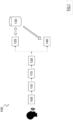
- Figure 5 is a flow chart which illustrates the main operations of a speaker recognition procedure carried out by the speaker recognition system 100 according to an embodiment of the present invention.
- the first operation (block 510 ) provides for retrieving the speech signal SS. For example, this can be carried out by directly acquiring the voice of the speaker through a microphone of the speech acquisition module 105, or by retrieving a speech signal SS acquired before.
- the next operation (block 520 ) provides for subdividing the speech signal SS into frames F(n). This is carried out by the framing module 100.
- the frames F(n) are then analyzed, and the ones that have been assessed to comprise high levels of noise and/or as not comprising a speech are discarded (block 530 ) .
- This operations are carried out by the pre-filtering module 115.
- the next operation (block 540 ) provides for extracting audio features from the not discarded frames F'(n) which are useful to characterize the audio content of the speech signal SS.
- the extraction of the audio features is carried out by the feature extraction module 520.
- a score S(h) is calculated which quantifies the likelihood that the speaker whose speech has generated the frames F'(n) is that specific known speaker SP(h) (block 550 ). This is calculated by the score computation modules SC(h) of the classification module 140.
- the highest or lowest score S(h) is compared to a threshold UTH. Based on this comparison, the speech signal SS may be classified as being generated by an unknown speaker (exit branch A of decision block 560, going to block 570 ) or the speech signal may be classified as being generated by the speaker SP(h) corresponding to such highest or lowest score S(h) (exit branch B of decision block 560, going to block 580 ). These operations are carried out by the unknown-speaker decision module 410 and by the speaker identification module.
Landscapes
- Engineering & Computer Science (AREA)
- Physics & Mathematics (AREA)
- Multimedia (AREA)
- Audiology, Speech & Language Pathology (AREA)
- Human Computer Interaction (AREA)
- Acoustics & Sound (AREA)
- Health & Medical Sciences (AREA)
- Signal Processing (AREA)
- Computational Linguistics (AREA)
- Computer Vision & Pattern Recognition (AREA)
- Business, Economics & Management (AREA)
- Game Theory and Decision Science (AREA)
- Quality & Reliability (AREA)
- Spectroscopy & Molecular Physics (AREA)
- Telephonic Communication Services (AREA)
- Circuit For Audible Band Transducer (AREA)
Description
- The present invention generally relates to the speaker recognition field. More particularly, the present invention relates to a method and a system for identifying or confirming the identity of individuals based on the voice thereof.
- Speaker recognition is a process that allows to recognize the identity of speakers based on an analysis carried out on features of the voices thereof. Practical applications of speaker recognition may be subdivided into two broad categories, namely the so-called "speaker identification" and the so-called "speaker verification". Speaker identification is used to find out the identity of a speaker among a predefined set of known speakers, while speaker verification is used to verify whether a speaker is an authorized person or not.
- Applications of speaker recognition are wide ranging, including enabling context-aware applications in different scenarios, verifying identity in e-commerce applications as well as in general business interactions, enabling biometric access control to restricted facilities and electronic devices. Moreover, speaker recognition may be advantageously exploited also in forensics, and law enforcement applications.
- For example, speaker identification may be exploited for improving the efficiency of a meeting. In this scenario, a single microphone (e.g., located on the meeting table) may be provided, which is configured to be exploited by a plurality of different speakers. Speaker identification may be advantageously exploited to automatically assess who is speaking (even if he/she is far from the microphone itself), in order to provide corresponding useful information related, for example, to the amount of time each speaker has spoken.
- Speaker verification may be for example exploited to selectively grant/deny access to a restricted area. In this scenario, a restricted area may be accessed by only a group of authorized individuals. Speaker verification may be advantageously used to implement a biometric authentication procedure for assessing whether an individual belongs or not to such group based on his/her voice, and then accordingly grant/deny access to such restricted area according to the result of the biometric authentication.
-
EP 2713367 discloses a method for text-dependent speaker recognition using a speaker adapted universal background model, wherein the speaker adapted universal background model is a speaker adapted hidden Markov model comprising channel correction. -
EP 2048656 is directed to a method for automatic speaker recognition based on a received speech input, wherein a speaker model set comprising at least a speaker-independent speaker model is provided. The method comprises the steps of detecting whether the received speech input matches a speaker model of the speaker model set according to a predetermined criterion; and, if no match is detected, creating a speaker model for the speaker model set based on the received speech input. -
US 2008/0312926 discloses an automatic dual-step, text independent, language-independent speaker voice-print creation and speaker recognition method. A neural network-based technique is used in a first step and a Markov model-based technique is used in a second step. In particular, the first step uses a neural network-based technique for decoding the content of what is uttered by the speaker in terms of language independent acoustic-phonetic classes, wherein the second step uses the sequence of language-independent acoustic-phonetic classes from the first step and employs a Markov model-based technique for creating the speaker voice-print and for recognizing the speaker. The combination of the two steps enables improvement in the accuracy and efficiency of the speaker voice-print creation and of the speaker recognition, without setting any constraints on the lexical content of the speaker utterance and on the language thereof.US 2012/303369A1 discloses speaker identification based on frames and discarding frames if not meeting certain criteria. - The Applicant has found that the known speaker recognition methods described above are affected by several drawbacks.
- The method disclosed in
EP 2713367 employs a text-dependent approach, which compels speakers to utter specific sentences in order to train classifiers. Moreover, the method ofEP 2713367 requires a Universal Background Model (UBM) implemented with a Hidden Markov Model (HMM); as it is known to those skilled in the art, in order to generate a UBM, a large amount of speech samples are required. Moreover, the efficiency of the method ofEP 2713367 is strongly reduced when the speech signal captured from the speakers is affected by noise and/or when it comprises portions which do not comprise any speech. - As in the method of
EP 2713367 , the method described inEP 2048656 as well uses a UBM which requires a large amount of speech samples to be generated. - Moreover, as in the method of
EP 2713367 , both the methods ofEP 2048656 andUS 2008/0312926 have a strongly reduced efficiency when the speech signal captured from the speakers is affected by noise or when it comprises noise portions. - In view of the above, the object of the invention is increasing the efficiency of the known speaker recognition methods and systems, as well as reducing the computational burden thereof. This object of the invention is solved by the independent claims. Specific embodiments are defined in the dependent claims.
- In very general terms, the Applicant has found that the efficiency of a speaker recognition method/system can be strongly increased if the speech signal captured from the speakers is prefiltered in order to remove portions thereof comprising high levels of noise and portions thereof which do not comprise a speech.
- These and others features and advantages of the solution according to the present invention will be better understood by reading the following detailed description of an embodiment thereof, provided merely by way of non-limitative example, to be read in conjunction with the attached drawings, wherein:
-
Figure 1 illustrates in term of functional modules a speaker recognition system according to an embodiment of the present invention; -
Figure 2 illustrates how a speech signal is subdivided into frames according to an embodiment of the present invention; -
Figure 3 illustrates a pre-filtering module of the speaker recognition system ofFigure 1 according to an embodiment of the present invention; -
Figure 4 illustrates a classification module according to an embodiment of the present invention, and -
Figure 5 is a flow chart illustrating the main operations of a speaker recognition procedure carried out by the speaker recognition system ofFigure 1 according to an embodiment of the present invention. - With reference to the drawings,
Figure 1 illustrates in terms of functional modules aspeaker recognition system 100 according to an embodiment of the present invention. - The
speaker recognition system 100 which will be described in detail in the following of the present description is configured to assess the identity of a speaker among a predefined set of known speakers. For example, thespeaker recognition system 100 may be exploited in a meeting to automatically assess who is speaking among the participants of the meeting. Moreover, thespeaker recognition system 100 is also capable of assessing whether the speaker does not belong to any one among the predefined set of known speakers. In this latter case, thespeaker recognition system 100 is configured to classify the speaker as "unknown speaker". - However, similar considerations apply if the
speaker recognition system 100 is used in different applications, such as for example in a speaker verification scenario to verify whether a speaker is an authorized person or not. In any case, such speaker verification scenario can be viewed also as a special case of the previously mentioned scenario of assessing the identity of a speaker among a predefined set of known speakers, with such predefined set of known speakers that comprises only a single known speaker (i.e., the speaker to be verified). - The
speaker recognition system 100 according to the embodiment of the invention illustrated inFigure 1 comprises aspeech acquisition module 105, aframing module 110, apre-filtering module 115, afeature extraction module 120, amodel training module 125, amodel database module 130, and aclassification module 140. - It should be noted that in the present description the term 'module' is herein intended to comprise, but not limited to, hardware, firmware, a combination of hardware and software, software.
- For example, a module may be, but is not limited to being, a process running on a processor, a processor, an object, an executable, a thread of execution, a program, and/or a computing device (such as for example a computer, a smartphone, a tablet, a set top box, a conference station, a speaker phone systems, and so on).
- In other words, a module may comprise an application being executed on a computing device and/or the computing device itself.
- One or more modules may be localized on one computing device and/or distributed between two or more computing devices.
- Modules may comprise and/or interact with computer readable media having storing data according to various data structures.
- The modules may communicate by exploiting local and/or remote processes, preferably by means of electrical, electromagnetic and/or optical signals providing one or more data packets, such as data packets from one module interacting with another module in a local system, in a distributed system, and/or across a telecommunication and/or data network, such as the Internet.
- The
speech acquisition module 105 is configured to acquire speech uttered by a speaker and to convert the sound of the speech into a corresponding speech signal SS. For this purpose, thespeech acquisition module 105 comprises one or more microphones. For example, according to an exemplificative embodiment of the invention, thespeech acquisition module 105 may be comprised in a conference station located in a conference room. According to another exemplificative embodiment of the present invention, thespeech acquisition module 105 may be instead the microphone which is integrated in a device such as a computer, a smartphone or a tablet. - The framing
module 110 is configured to receive the speech signal SS and to subdivide it over time into a sequence of signal portions, referred to as frames, F(n) (n = 1 to N). According to an embodiment of the present invention illustrated inFigure 2 , the generic frame F(n) of the sequence of frames - except for the last frame F(N) - partially overlaps (over time) the next frame F(n+1) in the sequence. - According to an exemplificative embodiment of the present invention, each frame F(n) may last from 20 ms to 40 ms.
- According to an exemplificative embodiment of the present invention, two consecutive frames F(n), F(n+1) are overlapped over time by a percentage between 50% and 90%.
- According to an embodiment of the present invention, the duration in time of each frame F(n) and the overlapping percentage of each pair of consecutive frames F(n), F(n+1) are the same for each frame F(n) and for each pair of consecutive frames F(n), F(n+1).
- According to another embodiment of the present invention, such duration and/or such overlapping percentage may instead vary.
- The segmentation of the speech signal SS into frames F(n) is carried out in order to obtain fragments of the speech signal SS having a limited duration for guaranteeing that within each frame F(n) the statistical properties of the speaker voice are kept constant as much as possible. The overlapping is used to avoid or at least reduce the arising of spurious frequency caused by the segmentation.
- According to an embodiment of the present invention, in order to improve the efficiency of the
speaker recognition system 100, thepre-filtering module 115 is configured to carry out a spectral analysis of the frames F(n) and accordingly discard the frames F(n) which are assessed to comprise high levels of noise and the frames F(n) which are assessed as not comprising a speech. In this way, the operations carried out by the other modules of thespeaker recognition system 100 are performed only on frames F(n) which contains voice and which are not affected by high amounts of noise. This allows to avoid (or at least reduce) speaker recognition accuracy detriment when the speaker is speaking from a position which is not close to thespeech acquisition module 105. -
Figure 3 illustrates in greater detail thepre-filtering module 115 according to an embodiment of the present invention. - The
pre-filtering module 115 comprises a Discrete Fourier Transform (DFT)module 205 configured to calculate for each received frame F(n) a sequence of (complex) samples which correspond to the DFT of the frame F(n). The samples of the DFT outputted by theDTF module 205 are fed to asquaring module 210 configured to output a further sequence of samples corresponding to the squares of the magnitudes of the DFT samples outputted by theDTF module 205. Therefore, the sequence of samples outputted by the squaringmodule 210 corresponding to a generic frame F(n) form the energy density D(n) of such frame F(n) over frequency. - According to an embodiment of the present invention, the energy density D(n) of the generic frame F(n) is concurrently fed to a
flatness estimator module 215 and to anenergy estimator module 220. As will be described in detail in the following of the present description, both theflatness estimator module 215 and theenergy estimator module 220 are configured to assess whether the frame F(n) corresponding to the received energy density D(n) has to be discarded because it does not comprise a speech or is affected by an excessive amount of noise. - Both the
flatness estimator module 215 and theenergy estimator module 220 are configured to perform the same assessment provided above, but under a respective different point of view. - More specifically, according to an embodiment of the present invention, the
flatness estimator module 215 is configured to assess whether a generic frame F(n) has to be discarded based on the flatness of the spectrum of the frame F(n). Indeed, the spectrum of human voice exhibits three separate peaks in the frequency domain. Consequently, if the energy density D(n) of a generic frame F(n) is assessed to be flat, it means that such frame F(n) does not comprise a speech, and/or such frame is too noisy (and therefore needs to be discarded). - According to an embodiment of the present invention, the
energy estimator module 220 is configured to assess whether a generic frame F(n) has to be discarded based on how the spectral energy of the frame F(n) is distributed over frequency. Indeed, human voice has the majority of its energy (about 90%) which is below 1 KHz. Consequently, if a generic frame F(n) is assessed to have a substantial amount of energy (calculated through the energy density D(n) thereof) above a frequency threshold (e.g., corresponding to 1 KHz), it means that such frame F(n) does not comprise a speech, and/or such frame is too noisy (and therefore needs to be discarded). - According to an embodiment of the present invention, the
flatness estimator module 215 comprises an arithmeticmean module 225 configured to calculate the arithmetic mean AM(n) of the samples forming the energy density D(n) corresponding to the generic frame F(n). - According to an embodiment of the present invention, the
flatness estimator module 215 further comprises a geometricmean module 230 configured to calculate the geometric mean GM(n) of the samples forming the energy density D(n) corresponding to the generic frame F(n). - According to an embodiment of the present invention, the
flatness estimator module 215 further comprises aratio module 235 configured to calculate a flatness parameter FP(n) of the energy density D(n) corresponding to the (e.g., logarithm of the) ratio of the geometric mean GM(n) to the arithmetic mean AM(n). For example, according to an embodiment of the present invention, the flatness parameter FP(n) is a number calculated in the following way:
- A frame F(n) having a substantially flat energy density D(n) - because the frame F(n) does not comprise a speech, and/or because the frame is very noisy - has the ratio GM(n)/AM(n) which is close to 1, and therefore the corresponding flatness parameter FP(n) which is substantially low (in absolute value). Conversely, a frame F(n) having an energy density D(n) which exhibits peaks has corresponding flatness parameters FP(n) which are much higher (in absolute value).
- According to an embodiment of the present invention, the
flatness estimator module 215 further comprises acomparator module 240 configured to compare the flatness parameters FP(n) with a corresponding threshold FTH. If the flatness parameters FP(n) is higher than the threshold FTH, it means that the frame F(n) has a substantially flat energy density D(n), meaning in turn that the frame F(n) at least does not comprise a speech or it is affected by an excessive amount of noise. In this case, the frame F(n) should be discarded. Exemplary values for the threshold FTH may belong to the range ]-∞, 0], such as for example -6. - According to an embodiment of the present invention, the
energy estimator module 220 comprises a low frequencyenergy calculator module 250 configured to calculate, from the energy density D(n) corresponding to the generic frame F(n), the energy LE(n) of the frame F(n) pertaining to the frequencies below an upper frequency threshold LTH, such as for example 1 KHz. - According to an embodiment of the present invention, the
energy estimator module 220 further comprises a frameenergy calculator module 255 configured to calculate, from the energy density D(n) corresponding to the generic frame F(n), the total energy TE(n) of the frame F(n). - According to an embodiment of the present invention, the
energy estimator module 220 further comprises aratio module 260 configured to calculate the energy parameter EP(n) = LE(n)/TE(n). - Frames F(n) having a substantial amount of energy above the upper frequency threshold LTH - because the frame F(n) does not comprise a speech, and/or because the frame is very noisy - have the energy parameter EP(n) that is substantially lower than 1. Conversely, a frame F(n) whose total energy is mainly confined at frequency lower than the upper frequency threshold LTH have the energy parameter EP(n) that is close to 1.
- According to an embodiment of the present invention, the
energy estimator module 220 further comprises acomparator module 270 configured to compare the energy parameter EP(n) with a corresponding threshold ETH. If the energy parameter EP(n) is lower than the threshold ETH, it means that the frame F(n) has a substantial amount of energy above the upper frequency threshold LTH, i.e., in a part of the spectrum in which human voice has no significant components, meaning in turn that such frame F(n) at least does not comprise a speech or is affected by an excessive amount of noise. In this case, the frame F(n) should be discarded. Exemplary values for the threshold ETH may range from 0 to 1, such as for example 0.76. - According to an embodiment of the present invention, the
pre-filtering module 115 further comprises aframe selection module 275 configured to discard a frame F(n) if at least one among theflatness estimator module 215 and theenergy estimator module 220 has provided an indication that such frame F(n) should be discarded. - For this purpose, according to an exemplary embodiment of the present invention, the
frame selection module 275 is coupled with the outputs of thecomparator modules - the flatness parameters FP(n) is higher than the threshold FTH, and
- the energy parameter EP(n) is lower than the threshold ETH.
- If instead neither the
flatness estimator module 215 nor theenergy estimator module 220 have provided an indication that such frame F(n) should be discarded, such as in the case in which the flatness parameters FP(n) is lower than the threshold FTH and at the same time the energy parameter EP(n) is higher than the threshold ETH, the frame F(n) is kept. - According to an alternative embodiment of the present invention, the
pre-filtering module 115 may comprise only theflatness estimator module 215 or only theenergy estimator module 220 instead of both of them. In this case, the decision made by theframe selection module 275 whether to keep or discard a frame F(n) is carried out based on the outcome of theflatness estimator module 215 or of theenergy estimator module 220 only. - For example, according to an embodiment of the present invention in which only the
flatness estimator module 215 is provided, theframe selection module 275 may be configured to keep a frame F(n) when the flatness parameters FP(n) is lower than the threshold FTH, and to discard it when the flatness parameters FP(n) is higher than the threshold FTH. - According to another embodiment of the present invention, in which only the
energy estimator module 220 is provided, theframe selection module 275 may be configured to keep a frame F(n) when the energy parameter EP(n) is higher than the threshold ETH, and to discard it when the energy parameter EP(n) is lower than the threshold ETH. - The
pre-filtering module 115 is configured to carry out the operations described above for each frame F(n) the speech signal SS has subdivided into. - After the last frame F(N) has been processed by the
pre-filtering module 115, only the frames which have been not discarded are provided to the following modules of thespeaker recognition system 100 for being processed in order to recognize the speaker which generated the speech signal SS. - In the following of the present description, the frames which have not been discarded by the pre-filtering operations carried out by the
pre-filtering module 115 are identified as F'(n), (n = 1 to N'), where N' ≤ N. N' is equal to N only in case no frame F(n) has been discarded. - According to an embodiment of the present invention, the
feature extraction module 120 is configured to extract from the frames F'(n) audio features which are useful to characterize the audio content of the captured speech signal SS. - According to an embodiment of the present invention, the audio features extracted by the
feature extraction module 120 are the known Mel Frequency Cepstrum Coefficients (MFCC) and their second derivative components, referred to as DeltaDelta coefficients, as in " SPECTRA: A SPEech proCessing plaTform as smaRtphone Application" by I. Bisio, F. Lavagetto, M. Marchese, A. Sciarrone, C. Frà and M. Valla, 2015 IEEE International Conference on Communications (ICC), London, 2015, pp. 7030-7035.doi: 10.1109/ICC.2015.7249447 and in " A novel approach for MFCC feature extraction" by M. A. Hossan, S. Memon and M. A. Gregory, 2010 4th International Conference on Signal Processing and Communication Systems, Gold Coast, QLD, 2010, pp. 1-5, doi: 10.1109/ICSPCS.2010.5709752. - For each frame F'(n), the
feature extraction module 120 is configured to calculate K MFCC coefficients C(n)(k) (k = 1 to K) and K DeltaDelta coefficients ΔΔ(n)(k) (k = 1 to K). The K MFCC coefficients [C(n)(1), ..., C(n)(k), ..., C(n)(K)] = C(n) and the K DeltaDelta coefficients [ΔΔ(n)(1), ..., ΔΔ(n)(k), ..., ΔΔ(n)(K)] = ΔΔ(n) generated by thefeature extraction module 120 for the frame F'(n) are arranged in a single vector of 2K elements, hereinafter referred to as feature vector X(n) = [ C(n) ΔΔ(n) ]. - The number K of MFCC coefficients extracted by the
feature extraction module 120 should be set taking into consideration that the higher the number of extracted audio features, the better the speaker recognition quality, but at the same time the higher the amount of computation load and energy consumption. According to an embodiment of the present invention, K is selected in the interval [1, 20]. According to a preferred embodiment of the present invention, K is set equal to 13, so that the feature vector X(n) is a vector having 26 elements. - According to an embodiment of the present invention, the
speaker recognition system 100 is configured to classify speakers by using Support Vector Machines (SVM) trained according to the One-Against-All (OAA) approach. The use of SVMs trained according to the OAA approach is well known to those skilled in the art. On this regard, see for example, " Support Vector Machines for Speaker and Language Recognition" by W. M. Campbell, J. P. Campbell, D. A. Reynolds, E. Singer, P. A. Torres-Carrasquillo, MIT Lincoln Laboratory, Computer Speech & Language, Volume 20, Issues 2-3, April-July 2006, Pages 210-229. - According to an embodiment of the present invention, having a predefined set of H known speakers SP(h) (h = 1 to H), each speaker SP(h) is associated to a corresponding SVM, identified as SVM(h). The generic SVM SVM(h) is a binary classifier which is configured to carry out decisions exploiting a mathematical model - hereinafter identified as speaker model MS(h) - of the voice of the speaker SP(h). The SVM SVM(h) is configured to receive a feature vector X(n) of a generic frame F'(n) and accordingly select one among the two following conditions C0, C1:
- C0: the frame F'(n) contains speech of the speaker SP(h);
- C1: the frame F'(n) does not contain speech of the speaker SP(h).
- The selection of the condition is carried out by comparing the received feature vector X(n) with the speaker model MS(h).
- According to an embodiment of the present invention, the
model training module 125 is configured to generate the speaker models MS(h) of the various SVM SVM(h) by carrying out known training procedures well known to those skilled in the art which exploit frames F'(n) obtained from the capturing of speech uttered by speakers SP(h) whose identity is already known. For example, themodel training module 125 may be configured to carry out the known training procedure described in "LIBSVM: A library for support vector machines," by C.-C. Chang and C.-J. Lin, ACM Transactions on Intelligent Systems and Technology, vol. 2, pp. 27:1-27:27, 2011 (software available at http://www.csie.ntu.edu.tw/cjlin/libsvm). - According to an embodiment of the present invention, data forming the speaker models MS(h) are stored in the
model database module 130, ready to be exploited during the speaker recognition operations carried by theclassification module 140 which will be described in the following. - According to an embodiment of the present invention, the speaker models MS(h) may be further classified into "male speaker" and "female speaker" classes, so that final decision could be taken among speakers of the same gender.
- It has to be appreciated that even if reference has been made to a classification exploiting SVM trained according to OAA approach, similar considerations apply in case the SVM are trained according to a One-Against-One (OAO) approach.
- Moreover, the concepts of the present invention can be applied also in those case in which in addition to or in place of the SVM, Hidden Markov Models (HMM) and/or Gaussian Mixture Models (GMM) are employed.
- According to an embodiment of the present invention, the
classification module 140 is configured to process the feature vectors X(n) generated by thefeature extraction module 120 to accordingly identify the identity of the speaker SP(h) having uttered the speech captured in the speech signal SS. - As illustrated in
Figure 4 , theclassification module 140 comprises H SVM SVM(h) (h = 1 to H), each one corresponding to a respective speaker SP(h) among the predefined set of H known speakers SP(h). The SVM SVM(h) are built by theclassification module 140 by exploiting the speaker models MS(h) retrieved from themodel database module 130. - Each feature vector X(n) corresponding to frame F'(n) (n = 1 to N') is fed to all the H SVM SVM(h).
- Each SVM SVM(h) accordingly selects one among the abovementioned conditions C0, C1 based on a comparison between the received feature vector X(n) and the speaker model MS(h), and outputs a corresponding binary value V(h)(n), such as for example "0" if condition C0 has been selected and "1" if condition C1 has been selected.
- In this way, after all the N' feature vectors X(n) are fed to the SVM SVM(h), a corresponding N-dimensional output vector V(h) = [V(h)(1), ..., V(h)(n), ..., V(h)(N)] is generated for each SVM SVM(h), which contains the binary values V(h)(n) generated by the latter. Therefore, each n-th element V(h)(n) of the output vector V(h) provides an indication about the condition selected by the SVM SVM(h) with respect to the n-th frame F'(n). According to the convention employed in the exemplary embodiment taken at issue, if the n-th element V(h)(n) of the output vector V(h) corresponding to the k-th SVM SVM(h) is equal to 0, it means that the frame F'(n) has been assessed to contain speech uttered by the speaker SP(h) corresponding to such SVM SVM(h); if instead V(h)(n) is equal to 1, it means that the frame F'(n) has been assessed not to contain speech uttered by the speaker SP(h) corresponding to such SVM SVM(h).
- According to an embodiment of the present invention, each output vector V(h) is provided to a respective score computation module SC(h) which is configured to calculate a corresponding score value S(h) according to the following formula:

- Since each output vector V(h) is generated by taking into account all the N' frames F'(n), it comprises information on how the speech pertaining the N' frames F'(n) is related to the speaker SP(h). The score value S(h) is calculated in such a way to assume a value ranging from +r to -r, wherein r corresponds to the case in which all the N' frames F'(n) have been assessed to contain speech uttered by the speaker SP(h) and -r corresponds to the case in which no frame F'(n) has been assessed to contain speech uttered by the speaker SP(h). In other words, the score S(h) quantifies the likelihood that the speaker whose speech has generated the frames F'(n) is the h-th speaker SP(h) among the predefined set of H known speakers SP(h). The higher the score value S(h), the higher the probability that the speaker having uttered the speech captured in the speech signal SS is the h-th speaker SP(h). For example, r may be equal to 1.
- According to an embodiment of the present invention, the H score values S(h) are arranged in a H-element score vector S = [S(1), ..., S(h), ..., S(H)] which is provided to an unknown-
speaker decision module 410 configured to assess whether the speaker whose speech has generated the frames F'(n) belongs to one of the H known speakers SP(h) of the predefined set or not. - According to an embodiment of the present invention, the unknown-
speaker decision module 410 is configured to compare the highest score value S(h) of the score vector S to a threshold UTH. If such highest score value S(h) is lower than the threshold UTH, the unknown-speaker decision module 410 assesses that the frames F'(n) have been generated from a speech uttered by a person that is not included in the H known speakers SP(h) of the predefined set. In this case, the speech signal SS is classified as being generated by an "unknown speaker". If, instead, the highest score value S(h) is higher than the threshold UTH, the unknown-speaker decision module 410 assesses that the frames F'(n) have been generated from a speech uttered by one of the H known speakers SP(h) of the predefined set. In this case, the speech signal is classified as being generated by the speaker SP(h) corresponding to the highest score value S(h). According to an embodiment of the present invention, the threshold UTH may range from -0.5 to 0.5, such as for example it may be equal to 0. - If the unknown-
speaker decision module 410 has assessed that the speaker having generated the frames F'(n) is one of the H known speakers SP(h) of the predefined set, the score vector S is fed to aspeaker identification module 420. Thespeaker identification module 420 is configured to identify the actual speaker having generated the frames F'(n) as the one among the H known speakers SP(h) of the predefined set having the highest score value S(h) in the score vector S. - Considering an example in which the set of known speakers comprises H =3 known speakers SP(1), SP(2), SP(3), and the corresponding score vector S is equal to [S(1) = 0.7, S(2) =0.1, S(3) =-0.3], the highest score value S(h) is S(1) = 0.7, corresponding to the known speaker SP(1). If such value is lower than the threshold UTH, the speech signal is classified as being generated by an unknown speaker. If such value is instead higher than the threshold UTH, the speech signal is classified as being generated by the speaker SP(1).
- Naturally, similar considerations apply if the score value S(h) is calculated in a different way, such as in such a way that the lower the score value S(h), the higher the probability that the speaker having uttered the speech captured in the speech signal SS is the h-th speaker SP(h). In this case, as can be easily comprised by those skilled in the art, the score value S(h) which is compared to the threshold UTH and which is used to identify the speaker will be the lowest one, the comparison will provide to classify the speech signal SS as being generated by a "unknown speaker" if the lowest score value S(h) is higher than the threshold UTH, and the speech signal will be classified as being generated by the speaker SP(h) corresponding to the lowest score value S(h).
-
Figure 5 is a flow chart which illustrates the main operations of a speaker recognition procedure carried out by thespeaker recognition system 100 according to an embodiment of the present invention. - The first operation (block 510) provides for retrieving the speech signal SS. For example, this can be carried out by directly acquiring the voice of the speaker through a microphone of the
speech acquisition module 105, or by retrieving a speech signal SS acquired before. - The next operation (block 520) provides for subdividing the speech signal SS into frames F(n). This is carried out by the framing
module 100. - The frames F(n) are then analyzed, and the ones that have been assessed to comprise high levels of noise and/or as not comprising a speech are discarded (block 530). This operations are carried out by the
pre-filtering module 115. - The next operation (block 540) provides for extracting audio features from the not discarded frames F'(n) which are useful to characterize the audio content of the speech signal SS. The extraction of the audio features is carried out by the
feature extraction module 520. - For each one of the known speakers SP(h) belonging to the predefined set of speakers, a score S(h) is calculated which quantifies the likelihood that the speaker whose speech has generated the frames F'(n) is that specific known speaker SP(h) (block 550). This is calculated by the score computation modules SC(h) of the
classification module 140. - At this point (decision block 560), the highest or lowest score S(h) is compared to a threshold UTH. Based on this comparison, the speech signal SS may be classified as being generated by an unknown speaker (exit branch A of
decision block 560, going to block 570) or the speech signal may be classified as being generated by the speaker SP(h) corresponding to such highest or lowest score S(h) (exit branch B ofdecision block 560, going to block 580). These operations are carried out by the unknown-speaker decision module 410 and by the speaker identification module. - Naturally, in order to satisfy local and specific requirements, a person skilled in the art may apply to the solution described above many logical and/or physical modifications and alterations. More specifically, although the present invention has been described with a certain degree of particularity with reference to preferred embodiments thereof, it should be understood that various omissions, substitutions and changes in the form and details as well as other embodiments are possible. In particular, different embodiments of the invention may even be practiced without the specific details set forth in the preceding description for providing a more thorough understanding thereof; on the contrary, well-known features may have been omitted or simplified in order not to encumber the description with unnecessary details. Moreover, it is expressly intended that specific elements and/or method steps described in connection with any disclosed embodiment of the invention may be incorporated in any other embodiment.
Claims (10)
- A speaker recognition system (100) for assessing the identity of a speaker through a speech signal based on speech uttered by said speaker, the system comprising:- a framing module (110) configured to subdivide said speech signal over time into a set of frames;- a filtering module (115) configured to analyze the frames of the set to discard frames affected by noise and frames which do not comprise a speech, based on a spectral analysis of the frames;- a feature extraction module (120) configured to extract audio features from frames which have not been discarded;- a classification module (140) configured to process the audio features extracted from the frames which have not been discarded for assessing the identity of the speaker;wherein the filtering module (115) comprises an energy estimator module (220) configured to assess whether a frame has to be discarded based on how the spectral energy of said frame is distributed over frequency,characterized in thatsaid filtering module (115) is configured to discard a frame if the energy estimator module (220) has assessed that said frame has to be discarded because said frame has a substantial amount of energy above an upper frequency threshold.
- The system (100) of claim 1, wherein the filtering module (115) comprises a flatness estimator module (215) configured to assess whether a frame has to be discarded based on the flatness of the frequency spectrum of such frame.
- The system (100) of claim 2, wherein said filtering module (115) is configured to discard a frame if the flatness estimator module (215) has assessed that said frame has to be discarded because said frame has a substantially flat spectrum.
- The system (100) of claim 3, wherein the flatness estimator module (215) is configured to assess the flatness of the spectrum of a frame by generating a corresponding flatness parameter based on a ratio of :- the geometric mean of samples of the energy density of said frame; to- the arithmetic mean of said samples of the energy density of said frame.
- The system (100) of claim 4, wherein the flatness estimator module (215) is configured to assess that said frame has to be discarded if the corresponding flatness parameter is higher than a corresponding first threshold.
- The system (100) of any one among the preceding claims, wherein the energy estimator module (220) is configured to calculate an energy parameter of a corresponding frame based on a ratio of:- the energy of the frame pertaining to frequencies lower than said upper frequency threshold;
to- the total energy of the frame, wherein:
the energy estimator module (220) is further configured to assess that said frame has to be discarded if the corresponding energy parameter is lower than a second threshold. - The system (100) of any one among the preceding claims, wherein the classification module (140) is configured to generate for each known speaker of a predefined set of known speakers a corresponding score quantifying the likelihood that the speaker having uttered said speech is said known speaker, said generating the score being based on said audio features extracted from the frames which have not been discarded.
- The system (100) of claim 7, wherein the classification module (140) is configured to:- compare the highest score among the scores generated for each known speaker of the predefined set to a score threshold;- assess that the speaker having uttered said speech does not belong to the predefined set of known speakers if the highest score is lower than said score threshold, and- assess that the speaker having uttered said speech is the known speaker of the predefined set of known speakers corresponding to said highest score if said highest score is higher than the score threshold.
- The system (100) of claim 8, wherein the classification module (140) is configured to:- compare the lowest score among the scores generated for each known speaker of the predefined set to a score threshold;- assess that the speaker having uttered said speech does not belong to the predefined set of known speakers if the lowest score is higher than said score threshold, and- assess that the speaker having uttered said speech is the known speaker of the predefined set of known speakers corresponding to said lowest score if said lowest score is lower than the score threshold.
- A method for assessing the identity of a speaker through a speech signal based on speech uttered by said speaker, the method comprising:- subdividing (520) said speech signal over time into a set of frames;- spectrally analyzing the frames of the set and discarding (530) frames affected by noise and frames which do not comprise a speech based on such spectral analysis of the frames;- extracting (540) audio features from frames which have not been discarded;- processing (550) the audio features extracted from the frames which have not been discarded for assessing the identity of the speaker,wherein said spectrally analyzing the frames of the set and discarding (530) frames affected by noise and frames which do not comprise a speech based on such spectral analysis of the frames comprises assessing whether a frame has to be discarded based on how the spectral energy of said frame is distributed over frequency,characterized in thatsaid assessing whether a frame has to be discarded based on how the spectral energy of said frame is distributed over frequency comprises assessing that said frame has to be discarded because said frame has a substantial amount of energy above an upper frequency threshold.
Applications Claiming Priority (2)
| Application Number | Priority Date | Filing Date | Title |
|---|---|---|---|
| IT102017000044093A IT201700044093A1 (en) | 2017-04-21 | 2017-04-21 | METHOD AND SYSTEM OF RECOGNITION OF THE PARLIAMENT |
| PCT/EP2018/059839 WO2018192941A1 (en) | 2017-04-21 | 2018-04-18 | Speaker recognition method and system |
Publications (2)
| Publication Number | Publication Date |
|---|---|
| EP3613040A1 EP3613040A1 (en) | 2020-02-26 |
| EP3613040B1 true EP3613040B1 (en) | 2024-03-13 |
Family
ID=59683985
Family Applications (1)
| Application Number | Title | Priority Date | Filing Date |
|---|---|---|---|
| EP18724466.0A Active EP3613040B1 (en) | 2017-04-21 | 2018-04-18 | Speaker recognition method and system |
Country Status (4)
| Country | Link |
|---|---|
| US (1) | US11615800B2 (en) |
| EP (1) | EP3613040B1 (en) |
| IT (1) | IT201700044093A1 (en) |
| WO (1) | WO2018192941A1 (en) |
Families Citing this family (1)
| Publication number | Priority date | Publication date | Assignee | Title |
|---|---|---|---|---|
| CN110797021B (en) * | 2018-05-24 | 2022-06-07 | 腾讯科技(深圳)有限公司 | Hybrid speech recognition network training method, hybrid speech recognition device and storage medium |
Family Cites Families (7)
| Publication number | Priority date | Publication date | Assignee | Title |
|---|---|---|---|---|
| EP1889255A1 (en) | 2005-05-24 | 2008-02-20 | Loquendo S.p.A. | Automatic text-independent, language-independent speaker voice-print creation and speaker recognition |
| US7774202B2 (en) * | 2006-06-12 | 2010-08-10 | Lockheed Martin Corporation | Speech activated control system and related methods |
| DE602007004733D1 (en) | 2007-10-10 | 2010-03-25 | Harman Becker Automotive Sys | speaker recognition |
| US8731936B2 (en) * | 2011-05-26 | 2014-05-20 | Microsoft Corporation | Energy-efficient unobtrusive identification of a speaker |
| ES2605779T3 (en) | 2012-09-28 | 2017-03-16 | Agnitio S.L. | Speaker Recognition |
| CN104424956B9 (en) * | 2013-08-30 | 2022-11-25 | 中兴通讯股份有限公司 | Activation tone detection method and device |
| US10540979B2 (en) * | 2014-04-17 | 2020-01-21 | Qualcomm Incorporated | User interface for secure access to a device using speaker verification |
-
2017
- 2017-04-21 IT IT102017000044093A patent/IT201700044093A1/en unknown
-
2018
- 2018-04-18 WO PCT/EP2018/059839 patent/WO2018192941A1/en not_active Ceased
- 2018-04-18 EP EP18724466.0A patent/EP3613040B1/en active Active
- 2018-04-18 US US16/495,891 patent/US11615800B2/en active Active
Also Published As
| Publication number | Publication date |
|---|---|
| IT201700044093A1 (en) | 2018-10-21 |
| US11615800B2 (en) | 2023-03-28 |
| US20200098375A1 (en) | 2020-03-26 |
| EP3613040A1 (en) | 2020-02-26 |
| WO2018192941A1 (en) | 2018-10-25 |
Similar Documents
| Publication | Publication Date | Title |
|---|---|---|
| US9336780B2 (en) | Identification of a local speaker | |
| EP3599606B1 (en) | Machine learning for authenticating voice | |
| CN112053695A (en) | Voiceprint recognition method and device, electronic equipment and storage medium | |
| JP2021500616A (en) | Object identification method and its computer equipment and computer equipment readable storage medium | |
| McLaren et al. | Source-normalized LDA for robust speaker recognition using i-vectors from multiple speech sources | |
| CN111429935B (en) | Voice caller separation method and device | |
| US10909991B2 (en) | System for text-dependent speaker recognition and method thereof | |
| WO2006024117A1 (en) | Method for automatic speaker recognition | |
| CN113744742B (en) | Role identification method, device and system under dialogue scene | |
| CN109920435B (en) | Voiceprint recognition method and voiceprint recognition device | |
| Madikeri et al. | Integrating online i-vector extractor with information bottleneck based speaker diarization system | |
| Abdalmalak et al. | Enhancement of a text-independent speaker verification system by using feature combination and parallel structure classifiers | |
| CN115100701A (en) | Conference speaker identity identification method based on artificial intelligence technology | |
| CN108091340B (en) | Voiceprint recognition method, voiceprint recognition system, and computer-readable storage medium | |
| CN109065026B (en) | Recording control method and device | |
| Vasquez-Correa et al. | Wavelet-based time-frequency representations for automatic recognition of emotions from speech | |
| US11615800B2 (en) | Speaker recognition method and system | |
| Maazouzi et al. | MFCC and similarity measurements for speaker identification systems | |
| Dutta | Dynamic time warping based approach to text-dependent speaker identification using spectrograms | |
| CN119479656A (en) | Anonymous speaker identity verification and traceability system | |
| CN106971725B (en) | Voiceprint recognition method and system with priority | |
| Ranjan | Real Time Speaker Identification from Disguised Voice Using Feature Extraction and Classifications Techniques | |
| CN117496992A (en) | Voice separation method, device, terminal equipment and storage medium | |
| Bredin et al. | The biosecure talking-face reference system | |
| Neelima et al. | Spoofing detection and countermeasure in automatic speaker verification system using dynamic features |
Legal Events
| Date | Code | Title | Description |
|---|---|---|---|
| STAA | Information on the status of an ep patent application or granted ep patent |
Free format text: STATUS: UNKNOWN |
|
| STAA | Information on the status of an ep patent application or granted ep patent |
Free format text: STATUS: THE INTERNATIONAL PUBLICATION HAS BEEN MADE |
|
| PUAI | Public reference made under article 153(3) epc to a published international application that has entered the european phase |
Free format text: ORIGINAL CODE: 0009012 |
|
| STAA | Information on the status of an ep patent application or granted ep patent |
Free format text: STATUS: REQUEST FOR EXAMINATION WAS MADE |
|
| 17P | Request for examination filed |
Effective date: 20191115 |
|
| AK | Designated contracting states |
Kind code of ref document: A1 Designated state(s): AL AT BE BG CH CY CZ DE DK EE ES FI FR GB GR HR HU IE IS IT LI LT LU LV MC MK MT NL NO PL PT RO RS SE SI SK SM TR |
|
| AX | Request for extension of the european patent |
Extension state: BA ME |
|
| DAV | Request for validation of the european patent (deleted) | ||
| DAX | Request for extension of the european patent (deleted) | ||
| STAA | Information on the status of an ep patent application or granted ep patent |
Free format text: STATUS: EXAMINATION IS IN PROGRESS |
|
| 17Q | First examination report despatched |
Effective date: 20210903 |
|
| RIC1 | Information provided on ipc code assigned before grant |
Ipc: G10L 25/18 20130101ALN20230913BHEP Ipc: G10L 25/84 20130101ALI20230913BHEP Ipc: G10L 17/02 20130101ALI20230913BHEP Ipc: G10L 17/20 20130101AFI20230913BHEP |
|
| GRAP | Despatch of communication of intention to grant a patent |
Free format text: ORIGINAL CODE: EPIDOSNIGR1 |
|
| STAA | Information on the status of an ep patent application or granted ep patent |
Free format text: STATUS: GRANT OF PATENT IS INTENDED |
|
| RIC1 | Information provided on ipc code assigned before grant |
Ipc: G10L 25/18 20130101ALN20231005BHEP Ipc: G10L 25/84 20130101ALI20231005BHEP Ipc: G10L 17/02 20130101ALI20231005BHEP Ipc: G10L 17/20 20130101AFI20231005BHEP |
|
| INTG | Intention to grant announced |
Effective date: 20231020 |
|
| GRAS | Grant fee paid |
Free format text: ORIGINAL CODE: EPIDOSNIGR3 |
|
| GRAA | (expected) grant |
Free format text: ORIGINAL CODE: 0009210 |
|
| STAA | Information on the status of an ep patent application or granted ep patent |
Free format text: STATUS: THE PATENT HAS BEEN GRANTED |
|
| AK | Designated contracting states |
Kind code of ref document: B1 Designated state(s): AL AT BE BG CH CY CZ DE DK EE ES FI FR GB GR HR HU IE IS IT LI LT LU LV MC MK MT NL NO PL PT RO RS SE SI SK SM TR |
|
| REG | Reference to a national code |
Ref country code: GB Ref legal event code: FG4D |
|
| REG | Reference to a national code |
Ref country code: CH Ref legal event code: EP |
|
| REG | Reference to a national code |
Ref country code: DE Ref legal event code: R096 Ref document number: 602018066545 Country of ref document: DE |
|
| REG | Reference to a national code |
Ref country code: IE Ref legal event code: FG4D |
|
| P01 | Opt-out of the competence of the unified patent court (upc) registered |
Effective date: 20240405 |
|
| PG25 | Lapsed in a contracting state [announced via postgrant information from national office to epo] |
Ref country code: LT Free format text: LAPSE BECAUSE OF FAILURE TO SUBMIT A TRANSLATION OF THE DESCRIPTION OR TO PAY THE FEE WITHIN THE PRESCRIBED TIME-LIMIT Effective date: 20240313 |
|
| REG | Reference to a national code |
Ref country code: LT Ref legal event code: MG9D |
|
| PG25 | Lapsed in a contracting state [announced via postgrant information from national office to epo] |
Ref country code: GR Free format text: LAPSE BECAUSE OF FAILURE TO SUBMIT A TRANSLATION OF THE DESCRIPTION OR TO PAY THE FEE WITHIN THE PRESCRIBED TIME-LIMIT Effective date: 20240614 |
|
| REG | Reference to a national code |
Ref country code: NL Ref legal event code: MP Effective date: 20240313 |
|
| PG25 | Lapsed in a contracting state [announced via postgrant information from national office to epo] |
Ref country code: RS Free format text: LAPSE BECAUSE OF FAILURE TO SUBMIT A TRANSLATION OF THE DESCRIPTION OR TO PAY THE FEE WITHIN THE PRESCRIBED TIME-LIMIT Effective date: 20240613 Ref country code: HR Free format text: LAPSE BECAUSE OF FAILURE TO SUBMIT A TRANSLATION OF THE DESCRIPTION OR TO PAY THE FEE WITHIN THE PRESCRIBED TIME-LIMIT Effective date: 20240313 |
|
| PG25 | Lapsed in a contracting state [announced via postgrant information from national office to epo] |
Ref country code: ES Free format text: LAPSE BECAUSE OF FAILURE TO SUBMIT A TRANSLATION OF THE DESCRIPTION OR TO PAY THE FEE WITHIN THE PRESCRIBED TIME-LIMIT Effective date: 20240313 |
|
| PG25 | Lapsed in a contracting state [announced via postgrant information from national office to epo] |
Ref country code: RS Free format text: LAPSE BECAUSE OF FAILURE TO SUBMIT A TRANSLATION OF THE DESCRIPTION OR TO PAY THE FEE WITHIN THE PRESCRIBED TIME-LIMIT Effective date: 20240613 Ref country code: NO Free format text: LAPSE BECAUSE OF FAILURE TO SUBMIT A TRANSLATION OF THE DESCRIPTION OR TO PAY THE FEE WITHIN THE PRESCRIBED TIME-LIMIT Effective date: 20240613 Ref country code: LT Free format text: LAPSE BECAUSE OF FAILURE TO SUBMIT A TRANSLATION OF THE DESCRIPTION OR TO PAY THE FEE WITHIN THE PRESCRIBED TIME-LIMIT Effective date: 20240313 Ref country code: HR Free format text: LAPSE BECAUSE OF FAILURE TO SUBMIT A TRANSLATION OF THE DESCRIPTION OR TO PAY THE FEE WITHIN THE PRESCRIBED TIME-LIMIT Effective date: 20240313 Ref country code: GR Free format text: LAPSE BECAUSE OF FAILURE TO SUBMIT A TRANSLATION OF THE DESCRIPTION OR TO PAY THE FEE WITHIN THE PRESCRIBED TIME-LIMIT Effective date: 20240614 Ref country code: FI Free format text: LAPSE BECAUSE OF FAILURE TO SUBMIT A TRANSLATION OF THE DESCRIPTION OR TO PAY THE FEE WITHIN THE PRESCRIBED TIME-LIMIT Effective date: 20240313 Ref country code: ES Free format text: LAPSE BECAUSE OF FAILURE TO SUBMIT A TRANSLATION OF THE DESCRIPTION OR TO PAY THE FEE WITHIN THE PRESCRIBED TIME-LIMIT Effective date: 20240313 Ref country code: BG Free format text: LAPSE BECAUSE OF FAILURE TO SUBMIT A TRANSLATION OF THE DESCRIPTION OR TO PAY THE FEE WITHIN THE PRESCRIBED TIME-LIMIT Effective date: 20240313 |
|
| REG | Reference to a national code |
Ref country code: AT Ref legal event code: MK05 Ref document number: 1666531 Country of ref document: AT Kind code of ref document: T Effective date: 20240313 |
|
| PG25 | Lapsed in a contracting state [announced via postgrant information from national office to epo] |
Ref country code: SE Free format text: LAPSE BECAUSE OF FAILURE TO SUBMIT A TRANSLATION OF THE DESCRIPTION OR TO PAY THE FEE WITHIN THE PRESCRIBED TIME-LIMIT Effective date: 20240313 Ref country code: LV Free format text: LAPSE BECAUSE OF FAILURE TO SUBMIT A TRANSLATION OF THE DESCRIPTION OR TO PAY THE FEE WITHIN THE PRESCRIBED TIME-LIMIT Effective date: 20240313 |
|
| PG25 | Lapsed in a contracting state [announced via postgrant information from national office to epo] |
Ref country code: NL Free format text: LAPSE BECAUSE OF FAILURE TO SUBMIT A TRANSLATION OF THE DESCRIPTION OR TO PAY THE FEE WITHIN THE PRESCRIBED TIME-LIMIT Effective date: 20240313 |
|
| PG25 | Lapsed in a contracting state [announced via postgrant information from national office to epo] |
Ref country code: NL Free format text: LAPSE BECAUSE OF FAILURE TO SUBMIT A TRANSLATION OF THE DESCRIPTION OR TO PAY THE FEE WITHIN THE PRESCRIBED TIME-LIMIT Effective date: 20240313 |
|
| PG25 | Lapsed in a contracting state [announced via postgrant information from national office to epo] |
Ref country code: IS Free format text: LAPSE BECAUSE OF FAILURE TO SUBMIT A TRANSLATION OF THE DESCRIPTION OR TO PAY THE FEE WITHIN THE PRESCRIBED TIME-LIMIT Effective date: 20240713 |
|
| PG25 | Lapsed in a contracting state [announced via postgrant information from national office to epo] |
Ref country code: PT Free format text: LAPSE BECAUSE OF FAILURE TO SUBMIT A TRANSLATION OF THE DESCRIPTION OR TO PAY THE FEE WITHIN THE PRESCRIBED TIME-LIMIT Effective date: 20240715 Ref country code: SM Free format text: LAPSE BECAUSE OF FAILURE TO SUBMIT A TRANSLATION OF THE DESCRIPTION OR TO PAY THE FEE WITHIN THE PRESCRIBED TIME-LIMIT Effective date: 20240313 |
|
| PG25 | Lapsed in a contracting state [announced via postgrant information from national office to epo] |
Ref country code: EE Free format text: LAPSE BECAUSE OF FAILURE TO SUBMIT A TRANSLATION OF THE DESCRIPTION OR TO PAY THE FEE WITHIN THE PRESCRIBED TIME-LIMIT Effective date: 20240313 Ref country code: CZ Free format text: LAPSE BECAUSE OF FAILURE TO SUBMIT A TRANSLATION OF THE DESCRIPTION OR TO PAY THE FEE WITHIN THE PRESCRIBED TIME-LIMIT Effective date: 20240313 |
|
| PG25 | Lapsed in a contracting state [announced via postgrant information from national office to epo] |
Ref country code: AT Free format text: LAPSE BECAUSE OF FAILURE TO SUBMIT A TRANSLATION OF THE DESCRIPTION OR TO PAY THE FEE WITHIN THE PRESCRIBED TIME-LIMIT Effective date: 20240313 |
|
| PG25 | Lapsed in a contracting state [announced via postgrant information from national office to epo] |
Ref country code: PL Free format text: LAPSE BECAUSE OF FAILURE TO SUBMIT A TRANSLATION OF THE DESCRIPTION OR TO PAY THE FEE WITHIN THE PRESCRIBED TIME-LIMIT Effective date: 20240313 |
|
| PG25 | Lapsed in a contracting state [announced via postgrant information from national office to epo] |
Ref country code: SK Free format text: LAPSE BECAUSE OF FAILURE TO SUBMIT A TRANSLATION OF THE DESCRIPTION OR TO PAY THE FEE WITHIN THE PRESCRIBED TIME-LIMIT Effective date: 20240313 |
|
| PG25 | Lapsed in a contracting state [announced via postgrant information from national office to epo] |
Ref country code: SM Free format text: LAPSE BECAUSE OF FAILURE TO SUBMIT A TRANSLATION OF THE DESCRIPTION OR TO PAY THE FEE WITHIN THE PRESCRIBED TIME-LIMIT Effective date: 20240313 Ref country code: SK Free format text: LAPSE BECAUSE OF FAILURE TO SUBMIT A TRANSLATION OF THE DESCRIPTION OR TO PAY THE FEE WITHIN THE PRESCRIBED TIME-LIMIT Effective date: 20240313 Ref country code: RO Free format text: LAPSE BECAUSE OF FAILURE TO SUBMIT A TRANSLATION OF THE DESCRIPTION OR TO PAY THE FEE WITHIN THE PRESCRIBED TIME-LIMIT Effective date: 20240313 Ref country code: PT Free format text: LAPSE BECAUSE OF FAILURE TO SUBMIT A TRANSLATION OF THE DESCRIPTION OR TO PAY THE FEE WITHIN THE PRESCRIBED TIME-LIMIT Effective date: 20240715 Ref country code: PL Free format text: LAPSE BECAUSE OF FAILURE TO SUBMIT A TRANSLATION OF THE DESCRIPTION OR TO PAY THE FEE WITHIN THE PRESCRIBED TIME-LIMIT Effective date: 20240313 Ref country code: IS Free format text: LAPSE BECAUSE OF FAILURE TO SUBMIT A TRANSLATION OF THE DESCRIPTION OR TO PAY THE FEE WITHIN THE PRESCRIBED TIME-LIMIT Effective date: 20240713 Ref country code: EE Free format text: LAPSE BECAUSE OF FAILURE TO SUBMIT A TRANSLATION OF THE DESCRIPTION OR TO PAY THE FEE WITHIN THE PRESCRIBED TIME-LIMIT Effective date: 20240313 Ref country code: CZ Free format text: LAPSE BECAUSE OF FAILURE TO SUBMIT A TRANSLATION OF THE DESCRIPTION OR TO PAY THE FEE WITHIN THE PRESCRIBED TIME-LIMIT Effective date: 20240313 Ref country code: AT Free format text: LAPSE BECAUSE OF FAILURE TO SUBMIT A TRANSLATION OF THE DESCRIPTION OR TO PAY THE FEE WITHIN THE PRESCRIBED TIME-LIMIT Effective date: 20240313 |
|
| REG | Reference to a national code |
Ref country code: CH Ref legal event code: PL |
|
| PG25 | Lapsed in a contracting state [announced via postgrant information from national office to epo] |
Ref country code: LU Free format text: LAPSE BECAUSE OF NON-PAYMENT OF DUE FEES Effective date: 20240418 |
|
| REG | Reference to a national code |
Ref country code: DE Ref legal event code: R097 Ref document number: 602018066545 Country of ref document: DE |
|
| REG | Reference to a national code |
Ref country code: BE Ref legal event code: MM Effective date: 20240430 |
|
| PG25 | Lapsed in a contracting state [announced via postgrant information from national office to epo] |
Ref country code: LU Free format text: LAPSE BECAUSE OF NON-PAYMENT OF DUE FEES Effective date: 20240418 |
|
| PG25 | Lapsed in a contracting state [announced via postgrant information from national office to epo] |
Ref country code: MC Free format text: LAPSE BECAUSE OF FAILURE TO SUBMIT A TRANSLATION OF THE DESCRIPTION OR TO PAY THE FEE WITHIN THE PRESCRIBED TIME-LIMIT Effective date: 20240313 |
|
| PG25 | Lapsed in a contracting state [announced via postgrant information from national office to epo] |
Ref country code: DK Free format text: LAPSE BECAUSE OF FAILURE TO SUBMIT A TRANSLATION OF THE DESCRIPTION OR TO PAY THE FEE WITHIN THE PRESCRIBED TIME-LIMIT Effective date: 20240313 |
|
| PG25 | Lapsed in a contracting state [announced via postgrant information from national office to epo] |
Ref country code: BE Free format text: LAPSE BECAUSE OF NON-PAYMENT OF DUE FEES Effective date: 20240430 |
|
| PLBE | No opposition filed within time limit |
Free format text: ORIGINAL CODE: 0009261 |
|
| STAA | Information on the status of an ep patent application or granted ep patent |
Free format text: STATUS: NO OPPOSITION FILED WITHIN TIME LIMIT |
|
| PG25 | Lapsed in a contracting state [announced via postgrant information from national office to epo] |
Ref country code: MC Free format text: LAPSE BECAUSE OF FAILURE TO SUBMIT A TRANSLATION OF THE DESCRIPTION OR TO PAY THE FEE WITHIN THE PRESCRIBED TIME-LIMIT Effective date: 20240313 Ref country code: DK Free format text: LAPSE BECAUSE OF FAILURE TO SUBMIT A TRANSLATION OF THE DESCRIPTION OR TO PAY THE FEE WITHIN THE PRESCRIBED TIME-LIMIT Effective date: 20240313 Ref country code: BE Free format text: LAPSE BECAUSE OF NON-PAYMENT OF DUE FEES Effective date: 20240430 Ref country code: CH Free format text: LAPSE BECAUSE OF NON-PAYMENT OF DUE FEES Effective date: 20240430 |
|
| 26N | No opposition filed |
Effective date: 20241216 |
|
| PG25 | Lapsed in a contracting state [announced via postgrant information from national office to epo] |
Ref country code: IE Free format text: LAPSE BECAUSE OF NON-PAYMENT OF DUE FEES Effective date: 20240418 |
|
| PG25 | Lapsed in a contracting state [announced via postgrant information from national office to epo] |
Ref country code: SI Free format text: LAPSE BECAUSE OF FAILURE TO SUBMIT A TRANSLATION OF THE DESCRIPTION OR TO PAY THE FEE WITHIN THE PRESCRIBED TIME-LIMIT Effective date: 20240313 |
|
| PGFP | Annual fee paid to national office [announced via postgrant information from national office to epo] |
Ref country code: DE Payment date: 20250417 Year of fee payment: 8 |
|
| PGFP | Annual fee paid to national office [announced via postgrant information from national office to epo] |
Ref country code: GB Payment date: 20250424 Year of fee payment: 8 |
|
| PGFP | Annual fee paid to national office [announced via postgrant information from national office to epo] |
Ref country code: IT Payment date: 20250430 Year of fee payment: 8 |
|
| PGFP | Annual fee paid to national office [announced via postgrant information from national office to epo] |
Ref country code: FR Payment date: 20250428 Year of fee payment: 8 |
|
| PG25 | Lapsed in a contracting state [announced via postgrant information from national office to epo] |
Ref country code: CY Free format text: LAPSE BECAUSE OF FAILURE TO SUBMIT A TRANSLATION OF THE DESCRIPTION OR TO PAY THE FEE WITHIN THE PRESCRIBED TIME-LIMIT; INVALID AB INITIO Effective date: 20180418 |
|
| PG25 | Lapsed in a contracting state [announced via postgrant information from national office to epo] |
Ref country code: HU Free format text: LAPSE BECAUSE OF FAILURE TO SUBMIT A TRANSLATION OF THE DESCRIPTION OR TO PAY THE FEE WITHIN THE PRESCRIBED TIME-LIMIT; INVALID AB INITIO Effective date: 20180418 |