EP3612172B1 - Anticancer compounds - Google Patents
Anticancer compounds Download PDFInfo
- Publication number
- EP3612172B1 EP3612172B1 EP18727059.0A EP18727059A EP3612172B1 EP 3612172 B1 EP3612172 B1 EP 3612172B1 EP 18727059 A EP18727059 A EP 18727059A EP 3612172 B1 EP3612172 B1 EP 3612172B1
- Authority
- EP
- European Patent Office
- Prior art keywords
- formula
- compound
- cisplatin
- cancer
- cell lines
- Prior art date
- Legal status (The legal status is an assumption and is not a legal conclusion. Google has not performed a legal analysis and makes no representation as to the accuracy of the status listed.)
- Active
Links
Images




Classifications
-
- A—HUMAN NECESSITIES
- A61—MEDICAL OR VETERINARY SCIENCE; HYGIENE
- A61K—PREPARATIONS FOR MEDICAL, DENTAL OR TOILETRY PURPOSES
- A61K31/00—Medicinal preparations containing organic active ingredients
- A61K31/095—Sulfur, selenium, or tellurium compounds, e.g. thiols
- A61K31/10—Sulfides; Sulfoxides; Sulfones
-
- A—HUMAN NECESSITIES
- A61—MEDICAL OR VETERINARY SCIENCE; HYGIENE
- A61K—PREPARATIONS FOR MEDICAL, DENTAL OR TOILETRY PURPOSES
- A61K31/00—Medicinal preparations containing organic active ingredients
- A61K31/33—Heterocyclic compounds
- A61K31/335—Heterocyclic compounds having oxygen as the only ring hetero atom, e.g. fungichromin
- A61K31/357—Heterocyclic compounds having oxygen as the only ring hetero atom, e.g. fungichromin having two or more oxygen atoms in the same ring, e.g. crown ethers, guanadrel
-
- A—HUMAN NECESSITIES
- A61—MEDICAL OR VETERINARY SCIENCE; HYGIENE
- A61K—PREPARATIONS FOR MEDICAL, DENTAL OR TOILETRY PURPOSES
- A61K31/00—Medicinal preparations containing organic active ingredients
- A61K31/33—Heterocyclic compounds
- A61K31/395—Heterocyclic compounds having nitrogen as a ring hetero atom, e.g. guanethidine or rifamycins
- A61K31/40—Heterocyclic compounds having nitrogen as a ring hetero atom, e.g. guanethidine or rifamycins having five-membered rings with one nitrogen as the only ring hetero atom, e.g. sulpiride, succinimide, tolmetin, buflomedil
- A61K31/4025—Heterocyclic compounds having nitrogen as a ring hetero atom, e.g. guanethidine or rifamycins having five-membered rings with one nitrogen as the only ring hetero atom, e.g. sulpiride, succinimide, tolmetin, buflomedil not condensed and containing further heterocyclic rings, e.g. cromakalim
-
- A—HUMAN NECESSITIES
- A61—MEDICAL OR VETERINARY SCIENCE; HYGIENE
- A61K—PREPARATIONS FOR MEDICAL, DENTAL OR TOILETRY PURPOSES
- A61K31/00—Medicinal preparations containing organic active ingredients
- A61K31/33—Heterocyclic compounds
- A61K31/395—Heterocyclic compounds having nitrogen as a ring hetero atom, e.g. guanethidine or rifamycins
- A61K31/435—Heterocyclic compounds having nitrogen as a ring hetero atom, e.g. guanethidine or rifamycins having six-membered rings with one nitrogen as the only ring hetero atom
- A61K31/47—Quinolines; Isoquinolines
- A61K31/4709—Non-condensed quinolines and containing further heterocyclic rings
-
- A—HUMAN NECESSITIES
- A61—MEDICAL OR VETERINARY SCIENCE; HYGIENE
- A61K—PREPARATIONS FOR MEDICAL, DENTAL OR TOILETRY PURPOSES
- A61K31/00—Medicinal preparations containing organic active ingredients
- A61K31/70—Carbohydrates; Sugars; Derivatives thereof
- A61K31/7042—Compounds having saccharide radicals and heterocyclic rings
- A61K31/7048—Compounds having saccharide radicals and heterocyclic rings having oxygen as a ring hetero atom, e.g. leucoglucosan, hesperidin, erythromycin, nystatin, digitoxin or digoxin
-
- A—HUMAN NECESSITIES
- A61—MEDICAL OR VETERINARY SCIENCE; HYGIENE
- A61P—SPECIFIC THERAPEUTIC ACTIVITY OF CHEMICAL COMPOUNDS OR MEDICINAL PREPARATIONS
- A61P35/00—Antineoplastic agents
-
- C—CHEMISTRY; METALLURGY
- C07—ORGANIC CHEMISTRY
- C07C—ACYCLIC OR CARBOCYCLIC COMPOUNDS
- C07C1/00—Preparation of hydrocarbons from one or more compounds, none of them being a hydrocarbon
-
- C—CHEMISTRY; METALLURGY
- C07—ORGANIC CHEMISTRY
- C07C—ACYCLIC OR CARBOCYCLIC COMPOUNDS
- C07C311/00—Amides of sulfonic acids, i.e. compounds having singly-bound oxygen atoms of sulfo groups replaced by nitrogen atoms, not being part of nitro or nitroso groups
- C07C311/48—Amides of sulfonic acids, i.e. compounds having singly-bound oxygen atoms of sulfo groups replaced by nitrogen atoms, not being part of nitro or nitroso groups having nitrogen atoms of sulfonamide groups further bound to another hetero atom
-
- C—CHEMISTRY; METALLURGY
- C07—ORGANIC CHEMISTRY
- C07D—HETEROCYCLIC COMPOUNDS
- C07D311/00—Heterocyclic compounds containing six-membered rings having one oxygen atom as the only hetero atom, condensed with other rings
- C07D311/02—Heterocyclic compounds containing six-membered rings having one oxygen atom as the only hetero atom, condensed with other rings ortho- or peri-condensed with carbocyclic rings or ring systems
- C07D311/04—Benzo[b]pyrans, not hydrogenated in the carbocyclic ring
- C07D311/42—Benzo[b]pyrans, not hydrogenated in the carbocyclic ring with oxygen or sulfur atoms in positions 2 and 4
- C07D311/44—Benzo[b]pyrans, not hydrogenated in the carbocyclic ring with oxygen or sulfur atoms in positions 2 and 4 with one hydrogen atom in position 3
- C07D311/46—Benzo[b]pyrans, not hydrogenated in the carbocyclic ring with oxygen or sulfur atoms in positions 2 and 4 with one hydrogen atom in position 3 unsubstituted in the carbocyclic ring
- C07D311/48—Benzo[b]pyrans, not hydrogenated in the carbocyclic ring with oxygen or sulfur atoms in positions 2 and 4 with one hydrogen atom in position 3 unsubstituted in the carbocyclic ring with two such benzopyran radicals linked together by a carbon chain
-
- C—CHEMISTRY; METALLURGY
- C07—ORGANIC CHEMISTRY
- C07D—HETEROCYCLIC COMPOUNDS
- C07D317/00—Heterocyclic compounds containing five-membered rings having two oxygen atoms as the only ring hetero atoms
- C07D317/08—Heterocyclic compounds containing five-membered rings having two oxygen atoms as the only ring hetero atoms having the hetero atoms in positions 1 and 3
- C07D317/44—Heterocyclic compounds containing five-membered rings having two oxygen atoms as the only ring hetero atoms having the hetero atoms in positions 1 and 3 ortho- or peri-condensed with carbocyclic rings or ring systems
- C07D317/46—Heterocyclic compounds containing five-membered rings having two oxygen atoms as the only ring hetero atoms having the hetero atoms in positions 1 and 3 ortho- or peri-condensed with carbocyclic rings or ring systems condensed with one six-membered ring
- C07D317/48—Methylenedioxybenzenes or hydrogenated methylenedioxybenzenes, unsubstituted on the hetero ring
- C07D317/50—Methylenedioxybenzenes or hydrogenated methylenedioxybenzenes, unsubstituted on the hetero ring with only hydrogen atoms, hydrocarbon or substituted hydrocarbon radicals, directly attached to atoms of the carbocyclic ring
-
- C—CHEMISTRY; METALLURGY
- C07—ORGANIC CHEMISTRY
- C07D—HETEROCYCLIC COMPOUNDS
- C07D317/00—Heterocyclic compounds containing five-membered rings having two oxygen atoms as the only ring hetero atoms
- C07D317/08—Heterocyclic compounds containing five-membered rings having two oxygen atoms as the only ring hetero atoms having the hetero atoms in positions 1 and 3
- C07D317/44—Heterocyclic compounds containing five-membered rings having two oxygen atoms as the only ring hetero atoms having the hetero atoms in positions 1 and 3 ortho- or peri-condensed with carbocyclic rings or ring systems
- C07D317/46—Heterocyclic compounds containing five-membered rings having two oxygen atoms as the only ring hetero atoms having the hetero atoms in positions 1 and 3 ortho- or peri-condensed with carbocyclic rings or ring systems condensed with one six-membered ring
- C07D317/48—Methylenedioxybenzenes or hydrogenated methylenedioxybenzenes, unsubstituted on the hetero ring
- C07D317/50—Methylenedioxybenzenes or hydrogenated methylenedioxybenzenes, unsubstituted on the hetero ring with only hydrogen atoms, hydrocarbon or substituted hydrocarbon radicals, directly attached to atoms of the carbocyclic ring
- C07D317/56—Radicals substituted by sulfur atoms
-
- C—CHEMISTRY; METALLURGY
- C07—ORGANIC CHEMISTRY
- C07D—HETEROCYCLIC COMPOUNDS
- C07D405/00—Heterocyclic compounds containing both one or more hetero rings having oxygen atoms as the only ring hetero atoms, and one or more rings having nitrogen as the only ring hetero atom
- C07D405/02—Heterocyclic compounds containing both one or more hetero rings having oxygen atoms as the only ring hetero atoms, and one or more rings having nitrogen as the only ring hetero atom containing two hetero rings
- C07D405/04—Heterocyclic compounds containing both one or more hetero rings having oxygen atoms as the only ring hetero atoms, and one or more rings having nitrogen as the only ring hetero atom containing two hetero rings directly linked by a ring-member-to-ring-member bond
-
- C—CHEMISTRY; METALLURGY
- C07—ORGANIC CHEMISTRY
- C07D—HETEROCYCLIC COMPOUNDS
- C07D405/00—Heterocyclic compounds containing both one or more hetero rings having oxygen atoms as the only ring hetero atoms, and one or more rings having nitrogen as the only ring hetero atom
- C07D405/02—Heterocyclic compounds containing both one or more hetero rings having oxygen atoms as the only ring hetero atoms, and one or more rings having nitrogen as the only ring hetero atom containing two hetero rings
- C07D405/12—Heterocyclic compounds containing both one or more hetero rings having oxygen atoms as the only ring hetero atoms, and one or more rings having nitrogen as the only ring hetero atom containing two hetero rings linked by a chain containing hetero atoms as chain links
-
- C—CHEMISTRY; METALLURGY
- C07—ORGANIC CHEMISTRY
- C07D—HETEROCYCLIC COMPOUNDS
- C07D405/00—Heterocyclic compounds containing both one or more hetero rings having oxygen atoms as the only ring hetero atoms, and one or more rings having nitrogen as the only ring hetero atom
- C07D405/14—Heterocyclic compounds containing both one or more hetero rings having oxygen atoms as the only ring hetero atoms, and one or more rings having nitrogen as the only ring hetero atom containing three or more hetero rings
-
- C—CHEMISTRY; METALLURGY
- C07—ORGANIC CHEMISTRY
- C07D—HETEROCYCLIC COMPOUNDS
- C07D407/00—Heterocyclic compounds containing two or more hetero rings, at least one ring having oxygen atoms as the only ring hetero atoms, not provided for by group C07D405/00
- C07D407/02—Heterocyclic compounds containing two or more hetero rings, at least one ring having oxygen atoms as the only ring hetero atoms, not provided for by group C07D405/00 containing two hetero rings
- C07D407/04—Heterocyclic compounds containing two or more hetero rings, at least one ring having oxygen atoms as the only ring hetero atoms, not provided for by group C07D405/00 containing two hetero rings directly linked by a ring-member-to-ring-member bond
-
- C—CHEMISTRY; METALLURGY
- C07—ORGANIC CHEMISTRY
- C07D—HETEROCYCLIC COMPOUNDS
- C07D407/00—Heterocyclic compounds containing two or more hetero rings, at least one ring having oxygen atoms as the only ring hetero atoms, not provided for by group C07D405/00
- C07D407/02—Heterocyclic compounds containing two or more hetero rings, at least one ring having oxygen atoms as the only ring hetero atoms, not provided for by group C07D405/00 containing two hetero rings
- C07D407/12—Heterocyclic compounds containing two or more hetero rings, at least one ring having oxygen atoms as the only ring hetero atoms, not provided for by group C07D405/00 containing two hetero rings linked by a chain containing hetero atoms as chain links
-
- C—CHEMISTRY; METALLURGY
- C07—ORGANIC CHEMISTRY
- C07H—SUGARS; DERIVATIVES THEREOF; NUCLEOSIDES; NUCLEOTIDES; NUCLEIC ACIDS
- C07H15/00—Compounds containing hydrocarbon or substituted hydrocarbon radicals directly attached to hetero atoms of saccharide radicals
- C07H15/26—Acyclic or carbocyclic radicals, substituted by hetero rings
Definitions
- Cancer is a condition in which abnormal cells proliferate and spread at any place in the body. In other words, cancer is an uncontrolled growth of abnormal cells. Cancer is a leading cause of death worldwide. It remains the second most dreadful disease in India, killing more than three million patients each year. It is of major concern in India and is reported to be one of the ten leading causes of deaths in India.
- CSCs and work either alone or in combination with the standard therapies to provide effective treatment option for the cancer patients.
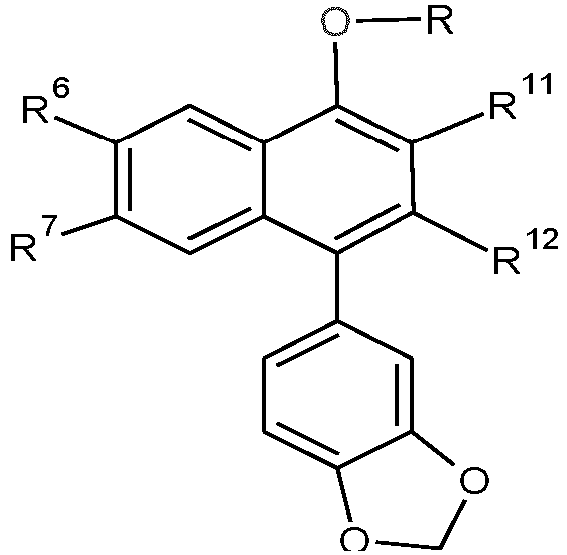
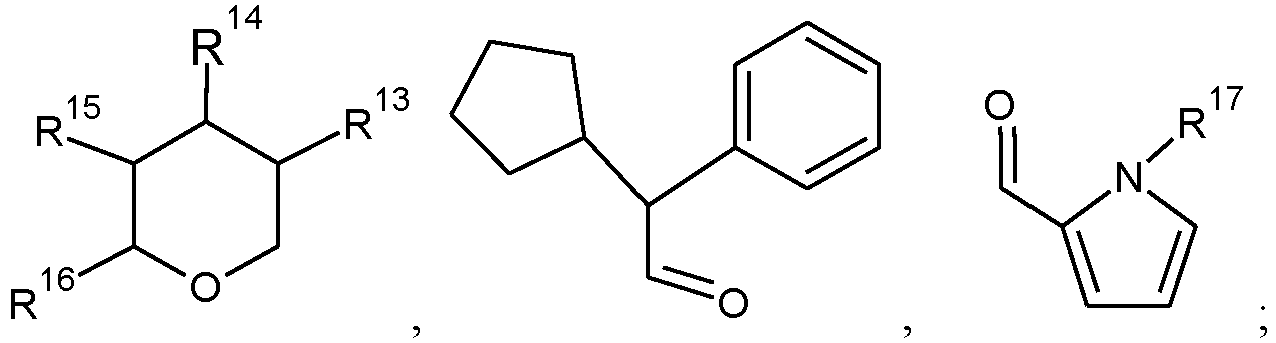
- compound of Formula IV is provided: where R 6 and R 7 are each independently selected from -H, -OMe-; R is selected from: wherein, R 13 is -OH; R 14 is selected from -OMe, -OH; R 15 is selected from - OMe, -OH; R 16 is -H; R 17 is -CH 3 ; R 11 and R 12 are each independently selected from -H, or R 11 and R 12 together form lactone, or -C(O)OC 2 H 5 ; and wherein the compound is selected from:
- a second aspect of the invention provides compounds V to XI for use in the treatment of cancer.
- the compound of Formula V of the present invention are active on Breast and prostate cancer cell lines. Further, compound of Formula V is potent compared to standard chemotherapeutic drug Cisplatin. The compound of Formula V does not show activity on normal lymphocytes.
- Compound of Formula VII shows activity in breast and prostate cancer cell lines. The compound of Formula VII does not show activity on normal lymphocytes.
- Compound IX of the present invention shows activity in breast and prostate cancer cell lines.
- Compound of formula XII shows activity in breast and prostate cancer cell lines. Further described herein is compound of Formula XIII that prevents cell proliferation:
- Compound of formula XIII shows activity in breast and prostate cancer cell lines.
- Reagents and conditions a) Bu 4 NBr, 2M NaOH, DCM (Dichloromethane), RT; b) K 2 CO 3 , MeOH, RT.
- reaction mixture was quenched by the addition of saturated ammonium chloride solution and extracted with ethyl acetate (3 x 20 mL). All the organic layers were combined, dried over anhydrous sodium sulfate, filtered and concentrated. The crude product was purified by titration with heptane and 18 is sufficiently pure to proceed to next step.
- Reagents and conditions a) Ac 2 O, pyridine; b) HBr•AcOH, DCM (Dichloromethane);
- Reagents and conditions a) Bu 4 NBr, 2M NaOH, DCM (Dichloromethane), RT; b) K 2 CO 3 MeOH, RT.
- Table 1 Cell lines Name of the cell line Plating efficiency (No. of cells/well or per 200 ⁇ l) Breast MCF7 7500 MDAMB231 10000 Prostate PC3 10000 DU145 5000
- Table 10 indicates that activity of FORMULA VI on Prostrate cancer cell line is higher compared to standard chemotherapeutic drug Cisplatin in MTT assay.
- Table 22 indicates that activity of Formula VIII on prostate cancer cell lines is higher compared to standard therapeutic drug Cisplatin in MTT assay.
- Table 23 Soft Agar Assay Results of Formula VIII for Breast Cell lines IC50 in micromolar Sr. No Cell line Cisplatin Formula VIII 1. MDAMB231 24.79 1.32
- Table 23 indicates the anticancer activity of Formula VIII is higher on breast cancer cell line MDAMB231 compared to standard therapeutic drug Cisplatin in soft Agar Assay.
- Table 24 Soft Agar Assay Results of Formula VIII for Prostate Cell lines IC50 in micromolar Sr. No Cell line Cisplatin Formula VIII 1 PC3 21.30 1.96
- Table 28 indicates that activity of Formula IX on prostate cancer cell lines is higher compared to standard chemotherapeutic drug Cisplatin in MTT assay.
- Table 29 Soft Agar Assay Results of Formula IX for Breast Cell lines IC50 in micromolar Sr. No Cell line Cisplatin Formula IX 1. MDAMB231 24.79 2.12
- Table 30 indicates the anticancer activity of Formula IX is higher on prostate cancer cell line PC3 compared to standard chemotherapeutic drug Cisplatin in soft Agar Assay.
- Table 32 indicates that Formula IX is more effective on spheres of PC3 compared to standard chemotherapeutic drug Cisplatin.
- Table 33 indicates that activity of Formula X on breast cancer cell lines is higher compared to standard chemotherapeutic drug Cisplatin in MTT assay.
- Table 34 MTT Results of Formula X for Prostate Cell lines IC50 in micromolar Sr. No. Cell line Cisplatin Formula X 1 PC3 40.73 2.6 2. DU145 42.95 3.28
- Table 36 indicates the anticancer activity of Formula X is higher on prostate cancer cell line PC3 compared to standard chemotherapeutic drug Cisplatin in soft Agar Assay.
- Table 40 indicates the anticancer activity of Formula XI is higher on breast cancer cell line MDAMB231 compared to standard chemotherapeutic drug Cisplatin in soft Agar Assay.
- Table 41 Soft Agar Assay Results of Formula XI for Prostate Cell lines IC50 in micromolar Sr. No Cell line Cisplatin Formula XI 1 PC3 23.77 18.84
- Table 46 indicates that Formula XII is more effective on spheres of MDAMB231 compared to standard chemotherapeutic drug Cisplatin.
- Table 48 MTT Results Formula XIII for Breast Cell lines IC50 in micromolar Sr. No Cell line Cisplatin Formula XIII 1. MDAMB231 35.48 8.00
- Table 54 Soft Agar Assay Results of Formula XIV on Breast Cell lines IC50 in micromolar Sr. No Cell line Cisplatin Formula XIV 1. MDAMB231 24.79 3.12
Landscapes
- Chemical & Material Sciences (AREA)
- Organic Chemistry (AREA)
- Health & Medical Sciences (AREA)
- Life Sciences & Earth Sciences (AREA)
- General Health & Medical Sciences (AREA)
- Medicinal Chemistry (AREA)
- Pharmacology & Pharmacy (AREA)
- Animal Behavior & Ethology (AREA)
- Public Health (AREA)
- Veterinary Medicine (AREA)
- Epidemiology (AREA)
- Molecular Biology (AREA)
- Chemical Kinetics & Catalysis (AREA)
- General Chemical & Material Sciences (AREA)
- Nuclear Medicine, Radiotherapy & Molecular Imaging (AREA)
- Engineering & Computer Science (AREA)
- Biochemistry (AREA)
- Biotechnology (AREA)
- Genetics & Genomics (AREA)
- Pharmaceuticals Containing Other Organic And Inorganic Compounds (AREA)
- Organic Low-Molecular-Weight Compounds And Preparation Thereof (AREA)
- Heterocyclic Compounds That Contain Two Or More Ring Oxygen Atoms (AREA)
- Saccharide Compounds (AREA)
- Plural Heterocyclic Compounds (AREA)
- Acyclic And Carbocyclic Compounds In Medicinal Compositions (AREA)
Description
- The present invention relates to compounds for inhibition of uncontrolled cell proliferation, particularly cancer stem cells. The present invention also relates to the compounds for use in the treatment of cancer.
- Cancer is a condition in which abnormal cells proliferate and spread at any place in the body. In other words, cancer is an uncontrolled growth of abnormal cells. Cancer is a leading cause of death worldwide. It remains the second most dreadful disease in India, killing more than three million patients each year. It is of major concern in India and is reported to be one of the ten leading causes of deaths in India.
- While molecularly-targeted therapies are available for treatment of cancer for a high price, majority of the world population rely on standard chemotherapy. The standard anticancer regiment targets most of the dividing cancer cells and not quiescent or slow-dividing cancer stem cells (CSCs). Even though, CSCs have been identified a while ago, scientists around the globe are still looking to find CSC-targeted agents and unfortunately, until today, there is none available in the market to specifically target CSCs.
- CSCs and work either alone or in combination with the standard therapies to provide effective treatment option for the cancer patients.
- The following describe compounds for use in the treatment of cancer:
WO2012/081038 A2 ;EP2934549 A2 ;US 2016/068490 A1 ; Singh Rajinder et al, Bioorganic & Medicinal Chemistry Letters, vol. 25, no.22, pages 5199-5202; Yu Zhao et al, Medicinal Chemistry Research, vol. 22, no. 5, pages 2505-2510; Ying Wang et al, Chemical Biology & Drug Design, vol. 88, no. 4, pages 562-567; Jie Hui et al, Medicinal Chemistry Research, vol. 21, no.12, pages 3994-4001;WO2015/153653 A1 ; andWO2010/089778 A2 . The following describe various chemical compounds: Jakka Kavitha et al, Journal of Natural Products, 1 August 2003, pages 1113-319;US 2013/295207 A1 ; Zhao Yu et al, Chinese Journal of Applied Chemistry, vol. 25, no. 11, pages 1315-1319;CN101463055 A ; Wolf C et al, Journal of Chromatography, vol. 785, no. 1-2, pages 173-178; and Venkateswarlu R et al, Tetrahedron, vol. 62, no. 18, pages 4463-4473. - The present invention is defined by the independent claims. The dependent claims depict other embodiments of the invention. Any embodiment not falling under the scope of the appended claims does not form part of the invention.
- The present invention provides compounds for the treatment of cancer. particularly cancer stem cells that show preferential toxicity towards malignant cells, particularly in cancer cell lines such as breast cancer, and/or prostate cancer cell lines.
- In one aspect of the present invention, compound of Formula IV is provided:


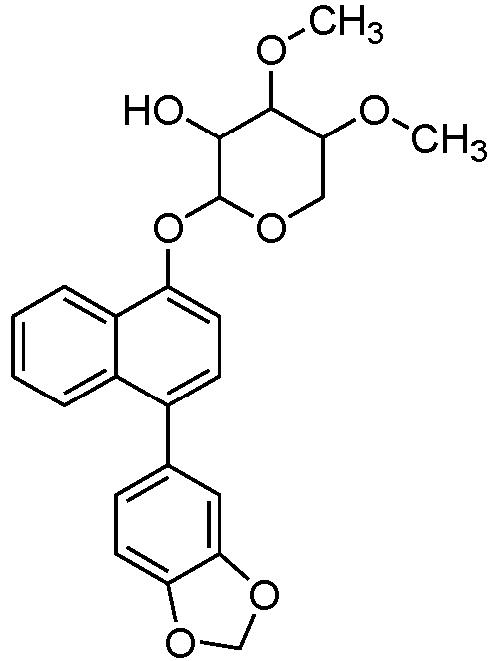
- In a preferred embodiment of the invention, compound of Formula V is provided:
- In another preferred embodiment, compound of Formula VI is provided:

- In another embodiment, compound of Formula VII is provided:

- In another embodiment, compound of Formula VIII is provided:

- In a further embodiment, compound of Formula IX is provided:

- In a further embodiment, a compound of Formula X is provided:

- In a further embodiment, a compound of Formula XI is provided:

- A second aspect of the invention provides compounds V to XI for use in the treatment of cancer.
- In an embodiment of the present invention, compounds of Formula V or VI are provided for use in the treatment of cancer. In an embodiment, the cancer is breast, oral, prostate, brain, blood, bone marrow, liver, pancreas, skin, kidney, colon, ovary, lung, testicle, penis, thyroid, parathyroid, pituitary, thymus, retina, uvea, conjunctiva, spleen, head, neck, trachea, gall bladder, rectum, salivary gland, adrenal gland, throat, esophagus, lymph nodes, sweat glands, sebaceous glands, muscle, heart, or stomach cancer.
- In a preferred embodiment of the present invention, the compounds of Formula V or VI are for use in the treatment of breast and/or prostate cancer.
- In yet another aspect of the present invention, a pharmaceutical composition having a compound of Formula V to Formula XI and pharmaceutically acceptable excipient including carrier, adjuvant, vehicle or mixtures thereof is provided. In an embodiment, the pharmaceutical composition of the present invention is for use in the treatment of cancer including breast, oral, prostate, brain, blood, bone marrow, liver, pancreas, skin, kidney, colon, ovary, lung, testicle, penis, thyroid, parathyroid, pituitary, thymus, retina, uvea, conjunctiva, spleen, head, neck, trachea, gall bladder, rectum, salivary gland, adrenal gland, throat, esophagus, lymph nodes, sweat glands, sebaceous glands, muscle, heart, or stomach cancer. In a preferred embodiment, the composition is used for the treatment of breast and/or prostate cancer.
-
-
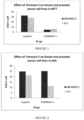
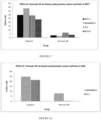
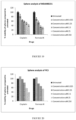
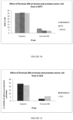
Fig 1 . Shows effect of compound of Formula V on cancer cell lines MDAMB231 and PC3 compared to standard chemo therapeutic drug Cisplatin in MTT assay. -
Fig 2 . Shows effect of compound of Formula V on cancer cell lines MDAMB231 and PC3 compared to standard chemo therapeutic drug Cisplatin in soft Agar Assay. -
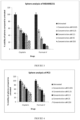
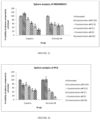
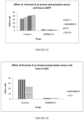
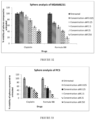
Fig 3 Shows the percentage viability of spheres of MDAMB231 in the presence of compound of Formula V compared to standard chemo therapeutic drug -
Fig 4 Shows that there is decrease in percentage viability of spheres of PC3 in presence of Formula V compared to standard chemotherapeutic drug Cisplatin. -
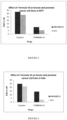
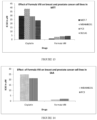
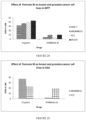
Fig 5 Shows the effect of compound of Formula VI on MDAMB231 and PC3 cancer cell lines compared to standard chemo therapeutic drug Cisplatin in MTT assay. -
Fig 6 Shows the effect of compound of Formula VI on MDAMB231 and PC3 cancer cell lines compared to standard chemo therapeutic drug Cisplatin in Soft Agar Assay. -
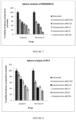
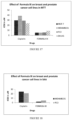
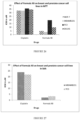
Fig 7 Shows that there is decrease in percentage viability of spheres of MDAMB231 in presence of compound of Formula VI compared to standard chemo therapeutic drug Cisplatin -
Fig 8 shows that there is decrease in percentage viability of spheres of PC3 in presence of compound of Formula VI compared to standard chemotherapeutic drug Cisplatin. -
Fig 9 . Shows compound of Formula VII exhibits higher anticancer activity on MCF7, MDAMB231, PC3 and DU145 cell lines compared to standard chemo therapeutic drug Cisplatin in MTT assay. -
Fig 10 . Shows that compound of Formula VII exhibits higher anticancer activity on MDAMB231, PC3 cell lines compared to standard chemotherapeutic drug Cisplatin in Soft Agar Assay. -
Fig.11 Shows there is decrease in percentage viability of spheres of MDAMB231 in presence of compound of Formula VII compared to standard chemo therapeutic drug Cisplatin. -
Fig 12 Shows that there is decrease in percentage viability of spheres of PC3 in presence of compound of Formula VII compared to standard chemotherapeutic drug Cisplatin. -
Fig 13 Shows that compound of Formula VIII exhibits higher anticancer activity on MCF7, MDAMB231, PC3 and DU145 cell lines compared to standard chemotherapeutic drug Cisplatin in MTT assay. -
Fig 14 Shows that compound of Formula VIII exhibits higher anticancer activity on MDAMB231, PC3 cell lines compared to standard chemotherapeutic drug Cisplatin in Soft Agar Assay. -
Figure 15 shows that there is decrease in percentage viability of spheres of MDAMB231 in presence of compound of Formula VIII compared to standard chemo therapeutic drug Cisplatin. -
Fig 16 shows that there is decrease in percentage viability of spheres of PC3 in presence of compound of Formula VIII compared to standard chemotherapeutic drug Cisplatin. -
Fig 17 Shows that compound of Formula IX exhibits higher anticancer activity on MCF7, MDAMB231, PC3, DU145 cell lines compared to standard chemotherapeutic drug Cisplatin in MTT assay. -
Fig 18 Shows compound of Formula IX exhibits higher anticancer activity on MDAMB231, PC3 cell lines compared to standard therapeutic drug Cisplatin in Soft Agar Assay. -
Fig 19 Shows that there is decrease in percentage viability of spheres of MDAMB231 in presence of compound of Formula IX compared to standard chemo therapeutic drug Cisplatin. -
Fig 20 indicates that there is decrease in percentage viability of spheres of PC3 in presence of compound of Formula IX compared to standard chemotherapeutic drug Cisplatin. -
Fig 21 . Shows that compound of Formula X exhibits higher anticancer activity on MCF7, MDMB231, PC3, DU145 cell lines compared to standard chemo therapeutic drug Cisplatin in MTT assay. -
Fig 22 . Shows that compound of Formula X exhibits higher anticancer activity on MDMB231, PC3 cell lines compared to standard chemotherapeutic drug Cisplatin in Soft Agar Assay. -
Fig 23 Shows that there is decrease in percentage viability of spheres of MDAMB231 in presence of compound of Formula X compared to standard chemo therapeutic drug Cisplatin. -
Fig 24 Shows that compound of Formula XI exhibits higher anticancer activity on MCF7, MDMB231, PC3, DU145 cell lines compared to standard chemo therapeutic drug Cisplatin in MTT Assay. -
Fig 25 Shows that compound of Formula XI exhibits higher anticancer activity MDMB231, PC3 cell lines compared to standard chemotherapeutic drug Cisplatin in Soft Agar Assay. -
Fig 26 Shows that compound of Formula XII exhibits higher anticancer activity on MCF7, MDMB231, PC3, DU145 cell lines compared to standard chemo therapeutic drug Cisplatin in MTT Assay -
Fig 27 Shows that compound of Formula XII exhibits higher anticancer activity on MDMB231, PC3 cell lines compared to standard chemotherapeutic drug Cisplatin in Soft Agar Assay. -
Fig 28 Shows that percentage viability of spheres of MDAMB231 in presence of compound of Formula XII is similar compared to standard chemo therapeutic drug Cisplatin. -
Fig 29 Shows that percentage viability of spheres of PC3 in presence compound of Formula XII is higher compared to standard chemotherapeutic drug Cisplatin. -
Fig 30 Shows that compound of Formula XIII exhibits higher anticancer activity on MDMB231, PC3, DU145 cell lines compared to standard chemo therapeutic drug Cisplatin in MTT assay -
Fig 31 Shows that compound of Formula XIII exhibits higher anticancer activity on MDMB231, PC3 cell lines compared to standard chemotherapeutic drug Cisplatin in Soft Agar Assay. -
Fig 32 Shows there is decrease in percentage viability of spheres of MDAMB231 in presence of compound of Formula XIII compared to standard chemo therapeutic drug Cisplatin. -
Fig 33 Shows that there is decrease in percentage viability of spheres of PC3 in presence of compound of Formula XIII compared to standard chemotherapeutic drug Cisplatin. -
Fig 34 . Shows that compound of Formula XIV exhibits higher anticancer activity on MDMB231 cell line compared to standard chemo therapeutic drug Cisplatin in Soft Agar Assay. -
Fig.35 Shows that there is decrease in percentage viability of spheres of MDAMB231 in presence of compound of Formula XIV compared to standard chemotherapeutic drug Cisplatin. -
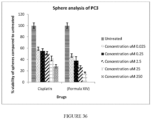
Fig.36 Shows that there is decrease in percentage viability of spheres of PC3 in presence of compound of Formula XIV compared to standard chemotherapeutic drug Cisplatin. - The present disclosure relates to compounds for treating various conditions, particularly for inhibition of uncontrolled cell proliferation. Particularly the compounds are effective against cancer stem cells and treating cancer. Described herein are compounds of Formula 1:


- Also described herein is a compound of formula II:

- Further described herein are compounds of Formula III or salts thereof for treating various conditions, particularly for inhibition of uncontrolled cell proliferation. Particularly, the compounds are effective against cancer stem cells.


- According to an aspect of the present invention, a compound of Formula IV or salts thereof is provided to prevent cell proliferation:


- In a preferred embodiment of the present invention, a compound of Formula V or salts thereof is provided to prevent cell proliferation:

- The compound of Formula V of the present invention are active on Breast and prostate cancer cell lines. Further, compound of Formula V is potent compared to standard chemotherapeutic drug Cisplatin. The compound of Formula V does not show activity on normal lymphocytes.
- In another preferred embodiment of the present invention, a compound of Formula VI or salts thereof is provided to prevent cell proliferation:

- Compound of Formula VI shows activity in breast and prostate cancer cell lines. Further, compound of Formula VI is potent compared to standard chemotherapeutic drug Cisplatin. The compound of Formula VI does not show activity on normal lymphocytes.
- In an embodiment, the present invention provides compounds that demonstrate anticancer and anti-cancer stem cell activity particularly in breast and prostate cancer cell lines. In an embodiment, compound of formula VII is provided:


- Compound of Formula VII shows activity in breast and prostate cancer cell lines. The compound of Formula VII does not show activity on normal lymphocytes.
- In another embodiment, the present invention provides compound of Formula VIII that prevents cell proliferation.

- Compound of Formula VIII shows activity in breast and prostate cancer cell lines and does not show activity on normal lymphocytes.
- In a further embodiment of the present invention compound of Formula IX is provided that prevents cell proliferation:


- Compound IX of the present invention shows activity in breast and prostate cancer cell lines.
- In yet another embodiment of the present invention, compound of Formula X is provided that prevents cell proliferation:

- Compound of formula X shows activity in breast and prostate cancer cell lines and does not show activity in normal lymphocytes.
- In yet another embodiment, the present invention provides compound of Formula XI that prevents cell proliferation:

- Compound of formula XI shows activity in breast and prostate cancer cell lines Also described herein is compound of Formula XII that prevents cell proliferation:

- Compound of formula XII shows activity in breast and prostate cancer cell lines. Further described herein is compound of Formula XIII that prevents cell proliferation:

- Compound of formula XIII shows activity in breast and prostate cancer cell lines.
- Additionally described herein is compound of Formula XIV:

- In an aspect of the present invention, compounds of formula V to XI are provided for use in the treatment of cancer. Preferably, the compound of Formula V and VI are provided for use in the treatment of cancer. The cancer can be breast, oral, prostate, brain, blood, bone marrow, liver, pancreas, skin, kidney, colon, ovary, lung, testicle, penis, thyroid, parathyroid, pituitary, thymus, retina, uvea, conjunctiva, spleen, head, neck, trachea, gall bladder, rectum, salivary gland, adrenal gland, throat, esophagus, lymph nodes, sweat glands, sebaceous glands, muscle, heart, or stomach cancer.
- In a preferred embodiment, the compounds of Formula V and VI for use in the treatment of breast and/or prostate cancer is provided.
- In a further aspect of the invention, provided are pharmaceutical compositions including the compounds of Formula V to Formula XI, pharmaceutically acceptable excipient including carrier, adjuvant, vehicle or mixtures thereof. Preferably, pharmaceutical compositions including compounds of Formula V and VI pharmaceutically acceptable excipient including carrier, adjuvant, vehicle or mixtures thereof are provided. The pharmaceutical excipient can further include one or more binders, diluents, disintegrants, glidants, lubricants, stabilizers, surface active agents or pH-adjusting agents.
- In certain embodiments, the amount of compound in compositions may be such that it is effective to treat cancer in a subject in the need thereof. In certain embodiments, the composition may comprise between the biologically effective dose and the maximum tolerated dose of the compound of the invention or it's pharmaceutically acceptable salt, ester, or salt of an ester.
- In certain embodiments, a composition of this invention may be formulated for administration to a subject in the need thereof. The pharmaceutical compositions of the present invention may be formulated into a suitable dosage form to be administered orally, parenterally, by inhalation spray, topically, rectally, nasally, buccally, vaginally or via an implanted reservoir. Compositions of the present invention may be formulated into dosage forms including liquid, solid, and semisolid dosage forms. The term "parenteral" as used herein includes subcutaneous, intravenous, intraperitoneal, intramuscular, intra-articular, intrasynovial, intrastemal, intrathecal, intrahepatic, intralesional and intracranial injection or infusion techniques. Preferably, the compositions are administered orally, intravenously or intraperitoneally.
- The present invention also includes the composition including the compounds of the present invention of Formula V to XI, preferably compound of Formula V or VI for use in the treatment of cancer including breast, oral, prostate, brain, blood, bone marrow, liver, pancreas, skin, kidney, colon, ovary, lung, testicle, penis, thyroid, parathyroid, pituitary, thymus, retina, uvea, conjunctiva, spleen, head, neck, trachea, gall bladder, rectum, salivary gland, adrenal gland, throat, esophagus, lymph nodes, sweat glands, sebaceous glands, muscle, heart, or stomach cancer. In a preferred embodiment, the composition of the present invention is for the treatment of breast, and/or prostate cancer.
- In certain embodiments of the present invention disclose a formulation comprising the compounds of the present invention along with other active agents or pharmaceutically acceptable excipients, etc.
- In an embodiment, a pharmaceutical composition comprises the aforesaid compounds with another active agent such as but are not limited to imatinib, nilotinib, gefitinib, sunitinib, carfilzomib, salinosporamide A, retinoic acid, cisplatin, carboplatin, oxaliplatin, mechlorethamine, cyclophosphamide, chlorambucil, ifosfamide, azathioprine, mercaptopurine, doxifluridine, fluorouracil, gemcitabine, methotrexate, tioguanine, vincristine, vinblastine, vinorelbine, vindesine, podophyllotoxin, etoposide, teniposide, tafluposide, paclitaxel, docetaxel, irinotecan, topotecan, amsacrine, actinomycin, doxorubicin, daunorubicin, valrubicin, idarubicin, epirubicin, plicamycin, mitomycin, mitoxantrone, melphalan, busulfan, capecitabine, pemetrexed, epothilones, 13-cis-Retinoic Acid, 2-CdA, 2-Chlorodeoxyadenosine, 5-Azacitidine, 5-Fluorouracil, 5-FU, 6-Mercaptopurine, 6-MP, 6-TG, 6-Thioguanine, Abraxane, Accutane, Actinomycin-D, Adriamycin, Adrucil, Afinitor, Agrylin , Ala-Cort, Aldesleukin, Alemtuzumab, ALIMTA, Alitretinoin, Alkaban-AQ, Alkeran, All-transretinoic Acid, Alpha Interferon, Altretamine, Amethopterin, Amifostine, Aminoglutethimide, Anagrelide, Anandron, Anastrozole, Arabinosylcytosine, Ara-C, Aranesp, Aredia, Arimidex, Aromasin, Arranon, Arsenic Trioxide, Arzerra, Asparaginase, ATRA, Avastin, Azacitidine, BCG, BCNU, Bendamustine, Bevacizumab, Bexarotene, BEXXAR, Bicalutamide, BiCNU Aromasin, Blenoxane, Bleomycin, Bortezomib, Busulfan, Busulfex, C225, Calcium Leucovorin, Campath, Camptosar, Camptothecin-11, Capecitabine, Carac, Carboplatin, Carmustine, Carmustine Wafer, Casodex, CC-5013, CCI-779, CCNU, CDDP, CeeNU, Cerubidine, Cetuximab, Chlorambucil, Citrovorum Factor, Cladribine, Cortisone, Cosmegen, CPT-11, Cytadren, Cytosar-U, Cytoxan, Dacarbazine, Dacogen, Dactinomycin, Darbepoetin Alfa, Dasatinib, Daunomycin, Daunorubicin Hydrochloride, Daunorubicin Liposomal, DaunoXome, Decadron, Decitabine, Delta-Cortef, Deltasone, Denileukin, Diftitox, DepoCyt, Dexamethasone, Dexamethasone Acetate, Dexamethasone Sodium Phosphate, Dexasone, Dexrazoxane, DHAD, DIC, Diodex, Docetaxel, Doxil, Doxorubicin, Doxorubicin Liposomal, Droxia, DTIC, DTIC-Dome, Duralone, Efudex, Eligard, Ellence, Eloxatin, Elspar, Emcyt, Epirubicin, Epoetin Alfa, Erbitux, Erlotinib, Erwinia L-asparaginase, Estramustine, Ethyol, Etopophos, Etoposide, Etoposide Phosphate, Eulexin, Everolimus, Evista, Exemestane, Fareston, Faslodex, Femara, Filgrastim, Floxuridine, Fludara, Fludarabine, Fluoroplex, Fluorouracil, Fluorouracil (cream), Fluoxymesterone, Flutamide, Folinic Acid, FUDR, Fulvestrant, G-CSF, Gefitinib, Gemcitabine, Gemtuzumab, ozogamicin, Gemzar Gleevec, Gliadel Wafer, GM-CSF, Goserelin, Granulocyte - Colony Stimulating Factor, Granulocyte Macrophage Colony Stimulating Factor, Halotestin, Herceptin, Hexadrol, Hexalen, Hexamethylmelamine, HMM, Hycamtin, Hydrea, Hydrocort Acetate, Hydrocortisone, Hydrocortisone Sodium Phosphate, Hydrocortisone Sodium Succinate, Hydrocortone Phosphate, Hydroxyurea, Ibritumomab, Tiuxetan, Idamycin, Idarubicin Ifex, IFN-alpha, Ifosfamide, IL-11, IL-2, Imatinib mesylate, Imidazole Carboxamide, Interferon alfa, Interferon Alfa-2b (PEG Conjugate), Interleukin-2, Interleukin-11, Intron A (interferon alfa-2b), Iressa, Irinotecan, Isotretinoin, Ixabepilone, Ixempra , Kidrolase , Lanacort , Lapatinib, L-asparaginase, LCR, Lenalidomide, Letrozole, Leucovorin, Leukeran, Leukine , Leuprolide, Leurocristine, Leustatin, Liposomal Ara-C, Liquid Pred , Lomustine, L-PAM, L-Sarcolysin, Lupron , Lupron Depot , Matulane , Maxidex, Mechlorethamine, Mechlorethamine Hydrochloride, Medralone , Medrol , Megace , Megestrol, Megestrol Acetate, Melphalan, Mercaptopurine, Mesna, Mesnex , Methotrexate, Methotrexate Sodium, Methylprednisolone, Meticorten , Mitomycin, Mitomycin-C, Mitoxantrone, M-Prednisol , MTC, MTX, Mustargen , Mustine, Mutamycin , Myleran , Mylocel, Mylotarg , Navelbine , Nelarabine, Neosar , Neulasta , Neumega , Neupogen , Nexavar , Nilandron , Nilotinib, Nilutamide, Nipent , Nitrogen Mustard, Novaldex , Novantrone , Nplate, Octreotide, Octreotide acetate, Ofatumumab, Oncospar , Oncovin , Ontak , Onxal, Oprelvekin, Orapred , Orasone , Oxaliplatin, Paclitaxel, Paclitaxel Protein-bound, Pamidronate, Panitumumab, Panretin , Paraplatin , Pazopanib, Pediapred , PEG Interferon, Pegaspargase, Pegfilgrastim, PEG-INTRON , PEG-L-asparaginase, PEMETREXED, Pentostatin, Phenylalanine Mustard, Platinol , Platinol-AQ , Prednisolone, Prednisone, Prelone , Procarbazine, PROCRIT , Proleukin , Prolifeprospan 20 with Carmustine Implant, Purinethol , Raloxifene, Revlimid , Rheumatrex , Rituxan , Rituximab, Roferon-A (Interferon Alfa-2a), Romiplostim, Rubex , Rubidomycin hydrochloride, Sandostatin , Sandostatin LAR , Sargramostim, Solu-Cortef , Solu-Medrol , Sorafenib, SPRYCEL , STI-571, Streptozocin, SU11248, Sunitinib, Sutent, Tamoxifen, Tarceva , Targretin , Tasigna , Taxol , Taxotere , Temodar , Temozolomide, Temsirolimus, Teniposide, TESPA, Thalidomide, Thalomid , TheraCys , Thioguanine, Thioguanine Tabloid , Thiophosphoamide, Thioplex , Thiotepa, TICE , Toposar , Topotecan, Toremifene, Torisel , Tositumomab, Trastuzumab, Treanda , Tretinoin, Trexall , Trisenox , TSPA, TYKERB , VCR, Vectibix , Velban , Velcade , VePesid , Vesanoid , Viadur , Vidaza , Vinblastine, Vinblastine Sulfate, Vincasar Pfs , Vincristine, Vinorelbine, Vinorelbine tartrate, VLB, VM-26, Vorinostat, Votrient, VP-16, Vumon , Xeloda , Zanosar , Zevalin , Zinecard , Zoladex , Zoledronic acid, Zolinza, Zometa , or combinations of any of the above.
- Also described herein is a method of treating cancer by administering an effective amount of compounds V to XIV. In a preferred example, a method of treating cancer comprising administering an effective amount of compound of formula V or VI is provided. The cancer can be breast, oral, prostate, brain, blood, bone marrow, liver, pancreas, skin, kidney, colon, ovary, lung, testicle, penis, thyroid, parathyroid, pituitary, thymus, retina, uvea, conjunctiva, spleen, head, neck, trachea, gall bladder, rectum, salivary gland, adrenal gland, throat, esophagus, lymph nodes, sweat glands, sebaceous glands, muscle, heart, or stomach cancer. In a preferred example, the method of treatment comprises administering an effective amount of compound of Formula V or VI can be for the treatment of breast and/ or prostate cancer.
- A method of inhibition of unregulated cell growth by administering effective amount of the compounds of the present disclosure is also described herein. Further described herein is a method of treating cancer by administering compounds of the present disclosure along with standard therapies or in combination with other drugs available for the treatment of cancer.
- Another example of the disclosure provides for the use of the compounds in the treatment of unregulated cell growth, malaria, dengue.
- The foregoing description of the invention has been set merely to illustrate the invention and is not intended to be limiting. Following are the illustrative and non-limiting examples, including the best mode, for practicing the present invention.
-

- Scheme I): i) Br2, AcOH at room temperature, ii) Ethylene glycol, Toluene, p-Toluenesulphonic acid (PTSA), reflux, iii) n-BuLi, Aldehyde, -78°C, iv) Diethylacetylenedicarboxylate (DEADC), methylene dichloride (MDC0, 140°C, v) LiAlH4, Tetrahydrofuran (THF).
- Synthesis of 2: Substituted aromatic aldehyde (0.3 mole) was taken in AcOH (200 mL) and Br2 (0.6 mole) was added slowly from addition funnel. The mixture was stirred for 3h at room temperature and then poured over ice (100 g) and stirred vigorously for 30 min. Slurry was filtered and residue was washed with cold methanol and suction dried under vacuum to obtain
pure product 2. Yield, 0.25 mole (85%). - Synthesis of 3: Compound 2 (0.11mole) was dispersed in 350 mL of toluene. Ethylene glycol 70 mL and p-Toluenesulphonic acid (0.5 g) were added and mixture was refluxed using Dean-stark assembly for 5h. Reaction was monitored with TLC (3:7, Ethyl acetate:Hexane). After completion of reaction, saturated NaHCO3 solution was added into the reaction and layers were separated. Toluene layer was washed with brine and dried over anhydrous Na2SO4. Dried toluene layer was evaporated in vacuum to afford pure product 3 (0.11mole, 97%).
- Synthesis of 4: In an inert reaction assembly charged with nitrogen compound 3 (0.034 mole) was dissolved in Dry THF (150mL). Mixture was then cooled in a dry ice/acetone bath till -65°C. Through transfer needle 50 ml n-BuLi (1.6M solution in hexane) was added carefully and slowly into the above solution over 30 min. Mixture was stirred for 1h at -65°C. In a separate addition funnel, the solution of R6-CHO in THF was added drop wise in to the lithiated solution at - 65°C. Mixture was stirred for 30 min at same temperature and left at room temperature for 2h. Mixture was quenched with 10mL sat. NH4Cl solution and extracted with ethyl acetate (200mL x 2). Ethyl acetate layer was washed with brine solution (100mLx 2), dried over anhydrous Na2SO4 and evaporated in vacuum to isolate crude product. Purification by column chromatography (in silica gel, Ethyl acetate: hexane) gave pure product 4 (0.008mole, 24%).
- Synthesis of 5: Compound 4 (0.012 mole), acetic acid (6.7mL), DEADC (0.016 mole) and MDC (100mL) were taken into the high pressure closed vessel. Mixture was heated at 140°C for 2h. Heating stopped and mixture was washed with saturated NaHCO3. MDC layer was dried with anhydrous Na2SO4 and solvents were evaporated in vacuum and crude product was purified by silica gel column chromatography in ethyl acetate: hexane as a mobile phase.
Pure product 5 obtained as an off white solid (0.016 mole, 93%). - Synthesis of 6: Ester 5 (0.0021 mole) was dissolved in dry THF and slowly added into the dispersion of LiAlH4 (0.0042 mole) in THF at 0°C. Mixture was stirred at 0°C for 2h and then at room temperature for overnight. Reaction was quenched with saturated NH4Cl and product was extracted with MDC. Crude product was purified by column chromatography to obtain pure product 6 (0.0011 mole).
-

- Synthesis of tetra-acylated d-xylose (7): D-xylose (0.13mole) was mixed in MDC (100mL) and pyridine at room temperature. Mixture cooled to 0°C and acetyl chloride (0.78 mole) was added slowly under vigorous stirring. Mixture stirred for 1h at 0° and then at room temperature for 3h. 50gm crushed ice was added into the mixture and then 200mL MDC. Layers were separated and MDC extract was washed with brine solution (100mL x 2) and 10% aq. CuSO4 solution until original CuSO4 solution color persists. MDC layer was dried over anhydrous Na2SO4 and evaporated in vacuum on rotary evaporator to obtain the syrupy product 7 (0.129 mole, 97%).
- Synthesis of 8: In a clean and dry round bottom flask, with nitrogen inlet, compound 7 (0.129 mole) was dissolved in 200mL dry MDC. Mixture cooled to 0°C in an ice bath and 100mL HBr/AcOH (33% solution) was added drop wise over a period of 30min. Material stirred for 2h at 0°C and quenched with 50g ice and stirred for 10 min. MDC layer was separated and washed with sat. NaHCO3 (100mL x 3), brine (100mL) and dried over anhydrous Na2SO4 and evaporated in vacuum on rotary evaporator to obtain the off-white solid product 8 (0.097mole, 76%).
- Synthesis of 9: Above
compound 8 was taken directly into another round bottom flask containing TBAB (0.040 mole), 2, 6-Lutidine (0.129 mole) and MDC 200mL and stirred at room temperature for 1h. After 1h stirring 6.5mL EtOH was added slowly and stirring continued for overnight. Solvent removed on rotary evaporator and residue triturated in ethyl acetate (200mL). Solids were removed by filtration and filtrate was evaporated. Syrupy crude product was purified by silica gel column chromatography in ethyl acetate: hexane to obtain semisolid pure product 9 (0.049 mole, 51%). - Synthesis of 10: In a single neck round bottom flask compound 9 (0.049 mole) was dissolved in MeOH at room temperature. This mixture cooled between 15-10°C and NaOMe (600mg) was added in small portions over 10 min and then stirred for 2h at room temperature. Thin Later Chromatography (TLC) confirmed the de-acylated product formation. Methanol evaporated on rotary evaporator and residue was dissolved in dry DMF (100 mL). DMF solution chilled to 0°C and NaH (6 g, 60% suspension) was added portion wise under vigorous stirring under nitrogen atmosphere. Suspension stirred for 15 min at same temperature and methyl iodide was added slowly. Whole suspension was stirred overnight at RT. When TLC confirmed the product formation, 2 mL MeOH and crushed ice, (150g) were added slowly. Reaction mixture was extracted with ethyl acetate (200 mL x 2). Combined ethyl acetate extract was washed with saturated brine solution (50 mL x 4) dried over an. Na2SO4 and evaporated on rotary evaporator to obtain oily liquid product 10 (0.048 mole, 98%).
- Synthesis of 11: Compound 10 (0.048 mole) was dissolved in gl. AcOH (50 mL) at 0°C and stirred for 1h at room temperature. Acetic acid was evaporated and obtained syrupy residue was dissolved in pyridine (100 mL) and cooled up to 0°C. Ac-Cl was slowly charged into the chilled solution and stirred at room temperature for overnight. Into the reaction mixture 50mL chilled water was added and extracted with diethyl ether (100ml x 2). Ether extract was washed with sat. CuSO4 solution (50ml x4) and brine (50ml) dried over An. Na2SO4 and evaporated on rotary evaporator to isolate product 11 (0.038mole, 79%)
- Synthesis of 12: In 100ml dry MDC 11 (0.015 mole) was added and chilled upto 0°C. 10mL HBr/AcOH (33% solution) was added slowly and mixture was stirred for 1h at 0°C. Crushed ice (20g) was added in to the reaction stirred for 5min. MDC layer was washed with sat. NaHCO3 solution (50mL x 4), brine (50ml) and dried over Na2SO4 and resulting solution used as such for the synthesis of 13 (see scheme III).
-

- Synthesis of 13: Diphyllin derivative (6, 0.0065 mole), TBAB (0.006 mole) and 2N NaOH (25mL) were mixed in MDC (50mL) at 0°C. To this, above prepared solution of 13 in MDC was added slowly. Reaction was stirred for 1.5h and TLC confirmed the product formation. Into the reaction, 25mL ice cold water was added and stirred vigorously, and then organic phase was separated. MDC layer was washed with 2N NaOH, water, brine and dried over Na2SO4, evaporated on rotary evaporator to obtain crude 13 (2.3g). Crude product was purified by silica gel column chromatography in Ethyl acetate: Hexane from which pure compound 13 (0.0020mole) was isolated.
- Synthesis of 14: Condensation product 13 (0.0020 mole) from Glycoside and diphyllin derivative was dissolved in MeOH and chilled the solution till 0°. To this solution anhydrous K2CO3 was added and stirred for 1h at room temperature. TLC shows complete conversion of 13 into the product 14. Aq. HCl (1N) was added to adjust the neutral pH and MDC was added to extract the product. MDC layer was washed with brine and dried over Na2SO4 and evaporation of MDC on rotary evaporator afforded crude product, which was purified by silica gel column chromatography in Ethyl acetate: Hexane. Pure product 14 (0.00092 mole, 46%) was obtained with >98% purity.
-


- Reagents and conditions: a) NBS (N-Bromosuccinimide), ACN (Acetonitrile, RT, 1.5 hr; b) PhCH2Br, K2CO3, DMF (Dimethylformamide); c) Pd(PPh3)4, 3,4-(methylenedioxy) phenylboronic acid, Na2CO3, DME (Dimethoxyethane); d) 10% Pd/C, EtOH:EtOAc (1:1), 60 °C, 60-80 psi.
- To a solution of 1 (5 g, 34.7 mmol) in 180 mL of ACN, NBS (6.18 g, 34.7 mmol) was added over a period of 1 hr. The reaction mixture was stirred at RT for additional 30 min and monitored using TLC. The solvent was evaporated and the residue was partitioned I;n diethyl ether and water. The ethereal layer was dried over anhydrous sodium sulfate and concentrated under reduced pressure.
- To a solution of 2 (7 g, 31.4 mmol) in DMF, K2CO3 (8.9 g, 64.44 mmol) was added followed by slow addition of benzyl bromide (3.98 mL, 33.5 mmol). The reaction mixture was stirred at RT and monitored using TLC. After completion, reaction was quenched with brine and the residue was extracted using ethyl acetate and washed with water. The combined organic layer was dried over anhydrous sodium sulfate and concentrated under reduced pressure. The obtained solid was purified by column chromatography (Hex: EtOAc, 98:2).
- To a solution of 3 (1 g, 3.2 mmol) in DME, Pd(PPh3)4 (0.184 g, 5 mol %) was added and stirred for 30 min at RT. The suspension of 3,4-(methylenedioxy) phenylboronic acid (0.635 g, 3.82 mmol) in DME was added to the above solution followed by addition of 2M Na2CO3 (0.676 g) solution. The reaction mixture was refluxed overnight, and monitored using TLC after completion, cooled to RT and solvent was distilled off. The residue was treated with aq. NH4Cl solution and extracted in ethyl acetate. The combined organic layer was dried over anhydrous sodium sulfate and concentrated under reduced pressure. The obtained solid was purified by column chromatography (Hexane: DCM, 95:5)
- A mixture of 4 (1 g, 2.82 mmol), 10% Pd/C in 50 mL of mixture of EtOH: EtOAc (1: 1) was placed in shaker hydrogenation apparatus at 60 °C and 60-80 psi. The reaction was monitored using TLC. After completion, Pd/C was filtered off and the filtrate was evaporated. The obtained solid was purified by column chromatography (DCM: MeOH, 99:1)
-


- Reagents and conditions: a) Ac2O, pyridine; b) HBr•AcOH, DCM (Dichloromethane); c) 2,6-lutidine, Bu4NBr, EtOH, DCM; d) 1. MeONa, MeOH; 2. NaH, MeI, DMF (Dimethylformamide); e) AcOH, Ac2O, Pyridine; f) HBr•AcOH, DCM
- To a 500-mL three-neck RBF equipped with guard-tube and stopper, were added 6 (40.0 g, 0.266 mol), pyridine (200 mL) and cooled at 0 °C. Acetic anhydride (200 mL) was added dropwise to the above mixture at 0 °C. The resulting reaction mixture was stirred at 0 °C for 5 h. After consumption of starting materials, as judged by TLC (5:5, EtOAc: Hexane), reaction mixture was poured into ice water (500 mL) and ether was added (200 mL). Organic layer was separated, and aqueous layer was extracted with ether (2 x 250 mL). Organic layers were combined and washed with saturated cupric salt solution till free from pyridine. The organic layer was dried over anhydrous sodium sulfate, filtered and concentrated to give sticky
solid compound 7. - 1H-NMR (300 MHz, CDCl3): δ = 6.27 (d, 1H, J = 3.6 Hz), 5.70 (t, 1H, J = 9 Hz), 5.06 (m, 2H), 3.97 (dd, 1H, J =6.0, 1 1.1 Hz), 3.72 (t, 1H, J = 1 1.0 Hz), 2.18 (s, 3H), 2.07(s, 6H), 2.03 (s, 3H).
- 1 L-RBF with guard tube was charged with 7 (25.0 g, 78.54 mol) and dichloromethane (500 mL) and the mixture was cooled to 0 °C in ice bath. To the above cold solution was added hydrogen bromide (33 % in acetic acid; 56 mL) with constant stirring during 1 h and reaction mixture was further stirred at room temperature for 1 h. After completion of reaction as judged by TLC (4:6, EtOAc: Hexane), reaction mixture was washed with ice water (1 x 500 mL), 1 % NaHCO3 solution (1 x 500 mL), 10 % NaHCO3 solution (2 x 500 mL) and finally by brine solution (1 x 500 mL). Organic layer was dried over anhydrous sodium sulfate, filtered and concentrated under reduced pressure to obtained white solid of 8.
- 1H-NMR (300 MHz, CDCl3): δ = 6.59 (d, 1H, J= 3.9 Hz), 5.60 (t, 1H, J= 9.9 Hz), 5.05- 5.03 (m, 1H), 4.77 (dd, 1H, J= 3.9, 9.6 Hz), 4.07 (dd, 1H, J= 6.3, 11.4 Hz), 3.88 (t, 1H, J= 11.1 Hz), 2.10 (s, 3H), 2.06 (s, 6H).
-
- 1. Two necked RBF were charged with 8 (25.0 g, 73.71 mmol), 2,6-lutidine (11.07 mL, 95.82 mmol), tetrabutyl ammonium bromide (9.50 g, 29.48 mmol) and anhydrous dichloromethane (147 mL). To the above mixture was added absolute ethanol (4.7 mL, 81.08 mmol) and reaction mixture was stirred at room temperature under nitrogen atmosphere for overnight. After completion of reaction as judged by TLC (5:5, EtOAc: Hexane), the reaction mixture was concentrated under reduced pressure. The residue was purified by column chromatography over silica gel using EtOAc: Hexane as eluent to afford 9 as a pale yellow colored liquid.
1H-NMR (300 MHz, CDCl3): δ = 5.57 (d, 1H, J =4.2 Hz), 5.24 (t, 1H, J= 3.6 Hz), 4.84- 4.82 (m, 1H), 4.20 (t, 1H J= 1.8 Hz), 3.89 (dd, 1H, J= 5.1, 12.3 Hz), 3.71 (dd, 1H, J = 6.9, 12.3 Hz), 3.59 (q, 2H, J = 6.9 Hz ), 2.10 (s, 3H), 2.08 (s, 3H), 1.19 (t, 3H, J = 6.9 Hz). - 2. In a dried RBF (250 mL) was charged with 9 (10 g, 32.86 mmol) and anhydrous methanol (157 mL) was added. To the above solution was added catalytic amount of sodium methoxide (300 mg) and stirred at room temperature for 1 h. After the completion of reaction as judged by TLC, reaction mixture was concentrated under reduced pressure and residue was dried under high vacuum. The resulting residue was dissolved in anhydrous DMF (100 mL) and cooled to 0 °C in ice-bath. To the above cold solution, sodium hydride (3.94 g, 60% dispersion in oil, 164.3 mmol) was added and resulting suspension was with stirring for 1 h. Methyl iodide (12.4 mL, 197.6 mmol) was added dropwise at 0 °C, the reaction mixture was then slowly brought to room temperature during 1 h and further stirred at room temperature for 12 h. After completion of reaction, reaction was quenched by addition of methanol (10 mL), diluted with ethyl acetate (100 mL), washed with water (2 x 50 mL), brine solution (1 x 50 mL) and dried over anhydrous sodium sulfate. The inorganic salts were filtered off, filtrate was concentrated under reduced pressure and residue was purified by column chromatography using EtOAc: Hexane (10:90) to afford 10 as a light yellow colored liquid.
- 1H-NMR (300 MHz, CDCl3): δ = 5.56 (d, 1H, J = 4.8 Hz), 4.29-4.26 (m, 1H), 3.89 (dd, 1H J= 3.3, 12.1 Hz), 3.82-3.69 (m, 5H), 3.54 (s, 3H), 3.44 (s, 3H), 3.26 (m, 1H), 1.19 (t, 3H, 6.9 Hz).
- 10 (7.5 g, 30.20 mmol) was dissolved in acetic acid (55 mL) and resulting solution was stirred at 0 °C for 1 h. Reaction mixture was concentrated under reduced pressure and the residue was treated with acetic anhydride (26 mL) and pyridine (26 mL). The resulting solution was maintained at room temperature with stirring for overnight. After completion of reaction as judged by TLC (3:7, EtOAc: Hexane), reaction mixture was poured into cold water (100 mL) and extracted with ether (4 x 100 mL). The organic layers were combined, washed with saturated cupric sulfate solution till the pyridine was removed and then dried over anhydrous sodium sulfate. The inorganic solids were filtered off, filtrate was concentrated under reduced pressure and residue was purified by column chromatography over silica gel using EtOAc: Hexane (20:80) as eluent to afford 11 as a light yellow color.
- 1H-NMR (300 MHz, CDCl3): δ = 5.62 (d, 1H, J= 12 Hz), 4.95 (t, 1H J= 7.8 Hz), 4.1 1 (m, 1H), 3.57 (s, 3H), 3.48(s, 3H), 3.39-3.31 (m, 3H), 2.10(s, 3H), 2.09(s, 3H).
- In a clean and dry 50 mL RBF, 11 (1.0 g, 3.81 mmol) was dissolved in dichloromethane (25 mL) and cooled to 0 °C in ice bath. To the above cooled solution was added hydrogen bromide in AcOH (33% solution; 2.5 mL) with constant stirring for 1 h and further stirred at room temperature for another 1 h.
- After completion of reaction as judged by TLC (3:7, EtOAc: Hexane), reaction mixture was diluted with dichloromethane (50 mL), washed with ice water (50 mL) followed by saturated NaHCO3 solution (50 mL) and finally with brine solution (50 mL). Organic layer was dried over anhydrous sodium sulfate, filtered and concentrated to give yellow colored liquid 12 as a product.
- 1H-NMR (300 MHz, CDCl3): δ = 6.56 (d, 1H, J= 3.9 Hz), 4.56 (dd, 1H, J= 3.9, 9.6 Hz), 4.00 (dd, 1H, J = 6.3, 1 1.7. Hz), 3.72 (m, 1H), 3.56(s, 3H), 3.54 (s, 3H), 3.38 (m, 2H), 2.13 (s, 3H).
-

- Reagents and conditions: a) Bu4NBr, 2M NaOH, DCM (Dichloromethane), RT; b) K2CO3 MeOH, RT. b) K2CO3 MeOH, RT.
- To a 50 mL RBF, 5 (0.208 g, 0.788 mmol), 12 (0.446 g, 1.576 mmol) and tetrabutyl ammonium bromide (0.254 g, 0.788 mmol) were taken in dichloromethane (20 mL) with stirring. To this suspension was added 2M NaOH (3 mL) solution and stirring was continued for 2 h at room temperature. After the completion of reaction as judged by TLC (1:9, EtOAc: DCM), the reaction mixture was extracted with dichloromethane (4 x 20 mL). The combined organic layer was washed with 10% NaOH solution (3 x 15 mL) followed by water (2 x 10 mL) and dried over anhydrous sodium sulfate. Inorganic salts were filtered off; filtrate was concentrated under reduced pressure and crude mass which was purified by column chromatography using EtOAc: dichloromethane (4:96) as eluent to obtain 13 as white solid.
- To a solution of 13 (0.160 g, 0.343 mmol) in methanol (7.5 mL) was added solid anhydrous K2CO3 (0.0925 g 0.675 mmol) and reaction mixture was stirred at room temperature for 30 min. After completion of reaction as judged by TLC (5:5, EtOAc: Hexane), methanol was removed under reduced pressure, water was added and extracted with CH2Cl2 (2 x 25 mL). Organic layer was dried over anhydrous sodium sulfate, filtered and concentrated to get 14 as white fluffy solid.
% Purity: 99%; LC-MS (ESI) m/z: 425 [M+H]+ - 1H-NMR (400 MHz, CDCl3): δ = 8.35 (d, 1H, J = 8 Hz), 7.89 (d, 1H, J = 8 Hz), 7.51-7.46 (m, 2H), 7.31 (d, 1H, J = 7.6 Hz), 7.14 (d, 1H, J = 8.0 Hz), 6.94 (m, 3H), 6.03 (s, 2H), 5.52 (d, 1H, J= 3.6 Hz), 4.18 (dd, 1H, J = 6.3, 1 1.7. Hz), 4.05 (m, 1H), 3.69 (s, 3H), 3.61 (m, 2H), 3.51 (s, 3H), 3.45 (m, 1H), 3.38 (m, 1H).
-

- Reagents and conditions: a) Bu4NBr, 2M NaOH, DCM (Dichloromethane), RT; b) K2CO3, MeOH, RT.
- To a 50-mL round bottom flask, diethyl 1-(benzo[d][1,3]dioxol-5-yl)-4-hydroxy-6,7-dimethoxynaphthalene-2,3-dicarboxylate (19; 0.30 g, 0.638 mmole), 2-O-Acetyl-3,4-dimethoxy-α-D-bromoxylopyranose (12, 0.446 g, 1.276 mmole) and tetrabutyl ammonium bromide (0.254 g, 0.638 mmole) were taken in dichloromethane (20 mL) with stirring. To this suspension was added 2M NaOH (3 mL) solution and stirring was continued for 2 h at room temperature. After the completion of reaction as judged by TLC (1:9, EtOAc:DCM), the reaction mixture was extracted with dichloromethane (4 x 20 mL). The combined organic layer was washed with 10% NaOH solution (3 x 15 mL) followed by water (2 x 10 mL) and dried over anhydrous sodium sulfate. Inorganic salts were filtered off, filtrate was concentrated under reduced pressure and crude mass which was purified by
column chromatography 4 using EtOAc: dichloromethane (04:96) as eluent to obtain Cleyacetate (25) as an oil. - To a solution of 25 (0.20 g , 0.298 mmole) in methanol (7.5 mL) was added solid anhydrous K2CO3 (0.0825 g 0.597 mmol) and reaction mixture was stirred at room temperature for 30 min. After completion of reaction as judged by TLC (5:5, EtOAc:Hexane), methanol was removed under reduced pressure, water was added and extracted with CH2Cl2 (2 x 25 mL). Organic layer was dried over anhydrous sodium sulfate, filtered and concentrated to get 26 as off white fluffy solid.
- Yield: 179 mg (96%); % Purity: 99%; LC-MS (ESI) m/z: 629 [M+H]+
- 1HNMR (CDCl3, 400 MHz): □ = 8.17 (s, 1H), 7.05 (d, 1H, J = 1.5 Hz), 6.94 (dd, 1H, J = 1.2, 7.8 Hz), 6.98 (d, 2H, J = 1.6 Hz), 6.92 (d, 1H, J = 1.2 Hz), 6.80 (d, 1H, J = 8 Hz), 6.12 ( s, 2H), 5.73 (m, 1 H), 5.50 (q, 2H, J = 3.6 Hz), 5.00 (d, 1H, J = 5.2 Hz), 4.80 (t, 1H, J = 6.8 Hz), 4.72 (d, 1H, J = 4.4 Hz), 3.94 (s, 3H), 3.86-3.81 (m, 3H), 3.70 (s, 3H), 3.51 (m, 1H), 3.46 (m, 1H).
-

- Reagents and conditions: a) Br2, AcOH, 3 h; b) ethylene glycol, p-TSA (toluene sulfonic acid), toluene; c) n-BuLi, THF (tetrahydrofuran); d) piperinol, THF; e) diethyl acetylinedicarboxylate, AcOH, DCM; f) LiAlH4, THF.
- Three necked RBF (500 mL) equipped with dropping funnel, magnetic stirrer, and stopper was charged with veratraldehyde or 4,5-dimethoxybenzaldehyde (15, 15 g, 0.090 mol) and acetic acid (210 mL). To this solution was added bromine (9.67 mL) in acetic acid (60 mL) dropwise with constant stirring over half an hour and stirring was further continued for 3 h at room temperature. During this time all the starting materials was consumed as confirmed by TLC (3:7, EtOAc: Hexane). Water (250 mL) was added to the reaction mixture and cooled to 0 °C. The precipitated solid was filtered off, washed with cold water and dried under vacuum to get a white solid 16.
- 1H-NMR (CDC13, 300 MHz): δ = 10.19 (s, 1H), 7.43 (s, IH), 7.07 (s, 1H), 3.97 (s, 3H), 3.93 (s, 3H).
- Three necked RBF (250 mL) was equipped with Dean-Stark apparatus and reflux condenser, was charged with 16 (19.0 g, 0.07 mol), toluene (200 mL), ethylene glycol (1.8 mL, 0.21 mol) and catalytic amount of p-toluene sulphonic acid. The reaction flask was immersed in oil bath and heated (90-95 °C) under reflux for 9 h (till all the water removed). After completion of reaction as judged by TLC (2:8, EtOAc: Hexane), reaction mixture was allowed to cool to room temperature, neutralized by sodium bicarbonate solution and extracted with ethyl acetate (3 x 100 mL). All the organic layers were combined, dried over anhydrous sodium sulfate, filtered and concentrated under reduced pressure. The crude mass was purified by column chromatography over silica gel using ethyl acetate (5- 10%) in hexane as eluent to afford 17 as a white solid. 1H-NMR (300 MHz, CDCl3): δ = 7.1 1 (s, 1H), 7.01 (s, 1H), 5.99(s, 1H), 4.18 (t, 2H, J = 6.9 Hz), 4.08 (t, 2H, J= 6.9 Hz), 3.89 (s, 3H), 3.88 (s, 3H).
- To a flame dried three necked RBF (100 mL) were added 16 (1.0 g, 0.0034 mole) and anhydrous THF (25 mL) under nitrogen atmosphere. The flask was cooling to -78 °C in dry ice-acetone bath, n-BuLi (5.3 mL, 0.005 mol) was added dropwise with stirring at -78 °C and stirred for 15 min. A separate flame dried flask was charged with piperonal (0.517 g, 0.0034 mol) and dry THF (6 mL). The piperonal solution was cannulated to the reaction mixture during 30 min and after the addition; reaction mixture was slowly warmed to room temperature and further stirred for 2.5 h. After the consumption of all bromo compound, as confirmed by TLC (5:5, EtOAc: Hexane), reaction mixture was quenched by the addition of saturated ammonium chloride solution and extracted with ethyl acetate (3 x 20 mL). All the organic layers were combined, dried over anhydrous sodium sulfate, filtered and concentrated. The crude product was purified by titration with heptane and 18 is sufficiently pure to proceed to next step.
- 1H-NMR (300 MHz, CDCl3): δ = 7.14 (s, 1H), 6.90-6.78 (m, 4H), 6.1 1 (s, 1H ), 5.96 (s, 2H), 5.90 (s, 1H), 4.19 (t, 2H, J= 6.6 Hz), 4.16 (t, 2H, J= 6.8 Hz), 4.02 (s, 3H), 3.81 (s, 3H), 3.17 (s, 1H ). 13C-NMR (300 MHz, CDCl3): δ = 149.42, 148.1 1, 147.57, 146.58, 136.95, 135.43, 126.83, 121.04, 1 19.69, 1 1 1.48, 109.50, 107.92, 107.26, 101.65, 100.93, 71.34, 65.05, 55.94, 55.89.
- Sealed tube was charged with 18 (0.30 g, 0.833 mmol), diethyl acetylinedicarboxylate (0.141 g, 0.833 mol), dichloromethane (0.4 mL) and glacial acetic acid (0.242 mL) and mixture was heated at 140 °C for 1 h. After completion of reaction as judged by TLC (5:5, EtOAc: Hexane), reaction mixture was cooled to room temperature, diluted with dichloromethane (10 mL), washed with 5 % sodium bicarbonate solution (3 x 10 mL), organic layer was dried over anhydrous sodium sulfate, filtered and concentrated. The crude reaction mass was purified by flash column chromatography over silica gel using EtOAc: Hexane (15:85) to afford 19 as white solid.
- 1H-NMR (300 MHz, CDCl3): δ = 7.73 (s,1H), 6.89 (d, 1H, J = 7.8 Hz), 6.81-6.75 (m, 3H), 6.05 (d, 2H, J= 14.4 Hz), 4.44 (q, 2H, J= 7.2 Hz), 4.07 (q, 2H, J =6.9 Hz), 4.05 (s, 3H), 3.77 (s, 3 H), 1.38 (t, 3H, J= 7.2 Hz), 1.08 (t, 3H, J= 6.9 Hz). 13C-NMR (300 MHz, CDCl3): δ = 170.30, 168.74, 159.62, 152.37, 149.68, 147.22, 147.06, 132.21, 130.60, 128.99, 127.48, 124.37, 119.81, 1 1 1.42, 107.97, 105.73, 102.76, 101.09, 61.95, 60.81, 56.08, 55.79, 13.87, 13.82.
- Two necked RBF (25 mL) was charged with LAH (0.032 g, 0.852 mmol) and anhydrous THF (4 mL) and the mixture was cooled to 0 °C with stirring. To this suspension, a solution of 19 (0.200 g, 0.426 mmol) in THF (4 mL) was added dropwise at 0 °C and stirring was continued for 2 h at same temperature. After completion of reaction as judged by TLC (1:9, MeOH: DCM), reaction mixture was quenched with saturated sodium sulfate solution and extracted with t-butanol (4 x 20 mL). Organic layer was dried over anhydrous sodium sulfate, filtered and concentrated under reduced pressure. The crude residue was purified by flash column chromatography over silica gel to give yellow solid 20.
- 1H-NMR (300 MHz, DMSOd6) δ = 10.39 (s, 1H), 7.61 (s, I H), 7.00 (d, 1H, J= 8.1 Hz), 6.94 (s, 1H), 6.85 (d, 1H, J= 1.5 Hz), 6.75 (dd, 1H J= 1.5, 8.4 Hz), 6.10 (s, 2H), 5.35 (s, 2H), 3.93 (s, 3H), 3.64 (s, 3H). 13C-NMR (300 MHz, DMSOd6): δ = 169.81, 150.66, 149.89, 147.01, 146.76, 145.05, 129.71, 129.65, 128.95, 123.94, 123.45, 121.85, 1 18.86, 11 1.22, 108.02, 105.63, 101.19, 100.92, 66.71, 55.78, 55.29.
- LC-MS (ESI) m/z: 381 [M+H]+
- To a 50 mL RBF, 20 (1 eq.), corresponding carboxylic acid (1 eq.), DMAP (10 eq.) in 20 mL of DCM was cooled (at 0 °C). The reaction mixture was stirred for 30 min. and then DCC (1.1 eq. dissolved in cold DCM) was added dropwise.
- The reaction was stirred at RT overnight. The reaction was monitored using TLC (2:98, MeOH: DCM). After completion, the solid obtained was filtered off and the filtrate was diluted with DCM and washed with water twice. The combined organic layer was dried over Na2SO4 and concentrated under reduced pressure.
- The obtained solid was purified by column chromatography (DCM: MeOH, 98:2).
-

- Reagents and conditions: a) 1-methyl-2-pyrrolecarboxylic acid, DMAP (4-Dimethylaminopyridine), DCC (N,N'-Dicyclohexylcarbodiimide), DCM (Dichloromethane), 0 °C overnight.
- To a 50 mL RBF, Diphyllin (200 mg, 5.26 mmol), 1-methyl-1H-pyrrole-2-carboxylic acid (65.78 mg, 5.26 mmol), DMAP (642 mg, 52.6 mmol) in 10 mL of DCM was cooled (at 0 °C). The reaction mixture was stirred for 30 min. and then DCC (119 mg, 5.78 mmol dissolved in cold DCM) was added dropwise.
- The reaction was stirred at RT overnight. The reaction was monitored using TLC (98:2, DCM:MeOH). After completion, the solid obtained was filtered off and the filtrate was diluted with DCM and washed with water twice. The combined organic layer was dried over Na2SO4 and concentrated under reduced pressure.
- The obtained solid was purified by column chromatography (DCM:MeOH, 98:2).
% Purity: 99%; LC-MS (ESI) m/z: 488 [M+H]+ - 1H-NMR (400 MHz, CDCl3): δ = 7.41 - 7.39 (m, 1H), 7.32 (s, 1H), 7.26 (s, 1H), 7.13 (s, 1H), 6.99 (m, 2H), 6.86 (m, 2H), 6.30 (m, 1H), 6.10 (d, 2H, J = 17.6 Hz), 5.32 (s, 2H), 4.01 (s, 3H), 3.98 (s, 3H), 3.81 (s, 3H).
-

- Reagents and conditions: a) α-phenylcyclopentaneacetic acid, DMAP (4-Dimethylaminopyridine), DCC (N,N'-Dicyclohexylcarbodiimide), DCM (Dichloromethane), 0 °C overnight.
- To a 50 mL RBF, Diphyllin (200 mg, 5.26 mmol), 2-cyclopentyl-2-phenylacetic acid (107 mg, 5.26 mmol), DMAP (642 mg, 52.6 mmol) in 10 mL of DCM was cooled (at 0 °C). The reaction mixture was stirred for 30 min. and then DCC (119 mg, 5.78 mmol dissolved in cold DCM) was added dropwise. The reaction was stirred at RT overnight. The reaction was monitored using TLC (98:2, DCM:MeOH). After completion, the solid obtained was filtered off and the filtrate was diluted with DCM and washed with water twice. The combined organic layer was dried over Na2SO4 and concentrated under reduced pressure. The obtained solid was purified by column chromatography (DCM:MeOH, 98:2).
% Purity: 99%; LC-MS (ESI) m/z: 567 [M+H]+ - 1H-NMR (400 MHz, CDCl3): δ = 7.55 - 7.53 (m, 2H), 7.42 (m, 2H), 7.35 (m, 2H), 7.05 (s, 1H), 6.96 (m, 1H), 6.80 (m, 2H), 6.66 (s, 1H), 6.06 (d, 1H, J = 1.6 Hz), 6.04 (d, 1H, J = 1.2 Hz), 5.07 (s, 2H), 3.76 (s, 3H), 3.52 (s, 3H), 2.89 - 2.79 (m, 1H), 2.20 - 2.14 (m, 1H), 1.78 (m, 1H), 1.71 (m, 4H), 1.65 (m, 4H).
-


- Reagents and conditions: a) α-phenylcyclopentaneacetic acid, DMAP (4-Dimethylaminopyridine), DCC (N,N'-Dicyclohexylcarbodiimide), DCM (Dichloromethane), 0 °C overnight.
- To a 50 mL RBF, 5 (200 mg, 7.5 mmol), 1-methyl-1H-pyrrole-2-carboxylic acid (93.6 mg, 7.5 mmol), DMAP (924 mg, 75 mmol) in 10 mL of DCM was cooled (at 0 °C). The reaction mixture was stirred for 30 min. and then DCC (171.6 mg, 8.33 mmol, dissolved in cold DCM) was added dropwise. The reaction was stirred at RT overnight. The reaction was monitored using TLC (98:2, DCM:MeOH). After completion, the solid obtained was filtered off and the filtrate was diluted with DCM and washed with water twice. The combined organic layer was dried over Na2SO4 and concentrated under reduced pressure.
- The obtained solid was purified by column chromatography (DCM:MeOH, 98:2).
% Purity: 99%; LC-MS (ESI) m/z: 451 [M+H]+ - 1H NMR (400 MHz, CDCl3) δ: 7.91 - 7.83 (m, 1H), 7.53 (d, J = 7.0 Hz, 3H), 7.48 (d, J = 7.4 Hz, 1H), 7.46 - 7.38 (m, 6H), 7.33 (d, J = 7.7 Hz, 1H), 7.15 (d, J = 7.7 Hz, 1H), 6.91 (dd, J = 2.3, 6.7 Hz, 3H), 6.04 (s, 2H), 3.74 (d, J = 11.2 Hz, 1H), 2.81 (d, J = 9.4 Hz, 1H), 1.92 (d, J = 9.9 Hz, 1H), 1.81 - 1.65 (m, 1H), 1.63 - 1.47 (m, 1H), 1.29 (d, J = 25.2 Hz, 3H).
- Reagents and conditions: a) 1-methyl-2-pyrrolecarboxylic acid, DMAP, DCC, DCM, 0 °C overnight.

- Synthesis 1-(benzo[d][1,3]dioxol-5-yl)naphthalen-4-yl 1-methyl-1H-pyrrole-2-carboxylate ( 24): To a 50 mL RBF, 5 (200 mg, 7.5 mmol), 2-cyclopentyl-2-phenylacetic acid (154.5 mg, 7.5 mmol), DMAP (924 mg, 75 mmol) in 10 mL of DCM was cooled (at 0 °C). The reaction mixture was stirred for 30 min. and then DCC (171.6 mg, 8.33 mmol, dissolved in cold DCM) was added dropwise. The reaction was stirred at RT overnight. The reaction was monitored using TLC (98:2, DCM:MeOH). After completion, the solid obtained was filtered off and the filtrate was diluted with DCM and washed with water twice. The combined organic layer was dried over Na2SO4 and concentrated under reduced pressure. The obtained solid was purified by column chromatography (DCM:MeOH, 98:2).
- 1H NMR (400 MHz, CDCl3) δ: 8.08 - 8.00 (m, 1H), 7.98 - 7.90 (m, 1H), 7.55 - 7.42 (m, 2H), 7.46 - 7.37 (m, 2H), 7.35 (d, J = 7.7 Hz, 1H), 7.01 - 6.90 (m, 4H), 6.29 (dd, J = 2.5, 4.0 Hz, 1H), 6.05 (s, 2H), 4.00 (s, 3H).
% Purity: 99%; LC-MS (ESI) m/z: 372 [M+H]+ -

- To a 500-mL three-neck RBF equipped with guard-tube and stopper, were added 27 (40.0 g, 0.266 mol), pyridine (200 mL) and cooled it at 0 °C. Acetic anhydride (200 mL) was added dropwise to the above mixture at 0 °C. The resulting reaction mixture was stirred at 0 °C for 5 h After consumption of starting materials, as judged by TLC (5:5, EtOAc: Hexane), reaction mixture was poured into ice water (500 mL) and ether was added (200 mL). Organic layer was separated and aqueous layer was extracted with ether (2 x 250 mL).
- Organic layers were combined and washed with saturated cupric salt solution till free from pyridine. The organic layer was dried over anhydrous sodium sulfate,
- filtered and concentrated to give sticky
solid compound 28. - 1H-NMR (300 MHz, CDCl3): δ = 6.27 (d, 1H, J = 3.6 Hz), 5.70 (t, 1H, J = 9 Hz), 5.06 (m, 2H), 3.97 (dd, 1H, J =6.0, 1 1.1 Hz), 3.72 (t, 1H, J = 1 1.0 Hz), 2.18 (s, 3H), 2.07(s, 6H), 2.03 (s, 3H).
-
- 1 L-RBF with guard tube was charged 28 (20.0 g, 62.9 mmol) and dichloromethane (500 mL) and mixture was cooled to 0 °C in ice bath. To the above cold solution was added hydrogen bromide (33 % in acetic acid; 46 mL) with constant stirring during 1h and reaction mixture was further stirred at room temperature for 1h. After completion of reaction as judged by TLC (4:6, EtOAc: Hexane), reaction mixture was washed with ice water (1 × 500 mL), 1 % NaHCO3 solution (1 × 500 mL), 10 % NaHCO3 solution (2 x 500 mL) and finally by brine solution (1 × 500 mL). Organic layer was dried over anhydrous sodium sulfate, filtered and concentrated under reduced pressure to obtained white solid of 29.
1H-NMR (300 MHz, CDCl3): δ = 6.59 (d, 1H, J= 3.9 Hz), 5.60 (t, 1H, J= 9.9 Hz), 5.05- 5.03 (m, 1H), 4.77 (dd, 1H, J= 3.9, 9.6 Hz), 4.07 (dd, 1H, J= 6.3, 11.4 Hz), 3.88 (t, 1H, J= 11.1 Hz), 2.10 (s, 3H), 2.06 (s, 6H).
- Reagents and conditions: a) Bu4NBr, 2M NaOH, DCM (Dichloromethane), RT; b) K2CO3 MeOH, RT.
- To a 50 mL RBF, 5 (0.4 g, 1.5 mmol), 29 (0.826 g, 3.0 mmol) and tetrabutyl ammonium bromide (0.9 g, 1.5 mmol) were taken in dichloromethane (20 mL) with stirring. To this suspension was added 2M NaOH (3 mL) solution and stirring was continued for 2 h at room temperature. After the completion of reaction as judged by TLC (4 : 6, EtOAc: Hexane), the reaction mixture was extracted with dichloromethane (4 x 20 mL). The combined organic layer washed with 10% NaOH solution (3 x 15 mL) followed by water (2 x 10 mL) and dried over anhydrous sodium sulfate. Inorganic salts were filtered off; filtrate was concentrated under reduced pressure and crude mass which was purified by column chromatography using EtOAc: Hexane (40:60) as eluent to 30 as white solid.
- To a solution of 30 (0.416 g, 0.797 mmol) in methanol (20 mL) was added solid anhydrous K2CO3 (0.440 g 3.188 mmol) and reaction mixture was stirred at room temperature for 30 min. After completion of reaction as judged by TLC (5:95, MeOH : EtOAc), methanol was removed under reduced pressure, water was added and extracted with CH2Cl2 (2 x 25 mL). Organic layer was dried over anhydrous sodium sulfate, filtered and concentrated to get 31 as white fluffy solid.
- 1H-NMR (400 MHz, CDCl3): δ = 8.43 (m, 1H), 7.81 (m, 1H), 7.54-7.48 (m, 2H), 7.31 (d, 1H, J = 7.6 Hz), 7.14 (d, 1H, J = 8.0 Hz), 6.94 (m, 3H), 6.03 (s, 2H), 5.37 (d, 1H, J= 5.2 Hz), 5.10 (d, 1H, J = 6 Hz), 4.89 (d, 1H, J = 5.2 Hz), 4.68 (d, 1H, J = 4.4 Hz), 3.86 (m, 3H), 3.61 (m, 2H).
-


- Reagents and conditions: a) NBS, DCM, 0°C, 1hr; b) Tetrakis palladium (0), Na2CO3, H2O, DME (Dimethoxyethane), reflux, 12 hrs; c) furan-2-carbonyl chloride, Triethylamine, DCM, rt, 12 hrs
- Single neck RBF (500 mL) equipped with magnetic stirrer and guard tube was charged with naphthylamine (37, 10 g, 0.069 mol) and DCM (300 mL). To this solution was added N-Bromosuccinimide (12.43 gm, 0.0698 mol) portionwise with constant stirring over half an hour at 0°C. and stirring was further continued for 1 h at room temperature. During this time all the starting materials was consumed as confirmed by TLC (3:7, EtOAc: Hexane). Reaction mixture was added in cold water (150 mL). The reaction mixture was extracted with dichloromethane (3 x 200 mL). Organic layer was dried over anhydrous sodium sulphate and concentrated under reduced pressure. The crude mass was purified by column chromatography over silica gel using ethyl acetate (5- 20%) in hexane as eluent to afford 38 as a white solid (Yield = 3.5 gm).
- Single necked RBF (250 mL) equipped with magnetic stirrer, condenser and guard tube was charged with 4-bromonaphthalen-1-amine (38, 0.5g, 2.90 mmol) and 3, 4 (methylenedioxy) phenylboronic acid (0.578 gm, 3.48 mmol) in DME (7 mL). To this solution was added sodium carbonate (0.615 gm, 5.80 mmol) dissolved in water (2.5 mL). Reaction mixture was stirred at rt for 10 minutes and then added tetrakis palladium (0) (0.168 gm, 0.145 mmol). Reaction mixture was refluxed for 12 hrs. During this time all the starting materials was consumed as confirmed by TLC (2:8, EtOAc: Hexane). Reaction mixture was added in water (100 mL). The reaction mixture was extracted with ethyl acetate (3 x 100 mL). Organic layer was dried over anhydrous sodium sulphate and concentrated under reduced pressure. The crude mass was purified by column chromatography over silica gel using ethyl acetate (5- 20%) in hexane as eluent to afford 39 as a white solid (Yield = 0.5 gm).
- Single neck RBF (500 mL) equipped with magnetic stirrer and guard tube was charged with 4-(benzo[d][1,3]dioxol-5-yl)naphthalen-1-amine (39, 0.2 g, 0.76 mmol), trimethylamine (0.22 mL, 1.52 mmol) and DCM (10 mL). To this solution was added furan-2-carbonyl chloride (0.11 mL, 1.14 mmol) dropwise with constant stirring over half an hour at 0°C. and stirring was further continued for 12 h at room temperature. During this time all the starting materials was consumed as confirmed by TLC (3:7, EtOAc: Hexane). Reaction mixture was added in cold water (100 mL). The reaction mixture was extracted with dichloromethane (2 x 100 mL). Organic layer was dried over anhydrous sodium sulphate and concentrated under reduced pressure. The crude mass was purified by column chromatography over silica gel using ethyl acetate (10- 30%) in hexane as eluent to afford 40 as a white solid (Yield = 0.1 gm).
- 1H-NMR (400 MHz, DMSO): δ = 8.54 (s, 1H), 8.13 (d, 1H, J= 7.6 Hz), 7.98 (t, 2H, J= 8.8 Hz), 7.61 (m, 2H), 7.50 (m, 2H), 7.26 (s, 1H), 6.96 (m, 3H), 6.63 (m, 1H), 6.05 (s, 2H).
-


- Reagents and conditions: a) K2CO3, DMF (Dimethylformamide), RT, 16 hrs; b) NBS, DCM, 0°C, 1hr; c) Tetrakis palladium (0), Na2CO3, H2O, DME (Dimethoxyethane), reflux, 12 hrs; d) MeOH.HCl, RT, 2 hrs
- Three necked RBF (500 mL) equipped with dropping funnel, magnetic stirrer, and guard tube was charged with 8-Hydroxyquinolin (32, 5 g, 0.0344 mol), potassium carbonate (9.5 gm, 0.0688 mol) and DMF (100 mL). To this solution was added benzylbromide (6.13 mL, 0.0516 mol) dropwise with constant stirring over half an hour and stirring was further continued for 12 h at room temperature. During this time all the starting materials was consumed as confirmed by TLC (3:9, EtOAc: Hexane). Reaction mixture was added in cold water (250 mL). The reaction mixture was extracted with ethyl acetate (3 x 100 mL). All the organic layer combine and washed with water (3 x 100 mL). Organic layer was dried over anhydrous sodium sulphate and concentrated under reduced pressure. The crude mass was purified by column chromatography over silica gel using ethyl acetate (5- 10%) in hexane as eluent to afford 33 as a white solid (Yield = 5.2 gm).
- Single necked RBF (250 mL) equipped with magnetic stirrer, and guard tube was charged with 8-benzyloxyquinolin (33, 4 g, 0.016 mol) in DCM (100 mL). To this solution was added N-Bromosuccinimide (3.02 gm, 0.016 mol) portiowise with constant stirring over half an hour at 10°C and stirring was further continued for 1 h at room temperature. During this time all the starting materials was consumed as confirmed by TLC (2:8, EtOAc: Hexane). Reaction mixture was added in cold water (150 mL). The reaction mixture was extracted with dichloromethane (3 x 100 mL). Organic layer was dried over anhydrous sodium sulphate and concentrated under reduced pressure. The crude mass was purified by column chromatography over silica gel using ethyl acetate (5- 10%) in hexane as eluent to afford 34 as a white solid (Yield = 3.9 gm).
- Single necked RBF (250 mL) equipped with magnetic stirrer, condenser and guard tube was charged with 8-(benzyloxy)-5-bromoquinoline (34, 1 g, 0.00318 mol) and 3, 4 (methylenedioxy) phenylboronic acid (0.79 gm, 0.00477 mol) in DME (20 mL). To this solution was added sodium carbonate (0.673 gm, 0.00636 mol) dissolved in water (3.2 mL). Reaction mixture was stirred at rt for 10 minutes and then added tetrakis palladium (0) (0.183 gm, 0.000159 mol). Reaction mixture was refluxed for 12 hrs. During this time all the starting materials was consumed as confirmed by TLC (3:7, EtOAc: Hexane). Reaction mixture was added in water (100 mL). The reaction mixture was extracted with ethyl acetate (3 x 100 mL). Organic layer was dried over anhydrous sodium sulphate and concentrated under reduced pressure. The crude mass was purified by column chromatography over silica gel using ethyl acetate (10- 20%) in hexane as eluent to afford 35 as a white solid (Yield = 0.94 gm).
- Single necked RBF (250 mL) equipped with magnetic stirrer and guard tube was charged with 5-(benzo[d][1,3]dioxol-5-yl)-8-(benzyloxy)quinoline (35, 0.2g) in dry DCM (10 mL). To this solution was added methanolic HCl at 0°C. Reaction mixture was stirred for 2 hrs at 0°C. Reaction mixture was monitored with TLC. The reaction mixture was concentrated under reduced pressure. The crude compound was crystalized using ethyl acetate and pet ether to afford 36 as a white solid (Yield = 0.1 gm).
- 1H-NMR (400 MHz, DMSO): δ = 9.1 1 (d, 1H, J= 4.4 Hz), 8.74 (d, 1H, J= 8.4 Hz), 7.93 (m, 1H), 7.63 (m, 4H), 7.41 (m, 3H), 7.14 (m, 2H), 7.06 (m, 1H), 6.12 (s, 2H), 5.51 (s, 2H).
-

- Reagents and conditions: a) Triethylamine, DCM, 0°C, 1hr, RT for 2 hr
- Single neck RBF (100 mL) equipped with magnetic stirrer and guard tube was charged with 4-phenylnaphthalen-1-amine (39, 0.1 g, 0.45 mmol), trimethylamine (0.5 mL, 0.90 mmol) and DCM (10 mL). To this solution was added methane sulphonyl chloride (0.5 mL, 0.67 mmol) dropwise with constant stirring over half an hour at 0°C. and stirring was further continued for 2 h at room temperature. During this time all the starting materials was consumed as confirmed by TLC (1:9, EtOAc: Hexane). Reaction mixture was added in cold water (100 mL). The reaction mixture was extracted with dichloromethane (2 x 100 mL). Organic layer was dried over anhydrous sodium sulphate and concentrated under reduced pressure. The crude mass was purified by column chromatography over silica gel using ethyl acetate (5- 20%) in hexane as eluent to afford 41 as a white solid (Yield = 0.15 gm).
- 1H-NMR (400 MHz, DMSO): δ = 8.15 (d, 1H, J= 8.4 Hz), 7.94 (d, 1H, J= 8.4 Hz), 7.68 (m, 1H), 7.60 (m, 1H), 7.51 (m, 7H), 3.56 (s, 6H).
- MTT assay is a simple and sensitive assay where, metabolic reducing activity of the cells is measured. The increase of this activity in time is taken as a parameter of cell growth. If treatment with a drug impairs this increase, the action may be a consequence of growth inhibition, cell killing or both. The compounds of Formula V to XIV, standard cytotoxic drug (e.g. Cisplatin) were tested at different concentrations (1,0.1,0.01,0.001mM) using breast and prostate cancer cell lines. All cell lines were cultured in a 37°C incubator with a 5% CO2 environment. Compounds were dissolved in DMSO with a concentration of 0.1M (stock solution). Cells were seeded into 96-well plates at suitable plating efficiency.
-
Table 1 Cell lines Name of the cell line Plating efficiency (No. of cells/well or per 200µl) Breast MCF7 7500 MDAMB231 10000 Prostate PC3 10000 DU145 5000 - The MTT procedure followed was as follows. Briefly, the cells were plated in 96 well plate as per predetermined plating efficiency(Table1) The plates were then incubated for 24 hrs in 5% CO2 atmosphere at 37°C. Appropriate concentrations of the drugs were then added to the plate and further incubation was carried out for 48 hrs (in 5% CO2 atmosphere at 37 °C.). The assay plate was then centrifuged twice at 3000 rpm for 3 mins and supernatant was then discarded. 100 ul of MTT solution (0.5 mg/ml) was then added to each well of the plate and it was further incubated for 4hrs (in 5% CO2 atmosphere at 37 °C.) Following 4 hr incubation, the plate was then centrifuged twice, and supernatant was aspirated off very carefully. 200 ul of DMSO was then added to each well to solublize. MTT crystals and mixed well by shaking the plate. XY graph of log Percent viability was then plotted against log drug concentration. IC50 (Drug concentration inhibiting the 50 % of cell population) was then calculated by regression analysis.
- The Soft Agar Colony-formation Assay is an anchorage-independent growth assay in soft agar, which is one of the most stringent assays for detecting malignant transformation of cells. For this assay, malignant cells are cultured with appropriate controls in soft agar medium for 1-2 weeks. Following this incubation period, formed colonies can either be analyzed morphologically using cell stain and quantifying the number of colonies formed. The results of the assay are comparable to those obtained after injecting tumorigenic cells into nude mice and is regarded as the "gold standard" for testing the tumorigenicity of cells in vitro (one of the important features of cancer stem cells, CSCs).
- Briefly, for Soft Agar Assay a mixture of 50 ul of 2X medium (taken appropriately as per cell line) and 50 ul of 1.2% Bacto Agar were plated on to each well of 96 well micro titer assay plate. 10 ul of cells (Of specific plating efficiency pre-standardized for respective cell line) were mixed with 20 ul of 2X medium and 30 ul of 0.8 % of Bacto Agar and 1.6 ul of drug (of appropriate concentration) in a vial and transferred to the solidified pre-layers of the assay plates. The cells were then allowed to grow and form colonies at 37 °C. and 5% CO2 for 1 week. An intermittent feeding with 50 ul of appropriate 2X medium was performed after 3 days of experimental set up. 16ul of Alamar Blue (1.5 mg/ml) was then added to all the wells to quantify the developed colonies. The plates were incubated for 24hrs at 37 °C. Absorbance was then measured at 630nm. XY graph of log Percent viability was then plotted against log drug concentration. IC50 (Drug concentration inhibiting the 50 % of cell population) was then calculated by regression analysis.
-
Table 2 Cell lines Name of the cell line Plating efficiency (No. of cells/well ) Breast MDAMB231 7500 Prostate PC3 5000 - In Vitro Sphere-forming Assay: Sphere assay measures the ability of Cancer Stem Cellss to form spheres in specially designed serum-free medium. We have used this assay to measure the killing efficiency of the test compounds as compared to the standard chemotherapeutic drug, Cisplatin.
- Materials and Reagents:50X B27 Supplement (Life Technologies, Invitrogen, Catlog No.: 17502-044),Fibroblast Growth Factor (FGF) (Sigma-Aldrich, Catlog No.: F029125),Epidermal Growth Factor (EGF) (Sigma-Aldrich, Catlog No.: E9644), Insulin (Sigma, Catlog No.: 19278), Dulbecco's Modified Eagle Medium/F12 (HiMedia Catlog No.: AL139-6), Dulbecco's Phosphate Buffered Saline (HiMedia Catlog No.: TL1006),Trypan Blue (TC193),Prostate Epithelial Media (LONZA, Catlog No.: CC-3166) MEGM (LONZA, Catlog No.: CC-3051),Heparin (Sigma, Catlog No.: H3393),Penstrep (HiMedia, Catlog No.: A002)
- Mammosphere Media Preparation (For 100 mL): 1 g methyl cellulose autoclaved with magnetic stirrer Plain media (MEBM), 100 mL added and dissolved under magnetic stirring. After complete dissolution, add: FGF- 80 µL, EGF- 40 µL,Penstrep- 1 mL, Heparin- 400 µL.
- Prostosphere Media Preparation (For 100 mL):1 g methyl cellulose autoclaved with magnetic stirrer, Plain media (Prostate Epithelial Basal Medium), 100 mL added and dissolved, under magnetic stirring. After complete dissolution, add: Insulin- 40 µL, B27- 2 mL, EGF- 80 µL, Penstrep- 1 ml.
- Procedure: -The cells were trypsinised and made into single-cell suspension by passing through cell strainers (100 µl and 40 µl, respectively), The cells were diluted at the concentration of 2000 cells/100 µL and suspended in either Mammosphere (for breast cell lines) or Prostosphere (for prostate cell lines). 100 µL of this suspension was added into each well of 96-well suspension plates and incubated at 37 °C, 5% CO2 for 24 hrs. Appropriate concentrations of the drugs (2 µL) were added into respective wells with 100 µL of stem cell culture medium. Plates were incubated at 37 °C, 5% CO2 for 72 hrs. After incubation 2.5 µL of the respective drug concentration and 50 µL of stem cell culture medium were added into each well and the plates were further incubated at 37 °C, 5% CO2 for 72 hrs. 3 µL of the respective drug concentration was added with 50 µL of stem cell culture medium again after incubation and plates were incubated again for 72 hrs at 37 °C, 5% CO2 .Number of primary spheres formed for each concentration was counted. A comparative graph of number of spheres formed was plotted against the concentration and the growth curve was compared with the positive control.
- It is very important that the sensitivity of a cytotoxic drug towards malignant and normal cells is different. In the first place, the clinical use of drugs with a preferential toxicity towards malignant cells is preferred.
- In order to test the activity of cytotoxic drugs towards normal cells, we performed MTT
- Assay for these cytotoxic drugs using lymphocytes obtained from a healthy donor.
- Human lymphocytes can be readily isolated from peripheral blood. centrifuged at low speeds for 30mins.Briefly, diluted defibrinated fresh blood was overlaid gradually on HiSeP LSM1077 and centrifuged at low speed for 30mins. The lymphocyte layer (the buffy coat) (Fig)was carefully removed in a new collection tube. The buffy coat was given another wash, by the diluent buffer, to reduce the platelet contamination. The supernatant was discarded, and the pellet was resuspended in diluent buffer. The viability was checked by Haemocytometer. Cells with Viability and Purity of 95% and more were considered for the assay.MTT assay was performed with these cells as described above with plating efficiency of 0.7million/ml.
-
Table 3: MTT Results of Formula V for Breast Cell lines IC50 in micromolar Sr. No Cell line Cisplatin Formula V 1. MDAMB231 32.68 4.61 - Table 3 indicates that activity of Formula V on breast cancer cell line is higher compared to standard chemotherapeutic drug Cisplatin in MTT assay.
Table 4: MTT Results of FORMULA V for Prostate Cell lines IC50 in micromolar Sr. No Cell line Cisplatin Formula V 1 PC3 27.99 6.19 - The results indicate that activity of Formula V on prostate cancer cell line is higher compared to standard chemotherapeutic drug Cisplatin in MTT assay.
Table 5: Soft Agar Assay Results of Formula V for Breast Cell lines IC50 in micromolar Sr. No Cell line Cisplatin Formula V 1. MDAMB231 41.7 3.45 - Table 5 indicates the anticancer activity exhibited by Formula V is on breast cancer cell line MDAMB231 is higher than standard chemotherapeutic drug Cisplatin in soft Agar Assay.
Table 6: Soft Agar Assay Results of Formula V for Prostate Cell lines IC50 in micromolar Sr.No Cell line Cisplatin Formula V 1 PC3 20.56 10.6 - Table 6 indicates the anticancer activity of Formula V is higher on prostate cancer cell line in soft Agar Assay
Table 7: 3D sphere count of MDAMB231 in Mammosphere media at plating efficiency of 2000 cells/well (n=6±S.D) Drug Conc in uM 250 25 2.5 0.25 0.025 GC(Growth Control) GCD(Growth Control With DMSO) Cisplatin 18(±2) 31(±3) 35(±2) 42(±3) 50(±3) 85(±3) 76(±4) FORMULA V 0(±0) 7(±2) 12(±1) 24(±3) 40(±3) 85(±3) 76(±4) - Table 7 indicates Formula V is effective on spheres of MDAMB231 compared to standard chemotherapeutic drug Cisplatin.
Table 8: 3D sphere count of PC3 in Prostosphere media at plating efficiency of 2000 cells/well (n=6±S.D) Drug Conc in uM 250 25 2.5 0.25 0.025 GC(Growth Control) GCD(Growth Control With DMSO) Cisplatin 25(±3) 32(±2) 40(±3) 47(±5) 58(±4) 77(±5) 65(±4) FORMULA V 0(±0) 21(±4) 36(±3) 40(±5) 50(±5) 77(±5) 65(±4) - Table 8 indicates that Formula V is more effective on spheres of PC3 compared to standard chemotherapeutic drug Cisplatin.
-
Table 9: MTT Results of Formula VI for Breast Cell lines IC50 in micromolar Sr. No Cell line Cisplatin Formula VI 1. MDAMB231 32.68 10.09 - Table 9 indicates that activity of Formula VI on breast cancer cell line is higher compared to standard chemotherapeutic drug Cisplatin in MTT assay.
Table 10: MTT Results of Formula VI for Prostate Cell lines IC50 in micromolar Sr. No Cell line Cisplatin Formula VI 1 PC3 27.99 5.65 - Table 10. indicates that activity of FORMULA VI on Prostrate cancer cell line is higher compared to standard chemotherapeutic drug Cisplatin in MTT assay.
- Results of MTT assay indicates that compound of Formula VI exhibits higher anticancer activity on breast and prostate Cancer cell lines compared to standard chemo therapeutic drug Cisplatin.
Table 11: Soft Agar Assay Results of Formula VI for Breast Cell lines IC50 in micromolar Sr. No Cell line Cisplatin Formula VI 1. MDAMB231 24.79 14.22 - Table 11 indicates the anticancer activity of Formula VI is higher on breast cancer cell line MDAMB231 compared to standard chemotherapeutic drug Cisplatin in soft Agar Assay.
Table 12: Soft Agar Assay Results of Formula VI for Prostate Cell lines IC50 in micromolar Sr. No Cell line Cisplatin Formula VI 1 PC3 21.30 3.25 - Table 12 indicates the anticancer activity of Formula VI is higher on prostate cancer cell line PC3 compared to standard chemotherapeutic drug Cisplatin in soft Agar Assay
- The results Indicates that Formula VI exhibits higher anticancer activity on breast and prostate Cancer cell lines compared to standard chemotherapeutic drug Cisplatin in Soft Agar Assay.
Table 13: 3D sphere count of MDAMB231 in Mammosphere media at plating efficiency of 2000 cells/well (n=6±S.D) Drug Conc in uM 250 25 2.5 0.25 0.025 GC(Growth Control) GCD(Growth Control With DMSO) Cisplatin 18(±2) 31(±3) 35(±2) 42(±3) 50(±3) 85(±3) 76(±4) FORMULA VI 0(±0) 7(±2) 24(±3) 36(±2) 44(±3) 85(±3) 76(±4) - Table 13 indicates that Formula VI is more effective on spheres of MDAMB231 compared to standard chemotherapeutic drug Cisplatin.
Table 14: 3D sphere count of PC3 in Prostosphere media at plating efficiency of 2000 cells/well (n=6±S.D) Drug Conc in uM 250 25 2.5 0.25 0.025 GC(Growth Control) GCD (Growth Control With DMSO) Cisplatin 25(±3) 32(±2) 40(±3) 47(±5) 58(±4) 77(±5) 65(±4) Formula VI 0(±0) 21(±2) 30(±2) 28(±2) 40(±3) 77(±5) 65(±4) - Table 14 indicates that Formula VI is more effective on spheres of PC3 compared to standard chemotherapeutic drug Cisplatin.
-
Table15: MTT Results of Formula VII for Breast Cancer Cell lines IC50 in micromolar Sr. No Cell line Cisplatin FORMULA VII 1. MCF-7 29.57 2 .78 2. MDAMB231 38.46 2.04 - Table15 indicates that activity of Formula VII on breast cancer cell lines is higher compared to standard chemotherapeutic drug Cisplatin in MTT assay.
Table16: MTT Results Formula VII for Prostate Cancer Cell lines IC50 in micromolar Sr. No Cell line Cisplatin MSP008-7 (FORMULA VII) 1 PC3 29.02 6.32 2. DU145 23.86 3.57 - Table 16 indicates that activity of Formula VII on prostate cancer cell lines is higher compared to standard chemotherapeutic drug Cisplatin in MTT assay.
Table 17: Soft Agar Assay Results of Formula VII for Breast Cell lines IC50 in micromolar Sr. No Cell line Cisplatin Formula VII 1. MDAMB231 24.79 7.91 - Table 17 indicates the anticancer activity of FORMULA VII is higher on breast cancer cell line MDAMB231 compared to standard chemotherapeutic drug Cisplatin in soft Agar Assay.
Table 18: Soft Agar Assay Results of Formula VII for Prostate Cell lines IC50 in micromolar Sr. No Cell line Cisplatin Formula VII 1 PC3 21.30 0.36 - Table 18 results indicate the anticancer activity of Formula VII is higher on prostate cancer cell line PC3 compared to standard chemotherapeutic drug Cisplatin in soft Agar Assay.
-
Table 19: 3D sphere count of MDAMB231 in Mammosphere media at plating efficiency of 2000 cells/well (n=6±S.D) Drug Conc in uM 250 25 2.5 0.25 0.025 GC(Gro wth Control) GCD(Growt h Control With DMSO) Cisplatin 23(±5) 38(±8) 51(±5) 69(±7) 89(±4) 86(±6) 78(±2) FORMULA VII 0(±0) 40(±3) 40(±7) 46(±7) 47(±4) 86(±6) 78(±2) - Table 19 indicates the that Formula VII is more effective on spheres of MDAMB231 compared to standard chemotherapeutic drug Cisplatin.
Table 20: 3D sphere count of PC3 in Prostosphere media at plating efficiency of 2000 cells/well (n=6±S.D) Drug Conc in uM 250 25 2.5 0.25 0.025 GC(Growth Control) GCD(Growth Control With DMSO) Cisplatin 30(±5) 31(±5) 41(±4) 49(±7) 47(±4) 68(±8) 62(±2) FORMULA VII 0(±0) 9(±2) 23(±3) 31(±5) 64(±8) 68(±8) 62(±2) - Table 20 indicates that Formula VII is more effective on spheres of PC3 compared to standard chemotherapeutic drug Cisplatin.
-
Table 21: MTT Results of Formula VIII for Breast Cell lines IC50 in micromolar Sr. No Cell line Cisplatin Formula VIII 1. MCF-7 29.57 1.05 2. MDAMB231 38.46 3.14 - Table 21 indicates that activity of FORMULA VIII on breast cancer cell lines is higher compared to standard therapeutic drug Cisplatin in MTT assay.
Table 22: MTT Results of Formula VIII for Prostate Cell lines IC50 in micromolar Sr. No Cell line Cisplatin Formula VIII 1 PC3 29.02 3.91 2. DU145 23.86 4.28 - Table 22 indicates that activity of Formula VIII on prostate cancer cell lines is higher compared to standard therapeutic drug Cisplatin in MTT assay.
Table 23: Soft Agar Assay Results of Formula VIII for Breast Cell lines IC50 in micromolar Sr. No Cell line Cisplatin Formula VIII 1. MDAMB231 24.79 1.32 - Table 23 indicates the anticancer activity of Formula VIII is higher on breast cancer cell line MDAMB231 compared to standard therapeutic drug Cisplatin in soft Agar Assay.
Table 24: Soft Agar Assay Results of Formula VIII for Prostate Cell lines IC50 in micromolar Sr. No Cell line Cisplatin Formula VIII 1 PC3 21.30 1.96 - Table 24 indicates the anticancer activity of Formula VIII is higher on prostate cancer cell line PC3 compared to standard therapeutic drug Cisplatin in soft Agar Assay.
Table 25 : 3D sphere count of MDAMB231 in Mammosphere media at plating efficiency of 2000 cells/well (n=6±S.D) Drug Conc in uM 250 25 2.5 0.25 0.025 GC (Growth Control) GCD(Growth Control With DMSO) Cisplatin 23(±5) 38(±8) 51(±5) 69(±7) 89(±4) 86(±6) 78(±2) Formula VIII 0(±0) 8(±2) 13(±2) 29(±4) 36(±3) 86(±6) 78(±2) - Table 25 indicates the that Formula VIII is more effective on spheres of MDAMB231 compared to standard therapeutic drug Cisplatin
Table 26: 3D sphere count of PC3 in Prostosphere media at plating efficiency of 2000 cells/well (n=6±S.D) Drug Conc in uM 250 25 2.5 0.25 0.025 GC(Growth Control) GCD(Growth Control With DMSO) Cisplatin 30(±5) 31(±5) 41(±4) 49(±7) 47(±4) 68(±8) 62(±2) Formula VIII 0(±0) 8(±2) 13(±3) 24(±3) 29(±3) 68(±8) 62(±2) - Table 26 indicates that Formula VIII is more effective on spheres of PC3 compared to standard chemotherapeutic drug Cisplatin
-
Table 27: MTT Results of Formula IX for Breast Cell lines IC50 in micromolar Sr. No. Cell line Cisplatin FORMULA IX 1. MCF-7 29.57 5.24 2. MDAMB231 38.46 5.26 - Table 27 indicates that activity of FORMULA IX on breast cancer cell lines is higher compared to standard chemotherapeutic drug Cisplatin in MTT assay.
Table 28: MTT Results of Formula IX for Prostate Cell lines IC50 in micromolar Sr. No Cell line Cisplatin Formula IX 1 PC3 29.02 5.62 2. DU145 23.86 8.91 - Table 28 indicates that activity of Formula IX on prostate cancer cell lines is higher compared to standard chemotherapeutic drug Cisplatin in MTT assay.
Table 29: Soft Agar Assay Results of Formula IX for Breast Cell lines IC50 in micromolar Sr. No Cell line Cisplatin Formula IX 1. MDAMB231 24.79 2.12 - Table 29 indicates the anticancer activity of Formula IX is higher on breast cancer cell line MDAMB231 compared to standard chemotherapeutic drug Cisplatin in soft Agar Assay.
Table 30: Soft Agar Assay Results of Formula IX for Prostate Cell lines IC50 in micromolar Sr. No Cell line Cisplatin Formula IX 1 PC3 21.30 4.81 - Table 30 indicates the anticancer activity of Formula IX is higher on prostate cancer cell line PC3 compared to standard chemotherapeutic drug Cisplatin in soft Agar Assay.
Table 31: 3D sphere count of MDAMB231 in Mammosphere media at plating efficiency of 2000 cells/well (n=6±S.D) Drug Conc in uM 250 25 2.5 0.25 0.025 GC (Growth Control) GCD(Growth Control With DMSO) Cisplatin 31(±4) 37(±4) 43(±2) 48(±2) 62(±6) 82(±4) 74(±3) Formula IX 0(±0) 22(±3) 26(±3) 40(±5) 52(±4) 82(±4) 74(±3) - Table 31 indicates that Formula IX is more effective on spheres of MDAMB231 compared to standard chemotherapeutic drug Cisplatin.
Table 32: 3D sphere count of PC3 in Prostosphere media at plating efficiency of 2000 cells/well (n=6±S.D) Dilution (from stock of 0.1M) Final conc 10 250µM 100 25µM 1000 2.5µM 10,000 0.25µM 100,000 0.025µM GC GCD Cisplatin 22(±4) 33(±3) 46(±2) 55(±5) 62(±5) 68(±2) 56(±2) Formula IX 0(±0) 31(±3) 37(±5) 44(±4) 60(±7) 68(±2) 56(±2) - Table 32 indicates that Formula IX is more effective on spheres of PC3 compared to standard chemotherapeutic drug Cisplatin.
-
Table 33: MTT Results of Formula X for Breast Cell lines IC50 in micromolar Sr. No Cell line Cisplatin Formula X 1. MCF-7 32.35 3.46 2. MDAMB231 36.98 3.16 - Table 33 indicates that activity of Formula X on breast cancer cell lines is higher compared to standard chemotherapeutic drug Cisplatin in MTT assay.
Table 34: MTT Results of Formula X for Prostate Cell lines IC50 in micromolar Sr. No. Cell line Cisplatin Formula X 1 PC3 40.73 2.6 2. DU145 42.95 3.28 - Table 34 indicates that activity of Formula X on prostate cancer cell lines is higher compared to standard chemotherapeutic drug Cisplatin in MTT assay.
Table 35: Soft Agar Assay Results of Formula X for Breast Cell lines IC50 in micromolar Sr. No Cell line Cisplatin MSP008-44( FORMULA X) 1. MDAMB231 37.33 2.07 - Table 35 indicates the anticancer activity of Formula X is higher on breast cancer cell line MDAMB231 compared to standard chemotherapeutic drug Cisplatin in soft Agar Assay.
Table 36: Soft Agar Assay Results of Formula X for Prostate Cell lines IC50 in micromolar Sr. No Cell line Cisplatin Formula X 1 PC3 23.77 2.38 - Table 36 indicates the anticancer activity of Formula X is higher on prostate cancer cell line PC3 compared to standard chemotherapeutic drug Cisplatin in soft Agar Assay.
-
Table 37: 3D sphere count of MDAMB231 in Mammosphere media at plating efficiency of 2000 cells/well (n=6±S.D) Drug Conc in uM 250 25 2.5 0.25 0.025 GC(Growth Control) GCD(Growth Control With DMSO) Cisplatin 31(±4) 37(±4) 43(±2) 48(±2) 62(±6) 82(±4) 74(±3) Formula X 0(±0) 24(±3) 28(±3) 37(±4) 39(±4) 82(±4) 74(±3) - Table 37 indicates that Formula X is more effective on spheres of MDAMB231 compared to standard chemotherapeutic drug Cisplatin.
-
Table 38: MTT Results of Formula XI for Breast Cell lines IC50 in micromolar Sr. No Cell line Cisplatin Formula XI 1. MCF-7 32.35 4.36 2. MDAMB231 36.98 9.77 - Table 38 indicates that activity of Formula XI on breast cancer cell lines is higher compared to standard chemotherapeutic drug Cisplatin in MTT assay.
Table 39: MTT Results of Formula XI for Prostate Cell lines IC50 in micromolar Sr. No Cell line Cisplatin Formula XI 1 PC3 40.73 4.16 2. DU145 42.95 10.23 - Table 39 indicates that activity of FORMULA XI on prostate cancer cell lines is higher compared to standard chemotherapeutic drug Cisplatin in MTT assay.
Table 40: Soft Agar Assay Results of Formula XI for Breast Cell lines IC50 in micromolar Sr. No Cell line Cisplatin Formula XI 1. MDAMB231 37.33 2.08 - Table 40 indicates the anticancer activity of Formula XI is higher on breast cancer cell line MDAMB231 compared to standard chemotherapeutic drug Cisplatin in soft Agar Assay.
Table 41: Soft Agar Assay Results of Formula XI for Prostate Cell lines IC50 in micromolar Sr. No Cell line Cisplatin Formula XI 1 PC3 23.77 18.84 - Table 41 indicates the anticancer activity of Formula XI is higher on prostate cancer cell line PC3 compared to standard chemotherapeutic drug Cisplatin in soft Agar Assay.
-
Table 42: MTT Results of Formula XII for Breast Cell lines IC50 in micromolar Sr. No Cell line Cisplatin Formula XII 1. MCF-7 32.96 4.95 2. MDAMB231 32.73 3.37 - Table 42 indicates that activity of Formula XII on breast cancer cell lines is higher compared to standard chemotherapeutic drug Cisplatin in MTT assay.
Table 43: MTT Results of Formula XII for Prostate Cell lines IC50 in micromolar Sr. No Cell line Cisplatin Formula XII 1 PC3 35.81 19.63 2. DU145 34.43 9.82 - Table 43 indicates that activity of Formula XII on prostate cancer cell lines is higher compared to standard chemotherapeutic drug Cisplatin in MTT assay.
Table 44: Soft Agar Assay Results of Formula XII for Breast Cell lines IC50 in micromolar Sr. No Cell line Cisplatin Formula XII 1. MDAMB231 23.93 2.14 - Table 44 indicates the anticancer activity of Formula XII is higher on breast cancer cell line MDAMB231 compared to standard chemotherapeutic drug Cisplatin in soft Agar Assay.
Table 45: Soft Agar Assay Results of Formula XII for Prostate Cell lines IC50 in micromolar Sr. No Cell line Cisplatin Formula XII 1 PC3 21.88 3.36 - Table 45 indicates the anticancer activity of Formula XII is higher on prostate cancer cell line PC3 compared to standard chemotherapeutic drug Cisplatin in soft Agar Assay.
-
Table 46: 3D sphere count of MDAMB231 in Mammosphere media at plating efficiency of 2000 cells/well (n=6±S.D) Drug Conc in uM 250 25 2.5 0.25 0.025 GC (Growth Control) GCD(Growth Control With DMSO) Cisplatin 26(±3) 35(±2) 46(±3) 58(±3) 67(±2) 72(±3) 64(±2) Formula XII 0(±0) 8(±1) 17(±2) 27(±2) 31(±2) 72(±3) 64(±2) - Table 46 indicates that Formula XII is more effective on spheres of MDAMB231 compared to standard chemotherapeutic drug Cisplatin.
Table 47: 3D sphere count of PC3 in Prostosphere media at plating efficiency of 2000 cells/well (n=6±S.D) Drug Conc in uM 250 25 2.5 0.25 0.025 GC(Growth Control) GCD(Growth Control With DMSO) Cisplatin 21(±2) 32(±3) 39(±2) 42(±3) 45(±2) 80(±5) 76(±4) Formula XII 0(±0) 15(±2) 23(±2) 28(±3) 37(±3) 80(±5) 76(±4) - Table 47 indicates that Formula XII is more effective on spheres of PC3 compared to standard chemotherapeutic drug Cisplatin.
-
Table 48: MTT Results Formula XIII for Breast Cell lines IC50 in micromolar Sr. No Cell line Cisplatin Formula XIII 1. MDAMB231 35.48 8.00 - Table 48 indicates that activity of Formula XIII on breast cancer cell lines is higher compared to standard chemotherapeutic drug Cisplatin in MTT assay.
Table 49: MTT Results of Formula XIII for Prostate Cell lines IC50 in micromolar Sr. No Cell line Cisplatin Formula XIII 1 PC3 36.39 4.33 2. DU145 35.48 4.06 - Table 49 indicates that activity of Formula XIII on prostate cancer cell lines is higher compared to standard chemotherapeutic drug Cisplatin in MTT assay.
Table 50: Soft Agar Assay Results of Formula XIII for Breast Cell lines IC50 in micromolar Sr. No Cell line Cisplatin Formula XIII 1. MDAMB231 23.93 2.68 - Table 50 indicates the anticancer activity of Formula XIII is higher on breast cancer cell line MDAMB231 compared to standard chemotherapeutic drug Cisplatin in soft Agar Assay.
Table 51: Soft Agar Assay Results of Formula XIII for Prostate Cell lines IC50 in micromolar Sr. No Cell line Cisplatin Formula XIII 1 PC3 21.88 6.32 - Table 51 indicates the anticancer activity of Formula XIII is higher on prostate cancer cell line PC3 compared to standard chemotherapeutic drug Cisplatin in soft Agar Assay.
-
Table 52: 3D sphere count of MDAMB231 in Mammosphere media at plating efficiency of 2000 cells/well (n=6±S.D) Drug Conc in uM 250 25 2.5 0.25 0.025 GC(Growth Control) GCD(Growth Control With DMSO) Cisplatin 26(±3) 35(±2) 46(±3) 58(±3) 67(±2) 72(±3) 64(±2) Formula XIII 0(±0) 13(±2) 27(±2) 36(±3) 45(±2) 72(±3) 64(±2) - Table 52 indicates that Formula XIII is more effective on spheres of MDAMB231 compared to standard chemotherapeutic drug Cisplatin.
Table 53: 3D sphere count of PC3 in Prostosphere media at plating efficiency of 2000 cells/well (n=6±S.D) Drug Conc in uM 250 25 2.5 0.25 0.025 GC(Growth Control) GCD(Growth Control With DMSO) Cisplatin 21(±2) 32(±3) 39(±2) 42(±3) 45(±2) 80(±5) 76(±4) FORMULA XIII 0(±0) 14(±1) 27(±3) 39(±5) 41(±7) 80(±5) 76(±4) - Table 53 indicates that Formula XIII is more effective on spheres of PC3 compared to standard chemotherapeutic drug Cisplatin.
-
Table 54: Soft Agar Assay Results of Formula XIV on Breast Cell lines IC50 in micromolar Sr. No Cell line Cisplatin Formula XIV 1. MDAMB231 24.79 3.12 - Table 54 indicates the anticancer activity of Formula XIV is higher on breast cancer cell line MDAMB231 compared to standard chemotherapeutic drug Cisplatin in soft Agar Assay.
Table 55: 3D sphere count of MDAMB231 in Mammosphere media at plating efficiency of 2000 cells/well (n=6±S.D) Drug Conc in uM 250 25 2.5 0.25 0.025 GC (Growth Control) GCD(Growth Control With DMSO) Cisplatin 26(±3) 35(±2) 46(±3) 58(±3) 67(±2) 72(±3) 64(±2) Formula XIV 0(±0) 22(±3) 28(±3) 35(±2) 38(±5) 72(±3) 64(±2) - Table 55. indicates that Formula XIV is more effective on spheres of MDAMB231 compared to standard chemotherapeutic drug Cisplatin.
Table 56: 3D sphere count of PC3 in Prostosphere media at plating efficiency of 2000 cells/well (n=6±S.D) Drug Conc in uM 250 25 2.5 0.25 0.025 GC(Growth Control) GCD(Growth Control With DMSO) Cisplatin 21(±2) 32(±3) 39(±2) 42(±3) 45(±2) 80(±5) 76(±4) Formula XIV 0(±0) 13(±1) 20(±2) 29(±5) 36(±2) 80(±5) 76(±4) - Table 56 indicates that Formula XIV is more effective on spheres of PC3 compared to standard chemotherapeutic drug Cisplatin.
Claims (13)
- A compound of Formula IV:
 wherein R6 and R7 are each independently selected from -H, -OMe;R is selected from:
 wherein, R13 is -OH;R14 is selected from -OMe, -OH;R15 is selected from -OMe, -OH;R16 is -H;R17 is -CH3;R11 and R12 are each independently selected from -H, or R11 and R12 together form lactone, or -C(O)OC2H5;
and wherein the compound is selected from:


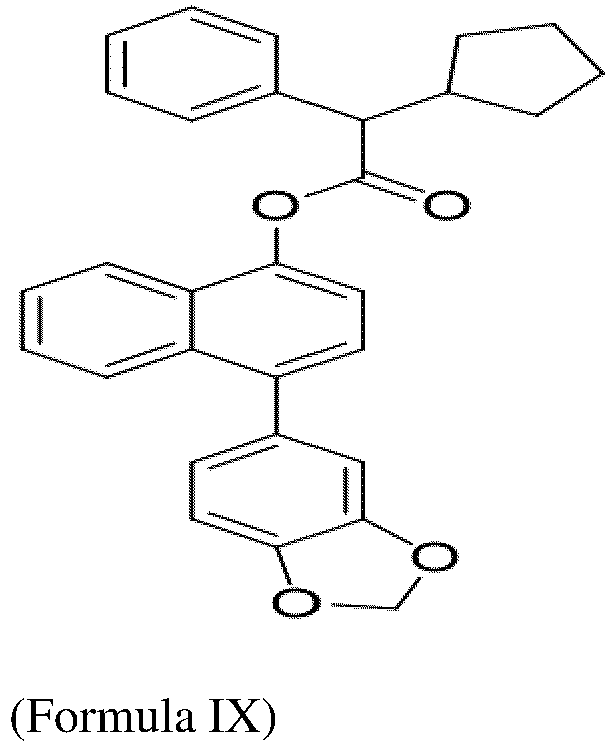


- The compound as claimed in Claim 1, wherein the compound is compound of Formula V:

- The compound as claimed in Claim 1, wherein the compound is compound of Formula VI:

- The compound as claimed in claim 1, wherein the compound is compound of Formula VII:

- The compound as claimed in claim 1, wherein the compound is compound of Formula VIII:

- The compound as claimed in claim 1, wherein the compound is compound of Formula IX:

- The compound as claimed in claim 1, wherein the compound is compound of Formula X:

- The compound as claimed in claim 1, wherein the compound is compound of Formula XI:

- Compounds of Formula V to XI, preferably of Formula V or VI, for use in the treatment of cancer.
- Compound of Formula V to XI for use in the treatment of cancer as claimed in claim 9, wherein the cancer is breast, oral, prostate, brain, blood, bone marrow, liver, pancreas, skin, kidney, colon, ovary, lung, testicle, penis, thyroid, parathyroid, pituitary, thymus, retina, uvea, conjunctiva, spleen, head, neck, trachea, gall bladder, rectum, salivary gland, adrenal gland, throat, esophagus, lymph nodes, sweat glands, sebaceous glands, muscle, heart, or stomach cancer.
- Compound of Formula V or VI for use in the treatment of cancer as claimed in claim 9, wherein the cancer is breast and/or prostate cancer.
- A pharmaceutical composition comprising a compound of Formula V to Formula XI and pharmaceutically acceptable excipient including carrier, adjuvant, vehicle or mixtures thereof.
- The composition as claimed in claim 12 for use in the treatment of cancer including breast, oral, prostate, brain, blood, bone marrow, liver, pancreas, skin, kidney, colon, ovary, lung, testicle, penis, thyroid, parathyroid, pituitary, thymus, retina, uvea, conjunctiva, spleen, head, neck, trachea, gall bladder, rectum, salivary gland, adrenal gland, throat, esophagus, lymph nodes, sweat glands, sebaceous glands, muscle, heart, and stomach cancer, preferably in the treatment of breast and/or prostate cancer.
Applications Claiming Priority (3)
| Application Number | Priority Date | Filing Date | Title |
|---|---|---|---|
| IN201621035967 | 2017-04-20 | ||
| IN201721045003 | 2017-12-14 | ||
| PCT/IN2018/050237 WO2018193476A2 (en) | 2017-04-20 | 2018-04-19 | Anticancer compounds |
Publications (3)
| Publication Number | Publication Date |
|---|---|
| EP3612172A2 EP3612172A2 (en) | 2020-02-26 |
| EP3612172B1 true EP3612172B1 (en) | 2025-04-09 |
| EP3612172C0 EP3612172C0 (en) | 2025-04-09 |
Family
ID=62244517
Family Applications (1)
| Application Number | Title | Priority Date | Filing Date |
|---|---|---|---|
| EP18727059.0A Active EP3612172B1 (en) | 2017-04-20 | 2018-04-19 | Anticancer compounds |
Country Status (5)
| Country | Link |
|---|---|
| US (2) | US11084843B2 (en) |
| EP (1) | EP3612172B1 (en) |
| JP (1) | JP7198221B2 (en) |
| ES (1) | ES3030482T3 (en) |
| WO (1) | WO2018193476A2 (en) |
Families Citing this family (3)
| Publication number | Priority date | Publication date | Assignee | Title |
|---|---|---|---|---|
| CN113365615A (en) * | 2018-12-17 | 2021-09-07 | 戈达瓦里生物炼制有限责任公司 | Compounds for inhibiting unregulated cell growth |
| JP7824889B2 (en) * | 2020-05-11 | 2026-03-05 | ゴーダーヴァリ バイオリファイナリーズ リミテッド | Use of Compounds for the Treatment of Viral Infections |
| JP2024532885A (en) * | 2021-09-22 | 2024-09-10 | ゴーダーヴァリ バイオリファイナリーズ リミテッド | Pharmaceutical compositions and methods for preparing same |
Citations (1)
| Publication number | Priority date | Publication date | Assignee | Title |
|---|---|---|---|---|
| CN101463055A (en) * | 2009-01-15 | 2009-06-24 | 天津药物研究院 | O-indican compounds, preparation and use thereof |
Family Cites Families (9)
| Publication number | Priority date | Publication date | Assignee | Title |
|---|---|---|---|---|
| JP2012516886A (en) | 2009-02-05 | 2012-07-26 | ゴーダーヴァリ バイオリファイナリーズ リミテッド | Clay statin manufacturing method |
| WO2012081038A2 (en) | 2010-12-17 | 2012-06-21 | Godavari Biorefineries Limited | Anticancer compounds and targeting cancer with the same |
| WO2012099247A1 (en) | 2011-01-21 | 2012-07-26 | 花王株式会社 | Skin whitening agent |
| WO2014097318A2 (en) * | 2012-12-18 | 2014-06-26 | Godavari Biorefineries Limited | Agents for eliminating tumour-initiating cells |
| WO2015002038A1 (en) | 2013-07-01 | 2015-01-08 | 株式会社トクヤマ | Novel phenyl napthol derivative |
| CN103467463B (en) | 2013-09-18 | 2016-06-22 | 南开大学 | One lignans analog derivative and its production and use |
| US20170119806A1 (en) * | 2014-03-31 | 2017-05-04 | Ohio State Innovation Foundation | Arylnaphthalene lactone derivatives and methods of making and using thereof |
| JP6770507B2 (en) | 2014-08-14 | 2020-10-14 | ライジェル ファーマシューティカルズ, インコーポレイテッド | Quinoline derivative useful as a ubiquitination inhibitor |
| CN104844614B (en) | 2015-03-31 | 2016-09-14 | 华东师范大学 | Otobain compound and preparation method and purposes |
-
2018
- 2018-04-19 WO PCT/IN2018/050237 patent/WO2018193476A2/en not_active Ceased
- 2018-04-19 ES ES18727059T patent/ES3030482T3/en active Active
- 2018-04-19 US US16/336,460 patent/US11084843B2/en active Active
- 2018-04-19 EP EP18727059.0A patent/EP3612172B1/en active Active
- 2018-04-19 JP JP2019556888A patent/JP7198221B2/en active Active
-
2021
- 2021-06-30 US US17/364,570 patent/US11680078B2/en active Active
Patent Citations (1)
| Publication number | Priority date | Publication date | Assignee | Title |
|---|---|---|---|---|
| CN101463055A (en) * | 2009-01-15 | 2009-06-24 | 天津药物研究院 | O-indican compounds, preparation and use thereof |
Non-Patent Citations (2)
| Title |
|---|
| VENKATESWARLU R ET AL: "Transformations of lignans. Part 11: Oxidation of diphyllin with hypervalent iodine reagents and reductive reactions of a resulting 1-methoxy-1-aryl-4-oxonaphthalene lactone", TETRAHEDRON, ELSEVIER SIENCE PUBLISHERS, AMSTERDAM, NL, vol. 62, no. 18, 1 May 2006 (2006-05-01), pages 4463 - 4473, XP025001885, ISSN: 0040-4020, [retrieved on 20060501], DOI: 10.1016/J.TET.2006.02.050 * |
| WOLF C ET AL: "Enantioseparations by subcritical fluid chromatography at cryogenic temperatures", JOURNAL OF CHROMATOGRAPHY A, ELSEVIER, AMSTERDAM, NL, vol. 785, no. 1-2, 17 October 1997 (1997-10-17), pages 173 - 178, XP004097561, ISSN: 0021-9673, DOI: 10.1016/S0021-9673(97)00681-X * |
Also Published As
| Publication number | Publication date |
|---|---|
| US20190284222A1 (en) | 2019-09-19 |
| JP7198221B2 (en) | 2022-12-28 |
| US11084843B2 (en) | 2021-08-10 |
| US20220389046A1 (en) | 2022-12-08 |
| JP2020519568A (en) | 2020-07-02 |
| US11680078B2 (en) | 2023-06-20 |
| EP3612172A2 (en) | 2020-02-26 |
| ES3030482T3 (en) | 2025-06-30 |
| WO2018193476A3 (en) | 2019-01-03 |
| EP3612172C0 (en) | 2025-04-09 |
| WO2018193476A2 (en) | 2018-10-25 |
Similar Documents
| Publication | Publication Date | Title |
|---|---|---|
| KR102744343B1 (en) | Solid forms of a thienopyrimidinedione ACC inhibitor and methods for production thereof | |
| US11680078B2 (en) | Anticancer compounds | |
| CA2901155C (en) | Camkii inhibitors and uses thereof | |
| EP4010344B1 (en) | Thienopyrimidine derivatives as acc inhibitors and uses thereof | |
| US20150328245A1 (en) | Agents for Eliminating Tumour-Initiating Cells | |
| EP3189052B1 (en) | Camkii inhibitors and uses thereof | |
| US10682367B2 (en) | Antitumor arylnaphthalene ligand glycosides | |
| EP3897592B1 (en) | Compounds for the inhibition of unregulated cell growth | |
| WO2012081038A2 (en) | Anticancer compounds and targeting cancer with the same | |
| US20240018132A1 (en) | 5-hydroxy-1,4-naphthalenedione for use in the treatment of cancer | |
| US20250289837A1 (en) | Mitochondriotropic heteroaryl benzamide potassium channel kv1.3 inhibitors | |
| WO2012081039A1 (en) | Molecules with anticancer activity and uses thereof |
Legal Events
| Date | Code | Title | Description |
|---|---|---|---|
| STAA | Information on the status of an ep patent application or granted ep patent |
Free format text: STATUS: UNKNOWN |
|
| STAA | Information on the status of an ep patent application or granted ep patent |
Free format text: STATUS: THE INTERNATIONAL PUBLICATION HAS BEEN MADE |
|
| PUAI | Public reference made under article 153(3) epc to a published international application that has entered the european phase |
Free format text: ORIGINAL CODE: 0009012 |
|
| STAA | Information on the status of an ep patent application or granted ep patent |
Free format text: STATUS: REQUEST FOR EXAMINATION WAS MADE |
|
| 17P | Request for examination filed |
Effective date: 20191018 |
|
| AK | Designated contracting states |
Kind code of ref document: A2 Designated state(s): AL AT BE BG CH CY CZ DE DK EE ES FI FR GB GR HR HU IE IS IT LI LT LU LV MC MK MT NL NO PL PT RO RS SE SI SK SM TR |
|
| AX | Request for extension of the european patent |
Extension state: BA ME |
|
| DAV | Request for validation of the european patent (deleted) | ||
| DAX | Request for extension of the european patent (deleted) | ||
| STAA | Information on the status of an ep patent application or granted ep patent |
Free format text: STATUS: EXAMINATION IS IN PROGRESS |
|
| 17Q | First examination report despatched |
Effective date: 20220513 |
|
| RAP3 | Party data changed (applicant data changed or rights of an application transferred) |
Owner name: GODAVARI BIOREFINERIES LIMITED |
|
| GRAP | Despatch of communication of intention to grant a patent |
Free format text: ORIGINAL CODE: EPIDOSNIGR1 |
|
| STAA | Information on the status of an ep patent application or granted ep patent |
Free format text: STATUS: GRANT OF PATENT IS INTENDED |
|
| RIC1 | Information provided on ipc code assigned before grant |
Ipc: C07D 405/12 20060101ALI20241220BHEP Ipc: C07H 15/26 20060101ALI20241220BHEP Ipc: C07D 407/12 20060101ALI20241220BHEP Ipc: C07D 407/04 20060101ALI20241220BHEP Ipc: C07D 405/14 20060101ALI20241220BHEP Ipc: C07D 405/04 20060101ALI20241220BHEP Ipc: C07D 317/56 20060101ALI20241220BHEP Ipc: C07C 311/48 20060101ALI20241220BHEP Ipc: C07C 1/00 20060101ALI20241220BHEP Ipc: C07D 401/14 20060101ALI20241220BHEP Ipc: A61K 31/357 20060101ALI20241220BHEP Ipc: A61K 31/4025 20060101ALI20241220BHEP Ipc: A61K 31/4709 20060101ALI20241220BHEP Ipc: A61K 31/7048 20060101ALI20241220BHEP Ipc: C07H 17/04 20060101ALI20241220BHEP Ipc: A61P 35/00 20060101ALI20241220BHEP Ipc: A61K 31/10 20060101AFI20241220BHEP |
|
| INTG | Intention to grant announced |
Effective date: 20250121 |
|
| GRAS | Grant fee paid |
Free format text: ORIGINAL CODE: EPIDOSNIGR3 |
|
| GRAA | (expected) grant |
Free format text: ORIGINAL CODE: 0009210 |
|
| STAA | Information on the status of an ep patent application or granted ep patent |
Free format text: STATUS: THE PATENT HAS BEEN GRANTED |
|
| AK | Designated contracting states |
Kind code of ref document: B1 Designated state(s): AL AT BE BG CH CY CZ DE DK EE ES FI FR GB GR HR HU IE IS IT LI LT LU LV MC MK MT NL NO PL PT RO RS SE SI SK SM TR |
|
| REG | Reference to a national code |
Ref country code: GB Ref legal event code: FG4D |
|
| REG | Reference to a national code |
Ref country code: CH Ref legal event code: EP |
|
| REG | Reference to a national code |
Ref country code: DE Ref legal event code: R096 Ref document number: 602018080936 Country of ref document: DE |
|
| REG | Reference to a national code |
Ref country code: IE Ref legal event code: FG4D |
|
| U01 | Request for unitary effect filed |
Effective date: 20250502 |
|
| U07 | Unitary effect registered |
Designated state(s): AT BE BG DE DK EE FI FR IT LT LU LV MT NL PT RO SE SI Effective date: 20250508 |
|
| REG | Reference to a national code |
Ref country code: ES Ref legal event code: FG2A Ref document number: 3030482 Country of ref document: ES Kind code of ref document: T3 Effective date: 20250630 |
|
| PGFP | Annual fee paid to national office [announced via postgrant information from national office to epo] |
Ref country code: GB Payment date: 20250527 Year of fee payment: 8 Ref country code: ES Payment date: 20250530 Year of fee payment: 8 |
|
| U20 | Renewal fee for the european patent with unitary effect paid |
Year of fee payment: 8 Effective date: 20250728 |
|
| PG25 | Lapsed in a contracting state [announced via postgrant information from national office to epo] |
Ref country code: GR Free format text: LAPSE BECAUSE OF FAILURE TO SUBMIT A TRANSLATION OF THE DESCRIPTION OR TO PAY THE FEE WITHIN THE PRESCRIBED TIME-LIMIT Effective date: 20250710 Ref country code: NO Free format text: LAPSE BECAUSE OF FAILURE TO SUBMIT A TRANSLATION OF THE DESCRIPTION OR TO PAY THE FEE WITHIN THE PRESCRIBED TIME-LIMIT Effective date: 20250709 |
|
| PG25 | Lapsed in a contracting state [announced via postgrant information from national office to epo] |
Ref country code: PL Free format text: LAPSE BECAUSE OF FAILURE TO SUBMIT A TRANSLATION OF THE DESCRIPTION OR TO PAY THE FEE WITHIN THE PRESCRIBED TIME-LIMIT Effective date: 20250409 |
|
| PG25 | Lapsed in a contracting state [announced via postgrant information from national office to epo] |
Ref country code: HR Free format text: LAPSE BECAUSE OF FAILURE TO SUBMIT A TRANSLATION OF THE DESCRIPTION OR TO PAY THE FEE WITHIN THE PRESCRIBED TIME-LIMIT Effective date: 20250409 |
|
| PG25 | Lapsed in a contracting state [announced via postgrant information from national office to epo] |
Ref country code: RS Free format text: LAPSE BECAUSE OF FAILURE TO SUBMIT A TRANSLATION OF THE DESCRIPTION OR TO PAY THE FEE WITHIN THE PRESCRIBED TIME-LIMIT Effective date: 20250709 |
|
| PG25 | Lapsed in a contracting state [announced via postgrant information from national office to epo] |
Ref country code: IS Free format text: LAPSE BECAUSE OF FAILURE TO SUBMIT A TRANSLATION OF THE DESCRIPTION OR TO PAY THE FEE WITHIN THE PRESCRIBED TIME-LIMIT Effective date: 20250809 |
|
| REG | Reference to a national code |
Ref country code: CH Ref legal event code: H13 Free format text: ST27 STATUS EVENT CODE: U-0-0-H10-H13 (AS PROVIDED BY THE NATIONAL OFFICE) Effective date: 20251125 |
|
| PG25 | Lapsed in a contracting state [announced via postgrant information from national office to epo] |
Ref country code: SM Free format text: LAPSE BECAUSE OF FAILURE TO SUBMIT A TRANSLATION OF THE DESCRIPTION OR TO PAY THE FEE WITHIN THE PRESCRIBED TIME-LIMIT Effective date: 20250409 |
|
| PG25 | Lapsed in a contracting state [announced via postgrant information from national office to epo] |
Ref country code: CH Free format text: LAPSE BECAUSE OF NON-PAYMENT OF DUE FEES Effective date: 20250430 |
|
| PG25 | Lapsed in a contracting state [announced via postgrant information from national office to epo] |
Ref country code: CZ Free format text: LAPSE BECAUSE OF FAILURE TO SUBMIT A TRANSLATION OF THE DESCRIPTION OR TO PAY THE FEE WITHIN THE PRESCRIBED TIME-LIMIT Effective date: 20250409 |
|
| PG25 | Lapsed in a contracting state [announced via postgrant information from national office to epo] |
Ref country code: SK Free format text: LAPSE BECAUSE OF FAILURE TO SUBMIT A TRANSLATION OF THE DESCRIPTION OR TO PAY THE FEE WITHIN THE PRESCRIBED TIME-LIMIT Effective date: 20250409 |
|
| PG25 | Lapsed in a contracting state [announced via postgrant information from national office to epo] |
Ref country code: MC Free format text: LAPSE BECAUSE OF FAILURE TO SUBMIT A TRANSLATION OF THE DESCRIPTION OR TO PAY THE FEE WITHIN THE PRESCRIBED TIME-LIMIT Effective date: 20250409 |
|
| PLBE | No opposition filed within time limit |
Free format text: ORIGINAL CODE: 0009261 |
|
| STAA | Information on the status of an ep patent application or granted ep patent |
Free format text: STATUS: NO OPPOSITION FILED WITHIN TIME LIMIT |
|
| REG | Reference to a national code |
Ref country code: CH Ref legal event code: L10 Free format text: ST27 STATUS EVENT CODE: U-0-0-L10-L00 (AS PROVIDED BY THE NATIONAL OFFICE) Effective date: 20260218 |
|
| 26N | No opposition filed |
Effective date: 20260112 |
|
| PG25 | Lapsed in a contracting state [announced via postgrant information from national office to epo] |
Ref country code: IE Free format text: LAPSE BECAUSE OF NON-PAYMENT OF DUE FEES Effective date: 20250419 |