EP3612036B1 - System and method for removal of soluble gases from fluid samples - Google Patents
System and method for removal of soluble gases from fluid samples Download PDFInfo
- Publication number
- EP3612036B1 EP3612036B1 EP18786988.8A EP18786988A EP3612036B1 EP 3612036 B1 EP3612036 B1 EP 3612036B1 EP 18786988 A EP18786988 A EP 18786988A EP 3612036 B1 EP3612036 B1 EP 3612036B1
- Authority
- EP
- European Patent Office
- Prior art keywords
- container
- nucleation sites
- degassing
- sample
- fluid sample
- Prior art date
- Legal status (The legal status is an assumption and is not a legal conclusion. Google has not performed a legal analysis and makes no representation as to the accuracy of the status listed.)
- Active
Links
Images




Classifications
-
- B—PERFORMING OPERATIONS; TRANSPORTING
- B01—PHYSICAL OR CHEMICAL PROCESSES OR APPARATUS IN GENERAL
- B01D—SEPARATION
- B01D19/00—Degasification of liquids
- B01D19/0073—Degasification of liquids by a method not covered by groups B01D19/0005 - B01D19/0042
-
- A—HUMAN NECESSITIES
- A23—FOODS OR FOODSTUFFS; TREATMENT THEREOF, NOT COVERED BY OTHER CLASSES
- A23L—FOODS, FOODSTUFFS OR NON-ALCOHOLIC BEVERAGES, NOT OTHERWISE PROVIDED FOR; PREPARATION OR TREATMENT THEREOF
- A23L5/00—Preparation or treatment of foods or foodstuffs, in general; Food or foodstuffs obtained thereby; Materials therefor
- A23L5/20—Removal of unwanted matter, e.g. deodorisation or detoxification
- A23L5/21—Removal of unwanted matter, e.g. deodorisation or detoxification by heating without chemical treatment, e.g. steam treatment, cooking
-
- A—HUMAN NECESSITIES
- A47—FURNITURE; DOMESTIC ARTICLES OR APPLIANCES; COFFEE MILLS; SPICE MILLS; SUCTION CLEANERS IN GENERAL
- A47G—HOUSEHOLD OR TABLE EQUIPMENT
- A47G19/00—Table service
- A47G19/22—Drinking vessels or saucers used for table service
-
- A—HUMAN NECESSITIES
- A47—FURNITURE; DOMESTIC ARTICLES OR APPLIANCES; COFFEE MILLS; SPICE MILLS; SUCTION CLEANERS IN GENERAL
- A47G—HOUSEHOLD OR TABLE EQUIPMENT
- A47G19/00—Table service
- A47G19/22—Drinking vessels or saucers used for table service
- A47G19/2205—Drinking glasses or vessels
- A47G19/2227—Drinking glasses or vessels with means for amusing or giving information to the user
- A47G19/2233—Drinking glasses or vessels with means for amusing or giving information to the user related to the evolution of bubbles in carbonated beverages
-
- B—PERFORMING OPERATIONS; TRANSPORTING
- B01—PHYSICAL OR CHEMICAL PROCESSES OR APPARATUS IN GENERAL
- B01D—SEPARATION
- B01D19/00—Degasification of liquids
-
- C—CHEMISTRY; METALLURGY
- C12—BIOCHEMISTRY; BEER; SPIRITS; WINE; VINEGAR; MICROBIOLOGY; ENZYMOLOGY; MUTATION OR GENETIC ENGINEERING
- C12H—PASTEURISATION, STERILISATION, PRESERVATION, PURIFICATION, CLARIFICATION OR AGEING OF ALCOHOLIC BEVERAGES; METHODS FOR ALTERING THE ALCOHOL CONTENT OF FERMENTED SOLUTIONS OR ALCOHOLIC BEVERAGES
- C12H1/00—Pasteurisation, sterilisation, preservation, purification, clarification, or ageing of alcoholic beverages
- C12H1/12—Pasteurisation, sterilisation, preservation, purification, clarification, or ageing of alcoholic beverages without precipitation
- C12H1/16—Pasteurisation, sterilisation, preservation, purification, clarification, or ageing of alcoholic beverages without precipitation by physical means, e.g. irradiation
- C12H1/18—Pasteurisation, sterilisation, preservation, purification, clarification, or ageing of alcoholic beverages without precipitation by physical means, e.g. irradiation by heating
-
- G—PHYSICS
- G01—MEASURING; TESTING
- G01N—INVESTIGATING OR ANALYSING MATERIALS BY DETERMINING THEIR CHEMICAL OR PHYSICAL PROPERTIES
- G01N1/00—Sampling; Preparing specimens for investigation
- G01N1/28—Preparing specimens for investigation including physical details of (bio-)chemical methods covered elsewhere, e.g. G01N33/50, C12Q
- G01N1/40—Concentrating samples
- G01N1/4005—Concentrating samples by transferring a selected component through a membrane
-
- G—PHYSICS
- G01—MEASURING; TESTING
- G01N—INVESTIGATING OR ANALYSING MATERIALS BY DETERMINING THEIR CHEMICAL OR PHYSICAL PROPERTIES
- G01N1/00—Sampling; Preparing specimens for investigation
- G01N1/28—Preparing specimens for investigation including physical details of (bio-)chemical methods covered elsewhere, e.g. G01N33/50, C12Q
- G01N1/40—Concentrating samples
- G01N1/4055—Concentrating samples by solubility techniques
-
- G—PHYSICS
- G01—MEASURING; TESTING
- G01N—INVESTIGATING OR ANALYSING MATERIALS BY DETERMINING THEIR CHEMICAL OR PHYSICAL PROPERTIES
- G01N1/00—Sampling; Preparing specimens for investigation
- G01N1/28—Preparing specimens for investigation including physical details of (bio-)chemical methods covered elsewhere, e.g. G01N33/50, C12Q
- G01N1/42—Low-temperature sample treatment, e.g. cryofixation
-
- G—PHYSICS
- G01—MEASURING; TESTING
- G01N—INVESTIGATING OR ANALYSING MATERIALS BY DETERMINING THEIR CHEMICAL OR PHYSICAL PROPERTIES
- G01N33/00—Investigating or analysing materials by specific methods not covered by groups G01N1/00 - G01N31/00
- G01N33/02—Food
- G01N33/14—Beverages
- G01N33/146—Beverages containing alcohol
-
- A—HUMAN NECESSITIES
- A23—FOODS OR FOODSTUFFS; TREATMENT THEREOF, NOT COVERED BY OTHER CLASSES
- A23V—INDEXING SCHEME RELATING TO FOODS, FOODSTUFFS OR NON-ALCOHOLIC BEVERAGES AND LACTIC OR PROPIONIC ACID BACTERIA USED IN FOODSTUFFS OR FOOD PREPARATION
- A23V2002/00—Food compositions, function of food ingredients or processes for food or foodstuffs
Definitions
- the present invention relates generally to the fields of beverage quality control, food safety, and other applications where efficient removal of carbon dioxide from beverages or other aqueous samples is desirable prior to performing analytical methods, including methods for concentration and detection of spoilage organisms and other microorganisms in carbonated beverages.
- Spoilage organisms can grow in carbonated beverages, such as widely produced beers, ales, and soft drinks. These organisms, while typically initially present only at very low concentrations, can reproduce over time, producing off-flavors, increased turbidity, and other quality defects. Further, in some cases these organisms can create safety concerns due to the potential for increased carbon dioxide pressure and risk of bursting bottles.
- ASBC American Society of Brewing Chemists
- ASBC Method Beer-1A shaking in a flask until no further gas escapes
- gas purging mechanical shakers
- gas-permeable membrane techniques gas-permeable membrane techniques
- ultrasonication ultrasonication
- bench-top rotary shakers Constant & Collier, 2017.
- the bench-top rotary shaker with baffled Erlenmeyer flasks was determined to be the preferred method.
- RMMs microbiological analysis
- PCR polymerase chain reaction
- flow cytometry flow cytometry
- pouring for Decarbonation Another method for decarbonation entails pouring beer samples back and forth between beakers. This method removes carbon dioxide but is similar to the shaking method discussed above in terms of labor requirements - also requiring 25 minutes to prepare 10 samples. Further, this method is inherently not aseptic due to the significant number of times that the sample must be poured, and thus is not a good method for use prior to spoilage organism testing.
- Filtration for Decarbonation In some instances, filtration of beer samples has been used to remove carbon dioxide. Movement of the sample from atmospheric pressure through a small pore and into a low pressure environment causes carbon dioxide to be released both on the retentate and the permeate sides of the filter. It is inherent in this process that smaller pore sizes cause release of greater quantities of carbon dioxide. This fact, in general, eliminates this method from use as a front end to the Concentrating Pipette and other membrane filtration methods for concentration of microorganisms, due to the need for a very large percentage of the target microorganisms to be present in the sample prior to and after concentration. Use of a pore size large enough to allow larger target microorganisms to pass inherently leaves too much carbon dioxide in the sample, and therefor will not allow sufficient volume to be processed with the Concentrating Pipette.
- Ultrasonication is capable by itself or in combination with other methods of removing carbon dioxide from beer samples, but it is generally not readily capable of removing carbon dioxide to the levels necessary prior to processing with the Concentrating Pipette or other membrane filters. Further, ultrasonication is known to have detrimental effects on the viability of certain microorganisms.
- Beer Glasses with Nucleation Sites (e.g. US4322008 ): Beer glasses are now commercially available with laser cut nucleation sites on the inside wall of the bottom of the glass. These nucleation sites are used to enhance aroma, taste and head retention in beer.
- the nucleation surface area is purposely limited to a very small percentage of the inside glass surface to create a very slow steady release of carbon dioxide in order to create bubbles and maintain a beer head.
- the nucleated surface area is typically way less than 1% of the surface area, and more often less than 0.1% of the surface area. In this way, only a very small percentage of the contained carbon dioxide is released from the beer.
- the Concentrating Pipette is shown in FIG. 10 .
- One of the advantages of the present invention is in preparing a sample size from a carbonated fluid to the Concentrating Pipette device which is itself not part of the invention.
- This process uses a container that has been treated using sandblasting or other methods to create a multitude of nucleation sites on a large surface area on the inside of the container.
- the nucleation sites By creating nucleation sites over a major portion of the inside area of the container, the nucleation sites not only cause a release of carbon dioxide, but also initiate a catastrophic release of carbon dioxide through formation of a multitude of gas bubbles causing significant mixing and additional release of gas.
- the present invention describes highly efficient and simple to use systems, and methods for removing saturated gasses, such as carbon dioxide, from liquid samples.
- the technique uses a large surface area of nucleation sites along with methods for enhancing the nucleation of the gasses to quickly and efficiently remove these gases from samples prior to implementing liquid concentration or other laboratory methods.
- the present technique may be used to decarbonate beer and other carbonated liquids prior to processing on a Concentrating Pipette Instrument, for example those described and patented by the Applicant.
- Figure 2 shows a decarbonation container 100, according to an exemplary embodiment of the present invention.
- a large zone of nucleation sites 101 on the inside surface of the container, extends from near the neck at the top end to the bottom edge of the inside walls and includes the entire bottom inside surface as well.
- any fluid which is poured into container 100 will come into direct contact with the nucleation sites 101, which extend to nearly the entire interior surface of the container 100.
- the nucleated interior surface is 5% - 100% of the interior surface.
- a standard bottle thread 102 is provided to allow for use of a threaded lid.
- Figure 3 shows a screw top lid 200 including a hydrophobic membrane filter vent 201 for use on container 100.
- the user pours a carbonated sample into container 100 and carbon dioxide is nucleated by nucleation surface 101. After pouring the sample into the container 100, the user may place lid 200 onto container 100 to reduce the potential for contamination of the liquid sample.
- Vent 201 allows gas to escape during the decarbonation process so that pressure does not build up within container 100.
- Applicant has demonstrated sufficient rapid degassing of carbonated beverage samples by pouring them into glass or plastic containers that have had a major portion of the inside walls etched or "frosted” and which contain enough volume to hold the sample as it catastrophically foams up, evolving the majority of the carbon dioxide gas, and collapsing as flat liquid in the bottom of the container.
- FIG. 8 Various other glass and plastic containers may be treated by interior grit blasting and have demonstrated to behave in the same manner. Such a grit blasting process is shown in Figure 8 .
- Various beers and ales including but not limited to Angry Orchard hard cider, Boulevard unfiltered wheat, single wide IPA, Tank 7 Farmhouse Ale, and Pale Ale; Budweiser, Carlsberg, Coors Banquet, Miller Lite, Guinness Draught, Heineken, Modelo Especial, Samuel Adams Boston Lager, Sapporo, Shiner Bock, Stella Artois, and TsingTao were shown to be quickly decarbonated using the nucleated containers.
- Nucleation sites may be created on the container in a number of ways including, but not limited to: by use of a mold during manufacturing that contains a reverse image of the nucleation sites, by use of a container material that is naturally rough or naturally contains many nucleation sites, or by post treatment of the container after initial manufacturing using any number of well-known processes for creating a rough surface. These processes include: sandblasting, bead blasting, laser etching, acid etching, or other mechanical or chemical means for roughening the surface or creating nucleation sites.
- Molding may also be used to create a rough surface, wherein the nucleation sites are produced during molding of the container, by using a mold containing a mirror image of the nucleation sites.
- Sandblasting may be performed using aluminum oxide, silicon carbide, crushed glass, glass beads, plastic abrasive, pumice, steel shot, steel grit, corn cob, walnut shell or garnet with a grit ranging from 8 to 1,000.
- Laser etching may be performed with any number of commercially available laser cutter/etcher systems.
- Plastic containers, especially, may be manufactured with a multitude of nucleation sites by using a mold that has be roughened using sandblasting or other methods.
- the nucleation sites may be created in any number of types of materials including, but not limited to: glass, ceramic, metal, plastic, thermoplastic, polytetrafluoroethylene or other material routinely used for producing bottles or sample tubes for laboratory use.
- the container may be autoclavable, such that it can be washed and then autoclaved between samples to ensure that no cross contamination occurs between samples.
- the container may be single use and may be packaged and treated, prior to sale, using e-beam irradiation, gamma irradiation, ethylene oxide, vaporous hydrogen peroxide, peracetic acid or other commonly used sterilization processes.
- the container is sized such that entire sample may be vigorously poured into the container and not overflow due to the decarbonation process and associated foaming of the sample.
- most sample 350 mL cans or bottles of beer can be rapidly poured into a container of 1 L nominal volume without overflowing during the decarbonation process.
- Other samples types and volumes may require larger containers or may be able to be processed in smaller containers.
- Applicants have proven the effectiveness of the present technique with various volumes. For example, from 100 mL of beer to 750 mL of sparkling wine. Degassing of up to 335 ml (12 ounces) of beer has been performed in 895 ml (32 ounce) straight sided jars (like the jars shown in Figures 2 and 9 ). A 750 mL wine sample was degassed in a 1675 ml (60 ounces) sand blasted beer pitcher and was run on the Concentrating Pipette with a 0.4 um Concentrating Pipette Tip in 12 minutes and 35 seconds. The present technique is effective for a wide range of volumes, from 5 mL to 10 L. Further, different shapes of containers may also be used to enhance the decarbonation process through increased turbulence associated with different container diameters and shapes.
- a large surface area with nucleation sites may also be produced by using a multitude of devices such as glass beads or a single device or several devices with a large surface area of nucleation sites which are placed into the container prior to pouring the sample.
- the decarbonation process causes significant quantities of gas to be released and as such the process to some extent helps maintain sterility due to an outflow of carbon dioxide from the container. Further this outflow requires that an open container or some type of vent be used during the decarbonation process. For example, a loose-fitting lid may be used to eliminate the chance of a user touching the container opening while also constricting the open area enough to ensure only an outflow of carbon dioxide takes place. Further, lids with an integral membrane filter of a small enough pore size to ensure sterility are used to allow for an outflow of gas while helping to reducing the chance of contamination.
- steps may be taken to enhance the rate and completeness of the decarbonation process. These include vigorous pouring of the beer into the container, heating of the sample prior to pouring into the container, stirring or shaking of the sample while in the container, as well as other methods for enhancing mixing and contact with the nucleation sites. Further, the ability to process the sample following decarbonation may also be enhanced by cooling the sample during or after the decarbonation process to increase the solubility of the remaining carbon dioxide in the sample and thus make it more difficult to come out of solution during subsequent filtration or concentration processes.
- Vigorous pouring of beer samples or other carbonated or gassed samples may entail turning the sample container - in the case of beer the bottle or can - nearly or completely upside down from a height of a few centimetres to 30.5 centimetres (one foot) or more in height above the nucleated container and letting the entire sample flow into the container.
- Heating of the sample includes any temperature from room temperature to up to 37° C or more to enhance the release of carbon dioxide.
- beer tests were performed by putting full, unopened cans or bottles of beer in a 37° C incubator for 30 minutes before pouring into the container. This significantly enhanced the carbon dioxide removal and reduced the total time period required for decarbonation and sample processing on the Concentrating Pipette.
- beer in addition to beer, other sample types such as cider, sparkling wine, champagne, wine coolers, other alcoholic beverages, juice, lemonade, coffee, soft drink, coke, fizzy drink, fizzy juice, cool drink, cold drink, lolly water, pop, seltzer, soda, soda pop, fountain drink, ginger ale, ginger beer, tonic water, mineral water, or other carbonated beverages may also be decarbonated using this method. Additionally, other fluid samples containing carbon dioxide, nitrogen, nitrous oxide, oxygen or other soluble gases or mixtures of soluble gases may also be degassed using these methods.
- Test runs 1 - 3 The first three test runs (test runs 1 - 3) are shown with a prototype next generation instrument with 3.5 psi backpressure and demonstrate an average of 693X concentration of the organism in an average of 3.6 minutes (see Table 6).
- Test runs 4-6 used the current generation instrument (CP-150) and test runs 7-9 used the next generation instrument (CP SELECT) without backpressure, with the difference being that the next generation instrument has improved valves, foam control, software, etc.
- the blasting media size may range from 8-1,000 grit, and more specifically would be limited to 18-500 grit. Above 500 grit is the "micro fine" area and less conducive to creation of nucleation sites. Testing times have ranged from 1 minute (minimum to lightly blast the jar) to 32 minutes. The 32 minutes involved several instances of sandblasting with a fine grit blasting media. As such, the process was to blast, test, and repeat. Beyond 30 minutes is where effectiveness starts to drop.
- An exemplary preferable material used is 150 grit aluminum oxide for 6-8 minutes at 6.9 bar (100 psi).
- An internally nucleated jar is shown in Figure 9 .
- Styrofoam cups and containers are used.
- Styrofoam cups and containers inherently provide a vast number of nucleation sites due to their method of manufacture. Observation of such cups under a microscope clearly shows nucleation sites where cells border each other and where edges are created on the cells in the interstices between cells by injection into mold cavities.
- Applicant Concentrating Pipette and other Applicant instruments are able to concentrate the initial sample into a volume of from less than 100 to 1000 milliliters or more in a matter of minutes.
Landscapes
- Chemical & Material Sciences (AREA)
- Health & Medical Sciences (AREA)
- Life Sciences & Earth Sciences (AREA)
- Engineering & Computer Science (AREA)
- General Health & Medical Sciences (AREA)
- Biochemistry (AREA)
- Food Science & Technology (AREA)
- Pathology (AREA)
- Physics & Mathematics (AREA)
- Immunology (AREA)
- General Physics & Mathematics (AREA)
- Analytical Chemistry (AREA)
- Organic Chemistry (AREA)
- Chemical Kinetics & Catalysis (AREA)
- Wood Science & Technology (AREA)
- Zoology (AREA)
- General Engineering & Computer Science (AREA)
- Genetics & Genomics (AREA)
- Toxicology (AREA)
- Bioinformatics & Cheminformatics (AREA)
- Medicinal Chemistry (AREA)
- Nutrition Science (AREA)
- Polymers & Plastics (AREA)
- Distillation Of Fermentation Liquor, Processing Of Alcohols, Vinegar And Beer (AREA)
- Non-Alcoholic Beverages (AREA)
Description
- The present invention relates generally to the fields of beverage quality control, food safety, and other applications where efficient removal of carbon dioxide from beverages or other aqueous samples is desirable prior to performing analytical methods, including methods for concentration and detection of spoilage organisms and other microorganisms in carbonated beverages.
- Spoilage organisms can grow in carbonated beverages, such as widely produced beers, ales, and soft drinks. These organisms, while typically initially present only at very low concentrations, can reproduce over time, producing off-flavors, increased turbidity, and other quality defects. Further, in some cases these organisms can create safety concerns due to the potential for increased carbon dioxide pressure and risk of bursting bottles.
- Current methods for detection of these organisms are time-consuming and tedious, can impact the viability of entrained contaminant organisms, and are difficult to perform in an aseptic manner - thus increasing the potential for producing erroneous results due to introduced contaminates. Established methods include, but are not limited to, ultrasonication, filtration, combinations of ultrasonication and filtration, automated rotary shakers, compressed air sparging (purging), and manual degassing by pouring back and forth (Smith & Marinelli, 1991). The American Society of Brewing Chemists (ASBC) compared ASBC Method Beer-1A (shaking in a flask until no further gas escapes) with gas purging, mechanical shakers, gas-permeable membrane techniques, ultrasonication, and bench-top rotary shakers (Constant & Collier, 2017). The bench-top rotary shaker with baffled Erlenmeyer flasks was determined to be the preferred method.
- There is a great economic need for rapid identification of spoilage organisms in carbonated beverages; both to reduce hold times prior to release of product and to reduce the possibility of damage to the reputation and brand of the producer. Current methods of determining the presence of contaminating microorganisms involves plating on Petri dishes for identification and enumeration, or other methods of classical microbiology. Rapid methods for microbiological analysis (RMMs) such as polymerase chain reaction (PCR), immunoassays, and flow cytometry are becoming widespread. However, use of RMMs is limited in their application to the beverage industry due to the very small volume processed; typically 5 to 1000 microliters. This small volume is not adequately representative of the volume of fluid in even one single beverage container, which is typically 200 to 1000 milliliters, up to a thousand-fold greater volume than the amount analyzed.
- Various conventional methods of decarbonation of beer are briefly described below.
- Shaking for Decarbonation: One published method of decarbonation of beer samples involves placing a beer sample into a large Erlenmeyer flask and shaking gently at first and then vigorously. While this method removes carbon dioxide and is relatively simple, it is difficult to implement in large laboratories performing analysis of many samples. According to Paul Smith et. al., the required analyst time for preparing 10 samples using this method is 25 minutes and it requires significant space due to the large size of the flasks (500 mL flask for 200 mL of beer). See Smith, P. and Marinelli, L., Evaluation of Established Methods of Decarbonating Beer. ASBC Journal. March 27, 1992.
- Pouring for Decarbonation: Another method for decarbonation entails pouring beer samples back and forth between beakers. This method removes carbon dioxide but is similar to the shaking method discussed above in terms of labor requirements - also requiring 25 minutes to prepare 10 samples. Further, this method is inherently not aseptic due to the significant number of times that the sample must be poured, and thus is not a good method for use prior to spoilage organism testing.
- Filtration for Decarbonation: In some instances, filtration of beer samples has been used to remove carbon dioxide. Movement of the sample from atmospheric pressure through a small pore and into a low pressure environment causes carbon dioxide to be released both on the retentate and the permeate sides of the filter. It is inherent in this process that smaller pore sizes cause release of greater quantities of carbon dioxide. This fact, in general, eliminates this method from use as a front end to the Concentrating Pipette and other membrane filtration methods for concentration of microorganisms, due to the need for a very large percentage of the target microorganisms to be present in the sample prior to and after concentration. Use of a pore size large enough to allow larger target microorganisms to pass inherently leaves too much carbon dioxide in the sample, and therefor will not allow sufficient volume to be processed with the Concentrating Pipette.
- Ultrasonication for Decarbonation: Ultrasonication is capable by itself or in combination with other methods of removing carbon dioxide from beer samples, but it is generally not readily capable of removing carbon dioxide to the levels necessary prior to processing with the Concentrating Pipette or other membrane filters. Further, ultrasonication is known to have detrimental effects on the viability of certain microorganisms.
- Beer Glasses with Nucleation Sites (e.g.
US4322008 ):
Beer glasses are now commercially available with laser cut nucleation sites on the inside wall of the bottom of the glass. These nucleation sites are used to enhance aroma, taste and head retention in beer. The nucleation surface area is purposely limited to a very small percentage of the inside glass surface to create a very slow steady release of carbon dioxide in order to create bubbles and maintain a beer head. The nucleated surface area is typically way less than 1% of the surface area, and more often less than 0.1% of the surface area. In this way, only a very small percentage of the contained carbon dioxide is released from the beer. - The ability to concentrate any organisms present in a significant amount of the beverage will increase the utility of RMMs by increasing the likelihood of early detection, benefiting industry and consumers. Applicant specializes in membrane-based concentration of biological particles from fluids and has been awarded six US patents in this area to-date;
US8110112 ,US8758623 ,US8584535 ,US9593359 US9574977 US8726744 . Three commercial biological concentrators have been developed and sold, based on the patented process, termed "WET FOAM ELUTION", the HSC-40, HCI-40, and CP-150 Concentrating Pipette (current data sheets available at www.innovaprep.com). - As used herein and throughout this disclosure, the Concentrating Pipette is shown in
FIG. 10 . One of the advantages of the present invention is in preparing a sample size from a carbonated fluid to the Concentrating Pipette device which is itself not part of the invention. - While Applicant has demonstrated that the concentration of biological particles from a carbonated fluid can be performed using the patented methods and commercial instruments at increased pressure, thus keeping the gas in solution, Applicant's patented method of concentration was not effective for carbonated beverage samples at ambient pressures. A reason for this is because the vacuum applied to the filter releases gas from the fluid as it is drawn through the membrane, blocking the pores in the membrane. The solubility of carbon dioxide in water (and thus an alcoholic beverage, e.g., beer) at various temperatures is significant.
Figure 1 shows high solubility of carbon dioxide in water, particularly at lower temperatures. - In the present invention as defined in a system according to claim 1 and a method in claim 4, Applicants have demonstrated a novel method and a novel system for rapid degassing of carbonated beverage samples by pouring them into an etched or "frosted" glass or plastic container with enough volume to hold the sample as it catastrophically foams up, evolves the majority of the carbon dioxide gas, and collapses as flat liquid in the bottom of the container.
- This process uses a container that has been treated using sandblasting or other methods to create a multitude of nucleation sites on a large surface area on the inside of the container. By creating nucleation sites over a major portion of the inside area of the container, the nucleation sites not only cause a release of carbon dioxide, but also initiate a catastrophic release of carbon dioxide through formation of a multitude of gas bubbles causing significant mixing and additional release of gas.
- This catastrophic release of carbon dioxide is efficient enough that after several minutes of settling, enough carbon dioxide is evolved that the sample is free enough of carbon dioxide to allow for processing through a membrane filter such as those in the Concentrating Pipette Tips used in the Concentrating Pipette instrument.
- Further, vigorous pouring of the sample into the container further enhances the catastrophic release of carbon dioxide and further reduces the amount of residual carbon dioxide present. In some instances, the use of a mild heating step prior to pouring into the container can be used to reduce the solubility of carbon dioxide in the sample to further enhance the release of carbon dioxide from the sample. Finally, refrigeration of the sample, immediately after pouring into the decarbonation container or several minutes later, can further enhance the ability to process through membrane filters by increasing the solubility of the carbon dioxide - making it more difficult to remove during the membrane filtration process.
- The accompanying drawings, which are incorporated in and constitute a part of this specification, illustrate embodiments of this disclosure and technical data supporting those embodiments, and together with the written description, serve to explain certain principles of the invention.
-
Figure 1 shows the solubility of carbo dioxide in water. -
Figure 2 shows a decarbonation container, used for the invention. -
Figure 3 shows a vented lid for a decarbonation container, according to the invention. -
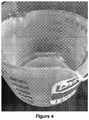
Figure 4 shows a nucleated PYREX measuring cup, according to an exemplary embodiment of the this disclosure not part of the invention. -
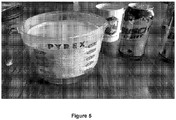
Figure 5 shows beer poured into a nucleated container, according to an exemplary embodiment of this disclosure not part of the invention. -
Figure 6 shows flattened beer being concentrated, according to an exemplary embodiment of this disclosure not part of the invention. -
Figure 7 shows a 335 ml (12 ounce) can of flattened beer filtered, according to an exemplary embodiment of this disclosure not part of the invention. -
Figure 8 shows nucleation sites being created inside a container, according to an exemplary embodiment of the present invention. -
Figure 9 shows an internally nucleated container, according to an exemplary embodiment of the present invention. -
Figure 10 shows a Concentrating Pipette Instrument, according to an exemplary embodiment of this disclosure not part of the invention. - The following detailed description references specific embodiments of the invention and accompanying figures, including the respective best modes for carrying out each embodiment. It shall be understood that these illustrations are by way of example and not by way of limitation.
- The present invention describes highly efficient and simple to use systems, and methods for removing saturated gasses, such as carbon dioxide, from liquid samples. The technique uses a large surface area of nucleation sites along with methods for enhancing the nucleation of the gasses to quickly and efficiently remove these gases from samples prior to implementing liquid concentration or other laboratory methods. Specifically, the present technique may be used to decarbonate beer and other carbonated liquids prior to processing on a Concentrating Pipette Instrument, for example those described and patented by the Applicant.
-
Figure 2 shows adecarbonation container 100, according to an exemplary embodiment of the present invention. A large zone ofnucleation sites 101, on the inside surface of the container, extends from near the neck at the top end to the bottom edge of the inside walls and includes the entire bottom inside surface as well. Thus, any fluid which is poured intocontainer 100 will come into direct contact with thenucleation sites 101, which extend to nearly the entire interior surface of thecontainer 100. The higher the percentage of inside walls ofcontainer 100 is covered bynucleation sites 101, the more effective the decarbonation of a fluid deposited therein. Typically, the nucleated interior surface is 5% - 100% of the interior surface. Further, astandard bottle thread 102 is provided to allow for use of a threaded lid. -
Figure 3 shows ascrew top lid 200 including a hydrophobicmembrane filter vent 201 for use oncontainer 100. The user pours a carbonated sample intocontainer 100 and carbon dioxide is nucleated bynucleation surface 101. After pouring the sample into thecontainer 100, the user may placelid 200 ontocontainer 100 to reduce the potential for contamination of the liquid sample.Vent 201 allows gas to escape during the decarbonation process so that pressure does not build up withincontainer 100. - Applicant has demonstrated sufficient rapid degassing of carbonated beverage samples by pouring them into glass or plastic containers that have had a major portion of the inside walls etched or "frosted" and which contain enough volume to hold the sample as it catastrophically foams up, evolving the majority of the carbon dioxide gas, and collapsing as flat liquid in the bottom of the container.
- An exemplary demonstration of the process was accomplished by grit blasting a 2 Liter Pyrex Measuring Cup (see
Figure 4 ). The blasting process "frosted" the interior of the container, forming nucleation sites over the internal surface. When a can or bottle of beer was poured into the container, it immediately foamed up to the top, then rapidly collapsed back to a flat liquid with very little residual carbonation (Figure 5 ). As is shown inFigures 6-7 , the entire bottle or can is then able to be rapidly processed using the Concentrating Pipette Instrument. In the example shown, the CP-150 Concentrating Pipette Instrument was used. This Instrument is shown again inFigure 10 . As an example, a 335 ml (12 ounce) can of Busch Light beer was filtered in 7 minutes and 43 seconds. - Various other glass and plastic containers may be treated by interior grit blasting and have demonstrated to behave in the same manner. Such a grit blasting process is shown in
Figure 8 . Various beers and ales, including but not limited to Angry Orchard hard cider, Boulevard unfiltered wheat, single wide IPA, Tank 7 Farmhouse Ale, and Pale Ale; Budweiser, Carlsberg, Coors Banquet, Miller Lite, Guinness Draught, Heineken, Modelo Especial, Samuel Adams Boston Lager, Sapporo, Shiner Bock, Stella Artois, and TsingTao were shown to be quickly decarbonated using the nucleated containers. - Nucleation sites may be created on the container in a number of ways including, but not limited to: by use of a mold during manufacturing that contains a reverse image of the nucleation sites, by use of a container material that is naturally rough or naturally contains many nucleation sites, or by post treatment of the container after initial manufacturing using any number of well-known processes for creating a rough surface. These processes include: sandblasting, bead blasting, laser etching, acid etching, or other mechanical or chemical means for roughening the surface or creating nucleation sites.
- Molding may also be used to create a rough surface, wherein the nucleation sites are produced during molding of the container, by using a mold containing a mirror image of the nucleation sites.
- Sandblasting may be performed using aluminum oxide, silicon carbide, crushed glass, glass beads, plastic abrasive, pumice, steel shot, steel grit, corn cob, walnut shell or garnet with a grit ranging from 8 to 1,000. Laser etching may be performed with any number of commercially available laser cutter/etcher systems. Plastic containers, especially, may be manufactured with a multitude of nucleation sites by using a mold that has be roughened using sandblasting or other methods.
- The nucleation sites may be created in any number of types of materials including, but not limited to: glass, ceramic, metal, plastic, thermoplastic, polytetrafluoroethylene or other material routinely used for producing bottles or sample tubes for laboratory use. The container may be autoclavable, such that it can be washed and then autoclaved between samples to ensure that no cross contamination occurs between samples. Alternatively, the container may be single use and may be packaged and treated, prior to sale, using e-beam irradiation, gamma irradiation, ethylene oxide, vaporous hydrogen peroxide, peracetic acid or other commonly used sterilization processes.
- The container is sized such that entire sample may be vigorously poured into the container and not overflow due to the decarbonation process and associated foaming of the sample. In the case of beer, most sample 350 mL cans or bottles of beer can be rapidly poured into a container of 1 L nominal volume without overflowing during the decarbonation process. Other samples types and volumes may require larger containers or may be able to be processed in smaller containers.
- Applicants have proven the effectiveness of the present technique with various volumes. For example, from 100 mL of beer to 750 mL of sparkling wine. Degassing of up to 335 ml (12 ounces) of beer has been performed in 895 ml (32 ounce) straight sided jars (like the jars shown in
Figures 2 and9 ). A 750 mL wine sample was degassed in a 1675 ml (60 ounces) sand blasted beer pitcher and was run on the Concentrating Pipette with a 0.4 um Concentrating Pipette Tip in 12 minutes and 35 seconds. The present technique is effective for a wide range of volumes, from 5 mL to 10 L. Further, different shapes of containers may also be used to enhance the decarbonation process through increased turbulence associated with different container diameters and shapes. - A large surface area with nucleation sites may also be produced by using a multitude of devices such as glass beads or a single device or several devices with a large surface area of nucleation sites which are placed into the container prior to pouring the sample.
- The decarbonation process causes significant quantities of gas to be released and as such the process to some extent helps maintain sterility due to an outflow of carbon dioxide from the container. Further this outflow requires that an open container or some type of vent be used during the decarbonation process. For example, a loose-fitting lid may be used to eliminate the chance of a user touching the container opening while also constricting the open area enough to ensure only an outflow of carbon dioxide takes place. Further, lids with an integral membrane filter of a small enough pore size to ensure sterility are used to allow for an outflow of gas while helping to reducing the chance of contamination.
- In addition to the decarbonation action performed by use of a sample container with a large surface area of nucleation sites, other steps may be taken to enhance the rate and completeness of the decarbonation process. These include vigorous pouring of the beer into the container, heating of the sample prior to pouring into the container, stirring or shaking of the sample while in the container, as well as other methods for enhancing mixing and contact with the nucleation sites. Further, the ability to process the sample following decarbonation may also be enhanced by cooling the sample during or after the decarbonation process to increase the solubility of the remaining carbon dioxide in the sample and thus make it more difficult to come out of solution during subsequent filtration or concentration processes.
- Vigorous pouring of beer samples or other carbonated or gassed samples may entail turning the sample container - in the case of beer the bottle or can - nearly or completely upside down from a height of a few centimetres to 30.5 centimetres (one foot) or more in height above the nucleated container and letting the entire sample flow into the container.
- Heating of the sample includes any temperature from room temperature to up to 37° C or more to enhance the release of carbon dioxide. In the case of beer tests were performed by putting full, unopened cans or bottles of beer in a 37° C incubator for 30 minutes before pouring into the container. This significantly enhanced the carbon dioxide removal and reduced the total time period required for decarbonation and sample processing on the Concentrating Pipette.
- Further, in addition to beer, other sample types such as cider, sparkling wine, champagne, wine coolers, other alcoholic beverages, juice, lemonade, coffee, soft drink, coke, fizzy drink, fizzy juice, cool drink, cold drink, lolly water, pop, seltzer, soda, soda pop, fountain drink, ginger ale, ginger beer, tonic water, mineral water, or other carbonated beverages may also be decarbonated using this method. Additionally, other fluid samples containing carbon dioxide, nitrogen, nitrous oxide, oxygen or other soluble gases or mixtures of soluble gases may also be degassed using these methods.
- The more complete the removal of carbon dioxide from the beer or carbonated beverage the more quickly and completely the sample may be processed on the Concentrating Pipette which is itself not part of the invention. Without decarbonation of beer samples, most beer fouls the Concentrating Pipette Tip and causes the instrument to shut down within seconds. Provided below in Table 1 through Table 7 are data for processing of a number of brands and styles of beer following decarbonation. Table 1 through Table 5 show varying volumes of beer processed and varying run times for different types of beers and different types of Concentrating Pipette Tips wherein the pipettes themselves are not part of the invention. Table 6 and Table 7 provide a comparison between beer samples at room temperature and beer samples heated at 37° C prior to processing.
- Membrane filtration and concentration of biological particles including beer spoilage organisms spiked into Coors beer was then demonstrated using the Concentrating Pipette equipped with 0.45 micron hollow fiber pipette tips, P/N CC 08018. The first three test runs (test runs 1 - 3) are shown with a prototype next generation instrument with 3.5 psi backpressure and demonstrate an average of 693X concentration of the organism in an average of 3.6 minutes (see Table 6). Test runs 4-6 used the current generation instrument (CP-150) and test runs 7-9 used the next generation instrument (CP SELECT) without backpressure, with the difference being that the next generation instrument has improved valves, foam control, software, etc.
- Optimization of the grit blasting (nucleating) process (
Figure 8 ) was undertaken using a commercially available autoclavable culture vessel (905 grams or 32 oz wide mouth glass jar with HEPA-vent lid, P/N C607, Phyto Technology Laboratories, Mission, Kansas USA). The vented lid allows the gas to escape during decarbonation without building up pressure in the jar. Aluminum Oxide sandblasting media and other media were screened for the ability to create an optimum surface for beer decarbonation, including but not limited to 150 grit blasted for 8 minutes which was selected for production of decarbonation vessels for commercial sale. Other values and time ranges are also possible and within the purview of the present disclosure. - The blasting media size may range from 8-1,000 grit, and more specifically would be limited to 18-500 grit. Above 500 grit is the "micro fine" area and less conducive to creation of nucleation sites. Testing times have ranged from 1 minute (minimum to lightly blast the jar) to 32 minutes. The 32 minutes involved several instances of sandblasting with a fine grit blasting media. As such, the process was to blast, test, and repeat. Beyond 30 minutes is where effectiveness starts to drop. An exemplary preferable material used is 150 grit aluminum oxide for 6-8 minutes at 6.9 bar (100 psi). An internally nucleated jar is shown in
Figure 9 . - In another exemplary embodiment, Styrofoam cups and containers are used. Styrofoam cups and containers inherently provide a vast number of nucleation sites due to their method of manufacture. Observation of such cups under a microscope clearly shows nucleation sites where cells border each other and where edges are created on the cells in the interstices between cells by injection into mold cavities.
- Three samples were degassed in Styrofoam cups and processed on the Concentrating Pipette Instrument (CP-150,
Figure 10 ). The appearance of the degassing process was similar to that in a frosted glass container. After pouring the beer in the cups, the standard lids with either the slit aperture for inserting a drinking straw, or the coffee drinking lid with the small sipping hole, were applied to the cups. Due to gas evolution from the cups, these small gas openings are sufficient to allow the evolving gas to escape without blowing the lids off. The evolving gas may also protect the sample from contamination during the settling and degassing step. In this case, the samples were chilled for an hour or less. See Table 9 for results of beer degassing using commercially available Styrofoam cups. - Following the above exemplary treatments, the Applicant Concentrating Pipette and other Applicant instruments based on the above patents and pending Patent Applications
14/313,618 15/456,981 15/431,655 14/058,193 - It will be appreciated that the foregoing instrumentalities teach by way of example, and not by limitation.


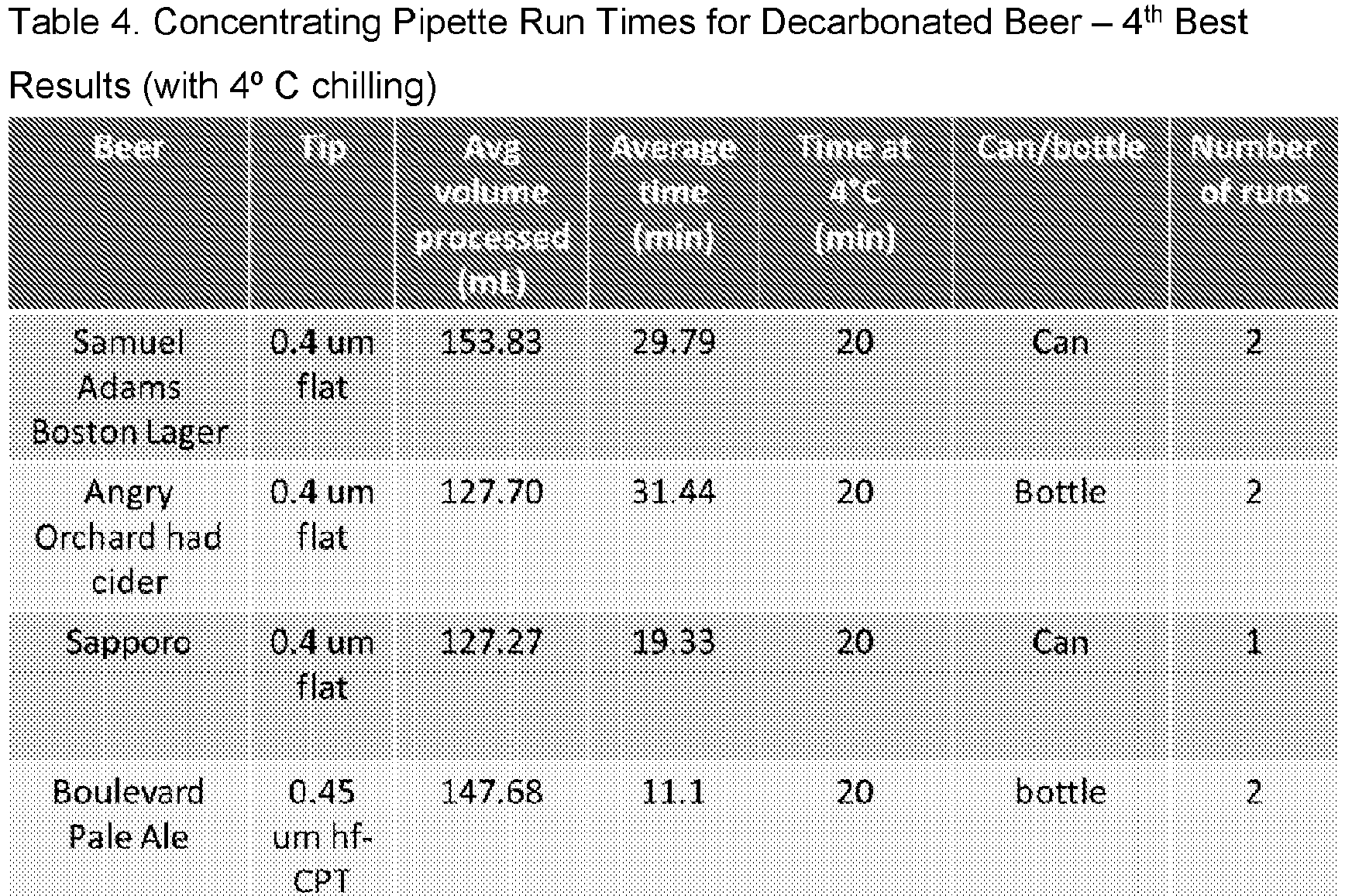


Table 9. Beer Degassing Using Commercially Available Styrofoam Cups Sample Beer Degassing Vessel Chill time (min) Processing Time (m:s) Processed Sample (g) 1st Elution (uL) 1 Miller 32 Oz. Styrofoam Cup 40 7:03 277 380 High Life (Dart 32AJ20) 2 Coors 32 Oz. Styrofoam Cup 50 6:24 266 260 Banquet (Dart 32AJ20) 3 Miller 12 Oz. Styrofoam 60 3:38 118 350 High Life (Sweetheart X12 67240)
Claims (10)
- A system for degassing a fluid sample, the system comprising a container with a plurality of nucleation sites for exposing to the fluid sample, wherein a total area of the nucleation sites is at least 5% of a total surface area of contact of the fluid sample with the container, and a lid positioned on the container and having open holes or holes covered with a membrane filter material to allow gas to escape during degassing.
- The system of claim 1, wherein the container is made from one of glass, Styrofoam, ceramic, metal, plastic, thermoplastic, polytetrafluoroethylene or other material routinely used for producing bottles or sample tubes for laboratory use.
- The system of claim 1, wherein the nucleation sites are on a device or plurality of devices which are placed in the container.
- A method for degassing a fluid, the method comprising:pouring a fluid sample into a container with a plurality of nucleation sites, wherein a total area of the nucleation sites is at least 5% of a total surface area of contact of the fluid sample with the container;positioning a lid on the container, the lid having open holes or holes covered with a membrane filter material to allow gas to escape during degassing; andincubating the fluid in the container to allow for degassing.
- The method of claim 4, wherein the fluid sample is poured into the container in such a manner to agitate the fluid sample and increase the rate of degassing.
- The method of claim 4, wherein the fluid sample is first heated to increase the rate of degassing.
- The method of claim 4, wherein the fluid is cooled during or after degassing to increase the solubility of the gas in the fluid.
- The method of claim 4, wherein the nucleation sites are produced during molding of the container, by using a mold containing a mirror image of the nucleation sites.
- The method of claim 4, wherein the nucleation sites are produced after molding of the container by sandblasting, laser etching, machining, acid etching or other chemical or mechanical means of creating nucleation sites on the surface.
- The method of claim 9, wherein the sandblasting is performed using aluminum oxide, silicon carbide, crushed glass, glass beads, plastic abrasive, pumice, steel shot, steel grit, corn cob, walnut shell or garnet with a grit ranging from 8 to 1 ,000.
Applications Claiming Priority (2)
| Application Number | Priority Date | Filing Date | Title |
|---|---|---|---|
| US201762488693P | 2017-04-21 | 2017-04-21 | |
| PCT/US2018/028965 WO2018195557A1 (en) | 2017-04-21 | 2018-04-23 | Devices, systems, and methods for removal of soluble gases from fluid samples |
Publications (3)
| Publication Number | Publication Date |
|---|---|
| EP3612036A1 EP3612036A1 (en) | 2020-02-26 |
| EP3612036A4 EP3612036A4 (en) | 2020-11-04 |
| EP3612036B1 true EP3612036B1 (en) | 2021-12-01 |
Family
ID=63852614
Family Applications (1)
| Application Number | Title | Priority Date | Filing Date |
|---|---|---|---|
| EP18786988.8A Active EP3612036B1 (en) | 2017-04-21 | 2018-04-23 | System and method for removal of soluble gases from fluid samples |
Country Status (4)
| Country | Link |
|---|---|
| US (2) | US10953350B2 (en) |
| EP (1) | EP3612036B1 (en) |
| CA (1) | CA3060299A1 (en) |
| WO (1) | WO2018195557A1 (en) |
Families Citing this family (6)
| Publication number | Priority date | Publication date | Assignee | Title |
|---|---|---|---|---|
| USD939896S1 (en) * | 2020-05-28 | 2022-01-04 | Scott Brownsberger | Drinking cup |
| JP2022069875A (en) * | 2020-10-26 | 2022-05-12 | 株式会社写真化学 | Container for stirring / defoaming treatment and its manufacturing method, as well as stirring / defoaming treatment device and its operation method |
| USD991740S1 (en) * | 2021-05-13 | 2023-07-11 | Hong Zou | Cup pore |
| USD996900S1 (en) * | 2021-05-14 | 2023-08-29 | Hydrapak Llc | Beverage container |
| USD1121440S1 (en) | 2024-06-05 | 2026-04-07 | Hydrapak Llc | Beverage container cap |
| USD1125919S1 (en) | 2024-06-05 | 2026-05-12 | Hydrapak Llc | Beverage container |
Family Cites Families (12)
| Publication number | Priority date | Publication date | Assignee | Title |
|---|---|---|---|---|
| US3377778A (en) * | 1966-02-02 | 1968-04-16 | Gen Electric | Method and apparatus for degassing liquids |
| US3793805A (en) * | 1971-12-13 | 1974-02-26 | Eastman Kodak Co | Method and apparatus for removing air from a liquid |
| GB1580191A (en) * | 1976-03-12 | 1980-11-26 | Brewing Patents Ltd | Degassing liquids |
| US4322008A (en) * | 1978-12-08 | 1982-03-30 | Ira Schneider | Drinking container |
| SE7812850L (en) * | 1978-12-14 | 1980-06-15 | Servochem | KIT AND DEVICE FOR ANGASING AND ANALYSIS OF FOAMING LIQUIDS |
| GB2258802B (en) * | 1991-08-17 | 1995-05-03 | Bass Plc | Glass and method of inducing evolution of bubbles |
| GB2287505B (en) * | 1991-08-28 | 1996-02-07 | Bass Plc | Clip |
| US5988426A (en) * | 1996-11-08 | 1999-11-23 | Stern; Brett | Leakproof vented beverage lid |
| RU2011114375A (en) * | 2008-10-23 | 2012-11-27 | Дзе Кока-Кола Компани | BOTTLE WITH CONTROLLED BUBBLE DISTRIBUTION |
| US20150118348A1 (en) * | 2013-10-28 | 2015-04-30 | Bryce Bunkers | Carbonated beverage nucleation accessory |
| MX2016013681A (en) * | 2014-04-18 | 2017-07-26 | a trulaske James | Enhanced nucleating beverage container, system, and method. |
| US20180299020A1 (en) * | 2017-04-18 | 2018-10-18 | Mark Shaw | Temperature Responsive Pressure Relief Filter Vent Device for Storage Drums |
-
2018
- 2018-04-23 US US15/960,483 patent/US10953350B2/en active Active - Reinstated
- 2018-04-23 WO PCT/US2018/028965 patent/WO2018195557A1/en not_active Ceased
- 2018-04-23 CA CA3060299A patent/CA3060299A1/en active Pending
- 2018-04-23 EP EP18786988.8A patent/EP3612036B1/en active Active
-
2021
- 2021-03-23 US US17/209,420 patent/US11839837B2/en active Active
Also Published As
| Publication number | Publication date |
|---|---|
| US20210316231A1 (en) | 2021-10-14 |
| EP3612036A4 (en) | 2020-11-04 |
| WO2018195557A1 (en) | 2018-10-25 |
| US20180304176A1 (en) | 2018-10-25 |
| US11839837B2 (en) | 2023-12-12 |
| US10953350B2 (en) | 2021-03-23 |
| CA3060299A1 (en) | 2018-10-25 |
| EP3612036A1 (en) | 2020-02-26 |
Similar Documents
| Publication | Publication Date | Title |
|---|---|---|
| US11839837B2 (en) | Devices, systems, and methods for removal of soluble gases from fluid samples | |
| US9321019B2 (en) | Wine bottle aerator | |
| JP5122912B2 (en) | Method for producing carbonated beverages | |
| DK2173849T3 (en) | COMBINED BREWING SYSTEM | |
| US4708938A (en) | Alcoholic fermentation | |
| US4308347A (en) | Device for detecting microorganisms | |
| CA1236040A (en) | Fermentation vessel | |
| US4009285A (en) | Method for producing champagne | |
| US20170311742A1 (en) | Drinking apparatus system and method | |
| US20160348046A1 (en) | Brewing apparatus and method of use | |
| JPS59125885A (en) | Concentration fo alcohol benerage | |
| RU2693945C2 (en) | Wine packed into aluminum containers | |
| JPH06506346A (en) | Method and apparatus for producing fermented beverages | |
| AU2016268491B2 (en) | Oxygen-scavenging polymer compositions | |
| EP0133346A2 (en) | Method and apparatus for secondary fermentation and vessel containing beverage | |
| US20050039605A1 (en) | Method and device for producing sparking alcohol-containing beverages | |
| EP2166080A1 (en) | Stabilization of liquid food and beverages | |
| JP2021508497A (en) | Systems and methods for preserved, oxygenated flavored beverages, and compositions thereof. | |
| GB2118571A (en) | Apparatus for brewing beer or wine | |
| WO2013005102A1 (en) | Technical cap for method of production of fizzy and sparkling wine in bottle | |
| US2872321A (en) | Clarification of beverages | |
| AU2010201943B2 (en) | Home brew fermenter system and apparatus | |
| CN1092622A (en) | Carbonate food and improving one's methods | |
| CA1051804A (en) | Fermentation apparatus | |
| JP2013252059A (en) | Bottled sparkling drink |
Legal Events
| Date | Code | Title | Description |
|---|---|---|---|
| STAA | Information on the status of an ep patent application or granted ep patent |
Free format text: STATUS: THE INTERNATIONAL PUBLICATION HAS BEEN MADE |
|
| PUAI | Public reference made under article 153(3) epc to a published international application that has entered the european phase |
Free format text: ORIGINAL CODE: 0009012 |
|
| STAA | Information on the status of an ep patent application or granted ep patent |
Free format text: STATUS: REQUEST FOR EXAMINATION WAS MADE |
|
| 17P | Request for examination filed |
Effective date: 20191115 |
|
| AK | Designated contracting states |
Kind code of ref document: A1 Designated state(s): AL AT BE BG CH CY CZ DE DK EE ES FI FR GB GR HR HU IE IS IT LI LT LU LV MC MK MT NL NO PL PT RO RS SE SI SK SM TR |
|
| AX | Request for extension of the european patent |
Extension state: BA ME |
|
| DAV | Request for validation of the european patent (deleted) | ||
| DAX | Request for extension of the european patent (deleted) | ||
| A4 | Supplementary search report drawn up and despatched |
Effective date: 20201002 |
|
| RIC1 | Information provided on ipc code assigned before grant |
Ipc: A23L 2/76 20060101AFI20200928BHEP Ipc: B01D 19/00 20060101ALI20200928BHEP Ipc: B65D 85/73 20060101ALI20200928BHEP |
|
| GRAP | Despatch of communication of intention to grant a patent |
Free format text: ORIGINAL CODE: EPIDOSNIGR1 |
|
| STAA | Information on the status of an ep patent application or granted ep patent |
Free format text: STATUS: GRANT OF PATENT IS INTENDED |
|
| INTG | Intention to grant announced |
Effective date: 20210616 |
|
| GRAS | Grant fee paid |
Free format text: ORIGINAL CODE: EPIDOSNIGR3 |
|
| GRAA | (expected) grant |
Free format text: ORIGINAL CODE: 0009210 |
|
| STAA | Information on the status of an ep patent application or granted ep patent |
Free format text: STATUS: THE PATENT HAS BEEN GRANTED |
|
| AK | Designated contracting states |
Kind code of ref document: B1 Designated state(s): AL AT BE BG CH CY CZ DE DK EE ES FI FR GB GR HR HU IE IS IT LI LT LU LV MC MK MT NL NO PL PT RO RS SE SI SK SM TR |
|
| REG | Reference to a national code |
Ref country code: GB Ref legal event code: FG4D |
|
| REG | Reference to a national code |
Ref country code: AT Ref legal event code: REF Ref document number: 1450914 Country of ref document: AT Kind code of ref document: T Effective date: 20211215 Ref country code: CH Ref legal event code: EP |
|
| REG | Reference to a national code |
Ref country code: IE Ref legal event code: FG4D |
|
| REG | Reference to a national code |
Ref country code: DE Ref legal event code: R096 Ref document number: 602018027588 Country of ref document: DE |
|
| REG | Reference to a national code |
Ref country code: LT Ref legal event code: MG9D |
|
| REG | Reference to a national code |
Ref country code: NL Ref legal event code: MP Effective date: 20211201 |
|
| REG | Reference to a national code |
Ref country code: AT Ref legal event code: MK05 Ref document number: 1450914 Country of ref document: AT Kind code of ref document: T Effective date: 20211201 |
|
| PG25 | Lapsed in a contracting state [announced via postgrant information from national office to epo] |
Ref country code: RS Free format text: LAPSE BECAUSE OF FAILURE TO SUBMIT A TRANSLATION OF THE DESCRIPTION OR TO PAY THE FEE WITHIN THE PRESCRIBED TIME-LIMIT Effective date: 20211201 Ref country code: LT Free format text: LAPSE BECAUSE OF FAILURE TO SUBMIT A TRANSLATION OF THE DESCRIPTION OR TO PAY THE FEE WITHIN THE PRESCRIBED TIME-LIMIT Effective date: 20211201 Ref country code: FI Free format text: LAPSE BECAUSE OF FAILURE TO SUBMIT A TRANSLATION OF THE DESCRIPTION OR TO PAY THE FEE WITHIN THE PRESCRIBED TIME-LIMIT Effective date: 20211201 Ref country code: BG Free format text: LAPSE BECAUSE OF FAILURE TO SUBMIT A TRANSLATION OF THE DESCRIPTION OR TO PAY THE FEE WITHIN THE PRESCRIBED TIME-LIMIT Effective date: 20220301 Ref country code: AT Free format text: LAPSE BECAUSE OF FAILURE TO SUBMIT A TRANSLATION OF THE DESCRIPTION OR TO PAY THE FEE WITHIN THE PRESCRIBED TIME-LIMIT Effective date: 20211201 |
|
| PG25 | Lapsed in a contracting state [announced via postgrant information from national office to epo] |
Ref country code: SE Free format text: LAPSE BECAUSE OF FAILURE TO SUBMIT A TRANSLATION OF THE DESCRIPTION OR TO PAY THE FEE WITHIN THE PRESCRIBED TIME-LIMIT Effective date: 20211201 Ref country code: PL Free format text: LAPSE BECAUSE OF FAILURE TO SUBMIT A TRANSLATION OF THE DESCRIPTION OR TO PAY THE FEE WITHIN THE PRESCRIBED TIME-LIMIT Effective date: 20211201 Ref country code: NO Free format text: LAPSE BECAUSE OF FAILURE TO SUBMIT A TRANSLATION OF THE DESCRIPTION OR TO PAY THE FEE WITHIN THE PRESCRIBED TIME-LIMIT Effective date: 20220301 Ref country code: LV Free format text: LAPSE BECAUSE OF FAILURE TO SUBMIT A TRANSLATION OF THE DESCRIPTION OR TO PAY THE FEE WITHIN THE PRESCRIBED TIME-LIMIT Effective date: 20211201 Ref country code: HR Free format text: LAPSE BECAUSE OF FAILURE TO SUBMIT A TRANSLATION OF THE DESCRIPTION OR TO PAY THE FEE WITHIN THE PRESCRIBED TIME-LIMIT Effective date: 20211201 Ref country code: GR Free format text: LAPSE BECAUSE OF FAILURE TO SUBMIT A TRANSLATION OF THE DESCRIPTION OR TO PAY THE FEE WITHIN THE PRESCRIBED TIME-LIMIT Effective date: 20220302 Ref country code: ES Free format text: LAPSE BECAUSE OF FAILURE TO SUBMIT A TRANSLATION OF THE DESCRIPTION OR TO PAY THE FEE WITHIN THE PRESCRIBED TIME-LIMIT Effective date: 20211201 |
|
| PG25 | Lapsed in a contracting state [announced via postgrant information from national office to epo] |
Ref country code: NL Free format text: LAPSE BECAUSE OF FAILURE TO SUBMIT A TRANSLATION OF THE DESCRIPTION OR TO PAY THE FEE WITHIN THE PRESCRIBED TIME-LIMIT Effective date: 20211201 |
|
| PG25 | Lapsed in a contracting state [announced via postgrant information from national office to epo] |
Ref country code: SM Free format text: LAPSE BECAUSE OF FAILURE TO SUBMIT A TRANSLATION OF THE DESCRIPTION OR TO PAY THE FEE WITHIN THE PRESCRIBED TIME-LIMIT Effective date: 20211201 Ref country code: SK Free format text: LAPSE BECAUSE OF FAILURE TO SUBMIT A TRANSLATION OF THE DESCRIPTION OR TO PAY THE FEE WITHIN THE PRESCRIBED TIME-LIMIT Effective date: 20211201 Ref country code: RO Free format text: LAPSE BECAUSE OF FAILURE TO SUBMIT A TRANSLATION OF THE DESCRIPTION OR TO PAY THE FEE WITHIN THE PRESCRIBED TIME-LIMIT Effective date: 20211201 Ref country code: PT Free format text: LAPSE BECAUSE OF FAILURE TO SUBMIT A TRANSLATION OF THE DESCRIPTION OR TO PAY THE FEE WITHIN THE PRESCRIBED TIME-LIMIT Effective date: 20220401 Ref country code: EE Free format text: LAPSE BECAUSE OF FAILURE TO SUBMIT A TRANSLATION OF THE DESCRIPTION OR TO PAY THE FEE WITHIN THE PRESCRIBED TIME-LIMIT Effective date: 20211201 Ref country code: CZ Free format text: LAPSE BECAUSE OF FAILURE TO SUBMIT A TRANSLATION OF THE DESCRIPTION OR TO PAY THE FEE WITHIN THE PRESCRIBED TIME-LIMIT Effective date: 20211201 |
|
| PGFP | Annual fee paid to national office [announced via postgrant information from national office to epo] |
Ref country code: IT Payment date: 20220427 Year of fee payment: 5 |
|
| REG | Reference to a national code |
Ref country code: DE Ref legal event code: R097 Ref document number: 602018027588 Country of ref document: DE |
|
| PG25 | Lapsed in a contracting state [announced via postgrant information from national office to epo] |
Ref country code: IS Free format text: LAPSE BECAUSE OF FAILURE TO SUBMIT A TRANSLATION OF THE DESCRIPTION OR TO PAY THE FEE WITHIN THE PRESCRIBED TIME-LIMIT Effective date: 20220401 |
|
| PLBE | No opposition filed within time limit |
Free format text: ORIGINAL CODE: 0009261 |
|
| STAA | Information on the status of an ep patent application or granted ep patent |
Free format text: STATUS: NO OPPOSITION FILED WITHIN TIME LIMIT |
|
| PG25 | Lapsed in a contracting state [announced via postgrant information from national office to epo] |
Ref country code: DK Free format text: LAPSE BECAUSE OF FAILURE TO SUBMIT A TRANSLATION OF THE DESCRIPTION OR TO PAY THE FEE WITHIN THE PRESCRIBED TIME-LIMIT Effective date: 20211201 Ref country code: AL Free format text: LAPSE BECAUSE OF FAILURE TO SUBMIT A TRANSLATION OF THE DESCRIPTION OR TO PAY THE FEE WITHIN THE PRESCRIBED TIME-LIMIT Effective date: 20211201 |
|
| 26N | No opposition filed |
Effective date: 20220902 |
|
| PG25 | Lapsed in a contracting state [announced via postgrant information from national office to epo] |
Ref country code: SI Free format text: LAPSE BECAUSE OF FAILURE TO SUBMIT A TRANSLATION OF THE DESCRIPTION OR TO PAY THE FEE WITHIN THE PRESCRIBED TIME-LIMIT Effective date: 20211201 |
|
| REG | Reference to a national code |
Ref country code: CH Ref legal event code: PL |
|
| REG | Reference to a national code |
Ref country code: BE Ref legal event code: MM Effective date: 20220430 |
|
| PG25 | Lapsed in a contracting state [announced via postgrant information from national office to epo] |
Ref country code: MC Free format text: LAPSE BECAUSE OF FAILURE TO SUBMIT A TRANSLATION OF THE DESCRIPTION OR TO PAY THE FEE WITHIN THE PRESCRIBED TIME-LIMIT Effective date: 20211201 Ref country code: LU Free format text: LAPSE BECAUSE OF NON-PAYMENT OF DUE FEES Effective date: 20220423 Ref country code: LI Free format text: LAPSE BECAUSE OF NON-PAYMENT OF DUE FEES Effective date: 20220430 Ref country code: CH Free format text: LAPSE BECAUSE OF NON-PAYMENT OF DUE FEES Effective date: 20220430 |
|
| PG25 | Lapsed in a contracting state [announced via postgrant information from national office to epo] |
Ref country code: BE Free format text: LAPSE BECAUSE OF NON-PAYMENT OF DUE FEES Effective date: 20220430 |
|
| PG25 | Lapsed in a contracting state [announced via postgrant information from national office to epo] |
Ref country code: IE Free format text: LAPSE BECAUSE OF NON-PAYMENT OF DUE FEES Effective date: 20220423 |
|
| PG25 | Lapsed in a contracting state [announced via postgrant information from national office to epo] |
Ref country code: IT Free format text: LAPSE BECAUSE OF NON-PAYMENT OF DUE FEES Effective date: 20220423 |
|
| PG25 | Lapsed in a contracting state [announced via postgrant information from national office to epo] |
Ref country code: MK Free format text: LAPSE BECAUSE OF FAILURE TO SUBMIT A TRANSLATION OF THE DESCRIPTION OR TO PAY THE FEE WITHIN THE PRESCRIBED TIME-LIMIT Effective date: 20211201 Ref country code: CY Free format text: LAPSE BECAUSE OF FAILURE TO SUBMIT A TRANSLATION OF THE DESCRIPTION OR TO PAY THE FEE WITHIN THE PRESCRIBED TIME-LIMIT Effective date: 20211201 |
|
| PG25 | Lapsed in a contracting state [announced via postgrant information from national office to epo] |
Ref country code: HU Free format text: LAPSE BECAUSE OF FAILURE TO SUBMIT A TRANSLATION OF THE DESCRIPTION OR TO PAY THE FEE WITHIN THE PRESCRIBED TIME-LIMIT; INVALID AB INITIO Effective date: 20180423 |
|
| PG25 | Lapsed in a contracting state [announced via postgrant information from national office to epo] |
Ref country code: MT Free format text: LAPSE BECAUSE OF FAILURE TO SUBMIT A TRANSLATION OF THE DESCRIPTION OR TO PAY THE FEE WITHIN THE PRESCRIBED TIME-LIMIT Effective date: 20211201 |
|
| PGFP | Annual fee paid to national office [announced via postgrant information from national office to epo] |
Ref country code: DE Payment date: 20250523 Year of fee payment: 8 |
|
| PG25 | Lapsed in a contracting state [announced via postgrant information from national office to epo] |
Ref country code: TR Free format text: LAPSE BECAUSE OF FAILURE TO SUBMIT A TRANSLATION OF THE DESCRIPTION OR TO PAY THE FEE WITHIN THE PRESCRIBED TIME-LIMIT Effective date: 20211201 |
|
| PGFP | Annual fee paid to national office [announced via postgrant information from national office to epo] |
Ref country code: GB Payment date: 20260330 Year of fee payment: 9 |
|
| PGFP | Annual fee paid to national office [announced via postgrant information from national office to epo] |
Ref country code: FR Payment date: 20260319 Year of fee payment: 9 |