EP3611981A1 - Apparatuses, methods, and computer programs for a mobile transceiver and for a network entity, mobile transceiver, network entity, mobile communication system - Google Patents
Apparatuses, methods, and computer programs for a mobile transceiver and for a network entity, mobile transceiver, network entity, mobile communication system Download PDFInfo
- Publication number
- EP3611981A1 EP3611981A1 EP18189546.7A EP18189546A EP3611981A1 EP 3611981 A1 EP3611981 A1 EP 3611981A1 EP 18189546 A EP18189546 A EP 18189546A EP 3611981 A1 EP3611981 A1 EP 3611981A1
- Authority
- EP
- European Patent Office
- Prior art keywords
- information
- mobile
- mobile transceiver
- field
- application
- Prior art date
- Legal status (The legal status is an assumption and is not a legal conclusion. Google has not performed a legal analysis and makes no representation as to the accuracy of the status listed.)
- Granted
Links
Images

Classifications
-
- H—ELECTRICITY
- H04—ELECTRIC COMMUNICATION TECHNIQUE
- H04B—TRANSMISSION
- H04B1/00—Details of transmission systems, not covered by a single one of groups H04B3/00 - H04B13/00; Details of transmission systems not characterised by the medium used for transmission
- H04B1/38—Transceivers, i.e. devices in which transmitter and receiver form a structural unit and in which at least one part is used for functions of transmitting and receiving
- H04B1/3827—Portable transceivers
-
- H—ELECTRICITY
- H04—ELECTRIC COMMUNICATION TECHNIQUE
- H04W—WIRELESS COMMUNICATION NETWORKS
- H04W4/00—Services specially adapted for wireless communication networks; Facilities therefor
- H04W4/20—Services signaling; Auxiliary data signalling, i.e. transmitting data via a non-traffic channel
-
- A—HUMAN NECESSITIES
- A61—MEDICAL OR VETERINARY SCIENCE; HYGIENE
- A61B—DIAGNOSIS; SURGERY; IDENTIFICATION
- A61B5/00—Measuring for diagnostic purposes; Identification of persons
- A61B5/0002—Remote monitoring of patients using telemetry, e.g. transmission of vital signals via a communication network
-
- H—ELECTRICITY
- H04—ELECTRIC COMMUNICATION TECHNIQUE
- H04B—TRANSMISSION
- H04B1/00—Details of transmission systems, not covered by a single one of groups H04B3/00 - H04B13/00; Details of transmission systems not characterised by the medium used for transmission
- H04B1/38—Transceivers, i.e. devices in which transmitter and receiver form a structural unit and in which at least one part is used for functions of transmitting and receiving
- H04B1/40—Circuits
- H04B1/403—Circuits using the same oscillator for generating both the transmitter frequency and the receiver local oscillator frequency
- H04B1/405—Circuits using the same oscillator for generating both the transmitter frequency and the receiver local oscillator frequency with multiple discrete channels
-
- H—ELECTRICITY
- H04—ELECTRIC COMMUNICATION TECHNIQUE
- H04W—WIRELESS COMMUNICATION NETWORKS
- H04W4/00—Services specially adapted for wireless communication networks; Facilities therefor
- H04W4/30—Services specially adapted for particular environments, situations or purposes
- H04W4/40—Services specially adapted for particular environments, situations or purposes for vehicles, e.g. vehicle-to-pedestrians [V2P]
-
- H—ELECTRICITY
- H04—ELECTRIC COMMUNICATION TECHNIQUE
- H04W—WIRELESS COMMUNICATION NETWORKS
- H04W60/00—Affiliation to network, e.g. registration; Terminating affiliation with the network, e.g. de-registration
-
- H—ELECTRICITY
- H04—ELECTRIC COMMUNICATION TECHNIQUE
- H04W—WIRELESS COMMUNICATION NETWORKS
- H04W72/00—Local resource management
- H04W72/50—Allocation or scheduling criteria for wireless resources
- H04W72/51—Allocation or scheduling criteria for wireless resources based on terminal or device properties
-
- H—ELECTRICITY
- H04—ELECTRIC COMMUNICATION TECHNIQUE
- H04W—WIRELESS COMMUNICATION NETWORKS
- H04W8/00—Network data management
- H04W8/22—Processing or transfer of terminal data, e.g. status or physical capabilities
- H04W8/24—Transfer of terminal data
-
- A—HUMAN NECESSITIES
- A61—MEDICAL OR VETERINARY SCIENCE; HYGIENE
- A61B—DIAGNOSIS; SURGERY; IDENTIFICATION
- A61B17/00—Surgical instruments, devices or methods
- A61B2017/00017—Electrical control of surgical instruments
- A61B2017/00212—Electrical control of surgical instruments using remote controls
-
- H—ELECTRICITY
- H04—ELECTRIC COMMUNICATION TECHNIQUE
- H04W—WIRELESS COMMUNICATION NETWORKS
- H04W4/00—Services specially adapted for wireless communication networks; Facilities therefor
- H04W4/70—Services for machine-to-machine communication [M2M] or machine type communication [MTC]
Definitions
- the present invention relates to apparatuses, methods, and computer programs for a mobile transceiver and for a network entity, a mobile transceiver, a network entity and a mobile communication system, more particularly, but not exclusively, to a concept for communicating information on a field of application of a mobile transceiver to a network entity, which may base radio resource control on said information.
- Document CN105450609 A describes an encapsulation for Common Public Radio Interface (CPRI) frames, which may use signaling of control information in a CPRI header.
- the control signaling may comprise an antenna number field.
- Document US 8,400,991 B2 considers support of multiple wireless communication protocols in a Wireless Local Area Network (WLAN). The document suggests using a signaling field including a number of antennas, which may be used for signal processing.
- Document WO 2006/031495 A2 describes a smart antenna implementation, in which a number antenna beams may be signaled in an according control field.
- Document WO 2018/027996 A1 describes a concept for control information signaling.
- 3GPP TS Technical Specification
- 38.306 e.g. V15.2.0 (1018-06)
- RRC Radio Resource Control
- Embodiments are based on the finding that form factors and properties of mobile transceivers or UEs may change. For example, utilization and mounting of communication modules in vehicles may enable new services, as well as using 5G technologies in manufacturing and health monitoring applications (e.g. remote health monitoring, remote surgery). It is a finding that information on an application field of a mobile transceiver may be useful for the network to consider the field of application, for example, for adaptation of data/signal processing and radio resource management. Embodiments are based on the finding that signaling of a field of application for a mobile transceiver may be beneficially exploited on the network side of a mobile communication system. Embodiments hence enable an efficient concept for signaling of application field information of a UE.
- 3GPP currently has no mechanism to identify a UE with special purpose or special condition arousing from the actual hardware implementation. As an example, it cannot be identified whether a permanently mounted UE and therefore also no permanently mounted UE in vehicles exist. 3GPP treats this kind of UE like any other UE.
- a permanently mounted UE can have different capabilities due to its mounting or any other specialty due to the environment the UE is operated/located in. In vehicles one specialty could be a two-receive antenna operation compared to a four- receive antenna operation of e.g. handheld UE.
- Embodiments provide a method for a mobile transceiver, which is configured to communicate in a mobile communication system.
- the method comprises providing information on a field of application of the mobile transceiver to the mobile communication system. Based on the information on the field of application, the communication system may enable more efficient processing and resource management.
- the information on the field of application may comprise information on whether the mobile transceiver is permanently mounted into a vehicle. Based on the knowledge that a certain UE is permanently mounted in a vehicle processing algorithms can be adapted. For example, antennas mounted on the body of a vehicle usually have different characteristics than antennas of a stand-alone smartphone.
- the information on the field of application may comprise information on whether the mobile transceiver is used for data communication in manufacturing or production.
- embodiments may apply enhanced resource scheduling, e.g. prioritizing or deprioritizing UEs in manufacturing or production. For example, some applications in manufacturing or production may have certain latency requirements, which can be considered by a resource scheduler once it is known that the field of application is manufacturing or production.
- the information on the field of application may comprise information on whether the mobile transceiver is used for data communication in a health application.
- Embodiments may enable an adaptation on network algorithms to health applications.
- the health application may comprise remote health monitoring or remote surgery.
- Quality of Service (QoS) parameters or requirements may be related to the field of application. For example, certain requirements with respect to latency and error rate may be applied for UEs in health applications.
- the information on the field of application may comprise information on an implementation of the mobile transceiver. Such implementation details may be considered in the network to improve processing or overall system efficiency.
- the information on the implementation may comprise information on a number of transmit and/or receive antennas used by the mobile transceiver.
- Information on the number of antennas may indicate whether the mobile transceiver supports any spatial processing schemes, receive diversity, transmit diversity, spatial multiplexing, beamforming, etc., which can then be considered when setting transmission/reception parameters by the network.
- Information on a number of transmit and/or receive antennas used by the mobile transceiver per transmission or reception band may be comprised in the information on the implementation in further embodiments. Making such information available to the network on a per band basis may further enhance radio resource and system capacity management.
- the providing of the information on the field of application may be carried out during a registering process of the mobile transceiver in the mobile communication system.
- Such embodiments may hence be able to take advantage of the field of application information from registration onwards at an early stage of data communication.
- Another embodiment is a method for a network entity of a mobile communication system, the method comprises receiving information on a field of application from a mobile transceiver, and scheduling radio resources for data communication with the mobile transceiver based on the information on the field of application.
- Embodiments may allow more efficient radio resource scheduling.
- the method may further comprise receiving the information on the field of application during a registration process of the mobile transceiver at the network entity.
- the network entity may then take advantage of the field of application of the mobile transceiver from the registration on.
- receiving of the information on the field of application may use radio resource control signaling.
- Embodiments may enable signaling of application field information as part of a control plane embedded in a layer 3 signaling protocol.
- Embodiments also provide an apparatus for a mobile transceiver configured to communicate in a mobile communication system.
- Another embodiment is a mobile transceiver or a vehicle comprising an embodiment of the apparatus.
- the apparatus comprises one or more interfaces configured to communicate in the mobile communication system, and a control module configured to perform one of the methods as described herein.
- Another embodiment is an apparatus for a network entity configured to communicate in a mobile communication system.
- a network entity comprising the apparatus is yet another embodiment.
- the apparatus comprises one or more interfaces configured to communicate in the mobile communication system, and a control module configured to perform one of the methods described herein.
- a system comprising a mobile transceiver and a network entity is another embodiment, the apparatuses respectively.
- a system method comprising method steps for a mobile transceiver and a network entity is yet another embodiment.
- Yet another embodiment is a computer program having a program code for performing at least one of the methods described herein, when the computer program is executed on a computer, a processor, or a programmable hardware component.
- a further embodiment is a computer readable storage medium or machine readable storage medium storing instructions which, when executed by a computer, processor, or programmable hardware component, cause the computer to implement one of the methods described herein.
- the term, "or” refers to a non-exclusive or, unless otherwise indicated (e.g., “or else” or “or in the alternative”).
- words used to describe a relationship between elements should be broadly construed to include a direct relationship or the presence of intervening elements unless otherwise indicated. For example, when an element is referred to as being “connected” or “coupled” to another element, the element may be directly connected or coupled to the other element or intervening elements may be present. In contrast, when an element is referred to as being “directly connected” or “directly coupled” to another element, there are no intervening elements present. Similarly, words such as “between”, “adjacent”, and the like should be interpreted in a like fashion.
- Embodiments are based on the finding that information on a field of application of a mobile transceiver, e.g. information on mounting specifics and application related requirements, can be beneficially exploited in a mobile communication system. Embodiments therefore provide an efficient mechanism for signaling such information.
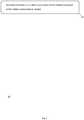
- Fig. 1 illustrates a block diagram of an embodiment of a method 10 for a mobile transceiver.
- the mobile transceiver is configured to communicate in a mobile communication system.
- the method 10 comprises providing 12 information on a field of application of the mobile transceiver to the mobile communication system.
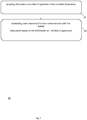
- Fig. 2 illustrates a block diagram of an embodiment of a method 20 for a network entity of a mobile communication system.
- the method 20 comprises receiving 22 information on a field of application from a mobile transceiver.
- the method 20 further comprises scheduling 24 radio resources for data communication with the mobile transceiver based on the information on the field of application.
- Fig. 3 shows embodiments of an apparatus 30 for a mobile transceiver 100, a mobile transceiver 100, an apparatus 40 for a network entity 200, a network entity 200 and a mobile communication system 400.
- the apparatus 30 for the mobile transceiver 100 is configured to communicate in a mobile communication system 400.
- the apparatus 30 comprises one or more interfaces 32, which are configured to communicate in the mobile communication system 400.
- the apparatus further comprises a control module 34, which is coupled to the one or more interfaces 32.
- the control module 34 is configured to control the one or more interfaces 32 and to perform one of the methods 10 as described herein.
- Fig. 3 also shows an embodiment of a mobile transceiver 100 comprising the apparatus 30.
- the apparatus 40 for the network entity 200 in Fig. 3 is configured to communicate in the mobile communication system 400.
- the apparatus 40 comprises one or more interfaces 42, which are configured to communicate in the mobile communication system 400.
- the apparatus 40 further comprises a control module 34, which is coupled to the one or more interfaces 42.
- the control module 44 is configured to control the one or more interfaces 42 and to perform one of the methods 20 as described herein.
- the embodiment of the network entity 200 comprises the apparatus 40.
- the one or more interfaces 32, 42 may correspond to any means for obtaining, receiving, transmitting or providing analog or digital signals or information, e.g. any connector, contact, pin, register, input port, output port, conductor, lane, etc. which allows providing or obtaining a signal or information.
- An interface 32, 42 may be wireless or wireline and it may be configured to communicate, i.e. transmit or receive signals, information with further internal or external components.
- the one or more interfaces 32, 42 may comprise further components to enable according communication in the mobile communication system 400, such components may include transceiver (transmitter and/or receiver) components, such as one or more Low-Noise Amplifiers (LNAs), one or more Power-Amplifiers (PAs), one or more duplexers, one or more diplexers, one or more filters or filter circuitry, one or more converters, one or more mixers, accordingly adapted radio frequency components, etc.
- the one or more interfaces 32, 42 may be coupled to one or more antennas, which may correspond to any transmit and/or receive antennas, such as horn antennas, dipole antennas, patch antennas, sector antennas etc.
- the antennas may be arranged in a defined geometrical setting, such as a uniform array, a linear array, a circular array, a triangular array, a uniform field antenna, a field array, combinations thereof, etc.
- the one or more interfaces 32, 42 may serve the purpose of transmitting or receiving or both, transmitting and receiving, information, such as information related to perceptual data, sensor data, measurement data, capabilities, application requirements, trigger indications, requests, message interface configurations, feedback, information related to control commands etc.
- control modules 34, 44 may be implemented using one or more processing units, one or more processing devices, any means for processing, such as a processor, a computer or a programmable hardware component being operable with accordingly adapted software.
- the described functions of the control modules 34, 44 may as well be implemented in software, which is then executed on one or more programmable hardware components.
- Such hardware components may comprise a general purpose processor, a Digital Signal Processor (DSP), a microcontroller, etc.
- Fig. 3 also shows an embodiment of a system 400 comprising embodiments of the mobile transceiver 100, which may be a vehicle, a mobile or a relay transceiver.
- communication i.e. transmission, reception or both, may take place among mobile transceivers/vehicles 100 directly and/or between mobile transceivers/vehicles 100 and the network component/entity 200, e.g. infrastructure, application server, base station, network server, backend server, etc.
- Such communication may make use of a mobile communication system 400.
- Such communication may be carried out directly, e.g.
- D2D Device-to-Device
- V2V Vehicle-to-Vehicle
- car-to-car communication in case of vehicles 100.
- D2D Device-to-Device
- V2V Vehicle-to-Vehicle
- Such communication may be carried out using the specifications of a mobile communication system 400.
- the mobile communication system 400 may, for example, correspond to one of the Third Generation Partnership Project (3GPP)-standardized mobile communication networks, where the term mobile communication system is used synonymously to mobile communication network.
- the mobile or wireless communication system 400 may correspond to a mobile communication system of the 5th Generation (5G) and may use mm-Wave technology.
- the mobile communication system may correspond to or comprise, for example, a Long-Term Evolution (LTE), an LTE-Advanced (LTE-A), High Speed Packet Access (HSPA), a Universal Mobile Telecommunication System (UMTS) or a UMTS Terrestrial Radio Access Network (UTRAN), an evolved-UTRAN (e-UTRAN), a Global System for Mobile communication (GSM) or Enhanced Data rates for GSM Evolution (EDGE) network, a GSM/EDGE Radio Access Network (GERAN), or mobile communication networks with different standards, for example, a Worldwide Inter-operability for Microwave Access (WIMAX) network IEEE 802.16 or Wireless Local Area Network (WLAN) IEEE 802.11, generally an Orthogonal Frequency Division Multiple Access (OFDMA) network, a Time Division Multiple Access (TDMA) network, a Code Division Multiple Access (CDMA) network, a Wideband-CDMA (WCDMA) network, a Frequency Division Multiple Access (FDMA) network, a Spatial Division Multiple Access (SDMA) network, etc
- a network entity 200 or base station transceiver can be operable or configured to communicate with one or more active mobile transceivers/vehicles 100 and a base station transceiver can be located in or adjacent to a coverage area of another base station transceiver, e.g. a macro cell base station transceiver or small cell base station transceiver.
- a mobile communication system 400 comprising two or more mobile transceivers/vehicles 100 and one or more base station transceivers, wherein the base station transceivers may establish macro cells or small cells, as e.g. pico-, metro-, or femto cells.
- a mobile transceiver 100 may correspond to a smartphone, a cell phone, user equipment, a laptop, a notebook, a personal computer, a Personal Digital Assistant (PDA), a Universal Serial Bus (USB) -stick, a car, a vehicle etc.
- PDA Personal Digital Assistant
- USB Universal Serial Bus
- a mobile transceiver may also be referred to as User Equipment (UE) or mobile in line with the 3GPP terminology.
- UE User Equipment
- a vehicle may correspond to any conceivable means for transportation, e.g. a car, a bike, a motorbike, a van, a truck, a bus, a ship, a boat, a plane, a train, a tram, etc.
- a base station transceiver can be located in the fixed or stationary part of the network or system.
- a base station transceiver may correspond to a remote radio head, a transmission point, an access point, a macro cell, a small cell, a micro cell, a femto cell, a metro cell etc.
- a base station transceiver can be a wireless interface of a wired network, which enables transmission of radio signals to a UE or mobile transceiver.
- Such a radio signal may comply with radio signals as, for example, standardized by 3GPP or, generally, in line with one or more of the above listed systems.
- a base station transceiver may correspond to a NodeB, an eNodeB, a Base Transceiver Station (BTS), an access point, a remote radio head, a relay station, a transmission point etc., which may be further subdivided in a remote unit and a central unit.
- BTS Base Transceiver Station
- a mobile transceiver 100 can be associated with a base station transceiver or cell.
- the term cell refers to a coverage area of radio services provided by a base station transceiver, e.g. a NodeB (NB), an eNodeB (eNB), a remote radio head, a transmission point, etc.
- NB NodeB
- eNB eNodeB
- a base station transceiver may operate one or more cells on one or more frequency layers, in some embodiments a cell may correspond to a sector. For example, sectors can be achieved using sector antennas, which provide a characteristic for covering an angular section around a remote unit or base station transceiver.
- a base station transceiver may, for example, operate three or six cells covering sectors of 120° (in case of three cells), 60° (in case of six cells) respectively.
- a base station transceiver may operate multiple sectorized antennas.
- a cell may represent an according base station transceiver generating the cell or, likewise, a base station transceiver may represent a cell the base station transceiver generates.
- Mobile transceivers 100 may communicate directly with each other, i.e. without involving any base station transceiver, which is also referred to as Device-to-Device (D2D) communication.
- D2D Device-to-Device
- An example of D2D is direct communication between vehicles, also referred to as Vehicle-to-Vehicle communication (V2V), car-to-car using 802.11p, respectively.
- the one or more interfaces 32,42 can be configured to use this kind of communication.
- radio resources are used, e.g. frequency, time, code, and/or spatial resources, which may as well be used for wireless communication with a base station transceiver.
- the assignment of the radio resources may be controlled by a base station transceiver, i.e.
- radio resources of the respective components may correspond to any radio resources conceivable on radio carriers and they may use the same or different granularities on the respective carriers.
- the radio resources may correspond to a Resource Block (RB as in LTE/LTE-A/LTE-unlicensed (LTE-U)), one or more carriers, sub-carriers, one or more radio frames, radio sub-frames, radio slots, one or more code sequences potentially with a respective spreading factor, one or more spatial resources, such as spatial sub-channels, spatial precoding vectors, any combination thereof, etc.
- C-V2X direct Cellular Vehicle-to-Anything
- V2X includes at least V2V, V2-Infrastructure (V2I), etc.
- transmission according to 3GPP Release 14 can be managed by infrastructure (so-called mode 3) or run in a User Equipment (UE) Autonomous mode (UEA), (so-called mode 4).
- UE User Equipment
- UPA User Equipment
- a mobile transceiver 100 as indicated by Fig. 3 may be registered in the same mobile communication system 400.
- one or more of the mobile transceivers 100 may be registered in different mobile communication systems 400.
- the different mobile communication systems 400 may use the same access technology but different operators or they may use different access technologies as outlined above.
- the methods and implementation may be based on the IMT-2020 (5G) standards/requirements.
- embodiments may enhance TS 38.306 with UE specific application field information, which will be detailed in the sequel.
- the information on the field of application comprises information on whether the mobile transceiver 100 is permanently mounted into a vehicle. This information can be useful in the network as permanent mounting in a vehicle has certain implications. For example, power supply of a vehicle is a lot more robust and of higher endurance as for a typical smart phone. Antenna characteristics and gains of permanently mounted vehicular antennas are different. E.g. the spacing between antennas on a vehicle may typically be a lot wider than on a smartphone.
- Vehicular antennas may be larger and may therefore provide different gains than antennas mounted in a cell phone. Therefore spatial signal processing concepts, e.g. diversity concepts, spatial multiplexing, beamforming, may be more efficient if the UE is permanently mounted on a vehicle.
- spatial signal processing concepts e.g. diversity concepts, spatial multiplexing, beamforming
- transmission parameters may be based on the field of application as part of the radio resource scheduling including assignment of transmission parameters by the network entity 200.
- uplink transmission (from the mobile transceiver 100 to the network entity 200) may be adapted to the field of application.
- a vehicular mobile transceiver or a mobile transceiver applied in the field of production or manufacturing may be assigned a higher transmission power or a modulation/coding scheme, which may use up more energy than a regular assignment, e.g. OFDMA instead of SCFDMA. This may increase reception quality at the network entity 200, e.g. in terms of a reduced error rate.
- the field of application may indicate to the network entity 200 that the mobile transceiver 100 may have access to a higher capacity energy source than a regular handheld and hence power consumption at the mobile transceiver 100 might not be a main optimization parameter for scheduling radio resources including assignment of transmission parameters by the network entity 200.
- the section "Optional features without UE radio access capability parameters" may be enhanced by a signaling field relating to the UE application field, e.g. "permanenty_vehicle_mountedUE” indicating that the UE is permanently mounted into a vehicle.
- a signaling field relating to the UE application field e.g. "permanenty_vehicle_mountedUE” indicating that the UE is permanently mounted into a vehicle.
- antennas mounted in or on vehicles may provide different properties than antennas of smartphones.
- such antenna properties may be specified.
- the information on the field of application may comprise information on whether the mobile transceiver 100 is used for data communication in manufacturing or production. This may be particularly useful in private networks and/or networks not utilizing 3GPP authentication mechanisms.
- another signaling field like e.g. "ProductionClassUE” may be introduced. This field may identify UEs, which are used in manufacturing or in a manufacturing/production environment. Operators, their network entities 200, respectively, may then treat these UEs differently when scheduling radio resources. In some embodiments it is conceivable to prioritize these UEs (e.g. when short latency requirements apply), in other embodiments it is conceivable to de-prioritize these UEs (when a high delay tolerance applies). Moreover, consideration of further device properties is conceivable. For example, such UEs may only be served in certain or predefined geographical regions in order to preclude utilization outside private networks.
- the information on the field of application may comprise information on whether the mobile transceiver 100 is used for data communication in a health or medical application.
- a health or medical application may comprise remote health monitoring or remote surgery.
- certain QoS requirements may be related to such an application which may be taken into account by the network.
- the information on the field of application may comprise information on an implementation of the mobile transceiver 100.
- the information on the implementation may comprise information on special or specific properties of an implementation, e.g. in a vehicle, a certain kind or type of vehicle (e.g. car, van, truck, train, plane, etc.).
- the information on the implementation may comprise information on a number of transmit and/or receive antennas used by the mobile transceiver 100, which can be per transmission or reception band.
- another information field like e.g. "maxNumberRxAntenna” may be introduced, e.g. also per frequency band or access technology, to signal such a property.
- the above described methods may comprise providing 12 the information on the field of application during a registering process of the mobile transceiver 100 in the mobile communication system 400.
- the application field of a UE may then be (automatically) made known to the network at an early stage, and may hence be considered by the network in the further handling of such a UE 100.
- the method 20 of the network side may hence comprise receiving 22 the information on the field of application during a registration process of the mobile transceiver 100 at the network entity 200.
- radio resource control signaling may be used to signal the application field information.
- the methods 10, 20 may then comprise providing 12 / receiving 22 the information on the field of application using radio resource control signaling.
- the respective methods may be implemented as computer programs or codes, which can be executed on a respective hardware.
- another embodiment is a computer program having a program code for performing at least one of the above methods, when the computer program is executed on a computer, a processor, or a programmable hardware component.
- a further embodiment is a (non-transitory) computer readable storage medium storing instructions which, when executed by a computer, processor, or programmable hardware component, cause the computer to implement one of the methods described herein.
- program storage devices e.g., digital data storage media, which are machine or computer readable and encode machine-executable or computer-executable programs of instructions where said instructions perform some or all of the steps of methods described herein.
- the program storage devices may be, e.g., digital memories, magnetic storage media such as magnetic disks and magnetic tapes, hard drives, or optically readable digital data storage media.
- the embodiments are also intended to cover computers programmed to perform said steps of methods described herein or (field) programmable logic arrays ((F)PLAs) or (field) programmable gate arrays ((F)PGAs), programmed to perform said steps of the above-described methods.
- processor When provided by a processor, the functions may be provided by a single dedicated processor, by a single shared processor, or by a plurality of individual processors, some of which may be shared.
- explicit use of the term "processor” or “controller” should not be construed to refer exclusively to hardware capable of executing software, and may implicitly include, without limitation, Digital Signal Processor (DSP) hardware, network processor, application specific integrated circuit (ASIC), field programmable gate array (FPGA), read only memory (ROM) for storing software, random access memory (RAM), and non-volatile storage. Other hardware, conventional or custom, may also be included. Their function may be carried out through the operation of program logic, through dedicated logic, through the interaction of program control and dedicated logic, or even manually, the particular technique being selectable by the implementer as more specifically understood from the context.
- DSP Digital Signal Processor
- ASIC application specific integrated circuit
- FPGA field programmable gate array
- ROM read only memory
- RAM random access memory
- non-volatile storage Other hardware
- any block diagrams herein represent conceptual views of illustrative circuitry embodying the principles of the invention.
- any flow charts, flow diagrams, state transition diagrams, pseudo code, and the like represent various processes which may be substantially represented in computer readable medium and so executed by a computer or processor, whether or not such computer or processor is explicitly shown.
- each claim may stand on its own as a separate embodiment. While each claim may stand on its own as a separate embodiment, it is to be noted that - although a dependent claim may refer in the claims to a specific combination with one or more other claims - other embodiments may also include a combination of the dependent claim with the subject matter of each other dependent claim. Such combinations are proposed herein unless it is stated that a specific combination is not intended. Furthermore, it is intended to include also features of a claim to any other independent claim even if this claim is not directly made dependent to the independent claim.
Landscapes
- Engineering & Computer Science (AREA)
- Computer Networks & Wireless Communication (AREA)
- Signal Processing (AREA)
- Health & Medical Sciences (AREA)
- Life Sciences & Earth Sciences (AREA)
- Databases & Information Systems (AREA)
- Biomedical Technology (AREA)
- Pathology (AREA)
- Biophysics (AREA)
- Heart & Thoracic Surgery (AREA)
- Medical Informatics (AREA)
- Molecular Biology (AREA)
- Surgery (AREA)
- Animal Behavior & Ethology (AREA)
- General Health & Medical Sciences (AREA)
- Public Health (AREA)
- Veterinary Medicine (AREA)
- Physics & Mathematics (AREA)
- Mobile Radio Communication Systems (AREA)
Abstract
Description
- The present invention relates to apparatuses, methods, and computer programs for a mobile transceiver and for a network entity, a mobile transceiver, a network entity and a mobile communication system, more particularly, but not exclusively, to a concept for communicating information on a field of application of a mobile transceiver to a network entity, which may base radio resource control on said information.
- Nowadays, most cellular network devices comply with standards and specifications of the 3rd Generation Partnership Project (3GPP). A vast majority of these user devices or User Equipment (UE) are available in terms of mobile phones or modules/chips, which are used in such small devices, e.g. smartphones and mobile hotspots. With the introduction of new technologies and next generation systems, e.g. 5G, IMT-2020 (5th Generation, International Mobile Telecommunication system 2020), industrial applications are foreseen and targeted.
- Document
CN105450609 A describes an encapsulation for Common Public Radio Interface (CPRI) frames, which may use signaling of control information in a CPRI header. The control signaling may comprise an antenna number field. DocumentUS 8,400,991 B2 considers support of multiple wireless communication protocols in a Wireless Local Area Network (WLAN). The document suggests using a signaling field including a number of antennas, which may be used for signal processing. DocumentWO 2006/031495 A2 describes a smart antenna implementation, in which a number antenna beams may be signaled in an according control field. DocumentWO 2018/027996 A1 describes a concept for control information signaling. In 3GPP TS (Technical Specification) 38.306, e.g. V15.2.0 (1018-06), specifies UE radio access capabilities, which are signaled as Radio Resource Control (RRC), cf. 3GPP TS 38.331 V15.2.1 section 5.6. - While these concepts may allow signaling of a number of antennas there is further information, which may be beneficial for data and signal processing.
- There is a demand for an improved concept for signaling information about a mobile transceiver in a mobile communication system. The independent claims provide an improved concept for signaling information about a mobile transceiver.
- Embodiments are based on the finding that form factors and properties of mobile transceivers or UEs may change. For example, utilization and mounting of communication modules in vehicles may enable new services, as well as using 5G technologies in manufacturing and health monitoring applications (e.g. remote health monitoring, remote surgery). It is a finding that information on an application field of a mobile transceiver may be useful for the network to consider the field of application, for example, for adaptation of data/signal processing and radio resource management. Embodiments are based on the finding that signaling of a field of application for a mobile transceiver may be beneficially exploited on the network side of a mobile communication system. Embodiments hence enable an efficient concept for signaling of application field information of a UE. It is a further finding that 3GPP currently has no mechanism to identify a UE with special purpose or special condition arousing from the actual hardware implementation. As an example, it cannot be identified whether a permanently mounted UE and therefore also no permanently mounted UE in vehicles exist. 3GPP treats this kind of UE like any other UE. A permanently mounted UE can have different capabilities due to its mounting or any other specialty due to the environment the UE is operated/located in. In vehicles one specialty could be a two-receive antenna operation compared to a four- receive antenna operation of e.g. handheld UE.
- Embodiments provide a method for a mobile transceiver, which is configured to communicate in a mobile communication system. The method comprises providing information on a field of application of the mobile transceiver to the mobile communication system. Based on the information on the field of application, the communication system may enable more efficient processing and resource management.
- The information on the field of application may comprise information on whether the mobile transceiver is permanently mounted into a vehicle. Based on the knowledge that a certain UE is permanently mounted in a vehicle processing algorithms can be adapted. For example, antennas mounted on the body of a vehicle usually have different characteristics than antennas of a stand-alone smartphone.
- In another embodiment the information on the field of application may comprise information on whether the mobile transceiver is used for data communication in manufacturing or production. In such a case embodiments may apply enhanced resource scheduling, e.g. prioritizing or deprioritizing UEs in manufacturing or production. For example, some applications in manufacturing or production may have certain latency requirements, which can be considered by a resource scheduler once it is known that the field of application is manufacturing or production.
- The information on the field of application may comprise information on whether the mobile transceiver is used for data communication in a health application. Embodiments may enable an adaptation on network algorithms to health applications.
- For example, the health application may comprise remote health monitoring or remote surgery. In embodiments Quality of Service (QoS) parameters or requirements may be related to the field of application. For example, certain requirements with respect to latency and error rate may be applied for UEs in health applications.
- In further embodiments the information on the field of application may comprise information on an implementation of the mobile transceiver. Such implementation details may be considered in the network to improve processing or overall system efficiency.
- The information on the implementation may comprise information on a number of transmit and/or receive antennas used by the mobile transceiver. Information on the number of antennas may indicate whether the mobile transceiver supports any spatial processing schemes, receive diversity, transmit diversity, spatial multiplexing, beamforming, etc., which can then be considered when setting transmission/reception parameters by the network.
- Information on a number of transmit and/or receive antennas used by the mobile transceiver per transmission or reception band may be comprised in the information on the implementation in further embodiments. Making such information available to the network on a per band basis may further enhance radio resource and system capacity management.
- In some embodiments the providing of the information on the field of application may be carried out during a registering process of the mobile transceiver in the mobile communication system. Such embodiments may hence be able to take advantage of the field of application information from registration onwards at an early stage of data communication.
- Another embodiment is a method for a network entity of a mobile communication system, the method comprises receiving information on a field of application from a mobile transceiver, and scheduling radio resources for data communication with the mobile transceiver based on the information on the field of application. Embodiments may allow more efficient radio resource scheduling.
- The method may further comprise receiving the information on the field of application during a registration process of the mobile transceiver at the network entity. The network entity may then take advantage of the field of application of the mobile transceiver from the registration on.
- For example, receiving of the information on the field of application may use radio resource control signaling. Embodiments may enable signaling of application field information as part of a control plane embedded in a layer 3 signaling protocol.
- Embodiments also provide an apparatus for a mobile transceiver configured to communicate in a mobile communication system. Another embodiment is a mobile transceiver or a vehicle comprising an embodiment of the apparatus. The apparatus comprises one or more interfaces configured to communicate in the mobile communication system, and a control module configured to perform one of the methods as described herein.
- Another embodiment is an apparatus for a network entity configured to communicate in a mobile communication system. A network entity comprising the apparatus is yet another embodiment. The apparatus comprises one or more interfaces configured to communicate in the mobile communication system, and a control module configured to perform one of the methods described herein.
- A system comprising a mobile transceiver and a network entity is another embodiment, the apparatuses respectively. A system method comprising method steps for a mobile transceiver and a network entity is yet another embodiment.
- Yet another embodiment is a computer program having a program code for performing at least one of the methods described herein, when the computer program is executed on a computer, a processor, or a programmable hardware component. A further embodiment is a computer readable storage medium or machine readable storage medium storing instructions which, when executed by a computer, processor, or programmable hardware component, cause the computer to implement one of the methods described herein.
- Some other features or aspects will be described using the following non-limiting embodiments of apparatuses or methods or computer programs or computer program products by way of example only, and with reference to the accompanying figures, in which:
-
Fig. 1 illustrates a block diagram of an embodiment of a method for a mobile transceiver; -
Fig. 2 illustrates a block diagram of an embodiment of a method for a network entity; and -
Fig. 3 shows embodiments of an apparatus for a mobile transceiver, a mobile transceiver, an apparatus for a network entity, a network entity and a mobile communication system. - Various example embodiments will now be described more fully with reference to the accompanying drawings in which some example embodiments are illustrated. In the figures, the thicknesses of lines, layers or regions may be exaggerated for clarity. Optional components may be illustrated using broken, dashed or dotted lines.
- Accordingly, while example embodiments are capable of various modifications and alternative forms, embodiments thereof are shown by way of example in the figures and will herein be described in detail. It should be understood, however, that there is no intent to limit example embodiments to the particular forms disclosed, but on the contrary, example embodiments are to cover all modifications, equivalents, and alternatives falling within the scope of the invention. Like numbers refer to like or similar elements throughout the description of the figures.
- As used herein, the term, "or" refers to a non-exclusive or, unless otherwise indicated (e.g., "or else" or "or in the alternative"). Furthermore, as used herein, words used to describe a relationship between elements should be broadly construed to include a direct relationship or the presence of intervening elements unless otherwise indicated. For example, when an element is referred to as being "connected" or "coupled" to another element, the element may be directly connected or coupled to the other element or intervening elements may be present. In contrast, when an element is referred to as being "directly connected" or "directly coupled" to another element, there are no intervening elements present. Similarly, words such as "between", "adjacent", and the like should be interpreted in a like fashion.
- The terminology used herein is for the purpose of describing particular embodiments only and is not intended to be limiting of example embodiments. As used herein, the singular forms "a", "an" and "the" are intended to include the plural forms as well, unless the context clearly indicates otherwise. It will be further understood that the terms "comprises", "comprising", "includes" or "including", when used herein, specify the presence of stated features, integers, steps, operations, elements or components, but do not preclude the presence or addition of one or more other features, integers, steps, operations, elements, components or groups thereof.
- Unless otherwise defined, all terms (including technical and scientific terms) used herein have the same meaning as commonly understood by one of ordinary skill in the art to which example embodiments belong. It will be further understood that terms, e.g., those defined in commonly used dictionaries, should be interpreted as having a meaning that is consistent with their meaning in the context of the relevant art and will not be interpreted in an idealized or overly formal sense unless expressly so defined herein.
- Embodiments are based on the finding that information on a field of application of a mobile transceiver, e.g. information on mounting specifics and application related requirements, can be beneficially exploited in a mobile communication system. Embodiments therefore provide an efficient mechanism for signaling such information.
-
Fig. 1 illustrates a block diagram of an embodiment of amethod 10 for a mobile transceiver. The mobile transceiver is configured to communicate in a mobile communication system. Themethod 10 comprises providing 12 information on a field of application of the mobile transceiver to the mobile communication system. -
Fig. 2 illustrates a block diagram of an embodiment of amethod 20 for a network entity of a mobile communication system. Themethod 20 comprises receiving 22 information on a field of application from a mobile transceiver. Themethod 20 further comprises scheduling 24 radio resources for data communication with the mobile transceiver based on the information on the field of application. -
Fig. 3 shows embodiments of anapparatus 30 for amobile transceiver 100, amobile transceiver 100, anapparatus 40 for anetwork entity 200, anetwork entity 200 and amobile communication system 400. Theapparatus 30 for themobile transceiver 100 is configured to communicate in amobile communication system 400. Theapparatus 30 comprises one ormore interfaces 32, which are configured to communicate in themobile communication system 400. The apparatus further comprises acontrol module 34, which is coupled to the one ormore interfaces 32. Thecontrol module 34 is configured to control the one ormore interfaces 32 and to perform one of themethods 10 as described herein.Fig. 3 also shows an embodiment of amobile transceiver 100 comprising theapparatus 30. - The
apparatus 40 for thenetwork entity 200 inFig. 3 is configured to communicate in themobile communication system 400. Theapparatus 40 comprises one ormore interfaces 42, which are configured to communicate in themobile communication system 400. Theapparatus 40 further comprises acontrol module 34, which is coupled to the one ormore interfaces 42. Thecontrol module 44 is configured to control the one ormore interfaces 42 and to perform one of themethods 20 as described herein. As shown inFig. 3 the embodiment of thenetwork entity 200 comprises theapparatus 40. - In embodiments the one or
more interfaces interface more interfaces mobile communication system 400, such components may include transceiver (transmitter and/or receiver) components, such as one or more Low-Noise Amplifiers (LNAs), one or more Power-Amplifiers (PAs), one or more duplexers, one or more diplexers, one or more filters or filter circuitry, one or more converters, one or more mixers, accordingly adapted radio frequency components, etc. The one ormore interfaces more interfaces - As shown in
Fig. 3 the respective one ormore interfaces respective control modules apparatuses control modules control modules -
Fig. 3 also shows an embodiment of asystem 400 comprising embodiments of themobile transceiver 100, which may be a vehicle, a mobile or a relay transceiver. In embodiments, communication, i.e. transmission, reception or both, may take place among mobile transceivers/vehicles 100 directly and/or between mobile transceivers/vehicles 100 and the network component/entity 200, e.g. infrastructure, application server, base station, network server, backend server, etc. Such communication may make use of amobile communication system 400. Such communication may be carried out directly, e.g. by means of Device-to-Device (D2D) communication, which may also comprise Vehicle-to-Vehicle (V2V) or car-to-car communication in case ofvehicles 100. Such communication may be carried out using the specifications of amobile communication system 400. - The
mobile communication system 400 may, for example, correspond to one of the Third Generation Partnership Project (3GPP)-standardized mobile communication networks, where the term mobile communication system is used synonymously to mobile communication network. The mobile orwireless communication system 400 may correspond to a mobile communication system of the 5th Generation (5G) and may use mm-Wave technology. The mobile communication system may correspond to or comprise, for example, a Long-Term Evolution (LTE), an LTE-Advanced (LTE-A), High Speed Packet Access (HSPA), a Universal Mobile Telecommunication System (UMTS) or a UMTS Terrestrial Radio Access Network (UTRAN), an evolved-UTRAN (e-UTRAN), a Global System for Mobile communication (GSM) or Enhanced Data rates for GSM Evolution (EDGE) network, a GSM/EDGE Radio Access Network (GERAN), or mobile communication networks with different standards, for example, a Worldwide Inter-operability for Microwave Access (WIMAX) network IEEE 802.16 or Wireless Local Area Network (WLAN) IEEE 802.11, generally an Orthogonal Frequency Division Multiple Access (OFDMA) network, a Time Division Multiple Access (TDMA) network, a Code Division Multiple Access (CDMA) network, a Wideband-CDMA (WCDMA) network, a Frequency Division Multiple Access (FDMA) network, a Spatial Division Multiple Access (SDMA) network, etc. - A
network entity 200 or base station transceiver can be operable or configured to communicate with one or more active mobile transceivers/vehicles 100 and a base station transceiver can be located in or adjacent to a coverage area of another base station transceiver, e.g. a macro cell base station transceiver or small cell base station transceiver. Hence, embodiments may provide amobile communication system 400 comprising two or more mobile transceivers/vehicles 100 and one or more base station transceivers, wherein the base station transceivers may establish macro cells or small cells, as e.g. pico-, metro-, or femto cells. Amobile transceiver 100 may correspond to a smartphone, a cell phone, user equipment, a laptop, a notebook, a personal computer, a Personal Digital Assistant (PDA), a Universal Serial Bus (USB) -stick, a car, a vehicle etc. A mobile transceiver may also be referred to as User Equipment (UE) or mobile in line with the 3GPP terminology. A vehicle may correspond to any conceivable means for transportation, e.g. a car, a bike, a motorbike, a van, a truck, a bus, a ship, a boat, a plane, a train, a tram, etc. - A base station transceiver can be located in the fixed or stationary part of the network or system. A base station transceiver may correspond to a remote radio head, a transmission point, an access point, a macro cell, a small cell, a micro cell, a femto cell, a metro cell etc. A base station transceiver can be a wireless interface of a wired network, which enables transmission of radio signals to a UE or mobile transceiver. Such a radio signal may comply with radio signals as, for example, standardized by 3GPP or, generally, in line with one or more of the above listed systems. Thus, a base station transceiver may correspond to a NodeB, an eNodeB, a Base Transceiver Station (BTS), an access point, a remote radio head, a relay station, a transmission point etc., which may be further subdivided in a remote unit and a central unit.
- A
mobile transceiver 100 can be associated with a base station transceiver or cell. The term cell refers to a coverage area of radio services provided by a base station transceiver, e.g. a NodeB (NB), an eNodeB (eNB), a remote radio head, a transmission point, etc. A base station transceiver may operate one or more cells on one or more frequency layers, in some embodiments a cell may correspond to a sector. For example, sectors can be achieved using sector antennas, which provide a characteristic for covering an angular section around a remote unit or base station transceiver. In some embodiments, a base station transceiver may, for example, operate three or six cells covering sectors of 120° (in case of three cells), 60° (in case of six cells) respectively. A base station transceiver may operate multiple sectorized antennas. In the following a cell may represent an according base station transceiver generating the cell or, likewise, a base station transceiver may represent a cell the base station transceiver generates. -
Mobile transceivers 100 may communicate directly with each other, i.e. without involving any base station transceiver, which is also referred to as Device-to-Device (D2D) communication. An example of D2D is direct communication between vehicles, also referred to as Vehicle-to-Vehicle communication (V2V), car-to-car using 802.11p, respectively. In embodiments the one ormore interfaces - For example, direct Cellular Vehicle-to-Anything (C-V2X), where V2X includes at least V2V, V2-Infrastructure (V2I), etc., transmission according to 3GPP Release 14 can be managed by infrastructure (so-called mode 3) or run in a User Equipment (UE) Autonomous mode (UEA), (so-called mode 4). In embodiments a
mobile transceiver 100 as indicated byFig. 3 may be registered in the samemobile communication system 400. In other embodiments one or more of themobile transceivers 100 may be registered in differentmobile communication systems 400. The differentmobile communication systems 400 may use the same access technology but different operators or they may use different access technologies as outlined above. - In embodiments the methods and implementation may be based on the IMT-2020 (5G) standards/requirements. For example, embodiments may enhance TS 38.306 with UE specific application field information, which will be detailed in the sequel. In some embodiments the information on the field of application comprises information on whether the
mobile transceiver 100 is permanently mounted into a vehicle. This information can be useful in the network as permanent mounting in a vehicle has certain implications. For example, power supply of a vehicle is a lot more robust and of higher endurance as for a typical smart phone. Antenna characteristics and gains of permanently mounted vehicular antennas are different. E.g. the spacing between antennas on a vehicle may typically be a lot wider than on a smartphone. Vehicular antennas may be larger and may therefore provide different gains than antennas mounted in a cell phone. Therefore spatial signal processing concepts, e.g. diversity concepts, spatial multiplexing, beamforming, may be more efficient if the UE is permanently mounted on a vehicle. - Once the field of application of the
mobile transceiver 100 is known, several transmission parameters may be based on the field of application as part of the radio resource scheduling including assignment of transmission parameters by thenetwork entity 200. For example, uplink transmission (from themobile transceiver 100 to the network entity 200) may be adapted to the field of application. A vehicular mobile transceiver or a mobile transceiver applied in the field of production or manufacturing may be assigned a higher transmission power or a modulation/coding scheme, which may use up more energy than a regular assignment, e.g. OFDMA instead of SCFDMA. This may increase reception quality at thenetwork entity 200, e.g. in terms of a reduced error rate. In such an embodiment the field of application may indicate to thenetwork entity 200 that themobile transceiver 100 may have access to a higher capacity energy source than a regular handheld and hence power consumption at themobile transceiver 100 might not be a main optimization parameter for scheduling radio resources including assignment of transmission parameters by thenetwork entity 200. - Coming back to the embodiment using the 3GPP specifications, for example, the section "Optional features without UE radio access capability parameters" may be enhanced by a signaling field relating to the UE application field, e.g. "permanenty_vehicle_mountedUE" indicating that the UE is permanently mounted into a vehicle. In may be further specified what are the further assumptions for such a UE. As mentioned above, antennas mounted in or on vehicles may provide different properties than antennas of smartphones. In an embodiment relating to enhanced antenna properties to the field of application such antenna properties may be specified.
- The information on the field of application may comprise information on whether the
mobile transceiver 100 is used for data communication in manufacturing or production. This may be particularly useful in private networks and/or networks not utilizing 3GPP authentication mechanisms. For identifying whether the application field is manufacturing or production another signaling field like e.g. "ProductionClassUE" may be introduced. This field may identify UEs, which are used in manufacturing or in a manufacturing/production environment. Operators, theirnetwork entities 200, respectively, may then treat these UEs differently when scheduling radio resources. In some embodiments it is conceivable to prioritize these UEs (e.g. when short latency requirements apply), in other embodiments it is conceivable to de-prioritize these UEs (when a high delay tolerance applies). Moreover, consideration of further device properties is conceivable. For example, such UEs may only be served in certain or predefined geographical regions in order to preclude utilization outside private networks. - Another example of a field of application in embodiments is the field of health or medical applications. The information on the field of application may comprise information on whether the
mobile transceiver 100 is used for data communication in a health or medical application. For example, such a health or medical application may comprise remote health monitoring or remote surgery. Again, certain QoS requirements may be related to such an application which may be taken into account by the network. The information on the field of application may comprise information on an implementation of themobile transceiver 100. The information on the implementation may comprise information on special or specific properties of an implementation, e.g. in a vehicle, a certain kind or type of vehicle (e.g. car, van, truck, train, plane, etc.). For example, the information on the implementation may comprise information on a number of transmit and/or receive antennas used by themobile transceiver 100, which can be per transmission or reception band. Again, another information field like e.g. "maxNumberRxAntenna" may be introduced, e.g. also per frequency band or access technology, to signal such a property. - In embodiments the above described methods may comprise providing 12 the information on the field of application during a registering process of the
mobile transceiver 100 in themobile communication system 400. In such embodiments the application field of a UE may then be (automatically) made known to the network at an early stage, and may hence be considered by the network in the further handling of such aUE 100. Themethod 20 of the network side may hence comprise receiving 22 the information on the field of application during a registration process of themobile transceiver 100 at thenetwork entity 200. For example, radio resource control signaling may be used to signal the application field information. Themethods - As already mentioned, in embodiments the respective methods may be implemented as computer programs or codes, which can be executed on a respective hardware. Hence, another embodiment is a computer program having a program code for performing at least one of the above methods, when the computer program is executed on a computer, a processor, or a programmable hardware component. A further embodiment is a (non-transitory) computer readable storage medium storing instructions which, when executed by a computer, processor, or programmable hardware component, cause the computer to implement one of the methods described herein.
- A person of skill in the art would readily recognize that steps of various above-described methods can be performed by programmed computers, for example, positions of slots may be determined or calculated. Herein, some embodiments are also intended to cover program storage devices, e.g., digital data storage media, which are machine or computer readable and encode machine-executable or computer-executable programs of instructions where said instructions perform some or all of the steps of methods described herein. The program storage devices may be, e.g., digital memories, magnetic storage media such as magnetic disks and magnetic tapes, hard drives, or optically readable digital data storage media. The embodiments are also intended to cover computers programmed to perform said steps of methods described herein or (field) programmable logic arrays ((F)PLAs) or (field) programmable gate arrays ((F)PGAs), programmed to perform said steps of the above-described methods.
- The description and drawings merely illustrate the principles of the invention. It will thus be appreciated that those skilled in the art will be able to devise various arrangements that, although not explicitly described or shown herein, embody the principles of the invention and are included within its spirit and scope. Furthermore, all examples recited herein are principally intended expressly to be only for pedagogical purposes to aid the reader in understanding the principles of the invention and the concepts contributed by the inventor(s) to furthering the art, and are to be construed as being without limitation to such specifically recited examples and conditions. Moreover, all statements herein reciting principles, aspects, and embodiments of the invention, as well as specific examples thereof, are intended to encompass equivalents thereof. When provided by a processor, the functions may be provided by a single dedicated processor, by a single shared processor, or by a plurality of individual processors, some of which may be shared. Moreover, explicit use of the term "processor" or "controller" should not be construed to refer exclusively to hardware capable of executing software, and may implicitly include, without limitation, Digital Signal Processor (DSP) hardware, network processor, application specific integrated circuit (ASIC), field programmable gate array (FPGA), read only memory (ROM) for storing software, random access memory (RAM), and non-volatile storage. Other hardware, conventional or custom, may also be included. Their function may be carried out through the operation of program logic, through dedicated logic, through the interaction of program control and dedicated logic, or even manually, the particular technique being selectable by the implementer as more specifically understood from the context.
- It should be appreciated by those skilled in the art that any block diagrams herein represent conceptual views of illustrative circuitry embodying the principles of the invention. Similarly, it will be appreciated that any flow charts, flow diagrams, state transition diagrams, pseudo code, and the like represent various processes which may be substantially represented in computer readable medium and so executed by a computer or processor, whether or not such computer or processor is explicitly shown.
- Furthermore, the following claims are hereby incorporated into the detailed description, where each claim may stand on its own as a separate embodiment. While each claim may stand on its own as a separate embodiment, it is to be noted that - although a dependent claim may refer in the claims to a specific combination with one or more other claims - other embodiments may also include a combination of the dependent claim with the subject matter of each other dependent claim. Such combinations are proposed herein unless it is stated that a specific combination is not intended. Furthermore, it is intended to include also features of a claim to any other independent claim even if this claim is not directly made dependent to the independent claim.
- It is further to be noted that methods disclosed in the specification or in the claims may be implemented by a device having means for performing each of the respective steps of these methods.
-
- 10
- method for a mobile transceiver
- 12
- providing information on a field of application of the mobile transceiver to the mobile communication system
- 20
- method for a network entity
- 22
- receiving information on a field of application from a mobile transceiver
- 24
- scheduling radio resources for data communication with the mobile transceiver based on the information on the field of application control module
- 30
- apparatus for a mobile transceiver
- 32
- one or more interfaces
- 34
- control module
- 40
- apparatus for a network entity
- 42
- one or more interfaces
- 44
- control module
- 100
- mobile transceiver
- 200
- network entity/(base station transceiver
- 400
- mobile communication system
Claims (15)
- A method (10) for a mobile transceiver (100) configured to communicate in a mobile communication system (400), the method (10) comprising
providing (12) information on a field of application of the mobile transceiver (100) to the mobile communication system (400). - The method (10) of claim 1, wherein the information on the field of application comprises information on whether the mobile transceiver (100) is permanently mounted into a vehicle.
- The method (10) of one of the claims 1 or 2, wherein the information on the field of application comprises information on whether the mobile transceiver (100) is used for data communication in manufacturing or production.
- The method (10) of one of the claims 1 to 3, wherein the information on the field of application comprises information on whether the mobile transceiver (100) is used for data communication in a health application.
- The method (10) of one of the claims 1 to 4, wherein the health application comprises remote health monitoring or remote surgery.
- The method (10) of one of the claims 1 to 5, wherein the information on the field of application comprises information on an implementation of the mobile transceiver (100).
- The method (10) of claim 6, wherein the information on the implementation comprises information on a number of transmit and/or receive antennas used by the mobile transceiver (100).
- The method (10) of claim 6, wherein the information on the implementation comprises information on a number of transmit and/or receive antennas used by the mobile transceiver (100) per transmission or reception band.
- The method (10) of one of the claims 1 to 8, further comprising providing (12) the information on the field of application during a registering process of the mobile transceiver (100) in the mobile communication system (400).
- A method (20) for a network entity (200) of a mobile communication system (400), the method (20) comprising
receiving (22) information on a field of application from a mobile transceiver (100); and
scheduling (24) radio resources for data communication with the mobile transceiver (100) based on the information on the field of application. - The method (20) of claim 10, further comprising receiving (22) the information on the field of application during a registration process of the mobile transceiver (100) at the network entity (200).
- The method (20) of one of the claims 10 or 11, further comprising receiving (22) the information on the field of application using radio resource control signaling.
- An apparatus (30) for a mobile transceiver (100) configured to communicate in a mobile communication system (400), the apparatus (30) comprising
one or more interfaces (32) configured to communicate in the mobile communication system (400); and
a control module (34) configured to perform one of the methods (10) of claims 1 to 9. - An apparatus (40) for a network entity (200) configured to communicate in a mobile communication system (400), the apparatus (40) comprising
one or more interfaces (42) configured to communicate in the mobile communication system (400); and
a control module (44) configured to perform one of the methods (20) of claims 10 to 12. - A computer program having a program code for performing at least one of the methods (10, 20) of claims 1 to 12, when the computer program is executed on a computer, a processor, or a programmable hardware component.
Priority Applications (5)
| Application Number | Priority Date | Filing Date | Title |
|---|---|---|---|
| EP18189546.7A EP3611981B1 (en) | 2018-08-17 | 2018-08-17 | Apparatuses, methods, and computer programs for a mobile transceiver and for a network entity, mobile transceiver, network entity |
| KR1020217007144A KR102483601B1 (en) | 2018-08-17 | 2019-08-08 | Apparatuses, methods and computer programs for mobile transceivers and network entities, mobile transceivers, network entities, mobile communication systems |
| PCT/EP2019/071333 WO2020035390A1 (en) | 2018-08-17 | 2019-08-08 | Apparatuses, methods, and computer programs for a mobile transceiver and for a network entity, mobile transceiver, network entity, mobile communication system |
| US17/268,615 US12088332B2 (en) | 2018-08-17 | 2019-08-08 | Apparatuses, methods, and computer programs for a mobile transceiver and for a network entity, mobile transceiver, network entity, mobile communication system |
| CN201980068485.9A CN112806082A (en) | 2018-08-17 | 2019-08-08 | Device, method and computer program for a mobile transceiver and for a network entity, mobile transceiver, network entity, mobile communication system |
Applications Claiming Priority (1)
| Application Number | Priority Date | Filing Date | Title |
|---|---|---|---|
| EP18189546.7A EP3611981B1 (en) | 2018-08-17 | 2018-08-17 | Apparatuses, methods, and computer programs for a mobile transceiver and for a network entity, mobile transceiver, network entity |
Publications (2)
| Publication Number | Publication Date |
|---|---|
| EP3611981A1 true EP3611981A1 (en) | 2020-02-19 |
| EP3611981B1 EP3611981B1 (en) | 2024-09-11 |
Family
ID=63449208
Family Applications (1)
| Application Number | Title | Priority Date | Filing Date |
|---|---|---|---|
| EP18189546.7A Active EP3611981B1 (en) | 2018-08-17 | 2018-08-17 | Apparatuses, methods, and computer programs for a mobile transceiver and for a network entity, mobile transceiver, network entity |
Country Status (5)
| Country | Link |
|---|---|
| US (1) | US12088332B2 (en) |
| EP (1) | EP3611981B1 (en) |
| KR (1) | KR102483601B1 (en) |
| CN (1) | CN112806082A (en) |
| WO (1) | WO2020035390A1 (en) |
Citations (7)
| Publication number | Priority date | Publication date | Assignee | Title |
|---|---|---|---|---|
| WO2006031495A2 (en) | 2004-09-10 | 2006-03-23 | Interdigital Technology Corporation | Implementing a smart antenna in a wireless local area network |
| EP2530989A1 (en) * | 2011-06-04 | 2012-12-05 | Alcatel Lucent | Mobile transceiver, base station transceiver, data server, and related apparatuses, methods, and computer programs |
| US8400991B2 (en) | 2004-02-13 | 2013-03-19 | Broadcom Corporation | Signaling format for WLANs |
| CN105450609A (en) | 2014-08-29 | 2016-03-30 | 上海贝尔股份有限公司 | Frequency domain cpri frame encapsulation method and bbu |
| US20170164301A1 (en) * | 2014-08-21 | 2017-06-08 | Intel IP Corporation | Devices and method using transmit power control and scheduling for lte unlicensed band operation |
| US20170318567A1 (en) * | 2012-05-21 | 2017-11-02 | Sony Corporation | System, method and base station for allocating resources in a plurality of subframes |
| WO2018027996A1 (en) | 2016-08-12 | 2018-02-15 | 华为技术有限公司 | Method for signal transmission and terminal |
Family Cites Families (17)
| Publication number | Priority date | Publication date | Assignee | Title |
|---|---|---|---|---|
| EP0740485A3 (en) * | 1991-05-29 | 1997-02-26 | Nec Corp | Channel allocation method in a mobile communication network |
| US5396645A (en) * | 1992-04-09 | 1995-03-07 | Comcast Pcs Communications, Inc. | System and method for determining whether to assign a macrocell or microcell communication frequency to a mobile communication terminal |
| US8406781B2 (en) * | 2009-02-02 | 2013-03-26 | Lg Electronics Inc. | Determination of user equipment antenna capability |
| KR101141979B1 (en) | 2010-01-12 | 2012-05-07 | 명지대학교 산학협력단 | Multimedia application method and system using sensor metadata, user preference metadata, virtual object capabilities metadata and virtual object commands metadata |
| WO2017036552A1 (en) * | 2015-09-04 | 2017-03-09 | Telefonaktiebolaget Lm Ericsson (Publ) | Controlling access to a wireless communication network |
| WO2017051426A1 (en) * | 2015-09-22 | 2017-03-30 | Ankur DAUNERIA | Control of power source usage of a multi power source radio device |
| WO2017067607A1 (en) | 2015-10-23 | 2017-04-27 | Telefonaktiebolaget Lm Ericsson (Publ) | Access channel management for wireless communication devices |
| EP3399824B1 (en) * | 2016-01-07 | 2020-01-08 | Huawei Technologies Co., Ltd. | Data scheduling method, base station and system |
| US10257847B2 (en) * | 2016-01-29 | 2019-04-09 | Qualcomm Incorporated | Small cell and communication network reconfiguration based on wireless device capabilities |
| WO2017132991A1 (en) | 2016-02-05 | 2017-08-10 | 华为技术有限公司 | Method and device for communication resource allocation, terminal device, base station, and communication system |
| CN107135543B (en) | 2016-02-29 | 2022-12-02 | 中兴通讯股份有限公司 | Control method and device for radio resource management (RRM) |
| CN107295454B (en) | 2016-03-31 | 2022-11-22 | 中兴通讯股份有限公司 | Resource configuration method and device |
| WO2018143416A1 (en) * | 2017-02-03 | 2018-08-09 | 京セラ株式会社 | Communication method, wireless terminal, processor, and base station |
| CN110149657B (en) * | 2018-02-14 | 2021-08-13 | 华为技术有限公司 | A method and apparatus for determining QoS description information |
| CN113301518A (en) * | 2018-04-09 | 2021-08-24 | 华为技术有限公司 | Communication method and device |
| CN110557222B (en) * | 2018-05-31 | 2020-07-14 | 展讯通信(上海)有限公司 | Transmission control method and device for downlink control information, storage medium, base station, and terminal |
| WO2020019138A1 (en) * | 2018-07-23 | 2020-01-30 | Qualcomm Incorporated | RESOURCES AND SCHEMES FOR GRANT-FREE UPLINK TRANSMISSION IN eMTC/NB-IoT |
-
2018
- 2018-08-17 EP EP18189546.7A patent/EP3611981B1/en active Active
-
2019
- 2019-08-08 CN CN201980068485.9A patent/CN112806082A/en active Pending
- 2019-08-08 WO PCT/EP2019/071333 patent/WO2020035390A1/en not_active Ceased
- 2019-08-08 US US17/268,615 patent/US12088332B2/en active Active
- 2019-08-08 KR KR1020217007144A patent/KR102483601B1/en active Active
Patent Citations (7)
| Publication number | Priority date | Publication date | Assignee | Title |
|---|---|---|---|---|
| US8400991B2 (en) | 2004-02-13 | 2013-03-19 | Broadcom Corporation | Signaling format for WLANs |
| WO2006031495A2 (en) | 2004-09-10 | 2006-03-23 | Interdigital Technology Corporation | Implementing a smart antenna in a wireless local area network |
| EP2530989A1 (en) * | 2011-06-04 | 2012-12-05 | Alcatel Lucent | Mobile transceiver, base station transceiver, data server, and related apparatuses, methods, and computer programs |
| US20170318567A1 (en) * | 2012-05-21 | 2017-11-02 | Sony Corporation | System, method and base station for allocating resources in a plurality of subframes |
| US20170164301A1 (en) * | 2014-08-21 | 2017-06-08 | Intel IP Corporation | Devices and method using transmit power control and scheduling for lte unlicensed band operation |
| CN105450609A (en) | 2014-08-29 | 2016-03-30 | 上海贝尔股份有限公司 | Frequency domain cpri frame encapsulation method and bbu |
| WO2018027996A1 (en) | 2016-08-12 | 2018-02-15 | 华为技术有限公司 | Method for signal transmission and terminal |
Also Published As
| Publication number | Publication date |
|---|---|
| KR20210042370A (en) | 2021-04-19 |
| US20210242895A1 (en) | 2021-08-05 |
| EP3611981B1 (en) | 2024-09-11 |
| CN112806082A (en) | 2021-05-14 |
| WO2020035390A1 (en) | 2020-02-20 |
| KR102483601B1 (en) | 2022-12-30 |
| US12088332B2 (en) | 2024-09-10 |
Similar Documents
| Publication | Publication Date | Title |
|---|---|---|
| CN108401242B (en) | Apparatus, method and computer medium for allocating transmission resources and mobile transceivers | |
| CN115956353A (en) | Full duplex timing advance enhancement | |
| US11272422B2 (en) | Vehicle, system, apparatuses, methods, and computer programs for user equipment of a mobile communication system | |
| EP3103283A1 (en) | Base station, and method for sector selection | |
| US11457342B2 (en) | Vehicle, network entity, apparatuses, methods, and computer programs for communicating messages with other vehicles and for adapting a physical layer configuration | |
| CN107852305B (en) | Method for mapping CIF and serving cell | |
| CN111698663A (en) | System, vehicle, apparatus, method and computer program for user equipment and network components in a mobile communication system | |
| US12088332B2 (en) | Apparatuses, methods, and computer programs for a mobile transceiver and for a network entity, mobile transceiver, network entity, mobile communication system | |
| CN110535678B (en) | Method, device and network component for configuring message interface and vehicle | |
| JP2023501583A (en) | Vehicle, apparatus, method and computer program for user equipment of a mobile communication system | |
| US12095699B2 (en) | Apparatuses, methods and computer programs for a first and a second mobile transceiver to obtain a physical data channel configuration for direct communication | |
| US11863971B2 (en) | Transportation vehicle, system, apparatuses, methods, and computer programs for user equipment and a network component of a mobile communication system | |
| EP2822328B1 (en) | Apparatuses, methods, and computer programs for a mobile transceiver and for a base station transceiver |
Legal Events
| Date | Code | Title | Description |
|---|---|---|---|
| PUAI | Public reference made under article 153(3) epc to a published international application that has entered the european phase |
Free format text: ORIGINAL CODE: 0009012 |
|
| STAA | Information on the status of an ep patent application or granted ep patent |
Free format text: STATUS: THE APPLICATION HAS BEEN PUBLISHED |
|
| AK | Designated contracting states |
Kind code of ref document: A1 Designated state(s): AL AT BE BG CH CY CZ DE DK EE ES FI FR GB GR HR HU IE IS IT LI LT LU LV MC MK MT NL NO PL PT RO RS SE SI SK SM TR |
|
| AX | Request for extension of the european patent |
Extension state: BA ME |
|
| STAA | Information on the status of an ep patent application or granted ep patent |
Free format text: STATUS: REQUEST FOR EXAMINATION WAS MADE |
|
| 17P | Request for examination filed |
Effective date: 20200819 |
|
| RBV | Designated contracting states (corrected) |
Designated state(s): AL AT BE BG CH CY CZ DE DK EE ES FI FR GB GR HR HU IE IS IT LI LT LU LV MC MK MT NL NO PL PT RO RS SE SI SK SM TR |
|
| STAA | Information on the status of an ep patent application or granted ep patent |
Free format text: STATUS: EXAMINATION IS IN PROGRESS |
|
| 17Q | First examination report despatched |
Effective date: 20201104 |
|
| P01 | Opt-out of the competence of the unified patent court (upc) registered |
Effective date: 20230529 |
|
| REG | Reference to a national code |
Ref country code: DE Ref legal event code: R079 Free format text: PREVIOUS MAIN CLASS: H04W0072040000 Ref country code: DE Ref legal event code: R079 Ref document number: 602018074191 Country of ref document: DE Free format text: PREVIOUS MAIN CLASS: H04W0072040000 Ipc: H04W0004200000 |
|
| GRAP | Despatch of communication of intention to grant a patent |
Free format text: ORIGINAL CODE: EPIDOSNIGR1 |
|
| STAA | Information on the status of an ep patent application or granted ep patent |
Free format text: STATUS: GRANT OF PATENT IS INTENDED |
|
| RIC1 | Information provided on ipc code assigned before grant |
Ipc: H04W 4/20 20180101AFI20240423BHEP |
|
| INTG | Intention to grant announced |
Effective date: 20240515 |
|
| GRAS | Grant fee paid |
Free format text: ORIGINAL CODE: EPIDOSNIGR3 |
|
| GRAA | (expected) grant |
Free format text: ORIGINAL CODE: 0009210 |
|
| STAA | Information on the status of an ep patent application or granted ep patent |
Free format text: STATUS: THE PATENT HAS BEEN GRANTED |
|
| AK | Designated contracting states |
Kind code of ref document: B1 Designated state(s): AL AT BE BG CH CY CZ DE DK EE ES FI FR GB GR HR HU IE IS IT LI LT LU LV MC MK MT NL NO PL PT RO RS SE SI SK SM TR |
|
| REG | Reference to a national code |
Ref country code: GB Ref legal event code: FG4D |
|
| REG | Reference to a national code |
Ref country code: CH Ref legal event code: EP |
|
| REG | Reference to a national code |
Ref country code: DE Ref legal event code: R096 Ref document number: 602018074191 Country of ref document: DE |
|
| REG | Reference to a national code |
Ref country code: IE Ref legal event code: FG4D |
|
| REG | Reference to a national code |
Ref country code: LT Ref legal event code: MG9D |
|
| PG25 | Lapsed in a contracting state [announced via postgrant information from national office to epo] |
Ref country code: NO Free format text: LAPSE BECAUSE OF FAILURE TO SUBMIT A TRANSLATION OF THE DESCRIPTION OR TO PAY THE FEE WITHIN THE PRESCRIBED TIME-LIMIT Effective date: 20241211 |
|
| REG | Reference to a national code |
Ref country code: NL Ref legal event code: MP Effective date: 20240911 |
|
| PG25 | Lapsed in a contracting state [announced via postgrant information from national office to epo] |
Ref country code: GR Free format text: LAPSE BECAUSE OF FAILURE TO SUBMIT A TRANSLATION OF THE DESCRIPTION OR TO PAY THE FEE WITHIN THE PRESCRIBED TIME-LIMIT Effective date: 20241212 Ref country code: FI Free format text: LAPSE BECAUSE OF FAILURE TO SUBMIT A TRANSLATION OF THE DESCRIPTION OR TO PAY THE FEE WITHIN THE PRESCRIBED TIME-LIMIT Effective date: 20240911 |
|
| PG25 | Lapsed in a contracting state [announced via postgrant information from national office to epo] |
Ref country code: BG Free format text: LAPSE BECAUSE OF FAILURE TO SUBMIT A TRANSLATION OF THE DESCRIPTION OR TO PAY THE FEE WITHIN THE PRESCRIBED TIME-LIMIT Effective date: 20240911 |
|
| PG25 | Lapsed in a contracting state [announced via postgrant information from national office to epo] |
Ref country code: LV Free format text: LAPSE BECAUSE OF FAILURE TO SUBMIT A TRANSLATION OF THE DESCRIPTION OR TO PAY THE FEE WITHIN THE PRESCRIBED TIME-LIMIT Effective date: 20240911 |
|
| PG25 | Lapsed in a contracting state [announced via postgrant information from national office to epo] |
Ref country code: HR Free format text: LAPSE BECAUSE OF FAILURE TO SUBMIT A TRANSLATION OF THE DESCRIPTION OR TO PAY THE FEE WITHIN THE PRESCRIBED TIME-LIMIT Effective date: 20240911 |
|
| PG25 | Lapsed in a contracting state [announced via postgrant information from national office to epo] |
Ref country code: RS Free format text: LAPSE BECAUSE OF FAILURE TO SUBMIT A TRANSLATION OF THE DESCRIPTION OR TO PAY THE FEE WITHIN THE PRESCRIBED TIME-LIMIT Effective date: 20241211 Ref country code: ES Free format text: LAPSE BECAUSE OF FAILURE TO SUBMIT A TRANSLATION OF THE DESCRIPTION OR TO PAY THE FEE WITHIN THE PRESCRIBED TIME-LIMIT Effective date: 20240911 |
|
| PG25 | Lapsed in a contracting state [announced via postgrant information from national office to epo] |
Ref country code: RS Free format text: LAPSE BECAUSE OF FAILURE TO SUBMIT A TRANSLATION OF THE DESCRIPTION OR TO PAY THE FEE WITHIN THE PRESCRIBED TIME-LIMIT Effective date: 20241211 Ref country code: NO Free format text: LAPSE BECAUSE OF FAILURE TO SUBMIT A TRANSLATION OF THE DESCRIPTION OR TO PAY THE FEE WITHIN THE PRESCRIBED TIME-LIMIT Effective date: 20241211 Ref country code: LV Free format text: LAPSE BECAUSE OF FAILURE TO SUBMIT A TRANSLATION OF THE DESCRIPTION OR TO PAY THE FEE WITHIN THE PRESCRIBED TIME-LIMIT Effective date: 20240911 Ref country code: HR Free format text: LAPSE BECAUSE OF FAILURE TO SUBMIT A TRANSLATION OF THE DESCRIPTION OR TO PAY THE FEE WITHIN THE PRESCRIBED TIME-LIMIT Effective date: 20240911 Ref country code: GR Free format text: LAPSE BECAUSE OF FAILURE TO SUBMIT A TRANSLATION OF THE DESCRIPTION OR TO PAY THE FEE WITHIN THE PRESCRIBED TIME-LIMIT Effective date: 20241212 Ref country code: FI Free format text: LAPSE BECAUSE OF FAILURE TO SUBMIT A TRANSLATION OF THE DESCRIPTION OR TO PAY THE FEE WITHIN THE PRESCRIBED TIME-LIMIT Effective date: 20240911 Ref country code: ES Free format text: LAPSE BECAUSE OF FAILURE TO SUBMIT A TRANSLATION OF THE DESCRIPTION OR TO PAY THE FEE WITHIN THE PRESCRIBED TIME-LIMIT Effective date: 20240911 Ref country code: BG Free format text: LAPSE BECAUSE OF FAILURE TO SUBMIT A TRANSLATION OF THE DESCRIPTION OR TO PAY THE FEE WITHIN THE PRESCRIBED TIME-LIMIT Effective date: 20240911 |
|
| REG | Reference to a national code |
Ref country code: AT Ref legal event code: MK05 Ref document number: 1723742 Country of ref document: AT Kind code of ref document: T Effective date: 20240911 |
|
| PG25 | Lapsed in a contracting state [announced via postgrant information from national office to epo] |
Ref country code: NL Free format text: LAPSE BECAUSE OF FAILURE TO SUBMIT A TRANSLATION OF THE DESCRIPTION OR TO PAY THE FEE WITHIN THE PRESCRIBED TIME-LIMIT Effective date: 20240911 |
|
| PG25 | Lapsed in a contracting state [announced via postgrant information from national office to epo] |
Ref country code: PT Free format text: LAPSE BECAUSE OF FAILURE TO SUBMIT A TRANSLATION OF THE DESCRIPTION OR TO PAY THE FEE WITHIN THE PRESCRIBED TIME-LIMIT Effective date: 20250113 Ref country code: IS Free format text: LAPSE BECAUSE OF FAILURE TO SUBMIT A TRANSLATION OF THE DESCRIPTION OR TO PAY THE FEE WITHIN THE PRESCRIBED TIME-LIMIT Effective date: 20250111 |
|
| PG25 | Lapsed in a contracting state [announced via postgrant information from national office to epo] |
Ref country code: RO Free format text: LAPSE BECAUSE OF FAILURE TO SUBMIT A TRANSLATION OF THE DESCRIPTION OR TO PAY THE FEE WITHIN THE PRESCRIBED TIME-LIMIT Effective date: 20240911 Ref country code: SM Free format text: LAPSE BECAUSE OF FAILURE TO SUBMIT A TRANSLATION OF THE DESCRIPTION OR TO PAY THE FEE WITHIN THE PRESCRIBED TIME-LIMIT Effective date: 20240911 |
|
| PG25 | Lapsed in a contracting state [announced via postgrant information from national office to epo] |
Ref country code: EE Free format text: LAPSE BECAUSE OF FAILURE TO SUBMIT A TRANSLATION OF THE DESCRIPTION OR TO PAY THE FEE WITHIN THE PRESCRIBED TIME-LIMIT Effective date: 20240911 Ref country code: AT Free format text: LAPSE BECAUSE OF FAILURE TO SUBMIT A TRANSLATION OF THE DESCRIPTION OR TO PAY THE FEE WITHIN THE PRESCRIBED TIME-LIMIT Effective date: 20240911 |
|
| PG25 | Lapsed in a contracting state [announced via postgrant information from national office to epo] |
Ref country code: PL Free format text: LAPSE BECAUSE OF FAILURE TO SUBMIT A TRANSLATION OF THE DESCRIPTION OR TO PAY THE FEE WITHIN THE PRESCRIBED TIME-LIMIT Effective date: 20240911 Ref country code: CZ Free format text: LAPSE BECAUSE OF FAILURE TO SUBMIT A TRANSLATION OF THE DESCRIPTION OR TO PAY THE FEE WITHIN THE PRESCRIBED TIME-LIMIT Effective date: 20240911 |
|
| PG25 | Lapsed in a contracting state [announced via postgrant information from national office to epo] |
Ref country code: IT Free format text: LAPSE BECAUSE OF FAILURE TO SUBMIT A TRANSLATION OF THE DESCRIPTION OR TO PAY THE FEE WITHIN THE PRESCRIBED TIME-LIMIT Effective date: 20240911 Ref country code: SK Free format text: LAPSE BECAUSE OF FAILURE TO SUBMIT A TRANSLATION OF THE DESCRIPTION OR TO PAY THE FEE WITHIN THE PRESCRIBED TIME-LIMIT Effective date: 20240911 |
|
| REG | Reference to a national code |
Ref country code: DE Ref legal event code: R097 Ref document number: 602018074191 Country of ref document: DE |
|
| PG25 | Lapsed in a contracting state [announced via postgrant information from national office to epo] |
Ref country code: DK Free format text: LAPSE BECAUSE OF FAILURE TO SUBMIT A TRANSLATION OF THE DESCRIPTION OR TO PAY THE FEE WITHIN THE PRESCRIBED TIME-LIMIT Effective date: 20240911 |
|
| PLBE | No opposition filed within time limit |
Free format text: ORIGINAL CODE: 0009261 |
|
| STAA | Information on the status of an ep patent application or granted ep patent |
Free format text: STATUS: NO OPPOSITION FILED WITHIN TIME LIMIT |
|
| 26N | No opposition filed |
Effective date: 20250612 |
|
| PG25 | Lapsed in a contracting state [announced via postgrant information from national office to epo] |
Ref country code: SE Free format text: LAPSE BECAUSE OF FAILURE TO SUBMIT A TRANSLATION OF THE DESCRIPTION OR TO PAY THE FEE WITHIN THE PRESCRIBED TIME-LIMIT Effective date: 20240911 |
|
| PGFP | Annual fee paid to national office [announced via postgrant information from national office to epo] |
Ref country code: DE Payment date: 20250831 Year of fee payment: 8 |
|
| PGFP | Annual fee paid to national office [announced via postgrant information from national office to epo] |
Ref country code: GB Payment date: 20250818 Year of fee payment: 8 |
|
| PGFP | Annual fee paid to national office [announced via postgrant information from national office to epo] |
Ref country code: FR Payment date: 20250821 Year of fee payment: 8 |
|
| REG | Reference to a national code |
Ref country code: CH Ref legal event code: H13 Free format text: ST27 STATUS EVENT CODE: U-0-0-H10-H13 (AS PROVIDED BY THE NATIONAL OFFICE) Effective date: 20260324 |
|
| PG25 | Lapsed in a contracting state [announced via postgrant information from national office to epo] |
Ref country code: MC Free format text: LAPSE BECAUSE OF FAILURE TO SUBMIT A TRANSLATION OF THE DESCRIPTION OR TO PAY THE FEE WITHIN THE PRESCRIBED TIME-LIMIT Effective date: 20240911 |
|
| PG25 | Lapsed in a contracting state [announced via postgrant information from national office to epo] |
Ref country code: LU Free format text: LAPSE BECAUSE OF NON-PAYMENT OF DUE FEES Effective date: 20250817 |
|
| PG25 | Lapsed in a contracting state [announced via postgrant information from national office to epo] |
Ref country code: CH Free format text: LAPSE BECAUSE OF NON-PAYMENT OF DUE FEES Effective date: 20250831 |
|
| REG | Reference to a national code |
Ref country code: BE Ref legal event code: MM Effective date: 20250831 |
|
| PG25 | Lapsed in a contracting state [announced via postgrant information from national office to epo] |
Ref country code: LT Free format text: LAPSE BECAUSE OF FAILURE TO SUBMIT A TRANSLATION OF THE DESCRIPTION OR TO PAY THE FEE WITHIN THE PRESCRIBED TIME-LIMIT Effective date: 20240911 |
|
| PG25 | Lapsed in a contracting state [announced via postgrant information from national office to epo] |
Ref country code: BE Free format text: LAPSE BECAUSE OF NON-PAYMENT OF DUE FEES Effective date: 20250831 Ref country code: IE Free format text: LAPSE BECAUSE OF NON-PAYMENT OF DUE FEES Effective date: 20250817 |