EP3611635B1 - User interfaces and parameterized dashboards - Google Patents
User interfaces and parameterized dashboards Download PDFInfo
- Publication number
- EP3611635B1 EP3611635B1 EP19200591.6A EP19200591A EP3611635B1 EP 3611635 B1 EP3611635 B1 EP 3611635B1 EP 19200591 A EP19200591 A EP 19200591A EP 3611635 B1 EP3611635 B1 EP 3611635B1
- Authority
- EP
- European Patent Office
- Prior art keywords
- widget
- display
- data
- computer
- dataset
- Prior art date
- Legal status (The legal status is an assumption and is not a legal conclusion. Google has not performed a legal analysis and makes no representation as to the accuracy of the status listed.)
- Active
Links
Images



Classifications
-
- G—PHYSICS
- G06—COMPUTING OR CALCULATING; COUNTING
- G06F—ELECTRIC DIGITAL DATA PROCESSING
- G06F16/00—Information retrieval; Database structures therefor; File system structures therefor
- G06F16/90—Details of database functions independent of the retrieved data types
- G06F16/95—Retrieval from the web
- G06F16/958—Organisation or management of web site content, e.g. publishing, maintaining pages or automatic linking
- G06F16/972—Access to data in other repository systems, e.g. legacy data or dynamic Web page generation
-
- G—PHYSICS
- G06—COMPUTING OR CALCULATING; COUNTING
- G06F—ELECTRIC DIGITAL DATA PROCESSING
- G06F16/00—Information retrieval; Database structures therefor; File system structures therefor
- G06F16/90—Details of database functions independent of the retrieved data types
- G06F16/95—Retrieval from the web
- G06F16/957—Browsing optimisation, e.g. caching or content distillation
- G06F16/9577—Optimising the visualization of content, e.g. distillation of HTML documents
Definitions
- configurable parameter values identify the dataset; the type of dashboard; which columns in the dataset to use for values in the dataset and axis labels where appropriate; axis ranges; formats of dates or other data types; and others.
- Other data defines the titles, subtitles, and order of multiple widgets that appear in a scrollable display.
- Still other data can define one or more notifications that are associated with a particular widget, or at the level of all widgets.
- specific widgets display data relating to core usage metrics for applications such as active usage at various time buckets (hourly active users, for example), retention, popularity of apps or files, new users, session counts, session durations, counts of occurrences of "favorite” actions, and others.
- dashboard and widgets can be updated merely by re-fetching an updated or refreshed version of the dataset using the same unique identifier.
- “Widget” as used herein is a broad term encompassing numerous possible embodiments, including a component of an interface (such as a webpage or computer application interface), that enables a user to perform a function and / or access a service; a control element in a graphical user interface, such as an element of interaction, such as a text input box, button, or a scroll bar; and / or a software component that a user interacts with in order to read, view, and / or edit presented information.
- a component of an interface such as a webpage or computer application interface
- a control element in a graphical user interface such as an element of interaction, such as a text input box, button, or a scroll bar
- / or a software component that a user interacts with in order to read, view, and / or edit presented information.
- a first computer 104 is communicatively coupled via network 110 to a second computer 106, a back-end computer 194, and to one or more data sources 102 and 192.
- computer 104 is a server-class computer
- back-end computer 194 is a back-end server-class computer
- computer 106 is a mobile computing device, but this configuration is not required in all embodiments and either computer may comprise a server computer, desktop computer, or laptop computer.
- the second computer 106 may be any of these as well as a tablet computer or smartphone.
- Each of first computer 104 and back-end computer 194 may comprise one or more virtual machine instances that are hosted or executed using a reconfigurable data center or cloud computing service. Further, first computer 104 and back-end computer 194 may be separate computers, the same computer, and may run the same or separate virtual machines.
- Second data source 192 may comprise a file system, a relational database management system (RDBMS), a non-relational database, an object store, a distributed file system (DFS) such as a Hadoop distributed file system (HDFS), a Java Database Connectivity (JDBC) source, an email repository, data received through an application programming interface (API), a source code repository, a cloud-based data repository such as Amazon Simple Storage Service (S3), a message queue, or any other repository on one or more computing devices that contains data records.
- RDBMS relational database management system
- DFS distributed file system
- HDFS Hadoop distributed file system
- JDBC Java Database Connectivity
- API application programming interface
- S3 Amazon Simple Storage Service
- second data source 192 may include a DFS or HDFS, that is used to store the cleaned data source and dashboard description and may export these to a RDBMS for fast lookup and retrieval.
- the RDBMS to which the cleaned data source and dashboard descriptions are exported may be separate from both the distributed database system 190. In various embodiments, however, the RDBMS may be part of distributed database system 190.
- the process renders one or more widgets based on the display description and renders the data from the data subset in the widgets.
- the dashboard presentation instructions 160 of the second computer 106 are programmed to parse and interpret the display description 120 to determine what number, type and format of graphical data display widgets to generate, and to call a graphics library, or other software functions to drive the computer display device 108 to display the specified widgets in a particular order and format, and to graphically display the data of the data subset in those widgets.
- the dashboard presentation instructions 160 are programmed to cause displaying the different types of widgets 180, 182 that can be designated by different values of the widget type 130 in a particular widget description 124.
- Widget 304 depicts a line chart 308 having a data line 316, the magnitude of which is determined by values in the data subset 152 that is referenced in the display description 120.
- Line chart 308 further comprises a vertical axis 318 and horizontal axis 320 that may receive labels or range values, scaling and other display treatment based upon the configuration values that are specified in the display description 120. In this manner, the display description 120 drives selected aspects of the format of the line chart 308.
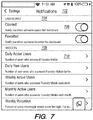
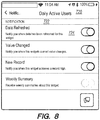
- a first switch 706 is titled Opened and when activated causes generating a notification when someone opens the associated dashboard
- a second switch is titled Favorited and causes generating a notification when someone marks the dashboard as a favorite.
- "Someone,” in this context, may mean the current user or another user of a different second computer 106 that is executing another instance of the same application.
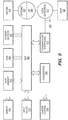
- Main memory 906 such as a random access memory (RAM) or other dynamic storage device, also may be coupled to bus 902 for storing information and software instructions to be executed by processor(s) 904. Main memory 906 also may be used for storing temporary variables or other intermediate information during execution of software instructions to be executed by processor(s) 904.
- RAM random access memory
- Main memory 906 also may be used for storing temporary variables or other intermediate information during execution of software instructions to be executed by processor(s) 904.
- Computing device 900 may be coupled via bus 902 to display 912, such as a liquid crystal display (LCD) or other electronic visual display, for displaying information to a computer user.
- display 912 such as a liquid crystal display (LCD) or other electronic visual display, for displaying information to a computer user.
- a touch sensitive surface incorporating touch detection technology e.g., resistive, capacitive, etc.
- touch detection technology may be overlaid on display 912 to form a touch sensitive display for communicating touch gesture (e.g., finger or stylus) input to processor(s) 904.
- Non-volatile media includes, for example, non-volatile random access memory (NVRAM), flash memory, optical disks, magnetic disks, or solid-state drives, such as storage device 910.
- Volatile media includes dynamic memory, such as main memory 906.
- Software system 1000 includes a graphical user interface (GUI) 1015, for receiving user commands and data in a graphical (e.g., "point-and-click” or "touch gesture") fashion. These inputs, in turn, may be acted upon by the system 1000 in accordance with instructions from operating system 1010 and/or application(s) 1002.
- GUI 1015 also serves to display the results of operation from the OS 1010 and application(s) 1002, whereupon the user may supply additional inputs or terminate the session (e.g., log off).
Landscapes
- Engineering & Computer Science (AREA)
- Databases & Information Systems (AREA)
- Theoretical Computer Science (AREA)
- Data Mining & Analysis (AREA)
- Physics & Mathematics (AREA)
- General Engineering & Computer Science (AREA)
- General Physics & Mathematics (AREA)
- User Interface Of Digital Computer (AREA)
Description
- One technical field of the present disclosure is graphical user interfaces for computer displays. Another technical field is computer-implemented data visualization techniques. Another technical field is the structure and use of meta-descriptions of computer data displays.
- The approaches described in this section are approaches that could be pursued, but not necessarily approaches that have been previously conceived or pursued. Therefore, unless otherwise indicated, it should not be assumed that any of the approaches described in this section qualify as prior art merely by virtue of their inclusion in this section.
- Graphical displays of data relating to the use or performance of software applications termed "dashboards" have come into wide use. However, traditionally, dashboards are custom-coded as part of a SaaS, desktop or mobile application. Modification of an attribute of the dashboard, such as the type of graphical widget (line chart, bar chart or histogram, for example), usually requires changing code and distributing a new version of the application. As a result, the appearance of the dashboards is relatively static and they cannot easily adapt to changes in the schema or ontology of the data source that drives display of data in the dashboards.
- If notifications are provided from the app, they tend to be static as well, and not well connected to the graphical widgets within the dashboard. For example, the typical app notification simply indicates that some kind of change in the app occurred but is not associated with a specific dashboard or widget. Still another problem is that in the context of mobile computing devices, if data changes at a remote server, typically the server must transfer or push the data and the mobile device must determine which dashboard and/or widgets are to be used to render the data. Or, graphical widgets and the data are combined, as in HTML, which requires repetitive large data transfers over network connections that may have low bandwidth or subject to interruption. Therefore, there is a need within these fields for improved computer-implemented techniques for defining graphical data displays and notifications related to them.
-
US 2015/03829 A1 discloses systems and methods for the collection, collation, and distribution of patient data and the notification to a health service professional of patient status. - The example embodiment(s) of the present invention are illustrated by way of example, and not in way by limitation, in the figures of the accompanying drawings and in which like reference numerals refer to similar elements and in which:
-
FIG. 1 illustrates an example networked computer system that may be used to implement one embodiment. -
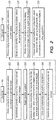
FIG. 2 illustrates an algorithm that may be programmed for execution using the computer system ofFIG. 1 to implement one embodiment. -
FIG. 3 illustrates an example graphical user interface that maybe displayed using a mobile computing device in one embodiment, and showing a data dashboard having two (2) line chart widgets. -
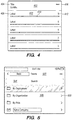
FIG. 4 illustrates a portion of an example graphical user interface that may be displayed using a mobile computing device in one embodiment, and showing a key value list widget. -
FIG. 5 illustrates an example graphical user interface that maybe displayed using a mobile computing device in one embodiment, and showing a navigation panel. -
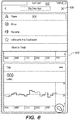
FIG. 6 illustrates an example graphical user interface that may be displayed using a mobile computing device in one embodiment, and showing a tools menu. -
FIG. 7 illustrates an example graphical user interface that may be displayed using a mobile computing device in one embodiment, and showing a configuration panel for configuring a first level of notifications. -
FIG. 8 illustrates an example graphical user interface that maybe displayed using a mobile computing device in one embodiment, and showing a configuration panel for configuring a second level of notifications. -
FIG. 9 is a block diagram of a computing device in which the example embodiment(s) of the present invention maybe embodied. -
FIG. 10 is a block diagram of a software system for controlling the operation of the computing device. - While each of the figures illustrates a particular embodiment for purposes of illustrating a clear example, other embodiments may omit, add to, reorder, and/or modify any of the elements shown in the figures.
- In the following description, for the purposes of explanation, numerous specific details are set forth in order to provide a thorough understanding of the example embodiment(s) of the present invention. It will be apparent, however, that the example embodiment(s) may be practiced without these specific details. In other instances, well-known structures and devices are shown in block diagram form in order to avoid unnecessarily obscuring the example embodiment(s).
- The techniques disclosed herein reduce the amount of manual programming effort, memory, storage and CPU processing required to implement different kinds of dashboards. Parameterized dashboards as described herein permit substituting specific values into a display description template that can rapidly generate application-specific dashboard descriptions and deliver them to mobile devices.
- In one embodiment, the disclosure provides a method as recited in
claim 1. - The instructions can be configured, in some embodiments, so that execution using the second computer causes the second computer to fetch the dataset based on the dataset identifier and to render the plurality of graphical data display widgets.
- In one embodiment, a computer-implemented process is programmed to periodically check data sources and detect that changes have occurred to a particular data source. In response, the process causes generating a dataset, from the data source, that is suitable for display using one or more dashboards. Each dataset has a unique identifier. Concurrently, the process causes generating one or more descriptions of one or more dashboards. Each description consists of structured data that can be efficiently delivered over a network connection to a computing device that has been programmed with interpreting logic capable of reading and parsing the description and graphically rendering a dashboard based on the description; for example, JSON can be used to represent attributes of a dashboard. As part of the parsing, the unique identifier of the dataset is extracted, and the dataset is fetched using a request that contains the identifier.
- Generating the descriptions is data-driven at multiple levels. For example, configurable parameter values identify the dataset; the type of dashboard; which columns in the dataset to use for values in the dataset and axis labels where appropriate; axis ranges; formats of dates or other data types; and others. Other data defines the titles, subtitles, and order of multiple widgets that appear in a scrollable display. Still other data can define one or more notifications that are associated with a particular widget, or at the level of all widgets. In one example embodiment, specific widgets display data relating to core usage metrics for applications such as active usage at various time buckets (hourly active users, for example), retention, popularity of apps or files, new users, session counts, session durations, counts of occurrences of "favorite" actions, and others.
- Some embodiments are optimized in various ways for use with mobile computing devices. In one embodiment, once the description has been received and parsed at the mobile computing device, the dashboard and widgets can be updated merely by re-fetching an updated or refreshed version of the dataset using the same unique identifier.
- In one embodiment, a dashboard graphical display of a mobile application executed using a mobile computing device comprises widgets, each of which can be a line graph, a key value chart, a bar graph or other display. Each dashboard is rendered using information stored in a display description file. The display description file includes information such as titles, subtitles, widget types and order, and other metadata about how the dashboard should be represented. Each widget is backed by a structured dataset comprising source data for a visualization. Each widget is linked to its backing structured dataset in the display description by a unique resource identifier of the dataset and one or more column names. For example, a line chart widget may include a resource identifier pointing to a location of data for rendering, and column names for an X axis and a Y axis. A relatively small number of widgets can be used to clearly express a large number of different datasets.
- In an embodiment, alerts are automatically derived from dashboard data. For example, having a line chart in a dashboard automatically makes a push alert occur when new data is available for display in the chart.
- The disclosure also defines and describes a focused set of metrics that can indicate, in one example embodiment, whether a particular computer program application or product is successful in terms of user use, engagement and retention.
- "Widget" as used herein is a broad term encompassing numerous possible embodiments, including a component of an interface (such as a webpage or computer application interface), that enables a user to perform a function and / or access a service; a control element in a graphical user interface, such as an element of interaction, such as a text input box, button, or a scroll bar; and / or a software component that a user interacts with in order to read, view, and / or edit presented information. Widgets include, but are not limited to, key value lists, menus (e.g., tools menus, context menus, pie menus), charts & graphs (e.g., pie charts, line charts, histograms, etc., including interactive charts and graphs), navigation panels, configuration panels, notification elements, buttons (radio buttons, check boxes, split buttons, cycle buttons), sliders (e.g., vertical or horizontal sliders), list boxes, spinners, drop down lists, toolbars, text boxes, combo boxes (e.g., a text box with a drop-down list), icons, tree view control elements, grid view control elements, links, tabs, scroll bars, labels, tooltips, balloon help, status and progress bards, info bars, windows (e.g., collapsible panels, accordion and modal windows, dialog boxes, frames, canvases, and bubble and cover flow elements).
-
FIG. 1 illustrates an example networked computer system that may be used to implement one embodiment. - In the example of
FIG. 1 , afirst computer 104 is communicatively coupled vianetwork 110 to asecond computer 106, a back-end computer 194, and to one ormore data sources computer 104 is a server-class computer, back-end computer 194 is a back-end server-class computer, andcomputer 106 is a mobile computing device, but this configuration is not required in all embodiments and either computer may comprise a server computer, desktop computer, or laptop computer. Thesecond computer 106 may be any of these as well as a tablet computer or smartphone. Each offirst computer 104 and back-end computer 194 may comprise one or more virtual machine instances that are hosted or executed using a reconfigurable data center or cloud computing service. Further,first computer 104 and back-end computer 194 may be separate computers, the same computer, and may run the same or separate virtual machines. -
Network 110 broadly represents any combination of a local area network, wide area network, internetwork, public internet and the like. In one embodiment,network 110 communicates to compatible network hardware interfaces and network stack software at each of thecomputers -
Data source 102 may be any repository of computer-implemented data records and digitally stores adataset 150, and adata subset 152 comprising a portion of thedataset 150 and having aunique dataset identifier 154. A data record may any computer-implemented data, such as a file, a data object, a database entry, a data message, or any other similar representation of computer-implemented data. In one embodiment, a data record may be represented as a file or entry in a file that is in a comma-separated value (CSV) format, or similar data set format. The embodiments described herein do not require any particular type or format of the data records provided by a data source. Thus, thedata source 102 may comprise a file system, a relational database management system (RDBMS), a non-relational database, an object store, a distributed file system (DFS) such as a Hadoop distributed file system (HDFS), a Java Database Connectivity (JDBC) source, an email repository, data received through an application programming interface (API), a source code repository, a cloud-based data repository such as Amazon Simple Storage Service (S3), a message queue, or any other repository on one or more computing devices that contains data records. As depicted,data sources dataset 150,data subset 152, and uniquedata subset identifier 154 may be part of a distributeddatabase system 190. In alternative embodiments, each may be separate or two or more may be part of distributeddatabase system 190. -
Computer 104 stores and executes an operating system and may host one or more application programs. In an embodiment,computer 104 hosts and executes data interface instructions 112 anddashboard generating instructions 114, which are configured or programmed to implement the functions that are further described in other sections herein. In general, the data interface instructions 112 provide an interface todata source 102 and may be programmed to request thedata source 102 to generate or form thedata subset 152 and to generate and associate thedataset identifier 154 with the data subset. The data interface instructions 112 also may be programmed to detect one or more changes or updates to thedataset 150, to cause generating thedata subset 152 in response to detecting such changes or updates, and to signal the dashboard generating instructions to generate adisplay description 120. In general, thedashboard generating instructions 114 are configured or programmed to respond to a signal from the data interface instructions 112 by creating thedisplay description 120.Computer 104 may also store cleaned data and dashboard descriptions insecond data source 192.Second data source 192 may comprise a file system, a relational database management system (RDBMS), a non-relational database, an object store, a distributed file system (DFS) such as a Hadoop distributed file system (HDFS), a Java Database Connectivity (JDBC) source, an email repository, data received through an application programming interface (API), a source code repository, a cloud-based data repository such as Amazon Simple Storage Service (S3), a message queue, or any other repository on one or more computing devices that contains data records. For example, in some embodiments,second data source 192 may include a DFS or HDFS, that is used to store the cleaned data source and dashboard description and may export these to a RDBMS for fast lookup and retrieval. The RDBMS to which the cleaned data source and dashboard descriptions are exported may be separate from both the distributeddatabase system 190. In various embodiments, however, the RDBMS may be part of distributeddatabase system 190. - Back-
end computer 194 may store and execute instructions that pull data and dashboard descriptions, such as, for example,display description 120, from thesecond data source 192, or the RDBMS to which from thesecond data source 192 exports, and send those tocomputer 106. - The
display description 120 comprises digitally stored metadata describing how to order and format one or more graphical data display widgets in a graphical user interface. As further described herein, another computing device such ascomputer 106 may use thedisplay description 120 to render a graphical user interface, such as a data dashboard or other display, that includes graphical data display widgets as specified in the display description. In one embodiment,display description 120 comprises adataset identifier 154, and one ormore widget descriptions FIG. 1 to illustrate a clear example. Thewidget descriptions claim 1, that order may define the order in which the widgets are displayed. In alternative embodiments, other approaches to determining order may be used, such as using an optional display order value for each widget described bywidget descriptions display description 120. As further shown inFIG. 1 , each of thewidget descriptions widget type 130 and one or more widget configuration values 132. - In an embodiment, the
dataset identifier 154 identifies thedata subset 152 and thereby serves as a reference to a set of data that thesecond computer 106 should render in a graphical user interface using the widgets. The display order in whichsecond computer 106 should render the widgets described bywidget descriptions more widget descriptions widget descriptions widget type 130 is a value that specifies one of a plurality of different graphical data display widgets that can be displayed. Examples of widgets that can be programmed in different embodiments and identified using thewidget type 130 may include a line chart, bar chart, pie chart, histogram and the like, each of which may be identified using a different value of the widget type value. In an embodiment, the widget configuration values 132 may specify display parameters for a particular widget that are appropriate for the type of widget; examples include axis label values, axis ranges, numbers of lines, colors, scale factors, data display formats and units. -
Computer 106 hosts or executesdashboard presentation instructions 160 which are programmed in part to receive, locally store and interpret adisplay description 120 received from back-end computer 194 and to render one ormore widgets computer display device 108. For purposes of illustrating a clear example, two (2)widgets FIG. 1 but other embodiments or instances of executing the techniques herein may include more or fewer widgets in thedisplay 170. The term "dashboard display" is used forelement 170 as one example but a display organized as a dashboard is not required and thewidgets -
FIG. 2 illustrates an algorithm that may be programmed for execution using the computer system ofFIG. 1 to implement one embodiment.FIG. 2 is intended to disclose an algorithm or functional description that may be used as a basis of writing computer programs to implement the functions that are described herein and which cause a computer to operate in the new manner that is disclosed herein. Further,FIG. 2 is provided to communicate such an algorithm at the same level of detail that is normally used, by persons of skill in the art to which this disclosure is directed, to communicate among themselves about plans, designs, specifications and algorithms for other computer programs of a similar level of complexity. - At
block 202, a first computer such ascomputer 104 detects the availability of a data source or dataset, or a change in a specified dataset. As an example,computer 104 may be programmed with a daily or nightly cron job that inspects a specified database, table, or other data repository to determine whether a "last update" value, or the equivalent, has changed since a last inspection. In some embodiments, thedataset 150 comprises a plurality of different data tables, thedata subset 152 comprises a single table, and a programmed job detects the presence of a new single-table data subset in a specified repository, logical storage location, or in a set of one or more particular digital data storage devices. Or, the first computer may receive a signal from another computer or data management system indicating that a new data source has been installed or rendered operational. Block 202 also may involve creating thedata subset 152 in response to detecting a new table, using a predefined schema that specifies how to form datasets that represent widget data. - Jobs that execute to detect changes in a data source may execute on other computers separate from the first computer and may send signals or messages to the first computer, such as
computer 104, indicating that data changed, was updated, or that new data or data sources are available. The particular instructions, computers or mechanisms used to perform block 202 are not critical; what is important is that a first computer receives data relating to a change or update of a specified dataset, or the availability of a data source or dataset. - At
block 204, the process automatically generates a subset of the dataset that was detected or changed and inblock 206 an identifier is assigned to the subset. For example, referring toFIG. 1 , thefirst computer 104 may be programmed to request thedata source 102 to create and store thedata subset 152 based upondataset 150, and to generate and assign aunique identifier 154 to the data subset. Theunique identifier 154 may be a resource identifier or "rid". Thedata subset 152 may be any specified portion of thedataset 150 that is useful to display using thesecond computer 106. Thedata subset 152 may be a particular table, set of columns in a table, set of joined tables, set of changed or updated data, or any other range or portion of data. Thedata subset 152 does not need to be only the data that changed in the specified dataset. - At
block 208, the process generates a display description. In one embodiment, adisplay description 120 as seen inFIG. 1 includes the identifier that was generated atblock 206, a display order, and instructions for widget types and widget configurations for one or more graphical data display widgets. In embodiments outside the scope of the claims, display order may be determined programmatically, such as by order of appearance of thewidget descriptions display description 120. In embodiments of the claimed invention, display order may be determined based on ordinal values associated with widgets, ordinal values for widget types, etc. In embodiments outside the scope of the claims, the order of display of widgets may be based on the order of related widget in a JSON list, such as in the example below. The display description uses the identifier ofblock 206 as a reference to data that is to be displayed; therefore the display description does not contain thedataset 150 orsubset 152, but a reference to the subset. Further, the display description does not contain executable instructions to render a particular graphical window, panel, graph, chart or other presentation elements; instructions to perform those functions are maintained at the second computer and executed there. Instead, the display description is a meta-description indicating what data to obtain for display, and how to format or structure the graphical data display widgets. - In an embodiment, the display description generated at
block 208 comprises code in a markup language and packaged to transmit via a computer network to the second computer. In one embodiment, the display description comprises JSON code. TABLE 1 illustrates an example of a JSON blob outside the scope of the claims that can be used as a display description:TABLE 1 - JSON EXAMPLE OF DISPLAY DESCRIPTION
 {
  "dataSource": "%data_source%",
  "title": "%deployment_name% - %product_display_name%",
  "widgetContainers": [
     {
       "subtitle": "Number of users who accessed %product_display_name% each day.",
       "title": "Daily Active Users",
       "widgets": [
         {
           "isStepChart": false,
           "labelColumn": "label",
           "lastValueSubtitle": "UNIQUE USERS",
           "showLastValue": true,
           "sqlStatement": "SELECT label, MAX(active_count) AS value FROM
 metrics_by_deployment WHERE stack_name = '%deployment_name%' AND product =
 '%product%' AND umi LIKE '%PRODUCT_USAGE.UNIQUE%:DAILY' AND current_date -
 date(label) < 60 GROUP BY stack_name, product, label ORDER BY label",
           "type": "LINE_CHART",
           "valueColumn": "value",
           "widgetld": "2",
           "xAxis": {
              "ticks": {
             }, "minRotation": 45
              "time": {
                "displayFormats": {
                  "month": "MMM"
                },
                "parser": "YYYY-MM-DD",
                "unit": "day",
             },"unitStepSize": 7
              "type": "time"
           "xAxisDurationInDays": 60,
           "xFillInterval": "daily"
         }
       ]
     },
   }
  ]
} - Hourly Active Users: Count of unique active users in a given hour.
- Daily Active Users: Count of unique active users on a given day.
- Weekly Active Users: Count of unique active users in a given week.
- Monthly Active Users: Count of unique active users in a given week.
- Weekly Retention: Of the unique users who use an application in a particular week o, what percent return n weeks later. Users may be filtered to those who joined the application in the past m months; a typical value for m is 6.
- Monthly Retention: Of the unique users who join in month o, what percent return n months later. Users may be filtered to those who joined the application in the past six months, for example.
- Weekly Retention Triangle: The weekly retention for each week's cohort of new users.
- Monthly Retention Triangle: The monthly retention for each month's cohort of new users.
- Popular Times: Distribution of sessions by hour of day for the last w weeks; an example value of w is 4. Also may be termed Hour of Day Usage Distribution.
- Popular Days: Distribution of sessions by day of week for the last w weeks, for example, over the past four weeks. Also may be termed Day of Week Usage Distribution.
- New Users Per Hour: Unique new active users in a given hour.
- New Users Per Day: Unique new active users in a given day.
- New Users Per Week: Unique new active users in a given week.
- New Users Per Month: Unique new active users in a given month.
- Sessions Per Hour: Count of unique sessions from active users in a given hour, where a session is defined as the span of time during which there is never more than a 15-minute gap in user-initiated log events, for example. Other embodiments may use time intervals or thresholds other than 15 minutes.
- Hourly Average Session Duration: Average session length for sessions that started or ended within a given hour.
- Daily Average Session Duration: Average session length for sessions that started or ended within a given day.
- Concurrent Users: Count of unique active users who are active in a given minute of the day.
- Most Active Users: Name and access count per user, ranked from highest to lowest.
- Daily Favorites: Count of files signaled as "favorite" in a given day; used for applications that involve using or browsing files.
- Popular Files: Name and access count per file, ranked from highest to lowest; used for applications that involve using or browsing files. Names may be encrypted.
- Popular Folders: Name and access count per folder, ranked from highest to lowest; used for applications that involve using or browsing files. Names may be encrypted.
- Most Depended-on Datasets: Name and access count per file, ranked from highest to lowest; used for applications that involve using datasets. Names maybe encrypted.
- Most Favorited Files: Name and favorite count per file, ranked from highest to lowest; used for applications that involve using or browsing files. Names may be encrypted.
Claims (11)
- A method comprising:
using a first computer (104), in response to detecting a change in a data source:automatically generating a dataset comprising a subset (152) of data from the data source, generating a unique dataset identifier (154), and associating the dataset identifier (154) with the dataset in digital data storage;generating a display description (120) that comprises the dataset identifier (154), and for each particular graphical data display widget among two or more graphical data display widgets, instructions that specify a widget type, an order and one or more widget configuration values for the particular graphical data display widget,wherein a first widget is associated with a first ordinal value that is higher than a second ordinal value of a second widget,wherein the order defines a display order of the two or more graphical data display widgets in a display (912),wherein the first widget is defined earlier in the order than the second widget in the instructions; andtransmitting the display description (120) to a second computer (106); and using the second computer (106):receiving the display description (120);fetching the subset (152) of the dataset based on the dataset identifier (154); andusing dashboard presentation instructions (160), rendering and displaying the two or more graphical data display widgets in a display (912) of the second computer (106) such that the second widget is rendered first and the first widget is rendered second according to each widget type and the widget configuration values, and with respect to different groupings, levels or other organizational schemes reflected by tag values in the subset of the dataset. - The method of claim 1, wherein the instructions of the display description (120) further comprise a structured query language (SQL) statement that specifies a database query configured to retrieve data for display using the particular graphical data display widget.
- The method of claim 1 or claim 2, wherein the widget type of the particular data display widget specifies a line chart having an X axis and a Y axis, and wherein the instructions of the display description (120) further comprise a structured query language (SQL) statement that specifies a database query configured to retrieve data for display using the particular graphical data display widget and including a first column value of the dataset for use in rendering the X axis and a second column value of the dataset for use in rendering the Y axis.
- The method of any preceding claim, wherein the instructions of the display description (120) specify one or more of a title, subtitle, format, labeling features, grouping and sorting of data, axis display parameters, line display parameters, units and display formats.
- The method of any preceding claim, further comprising:using the first computer (104) to detect the change in the data source by detecting a new single table in a particular data storage system;automatically generating the subset of data from the data source by applying a predetermined schema to the new single table that was detected.
- The method of claim 1, further comprising, using the second computer (106):obtaining, from the instructions of the display description (120), a structured query language (SQL) statement;submitting the SQL statement as a database query to the data source;receiving from the data source particular data for display using the particular graphical data display widget.
- The method of any preceding claim, wherein the widget type of the particular data display widget specifies a line chart having an X axis and a Y axis; the method further comprising:obtaining, from the instructions of the display description (120), a structured query language (SQL) statement;submitting the SQL statement as a database query to the data source;receiving from the data source particular data for display using the particular graphical data display widget, including a first column value of the dataset for use in rendering the X axis and a second column value of the dataset for use in rendering the Y axis.
- The method of any of the preceding claims, wherein the instructions of the display description (120) specify one or more of a title, subtitle, format, labeling features, grouping and sorting of data, axis display parameters, line display parameters, units and display formats.
- The method of any of the preceding claims, further comprising:generating and displaying a graphical user interface comprising a dashboard notification list, the dashboard notification list comprising one or more dashboard notification switches that are programmed to receive input to toggle corresponding notifications on or off for specified notification conditions;determining that a programmed triggering condition has occurred for a particular dashboard notification switch that is toggled on;generating a notification in response to determining that a programmed triggering condition has occurred for the particular dashboard notification switch that is toggled on.
- The method of claim 9, further comprising:generating and displaying, in the graphical user interface, a widget notification list comprising a plurality of selectable list items that are programmed to cause navigating the graphical user interface to a widget notification panel;generating and displaying, a widget-level notification panel comprising a widget-level notifications list having one or more widget notification switches that are programmed to receive input to toggle corresponding notifications on or off for specified notification conditions pertaining to a specified widget;determining that a different programmed triggering condition has occurred for a particular widget notification switch that is toggled on;generating a notification in response to determining that a programmed triggering condition has occurred for a particular widget switch that is toggled on.
- Computer apparatus configured to perform the method of any of claims 1 to 10.
Applications Claiming Priority (2)
| Application Number | Priority Date | Filing Date | Title |
|---|---|---|---|
| US201662434358P | 2016-12-14 | 2016-12-14 | |
| EP17204738.3A EP3336722B1 (en) | 2016-12-14 | 2017-11-30 | User interfaces and parameterized dashboards |
Related Parent Applications (1)
| Application Number | Title | Priority Date | Filing Date |
|---|---|---|---|
| EP17204738.3A Division EP3336722B1 (en) | 2016-12-14 | 2017-11-30 | User interfaces and parameterized dashboards |
Publications (2)
| Publication Number | Publication Date |
|---|---|
| EP3611635A1 EP3611635A1 (en) | 2020-02-19 |
| EP3611635B1 true EP3611635B1 (en) | 2021-04-07 |
Family
ID=60569695
Family Applications (2)
| Application Number | Title | Priority Date | Filing Date |
|---|---|---|---|
| EP19200591.6A Active EP3611635B1 (en) | 2016-12-14 | 2017-11-30 | User interfaces and parameterized dashboards |
| EP17204738.3A Active EP3336722B1 (en) | 2016-12-14 | 2017-11-30 | User interfaces and parameterized dashboards |
Family Applications After (1)
| Application Number | Title | Priority Date | Filing Date |
|---|---|---|---|
| EP17204738.3A Active EP3336722B1 (en) | 2016-12-14 | 2017-11-30 | User interfaces and parameterized dashboards |
Country Status (7)
| Country | Link |
|---|---|
| EP (2) | EP3611635B1 (en) |
| DK (1) | DK3336722T3 (en) |
| ES (1) | ES2751941T3 (en) |
| HU (1) | HUE046747T2 (en) |
| LT (1) | LT3336722T (en) |
| PL (1) | PL3336722T3 (en) |
| PT (1) | PT3336722T (en) |
Families Citing this family (1)
| Publication number | Priority date | Publication date | Assignee | Title |
|---|---|---|---|---|
| CN110750263B (en) * | 2019-10-15 | 2024-01-23 | 广州维思车用部件有限公司 | A method and device for generating vehicle instrument development data |
Family Cites Families (4)
| Publication number | Priority date | Publication date | Assignee | Title |
|---|---|---|---|---|
| WO2008131417A1 (en) * | 2007-04-23 | 2008-10-30 | Snac, Inc. | Mobile widget dashboard |
| AU2010222360B2 (en) * | 2009-03-13 | 2013-02-07 | Ricoh Company, Ltd. | Information Processing Apparatus, Service Providing Method, and Service Providing System |
| KR101644806B1 (en) * | 2009-12-30 | 2016-08-03 | 주식회사 알티캐스트 | Broadcast receving terminla, system and method for controlling widget |
| US20150073829A1 (en) * | 2013-09-12 | 2015-03-12 | Geisinger Clinic | Method and system for distributing patient data and patient status notifications |
-
2017
- 2017-11-30 HU HUE17204738A patent/HUE046747T2/en unknown
- 2017-11-30 PL PL17204738T patent/PL3336722T3/en unknown
- 2017-11-30 DK DK17204738T patent/DK3336722T3/en active
- 2017-11-30 ES ES17204738T patent/ES2751941T3/en active Active
- 2017-11-30 EP EP19200591.6A patent/EP3611635B1/en active Active
- 2017-11-30 LT LT17204738T patent/LT3336722T/en unknown
- 2017-11-30 PT PT172047383T patent/PT3336722T/en unknown
- 2017-11-30 EP EP17204738.3A patent/EP3336722B1/en active Active
Non-Patent Citations (1)
| Title |
|---|
| None * |
Also Published As
| Publication number | Publication date |
|---|---|
| EP3611635A1 (en) | 2020-02-19 |
| HUE046747T2 (en) | 2020-03-30 |
| LT3336722T (en) | 2019-10-25 |
| EP3336722B1 (en) | 2019-10-02 |
| PL3336722T3 (en) | 2020-04-30 |
| DK3336722T3 (en) | 2019-10-28 |
| PT3336722T (en) | 2019-10-29 |
| EP3336722A1 (en) | 2018-06-20 |
| ES2751941T3 (en) | 2020-04-02 |
Similar Documents
| Publication | Publication Date | Title |
|---|---|---|
| US10642853B2 (en) | Automatically generating graphical data displays based on structured descriptions | |
| US10261659B2 (en) | Orbit visualization for displaying hierarchical data | |
| US9959358B2 (en) | Navigation tool for device user interface | |
| US8577960B2 (en) | Providing status information for components in a distributed landscape | |
| US10585575B2 (en) | Visualizing UI tool for graph construction and exploration with alternative action timelines | |
| US9519692B2 (en) | Visualizing related events within a timeline | |
| US9396241B2 (en) | User interface controls for specifying data hierarchies | |
| CA2736493C (en) | Displaying menu for accessing hierarchial content data including caching multiple menu states | |
| US9058365B2 (en) | Systems and methods providing touchscreen report navigation | |
| US20130191767A1 (en) | Semantic Zooming of Data Object Representations in a User Interface | |
| US12632460B2 (en) | Systems and methods for retrieving and processing data for display | |
| US10425501B2 (en) | Element mapping and rule building systems and methods for contextual site visitor engagement | |
| US20180137207A1 (en) | System and method for monitoring changes in databases and websites | |
| US12118043B2 (en) | Robotic process automation (RPA) comprising automatic document scrolling | |
| CN105373522A (en) | Gesture-based on-chart data filtering | |
| US20240104110A1 (en) | Electronic note management via a connected entity graph | |
| US20160085428A1 (en) | Informational tabs | |
| US20130191778A1 (en) | Semantic Zooming in Regions of a User Interface | |
| US11175800B2 (en) | Element mapping and rule building systems and methods for contextual site visitor engagement | |
| US20130061161A1 (en) | Highly portable and dynamic user interface component to specify and perform simple to complex filtering on data using natural language-like user interface | |
| EP3336722B1 (en) | User interfaces and parameterized dashboards | |
| US9250793B2 (en) | Interface management systems and methods |
Legal Events
| Date | Code | Title | Description |
|---|---|---|---|
| PUAI | Public reference made under article 153(3) epc to a published international application that has entered the european phase |
Free format text: ORIGINAL CODE: 0009012 |
|
| STAA | Information on the status of an ep patent application or granted ep patent |
Free format text: STATUS: THE APPLICATION HAS BEEN PUBLISHED |
|
| AC | Divisional application: reference to earlier application |
Ref document number: 3336722 Country of ref document: EP Kind code of ref document: P |
|
| AK | Designated contracting states |
Kind code of ref document: A1 Designated state(s): AL AT BE BG CH CY CZ DE DK EE ES FI FR GB GR HR HU IE IS IT LI LT LU LV MC MK MT NL NO PL PT RO RS SE SI SK SM TR |
|
| STAA | Information on the status of an ep patent application or granted ep patent |
Free format text: STATUS: REQUEST FOR EXAMINATION WAS MADE |
|
| 17P | Request for examination filed |
Effective date: 20200409 |
|
| RBV | Designated contracting states (corrected) |
Designated state(s): AL AT BE BG CH CY CZ DE DK EE ES FI FR GB GR HR HU IE IS IT LI LT LU LV MC MK MT NL NO PL PT RO RS SE SI SK SM TR |
|
| GRAP | Despatch of communication of intention to grant a patent |
Free format text: ORIGINAL CODE: EPIDOSNIGR1 |
|
| STAA | Information on the status of an ep patent application or granted ep patent |
Free format text: STATUS: GRANT OF PATENT IS INTENDED |
|
| RIC1 | Information provided on ipc code assigned before grant |
Ipc: G06F 16/957 20190101AFI20200928BHEP Ipc: G06F 16/958 20190101ALI20200928BHEP |
|
| INTG | Intention to grant announced |
Effective date: 20201016 |
|
| RIN1 | Information on inventor provided before grant (corrected) |
Inventor name: SPIEGEL, WAYNE CHEN Inventor name: THOMPSON, JAMES Inventor name: D'SOUZA, NATASHA Inventor name: VISBAL, ALEXANDER Inventor name: MALLAH, AMR AL Inventor name: PHILIPSON, DAVID Inventor name: XIE, RYAN |
|
| GRAS | Grant fee paid |
Free format text: ORIGINAL CODE: EPIDOSNIGR3 |
|
| GRAA | (expected) grant |
Free format text: ORIGINAL CODE: 0009210 |
|
| STAA | Information on the status of an ep patent application or granted ep patent |
Free format text: STATUS: THE PATENT HAS BEEN GRANTED |
|
| AC | Divisional application: reference to earlier application |
Ref document number: 3336722 Country of ref document: EP Kind code of ref document: P |
|
| AK | Designated contracting states |
Kind code of ref document: B1 Designated state(s): AL AT BE BG CH CY CZ DE DK EE ES FI FR GB GR HR HU IE IS IT LI LT LU LV MC MK MT NL NO PL PT RO RS SE SI SK SM TR |
|
| REG | Reference to a national code |
Ref country code: GB Ref legal event code: FG4D |
|
| REG | Reference to a national code |
Ref country code: AT Ref legal event code: REF Ref document number: 1380615 Country of ref document: AT Kind code of ref document: T Effective date: 20210415 Ref country code: CH Ref legal event code: EP |
|
| REG | Reference to a national code |
Ref country code: DE Ref legal event code: R096 Ref document number: 602017036517 Country of ref document: DE |
|
| REG | Reference to a national code |
Ref country code: IE Ref legal event code: FG4D |
|
| REG | Reference to a national code |
Ref country code: LT Ref legal event code: MG9D |
|
| REG | Reference to a national code |
Ref country code: NL Ref legal event code: MP Effective date: 20210407 Ref country code: AT Ref legal event code: MK05 Ref document number: 1380615 Country of ref document: AT Kind code of ref document: T Effective date: 20210407 |
|
| PG25 | Lapsed in a contracting state [announced via postgrant information from national office to epo] |
Ref country code: AT Free format text: LAPSE BECAUSE OF FAILURE TO SUBMIT A TRANSLATION OF THE DESCRIPTION OR TO PAY THE FEE WITHIN THE PRESCRIBED TIME-LIMIT Effective date: 20210407 Ref country code: BG Free format text: LAPSE BECAUSE OF FAILURE TO SUBMIT A TRANSLATION OF THE DESCRIPTION OR TO PAY THE FEE WITHIN THE PRESCRIBED TIME-LIMIT Effective date: 20210707 Ref country code: NL Free format text: LAPSE BECAUSE OF FAILURE TO SUBMIT A TRANSLATION OF THE DESCRIPTION OR TO PAY THE FEE WITHIN THE PRESCRIBED TIME-LIMIT Effective date: 20210407 Ref country code: LT Free format text: LAPSE BECAUSE OF FAILURE TO SUBMIT A TRANSLATION OF THE DESCRIPTION OR TO PAY THE FEE WITHIN THE PRESCRIBED TIME-LIMIT Effective date: 20210407 Ref country code: HR Free format text: LAPSE BECAUSE OF FAILURE TO SUBMIT A TRANSLATION OF THE DESCRIPTION OR TO PAY THE FEE WITHIN THE PRESCRIBED TIME-LIMIT Effective date: 20210407 Ref country code: FI Free format text: LAPSE BECAUSE OF FAILURE TO SUBMIT A TRANSLATION OF THE DESCRIPTION OR TO PAY THE FEE WITHIN THE PRESCRIBED TIME-LIMIT Effective date: 20210407 |
|
| PG25 | Lapsed in a contracting state [announced via postgrant information from national office to epo] |
Ref country code: NO Free format text: LAPSE BECAUSE OF FAILURE TO SUBMIT A TRANSLATION OF THE DESCRIPTION OR TO PAY THE FEE WITHIN THE PRESCRIBED TIME-LIMIT Effective date: 20210707 Ref country code: LV Free format text: LAPSE BECAUSE OF FAILURE TO SUBMIT A TRANSLATION OF THE DESCRIPTION OR TO PAY THE FEE WITHIN THE PRESCRIBED TIME-LIMIT Effective date: 20210407 Ref country code: PL Free format text: LAPSE BECAUSE OF FAILURE TO SUBMIT A TRANSLATION OF THE DESCRIPTION OR TO PAY THE FEE WITHIN THE PRESCRIBED TIME-LIMIT Effective date: 20210407 Ref country code: PT Free format text: LAPSE BECAUSE OF FAILURE TO SUBMIT A TRANSLATION OF THE DESCRIPTION OR TO PAY THE FEE WITHIN THE PRESCRIBED TIME-LIMIT Effective date: 20210809 Ref country code: SE Free format text: LAPSE BECAUSE OF FAILURE TO SUBMIT A TRANSLATION OF THE DESCRIPTION OR TO PAY THE FEE WITHIN THE PRESCRIBED TIME-LIMIT Effective date: 20210407 Ref country code: RS Free format text: LAPSE BECAUSE OF FAILURE TO SUBMIT A TRANSLATION OF THE DESCRIPTION OR TO PAY THE FEE WITHIN THE PRESCRIBED TIME-LIMIT Effective date: 20210407 Ref country code: IS Free format text: LAPSE BECAUSE OF FAILURE TO SUBMIT A TRANSLATION OF THE DESCRIPTION OR TO PAY THE FEE WITHIN THE PRESCRIBED TIME-LIMIT Effective date: 20210807 Ref country code: GR Free format text: LAPSE BECAUSE OF FAILURE TO SUBMIT A TRANSLATION OF THE DESCRIPTION OR TO PAY THE FEE WITHIN THE PRESCRIBED TIME-LIMIT Effective date: 20210708 |
|
| REG | Reference to a national code |
Ref country code: DE Ref legal event code: R097 Ref document number: 602017036517 Country of ref document: DE |
|
| PG25 | Lapsed in a contracting state [announced via postgrant information from national office to epo] |
Ref country code: SM Free format text: LAPSE BECAUSE OF FAILURE TO SUBMIT A TRANSLATION OF THE DESCRIPTION OR TO PAY THE FEE WITHIN THE PRESCRIBED TIME-LIMIT Effective date: 20210407 Ref country code: RO Free format text: LAPSE BECAUSE OF FAILURE TO SUBMIT A TRANSLATION OF THE DESCRIPTION OR TO PAY THE FEE WITHIN THE PRESCRIBED TIME-LIMIT Effective date: 20210407 Ref country code: DK Free format text: LAPSE BECAUSE OF FAILURE TO SUBMIT A TRANSLATION OF THE DESCRIPTION OR TO PAY THE FEE WITHIN THE PRESCRIBED TIME-LIMIT Effective date: 20210407 Ref country code: CZ Free format text: LAPSE BECAUSE OF FAILURE TO SUBMIT A TRANSLATION OF THE DESCRIPTION OR TO PAY THE FEE WITHIN THE PRESCRIBED TIME-LIMIT Effective date: 20210407 Ref country code: SK Free format text: LAPSE BECAUSE OF FAILURE TO SUBMIT A TRANSLATION OF THE DESCRIPTION OR TO PAY THE FEE WITHIN THE PRESCRIBED TIME-LIMIT Effective date: 20210407 Ref country code: EE Free format text: LAPSE BECAUSE OF FAILURE TO SUBMIT A TRANSLATION OF THE DESCRIPTION OR TO PAY THE FEE WITHIN THE PRESCRIBED TIME-LIMIT Effective date: 20210407 Ref country code: ES Free format text: LAPSE BECAUSE OF FAILURE TO SUBMIT A TRANSLATION OF THE DESCRIPTION OR TO PAY THE FEE WITHIN THE PRESCRIBED TIME-LIMIT Effective date: 20210407 |
|
| PLBE | No opposition filed within time limit |
Free format text: ORIGINAL CODE: 0009261 |
|
| STAA | Information on the status of an ep patent application or granted ep patent |
Free format text: STATUS: NO OPPOSITION FILED WITHIN TIME LIMIT |
|
| 26N | No opposition filed |
Effective date: 20220110 |
|
| PG25 | Lapsed in a contracting state [announced via postgrant information from national office to epo] |
Ref country code: IS Free format text: LAPSE BECAUSE OF FAILURE TO SUBMIT A TRANSLATION OF THE DESCRIPTION OR TO PAY THE FEE WITHIN THE PRESCRIBED TIME-LIMIT Effective date: 20210807 Ref country code: AL Free format text: LAPSE BECAUSE OF FAILURE TO SUBMIT A TRANSLATION OF THE DESCRIPTION OR TO PAY THE FEE WITHIN THE PRESCRIBED TIME-LIMIT Effective date: 20210407 |
|
| PG25 | Lapsed in a contracting state [announced via postgrant information from national office to epo] |
Ref country code: MC Free format text: LAPSE BECAUSE OF FAILURE TO SUBMIT A TRANSLATION OF THE DESCRIPTION OR TO PAY THE FEE WITHIN THE PRESCRIBED TIME-LIMIT Effective date: 20210407 |
|
| PG25 | Lapsed in a contracting state [announced via postgrant information from national office to epo] |
Ref country code: LU Free format text: LAPSE BECAUSE OF NON-PAYMENT OF DUE FEES Effective date: 20211130 Ref country code: IT Free format text: LAPSE BECAUSE OF FAILURE TO SUBMIT A TRANSLATION OF THE DESCRIPTION OR TO PAY THE FEE WITHIN THE PRESCRIBED TIME-LIMIT Effective date: 20210407 Ref country code: BE Free format text: LAPSE BECAUSE OF NON-PAYMENT OF DUE FEES Effective date: 20211130 |
|
| REG | Reference to a national code |
Ref country code: BE Ref legal event code: MM Effective date: 20211130 |
|
| PG25 | Lapsed in a contracting state [announced via postgrant information from national office to epo] |
Ref country code: IE Free format text: LAPSE BECAUSE OF NON-PAYMENT OF DUE FEES Effective date: 20211130 |
|
| PG25 | Lapsed in a contracting state [announced via postgrant information from national office to epo] |
Ref country code: CY Free format text: LAPSE BECAUSE OF FAILURE TO SUBMIT A TRANSLATION OF THE DESCRIPTION OR TO PAY THE FEE WITHIN THE PRESCRIBED TIME-LIMIT Effective date: 20210407 |
|
| P01 | Opt-out of the competence of the unified patent court (upc) registered |
Effective date: 20230526 |
|
| PG25 | Lapsed in a contracting state [announced via postgrant information from national office to epo] |
Ref country code: HU Free format text: LAPSE BECAUSE OF FAILURE TO SUBMIT A TRANSLATION OF THE DESCRIPTION OR TO PAY THE FEE WITHIN THE PRESCRIBED TIME-LIMIT; INVALID AB INITIO Effective date: 20171130 |
|
| PG25 | Lapsed in a contracting state [announced via postgrant information from national office to epo] |
Ref country code: MK Free format text: LAPSE BECAUSE OF FAILURE TO SUBMIT A TRANSLATION OF THE DESCRIPTION OR TO PAY THE FEE WITHIN THE PRESCRIBED TIME-LIMIT Effective date: 20210407 |
|
| PG25 | Lapsed in a contracting state [announced via postgrant information from national office to epo] |
Ref country code: TR Free format text: LAPSE BECAUSE OF FAILURE TO SUBMIT A TRANSLATION OF THE DESCRIPTION OR TO PAY THE FEE WITHIN THE PRESCRIBED TIME-LIMIT Effective date: 20210407 |
|
| REG | Reference to a national code |
Ref country code: DE Ref legal event code: R081 Ref document number: 602017036517 Country of ref document: DE Owner name: PALANTIR TECHNOLOGIES INC., DENVER, US Free format text: FORMER OWNER: PALANTIR TECHNOLOGIES INC., PALO ALTO, CA, US |
|
| PG25 | Lapsed in a contracting state [announced via postgrant information from national office to epo] |
Ref country code: MT Free format text: LAPSE BECAUSE OF FAILURE TO SUBMIT A TRANSLATION OF THE DESCRIPTION OR TO PAY THE FEE WITHIN THE PRESCRIBED TIME-LIMIT Effective date: 20210407 |
|
| REG | Reference to a national code |
Ref country code: CH Ref legal event code: U11 Free format text: ST27 STATUS EVENT CODE: U-0-0-U10-U11 (AS PROVIDED BY THE NATIONAL OFFICE) Effective date: 20251201 |
|
| REG | Reference to a national code |
Ref country code: CH Ref legal event code: R17 Free format text: ST27 STATUS EVENT CODE: U-0-0-R10-R17 (AS PROVIDED BY THE NATIONAL OFFICE) Effective date: 20251212 |
|
| PGFP | Annual fee paid to national office [announced via postgrant information from national office to epo] |
Ref country code: DE Payment date: 20251022 Year of fee payment: 9 |
|
| PGFP | Annual fee paid to national office [announced via postgrant information from national office to epo] |
Ref country code: GB Payment date: 20251022 Year of fee payment: 9 |
|
| PGFP | Annual fee paid to national office [announced via postgrant information from national office to epo] |
Ref country code: FR Payment date: 20251022 Year of fee payment: 9 |
|
| PGFP | Annual fee paid to national office [announced via postgrant information from national office to epo] |
Ref country code: CH Payment date: 20251201 Year of fee payment: 9 |