EP3610626B1 - Methods for automatic bootstrapping of a device - Google Patents
Methods for automatic bootstrapping of a device Download PDFInfo
- Publication number
- EP3610626B1 EP3610626B1 EP17718861.2A EP17718861A EP3610626B1 EP 3610626 B1 EP3610626 B1 EP 3610626B1 EP 17718861 A EP17718861 A EP 17718861A EP 3610626 B1 EP3610626 B1 EP 3610626B1
- Authority
- EP
- European Patent Office
- Prior art keywords
- provisioning
- node
- profile
- provisioning profile
- request
- Prior art date
- Legal status (The legal status is an assumption and is not a legal conclusion. Google has not performed a legal analysis and makes no representation as to the accuracy of the status listed.)
- Active
Links
Images




Classifications
-
- H—ELECTRICITY
- H04—ELECTRIC COMMUNICATION TECHNIQUE
- H04L—TRANSMISSION OF DIGITAL INFORMATION, e.g. TELEGRAPHIC COMMUNICATION
- H04L67/00—Network arrangements or protocols for supporting network services or applications
- H04L67/2866—Architectures; Arrangements
- H04L67/30—Profiles
-
- H—ELECTRICITY
- H04—ELECTRIC COMMUNICATION TECHNIQUE
- H04W—WIRELESS COMMUNICATION NETWORKS
- H04W8/00—Network data management
- H04W8/18—Processing of user or subscriber data, e.g. subscribed services, user preferences or user profiles; Transfer of user or subscriber data
- H04W8/20—Transfer of user or subscriber data
- H04W8/205—Transfer to or from user equipment or user record carrier
-
- H—ELECTRICITY
- H04—ELECTRIC COMMUNICATION TECHNIQUE
- H04W—WIRELESS COMMUNICATION NETWORKS
- H04W12/00—Security arrangements; Authentication; Protecting privacy or anonymity
- H04W12/06—Authentication
-
- H—ELECTRICITY
- H04—ELECTRIC COMMUNICATION TECHNIQUE
- H04W—WIRELESS COMMUNICATION NETWORKS
- H04W4/00—Services specially adapted for wireless communication networks; Facilities therefor
- H04W4/50—Service provisioning or reconfiguring
-
- H—ELECTRICITY
- H04—ELECTRIC COMMUNICATION TECHNIQUE
- H04W—WIRELESS COMMUNICATION NETWORKS
- H04W4/00—Services specially adapted for wireless communication networks; Facilities therefor
- H04W4/60—Subscription-based services using application servers or record carriers, e.g. SIM application toolkits
-
- H—ELECTRICITY
- H04—ELECTRIC COMMUNICATION TECHNIQUE
- H04W—WIRELESS COMMUNICATION NETWORKS
- H04W8/00—Network data management
- H04W8/22—Processing or transfer of terminal data, e.g. status or physical capabilities
- H04W8/24—Transfer of terminal data
- H04W8/245—Transfer of terminal data from a network towards a terminal
Definitions
- the technology disclosed herein relates generally to the field of bootstrapping, and in particular to a method for automatic bootstrapping of a device, a provisioning node, a device, computer programs and computer program products.
- SIM embedded Subscriber Identity Module
- eUICC Embedded Universal Integrated Circuit Card
- iUICC integrated SIM
- the provisioning profile has a significant monetary cost and it must be imprinted in the eUICC chip, or, in case of iUICC, to be hardcoded in the software.
- the provisioning profile is described in a Global System for Mobile Communication Association (GSMA) eUICC specification for M2M devices.
- GSMA Global System for Mobile Communication Association
- GSMA eUICC eUICC standard for consumer devices describing bootstrapping of a "companion device" from a "primary device”.
- the companion device initially does not have any provisioning profile. Instead, the primary device can help the companion device to download a profile in a bootstrap process.
- the bootstrap process in GSMA requires an end user to own (or at least have access to) the "primary device” and the "companion device", and also to trigger the bootstrapping of the "companion device”. The involvement of the end user is required for the whole bootstrap process.
- a user having to bootstrap many Machine to Machine (M2M) devices which may have no end user intervention when in use and possibly located at very remote or rural areas, may be highly time consuming.
- M2M Machine to Machine
- a first such exemplary scenario is cars comprising a device for wireless connectivity ("connected cars") arriving at a port of entry in a cargo ship and which cars need to load a local Mobile Network Operator (MNO) profile.
- MNO Mobile Network Operator
- a second scenario is M2M devices made in country A, arriving at retail or warehouse in country B, and which M2M devices need to load an MNO profile of country B.
- MNO Mobile Network Operator
- the GSMA specification for M2M devices always requires a provisioning profile.
- a M2M device produced in a first country may not have a provisioning profile for country B due to cost or for technical reason, but only for country A.
- Document US 2016/330608 A1 discloses a device.
- the device includes a communication unit configured to transmit a subscription request to a primary subscriber device and receive a provisioning profile in response to the subscription request and a universal integrated circuit card (UICC) configured to be provisioned based on the received provisioning profile.
- UICC universal integrated circuit card
- An objective of the present teachings is to address and improve various aspects for bootstrapping of devices.
- a particular objective is to enable automated bootstrapping of devices.
- Another objective is to enable automated bootstrapping of devices that do not have an installed provisioning profile.
- the objective is according to an aspect achieved by a method for automatic bootstrapping of a device.
- the method is performed by a provisioning node connected to a subscription manager.
- the method comprises receiving a provisioning profile request from the device, the provisioning profile request comprising an identifier of the device.
- the method comprises authenticating the device, and obtaining, based on the identifier of the device, a provisioning profile for the device.
- the method comprises sending the provisioning profile to the device.
- the method provides a number of advantages. For instance, by means of the method a manufacturer of e.g. M2M devices is alleviated from the need to (a priori) install expensive provisioning profiles on the device.
- the method is a highly convenient way of automatically bootstrap a large number of devices, removing also the need for the consumer/end user of the device to perform a remote bootstrapping process. Once the device is bootstrapped it is provided with e.g. cellular connectivity.
- the objective is according to an aspect achieved by a computer program for a provisioning node.
- the computer program comprises computer program code, which, when run on at processing circuitry of the provisioning node causes the provisioning node to perform the method as above.
- the objective is according to an aspect achieved by a computer program product comprising a computer program as above and a computer readable means on which the computer program is stored.
- the objective is according to an aspect achieved by a provisioning node for automatic bootstrapping of a device.
- the provisioning node is configured to: receive a provisioning profile request from the device, the provisioning profile request comprising an identifier of the device, authenticate the device, obtain, based on the identifier of the device, a provisioning profile for the device, and send the provisioning profile to the device.
- the provisioning node is a new type of node, connected to existing nodes, such as a subscription manager node.
- the provisioning node according to the present teachings may e.g. broadcast information to nearby devices, informing about its provisioning services.
- the objective is according to an aspect achieved by a method for bootstrapping performed by a device.
- the method comprises sending a provisioning profile request to a provisioning node, including in the provisioning profile request an identifier of the device, authenticating the provisioning node, and receiving, from the provisioning node, a provisioning profile.
- the objective is according to an aspect achieved by a computer program for bootstrapping of a device.
- the computer program comprises computer program code, which, when run on at processing circuitry of the device causes the device to perform the method as above.
- the objective is according to an aspect achieved by a computer program product comprising a computer program as above and a computer readable means on which the computer program is stored.
- the objective is according to an aspect achieved by a device for bootstrapping.
- the device is configured to: send a provisioning profile request to a provisioning node, including in the provisioning profile request an identifier of the device, authenticate the provisioning node, and receive, from the provisioning node, a provisioning profile.
- the present teachings provide, in various embodiments, nodes and devices of a system and methods that provide automated bootstrapping of devices.
- the bootstrapping may be performed by a provisioning node (e.g. a provisioning gateway) which is connected to a subscription manager.
- a provisioning node e.g. a provisioning gateway
- This enables, for instance, automatic mass-bootstrap, i.e. automated bootstrapping of many devices simultaneously from the provisioning node.
- a handshake process between the device and the provisioning node is disclosed. The process is fully automated and involves the device and provisioning node discovering one another, the provisioning node checking whether the device is eligible for a provisioning profile, and the provision profile being downloaded and installed to the device by the provisioning gateway. The whole process can be done without any requirements on end user involvement.
- the bootstrap process is complete the device obtains connectivity to a wireless network, e.g. to a mobile network.
- FIG 1 illustrates schematically an environment in which embodiments according to the present teachings may be implemented.
- a system 1 comprises one or more devices 3 1 ,..., 3 N , e.g. M2M devices.
- the devices 3 1 ,..., 3 N are equipped with means 8 1 ,..., 8 N for wireless communication.
- the means 8 1 ,..., 8rr for wireless communication is exemplified by a wireless modem (e.g. a cellular modem) 8 1 ,..., 8 N .
- the wireless modem 8 1 ,..., 8 N is a device by means of which the device 3 1 ,..., 3 N can communicate wirelessly.
- the devices 3 1 ,..., 3 N do not have a provisioning/bootstrapping profile.
- the devices 3 1 ,..., 3 N may, for instance, have connectivity to a mobile network by means of their wireless modem 8 1 ,..., 8 N but they are not connected to a subscription manager of the mobile network and do not have a provisioning profile.
- Each device 3 1 ,..., 3 N has a unique identifier.
- This unique identifier may, for example, be a Media Access Control (MAC) address of its wireless modem 8 1 ,..., 8 N , or the serial number of the device 3 1 ,..., 3 N .
- MAC Media Access Control
- the identifier can be a Vehicle Identification Number (VIN). It is noted that various other unique identifiers are also possible.
- each device 3 1 ,..., 3 N comprises means for wireless communication, it can thereby transmit its identifier to nearby provisioning node 4, which in the figure and in the following is exemplified by a provisioning gateway 4.
- the device 3 1 ,..., 3 N may send its identifier e.g. by using short-range radio such as Near-Field Communication (NFC), Bluetooth or WiFi, wireless Universal Serial Bus (USB) standards, etc.
- short-range radio e.g. a low power wide area network (LPWAN) such as NarrowBand IoT (NB-IoT), or 2G, 3G, 4G, 5G may be used.
- LPWAN low power wide area network
- NB-IoT NarrowBand IoT
- 2G, 3G, 4G, 5G may be used. If the communication is performed over e.g. a 2G, 3G, 4G, 5G the provisioning gateway 4 may be part of a radio access node, e.g. included in a
- Each device 3 1 ,..., 3 N is capable of receiving a provisioning profile from the provisioning gateway 4 and bootstrapping the cellular modem 8 1 ,..., 8 N using the received provisioning profile.
- the system 1 comprises the provisioning gateway 4, which mediates between a subscription manager 2 and a device 3 1 ,..., 3 N , as the devices 3 1 ,..., 3 N are not able to communicate directly with the subscription manager 2.
- the provisioning gateway 4 responds to a "provisioning profile request" received from a nearby device 3 1 ,..., 3 N either proactively, i.e. via discovery of the nearby device 3 1 ,..., 3 N , or on a request initiated from the device 3 1 ,..., 3 N itself (described more in detail later).
- the provisioning gateway may in different ways be made aware of the existence of one or more devices 3 1 ,..., 3 N (indicated at encircled numeral 1).
- the provisioning gateway 4 matches the device identifier received in the provisioning profile request to a provisioning profile.
- the provisioning profile may be available in the provisioning gateway 4 a priori, or the provisioning gateway 4 may request this profile from the subscription manager 2.
- the latter is illustrated in the figure at encircled numerals 2 and 3: at encircled 2, the provisioning gateway 4 creates a profile request for the device 3 1 ,..., 3 N and at encircled numeral 3 it sends the profile request to the subscription manager 2 and downloads the provisioning profile therefrom.
- the matching process may, for instance, comprise comparing the device identifier embedded in the provisioning profile request to a list of ⁇ deviceID, provisioningProfile> tuples of eligible devices 3 1 ,..., 3 N in order to receive the desired provisioning profiles.
- a list may be stored internally in the provisioning gateway 4 (e.g. a data storage thereof), or the provisioning gateway 4 may retrieve it from another system or from e.g. a data storage 5.
- the provisioning gateway 4 downloads (encircled numeral 4) the provisioning profile to the device 3 1 ,..., 3 N , which in turn can bootstrap itself. This step can, for instance, be performed according to the GSMA standards.
- the system 1 comprises a subscription manager 2, which is responsible for managing subscriptions.
- the subscription manager 2 which may be part of a mobile network, has access to a database that stores subscription profiles. Mobile Network Operators may download new profiles to the subscription manager 2.
- the subscription manager 2 has means for downloading and installing subscription profiles to the devices 3 1 ,..., 3 N (once they have been provided with a provisioning profile).
- the devices may, for instance, be eUICC-enabled devices or iUICC-enabled devices.
- the subscription manager component combines functionality of subscription manager data preparation (SM-DP) and subscription manager secure routing (SM-SR) components.
- SM-DP subscription manager data preparation
- SM-SR subscription manager secure routing
- the provisioning node 4 (provisioning gateway) is a new type of node (e.g. a gateway), and may be connected to existing nodes, in particular connected to a subscription manager node such as the above mentioned eUICC provisioning nodes SM-DP and SM-SR components.
- the provisioning node 4 may e.g. broadcast information informing devices about its provisioning services.
- the device receives information about the provisioning service and can thereby initiate a bootstrapping by sending a provisioning profile request.
- the provisioning node 4 can download a provision profile and install it in the device.
- the system 1 may also comprise a certificate authority 8, for use in a mutual authentication process between the device 3 1 ,..., 3 N and the provisioning gateway 4.
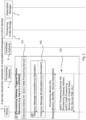
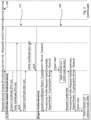
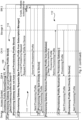
- Figure 2 is a sequence diagram illustrating automated bootstrapping of devices, in particular devices that do not have been provided with a provisioning profile during their manufacturing.
- the provisioning gateway 4 may trigger device discovery, while in other embodiments the device instead trigger the process by sending a provisioning profile request (provided it knowns the address of the provisioning gateway 4 beforehand).
- the bootstrapping process may thus start by a request from the device to the provisioning gateway 4, asking for a provisioning profile. Three ways of doing this request are given next.
- the provisioning profile request comprises a unique identifier of the device.
- this identifier may, for instance, be the MAC address of the wireless modem.
- the device 3 1 ,..., 3 N and the provisioning gateway 4 have now discovered each other, but they need to make sure that they trust each other prior to starting the provisioning service.
- the device 3 1 ,..., 3 N sends (reference numeral 106) a request for service access including provisioning service information and request for e.g. eUICC Initial provisioning service.
- Figure 2 illustrate two different options for a mutual authentication following this request, which options are described next.
- a first alternative is to use a mutual trust authentication mechanism based on certificate verification by a trusted Certificate Authority 8.
- the Certificate Authority has to be reachable by both the device 3 1 ,..., 3 N and the provisioning gateway 4.
- the CA 8 is a logical node and may reside in the same physical entity as the provisioning gateway 4.
- both the device 3 1 ,..., 3 N and the provisioning gateway 4 must have certificates signed by the same CA 8.
- the provisioning gateway 4 sends its certificate to the device, the device verifies the received certificate with the CA 8, which in the illustrated case acknowledges the certificate, the device sends its certificate to the provisioning gateway 4, which verifies it with the CA 8, upon which the CA 8 acknowledges the certificate.
- a second alternative is to use a digest authentication mechanism, where the device 3 1 ,..., 3 N supplies credentials to the provisioning gateway 4.
- This type of authentication may also be performed the other way around, i.e. the device 3 1 ,..., 3 N authenticating the provisioning gateway 4, so that trust for both the devices 3 1 ,..., 3 N and the provisioning gateway 4 is established.
- This is a less secure mechanism than the first alternative, but has the advantage of not requiring that a certificate is stored on the device 3 1 ,..., 3 N , which may be expensive to obtain.
- the provisioning gateway 4 sends its credentials to the device, the device sends a provisioning profile request hash (hash of the received credentials, digest realm, cryptographic nonce, opaque).
- the provisioning gateway 4 checks the received hash and the hash in the illustrated case is correct and the provisioning gateway 4 trusts the device sending the hash. Next, the device requests credentials from the provisioning gateway 4, which responds with a provisioning profile request hash (hash of the received credentials, digest realm, cryptographic nonce, opaque). The device checks this hash and if correct, the device trusts the provisioning gateway 4.
- Which authentication mechanism to use may be selected e.g. in view of required level of security and other functional specifications of the particular use case.
- the provisioning gateway 4 grants access to the device, which sends a provisioning profile request, including in the request its unique identifier.
- the provisioning gateway 4 maps the device identifier to a provisioning profile. There are several alternatives for performing this mapping and some examples are given next:
- the provisioning profile is first received by the provisioning gateway 4, which may then be sent to the device 3 1 ,..., 3 N , or the data storage 5 may send the provisioning profile directly to the device 3 1 ,..., 3 N (e.g. in case the device has IP connection, e.g. over WiFi, etc.).
- the provisioning gateway 4 is mainly tasked with discovering the devices and creating a profile request for the devices.
- the provisioning gateway 4 downloads the provisioning profile to the device, which subsequently bootstraps its cellular access using the provisioning profile.
- the nodes are logical, and may be co-located in the same physical entity.
- the provisioning gateway 4 and the provisioning profile store 5 may be in separate entities or in the same physical network node, or can even be part of another node (e.g. radio base station as mentioned earlier).
- Figure 3 illustrates a flow chart over steps of an embodiment of a method in a provisioning node in accordance with the present teachings.
- a method 10 for automatic bootstrapping of a device 3 1 ,..., 3 N is provided.
- the method 10 may be performed by a provisioning node 4 that is connected to a subscription manager 2.
- the method 10 comprises:
- the method 10 provides a number of advantages. For instance, the method 10 renders the provisioning of a large number of devices, e.g. M2M devices, less complicated and highly cost-efficient.
- the devices 3 1 ,..., 3 N do not have to be provided with a provisioning profile at manufacture thereof.
- the provisioning node may, for instance, be a provisioning gateway owned by a mobile network operator or state regulator.
- the "provisioning profile request" may be a device-triggered request if the device knows the address of the provisioning node 4, or it may be a request received in response to a unicast message from the provisioning node 4 to the device if the provisioning node 4 knowns the address of the device, or it may be a request received in response to a discovery message sent (e.g. broadcast or multicast) by the provisioning node 4.
- the method 10 comprises, before receiving 12 the provisioning profile request, transmitting 11 signaling informing about an initial provisioning service for devices 3 1 ,..., 3 N .
- the dashed lines of box 11 in the figure 3 indicates that this is an optional step.
- the method 10 may be an entirely automated process for provisioning devices and user intervention can be omitted.
- the transmitting of signaling that informs devices 3 1 ,..., 3 N about the initial provisioning service provided by the provisioning node 4 may, for instance, comprise broadcasting the information or multicasting the information.
- the information may be targeted to a particular type of devices 3 1 ,..., 3 N , for instance intended to eUICC devices ("eUICC Initial Provisioning Service), as has been described earlier, e.g. in relation to figure 2 . Broadcasting or multicasting the information, e.g.
- the signaling informing about an initial provisioning service for devices 3 1 ,..., 3 N is a first message comprising one or both of: an address of an embedded Universal Integrated Circuit Card, eUICC, initial provisioning service and a reference to an eUICC initial provisioning service on the provisioning node 4.
- the first message may be seen as an advertisement message sent from the provisioning node 4 for advertising its provisioning service.
- the reference to an eUICC initial provisioning service may, for instance, be a Uniform Resource Locator (URL) or a Uniform Resource Identifier (URI).
- URL Uniform Resource Locator
- URI Uniform Resource Identifier
- the obtaining 14 the provisioning profile for the device 3 1 ,..., 3 N comprises:
- the obtaining 14 the provisioning profile for the device 3 1 ,..., 3 N comprises matching the identifier of the device 3 1 ,..., 3 N to a provisioning profile and retrieving the provisioning profile from a data storage 5.
- the provisioning node 4 When using a data storage 5, the provisioning node 4 should have access to it.
- the data storage 5 may be an integrated part of the provisioning node 4 or it may be standalone entity from which the provisioning node 4 can retrieve the desired provisioning profile.
- the authenticating 13 the device 3 1 ,..., 3 N comprises a mutual trust authentication mechanism.
- the mutual trust authentication may, for instance, be based on certificate verification by a trusted certificate authority 6, wherein the device 3 1 ,..., 3 N and the provisioning node 4 have a respective certificate signed by the certificate authority 6.
- a mutual trust authentication mechanism is a digest authentication mechanism comprising use of a respective certificate of the device 3 1 ,..., 3 N and the provisioning node 4 for establishing trust them between.
- the first mechanism is highly secure, but requires the device 3 1 ,..., 3 N to have a certificate stored thereon.
- the second mechanism is less secure, but has the advantage of not requiring the device 3 1 ,..., 3 N to have a stored certificate, which may be costly.
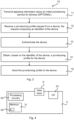
- FIG. 4 illustrates schematically a node and means for implementing embodiments of the method in accordance with the present teachings.
- the node 4 comprises processing circuitry 30, which may be any combination of one or more of a suitable central processing unit (CPU), multiprocessor, microcontroller, digital signal processor (DSP), etc., capable of executing software instructions stored in a computer program product 31, e.g. in the form of a storage medium 31.
- the processing circuitry 30 may further be provided as at least one application specific integrated circuit (ASIC), or field programmable gate array (FPGA).
- ASIC application specific integrated circuit
- FPGA field programmable gate array
- the processing circuitry 30 is configured to cause the node 4 to perform a set of operations, or steps, e.g. as described in relation to figures 2 , 3 .
- the storage medium 31 may store the set of operations
- the processing circuitry 30 may be configured to retrieve the set of operations from the storage medium 31 to cause the node 4 to perform the set of operations.
- the set of operations may be provided as a set of executable instructions.
- the processing circuitry 30 is thereby arranged to execute methods as disclosed herein.
- the storage medium 31 may also comprise persistent storage, which, for example, can be any single one or combination of magnetic memory, optical memory, solid state memory or even remotely mounted memory.
- the provisioning node 4 may also comprise an input/output device 33 for communicating with other entities and devices.
- the input/output device 33 may be an interface and may, for instance, comprise a protocol stack, for communication with other devices (e.g. the nodes of the system 1) or entities.
- the input/output device 33 may be used for receiving data input, e.g. provisioning profile requests from devices 3 1 ,..., 3 N , and for outputting data, e.g. sending bootstrapping related data (e.g. provisioning profiles) when a device 3 1 ,..., 3 N is to be bootstrapped.
- the input/output device 33 may comprise receiving circuitry and transmitting circuitry.
- the provisioning node 4 may also comprise an antenna device and transmission/reception circuitry for wireless communication with the devices 3 1 ,..., 3N.
- the provisioning node 4 may comprise or otherwise have access to a database 5.
- the database 5 may, for instance, comprise lists of devices 3 1 ,..., 3 N being eligible for being provided with a provisioning profile, or data enabling the provisioning node 4 to match a device identifier to a provisioning profile.
- a provisioning node 4 is provided for automatic bootstrapping of a device 3 1 ,..., 3 N .
- the provisioning node 4 is connected to a subscription manager 2.
- the provisioning node 4 is configured to:
- the provisioning node 4 may be configured to perform the above steps, and implement any of the described embodiments of the method, e.g. by comprising one or more processors 30 and memory 31, the memory 31 containing instructions executable by the processor 30, whereby the provisioning node 4 is operative to perform the steps.
- a provisioning node 4 for automatic bootstrapping of a device comprises one or more processors 30 and memory 31, the memory 31 containing instructions executable by the processor 30, whereby the provisioning node is operative to: receive a provisioning profile request from the device, the provisioning profile request comprising an identifier of the device, authenticate the device, obtain, based on the identifier of the device, a provisioning profile for the device, and send the provisioning profile to the device.
- the provisioning node 4 is configured to, before the receiving the provisioning profile request, transmit signaling informing about an initial provisioning service for devices 3 1 ,..., 3 N .
- the signaling informing about an initial provisioning service for devices 3 1 ,..., 3 N is a first message comprising one or both of: an address of an embedded Universal Integrated Circuit Card, eUICC, initial provisioning service and a reference to an eUICC initial provisioning service on the provisioning node 4.
- the provisioning node 4 is configured to obtain the provisioning profile for the device 3 1 ,..., 3 N by:
- the provisioning node 4 is configured to obtain the provisioning profile for the device by matching the identifier of the device 3 1 ,..., 3 N to a provisioning profile and retrieving the provisioning profile from a data storage 5.
- the provisioning node 4 is configured to the authenticate the device 3 1 ,..., 3 N by a mutual trust authentication mechanism.
- Figure 5 illustrates a node comprising function modules/software modules for implementing embodiments of the present teachings.
- the function modules can be implemented using software instructions such as computer program executing in a processor and/or using hardware, such as application specific integrated circuits (ASICs), field programmable gate arrays, discrete logical components etc., and any combination thereof.
- ASICs application specific integrated circuits
- Processing circuitry may be provided, which may be adaptable and in particular adapted to perform any of the steps of the method 10 that has been described in various embodiments.
- a provisioning node 4 for automatic bootstrapping of a device comprises a first module 41 for receiving a provisioning profile request from a device, the request comprising an identifier of the device.
- Such first module 41 may, for instance, comprise receiving circuitry or an input device.
- the provisioning node comprises a second module 42 for authenticating the device.
- Such second module 42 may, for instance, comprise processing circuitry adapted to perform steps of a mutual authentication process.
- the second module 42 may, for instance, take as a first input a certificate from the device.
- the provisioning node comprises a third module 43 for obtaining, based on the identifier of the device, a provisioning profile for the device.
- the third module 43 may, for instance, comprise processing circuitry adapted to obtain the provisioning profile.
- the third module 43 may, for instance, be adapted to obtain the identifier of the device and adapted to obtain (e.g. from a database) a provisioning profile linked to this identifier.
- the provisioning node comprises a fourth module 44 for sending the provisioning profile to the device.
- Such fourth module 44 may, for instance, comprise transmitting circuitry or an output device.
- the provisioning node 4 may also comprise one or more modules for being capable of receiving and processing a combination of input, e.g. inputs such as provisioning requests and data from a database.
- modules 41, 42, 43, 44 may be replaced by units.
- Figure 6 illustrates a flow chart over steps of an embodiment of a method in a device in accordance with the present teachings.
- the method 50 for bootstrapping may be performed by a device 3 1 ,..., 3 N comprising communication means for communicating wirelessly with a provisioning node.
- the method 50 comprises:
- a device 3 1 ,..., 3 N implementing the method 50 can easily obtain a provisioning profile.
- the manufacturer of the device does not need to provide it with a provisioning profile beforehand, reducing costs thereof.
- the method 50 comprises, before sending 52 the provisioning profile request, receiving 51 a first message from the provisioning node 4, the first message comprising information enabling the sending 52 of the provisioning profile request.
- the first message may be seen as an advertisement message sent by a provisioning node 4 for informing about its provisioning service.
- the first message comprises one or both of: an address of an embedded Universal Integrated Circuit Card, eUICC, initial provisioning service and a reference to an eUICC initial provisioning service on the provisioning node 4.
- the first message may thus be an "eUIIC initial provisioning service" message, sent by the provisioning node 4, and may, for instance, comprise the address of the provisioning node 4, whereby the device is able to send its provisioning profile request.
- the first message may also comprise a Uniform Resource Locator (URL) or a Uniform Resource Identifier (URI) of the eUICC initial provisioning service on the provisioning node 4.
- URL Uniform Resource Locator
- URI Uniform Resource Identifier
- the method 50 comprises broadcasting, before the sending 52 the provisioning profile request, a second message and receiving in response a message comprising an address of the provisioning node 4.
- the second message may be seen as a discovery message, which is a message trying to discover a provisioning service, in particular a "eUIIC initial provisioning service".
- the second message may, for instance, comprise the address of the provisioning node 4, whereby the device is able to send its provisioning profile request.
- the discovery message may also comprise a Uniform Resource Locator (URL) or a Uniform Resource Identifier (URI) of the eUICC initial provisioning service on the provisioning node 4.
- URL Uniform Resource Locator
- URI Uniform Resource Identifier
- the authenticating 13 the provisioning node 4 comprises one of:
- the authentication implemented may be selected among any known mutual authentication method.
- the method 50 comprises using the received provisioning profile for obtaining access to a wireless network.
- FIG. 7 illustrates schematically a device and means for implementing embodiments of the method in accordance with the present teachings.
- the device 3 1 ,..., 3 N comprises processing circuitry 60, which may be any combination of one or more of a suitable central processing unit (CPU), multiprocessor, microcontroller, digital signal processor (DSP), etc., capable of executing software instructions stored in a computer program product 61, e.g. in the form of a storage medium 61.
- the processing circuitry 60 may further be provided as at least one application specific integrated circuit (ASIC), or field programmable gate array (FPGA).
- ASIC application specific integrated circuit
- FPGA field programmable gate array
- the processing circuitry 60 is configured to cause the device 3 1 ,..., 3 N to perform a set of operations, or steps, e.g. as described in relation to figures 2 , 6 .
- the storage medium 61 may store the set of operations
- the processing circuitry 60 may be configured to retrieve the set of operations from the storage medium 361 to cause the device 3 1 ,..., 3 N to perform the set of operations.
- the set of operations may be provided as a set of executable instructions.
- the processing circuitry 60 is thereby arranged to execute methods as disclosed herein.
- the storage medium 6 may also comprise persistent storage, which, for example, can be any single one or combination of magnetic memory, optical memory, solid state memory or even remotely mounted memory.
- the device 3 1 ,..., 3 N may also comprise an input/output device 63 for communicating with other entities and devices.
- the input/output device 63 may, for instance, comprise a protocol stack, for communication with the gateway node 4 of the system 1.
- the input/output device 63 may be used for receiving data input and for outputting data, e.g. receiving/sending bootstrapping related data when the device 3 1 ,..., 3 N is to be bootstrapped.
- the input/output device 63 may comprise receiving circuitry and transmitting circuitry.
- the device 3 1 ,..., 3 N may also comprise an antenna device for wireless communication with the gateway node 4 .
- a device 3 1 ,..., 3 N for bootstrapping performed is provided.
- the device 3 1 ,..., 3 N is configured to:
- the device 3 1 ,..., 3 N may be configured to perform the above steps, and implement any of the described embodiments of the method, e.g. by comprising one or more processors 60 and memory 61, the memory 61 containing instructions executable by the processor 60, whereby the device 3 1 ,..., 3 N is operative to perform the steps.
- a device 3 1 ,..., 3 N for bootstrapping comprises one or more processors 60 and memory 61, the memory 61 containing instructions executable by the processor 60, whereby the device is operative to: send a provisioning profile request to a provisioning node, including in the provisioning profile request an identifier of the device, authenticate the provisioning node, and receive, from the provisioning node 4, a provisioning profile.
- the device 3 1 ,..., 3 N is configured to, before sending the provisioning profile request, receive a first message from the provisioning node 4, the first message comprising information enabling the sending of the provisioning profile request.
- the first message may be seen as an advertisement message sent by a provisioning node 4 offering its provisioning service.
- the first message comprises one or both of: an address of an embedded Universal Integrated Circuit Card, eUICC, initial provisioning service and a reference to an eUICC initial provisioning service on the provisioning node 4.
- the device 3 1 ,..., 3 N is configured to broadcast, before sending the provisioning profile request, a second message and receiving in response a message comprising an address of the provisioning node 4.
- the device 3 1 ,..., 3 N is configured to authenticate the provisioning node 4 by one of:
- the device 3 1 ,..., 3 N is configured to use the received provisioning profile for obtaining access to a wireless network.
- Figure 8 illustrates a device comprising function modules/software modules for implementing embodiments of the present teachings.
- the function modules can be implemented using software instructions such as computer program executing in a processor and/or using hardware, such as application specific integrated circuits (ASICs), field programmable gate arrays, discrete logical components etc., and any combination thereof.
- ASICs application specific integrated circuits
- Processing circuitry may be provided, which may be adaptable and in particular adapted to perform any of the steps of the method 10 that has been described in various embodiments.
- a device 31 for bootstrapping comprises a first module 71 for sending a provisioning profile request to a provisioning node, including an identifier of the device in the request.
- the first module 71 may, for instance, comprise transmitting circuitry or an output device.
- the device comprises a second module 72 for authenticating the provisioning node.
- Such second module 72 may, for instance, comprise processing circuitry adapted to perform steps of a mutual authentication process.
- the second module 72 may, for instance, take as a first input a certificate from the provisioning node.
- the device comprises a third module 73 for receiving a provisioning profile from the provisioning node.
- the third module 73 may, for instance, comprise receiving circuitry or an input device.
- the device 3 1 may also comprise one or more modules for being capable of receiving and processing a combination of input, e.g. the device 3 1 may comprise modules for processing a received authentication message and an internal certificate.
- modules 71, 72, 73 may be replaced by units.
Landscapes
- Engineering & Computer Science (AREA)
- Computer Networks & Wireless Communication (AREA)
- Signal Processing (AREA)
- Databases & Information Systems (AREA)
- Computer Security & Cryptography (AREA)
- Mobile Radio Communication Systems (AREA)
Description
- The technology disclosed herein relates generally to the field of bootstrapping, and in particular to a method for automatic bootstrapping of a device, a provisioning node, a device, computer programs and computer program products.
- In the current state of art, remote provisioning of a cellular connectivity-enabled device requires the device to have a bootstrapping/provisioning profile that allows it to communicate with a subscription manager node. A known solution for such remote provisioning is, for instance, embedded Subscriber Identity Module (SIM), such as e.g. Embedded Universal Integrated Circuit Card (eUICC) and integrated SIM (iUICC). The former has a dedicated physical eUICC chip soldered on the device's circuit board, whereas the latter is software having the functionality of the eUICC chip and being burned into an existing chip (e.g. device processor or its cellular communication modem).
- However, even with such solutions for remote provisioning that do not involve a physical SIM card, the issue remains that for a device to be bootstrapped, it needs to have local storage of a provisioning profile. The provisioning profile has a significant monetary cost and it must be imprinted in the eUICC chip, or, in case of iUICC, to be hardcoded in the software. The provisioning profile is described in a Global System for Mobile Communication Association (GSMA) eUICC specification for M2M devices.
- There is a more recent GSMA eUICC standard for consumer devices describing bootstrapping of a "companion device" from a "primary device". The companion device initially does not have any provisioning profile. Instead, the primary device can help the companion device to download a profile in a bootstrap process. However, the bootstrap process in GSMA requires an end user to own (or at least have access to) the "primary device" and the "companion device", and also to trigger the bootstrapping of the "companion device". The involvement of the end user is required for the whole bootstrap process.
- The user involvement is impractical and even impossible in some situations where bootstrapping of the device is required. For instance, a user having to bootstrap many Machine to Machine (M2M) devices, which may have no end user intervention when in use and possibly located at very remote or rural areas, may be highly time consuming. A first such exemplary scenario is cars comprising a device for wireless connectivity ("connected cars") arriving at a port of entry in a cargo ship and which cars need to load a local Mobile Network Operator (MNO) profile. A second scenario is M2M devices made in country A, arriving at retail or warehouse in country B, and which M2M devices need to load an MNO profile of country B. In, for instance, these cases, the GSMA specification for consumer devices cannot be used to bootstrap the M2M devices. Further, the GSMA specification for M2M devices always requires a provisioning profile. However, a M2M device produced in a first country may not have a provisioning profile for country B due to cost or for technical reason, but only for country A. Document
US 2016/330608 A1 discloses a device. The device includes a communication unit configured to transmit a subscription request to a primary subscriber device and receive a provisioning profile in response to the subscription request and a universal integrated circuit card (UICC) configured to be provisioned based on the received provisioning profile. - An objective of the present teachings is to address and improve various aspects for bootstrapping of devices. A particular objective is to enable automated bootstrapping of devices. Another objective is to enable automated bootstrapping of devices that do not have an installed provisioning profile. This objective and others are achieved by the methods, devices, nodes, computer programs and computer program products according to the appended independent claims, and by the embodiments according to the dependent claims.
- The objective is according to an aspect achieved by a method for automatic bootstrapping of a device. The method is performed by a provisioning node connected to a subscription manager. The method comprises receiving a provisioning profile request from the device, the provisioning profile request comprising an identifier of the device. The method comprises authenticating the device, and obtaining, based on the identifier of the device, a provisioning profile for the device. The method comprises sending the provisioning profile to the device.
- The method provides a number of advantages. For instance, by means of the method a manufacturer of e.g. M2M devices is alleviated from the need to (a priori) install expensive provisioning profiles on the device. The method is a highly convenient way of automatically bootstrap a large number of devices, removing also the need for the consumer/end user of the device to perform a remote bootstrapping process. Once the device is bootstrapped it is provided with e.g. cellular connectivity.
- The objective is according to an aspect achieved by a computer program for a provisioning node. The computer program comprises computer program code, which, when run on at processing circuitry of the provisioning node causes the provisioning node to perform the method as above.
- The objective is according to an aspect achieved by a computer program product comprising a computer program as above and a computer readable means on which the computer program is stored.
- The objective is according to an aspect achieved by a provisioning node for automatic bootstrapping of a device. The provisioning node is configured to: receive a provisioning profile request from the device, the provisioning profile request comprising an identifier of the device, authenticate the device, obtain, based on the identifier of the device, a provisioning profile for the device, and send the provisioning profile to the device. The provisioning node is a new type of node, connected to existing nodes, such as a subscription manager node. The provisioning node according to the present teachings may e.g. broadcast information to nearby devices, informing about its provisioning services.
- The objective is according to an aspect achieved by a method for bootstrapping performed by a device. The method comprises sending a provisioning profile request to a provisioning node, including in the provisioning profile request an identifier of the device, authenticating the provisioning node, and receiving, from the provisioning node, a provisioning profile.
- The objective is according to an aspect achieved by a computer program for bootstrapping of a device. The computer program comprises computer program code, which, when run on at processing circuitry of the device causes the device to perform the method as above.
- The objective is according to an aspect achieved by a computer program product comprising a computer program as above and a computer readable means on which the computer program is stored.
- The objective is according to an aspect achieved by a device for bootstrapping. The device is configured to: send a provisioning profile request to a provisioning node, including in the provisioning profile request an identifier of the device, authenticate the provisioning node, and receive, from the provisioning node, a provisioning profile.
- Further features and advantages of the embodiments of the present teachings will become clear upon reading the following description and the accompanying drawings.
-
-
Figure 1 illustrates schematically an environment in which embodiments according to the present teachings may be implemented. -
Figure 2 is a sequence diagram illustrating automated bootstrapping of devices. -
Figure 3 illustrates a flow chart over steps of an embodiment of a method in a node in accordance with the present teachings. -
Figure 4 illustrates schematically a node and means for implementing embodiments of the method in accordance with the present teachings. -
Figure 5 illustrates a node comprising function modules/software modules for implementing embodiments of the present teachings. -
Figure 6 illustrates a flow chart over steps of an embodiment of a method in a device in accordance with the present teachings. -
Figure 7 illustrates schematically a device and means for implementing embodiments of the method in accordance with the present teachings. -
Figure 8 illustrates a device comprising function modules/software modules for implementing embodiments of the present teachings. - In the following description, for purposes of explanation and not limitation, specific details are set forth such as particular architectures, interfaces, techniques, etc. in order to provide a thorough understanding. In other instances, detailed descriptions of well-known devices, circuits, and methods are omitted so as not to obscure the description with unnecessary detail. Same reference numerals refer to same or similar elements throughout the description.
- Briefly, the present teachings provide, in various embodiments, nodes and devices of a system and methods that provide automated bootstrapping of devices. The bootstrapping may be performed by a provisioning node (e.g. a provisioning gateway) which is connected to a subscription manager. This enables, for instance, automatic mass-bootstrap, i.e. automated bootstrapping of many devices simultaneously from the provisioning node. A handshake process between the device and the provisioning node is disclosed. The process is fully automated and involves the device and provisioning node discovering one another, the provisioning node checking whether the device is eligible for a provisioning profile, and the provision profile being downloaded and installed to the device by the provisioning gateway. The whole process can be done without any requirements on end user involvement. Once the bootstrap process is complete the device obtains connectivity to a wireless network, e.g. to a mobile network.
-
Figure 1 illustrates schematically an environment in which embodiments according to the present teachings may be implemented. - A
system 1 comprises one ormore devices 31,..., 3N, e.g. M2M devices. Thedevices 31,..., 3N are equipped withmeans 81,..., 8N for wireless communication. In the following themeans 81,..., 8rr for wireless communication is exemplified by a wireless modem (e.g. a cellular modem) 81,..., 8N. Thewireless modem 81,..., 8N is a device by means of which thedevice 31,..., 3N can communicate wirelessly. Thedevices 31,..., 3N do not have a provisioning/bootstrapping profile. Thedevices 31,..., 3N may, for instance, have connectivity to a mobile network by means of theirwireless modem 81,..., 8N but they are not connected to a subscription manager of the mobile network and do not have a provisioning profile. - Each
device 31,..., 3N has a unique identifier. This unique identifier may, for example, be a Media Access Control (MAC) address of itswireless modem 81,..., 8N, or the serial number of thedevice 31,..., 3N. For example, if thedevice 31,..., 3N is a connected vehicle, the identifier can be a Vehicle Identification Number (VIN). It is noted that various other unique identifiers are also possible. - Since each
device 31,..., 3N comprises means for wireless communication, it can thereby transmit its identifier tonearby provisioning node 4, which in the figure and in the following is exemplified by aprovisioning gateway 4. Thedevice 31,..., 3N may send its identifier e.g. by using short-range radio such as Near-Field Communication (NFC), Bluetooth or WiFi, wireless Universal Serial Bus (USB) standards, etc. In other embodiments, long-range radio e.g. a low power wide area network (LPWAN) such as NarrowBand IoT (NB-IoT), or 2G, 3G, 4G, 5G may be used. If the communication is performed over e.g. a 2G, 3G, 4G, 5G theprovisioning gateway 4 may be part of a radio access node, e.g. included in a radio base station. - Each
device 31,..., 3N is capable of receiving a provisioning profile from theprovisioning gateway 4 and bootstrapping thecellular modem 81,..., 8N using the received provisioning profile. - The
system 1 comprises theprovisioning gateway 4, which mediates between asubscription manager 2 and adevice 31,..., 3N, as thedevices 31,..., 3N are not able to communicate directly with thesubscription manager 2. - The
provisioning gateway 4 responds to a "provisioning profile request" received from anearby device 31,..., 3N either proactively, i.e. via discovery of thenearby device 31,..., 3N, or on a request initiated from thedevice 31,..., 3N itself (described more in detail later). In short, the provisioning gateway may in different ways be made aware of the existence of one ormore devices 31,..., 3N (indicated at encircled numeral 1). - The
provisioning gateway 4 matches the device identifier received in the provisioning profile request to a provisioning profile. The provisioning profile may be available in the provisioning gateway 4 a priori, or theprovisioning gateway 4 may request this profile from thesubscription manager 2. The latter is illustrated in the figure at encirclednumerals 2 and 3: at encircled 2, theprovisioning gateway 4 creates a profile request for thedevice 31,..., 3N and at encircled numeral 3 it sends the profile request to thesubscription manager 2 and downloads the provisioning profile therefrom. The matching process may, for instance, comprise comparing the device identifier embedded in the provisioning profile request to a list of <deviceID, provisioningProfile> tuples ofeligible devices 31,..., 3N in order to receive the desired provisioning profiles. Such list may be stored internally in the provisioning gateway 4 (e.g. a data storage thereof), or theprovisioning gateway 4 may retrieve it from another system or from e.g. adata storage 5. - The
provisioning gateway 4 downloads (encircled numeral 4) the provisioning profile to thedevice 31,..., 3N, which in turn can bootstrap itself. This step can, for instance, be performed according to the GSMA standards. - The
system 1 comprises asubscription manager 2, which is responsible for managing subscriptions. Thesubscription manager 2, which may be part of a mobile network, has access to a database that stores subscription profiles. Mobile Network Operators may download new profiles to thesubscription manager 2. Thesubscription manager 2 has means for downloading and installing subscription profiles to thedevices 31,..., 3N (once they have been provided with a provisioning profile). The devices may, for instance, be eUICC-enabled devices or iUICC-enabled devices. In eUICC standard, the subscription manager component combines functionality of subscription manager data preparation (SM-DP) and subscription manager secure routing (SM-SR) components. - The provisioning node 4 (provisioning gateway) is a new type of node (e.g. a gateway), and may be connected to existing nodes, in particular connected to a subscription manager node such as the above mentioned eUICC provisioning nodes SM-DP and SM-SR components. The
provisioning node 4 may e.g. broadcast information informing devices about its provisioning services. By means of theprovisioning node 4, user intervention in the bootstrapping process can be avoided: the device receives information about the provisioning service and can thereby initiate a bootstrapping by sending a provisioning profile request. Theprovisioning node 4 can download a provision profile and install it in the device. - The
system 1 may also comprise acertificate authority 8, for use in a mutual authentication process between thedevice 31,..., 3N and theprovisioning gateway 4. -
Figure 2 is a sequence diagram illustrating automated bootstrapping of devices, in particular devices that do not have been provided with a provisioning profile during their manufacturing. - It is noted that the sequence diagram illustrates a number of different embodiments, as will become clear in the following. For instance, in some embodiments the
provisioning gateway 4 may trigger device discovery, while in other embodiments the device instead trigger the process by sending a provisioning profile request (provided it knowns the address of theprovisioning gateway 4 beforehand). - The bootstrapping process may thus start by a request from the device to the
provisioning gateway 4, asking for a provisioning profile. Three ways of doing this request are given next. - 1. The request may be performed in a proactive way by the
device 31,..., 3N discovering theprovisioning gateway 4. In this case, theprovisioning gateway 4 may broadcast an advertisement to alldevices 31,..., 3N. Allnew devices 31,..., 3N listen to these broadcast messages (illustrated at reference numeral 101) and then connect to theprovisioning gateway 4. This can be compared to a cellular device (e.g. user equipment, UE) joining a Radio Base Station: it listens to information sent from the radio base station and is thereby able to connect to it. In other embodiments, multicasting (unicast or broadcast) messages to a specific multicast group is implemented (illustrated at reference numeral 102). For example, thedevices 31,..., 3N may be vehicles that are offloaded at a port of entry, and theprovisioning gateway 4, being aware of these vehicles, multicasts an advertisement message to them. The advertisement message may, for instance comprise the address of theprovisioning gateway 4.
For all above options, thedevice 31,..., 3N then sends (illustrated at reference numeral 103) a request for provisioning service related information including in the request its device identifier and a service description. In response, theprovisioning gateway 4 sends the requested information, e.g. provisioning gateway address, eUICC initial provisioning service information such as e.g. protocol stack, port number, service path etc. - 2. The request may be triggered from the
device 31,..., 3N by thedevice 31,..., 3N unicasting a message to the provisioning gateway's address, in case thedevice 31,..., 3N knows the address of the provisioning gateway 4 a priori (illustrated at reference numeral 104). That is, the device initiates the provisioning process by sending a request to theprovisioning gateway 4 requesting e.g. an eUICC initial provisioning service. Thereafter the steps described in relation to reference numeral 103 are performed. - 3. The
device 31,..., 3N may broadcast an advertisement message (illustrated at reference numeral 105), and theprovisioning gateway 4 may be configured to listen to all broadcast message and capture thedevice 31,..., 3N that initiates the request. This is again illustrated atreference numeral 103. - The provisioning profile request comprises a unique identifier of the device. As exemplified earlier, this identifier may, for instance, be the MAC address of the wireless modem. Thereafter the steps described in relation to reference numeral 103 are performed.
- The
device 31,..., 3N and theprovisioning gateway 4 have now discovered each other, but they need to make sure that they trust each other prior to starting the provisioning service. Thedevice 31,..., 3N sends (reference numeral 106) a request for service access including provisioning service information and request for e.g. eUICC Initial provisioning service.Figure 2 illustrate two different options for a mutual authentication following this request, which options are described next. - A first alternative is to use a mutual trust authentication mechanism based on certificate verification by a trusted
Certificate Authority 8. The Certificate Authority (CA) has to be reachable by both thedevice 31,..., 3N and theprovisioning gateway 4. It is noted that theCA 8 is a logical node and may reside in the same physical entity as theprovisioning gateway 4. As a prerequisite, both thedevice 31,..., 3N and theprovisioning gateway 4 must have certificates signed by thesame CA 8. This is illustrated at reference numeral 107: theprovisioning gateway 4 sends its certificate to the device, the device verifies the received certificate with theCA 8, which in the illustrated case acknowledges the certificate, the device sends its certificate to theprovisioning gateway 4, which verifies it with theCA 8, upon which theCA 8 acknowledges the certificate. - A second alternative is to use a digest authentication mechanism, where the
device 31,..., 3N supplies credentials to theprovisioning gateway 4. This type of authentication may also be performed the other way around, i.e. thedevice 31,..., 3N authenticating theprovisioning gateway 4, so that trust for both thedevices 31,..., 3N and theprovisioning gateway 4 is established. This is a less secure mechanism than the first alternative, but has the advantage of not requiring that a certificate is stored on thedevice 31,..., 3N, which may be expensive to obtain. This is illustrated at reference numeral 108: theprovisioning gateway 4 sends its credentials to the device, the device sends a provisioning profile request hash (hash of the received credentials, digest realm, cryptographic nonce, opaque). Theprovisioning gateway 4 checks the received hash and the hash in the illustrated case is correct and theprovisioning gateway 4 trusts the device sending the hash. Next, the device requests credentials from theprovisioning gateway 4, which responds with a provisioning profile request hash (hash of the received credentials, digest realm, cryptographic nonce, opaque). The device checks this hash and if correct, the device trusts theprovisioning gateway 4. - Which authentication mechanism to use may be selected e.g. in view of required level of security and other functional specifications of the particular use case.
- After the mutual authentication (and illustrated at reference numeral 109), the
provisioning gateway 4 grants access to the device, which sends a provisioning profile request, including in the request its unique identifier. - When the
device 31,..., 3N and theprovisioning gateway 4 have been mutually authenticated, and theprovisioning gateway 4 has received a request from an identified device, theprovisioning gateway 4 maps the device identifier to a provisioning profile. There are several alternatives for performing this mapping and some examples are given next: - 1. The
provisioning gateway 4 may have a <device ID, provisioning profile> list, where all provisioning profile foreligible devices 31,..., 3N are stored locally. Theprovisioning gateway 4 then traverses the list until it matches device identity (device ID) of the request to a device ID in the list, and then returns the provisioning profile for the corresponding identifier. This is illustrated atreference numeral 110. - 2. In some cases the
provisioning gateway 4 only has a list of <device ID> or no list at all, depending on whether all discovered devices should get connectivity, or a pre-existing group of devices. Theprovisioning gateway 4 may then asks for a new provisioning profile from thesubscription manager 2. This is illustrated at reference numeral 111: theprovisioning gateway 4 creates a provisioning request for the identified device and sends the request to asubscription manager 2. Thesubscription manager 2 creates and activates a subscription for the device, and theprovisioning gateway 4 may then download the requested provisioning profile and send it to the device. In a variation, thesubscription manager 2 sends the provisioning profile directly to the device instead of sending it to theprovisioning gateway 4. - 3. The
provisioning gateway 4 has a <device ID, provisioning profile URI> list, where the provisioning profile URI is a reference to an external entity, by means of which theprovisioning gateway 4 can retrieve the provisioning profile. This external entity may be, for instance, be a provisioningprofile database store 5. Such options are illustrated at reference numeral 112: after having mapped the device identifier to a provisioning profile, the provisioning profile is retrieved from thedatabase 5. - In case of
options provisioning gateway 4, which may then be sent to thedevice 31,..., 3N, or thedata storage 5 may send the provisioning profile directly to thedevice 31,..., 3N (e.g. in case the device has IP connection, e.g. over WiFi, etc.). In the latter case, theprovisioning gateway 4 is mainly tasked with discovering the devices and creating a profile request for the devices. - For all
options provisioning gateway 4 downloads the provisioning profile to the device, which subsequently bootstraps its cellular access using the provisioning profile. - It is noted that the nodes are logical, and may be co-located in the same physical entity. For example, the
provisioning gateway 4 and theprovisioning profile store 5 may be in separate entities or in the same physical network node, or can even be part of another node (e.g. radio base station as mentioned earlier). -
Figure 3 illustrates a flow chart over steps of an embodiment of a method in a provisioning node in accordance with the present teachings. - A
method 10 for automatic bootstrapping of adevice 31,..., 3N is provided. Themethod 10 may be performed by aprovisioning node 4 that is connected to asubscription manager 2. Themethod 10 comprises: - receiving 12 a provisioning profile request from the
device 31,..., 3N, the provisioning profile request comprising an identifier of thedevice 31,..., 3N, - authenticating 13 the
device 31,..., 3N, - obtaining 14, based on the identifier of the
device 31,..., 3N, a provisioning profile for thedevice 31,..., 3N, and - sending 15 the provisioning profile to the
device 31,..., 3N. - The
method 10 provides a number of advantages. For instance, themethod 10 renders the provisioning of a large number of devices, e.g. M2M devices, less complicated and highly cost-efficient. By means of themethod 10, thedevices 31,..., 3N do not have to be provided with a provisioning profile at manufacture thereof. For instance, for a eUICC device the soldering of a dedicated physical eUICC chip on the eUICC device's circuit board can be omitted, largely reducing manufacturing costs. For an iUICC device the burning of software having the functionality of the eUICC chip can be omitted, whereby manufacturing costs may be highly reduced. The provisioning node may, for instance, be a provisioning gateway owned by a mobile network operator or state regulator. As described earlier, e.g. with reference tofigure 2 , the "provisioning profile request" may be a device-triggered request if the device knows the address of theprovisioning node 4, or it may be a request received in response to a unicast message from theprovisioning node 4 to the device if theprovisioning node 4 knowns the address of the device, or it may be a request received in response to a discovery message sent (e.g. broadcast or multicast) by theprovisioning node 4. - In an embodiment, the
method 10 comprises, before receiving 12 the provisioning profile request, transmitting 11 signaling informing about an initial provisioning service fordevices 31,..., 3N. The dashed lines ofbox 11 in thefigure 3 indicates that this is an optional step. - By having the provisioning node informing devices about an initial provisioning service for
devices 31,..., 3N themethod 10 may be an entirely automated process for provisioning devices and user intervention can be omitted. The transmitting of signaling that informsdevices 31,..., 3N about the initial provisioning service provided by theprovisioning node 4 may, for instance, comprise broadcasting the information or multicasting the information. The information may be targeted to a particular type ofdevices 31,..., 3N, for instance intended to eUICC devices ("eUICC Initial Provisioning Service), as has been described earlier, e.g. in relation tofigure 2 . Broadcasting or multicasting the information, e.g. periodically, is a convenient way of informing a large number ofdevices 31,..., 3N that receives the signaling about the provided provisioning profile service. This, again, is a feature rendering the provisioning of a large number of devices, e.g. M2M devices, less complicated and highly cost-efficient. - In some embodiments, the signaling informing about an initial provisioning service for
devices 31,..., 3N is a first message comprising one or both of: an address of an embedded Universal Integrated Circuit Card, eUICC, initial provisioning service and a reference to an eUICC initial provisioning service on theprovisioning node 4. - The first message may be seen as an advertisement message sent from the
provisioning node 4 for advertising its provisioning service. The reference to an eUICC initial provisioning service may, for instance, be a Uniform Resource Locator (URL) or a Uniform Resource Identifier (URI). - In various embodiments, the obtaining 14 the provisioning profile for the
device 31,..., 3N comprises: - creating a second provisioning profile request based on the identifier of the
device 31,..., 3N, - sending the second provisioning profile request to the
subscription manager 2, and - receiving the provisioning profile for the
device 31,..., 3N. - In various embodiments, the obtaining 14 the provisioning profile for the
device 31,..., 3N comprises matching the identifier of thedevice 31,..., 3N to a provisioning profile and retrieving the provisioning profile from adata storage 5. - From the above two exemplary embodiments, it is clear that there are different ways for the
provisioning node 4 to obtain the requested provisioning profile, and the specific implementation of themethod 10 can be made to suit the particular circumstances and prerequisites at hand. When using adata storage 5, theprovisioning node 4 should have access to it. Thedata storage 5 may be an integrated part of theprovisioning node 4 or it may be standalone entity from which theprovisioning node 4 can retrieve the desired provisioning profile. - In various embodiments, the authenticating 13 the
device 31,..., 3N comprises a mutual trust authentication mechanism. - The mutual trust authentication may, for instance, be based on certificate verification by a trusted certificate authority 6, wherein the
device 31,..., 3N and theprovisioning node 4 have a respective certificate signed by the certificate authority 6. Another example on a mutual trust authentication mechanism that may be used, is a digest authentication mechanism comprising use of a respective certificate of thedevice 31,..., 3N and theprovisioning node 4 for establishing trust them between. Theses mechanisms have different advantages. For instance, the first mechanism is highly secure, but requires thedevice 31,..., 3N to have a certificate stored thereon. The second mechanism is less secure, but has the advantage of not requiring thedevice 31,..., 3N to have a stored certificate, which may be costly. -
Figure 4 illustrates schematically a node and means for implementing embodiments of the method in accordance with the present teachings. Thenode 4 comprises processingcircuitry 30, which may be any combination of one or more of a suitable central processing unit (CPU), multiprocessor, microcontroller, digital signal processor (DSP), etc., capable of executing software instructions stored in acomputer program product 31, e.g. in the form of astorage medium 31. Theprocessing circuitry 30 may further be provided as at least one application specific integrated circuit (ASIC), or field programmable gate array (FPGA). - The
processing circuitry 30 is configured to cause thenode 4 to perform a set of operations, or steps, e.g. as described in relation tofigures 2 ,3 . For example, thestorage medium 31 may store the set of operations, and theprocessing circuitry 30 may be configured to retrieve the set of operations from thestorage medium 31 to cause thenode 4 to perform the set of operations. The set of operations may be provided as a set of executable instructions. Theprocessing circuitry 30 is thereby arranged to execute methods as disclosed herein. - The
storage medium 31 may also comprise persistent storage, which, for example, can be any single one or combination of magnetic memory, optical memory, solid state memory or even remotely mounted memory. - The
provisioning node 4 may also comprise an input/output device 33 for communicating with other entities and devices. The input/output device 33 may be an interface and may, for instance, comprise a protocol stack, for communication with other devices (e.g. the nodes of the system 1) or entities. The input/output device 33 may be used for receiving data input, e.g. provisioning profile requests fromdevices 31,..., 3N, and for outputting data, e.g. sending bootstrapping related data (e.g. provisioning profiles) when adevice 31,..., 3N is to be bootstrapped. The input/output device 33 may comprise receiving circuitry and transmitting circuitry. Theprovisioning node 4 may also comprise an antenna device and transmission/reception circuitry for wireless communication with thedevices 31,..., 3N. - As noted earlier, the
provisioning node 4 may comprise or otherwise have access to adatabase 5. Thedatabase 5 may, for instance, comprise lists ofdevices 31,..., 3N being eligible for being provided with a provisioning profile, or data enabling theprovisioning node 4 to match a device identifier to a provisioning profile. - A
provisioning node 4 is provided for automatic bootstrapping of adevice 31,..., 3N. Theprovisioning node 4 is connected to asubscription manager 2. Theprovisioning node 4 is configured to: - receive a provisioning profile request from the
device 31,..., 3N, the provisioning profile request comprising an identifier of thedevice 31,..., 3N, - authenticate the
device 31,..., 3N, - obtain, based on the identifier of the
device 31,..., 3N, a provisioning profile for thedevice 31,..., 3N, and - send the provisioning profile to the device (31,..., 3N).
- The
provisioning node 4 may be configured to perform the above steps, and implement any of the described embodiments of the method, e.g. by comprising one ormore processors 30 andmemory 31, thememory 31 containing instructions executable by theprocessor 30, whereby theprovisioning node 4 is operative to perform the steps. - In an embodiment thus, a
provisioning node 4 for automatic bootstrapping of a device is provided. Theprovisioning node 4 comprises one ormore processors 30 andmemory 31, thememory 31 containing instructions executable by theprocessor 30, whereby the provisioning node is operative to: receive a provisioning profile request from the device, the provisioning profile request comprising an identifier of the device, authenticate the device, obtain, based on the identifier of the device, a provisioning profile for the device, and send the provisioning profile to the device. - In an embodiment, the
provisioning node 4 is configured to, before the receiving the provisioning profile request, transmit signaling informing about an initial provisioning service fordevices 31,..., 3N. - In some embodiments, the signaling informing about an initial provisioning service for
devices 31,..., 3N is a first message comprising one or both of: an address of an embedded Universal Integrated Circuit Card, eUICC, initial provisioning service and a reference to an eUICC initial provisioning service on theprovisioning node 4. - In some embodiments, the
provisioning node 4 is configured to obtain the provisioning profile for thedevice 31,..., 3N by: - creating a second provisioning profile request based on the identifier of the
device 31,..., 3N, - sending the second provisioning profile request to the
subscription manager 2, and - receiving the provisioning profile for the
device 31,..., 3N. - In some embodiments, the
provisioning node 4 is configured to obtain the provisioning profile for the device by matching the identifier of thedevice 31,..., 3N to a provisioning profile and retrieving the provisioning profile from adata storage 5. - In some embodiments, the
provisioning node 4 is configured to the authenticate thedevice 31,..., 3N by a mutual trust authentication mechanism. -
Figure 5 illustrates a node comprising function modules/software modules for implementing embodiments of the present teachings. The function modules can be implemented using software instructions such as computer program executing in a processor and/or using hardware, such as application specific integrated circuits (ASICs), field programmable gate arrays, discrete logical components etc., and any combination thereof. Processing circuitry may be provided, which may be adaptable and in particular adapted to perform any of the steps of themethod 10 that has been described in various embodiments. - A
provisioning node 4 for automatic bootstrapping of a device is provided. The provisioning node comprises afirst module 41 for receiving a provisioning profile request from a device, the request comprising an identifier of the device. Suchfirst module 41 may, for instance, comprise receiving circuitry or an input device. - The provisioning node comprises a
second module 42 for authenticating the device. Suchsecond module 42 may, for instance, comprise processing circuitry adapted to perform steps of a mutual authentication process. Thesecond module 42 may, for instance, take as a first input a certificate from the device. - The provisioning node comprises a
third module 43 for obtaining, based on the identifier of the device, a provisioning profile for the device. Thethird module 43 may, for instance, comprise processing circuitry adapted to obtain the provisioning profile. Thethird module 43 may, for instance, be adapted to obtain the identifier of the device and adapted to obtain (e.g. from a database) a provisioning profile linked to this identifier. - The provisioning node comprises a
fourth module 44 for sending the provisioning profile to the device. Suchfourth module 44 may, for instance, comprise transmitting circuitry or an output device. - The
provisioning node 4 may also comprise one or more modules for being capable of receiving and processing a combination of input, e.g. inputs such as provisioning requests and data from a database. - It is noted that one or more of the
modules -
Figure 6 illustrates a flow chart over steps of an embodiment of a method in a device in accordance with the present teachings. Themethod 50 for bootstrapping may be performed by adevice 31,..., 3N comprising communication means for communicating wirelessly with a provisioning node. Themethod 50 comprises: - sending 52 a provisioning profile request to a
provisioning node 4, including in the provisioning profile request an identifier of thedevice 31,..., 3N, - authenticating 53 the
provisioning node 4, and - receiving 54, from the
provisioning node 4, a provisioning profile. - A
device 31,..., 3N implementing themethod 50 can easily obtain a provisioning profile. The manufacturer of the device does not need to provide it with a provisioning profile beforehand, reducing costs thereof. - In an embodiment, the
method 50, comprises, before sending 52 the provisioning profile request, receiving 51 a first message from theprovisioning node 4, the first message comprising information enabling the sending 52 of the provisioning profile request. - The first message may be seen as an advertisement message sent by a
provisioning node 4 for informing about its provisioning service. - In a variation of the above embodiment, the first message comprises one or both of: an address of an embedded Universal Integrated Circuit Card, eUICC, initial provisioning service and a reference to an eUICC initial provisioning service on the
provisioning node 4. - The first message (an advertisement message) may thus be an "eUIIC initial provisioning service" message, sent by the
provisioning node 4, and may, for instance, comprise the address of theprovisioning node 4, whereby the device is able to send its provisioning profile request. The first message may also comprise a Uniform Resource Locator (URL) or a Uniform Resource Identifier (URI) of the eUICC initial provisioning service on theprovisioning node 4. - In various embodiments, the
method 50 comprises broadcasting, before the sending 52 the provisioning profile request, a second message and receiving in response a message comprising an address of theprovisioning node 4. - The second message may be seen as a discovery message, which is a message trying to discover a provisioning service, in particular a "eUIIC initial provisioning service". The second message may, for instance, comprise the address of the
provisioning node 4, whereby the device is able to send its provisioning profile request. The discovery message may also comprise a Uniform Resource Locator (URL) or a Uniform Resource Identifier (URI) of the eUICC initial provisioning service on theprovisioning node 4. - In various embodiments, the authenticating 13 the
provisioning node 4 comprises one of: - a mutual trust authentication mechanism based on certificate verification by a trusted certificate authority 6, wherein the
device 31,..., 3N and theprovisioning node 4 have a respective certificate signed by the certificate authority 6, and - a digest authentication mechanism comprising use of a respective certificate of the
device 31,..., 3N and theprovisioning node 4 for establishing trust them between. - It is noted that the authentication implemented may be selected among any known mutual authentication method.
- In various embodiments, the
method 50 comprises using the received provisioning profile for obtaining access to a wireless network. -
Figure 7 illustrates schematically a device and means for implementing embodiments of the method in accordance with the present teachings. Thedevice 31,..., 3N comprises processingcircuitry 60, which may be any combination of one or more of a suitable central processing unit (CPU), multiprocessor, microcontroller, digital signal processor (DSP), etc., capable of executing software instructions stored in acomputer program product 61, e.g. in the form of astorage medium 61. Theprocessing circuitry 60 may further be provided as at least one application specific integrated circuit (ASIC), or field programmable gate array (FPGA). - The
processing circuitry 60 is configured to cause thedevice 31,..., 3N to perform a set of operations, or steps, e.g. as described in relation tofigures 2 ,6 . For example, thestorage medium 61 may store the set of operations, and theprocessing circuitry 60 may be configured to retrieve the set of operations from the storage medium 361 to cause thedevice 31,..., 3N to perform the set of operations. The set of operations may be provided as a set of executable instructions. Theprocessing circuitry 60 is thereby arranged to execute methods as disclosed herein. - The storage medium 6 may also comprise persistent storage, which, for example, can be any single one or combination of magnetic memory, optical memory, solid state memory or even remotely mounted memory.
- The
device 31,..., 3N may also comprise an input/output device 63 for communicating with other entities and devices. The input/output device 63 may, for instance, comprise a protocol stack, for communication with thegateway node 4 of thesystem 1. The input/output device 63 may be used for receiving data input and for outputting data, e.g. receiving/sending bootstrapping related data when thedevice 31,..., 3N is to be bootstrapped. The input/output device 63 may comprise receiving circuitry and transmitting circuitry. Thedevice 31,..., 3N may also comprise an antenna device for wireless communication with thegateway node 4 . - A
device 31,..., 3N for bootstrapping performed is provided. Thedevice 31,..., 3N is configured to: - send a provisioning profile request to a
provisioning node 4, including in the provisioning profile request an identifier of thedevice 31,..., 3N, - authenticate 53 the
provisioning node 4, and - receive 54, from the
provisioning node 4, a provisioning profile. - The
device 31,..., 3N may be configured to perform the above steps, and implement any of the described embodiments of the method, e.g. by comprising one ormore processors 60 andmemory 61, thememory 61 containing instructions executable by theprocessor 60, whereby thedevice 31,..., 3N is operative to perform the steps. - In an embodiment thus, a
device 31,..., 3N for bootstrapping is provided. Thedevice 31,..., 3N comprises one ormore processors 60 andmemory 61, thememory 61 containing instructions executable by theprocessor 60, whereby the device is operative to: send a provisioning profile request to a provisioning node, including in the provisioning profile request an identifier of the device, authenticate the provisioning node, and receive, from theprovisioning node 4, a provisioning profile. - In an embodiment, the
device 31,..., 3N is configured to, before sending the provisioning profile request, receive a first message from theprovisioning node 4, the first message comprising information enabling the sending of the provisioning profile request. - The first message may be seen as an advertisement message sent by a
provisioning node 4 offering its provisioning service. - In various embodiments, the first message comprises one or both of: an address of an embedded Universal Integrated Circuit Card, eUICC, initial provisioning service and a reference to an eUICC initial provisioning service on the
provisioning node 4. - In various embodiments, the
device 31,..., 3N is configured to broadcast, before sending the provisioning profile request, a second message and receiving in response a message comprising an address of theprovisioning node 4. - In various embodiments, the
device 31,..., 3N is configured to authenticate theprovisioning node 4 by one of: - a mutual trust authentication mechanism based on certificate verification by a trusted certificate authority 6, wherein the
device 31,..., 3N and theprovisioning node 4 have a respective certificate signed by the certificate authority 6, and - a digest authentication mechanism comprising use of a respective certificate of the
device 31,..., 3N and theprovisioning node 4 for establishing trust them between. - In various embodiments, the
device 31,..., 3N is configured to use the received provisioning profile for obtaining access to a wireless network. -
Figure 8 illustrates a device comprising function modules/software modules for implementing embodiments of the present teachings. The function modules can be implemented using software instructions such as computer program executing in a processor and/or using hardware, such as application specific integrated circuits (ASICs), field programmable gate arrays, discrete logical components etc., and any combination thereof. Processing circuitry may be provided, which may be adaptable and in particular adapted to perform any of the steps of themethod 10 that has been described in various embodiments. - A
device 31 for bootstrapping is provided. The device comprises afirst module 71 for sending a provisioning profile request to a provisioning node, including an identifier of the device in the request. Thefirst module 71 may, for instance, comprise transmitting circuitry or an output device. - The device comprises a
second module 72 for authenticating the provisioning node. Suchsecond module 72 may, for instance, comprise processing circuitry adapted to perform steps of a mutual authentication process. Thesecond module 72 may, for instance, take as a first input a certificate from the provisioning node. - The device comprises a
third module 73 for receiving a provisioning profile from the provisioning node. Thethird module 73 may, for instance, comprise receiving circuitry or an input device. - The
device 31 may also comprise one or more modules for being capable of receiving and processing a combination of input, e.g. thedevice 31 may comprise modules for processing a received authentication message and an internal certificate. - It is noted that one or more of the
modules - The present disclosure has mainly been described herein with reference to a few embodiments. However, as is appreciated by a person skilled in the art, other embodiments than the particular ones disclosed herein are equally possible within the scope of the present disclosure, as defined by the appended patent claims.
Claims (16)
- A method (10) for automatic bootstrapping of a device (31,..., 3N), the method (10) being performed by a provisioning node (4) connected to a subscription manager (2), the method (10) comprising:- receiving (12) a provisioning profile request from the device (31,..., 3N), the provisioning profile request comprising an identifier of the device (31, 3N),- authenticating (13) the device (31,..., 3N),- obtaining (14), based on the identifier of the device (31,..., 3N), a provisioning profile for the device (31,..., 3N), wherein the obtaining the provisioning profile for the device (31, 3N) comprises matching the identifier of the device (31,..., 3N) to the provisioning profile and retrieving the provisioning profile from a data storage (5), and- sending (15) the provisioning profile to the device (31,..., 3N).
- The method (10) as claimed in claim 1, comprising, before the receiving (12) the provisioning profile request, transmitting (11) signaling informing about an initial provisioning service for devices (31,..., 3N).
- The method (10) as claimed in claim 2, wherein the signaling informing about an initial provisioning service for devices (31,..., 3N) is a first message comprising one or both of: an address of an embedded Universal Integrated Circuit Card, eUICC, initial provisioning service and a reference to an eUICC initial provisioning service on the provisioning node (4).
- The method (10) as claimed in any of the preceding claims, wherein the obtaining (14) the provisioning profile for the device (31,..., 3N) comprises:- creating a second provisioning profile request based on the identifier of the device (31,..., 3N),- sending the second provisioning profile request to the subscription manager (2), and- receiving the provisioning profile for the device (31,..., 3N).
- The method (10) as claimed in any of the preceding claims, wherein the authenticating (13) the device (31,..., 3N) comprises a mutual trust authentication mechanism.
- A provisioning node (4) for automatic bootstrapping of a device (31,..., 3N), the provisioning node (4) being configured to:- receive a provisioning profile request from the device (31,..., 3N), the provisioning profile request comprising an identifier of the device (31,..., 3N),- authenticate the device (31,..., 3N),- obtain, based on the identifier of the device (31,..., 3N), a provisioning profile for the device (31,..., 3N), wherein to obtain the provisioning profile for the device (31,..., 3N), the provisioning node (4) being configured to match the identifier of the device (31,..., 3N) to the provisioning profile and retrieving the provisioning profile from a data storage (5), and- send the provisioning profile to the device (31,..., 3N).
- The provisioning node (4) as claimed in claim 6, configured to perform the method (10) as claimed in any of claims 2-5.
- The provisioning node (4) as claimed in any of claims 6-7, wherein the provisioning node (4) is a provisioning gateway.
- A method (50) for bootstrapping performed by a device (31,..., 3N), the method (50) comprising:- broadcasting a first message;- receiving in response a second message comprising an address of a provisioning node (4);- sending (52) a provisioning profile request to the provisioning node (4), including in the provisioning profile request an identifier of the device (31,..., 3N),- authenticating (53) the provisioning node (4), and- receiving (54), from the provisioning node (4), a provisioning profile.
- The method (50) as claimed in claim 9, comprising, before the sending (52) the provisioning profile request, receiving (51) a third message from the provisioning node (4), the third message comprising information enabling the sending (52) of the provisioning profile request.
- The method (50) as claimed in claim 10, wherein the third message comprises one or both of: an address of an embedded Universal Integrated Circuit Card, eUICC, initial provisioning service and a reference to an eUICC initial provisioning service on the provisioning node (4).
- The method (50) as claimed in any of claims 9-11, wherein the authenticating (13) the provisioning node (4) comprises one of:- a mutual trust authentication mechanism based on certificate verification by a trusted certificate authority (6), wherein the device (31,..., 3N) and the provisioning node (4) have a respective certificate signed by the certificate authority (6), and- a digest authentication mechanism comprising use of a respective certificate of the device (31,..., 3N) and the provisioning node (4) for establishing trust them between.
- The method (50) as claimed in any of claims 9-12, comprising using the received provisioning profile for obtaining access to a wireless network.
- A device (31,..., 3N) for bootstrapping, the device (31,..., 3N) being configured to:- broadcast a first message;- receive in response a second message comprising an address of a provisioning node (4);- send a provisioning profile request to the provisioning node (4), including in the provisioning profile request an identifier of the device (31,..., 3N),- authenticate the provisioning node (4), and- receive, from the provisioning node (4), a provisioning profile.
- The device (31, 3N) as claimed in claim 14, configured to perform the method (50) as claimed in any of claims 10-13.
- The device (31,..., 3N) as claimed in claim 14 or 15, wherein the device (31, 3N) is an Embedded Universal Integrated Circuit Card, eUICC, device or an Integrated Universal Integrated Circuit Card, iUICC.
Applications Claiming Priority (1)
| Application Number | Priority Date | Filing Date | Title |
|---|---|---|---|
| PCT/EP2017/058732 WO2018188739A1 (en) | 2017-04-12 | 2017-04-12 | Methods for automatic bootstrapping of a device |
Publications (2)
| Publication Number | Publication Date |
|---|---|
| EP3610626A1 EP3610626A1 (en) | 2020-02-19 |
| EP3610626B1 true EP3610626B1 (en) | 2023-06-07 |
Family
ID=58609375
Family Applications (1)
| Application Number | Title | Priority Date | Filing Date |
|---|---|---|---|
| EP17718861.2A Active EP3610626B1 (en) | 2017-04-12 | 2017-04-12 | Methods for automatic bootstrapping of a device |
Country Status (3)
| Country | Link |
|---|---|
| US (1) | US10904743B2 (en) |
| EP (1) | EP3610626B1 (en) |
| WO (1) | WO2018188739A1 (en) |
Families Citing this family (10)
| Publication number | Priority date | Publication date | Assignee | Title |
|---|---|---|---|---|
| US10904743B2 (en) * | 2017-04-12 | 2021-01-26 | Telefonaktiebolaget Lm Ericsson (Publ) | Methods for automatic bootstrapping of a device |
| CN111614476A (en) * | 2019-02-22 | 2020-09-01 | 华为技术有限公司 | Device configuration method, system and apparatus |
| US11537406B2 (en) | 2020-02-18 | 2022-12-27 | Juniper Networks, Inc. | Automatic formation of a virtual chassis using zero touch provisioning |
| EP4176600A1 (en) * | 2020-07-01 | 2023-05-10 | Telefonaktiebolaget LM Ericsson (publ) | Profile handling of a communication device |
| US11962469B2 (en) * | 2021-02-10 | 2024-04-16 | Cisco Technology, Inc. | Identifying devices and device intents in an IoT network |
| JP7662412B2 (en) * | 2021-05-24 | 2025-04-15 | 東芝テック株式会社 | Information processing device, information processing method, and program |
| US11978063B2 (en) * | 2022-04-12 | 2024-05-07 | Cisco Technology, Inc. | Establishing ownership of dual route processors (RPs) using secure zero-touch provisioning (ZTP) |
| WO2024054491A1 (en) * | 2022-09-06 | 2024-03-14 | Apple Inc. | Cellular onboarding using a short range communication connection |
| US12543044B2 (en) * | 2022-10-27 | 2026-02-03 | Dell Products Lp | Systems and methods of automatic out-of-band (OOB) restricted cellular connectivity for set up provisioning of managed client information handling systems |
| EP4635143A1 (en) * | 2022-12-30 | 2025-10-22 | Jio Platforms Limited | A provisioning gateway system and method thereof |
Family Cites Families (16)
| Publication number | Priority date | Publication date | Assignee | Title |
|---|---|---|---|---|
| US7181196B2 (en) * | 2003-05-15 | 2007-02-20 | Lucent Technologies Inc. | Performing authentication in a communications system |
| US7421582B2 (en) * | 2004-05-28 | 2008-09-02 | Motorola, Inc. | Method and apparatus for mutual authentication at handoff in a mobile wireless communication network |
| US20060030315A1 (en) * | 2004-08-06 | 2006-02-09 | Christopher Smith | Method and system for provisioning wireless services using SIM information |
| WO2007085175A1 (en) * | 2006-01-24 | 2007-08-02 | Huawei Technologies Co., Ltd. | Authentication method, system and authentication center based on end to end communication in the mobile network |
| US8862881B2 (en) * | 2006-05-30 | 2014-10-14 | Motorola Solutions, Inc. | Method and system for mutual authentication of wireless communication network nodes |
| WO2014000157A1 (en) | 2012-06-26 | 2014-01-03 | Nokia Siemens Networks Oy | Mtc device provisioning |
| CN103731823B (en) * | 2012-10-15 | 2017-04-12 | 华为终端有限公司 | Subscription manager-secure routing equipment switching method and equipment |
| US9119069B1 (en) * | 2013-03-14 | 2015-08-25 | Emc Corporation | Near field communication based authentication |
| GB2522044A (en) * | 2014-01-10 | 2015-07-15 | Samsung Electronics Co Ltd | Provisioning apparatus and methods therefor |
| US9668122B2 (en) * | 2014-12-10 | 2017-05-30 | Telefonaktiebolaget L M Ericsson (Publ) | Managing network connectivity of a device comprising an embedded UICC |
| CN107873137B (en) * | 2015-04-13 | 2021-11-23 | 三星电子株式会社 | Techniques for managing profiles in a communication system |
| CA3005873A1 (en) * | 2015-11-19 | 2017-05-26 | Wyfi, Inc. | Centralized access point provisioning system and methods of operation thereof |
| US10136305B2 (en) * | 2016-12-01 | 2018-11-20 | At&T Intellectual Property I, L.P. | Method and apparatus for using mobile subscriber identification information for multiple device profiles for a device |
| KR102497592B1 (en) * | 2016-12-16 | 2023-02-08 | 삼성전자 주식회사 | Method and apparatus for downloading a profile |
| US10904743B2 (en) * | 2017-04-12 | 2021-01-26 | Telefonaktiebolaget Lm Ericsson (Publ) | Methods for automatic bootstrapping of a device |
| US10334428B1 (en) * | 2018-01-19 | 2019-06-25 | Verizon Patent And Licensing Inc. | Power on pulling for M2M SIM profile downloads |
-
2017
- 2017-04-12 US US16/603,923 patent/US10904743B2/en active Active
- 2017-04-12 WO PCT/EP2017/058732 patent/WO2018188739A1/en not_active Ceased
- 2017-04-12 EP EP17718861.2A patent/EP3610626B1/en active Active
Also Published As
| Publication number | Publication date |
|---|---|
| EP3610626A1 (en) | 2020-02-19 |
| US10904743B2 (en) | 2021-01-26 |
| US20200128392A1 (en) | 2020-04-23 |
| WO2018188739A1 (en) | 2018-10-18 |
Similar Documents
| Publication | Publication Date | Title |
|---|---|---|
| US10904743B2 (en) | Methods for automatic bootstrapping of a device | |
| EP3731495B1 (en) | Method and electronic device for edge computing service | |
| US20210352465A1 (en) | Method for performing service parameter provisioning to ue and network in 5g system | |
| JP5593442B2 (en) | Method and apparatus for discovering network capabilities for connecting to an access network | |
| EP3337204B1 (en) | Remotely providing profile in communication system | |
| JP5452822B2 (en) | Method and apparatus for authenticating a request for network capability to connect to an access network | |
| CN113826372B (en) | Method and electronic device for edge computing service | |
| US10111025B2 (en) | Service providing terminal connection method and apparatus | |
| US9173161B2 (en) | Peer-to-peer pre-association discovery operations | |
| EP2982084B1 (en) | Method and apparatus for routing proximity-based service message in wireless communication system | |
| US11246174B2 (en) | Methods and systems for connecting a wireless device to a wireless network | |
| EP3163946B1 (en) | Transmission list in wi-fi acces point | |
| US20140004827A1 (en) | System and method for remote provisioning of embedded universal integrated circuit cards | |
| JP2023547926A (en) | Service authentication method, communication device, and system | |
| CN113647074B (en) | Method and electronic device for edge computing service | |
| US8665753B2 (en) | Simultaneous setup of a wireless network adapter and a network host device | |
| JP2013531918A (en) | Method and apparatus for providing network capability for connecting to an access network | |
| US10200849B1 (en) | Systems and methods for auto-pair via a plurality of protocols | |
| EP2693691B1 (en) | Method and apparatus for initializing gateway in device management system | |
| US11695635B2 (en) | Rapid install of IoT devices | |
| US9723545B2 (en) | Discovery of Wi-Fi direct services via discovery probe | |
| CN106713287A (en) | Method, apparatus and system for automatically registering wireless access point | |
| WO2019014928A1 (en) | Method and device for controlling operable device in accessing network | |
| CN107547723B (en) | Method and device for receiving information by application | |
| CN121925917A (en) | Methods and apparatus for controlling device access to the network |
Legal Events
| Date | Code | Title | Description |
|---|---|---|---|
| STAA | Information on the status of an ep patent application or granted ep patent |
Free format text: STATUS: UNKNOWN |
|
| STAA | Information on the status of an ep patent application or granted ep patent |
Free format text: STATUS: THE INTERNATIONAL PUBLICATION HAS BEEN MADE |
|
| PUAI | Public reference made under article 153(3) epc to a published international application that has entered the european phase |
Free format text: ORIGINAL CODE: 0009012 |
|
| STAA | Information on the status of an ep patent application or granted ep patent |
Free format text: STATUS: REQUEST FOR EXAMINATION WAS MADE |
|
| 17P | Request for examination filed |
Effective date: 20191008 |
|
| AK | Designated contracting states |
Kind code of ref document: A1 Designated state(s): AL AT BE BG CH CY CZ DE DK EE ES FI FR GB GR HR HU IE IS IT LI LT LU LV MC MK MT NL NO PL PT RO RS SE SI SK SM TR |
|
| AX | Request for extension of the european patent |
Extension state: BA ME |
|
| DAV | Request for validation of the european patent (deleted) | ||
| DAX | Request for extension of the european patent (deleted) | ||
| STAA | Information on the status of an ep patent application or granted ep patent |
Free format text: STATUS: EXAMINATION IS IN PROGRESS |
|
| 17Q | First examination report despatched |
Effective date: 20211223 |
|
| REG | Reference to a national code |
Ref country code: DE Ref legal event code: R079 Ref document number: 602017069498 Country of ref document: DE Free format text: PREVIOUS MAIN CLASS: H04L0029080000 Ipc: H04L0067300000 |
|
| GRAP | Despatch of communication of intention to grant a patent |
Free format text: ORIGINAL CODE: EPIDOSNIGR1 |
|
| STAA | Information on the status of an ep patent application or granted ep patent |
Free format text: STATUS: GRANT OF PATENT IS INTENDED |
|
| RIC1 | Information provided on ipc code assigned before grant |
Ipc: H04L 67/30 20220101AFI20221111BHEP |
|
| INTG | Intention to grant announced |
Effective date: 20221208 |
|
| GRAS | Grant fee paid |
Free format text: ORIGINAL CODE: EPIDOSNIGR3 |
|
| GRAA | (expected) grant |
Free format text: ORIGINAL CODE: 0009210 |
|
| STAA | Information on the status of an ep patent application or granted ep patent |
Free format text: STATUS: THE PATENT HAS BEEN GRANTED |
|
| AK | Designated contracting states |
Kind code of ref document: B1 Designated state(s): AL AT BE BG CH CY CZ DE DK EE ES FI FR GB GR HR HU IE IS IT LI LT LU LV MC MK MT NL NO PL PT RO RS SE SI SK SM TR |
|
| REG | Reference to a national code |
Ref country code: GB Ref legal event code: FG4D |
|
| REG | Reference to a national code |
Ref country code: CH Ref legal event code: EP Ref country code: AT Ref legal event code: REF Ref document number: 1578168 Country of ref document: AT Kind code of ref document: T Effective date: 20230615 Ref country code: DE Ref legal event code: R096 Ref document number: 602017069498 Country of ref document: DE |
|
| REG | Reference to a national code |
Ref country code: NL Ref legal event code: FP |
|
| REG | Reference to a national code |
Ref country code: LT Ref legal event code: MG9D |
|
| PG25 | Lapsed in a contracting state [announced via postgrant information from national office to epo] |
Ref country code: SE Free format text: LAPSE BECAUSE OF FAILURE TO SUBMIT A TRANSLATION OF THE DESCRIPTION OR TO PAY THE FEE WITHIN THE PRESCRIBED TIME-LIMIT Effective date: 20230607 Ref country code: NO Free format text: LAPSE BECAUSE OF FAILURE TO SUBMIT A TRANSLATION OF THE DESCRIPTION OR TO PAY THE FEE WITHIN THE PRESCRIBED TIME-LIMIT Effective date: 20230907 Ref country code: ES Free format text: LAPSE BECAUSE OF FAILURE TO SUBMIT A TRANSLATION OF THE DESCRIPTION OR TO PAY THE FEE WITHIN THE PRESCRIBED TIME-LIMIT Effective date: 20230607 |
|
| REG | Reference to a national code |
Ref country code: AT Ref legal event code: MK05 Ref document number: 1578168 Country of ref document: AT Kind code of ref document: T Effective date: 20230607 |
|
| PG25 | Lapsed in a contracting state [announced via postgrant information from national office to epo] |
Ref country code: RS Free format text: LAPSE BECAUSE OF FAILURE TO SUBMIT A TRANSLATION OF THE DESCRIPTION OR TO PAY THE FEE WITHIN THE PRESCRIBED TIME-LIMIT Effective date: 20230607 Ref country code: LV Free format text: LAPSE BECAUSE OF FAILURE TO SUBMIT A TRANSLATION OF THE DESCRIPTION OR TO PAY THE FEE WITHIN THE PRESCRIBED TIME-LIMIT Effective date: 20230607 Ref country code: LT Free format text: LAPSE BECAUSE OF FAILURE TO SUBMIT A TRANSLATION OF THE DESCRIPTION OR TO PAY THE FEE WITHIN THE PRESCRIBED TIME-LIMIT Effective date: 20230607 Ref country code: HR Free format text: LAPSE BECAUSE OF FAILURE TO SUBMIT A TRANSLATION OF THE DESCRIPTION OR TO PAY THE FEE WITHIN THE PRESCRIBED TIME-LIMIT Effective date: 20230607 Ref country code: GR Free format text: LAPSE BECAUSE OF FAILURE TO SUBMIT A TRANSLATION OF THE DESCRIPTION OR TO PAY THE FEE WITHIN THE PRESCRIBED TIME-LIMIT Effective date: 20230908 |
|
| PG25 | Lapsed in a contracting state [announced via postgrant information from national office to epo] |
Ref country code: FI Free format text: LAPSE BECAUSE OF FAILURE TO SUBMIT A TRANSLATION OF THE DESCRIPTION OR TO PAY THE FEE WITHIN THE PRESCRIBED TIME-LIMIT Effective date: 20230607 |
|
| PG25 | Lapsed in a contracting state [announced via postgrant information from national office to epo] |
Ref country code: SK Free format text: LAPSE BECAUSE OF FAILURE TO SUBMIT A TRANSLATION OF THE DESCRIPTION OR TO PAY THE FEE WITHIN THE PRESCRIBED TIME-LIMIT Effective date: 20230607 |
|
| PG25 | Lapsed in a contracting state [announced via postgrant information from national office to epo] |
Ref country code: IS Free format text: LAPSE BECAUSE OF FAILURE TO SUBMIT A TRANSLATION OF THE DESCRIPTION OR TO PAY THE FEE WITHIN THE PRESCRIBED TIME-LIMIT Effective date: 20231007 |
|
| PG25 | Lapsed in a contracting state [announced via postgrant information from national office to epo] |
Ref country code: SM Free format text: LAPSE BECAUSE OF FAILURE TO SUBMIT A TRANSLATION OF THE DESCRIPTION OR TO PAY THE FEE WITHIN THE PRESCRIBED TIME-LIMIT Effective date: 20230607 Ref country code: SK Free format text: LAPSE BECAUSE OF FAILURE TO SUBMIT A TRANSLATION OF THE DESCRIPTION OR TO PAY THE FEE WITHIN THE PRESCRIBED TIME-LIMIT Effective date: 20230607 Ref country code: RO Free format text: LAPSE BECAUSE OF FAILURE TO SUBMIT A TRANSLATION OF THE DESCRIPTION OR TO PAY THE FEE WITHIN THE PRESCRIBED TIME-LIMIT Effective date: 20230607 Ref country code: PT Free format text: LAPSE BECAUSE OF FAILURE TO SUBMIT A TRANSLATION OF THE DESCRIPTION OR TO PAY THE FEE WITHIN THE PRESCRIBED TIME-LIMIT Effective date: 20231009 Ref country code: IS Free format text: LAPSE BECAUSE OF FAILURE TO SUBMIT A TRANSLATION OF THE DESCRIPTION OR TO PAY THE FEE WITHIN THE PRESCRIBED TIME-LIMIT Effective date: 20231007 Ref country code: EE Free format text: LAPSE BECAUSE OF FAILURE TO SUBMIT A TRANSLATION OF THE DESCRIPTION OR TO PAY THE FEE WITHIN THE PRESCRIBED TIME-LIMIT Effective date: 20230607 Ref country code: CZ Free format text: LAPSE BECAUSE OF FAILURE TO SUBMIT A TRANSLATION OF THE DESCRIPTION OR TO PAY THE FEE WITHIN THE PRESCRIBED TIME-LIMIT Effective date: 20230607 Ref country code: AT Free format text: LAPSE BECAUSE OF FAILURE TO SUBMIT A TRANSLATION OF THE DESCRIPTION OR TO PAY THE FEE WITHIN THE PRESCRIBED TIME-LIMIT Effective date: 20230607 |
|
| PG25 | Lapsed in a contracting state [announced via postgrant information from national office to epo] |
Ref country code: PL Free format text: LAPSE BECAUSE OF FAILURE TO SUBMIT A TRANSLATION OF THE DESCRIPTION OR TO PAY THE FEE WITHIN THE PRESCRIBED TIME-LIMIT Effective date: 20230607 |
|
| REG | Reference to a national code |
Ref country code: DE Ref legal event code: R097 Ref document number: 602017069498 Country of ref document: DE |
|
| PLBE | No opposition filed within time limit |
Free format text: ORIGINAL CODE: 0009261 |
|
| STAA | Information on the status of an ep patent application or granted ep patent |
Free format text: STATUS: NO OPPOSITION FILED WITHIN TIME LIMIT |
|
| PG25 | Lapsed in a contracting state [announced via postgrant information from national office to epo] |
Ref country code: DK Free format text: LAPSE BECAUSE OF FAILURE TO SUBMIT A TRANSLATION OF THE DESCRIPTION OR TO PAY THE FEE WITHIN THE PRESCRIBED TIME-LIMIT Effective date: 20230607 |
|
| PG25 | Lapsed in a contracting state [announced via postgrant information from national office to epo] |
Ref country code: SI Free format text: LAPSE BECAUSE OF FAILURE TO SUBMIT A TRANSLATION OF THE DESCRIPTION OR TO PAY THE FEE WITHIN THE PRESCRIBED TIME-LIMIT Effective date: 20230607 |
|
| 26N | No opposition filed |
Effective date: 20240308 |
|
| PG25 | Lapsed in a contracting state [announced via postgrant information from national office to epo] |
Ref country code: SI Free format text: LAPSE BECAUSE OF FAILURE TO SUBMIT A TRANSLATION OF THE DESCRIPTION OR TO PAY THE FEE WITHIN THE PRESCRIBED TIME-LIMIT Effective date: 20230607 Ref country code: IT Free format text: LAPSE BECAUSE OF FAILURE TO SUBMIT A TRANSLATION OF THE DESCRIPTION OR TO PAY THE FEE WITHIN THE PRESCRIBED TIME-LIMIT Effective date: 20230607 |
|
| PG25 | Lapsed in a contracting state [announced via postgrant information from national office to epo] |
Ref country code: BG Free format text: LAPSE BECAUSE OF FAILURE TO SUBMIT A TRANSLATION OF THE DESCRIPTION OR TO PAY THE FEE WITHIN THE PRESCRIBED TIME-LIMIT Effective date: 20230607 |
|
| PG25 | Lapsed in a contracting state [announced via postgrant information from national office to epo] |
Ref country code: MC Free format text: LAPSE BECAUSE OF FAILURE TO SUBMIT A TRANSLATION OF THE DESCRIPTION OR TO PAY THE FEE WITHIN THE PRESCRIBED TIME-LIMIT Effective date: 20230607 |
|
| PG25 | Lapsed in a contracting state [announced via postgrant information from national office to epo] |
Ref country code: MC Free format text: LAPSE BECAUSE OF FAILURE TO SUBMIT A TRANSLATION OF THE DESCRIPTION OR TO PAY THE FEE WITHIN THE PRESCRIBED TIME-LIMIT Effective date: 20230607 Ref country code: BG Free format text: LAPSE BECAUSE OF FAILURE TO SUBMIT A TRANSLATION OF THE DESCRIPTION OR TO PAY THE FEE WITHIN THE PRESCRIBED TIME-LIMIT Effective date: 20230607 |
|
| REG | Reference to a national code |
Ref country code: CH Ref legal event code: PL |
|
| PG25 | Lapsed in a contracting state [announced via postgrant information from national office to epo] |
Ref country code: LU Free format text: LAPSE BECAUSE OF NON-PAYMENT OF DUE FEES Effective date: 20240412 |
|
| REG | Reference to a national code |
Ref country code: BE Ref legal event code: MM Effective date: 20240430 |
|
| PG25 | Lapsed in a contracting state [announced via postgrant information from national office to epo] |
Ref country code: LU Free format text: LAPSE BECAUSE OF NON-PAYMENT OF DUE FEES Effective date: 20240412 |
|
| PG25 | Lapsed in a contracting state [announced via postgrant information from national office to epo] |
Ref country code: BE Free format text: LAPSE BECAUSE OF NON-PAYMENT OF DUE FEES Effective date: 20240430 |
|
| PG25 | Lapsed in a contracting state [announced via postgrant information from national office to epo] |
Ref country code: FR Free format text: LAPSE BECAUSE OF NON-PAYMENT OF DUE FEES Effective date: 20240430 |
|
| PG25 | Lapsed in a contracting state [announced via postgrant information from national office to epo] |
Ref country code: FR Free format text: LAPSE BECAUSE OF NON-PAYMENT OF DUE FEES Effective date: 20240430 Ref country code: BE Free format text: LAPSE BECAUSE OF NON-PAYMENT OF DUE FEES Effective date: 20240430 Ref country code: CH Free format text: LAPSE BECAUSE OF NON-PAYMENT OF DUE FEES Effective date: 20240430 |
|
| PG25 | Lapsed in a contracting state [announced via postgrant information from national office to epo] |
Ref country code: IE Free format text: LAPSE BECAUSE OF NON-PAYMENT OF DUE FEES Effective date: 20240412 |
|
| PGFP | Annual fee paid to national office [announced via postgrant information from national office to epo] |
Ref country code: NL Payment date: 20250427 Year of fee payment: 9 |
|
| PGFP | Annual fee paid to national office [announced via postgrant information from national office to epo] |
Ref country code: DE Payment date: 20250429 Year of fee payment: 9 |
|
| PGFP | Annual fee paid to national office [announced via postgrant information from national office to epo] |
Ref country code: GB Payment date: 20250428 Year of fee payment: 9 |
|
| PG25 | Lapsed in a contracting state [announced via postgrant information from national office to epo] |
Ref country code: CY Free format text: LAPSE BECAUSE OF FAILURE TO SUBMIT A TRANSLATION OF THE DESCRIPTION OR TO PAY THE FEE WITHIN THE PRESCRIBED TIME-LIMIT; INVALID AB INITIO Effective date: 20170412 |
|
| PG25 | Lapsed in a contracting state [announced via postgrant information from national office to epo] |
Ref country code: HU Free format text: LAPSE BECAUSE OF FAILURE TO SUBMIT A TRANSLATION OF THE DESCRIPTION OR TO PAY THE FEE WITHIN THE PRESCRIBED TIME-LIMIT; INVALID AB INITIO Effective date: 20170412 |