EP3609868B1 - Tetrahydroquinoline derivatives as p2x7 receptor antagonists - Google Patents
Tetrahydroquinoline derivatives as p2x7 receptor antagonists Download PDFInfo
- Publication number
- EP3609868B1 EP3609868B1 EP18768497.2A EP18768497A EP3609868B1 EP 3609868 B1 EP3609868 B1 EP 3609868B1 EP 18768497 A EP18768497 A EP 18768497A EP 3609868 B1 EP3609868 B1 EP 3609868B1
- Authority
- EP
- European Patent Office
- Prior art keywords
- fluoro
- hydroxy
- carboxamide
- tetrahydroquinoline
- chloro
- Prior art date
- Legal status (The legal status is an assumption and is not a legal conclusion. Google has not performed a legal analysis and makes no representation as to the accuracy of the status listed.)
- Active
Links
Classifications
-
- A—HUMAN NECESSITIES
- A61—MEDICAL OR VETERINARY SCIENCE; HYGIENE
- A61K—PREPARATIONS FOR MEDICAL, DENTAL OR TOILETRY PURPOSES
- A61K31/00—Medicinal preparations containing organic active ingredients
- A61K31/33—Heterocyclic compounds
- A61K31/395—Heterocyclic compounds having nitrogen as a ring hetero atom, e.g. guanethidine or rifamycins
- A61K31/435—Heterocyclic compounds having nitrogen as a ring hetero atom, e.g. guanethidine or rifamycins having six-membered rings with one nitrogen as the only ring hetero atom
- A61K31/47—Quinolines; Isoquinolines
-
- A—HUMAN NECESSITIES
- A61—MEDICAL OR VETERINARY SCIENCE; HYGIENE
- A61P—SPECIFIC THERAPEUTIC ACTIVITY OF CHEMICAL COMPOUNDS OR MEDICINAL PREPARATIONS
- A61P9/00—Drugs for disorders of the cardiovascular system
- A61P9/06—Antiarrhythmics
-
- C—CHEMISTRY; METALLURGY
- C07—ORGANIC CHEMISTRY
- C07D—HETEROCYCLIC COMPOUNDS
- C07D215/00—Heterocyclic compounds containing quinoline or hydrogenated quinoline ring systems
- C07D215/02—Heterocyclic compounds containing quinoline or hydrogenated quinoline ring systems having no bond between the ring nitrogen atom and a non-ring member or having only hydrogen atoms or carbon atoms directly attached to the ring nitrogen atom
- C07D215/16—Heterocyclic compounds containing quinoline or hydrogenated quinoline ring systems having no bond between the ring nitrogen atom and a non-ring member or having only hydrogen atoms or carbon atoms directly attached to the ring nitrogen atom with hetero atoms or with carbon atoms having three bonds to hetero atoms with at the most one bond to halogen, e.g. ester or nitrile radicals, directly attached to ring carbon atoms
- C07D215/20—Oxygen atoms
-
- A—HUMAN NECESSITIES
- A61—MEDICAL OR VETERINARY SCIENCE; HYGIENE
- A61P—SPECIFIC THERAPEUTIC ACTIVITY OF CHEMICAL COMPOUNDS OR MEDICINAL PREPARATIONS
- A61P13/00—Drugs for disorders of the urinary system
- A61P13/12—Drugs for disorders of the urinary system of the kidneys
-
- A—HUMAN NECESSITIES
- A61—MEDICAL OR VETERINARY SCIENCE; HYGIENE
- A61K—PREPARATIONS FOR MEDICAL, DENTAL OR TOILETRY PURPOSES
- A61K31/00—Medicinal preparations containing organic active ingredients
- A61K31/33—Heterocyclic compounds
- A61K31/395—Heterocyclic compounds having nitrogen as a ring hetero atom, e.g. guanethidine or rifamycins
- A61K31/435—Heterocyclic compounds having nitrogen as a ring hetero atom, e.g. guanethidine or rifamycins having six-membered rings with one nitrogen as the only ring hetero atom
- A61K31/438—The ring being spiro-condensed with carbocyclic or heterocyclic ring systems
-
- A—HUMAN NECESSITIES
- A61—MEDICAL OR VETERINARY SCIENCE; HYGIENE
- A61K—PREPARATIONS FOR MEDICAL, DENTAL OR TOILETRY PURPOSES
- A61K31/00—Medicinal preparations containing organic active ingredients
- A61K31/33—Heterocyclic compounds
- A61K31/395—Heterocyclic compounds having nitrogen as a ring hetero atom, e.g. guanethidine or rifamycins
- A61K31/435—Heterocyclic compounds having nitrogen as a ring hetero atom, e.g. guanethidine or rifamycins having six-membered rings with one nitrogen as the only ring hetero atom
- A61K31/47—Quinolines; Isoquinolines
- A61K31/4709—Non-condensed quinolines and containing further heterocyclic rings
-
- A—HUMAN NECESSITIES
- A61—MEDICAL OR VETERINARY SCIENCE; HYGIENE
- A61K—PREPARATIONS FOR MEDICAL, DENTAL OR TOILETRY PURPOSES
- A61K31/00—Medicinal preparations containing organic active ingredients
- A61K31/33—Heterocyclic compounds
- A61K31/395—Heterocyclic compounds having nitrogen as a ring hetero atom, e.g. guanethidine or rifamycins
- A61K31/435—Heterocyclic compounds having nitrogen as a ring hetero atom, e.g. guanethidine or rifamycins having six-membered rings with one nitrogen as the only ring hetero atom
- A61K31/47—Quinolines; Isoquinolines
- A61K31/4747—Quinolines; Isoquinolines spiro-condensed
-
- A—HUMAN NECESSITIES
- A61—MEDICAL OR VETERINARY SCIENCE; HYGIENE
- A61K—PREPARATIONS FOR MEDICAL, DENTAL OR TOILETRY PURPOSES
- A61K31/00—Medicinal preparations containing organic active ingredients
- A61K31/33—Heterocyclic compounds
- A61K31/395—Heterocyclic compounds having nitrogen as a ring hetero atom, e.g. guanethidine or rifamycins
- A61K31/535—Heterocyclic compounds having nitrogen as a ring hetero atom, e.g. guanethidine or rifamycins having six-membered rings with at least one nitrogen and one oxygen as the ring hetero atoms, e.g. 1,2-oxazines
- A61K31/5375—1,4-Oxazines, e.g. morpholine
-
- A—HUMAN NECESSITIES
- A61—MEDICAL OR VETERINARY SCIENCE; HYGIENE
- A61K—PREPARATIONS FOR MEDICAL, DENTAL OR TOILETRY PURPOSES
- A61K31/00—Medicinal preparations containing organic active ingredients
- A61K31/33—Heterocyclic compounds
- A61K31/395—Heterocyclic compounds having nitrogen as a ring hetero atom, e.g. guanethidine or rifamycins
- A61K31/535—Heterocyclic compounds having nitrogen as a ring hetero atom, e.g. guanethidine or rifamycins having six-membered rings with at least one nitrogen and one oxygen as the ring hetero atoms, e.g. 1,2-oxazines
- A61K31/5375—1,4-Oxazines, e.g. morpholine
- A61K31/5386—1,4-Oxazines, e.g. morpholine spiro-condensed or forming part of bridged ring systems
-
- A—HUMAN NECESSITIES
- A61—MEDICAL OR VETERINARY SCIENCE; HYGIENE
- A61P—SPECIFIC THERAPEUTIC ACTIVITY OF CHEMICAL COMPOUNDS OR MEDICINAL PREPARATIONS
- A61P19/00—Drugs for skeletal disorders
-
- A—HUMAN NECESSITIES
- A61—MEDICAL OR VETERINARY SCIENCE; HYGIENE
- A61P—SPECIFIC THERAPEUTIC ACTIVITY OF CHEMICAL COMPOUNDS OR MEDICINAL PREPARATIONS
- A61P25/00—Drugs for disorders of the nervous system
-
- A—HUMAN NECESSITIES
- A61—MEDICAL OR VETERINARY SCIENCE; HYGIENE
- A61P—SPECIFIC THERAPEUTIC ACTIVITY OF CHEMICAL COMPOUNDS OR MEDICINAL PREPARATIONS
- A61P29/00—Non-central analgesic, antipyretic or antiinflammatory agents, e.g. antirheumatic agents; Non-steroidal antiinflammatory drugs [NSAID]
-
- A—HUMAN NECESSITIES
- A61—MEDICAL OR VETERINARY SCIENCE; HYGIENE
- A61P—SPECIFIC THERAPEUTIC ACTIVITY OF CHEMICAL COMPOUNDS OR MEDICINAL PREPARATIONS
- A61P35/00—Antineoplastic agents
-
- A—HUMAN NECESSITIES
- A61—MEDICAL OR VETERINARY SCIENCE; HYGIENE
- A61P—SPECIFIC THERAPEUTIC ACTIVITY OF CHEMICAL COMPOUNDS OR MEDICINAL PREPARATIONS
- A61P37/00—Drugs for immunological or allergic disorders
-
- A—HUMAN NECESSITIES
- A61—MEDICAL OR VETERINARY SCIENCE; HYGIENE
- A61P—SPECIFIC THERAPEUTIC ACTIVITY OF CHEMICAL COMPOUNDS OR MEDICINAL PREPARATIONS
- A61P43/00—Drugs for specific purposes, not provided for in groups A61P1/00-A61P41/00
-
- C—CHEMISTRY; METALLURGY
- C07—ORGANIC CHEMISTRY
- C07D—HETEROCYCLIC COMPOUNDS
- C07D215/00—Heterocyclic compounds containing quinoline or hydrogenated quinoline ring systems
- C07D215/02—Heterocyclic compounds containing quinoline or hydrogenated quinoline ring systems having no bond between the ring nitrogen atom and a non-ring member or having only hydrogen atoms or carbon atoms directly attached to the ring nitrogen atom
- C07D215/04—Heterocyclic compounds containing quinoline or hydrogenated quinoline ring systems having no bond between the ring nitrogen atom and a non-ring member or having only hydrogen atoms or carbon atoms directly attached to the ring nitrogen atom with only hydrogen atoms or radicals containing only hydrogen and carbon atoms, directly attached to the ring carbon atoms
- C07D215/06—Heterocyclic compounds containing quinoline or hydrogenated quinoline ring systems having no bond between the ring nitrogen atom and a non-ring member or having only hydrogen atoms or carbon atoms directly attached to the ring nitrogen atom with only hydrogen atoms or radicals containing only hydrogen and carbon atoms, directly attached to the ring carbon atoms having only hydrogen atoms, hydrocarbon or substituted hydrocarbon radicals, attached to the ring nitrogen atom
-
- C—CHEMISTRY; METALLURGY
- C07—ORGANIC CHEMISTRY
- C07D—HETEROCYCLIC COMPOUNDS
- C07D215/00—Heterocyclic compounds containing quinoline or hydrogenated quinoline ring systems
- C07D215/02—Heterocyclic compounds containing quinoline or hydrogenated quinoline ring systems having no bond between the ring nitrogen atom and a non-ring member or having only hydrogen atoms or carbon atoms directly attached to the ring nitrogen atom
- C07D215/16—Heterocyclic compounds containing quinoline or hydrogenated quinoline ring systems having no bond between the ring nitrogen atom and a non-ring member or having only hydrogen atoms or carbon atoms directly attached to the ring nitrogen atom with hetero atoms or with carbon atoms having three bonds to hetero atoms with at the most one bond to halogen, e.g. ester or nitrile radicals, directly attached to ring carbon atoms
- C07D215/48—Carbon atoms having three bonds to hetero atoms with at the most one bond to halogen
-
- C—CHEMISTRY; METALLURGY
- C07—ORGANIC CHEMISTRY
- C07D—HETEROCYCLIC COMPOUNDS
- C07D221/00—Heterocyclic compounds containing six-membered rings having one nitrogen atom as the only ring hetero atom, not provided for by groups C07D211/00 - C07D219/00
- C07D221/02—Heterocyclic compounds containing six-membered rings having one nitrogen atom as the only ring hetero atom, not provided for by groups C07D211/00 - C07D219/00 condensed with carbocyclic rings or ring systems
- C07D221/04—Ortho- or peri-condensed ring systems
-
- C—CHEMISTRY; METALLURGY
- C07—ORGANIC CHEMISTRY
- C07D—HETEROCYCLIC COMPOUNDS
- C07D401/00—Heterocyclic compounds containing two or more hetero rings, having nitrogen atoms as the only ring hetero atoms, at least one ring being a six-membered ring with only one nitrogen atom
- C07D401/02—Heterocyclic compounds containing two or more hetero rings, having nitrogen atoms as the only ring hetero atoms, at least one ring being a six-membered ring with only one nitrogen atom containing two hetero rings
- C07D401/06—Heterocyclic compounds containing two or more hetero rings, having nitrogen atoms as the only ring hetero atoms, at least one ring being a six-membered ring with only one nitrogen atom containing two hetero rings linked by a carbon chain containing only aliphatic carbon atoms
-
- C—CHEMISTRY; METALLURGY
- C07—ORGANIC CHEMISTRY
- C07D—HETEROCYCLIC COMPOUNDS
- C07D401/00—Heterocyclic compounds containing two or more hetero rings, having nitrogen atoms as the only ring hetero atoms, at least one ring being a six-membered ring with only one nitrogen atom
- C07D401/02—Heterocyclic compounds containing two or more hetero rings, having nitrogen atoms as the only ring hetero atoms, at least one ring being a six-membered ring with only one nitrogen atom containing two hetero rings
- C07D401/12—Heterocyclic compounds containing two or more hetero rings, having nitrogen atoms as the only ring hetero atoms, at least one ring being a six-membered ring with only one nitrogen atom containing two hetero rings linked by a chain containing hetero atoms as chain links
-
- C—CHEMISTRY; METALLURGY
- C07—ORGANIC CHEMISTRY
- C07D—HETEROCYCLIC COMPOUNDS
- C07D405/00—Heterocyclic compounds containing both one or more hetero rings having oxygen atoms as the only ring hetero atoms, and one or more rings having nitrogen as the only ring hetero atom
- C07D405/02—Heterocyclic compounds containing both one or more hetero rings having oxygen atoms as the only ring hetero atoms, and one or more rings having nitrogen as the only ring hetero atom containing two hetero rings
- C07D405/12—Heterocyclic compounds containing both one or more hetero rings having oxygen atoms as the only ring hetero atoms, and one or more rings having nitrogen as the only ring hetero atom containing two hetero rings linked by a chain containing hetero atoms as chain links
-
- C—CHEMISTRY; METALLURGY
- C07—ORGANIC CHEMISTRY
- C07D—HETEROCYCLIC COMPOUNDS
- C07D417/00—Heterocyclic compounds containing two or more hetero rings, at least one ring having nitrogen and sulfur atoms as the only ring hetero atoms, not provided for by group C07D415/00
- C07D417/02—Heterocyclic compounds containing two or more hetero rings, at least one ring having nitrogen and sulfur atoms as the only ring hetero atoms, not provided for by group C07D415/00 containing two hetero rings
- C07D417/12—Heterocyclic compounds containing two or more hetero rings, at least one ring having nitrogen and sulfur atoms as the only ring hetero atoms, not provided for by group C07D415/00 containing two hetero rings linked by a chain containing hetero atoms as chain links
-
- C—CHEMISTRY; METALLURGY
- C07—ORGANIC CHEMISTRY
- C07D—HETEROCYCLIC COMPOUNDS
- C07D417/00—Heterocyclic compounds containing two or more hetero rings, at least one ring having nitrogen and sulfur atoms as the only ring hetero atoms, not provided for by group C07D415/00
- C07D417/14—Heterocyclic compounds containing two or more hetero rings, at least one ring having nitrogen and sulfur atoms as the only ring hetero atoms, not provided for by group C07D415/00 containing three or more hetero rings
-
- C—CHEMISTRY; METALLURGY
- C07—ORGANIC CHEMISTRY
- C07D—HETEROCYCLIC COMPOUNDS
- C07D471/00—Heterocyclic compounds containing nitrogen atoms as the only ring hetero atoms in the condensed system, at least one ring being a six-membered ring with one nitrogen atom, not provided for by groups C07D451/00 - C07D463/00
- C07D471/02—Heterocyclic compounds containing nitrogen atoms as the only ring hetero atoms in the condensed system, at least one ring being a six-membered ring with one nitrogen atom, not provided for by groups C07D451/00 - C07D463/00 in which the condensed system contains two hetero rings
- C07D471/10—Spiro-condensed systems
-
- C—CHEMISTRY; METALLURGY
- C07—ORGANIC CHEMISTRY
- C07D—HETEROCYCLIC COMPOUNDS
- C07D491/00—Heterocyclic compounds containing in the condensed ring system both one or more rings having oxygen atoms as the only ring hetero atoms and one or more rings having nitrogen atoms as the only ring hetero atoms, not provided for by groups C07D451/00 - C07D459/00, C07D463/00, C07D477/00 or C07D489/00
- C07D491/02—Heterocyclic compounds containing in the condensed ring system both one or more rings having oxygen atoms as the only ring hetero atoms and one or more rings having nitrogen atoms as the only ring hetero atoms, not provided for by groups C07D451/00 - C07D459/00, C07D463/00, C07D477/00 or C07D489/00 in which the condensed system contains two hetero rings
- C07D491/08—Bridged systems
-
- C—CHEMISTRY; METALLURGY
- C07—ORGANIC CHEMISTRY
- C07D—HETEROCYCLIC COMPOUNDS
- C07D491/00—Heterocyclic compounds containing in the condensed ring system both one or more rings having oxygen atoms as the only ring hetero atoms and one or more rings having nitrogen atoms as the only ring hetero atoms, not provided for by groups C07D451/00 - C07D459/00, C07D463/00, C07D477/00 or C07D489/00
- C07D491/02—Heterocyclic compounds containing in the condensed ring system both one or more rings having oxygen atoms as the only ring hetero atoms and one or more rings having nitrogen atoms as the only ring hetero atoms, not provided for by groups C07D451/00 - C07D459/00, C07D463/00, C07D477/00 or C07D489/00 in which the condensed system contains two hetero rings
- C07D491/10—Spiro-condensed systems
- C07D491/107—Spiro-condensed systems with only one oxygen atom as ring hetero atom in the oxygen-containing ring
-
- C—CHEMISTRY; METALLURGY
- C07—ORGANIC CHEMISTRY
- C07D—HETEROCYCLIC COMPOUNDS
- C07D498/00—Heterocyclic compounds containing in the condensed system at least one hetero ring having nitrogen and oxygen atoms as the only ring hetero atoms
- C07D498/02—Heterocyclic compounds containing in the condensed system at least one hetero ring having nitrogen and oxygen atoms as the only ring hetero atoms in which the condensed system contains two hetero rings
- C07D498/10—Spiro-condensed systems
-
- C—CHEMISTRY; METALLURGY
- C07—ORGANIC CHEMISTRY
- C07F—ACYCLIC, CARBOCYCLIC OR HETEROCYCLIC COMPOUNDS CONTAINING ELEMENTS OTHER THAN CARBON, HYDROGEN, HALOGEN, OXYGEN, NITROGEN, SULFUR, SELENIUM OR TELLURIUM
- C07F7/00—Compounds containing elements of Groups 4 or 14 of the Periodic Table
- C07F7/02—Silicon compounds
- C07F7/08—Compounds having one or more C—Si linkages
- C07F7/18—Compounds having one or more C—Si linkages as well as one or more C—O—Si linkages
- C07F7/1804—Compounds having Si-O-C linkages
Definitions
- This invention relates to tetrahydroquinoline derivatives that act as modulators of the P2X7 receptor.
- the present invention also relates to processes for the preparation of the compounds, pharmaceutical compositions containing the compounds, and to the compounds for use in the treatment of a wide range of diseases, syndromes, and disorders, which are associated with P2X7 receptor activity such as diseases of the autoimmune and inflammatory system, diseases of the nervous and neuro-immune system, diseases involved with neuroinflammation of the Central Nervous System (CNS) or diseases of the cardiovascular, metabolic, gastrointestinal and urogenital systems.
- diseases of the autoimmune and inflammatory system diseases of the nervous and neuro-immune system
- CNS Central Nervous System
- P2X7 receptors belong to the family of P2X ionotropic receptors that are activated by extracellular nucleotides, in particular adenosine triphosphate (ATP).
- P2X7 receptor is distinguished from other P2X family members by the high concentrations (mM range) of ATP required to activate it and by its ability to form a large pore upon prolonged or repeated stimulation (NPL 1 to NPL 3: North, R. A., Physiol. Rev. 2002, 82(4), 1013-67 ; Surprenant, A., Rassendren, F. et al., Science 1996, 272(5262), 735-8 ; Virginio, C., MacKenzie, A. et al., J.
- the P2X7 receptor is a ligand-gated ion channel and is present on a variety of cell types, largely those known to be involved in the inflammatory and/ or immune process, specifically, macrophages and monocytes in the periphery and predominantly in glial cells (microglia and astrocytes) of the CNS.
- NPL 4 to NPL 6 Duan and Neary, Glia 2006, 54, 738-746 ; Skaper et al, FASEB J 2009, 24, 337-345 ; Surprenant and North, Annu. Rev. Physiol. 2009, 71, 333-359 ).
- P2X7 receptor is located on many cell types, especially ones known to be involved in inflammatory and immune processes. Activation of the P2X7 receptor by extracellular nucleotides, in particular adenosine triphosphate, leads to the release of proinflammatory cytokines IL-1 beta and IL-18 (NPL 7: Muller, et al., Am. J. Respir. Cell Mol. Biol. 2011,44, 456-464 ), giant cell formation (macrophages/ microglial cells), degranulation (mast cells) and L-selectin shedding (lymphocytes) (NPL 8 to NPL 9: Ferrari et al., J. Immunol. 2006, 176, 3877-3883 ; Surprenant and North, Annu. Rev.
- P2X7 receptors are also located on antigen-presenting cells (keratinocytes, salivary acinar cells (parotid cells)), hepatocytes, erythrocytes, erythroleukaemic cells, monocytes, fibroblasts, bone marrow cells, neurones, and renal mesangial cells.
- P2X7 knockout mice demonstrate the role of P2X7 in the development and maintenance of pain, as these mice are protected from the development of both adjuvant-induced inflammatory pain and partial nerve ligationinduced neuropathic pain (NPL 10: Chessell et al., Pain 2005, 114, 386-396 ).
- P2X7 knockout mice also exhibit an anti-depressant phenotype based on reduced immobility in forced swim and tail suspension tests (NPL 11: Basso et al., Behav. Brain Res. 2009, 198, 83-90 ).
- the P2X7 pathway is linked to the release of the proinflammatory cytokine, IL-1 beta, which has been linked to precipitation of mood disorders in humans (NPL 12 to NPL 13: Dantzer, Immunol. Allergy Clin. North Am. 2009, 29, 247-264 ; Capuron and Miller, Pharmacol. Ther. 2011, 130, 226-238 ).
- NPL 12 to NPL 13 Dantzer, Immunol. Allergy Clin. North Am. 2009, 29, 247-264 ; Capuron and Miller, Pharmacol. Ther. 2011, 130, 226-238 .
- P2X7 was upregulated around amyloid plaques indicating a role of this target in such pathology as well (NPL 14: Parvathenani et al., J. Biol. Chem. 2003, 278, 13309-13317 ).
- P2X7 ion channel blockers in the treatment of a variety of disease states. These include but are not limited to diseases associated with the central nervous system such as stroke or injury and diseases associated with neuro-degeneration and neuroinflammation such as Alzheimer's disease, Huntington's disease, epilepsy, Amyotrophic lateral sclerosis, acute spinal cord injury additionally to meningitis, sleep disorders, mood and anxiety disorders as well as chronic and neuropathic and inflammatory pain.
- peripheral inflammatory disorders and autoimmune diseases including but not limited to rheumatoid arthritis, osteoarthritis, psoriasis, allergic dermatitis, asthma, chronic obstructive pulmonary disease, airways hyper-responsiveness, septic shock, bronchitis, glomerulonephritis, irritable bowel disease, skin injury, lung emphysema, Limb girdle dystrophy type 2B, fibrosis, Syndrome of synovitis Acne Pustulosis, atherosclerosis, burn injury, spinal cord injury, Hyperostosis Osteitis, Crohn's disease, ulcerative colitis, growth and metastases of malignant cells, myoblastic leukaemia, diabetes, trauma, meningitis, osteoporosis, burn injury, ischemic heart disease, and varicose veins and trauma, are all examples where the involvement of P2X7 channels has been implicated.
- P2X7 antagonists that can be efficiently used in the treatment of a wide range of diseases, syndromes, and disorders, which are associated with P2X7 receptor activity such as diseases of the autoimmune and inflammatory system, diseases of the nervous and neuro-immune system, diseases involved with neuroinflammation of the CNS or diseases of the cardiovascular, metabolic, gastrointestinal and urogenital systems.
- NPL 16 Guile, S.D., et al., J. Med. Chem, 2009, 52, 3123-3141 ; and NPL 17: Gunosewoyo, H. and Kassiou, M., Exp Opin, 2010, 20, 625-646 .
- PTL 2 WO 2016/039983 and PTL3: WO 2016/019228 also disclose aza-bicyclic compounds with P2X7 receptor antagonistic activities.
- Each chemical structure is triazolopyrazine derivative and indolizine derivative, respectively, which is quite different from a tetrahydroquinoline derivative of the present invention.
- P2X7 antagonists that can be used to treat a disease, syndrome, or condition in a mammal including human, wherein the disease, syndrome, or condition is affected by the modulation of P2X7 receptors, such as diseases of the autoimmune and inflammatory system; diseases of the nervous and neuro-immune system; diseases involved with, and without, neuroinflammation of the CNS; diseases of the cardiovascular, metabolic, gastrointestinal and urogenital systems; skeletal disorders, diseases involving the secretory function of exocrine glands and glaucoma, Glomerulonephritis, Chaga's Disease, chlamydia, neuroblastoma, Tuberculosis, Polycystic Kidney Disease, cancer, and acne.
- P2X7 receptors such as diseases of the autoimmune and inflammatory system; diseases of the nervous and neuro-immune system; diseases involved with, and without, neuroinflammation of the CNS; diseases of the cardiovascular, metabolic, gastrointestinal and urogenital systems; skeletal disorders, diseases
- P2X7 antagonists should be well absorbed from the Gl tract and should be metabolically stable and possess favorable pharmacokinetic properties. They should be non-toxic. Furthermore, the ideal drug candidate would exist in a physical form that is stable, non-hygroscopic and easily formulated. In particular, it has been desired that compounds would have to bind potently to the P2X7 receptor and show functional activity as antagonists. Also it has been desired that compounds would have favorable pharmacokinetic properties.
- the compounds of the present invention may show less toxicity, good absorption and distribution, good solubility, less plasma protein binding, less drug-drug interaction, good metabolic stability.
- the present invention provides novel compounds which have excellent P2X7 antagonistic activities as well as excellent pharmacokinetic properties.
- the tetrahydroquinoline derivatives of the present invention show an excellent selectivity for the P2X7 channel as compared with other P2X families, especially P2X1 channel.
- P2X1 antagonist NF 279
- P2X7 compounds of the present invention lead to improvements in the side-effect profile.
- Examples of conditions or disorders mediated by P2X7 receptor activity include, but are not limited to, P2X7 related diseases.
- the tetrahydroquinoline derivatives of the present invention act as modulators of the P2X7 receptor and have a number of therapeutic applications, particularly in the treatment of diseases of the autoimmune and inflammatory system, diseases of the nervous and neuro-immune system, diseases involved with neuroinflammation of the CNS or diseases of the cardiovascular, metabolic, gastrointestinal and urogenital systems. More particularly, the tetrahydroquinoline derivatives of the invention are selective P2X7 receptor antagonists. In the discussion that follows, the invention is exemplified by reference to the inhibition of P2X7 channel as the purinergic receptor.
- the compounds of the present invention show the P2X7 receptor antagonistic activity.
- the compounds of the present invention may show less toxicity, good absorption, distribution, good solubility, less protein binding affinity other than P2X7 receptor, less drug-drug interaction, and good metabolic stability.
- the present invention show excellent P2X7 antagonistic activities as well as excellent pharmacokinetic properties. In addition, they show selectivity for the P2X7 channel as compared with other P2X families, especially P2X1 channel.
- alkyl as a group or part of a group e.g. alkoxy or hydroxyalkyl refers to a straight or branched alkyl group in all isomeric forms.
- C 1 -C 6 alkyl refers to an alkyl group, as defined above, containing at least 1 and at most 6 carbon atoms.
- alkyl groups include methyl, ethyl, propyl, iso-propyl, n-butyl, iso-butyl, sec-butyl, tert-butyl, n-pentyl, pentan-2-yl, pentan-3-yl, 2-methylbutyl, 3-methylbutan-2-yl, isopentyl, tert-pentyl, neopentyl, n-hexyl, hexan-2-yl, hexan-3-yl, 2-methylpentyl, 4-methylpentyl, 2-methylpentan-3-yl, 4-methylpentan-2-yl, 2-ethylbutyl, 3-methylpentyl, 3-methylpentan-2-yl, 3-methylpentan-2-yl, 3-methylpentan-3-yl, 2,3-dimethylbutyl, 2,3-dimethylbutan-2-yl, 3,3-dimethylbutyl,
- alkoxy groups include methoxy, ethoxy, propoxy, iso-propoxy, butoxy, iso-butoxy, sec-butoxy, tert-butoxy, n-pentoxy, pentan-2-oxy, pentan-3-oxy, 2-methylbutoxy, 3-methylbutan-2-oxy, isopentoxy, tert-pentoxy, neopentoxy, n-hexoxy, hexan-2-oxy, hexan-3-oxy, 2-methylpentoxy, 4-methylpentoxy, 2-methylpentan-3-oxy, 4-methylpentan-2-oxy, 2-ethylbutoxy, 3-methylpentoxy, 3-methylpentan-2-oxy, 3-methylpentan-2-oxy, 3-methylpentan-3-oxy, 2,3-dimethylbutoxy, 2,3-dimethylbutan-2-oxy, 3,3-dimethylbutoxy, 3,3-dimethylbutan-2-oxy, and 2,2-dimethylbutoxy.
- cycloalkyl means a mono-, bicyclic- or tricyclic ring, but not limited to, cyclopropyl, cyclobutyl, cyclopentyl, cyclohexyl, cycloheptyl, norbornyl, and adamantyl groups.
- alkenyl means a hydrocarbon radical having at least one double bond, which may be in a E- or a Z- arrangement, including, but not limited to, ethenyl, propenyl, 1-butenyl, and 2-butenyl.
- halogen refers to fluoro (-F), chloro (-CI), bromo (-Br) and iodo (-I).
- haloalkyl means an alkyl radical which is substituted by halogen atom(s) as defined above including, but not limited to, fluoromethyl, difluoromethyl, trifluoromethyl, 2-fluoroethyl, 2,2-difluoroethyl, 2,2,2-trifluoroethyl, 2,2,2-trichloroethyl, 3-fluoropropyl, 4-fluorobutyl, chloromethyl, trichloromethyl, iodomethyl, and bromomethyl groups.
- heterocyclyl means a saturated 3- to 16- membered ring which comprises one or more heteroatoms selected from nitrogen, oxygen and sulfur.
- the heterocyclyl may be a monocyclic, bicyclic or tricyclic ring system, which may include fused, bridged or spiro ring systems.
- heterocyclyl groups examples include azetidinyl, 1,4-dioxanyl, pyrrolidinyl, piperidinyl, piperazinyl, morpholinyl, tetrahydrofuranyl, thiomorpholinyl, tetrahydrothienyl, 2-oxo-pyrrolidinyl, 2-oxo-piperidinyl, 2-oxo-imidazolidinyl, 2-oxo-oxazolidinyl, quinuclidinyl, azabicyclo[3.2.1]octyl, 2-oxa-6-azaspiro[3.4]octyl and N-oxides thereof and S-oxides thereof.
- aryl means unsaturated or partially saturated mono- or bicyclic 6-15 membered ring which consists of carbon atoms.
- aryl include, but are not limited to, phenyl, naphthyl, indanyl, indenyl, 1,2,3,4-tetrahydronaphthyl, 1,2-dihydronaphthyl, 2,3-dihydro-1H-indenyl, cyclohexenyl, cyclopentenyl, (1S,4S)-bicyclo[2.2.2]oct-2-enyl, and (1R,4S)-bicyclo[2.2.1]hept-2-enyl.
- -O-C 1-6 alkylaryl include, benzyloxy.
- heteroaryl as used herein, means unsaturated and partially saturated mono- or bicyclic 5-15 membered ring, preferably 6-10 membered ring, which may contain 1-4 heteroatoms selected from O, N and S:
- heteroaryl include, but are not limited to, thiophenyl, thiazolyl, isoxazolyl, pyrazolyl, tetrazolyl, furanyl, pyrrolyl, imidazolyl, oxazolyl, isothiazolyl, triazolyl, thiadiazolyl, pyridyl, pyrimidyl, pyridazinyl, pyrazinyl, triazinyl, benzofuranyl, benzothiophenyl, benzotriazolyl, indolyl, indazolyl, benzoimidazolyl, pyrrolopyridyl, pyrrolopyrimidinyl, pyrazolopyridy
- R 5 may form a saturated or unsaturated bicyclic 9 to 10 membered ring with R 6 which may contain a nitrogen atom, an oxygen atom or a sulfur atom;
- bicyclic 9 to 10 membered ring examples include 1,2,3,4-tetrahydronaphthalenyl, 2,3-dihydro-1H-indenyl, chromanyl, 2,3-dihydrobenzofuranyl, 1,2,3,4-tetrahydroquinolinyl, indolinyl, thiochromanyl and 2,3-dihydrobenzo[b]thiophenyl.
- the substituents on the ring of the compound of the present invention may exist on the any atoms if it is chemically allowed.
- protecting group means a hydroxy or amino protecting group which is selected from typical hydroxy or amino protecting groups described in Protective Groups in Organic Synthesis Forth Edition edited by T. W. Greene et al. (John Wiley & Sons, 2006 );
- treating and “treatment”, as used herein, refer to curative, palliative and prophylactic treatment, including reversing, alleviating, inhibiting the progress of, or preventing the disorder or condition to which such term applies, or one or more symptoms of such disorder or condition.
- the symbol letter is written the corresponding English word in the present specification.
- the symbols ⁇ , ⁇ , and ⁇ are written alpha, beta, and delta, respectively.
- the compounds of the present invention can form acid addition salts thereof. It would be appreciated that for use in medicine, the salts of the compounds of the present invention should be pharmaceutically acceptable. Suitable pharmaceutically acceptable salts would be apparent to those skilled in the art and include those described in J. Pharm. Sci, 66, 1-19, 1977 , such as acid addition salts formed with inorganic acids e.g. hydrochloric, hydrobromic, sulfuric, nitric or phosphoric acid; and organic acids e.g.
- succinic maleic, formic, acetic, trifluoroacetic, propionic, fumaric, citric, tartaric, benzoic, p-toluenesulfonic, methanesulfonic or naphthalenesulfonic acid.
- Certain of the compounds of the present invention may form acid addition salts with one or more equivalents of the acid.
- the present invention includes within its scope all possible stoichiometric and non-stoichiometric forms.
- certain compounds containing an acidic function such as a carboxy can be isolated in the form of their inorganic salt in which the counter ion can for example be selected from sodium, potassium, lithium, calcium, and magnesium, as well as from organic bases.
- the compounds of the present invention and salts thereof may be prepared in crystalline or non-crystalline form and, if crystalline, may optionally be hydrated or solvated.
- This invention includes within its scope stoichiometric hydrates or solvates as well as compounds containing variable amounts of water and/or solvent.
- Salts and solvates having non-pharmaceutically acceptable counter-ions or associated solvents are within the scope of the present invention, for example, for use as intermediates in the preparation of other compounds of the present invention and their pharmaceutically acceptable salts.
- stereoisomers there may be some chiral carbon atoms.
- compounds of the present invention exist as stereoisomers.
- the invention extends to all optical isomers such as stereoisomeric forms of the compounds of the present invention including enantiomers, diastereoisomers and mixtures thereof, such as racemates.
- the different stereoisomeric forms may be separated or resolved one from the other by conventional methods or any given isomer may be obtained by conventional stereoselective or asymmetric syntheses.
- the invention also includes isotopically-labeled compounds, which are identical to those described herein, but for the fact that one or more atoms are replaced by an atom having an atomic mass or mass number different from the atomic mass or mass number usually found in nature.
- isotopes that can be incorporated into compounds of the invention include isotopes of hydrogen, carbon, nitrogen, oxygen, phosphorous, fluorine, iodine, and chlorine, such as 3 H, 11 C, 14 C, 18 F, 123 I and 125 I.
- Compounds of the invention that contain the aforementioned isotopes and/or other isotopes of other atoms are within the scope of the present invention.
- Isotopically-labeled compounds of the present invention for example those into which radioactive isotopes such as 3 H, 14 C are incorporated, are useful in drug and/or substrate tissue distribution assays. Tritiated, i.e., 3 H, and carbon-14, i.e., 14 C, isotopes are particularly preferred for their ease of preparation and detectability. 11 C and 18 F isotopes are particularly useful in PET (positron emission tomography), and 125 I isotopes are particularly useful in SPECT (single photon emission computerized tomography), all useful in brain imaging.
- isotopically labeled compounds of the invention can be generally prepared by carrying out the procedures disclosed in the Schemes and/or in the Examples/Intermediates below, then substituting a readily available isotopically labeled reagent for a non-isotopically labeled reagent.
- potencies and efficacies of the compounds of this invention for P2X7 can be determined by calcium influx assay performed on the human cloned receptor as described herein.
- Compounds of the present invention have demonstrated antagonistic activity at the P2X7 receptor, using the functional assay described herein.
- compounds of the present invention and pharmaceutically acceptable salts thereof are therefore of use in the treatment of conditions or disorders which are mediated via the P2X7 receptor.
- the compounds of the present invention and pharmaceutically acceptable salts thereof are of use in the treatment of a wide range of diseases, syndromes, and disorders, in particular for the treatment of diseases of the autoimmune and inflammatory system; diseases of the nervous and neuro-immune system; diseases involved with, and without, neuroinflammation of the CNS; diseases of the cardiovascular, metabolic, gastrointestinal and urogenital systems; skeletal disorders, diseases involving the secretory function of exocrine glands and diseases such as glaucoma, Glomerulonephritis, Chaga's Disease, chlamydia, neuroblastoma, Tuberculosis, Polycystic Kidney Disease, cancer, and acne.
- diseases of the autoimmune and inflammatory system include rheumatoid arthritis, osteoarthritis, interstitial cystitis, psoriasis, septic shock, sepsis, allergic dermatitis, idiopathic pulmonary fibrosis, allergic rhinitis, chronic obstructive pulmonary disease, airway hyper-responsiveness and asthma.
- diseases of the autoimmune and inflammatory system include rheumatoid arthritis, osteoarthritis, interstitial cystitis, psoriasis, septic shock, sepsis, allergic dermatitis, idiopathic pulmonary fibrosis, allergic rhinitis, chronic obstructive pulmonary disease, airway hyper-responsiveness and asthma.
- asthma include allergic asthma, mild to severe asthma, and steroid resistant asthma.
- Examples of diseases of the nervous and neuro-immune system include acute and chronic pain.
- Examples of acute and chronic pain include neuropathic pain, inflammatory pain, migraine, spontaneous pain.
- Examples of spontaneous pain include opioid induced pain, diabetic neuropathy, postherpetic neuralgia, low back pain, chemotherapy-induced neuropathic pain, fibromyalgia.
- Examples of diseases involved with, and without, neuroinflammation of the CNS include cognition, sleep disorders, multiple sclerosis, epileptic seizures, Parkinson's disease, schizophrenia, Alzheimer's disease, Huntington's disease, Amyotrophic Lateral Sclerosis, autism, spinal cord injury and cerebral ischemia/traumatic brain injury, stress-related disorders, and mood disorders.
- Examples of mood disorders include major depression, major depressive disorder, treatment resistant depression, bipolar disorder, seasonal affective disorder, post natal depression, manic depression, bipolar depression, anxious depression, and anxiety.
- Examples of anxiety include social anxiety, post traumatic stress disorder, phobias, social phobia, special phobias, panic disorder, obsessive compulsive disorder, acute stress disorder, separation anxiety disorder, and generalized anxiety disorder.
- diseases of the cardiovascular, metabolic, gastrointestinal and urogenital systems include diabetes, diabetes mellitus, thrombosis, irritable bowel disease, irritable bowel syndrome, Crohn's disease, cardiovascular diseases (such as hypertension, myocardial infarction, ischemic heart disease, ischemia), ureteric obstruction, lower urinary tract syndrome, lower urinary tract dysfunction such as incontinence, and disease after cardiac transplantation.
- a neuropathic pain examples include pain due to a disease, syndrome, condition, disorder, or pain state including cancer, neurological disorders, spine and peripheral nerve surgery, brain tumor, traumatic brain injury (TBI), spinal cord trauma, chronic pain syndrome, fibromyalgia, chronic fatigue syndrome, neuralgias (trigeminal neuralgia, glossopharyngeal neuralgia, postherpetic neuralgia and causalgia), lupus, sarcoidosis, peripheral neuropathy, bilateral peripheral neuropathy, diabetic neuropathy, central pain, neuropathies associated with spinal cord injury, stroke, amyotrophic lateral sclerosis (ALS), Parkinson's disease, multiple sclerosis, sciatic neuritis, mandibular joint neuralgia, peripheral neuritis, polyneuritis, stump pain, phantom limb pain, bony fractures, oral neuropathic pain, Charcot's pain, complex regional pain syndrome I and II (CRPS I/II), radiculopathy, Guillain-Barre
- Antagonistic activities of the compound of the present invention against P2X7 and other P2X families can be confirmed in the suitable methods known to skilled in the art.
- antagonistic activities of compounds of the present invention have been confirmed in Ca 2+ influx assay and electrophysiology assay.
- Activities of the compound of the present invention for each disease, syndrome, and disorder described above can be confirmed in the suitable model known to skilled in the art.
- activities of compounds of the present invention for pain are confirmed in rodent models of pain.
- treatment includes prophylaxis as well as alleviation of established symptoms as described above.
- a pharmaceutical composition of the invention which may be prepared by admixture, suitably at ambient temperature and atmospheric pressure, is usually adapted for oral, parenteral or rectal administration and, as such, may be in the form of tablets, capsules, oral liquid preparations, powders, granules, lozenges, reconstitutable powders, injectable or infusible solutions or suspensions or suppositories. Orally administered compositions are generally preferred. Tablets and capsules for oral administration may be in unit dose form, and may contain conventional excipients, such as binding agents (e.g. pregelatinised maize starch, polyvinylpyrrolidone or hydroxypropyl methylcellulose); fillers (e.g.
- binding agents e.g. pregelatinised maize starch, polyvinylpyrrolidone or hydroxypropyl methylcellulose
- fillers e.g.
- lactose microcrystalline cellulose or calcium hydrogen phosphate
- tableting lubricants e.g. magnesium stearate, talc or silica
- disintegrants e.g. potato starch or sodium starch glycolate
- acceptable wetting agents e.g. sodium lauryl sulphate.
- the tablets may be coated according to methods well known in normal pharmaceutical practice.
- Oral liquid preparations may be in the form of, for example, aqueous or oily suspension, solutions, emulsions, syrups or elixirs, or may be in the form of a dry product for reconstitution with water or other suitable vehicle before use.
- Such liquid preparations may contain conventional additives such as suspending agents (e.g. sorbitol syrup, cellulose derivatives or hydrogenated edible fats), emulsifying agents (e.g. lecithin or acacia), non-aqueous vehicles (which may include edible oils e.g. almond oil, oily esters, ethyl alcohol or fractionated vegetable oils), preservatives (e.g.
- Preparations for oral administration may be suitably formulated to give controlled release of the active compound or pharmaceutically acceptable salt thereof.
- fluid unit dosage forms are prepared utilising a compound of the present invention or pharmaceutically acceptable salt thereof and a sterile vehicle.
- Formulations for injection may be presented in unit dosage form e.g. in ampoules or in multi-dose, utilising a compound of the present invention or pharmaceutically acceptable salt thereof and a sterile vehicle, optionally with an added preservative.
- the compositions may take such forms as suspensions, solutions or emulsions in oily or aqueous vehicles, and may contain formulatory agents such as suspending, stabilising and/or dispersing agents.
- the active ingredient may be in powder form for constitution with a suitable vehicle, e.g. sterile pyrogen-free water, before use.
- the compound depending on the vehicle and concentration used, can be either suspended or dissolved in the vehicle.
- the compound can be dissolved for injection and filter sterilised before filling into a suitable vial or ampoule and sealing.
- adjuvants such as a local anaesthetic, preservatives and buffering agents are dissolved in the vehicle.
- the composition can be frozen after filling into the vial and the water removed under vacuum.
- Parenteral suspensions are prepared in substantially the same manner, except that the compound is suspended in the vehicle instead of being dissolved, and sterilisation cannot be accomplished by filtration.
- the compound can be sterilised by exposure to ethylene oxide before suspension in a sterile vehicle.
- a surfactant or wetting agent is included in the composition to facilitate uniform distribution of the compound.
- Lotions may be formulated with an aqueous or oily base and in general will also contain one or more emulsifying agents, stabilising agents, dispersing agents, suspending agents, thickening agents, or colouring agents. Drops may be formulated with an aqueous or non-aqueous base also comprising one or more dispersing agents, stabilising agents, solubilising agents or suspending agents. They may also contain a preservative.
- the compounds of the present invention or pharmaceutically acceptable salts thereof may also be formulated in rectal compositions such as suppositories or retention enemas, e.g. containing conventional suppository bases such as cocoa butter or other glycerides.
- the compounds of the present invention or pharmaceutically acceptable salts may also be formulated as depot preparations. Such long acting formulations may be administered by implantation (for example subcutaneously or intramuscularly) or by intramuscular injection.
- the compounds of the present invention or pharmaceutically acceptable salts may be formulated with suitable polymeric or hydrophobic materials (for example as an emulsion in an acceptable oil) or ion exchange resins, or as sparingly soluble derivatives, for example, as a sparingly soluble salt.
- the compounds the present invention or pharmaceutically acceptable salts thereof may be formulated as solutions for administration via a suitable metered or unitary dose device or alternatively as a powder mix with a suitable carrier for administration using a suitable delivery device.
- the compounds of the present invention or pharmaceutically acceptable salts thereof may be formulated for oral, buccal, parenteral, topical (including ophthalmic and nasal), depot or rectal administration or in a form suitable for administration by inhalation or insufflation (through either mouth or nose).
- the compounds of the present invention and pharmaceutically acceptable salts thereof may be formulated for topical administration in the form of ointments, creams, gels, lotions, pessaries, aerosols or drops (e.g.
- Ointments and creams may for example, be formulated with an aqueous or oily base with the addition of suitable thickening and/or gelling agents.
- Ointments for administration to the eye may be manufactured in a sterile manner using sterilized components.
- a P2X7 antagonist may be usefully combined with another pharmacologically active compound, or two or more other pharmacologically active compounds, particularly in the treatment of inflammatory, pain and urological diseases or disorders.
- a P2X7 antagonist particularly a compound of the present invention, or a pharmaceutically acceptable salt or solvate thereof, as defined above, may be administered simultaneously, sequentially or separately in combination with one or more agents.
- the composition may contain from 0.1% to 99% by weight, preferably from 10% to 60% by weight, of the active material, depending on the method of administration.
- the dose of the compound used in the treatment of the aforementioned disorders may vary in the usual way with the seriousness of the disorders, the weight of the sufferer, and other similar factors.
- a therapeutically effective amount of a compound of the present invention or a pharmaceutical composition thereof includes a dose range from about 0.05 mg to about 3000 mg, in particular from about 1 mg to about 1000 mg or, more particularly, from about 10 mg to about 500 mg of active ingredient in a regimen of about once a day or more than once a day, for example two, three or four times a day for an average (70 kg) human; although, it is apparent to one skilled in the art that the therapeutically effective amount for active compounds of the invention may vary as well the diseases, syndromes, conditions, and disorders being treated.
- a pharmaceutical composition is preferably provided in the form of tablets containing about 0.01, about 0.1, about 1, about 10, about 50, about 100, about 150, about 200, about 250, and about 500 milligrams of the inventive compound as the active ingredient.
- a compound of the present invention may be administered in a single daily dose, or the total daily dosage may be administered in divided doses of two, three and four times daily.
- Optimal dosages of a compound of the present invention to be administered may be readily determined and may vary with the particular compound used, the mode of administration, the strength of the preparation, and the advancement of the disease, syndrome, condition, or disorder.
- factors associated with the particular subject being treated including subject age, weight, diet and time of administration, will result in the need to adjust the dose to achieve an appropriate therapeutic level.
- Compounds of the present invention may be administered in any of the foregoing compositions and dosage regimens or by means of those compositions and dosage regimens established in the art whenever use of a compound of the present invention is required for a subject in need thereof.
- protecting groups are well known in the art (see for example " Protective Groups in Organic Synthesis Forth Edition edited by T. W. Greene et al. (John Wiley & Sons, 2006 )". For the purposes of this discussion, it will be assumed that such protecting groups are as necessary in place.
- X, R 1 , R 2 , R 3 , R 4 , R 5 , R 6 , R 7a , R 7b , R 8 , n, p, and q are as previously defined for 5,6,7,8-tetrahydroquinoline and 6,7-dihydro-5H-cyclopenta[b]pyridine derivatives of the formula I unless otherwise stated.
- the compounds of formula I-a can be prepared by deprotection of carboxyl-protecting group of the compounds formula II and then amidation between the compounds of formula III.
- Typical PG includes, but not limited to: methyl, ethyl, t-butyl.
- the typical deprotection methods of PG are described in above reference [Protective Groups in Organic Synthesis Forth Edition]. The following amidation method is described in above.
- Compounds of formula II can be prepared as described in the experimental part below.
- the compounds of formula I-b can be prepared by oxidation of the compounds of formula I-a with an oxidizing reagent such as mCPBA in a solvent such as halogenated hydrocarbons at temperature of -10 to 40°C.
- the compounds of formula II use for the synthesis of compounds of the present invention are prepared as described in Schemes 2, 3, and 4.
- R 3 , R 4 , p, n, and PG are as defined above.
- the compounds of formula II can be prepared from the compounds of formula IV by the following steps; alkenylalkylation (Step 1), intramolecular Heck reaction (Step 2), alcoholysis (Step 3), nucleophilic addition (Step 4), oxidative cleavage (Step 5), and reduction (Step 6).
- the compounds of formula V can be prepared by alkylation of the compounds of formula IV with an alkylation reagent such as alkenylalkylhalides in the presence of the base such as NaHMDS in the suitable solvent such as THF at temperature of -100 to -60 °C (Step 1).
- the compounds of formula VI can be prepared from the compounds of formula V by intramolecular Heck reaction which is carried out with a palladium catalyst and a base such as Pd(Ac) 2 and triethylamine in the presence of a phosphine ligand such as BINAP, Xantphos in a suitable solvent such as MeCN at temperature of 50- to 150 °C (Step 2).
- the compounds of formula II-e-1 can be prepared by alcoholysis of the compounds of formula VI with an acids such as TMSCI, HCI in the suitable (aqueous) alcohols such as MeOH at temperature of 50- to 100 °C (Step 3).
- the compounds of formula II-e-2 can be prepared by nucleophilic addition the compounds of formula II-e-1 with an electrophile such as NFSI or Togni reagent in the presence of a base such as NaHMDS in a suitable solvent such as THF at temperature of -100 to -60 °C (Step 4).
- the compounds of formula II-c can be prepared by oxidative cleavage reaction of the compounds of formula II-e-2 with an oxidizing reagent such as ozone and following treatment with a reducing agent such as dimethylsulfide or triphenylphosphine in a suitable solvent such as alcohol and/or halogenated hydrocarbons at temperature of -80 to -40 °C (Step 5).
- the compounds formula II-d can be prepared by reduction of the compounds formula II-c with a reducing reagent such as NaBH 4 in a suitable solvent such as MeOH, THF at temperature of -10 to 70 °C.
- the compounds of formula II-v can be prepared from the compounds of formula II-c by the following steps; Horner-Wadsworth-Emmons (HWE) reaction (Step 1), and hydrogenation (Step 2).
- the HWE reaction is carried out for preparation of the compounds of formula VII, the compounds of formula II-c treated with a trialkyl phosphono acetate such as t-butyl dimethylphosphonoacetate in the presence of a base in a suitable solvent such as THF at temperature of -40 to 50 °C (Step 1).
- the compounds of formula II-v can be prepared by hydrogenation of the compounds of formula VII with a hydrogen in the presence of a metal catalyst such as platinum oxide, palladium in a suitable solvent such as alcohols at temperature of 0 to 40 °C.
- the compounds of formula II-s can be prepared by alkylation of the compounds of formula II-d with an alkylation reagent such as alkylhalides, alkenylalkylhalides in the presence of a base, and/or additives such as silver(l)oxide in a suitable solvent such as THF, NMP at temperature of -10 to 100 °C (Step 1a).
- the compounds of formula II-y can be prepared by deoxygenative fluorination of the compounds of formula II-d with a deoxygenative fluorination reagent such as DAST, Deoxo-Fluor(trademark) in a suitable solvent such as halogenated hydrocarbons, ethers at temperature of -50 to 20 °C (Step 1b).
- Compounds of formula III can be prepared by known procedures or following procedures outlined in Scheme 5.
- R 5 and R 6 are hydrogen, q is 0, R 8 is aryl.
- the compounds formula III-a can be prepared from the compounds of formula VIII by the following steps; bromination (Step 1), fluorination (Step 2), and reduction (Step 3).
- the compounds of formula III-b can be prepared from the compounds of formula VIII by the following steps; bromination (Step 1), nucleophilic substitution (Step 4), and reduction (Step 3).
- the bromination is carried out for the compounds of formula VIII with a bromine source such as NBS in the presence of a radical initiator such as AIBN in a suitable solvent such as carbon tetrachloride at temperature of 50- to 100 °C to afford the compounds of formulae IX and X (Step 1).
- a radical initiator such as AIBN
- a suitable solvent such as carbon tetrachloride
- the fluorination to the compounds of formula IX is carried out with a fluorine source such as silver tetrafluoroborate to afford the compounds of formula XI (Step 2).
- the compounds of formula XII can be prepared by nucleophilic substitution of the compounds of formula X with a suitable nucleophile such as sodium acetate in a suitable solvent such as AcOH at temperature of 80- to 120 °C.
- the compounds of formulae III-a and III-b can be prepared by reduction of the compounds of formulae XI and XII with a suitable reducing reagent such as borane-THF complex in a suitable solvent such as THF at temperature of -10 to 80 °C.
- a suitable reducing reagent such as borane-THF complex
- THF a suitable solvent
- R 1 and R 2 form ketone (I-c) and R 1 is hydrogen, R 2 is hydroxyl (I-d), R 3 , R 4 , R 5 , R 6 , R 7a , R 7b , R 8 , n, p, and q are as defined above.
- the compounds of formula I-d can be prepared by the same procedure as described in the Step 6 in Scheme 2.
- the diastereoisomers of the compounds of formula I-d can be separate by silica gel column chromatography or preparative TLC.
- the compounds of formula I-c can be prepared by oxidation of the compounds of formula I-d with an oxidizing reagent such as Dess-Martin periodinane, TEMPO, and N-t-butylphenylsulfinimidoyl chloride in a suitable solvent such as dichloromethane, toluene at temperature of -10 to 70 °C.
- R 1 and R 2 form methylene (I-e), R 1 and R 2 form ketone (I-c) and R 1 is hydroxyl, R 2 is hydroxymethyl (I-f), R 3 , R 4 , R 5 , R 6 , R 7a , R 7b , R 8 , n, p, and q are as defined above.
- the compounds of formula I-c can be prepared by the same procedure as described in the Step 5 in Scheme 2.
- the compounds of formula I-f can be prepared by dihydroxylation of the compounds of formula I-e with an oxidizing reagent such as osmium tetroxide in the presence or absence of co-oxidants such as NMO in a suitable solvent such as alcohols and water at temperature of -10 to 60 °C.
- R 1 and R 2 form ketone (I-c), R 1 and R 2 form methylene (I-e), R 1 and R 2 form epoxide (I-g), and R 1 is hydroxyl, R 2 is nucleophilic group (Nu) such as acyloxy groups, hydroxides, alkoxides, fluoride, cyano, amines, azides, sulfides (I-h), R 3 , R 4 , R 5 , R 6 , R 7a , R 7b , R 8 , n, p, and q are as defined above.
- Nu nucleophilic group
- the compounds of formula I-g can be prepared by epoxidation of the compounds of formula I-e with NBS in a suitable solvent such as aqueous tert-butanol at temperature of 30- to 80 °C and then treatment with a base such as NaOH at temperature of -10 to 10 °C.
- the compounds of formula I-g can be prepared by epoxidation of the compounds of formula I-c with a sulfur ylide reagent such as dimethyloxosulfonium methylide in a suitable solvent such as DMSO at temperature of -10 to 50 °C.
- the diastereo isomers can be separate by silica gel column chromatography or preparative TLC.
- nucleophilic addition of the compounds of formula I-g for the synthesis of the compounds of formula I-h is carried out with the nucleophiles such as alkali metal hydroxide, alkali metal alkoxide, acyloxy groups, alkali metal cyanide, alkali metal fluoride, substituted or unsubstituted alkylsulfide, and amine or the corresponding ammonium salt of nucleophiles in a suitable solvent such as halogenated hydrocarbons, ethers, aromatic hydrocarbons, amides, inert amines, sulfoxides at temperature of -80 to 100 °C in the presence or in the absence of a catalyst such as copper salts or zinc salts.
- a suitable solvent such as halogenated hydrocarbons, ethers, aromatic hydrocarbons, amides, inert amines, sulfoxides at temperature of -80 to 100 °C in the presence or in the absence of a catalyst such as copper salts or zinc salts
- LvG and LvG 1 are leaving groups such as halogen, hydroxyl, sulfonate, azide, imidazole.
- R 10a is LvG 1 substituted C 1 -C 2 alkyl and Y' and Y 2 are hydrogen (l-h-1 and I-j) or R 10a is hydrogen and Y' and Y 2 form carbonyl (l-h-1, l-i, and l-k)
- R 3 , R 4 , R 5 , R 6 , R 7a , R 7b , R 8 , R 9a , n, p, and q are as defined above.
- the compounds of formula l-i can be prepared by amidation of the compounds of formula l-h-1 (R 10a is hydrogen) with a carboxylic acid XIII (LvG is hydroxyl) under "amidation" condition as described above, or with a activated carboxylic acid XIII such as acid halide (LvG is halogen) in a suitable base such as trialkylamine in a suitable solvent such as dichloromethane at temperature of -30 to 20 °C.
- a suitable base such as trialkylamine
- a suitable solvent such as dichloromethane
- the compounds of formulae I-j and I-k can be prepared by cyclization of the compounds of formula I-i or l-h-1 (R 10a is LvG 1 substituted C 1 -C 2 alkyl) in the presence of a suitable base such as potassium tert-butoxide in a suitable solvent such as alcohol and /or halogenated hydrocarbons at temperature of -20 to 50 °C.
- a suitable base such as potassium tert-butoxide
- a suitable solvent such as alcohol and /or halogenated hydrocarbons
- the compounds of formulae I-j and I-k can be prepared by intramolecular Mitsunobu reaction of the compounds of formula l-h-1 or l-i with a Mitsunobu reagents such as N,N,N',N'-tetraalkylazodicarboxamide or dialkylazodicarboxylate in the presence of trialkylphosphine or triarylphosphine in a suitable solvent such as THF at temperature of -40 to 80 °C.
- a Mitsunobu reagents such as N,N,N',N'-tetraalkylazodicarboxamide or dialkylazodicarboxylate
- THF a suitable solvent
- R 1 is hydroxyl
- R 2 is C 1 alkylthio-R 9a
- m is 0 (l-h-2), or m is 1 or 2 (I-l)
- R 3 , R 4 , R 5 , R 6 , R 7a , R 7b , R 8 , R 9a , n, p, and q are as defined above.
- the compounds of formula I-l can be prepared by oxidation of the compounds formula l-h-2 with an oxidizing reagent such as mCPBA in a suitable solvent such as halogenated hydrocarbons at temperature of -20 to 50 °C.
- R 1 is hydroxyl
- R 2 is C 1 alkylazide (I-h-3), or R 1 and R 2 form aziridine (I-m), or R 1 is amino
- R 2 is hydroxyC 1 alkyl (I-n)
- R 3 , R 4 , R 5 , R 6 , R 7a , R 7b , R 8 , R 9a , n, p, q, and PG are as defined above.
- the compounds of formula l-m can be prepared by aziridine formation of the compounds formula l-h-3 with a triphenylposphine in a suitable solvent such as aqueous MeCN at temperature of 20- to 100 °C (Step 1).
- the compounds of formula I-n can be prepared by following reactions, protection of aziridine (Step 2), nucleophilic ring opening and hydrolysis (Step 3), and deprotection (Step 4).
- the suitable PG such as 2-nitrophenylsulfonyl group, the protection and deprotection reactions can be performed in the usual manner.
- the compounds of formula XV can be prepared by nucleophilic addition and then hydrolysis of the compounds of formula XIV with a metal carboxide such as alkali metal acetoxide in a suitable solvent such as DMF at temperature of 60- to 120 °C and followed by hydolysis with an alkali metal hydroxide such as NaOH in a suitable solvent such as DMF at room temperature.
- a metal carboxide such as alkali metal acetoxide
- an alkali metal hydroxide such as NaOH
- the compounds of formula I-n can be prepared by deprotection of the compounds of formula XV by the usual manner such as 4-mercaptobenzoic acid in a suitable solvent such as DMF at temperature of 70- to 120 °C.
- R 1 is amino
- R 2 is hydroxyC 1 alkyl (I-n)
- R 3 , R 4 , R 5 , R 6 , R 7a , R 7b , R 8 , R 9a , LvG, LvG 1 , n, p, and q are as defined above.
- the compounds of formula I-o can be prepared by the same procedure as described in Scheme 9 from the compounds of formula I-n via the compounds of formula XVI.
- R 1 is hydrogen and R 2 is hydroxyl (I-d), R is methyl or phenyl, R 2 is thioester (I-p), R 2 is sulfide (l-q), R 2 is sulfoxide or sulfone (I-r), R 3 , R 4 , R 5 , R 6 , R 7a , R 7b , R 8 , R 9a , m, n, p, and q are as defined above.
- the compounds of formula l-p can be prepared by Mitsunobu reaction of the compounds of formula I-d with a thiocarboxylic acid such as thioacetic acid, thiobenzoic acid under Mitsunobu reaction condition as described above.
- a thiocarboxylic acid such as thioacetic acid, thiobenzoic acid under Mitsunobu reaction condition as described above.
- the compounds of formula l-q can be prepared by S-alkylation of the compounds of formula I-p with an alkylation reagent such as dimethyl sulfonate, alkylhalides in the presence of alkali metal hydroxide in a suitable solvent such as halogenated hydrocarbons, ethers, alcohols at temperature of -20 to 50 °C.
- alkylation reagent such as dimethyl sulfonate, alkylhalides
- alkali metal hydroxide such as halogenated hydrocarbons, ethers, alcohols at temperature of -20 to 50 °C.
- the compounds of formula I-r can be prepared by the same procedures as described in Scheme 10.
- R 1 is hydrogen and R 2 is alkenylalkoxide (I-s)
- R 2 is hydroxyalkoxide (l-t)
- R 2 is hydroxy substituted hydroxyalkoxide (I-u)
- R 4 , R 5 , R 6 , R 7a , R 7b , and R 8 are as defined above.
- the compounds of formula l-t can be prepared by oxidation of the compounds of formula l-s with an oxidizing reagent such as ozone at temperature of -100 to -60 °C and then treated with sodium tetrahydroborate in a suitable solvent such as halogenated hydrocarbons and/or alcohols.
- the compounds of formula I-u can be prepared by the same procedure of the "dihydroxylation" in Scheme 7.
- R 1 is hydrogen and R 2 is "Protected carboxylic acid" alkyl (l-v), R 2 is carboxylic acid alkyl (l-w), R 2 is aminocarboxylalkyl (l-x), R 4 , R 5 , R 6 , R 7a , R 7b , R 8 , R 9a and R 10a are as defined above.
- the compounds of formula l-w can be prepared by deprotection of the PG from the compounds of formula I-v.
- the compounds of formula I-x can be prepared by "amidation" of the compounds of formula I-w with a coupling agent and amines. The general condition of "amidation” is described in above.
- R 4 is hydroxyl or fluoro
- R 3 , p, n, and PG are as defined above.
- the compounds of formula II-e-2 also can be prepared from the compounds of formula XVII by the following steps; alkenylacylation (Step 1), intramolecular Heck reaction (Step 2), cyanohydrination and deoxygenative fluorination (Step 3), and alcoholysis (Step 4).
- the compounds of formula XVIII can be prepared by alkenylacylation of the compounds of formula XVII, which is carried out by the following procedure.
- the preparation of the Grignard reagents of the compounds of formula XVII is carried out by the treatment of the compounds of formula XVII with a Turbo Grignard reagent such as 2-propylmagnesium chloride lithium chloride complex in the suitable solvent such as THF at temperature of -20 to 10 °C.
- the compounds of formula XVIII can be prepared by the following addition of an alkenylalkylacylhalides in the suitable solvent such as THF at temperature of -50 to 0 °C (Step 1).
- the compounds of formula XIX can be prepared from the compounds of formula XVIII by the same procedure as described in Scheme 2 Step 2 (Step 2).
- the compounds of formula XX can be prepared by cyanohydrination and following deoxygenative fluorination of the compounds of formula XIX.
- the cyanohydrination of the compounds of formula XIX is carried out with the cyanide source such as trimethylsilyl cyanide in the presence of a catalyst such as NMO in a suitable solvent such as THF at temperature of -10 to 30 °C.
- deoxygenative fluorination is carried out by the same procedure as described in Scheme 4 Step 1b (Step 3).
- the compounds of formula II-e-2 can be prepared from the compounds of formula XX by the same procedure as described in Scheme 2 Step 3 (Step 4).
- R 3 , R 4 , p, n, and PG are as defined above.
- the compounds of formula II-e-2 (R 4 is fluoro) also can be prepared from the compounds of formula XVII by the following steps; alkenylalkylation (Step 1), intramolecular Heck reaction (Step 2), and deoxygenative fluorination (Step 3).
- the following illustrates a preparation of the desired compounds of formula l-g (Scheme 18).
- R 3 , R 4 , R 5 , R 6 , R 7a , R 7b , R 8 , p, n, q, and PG are as defined above.
- the compounds of formula I-g also can be prepared from the compounds of formula II-e-2 by the following steps; hydrolysis (Step 1), iodolactonization (Step 2), and nucleophilic amidation (Step 3).
- the compounds of formula XXIII can be prepared from the compounds of formula II-e-2 by hydrolysis with a base such as NaOH in a suitable solvent such as MeOH, THF at temperature 0 to 40 °C.
- the compounds of formula XXIII also can be prepared by hydrolysis with an enzyme such as lipase in a suitable solvent such as phosphate buffer at temperature 20 to 40 °C (Step 1).
- the compounds of formula XXIV can be prepared from the compounds of formula XXIII by iodolactonization which is carried out in the presence of iodine or NIS and a base such as K 2 CO 3 in a suitable solvent such as MeCN, DMF, DMSO at temperature 0 to 40 °C (Step 2).
- the Step 1 and Step 2 can be carried out in one-pot.
- the compounds of formula I-g can be prepared by nucleophilic amidation of the compounds of formula XXIV with an amine III in the presence of a base such as K 2 CO 3 in a suitable solvent such as DMF, DMSO, MeCN at temperature of 0 to 40 °C (Step 3).
- R 4 is fluoro
- R 3 , p, n, and PG are as defined above.
- the compounds of formula II-e-2 (R 4 is fluoro) also can be prepared from the compounds of formula V by the following steps; reduction (Step 1), organocatalytic fluorination (Step 2), oxidation (Step 3), protection (Step 4), and intramolecular Heck reaction (Step 5).
- the compounds of formula XXV can be prepared by reduction of the compounds of formula V with a reducing reagent such as Diisobutylaluminium hydride in a suitable solvent such as toluene, THF at temperature of -78 to 0 °C (Step 1).
- a reducing reagent such as Diisobutylaluminium hydride in a suitable solvent such as toluene, THF at temperature of -78 to 0 °C
- the compounds of formula XXVI can be prepared by organocatalytic fluorination of the compounds of formula XXV, which is carried out with an organocatalyst and fluorination reagent such as proline, imidazolidinone organocatalysts and NFSI, Selectfluor (registered trademark) in a suitable solvent such as DMF, THF, toluene, and ether at temperature -20 to 50 °C (Step 2).
- the compounds of formula XXVII can be prepared by oxidation of the compounds of formula XXVI with an oxidizing reagent such as sodium chlorite in a suitable solvent such as tert-BuOH at temperature of -10 to 40 °C (Step 3).
- the compound of formula XXVIII can be prepared by protection of the compound of formula XXVII (Step 4).
- the compound of formula II-e-2 (R 4 is fluoro) can be prepared from the compounds of formula XXVIII by cyclization with a palladium catalyst and a base such as Pd(OAc) 2 and N,N-Diisopropylethylamine in the presense of a phosphine ligand such as BINAP, Xantphos in a suitable soluvent such as DMF at temperature of 50 to 150 °C as described in the Step 5.
- the compound of formula II-e-2 (R 4 is fluoro) can be also prepared from the compounds of formula V by the same procedure as described in the Step 2, Step 3, and Step 4 in Scheme 2.
- Flash column chromatography was carried out using Merck silica gel 60 (230-400 mesh ASTM) or Fuji Silysia Chromatorex(trademark) DU3050 (Amino Type, 30-50 microm) or Biotage silica (32-63 mm, KP-Sil) or Biotage amino bounded silica (35-75 mm, KP-NH).
- SCX cartridge column chromatography was carried out using Biotage ISOLUTE(trademark) SCX-2 (1 g, 6 mL) SPE column.
- the purification of compounds using HPLC was performed by the following apparatus and conditions; Apparatus; Waters MS-trigger AutoPurification(trademark) system Column; Waters XTerra C18, 19 x 50 mm, 5 mm particle, solvent systems; Methanol or acetonitrile / 0.05%(v/v) formic acid aqueous solution, or; methanol or acetonitrile / 0.01% (v/v) ammonia aqueous solution.
- Low-resolution mass spectral data (ESI) were obtained by the following apparatus and conditions: Apparatus; Waters Alliance HPLC system on ZQ or ZMD mass spectrometer and UV detector.
- a substrate (1.0 eq.) and trimethylsulfoxonium iodide (1.2 eq.) were dissolved in DMSO.
- a solution of KOBu t (1.2 eq.) in DMSO was added to the mixture at ambient temperature. After being stirred at room temperature until complete reaction, the mixture was poured into ice-water. The mixture was extracted with EtOAc twice and washed with brine. The extracts were combined, dried over Na 2 SO 4 , and concrete in vacuo. The resulting residue was purified by silica gel column chromatography to afford the following Intermediates. The each diastero isomer can be separated by silica gel column chromatography.
- the Intermediate I-e-35 was prepared by General Procedure N (Table 41). ⁇ Table 41-1 ⁇ Intermediates Structure Chemical Name Substrate Amine I-e-25 (R)-N-(2-chloro-3-(triflu oromethyl)benzyl)-5-flu oro-8-methylene-5,6,7, 8-tetrahydroquinoline-5 -carboxamide I-e-26 (R)-N-(2,4-dich lorobenz yl)-5-fluoro-8-methylen e-5,6,7,8-tetrahydroqui noline-5-carboxamide I-e-27 (S)-N-(2-chloro-3-(triflu oromethyl)benzyl)-5-flu oro-8-methylene-5,6,7, 8-tetrahydroquinoline-5 -carboxamide I-e-28 (S)-N-(2,4-dichlorobenz yl)-5-fluoro-8-methylen e-5,6,7,8-tetrahydroqui no
Landscapes
- Chemical & Material Sciences (AREA)
- Organic Chemistry (AREA)
- Health & Medical Sciences (AREA)
- Animal Behavior & Ethology (AREA)
- Medicinal Chemistry (AREA)
- Pharmacology & Pharmacy (AREA)
- Life Sciences & Earth Sciences (AREA)
- General Health & Medical Sciences (AREA)
- Public Health (AREA)
- Veterinary Medicine (AREA)
- Chemical Kinetics & Catalysis (AREA)
- General Chemical & Material Sciences (AREA)
- Nuclear Medicine, Radiotherapy & Molecular Imaging (AREA)
- Bioinformatics & Cheminformatics (AREA)
- Engineering & Computer Science (AREA)
- Epidemiology (AREA)
- Cardiology (AREA)
- Pain & Pain Management (AREA)
- Urology & Nephrology (AREA)
- Physical Education & Sports Medicine (AREA)
- Immunology (AREA)
- Heart & Thoracic Surgery (AREA)
- Rheumatology (AREA)
- Neurology (AREA)
- Neurosurgery (AREA)
- Biomedical Technology (AREA)
- Pharmaceuticals Containing Other Organic And Inorganic Compounds (AREA)
- Quinoline Compounds (AREA)
- Other In-Based Heterocyclic Compounds (AREA)
- Nitrogen Condensed Heterocyclic Rings (AREA)
- Plural Heterocyclic Compounds (AREA)
- Nitrogen And Oxygen Or Sulfur-Condensed Heterocyclic Ring Systems (AREA)
- Medicines That Contain Protein Lipid Enzymes And Other Medicines (AREA)
Description
- This invention relates to tetrahydroquinoline derivatives that act as modulators of the P2X7 receptor. The present invention also relates to processes for the preparation of the compounds, pharmaceutical compositions containing the compounds, and to the compounds for use in the treatment of a wide range of diseases, syndromes, and disorders, which are associated with P2X7 receptor activity such as diseases of the autoimmune and inflammatory system, diseases of the nervous and neuro-immune system, diseases involved with neuroinflammation of the Central Nervous System (CNS) or diseases of the cardiovascular, metabolic, gastrointestinal and urogenital systems.
- The P2X7 receptors (P2RX7) belong to the family of P2X ionotropic receptors that are activated by extracellular nucleotides, in particular adenosine triphosphate (ATP). P2X7 receptor is distinguished from other P2X family members by the high concentrations (mM range) of ATP required to activate it and by its ability to form a large pore upon prolonged or repeated stimulation (NPL 1 to NPL 3: North, R. A., Physiol. Rev. 2002, 82(4), 1013-67; Surprenant, A., Rassendren, F. et al., Science 1996, 272(5262), 735-8; Virginio, C., MacKenzie, A. et al., J. Physiol., 1999, 519, 335-46). The P2X7 receptor is a ligand-gated ion channel and is present on a variety of cell types, largely those known to be involved in the inflammatory and/ or immune process, specifically, macrophages and monocytes in the periphery and predominantly in glial cells (microglia and astrocytes) of the CNS. (NPL 4 to NPL 6: Duan and Neary, Glia 2006, 54, 738-746; Skaper et al, FASEB J 2009, 24, 337-345; Surprenant and North, Annu. Rev. Physiol. 2009, 71, 333-359).
- P2X7 receptor is located on many cell types, especially ones known to be involved in inflammatory and immune processes. Activation of the P2X7 receptor by extracellular nucleotides, in particular adenosine triphosphate, leads to the release of proinflammatory cytokines IL-1 beta and IL-18 (NPL 7: Muller, et al., Am. J. Respir. Cell Mol. Biol. 2011,44, 456-464), giant cell formation (macrophages/ microglial cells), degranulation (mast cells) and L-selectin shedding (lymphocytes) (NPL 8 to NPL 9: Ferrari et al., J. Immunol. 2006, 176, 3877-3883; Surprenant and North, Annu. Rev. Physiol. 2009, 71, 333-359). P2X7 receptors are also located on antigen-presenting cells (keratinocytes, salivary acinar cells (parotid cells)), hepatocytes, erythrocytes, erythroleukaemic cells, monocytes, fibroblasts, bone marrow cells, neurones, and renal mesangial cells.
- The importance of P2X7 in the nervous system arises primarily from experiments using P2X7 knockout mice. These mice demonstrate the role of P2X7 in the development and maintenance of pain, as these mice are protected from the development of both adjuvant-induced inflammatory pain and partial nerve ligationinduced neuropathic pain (NPL 10: Chessell et al., Pain 2005, 114, 386-396). In addition, P2X7 knockout mice also exhibit an anti-depressant phenotype based on reduced immobility in forced swim and tail suspension tests (NPL 11: Basso et al., Behav. Brain Res. 2009, 198, 83-90). Moreover, the P2X7 pathway is linked to the release of the proinflammatory cytokine, IL-1 beta, which has been linked to precipitation of mood disorders in humans (NPL 12 to NPL 13: Dantzer, Immunol. Allergy Clin. North Am. 2009, 29, 247-264; Capuron and Miller, Pharmacol. Ther. 2011, 130, 226-238). In addition, in murine models of Alzheimer's disease, P2X7 was upregulated around amyloid plaques indicating a role of this target in such pathology as well (NPL 14: Parvathenani et al., J. Biol. Chem. 2003, 278, 13309-13317).
- There is therapeutic rationale for the use of P2X7 ion channel blockers in the treatment of a variety of disease states. These include but are not limited to diseases associated with the central nervous system such as stroke or injury and diseases associated with neuro-degeneration and neuroinflammation such as Alzheimer's disease, Huntington's disease, epilepsy, Amyotrophic lateral sclerosis, acute spinal cord injury additionally to meningitis, sleep disorders, mood and anxiety disorders as well as chronic and neuropathic and inflammatory pain. Furthermore, peripheral inflammatory disorders and autoimmune diseases including but not limited to rheumatoid arthritis, osteoarthritis, psoriasis, allergic dermatitis, asthma, chronic obstructive pulmonary disease, airways hyper-responsiveness, septic shock, bronchitis, glomerulonephritis, irritable bowel disease, skin injury, lung emphysema, Limb girdle dystrophy type 2B, fibrosis, Syndrome of synovitis Acne Pustulosis, atherosclerosis, burn injury, spinal cord injury, Hyperostosis Osteitis, Crohn's disease, ulcerative colitis, growth and metastases of malignant cells, myoblastic leukaemia, diabetes, trauma, meningitis, osteoporosis, burn injury, ischemic heart disease, and varicose veins and trauma, are all examples where the involvement of P2X7 channels has been implicated. In addition, a recent report suggests a link between P2X7 receptor and chronic, inflammatory and neuropathic pain (NPL 15: Chessell, !. P., Hatcher, J. P. et al., Pain, 2005, 114(3), 386-96). Overall, these findings indicate a role for the P2X7 receptor in the process of neuronal synaptic transmission and therefore a potential role for P2X7 antagonists as novel therapeutic tools to treat neuropathic pain.
- In view of the above observations, there is significant requirement for P2X7 antagonists that can be efficiently used in the treatment of a wide range of diseases, syndromes, and disorders, which are associated with P2X7 receptor activity such as diseases of the autoimmune and inflammatory system, diseases of the nervous and neuro-immune system, diseases involved with neuroinflammation of the CNS or diseases of the cardiovascular, metabolic, gastrointestinal and urogenital systems.
- Several reviews on small molecule inhibitors of P2X7 which have been published are: NPL 16: Guile, S.D., et al., J. Med. Chem, 2009, 52, 3123-3141; and NPL 17: Gunosewoyo, H. and Kassiou, M., Exp Opin, 2010, 20, 625-646.
-
International patent application WO 2005/009968 discloses quinoline derivatives as a P2X7 receptor antagonist. - International patent application PTL 1:
WO 2013/108227 purportedly describes aza-bicyclic pyridine derivatives as a P2X7 receptor antagonist. The chemical structures are dihydrofuropyridine derivatives and dihydropyranopyridine derivatives, which are quite different from tetrahydroquinoline derivatives of the present invention. They neither disclose nor suggest tetrahydroquinoline derivatives. - Recently, PTL 2:
WO 2016/039983 and PTL3:WO 2016/019228 also disclose aza-bicyclic compounds with P2X7 receptor antagonistic activities. Each chemical structure is triazolopyrazine derivative and indolizine derivative, respectively, which is quite different from a tetrahydroquinoline derivative of the present invention. -
- {PTL 1}
WO 2013/108227 - {PTL 2}
WO 2016/039983 - {PTL 3}
WO 2016/019228 -
- {NPL 1} North, R. A., Physiol. Rev. 2002, 82(4), 1013-67
- {NPL 2} Surprenant, A., Rassendren, F. et al., Science 1996, 272(5262), 735-8
- {NPL 3} Virginio, C., MacKenzie, A. et al., J. Physiol., 1999, 519, 335-46
- {NPL 4} Duan and Neary, Glia 2006, 54, 738-746
- {NPL 5} Skaper et al, FASEB J 2009, 24, 337-345
- {NPL 6} Surprenant and North, Annu. Rev. Physiol. 2009, 71, 333-359
- {NPL 7} Muller, et al. Am. J. Respir. Cell Mol. Biol. 2011,44, 456-464
- {NPL 8} Ferrari et al., J. Immunol. 2006, 176, 3877-3883
- {NPL 9} Surprenant and North, Annu. Rev. Physiol. 2009, 71, 333-359
- {NPL 10} Chessell et al., Pain 2005, 114, 386-396
- {NPL 11} Basso et al., Behav. Brain Res. 2009, 198, 83-90
- {NPL 12} Dantzer, Immunol. Allergy Clin. North Am. 2009, 29, 247-264
- {NPL 13} Capuron and Miller, Pharmacol. Ther. 2011, 130, 226-238
- {NPL 14} Parvathenani et al., J. Biol. Chem. 2003, 278, 13309-13317
- {NPL 15} Chessell, I. P., Hatcher, J. P. et al., Pain, 2005, 114(3), 386-96
- {NPL 16} Guile, S.D., et al., J. Med. Chem, 2009, 52, 3123-3141
- {NPL 17} Gunosewoyo, H. and Kassiou, M., Exp Opin, 2010, 20, 625-646
- There is a need in the art for P2X7 antagonists that can be used to treat a disease, syndrome, or condition in a mammal including human, wherein the disease, syndrome, or condition is affected by the modulation of P2X7 receptors, such as diseases of the autoimmune and inflammatory system; diseases of the nervous and neuro-immune system; diseases involved with, and without, neuroinflammation of the CNS; diseases of the cardiovascular, metabolic, gastrointestinal and urogenital systems; skeletal disorders, diseases involving the secretory function of exocrine glands and glaucoma, Glomerulonephritis, Chaga's Disease, chlamydia, neuroblastoma, Tuberculosis, Polycystic Kidney Disease, cancer, and acne.
- It is an objective of the invention to provide new P2X7 receptor antagonists that are good drug candidates. P2X7 antagonists should be well absorbed from the Gl tract and should be metabolically stable and possess favorable pharmacokinetic properties. They should be non-toxic. Furthermore, the ideal drug candidate would exist in a physical form that is stable, non-hygroscopic and easily formulated. In particular, it has been desired that compounds would have to bind potently to the P2X7 receptor and show functional activity as antagonists. Also it has been desired that compounds would have favorable pharmacokinetic properties.
- With respect to other compounds disclosed in the art, the compounds of the present invention may show less toxicity, good absorption and distribution, good solubility, less plasma protein binding, less drug-drug interaction, good metabolic stability. The present invention provides novel compounds which have excellent P2X7 antagonistic activities as well as excellent pharmacokinetic properties.
- In addition, the tetrahydroquinoline derivatives of the present invention show an excellent selectivity for the P2X7 channel as compared with other P2X families, especially P2X1 channel. Involvement of P2X1 against auto regulation in kidney has been reported in P2X1 antagonist (NF 279) (Purinergic Signalling (2012) 8 : 375-417). Thus, selective P2X7 compounds of the present invention lead to improvements in the side-effect profile.
- The present invention is as defined in the appended claims. Any references herein to methods of medical treatment are to be interpreted as references to compounds, pharmaceutically acceptable salts thereof, and pharmaceutical compositions of the present invention for use in those methods.
- Examples of conditions or disorders mediated by P2X7 receptor activity include, but are not limited to, P2X7 related diseases.
- The tetrahydroquinoline derivatives of the present invention act as modulators of the P2X7 receptor and have a number of therapeutic applications, particularly in the treatment of diseases of the autoimmune and inflammatory system, diseases of the nervous and neuro-immune system, diseases involved with neuroinflammation of the CNS or diseases of the cardiovascular, metabolic, gastrointestinal and urogenital systems. More particularly, the tetrahydroquinoline derivatives of the invention are selective P2X7 receptor antagonists. In the discussion that follows, the invention is exemplified by reference to the inhibition of P2X7 channel as the purinergic receptor.
- The compounds of the present invention show the P2X7 receptor antagonistic activity. The compounds of the present invention may show less toxicity, good absorption, distribution, good solubility, less protein binding affinity other than P2X7 receptor, less drug-drug interaction, and good metabolic stability.
- Especially, the present invention show excellent P2X7 antagonistic activities as well as excellent pharmacokinetic properties. In addition, they show selectivity for the P2X7 channel as compared with other P2X families, especially P2X1 channel.
- As used herein, the term "alkyl" as a group or part of a group e.g. alkoxy or hydroxyalkyl refers to a straight or branched alkyl group in all isomeric forms. The term "C1-C6 alkyl" refers to an alkyl group, as defined above, containing at least 1 and at most 6 carbon atoms. Examples of such alkyl groups include methyl, ethyl, propyl, iso-propyl, n-butyl, iso-butyl, sec-butyl, tert-butyl, n-pentyl, pentan-2-yl, pentan-3-yl, 2-methylbutyl, 3-methylbutan-2-yl, isopentyl, tert-pentyl, neopentyl, n-hexyl, hexan-2-yl, hexan-3-yl, 2-methylpentyl, 4-methylpentyl, 2-methylpentan-3-yl, 4-methylpentan-2-yl, 2-ethylbutyl, 3-methylpentyl, 3-methylpentan-2-yl, 3-methylpentan-3-yl, 2,3-dimethylbutyl, 2,3-dimethylbutan-2-yl, 3,3-dimethylbutyl, 3,3-dimethylbutan-2-yl, and 2,2-dimethylbutyl.
- Examples of such alkoxy groups include methoxy, ethoxy, propoxy, iso-propoxy, butoxy, iso-butoxy, sec-butoxy, tert-butoxy, n-pentoxy, pentan-2-oxy, pentan-3-oxy, 2-methylbutoxy, 3-methylbutan-2-oxy, isopentoxy, tert-pentoxy, neopentoxy, n-hexoxy, hexan-2-oxy, hexan-3-oxy, 2-methylpentoxy, 4-methylpentoxy, 2-methylpentan-3-oxy, 4-methylpentan-2-oxy, 2-ethylbutoxy, 3-methylpentoxy, 3-methylpentan-2-oxy, 3-methylpentan-3-oxy, 2,3-dimethylbutoxy, 2,3-dimethylbutan-2-oxy, 3,3-dimethylbutoxy, 3,3-dimethylbutan-2-oxy, and 2,2-dimethylbutoxy.
- The term "cycloalkyl", as used herein, means a mono-, bicyclic- or tricyclic ring, but not limited to, cyclopropyl, cyclobutyl, cyclopentyl, cyclohexyl, cycloheptyl, norbornyl, and adamantyl groups.
- The term "alkenyl", as used herein, means a hydrocarbon radical having at least one double bond, which may be in a E- or a Z- arrangement, including, but not limited to, ethenyl, propenyl, 1-butenyl, and 2-butenyl.
- The term "halogen" refers to fluoro (-F), chloro (-CI), bromo (-Br) and iodo (-I).
- The term "haloalkyl", as used herein, means an alkyl radical which is substituted by halogen atom(s) as defined above including, but not limited to, fluoromethyl, difluoromethyl, trifluoromethyl, 2-fluoroethyl, 2,2-difluoroethyl, 2,2,2-trifluoroethyl, 2,2,2-trichloroethyl, 3-fluoropropyl, 4-fluorobutyl, chloromethyl, trichloromethyl, iodomethyl, and bromomethyl groups.
- The term "heterocyclyl", as used herein, means a saturated 3- to 16- membered ring which comprises one or more heteroatoms selected from nitrogen, oxygen and sulfur. For purposes of this invention, the heterocyclyl may be a monocyclic, bicyclic or tricyclic ring system, which may include fused, bridged or spiro ring systems. Examples of such heterocyclyl groups include azetidinyl, 1,4-dioxanyl, pyrrolidinyl, piperidinyl, piperazinyl, morpholinyl, tetrahydrofuranyl, thiomorpholinyl, tetrahydrothienyl, 2-oxo-pyrrolidinyl, 2-oxo-piperidinyl, 2-oxo-imidazolidinyl, 2-oxo-oxazolidinyl, quinuclidinyl, azabicyclo[3.2.1]octyl, 2-oxa-6-azaspiro[3.4]octyl and N-oxides thereof and S-oxides thereof.
- The term "aryl", as used herein, means unsaturated or partially saturated mono- or bicyclic 6-15 membered ring which consists of carbon atoms.
Examples of such aryl include, but are not limited to, phenyl, naphthyl, indanyl, indenyl, 1,2,3,4-tetrahydronaphthyl, 1,2-dihydronaphthyl, 2,3-dihydro-1H-indenyl, cyclohexenyl, cyclopentenyl, (1S,4S)-bicyclo[2.2.2]oct-2-enyl, and (1R,4S)-bicyclo[2.2.1]hept-2-enyl. Examples of -O-C1-6 alkylaryl include, benzyloxy. - The term "heteroaryl" as used herein, means unsaturated and partially saturated mono- or bicyclic 5-15 membered ring, preferably 6-10 membered ring, which may contain 1-4 heteroatoms selected from O, N and S:
Examples of such heteroaryl include, but are not limited to, thiophenyl, thiazolyl, isoxazolyl, pyrazolyl, tetrazolyl, furanyl, pyrrolyl, imidazolyl, oxazolyl, isothiazolyl, triazolyl, thiadiazolyl, pyridyl, pyrimidyl, pyridazinyl, pyrazinyl, triazinyl, benzofuranyl, benzothiophenyl, benzotriazolyl, indolyl, indazolyl, benzoimidazolyl, pyrrolopyridyl, pyrrolopyrimidinyl, pyrazolopyridyl, pyrazolopyrimidinyl, imidazopyridinyl, furopyridyl, benzoisoxazolyl, imidazopyrazinyl, imidazopyridazinyl, imidazopyrimidinyl, quinolyl, isoquinolyl, quinazolinyl, phthalazinyl, quinoxalinyl, naphthyridinyl, pyridopyrimidinyl, and N-oxides thereof and S-oxides thereof. - R5 may form a saturated or unsaturated bicyclic 9 to 10 membered ring with R6 which may contain a nitrogen atom, an oxygen atom or a sulfur atom; Examples of such bicyclic 9 to 10 membered ring include 1,2,3,4-tetrahydronaphthalenyl, 2,3-dihydro-1H-indenyl, chromanyl, 2,3-dihydrobenzofuranyl, 1,2,3,4-tetrahydroquinolinyl, indolinyl, thiochromanyl and 2,3-dihydrobenzo[b]thiophenyl.
- The substituents on the ring of the compound of the present invention may exist on the any atoms if it is chemically allowed.
- The term "protecting group", as used herein, means a hydroxy or amino protecting group which is selected from typical hydroxy or amino protecting groups described in Protective Groups in Organic Synthesis Forth Edition edited by T. W. Greene et al. (John Wiley & Sons, 2006);
- The terms "treating" and "treatment", as used herein, refer to curative, palliative and prophylactic treatment, including reversing, alleviating, inhibiting the progress of, or preventing the disorder or condition to which such term applies, or one or more symptoms of such disorder or condition.
- As used herein, the article "a" or "an" refers to both the singular and plural form of the object to which it refers unless indicated otherwise.
- In some cases, the symbol letter is written the corresponding English word in the present specification. For example, the symbols α, β, and δ are written alpha, beta, and delta, respectively,
- Included within the scope of the "compounds of the invention" are all salts, solvates, hydrates, complexes, polymorphs, radiolabeled derivatives, stereoisomers and optical isomers of the compounds of the present invention.
- The compounds of the present invention can form acid addition salts thereof. It would be appreciated that for use in medicine, the salts of the compounds of the present invention should be pharmaceutically acceptable. Suitable pharmaceutically acceptable salts would be apparent to those skilled in the art and include those described in J. Pharm. Sci, 66, 1-19, 1977, such as acid addition salts formed with inorganic acids e.g. hydrochloric, hydrobromic, sulfuric, nitric or phosphoric acid; and organic acids e.g. succinic, maleic, formic, acetic, trifluoroacetic, propionic, fumaric, citric, tartaric, benzoic, p-toluenesulfonic, methanesulfonic or naphthalenesulfonic acid. Certain of the compounds of the present invention may form acid addition salts with one or more equivalents of the acid. The present invention includes within its scope all possible stoichiometric and non-stoichiometric forms. In addition, certain compounds containing an acidic function such as a carboxy can be isolated in the form of their inorganic salt in which the counter ion can for example be selected from sodium, potassium, lithium, calcium, and magnesium, as well as from organic bases.
- The compounds of the present invention and salts thereof may be prepared in crystalline or non-crystalline form and, if crystalline, may optionally be hydrated or solvated. This invention includes within its scope stoichiometric hydrates or solvates as well as compounds containing variable amounts of water and/or solvent.
- Salts and solvates having non-pharmaceutically acceptable counter-ions or associated solvents are within the scope of the present invention, for example, for use as intermediates in the preparation of other compounds of the present invention and their pharmaceutically acceptable salts.
- In certain of the compounds of the present invention, there may be some chiral carbon atoms. In such cases, compounds of the present invention exist as stereoisomers. The invention extends to all optical isomers such as stereoisomeric forms of the compounds of the present invention including enantiomers, diastereoisomers and mixtures thereof, such as racemates. The different stereoisomeric forms may be separated or resolved one from the other by conventional methods or any given isomer may be obtained by conventional stereoselective or asymmetric syntheses.
- Certain of the compounds herein can exist in various tautomeric forms and it is to be understood that the invention encompasses all such tautomeric forms.
- The invention also includes isotopically-labeled compounds, which are identical to those described herein, but for the fact that one or more atoms are replaced by an atom having an atomic mass or mass number different from the atomic mass or mass number usually found in nature. Examples of isotopes that can be incorporated into compounds of the invention include isotopes of hydrogen, carbon, nitrogen, oxygen, phosphorous, fluorine, iodine, and chlorine, such as 3H, 11C, 14C, 18F, 123I and 125I. Compounds of the invention that contain the aforementioned isotopes and/or other isotopes of other atoms are within the scope of the present invention. Isotopically-labeled compounds of the present invention, for example those into which radioactive isotopes such as 3H, 14C are incorporated, are useful in drug and/or substrate tissue distribution assays. Tritiated, i.e., 3H, and carbon-14, i.e., 14C, isotopes are particularly preferred for their ease of preparation and detectability. 11C and 18F isotopes are particularly useful in PET (positron emission tomography), and 125I isotopes are particularly useful in SPECT (single photon emission computerized tomography), all useful in brain imaging. Further, substitution with heavier isotopes such as deuterium, i.e., 2H, can afford certain therapeutic advantages resulting from greater metabolic stability, for example increased in vivo half-life or reduced dosage requirements and, hence, may be preferred in some circumstances. Isotopically labeled compounds of the invention can be generally prepared by carrying out the procedures disclosed in the Schemes and/or in the Examples/Intermediates below, then substituting a readily available isotopically labeled reagent for a non-isotopically labeled reagent.
- The potencies and efficacies of the compounds of this invention for P2X7 can be determined by calcium influx assay performed on the human cloned receptor as described herein. Compounds of the present invention have demonstrated antagonistic activity at the P2X7 receptor, using the functional assay described herein.
- Compounds of the present invention and pharmaceutically acceptable salts thereof are therefore of use in the treatment of conditions or disorders which are mediated via the P2X7 receptor. In particular the compounds of the present invention and pharmaceutically acceptable salts thereof are of use in the treatment of a wide range of diseases, syndromes, and disorders, in particular for the treatment of diseases of the autoimmune and inflammatory system; diseases of the nervous and neuro-immune system; diseases involved with, and without, neuroinflammation of the CNS; diseases of the cardiovascular, metabolic, gastrointestinal and urogenital systems; skeletal disorders, diseases involving the secretory function of exocrine glands and diseases such as glaucoma, Glomerulonephritis, Chaga's Disease, chlamydia, neuroblastoma, Tuberculosis, Polycystic Kidney Disease, cancer, and acne.
- Examples of diseases of the autoimmune and inflammatory system include rheumatoid arthritis, osteoarthritis, interstitial cystitis, psoriasis, septic shock, sepsis, allergic dermatitis, idiopathic pulmonary fibrosis, allergic rhinitis, chronic obstructive pulmonary disease, airway hyper-responsiveness and asthma. Examples of asthma include allergic asthma, mild to severe asthma, and steroid resistant asthma.
- Examples of diseases of the nervous and neuro-immune system include acute and chronic pain. Examples of acute and chronic pain include neuropathic pain, inflammatory pain, migraine, spontaneous pain. Examples of spontaneous pain include opioid induced pain, diabetic neuropathy, postherpetic neuralgia, low back pain, chemotherapy-induced neuropathic pain, fibromyalgia.
- Examples of diseases involved with, and without, neuroinflammation of the CNS include cognition, sleep disorders, multiple sclerosis, epileptic seizures, Parkinson's disease, schizophrenia, Alzheimer's disease, Huntington's disease, Amyotrophic Lateral Sclerosis, autism, spinal cord injury and cerebral ischemia/traumatic brain injury, stress-related disorders, and mood disorders. Examples of mood disorders include major depression, major depressive disorder, treatment resistant depression, bipolar disorder, seasonal affective disorder, post natal depression, manic depression, bipolar depression, anxious depression, and anxiety. Examples of anxiety include social anxiety, post traumatic stress disorder, phobias, social phobia, special phobias, panic disorder, obsessive compulsive disorder, acute stress disorder, separation anxiety disorder, and generalized anxiety disorder.
- Examples of diseases of the cardiovascular, metabolic, gastrointestinal and urogenital systems include diabetes, diabetes mellitus, thrombosis, irritable bowel disease, irritable bowel syndrome, Crohn's disease, cardiovascular diseases (such as hypertension, myocardial infarction, ischemic heart disease, ischemia), ureteric obstruction, lower urinary tract syndrome, lower urinary tract dysfunction such as incontinence, and disease after cardiac transplantation.
- Examples of a neuropathic pain include pain due to a disease, syndrome, condition, disorder, or pain state including cancer, neurological disorders, spine and peripheral nerve surgery, brain tumor, traumatic brain injury (TBI), spinal cord trauma, chronic pain syndrome, fibromyalgia, chronic fatigue syndrome, neuralgias (trigeminal neuralgia, glossopharyngeal neuralgia, postherpetic neuralgia and causalgia), lupus, sarcoidosis, peripheral neuropathy, bilateral peripheral neuropathy, diabetic neuropathy, central pain, neuropathies associated with spinal cord injury, stroke, amyotrophic lateral sclerosis (ALS), Parkinson's disease, multiple sclerosis, sciatic neuritis, mandibular joint neuralgia, peripheral neuritis, polyneuritis, stump pain, phantom limb pain, bony fractures, oral neuropathic pain, Charcot's pain, complex regional pain syndrome I and II (CRPS I/II), radiculopathy, Guillain-Barre syndrome, meralgia paraesthetica, burning-mouth syndrome, optic neuritis, postfebrile neuritis, migrating neuritis, segmental neuritis, Gombault's neuritis, neuronitis, cervicobrachial neuralgia, cranial neuralgia, geniculate neuralgia, glossopharyngeal neuralgia, migrainous neuralgia, idiopathic neuralgia, intercostal neuralgia, mammary neuralgia, Morton's neuralgia, nasociliary neuralgia, occipital neuralgia, red neuralgia, Sluder's neuralgia, sphenopalatine neuralgia, supraorbital neuralgia, vulvodynia, or vidian neuralgia.
- Antagonistic activities of the compound of the present invention against P2X7 and other P2X families can be confirmed in the suitable methods known to skilled in the art. For example, antagonistic activities of compounds of the present invention have been confirmed in Ca2+ influx assay and electrophysiology assay.
- Activities of the compound of the present invention for each disease, syndrome, and disorder described above can be confirmed in the suitable model known to skilled in the art. For example, activities of compounds of the present invention for pain are confirmed in rodent models of pain.
- It is to be understood that "treatment" as used herein includes prophylaxis as well as alleviation of established symptoms as described above.
- A pharmaceutical composition of the invention, which may be prepared by admixture, suitably at ambient temperature and atmospheric pressure, is usually adapted for oral, parenteral or rectal administration and, as such, may be in the form of tablets, capsules, oral liquid preparations, powders, granules, lozenges, reconstitutable powders, injectable or infusible solutions or suspensions or suppositories. Orally administered compositions are generally preferred. Tablets and capsules for oral administration may be in unit dose form, and may contain conventional excipients, such as binding agents (e.g. pregelatinised maize starch, polyvinylpyrrolidone or hydroxypropyl methylcellulose); fillers (e.g. lactose, microcrystalline cellulose or calcium hydrogen phosphate); tableting lubricants (e.g. magnesium stearate, talc or silica); disintegrants (e.g. potato starch or sodium starch glycolate); and acceptable wetting agents (e.g. sodium lauryl sulphate). The tablets may be coated according to methods well known in normal pharmaceutical practice.
- Oral liquid preparations may be in the form of, for example, aqueous or oily suspension, solutions, emulsions, syrups or elixirs, or may be in the form of a dry product for reconstitution with water or other suitable vehicle before use. Such liquid preparations may contain conventional additives such as suspending agents (e.g. sorbitol syrup, cellulose derivatives or hydrogenated edible fats), emulsifying agents (e.g. lecithin or acacia), non-aqueous vehicles (which may include edible oils e.g. almond oil, oily esters, ethyl alcohol or fractionated vegetable oils), preservatives (e.g. methyl or propyl-p-hydroxybenzoates or sorbic acid), and, if desired, conventional flavourings or colorants, buffer salts and sweetening agents as appropriate. Preparations for oral administration may be suitably formulated to give controlled release of the active compound or pharmaceutically acceptable salt thereof.
- For parenteral administration, fluid unit dosage forms are prepared utilising a compound of the present invention or pharmaceutically acceptable salt thereof and a sterile vehicle. Formulations for injection may be presented in unit dosage form e.g. in ampoules or in multi-dose, utilising a compound of the present invention or pharmaceutically acceptable salt thereof and a sterile vehicle, optionally with an added preservative. The compositions may take such forms as suspensions, solutions or emulsions in oily or aqueous vehicles, and may contain formulatory agents such as suspending, stabilising and/or dispersing agents. Alternatively, the active ingredient may be in powder form for constitution with a suitable vehicle, e.g. sterile pyrogen-free water, before use. The compound, depending on the vehicle and concentration used, can be either suspended or dissolved in the vehicle. In preparing solutions, the compound can be dissolved for injection and filter sterilised before filling into a suitable vial or ampoule and sealing. Advantageously, adjuvants such as a local anaesthetic, preservatives and buffering agents are dissolved in the vehicle. To enhance the stability, the composition can be frozen after filling into the vial and the water removed under vacuum. Parenteral suspensions are prepared in substantially the same manner, except that the compound is suspended in the vehicle instead of being dissolved, and sterilisation cannot be accomplished by filtration. The compound can be sterilised by exposure to ethylene oxide before suspension in a sterile vehicle. Advantageously, a surfactant or wetting agent is included in the composition to facilitate uniform distribution of the compound.
- Lotions may be formulated with an aqueous or oily base and in general will also contain one or more emulsifying agents, stabilising agents, dispersing agents, suspending agents, thickening agents, or colouring agents. Drops may be formulated with an aqueous or non-aqueous base also comprising one or more dispersing agents, stabilising agents, solubilising agents or suspending agents. They may also contain a preservative.
- The compounds of the present invention or pharmaceutically acceptable salts thereof may also be formulated in rectal compositions such as suppositories or retention enemas, e.g. containing conventional suppository bases such as cocoa butter or other glycerides.
- The compounds of the present invention or pharmaceutically acceptable salts may also be formulated as depot preparations. Such long acting formulations may be administered by implantation (for example subcutaneously or intramuscularly) or by intramuscular injection. Thus, for example, the compounds of the present invention or pharmaceutically acceptable salts may be formulated with suitable polymeric or hydrophobic materials (for example as an emulsion in an acceptable oil) or ion exchange resins, or as sparingly soluble derivatives, for example, as a sparingly soluble salt.
- For intranasal administration, the compounds the present invention or pharmaceutically acceptable salts thereof may be formulated as solutions for administration via a suitable metered or unitary dose device or alternatively as a powder mix with a suitable carrier for administration using a suitable delivery device. Thus, the compounds of the present invention or pharmaceutically acceptable salts thereof may be formulated for oral, buccal, parenteral, topical (including ophthalmic and nasal), depot or rectal administration or in a form suitable for administration by inhalation or insufflation (through either mouth or nose). The compounds of the present invention and pharmaceutically acceptable salts thereof may be formulated for topical administration in the form of ointments, creams, gels, lotions, pessaries, aerosols or drops (e.g. eye, ear or nose drops). Ointments and creams may for example, be formulated with an aqueous or oily base with the addition of suitable thickening and/or gelling agents. Ointments for administration to the eye may be manufactured in a sterile manner using sterilized components.
- A P2X7 antagonist may be usefully combined with another pharmacologically active compound, or two or more other pharmacologically active compounds, particularly in the treatment of inflammatory, pain and urological diseases or disorders. For example, a P2X7 antagonist, particularly a compound of the present invention, or a pharmaceutically acceptable salt or solvate thereof, as defined above, may be administered simultaneously, sequentially or separately in combination with one or more agents.
- Such combinations offer significant advantages, including synergistic activity, in therapy.
- The composition may contain from 0.1% to 99% by weight, preferably from 10% to 60% by weight, of the active material, depending on the method of administration. The dose of the compound used in the treatment of the aforementioned disorders may vary in the usual way with the seriousness of the disorders, the weight of the sufferer, and other similar factors.
- A therapeutically effective amount of a compound of the present invention or a pharmaceutical composition thereof includes a dose range from about 0.05 mg to about 3000 mg, in particular from about 1 mg to about 1000 mg or, more particularly, from about 10 mg to about 500 mg of active ingredient in a regimen of about once a day or more than once a day, for example two, three or four times a day for an average (70 kg) human; although, it is apparent to one skilled in the art that the therapeutically effective amount for active compounds of the invention may vary as well the diseases, syndromes, conditions, and disorders being treated.
- For oral administration, a pharmaceutical composition is preferably provided in the form of tablets containing about 0.01, about 0.1, about 1, about 10, about 50, about 100, about 150, about 200, about 250, and about 500 milligrams of the inventive compound as the active ingredient.
- Advantageously, a compound of the present invention may be administered in a single daily dose, or the total daily dosage may be administered in divided doses of two, three and four times daily.
- Optimal dosages of a compound of the present invention to be administered may be readily determined and may vary with the particular compound used, the mode of administration, the strength of the preparation, and the advancement of the disease, syndrome, condition, or disorder. In addition, factors associated with the particular subject being treated, including subject age, weight, diet and time of administration, will result in the need to adjust the dose to achieve an appropriate therapeutic level.
- The above dosages are thus exemplary of the average case. There can be individual instances wherein higher or lower dosage ranges are merited of course, and such are within the scope of this invention.
- Compounds of the present invention may be administered in any of the foregoing compositions and dosage regimens or by means of those compositions and dosage regimens established in the art whenever use of a compound of the present invention is required for a subject in need thereof.
- Throughout the instant application, the following abbreviations are used with the following meanings:
- AcOH:
- acetic acid
- AIBN:
- 2,2'-azobis(isobutyronitrile)
- BINAP:
- 2,2'-bis(diphenylphosphino)-1,1'-binaphthyl
- BzATP:
- 2'(3')-O-(4-benzoylbenzoyl)adenosine-5'-triphosphate
- DAST
- N,N-diethylaminosulfur trifluoride
- d.e.:
- diastereomeric excess
- Deoxo-Fluor(trademark):
- bis(2-methoxyethyl)aminosulfur trifluoride
- Dess-Martin periodinane:
- 1,1,1-triacetoxy-1,1-dihydro-1,2-benziodoxol-3(1H)-one
- DMF:
- N,N-dimethylformamide
- DMSO:
- dimethylsulfoxide
- DMT-MM:
- 4-(4,6-Dimethoxy-1,3,5-triazin-2-yl)-4-methylmorpholinium Chloride
- e.e.:
- enantiomeric excess
- EtOAc:
- ethyl acetate
- EtOH:
- ethanol
- ESI:
- electrospray ionization
- Ex:
- example(s)
- h:
- hour(s)
- HBTU:
- N,N,N',N'-tetramethyl-O-(1H-benzotriazol-1-yl)uronium hexafluorophosphate
- HPLC:
- high-performance liquid chromatography
- (M)Hz:
- (mega)hertz
- IM:
- intermediate(s)
- LHMDS:
- lithium hexamethyldisilazide
- mCPBA:
- m-chloroperbenzoic acid
- MeCN:
- acetonitrile
- MeOH:
- methanol
- min:
- minute(s)
- MS:
- mass spectrometry
- n-BusP:
- tri-n-butylphosphine
- NIS:
- N-iodosuccinimide
- NMP:
- N-methyl-2-pyrrolidinone
- NMR:
- nuclear magnetic resonance
- NaBH4:
- sodium tetrahydroborate
- NaH:
- sodium hydride
- NaHMDS:
- sodium hexamethyldisilazide
- NBS:
- N-bromosuccinimide
- NFSI:
- N-fluoro-N-(phenylsulfonyl)benzenesulfonamide
- NMO:
- N-methylmorpholine oxide
- NH gel:
- amino bound silica gel
- Pd-C:
- palladium on carbon
- RuCI(p-cymene)[(S,S)-Ts-DPEN]:
- [(S,S)-N-(2-amino-1,2-diphenylethyl)-p-toluenesulfonamide]chloro(p-cymene)ruthenium(II)
- RuCI(p-cymene)[(R, R)-Ts-DPEN]:
- [(R,R)-N-(2-amino-1,2-diphenylethyl)-p-toluenesulfonamide]chloro(p-cymene)ruthenium(II)
- SCX:
- super cation exchange resin
- TBAF
- tetrabutylammonium fluoride
- T3P(trademark):
- propylphosphonic anhydride
- TBS:
- tert-butyldimethylsilyl
- TBSCI:
- tert-butyldimethylsilyl chloride
- TEMPO:
- 2,2,6,6-tetramethylpiperidine N-oxide
- TFA:
- trifluoroacetic acid
- THF:
- tetrahydrofuran
- TLC:
- thin layer chromatography
- TMAD:
- 1,1'-azobis(N,N-dimethylformamide)
- TMSCI:
- trimethylsilyl chloride
- Togni reagent:
- 1-trifluoromethyl-3,3-dimethyl-1,2-benziodoxole
- tR:
- retention time
- UV:
- ultraviolet
- Xantphos
- 4,5-bis(diphenylphosphino)-9,9-dimethylxanthene
- The compounds described herein are prepared using techniques known to one skilled in the art through the reaction sequences depicted in Schemes 1-18 as well as by other methods. Furthermore, in the following schemes, where for example specific acids, bases, reagents, coupling agents and solvents are mentioned, it is understood that other suitable acids, bases, reagents, coupling agents, and solvents may be used and are included within the scope of the present invention.
- The use of "protecting groups" (PG) is well known in the art (see for example "Protective Groups in Organic Synthesis Forth Edition edited by T. W. Greene et al. (John Wiley & Sons, 2006)". For the purposes of this discussion, it will be assumed that such protecting groups are as necessary in place.
- All starting materials in the following general syntheses may be commercially available or obtained by conventional methods known to those skilled in the art.
- All of the 5,6,7,8-tetrahydroquinoline and 6,7-dihydro-5H-cyclopenta[b]pyridine derivatives of the formula I can be prepared by the procedures described in the general methods presented below or by the specific methods described in the Examples section and the Preparations section, or by routine modifications thereof. The present invention also encompasses any one or more of these processes for preparing the compounds of formula I, in addition to any novel intermediates used therein.

- In the following general methods, X, R1, R2, R3, R4, R5, R6, R7a, R7b, R8, n, p, and q are as previously defined for 5,6,7,8-tetrahydroquinoline and 6,7-dihydro-5H-cyclopenta[b]pyridine derivatives of the formula I unless otherwise stated.
- Syntheses detailing the preparation of the compounds of formula I in a sequential manner are presented in the following reaction schemes. The phrase "amidation" is used here, and it means coupling a carboxylic acid with an amine using a coupling agent such as HBTU, DMT-MM, and T3P(trademark) in an inert solvent such as DMF and dichloromethane in the presence of a base such as trialkylamine at temperature of 0 to 50 °C.
- The following illustrates a preparation of the desired compounds of formula I (Scheme 1). X is N (II and I-a), X is N-oxide (I-b), PG is a carboxyl-protecting group, R1, R2, R3, R4, R5, R6, R7a, R7b, R8, n, p, and q are as defined above.

- The compounds of formula I-a can be prepared by deprotection of carboxyl-protecting group of the compounds formula II and then amidation between the compounds of formula III. Typical PG includes, but not limited to: methyl, ethyl, t-butyl. The typical deprotection methods of PG are described in above reference [Protective Groups in Organic Synthesis Forth Edition]. The following amidation method is described in above. Compounds of formula II can be prepared as described in the experimental part below. The compounds of formula I-b can be prepared by oxidation of the compounds of formula I-a with an oxidizing reagent such as mCPBA in a solvent such as halogenated hydrocarbons at temperature of -10 to 40°C.
- The compounds of formula II use for the synthesis of compounds of the present invention are prepared as described in Schemes 2, 3, and 4. R3, R4, p, n, and PG are as defined above. The compounds of formula II can be prepared from the compounds of formula IV by the following steps; alkenylalkylation (Step 1), intramolecular Heck reaction (Step 2), alcoholysis (Step 3), nucleophilic addition (Step 4), oxidative cleavage (Step 5), and reduction (Step 6).

- The compounds of formula V can be prepared by alkylation of the compounds of formula IV with an alkylation reagent such as alkenylalkylhalides in the presence of the base such as NaHMDS in the suitable solvent such as THF at temperature of -100 to -60 °C (Step 1). The compounds of formula VI can be prepared from the compounds of formula V by intramolecular Heck reaction which is carried out with a palladium catalyst and a base such as Pd(Ac)2 and triethylamine in the presence of a phosphine ligand such as BINAP, Xantphos in a suitable solvent such as MeCN at temperature of 50- to 150 °C (Step 2). The compounds of formula II-e-1 can be prepared by alcoholysis of the compounds of formula VI with an acids such as TMSCI, HCI in the suitable (aqueous) alcohols such as MeOH at temperature of 50- to 100 °C (Step 3). The compounds of formula II-e-2 can be prepared by nucleophilic addition the compounds of formula II-e-1 with an electrophile such as NFSI or Togni reagent in the presence of a base such as NaHMDS in a suitable solvent such as THF at temperature of -100 to -60 °C (Step 4). The compounds of formula II-c can be prepared by oxidative cleavage reaction of the compounds of formula II-e-2 with an oxidizing reagent such as ozone and following treatment with a reducing agent such as dimethylsulfide or triphenylphosphine in a suitable solvent such as alcohol and/or halogenated hydrocarbons at temperature of -80 to -40 °C (Step 5). The compounds formula II-d can be prepared by reduction of the compounds formula II-c with a reducing reagent such as NaBH4 in a suitable solvent such as MeOH, THF at temperature of -10 to 70 °C. The alternative method for the preparation of the compounds of formula II-d from II-c by transfer hydrogenation with a hydrogen donor such as formic acid in the presence of metal catalyst such as RuCI(p-cymene)[Ts-DPEN] and a base such as triethylamine in a suitable solvent such as DMF at temperature of -10 to 70 °C (Step 6). The diastereo isomers can be separate by silica gel column chromatography or preparative TLC. In the Scheme 2, the reaction of Step 4 can be skipped to afford the compounds of formulae II-c and II-d, which are hydrogen as R4.
- The following illustrates a preparation of the desired compounds of formula II-v (Scheme 3). The compounds of formula II-v can be prepared from the compounds of formula II-c by the following steps; Horner-Wadsworth-Emmons (HWE) reaction (Step 1), and hydrogenation (Step 2).
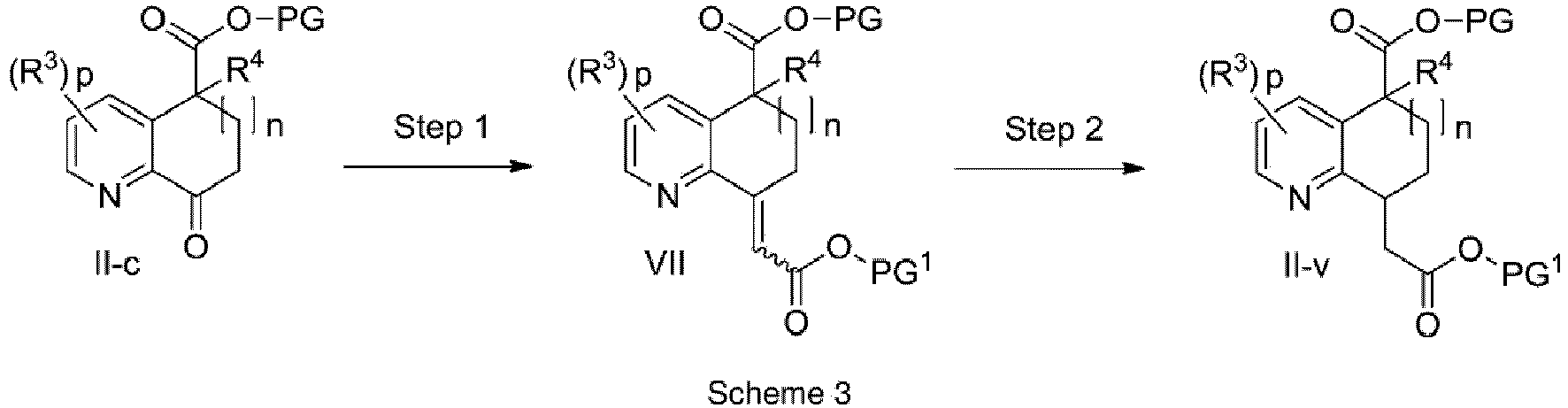
- The HWE reaction is carried out for preparation of the compounds of formula VII, the compounds of formula II-c treated with a trialkyl phosphono acetate such as t-butyl dimethylphosphonoacetate in the presence of a base in a suitable solvent such as THF at temperature of -40 to 50 °C (Step 1). The compounds of formula II-v can be prepared by hydrogenation of the compounds of formula VII with a hydrogen in the presence of a metal catalyst such as platinum oxide, palladium in a suitable solvent such as alcohols at temperature of 0 to 40 °C.
- The following illustrates a preparation of the desired compounds of formulae II-s and II-y (Scheme 4).

- The compounds of formula II-s can be prepared by alkylation of the compounds of formula II-d with an alkylation reagent such as alkylhalides, alkenylalkylhalides in the presence of a base, and/or additives such as silver(l)oxide in a suitable solvent such as THF, NMP at temperature of -10 to 100 °C (Step 1a). The compounds of formula II-y can be prepared by deoxygenative fluorination of the compounds of formula II-d with a deoxygenative fluorination reagent such as DAST, Deoxo-Fluor(trademark) in a suitable solvent such as halogenated hydrocarbons, ethers at temperature of -50 to 20 °C (Step 1b).
- Compounds of formula III, if not commercially available, can be prepared by known procedures or following procedures outlined in Scheme 5. R5 and R6 are hydrogen, q is 0, R8 is aryl. The compounds formula III-a can be prepared from the compounds of formula VIII by the following steps; bromination (Step 1), fluorination (Step 2), and reduction (Step 3). The compounds of formula III-b can be prepared from the compounds of formula VIII by the following steps; bromination (Step 1), nucleophilic substitution (Step 4), and reduction (Step 3).

- The bromination is carried out for the compounds of formula VIII with a bromine source such as NBS in the presence of a radical initiator such as AIBN in a suitable solvent such as carbon tetrachloride at temperature of 50- to 100 °C to afford the compounds of formulae IX and X (Step 1). The fluorination to the compounds of formula IX is carried out with a fluorine source such as silver tetrafluoroborate to afford the compounds of formula XI (Step 2). The compounds of formula XII can be prepared by nucleophilic substitution of the compounds of formula X with a suitable nucleophile such as sodium acetate in a suitable solvent such as AcOH at temperature of 80- to 120 °C. The compounds of formulae III-a and III-b can be prepared by reduction of the compounds of formulae XI and XII with a suitable reducing reagent such as borane-THF complex in a suitable solvent such as THF at temperature of -10 to 80 °C.
- The following illustrates a preparation of the desired compounds of formulae I-c and I-d (Scheme 6). R1 and R2 form ketone (I-c) and R1 is hydrogen, R2 is hydroxyl (I-d), R3, R4, R5, R6, R7a, R7b, R8, n, p, and q are as defined above.

- The compounds of formula I-d can be prepared by the same procedure as described in the Step 6 in Scheme 2. The diastereoisomers of the compounds of formula I-d can be separate by silica gel column chromatography or preparative TLC. The compounds of formula I-c can be prepared by oxidation of the compounds of formula I-d with an oxidizing reagent such as Dess-Martin periodinane, TEMPO, and N-t-butylphenylsulfinimidoyl chloride in a suitable solvent such as dichloromethane, toluene at temperature of -10 to 70 °C.
- The following illustrates a preparation of the desired compounds of formulae I-c, and I-f (Scheme 7). R1 and R2 form methylene (I-e), R1 and R2 form ketone (I-c) and R1 is hydroxyl, R2 is hydroxymethyl (I-f), R3, R4, R5, R6, R7a, R7b, R8, n, p, and q are as defined above.
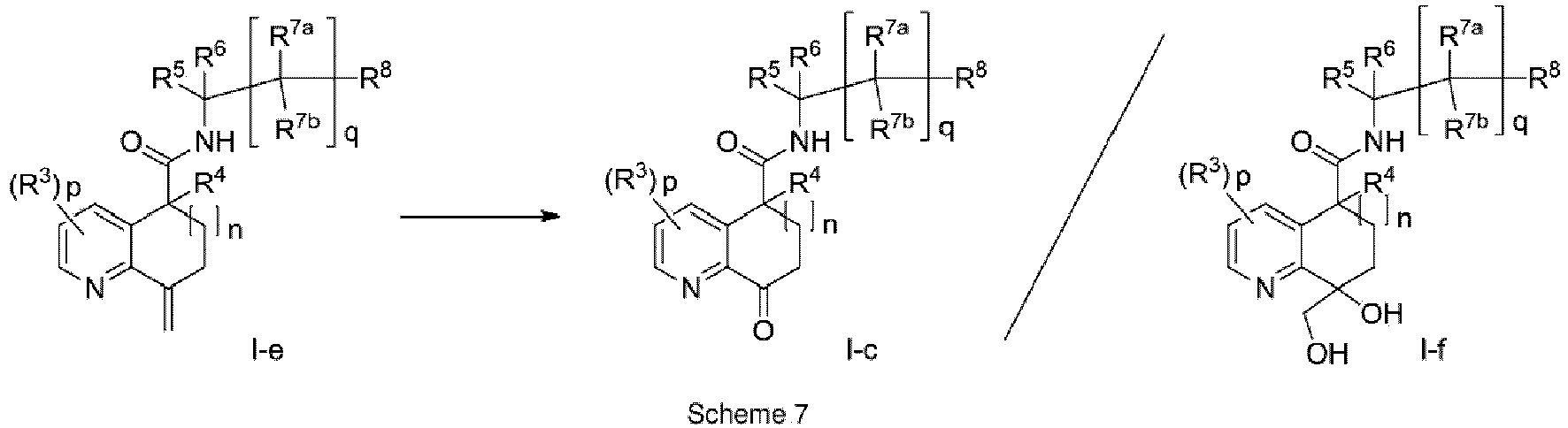
- The compounds of formula I-c can be prepared by the same procedure as described in the Step 5 in Scheme 2. The compounds of formula I-f can be prepared by dihydroxylation of the compounds of formula I-e with an oxidizing reagent such as osmium tetroxide in the presence or absence of co-oxidants such as NMO in a suitable solvent such as alcohols and water at temperature of -10 to 60 °C.
- The following illustrates a preparation of the desired compounds of formulae I-g, and I-h (Scheme 8). R1 and R2 form ketone (I-c), R1 and R2 form methylene (I-e), R1 and R2 form epoxide (I-g), and R1 is hydroxyl, R2 is nucleophilic group (Nu) such as acyloxy groups, hydroxides, alkoxides, fluoride, cyano, amines, azides, sulfides (I-h), R3, R4, R5, R6, R7a, R7b, R8, n, p, and q are as defined above.

- The compounds of formula I-g can be prepared by epoxidation of the compounds of formula I-e with NBS in a suitable solvent such as aqueous tert-butanol at temperature of 30- to 80 °C and then treatment with a base such as NaOH at temperature of -10 to 10 °C. The compounds of formula I-g can be prepared by epoxidation of the compounds of formula I-c with a sulfur ylide reagent such as dimethyloxosulfonium methylide in a suitable solvent such as DMSO at temperature of -10 to 50 °C. The diastereo isomers can be separate by silica gel column chromatography or preparative TLC. The nucleophilic addition of the compounds of formula I-g for the synthesis of the compounds of formula I-h is carried out with the nucleophiles such as alkali metal hydroxide, alkali metal alkoxide, acyloxy groups, alkali metal cyanide, alkali metal fluoride, substituted or unsubstituted alkylsulfide, and amine or the corresponding ammonium salt of nucleophiles in a suitable solvent such as halogenated hydrocarbons, ethers, aromatic hydrocarbons, amides, inert amines, sulfoxides at temperature of -80 to 100 °C in the presence or in the absence of a catalyst such as copper salts or zinc salts.
- The following illustrates a preparation of the desired compounds of formulae I-i, I-j, and I-k (Scheme 9). LvG and LvG1 are leaving groups such as halogen, hydroxyl, sulfonate, azide, imidazole. In the case where R10a is LvG1 substituted C1-C2alkyl and Y' and Y2 are hydrogen (l-h-1 and I-j) or R10a is hydrogen and Y' and Y2 form carbonyl (l-h-1, l-i, and l-k), R3, R4, R5, R6, R7a, R7b, R8, R9a, n, p, and q are as defined above.

- The compounds of formula l-i can be prepared by amidation of the compounds of formula l-h-1 (R10a is hydrogen) with a carboxylic acid XIII (LvG is hydroxyl) under "amidation" condition as described above, or with a activated carboxylic acid XIII such as acid halide (LvG is halogen) in a suitable base such as trialkylamine in a suitable solvent such as dichloromethane at temperature of -30 to 20 °C. In the case where n is 0, the cyclized compounds of formula l-k can be prepared in this step without following "cyclization" step. In the case where LvG1 is not hydroxyl, the compounds of formulae I-j and I-k can be prepared by cyclization of the compounds of formula I-i or l-h-1 (R10a is LvG1 substituted C1-C2alkyl) in the presence of a suitable base such as potassium tert-butoxide in a suitable solvent such as alcohol and /or halogenated hydrocarbons at temperature of -20 to 50 °C. In the case where LvG1 is hydroxyl, the compounds of formulae I-j and I-k can be prepared by intramolecular Mitsunobu reaction of the compounds of formula l-h-1 or l-i with a Mitsunobu reagents such as N,N,N',N'-tetraalkylazodicarboxamide or dialkylazodicarboxylate in the presence of trialkylphosphine or triarylphosphine in a suitable solvent such as THF at temperature of -40 to 80 °C.
- The following illustrates a preparation of the desired compounds of formula I-l (Scheme 10). R1 is hydroxyl, R2 is C1alkylthio-R9a, m is 0 (l-h-2), or m is 1 or 2 (I-l), R3, R4, R5, R6, R7a, R7b, R8, R9a, n, p, and q are as defined above.

- The compounds of formula I-l can be prepared by oxidation of the compounds formula l-h-2 with an oxidizing reagent such as mCPBA in a suitable solvent such as halogenated hydrocarbons at temperature of -20 to 50 °C.
- The following illustrates a preparation of the desired compounds of formulae l-m and I-n (Scheme 11). R1 is hydroxyl, R2 is C1alkylazide (I-h-3), or R1 and R2 form aziridine (I-m), or R1 is amino, R2 is hydroxyC1alkyl (I-n), R3, R4, R5, R6, R7a, R7b, R8, R9a, n, p, q, and PG are as defined above.

- The compounds of formula l-m can be prepared by aziridine formation of the compounds formula l-h-3 with a triphenylposphine in a suitable solvent such as aqueous MeCN at temperature of 20- to 100 °C (Step 1). The compounds of formula I-n can be prepared by following reactions, protection of aziridine (Step 2), nucleophilic ring opening and hydrolysis (Step 3), and deprotection (Step 4). The suitable PG such as 2-nitrophenylsulfonyl group, the protection and deprotection reactions can be performed in the usual manner. The compounds of formula XV can be prepared by nucleophilic addition and then hydrolysis of the compounds of formula XIV with a metal carboxide such as alkali metal acetoxide in a suitable solvent such as DMF at temperature of 60- to 120 °C and followed by hydolysis with an alkali metal hydroxide such as NaOH in a suitable solvent such as DMF at room temperature. The compounds of formula I-n can be prepared by deprotection of the compounds of formula XV by the usual manner such as 4-mercaptobenzoic acid in a suitable solvent such as DMF at temperature of 70- to 120 °C.
- The following illustrates a preparation of the desired compounds of formula I-o (Scheme 12). R1 is amino, R2 is hydroxyC1alkyl (I-n), R3, R4, R5, R6, R7a, R7b, R8, R9a, LvG, LvG1, n, p, and q are as defined above.

- The compounds of formula I-o can be prepared by the same procedure as described in Scheme 9 from the compounds of formula I-n via the compounds of formula XVI.
- The following illustrates a preparation of the desired compounds of formulae I-p, l-q, and l-r (Scheme 13). R1 is hydrogen and R2 is hydroxyl (I-d), R is methyl or phenyl, R2 is thioester (I-p), R2 is sulfide (l-q), R2 is sulfoxide or sulfone (I-r), R3, R4, R5, R6, R7a, R7b, R8, R9a, m, n, p, and q are as defined above.

- The compounds of formula l-p can be prepared by Mitsunobu reaction of the compounds of formula I-d with a thiocarboxylic acid such as thioacetic acid, thiobenzoic acid under Mitsunobu reaction condition as described above.
- The compounds of formula l-q can be prepared by S-alkylation of the compounds of formula I-p with an alkylation reagent such as dimethyl sulfonate, alkylhalides in the presence of alkali metal hydroxide in a suitable solvent such as halogenated hydrocarbons, ethers, alcohols at temperature of -20 to 50 °C. The compounds of formula I-r can be prepared by the same procedures as described in Scheme 10.
- The following illustrates a preparation of the desired compounds of formulae l-s, l-t and I-u (Scheme 14). R1 is hydrogen and R2 is alkenylalkoxide (I-s), R2 is hydroxyalkoxide (l-t), R2 is hydroxy substituted hydroxyalkoxide (I-u), R4, R5, R6, R7a, R7b, and R8 are as defined above.

- The compounds of formula l-t can be prepared by oxidation of the compounds of formula l-s with an oxidizing reagent such as ozone at temperature of -100 to -60 °C and then treated with sodium tetrahydroborate in a suitable solvent such as halogenated hydrocarbons and/or alcohols. The compounds of formula I-u can be prepared by the same procedure of the "dihydroxylation" in Scheme 7.
- The following illustrates a preparation of the desired compounds of formulae I-w, and l-x (Scheme 15). R1 is hydrogen and R2 is "Protected carboxylic acid" alkyl (l-v), R2 is carboxylic acid alkyl (l-w), R2 is aminocarboxylalkyl (l-x), R4, R5, R6, R7a, R7b, R8, R9a and R10a are as defined above.

- The compounds of formula l-w can be prepared by deprotection of the PG from the compounds of formula I-v. The compounds of formula I-x can be prepared by "amidation" of the compounds of formula I-w with a coupling agent and amines. The general condition of "amidation" is described in above.
- The following illustrates a preparation of the desired compounds of formula II-e-2 (Scheme 16). R4 is hydroxyl or fluoro, R3, p, n, and PG are as defined above. The compounds of formula II-e-2 also can be prepared from the compounds of formula XVII by the following steps; alkenylacylation (Step 1), intramolecular Heck reaction (Step 2), cyanohydrination and deoxygenative fluorination (Step 3), and alcoholysis (Step 4).

- The compounds of formula XVIII can be prepared by alkenylacylation of the compounds of formula XVII, which is carried out by the following procedure. The preparation of the Grignard reagents of the compounds of formula XVII is carried out by the treatment of the compounds of formula XVII with a Turbo Grignard reagent such as 2-propylmagnesium chloride lithium chloride complex in the suitable solvent such as THF at temperature of -20 to 10 °C. The compounds of formula XVIII can be prepared by the following addition of an alkenylalkylacylhalides in the suitable solvent such as THF at temperature of -50 to 0 °C (Step 1). The compounds of formula XIX can be prepared from the compounds of formula XVIII by the same procedure as described in Scheme 2 Step 2 (Step 2). The compounds of formula XX can be prepared by cyanohydrination and following deoxygenative fluorination of the compounds of formula XIX. The cyanohydrination of the compounds of formula XIX is carried out with the cyanide source such as trimethylsilyl cyanide in the presence of a catalyst such as NMO in a suitable solvent such as THF at temperature of -10 to 30 °C. And then deoxygenative fluorination is carried out by the same procedure as described in Scheme 4 Step 1b (Step 3). The compounds of formula II-e-2 can be prepared from the compounds of formula XX by the same procedure as described in Scheme 2 Step 3 (Step 4).
- The following illustrates a preparation of the desired compounds of formula II-e-2 (Scheme 17). R3, R4, p, n, and PG are as defined above. The compounds of formula II-e-2 (R4 is fluoro) also can be prepared from the compounds of formula XVII by the following steps; alkenylalkylation (Step 1), intramolecular Heck reaction (Step 2), and deoxygenative fluorination (Step 3).

- The compounds of formula XXII, II-e-2 (R4 is hydroxyl), and ll-e-2 (R4 is fluoro) can be prepared by the same procedure as described in Scheme 16 Step 1 with an alkylation reagent of XXI (Step 1), Scheme 2 Step 2 (Step 2), and Scheme 4 Step 1b (Step 3).
- The following illustrates a preparation of the desired compounds of formula l-g (Scheme 18). R3, R4, R5, R6, R7a, R7b, R8, p, n, q, and PG are as defined above. The compounds of formula I-g also can be prepared from the compounds of formula II-e-2 by the following steps; hydrolysis (Step 1), iodolactonization (Step 2), and nucleophilic amidation (Step 3).

- The compounds of formula XXIII can be prepared from the compounds of formula II-e-2 by hydrolysis with a base such as NaOH in a suitable solvent such as MeOH, THF at temperature 0 to 40 °C. The compounds of formula XXIII also can be prepared by hydrolysis with an enzyme such as lipase in a suitable solvent such as phosphate buffer at temperature 20 to 40 °C (Step 1). The compounds of formula XXIV can be prepared from the compounds of formula XXIII by iodolactonization which is carried out in the presence of iodine or NIS and a base such as K2CO3 in a suitable solvent such as MeCN, DMF, DMSO at temperature 0 to 40 °C (Step 2). The Step 1 and Step 2 can be carried out in one-pot. The compounds of formula I-g can be prepared by nucleophilic amidation of the compounds of formula XXIV with an amine III in the presence of a base such as K2CO3 in a suitable solvent such as DMF, DMSO, MeCN at temperature of 0 to 40 °C (Step 3).
- The following illustrates a preparation of the desired compounds of formula II-e-2 (Scheme 19). R4 is fluoro, R3, p, n, and PG are as defined above. The compounds of formula II-e-2 (R4 is fluoro) also can be prepared from the compounds of formula V by the following steps; reduction (Step 1), organocatalytic fluorination (Step 2), oxidation (Step 3), protection (Step 4), and intramolecular Heck reaction (Step 5).

- The compounds of formula XXV can be prepared by reduction of the compounds of formula V with a reducing reagent such as Diisobutylaluminium hydride in a suitable solvent such as toluene, THF at temperature of -78 to 0 °C (Step 1). The compounds of formula XXVI can be prepared by organocatalytic fluorination of the compounds of formula XXV, which is carried out with an organocatalyst and fluorination reagent such as proline, imidazolidinone organocatalysts and NFSI, Selectfluor (registered trademark) in a suitable solvent such as DMF, THF, toluene, and ether at temperature -20 to 50 °C (Step 2). The compounds of formula XXVII can be prepared by oxidation of the compounds of formula XXVI with an oxidizing reagent such as sodium chlorite in a suitable solvent such as tert-BuOH at temperature of -10 to 40 °C (Step 3). The compound of formula XXVIII can be prepared by protection of the compound of formula XXVII (Step 4). The compound of formula II-e-2 (R4 is fluoro) can be prepared from the compounds of formula XXVIII by cyclization with a palladium catalyst and a base such as Pd(OAc)2 and N,N-Diisopropylethylamine in the presense of a phosphine ligand such as BINAP, Xantphos in a suitable soluvent such as DMF at temperature of 50 to 150 °C as described in the Step 5. The compound of formula II-e-2 (R4 is fluoro) can be also prepared from the compounds of formula V by the same procedure as described in the Step 2, Step 3, and Step 4 in Scheme 2.
- The invention is illustrated in the following non-limiting examples in which, unless stated otherwise: all reagents are commercially available, all operations were carried out at room or ambient temperature, that is, in the range of about 18-25 °C; evaporation of solvent was carried out using a rotary evaporator under reduced pressure with a bath temperature of up to about 60 °C; reactions were monitored by thin layer chromatography (TLC) and reaction times are given for illustration only; the structure and purity of all isolated compounds were assured by at least one of the following techniques: TLC (Merck silica gel 60 F254 precoated TLC plates or Merck NH2 F2548 precoated HPTLC plates), mass spectrometry or nuclear magnetic resonance (NMR). Yields are given for illustrative purposes only. Flash column chromatography was carried out using Merck silica gel 60 (230-400 mesh ASTM) or Fuji Silysia Chromatorex(trademark) DU3050 (Amino Type, 30-50 microm) or Biotage silica (32-63 mm, KP-Sil) or Biotage amino bounded silica (35-75 mm, KP-NH). SCX cartridge column chromatography was carried out using Biotage ISOLUTE(trademark) SCX-2 (1 g, 6 mL) SPE column. The purification of compounds using HPLC was performed by the following apparatus and conditions; Apparatus; Waters MS-trigger AutoPurification(trademark) system Column; Waters XTerra C18, 19 x 50 mm, 5 mm particle, solvent systems; Methanol or acetonitrile / 0.05%(v/v) formic acid aqueous solution, or; methanol or acetonitrile / 0.01% (v/v) ammonia aqueous solution. Low-resolution mass spectral data (ESI) were obtained by the following apparatus and conditions: Apparatus; Waters Alliance HPLC system on ZQ or ZMD mass spectrometer and UV detector. NMR data was determined at 270 MHz (JEOL JNM-LA 270 spectrometer), 300 MHz (JEOL JNM-LA300), 400 MHz (JEOL ECZ 400S) using deuterated chloroform (99.8% D) or dimethylsulfoxide (99.9% D) as solvent unless indicated otherwise, relative to tetramethylsilane (TMS) as internal standard in parts per million (ppm); conventional abbreviations used are: s = singlet, d = doublet, t = triplet, q = quartet, quin = quintet, m = multiplet, br = broad. Chemical symbols have their usual meanings; microL (microliter(s)), microg (microgram(s)), M (mol(s) per liter), L (liter(s)), mL (milliliter(s)), g (gram(s)), mg (milligram(s)), mol (moles), mmol (millimoles).
-
- Apparatus: Waters ACQUITY UPLC / ACQUITY PDA Detector / ZQ 2000
- Column: Waters ACQUITY BEH C18, 2.1 × 100 mm
- Column temperature: 60 °C
- PDA detection (scan range): 200 - 400 nm
- MS detection: ESI positive/negative mode
- Solvents:
- A1: 10 mM ammonium acetate aqueous solution
- B1: acetonitrile
-
- Apparatus: Waters ACQUITY UPLC / ACQUITY PDA Detector / ZQ 2000
- Column: YMC Meteoric core C18, 2.1 × 100 mm
- Column temperature: 60 °C
- PDA detection (scan range): 200 - 400 nm
- MS detection: ESI positive/negative mode
- Solvents:
- A1: 10 mM ammonium acetate aqueous solution
- B1: acetonitrile
-
- Apparatus: Waters ACQUITY UPLC / ACQUITY PDA Detector / ZQ 2000
- Column: Waters ACQUITY BEH C18, 2.1 × 100 mm
- Column temperature: 60 °C
- PDA detection (scan range): 200 - 400 nm
- MS detection: ESI positive/negative mode
- Solvents:
- A1: 10 mM ammonium acetate aqueous solution
- B1: acetonitrile
-
- Apparatus: Waters ACQUITY UPLC / ACQUITY PDA Detector / ZQ 2000
- Column: YMC Triart C18, 2.1 × 100 mm, 1.9 microm particle
- Column temperature: 60 °C
- PDA detection (scan range): 200 - 400 nm MS detection: ESI positive/negative mode
- Solvents:
- A1: 10 mM ammonium acetate aqueous solution
- B1: acetonitrile
-
- Apparatus: Waters Alliance 2695 / 2996 PDA
- Column: DAICEL CHIRALCEL OJ-H, 4.6 mm x 250 mm
- Column temperature: 40 °C
- UV detection: 270 nm
- Solvents: n-hexane/2-propanol/diethylamine = 95/5/0.1
- Flow rate: 1 mL/min
- Run time: 40 min
-
- Apparatus: Waters Alliance 2695 / 2996 PDA
- Column: DAICEL CHIRALPAK IC-3, 4.6 mm x 250 mm
- Column temperature: 40 °C
- UV detection: 265 nm
- Solvents:
- A2: 0.1% diethylamine in n-hexane
- B2: 0.1% diethylamine in 2-propanol
-
- Apparatus: Waters Alliance 2695 / 2996 PDA
- Column: DAICEL CHIRALPAKAD-H 4.6 mm x 250 mm
- Column temperature: 40 °C
- UV detection: 265 nm
- Solvents: n-hexane/ethanol/diethylamine = 94/6/0.1
- Flow rate: 1 mL/min
- Run time: 30 min
-
- Apparatus: Waters Alliance 2695 / 2996 PDA
- Column: DAICEL CHIRALCEL OD-H, 4.6 mm x 250 mm
- Column temperature: 40 °C
- UV detection: 270 nm
- Solvents: n-hexane/2-propanol/diethylamine = 95/5/0.1
- Flow rate: 1 mL/min
- Run time: 20 min
-
- Apparatus: Waters Alliance 2695 / 2996 PDA
- Column: DAICEL CHIRALPAKAD-H, 4.6 x 250 mm
- Column temperature: 40 °C
- UV Detection: 265 nm
- Solvents: n-hexane/ethanol/diethylamine = 88/12/0.1
- Flow rate: 1 mL/min
- Run time: 30 min
-
- Apparatus: Waters Alliance 2695 / 2996 PDA
- Column: DAICEL CHIRALCEL OD-H, 4.6 mm x 250 mm
- Column temperature: 40 °C
- UV detection: 265 nm
- Solvents: n-hexane/2-propanol/diethylamine = 85/15/0.1
- Flow rate: 1 mL/min
- Run time: 50 min
-
- Apparatus: Waters Alliance 2695 / 2996 PDA
- Column: DAICEL CHIRALCEL OJ-H, 4.6 mm x 250 mm
- Column temperature: 40 °C
- UV detection: 265 nm
- Solvents: n-hexane/ethanol/diethylamine = 90/10/0.1
- Flow rate: 1 mL/min
- Run time: 45 min
-
- Apparatus: Waters Alliance 2695 / 2996 PDA
- Column: Daicel CHIRALPAK IC
- Column Temperature: 40 °C
- UV detection: 245 nm
- Solvents: n-hexane/2-propanol = 90/10
- Flow rate: 1 mL/min
- Run time: 35 min
- To a solution of substrate (1.0 eq.) in THF was added dropwise 1.1 M NaHMDS in THF solution (1.2 eq.) at -78 °C under N2 atmosphere. After addition, the mixture was stirred at -78 °C for 2 h. A THF solution of alkenylalkylhalide was added dropwise to the mixture at -78 °C and the mixture was stirred at this temperature for 1 h. The mixture was warmed to room temperature. After being stirred at room temperature until complete reaction, the mixture was quenched with water. The mixture was extracted with EtOAc twice and washed successively with 10% aq. citric acid, aq. NaHCOs, and brine. The extracts were combined, dried over Na2SO4, and concentrated in vacuo. The resulting residue was purified by silica gel column chromatography to afford the following intermediates (Table 1).
{Table 1} Intermediates Structure Chemical Name Substrate alkenyl alkylhalide V-1 
2-(2-chloropyridi n-3-yl) hex-5-enenitrile 

V-2 
2-(2-chloropyridi n-3-yl) pent-4-enenitrile 

V-3 
2-{2-chloro-5-fluoropyri din-3-yl)hex-5-enenitrile 

V-4 
2-(2-chloro-5-methylpyr idin-3-yl)hex-5-enenitril e 

- 1H NMR (CDCl3) delta 8.40 (1 H, dd, J = 4.9, 1.8 Hz), 7.92 (1 H, dd, J = 7.3, 1.8 Hz), 7.34 (1 H, dd, J = 7.3, 4.9 Hz), 5.80 (1 H, ddt, J = 17.1, 10.4, 7.3 Hz), 5.16 (1 H, br d, J = 17.1 Hz), 5.11 (1 H, br d, J = 10.4 Hz), 4.27 (1 H, dd, J = 9.2, 4.9 Hz), 2.42-2.27 (2 H, m), 2.04-1.90 (2 H, m).
- MS (ESI) m/z: 207.1 (M+H)+.
- 1H NMR (CDCl3) delta 8.40 (1 H, dd, J = 4.9, 1.8 Hz), 7.89 (1 H, dd, J = 7.9, 1.8 Hz), 7.34 (1 H, dd, J = 7.9, 4.9 Hz), 5.83 (1 H, ddt, J = 17.1, 9.8, 7.3 Hz), 5.24 (1 H, br d, J = 9.8 Hz), 5.21 (1 H, br d, J = 17.1 Hz), 4.35 (1 H, dd, J = 7.9, 4.9 Hz), 2.73 (1 H, m), 2.61 (1 H, m).
- MS (ESI) m/z: 193.2 (M+H)+.
- 1H NMR (CDCl3) delta 8.28 (1 H, dd, J = 15.3, 3.1 Hz), 7.69 (1 H, dd, J = 7.9, 3.1 Hz), 5.79 (1 H, ddt, J = 17.1, 10.4, 6.1 Hz), 5.18 (1 H, br dd, J = 17.1, 1.2 Hz), 5.12 (1 H, br dd, J = 10.4, 1.2 Hz), 4.24 (1 H, dd, J = 9.8, 5.5 Hz), 2.44-2.28 (2 H, m), 2.08-1.92 (2 H, m).
- MS (ESI) m/z: 225.0 (M+H)+.
- 1H NMR (CDCl3) delta 8.19 (1 H, d, J = 1.8 Hz), 7.71 (1 H, d, J = 1.8 Hz), 5.80 (1 H, ddt, J = 17.1, 10.4, 6.1 Hz), 5.16 (1 H, br d, J = 17.1 Hz), 5.10 (1 H, br d, J = 10.4 Hz), 4.23 (1 H, m), 2.41-2.25 (2 H, m), 2.37 (3 H, s), 2.06-1.90 (2 H, m).
- MS (ESI) m/z: 221.2 (M+H)+.
- A mixture of substrate (1.0 eq.), triethylamine (3.0 eq.), (+/-)-BINAP (0.135 eq.), and Pd(OAc)2 (0.135 eq.) in MeCN was heated at reflux until complete reaction. After cooling at room temperature, NH gel was added to the mixture and the mixture was filtered. The filter cake was washed with EtOAc. The filtrate was concentrated in vacuo. EtOAc was added to the resulting residue and the insoluble material was removed by filtration. Water was added to the filtrate, the mixture was extracted with EtOAc twice. The extracts were washed with brine, dried over Na2SO4, and concentrated in vacuo. The resulting residue was purified by silica gel column chromatography to afford the following intermediates (Table 2).
{Table 2} Intermediates Structure Chemical Name Substrate VI-1 
8-methylene-5,6,7,8-tetrahydroqui noline-5-carbonitrile 
VI-2 
7-methylene-6,7-dihydro-5H-cyclo penta[b]pyridine-5-carbonitrile 
VI-3 
3-fluoro-8-methylene-5,6,7,8-tetra hydroquinoline-5-carbonitrile 
VI-4 
3-methyl-8-methylene-5 ,6,7 ,8-tetr ahydroquinoline-5-carbonitrile 
- 1H NMR (CDCl3) delta 8.57 (1 H, dd, J = 4.2, 1.8 Hz), 7.73 (1 H, dd, J = 7.9, 1.8 Hz), 7.23 (1 H, dd, J = 7.9, 4.2 Hz), 6.38 (1 H, d, J = 1.8 Hz), 5.25 (1 H, d, J = 1.8 Hz), 4.07 (1 H, dd, J = 7.9, 4.9 Hz), 2.92 (1 H, m), 2.70 (1 H, m), 2.32-2.15 (2 H, m).
- MS (ESI) m/z: 171.1 (M+H)+.
- 1H NMR (CDCl3) delta 8.60 (1 H, br d, J = 5.3 Hz), 7.81 (1 H, dd, J = 7.9, 1.3 Hz), 7.26 (1 H, dd, J = 7.9, 5.3 Hz), 6.11 (1 H, br t, J = 2.0 Hz), 5.51 (1 H, br t, J = 2.0 Hz), 4.22 (1 H, dd, J = 8.6, 5.9 Hz), 3.34 (1 H, m), 3.17 (1 H, m).
- MS (ESI) m/z: 157.2 (M+H)+.
- 1H NMR (CDCl3) delta 8.44 (1 H, d, J = 15.9, 3.1 Hz), 7.47 (1 H, dd, J = 8.6, 3.1 Hz), 6.28 (1 H, d, J = 1.2 Hz), 5.24 (1 H, d, 1.2 Hz), 4.07 (1 H, dd, J = 8.6, 4.9 Hz), 2.94-2.87 (1 H, m), 2.73-2.64 (1 H, m), 2.34-2.27 (1 H, m), 2.23-2.15 (1 H, m).
- MS (ESI) m/z: 189.1 (M+H)+.
- 1H NMR (CDCl3) delta 8.38 (1 H, d, J = 1.2 Hz), 7.52 (1 H, d, J = 1.2 Hz), 6.29 (1 H, d, J = 1.2 Hz), 5.18 (1 H, d, J = 1.2 Hz), 4.02 (1 H, m), 2.88 (1 H, m), 2.66 (1 H, m), 2.36 (3 H, s), 2.31 (1 H, m), 2.17 (1H, m).
- MS (ESI) m/z: 185.2 (M+H)+.
- To a solution of substrate (1.0 eq.) in MeOH (0.2 M) was added TMSCI (30 eq.) at ambient temperature. The mixture was heated at reflux until complete reaction, and then cooled to room temperature. The mixture was basified with aq. NaHCO3 and the mixture was concentrated in vacuo to remove volatile. The resulting residue was extracted with EtOAc twice and washed with brine. The extracts were combined, dried over Na2SO4, and concentrated in vacuo. The resulting residue was purified by silica gel column chromatography to afford the following intermediates (Table 3).
{Table 3} Intermediates Structure Chemical Name Substrate II-e-1-1 
methyl 8-methylene-5,6,7,8-tetrahydroqui noli ne-5-carboxylate 
II-e-1-2 
methyl 7-methylene-6,7-dihydro-5H-cyclo penta[b]pyridine-5-carboxylate 
II-e-1-3 
methyl 3-fluoro-8-methylene-5,6,7,8-tetra hydroquinoline-5-carboxylate 
II-e-1-4 
methyl 3-methyl-8-methylene-5,6,7,8-tetr ahydroquinoline-5-carboxylate 
- 1H NMR (CDCl3) delta 8.51 (1 H, dd, J = 4.3, 1.8 Hz), 7.52 (1 H, dd, J = 7.9, 1.8 Hz), 7.14 (1 H, dd, J = 7.9, 4.3 Hz), 6.29 (1 H, d, J = 1.8 Hz), 5.18 (1 H, d, J = 1.8 Hz), 3.88 (1 H, dd, J = 5.5, 5.5 Hz), 3.73 (3 H, s), 2.81 (1 H, m), 2.65 (1 H, m), 2.30 (1 H, m), 2.07 (1 H, m).
- MS (ESI) m/z: 204.1 (M+H)+.
- 1H NMR (CDCl3) delta 8.52 (1 H, dd, J = 4.9, 1.8 Hz), 7.79 (1 H, dd, J = 7.3, 1.8 Hz), 7.16 (1 H, dd, J = 7.3, 4.9 Hz), 6.04 (1 H, br t, J = 2.4 Hz), 5.25 (1 H, br t, J = 2.4 Hz), 4.13 (1 H, dd, J = 9.2, 5.5 Hz), 3.76 (3 H, s), 3.27 (1 H, m), 3.09 (1 H, m).
- MS (ESI) m/z: 190.2 (M+H)+.
- 1H NMR (CDCl3) delta 8.35 (1 H, dd, J = 15.3, 3.1 Hz), 7.26 (1 H, dd, J = 7.9, 3.1 Hz), 6.19 (1 H, s), 5.15 (1 H, d, J = 1.8 Hz), 3.87 (1 H, dd, J = 5.5, 5.5 Hz), 3.73 (3 H, s), 2.77 (1 H, m), 2.63 (1 H, m), 2.28 (1 H, m), 2.06 (1 H, m).
- MS (ESI) m/z: 222.1 (M+H)+.
- 1H NMR (CDCl3) delta 8.32 (1 H, brs), 7.29 (1 H,brs),6.21 (1 H, brs), 5.10 (1 H, brs), 3.83 (1 H, m), 3.71 (3 H, s), 2.78 (1 H, m), 2.60 (1 H, m), 2.30 (3 H, s), 2.24 (1 H, m), 2.03 (1 H, m).
- MS (ESI) m/z: 218.1 (M+H)+.
- To a stirred solution of substrate (1.0 eq.) in THF was added 1.1 M THF solution of NaHMDS (1.3 eq.) at -78 °C under N2 atmosphere. After being stirred at -78 °C for 30 min, NFSI (1.3 eq.) was added to the mixture. The mixture was stirred at -78 °C until complete reaction and then warmed to room temperature. The mixture was poured into water and extracted with EtOAc. The extract was dried over Na2SO4 and concentrated in vacuo. The resulting residue was purified by silica gel column chromatography to afford the following intermediates (Table 4).
- To a stirred solution of substrate (1.0 eq.) in THF was added 1.1 M THF solution of NaHMDS (1.2 eq.) at 0 °C under N2 atmosphere. After being stirred at 0 °C for 20 min, Togni reagent (1.2 eq.) in THF was added to the mixture. The mixture was warmed to room temperature and stirred until complete reaction. The mixture was poured into water and extracted with EtOAc. The extract was dried over Na2SO4, and concentrated in vacuo. The residue was purified by silica gel column chromatography to afford the following intermediates (Table 4).
{Table 4} Intermediates Structure Chemical Name Substrate General Procedure: Step 4 II-e-2-1 
methyl 5-fluoro-8-methylene-5,6,7,8-tetr ahydroquinoline-5-carboxylate 
A II-e-2-2 
methyl 5-fluoro-7-methylene-6,7-dihydro -5H-cyclopenta[b]pyridine-5-carb oxylate 
A II-e-2-3 
methyl 3,5-difluoro-8-methylene-5,6,7,8-tetrahydroquinoli ne-5-carboxylat e 
A II-e-2-4 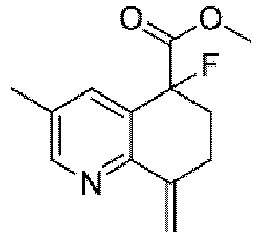
methyl 5-fluoro-3-methyl-8-methylene-5, 6,7,8-tetrahydroquinoline-5-carb oxylate 
A II-e-2-5 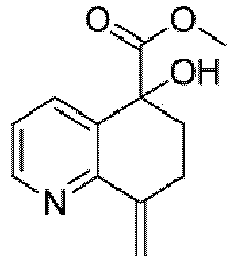
methyl 5-hydroxy-8-methylene-5,6,7,8-t etrahydroquinoline-5-carboxylate 
B - 1H NMR (CDCl3) delta 8.63 (1 H, ddd, J = 4.3, 1.8, 1.2 Hz), 7.68 (1 H, dd, J = 7.9, 1.8 Hz), 7.24 (1 H, ddd, J = 7.9, 4.3, 1.8 Hz), 6.37 (1 H, br s), 5.31 (1 H, d, J = 1.2 Hz), 3.81 (3 H, s), 2.89-2.73 (2 H, m), 2.48 (1 H, m), 2.32 (1 H, m).
- MS (ESI) m/z: 222.1 (M+H)+.
- 1H NMR (CDCl3) delta 8.70 (1 H, ddd, J = 4.9, 1.8, 1.2 Hz), 7.83 (1 H, ddd, J = 7.9, 1.8, 1.2 Hz), 7.27 (1 H, dd, J = 7.9, 4.9 Hz), 6.20 (1 H, br t, J = 2.4 Hz), 5.36 (1 H, dd, J = 1.8, 1.2 Hz), 3.83 (3 H, s), 3.58 (1 H, m), 3.20 (1 H, m).
- MS (ESI) m/z: 208.2 (M+H)+.
- 1H NMR (CDCl3) delta 8.48 (1 H, m), 7.42 (1 H, dd, J = 8.6, 1.8 Hz), 6.27 (1 H, s), 5.28 (1 H, s), 3.83 (3 H, s), 2.82 (2 H, m), 2.45 (1 H, m), 2.29 (1 H, m).
- MS (ESI) m/z: 240.0 (M+H)+.
- 1H NMR (CDCl3) delta 8.37 (1 H, brs), 7.36 (1 H, brs), 6.23 (1 H, brs), 5.19 (1 H, brs), 3.76 (3 H, s), 3.73 (1 H, m), 2.40-2.24 (2 H, m), 2.30 (3 H, s), 2.08 (1 H, m).
- MS (ESI) m/z: 236.2 (M+H)+.
- 1H NMR (CDCl3) delta 8.55 (1 H, dd, J = 4.6, 2.0 Hz), 7.55 (1 H, dd, J = 7.9, 2.0 Hz), 7.19 (1 H, dd, J = 7.9, 4.6 Hz), 6.31 (1 H, br s), 5.26 (1 H, d, J = 2.0 Hz), 3.93 (1 H, br), 3.77 (3 H, s), 2.92-2.73 (2 H, m), 2.30 (1 H, ddd, J = 13.2, 8.6, 4.3 Hz), 2.10 (1 H, ddd, J = 13.2, 7.9, 4.6 Hz).
- MS (ESI) m/z: 220.2 (M+H)+.
- O3 was bubbled into a solution of substrate (1.0 eq.) in 50% CH2Cl2-MeOH at -78 °C until starting material consumed. N2 was bubbled into the mixture to remove the excess of O3 at -78 °C. The mixture was quenched with Me2S (2.0 eq.) and the mixture was warmed to room temperature. The mixture was concentrated in vacuo and the resulting residue was purified by silica gel column chromatography to afford the following Intermediates (Table 5).
{Table 5} Intermediates Structure Chemical Name Substrate II-c-1 
methyl 8-oxo-5,6,7,8-tetrahydroquinoline-5-carboxylate 
II-c-2 
methyl 5-fluoro-8-oxo-5,6,7,8-tetrahydroq uinoline-5-carboxylate 
II-c-3 
methyl 3,5-difluoro-8-oxo-5,6,7,8-tetrahyd roquinoline-5-carboxylate 
II-c-4 
methyl 5-fluoro-3-methyl-8-oxo-5,6,7,8-tet rahydroquinoline-5-carboxylate 
- 1H NMR (CDCl3) delta 8.79 (1 H, dd, J = 4.6, 1.3 Hz), 7.78 (1 H, br d, J = 7.9 Hz), 7.46 (1 H, dd, J = 7.9, 4.6 Hz), 4.05 (1 H, dd, J = 5.2, 4.6 Hz), 3.76 (3 H, s), 3.04 (1 H, m), 2.82 (1 H, m), 2.59 (1 H, m), 2.43 (1 H, m).
- MS (ESI) m/z: 206.1 (M+H)+.
- 1H NMR (CDCl3) delta 8.91 (1 H, dd, J = 4.3, 1.2 Hz), 7.96 (1 H, dd, J = 7.9, 1.2 Hz), 7.57 (1 H, dd, J = 7.9, 4.3 Hz), 3.85 (3 H, s), 3.06-3.03 (2 H, m), 2.85 (1 H, m), 2.63 (1 H, m).
- MS (ESI) m/z: 224.1 (M+H)+.
- 1H NMR (CDCl3) delta 8.73 (1 H, dd, J = 14.6, 2.4 Hz), 7.66 (1 H, dd, J = 7.9, 2.4 Hz), 3.86 (3 H, s), 3.06-2.99 (2 H, m), 2.85 (1 H, m), 2.62 (1 H, m).
- MS (ESI) m/z: 242.0 (M+H)+.
- 1H NMR (CDCl3) delta 8.72 (1 H, d, J = 1.4 Hz), 7.73 (1 H, d, J = 1.4 Hz), 3.86 (3 H, s), 3.03-2.99 (2 H, m), 2.82 (1 H, m), 2.61 (1H, m), 2.48 (3 H, s).
- MS (ESI) m/z: 238.2 (M+H)+.
- NaBH4 (1.5 eq.) was added to a solution of substrate (1.0 eq.) in MeOH and the mixture was stirred at room temperature until complete reaction. The mixture was poured into water and extracted with EtOAc. The extract was dried over Na2SO4 and concentrated in vacuo. The resulting residue was purified by silica gel column chromatography to afford the following intermediates (Table 6).
{Table 6} Intermediates Structure Chemical Name Substrate II-d-1 
methyl 8-hydroxy-5,6,7,8-tetrahydroquino line-5-carboxylate 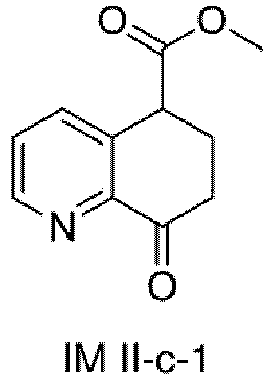
II-d-2 
methyl 5-fluoro-8-hydroxy-5,6,7,8-tetrahy d roquinoline-5-carboxylate 
- 1H NMR (CDCl3) delta 8.49 (1 H, d, J = 4.6 Hz), 7.61 (0.5 H, d, J = 7.9 Hz), 7.57 (0.5 H, d, J = 7.9 Hz), 7.20 (1 H, dd, J = 7.9, 5.3 Hz), 4.75 (0.5 H, dd, J = 8.6, 5.3 Hz), 4.67 (0.5 H, dd, J = 9.3, 5.3 Hz), 4.10 (1 H, br), 3.91 (0.5 H, dd, J = 7.9, 6.6 Hz), 3.82 (0.5 H, br), 3.75 (1.5 H, s), 3.72 (1.5 H, s), 2.44-1.99 (3.5 H, m), 1.81 (0.5 H, m).
- MS (ESI) m/z: 208.2 (M+H)+.
- 1H NMR (CDCl3) delta 8.64 (1 H, dd, J = 4.6, 1.3 Hz), 7.80 (0.5 H, d, J = 8.6 Hz), 7.69 (0.5 H, dd, J = 7.9, 1.3 Hz), 7.31 (1 H, dd, J = 7.9, 4.6 Hz), 4.80-4.71 (1 H, m), 4.31 (0.5 H, br), 3.84 (2 H, s), 3.80 (1.5 H, s), 2.75-2.63 (0.5 H, m), 2.53-2.00 (3.5 H, m).
- MS (ESI) m/z: 226.2 (M+H)+.
- To a stirred solution of tert-butyl 2-(diethoxyphosphoryl)acetate (1.0 eq.) in THF was added NaH (60% oil dispersant, 1.0 eq.) at 0 °C. After being stirred at this temperature for 1 h, a solution of substrate (1.0 eq.) in THF was added to the mixture. The mixture was warmed to room temperature and stirred until complete reaction. The reaction mixture was poured into water and extracted with EtOAc. The extract was dried over Na2SO4 and concentrated in vacuo. The resulting residue was purified by silica gel column chromatography to afford the following intermediates (Table 7).
{Table 7} Intermediates Structure Chemical Name Substrate VII-1 
methyl 8-(2-(tert-butoxy)-2-oxoethylidene) -5,6,7,8-tetrahydroquinoli ne-5-car boxylate 
VII-2 
methyl 8-(2-(tert-butoxy)-2-oxoethylidene) -5-fluoro-5,6,7,8-tetrahydroquinoli ne-5-carboxylate 
- 1H NMR (CDCl3) delta 8.54 (1 H, dd, J = 4.6, 1.3 Hz), 7.54 (1 H, br d, J = 7.9 Hz), 7.23 (1 H, dd, J = 7.9, 4.6 Hz), 7.15 (1 H, s), 3.87 (1 H, t, J = 5.3 Hz), 3.72 (3 H, s), 3.39 (1 H, m), 3.19 (1 H, m), 2.29 (1 H, m), 2.05 (1 H, m), 1.51 (9 H, s).
- MS (ESI) m/z: 304.2 (M+H)+.
- 1H NMR (CDCl3) delta 8.42 (1 H, dd, J = 4.6, 1.3 Hz), 7.54 (1 H, br d, J = 7.9 Hz), 7.15 (1 H, dd, J = 7.9, 4.6 Hz), 5.86 (1 H, s), 3.86 (1 H, t, J = 5.3 Hz), 3.70 (3 H, s), 2.80 (1 H, m), 2.56 (1 H, m), 2.32 (1 H, m), 2.13 (1 H, m), 1.56 (9 H, s).
- MS (ESI) m/z: 304.2 (M+H)+.
- 1H NMR (CDCl3) delta 8.65 (0.25 H, br d, J = 3.3 Hz), 8.54 (0.75 H, dd, J = 4.6, 2.0 Hz), 7.77 (0.25 H, br d, J = 7.9 Hz), 7.69 (0.75 H, br d, J = 7.3 Hz), 7.33 (0.25 H, dd, J = 7.9, 4.6 Hz), 7.24 (0.75 H, br d, J = 4.6 Hz), 5.98 (0.75 H, s), 5.30 (0.25 H, s), 3.81 (0.75 H, s), 3.80 (2.25 H, s), 3.42 (0.5 H, m), 2.78 (1.5 H, m), 2.30-2.10 (2 H, m), 1.58 (6.75 H, s), 1.52 (2.25 H, s). MS (ESI) m/z: 322.1 (M+H)+.
- 10% Pd-C (0.2 eq.) was added to a solution of substrate (1.0 eq.) in MeOH and the mixture was stirred until complete reaction at room temperature under H2 atmosphere. The reaction mixture was filtrated through a pad of cerite and the filtrate was concentrated in vacuo. The resulting residue was purified by silica gel column chromatography to afford the following intermediates (Table 8).
{Table 8} Intermediates Structure Chemical Name Substrate II-v-1 
methyl 8-(2-(tert-butoxy)-2-oxoethyl)-5,6, 7,8-tetrahydroquinoline-5-carboxyl ate 
II-v-2 
methyl 8-(2-(tert-butoxy)-2-oxoethyl)-5-flu oro-5,6,7,8-tetrahydroquinoline-5-carboxylate 
- 1H NMR (CDCl3) delta 8.45 (1 H, dd, J = 4.6, 1.3 Hz), 7.50 (1 H, br d, J = 7.3 Hz), 7.09 (1 H, dd, J = 7.3, 4.6 Hz), 3.81 (1 H, t, J = 5.3 Hz), 3.72 (3 H, s), 3.34 (1 H, m), 3.13 (1 H, dd, J = 10.5, 4.6 Hz), 2.41 (1 H, dd, J = 15.8, 9.9 Hz), 2.31-1.72 (4 H, m), 1.46 (9 H, s).
- MS (ESI) m/z: 306.1 (M+H)+.
- 1H NMR (CDCl3) delta 8.58 (0.5 H, d, J = 4.6 Hz), 8.49 (0.5 H, d, J = 4.6 Hz), 7.70 (0.5 H, d, J = 7.3 Hz), 7.53 (0.5 H, d, J = 7.9 Hz), 7.20 (0.5 H, dd, J = 7.9, 4.6 Hz), 7.13 (0.5 H, dd, J = 7.3, 4.6 Hz), 3.83 (1 H, t, J = 5.3 Hz), 3.74 (1.5 H, s), 3.72 (1.5 H, s), 3.55-3.30 (1 H, m), 3.15-2.94 (1 H, m), 2.57-2.41 (1 H, m), 2.4-1.7 (3 H, m), 1.47 (4.5 H, s), 1.45 (4.5 H,s).
- MS (ESI) m/z: 324.1 (M+H)+.
- To a solution of the substrate (1.0 eq.) in CCI4 were added NBS (1.2 eq.) and AIBN (0.1 eq.) at 50 °C under N2 atmosphere. The reaction mixture was heated at reflux and stirred for 2 h, another portion of AIBN (0.1 eq.) was added to the mixture. After being stirred at reflux for 16 h, the mixture was cooled to room temperature. The mixture was concentrated in vacuo and diethylether was added to the resulting residue. The insoluble materials were removed by filtration. The filtrate was washed with 2 N hydrochloric acid and brine. The extract was dried over Na2SO4 and concentrated in vacuo. The resulting residue was purified and separated by column chromatography to afford the following intermediates, di-bromide IX and mono-bromide X (Table 9).
{Table 9} Intermediates Structure Chemical Name Substrate IX-1 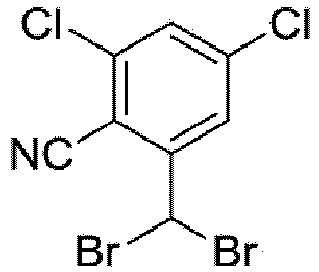
2,4-dichloro-6-(dibromomethyl)be nzonitrile 
X-1 
2-(bromomethyl)-4,6-dichlorobenz onitrile IX-2 
2-chloro-6-(dibromomethyl)-4-fluor obenzonitrile 
X-2 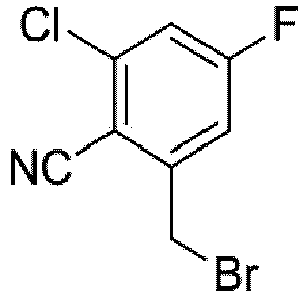
2-(bromomethyl)-6-chloro-4-fluoro benzonitrile - 1H NMR (CDCl3) delta 7.93 (1 H, d, J = 2.0 Hz), 7.52 (1 H, d, J = 2.0 Hz), 6.90 (1 H, s).
- 1H NMR (CDCl3) delta 7.49 (1 H, d, J = 2.0 Hz), 7.47 (1 H, d, J = 2.0 Hz), 4.57 (2 H, s).
- 1H NMR (CDCl3) delta 7.69 (1 H, dd, J = 9.2, 2.4 Hz), 7.26 (1 H, dd, J = 9.2, 2.4 Hz), 6.93 (1 H, d, J = 1.2 Hz).
- 1H NMR (CDCl3) delta 7.23 (1 H, dd, J = 7.9, 2.4 Hz), 7.22 (1 H, dd, J = 7.9, 2.4 Hz), 4.59 (2 H, s).
- MS (ESI) m/z: 250.9 (M+H)+.
-

- To a solution of 2,4-dichloro-6-(dibromomethyl)benzonitrile (350 mg, 1.018 mmol, IM IX-1) in CH2Cl2 (5 mL) was added silver tetrafluoroborate (495 mg, 2.54 mmol) at ambient temperature under N2 atmosphere. After being stirred at room temperature for 3 h, the insoluble material was removed by filtration. The filtrate was concentrated in vacuo to afford 204 mg (90%) of the title compound.
- 1H NMR (CDCl3) delta 7.68 (2 H, br s), 6.89 (1 H, dd, J = 54.7, 54.0 Hz).
-

- To a solution of the 2-(bromomethyl)-4,6-dichlorobenzonitrile (609 mg, 2.451 mmol, IM X-2) in AcOH (6.0 mL) was added NaOAc (1.0 g, 12.25 mmol) at ambient temperature. The mixture was heated at 100 °C for 6 h. The mixture was concentrated in vacuo and aq. NaHCO3 was added to the resulting residue. The mixture was extracted with EtOAc and washed with brine. The extracts were dried over Na2SO4 and concentrated in vacuo. The resulting residue was purified by silica gel column chromatography (5% EtOAc/n-hexane) to afford 505 mg (91%) of the title compound.
- MS (ESI) m/z: 245.0 (M+H3O)+.
- To a solution of the substrate (1.0 eq.) in AcOH was added NaOAc (5.0 eq.) at ambient temperature. The resulting mixture was heated at 100 °C until complete reaction. The mixture was concentrated in vacuo and aq. NaHCO3 was added to the resulting residue. The mixture was extracted with EtOAc and washed with brine. The extracts were dried over Na2SO4 and concentrated in vacuo. The resulting residue was purified by silica gel column chromatography to afford the following intermediates (Table 10).
{Table 10} Intermediates Structure Chemical Name Substrate III-a-1 
(2,4-dichloro-6-(difluoromethyl)ph enyl)methanamine 
III-b-1 
(2-(aminomethyl)-3-chloro-5-fluoro phenyl)methanol 
- 1H NMR (CDCl3) delta 7.53 (1 H, br s), 7.48 (1 H, br s), 6.91 (1 H, dd, J = 82.0, 81.0 Hz), 4.02 (2 H, s), 1.48 (2 H, s).
- MS (ESI) m/z: 226.0 (M+H)+.
- 1H NMR (CDCI3) delta 7.09 (1 H, dd, J = 8.6, 2.4 Hz), 7.03 (1 H, dd, J = 8.6, 2.4 Hz), 4.64 (2 H, s), 4.16 (2 H, s), 2.35 (3 H, br).
- MS (ESI) m/z: 190.1 (M+H)+.
- The following Examples and Intermediates were prepared by General Procedure A (Tables 11 and 13).
- A mixture of substrate (1.0 eq.) and 2 N aq. NaOH (2.0 eq.) in MeOH was stirred at room temperature for 1.5 h, 2 N hydrochloric acid (2.2 eq.) was added to the mixture. The mixture was concentrated in vacuo to afford a glass. Toluene and MeCN were added to the mixture and concentrated in vacuo. This procedure was repeated 3 times to remove remaining water. The residual powder was dissolved with DMF and amine (1.5 eq.), triethylamine (3.0 eq.), and HBTU (1.3 eq.) were added to the mixture at ambient temperature. After overnight stirring, the mixture was poured into water and the mixture was extracted with CH2Cl2. The extract was concentrated in vacuo and the resulting residue was purified by silica gel column chromatography, and/or SCX cartridge column, preparative HPLC to afford the following Examples and Intermediates.
{Table 11-1} Examples Structure Chemical Name Substrate Amine 1 
N-(2,4-dichloro-6-meth ylbenzyl)-8-oxo-5,6,7,8 -tetrahydroqu inoline-5-carboxamide 

2 
N-(2-chloro-3-(trifluoro methyl)benzyl)-8-oxo-5 ,6,7,8-tetrahydroquinoli ne-5-carboxamide 

3 
N-(2,3-dichlorobenzyl)-8-oxo-5,6,7,8-tetrahydr oquinoline-5-carboxami de 

4 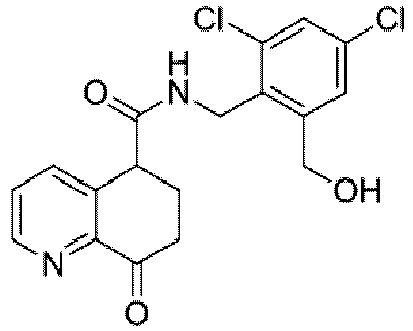
N-(2,4-dichloro-6-(hydr oxymethyl)benzyl)-8-ox o-5,6,7,8-tetrahydroqui noline-5-carboxamide 

5 
N-(cycloheptylmethyl)-8-oxo-5,6,7,8-tetrahydr oquinoline-5-carboxami de 

6 
N-(2,4-dichloro-6-meth ylbenzyl)-8-hydroxy-5,6 ,7,8-tetrahydroquinolin e-5-carboxamide 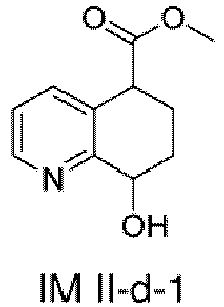

{Table 11-2} 7 
N-(2-chloro-3-(trifl uoro methyl)benzyl)-8-hydro xy-5,6,7,8-tetrahydroqu inoline-5-carboxamide 

8 
N-(2,3-dichlorobenzyl)-8-hydroxy-5,6,7,8-tetra hydroquinol ine-5-carbo xamide 

9 
N-(2,4-dichloro-6-(hydr oxymethyl)benzyl)-8-hy droxy-5,6,7,8-tetrahydr oquinoline-5-carboxami de 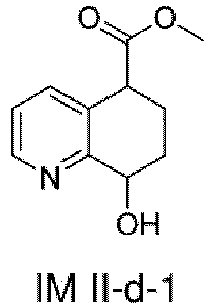

10 
N-(2,4-dichloro-6-(meth oxymethyl)benzyl)-8-hy droxy-5,6,7,8-tetrahydr oquinoline-5-carboxami de 

11 
N-(2,4-dichloro-6-meth ylbenzyl)-7-methylene-6,7-dihydro-5H-cyclope nta[b]pyridine-5-carbox amide 

{Table 12} Examples LC MS Examples LCMS Method tR (min) [M+H]+ Method tR (min) [M+H]+ 1 D 1.53 363.0 7 D 1.46 385.0 2 D 1.47 383.0 8 D 1.40 351.0 3 D 1.40 349.0 9 A 1.26 381.3 4 A 1.25 379.3 10 A 1.44 395.1 5 D 1.45 301.2 11 D 1.79 347.0 6 D 1.53 365.0 - 1H NMR (DMSO d6) delta 9.00 (1 H, br), 8.67 (1 H, m), 7.79 (2 H, br d, J = 7.9 Hz), 7.68 (1 H, d, J = 7.3 Hz), 7.68-7.54 (2 H, m), 4.48 (2 H, m), 4.12 (1 H, dd, J = 5.9, 5.2 Hz), 2.84 (1 H, m), 2.66 (1 H, m), 2.38-2.32 (2 H, m).
- 1H NMR (DMSO d6) delta 8.42 (1 H, d, J = 4.6 Hz), 8.37 (1 H, br), 7.50 (1 H, s), 7.40-7.36 (2 H, m), 7.23 (1 H, dd, J = 7.9, 4.6 Hz), 5.18 (0.7 H, d, J = 4.0 Hz), 5.13 (0.3 H, d, J = 4.0 Hz), 4.51 (1 H, br), 4.44 (0.7 H, s), 4.42 (0.7 H, s), 4.39 (0.3 H, s), 4.37 (0.3 H, s), 3.74 (0.3 H, br), 3.65 (0.7 H, br), 2.40 (2.1 H, s), 2.37 (0.9 H, s), 2.20-1.90 (2 H, m), 1.82-1.76 (2 H, m).
- 1H NMR (DMSO d6) delta 8.79 (1 H, br), 8.43 (1 H, d, J = 4.6 Hz), 7.80 (1 H, d, J = 7.9 Hz), 7.68 (1 H, dd, J = 8.6, 6.6 Hz), 7.58 (1 H, dd, J = 7.9, 7.3 Hz), 7.46 (1 H, d, J = 7.3 Hz), 7.23 (1H, dd, J = 8.6, 5.3 Hz), 5.18 (1 H, br), 4.54 (1 H, br), 4.47 (2 H, m), 3.75 (1 H, m), 2.22-1.80 (4 H, m).
{Table 13-1} Intermediates Structure Chemical Name Substrate Amine I-e-1 
N-(2,4-dichloro-6-methy l)benzyl)-8-methylene-5 ,6,7,8-tetrahydroquinoli ne-5-carboxamide 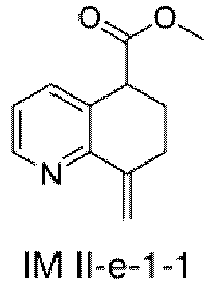

I-e-2 
N-(2-chloro-3-(trifluoro methyl)benzyl)-8-methyl ene-5,6,7,8-tetrahydroq uinoline-5-carboxamide 

I-e-3 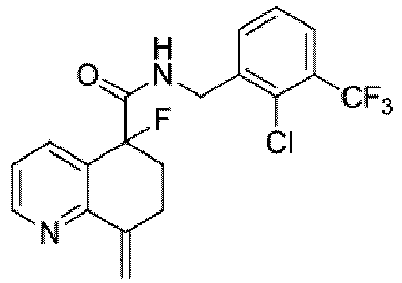
N-(2-chloro-3-(trifluoro methyl)benzyl)-5-fluoro-8-methylene-5,6,7,8-tetr ahydroquinoline-5-carb oxamide 
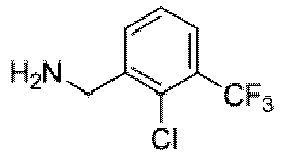
I-e-4 
N-(2,4-dichloro-6-methy Ibenzyl)-5-hydroxy-8-m ethylene-5,6,7,8-tetrahy droquinoline-5-carboxa mide 

I-e-5 
N-(2-chloro-3-(trifluoro methyl)benzyl)-5-hydro xy-8-methylene-5,6,7,8-tetrahydroquinoline-5-c arboxamide 

I-e-6 
N-(2,4-dichlorobenzyl)-8-methylene-5,6,7,8-tetr ahydroquinoline-5-carb oxamide 

{Table 13-2} I-e-7 
N-(2-chloro-4-fluoroben zyl)-8-methylene-5,6,7, 8-tetrahydroquinoline-5-carboxamide 

I-e-8 
N-(2,4-dichloro-6-fluoro benzyl)-8-methylene-5, 6,7,8-tetrahydroquinolin e-5-carboxamide 

I-e-9 
8-methylene-N-(2,3,4-tri fluorobenzyl)-5,6,7,8-tet rahydroquinoline-5-carb oxamide 

I-e-10 
8-methylene-N-(2,4,6-tri fluorobenzyl)-5,6,7,8-tet rahydroquinoline-5-carb oxamide 

I-e-11 
N-(2,4-difluorobenzyl)-8 -methylene-5,6,7,8-tetra hydroquinoline-5-carbo xamide 

I-e-12 
N-(4-fluoro-2-(trifluorom ethyl)benzyl)-8-methyle ne-5,6,7,8-tetrahydroqui noline-5-carboxamide 
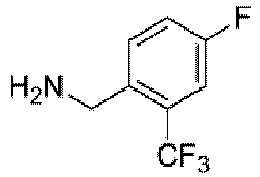
{Table 13-3} I-e-13 
N-(4-chloro-2-fluoroben zyl)-8-methylene-5,6,7, 8-tetrahydroquinoline-5-carboxamide 

I-e-14 
N-(4-bromo-2-fluoroben zyl)-8-methylene-5,6,7, 8-tetrahydroquinoline-5-carboxamide 

I-e-15 
N-(2-chloro-3,4-difluoro benzyl)-8-methylene-5, 6,7,8-tetrahydroquinolin e-5-carboxamide 

I-e-16 
N-(2,4-dichloro-6-methy lbenzyl)-5-fluoro-8-meth ylene-5,6,7,8-tetrahydro quinoline-5-carboxamid e 

I-e-17 
N-(2,4-dichloro-6-(hydro xymethyl)benzyl)-5-fluor o-8-methylene-5,6,7,8-t etrahydroquinoline-5-ca rboxamide 

I-e-18 
N-(2,3-dichlorobenzyl)-5-fluoro-8-methylene-5, 6,7,8-tetrahydroquinolin e-5-carboxamide 

{Table 13-4} I-e-19 
N-(2,4-dichlorobenzyl)-5-fluoro-8-methylene-5, 6,7,8-tetrahydroquinolin e-5-carboxamide 

I-e-20 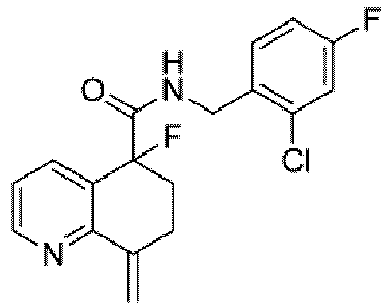
N-(2-chloro-4-fluoroben zyl)-5-fluoro-8-methylen e-5,6,7,8-tetrahydroquin oli ne-5-carboxamide 

I-e-21 
N-(2,4-dichloro-6-(meth oxymethyl)benzyl)-5-flu oro-8-methylene-5,6,7,8 -tetrahydroquinoline-5-c arboxamide 

I-e-22 
N-(2-chloro-3-(trifluoro methyl)benzyl)-7-methyl ene-6,7-dihydro-5H-cycl openta[b]pyridine-5-car boxamide 

I-e-23 
N-(2,3-dichlorobenzyl)-7-methylene-6,7-dihydr o-5H-cyclopenta[b]pyrid ine-5-carboxamide 

I-e-24 
N-(2,4-dichlorobenzyl)-5-fluoro-7-methylene-6, 7-dihydro-5H-cyclopent a[b]pyridine-5-carboxa mide 

{Table 13-5} I-v-1 
tert-butyl 2-(5-((2,4-dichloro-6-me thylbenzyl)carbamoyl)-5 ,6,7,8-tetrahydroquinoli n-8-yl)acetate 

I-v-2 
tert-butyl 2-(5-((2-chloro-3-(trifluo romethyl)benzyl)carba moyl)-5,6,7,8-tetrahydro quinolin-8-yl)acetate 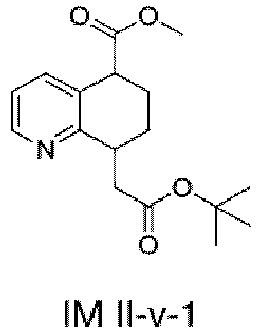

I-v-3 
tert-butyl 2-(5-((2,4-dichloro-6-me thylbenzyl)carbamoyl)-5 -fluoro-5,6,7,8-tetrahydr oquinolin-8-yl)acetate 

- 1H NMR (CDCl3) delta 8.54 (1 H, dd, J = 4.6, 2.0 Hz), 7.40 (1 H, d, J = 9.2 Hz), 7.21 (1 H, d, J = 2.0 Hz), 7.15 (1 H, dd, J = 9.2, 4.6 Hz), 7.09 (1 H, d, J = 2.0 Hz), 6.31 (1 H, s), 5.66 (1 H, br), 5.19 (1 H, s), 4.56 (1 H, dd, J = 14.5, 5.9 Hz), 4.44 (1 H, dd, J = 14.5, 5.9 Hz), 3.71 (1 H, br t, J = 5.3 Hz), 2.63 (2 H, m), 2.45 (3 H, s), 2.35 (1 H, m), 2.04 (1 H, m).
- MS (ESI) m/z: 361.7 (M+H)+.
- 1H NMR (CDCl3) delta 8.56 (1 H, d, J = 4.6 Hz), 7.64 (1 H, d, J = 7.3 Hz), 7.55 (1 H, d, J = 7.3 Hz), 7.42 (1 H, d, J = 8.6 Hz), 7.35 (1 H, br t, J = 7.3 Hz), 7.17 (1 H, dd, J = 7.3, 4.6 Hz), 6.34 (1 H, s), 5.86 (1 H, br), 5.22 (1 H, s), 4.59 (1 H, dd, J = 14.5, 5.9 Hz), 4.51 (1 H, dd, J = 14.5, 5.9 Hz), 3.77 (1 H, br t, J = 5.3 Hz), 2.66 (2 H, m), 2.18 (1 H, m), 2.06 (1 H, m).
- MS (ESI) m/z: 381.7 (M+H)+.
- 1H NMR (CDCl3) delta 8.60 (1 H, br dd, J = 4.6, 1.3 Hz), 7.70 (1 H, d, J = 7.9 Hz), 7.65 (1 H, d, J = 7.3 Hz), 7.47 (1 H, br dd, J = 7.9, 1.3 Hz), 7.40 (1 H, dd, J = 7.9, 7.3 Hz), 7.30 (1 H, br), 7.18 (1 H, dd, J = 7.9, 4.6 Hz), 6.35 (1 H, br s), 5.31 (1 H, d, J = 2.6 Hz), 4.73 (2 H, d, J = 5.9 Hz), 2.88-2.83 (2 H, m), 2.60-2.20 (2 H, m).
- MS (ESI) m/z: 399.0 (M+H)+.
- 1H NMR (DMSO d6) delta 8.48 (1 H, dd, J = 4.6, 2.0 Hz), 8.12 (1 H, brt, J = 5.3 Hz), 7.53 (1 H, dd, J = 7.9, 2.0 Hz), 7.47 (1 H, d, J = 2.0 Hz), 7.32 (1 H, d, J = 2.0 Hz), 7.26 (1 H, dd, J = 7.9, 4.6 Hz), 6.26 (1 H, s), 6.18 (1 H, s), 5.15 (1 H, br), 4.44 (2 H, d, J = 5.3 Hz), 2.74 (2 H, m), 2.40 (3 H, s), 2.15 (1 H, m), 1.86 (1 H, m).
- MS (ESI) m/z: 377.3 (M+H)+.
- 1H NMR (DMSO d6) delta 8.90 (1 H, br t, J = 6.6 Hz), 8.49 (1 H, dd, J = 4.6, 2.0 Hz), 7.78 (1 H, br d, J = 7.9 Hz), 7.67-7.54 (3 H, m), 7.29 (1 H, dd, J = 7.9, 4.6 Hz), 6.43 (1 H, s), 6.18 (1 H, br s), 5.17 (1 H, br s), 4.47 (2 H, d, J = 6.6 Hz), 2.78 (2 H, m), 2.23 (1 H, m), 1.96 (1 H, m). MS (ESI) m/z: 397.3 (M+H)+.
- 1H NMR (CDCI3) delta 8.55 (1 H, dd, J = 4.9, 1.8 Hz), 7.43 (1 H, dd, J = 7.9, 1.8 Hz), 7.36 (1 H, d, J = 2.4 Hz), 7.30-7.26 (1 H, m), 7.21 (1 H, dd, J = 7.9, 4.9 Hz), 7.17 (1 H, dd, J = 8.0, 4.9 Hz), 6.33 (1 H, d, J = 1.8 Hz), 5.77 (1 H, br), 5.21 (1 H, d, J = 1.8 Hz), 4.47 (1 H, dd, J = 15.3, 6.1 Hz), 4.41 (1 H, dd, J = 15.3, 6.1 Hz), 3.75 (1 H, t, J = 4.9 Hz), 3.75 (2 H, br t, J = 4.9 Hz), 2.34 (1 H, m), 2.05 (1 H, m).
- MS (ESI) m/z: 346.7 (M+H)+.
- 1H NMR (CDCI3) delta 8.55 (1 H, dd, J = 4.9, 1.2 Hz), 7.43 (1 H, dd, J = 7.9, 1.2 Hz), 7.32 (1 H, dd, J = 8.6, 6.1 Hz), 7.16 (1 H, dd, J = 7.9, 4.9 Hz), 7.09 (1 H, dd, J = 8.6, 2.4 Hz), 6.94 (1 H, ddd, J = 8.6, 7.9, 2.4 Hz), 6.33 (1 H, d, J = 1.8 Hz), 5.76 (1 H, br), 5.21 (1 H, d, J = 1.8 Hz), 4.47 (1 H, dd, J = 15.3, 6.1 Hz), 4.41 (1 H, dd, J = 15.3, 6.1 Hz), 3.75 (1 H, t, J = 4.9 Hz), 2.66-2.62 (2 H, m), 2.34 (1 H, m), 2.05 (1 H, m).
- MS (ESI) m/z: 330.8 (M+H)+.
- 1H NMR (CDCI3) delta 8.54 (1 H, dd, J = 4.9, 1.8 Hz), 7.42 (1 H, dd, J = 7.9, 1.8 Hz), 7.20 (1 H, m), 7.16 (1 H, dd, J = 7.9, 4.9 Hz), 7.03 (1 H, dd, J = 9.2, 1.8 Hz), 6.32 (1 H, d, J = 1.8 Hz), 5.64 (1 H, br), 5.20 (1 H, d, J = 1.8 Hz), 4.58 (1 H, ddd, J = 14.7, 5.5, 1.2 Hz), 4.49 (1 H, dd, J = 14.7, 5.5, 1.8 Hz), 3.74 (1 H, m), 2.65-2.61 (2 H, m), 2.31 (1 H, m), 2.03 (1 H, m).
- MS (ESI) m/z: 364.7 (M+H)+.
- 1H NMR (CDCI3) delta 8.46 (1 H, dd, J = 4.8, 1.2 Hz), 7.39 (1 H, dd, J = 7.9, 1.2 Hz), 7.13 (1 H, dd, J = 7.9, 4.8 Hz), 6.99 (1 H, m), 6.89 (1 H, m), 6.27 (1 H, d, J = 1.8 Hz), 6.13 (1 H, brt, J = 5.5 Hz), 5.18 (1 H, d, J = 1.8 Hz), 4.41 (2 H, br d, J = 6.1 Hz), 3.73 (1 H, br t, J = 5.5 Hz), 2.65-2.61 (2 H, m), 2.26 (1 H, m), 2.03 (1 H, m).
- MS (ESI) m/z: 333.2 (M+H)+.
- 1H NMR (CDCI3) delta 8.53 (1 H, dd, J = 4.3, 1.2 Hz), 7.41 (1 H, dd, J = 7.9, 1.2 Hz), 7.16 (1 H, dd, J = 7.9, 4.3 Hz), 6.64 (2 H, m), 6.31 (1 H, d, J = 1.8 Hz), 5.56 (1 H, br), 5.19 (1 H, d, J = 1.8 Hz), 4.49 (1 H, dd, J = 14.7, 6.1 Hz), 4.43 (1 H, dd, J = 14.7, 5.5 Hz), 3.73 (1 H, br t, J = 5.5 Hz), 2.65-2.61 (2 H, m), 2.31 (1 H, m), 2.04 (1 H, m).
- MS (ESI) m/z: 333.1 (M+H)+.
- 1H NMR (CDCl3) delta 8.54 (1 H, dd, J = 4.9, 1.2 Hz), 7.42 (1 H, dd, J = 7.9, 1.2 Hz), 7.29-7.22 (1 H, m), 7.16 (1 H, dd, J = 7.9, 4.9 Hz), 6.85-6.74 (2 H, m), 6.32 (1 H, d, J = 1.8 Hz), 5.66 (1 H, br), 5.20 (1 H, d, J = 1.8 Hz), 4.42 (2 H, br d, J = 5.5 Hz), 3.75 (1 H, br t, J = 5.5 Hz), 2.66-2.63 (2 H, m), 2.33 (1 H, m), 2.06 (1 H, m).
- MS (ESI) m/z: 315.2 (M+H)+.
- 1H NMR (CDCl3) delta 8.48 (1 H, dd, J = 4.2, 1.2 Hz), 7.45 (1 H, dd, J = 8.6, 5.5 Hz), 7.38 (1 H, dd, J = 7.9, 1.2 Hz), 7.30 (1 H, dd, J = 8.6, 2.4 Hz), 7.17 (1 H, dt, J = 8.6, 2.4 Hz), 7.12 (1 H, dd, J = 7.9, 4.2 Hz), 6.27 (1 H, d, J = 1.2 Hz), 6.07 (1 H, brt, J = 6.1 Hz), 5.16(1 H, d, J = 1.2 Hz), 4.51 (2 H, br d, J = 6.1 Hz), 3.72 (1 H, br t, J = 5.5 Hz), 2.72-2.60 (2 H, m), 2.27 (1 H, m), 2.02 (1 H, m).
- MS (ESI) m/z: 365.1 (M+H)+.
- 1H NMR (CDCI3) delta 8.44 (1 H, dd, J = 4.9, 1.8 Hz), 7.39 (1 H, dd, J = 7.9, 1.8 Hz), 7.18 (1 H, t, J = 7.9 Hz), 7.11 (1 H, dd, J = 7.9, 4.9 Hz), 7.08-7.00 (2 H, m), 6.25 (1 H, d, J = 1.2 Hz), 6.17 (1 H, brt, J = 5.5 Hz), 5.16 (1 H, d, J = 1.2 Hz), 4.38 (2 H, br d, J = 6.1 Hz), 3.71 (1 H, br t, J = 5.5 Hz), 2.69-2.55 (2 H, m), 2.24 (1 H, m), 2.02 (1 H, m).
- MS (ESI) m/z: 331.1 (M+H)+.
- 1H NMR (CDCl3) delta 8.46 (1 H, dd, J = 4.9, 1.8 Hz), 7.38 (1 H, dd, J = 7.9, 1.8 Hz), 7.22-7.10 (4 H, m), 6.26 (1 H, d, J = 1.2 Hz), 6.16 (1 H, brt, J = 5.5 Hz), 5.17 (1 H, d, J = 1.2 Hz), 4.37 (2 H, br d, J = 5.5 Hz), 3.71 (1 H, br t, J = 5.5 Hz), 2.69-2.55 (2 H, m), 2.24 (1 H, m), 2.02 (1 H, m).
- MS (ESI) m/z: 375.0 (M+H)+.
- 1H NMR (CDCI3) delta 8.52 (1 H, dd, J = 4.9, 1.8 Hz), 7.42 (1 H, dd, J = 7.9, 1.8 Hz), 7.16 (1 H, dd, J = 7.9, 4.9 Hz), 7.09-7.01 (2 H, m), 6.31 (1 H, d, J = 1.8 Hz), 5.92 (1 H, brt, J = 5.5 Hz), 5.20 (1 H, d, J = 1.8 Hz), 4.47 (1 H, dd, J = 15.3, 6.1 Hz), 4.41 (1 H, dd, J = 15.5, 6.1 Hz), 3.75 (1 H, br t, J = 5.5 Hz), 2.64 (2 H, m), 2.31 (1 H, m), 2.05 (1 H, m).
- MS (ESI) m/z: 349.0 (M+H)+.
- 1H NMR (CDCl3) delta 8.61 (1 H, dd, J = 4.6, 2.0 Hz), 7.47 (1 H, ddd, J = 7.9, 2.0, 1.3 Hz), 7.32 (1H, d, J = 1.3 Hz), 7.19 (1 H, dd, J = 7.9, 4.6 Hz), 7.16 (1H, d, J = 1.3 Hz), 7.04 (1 H, br d, J = 5.3 Hz), 6.34 (1 H, s), 5.31 (1 H, s), 4.72 (1 H, dd, J = 13.8, 5.3 Hz), 4.63 (1 H, dd, J = 13.8, 5.3 Hz), 2.84 (2 H, m), 2.45 (1 H, m), 2.48 (3 H, s), 2.25 (1 H, m).
- MS (ESI) m/z: 379.0 (M+H)+.
- 1H NMR (CDCl3) delta 8.58 (1 H, dd, J = 4.6, 2.0 Hz), 7.62 (1 H, br d, J = 5.3 Hz), 7.44 (1H, d, J = 2.0 Hz), 7.40 (1 H, ddd, J = 7.9, 2.0, 1.3 Hz), 7.34 (1H, d, J = 2.0 Hz), 7.16 (1 H, dd, J = 7.9, 4.6 Hz), 6.33 (1 H, s), 5.30 (1 H, s), 4.81-4.65 (4 H, m), 3.96 (1 H, br), 2.80 (2 H, m), 2.86-2.14 (2 H, m).
- MS (ESI) m/z: 394.9 (M+H)+.
- 1H NMR (CDCl3) delta 8.61 (1 H, br dd, J = 4.6, 1.3 Hz), 7.51-7.45 (2 H, m), 7.35 (1 H, dd, J = 7.9, 1.3 Hz), 7.26-7.20 (2 H, m), 7.19 (1 H, dd, J = 7.9, 4.6 Hz), 6.35 (1 H, s), 5.31 (1 H, s), 4.69 (1 H, d, J = 5.9 Hz), 2.88-2.83 (2 H, m), 2.61-2.20 (2 H, m).
- MS (ESI) m/z: 364.9 (M+H)+.
- 1H NMR (CDCl3) delta 8.61 (1 H, br dd, J = 4.9, 1.8 Hz), 7.47 (1 H, br dd, J = 7.9, 1.8 Hz), 7.45 (1 H, d, J = 1.8 Hz), 7.37 (1 H, d, J = 7.9 Hz), 7.26 (1 H, dd, J = 7.9, 1.8 Hz), 7.19 (1 H, br), 7.18 (1 H, dd, J = 7.9, 4.9 Hz), 6.35 (1 H, s), 5.31 (1 H, s), 4.65 (1 H, dd, J = 14.7, 5.5 Hz), 4.60 (1 H, dd, J = 14.7, 5.5 Hz), 2.86-2.83 (2 H, m), 2.46 (1 H, m), 2.26 (1 H, m).
- MS (ESI) m/z: 365.0 (M+H)+.
- 1H NMR (CDCl3) delta 8.61 (1 H, ddd, J = 4.9, 1.8, 1.8 Hz), 7.47 (1 H, ddd, J = 7.9, 1.8, 1.8 Hz), 7.42 (1 H, dd, J = 8.6, 6.1 Hz), 7.24-7.13 (3 H, m), 7.00 (1 H, ddd, J = 8.6, 3.1, 3.1 Hz), 6.35 (1 H, s), 5.31 (1 H, s), 4.65 (1 H, dd, J = 15.3, 6.1 Hz), 4.60 (1 H, dd, J = 15.3, 6.1 Hz), 2.90-2.79 (2 H, m), 2.48 (1 H, m), 2.25 (1 H, m).
- MS (ESI) m/z: 348.9 (M+H)+.
- 1H NMR (CDCl3) delta 8.60 (1 H, dd, J = 4.6, 2.0 Hz), 7.48 (1 H, dd, J = 7.3, 2.0 Hz), 7.45 (1H, d, J = 2.0 Hz), 7.33 (1H, d, J = 2.0 Hz), 7.29 (1 H, m), 7.18 (1 H, dd, J = 7.3, 4.6 Hz), 6.34 (1 H, s), 5.30 (1 H, s), 4.79 (1 H, dd, J = 14.5, 6.6 Hz), 4.60 (1 H, m), 4.58 (1 H, d, J = 11.2 Hz), 4.55 (1 H, d, J = 11.2 Hz), 3.44 (3 H, s), 2.83 (2 H, m), 2.59-2.15 (2 H, m).
- MS (ESI) m/z: 408.9 (M+H)+.
- MS (ESI) m/z: 367.0 (M+H)+.
- MS (ESI) m/z: 333.1 (M+H)+.
- 1H NMR (CDCl3) delta 8.68 (1 H, ddd, J = 4.9, 4.0, 1.8 Hz), 7.61 (1 H, br dt, J = 7.9, 1.8 Hz), 7.45 (1 H, d, J = 1.8 Hz), 7.40-7.35 (1 H, m), 7.29-7.15 (3 H, m), 6.19 (1 H, br d, J = 1.8 Hz), 5.35 (1 H, br d, J = 1.8 Hz), 4.67 (1 H, dd, J = 14.7, 6.1 Hz), 4.59 (1 H, dd, J = 14.7, 6.1 Hz), 3.58 (1 H, m), 3.12 (1 H, m).
- MS (ESI) m/z: 351.1 (M+H)+.
- 1H NMR (CDCl3) delta 8.44 (1 H, m), 7.36 (1 H, m), 7.28-7.02 (3 H, m), 6.34 (0.5 H, br), 5.73 (0.5 H, br), 4.59-4.39 (2 H, m), 3.75 (0.5 H, br), 3.66 (0.5 H, br t, J = 6.6 Hz), 3.40 (0.5 H, m), 3.15 (0.5 H, m), 3.10-2.91 (1.5 H, m), 2.73-2.65 (0.5 H, m), 2.50-2.20 (2 H, m), 2.55 (1.5 H, s), 2.37 (1.5 H, s), 2.07-1.95 (2 H, m), 1.44 (4.5 H, s), 1.26 (4.5H, s).
- MS (ESI) m/z: 463.1 (M+H)+.
- 1H NMR (CDCl3) delta 8.47 (1 H, m), 7.62 (0.5 H, d, J = 8.6 Hz), 7.58 (0.5 H, d, J = 7.9 Hz), 7.46-7.24 (3 H, m), 7.09 (1 H, m), 6.88 (0.5 H, br), 5.90 (0.5 H, br), 4.68 (0.5 H, dd, J = 15.2, 6.6 Hz), 4.59-4.51 (1 H, m), 4.39 (0.5 H, dd, J = 15.8, 5.2 Hz), 3.75 (0.5 H, br d, J = 2.6 Hz), 3.72 (0.5 H, brt, J = 7.3 Hz), 3.40 (0.5 H, br), 3.28 (0.5 H, dd, J =16.4, 6.0 Hz), 3.19 (0.5 H, br), 2.94 (0.5 H, m), 2.68 (0.5 H, dd, J = 16.4, 2.6 Hz), 2.46 (0.5 H, dd, J = 15.8, 9.2 Hz), 2.37-2.30 (0.5 H, m), 2.16-1.97 (3 H, m), 1.80-1.67 (0.5 H, m), 1.44 (4.5 H, s), 1.28 (4.5 H, s).
- MS (ESI) m/z: 483.0 (M+H)+.
- 1H NMR (CDCl3) delta 8.55 (1 H, m), 7.47 (1 H, d, J =7.9 Hz), 7.30 (1 H, d, J = 2.0 Hz), 7.14 (2 H, m), 7.02 (1 H, br), 4.69 (1 H, dd, J = 13.8, 5.3 Hz), 4.61 (1 H, dd, J = 14.5, 5.3 Hz), 3.45 (1 H, br), 2.92 (1 H, dd, J = 16.5, 4.6 Hz), 2.61-2.48 (1.5 H, m), 2.45 (3 H, s), 2.26-2.05 (2.5 H, m), 1.45 (9 H, s).
- MS (ESI) m/z: 481.0 (M+H)+.
- The following Examples and Intermediates were prepared by General Procedure B (Tables 14 and 16).
- The General Procedure B was carried out by the same procedure described in General Procedure: Scheme 2, Step 5 with/without following purification; SCX cartridge column, preparative HPLC to afford the following Examples and Intermediates.
{Table 14} Examples Structure Chemical Name Substrate 12 
N-(2,4-dichloro-6-methylbenzyl)-5-flu oro-8-oxo-5,6,7,8-tetrahydroquinoline -5-carboxamide 
13 
N-(2-chloro-3-(trifluoromethyl)benzyl) -5-fluoro-8-oxo-5,6,7,8-tetrahydroqui noline-5-carboxamide 
14 
N-(2,4-dichloro-6-(hydroxymethyl)be nzyl)-5-fluoro-8-oxo-5,6,7,8-tetrahydr oqui noline-5-carboxamide 
15 
N-(2,4-dichloro-6-methylbenzyl)-5-hy droxy-8-oxo-5,6,7,8-tetrahydroquinoli ne-5-carboxamide 
16 
N-(2,4-dichloro-6-methylbenzyl)-7-ox o-6,7-dihydro-5H-cyclopenta[b]pyridi ne-5-carboxamide 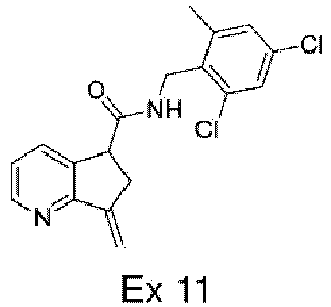
17 
N-(2-chloro-3-(trifluoromethyl)benzyl) -7-oxo-6,7-dihydro-5H-cyclopenta[b]p yridine-5-carboxamide 
{Table 15} Examples LCMS Examples LCMS Method tR (min) [M+H]+ Method tR (min) [M+H]+ 12 D 1.68 381.0 15 A 1.47 379.3 13 D 1.59 401.0 16 D 1.55 349.0 14 A 1.35 397.2 17 D 1.48 369.0 - 1H NMR (CDCl3) delta 8.87 (1 H, d, J = 4.6 Hz), 7.73 (1 H, d, J = 7.9 Hz), 7.52 (1 H, dd, J = 7.9, 4.6 Hz), 7.33 (1 H, d, J = 1.3 Hz), 7.16 (1 H, d, J = 1.3 Hz), 7.05 (1 H, br d, J = 5.9 Hz), 4.71 (1 H, dd, J = 14.5, 5.9 Hz), 4.64 (1 H, dd, J = 14.5, 5.9 Hz), 3.17 (1 H, m), 3.00 (1 H, m), 2.79 (1 H, m), 2.52 (1 H, m), 2.46 (3 H, s).
- 1H NMR (CDCl3) delta 8.88 (1 H, dd, J = 4.6, 1.3 Hz), 7.74 (1 H, d, J = 7.9 Hz), 7.71 (1 H, d, J = 7.9 Hz), 7.63 (1 H, d, J = 7.9 Hz), 7.51 (1 H, dd, J = 7.9, 4.6 Hz), 7.40 (1 H, dd, J = 7.9, 7.9 Hz), 7.33 (1 H, br d, J = 5.9 Hz), 4.72 (2 H, d, J = 5.9 Hz), 3.17 (1 H, m), 3.01 (1 H, m), 2.59 (1 H, m).
- 1H NMR (CDCl3) delta 8.88 (1 H, br dd, J = 4.6, 1.3 Hz), 7.69 (1 H, d, J = 7.9 Hz), 7.59 (1 H, br), 7.50 (1 H, dd, J = 7.9, 4.6 Hz), 7.45 (1 H, d, J = 2.0 Hz), 7.34 (1 H, d, J = 2.0 Hz), 4.85-4.64 (4 H, m), 3.60 (1 H, br), 3.18-2.92 (2 H, m), 2.76 (1 H, m), 2.54 (1 H, m).
- 1H NMR (DMSO d6) delta 8.70 (1 H, br dd, J = 4.6, 2.0 Hz), 8.23 (1 H, br), 7.86 (1 H, dd, J = 7.9, 2.0 Hz), 7.60 (1 H, dd, J = 7.9, 4.6 Hz), 7.46 (1 H, d, J = 2.0 Hz), 7.30 (1 H, d, J = 2.0 Hz), 6.64 (1 H, s), 4.42 (2 H, m), 2.89-2.69 (2 H, m), 2.43 (1 H, m), 2.37 (3 H, s), 2.22 (1 H, m).
- 1H NMR (DMSO d6) delta 8.82 (1 H, br), 8.77 (1 H, d, J = 4.6 Hz), 8.00 (1 H, d, J = 7.9 Hz), 7.63 (1 H, dd, J = 7.9, 4.6 Hz), 7.50 (1 H, br s), 7.36 (1 H, br s), 4.39 (2 H, br d J = 4.6 Hz), 4.29 (1 H, m), 2.80 (2 H, m), 2.37 (3 H, s).
{Table 16-1} Intermediates Structure Chemical Name Substrate I-c-1 
N-(2,4-dichlorobenzyl)-8-oxo-5,6,7,8-tetrahydroquinoline-5-carboxamide 
I-c-2 
N-(2-chloro-4-fluorobenzyl)-8-oxo-5,6 ,7,8-tetrahydroquinoline-5-carboxami de 
I-c-3 
N-(2,4-dichloro-6-fluorobenzyl)-8-oxo -5,6,7,8-tetrahydroquinoline-5-carbox amide 
I-c-4 
8-oxo-N-(2,3,4-trifluorobenzyl)-5,6,7, 8-tetrahydroquinoline-5-carboxamide 
I-c-5 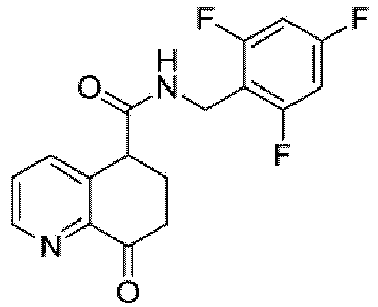
8-oxo-N-(2,4,6-trifluorobenzyl)-5,6,7, 8-tetrahydroquinoline-5-carboxamide 
{Table 16-2} I-c-6 
N-(2,4-difluorobenzyl)-8-oxo-5,6,7,8-t etrahydroquinoline-5-carboxamide 
I-c-7 
N-(4-fluoro-2-(trifluoromethyl)benzyl)-8-oxo-5,6,7,8-tetrahydroquinoline-5-c arboxamide 
I-c-8 
N-(4-chloro-2-fluorobenzyl)-8-oxo-5,6 ,7,8-tetrahydroquinoline-5-carboxami de 
I-c-9 
N-(4-bromo-2-fluorobenzyl)-8-oxo-5, 6,7,8-tetrahydroquinoline-5-carboxa mide 
I-c-10 
N-(2-chloro-3,4-difluorobenzyl)-8-oxo -5,6,7,8-tetrahydroquinoline-5-carbox amide 
I-c-11 
N-(2-chloro-3-(trifluoromethyl)benzyl) -5-hydroxy-8-oxo-5,6,7,8-tetrahydroq uinoline-5-carboxamide 
I-c-12 
N-(2,3-dichlorobenzyl)-7-oxo-6,7-dihy dro-5H-cyclopenta[b]pyridine-5-carbo xamide 
- 1H NMR (CDCl3) delta 8.60 (1 H, dd, J = 4.3, 1.8 Hz), 7.67 (1 H, dd, J = 7.9, 1.8 Hz), 7.40 (1 H, dd, J = 7.9, 4.9 Hz), 7.34 (1 H, d, J = 1.8 Hz), 7.29 (1 H, d, J = 7.9 Hz), 7.19 (1 H, dd, J = 7.9, 1.8 Hz), 6.94 (1 H, t, J = 5.5 Hz), 4.53 (1 H, dd, J = 14.6, 5.5 Hz), 4.47 (1 H, dd, J = 14.6, 5.5 Hz), 3.96 (1 H, t, J = 5.5 Hz), 2.96 (1 H, ddd, J = 17.7, 10.4, 4.9 Hz), 2.70 (1 H, ddd, J = 17.7, 7.3, 4.9 Hz), 2.53 (1 H, m), 2.40 (1 H, m).
- MS (ESI) m/z: 349.0 (M+H)+.
- 1H NMR (CDCl3) delta 8.53 (1 H, dd, J = 4.3, 1.2 Hz), 7.69 (1 H, dd, J = 7.9, 1.2 Hz), 7.55 (1 H, br), 7.37 (1 H, dd, J = 7.9, 4.3 Hz), 7.30 (1 H, dd, J = 8.5, 6.1 Hz), 7.06 (1 H, dd, J = 8.5, 2.4 Hz), 6.89 (1 H, dt, J = 8.5, 2.4 Hz), 4.48 (1 H, dd, J = 9.8, 5.5 Hz), 4.47 (1 H, dd, J = 9.8, 5.5 Hz), 4.03 (1 H, br t, J = 5.5 Hz), 2.99 (1 H, ddd, J = 17.7, 9.8, 4.9 Hz), 2.67 (1 H, m), 2.48 (1 H, m), 2.36 (1 H, m).
- MS (ESI) m/z: 333.1 (M+H)+.
- 1H NMR (CDCl3) delta 8.52 (1 H, m), 7.69 (1 H, dd, J = 7.9, 1.2 Hz), 7.38 (1 H, dd, J = 7.9, 4.3 Hz), 7.26 (1 H, br), 7.16 (1 H, d, J = 1.8 Hz), 6.97 (1 H, dd, J = 8.6, 1.8 Hz), 4.59 (1 H, dd, J = 15.9, 4.9 Hz), 4.55 (1 H, dd, J = 15.9, 4.9 Hz), 3.98 (1 H, br t, J = 5.5 Hz), 3.19 (1 H, ddd, J = 17.7, 10.4, 4.9 Hz), 2.66 (1 H, m), 2.48 (1 H, m), 2.36 (1 H, m).
- MS (ESI) m/z: 367.0 (M+H)+.
- 1H NMR (CDCl3) delta 8.53 (1 H, dd, J = 4.9, 1.2 Hz), 7.99 (1 H, br t, J = 5.5 Hz), 7.70 (1 H, d, J = 7.9 Hz), 7.39 (1 H, dd, J = 7.9, 4.9 Hz), 7.06 (1 H, m), 6.89 (1 H, m), 4.45 (2 H, m), 4.04 (1 H, br t, J = 5.5 Hz), 3.03 (1 H, ddd, J = 17.7, 10.4, 4.9 Hz), 2.65 (1 H, m), 2.50-2.34 (2 H, m).
- MS (ESI) m/z: 335.1 (M+H)+.
- 1H NMR (CDCl3) delta 8.49 (1 H, dd, J = 4.3, 1.2 Hz), 8.07 (1 H, br t, J = 5.5 Hz), 7.69 (1 H, d, J = 7.9 Hz), 7.39 (1 H, dd, J = 7.9, 4.3 Hz), 6.62 (2 H, m), 4.46 (2 H, m), 4.01 (1 H, br t, J = 5.5 Hz), 2.99 (1 H, m), 2.64 (1 H, m), 2.42-2.28 (2 H, m).
- MS (ESI) m/z: 335.1 (M+H)+.
- 1H NMR (CDCl3) delta 8.50 (1 H, dd, J = 4.9, 1.2 Hz), 7.68 (1 H, dd, J = 7.9, 1.2 Hz), 7.60 (1 H, br t, J = 5.5 Hz), 7.36 (1 H, dd, J = 7.9, 4.9 Hz) 7.26, (1 H, ddd, J = 15.3, 8.6, 6.7 Hz), 6.80-6.70 (2 H, m), 4.45 (1 H, dd, J = 15.9, 5.5 Hz), 4.41 (1 H, dd, J = 15.9, 5.5 Hz), 4.02 (1 H, br t, J = 5.5 Hz), 2.99 (1 H, ddd, J = 17.7, 10.4, 4.9 Hz), 2.66 (1 H, ddd, J = 17.7, 7.3, 4.9 Hz), 2.50-2.32 (2 H, m).
- MS (ESI) m/z: 317.1 (M+H)+.
- 1H NMR (CDCI3) delta 8.55 (1 H, dd, J = 4.9, 1.2 Hz), 7.66 (1 H, dd, J = 7.9, 1.2 Hz), 7.51 (1 H, dd, J = 8.5, 5.5 Hz), 7.38 (1 H, dd, J = 7.9, 4.9 Hz), 7.31 (1 H, dd, J = 8.5, 2.4 Hz), 7.18 (1 H, ddd, J = 8.5, 7.9, 2.4 Hz), 7.12 (1 H, br t, J = 6.1 Hz), 4.60 (1 H, dd, J = 15.9, 6.1 Hz), 4.55 (1 H, dd, J = 15.9, 6.1 Hz), 3.99 (1 H, br t, J = 5.5 Hz), 2.97 (1 H, ddd, J = 17.7, 9.8, 4.9 Hz), 2.68 (1 H, ddd, J = 17.7, 6.7, 4.9 Hz), 2.53-2.34 (2 H, m).
- MS (ESI) m/z: 367.1 (M+H)+.
- 1H NMR (CDCl3) delta 8.49 (1 H, dd, J = 4.9, 1.2 Hz), 7.67 (1 H, dd, J = 7.9, 1.2 Hz), 7.63 (1 H, br t, J = 6.1 Hz), 7.36 (1 H, dd, J = 7.9, 4.9 Hz), 7.21 (1 H, dd, J = 8.5, 7.3 Hz), 7.02 (1 H, dd, J = 8.9, 2.4 Hz), 6.99 (1 H, dd, J = 7.3, 2.4 Hz), 4.43 (1 H, dd, J = 15.3, 6.1 Hz), 4.38 (1 H, dd, J = 15.3, 6.1 Hz), 4.00 (1 H, br t, J = 5.5 Hz), 2.99 (1 H, ddd, J = 17.7, 9.8, 4.9 Hz), 2.65 (1 H, ddd, J = 17.7, 6.7, 5.5 Hz), 2.46-2.31 (2 H, m).
- MS (ESI) m/z: 333.1 (M+H)+.
- 1H NMR (CDCI3) delta 8.50 (1 H, dd, J = 4.9, 1.2 Hz), 7.68 (1 H, dd, J = 7.9, 1.2 Hz), 7.60 (1 H, br t, J = 6.1 Hz), 7.37 (1 H, dd, J = 7.9, 4.9 Hz), 7.22-7.14 (3 H, m), 4.42 (2 H, m), 4.00 (1 H, br t, J = 5.5 Hz), 2.99 (1 H, ddd, J = 17.7, 10.4, 4.9 Hz), 2.66 (1 H, ddd, J = 17.7, 7.3, 4.9 Hz), 2.49-2.31 (2 H, m).
- MS (ESI) m/z: 377.0 (M+H)+.
- 1H NMR (CDCl3) delta 8.69 (1 H, d, J = 4.3 Hz), 7.65 (1 H, d, J = 7.9 Hz), 7.44 (1 H, dd, J = 7.9, 4.3 Hz), 7.15 (1 H, m), 7.07 (1 H, dd, J = 8.6, 7.3 Hz), 6.35 (1 H, br), 4.57 (1 H, dd, J = 15.3, 6.1 Hz), 4.49 (1 H, dd, J = 15.3, 5.5 Hz), 3.91 (1 H, br t, J = 5.5 Hz), 2.94 (1 H, ddd, J = 17.7, 10.4, 4.9 Hz), 2.75 (1 H, ddd, J = 17.7, 6.1, 4.9 Hz), 2.56 (1 H, ddd, J = 17.7, 11.7, 6.1 Hz), 2.42 (1 H, ddd, J = 17.7, 10.4, 4.9 Hz).
- MS (ESI) m/z: 351.0 (M+H)+.
- 1H NMR (DMSO d6) delta 8.97 (1 H, brt, J = 5.9 Hz), 8.71 (1 H, d, J = 4.6 Hz), 7.98 (1 H, d, J = 7.9 Hz), 7.77 (1 H, dd, J = 5.9, 2.6 Hz), 7.64 (1 H, dd, J = 7.9, 4.6 Hz), 7.66-7.50 (2 H, m), 6.81 (1 H, s), 4.45 (2 H, br d J = 5.9 Hz), 2.88-2.70 (2 H, m), 2.50 (1 H, m), 2.34 (1 H, m).
- MS (ESI) m/z: 399.3 (M+H)+.
- MS (ESI) m/z: 335.5 (M+H)+.
- The following Examples and Intermediates were prepared by General Procedure C, D, or E (Tables 17 and 19).
- O3 was bubbled into a solution of substrate (1.0 eq.) in 50% CH2Cl2-MeOH at -78 °C until starting material consumed. N2 were bubbled into the mixture to remove the excess of O3 at -78 °C. The mixture was quenched with NaBH4 (10.0 eq.) and the mixture was warmed to room temperature gradually. After being stirred at room temperature for 1 h, 10% aq. citric acid was added to the mixture. The mixture extracted with CH2CI2 3 times and the extracts were washed with water. The extracts were combined, dried over Na2SO4, and concentrated in vacuo. The resulting residue was purified by NH gel column chromatography and/or SCX cartridge column, preparative HPLC to afford the following Examples and Intermediates.
- Sodium borohydride (1.5 eq.) was added to a solution of substrate (1.0 eq.) in MeOH and the mixture was stirred at room temperature until complete reaction. Water was added to the mixture and the volatile was removed by evaporation. The residue was extracted with EtOAc and washed with brine. The extract was dried over Na2SO4 and concentrated in vacuo. The resulting residue was purified by NH gel column chromatography and/or SCX cartridge column, preparative HPLC to afford the following Examples and Intermediates.
- To a solution of substrate in CH2Cl2 (0.065 M) was added TFA (0.065 M) at room temperature. The mixture was stirred at room temperature until complete reaction, the mixture was poured into water. The mixture was extracted with CH2Cl2. The extract was washed with water, dried over Na2SO4 and concentrated in vacuo to afford the following Examples and Intermediates.
{Table 17-1} Examples Structure Chemical Name Substrate General Procedure 18 
N-(2,4-dichloro-6-methylb enzyl)-5-fluoro-8-hydroxy-5,6,7,8-tetrahydroquinolin e-5-carboxamide 
D 19 
N-(2-chloro-3-(trifluoromet hyl)benzyl)-5-fluoro-8-hydr oxy-5,6,7,8-tetrahydroquin oli ne-5-carboxamide 
D 20 
N-(2,4-dichloro-6-(hydroxy methyl)benzyl)-5-fluoro-8-hydroxy-5,6,7,8-tetrahydro quinoline-5-carboxamide 
D 21 
N-(2,3-dichlorobenzyl)-5-fl uoro-8-hydroxy-5,6,7,8-tet rahydroquinoline-5-carbox amide 
C 22 
N-(2,4-dichlorobenzyl)-5-fl uoro-8-hydroxy-5,6,7,8-tet rahydroquinoline-5-carbox amide 
C {Table 17-2} 23 
N-(2,4-dichloro-6-(methox ymethyl)benzyl)-5-fluoro-8 -hydroxy-5,6,7,8-tetrahydr oquinoline-5-carboxamide 
C 24 
N-(2,4-dichloro-6-methylb enzyl)-5,8-dihydroxy-5,6,7, 8-tetrahydroquinoline-5-ca rboxamide 
D 25 
N-(2-chloro-3-(trifluoromet hyl)benzyl)-5,8-dihydroxy-5,6,7,8-tetrahydroquinolin e-5-carboxamide 
D 26 
N-(2,4-dichloro-6-methylb enzyl)-7-hydroxy-6,7-dihyd ro-5H-cyclopenta[b]pyridin e-5-carboxamide 
D 27 
N-(2-chloro-3-(trifluoromet hyl)benzyl)-7-hydroxy-6,7-dihydro-5H-cyclopenta[b]p yridine-5-carboxamide 
D 28 
N-(2,3-dichlorobenzyl)-7-h ydroxy-6,7-dihydro-5H-cyc lopenta[b]pyridi ne-5-carbo xamide 
D {Table 17-3} 29 
N-(2,4-dichlorobenzyl)-5-fl uoro-7-hydroxy-6,7-dihydr o-5H-cyclopenta[b]pyridin e-5-carboxamide 
C 30 
2-(5-((2,4-dichloro-6-meth ylbenzyl)carbamoyl)-5,6,7, 8-tetrahydroquinolin-8-yl)a cetic acid 
E 31 
2-(5-((2-chloro-3-(trifluoro methyl)benzyl)carbamoyl)-5,6,7,8-tetrahydroquinolin-8-yl)acetic acid 
E {Table 18} Examples LCMS Examples LCMS Method tR (min) [M+H]+ Method tR (min) [M+H]+ 18 D 1.66, 1.69 383.0 25 A 1.40 401.3 19 D 1.56, 1.59 403.0 26 D 1.51 351.0 20 A 1.35 399.2 27 D 1.40, 1.45 371.0 21 A 1.45 369.1 28 D 1.33, 1.38 337.0 22 A 1.49 369.1 29 D 1.52 355.1 23 A 1.57 413.1 30 A 1.27 407.1 24 A 1.46 381.3 31 A 1.23 427.2 - 1H NMR (DMSO d6) delta 8.74 (1 H, m), 8.60 (1 H, br s), 7.58 (0.4 H, d, J = 7.9 Hz), 7.55 (0.6 H, d, J = 7.9 Hz), 7.46 (1 H, br s), 7.38 (1 H, dd, J = 7.9, 4.6 Hz), 7.35 (1 H, br s), 5.41 (1 H, br s), 4.61 (1 H, m), 4.48 (0.8 H, d, J = 4.6 Hz), 4.43 (1.2 H, d, J = 4.6 Hz), 2.80-1.75 (4 H, m), 2.42 (1.2 H, s), 2.38 (1.8 H, s).
- 1H NMR (CDCI3) delta 8.60 (1 H, br), 7.71-7.62 (2 H, m), 7.51 (1 H, m), 7.39 (1 H, m), 7.30 (1 H, br), 7.30-7.20 (1 H, m), 4.78-4.69 (3 H, m), 4.33 (0.5 H, br s), 3.75 (0.5 H, br s), 2.76-1.80 (4 H, m).
- 1H NMR (DMSO d6) delta 8.69 (1 H, br), 8.62 (1 H, br), 7.58 (1 H, m), 7.56 (1 H, d, J = 2.6 Hz), 7.48 (1 H, d, J = 2.6 Hz), 7.38 (1 H, dd, J = 7.9, 4.6 Hz), 5.53 (1 H, br), 5.43 (1 H, m), 4.71-4.55 (3 H, m), 4.52-4.40 (2 H, m), 2.40-1.72 (4 H, m).
- 1H NMR (DMSO d6) delta 8.48 (1 H, brdd, J = 4.6, 2.0 Hz), 8.07 (1 H, m), 7.52-7.45 (2 H, m), 7.32 (1 H, J = 2.6 Hz), 7.26 (1 H, dd, J = 7.9, 4.6 Hz), 6.23 (0.5 H, s), 6.11 (0.5 H, s), 5.16 (1 H, m), 4.54-4.42 (3 H, m), 2.41 (1.5 H, s), 2.39 (1.5 H, s), 2.30-1.64 (4 H, m).
- 1H NMR (DMSO d6) delta 8.86 (1 H, t, J = 6.6 Hz), 8.49 (1 H, br d, J = 4.6 Hz), 7.78 (1 H, m), 7.66-7.57 (3 H, m), 7.30 (1 H, dd, J = 7.9, 4.6 Hz), 6.39 (0.5 H, br), 6.27 (0.5 H, br), 5.20 (0.5 H, d, J = 2.6 Hz), 5.16 (0.5 H, d, J = 3.3 Hz), 4.56-4.44 (3 H, m), 2.33-1.75 (4 H, m).
- 1H NMR (DMSO d6) delta 8.53 (1 H, br), 8.44 (1 H, d, J = 4.6 Hz), 7.52 (1 H, d, J = 7.9 Hz), 7.50 (1 H, d, J = 2.0 Hz), 7.36 (1 H, d, J = 2.0 Hz), 7.23 (1 H, dd, J = 7.9, 4.6 Hz), 5.48 (1 H, d, J = 6.6 Hz), 4.90 (1 H, m), 4.44 (1 H, d, J = 4.6 Hz), 4.42 (1 H, d, J = 4.6 Hz), 3.82 (1 H, m), 2.54 (1 H, m), 2.39 (3 H, s), 2.02 (1 H, m).
- 1H NMR (CDCI3) delta 8.69 (1 H, br dd, J = 4.9, 1.2 Hz), 7.62 (1 H, br dd, J = 7.9, 1.2 Hz), 7.44 (1 H, d, J = 1.8 Hz), 7.35-7.16 (4 H, m), 5.33 (1 H, dd, J = 6.1, 2.4 Hz), 4.63 (1 H, dd, J = 14.7, 6.1 Hz), 4.57 (1 H, dd, J = 14.7, 6.1 Hz), 3.94 (1 H, d, J = 5.5 Hz), 2.83-2.66 (2 H, m).
{Table 19} Intermediate Structure Chemical Name Substrate General Procedure I-w-1 
2-(5-((2,4-dichloro-6-m ethylbenzyl)carbamoyl) -5-fluoro-5,6,7,8-tetrahy droquinolin-8-yl)acetic acid 
E - MS (ESI) m/z: 425.0 (M+H)+.
- The following Example was prepared by General Procedure A (Table 20).
{Table 20} Example Structure Chemical Name Substrate Amine 32 
(2-amino-2-oxoethyl)-N -(2-chloro-3-(trifluorom ethyl)benzyl)-5,6,7,8-tet rahydroquinoline-5-car boxamide 
NH4Cl - LCMS (ESI) m/z: 426.2 (M+H)+, tR 1.39 min (Method A).
- The following Examples were prepared by General Procedure F (Table 21).
- A mixture of substrate (1.0 eq.), 4% aq. OsO4 (1.0 eq.), and NMO (15.0 eq.) in 50% aq. THF was stirred at room temperature until complete reaction. Aq. Na2S2O3 was added to the mixture and the mixture was stirred for 10 min. The mixture was extracted with EtOAc twice. The extracts were washed with brine, dried over Na2SO4, and concentrated in vacuo. The resulting residue was purified by silica gel column chromatography and/or SCX column, preparative HPLC to afford the following Examples.
{Table 21} Examples Structure Chemical Name Substrate 33 
N-(2,4-dichloro-6-methylbenzyl)-8-hy droxy-8-(hydroxymethyl)-5,6,7,8-tetra hydroquinoline-5-carboxamide 
34 
N-(2,4-dichloro-6-methylbenzyl)-5-flu oro-8-hydroxy-8-(hydroxymethyl)-5,6, 7,8-tetrahydroquinoline-5-carboxami de 
35 
N-(2-chloro-3-(trifluoromethyl)benzyl) -5-fluoro-8-hydroxy-8-(hydroxymethyl )-5,6,7,8-tetrahydroquinoline-5-carbo xamide 
36 
N-(2,3-dichlorobenzyl)-5-fluoro-8-hyd roxy-8-(hydroxymethyl)-5,6,7,8-tetrah ydroquinoline-5-carboxamide 
37 
N-(2,4-dichlorobenzyl)-5-fluoro-8-hyd roxy-8-(hydroxymethyl)-5,6,7,8-tetrah ydroquinoline-5-carboxamide 
38 
N-(2,4-dichlorobenzyl)-5-fluoro-7-hyd roxy-7-(hydroxymethyl)-6,7-dihydro-5 H-cyclopenta[b]pyridi ne-5-carboxam i de 
{Table 22} Examples LCMS Examples LCMS Method tR (min) [M+H]+ Method tR (min) [M+H]+ 33 A 1.41 395.3 36 A 1.39 399.1 34 A 1.52 413.1 37 A 1.42 399.1 35 A 1.44 433.1 38 D 1.41 385.1 - The following Intermediates were prepared by General Procedure G or H (Table 23).
- A substrate (1.0 eq.) and trimethylsulfoxonium iodide (1.2 eq.) were dissolved in DMSO. A solution of KOBut (1.2 eq.) in DMSO was added to the mixture at ambient temperature. After being stirred at room temperature until complete reaction, the mixture was poured into ice-water. The mixture was extracted with EtOAc twice and washed with brine. The extracts were combined, dried over Na2SO4, and concrete in vacuo. The resulting residue was purified by silica gel column chromatography to afford the following Intermediates. The each diastero isomer can be separated by silica gel column chromatography.
- To a solution of substrate (1.0 eq.) in water-tert-BuOH-THF (2:1:1) was added NBS (2.0 eq.) in portions at ambient temperature and then the mixture was heated at 50 °C until starting material consumed. After cooling to 0 °C, the reaction mixture was basified with 5 M aqueous NaOH and stirred at 0 °C until complete reaction. The reaction mixture was poured into water and extract with EtOAc twice. The extracts were washed with brine, and dried over Na2SO4. The combined extracts were evaporated and the resulting residue was purified by silica gel column chromatography to afford the following Intermediates. The each diastereo isomer can be separated by silica gel column chromatography.
{Table 23} Intermediates Structure Chemical Name Substrate General Procedure I-g-1 
N-(2,4-dichloro-6-meth ylbenzyl)-6',7'-dihydro-5'H-spiro[oxirane-2,8'-q uinoline]-5'-carboxamid e 
G I-g-2 
N-(2,4-dichloro-6-meth ylbenzyl)-5'-fluoro-6',7'-dihydro-5'H-spiro[oxira ne-2,8'-quinoline]-5'-car boxamide 
G I-g-3 
N-(2-chloro-3-(trifluoro methyl)benzyl)-5'-fluoro -6',7'-dihydro-5'H-spiro[ oxirane-2,8'-quinoline]-5'-carboxamide 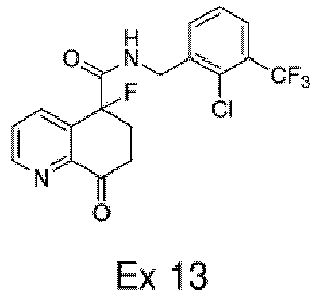
G I-g-4 
(2S*,5'S*)-N-(2,4-dichlo robenzyl)-5'-fluoro-6',7'-dihydro-5'H-spiro[oxira ne-2,8'-quinoline]-5'-car boxamide 
H I-g-5 
(2R*,5'S*)-N-(2,4-dichlo robenzyl)-5'-fluoro-6',7'-dihydro-5'H-spiro[oxira ne-2,8'-quinoline]-5'-car boxamide I-g-6 
(2S*,5'S*)-N-(2-chloro-4-fluorobenzyl)-5'-fluoro -6',7'-dihydro-5'H-spiro[ oxirane-2,8'-quinoline]-5'-carboxamide 
H I-g-7 
(2R*,5'S*)-N-(2-chloro-4-fluorobenzyl)-5'-fluoro -6',7'-dihydro-5'H-spiro[ oxirane-2,8'-quinoline]-5'-carboxamide - 1H NMR (CDCl3) delta 8.53 (1 H, dd, J = 4.6, 1.3 Hz), 7.45 (0.5 H, d, J = 7.9 Hz), 7.42 (0.5 H, dd, J = 7.9, 1.3 Hz), 7.24 (0.5 H, d, J = 2.0 Hz), 7.22 (0.5 H, d, J = 2.0 Hz), 7.18 (1 H, dd, J = 7.9, 4.6 Hz), 7.11 (0.5 H, d, J = 2.0 Hz), 7.10 (0.5 H, d, J = 2.0 Hz), 5.94 (0.5 H, brt, J = 5.9 Hz), 5.79 (0.5 H, br t, J = 5.9 Hz), 4.63-4.41 (2 H, m), 3.75 (1 H, m), 3.73 (0.5 H, d, J = 5.9 Hz), 3.62 (0.5 H, d, J = 5.9 Hz), 2.98 (0.5 H, d, J = 5.9 Hz), 2.97 (0.5 H, d, J = 5.9 Hz), 2.47 (1.5 H, s), 2.46 (1.5 H, s), 2.50-1.80 (4 H, m).
- MS (ESI) m/z: 377.0 (M+H)+.
- MS (ESI) m/z: 395.0 (M+H)+.
- 1H NMR (CDCl3) delta 8.63 (1 H, dd, J = 4.6, 2.0 Hz), 7.67 (2 H, m), 7.44 (2 H, m), 7.30-7.04 (2 H, m), 4.75 (2 H, d, J = 5.9 Hz), 3.86 (1 H, d, J = 5.9 Hz), 3.03 (1 H, d, J = 5.9 Hz), 2.99-2.00 (4 H, m).
- MS (ESI) m/z: 414.9 (M+H)+.
- 1H NMR (CDCl3) delta 8.63 (1 H, br dd, J = 4.9, 1.8 Hz), 7.50 (1 H, br dd, J = 7.9, 1.8 Hz), 7.46 (1 H, d, J = 2.4 Hz), 7.39 (1 H, d, J = 8.6 Hz), 7.27 (1 H, br dd, J = 7.9, 1.8 Hz), 7.23 (1 H, dd, J = 7.9, 4.9 Hz), 7.19 (1 H, br), 4.67 (1 H, dd, J = 14.7, 6.1 Hz), 4.62 (1 H, dd, J = 14.7, 6.1 Hz), 3.86 (1 H, d, J = 6.1 Hz), 3.03 (1 H, d, J = 6.1 Hz), 2.76 (1 H, m), 2.57 (1 H, m), 2.32 (1 H, m), 2.14 (1 H, m).
- MS (ESI) m/z: 380.9 (M+H)+.
- 1H NMR (CDCl3) delta 8.63 (1 H, ddd, J = 4.9, 1.8, 1.2 Hz), 7.51 (1 H, ddd, J = 7.9, 1.8, 1.2 Hz), 7.46 (1 H, d, J = 1.8 Hz), 7.37 (1 H, d, J = 7.9 Hz), 7.27 (1 H, dd, J = 7.9, 1.8 Hz), 7.24 (1 H, br), 7.22 (1 H, dd, J = 7.9, 4.9 Hz), 4.65 (1 H, dd, J = 14.7, 6.1 Hz), 4.60 (1 H, dd, J = 14.7, 6.1 Hz), 3.51 (1 H, d, J = 6.1 Hz), 3.06 (1 H, d, J = 6.1 Hz), 2.65 (1 H, m), 2.50-2.39 (2 H, m), 2.19 (1 H, m).
- MS (ESI) m/z: 380.9 (M+H)+.
- 1H NMR (CDCl3) delta 8.63 (1 H, ddd, J = 4.9, 1.8, 1.2 Hz), 7.49 (1 H, ddd, J = 7.9, 1.8, 1.2 Hz), 7.44 (1 H, dd, J = 8.6, 5.5 Hz), 7.23 (1 H, dd, J = 7.9, 4.9 Hz), 7.18 (1 H, dd, J = 8.6, 2.4 Hz), 7.17 (1 H, br), 7.01 (1 H, ddd, J = 8.6, 7.9, 2.4 Hz), 4.67 (1 H, dd, J = 14.7, 6.1 Hz), 4.62 (1 H, dd, J = 14.7, 6.1 Hz), 3.86 (1 H, d, J = 6.1 Hz), 3.03 (1 H, d, J = 6.1 Hz), 2.77 (1 H, m), 2.57 (1 H, m), 2.32 (1 H, m), 2.13 (1 H, m).
- MS (ESI) m/z: 365.1 (M+H)+.
- 1H NMR (CDCl3) delta 8.62 (1 H, br dd, J = 4.9, 1.8 Hz), 7.51 (1 H, br dd, J = 7.9, 1.8 Hz), 7.42 (1 H, dd, J = 8.5, 6.1 Hz), 7.23-7.18 (3 H, m), 7.00 (1 H, m), 4.66 (1 H, dd, J = 14.7, 6.1 Hz), 4.60 (1 H, dd, J = 14.7, 6.1 Hz), 3.51 (1 H, d, J = 6.1 Hz), 3.06 (1 H, d, J = 6.1 Hz), 2.66 (1 H, m), 2.51-2.39 (2 H, m), 2.19 (1 H, m).
- MS (ESI) m/z: 364.7 (M+H).
- The following Examples were prepared by General Procedure I, J, or K (Table 24).
- A solution of 1.0 M NaOMe in MeOH (1.3 eq.) was added to substrate (1.0 eq.) in small portions at ambient temperature. After being stirred at room temperature until complete reaction, the mixture was concentrated in vacuo to afford a glass. The residual glass was distributed between EtOAc and water. The extract was dried over Na2SO4 and concentrated in vacuo. The resulting residue was purified by SCX cartridge column and preparative HPLC to afford the following Examples.
- A solution of substrate (1.0 eq.) in MeOH was treated with amine (45 eq.) at room temperature until complete reaction. The mixture was concentrated in vacuo and the resulting residue was distributed between EtOAc and water. The extract was dried over Na2SO4 and concentrated in vacuo. The resulting residue was purified by silica gel column chromatography and/or SCX column and preparative HPLC to afford the following Examples.
- To a stirred solution of substrate (1.0 eq.) in EtOH was added NaBH4 (6.0 eq.) at ambient temperature. The mixture was stirred at room temperature until complete reaction, water was added to the mixture. The mixture was extracted with EtOAc and washed with aq. NaHCO3. The extract was dried over Na2SO4 and concentrated in vacuo. The resulting residue was purified by SCX cartridge column and preparative HPLC to afford the following Examples.
{Table 24-1} Examples Structure Chemical Name Substrate General Procedure (/Amine) 39 
N-(2,4-dichloro-6-meth ylbenzyl)-5-fluoro-8-hyd roxy-8-(methoxymethyl) -5,6,7,8-tetrahydroqu in oline-5-carboxamide 
l 40 
N-(2-chloro-3-(trifluoro methyl)benzyl)-5-fluoro -8-hydroxy-8-(methoxy methyl)-5,6,7,8-tetrahy droquinoline-5-carboxa mide 
I 41 
(5S*,8S*)-N-(2,4-dichlo robenzyl)-5-fluoro-8-hy droxy-8-(methoxymethy l)-5,6,7,8-tetrahydroqui noline-5-carboxamide 
I 42 
(5S*,8S*)-N-(2-chloro-4 -fluorobenzyl)-5-fluoro-8-hydroxy-8-(methoxy methyl)-5,6,7,8-tetrahy droquinoline-5-carboxa mide 
I {Table 24-2} 43 
8-(aminomethyl)-N-(2,4 -dichloro-6-methylbenz yl)-8-hydroxy-5,6,7,8-te trahydroqu inol ine-5-car boxamide 
J /NH4OH 44 
N-(2,4-dichloro-6-meth ylbenzyl)-8-hydroxy-8-( (methylamino)methyl)-5 ,6,7,8-tetrahydroquinoli ne-5-carboxamide J /MeNH2 in MeOH 45 
8-(aminomethyl)-N-(2,4 -dichloro-6-methylbenz yl)-5-fluoro-8-hydroxy-5 ,6,7,8-tetrahydroquinoli ne-5-carboxamide J /NH4OH 46 
N-(2,4-dichloro-6-meth ylbenzyl)-5-fluoro-8-hyd roxy-8-((methylamino) methyl)-5,6,7,8-tetrahy droquinoline-5-carboxa mide J /MeNH2 in MeOH 47 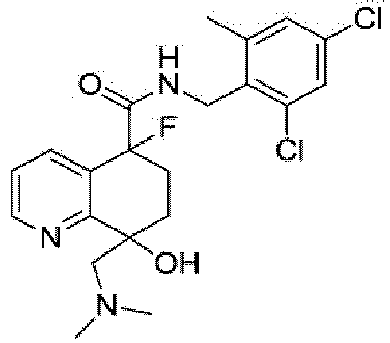
N-(2,4-dichloro-6-meth ylbenzyl)-8-((dimethyla mino)methyl)-5-fluoro-8 -hydroxy-5,6,7,8-tetrah ydroquinoline-5-carbox amide J /Me2NH in THF {Table 24-3} 48 
8-(ami nomethyl)-N -(2-c hloro-3-(trifluoromethyl) benzyl)-5-fluoro-8-hydr oxy-5,6,7,8-tetrahydroq ui noline-5-carboxamide 
J /NH4OH 49 
N-(2-chloro-3-(trifluoro methyl)benzyl)-5-fluoro -8-hydroxy-8-((methyla mino)methyl)-5,6,7,8-te trahydroquinoline-5-car boxamide J /MeNH2 in MeOH 50 
N-(2-chloro-3-(trifluoro methyl)benzyl)-8-((dim ethylamino)methyl)-5-fl uoro-8-hydroxy-5,6,7,8-tetrahydroquinoline-5-c arboxamide J /Me2NH in THF 51 
(5S*,8R*)-N-(2,4-dichlo robenzyl)-5-fluoro-8-hy droxy-8-((3-hydroxyaze tidin-1-yl) methyl)-5,6,7, 8-tetrahydroquinoline-5 -carboxam ide 

52 
(5S*,8R*)-N-(2-chloro-4 -fluorobenzyl)-5-fluoro-8-hydroxy-8-((3-hydrox yazetidin-1-yl)methyl)-5 ,6,7,8-tetrahydroquinoli ne-5-carboxamide 

{Table 24-4} 53 
(5S*,8R*)-N-(2-chloro-4 -fluorobenzyl)-5-fluoro-8-hydroxy-8-((3-methox yazetidin-1-yl)methyl)-5 ,6,7,8-tetrahydroquinoli ne-5-carboxamide 
54 
(5S*,8R*)-N-(2-chloro-4 -fluorobenzyl)-5-fluoro-8-hydroxy-8-((3-hydrox y-3-methylazetidin-1 -yl) methyl)-5,6,7,8-tetrahy droquinoline-5-carboxa mide 
55 
(5S*,8R*)-N-(2-chloro-4 -fluorobenzyl)-5-fluoro-8-hydroxy-8-((3-methox y-3-methylazetidin-1 -yl) methyl)-5,6,7,8-tetrahy droquinoline-5-carboxa mide 
56 
(5S*,8R*)-N-(2-chloro-4 -fluorobenzyl)-5-fluoro-8-hydroxy-8-(((2-hydrox yethyl)amino)methyl)-5, 6,7,8-tetrahydroquinolin e-5-carboxamide 
{Table 24-5} 57 
(5S*,8R*)-N-(2-chloro-4 -fluorobenzyl)-5-fluoro-8-hydroxy-8-(((2-hydrox yethyl)(methyl)amino)m ethyl)-5,6,7,8-tetrahydr oquinoline-5-carboxami de 
58 
N-(2-chloro-3-(trifluoro methyl)benzyl)-5-fluoro -8-hydroxy-8-methyl-5, 6,7,8-tetrahydroquinolin e-5-carboxamide 
K {Table 25} Examples LC MS Examples LC MS Method tR (min) [M+H]+ Method tR (min) [M+H]+ 39 A 1.67 427.1 47 A 1.50 440.2 40 A 1.57 447.1 48 A 1.36 432.1 43 A 1.35 394.2 49 A 1.38 446.1 44 A 1.36 408.1 50 A 1.43 460.1 45 A 1.42 412.2 58 A 1.58 417.1 46 A 1.45 426.2 - 1H NMR (DMSO d6) delta 9.27 (1 H, br s), 8.74 (1 H, d, J = 4.5 Hz), 7.75-7.80 (2 H, m), 7.62 (1 H, d, J = 2.0 Hz), 7.53 (1 H, dd, J = 8.0, 4.7 Hz), 7.45 (1 H, dd, J = 8.4, 2.1 Hz), 7.36 (1 H, d, J = 8.3 Hz), 4.40 (2 H, t, J = 5.3 Hz), 3.88 (1 H, d, J = 8.6 Hz), 3.53 (1 H, d, J = 8.4 Hz) 2.29-2.48 (5 H, m).
- MS (ESI) m/z: 413.2 (M+H)+.
- 1H NMR (CDCI3) delta 8.61 (1 H, dt, J = 4.7, 1.6 Hz), 7.51 (1 H, dt, J = 7.8, 1.5 Hz), 7.40 (1 H, dd, J = 8.5, 6.1 Hz), 7.14-7.25 (3 H, m), 6.99 (1 H, td, J = 8.3, 2.6 Hz), 4.51-4.68 (2 H, m), 3.76 (2 H, dd, J = 9.5, 8.4 Hz), 3.34 - 3.37 (4 H, m), 2.57 - 2.72 (1 H, m), 2.38-2.49 (1 H, m) 2.18-2.32 (2 H, m).
- MS (ESI) m/z: 397.2 (M+H)+.
- 1H NMR (CDCl3) delta 8.61 (1 H, br d, J = 4.7 Hz), 7.54 (1 H, d, J = 8.0 Hz), 7.44 (1 H, d, J = 2.1 Hz), 7.34 (1 H, d, J = 7.7 Hz), 7.27-7.30 (1 H, m), 7.19-7.25 (1 H, m), 4.48-4.65 (3 H, m), 3.99-4.13 (4 H, m), 3.89 (2 H, br s), 3.56 (1 H, br d, J = 13.0 Hz), 3.18 (1 H, br d, J = 13.1 Hz), 2.67-2.82 (1 H, m), 2.16-2.28 (3 H, m).
- MS (ESI) m/z: 454.2 (M+H)+.
- 1H NMR (CDCl3) delta 8.62 (1 H, dt, J = 4.7, 1.6 Hz), 7.49 (1 H, dt, J = 7.8, 1.5 Hz), 7.41 (1 H, dd, J = 8.5, 6.1 Hz), 7.09-7.25 (3 H, m), 6.99 (1 H, td, J = 8.3, 2.6 Hz), 4.53-4.67 (2 H, m), 4.41 (1 H, quin, J = 5.78 Hz), 3.74-3.82 (1 H, m), 3.57 (1 H, br s), 3.07-3.16 (2 H, m), 3.00 (1 H, br t, J = 6.4 Hz), 2.85 (1 H, d, J = 12.8 Hz), 2.56-2.77 (1 H, m), 2.13-2.37 (4 H, m).
- MS (ESI) m/z: 438.3 (M+H)+.
- 1H NMR (CDCl3) delta 8.61-8.64 (1 H, m), 7.49 (1 H, d, J = 7.6 Hz), 7.41 (1 H, dd, J = 8.6, 6.0 Hz), 7.09-7.25 (3 H, m), 6.99 (1 H, td, J = 8.3, 2.6 Hz), 4.54-4.66 (2 H, m), 4.03 (1 H, brt, J = 5.8 Hz), 3.66-3.84 (1 H, m), 3.58 (1 H, br s), 3.15-3.24 (4 H, m), 2.95-3.10 (1 H, m), 2.85 (1 H, br d, J = 12.8 Hz), 2.58-2.72 (1 H, m), 2.08-2.35 (3 H, m).
- MS (ESI) m/z: 452.0 (M+H)+.
- 1H NMR (CDCl3) delta 8.62 (1 H, d, J = 5.0 Hz), 7.50 (1 H, d, J = 7.6 Hz), 7.41 (1 H, dd, J = 8.6, 6.0 Hz), 7.10-7.25 (3 H, m), 6.99 (1 H, td, J = 8.3, 2.6 Hz), 4.54-4.67 (2 H, m), 3.46 (1 H, d, J = 8.0 Hz), 3.22-3.39 (4 H, m), 2.90 (1 H, d, J = 12.8 Hz), 2.59-2.74 (1 H, m), 2.14-2.27 (3 H, m), 1.45 (3 H, s).
- MS (ESI) m/z: 452.3 (M+H)+.
- 1H -NMR (CDCl3) delta 8.62 (1 H, dt, J = 4.7, 1.6 Hz), 7.48 (1 H, d, J = 7.6 Hz), 7.41 (1 H, t, J = 7.0 Hz), 7.08-7.24 (3 H, m), 6.99 (1 H, td, J = 8.3, 2.6 Hz), 4.53-4.67 (2 H, m), 3.14-3.41 (6 H, m), 3.10 (2 H, brs), 2.83 (1 H, br d, J = 12.6 Hz), 2.49-2.76 (1 H, m), 2.13-2.37 (3 H, m), 1.43 (3 H, s).
- MS (ESI) m/z: 466.3 (M+H)+.
- 1H -NMR (CDCl3) delta 8.59 (1 H, dt, J = 4.7, 1.7 Hz), 7.50 (1 H, dt, J = 7.9, 1.5 Hz), 7.41 (1 H, dd, J = 8.4, 6.0 Hz), 7.13-7.25 (3 H, m), 6.99 (1 H, td, J = 8.3, 2.6 Hz), 4.55-4.67 (2 H, m), 3.64 (2 H, t, J = 5.2 Hz), 3.12 (1 H, d, J = 12.0 Hz), 2.92 (1 H, d, J = 12.0 Hz), 2.68-2.83 (2 H, m), 2.28-2.36 (1 H, m), 2.13 - 2.25 (3 H, m).
- MS (ESI) m/z: 426.3 (M+H)+.
- 1H -NMR (CDCl3) delta 8.62 (1 H, dt, J = 4.7, 1.7 Hz), 7.51 (1 H, d, J = 7.6 Hz), 7.41 (1 H, dd, J = 8.5, 6.1 Hz), 7.10-7.25 (3 H, m), 6.99 (1 H, td, J = 8.3, 2.6 Hz), 4.54-4.67 (2 H, m), 3.43-3.66 (3 H, m), 3.03 (1 H, d, J = 14.1 Hz), 2.87 (1 H, br d, J = 14.2 Hz), 2.57-2.73 (3 H, m), 2.14-2.41 (6 H, m).
- MS (ESI) m/z: 440.0 (M+H)+.
- The following Intermediates were prepared by General Procedure L (Table 26).
- NaN3 (3.0 eq.) and NH4Cl (3.0 eq.) were added to a solution of substrate (1.0 eq.) in MeOH, and the mixture was stirred at 60 °C until complete reaction. The reaction was quenched with aq. NaHCOs, and the resulting mixture was extracted with CHCl3. The extract was concentrated under reduced pressure to afford the following Intermediates.
{Table 26} Intermediates Structure Chemical Name Substrate I-h-3-1 
(5S*,8R*)-8-(azidomethyl)-N-(2,4 -dichlorobenzyl)-5-fluoro-8-hydro xy-5,6,7,8-tetrahydroquinoline-5-carboxamide 
I-h-3-2 
(5S*,8S*)-8-(azidomethyl)-N-(2,4 -dichlorobenzyl)-5-fluoro-8-hydro xy-5,6,7,8-tetrahydroquinoline-5-carboxamide 
- 1H -NMR (CDCl3) delta 8.65 (1 H, dt, J = 4.7, 1.71 Hz), 7.53 (1 H, dt, J = 7.9, 1.5 Hz), 7.45 (1 H, d, J = 2.1 Hz), 7.36 (1 H, d, J = 8.2 Hz), 7.27-7.31 (2 H, m), 7.16 (1 H, br d, J = 5.3 Hz), 4.54-4.67 (2 H, m), 3.70 (2 H,d, J = 1.1 Hz), 3.20 (s, 1 H), 2.59-2.74 (1 H, m), 2.36-2.46 (1 H, m), 2.13-2.33 (2 H, m).
- MS (ESI) m/z: 424.2 (M+H)+.
- 1H -NMR (CDCl3) delta 8.60-8.66 (1 H, m), 7.52 (1 H, d, J = 8.2 Hz), 7.46 (1 H, s), 7.17-7.39 (6 H, m), 4.54-4.68 (2 H, m), 3.53-3.60 (1 H, m), 3.41 (1 H, d, J = 13.0 Hz), 2.41-2.55 (2 H, m), 2.26-2.39 (1 H, m), 2.01-2.21 (1 H, m).
- MS (ESI) m/z: 424.2 (M+H)+.
- To a stirred solution of substrate (1.0 eq.) in MeCN and water (100 eq.) at 60 °C was added portion wise triphenyl phosphine (2.0 eq.). The mixture was stirred at that temperature until complete reaction. The mixture was purified by silica gel column chromatography to afford the following Intermediates (Table 27).
{Table 27} Intermediates Structure Chemical Name Substrate I-m-1 
(2S*,5'S*)-N-(2,4-dichloroben zyl)-5'-fluoro-6',7'-dihydro-5'H -spiro[aziridine-2,8'-quinoline] -5'-carboxamide 
I-m-2 
(2R*,5'S*)-N-(2,4-dichloroben zyl)-5'-fluoro-6',7'-dihydro-5'H -spiro[aziridine-2,8'-quinoline] -5'-carboxamide 
- 1H -NMR (CDCl3) delta 8.46 (1 H, dt, J = 4.7, 1.9 Hz), 7.21-7.48 (6 H, m), 7.13 (1 H, ddd, J = 7.8, 4.8, 0.9 Hz), 4.57-4.72 (2 H, m), 2.57-2.78 (1 H, m), 2.45-2.55 (1 H, m), 2.34 (1 H, tdd, J = 14.1, 14.1, 4.3, 2.9 Hz), 2.16 (1 H, s) 1.91 (1 H, s), 1.71 (1 H, dt, J = 13.6, 3.7 Hz).
- MS (ESI) m/z: 380.1 (M+H)+.
- 1H -NMR (CDCl3) delta 8.47 (1 H, dt, J = 4.7, 1.7 Hz), 7.63-7.70 (1 H, m), 7.32-7.49 (4 H, m), 7.19-7.29 (2 H, m), 7.13 (1 H, ddd, J = 7.9, 4.7, 0.7 Hz), 4.54-4.68 (2 H, m), 2.49-2.70 (3 H, m), 2.23-2.36 (2 H, m), 2.09 - 2.20 (1 H, m).
- MS (ESI) m/z: 380.1 (M+H)+.
- Triethylamine (1.5 eq.) and 2-nitrophenylsulfonyl chloride (1.2 eq.) were successively added to a dichloromethane solution of substrate (1.0 eq.) at 0 °C. After stirring at ambient temperature until complete reaction, the reaction was quenched with aq. NH4Cl. The mixture was extracted with CHCl3, dried over Na2SO4, and concentrated under reduced pressure to afford the following Intermediates (Table 28).
{Table 28} Intermediates Structure Chemical Name Substrate XIV-1 
(2S*,5'S*)-N-(2,4-dichlorobenzyl)-5'-fluoro-1-((2-nitrophenyl)sulfonyl )-6',7'-dihydro-5'H-spiro[aziridine-2 ,8'-quinoline]-5'-carboxamide 
XIV-2 
(2R',5'S')-N-(2,4-dichlorobenzyl)-5'-fluoro-1-((2-nitrophenyl)sulfonyl )-6',7'-dihydro-5'H-spiro[aziridine-2 ,8'-quinoline]-5'-carboxamide 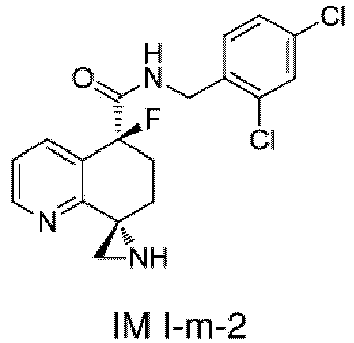
- MS (ESI) m/z: 565.0 (M+H)+
- MS (ESI) m/z: 565.0 (M+H)+.
- To a solution of substrate (1.0 eq.) in DMF was added NaOAc (10 eq.) and the mixture was stirred at 100 °C until starting material consumed. Aq. NaOH (5 N, 5 eq.) was added to the mixture and stirred at ambient temperature until complete reaction. The reaction was quenched with aq. NH4Cl, extracted with CHCl3. The extract was concentrated under reduced pressure. The residue was purified by silica gel column chromatography to afford the following Intermediates (Table 29).
{Table 29} Intermediates Structure Chemical Name Substrate XV-1 
(5S*,8R*)-N-(2,4-dichlorobenzyl)-5-fluoro-8-(hydroxymethyl)-8-(2-nit rophenylsulfonamido)-5,6,7,8-tetr ahydroquinoline-5-carboxamide 
XV-2 
(5S*,8S*)-N-(2,4-dichlorobenzyl)-5 -fluoro-8-(hydroxymethyl)-8-(2-nitr ophenylsulfonamido)-5,6,7,8-tetra hydroquinoline-5-carboxamide 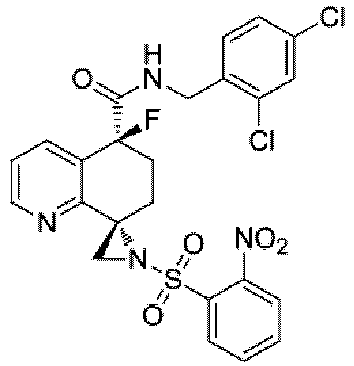
- MS (ESI) m/z: 583.1 (M+H)+.
- MS (ESI) m/z: 583.1 (M+H)+.
- The mixture of substrate (1.0 eq.), 4-mercaptobenzoic acid (2.0 eq.), and K2CO3 (4.0 eq.) in DMF was stirred at 80 °C until complete reaction. The solvent of the mixture was removed under reduced pressure. The residue was purified by SCX cartridge column to afford the following Examples (Table 30).
{Table 30} Examples Structure Chemical Name Substrate 59 
(5S*,8R*)-8-amino-N-(2,4-dichloro benzyl)-5-fluoro-8-(hydroxymethyl )-5,6,7,8-tetrahydroquinoline-5-car boxamide 
60 
(5S*,8S*)-8-amino-N-(2,4-dichloro benzyl)-5-fluoro-8-(hydroxymethyl )-5,6,7,8-tetrahydroquinoline-5-car boxamide 
- 1H -NMR (CDCI3) delta 8.56-8.65 (1 H, m), 7.50 (1 H, br d, J = 8.1 Hz), 7.45 (1 H, d, J = 2.2 Hz), 7.30-7.39 (1 H, m), 7.13-7.29 (3 H, m), 4.60 (2 H, dd, J=10.0, 5.9 Hz), 2.90-3.09 (2 H, m), 2.29-2.45 (2 H, m), 2.05-2.17 (2 H, m).
- MS (ESI) m/z: 398.2 (M+H)+.
- 1H -NMR (CDCl3) delta 8.54 (1 H, dd, J = 2.7, 1.3 Hz), 7.52 (1 H, d, J = 7.3 Hz) 7.40-7.44 (1 H, m), 7.27-7.36 (2 H, m), 7.12-7.25 (3 H, m), 4.51-4.65 (2 H, m), 3.14-3.31 (2 H, m), 2.67-3.00 (2 H, m), 2.17-2.31 (2 H, m).
- MS (ESI) m/z: 398.2 (M+H)+.
- Chloroacetyl chloride (1.1 eq.) was added dropwise to a biphasic solution of substrate (1.0 eq.) in dichloromethane (0.3 M) and 0.5 N aq. NaOH (2.0 eq) at 0 °C. The reaction mixture was warmed up to ambient temperature and stirred at that temperature until complete reaction. The mixture was extracted with dichloromethane 3 times, dried over Na2SO4, and concentrated under reduced pressure to afford the following Intermediates (Table 31).
{Table 31} Intermediates Structure Chemical Name Substrate XVI-1 
(5S*,8R*)-8-(2-chloroacetamido)-N-(2,4-dichlorobenzyl)-5-fluoro-8-( hydroxymethyl)-5,6,7,8-tetrahydro quinoline-5-carboxamide 
XVI-2 
(5S*,8S*)-8-(2-chloroacetamido)-N-(2,4-dichlorobenzyl)-5-fluoro-8-( hydroxymethyl)-5,6,7,8-tetrahydro quinoline-5-carboxamide 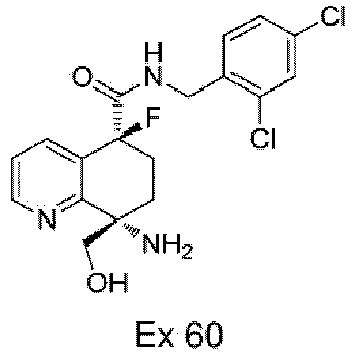
- MS (ESI) m/z: 474.1 (M+H)+.
- MS (ESI) m/z: 474.1 (M+H)+.
- To a solution of substrate (1.0 eq.) in 50% dichloromethane/2-propanol was added portion wise tert-BuOK (4.0 eq.) at 0 °C. The solution was allowed to warm to ambient temperature and stirred until complete reaction. The solvent was removed under reduced pressure and the resulting crude residue was purified by preparative HPLC to afford the following Examples (Table 32).
{Table 32} Examples Structure Chemical Name Substrate 61 
(3R*,5'S*)-N-(2,4-dichlorobenzyl)-5'-fluoro-5-oxo-6',7'-dihydro-5'H-s piro[morpholine-3,8'-quinoline]-5'-carboxamide 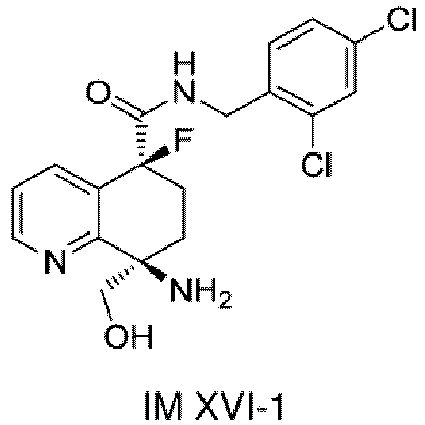
62 
(3S*,5'S*)-N-(2,4-dichlorobenzyl)-5'-fluoro-5-oxo-6',7'-dihydro-5'H-s piro[morpholine-3,8'-quinoline]-5'-carboxamide 
- 1H -NMR (CDCl3) delta 8.61-8.69 (1 H, m), 7.54 (1 H, d, J = 7.7 Hz), 7.46 (1 H, d, J = 2.0 Hz), 7.16-7.40 (6 H, m), 6.18 (1 H, br s), 4.56-4.69 (2 H, m), 4.34 (1 H, dd, J = 12.2, 2.2 Hz), 4.17 (2 H, dd, J = 17.5, 16.6 Hz), 3.37 (1 H, dd, J = 12.2, 2.9 Hz), 2.77-2.95 (1 H, m), 2.40-2.50 (1 H, m), 2.12-2.32 (2 H, m).
- MS (ESI) m/z: 438.1 (M+H)+.
- 1H -NMR (CDCl3) delta 8.70 (1 H, d, J = 4.7 Hz), 7.57 (1 H, d, J = 8.2 Hz), 7.46 (1 H, d, J = 2.1 Hz), 7.27-7.35 (3 H, m), 7.14-7.22 (1 H, m), 5.95 (1 H, br s), 4.53-4.65 (2 H, m), 4.25-4.42 (2 H, m), 4.20 (1 H, d, J = 11.4 Hz), 3.43 (1 H, dd, J = 12.4, 4.0 Hz), 2.54 - 2.64 (1 H, m) 2.29-2.53(3 H, m), 1.25 (1 H, s).
- MS (ESI) m/z: 438.1 (M+H)+.
- The following Examples and Intermediates were prepared by General Procedure M (Tables 33 and 35).
- To a mixture of substrate (1.0 eq.), Chiral Ru Catalyst (5 mol%) and triethylamine (2.0 eq.) in DMF was added formic acid (5.0 eq.) at 0 °C. The mixture was stirred at 0 °C for 10 min, and then warm to room temperature. After being stirred at room temperature until complete reaction, aq. NaHCO3 was added to the mixture. The mixture was extracted with EtOAc twice and washed with water and brine. The extracts were combined, dried over Na2SO4, and concentrated in vacuo. The resulting residue was purified by silica gel column chromatography and the each diastereo isomer was separated by silica gel column chromatography and/or preparative TLC to afford following Examples.
{Table 33-1} Examples Structure Chemical Name Substrate Chiral Ru Catalyst 63 
(5S,8S)-N-(2,4-dichloro -6-methylbenzyl)-8-hyd roxy-5,6,7,8-tetrahydro quinoline-5-carboxamid e 
RuCl(p-cymen e)[(S,S)-Ts-D PEN] 64 
(5R,8S)-N-(2,4-dichloro -6-methylbenzyl)-8-hyd roxy-5,6,7,8-tetrahydro quinoline-5-carboxamid e 65 
(5S,8S)-N-(2,4-dichloro benzyl)-8-hydroxy-5,6,7 ,8-tetrahydroquinoline-5-carboxamide 
RuCl(p-cymen e)[(S,S)-Ts-D PEN] 66 
(5R,8S)-N-(2,4-dichloro benzyl)-8-hydroxy-5,6,7 ,8-tetrahydroquinoline-5-carboxamide {Table 33-2} 67 
(5S,8S)-N-(2-chloro-4-fl uorobenzyl)-8-hydroxy-5,6,7,8-tetrahydroquino line-5-carboxamide 
RuCl(p-cymen e)[(S,S)-Ts-D PEN] 68 
(5R,8S)-N-(2-chloro-4-fl uorobenzyl)-8-hydroxy-5,6,7,8-tetrahydroquino line-5-carboxamide 69 
(5S,8S)-N-(2,4-dichloro -6-fluorobenzyl)-8-hydr oxy-5,6,7,8-tetrahydroq uinoline-5-carboxamide 
RuCl(p-cymen e)[(S,S)-Ts-D PEN] 70 
(5R,8S)-N-(2,4-dichloro -6-fluorobenzyl)-8-hydr oxy-5,6,7,8-tetrahydroq uinoline-5-carboxamide 71 
(5S,8S)-8-hydroxy-N-(2 ,3,4-trifluorobenzyl)-5,6 ,7,8-tetrahydroquinoline -5-carboxamide 
RuCl(p-cymen e)[(S,S)-Ts-D PEN] {Table 33-3} 72 
(5R,8S)-8-hydroxy-N-(2 ,3,4-trifluorobenzyl)-5,6 ,7,8-tetrahydroquinoline -5-carboxamide 73 
(5R,8S)-8-hydroxy-N-(2 ,4,6-trifluorobenzyl)-5,6 ,7,8-tetrahydroquinoline -5-carboxamide 
RuCl(p-cymen e)[(S,S)-Ts-D PEN] 74 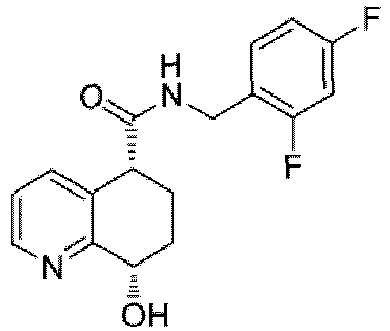
(5R,8S)-N-(2,4-difluoro benzyl)-8-hydroxy-5,6,7 ,8-tetrahydroquinoline-5-carboxamide 
RuCl(p-cymen e)[(S,S)-Ts-D PEN] 75 
(5S,8S)-N-(4-fluoro-2-(t rifluoromethyl)benzyl)-8 -hydroxy-5,6,7,8-tetrah ydroquinoline-5-carbox amide 
RuCl(p-cymen e)[(S,S)-Ts-D PEN] 76 
(5R,8S)-N-(4-fluoro-2-(t rifluoromethyl)benzyl)-8 -hydroxy-5,6,7,8-tetrah ydroquinoline-5-carbox amide {Table 33-4} 77 
(5S,8S)-N-(4-chloro-2-fl uorobenzyl)-8-hydroxy-5,6,7,8-tetrahydroquino line-5-carboxamide 
RuCl(p-cymen e)[(S,S)-Ts-D PEN] 78 
(5R,8S)-N-(4-chloro-2-fl uorobenzyl)-8-hydroxy-5,6,7,8-tetrahydroquino line-5-carboxamide 79 
(5S,8S)-N-(4-bromo-2-f luorobenzyl)-8-hydroxy-5,6,7,8-tetrahydroquino line-5-carboxamide 
RuCl(p-cymen e)[(S,S)-Ts-D PEN] 80 
(5R,8S)-N-(4-bromo-2-f luorobenzyl)-8-hydroxy-5,6,7,8-tetrahydroquino line-5-carboxamide 81 
(5S,8S)-N-(2-chloro-3,4 -difluorobenzyl)-8-hydr oxy-5,6,7,8-tetrahydroq uinoline-5-carboxamide 
RuCl(p-cymen e)[(S,S)-Ts-D PEN] {Table 33-5} 82 
(5R,8S)-N-(2-chloro-3,4 -difluorobenzyl)-8-hydr oxy-5,6,7,8-tetrahydroq uinoline-5-carboxamide 83 
(5S,7S)-N-(2,4-dichloro -6-methylbenzyl)-7-hyd roxy-6,7 dihydro-5H cy clopenta[b]pyridine-5-c arboxamide 
RuCl(p-cymen e)[(S,S)-Ts-D PEN] 84 
(5R,8R)-N-(2,4-dichloro -6-methylbenzyl)-8-hyd roxy-5,6,7,8-tetrahydro quinoline-5-carboxamid e 
RuCl(p-cymen e)[(R,R)-Ts-D PEN] 85 
(5S,8R)-N-(2,4-dichloro -6-methylbenzyl)-8-hyd roxy-5,6,7,8-tetrahydro quinoline-5-carboxamid e 86 
(5S,8S)-N-(2-chloro-3-( trifluoromethyl)benzyl)-8-hydroxy-5,6,7,8-tetra hydroquinoline-5-carbo xamide 
RuCl(p-cymen e)[(S,S)-Ts-D PEN] {Table 33-6} 87 
(5R,8R)-N-(2,4-dichloro benzyl)-8-hydroxy-5,6,7 ,8-tetrahydroquinoline-5-carboxamide 
RuCl(p-cymen e)[(R,R)-Ts-D PEN] 88 
(5S,8R)-N-(2,4-dich loro benzyl)-8-hydroxy-5,6,7 ,8-tetrahydroquinoline-5-carboxamide 89 
(5R,8R)-N-(2-chloro-4-f luorobenzyl)-8-hydroxy-5,6,7,8-tetrahydroquino line-5-carboxamide 
RuCl(p-cymen e)[(R,R)-Ts-D PEN] 90 
(5S.8R)-N-(2-chloro-4-fl uorobenzyl)-8-hydroxy-5,6,7,8-tetrahydroquino line-5-carboxamide 91 
(5R,8R)-N-(2,4-dichloro -6-fluorobenzyl)-8-hydr oxy-5,6,7,8-tetrahydroq ui noline-5-carboxamide 
RuCl(p-cymen e)[(R,R)-Ts-D PEN] {Table 33-7} 92 
(5S,8R)-N-(2,4-dichloro -6-fluorobenzyl)-8-hydr oxy-5,6,7,8-tetrahydroq uinoline-5-carboxamide 93 
(5 R,8R)-8-hydroxy-N-(2 ,3,4-trifluorobenzyl)-5,6 ,7,8-tetrahydroquinoline -5-carboxamide 
RuCl(p-cymen e)[(R, R)-Ts-D PEN] 94 
(5S,8R)-8-hydroxy-N-(2 ,3,4-trifluorobenzyl)-5,6 ,7,8-tetrahydroquinoline -5-carboxamide 95 
(5R,8R)-N-(4-chl oro-2-f luorobenzyl)-8-hydroxy-5,6,7,8-tetrahydroquino line-5-carboxam ide 
RuCl(p-cymen e)[(R,R)-Ts-D PEN] 96 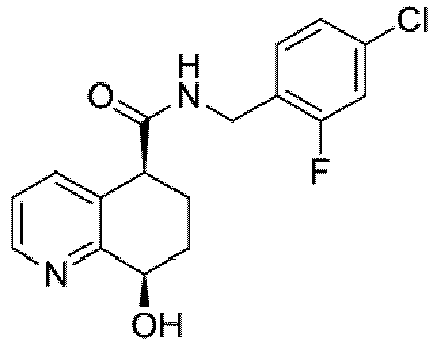
(5S,8R)-N-(4-chloro-2-fl uorobenzyl)-8-hydroxy-5,6,7,8-tetrahydroquino line-5-carboxam ide {Table 33-8} 97 
(5R,7R)-N-(2,4-dichloro -6-methylbenzyl)-7-hyd roxy-6,7-dihydro-5H-cy clopenta[b]pyridine-5-c arboxamide 
RuCI(p-cymen e)[(R,R)-Ts-D PEN] 98 
(5S,7R)-N-(2,4-dichloro -6-methylbenzyl)-7-hyd roxy-6,7-dihydro-5H-cy clopenta[b]pyridine-5-c arboxamide {Table 34} Examples LCMS Examples LC MS Method tR (min) [M+H]+ Method tR (min) [M+H]+ 63 A 1.48 365.3 81 C 1.31 352.9 64 A 1.47 365.3 82 C 1.31 352.9 65 C 1.40 351.0 83 D 1.46 351.0 66 C 1.39 351.0 84 A 1.48 365.3 67 C 1.28 335.0 85 A 1.47 365.2 68 C 1.28 335.0 86 A 1.42 385.3 69 C 1.39 369.0 87 C 1.40 351.0 70 C 1.39 369.0 88 C 1.40 351.0 71 C 1.25 337.0 89 C 1.28 335.0 72 C 1.25 337.0 90 C 1.28 335.0 73 C 1.20 337.0 91 C 1.39 369.0 74 C 1.19 319.0 92 C 1.38 369.0 75 C 1.36 369.0 93 C 1.25 337.0 76 C 1.36 369.0 94 C 1.25 337.0 77 C 1.30 335.0 95 C 1.30 335.0 78 C 1.30 335.0 96 C 1.30 335.0 79 C 1.33 378.9 97 D 1.46 351.0 80 C 1.33 378.9 - 1H NMR (DMSO d6) delta 8.42 (1 H, d, J = 4.6 Hz), 8.37 (1 H, br), 7.49 (1 H, br s), 7.37 (1 H, d, J = 7.9 Hz), 7.36 (1 H, br s), 7.23 (1 H, dd, J = 7.9, 4.6 Hz), 5.18 (1 H, d, J = 4.0 Hz), 4.52 (1 H, d, J = 4.0 Hz), 4.43 (2 H, d, J = 4.0 Hz), 3.66 (1 H, dd, J = 8.6, 5.9 Hz), 2.40 (3 H, s), 2.18-1.99 (2 H, m), 1.84-1.79 (2 H, m).
- Chiral HPLC tR: 28.1 min (Method E), >99% e.e., d.e.
- 1H NMR (DMSO d6) delta 8.42 (1 H, d, J = 4.6 Hz), 8.34 (1 H, br), 7.48 (1 H, br s), 7.39 (1 H, d, J = 7.9 Hz), 7.34 (1 H, br s), 7.22 (1 H, dd, J = 7.9, 4.6 Hz), 5.11 (1 H, d, J = 3.3 Hz), 4.55 (1 H, br), 4.37 (2 H, d, J = 4.6 Hz), 3.73 (1 H, dd, J = 5.9, 5.9 Hz), 2.36 (3 H, s), 2.22 (1 H, m), 2.05 (1 H, m), 1.84 (1 H, m), 1.65 (1 H, m).
- Chiral HPLC tR: 15.0 min (Method E) , >99% e.e., d.e.
- 1H NMR (CDCl3) delta 8.49 (1 H, dd, J = 4.9, 1.2 Hz), 7.42 (1 H, dd, J = 7.9, 1.2 Hz), 7.39 (1 H, d, J = 1.8 Hz), 7.31 (1 H, d, J = 8.6 Hz), 7.22 (1 H, dd, J = 8.6, 1.8 Hz), 7.18 (1 H, dd, J = 7.9, 4.9 Hz), 6.03 (1 H, br), 4.74 (1 H, dd, J = 8.6, 5.5 Hz), 4.51 (1 H, dd, J = 15.3, 6.1 Hz), 4.46 (1 H, dd, J = 15.3, 6.1 Hz), 3.72 (1 H, dd, J = 9.2, 6.1 Hz), 2.38-2.26 (2 H, m), 2.06 (1 H, m), 1.78 (1 H, m). A signal due to OH was not observed.
- 1H NMR (CDCl3) delta 8.52 (1 H, dd, J = 4.9, 1.2 Hz), 7.47 (1 H, dd, J = 7.9, 1.2 Hz), 7.36 (1 H, d, J = 1.8 Hz), 7.26 (1 H, d, J = 8.6 Hz), 7.21 (1 H, m), 7.20 (1 H, dd, J = 7.9, 4.9 Hz), 5.84 (1 H, br), 4.70 (1 H, dd, J = 9.2, 5.5 Hz), 4.49 (1 H, dd, J = 14.7, 6.1 Hz), 4.39 (1 H, dd, J = 14.7, 6.1 Hz), 3.72 (1 H, dd, J = 6.1, 4.3 Hz), 2.37 (1 H, m), 2.21 (1 H, m), 2.10 (1 H, m), 1.90 (1 H, m). A signal due to OH was not observed.
- 1H NMR (CDCl3) delta 8.49 (1 H, dd, J = 4.9, 1.2 Hz), 7.42 (1 H, d, J = 7.9 Hz), 7.37 (1 H, dd, J = 8.6, 6.1 Hz), 7.18 (1 H, dd, J = 7.9, 4.9 Hz), 7.13 (1 H, dd, J = 7.9, 2.4 Hz), 6.96 (1 H, ddd, J = 8.6, 7.9, 2.4 Hz), 6.00 (1 H, br), 4.74 (1 H, dd, J = 9.2, 5.5 Hz), 4.51 (1 H, dd, J = 15.3, 6.1 Hz), 4.47 (1 H, dd, J = 15.3, 5.5 Hz), 4.12 (1 H, br), 3.73 (1 H, dd, J = 9.2, 6.1 Hz), 2.38-2.23 (2 H, m), 2.07 (1 H, m), 1.80 (1 H, m).
- 1H NMR (CDCl3) delta 8.52 (1 H, dd, J = 4.9, 1.8 Hz), 7.47 (1 H, dd, J = 7.9, 1.8 Hz), 7.32 (1 H, dd, J = 8.6, 6.1 Hz), 7.21 (1 H, dd, J = 7.9, 4.9 Hz), 7.09 (1 H, dd, J = 8.6, 2.4 Hz), 6.94 (1 H, ddd, J = 8.6, 7.9, 2.4 Hz), 5.87 (1 H, br), 4.70 (1 H, dd, J = 8.6, 5.5 Hz), 4.49 (1 H, dd, J = 14.7, 6.1 Hz), 4.39 (1 H, dd, J = 14.7, 6.1 Hz), 4.10 (1 H, br), 3.71 (1 H, dd, J = 6.1, 4.9 Hz), 2.36 (1 H, m), 2.20 (1 H, m), 2.10 (1 H, m), 1.90 (1 H, m).
- 1H NMR (CDCl3) delta 8.49 (1 H, dd, J = 4.9, 1.8 Hz), 7.43 (1 H, d, J = 7.3 Hz), 7.24 (1 H, d, J = 1.8 Hz), 7.18 (1 H, dd, J = 7.3, 4.9 Hz), 7.06 (1 H, dd, J = 9.2, 1.8 Hz), 5.90 (1 H, br), 4.73 (1 H, dd, J = 9.2, 5.5 Hz), 4.63-4.54 (2 H, m), 4.12 (1 H, br), 3.70 (1 H, dd, J = 7.9, 7.3 Hz), 2.37-2.21 (2 H, m), 2.06 (1 H, m), 1.77 (1 H, m).
- 1H NMR (CDCl3) delta 8.51 (1 H, dd, J = 4.9, 1.2 Hz), 7.47 (1 H, dd, J = 7.9, 1.2 Hz), 7.22 -7.19 (2 H, m), 7.03 (1 H, dd, J = 9.2, 1.8 Hz), 5.74 (1 H, br), 4.68 (1 H, dd, J = 9.2, 5.5 Hz), 4.60 (1 H, ddd, J = 14.7, 6.1, 1.2 Hz), 4.46 (1 H, ddd, J = 14.7, 5.5, 1.2 Hz), 4.03 (1 H, br), 3.69 (1 H, dd, J = 6.1, 4.3 Hz), 2.35 (1 H, m), 2.19 (1 H, m), 2.08 (1 H, m), 1.89 (1 H, m).
- 1H NMR (CDCl3) delta 8.50 (1 H, d, J = 4.9 Hz), 7.41 (1 H, d, J = 7.9 Hz), 7.19 (1 H, dd, J = 7.9, 4.9 Hz), 7.07 (1 H, m), 6.94 (1 H, ddd, J = 9.2, 6.7, 1.8 Hz), 5.94 (1 H, br), 4.74 (1 H, dd, J = 9.2, 5.5 Hz), 4.50 (1 H, dd, J = 14.7, 6.1 Hz), 4.46 (1 H, dd, J = 14.7, 6.1 Hz), 4.09 (1 H, br), 3.73 (1 H, dd, J = 9.2, 6.1 Hz), 2.39-2.23 (2 H, m), 2.06 (1 H, m), 1.79 (1 H, m).
- 1H NMR (CDCl3) delta 8.51 (1 H, dd, J = 4.9, 1.8 Hz), 7.47 (1 H, d, J = 7.3 Hz), 7.22 (1 H, dd, J = 7.3, 4.9 Hz), 7.01 (1 H, m), 6.93 (1 H, m), 5.97 (1 H, br), 4.71 (1 H, dd, J = 8.6, 5.5 Hz), 4.46 (1 H, dd, J = 15.3, 6.1 Hz), 4.40 (1 H, dd, J = 15.3, 6.1 Hz), 4.12 (1 H, br), 3.73 (1 H, dd, J = 6.1, 4.9 Hz), 2.34 (1 H, m), 2.22-2.04 (2 H, m), 1.93 (1 H, m).
- 1H NMR (CDCl3) delta 8.52 (1 H, d, J = 4.9 Hz), 7.47 (1 H, d, J = 7.9 Hz), 7.21 (1 H, dd, J = 7.9, 4.9 Hz), 6.66 (2 H, dd, J = 8.6, 7.9 Hz), 5.75 (1 H, br), 4.69 (1 H, dd, J = 8.6, 5.5 Hz), 4.52 (1 H, ddd, J = 14.7, 5.5 Hz), 4.42 (1 H, dd, J = 14.7, 5.5 Hz), 4.10 (1 H, br s), 3.70 (1 H, dd, J = 5.5, 5.5 Hz), 2.34 (1 H, m), 2.22 (1 H, m), 2.09 (1 H, m), 1.91 (1 H, m).
- 1H NMR (CDCl3) delta 8.46 (1 H, dd, J = 4.9, 1.8 Hz), 7.46 (1 H, d, J = 7.9 Hz), 7.25 (1 H, m), 7.18 (1 H, dd, J = 7.9, 4.9 Hz), 6.84-6.74 (2 H, m), 6.02 (1 H, dd, J = 5.5, 5.5 Hz), 4.69 (1 H, dd, J = 7.9, 4.9 Hz), 4.43 (1 H, dd, J = 15.3, 6.1 Hz), 4.37 (1 H, dd, J = 15.3, 6.1 Hz), 4.16 (1 H, br), 3.70 (1 H, dd, J = 5.5, 5.5 Hz), 2.33 (1 H, m), 2.17-2.04 (2 H, m), 1.94 (1 H, m).
- 1H NMR (CDCl3) delta 8.50 (1 H, dd, J = 4.9, 1.2 Hz), 7.57 (1 H, dd, J = 8.6, 5.5 Hz), 7.40 (1 H, dd, J = 7.9, 1.2 Hz), 7.37 (1 H, dd, J = 8.6, 2.4 Hz), 7.23 (1 H, ddd, J = 8.6, 8.6, 2.4 Hz), 7.18 (1 H, dd, J = 7.9, 4.9 Hz), 6.03 (1 H, br), 4.74 (1 H, dd, J = 8.6, 5.5 Hz), 4.62 (1 H, dd, J = 15.3, 6.7 Hz), 4.58 (1 H, dd, J = 15.3, 6.1 Hz), 4.03 (1 H, br), 3.72 (1 H, dd, J = 8.6, 6.1 Hz), 2.35 (1 H, m), 2.26 (1 H, m), 2.07 (1 H, m), 1.79 (1 H, m).
- 1H NMR (CDCl3) delta 8.52 (1 H, dd, J = 4.9, 1.2 Hz), 7.51 (1 H, dd, J = 8.6, 5.5 Hz), 7.45 (1 H, d, J = 7.9 Hz), 7.33 (1 H, dd, J = 8.6, 2.4 Hz), 7.23-7.19 (2 H, m), 5.74 (1 H, br), 4.70 (1 H, dd, J = 8.6, 5.5 Hz), 4.57 (1 H, dd, J = 15.3, 6.1 Hz), 4.52 (1 H, dd, J = 15.3, 6.1 Hz), 3.71 (1 H, dd, J = 6.1, 4.3 Hz), 2.37 (1 H, m), 2.21 (1 H, m), 2.10 (1 H, m), 1.89 (1 H, m). A signal due to OH was not observed.
- 1H NMR (CDCl3) delta 8.47 (1 H, dd, J = 4.9, 1.2 Hz), 7.41 (1 H, d, J = 7.9 Hz), 7.25 (1 H, dd, J = 7.9, 6.7 Hz), 7.17 (1 H, dd, J = 7.9, 4.9 Hz), 7.10 (1 H, dd, J = 7.9, 1.8 Hz), 7.08 (1 H, dd, J = 7.9, 1.8 Hz), 6.14 (1 H, dd, J = 6.1, 5.3 Hz), 4.73 (1 H, dd, J = 9.2, 5.5 Hz), 4.46 (1 H, dd, J = 15.3, 6.1 Hz), 4.43 (1 H, dd, J = 15.3, 6.1 Hz), 4.26 (1 H, br), 3.71 (1 H, dd, J = 8.6, 6.1 Hz), 2.37-2.21 (2 H, m), 2.05 (1 H, m), 1.76 (1 H, m).
- 1H NMR (CDCl3) delta 8.51 (1 H, dd, J = 4.9, 1.8 Hz), 7.47 (1 H, d, J = 7.9 Hz), 7.22 (1 H, dd, J = 7.9, 5.5 Hz), 7.20 (1 H, dd, J = 7.9, 1.8 Hz), 7.10-7.04 (2 H, m), 5.80 (1 H, br), 4.70 (1 H, dd, J = 8.6, 5.5 Hz), 4.45 (1 H, dd, J = 14.7, 6.1 Hz), 4.38 (1 H, dd, J = 14.7, 6.1 Hz), 4.11 (1 H, br), 3.71 (1 H, dd, J = 5.5, 4.9 Hz), 2.35 (1 H, m), 2.19 (1 H, m), 2.09 (1 H, m), 1.91 (1 H, m).
- 1H NMR (CDCl3) delta 8.49 (1 H, dd, J = 4.9, 1.2 Hz), 7.42 (1 H, d, J = 7.3 Hz), 7.27-7.18 (3 H, m), 7.18 (1 H, dd, J = 7.3, 4.9 Hz), 6.01 (1 H, br), 4.74 (1 H, dd, J = 8.6, 5.5 Hz), 4.47 (1 H, dd, J = 14.7, 6.1 Hz), 4.43 (1 H, dd, J = 14.7, 6.1 Hz), 4.15 (1 H, s), 3.72 (1 H, dd, J = 8.6, 6.1 Hz), 2.38-2.22 (2 H, m), 2.06 (1 H, m), 1.77 (1 H, m).
- 1H NMR (CDCl3) delta 8.50 (1 H, dd, J = 4.9, 1.2 Hz), 7.46 (1 H, d, J = 7.3 Hz), 7.26-7.13 (4 H, m), 5.83 (1 H, br), 4.69 (1 H, dd, J = 8.6, 7.9 Hz), 4.43 (1 H, dd, J = 15.3, 6.1 Hz), 4.36 (1 H, dd, J = 15.3, 6.1 Hz), 4.14 (1 H, s), 3.71 (1 H, dd, J = 5.5, 4.9 Hz), 2.35 (1 H, m), 2.24-2.04 (2 H, m), 1.90 (1 H, m).
- 1H NMR (CDCl3) delta 8.51 (1 H, d, J = 4.9 Hz), 7.44 (1 H, d, J = 7.9 Hz), 7.21 (1 H, dd, J = 7.9, 4.9 Hz), 7.16 (1 H, m), 7.09 (1 H, m), 5.95 (1 H, br), 4.76 (1 H, dd, J = 8.6, 4.9 Hz), 4.54 (1 H, dd, J = 14.7, 6.1 Hz), 4.50 (1 H, dd, J = 14.7, 6.1 Hz), 3.75 (1 H, dd, J = 8.6, 6.1 Hz), 3.49 (1 H, s), 2.39-2.25 (2 H, m), 2.07 (1 H, m), 1.81 (1 H, m).
- 1H NMR (CDCl3) delta 8.53 (1 H, dd, J = 4.9, 1.8 Hz), 7.48 (1 H, d, J = 7.9 Hz), 7.23 (1 H, dd, J = 7.9, 4.9 Hz), 7.12-7.02 (2 H, m), 5.86 (1 H, br), 4.72 (1 H, dd, J = 9.2, 5.5 Hz), 4.45 (1 H, dd, J = 15.3, 6.7 Hz), 4.40 (1 H, dd, J = 15.3, 6.1 Hz), 3.73 (1 H, dd, J = 6.1, 4.2 Hz), 2.90 (1 H, br), 2.36 (1 H, m), 2.28-2.09 (2 H, m), 1.92 (1 H, m).
- 1H NMR (DMSO d6) delta 8.44 (1 H, br), 8.43 (1 H, d, J = 4.6 Hz), 7.56 (1 H, d, J = 7.3 Hz), 7.49 (1 H, d, J = 2.0 Hz), 7.35 (1 H, d, J = 2.0 Hz), 7.22 (1 H, dd, J = 7.3, 4.6 Hz), 5.41 (1 H, d, J = 5.3 Hz), 5.09 (1 H, dd, J = 11.9, 5.3 Hz), 4.38 (2 H, d, J = 4.6 Hz), 4.08 (1 H, dd, J = 7.9, 5.3 Hz), 2.47 (1 H, m), 2.36 (3 H, s), 1.97 (1 H, m).
- 1H NMR was identified with the Example 63.
- Chiral HPLC tR: 25.1 min (Method E) , >99% e.e., d.e.
- 1H NMR was identified with the Example 64.
- Chiral HPLC tR: 17.9 min (Method E) , >99% e.e., d.e.
- 1H NMR (DMSO d6) delta 8.73 (1 H, br), 8.45 (1 H, d, J = 4.6 Hz), 7.79 (1 H, dd, J = 7.9, 1.3 Hz), 7.66 (1 H, d, J = 7.9 Hz), 7.57 (1 H, dd, J = 7.9, 7.3 Hz), 7.49 (1 H, d, J = 7.3 Hz), 7.24 (1 H, dd, J = 7.9, 4.6 Hz), 5.14 (1 H, d, J = 4.0 Hz), 4.56 (1 H, br), 4.52-4.43 (2 H, m), 3.85 (1 H, dd, J = 5.9, 5.3 Hz), 2.25-2.18 (2 H, m), 1.92 (1 H, m), 1.69 (1 H, m).
- 1H NMR was identified with the Example 65.
- 1H NMR was identified with the Example 66.
- 1H NMR was identified with the Example 67.
- 1H NMR was identified with the Example 68.
- 1H NMR was identified with the Example 69.
- 1H NMR was identified with the Example 70.
- 1H NMR was identified with the Example 71.
- 1H NMR was identified with the Example 72.
- 1H NMR was identified with the Example 77.
- 1H NMR was identified with the Example 78.
- 1H NMR was identified with the Example 83.
- 1H NMR (DMSO d6) delta 8.53 (1 H, br), 8.44 (1 H, d, J = 4.6 Hz), 7.52 (1 H, d, J = 7.9 Hz), 7.50 (1 H, d, J = 2.0 Hz), 7.36 (1 H, d, J = 2.0 Hz), 7.24 (1 H, dd, J = 7.9, 4.6 Hz), 5.48 (1 H, d, J = 7.33 Hz), 4.90 (1 H, dd, J = 13.8, 6.6 Hz), 4.47 (1 H, dd, J = 14.5, 4.6 Hz), 4.40 (1 H, dd, J = 14.5, 4.6 Hz), 3.82 (1 H, dd, J = 7.3, 7.3 Hz), 2.57 (1 H, m), 2.39 (3 H, s), 2.02 (1 H, m).
{Table 35-1} Intermediates Structure Chemical Name Substrate Chiral Ru Catalyst II-d-3 
(5R,8S)-methyl 5-fluoro-8-hydroxy-5,6, 7,8-tetrahydroqu inoline -5-carboxylate 
RuCI(p-cymen e)[(S,S)-Ts-DP EN] II-d-4 
(5S,8S)-methyl 5-fluoro-8-hydroxy-5,6, 7,8-tetrahydroqu incline -5-carboxylate II-d-5 
(5S,8R)-methyl 5-fluoro-8-hydroxy-5,6, 7,8-tetrahydroqu inoline -5-carboxylate RuCI(p-cymen e)[(R,R)-Ts-D PEN] II-d-6 
(5R,8R)-methyl 5-fluoro-8-hydroxy-5,6, 7,8-tetrahydroqu incline -5-carboxylate {Table 35-2} II-d-7 
(5R,8S)-methyl 3,5-difluoro-8-hydroxy-5,6,7,8-tetrahydroquino line-5-carboxylate 
RuCI(p-cymen e)[(S,S)-Ts-DP EN] II-d-8 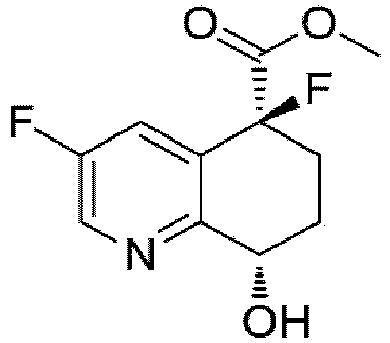
(5S,8S)-methyl 3,5-difluoro-8-hydroxy-5,6,7,8-tetrahydroquino line-5-carboxylate II-d-9 
(5R,8S)-methyl 5-fluoro-8-hydroxy-3-m ethyl-5,6,7,8-tetrahydro quinoline-5-carboxylate 
RuCI(p-cymen e)[(S,S)-Ts-DP EN] II-d-10 
(5S,8S)-methyl 5-fluoro-8-hydroxy-3-m ethyl-5,6,7,8-tetrahydro quinoline-5-carboxylate - 1H NMR (CDCl3) delta 8.64 (1 H, br dd, J = 4.9, 1.2 Hz), 7.69 (1 H, br dd, J = 7.9, 1.2 Hz), 7.31 (1 H, dd, J = 7.9, 4.9 Hz), 4.74 (1 H, m), 4.32 (1 H, br), 3.83, (3 H, s), 2.53-2.34 (3 H, m), 2.08-1.98 (1 H, m).
- Chiral HPLC tR: 16.7 min (Method F), >99% e.e., d.e.
- 1H NMR (CDCl3) delta 8.62 (1 H, br d, J = 4.3 Hz), 7.79 (1 H, d, J = 7.9 Hz), 7.31 (1 H, dd, J = 7.9, 4.3 Hz), 4.80 (1 H, m), 4.06 (1 H, br), 3.81, (3 H, s), 2.74-2.65 (1 H, m), 2.45-2.39 (1 H, m), 2.27-2.13 (2 H, m).
- Chiral HPLC tR: 34.6 min (Method F), >99% e.e., d.e.
- 1H NMR and LCMS were identified with the IM II-d-3.
- Chiral HPLC tR: 12.2 min (Method F), >99% e.e., d.e.
- 1H NMR and LCMS were identified with the IM II-d-4.
- Chiral HPLC tR: 13.9 min (Method F), >99% e.e., d.e.
- 1H NMR (CDCl3) delta 8.50 (1 H, m), 7.43 (1 H, dd, J = 7.3, 2.4 Hz), 4.72 (1 H, m), 3.97 (1 H, br), 3.85 (3 H, s), 2.52-2.33 (3 H, m), 2.03 (1 H, m).
- MS (ESI) m/z: 244.0 (M+H)+.
- Chiral HPLC tR: 7.3 min (Method H), 98.8% e.e., >99% d.e
- 1H NMR (CDCl3) delta 8.49 (1 H, m), 7.52 (1 H, dd, J = 8.5, 2.4 Hz), 4.78 (1 H, m), 3.83 (3 H, s), 3.69 (1 H, s), 2.54 (1 H, m), 2.41 (1 H, m), 2.26-2.11 (2 H, m).
- MS (ESI) m/z: 244.0 (M+H)+.
- Chiral HPLC tR: 9.6 min (Method H), 97.5% e.e., 97.1% d.e.
- 1H NMR (CDCl3) delta 8.44 (1 H, s), 7.49 (1 H, s), 4.73 (1 H, m), 4.34 (1 H, br), 3.83 (3 H, s), 2.48-2.32 (3 H, m), 2.35 (3 H, s), 2.02 (1 H, m).
- MS (ESI) m/z: 238.2 (M+H)+.
- Chiral HPLC tR: 15.4 min (Method G), 98.6% e.e., 97.0% d.e.
- 1H NMR (CDCl3) delta 8.43 (1 H, s), 7.56 (1 H, s), 4.79 (1 H, m), 3.82 (3 H, s), 2.68 (1 H, m), 2.37 (1 H, m), 2.35 (3 H, s), 2.24-2.11 (2 H, m) , 1.86 (1 H, br).
- MS (ESI) m/z: 238.2 (M+H)+.
- Chiral HPLC tR: 10.4 min (Method G), >99% e.e., 96.4% d.e.
- The following Examples were prepared by General Procedure A (Table 36).
{Table 36-1} Examples Structure Chemical Name Substrate Amine 99 
(5R,8S)-N-(2,4-dichloro -6-methylbenzyl)-5-fluo ro-8-hydroxy-5,6,7,8-tet rahydroqui noline-5-car boxamide 
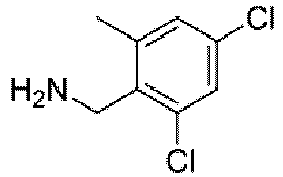
100 
(5S,8R)-N-(2,4-dichloro -6-methylbenzyl)-5-fluo ro-8-hydroxy-5,6,7,8-tet rahydroqui noline-5-car boxamide 
101 
(5R,8S)-N-(2-chloro-3-( trifluoromethyl) benzyl)-5-fluoro-8-hydroxy-5,6, 7,8-tetrahydroquinoline -5-carboxamide 

102 
(5S,8R)-N-(2-chloro-3-( trifluoromethyl) benzyl)-5-fluoro-8-hydroxy-5,6, 7,8-tetrahydroquinoline -5-carboxamide 
103 
(5R,8S)-N-(2,4-dichloro -6-(hydroxymethyl)benz yl)-5-fluoro-8-hydroxy-5 ,6,7,8-tetrahydroquinoli ne-5-carboxamide 

{Table 36-2} 104 
(5S,8R)-N-(2,4-dichloro -6-(hydroxymethyl)benz yl)-5-fluoro-8-hydroxy-5 ,6,7,8-tetrahydroquinoli ne-5-carboxamide 
105 
(5R,8S)-N-(2,4-dichloro benzyl)-5-fluoro-8-hydr oxy-5,6,7,8-tetrahydroq uinoline-5-carboxamide 
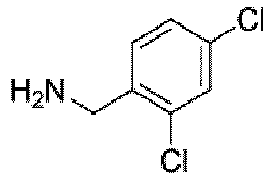
106 
(5S,8R)-N-(2,4-dichloro benzyl)-5-fluoro-8-hydr oxy-5,6,7,8-tetrahydroq uinoline-5-carboxamide 
107 
(5S,8R)-N-(2-chloro-4-fl uorobenzyl)-5-fluoro-8-hydroxy-5,6,7,8-tetrahy droquinoline-5-carboxa mide 

108 
(5S,8R)-5-fluoro-8-hydr oxy-N-(2,3,4-trifluorobe nzyl)-5,6,7,8-tetrahydro quinoline-5-carboxamid e 

109 
(5S,8R)-N-(2,4-difluoro benzyl)-5-fluoro-8-hydr oxy-5,6,7,8-tetrahydroq uinoline-5-carboxamide 

{Table 36-3} 110 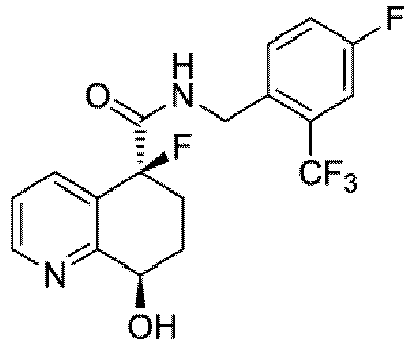
(5S,8R)-5-fluoro-N-(4-fl uoro-2-(trifluoromethyl) benzyl)-8-hydroxy-5,6,7 ,8-tetrahydroquinoline-5-carboxamide 

111 
(5S,8R)-N -(4-chloro-2-fl uorobenzyl)-5-fluoro-8-hydroxy-5,6,7,8-tetrahy droqu i noline-5-carboxa mide 

112 
(5R,8S)-N-(2,6-dichloro -4-(trifluoromethyl)benz yl)-5-fluoro-8-hydroxy-5 ,6,7,8-tetrahydroquinoli ne-5-carboxamide 

113 
(5S,8R)-N-(2,6-dichloro -4-(trifluoromethyl)benz yl)-5-fluoro-8-hydroxy-5 ,6,7,8-tetrahydroquinoli ne-5-carboxamide 
114 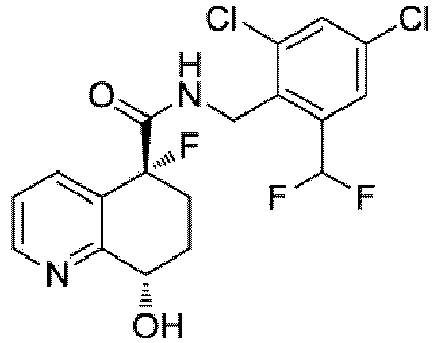
(5R,8S)-N-(2,4-dichloro -6-(difluoromethyl)benz yl)-5-fluoro-8-hydroxy-5 ,6,7,8-tetrahydroquinoli ne-5-carboxamide 

{Table 36-4} 115 
(5S,8R)-N-(2,4-dichloro -6-(difluoromethyl)benz yl)-5-fluoro-8-hydroxy-5 ,6,7,8-tetrahydroquinoli ne-5-carboxamide 
116 
(5R,8S)-N-(2,4-dichloro -6-fluorobenzyl)-5-fluor o-8-hydroxy-5,6,7,8-tetr ahydroquinoline-5-carb oxamide 

117 
(5S,8R)-N-(2,4-dichloro -6-fluorobenzyl)-5-fluor o-8-hydroxy-5,6,7,8-tetr ahydroquinoline-5-carb oxamide 
118 
(5S,8R)-N-(4-bromo-2-chlorobenzyl)-5-fluoro-8-hydroxy-5,6,7,8-tetra hydroquinoline-5-carbo xamide 

119 
(5S,8R)-N-((R)-1-(2,4-d ichlorophenyl)ethyl)-5-fl uoro-8-hydroxy-5,6,7,8-tetrahydroquinoline-5-c arboxamide 

120 
(5R,8S)-N-(2,3-dichloro benzyl)-5-fluoro-8-hydr oxy-5,6,7,8-tetrahydroq uinoline-5-carboxamide 

{Table 36-5} 121 
(5S,8R)-N-(2,3-dichloro benzyl)-5-fluoro-8-hydr oxy-5,6,7,8-tetrahydroq uinoline-5-carboxamide 
122 
(5S,8R)-N-(2-chloro-6-methylbenzyl)-5-fluoro-8-hydroxy-5,6,7,8-tetra hydroquinoline-5-carbo xamide 

123 
(5S,8R)-N-(2-chloro-4,5 -difluorobenzyl)-5-fluor o-8-hydroxy-5,6,7,8-tetr ahydroquinoline-5-carb oxamide 

124 
(5S,8R)-5-fluoro-8-hydr oxy-N-(2,3,6-trichlorobe nzyl)-5,6,7,8-tetrahydro quinoline-5-carboxamid e 

125 
(5S,8R)-N-(2-chloro-4-methylbenzyl)-5-fluoro-8-hydroxy-5,6,7,8-tetra hydroquinoline-5-carbo xamide 

{Table 37} Examples LC MS Examples LC MS Method tR (min) [M+H]+ Method tR (min) [M+H]+ 99 A 1.61 383.0 114 A 1.61 419.1 101 A 1.52 403.1 115 A 1.61 419.1 102 A 1.52 403.1 116 C 1.50 386.9 105 A 1.51 369.1 117 C 1.49 386.9 106 A 1.51 369.1 118 A 1.54 413.0 107 A 1.39 353.1 119 A 1.58 383.2 108 C 1.35 354.9 120 A 1.47 369.1 109 C 1.30 337.0 121 A 1.47 369.1 110 C 1.47 386.9 122 A 1.45 349.2 111 C 1.41 352.9 123 A 1.42 371.2 112 A 1.62 437.0 124 A 1.54 403.1 113 A 1.62 437.1 125 A 1.47 349.2 - 1H NMR (CDCl3) delta 8.60 (1 H, ddd, J = 4.6, 2.0, 1.3 Hz), 7.49 (1 H, ddd, J = 7.9, 2.0, 1.3 Hz), 7.33 (1 H, d, J = 2.0 Hz), 7.25 (1 H, dd, J = 7.9, 4.6 Hz), 7.16 (1 H, d, J = 2.0 Hz), 7.08 (1 H, br), 4.76 (1 H, dd, J = 5.3, 5.3 Hz), 4.73 (1 H, dd, J = 13.8, 5.3 Hz), 4.63 (1 H, dd, J = 13.8, 5.3 Hz), 4.35 (1 H, s), 2.66-2.23 (3 H, m), 2.48 (3 H, s), 2.00 (1 H, m).
- Chiral HPLC tR: 11.5 min (Method I), >99% e.e., d.e.
- 1H NMR and LCMS were identified with the Example 99.
- Chiral HPLC tR: 15.2 min (Method I), >99% e.e., d.e.
- 1H NMR (CDCl3) delta 8.61 (1 H, br d, J = 4.6 Hz), 7.71 (1 H, d, J = 7.3 Hz), 7.65 (1 H, d, J = 7.9 Hz), 7.49 (1 H, ddd, J = 7.9, 2.0, 1.3 Hz), 7.41 (1 H, dd, J = 7.9, 7.3 Hz), 7.32 (1 H, br), 7.24 (1 H, dd, J = 7.9, 4.6 Hz), 4.79-4.71 (3 H, m), 4.35 (1 H, s), 2.57 (1 H, m), 2.44-2.27 (2 H, m), 2.03 (1 H, m).
- Chiral HPLC tR: 20.7 min (Method K), >99% e.e., d.e.
- 1H NMR was identified with the Example 101.
- Chiral HPLC tR: 29.8 min (Method K), >99% e.e., d.e.
- 1H NMR (CDCl3) delta 8.60 (1 H, br d, J = 4.6 Hz), 7.65 (1 H, br), 7.45 (1 H, d, J = 2.0 Hz), 7.42 (1 H, d, J = 7.9 Hz), 7.34 (1 H, d, J = 2.0 Hz), 7.23 (1 H, dd, J = 7.9, 4.6 Hz), 4.83-4.65 (5 H, m), 4.32 (1 H, s), 3.82 (1 H, br), 2.52 (1 H, m), 2.42-2.21 (2 H, m), 2.00 (1 H, m).
- MS (ESI) m/z: 399.0 (M+H)+.
- Chiral HPLC tR: 12.2 min (Method J), >99% e.e., d.e.
- 1H NMR and LCMS were identified with the Example 103.
- Chiral HPLC tR: 16.4 min (Method J), >99% e.e., d.e.
- 1H NMR (CDCl3) delta 8.60 (1 H, ddd, J = 4.9, 1.8, 1.2 Hz), 7.49 (1 H, ddd, J = 7.9, 1.8, 1.2 Hz), 7.41 (1 H, dd, J = 8.6, 6.1 Hz), 7.25-7.22 (1 H, br), 7.24 (1 H, dd, J = 7.9, 4.9 Hz), 7.19 (1 H, dd, J = 8.6, 2.4 Hz), 7.00 (1 H, ddd, J = 8.6, 7.9, 2.4 Hz), 4.74 (1 H, m), 4.65 (1 H, dd, J = 14.7, 6.1 Hz), 4.59 (1 H, dd, J = 14.7, 6.1 Hz), 4.46 (1 H, br s), 2.61-2.28 (3 H, m), 2.02 (1 H, m).
- 1H NMR (CDCl3) delta 8.61 (1 H, brd, J = 4.9 Hz), 7.48 (1 H, br d, J = 7.9 Hz), 7.26 (1 H, dd, J = 7.9, 4.9 Hz), 7.23 (1 H, br), 7.12 (1 H, m), 6.98 (1 H, m), 4.75 (1 H, m), 4.65 (1 H, dd, J = 14.7, 6.1 Hz), 4.57 (1 H, dd, J = 14.7, 6.1 Hz), 4.40 (1 H, br s), 2.61-2.28 (3 H, m), 2.02 (1 H, m).
- 1H NMR (CDCl3) delta 8.60 (1 H, br d, J = 4.9 Hz), 7.48 (1 H, brd, J = 7.9 Hz), 7.36 (1 H, m), 7.26-7.23 (1 H, br), 7.24 (1 H, dd, J = 7.9, 4.9 Hz), 6.91-6.84 (2 H, m), 4.75 (1 H, m), 4.62 (1 H, dd, J = 14.7, 6.1 Hz), 4.53 (1 H, dd, J = 14.7, 5.5 Hz), 4.49 (1 H, br s), 2.61-2.27 (3 H, m), 2.02 (1 H, m).
- 1H NMR (CDCl3) delta 8.60 (1 H, br d, J = 4.9 Hz), 7.48 (1 H, br d, J = 7.9 Hz), 7.32 (1 H, dd, J = 7.9, 7.9 Hz), 7.25 (1 H, dd, J = 7.9, 4.9 Hz), 7.21 (1 H, br), 7.16-7.14 (2 H, m), 4.74 (1 H, m), 4.62 (1 H, dd, J = 15.3, 6.1 Hz), 4.54 (1 H, dd, J = 15.3, 5.5 Hz), 4.43 (1 H, br s), 2.61-2.27 (3 H, m), 2.01 (1 H, m).
- 1H NMR (CDCl3) delta 8.60 (1 H, ddd, J = 4.9, 1.8, 1.2 Hz), 7.52 (1 H, ddd, J = 7.9, 1.8, 1.2 Hz), 7.29 (1 H, dd, J = 1.8, 1.8 Hz), 7.25 (1 H, dd, J = 7.9, 4.9 Hz), 7.14-7.08 (1 H, br), 7.11 (1 H, ddd, J = 9.2, 1.8, 1.8 Hz), 4.79-4.63 (3 H, m), 4.46 (1 H, br), 2.61-2.26 (3 H, m), 2.02 (1 H, m).
- 1H NMR was identified with the Example 116.
- 1H NMR (CDCl3) delta 8.57 (1 H, br d, J = 4.9 Hz), 7.44 (1 H, d, J = 1.8 Hz), 7.43 (1 H, br d, J = 7.9 Hz), 7.37 (1 H, d, J = 8.6 Hz), 7.30 (1 H, dd, J = 8.6, 1.8 Hz), 7.20 (1 H, dd, J = 7.9, 4.9 Hz), 7.17 (1 H, br), 5.45 (1 H, m), 4.73 (1 H, m), 4.38 (1 H, br), 2.62-2.30 (3 H, m), 2.02 (1 H, m), 1.59 (3 H, d, J = 7.3 Hz).
- The following Examples and Intermediates were prepared by General Procedure N (Tables 38 and 40).
- A mixture of substrate (1.0 eq.) and 2 N aq. NaOH (2.0 eq.) in MeOH was stirred at room temperature for 1.5 h, 2 N hydrochloric acid (2.2 eq.) was added to the mixture. The mixture was concentrated in vacuo. Toluene and MeCN was added to the resulting mixture and concentrated in vacuo. This procedure was repeated 3 times to remove remaining water. The residual powder was dissolved with THF and amine (1.1 eq.), triethylamine (1.3 eq.), and DMT-MM (1.8 eq.) were added to the mixture at ambient temperature. After being stirred until complete reaction, the insoluble material was removed by filtration, and the filtrate was concentrated in vacuo. The resulting residue was purified by silica gel column chromatography, and/or SCX cartridge column, and then preparative HPLC to afford the following Examples and Intermediates.
{Table 38-1} Examples Structure Chemical Name Substrate Amine 126 
(5R,8R)-N-(2,4-dichloro -6-methylbenzyl)-5-fluo ro-8-hydroxy-5,6,7,8-tet rahydroqui noline-5-car boxamide 

127 
(5S,8S)-N-(2,4-dichloro -6-methylbenzyl)-5-fluo ro-8-hydroxy-5,6,7,8-tet rahydroqui noline-5-car boxamide 
128 
(5R,8R)-N-(2-chloro-3-( trifluoromethyl)benzyl)-5-fluoro-8-hydroxy-5,6, 7,8-tetrahydroquinoline -5-carboxamide 

129 
(5S,8S)-N-(2-chloro-3-( trifluoromethyl)benzyl)-5-fluoro-8-hydroxy-5,6, 7,8-tetrahydroquinoline -5-carboxamide 
130 
(5R,8R)-N-(2,4-dichloro -6-(hydroxymethyl)benz yl)-5-fluoro-8-hydroxy-5 ,6,7,8-tetrahydroquinoli ne-5-carboxamide 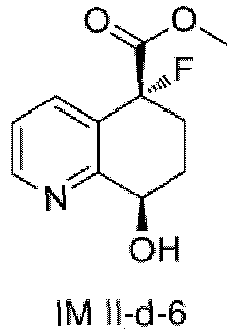

{Table 38-2} 131 
(5S,8S)-N-(2,4-dichloro -6-(hydroxymethyl)benz yl)-5-fluoro-8-hydroxy-5 ,6,7,8-tetrahydroquinoli ne-5-carboxamide 
132 
(5R,8R)-N-(2,4-dichloro benzyl)-5-fluoro-8-hydr oxy-5,6,7,8-tetrahydroq uinoline-5-carboxamide 

133 
(5S,8S)-N-(2,4-dichloro benzyl)-5-fluoro-8-hydr oxy-5,6,7,8-tetrahydroq uinoline-5-carboxamide 
134 
(5R,8R)-N-(2-chloro-4-f luorobenzyl}-5-fluoro-8-hydroxy-5,6,7,8-tetrahy droquinoline-5-carboxa mide 

135 
(5S,8S)-N-(2-chloro-4-fl uorobenzyl)-5-fluoro-8-hydroxy-5,6,7,8-tetrahy droquinoline-5-carboxa mide 
136 
(5R,8R)-5-fluoro-8-hydr oxy-N-(2,3,4-trifluorobe nzyl)-5,6,7,8-tetrahydro quinoline-5-carboxamid e 

{Table 38-3} 137 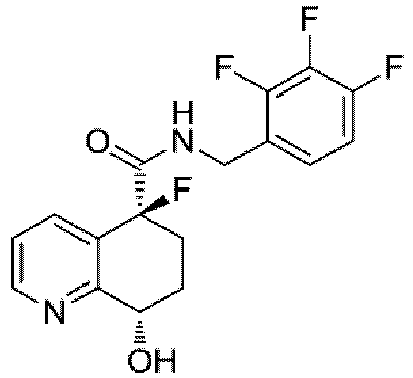
(5S,8S)-5-fluoro-8-hydr oxy-N-(2,3,4-trifluorobe nzyl)-5,6,7,8-tetrahydro quinoline-5-carboxamid e 
138 
(5R,8R)-N-(2,6-dichloro benzyl)-5-fluoro-8-hydr oxy-5,6,7,8-tetrahydroq uinoline-5-carboxamide 
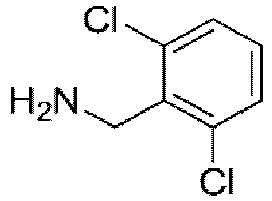
139 
(5S,8S)-N-(2,6-dichloro benzyl)-5-fluoro-8-hydr oxy-5,6,7,8-tetrahydroq uinoline-5-carboxamide 
140 
(5R,8R)-N-(2,4-difluoro benzyl)-5-fluoro-8-hydr oxy-5,6,7,8-tetrahydroq uinoline-5-carboxamide 

141 
(5S,8S)-N-(2,4-difluoro benzyl)-5-fluoro-8-hydr oxy-5,6,7,8-tetrahydroq uinoline-5-carboxamide 
{Table 38-4} 142 
(5S,8S)-N-(2-chloro-6-fl uoro-3-methylbenzyl)-5 -fluoro-8-hydroxy-5,6,7, 8-tetrahydroquinoline-5 -carboxamide 

143 
(5R,8R)-5-fluoro-N-(4-fl uoro-2-(trifluoromethyl) benzyl)-8-hydroxy-5,6,7 ,8-tetrahydroqu inoline-5-carboxamide 

144 
(5S,8S)-5-fluoro-N-(4-fl uoro-2-(trifluoromethyl) benzyl)-8-hydroxy-5,6,7 ,8-tetrahydroquinoline-5-carboxamide 
145 
(5R,8R)-N-(4-chloro-2-f luorobenzyl)-5-fluoro-8-hydroxy-5,6,7,8-tetrahy droquinoline-5-carboxa mide 
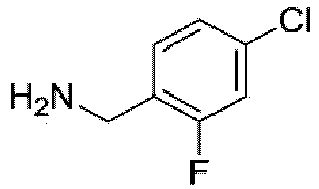
146 
(5S,8S)-N-(4-chloro-2-fl uorobenzyl)-5-fluoro-8-hydroxy-5,6,7,8-tetrahy droquinoline-5-carboxa mide 
{Table 38-5} 147 
(5R,8R)-N-(2,6-dichloro -4-(trifluoromethyl)benz yl)-5-fluoro-8-hydroxy-5 ,6,7,8-tetrahydroquinoli ne-5-carboxamide 

148 
(5S,8S)-N-(2,6-dichloro -4-(trifluoromethyl)benz yl)-5-fluoro-8-hydroxy-5 ,6,7,8-tetrahydroquinoli ne-5-carboxamide 
149 
(5S,8S)-N-(2,4-dichloro -6-(difluoromethyl)benz yl)-5-fluoro-8-hydroxy-5 ,6,7,8-tetrahydroquinoli ne-5-carboxamide 

150 
(5S,8S)-N-(2-chloro-4-fl uoro-6-(hydroxymethyl) benzyl)-5-fluoro-8-hydr oxy-5,6,7,8-tetrahydroq uinoline-5-carboxamide 
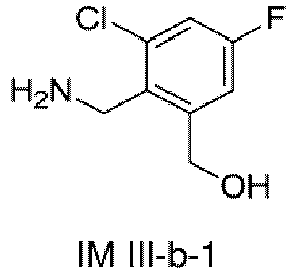
151 
(5R,8R)-N-(2,4-dichloro -6-fluorobenzyl)-5-fluor o-8-hydroxy-5,6,7,8-tetr ahydroquinoline-5-carb oxamide 
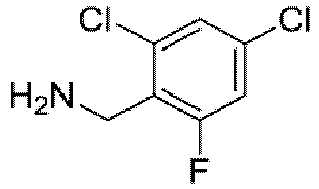
{Table 38-6} 152 
(5S,8S)-N-(2,4-dichloro -6-fluorobenzyl)-5-fluor o-8-hydroxy-5,6,7,8-tetr ahydroquinoline-5-carb oxamide 
153 
(5R,8R)-N-(4-bromo-2-ch lorobenzyl)-5-fluoro-8-hydroxy-5,6,7,8-tetra hydroquinoline-5-carbo xamide 

154 
(5S,8S)-N-(4-bromo-2-ch lorobenzyl)-5-fluoro-8-hydroxy-5,6,7,8-tetra hydroquinoline-5-carbo xamide 
155 
(5R,8R)-N-((R)-1-(2,4-d ichlorophenyl)ethyl)-5-fl uoro-8-hydroxy-5,6,7,8-tetrahydroqu inoline-5-c arboxamide 

156 
(5R,8R)-N-(4-chloro-2-( trifluoromethyl)benzyl)-5-fluoro-8-hydroxy-5,6, 7,8-tetrahydroquinoline -5-carboxam ide 

{Table 38-7} 157 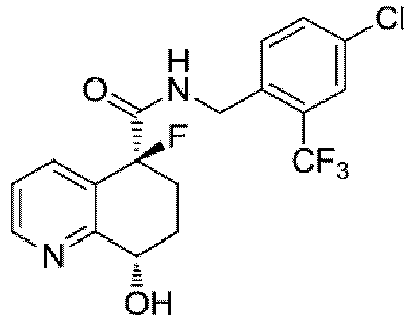
(5S,8S)-N-(4-chloro-2-( trifluoromethyl)benzyl)-5-fluoro-8-hydroxy-5,6, 7,8-tetrahydroquinoline -5-carboxamide 
158 
(5R,8R)-N-(2,3-dichloro benzyl)-5-fluoro-8-hydr oxy-5,6,7,8-tetrahydroq uinoline-5-carboxamide 
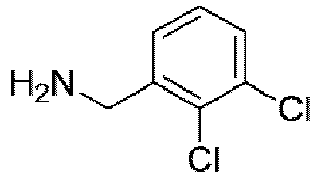
159 
(5S,8S)-N-(2,3-dichloro benzyl)-5-fluoro-8-hydr oxy-5,6,7,8-tetrahydroq uinoline-5-carboxamide 
160 
(5R,8R)-N-(2-chloro-6-methylbenzyl)-5-fluoro-8-hydroxy-5,6,7,8-tetra hydroquinoline-5-carbo xamide 

161 
(5S,8S)-N-(2-chloro-6-methylbenzyl)-5-fluoro-8-hydroxy-5,6,7,8-tetra hydroquinoline-5-carbo xamide 
{Table 38-8} 162 
(5R,8R)-N-(2-chloro-4, 5-difluorobenzyl)-5-fluo ro-8-hydroxy-5,6,7,8-tet rahydroquinoline-5-car boxamide 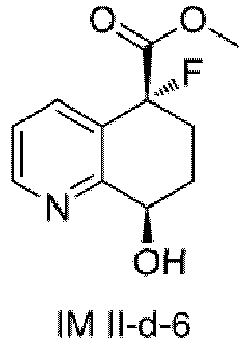

163 
(5S,8S)-N-(2-chloro-4,5 -difluorobenzyl)-5-fluor o-8-hydroxy-5,6,7,8-tetr ahydroquinoline-5-carb oxamide 
164 
(5R,8R)-5-fluoro-8-hydr oxy-N-(2,3,6-trichlorobe nzyl)-5,6,7,8-tetrahydro quinoline-5-carboxamid e 

165 
(5S,8S)-5-fluoro-8-hydr oxy-N-(2,3,6-trichlorobe nzyl)-5,6,7,8-tetrahydro quinoline-5-carboxamid e 
166 
(5R,8R)-N-(2-chloro-4-methylbenzyl)-5-fluoro-8-hydroxy-5,6,7,8-tetra hydroquinoline-5-carbo xamide 

{Table 38-9} 167 
(5S,8S)-N-(2-chloro-4-methylbenzyl)-5-fluoro-8-hydroxy-5,6,7,8-tetra hydroquinoline-5-carbo xamide 
168 
(5S,8S)-5-fluoro-8-hydr oxy-N-((S)-1-(2,3,4-tric hlorophenyl)ethyl)-5,6,7 ,8-tetrahydroquinoline-5-carboxamide 

169 
(5S,8S)-N-(2-chloro-3-fl uorobenzyl)-5-fluoro-8-hydroxy-5,6,7,8-tetrahy droquinoline-5-carboxa mide 

170 
(5S,8S)-N-(2-chloro-3,6 -difluorobenzyl)-5-fluor o-8-hydroxy-5,6,7,8-tetr ahydroquinoline-5-carb oxamide 

171 
(5S,8S)-N-(2-chloro-6-fl uorobenzyl)-5-fluoro-8-hydroxy-5,6,7,8-tetrahy droquinoline-5-carboxa mide 

{Table 38-10} 172 
(5S,8S)-N-(2-chloro-4-methoxybenzyl)-5-fluor o-8-hydroxy-5,6,7,8-tetr ahydroquinoline-5-carb oxamide 

173 
(5S,8S)-N-(2,5-dichloro benzyl)-5-fluoro-8-hydr oxy-5,6,7,8-tetrahydroq uinoline-5-carboxamide 

174 
(5S,8S)-N-(2-chloro-3,4 -difluorobenzyl)-5-fluor o-8-hydroxy-5,6,7,8-tetr ahydroquinoline-5-carb oxamide 

175 
(5S,8S)-S-fluoro-N-(2-fl uoro-3-(trifluoromethyl) benzyl)-8-hydroxy-5,6,7 ,8-tetrahydroquinoline-5-carboxamide 

176 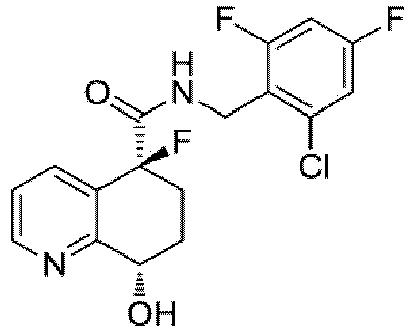
(5S,8S)-N-(2-chloro-4,6 -difluorobenzyl)-5-fluor o-8-hydroxy-5,6,7,8-tetr ahydroquinoline-5-carb oxamide 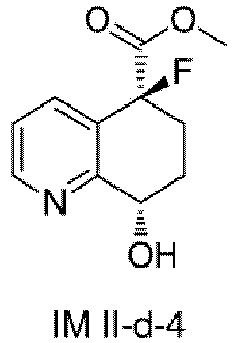

177 
(5S,8S)-N-((3,5-dichlor opyridin-2-yl)methyl)-5-fluoro-8-hydroxy-5,6,7, 8-tetrahydroquinoline-5 -carboxamide 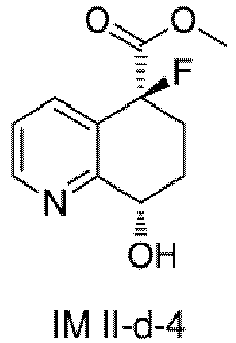
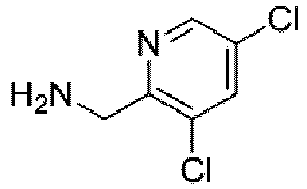
{Table 38-11} 178 
(5S,8S)-5-fluoro-N-(3-fl uoro-2-(trifluoromethyl) benzyl)-8-hydroxy-5,6,7 ,8-tetrahydroqu inoline-5-carboxamide 

179 
(5S,8S)-N-(2-chloro-6-( trifluoromethyl)benzyl)-5-fluoro-8-hydroxy-5,6, 7,8-tetrahydroquinoline -5-carboxamide 

180 
(5S,8S)-5-fluoro-8-hydr oxy-N-(2,4,6-trifluorobe nzyl)-5,6,7,8-tetrahydro quinoline-5-carboxamid e 

181 
(5S,8S)-N-(5-bromo-2-chlorobenzyl)-5-fluoro-8-hydroxy-5,6,7,8-tetra hydroquinoline-5-carbo xamide 

182 
(5S,8S)-N-(4-bromo-2-f luorobenzyl)-5-fluoro-8-hydroxy-5,6,7,8-tetrahy droquinoline-5-carboxa mide 

{Table 38-12} 183 
(5S,8S)-N-(4-chloro-2,3 -difluorobenzyl)-5-fluor o-8-hydroxy-5,6,7,8-tetr ahydroquinoli ne-5-carb oxamide 

184 
(5S,8S)-N-(4-chloro-2,6 -difluorobenzyl)-5-fluor o-8-hydroxy-5,6,7,8-tetr ahydroquinoline-5-carb oxamide 

185 
(SS,aS)-N-(3-chloro-2,4 -difluorobenzyl)-5-fluor o-8-hydroxy-5,6,7,8-tetr ahydroquinoline-5-carb oxamide 

186 
(5S,8S)-5-fluoro-N-(2-fl uoro-6-(trifluoromethyl) benzyl)-8-hydroxy-5,6,7 ,8-tetrahydroquinoline-5-carboxamide 

187 
(5S,8S)-N-(2-chloro-4-( trifluoromethyl)benzyl)-5-fluoro-8-hydroxy-5,6, 7,8-tetrahydroquinoline -5-carboxamide 

{Table 38-13} 188 
(5S,8S)-N-(3-chloro-4-fl uorobenzyl)-5-fluoro-8-hydroxy-5,6,7,8-tetrahy droquinoli ne-5-carboxa mide 

189 
(5S,8S)-5-fluoro-8-hydr oxy-N-((R)-1,2,3,4-tetra hydronaphthalen-1-yl)-5,6,7,8-tetrahydroquino line-5-carboxamide 

190 
(5S,8S)-N-(3-chloro-2-fl uorobenzyl)-5-fluoro-8-hydroxy-5,6,7,8-tetrahy droquinoli ne-5-carboxa mide 

191 
(5S,8S)-N-(2,4-dichloro phenethyl)-5-fluoro-8-h ydroxy-5,6,7,8-tetrahyd roquinoline-5-carboxam ide 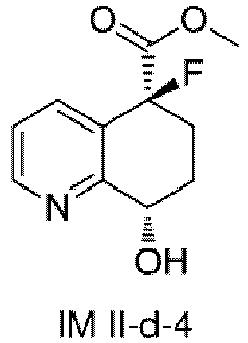

192 
(SS,SS)-5-fluoro-8-hydr oxy-N-((1-morpholinocy clohexyl)methyl)-5,6,7, 8-tetrahydroquinoline-5 -carboxamide 

{Table 38-14} 193 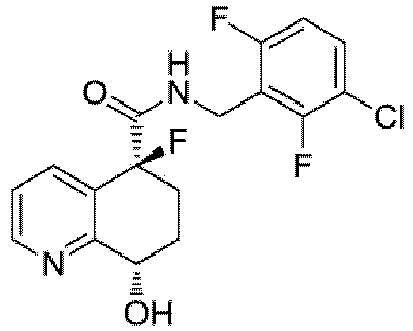
(5S,8S)-N-(3-chloro-2,6 -difluorobenzyl)-5-fluor o-8-hydroxy-5,6,7,8-tetr ahydroquinoline-5-carb oxamide 

194 
(5S,8S)-N-((3-chloro-5-(trifluoromethyl)pyridin-2-yl)methyl)-5-fluoro-8-hydroxy-5,6,7,8-tetrahy droquinoline-5-carboxa mide 

195 
(5S,8S)-N-(2-chloroben zyl)-5-fluoro-8-hydroxy-5,6,7,8-tetrahydroquino line-5-carboxamide 

196 
(5S,8S)-N-((R)-2,3-dihy dro-1H-inden-1-yl)-5-flu oro-8-hydroxy-5,6,7,8-t etrahydroquinoline-5-ca rboxamide 

197 
(5S,8S)-N-(3,4-dichloro benzyl)-5-fluoro-8-hydr oxy-5,6,7,8-tetrahydroq uinoline-5-carboxamide 

{Table 38-15} 198 
(5S,8S)-N-(2-chloro-6-methoxybenzyl)-5-fluor o-8-hydroxy-5,6,7,8-tetr ahydroquinoline-5-carb oxamide 

199 
(5S,SS)-5-fluoro-8-hydr oxy-N-(2-(trifluorometh yl)benzyl)-5,6,7,8-tetra hydroquinoline-5-carbo xamide 

200 
(5S,8S)-5-fluoro-8-hydr oxy-N-(3,4,5-trifluorobe nzyl)-5,6,7,8-tetrahydro quinoline - 5-carboxamid e 

201 
(5S,8S)-N-(4-cyano-2-fl uorobenzyl)-5-fluoro-8-hydroxy-5,6,7,8-tetrahy droquinoline-5-carboxa mide 

202 
(5S,8S)-N-(3,4-difluoro benzyl)-5-fluoro-8-hydr oxy-5,6,7,8-tetrahydroq uinoline-5-carboxamide 

{Table 38-16} 203 
(SS,8S)-N-(3-chloro-5-fl uorobenzyl)-5-fluoro-8-hydroxy-5,6,7,8-tetrahy droquinoline-5-carboxa mide 

204 
(5S,8S)-N-(2-chloro-5-fl uorobenzyl)-5-fluoro-8-hydroxy-5,6,7,8-tetrahy droquinoline-5-carboxa mide 

205 
(5S,8S)-N-(3-chloroben zyl)-5-fluoro-8-hydroxy-5,6,7,8-tetrahydroquino line-5-carboxamide 

206 
(5S,8S)-N-(4-chloro-3-fl uorobenzyl)-5-fluoro-8-hydroxy-5,6,7,8-tetrahy droquinoline-5-carboxa mide 

207 
(5S,8S)-5-fluoro-N-(2-fl uoro-4-(trifluoromethox y)benzyl)-8-hydroxy-5,6 ,7,8-tetrahydroquinoline -5-carboxamide 

{Table 38-17} 208 
(5S,8S)-N-(2,3-difluoro benzyl)-5-fluoro-8-hydr oxy-5,6,7,8-tetrahydroq uinoline-5-carboxamide 

209 
(5S,8S)-N-(2-chloro-5-( trifluoromethyl)benzyl)-5-fluoro-8-hydroxy-5,6, 7,8-tetrahydroquinoline -5-carboxam ide 

210 
(5S,8S)-N-(4-chloroben zyl)-5-fluoro-8-hydroxy-5,6,7,8-tetrahydroqu ino line-5-carboxamide 

211 
(5S,8S)-5-fluoro-8-hydr oxy-N-(4-methoxy-2-(tri fluoromethyl)benzyl)-5, 6,7,8-tetrahydroquinolin e-5-carboxamide 

212 
(5S,8S)-N-(3,5-dichloro benzyl)-5-fluoro-8-hydr oxy-5,6,7,8-tetrahydroq uinoline-5-carboxamide 

{Table 38-18} 213 
(5S,8S)-N-((4-(4-chloro phenyl)thiazol-2-yl)met hyl)-5-fluoro-8-hydroxy-5,6,7,8-tetrahydroquino line-5-carboxamide 

214 
(5S,8S)-5-fluoro-8-hydr oxy-N-(2-(morpholinom ethyl)benzyl)-5,6,7,8-tet rahydroquinoline-5-car boxamide 

215 
(5S,8S)-5-fluoro-8-hydr oxy-N-((1S,2R)-2-phen ylcyclopropyl)-5,6,7,8-t etrahydroquinoline-5-ca rboxamide 

216 
(5S,8S)-N-(6-chloro-2-fl uoro-3-methylbenzyl)-5 -fluoro-8-hydroxy-5,6,7, 8-tetrahydroquinoline-5 -carboxamide 
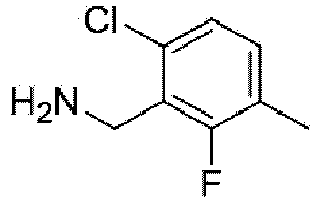
217 
(5S,8S)-N-(2,6-difluoro benzyl)-5-fluoro-8-hydr oxy-5,6,7,8-tetrahydroq uinoline-5-carboxamide 
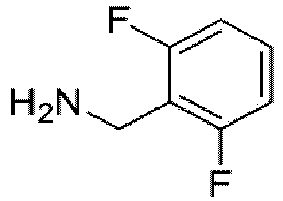
{Table 38-19} 218 
(5S,8S)-5-fluoro-8-hydr oxy-N-((S)-1,2,3,4-tetra hydronaphthalen-1-yl)-5,6,7,8-tetrahydroquino line-5-carboxamide 

219 
(5S,8S)-5-fluoro-8-hydr oxy-N-(2-(3-(trifluorome thyl)phenoxy)ethyl)-5,6, 7,8-tetrahydroquinoline -5-carboxamide 

220 
(5S,8S)-5-fluoro-N-((1 -( 4-fluorophenyl)cyclopro pyl)methyl)-8-hydroxy-5 ,6,7,8-tetrahydroquinoli ne-5-carboxamide 

221 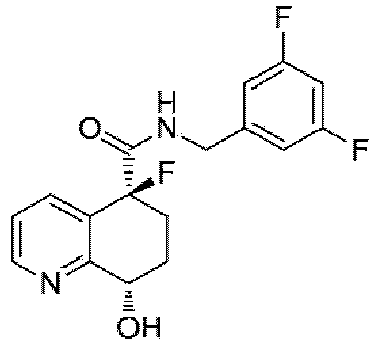
(5S,8S)-N-(3,5-difluoro benzyl)-5-fluoro-8-hydr oxy-5,6,7,8-tetrahydroq uinoline-5-carboxamide 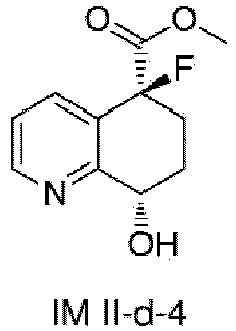

222 
(5S,8S)-5-fluoro-8-hydr oxy-N-((1R,2S)-2-phen ylcyclopropyl)-5,6,7,8-t etrahydroquinoline-5-ca rboxamide 

223 
(5S,8S)-5-fluoro-N-(2-fl uorobenzyl)-8-hydroxy-5,6,7,8-tetrahydroquino line-5-carboxamide 

{Table 38-20} 224 
(5S,8S)-N-(2-chloro-3-methoxybenzyl)-5-fluor o-8-hydroxy-5,6,7,8-tetr ahydroquinoline-5-carb oxamide 

225 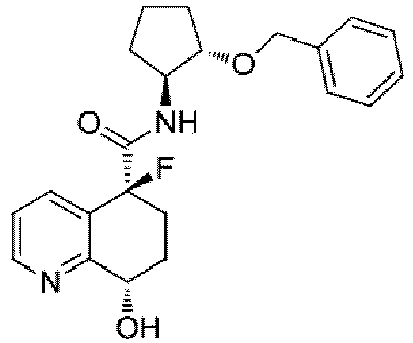
(5S,8S)-N-((1S,2S)-2-( benzyloxy)cyclopentyl)-5-fluoro-8-hydroxy-5,6, 7,8-tetrahydroquinoline -5-carboxamide 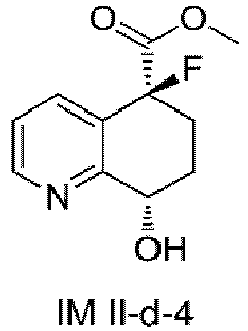

226 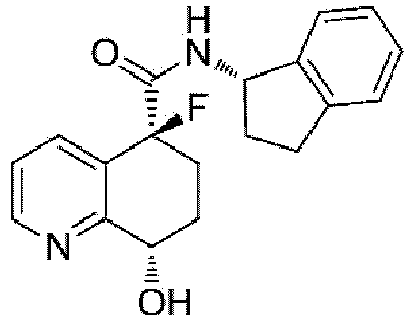
(5S,8S)-N-((S)-2,3-dihy dro-1H-inden-1-yl)-5-flu oro-8-hydroxy-5,6,7,8-t etrahydroquinoline-5-ca rboxamide 

227 
(5S,8S)-N-(3,3-dimethy lbutyl)-5-fluoro-8-hydro xy-5,6,7,8-tetrahydroqu i noline-5-carboxam ide 

228 
(SS,SS)-5-fluoro-8-hydr oxy-N-(2-phenoxyethyl) -5,6,7,8-tetrahydroquin oline-5-carboxamide 

229 
(5S,8S)-N-(4,6-dichloro -2,3-dihydrobenzofuran -3-yl)-5-fluoro-8-hydrox y-5,6,7,8-tetrahydroqui noline-5-carboxamide 
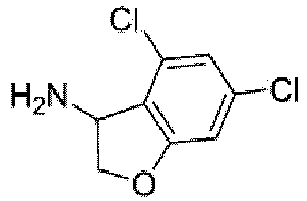
{Table 38-21} 230 
(5S,8S)-N-(5,7-dichloro chroman-4-yl)-5-fluoro-8-hydroxy-5,6,7,8-tetra hydroquinoline-5-carbo xamide 

231 
(5S,8S)-N-(1-(adamant an-1-yl)ethyl)-5-fluoro-8 -hydroxy-5,6,7,8-tetrah ydroquinoline-5-carbox amide 

232 
(5S,8S)-N-(2-(4-chlorop henyl)-2-(4,4-difluoropi peridin-1-yl)ethyl)-5-flu oro-8-hydroxy-5,6,7,8-t etrahydroquinoline-5-ca rboxamide 

233 
(5S,8S)-N-(chroman-3-yl)-5-fluoro-8-hydroxy-5 ,6,7,8-tetrahydroquinoli ne-5-carboxamide 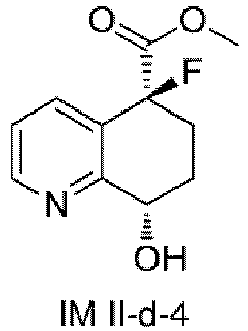

234 
(5S,8S)-N-(2-(4-chlorop henyl)propyl)-5-fluoro-8 -hydroxy-5,6,7,8-tetrah ydroquinoline-5-carbox amide 

{Table 38-22} 235 
(5S,85)-5-fluoro-8-hydr oxy-N-((rac)-2-morpholi no-2-phenylethyl)-5,6,7 ,8-tetrahydroquinoline-5-carboxamide 

236 
(5S,85)-N-(2-(4,4-difluo ropiperidin-1 -yl)-2-(4-m ethylthiazol-5-yl)ethyl)-5-fluoro-8-hydroxy-5,6, 7,8-tetrahydroquinoline -5-carboxamide 

237 
(5S,8S)-N-((R)-1-(2-chl oro-4-fluorophenyl)ethy l)-5-fluoro-8-hydroxy-5, 6,7,8-tetrahydroquinolin e-5-carboxamide 

238 
(5S,8S)-N-((trans)-2-(2, 4-dichlorophenyl)cyclop ropyl)-5-fluoro-8-hydrox y-5,6,7,8-tetrahydroqui noline-5-carboxamide 

239 
(5S,8S)-N-((S)-1-(2-chl oro-4-fluorophenyl)ethy l)-5-fluoro-8-hydroxy-5, 6,7,8-tetrahydroquinolin e-5-carboxamide 

{Table 38-23} 240 
(5S,8S)-N-((4-(2,4-dichl orophenyl)tetrahydro-2 H-pyran-4-yl)methyl)-5-fluoro-8-hydroxy-5,6,7, 8-tetrahydroquinoline-5 -carboxamide 

241 
(5S,8S)-N-(2,4-dichloro benzyl)-3,5-difluoro-8-h ydroxy-5,6,7,8-tetrahyd roquinoline-5-carboxam ide 

242 
(5S,8S)-N-(2-chloro-4-fl uorobenzyl)-3,5-difluor o-8-hydroxy-5,6,7,8-tetr ahydroquinoline-5-carb oxamide 

243 
(5S,8S)-N-(2,4-dichloro benzyl)-5-fluoro-8-hydr oxy-3-methyl-5,6,7,8-te trahydroqu inoli ne-5-car boxamide 

244 
(5S,8S)-N-(2-chloro-4-fl uorobenzyl)-5-fluoro-8-hydroxy-3-methyl-5,6,7, 8-tetrahydroquinoline-5 -carboxamide 

{Table 39-1} Examples LCMS Examples LC MS Method tR (min) [M+H]+ Method tR (min) [M+H]+ 127 A 1.59 383.0 187 A 1.45 387.0 128 A 1.50 403.1 188 B 1.31 353.1 129 A 1.50 403.1 189 C 1.46 341.1 132 A 1.49 369.1 190 A 1.37 353.1 133 A 1.49 369.1 191 B 1.46 383.0 134 A 1.38 353.1 192 C 1.44 392.2 135 A 1.38 353.1 193 B 1.30 371.0 136 C 1.34 355.0 194 C 1.43 404.0 137 B 1.27 355.1 195 A 1.34 335.0 138 A 1.41 369.1 196 C 1.38 327.1 139 A 1.41 369.1 197 A 1.47 369.0 140 C 1.29 337.1 198 A 1.40 365.2 141 B 1.22 337.1 199 B 1.35 369.1 142 A 1.45 367.2 200 C 1.35 355.1 143 C 1.45 387.0 201 B 1.12 344.1 144 A 1.45 387.0 202 A 1.30 337.1 145 C 1.40 353.0 203 B 1.33 353.1 146 A 1.40 353.0 204 A 1.36 353.2 147 A 1.60 437.1 205 A 1.35 335.1 148 A 1.60 437.0 206 B 1.32 353.1 149 A 1.58 419.1 207 B 1.43 403.0 150 D 1.26 383.1 208 A 1.28 337.1 151 C 1.48 386.9 209 A 1.50 403.1 152 B 1.41 387.0 210 B 1.29 335.1 153 A 1.52 413.0 211 B 1.39 399.1 154 A 1.52 413.0 212 B 1.43 369.0 155 A 1.56 383.2 213 C 1.52 418.0 156 C 1.55 403.0 214 C 1.36 400.1 157 B 1.49 403.0 215 C 1.35 327.1 158 A 1.45 369.1 216 A 1.45 367.2 159 A 1.46 369.1 217 B 1.18 337.1 {Table 39-2} 160 A 1.44 349.2 218 C 1.46 341.1 161 A 1.44 349.2 219 C 1.48 399.1 162 A 1.41 371.2 220 C 1.44 359.1 163 A 1.41 371.2 221 B 1.23 337.1 164 A 1.51 403.1 222 C 1.35 327.1 165 A 1.52 403.0 223 B 1.18 319.1 166 A 1.46 349.2 224 B 1.24 365.0 167 A 1.46 349.2 225 C 1.48 385.2 168 A 1.64 417.1 226 C 1.38 327.1 169 A 1.36 353.2 227 C 1.40 295.2 170 A 1.35 371.2 228 C 1.29 331.1 171 A 1.34 353.1 229 C 1.49 397.1 172 A 1.38 365.2 230 C 1.55 411.0 173 A 1.45 369.1 231 C 1.78 373.2 174 B 1.34 370.9 232 D 1.69 468.1 175 A 1.44 387.0 233 C 1.34 343.1 176 C 1.37 370.9 234 C 1.48 363.1 177 B 1.29 370.0 235 C 1.23 400.2 178 G 1.42 387.1 236 D 1.30 455.2 179 A 1.46 403.0 237 D 1.50 367.1 180 B 1.22 355.1 238 D 1.68 395.1 181 A 1.48 413.0 239 D 1.51 367.1 182 B 1.35 397.0 240 D 1.57 453.1 183 C 1.42 370.9 241 C 1.56 387.0 184 C 1.40 370.9 242 C 1.45 371.1 185 C 1.41 370.9 243 D 1.67 383.1 186 B 1.33 387.0 244 D 1.54 367.1 - 1H NMR (CDCl3) delta 8.59 (1 H, d, J = 4.6 Hz), 7.53 (1 H, d, J = 7.9 Hz), 7.31 (1 H, br s), 7.25 (1 H, m), 7.14 (1 H, br s), 6.98 (1 H, br d, J = 5.3 Hz), 4.80 (1 H, dd, J = 5.3, 5.3 Hz), 4.70 (1 H, dd, J = 13.8, 5.9 Hz), 4.60 (1 H, dd, J = 13.8, 5.9 Hz), 3.79 (1 H, br s), 2.65 (1 H, m), 2.46 (3 H, s), 2.40-2.28 (2 H, m), 2.16 (1 H, m).
- MS (ESI) m/z: 382.9 (M+H)+.
- Chiral HPLC tR: 13.6 min (Method I), 99.0% e.e., >99% d.e.
- 1H NMR was identified with the Example 126.
- Chiral HPLC tR: 17.0 min (Method I), 98.2% e.e., >99% d.e.
- 1H NMR (CDCl3) delta 8.58 (1 H, ddd, J = 4.6, 2.0, 1.3 Hz), 7.70 (1 H, d, J = 7.9 Hz), 7.64 (1 H, d, J = 7.2 Hz), 7.54 (1 H, d, J = 7.9 Hz), 7.39 (1 H, dd, J = 7.9, 7.2 Hz), 7.24 (1 H, br), 7.23 (1 H, dd, J = 7.9, 4.6 Hz), 4.81 (1 H, dd, J = 5.3, 4.6 Hz), 4.71 (2 H, d, J = 5.9 Hz), 3.87 (1 H, br), 2.68 (1 H, m), 2.42-2.08 (3 H, m).
- Chiral HPLC tR: 35.1 min (Method K), >99% e.e., d.e.
- 1H NMR was identified with the Example 128.
- Chiral HPLC tR: 23.9 min (Method K), >99% e.e., d.e.
- 1H NMR (DMSO d6) delta 8.69 (1 H, br), 8.61 (1 H, d, J = 4.6 Hz), 7.56 (1 H, d, J = 2.0 Hz), 7.55 (1 H, d, J = 7.9 Hz), 7.48 (1 H, d, J = 2.0 Hz), 7.38 (1 H, dd, J = 7.9, 4.6 Hz), 5.54 (1 H, t, J = 5.3 Hz), 5.43 (1 H, d, J = 4.0 Hz), 4.70 (2 H, d, J = 5.3 Hz), 4.63 (1 H, d, J = 4.0 Hz), 4.50 (2 H, m), 2.76-2.55 (1 H, m), 2.14-1.90 (3 H, m).
- MS (ESI) m/z: 398.9 (M+H)+.
- Chiral HPLC tR: 14.1 min (Method J), 98.2% e.e., >99% d.e.
- 1H NMR and MS were identified with the Example 130.
- Chiral HPLC tR: 39.1 min (Method J), >99% e.e., d.e.
- 1H NMR (CDCl3) delta 8.59 (1 H, ddd, J = 4.9, 1.8, 1.2 Hz), 7.54 (1 H, dd, J = 7.9, 1.2 Hz), 7.45 (1 H, d, J = 1.8 Hz), 7.36 (1 H, d, J = 7.9 Hz), 7.31-7.23 (2 H, m), 7.18 (1 H, br), 4.80 (1 H, ddd, J = 6.7, 6.0, 1.2 Hz), 4.63 (1 H, dd, J = 14.7, 6.1 Hz), 4.57 (1 H, dd, J = 14.7, 6.1 Hz), 3.79 (1 H, brs), 2.67 (1 H, m), 2.41-2.25 (2 H, m), 2.15 (1 H, m).
- 1H NMR was identified with the Example 132.
- 1H NMR (CDCl3) delta 8.60 (1 H, ddd, J = 4.9, 1.8, 1.2 Hz), 7.54 (1 H, ddd, J = 7.9, 1.8, 1.2 Hz), 7.41 (1 H, dd, J = 8.6, 6.1 Hz), 7.25 (1 H, dd, J = 7.9, 4.9 Hz), 7.19 (1 H, dd, J = 7.9, 2.4 Hz), 7.13 (1 H, br d, J = 5.5 Hz), 7.00 (1 H, ddd, J = 8.6, 7.9, 2.4 Hz), 4.81 (1 H, dd, J = 5.5, 4.9 Hz), 4.63 (1 H, dd, J = 14.7, 6.1 Hz), 4.57 (1 H, dd, J = 14.7, 5.5 Hz), 3.74 (1 H, br s), 2.67 (1 H, m), 2.41-2.25 (2 H, m), 2.15 (1 H, m).
- 1H NMR was identified with the Example 134.
- 1H NMR (CDCl3) delta 8.58 (1 H, ddd, J = 4.9, 1.8, 1.2 Hz), 7.52 (1 H, br d, J = 4.9 Hz), 7.48 (1 H, ddd, J = 7.9, 1.8, 1.2 Hz), 7.23 (1 H, dd, J = 7.9, 4.9 Hz), 7.17 (1 H, dd, J = 7.9, 2.4 Hz), 7.09 (1 H, dd, J = 8.6, 2.4 Hz), 4.79-4.73 (4 H, m), 4.65 (1 H, dd, J = 14.7, 6.1 Hz), 3.82 (1 H, br), 3.67 (1 H, br), 2.61 (1 H, m), 2.37-2.21 (2 H, m), 2.11 (1 H, m).
- 1H NMR (CDCl3) delta 8.61 (1 H, br dd, J = 4.9, 1.6 Hz), 7.56 (1 H, d, J = 7.9 Hz), 7.41 (1 H, dd, J = 7.9, 1.6 Hz), 7.34 (1 H, dd, J = 7.6, 1.3 Hz), 7.28-7.15 (3 H, m), 4.81 (1 H, dd, J = 6.3, 4.9 Hz), 4.70 (1 H, dd, J = 14.5, 5.9 Hz), 4.63 (1 H, dd, J = 14.5, 6.3 Hz), 3.62 (1 H, s), 2.66 (1 H, m), 2.44-2.08 (3 H, m).
- 1H NMR was identified with the Example 158.
- 1H NMR (CDCl3) delta 8.58 (1 H, m), 7.42 (1 H, d, J = 1.8 Hz), 7.39 (1 H, d, J = 7.9 Hz), 7.25-7.20 (2 H, m), 7.19 (1 H, d, J = 7.9 Hz), 6.79 (1 H, br), 4.80 (1 H, ddd, J = 6.4, 5.2, 1.2 Hz), 3.80 (1 H, br), 3.75-3.59 (2 H, m), 3.03 (2 H, dt, J = 6.7, 1.8 Hz), 2.62 (1 H, m), 2.38-2.22 (2 H, m), 2.10 (1 H, m).
- 1H NMR (CDCl3) delta 8.61 (1 H, br d, J = 4.9 Hz), 7.60 (1 H, d, J =7.9 Hz), 7.28 (2 H, dd, J = 7.9, 4.9 Hz), 4.83 (1 H, dd, J = 6.1, 5.5 Hz), 3.76 (1 H, br), 3.69 (4 H, dd, J = 4.9, 4.3 Hz), 3.48 (1 H, dd, J = 14.1, 6.1 Hz), 3.41 (1 H, dd, J = 14.1, 5.5 Hz), 2.70 (1 H, m), 2.63 (4 H, dd, J = 4.9, 4.3 Hz), 2.38 (1 H, m), 2.28 (1 H, m), 2.16 (1 H, m), 1.70-1.52 (5 H, m), 1.47-1.37 (4 H, m), 1.24 (1H, m).
- 1H NMR (CDCl3) delta 8.56 (1 H, br dd, J = 4.3, 1.8 Hz), 7.50 (1 H, br dd, J = 7.9, 1.8 Hz), 7.39 (1 H, dd, J = 8.6, 6.1 Hz), 7.21 (1 H, dd, J = 7.9, 4.3 Hz), 7.16 (1 H, dd, J = 7.9, 3.1 Hz), 7.08 (1 H, m), 7.02 (1 H, ddd, J = 8.6, 7.9, 3.1 Hz), 5.43 (1 H, m), 4.81 (1 H, br t, J = 5.8 Hz), 2.90 (1 H, br), 2.69 (1 H, m), 2.41-2.26 (2 H, m), 2.17 (1 H, m), 1.60 (3 H, d, J = 7.3 Hz).
- 1H NMR (CDCl3) delta 8.63 (1 H, m), 7.62 (1 H, brd, J = 7.3 Hz), 7.40 (0.5 H, d, J = 1.8 Hz), 7.39 (0.5 H, d, J = 1.8 Hz), 7.30 (0.5 H, dd, J = 7.9, 4.3 Hz), 7.29 (0.5 H, dd, J = 7.9, 4.3 Hz), 7.180 (0.5 H, dd, J = 8.6, 1.8 Hz), 7.179 (0.5 H, dd, J = 8.6, 1.8 Hz), 7.12 (0.5 H, d, J = 8.6 Hz), 7.11 (0.5 H, d, J = 8.6 Hz), 6.98 (1 H, br), 4.82 (1 H, br), 3.68 (1 H, br), 3.05 (1 H, m), 2.69 (1 H, m), 2.42-2.25 (3 H, m), 2.17 (1 H, m), 1.41-1.24 (2 H, m).
- 1H NMR (CDCl3) delta 8.61 (1 H, br dd, J = 4.9, 1.8 Hz), 7.65 (1 H, br dd, J = 7.9, 1.8 Hz), 7.35 (1 H, dd, J = 8.6, 6.1 Hz), 7.30 (1 H, dd, J = 7.9, 4.9 Hz), 7.16 (1 H, dd, J = 8.6, 2.4 Hz), 7.08 (1H, br), 7.02 (1 H, ddd, J = 8.6, 6.1, 2.4 Hz), 5.41 (1 H, m), 4.80 (1 H, br), 3.75 (1 H, br), 2.60 (1 H, m), 2.37-2.07 (3 H, m), 1.60 (3 H, d, J = 7.3 Hz).
- 1H NMR (CDCl3) delta 8.58 (1 H, br dd, J = 4.9, 1.8 Hz), 7.47 (1 H, d, J = 1.8 Hz), 7.33 (1 H, dd, J = 8.6, 1.8 Hz), 7.29 (1 H, d, J = 8.6 Hz), 7.21 (1 H, dd, J = 7.9, 4.9 Hz), 7.15 (1H, br d, J = 7.9 Hz), 6.32 (1 H, br), 4.75 (1 H, br dd, J = 5.5, 4.9 Hz), 4.18 (1 H, dd, J = 14.1, 6.1 Hz), 3.95 (1 H, dd, J = 14.1, 6.1 Hz), 3.92-3.83 (2H, m), 3.74-3.55 (3 H, m), 2.49 (1 H, m), 2.40-2.55 (3 H, m), 2.24-2.08 (3 H, m), 2.01 (1 H, m).
{Table 40} Intermediates Structure Chemical Name Substrate Amine I-d-1 
(5S,8S)-N-((R)-1-(2,4-d ichlorophenyl)ethyl)-5-fl uoro-8-hydroxy-5,6,7,8-tetrahydroquinoline-5-c arboxamide 

I-d-2 
(5S,8S)-N-(2,3-dichloro -4-fluorobenzyl)-5-fluor o-8-hydroxy-5,6,7,8-tetr ahydroquinoline-5-carb oxamide 

I-d-3 
(5S,8S)-N-(2,4-dichloro -3-fluorobenzyl)-5-fluor o-8-hydroxy-5,6,7,8-tetr ahydroquinoline-5-carb oxamide 

I-d-4 
(5S,8S)-N-(2-chloro-4-( trifluoromethyl)benzyl)-5-fluoro-8-hydroxy-5,6, 7,8-tetrahydroqu incline -5-carboxamide 

I-d-5 
(5S,8S)-N-((S)-1-(2,4-di chlorophenyl)ethyl)-5-fl uoro-8-hydroxy-5,6,7,8-tetrahydroquinoline-5-c arboxamide 

- MS (ESI) m/z: 383.2 (M+H)+.
- MS (ESI) m/z: 386.9 (M+H)+.
- MS (ESI) m/z: 386.9 (M+H)+.
- MS (ESI) m/z: 403.0 (M+H)+.
- MS (ESI) m/z: 383.2 (M+H)+.
-

- To a solution of (5S,8S)-N-(2-chloro-4-fluoro-6-(hydroxymethyl)benzyl)-5-fluoro-8-hydroxy-5,6,7,8-tetrahydr oquinoline-5-carboxamide (174 mg, 0.455 mmol, Ex 150) in CH2Cl2 (1.0 mL) was added imidazole (93 mg, 1.364 mmol) at 0 °C. After 10 min stirring, TBSCI (82 mg, 0.545 mmol) was added to the mixture at 0 °C. Then the mixture was allowed to warm to room temperature and stirred for 3 h. The mixture was diluted with cold water and extracted with CH2Cl2. The extracts were washed with brine, dried over Na2SO4, and then concentrated in vacuo. The resulting residue was purified by silica gel column chromatography (30- to 100% EtOAc/n-hexane, gradient) to afford 165 mg (73%) of the title compound.
- 1H NMR (CDCl3) delta 8.58 (1 H, brd, J = 4.9 Hz), 7.55 (1 H, br d, J = 7.9 Hz), 7.24 (1 H, dd, J = 7.9, 4.9 Hz), 7.15 (1 H, dd, J = 9.8, 3.1 Hz), 7.12 (1 H, dd, J = 8.6, 3.1 Hz), 7.05 (1 H, br d, J = 5.5 Hz), 4.89 (1 H, d, J = 13.4 Hz), 4.82 (1 H, d, J = 13.4 Hz), 4.80 (1 H, m), 4.70 (1 H, dd, J = 14.1, 6.1 Hz), 4.57 (1 H, dd, J = 14.1, 5.5 Hz), 3.80 (1 H, br), 2.66 (1 H, m), 2.39-2.25 (2 H, m), 2.12 (1 H, m), 0.94 (9 H, s), 0.12 (3 H, s), 0.11 (3 H, s).
- MS (ESI) m/z: 496.8 (M+H)+.
-

- To a stirred solution of (5S,8S)-N-(2,4-dichlorobenzyl)-5-fluoro-8-hydroxy-5,6,7,8-tetrahydroquinoline-5-carboxami de (30 mg, 0.081 mmol, Ex 133) in CH2Cl2 (2 mL) was added mCPBA (17 mg, 0.099 mmol) at 0 °C. The mixture was stirred at 0 °C for 2 h, and then warmed to room temperature. After being stirred at room temperature for 16 h, aq. Na2S2O3 was added to the mixture. The resulting mixture was stirred for 30 min vigorously, and then extracted with EtOAc. The extract was washed with aq. NaHCOs, water, and brine. The extract was dried over Na2SO4 and concentrated in vacuo. The resulting solid was washed with EtOAc to afford 22 mg (70%) of the title compound.
- 1H NMR (CDCl3) delta 8.27 (1 H, ddd, J = 4.9, 1.8, 1.2 Hz), 7.46 (1 H, d, J = 1.8 Hz), 7.38 (1 H, d, J = 7.9 Hz), 7.28-7.25 (2 H, m), 7.16-7.14 (2 H, m), 5.23 (1 H, br), 5.15 (1 H, br), 4.65 (1 H, dd, J = 14.7, 6.1 Hz), 4.59 (1 H, dd, J = 14.7, 6.1 Hz), 2.61 (1 H, m), 2.33-2.28 (2 H, m), 2.11 (1 H, m).
- LCMS (ESI) m/z: 385.0 (M+H)+, tR 1.40 min (Method D).
-

- The title compounds were prepared by chiral HPLC separation of methyl 5-fluoro-8-methylene-5,6,7,8-tetrahydroquinoline-5-carboxylate (IM II-e-2-1).
- Chiral HPLC tR: 15.1 min (Method L), >98% e.e.
- Chiral HPLC tR: 17.8 min (Method L), >98% e.e.
- The following Intermediates were prepared by General Procedure A (Table 41), except Intermediate I-e-35.
- The Intermediate I-e-35 was prepared by General Procedure N (Table 41).
{Table 41-1} Intermediates Structure Chemical Name Substrate Amine I-e-25 
(R)-N-(2-chloro-3-(triflu oromethyl)benzyl)-5-flu oro-8-methylene-5,6,7, 8-tetrahydroquinoline-5 -carboxamide 

I-e-26 
(R)-N-(2,4-dich lorobenz yl)-5-fluoro-8-methylen e-5,6,7,8-tetrahydroqui noline-5-carboxamide 

I-e-27 
(S)-N-(2-chloro-3-(triflu oromethyl)benzyl)-5-flu oro-8-methylene-5,6,7, 8-tetrahydroquinoline-5 -carboxamide 

I-e-28 
(S)-N-(2,4-dichlorobenz yl)-5-fluoro-8-methylen e-5,6,7,8-tetrahydroqui noline-5-carboxamide 
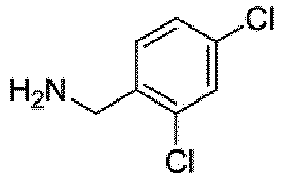
I-e-29 
(S)-N-(2,4-dichloro-6-fl uorobenzyl)-5-fluoro-8-methylene-5,6,7,8-tetra hydroquinoline-5-carbo xamide 

{Table 41-2} I-e-30 
(S)-N-(2-chloro-3,4-difl uorobenzyl)-5-fluoro-8-methylene-5,6,7,8-tetra hydroquinoline-5-carbo xamide 

I-e-31 
(S)-N-(2-chloro-4-fluoro benzyl)-5-fluoro-8-meth ylene-5,6,7,8-tetrahydr oquinoline-5-carboxami de 
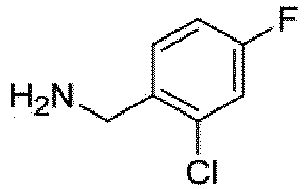
I-e-32 
(S)-N-(4-chloro-2-fluoro benzyl)-5-fluoro-8-meth ylene-5,6,7,8-tetrahydr oquinoline-5-carboxami de 

I-e-33 
(S)-5-fluoro-8-methylen e-N-(2,3,4-trifluorobenz yl)-5,6,7,8-tetrahydroqu inoline-5-carboxamide 

I-e-34 
(S)-N -(2 ,3-dichlorobenz yl)-5-fluoro-8-methylen e-5,6,7,8-tetrahydroqui noline-5-carboxamide 

I-e-35 
(S)-N-(2,4-dichloro-6-(h ydroxymethyl)benzyl)-5 -fluoro-8-methylene-5,6 ,7,8-tetrahydroquinoline -5-carboxamide 
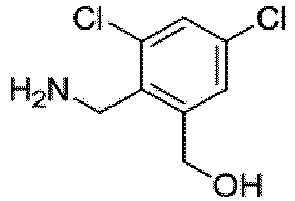
- 1H NMR and MS were identified with the IM I-e-3.
- 1H NMR and MS were identified with the IM I-e-19.
- 1H NMR and MS were identified with the IM I-e-3.
- 1H NMR and MS were identified with the IM I-e-19.
- MS (ESI) m/z: 384.6 (M+H)+.
- 1H NMR (CDCl3) delta 8.61 (1 H, br dd, J = 4.3, 1.8 Hz), 7.48 (1 H, br dd, J = 7.9, 1.8 Hz), 7.24 (1 H, br), 7.24-7.17 (2 H, m), 7.10 (1 H, m), 6.35 (1 H, s), 5.31 (1 H, s), 4.66 (1 H, dd, J = 15.3, 6.1 Hz), 4.62 (1 H, dd, J = 15.3, 6.1 Hz), 2.88-2.82 (2 H, m), 2.47 (1 H, m), 2.27 (1 H, m).
- MS (ESI) m/z: 367.1 (M+H)+.
- 1H NMR and MS were identified with the IM I-e-20.
- MS (ESI) m/z: 348.8 (M+H)+.
- 1H NMR (CDCl3) delta 8.61 (1 H, br dd, J = 4.9, 1.8 Hz), 7.46 (1 H, br dd, J = 7.9, 1.8 Hz), 7.21-7.10 (3 H, m), 6.98 (1 H, m), 6.36 (1 H, s), 5.31 (1 H, s), 4.63 (1 H, dd, J = 14.7, 6.1 Hz), 4.58 (1 H, dd, J = 14.7, 6.1 Hz), 2.90-2.79 (2 H, m), 2.47 (1 H, m), 2.26 (1 H, m). MS (ESI) m/z: 350.8 (M+H)+.
- 1H NMR and MS were identified with the IM l-e-18.
- 1H NMR and MS were identified with the IM l-e-17.
- The following Examples and Intermediates were prepared by General Procedure B or O (Tables 42 and 44).
- To a solution of substrate (1.0 eq.) in CH2CI2 was added Dess-Martin Periodinane (1.5 eq.) at ambient temperature. After being stirred until complete reaction, aq. Na2S2O3 and aq. NaHCOs were added to the mixture. The mixture was extracted with CH2CI2 and washed with water. The extract was dried over Na2SO4 and concentrated in vacuo to afford a solid. The residual solid was purified by silica gel column chromatography and preparative HPLC to afford following Examples and Intermediates.
{Table 42-1} Examples Structure Chemical Name Substrate General Procedure 246 
(R)-N-(2-chloro-3-(triflu oromethyl)benzyl)-5-flu oro-8-oxo-5,6,7,8-tetra hydroquinoline-5-carbo xamide 
B 247 
(S)-N-(2-chloro-3-(triflu oromethyl)benzyl)-5-flu oro-8-oxo-5,6,7,8-tetra hydroquinoline-5-carbo xamide 
B 248 
(S)-N-(2,4-dichlorobenz yl)-5-fluoro-8-oxo-5,6,7, 8-tetrahydroquinoline-5 -carboxamide 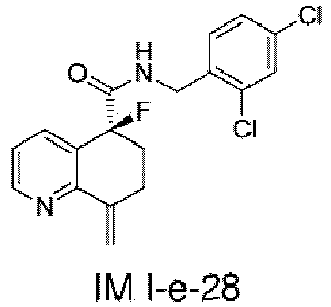
B 249 
(S)-N-(2-chloro-4-fluoro benzyl)-5-fluoro-8-oxo-5,6,7,8-tetrahydroquino line-5-carboxamide 
O 250 
(S)-N-(2-chloro-3-fluoro benzyl)-5-fluoro-8-oxo-5,6,7,8-tetrahydroquino line-5-carboxamide 
O 251 
(S)-N-(2,4-dichloro-6-fl uorobenzyl)-5-fluoro-8-oxo-5,6,7,8-tetrahydroq uinoline-5-carboxamide 
O {Table 42-2} 252 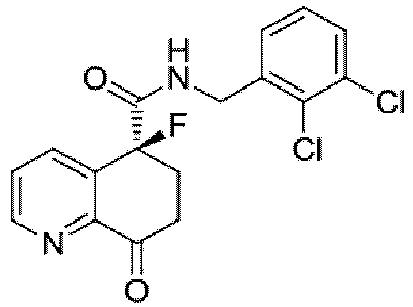
(S)-N-(2,3-dichlorobenz yl)-5-fluoro-8-oxo-5,6,7, 8-tetrahydroquinoline-5 -carboxamide 
B 253 
(S)-N-(2-chloro-4-(triflu oromethyl) benzyl)-5-flu oro-8-oxo-5,6,7,8-tetra hydroquinoline-5-carbo xamide 
O 254 
(S)-5-fluoro-8-oxo-N-(2, 3,4-trifluorobenzyl)-5,6, 7,8-tetrahydroquinoline -5-carboxam ide 
O 255 
(S)-N-((3,5-dichloropyri din-2-yl)methyl)-5-fluor o-8-oxo-5,6,7,8-tetrahy droquinoline-5-carboxa mide 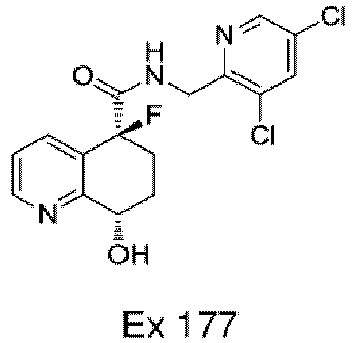
O {Table 43} Examples LCMS Examples LCMS Method tR (min) [M+H]+ Method tR (min) [M+H]+ 246 A 1.51 401.1 251 B 1.44 384.9 247 A 1.51 401.1 252 B 1.40 366.9 248 B 1.44 367.0 253 B 1.49 400.9 249 B 1.33 351.0 254 C 1.35 353.0 250 B 1.31 351.0 255 D 1.43 368.0 - 1H NMR was identified with the Example 13.
- 1H NMR was identified with the Example 13.
- 1H NMR (DMSO d6) delta 9.35 (1 H, br), 8.85 (1 H, d, J = 4.9 Hz), 7.95 (1 H, dd, J = 7.9, 1.8 Hz), 7.73 (1 H, dd, J = 7.9, 4.9 Hz), 7.62 (1 H, d, J = 1.8 Hz), 7.44 (1 H, dd, J = 7.9, 1.8 Hz), 7.34 (1 H, d, J = 7.9 Hz), 4.44 (1 H, dd, J = 15.9, 6.1 Hz), 4.39 (1 H, dd, J = 15.9, 5.5 Hz), 2.89-2.85 (2 H, m), 2.77-2.58 (2 H, m).
- 1H NMR (DMSO d6) delta 9.31 (1 H, br), 8.85 (1 H, dd, J = 4.9, 1.8 Hz), 7.95 (1 H, dd, J = 7.9, 1.8 Hz), 7.73 (1 H, dd, J = 7.9, 4.9 Hz), 7.45 (1 H, dd, J = 8.6, 3.1 Hz), 7.38 (1 H, dd, J = 8.6, 6.1 Hz), 7.23 (1 H, ddd, J = 8.6, 8.6, 3.1 Hz), 4.44 (1 H, dd, J = 15.9, 6.1 Hz), 4.39 (1 H, dd, J = 15.9, 5.5 Hz), 2.94-2.81 (2 H, m), 2.77-2.54 (2 H, m).
- 1H NMR (CDCl3) delta 8.90 (1 H, dd, J = 4.6, 1.3 Hz), 7.75 (1 H, dd, J = 7.9, 1.3 Hz), 7.52 (1 H, dd, J = 7.9, 4.6 Hz), 7.48 (1 H, dd, J = 7.9, 2.0 Hz), 7.33 (1 H, dd, J = 7.9, 2.0 Hz), 7.23-7.20 (1 H, br), 7.22 (1 H, dd, J = 7.9, 7.9 Hz), 4.68 (2 H, d, J = 5.9 Hz), 3.17 (1 H, m), 3.02 (1 H, m), 2.81 (1 H, m), 2.58 (1 H, m).
- 1H NMR (DMSO d6) delta 9.35 (1 H, br), 8.84 (1 H, d, J = 4.3 Hz), 7.90 (1 H, dd, J = 7.9, 1.2 Hz), 7.71 (1 H, dd, J = 7.9, 4.3 Hz), 7.29 (1 H, m), 7.19 (1 H, m), 4.43 (1 H, dd, J = 15.3, 5.5 Hz), 4.39 (1 H, dd, J = 15.3, 5.5 Hz), 2.88-2.84 (2 H, m), 2.73-2.56 (2 H, m).
{Table 44-1} Intermediates Structure Chemical Name Substrate General Procedure I-c-13 
(S)-N-(4-chloro-2-fluoro benzyl)-5-fluoro-8-oxo-5,6,7,8-tetrahydroquino line-5-carboxamide 
O I-c-14 
(S)-N-(2,3-dichloro-4-fl uorobenzyl)-5-fluoro-8-oxo-5,6,7,8-tetrahydroq uinoline-5-carboxamide 
O I-c-15 
(S)-N-(4-chloro-2,3-difl uorobenzyl)-5-fluoro-8-oxo-5,6,7,8-tetrahydroq uinoline-5-carboxamide 
O I-c-16 
(S)-N-(2,4-dichloro-3-fl uorobenzyl)-5-fluoro-8-oxo-5,6,7,8-tetrahydroq uinoline-5-carboxamide 
O I-c-17 
(S)-N-(2,4-difluorobenz yl)-5-fluoro-8-oxo-5,6,7, 8-tetrahydroquinoline-5 -carboxamide 
O {Table 44-2} I-c-18 
(S)-N-(3-chloro-2,4-difl uorobenzyl)-5-fluoro-8-oxo-5,6,7,8-tetrahydroq uinoline-5-carboxamide 
O I-c-19 
(S)-N-(4-chloro-2,6-difl uorobenzyl)-5-fluoro-8-oxo-5,6,7,8-tetrahydroq uinoline-5-carboxamide 
O I-c-20 
(S)-N-(2-chloro-4,6-difl uorobenzyl)-5-fluoro-8-oxo-5,6,7,8-tetrahydroq uinoline-5-carboxamide 
O I-c-21 
(S)-N-(2,4-dichloro-6-(h ydroxymethyl)benzyl)-5 -fluoro-8-oxo-5,6,7,8-tet rahydroquinoline-5-car boxamide 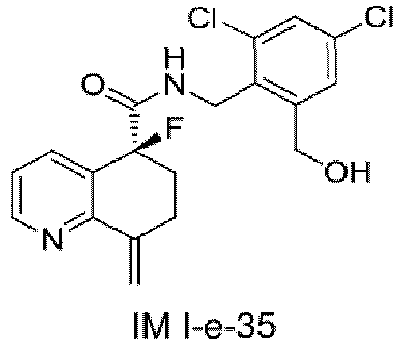
B I-c-22 
(S)-N-(2-(((tert-butyldim ethylsilyl)oxy)methyl)-6-chloro-4-fluorobenzyl)-5-fluoro-8-oxo-5,6,7,8-t etrahydroquinoline-5-ca rboxamide 
O {Table 44-3} I-c-23 
(S)-N-((R)-1 -(2,4-dichlo rophenyl)ethyl)-5-fluoro -8-oxo-5,6,7,8-tetrahydr oquinoline-5-carboxami de 
O I-c-24 
(S)-N-(S)-1-(2,4-dichlo rophenyl)ethyl)-5-fluoro -8-oxo-5,6,7,8-tetrahydr oquinoline-5-carboxami de 
O I-c-25 
(S)-N-((R)-1-(2-chloro-4 -fluorophenyl)ethyl)-5-fl uoro-8-oxo-5,6,7,8-tetr ahydroquinoline-5-carb oxamide 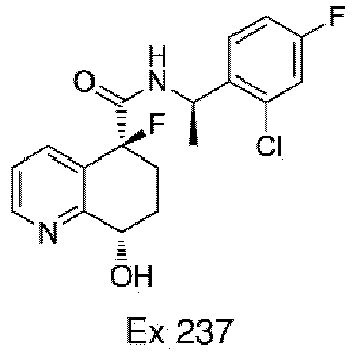
O I-c-26 
(S)-N-(S)-1-(2-chloro-4 -fluorophenyl)ethyl)-5-fl uoro-8-oxo-5,6,7,8-tetr ahydroquinoline-5-carb oxamide 
O I-c-27 
(S)-N-(2,4-dichlorophen ethyl)-5-fluoro-8-oxo-5, 6,7,8-tetrahydroquinolin e-5-carboxamide 
O {Table 44-4} I-c-28 
(S)-N-((trans)-2-(2,4-dic hlorophenyl)cyclopropyl )-5-fluoro-8-oxo-5,6,7,8 -tetrahydroquinoline-5-carboxamide 
O I-c-29 
(S)-5-fluoro-N-({1-morp holinocyclohexyl)methy l)-8-oxo-5,6,7,8-tetrahy droqui noline-5-carboxa mide 
O I-c-30 
(S)-N-((4-(2,4-dichlorop henyl)tetrahydro-2H-py ran-4-yl)methyl)-5-fluor o-8-oxo-5,6,7,8-tetrahy droquinoline-5-carboxa mide 
O I-c-31 
(S)-N-(2,4-dichlorobenz yl)-5-fluoro-3-methyl-8-oxo-5,6,7,8-tetrahydroq uinoline-5-carboxamide 
O I-c-32 
(S)-N-(2-chloro-4-fluoro benzyl)-5-fluoro-3-meth yl-8-oxo-5,6,7,8-tetrahy droquinoline-5-carboxa mide 
O - MS (ESI) m/z: 350.8 (M+H)+.
- MS (ESI) m/z: 384.8 (M+H)+.
- MS (ESI) m/z: 368.8 (M+H)+.
- MS (ESI) m/z: 384.8 (M+H)+.
- MS (ESI) m/z: 334.8 (M+H)+.
- MS (ESI) m/z: 368.8 (M+H)+.
- MS (ESI) m/z: 368.8 (M+H)+.
- MS (ESI) m/z: 368.8 (M+H)+.
- 1H NMR and MS were identified with the Ex 14.
- 1H NMR (CDCI3) delta 8.88 (1 H, ddd, J = 4.3, 1.8, 1.2 Hz), 7.74 (1 H, br d, J = 7.9 Hz), 7.50 (1 H, dd, J = 7.9, 4.3 Hz), 7.14 (3 H, br d, J = 7.9 Hz), 4.88 (1 H, d, J = 13.4 Hz), 4.82 (1 H, d, J = 13.4 Hz), 4.71 (1 H, dd, J = 14.1, 5.5 Hz), 4.62 (1 H, dd, J = 14.1,5.5 Hz), 3.16 (1 H, m), 2.99 (1 H, m), 2.79 (1 H, m), 2.54 (1 H, m), 0.94 (9 H, s), 0.12 (3 H, s), 0.11 (3 H, s).
- MS (ESI) m/z: 494.8 (M+H)+.
- 1H NMR (CDCl3) delta 8.87 (1 H, ddd, J = 4.3, 1.8, 1.2 Hz), 7.67 (1 H, dd, J = 7.9, 2.4 Hz), 7.48 (1 H, dd, J = 7.9, 4.3 Hz), 7.43 (1 H, d, J = 1.8 Hz), 7.33 (1 H, d, J = 8.6 Hz), 7.29 (1 H, dd, J = 8.6, 2.4 Hz), 7.12 (1 H, br), 5.42 (1 H, m), 3.18 (1 H, m), 3.02 (1 H, m), 2.83 (1 H, m), 2.59 (1 H, m), 1.62 (3 H, d, J = 6.7 Hz).
- MS (ESI) m/z: 381.4 (M+H)+.
- 1H NMR (DMSO d6) delta 9.34 (1 H, br d, J = 6.1 Hz), 8.85 (1 H, br d, J = 4.3 Hz), 7.97 (1 H, dd, J = 7.9, 1.8 Hz), 7.74 (1 H, dd, J = 7.9, 4.9 Hz), 7.59 (1 H, d, J = 1.8 Hz), 7.57 (1 H, d, J = 7.9 Hz), 7.48 (1 H, dd, J = 7.9, 1.8 Hz), 5.23 (1 H, m), 2.83 (1 H, m), 2.74-2.50 (3 H, m), 1.44 (3 H, d, J = 7.3 Hz).
- MS (ESI) m/z: 381.0 (M+H)+.
- 1H NMR (DMSO d6) delta 9.28 (1 H, br d, J = 7.3 Hz), 8.81 (1 H, br d, J = 4.3 Hz), 7.84 (1 H, dd, J = 7.9, 1.8 Hz), 7.69 (1 H, dd, J = 7.9, 4.3 Hz), 7.59 (1 H, dd, J = 8.6, 6.1 Hz), 7.37 (1 H, dd, J = 8.6, 2.4 Hz), 7.24 (1 H, dt, J = 8.6, 2.4 Hz), 5.26 (1 H, m), 2.98-2.80 (2 H, m), 2.77-2.54 (2 H, m), 1.43 (3 H, d, J = 6.7 Hz).
- MS (ESI) m/z: 365.0 (M+H)+.
- 1H NMR (DMSO d6) delta 9.32 (1 H, br d, J = 7.3 Hz), 8.85 (1 H, d, J = 4.3 Hz), 7.98 (1 H, br d, J = 7.9 Hz), 7.74 (1 H, dd, J = 7.9, 4.3 Hz), 7.60 (1 H, dd, J = 8.6, 6.1 Hz), 7.40 (1 H, br d, J = 9.2 Hz), 7.28 (1 H, dt, J = 8.6, 2.4 Hz), 5.26 (1 H, m), 2.83 (1 H, m), 2.76-2.51 (3 H, m), 1.44 (3 H, d, J = 7.3 Hz).
- MS (ESI) m/z: 365.0 (M+H)+.
- 1H NMR (CDCl3) delta 8.88 (1 H, br d, J = 4.3 Hz), 7.57 (1 H, d, J = 7.9 Hz), 7.49 (1 H, dd, J = 7.9, 4.3 Hz), 7.43 (1 H, d, J = 1.8 Hz), 7.23 (1 H, dd, J = 7.9, 1.8 Hz), 7.18 (1 H, d, J = 7.9 Hz), 6.85 (1 H, br), 3.77-3.62 (2 H, m), 3.17-2.94 (4 H, m), 2.74 (1 H, m), 2.52 (1 H, m). MS (ESI) m/z: 381.0 (M+H)+.
- 1H NMR (CDCl3) delta 8.91 (1 H, m), 7.81 (1 H, dd, J = 7.9, 1.8 Hz), 7.57-7.53 (1 H, m), 7.403 (0.5 H, d, J = 2.4 Hz), 7.397 (0.5 H, d, J = 2.4 Hz), 7.189 (0.5 H, dd, J = 8.6, 1.8 Hz), 7.185 (0.5 H, dd, J = 8.6, 1.8 Hz), 7.09 (0.5 H, d, J = 8.6 Hz), 7.08 (0.5 H, d, J = 8.6 Hz), 7.06 (1 H, br), 3.23-3.14 (1 H, m), 3.10-2.96 (2 H, m), 2.89-2.76 (1 H, m), 2.64-2.54 (1 H, m), 2.36-2.29 (1 H, m), 1.44-1.30 (2 H, m).
- MS (ESI) m/z: 393.3 (M+H)+.
- 1H NMR (CDCl3) delta 8.90 (1 H, ddd, J = 4.3, 1.8, 1.2 Hz), 7.77 (1 H, dd, J = 7.9, 1.2 Hz), 7.53 (1 H, dd, J = 7.9, 4.3 Hz), 7.46 (1 H, br), 3.73 (4 H, dd, J = 4.9, 4.3 Hz), 3.48 (1 H, dd, J = 13.8, 4.9 Hz), 3.45 (1 H, dd, J = 13.8, 4.9 Hz), 3.17 (1 H, m), 3.02 (1 H, m), 2.83 (1 H, m), 2.66 (4 H, dd, J = 4.9, 4.3 Hz), 2.57 (1 H, m), 1.76-1.22 (10 H, m).
- MS (ESI) m/z: 390.4 (M+H)+.
- 1H NMR (CDCl3) delta 8.87 (1 H, ddd, J = 4.9, 1.8, 1.2 Hz), 7.48 (1 H, d, J = 1.8 Hz), 7.46 (1 H, dd, J = 7.9, 4.9 Hz), 7.35-7.32 (2 H, m), 7.29 (1 H, d, J = 8.6 Hz), 6.40 (1 H, br d, J = 6.1 Hz), 4.16 (1 H, dd, J = 14.1, 6.1 Hz), 3.98 (1 H, dd, J = 14.1, 6.1 Hz), 3.92-3.83 (2 H, m), 3.73-3.61 (2 H, m), 3.06 (1 H, m), 2.93 (1 H, m), 2.61 (1 H, m), 2.47-2.36 (3 H, m), 2.13-2.08 (2 H, m).
- MS (ESI) m/z: 450.9 (M+H)+.
- 1H NMR (CDCl3) delta 8.68 (1 H, br s), 7.462 (1 H, d, J = 1.8 Hz), 7.456 (1 H, d, J = 2.4 Hz), 7.37 (1 H, d, J = 7.9 Hz), 7.27 (1 H, dd, J = 7.9, 1.8 Hz), 7.23 (1 H, br), 4.64 (1 H, dd, J = 15.3, 6.1 Hz), 4.61 (1 H, dd, J = 15.3, 6.1 Hz), 3.11 (1 H, m), 2.97 (1 H, m), 2.79 (1 H, m), 2.54 (1 H, m), 2.40 (3 H, s).
- MS (ESI) m/z: 381.0 (M+H)+.
- 1H NMR (CDCl3) delta 8.69 (1 H, br s), 7.46 (1 H, d, J = 1.2 Hz), 7.42 (1 H, dd, J = 8.6, 6.1 Hz), 7.20 (1 H, dd, J = 7.9, 2.4 Hz), 7.20 (1 H, br), 7.01 (1 H, dt, J = 8.6, 2.4 Hz), 4.64 (1 H, dd, J = 14.7, 6.1 Hz), 4.61 (1 H, dd, J = 14.7, 6.1 Hz), 3.10 (1 H, m), 2.97 (1 H, m), 2.79 (1 H, m), 2.54 (1 H, m), 2.40 (3 H, s).
- MS (ESI) m/z: 365.2 (M+H)+.
- The following Intermediates were prepared by General Procedure G or H (Table 45). In the preparation of the Intermediate (IM) I-g-16, the TBS group was removed under this reaction condition.
{Table 45-1} Intermediates Structure Chemical Name Substrate General Procedure I-g-8 
(2S,5'S)-N-(2,4-dichloroben zyl)-5'-fluoro-6',7'-dihydro-5' H-spiro[oxirane-2,8'-quinolin e]-5'-carboxamide 
G I-g-9 
(2 R,5'S)-N-(2,4-dichloroben zyl)-5'-fluoro-6',7'-dihydro-5' H-spiro[oxirane-2,8'-quinolin e]-5'-carboxamide I-g-10 
(2R,5'R)-N-(2,4-dichloroben zyl)-5'-fluoro-6', 7'-dihydro-5' H-spiro[oxirane-2,8'-quinolin e]-5'-carboxamide 
H I-g-11 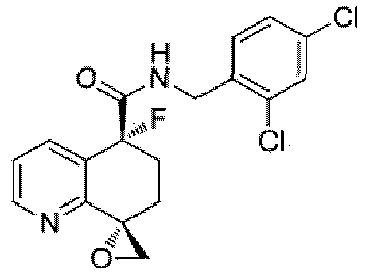
(2S,5'R)-N-(2,4-dichloroben zyl)-5'-fluoro-6',7'-dihydro-5' H-spiro[oxirane-2,8'-quinolin e]-5'-carboxamide I-g-12 
(2S,5'S)-N-(2-chloro-4-fluor obenzyl)-5'-fluoro-6',7'-dihyd ro-5'H-spiro[oxirane-2,8'-qui noline]-5'-carboxamide 
G I-g-13 
(2R,5'S)-N-(2-chloro-4-fluor obenzyl)-5'-fluoro-6',7'-dihyd ro-5'H-spiro[oxirane-2,8'-qui noline]-5'-carboxamide {Table 45-2} I-g-14 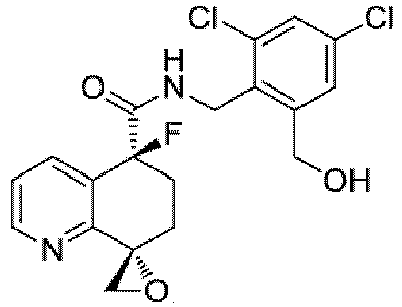
(2S,5'S)-N-(2,4-dichloro-6-( hydroxymethyl)benzyl)-5'-flu oro-6',7'-dihydro-5'H-spiro[o xirane-2,8'-quinoline]-5'-car boxamide 
G I-g-15 
(2R,5'S)-N-(2,4-dichloro-6-( hydroxymethyl)benzyl)-5'-flu oro-6',7'-dihydro-5'H-spiro[o xirane-2,8'-quinoline]-5'-car boxamide I-g-16 
(2S,5'S)-N-(2-chloro-4-fluor o-6-(hydroxymethyl)benzyl)-5'-fluoro-6',7'-dihydro-5'H-sp iro[oxirane-2,8'-quinoline]-5' -carboxamide 
G I-g-17 
(2S,5'S)-5'-fluoro-N-(2,3,4-tr ifluorobenzyl)-6',7'-dihydro-5 'H-spiro[oxirane-2,8'-quinoli ne]-5'-carboxamide 
G I-g-18 
(2R,5'S)-5'-fluoro-N-(2,3,4-tr ifluorobenzyl)-6',7'-dihydro-5 'H-spiro[oxirane-2,8'-quinoli ne]-5'-carboxamide {Table 45-3} I-g-19 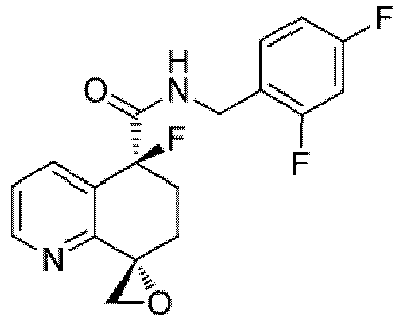
(2S,5'S)-N-(2,4-difluorobenz yl)-5'-fluoro-6',7'-dihydro-5'H -spiro[oxirane-2,8'-quinoline ]-5'-carboxamide 
G I-g-20 
(2S,5'S)-N-(4-chloro-2-fluor obenzyl)-5'-fluoro-6',7'-dihyd ro-5'H-spiro[oxirane-2,8'-qui noline]-5'-carboxamide 
G I-g-21 
(2R,5'S)-N-(4-chloro-2-fluor obenzyl)-5'-fluoro-6',7'-dihyd ro-5'H-spiro[oxirane-2,8'-qui noline]-5'-carboxamide I-g-22 
(2S,5'S)-N-(2,4-dichloro-6-fl uorobenzyl)-5'-fluoro-6',7'-di hydro-5'H-spiro[oxirane-2,8' -quinoline]-5'-carboxamide 
G I-g-23 
(2S,5'S)-N-(2,4-dichloro-3-fl uorobenzyl)-5'-fluoro-6',7'-di hydro-5'H-spiro[oxirane-2,8' -quinoline]-5'-carboxamide 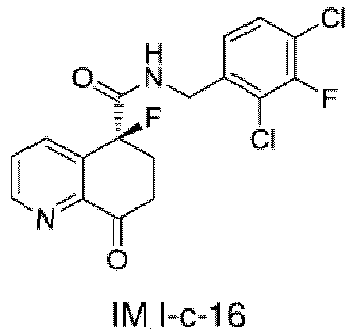
G {Table 45-4} I-g-24 
(2S,5'S)-N-(2,3-dichloro-4-fl uorobenzyl)-5'-fluoro-6',7'-di hydro-5'H-spiro[oxirane-2,8' -quinoline]-5'-carboxamide 
G I-g-25 
(2S,5'S)-N-(2-chloro-4,6-difl uorobenzyl)-5'-fluoro-6',7'-di hydro-5'H-spiro[oxirane-2,8' -quinoline]-5'-carboxamide 
G I-g-26 
(2S,5'S)-N-(4-chloro-2,3-difl uorobenzyl)-5'-fluoro-6',7'-di hydro-5'H-spiro[oxirane-2,8' -quinoline]-5'-carboxamide 
G I-g-27 
(2S,5'S)-N-(3-chloro-2,4-difl uorabenzyl)-5'-fluoro-6',7'-di hydro-5'H-spiro[oxirane-2,8' -quinoline]-5'-carboxamide 
G I-g-28 
(2S,5'S)-N-(4-chloro-2,6-difl uorobenzyl)-5'-fluoro-6',7'-di hydro-5'H-spiro[oxirane-2,8' -quinoline]-5'-carboxamide 
G {Table 45-5} I-g-29 
(2S,5'S)-N-((R)-1-(2,4-dichl orophenyl)ethyl)-5'-fluoro-6', 7'-dihydro-5'H-spiro[oxirane-2,8'-quinoline]-5'-carboxami de 
G I-g-30 
(2S,5'S)-N-((S)-1-(2,4-dichlo rophenyl)ethyl)-5'-fluoro-6',7 '-dihydro-5'H-spiro[oxirane-2 ,8'-quinoline]-5'-carboxamid e 
G I-g-31 
(2S,5'S)-N-((R)-1-(2-chloro-4-fluorophenyl)ethyl)-5'-fluor o-6',7'-dihydro-5'H-spiro[oxir ane-2,8'-quinoline]-5'-carbo xamide 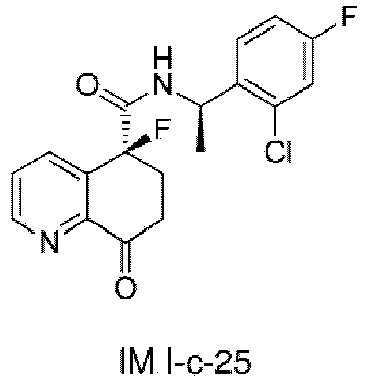
G I-g-32 
(2R,5'S)-N-((R)-1-(2-chloro-4-fluorophenyl)ethyl)-5'-fluor o-6',7'-dihydro-5'H-spiro[oxir ane-2,8'-quinoline]-5'-carbo xamide I-g-33 
(2S,5'S)-N-((S)-1-(2-chloro-4-fluorophenyl)ethyl)-5'-fluor o-6',7'-dihydro-5'H-spiro[oxir ane-2,8'-quinoline]-5'-carbo xamide 
G I-g-34 
(2S,5'S)-N-((3,5-dichloropyri din-2-yl)methyl)-5'-fluoro-6', 7'-dihydro-5'H-spiro[oxirane-2,8'-quinoline]-5'-carboxami de 
G {Table 45-6} I-g-35 
(2S,5'S)-N-(2,4-dichlorophe nethyl)-5'-fliioro-6',7'-dihydr o-5'H-spiro[oxirane-2,8'-qui n oline]-5'-carboxamide 
G I-g-36 
(2S,5'S)-N-(2-(2,4-dichlorop henyl)cyclopropyl)-5'-fluoro-6',7'-dihydro-5'H-spiro[oxira ne-2,8'-quinoline]-5'-carbox amide 
G I-g-37 
(5'S)-5'-fluoro-N-((1-morphol inocyclohexyl)methyl)-6',7'-d ihydro-5'H-spiro[oxirane-2,8' -quinoline]-5'-carboxamide 
G I-g-38 
(25,5'S)-N-((4-(2,4-dichloro phenyl)tetrahydro-2H-pyran -4-yl)methyl}-5'-fluoro-6',7'-d ihydro-5'H-spiro[oxirane-2,8' -quinoline]-5'-carboxamide 
G I-g-39 
(2S,5'S)-N-(2,4-dichloroben zyl)-5'-fluoro-3'-methyl-6',7'-dihydro-5'H-spiro[oxirane-2, 8'-quinoline]-5'-carboxamide 
G I-g-40 
(2S,5'S)-N-(2-chloro-4-fluor obenzyl)-5'-fluoro-3'-methyl-6',7-dihydro-5'H-spiro[oxira ne-2,8'-quinoline]-5'-carbox amide 
G - 1H NMR and LCMS were identified with the IM l-g-4.
- 1H NMR and LCMS were identified with the IM I-g-5.
- 1H NMR and LCMS were identified with the IM l-g-4.
- 1H NMR and LCMS were identified with the IM l-g-5.
- 1H NMR and LCMS were identified with the IM l-g-6.
- 1H NMR and LCMS were identified with the IM l-g-7.
- 1H NMR (CDCl3) delta 8.61 (1 H, br dd, J = 4.9, 1.8 Hz), 7.59 (1 H, br), 7.45 (1 H, d, J = 1.8 Hz), 7.43 (1 H, br dd, J = 7.9, 1.8 Hz), 7.36 (1 H, d, J = 1.8 Hz), 7.21 (1 H, dd, J = 7.9, 4.9 Hz), 4.80 (1 H, dd, J = 14.7, 6.1 Hz), 4.78 (2 H, d, J = 6.1 Hz), 4.71 (1 H, dd, J = 14.7, 6.1 Hz), 3.85 (1 H, d, J = 6.1 Hz), 3.73 (1 H, t, J = 6.1 Hz), 3.02 (1 H, d, J = 6.1 Hz), 2.71 (1 H, m), 2.54 (1 H, m), 2.29 (1 H, m), 2.10 (1 H, m).
- MS (ESI) m/z: 411.1 (M+H)+.
- 1H NMR (DMSO-d6) delta 8.77 (1 H, br), 8.60 (1 H, d, J = 4.9 Hz), 7.64 (1 H, d, J = 7.9 Hz), 7.55 (1 H, d, J = 1.8 Hz), 7.48 (1 H, d, J = 1.8 Hz), 7.41 (1 H, dd, J = 7.9, 4.9 Hz), 5.52 (1 H, t, J = 5.5 Hz), 4.68 (2 H, d, J = 5.5 Hz), 4.51 (1 H, d, J = 14.7 Hz), 4.46 (1 H, d, J = 14.7 Hz), 3.43 (1 H, d, J = 6.1 Hz), 3.05 (1 H, d, J = 6.1 Hz), 2.50 (1 H, m), 2.33-2.23 (2 H, m), 2.13 (1 H, m).
- MS (ESI) m/z: 410.7 (M+H)+.
- 1H NMR (CDCI3) delta 8.61 (1 H, ddd, J = 4.9, 1.8, 1.2 Hz), 7.57 (1 H, br d, J = 6.1 Hz), 7.43 (1 H, ddd, J = 7.9, 1.8, 1.2 Hz), 7.20 (1 H, dd, J = 7.9, 4.9 Hz), 7.18 (1 H, dd, J = 7.9, 2.4 Hz), 7.10 (1 H, dd, J = 8.6, 2.4 Hz), 4.82-4.77 (3 H, m), 4.71 (1 H, dd, J = 14.7, 6.1 Hz), 3.85 (1 H, d, J = 6.1 Hz), 3.74 (1 H, t, J = 6.1 Hz), 3.02 (1 H, d, J = 6.1 Hz), 2.72 (1 H, m), 2.54 (1 H, m), 2.29 (1 H, m), 2.10 (1 H, m).
- MS (ESI) m/z: 394.8 (M+H)+.
- 1H NMR (DMSO d6) delta 9.32 (1 H, br), 8.61 (1 H, br dd, J = 4.9, 1.8 Hz), 7.80 (1 H, br dd, J = 7.9, 1.8 Hz), 7.61 (1 H, dd, J = 7.9, 4.9 Hz), 7.35-7.16 (2 H, m), 4.45 (2 H, m), 3.72 (1 H, d, J = 6.1 Hz), 3.03 (1 H, d, J = 6.1 Hz), 2.60-2.41 (2 H, m), 2.27 (1 H, m), 1.90 (1 H, m).
- MS (ESI) m/z: 367.0 (M+H)+.
- 1H NMR (DMSO-d6) delta 9.31 (1 H, br), 8.61 (1 H, br d, J = 4.9 Hz), 7.64 (1 H, d, J = 7.9 Hz), 7.41 (1 H, dd, J = 7.9, 4.9 Hz), 7.32 (1 H, m), 7.22 (1 H, m), 4.45 (1 H, dd, J = 15.3, 5.5 Hz), 4.41 (1 H, dd, J = 15.3, 5.5 Hz), 3.43 (1 H, d, J = 6.1 Hz), 3.05 (1 H, d, J = 6.1 Hz), 2.50 (1 H, m), 2.38-2.23 (2 H, m), 2.12 (1 H, m).
- MS (ESI) m/z: 367.0 (M+H)+.
- 1H NMR (CDCI3) delta 8.65 (1 H, br dd, J = 4.9, 1.8 Hz), 7.52 (1 H, br dd, J = 7.9, 1.8 Hz), 7.41 (1 H, m), 7.25 (1 H, br dd, J = 7.9, 4.9 Hz), 7.17 (1 H, br d, J = 6.1 Hz), 6.96-6.87 (2 H, m), 4.66 (1 H, dd, J = 14.7, 6.1 Hz), 4.58 (1 H, dd, J = 14.7, 6.1 Hz), 3.89 (1 H, d, J = 6.1 Hz), 3.05 (1 H, d, J = 6.1 Hz), 2.79 (1 H, m), 2.60 (1 H, m), 2.34 (1 H, m), 2.15 (1 H, m).
- MS (ESI) m/z: 349.9 (M+H)+.
- 1H NMR (CDCI3) delta 8.63 (1 H, br dd, J = 4.9, 1.8 Hz), 7.49 (1 H, br dd, J = 7.9, 1.8 Hz), 7.35 (1 H, m), 7.23 (1 H, br dd, J = 7.9, 4.9 Hz), 7.19-7.11 (3 H, m), 4.64 (1 H, dd, J = 14.7, 6.1 Hz), 4.56 (1 H, dd, J = 14.7, 6.1 Hz), 3.87 (1 H, d, J = 6.1 Hz), 3.03 (1 H, d, J = 6.1 Hz), 2.77 (1 H, m), 2.58 (1 H, m), 2.32 (1 H, m), 2.13 (1 H, m).
- MS (ESI) m/z: 364.8 (M+H)+.
- 1H NMR (CDCI3) delta 8.65 (1 H, br dd, J = 4.9, 1.8 Hz), 7.53 (1 H, br dd, J = 7.9, 1.8 Hz), 7.34 (1 H, dd, J = 7.9, 6.7 Hz), 7.25 (1 H, dd, J = 7.9, 4.9 Hz), 7.26-7.13 (3 H, m), 4.65 (1 H, dd, J = 14.7, 6.1 Hz), 4.57 (1 H, dd, J = 14.7, 6.1 Hz), 3.52 (1 H, d, J = 6.1 Hz), 3.08 (1 H, d, J = 6.1 Hz), 2.67 (1 H, m), 2.53-2.40 (2 H, m), 2.19 (1 H, m).
- MS (ESI) m/z: 364.8 (M+H)+.
- 1H NMR (CDCI3) delta 8.62 (1 H, br dd, J = 4.9, 1.8 Hz), 7.53 (1 H, br dd, J = 7.9, 1.8 Hz), 7.31 (1 H, d, J = 1.8 Hz), 7.24 (1 H, br dd, J = 7.9, 4.9 Hz), 7.12 (1 H, dd, J = 8.6, 1.8 Hz), 7.02 (1 H, br), 4.78 (1 H, dd, J = 14.7, 6.1 Hz), 4.69 (1 H, dd, J = 14.7, 6.1 Hz), 3.85 (1 H, d, J = 6.1 Hz), 3.02 (1 H, d, J = 6.1 Hz), 2.76 (1 H, m), 2.56 (1 H, m), 2.31 (1 H, m), 2.14 (1 H, m).
- MS (ESI) m/z: 398.7 (M+H)+.
- 1H NMR (CDCI3) delta 8.63 (1 H, br dd, J = 4.9, 1.8 Hz), 7.50 (1 H, br dd, J = 7.9, 1.8 Hz), 7.34 (1 H, br dd, J = 7.9, 4.9 Hz), 7.26-7.18 (3 H, m), 4.69 (1 H, dd, J = 14.7, 6.1 Hz), 4.65 (1 H, dd, J = 14.7, 6.1 Hz), 3.86 (1 H, d, J = 6.1 Hz), 3.03 (1 H, d, J = 6.1 Hz), 2.76 (1 H, m), 2.57 (1 H, m), 2.33 (1 H, m), 2.14 (1 H, m).
- MS (ESI) m/z: 398.8 (M+H)+.
- 1H NMR (CDCI3) delta 8.63 (1 H, br dd, J = 4.9, 1.8 Hz), 7.49 (1 H, br dd, J = 7.9, 1.8 Hz), 7.38 (1 H, dd, J = 8.6, 5.5 Hz), 7.24 (1 H, br dd, J = 7.9, 4.9 Hz), 7.25-7.22 (1 H, br), 7.12 (1 H, dd, J = 8.6, 7.9 Hz), 4.69 (1 H, dd, J = 15.3, 6.1 Hz), 4.65 (1 H, dd, J = 15.3, 6.1 Hz), 3.86 (1 H, d, J = 6.1 Hz), 3.03 (1 H, d, J = 6.1 Hz), 2.76 (1 H, m), 2.57 (1 H, m), 2.32 (1 H, m), 2.14 (1 H, m).
- MS (ESI) m/z: 398.8 (M+H)+.
- 1H NMR (CDCI3) delta 8.62 (1 H, br dd, J = 4.9, 1.8 Hz), 7.54 (1 H, br dd, J = 7.9, 1.8 Hz), 7.24 (1 H, m), 7.06 (1 H, br dd, J = 7.9, 4.9 Hz), 7.01 (1 H, br), 6.86 (1 H, m), 4.78 (1 H, dd, J = 14.7, 5.5 Hz), 4.68 (1 H, dd, J = 14.7, 5.5 Hz), 3.86 (1 H, d, J = 6.1 Hz), 3.02 (1 H, d, J = 6.1 Hz), 2.76 (1 H, m), 2.56 (1 H, m), 2.32 (1 H, m), 2.14 (1 H, m).
- MS (ESI) m/z: 382.8 (M+H)+.
- 1H NMR (CDCI3) delta 8.63 (1 H, br dd, J = 4.9, 1.8 Hz), 7.50 (1 H, br dd, J = 7.9, 1.8 Hz), 7.28-7.08 (4 H, m), 4.66 (1 H, dd, J = 14.7, 6.7 Hz), 4.61 (1 H, dd, J = 14.7, 6.7 Hz), 3.87 (1 H, br d, J = 6.1 Hz), 3.03 (1 H, br d, J = 6.1 Hz), 2.76 (1 H, m), 2.57 (1 H, m), 2.33 (1 H, m), 2.15 (1 H, m).
- MS (ESI) m/z: 382.8 (M+H)+.
- 1H NMR (CDCI3) delta 8.63 (1 H, br dd, J = 4.9, 1.8 Hz), 7.49 (1 H, br dd, J = 7.9, 1.8 Hz), 7.31 (1 H, m), 7.24 (1 H, br dd, J = 7.9, 4.9 Hz), 7.19 (1 H, br), 7.00 (1 H, ddd, J = 8.6, 4.3, 1.8 Hz), 4.64 (1 H, dd, J = 14.7, 6.1 Hz), 4.59 (1 H, dd, J = 14.7, 6.1 Hz), 3.87 (1 H, d, J = 6.1 Hz), 3.03 (1 H, d, J = 6.1 Hz), 2.76 (1 H, m), 2.57 (1 H, m), 2.32 (1 H, m), 2.13 (1 H, m).
- MS (ESI) m/z: 382.8 (M+H)+.
- 1H NMR (CDCl3) delta 8.62 (1 H, br dd, J = 4.3, 1.8 Hz), 7.51 (1 H, br dd, J = 7.9, 1.8 Hz), 7.24 (1 H, br dd, J = 7.9, 4.3 Hz), 7.06-6.99 (3 H, m), 4.71 (1 H, dd, J = 14.7, 5.5 Hz), 4.61 (1 H, dd, J = 14.7, 4.9 Hz), 3.86 (1 H, d, J = 6.1 Hz), 3.02 (1 H, d, J = 6.1 Hz), 2.74 (1 H, m), 2.56 (1 H, m), 2.30 (1 H, m), 2.13 (1 H, m).
- MS (ESI) m/z: 382.8 (M+H)+.
- 1H NMR (CDCl3) delta 8.60 (1 H, br dd, J = 4.9, 1.8 Hz), 7.45 (1 H, d, J = 1.8 Hz), 7.44 (1 H, br dd, J = 7.9, 1.8 Hz), 7.37 (1 H, d, J = 8.6 Hz), 7.30 (1 H, dd, J = 8.6, 1.8 Hz), 7.19 (1 H, dd, J = 7.9, 4.9 Hz), 7.13 (1 H, br), 5.47 (1 H, m), 3.85 (1 H, d, J = 6.1 Hz), 3.02 (1 H, d, J = 6.1 Hz), 2.78 (1 H, m), 2.58 (1 H, m), 2.35 (1 H, m), 2.16 (1 H, m), 1.60 (3 H, d, J = 7.3 Hz).
- MS (ESI) m/z: 395.3 (M+H)+.
- 1H NMR (CDCl3) delta 8.64 (1 H, br dd, J = 4.9, 1.8 Hz), 7.61 (1 H, br dd, J = 7.9, 1.8 Hz), 7.42 (1 H, d, J = 1.8 Hz), 7.31-7.26 (3 H, m), 7.17 (1 H, dd, J = 6.7, 6.1 Hz), 5.45 (1 H, m), 3.86 (1 H, d, J = 6.1 Hz), 3.01 (1 H, d, J = 6.1 Hz), 2.77-2.51 (2 H, m), 2.27 (1 H, m), 2.10 (1 H, m), 1.62 (3 H, d, J = 7.3 Hz).
- MS (ESI) m/z: 395.2 (M+H)+.
- 1H NMR (CDCl3) delta 8.59 (1 H, br dd, J = 4.3, 1.8 Hz), 7.45 (1 H, br dd, J = 7.9, 1.8 Hz), 7.41 (1 H, dd, J = 8.6, 6.1 Hz), 7.18 (1 H, dd, J = 7.9, 4.3 Hz), 7.16 (1 H, dd, J = 6.1, 3.1 Hz), 7.14 (1 H, br), 7.03 (1 H, ddd, J = 8.5, 7.9, 3.1 Hz), 5.46 (1 H, m), 3.85 (1 H, d, J = 6.1 Hz), 3.02 (1 H, d, J = 6.1 Hz), 2.77 (1 H, m), 2.57 (1 H, m), 2.34 (1 H, m), 2.15 (1 H, m), 1.60 (3 H, d, J = 6.7 Hz).
- MS (ESI) m/z: 379.2 (M+H)+.
- 1H NMR (CDCl3) delta 8.59 (1 H, br dd, J = 4.9, 1.8 Hz), 7.45 (1 H, ddd, J = 7.9, 1.8, 1.2 Hz), 7.40 (1 H, dd, J = 8.6, 6.1 Hz), 7.18 (1 H, dd, J = 8.6, 2.4 Hz), 7.16 (1 H, dd, J = 7.9, 4.9 Hz), 7.14 (1 H, br), 7.04 (1 H, ddd, J = 8.6, 7.9, 2.4 Hz), 5.45 (1 H, m), 3.50 (1 H, d, J = 6.1 Hz), 3.05 (1 H, d, J = 6.1 Hz), 2.67 (1 H, m), 2.50-2.42 (2 H, m), 2.22 (1 H, m), 1.60 (3 H, d, J = 6.7 Hz).
- MS (ESI) m/z: 379.2 (M+H)+.
- 1H NMR (CDCl3) delta 8.64 (1 H, ddd, J = 4.9, 1.8, 1.2 Hz), 7.61 (1 H, ddd, J = 7.9, 1.8, 1.2 Hz), 7.36 (1 H, dd, J = 8.6, 6.1 Hz), 7.28 (1 H, dd, J = 7.9, 4.9 Hz), 7.16 (1 H, dd, J = 8.6, 3.1 Hz), 7.13 (1 H, br), 7.02 (1 H, dt, J = 8.6, 3.1 Hz), 5.46 (1 H, m), 3.86 (1 H, d, J = 6.1 Hz), 3.02 (1 H, d, J = 6.1 Hz), 2.78-2.52 (2 H, m), 2.28 (1 H, m), 2.10 (1 H, m), 1.63 (3 H, d, J = 6.7 Hz).
- MS (ESI) m/z: 378.9 (M+H)+.
- 1H NMR (CDCl3) delta 8.64 (1 H, br dd, J = 4.3, 1.8 Hz), 8.47 (1 H, d, J = 2.4 Hz), 8.10 (1 H, br), 7.78 (1 H, d, J = 2.4 Hz), 7.74 (1 H, dd, J = 7.9, 1.8 Hz), 7.26 (1 H, dd, J = 7.9, 4.3 Hz), 4.83 (1 H, dd, J = 18.3, 4.9 Hz), 4.71 (1 H, dd, J = 18.3, 4.9 Hz), 3.89 (1 H, d, J = 6.1 Hz), 3.05 (1 H, d, J = 6.1 Hz), 2.83 (1 H, m), 2.62 (1 H, m), 2.40 (1 H, m), 2.16 (1 H, m).
- MS (ESI) m/z: 382.5 (M+H)+.
- 1H NMR (CDCl3) delta 8.61 (1 H, br d, J = 4.3 Hz), 7.43 (1 H, s), 7.33 (1 H, d, J = 7.9 Hz), 7.25-7.19 (2 H, m), 7.21 (1 H, dd, J = 7.9, 4.3 Hz), 6.86 (1 H, br d, J = 4.9 Hz), 3.86 (1 H, d, J = 6.1 Hz), 3.79-3.63 (2 H, m), 3.08-3.04 (2 H, m), 3.02 (1 H, d, J = 6.1 Hz), 2.72 (1 H, m), 2.55 (1 H, m), 2.26 (1 H, m), 2.12 (1 H, m).
- MS (ESI) m/z: 395.0 (M+H)+.
- 1H NMR (CDCl3) delta 8.65 (1 H, m), 7.59 (1 H, m), 7.40 (1 H, d, J = 1.8 Hz), 7.27 (1 H, m), 7.19 (1 H, m), 7.12 (1 H, d, J = 8.6 Hz), 7.03 (1 H, br), 3.88 (0.5 H, d, J = 6.1 Hz), 3.87 (0.5 H, d, J = 6.1 Hz), 3.10 (1 H, m), 3.03 (1 H, d, J = 6.1 Hz), 2.79 (1 H, m), 2.60 (1 H, m), 2.39-2.29 (2 H, m), 2.15 (1 H, m), 1.43-1.31 (2 H, m).
- MS (ESI) m/z: 407.3 (M+H)+.
- 1H NMR (CDCl3) delta 8.63 (1 H, ddd, J = 4.3, 1.8, 1.8 Hz), 7.55 (1 H, dd, J = 7.9, 1.8 Hz), 7.39 (1 H, br), 7.25 (1 H, m), 3.87 (0.7 H, d, J = 6.1 Hz), 3.7.-3.69 (4 H, m), 3.54-3.42 (2.3 H, m), 3.06 (0.3 H, d, J = 6.1 Hz), 3.03 (0.7 H, d, J = 6.1 Hz), 2.85-2.38 (6 H, m), 2.31 (1 H, m), 2.15 (1 H, m), 1.76-1.46 (10 H, m).
- MS (ESI) m/z: 404.2 (M+H)+.
- 1H NMR (CDCl3) delta 8.60 (1 H, br d, J =4.9 Hz), 7.47 (1 H, d, J = 1.8 Hz), 7.34-7.29 (2 H, m), 7.18 (1 H, dd, J = 7.9, 4.9 Hz), 7.10 (1 H, br d, J = 7.9 Hz), 6.40 (1 H, br d, J = 6.7 Hz), 4.21 (1 H, dd, J = 14.1, 6.7Hz), 3.99 (1 H, dd, J = 14.1, 6.1 Hz), 3.93-3.84 (2 H, m), 3.81 (1 H, d, J = 6.1 Hz), 3.74-3.62 (2 H, m), 2.99 (1 H, d, J = 6.1 Hz), 2.60 (1 H, m), 2.50-2.34 (3 H, m), 2.19-2.04 (4 H, m).
- MS (ESI) m/z: 465.0 (M+H)+.
- 1H NMR (CDCl3) delta 8.44 (1 H, br), 7.46 (1 H, d, J = 1.8 Hz), 7.39 (1 H, m), 7.29-7.22 (3 H, m), 4.71-4.59 (2 H, m), 3.85 (1 H, d, J = 6.1 Hz), 3.00 (1 H, d, J = 6.1 Hz), 2.76 (1 H, m), 2.57 (1 H, m), 2.29 (1 H, m), 2.27 (3 H, s), 2.09 (1 H, m).
- MS (ESI) m/z: 395.0 (M+H)+.
- 1H NMR (CDCl3) delta 8.44 (1 H, br), 7.46 (1 H, dd, J = 8.6, 6.1 Hz), 7.20-7.14 (3 H, m), 7.02 (1 H, ddd, J = 8.6, 7.9, 3.1 Hz), 4.69 (1 H, dd, J = 14.7, 6.1 Hz), 4.62 (1 H, dd, J = 14.7, 6.1 Hz), 3.86 (1 H, d, J = 6.1 Hz), 3.01 (1 H, d, J = 6.1 Hz), 2.76 (1 H, m), 2.58 (1 H, m), 2.29 (1 H, m), 2.27 (3 H, s), 2.07 (1 H, m).
- MS (ESI) m/z: 379.4 (M+H)+.
- The following Examples and Intermediates were prepared by General Procedure J, K, P, Q, R, or S (Tables 46 and 48).
- A mixture of substrate (1.0 eq.), LiClO4 (1.5 eq.), and KCN (1.5 eq.) in MeCN was heated at reflux. After being stirred at reflux until complete reaction, the mixture was cooled to room temperature. Water was added to the mixture, and the mixture was extracted with EtOAc twice. The extracts were washed with brine, dried over Na2SO4, and concentrated in vacuo. The residue was purified by silica gel column chromatography and preparative HPLC to afford following Examples.
- The substrate (1.0 eq.) was dissolved with 1.0 M TBAF in THF (12.0 eq.) and the mixture was heated at 70 °C until complete reaction. The mixture was cooled to room temperature and water was added to the mixture. The mixture was extracted with EtOAc and washed with brine. The extract was dried over Na2SO4 and concentrated in vacuo. The resulting mixture was purified by silica gel column chromatography and preparative HPLC to afford the following Examples.
- Fifteen percent of sodium thiomethoxide in water (3.0 eq.) was added to the solution of substrate (1.0 eq.) in THF. The mixture was stirred at 60 °C until complete reaction and then cooled to room temperature. Water was added to the mixture and extracted with EtOAc twice. The extracts were dried over Na2SO4 and concentrated in vacuo. The resulting residue was purified by silica gel column chromatography and preparative HPLC to afford the following Examples and Intermediates.
- To a mixture of substrate (1.0 eq.) and K2CO3 (2.0 eq.) in acetone was added mercaptoethanol (4.4 eq.) at ambient temperature. The mixture was stirred at 70 °C until complete reaction and cooled to room temperature. The volatile was removed under reduced pressure and water was added to the mixture. The mixture was extracted with EtOAc, dried over Na2SO4, and concentrated in vacuo. The resulting residue was purified by silica gel column chromatography and preparative HPLC to afford the following Examples and Intermediates.
{Table 46-1} Examples Structure Chemical Name Substrate General Procedure (fAmine) 256 
(5S,8S)-N-(2,4-dichloro benzyl)-5-fluoro-8-hydr oxy-8-methyl-5,6,7,8-te trahydroquinoline-5-car boxamide 
K 257 
(5S,8R)-N-(2,4-dichloro benzyl)-5-fluoro-8-hydr oxy-8-methyl-5,6,7,8-te trahydroquinoline-5-car boxamide 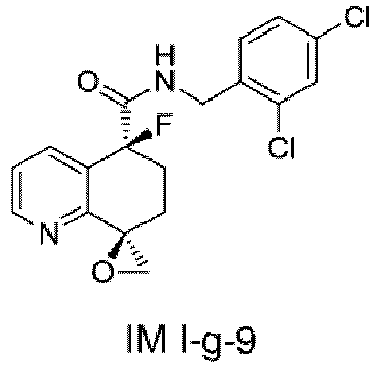
K 258 
(5S,8S)-5-fluoro-8-hydr oxy-8-methyl-N-(2,3,4-t rifluorobenzyl)-5,6,7,8-t etrahydroquinoline-5-ca rboxamide 
K 259 
(5S,8S)-N-(2-chloro-4-fl uorobenzyl)-5-fluoro-8-hydroxy-8-methyl-5,6,7, 8-tetrahydroquinoline-5 -carboxamide 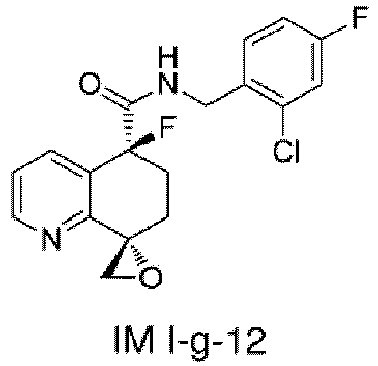
K 260 
(5S,8R)-N-(2-chloro-4-fl uorobenzyl)-5-fluoro-8-hydroxy-8-methyl-5,6,7, 8-tetrahydroquinoline-5 -carboxamide 
K {Table 46-2} 261 
(5S,8S)-N-(2,4-dichloro -6-(hydroxymethyl)benz yl)-5-fluoro-8-hydroxy-8 -methyl-5,6,7,8-tetrahy droquinoline-5-carboxa mide 
K 262 
(5S,8S)-N-(2-chloro-4-fl uoro-6-(hydroxymethyl) benzyl)-5-fluoro-8-hydr oxy-8-methyl-5,6,7,8-te trahydroquinoline-5-car boxamide 
K 263 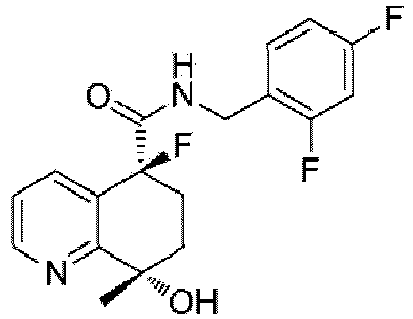
(5S,8S)-N-(2,4-difluoro benzyl)-5-fluoro-8-hydr oxy-8-methyl-5,6,7,8-te trahydroquinoline-5-car boxamide 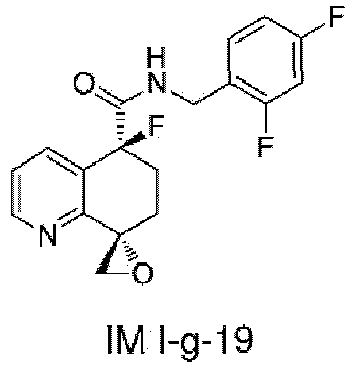
K 264 
(5S,8S)-N-(4-chloro-2-fl uorobenzyl)-5-fluoro-8-hydroxy-8-methyl-5,6,7, 8-tetrahydroquinoline-5 -carboxamide 
K 265 
(5S,8S)-N-(2,4-dichloro -6-fluorobenzyl)-5-fluor o-8-hydroxy-8-methyl-5 ,6,7,8-tetrahydroquinoli ne-5-carboxamide 
K {Table 46-3} 266 
(5S,8S)-N-(2-chloro-4,6 -difluorobenzyl)-5-fluor o-8-hydroxy-8-methyl-5 ,6,7,8-tetrahydroquinoli ne-5-carboxamide 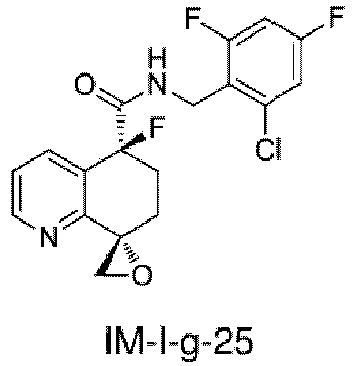
K 267 
(5S,8S)-N-(4-chloro-2,3 -difluorobenzyl)-5-fluor o-8-hydroxy-8-methyl-5 ,6,7,8-tetrahydroquinoli ne-5-carboxamide 
K 268 
(5S,8S)-N-(3-chloro-2,4 -difluorobenzyl)-5-fluor o-8-hydroxy-8-methyl-5 ,6,7,8-tetrahydroquinoli ne-5-carboxamide 
K 269 
(5S,8S)-N-(4-chloro-2,6 -difluorobenzyl)-5-fluor o-8-hydroxy-8-methyl-5 ,6,7,8-tetrahydroquinoli ne-5-carboxamide 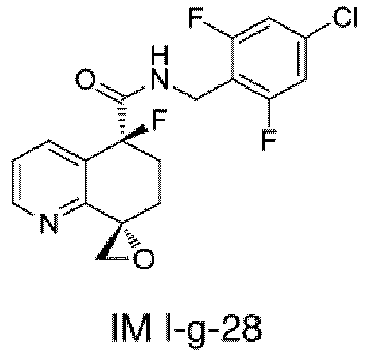
K 270 
(5S, 8S)-N-((ft)-1-(2-chl oro-4-fluorophenyl)ethy l)-5-fluoro-8-hydroxy-8-methyl-5,6,7,8-tetrahyd roquinoline-5-carboxam ide 
K {Table 46-4} 271 
(5S,8S)-N-((S)-1-(2-chl oro-4-fluorophenyl)ethy l)-5-fluoro-8-hydroxy-8-methyl-5,6,7,8-tetrahyd roquinoline-5-carboxam ide 
K 272 
(5S,8S)-N-((3 ,5-dichlor opyridin-2-yl)methyl)-5-fluoro-8-hydroxy-8-met hyl-5,6,7,8-tetrahydroq uinoline-5-carboxamide 
K 273 
(5S,8S)-N-((trans)-2-(2, 4-dichlorophenyl)cyclop ropyl)-5-fluoro-8-hydrox y-8-methyl-5,6,7,8-tetra hydroqu inoline-5-carbo xamide 
K 274 
(5S,8S)-5-fluoro-8-hydr oxy-8-methyl-N-((1-mor pholinocyclohexyl)meth yl)-5,6,7,8-tetrahydroqu inoline-5-carboxamide 
K 275 
(5S ,8R) -5-fluoro-8-hydr oxy-8-methyl-N-((1-mor pholinocyclohexyl)meth yl)-5,6,7,8-tetrahydroqu inoline-5-carboxamide 276 
(5S,8S)-N-(2-chloro-4-fl uorobenzyl)-5-fluoro-8-hydroxy-3,8-dimethyl-5, 6,7,8-tetrahydroquinolin e-5-carboxamide 
K {Table 46-5} 277 
(5S,8R)-N-(2,4-dichloro benzyl)-5-fluoro-8-hydr oxy-8-(((2-hydroxyethyl )(methyl)amino)methyl) -5,6,7,8-tetrahydroquin oline-5-carboxamide 

278 
(5R,8S)-N-(2,4-dichloro benzyl)-5-fluoro-8-hydr oxy-8-(((2-hydroxyethyl )(methyl)amino)methyl) -5,6,7,8-tetrahydroquin oline-5-carboxamide 

279 
(5R,8S)-N-(2,4-dichloro benzyl)-5-fluoro-8-hydr oxy-8-((3-hydroxyazetid in-1-yl)methyl)-5,6,7,8-t etrahydroquinoline-5-ca rboxamide 

280 
(5S,8R)-8-(cyanomethy l)-N-(2,4-dichlorobenzyl )-5-fluoro-8-hydroxy-5,6 ,7,8-tetrahydroquinoline -5-carboxamide 
P 281 
(5S,8R)-N-(2-chloro-4-fl uorobenzyl)-8-(cyanom ethyl)-5-fluoro-8-hydrox y-5,6,7,8-tetrahydroqui noline-5-carboxamide 
P {Table 46-6} 282 
(5S,85)-N-(2-chloro-4-fl uorobenzyl)-8-(cyanom ethyl)-5-fluoro-8-hydrox y-5,6,7,8-tetrahydroqui noline-5-carboxamide 
P 283 
(5S,8R)-8-(cyanomethy l)-N-(2,4-dichloro-6-(hy droxymethyl)benzyl)-5-f luoro-8-hydroxy-5,6,7,8 -tetrahydroquinoline-5-carboxamide 
P 284 
(5S,8R)-N-(2-chloro-4-fl uoro-6-(hydroxymethyl) benzyl)-8-(cyanomethyl )-5-fluoro-8-hydroxy-5,6 ,7,8-tetrahydroquinoline -5-carboxamide 
P 285 
(5S,8S)-N-(2,4-dichloro benzyl)-5-fluoro-8-(fluor omethyl)-8-hydroxy-5,6 ,7,8-tetrahydroquinoline -5-carboxamide 
Q 286 
(5S,8S)-N-(2-chloro-4-fl uorobenzyl)-5-fluoro-8-( fluoromethyl)-8-hydroxy -5,6,7,8-tetrahydroquin oli ne-5-carboxam ide 
Q {Table 46-7} 287 
(5S,8S)-N-(2,4-dichloro benzyl)-5-fluoro-8-hydr oxy-8-((methylthio)met hyl)-5,6,7,8-tetrahydroq ui noline-5-carboxam ide 
R 288 
(5S,8S)-N-(2-chloro-4-fl uorobenzyl)-5-fluoro-8-hydroxy-8-((methylthio) methyl)-5,6,7,8-tetrahy droq uinoli ne-5-carboxa mide 
R 289 
(5S,8S)-N-(2-chloro-4-fl uorobenzyl)-5-fluoro-8-hydroxy-8-(((2-hydroxy ethyl)thio)methyl)-5,6,7, 8-tetrahydroquinoline-5 -carboxamide 
S {Table 47} Examples LCMS Examples LCMS Method tR (min) [M+H]+ Method tR (min) [M+H]+ 256 C 1.57 382.9 272 D 1.54 384.0 257 C 1.57 383.0 273 D 1.79 409.1 258 C 1.43 369.0 274 D 1.61 406.2 259 C 1.47 367.0 275 D 1.58 406.2 260 C 1.45 366.9 276 D 1.63 381.1 261 C 1.43 412.9 280 D 1.66 408.0 262 D 1.37 397.1 281 D 1.55 392.1 263 C 1.37 351.1 282 D 1.54 392.1 264 C 1.48 367.1 283 D 1.49 438.1 265 C 1.57 401.0 284 D 1.37 422.0 266 D 1.54 385.0 285 D 1.70 401.0 267 D 1.59 385.0 286 D 1.58 385.1 268 D 1.58 385.0 287 D 1.78 429.0 269 D 1.57 385.0 288 D 1.67 413.1 270 D 1.61 381.1 289 D 1.44 443.1 271 D 1.62 381.1 - 1H NMR (CDCI3) delta 8.60 (1 H, ddd, J = 4.9, 1.8, 1.2 Hz), 7.49 (1 H, ddd, J = 7.9, 1.8, 1.2 Hz), 7.44 (1 H, d, J = 2.4 Hz), 7.36 (1 H, d, J = 7.9 Hz), 7.23 (1 H, dd, J = 7.9, 2.4 Hz), 7.21 (1 H, dd, J = 7.9, 4.9 Hz), 7.13 (1 H, br d, J = 5.5.Hz), 4.62 (1 H, dd, J = 14.7, 6.1 Hz), 4.57 (1 H, dd, J = 14.7, 6.1 Hz), 3.26 (1 H, br s), 2.65 (1 H, m), 2.38 (1 H, m), 2.22-2.11 (2 H, m), 1.63 (3 H, s).
- 1H NMR (CDCl3) delta 8.60 (1 H, br dd, J = 4.9, 1.8 Hz), 7.46 (1 H, d, J = 1.8 Hz), 7.45 (1 H, ddd, J = 7.9, 1.8, 1.2 Hz), 7.39-7.20 (4 H, m), 4.66 (1 H, dd, J = 14.7, 6.1 Hz), 4.59 (1 H, dd, J = 14.7, 6.1 Hz), 4.00 (1 H, br s), 2.60 (1 H, m), 2.36-2.23 (2 H, m), 2.16 (1 H, m), 1.56 (3 H, s).
- 1H NMR (CDCl3) delta 8.61 (1 H, ddd, J = 4.9, 1.8, 1.2 Hz), 7.49 (1 H, ddd, J = 7.9, 1.8, 1.2 Hz), 7.22 (1 H, dd, J = 7.9, 4.9 Hz), 7.14-7.08 (2 H, m), 6.97 (1 H, m), 4.61 (1 H, dd, J = 14.7, 6.1 Hz), 4.55 (1 H, dd, J = 14.7, 6.1 Hz), 3.30 (1 H, br s), 2.65 (1 H, m), 2.37 (1 H, m), 2.22-2.11 (2 H, m), 1.63 (3 H, s).
- 1H NMR (CDCl3) delta 8.61 (1 H, ddd, J = 4.9, 1.8, 1.2 Hz), 7.50 (1 H, ddd, J = 7.9, 1.8, 1.2 Hz), 7.41 (1 H, dd, J = 8.6, 5.5 Hz), 7.22 (1 H, dd, J = 7.9, 4.9 Hz), 7.18 (1 H, dd, J = 8.6, 2.4 Hz), 7.11 (1 H, br d, J = 5.5 Hz), 6.99 (1 H, ddd, J = 8.6, 7.9, 2.4.Hz), 4.63 (1 H, dd, J = 14.7, 6.1 Hz), 4.57 (1 H, dd, J = 14.7, 6.1 Hz), 3.18 (1 H, br s), 2.65 (1 H, m), 2.39 (1 H, m), 2.23-2.10 (2 H, m), 1.63 (3 H, s).
- 1H NMR (CDCl3) delta 8.60 (1 H, br dd, J = 4.9, 1.8 Hz), 7.45-7.41 (2 H, m), 7.26-7.18 (3 H, m), 7.00 (1 H, ddd, J = 8.6, 7.9, 2.4 Hz), 4.66 (1 H, dd, J = 14.7, 6.1 Hz), 4.59 (1 H, dd, J = 14.7, 5.5 Hz), 4.03 (1 H, s), 2.59 (1 H, m), 2.36-2.23 (2 H, m), 2.14 (1 H, m), 1.56 (3 H, s).
- 1H NMR (CDCl3) delta 8.57 (1 H, ddd, J = 4.9, 1.8, 1.2 Hz), 7.52 (1 H, br d, J = 5.5 Hz), 7.43-7.41 (2 H, m), 7.33 (1 H, d, J = 1.8 Hz), 7.18 (1 H, dd, J = 7.9, 4.9 Hz), 4.76-4.69 (3 H, m), 4.64 (1 H, dd, J = 14.7, 6.1 Hz), 3.99 (1 H, br), 3.43 (1 H, br), 2.60 (1 H, m), 2.32 (1 H, m), 2.17-2.04 (2 H, m), 1.61 (3 H, s).
- 1H NMR (CDCl3) delta 8.60 (1 H, ddd, J = 4.9, 1.8, 1.2 Hz), 7.51 (1 H, br d, J = 5.5 Hz), 7.43 (1 H, br d, J = 7.9 Hz), 7.19 (1 H, dd, J = 7.9, 4.9 Hz), 7.17 (1 H, dd, J = 7.9, 2.4 Hz), 7.09 (1 H, dd, J = 8.6, 2.4 Hz), 4.79-4.62 (3 H, m), 4.66 (1 H, dd, J = 14.7, 6.1 Hz), 3.79 (1 H, br), 3.21 (1 H, br), 2.60 (1 H, m), 2.33 (1 H, m), 2.19-2.08 (2 H, m), 1.63 (3 H, s).
- 1H NMR (CDCl3) delta 8.60 (1 H, ddd, J = 4.9, 1.8, 1.2 Hz), 7.49 (1 H, d, J = 7.9 Hz), 7.36 (1 H, dd, J = 8.6, 6.1 Hz), 7.21 (1 H, dd, J = 7.9, 4.9 Hz), 7.07 (1 H, br d, J = 4.9 Hz), 6.90-6.84 (2 H, m), 4.59 (1 H, dd, J = 14.7, 6.1 Hz), 4.52 (1 H, dd, J = 14.7, 6.1 Hz), 3.28 (1 H, br), 2.66 (1 H, m), 2.38 (1 H, m), 2.22-2.11 (2 H, m), 1.63 (3 H, s).
- 1H NMR (CDCl3) delta 8.60 (1 H, ddd, J = 4.9, 1.8, 1.2 Hz), 7.49 (1 H, ddd, J = 7.9, 1.8, 1.2 Hz), 7.31 (1 H, t, J = 7.9 Hz), 7.21 (1 H, dd, J = 7.9, 4.9 Hz), 7.16-7.08 (3 H, m), 4.59 (1 H, dd, J = 14.7, 6.1 Hz), 4.52 (1 H, dd, J = 14.7, 6.1 Hz), 3.31 (1 H, br s), 2.66 (1 H, m), 2.38 (1 H, m), 2.22-2.11 (2 H, m), 1.63 (3 H, s).
- 1H NMR (CDCl3) delta 8.60 (1 H, ddd, J = 4.9, 1.8, 1.2 Hz), 7.51 (1 H, ddd, J = 7.9, 1.8, 1.2 Hz), 7.29 (1 H, dd, J = 1.8, 1.2 Hz), 7.21 (1 H, dd, J = 7.9, 4.9 Hz), 7.10 (1 H, dd, J = 9.2, 1.8 Hz), 6.97 (1 H, br d, J = 5.5 Hz), 4.74 (1 H, dd, J = 14.7, 6.1 Hz), 4.64 (1 H, dd, J = 14.7, 5.5 Hz), 3.29 (1 H, brs), 2.66 (1 H, m), 2.38 (1 H, m), 2.21-2.10 (2 H, m), 1.63 (3 H, s).
- 1H NMR (CDCl3) delta 8.59 (1 H, ddd, J = 4.9, 1.8, 1.2 Hz), 7.52 (1 H, ddd, J = 7.9, 1.8, 1.2 Hz), 7.21 (1 H, dd, J = 7.9, 4.9 Hz), 7.04 (1 H, br dd, J = 7.9, 2.4 Hz), 6.96 (1 H, br d, J = 5.5 Hz), 6.84 (1 H, br dt, J = 8.6, 2.4 Hz), 4.74 (1 H, dd, J = 14.7, 6.1 Hz), 4.64 (1 H, dd, J = 14.7, 5.5 Hz), 3.32 (1 H, br s), 2.67 (1 H, m), 2.32 (1 H, m), 2.21-2.10 (2 H, m), 1.63 (3 H, s).
- 1H NMR (CDCl3) delta 8.61 (1 H, m), 7.49 (1 H, dd, J = 7.9, 1.2 Hz), 7.25-7.08 (4 H, m), 4.62 (1 H, dd, J = 15.3, 6.1 Hz), 4.56 (1 H, dd, J = 15.3, 6.7 Hz), 3.30 (1 H, br), 2.64 (1 H, m), 2.38 (1 H, m), 2.22-2.11 (2 H, m), 1.63 (3 H, s).
- 1H NMR (CDCI3) delta 8.61 (1 H, ddd, J = 4.9, 1.8, 1.2 Hz), 7.49 (1 H, ddd, J = 7.9, 1.8, 1.2 Hz), 7.28 (1 H, m), 7.22 (1 H, dd, J = 7.9, 4.9 Hz), 7.11 (1 H, br), 6.98 (1 H, dt, J = 8.6, 1.8 Hz), 4.60 (1 H, dd, J = 14.7, 6.1 Hz), 4.55 (1 H, dd, J = 14.7, 6.1 Hz), 3.29 (1 H, br s), 2.65 (1 H, m), 2.38 (1 H, m), 2.25-2.11 (2 H, m), 1.63 (3 H, s).
- 1H NMR (CDCl3) delta 8.60 (1 H, ddd, J = 4.9, 1.8, 1.2 Hz), 7.50 (1 H, d, J = 7.9 Hz), 7.22 (1 H, dd, J = 7.9, 4.9 Hz), 7.04-6.95 (3 H, m), 4.66 (1 H, dd, J = 14.7, 6.1 Hz), 4.57 (1 H, dd, J = 14.7, 5.5 Hz), 3.30 (1 H, br s), 2.65 (1 H, m), 2.37 (1 H, m), 2.20-2.09 (2 H, m), 1.63 (3 H, s).
- 1H NMR (CDCI3) delta 8.57 (1 H, br d, J = 4.9 Hz), 7.45 (1 H, ddd, J = 7.9, 1.8, 1.2 Hz), 7.39 (1 H, dd, J = 8.6, 6.1 Hz), 7.17-7.14 (2 H, m), 7.06 (1 H, dd, J = 6.7, 5.5 Hz), 7.02 (1 H, ddd, J = 8.6, 7.9, 2.4 Hz), 5.42 (1 H, dq, J = 6.7, 6.7 Hz), 3.33 (1 H, br s), 2.68 (1 H, m), 2.39 (1 H, m), 2.24-2.13 (2 H, m), 1.63 (3 H, s), 1.59 (3 H, d, J = 6.7 Hz).
- 1H NMR (CDCI3) delta 8.62 (1 H, ddd, J = 4.9, 1.8, 1.2 Hz), 7.60 (1 H, ddd, J = 7.9, 1.8, 1.2 Hz), 7.34 (1 H, dd, J = 8.6, 5.5 Hz), 7.26 (1 H, dd, J = 7.9, 4.9 Hz), 7.15 (1 H, dd, J = 8.6, 2.4 Hz), 7.07 (1 H, dd, J = 6.7, 5.5 Hz), 7.01 (1 H, ddd, J = 8.6, 7.9, 2.4 Hz), 5.41 (1 H, dq, J = 7.3, 6.7 Hz), 3.28 (1 H, brs), 2.59 (1 H, m), 2.33 (1 H, m), 2.19-2.08 (2 H, m), 1.63 (3 H, s), 1.59 (3 H, d, J = 7.3 Hz).
- 1H NMR (CDCl3) delta 8.63 (1 H, br d, J = 4.9 Hz), 8.48 (1 H, d, J = 2.4 Hz), 8.03 (1 H, br d, J = 4.3 Hz), 7.77 (1 H, d, J = 2.4 Hz), 7.72 (1 H, d, J = 7.9 Hz), 7.24 (1 H, dd, J = 7.9, 4.9 Hz), 4.78 (1 H, dd, J = 18.3, 4.9 Hz), 4.67 (1 H, dd, J = 18.3, 4.3 Hz), 3.27 (1 H, br s), 2.72 (1 H, m), 2.40 (1 H, m), 2.29-2.18 (2 H, m), 1.66 (3 H, s).
- 1H NMR (CDCl3) delta 8.61 (1 H, dt, J = 4.7, 1.6 Hz), 7.51 (1 H, dt, J = 8.0, 1.5 Hz), 7.44 (1 H, s), 7.35 (1 H, d, J = 8.19 Hz), 7.16-7.29 (3 H, m), 4.53-4.66 (2 H, m), 3.46-3.64 (2 H, m), 3.03 (1 H, d, J = 14.1 Hz), 2.85 (1 H, d, J = 14.1 Hz), 2.49-2.75 (3 H, m), 2.13-2.40 (6 H, m) 1.99-2.10 (1 H, m).
- MS (ESI) m/z: 456.2 (M+H)+.
- 1H NMR and LCMS were identified with the Ex 277.
- 1H NMR (CDCl3) delta 8.61 (1 H, br d, J = 4.7 Hz), 7.54 (1 H, d, J = 8.0 Hz), 7.44 (1 H, d, J = 2.1 Hz), 7.34 (1 H, d, J=7.7 Hz), 7.27-7.30 (1 H, m), 7.19-7.25 (1 H, m), 4.48-4.65 (3 H, m), 3.96-4.16 (2 H, m), 3.89 (1 H, br s), 3.56 (1 H, br d, J = 13.0 Hz), 3.18 (1 H, br d, J = 13.1 Hz), 2.67-2.82 (1 H, m), 2.16-2.28 (3 H, m).
- MS (ESI) m/z: 454.2 (M+H)+.
- 1H NMR (DMSO d6) delta 9.25 (1 H, br), 8.70 (1 H, ddd, J = 4.9, 1.8, 1.2 Hz), 7.67 (1 H, dd, J = 7.9, 1.8 Hz), 7.64 (1 H, d, J = 1.8 Hz), 7.50-7.42 (2 H, m), 7.39 (1 H, d, J = 6.7 Hz), 5.98 (1 H, s), 4.53 (1 H, dd, J = 15.3, 6.1 Hz), 4.44 (1 H, dd, J = 15.3, 5.5 Hz), 3.35 (1 H, d, J = 16.5 Hz), 3.24 (1 H, d, J = 16.5 Hz), 2.82-2.64 (2 H, m), 2.30-2.17 (2 H, m).
- 1H NMR (CDCl3) delta 8.63 (1 H, ddd, J = 4.9, 1.8, 1.2 Hz), 7.56 (1 H, ddd, J = 7.9, 1.8, 1.2 Hz), 7.40 (1 H, dd, J = 8.6, 5.5 Hz), 7.32 (1 H, dd, J = 7.9, 4.9 Hz), 7.23 (1 H, br), 7.20 (1 H, dd, J = 8.6, 2.4 Hz), 7.01 (1 H, ddd, J = 8.6, 7.9, 2.4 Hz), 4.63 (1 H, dd, J = 14.7, 6.1 Hz), 4.57 (1 H, dd, J = 14.7, 6.1 Hz), 4.29 (1 H, s), 2.98 (1 H, d, J = 16.5 Hz), 2.89 (1 H, d, J = 16.5 Hz), 2.82-2.27 (4 H, m).
- 1H NMR (CDCl3) delta 8.60 (1 H, ddd, J = 4.9, 1.8, 1.2 Hz), 7.60 (1 H, br), 7.45 (1 H, ddd, J = 7.9, 1.8, 1.2 Hz), 7.44 (1 H, d, J = 1.8 Hz), 7.33 (1 H, d, J = 1.8 Hz), 7.26 (1 H, m), 4.80-4.62 (4 H, m), 3.78 (1 H, dd, J = 6.1, 5.5 Hz), 3.71 (1 H, br s), 3.20 (1 H, d, J = 16.5 Hz), 3.06 (1 H, d, J = 16.5 Hz), 2.71 (1 H, m), 2.40-2.37 (2 H, m), 2.19 (1 H, m).
- 1H NMR (CDCl3) delta 8.60 (1 H, ddd, J = 4.9, 1.8, 1.2 Hz), 7.59 (1 H, br d, J = 6.1 Hz), 7.45 (1 H, ddd, J = 7.9, 1.8, 1.2 Hz), 7.26 (1 H, m), 7.18 (1 H, dd, J = 7.9, 2.4 Hz), 7.08 (1 H, dd, J = 8.6, 2.4 Hz), 4.87-4.71 (3 H, m), 4.65 (1 H, dd, J = 14.7, 6.1 Hz), 3.77 (1 H, br), 3.62 (1 H, br), 3.20 (1 H, d, J = 17.1 Hz), 3.06 (1 H, d, J = 17.1 Hz), 2.73 (1 H, m), 2.43-2.37 (2 H, m), 2.18 (1 H, m).
- 1H NMR (CDCl3) delta 8.62 (1 H, br d, J = 4.3 Hz), 7.49 (1 H, dd, J = 7.9, 1.2 Hz), 7.45 (1 H, d, J = 2.4 Hz), 7.37 (1 H, d, J = 7.9 Hz), 7.27 (1 H, dd, J = 7.9, 2.4 Hz), 7.26 (1 H, dd, J = 7.9, 4.3 Hz), 7.18 (1 H, br d, J = 5.5. Hz), 4.65 (1 H, dd, J = 14.7, 6.1 Hz), 4.58 (1 H, dd, J = 14.7, 6.1 Hz), 3.33 (1 H, br), 3.16 (1 H, d, J = 13.5 Hz), 3.12 (1 H, d, J = 13.5 Hz), 2.68 (1 H, m), 2.52 (1 H, m), 2.30 (1 H, m), 2.18 (1 H, m), 2.10 (3 H, s).
- 1H NMR (CDCI3) delta 8.62 (1 H, ddd, J = 4.9, 1.8, 1.2 Hz), 7.51 (1 H, ddd, J = 7.9, 1.8, 1.2 Hz), 7.41 (1 H, dd, J = 8.6, 6.1 Hz), 7.24 (1 H, dd, J = 7.9, 4.9 Hz), 7.19 (1 H, dd, J = 7.9, 3.1 Hz), 7.19 (1 H, br), 7.00 (1 H, ddd, J = 8.6, 7.9, 3.1 Hz), 4.64 (1 H, dd, J = 14.7, 6.1 Hz), 4.58 (1 H, dd, J = 14.7, 6.1 Hz), 3.73 (2 H, t, J = 6.1 Hz), 3.71 (1 H, br), 3.23 (1 H, d, J = 13.4 Hz), 3.18 (1 H, d, J = 13.4 Hz), 2.82-2.63 (3 H, m), 2.45 (1 H, m), 2.31 (1 H, m), 2.17 (1 H, m), 1.69 (1 H, br).
{Table 48} Intermediates Structure Chemical Name Substrate General Procedure (/Amine) I-h-2-1 
(5S,8R)-N-(2,4-dichloro benzyl)-5-fluoro-8-hydr oxy-8-((methylthio)met hyl)-5,6,7,8-tetrahydroq uinoline-5-carboxamide 
R I-h-2-2 
(5S,8S)-N-(2,4-dichloro benzyl)-5-fluoro-8-hydr oxy-8-(S(2-hydroxyethyl )thio)methyl)-5,6,7,8-tet rahydroquinoline-5-car boxamid 
S I-h-1-1 
(5R,8S)-8-(aminomethy l)-N-(2,4-dichlorobenzyl )-5-fluoro-8-hydroxy-5,6 ,7,8-tetrahydroquinoline -5-carboxamide 
J/ NH4Cl I-h-1-2 
(5S,8S)-8-(aminomethy l)-N-(2,4-dichlorobenzyl )-5-fluoro-8-hydroxy-5,6 ,7,8-tetrahydroquinoline -5-carboxamide 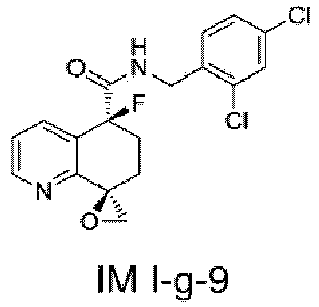
J/ NH4Cl I-h-1-3 
(5S,8R)-8-(aminomethy l)-N-(2,4-dichlorobenzyl )-5-fluoro-8-hydroxy-5,6 ,7,8-tetrahydroquinoline -5-carboxamide 
J/ NH4Cl - 1H NMR (CDCI3) delta 8.62 (1 H, ddd, J = 4.3, 1.8, 1.2 Hz), 7.49 (1 H, ddd, J = 7.9, 1.8, 1.2 Hz), 7.45 (1 H, d, J = 1.8 Hz), 7.36 (1 H, d, J = 8.6 Hz), 7.28-7.21 (3 H, m), 4.63 (1 H, dd, J = 14.7, 6.1 Hz), 4.58 (1 H, dd, J = 14.7, 6.1 Hz), 4.12 (1 H, s), 2.97 (2 H, s), 2.65-2.43 (2 H, m), 2.30 (1 H, m), 2.18 (3 H, s), 2.14 (1 H, m).
- MS (ESI) m/z: 429.1 (M+H)+.
- 1H NMR (CDCI3) delta 8.61 (1 H, br dd, J = 4.9, 1.8 Hz), 7.50 (1 H, br dd, J = 7.9, 1.8 Hz), 7.45 (1 H, d, J = 1.8 Hz), 7.36 (1 H, d, J = 7.9 Hz), 7.27-7.22 (2 H, m), 7.20 (1 H, br), 4.64 (1 H, dd, J = 14.7, 6.1 Hz), 4.58 (1 H, dd, J = 14.7, 6.1 Hz), 3.82 (1 H, br), 3.72 (2 H, t, J = 5.5 Hz), 3.47 (1 H, s), 3.24 (1 H, d, J = 13.5 Hz), 3.17 (1 H, d, J = 13.5 Hz), 2.81-2.62 (3 H, m), 2.44 (1 H, m), 2.30 (1 H, m), 2.17 (1 H, m).
- MS (ESI) m/z: 459.2 (M+H)+.
- MS (ESI) m/z: 398.1 (M+H)+.
- MS (ESI) m/z: 398.1 (M+H)+.
- MS (ESI) m/z: 398.1 (M+H)+.
-

- To a stirred solution of substrate (1.0 eq.) and TMAD (1.5 eq.) in THF was added n-BusP (1.5 eq.) at ambient temperature. After being stirred at ambient temperature until complete reaction, the mixture was concentrated under reduced pressure. The crude residue was purified by silica gel column chromatography (EtOAc) to afford the title compound.
- 1H NMR (DMSO d6) delta 9.22 (1 H, brs), 8.65 (1 H, dt, J = 4.6, 1.6 Hz), 7.60-7.70 (2 H, m), 7.36-7.49 (3 H, m), 4.35-4.53 (2 H, m), 3.79 (1 H, td, J = 11.7, 2.5 Hz), 3.61 (1 H, dd, J = 11.6, 3.1 Hz), 3.08 (1 H, d, J = 11.3 Hz), 2.84 (1 H, dt, J = 11.8, 2.5 Hz), 2.66 (1 H, br d, J = 11.1 Hz), 2.52-2.58 (1 H, m), 2.32-2.47 (1 H, m), 2.21 (3 H, s), 1.90-2.16 (3 H, m).
- MS (ESI) m/z: 438.1 (M+H)+.
- The following Examples were prepared by General Procedure T (Table 49).
- The mixture of substrate (1.0 eq.) and 1,1'-carbonylbis-1H-imidazole (1.1 eq.) in THF was stirred at ambient temperature until complete reaction. The reaction mixture was purified by silica gel column chromatography (10% MeOH/EtOAc) to afford the following Examples.
{Table 49} Examples Structure Chemical Name Substrate 291 
(5S,5'S)-N-(2,4-dichlorobenzyl)-5'-flu oro-2-oxo-6',7'-dihydro-5'H-spiro[oxa zolidine-5,8'-quinoline]-5'-carboxamid e 
292 
(5R,5'S)-N-(2,4-dich lorobenzyl)-5'-flu oro-2-oxo-6',7'-dihydro-5'H-spiro[oxa zolidine-5,8'-quinoline]-5'-carboxamid e 
- 1H NMR (DMSO d6) delta 9.27 (1 H, br s), 8.74 (1 H, d, J = 4.5 Hz), 7.75-7.80 (2 H, m), 7.62 (1 H, d, J = 2.1 Hz), 7.53 (1 H, dd, J = 8.0, 4.7 Hz), 7.45 (1 H, dd, J = 8.4, 2.1 Hz), 7.36 (1 H, d, J = 8.3 Hz), 4.40 (2 H, t, J = 5.3 Hz), 3.88 (1 H, d, J = 8.6 Hz), 3.53 (1 H, d, J = 8.4 Hz), 2.29-2.48 (5 H, m).
- MS (ESI) m/z: 424.1 (M+H)+.
- 1H NMR (DMSO d6) delta 9.30 (1 H, br s), 8.76 (1 H, d, J = 4.8 Hz), 7.79 (1 H, s), 7.71 (1 H, d, J = 8.2 Hz), 7.64 (1 H, d, J = 2.1 Hz), 7.54 (1 H, t, J = 6.2 Hz), 7.47 (1 H, d, J = 8.1 Hz), 7.40 (1 H, d, J = 8.1 Hz), 4.40-4.53 (2 H, m), 4.16 (1 H, d, J = 8.2 Hz), 3.45 (1 H, d, J = 8.7 Hz), 2.57-2.68 (1 H, m), 2.39-2.45 (1 H, m), 2.24-2.38 (2 H, m).
- MS (ESI) m/z: 424.1 (M+H)+.
- The following Intermediates were prepared by General Procedure U (Table 50).
- Chloroacetyl chloride (1.1 eq.) was added dropwise to a biphasic solution of substrate (1.0 eq.) in dichloromethane and 0.5 N aq. NaOH (2.0 eq.) at 0 °C. The reaction mixture was warmed up to ambient temperature and stirred until complete reaction. The mixture was extracted with dichloromethane 3 times, and the combined extracts were dried over Na2SO4 and concentrated under reduced pressure to afford the following Intermediates.
{Table 50} Intermediates Structure Chemical Name Substrate I-i-1 
(5R,8S)-8-((2-chloroacetamido)meth yl)-N-(2,4-dichlorobenzyl)-5-fluoro-8-hydroxy-5,6,7,8-tetrahydroquinoline-5-carboxamide 
I-i-2 
(5S,8S)-8-((2-chloroacetamido)methy l)-N-(2,4-dichlorobenzyl)-5-fluoro-8-h ydroxy-5,6,7,8-tetrahydroquinoline-5-carboxamide 
I-i-3 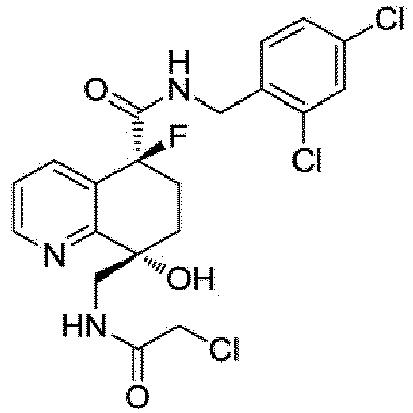
(5S,8R)-8-((2-chloroacetamido)meth yl)-N-(2,4-dichlorobenzyl)-5-fluoro-8-hydroxy-5,6,7,8-tetrahydroquinoline-5-carboxamide 
- MS (ESI) m/z: 474.1 (M+H)+.
- MS (ESI) m/z: 474.1 (M+H)+.
- MS (ESI) m/z: 474.1 (M+H)+.
- The following Examples were prepared by General Procedure V (Table 51).
- To a solution of substrate (1.0 eq.) in 50% dichloromethane/2-propanol was added portion wise tert-BuOK (4.0 eq.) at 0 °C. The solution was allowed to warm to ambient temperature and stirred until complete reaction. The solvent of the reaction mixture was removed by evaporation. The crude residue was purified by silica gel column chromatography to afford the following Examples.
{Table 51} Examples Structure Chemical Name Substrate 293 
(2S,5'R)-N-(2,4-dichlorobenzyl)-5'-fluo ro-5-oxo-6',7'-dihydro-5'H-spiro[morph oline-2,8'-quinoline]-5'-carboxamide 
294 
(2S,5'S)-N-(2,4-dichlorobenzyl)-5'-fluo ro-5-oxo-6',7'-dihydro-5'H-spiro[morph oline-2,8'-quinoline]-5'-carboxamide 
295 
(2R,5'S)-N-(2,4-dichlorobenzyl)-5'-fluo ro-5-oxo-6',7'-dihydro-5'H-spiro[morph oline-2,8'-quinoline]-5'-carboxamide 
- 1H NMR (CDCl3) delta 8.64-8.72 (1 H, m), 7.54 (1 H, d, J = 7.5 Hz), 7.27-7.47 (4 H, m), 7.09-7.25 (1 H, m), 4.56-4.70 (2 H, m), 4.34 (1 H, dd, J = 12.2, 2.3 Hz), 4.11-4.23 (2 H, m), 3.37 (1 H, dd, J = 12.2, 3.1 Hz), 2.77-2.99 (1 H, m), 2.40-2.51 (1 H, m), 2.09-2.28 (2 H, m). MS (ESI) m/z: 438.1 (M+H)+.
- 1H NMR (CDCl3) delta 8.70 (1 H, dt, J = 4.7, 1.6 Hz), 7.57 (1 H, d, J = 7.6 Hz), 7.46 (1 H, d, J = 2.0 Hz), 7.19-7.35 (6 H, m), 6.04 (1 H, br s), 4.53-4.64 (2 H, m), 4.39 (1 H, d, J = 16.8 Hz), 4.28 (1 H, d, J = 15.2 Hz), 4.19 (1 H, dd, J = 12.5, 1.5 Hz), 3.43 (1 H, dd, J = 12.5, 3.9 Hz), 2.56-2.64 (1 H, m), 2.29-2.53 (3 H, m).
- MS (ESI) m/z: 438.1 (M+H)+.
- 1H NMR (CDCl3) delta 8.66 (1 H, dt, J = 4.7, 1.8 Hz), 7.54 (1 H, d, J = 7.6 Hz), 7.46 (1 H, d, J = 2.1 Hz), 7.39 (1 H, d, J = 8.2 Hz), 7.27-7.33 (2 H, m), 7.13-7.25 (1 H, m), 6.10 (1 H, br s), 4.58-4.69 (2 H, m), 4.34 (1 H, dd, J = 12.2, 2.3 Hz), 4.17 (2 H, dd, J = 16.8, 15.5 Hz), 3.37 (1 H, dd, J = 12.2, 3.0 Hz) 2.77-2.95 (1 H, m), 2.41-2.49 (1 H, m), 2.08-2.30 (2 H, m).
- MS (ESI) m/z: 438.1 (M+H)+.
- The following Examples were prepared by General Procedure W or X (Table 52).
- To a solution of substrate (1.0 eq.) in dichloromethane was added mCPBA (1.05 eq.) at 0 °C. The mixture was stirred at 0 °C until complete reaction, 1:1 mixture of aq. Na2S2O3 and aq. NaHCOs was added to the mixture. The resulting mixture was extracted with CH2CI2 and the extract was dried over Na2SO4. The extract was concentrated in vacuo, and the resulting residue was purified by silica gel column chromatography and preparative HPLC to afford the following Examples.
- To a solution of substrate (1.0 eq.) in dichloromethane was added mCPBA (2.5 eq.) at 0 °C. The mixture was stirred at 0 °C until complete reaction, 1:1 mixture of aq. Na2S2O3 and aq. NaHCOs was added to the mixture. The resulting mixture was extracted with CH2CI2 and the extract was dried over Na2SO4. The extract was concentrated in vacuo, and the resulting residue was purified by silica gel column chromatography and preparative HPLC to afford the following Examples.
{Table 52-1} Examples Structure Chemical Name Substrate General Procedure 296 
(5S,8S)-N-(2-chloro-4-fl uorobenzyl)-5-fluoro-8-hydroxy-8-((methylsulfi nyl)methyl)-5,6,7,8-tetr ahydroquinoline-5-carb oxamide 
W 297 
(5S,8R)-N-(2,4-dichloro benzyl)-5-fluoro-8-hydr oxy-8-((methylthio)met hyl)-5,6,7,8-tetrahydroq uinoline-5-carboxamide 
X 298 
(5S,8S)-N-(2,4-dichloro benzyl) -5-fluoro-8-hydr oxy-8-((methylsulfonyl) methyl)-5,6,7,8-tetrahy droquinoline-5-carboxa mide 
X 299 
(5S,8S)-N-(2-chloro-4-fl uorobenzyl)-5-fluoro-8-hydroxy-8-((methylsulfo nyl)methyl)-5,6,7,8-tetr ahydroquinoline-5-carb oxamide 
X {Table 52-2} 300 
(5S,8S)-N-(2,4-dichloro benzyl)-5-fluoro-8-hydr oxy-8-(((2-hydroxyethyl )sulfonyl)methyl)-5,6,7, 8-tetrahydroquinoline-5 -carboxamide 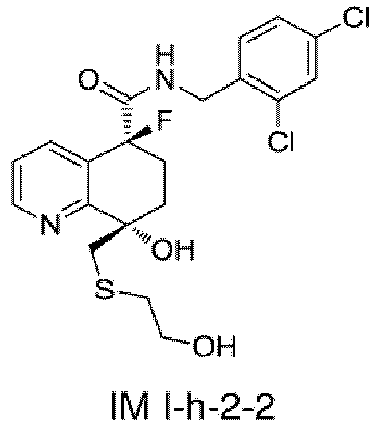
X 301 
(5S,8S)-N-(2-chloro-4-fl uorobenzyl)-5-fluoro-8-hydroxy-8-(((2-hydroxy ethyl)sulfonyl)methyl)-5 ,6,7,8-tetrahydroquinoli ne-5-carboxamide 
X {Table 53} Examples LCMS Examples LC MS Method tR (min) [M+H]+ Method tR (min) [M+H]+ 296 D 1.29 429.0 299 D 1.44 445.0 297 D 1.58 461.0 300 D 1.47 491.0 298 D 1.56 461.0 301 D 1.36 475.0 - 1H NMR (CDCl3) delta 8.65-8.60 (1 H, m), 7.56-7.51 (1 H, m), 7.43-7.37 (1 H, m), 7.31-7.26 (1 H, m), 7.24-7.17(2 H, m), 7.02-6.97 (1 H, m), 4.68-4.54 (2 H, m), 4.08 (1 H, br), 3.77 (0.5 H, d, J = 12.8 Hz), 3.58 (0.5 H, d, J = 13.5 Hz), 3.35 (0.5 H, d, J = 12.8 Hz), 3.11 (0.5 H, d, J = 13.5 Hz), 2.86 (0.5 H, m), 2.74 (1.5 H, s), 2.69 (1.5 H, s), 2.69 (0.5 H, m), 2.61-2.46 (2 H, m), 2.32-2.19 (1 H, m).
- 1H NMR (CDCl3) delta 8.62 (1 H, ddd, J = 4.9, 1.8, 1.2 Hz), 7.57 (1 H, dd, J = 7.9, 1.2 Hz), 7.45 (1 H, d, J = 1.8 Hz), 7.35-7.31 (2 H, m), 7.27 (1 H, dd, J = 7.9, 4.9 Hz), 7.19 (1 H, br d, J = 4.9 Hz), 4.62 (1 H, dd, J = 14.7, 6.1 Hz), 4.573 (1 H, s), 4.566 (1 H, dd, J = 14.7, 6.1 Hz), 3.55 (1 H, d, J = 16.5 Hz), 3.51 (1 H, d, J = 16.5 Hz), 3.14 (3 H, s), 3.07 (1 H, m), 2.63 (1 H, m), 2.40 (1 H, m), 2.18 (1 H, m).
- 1H NMR (CDCl3) delta 8.62 (1 H, br d, J = 4.9 Hz), 7.55 (1 H, dd, J = 7.9, 1.2 Hz), 7.45 (1 H, d, J = 1.8 Hz), 7.35 (1 H, d, J = 7.9 Hz), 7.30 (1 H, dd, J = 7.9, 4.9 Hz), 7.26 (1 H, dd, J = 7.9, 1.8 Hz), 7.21 (1 H, br), 4.64 (1 H, dd, J = 14.7, 6.1 Hz), 4.57 (1 H, dd, J = 14.7, 6.1 Hz), 4.12 (1 H, d, J = 15.3 Hz), 4.03 (1 H, br), 3.37 (1 H, d, J = 15.3 Hz), 3.11 (3 H, s), 2.79-2.64 (3 H, m), 2.24 (1 H, m).
- 1H NMR (CDCl3) delta 8.62 (1 H, br d, J = 4.9 Hz), 7.55 (1 H, d, J = 7.9 Hz), 7.40 (1 H, dd, J = 8.6, 6.1 Hz), 7.30 (1 H, dd, J = 7.9, 4.9 Hz), 7.21 (1 H, br), 7.19 (1 H, dd, J = 8.6, 2.4 Hz), 7.00 (1 H, ddd, J = 8.6, 7.9, 1.8 Hz), 4.64 (1 H, dd, J = 14.7, 6.1 Hz), 4.57 (1 H, dd, J = 14.7, 6.1 Hz), 4.12 (1 H, d, J = 15.3 Hz), 4.02 (1 H, br), 3.37 (1 H, d, J = 15.3 Hz), 3.11 (3 H, s), 2.79-2.64 (3 H, m), 2.24 (1 H, m).
- 1H NMR (CDCl3) delta 8.58 (1 H, br s), 7.53 (1 H, d, J = 7.9 Hz), 7.44 (1 H, br s), 7.34-7.22 (4 H, m), 4.72 (1 H, br), 4.62 (1 H, dd, J = 15.3, 6.1 Hz), 4.34 (1 H, dd, J = 15.3, 6.1 Hz), 4.34 (1 H, d, J = 15.3 Hz), 4.09 (2 H, br), 3.62 (1 H, m), 3.43 (1 H, d, J = 15.3 Hz), 3.42 (1 H, br s), 3.25 (1 H, m), 2.77-2.66 (3 H, m), 2.21 (1 H, m).
- 1H NMR (CDCl3) delta 8.60 (1 H, br s), 7.54 (1 H, d, J = 7.9 Hz), 7.39 (1 H, dd, J = 7.9, 6.1 Hz), 7.29 (1 H, m), 7.26 (1 H, br), 7.19 (1 H, dd, 8.6, 2.4 Hz), 7.00 (1 H, dd, J = 8.6, 7.9 Hz), 4.63 (1 H, dd, J = 14.7, 6.1 Hz), 4.55 (1 H, dd, J = 14.7, 6.1 Hz), 4.54 (1 H, br), 4.34 (1 H, d, J = 15.3 Hz), 4.12 (2 H, br), 3.62 (1 H, m), 3.46 (1 H, d, J = 15.3 Hz), 3.44 (1 H, br s), 3.29 (1 H, m), 3.03-2.71 (3 H, m), 2.22 (1 H, m).
- The following Examples were prepared by General Procedure Y or Z (Table 54).
- To stirred solution of the substrate (1.0 eq.) in MeOH-tert-BuOH-water (1:1:1) was added AD-Mix alpha and/or beta (4 times weight of substrate) at ambient temperature. The mixture was stirred at room temperature until complete reaction, aq. Na2S2O3 was added to the mixture and then the mixture was stirred for 2 h. The mixture was extracted with CH2CI2 twice and the extracts were combined. The extracts were dried over Na2SO4 and concentrated in vacuo. The resulting residue was purified and each diastereo isomer was separated by silica gel column chromatography to afford the following Examples.
- A mixture of substrate (1.0 eq.) and 2 N aq. NaOH (15.0 eq.) in 50% 1,4-dioxane-water (0.02 M) was heated at 65 °C until complete reaction. The mixture was extracted with CH2Cl2 twice and the extracts were combined. The extracts were dried over Na2SO4 and concentrated in vacuo to afford a glass. The residual glass was purified by silica gel column chromatography and preparative HPLC to afford following Examples.
{Table 54-1} Examples Structure Chemical Name Substrate General Procedure 302 
(5R,8R)-N-(2,4-dichloro benzyl)-5-fluoro-8-hydr oxy-8-(hydroxymethyl)-5,6,7,8-tetrahydroquino line-5-carboxamide 
Y 303 
(5R,8S)-N-(2,4-dichloro benzyl)-5-fluoro-8-hydr oxy-8-(hydroxymethyl)-5,6,7,8-tetrahydroquino line-5-carboxamide 304 
(5S,8S)-N-(2,4-dichloro benzyl)-5-fluoro-8-hydr oxy-8-(hydroxymethyl)-5,6,7,8-tetrahydroquino line-5-carboxamide 
Y 305 
(5S,8R)-N-(2,4-dichloro benzyl)-5-fluoro-8-hydr oxy-8-(hydroxymethyl)-5,6,7,8-tetrahydroquino line-5-carboxamide 306 
(SS,8S)-N-(2-chloro-4-fl uorobenzyl)-5-fluoro-8-hydroxy-8-(hydroxymet hyl)-5,6,7,8-tetrahydroq uinoline-5-carboxamide 
Y {Table 54-2} 307 
(5S,8R)-N-(2-chloro-4-fl uorobenzyl)-5-fluoro-8-hydroxy-8-(hydroxymet hyl)-5,6,7,8-tetrahydroq uinoline-5-carboxamide 308 
(5S,8S)-5-fluoro-8-hydr oxy-8-(hydroxymethyl)-N-(2,3,4-trifluorobenzyl) -5,6,7,8-tetrahydroquin oline-5-carboxamide 
Y 309 
(5S,8R)-5-fluoro-8-hydr oxy-8-(hydroxymethyl)-N-(2,3,4-trifluorobenzyl) -5,6,7,8-tetrahydroquin oline-5-carboxamide 310 
(5S,8S)-N-(2,4-dichloro -6-fluorobenzyl)-5-fluor o-8-hydroxy-8-(hydroxy methyl)-5,6,7,8-tetrahy droquinoline-5-carboxa mide 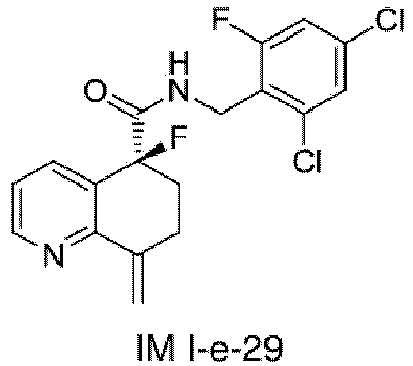
Y 311 
(5S,8R)-N-(2,4-dichloro -6-fluorobenzyl)-5-fluor o-8-hydroxy-8-(hydroxy methyl)-5,6,7,8-tetrahy droquinoline-5-carboxa mide {Table 54-3} 312 
(SS,BS)-N-(2-chloro-3,4 -difluorobenzyl)-5-fluor o-8-hydroxy-8-(hydroxy methyl)-5,6,7,8-tetrahy droquinoline-5-carboxa mide 
Y 313 
(5S,8R)-N-(2-chloro-3,4 -difluorobenzyl)-5-fluor o-8-hydroxy-8-(hydroxy methyl)-5,6,7,8-tetrahy droquinoline-5-carboxa mide 314 
(5S,8S)-N-(4-chloro-2-fl uorobenzyl)-5-fluoro-8-hydroxy-8-(hydroxymet hyl)-5,6,7,8-tetrahydroq uinoline-5-carboxamide 
Y 315 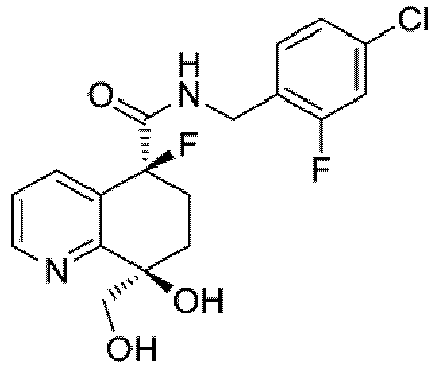
(5S,8R)-N-(4-chloro-2-fl uorobenzyl)-5-fl uoro-8-hydroxy-8-(hydroxymet hyl)-5,6,7,8-tetrahydroq uinoline-5-carboxamide 316 
(5S,8S)-N -(2,4-dichloro -6-(hydroxymethyl)benz yl)-5-fluoro-8-hydroxy-8 -(hydroxymethyl)-5,6,7, 8-tetrahydroquinoline-5 -carboxamide 
Z {Table 54-4} 317 
(5S,8S)-N-(2-chloro-4-fl uoro-6-(hydroxymethyl) benzyl)-5-fluoro-8-hydr oxy-8-(hydroxymethyl)-5,6,7,8-tetrahydroquino line-5-carboxamide 
Z 318 
(5S,8S)-N-(2,4-difluoro benzyl)-5-fluoro-8-hydr oxy-8-(hydroxymethyl)-5,6,7,8-tetrahydroquino line-5-carboxamide 
Z 319 
(5S,8S)-N-(2,4-dichloro -3-fluorobenzyl)-5-fluor o-8-hydroxy-8-(hydroxy methyl)-5,6,7,8-tetrahy droquinoline-5-carboxa mide 
Z 320 
(5S,8S)-N-(2,3-dichloro -4-fluorobenzyl)-5-fl uor o-8-hydroxy-8-(hydroxy methyl)-5,6,7,8-tetrahy droquinoline-5-carboxa mide 
Z 321 
(5S,8S)-N-(2-chloro-4,6 -difluorobenzyl)-5-fluor o-8-hydroxy-8-(hydroxy methyl}-5,6,7,8-tetrahy droquinoline-5-carboxa mide 
Z {Table 54-5} 322 
(5S,8S)-N-(4-chloro-2,3 -difluorobenzyl)-5-fluor o-8-hydroxy-8-(hydroxy methyl)-5,6,7,8-tetrahy droquinoline-5-carboxa mide 
Z 323 
(5S,8S)-N-(3-chloro-2,4 -difluorobenzyl)-5-fluor o-8-hydroxy-8-(hydroxy methyl)-5,6,7,8-tetrahy droquinoline-5-carboxa mide 
Z 324 
(5S,8S)-N-(4-chloro-2,6 -difluorobenzyl)-5-fluor o-8-hydroxy-8-(hydroxy methyl)-5,6,7,8-tetrahy droquinoline-5-carboxa mide 
Z 325 
(5S,8S)-N-(2,4-dichloro benzyl)-5-fluoro-8-hydr oxy-8-(hydroxymethyl)-3-methyl-5,6,7,8-tetrah ydroquinoline-5-carbox amide 
Z 326 
(5S,8S)-N-((R)-1-(2,4-d ichlorophenyl)ethyl)-5-fl uoro-8-hydroxy-8-(hydr oxymethyl)-5,6,7,8-tetr ahydroquinoline-5-carb oxamide 
Z 327 
(5S,8S)-N-((R)-1-(2-chl oro-4-fluorophenyl)ethy l)-5-fluoro-8-hydroxy-8-(hydroxymethyl)-5,6,7,8 -tetrahydroquinoline-5-carboxamide 
Z {Table 54-6} 328 
(5S,8R)-N-((R)-1-(2-chl oro-4-fluorophenyl)ethy l)-5-fluoro-8-hydroxy-8-(hydroxymethyl)-5,6,7,8 -tetrahydroquinoline-5-carboxamide 
Z 329 
(5S,8S)-N-((3,5-dichlor opyridin-2-yl)methyl)-5-fluoro-8-hydroxy-8-(hyd roxymethyl)-5,6,7,8-tetr ahydroquinoline-5-carb oxamide 
Z 330 
(5S,8S)-N-(2,4-dichloro phenethyl)-5-fluoro-8-h ydroxy-8-(hydroxymeth yl)-5,6,7,8-tetrahydroqu inoline-5-carboxamide 
Z 331 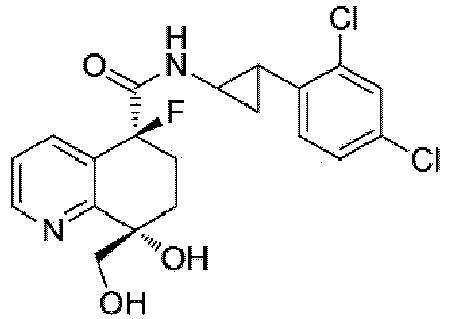
(5S,8S)-N-((trans)-2-(2, 4-dichlorophenyl)cyclop ropyl)-5-fluoro-8-hydrox y-8-(hydroxymethyl)-5, 6,7,8-tetrahydroquinolin e-5-carboxamide 
Z 332 
(5S,8S)-N-((4-(2,4-dichl orophenyl)tetrahydro-2 H-pyran-4-yl)methyl)-5-fluoro-8-hydroxy-8-(hyd roxymethyl)-5,6,7,8-tetr ahydroquinoline-5-carb oxamide 
Z {Table 55} Examples LCMS Examples LCMS Method tR (min) [M+H]+ Method tR (min) [M+H]+ 302 C 1.42 398.8 318 C 1.22 366.9 303 C 1.41 398.8 319 D 1.47 417.0 304 C 1.41 398.9 320 D 1.46 417.0 305 C 1.42 398.9 321 D 1.33 401.0 306 C 1.31 382.9 322 D 1.40 401.0 307 C 1.30 382.9 323 D 1.38 401.0 308 C 1.27 384.9 324 D 1.36 401.0 309 C 1.27 385.0 325 D 1.54 413.1 310 C 1.40 416.8 326 D 1.54 413.1 311 C 1.40 416.8 327 D 1.41 397.1 312 C 1.34 401.0 328 D 1.42 397.1 313 C 1.34 401.0 329 D 1.31 400.0 314 C 1.32 382.8 330 D 1.51 413.0 315 C 1.32 382.8 331 D 1.59 425.0 316 C 1.28 428.9 332 D 1.47 483.0 317 D 1.18 413.0 - 1H NMR (CDCl3) delta 8.54 (1 H, br dd, J = 4.9, 1.8 Hz), 7.53 (1 H, br dd, J = 7.9, 1.8 Hz Hz), 7.45 (1 H, d, J = 1.8 Hz), 7.38 (1 H, d, J = 8.6 Hz), 7.29 (1 H, dd, J = 7.9, 4.9 Hz), 7.20-7.14 (2 H, m), 5.00 (1 H, br), 4.66 (1 H, dd, J = 14.7, 6.1 Hz), 4.60 (1 H, dd, J = 14.7, 6.1 Hz), 3.99 (1 H, d, J = 11.6 Hz), 3.76-3.64 (2 H, m), 2.88 (1 H, m), 2.24-1.99 (3 H, m).
- 1H NMR (DMSO d6) delta 9.16 (1 H, br), 8.64 (1 H, br d, J = 4.9 Hz), 7.66 (1 H, d, J = 7.9 Hz), 7.62 (1 H, d, J = 2.4 Hz), 7.46 (1 H, dd, J = 7.9, 2.4 Hz), 7.39 (1 H, dd, J = 7.9, 4.9 Hz), 7.36 (1 H, J = 7.9 Hz), 4.93 (1 H, s), 4.75 (1 H, br), 4.44 (1 H, dd, J = 15.9, 6.1 Hz), 4.38 (1 H, dd, J = 15.9, 6.1 Hz), 3.68 (1 H, dd, J = 11.0, 6.1 Hz), 3.56 (1 H, dd, J = 11.0, 4.3 Hz), 2.54-2.22 (3 H, m), 1.87 (1 H, m).
- 1H NMR was identified with the Example 302.
- 1H NMR was identified with the Example 303.
- 1H NMR (CDCl3) delta 8.54 (1 H, br dd, J = 4.5, 1.8 Hz), 7.53 (1 H, br dd, J = 7.9, 1.8 Hz), 7.43 (1 H, dd, J = 8.6, 6.1 Hz), 7.28 (1 H, br dd, J = 4.9, 1.2 Hz), 7.19 (1 H, dd, J = 8.6, 2.4 Hz), 7.17 (1 H, br), 7.00 (1 H, dt, J = 7.9, 2.4 Hz), 5.01 (1 H, br d, J = 9.8 Hz), 4.66 (1 H, dd, J = 14.7, 6.1 Hz), 4.60 (1 H, dd, J = 14.7, 5.5 Hz), 3.99 (1 H, d, J = 11.6 Hz), 3.79-3.63 (2 H, m), 2.88 (1 H, m), 2.36-1.99 (3 H, m).
- 1H NMR (CDCl3) delta 8.57 (1 H, br dd, J = 4.3, 1.8 Hz), 7.56 (1 H, d, J = 7.9 Hz), 7.39 (1 H, dd, J = 8.5, 6.1 Hz), 7.28 (1 H, dd, J = 7.9, 4.3 Hz), 7.19 (1 H, dd, J = 8.5, 2.4 Hz), 7.16 (1 H, br), 6.99 (1 H, ddd, J = 8.5, 7.9, 2.4 Hz), 4.62 (1 H, dd, J = 14.7, 6.1 Hz), 4.55 (1 H, dd, J = 14.7, 6.1 Hz), 4.01 (1 H, br), 3.85 (1 H, d, J = 11.6 Hz), 3.79 (1 H, br), 3.71 (1 H, d, J = 11.6 Hz), 2.54-2.36 (3 H, m), 2.02 (1 H, m).
- 1H NMR (CDCl3) delta 8.54 (1 H, br dd, J = 4.5, 1.8 Hz), 7.53 (1 H, br dd, J = 7.9, 1.8 Hz), 7.30 (1 H, dd, J = 7.9, 4.9 Hz), 7.20 (1 H, br d, J = 4.9 Hz), 7.13 (1 H, m), 6.98 (1 H, m), 5.02 (1 H, br), 4.64 (1 H, dd, J = 14.7, 6.1 Hz), 4.57 (1 H, dd, J = 14.7, 6.1 Hz), 3.97 (1 H, d, J = 11.6 Hz), 3.85 (1 H, br), 3.68 (1 H, d, J = 11.6 Hz), 2.87 (1 H, m), 2.23-1.99 (3 H, m).
- 1H NMR (CDCl3) delta 8.57 (1 H, br dd, J = 4.9, 1.2 Hz), 7.56 (1 H, br dd, J = 7.9, 1.2 Hz), 7.29 (1 H, dd, J = 7.9, 4.9 Hz), 7.16 (1 H, br), 7.09 (1 H, m), 6.97 (1 H, m), 4.60 (1 H, dd, J = 15.3, 6.1 Hz), 4.53 (1 H, dd, J = 15.3, 6.1 Hz), 4.01 (1 H, br), 3.84 (1 H, d, J = 11.0 Hz), 3.82 (1 H, br), 3.71 (1 H, d, J = 11.6 Hz), 2.44-2.04 (3 H, m), 2.04 (1 H, m).
- 1H NMR (CDCl3) delta 8.53 (1 H, m), 7.56 (1 H, d, J = 7.9 Hz), 7.33-7.28 (2 H, m), 7.11 (1 H, dd, J = 9.2, 1.8 Hz), 7.02 (1 H, br), 5.01 (1 H, br), 4.78 (1 H, dd, J = 14.7, 5.5 Hz), 4.66 (1 H, dd, J = 14.7, 5.5 Hz), 3.97 (1 H, d, J = 11.6 Hz), 3.76 (1 H, br), 3.68 (1 H, d, J = 11.6 Hz), 2.88 (1 H, m), 2.23-1.98 (3 H, m).
- 1H NMR (CDCl3) delta 8.56 (1 H, dd, J = 4.9, 1.2 Hz), 7.57 (1 H, dd, J = 7.9, 1.2 Hz), 7.29-7.27 (2 H, m), 7.11 (1 H, dd, J = 9.2, 2.4 Hz), 7.04 (1 H, br), 4.73 (1 H, dd, J = 14.7, 6.1 Hz), 4.63 (1 H, dd, J = 14.7, 5.5 Hz), 4.00 (1 H, br s), 3.84 (1 H, d, J = 11.6 Hz), 3.79 (1 H, br), 3.70 (1 H, d, J = 11.6 Hz), 2.52-2.37 (3 H, m), 2.02 (1 H, m).
- 1H NMR (CDCl3) delta 8.53 (1 H, dd, J = 4.9, 1.8 Hz), 7.52 (1 H, ddd, J = 7.9, 1.8, 1.2 Hz), 7.29 (1 H, dd, J = 7.9, 4.9 Hz), 7.25-7.08 (3 H, m), 4.99 (1 H, br d, J = 10.4 Hz), 4.67 (1 H, dd, J = 14.7, 6.1 Hz), 4.62 (1 H, dd, J = 14.7, 5.5 Hz), 3.99 (1 H, d, J = 10.4 Hz), 3.71 (1 H, br s), 3.67 (1 H, d, J = 10.4 Hz), 2.88 (1 H, m), 2.24-1.99 (3 H, m).
- 1H NMR (CDCl3) delta 8.57 (1 H, ddd, J = 4.9, 1.8, 1.2 Hz), 7.56 (1 H, dd, J = 7.9, 1.8 Hz), 7.29 (1 H, dd, J = 7.9, 4.9 Hz), 7.19-7.08 (3 H, m), 4.63 (1 H, dd, J = 14.7, 6.1 Hz), 4.57 (1 H, dd, J = 14.7, 5.5 Hz), 3.99 (1 H, s), 3.85 (1 H, d, J = 11.0 Hz), 3.76 (1 H, br s), 3.72 (1 H, d, J = 11.0 Hz), 2.50-2.40 (3 H, m), 2.03 (1 H, m).
- 1H NMR (CDCl3) delta 8.53 (1 H, br dd, J = 4.9, 1.8 Hz), 7.53 (1 H, br dd, J = 7.9, 1.8 Hz), 7.33 (1 H, t, J = 7.9 Hz), 7.29 (1 H, dd, J = 7.9, 4.9 Hz), 7.27-7.10 (2 H, m), 7.15 (1 H, d, J = 7.9 Hz), 5.02 (1 H, br), 4.63 (1 H, dd, J = 14.7, 6.1 Hz), 4.54 (1 H, dd, J = 14.7, 6.1 Hz), 3.98 (1 H, d, J = 11.6 Hz), 3.82 (1 H, br), 3.68 (1 H, d, J = 11.6 Hz), 2.87 (1 H, m), 2.18 (1 H, m), 2.09-1.99 (2 H, m).
- 1H NMR (CDCl3) delta 8.56 (1 H, br dd, J = 4.9, 1.8 Hz), 7.55 (1 H, d, J = 7.9 Hz), 7.35-7.27 (2 H, m), 7.18-7.09 (3 H, m), 4.57 (1 H, dd, J = 14.7, 6.1 Hz), 4.50 (1 H, dd, J = 14.7, 6.1 Hz), 4.06 (1 H, br), 3.83 (2 H, d, J = 11.0 Hz), 3.70 (1 H, d, J = 11.0 Hz), 2.52-2.34 (3 H, m), 2.04 (1 H, m).
- 1H NMR (CDCl3) delta 8.51 (1 H, br dd, J = 4.9, 1.8 Hz), 7.58 (1 H, br d, J = 5.5 Hz), 7.46 (1 H, br dd, J = 7.9, 1.8 Hz), 7.43 (1 H, d, J = 2.4 Hz), 7.34 (1 H, d, J = 2.4 Hz), 7.26 (1 H, dd, J = 7.9, 4.9 Hz), 5.03 (1 H, br), 4.82-4.64 (4 H, m), 3.97 (1 H, d, J = 11.0 Hz), 3.87 (2 H, br), 3.66 (1 H, d, J = 11.0 Hz), 2.81 (1 H, m), 2.19-1.95 (3 H, m).
- 1H NMR (CDCl3) delta 8.52 (1 H, br d, J = 4.9 Hz), 7.56 (1 H, br), 7.46 (1 H, dd, J = 7.9, 1.8 Hz), 7.25 (1 H, dd, J = 7.9, 4.9 Hz), 7.17 (1 H, dd, J = 8.6, 2.4 Hz), 7.10 (1 H, dd, J = 8.6, 2.4 Hz), 5.06 (1 H, br), 4.82-4.62 (4 H, m), 3.98 (1 H, d, J = 11.0 Hz), 3.81 (1 H, br), 3.66 (1 H, d, J = 11.0 Hz), 2.81 (1 H, m), 2.11 (1 H, m), 2.07-1.96 (2 H, m), 1.65 (1 H, br).
- 1H NMR (CDCl3) delta 8.53 (1 H, br dd, J = 4.9, 1.8 Hz), 7.53 (1 H, d, J = 7.9 Hz), 7.34 (1 H, m), 7.28 (1 H, dd, J = 7.9, 4.9 Hz), 7.16 (1 H, br), 6.90-6.85 (2 H, m), 5.30 (1 H, br), 4.62 (1 H, dd, J = 14.7, 6.1 Hz), 4.53 (1 H, dd, J = 14.7, 6.1 Hz), 3.97 (1 H, d, J = 11.6 Hz), 3.87 (1 H, br), 3.67 (1 H, d, J = 11.6 Hz), 2.88 (1 H, m), 2.23-1.99 (3 H, m).
- 1H NMR (CDCl3) delta 8.54 (1 H, br dd, J = 4.9, 1.8 Hz), 7.54 (1 H, br dd, J = 7.9, 1.8 Hz), 7.33 (1 H, dd, J = 8.6, 6.7 Hz), 7.30 (1 H, dd, J = 7.9, 4.9 Hz), 7.23 (1 H, br), 7.20 (1 H, dd, J = 8.6, 1.8 Hz), 4.99 (1 H, br d, J = 9.2 Hz), 4.68 (1 H, dd, J = 14.7, 6.1 Hz), 4.63 (1 H, dd, J = 14.7, 6.1 Hz), 4.00 (1 H, d, J = 11.0 Hz), 3.77 (1 H, br s), 3.68 (1 H, br), 2.87 (1 H, m), 2.24-1.99 (3 H, m).
- 1H NMR (CDCl3) delta 8.54 (1 H, br dd, J = 4.9, 1.8 Hz), 7.53 (1 H, br dd, J = 7.9, 1.8 Hz), 7.37 (1 H, dd, J = 8.6, 5.5 Hz), 7.29 (1 H, dd, J = 7.9, 4.9 Hz), 7.21 (1 H, br d J = 6.1 Hz), 7.11 (1 H, dd, J = 8.6, 7.9 Hz), 5.00 (1 H, br), 4.68 (1 H, dd, J = 15.3, 6.1 Hz), 4.63 (1 H, dd, J = 14.7,6.1 Hz), 3.99 (1 H, d, J = 11.0 Hz), 3.74 (1 H, br s), 3.68 (1 H, d, J = 11.0 Hz), 2.87 (1 H, m), 2.24-1.99 (3 H, m).
- 1H NMR (CDCl3) delta 8.54 (1 H, br dd, J = 4.9, 1.8 Hz), 7.57 (1 H, br dd, J = 7.9, 1.8 Hz), 7.29 (1 H, dd, J = 7.9, 4.9 Hz), 7.05 (1 H, ddd, J = 7.9, 2.4, 1.8 Hz), 6.99 (1 H, br), 6.85 (1 H, ddd, J = 9.8, 8.6, 2.4 Hz), 4.80 (1 H, br), 4.77 (1 H, dd, J = 14.7, 6.1 Hz), 4.66 (1 H, dd, J = 14.7, 6.1 Hz), 3.98 (1 H, d, J = 11.6 Hz), 3.74 (1 H, br), 3.68 (1 H, d, J = 11.6 Hz), 2.88 (1 H, m), 2.23-1.99 (3 H, m).
- 1H NMR (CDCl3) delta 8.55 (1 H, br dd, J = 4.9, 1.8 Hz), 7.54 (1 H, br dd, J = 7.9, 1.8 Hz), 7.30 (1 H, dd, J = 8.0, 5.5 Hz), 7.21-7.10 (3 H, m), 5.00 (1 H, br), 4.66 (1 H, dd, J = 14.7, 6.9 Hz), 4.59 (1 H, dd, J = 14.7, 6.9 Hz), 3.99 (1 H, d, J = 11.6 Hz), 3.78 (1 H, br), 3.68 (1 H, d, J = 11.6 Hz), 2.87 (1 H, m), 2.24-1.99 (3 H, m).
- 1H NMR (CDCl3) delta 8.55 (1 H, br dd, J = 4.3, 1.8 Hz), 7.53 (1 H, br dd, J = 7.9, 1.8 Hz), 7.34-7.28 (2 H, m), 7.16 (1 H, m), 6.99 (1 H, dt, J = 8.6, 1.8 Hz), 5.01 (1 H, br), 4.64 (1 H, dd, J = 14.7, 6.1 Hz), 4.50 (1 H, dd, J = 14.7, 6.1 Hz), 3.99 (1 H, d, J = 11.6 Hz), 3.77 (1 H, br), 3.68 (1 H, d, J = 11.6 Hz), 2.87 (1 H, m), 2.24-1.99 (3 H, m).
- 1H NMR (CDCl3) delta 8.54 (1 H, ddd, J = 4.3, 1.8, 1.2 Hz), 7.55 (1 H, ddd, J = 7.9, 1.8, 1.2 Hz), 7.30 (1 H, dd J = 7.9, 4.9 Hz), 7.02 (1 H, br), 7.01 (2 H, d, J = 7.3 Hz), 5.00 (1 H, br), 4.70 (1 H, dd, J = 14.7, 6.1 Hz), 4.60 (1 H, dd, J = 14.7, 5.5 Hz), 3.98 (1 H, d, J = 11.6 Hz), 3.71 (1 H, br), 3.68 (1 H, d, J = 11.6 Hz), 2.87 (1 H, m), 2.22-1.98 (3 H, m).
- 1H NMR (CDCl3) delta 8.35 (1 H, s), 7.46 (1 H, d, J = 2.4 Hz), 7.40 (1 H, d J = 7.9 Hz), 7.28-7.25 (2 H, m), 7.19 (1 H, br d, J = 5.5 Hz), 5.10 (1 H, br), 4.67 (1 H, dd, J = 14.7, 6.1 Hz), 4.60 (1 H, dd, J = 14.7, 6.1 Hz), 3.97 (1 H, d, J = 11.6 Hz), 3.67 (1 H, d, J = 11.6 Hz), 3.65 (1 H, br s), 2.87 (1 H, m), 2.27 (3 H, s), 2.22-1.96 (3 H, m).
- 1H NMR (CDCl3) delta 8.54 (1 H, br dd, J = 4.3, 1.8 Hz), 7.47 (1 H, ddd, J = 7.9, 1.8, 1.2 Hz), 7.44 (1 H, d J = 1.8 Hz), 7.37 (1 H, d, J = 8.6 Hz), 7.30 (1 H, dd, J = 8.6, 1.8 Hz), 7.25 (1 H, dd, J = 7.9, 4.3 Hz), 7.12 (1 H, dd, J = 6.7, 6.1 Hz), 5.46 (1 H, dq, J = 7.3, 6.7 Hz), 3.98 (1 H, d, J = 11.6 Hz), 3.75 (1 H, br), 3.69 (1 H, d, J = 11.6 Hz), 3.48 (1 H, d, J = 1.8 Hz), 2.88 (1 H, m), 2.26-2.01 (3 H, m), 1.59 (3 H, d, J = 7.3 Hz).
- 1H NMR (CDCl3) delta 8.51 (1 H, ddd, J = 4.3, 1.8, 1.2 Hz), 7.48 (1 H, ddd, J = 7.9, 1.8, 1.2 Hz), 7.41 (1 H, dd, J = 8.6, 6.1 Hz), 7.24 (1 H, dd, J = 7.9, 4.3 Hz), 7.18 (1 H, dd, J = 8.6, 2.4 Hz), 7.14 (1 H, br), 7.04 (1 H, ddd, J = 8.6, 7.9, 2.4 Hz), 5.48 (1 H, dq, J = 7.3, 6.7 Hz), 3.98 (1 H, d, J = 11.6 Hz), 3.69 (1 H, d, J = 11.6 Hz), 2.90 (1 H, m), 2.48 (2 H, br), 2.26-1.99 (3 H, m), 1.60 (3 H, d, J = 7.3 Hz).
- 1H NMR (CDCl3) delta 8.53 (1 H, ddd, J = 4.9, 1.8, 1.2 Hz), 7.53 (1 H, ddd, J = 7.9, 1.8, 1.2 Hz), 7.38 (1 H, dd, J = 8.6, 6.1 Hz), 7.24 (1 H, dd, J = 7.9, 4.9 Hz), 7.16 (1 H, dd, J = 8.6, 3.1 Hz), 7.10 (1 H, br), 7.02 (1 H, dt, J = 8.6, 3.1 Hz), 5.39 (1 H, m), 4.00 (1 H, br), 3.83 (1 H, d, J = 11.6 Hz), 3.69 (1 H, d, J = 11.6 Hz), 2.56-2.38 (3 H, m), 2.03 (1 H, m), 1.66 (1 H, br), 1.59 (3 H, d, J = 7.3 Hz).
- 1H NMR (CDCl3) delta 8.55 (1 H, br d, J = 4.3 Hz), 8.48 (1 H, d, J = 2.4 Hz), 8.08 (1 H, br d, J = 4.3 Hz), 7.79 (1 H, dd, J = 7.9, 1.8 Hz), 7.78 (1 H, d, J = 2.4 Hz), 7.31 (1 H, dd, J =7.9, 4.3 Hz), 4.83 (1 H, dd, J = 18.3, 4.9 Hz), 4.70 (1 H, dd, J = 18.3, 4.3 Hz), 4.02 (1 H, d, J = 11.6 Hz), 3.72 (1 H, d, J = 11.6 Hz), 2.94 (1 H, m), 2.32-2.02 (3 H, m). The signals due to OH were not observed.
- 1H NMR (CDCl3) delta 8.54 (1 H, br dd, J = 4.9, 1.8 Hz), 7.42 (1 H, d, J = 1.8 Hz), 7.36 (1 H, br dd, J = 7.9, 1.8 Hz), 7.28-7.20 (3 H, m), 6.86 (1 H, br d, J = 5.5 Hz), 5.00 (1 H, br), 3.98 (1 H, d, J = 11.0 Hz), 3.77-3.62 (2 H, m), 3.68 (1 H, d, J = 11.0 Hz), 3.48 (1 H, s), 3.07-3.03 (2 H, m), 2.83 (1 H, m), 2.18-1.98 (3 H, m).
- 1H NMR (CDCl3) delta 8.57-8.54 (1 H, m), 7.63 (1 H, br d, J = 7.9, 1.8 Hz), 7.39 (1 H, d, J = 1.8 Hz), 7.33 (1 H, dd, J = 7.9, 4.9 Hz), 7.20-7.11 (2 H, m), 7.03 (1 H, br), 4.90 (1 H, br), 3.99 (1 H, d, J = 11.6 Hz), 3.74 (1 H, br), 3.70 (1 H, d, J = 11.6 Hz), 3.08 (1 H, m), 2.90 (1 H, m), 2.3-2.01 (4 H, m), 1.42-1.29 (2 H, m).
- The following Intermediates were prepared by General Procedure AA (Table 56).
- To a stirred solution of substrate (1.0 eq.), iodomethane (15 eq.), and silver(I)oxide (10 eq.) in THF was added one drop of dimethyl sulfide at ambient temperature in the dark. The mixture was stirred at room temperature for 1 h, and then heated to 50 °C. After being stirred at 50 °C until complete reaction, the mixture was cooled to room temperature. The insoluble material was removed by filtration, the resulting filtrate was concentrated in vacuo. The residue was purified by silica gel column chromatography to afford following Intermediates.
{Table 56} Intermediates Structure Chemical Name Substrate II-s-1 
(5R,8S)-methyl 5-fluoro-8-methoxy-5,6,7,8-tetrahydr oquinoline-5-carboxylate 
II-S-2 
(5S,8S)-methyl 5-fluoro-8-methoxy-5,6,7,8-tetrahydr oquinoline-5-carboxylate 
II-s-3 
(5S,8R)-methyl 5-fluoro-8-methoxy-5,6,7,8-tetrahydr oquinoline-5-carboxylate 
- 1H NMR (CDCl3) delta 8.69 (1 H, d, J = 4.6 Hz), 7.79 (1 H, d, J = 7.9 Hz), 7.31 (1 H, dd, J = 7.9, 4.6 Hz), 4.42 (1 H, m), 3.79 (3 H, s), 3.57, (3 H, s), 2.55 (1 H, m), 2.43-2.24 (3 H, m). MS (ESI) m/z: 240.2 (M+H)+.
- 1H NMR (CDCl3) delta 8.69 (1 H, br dd, J = 4.6, 1.3 Hz), 7.68 (1 H, dd, J = 7.9, 1.3 Hz), 7.32 (1 H, dd, J = 7.9, 4.6 Hz), 4.41 (1 H, m), 3.82 (3 H, s), 3.54 (3 H, s), 2.78 (1 H, m), 2.36-2.04 (3 H, m).
- MS (ESI) m/z: 240.1 (M+H)+.
- 1H NMR (CDCl3) delta 8.69 (1 H, br dd, J = 4.6, 1.3 Hz), 7.79 (1 H, dd, J = 7.9, 1.3 Hz), 7.31 (1 H, dd, J = 7.9, 4.6 Hz), 4.42 (1 H, m), 3.79 (3 H, s), 3.57, (3 H, s), 2.55 (1 H, m), 2.43-2.24 (3 H, m).
- MS (ESI) m/z: 240.1 (M+H)+.
- The following Examples were prepared by General Procedure A (Table 57).
{Table 57-1} Examples Structure Chemical Name Substrate Amine 333 
(5R,8S)-N-(2,4-dichloro -6-(hydroxymethyl)benz yl)-5-fluoro-8-methoxy-5,6,7,8-tetrahydroquino line-5-carboxamide 

334 
(5S,8R)-N-(2,4-dichloro -6-(hydroxymethyl)benz yl)-5-fluoro-8-methoxy-5,6,7,8-tetrahydroquino line-5-carboxamide 

335 
(5S,8S)-N-(2,4-dichloro -6-fluorobenzyl)-5-fluor o-8-methoxy-5,6,7,8-tet rahyd roquinoline-5-car boxamide 

336 
(5S,8S)-N-(2,3-dichloro benzyl)-5-fluoro-8-hydr oxy-5,6,7,8-tetrahydroq uinoline-5-carboxamide 

337 
(5S,8S)-N-(2-chloro-4-fl uorobenzyl)-5-fluoro-8-methoxy-5,6,7,8-tetrah ydroquinoline-5-carbox amide 

{Table 57-2} 338 
(5S,8S)-N-(2-chloro-4-( trifluoromethyl)benzyl)-5-fluoro-8-methoxy-5,6, 7,8-tetrahydroquinoline -5-carboxamide 
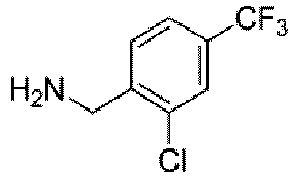
339 
(5S,8S)-5-fluoro-8-met hoxy-N-(2,3,4-trifluorob enzyl)-5,6,7,8-tetrahydr oquinoline-5-carboxami de 
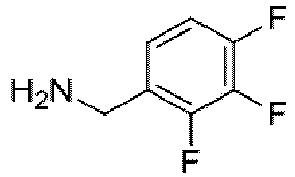
340 
(5S,8S)-N-(4-chloro-2-fl uorobenzyl)-5-fluoro-8-methoxy-5,6,7,8-tetrah ydroquinoline-5-carbox amide 

341 
(5S,8S)-5-fluoro-8-met hoxy-N-(2,4,6-trifluorob enzyl)-5,6,7,8-tetrahydr oquinoline-5-carboxami de 

342 
(5S,8S)-N-(2,4-difluoro benzyl)-5-fluoro-8-meth oxy-5,6,7,8-tetrahydroq uinoline-5-carboxamide 

{Table 58} Examples LCMS Examples LCMS Method tR (min) [M+H]+ Method tR (min) [M+H]+ 333 A 1.45 413.1 338 B 1.63 417.0 334 A 1.44 413.1 339 C 1.46 368.9 335 B 1.58 400.9 340 C 1.52 366.9 337 B 1.54 383.0 341 C 1.42 368.9 337 B 1.47 367.1 342 C 1.41 351.0 - 1H NMR (CDCl3) delta 8.66 (1 H, br d, J = 4.6 Hz), 7.57 (1 H, br d, J = 5.9 Hz), 7.49 (1 H, d, J = 7.9 Hz), 7.44 (1 H, d, J = 2.0 Hz), 7.33 (1 H, d, J = 2.0 Hz), 7.23 (1 H, dd, J = 7.9, 4.6 Hz), 4.73-4.67 (4 H, m), 4.43 (1 H, m), 3.90 (1 H, br), 3.57 (3 H, s), 2.80-2.11 (4 H, m).
- 1H NMR was identified with the Example 333.
-

- A mixture of (5S,8S)-methyl 5-fluoro-8-hydroxy-5,6,7,8-tetrahydroquinoline-5-carboxylate (100 mg, 0.444 mmol, IM II-d-4) and 2 N aq. NaOH in MeOH (2.0 mL) was stirred at room temperature for 1 h, the resulting solution was concentrated in vacuo. The residue was added NMP (1.0 mL) and the mixture was added sodium hydride (60% oil dispersant, 5 mg, 0.222 mmol) at 0 °C. The mixture was warmed to room temperature and stirred for 20 min. Allyl bromide (0.192 mL, 2.22 mmol) was added to the reaction mixture and the mixture was heated at 60 °C for 6 h. The mixture was cooled to room temperature and stirred further 9 h. Water was added to the mixture and the mixture was extracted with EtOAc. The extract was washed with brine, dried over Na2SO4, and concentrated in vacuo. The residue was purified by silica gel column chromatography (0- to 50% EtOAc/n-hexane, gradient) to afford 25 mg (19%) of the title compound.
- 1H NMR (CDCl3) delta 8.67 (1 H, br dd, J = 4.6, 1.8 Hz), 7.68 (1 H, br dd, J = 7.9, 1.8 Hz), 7.31 (1 H, dd, J = 7.9, 4.9 Hz), 5.95 (1 H, ddt, J = 17.1, 10.4, 5.5 Hz), 5.88(1 H, ddt, J = 17.1, 10.4, 5.5 Hz), 5.32 (1 H, ddt, J = 17.1, 4.9, 1.8 Hz), 5.30 (1 H, ddt, J = 17.1, 3.1, 1.2 Hz), 5.25 (1 H, br d J = 10.4 Hz), 5.17 (1 H, ddt, J = 10.4, 3.1, 1.2 Hz), 4.76-4.66 (2 H, m), 4.56 (1 H, m), 4.30-4.21 (2 H, m), 2.89 (1 H, m), 2.33-2.15 (3 H, m).
- MS (ESI) m/z: 291.9 (M+H)+.
-

- 60% oil dispersant NaH (6 mg, 0.244 mmol) was added to a solution of (5R,8R)-methyl 5-fluoro-8-hydroxy-5,6,7,8-tetrahydroquinoline-5-carboxylate (25 mg, 0.111 mmol, IM II-d-6) in THF (1.0 mL) under N2 atmosphere at 0 °C. After being stirred at 0 °C, allyl iodide (0.025 mL, 0.278 mmol) was added to the mixture and the mixture was stirred for 1 h. 60% oil dispersant NaH (6 mg, 0.244 mmol) and allyl iodide (0.025 mL, 0.278 mmol) was added to the mixture and the mixture was stirred further 1 h. Water was added to the mixture and acidified with 2 N hydrochloric acid. The mixture was concentrated in vacuo. The resulting residue was diluted with MeCN and toluene and the mixture was concentrated in vacuo. This procedure was repeated 3 times to remove remaining water. The residue was dissolved in 25% MeOH-THF (2.0 mL) and 2,4-dichlorobenzylamine (20 mg, 0.111 mmol), triethylamine (0.025 mL, 0.179 mmol), and DMT-MM (40 mg, 0.167 mmol) were added to the mixture. After being stirred at room temperature for 16 h, water was added to the mixture. The mixture was extracted with EtOAc and washed with brine. The extract was dried over Na2SO4 and concentrated in vacuo to afford glass. The residual glass was purified by preparative TLC (70% EtOAc/n-hexane) to afford 15 mg (33%) of the title compound as a white solid.
- 1H NMR (CDCl3) delta 8.64 (1 H, br dd, J = 4.9, 1.8 Hz), 7.51 (1 H, br dd, J = 7.9, 1.8 Hz), 7.44 (1 H, d, J = 1.8 Hz), 7.37 (1 H, br d, J = 7.9 Hz), 7.27-7.22 (2 H, m), 7.16 (1 H, br), 5.92 (1 H, ddt, J = 17.1, 10.4, 5.5 Hz), 5.29 (1 H, ddt, J = 17.1, 3.7, 1.8 Hz), 5.14 (1 H, ddt, J = 17.1, 3.7, 1.8 Hz), 4.71-4.51 (3 H, m), 4.27-4.17 (2 H, m), 2.92 (1 H, m), 2.33-2.06 (3 H, m). MS (ESI) m/z: 408.7 (M+H)+.
- The following Intermediates were prepared from IM II-s-4 by General Procedure A (Table 59).
{Table 59} Intermediates Structure Chemical Name Amine I-s-2 
(5S,8S)-8-(allyloxy)-N-(2-(((tert-butyl dimethylsilyl)oxy)methyl)-4,6-dichloro benzyl)-5-fluoro-5,6,7,8-tetrahydroqui noline-5-carboxamide 
I-s-3 
(5S,8S)-8-(allyloxy)-N-(2-chloro-4-flu orobenzyl)-5-fluoro-5,6,7,8-tetrahydr oquinoline-5-carboxamide 
I-s-4 
(5S,8S)-8-(allyloxy)-5-fluoro-N-(2,3,4-trifluorobenzyl)-5,6,7,8-tetrahydroqui noline-5-carboxamide 
I-s-5 
(5S,8S)-8-(allyloxy)-N-(4-chloro-2-flu orobenzyl)-5-fluoro-5,6,7,8-tetrahydr oquinoline-5-carboxamide 
I-s-6 
(5S,8S)-8-(allyloxy)-N-(2,4-difluorobe nzyl)-5-fluoro-5,6,7,8-tetrahydroquino line-5-carboxamide 
I-s-7 
(5S,8S)-8-(allyloxy)-N-(2,4-dichlorob enzyl)-5-fluoro-5,6,7,8-tetrahydroquin oline-5-carboxamide 
- MS (ESI) m/z: 552.4 (M+H)+.
- MS (ESI) m/z: 392.7 (M+H)+.
- MS (ESI) m/z: 394.8 (M+H)+.
- MS (ESI) m/z: 392.8 (M+H)+.
- MS (ESI) m/z: 376.8 (M+H)+.
- MS (ESI) m/z: 408.7 (M+H)+.
- The following Examples were prepared by General Procedure C (Table 60).
- In preparation of Example 343, the TBS group was deprotected on the SCX cartridge column.
{Table 60} Examples Structure Chemical Name Substrate 343 
(5S,8S)-N-(2,4-dichloro-6-(hydroxym ethyl)benzyl)-5-fluoro-8-(2-hydroxyet hoxy)-5,6,7,8-tetrahydroquinoline-5-c arboxamide 
344 
(5S,8S)-N-(2-chloro-4-fluorobenzyl)-5 -fluoro-8-(2-hydroxyethoxy)-5,6,7,8-t etrahydroquinoline-5-carboxamide 
345 
(5S,8S)-5-fluoro-8-(2-hydroxyethoxy) -N-(2,3,4-trifluorobenzyl)-5,6,7,8-tetra hydroquinoline-5-carboxamide 
346 
(5S,8S)-N-(4-chloro-2-fluorobenzyl)-5 -fluoro-8-(2-hydroxyethoxy)-5,6,7,8-t etrahydroquinoline-5-carboxamide 
347 
(5S,8S)-N-(2,4-difluorobenzyl)-5-fluor o-8-(2-hydroxyethoxy)-5,6,7,8-tetrahy droquinoline-5-carboxamide 
348 
(5R,8R)-N-(2,4-dichlorobenzyl)-5-fluo ro-8-(2-hydroxyethoxy)-5,6,7,8-tetrah ydroquinoline-5-carboxamide 
{Table 61} Examples LCMS Examples LCMS Method tR (min) [M+H]+ Method tR (min) [M+H]+ 343 C 1.37 442.9 346 C 1.41 397.1 344 C 1.39 397.0 347 C 1.31 381.0 345 C 1.36 399.0 348 C 1.49 413.0 -

- A mixture of AD-Mix beta (250 mg) in 50% tert-BuOH-water (3.0 mL) was stirred at room temperature until the two clear phases formed. After cooling to 0 °C, a solution of (5S,8S)-8-(allyloxy)-N-(2,4-dichlorobenzyl)-5-fluoro-5,6,7,8-tetrahydroquinoline-5-carboxam ide (24 mg, 0.059 mmol, IM I-s-7) in THF (1.0 mL) was added to the mixture. The resulting mixture was stirred at 0 °C overnight. The mixture was filtered through a pad of celite, the filter cake was washed with THF. The filtrate was evaporated in vacuo to remove the volatile. The residue was diluted with brine and extracted with EtOAc twice. The extracts were combined and dried over Na2SO4. After removal of the solvent, the residue was purified by silica gel column chromatography (50%EtOAc/n-hexane then 5% MeOH/EtOAc) to afford 24 mg (92%) of the title compound.
- 1H NMR (CDCl3) delta 8.61 (1 H, m), 7.55 (1 H, m), 7.50 (1 H, d, J = 1.8 Hz), 7.36 (1 H, brd, J = 7.9 Hz), 7.31-7.23 (2 H, m), 7.20 (1 H, br d, J = 5.5 Hz), 4.67-4.56 (3 H, m), 3.92-3.52 (5 H, m), 2.82 (1 H, m), 2.7 (1 H, br), 2.36-2.07 (3 H, m), 1.8 (1 H, br).
- LCMS (ESI) m/z: 443.2 (M+H)+, tR 1.45 min (Method D).
-

- Bis(2-methoxyethyl) azodicarboxylate (57 mg, 0.244 mmol) was added to a solution of triphenylphosphine (64 mg, 0.244 mmol) in THF (2.0 mL) at 0 °C under N2 atmosphere. The reaction mixture was stirred at 0 °C for 30 min, and then a solution of (5S,8S)-N-(2,4-dichlorobenzyl)-5-fluoro-8-hydroxy-5,6,7,8-tetrahydroquinoline-5-carboxami de (60 mg, 0.163 mmol, Ex 133) and thiobenzoic acid (34 mg, 0.244 mmol) in THF (1.0 mL) was added dropwise to the mixture. After being stirred at 0 °C for 20 h, water was added to the mixture and the mixture was extracted with EtOAc. The extract was washed with brine, dried over Na2SO4, and concentrated. The residue was purified by column chromatography (20- to 35% EtOAc/n-hexane, gradient) to afford 25 mg (31%) of the title compound.
- 1H NMR (CDCl3) delta 8.66-8.63 (1 H, m), 8.01-7.96 (2 H, m), 7.60-7.17 (9 H, m), 5.30 (0.4 H, br), 5.24 (0.6 H, m), 4.75-4.56 (2 H, m), 2.87-2.14 (4 H, m).
- MS (ESI) m/z: 488.6 (M+H)+.
-

- A solution of S-((5S)-5-((2,4-dichlorobenzyl)carbamoyl)-5-fluoro-5,6,7,8-tetrahydroquinolin-8-yl) benzothioate (25 mg, 0.051 mmol, IM I-p-1) in methanol (1.0 mL) was added 1 N aq. NaOH (0.06 mL, 0.06 mmol) and dimethyl sulfate (8 mg, 0.06 mmol) at room temperature. The mixture was stirred at room temperature for 2 h and concentrated in vacuo. Water was added to the resulting residue and extracted with EtOAc. The extract was washed with brine, dried over Na2SO4 and concentrated in vacuo. The residue was purified by SCX column to afford 18 mg (88%) of the title compound as a glass.
- 1H NMR (CDCl3) delta 8.67-8.58 (1 H, m), 7.57-7.14 (6 H, m), 4.68-4.53 (2 H, m), 4.18-4.14 (1 H, m), 3.49 (3 H, s), 3.03-2.86 (0.4 H, m), 2.72-2.64 (0.6 H, m), 2.59-2.10 (3 H, m).
- MS (ESI) m/z: 400.5 (M+H)+.
-

- A solution of S-((5S)-5-((2,4-dichlorobenzyl)carbamoyl)-5-fluoro-5,6,7,8-tetrahydroquinolin-8-yl) benzothioate (24 mg, 0.049 mmol, IM I-p-1) in methanol (1.0 mL) was added 1 N aq. NaOH (0.06 mL, 0.06 mmol) and (2-bromoethoxy)(tert-butyl)dimethylsilane (18 mg, 0.074 mmol) at room temperature. The mixture was stirred at room temperature for 2 h and concentrated in vacuo. Water was added to the residue and the mixture was extracted with EtOAc. The extract was washed with brine, dried over Na2SO4, and concentrated in vacuo. The resulting residue was purified by SCX column to afford 16 mg (76%) of the title compound as a glass.
- 1H NMR (CDCl3) delta 8.57 (0.5 H, dd, J = 4.9, 1.8 Hz), 8.56 (0.5 H, dd, J = 4.9, 1.8 Hz), 7.53 (0.5 H, d, J = 7.9 Hz), 7.49 (0.5 H, d, J = 7.9 Hz), 7.45 (1 H, d, J = 1.8 Hz), 7.39 (0.5 H, d, J = 7.9 Hz), 7.34 (0.5 H, d, J = 7.9 Hz), 7.31-7.14 (3 H, m), 4.68-4.53 (2 H, m), 4.47 (0.5 H, br), 4.29 (0.5 H, br), 3.95-3.86 (2 H, m), 3.48 (1 H, br), 3.05-2.68 (3 H, m), 2.53-2.12 (3 H, m).
- MS (ESI) m/z: 428.6 (M+H)+.
- The following Examples were prepared by General Procedure X (Table 62).
{Table 62} Examples Structure Chemical Name Substrate 350 
(5S)-N-(2,4-dichlorobenzyl)-5-flu oro-8-(methylsulfonyl)-5,6,7,8-tet rahydroquinoline-5-carboxamide 
351 
(5S)-N-(2,4-dichlorobenzyl)-5-flu oro-8-((2-hydroxyethyl)sulfonyl)-5,6,7,8-tetrahydroquinoline-5-car boxamide 
- 1H NMR (CDCl3) delta 8.66-8.60 (1 H, m), 7.68 (1 H, dd, J = 7.9, 1.8 Hz), 7.45 (0.5 H, d, J = 1.8 Hz), 7.39 (0.5 H, d, J = 1.8 Hz), 7.37-7.21 (3 H, m), 7.15 (0.5 H, br), 7.00 (0.5 H, br), 4.62-4.50 (2 H, m), 4.44 (1 H, m), 3.30 (1.5 H, s), 3.16 (1.5 H, s), 3.03-2.62 (3 H, m), 2.42-2.27 (1 H, m).
- LCMS (ESI) m/z: 430.5 (M+H)+, tR 1.58 min (Method C).
- 1H NMR (CDCl3) delta 8.59 (1 H, dd, J = 4.9, 1.2 Hz), 7.72 (1 H, dd, J = 7.9, 1.2 Hz), 7.45 (1 H, d, J = 2.4 Hz), 7.41-7.22 (3 H, m), 7.14 (1 H, br), 4.80 (1 H, m), 4.70 (1 H, br), 4.62-4.49 (2 H, m), 4.24-4.17 (2 H, m), 3.95-3.89 (1 H, m), 3.42-3.36 (1 H, m), 3.07-2.66 (3 H, m), 2.43-2.30 (1 H, m).
- LCMS (ESI) m/z: 460.8 (M+H)+, tR 1.50 min (Method C).
- The following Intermediate was prepared by General Procedure AB (Table 63).
- Deoxo-Fluor(Trademark) (2.0 eq.) was added to a solution of substrate (1.0 eq.) in CH2Cl2 (0.15 M) and stirred for 1 h. The mixture was poured into water and extracted with EtOAc. The extract was dried over Na2SO4 and concentrated in vacuo. The resulting residue was purified by silica gel column chromatography.
{Table 63} Intermediate Structure Chemical Name Substrate II-y-1 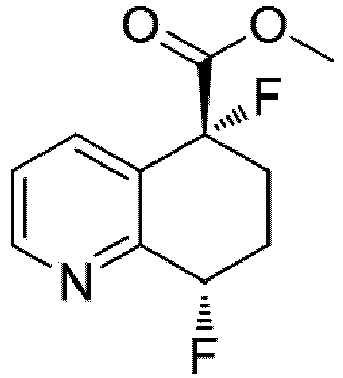
(5R,8S)-methyl 5,8-difluoro-5,6,7,8-tetrahydroquinoli ne-5-carboxylate 
- 1H NMR (CDCl3) delta 8.74 (1 H, d, J = 4.6 Hz), 7.87 (1 H, d, J = 7.9 Hz), 7.39 (1 H, m), 5.61 (1 H, br d, J = 49.4 Hz), 3.80 (3 H, s), 2.57-2.40 (4 H, m).
- MS (ESI) m/z: 228.1 (M+H).
- The following Examples were prepared by General Procedure A (Table 64).
{Table 64} Examples Structure Chemical Name Substrate Amine 352 
(5R,8S)-N-(2-chloro-3-( trifluoromethyl)benzyl)-5,8-difluoro-5,6,7,8-tetr ahydroquinoline-5-carb oxamide 

353 
(5R,8S)-N-(2,4-dichloro benzyl)-5,8-difluoro-5,6 ,7,8-tetrahydroquinoline -5-carboxamide 
354 
(5R,8S)-N-(2,3-dichloro benzyl)-5,8-difluoro-5,6 ,7,8-tetrahydroquinoline -5-carboxamide 
{Table 65} Examples LCMS Examples LCMS Method tR (min) [M+H]+ Method tR (min) [M+H]+ 352 A 1.64 405.1 354 A 1.61 371.1 353 A 1.64 371.1 -

- To a solution of 3-bromo-2-chloro pyridine (4.0 g, 20.8 mmol) in THF (100 mL) was added dropwise 1.3 M 2-propyl magnesium chloride lithium chloride complex in THF solution (18.5 ml, 25.0 mmol) at -10 °C under Ar atmosphere. The reaction mixture was stirred at the same temperature for 15 min. Then a THF solution of pent-4-enoyl chloride (3.2 g, 27.0 mmol) was added to the mixture at -40 °C. After addition, the mixture was stirred at the same temperature for 1.5 h. The mixture was poured into aq. NH4Cl at 0 °C. The mixture was extracted with EtOAc twice and washed with aq. NaHCO3 and brine. The combined extracts were dried over Na2SO4 and concentrated in vacuo. The insoluble material of the resulting residue was removed by filtration and washed with EtOAc. An activated charcoal was added to the filtrate. The mixture was stirred at 45 °C for 1.0 h and filtered through a pad of celite. The filtrate was distilled at reduced pressure to afford 2.9 g (72%) of the title compound.
- 1H NMR ( CDCl3) delta 8.49 (1 H, dd, J = 4.9, 2.0 Hz), 7.81 (1 H, dd, J = 7.6, 2.0 Hz), 7.34 (1 H, dd, J = 7.6, 4.8 Hz), 5.77-5.91 (1 H, m), 4.99-5.13 (3 H, m), 3.11 (2 H, t, J = 7.3 Hz, 2 H), 2.43-2.54 (2 H, m).
- MS (ESI) m/z: 196.3 (M+H)+.
-

- A mixture of 1-(2-chloropyridin-3-yl)pent-4-en-1-one (300 mg, 1.53 mmol, IM XVIII-1), triethylamine (0.64 mL, 4.61 mmol), Xantphos (17.7 mg, 0.031 mmol), and Pd(OAc)2 (6.9 mg, 0.031 mmol) in MeCN (1.53 mL) was heated at reflux. After being refluxed for 15 h, the mixture was cooled to room temperature. The mixture was filtered with celite and the filtrate was concentrated in vacuo. To the residue was added EtOAc/n-hexane and the mixture was stirred for 15 min at room temperature. The mixture was filtered with celite and the filtrate was washed with water, dried over Na2SO4. The residue was distilled at reduced pressure to afford 238 mg (97%) of the title compound.
- 1H NMR (CDCl3) delta 8.76 (1 H, dd, J = 4.6, 1.8 Hz), 8.28 (1 H, dd, J = 8.0, 1.8 Hz), 7.34 (2 H, dd, J = 8.0, 4.7 Hz), 6.38 (1 H, s), 5.47 (1 H, d, J = 1.3 Hz), 2.89 - 2.98 (2 H, m), 2.75 - 2.85 (2 H, m).
- MS (ESI) m/z: 160.3 (M+H).
-

- To a solution of 8-methylene-7,8-dihydroquinolin-5(6H)-one (300 mg, 1.9 mmol, IM XIX-1) in dichloromethane (15 mL) was added trimethylsilyl cyanide (243 microL, 2.45 mmol) and NMO (132 mg, 1.13 mmol) at 25 °C under Ar atmosphere. The reaction mixture was stirred at the same temperature for 4 h. Then Deoxo-Fluor(trademark) (382 microL 2.07 mmol) was added to the mixture at 0 °C. The mixture was stirred at the same temperature for 2 h and the mixture was poured into aq. NaHCO3 at 0 °C. The mixture was extracted with dichloromethane. The organic layer was dried over Na2SO4 and removed solvent in vacuo. The resulting residue was purified by silica gel column chromatography (30% EtOAc/n-hexane) to afford 256 mg (72%) of the title compound.
- 1H NMR (CDCl3) delta 8.70 (1 H, dt, J = 4.6, 1.6 Hz), 8.02 (1 H, dt, J = 8.0, 1.4 Hz), 7.35 (1 H, dd, J = 8.0, 4.7 Hz), 6.45 (1 H, s), 5.37 (1 H, s), 2.77-2.97 (3 H, m), 2.42-2.62 (2 H, m).
- MS (ESI) m/z: 189.4 (M+H).
-

- The title compound was prepared according to the procedure as described in General Procedure: Scheme 2, Step 3 using 5-fluoro-8-methylene-5,6,7,8-tetrahydroquinoline-5-carbonitrile (IM XX-1).
-

- To a solution of 3-bromo-2-chloropyridine (1.79 g, 9.30 mmol) in THF (10 mL) was added dropwise 1.3 M 2-propylmagnesium chloride lithium chloride complex in THF (7.2 mL, 9.4 mmol) at -15 °C and the mixture was stirred at the same temperature for 1 h. A solution of methyl 2-oxohex-5-enoate (1.33 g, 9.36 mmol) in THF (3 mL) was added to the mixture at -40 °C. The mixture was stirred at the same temperature for 2 h. Then the reaction was quenched with sat. aq. NH4Cl. The mixture was extracted with EtOAc twice. The combined organic layer was washed with brine, dried over Na2SO4, and removed solvent in vacuo. The residue was purified by silica gel column chromatography (25% EtOAc/n-hexane) to afford 1.78 g (74%) of the title compound.
- 1H NMR (CDCl3) delta 8.35 (1 H, dd, J = 4.7, 1.8 Hz), 7.97 (1 H, dd, J = 7.8, 1.8 Hz), 7.26-7.33 (1 H, m), 5.83 (1 H, ddt, J = 17.0, 10.4, 6.4, 6.4 Hz), 4.98-5.10 (2 H, m), 3.84 (1 H, s), 3.78 (3 H, s), 2.14-2.40 (3 H, m), 1.96-2.07 (1 H, m).
-

- The title compound was prepared according to the procedure as described in General Procedure: Scheme 16, Step 2 using methyl 2-(2-chloropyridin-3-yl)-2-hydroxyhex-5-enoate (IM XXII-1).
-

- A mixture of methyl 5-fluoro-8-methylene-5,6,7,8-tetrahydroquinoline-5-carboxylate (3.0 g, 13.6 mmol, IM II-e-2-1) and 2 N aq. NaOH (14 mL, 28.0 mmol) in MeOH (67 mL) was stirred at room temperature for 1.5 h, and then the mixture was concentrated in vacuo. 10% aq. citric acid (90 mL) was added to the mixture. The mixture was extracted with EtOAc. The organic layer was dried over Na2SO4 and concentrated in vacuo to afford 1.57 g (56%) of the title compound.
- 1H NMR (CDCl3) delta 8.73 (1 H, d, J = 4.9 Hz), 8.28 (2 H, br s), 7.95 (1 H, d, J = 7.6 Hz), 7.35 (1 H, dd, J = 7.9, 5.0 Hz), 6.24 (1 H, s), 5.39 (1 H, s), 2.75-2.91 (2 H, m), 2.44-2.65 (1 H, m), 2.26-2.40 (1 H, m).
- MS (ESI) m/z: 208.1 (M+H)+.
-
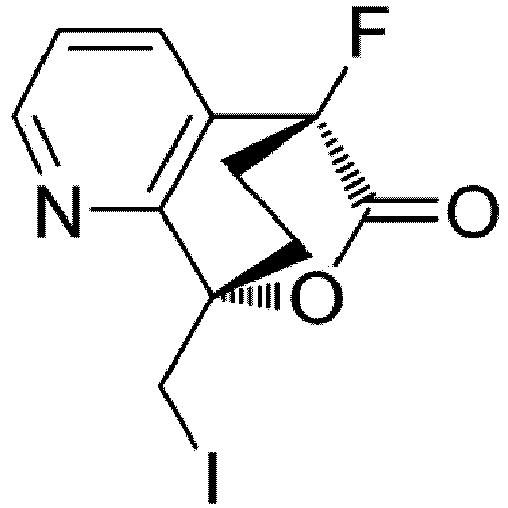
- To a solution of 5-fluoro-8-methylene-5,6,7,8-tetrahydroquinoline-5-carboxylic acid (2.0 g, 9.65 mmol, IM XXIII-1) in MeCN (100 mL) was added NaHCO3 (1.7 g, 19.6 mmol) and iodine (5.0 g, 19.6 mmol) at room temperature. The reaction mixture was stirred at the same temperature for 3 h. Then sat. aq. Na2S2O3 was added to the mixture. The mixture was extracted with EtOAc and washed with brine. The extract was dried over Na2SO4 and concentrated in vacuo. The residue was purified by silica gel column chromatography (30% EtOAc/n-hexane) to afford 2.6 g (81%) of the title compound.
- 1H NMR (CDCl3) delta 8.59 (1 H, dd, J = 5.1, 1.5 Hz), 7.88 (1 H, dd, J = 7.6, 1.5 Hz), 7.43 (1 H, dd, J = 7.7, 5.0 Hz), 4.03-4.12 (2 H, m), 2.71-2.81 (1 H, m), 2.51 (1 H, tdd, J = 11.3, 11.3, 5.5, 3.4 Hz), 2.09 (1 H, tdd, J = 11.7, 11.7, 4.6, 3.2 Hz), 1.91-2.00 (1 H, m).
- MS (ESI) m/z: 333.9 (M+H)+.
- The ability of the 5,6,7,8-tetrahydroquinoline and 6,7-dihydro-5H-cyclopenta[b]pyridine derivatives of the formula (I) to inhibit the P2X7 channel was measured by Ca2+ influx assay and electrophysiology assay described below.
- The functional activity of compounds was determined by measuring changes in intracellular calcium concentration using a Ca2+-sensitive fluorescent dye, Fluo-4 (Molecular Probes). The changes in fluorescent signal were monitored by the cell imaging technology by Hamamatsu Photonics's Functional Drug Screening System (FDSS). Increases in intracellular Ca2+ concentration were readily detected upon activation with BzATP.
- HEK293 cells stably expressing human P2X7 (GenBank accession number BC011913) carrying a C-terminal FLAG tag were grown in T225 flasks, in a 5% CO2 humidified incubator to about 80% confluence. Media composition consisted of Dulbecco's Modified Eagle Medium (high glucose), 10% fetal bovine serum (BSA), 100 units/microM Penicillin, 100 microg/mL Streptomycin and 250 microg/mL Geneticine.
-
- 1. Plate-out HEK293-human P2X7 cells (40 microL medium containing 10,000 cells per well) into poly-D-lysine coated 384-well plates (Corning) at 24 h prior to assay.
- 2. Incubate at 37 °C in 5% CO2.
-
- 1. Wash each well with 80 microL of assay buffer (20 mM HEPES,1 × HBSS, pH 7.4 adjusted with NaOH) three times and leave 20 microL using plate washer, ELx-405 Select CW (BIO-TEK).
- 2. Add 20 microL of assay buffer containing 2.5 mM probenecid, 0.5 microM Fluo-4-AM (Molecular Probes) and 0.1% Pluronic F-127 to each well.
- 3. Incubate the plate at 37 °C in 5% CO2 for 1 h.
- 4. Wash each well with 80 microL of assay buffer (see below) three times and leave 20 microL using plate washer, ELx-405 Select CW (BIO-TEK).
- 5. Test compounds were prepared at 100X the test concentration in DMSO by serial dilution with Biomek-FX liquid handling instrument. 33X diluted compound solutions in assay buffer were prepared in intermediate compound plate with Biomek-NX liquid handling instrument. A further 3X dilution occurred in below steps 6 and 7.
- 6. Add 20 microL of 33X diluted compound solutions into each well and leave the plate for 10 min under the dark at room temperature.
- 7. Measure activity by FDSS as follows:
- Set the assay plate on the stacker of FDSS.
- Start the detection of fluorescence intensity at 540 nm by 480 nm exicitation.
- After 30 seconds, add 20 microL of assay buffer containing 240 microM BzATP (final concentration 80 microM).
- IC50 values for compounds of the present invention were determined from 7-point dose-response studies. Curves were generated using the average of duplicate wells for each data point. Finally, the IC50 values are calculated with the best-fit dose curve determined by XLfit (ID Business Solutions Ltd.).
- Antagonistic activities with respect to the human P2X7 receptor (IC50 values) of exemplified compounds are displayed in Table 66.
{Table 66-1} A: <50 nM, B: 50- to 100 nM, C: 101- to 300 nM, D: 301- to 1,000 nM, E: 1,001- to 3,000 nM Examples IC50 Examples IC50 Examples IC50 Examples IC50 1 A 33 A 65 D 97 A 2 A 34 A 66 A 98 C 3 D 35 A 67 C 99 A 4 A 36 A 68 A 100 A 5 E 37 A 69 D 101 C 6 A 38 C 70 A 102 A 7 A 39 A 71 D 103 C 8 A 40 A 72 A 104 A 9 A 41 A 73 C 105 D 10 A 42 A 74 C 106 A 11 A 43 A 75 E 107 C 12 A 44 A 76 B 108 D 13 A 45 A 77 D 109 D 14 A 46 A 78 A 110 D 15 D 47 A 79 D 111 D 16 A 48 A 80 B 112 C 17 B 49 A 81 A 113 A 18 A 50 A 82 A 114 C 19 A 51 A 83 C 115 A 20 A 52 A 84 A 116 D 21 A 53 A 85 A 117 A 22 A 54 A 86 C 118 A 23 A 55 A 87 B 119 A 24 A 56 A 88 A 120 E 25 C 57 A 89 C 121 B 26 A 58 A 90 C 122 B 27 A 59 A 91 C 123 C 28 B 60 C 92 C 124 C 29 A 61 A 93 E 125 C 30 A 62 C 94 E 126 A 31 B 63 C 95 E 127 A 32 A 64 A 96 E 128 A {Table 66-2} 129 A 164 C 199 B 234 D 130 A 165 A 200 B 235 E 131 A 166 C 201 B 236 E 132 A 167 A 202 B 237 A 133 A 168 C 203 B 238 A 134 C 169 A 204 B 239 C 135 A 170 A 205 B 240 D 136 C 171 A 206 C 241 A 137 A 172 C 207 C 242 A 138 C 173 B 208 C 243 D 139 A 174 A 209 C 244 E 140 D 175 A 210 C 245 A 141 A 176 A 211 C 246 A 142 A 177 A 212 C 247 A 143 D 178 A 213 C 248 A 144 A 179 A 214 C 249 B 145 C 180 A 215 C 250 C 146 A 181 A 216 C 251 A 147 A 182 A 217 C 252 A 148 A 183 A 218 D 253 A 149 A 184 A 219 D 254 D 150 A 185 A 220 D 255 C 151 A 186 A 221 D 256 A 152 A 187 A 222 D 257 C 153 A 188 A 223 D 258 A 154 A 189 A 224 D 259 A 155 B 190 A 225 D 260 D 156 C 191 A 226 E 261 A 157 A 192 A 227 E 262 A 158 A 193 A 228 E 263 A 159 A 194 A 229 A 264 A 160 C 195 A 230 A 265 A 161 A 196 A 231 A 266 A 162 C 197 A 232 A 267 A 163 A 198 A 233 C 268 A {Table 66-3} 269 A 291 C 313 B 335 A 270 A 292 B 314 C 336 A 271 D 293 E 315 E 337 A 272 A 294 B 316 A 338 A 273 A 295 A 317 A 339 A 274 A 296 B 318 D 340 A 275 E 297 D 319 A 341 B 276 D 298 A 320 A 342 B 277 A 299 C 321 A 343 A 278 E 300 A 322 C 344 A 279 A 301 B 323 C 345 A 280 A 302 C 324 B 346 A 281 D 303 E 325 E 347 B 282 A 304 A 326 A 348 C 283 A 305 A 327 A 349 A 284 A 306 A 328 C 350 A 285 A 307 D 329 B 351 A 286 A 308 C 330 D 352 A 287 A 309 E 331 B 353 B 288 A 310 A 332 E 354 B 289 A 311 B 333 C 290 A 312 A 334 A - The functional activity of compounds was determined by measuring changes in intracellular calcium concentration using a Ca2+-sensitive fluorescent dye, Fluo-4 (Molecular Probes). The changes in fluorescent signal were monitored by the cell imaging technology by Hamamatsu Photonics's Functional Drug Screening System (FDSS). Increases in intracellular Ca2+ concentration were readily detected upon activation with BzATP.
- HEK293 cells stably expressing rat P2X7 (GenBank accession number NM_019256) were grown in Corning CellBIND cell culture flasks, in a 5% CO2 humidified incubator to about 80% confluence. Media composition consisted of Dulbecco's Modified Eagle Medium (high glucose), 10% fetal bovine serum (BSA), 100 units/microL Penicillin, 100 microg/mL Streptomycin and 250 microg/mL Geneticine.
-
- 1. Plate-out HEK293-human P2X7 cells (40 microL medium containing 10,000 cells per well) into poly-D-lysine coated 384-well plates (Corning) at 24 h prior to assay. Plate-out HEK293-rat P2X7 cells (40 microL medium containing 5,000 cells per well) into poly-D-lysine coated 384-well plates (BD Falcon) at 24 h prior to assay.
- 2. Incubate at 37 °C in 5% CO2.
-
- 1. Wash each well with 80 microL of assay buffer (20 mM HEPES,1 × HBSS, pH 7.4 adjusted with NaOH) three times and leave 20 microL using plate washer, ELx-405 Select CW (BIO-TEK).
- 2. Add 20 microL of assay buffer containing 2.5 mM probenecid, 0.5 microM Fluo-4-AM (Molecular Probes) and 0.1% Pluronic F-127 to each well.
- 3. Incubate the plate at 37 °C in 5% CO2 for 1 h.
- 4. Wash each well with 80 microL of assay buffer (see below) three times and leave 20 microL using plate washer, ELx-405 Select CW (BIO-TEK).
- 5. Test compounds were prepared at 100X the test concentration in DMSO by serial dilution with Biomek-FX liquid handling instrument. 33X diluted compound solutions in assay buffer were prepared in intermediate compound plate with Biomek-NX liquid handling instrument. A further 3X dilution occurred in below steps 6 and 7.
- 6. Add 20 microL of 33X diluted compound solutions into each well and leave the plate for 10 min under the dark at room temperature.
- 7. Measure activity by FDSS as follows:
- Set the assay plate on the stacker of FDSS.
- Start the detection of fluorescence intensity at 540 nm by 480 nm exicitation.
- After 30 seconds, add 20 microL of assay buffer containing 30 microM BzATP (final 10 microM).
- IC50 values for compounds of the present invention were determined from 7-point dose-response studies. Curves were generated using the average of duplicate wells for each data point. Finally, the IC50 values are calculated with the best-fit dose curve determined by XLfit (ID Business Solutions Ltd.).
- Antagonistic activities with respect to the rat P2X7 receptor (IC50 <1 uM) of exemplified compounds are displayed in Table 67.
{Table 67-1} Examples Examples Examples Examples Examples Examples Examples 1 40 81 137 184 250 288 2 41 82 139 185 251 289 3 42 83 141 187 252 290 6 43 84 142 189 253 291 7 44 85 144 190 254 292 8 45 87 146 192 256 294 9 46 88 148 193 257 295 10 47 89 149 195 258 296 11 48 97 150 196 259 297 12 49 100 152 199 260 298 13 50 102 153 201 261 299 14 51 104 154 203 262 300 16 52 106 157 205 263 301 18 53 107 158 206 264 302 19 54 108 159 208 265 303 20 55 110 161 221 266 304 21 56 111 163 229 267 305 22 57 115 165 230 268 306 23 58 117 167 231 269 307 24 59 118 168 232 270 308 25 60 121 169 233 272 309 26 61 122 170 234 273 310 27 62 126 171 237 274 311 28 64 127 172 238 277 312 29 66 128 174 239 279 313 32 67 129 175 240 280 314 33 68 130 176 241 281 315 34 70 131 177 242 282 316 35 72 132 178 245 283 317 36 74 133 179 246 284 318 37 76 134 180 247 285 319 38 78 135 182 248 286 320 39 80 136 183 249 287 321 {Table 67-2} 322 327 334 338 342 346 351 323 328 335 339 343 347 352 324 329 336 340 344 349 326 333 337 341 345 350 - All tested compounds of the invention show higher IC50 values in human dofetilide binding than IC50 values in P2X7 functional assay described above.
- The in vitro elimination half-life estimates (t1/2) and in vitro intrinsic clearance values (hCLint,u) were observed from metabolic stability in human liver microsomes.
- Stock solutions of test compound were prepared at 10 mM (as active compound) in DMSO. The stock solution was diluted immediately before use to 50 microM using 50% acetonitrile-water mixture solution (v/v) to produce working solution. The NADPH-regenerating solution was prepared on the day of analysis by diluting 1 volume of 80 mM NADP+ (ORIENTAL YEAST) with 1 volume of 240 mM MgCl2 (WAKO) and 1 volume of 320 mM of glucose-6-phosphate (Sigma-Aldrich) and 1 volume of 32 U/mL of glucose-6-phosphate dehydrogenase (Sigma-Aldrich) and 2 volume of 200 mM UDP-GA (Nacalai) and 2 volume of 6.6 mM beta-NAD (ORIENTAL YEAST), respectively. Immediately prior to use, the reaction mixture was produced mixing 1 volume of the NADPH-regenerating solution with 6.8 volume of 125 mM potassium phosphate assay buffer. Human liver microsomes (XenoTech, pooled, mixed-gender human microsomes) were diluted to 2.5 mg protein/mL using 125 mM potassium phosphate assay buffer. Two microliters of working solution of each test compound and 78 microL of reaction mixture were added to 96 well cluster tubes (Micronic) in duplicate.
- The tubes were placed in an incubator at 37°C for 5 minutes before adding the human liver microsomes. A 20 microL of aliquot of the human liver microsome solution (2.5 mg protein/mL) was added to each original well to initiate metabolism. Incubation was performed at 37°C. At 15 minutes, the plate was removed from the incubator and a solution containing internal standard (200 microL, 1 microM reserpine, 50 nM buspirone and 1 microM tolbutamide in 100% acetonitrile) was added to each well. The plate was then spun in a centrifuge at 3500 rpm for 15 minutes at 4°C. A supernatant was transferred from each well to a 96-well shallow plate and then diluted with 4 volume of the mobile phase (A).
- Quantitative analysis of test compound in quenched reaction mixture was performed using the LC-MS/MS system, which consisted of an Agilent 1100 series gradient HPLC pump (Agilent Technologies), a CTC HTS PAL Autosampler (AMR), and a Sciex API 3200 triple quadrupole mass spectrometer (Sciex) equipped with a turbo ionspray interface. The Chromatographic separation was achieved using reverse phase HPLC with an Inert Sustain RP C18 50 × 2.1 mm column (GL Science) or Capcell Pak RP C18 50 × 2.1 mm column (Shiseido). The column temperature was 40°C, and the flow rate was 0.4 mL/min. The mobile phase consisted of 2 solvents: (A) 0.1% formic acid in water and (B) acetonitrile or 0.1% formic acid in acetonitrile. The compounds were eluted with a step gradient achieving 5% to 90% of B in 0.7 min, 90% of B in 1.3 min and then returned to initial conditions for equilibration (1.5 or 1.6 min). The mass spectrometer was operated in multiple-reaction-monitoring mode. Integration of test compound and internal standard peak was performed using Analyst Software (version 1.6). The area ratio of each test compound was calculated by comparing the peak area of the compound to the peak area of an internal standard.
- The mean peak area ratios were calculated by averaging the peak area ratios (n=2) of a compound and internal standard for each sample. Metabolic stability was determined by plotting the natural logarithm of the mean peak area ratio of unchanged test compound as a function of time. Percent remaining was calculated by determining the ratio of the mean peak area ratio at incubation time to the mean peak area ratio of the time-zero samples. The rate of loss of test compound was calculated using the equation k = [Ln(C0) - Ln(C)] / incubation time, where C0 was the initial mean peak area ratio of the test compound, C was the mean peak area ratio of test compound remaining after incubation (C = C0 × remaining ratio), and the incubation time was 15 min. The t1/2 was estimated using the equation t1/2 = 0.693 / k. The hCLint,u was estimated using the equation hCLint,u = k / (microsomal protein concentration) × (microsomal protein per gram of liver) × (liver mass per kilogram of body mass) / (human microsomal fu), where the microsomal protein concentration was 0.5 mg/mL, and the physical and physiological scaling factors were used such as the microsomal protein per gram of liver (48.8 mg) and, the liver mass per kilogram of body mass (25.7 g), and the human microsomal fu was determined experimentally from the human liver microsomal binding assay.
- The compounds of this invention show preferable stability, which show the above-mentioned practical use.
- CYP inhibition assays (CYP1A2, 2B6, 2C8, 2C9, 2C19, 2D6 and 3A4) were performed with recombinant CYP enzyme (BD Gentest) and Promega assay kits (P450-Glo Assays) in 384 well plate (Corning). Each product's catalog number is shown in Table 68.
- Stock solutions of test compound were prepared at 10 mM (as active compound) in DMSO. NADPH-regenerating solution for each well was prepared on the day of analysis by diluting 0.4 microL of NADPH-A reagent (BD Gentest), 0.08 microL of NADPH-B reagent (BD Gentest) and 3.52 microL of water, for CYP 1A2, 2B6, 2C8, 2C9, 2C19 and 2D6. For CYP3A4, 1.6 microL of 1 M KPO4, 0.4 microL of NADPH-A reagent and 0.08 microL of NADPH-B reagent, and 1.92 microL of water was mixed for each well. CYP enzyme mixture was prepared by following mixing ratio: 0.96 microL of water, 0.8 microL of 1 M KPO4, 0.16 microL of Luciferin-ME, CYP1A2 Enzyme 0.08 microL/well for CYP1A2, 1.176 microL of water, 0.8 microL of 1 M KPO4, 0.008 microL of Luciferin-2B6, CYP2B6 Enzyme 0.016 microL/well for CYP2B6, 1.04 microL of water, 0.4 microL of 1 M KPO4, 0.24 microL of Luciferin-ME, CYP2C8 Enzyme 0.32 microL/well for CYP2C8, 1.56 microL of water, 0.2 microL of 1 M KPO4, 0.16 microL of Luciferin-H, CYP2C9 Enzyme 0.08 microL/well for CYP2C9, 1.552 microL of water, 0.4 microL of 1 M KPO4, 0.008 microL of Luciferin-H EGE, CYP2C19 Enzyme 0.04 microL/well for CYP2C19, 1.136 microL of water, 0.8 microL of 1 M KPO4, 0.024 microL of Luciferin-ME EGE, CYP2D6 Enzyme 0.04 microL/well for CYP2D6, 1.916 microL of 100 mM Tris-HCl, 0.004 microL of Luciferin-PPXE, CYP3A4 Enzyme 0.08 microL/well for CYP3A4. Four microL of NADPH-regenerating solution was placed in 384 well plate, and then 2 microL of stock solution of test compounds and 2 microL of CYP enzyme mixture were added into each well. The plate was spun down and incubated at each condition as shown in Table 69. After incubation, 8 microL of Luciferin Detection Reagent for each CYP enzyme was added into each well and stirred by plate shaker (BioShake XP, WAKEN B TECH) at 1000 rpm for 1 min. The plate was incubated for 30 min at room temperature, protected from light. Luminescence was measured by luminometer (Ultra, Tecan and EnVision, PerkinElmer). Luminescence signals were used to determine percent inhibition at 10 microM of test compound. A separate control incubation for chemiluminescence contained test compound (10 microM) and control CYPs.
{Table 68} CYP isoforms P450-GloAssay Kit Cat No. Human CYP Enzymes (BD Gentest) Cat No. CYP1A2 V8772 456203 CYP2B6 V8322 456255 CYP2C8 V8782 456252 CYP2C9 V8792 456258 CYP2C19 V8882 456259 CYP2D6 V8892 456217 CYP3A4 V8912 456202 {Table 69} CYP isoforms Enzyme (pmol) Substrate concentration (µM) Incubation time(min) / Temperature CYP1A2 0.08 100 45 / room temperature CYP2B6 0.016 3 30 / room temperature CYP2C8 0.08 150 90 / 37°C CYP2C9 0.08 100 30 / 37°C CYP2C19 0.04 10 30 / room temperature CYP2D6 0.04 30 30 / room temperature CYP3A4 0.08 25 30 / room temperature - The compounds of this invention show preferable results, which show the above-mentioned practical use.
- To summarize the above metabolism assays, all the compounds of the present invention show unexpectedly preferable results in the HLM assay and/or in the drug-drug interaction assay comparing with the closest compounds. Therefore, all the compounds of the present invention have excellent pharmacokinetic properties.
- The hERG (Human ether-a-go-go-related gene) channel inhibitory activity and the QT prolonging action of the compound of the present invention can be confirmed in the suitable methods known to skilled in the art. For example, hERG channel inhibitory activity of compounds of the present invention have been confirmed in electrophysiology assay (Chanchin, M. et al., Folia Pharmacol. Jpn., 2002, 119, 345-351).
- All tested compounds of the invention show higher IC50 values in hERG assay than IC50 values in P2X7 functional assay described above.
- Although the invention has been described above with reference to the disclosed embodiments, those skilled in the art would readily appreciate that the specific experiments detailed are only illustrative of the invention.
| Time(min) | A1(%) | B1(%) |
| 0 | 95 | 5 |
| 0.1 | 95 | 5 |
| 1.8 | 5 | 95 |
| 2.3 | 95 | 5 |
| Run time | 3 min | |
| Flow rate | 0.7 mL/min |
| Time(min) | A1(%) | B1(%) |
| 0 | 95 | 5 |
| 0.1 | 95 | 5 |
| 1.8 | 5 | 95 |
| 2.3 | 5 | 95 |
| 2.31 | 95 | 5 |
| Run time | 3 min | |
| Flow rate | 0.7 mL/min |
| Time(min) | A1(%) | B1(%) |
| 0 | 95 | 5 |
| 0.1 | 95 | 5 |
| 1.8 | 5 | 95 |
| 2.3 | 5 | 95 |
| 2.31 | 95 | 5 |
| Run time | 3 min | |
| Flow rate | 0.7 mL/min |
| Time(min) | A1(%) | B1(%) |
| 0 | 90 | 10 |
| 0.05 | 90 | 10 |
| 1.9 | 5 | 95 |
| 2.5 | 5 | 95 |
| 2.51 | 90 | 10 |
| Run time | 3 min | |
| Flow rate | 0.75 mL/min |
| Time(min) | A2(%) | B2(%) |
| 0 | 85 | 15 |
| 15 | 85 | 15 |
| 30 | 50 | 50 |
| 40 | 50 | 50 |
| 40.01 | 85 | 15 |
| Run time | 60 min | |
| Flow rate | 1 mL/min |
Claims (23)
- A compound represented by the following formula (I):
 or a pharmaceutically acceptable salt thereof,wherein:X is N or N-oxide;n is 0 or 1;R1 is selected from the group consisting of:(1) hydrogen, (2) halogen, (3) hydroxyl, (4) -NH2, (5) -NH-C1-6 alkyl and (6) -S(O)m-C1-6 alkyl;wherein m is independently 0, 1 or 2;R2 is selected from the group consisting of:(1) hydrogen, (2) halogen, (3) C1-6 alkyl and (4) -O-C1-6 alkyl; wherein the C1-6 alkyl or the -O-C1-6 alkyl is unsubstituted or substituted with one or more substituents independently selected from the group consisting of: halogen, hydroxyl, -O-C1-6 alkyl, -CN, -NR9aR10a, -(C=O)-R9a, -(C=O)-NR9aR10a and -S(O)m-R9a; wherein m is independently 0, 1 or 2;R1 may form =CH2 or =O with R2; orR1 may form a 3 to 7 membered ring with R2 which may contain one or more independently selected from the group consisting of: nitrogen atom, oxygen atom, sulfur atom and carbonyl group; where the 3 to 7 membered ring is unsubstituted or substituted one or more with C1-6 alkyl;R3 is independently selected from the group consisting of:(1) hydrogen, (2) halogen, (3) C1-6 alkyl and (4) -O-C1-6 alkyl;p is 0, 1, 2 or 3;when p is 2 or 3, each R3 is the same or different;R4 is selected from the group consisting of:(1) hydrogen, (2) halogen and (3) hydroxyl;R5 is hydrogen or C1-6 alkyl;R6 is selected from the group consisting of:(1) hydrogen, (2) C1-6 alkyl, (3) hydroxyC1-6 alkyl, (4) C1-6 alkoxy C1-6 alkyl and (5) heterocyclyl C1-6 alkyl;R5 may form a saturated 3 to 7 membered ring with R6 which may contain a nitrogen atom,an oxygen atom, a sulfur atom or a double bond; or a saturated or unsaturated bicyclic 9 to 10 membered ring with R6 which may contain a nitrogen atom, an oxygen atom or a sulfur atom; wherein the saturated 3 to 7 membered ring or the saturated or unsaturated bicyclic 9 to 10 membered ring is optionally substituted with 1 to 6 substituents independently selected from the group consisting of: (1) hydroxyl, (2) halogen, (3) -O-aryl and (4) -O-C1-6 alkylaryl;R7a and R7b are independently selected from the group consisting of:(1) hydrogen, (2) halogen, (3) hydroxyl, (4) C1-6 alkyl and (5) -NR9bR10b;R7a may form a 3 to 7 membered ring with R5 which may contain a nitrogen atom or an oxygen atom; orR7a may form a 3 to 7 membered ring with R7b which may contain a nitrogen atom or an oxygen atom;q is 0 or 1;R8 is selected from the group consisting of:(1) hydrogen, (2) C1-6 alkyl, (3) -O-C1-6 alkyl, (4) C2-6 alkenyl, (5) C3-10 cycloalkyl, (6) -NR9bR10b: wherein the C1-6 alkyl, the -O-C1-6 alkyl, the C2-6 alkenyl, the C3-10 cycloalkyl or the -NR9bR10b is unsubstituted or substituted with one or more substituents independently selected from the group consisting of: halogen and hydroxyl; (7) heterocyclyl, (8) aryl, (9) -O-C1-6 alkylaryl, (10) -O-aryl, (11) heteroaryl and (12) aryl-substituted heteroaryl: wherein the heterocyclyl, the aryl, the -O-C1-6 alkylaryl, the -O-aryl, the heteroaryl or the aryl-substituted heteroaryl is unsubstituted or substituted with one or more substituents independently selected from the group consisting of: halogen, hydroxyl, -O-C1-6 alkyl, -O-C1-6 haloalkyl, -C3-7 cycloalkyl, -O-C3-7 cycloalkyl, hydroxyl-C1-6 alkoxy, -CN, -NR9bR10b, -(C=O)-R9b, -(C=O)-NR9bR10b, -NR9b-(C=O)-R10b, -NR11-(C=O)-NR9bR10b, -NR9b-(C=O)-OR10b, -NR9b-S(O)m-R10b, -NR11-S(O)m- NR9bR10b, -S(O)m-R9b and C1-6 alkyl which may be substituted one or more with halogen, hydroxyl, -O-C1-6 alkyl or NR9bR10b; wherein m is independently 0, 1 or 2;R9a, R9b, R10a, R10b or R11 is independently selected from the group consisting of:(1) hydrogen, (2) hydroxyl, (3) C1-6 alkyl and (4) hydroxyC1-6 alkyl;R9a may form a 4 to 7 membered ring with R10a which may contain one or more independently selected from the group consisting of: nitrogen atom, oxygen atom, sulfur atom and double bond, wherein the 4 to 7 membered ring is optionally substituted with 1 to 6 substituents independently selected from the group consisting of: (1) hydroxyl, (2) halogen, (3) C1-6 alkyl and (4) -O-C1-6 alkyl;R9b may form a 4 to 7 membered ring with R10b which may contain one or more independently selected from the group consisting of: nitrogen atom, oxygen atom, sulfur atom and double bond, wherein the 4 to 7 membered ring is optionally substituted with 1 to 6 substituents independently selected from the group consisting of: (1) hydroxyl, (2) halogen and (3) C1-6 alkyl.
 - The compound or a pharmaceutically acceptable salt thereof according to claim 1,
wherein:X is N;R5 is hydrogen or C1-6 alkyl;R6 is selected from the group consisting of:(1) hydrogen and (2) C1-6 alkyl;R5 may form a saturated or unsaturated bicyclic 9 to 10 membered ring with R6 which may contain a nitrogen atom, an oxygen atom or a sulfur atom; wherein the saturated orunsaturated bicyclic 9 to 10 membered ring is optionally substituted with 1 to 6 substituents independently selected from the group consisting of: (1) hydroxyl, (2) halogen and (3) -O-aryl;R7a and R7b are independently selected from the group consisting of:(1) hydrogen, (4) C1-6 alkyl and (5) -NR9bR10b;R7a may form a 3 to 7 membered ring with R5 which may contain a nitrogen atom or an oxygen atom; orR7a may form a 3 to 7 membered ring with R7b which may contain a nitrogen atom or an oxygen atom;R8 is selected from the group consisting of:
(1) hydrogen, (2) C1-6 alkyl, (5) C3-10 cycloalkyl, wherein the C1-6 alkyl or the C3-10 cycloalkyl is unsubstituted or substituted with one or more substituents independently selected from the group consisting of: halogen and hydroxyl; (7) heterocyclyl, (8) aryl, (9) -O-C1-6 alkylaryl, (10) -O-aryl, (11) heteroaryl and (12) aryl-substituted heteroaryl, wherein the heterocyclyl, the aryl, the -O-C1-6 alkylaryl, the -O-aryl, the heteroaryl or the aryl-substituted heteroaryl is unsubstituted or substituted with one or more substituents independently selected from the group consisting of: halogen, hydroxyl, -O-C1-6 alkyl, -O-C1-6 haloalkyl, -CN and C1-6 alkyl which may be substituted one or more with halogen, hydroxyl, -O-C1-6 alkyl or NR9bR10b. - The compound or a pharmaceutically acceptable salt thereof according to claim 1, which is a compound represented by the following formula (M):
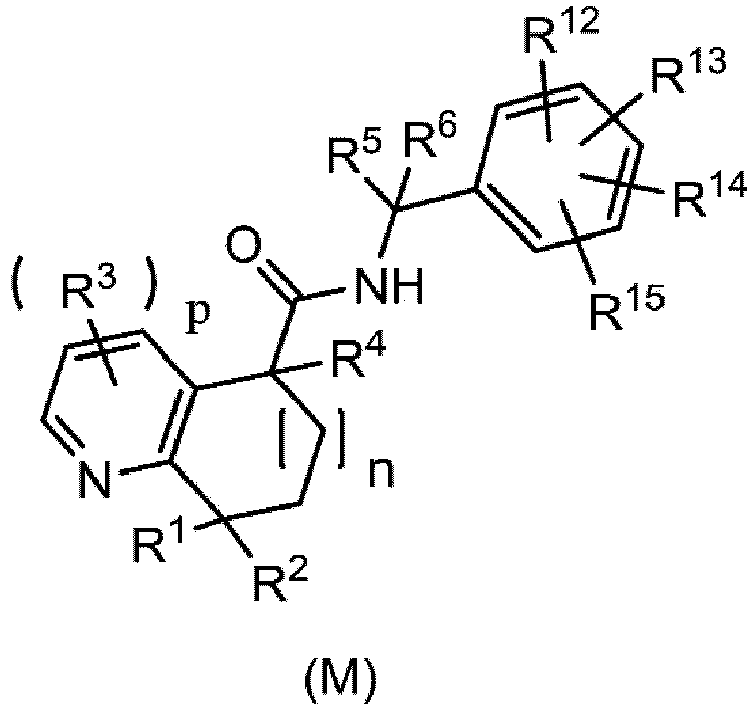 or a pharmaceutically acceptable salt thereof,wherein:n is 0 or 1;R1 is selected from the group consisting of:(1) hydrogen, (2) halogen, (3) hydroxyl, (4) -NH2, (5) -NH-C1-6 alkyl and (6) -S(O)m-C1-6 alkyl;wherein m is independently 0, 1 or 2;R2 is selected from the group consisting of:(1) hydrogen, (2) halogen, (3) C1-6 alkyl and (4) -O-C1-6 alkyl; wherein the C1-6 alkyl or the -O-C1-6 alkyl is unsubstituted or substituted with one or more substituents independently selected from the group consisting of: halogen, hydroxyl, -O-C1-6 alkyl, -CN, -NR9aR10a, -(C=O)-R9a, -(C=O)-NR9aR10a and -S(O)m-R9a; wherein m is independently 0, 1 or 2;R1 may form =CH2 or =O with R2; orR1 may form a 3 to 7 membered ring with R2 which may contain one or more independently selected from the group consisting of: nitrogen atom, oxygen atom, sulfur atom and carbonyl group; where the 3 to 7 membered ring is unsubstituted or substituted one or more with C1-6 alkyl;R3 is independently selected from the group consisting of:(1) hydrogen, (2) halogen, (3) C1-6 alkyl and (4) -O-C1-6 alkyl;p is 0, 1, 2 or 3;when p is 2 or 3, each R3 is the same or different;R4 is selected from the group consisting of:(1) hydrogen, (2) halogen and (3) hydroxyl;R5 is hydrogen or C1-6 alkyl;R6 is selected from the group consisting of:(1) hydrogen, (2) C1-6 alkyl, (3) hydroxyC1-6 alkyl, (4) C1-6 alkoxy C1-6 alkyl and (5) heterocyclyl C1-6 alkyl;R5 may form a saturated 3 to 7 membered ring with R6 which may contain a nitrogen atom, an oxygen atom, a sulfur atom or a double bond; wherein the saturated 3 to 7 membered ring is optionally substituted with 1 to 6 substituents independently selected from the group consisting of: (1) hydroxyl, (2) halogen, (3) -O-aryl and (4) -O-C1-6 alkylaryl;R9a, R9b, R10a or R10b is independently selected from the group consisting of:(1) hydrogen, (2) hydroxyl, (3) C1-6 alkyl and (4) hydroxyC1-6 alkyl;R9a may form a 4 to 7 membered ring with R10a which may contain a nitrogen atom or an oxygen atom; wherein the 4 to 7 membered ring is optionally substituted with 1 to 6 substituents independently selected from the group consisting of: (1) hydroxyl, (2) halogen, (3) C1-6 alkyl and (4) -O-C1-6 alkyl;R9b may form a 4 to 7 membered ring with R10b which may contain a nitrogen atom or an oxygen atom; wherein the 4 to 7 membered ring is optionally substituted with 1 to 6 substituents independently selected from the group consisting of: (1) hydroxyl, (2) halogen and (3) C1-6 alkyl;R12, R13, R14 and R15 are independently selected from the group consisting of:(1) hydrogen, (2) hydroxyl, (3) halogen, (4) C1-6 alkyl, (5) -O-C1-6 alkyl and (6) CN; wherein the C1-6 alkyl or the -O-C1-6 alkyl is unsubstituted or substituted with one or more substituents independently selected from the group consisting of: halogen, hydroxyl, -O-C1-6 alkyl and NR9bR10b;orR12 may form a 5 to 7 membered ring with R5 which may contain one or more independently selected from the group consisting of: nitrogen atom and oxygen atom.
 - The compound or a pharmaceutically acceptable salt thereof according to claim 3,
wherein:n is 1;R1 is hydrogen or hydroxyl;R2 is methyl which is unsubstituted or substituted with one or more substituents independently selected from the group consisting of: halogen, hydroxyl, -O-C1-6 alkyl, -CN and -NR9aR10a;p is 0;R4 is hydrogen or fluoro;R5 and R6 are independently selected from the group consisting of: (1) hydrogen and (2) C1-6 alkyl;R12, R13 and R14 are independently selected from the group consisting of: (1) hydrogen, (3) halogen, and (4) C1-3 alkyl which may be substituted one or more with hydroxyl;R15 is hydrogen. - The compound or a pharmaceutically acceptable salt thereof according to claim 1, which is a compound which is selected from the group following or a pharmaceutically acceptable salt thereof,N-(2,4-dichloro-6-methylbenzyl)-8-oxo-5,6,7,8-tetrahydroquinoline-5-carboxamide;N-(2-chloro-3-(trifluoromethyl)benzyl)-8-oxo-5,6,7,8-tetrahydroquinoline-5-carboxamide;N-(2,3-dichlorobenzyl)-8-oxo-5,6,7,8-tetrahydroquinoline-5-carboxamide;N-(2,4-dichloro-6-(hydroxymethyl)benzyl)-8-oxo-5,6,7,8-tetrahydroquinoline-5-carboxamide;N-(cycloheptylmethyl)-8-oxo-5,6,7,8-tetrahydroquinoline-5-carboxamide;N-(2,4-dichloro-6-methylbenzyl)-8-hydroxy-5,6,7,8-tetrahydroquinoline-5-carboxamide;N-(2-chloro-3-(trifluoromethyl)benzyl)-8-hydroxy-5,6,7,8-tetrahydroquinoline-5-carboxamide;N-(2,3-dichlorobenzyl)-8-hydroxy-5,6,7,8-tetrahydroquinoline-5-carboxamide;N-(2,4-dichloro-6-(hydroxymethyl)benzyl)-8-hydroxy-5,6,7,8-tetrahydroquinoline-5-carboxa mide;N-(2,4-dichloro-6-(methoxymethyl)benzyl)-8-hydroxy-5,6,7,8-tetrahydroquinoline-5-carboxa mide;N-(2,4-dichloro-6-methylbenzyl)-7-methylene-6,7-dihydro-5H-cyclopenta[b]pyridine-5-carbo xamide;N-(2,4-dichloro-6-methylbenzyl)-5-fluoro-8-oxo-5,6,7,8-tetrahydroquinoline-5-carboxamide;N-(2-chloro-3-(trifluoromethyl)benzyl)-5-fluoro-8-oxo-5,6,7,8-tetrahydroquinoline-5-carboxa mide;N-(2,4-dichloro-6-(hydroxymethyl)benzyl)-5-fluoro-8-oxo-5,6,7,8-tetrahydroquinoline-5-carb oxamide;N-(2,4-dichloro-6-methylbenzyl)-5-hydroxy-8-oxo-5,6,7,8-tetrahydroquinoline-5-carboxamid e;N-(2,4-dichloro-6-methylbenzyl)-7-oxo-6,7-dihydro-5H-cyclopenta[b]pyridine-5-carboxamide;N-(2-chloro-3-(trifluoromethyl)benzyl)-7-oxo-6,7-dihydro-5H-cyclopenta[b]pyridine-5-carbox amide;N-(2,4-dichloro-6-methylbenzyl)-5-fluoro-8-hydroxy-5,6,7,8-tetrahydroquinoline-5-carboxam ide;N-(2-chloro-3-(trifluoromethyl)benzyl)-5-fluoro-8-hydroxy-5,6,7,8-tetrahydroquinoline-5-carb oxamide;N-(2,4-dichloro-6-(hydroxymethyl)benzyl)-5-fluoro-8-hydroxy-5,6,7,8-tetrahydroquinoline-5-carboxamide;N-(2,3-dichlorobenzyl)-5-fluoro-8-hydroxy-5,6,7,8-tetrahydroquinoline-5-carboxamide;N-(2,4-dichlorobenzyl)-5-fluoro-8-hydroxy-5,6,7,8-tetrahydroquinoline-5-carboxamide;N-(2,4-dichloro-6-(methoxymethyl)benzyl)-5-fluoro-8-hydroxy-5,6,7,8-tetrahydroquinoline-5-carboxamide;N-(2,4-dichloro-6-methylbenzyl)-5,8-dihydroxy-5,6,7,8-tetrahydroquinoline-5-carboxamide;N-(2-chloro-3-(trifluoromethyl)benzyl)-5,8-dihydroxy-5,6,7,8-tetrahydroquinoline-5-carboxa mide;N-(2,4-dichloro-6-methylbenzyl)-7-hydroxy-6,7-dihydro-5H-cyclopenta[b]pyridine-5-carboxa mide;N-(2-chloro-3-(trifluoromethyl)benzyl)-7-hydroxy-6,7-dihydro-5H-cyclopenta[b]pyridine-5-car boxamide;N-(2,3-dichlorobenzyl)-7-hydroxy-6,7-dihydro-5H-cyclopenta[b]pyridine-5-carboxamide;N-(2,4-dichlorobenzyl)-5-fluoro-7-hydroxy-6,7-dihydro-5H-cyclopenta[b]pyridine-5-carboxa mide;2-(5-((2,4-dichloro-6-methylbenzyl)carbamoyl)-5,6,7,8-tetrahydroquinolin-8-yl)acetic acid;2-(5-((2-chloro-3-(trifluoromethyl)benzyl)carbamoyl)-5,6,7,8-tetrahydroquinolin-8-yl)acetic acid;(2-amino-2-oxoethyl)-N-(2-chloro-3-(trifluoromethyl)benzyl)-5,6,7,8-tetrahydroquinoline-5-ca rboxamide;N-(2,4-dichloro-6-methylbenzyl)-8-hydroxy-8-(hydroxymethyl)-5,6,7,8-tetrahydroquinoline-5 -carboxamide;N-(2,4-dichloro-6-methylbenzyl)-5-fluoro-8-hydroxy-8-(hydroxymethyl)-5,6,7,8-tetrahydroqui noline-5-carboxamide;N-(2-chloro-3-(trifluoromethyl)benzyl)-5-fluoro-8-hydroxy-8-(hydroxymethyl)-5,6,7,8-tetrahy droquinoline-5-carboxamide;N-(2,3-dichlorobenzyl)-5-fluoro-8-hydroxy-8-(hydroxymethyl)-5,6,7,8-tetrahydroquinoline-5-carboxamide;N-(2,4-dichlorobenzyl)-5-fluoro-8-hydroxy-8-(hydroxymethyl)-5,6,7,8-tetrahydroquinoline-5-carboxamide;N-(2,4-dichlorobenzyl)-5-fluoro-7-hydroxy-7-(hydroxymethyl)-6,7-dihydro-5H-cyclopenta[b]p yridine-5-carboxamide;N-(2,4-dichloro-6-methylbenzyl)-5-fluoro-8-hydroxy-8-(methoxymethyl)-5,6,7,8-tetrahydroqu inoline-5-carboxamide;N-(2-chloro-3-(trifluoromethyl)benzyl)-5-fluoro-8-hydroxy-8-(methoxymethyl)-5,6,7,8-tetrahy droquinoline-5-carboxamide;(5S*,8S*)-N-(2,4-dichlorobenzyl)-5-fluoro-8-hydroxy-8-(methoxymethyl)-5,6,7,8-tetrahydroq uinoline-5-carboxamide;(5S*,8S*)-N-(2-chloro-4-fluorobenzyl)-5-fluoro-8-hydroxy-8-(methoxymethyl)-5,6,7,8-tetrahy droquinoline-5-carboxamide;8-(aminomethyl)-N-(2,4-dichloro-6-methylbenzyl)-8-hydroxy-5,6,7,8-tetrahydroquinoline-5-c arboxamide;N-(2,4-dichloro-6-methylbenzyl)-8-hydroxy-8-((methylamino)methyl)-5,6,7,8-tetrahydroquin oline-5-carboxamide;8-(aminomethyl)-N-(2,4-dichloro-6-methylbenzyl)-5-fluoro-8-hydroxy-5,6,7,8-tetrahydroquin oline-5-carboxamide;N-(2,4-dichloro-6-methylbenzyl)-5-fluoro-8-hydroxy-8-((methylamino)methyl)-5,6,7,8-tetrahy droquinoline-5-carboxamide;N-(2,4-dichloro-6-methylbenzyl)-8-((dimethylamino)methyl)-5-fluoro-8-hydroxy-5,6,7,8-tetra hydroquinoline-5-carboxamide;8-(aminomethyl)-N-(2-chloro-3-(trifluoromethyl)benzyl)-5-fluoro-8-hydroxy-5,6,7,8-tetrahydr oquinoline-5-carboxamide;N-(2-chloro-3-(trifluoromethyl)benzyl)-5-fluoro-8-hydroxy-8-((methylamino)methyl)-5,6,7,8-t etrahydroquinoline-5-carboxamide;N-(2-chloro-3-(trifluoromethyl)benzyl)-8-((dimethylamino)methyl)-5-fluoro-8-hydroxy-5,6,7,8 -tetrahydroquinoline-5-carboxamide;(5S*,8R*)-N-(2,4-dichlorobenzyl)-5-fluoro-8-hydroxy-8-((3-hydroxyazetidin-1-yl)methyl)-5,6, 7,8-tetrahydroquinoline-5-carboxamide;(5S*,8R*)-N-(2-chloro-4-fluorobenzyl)-5-fluoro-8-hydroxy-8-((3-hydroxyazetidin-1-yl)methyl) -5,6,7,8-tetrahydroquinoline-5-carboxamide;(5S*,8R*)-N-(2-chloro-4-fluorobenzyl)-5-fluoro-8-hydroxy-8-((3-methoxyazetidin-1-yl)methyl )-5,6,7,8-tetrahydroquinoline-5-carboxamide;(5S*,8R*)-N-(2-chloro-4-fluorobenzyl)-5-fluoro-8-hydroxy-8-((3-hydroxy-3-methylazetidin-1-yl)methyl)-5,6,7,8-tetrahydroquinoline-5-carboxamide;(5S*,8R*)-N-(2-chloro-4-fluorobenzyl)-5-fluoro-8-hydroxy-8-((3-methoxy-3-methylazetidin-1-yl)methyl)-5,6,7,8-tetrahydroquinoline-5-carboxamide;(5S*,8R*)-N-(2-chloro-4-fluorobenzyl)-5-fluoro-8-hydroxy-8-(((2-hydroxyethyl)amino)methyl) -5,6,7,8-tetrahydroquinoline-5-carboxamide;(5S*,8R*)-N-(2-chloro-4-fluorobenzyl)-5-fluoro-8-hydroxy-8-(((2-hydroxyethyl)(methyl)amino )methyl)-5,6,7,8-tetrahydroquinoline-5-carboxamide;N-(2-chloro-3-(trifluoromethyl)benzyl)-5-fluoro-8-hydroxy-8-methyl-5,6,7,8-tetrahydroquinoli ne-5-carboxamide;(5S*,8R*)-8-amino-N-(2,4-dichlorobenzyl)-5-fluoro-8-(hydroxymethyl)-5,6,7,8-tetrahydroqui noline-5-carboxamide;(5S*,8S*)-8-amino-N-(2,4-dichlorobenzyl)-5-fluoro-8-(hydroxymethyl)-5,6,7,8-tetrahydroquin oline-5-carboxamide;(3R*,5'S*)-N-(2,4-dichlorobenzyl)-5'-fluoro-5-oxo-6',7'-dihydro-5'H-spiro[morpholine-3,8'-qui noline]-5'-carboxamide;(3S*,5'S*)-N-(2,4-dichlorobenzyl)-5'-fluoro-5-oxo-6',7'-dihydro-5'H-spiro[morpholine-3,8'-qui noline]-5'-carboxamide;(5S,8S)-N-(2,4-dichloro-6-methylbenzyl)-8-hydroxy-5,6,7,8-tetrahydroquinoline-5-carboxam ide;(5R,8S)-N-(2,4-dichloro-6-methylbenzyl)-8-hydroxy-5,6,7,8-tetrahydroquinoline-5-carboxam ide;(5S,8S)-N-(2,4-dichlorobenzyl)-8-hydroxy-5,6,7,8-tetrahydroquinoline-5-carboxamide;(5R,8S)-N-(2,4-dichlorobenzyl)-8-hydroxy-5,6,7,8-tetrahydroquinoline-5-carboxamide;(5S,8S)-N-(2-chloro-4-fluorobenzyl)-8-hydroxy-5,6,7,8-tetrahydroquinoline-5-carboxamide;(5R,8S)-N-(2-chloro-4-fluorobenzyl)-8-hydroxy-5,6,7,8-tetrahydroquinoline-5-carboxamide;(5S,8S)-N-(2,4-dichloro-6-fluorobenzyl)-8-hydroxy-5,6,7,8-tetrahydroquinoline-5-carboxami de;(5R,8S)-N-(2,4-dichloro-6-fluorobenzyl)-8-hydroxy-5,6,7,8-tetrahydroquinoline-5-carboxami de;(5S,8S)-8-hydroxy-N-(2,3,4-trifluorobenzyl)-5,6,7,8-tetrahydroquinoline-5-carboxamide;(5R,8S)-8-hydroxy-N-(2,3,4-trifluorobenzyl)-5,6,7,8-tetrahydroquinoline-5-carboxamide;(5R,8S)-8-hydroxy-N-(2,4,6-trifluorobenzyl)-5,6,7,8-tetrahydroquinoline-5-carboxamide;(5R,8S)-N-(2,4-difluorobenzyl)-8-hydroxy-5,6,7,8-tetrahydroquinoline-5-carboxamide;(5S,8S)-N-(4-fluoro-2-(trifluoromethyl)benzyl)-8-hydroxy-5,6,7,8-tetrahydroquinoline-5-carb oxamide;(5R,8S)-N-(4-fluoro-2-(trifluoromethyl)benzyl)-8-hydroxy-5,6,7,8-tetrahydroquinoline-5-carb oxamide;(5S,8S)-N-(4-chloro-2-fluorobenzyl)-8-hydroxy-5,6,7,8-tetrahydroquinoline-5-carboxamide;(5R,8S)-N-(4-chloro-2-fluorobenzyl)-8-hydroxy-5,6,7,8-tetrahydroquinoline-5-carboxamide;(5S,8S)-N-(4-bromo-2-fluorobenzyl)-8-hydroxy-5,6,7,8-tetrahydroquinoline-5-carboxamide;(5R,8S)-N-(4-bromo-2-fluorobenzyl)-8-hydroxy-5,6,7,8-tetrahydroquinoline-5-carboxamide;(5S,8S)-N-(2-chloro-3,4-difluorobenzyl)-8-hydroxy-5,6,7,8-tetrahydroquinoline-5-carboxami de;(5R,8S)-N-(2-chloro-3,4-difluorobenzyl)-8-hydroxy-5,6,7,8-tetrahydroquinoline-5-carboxami de;(5S,7S)-N-(2,4-dichloro-6-methylbenzyl)-7-hydroxy-6,7-dihydro-5H-cyclopenta[b]pyridine-5-carboxamide;(5R,8R)-N-(2,4-dichloro-6-methylbenzyl)-8-hydroxy-5,6,7,8-tetrahydroquinoline-5-carboxam ide;(5S,8R)-N-(2,4-dichloro-6-methylbenzyl)-8-hydroxy-5,6,7,8-tetrahydroquinoline-5-carboxam ide;(5S,8S)-N-(2-chloro-3-(trifluoromethyl)benzyl)-8-hydroxy-5,6,7,8-tetrahydroquinoline-5-carb oxamide;(5R,8R)-N-(2,4-dichlorobenzyl)-8-hydroxy-5,6,7,8-tetrahydroquinoline-5-carboxamide;(5S,8R)-N-(2,4-dichlorobenzyl)-8-hydroxy-5,6,7,8-tetrahydroquinoline-5-carboxamide;(5R,8R)-N-(2-chloro-4-fluorobenzyl)-8-hydroxy-5,6,7,8-tetrahydroquinoline-5-carboxamide;(5S,8R)-N-(2-chloro-4-fluorobenzyl)-8-hydroxy-5,6,7,8-tetrahydroquinoline-5-carboxamide;(5R,8R)-N-(2,4-dichloro-6-fluorobenzyl)-8-hydroxy-5,6,7,8-tetrahydroquinoline-5-carboxami de;(5S,8R)-N-(2,4-dichloro-6-fluorobenzyl)-8-hydroxy-5,6,7,8-tetrahydroquinoline-5-carboxami de;(5R,8R)-8-hydroxy-N-(2,3,4-trifluorobenzyl)-5,6,7,8-tetrahydroquinoline-5-carboxamide;(5S,8R)-8-hydroxy-N-(2,3,4-trifluorobenzyl)-5,6,7,8-tetrahydroquinoline-5-carboxamide;(5R,8R)-N-(4-chloro-2-fluorobenzyl)-8-hydroxy-5,6,7,8-tetrahydroquinoline-5-carboxamide;(5S,8R)-N-(4-chloro-2-fluorobenzyl)-8-hydroxy-5,6,7,8-tetrahydroquinoline-5-carboxamide;(5R,7R)-N-(2,4-dichloro-6-methylbenzyl)-7-hydroxy-6,7-dihydro-5H-cyclopenta[b]pyridine-5-carboxamide;(5S,7R)-N-(2,4-dichloro-6-methylbenzyl)-7-hydroxy-6,7-dihydro-5H-cyclopenta[b]pyridine-5-carboxamide;(5R,8S)-N-(2,4-dichloro-6-methylbenzyl)-5-fluoro-8-hydroxy-5,6,7,8-tetrahydroquinoline-5-c arboxamide;(5S,8R)-N-(2,4-dichloro-6-methylbenzyl)-5-fluoro-8-hydroxy-5,6,7,8-tetrahydroquinoline-5-c arboxamide;(5R,8S)-N-(2-chloro-3-(trifluoromethyl)benzyl)-5-fluoro-8-hydroxy-5,6,7,8-tetrahydroquinolin e-5-carboxamide;(5S,8R)-N-(2-chloro-3-(trifluoromethyl)benzyl)-5-fluoro-8-hydroxy-5,6,7,8-tetrahydroquinolin e-5-carboxamide;(5R,8S)-N-(2,4-dichloro-6-(hydroxymethyl)benzyl)-5-fluoro-8-hydroxy-5,6,7,8-tetrahydroqui noline-5-carboxamide;(5S,8R)-N-(2,4-dichloro-6-(hydroxymethyl)benzyl)-5-fluoro-8-hydroxy-5,6,7,8-tetrahydroqui noline-5-carboxamide;(5R,8S)-N-(2,4-dichlorobenzyl)-5-fluoro-8-hydroxy-5,6,7,8-tetrahydroquinoline-5-carboxami de;(5S,8R)-N-(2,4-dichlorobenzyl)-5-fluoro-8-hydroxy-5,6,7,8-tetrahydroquinoline-5-carboxami de;(5S,8R)-N-(2-chloro-4-fluorobenzyl)-5-fluoro-8-hydroxy-5,6,7,8-tetrahydroquinoline-5-carbo xamide;(5S,8R)-5-fluoro-8-hydroxy-N-(2,3,4-trifluorobenzyl)-5,6,7,8-tetrahydroquinoline-5-carboxa mide;(5S,8R)-N-(2,4-difluorobenzyl)-5-fluoro-8-hydroxy-5,6,7,8-tetrahydroquinoline-5-carboxamid e;(5S,8R)-5-fluoro-N-(4-fluoro-2-(trifluoromethyl)benzyl)-8-hydroxy-5,6,7,8-tetrahydroquinolin e-5-carboxamide;(5S,8R)-N-(4-chloro-2-fluorobenzyl)-5-fluoro-8-hydroxy-5,6,7,8-tetrahydroquinoline-5-carbo xamide;(5R,8S)-N-(2,6-dichloro-4-(trifluoromethyl)benzyl)-5-fluoro-8-hydroxy-5,6,7,8-tetrahydroquin oline-5-carboxamide;(5S,8R)-N-(2,6-dichloro-4-(trifluoromethyl)benzyl)-5-fluoro-8-hydroxy-5,6,7,8-tetrahydroquin oline-5-carboxamide;(5R,8S)-N-(2,4-dichloro-6-(difluoromethyl)benzyl)-5-fluoro-8-hydroxy-5,6,7,8-tetrahydroquin oline-5-carboxamide;(5S,8R)-N-(2,4-dichloro-6-(difluoromethyl)benzyl)-5-fluoro-8-hydroxy-5,6,7,8-tetrahydroquin oline-5-carboxamide;(5R,8S)-N-(2,4-dichloro-6-fluorobenzyl)-5-fluoro-8-hydroxy-5,6,7,8-tetrahydroquinoline-5-ca rboxamide;(5S,8R)-N-(2,4-dichloro-6-fluorobenzyl)-5-fluoro-8-hydroxy-5,6,7,8-tetrahydroquinoline-5-ca rboxamide;(5S,8R)-N-(4-bromo-2-chlorobenzyl)-5-fluoro-8-hydroxy-5,6,7,8-tetrahydroquinoline-5-carbo xamide;(5S,8R)-N-((R)-1-(2,4-dichlorophenyl)ethyl)-5-fluoro-8-hydroxy-5,6,7,8-tetrahydroquinoline-5-carboxamide;(5R,8S)-N-(2,3-dichlorobenzyl)-5-fluoro-8-hydroxy-5,6,7,8-tetrahydroquinoline-5-carboxami de;(5S,8R)-N-(2,3-dichlorobenzyl)-5-fluoro-8-hydroxy-5,6,7,8-tetrahydroquinoline-5-carboxami de;(5S,8R)-N-(2-chloro-6-methylbenzyl)-5-fluoro-8-hydroxy-5,6,7,8-tetrahydroquinoline-5-carb oxamide;(5S,8R)-N-(2-chloro-4,5-difluorobenzyl)-5-fluoro-8-hydroxy-5,6,7,8-tetrahydroquinoline-5-ca rboxamide;(5S,8R)-5-fluoro-8-hydroxy-N-(2,3,6-trichlorobenzyl)-5,6,7,8-tetrahydroquinoline-5-carboxa mide;(5S,8R)-N-(2-chloro-4-methylbenzyl)-5-fluoro-8-hydroxy-5,6,7,8-tetrahydroquinoline-5-carb oxamide;(5R,8R)-N-(2,4-dichloro-6-methylbenzyl)-5-fluoro-8-hydroxy-5,6,7,8-tetrahydroquinoline-5-c arboxamide;(5S,8S)-N-(2,4-dichloro-6-methylbenzyl)-5-fluoro-8-hydroxy-5,6,7,8-tetrahydroquinoline-5-c arboxamide;(5R,8R)-N-(2-chloro-3-(trifluoromethyl)benzyl)-5-fluoro-8-hydroxy-5,6,7,8-tetrahydroquinolin e-5-carboxamide;(5S,8S)-N-(2-chloro-3-(trifluoromethyl)benzyl)-5-fluoro-8-hydroxy-5,6,7,8-tetrahydroquinolin e-5-carboxamide;(5R,8R)-N-(2,4-dichloro-6-(hydroxymethyl)benzyl)-5-fluoro-8-hydroxy-5,6,7,8-tetrahydroqui noline-5-carboxamide;(5S,8S)-N-(2,4-dichloro-6-(hydroxymethyl)benzyl)-5-fluoro-8-hydroxy-5,6,7,8-tetrahydroquin oline-5-carboxamide;(5R,8R)-N-(2,4-dichlorobenzyl)-5-fluoro-8-hydroxy-5,6,7,8-tetrahydroquinoline-5-carboxami de;(5S,8S)-N-(2,4-dichlorobenzyl)-5-fluoro-8-hydroxy-5,6,7,8-tetrahydroquinoline-5-carboxami de;(5R,8R)-N-(2-chloro-4-fluorobenzyl)-5-fluoro-8-hydroxy-5,6,7,8-tetrahydroquinoline-5-carbo xamide;(5S,8S)-N-(2-chloro-4-fluorobenzyl)-5-fluoro-8-hydroxy-5,6,7,8-tetrahydroquinoline-5-carbo xamide;(5R,8R)-5-fluoro-8-hydroxy-N-(2,3,4-trifluorobenzyl)-5,6,7,8-tetrahydroquinoline-5-carboxa mide;(5S,8S)-5-fluoro-8-hydroxy-N-(2,3,4-trifluorobenzyl)-5,6,7,8-tetrahydroquinoline-5-carboxa mide;(5R,8R)-N-(2,6-dichlorobenzyl)-5-fluoro-8-hydroxy-5,6,7,8-tetrahydroquinoline-5-carboxami de;(5S,8S)-N-(2,6-dichlorobenzyl)-5-fluoro-8-hydroxy-5,6,7,8-tetrahydroquinoline-5-carboxami de;(5R,8R)-N-(2,4-difluorobenzyl)-5-fluoro-8-hydroxy-5,6,7,8-tetrahydroquinoline-5-carboxami de;(5S,8S)-N-(2,4-difluorobenzyl)-5-fluoro-8-hydroxy-5,6,7,8-tetrahydroquinoline-5-carboxamid e;(5S,8S)-N-(2-chloro-6-fluoro-3-methylbenzyl)-5-fluoro-8-hydroxy-5,6,7,8-tetrahydroquinolin e-5-carboxamide;(5R,8R)-5-fluoro-N-(4-fluoro-2-(trifluoromethyl)benzyl)-8-hydroxy-5,6,7,8-tetrahydroquinolin e-5-carboxamide;(5S,8S)-5-fluoro-N-(4-fluoro-2-(trifluoromethyl)benzyl)-8-hydroxy-5,6,7,8-tetrahydroquinolin e-5-carboxamide;(5R,8R)-N-(4-chloro-2-fluorobenzyl)-5-fluoro-8-hydroxy-5,6,7,8-tetrahydroquinoline-5-carbo xamide;(5S,8S)-N-(4-chloro-2-fluorobenzyl)-5-fluoro-8-hydroxy-5,6,7,8-tetrahydroquinoline-5-carbo xamide;(5R,8R)-N-(2,6-dichloro-4-(trifluoromethyl)benzyl)-5-fluoro-8-hydroxy-5,6,7,8-tetrahydroquin oline-5-carboxamide;(5S,8S)-N-(2,6-dichloro-4-(trifluoromethyl)benzyl)-5-fluoro-8-hydroxy-5,6,7,8-tetrahydroquin oline-5-carboxamide;(5S,8S)-N-(2,4-dichloro-6-(difluoromethyl)benzyl)-5-fluoro-8-hydroxy-5,6,7,8-tetrahydroquin oline-5-carboxamide;(5S,8S)-N-(2-chloro-4-fluoro-6-(hydroxymethyl)benzyl)-5-fluoro-8-hydroxy-5,6,7,8-tetrahydr oquinoline-5-carboxamide;(5R,8R)-N-(2,4-dichloro-6-fluorobenzyl)-5-fluoro-8-hydroxy-5,6,7,8-tetrahydroquinoline-5-ca rboxamide;(5S,8S)-N-(2,4-dichloro-6-fluorobenzyl)-5-fluoro-8-hydroxy-5,6,7,8-tetrahydroquinoline-5-ca rboxamide;(5R,8R)-N-(4-bromo-2-chlorobenzyl)-5-fluoro-8-hydroxy-5,6,7,8-tetrahydroquinoline-5-carb oxamide;(5S,8S)-N-(4-bromo-2-chlorobenzyl)-5-fluoro-8-hydroxy-5,6,7,8-tetrahydroquinoline-5-carbo xamide;(5R,8R)-N-((R)-1-(2,4-dichlorophenyl)ethyl)-5-fluoro-8-hydroxy-5,6,7,8-tetrahydroquinoline-5-carboxamide;(5R,8R)-N-(4-chloro-2-(trifluoromethyl)benzyl)-5-fluoro-8-hydroxy-5,6,7,8-tetrahydroquinolin e-5-carboxamide;(5S,8S)-N-(4-chloro-2-(trifluoromethyl)benzyl)-5-fluoro-8-hydroxy-5,6,7,8-tetrahydroquinolin e-5-carboxamide;(5R,8R)-N-(2,3-dichlorobenzyl)-5-fluoro-8-hydroxy-5,6,7,8-tetrahydroquinoline-5-carboxami de;(5S,8S)-N-(2,3-dichlorobenzyl)-5-fluoro-8-hydroxy-5,6,7,8-tetrahydroquinoline-5-carboxami de;(5R,8R)-N-(2-chloro-6-methylbenzyl)-5-fluoro-8-hydroxy-5,6,7,8-tetrahydroquinoline-5-carb oxamide;(5S,8S)-N-(2-chloro-6-methylbenzyl)-5-fluoro-8-hydroxy-5,6,7,8-tetrahydroquinoline-5-carb oxamide;(5R,8R)-N-(2-chloro-4,5-difluorobenzyl)-5-fluoro-8-hydroxy-5,6,7,8-tetrahydroquinoline-5-ca rboxamide;(5S,8S)-N-(2-chloro-4,5-difluorobenzyl)-5-fluoro-8-hydroxy-5,6,7,8-tetrahydroquinoline-5-ca rboxamide;(5R,8R)-5-fluoro-8-hydroxy-N-(2,3,6-trichlorobenzyl)-5,6,7,8-tetrahydroquinoline-5-carboxa mide;(5S,8S)-5-fluoro-8-hydroxy-N-(2,3,6-trichlorobenzyl)-5,6,7,8-tetrahydroquinoline-5-carboxa mide;(5R,8R)-N-(2-chloro-4-methylbenzyl)-5-fluoro-8-hydroxy-5,6,7,8-tetrahydroquinoline-5-carb oxamide;(5S,8S)-N-(2-chloro-4-methylbenzyl)-5-fluoro-8-hydroxy-5,6,7,8-tetrahydroquinoline-5-carb oxamide;(5S,8S)-5-fluoro-8-hydroxy-N-((S)-1-(2,3,4-trichlorophenyl)ethyl)-5,6,7,8-tetrahydroquinolin e-5-carboxamide;(5S,8S)-N-(2-chloro-3-fluorobenzyl)-5-fluoro-8-hydroxy-5,6,7,8-tetrahydroquinoline-5-carbo xamide;(5S,8S)-N-(2-chloro-3,6-difluorobenzyl)-5-fluoro-8-hydroxy-5,6,7,8-tetrahydroquinoline-5-ca rboxamide;(5S,8S)-N-(2-chloro-6-fluorobenzyl)-5-fluoro-8-hydroxy-5,6,7,8-tetrahydroquinoline-5-carbo xamide;(5S,8S)-N-(2-chloro-4-methoxybenzyl)-5-fluoro-8-hydroxy-5,6,7,8-tetrahydroquinoline-5-car boxamide;(5S,8S)-N-(2,5-dichlorobenzyl)-5-fluoro-8-hydroxy-5,6,7,8-tetrahydroquinoline-5-carboxami de;(5S,8S)-N-(2-chloro-3,4-difluorobenzyl)-5-fluoro-8-hydroxy-5,6,7,8-tetrahydroquinoline-5-ca rboxamide;(5S,8S)-5-fluoro-N-(2-fluoro-3-(trifluoromethyl)benzyl)-8-hydroxy-5,6,7,8-tetrahydroquinolin e-5-carboxamide;(5S,8S)-N-(2-chloro-4,6-difluorobenzyl)-5-fluoro-8-hydroxy-5,6,7,8-tetrahydroquinoline-5-ca rboxamide;(5S,8S)-N-((3,5-dichloropyridin-2-yl)methyl)-5-fluoro-8-hydroxy-5,6,7,8-tetrahydroquinoline-5-carboxamide;(5S,8S)-5-fluoro-N-(3-fluoro-2-(trifluoromethyl)benzyl)-8-hydroxy-5,6,7,8-tetrahydroquinolin e-5-carboxamide;(5S,8S)-N-(2-chloro-6-(trifluoromethyl)benzyl)-5-fluoro-8-hydroxy-5,6,7,8-tetrahydroquinolin e-5-carboxamide;(5S,8S)-5-fluoro-8-hydroxy-N-(2,4,6-trifluorobenzyl)-5,6,7,8-tetrahydroquinoline-5-carboxa mide;(5S,8S)-N-(5-bromo-2-chlorobenzyl)-5-fluoro-8-hydroxy-5,6,7,8-tetrahydroquinoline-5-carbo xamide;(5S,8S)-N-(4-bromo-2-fluorobenzyl)-5-fluoro-8-hydroxy-5,6,7,8-tetrahydroquinoline-5-carbo xamide;(5S,8S)-N-(4-chloro-2,3-difluorobenzyl)-5-fluoro-8-hydroxy-5,6,7,8-tetrahydroquinoline-5-ca rboxamide;(5S,8S)-N-(4-chloro-2,6-difluorobenzyl)-5-fluoro-8-hydroxy-5,6,7,8-tetrahydroquinoline-5-ca rboxamide;(5S,8S)-N-(3-chloro-2,4-difluorobenzyl)-5-fluoro-8-hydroxy-5,6,7,8-tetrahydroquinoline-5-ca rboxamide;(5S,8S)-5-fluoro-N-(2-fluoro-6-(trifluoromethyl)benzyl)-8-hydroxy-5,6,7,8-tetrahydroquinolin e-5-carboxamide;(5S,8S)-N-(2-chloro-4-(trifluoromethyl)benzyl)-5-fluoro-8-hydroxy-5,6,7,8-tetrahydroquinolin e-5-carboxamide;(5S,8S)-N-(3-chloro-4-fluorobenzyl)-5-fluoro-8-hydroxy-5,6,7,8-tetrahydroquinoline-5-carbo xamide;(5S,8S)-5-fluoro-8-hydroxy-N-((R)-1,2,3,4-tetrahydronaphthalen-1-yl)-5,6,7,8-tetrahydroqui noline-5-carboxamide;(5S,8S)-N-(3-chloro-2-fluorobenzyl)-5-fluoro-8-hydroxy-5,6,7,8-tetrahydroquinoline-5-carbo xamide;(5S,8S)-N-(2,4-dichlorophenethyl)-5-fluoro-8-hydroxy-5,6,7,8-tetrahydroquinoline-5-carboxa mide;(5S,8S)-5-fluoro-8-hydroxy-N-((1-morpholinocyclohexyl)methyl)-5,6,7,8-tetrahydroquinoline -5-carboxamide;(5S,8S)-N-(3-chloro-2,6-difluorobenzyl)-5-fluoro-8-hydroxy-5,6,7,8-tetrahydroquinoline-5-ca rboxamide;(5S,8S)-N-((3-chloro-5-(trifluoromethyl)pyridin-2-yl)methyl)-5-fluoro-8-hydroxy-5,6,7,8-tetrah ydroquinoline-5-carboxamide;(5S,8S)-N-(2-chlorobenzyl)-5-fluoro-8-hydroxy-5,6,7,8-tetrahydroquinoline-5-carboxamide;(5S,8S)-N-((R)-2,3-dihydro-1H-inden-1-yl)-5-fluoro-8-hydroxy-5,6,7,8-tetrahydroquinoline-5-carboxamide;(5S,8S)-N-(3,4-dichlorobenzyl)-5-fluoro-8-hydroxy-5,6,7,8-tetrahydroquinoline-5-carboxami de;(5S, 8S)-N-(2-ch loro-6-methoxybe nzyl)-5-fl uo ro-8-hydroxy-5,6, 7, 8-tetrahyd roqu i nol i ne-5-car boxamide;(5S,8S)-5-fluoro-8-hydroxy-N-(2-(trifluoromethyl)benzyl)-5,6,7,8-tetrahydroquinoline-5-carb oxamide;(5S,8S)-5-fluoro-8-hydroxy-N-(3,4,5-trifluorobenzyl)-5,6,7,8-tetrahydroquinoline-5-carboxa mide;(5S, 8S)-N-(4-cya no-2-fl uorobe nzyl)-5-fl uo ro-8-hydroxy-5,6, 7, 8-tetrahyd roqu i nol i ne-5-carbo xamide;(5S,8S)-N-(3,4-difluorobenzyl)-5-fluoro-8-hydroxy-5,6,7,8-tetrahydroquinoline-5-carboxamid e;(5S,8S)-N-(3-chloro-5-fluorobenzyl)-5-fluoro-8-hydroxy-5,6,7,8-tetrahydroquinoline-5-carbo xamide(5S,8S)-N-(2-chloro-5-fluorobenzyl)-5-fluoro-8-hydroxy-5,6,7,8-tetrahydroquinoline-5-carbo xamide;(5S,8S)-N-(3-chlorobenzyl)-5-fluoro-8-hydroxy-5,6,7,8-tetrahydroquinoline-5-carboxamide;(5S,8S)-N-(4-chloro-3-fluorobenzyl)-5-fluoro-8-hydroxy-5,6,7,8-tetrahydroquinoline-5-carbo xamide;(5S,8S)-5-fluoro-N-(2-fluoro-4-(trifluoromethoxy)benzyl)-8-hydroxy-5,6,7,8-tetrahydroquinoli ne-5-carboxamide;(5S,8S)-N-(2,3-difluorobenzyl)-5-fluoro-8-hydroxy-5,6,7,8-tetrahydroquinoline-5-carboxamid e;(5S,8S)-N-(2-chloro-5-(trifluoromethyl)benzyl)-5-fluoro-8-hydroxy-5,6,7,8-tetrahydroquinolin e-5-carboxamide;(5S,8S)-N-(4-chlorobenzyl)-5-fluoro-8-hydroxy-5,6,7,8-tetrahydroquinoline-5-carboxamide;(5S,8S)-5-fluoro-8-hydroxy-N-(4-methoxy-2-(trifluoromethyl)benzyl)-5,6,7,8-tetrahydroquino line-5-carboxamide;(5S,8S)-N-(3,5-dichlorobenzyl)-5-fluoro-8-hydroxy-5,6,7,8-tetrahydroquinoline-5-carboxami de;(5S,8S)-N-((4-(4-chlorophenyl)thiazol-2-yl)methyl)-5-fluoro-8-hydroxy-5,6,7,8-tetrahydroqui noline-5-carboxamide;(5S,8S)-5-fluoro-8-hydroxy-N-(2-(morpholinomethyl)benzyl)-5,6,7,8-tetrahydroquinoline-5-c arboxamide;(5S,8S)-5-fluoro-8-hydroxy-N-((1S,2R)-2-phenylcyclopropyl)-5,6,7,8-tetrahydroquinoline-5-c arboxamide;(5S,8S)-N-(6-chloro-2-fluoro-3-methylbenzyl)-5-fluoro-8-hydroxy-5,6,7,8-tetrahydroquinolin e-5-carboxamide;(5S,8S)-N-(2,6-difluorobenzyl)-5-fluoro-8-hydroxy-5,6,7,8-tetrahydroquinoline-5-carboxamid e;(5S,8S)-5-fluoro-8-hydroxy-N-((S)-1,2,3,4-tetrahydronaphthalen-1-yl)-5,6,7,8-tetrahydroquin oline-5-carboxamide;(5S,8S)-5-fluoro-8-hydroxy-N-(2-(3-(trifluoromethyl)phenoxy)ethyl)-5,6,7,8-tetrahydroquinoli ne-5-carboxamide;(5S,8S)-5-fluoro-N-((1-(4-fluorophenyl)cyclopropyl)methyl)-8-hydroxy-5,6,7,8-tetrahydroqui noline-5-carboxamide;(5S,8S)-N-(3,5-difluorobenzyl)-5-fluoro-8-hydroxy-5,6,7,8-tetrahydroquinoline-5-carboxamid e;(5S,8S)-5-fluoro-8-hydroxy-N-((1R,2S)-2-phenylcyclopropyl)-5,6,7,8-tetrahydroquinoline-5-c arboxamide;(5S,8S)-5-fluoro-N-(2-fluorobenzyl)-8-hydroxy-5,6,7,8-tetrahydroquinoline-5-carboxamide;(5S, 8S)-N-(2-ch loro-3-methoxybe nzyl)-5-fl uo ro-8-hydroxy-5,6, 7, 8-tetrahyd roqu i nol i ne-5-car boxamide;(5S,8S)-N-((1S,2S)-2-(benzyloxy)cyclopentyl)-5-fluoro-8-hydroxy-5,6,7,8-tetrahydroquinolin e-5-carboxamide;(5S,8S)-N-((S)-2,3-dihydro-1H-inden-1-yl)-5-fluoro-8-hydroxy-5,6,7,8-tetrahydroquinoline-5-carboxamide;(5S,8S)-N-(3,3-dimethylbutyl)-5-fluoro-8-hydroxy-5,6,7,8-tetrahydroquinoline-5-carboxamid e;(5S,8S)-5-fluoro-8-hydroxy-N-(2-phenoxyethyl)-5,6,7,8-tetrahydroquinoline-5-carboxamide;(5S,8S)-N-(4,6-dichloro-2,3-dihydrobenzofuran-3-yl)-5-fluoro-8-hydroxy-5,6,7,8-tetrahydroq uinoline-5-carboxamide;(5S,8S)-N-(5,7-dichlorochroman-4-yl)-5-fluoro-8-hydroxy-5,6,7,8-tetrahydroquinoline-5-carb oxamide;(5S,8S)-N-(1-(adamantan-1-yl)ethyl)-5-fluoro-8-hydroxy-5,6,7,8-tetrahydroquinoline-5-carbo xamide;(5S,8S)-N-(2-(4-chlorophenyl)-2-(4,4-difluoropiperidin-1-yl)ethyl)-5-fluoro-8-hydroxy-5,6,7,8-tetrahydroquinoline-5-carboxamide;(5S,8S)-N-(chroman-3-yl)-5-fluoro-8-hydroxy-5,6,7,8-tetrahydroquinoline-5-carboxamide;(5S,8S)-N-(2-(4-chlorophenyl)propyl)-5-fluoro-8-hydroxy-5,6,7,8-tetrahydroquinoline-5-carb oxamide;(5S,8S)-5-fluoro-8-hydroxy-N-(2-morpholino-2-phenylethyl)-5,6,7,8-tetrahydroquinoline-5-c arboxamide;(5S,8S)-N-(2-(4,4-difluoropiperidin-1-yl)-2-(4-methylthiazol-5-yl)ethyl)-5-fluoro-8-hydroxy-5, 6,7,8-tetrahydroquinoline-5-carboxamide;(5S,8S)-N-((R)-1-(2-chloro-4-fluorophenyl)ethyl)-5-fluoro-8-hydroxy-5,6,7,8-tetrahydroquinol ine-5-carboxamide;(5S,8S)-N-((trans)-2-(2,4-dichlorophenyl)cyclopropyl)-5-fluoro-8-hydroxy-5,6,7,8-tetrahydro quinoline-5-carboxamide;(5S,8S)-N-((S)-1-(2-chloro-4-fluorophenyl)ethyl)-5-fluoro-8-hydroxy-5,6,7,8-tetrahydroquinol ine-5-carboxamide;(5S,8S)-N-((4-(2,4-dichlorophenyl)tetrahydro-2 H-pyran-4-yl)methyl)-5-fluoro-8-hydroxy-5,6, 7,8-tetrahydroquinoline-5-carboxamide;(5S,8S)-N-(2,4-dichlorobenzyl)-3,5-difluoro-8-hydroxy-5,6,7,8-tetrahydroquinoline-5-carbox amide;(5S,8S)-N-(2-chloro-4-fluorobenzyl)-3,5-difluoro-8-hydroxy-5,6,7,8-tetrahydroquinoline-5-ca rboxamide;(5S,8S)-N-(2,4-dichlorobenzyl)-5-fluoro-8-hydroxy-3-methyl-5,6,7,8-tetrahydroquinoline-5-c arboxamide(5S,8S)-N-(2-chloro-4-fluorobenzyl)-5-fluoro-8-hydroxy-3-methyl-5,6,7,8-tetrahydroquinolin e-5-carboxamide;(5S,8S)-5-((2,4-dichlorobenzyl)carbamoyl)-5-fluoro-8-hydroxy-5,6,7,8-tetrahydroquinoline 1-oxide;(R)-N-(2-chloro-3-(trifluoromethyl)benzyl)-5-fluoro-8-oxo-5,6,7,8-tetrahydroquinoline-5-carb oxamide;(S)-N-(2-chloro-3-(trifluoromethyl)benzyl)-5-fluoro-8-oxo-5,6,7,8-tetrahydroquinoline-5-carb oxamide;(S)-N-(2,4-dichlorobenzyl)-5-fluoro-8-oxo-5,6,7,8-tetrahydroquinoline-5-carboxamide;(S)-N-(2-chloro-4-fluorobenzyl)-5-fluoro-8-oxo-5,6,7,8-tetrahydroquinoline-5-carboxamide;(S)-N-(2-chloro-3-fluorobenzyl)-5-fluoro-8-oxo-5,6,7,8-tetrahydroquinoline-5-carboxamide;(S)-N-(2,4-dichloro-6-fluorobenzyl)-5-fluoro-8-oxo-5,6,7,8-tetrahydroquinoline-5-carboxamid e;(S)-N-(2,3-dichlorobenzyl)-5-fluoro-8-oxo-5,6,7,8-tetrahydroquinoline-5-carboxamide;(S)-N-(2-chloro-4-(trifluoromethyl)benzyl)-5-fluoro-8-oxo-5,6,7,8-tetrahydroquinoline-5-carb oxamide;(S)-5-fluoro-8-oxo-N-(2,3,4-trifluorobenzyl)-5,6,7,8-tetrahydroquinoline-5-carboxamide;(S)-N-((3,5-dichloropyridin-2-yl)methyl)-5-fluoro-8-oxo-5,6,7,8-tetrahydroquinoline-5-carbox amide;(5S,8S)-N-(2,4-dichlorobenzyl)-5-fluoro-8-hydroxy-8-methyl-5,6,7,8-tetrahydroquinoline-5-c arboxamide;(5S,8R)-N-(2,4-dichlorobenzyl)-5-fluoro-8-hydroxy-8-methyl-5,6,7,8-tetrahydroquinoline-5-c arboxamide;(5S,8S)-5-fluoro-8-hydroxy-8-methyl-N-(2,3,4-trifluorobenzyl)-5,6,7,8-tetrahydroquinoline-5-carboxamide;(5S,8S)-N-(2-chloro-4-fluorobenzyl)-5-fluoro-8-hydroxy-8-methyl-5,6,7,8-tetrahydroquinolin e-5-carboxamide;(5S,8R)-N-(2-chloro-4-fluorobenzyl)-5-fluoro-8-hydroxy-8-methyl-5,6,7,8-tetrahydroquinolin e-5-carboxamide;(5S,8S)-N-(2,4-dichloro-6-(hydroxymethyl)benzyl)-5-fluoro-8-hydroxy-8-methyl-5,6,7,8-tetra hydroquinoline-5-carboxamide;(5S,8S)-N-(2-chloro-4-fluoro-6-(hydroxymethyl)benzyl)-5-fluoro-8-hydroxy-8-methyl-5,6,7,8-tetrahydroquinoline-5-carboxamide;(5S,8S)-N-(2,4-difluorobenzyl)-5-fluoro-8-hydroxy-8-methyl-5,6,7,8-tetrahydroquinoline-5-ca rboxamide;(5S,8S)-N-(4-chloro-2-fluorobenzyl)-5-fluoro-8-hydroxy-8-methyl-5,6,7,8-tetrahydroquinolin e-5-carboxamide;(5S,8S)-N-(2,4-dichloro-6-fluorobenzyl)-5-fluoro-8-hydroxy-8-methyl-5,6,7,8-tetrahydroquin oline-5-carboxamide;(5S,8S)-N-(2-chloro-4,6-difluorobenzyl)-5-fluoro-8-hydroxy-8-methyl-5,6,7,8-tetrahydroquin oline-5-carboxamide;(5S,8S)-N-(4-chloro-2,3-difluorobenzyl)-5-fluoro-8-hydroxy-8-methyl-5,6,7,8-tetrahydroquin oline-5-carboxamide;(5S,8S)-N-(3-chloro-2,4-difluorobenzyl)-5-fluoro-8-hydroxy-8-methyl-5,6,7,8-tetrahydroquin oline-5-carboxamide;(5S,8S)-N-(4-chloro-2,6-difluorobenzyl)-5-fluoro-8-hydroxy-8-methyl-5,6,7,8-tetrahydroquin oline-5-carboxamide;(5S,8S)-N-((R)-1-(2-chloro-4-fluorophenyl)ethyl)-5-fluoro-8-hydroxy-8-methyl-5,6,7,8-tetrah ydroquinoline-5-carboxamide;(5S,8S)-N-((S)-1-(2-chloro-4-fluorophenyl)ethyl)-5-fluoro-8-hydroxy-8-methyl-5,6,7,8-tetrahy droquinoline-5-carboxamide;(5S,8S)-N-((3,5-dichloropyridin-2-yl)methyl)-5-fluoro-8-hydroxy-8-methyl-5,6,7,8-tetrahydro quinoline-5-carboxamide;(5S,8S)-N-((trans)-2-(2,4-dichlorophenyl)cyclopropyl)-5-fluoro-8-hydroxy-8-methyl-5,6,7,8-t etrahydroquinoline-5-carboxamide;(5S,8S)-5-fluoro-8-hydroxy-8-methyl-N-((1-morpholinocyclohexyl)methyl)-5,6,7,8-tetrahydro quinoline-5-carboxamide;(5S,8R)-5-fluoro-8-hydroxy-8-methyl-N-((1-morpholinocyclohexyl)methyl)-5,6,7,8-tetrahydro quinoline-5-carboxamide;(5S,8S)-N-(2-chloro-4-fluorobenzyl)-5-fluoro-8-hydroxy-3,8-dimethyl-5,6,7,8-tetrahydroquin oline-5-carboxamide;(5S,8R)-N-(2,4-dichlorobenzyl)-5-fluoro-8-hydroxy-8-(((2-hydroxyethyl)(methyl)amino)meth yl)-5,6,7,8-tetrahydroquinoline-5-carboxamide;(5R,8S)-N-(2,4-dichlorobenzyl)-5-fluoro-8-hydroxy-8-(((2-hydroxyethyl)(methyl)amino)meth yl)-5,6,7,8-tetrahydroquinoline-5-carboxamide;(5R,8S)-N-(2,4-dichlorobenzyl)-5-fluoro-8-hydroxy-8-((3-hydroxyazetidin-1-yl)methyl)-5,6,7,8-tetrahydroquinoline-5-carboxamide;(5S,8R)-8-(cyanomethyl)-N-(2,4-dichlorobenzyl)-5-fluoro-8-hydroxy-5,6,7,8-tetrahydroquinol ine-5-carboxamide;(5S,8R)-N-(2-chloro-4-fluorobenzyl)-8-(cyanomethyl)-5-fluoro-8-hydroxy-5,6,7,8-tetrahydroq uinoline-5-carboxamide;(5S,8S)-N-(2-chloro-4-fluorobenzyl)-8-(cyanomethyl)-5-fluoro-8-hydroxy-5,6,7,8-tetrahydroq uinoline-5-carboxamide;(5S,8R)-8-(cyanomethyl)-N-(2,4-dichloro-6-(hydroxymethyl)benzyl)-5-fluoro-8-hydroxy-5,6,7 ,8-tetrahydroquinoline-5-carboxamide;(5S,8R)-N-(2-chloro-4-fluoro-6-(hydroxymethyl)benzyl)-8-(cyanomethyl)-5-fluoro-8-hydroxy-5,6,7,8-tetrahydroquinoline-5-carboxamide;(5S,8S)-N-(2,4-dichlorobenzyl)-5-fluoro-8-(fluoromethyl)-8-hydroxy-5,6,7,8-tetrahydroquinoli ne-5-carboxamide;(5S,8S)-N-(2-chloro-4-fluorobenzyl)-5-fluoro-8-(fluoromethyl)-8-hydroxy-5,6,7,8-tetrahydroq uinoline-5-carboxamide;(5S,8S)-N-(2,4-dichlorobenzyl)-5-fluoro-8-hydroxy-8-((methylthio)methyl)-5,6,7,8-tetrahydro quinoline-5-carboxamide;(5S,8S)-N-(2-chloro-4-fluorobenzyl)-5-fluoro-8-hydroxy-8-((methylthio)methyl)-5,6,7,8-tetrah ydroquinoline-5-carboxamide;(5S,8S)-N-(2-chloro-4-fluorobenzyl)-5-fluoro-8-hydroxy-8-(((2-hydroxyethyl)thio)methyl)-5,6, 7,8-tetrahydroquinoline-5-carboxamide;(2R,5'S)-N-(2,4-dichlorobenzyl)-5'-fluoro-4-methyl-6',7'-dihydro-5'H-spiro[morpholine-2,8'-qu inoline]-5'-carboxamide;(5S,5'S)-N-(2,4-dichlorobenzyl)-5'-fluoro-2-oxo-6',7'-dihydro-5'H-spiro[oxazolidine-5,8'-quin oline]-5'-carboxamide;(5R,5'S)-N-(2,4-dichlorobenzyl)-5'-fluoro-2-oxo-6',7'-dihydro-5'H-spiro[oxazolidine-5,8'-quin oline]-5'-carboxamide;(2S,5'R)-N-(2,4-dichlorobenzyl)-5'-fluoro-5-oxo-6',7'-dihydro-5'H-spiro[morpholine-2,8'-quino line]-5'-carboxamide;(2S,5'S)-N-(2,4-dichlorobenzyl)-5'-fluoro-5-oxo-6',7'-dihydro-5'H-spiro[morpholine-2,8'-quino line]-5'-carboxamide;(2R,5'S)-N-(2,4-dichlorobenzyl)-5'-fluoro-5-oxo-6',7'-dihydro-5'H-spiro[morpholine-2,8'-quino line]-5'-carboxamide;(5S,8S)-N-(2-chloro-4-fluorobenzyl)-5-fluoro-8-hydroxy-8-((methylsulfinyl)methyl)-5,6,7,8-tet rahydroquinoline-5-carboxamide;(5S,8R)-N-(2,4-dichlorobenzyl)-5-fluoro-8-hydroxy-8-((methylthio)methyl)-5,6,7,8-tetrahydro quinoline-5-carboxamide;(5S,8S)-N-(2,4-dichlorobenzyl)-5-fluoro-8-hydroxy-8-((methylsulfonyl)methyl)-5,6,7,8-tetrah ydroquinoline-5-carboxamide;(5S,8S)-N-(2-chloro-4-fluorobenzyl)-5-fluoro-8-hydroxy-8-((methylsulfonyl)methyl)-5,6,7,8-t etrahydroquinoline-5-carboxamide;(5S,8S)-N-(2,4-dichlorobenzyl)-5-fluoro-8-hydroxy-8-(((2-hydroxyethyl)sulfonyl)methyl)-5,6, 7,8-tetrahydroquinoline-5-carboxamide;(5S,8S)-N-(2-chloro-4-fluorobenzyl)-5-fluoro-8-hydroxy-8-(((2-hydroxyethyl)sulfonyl)methyl) -5,6,7,8-tetrahydroquinoline-5-carboxamide;(5R,8R)-N-(2,4-dichlorobenzyl)-5-fluoro-8-hydroxy-8-(hydroxymethyl)-5,6,7,8-tetrahydroqui noline-5-carboxamide;(5R,8S)-N-(2,4-dichlorobenzyl)-5-fluoro-8-hydroxy-8-(hydroxymethyl)-5,6,7,8-tetrahydroqui noline-5-carboxamide;(5S,8S)-N-(2,4-dichlorobenzyl)-5-fluoro-8-hydroxy-8-(hydroxymethyl)-5,6,7,8-tetrahydroquin oline-5-carboxamide;(5S,8R)-N-(2,4-dichlorobenzyl)-5-fluoro-8-hydroxy-8-(hydroxymethyl)-5,6,7,8-tetrahydroqui noline-5-carboxamide;(5S,8S)-N-(2-chloro-4-fluorobenzyl)-5-fluoro-8-hydroxy-8-(hydroxymethyl)-5,6,7,8-tetrahydr oquinoline-5-carboxamide;(5S,8R)-N-(2-chloro-4-fluorobenzyl)-5-fluoro-8-hydroxy-8-(hydroxymethyl)-5,6,7,8-tetrahydr oquinoline-5-carboxamide;(5S,8S)-5-fluoro-8-hydroxy-8-(hydroxymethyl)-N-(2,3,4-trifluorobenzyl)-5,6,7,8-tetrahydroqu inoline-5-carboxamide;(5S,8R)-5-fluoro-8-hydroxy-8-(hydroxymethyl)-N-(2,3,4-trifluorobenzyl)-5,6,7,8-tetrahydroqu inoline-5-carboxamide;(5S,8S)-N-(2,4-dichloro-6-fluorobenzyl)-5-fluoro-8-hydroxy-8-(hydroxymethyl)-5,6,7,8-tetrah ydroquinoline-5-carboxamide;(5S,8R)-N-(2,4-dichloro-6-fluorobenzyl)-5-fluoro-8-hydroxy-8-(hydroxymethyl)-5,6,7,8-tetrah ydroquinoline-5-carboxamide;(5S,8S)-N-(2-chloro-3,4-difluorobenzyl)-5-fluoro-8-hydroxy-8-(hydroxymethyl)-5,6,7,8-tetrah ydroquinoline-5-carboxamide;(5S,8R)-N-(2-chloro-3,4-difluorobenzyl)-5-fluoro-8-hydroxy-8-(hydroxymethyl)-5,6,7,8-tetrah ydroquinoline-5-carboxamide;(5S,8S)-N-(4-chloro-2-fluorobenzyl)-5-fluoro-8-hydroxy-8-(hydroxymethyl)-5,6,7,8-tetrahydr oquinoline-5-carboxamide;(5S,8R)-N-(4-chloro-2-fluorobenzyl)-5-fluoro-8-hydroxy-8-(hydroxymethyl)-5,6,7,8-tetrahydr oquinoline-5-carboxamide;(5S,8S)-N-(2,4-dichloro-6-(hydroxymethyl)benzyl)-5-fluoro-8-hydroxy-8-(hydroxymethyl)-5,6 ,7,8-tetrahydroquinoline-5-carboxamide;(5S,8S)-N-(2-chloro-4-fluoro-6-(hydroxymethyl)benzyl)-5-fluoro-8-hydroxy-8-(hydroxymethyl )-5,6,7,8-tetrahydroquinoline-5-carboxamide;(5S,8S)-N-(2,4-difluorobenzyl)-5-fluoro-8-hydroxy-8-(hydroxymethyl)-5,6,7,8-tetrahydroquin oline-5-carboxamide;(5S,8S)-N-(2,4-dichloro-3-fluorobenzyl)-5-fluoro-8-hydroxy-8-(hydroxymethyl)-5,6,7,8-tetrah ydroquinoline-5-carboxamide;(5S,8S)-N-(2,3-dichloro-4-fluorobenzyl)-5-fluoro-8-hydroxy-8-(hydroxymethyl)-5,6,7,8-tetrah ydroquinoline-5-carboxamide;(5S,8S)-N-(2-chloro-4,6-difluorobenzyl)-5-fluoro-8-hydroxy-8-(hydroxymethyl)-5,6,7,8-tetrah ydroquinoline-5-carboxamide;(5S,8S)-N-(4-chloro-2,3-difluorobenzyl)-5-fluoro-8-hydroxy-8-(hydroxymethyl)-5,6,7,8-tetrah ydroquinoline-5-carboxamide;(5S,8S)-N-(3-chloro-2,4-difluorobenzyl)-5-fluoro-8-hydroxy-8-(hydroxymethyl)-5,6,7,8-tetrah ydroquinoline-5-carboxamide;(5S,8S)-N-(4-chloro-2,6-difluorobenzyl)-5-fluoro-8-hydroxy-8-(hydroxymethyl)-5,6,7,8-tetrah ydroquinoline-5-carboxamide;(5S,8S)-N-(2,4-dichlorobenzyl)-5-fluoro-8-hydroxy-8-(hydroxymethyl)-3-methyl-5,6,7,8-tetra hydroquinoline-5-carboxamide;(5S,8S)-N-((R)-1-(2,4-dichlorophenyl)ethyl)-5-fluoro-8-hydroxy-8-(hydroxymethyl)-5,6,7,8-te trahydroquinoline-5-carboxamide;(5S,8S)-N-((R)-1-(2-chloro-4-fluorophenyl)ethyl)-5-fluoro-8-hydroxy-8-(hydroxymethyl)-5,6,7 ,8-tetrahydroquinoline-5-carboxamide;(5S,8R)-N-((R)-1-(2-chloro-4-fluorophenyl)ethyl)-5-fluoro-8-hydroxy-8-(hydroxymethyl)-5,6, 7,8-tetrahydroquinoline-5-carboxamide;(5S,8S)-N-((3,5-dichloropyridin-2-yl)methyl)-5-fluoro-8-hydroxy-8-(hydroxymethyl)-5,6,7,8-t etrahydroquinoline-5-carboxamide;(5S,8S)-N-(2,4-dichlorophenethyl)-5-fluoro-8-hydroxy-8-(hydroxymethyl)-5,6,7,8-tetrahydro quinoline-5-carboxamide;(5S,8S)-N-((trans)-2-(2,4-dichlorophenyl)cyclopropyl)-5-fluoro-8-hydroxy-8-(hydroxymethyl) -5,6,7,8-tetrahydroquinoline-5-carboxamide;(5S,8S)-N-((4-(2,4-dichlorophenyl)tetrahydro-2 H-pyran-4-yl)methyl)-5-fluoro-8-hydroxy-8-(h ydroxymethyl)-5,6,7,8-tetrahydroquinoline-5-carboxamide;(5R,8S)-N-(2,4-dichloro-6-(hydroxymethyl)benzyl)-5-fluoro-8-methoxy-5,6,7,8-tetrahydroqui noline-5-carboxamide;(5S,8R)-N-(2,4-dichloro-6-(hydroxymethyl)benzyl)-5-fluoro-8-methoxy-5,6,7,8-tetrahydroqui noline-5-carboxamide;(5S,8S)-N-(2,4-dichloro-6-fluorobenzyl)-5-fluoro-8-methoxy-5,6,7,8-tetrahydroquinoline-5-c arboxamide;(5S,8S)-N-(2,3-dichlorobenzyl)-5-fluoro-8-hydroxy-5,6,7,8-tetrahydroquinoline-5-carboxami de;(5S,8S)-N-(2-chloro-4-fluorobenzyl)-5-fluoro-8-methoxy-5,6,7,8-tetrahydroquinoline-5-carbo xamide;(5S,8S)-N-(2-chloro-4-(trifluoromethyl)benzyl)-5-fluoro-8-methoxy-5,6,7,8-tetrahydroquinoli ne-5-carboxamide;(5S,8S)-5-fluoro-8-methoxy-N-(2,3,4-trifluorobenzyl)-5,6,7,8-tetrahydroquinoline-5-carboxa mide;(5S,8S)-N-(4-chloro-2-fluorobenzyl)-5-fluoro-8-methoxy-5,6,7,8-tetrahydroquinoline-5-carbo xamide;(5S,8S)-5-fluoro-8-methoxy-N-(2,4,6-trifluorobenzyl)-5,6,7,8-tetrahydroquinoline-5-carboxa mide;(5S,8S)-N-(2,4-difluorobenzyl)-5-fluoro-8-methoxy-5,6,7,8-tetrahydroquinoline-5-carboxami de;(5S,8S)-N-(2,4-dichloro-6-(hydroxymethyl)benzyl)-5-fluoro-8-(2-hydroxyethoxy)-5,6,7,8-tetr ahydroquinoline-5-carboxamide;(5S,8S)-N-(2-chloro-4-fluorobenzyl)-5-fluoro-8-(2-hydroxyethoxy)-5,6,7,8-tetrahydroquinolin e-5-carboxamide;(5S,8S)-5-fluoro-8-(2-hydroxyethoxy)-N-(2,3,4-trifluorobenzyl)-5,6,7,8-tetrahydroquinoline-5 -carboxamide;(5S,8S)-N-(4-chloro-2-fluorobenzyl)-5-fluoro-8-(2-hydroxyethoxy)-5,6,7,8-tetrahydroquinolin e-5-carboxamide;(5S,8S)-N-(2,4-difluorobenzyl)-5-fluoro-8-(2-hydroxyethoxy)-5,6,7,8-tetrahydroquinoline-5-c arboxamide;(5R,8R)-N-(2,4-dichlorobenzyl)-5-fluoro-8-(2-hydroxyethoxy)-5,6,7,8-tetrahydroquinoline-5-carboxamide;(5S,8S)-N-(2,4-dichlorobenzyl)-8-(2,3-dihydroxypropoxy)-5-fluoro-5,6,7,8-tetrahydroquinolin e-5-carboxamide;(5S,8rac)-N-(2,4-dichlorobenzyl)-5-fluoro-8-(methylsulfonyl)-5,6,7,8-tetrahydroquinoline-5-c arboxamide;(5R,8S)-N-(2-chloro-3-(trifluoromethyl)benzyl)-5,8-difluoro-5,6,7,8-tetrahydroquinoline-5-carboxamide;(5R,8S)-N-(2,4-dichlorobenzyl)-5,8-difluoro-5,6,7,8-tetrahydroquinoline-5-carboxamide and(5R,8S)-N-(2,3-dichlorobenzyl)-5,8-difluoro-5,6,7,8-tetrahydroquinoline-5-carboxamide.
- The compound according to claim 5, which is selected from the group following or a pharmaceutically acceptable salt thereof,N-(2,3-dichlorobenzyl)-8-oxo-5,6,7,8-tetrahydroquinoline-5-carboxamide;N-(2,4-dichloro-6-(hydroxymethyl)benzyl)-8-hydroxy-5,6,7,8-tetrahydroquinoline-5-carboxa mide;N-(2-chloro-3-(trifluoromethyl)benzyl)-7-oxo-6,7-dihydro-5H-cyclopenta[b]pyridine-5-carbox amide;N-(2,4-dichloro-6-methylbenzyl)-5-fluoro-8-hydroxy-5,6,7,8-tetrahydroquinoline-5-carboxam ide;N-(2-chloro-3-(trifluoromethyl)benzyl)-5-fluoro-8-hydroxy-5,6,7,8-tetrahydroquinoline-5-carb oxamide;N-(2,4-dichloro-6-(hydroxymethyl)benzyl)-5-fluoro-8-hydroxy-5,6,7,8-tetrahydroquinoline-5-carboxamide;N-(2,3-dichlorobenzyl)-5-fluoro-8-hydroxy-5,6,7,8-tetrahydroquinoline-5-carboxamide;N-(2,4-dichlorobenzyl)-5-fluoro-8-hydroxy-5,6,7,8-tetrahydroquinoline-5-carboxamide;N-(2-chloro-3-(trifluoromethyl)benzyl)-7-hydroxy-6,7-dihydro-5H-cyclopenta[b]pyridine-5-car boxamide;N-(2,4-dichlorobenzyl)-5-fluoro-7-hydroxy-6,7-dihydro-5H-cyclopenta[b]pyridine-5-carboxa mide;2-(5-((2,4-dichloro-6-methylbenzyl)carbamoyl)-5,6,7,8-tetrahydroquinolin-8-yl)acetic acid;2-(5-((2-chloro-3-(trifluoromethyl)benzyl)carbamoyl)-5,6,7,8-tetrahydroquinolin-8-yl)acetic acid;N-(2-chloro-3-(trifluoromethyl)benzyl)-5-fluoro-8-hydroxy-8-(hydroxymethyl)-5,6,7,8-tetrahy droquinoline-5-carboxamide;N-(2,3-dichlorobenzyl)-5-fluoro-8-hydroxy-8-(hydroxymethyl)-5,6,7,8-tetrahydroquinoline-5-carboxamide;N-(2,4-dichlorobenzyl)-5-fluoro-8-hydroxy-8-(hydroxymethyl)-5,6,7,8-tetrahydroquinoline-5-carboxamide;N-(2,4-dichlorobenzyl)-5-fluoro-7-hydroxy-7-(hydroxymethyl)-6,7-dihydro-5H-cyclopenta[b]p yridine-5-carboxamide;(5S*,8S*)-N-(2-chloro-4-fluorobenzyl)-5-fluoro-8-hydroxy-8-(methoxymethyl)-5,6,7,8-tetrahy droquinoline-5-carboxamide;N-(2,4-dichloro-6-methylbenzyl)-8-((dimethylamino)methyl)-5-fluoro-8-hydroxy-5,6,7,8-tetra hydroquinoline-5-carboxamide;(5S*,8R*)-N-(2,4-dichlorobenzyl)-5-fluoro-8-hydroxy-8-((3-hydroxyazetidin-1-yl)methyl)-5,6, 7,8-tetrahydroquinoline-5-carboxamide;(5S*,8R*)-N-(2-chloro-4-fluorobenzyl)-5-fluoro-8-hydroxy-8-((3-hydroxyazetidin-1-yl)methyl) -5,6,7,8-tetrahydroquinoline-5-carboxamide;(5S*,8R*)-N-(2-chloro-4-fluorobenzyl)-5-fluoro-8-hydroxy-8-((3-methoxyazetidin-1-yl)methyl )-5,6,7,8-tetrahydroquinoline-5-carboxamide;(5S*,8R*)-N-(2-chloro-4-fluorobenzyl)-5-fluoro-8-hydroxy-8-((3-hydroxy-3-methylazetidin-1-yl)methyl)-5,6,7,8-tetrahydroquinoline-5-carboxamide;(5S*,8R*)-N-(2-chloro-4-fluorobenzyl)-5-fluoro-8-hydroxy-8-((3-methoxy-3-methylazetidin-1-yl)methyl)-5,6,7,8-tetrahydroquinoline-5-carboxamide;(5S*,8R*)-N-(2-chloro-4-fluorobenzyl)-5-fluoro-8-hydroxy-8-(((2-hydroxyethyl)amino)methyl) -5,6,7,8-tetrahydroquinoline-5-carboxamide;(5S*,8R*)-N-(2-chloro-4-fluorobenzyl)-5-fluoro-8-hydroxy-8-(((2-hydroxyethyl)(methyl)amino )methyl)-5,6,7,8-tetrahydroquinoline-5-carboxamide;(3R*,5'S*)-N-(2,4-dichlorobenzyl)-5'-fluoro-5-oxo-6',7'-dihydro-5'H-spiro[morpholine-3,8'-qui noline]-5'-carboxamide;(3S*,5'S*)-N-(2,4-dichlorobenzyl)-5'-fluoro-5-oxo-6',7'-dihydro-5'H-spiro[morpholine-3,8'-qui noline]-5'-carboxamide;(5S,8S)-N-(2,4-dichloro-6-methylbenzyl)-8-hydroxy-5,6,7,8-tetrahydroquinoline-5-carboxam ide;(5S,8S)-N-(2,4-dichlorobenzyl)-8-hydroxy-5,6,7,8-tetrahydroquinoline-5-carboxamide;(5S,8S)-N-(2-chloro-4-fluorobenzyl)-8-hydroxy-5,6,7,8-tetrahydroquinoline-5-carboxamide;(5R,8S)-N-(2-chloro-4-fluorobenzyl)-8-hydroxy-5,6,7,8-tetrahydroquinoline-5-carboxamide;(5S,8S)-N-(2,4-dichloro-6-fluorobenzyl)-8-hydroxy-5,6,7,8-tetrahydroquinoline-5-carboxami de;(5S,8S)-8-hydroxy-N-(2,3,4-trifluorobenzyl)-5,6,7,8-tetrahydroquinoline-5-carboxamide;(5R,8S)-8-hydroxy-N-(2,3,4-trifluorobenzyl)-5,6,7,8-tetrahydroquinoline-5-carboxamide;(5R,8S)-8-hydroxy-N-(2,4,6-trifluorobenzyl)-5,6,7,8-tetrahydroquinoline-5-carboxamide;(5R,8S)-N-(2,4-difluorobenzyl)-8-hydroxy-5,6,7,8-tetrahydroquinoline-5-carboxamide;(5S,8S)-N-(4-fluoro-2-(trifluoromethyl)benzyl)-8-hydroxy-5,6,7,8-tetrahydroquinoline-5-carb oxamide;(5R,8S)-N-(4-fluoro-2-(trifluoromethyl)benzyl)-8-hydroxy-5,6,7,8-tetrahydroquinoline-5-carb oxamide;(5S,8S)-N-(4-chloro-2-fluorobenzyl)-8-hydroxy-5,6,7,8-tetrahydroquinoline-5-carboxamide;(5R,8S)-N-(4-chloro-2-fluorobenzyl)-8-hydroxy-5,6,7,8-tetrahydroquinoline-5-carboxamide;(5S,8S)-N-(4-bromo-2-fluorobenzyl)-8-hydroxy-5,6,7,8-tetrahydroquinoline-5-carboxamide;(5R,8S)-N-(4-bromo-2-fluorobenzyl)-8-hydroxy-5,6,7,8-tetrahydroquinoline-5-carboxamide;(5S,8S)-N-(2-chloro-3,4-difluorobenzyl)-8-hydroxy-5,6,7,8-tetrahydroquinoline-5-carboxami de;(5R,8R)-N-(2,4-dichloro-6-methylbenzyl)-8-hydroxy-5,6,7,8-tetrahydroquinoline-5-carboxam ide;(5S,8S)-N-(2-chloro-3-(trifluoromethyl)benzyl)-8-hydroxy-5,6,7,8-tetrahydroquinoline-5-carb oxamide;(5R,8R)-N-(2-chloro-4-fluorobenzyl)-8-hydroxy-5,6,7,8-tetrahydroquinoline-5-carboxamide;(5S,8R)-N-(2-chloro-4-fluorobenzyl)-8-hydroxy-5,6,7,8-tetrahydroquinoline-5-carboxamide;(5R,8R)-N-(2,4-dichloro-6-fluorobenzyl)-8-hydroxy-5,6,7,8-tetrahydroquinoline-5-carboxami de;(5R,8R)-8-hydroxy-N-(2,3,4-trifluorobenzyl)-5,6,7,8-tetrahydroquinoline-5-carboxamide;(5S,8R)-8-hydroxy-N-(2,3,4-trifluorobenzyl)-5,6,7,8-tetrahydroquinoline-5-carboxamide;(5R,8R)-N-(4-chloro-2-fluorobenzyl)-8-hydroxy-5,6,7,8-tetrahydroquinoline-5-carboxamide;(5R,8S)-N-(2,4-dichloro-6-methylbenzyl)-5-fluoro-8-hydroxy-5,6,7,8-tetrahydroquinoline-5-c arboxamide;(5R,8S)-N-(2,4-dichloro-6-(hydroxymethyl)benzyl)-5-fluoro-8-hydroxy-5,6,7,8-tetrahydroqui noline-5-carboxamide;(5R,8S)-N-(2,4-dichlorobenzyl)-5-fluoro-8-hydroxy-5,6,7,8-tetrahydroquinoline-5-carboxami de;(5S,8R)-N-(2,4-dichlorobenzyl)-5-fluoro-8-hydroxy-5,6,7,8-tetrahydroquinoline-5-carboxami de;(5S,8R)-N-(2-chloro-4-fluorobenzyl)-5-fluoro-8-hydroxy-5,6,7,8-tetrahydroquinoline-5-carbo xamide;(5S,8R)-5-fluoro-8-hydroxy-N-(2,3,4-trifluorobenzyl)-5,6,7,8-tetrahydroquinoline-5-carboxa mide;(5S,8R)-N-(2,4-difluorobenzyl)-5-fluoro-8-hydroxy-5,6,7,8-tetrahydroquinoline-5-carboxamid e;(5S,8R)-5-fluoro-N-(4-fluoro-2-(trifluoromethyl)benzyl)-8-hydroxy-5,6,7,8-tetrahydroquinolin e-5-carboxamide;(5S,8R)-N-(4-chloro-2-fluorobenzyl)-5-fluoro-8-hydroxy-5,6,7,8-tetrahydroquinoline-5-carbo xamide;(5R,8S)-N-(2,6-dichloro-4-(trifluoromethyl)benzyl)-5-fluoro-8-hydroxy-5,6,7,8-tetrahydroquin oline-5-carboxamide;(5S,8R)-N-(2,6-dichloro-4-(trifluoromethyl)benzyl)-5-fluoro-8-hydroxy-5,6,7,8-tetrahydroquin oline-5-carboxamide;(5R,8S)-N-(2,4-dichloro-6-fluorobenzyl)-5-fluoro-8-hydroxy-5,6,7,8-tetrahydroquinoline-5-ca rboxamide;(5S,8R)-N-(2,4-dichloro-6-fluorobenzyl)-5-fluoro-8-hydroxy-5,6,7,8-tetrahydroquinoline-5-ca rboxamide;(5S,8R)-N-(4-bromo-2-chlorobenzyl)-5-fluoro-8-hydroxy-5,6,7,8-tetrahydroquinoline-5-carbo xamide;(5R,8S)-N-(2,3-dichlorobenzyl)-5-fluoro-8-hydroxy-5,6,7,8-tetrahydroquinoline-5-carboxami de;(5S,8R)-N-(2,3-dichlorobenzyl)-5-fluoro-8-hydroxy-5,6,7,8-tetrahydroquinoline-5-carboxami de;(5S,8R)-N-(2-chloro-6-methylbenzyl)-5-fluoro-8-hydroxy-5,6,7,8-tetrahydroquinoline-5-carb oxamide;(5S,8R)-N-(2-chloro-4,5-difluorobenzyl)-5-fluoro-8-hydroxy-5,6,7,8-tetrahydroquinoline-5-ca rboxamide;(5S,8R)-N-(2-chloro-4-methylbenzyl)-5-fluoro-8-hydroxy-5,6,7,8-tetrahydroquinoline-5-carb oxamide;(5R,8R)-N-(2,4-dichloro-6-methylbenzyl)-5-fluoro-8-hydroxy-5,6,7,8-tetrahydroquinoline-5-c arboxamide;(5R,8R)-N-(2-chloro-3-(trifluoromethyl)benzyl)-5-fluoro-8-hydroxy-5,6,7,8-tetrahydroquinolin e-5-carboxamide;(5R,8R)-N-(2,4-dichloro-6-(hydroxymethyl)benzyl)-5-fluoro-8-hydroxy-5,6,7,8-tetrahydroqui noline-5-carboxamide;(5S,8S)-N-(2,4-dichloro-6-(hydroxymethyl)benzyl)-5-fluoro-8-hydroxy-5,6,7,8-tetrahydroquin oline-5-carboxamide;(5R,8R)-N-(2,4-dichlorobenzyl)-5-fluoro-8-hydroxy-5,6,7,8-tetrahydroquinoline-5-carboxami de;(5S,8S)-N-(2,4-dichlorobenzyl)-5-fluoro-8-hydroxy-5,6,7,8-tetrahydroquinoline-5-carboxami de;(5R,8R)-N-(2-chloro-4-fluorobenzyl)-5-fluoro-8-hydroxy-5,6,7,8-tetrahydroquinoline-5-carbo xamide;(5S,8S)-N-(2-chloro-4-fluorobenzyl)-5-fluoro-8-hydroxy-5,6,7,8-tetrahydroquinoline-5-carbo xamide;(5R,8R)-5-fluoro-8-hydroxy-N-(2,3,4-trifluorobenzyl)-5,6,7,8-tetrahydroquinoline-5-carboxa mide;(5S,8S)-5-fluoro-8-hydroxy-N-(2,3,4-trifluorobenzyl)-5,6,7,8-tetrahydroquinoline-5-carboxa mide;(5R,8R)-N-(2,6-dichlorobenzyl)-5-fluoro-8-hydroxy-5,6,7,8-tetrahydroquinoline-5-carboxami de;(5R,8R)-N-(2,4-difluorobenzyl)-5-fluoro-8-hydroxy-5,6,7,8-tetrahydroquinoline-5-carboxami de;(5S,8S)-N-(2,4-difluorobenzyl)-5-fluoro-8-hydroxy-5,6,7,8-tetrahydroquinoline-5-carboxamid e;(5R,8R)-5-fluoro-N-(4-fluoro-2-(trifluoromethyl)benzyl)-8-hydroxy-5,6,7,8-tetrahydroquinolin e-5-carboxamide;(5S,8S)-5-fluoro-N-(4-fluoro-2-(trifluoromethyl)benzyl)-8-hydroxy-5,6,7,8-tetrahydroquinolin e-5-carboxamide;(5R,8R)-N-(4-chloro-2-fluorobenzyl)-5-fluoro-8-hydroxy-5,6,7,8-tetrahydroquinoline-5-carbo xamide;(5S,8S)-N-(4-chloro-2-fluorobenzyl)-5-fluoro-8-hydroxy-5,6,7,8-tetrahydroquinoline-5-carbo xamide;(5R,8R)-N-(2,6-dichloro-4-(trifluoromethyl)benzyl)-5-fluoro-8-hydroxy-5,6,7,8-tetrahydroquin oline-5-carboxamide;(5S,8S)-N-(2,4-dichloro-6-(difluoromethyl)benzyl)-5-fluoro-8-hydroxy-5,6,7,8-tetrahydroquin oline-5-carboxamide;(5S,8S)-N-(2-chloro-4-fluoro-6-(hydroxymethyl)benzyl)-5-fluoro-8-hydroxy-5,6,7,8-tetrahydr oquinoline-5-carboxamide;(5R,8R)-N-(2,4-dichloro-6-fluorobenzyl)-5-fluoro-8-hydroxy-5,6,7,8-tetrahydroquinoline-5-ca rboxamide;(5S,8S)-N-(2,4-dichloro-6-fluorobenzyl)-5-fluoro-8-hydroxy-5,6,7,8-tetrahydroquinoline-5-ca rboxamide;(5R,8R)-N-(4-bromo-2-chlorobenzyl)-5-fluoro-8-hydroxy-5,6,7,8-tetrahydroquinoline-5-carb oxamide;(5S,8S)-N-(4-bromo-2-chlorobenzyl)-5-fluoro-8-hydroxy-5,6,7,8-tetrahydroquinoline-5-carbo xamide;(5R,8R)-N-(2,3-dichlorobenzyl)-5-fluoro-8-hydroxy-5,6,7,8-tetrahydroquinoline-5-carboxami de;(5S,8S)-N-(2,3-dichlorobenzyl)-5-fluoro-8-hydroxy-5,6,7,8-tetrahydroquinoline-5-carboxami de;(5R,8R)-N-(2-chloro-6-methylbenzyl)-5-fluoro-8-hydroxy-5,6,7,8-tetrahydroquinoline-5-carb oxamide;(5R,8R)-N-(2-chloro-4,5-difluorobenzyl)-5-fluoro-8-hydroxy-5,6,7,8-tetrahydroquinoline-5-ca rboxamide;(5R,8R)-5-fluoro-8-hydroxy-N-(2,3,6-trichlorobenzyl)-5,6,7,8-tetrahydroquinoline-5-carboxa mide;(5R,8R)-N-(2-chloro-4-methylbenzyl)-5-fluoro-8-hydroxy-5,6,7,8-tetrahydroquinoline-5-carb oxamide;(5S,8S)-N-(2-chloro-4-methylbenzyl)-5-fluoro-8-hydroxy-5,6,7,8-tetrahydroquinoline-5-carb oxamide;(5S,8S)-N-(2-chloro-3-fluorobenzyl)-5-fluoro-8-hydroxy-5,6,7,8-tetrahydroquinoline-5-carbo xamide;(5S,8S)-N-(2-chloro-3,6-difluorobenzyl)-5-fluoro-8-hydroxy-5,6,7,8-tetrahydroquinoline-5-ca rboxamide;(5S,8S)-N-(2-chloro-6-fluorobenzyl)-5-fluoro-8-hydroxy-5,6,7,8-tetrahydroquinoline-5-carbo xamide;(5S,8S)-N-(2-chloro-4-methoxybenzyl)-5-fluoro-8-hydroxy-5,6,7,8-tetrahydroquinoline-5-car boxamide;(5S,8S)-N-(2-chloro-3,4-difluorobenzyl)-5-fluoro-8-hydroxy-5,6,7,8-tetrahydroquinoline-5-ca rboxamide;(5S,8S)-N-(2-chloro-4,6-difluorobenzyl)-5-fluoro-8-hydroxy-5,6,7,8-tetrahydroquinoline-5-ca rboxamide;(5S,8S)-5-fluoro-N-(3-fluoro-2-(trifluoromethyl)benzyl)-8-hydroxy-5,6,7,8-tetrahydroquinolin e-5-carboxamide;(5S,8S)-5-fluoro-8-hydroxy-N-(2,4,6-trifluorobenzyl)-5,6,7,8-tetrahydroquinoline-5-carboxa mide;(5S,8S)-N-(4-bromo-2-fluorobenzyl)-5-fluoro-8-hydroxy-5,6,7,8-tetrahydroquinoline-5-carbo xamide;(5S,8S)-N-(4-chloro-2,3-difluorobenzyl)-5-fluoro-8-hydroxy-5,6,7,8-tetrahydroquinoline-5-ca rboxamide;(5S,8S)-N-(4-chloro-2,6-difluorobenzyl)-5-fluoro-8-hydroxy-5,6,7,8-tetrahydroquinoline-5-ca rboxamide;(5S,8S)-N-(2-chloro-4-(trifluoromethyl)benzyl)-5-fluoro-8-hydroxy-5,6,7,8-tetrahydroquinolin e-5-carboxamide;(5S,8S)-N-(3-chloro-4-fluorobenzyl)-5-fluoro-8-hydroxy-5,6,7,8-tetrahydroquinoline-5-carbo xamide;(5S,8S)-5-fluoro-8-hydroxy-N-((R)-1,2,3,4-tetrahydronaphthalen-1-yl)-5,6,7,8-tetrahydroqui noline-5-carboxamide;(5S,8S)-N-(3-chloro-2-fluorobenzyl)-5-fluoro-8-hydroxy-5,6,7,8-tetrahydroquinoline-5-carbo xamide;(5S,8S)-N-(3-chloro-2,6-difluorobenzyl)-5-fluoro-8-hydroxy-5,6,7,8-tetrahydroquinoline-5-ca rboxamide;(5S,8S)-N-((3-chloro-5-(trifluoromethyl)pyridin-2-yl)methyl)-5-fluoro-8-hydroxy-5,6,7,8-tetrah ydroquinoline-5-carboxamide;(5S,8S)-N-(2-chlorobenzyl)-5-fluoro-8-hydroxy-5,6,7,8-tetrahydroquinoline-5-carboxamide;(5S,8S)-N-((R)-2,3-dihydro-1H-inden-1-yl)-5-fluoro-8-hydroxy-5,6,7,8-tetrahydroquinoline-5-carboxamide;(5S,8S)-N-(3,4-dichlorobenzyl)-5-fluoro-8-hydroxy-5,6,7,8-tetrahydroquinoline-5-carboxami de;(5S,8S)-5-fluoro-8-hydroxy-N-(2-(trifluoromethyl)benzyl)-5,6,7,8-tetrahydroquinoline-5-carb oxamide;(5S,8S)-5-fluoro-8-hydroxy-N-(3,4,5-trifluorobenzyl)-5,6,7,8-tetrahydroquinoline-5-carboxa mide;(5S,8S)-N-(4-cyano-2-fluorobenzyl)-5-fluoro-8-hydroxy-5,6,7,8-tetrahydroquinoline-5-carbo xamide;(5S,8S)-N-(3,4-difluorobenzyl)-5-fluoro-8-hydroxy-5,6,7,8-tetrahydroquinoline-5-carboxamid e;(5S,8S)-N-(3-chloro-5-fluorobenzyl)-5-fluoro-8-hydroxy-5,6,7,8-tetrahydroquinoline-5-carbo xamide;(5S,8S)-N-(2-chloro-5-fluorobenzyl)-5-fluoro-8-hydroxy-5,6,7,8-tetrahydroquinoline-5-carbo xamide;(5S,8S)-N-(3-chlorobenzyl)-5-fluoro-8-hydroxy-5,6,7,8-tetrahydroquinoline-5-carboxamide;(5S,8S)-N-(4-chloro-3-fluorobenzyl)-5-fluoro-8-hydroxy-5,6,7,8-tetrahydroquinoline-5-carbo xamide;(5S,8S)-5-fluoro-N-(2-fluoro-4-(trifluoromethoxy)benzyl)-8-hydroxy-5,6,7,8-tetrahydroquinoli ne-5-carboxamide;(5S,8S)-N-(2,3-difluorobenzyl)-5-fluoro-8-hydroxy-5,6,7,8-tetrahydroquinoline-5-carboxamid e;(5S,8S)-N-(4-chlorobenzyl)-5-fluoro-8-hydroxy-5,6,7,8-tetrahydroquinoline-5-carboxamide;(5S,8S)-N-(3,5-dichlorobenzyl)-5-fluoro-8-hydroxy-5,6,7,8-tetrahydroquinoline-5-carboxami de;(5S,8S)-5-fluoro-8-hydroxy-N-((1S,2R)-2-phenylcyclopropyl)-5,6,7,8-tetrahydroquinoline-5-c arboxamide;(5S,8S)-N-(2,6-difluorobenzyl)-5-fluoro-8-hydroxy-5,6,7,8-tetrahydroquinoline-5-carboxamid e;(5S,8S)-5-fluoro-8-hydroxy-N-((S)-1,2,3,4-tetrahydronaphthalen-1-yl)-5,6,7,8-tetrahydroquin oline-5-carboxamide;(5S,8S)-5-fluoro-8-hydroxy-N-(2-(3-(trifluoromethyl)phenoxy)ethyl)-5,6,7,8-tetrahydroquinoli ne-5-carboxamide;(5S,8S)-N-(3,5-difluorobenzyl)-5-fluoro-8-hydroxy-5,6,7,8-tetrahydroquinoline-5-carboxamid e;(5S,8S)-5-fluoro-8-hydroxy-N-((1R,2S)-2-phenylcyclopropyl)-5,6,7,8-tetrahydroquinoline-5-c arboxamide;(5S,8S)-5-fluoro-N-(2-fluorobenzyl)-8-hydroxy-5,6,7,8-tetrahydroquinoline-5-carboxamide;(5S, 8S)-N-(2-ch loro-3-methoxybe nzyl)-5-fl uo ro-8-hydroxy-5,6, 7, 8-tetrahyd roqu i nol i ne-5-car boxamide;(5S,8S)-N-((S)-2,3-dihydro-1H-inden-1-yl)-5-fluoro-8-hydroxy-5,6,7,8-tetrahydroquinoline-5-carboxamide;(5S,8S)-N-(3,3-dimethylbutyl)-5-fluoro-8-hydroxy-5,6,7,8-tetrahydroquinoline-5-carboxamid e;(5S,8S)-5-fluoro-8-hydroxy-N-(2-phenoxyethyl)-5,6,7,8-tetrahydroquinoline-5-carboxamide;(5S,8S)-N-(4,6-dichloro-2,3-dihydrobenzofuran-3-yl)-5-fluoro-8-hydroxy-5,6,7,8-tetrahydroq uinoline-5-carboxamide;(5S,8S)-N-(chroman-3-yl)-5-fluoro-8-hydroxy-5,6,7,8-tetrahydroquinoline-5-carboxamide;(5S,8S)-5-fluoro-8-hydroxy-N-(2-morpholino-2-phenylethyl)-5,6,7,8-tetrahydroquinoline-5-c arboxamide;(5S,8S)-N-(2-(4,4-difluoropiperidin-1-yl)-2-(4-methylthiazol-5-yl)ethyl)-5-fluoro-8-hydroxy-5, 6,7,8-tetrahydroquinoline-5-carboxamide;(5S,8S)-N-((trans)-2-(2,4-dichlorophenyl)cyclopropyl)-5-fluoro-8-hydroxy-5,6,7,8-tetrahydro quinoline-5-carboxamide;(5S,8S)-N-(2,4-dichlorobenzyl)-5-fluoro-8-hydroxy-3-methyl-5,6,7,8-tetrahydroquinoline-5-c arboxamide;(5S,8S)-N-(2-chloro-4-fluorobenzyl)-5-fluoro-8-hydroxy-3-methyl-5,6,7,8-tetrahydroquinolin e-5-carboxamide;(5S,8S)-5-((2,4-dichlorobenzyl)carbamoyl)-5-fluoro-8-hydroxy-5,6,7,8-tetrahydroquinoline 1-oxide;(5S,8S)-5-fluoro-8-hydroxy-8-methyl-N-(2,3,4-trifluorobenzyl)-5,6,7,8-tetrahydroquinoline-5-carboxamide;(5S,8S)-N-(2-chloro-4-fluorobenzyl)-5-fluoro-8-hydroxy-8-methyl-5,6,7,8-tetrahydroquinolin e-5-carboxamide;(5S,8R)-N-(2-chloro-4-fluorobenzyl)-5-fluoro-8-hydroxy-8-methyl-5,6,7,8-tetrahydroquinolin e-5-carboxamide;(5S,8S)-N-(2-chloro-4-fluoro-6-(hydroxymethyl)benzyl)-5-fluoro-8-hydroxy-8-methyl-5,6,7,8-tetrahydroquinoline-5-carboxamide;(5S,8S)-N-(2,4-difluorobenzyl)-5-fluoro-8-hydroxy-8-methyl-5,6,7,8-tetrahydroquinoline-5-ca rboxamide;(5S,8S)-N-(4-chloro-2-fluorobenzyl)-5-fluoro-8-hydroxy-8-methyl-5,6,7,8-tetrahydroquinolin e-5-carboxamide;(5S,8S)-N-(2-chloro-4,6-difluorobenzyl)-5-fluoro-8-hydroxy-8-methyl-5,6,7,8-tetrahydroquin oline-5-carboxamide;(5S,8S)-N-(4-chloro-2,3-difluorobenzyl)-5-fluoro-8-hydroxy-8-methyl-5,6,7,8-tetrahydroquin oline-5-carboxamide;(5S,8S)-N-(4-chloro-2,6-difluorobenzyl)-5-fluoro-8-hydroxy-8-methyl-5,6,7,8-tetrahydroquin oline-5-carboxamide;(5S,8S)-N-((S)-1-(2-chloro-4-fluorophenyl)ethyl)-5-fluoro-8-hydroxy-8-methyl-5,6,7,8-tetrahy droquinoline-5-carboxamide;(5S,8S)-N-((3,5-dichloropyridin-2-yl)methyl)-5-fluoro-8-hydroxy-8-methyl-5,6,7,8-tetrahydro quinoline-5-carboxamide;(5S,8S)-N-((trans)-2-(2,4-dichlorophenyl)cyclopropyl)-5-fluoro-8-hydroxy-8-methyl-5,6,7,8-t etrahydroquinoline-5-carboxamide;(5S,8R)-N-(2,4-dichlorobenzyl)-5-fluoro-8-hydroxy-8-(((2-hydroxyethyl)(methyl)amino)meth yl)-5,6,7,8-tetrahydroquinoline-5-carboxamide;(5R,8S)-N-(2,4-dichlorobenzyl)-5-fluoro-8-hydroxy-8-(((2-hydroxyethyl)(methyl)amino)meth yl)-5,6,7,8-tetrahydroquinoline-5-carboxamide;(5R,8S)-N-(2,4-dichlorobenzyl)-5-fluoro-8-hydroxy-8-((3-hydroxyazetidin-1-yl)methyl)-5,6,7,8-tetrahydroquinoline-5-carboxamide;(5S,8R)-8-(cyanomethyl)-N-(2,4-dichlorobenzyl)-5-fluoro-8-hydroxy-5,6,7,8-tetrahydroquinol ine-5-carboxamide;(5S,8R)-N-(2-chloro-4-fluorobenzyl)-8-(cyanomethyl)-5-fluoro-8-hydroxy-5,6,7,8-tetrahydroq uinoline-5-carboxamide;(5S,8S)-N-(2-chloro-4-fluorobenzyl)-8-(cyanomethyl)-5-fluoro-8-hydroxy-5,6,7,8-tetrahydroq uinoline-5-carboxamide;(5S,8R)-N-(2-chloro-4-fluoro-6-(hydroxymethyl)benzyl)-8-(cyanomethyl)-5-fluoro-8-hydroxy-5,6,7,8-tetrahydroquinoline-5-carboxamide;(5S,8S)-N-(2,4-dichlorobenzyl)-5-fluoro-8-(fluoromethyl)-8-hydroxy-5,6,7,8-tetrahydroquinoli ne-5-carboxamide;(5S,8S)-N-(2-chloro-4-fluorobenzyl)-5-fluoro-8-(fluoromethyl)-8-hydroxy-5,6,7,8-tetrahydroq uinoline-5-carboxamide;(2R,5'S)-N-(2,4-dichlorobenzyl)-5'-fluoro-4-methyl-6',7'-dihydro-5'H-spiro[morpholine-2,8'-qu inoline]-5'-carboxamide;(5S,5'S)-N-(2,4-dichlorobenzyl)-5'-fluoro-2-oxo-6',7'-dihydro-5'H-spiro[oxazolidine-5,8'-quin oline]-5'-carboxamide;(5R,5'S)-N-(2,4-dichlorobenzyl)-5'-fluoro-2-oxo-6',7'-dihydro-5'H-spiro[oxazolidine-5,8'-quin oline]-5'-carboxamide;(2S,5'R)-N-(2,4-dichlorobenzyl)-5'-fluoro-5-oxo-6',7'-dihydro-5'H-spiro[morpholine-2,8'-quino line]-5'-carboxamide;(2S,5'S)-N-(2,4-dichlorobenzyl)-5'-fluoro-5-oxo-6',7'-dihydro-5'H-spiro[morpholine-2,8'-quino line]-5'-carboxamide;(2R,5'S)-N-(2,4-dichlorobenzyl)-5'-fluoro-5-oxo-6',7'-dihydro-5'H-spiro[morpholine-2,8'-quino line]-5'-carboxamide;(5S,8S)-N-(2-chloro-4-fluorobenzyl)-5-fluoro-8-hydroxy-8-((methylsulfinyl)methyl)-5,6,7,8-tet rahydroquinoline-5-carboxamide;(5S,8S)-N-(2-chloro-4-fluorobenzyl)-5-fluoro-8-hydroxy-8-((methylsulfonyl)methyl)-5,6,7,8-t etrahydroquinoline-5-carboxamide;(5S,8S)-N-(2,4-dichlorobenzyl)-5-fluoro-8-hydroxy-8-(((2-hydroxyethyl)sulfonyl)methyl)-5,6, 7,8-tetrahydroquinoline-5-carboxamide;(5S,8S)-N-(2-chloro-4-fluorobenzyl)-5-fluoro-8-hydroxy-8-(((2-hydroxyethyl)sulfonyl)methyl) -5,6,7,8-tetrahydroquinoline-5-carboxamide;(5R,8R)-N-(2,4-dichlorobenzyl)-5-fluoro-8-hydroxy-8-(hydroxymethyl)-5,6,7,8-tetrahydroqui noline-5-carboxamide;(5R,8S)-N-(2,4-dichlorobenzyl)-5-fluoro-8-hydroxy-8-(hydroxymethyl)-5,6,7,8-tetrahydroqui noline-5-carboxamide;(5S,8S)-N-(2,4-dichlorobenzyl)-5-fluoro-8-hydroxy-8-(hydroxymethyl)-5,6,7,8-tetrahydroquin oline-5-carboxamide;(5S,8R)-N-(2,4-dichlorobenzyl)-5-fluoro-8-hydroxy-8-(hydroxymethyl)-5,6,7,8-tetrahydroqui noline-5-carboxamide;(5S,8S)-N-(2-chloro-4-fluorobenzyl)-5-fluoro-8-hydroxy-8-(hydroxymethyl)-5,6,7,8-tetrahydr oquinoline-5-carboxamide;(5S,8R)-N-(2-chloro-4-fluorobenzyl)-5-fluoro-8-hydroxy-8-(hydroxymethyl)-5,6,7,8-tetrahydr oquinoline-5-carboxamide;(5S,8S)-5-fluoro-8-hydroxy-8-(hydroxymethyl)-N-(2,3,4-trifluorobenzyl)-5,6,7,8-tetrahydroqu inoline-5-carboxamide;(5S,8R)-5-fluoro-8-hydroxy-8-(hydroxymethyl)-N-(2,3,4-trifluorobenzyl)-5,6,7,8-tetrahydroqu inoline-5-carboxamide;(5S,8S)-N-(2,4-dichloro-6-fluorobenzyl)-5-fluoro-8-hydroxy-8-(hydroxymethyl)-5,6,7,8-tetrah ydroquinoline-5-carboxamide;(5S,8R)-N-(2,4-dichloro-6-fluorobenzyl)-5-fluoro-8-hydroxy-8-(hydroxymethyl)-5,6,7,8-tetrah ydroquinoline-5-carboxamide;(5S,8S)-N-(2-chloro-3,4-difluorobenzyl)-5-fluoro-8-hydroxy-8-(hydroxymethyl)-5,6,7,8-tetrah ydroquinoline-5-carboxamide;(5S,8R)-N-(2-chloro-3,4-difluorobenzyl)-5-fluoro-8-hydroxy-8-(hydroxymethyl)-5,6,7,8-tetrah ydroquinoline-5-carboxamide;(5S,8S)-N-(4-chloro-2-fluorobenzyl)-5-fluoro-8-hydroxy-8-(hydroxymethyl)-5,6,7,8-tetrahydr oquinoline-5-carboxamide;(5S,8R)-N-(4-chloro-2-fluorobenzyl)-5-fluoro-8-hydroxy-8-(hydroxymethyl)-5,6,7,8-tetrahydr oquinoline-5-carboxamide;(5S,8S)-N-(2,4-dichloro-6-(hydroxymethyl)benzyl)-5-fluoro-8-hydroxy-8-(hydroxymethyl)-5,6 ,7,8-tetrahydroquinoline-5-carboxamide;(5S,8S)-N-(2-chloro-4-fluoro-6-(hydroxymethyl)benzyl)-5-fluoro-8-hydroxy-8-(hydroxymethyl )-5,6,7,8-tetrahydroquinoline-5-carboxamide;(5S,8S)-N-(2,4-difluorobenzyl)-5-fluoro-8-hydroxy-8-(hydroxymethyl)-5,6,7,8-tetrahydroquin oline-5-carboxamide;(5S,8S)-N-(2,4-dichloro-3-fluorobenzyl)-5-fluoro-8-hydroxy-8-(hydroxymethyl)-5,6,7,8-tetrah ydroquinoline-5-carboxamide;(5S,8S)-N-(2-chloro-4,6-difluorobenzyl)-5-fluoro-8-hydroxy-8-(hydroxymethyl)-5,6,7,8-tetrah ydroquinoline-5-carboxamide;(5S,8S)-N-(4-chloro-2,3-difluorobenzyl)-5-fluoro-8-hydroxy-8-(hydroxymethyl)-5,6,7,8-tetrah ydroquinoline-5-carboxamide;(5S,8S)-N-(3-chloro-2,4-difluorobenzyl)-5-fluoro-8-hydroxy-8-(hydroxymethyl)-5,6,7,8-tetrah ydroquinoline-5-carboxamide;(5S,8S)-N-(4-chloro-2,6-difluorobenzyl)-5-fluoro-8-hydroxy-8-(hydroxymethyl)-5,6,7,8-tetrah ydroquinoline-5-carboxamide;(5S,8S)-N-((R)-1-(2,4-dichlorophenyl)ethyl)-5-fluoro-8-hydroxy-8-(hydroxymethyl)-5,6,7,8-te trahydroquinoline-5-carboxamide;(5S,8S)-N-((R)-1-(2-chloro-4-fluorophenyl)ethyl)-5-fluoro-8-hydroxy-8-(hydroxymethyl)-5,6,7 ,8-tetrahydroquinoline-5-carboxamide;(5S,8R)-N-((R)-1-(2-chloro-4-fluorophenyl)ethyl)-5-fluoro-8-hydroxy-8-(hydroxymethyl)-5,6, 7,8-tetrahydroquinoline-5-carboxamide;(5S,8S)-N-((3,5-dichloropyridin-2-yl)methyl)-5-fluoro-8-hydroxy-8-(hydroxymethyl)-5,6,7,8-t etrahydroquinoline-5-carboxamide;(5S,8S)-N-((trans)-2-(2,4-dichlorophenyl)cyclopropyl)-5-fluoro-8-hydroxy-8-(hydroxymethyl) -5,6,7,8-tetrahydroquinoline-5-carboxamide;(5S,8S)-5-fluoro-8-methoxy-N-(2,4,6-trifluorobenzyl)-5,6,7,8-tetrahydroquinoline-5-carboxa mide;(5S,8S)-N-(2,4-difluorobenzyl)-5-fluoro-8-methoxy-5,6,7,8-tetrahydroquinoline-5-carboxami de;(5S,8S)-N-(4-chloro-2-fluorobenzyl)-5-fluoro-8-(2-hydroxyethoxy)-5,6,7,8-tetrahydroquinolin e-5-carboxamide and(5S,8S)-N-(2,4-difluorobenzyl)-5-fluoro-8-(2-hydroxyethoxy)-5,6,7,8-tetrahydroquinoline-5-c arboxamide.
- The following compound according to claim 1 or a pharmaceutically acceptable salt thereof: (5S,8S) -N-(2,4-dichloro-6-fluorobenzyl)-5-fluoro-8-hydroxy-8-(hydroxymethyl)-5,6,7,8-tetrahydroquinoline-5-carboxamide.
- The following compound according to claim 1 or a pharmaceutically acceptable salt thereof: (5S,8S) -N-(2-chloro-4,6-difluorobenzyl)-5-fluoro-8-hydroxy-8-(hydroxymethyl)-5,6,7,8-tetrahydroquinoline-5-carboxamide.
- The following compound according to claim 1 or a pharmaceutically acceptable salt thereof: (5S,8S) -N-(2,4-dichloro-6-(hydroxymethyl)benzyl)-5-fluoro-8-hydroxy-8-(hydroxymethyl)-5,6,7,8-tetrahydroquinoline-5-carboxamide
- The following compound according to claim 1 or a pharmaceutically acceptable salt thereof: (5S,8S)-N-((R)-1-(2-chloro-4-fluorophenyl)ethyl)-5-fluoro-8-hydroxy-8-(hydroxymethyl)-5,6,7,8-tetrahydroquinoline-5-carboxamide.
- The following compound according to claim 1 or a pharmaceutically acceptable salt thereof: (5S,8S) -N-((3,5-dichloropyridin-2-yl)methyl)-5-fluoro-8-hydroxy-8-(hydroxymethyl)-5,6,7,8-tetrahydroquinoline-5-carboxamide.
- The following compound according to claim 1 or a pharmaceutically acceptable salt thereof: (5S,8S)-N-((R)-1-(2,4-dichlorophenyl)ethyl)-5-fluoro-8-hydroxy-8-(hydroxymethyl)-5,6,7,8-tetrahydroquinoline-5-carboxamide.
- The following compound according to claim 1 or a pharmaceutically acceptable salt thereof: (5S,8S)-N-(2-chloro-4-fluorobenzyl)-5-fluoro-8-hydroxy-8-(hydroxymethyl)-5,6,7,8-tetrahydroquinoline-5-carboxamide.
- The following compound according to claim 1 or a pharmaceutically acceptable salt thereof: (5S,8S)-N-(2-chloro-3,4-difluorobenzyl)-5-fluoro-8-hydroxy-8-(hydroxymethyl)-5,6,7,8-tetrahydroquinoline-5-carboxamide.
- The following compound according to claim 1 or a pharmaceutically acceptable salt thereof: (5S,8S)-N-(2,4-dichloro-3-fluorobenzyl)-5-fluoro-8-hydroxy-8-(hydroxymethyl)-5,6,7,8-tetrahydroquinoline-5-carboxamide.
- The following compound according to claim 1 or a pharmaceutically acceptable salt thereof: (5S,8S)-N-(2,4-dichlorobenzyl)-5-fluoro-8-hydroxy-8-(hydroxymethyl)-5,6,7,8-tetrahydroquinoline-5-carboxamide.
- The following compound or a pharmaceutically acceptable salt thereof:
(5S,8rac)-N-(2,4-dichlorobenzyl)-5-fluoro-8-((2-hydroxyethyl)sulfonyl)-5,6,7,8-tetrahydroqui noline-5-carboxamide. - A compound represented by the following formula (L-a) or a pharmaceutically acceptable salt thereof:

R3 is independently selected from the group consisting of:(1) hydrogen, (2) halogen, (3) C1-6 alkyl and (4) -O-C1-6 alkyl;p is 0, 1, 2 or 3;when p is 2 or 3, each R3 is the same or different;R16 is selected from the group consisting of:(1) CN and (2) -CO2R18;R17 is selected from the group consisting of:(1) fluoro and (2) hydroxyl; or,R16 may form =O with R17;R18 is selected from the group consisting of:(1) hydrogen and (2) C1-6 alkyl ora compound represented by the following formula (L-b) or a pharmaceutically acceptable salt thereof: wherein:R3 is independently selected from the group consisting of:(1) hydrogen, (2) halogen, (3) C1-6 alkyl and (4) -O-C1-6 alkyl;p is 0, 1, 2 or 3;when p is 2 or 3, each R3 is the same or different;R4 is selected from the group consisting of:
(1) hydrogen, (2) halogen and (3) hydroxyl. - A pharmaceutical composition comprising a compound or a pharmaceutically acceptable salt thereof, as described in any one of claims 1 to 17, and a pharmaceutically acceptable carrier.
- The pharmaceutical composition as described in claim 19, further comprising another pharmacologically active agent.
- A compound described in any one of claims 1 to 17 or a pharmaceutically acceptable salt thereof for use as a medicament.
- A compound described in any one of claims 1 to 17 or a pharmaceutically acceptable salt thereof for use in the treatment of a condition or disorder mediated by P2X7 receptor antagonistic activity, wherein the condition or disorder is selected from the group consisting of: diseases of the autoimmune and inflammatory system; diseases of the nervous and neuro-immune system; diseases involved with, and without, neuroinflammation of the Central Nervous System (CNS); diseases of the cardiovascular, metabolic, gastrointestinal and urogenital systems; skeletal disorders, diseases involving the secretory function of exocrine glands and glaucoma, Glomerulonephritis, Chaga's Disease, chlamydia, neuroblastoma, Tuberculosis, Polycystic Kidney Disease, cancer, and acne; and combinations thereof
- A process for preparing a pharmaceutical composition, wherein the process comprises mixing a compound described in any one of claims 1 to 17 or a pharmaceutically acceptable salt thereof and a pharmaceutically acceptable carrier or excipient.
Priority Applications (4)
| Application Number | Priority Date | Filing Date | Title |
|---|---|---|---|
| RS20231238A RS64995B1 (en) | 2017-03-13 | 2018-03-13 | Tetrahydroquinoline derivatives as p2x7 receptor antagonists |
| SM20230481T SMT202300481T1 (en) | 2017-03-13 | 2018-03-13 | Tetrahydroquinoline derivatives as p2x7 receptor antagonists |
| SI201831014T SI3609868T1 (en) | 2017-03-13 | 2018-03-13 | Tetrahydroquinoline derivatives as p2x7 receptor antagonists |
| HRP20231682TT HRP20231682T1 (en) | 2017-03-13 | 2018-03-13 | Tetrahydroquinoline derivatives as p2x7 receptor antagonists |
Applications Claiming Priority (2)
| Application Number | Priority Date | Filing Date | Title |
|---|---|---|---|
| JP2017047794 | 2017-03-13 | ||
| PCT/JP2018/009627 WO2018168818A1 (en) | 2017-03-13 | 2018-03-13 | Tetrahydroquinoline derivatives as p2x7 receptor antagonists |
Publications (3)
| Publication Number | Publication Date |
|---|---|
| EP3609868A1 EP3609868A1 (en) | 2020-02-19 |
| EP3609868A4 EP3609868A4 (en) | 2020-12-16 |
| EP3609868B1 true EP3609868B1 (en) | 2023-10-18 |
Family
ID=63523432
Family Applications (1)
| Application Number | Title | Priority Date | Filing Date |
|---|---|---|---|
| EP18768497.2A Active EP3609868B1 (en) | 2017-03-13 | 2018-03-13 | Tetrahydroquinoline derivatives as p2x7 receptor antagonists |
Country Status (26)
| Country | Link |
|---|---|
| US (3) | US11077100B2 (en) |
| EP (1) | EP3609868B1 (en) |
| JP (1) | JP6823196B2 (en) |
| KR (1) | KR102285817B1 (en) |
| CN (1) | CN110382466B (en) |
| AU (1) | AU2018235561B2 (en) |
| CA (1) | CA3049192C (en) |
| DK (1) | DK3609868T3 (en) |
| ES (1) | ES2963044T3 (en) |
| FI (1) | FI3609868T3 (en) |
| HR (1) | HRP20231682T1 (en) |
| HU (1) | HUE064575T2 (en) |
| LT (1) | LT3609868T (en) |
| MX (1) | MX386804B (en) |
| MY (1) | MY195013A (en) |
| PH (1) | PH12019501418A1 (en) |
| PL (1) | PL3609868T3 (en) |
| PT (1) | PT3609868T (en) |
| RS (1) | RS64995B1 (en) |
| RU (1) | RU2724350C1 (en) |
| SA (1) | SA519410097B1 (en) |
| SG (1) | SG11201906627YA (en) |
| SI (1) | SI3609868T1 (en) |
| SM (1) | SMT202300481T1 (en) |
| TW (1) | TWI764999B (en) |
| WO (1) | WO2018168818A1 (en) |
Families Citing this family (5)
| Publication number | Priority date | Publication date | Assignee | Title |
|---|---|---|---|---|
| LT3609868T (en) * | 2017-03-13 | 2023-12-11 | Raqualia Pharma Inc. | TETRAHYDROQUINOLINE DERIVATIVES AS P2X7 RECEPTOR ANTAGONISTS |
| CN112505213B (en) * | 2019-12-19 | 2022-04-08 | 金陵药业股份有限公司 | Method for detecting components of oral liquid capable of clearing heat, nourishing yin, promoting blood circulation and removing blood stasis |
| CN116782901A (en) * | 2020-11-30 | 2023-09-19 | 旭化成制药株式会社 | Medications used to relieve neuropathic pain |
| WO2025180517A1 (en) * | 2024-03-01 | 2025-09-04 | 武汉人福创新药物研发中心有限公司 | Sf5-containing quinoline derivatives and use thereof as p2x7 antagonists |
| WO2025261412A1 (en) * | 2024-06-18 | 2025-12-26 | 武汉人福创新药物研发中心有限公司 | Amino ester compounds and use thereof as p2x7 antagonist |
Family Cites Families (31)
| Publication number | Priority date | Publication date | Assignee | Title |
|---|---|---|---|---|
| US6956047B1 (en) | 1995-06-06 | 2005-10-18 | Pfizer Inc. | Corticotropin releasing factor antagonists |
| US7067664B1 (en) | 1995-06-06 | 2006-06-27 | Pfizer Inc. | Corticotropin releasing factor antagonists |
| AU6109700A (en) | 1999-07-23 | 2001-02-13 | Merck & Co., Inc. | Prenyl-protein transferase inhibitors |
| MXPA02007047A (en) | 2000-01-18 | 2002-12-13 | Pfizer Prod Inc | Corticotropin releasing factor antagonists. |
| UA72789C2 (en) | 2000-02-04 | 2005-04-15 | Pfizer Prod Inc | Heterocyclic amide derivatives |
| GB0312368D0 (en) * | 2003-05-30 | 2003-07-02 | Univ Aston | Novel ureido- and amido-pyrazolone derivatives |
| GB0312609D0 (en) * | 2003-06-02 | 2003-07-09 | Astrazeneca Ab | Novel compounds |
| SE0302139D0 (en) * | 2003-07-28 | 2003-07-28 | Astrazeneca Ab | Novel compounds |
| JP4932495B2 (en) | 2004-01-23 | 2012-05-16 | アムゲン インコーポレイテッド | Compound and method of use |
| US20080076924A1 (en) | 2006-06-30 | 2008-03-27 | Patrick Betschmann | Piperazines as P2X7 antagonists |
| EA016076B1 (en) * | 2006-07-06 | 2012-01-30 | Глэксо Груп Лимитед | Substituted n-phenylmethyl -5-oxo-proline-2-amides as p2x7-receptor antagonists and their methods of use |
| EP2134683A2 (en) | 2007-02-12 | 2009-12-23 | Intermune, Inc. | Novel inhibitors hepatitis c virus replication |
| GB0705882D0 (en) | 2007-03-27 | 2007-05-02 | Glaxo Group Ltd | Novel compounds |
| AU2008236649B2 (en) | 2007-04-10 | 2013-05-02 | H. Lundbeck A/S | Heteroaryl amide analogues as P2X7 antagonists |
| EP2215054B8 (en) | 2007-11-13 | 2012-02-08 | Evotec AG | Amide derivatives as ion-channel ligands and pharmaceutical compositions and methods of using the same |
| CA2707441A1 (en) | 2008-01-09 | 2009-07-16 | Renovis, Inc. | Amide derivatives as ion-channel ligands and pharmaceutical compositions and methods of using the same |
| CN105254557A (en) | 2009-05-29 | 2016-01-20 | 拉夸里亚创药株式会社 | Aryl substituted carboxamide derivatives as calcium or sodium channel blockers |
| KR101995088B1 (en) | 2011-07-22 | 2019-07-02 | 이도르시아 파마슈티컬스 리미티드 | Heterocyclic amide derivatives as p2x7 receptor antagonists |
| CA2853097A1 (en) | 2011-10-24 | 2013-05-02 | Abbvie Inc. | Novel trpv3 modulators |
| NZ628910A (en) * | 2012-01-20 | 2016-02-26 | Actelion Pharmaceuticals Ltd | Heterocyclic amide derivatives as p2x7 receptor antagonists |
| US9227973B2 (en) | 2012-05-09 | 2016-01-05 | Merck Sharp & Dohme Corp. | Pyridine CGRP receptor antagonists |
| WO2014025651A1 (en) | 2012-08-06 | 2014-02-13 | Amgen Inc. | Chroman derivatives as trpm8 inhibitors |
| TWI598325B (en) * | 2012-10-12 | 2017-09-11 | H 朗德貝克公司 | Benzoamide |
| US9556117B2 (en) | 2012-12-18 | 2017-01-31 | Actelion Pharmaceuticals Ltd. | Indole carboxamide derivatives as P2X7 receptor antagonists |
| WO2014115078A1 (en) | 2013-01-22 | 2014-07-31 | Actelion Pharmaceuticals Ltd | Heterocyclic amide derivatives as p2x7 receptor antagonists |
| KR102222220B1 (en) * | 2013-01-22 | 2021-03-03 | 이도르시아 파마슈티컬스 리미티드 | Heterocyclic amide derivatives as p2x7 receptor antagonists |
| TWI599567B (en) * | 2013-03-14 | 2017-09-21 | 健生藥品公司 | P2X7 regulator |
| AU2015269598B2 (en) * | 2014-06-05 | 2019-11-14 | Merck Patent Gmbh | Novel quinoline derivatives and their use in neurodegenerative diseases |
| JP6571756B2 (en) | 2014-07-31 | 2019-09-04 | メルク パテント ゲゼルシャフト ミット ベシュレンクテル ハフツングMerck Patent Gesellschaft mit beschraenkter Haftung | Indolizine derivatives applicable to neurodegenerative diseases |
| JP6625616B2 (en) | 2014-09-12 | 2019-12-25 | ヤンセン ファーマシューティカ エヌ.ベー. | P2X7 regulated N-acyl-triazolopyrazine |
| LT3609868T (en) * | 2017-03-13 | 2023-12-11 | Raqualia Pharma Inc. | TETRAHYDROQUINOLINE DERIVATIVES AS P2X7 RECEPTOR ANTAGONISTS |
-
2018
- 2018-03-13 LT LTEPPCT/JP2018/009627T patent/LT3609868T/en unknown
- 2018-03-13 AU AU2018235561A patent/AU2018235561B2/en active Active
- 2018-03-13 SI SI201831014T patent/SI3609868T1/en unknown
- 2018-03-13 DK DK18768497.2T patent/DK3609868T3/en active
- 2018-03-13 MY MYPI2019004850A patent/MY195013A/en unknown
- 2018-03-13 KR KR1020197029982A patent/KR102285817B1/en active Active
- 2018-03-13 CN CN201880016054.3A patent/CN110382466B/en active Active
- 2018-03-13 RU RU2019131685A patent/RU2724350C1/en active
- 2018-03-13 ES ES18768497T patent/ES2963044T3/en active Active
- 2018-03-13 SM SM20230481T patent/SMT202300481T1/en unknown
- 2018-03-13 FI FIEP18768497.2T patent/FI3609868T3/en active
- 2018-03-13 TW TW107108410A patent/TWI764999B/en active
- 2018-03-13 CA CA3049192A patent/CA3049192C/en active Active
- 2018-03-13 HU HUE18768497A patent/HUE064575T2/en unknown
- 2018-03-13 US US16/491,119 patent/US11077100B2/en active Active
- 2018-03-13 PL PL18768497.2T patent/PL3609868T3/en unknown
- 2018-03-13 JP JP2019550864A patent/JP6823196B2/en active Active
- 2018-03-13 WO PCT/JP2018/009627 patent/WO2018168818A1/en not_active Ceased
- 2018-03-13 SG SG11201906627YA patent/SG11201906627YA/en unknown
- 2018-03-13 HR HRP20231682TT patent/HRP20231682T1/en unknown
- 2018-03-13 MX MX2019010993A patent/MX386804B/en unknown
- 2018-03-13 EP EP18768497.2A patent/EP3609868B1/en active Active
- 2018-03-13 PT PT187684972T patent/PT3609868T/en unknown
- 2018-03-13 RS RS20231238A patent/RS64995B1/en unknown
-
2019
- 2019-06-20 PH PH12019501418A patent/PH12019501418A1/en unknown
- 2019-09-10 SA SA519410097A patent/SA519410097B1/en unknown
-
2020
- 2020-12-04 US US17/112,097 patent/US11439633B2/en active Active
-
2022
- 2022-07-22 US US17/871,423 patent/US12295947B2/en active Active
Also Published As
Similar Documents
| Publication | Publication Date | Title |
|---|---|---|
| US12295947B2 (en) | Tetrahydroquinoline derivatives as P2X7 receptor antagonists | |
| EP3590940B1 (en) | Hexahydropyrrolo[3,4-c]pyrrole derivatives and related compounds as autotaxin (atx) inhibitors and as inhibitors of the lysophosphatidic acid (lpa) production for treating e.g. renal diseases | |
| EP2788349B1 (en) | Kinase inhibitors | |
| EP2300478B1 (en) | 1-heterocyclyl-1,5-dihydro-pyrazolo[3,4-d]pyrimidin-4-one derivatives and their use as pde9a modulators | |
| EP2970260B1 (en) | Imidazo[4,5-c]pyridine and pyrrolo[2,3-c]pyridine derivatives as ssao inhibitors | |
| US12286430B2 (en) | Bcl-2 inhibitor | |
| EP4077334B1 (en) | Furoindazole derivatives | |
| EP2969000B1 (en) | New compounds | |
| EP3774741B1 (en) | Antimalarial hexahydropyrimidine analogues | |
| EP4155300B1 (en) | Substituted quinoline analogs as aldehyde dehydrogenase 1a1 (aldh1a1) inhibitors | |
| JP2010517958A (en) | 6-Benzyl-2,3,4,7-tetrahydro-indolo [2,3-c] quinoline compounds useful as PDE5 inhibitors | |
| EP4450501A1 (en) | Cdk9 inhibitor and use thereof | |
| HK40015833A (en) | Tetrahydroquinoline derivatives as p2x7 receptor antagonists | |
| HK40015833B (en) | Tetrahydroquinoline derivatives as p2x7 receptor antagonists | |
| BR112019017333B1 (en) | COMPOUND, USE OF A COMPOUND FOR TREATMENT OF A CONDITION OR DISORDER MEDIATED BY P2X7 RECEPTOR ANTAGONIST ACTIVITY, PHARMACEUTICAL COMPOSITION, AND, PROCESS FOR PREPARING A PHARMACEUTICAL COMPOSITION | |
| WO2008031788A1 (en) | Aminoazepine derivatives as highly efficient inhibitors of the inducible nitric oxide synthase | |
| EP3345909B1 (en) | Tetrahydrooxepinopyridine compound | |
| HK40114959A (en) | Cdk9 inhibitor and use thereof | |
| HK1219071B (en) | New compounds |
Legal Events
| Date | Code | Title | Description |
|---|---|---|---|
| REG | Reference to a national code |
Ref country code: HR Ref legal event code: TUEP Ref document number: P20231682T Country of ref document: HR |
|
| STAA | Information on the status of an ep patent application or granted ep patent |
Free format text: STATUS: THE INTERNATIONAL PUBLICATION HAS BEEN MADE |
|
| PUAI | Public reference made under article 153(3) epc to a published international application that has entered the european phase |
Free format text: ORIGINAL CODE: 0009012 |
|
| STAA | Information on the status of an ep patent application or granted ep patent |
Free format text: STATUS: REQUEST FOR EXAMINATION WAS MADE |
|
| 17P | Request for examination filed |
Effective date: 20190913 |
|
| AK | Designated contracting states |
Kind code of ref document: A1 Designated state(s): AL AT BE BG CH CY CZ DE DK EE ES FI FR GB GR HR HU IE IS IT LI LT LU LV MC MK MT NL NO PL PT RO RS SE SI SK SM TR |
|
| AX | Request for extension of the european patent |
Extension state: BA ME |
|
| RIN1 | Information on inventor provided before grant (corrected) |
Inventor name: TOYOSHIMA, KAZUKI Inventor name: ARANO, YOSHIMASA Inventor name: NOGUCHI, HIROHIDE Inventor name: MATSUBARA, KOKI Inventor name: ANDO, KAZUO Inventor name: SONE, TOSHIHIKO |
|
| DAV | Request for validation of the european patent (deleted) | ||
| DAX | Request for extension of the european patent (deleted) | ||
| REG | Reference to a national code |
Ref country code: HK Ref legal event code: DE Ref document number: 40015833 Country of ref document: HK |
|
| A4 | Supplementary search report drawn up and despatched |
Effective date: 20201112 |
|
| RIC1 | Information provided on ipc code assigned before grant |
Ipc: A61P 19/00 20060101ALI20201106BHEP Ipc: A61K 31/5375 20060101ALI20201106BHEP Ipc: A61P 29/00 20060101ALI20201106BHEP Ipc: C07D 215/20 20060101AFI20201106BHEP Ipc: C07D 221/04 20060101ALI20201106BHEP Ipc: A61P 13/12 20060101ALI20201106BHEP Ipc: C07D 215/48 20060101ALI20201106BHEP Ipc: A61K 31/47 20060101ALI20201106BHEP Ipc: A61P 35/00 20060101ALI20201106BHEP Ipc: A61P 25/00 20060101ALI20201106BHEP Ipc: A61K 31/4709 20060101ALI20201106BHEP |
|
| STAA | Information on the status of an ep patent application or granted ep patent |
Free format text: STATUS: EXAMINATION IS IN PROGRESS |
|
| 17Q | First examination report despatched |
Effective date: 20220531 |
|
| REG | Reference to a national code |
Ref legal event code: R079 Free format text: PREVIOUS MAIN CLASS: C07D0215480000 Ipc: C07F0007180000 Ref country code: DE Ref legal event code: R079 Ref document number: 602018059613 Country of ref document: DE Free format text: PREVIOUS MAIN CLASS: C07D0215480000 Ipc: C07F0007180000 |
|
| GRAP | Despatch of communication of intention to grant a patent |
Free format text: ORIGINAL CODE: EPIDOSNIGR1 |
|
| STAA | Information on the status of an ep patent application or granted ep patent |
Free format text: STATUS: GRANT OF PATENT IS INTENDED |
|
| RIC1 | Information provided on ipc code assigned before grant |
Ipc: A61P 29/00 20060101ALI20230328BHEP Ipc: A61P 35/00 20060101ALI20230328BHEP Ipc: A61P 25/00 20060101ALI20230328BHEP Ipc: A61P 19/00 20060101ALI20230328BHEP Ipc: A61P 13/12 20060101ALI20230328BHEP Ipc: A61K 31/5375 20060101ALI20230328BHEP Ipc: A61K 31/4709 20060101ALI20230328BHEP Ipc: A61K 31/47 20060101ALI20230328BHEP Ipc: C07D 221/04 20060101ALI20230328BHEP Ipc: C07D 215/48 20060101ALI20230328BHEP Ipc: C07D 215/20 20060101ALI20230328BHEP Ipc: C07D 401/06 20060101ALI20230328BHEP Ipc: C07D 417/14 20060101ALI20230328BHEP Ipc: C07D 405/12 20060101ALI20230328BHEP Ipc: C07D 401/12 20060101ALI20230328BHEP Ipc: C07D 417/12 20060101ALI20230328BHEP Ipc: C07D 498/10 20060101ALI20230328BHEP Ipc: C07D 471/10 20060101ALI20230328BHEP Ipc: C07D 491/08 20060101ALI20230328BHEP Ipc: C07D 491/107 20060101ALI20230328BHEP Ipc: C07F 7/18 20060101AFI20230328BHEP |
|
| GRAJ | Information related to disapproval of communication of intention to grant by the applicant or resumption of examination proceedings by the epo deleted |
Free format text: ORIGINAL CODE: EPIDOSDIGR1 |
|
| STAA | Information on the status of an ep patent application or granted ep patent |
Free format text: STATUS: EXAMINATION IS IN PROGRESS |
|
| INTG | Intention to grant announced |
Effective date: 20230428 |
|
| GRAP | Despatch of communication of intention to grant a patent |
Free format text: ORIGINAL CODE: EPIDOSNIGR1 |
|
| STAA | Information on the status of an ep patent application or granted ep patent |
Free format text: STATUS: GRANT OF PATENT IS INTENDED |
|
| P01 | Opt-out of the competence of the unified patent court (upc) registered |
Effective date: 20230404 |
|
| INTC | Intention to grant announced (deleted) | ||
| INTG | Intention to grant announced |
Effective date: 20230607 |
|
| GRAS | Grant fee paid |
Free format text: ORIGINAL CODE: EPIDOSNIGR3 |
|
| GRAA | (expected) grant |
Free format text: ORIGINAL CODE: 0009210 |
|
| STAA | Information on the status of an ep patent application or granted ep patent |
Free format text: STATUS: THE PATENT HAS BEEN GRANTED |
|
| AK | Designated contracting states |
Kind code of ref document: B1 Designated state(s): AL AT BE BG CH CY CZ DE DK EE ES FI FR GB GR HR HU IE IS IT LI LT LU LV MC MK MT NL NO PL PT RO RS SE SI SK SM TR |
|
| REG | Reference to a national code |
Ref country code: GB Ref legal event code: FG4D |
|
| REG | Reference to a national code |
Ref country code: CH Ref legal event code: EP |
|
| REG | Reference to a national code |
Ref country code: DE Ref legal event code: R096 Ref document number: 602018059613 Country of ref document: DE |
|
| REG | Reference to a national code |
Ref country code: IE Ref legal event code: FG4D |
|
| REG | Reference to a national code |
Ref country code: FI Ref legal event code: FGE |
|
| REG | Reference to a national code |
Ref country code: DK Ref legal event code: T3 Effective date: 20231124 |
|
| REG | Reference to a national code |
Ref country code: NL Ref legal event code: FP |
|
| REG | Reference to a national code |
Ref country code: PT Ref legal event code: SC4A Ref document number: 3609868 Country of ref document: PT Date of ref document: 20231218 Kind code of ref document: T Free format text: AVAILABILITY OF NATIONAL TRANSLATION Effective date: 20231212 |
|
| REG | Reference to a national code |
Ref country code: SE Ref legal event code: TRGR |
|
| REG | Reference to a national code |
Ref country code: NO Ref legal event code: T2 Effective date: 20231018 |
|
| REG | Reference to a national code |
Ref country code: GR Ref legal event code: EP Ref document number: 20230402568 Country of ref document: GR Effective date: 20240209 |
|
| REG | Reference to a national code |
Ref country code: SK Ref legal event code: T3 Ref document number: E 43276 Country of ref document: SK |
|
| REG | Reference to a national code |
Ref country code: HR Ref legal event code: ODRP Ref document number: P20231682T Country of ref document: HR Payment date: 20240227 Year of fee payment: 7 |
|
| REG | Reference to a national code |
Ref country code: ES Ref legal event code: FG2A Ref document number: 2963044 Country of ref document: ES Kind code of ref document: T3 Effective date: 20240325 |
|
| REG | Reference to a national code |
Ref country code: HR Ref legal event code: T1PR Ref document number: P20231682 Country of ref document: HR |
|
| REG | Reference to a national code |
Ref country code: EE Ref legal event code: FG4A Ref document number: E024021 Country of ref document: EE Effective date: 20240118 |
|
| REG | Reference to a national code |
Ref country code: HU Ref legal event code: AG4A Ref document number: E064575 Country of ref document: HU |
|
| REG | Reference to a national code |
Ref country code: AT Ref legal event code: UEP Ref document number: 1622372 Country of ref document: AT Kind code of ref document: T Effective date: 20231018 |
|
| REG | Reference to a national code |
Ref country code: DE Ref legal event code: R097 Ref document number: 602018059613 Country of ref document: DE |
|
| PLBE | No opposition filed within time limit |
Free format text: ORIGINAL CODE: 0009261 |
|
| STAA | Information on the status of an ep patent application or granted ep patent |
Free format text: STATUS: NO OPPOSITION FILED WITHIN TIME LIMIT |
|
| 26N | No opposition filed |
Effective date: 20240719 |
|
| REG | Reference to a national code |
Ref country code: HR Ref legal event code: ODRP Ref document number: P20231682 Country of ref document: HR Payment date: 20250227 Year of fee payment: 8 |
|
| PGFP | Annual fee paid to national office [announced via postgrant information from national office to epo] |
Ref country code: AL Payment date: 20250218 Year of fee payment: 8 |
|
| PGFP | Annual fee paid to national office [announced via postgrant information from national office to epo] |
Ref country code: ES Payment date: 20250401 Year of fee payment: 8 |
|
| PGFP | Annual fee paid to national office [announced via postgrant information from national office to epo] |
Ref country code: CH Payment date: 20250401 Year of fee payment: 8 |
|
| PGFP | Annual fee paid to national office [announced via postgrant information from national office to epo] |
Ref country code: CY Payment date: 20250219 Year of fee payment: 8 |
|
| PGFP | Annual fee paid to national office [announced via postgrant information from national office to epo] |
Ref country code: LU Payment date: 20260219 Year of fee payment: 9 Ref country code: NL Payment date: 20260219 Year of fee payment: 9 |
|
| REG | Reference to a national code |
Ref country code: HR Ref legal event code: ODRP Ref document number: P20231682 Country of ref document: HR Payment date: 20260225 Year of fee payment: 9 |
|
| REG | Reference to a national code |
Ref country code: CH Ref legal event code: U11 Free format text: ST27 STATUS EVENT CODE: U-0-0-U10-U11 (AS PROVIDED BY THE NATIONAL OFFICE) Effective date: 20260401 |
|
| PGFP | Annual fee paid to national office [announced via postgrant information from national office to epo] |
Ref country code: SM Payment date: 20260219 Year of fee payment: 9 |
|
| PGFP | Annual fee paid to national office [announced via postgrant information from national office to epo] |
Ref country code: SE Payment date: 20260219 Year of fee payment: 9 |
|
| PGFP | Annual fee paid to national office [announced via postgrant information from national office to epo] |
Ref country code: GB Payment date: 20260219 Year of fee payment: 9 Ref country code: LT Payment date: 20260219 Year of fee payment: 9 |
|
| PGFP | Annual fee paid to national office [announced via postgrant information from national office to epo] |
Ref country code: MC Payment date: 20260225 Year of fee payment: 9 |
|
| PGFP | Annual fee paid to national office [announced via postgrant information from national office to epo] |
Ref country code: DK Payment date: 20260219 Year of fee payment: 9 Ref country code: NO Payment date: 20260223 Year of fee payment: 9 Ref country code: DE Payment date: 20260219 Year of fee payment: 9 Ref country code: IE Payment date: 20260223 Year of fee payment: 9 |
|
| PGFP | Annual fee paid to national office [announced via postgrant information from national office to epo] |
Ref country code: AT Payment date: 20260223 Year of fee payment: 9 Ref country code: HR Payment date: 20260225 Year of fee payment: 9 |
|
| PGFP | Annual fee paid to national office [announced via postgrant information from national office to epo] |
Ref country code: FI Payment date: 20260219 Year of fee payment: 9 Ref country code: RO Payment date: 20260311 Year of fee payment: 9 Ref country code: BE Payment date: 20260219 Year of fee payment: 9 Ref country code: IT Payment date: 20260219 Year of fee payment: 9 |
|
| PGFP | Annual fee paid to national office [announced via postgrant information from national office to epo] |
Ref country code: HU Payment date: 20260313 Year of fee payment: 9 |
|
| PGFP | Annual fee paid to national office [announced via postgrant information from national office to epo] |
Ref country code: RS Payment date: 20260226 Year of fee payment: 9 |
|
| PGFP | Annual fee paid to national office [announced via postgrant information from national office to epo] |
Ref country code: IS Payment date: 20260312 Year of fee payment: 9 Ref country code: FR Payment date: 20260219 Year of fee payment: 9 |
|
| PGFP | Annual fee paid to national office [announced via postgrant information from national office to epo] |
Ref country code: TR Payment date: 20260227 Year of fee payment: 9 |
|
| PGFP | Annual fee paid to national office [announced via postgrant information from national office to epo] |
Ref country code: PT Payment date: 20260220 Year of fee payment: 9 Ref country code: CZ Payment date: 20260227 Year of fee payment: 9 |
|
| PGFP | Annual fee paid to national office [announced via postgrant information from national office to epo] |
Ref country code: GR Payment date: 20260224 Year of fee payment: 9 Ref country code: PL Payment date: 20260224 Year of fee payment: 9 Ref country code: MT Payment date: 20260304 Year of fee payment: 9 |
|
| PGFP | Annual fee paid to national office [announced via postgrant information from national office to epo] |
Ref country code: LV Payment date: 20260219 Year of fee payment: 9 Ref country code: SK Payment date: 20260226 Year of fee payment: 9 Ref country code: EE Payment date: 20260226 Year of fee payment: 9 |
|
| PGFP | Annual fee paid to national office [announced via postgrant information from national office to epo] |
Ref country code: SI Payment date: 20260225 Year of fee payment: 9 |
|
| PGFP | Annual fee paid to national office [announced via postgrant information from national office to epo] |
Ref country code: BG Payment date: 20260225 Year of fee payment: 9 |
|
| PGFP | Annual fee paid to national office [announced via postgrant information from national office to epo] |
Ref country code: MK Payment date: 20260223 Year of fee payment: 9 |