EP3609158A1 - Netzwerkmodul zum bereitstellen einer kommunikationsverbindung zwischen einer datenverarbeitungsentität und einem kommunikationsnetzwerk - Google Patents
Netzwerkmodul zum bereitstellen einer kommunikationsverbindung zwischen einer datenverarbeitungsentität und einem kommunikationsnetzwerk Download PDFInfo
- Publication number
- EP3609158A1 EP3609158A1 EP19190738.5A EP19190738A EP3609158A1 EP 3609158 A1 EP3609158 A1 EP 3609158A1 EP 19190738 A EP19190738 A EP 19190738A EP 3609158 A1 EP3609158 A1 EP 3609158A1
- Authority
- EP
- European Patent Office
- Prior art keywords
- communication
- network
- user
- communication interface
- interface
- Prior art date
- Legal status (The legal status is an assumption and is not a legal conclusion. Google has not performed a legal analysis and makes no representation as to the accuracy of the status listed.)
- Granted
Links
Images




Classifications
-
- H—ELECTRICITY
- H04—ELECTRIC COMMUNICATION TECHNIQUE
- H04L—TRANSMISSION OF DIGITAL INFORMATION, e.g. TELEGRAPHIC COMMUNICATION
- H04L63/00—Network architectures or network communication protocols for network security
- H04L63/08—Network architectures or network communication protocols for network security for authentication of entities
- H04L63/0861—Network architectures or network communication protocols for network security for authentication of entities using biometrical features, e.g. fingerprint, retina-scan
-
- G—PHYSICS
- G06—COMPUTING OR CALCULATING; COUNTING
- G06F—ELECTRIC DIGITAL DATA PROCESSING
- G06F21/00—Security arrangements for protecting computers, components thereof, programs or data against unauthorised activity
- G06F21/30—Authentication, i.e. establishing the identity or authorisation of security principals
- G06F21/31—User authentication
- G06F21/32—User authentication using biometric data, e.g. fingerprints, iris scans or voiceprints
-
- H—ELECTRICITY
- H04—ELECTRIC COMMUNICATION TECHNIQUE
- H04L—TRANSMISSION OF DIGITAL INFORMATION, e.g. TELEGRAPHIC COMMUNICATION
- H04L63/00—Network architectures or network communication protocols for network security
- H04L63/08—Network architectures or network communication protocols for network security for authentication of entities
- H04L63/0853—Network architectures or network communication protocols for network security for authentication of entities using an additional device, e.g. smartcard, SIM or a different communication terminal
-
- H—ELECTRICITY
- H04—ELECTRIC COMMUNICATION TECHNIQUE
- H04L—TRANSMISSION OF DIGITAL INFORMATION, e.g. TELEGRAPHIC COMMUNICATION
- H04L63/00—Network architectures or network communication protocols for network security
- H04L63/10—Network architectures or network communication protocols for network security for controlling access to devices or network resources
Definitions
- the present invention relates to the field of communication technology, in particular network authentication for establishing a communication connection.
- the present invention is based on the knowledge that the above object is achieved by amalgamating secure authentication, for example by a biometric Authentication using fingerprints or behavior-based features, and secure communication, for example secure wireless communication using LTE or 5G to a network module can be solved.
- secure authentication for example by a biometric Authentication using fingerprints or behavior-based features
- secure communication for example secure wireless communication using LTE or 5G
- LTE or 5G secure wireless communication using LTE or 5G
- a network module can be solved. This ensures that intrinsic security can be provided to protect against malicious code.
- the user can also secure and retain control over established communication connections and data.
- simple integration into devices or machines in the area of device and machine construction can be implemented.
- a platform can be implemented for a variety of applications, for example for access to a company network, access to a production facility for remote maintenance, or for device and machine construction.
- the network module can be used particularly advantageously in the context of the Internet of Things (loT) and Industry 4.0.
- the invention relates to a network module for providing a communication link between a data processing entity of a user and a communication network.
- the network module comprises a first communication interface for the wired communication with the data processing entity, a second communication interface for the communication with the communication network, a user interface which is designed to receive a personal characteristic of the user, and a processor which is configured to the user to authenticate the basis of the received personal characteristic for access to the communication network, the processor being further configured to release a communication connection between the first communication interface and the communication network via the second communication interface if the user is successfully authenticated.
- the data processing entity can be, for example, a computer of the user, a communication device of the user, or a combination of a computer and a communication device of the user.
- the personal characteristic of the user is a biometric characteristic of the user, the user interface being designed to record the biometric characteristic of the user, in particular a fingerprint or an iris image or a vein image.
- Authentication can take place, for example, by role (Role Based Access Control; ANSI 359-2004) or by attributes (Attribute Based Access Control; NIST 800-162).
- the user interface has a fingerprint reader or a vein image reader or an iris scanner for recording the biometric feature of the user. This has the advantage that the biometric characteristic can be efficiently recorded as a personal characteristic.
- the network module comprises a memory in which a reference feature is stored, in particular a reference fingerprint or a reference iris image or a reference vein image, the processor being designed to compare the received personal feature with the stored reference feature and to authenticate the user in the event of a match between the received personal characteristic and the stored reference characteristic.
- the second communication interface is designed to transmit the received personal feature via the communication network to an authentication server for authenticating the user for access to the communication network, the second communication interface being designed to receive an authentication signal from the authentication server via the communication network, and wherein the processor is configured to release the communication link between the first communication interface and the communication network via the second communication interface if the authentication signal indicates the authentication of the user for access to the communication network.
- the processor is designed to instruct the second communication interface to set up a communication connection, and the second communication interface is designed to set up the communication connection with the communication network.
- the processor is designed to establish a communication connection between the first communication interface and the second communication interface, in particular with an existing communication connection between the second communication interface and the communication network, in particular the first communication interface with the second communication interface by means of a controllable switch connect to.
- the second communication interface has a subscriber identity module, in particular a SIM module or an eSIM module or an iSIM module, for communication via the communication network, the communication network being a mobile communication network.
- the iSIM module can, for example, be implemented as firmware in a secure enclave of the processor. This has the advantage that the data processing entity does not require its own subscriber identity module for communication with the communication network.
- the second communication interface is designed to communicate with the communication network by wire, in particular in accordance with the Ethernet or DSL or LAN technology, or wirelessly, in particular in accordance with the WLAN or Bluetooth technology. This has the advantage that the network module can communicate efficiently via the communication network.
- the first communication interface is a wired communication interface, in particular a USB or LAN or Ethernet interface. This achieves the advantage that the network module can communicate efficiently with the data processing entity.
- the first communication interface is a wired communication interface, which is designed to receive electrical energy for operating the network module from the data processing entity. This has the advantage that there is no need for the network module to have its own power supply.
- the network module is designed as a portable hardware token, in particular a USB token. This has the advantage that the Network module can communicate efficiently with data processing entities, for example via a USB connection.
- the processor is designed to deactivate the communication connection between the first communication interface and the communication network after a predetermined time interval or when a predetermined data volume limit value has been reached or in response to receipt of a deactivation signal via the first communication interface from the data processing entity.
- Suitable conditions can also be represented by environmental conditions, access rules and / or the specification of resources, as described for example in NIST 800-162. This has the advantage that the communication between the data processing entity and the communication network can be efficiently prevented.
- the network module achieves security level SL3 and / or SL4 for secure digital identities according to IEC 62443. This has the advantage that a high level of security can be guaranteed.
- the invention relates to a method for operating a network module for providing a communication link between a data processing entity of a user and a communication network.
- the network module has a first communication interface, a second communication interface, a user interface, and a processor.
- the first communication interface is designed for wired communication with the data processing entity.
- the second communication interface is designed for communication with the communication network.
- the method comprises receiving a personal characteristic of the user through the user interface, authenticating the user on the basis of the received personal characteristic for access to the communication network by the processor, and releasing a communication connection between the first communication interface and the communication network via the second Communication interface by the processor when the user is successfully authenticated.
- the method can be carried out by the network module. Further features of the method result directly from the features and / or the functionality of the network module.
- the invention relates to a computer program with a program code for performing the method when the program code is executed on a network module.
- the invention can be implemented in hardware and / or in software.
- Fig. 1 shows a schematic diagram of a network module 100 for providing a communication connection between a data processing entity DVE of a user and a communication network KN.
- the network module 100 comprises a first communication interface 101 for the wired communication with the data processing entity DVE, a second communication interface 103 for the communication with the communication network KN, a user interface 105 which is designed to receive a personal characteristic of the user, and a processor 107, which is designed to authenticate the user on the basis of the received personal characteristic for access to the communication network KN, wherein the processor 107 is further configured, if the user is successfully authenticated, to establish a communication connection between the first communication interface 101 and the communication network KN via the second Release communication interface 103.
- the network module 100 in particular the user interface 105, can receive further personal characteristics of the user. Furthermore, the network module 100, in particular the processor 107, can authenticate the user on the basis of the received further personal characteristics. This enables the user to be authenticated using multi-modal biometrics. This can further increase user friendliness and security.
- the network module 100 can be implemented based on the standardized life cycle of secure identities according to ISO / IEC 29115, access management according to ISO / IEC 29146, identity management according to ISO / IEC 24760-1 and the reference architecture for I4.0 according to DIN SPEC 91345 ,
- FIG. 12 shows a schematic diagram of a method 200 for operating a network module for providing a communication connection between a data processing entity of a user and a communication network.
- the network module has a first communication interface, a second communication interface, a user interface, and a processor.
- the first communication interface is designed for wired communication with the data processing entity.
- the second communication interface is designed for communication with the communication network.
- the method 200 includes receiving 201 a personal characteristic of the user through the user interface, authenticating 203 the user based on the received personal characteristic for access to the communication network by the processor, and enabling 205 a communication connection between the first communication interface and the Communication network via the second communication interface by the processor upon successful authentication of the user.
- the method 200 can be carried out by the network module using a computer program with a program code, for example.
- Fig. 3 shows a schematic diagram of a network module 100 for providing a communication link between a data processing entity DVE of a user and a communication network KN.
- the network module 100 can be implemented as a user-controlled, highly integrated module. Biometric authentication and secure self-sufficient communication can be used. According to one embodiment, the network module 100 achieves Security Level 4 (SL4) in connection with Secure Identification (SID) according to IEC 62443-3-3.
- SSL4 Security Level 4
- SID Secure Identification
- the network module 100 can protect the data processing entity DVE from malicious code, for example. Data economy and privacy protection can also be taken into account. According to one embodiment, a secure communication connection is only possible if the user expressly wishes to do so.
- secure biometric authentication for example by means of fingerprint or behavior-based features
- highly secure mobile communication for example by means of LTE
- the network module 100 can be part of a platform suitable for the mass market for numerous IoT application areas, for example for access to company networks (VPN), remote maintenance (Remote Access), or for device and machine construction (loT).
- VPN company networks
- Remote Access Remote Maintenance
- LoT device and machine construction
- network module 100 can also ensure flexibility for Industry 4.0 and IoT applications.
- the advancing digitization enables a high integration of silicon components in wafer level packaging or in panel level packaging instead of an integration of discrete components.
- Networked electronic devices are increasingly shaping everyday life and work (loT). Digitization brings new opportunities for communication, access to knowledge and opportunities for the development of new business models.
- the variety of components for digitization is very large and therefore sometimes confusing. Many of the existing components are also not very user-friendly and important security functions are mostly not implemented.
- the network module 100 represents a synthesis of user-friendly authentication at a high technical level and self-sufficient, highly secure and mobile communication.
- High-level security components are thus suitable for the mass market and have the chance of being a central component in a large number of future IoT devices to establish.
- the network module 100 forms a miniaturized unit made of fiber composite material, highly integrated with self-sufficient communication, connectivity and power supply via USB or energy harvesting and authentication via biometric features.
- Different embodiments as an ID card, wearable, USB token or plug-in module are possible.
- the network module 100 for example, enables communication and authentication independent of the data processing entity DVE, for example a computer, and thus protects the security functions themselves from malicious code.
- sensitive biometric data does not leave the network module 100.
- the biometric data can be securely stored and checked in the network module 100.
- the user wants to connect to a company network simply, quickly and securely without having to remember passwords.
- the network module 100 which can be connected to a computer as a data processing entity DVE, the authentication is simple and secure and an encrypted virtual private network (VPN) is set up in the company network (office IT and / or operation IT).
- VPN virtual private network
- remote maintenance / teleservice / IoT there is authenticated remote maintenance on computers and machines (remote maintenance / teleservice / IoT).
- the user simply connects the network module 100 to the computer to be serviced, e.g. authenticates himself using a fingerprint and a secure communication link is opened.
- the network module 100 can be integrated as a component in devices or machines. This enables, for example, the establishment of a fast, controlled communication connection between the device and the intranet, the Internet or a cloud, if the user explicitly releases this through his biometric authentication.
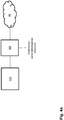
- Fig. 4a shows a schematic diagram of a network module 100 for providing a communication connection between a data processing entity DVE of a user and a communication network KN.
- the data processing entity DVE can be a communication device, for example.
- the communication network KN can be, for example, a private network, such as a company network.
- the communication network KN can comprise a WLAN or a LAN.
- a network identifier can be assigned to the network module 100.
- the network module 100 can authenticate the user by means of the personal characteristic, for example a biometric characteristic of the user.
- the network module 100 may include a memory for storing a reference feature.
- the network module 100 may include a user interface for receiving the personal characteristic.
- the network module 100 may include a processor for comparing the received personal characteristic with the reference characteristic.
- the network module 100 can then establish the connectivity to the communication network KN.
- Network module 100 may include a modem.
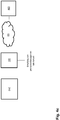
- Fig. 4b shows a schematic diagram of a network module 100 for providing a communication connection between a data processing entity DVE of a user and a communication network KN.
- the data processing entity DVE can be a communication device, for example.
- the communication network KN can be, for example, a private network, such as a company network.
- the network module 100 can communicate with an authentication server 401 via the communication network KN.
- the network module 100 can authenticate the user by means of the personal characteristic, for example a biometric characteristic of the user.
- the network module 100 may include a user interface for receiving the personal characteristic.
- the network module 100 transmits the personal characteristic to the authentication server 401.
- the authentication server 401 compares the personal characteristic with a pre-stored reference characteristic.
- the authentication server 401 transmits an authentication signal to the network module 100.
- the network module can then 100 establish the connectivity to the communication network KN.
- Network module 100 may include a modem.
- Fig. 4c shows a schematic diagram of a network module 100 for providing a communication connection between a data processing entity DVE of a user and a communication network KN.
- the data processing entity DVE can be a communication device, for example.
- the communication network KN can be a mobile communication network and can comprise, for example, a radio access network (RAN).
- RAN radio access network
- the authentication of the network module 100 with respect to the radio access can take place by means of a network authentication server 403.
- the second communication interface of the network module 100 has a subscriber identity module, in particular a SIM module or an eSIM module or an iSIM module, for communication via the communication network KN.
- the network module 100 establishes the RAN connectivity.
- the network module 100 can dial into the communication network KN, and the subscriber identity of the network module 100 can be checked by the network authentication server 403.
- a communication link is provided for the network module 100, which can operate, for example, as a bridge.
- the data processing entity DVE therefore does not require its own subscriber identity module.
- the further procedure corresponds to that which is in connection with Fig. 4a has been described.
- Fig. 4d shows a schematic diagram of a network module 100 for providing a communication connection between a data processing entity DVE of a user and a communication network KN.
- the data processing entity DVE can be a communication device, for example.
- the communication network KN can be a mobile communication network and can comprise, for example, a radio access network (RAN).
- the network module 100 can communicate with an authentication server 401 via the communication network KN.
- the authentication of the network module 100 with respect to the radio access can take place by means of a network authentication server 403.
- the second communication interface of the network module 100 has a subscriber identity module, in particular a SIM module or an eSIM module or an iSIM module, for communication via the communication network KN.
- the network module 100 establishes the RAN connectivity.
- the network module 100 can dial into the communication network KN, and the subscriber identity of the network module 100 can be checked by the network authentication server 403.
- a communication link is provided for the network module 100, which can operate, for example, as a bridge.
- the data processing entity DVE therefore does not require its own subscriber identity module.
- the further procedure corresponds to that which is in connection with Fig. 4b has been described.
Landscapes
- Engineering & Computer Science (AREA)
- Computer Security & Cryptography (AREA)
- General Engineering & Computer Science (AREA)
- Computer Hardware Design (AREA)
- Signal Processing (AREA)
- Computer Networks & Wireless Communication (AREA)
- Computing Systems (AREA)
- Theoretical Computer Science (AREA)
- Health & Medical Sciences (AREA)
- Biomedical Technology (AREA)
- General Health & Medical Sciences (AREA)
- Software Systems (AREA)
- Physics & Mathematics (AREA)
- General Physics & Mathematics (AREA)
- Mobile Radio Communication Systems (AREA)
Abstract
Description
- Die vorliegende Erfindung betrifft das Gebiet der Kommunikationstechnik, insbesondere der Netzwerkauthentifizierung zum Aufbauen einer Kommunikationsverbindung.
- Im Zuge der digitalen Transformation kommt eine Vielzahl interaktiver Geräte mit einer Vielzahl von Schnittstellen zum Einsatz. Hierbei existieren einzelne Komponenten zur sicheren Authentifizierung von Personen, beispielsweise mittels Fingerabdrücken, und separate Komponenten zur sicheren Verbindung von Computern via Internet mit beispielsweise mit einem Firmennetzwerk.
- Die Vielfalt der Komponenten für die Digitalisierung ist sehr groß und dadurch teilweise unübersichtlich. Eine Vielzahl der existierenden Komponenten ist zudem wenig benutzerfreundlich und wichtige Sicherheitsfunktionen sind teilweise nicht implementiert. Viele Computer sind zudem ungeschützt mit dem Internet verbunden und können leicht Opfer von Cyberangriffen werden und wirtschaftliche Schäden verursachen, beispielsweise durch einen unkontrollierten Zugriff auf Daten.
- Es ist eine Aufgabe der vorliegenden Erfindung, ein effizientes Konzept zum Bereitstellen einer Kommunikationsverbindung zwischen einer Datenverarbeitungsentität eines Benutzers und einem Kommunikationsnetzwerk zu schaffen.
- Diese Aufgabe wird durch die Merkmale der unabhängigen Ansprüche gelöst. Vorteilhafte Ausführungsformen der Erfindung sind Gegenstand der Beschreibung, der Zeichnungen sowie der abhängigen Ansprüche.
- Die vorliegende Erfindung basiert auf der Erkenntnis, dass die obige Aufgabe durch eine Verschmelzung von sicherer Authentifizierung, beispielsweise durch eine biometrische Authentifizierung mittels Fingerabdruck oder verhaltensbasierter Merkmale, und sicherer Kommunikation, beispielsweise sicherer drahtloser Kommunikation mittels LTE bzw. 5G zu einem Netzwerkmodul gelöst werden kann. Dadurch wird erreicht, dass eine intrinsische Sicherheit zum Schutz vor Schadcode bereitgestellt werden kann. Der Benutzer kann ferner die Kontrolle über aufgebaute Kommunikationsverbindungen und Daten sichern und behalten. Ferner kann eine einfache Integration in Geräte oder Maschinen im Umfeld des Geräte- und Maschinenbaus realisiert werden. Zudem kann eine Plattform für vielfältige Anwendungen, beispielsweise für einen Zugang zu einem Firmennetzwerk, Zugang zu einer Produktionsanlage für Fernwartungen, oder für den Geräte- und Maschinenbau realisiert werden. Das Netzwerkmodul kann besonders vorteilhaft im Umfeld des Internet-of-Things (loT) und der Industrie 4.0 zum Einsatz kommen. Das Netzwerkmodul kann hochintegriert implementiert werden.
- Gemäß einem ersten Aspekt betrifft die Erfindung ein Netzwerkmodul zum Bereitstellen einer Kommunikationsverbindung zwischen einer Datenverarbeitungsentität eines Benutzers und einem Kommunikationsnetzwerk. Das Netzwerkmodul umfasst eine erste Kommunikationsschnittstelle für die drahtgebundene Kommunikation mit der Datenverarbeitungsentität, eine zweite Kommunikationsschnittstelle für die Kommunikation mit dem Kommunikationsnetzwerk, eine Benutzerschnittstelle, welche ausgebildet ist, ein personenbezogenes Merkmal des Benutzers zu empfangen, und einen Prozessor, welcher ausgebildet ist, den Benutzer auf der Basis des empfangenen personenbezogenen Merkmals für den Zugriff auf das Kommunikationsnetzwerk zu authentifizieren, wobei der Prozessor ferner ausgebildet ist, bei erfolgreicher Authentifizierung des Benutzers eine Kommunikationsverbindung zwischen der ersten Kommunikationsschnittstelle und dem Kommunikationsnetzwerk über die zweite Kommunikationsschnittstelle freizugeben.
- Die Datenverarbeitungsentität kann beispielsweise ein Computer des Benutzers, ein Kommunikationsgerät des Benutzers, oder eine Kombination eines Computers und eines Kommunikationsgerätes des Benutzers sein.
- Gemäß einer Ausführungsform ist das personenbezogene Merkmal des Benutzers ein biometrisches Merkmal des Benutzers, wobei die Benutzerschnittstelle ausgebildet ist, das biometrische Merkmal des Benutzers, insbesondere einen Fingerabdruck oder ein Iris-Bild oder ein Venenbild, aufzunehmen. Dadurch wird der Vorteil erreicht, dass der Benutzer zuverlässig authentifiziert werden kann. Die Authentifizierung kann beispielsweise nach Rolle (Role Based Access Control; ANSI 359-2004) oder nach Attributen (Attribut Based Access Control; NIST 800-162) erfolgen.
- Gemäß einer Ausführungsform weist die Benutzerschnittstelle einen Fingerabdruckleser oder einen Venenbildleser oder einen Iris-Scanner zum Aufnehmen des biometrischen Merkmals des Benutzers auf. Dadurch wird der Vorteil erreicht, dass das biometrische Merkmal als personenbezogenes Merkmal effizient aufgenommen werden kann.
- Gemäß einer Ausführungsform umfasst das Netzwerkmodul einen Speicher, in welchem ein Referenzmerkmal gespeichert ist, insbesondere ein Referenz-Fingerabdruck oder ein Referenz-Iris-Bild oder ein Referenz-Venenbild, wobei der Prozessor ausgebildet ist, das empfangene personenbezogene Merkmal mit dem gespeicherten Referenzmerkmal zu vergleichen und bei einer Übereinstimmung zwischen dem empfangenen personenbezogenen Merkmal und dem gespeicherten Referenzmerkmal den Benutzer zu authentifizieren. Dadurch wird der Vorteil erreicht, dass die Authentifizierung des Benutzers autark durch das Netzwerkmodul durchgeführt werden kann.
- Gemäß einer Ausführungsform ist die zweite Kommunikationsschnittstelle ausgebildet, das empfangene personenbezogene Merkmal über das Kommunikationsnetzwerk an einen Authentifizierungsserver zur Authentifizierung des Benutzers für den Zugriff auf das Kommunikationsnetzwerk zu übermitteln, wobei die zweite Kommunikationsschnittstelle ausgebildet ist, von dem Authentifizierungsserver über das Kommunikationsnetzwerk ein Authentifizierungssignal zu empfangen, und wobei der Prozessor ausgebildet ist, die Kommunikationsverbindung zwischen der ersten Kommunikationsschnittstelle und dem Kommunikationsnetzwerk über die zweite Kommunikationsschnittstelle freizugeben falls das Authentifizierungssignal die Authentifizierung des Benutzers für den Zugriff auf das Kommunikationsnetzwerk anzeigt. Dadurch wird der Vorteil erreicht, dass Referenzmerkmals zentral durch den Authentifizierungsserver verwaltet werden können. Zugleich können Speicherressourcen und/oder Rechenressourcen auf dem Netzwerkmodul eingespart werden.
- Gemäß einer Ausführungsform ist der Prozessor ausgebildet, bei erfolgreicher Authentifizierung des Benutzers die zweite Kommunikationsschnittstelle zum Aufbauen einer Kommunikationsverbindung anzuweisen, und wobei die zweite Kommunikationsschnittstelle ausgebildet ist, die Kommunikationsverbindung mit dem Kommunikationsnetzwerk aufzubauen. Dadurch wird der Vorteil erreicht, dass eine Kommunikationsverbindung erstmalig durch die zweite Kommunikationsschnittstelle aufgebaut werden kann.
- Gemäß einer Ausführungsform ist der Prozessor ausgebildet, bei erfolgreicher Authentifizierung des Benutzers eine Kommunikationsverbindung zwischen der ersten Kommunikationsschnittstelle und der zweiten Kommunikationsschnittstelle, insbesondere bei bestehender Kommunikationsverbindung zwischen der zweiten Kommunikationsschnittstelle und dem Kommunikationsnetzwerk, herzustellen, insbesondere die erste Kommunikationsschnittstelle mit der zweiten Kommunikationsschnittstelle mittels eines steuerbaren Schalters zu verbinden. Dadurch wird der Vorteil erreicht, dass die Datenverarbeitungsentität effizient über das Netzwerkmodul mit dem Kommunikationsnetzwerk kommunizieren kann.
- Gemäß einer Ausführungsform weist die zweite Kommunikationsschnittstelle ein Teilnehmeridentitätsmodul, insbesondere ein SIM-Modul oder ein eSIM-Modul oder ein iSIM-Modul, für die Kommunikation über das Kommunikationsnetzwerk auf, wobei das Kommunikationsnetzwerk ein mobiles Kommunikationsnetzwerk ist. Das iSIM-Modul kann beispielsweise als Firmware in einer sicheren Enklave des Prozessors implementiert sein. Dadurch wird der Vorteil erreicht, dass die Datenverarbeitungsentität kein eigenes Teilnehmeridentitätsmodul zur Kommunikation mit dem Kommunikationsnetzwerk benötigt.
- Gemäß einer Ausführungsform ist die zweite Kommunikationsschnittstelle ausgebildet, mit dem Kommunikationsnetzwerk drahtgebunden, insbesondere gemäß der Ethernet- oder DSL- oder LAN-Technologie, oder drahtlos, insbesondere gemäß der WLAN- oder Bluetooth-Technologie, zu kommunizieren. Dadurch wird der Vorteil erreicht, dass das Netzwerkmodul effizient über das Kommunikationsnetzwerk kommunizieren kann.
- Gemäß einer Ausführungsform ist die erste Kommunikationsschnittstelle eine drahtgebundene Kommunikationsschnittstelle, insbesondere eine USB- oder LAN- oder Ethernet-Schnittstelle. Dadurch wird der Vorteil erreicht, dass das Netzwerkmodul effizient mit der Datenverarbeitungsentität kommunizieren kann.
- Gemäß einer Ausführungsform ist die erste Kommunikationsschnittstelle eine drahtgebundene Kommunikationsschnittstelle, welche ausgebildet ist, elektrische Energie zum Betreiben des Netzwerkmoduls von der Datenverarbeitungsentität zu empfangen. Dadurch wird der Vorteil erreicht, dass auf eine eigene Energieversorgung des Netzwerkmoduls verzichtet werden kann.
- Gemäß einer Ausführungsform ist das Netzwerkmodul als ein tragbarer Hardware-Token, insbesondere USB-Token, ausgeführt. Dadurch wird der Vorteil erreicht, dass das Netzwerkmodul effizient mit Datenverarbeitungsentitäten, beispielsweise über einen USB-Anschluss, kommunizieren kann.
- Gemäß einer Ausführungsform ist der Prozessor ausgebildet, die Kommunikationsverbindung zwischen der ersten Kommunikationsschnittstelle und dem Kommunikationsnetzwerk nach Ablauf eines vorbestimmten Zeitintervalls oder bei Erreichen eines vorbestimmten Datenvolumengrenzwertes oder ansprechend auf einen Empfang eines Deaktivierungssignals über die erste Kommunikationsschnittstelle von der Datenverarbeitungsentität zu deaktivieren. Auch Umgebungsbedingungen, Zugriffsregeln und/oder Vorgabe von Ressourcen können geeignete Faktoren darstellen, wie beispielsweise in NIST 800-162 beschrieben. Dadurch wird der Vorteil erreicht, dass die Kommunikation zwischen der Datenverarbeitungsentität und dem Kommunikationsnetzwerk effizient unterbunden werden kann.
- Gemäß einer Ausführungsform erreicht das Netzwerkmodul den Security Level SL3 und/oder SL4 für sichere digitale Identitäten nach IEC 62443. Dadurch wird der Vorteil erreicht, dass ein hohes Sicherheitsniveau gewährleistet werden kann.
- Gemäß einem zweiten Aspekt betrifft die Erfindung ein Verfahren zum Betreiben eines Netzwerkmoduls zum Bereitstellen einer Kommunikationsverbindung zwischen einer Datenverarbeitungsentität eines Benutzers und einem Kommunikationsnetzwerk. Das Netzwerkmodul weist eine erste Kommunikationsschnittstelle, eine zweite Kommunikationsschnittstelle, eine Benutzerschnittstelle, und einen Prozessor auf. Die erste Kommunikationsschnittstelle ist für die drahtgebundene Kommunikation mit der Datenverarbeitungsentität ausgebildet. Die zweite Kommunikationsschnittstelle ist für die Kommunikation mit dem Kommunikationsnetzwerk ausgebildet. Das Verfahren umfasst ein Empfangen eines personenbezogenen Merkmals des Benutzers durch die Benutzerschnittstelle, ein Authentifizieren des Benutzers auf der Basis des empfangenen personenbezogenen Merkmals für den Zugriff auf das Kommunikationsnetzwerk durch den Prozessor, und ein Freigeben einer Kommunikationsverbindung zwischen der ersten Kommunikationsschnittstelle und dem Kommunikationsnetzwerk über die zweite Kommunikationsschnittstelle durch den Prozessor bei erfolgreicher Authentifizierung des Benutzers.
- Das Verfahren kann durch das Netzwerkmodul ausgeführt werden. Weitere Merkmale des Verfahrens resultieren unmittelbar aus den Merkmalen und/oder der Funktionalität des Netzwerkmoduls.
- Gemäß einem dritten Aspekt betrifft die Erfindung ein Computerprogramm mit einem Programmcode zum Durchführen des Verfahrens, wenn der Programmcode auf einem Netzwerkmodul ausgeführt wird.
- Die Erfindung kann in Hardware und/oder in Software realisiert werden.
- Weitere Ausführungsbeispiele werden bezugnehmend auf die beiliegenden Zeichnungen näher erläutert. Es zeigen:
-
Fig. 1 ein schematisches Diagramm eines Netzwerkmoduls zum Bereitstellen einer Kommunikationsverbindung zwischen einer Datenverarbeitungsentität eines Benutzers und einem Kommunikationsnetzwerk; -
Fig. 2 ein schematisches Diagramm eines Verfahrens zum Betreiben eines Netzwerkmoduls zum Bereitstellen einer Kommunikationsverbindung zwischen einer Datenverarbeitungsentität eines Benutzers und einem Kommunikationsnetzwerk; -
Fig. 3 ein schematisches Diagramm eines Netzwerkmoduls zum Bereitstellen einer Kommunikationsverbindung zwischen einer Datenverarbeitungsentität eines Benutzers und einem Kommunikationsnetzwerk; -
Fig. 4a ein schematisches Diagramm eines Netzwerkmoduls zum Bereitstellen einer Kommunikationsverbindung zwischen einer Datenverarbeitungsentität eines Benutzers und einem Kommunikationsnetzwerk; -
Fig. 4b ein schematisches Diagramm eines Netzwerkmoduls zum Bereitstellen einer Kommunikationsverbindung zwischen einer Datenverarbeitungsentität eines Benutzers und einem Kommunikationsnetzwerk; -
Fig. 4c ein schematisches Diagramm eines Netzwerkmoduls zum Bereitstellen einer Kommunikationsverbindung zwischen einer Datenverarbeitungsentität eines Benutzers und einem Kommunikationsnetzwerk; und -
Fig. 4d ein schematisches Diagramm eines Netzwerkmoduls zum Bereitstellen einer Kommunikationsverbindung zwischen einer Datenverarbeitungsentität eines Benutzers und einem Kommunikationsnetzwerk. -
Fig. 1 zeigt ein schematisches Diagramm eines Netzwerkmoduls 100 zum Bereitstellen einer Kommunikationsverbindung zwischen einer Datenverarbeitungsentität DVE eines Benutzers und einem Kommunikationsnetzwerk KN. - Das Netzwerkmodul 100 umfasst eine erste Kommunikationsschnittstelle 101 für die drahtgebundene Kommunikation mit der Datenverarbeitungsentität DVE, eine zweite Kommunikationsschnittstelle 103 für die Kommunikation mit dem Kommunikationsnetzwerk KN, eine Benutzerschnittstelle 105, welche ausgebildet ist, ein personenbezogenes Merkmal des Benutzers zu empfangen, und einen Prozessor 107, welcher ausgebildet ist, den Benutzer auf der Basis des empfangenen personenbezogenen Merkmals für den Zugriff auf das Kommunikationsnetzwerk KN zu authentifizieren, wobei der Prozessor 107 ferner ausgebildet ist, bei erfolgreicher Authentifizierung des Benutzers eine Kommunikationsverbindung zwischen der ersten Kommunikationsschnittstelle 101 und dem Kommunikationsnetzwerk KN über die zweite Kommunikationsschnittstelle 103 freizugeben.
- Das Netzwerkmodul 100, insbesondere die Benutzerschnittstelle 105, kann weitere personenbezogene Merkmale des Benutzers empfangen. Ferner kann das Netzwerkmodul 100, insbesondere der Prozessor 107, den Benutzer auf der Basis der empfangenen weiteren personenbezogenen Merkmale authentifizieren. Dadurch kann eine Authentifizierung des Benutzers mittels multi-modaler Biometrie erfolgen. Dies kann die Benutzerfreundlichkeit und die Sicherheit weiter erhöhen.
- Das Netzwerkmodul 100 kann eine benutzerfreundliche Authentifizierung mit einer autarken, hochsicheren Kommunikation ermöglichen. Das Netzwerkmodul 100 kann zudem die folgenden Merkmale aufweisen:
- Hochintegrierte 2D/3D-Chipmodul-Bauweise mit zentralem Mikroprozessor, beispielsweise einem nach ISO/IEC 15408 sicherheitszertifizierten TPM-Mikroprozessor;
- Komplexe Aufbau- und Verbindungstechnik, z.B. System-in-Panel;
- Innovative biometrische Authentisierungstechnologien, z.B. mittels Fingerabdruck oder verhaltensbasierter Authentifizierung unter Verwendung eines Gyro-Sensors;
- Autarke Kommunikationstechnologien, z.B. WiFi, LTE/5G, NFC oder Bluetooth LE;
- Geringe Stromaufnahme, z.B. mittels USB oder Energy Harvesting;
- Ableitung der Wärme und Lichtleitung für integrierte Benutzerführung, z.B. mittels LEDs;
- User-Experience- (UX)- und Anwendungsspezifischer Designprozess;
- Fertigung mit neuen Materialien, z.B. Organoblech oder Verbundfasermaterialien;
- Robuste Ausführung für Nutzung in der Produktionsumgebung.
- Die Implementierung des Netzwerkmoduls 100 kann in Anlehnung an den standardisierten Lebenszyklus von sicheren Identitäten nach ISO/IEC 29115, dem Zugangsmanagement nach ISO/IEC 29146, dem Identitätsmanagement nach ISO/IEC 24760-1 sowie der Referenzarchitektur für I4.0 nach DIN SPEC 91345 erfolgen.
-
Fig. 2 zeigt ein schematisches Diagramm eines Verfahrens 200 zum Betreiben eines Netzwerkmoduls zum Bereitstellen einer Kommunikationsverbindung zwischen einer Datenverarbeitungsentität eines Benutzers und einem Kommunikationsnetzwerk. Das Netzwerkmodul weist eine erste Kommunikationsschnittstelle, eine zweite Kommunikationsschnittstelle, eine Benutzerschnittstelle, und einen Prozessor auf. Die erste Kommunikationsschnittstelle ist für die drahtgebundene Kommunikation mit der Datenverarbeitungsentität ausgebildet. Die zweite Kommunikationsschnittstelle ist für die Kommunikation mit dem Kommunikationsnetzwerk ausgebildet. - Das Verfahren 200 umfasst ein Empfangen 201 eines personenbezogenen Merkmals des Benutzers durch die Benutzerschnittstelle, ein Authentifizieren 203 des Benutzers auf der Basis des empfangenen personenbezogenen Merkmals für den Zugriff auf das Kommunikationsnetzwerk durch den Prozessor, und ein Freigeben 205 einer Kommunikationsverbindung zwischen der ersten Kommunikationsschnittstelle und dem Kommunikationsnetzwerk über die zweite Kommunikationsschnittstelle durch den Prozessor bei erfolgreicher Authentifizierung des Benutzers.
- Das Verfahren 200 kann beispielsweise unter Verwendung eines Computerprogramms mit einem Programmcode durch das Netzwerkmodul ausgeführt werden.
-
Fig. 3 zeigt ein schematisches Diagramm eines Netzwerkmoduls 100 zum Bereitstellen einer Kommunikationsverbindung zwischen einer Datenverarbeitungsentität DVE eines Benutzers und einem Kommunikationsnetzwerk KN. Das Netzwerkmodul 100 kann als benutzergesteuertes, hochintegriertes Modul implementiert werden. Dabei kann eine biometrische Authentifizierung und eine sichere autarke Kommunikation verwendet werden. Gemäß einer Ausführungsform erreicht das Netzwerkmodul 100 den Security Level 4 (SL4) in Verbindung mit Secure Identification (SID) nach IEC 62443-3-3. - Das Netzwerkmodul 100 kann beispielsweise die Datenverarbeitungsentität DVE vor Schadcode schützen. Ferner können Datensparsamkeit und Schutz der Privatsphäre berücksichtigt werden. Gemäß einer Ausführungsform wird nur dann eine sichere Kommunikationsverbindung ermöglicht, wenn der Benutzer dies ausdrücklich will.
- Gemäß einer Ausführungsform erfolgt eine Verschmelzung von sicherer biometrischer Authentifizierung, beispielsweise mittels Fingerabdruck oder verhaltensbasierter Merkmale, und hochsicherer mobiler Kommunikation, beispielsweise mittels LTE, zu einem hochintegrierten Netzwerkmodul 100 für loT und Industrie 4.0 Anwendungen im Sinne einer 2-Faktor Authentifizierung (Besitz und Eigenschaft). Das Netzwerkmodul 100 kann Teil einer massenmarkttauglichen Plattform für zahlreiche IoT-Anwendungsgebiete, beispielsweise für einen Zugang zu Firmennetzwerken (VPN), eine Fernwartung (Remote Access), oder für den Geräte- und Maschinenbau (loT), sein. Das Netzwerkmodul 100 kann ferner neben der Cyber-Sicherheit die Flexibilität für Industrie 4.0 und IoT-Anwendungen gewährleisten.
- Die fortschreitende Digitalisierung ermöglicht eine Hochintegration von Silizium-Komponenten im Wafer Level Packaging bzw. im Panel Level Packaging anstelle einer Integration diskreter Komponenten. Vernetzte elektronische Geräte prägen verstärkt den Lebens- und Arbeitsalltag (loT). Die Digitalisierung bringt neue Möglichkeiten der Kommunikation, des Wissenszugangs und Chancen der Entfaltung neuer Geschäftsmodelle. Die Vielfalt der Komponenten für die Digitalisierung ist sehr groß und dadurch teilweise unübersichtlich. Viele der existierenden Komponenten sind zudem wenig benutzerfreundlich und wichtige Sicherheitsfunktionen sind zumeist nicht implementiert.
- Zudem werden hohe Erwartungen und Anforderungen an digitale Komponenten und Kommunikationstechnologien gestellt, beispielsweise eine vollständige Kontrolle durch den Benutzer und Bedienkomfort, eine unbeschränkte Vertraulichkeit und Sicherheit, eine hohe Zuverlässigkeit, Flexibilität und Verfügbarkeit, sowie Integrität. Weitere Schutzziele sind u.a. Authentizität, Nichtabstreitbarkeit und Zurechenbarkeit.
- Gemäß einer Ausführungsform stellt das Netzwerkmodul 100 eine Synthese von benutzerfreundlicher Authentifizierung auf hohem technischen Niveau und autarker, hochsicherer und mobiler Kommunikation dar. High-level Sicherheitskomponenten werden somit massenmarkttauglich und haben die Chance, sich als zentrale Komponente in einer großen Menge von zukünftigen IoT-Geräten zu etablieren.
- Gemäß einer Ausführungsform bildet das Netzwerkmodul 100 eine miniaturisierte Einheit aus Faserverbundwerkstoff, hochintegriert mit autarker Kommunikation, Konnektivität und Stromversorgung über USB oder Energy Harvesting und Authentifizierung über biometrische Merkmale. Verschiedene Ausführungsformen als ID-Karte, Wearable, USB-Token oder Steckmodul sind möglich.
- Das Netzwerkmodul 100 ermöglicht beispielsweise eine Kommunikation und Authentifizierung unabhängig von der Datenverarbeitungsentität DVE, beispielsweise einem Computer, und schützt damit die Sicherheitsfunktionen selbst vor Schadcode. Gemäß einer Ausführungsform verlassen sensible biometrische Daten das Netzwerkmodul 100 nicht. Die biometrischen Daten können im Netzwerkmodul 100 sicher gespeichert und geprüft werden.
- In einem ersten beispielhaften Anwendungsszenario möchte sich der Benutzer einfach, schnell und sicher mit einem Firmennetzwerk verbinden, ohne sich Passwörter merken zu müssen. Mithilfe des Netzwerkmoduls 100, das mit einem Computer als Datenverarbeitungsentität DVE verbunden werden kann, erfolgt die einfache und sichere Authentifizierung und es wird autark ein verschlüsseltes Virtual Private Network (VPN) in das Firmennetzwerk (Office-IT und/oder Operation-IT) aufgebaut.
- In einem zweiten beispielhaften Anwendungsszenario erfolgt eine authentifizierte Fernwartung (Remote Access) auf Computer und Maschinen (Fernwartung/Teleservice/IoT). Der Benutzer verbindet lediglich das Netzwerkmodul 100 mit dem zu wartenden Computer, authentisiert sich z.B. mittels Fingerabdruck und eine sichere Kommunikationsverbindung wird geöffnet.
- In einem dritten beispielhaften Anwendungsszenario kann das Netzwerkmodul 100 als Komponente in Geräte oder Maschinen integriert werden. Dies ermöglicht beispielsweise den Aufbau einer schnellen, kontrollierten Kommunikationsverbindung des Gerätes mit dem Intranet, dem Internet oder einer Cloud, wenn der Benutzer dies ausdrücklich durch seine biometrische Authentifizierung freigibt.
-
Fig. 4a zeigt ein schematisches Diagramm eines Netzwerkmoduls 100 zum Bereitstellen einer Kommunikationsverbindung zwischen einer Datenverarbeitungsentität DVE eines Benutzers und einem Kommunikationsnetzwerk KN. - Die Datenverarbeitungsentität DVE kann beispielsweise ein Kommunikationsgerät sein. Das Kommunikationsnetzwerk KN kann beispielsweise ein privates Netzwerk, wie ein Firmennetzwerk, sein. Das Kommunikationsnetzwerk KN kann ein WLAN oder ein LAN umfassen. Dem Netzwerkmodul 100 kann eine Netzwerkkennung zugeordnet sein.
- Das Netzwerkmodul 100 kann den Benutzer mittels des personenbezogenen Merkmals, beispielsweise eines biometrischen Merkmals des Benutzers, authentifizieren. Das Netzwerkmodul 100 kann einen Speicher zum Speichern eines Referenzmerkmals umfassen. Das Netzwerkmodul 100 kann eine Benutzerschnittstelle zum Empfangen des personenbezogenen Merkmals umfassen. Das Netzwerkmodul 100 kann einen Prozessor zum Vergleichen des empfangenen personenbezogenen Merkmals mit dem Referenzmerkmal umfassen. Daraufhin kann das Netzwerkmodul 100 die Konnektivität zum Kommunikationsnetzwerk KN herstellen. Das Netzwerkmodul 100 kann ein Modem umfassen.
-
Fig. 4b zeigt ein schematisches Diagramm eines Netzwerkmoduls 100 zum Bereitstellen einer Kommunikationsverbindung zwischen einer Datenverarbeitungsentität DVE eines Benutzers und einem Kommunikationsnetzwerk KN. - Die Datenverarbeitungsentität DVE kann beispielsweise ein Kommunikationsgerät sein. Das Kommunikationsnetzwerk KN kann beispielsweise ein privates Netzwerk, wie ein Firmennetzwerk, sein. Das Netzwerkmodul 100 kann über das Kommunikationsnetzwerk KN mit einem Authentifizierungsserver 401 kommunizieren.
- Das Netzwerkmodul 100 kann den Benutzer mittels des personenbezogenen Merkmals, beispielsweise eines biometrischen Merkmals des Benutzers, authentifizieren. Das Netzwerkmodul 100 kann eine Benutzerschnittstelle zum Empfangen des personenbezogenen Merkmals umfassen. Das Netzwerkmodul 100 überträgt das personenbezogene Merkmal an den Authentifizierungsserver 401. Der Authentifizierungsserver 401 vergleicht das personenbezogene Merkmal mit einem vorgespeicherten Referenzmerkmal. Der Authentifizierungsserver 401 überträgt ein Authentifizierungssignal an das Netzwerkmodul 100. Daraufhin kann das Netzwerkmodul 100 die Konnektivität zum Kommunikationsnetzwerk KN herstellen. Das Netzwerkmodul 100 kann ein Modem umfassen.
-
Fig. 4c zeigt ein schematisches Diagramm eines Netzwerkmoduls 100 zum Bereitstellen einer Kommunikationsverbindung zwischen einer Datenverarbeitungsentität DVE eines Benutzers und einem Kommunikationsnetzwerk KN. - Die Datenverarbeitungsentität DVE kann beispielsweise ein Kommunikationsgerät sein. Das Kommunikationsnetzwerk KN kann ein mobiles Kommunikationsnetzwerk sein, und kann beispielsweise ein Funkzugangsnetzwerk (Radio-Access-Network, RAN) umfassen. Die Authentifikation des Netzwerkmoduls 100 hinsichtlich des Funkzugangs kann mittels eines Netzwerkauthentifikationsservers 403 erfolgen. Die zweite Kommunikationsschnittstelle des Netzwerkmoduls 100 weist ein Teilnehmeridentitätsmodul, insbesondere ein SIM-Modul oder ein eSIM-Modul oder ein iSIM-Modul, für die Kommunikation über das Kommunikationsnetzwerk KN auf.
- Das Netzwerkmodul 100 stellt die RAN-Konnektivität her. Das Netzwerkmodul 100 kann sich in das Kommunikationsnetzwerk KN einwählen, wobei die Teilnehmeridentität des Netzwerkmoduls 100 durch den Netzwerkauthentifikationsserver 403 überprüft werden kann. Eine Kommunikationsverbindung wird für das Netzwerkmodul 100 bereitgestellt, welches beispielsweise als Bridge operieren kann. Die Datenverarbeitungsentität DVE benötigt folglich kein eigenes Teilnehmeridentitätsmodul. Das weitere Vorgehen entspricht jenem, welches in Verbindung mit
Fig. 4a beschrieben wurde. -
Fig. 4d zeigt ein schematisches Diagramm eines Netzwerkmoduls 100 zum Bereitstellen einer Kommunikationsverbindung zwischen einer Datenverarbeitungsentität DVE eines Benutzers und einem Kommunikationsnetzwerk KN. - Die Datenverarbeitungsentität DVE kann beispielsweise ein Kommunikationsgerät sein. Das Kommunikationsnetzwerk KN kann ein mobiles Kommunikationsnetzwerk sein, und kann beispielsweise ein Funkzugangsnetzwerk (Radio-Access-Network, RAN) umfassen. Das Netzwerkmodul 100 kann über das Kommunikationsnetzwerk KN mit einem Authentifizierungsserver 401 kommunizieren. Die Authentifikation des Netzwerkmoduls 100 hinsichtlich des Funkzugangs kann mittels eines Netzwerkauthentifikationsservers 403 erfolgen. Die zweite Kommunikationsschnittstelle des Netzwerkmoduls 100 weist ein Teilnehmeridentitätsmodul, insbesondere ein SIM-Modul oder ein eSIM-Modul oder ein iSIM-Modul, für die Kommunikation über das Kommunikationsnetzwerk KN auf.
- Das Netzwerkmodul 100 stellt die RAN-Konnektivität her. Das Netzwerkmodul 100 kann sich in das Kommunikationsnetzwerk KN einwählen, wobei die Teilnehmeridentität des Netzwerkmoduls 100 durch den Netzwerkauthentifikationsserver 403 überprüft werden kann. Eine Kommunikationsverbindung wird für das Netzwerkmodul 100 bereitgestellt, welches beispielsweise als Bridge operieren kann. Die Datenverarbeitungsentität DVE benötigt folglich kein eigenes Teilnehmeridentitätsmodul. Das weitere Vorgehen entspricht jenem, welches in Verbindung mit
Fig. 4b beschrieben wurde. - Alle in Verbindung mit einzelnen Ausführungsformen beschriebenen und gezeigten Merkmale können in beliebiger Kombination in dem erfindungsgemäßen Gegenstand vorgesehen sein, um gleichzeitig deren vorteilhafte Wirkungen zu realisieren.
-
- 100
- Netzwerkmodul
- 101
- Erste Kommunikationsschnittstelle
- 103
- Zweite Kommunikationsschnittstelle
- 105
- Benutzerschnittstelle
- 107
- Prozessor
- 200
- Verfahren
- 201
- Empfangen
- 203
- Authentifizieren
- 205
- Freigeben
- 401
- Authentifizierungsserver
- 403
- Netzwerkauthentifikationsserver
- DVE
- Datenverarbeitungsentität
- KN
- Kommunikationsnetzwerk
Claims (15)
- Netzwerkmodul (100) zum Bereitstellen einer Kommunikationsverbindung zwischen einer Datenverarbeitungsentität (DVE) eines Benutzers und einem Kommunikationsnetzwerk (KN), mit:einer ersten Kommunikationsschnittstelle (101) für die drahtgebundene Kommunikation mit der Datenverarbeitungsentität (DVE);einer zweiten Kommunikationsschnittstelle (103) für die Kommunikation mit dem Kommunikationsnetzwerk (KN);einer Benutzerschnittstelle (105), welche ausgebildet ist, ein personenbezogenes Merkmal des Benutzers zu empfangen; undeinem Prozessor (107), welcher ausgebildet ist, den Benutzer auf der Basis des empfangenen personenbezogenen Merkmals für den Zugriff auf das Kommunikationsnetzwerk (KN) zu authentifizieren, wobei der Prozessor (107) ferner ausgebildet ist, bei erfolgreicher Authentifizierung des Benutzers eine Kommunikationsverbindung zwischen der ersten Kommunikationsschnittstelle (101) und dem Kommunikationsnetzwerk (KN) über die zweite Kommunikationsschnittstelle (103) freizugeben.
- Netzwerkmodul (100) nach Anspruch 1, wobei das personenbezogene Merkmal des Benutzers ein biometrisches Merkmal des Benutzers ist, und wobei die Benutzerschnittstelle (105) ausgebildet ist, das biometrische Merkmal des Benutzers, insbesondere einen Fingerabdruck oder ein Iris-Bild oder ein Venenbild, aufzunehmen.
- Netzwerkmodul (100) nach Anspruch 2, wobei die Benutzerschnittstelle (105) einen Fingerabdruckleser oder einen Venenbildleser oder einen Iris-Scanner zum Aufnehmen des biometrischen Merkmals des Benutzers aufweist.
- Netzwerkmodul (100) nach einem der vorstehenden Ansprüche, mit einem Speicher, in welchem ein Referenzmerkmal gespeichert ist, insbesondere ein Referenz-Fingerabdruck oder ein Referenz-Iris-Bild oder ein Referenz-Venenbild, und wobei der Prozessor (107) ausgebildet ist, das empfangene personenbezogene Merkmal mit dem gespeicherten Referenzmerkmal zu vergleichen und bei einer Übereinstimmung zwischen dem empfangenen personenbezogenen Merkmal und dem gespeicherten Referenzmerkmal den Benutzer zu authentifizieren.
- Netzwerkmodul (100) nach einem der vorstehenden Ansprüche, wobei die zweite Kommunikationsschnittstelle (103) ausgebildet ist, das empfangene personenbezogene Merkmal über das Kommunikationsnetzwerk (KN) an einen Authentifizierungsserver (401) zur Authentifizierung des Benutzers für den Zugriff auf das Kommunikationsnetzwerk (KN) zu übermitteln, und wobei die zweite Kommunikationsschnittstelle (103) ausgebildet ist, von dem Authentifizierungsserver (401) über das Kommunikationsnetzwerk (KN) ein Authentifizierungssignal zu empfangen, und wobei der Prozessor (107) ausgebildet ist, die Kommunikationsverbindung zwischen der ersten Kommunikationsschnittstelle (101) und dem Kommunikationsnetzwerk (KN) über die zweite Kommunikationsschnittstelle (103) freizugeben falls das Authentifizierungssignal die Authentifizierung des Benutzers für den Zugriff auf das Kommunikationsnetzwerk (KN) anzeigt.
- Netzwerkmodul (100) nach einem der vorstehenden Ansprüche, wobei der Prozessor (107) ausgebildet ist, bei erfolgreicher Authentifizierung des Benutzers die zweite Kommunikationsschnittstelle (103) zum Aufbauen einer Kommunikationsverbindung anzuweisen, und wobei die zweite Kommunikationsschnittstelle (103) ausgebildet ist, die Kommunikationsverbindung mit dem Kommunikationsnetzwerk (KN) aufzubauen.
- Netzwerkmodul (100) nach einem der vorstehenden Ansprüche, wobei der Prozessor (107) ausgebildet ist, bei erfolgreicher Authentifizierung des Benutzers eine Kommunikationsverbindung zwischen der ersten Kommunikationsschnittstelle (101) und der zweiten Kommunikationsschnittstelle (103), insbesondere bei bestehender Kommunikationsverbindung zwischen der zweiten Kommunikationsschnittstelle (103) und dem Kommunikationsnetzwerk (KN), herzustellen, insbesondere die erste Kommunikationsschnittstelle (101) mit der zweiten Kommunikationsschnittstelle (103) mittels eines steuerbaren Schalters zu verbinden.
- Netzwerkmodul (100) nach einem der vorstehenden Ansprüche, wobei die zweite Kommunikationsschnittstelle (103) ein Teilnehmeridentitätsmodul, insbesondere ein SIM-Modul oder ein eSIM-Modul oder ein iSIM-Modul, für die Kommunikation über das Kommunikationsnetzwerk (KN) aufweist, und wobei das Kommunikationsnetzwerk (KN) ein mobiles Kommunikationsnetzwerk (KN) ist.
- Netzwerkmodul (100) nach einem der vorstehenden Ansprüche, wobei die zweite Kommunikationsschnittstelle (103) ausgebildet ist, mit dem Kommunikationsnetzwerk (KN) drahtgebunden, insbesondere gemäß der Ethernet- oder DSL- oder LAN-Technologie, oder drahtlos, insbesondere gemäß der WLAN- oder Bluetooth-Technologie, zu kommunizieren.
- Netzwerkmodul (100) nach einem der vorstehenden Ansprüche, wobei die erste Kommunikationsschnittstelle (101) eine drahtgebundene Kommunikationsschnittstelle, insbesondere eine USB- oder LAN- oder Ethernet-Schnittstelle, ist.
- Netzwerkmodul (100) nach einem der vorstehenden Ansprüche, wobei die erste Kommunikationsschnittstelle (101) eine drahtgebundene Kommunikationsschnittstelle ist, welche ausgebildet ist, elektrische Energie zum Betreiben des Netzwerkmoduls (100) von der Datenverarbeitungsentität (DVE) zu empfangen.
- Netzwerkmodul (100) nach einem der vorstehenden Ansprüche, das als ein tragbarer Hardware-Token, insbesondere USB-Token, ausgeführt ist.
- Netzwerkmodul (100) nach einem der vorstehenden Ansprüche, wobei der Prozessor (107) ausgebildet ist, die Kommunikationsverbindung zwischen der ersten Kommunikationsschnittstelle (101) und dem Kommunikationsnetzwerk (KN) nach Ablauf eines vorbestimmten Zeitintervalls oder bei Erreichen eines vorbestimmten Datenvolumengrenzwertes oder ansprechend auf einen Empfang eines Deaktivierungssignals über die erste Kommunikationsschnittstelle (101) von der Datenverarbeitungsentität (DVE) zu deaktivieren.
- Verfahren (200) zum Betreiben eines Netzwerkmoduls (100) zum Bereitstellen einer Kommunikationsverbindung zwischen einer Datenverarbeitungsentität (DVE) eines Benutzers und einem Kommunikationsnetzwerk (KN), wobei das Netzwerkmodul (100) eine erste Kommunikationsschnittstelle (101), eine zweite Kommunikationsschnittstelle (103), eine Benutzerschnittstelle (105), und einen Prozessor (107) aufweist, wobei die erste Kommunikationsschnittstelle (101) für die drahtgebundene Kommunikation mit der Datenverarbeitungsentität (DVE) ausgebildet ist, wobei die zweite Kommunikationsschnittstelle (103) für die Kommunikation mit dem Kommunikationsnetzwerk (KN) ausgebildet ist, mit:Empfangen (201) eines personenbezogenen Merkmals des Benutzers durch die Benutzerschnittstelle (105);Authentifizieren (203) des Benutzers auf der Basis des empfangenen personenbezogenen Merkmals für den Zugriff auf das Kommunikationsnetzwerk (KN) durch den Prozessor (107); undFreigeben (205) einer Kommunikationsverbindung zwischen der ersten Kommunikationsschnittstelle (101) und dem Kommunikationsnetzwerk (KN) über die zweite Kommunikationsschnittstelle (103) durch den Prozessor (107) bei erfolgreicher Authentifizierung des Benutzers.
- Computerprogramm mit einem Programmcode zum Durchführen des Verfahrens (200) nach Anspruch 14, wenn der Programmcode auf einem Netzwerkmodul (100) ausgeführt wird.
Applications Claiming Priority (1)
| Application Number | Priority Date | Filing Date | Title |
|---|---|---|---|
| DE102018119530.3A DE102018119530A1 (de) | 2018-08-10 | 2018-08-10 | Netzwerkmodul zum Bereitstellen einer Kommunikationsverbindung zwischen einer Datenverarbeitungsentität und einem Kommunikationsnetzwerk |
Publications (3)
| Publication Number | Publication Date |
|---|---|
| EP3609158A1 true EP3609158A1 (de) | 2020-02-12 |
| EP3609158B1 EP3609158B1 (de) | 2022-02-23 |
| EP3609158B8 EP3609158B8 (de) | 2022-06-08 |
Family
ID=67658615
Family Applications (1)
| Application Number | Title | Priority Date | Filing Date |
|---|---|---|---|
| EP19190738.5A Active EP3609158B8 (de) | 2018-08-10 | 2019-08-08 | Netzwerkmodul zum bereitstellen einer kommunikationsverbindung zwischen einer datenverarbeitungsentität und einem kommunikationsnetzwerk |
Country Status (2)
| Country | Link |
|---|---|
| EP (1) | EP3609158B8 (de) |
| DE (1) | DE102018119530A1 (de) |
Citations (2)
| Publication number | Priority date | Publication date | Assignee | Title |
|---|---|---|---|---|
| US20070109098A1 (en) * | 2005-07-27 | 2007-05-17 | Siemon John A | System for providing network access security |
| US20170366026A1 (en) * | 2015-06-05 | 2017-12-21 | Emory Todd | Apparatus, method, and system for securely charging mobile devices |
Family Cites Families (3)
| Publication number | Priority date | Publication date | Assignee | Title |
|---|---|---|---|---|
| AU2001284721A1 (en) * | 2000-08-04 | 2002-02-18 | First Data Corporation | Method and apparatus for access authentication entity |
| US20050123113A1 (en) * | 2003-12-09 | 2005-06-09 | Douglas Horn | Internet lockout device |
| US20140308638A1 (en) * | 2013-04-16 | 2014-10-16 | Intrinsic Value Software, Inc. | Using an earned points system to provide internet access |
-
2018
- 2018-08-10 DE DE102018119530.3A patent/DE102018119530A1/de active Pending
-
2019
- 2019-08-08 EP EP19190738.5A patent/EP3609158B8/de active Active
Patent Citations (2)
| Publication number | Priority date | Publication date | Assignee | Title |
|---|---|---|---|---|
| US20070109098A1 (en) * | 2005-07-27 | 2007-05-17 | Siemon John A | System for providing network access security |
| US20170366026A1 (en) * | 2015-06-05 | 2017-12-21 | Emory Todd | Apparatus, method, and system for securely charging mobile devices |
Also Published As
| Publication number | Publication date |
|---|---|
| EP3609158B8 (de) | 2022-06-08 |
| DE102018119530A1 (de) | 2020-02-13 |
| EP3609158B1 (de) | 2022-02-23 |
Similar Documents
| Publication | Publication Date | Title |
|---|---|---|
| DE102015215120B4 (de) | Verfahren zur verwendung einer vorrichtung zum entriegeln einer weiteren vorrichtung | |
| EP2859705B1 (de) | Autorisierung eines nutzers durch ein tragbares kommunikationsgerät | |
| EP3057025B1 (de) | Computerimplementiertes verfahren zur zugriffskontrolle | |
| EP2966605B1 (de) | Verfahren und System zur Authentifizierung eines Benutzers | |
| DE602004005461T2 (de) | Mobile Authentifizierung für den Netzwerkzugang | |
| DE112017002283T5 (de) | Effiziente bereitstellung von vorrichtungen | |
| EP3699791B1 (de) | Zugangskontrolle mit einem mobilfunkgerät | |
| DE102015111530A1 (de) | Sicheres Bereitstellen von Diagnosedaten von einem Fahrzeug für einen entfernten Server unter Verwendung eines Diagnosewerkzeugs | |
| EP3198826B1 (de) | Authentisierungs-stick | |
| DE102017121648B3 (de) | Verfahren zum anmelden eines benutzers an einem endgerät | |
| EP3266186B1 (de) | Netzwerkgerät und verfahren zum zugriff einer netzwerkkomponente auf ein datennetz | |
| DE102010010760A1 (de) | Verfahren zur Vergabe eines Schlüssels an ein einem drahtlosen Sensor-Aktor-Netz neu hinzuzufügendes Teilnehmergerät | |
| EP3167401B1 (de) | Verfahren und vorrichtung zum absichern von prozessen | |
| EP2996299B1 (de) | Verfahren und Anordnung zur Autorisierung einer Aktion an einem Selbstbedienungssystem | |
| DE102011055297A1 (de) | Verfahren sowie Netzwerk-System und Authentifizierungsvorrichtung zur Authentifizierung in einer Netzwerkapplikation | |
| EP3609158B1 (de) | Netzwerkmodul zum bereitstellen einer kommunikationsverbindung zwischen einer datenverarbeitungsentität und einem kommunikationsnetzwerk | |
| EP3798754B1 (de) | Verfahren zum automatischen anmelden eines benutzers an einem feldgerät und automationssystem | |
| EP3657750B1 (de) | Verfahren zur authentifizierung einer datenbrille in einem datennetz | |
| WO2014117939A1 (de) | Verfahren zum zugriff auf einen dienst eines servers über eine applikation eines endgeräts | |
| WO2014195194A1 (de) | Verfahren zum deaktivieren einer sicherheitsanlage | |
| DE102013103363A1 (de) | Verfahren zum gewähren eines nutzerzugriffs auf ein kommunikationssystem | |
| EP2650818A1 (de) | System und Verfahren zur sicheren Kommunikation | |
| WO2013050112A1 (de) | Markieren unsicherer daten durch ein nfc-modul | |
| EP3312753B1 (de) | Physisches sicherheitselement zum zurücksetzen eines passworts | |
| EP3783940B1 (de) | Method for authenticating a user against a service provider and authentication system |
Legal Events
| Date | Code | Title | Description |
|---|---|---|---|
| PUAI | Public reference made under article 153(3) epc to a published international application that has entered the european phase |
Free format text: ORIGINAL CODE: 0009012 |
|
| STAA | Information on the status of an ep patent application or granted ep patent |
Free format text: STATUS: THE APPLICATION HAS BEEN PUBLISHED |
|
| AK | Designated contracting states |
Kind code of ref document: A1 Designated state(s): AL AT BE BG CH CY CZ DE DK EE ES FI FR GB GR HR HU IE IS IT LI LT LU LV MC MK MT NL NO PL PT RO RS SE SI SK SM TR |
|
| AX | Request for extension of the european patent |
Extension state: BA ME |
|
| STAA | Information on the status of an ep patent application or granted ep patent |
Free format text: STATUS: REQUEST FOR EXAMINATION WAS MADE |
|
| 17P | Request for examination filed |
Effective date: 20200618 |
|
| RBV | Designated contracting states (corrected) |
Designated state(s): AL AT BE BG CH CY CZ DE DK EE ES FI FR GB GR HR HU IE IS IT LI LT LU LV MC MK MT NL NO PL PT RO RS SE SI SK SM TR |
|
| GRAP | Despatch of communication of intention to grant a patent |
Free format text: ORIGINAL CODE: EPIDOSNIGR1 |
|
| STAA | Information on the status of an ep patent application or granted ep patent |
Free format text: STATUS: GRANT OF PATENT IS INTENDED |
|
| INTG | Intention to grant announced |
Effective date: 20210913 |
|
| REG | Reference to a national code |
Ref country code: DE Ref legal event code: R108 Ref document number: 502019003471 Country of ref document: DE |
|
| GRAS | Grant fee paid |
Free format text: ORIGINAL CODE: EPIDOSNIGR3 |
|
| GRAA | (expected) grant |
Free format text: ORIGINAL CODE: 0009210 |
|
| STAA | Information on the status of an ep patent application or granted ep patent |
Free format text: STATUS: THE PATENT HAS BEEN GRANTED |
|
| AK | Designated contracting states |
Kind code of ref document: B1 Designated state(s): AL AT BE BG CH CY CZ DE DK EE ES FI FR GB GR HR HU IE IS IT LI LT LU LV MC MK MT NL NO PL PT RO RS SE SI SK SM TR |
|
| REG | Reference to a national code |
Ref country code: GB Ref legal event code: FG4D Free format text: NOT ENGLISH |
|
| REG | Reference to a national code |
Ref country code: CH Ref legal event code: EP |
|
| REG | Reference to a national code |
Ref country code: AT Ref legal event code: REF Ref document number: 1471336 Country of ref document: AT Kind code of ref document: T Effective date: 20220315 |
|
| REG | Reference to a national code |
Ref country code: IE Ref legal event code: FG4D Free format text: LANGUAGE OF EP DOCUMENT: GERMAN |
|
| RBV | Designated contracting states (corrected) |
Designated state(s): AL AT BE BG CH CY CZ DK EE ES FI FR GB GR HR HU IE IS IT LI LT LU LV MC MK MT NL NO PL PT RO RS SE SI SK SM TR |
|
| REG | Reference to a national code |
Ref country code: DE Ref legal event code: R107 Ref document number: 502019003471 Country of ref document: DE |
|
| REG | Reference to a national code |
Ref country code: CH Ref legal event code: PK Free format text: BERICHTIGUNG B8 |
|
| RAP2 | Party data changed (patent owner data changed or rights of a patent transferred) |
Owner name: BUNDESDRUCKEREI GMBH |
|
| REG | Reference to a national code |
Ref country code: LT Ref legal event code: MG9D |
|
| REG | Reference to a national code |
Ref country code: NL Ref legal event code: MP Effective date: 20220223 |
|
| PG25 | Lapsed in a contracting state [announced via postgrant information from national office to epo] |
Ref country code: SE Free format text: LAPSE BECAUSE OF FAILURE TO SUBMIT A TRANSLATION OF THE DESCRIPTION OR TO PAY THE FEE WITHIN THE PRESCRIBED TIME-LIMIT Effective date: 20220223 Ref country code: RS Free format text: LAPSE BECAUSE OF FAILURE TO SUBMIT A TRANSLATION OF THE DESCRIPTION OR TO PAY THE FEE WITHIN THE PRESCRIBED TIME-LIMIT Effective date: 20220223 Ref country code: PT Free format text: LAPSE BECAUSE OF FAILURE TO SUBMIT A TRANSLATION OF THE DESCRIPTION OR TO PAY THE FEE WITHIN THE PRESCRIBED TIME-LIMIT Effective date: 20220623 Ref country code: NO Free format text: LAPSE BECAUSE OF FAILURE TO SUBMIT A TRANSLATION OF THE DESCRIPTION OR TO PAY THE FEE WITHIN THE PRESCRIBED TIME-LIMIT Effective date: 20220523 Ref country code: NL Free format text: LAPSE BECAUSE OF FAILURE TO SUBMIT A TRANSLATION OF THE DESCRIPTION OR TO PAY THE FEE WITHIN THE PRESCRIBED TIME-LIMIT Effective date: 20220223 Ref country code: LT Free format text: LAPSE BECAUSE OF FAILURE TO SUBMIT A TRANSLATION OF THE DESCRIPTION OR TO PAY THE FEE WITHIN THE PRESCRIBED TIME-LIMIT Effective date: 20220223 Ref country code: HR Free format text: LAPSE BECAUSE OF FAILURE TO SUBMIT A TRANSLATION OF THE DESCRIPTION OR TO PAY THE FEE WITHIN THE PRESCRIBED TIME-LIMIT Effective date: 20220223 Ref country code: ES Free format text: LAPSE BECAUSE OF FAILURE TO SUBMIT A TRANSLATION OF THE DESCRIPTION OR TO PAY THE FEE WITHIN THE PRESCRIBED TIME-LIMIT Effective date: 20220223 Ref country code: BG Free format text: LAPSE BECAUSE OF FAILURE TO SUBMIT A TRANSLATION OF THE DESCRIPTION OR TO PAY THE FEE WITHIN THE PRESCRIBED TIME-LIMIT Effective date: 20220523 |
|
| PG25 | Lapsed in a contracting state [announced via postgrant information from national office to epo] |
Ref country code: PL Free format text: LAPSE BECAUSE OF FAILURE TO SUBMIT A TRANSLATION OF THE DESCRIPTION OR TO PAY THE FEE WITHIN THE PRESCRIBED TIME-LIMIT Effective date: 20220223 Ref country code: LV Free format text: LAPSE BECAUSE OF FAILURE TO SUBMIT A TRANSLATION OF THE DESCRIPTION OR TO PAY THE FEE WITHIN THE PRESCRIBED TIME-LIMIT Effective date: 20220223 Ref country code: GR Free format text: LAPSE BECAUSE OF FAILURE TO SUBMIT A TRANSLATION OF THE DESCRIPTION OR TO PAY THE FEE WITHIN THE PRESCRIBED TIME-LIMIT Effective date: 20220524 Ref country code: FI Free format text: LAPSE BECAUSE OF FAILURE TO SUBMIT A TRANSLATION OF THE DESCRIPTION OR TO PAY THE FEE WITHIN THE PRESCRIBED TIME-LIMIT Effective date: 20220223 |
|
| PG25 | Lapsed in a contracting state [announced via postgrant information from national office to epo] |
Ref country code: IS Free format text: LAPSE BECAUSE OF FAILURE TO SUBMIT A TRANSLATION OF THE DESCRIPTION OR TO PAY THE FEE WITHIN THE PRESCRIBED TIME-LIMIT Effective date: 20220623 |
|
| PG25 | Lapsed in a contracting state [announced via postgrant information from national office to epo] |
Ref country code: SM Free format text: LAPSE BECAUSE OF FAILURE TO SUBMIT A TRANSLATION OF THE DESCRIPTION OR TO PAY THE FEE WITHIN THE PRESCRIBED TIME-LIMIT Effective date: 20220223 Ref country code: SK Free format text: LAPSE BECAUSE OF FAILURE TO SUBMIT A TRANSLATION OF THE DESCRIPTION OR TO PAY THE FEE WITHIN THE PRESCRIBED TIME-LIMIT Effective date: 20220223 Ref country code: RO Free format text: LAPSE BECAUSE OF FAILURE TO SUBMIT A TRANSLATION OF THE DESCRIPTION OR TO PAY THE FEE WITHIN THE PRESCRIBED TIME-LIMIT Effective date: 20220223 Ref country code: EE Free format text: LAPSE BECAUSE OF FAILURE TO SUBMIT A TRANSLATION OF THE DESCRIPTION OR TO PAY THE FEE WITHIN THE PRESCRIBED TIME-LIMIT Effective date: 20220223 Ref country code: DK Free format text: LAPSE BECAUSE OF FAILURE TO SUBMIT A TRANSLATION OF THE DESCRIPTION OR TO PAY THE FEE WITHIN THE PRESCRIBED TIME-LIMIT Effective date: 20220223 Ref country code: CZ Free format text: LAPSE BECAUSE OF FAILURE TO SUBMIT A TRANSLATION OF THE DESCRIPTION OR TO PAY THE FEE WITHIN THE PRESCRIBED TIME-LIMIT Effective date: 20220223 |
|
| PG25 | Lapsed in a contracting state [announced via postgrant information from national office to epo] |
Ref country code: AL Free format text: LAPSE BECAUSE OF FAILURE TO SUBMIT A TRANSLATION OF THE DESCRIPTION OR TO PAY THE FEE WITHIN THE PRESCRIBED TIME-LIMIT Effective date: 20220223 |
|
| PLBE | No opposition filed within time limit |
Free format text: ORIGINAL CODE: 0009261 |
|
| STAA | Information on the status of an ep patent application or granted ep patent |
Free format text: STATUS: NO OPPOSITION FILED WITHIN TIME LIMIT |
|
| 26N | No opposition filed |
Effective date: 20221124 |
|
| PG25 | Lapsed in a contracting state [announced via postgrant information from national office to epo] |
Ref country code: SI Free format text: LAPSE BECAUSE OF FAILURE TO SUBMIT A TRANSLATION OF THE DESCRIPTION OR TO PAY THE FEE WITHIN THE PRESCRIBED TIME-LIMIT Effective date: 20220223 |
|
| PG25 | Lapsed in a contracting state [announced via postgrant information from national office to epo] |
Ref country code: MC Free format text: LAPSE BECAUSE OF FAILURE TO SUBMIT A TRANSLATION OF THE DESCRIPTION OR TO PAY THE FEE WITHIN THE PRESCRIBED TIME-LIMIT Effective date: 20220223 |
|
| REG | Reference to a national code |
Ref country code: CH Ref legal event code: PL |
|
| PG25 | Lapsed in a contracting state [announced via postgrant information from national office to epo] |
Ref country code: LU Free format text: LAPSE BECAUSE OF NON-PAYMENT OF DUE FEES Effective date: 20220808 Ref country code: LI Free format text: LAPSE BECAUSE OF NON-PAYMENT OF DUE FEES Effective date: 20220831 Ref country code: CH Free format text: LAPSE BECAUSE OF NON-PAYMENT OF DUE FEES Effective date: 20220831 |
|
| REG | Reference to a national code |
Ref country code: BE Ref legal event code: MM Effective date: 20220831 |
|
| P01 | Opt-out of the competence of the unified patent court (upc) registered |
Effective date: 20230526 |
|
| PG25 | Lapsed in a contracting state [announced via postgrant information from national office to epo] |
Ref country code: IT Free format text: LAPSE BECAUSE OF FAILURE TO SUBMIT A TRANSLATION OF THE DESCRIPTION OR TO PAY THE FEE WITHIN THE PRESCRIBED TIME-LIMIT Effective date: 20220223 Ref country code: IE Free format text: LAPSE BECAUSE OF NON-PAYMENT OF DUE FEES Effective date: 20220808 |
|
| PG25 | Lapsed in a contracting state [announced via postgrant information from national office to epo] |
Ref country code: BE Free format text: LAPSE BECAUSE OF NON-PAYMENT OF DUE FEES Effective date: 20220831 |
|
| PG25 | Lapsed in a contracting state [announced via postgrant information from national office to epo] |
Ref country code: HU Free format text: LAPSE BECAUSE OF FAILURE TO SUBMIT A TRANSLATION OF THE DESCRIPTION OR TO PAY THE FEE WITHIN THE PRESCRIBED TIME-LIMIT; INVALID AB INITIO Effective date: 20190808 |
|
| PG25 | Lapsed in a contracting state [announced via postgrant information from national office to epo] |
Ref country code: CY Free format text: LAPSE BECAUSE OF FAILURE TO SUBMIT A TRANSLATION OF THE DESCRIPTION OR TO PAY THE FEE WITHIN THE PRESCRIBED TIME-LIMIT Effective date: 20220223 |
|
| PG25 | Lapsed in a contracting state [announced via postgrant information from national office to epo] |
Ref country code: MK Free format text: LAPSE BECAUSE OF FAILURE TO SUBMIT A TRANSLATION OF THE DESCRIPTION OR TO PAY THE FEE WITHIN THE PRESCRIBED TIME-LIMIT Effective date: 20220223 |
|
| PG25 | Lapsed in a contracting state [announced via postgrant information from national office to epo] |
Ref country code: MT Free format text: LAPSE BECAUSE OF FAILURE TO SUBMIT A TRANSLATION OF THE DESCRIPTION OR TO PAY THE FEE WITHIN THE PRESCRIBED TIME-LIMIT Effective date: 20220223 |
|
| REG | Reference to a national code |
Ref country code: AT Ref legal event code: MM01 Ref document number: 1471336 Country of ref document: AT Kind code of ref document: T Effective date: 20240808 |
|
| PGFP | Annual fee paid to national office [announced via postgrant information from national office to epo] |
Ref country code: GB Payment date: 20250822 Year of fee payment: 7 |
|
| PG25 | Lapsed in a contracting state [announced via postgrant information from national office to epo] |
Ref country code: AT Free format text: LAPSE BECAUSE OF NON-PAYMENT OF DUE FEES Effective date: 20240808 |
|
| PGFP | Annual fee paid to national office [announced via postgrant information from national office to epo] |
Ref country code: FR Payment date: 20250827 Year of fee payment: 7 |
|
| PG25 | Lapsed in a contracting state [announced via postgrant information from national office to epo] |
Ref country code: TR Free format text: LAPSE BECAUSE OF FAILURE TO SUBMIT A TRANSLATION OF THE DESCRIPTION OR TO PAY THE FEE WITHIN THE PRESCRIBED TIME-LIMIT Effective date: 20220223 |
|
| PGFP | Annual fee paid to national office [announced via postgrant information from national office to epo] |
Ref country code: AT Payment date: 20260410 Year of fee payment: 5 |