EP3608225A1 - Aircraft cargo roller panel - Google Patents
Aircraft cargo roller panel Download PDFInfo
- Publication number
- EP3608225A1 EP3608225A1 EP19190697.3A EP19190697A EP3608225A1 EP 3608225 A1 EP3608225 A1 EP 3608225A1 EP 19190697 A EP19190697 A EP 19190697A EP 3608225 A1 EP3608225 A1 EP 3608225A1
- Authority
- EP
- European Patent Office
- Prior art keywords
- cargo
- aircraft
- weight
- controller
- gravity
- Prior art date
- Legal status (The legal status is an assumption and is not a legal conclusion. Google has not performed a legal analysis and makes no representation as to the accuracy of the status listed.)
- Granted
Links
Images





Classifications
-
- B—PERFORMING OPERATIONS; TRANSPORTING
- B64—AIRCRAFT; AVIATION; COSMONAUTICS
- B64D—EQUIPMENT FOR FITTING IN OR TO AIRCRAFT; FLIGHT SUITS; PARACHUTES; ARRANGEMENT OR MOUNTING OF POWER PLANTS OR PROPULSION TRANSMISSIONS IN AIRCRAFT
- B64D9/00—Equipment for handling freight; Equipment for facilitating passenger embarkation or the like
-
- B—PERFORMING OPERATIONS; TRANSPORTING
- B64—AIRCRAFT; AVIATION; COSMONAUTICS
- B64D—EQUIPMENT FOR FITTING IN OR TO AIRCRAFT; FLIGHT SUITS; PARACHUTES; ARRANGEMENT OR MOUNTING OF POWER PLANTS OR PROPULSION TRANSMISSIONS IN AIRCRAFT
- B64D45/00—Aircraft indicators or protectors not otherwise provided for
-
- B—PERFORMING OPERATIONS; TRANSPORTING
- B65—CONVEYING; PACKING; STORING; HANDLING THIN OR FILAMENTARY MATERIAL
- B65G—TRANSPORT OR STORAGE DEVICES, e.g. CONVEYORS FOR LOADING OR TIPPING, SHOP CONVEYOR SYSTEMS OR PNEUMATIC TUBE CONVEYORS
- B65G13/00—Roller-ways
-
- B—PERFORMING OPERATIONS; TRANSPORTING
- B65—CONVEYING; PACKING; STORING; HANDLING THIN OR FILAMENTARY MATERIAL
- B65G—TRANSPORT OR STORAGE DEVICES, e.g. CONVEYORS FOR LOADING OR TIPPING, SHOP CONVEYOR SYSTEMS OR PNEUMATIC TUBE CONVEYORS
- B65G43/00—Control devices, e.g. for safety, warning or fault-correcting
- B65G43/08—Control devices operated by article or material being fed, conveyed or discharged
-
- G—PHYSICS
- G01—MEASURING; TESTING
- G01G—WEIGHING
- G01G19/00—Weighing apparatus or methods adapted for special purposes not provided for in the preceding groups
-
- G—PHYSICS
- G01—MEASURING; TESTING
- G01G—WEIGHING
- G01G19/00—Weighing apparatus or methods adapted for special purposes not provided for in the preceding groups
- G01G19/02—Weighing apparatus or methods adapted for special purposes not provided for in the preceding groups for weighing wheeled or rolling bodies, e.g. vehicles
- G01G19/07—Weighing apparatus or methods adapted for special purposes not provided for in the preceding groups for weighing wheeled or rolling bodies, e.g. vehicles for weighing aircraft
-
- G—PHYSICS
- G01—MEASURING; TESTING
- G01G—WEIGHING
- G01G3/00—Weighing apparatus characterised by the use of elastically-deformable members, e.g. spring balances
- G01G3/12—Weighing apparatus characterised by the use of elastically-deformable members, e.g. spring balances wherein the weighing element is in the form of a solid body stressed by pressure or tension during weighing
-
- G—PHYSICS
- G01—MEASURING; TESTING
- G01M—TESTING STATIC OR DYNAMIC BALANCE OF MACHINES OR STRUCTURES; TESTING OF STRUCTURES OR APPARATUS, NOT OTHERWISE PROVIDED FOR
- G01M1/00—Testing static or dynamic balance of machines or structures
- G01M1/12—Static balancing; Determining position of centre of gravity
- G01M1/122—Determining position of centre of gravity
- G01M1/125—Determining position of centre of gravity of aircraft
-
- B—PERFORMING OPERATIONS; TRANSPORTING
- B64—AIRCRAFT; AVIATION; COSMONAUTICS
- B64D—EQUIPMENT FOR FITTING IN OR TO AIRCRAFT; FLIGHT SUITS; PARACHUTES; ARRANGEMENT OR MOUNTING OF POWER PLANTS OR PROPULSION TRANSMISSIONS IN AIRCRAFT
- B64D9/00—Equipment for handling freight; Equipment for facilitating passenger embarkation or the like
- B64D2009/006—Rollers or drives for pallets of freight containers, e.g. PDU
-
- B—PERFORMING OPERATIONS; TRANSPORTING
- B64—AIRCRAFT; AVIATION; COSMONAUTICS
- B64D—EQUIPMENT FOR FITTING IN OR TO AIRCRAFT; FLIGHT SUITS; PARACHUTES; ARRANGEMENT OR MOUNTING OF POWER PLANTS OR PROPULSION TRANSMISSIONS IN AIRCRAFT
- B64D45/00—Aircraft indicators or protectors not otherwise provided for
- B64D2045/0075—Adaptations for use of electronic flight bags in aircraft; Supports therefor in the cockpit
-
- B—PERFORMING OPERATIONS; TRANSPORTING
- B65—CONVEYING; PACKING; STORING; HANDLING THIN OR FILAMENTARY MATERIAL
- B65G—TRANSPORT OR STORAGE DEVICES, e.g. CONVEYORS FOR LOADING OR TIPPING, SHOP CONVEYOR SYSTEMS OR PNEUMATIC TUBE CONVEYORS
- B65G2201/00—Indexing codes relating to handling devices, e.g. conveyors, characterised by the type of product or load being conveyed or handled
- B65G2201/02—Articles
-
- B—PERFORMING OPERATIONS; TRANSPORTING
- B65—CONVEYING; PACKING; STORING; HANDLING THIN OR FILAMENTARY MATERIAL
- B65G—TRANSPORT OR STORAGE DEVICES, e.g. CONVEYORS FOR LOADING OR TIPPING, SHOP CONVEYOR SYSTEMS OR PNEUMATIC TUBE CONVEYORS
- B65G2203/00—Indexing code relating to control or detection of the articles or the load carriers during conveying
- B65G2203/02—Control or detection
- B65G2203/0208—Control or detection relating to the transported articles
- B65G2203/0216—Codes or marks on the article
-
- B—PERFORMING OPERATIONS; TRANSPORTING
- B65—CONVEYING; PACKING; STORING; HANDLING THIN OR FILAMENTARY MATERIAL
- B65G—TRANSPORT OR STORAGE DEVICES, e.g. CONVEYORS FOR LOADING OR TIPPING, SHOP CONVEYOR SYSTEMS OR PNEUMATIC TUBE CONVEYORS
- B65G2203/00—Indexing code relating to control or detection of the articles or the load carriers during conveying
- B65G2203/02—Control or detection
- B65G2203/0208—Control or detection relating to the transported articles
- B65G2203/0258—Weight of the article
-
- B—PERFORMING OPERATIONS; TRANSPORTING
- B65—CONVEYING; PACKING; STORING; HANDLING THIN OR FILAMENTARY MATERIAL
- B65G—TRANSPORT OR STORAGE DEVICES, e.g. CONVEYORS FOR LOADING OR TIPPING, SHOP CONVEYOR SYSTEMS OR PNEUMATIC TUBE CONVEYORS
- B65G2203/00—Indexing code relating to control or detection of the articles or the load carriers during conveying
- B65G2203/04—Detection means
- B65G2203/042—Sensors
-
- B—PERFORMING OPERATIONS; TRANSPORTING
- B65—CONVEYING; PACKING; STORING; HANDLING THIN OR FILAMENTARY MATERIAL
- B65G—TRANSPORT OR STORAGE DEVICES, e.g. CONVEYORS FOR LOADING OR TIPPING, SHOP CONVEYOR SYSTEMS OR PNEUMATIC TUBE CONVEYORS
- B65G2203/00—Indexing code relating to control or detection of the articles or the load carriers during conveying
- B65G2203/04—Detection means
- B65G2203/042—Sensors
- B65G2203/046—RFID
-
- G—PHYSICS
- G06—COMPUTING OR CALCULATING; COUNTING
- G06K—GRAPHICAL DATA READING; PRESENTATION OF DATA; RECORD CARRIERS; HANDLING RECORD CARRIERS
- G06K7/00—Methods or arrangements for sensing record carriers, e.g. for reading patterns
- G06K7/10—Methods or arrangements for sensing record carriers, e.g. for reading patterns by electromagnetic radiation, e.g. optical sensing; by corpuscular radiation
- G06K7/10009—Methods or arrangements for sensing record carriers, e.g. for reading patterns by electromagnetic radiation, e.g. optical sensing; by corpuscular radiation sensing by radiation using wavelengths larger than 0.1 mm, e.g. radio-waves or microwaves
- G06K7/10297—Methods or arrangements for sensing record carriers, e.g. for reading patterns by electromagnetic radiation, e.g. optical sensing; by corpuscular radiation sensing by radiation using wavelengths larger than 0.1 mm, e.g. radio-waves or microwaves arrangements for handling protocols designed for non-contact record carriers such as RFIDs NFCs, e.g. ISO/IEC 14443 and 18092
Definitions
- the present disclosure is related to an aircraft cargo panel.
- An aircraft includes one or more compartments that are used to store aircraft cargo during a flight.
- the one or more compartments can store cargo containers, cargo pallets, etc.
- each cargo container or cargo pallet is weighed prior to being loaded on the aircraft.
- a freight worker can load a particular cargo container in a warehouse, weigh the particular cargo container in the warehouse, and record the weight for use in developing the aircraft load and trim sheet, load schedule, load manifest, load plan, or other similar documents.
- someone could put additional freight inside the particular cargo container.
- a freight company could intentionally under-report the weight of aircraft cargo to reduce the cost of shipping the aircraft cargo.
- the additional freight can change the center of gravity of the particular cargo container.
- the center of gravity of cargo containers and pallets is used to determine the number of restraints that are needed to hold cargo in place during flight.
- additional restraints e.g., supplementary cargo restraint straps
- an aircraft includes an aircraft cargo roller panel configured to facilitate loading aircraft cargo into a compartment of the aircraft.
- the aircraft also includes a plurality of load cells coupled to the aircraft cargo roller panel. Each load cell of the plurality of load cells is configured to generate a signal indicative of a load experienced by the load cell when cargo is on the aircraft cargo roller panel.
- the aircraft further includes a controller configured to receive signals from the plurality of load cells and to determine, based on the signals, a weight of the cargo, a center of gravity of the cargo, or both.
- a method includes receiving, at a controller, a signal from each load cell of a plurality of load cells coupled to an aircraft cargo roller panel of an aircraft. Each signal is indicative of a load experienced by the load cell when cargo is on the aircraft cargo roller panel. The method also includes determining, based on the signals, a weight of the cargo, a center of gravity of the cargo, or both.
- an aircraft cargo roller panel includes a plurality of omnidirectional rollers configured to facilitate loading aircraft cargo into a compartment of an aircraft.
- the aircraft cargo roller panel also includes a plurality of load cells. Each load cell of the plurality of load cells is configured to generate a load signal indicative of a load experienced by the load cell when cargo is on the plurality of omnidirectional rollers and to send the load signal to a controller.
- the aircraft cargo roller panel also includes one or more motive devices configured to selectively engage, responsive to a control signal from the controller, the cargo to move the cargo within the compartment. The control signal is generated responsive to the load signals.
- One advantage of the above-described implementation is an ability to verify whether aircraft cargo is compliant with reported parameters on an aircraft load and trim sheet or other similar document when the aircraft cargo is loaded on an aircraft.
- the aircraft cargo is placed onto an aircraft cargo roller panel that includes multiple load cells. Based on a load experienced by each load cell, a controller can determine a weight of the aircraft cargo and a center of gravity of the aircraft cargo while the aircraft cargo is on the aircraft cargo roller panel. If the weight and the center of gravity are compliant with a reported weight and center of gravity in the aircraft load and trim sheet or other similar document, the aircraft cargo roller panel loads the aircraft cargo into a compartment of the aircraft. However, if the weight or the center of gravity is not compliant, crew members may be alerted. Additionally, the features, functions, and advantages that have been described can be achieved independently in various implementations or may be combined in yet other implementations, further details of which are disclosed with reference to the following description and drawings.
- multiple load cells are illustrated and associated with reference numbers 111A, 111B, 111C, etc.
- the distinguishing letter "A" is used.
- the reference number 111 is used without a distinguishing letter.
- an ordinal term e.g., "first,” “second,” “third,” etc.
- an element such as a structure, a component, an operation, etc.
- the term “set” refers to a grouping of one or more elements
- the term “plurality” refers to multiple elements.
- generating means for generating, “calculating”, “using”, “selecting”, “accessing”, and “determining” are interchangeable unless context indicates otherwise.
- generating can refer to actively generating, calculating, or determining the parameter (or the signal) or can refer to using, selecting, or accessing the parameter (or signal) that is already generated, such as by another component or device.
- “coupled” can include “communicatively coupled,” “electrically coupled,” or “physically coupled,” and can also (or alternatively) include any combinations thereof.
- Two devices can be coupled (e.g., communicatively coupled, electrically coupled, or physically coupled) directly or indirectly via one or more other devices, components, wires, buses, networks (e.g., a wired network, a wireless network, or a combination thereof), etc.
- Two devices (or components) that are electrically coupled can be included in the same device or in different devices and can be connected via electronics, one or more connectors, or inductive coupling, as illustrative, non-limiting examples.
- two devices (or components) that are communicatively coupled, such as in electrical communication can send and receive electrical signals (digital signals or analog signals) directly or indirectly, such as via one or more wires, buses, networks, etc.
- directly coupled is used to describe two devices that are coupled (e.g., communicatively coupled, electrically coupled, or physically coupled) without intervening components.
- an aircraft cargo roller panel within the aircraft is configured to receive cargo and transport the cargo within a compartment of the aircraft for storage.
- motive devices coupled to the aircraft cargo roller panel can engage the cargo and move the cargo within the compartment.
- the motive devices can include wheels or movable clamps that elevate from within the aircraft cargo roller panel to move the cargo.
- the motive devices can be automated such that the motive devices are responsive to a control signal to engage the cargo and move the cargo within the compartment.
- each load cell is configured to generate a signal indicative of a load experienced by the load cell.
- each load cell can include (or correspond to) a measuring unit that measures the corresponding load (e.g., weight) experienced by the load cell.
- the signals generated by the load cells are provided to a controller.
- the controller determines a weight of the cargo based on the signals generated by the load cells. For example, the loads experienced by the load cells can be summed at the controller to determine the weight of the cargo. Additionally, the controller can determine a center of gravity of the cargo based on the loads experienced by the load cells.
- the center of gravity can be determined based on the location of each load cell and the load experienced by each load cell due to the cargo. If the weight and the center of gravity are compliant with a reported weight and center of gravity in the aircraft load and trim sheet or other similar documents, the aircraft cargo roller panel loads the aircraft cargo within compartment for storage. For example, the controller generates a control signal to enable the motive devices to engage the cargo and transport the cargo within the compartment. However, if the weight or the center of gravity is not compliant, one or more crew members (e.g. aircrew members or ground crew members) may be alerted. In one implementation, a crew member can override a non-compliance determination by entering employee identification information into the controller. Upon overriding the non-compliance determination, the motive devices engage the cargo and transport the cargo within the compartment for storage.
- a crew member can override a non-compliance determination by entering employee identification information into the controller.
- the controller can monitor the aggregate weight of the cargo loaded in the compartment. For example, as cargo is accepted by the controller based on weight and center of gravity parameters and transported within the compartment, the controller can update a record of the weight of the cargo in the compartment. If the aggregate weight of the loaded cargo is heavier than an allowable weight, the crew can be notified.
- the techniques described herein enable aircraft systems to monitor and verify parameters (e.g., a weight and a center of gravity) of cargo as the cargo is loaded on to the aircraft. Monitoring and verifying the parameters may enable crew to have a more accurate account of the cargo on the aircraft.
- FIG. 1A is a diagram of an aircraft cargo roller panel 100 that is operable to determine parameters of aircraft cargo as the aircraft cargo is loaded in an aircraft.
- the aircraft cargo roller panel 100 includes components that enable a weight of aircraft cargo and a center of gravity of aircraft cargo to be determined when the aircraft cargo is loaded on to the aircraft.
- the aircraft cargo roller panel 100 is configured to facilitate loading aircraft cargo into a compartment 174 of an aircraft.
- aircraft cargo 180 can be placed on top of the aircraft cargo roller panel 100.
- a radio-frequency identification (RFID) tag 190 is attached to the aircraft cargo 180.
- the RFID tag 190 can be scanned by a RFID scanner to identify the aircraft cargo 180.
- RFID radio-frequency identification
- a visible tag 192 (e.g., a barcode) is attached to the aircraft cargo 180.
- the visible tag 192 can be scanned by an optical scanner to identify the aircraft cargo 180.
- components of the aircraft cargo roller panel 100 can transport the aircraft cargo 180 into the compartment 174 of the aircraft.
- the aircraft cargo roller panel 100 includes multiple sub-panels 101A-101F (e.g., omnidirectional roller panels).
- the aircraft cargo roller panel 100 includes a sub-panel 101A, a sub-panel 101B, a sub-panel 101C, a sub-panel 101D, a sub-panel 101E, and a sub-panel 101F.
- the aircraft cargo roller panel 100 can include additional (or fewer) sub-panels.
- the aircraft cargo roller panel 100 can include a single panel (e.g., no sub-panels) or at least two sub-panels. Each panel includes one or more omnidirectional rollers.
- the aircraft cargo roller panel 100 includes one or more load cells 111 that are configured to generate signals indicative of a corresponding experienced load when the aircraft cargo 180 is on the aircraft cargo roller panel 100.
- a load cell 111A, a load cell 111B, a load cell 111C, and a load cell 111D are coupled to the sub-panel 101A.
- a load cell 111E, a load cell 111F, a load cell 111G, and a load cell 111H are coupled to the sub-panel 101B.
- FIG. 1A a load cell 111A, a load cell 111B, a load cell 111C, and a load cell 111D are coupled to the sub-panel 101A.
- a load cell 111E, a load cell 111F, a load cell 111G, and a load cell 111H are coupled to the sub-panel 101B.
- FIG. 1A a load cell 111A, a load cell 111B, a load cell 111C, and
- a load cell 111I, a load cell 111J, a load cell 111K, and a load cell 111L are coupled to the sub-panel 101C.
- a load cell 111M, a load cell 111N, a load cell 111O, and a load cell 111P are coupled to the sub-panel 101D.
- a load cell 111Q, a load cell 111R, a load cell 111S, and a load cell 111T are coupled to the sub-panel 101E.
- a load cell 111U, a load cell 111V, a load cell 111W, and a load cell 111X are coupled to the sub-panel 101F.
- Each load cell 111 is configured to generate a signal indicative of a load experienced by the load cell 111 when cargo, such as the aircraft cargo 180, is on the aircraft cargo roller panel 100.
- the aircraft cargo roller panel 100 also includes one or more motive devices 115 that are configured to engage the aircraft cargo 180 to move the aircraft cargo 180 within the compartment 174.
- the sub-panel 101A includes a motive device 115A and a motive device 115B
- the sub-panel 101B includes a motive device 115C
- the sub-panel 101C includes a motive device 115D and a motive device 115E
- the sub-panel 101D includes a motive device 115F and a motive device 115G
- the sub-panel 101E includes a motive device 115H and a motive device 1151
- the sub-panel 101F includes a motive device 115J.
- the motive devices 115 are associated with a cargo transport system 172 that is configured to move the aircraft cargo 180 within the compartment 174.
- the motive devices 115 can include wheels and motors to transport the aircraft cargo 180 within the compartment 174 of the aircraft.
- Each motive device 115 can engage (or connect onto) the aircraft cargo 180 and transport the aircraft cargo 180 within the compartment 174.
- Each load cell 111 measures a load experienced due to the aircraft cargo 180 when the aircraft cargo 180 is placed on the aircraft cargo roller panel 100.
- the load cell 111A can experience a fifty pound load
- the load cell 111B can experience a forty pound load
- the load cell 111C can experience a sixty pound load
- the load cell 111D can experience a sixty pound load.
- the load attributed to the sub-panel 101A is two hundred and ten pounds.
- Each load cell 111 can generate a signal indicative of the load experienced and provide the signal to a controller 170.
- the load cells 111 coupled to the other sub-panels 101B-101F can also generate signals indicative of the load experienced and provide the signals to the controller 170.
- different aircraft cargo can be placed on different sub-panels 101A-101F so that multiple aircraft cargoes can be weighed and processed (e.g., transported within the compartment 174) concurrently.
- the controller 170 is configured to receive the signals from the load cells 111 coupled to the aircraft cargo roller panel 100 and to determine, based on the signals, a weight of the aircraft cargo 180, a center of gravity of the aircraft cargo 180, or both. For example, the controller 170 can determine the sum of the loads experienced by the load cells 111 when the aircraft cargo 180 is placed on the aircraft cargo roller panel 100 to determine the weight of the aircraft cargo 180. In the above scenario, the sum of the loads experienced by the load cells 111 is approximately equal to the weight of the aircraft cargo 180.
- the controller 170 can use load cell position information to determine a location of the center of gravity of the aircraft cargo 180.
- the controller 170 can use the load cell position information to determine a distance of each load cell 111 from a datum (e.g., an arbitrary starting point) and can multiply the load experienced by each load cell 111 by the corresponding distance to determine a moment for each load cell 111. The sum of the moments can be divided by weight of the aircraft cargo 180 to determine a distance between the datum and the center of gravity of the aircraft cargo 180.
- the controller 170 can determine the location of the center of gravity based on the distance.
- the controller 170 is configured to perform a comparison of the weight of the aircraft cargo 180, the center of gravity of the aircraft cargo 180, or both to acceptance criteria.
- the acceptance criteria is based on information in a cargo manifest or an electronic flight bag.
- the cargo manifest (or the electronic flight bag) can indicate an expected weight of the aircraft cargo 180, an expected center of gravity of the aircraft cargo 180, or both. If a difference between the weight of the aircraft cargo 180 and the expected weight of the aircraft cargo 180 in the cargo manifest satisfies a weight difference threshold, the controller 170 can determine to accept the aircraft cargo 180.
- the controller 170 can reject the aircraft cargo 180 or alert a crew member. Additionally, or in the alternative, if a difference between the center of gravity of the aircraft cargo 180 and the expected center of gravity of the aircraft cargo 180 in the cargo manifest satisfies a center of gravity difference threshold, the controller 170 can determine to accept the aircraft cargo 180. However, if the difference between the center of gravity of the aircraft cargo and the expected center of gravity of the aircraft cargo 180 fails to satisfy the center of gravity difference threshold, the controller 170 can reject the aircraft cargo 180 or alert the crew member.
- the controller 170 accepts the aircraft cargo 180, the motive devices 115 can engage the aircraft cargo 180, and the cargo transport system 172 (which includes the motive devices 115, omnidirectional rollers 173, and rails coupled to the sub-panels 101A-101F) can move the aircraft cargo 180 within the compartment 174.
- the controller 170 can selectively enable the cargo transport system 172 in response to a determination to accept the aircraft cargo 180 based on the weight of the aircraft cargo 180, the center of gravity of the aircraft cargo 180, or both.
- the load cells 111 on the aircraft cargo roller panel 100 enables the controller 170 to verify whether the aircraft cargo 180 is compliant with reported parameters (e.g., the expected weight of the aircraft cargo 180, the expected center of gravity of the aircraft cargo 180, or both) on the cargo manifest. For example, based on a load experienced by each load cell 111, the controller 170 can determine the weight of the aircraft cargo 180 and the center of gravity of the aircraft cargo 180 while the aircraft cargo 180 is on the aircraft cargo roller panel 100. If the weight and the center of gravity are compliant with a reported weight and center of gravity in the cargo manifest, the cargo transport system 172 transports the aircraft cargo 180 within the compartment 174. However, if the weight or the center of gravity is not compliant, aircrew may be alerted.
- reported parameters e.g., the expected weight of the aircraft cargo 180, the expected center of gravity of the aircraft cargo 180, or both
- the controller 170 can determine the weight of the aircraft cargo 180 and the center of gravity of the aircraft cargo 180 while the aircraft cargo 180 is on the aircraft cargo
- FIG. 2 is a diagram of a system 200 that is operable to determine parameters of aircraft cargo as the aircraft cargo is loaded in an aircraft.
- the system 200 includes the aircraft cargo roller panel 100, the controller 170, a cargo identification device 201, a database 204, a memory 206, a flight data system 208, a display device 232, and an input device 244.
- Each load cell 111 coupled to the aircraft cargo roller panel 100 can generate a signal 202 (e.g., a load signal) that is indicative of a load experienced by the load cell 111 when the aircraft cargo 180 is on the aircraft cargo roller panel 100.
- the signals 202 are provided to the controller 170, and the controller 170 is configured to determine a weight 212 of the aircraft cargo 180 and a center of gravity 214 of the aircraft cargo 180 based on the signals 202.
- the controller 170 includes a cargo parameter determination unit 210 that is configured to determine the weight 212 and the center of gravity 214 of the aircraft cargo 180 based on the measured loads of the load cells 111.
- the cargo parameter determination unit 210 can determine the sum of the load experienced by the load cells 111 when the aircraft cargo 180 is placed on the aircraft cargo roller panel 100 to determine the weight 212. Additionally, or in the alternative, in a similar manner described above, the cargo parameter determination unit 210 can use load cell position information and the signals 202 to determine the center of gravity 214. For example, the cargo parameter determination unit 210 can use the load cell position information to determine the distance of each load 111 cell from a datum (e.g., an arbitrary starting point) and can multiply the load experienced by each load cell 111 by the corresponding distance to determine the moment for each load cell 111. The sum of the moments can be divided by weight 212 to determine the distance between the datum and the center of gravity 214. The cargo parameter determination unit 210 can determine the center of gravity 214 based on the distance.
- a datum e.g., an arbitrary starting point
- the cargo identification device 201 is configured to generate cargo identification data 216 associated with the aircraft cargo 180 and send the cargo identification data 216 to the controller 170.
- the cargo identification device 201 includes a radio-frequency identification (RFID) tag scanner 218, an optical scanner 220, or both.
- RFID tag scanner 218 is configured to scan the RFID tag 190 attached to the aircraft cargo 180 to generate the cargo identification data 216.
- the optical scanner 220 is configured scan the visible tag 192 attached to the aircraft cargo 180 to generate the cargo identification data 216.
- the controller 170 is configured to access at least one of a cargo manifest 222 or an electronic flight bag 224 from a database 204 to determine an expected weight 226 of the aircraft cargo 180, an expected center of gravity 228 of the aircraft cargo 180, or both.
- the cargo manifest 222 (or the electronic flight bag 224) can include expected weights for aircraft cargo that is to be loaded on the aircraft, expected centers of gravity for aircraft cargo that is to be loaded on the aircraft, or both. The expected weights and the expected centers of gravity can be reported by freight workers prior to the aircraft cargo arriving at the aircraft.
- the controller 170 can access the expected weight 226 for the aircraft cargo 180 from the expected weights in the cargo manifest 222 (or the electronic flight bag 224) and can access the expected center of gravity 228 from the expected centers of gravity in the cargo manifest 222 (or the electronic flight bag 224).
- the controller 170 is configured to perform a comparison of the weight 212 of the aircraft cargo 180, the center of gravity 214 of the aircraft cargo 180, or both, to acceptance criteria.
- the acceptance criteria can be based on the expected weight 226 of the aircraft cargo 180, the expected center of gravity 228 of the aircraft cargo 180, or both.
- the acceptance criteria can include a weight difference threshold based on the expected weight 226 of the aircraft cargo 180.
- the acceptance criteria can include a center of gravity difference threshold based on the expected center of gravity 228 of the aircraft cargo 180. Based on a result of the comparison, the controller 170 can determine whether to accept the aircraft cargo 180.
- the controller 170 identifies the aircraft cargo 180 on the aircraft cargo roller panel 100 based on the cargo identification data 216, and the controller 170 identifies the expected weight 226 of the aircraft cargo 180 from the cargo manifest 222.
- a comparison unit 230 compares the weight 212 (e.g., the controller 170 determined weight) of the aircraft cargo 180 to the expected weight 226 of the aircraft cargo 180. If a difference between the weight 212 and the expected weight 226 satisfies (e.g., is less than) the weight difference threshold, the aircraft cargo 180 is accepted. Thus, the cargo is accepted in response to determination, by the controller 170, that a difference between the weight 212 of the cargo and the expected weight 226 of the cargo satisfies the weight difference threshold.
- the comparison unit 230 compares the center of gravity 214 (e.g., the controller 170 determined center of gravity) of the aircraft cargo 180 to the expected center of gravity 228 of the aircraft cargo 180. If a difference between the center of gravity 214 and the expected center of gravity 228 satisfies (e.g., is less than) the center of gravity threshold, the aircraft cargo 180 is accepted. Thus, the cargo is accepted in response to determination, by the controller 170, that a difference between the controller determined center of gravity 214 of the cargo and the expected center of gravity 228 of the cargo satisfies the center of gravity threshold. In yet another implementation, acceptance of the aircraft cargo 180 is based on the weight difference threshold and the center of gravity difference threshold.
- the controller 170 accepts the aircraft cargo 180 in response to a first determination that the difference between the weight 212 and the expected weight 226 satisfies the weight difference threshold and in response to a second determination that the difference between the center of gravity 214 and the expected center of gravity 228 satisfies the center of gravity difference threshold.
- the display device 232 is configured to display a notification 234 that indicates whether the aircraft cargo 180 is accepted. For example, if the controller 170 determines to accept the aircraft cargo 180 to be loaded into the compartment 174, the display device 232 displays a visual indicator (e.g., the notification 234) indicating that the aircraft cargo 180 has been accepted based on the weight 212, the center of gravity 214, or both.
- a visual indicator e.g., the notification 234
- the controller 170 can enable the cargo transport system 172 to move the aircraft cargo 180 within the compartment 174.
- a transport system controller 236 can generate an enable signal 238 that is provided to components of the cargo transport system 172.
- the motive devices 115 of the cargo transport system 172 can be responsive to the enable signal 238 to move the aircraft cargo 180 over the cargo transport system 172 such that the aircraft cargo 180 is transported within the compartment 174.
- the controller 172 is configured to generate an override prompt 242 to enable a crew member to override the decision not to accept the aircraft cargo 180.
- an override controller 240 can generate the override prompt 242.
- the override prompt 242 is displayed at the display device 232.
- a user e.g. a member of the aircrew or ground crew
- the override controller 240 can authenticate the user credentials 246 entered by the user to verify that the user has permissions to override the rejection of the aircraft cargo 180.
- the override controller 240 can generate an override command 243 responsive to authentication of the user credentials 246 to accept the aircraft cargo 180. Responsive to the override command 243, the transport system controller 236 generates the enable signal 238 to move the aircraft cargo 180 over the cargo transport system 172 such that the aircraft cargo 180 is transported within the compartment 174.
- the override controller 240 can store the user credentials 246 with cargo manifest data (e.g., in the cargo manifest 222) to identify the user that authorized the acceptance of the aircraft cargo 180. If the aircraft cargo 180 is rejected and the user does not enter the user credentials 246 to override the rejection, additional actions may occur (e.g., removal of the aircraft cargo 180, collection of additional cargo fees from the provider of the aircraft cargo 180, etc.).
- the controller 170 is configured to update a total weight 248 of aircraft cargo (e.g., a total weight of cargo) in the compartment 174 when cargo transport system 172 moves the aircraft cargo 180 into the compartment 174 upon acceptance of the aircraft cargo 180.
- the total weight 248 is based on the weight 212 of the aircraft cargo 180 and the weight of other cargo previously loaded in the compartment 174 via the aircraft cargo roller panel 100.
- the controller 172 is configured to update an aggregate center of gravity 260 of at least one of the cargo in the compartment 174 or the aircraft.
- the controller 170 stores cargo data 250 at the memory 206, and the cargo data 250 indicates the total weight 248 of cargo in the compartment 174 and the aggregate center of gravity 260 of the cargo in the compartment 174 (or of the aircraft).
- the flight data system 208 includes a comparator 252 and an output device 254.
- the comparator 252 is configured to perform a comparison of the total weight 248 of the cargo in the compartment 174 to flight parameter 256.
- the flight parameters 256 indicate at least a maximum allowable weight in the compartment 172.
- the output device 254 Based on the comparison, the output device 254 generates an aircraft weight notification 258.
- the aircraft weight notification 258 indicates whether the maximum allowable weight in the compartment 172 has been exceeded.
- the comparator 252 is configured to perform a second comparison of the aggregate center of gravity 260 to the flight parameters 256.
- the flight parameters 256 also indicate a maximum offset for a center of gravity.
- the output device 254 Based on the second comparison, the output device 254 generates a center of gravity notification 262 (e.g., a second notification).
- the center of gravity notification 262 indicates whether the maximum offset for the center of gravity has been exceeded.
- the flight data system 208 can recommend trim setting changes to the aircraft based on the aircraft weight notification 258, the center of gravity notification 262, or both.
- the system 200 of FIG. 2 enables the controller 170 to verify whether the aircraft cargo 180 is compliant with reported parameters (e.g., the expected weight 226 of the aircraft cargo 180, the expected center of gravity 228 of the aircraft cargo 180, or both) on the cargo manifest 222. For example, based on a load experienced by each load cell 111, the controller 170 can determine the weight 212 of the aircraft cargo 180 and the center of gravity 214 of the aircraft cargo 180 while the aircraft cargo 180 is on the aircraft cargo roller panel 100. If the weight 212 and the center of gravity 214 are compliant with the expected weight 226 and the expected center of gravity 228 in the cargo manifest 222, the cargo transport system 172 transports the aircraft cargo 180 into the compartment 174.
- reported parameters e.g., the expected weight 226 of the aircraft cargo 180, the expected center of gravity 228 of the aircraft cargo 180, or both
- a crew member may be alerted and additional actions may be taken.
- the aircraft cargo 180 may be removed from the aircraft, additional cargo fees may be collected from the provider of the aircraft cargo 180 if the expected weight 226 was under-reported, etc.
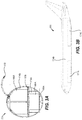
- FIG. 3A is a cross-sectional diagram of an aircraft 300 that includes a compartment 174B and a compartment 174A.
- An aircraft cargo roller panel 100A is located in the compartment 174A and has a similar configuration as the aircraft cargo roller panel 100, and aircraft cargo 180A is on the aircraft cargo roller panel 100A.
- the aircraft cargo 180A can be moved within the compartment 174A using the cargo transport system 172 described with respect to FIG. 1A .
- the location of the compartment 174A is for illustrative purposes only and should not be construed as limiting. In other implementations, the compartment 174A can be located on the same level as the compartment 174B or in other locations of the aircraft 300.
- the aircraft 300 includes a door 302 that opens for entry into the compartment 174B.
- an aircraft cargo roller panel 100B is located in compartment 174B and has a similar configuration as the aircraft roller panel 100.
- aircraft cargo 180B can be placed on the aircraft cargo roller panel 100B, and the controller 170 can determine parameters (e.g., a weight and a center of gravity) of the aircraft cargo 180B based on load cells coupled to the aircraft cargo roller panel 100B. In a similar manner as described with respect to FIG. 2 , based on the parameters, the controller 170 can determine whether to accept the cargo 303.
- FIG. 3B is a side-view diagram of the aircraft 300.
- the aircraft 300 includes the compartment 174A, the compartment 174B, and another compartment 174C.
- the compartment 174A is included in a forward cargo hold
- the compartment 174C is included in an aft cargo hold or a bulk hold.
- the controller 170 can receive signals from each aircraft cargo roller panel of the aircraft 300, such as the aircraft cargo roller panel 100A, the aircraft cargo roller panel 100B, etc.
- each aircraft cargo roller panel 100A, 100B can be associated with a separate controller, and the controllers can provide information (e.g., report) to a master controller or a flight data system, such as the flight data system 208.
- FIG. 4 is a diagram of a cargo verification system display 400.
- the cargo verification system display 400 can be displayed on display device 232 of FIG. 2 .
- the expected weight 226 of the aircraft cargo 180 is about 5.470,50 kg (i.e. 12,060.40 pounds (lbs)) and the weight 212 (e.g., the actual weight) is about 6.099,18 kg (i.e. 13,446.40 lbs).
- a user e.g., "John Doe” entered his employee identification number (e.g., "38792" to override a decision not to accept the aircraft cargo 180 based on the weight 212.
- John Doe entered his employee identification number (e.g., "38792”)
- the expected center of gravity 228 for the aircraft cargo 180 is not specified in the cargo manifest 222.
- the aircraft cargo 180 is acceptable because the center of gravity 214 is within a percentage difference of the threshold (e.g., the center of gravity 214 is within 10% of the center of the aircraft cargo container or pallet).
- the cargo verification system display 400 After acceptance of the aircraft cargo 180, the cargo verification system display 400 indicates that the total weight 248 of the cargo in the compartment 174 (e.g., the "cargo hold") is about 64.327,83 kg. (i.e. 141,818.60 lbs). In the example of FIG. 4 , the flight parameters 274 indicate that the expected total weight is about 63,242,11 kg (i.e. 139,425 lbs). According to the cargo verification system display 400, the total weight 248 is acceptable because the total weight 248 is within a percentage difference of the expected total weight (e.g., the total weight 248 is within a two percent difference).
- the cargo verification system display 400 provides a visual verification of whether the aircraft cargo 180 is compliant with reported parameters (e.g., the expected weight 226 of the aircraft cargo 180, the expected center of gravity 228 of the aircraft cargo 180, or both) on the cargo manifest 222. For example, based on a load experienced by each load cell 111, the controller 170 can determine the weight 212 of the aircraft cargo 180 and the center of gravity 214 of the aircraft cargo 180 while the aircraft cargo 180 is on the aircraft cargo roller panel 100. If the weight 212 and the center of gravity 214 are compliant with the expected weight 226 and the expected center of gravity 228 in the cargo manifest 222, the cargo transport system 172 transports the aircraft cargo 180 into the compartment 174.
- reported parameters e.g., the expected weight 226 of the aircraft cargo 180, the expected center of gravity 228 of the aircraft cargo 180, or both
- a crew member may be alerted and additional actions may be taken.
- the aircraft cargo 180 may be removed from the aircraft, additional cargo fees may be collected from the provider of the aircraft cargo 180 if the expected weight 226 was under-reported, etc.
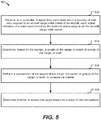
- FIG. 5 is a flowchart of a method 500 of determining parameters of aircraft cargo as the aircraft cargo is loaded in an aircraft.
- the method 500 may be performed by the controller 170.
- the method 500 includes receiving, at a controller, a signal from each load cell of a plurality of load cells coupled to an aircraft cargo roller panel of an aircraft, at 502.
- Each signal is indicative of a load experienced by the load cell when cargo is on the aircraft cargo roller panel.
- each load cell 111 coupled to the aircraft cargo roller panel 100 generates a signal 202 that is indicative of a load experienced by the load cell 111 when the aircraft cargo 180 is on the aircraft cargo roller panel 100.
- the signals 202 are provided to the controller 170.
- the method 500 also includes determining, based on the signals, a weight of the cargo, a center of gravity of the cargo, or both, at 504.
- the controller 170 determines the weight 212 and the center of gravity 214 of the aircraft cargo 180 based on the measured loads of the load cells 111.
- the cargo parameter determination unit 210 determines the sum of the loads experienced by the load cells 111 when the aircraft cargo 180 is placed on the aircraft cargo roller panel 100 to determine the weight 212. Additionally, the cargo parameter determination unit 210 uses the load cell position information to determine the center of gravity 214.
- the cargo parameter determination unit 210 uses the load cell position information to determine the distance of each load cell 111 from the datum and multiplies the load experienced by each load cell 111 by the corresponding distance to determine the moment for each load cell 111.
- the sum of the moments can be divided by weight 212 to determine the distance between the datum and the center of gravity 214.
- the center of gravity 214 is determined based on the distance.
- the method 500 also includes performing a comparison of the weight of the cargo, the center of gravity of the cargo, or both, to acceptance criteria, at 506.
- the controller 170 performs a comparison of the weight 212 of the aircraft cargo 180, the center of gravity 214 of the aircraft cargo 180, or both, to acceptance criteria.
- the acceptance criteria can be based on the expected weight 226 of the aircraft cargo 180, the expected center of gravity 228 of the aircraft cargo 180, or both.
- the acceptance criteria can include a weight difference threshold based on the expected weight 226 of the aircraft cargo 180.
- the acceptance criteria can include a center of gravity difference threshold based on the expected center of gravity 228 of the aircraft cargo 180.
- the method 500 also includes determining whether to accept the cargo based on a result of the comparison, at 508. For example, if a difference between the weight 212 and the expected weight 226 satisfies (e.g., is less than) the weight difference threshold, the aircraft cargo 180 is accepted. As another example, if a difference between the center of gravity 214 and the expected center of gravity 228 satisfies (e.g., is less than) the center of gravity threshold, the aircraft cargo 180 is accepted.
- the controller 170 accepts the aircraft cargo 180 in response to a first determination that the difference between the weight 212 and the expected weight 226 satisfies the weight difference threshold and in response to a second determination that the difference between the center of gravity 214 and the expected center of gravity 228 satisfies the center of gravity difference threshold.
- the method 500 enables determination of whether the aircraft cargo 180 is compliant with reported parameters (e.g., the expected weight 226 of the aircraft cargo 180, the expected center of gravity 228 of the aircraft cargo 180, or both) on the cargo manifest 222. For example, based on a load experienced by each load cell 111, the controller 170 can determine the weight 212 of the aircraft cargo 180 and the center of gravity 214 of the aircraft cargo 180 while the aircraft cargo 180 is on the aircraft cargo roller panel 100. If the weight 212 and the center of gravity 214 are compliant with the expected weight 226 and the expected center of gravity 228 in the cargo manifest 222, the cargo transport system 172 transports the aircraft cargo 180 into the compartment 174.
- reported parameters e.g., the expected weight 226 of the aircraft cargo 180, the expected center of gravity 228 of the aircraft cargo 180, or both
- the weight 212 or the center of gravity 214 may be alerted and additional actions may be taken.
- the aircraft cargo 180 may be removed from the aircraft, additional cargo fees may be collected from the provider of the aircraft cargo 180 if the expected weight 226 was under-reported, etc.
- FIG. 6 shows a flowchart illustrative of a method 600 associated with the aircraft cargo roller panel 100.
- the method 600 includes, at 602, specification and design of the aircraft cargo roller panel 100.
- the method 600 includes material procurement.
- the method 600 includes procuring materials (such as materials for the aircraft cargo roller panel 100) for the aircraft 300.
- the method 600 includes, at 606, component and subassembly manufacturing and, at 608, system integration of the aircraft 300.
- the method 600 may include component and subassembly manufacturing of the aircraft cargo roller panel 100.
- the method 600 includes certification and delivery of the aircraft 300 and, at 612, placing the aircraft 300 in service.
- certification and delivery includes certifying the aircraft cargo roller panel 100. Placing the aircraft 300 in service may also include placing the aircraft cargo roller panel 100 in service. While in service, the aircraft 300 may be scheduled for routine maintenance and service (which may also include modification, reconfiguration, refurbishment, and so on).
- the method 600 includes performing maintenance and service on the aircraft 300.
- the method 600 may include performing maintenance and service on the aircraft cargo roller panel 100.
- maintenance and service of the aircraft cargo roller panel 100 can include replacing the load cells 111, the controller 170, the motive devices, or a combination thereof.
- FIG. 7 is a block diagram of an illustrative implementation of the aircraft 300 that includes the system 200.
- the aircraft 300 is produced by at least a portion of the method 600 of FIG. 6 .
- the aircraft 300 includes an airframe 718, a plurality of systems 720, and an interior 722.
- Examples of the plurality of systems 720 include one or more of a propulsion system 724, an electrical system 726, an environmental system 728, and a hydraulic system 730.
- the aircraft 300 also includes the system 200 of FIG. 2 . Any number of other systems may be included in the aircraft 300.
- an aerospace example is shown, the present disclosure may be applied to other industries.
- the system 200 can be used onboard another manned or unmanned vehicle (such as a satellite, a watercraft, or a land-based vehicle).
- Apparatus and methods included herein may be employed during any one or more of the stages of the method 600 of FIG. 6 .
- components or subassemblies corresponding to production process 608 can be fabricated or manufactured in a manner similar to components or subassemblies produced while the aircraft 300 is in service, at 612 for example and without limitation.
- one or more apparatus implementations, method implementations, or a combination thereof may be utilized during the production stages (e.g., stages 602-610 of the method 600), for example, by substantially expediting assembly of or reducing the cost of the aircraft 300.
- one or more of apparatus implementations, method implementations, or a combination thereof may be utilized while the aircraft 300 is in service, for example and without limitation, to maintenance and service, at 614.
Landscapes
- Engineering & Computer Science (AREA)
- Aviation & Aerospace Engineering (AREA)
- Physics & Mathematics (AREA)
- General Physics & Mathematics (AREA)
- Mechanical Engineering (AREA)
- Warehouses Or Storage Devices (AREA)
- Management, Administration, Business Operations System, And Electronic Commerce (AREA)
- Testing Of Balance (AREA)
Abstract
Description
- The present disclosure is related to an aircraft cargo panel.
- An aircraft includes one or more compartments that are used to store aircraft cargo during a flight. For example, the one or more compartments can store cargo containers, cargo pallets, etc. Typically, each cargo container or cargo pallet is weighed prior to being loaded on the aircraft. As a non-limiting example, a freight worker can load a particular cargo container in a warehouse, weigh the particular cargo container in the warehouse, and record the weight for use in developing the aircraft load and trim sheet, load schedule, load manifest, load plan, or other similar documents. In this example, after the weight of the particular cargo container is recorded, someone could put additional freight inside the particular cargo container. As another example, a freight company could intentionally under-report the weight of aircraft cargo to reduce the cost of shipping the aircraft cargo.
- In addition to changing the weight of the particular cargo container, the additional freight can change the center of gravity of the particular cargo container. The center of gravity of cargo containers and pallets is used to determine the number of restraints that are needed to hold cargo in place during flight. For example, additional restraints (e.g., supplementary cargo restraint straps) may be needed to hold the particular cargo container in place if the aircraft experiences turbulence and if the center of gravity exceeds a limit or offset set by the Airplane Weight and Balance Manual.
- According to one implementation of the present disclosure, an aircraft includes an aircraft cargo roller panel configured to facilitate loading aircraft cargo into a compartment of the aircraft. The aircraft also includes a plurality of load cells coupled to the aircraft cargo roller panel. Each load cell of the plurality of load cells is configured to generate a signal indicative of a load experienced by the load cell when cargo is on the aircraft cargo roller panel. The aircraft further includes a controller configured to receive signals from the plurality of load cells and to determine, based on the signals, a weight of the cargo, a center of gravity of the cargo, or both.
- According to another implementation of the present disclosure, a method includes receiving, at a controller, a signal from each load cell of a plurality of load cells coupled to an aircraft cargo roller panel of an aircraft. Each signal is indicative of a load experienced by the load cell when cargo is on the aircraft cargo roller panel. The method also includes determining, based on the signals, a weight of the cargo, a center of gravity of the cargo, or both.
- According to another implementation of the present disclosure, an aircraft cargo roller panel includes a plurality of omnidirectional rollers configured to facilitate loading aircraft cargo into a compartment of an aircraft. The aircraft cargo roller panel also includes a plurality of load cells. Each load cell of the plurality of load cells is configured to generate a load signal indicative of a load experienced by the load cell when cargo is on the plurality of omnidirectional rollers and to send the load signal to a controller. The aircraft cargo roller panel also includes one or more motive devices configured to selectively engage, responsive to a control signal from the controller, the cargo to move the cargo within the compartment. The control signal is generated responsive to the load signals.
- One advantage of the above-described implementation is an ability to verify whether aircraft cargo is compliant with reported parameters on an aircraft load and trim sheet or other similar document when the aircraft cargo is loaded on an aircraft. For example, the aircraft cargo is placed onto an aircraft cargo roller panel that includes multiple load cells. Based on a load experienced by each load cell, a controller can determine a weight of the aircraft cargo and a center of gravity of the aircraft cargo while the aircraft cargo is on the aircraft cargo roller panel. If the weight and the center of gravity are compliant with a reported weight and center of gravity in the aircraft load and trim sheet or other similar document, the aircraft cargo roller panel loads the aircraft cargo into a compartment of the aircraft. However, if the weight or the center of gravity is not compliant, crew members may be alerted. Additionally, the features, functions, and advantages that have been described can be achieved independently in various implementations or may be combined in yet other implementations, further details of which are disclosed with reference to the following description and drawings.
-
-
FIG. 1A is a diagram of an aircraft cargo roller panel that is operable to determine parameters of aircraft cargo as the aircraft cargo is loaded in an aircraft; -
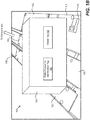
FIG. 1B is a diagram of aircraft cargo placed on the aircraft cargo roller panel ofFIG. 1A ; -
FIG. 2 is a diagram of a system that is operable to determine parameters of aircraft cargo as the aircraft cargo is loaded in an aircraft; -
FIG. 3A is a diagram of a cross-sectional view of an aircraft that includes the aircraft cargo roller panel ofFIG. 1A ; -
FIG. 3B is a diagram of a side view of the aircraft ofFIG. 3A ; -
FIG. 4 is a diagram of a cargo verification system display; -
FIG. 5 is a flowchart of a method of determining parameters of aircraft cargo as the aircraft cargo is loaded in an aircraft; -
FIG. 6 is a flowchart of a method associated with the development and maintenance of a system to determine parameters of aircraft cargo as the aircraft cargo is loaded in an aircraft; and -
FIG. 7 is a block diagram of the aircraft including the system ofFIG. 2 . - Particular embodiments of the present disclosure are described below with reference to the drawings. In the description, common features are designated by common reference numbers throughout the drawings.
- The figures and the following description illustrate specific exemplary embodiments. It will be appreciated that those skilled in the art will be able to devise various arrangements that, although not explicitly described or shown herein, embody the principles described herein and are included within the scope of the claims that follow this description. Furthermore, any examples described herein are intended to aid in understanding the principles of the disclosure and are to be construed as being without limitation. As a result, this disclosure is not limited to the specific embodiments or examples described below, but by the claims and their equivalents.
- Particular implementations are described herein with reference to the drawings. In the description, common features are designated by common reference numbers throughout the drawings. In some drawings, multiple instances of a particular type of feature are used. Although these features are physically and/or logically distinct, the same reference number is used for each, and the different instances are distinguished by addition of a letter to the reference number. When the features as a group or a type are referred to herein (e.g., when no particular one of the features is being referenced), the reference number is used without a distinguishing letter. However, when one particular feature of multiple features of the same type is referred to herein, the reference number is used with the distinguishing letter. For example, referring to
FIG. 1A , multiple load cells are illustrated and associated withreference numbers load cell 111A, the distinguishing letter "A" is used. However, when referring to any arbitrary one of these load cells or to these load cells as a group, the reference number 111 is used without a distinguishing letter. - As used herein, various terminology is used for the purpose of describing particular implementations only and is not intended to be limiting. For example, the singular forms "a," "an," and "the" are intended to include the plural forms as well, unless the context clearly indicates otherwise. Further, the terms "comprise," "comprises," and "comprising" are used interchangeably with "include," "includes," or "including." Additionally, the term "wherein" is used interchangeably with the term "where." As used herein, "exemplary" indicates an example, an implementation, and/or an aspect, and should not be construed as limiting or as indicating a preference or a preferred implementation. As used herein, an ordinal term (e.g., "first," "second," "third," etc.) used to modify an element, such as a structure, a component, an operation, etc., does not by itself indicate any priority or order of the element with respect to another element, but rather merely distinguishes the element from another element having a same name (but for use of the ordinal term). As used herein, the term "set" refers to a grouping of one or more elements, and the term "plurality" refers to multiple elements.
- As used herein, "generating", "calculating", "using", "selecting", "accessing", and "determining" are interchangeable unless context indicates otherwise. For example, "generating", "calculating", or "determining" a parameter (or a signal) can refer to actively generating, calculating, or determining the parameter (or the signal) or can refer to using, selecting, or accessing the parameter (or signal) that is already generated, such as by another component or device. As used herein, "coupled" can include "communicatively coupled," "electrically coupled," or "physically coupled," and can also (or alternatively) include any combinations thereof. Two devices (or components) can be coupled (e.g., communicatively coupled, electrically coupled, or physically coupled) directly or indirectly via one or more other devices, components, wires, buses, networks (e.g., a wired network, a wireless network, or a combination thereof), etc. Two devices (or components) that are electrically coupled can be included in the same device or in different devices and can be connected via electronics, one or more connectors, or inductive coupling, as illustrative, non-limiting examples. In some implementations, two devices (or components) that are communicatively coupled, such as in electrical communication, can send and receive electrical signals (digital signals or analog signals) directly or indirectly, such as via one or more wires, buses, networks, etc. As used herein, "directly coupled" is used to describe two devices that are coupled (e.g., communicatively coupled, electrically coupled, or physically coupled) without intervening components.
- The techniques described herein enable an aircraft system to verify, while the aircraft cargo is loaded on an aircraft, whether a weight and a center of gravity of the aircraft cargo is compliant with reported parameters. To illustrate, an aircraft cargo roller panel within the aircraft is configured to receive cargo and transport the cargo within a compartment of the aircraft for storage. For example, when the cargo is placed onto the aircraft cargo roller panel, motive devices coupled to the aircraft cargo roller panel can engage the cargo and move the cargo within the compartment. To illustrate, the motive devices can include wheels or movable clamps that elevate from within the aircraft cargo roller panel to move the cargo. The motive devices can be automated such that the motive devices are responsive to a control signal to engage the cargo and move the cargo within the compartment.
- Multiple load cells are coupled to the aircraft cargo roller panel. When the cargo is placed on the aircraft cargo roller panel, each load cell is configured to generate a signal indicative of a load experienced by the load cell. For example, each load cell can include (or correspond to) a measuring unit that measures the corresponding load (e.g., weight) experienced by the load cell. The signals generated by the load cells are provided to a controller. The controller determines a weight of the cargo based on the signals generated by the load cells. For example, the loads experienced by the load cells can be summed at the controller to determine the weight of the cargo. Additionally, the controller can determine a center of gravity of the cargo based on the loads experienced by the load cells. For example, the center of gravity can be determined based on the location of each load cell and the load experienced by each load cell due to the cargo. If the weight and the center of gravity are compliant with a reported weight and center of gravity in the aircraft load and trim sheet or other similar documents, the aircraft cargo roller panel loads the aircraft cargo within compartment for storage. For example, the controller generates a control signal to enable the motive devices to engage the cargo and transport the cargo within the compartment. However, if the weight or the center of gravity is not compliant, one or more crew members (e.g. aircrew members or ground crew members) may be alerted. In one implementation, a crew member can override a non-compliance determination by entering employee identification information into the controller. Upon overriding the non-compliance determination, the motive devices engage the cargo and transport the cargo within the compartment for storage.
- The controller can monitor the aggregate weight of the cargo loaded in the compartment. For example, as cargo is accepted by the controller based on weight and center of gravity parameters and transported within the compartment, the controller can update a record of the weight of the cargo in the compartment. If the aggregate weight of the loaded cargo is heavier than an allowable weight, the crew can be notified. Thus, as further described below, the techniques described herein enable aircraft systems to monitor and verify parameters (e.g., a weight and a center of gravity) of cargo as the cargo is loaded on to the aircraft. Monitoring and verifying the parameters may enable crew to have a more accurate account of the cargo on the aircraft.
-
FIG. 1A is a diagram of an aircraftcargo roller panel 100 that is operable to determine parameters of aircraft cargo as the aircraft cargo is loaded in an aircraft. For example, the aircraftcargo roller panel 100 includes components that enable a weight of aircraft cargo and a center of gravity of aircraft cargo to be determined when the aircraft cargo is loaded on to the aircraft. Additionally, the aircraftcargo roller panel 100 is configured to facilitate loading aircraft cargo into acompartment 174 of an aircraft. For example, referring toFIG. 1B ,aircraft cargo 180 can be placed on top of the aircraftcargo roller panel 100. In one implementation, a radio-frequency identification (RFID)tag 190 is attached to theaircraft cargo 180. TheRFID tag 190 can be scanned by a RFID scanner to identify theaircraft cargo 180. In another implementation, a visible tag 192 (e.g., a barcode) is attached to theaircraft cargo 180. Thevisible tag 192 can be scanned by an optical scanner to identify theaircraft cargo 180. As explained below, components of the aircraftcargo roller panel 100 can transport theaircraft cargo 180 into thecompartment 174 of the aircraft. - Referring back to
FIG. 1A , the aircraftcargo roller panel 100 includes multiple sub-panels 101A-101F (e.g., omnidirectional roller panels). For example, the aircraftcargo roller panel 100 includes a sub-panel 101A, a sub-panel 101B, a sub-panel 101C, a sub-panel 101D, a sub-panel 101E, and a sub-panel 101F. Although six sub-panels 101A-101F are illustrated inFIG. 1 , in other implementations, the aircraftcargo roller panel 100 can include additional (or fewer) sub-panels. According to one implementation, the aircraftcargo roller panel 100 can include a single panel (e.g., no sub-panels) or at least two sub-panels. Each panel includes one or more omnidirectional rollers. - The aircraft
cargo roller panel 100 includes one or more load cells 111 that are configured to generate signals indicative of a corresponding experienced load when theaircraft cargo 180 is on the aircraftcargo roller panel 100. InFIG. 1A , aload cell 111A, aload cell 111B, a load cell 111C, and aload cell 111D are coupled to the sub-panel 101A. Additionally, inFIG. 1A , aload cell 111E, aload cell 111F, aload cell 111G, and a load cell 111H are coupled to the sub-panel 101B. In addition, inFIG. 1A , a load cell 111I, aload cell 111J, aload cell 111K, and aload cell 111L are coupled to the sub-panel 101C. A load cell 111M, aload cell 111N, a load cell 111O, and a load cell 111P are coupled to the sub-panel 101D. Aload cell 111Q, aload cell 111R, aload cell 111S, and aload cell 111T are coupled to the sub-panel 101E. Aload cell 111U, aload cell 111V, aload cell 111W, and aload cell 111X are coupled to the sub-panel 101F. Each load cell 111 is configured to generate a signal indicative of a load experienced by the load cell 111 when cargo, such as theaircraft cargo 180, is on the aircraftcargo roller panel 100. - The aircraft
cargo roller panel 100 also includes one or more motive devices 115 that are configured to engage theaircraft cargo 180 to move theaircraft cargo 180 within thecompartment 174. For example, thesub-panel 101A includes amotive device 115A and amotive device 115B, the sub-panel 101B includes a motive device 115C, the sub-panel 101C includes amotive device 115D and amotive device 115E, the sub-panel 101D includes amotive device 115F and amotive device 115G, the sub-panel 101E includes amotive device 115H and amotive device 1151, and the sub-panel 101F includes amotive device 115J. The motive devices 115 are associated with acargo transport system 172 that is configured to move theaircraft cargo 180 within thecompartment 174. For example, the motive devices 115 can include wheels and motors to transport theaircraft cargo 180 within thecompartment 174 of the aircraft. Each motive device 115 can engage (or connect onto) theaircraft cargo 180 and transport theaircraft cargo 180 within thecompartment 174. - During operation, a ground crew can place the
aircraft cargo 180 on the aircraftcargo roller panel 100 so that the aircraftcargo roller panel 100 can load theaircraft cargo 180 in to thecompartment 174. Each load cell 111 measures a load experienced due to theaircraft cargo 180 when theaircraft cargo 180 is placed on the aircraftcargo roller panel 100. As a non-limiting example, as a result of placing theaircraft cargo 180 on the aircraftcargo roller panel 100, theload cell 111A can experience a fifty pound load, theload cell 111B can experience a forty pound load, the load cell 111C can experience a sixty pound load, and theload cell 111D can experience a sixty pound load. Thus, in the above example, the load attributed to the sub-panel 101A is two hundred and ten pounds. Each load cell 111 can generate a signal indicative of the load experienced and provide the signal to acontroller 170. - Additionally, the load cells 111 coupled to the other sub-panels 101B-101F can also generate signals indicative of the load experienced and provide the signals to the
controller 170. In some implementations, different aircraft cargo can be placed on different sub-panels 101A-101F so that multiple aircraft cargoes can be weighed and processed (e.g., transported within the compartment 174) concurrently. - The
controller 170 is configured to receive the signals from the load cells 111 coupled to the aircraftcargo roller panel 100 and to determine, based on the signals, a weight of theaircraft cargo 180, a center of gravity of theaircraft cargo 180, or both. For example, thecontroller 170 can determine the sum of the loads experienced by the load cells 111 when theaircraft cargo 180 is placed on the aircraftcargo roller panel 100 to determine the weight of theaircraft cargo 180. In the above scenario, the sum of the loads experienced by the load cells 111 is approximately equal to the weight of theaircraft cargo 180. - Additionally, the
controller 170 can use load cell position information to determine a location of the center of gravity of theaircraft cargo 180. As a non-limiting example, thecontroller 170 can use the load cell position information to determine a distance of each load cell 111 from a datum (e.g., an arbitrary starting point) and can multiply the load experienced by each load cell 111 by the corresponding distance to determine a moment for each load cell 111. The sum of the moments can be divided by weight of theaircraft cargo 180 to determine a distance between the datum and the center of gravity of theaircraft cargo 180. Thecontroller 170 can determine the location of the center of gravity based on the distance. - As described in greater detail below, the
controller 170 is configured to perform a comparison of the weight of theaircraft cargo 180, the center of gravity of theaircraft cargo 180, or both to acceptance criteria. The acceptance criteria is based on information in a cargo manifest or an electronic flight bag. For example, the cargo manifest (or the electronic flight bag) can indicate an expected weight of theaircraft cargo 180, an expected center of gravity of theaircraft cargo 180, or both. If a difference between the weight of theaircraft cargo 180 and the expected weight of theaircraft cargo 180 in the cargo manifest satisfies a weight difference threshold, thecontroller 170 can determine to accept theaircraft cargo 180. However, if the difference between the weight of theaircraft cargo 180 and the expected weight of theaircraft cargo 180 fails to satisfy the weight difference threshold, thecontroller 170 can reject theaircraft cargo 180 or alert a crew member. Additionally, or in the alternative, if a difference between the center of gravity of theaircraft cargo 180 and the expected center of gravity of theaircraft cargo 180 in the cargo manifest satisfies a center of gravity difference threshold, thecontroller 170 can determine to accept theaircraft cargo 180. However, if the difference between the center of gravity of the aircraft cargo and the expected center of gravity of theaircraft cargo 180 fails to satisfy the center of gravity difference threshold, thecontroller 170 can reject theaircraft cargo 180 or alert the crew member. - If the
controller 170 accepts theaircraft cargo 180, the motive devices 115 can engage theaircraft cargo 180, and the cargo transport system 172 (which includes the motive devices 115, omnidirectional rollers 173, and rails coupled to the sub-panels 101A-101F) can move theaircraft cargo 180 within thecompartment 174. For example, thecontroller 170 can selectively enable thecargo transport system 172 in response to a determination to accept theaircraft cargo 180 based on the weight of theaircraft cargo 180, the center of gravity of theaircraft cargo 180, or both. - Thus, the load cells 111 on the aircraft
cargo roller panel 100 enables thecontroller 170 to verify whether theaircraft cargo 180 is compliant with reported parameters (e.g., the expected weight of theaircraft cargo 180, the expected center of gravity of theaircraft cargo 180, or both) on the cargo manifest. For example, based on a load experienced by each load cell 111, thecontroller 170 can determine the weight of theaircraft cargo 180 and the center of gravity of theaircraft cargo 180 while theaircraft cargo 180 is on the aircraftcargo roller panel 100. If the weight and the center of gravity are compliant with a reported weight and center of gravity in the cargo manifest, thecargo transport system 172 transports theaircraft cargo 180 within thecompartment 174. However, if the weight or the center of gravity is not compliant, aircrew may be alerted. -
FIG. 2 is a diagram of asystem 200 that is operable to determine parameters of aircraft cargo as the aircraft cargo is loaded in an aircraft. Thesystem 200 includes the aircraftcargo roller panel 100, thecontroller 170, acargo identification device 201, adatabase 204, amemory 206, aflight data system 208, adisplay device 232, and aninput device 244. - Each load cell 111 coupled to the aircraft
cargo roller panel 100 can generate a signal 202 (e.g., a load signal) that is indicative of a load experienced by the load cell 111 when theaircraft cargo 180 is on the aircraftcargo roller panel 100. Thesignals 202 are provided to thecontroller 170, and thecontroller 170 is configured to determine aweight 212 of theaircraft cargo 180 and a center ofgravity 214 of theaircraft cargo 180 based on thesignals 202. For example, thecontroller 170 includes a cargoparameter determination unit 210 that is configured to determine theweight 212 and the center ofgravity 214 of theaircraft cargo 180 based on the measured loads of the load cells 111. To illustrate, the cargoparameter determination unit 210 can determine the sum of the load experienced by the load cells 111 when theaircraft cargo 180 is placed on the aircraftcargo roller panel 100 to determine theweight 212. Additionally, or in the alternative, in a similar manner described above, the cargoparameter determination unit 210 can use load cell position information and thesignals 202 to determine the center ofgravity 214. For example, the cargoparameter determination unit 210 can use the load cell position information to determine the distance of each load 111 cell from a datum (e.g., an arbitrary starting point) and can multiply the load experienced by each load cell 111 by the corresponding distance to determine the moment for each load cell 111. The sum of the moments can be divided byweight 212 to determine the distance between the datum and the center ofgravity 214. The cargoparameter determination unit 210 can determine the center ofgravity 214 based on the distance. - The
cargo identification device 201 is configured to generatecargo identification data 216 associated with theaircraft cargo 180 and send thecargo identification data 216 to thecontroller 170. For example, inFIG. 2 , thecargo identification device 201 includes a radio-frequency identification (RFID)tag scanner 218, anoptical scanner 220, or both. According to one implementation, theRFID tag scanner 218 is configured to scan theRFID tag 190 attached to theaircraft cargo 180 to generate thecargo identification data 216. According to another implementation, theoptical scanner 220 is configured scan thevisible tag 192 attached to theaircraft cargo 180 to generate thecargo identification data 216. - The
controller 170 is configured to access at least one of acargo manifest 222 or anelectronic flight bag 224 from adatabase 204 to determine an expectedweight 226 of theaircraft cargo 180, an expected center ofgravity 228 of theaircraft cargo 180, or both. For example, the cargo manifest 222 (or the electronic flight bag 224) can include expected weights for aircraft cargo that is to be loaded on the aircraft, expected centers of gravity for aircraft cargo that is to be loaded on the aircraft, or both. The expected weights and the expected centers of gravity can be reported by freight workers prior to the aircraft cargo arriving at the aircraft. Based on thecargo identification data 216, thecontroller 170 can access the expectedweight 226 for theaircraft cargo 180 from the expected weights in the cargo manifest 222 (or the electronic flight bag 224) and can access the expected center ofgravity 228 from the expected centers of gravity in the cargo manifest 222 (or the electronic flight bag 224). - The
controller 170 is configured to perform a comparison of theweight 212 of theaircraft cargo 180, the center ofgravity 214 of theaircraft cargo 180, or both, to acceptance criteria. The acceptance criteria can be based on the expectedweight 226 of theaircraft cargo 180, the expected center ofgravity 228 of theaircraft cargo 180, or both. As a non-limiting example, the acceptance criteria can include a weight difference threshold based on the expectedweight 226 of theaircraft cargo 180. As another non-limiting example, the acceptance criteria can include a center of gravity difference threshold based on the expected center ofgravity 228 of theaircraft cargo 180. Based on a result of the comparison, thecontroller 170 can determine whether to accept theaircraft cargo 180. - To illustrate, the
controller 170 identifies theaircraft cargo 180 on the aircraftcargo roller panel 100 based on thecargo identification data 216, and thecontroller 170 identifies the expectedweight 226 of theaircraft cargo 180 from thecargo manifest 222. Acomparison unit 230 compares the weight 212 (e.g., thecontroller 170 determined weight) of theaircraft cargo 180 to the expectedweight 226 of theaircraft cargo 180. If a difference between theweight 212 and the expectedweight 226 satisfies (e.g., is less than) the weight difference threshold, theaircraft cargo 180 is accepted. Thus, the cargo is accepted in response to determination, by thecontroller 170, that a difference between theweight 212 of the cargo and the expectedweight 226 of the cargo satisfies the weight difference threshold. In another implementation, thecomparison unit 230 compares the center of gravity 214 (e.g., thecontroller 170 determined center of gravity) of theaircraft cargo 180 to the expected center ofgravity 228 of theaircraft cargo 180. If a difference between the center ofgravity 214 and the expected center ofgravity 228 satisfies (e.g., is less than) the center of gravity threshold, theaircraft cargo 180 is accepted. Thus, the cargo is accepted in response to determination, by thecontroller 170, that a difference between the controller determined center ofgravity 214 of the cargo and the expected center ofgravity 228 of the cargo satisfies the center of gravity threshold. In yet another implementation, acceptance of theaircraft cargo 180 is based on the weight difference threshold and the center of gravity difference threshold. For example, thecontroller 170 accepts theaircraft cargo 180 in response to a first determination that the difference between theweight 212 and the expectedweight 226 satisfies the weight difference threshold and in response to a second determination that the difference between the center ofgravity 214 and the expected center ofgravity 228 satisfies the center of gravity difference threshold. - The
display device 232 is configured to display anotification 234 that indicates whether theaircraft cargo 180 is accepted. For example, if thecontroller 170 determines to accept theaircraft cargo 180 to be loaded into thecompartment 174, thedisplay device 232 displays a visual indicator (e.g., the notification 234) indicating that theaircraft cargo 180 has been accepted based on theweight 212, the center ofgravity 214, or both. - In response to accepting the
aircraft cargo 180, thecontroller 170 can enable thecargo transport system 172 to move theaircraft cargo 180 within thecompartment 174. For example, atransport system controller 236 can generate an enablesignal 238 that is provided to components of thecargo transport system 172. For example, the motive devices 115 of thecargo transport system 172 can be responsive to the enablesignal 238 to move theaircraft cargo 180 over thecargo transport system 172 such that theaircraft cargo 180 is transported within thecompartment 174. - If the
aircraft cargo 180 is not accepted, thecontroller 172 is configured to generate anoverride prompt 242 to enable a crew member to override the decision not to accept theaircraft cargo 180. For example, anoverride controller 240 can generate theoverride prompt 242. In some implementations, theoverride prompt 242 is displayed at thedisplay device 232. In response to theoverride prompt 242, a user (e.g. a member of the aircrew or ground crew) can provide user credentials 246 to theinput device 244 to identify theaircraft cargo 180 as accepted. The user credentials 246 can include an employee identification number, employee initials, an override passcode, etc. Theoverride controller 240 can authenticate the user credentials 246 entered by the user to verify that the user has permissions to override the rejection of theaircraft cargo 180. - Upon authenticating the user credentials 246, the
override controller 240 can generate anoverride command 243 responsive to authentication of the user credentials 246 to accept theaircraft cargo 180. Responsive to theoverride command 243, thetransport system controller 236 generates the enable signal 238 to move theaircraft cargo 180 over thecargo transport system 172 such that theaircraft cargo 180 is transported within thecompartment 174. Theoverride controller 240 can store the user credentials 246 with cargo manifest data (e.g., in the cargo manifest 222) to identify the user that authorized the acceptance of theaircraft cargo 180. If theaircraft cargo 180 is rejected and the user does not enter the user credentials 246 to override the rejection, additional actions may occur (e.g., removal of theaircraft cargo 180, collection of additional cargo fees from the provider of theaircraft cargo 180, etc.). - The
controller 170 is configured to update atotal weight 248 of aircraft cargo (e.g., a total weight of cargo) in thecompartment 174 whencargo transport system 172 moves theaircraft cargo 180 into thecompartment 174 upon acceptance of theaircraft cargo 180. Thus, thetotal weight 248 is based on theweight 212 of theaircraft cargo 180 and the weight of other cargo previously loaded in thecompartment 174 via the aircraftcargo roller panel 100. Additionally, thecontroller 172 is configured to update an aggregate center ofgravity 260 of at least one of the cargo in thecompartment 174 or the aircraft. Thecontroller 170stores cargo data 250 at thememory 206, and thecargo data 250 indicates thetotal weight 248 of cargo in thecompartment 174 and the aggregate center ofgravity 260 of the cargo in the compartment 174 (or of the aircraft). - The
flight data system 208 includes acomparator 252 and anoutput device 254. Thecomparator 252 is configured to perform a comparison of thetotal weight 248 of the cargo in thecompartment 174 toflight parameter 256. According to this implementation, theflight parameters 256 indicate at least a maximum allowable weight in thecompartment 172. Based on the comparison, theoutput device 254 generates anaircraft weight notification 258. Theaircraft weight notification 258 indicates whether the maximum allowable weight in thecompartment 172 has been exceeded. Additionally, thecomparator 252 is configured to perform a second comparison of the aggregate center ofgravity 260 to theflight parameters 256. According to this implementation, theflight parameters 256 also indicate a maximum offset for a center of gravity. Based on the second comparison, theoutput device 254 generates a center of gravity notification 262 (e.g., a second notification). The center ofgravity notification 262 indicates whether the maximum offset for the center of gravity has been exceeded. Additionally, theflight data system 208 can recommend trim setting changes to the aircraft based on theaircraft weight notification 258, the center ofgravity notification 262, or both. - The
system 200 ofFIG. 2 enables thecontroller 170 to verify whether theaircraft cargo 180 is compliant with reported parameters (e.g., the expectedweight 226 of theaircraft cargo 180, the expected center ofgravity 228 of theaircraft cargo 180, or both) on thecargo manifest 222. For example, based on a load experienced by each load cell 111, thecontroller 170 can determine theweight 212 of theaircraft cargo 180 and the center ofgravity 214 of theaircraft cargo 180 while theaircraft cargo 180 is on the aircraftcargo roller panel 100. If theweight 212 and the center ofgravity 214 are compliant with the expectedweight 226 and the expected center ofgravity 228 in thecargo manifest 222, thecargo transport system 172 transports theaircraft cargo 180 into thecompartment 174. However, if theweight 212 or the center ofgravity 214 is not compliant, a crew member may be alerted and additional actions may be taken. For example, theaircraft cargo 180 may be removed from the aircraft, additional cargo fees may be collected from the provider of theaircraft cargo 180 if the expectedweight 226 was under-reported, etc. -
FIG. 3A is a cross-sectional diagram of anaircraft 300 that includes acompartment 174B and acompartment 174A. An aircraftcargo roller panel 100A is located in thecompartment 174A and has a similar configuration as the aircraftcargo roller panel 100, andaircraft cargo 180A is on the aircraftcargo roller panel 100A. Theaircraft cargo 180A can be moved within thecompartment 174A using thecargo transport system 172 described with respect toFIG. 1A . It should be understood that the location of thecompartment 174A is for illustrative purposes only and should not be construed as limiting. In other implementations, thecompartment 174A can be located on the same level as thecompartment 174B or in other locations of theaircraft 300. - The
aircraft 300 includes adoor 302 that opens for entry into thecompartment 174B. In the illustrated example ofFIG. 3A , an aircraftcargo roller panel 100B is located incompartment 174B and has a similar configuration as theaircraft roller panel 100. For example,aircraft cargo 180B can be placed on the aircraftcargo roller panel 100B, and thecontroller 170 can determine parameters (e.g., a weight and a center of gravity) of theaircraft cargo 180B based on load cells coupled to the aircraftcargo roller panel 100B. In a similar manner as described with respect toFIG. 2 , based on the parameters, thecontroller 170 can determine whether to accept the cargo 303. -
FIG. 3B is a side-view diagram of theaircraft 300. Theaircraft 300 includes thecompartment 174A, thecompartment 174B, and anothercompartment 174C. In the illustrative example ofFIG. 3B , thecompartment 174A is included in a forward cargo hold, and thecompartment 174C is included in an aft cargo hold or a bulk hold. - According to one implementation, the
controller 170 can receive signals from each aircraft cargo roller panel of theaircraft 300, such as the aircraftcargo roller panel 100A, the aircraftcargo roller panel 100B, etc. According to other implementations, each aircraftcargo roller panel flight data system 208. -
FIG. 4 is a diagram of a cargoverification system display 400. The cargoverification system display 400 can be displayed ondisplay device 232 ofFIG. 2 . According to the cargoverification system display 400, the expectedweight 226 of theaircraft cargo 180 is about 5.470,50 kg (i.e. 12,060.40 pounds (lbs)) and the weight 212 (e.g., the actual weight) is about 6.099,18 kg (i.e. 13,446.40 lbs). Because the difference between the expectedweight 226 and theweight 212 is greater than the weight difference threshold, a user (e.g., "John Doe") entered his employee identification number (e.g., "38792") to override a decision not to accept theaircraft cargo 180 based on theweight 212. In the example ofFIG. 4 , the expected center ofgravity 228 for theaircraft cargo 180 is not specified in thecargo manifest 222. However, theaircraft cargo 180 is acceptable because the center ofgravity 214 is within a percentage difference of the threshold (e.g., the center ofgravity 214 is within 10% of the center of the aircraft cargo container or pallet). - After acceptance of the
aircraft cargo 180, the cargoverification system display 400 indicates that thetotal weight 248 of the cargo in the compartment 174 (e.g., the "cargo hold") is about 64.327,83 kg. (i.e. 141,818.60 lbs). In the example ofFIG. 4 , the flight parameters 274 indicate that the expected total weight is about 63,242,11 kg (i.e. 139,425 lbs). According to the cargoverification system display 400, thetotal weight 248 is acceptable because thetotal weight 248 is within a percentage difference of the expected total weight (e.g., thetotal weight 248 is within a two percent difference). - The cargo
verification system display 400 provides a visual verification of whether theaircraft cargo 180 is compliant with reported parameters (e.g., the expectedweight 226 of theaircraft cargo 180, the expected center ofgravity 228 of theaircraft cargo 180, or both) on thecargo manifest 222. For example, based on a load experienced by each load cell 111, thecontroller 170 can determine theweight 212 of theaircraft cargo 180 and the center ofgravity 214 of theaircraft cargo 180 while theaircraft cargo 180 is on the aircraftcargo roller panel 100. If theweight 212 and the center ofgravity 214 are compliant with the expectedweight 226 and the expected center ofgravity 228 in thecargo manifest 222, thecargo transport system 172 transports theaircraft cargo 180 into thecompartment 174. However, if theweight 212 or the center ofgravity 214 is not compliant, a crew member may be alerted and additional actions may be taken. For example, theaircraft cargo 180 may be removed from the aircraft, additional cargo fees may be collected from the provider of theaircraft cargo 180 if the expectedweight 226 was under-reported, etc. -
FIG. 5 is a flowchart of amethod 500 of determining parameters of aircraft cargo as the aircraft cargo is loaded in an aircraft. Themethod 500 may be performed by thecontroller 170. - The
method 500 includes receiving, at a controller, a signal from each load cell of a plurality of load cells coupled to an aircraft cargo roller panel of an aircraft, at 502. Each signal is indicative of a load experienced by the load cell when cargo is on the aircraft cargo roller panel. For example, each load cell 111 coupled to the aircraftcargo roller panel 100 generates asignal 202 that is indicative of a load experienced by the load cell 111 when theaircraft cargo 180 is on the aircraftcargo roller panel 100. Thesignals 202 are provided to thecontroller 170. - The
method 500 also includes determining, based on the signals, a weight of the cargo, a center of gravity of the cargo, or both, at 504. For example, thecontroller 170 determines theweight 212 and the center ofgravity 214 of theaircraft cargo 180 based on the measured loads of the load cells 111. To illustrate, the cargoparameter determination unit 210 determines the sum of the loads experienced by the load cells 111 when theaircraft cargo 180 is placed on the aircraftcargo roller panel 100 to determine theweight 212. Additionally, the cargoparameter determination unit 210 uses the load cell position information to determine the center ofgravity 214. For example, the cargoparameter determination unit 210 uses the load cell position information to determine the distance of each load cell 111 from the datum and multiplies the load experienced by each load cell 111 by the corresponding distance to determine the moment for each load cell 111. The sum of the moments can be divided byweight 212 to determine the distance between the datum and the center ofgravity 214. The center ofgravity 214 is determined based on the distance. - The
method 500 also includes performing a comparison of the weight of the cargo, the center of gravity of the cargo, or both, to acceptance criteria, at 506. For example, thecontroller 170 performs a comparison of theweight 212 of theaircraft cargo 180, the center ofgravity 214 of theaircraft cargo 180, or both, to acceptance criteria. The acceptance criteria can be based on the expectedweight 226 of theaircraft cargo 180, the expected center ofgravity 228 of theaircraft cargo 180, or both. As a non-limiting example, the acceptance criteria can include a weight difference threshold based on the expectedweight 226 of theaircraft cargo 180. As another non-limiting example, the acceptance criteria can include a center of gravity difference threshold based on the expected center ofgravity 228 of theaircraft cargo 180. - The
method 500 also includes determining whether to accept the cargo based on a result of the comparison, at 508. For example, if a difference between theweight 212 and the expectedweight 226 satisfies (e.g., is less than) the weight difference threshold, theaircraft cargo 180 is accepted. As another example, if a difference between the center ofgravity 214 and the expected center ofgravity 228 satisfies (e.g., is less than) the center of gravity threshold, theaircraft cargo 180 is accepted. As yet another example, thecontroller 170 accepts theaircraft cargo 180 in response to a first determination that the difference between theweight 212 and the expectedweight 226 satisfies the weight difference threshold and in response to a second determination that the difference between the center ofgravity 214 and the expected center ofgravity 228 satisfies the center of gravity difference threshold. - The
method 500 enables determination of whether theaircraft cargo 180 is compliant with reported parameters (e.g., the expectedweight 226 of theaircraft cargo 180, the expected center ofgravity 228 of theaircraft cargo 180, or both) on thecargo manifest 222. For example, based on a load experienced by each load cell 111, thecontroller 170 can determine theweight 212 of theaircraft cargo 180 and the center ofgravity 214 of theaircraft cargo 180 while theaircraft cargo 180 is on the aircraftcargo roller panel 100. If theweight 212 and the center ofgravity 214 are compliant with the expectedweight 226 and the expected center ofgravity 228 in thecargo manifest 222, thecargo transport system 172 transports theaircraft cargo 180 into thecompartment 174. However, if theweight 212 or the center ofgravity 214 is not compliant, crew may be alerted and additional actions may be taken. For example, theaircraft cargo 180 may be removed from the aircraft, additional cargo fees may be collected from the provider of theaircraft cargo 180 if the expectedweight 226 was under-reported, etc. - Referring to
FIGS. 6 and7 , examples of the disclosure are described in the context of an aircraft design, manufacturing, and service.FIG. 6 shows a flowchart illustrative of amethod 600 associated with the aircraftcargo roller panel 100. During pre-production, themethod 600 includes, at 602, specification and design of the aircraftcargo roller panel 100. At 604, themethod 600 includes material procurement. For example, themethod 600 includes procuring materials (such as materials for the aircraft cargo roller panel 100) for theaircraft 300. - During production, the
method 600 includes, at 606, component and subassembly manufacturing and, at 608, system integration of theaircraft 300. Themethod 600 may include component and subassembly manufacturing of the aircraftcargo roller panel 100. At 610, themethod 600 includes certification and delivery of theaircraft 300 and, at 612, placing theaircraft 300 in service. In some implementations, certification and delivery includes certifying the aircraftcargo roller panel 100. Placing theaircraft 300 in service may also include placing the aircraftcargo roller panel 100 in service. While in service, theaircraft 300 may be scheduled for routine maintenance and service (which may also include modification, reconfiguration, refurbishment, and so on). At 614, themethod 600 includes performing maintenance and service on theaircraft 300. Themethod 600 may include performing maintenance and service on the aircraftcargo roller panel 100. For example, maintenance and service of the aircraftcargo roller panel 100 can include replacing the load cells 111, thecontroller 170, the motive devices, or a combination thereof. -
FIG. 7 is a block diagram of an illustrative implementation of theaircraft 300 that includes thesystem 200. In at least one implementation, theaircraft 300 is produced by at least a portion of themethod 600 ofFIG. 6 . As shown inFIG. 7 , theaircraft 300 includes anairframe 718, a plurality ofsystems 720, and an interior 722. Examples of the plurality ofsystems 720 include one or more of apropulsion system 724, anelectrical system 726, anenvironmental system 728, and ahydraulic system 730. Theaircraft 300 also includes thesystem 200 ofFIG. 2 . Any number of other systems may be included in theaircraft 300. Although an aerospace example is shown, the present disclosure may be applied to other industries. For example, thesystem 200 can be used onboard another manned or unmanned vehicle (such as a satellite, a watercraft, or a land-based vehicle). - Apparatus and methods included herein may be employed during any one or more of the stages of the
method 600 ofFIG. 6 . For example, components or subassemblies corresponding toproduction process 608 can be fabricated or manufactured in a manner similar to components or subassemblies produced while theaircraft 300 is in service, at 612 for example and without limitation. Also, one or more apparatus implementations, method implementations, or a combination thereof may be utilized during the production stages (e.g., stages 602-610 of the method 600), for example, by substantially expediting assembly of or reducing the cost of theaircraft 300. Similarly, one or more of apparatus implementations, method implementations, or a combination thereof may be utilized while theaircraft 300 is in service, for example and without limitation, to maintenance and service, at 614. - Further, the disclosure comprises embodiments according to the following clauses:
-
Clause 1. An aircraft (300) comprising:an aircraft cargo roller panel (100) configured to facilitate loading aircraft cargo (180) into a compartment (174) of the aircraft (300);a plurality of load cells (111) coupled to the aircraft cargo roller panel (100), each load cell (111) of the plurality of load cells (111) configured to generate a signal (202) indicative of a load experienced by the load cell (111) when cargo (180) is on the aircraft cargo roller panel (100); anda controller (170) configured to receive signals (202) from the plurality of load cells (111) and to determine, based on the signals (202), a weight (212) of the cargo (180), a center of gravity (214) of the cargo (180), or both. - Clause 2. The aircraft (300) of
clause 1, wherein the controller (170) is further configured to: perform a comparison of the weight (212) of the cargo (180), the center of gravity (214) of the cargo (180), or both to acceptance criteria; and based on a result of the comparison, determine whether to accept the cargo (180). - Clause 3. The aircraft (300) of clause 2, further comprising a display device (232) configured to display a notification (234) that indicates whether the cargo (180) is accepted.
- Clause 4. The aircraft (300) of clause 2, wherein the controller (170) is configured to generate an override prompt (242) based on a determination by the controller (170) that the cargo (180) is not accepted, wherein the override prompt (242) enables a user to provide user credentials (246) and to identify the cargo (180) as accepted.
- Clause 5. The aircraft (300) of clause 4, wherein the controller (170) is further configured to:
- authenticate the user credentials (246);
- generate an override command (243) responsive to authentication of the user credentials (246); and
- store the user credentials (246) with cargo manifest data (222) to identify the user that authorized acceptance of the cargo (180).
-
Clause 6. The aircraft (300) of clause 2, wherein the cargo (180) is accepted in response to a determination, by the controller (170), that a difference between the weight (212) of the cargo (180) and an expected weight (226) of the cargo (180) satisfies a weight difference threshold. - Clause 7. The aircraft (300) of clause 2, wherein the cargo (180) is accepted in response to a determination, by the controller (170), that a difference between the controller (170) determined center of gravity (214) of the cargo (180) and an expected center of gravity (228) of the cargo (180) satisfies a center of gravity difference threshold.
- Clause 8. The aircraft (300) of
clause 1, further comprising a cargo transport system (172) within the compartment (174), the cargo transport system (172) configured to move the cargo (180) within the compartment (174). - Clause 9. The aircraft (300) of clause 8, wherein the controller (170) is further configured to selectively enable the cargo transport system (172) based on the weight (212) of the cargo (180), the center of gravity (214) of the cargo (180), or both.
- Clause 10. The aircraft (300) of
clause 1, further comprising:- a cargo identification device (201) coupled to the controller (170) and configured to send cargo identification data (216) associated with the cargo (180) to the controller (170),
- wherein, based on the cargo identification data (216), the controller (170) is configured to determine at least one of an expected weight (226) of the cargo (180) or an expected center of gravity (228) of the cargo (180).
- Clause 11. The aircraft (300) of clause 10, wherein the cargo identification device (201) includes a radio-frequency identification (RFID) tag scanner (218) and the cargo (180) includes an RFID tag (190), or the cargo identification device (201) includes an optical scanner (220) and the cargo (180) includes a visible tag (192).
- Clause 12. The aircraft (300) of clause 11, wherein the controller (170) is configured to access at least one of a cargo manifest (222) or an electronic flight bag (224) to determine the expected weight (226) of the cargo (180), the expected center of gravity (228) of the cargo (180), or both.
- Clause 13. The aircraft (300) of
clause 1, wherein the aircraft cargo roller panel (100) comprises at least two sub-panels, each sub-panel comprising at least one load cell (111) of the plurality of load cells (111). - Clause 14. The aircraft (300) of
clause 1, further comprising a memory (206) coupled to the controller (170), wherein the controller (170) is configured to store cargo data (250) at the memory (206), the cargo data (250) indicating a total weight (248) of cargo in the compartment (174) based on the weight (212) of the cargo (180) and based on weights of other cargo previously loaded in the compartment (174) via the aircraft cargo roller panel (100). - Clause 15. The aircraft (300) of clause 14, further comprising a flight data system (208) coupled to the memory (206), the flight data system (208) configured to:
- perform a comparison of the total weight (248) of cargo in the compartment (174) to flight parameters (256); and
- output an aircraft weight notification (258) based on the comparison.
-
Clause 16. The aircraft (300) of clause 15, wherein the controller (170) is further configured to estimate an aggregate center of gravity (260) of at least one of the cargo in the compartment (174) or the aircraft (300) including the cargo in the compartment (174), and the flight data system (208) is configured to:- perform a second comparison of the aggregate center of gravity (260) to the flight parameters (256); and
- output a second notification based on the second comparison.
- Clause 17. A method (500) comprising:
- receiving (502), at a controller (170), a signal (202) from each load cell (111) of a plurality of load cells (111) coupled to an aircraft cargo roller panel (100) of an aircraft (300), each signal (202) indicative of a load experienced by the load cell (111) when cargo (180) is on the aircraft cargo roller panel (100); and
- determining (504), based on the signals (202), a weight (212) of the cargo (180), a center of gravity (214) of the cargo (180), or both.
- Clause 18. The method (500) of clause 17, further comprising:
- performing (506) a comparison of the weight of the cargo, the center of gravity of the cargo, or both, to acceptance criteria; and
- determining (508) whether to accept the cargo based on a result of the comparison.
- Clause 19. The method (500) of clause 17, wherein the cargo (180) is accepted in response to a determination, by the controller (170), that a difference between the weight (212) of the cargo (180) and an expected weight (226) of the cargo (180) satisfies a weight difference threshold.
- Clause 20. An aircraft cargo roller panel (100) comprising:a plurality of omnidirectional rollers (173) configured to facilitate loading aircraft cargo into a compartment (174) of an aircraft (300);a plurality of load cells (111), each load cell (111) of the plurality of load cells (111) configured to generate a load signal (202) indicative of a load experienced by the load cell (111) when cargo (180) is on the plurality of omnidirectional rollers (173) and to send the load signal (202) to a controller (170); and
- The illustrations of the examples described herein are intended to provide a general understanding of the structure of the various implementations. The illustrations are not intended to serve as a complete description of all of the elements and features of apparatus and systems that utilize the structures or methods described herein. Many other implementations may be apparent to those of skill in the art upon reviewing the disclosure. Other implementations may be utilized and derived from the disclosure, such that structural and logical substitutions and changes may be made without departing from the scope of the disclosure. For example, method operations may be performed in a different order than shown in the figures or one or more method operations may be omitted. Accordingly, the disclosure and the figures are to be regarded as illustrative rather than restrictive.
- Moreover, although specific examples have been illustrated and described herein, it should be appreciated that any subsequent arrangement designed to achieve the same or similar results may be substituted for the specific implementations shown. This disclosure is intended to cover any and all subsequent adaptations or variations of various implementations. Combinations of the above implementations, and other implementations not specifically described herein, will be apparent to those of skill in the art upon reviewing the description.
- The Abstract of the Disclosure is submitted with the understanding that it will not be used to interpret or limit the scope or meaning of the claims. In addition, in the foregoing Detailed Description, various features may be grouped together or described in a single implementation for the purpose of streamlining the disclosure. Examples described above illustrate but do not limit the disclosure. It should also be understood that numerous modifications and variations are possible in accordance with the principles of the present disclosure. As the following claims reflect, the claimed subject matter may be directed to less than all of the features of any of the disclosed examples. Accordingly, the scope of the disclosure is defined by the following claims and their equivalents.
Claims (15)
- An aircraft (300) comprising:an aircraft cargo roller panel (100) configured to facilitate loading aircraft cargo (180) into a compartment (174) of the aircraft (300);a plurality of load cells (111) coupled to the aircraft cargo roller panel (100), each load cell (111) of the plurality of load cells (111) configured to generate a signal (202) indicative of a load experienced by the load cell (111) when cargo (180) is on the aircraft cargo roller panel (100); anda controller (170) configured to receive signals (202) from the plurality of load cells (111) and to determine, based on the signals (202), a weight (212) of the cargo (180), a center of gravity (214) of the cargo (180), or both.
- The aircraft (300) of claim 1, wherein the controller (170) is further configured to:perform a comparison of the weight (212) of the cargo (180), the center of gravity (214) of the cargo (180), or both to acceptance criteria; andbased on a result of the comparison, determine whether to accept the cargo (180).
- The aircraft (300) of claim 2, further comprising a display device (232) configured to display a notification (234) that indicates whether the cargo (180) is accepted.
- The aircraft (300) of claim 2, wherein the controller (170) is configured to generate an override prompt (242) based on a determination by the controller (170) that the cargo (180) is not accepted, wherein the override prompt (242) enables a user to provide user credentials (246) and to identify the cargo (180) as accepted.
- The aircraft (300) of claim 4, wherein the controller (170) is further configured to:authenticate the user credentials (246);generate an override command (243) responsive to authentication of the user credentials (246); andstore the user credentials (246) with cargo manifest data (222) to identify the user that authorized acceptance of the cargo (180).
- The aircraft (300) of claim 2, wherein the cargo (180) is accepted in response to a determination, by the controller (170), that a difference between the weight (212) of the cargo (180) and an expected weight (226) of the cargo (180) satisfies a weight difference threshold.
- The aircraft (300) of claim 2, wherein the cargo (180) is accepted in response to a determination, by the controller (170), that a difference between the controller (170) determined center of gravity (214) of the cargo (180) and an expected center of gravity (228) of the cargo (180) satisfies a center of gravity difference threshold.
- The aircraft (300) of claim 1, further comprising a cargo transport system (172) within the compartment (174), the cargo transport system (172) configured to move the cargo (180) within the compartment (174).
- The aircraft (300) of claim 8, wherein the controller (170) is further configured to selectively enable the cargo transport system (172) based on the weight (212) of the cargo (180), the center of gravity (214) of the cargo (180), or both.
- The aircraft (300) of claim 1, further comprising:a cargo identification device (201) coupled to the controller (170) and configured to send cargo identification data (216) associated with the cargo (180) to the controller (170),wherein, based on the cargo identification data (216), the controller (170) is configured to determine at least one of an expected weight (226) of the cargo (180) or an expected center of gravity (228) of the cargo (180).
- The aircraft (300) of claim 10, wherein the cargo identification device (201) includes a radio-frequency identification (RFID) tag scanner (218) and the cargo (180) includes an RFID tag (190), or the cargo identification device (201) includes an optical scanner (220) and the cargo (180) includes a visible tag (192).
- The aircraft (300) of claim 11, wherein the controller (170) is configured to access at least one of a cargo manifest (222) or an electronic flight bag (224) to determine the expected weight (226) of the cargo (180), the expected center of gravity (228) of the cargo (180), or both.
- A method (500) comprising:receiving (502), at a controller (170), a signal (202) from each load cell (111) of a plurality of load cells (111) coupled to an aircraft cargo roller panel (100) of an aircraft (300), each signal (202) indicative of a load experienced by the load cell (111) when cargo (180) is on the aircraft cargo roller panel (100); anddetermining (504), based on the signals (202), a weight (212) of the cargo (180), a center of gravity (214) of the cargo (180), or both.
- The method (500) of claim 13, further comprising:performing (506) a comparison of the weight of the cargo, the center of gravity of the cargo, or both, to acceptance criteria; anddetermining (508) whether to accept the cargo based on a result of the comparison.
- The method (500) of claim 13, wherein the cargo (180) is accepted in response to a determination, by the controller (170), that a difference between the weight (212) of the cargo (180) and an expected weight (226) of the cargo (180) satisfies a weight difference threshold.
Applications Claiming Priority (1)
| Application Number | Priority Date | Filing Date | Title |
|---|---|---|---|
| US16/100,459 US11066168B2 (en) | 2018-08-10 | 2018-08-10 | Aircraft cargo roller panel |
Publications (2)
| Publication Number | Publication Date |
|---|---|
| EP3608225A1 true EP3608225A1 (en) | 2020-02-12 |
| EP3608225B1 EP3608225B1 (en) | 2021-06-16 |
Family
ID=67587468
Family Applications (1)
| Application Number | Title | Priority Date | Filing Date |
|---|---|---|---|
| EP19190697.3A Active EP3608225B1 (en) | 2018-08-10 | 2019-08-08 | Aircraft cargo roller panel |
Country Status (6)
| Country | Link |
|---|---|
| US (1) | US11066168B2 (en) |
| EP (1) | EP3608225B1 (en) |
| JP (1) | JP7418994B2 (en) |
| KR (1) | KR102655565B1 (en) |
| CN (1) | CN110816847B (en) |
| SG (1) | SG10201907373UA (en) |
Cited By (1)
| Publication number | Priority date | Publication date | Assignee | Title |
|---|---|---|---|---|
| EP3689743B1 (en) | 2019-01-29 | 2023-04-12 | Rockwell Collins, Inc. | Augmented weight sensing for aircraft cargo handling systems |
Families Citing this family (6)
| Publication number | Priority date | Publication date | Assignee | Title |
|---|---|---|---|---|
| US10800527B2 (en) * | 2018-08-17 | 2020-10-13 | Goodrich Corporation | Omni directional turntable assembly |
| US20220073292A1 (en) * | 2020-09-04 | 2022-03-10 | Goodrich Corporation | Efficient braking and anti-tail tip cargo handling systems |
| EP4140923B1 (en) * | 2021-08-27 | 2025-08-20 | Airbus Operations GmbH | Dynamically controlled cargo loading system for aircraft |
| KR20230107983A (en) | 2022-01-10 | 2023-07-18 | 현대자동차주식회사 | Apparatus for loading and unloading cargo |
| KR20240163418A (en) | 2023-05-10 | 2024-11-19 | 현대자동차주식회사 | Weight balancing device |
| AU2024315986A1 (en) * | 2023-08-01 | 2026-02-19 | Turntime Technologies Ab | Method and system for loading and balancing an aircraft |
Citations (5)
| Publication number | Priority date | Publication date | Assignee | Title |
|---|---|---|---|---|
| FR2415041A1 (en) * | 1978-01-18 | 1979-08-17 | Messerschmitt Boelkow Blohm | INSTALLATION FOR LOADING AND UNLOADING AN AIRCRAFT |
| FR2460841A1 (en) * | 1979-07-03 | 1981-01-30 | Messerschmitt Boelkow Blohm | INSTALLATION FOR LOADING AND UNLOADING AN AIRCRAFT |
| WO2006074908A1 (en) * | 2005-01-13 | 2006-07-20 | Rheinmetall Defence Electronics Gmbh | Device and method for controlling the loading and/or unloading process of an aeroplane |
| CN102538917B (en) * | 2011-12-28 | 2014-08-13 | 太原航空仪表有限公司 | Method and device for weighing air plane cargo space and calculating gravity center of air plane cargo space |
| EP2993126A1 (en) * | 2014-08-20 | 2016-03-09 | Goodrich Corporation | Air cushion aircraft cargo loading system |
Family Cites Families (22)
| Publication number | Priority date | Publication date | Assignee | Title |
|---|---|---|---|---|
| US3584503A (en) * | 1969-12-04 | 1971-06-15 | Blh Electronics | Aircraft weight and center of gravity determination system which includes alarm,self-checking,and fault override circuitry |
| US3701279A (en) * | 1971-02-08 | 1972-10-31 | Electro Dev Corp | Aircraft weight and center of gravity indicator system |
| US4446524A (en) * | 1978-01-18 | 1984-05-01 | Messerschmitt-Boelkow-Blohm Gesellschaft Mit Beschraenkter Haftung | Apparatus for loading and unloading an aircraft |
| US6308131B1 (en) * | 2000-05-25 | 2001-10-23 | Capital Cargo International Airlines, Inc. | Method of pre-planning the loading of aircraft |
| DE10338704A1 (en) * | 2003-08-22 | 2005-03-24 | Telair International Gmbh | Aircraft cargo loading system has a controlling computer and a cargo identification unit for reading cargo item barcodes so that cargo item data can be used by the control computer to manage cargo loading and positioning |
| US7100827B2 (en) * | 2004-04-28 | 2006-09-05 | Goodrich Corporation | Aircraft cargo loading logistics system |
| US7198227B2 (en) * | 2004-06-10 | 2007-04-03 | Goodrich Corporation | Aircraft cargo locating system |
| US7954766B2 (en) * | 2005-06-24 | 2011-06-07 | Sikorsky Aircraft Corporation | System and method for improved rotary-wing aircraft performance with interior/external loads |
| US7785056B2 (en) * | 2006-08-22 | 2010-08-31 | The Boeing Company | Cargo transport system and method |
| US8515656B2 (en) * | 2007-11-02 | 2013-08-20 | Goodrich Corporation | Integrated aircraft cargo loading and monitoring system |
| US20100131182A1 (en) * | 2008-11-21 | 2010-05-27 | Michael Deegan | Systems and methods for measuring weight and weight distribution of a payload |
| US8942884B2 (en) * | 2010-01-14 | 2015-01-27 | Innovative Transport Solutions, Llc | Transport system |
| US10210473B2 (en) * | 2014-03-06 | 2019-02-19 | United Parcel Service Of America, Inc. | Systems, methods, and computer program products for providing real-time validation of container loading and positioning data |
| EP3130538B1 (en) * | 2015-08-14 | 2018-12-05 | Airbus Operations GmbH | System and method for determining weight of freight units and baggage |
| US10151661B2 (en) * | 2015-09-14 | 2018-12-11 | The Boeing Company | System for monitoring the weight and center of gravity of a vehicle |
| DE102015117110A1 (en) * | 2015-10-07 | 2017-04-13 | Airbus Operations Gmbh | Reconfiguration of aircraft |
| US11142342B2 (en) * | 2016-10-26 | 2021-10-12 | The Boeing Company | Intelligent baggage handling |
| US10569976B2 (en) * | 2017-04-07 | 2020-02-25 | Walmart Apollo, Llc | Systems, devices, and methods for automated pallet and receptacle relocation |
| US10005564B1 (en) * | 2017-05-05 | 2018-06-26 | Goodrich Corporation | Autonomous cargo handling system and method |
| US10782179B2 (en) * | 2018-10-22 | 2020-09-22 | Goodrich Corporation | On-board unit load device weight estimation |
| US10787255B2 (en) * | 2018-11-30 | 2020-09-29 | Sky Canoe Inc. | Aerial vehicle with enhanced pitch control and interchangeable components |
| US10589872B1 (en) * | 2019-01-29 | 2020-03-17 | Rockwell Collins, Inc. | Augmented weight sensing for aircraft cargo handling systems |
-
2018
- 2018-08-10 US US16/100,459 patent/US11066168B2/en active Active
-
2019
- 2019-08-08 EP EP19190697.3A patent/EP3608225B1/en active Active
- 2019-08-08 SG SG10201907373UA patent/SG10201907373UA/en unknown
- 2019-08-09 CN CN201910734688.9A patent/CN110816847B/en active Active
- 2019-08-09 JP JP2019147681A patent/JP7418994B2/en active Active
- 2019-08-09 KR KR1020190097058A patent/KR102655565B1/en active Active
Patent Citations (5)
| Publication number | Priority date | Publication date | Assignee | Title |
|---|---|---|---|---|
| FR2415041A1 (en) * | 1978-01-18 | 1979-08-17 | Messerschmitt Boelkow Blohm | INSTALLATION FOR LOADING AND UNLOADING AN AIRCRAFT |
| FR2460841A1 (en) * | 1979-07-03 | 1981-01-30 | Messerschmitt Boelkow Blohm | INSTALLATION FOR LOADING AND UNLOADING AN AIRCRAFT |
| WO2006074908A1 (en) * | 2005-01-13 | 2006-07-20 | Rheinmetall Defence Electronics Gmbh | Device and method for controlling the loading and/or unloading process of an aeroplane |
| CN102538917B (en) * | 2011-12-28 | 2014-08-13 | 太原航空仪表有限公司 | Method and device for weighing air plane cargo space and calculating gravity center of air plane cargo space |
| EP2993126A1 (en) * | 2014-08-20 | 2016-03-09 | Goodrich Corporation | Air cushion aircraft cargo loading system |
Cited By (1)
| Publication number | Priority date | Publication date | Assignee | Title |
|---|---|---|---|---|
| EP3689743B1 (en) | 2019-01-29 | 2023-04-12 | Rockwell Collins, Inc. | Augmented weight sensing for aircraft cargo handling systems |
Also Published As
| Publication number | Publication date |
|---|---|
| CN110816847B (en) | 2024-04-19 |
| EP3608225B1 (en) | 2021-06-16 |
| BR102019016404A2 (en) | 2020-03-03 |
| US20200047887A1 (en) | 2020-02-13 |
| US11066168B2 (en) | 2021-07-20 |
| JP7418994B2 (en) | 2024-01-22 |
| SG10201907373UA (en) | 2020-03-30 |
| JP2020040652A (en) | 2020-03-19 |
| CN110816847A (en) | 2020-02-21 |
| KR20200018330A (en) | 2020-02-19 |
| KR102655565B1 (en) | 2024-04-08 |
Similar Documents
| Publication | Publication Date | Title |
|---|---|---|
| EP3608225B1 (en) | Aircraft cargo roller panel | |
| US8185234B2 (en) | Device and method for controlling the loading and/or unloading process of an airplane | |
| US11142342B2 (en) | Intelligent baggage handling | |
| US9965739B2 (en) | Systems and methods for freight tracking and monitoring | |
| US9841314B2 (en) | Systems and methods for freight tracking and monitoring | |
| KR20140097590A (en) | Luggage processing station | |
| SE530338C2 (en) | Freight container lifting method, uses external unit to check whether container locks are in locked state and if they can be used for lifting container | |
| KR20240002738A (en) | Cargo loading system and method for cargo vehicle | |
| CN114555471A (en) | System, aircraft and method for payload monitoring | |
| CN111086648A (en) | Aircraft stowage limiting method and device | |
| CN113888007B (en) | Informationized management method and system for preventing aircraft hidden load | |
| CN106960296A (en) | Delivery vehicle shipping based on intelligent cargo hold performs method and intelligent cargo hold | |
| BR102019016404B1 (en) | AIRCRAFT, METHOD AND AIRCRAFT LOADING ROLLER BELT | |
| US9988161B2 (en) | Method for optimizing the placement of check-in bags in aircraft | |
| CN112819411B (en) | Loading system of civil cabin interior packaging unit | |
| CN205862357U (en) | Intelligence cargo hold | |
| Khafid et al. | A concept to reduce idle time on stevedoring activities in a container terminal | |
| Avery | Aircraft load planning and control | |
| KR20230057598A (en) | Automatic sorting of air baggage delivery system and air baggage delivery method using the system | |
| GB2577587A (en) | Screening apparatus and method | |
| CN116303629B (en) | Flight stowage data rechecking method and device, storage medium and electronic equipment | |
| CN121235593A (en) | Digital automated logistics facility operating system and methods | |
| CN121686741A (en) | Method and device for queuing platform vehicles of aviation goods station and electronic equipment | |
| CN121235592A (en) | Logistics loading operation control system and method | |
| CN121766911A (en) | Dangerous goods information verification and processing optimization method for port business acceptance |
Legal Events
| Date | Code | Title | Description |
|---|---|---|---|
| PUAI | Public reference made under article 153(3) epc to a published international application that has entered the european phase |
Free format text: ORIGINAL CODE: 0009012 |
|
| STAA | Information on the status of an ep patent application or granted ep patent |
Free format text: STATUS: THE APPLICATION HAS BEEN PUBLISHED |
|
| AK | Designated contracting states |
Kind code of ref document: A1 Designated state(s): AL AT BE BG CH CY CZ DE DK EE ES FI FR GB GR HR HU IE IS IT LI LT LU LV MC MK MT NL NO PL PT RO RS SE SI SK SM TR |
|
| AX | Request for extension of the european patent |
Extension state: BA ME |
|
| STAA | Information on the status of an ep patent application or granted ep patent |
Free format text: STATUS: REQUEST FOR EXAMINATION WAS MADE |
|
| 17P | Request for examination filed |
Effective date: 20200811 |
|
| RBV | Designated contracting states (corrected) |
Designated state(s): AL AT BE BG CH CY CZ DE DK EE ES FI FR GB GR HR HU IE IS IT LI LT LU LV MC MK MT NL NO PL PT RO RS SE SI SK SM TR |
|
| RIC1 | Information provided on ipc code assigned before grant |
Ipc: B64D 9/00 20060101AFI20201130BHEP |
|
| GRAP | Despatch of communication of intention to grant a patent |
Free format text: ORIGINAL CODE: EPIDOSNIGR1 |
|
| STAA | Information on the status of an ep patent application or granted ep patent |
Free format text: STATUS: GRANT OF PATENT IS INTENDED |
|
| INTG | Intention to grant announced |
Effective date: 20210127 |
|
| GRAS | Grant fee paid |
Free format text: ORIGINAL CODE: EPIDOSNIGR3 |
|
| GRAA | (expected) grant |
Free format text: ORIGINAL CODE: 0009210 |
|
| STAA | Information on the status of an ep patent application or granted ep patent |
Free format text: STATUS: THE PATENT HAS BEEN GRANTED |
|
| AK | Designated contracting states |
Kind code of ref document: B1 Designated state(s): AL AT BE BG CH CY CZ DE DK EE ES FI FR GB GR HR HU IE IS IT LI LT LU LV MC MK MT NL NO PL PT RO RS SE SI SK SM TR |
|
| REG | Reference to a national code |
Ref country code: GB Ref legal event code: FG4D |
|
| REG | Reference to a national code |
Ref country code: CH Ref legal event code: EP |
|
| REG | Reference to a national code |
Ref country code: DE Ref legal event code: R096 Ref document number: 602019005361 Country of ref document: DE |
|
| REG | Reference to a national code |
Ref country code: AT Ref legal event code: REF Ref document number: 1402142 Country of ref document: AT Kind code of ref document: T Effective date: 20210715 |
|
| REG | Reference to a national code |
Ref country code: IE Ref legal event code: FG4D |
|
| REG | Reference to a national code |
Ref country code: LT Ref legal event code: MG9D |
|
| PG25 | Lapsed in a contracting state [announced via postgrant information from national office to epo] |
Ref country code: HR Free format text: LAPSE BECAUSE OF FAILURE TO SUBMIT A TRANSLATION OF THE DESCRIPTION OR TO PAY THE FEE WITHIN THE PRESCRIBED TIME-LIMIT Effective date: 20210616 Ref country code: LT Free format text: LAPSE BECAUSE OF FAILURE TO SUBMIT A TRANSLATION OF THE DESCRIPTION OR TO PAY THE FEE WITHIN THE PRESCRIBED TIME-LIMIT Effective date: 20210616 Ref country code: FI Free format text: LAPSE BECAUSE OF FAILURE TO SUBMIT A TRANSLATION OF THE DESCRIPTION OR TO PAY THE FEE WITHIN THE PRESCRIBED TIME-LIMIT Effective date: 20210616 Ref country code: BG Free format text: LAPSE BECAUSE OF FAILURE TO SUBMIT A TRANSLATION OF THE DESCRIPTION OR TO PAY THE FEE WITHIN THE PRESCRIBED TIME-LIMIT Effective date: 20210916 |
|
| REG | Reference to a national code |
Ref country code: AT Ref legal event code: MK05 Ref document number: 1402142 Country of ref document: AT Kind code of ref document: T Effective date: 20210616 |
|
| REG | Reference to a national code |
Ref country code: NL Ref legal event code: MP Effective date: 20210616 |
|
| PG25 | Lapsed in a contracting state [announced via postgrant information from national office to epo] |
Ref country code: LV Free format text: LAPSE BECAUSE OF FAILURE TO SUBMIT A TRANSLATION OF THE DESCRIPTION OR TO PAY THE FEE WITHIN THE PRESCRIBED TIME-LIMIT Effective date: 20210616 Ref country code: NO Free format text: LAPSE BECAUSE OF FAILURE TO SUBMIT A TRANSLATION OF THE DESCRIPTION OR TO PAY THE FEE WITHIN THE PRESCRIBED TIME-LIMIT Effective date: 20210916 Ref country code: SE Free format text: LAPSE BECAUSE OF FAILURE TO SUBMIT A TRANSLATION OF THE DESCRIPTION OR TO PAY THE FEE WITHIN THE PRESCRIBED TIME-LIMIT Effective date: 20210616 Ref country code: RS Free format text: LAPSE BECAUSE OF FAILURE TO SUBMIT A TRANSLATION OF THE DESCRIPTION OR TO PAY THE FEE WITHIN THE PRESCRIBED TIME-LIMIT Effective date: 20210616 Ref country code: GR Free format text: LAPSE BECAUSE OF FAILURE TO SUBMIT A TRANSLATION OF THE DESCRIPTION OR TO PAY THE FEE WITHIN THE PRESCRIBED TIME-LIMIT Effective date: 20210917 |
|
| PG25 | Lapsed in a contracting state [announced via postgrant information from national office to epo] |
Ref country code: SK Free format text: LAPSE BECAUSE OF FAILURE TO SUBMIT A TRANSLATION OF THE DESCRIPTION OR TO PAY THE FEE WITHIN THE PRESCRIBED TIME-LIMIT Effective date: 20210616 Ref country code: EE Free format text: LAPSE BECAUSE OF FAILURE TO SUBMIT A TRANSLATION OF THE DESCRIPTION OR TO PAY THE FEE WITHIN THE PRESCRIBED TIME-LIMIT Effective date: 20210616 Ref country code: ES Free format text: LAPSE BECAUSE OF FAILURE TO SUBMIT A TRANSLATION OF THE DESCRIPTION OR TO PAY THE FEE WITHIN THE PRESCRIBED TIME-LIMIT Effective date: 20210616 Ref country code: RO Free format text: LAPSE BECAUSE OF FAILURE TO SUBMIT A TRANSLATION OF THE DESCRIPTION OR TO PAY THE FEE WITHIN THE PRESCRIBED TIME-LIMIT Effective date: 20210616 Ref country code: NL Free format text: LAPSE BECAUSE OF FAILURE TO SUBMIT A TRANSLATION OF THE DESCRIPTION OR TO PAY THE FEE WITHIN THE PRESCRIBED TIME-LIMIT Effective date: 20210616 Ref country code: PT Free format text: LAPSE BECAUSE OF FAILURE TO SUBMIT A TRANSLATION OF THE DESCRIPTION OR TO PAY THE FEE WITHIN THE PRESCRIBED TIME-LIMIT Effective date: 20211018 Ref country code: SM Free format text: LAPSE BECAUSE OF FAILURE TO SUBMIT A TRANSLATION OF THE DESCRIPTION OR TO PAY THE FEE WITHIN THE PRESCRIBED TIME-LIMIT Effective date: 20210616 Ref country code: AT Free format text: LAPSE BECAUSE OF FAILURE TO SUBMIT A TRANSLATION OF THE DESCRIPTION OR TO PAY THE FEE WITHIN THE PRESCRIBED TIME-LIMIT Effective date: 20210616 Ref country code: CZ Free format text: LAPSE BECAUSE OF FAILURE TO SUBMIT A TRANSLATION OF THE DESCRIPTION OR TO PAY THE FEE WITHIN THE PRESCRIBED TIME-LIMIT Effective date: 20210616 |
|
| PG25 | Lapsed in a contracting state [announced via postgrant information from national office to epo] |
Ref country code: PL Free format text: LAPSE BECAUSE OF FAILURE TO SUBMIT A TRANSLATION OF THE DESCRIPTION OR TO PAY THE FEE WITHIN THE PRESCRIBED TIME-LIMIT Effective date: 20210616 |
|
| REG | Reference to a national code |
Ref country code: DE Ref legal event code: R097 Ref document number: 602019005361 Country of ref document: DE |
|
| PG25 | Lapsed in a contracting state [announced via postgrant information from national office to epo] |
Ref country code: MC Free format text: LAPSE BECAUSE OF FAILURE TO SUBMIT A TRANSLATION OF THE DESCRIPTION OR TO PAY THE FEE WITHIN THE PRESCRIBED TIME-LIMIT Effective date: 20210616 |
|
| PLBE | No opposition filed within time limit |
Free format text: ORIGINAL CODE: 0009261 |
|
| REG | Reference to a national code |
Ref country code: BE Ref legal event code: MM Effective date: 20210831 |
|
| STAA | Information on the status of an ep patent application or granted ep patent |
Free format text: STATUS: NO OPPOSITION FILED WITHIN TIME LIMIT |
|
| PG25 | Lapsed in a contracting state [announced via postgrant information from national office to epo] |
Ref country code: DK Free format text: LAPSE BECAUSE OF FAILURE TO SUBMIT A TRANSLATION OF THE DESCRIPTION OR TO PAY THE FEE WITHIN THE PRESCRIBED TIME-LIMIT Effective date: 20210616 |
|
| 26N | No opposition filed |
Effective date: 20220317 |
|
| PG25 | Lapsed in a contracting state [announced via postgrant information from national office to epo] |
Ref country code: LU Free format text: LAPSE BECAUSE OF NON-PAYMENT OF DUE FEES Effective date: 20210808 Ref country code: AL Free format text: LAPSE BECAUSE OF FAILURE TO SUBMIT A TRANSLATION OF THE DESCRIPTION OR TO PAY THE FEE WITHIN THE PRESCRIBED TIME-LIMIT Effective date: 20210616 |
|
| PG25 | Lapsed in a contracting state [announced via postgrant information from national office to epo] |
Ref country code: IT Free format text: LAPSE BECAUSE OF FAILURE TO SUBMIT A TRANSLATION OF THE DESCRIPTION OR TO PAY THE FEE WITHIN THE PRESCRIBED TIME-LIMIT Effective date: 20210616 Ref country code: IE Free format text: LAPSE BECAUSE OF NON-PAYMENT OF DUE FEES Effective date: 20210808 Ref country code: BE Free format text: LAPSE BECAUSE OF NON-PAYMENT OF DUE FEES Effective date: 20210831 |
|
| REG | Reference to a national code |
Ref country code: CH Ref legal event code: PL |
|
| PG25 | Lapsed in a contracting state [announced via postgrant information from national office to epo] |
Ref country code: LI Free format text: LAPSE BECAUSE OF NON-PAYMENT OF DUE FEES Effective date: 20220831 Ref country code: CH Free format text: LAPSE BECAUSE OF NON-PAYMENT OF DUE FEES Effective date: 20220831 |
|
| P01 | Opt-out of the competence of the unified patent court (upc) registered |
Effective date: 20230516 |
|
| PG25 | Lapsed in a contracting state [announced via postgrant information from national office to epo] |
Ref country code: CY Free format text: LAPSE BECAUSE OF FAILURE TO SUBMIT A TRANSLATION OF THE DESCRIPTION OR TO PAY THE FEE WITHIN THE PRESCRIBED TIME-LIMIT Effective date: 20210616 |
|
| PG25 | Lapsed in a contracting state [announced via postgrant information from national office to epo] |
Ref country code: HU Free format text: LAPSE BECAUSE OF FAILURE TO SUBMIT A TRANSLATION OF THE DESCRIPTION OR TO PAY THE FEE WITHIN THE PRESCRIBED TIME-LIMIT; INVALID AB INITIO Effective date: 20190808 |
|
| PG25 | Lapsed in a contracting state [announced via postgrant information from national office to epo] |
Ref country code: MK Free format text: LAPSE BECAUSE OF FAILURE TO SUBMIT A TRANSLATION OF THE DESCRIPTION OR TO PAY THE FEE WITHIN THE PRESCRIBED TIME-LIMIT Effective date: 20210616 |
|
| PG25 | Lapsed in a contracting state [announced via postgrant information from national office to epo] |
Ref country code: MT Free format text: LAPSE BECAUSE OF FAILURE TO SUBMIT A TRANSLATION OF THE DESCRIPTION OR TO PAY THE FEE WITHIN THE PRESCRIBED TIME-LIMIT Effective date: 20210616 |
|
| PGFP | Annual fee paid to national office [announced via postgrant information from national office to epo] |
Ref country code: DE Payment date: 20250827 Year of fee payment: 7 |
|
| PGFP | Annual fee paid to national office [announced via postgrant information from national office to epo] |
Ref country code: GB Payment date: 20250827 Year of fee payment: 7 |
|
| PGFP | Annual fee paid to national office [announced via postgrant information from national office to epo] |
Ref country code: FR Payment date: 20250825 Year of fee payment: 7 |
|
| PG25 | Lapsed in a contracting state [announced via postgrant information from national office to epo] |
Ref country code: TR Free format text: LAPSE BECAUSE OF FAILURE TO SUBMIT A TRANSLATION OF THE DESCRIPTION OR TO PAY THE FEE WITHIN THE PRESCRIBED TIME-LIMIT Effective date: 20210616 |