EP3607948A1 - Tissue transglutaminase modulators for medicinal use - Google Patents
Tissue transglutaminase modulators for medicinal use Download PDFInfo
- Publication number
- EP3607948A1 EP3607948A1 EP18187711.9A EP18187711A EP3607948A1 EP 3607948 A1 EP3607948 A1 EP 3607948A1 EP 18187711 A EP18187711 A EP 18187711A EP 3607948 A1 EP3607948 A1 EP 3607948A1
- Authority
- EP
- European Patent Office
- Prior art keywords
- alkyl
- compound
- use according
- years
- endothelial dysfunction
- Prior art date
- Legal status (The legal status is an assumption and is not a legal conclusion. Google has not performed a legal analysis and makes no representation as to the accuracy of the status listed.)
- Withdrawn
Links
- 102100038095 Protein-glutamine gamma-glutamyltransferase 2 Human genes 0.000 title claims abstract description 36
- 108700039882 Protein Glutamine gamma Glutamyltransferase 2 Proteins 0.000 title claims abstract description 35
- 150000001875 compounds Chemical class 0.000 claims abstract description 71
- WLBUICQBNZXIDJ-UHFFFAOYSA-N 2-(4-oxo-3,5-diphenylthieno[2,3-d]pyrimidin-2-yl)sulfanylacetohydrazide Chemical compound C1=2C(=O)N(C=3C=CC=CC=3)C(SCC(=O)NN)=NC=2SC=C1C1=CC=CC=C1 WLBUICQBNZXIDJ-UHFFFAOYSA-N 0.000 claims abstract description 68
- 206010012601 diabetes mellitus Diseases 0.000 claims abstract description 66
- 230000008694 endothelial dysfunction Effects 0.000 claims abstract description 62
- 206010048554 Endothelial dysfunction Diseases 0.000 claims abstract description 60
- 201000010099 disease Diseases 0.000 claims abstract description 34
- 208000037265 diseases, disorders, signs and symptoms Diseases 0.000 claims abstract description 34
- 238000011282 treatment Methods 0.000 claims abstract description 34
- 108060008539 Transglutaminase Proteins 0.000 claims abstract description 10
- 102000003601 transglutaminase Human genes 0.000 claims abstract description 10
- 125000000008 (C1-C10) alkyl group Chemical group 0.000 claims description 21
- 229910052736 halogen Inorganic materials 0.000 claims description 14
- 150000002367 halogens Chemical group 0.000 claims description 14
- 125000004435 hydrogen atom Chemical group [H]* 0.000 claims description 11
- 125000001072 heteroaryl group Chemical group 0.000 claims description 10
- 229910052739 hydrogen Inorganic materials 0.000 claims description 10
- 239000001257 hydrogen Substances 0.000 claims description 10
- 125000001997 phenyl group Chemical group [H]C1=C([H])C([H])=C(*)C([H])=C1[H] 0.000 claims description 10
- 208000010228 Erectile Dysfunction Diseases 0.000 claims description 9
- 201000001881 impotence Diseases 0.000 claims description 9
- 125000006273 (C1-C3) alkyl group Chemical group 0.000 claims description 8
- 206010020772 Hypertension Diseases 0.000 claims description 8
- 239000000203 mixture Substances 0.000 claims description 8
- 229910052757 nitrogen Inorganic materials 0.000 claims description 8
- 229910052760 oxygen Inorganic materials 0.000 claims description 8
- 125000000217 alkyl group Chemical group 0.000 claims description 7
- 208000024827 Alzheimer disease Diseases 0.000 claims description 4
- 201000001320 Atherosclerosis Diseases 0.000 claims description 4
- 206010012289 Dementia Diseases 0.000 claims description 4
- 208000005475 Vascular calcification Diseases 0.000 claims description 4
- 206010047295 Ventricular hypertrophy Diseases 0.000 claims description 4
- 206010052428 Wound Diseases 0.000 claims description 4
- 208000027418 Wounds and injury Diseases 0.000 claims description 4
- 230000001684 chronic effect Effects 0.000 claims description 4
- 125000002887 hydroxy group Chemical group [H]O* 0.000 claims description 4
- 230000000302 ischemic effect Effects 0.000 claims description 4
- 125000001424 substituent group Chemical group 0.000 claims description 4
- LSNNMFCWUKXFEE-UHFFFAOYSA-M Bisulfite Chemical compound OS([O-])=O LSNNMFCWUKXFEE-UHFFFAOYSA-M 0.000 claims description 3
- XFXPMWWXUTWYJX-UHFFFAOYSA-N Cyanide Chemical compound N#[C-] XFXPMWWXUTWYJX-UHFFFAOYSA-N 0.000 claims description 3
- JCXJVPUVTGWSNB-UHFFFAOYSA-N Nitrogen dioxide Chemical compound O=[N]=O JCXJVPUVTGWSNB-UHFFFAOYSA-N 0.000 claims description 3
- ABLZXFCXXLZCGV-UHFFFAOYSA-N Phosphorous acid Chemical compound OP(O)=O ABLZXFCXXLZCGV-UHFFFAOYSA-N 0.000 claims description 3
- 229910006069 SO3H Inorganic materials 0.000 claims description 3
- 125000003178 carboxy group Chemical group [H]OC(*)=O 0.000 claims description 3
- 150000001732 carboxylic acid derivatives Chemical class 0.000 claims description 3
- 125000004093 cyano group Chemical group *C#N 0.000 claims description 3
- 125000000449 nitro group Chemical group [O-][N+](*)=O 0.000 claims description 3
- 125000000027 (C1-C10) alkoxy group Chemical group 0.000 claims description 2
- NEAQRZUHTPSBBM-UHFFFAOYSA-N 2-hydroxy-3,3-dimethyl-7-nitro-4h-isoquinolin-1-one Chemical compound C1=C([N+]([O-])=O)C=C2C(=O)N(O)C(C)(C)CC2=C1 NEAQRZUHTPSBBM-UHFFFAOYSA-N 0.000 claims description 2
- 125000006374 C2-C10 alkenyl group Chemical group 0.000 claims description 2
- 125000005865 C2-C10alkynyl group Chemical group 0.000 claims description 2
- AVXURJPOCDRRFD-UHFFFAOYSA-N Hydroxylamine Chemical compound ON AVXURJPOCDRRFD-UHFFFAOYSA-N 0.000 claims description 2
- 229910006074 SO2NH2 Inorganic materials 0.000 claims description 2
- 229940100389 Sulfonylurea Drugs 0.000 claims description 2
- 239000002253 acid Substances 0.000 claims description 2
- 125000004103 aminoalkyl group Chemical group 0.000 claims description 2
- 125000004397 aminosulfonyl group Chemical group NS(=O)(=O)* 0.000 claims description 2
- 239000003085 diluting agent Substances 0.000 claims description 2
- 239000003937 drug carrier Substances 0.000 claims description 2
- ACVYVLVWPXVTIT-UHFFFAOYSA-N phosphinic acid Chemical compound O[PH2]=O ACVYVLVWPXVTIT-UHFFFAOYSA-N 0.000 claims description 2
- 125000002924 primary amino group Chemical group [H]N([H])* 0.000 claims description 2
- 230000032683 aging Effects 0.000 abstract description 11
- 230000000694 effects Effects 0.000 description 51
- 239000003112 inhibitor Substances 0.000 description 40
- 102000004190 Enzymes Human genes 0.000 description 34
- 108090000790 Enzymes Proteins 0.000 description 34
- 229940088598 enzyme Drugs 0.000 description 34
- 241000700159 Rattus Species 0.000 description 22
- 210000003975 mesenteric artery Anatomy 0.000 description 22
- 241000699670 Mus sp. Species 0.000 description 20
- 238000002474 experimental method Methods 0.000 description 20
- 239000000243 solution Substances 0.000 description 17
- OIPILFWXSMYKGL-UHFFFAOYSA-N acetylcholine Chemical compound CC(=O)OCC[N+](C)(C)C OIPILFWXSMYKGL-UHFFFAOYSA-N 0.000 description 16
- 229960004373 acetylcholine Drugs 0.000 description 16
- 241001465754 Metazoa Species 0.000 description 15
- 210000001367 artery Anatomy 0.000 description 14
- 230000008753 endothelial function Effects 0.000 description 14
- 210000003038 endothelium Anatomy 0.000 description 14
- 230000001965 increasing effect Effects 0.000 description 12
- MWUXSHHQAYIFBG-UHFFFAOYSA-N Nitric oxide Chemical compound O=[N] MWUXSHHQAYIFBG-UHFFFAOYSA-N 0.000 description 10
- 230000003511 endothelial effect Effects 0.000 description 10
- 230000003834 intracellular effect Effects 0.000 description 10
- XKMLYUALXHKNFT-UHFFFAOYSA-N rGTP Natural products C1=2NC(N)=NC(=O)C=2N=CN1C1OC(COP(O)(=O)OP(O)(=O)OP(O)(O)=O)C(O)C1O XKMLYUALXHKNFT-UHFFFAOYSA-N 0.000 description 10
- 230000006870 function Effects 0.000 description 9
- 238000001727 in vivo Methods 0.000 description 9
- 230000004044 response Effects 0.000 description 9
- 210000004509 vascular smooth muscle cell Anatomy 0.000 description 9
- 230000024883 vasodilation Effects 0.000 description 9
- 239000003981 vehicle Substances 0.000 description 9
- 241000700157 Rattus norvegicus Species 0.000 description 8
- FAPWRFPIFSIZLT-UHFFFAOYSA-M Sodium chloride Chemical compound [Na+].[Cl-] FAPWRFPIFSIZLT-UHFFFAOYSA-M 0.000 description 8
- 230000003276 anti-hypertensive effect Effects 0.000 description 8
- 230000036772 blood pressure Effects 0.000 description 8
- PZEJVHJJSBKTSS-ITJSPEIASA-N Boc-DON-Gln-Ile-Val-OMe Chemical compound COC(=O)[C@H](C(C)C)NC(=O)[C@H]([C@@H](C)CC)NC(=O)[C@H](CCC(N)=O)NC(=O)[C@H](CCC(=O)C=[N+]=[N-])NC(=O)OC(C)(C)C PZEJVHJJSBKTSS-ITJSPEIASA-N 0.000 description 7
- ZLMJMSJWJFRBEC-UHFFFAOYSA-N Potassium Chemical compound [K] ZLMJMSJWJFRBEC-UHFFFAOYSA-N 0.000 description 7
- 239000011591 potassium Substances 0.000 description 7
- 229910052700 potassium Inorganic materials 0.000 description 7
- IAZDPXIOMUYVGZ-UHFFFAOYSA-N Dimethylsulphoxide Chemical compound CS(C)=O IAZDPXIOMUYVGZ-UHFFFAOYSA-N 0.000 description 6
- 210000002889 endothelial cell Anatomy 0.000 description 6
- 238000001802 infusion Methods 0.000 description 6
- NOESYZHRGYRDHS-UHFFFAOYSA-N insulin Chemical compound N1C(=O)C(NC(=O)C(CCC(N)=O)NC(=O)C(CCC(O)=O)NC(=O)C(C(C)C)NC(=O)C(NC(=O)CN)C(C)CC)CSSCC(C(NC(CO)C(=O)NC(CC(C)C)C(=O)NC(CC=2C=CC(O)=CC=2)C(=O)NC(CCC(N)=O)C(=O)NC(CC(C)C)C(=O)NC(CCC(O)=O)C(=O)NC(CC(N)=O)C(=O)NC(CC=2C=CC(O)=CC=2)C(=O)NC(CSSCC(NC(=O)C(C(C)C)NC(=O)C(CC(C)C)NC(=O)C(CC=2C=CC(O)=CC=2)NC(=O)C(CC(C)C)NC(=O)C(C)NC(=O)C(CCC(O)=O)NC(=O)C(C(C)C)NC(=O)C(CC(C)C)NC(=O)C(CC=2NC=NC=2)NC(=O)C(CO)NC(=O)CNC2=O)C(=O)NCC(=O)NC(CCC(O)=O)C(=O)NC(CCCNC(N)=N)C(=O)NCC(=O)NC(CC=3C=CC=CC=3)C(=O)NC(CC=3C=CC=CC=3)C(=O)NC(CC=3C=CC(O)=CC=3)C(=O)NC(C(C)O)C(=O)N3C(CCC3)C(=O)NC(CCCCN)C(=O)NC(C)C(O)=O)C(=O)NC(CC(N)=O)C(O)=O)=O)NC(=O)C(C(C)CC)NC(=O)C(CO)NC(=O)C(C(C)O)NC(=O)C1CSSCC2NC(=O)C(CC(C)C)NC(=O)C(NC(=O)C(CCC(N)=O)NC(=O)C(CC(N)=O)NC(=O)C(NC(=O)C(N)CC=1C=CC=CC=1)C(C)C)CC1=CN=CN1 NOESYZHRGYRDHS-UHFFFAOYSA-N 0.000 description 6
- 230000002427 irreversible effect Effects 0.000 description 6
- 238000005259 measurement Methods 0.000 description 6
- 210000000329 smooth muscle myocyte Anatomy 0.000 description 6
- 239000007909 solid dosage form Substances 0.000 description 6
- 230000002792 vascular Effects 0.000 description 6
- 101000817629 Homo sapiens Dymeclin Proteins 0.000 description 5
- 102000004257 Potassium Channel Human genes 0.000 description 5
- 210000004027 cell Anatomy 0.000 description 5
- 238000012790 confirmation Methods 0.000 description 5
- OOTFVKOQINZBBF-UHFFFAOYSA-N cystamine Chemical compound CCSSCCN OOTFVKOQINZBBF-UHFFFAOYSA-N 0.000 description 5
- 229940099500 cystamine Drugs 0.000 description 5
- 230000001419 dependent effect Effects 0.000 description 5
- 238000010494 dissociation reaction Methods 0.000 description 5
- 230000005593 dissociations Effects 0.000 description 5
- 231100000673 dose–response relationship Toxicity 0.000 description 5
- 239000010410 layer Substances 0.000 description 5
- 238000004519 manufacturing process Methods 0.000 description 5
- 230000037361 pathway Effects 0.000 description 5
- 108020001213 potassium channel Proteins 0.000 description 5
- 230000001737 promoting effect Effects 0.000 description 5
- 239000000126 substance Substances 0.000 description 5
- 230000000304 vasodilatating effect Effects 0.000 description 5
- TWRXJAOTZQYOKJ-UHFFFAOYSA-L Magnesium chloride Chemical compound [Mg+2].[Cl-].[Cl-] TWRXJAOTZQYOKJ-UHFFFAOYSA-L 0.000 description 4
- CSNNHWWHGAXBCP-UHFFFAOYSA-L Magnesium sulfate Chemical compound [Mg+2].[O-][S+2]([O-])([O-])[O-] CSNNHWWHGAXBCP-UHFFFAOYSA-L 0.000 description 4
- UIIMBOGNXHQVGW-UHFFFAOYSA-M Sodium bicarbonate Chemical compound [Na+].OC([O-])=O UIIMBOGNXHQVGW-UHFFFAOYSA-M 0.000 description 4
- 238000007792 addition Methods 0.000 description 4
- 230000009286 beneficial effect Effects 0.000 description 4
- 230000027455 binding Effects 0.000 description 4
- 239000008280 blood Substances 0.000 description 4
- 210000004369 blood Anatomy 0.000 description 4
- 230000003247 decreasing effect Effects 0.000 description 4
- 239000003814 drug Substances 0.000 description 4
- 238000011534 incubation Methods 0.000 description 4
- 230000005764 inhibitory process Effects 0.000 description 4
- 239000012528 membrane Substances 0.000 description 4
- 230000000144 pharmacologic effect Effects 0.000 description 4
- 239000011780 sodium chloride Substances 0.000 description 4
- 230000006442 vascular tone Effects 0.000 description 4
- 208000024172 Cardiovascular disease Diseases 0.000 description 3
- WQZGKKKJIJFFOK-GASJEMHNSA-N Glucose Natural products OC[C@H]1OC(O)[C@H](O)[C@@H](O)[C@@H]1O WQZGKKKJIJFFOK-GASJEMHNSA-N 0.000 description 3
- 102000004877 Insulin Human genes 0.000 description 3
- 108090001061 Insulin Proteins 0.000 description 3
- 229920002565 Polyethylene Glycol 400 Polymers 0.000 description 3
- HEMHJVSKTPXQMS-UHFFFAOYSA-M Sodium hydroxide Chemical compound [OH-].[Na+] HEMHJVSKTPXQMS-UHFFFAOYSA-M 0.000 description 3
- 230000004872 arterial blood pressure Effects 0.000 description 3
- 210000003050 axon Anatomy 0.000 description 3
- 210000001715 carotid artery Anatomy 0.000 description 3
- 102000006966 enzyme regulator activity proteins Human genes 0.000 description 3
- 108040000578 enzyme regulator activity proteins Proteins 0.000 description 3
- 239000008103 glucose Substances 0.000 description 3
- RAXXELZNTBOGNW-UHFFFAOYSA-N imidazole Natural products C1=CNC=N1 RAXXELZNTBOGNW-UHFFFAOYSA-N 0.000 description 3
- 230000001976 improved effect Effects 0.000 description 3
- 230000006872 improvement Effects 0.000 description 3
- 230000006698 induction Effects 0.000 description 3
- 229940125396 insulin Drugs 0.000 description 3
- 238000000034 method Methods 0.000 description 3
- 229960001802 phenylephrine Drugs 0.000 description 3
- SONNWYBIRXJNDC-VIFPVBQESA-N phenylephrine Chemical compound CNC[C@H](O)C1=CC=CC(O)=C1 SONNWYBIRXJNDC-VIFPVBQESA-N 0.000 description 3
- XSCHRSMBECNVNS-UHFFFAOYSA-N quinoxaline Chemical compound N1=CC=NC2=CC=CC=C21 XSCHRSMBECNVNS-UHFFFAOYSA-N 0.000 description 3
- 239000007787 solid Substances 0.000 description 3
- 208000001072 type 2 diabetes mellitus Diseases 0.000 description 3
- FCEHBMOGCRZNNI-UHFFFAOYSA-N 1-benzothiophene Chemical compound C1=CC=C2SC=CC2=C1 FCEHBMOGCRZNNI-UHFFFAOYSA-N 0.000 description 2
- MVXVYAKCVDQRLW-UHFFFAOYSA-N 1h-pyrrolo[2,3-b]pyridine Chemical compound C1=CN=C2NC=CC2=C1 MVXVYAKCVDQRLW-UHFFFAOYSA-N 0.000 description 2
- JKMHFZQWWAIEOD-UHFFFAOYSA-N 2-[4-(2-hydroxyethyl)piperazin-1-yl]ethanesulfonic acid Chemical compound OCC[NH+]1CCN(CCS([O-])(=O)=O)CC1 JKMHFZQWWAIEOD-UHFFFAOYSA-N 0.000 description 2
- 206010002091 Anaesthesia Diseases 0.000 description 2
- UXVMQQNJUSDDNG-UHFFFAOYSA-L Calcium chloride Chemical compound [Cl-].[Cl-].[Ca+2] UXVMQQNJUSDDNG-UHFFFAOYSA-L 0.000 description 2
- 208000015943 Coeliac disease Diseases 0.000 description 2
- KCXVZYZYPLLWCC-UHFFFAOYSA-N EDTA Chemical compound OC(=O)CN(CC(O)=O)CCN(CC(O)=O)CC(O)=O KCXVZYZYPLLWCC-UHFFFAOYSA-N 0.000 description 2
- LFQSCWFLJHTTHZ-UHFFFAOYSA-N Ethanol Chemical compound CCO LFQSCWFLJHTTHZ-UHFFFAOYSA-N 0.000 description 2
- 108010071289 Factor XIII Proteins 0.000 description 2
- 206010016654 Fibrosis Diseases 0.000 description 2
- PXGOKWXKJXAPGV-UHFFFAOYSA-N Fluorine Chemical compound FF PXGOKWXKJXAPGV-UHFFFAOYSA-N 0.000 description 2
- 108091006027 G proteins Proteins 0.000 description 2
- 102000030782 GTP binding Human genes 0.000 description 2
- 108091000058 GTP-Binding Proteins 0.000 description 2
- 239000007995 HEPES buffer Substances 0.000 description 2
- SIKJAQJRHWYJAI-UHFFFAOYSA-N Indole Chemical compound C1=CC=C2NC=CC2=C1 SIKJAQJRHWYJAI-UHFFFAOYSA-N 0.000 description 2
- 239000007836 KH2PO4 Substances 0.000 description 2
- 102000007330 LDL Lipoproteins Human genes 0.000 description 2
- 108010007622 LDL Lipoproteins Proteins 0.000 description 2
- 206010028980 Neoplasm Diseases 0.000 description 2
- KYQCOXFCLRTKLS-UHFFFAOYSA-N Pyrazine Chemical compound C1=CN=CC=N1 KYQCOXFCLRTKLS-UHFFFAOYSA-N 0.000 description 2
- JUJWROOIHBZHMG-UHFFFAOYSA-N Pyridine Chemical compound C1=CC=NC=C1 JUJWROOIHBZHMG-UHFFFAOYSA-N 0.000 description 2
- KAESVJOAVNADME-UHFFFAOYSA-N Pyrrole Chemical compound C=1C=CNC=1 KAESVJOAVNADME-UHFFFAOYSA-N 0.000 description 2
- 101710172711 Structural protein Proteins 0.000 description 2
- YTPLMLYBLZKORZ-UHFFFAOYSA-N Thiophene Chemical compound C=1C=CSC=1 YTPLMLYBLZKORZ-UHFFFAOYSA-N 0.000 description 2
- 206010047139 Vasoconstriction Diseases 0.000 description 2
- 125000003342 alkenyl group Chemical group 0.000 description 2
- 125000000304 alkynyl group Chemical group 0.000 description 2
- 150000001413 amino acids Chemical class 0.000 description 2
- 230000037005 anaesthesia Effects 0.000 description 2
- 125000003118 aryl group Chemical group 0.000 description 2
- 230000033228 biological regulation Effects 0.000 description 2
- 210000004556 brain Anatomy 0.000 description 2
- 239000001110 calcium chloride Substances 0.000 description 2
- 229910001628 calcium chloride Inorganic materials 0.000 description 2
- 201000011510 cancer Diseases 0.000 description 2
- 239000002775 capsule Substances 0.000 description 2
- 230000001413 cellular effect Effects 0.000 description 2
- 230000008859 change Effects 0.000 description 2
- HVYWMOMLDIMFJA-DPAQBDIFSA-N cholesterol Chemical compound C1C=C2C[C@@H](O)CC[C@]2(C)[C@@H]2[C@@H]1[C@@H]1CC[C@H]([C@H](C)CCCC(C)C)[C@@]1(C)CC2 HVYWMOMLDIMFJA-DPAQBDIFSA-N 0.000 description 2
- 230000000052 comparative effect Effects 0.000 description 2
- 238000004132 cross linking Methods 0.000 description 2
- 230000007423 decrease Effects 0.000 description 2
- 239000012153 distilled water Substances 0.000 description 2
- 229940079593 drug Drugs 0.000 description 2
- 125000001495 ethyl group Chemical group [H]C([H])([H])C([H])([H])* 0.000 description 2
- 229940012444 factor xiii Drugs 0.000 description 2
- 230000004761 fibrosis Effects 0.000 description 2
- 229910052731 fluorine Inorganic materials 0.000 description 2
- 239000011737 fluorine Substances 0.000 description 2
- 230000036541 health Effects 0.000 description 2
- 230000000004 hemodynamic effect Effects 0.000 description 2
- 230000001939 inductive effect Effects 0.000 description 2
- 230000002401 inhibitory effect Effects 0.000 description 2
- 239000013038 irreversible inhibitor Substances 0.000 description 2
- 238000002955 isolation Methods 0.000 description 2
- AWJUIBRHMBBTKR-UHFFFAOYSA-N isoquinoline Chemical compound C1=NC=CC2=CC=CC=C21 AWJUIBRHMBBTKR-UHFFFAOYSA-N 0.000 description 2
- 229910001629 magnesium chloride Inorganic materials 0.000 description 2
- 229910052943 magnesium sulfate Inorganic materials 0.000 description 2
- 230000007246 mechanism Effects 0.000 description 2
- 125000002496 methyl group Chemical group [H]C([H])([H])* 0.000 description 2
- 229910000402 monopotassium phosphate Inorganic materials 0.000 description 2
- 230000007170 pathology Effects 0.000 description 2
- WEXRUCMBJFQVBZ-UHFFFAOYSA-N pentobarbital Chemical compound CCCC(C)C1(CC)C(=O)NC(=O)NC1=O WEXRUCMBJFQVBZ-UHFFFAOYSA-N 0.000 description 2
- GNSKLFRGEWLPPA-UHFFFAOYSA-M potassium dihydrogen phosphate Chemical compound [K+].OP(O)([O-])=O GNSKLFRGEWLPPA-UHFFFAOYSA-M 0.000 description 2
- 230000003389 potentiating effect Effects 0.000 description 2
- 230000002829 reductive effect Effects 0.000 description 2
- 230000001105 regulatory effect Effects 0.000 description 2
- 230000002441 reversible effect Effects 0.000 description 2
- 239000011734 sodium Substances 0.000 description 2
- 229910000030 sodium bicarbonate Inorganic materials 0.000 description 2
- 239000003826 tablet Substances 0.000 description 2
- 210000001519 tissue Anatomy 0.000 description 2
- 230000025033 vasoconstriction Effects 0.000 description 2
- XLYOFNOQVPJJNP-UHFFFAOYSA-N water Chemical compound O XLYOFNOQVPJJNP-UHFFFAOYSA-N 0.000 description 2
- SFLSHLFXELFNJZ-QMMMGPOBSA-N (-)-norepinephrine Chemical compound NC[C@H](O)C1=CC=C(O)C(O)=C1 SFLSHLFXELFNJZ-QMMMGPOBSA-N 0.000 description 1
- YQEZLKZALYSWHR-ZDUSSCGKSA-N (S)-ketamine Chemical compound C=1C=CC=C(Cl)C=1[C@@]1(NC)CCCCC1=O YQEZLKZALYSWHR-ZDUSSCGKSA-N 0.000 description 1
- BBVIDBNAYOIXOE-UHFFFAOYSA-N 1,2,4-oxadiazole Chemical compound C=1N=CON=1 BBVIDBNAYOIXOE-UHFFFAOYSA-N 0.000 description 1
- FYADHXFMURLYQI-UHFFFAOYSA-N 1,2,4-triazine Chemical compound C1=CN=NC=N1 FYADHXFMURLYQI-UHFFFAOYSA-N 0.000 description 1
- KTZQTRPPVKQPFO-UHFFFAOYSA-N 1,2-benzoxazole Chemical compound C1=CC=C2C=NOC2=C1 KTZQTRPPVKQPFO-UHFFFAOYSA-N 0.000 description 1
- FKASFBLJDCHBNZ-UHFFFAOYSA-N 1,3,4-oxadiazole Chemical compound C1=NN=CO1 FKASFBLJDCHBNZ-UHFFFAOYSA-N 0.000 description 1
- JIHQDMXYYFUGFV-UHFFFAOYSA-N 1,3,5-triazine Chemical compound C1=NC=NC=N1 JIHQDMXYYFUGFV-UHFFFAOYSA-N 0.000 description 1
- BCMCBBGGLRIHSE-UHFFFAOYSA-N 1,3-benzoxazole Chemical compound C1=CC=C2OC=NC2=C1 BCMCBBGGLRIHSE-UHFFFAOYSA-N 0.000 description 1
- FLBAYUMRQUHISI-UHFFFAOYSA-N 1,8-naphthyridine Chemical compound N1=CC=CC2=CC=CN=C21 FLBAYUMRQUHISI-UHFFFAOYSA-N 0.000 description 1
- QWENRTYMTSOGBR-UHFFFAOYSA-N 1H-1,2,3-Triazole Chemical compound C=1C=NNN=1 QWENRTYMTSOGBR-UHFFFAOYSA-N 0.000 description 1
- HYZJCKYKOHLVJF-UHFFFAOYSA-N 1H-benzimidazole Chemical compound C1=CC=C2NC=NC2=C1 HYZJCKYKOHLVJF-UHFFFAOYSA-N 0.000 description 1
- BAXOFTOLAUCFNW-UHFFFAOYSA-N 1H-indazole Chemical compound C1=CC=C2C=NNC2=C1 BAXOFTOLAUCFNW-UHFFFAOYSA-N 0.000 description 1
- GVLRTOYGRNLSDW-UHFFFAOYSA-N 1h-pyrazolo[3,4-b]pyridine Chemical compound C1=CC=C2C=NNC2=N1 GVLRTOYGRNLSDW-UHFFFAOYSA-N 0.000 description 1
- XLKDJOPOOHHZAN-UHFFFAOYSA-N 1h-pyrrolo[2,3-c]pyridine Chemical compound C1=NC=C2NC=CC2=C1 XLKDJOPOOHHZAN-UHFFFAOYSA-N 0.000 description 1
- XWIYUCRMWCHYJR-UHFFFAOYSA-N 1h-pyrrolo[3,2-b]pyridine Chemical compound C1=CC=C2NC=CC2=N1 XWIYUCRMWCHYJR-UHFFFAOYSA-N 0.000 description 1
- SRSKXJVMVSSSHB-UHFFFAOYSA-N 1h-pyrrolo[3,2-c]pyridine Chemical compound N1=CC=C2NC=CC2=C1 SRSKXJVMVSSSHB-UHFFFAOYSA-N 0.000 description 1
- JGQPSDIWMGNAPE-UHFFFAOYSA-N 2,1-benzothiazole Chemical compound C1=CC=CC2=CSN=C21 JGQPSDIWMGNAPE-UHFFFAOYSA-N 0.000 description 1
- FZKCAHQKNJXICB-UHFFFAOYSA-N 2,1-benzoxazole Chemical compound C1=CC=CC2=CON=C21 FZKCAHQKNJXICB-UHFFFAOYSA-N 0.000 description 1
- PENWAFASUFITRC-UHFFFAOYSA-N 2-(4-chlorophenyl)imidazo[2,1-a]isoquinoline Chemical compound C1=CC(Cl)=CC=C1C1=CN(C=CC=2C3=CC=CC=2)C3=N1 PENWAFASUFITRC-UHFFFAOYSA-N 0.000 description 1
- UXGVMFHEKMGWMA-UHFFFAOYSA-N 2-benzofuran Chemical compound C1=CC=CC2=COC=C21 UXGVMFHEKMGWMA-UHFFFAOYSA-N 0.000 description 1
- LYTMVABTDYMBQK-UHFFFAOYSA-N 2-benzothiophene Chemical compound C1=CC=CC2=CSC=C21 LYTMVABTDYMBQK-UHFFFAOYSA-N 0.000 description 1
- NSPMIYGKQJPBQR-UHFFFAOYSA-N 4H-1,2,4-triazole Chemical compound C=1N=CNN=1 NSPMIYGKQJPBQR-UHFFFAOYSA-N 0.000 description 1
- 108091003079 Bovine Serum Albumin Proteins 0.000 description 1
- WKBOTKDWSSQWDR-UHFFFAOYSA-N Bromine atom Chemical compound [Br] WKBOTKDWSSQWDR-UHFFFAOYSA-N 0.000 description 1
- ZAMOUSCENKQFHK-UHFFFAOYSA-N Chlorine atom Chemical compound [Cl] ZAMOUSCENKQFHK-UHFFFAOYSA-N 0.000 description 1
- 102000029816 Collagenase Human genes 0.000 description 1
- 108060005980 Collagenase Proteins 0.000 description 1
- 208000002249 Diabetes Complications Diseases 0.000 description 1
- 206010012655 Diabetic complications Diseases 0.000 description 1
- 102100033902 Endothelin-1 Human genes 0.000 description 1
- 101800004490 Endothelin-1 Proteins 0.000 description 1
- YLQBMQCUIZJEEH-UHFFFAOYSA-N Furan Chemical compound C=1C=COC=1 YLQBMQCUIZJEEH-UHFFFAOYSA-N 0.000 description 1
- 241000282412 Homo Species 0.000 description 1
- 101000962345 Homo sapiens NACHT, LRR and PYD domains-containing protein 12 Proteins 0.000 description 1
- 101000666171 Homo sapiens Protein-glutamine gamma-glutamyltransferase 2 Proteins 0.000 description 1
- 206010022489 Insulin Resistance Diseases 0.000 description 1
- 241000124008 Mammalia Species 0.000 description 1
- 102100039240 NACHT, LRR and PYD domains-containing protein 12 Human genes 0.000 description 1
- 208000008589 Obesity Diseases 0.000 description 1
- ZCQWOFVYLHDMMC-UHFFFAOYSA-N Oxazole Chemical compound C1=COC=N1 ZCQWOFVYLHDMMC-UHFFFAOYSA-N 0.000 description 1
- 108090000526 Papain Proteins 0.000 description 1
- QGMRQYFBGABWDR-UHFFFAOYSA-M Pentobarbital sodium Chemical compound [Na+].CCCC(C)C1(CC)C(=O)NC(=O)[N-]C1=O QGMRQYFBGABWDR-UHFFFAOYSA-M 0.000 description 1
- PCNDJXKNXGMECE-UHFFFAOYSA-N Phenazine Natural products C1=CC=CC2=NC3=CC=CC=C3N=C21 PCNDJXKNXGMECE-UHFFFAOYSA-N 0.000 description 1
- 239000004365 Protease Substances 0.000 description 1
- WTKZEGDFNFYCGP-UHFFFAOYSA-N Pyrazole Chemical compound C=1C=NNC=1 WTKZEGDFNFYCGP-UHFFFAOYSA-N 0.000 description 1
- CZPWVGJYEJSRLH-UHFFFAOYSA-N Pyrimidine Chemical compound C1=CN=CN=C1 CZPWVGJYEJSRLH-UHFFFAOYSA-N 0.000 description 1
- FZWLAAWBMGSTSO-UHFFFAOYSA-N Thiazole Chemical compound C1=CSC=N1 FZWLAAWBMGSTSO-UHFFFAOYSA-N 0.000 description 1
- 206010047141 Vasodilatation Diseases 0.000 description 1
- 230000002159 abnormal effect Effects 0.000 description 1
- 239000004480 active ingredient Substances 0.000 description 1
- 206010064930 age-related macular degeneration Diseases 0.000 description 1
- 230000000172 allergic effect Effects 0.000 description 1
- 230000003281 allosteric effect Effects 0.000 description 1
- 229940035674 anesthetics Drugs 0.000 description 1
- 210000000709 aorta Anatomy 0.000 description 1
- 125000004429 atom Chemical group 0.000 description 1
- 208000010668 atopic eczema Diseases 0.000 description 1
- 210000000227 basophil cell of anterior lobe of hypophysis Anatomy 0.000 description 1
- RFRXIWQYSOIBDI-UHFFFAOYSA-N benzarone Chemical compound CCC=1OC2=CC=CC=C2C=1C(=O)C1=CC=C(O)C=C1 RFRXIWQYSOIBDI-UHFFFAOYSA-N 0.000 description 1
- 125000005605 benzo group Chemical group 0.000 description 1
- IOJUPLGTWVMSFF-UHFFFAOYSA-N benzothiazole Chemical compound C1=CC=C2SC=NC2=C1 IOJUPLGTWVMSFF-UHFFFAOYSA-N 0.000 description 1
- QRUDEWIWKLJBPS-UHFFFAOYSA-N benzotriazole Chemical compound C1=CC=C2N[N][N]C2=C1 QRUDEWIWKLJBPS-UHFFFAOYSA-N 0.000 description 1
- MWRKONWQKZWDTC-VWLOTQADSA-N benzyl N-[(2S)-1-[4-(7-hydroxy-2-oxochromene-3-carbonyl)piperazin-1-yl]-1-oxo-6-(prop-2-enoylamino)hexan-2-yl]carbamate Chemical compound C(C1=CC=CC=C1)OC(N[C@H](C(=O)N1CCN(CC1)C(=O)C=1C(OC2=CC(=CC=C2C=1)O)=O)CCCCNC(C=C)=O)=O MWRKONWQKZWDTC-VWLOTQADSA-N 0.000 description 1
- 230000015572 biosynthetic process Effects 0.000 description 1
- 230000036760 body temperature Effects 0.000 description 1
- 239000005388 borosilicate glass Substances 0.000 description 1
- GDTBXPJZTBHREO-UHFFFAOYSA-N bromine Substances BrBr GDTBXPJZTBHREO-UHFFFAOYSA-N 0.000 description 1
- 229910052794 bromium Inorganic materials 0.000 description 1
- 125000004432 carbon atom Chemical group C* 0.000 description 1
- 238000006243 chemical reaction Methods 0.000 description 1
- 239000003795 chemical substances by application Substances 0.000 description 1
- 229910052801 chlorine Inorganic materials 0.000 description 1
- 239000000460 chlorine Substances 0.000 description 1
- -1 cinnamoyl Chemical group 0.000 description 1
- WCZVZNOTHYJIEI-UHFFFAOYSA-N cinnoline Chemical compound N1=NC=CC2=CC=CC=C21 WCZVZNOTHYJIEI-UHFFFAOYSA-N 0.000 description 1
- 229960002424 collagenase Drugs 0.000 description 1
- 230000001276 controlling effect Effects 0.000 description 1
- 238000002425 crystallisation Methods 0.000 description 1
- 230000008025 crystallization Effects 0.000 description 1
- 230000001186 cumulative effect Effects 0.000 description 1
- 210000000172 cytosol Anatomy 0.000 description 1
- 230000006735 deficit Effects 0.000 description 1
- 230000029087 digestion Effects 0.000 description 1
- 238000010790 dilution Methods 0.000 description 1
- 239000012895 dilution Substances 0.000 description 1
- 238000009826 distribution Methods 0.000 description 1
- VHJLVAABSRFDPM-QWWZWVQMSA-N dithiothreitol Chemical compound SC[C@@H](O)[C@H](O)CS VHJLVAABSRFDPM-QWWZWVQMSA-N 0.000 description 1
- 208000002173 dizziness Diseases 0.000 description 1
- 230000004064 dysfunction Effects 0.000 description 1
- 230000002526 effect on cardiovascular system Effects 0.000 description 1
- 229940125532 enzyme inhibitor Drugs 0.000 description 1
- 239000002532 enzyme inhibitor Substances 0.000 description 1
- KAQKFAOMNZTLHT-VVUHWYTRSA-N epoprostenol Chemical compound O1C(=CCCCC(O)=O)C[C@@H]2[C@@H](/C=C/[C@@H](O)CCCCC)[C@H](O)C[C@@H]21 KAQKFAOMNZTLHT-VVUHWYTRSA-N 0.000 description 1
- 229960001123 epoprostenol Drugs 0.000 description 1
- 230000009986 erectile function Effects 0.000 description 1
- DEFVIWRASFVYLL-UHFFFAOYSA-N ethylene glycol bis(2-aminoethyl)tetraacetic acid Chemical compound OC(=O)CN(CC(O)=O)CCOCCOCCN(CC(O)=O)CC(O)=O DEFVIWRASFVYLL-UHFFFAOYSA-N 0.000 description 1
- 238000009472 formulation Methods 0.000 description 1
- JKFAIQOWCVVSKC-UHFFFAOYSA-N furazan Chemical compound C=1C=NON=1 JKFAIQOWCVVSKC-UHFFFAOYSA-N 0.000 description 1
- 230000002496 gastric effect Effects 0.000 description 1
- 239000003193 general anesthetic agent Substances 0.000 description 1
- 239000008187 granular material Substances 0.000 description 1
- 230000004217 heart function Effects 0.000 description 1
- 125000005842 heteroatom Chemical group 0.000 description 1
- 239000008240 homogeneous mixture Substances 0.000 description 1
- 125000001183 hydrocarbyl group Chemical group 0.000 description 1
- 230000002102 hyperpolarization Effects 0.000 description 1
- 208000036260 idiopathic disease Diseases 0.000 description 1
- PZOUSPYUWWUPPK-UHFFFAOYSA-N indole Natural products CC1=CC=CC2=C1C=CN2 PZOUSPYUWWUPPK-UHFFFAOYSA-N 0.000 description 1
- RKJUIXBNRJVNHR-UHFFFAOYSA-N indolenine Natural products C1=CC=C2CC=NC2=C1 RKJUIXBNRJVNHR-UHFFFAOYSA-N 0.000 description 1
- HOBCFUWDNJPFHB-UHFFFAOYSA-N indolizine Chemical compound C1=CC=CN2C=CC=C21 HOBCFUWDNJPFHB-UHFFFAOYSA-N 0.000 description 1
- 239000000411 inducer Substances 0.000 description 1
- 238000001990 intravenous administration Methods 0.000 description 1
- PNDPGZBMCMUPRI-UHFFFAOYSA-N iodine Chemical compound II PNDPGZBMCMUPRI-UHFFFAOYSA-N 0.000 description 1
- 210000004153 islets of langerhan Anatomy 0.000 description 1
- 125000000959 isobutyl group Chemical group [H]C([H])([H])C([H])(C([H])([H])[H])C([H])([H])* 0.000 description 1
- ZLTPDFXIESTBQG-UHFFFAOYSA-N isothiazole Chemical compound C=1C=NSC=1 ZLTPDFXIESTBQG-UHFFFAOYSA-N 0.000 description 1
- CTAPFRYPJLPFDF-UHFFFAOYSA-N isoxazole Chemical compound C=1C=NOC=1 CTAPFRYPJLPFDF-UHFFFAOYSA-N 0.000 description 1
- 229960003299 ketamine Drugs 0.000 description 1
- 230000000670 limiting effect Effects 0.000 description 1
- 210000004185 liver Anatomy 0.000 description 1
- 238000011866 long-term treatment Methods 0.000 description 1
- 208000002780 macular degeneration Diseases 0.000 description 1
- 239000000463 material Substances 0.000 description 1
- 230000001404 mediated effect Effects 0.000 description 1
- 125000000956 methoxy group Chemical group [H]C([H])([H])O* 0.000 description 1
- 210000003470 mitochondria Anatomy 0.000 description 1
- 230000004770 neurodegeneration Effects 0.000 description 1
- 208000015122 neurodegenerative disease Diseases 0.000 description 1
- 229960002748 norepinephrine Drugs 0.000 description 1
- SFLSHLFXELFNJZ-UHFFFAOYSA-N norepinephrine Natural products NCC(O)C1=CC=C(O)C(O)=C1 SFLSHLFXELFNJZ-UHFFFAOYSA-N 0.000 description 1
- 235000020824 obesity Nutrition 0.000 description 1
- QYSGYZVSCZSLHT-UHFFFAOYSA-N octafluoropropane Chemical compound FC(F)(F)C(F)(F)C(F)(F)F QYSGYZVSCZSLHT-UHFFFAOYSA-N 0.000 description 1
- 210000000056 organ Anatomy 0.000 description 1
- WCPAKWJPBJAGKN-UHFFFAOYSA-N oxadiazole Chemical compound C1=CON=N1 WCPAKWJPBJAGKN-UHFFFAOYSA-N 0.000 description 1
- 229940055729 papain Drugs 0.000 description 1
- 235000019834 papain Nutrition 0.000 description 1
- 239000002245 particle Substances 0.000 description 1
- 238000012402 patch clamp technique Methods 0.000 description 1
- 229960001412 pentobarbital Drugs 0.000 description 1
- 229960002275 pentobarbital sodium Drugs 0.000 description 1
- 230000010412 perfusion Effects 0.000 description 1
- 239000000825 pharmaceutical preparation Substances 0.000 description 1
- 229940127557 pharmaceutical product Drugs 0.000 description 1
- LFSXCDWNBUNEEM-UHFFFAOYSA-N phthalazine Chemical compound C1=NN=CC2=CC=CC=C21 LFSXCDWNBUNEEM-UHFFFAOYSA-N 0.000 description 1
- 230000037081 physical activity Effects 0.000 description 1
- 239000002504 physiological saline solution Substances 0.000 description 1
- 235000017924 poor diet Nutrition 0.000 description 1
- 239000000843 powder Substances 0.000 description 1
- 238000002360 preparation method Methods 0.000 description 1
- 230000002035 prolonged effect Effects 0.000 description 1
- 125000001436 propyl group Chemical group [H]C([*])([H])C([H])([H])C([H])([H])[H] 0.000 description 1
- LDIJKUBTLZTFRG-UHFFFAOYSA-N pyrazolo[1,5-a]pyrimidine Chemical compound N1=CC=CN2N=CC=C21 LDIJKUBTLZTFRG-UHFFFAOYSA-N 0.000 description 1
- PBMFSQRYOILNGV-UHFFFAOYSA-N pyridazine Chemical compound C1=CC=NN=C1 PBMFSQRYOILNGV-UHFFFAOYSA-N 0.000 description 1
- UMJSCPRVCHMLSP-UHFFFAOYSA-N pyridine Natural products COC1=CC=CN=C1 UMJSCPRVCHMLSP-UHFFFAOYSA-N 0.000 description 1
- YEYHFKBVNARCNE-UHFFFAOYSA-N pyrido[2,3-b]pyrazine Chemical compound N1=CC=NC2=CC=CN=C21 YEYHFKBVNARCNE-UHFFFAOYSA-N 0.000 description 1
- BWESROVQGZSBRX-UHFFFAOYSA-N pyrido[3,2-d]pyrimidine Chemical compound C1=NC=NC2=CC=CN=C21 BWESROVQGZSBRX-UHFFFAOYSA-N 0.000 description 1
- TYLGVQVJCVFREB-UHFFFAOYSA-N pyrido[3,4-b]pyrazine Chemical compound C1=NC=CC2=NC=CN=C21 TYLGVQVJCVFREB-UHFFFAOYSA-N 0.000 description 1
- PLZDHJUUEGCXJH-UHFFFAOYSA-N pyrido[4,3-d]pyrimidine Chemical compound C1=NC=C2C=NC=CC2=N1 PLZDHJUUEGCXJH-UHFFFAOYSA-N 0.000 description 1
- JWVCLYRUEFBMGU-UHFFFAOYSA-N quinazoline Chemical compound N1=CN=CC2=CC=CC=C21 JWVCLYRUEFBMGU-UHFFFAOYSA-N 0.000 description 1
- LISFMEBWQUVKPJ-UHFFFAOYSA-N quinolin-2-ol Chemical compound C1=CC=C2NC(=O)C=CC2=C1 LISFMEBWQUVKPJ-UHFFFAOYSA-N 0.000 description 1
- 229930195734 saturated hydrocarbon Natural products 0.000 description 1
- 210000004761 scalp Anatomy 0.000 description 1
- 125000002914 sec-butyl group Chemical group [H]C([H])([H])C([H])([H])C([H])(*)C([H])([H])[H] 0.000 description 1
- 210000002966 serum Anatomy 0.000 description 1
- 230000019491 signal transduction Effects 0.000 description 1
- 230000011664 signaling Effects 0.000 description 1
- 239000002356 single layer Substances 0.000 description 1
- 210000000813 small intestine Anatomy 0.000 description 1
- 150000003384 small molecules Chemical class 0.000 description 1
- 210000002460 smooth muscle Anatomy 0.000 description 1
- 239000007892 solid unit dosage form Substances 0.000 description 1
- 230000035882 stress Effects 0.000 description 1
- 229910052717 sulfur Inorganic materials 0.000 description 1
- XCSVCFZQFRBYFA-ZVQJTLEUSA-J tetrasodium;[[[(2r,3s,4r,5r)-5-(2-amino-6-oxo-3h-purin-9-yl)-3,4-dihydroxyoxolan-2-yl]methoxy-oxidophosphoryl]oxy-oxidophosphoryl] phosphate Chemical compound [Na+].[Na+].[Na+].[Na+].C1=NC=2C(=O)NC(N)=NC=2N1[C@@H]1O[C@H](COP([O-])(=O)OP([O-])(=O)OP([O-])([O-])=O)[C@@H](O)[C@H]1O XCSVCFZQFRBYFA-ZVQJTLEUSA-J 0.000 description 1
- 229930192474 thiophene Natural products 0.000 description 1
- DSNBHJFQCNUKMA-SCKDECHMSA-N thromboxane A2 Chemical compound OC(=O)CCC\C=C/C[C@@H]1[C@@H](/C=C/[C@@H](O)CCCCC)O[C@@H]2O[C@H]1C2 DSNBHJFQCNUKMA-SCKDECHMSA-N 0.000 description 1
- 150000003595 thromboxanes Chemical class 0.000 description 1
- 238000001665 trituration Methods 0.000 description 1
- 230000004218 vascular function Effects 0.000 description 1
- 239000005526 vasoconstrictor agent Substances 0.000 description 1
- 230000002861 ventricular Effects 0.000 description 1
- 230000035899 viability Effects 0.000 description 1
- 238000005406 washing Methods 0.000 description 1
- 238000005303 weighing Methods 0.000 description 1
Images


Classifications
-
- A—HUMAN NECESSITIES
- A61—MEDICAL OR VETERINARY SCIENCE; HYGIENE
- A61K—PREPARATIONS FOR MEDICAL, DENTAL OR TOILETRY PURPOSES
- A61K31/00—Medicinal preparations containing organic active ingredients
- A61K31/33—Heterocyclic compounds
- A61K31/395—Heterocyclic compounds having nitrogen as a ring hetero atom, e.g. guanethidine or rifamycins
- A61K31/495—Heterocyclic compounds having nitrogen as a ring hetero atom, e.g. guanethidine or rifamycins having six-membered rings with two or more nitrogen atoms as the only ring heteroatoms, e.g. piperazine or tetrazines
- A61K31/505—Pyrimidines; Hydrogenated pyrimidines, e.g. trimethoprim
- A61K31/519—Pyrimidines; Hydrogenated pyrimidines, e.g. trimethoprim ortho- or peri-condensed with heterocyclic rings
-
- A—HUMAN NECESSITIES
- A61—MEDICAL OR VETERINARY SCIENCE; HYGIENE
- A61P—SPECIFIC THERAPEUTIC ACTIVITY OF CHEMICAL COMPOUNDS OR MEDICINAL PREPARATIONS
- A61P3/00—Drugs for disorders of the metabolism
- A61P3/08—Drugs for disorders of the metabolism for glucose homeostasis
- A61P3/10—Drugs for disorders of the metabolism for glucose homeostasis for hyperglycaemia, e.g. antidiabetics
-
- A—HUMAN NECESSITIES
- A61—MEDICAL OR VETERINARY SCIENCE; HYGIENE
- A61P—SPECIFIC THERAPEUTIC ACTIVITY OF CHEMICAL COMPOUNDS OR MEDICINAL PREPARATIONS
- A61P9/00—Drugs for disorders of the cardiovascular system
- A61P9/08—Vasodilators for multiple indications
-
- A—HUMAN NECESSITIES
- A61—MEDICAL OR VETERINARY SCIENCE; HYGIENE
- A61P—SPECIFIC THERAPEUTIC ACTIVITY OF CHEMICAL COMPOUNDS OR MEDICINAL PREPARATIONS
- A61P9/00—Drugs for disorders of the cardiovascular system
- A61P9/10—Drugs for disorders of the cardiovascular system for treating ischaemic or atherosclerotic diseases, e.g. antianginal drugs, coronary vasodilators, drugs for myocardial infarction, retinopathy, cerebrovascula insufficiency, renal arteriosclerosis
-
- A—HUMAN NECESSITIES
- A61—MEDICAL OR VETERINARY SCIENCE; HYGIENE
- A61P—SPECIFIC THERAPEUTIC ACTIVITY OF CHEMICAL COMPOUNDS OR MEDICINAL PREPARATIONS
- A61P9/00—Drugs for disorders of the cardiovascular system
- A61P9/12—Antihypertensives
-
- A—HUMAN NECESSITIES
- A61—MEDICAL OR VETERINARY SCIENCE; HYGIENE
- A61P—SPECIFIC THERAPEUTIC ACTIVITY OF CHEMICAL COMPOUNDS OR MEDICINAL PREPARATIONS
- A61P9/00—Drugs for disorders of the cardiovascular system
- A61P9/14—Vasoprotectives; Antihaemorrhoidals; Drugs for varicose therapy; Capillary stabilisers
Definitions
- the present invention relates to compounds which modulate tissue transglutaminase (TG2) for use in the treatment of endothelial dysfunction and diseases related thereto.
- TG2 tissue transglutaminase
- the present invention relates to the compound LDN-27219 (formula II herein) and derivatives thereof for use in the treatment of diseases resulting from endothelial dysfunction, especially in association with aging and/or diabetes.
- the endothelium is a cellular monolayer that coats the luminal surface of the vascular system and plays an essential role in the regulation of vascular tone in response to hemodynamics and chemical signals.
- the functioning of the endothelial cells is influenced by Tissue Transglutaminase (TG2), which is an enzyme of the transglutaminase family (TG1-7 and Factor XIII).
- TG2 enzyme is highly expressed in endothelial and smooth muscle cells.
- TG2 is located in different intracellular and extracellular compartments and has several functions depending on the location and conformation of the enzyme.
- TG2 is found in the body in a closed conformation and in an open confirmation.
- TG2 is bound to Ca 2+ , it conforms to an open conformation that shows extracellular transamidase activity and leads to covalent cross-linking of structural proteins.
- the closed conformation it presents intracellular GTP-binding activity that enables it to act as a G protein (G h ⁇ ).
- Elevated levels and/or activity of TG2 is associated with a number of diseases including cancer, neurodegenerative diseases, fibrosis, and celiac diseases, and therefore, different types of TG2 inhibitors have been developed and used to investigate how TG2 inhibition may be used for treatment of these diseases.
- TG2 inhibitors include compounds such as cystamine and LDN-27219.
- TG2 in age-associated ventricular stiffness.
- Cystamine a known general TG2 inhibitor, improves the cardiac function in aging rats.
- TG2 inhibitors such as LDN-27219 for the treatment of diabetic complications caused by vascular leakage (claim 1). There are no data related to LDN-27219. Age and diabetes-related effects of LDN-27219, or any other TG2 inhibitors, are not disclosed or any relation thereof to promotion of the closed conformation of TG2.
- WO 2014/057266 discloses the use of specific TG2 inhibitors in the treatment of age-related macular degeneration. LDN-27119 and treatment of age- or diabetes related endothelial dysfunction is not disclosed.
- TG2 modulator control over the conformation of the enzyme
- a more efficient inhibitor of the open conformation TG2 and promoter of the closed conformation TG2 useful for treatment of endothelial dysfunction, particularly in subjects of old-age or subjects diagnosed with diabetes, would be advantageous.
- the present invention thus uses reversible TG2 modulators, such as LDN-27219, to lock the TG2 enzyme in its closed conformation.
- reversible TG2 modulators such as LDN-27219
- an object of the present invention relates to the provision of an improved treatment of endothelial dysfunction, particularly in aging and diabetic subjects.
- TG2 inhibitors that are non-selective and have unknown effect in the conformation of the enzyme or those that are selective, but lock the enzyme in the open conformation.
- a first aspect of the present invention relates to a compound which is a modulator of tissue transglutaminase (TG2) for use in the treatment of endothelial dysfunction, wherein the modulator of tissue transglutaminase (TG2) is a compound of formula (I): wherein
- a second aspect of the invention relates to a method of treating endothelial dysfunction comprising administering to a subject in need thereof a compound which is a modulator of tissue transglutaminase (TG2).
- TG2 tissue transglutaminase
- a third aspect of the invention relates to use of a compound which is a modulator of tissue transglutaminase (TG2) for the manufacture of a medicament for use in the treatment endothelial dysfunction.
- TG2 tissue transglutaminase
- modulators of TG2 which inhibit the open conformation of the TG2 enzyme while promoting the closed conformation, such as LDN-27219 and derivatives, are effective in the treatment of endothelial dysfunction and diseases related thereto.
- these compounds are effective in aging and diabetic subjects, where a pronounced effect is seen as compared to control and also compared to TG2 inhibitors that lock the enzyme in its open conformation, or that inhibit the enzyme more generally and/or irreversibly.
- an "enzyme modulator” is a compound that changes the activity of an enzyme.
- the modulator may be an enzyme inhibitor that decreases the activity of the enzyme, or an enzyme inducer that increases the activity of the enzyme.
- a “modulator of tissue transglutaminase” TG2
- TG2 tissue transglutaminase
- the enzyme modulator may be a small organic molecule, such as a compound of Formula (I), more specifically the compound of Formula (II) [LDN-27219], which changes the conformation of the enzyme and thereby alters the activity of the enzyme.
- Tissue Transglutaminase (TG2) is an enzyme of the transglutaminase family (comprising TG1-TG7 and Factor XIII).
- the TG2 enzyme is highly expressed in endothelial and smooth muscle cells and can be found within many different organs of the body, including the brain, the heart, the liver and small intestine.
- TG2 is located in different intracellular and extracellular compartments and has several functions depending on the location and conformation of the enzyme.
- the intracellular TG2 is most abundant in the cytosol and in smaller amounts within the nucleus and mitochondria.
- TG2 is found in the body in a closed conformation and in an open confirmation.
- TG2 When TG2 is bound to Ca 2+ , it conforms to an open conformation that shows extracellular transamidase activity and leads to covalent cross-linking of structural proteins. In the closed conformation, it presents intracellular GTP-binding activity that enables it to act as a G protein (Gh ⁇ ) and consequently allow for signal transduction in the cell.
- Gh ⁇ G protein
- endothelial dysfunction is a condition in which the endothelial layer, that coats the luminal surface of the vascular system, fails to function normally. Such a condition is associated with a decreased ability of the endothelial layer to secrete important mediators for control of vasoconstriction and vasodilation.
- Vasoconstriction is mostly regulated by endothelin-1 and thromboxane A2 mediators, whereas vasodilation is regulated by nitric oxide (NO), prostacyclin or other endothelium-derived hyperpolarization factors.
- NO nitric oxide
- prostacyclin prostacyclin
- endothelial dysfunction is e.g. associated with increased blood pressure and cardiovascular diseases in the vascular system.
- Endothelial dysfunction particularly occurs in association with aging and diabetes.
- Dysfunction of the endothelial cells may also occur when excessive amounts of low-density lipoprotein (LDL) particles are oxidized within the endothelial layer.
- LDL low-density lipoprotein
- endothelial dysfunction may be regarded as a cardiovascular risk factor in itself, it is associated to a number of related pathologies/diseases such as for example dementia, Alzheimer's disease, ventricular hypertrophy, vascular calcification, atherosclerosis, ischemic chronic wounds, hypertension, and erectile dysfunction.
- diabetes refers to the disease diabetes mellitus. It is a type of disease in which the amount of sugar in the blood is far removed from normal levels for a prolonged time period. In most cases the blood will contain an elevated amount of sugar, either because of insufficient production of insulin (diabetes 1) or because the cells do not respond properly to the insulin (diabetes 2). The abnormal levels of sugar in the blood stream cause a decrease in NO production by the endothelial cells and decreased activity of NO. Diabetes 1 is classified as an immune-mediated or idiopathic disease that is characterized by loss of the insulin-producing beta-cells in the pancreatic islets. Diabetes 1 covers roughly 10% of the present 422 million diabetes patients worldwide. Diabetes 2 is characterized by insulin resistance in the cells and is primarily caused by obesity instigated by lifestyle factors, such as lack of physical activity, poor diet, and stress. Diabetes 2 covers roughly 90% of the present 422 million diabetes patients worldwide.
- age-associated endothelial dysfunction refers to endothelium dysfunction in which the cells do not secrete the required amount of mediators controlling vascular tone as a consequence of an aging body. It also covers endothelium dysfunctions caused by elevated levels of cholesterol resulting from increasing age. Further, any diseases resulting from endothelial dysfunction may also be age-associated.
- diabetes-associated endothelial dysfunction refers to endothelial dysfunction caused by diabetes and the resulting impairment of the NO production and activity of nitric oxide. Further, any diseases resulting from endothelial dysfunction may also be diabetes-associated.
- optionally substituted describes any moiety that is obtained if one or more of the hydrogen atoms in any position on the optionally substituted moiety (such as e.g. an aromatic ring) is substituted with another atom or group.
- heteroaryl refers to a compound comprising one or more aromatic rings that consist of carbon atoms and at least one or more heteroatoms, such as O, N or S.
- Examples of 5, 6, 9 and 10 membered heteroaryls include pyrrole, furane, thiophene, thiazole, isothiazole, oxazole, isooxazole, pyrazole, imidazole, 1,2,3-oxadiazole, 1,2,4-oxadiazole, 1,2,5-oxadiazole, 1,3,4-oxadiazole, 1,2,3-triazole, 1,2,4-triazole, pyridine, pyridazine, pyrimidine, pyrazine, 1,2,4-triazine, 1,3,5-triazine, indole, indolizine, indazole, benzimidazole, 4-azaindole, 5-azaindole, 6-azaindo
- alkyl means any terminal saturated hydrocarbon chain, including branched or linear chains. Examples include methyl (-CH 3 ), ethyl (-CH 2 CH 3 ), propyl (-CH 2 CH 2 CH 3 ) and isobutyl (-CH(CH 3 )CH 2 CH 3 ).
- C 1 -C 10 alkyl refers to an alkyl comprising 1-10 carbons.
- alkenyl refers to an alkyl as described above, which however is unsaturated and contains at least one or more double bonds within its structure.
- alkynyl refers to an alkyl as described above, which however is unsaturated and contains at least one or more triple bonds within its structure.
- the term “pharmaceutically acceptable” refers to molecular entities and compositions that are physiologically tolerable and do not typically produce an allergic or similar untoward reaction, such as e.g. gastric upset, dizziness and the like, when administered to a human.
- pharmaceutically acceptable means approved by a regulatory agency of the Federal or a state government or listed in the U.S. Pharmacopoeia or other generally recognized pharmacopoeia for use in animals, and more particularly in humans.
- solution refers to a homogeneous mixture composed of two or more substances.
- solid dosage form refers to a solid pharmaceutical product consisting of a defined mixture of pharmaceutical active ingredients and inactive components. When apportioned into a specific dose, a solid dosage form may be termed a solid unit dosage form. Solid dosage formulations may be in the form of tablets, capsules, granules, powders, sachets, or chewables.
- the term "effective amount” refers to a dosage sufficient to produce a desired result on a health condition, pathology, and disease of a subject or for a diagnostic purpose.
- the desired result may comprise a subjective or objective improvement in the recipient of the dosage.
- “Therapeutically effective amount” refers to that amount of an agent effective to produce the intended beneficial effect on health.
- the present invention relates to the treatment of endothelial dysfunction via selective modulation of the tissue transglutaminase (TG2) enzyme using compounds that lock the enzyme in the so-called “closed conformation", where GTP binds to the enzyme.
- TG2 tissue transglutaminase
- a first aspect of the present invention is a compound which is a modulator of tissue transglutaminase (TG2) for use in the treatment of endothelial dysfunction.
- TG2 tissue transglutaminase
- the modulator of tissue transglutaminase is for use in the treatment of diseases resulting from endothelial dysfunction.
- the modulator of tissue transglutaminase may preferably be a promoter of the closed conformation of tissue transglutaminase, and even more preferably the modulator of tissue transglutaminase (TG2) may be a promoter of the closed conformation of tissue transglutaminase and an inhibitor of the open conformation of tissue transglutaminase.
- the tissue transglutaminase (TG2) is human tissue transglutaminase (EC 2.3.2.13).
- TG2 tissue transglutaminase
- the modulator of tissue transglutaminase has an effect on endothelial function which is age-dependent.
- Particularly preferred are compounds which increasingly improve endothelial function with increasing age of a subject, to which the compound is administered.
- compounds which improve endothelial function in particularly in diabetic subjects are preferred.
- LDN-27219 and derivatives achieve such promotion of the closed conformation while inhibiting the open conformation. These compounds are superior to non-specific inhibitors and inhibitors that lock the enzyme in the open conformation in terms of treating endothelial dysfunction, particularly in patient sub-groups of old age and sub-groups diagnosed with diabetes. Suitable derivatives of LDN-27219 are described in e.g. US 2006/0183759 .
- the modulator of tissue transglutaminase is a compound of formula (I): wherein
- the optional substituents of Ar 1 and Ar 2 may be selected from the group consisting of C 1 -C 10 alkyl, C 2 -C 10 alkenyl, C 2 -C 10 alkynyl, amino (-NH 2 ),-CH 2 NH(C 1 -C 10 alkyl), -CH 2 N(C 1 -C 10 alkyl) 2 , aminoalkyl (-NH(C 1 -C 10 alkyl) or-N(C 1 -C 10 alkyl) 2 , cyano (-CN), -CONH 2 , -CONH(C 1 -C 10 alkyl), -CON(C 1 -C 10 alkyl) 2 , hydroxyl (-OH), C 1 -C 10 alkyl hydroxyl (-alkyl-OH), C 1 -C 10 alkoxy(-O-alkyl), carboxylic acid (-COOH), C 1 -C 10 alkyl esters (-COO-alkyl), C 1 -C
- the optional substituents of Ar 1 and Ar 2 are selected from the group consisting of C 1 -C 10 alkyl, cyano (-CN), -CONH 2 , hydroxyl (-OH), C 1 -C 10 alkyl hydroxyl (-alkyl-OH), carboxylic acid (-COOH), C 1 -C 10 alkyl esters (-COO-alkyl), sulfonic acid (-SO 3 H), phosphonic acid (-PO(OH) 2 ), nitro (-NO 2 ), and halogen.
- the optional substituents of Ar 1 and Ar 2 are selected from the group consisting of C 1 -C 3 alkyl, hydroxyl (-OH), C 1 -C 3 alkyl hydroxyl (-alkyl-OH), and halogens.
- Halogens may preferably be selected from the group consisting of fluorine, chlorine, bromine, and iodine, preferably fluorine.
- the compound according to Formula (I) is a compound wherein
- the compound according to Formula (I) is a compound wherein
- the modulator of tissue transglutaminase is a compound of formula (II):
- the compound of formula (II) corresponds to LDN-27219, and hence, in an alternative embodiment the modulator of tissue transglutaminase (TG2) is LDN-27219.
- the present first aspect of the invention relates to the treatment of endothelial dysfunction, and diseases resulting therefrom.
- the present inventors have found that the selective TG2 modulators of the invention are increasingly effective in the treatment of endothelial dysfunction the older the subjects are. This may be related to the fact that TG2 is increasingly expressed in aging subjects.
- the endothelial dysfunction is associated with increased levels or increased activity of tissue transglutaminase (TG2). More preferably the endothelial dysfunction is age-associated, i.e. associated with changes in endothelial function related to aging.
- TG2 tissue transglutaminase
- a patient sub-group may be defined, wherein the compounds of the present invention have pronounced beneficial effects.
- the compounds of the invention are administered to human patients between the age of 30-140 years, such as the age of 35-140 years, 40-140 years, 45-140 years, 50-140 years, 55-140 years, 60-140 years, 65-140 years, 70-140 years, such as preferably 30-120 years, 40-100 years, such as most preferably 50-100 years.
- TG2 is also increased in diabetic subjects.
- the inventors have found that the selective TG2 modulators for the closed conformation in the present invention are especially effective in the treatment of endothelial dysfunction associated with diabetes i.e. associated with changes in endothelial function related to diabetes.
- the endothelial dysfunction is diabetes-associated.
- a preferred sub-group of patient may be defined as patients or subjects suffering from diabetes or diagnosed with diabetes, also known as diabetes mellitus. Diabetes may include diabetes-1 or diabetes-2.
- the endothelial dysfunction is associated with diabetes-1 or diabetes-2, preferably diabetes-2.
- Age and diabetes may often be related, particularly diabetes-2 may develop in aging patient.
- the endothelial dysfunction is both age-associated and diabetes-associated, particularly it may be both age-associated and diabetes-2 associated.
- the subjects or patients treated for the present invention are preferably mammals, such as preferably human subjects or patients.
- a number of diseases are known to be a direct or indirect result of endothelial dysfunction, or to be associated with endothelial dysfunction.
- Such related diseases comprise cardiovascular diseases, diseases related to vasodilative function, but also diseases related to the brain and its function.
- the disease resulting from endothelial dysfunction is selected from the group consisting of dementia, Alzheimer's disease, ventricular hypertrophy, vascular calcification, atherosclerosis, ischemic chronic wounds, hypertension, and erectile dysfunction, preferably hypertension and erectile dysfunction.
- the compounds of the present invention may preferably be administered to patients of male gender.
- the compound of the present invention is administered in a composition further comprising a pharmaceutically acceptable carrier or diluent, more preferably in the form of a solution or a solid dosage form, and most preferably as a solid dosage form.
- a pharmaceutically acceptable carrier or diluent more preferably in the form of a solution or a solid dosage form, and most preferably as a solid dosage form.
- the solid dosage form is selected from the group consisting of a tablet, a capsule, and a sachet.
- the compounds of the present invention and the composition as described above may be administered orally, or parenterally, such as intravenously, intradermally, subcutaneously, or topically.
- the compound is administered in a therapeutically effective amount.
- One particularly preferred embodiment of the invention is a compound of formula (I): wherein
- Another particularly preferred embodiment of the invention is a compound of formula (I): wherein
- Yet another particularly preferred embodiment of the invention is a compound of formula (I): wherein
- Yet another particularly preferred embodiment of the invention is a compound of formula (I): wherein
- a second aspect of the present invention is a method of treating endothelial dysfunction comprising administering to a subject in need thereof a compound which is a modulator of tissue transglutaminase (TG2).
- TG2 tissue transglutaminase
- a third aspect of the present invention is the use of a compound which is a modulator of tissue transglutaminase (TG2) for the manufacture of a medicament for use in the treatment of endothelial dysfunction.
- TG2 tissue transglutaminase
- ACh Na 2 GTP (guanosine 5'-triphosphate sodium salt), phenylephrine, and U46619 (9 ⁇ -epoxymethanoprostaglandin F2 ⁇ ) from Sigma (St. Louis, MO, USA).
- LDN-27219 was obtained from Tocris Bioscience (Bristol, UK). Boc-DON and Z-DON were obtained from Zedira (Darmstadt, Germany).
- VA-5 was from ChemShuttle (Hayward, CA, USA).
- mice of 6-7, 12-14 and 30-35 weeks of age were obtained from Taconic Denmark ApS (Rye, Denmark) and housed adequately in the animal facility of Aarhus University.
- Healthy male BKS(D)-Leprdb/JOrIRj heterozygous mice of age 14-16 and 24-25 weeks, and diabetic homozygous mice of age 16-17 weeks were obtained from Taconic, Ry, Denmark or Janvier Labs (Le Genest-Saint-Isle, France) and housed adequately in the animal facility of Aarhus University.
- mice were randomly selected and euthanized by cervical dislocation and exanguination.
- PSS 4°C physiological saline solution
- Small mesenteric arteries were mounted in microvascular myographs (Danish Myotechnology, Aarhus, Denmark) using two 40 ⁇ m wires and stretched to their optimal diameter for isometric tension recordings, which corresponded to 0.9 times the estimated internal diameter at 100 mmHg of transmural pressure.
- PSS solution in the myograph bath was heated to 37°C and continuously bubbled with 5% CO2 in air to maintain pH (7.4).
- the vessel viability was tested at the beginning of each experiment by measuring the vasoconstrictor responses to a solution with a high K + concentration (KPSS), equivalent to PSS except that NaCl was exchanged for KCI on an equimolar basis, giving a final concentration of 123,7 mmol/L K + and the presence of endothelium was confirmed by addition of acetylcholine (ACh) (10 -5 ) after pre-constriction with noradrenaline (5 ⁇ 10 -6 mol/L), arteries with less than 75% of relaxation were discarded.
- KPSS K + concentration
- ACh acetylcholine
- Rats of 5-7 weeks age, about 12 weeks age, and more than 30 weeks of age were tested respectively.
- the results of the isometric tension studies are shown in Figure 1 , A), B) and C) respectively, each representing a different their age group.
- Example 1 demonstrates that LDN-27219 allows a more potent endothelium-dependent relaxation of the mesenteric arteries when compared to the ones treated with vehicle, and that the effect of LDN-27219 is more pronounced in old rats, than in young rats.
- Example 2 demonstrates that LDN-27219 allows a more potent endothelium-dependent relaxation of the mesenteric arteries when compared to the vehicle experiments in healthy and diabetic mice, and that the effect of LDN-27219 is more pronounced in older mice, and particularly pronounced in diabetic mice.
- the Area Under the Curve was calculated using Graphpad Prism 5.1 (GraphPad Software, San Diego, California, USA) for each response to the change in MAP that was collected during the experiments in example 3.
- the AUC gives information about the maximal response, and about the duration of the effect.
- MAP mean arterial pressure
- Figure 3 A The mean arterial pressure (MAP) over 3 minutes when adding LDN-27219 and control is shown in Figure 3 A) , whereas the Area Under the Curve for these MAP measurements are shown for different aged rats in Figure 3 B) as a function of LDN-27219 concentration.
- mice Preliminar ' in vivo' studies in healthy male BKS(D)-Leprdb/JOrIRj heterozygous mice showed that, additionally to the previously described antyhipertensive effect, mice displayed increased erectile function, measured as peak intracavernosal pressure (PICP) over MAP, upon the administration of LDN-27219.
- PICP peak intracavernosal pressure
- Example 3 demonstrates that LDN-27219 has an antihypertensive effect in vivo, as it lowers the mean blood pressure in the carotid artery. Example 3 further demonstrates the greater effect of LDN-27219 in older animals, which is consistent with the results obtained in Example 1.
- Example 4 - LDN-27219 promotes closed confirmation of TG2 as compared to TG2 inhibitors that lock the enzyme in the open conformation.
- LDN-27219 has the same influence in vascular smooth muscle cells (VSMCs) potassium currents as an endogenous promoter of the closed conformation of TG2, while the induction of the open conformation of the enzyme has the opposite effect.
- VSMCs vascular smooth muscle cells
- isolated SMCs were obtained by gentle trituration of the digested arteries with a fire polished pipette into the SMC extracellular solution (for composition, see below). After the digestion protocol, SMCs were seeded in micro-dishes (ibidi GmbH, Martinsried, Germany) and used for patch clamp recordings 15 min after the isolation protocol and within the next 5 hours.
- Extracellular patch-clamp solution for VSMCs contained the following (mmol/L): 130 NaCl, 5 KCl, 1.2 MgCl 2 , 1.5 CaCl 2 , 10 glucose and 10 HEPES (adjusted to pH 7.3 with NaOH) .
- the patch pipette (intracellular) solution for SMCs contained the following (mmol/L): 130 KCl, 1.2 MgCl 2 , 0.1 EGTA and 10 HEPES (adjusted to pH 7.2 with KOH).
- patch pipette solution with 5 mmol/L Na 2 GTP was used in some experiments.
- Membrane currents were recorded under the whole-cell configuration of the patch-clamp technique using an Axon Multiclamp 700A amplifier (Axon instruments, Molecular Devices, CA, USA). Patch pipettes were made of borosilicate glass capillaries (World Precision Instruments, FL, USA) fabricated using a dual-stage puller PP-830 (Narishige, Tokyo, Japan) and had resistances of 4-7 M ⁇ . Current recordings were digitized on line at 10 kHz and low pass filtered at 2 kHz using a Digidata 1440 A (Axon Instruments), to acquire and store data the pClamp 10 software was used.
- FIG. 4 A shows that VSMCs treated with LDN-27219 had potassium currents significantly bigger compared to the ones in control conditions, being this currents equivalent to the ones recorded in presence of intracellular GTP. Contrarily, VSMCs treated with VA-5 presented significantly smaller potassium currents compared to those in control conditions.
- the small mesenteric arteries were prepared in the same way is described in example 1.
- the small mesenteric arteries were pre-contracted with the thromboxane analogue, U46619 (4 ⁇ 10 -7 mol/L) and concentration-response curves for TG2 specific inhibitors, LDN-27219 (10 -8 -10 -5 mol/L) and Z-DON (10 -8 -3 ⁇ 10 -4 mol/L) were constructed.
- concentration-response curves were constructed for it in arteries whose endothelium had been removed mechanically by rubbing the lumen repeatedly with a human scalp hair.
- LDN-27219 induced relaxation in U46619 pre-contracted arteries as shown in Figure 4B ). Furthermore, the results obtained in the same experiment using arteries without an endothelium layer showed a significantly reduced relaxation. Experiments were performed with cystamine in M. Engholm et al., British J. Pharm. (2016), 173, 839-855 , showing that general TG2 inhibitors with unkown effects on TG2 conformation lacked effects on endothelial pathways. Also, the irreversible inhibitor Z-DON that has been shown to lock the enzyme in the open conformation, failed to induce any vasodilation. The results presented in Figure 4 B) are consistent with what is shown in Example 1 and indicate that the vasodilatory effects of LDN-27219 are associated with an endothelial pathway and that different mechanisms of TG2 inhibition have completely different effects in the vascular system.
- the small mesenteric arteries were prepared in the same way is described in example 1.
- arteries from animals of different age were pre-contracted with phenylephrine (Phe) (10 -5 mol/L) and ACh concentration-response curves were constructed after a 1 hour incubation with the irreversible TG2 inhibitors Z-DON (4 ⁇ 10 -5 mol/L), Boc-DON (10 -5 mol/L) and VA-5 (10 -5 mol/L), which have demonstrated to lock the enzyme in its open conformation.
- Phe phenylephrine
- ACh concentration-response curves were constructed after a 1 hour incubation with the irreversible TG2 inhibitors Z-DON (4 ⁇ 10 -5 mol/L), Boc-DON (10 -5 mol/L) and VA-5 (10 -5 mol/L), which have demonstrated to lock the enzyme in its open conformation.
- LDN-27219 potentiation of ACh-induced vasodilation was reduced or completely inhibited by the presence of these TG2 irreversible inhibitors as represented by VA-5 in Figure 4 D)
- LDN-27219 is a selective promoter of the closed confirmation of TG2 and that this leads to enhanced endothelial vasodilatory function by opening of potassium channels as compared to specific inhibitors of TG2 that lock the enzyme in the open conformation and which show contrary effects on the vascular system, see Figure 4 E) .
- Example 5 A pharmacokinetic study.
- Transamidase activity of tissue transglutaminase is associated with a series of diseases including cardiovascular disease.
- TG2 can adopt a closed conformation, presenting GTP binding activity and playing a role in transmembrane signaling.
- conformational changes of the enzyme may play a role in their impact on disease.
- general inhibitors e.g. cystamine
- transglutaminase causes smooth muscle vasodilation.
Landscapes
- Health & Medical Sciences (AREA)
- Animal Behavior & Ethology (AREA)
- Public Health (AREA)
- Pharmacology & Pharmacy (AREA)
- Chemical & Material Sciences (AREA)
- Life Sciences & Earth Sciences (AREA)
- Veterinary Medicine (AREA)
- General Health & Medical Sciences (AREA)
- Medicinal Chemistry (AREA)
- Engineering & Computer Science (AREA)
- Bioinformatics & Cheminformatics (AREA)
- General Chemical & Material Sciences (AREA)
- Organic Chemistry (AREA)
- Nuclear Medicine, Radiotherapy & Molecular Imaging (AREA)
- Chemical Kinetics & Catalysis (AREA)
- Cardiology (AREA)
- Heart & Thoracic Surgery (AREA)
- Diabetes (AREA)
- Epidemiology (AREA)
- Vascular Medicine (AREA)
- Emergency Medicine (AREA)
- Endocrinology (AREA)
- Hematology (AREA)
- Obesity (AREA)
- Urology & Nephrology (AREA)
- Pharmaceuticals Containing Other Organic And Inorganic Compounds (AREA)
Abstract
The present invention relates to a compound which is a modulator of tissue transglutaminase (TG2) for use in the treatment of endothelial dysfunction and diseases related thereto or resulting therefrom. In particular the present invention relates to the compound LDN-27219 (Formula II herein) and derivatives thereof for use in the treatment of diseases resulting from endothelial dysfunction, especially in association with aging and diabetic subjects.
Description
- The present invention relates to compounds which modulate tissue transglutaminase (TG2) for use in the treatment of endothelial dysfunction and diseases related thereto. In particular the present invention relates to the compound LDN-27219 (formula II herein) and derivatives thereof for use in the treatment of diseases resulting from endothelial dysfunction, especially in association with aging and/or diabetes.
- The endothelium is a cellular monolayer that coats the luminal surface of the vascular system and plays an essential role in the regulation of vascular tone in response to hemodynamics and chemical signals. The functioning of the endothelial cells is influenced by Tissue Transglutaminase (TG2), which is an enzyme of the transglutaminase family (TG1-7 and Factor XIII). The TG2 enzyme is highly expressed in endothelial and smooth muscle cells. TG2 is located in different intracellular and extracellular compartments and has several functions depending on the location and conformation of the enzyme.
- TG2 is found in the body in a closed conformation and in an open confirmation. When TG2 is bound to Ca2+, it conforms to an open conformation that shows extracellular transamidase activity and leads to covalent cross-linking of structural proteins. In the closed conformation, it presents intracellular GTP-binding activity that enables it to act as a G protein (Ghα).
- Elevated levels and/or activity of TG2 is associated with a number of diseases including cancer, neurodegenerative diseases, fibrosis, and celiac diseases, and therefore, different types of TG2 inhibitors have been developed and used to investigate how TG2 inhibition may be used for treatment of these diseases. A plethora of inhibitors have been investigated, including compounds such as cystamine and LDN-27219.
- Generally, these studies have however not studied the effects of using compounds which inhibit the open conformation by promoting the closed conformation of TG2, and no compounds have been identified for effective treatment of endothelial dysfunction, particularly in association with secondary conditions including old-age or diabetes, which influence TG2 expression.
- Thus, M. Engholm et al., British J. Pharm. (2016), 173, 839-855 discloses primarily a study of the vasodilatory effects of cystamine in mesenteric small arteries in rats. The study uses LDN-27219 as a comparative TG2 inhibitor and concluded that both compounds have the ability to relax contracted arteries in rats. The study does not disclose the promotion of the closed conformation TG2 or any beneficial effects hereof, nor age- or diabetes related effects of the TG2 inhibitors therein.
- Y.J. Oh et al., Amino Acids, 2017, 49(3), 695-704 discloses the role of TG2 in age-associated ventricular stiffness. Cystamine, a known general TG2 inhibitor, improves the cardiac function in aging rats. The use of TG2 modulators promoting the closed confirmation of TG2, including LDN-27219, is not disclosed.
- Thus, J. W. Keillor et al., Trends in pharmacological sciences, 2015, Vol 36, discloses a number of inhibitors of TG2 and their effects. TG2 is described as related to particularly celiac disease, fibrosis and cancer. LDN-27219 is disclosed as an allosteric reversible slow binding inhibitor of TG2. The efficacy of LDN-27219 in any particular diseases is not disclosed, and neither is activity relation to endothelial dysfunction. The document discloses the comparative compounds used herein, i.e. Boc-DON and Z-DON (Z013 and Z006 therein respectively).
-
US 2018/0002700 A1 discloses the use of TG2 inhibitors, such as LDN-27219 for the treatment of diabetic complications caused by vascular leakage (claim 1). There are no data related to LDN-27219. Age and diabetes-related effects of LDN-27219, or any other TG2 inhibitors, are not disclosed or any relation thereof to promotion of the closed conformation of TG2. -
WO 2014/057266 discloses the use of specific TG2 inhibitors in the treatment of age-related macular degeneration. LDN-27119 and treatment of age- or diabetes related endothelial dysfunction is not disclosed. -
US 8,614,233 discloses cinnamoyl inhibitors of TG2, and links TG2 with a long list of diseases. LDN-27219 and derivatives are not disclosed. - Hence, an improved control of the effects of TG2 modulator control over the conformation of the enzyme would be advantageous, and in particular a more efficient inhibitor of the open conformation TG2 and promoter of the closed conformation TG2, useful for treatment of endothelial dysfunction, particularly in subjects of old-age or subjects diagnosed with diabetes, would be advantageous.
- The present invention thus uses reversible TG2 modulators, such as LDN-27219, to lock the TG2 enzyme in its closed conformation. This leads to e.g. relaxation of arteries, improvement of endothelium-derived vasodilation and antihypertensive effects, representing a new pathway for the treatment of diseases related to endothelial dysfunction.
- Thus, an object of the present invention relates to the provision of an improved treatment of endothelial dysfunction, particularly in aging and diabetic subjects.
- In particular, it is an object of the present invention to provide a treatment of endothelial dysfunction and diseases related thereto, that solves the above mentioned problems of the prior art with TG2 inhibitors that are non-selective and have unknown effect in the conformation of the enzyme or those that are selective, but lock the enzyme in the open conformation. These inhibitors are less effective in the treatment of endothelial dysfunction and more likely to induce undesirable side-effects, particularly in aging and diabetic subjects.
- Thus, a first aspect of the present invention relates to a compound which is a modulator of tissue transglutaminase (TG2) for use in the treatment of endothelial dysfunction,
wherein the modulator of tissue transglutaminase (TG2) is a compound of formula (I):
- Ar1 and Ar2 are independently selected from the group consisting of optionally substituted phenyl and optionally substituted heteroaryl,
- R is selected from the group consisting of hydrogen, halogen, and C1-C3 alkyl,
- X is selected from the group consisting of O, NH, N(Me), and S,
- A second aspect of the invention relates to a method of treating endothelial dysfunction comprising administering to a subject in need thereof a compound which is a modulator of tissue transglutaminase (TG2).
- A third aspect of the invention relates to use of a compound which is a modulator of tissue transglutaminase (TG2) for the manufacture of a medicament for use in the treatment endothelial dysfunction.
- The present inventors have surprisingly found that modulators of TG2, which inhibit the open conformation of the TG2 enzyme while promoting the closed conformation, such as LDN-27219 and derivatives, are effective in the treatment of endothelial dysfunction and diseases related thereto. Particularly, these compounds are effective in aging and diabetic subjects, where a pronounced effect is seen as compared to control and also compared to TG2 inhibitors that lock the enzyme in its open conformation, or that inhibit the enzyme more generally and/or irreversibly.
-
-
Figure 1 shows that treatment with LDN-27219 (10-6 mol/L) improves the endothelium-derived relaxation of mesenteric arteries extracted from Male Wistar rats as induced by acetylcholine (10-8-10-5 mol/L) as compared to the control experiments (vehicle), and that the effect of LDN-27219 is particularly pronounced in older rats. Thus,Figure 1 A) shows relaxation % of the mesenteric arteries in healthy 6-7 week old rats as a function of acetylcholine concentration.Figure 1 B) shows relaxation % of the mesenteric arteries in healthy ≈12 week old rats.Figure 1 C) shows relaxation % of the mesenteric arteries in healthy >30 week old rats. -
Figure 2 shows that LDN-27219 (3·10-6 mol/L) improves the endothelium-derived relaxation of small mesenteric arteries extracted from male BKS diabetic mice as induced by acetylcholine (10-8-10-5 mol/L) as compared to the control experiments (vehicle), and that the effect of LDN-27219 is particularly pronounced in older and diabetic mice. Thus,Figure 2 A) shows relaxation % of the mesenteric arteries in 14-16 week old healthy control BKS mice that do not expresstype 2 diabetes as a function of acetylcholine concentration.Figure 2 B) shows relaxation % of the mesenteric arteries in 24-25 week healthy control BKS mice that do not expresstype 2 diabetes.Figure 2 C) shows relaxation % of the mesenteric arteries in 16-17 week old rats withdiabetes 2. -
Figure 3 A) Shows that the infusion of three doses of LDN-27219 (0.1, 1.0 and 2.0 mg/kg) each lower the mean blood pressure (mmHg) in the carotid artery (antihypertensive effect), as well as a control experiment infusing the vehicle PEG-400. -
Figure 3 B) Shows the calculated integral of the blood pressure (AUC) for the three additions of LDN-27219 shown infigure 3 A) and illustrates the increased anti-hypertensive effect in older rats (> 30 weeks old) as compared to younger rats (12-14 weeks old). -
Figure 4 A) Shows the average of the current density(pA/pF)-voltage(mV) relationships of isolated vascular smooth muscle cells (VSMCs) exposed to different TG2 modulators. LDN-27219 (3·10-5 mol/L) increased potassium currents compared to the control conditions in an equivalent way to intracellular GTP, which has been shown to induce TG2 closed conformation, while (S)-Benzyl (6-acrylamido-1-(4-(7-hydroxy-2-oxo-2H-chromene-3-carbonyl)piperazin-1-yl)-1-oxohexan-2-yl)carbamate) (from now on VA-5) (5·10-5 mol/L), a TG2 irreversible inhibitor that has been shown to lock TG2 into the open conformation (G.G. Mironov et al., Nature Chemical Biology (2016), 12, 918-922), decreased potassium currents on these cells. -
Figure 4 B) Shows the different effects of TG2 inhibitors on the tension of small mesenteric arteries extracted from ≈12 week old Male Wistar rats depending on their effect on the conformation of the enzyme. LDN-27219 (10-8-10-5 mol/L), that is believed to promote the closed conformation of TG2, induces a direct and dose-dependent relaxation of the arteries, which is sensitive to the removal of the endothelial layer. On the other hand, Z-DON-Val-Pro-Leu-OMe (from now on Z-DON) (10-8-3·10-4 mol/L), an irreversible TG2 inhibitor that has been shown to lock the enzyme in the open conformation in crystallization studies (PBD ID: 3S3J I. Lindemann, A. Heine, G. Klebe. Transglutaminase 2 in complex with a novel inhibitor), does not induce relaxation at any tested doses. -
Figure 4 C) Shows that, in contrast to LDN-27219, membrane permeable inhibitors that force TG2 into the open conformation (Z-DON (4·10-5 mol/L) and VA-5 (10-5 mol/L)) reduce the endothelium-derived relaxation of mesenteric arteries extracted from ≈12 week Male Wistar rats when induced by acetylcholine (10-8-10-5 mol/L) and compared to the control experiments (vehicle) and membrane impermeable TG2 inhibitor Boc-DON-Gln-Ile-Val-OMe (from now on Boc-DON) (10-5 mol/L). -
Figure 4 D) Shows that the presence of VA-5 (10-5 mol/L) prevents LDN-27219 (10-6 mol/L) to produce the improvement in endothelium-derived relaxation of small mesenteric arteries extracted from ≈12 week Male Wistar rats. This experiment was performed under the same conditions as the experiment shown inFigure 1B , except from the presence of the irreversible TG2 inhibitor VA-5 that lock the enzyme in the open conformation. -
Figure 4 E) Shows the average mean blood pressure (mmHg) recorded before, during and after the infusion of a single dose of VA-5 (1 mg/kg) and illustrates the lack of anti-hypertensive effect of this compound in both younger rats (12-14 weeks old) and older rats (>30 weeks old). - The present invention will now be described in more detail in the following.
- Prior to discussing the present invention in further details, the following terms and conventions will first be defined:
- In the present context, an "enzyme modulator" is a compound that changes the activity of an enzyme. The modulator may be an enzyme inhibitor that decreases the activity of the enzyme, or an enzyme inducer that increases the activity of the enzyme. Specifically a "modulator of tissue transglutaminase" (TG2) may for example induce the formation of a closed conformation of TG2, and therefore inhibit the open conformation of TG2. In the present invention, the enzyme modulator may be a small organic molecule, such as a compound of Formula (I), more specifically the compound of Formula (II) [LDN-27219], which changes the conformation of the enzyme and thereby alters the activity of the enzyme.
- In the present context, "Tissue Transglutaminase" (TG2) is an enzyme of the transglutaminase family (comprising TG1-TG7 and Factor XIII). The TG2 enzyme is highly expressed in endothelial and smooth muscle cells and can be found within many different organs of the body, including the brain, the heart, the liver and small intestine. TG2 is located in different intracellular and extracellular compartments and has several functions depending on the location and conformation of the enzyme. The intracellular TG2 is most abundant in the cytosol and in smaller amounts within the nucleus and mitochondria. TG2 is found in the body in a closed conformation and in an open confirmation. When TG2 is bound to Ca2+, it conforms to an open conformation that shows extracellular transamidase activity and leads to covalent cross-linking of structural proteins. In the closed conformation, it presents intracellular GTP-binding activity that enables it to act as a G protein (Ghα) and consequently allow for signal transduction in the cell.
- In the present context, "endothelial dysfunction" is a condition in which the endothelial layer, that coats the luminal surface of the vascular system, fails to function normally. Such a condition is associated with a decreased ability of the endothelial layer to secrete important mediators for control of vasoconstriction and vasodilation. Vasoconstriction is mostly regulated by endothelin-1 and thromboxane A2 mediators, whereas vasodilation is regulated by nitric oxide (NO), prostacyclin or other endothelium-derived hyperpolarization factors. The endothelial cells play an essential role in the regulation of vascular tone in response to hemodynamics and chemical signals. Thus, endothelial dysfunction is e.g. associated with increased blood pressure and cardiovascular diseases in the vascular system. Endothelial dysfunction particularly occurs in association with aging and diabetes. Dysfunction of the endothelial cells may also occur when excessive amounts of low-density lipoprotein (LDL) particles are oxidized within the endothelial layer. Although endothelial dysfunction may be regarded as a cardiovascular risk factor in itself, it is associated to a number of related pathologies/diseases such as for example dementia, Alzheimer's disease, ventricular hypertrophy, vascular calcification, atherosclerosis, ischemic chronic wounds, hypertension, and erectile dysfunction.
- In the present context, the term "diabetes" refers to the disease diabetes mellitus. It is a type of disease in which the amount of sugar in the blood is far removed from normal levels for a prolonged time period. In most cases the blood will contain an elevated amount of sugar, either because of insufficient production of insulin (diabetes 1) or because the cells do not respond properly to the insulin (diabetes 2). The abnormal levels of sugar in the blood stream cause a decrease in NO production by the endothelial cells and decreased activity of NO.
Diabetes 1 is classified as an immune-mediated or idiopathic disease that is characterized by loss of the insulin-producing beta-cells in the pancreatic islets.Diabetes 1 covers roughly 10% of the present 422 million diabetes patients worldwide.Diabetes 2 is characterized by insulin resistance in the cells and is primarily caused by obesity instigated by lifestyle factors, such as lack of physical activity, poor diet, and stress.Diabetes 2 covers roughly 90% of the present 422 million diabetes patients worldwide. - In the present context, the term "age-associated endothelial dysfunction" refers to endothelium dysfunction in which the cells do not secrete the required amount of mediators controlling vascular tone as a consequence of an aging body. It also covers endothelium dysfunctions caused by elevated levels of cholesterol resulting from increasing age. Further, any diseases resulting from endothelial dysfunction may also be age-associated.
- In the present context, the term "diabetes-associated endothelial dysfunction" refers to endothelial dysfunction caused by diabetes and the resulting impairment of the NO production and activity of nitric oxide. Further, any diseases resulting from endothelial dysfunction may also be diabetes-associated.
- In the present context, the term "optionally substituted" describes any moiety that is obtained if one or more of the hydrogen atoms in any position on the optionally substituted moiety (such as e.g. an aromatic ring) is substituted with another atom or group.
- In the present context, the term "heteroaryl" refers to a compound comprising one or more aromatic rings that consist of carbon atoms and at least one or more heteroatoms, such as O, N or S. Examples of 5, 6, 9 and 10 membered heteroaryls include pyrrole, furane, thiophene, thiazole, isothiazole, oxazole, isooxazole, pyrazole, imidazole, 1,2,3-oxadiazole, 1,2,4-oxadiazole, 1,2,5-oxadiazole, 1,3,4-oxadiazole, 1,2,3-triazole, 1,2,4-triazole, pyridine, pyridazine, pyrimidine, pyrazine, 1,2,4-triazine, 1,3,5-triazine, indole, indolizine, indazole, benzimidazole, 4-azaindole, 5-azaindole, 6-azaindole, 7-azaindole, 7-azaindazole, pyrazolo[1,5-a]pyrimidine, benzofuran, isobenzofuran, benzo[b]thiophene, benzo[c]thiophene, benzo[d]isoxazole, benzo[c]isoxazole, benzo[d]oxazole, benzo[c]isothiazole, benzo[d]thiazole, benzo[c][1,2,5]thiaciazole, 1H-benzotriazole, quinolone, isoquinoline, quinoxaline, phthalazine, quinazoline, cinnoline, 1,8-naphthyridine, pyrido[3,2-d]pyrimidine, pyrido[4,3-d]pyrimidine, pyrido[3,4-b]pyrazine, pyrido[2,3-b]pyrazine.
- In the present context, the term "alkyl" means any terminal saturated hydrocarbon chain, including branched or linear chains. Examples include methyl (-CH3), ethyl (-CH2CH3), propyl (-CH2CH2CH3) and isobutyl (-CH(CH3)CH2CH3). C1-C10 alkyl refers to an alkyl comprising 1-10 carbons.
- In the present context, the term "alkenyl" refers to an alkyl as described above, which however is unsaturated and contains at least one or more double bonds within its structure.
- In the present context, the term "alkynyl" refers to an alkyl as described above, which however is unsaturated and contains at least one or more triple bonds within its structure.
- In the present context, the term "pharmaceutically acceptable" refers to molecular entities and compositions that are physiologically tolerable and do not typically produce an allergic or similar untoward reaction, such as e.g. gastric upset, dizziness and the like, when administered to a human. Preferably, as used herein, the term "pharmaceutically acceptable" means approved by a regulatory agency of the Federal or a state government or listed in the U.S. Pharmacopoeia or other generally recognized pharmacopoeia for use in animals, and more particularly in humans.
- In the present context, the term "solution" refers to a homogeneous mixture composed of two or more substances.
- In the present context, the term "solid dosage form" refers to a solid pharmaceutical product consisting of a defined mixture of pharmaceutical active ingredients and inactive components. When apportioned into a specific dose, a solid dosage form may be termed a solid unit dosage form. Solid dosage formulations may be in the form of tablets, capsules, granules, powders, sachets, or chewables.
- In the present context, the term "effective amount" refers to a dosage sufficient to produce a desired result on a health condition, pathology, and disease of a subject or for a diagnostic purpose. The desired result may comprise a subjective or objective improvement in the recipient of the dosage. "Therapeutically effective amount" refers to that amount of an agent effective to produce the intended beneficial effect on health.
- The present invention relates to the treatment of endothelial dysfunction via selective modulation of the tissue transglutaminase (TG2) enzyme using compounds that lock the enzyme in the so-called "closed conformation", where GTP binds to the enzyme. As provided above this leads to enhanced endothelial function and a potential new pathway for treating diseases such as for example hypertension, erectile dysfunction and others.
- Thus a first aspect of the present invention is a compound which is a modulator of tissue transglutaminase (TG2) for use in the treatment of endothelial dysfunction.
- In one embodiment the modulator of tissue transglutaminase (TG2) is for use in the treatment of diseases resulting from endothelial dysfunction.
- The present inventors have shown that compounds promoting the closed conformation of TG2 and thus inhibiting or lowering the available amount of the open conformation of TG2 are particularly effective and selective in improving endothelial function. Therefore, the modulator of tissue transglutaminase (TG2) may preferably be a promoter of the closed conformation of tissue transglutaminase, and even more preferably the modulator of tissue transglutaminase (TG2) may be a promoter of the closed conformation of tissue transglutaminase and an inhibitor of the open conformation of tissue transglutaminase. Preferably, the tissue transglutaminase (TG2) is human tissue transglutaminase (EC 2.3.2.13).
- Age and diabetes may lead to increased expression of TG2. In a particularly preferred embodiment the modulator of tissue transglutaminase (TG2) has an effect on endothelial function which is age-dependent. Particularly preferred are compounds which increasingly improve endothelial function with increasing age of a subject, to which the compound is administered. Likewise, compounds which improve endothelial function in particularly in diabetic subjects are preferred.
- As described a number of small molecule inhibitors of TG1-7 are known including inhibitors of TG2, but the majority are general inhibitors/modulators of TG2 (i.e. inhibits both the closed and open form). Since promotion of the closed form over the open form is hypothesised to have beneficial effects in endothelial function, compounds achieving such modulation would have potential in the treatment of endothelial dysfunction. The present inventors have found that LDN-27219 and derivatives achieve such promotion of the closed conformation while inhibiting the open conformation. These compounds are superior to non-specific inhibitors and inhibitors that lock the enzyme in the open conformation in terms of treating endothelial dysfunction, particularly in patient sub-groups of old age and sub-groups diagnosed with diabetes. Suitable derivatives of LDN-27219 are described in e.g.
US 2006/0183759 . - Hence, in a preferred embodiment the modulator of tissue transglutaminase (TG2) is a compound of formula (I):

- Ar1 and Ar2 are independently selected from the group consisting of optionally substituted phenyl and optionally substituted heteroaryl,
- R is selected from the group consisting of hydrogen, halogen, and C1-C3 alkyl,
- X is selected from the group consisting of O, NH, N(Me), and S,
- n is an integer selected from the group consisting of 1, 2 and 3.
- The optional substituents of Ar1 and Ar2 may be selected from the group consisting of C1-C10 alkyl, C2-C10 alkenyl, C2-C10 alkynyl, amino (-NH2),-CH2NH(C1-C10 alkyl), -CH2N(C1-C10 alkyl)2, aminoalkyl (-NH(C1-C10 alkyl) or-N(C1-C10 alkyl)2, cyano (-CN), -CONH2, -CONH(C1-C10 alkyl), -CON(C1-C10 alkyl)2, hydroxyl (-OH), C1-C10 alkyl hydroxyl (-alkyl-OH), C1-C10 alkoxy(-O-alkyl), carboxylic acid (-COOH), C1-C10 alkyl esters (-COO-alkyl), C1-C10 alkyl acyl (-CO-alkyl), sulfonic acid (-SO3H), C1-C10 alkyl sulfonate (-SO3-alkyl), phosphonic acid (-PO(OH)2), C1-C10 alkyl phosphonate (-PO(O-alkyl)2), phosphinic acid (-P(O)(H)OH), SO2NH2, hydroxamic acid (-CONHOH), C1-C10 alkyl sulfonylureas (-NHCONHSO2(alkyl)), C1-C10 acylsulfonamides (-SO2-NHCO-(alkyl), hydroxyl amine (-NHOH), nitro (-NO2), and halogen.
- More preferably the optional substituents of Ar1 and Ar2 are selected from the group consisting of C1-C10 alkyl, cyano (-CN), -CONH2, hydroxyl (-OH), C1-C10 alkyl hydroxyl (-alkyl-OH), carboxylic acid (-COOH), C1-C10 alkyl esters (-COO-alkyl), sulfonic acid (-SO3H), phosphonic acid (-PO(OH)2), nitro (-NO2), and halogen.
- Even more preferably the optional substituents of Ar1 and Ar2 are selected from the group consisting of C1-C3 alkyl, hydroxyl (-OH), C1-C3 alkyl hydroxyl (-alkyl-OH), and halogens. Halogens may preferably be selected from the group consisting of fluorine, chlorine, bromine, and iodine, preferably fluorine.
- In a preferred embodiment the compound according to Formula (I), is a compound wherein
- Ar1 and Ar2 are optionally substituted phenyl,
- R is hydrogen or halogen
- X is S,
- n is an integer selected from the group consisting of 1, 2 and 3.
- In an even more preferred embodiment the compound according to Formula (I), is a compound wherein
- Ar1 and Ar2 are phenyl,
- R is hydrogen
- X is S,
- n is 1.
- Thus, in a most preferred embodiment the modulator of tissue transglutaminase (TG2) is a compound of formula (II):
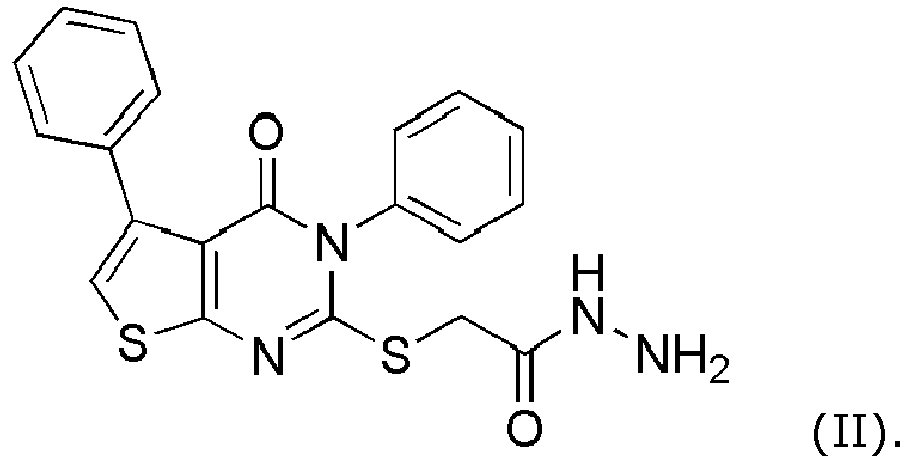
- The compound of formula (II) corresponds to LDN-27219, and hence, in an alternative embodiment the modulator of tissue transglutaminase (TG2) is LDN-27219.
- As described above for the present first aspect of the invention, it relates to the treatment of endothelial dysfunction, and diseases resulting therefrom. The present inventors have found that the selective TG2 modulators of the invention are increasingly effective in the treatment of endothelial dysfunction the older the subjects are. This may be related to the fact that TG2 is increasingly expressed in aging subjects.
- Therefore, in a preferred embodiment of the present invention the endothelial dysfunction is associated with increased levels or increased activity of tissue transglutaminase (TG2). More preferably the endothelial dysfunction is age-associated, i.e. associated with changes in endothelial function related to aging.
- In terms of age-associated endothelial dysfunction and age-associated diseases resulting from endothelial dysfunction, a patient sub-group may be defined, wherein the compounds of the present invention have pronounced beneficial effects. Thus, in a preferred embodiment the compounds of the invention are administered to human patients between the age of 30-140 years, such as the age of 35-140 years, 40-140 years, 45-140 years, 50-140 years, 55-140 years, 60-140 years, 65-140 years, 70-140 years, such as preferably 30-120 years, 40-100 years, such as most preferably 50-100 years.
- Expression of TG2 is also increased in diabetic subjects. The inventors have found that the selective TG2 modulators for the closed conformation in the present invention are especially effective in the treatment of endothelial dysfunction associated with diabetes i.e. associated with changes in endothelial function related to diabetes.
- Thus, in a preferred embodiment the endothelial dysfunction is diabetes-associated. Thus, a preferred sub-group of patient may be defined as patients or subjects suffering from diabetes or diagnosed with diabetes, also known as diabetes mellitus. Diabetes may include diabetes-1 or diabetes-2. Thus, in a more preferred embodiment of the present invention the endothelial dysfunction is associated with diabetes-1 or diabetes-2, preferably diabetes-2.
- Age and diabetes may often be related, particularly diabetes-2 may develop in aging patient. Hence, in another preferred embodiment of the present invention the endothelial dysfunction is both age-associated and diabetes-associated, particularly it may be both age-associated and diabetes-2 associated.
- The subjects or patients treated for the present invention are preferably mammals, such as preferably human subjects or patients.
- A number of diseases are known to be a direct or indirect result of endothelial dysfunction, or to be associated with endothelial dysfunction. Such related diseases comprise cardiovascular diseases, diseases related to vasodilative function, but also diseases related to the brain and its function. Hence, in a preferred embodiment of the present invention the disease resulting from endothelial dysfunction is selected from the group consisting of dementia, Alzheimer's disease, ventricular hypertrophy, vascular calcification, atherosclerosis, ischemic chronic wounds, hypertension, and erectile dysfunction, preferably hypertension and erectile dysfunction.
- For treatment of erectile dysfunction, it is possible to define a patient sub-group, in which the compounds of the present invention have a pronounced effect. Thus in the treatment of erectile dysfunction the compounds may preferably be administered to patients of male gender.
- In an embodiment of the present invention the compound of the present invention is administered in a composition further comprising a pharmaceutically acceptable carrier or diluent, more preferably in the form of a solution or a solid dosage form, and most preferably as a solid dosage form. In an embodiment of the present invention the solid dosage form is selected from the group consisting of a tablet, a capsule, and a sachet.
- The compounds of the present invention and the composition as described above may be administered orally, or parenterally, such as intravenously, intradermally, subcutaneously, or topically. Preferably the compound is administered in a therapeutically effective amount.
- One particularly preferred embodiment of the invention is a compound of formula (I):

- Ar1 and Ar2 are independently selected from the group consisting of optionally substituted phenyl and optionally substituted heteroaryl,
- R is selected from the group consisting of hydrogen, halogen, and C1-C3 alkyl,
- X is selected from the group consisting of O, NH, N(Me), and S,
- n is an integer selected from the group consisting of 1, 2 and 3,
- Another particularly preferred embodiment of the invention is a compound of formula (I):

- Ar1 and Ar2 are independently selected from the group consisting of optionally substituted phenyl and optionally substituted heteroaryl,
- R is selected from the group consisting of hydrogen, halogen, and C1-C3 alkyl,
- X is selected from the group consisting of O, NH, N(Me), and S,
- n is an integer selected from the group consisting of 1, 2 and 3,
- Yet another particularly preferred embodiment of the invention is a compound of formula (I):

- Ar1 and Ar2 are independently selected from the group consisting of optionally substituted phenyl and optionally substituted heteroaryl,
- R is selected from the group consisting of hydrogen, halogen, and C1-C3 alkyl,
- X is selected from the group consisting of O, NH, N(Me), and S,
- n is an integer selected from the group consisting of 1, 2 and 3,
- Yet another particularly preferred embodiment of the invention is a compound of formula (I):

- Ar1 and Ar2 are independently selected from the group consisting of optionally substituted phenyl and optionally substituted heteroaryl,
- R is selected from the group consisting of hydrogen, halogen, and C1-C3 alkyl,
- X is selected from the group consisting of O, NH, N(Me), and S,
- n is an integer selected from the group consisting of 1, 2 and 3,
- A second aspect of the present invention is a method of treating endothelial dysfunction comprising administering to a subject in need thereof a compound which is a modulator of tissue transglutaminase (TG2).
- A third aspect of the present invention is the use of a compound which is a modulator of tissue transglutaminase (TG2) for the manufacture of a medicament for use in the treatment of endothelial dysfunction.
- It should be noted that embodiments and features described in the context of one of the aspects of the present invention also apply to the other aspects of the invention.
- All patent and non-patent references cited in the present application, are hereby incorporated by reference in their entirety.
- The invention will now be described in further details in the following non-limiting examples.
- The following drugs were used: ACh, , Na2GTP (guanosine 5'-triphosphate sodium salt), phenylephrine, and U46619 (9α-epoxymethanoprostaglandin F2α) from Sigma (St. Louis, MO, USA). LDN-27219 was obtained from Tocris Bioscience (Bristol, UK). Boc-DON and Z-DON were obtained from Zedira (Darmstadt, Germany). VA-5 was from ChemShuttle (Hayward, CA, USA).
- Unless otherwise stated all substances were dissolve in distilled water. For'ex vivo' experiments U46619 was dissolved in ethanol and Boc-DON, LDN-27219 VA-5 and Z-DON were dissolved in DMSO and stored at -20°C. Further dilution of the above mentioned compounds were made in distilled water. The DMSO concentration in the bath were kept below 0,01% and did not affect vessel contractility. For 'in vivo' experiments LDN-27219 and VA-5 were dissolved in PEG-400.
- Male Wistar rats of 6-7, 12-14 and 30-35 weeks of age, weighing 200-250, 300-400 and 600-700 g respectively, were obtained from Taconic Denmark ApS (Rye, Denmark) and housed adequately in the animal facility of Aarhus University. Healthy male BKS(D)-Leprdb/JOrIRj heterozygous mice of age 14-16 and 24-25 weeks, and diabetic homozygous mice of age 16-17 weeks were obtained from Taconic, Ry, Denmark or Janvier Labs (Le Genest-Saint-Isle, France) and housed adequately in the animal facility of Aarhus University.
- For 'ex vivo' studies, animals were randomly selected and euthanized by cervical dislocation and exanguination. The mesenteric and renal beds were immediately extracted and placed in 4°C physiological saline solution (PSS, pH= 7.4) of the following composition (mmol/L): 119 NaCl, 4.7 KCl, 1.18 KH2PO4, 1.17 MgSO4, 1.5 CaCl2, 24.9 NaHCO3, 0.026 EDTA and 5.5 glucose and small mesenteric arteries (internal diameters of 200-300 µm) were isolated. For 'in vivo' experiments Wistar rats of different age were fasted 8 h before anesthesia with 35 mg/kg of S-ketamine and 50 mg/kg of pentobarbital sodium administered intraperitoneally. Animal protocols and care were approved by the Danish Animal Experiments Inspectorate (permission 2014-15-2934-0159) and followed the ARRIVE guidelines (McGrath et al, 2015).
- Small mesenteric arteries were mounted in microvascular myographs (Danish Myotechnology, Aarhus, Denmark) using two 40 µm wires and stretched to their optimal diameter for isometric tension recordings, which corresponded to 0.9 times the estimated internal diameter at 100 mmHg of transmural pressure. PSS solution in the myograph bath was heated to 37°C and continuously bubbled with 5% CO2 in air to maintain pH (7.4). The vessel viability was tested at the beginning of each experiment by measuring the vasoconstrictor responses to a solution with a high K+ concentration (KPSS), equivalent to PSS except that NaCl was exchanged for KCI on an equimolar basis, giving a final concentration of 123,7 mmol/L K+ and the presence of endothelium was confirmed by addition of acetylcholine (ACh) (10-5) after pre-constriction with noradrenaline (5·10-6 mol/L), arteries with less than 75% of relaxation were discarded.
- Mesenteric arteries from rats of different age were pre-contracted with phenylephrine (Phe) (10-5 mol/L) and incubated with (10-6 mol/L) LDN-27219 or vehicle for 25 minutes. Then cumulative addition of acetylcholine (ACh) caused the relaxation of the mesenteric arteries and the concentration-response curves were constructed.
- Rats of 5-7 weeks age, about 12 weeks age, and more than 30 weeks of age were tested respectively. The results of the isometric tension studies are shown in
Figure 1 , A), B) and C) respectively, each representing a different their age group. - Example 1 demonstrates that LDN-27219 allows a more potent endothelium-dependent relaxation of the mesenteric arteries when compared to the ones treated with vehicle, and that the effect of LDN-27219 is more pronounced in old rats, than in young rats.
- In these experiments, healthy control mice of different ages and diabetic adult mice were used and the relaxation measurements were performed as described in Example 1.
- Healthy male BKS(D)-Leprdb/JOrIRj heterozygous mice between 14-16 and 24-25 weeks of age, and diabetic homozygous mice between 16-17 weeks of age were tested respectively. The results of the isometric tension studies are shown in
Figure 2 , A), B) and C) respectively. - Example 2 demonstrates that LDN-27219 allows a more potent endothelium-dependent relaxation of the mesenteric arteries when compared to the vehicle experiments in healthy and diabetic mice, and that the effect of LDN-27219 is more pronounced in older mice, and particularly pronounced in diabetic mice.
- Male Wistar rats with 12-14 and 30-35 weeks of age were anesthetized with s-ketamine (35 mg/kg) and pentobarbital (50 mg/kg) and placed on a heated blanket to maintain body temperature at 37°C. ECG needles were installed for electrocardiographic measurements and a solid state catheter (Millar Inc, Houston, USA) was introduced into the carotid artery to measure MAP. MAP and electrocardiographic data was continuously recorded on a computerized data acquisition system (PowerLab, ADInstruments). Adequate depth of anesthesia was checked periodically by the absence of the toe pinch withdrawal effect and 1/3 of the initial dose of anesthetics was administered intraperitoneally when needed (usually each1½ h). Changes in MAP and electrocardiographic signal in response to intrajugular infusion during 3 minutes of different doses of LDN-27219 and the corresponding vehicle (PEG-400) were studied.
- The Area Under the Curve (AUC) was calculated using Graphpad Prism 5.1 (GraphPad Software, San Diego, California, USA) for each response to the change in MAP that was collected during the experiments in example 3. The AUC gives information about the maximal response, and about the duration of the effect.
- The mean arterial pressure (MAP) over 3 minutes when adding LDN-27219 and control is shown in
Figure 3 A) , whereas the Area Under the Curve for these MAP measurements are shown for different aged rats inFigure 3 B) as a function of LDN-27219 concentration. - Preliminar 'in vivo' studies in healthy male BKS(D)-Leprdb/JOrIRj heterozygous mice showed that, additionally to the previously described antyhipertensive effect, mice displayed increased erectile function, measured as peak intracavernosal pressure (PICP) over MAP, upon the administration of LDN-27219.
- Example 3 demonstrates that LDN-27219 has an antihypertensive effect in vivo, as it lowers the mean blood pressure in the carotid artery. Example 3 further demonstrates the greater effect of LDN-27219 in older animals, which is consistent with the results obtained in Example 1.
- At the cellular level, LDN-27219 has the same influence in vascular smooth muscle cells (VSMCs) potassium currents as an endogenous promoter of the closed conformation of TG2, while the induction of the open conformation of the enzyme has the opposite effect.
- For isolation of VSMCs, rat mesenteric arteries were dissected as previously described, opened longitudinally and stored in ice-cold dissociation solution containing (mmol/L): 119 NaCl, 4.7 KCl, 1.18 KH2PO4, 1.17 MgSO4, 24.9 NaHCO3, 0.027 EDTA, and 11 glucose, pH= 7.4. Arteries were then equilibrated during 10 min in a dissociation solution with bovine albumin serum (BSA; 1 mg/mL) at 37°C and then exposed to the same solution supplemented with papain (0.5 mg/mL; Worthington Biochemical Corp., Lakewood, NJ, USA) and dithiothreitol (DTT; 1 mg/mL) at 37°C for 8 min. Arteries were then washed in ice-cold dissociation solution and moved to dissociation solution containing BSA (1 mg/mL) and collagenase (0.7 mg/mL type F and 0.4 mg/mL type H; Worthington Biochemical Corp.) at 37°C for 3 min. After washing in ice-cold dissociation solution, isolated SMCs were obtained by gentle trituration of the digested arteries with a fire polished pipette into the SMC extracellular solution (for composition, see below). After the digestion protocol, SMCs were seeded in micro-dishes (ibidi GmbH, Martinsried, Germany) and used for patch clamp recordings 15 min after the isolation protocol and within the next 5 hours.
Extracellular patch-clamp solution for VSMCs contained the following (mmol/L): 130 NaCl, 5 KCl, 1.2 MgCl2, 1.5 CaCl2, 10 glucose and 10 HEPES (adjusted to pH 7.3 with NaOH) .The patch pipette (intracellular) solution for SMCs contained the following (mmol/L): 130 KCl, 1.2 MgCl2, 0.1 EGTA and 10 HEPES (adjusted to pH 7.2 with KOH). To study the effect of intracellular GTP in LDN-27219 activity over potassium currents, patch pipette solution with 5 mmol/L Na2GTP was used in some experiments.
Membrane currents were recorded under the whole-cell configuration of the patch-clamp technique using an Axon Multiclamp 700A amplifier (Axon instruments, Molecular Devices, CA, USA). Patch pipettes were made of borosilicate glass capillaries (World Precision Instruments, FL, USA) fabricated using a dual-stage puller PP-830 (Narishige, Tokyo, Japan) and had resistances of 4-7 MΩ. Current recordings were digitized on line at 10 kHz and low pass filtered at 2 kHz using a Digidata 1440 A (Axon Instruments), to acquire and store data thepClamp 10 software was used. Current-voltage relations were determined using 600 ms voltage ramps from -100 to 160 mV and a holding potential (Vh) of -65 mV for SMCs.
Amplitudes of K+-outward currents were measured in control conditions and 12 min after the addition of LDN-27219 (3·10-5 mol/L) to the extracellular solution by a perfusion system. To study how conformational modulation of TG2 affected LDN-27219 activity over potassium channels, the initial protocol was repeated after one hour incubation with VA-5 (5·10-5 mol/L) and with GTP present in the intracellular solution, as VA-5 has been shown to force TG2 into the open conformation while GTP has been shown to induce the closed conformation. -
Figure 4 A) shows that VSMCs treated with LDN-27219 had potassium currents significantly bigger compared to the ones in control conditions, being this currents equivalent to the ones recorded in presence of intracellular GTP. Contrarily, VSMCs treated with VA-5 presented significantly smaller potassium currents compared to those in control conditions. These results suggest that LDN-27219 mimics GTP, inducing the closed conformation of TG2 and leading to the opening of potassium channels, while VA-5 produces the opposite effect. - The small mesenteric arteries were prepared in the same way is described in example 1.
The small mesenteric arteries were pre-contracted with the thromboxane analogue, U46619 (4·10-7 mol/L) and concentration-response curves for TG2 specific inhibitors, LDN-27219 (10-8-10-5 mol/L) and Z-DON (10-8-3·10-4 mol/L) were constructed. To study the role of the endothelial pathways in LDN-27219 relaxation, concentration-response curves were constructed for it in arteries whose endothelium had been removed mechanically by rubbing the lumen repeatedly with a human scalp hair. - LDN-27219 induced relaxation in U46619 pre-contracted arteries as shown in
Figure 4B ). Furthermore, the results obtained in the same experiment using arteries without an endothelium layer showed a significantly reduced relaxation. Experiments were performed with cystamine in M. Engholm et al., British J. Pharm. (2016), 173, 839-855, showing that general TG2 inhibitors with unkown effects on TG2 conformation lacked effects on endothelial pathways. Also, the irreversible inhibitor Z-DON that has been shown to lock the enzyme in the open conformation, failed to induce any vasodilation. The results presented inFigure 4 B) are consistent with what is shown in Example 1 and indicate that the vasodilatory effects of LDN-27219 are associated with an endothelial pathway and that different mechanisms of TG2 inhibition have completely different effects in the vascular system. - Pharmacological induction of TG2 closed conformation potentiates endothelial function while promotion of its open conformation reduces endothelium-dependent vasodilation.
- The small mesenteric arteries were prepared in the same way is described in example 1.
To investigate the effect of TG2 conformational modulation in endothelial function, arteries from animals of different age were pre-contracted with phenylephrine (Phe) (10-5 mol/L) and ACh concentration-response curves were constructed after a 1 hour incubation with the irreversible TG2 inhibitors Z-DON (4·10-5 mol/L), Boc-DON (10-5 mol/L) and VA-5 (10-5 mol/L), which have demonstrated to lock the enzyme in its open conformation. - Incubation with LDN-27219 during 25 min increased the response to ACh in Phe pre-constricted arteries from 12-14 weeks old rats as observed in Example 1 (
Figure 1 B) . Contrarily, in these experiments, incubation with Z-DON and VA-5, irreversible and membrane permeable TG2 inhibitors that lock the enzyme in its open conformation, caused a slight inhibition of ACh relaxation compared to the vehicle, while non-permeable TG2 inhibitor Boc-DON had no significant effect as shown inFigure 4 C) . LDN-27219 potentiation of ACh-induced vasodilation was reduced or completely inhibited by the presence of these TG2 irreversible inhibitors as represented by VA-5 inFigure 4 D) These results indicate that the effects of LDN-27219 are mainly due to its capacity to force the closed conformation of TG2. - Inducing TG2 open conformation by pharmacological means has no effects in blood pressure 'in vivo'.
- Rats of different age in these experiments were anesthetized, prepared and catheterized as described in Example 3. Intrajugular infusion during 3 minutes of a single dose (1 mg/kg) of the irreversible TG2 inhibitor VA-5, which have been shown to lock TG2 in the open conformation, did not produce any change in the mean blood pressure of the aorta neither in adult, nor in older animals. These results are shown in
Figure 4 E) as average mean arterial pressure (MAP) values (mmHg) measured before (Bef.), during (Dur.) and after (Aft.) the infusion. These results indicate, consistently with the ex-vivo results, that inhibitors that lock the enzyme in the open conformation lack the antihypertensive properties of LDN-27219. - This example demonstrates that LDN-27219 is a selective promoter of the closed confirmation of TG2 and that this leads to enhanced endothelial vasodilatory function by opening of potassium channels as compared to specific inhibitors of TG2 that lock the enzyme in the open conformation and which show contrary effects on the vascular system, see
Figure 4 E) . - Using a non-compartmental model, pharmacokinetic studies of a single 2 mg/kg intravenous dose of LDN-27219 in living mice, revealed that the compound remains in the blood for enough time to be adequate for long-term treatments. The estimated values are reported in the following table.
Compound Sample size (no of mice) Volume of distribution (L/kg) Half-life (h) Clearance (mL/min·kg) LDN-27219 3 21.4 4.89 52.3 - Transamidase activity of tissue transglutaminase (TG2), linked to its open conformation, is associated with a series of diseases including cardiovascular disease. Also, TG2 can adopt a closed conformation, presenting GTP binding activity and playing a role in transmembrane signaling. Besides the ability of TG2 inhibitors to inhibit transamidase activity, conformational changes of the enzyme may play a role in their impact on disease. It has been found that general inhibitors (e.g. cystamine) of transglutaminase causes smooth muscle vasodilation. However, it is unclear how these inhibitors affect TG2 conformation and how these different conformations are linked with vascular function.
- The present study hypothesized that the closed conformation of TG2 will be associated with vasodilation and antihypertensive effects and may restore age-related changes in endothelial function. It was tested whether LDN-27219 could promote the closed conformation of TG2 and provide improved effects in endothelial function.
- Here 'ex vivo' measurements of vessel tension were performed using isometric myographs in small mesenteric arteries from male Wistar rats, male diabetic healthy control mice and patch-clamp studies in isolated VSMCs. These experiments revealed that induction of the closed conformation of TG2 by LDN-27219 had a direct vasodilatory effect and potentiated the arterial response to acetylcholine through the opening of potassium channels. In contrast, drugs promoting the open conformation of TG2 had no effect in vessel tension and decreased potassium current and acetylcholine response. 'In vivo' measurements of blood pressure and heart rate revealed that jugular infusion of LDN-27219 induced a drop in blood pressure that was larger in older animals, this was associated with increased expression of TG2 and restoration of endothelial function in isolated arteries from older animals and diabetic animals.
- Pharmacological modulation of TG2 to its closed conformation using LDN-27219 presents antihypertensive effects 'in vivo' and potentiates endothelium-dependent vasodilatation by opening potassium channels, increasing these effects with the age of the animal and in diabetic animals. Our findings suggest that the promotion of TG2 closed conformation using LDN-27219 could be a potential strategy to restore age-associated changes in endothelial function as well as diabetes associated changes.
-
- J.W. Keillor et al., Trends in pharmacological sciences, 2015, Vol 36, no 1
- M. Engholm et al., British J. Pharm. (2016), 173, 839-855
-
US 8,614,233 - Y.J. Oh et al., Amino Acids, 2017, 49(3), 695-704
-
US 2018/0002700 A1 -
WO 2014/057266 -
US2006/0183759 - McGrath JC, Lilley E (2015). Implementing guidelines on reporting research using animals (ARRIVE etc.): new requirements for publication in BJP. Br J Pharmacol 172: 3189-3193.
Claims (15)
- A compound which is a modulator of tissue transglutaminase (TG2) for use in the treatment of endothelial dysfunction,
wherein the modulator of tissue transglutaminase (TG2) is a compound of formula (I): - Ar1 and Ar2 are independently selected from the group consisting of optionally substituted phenyl and optionally substituted heteroaryl,- R is selected from the group consisting of hydrogen, halogen, and C1-C3 alkyl,- X is selected from the group consisting of O, NH, N(Me), and S,n is an integer selected from the group consisting of 1, 2 and 3.
 - The compound for use according to claim 1, wherein the modulator of tissue transglutaminase (TG2) is for use in the treatment of diseases resulting from endothelial dysfunction.
- The compound for use according to claim 2, wherein the disease resulting from endothelial dysfunction is selected from the group consisting of dementia, Alzheimer's disease, ventricular hypertrophy, vascular calcification, atherosclerosis, ischemic chronic wounds, hypertension, and erectile dysfunction.
- The compound for use according to claim 3, wherein the disease resulting from endothelial dysfunction is selected from the group consisting of hypertension and erectile dysfunction.
- The compound for use according to any of the preceding claims, wherein the modulator of tissue transglutaminase (TG2) is a promoter of the closed conformation of tissue transglutaminase.
- The compound for use according to any of the preceding claims, wherein the optional substituents of Ar1 and Ar2 are selected from the group consisting of C1-C10 alkyl, C2-C10 alkenyl, C2-C10 alkynyl, amino(-NH2), -CH2NH(C1-C10 alkyl), -CH2N(C1-C10 alkyl)2, aminoalkyl(-NH(C1-C10 alkyl) or -N(C1-C10 alkyl)2, cyano (-CN), -CONH2, -CONH(C1-C10 alkyl), -CON(C1-C10 alkyl)2, hydroxyl(-OH), C1-C10 alkyl hydroxyl (-alkyl-OH), C1-C10 alkoxy(-O-alkyl), carboxylic acid (-COOH), C1-C10 alkyl esters (-COO-alkyl), C1-C10 alkyl acyl (-CO-alkyl), sulfonic acid (-SO3H), C1-C10 alkyl sulfonate (-SO3-alkyl), phosphonic acid (-PO(OH)2), C1-C10 alkyl phosphonate (-PO(O-alkyl)2), phosphinic acid (-P(O)(H)OH), SO2NH2, hydroxamic acid (-CONHOH), C1-C10 alkyl sulfonylureas (-NHCONHSO2(alkyl)), C1-C10 acylsulfonamides (-SO2-NHCO-(alkyl), hydroxyl amine (-NHOH), nitro (-NO2), and halogen.
- The compound for use according to any of the preceding claims, wherein- Ar1 and Ar2 are optionally substituted phenyl,- R is hydrogen or halogen- X is S,- n is an integer selected from the group consisting of 1, 2 and 3.
- The compound for use according to any of the preceding claims, wherein the modulator of tissue transglutaminase (TG2) is a compound of formula (II):

- The compound for use according to any of the preceding claims, wherein the modulator of tissue transglutaminase (TG2) is LDN-27219.
- The compound for use according to any of the preceding claims, wherein the endothelial dysfunction is age-associated.
- The compound for use according to any of the preceding claims, wherein the compound is administered to human patients between the age of 30-140 years, such as the age of 35-140 years, 40-140 years, 45-140 years, 50-140 years, 55-140 years, 60-140 years, 65-140 years, 70-140 years, such as preferably 30-120 years, 40-100 years, such as most preferably 50-100 years.
- The compound for use according to any of the preceding claims, wherein the endothelial dysfunction is diabetes-associated.
- The compound for use according to any of the preceding claims, wherein the endothelial dysfunction is associated with diabetes-1 or diabetes-2, preferably diabetes-2.
- The compound for use according to any of the preceding claims, wherein the endothelial dysfunction is both age-associated and diabetes-associated.
- The compound for use according to any of the preceding claims, wherein the compound is administered in a composition further comprising a pharmaceutically acceptable carrier or diluent.
Priority Applications (4)
| Application Number | Priority Date | Filing Date | Title |
|---|---|---|---|
| EP18187711.9A EP3607948A1 (en) | 2018-08-07 | 2018-08-07 | Tissue transglutaminase modulators for medicinal use |
| EP19752472.1A EP3833354B1 (en) | 2018-08-07 | 2019-08-06 | Tissue transglutaminase modulators for medicinal use |
| PCT/EP2019/071134 WO2020030648A1 (en) | 2018-08-07 | 2019-08-06 | Tissue transglutaminase modulators for medicinal use |
| US17/265,982 US20210308138A1 (en) | 2018-08-07 | 2019-08-06 | Tissue transglutaminase modulators for medicinal use |
Applications Claiming Priority (1)
| Application Number | Priority Date | Filing Date | Title |
|---|---|---|---|
| EP18187711.9A EP3607948A1 (en) | 2018-08-07 | 2018-08-07 | Tissue transglutaminase modulators for medicinal use |
Publications (1)
| Publication Number | Publication Date |
|---|---|
| EP3607948A1 true EP3607948A1 (en) | 2020-02-12 |
Family
ID=63168326
Family Applications (2)
| Application Number | Title | Priority Date | Filing Date |
|---|---|---|---|
| EP18187711.9A Withdrawn EP3607948A1 (en) | 2018-08-07 | 2018-08-07 | Tissue transglutaminase modulators for medicinal use |
| EP19752472.1A Active EP3833354B1 (en) | 2018-08-07 | 2019-08-06 | Tissue transglutaminase modulators for medicinal use |
Family Applications After (1)
| Application Number | Title | Priority Date | Filing Date |
|---|---|---|---|
| EP19752472.1A Active EP3833354B1 (en) | 2018-08-07 | 2019-08-06 | Tissue transglutaminase modulators for medicinal use |
Country Status (3)
| Country | Link |
|---|---|
| US (1) | US20210308138A1 (en) |
| EP (2) | EP3607948A1 (en) |
| WO (1) | WO2020030648A1 (en) |
Cited By (1)
| Publication number | Priority date | Publication date | Assignee | Title |
|---|---|---|---|---|
| CN115837022A (en) * | 2023-02-20 | 2023-03-24 | 中山大学附属第八医院(深圳福田) | Application of 1,2,4 triazolo 4,3-B pyridazine derivative in preparation of anti-aging drugs |
Citations (4)
| Publication number | Priority date | Publication date | Assignee | Title |
|---|---|---|---|---|
| WO2006060702A1 (en) * | 2004-12-03 | 2006-06-08 | The Brigham And Women's Hospital, Inc. | Substitued 3,4-dihydrothieno [2,3-d] pyrmidines as tissue transglutaminase inhibitors |
| US8614233B2 (en) | 2007-05-29 | 2013-12-24 | Universite De Montreal | Cinnamoyl inhibitors of transglutaminase |
| WO2014057266A1 (en) | 2012-10-09 | 2014-04-17 | Aston University | Acylpiperazines as inhibitors of transglutaminase and their use in medicine |
| US20180002700A1 (en) | 2016-05-12 | 2018-01-04 | Kangwon National University University-Industry Cooperation Foundation | Pharmaceutical composition for preventing or treating diabetic complications and screening method for preventive or therapeutic agent for diabetic complications |
-
2018
- 2018-08-07 EP EP18187711.9A patent/EP3607948A1/en not_active Withdrawn
-
2019
- 2019-08-06 WO PCT/EP2019/071134 patent/WO2020030648A1/en not_active Ceased
- 2019-08-06 EP EP19752472.1A patent/EP3833354B1/en active Active
- 2019-08-06 US US17/265,982 patent/US20210308138A1/en not_active Abandoned
Patent Citations (5)
| Publication number | Priority date | Publication date | Assignee | Title |
|---|---|---|---|---|
| WO2006060702A1 (en) * | 2004-12-03 | 2006-06-08 | The Brigham And Women's Hospital, Inc. | Substitued 3,4-dihydrothieno [2,3-d] pyrmidines as tissue transglutaminase inhibitors |
| US20060183759A1 (en) | 2004-12-03 | 2006-08-17 | Stein Ross L | Tissue transglutaminase inhibitors |
| US8614233B2 (en) | 2007-05-29 | 2013-12-24 | Universite De Montreal | Cinnamoyl inhibitors of transglutaminase |
| WO2014057266A1 (en) | 2012-10-09 | 2014-04-17 | Aston University | Acylpiperazines as inhibitors of transglutaminase and their use in medicine |
| US20180002700A1 (en) | 2016-05-12 | 2018-01-04 | Kangwon National University University-Industry Cooperation Foundation | Pharmaceutical composition for preventing or treating diabetic complications and screening method for preventive or therapeutic agent for diabetic complications |
Non-Patent Citations (9)
| Title |
|---|
| G.G. MIRONOV ET AL., NATURE CHEMICAL BIOLOGY, vol. 12, 2016, pages 918 - 922 |
| H TATSUKAWA ET AL: "Transglutaminase 2 has opposing roles in the regulation of cellular functions as well as cell growth and death", CELL DEATH & DISEASE, vol. 7, no. 6, 1 June 2016 (2016-06-01), pages e2244 - e2244, XP055552630, DOI: 10.1038/cddis.2016.150 * |
| J. W. KEILLOR ET AL., TRENDS IN PHARMACOLOGICAL SCIENCES, vol. 36, no. 1, 2015 |
| J.W. KEILLOR ET AL., TRENDS IN PHARMACOLOGICAL SCIENCES, vol. 36, no. 1, 2015 |
| M. ENGHOLM ET AL., BRITISH J. PHARM., vol. 173, 2016, pages 839 - 855 |
| MATLUNG HANKE L ET AL: "Transglutaminase activity regulates atherosclerotic plaque composition at locations exposed to oscillatory shear stress", ATHEROSCLEROSIS, vol. 224, no. 2, 2012, pages 355 - 362, XP028942294, ISSN: 0021-9150, DOI: 10.1016/J.ATHEROSCLEROSIS.2012.07.044 * |
| MCGRATH JC; LILLEY E: "Implementing guidelines on reporting research using animals (ARRIVE etc.): new requirements for publication", BJP. BR J PHARMACOL, vol. 172, 2015, pages 3189 - 3193 |
| MORTEN ENGHOLM ET AL: "Involvement of transglutaminase 2 and voltage-gated potassium channels in cystamine vasodilatation in rat mesenteric small arteries : Vasoactive effects of cystamine", BRITISH JOURNAL OF PHARMACOLOGY, vol. 173, no. 5, 27 January 2016 (2016-01-27), UK, pages 839 - 855, XP055551401, ISSN: 0007-1188, DOI: 10.1111/bph.13393 * |
| Y.J. OH ET AL., AMINO ACIDS, vol. 49, no. 3, 2017, pages 695 - 704 |
Cited By (2)
| Publication number | Priority date | Publication date | Assignee | Title |
|---|---|---|---|---|
| CN115837022A (en) * | 2023-02-20 | 2023-03-24 | 中山大学附属第八医院(深圳福田) | Application of 1,2,4 triazolo 4,3-B pyridazine derivative in preparation of anti-aging drugs |
| CN115837022B (en) * | 2023-02-20 | 2023-04-25 | 中山大学附属第八医院(深圳福田) | Application of 1,2, 4-triazolo 4,3-B pyridazine derivative in preparation of anti-aging drugs |
Also Published As
| Publication number | Publication date |
|---|---|
| EP3833354C0 (en) | 2023-10-04 |
| US20210308138A1 (en) | 2021-10-07 |
| EP3833354A1 (en) | 2021-06-16 |
| WO2020030648A1 (en) | 2020-02-13 |
| EP3833354B1 (en) | 2023-10-04 |
Similar Documents
| Publication | Publication Date | Title |
|---|---|---|
| JP6991993B2 (en) | How to treat hyperalgesia | |
| TWI791507B (en) | Methods and compositions for treating aging-associated impairments using ccr3-inhibitors | |
| US20220184075A1 (en) | Pharmaceutical composition containing hdac6 inhibitor as active ingredient for prevention or treatment of itching | |
| CN101820848B (en) | Compositions and methods of inhibiting n-acylethanolamine-hydrolyzing acid amidase | |
| KR102324667B1 (en) | Steroid Compound for Use in the treatment of hepatic encephalopathy | |
| TW201240662A (en) | Ester pro-drugs of [3-(1-(1H-imidazol-4-yl)ethyl)-2-methylphenyl] methanol for treating retinal diseases | |
| EP3820476A1 (en) | Use of sgc stimulators for the treatment of mitochonrial disorders | |
| CA2828831C (en) | Compounds and methods for the treatment of pain and other disorders | |
| EP2716302B1 (en) | Prophylactic or therapeutic agent for neuropathic pain associated with guillain-barre syndrome | |
| CA2953064C (en) | Methods, compounds, and compositions for the treatment of musculoskeletal diseases | |
| CN119424424A (en) | Methods for treating allergic cough or pruritus using ion channel inhibitory compounds | |
| EP3833354B1 (en) | Tissue transglutaminase modulators for medicinal use | |
| KR20200085278A (en) | Small molecule inhibitors of covalent epitope-caleticulin interactions and methods of use | |
| US10568852B2 (en) | Combination compositions and their use in methods for treating obesity and obesity-related disorders | |
| WO2024006841A2 (en) | Compositions for weight loss and cancer treatment | |
| WO2019070816A1 (en) | Modulators of cell adhesion, methods and compositions therefor | |
| EP3569233A1 (en) | Therapeutic agent for non-motor symptoms associated with parkinson's disease | |
| CN119584967A (en) | Compositions and methods for treating hepatic porphyria using glycine transport inhibitors | |
| KR20070029133A (en) | Drug for inhibiting vascular intimal hyperplasia | |
| EP3672592A1 (en) | 6-chromanol derivatives for use as a medicament | |
| HK40123243A (en) | Compositions and methods for treating hepatic porphyrias with glycine transport inhibitors | |
| WO2026035293A1 (en) | Compositions and methods for the prevention and treatment of obesity and obesity-induced disease | |
| JP2026506134A (en) | Methods and compositions for treating Huntington's disease and its symptoms | |
| WO2025189066A1 (en) | Modulators of g protein-coupled receptor 55 (gpr55) | |
| JP2025502526A (en) | Use of serotonin 5-ht1a receptor agonists to treat disorders associated with sudden unexpected death in epilepsy - Patents.com |
Legal Events
| Date | Code | Title | Description |
|---|---|---|---|
| PUAI | Public reference made under article 153(3) epc to a published international application that has entered the european phase |
Free format text: ORIGINAL CODE: 0009012 |
|
| AK | Designated contracting states |
Kind code of ref document: A1 Designated state(s): AL AT BE BG CH CY CZ DE DK EE ES FI FR GB GR HR HU IE IS IT LI LT LU LV MC MK MT NL NO PL PT RO RS SE SI SK SM TR |
|
| AX | Request for extension of the european patent |
Extension state: BA ME |
|
| STAA | Information on the status of an ep patent application or granted ep patent |
Free format text: STATUS: THE APPLICATION IS DEEMED TO BE WITHDRAWN |
|
| 18D | Application deemed to be withdrawn |
Effective date: 20200813 |