EP3606897B1 - Separation of phenol isomer - Google Patents
Separation of phenol isomer Download PDFInfo
- Publication number
- EP3606897B1 EP3606897B1 EP18727419.6A EP18727419A EP3606897B1 EP 3606897 B1 EP3606897 B1 EP 3606897B1 EP 18727419 A EP18727419 A EP 18727419A EP 3606897 B1 EP3606897 B1 EP 3606897B1
- Authority
- EP
- European Patent Office
- Prior art keywords
- compound
- base
- acid
- mixture
- precipitate
- Prior art date
- Legal status (The legal status is an assumption and is not a legal conclusion. Google has not performed a legal analysis and makes no representation as to the accuracy of the status listed.)
- Active
Links
Classifications
-
- C—CHEMISTRY; METALLURGY
- C07—ORGANIC CHEMISTRY
- C07C—ACYCLIC OR CARBOCYCLIC COMPOUNDS
- C07C37/00—Preparation of compounds having hydroxy or O-metal groups bound to a carbon atom of a six-membered aromatic ring
- C07C37/68—Purification; separation; Use of additives, e.g. for stabilisation
- C07C37/685—Processes comprising at least two steps in series
-
- C—CHEMISTRY; METALLURGY
- C07—ORGANIC CHEMISTRY
- C07C—ACYCLIC OR CARBOCYCLIC COMPOUNDS
- C07C37/00—Preparation of compounds having hydroxy or O-metal groups bound to a carbon atom of a six-membered aromatic ring
- C07C37/68—Purification; separation; Use of additives, e.g. for stabilisation
- C07C37/86—Purification; separation; Use of additives, e.g. for stabilisation by treatment giving rise to a chemical modification
-
- C—CHEMISTRY; METALLURGY
- C07—ORGANIC CHEMISTRY
- C07C—ACYCLIC OR CARBOCYCLIC COMPOUNDS
- C07C39/00—Compounds having at least one hydroxy or O-metal group bound to a carbon atom of a six-membered aromatic ring
- C07C39/24—Halogenated derivatives
- C07C39/26—Halogenated derivatives monocyclic monohydroxylic containing halogen bound to ring carbon atoms
Definitions
- the present subject matter relates to a process for separating compound (I) from a mixture comprising compound (I).
- the present subject matter also relates to a process for separating compound (I) from a mixture comprising compound (I) and compound (II).
- Compound (I) is often used as a starting material.
- Compound (I) can be obtained as a by-product and/or residual waste in different manufacturing process such as described in U.S. Patent No. 4, 046,798 .
- the compound (I) may exist in a mixture with 2-chloro-5-(trifluoromethyl)-phenol (compound (II)).
- the residual waste also may comprise unknown impurities.
- impurities can react in parallel synthetic pathways, creating a need for extra further purification steps leading to additional costs.
- undesirable side-reactions require an excess of reagents, decrease yields, and increase costs and waste.
- U.S. Patent No. 2,016,848 discloses a method of seperating orto and para benzyl phenol isomers via converting the compounds to their salt form and filtrating for one of the isomers.
- U.S. Patent No. 4,366, 329 discloses a method of seperating meta and para bromo phenol isomers via sodium salt derivative.
- EP0019388A1 discloses a process for the preparation of a substituted phenate or the corresponding phenol, the process comprises a reaction with an alkali metal or alkaline earth metal hydroxide base in a solvent system which is substantially inert to said base and which comprises a polar, aprotic solvent with a dielectric constant in the range of from about 30 to about 70 and a non-nucleophilic hydroxy-containing solvent which increases the solubility of said base in the solvent system whereby a phenate is obtained and, if a phenol is the desired product, reacting the phenate with an acid to form the phenol.
- Separation of compounds depends on the specific structure of the compound to be isolated.
- the position and location of the functional groups influence the separation method and conditions.
- the present invention provides a process for separating compound (I), or a salt thereof, from a mixture comprising the compound (I), the process comprising the steps of:
- the present invention provides a method of obtaining a compound (I) from a mixture containing compound (I), comprising separating compound (I) from the mixture comprising compound (I), according to the process of the invention.
- the present invention provides a precipitate comprising compound (I) or a salt thereof, obtained by separation from a mixture containing compound (I), using the process of the present invention.
- the present invention provides a precipitate comprising compound (I) or a salt thereof, precipitated from a mixture containing compound (I), characterized in that the purity of compound (I) in the resulting precipitate material is from:
- the present invention provides a composition comprising the precipitate of the third or forth aspect of the present invention.
- the present invention provides a composition comprising a precipitate and at least one solvent, wherein the precipitate comprises salt of compound (I) separated from a mixture containing compound (I) and at least one compound compound (II), characterized in that the ratio of compound (I) to said compound (II) in the precipitate, is at least one of:
- the present invention provides a process for separating compound (I), or a salt thereof, from a mixture comprising the compound (I), the process comprising the steps of:
- the mixture further comprises compound (II)
- the mixture further comprises compound (II)
- the process described herein may be used to separate compound (I) from mixtures with any compound (I) to compound (II) ratio.
- the ratio of compound (I) to compound (II) in the mixture is from 1:1000 to 1000:1.
- the ratio of compound (I) to compound (II) in the mixture is from 90:10 to 70:30. In some embodiments, the ratio of compound (I) to compound (II) in the mixture is 90:10, 85:15, or 80:20, 75:25, or 70:30.
- the ratio of compound (I) to compound (II) in the mixture is 88:11.
- the mixture which comprises compound (I) and compound (II) is a solution.
- the concentration of the compound (I) in the solution is from about 1% to 99%.
- the resulting precipitate material is a metal salt.
- the ratio of compound (I) to compound (II) in the resulting precipitate material is from 50:1 to 1000:1. In some embodiments, the ratio of compound (I) to compound (II) in the resulting precipitate material is from 50:1 to 500:1. In some embodiments, the ratio of compound (I) to compound (II) in the resulting precipitate material is from 50:1 to 200:1. In some embodiments, the ratio of compound (I) to compound (II) in the resulting precipitate material is from 50:1 to 100:1.
- the ratio of compound (I) to compound (II) in the resulting precipitate material is 77:0.4.
- the ratio of compound (I) to compound (II) in the resulting precipitate material is 98.15:1.85.
- the ratio of compound (I) to compound (II) in the resulting precipitate material is 93:0.2.
- the purity of compound (I) in the resulting precipitate material is 80% or more, 85% or more, 90% or more, 95% or more, or 99% or more. In some embodiment, the purity of compound (I) in the resulting precipitate material is 80%, 85%, 90%, 95%, or 99%.
- the purity of compound (I) in the resulting precipitate material is 93%.
- the process further comprises neutralization of the metal salt with an acid.
- the metal salt of compound (I) is neutralized with an acid.
- the acid is an organic acid.
- Organic acids that may be used include but are not limited to carboxylic acids such as citric acid, fumaric acid, phthalic acid, maleic acid, malic acid, oxalic acid, adipic acid, glutaric acid, 2-methyl glutaric acid, succinic acid and tartaric acid, tri fluoro methyl acetic acid, p-toluene sulfonic acid or any combination thereof.
- carboxylic acids such as citric acid, fumaric acid, phthalic acid, maleic acid, malic acid, oxalic acid, adipic acid, glutaric acid, 2-methyl glutaric acid, succinic acid and tartaric acid, tri fluoro methyl acetic acid, p-toluene sulfonic acid or any combination thereof.
- the acid is an inorganic acid.
- Inorganic acids that may be used include but are not limited to hydrochloric acid, hydrobromic acid, hydroiodic acid, nitric acid, sulfuric acid, persulfuric acid or any combination thereof.
- the mixture reacts with the base in the presence of at least two solvents.
- the mixture reacts with the base in the presence of at least three solvents.
- the mixture reacts with the base in the presence of at least four solvents.
- At least one of the solvents is a polar solvent.
- the polar solvent is an organic polar solvent.
- the organic polar solvent is dimethyl sulfoxide (DMSO), dimethylformamide (DMF), N-Methyl-2-pyrrolidone (NMP), glycols, sulfolan, mono and di-glymes, acetamide, glycerine, ACN, nitro ethane or any combination thereof.
- the organic polar solvent is an alcohol.
- the alcohol is methanol, ethanol or propanol. In preferred embodiments, the alcohol is ethanol.
- At least 1% of the total volume of the solvent is polar solvent.
- At least one of the solvents is a nonpolar solvent.
- the nonpolar solvent is an organic nonpolar solvent.
- the nonpolar solvent is nonpolar aromatic solvent.
- the nonpolar aromatic solvent is toluene, xylene, mono chloro benzene
- the nonpolar aromatic solvent is toluene.
- the naphtha is light naphtha. In some embodiments, the naphtha is heavy naphtha. In some embodiments, the naphtha is petroleum naphtha. In some embodiments, the solvent naphtha is the Solvesso ® grades from ExxonMobil Chemical, especially Solvesso ® 100 ( CAS No. 64742-95-6 ), Solvesso ® 150 ( CAS No. 64742-94-5 ), and Solvesso ® 200 ( CAS No. 64742-94-5 ).
- the nonpolar aromatic solvent has a flashpoint of about 38°C (100°F) to about 93°C (200°F).
- the nonpolar aromatic solvent has a flashpoint of about 38°C (100°F).
- the nonpolar aromatic solvent has a flashpoint of about 66°C (150°F).
- the nonpolar aromatic solvent has a flashpoint of about 93°C (200°F).
- none of the solvents is a nonpolar aromatic solvent.
- the nonpolar solvent is pentane, hexane, or dichloromethane (DCM).
- one of the solvents is water.
- the water is added to the reaction mixture.
- the water is formed during the reaction.
- the water is formed with addition of the base into the reaction mixture.
- At least 1 % of the total volume of the solvent is water.
- the mixture is solution. In some embodiments, the mixture is solid.
- the concentration of water in the aqueous solution is not more than 25 %. In some embodiments, the concentration of water in the aqueous solution is 10 %. In some embodiments, the concentration of water in the aqueous solution is 1 %. In some embodiments, the mixture reacts with the base in the presence of one solvent wherein the solvent is ethanol. In some embodiments, the mixture reacts with the base in the presence of at least one solvent wherein one of the solvent is ethanol.
- the mixture reacts with the base in the presence of two solvents wherein the two solvents are toluene and ethanol. In some embodiments, the mixture reacts with the base in the presence of at least two solvents and two of the solvents are toluene and ethanol.
- the mixture reacts with the base in the presence of three solvents wherein the three solvents are toluene, water, and ethanol. In some embodiments, the mixture reacts with the base in the presence of at least three solvents and three of the at least three solvents are toluene, water, and ethanol.
- the base is an organic base. In some embodiments, the base is an inorganic base.
- the base is an alkali metal base. In some embodiments, the base is an earth alkaline metal base. In some embodiments, the alkaline metal is sodium, lithium, or potassium. In some embodiments, the earth alkaline metal is magnesium or calcium.
- the organic base is triethylamine, trimethylamine, pyridine, guanidines, tetramethylammonium hydroxide, tetrabutylammonium hydroxide, choline hydroxide, or 1,4-diazabicyclo[2.2.2]octane (DABCO).
- the inorganic base is i. ammonia, ii. alkali metal base, optionally consisting of sodium base, lithium base, potassium base, magnesium base or calcium base, iii. hydroxy base, optionally consisting of ammonium hydroxide, iv. alkoxy base, optionally consisting of methoxy base or ethoxy base or v. carbonate base, optionally consisting of lithium carbonate, sodium carbonate, sodium bicarbonate, potassium carbonate or potassium bicarbonate, or any combination thereof.
- the base is potassium hydroxide. In preferred embodiments, the base is sodium hydroxide.
- the base is dissolved in the solvent. In some embodiments, the base is dissolved in water. In some embodiments, the base contains water. In some embodiments, the base is dissolved in an organic solvent.
- the process is performed at a temperature below 50°C.
- the temperature is 20°C to 40°C.
- the temeprature is 15-22 °C.
- the temperature is 45°C, 40°C, 35°C, 30°C, 25°C, 20°C, 15°C, 10°C. In specific embodiment, the temperature is 30°C.
- the resulting precipitate material is a solid. In some embodiments, the resulting precipitate material is a paste.
- the resulting precipitate material is separated in step (b) by filtration. In some embodiments, the resulting precipitate material is separated in step (b) by centrifuge. In some embodiments, the resulting precipitate material is separated in step (b) by decantation.
- the subject invention provides a method of obtaining the compound of formula (I) comprising separating the compound of formula (I) according to any embodiments of the present invention.
- the present invention provides a precipitate comprising compound (I) , or a salt thereof, obtained by separation from a mixture containing compound (I), using the process of the present invention.
- the present invention provides a precipitate comprising compound (I) or a salt thereof, precipitated from a mixture containing compound (I), characterized in that the purity of compound (I) in the resulting precipitate material is from:
- the present invention provides a composition comprising the precipitate of the third or forth aspect of the present invention.
- the present invention provides a composition comprising a precipitate and at least one solvent, wherein the precipitate comprises salt of compound (I) separated from a mixture containing compound (I) and at least one compound compound (II), characterized in that the ratio of compound (I) to said compound (II) in the precipitate, is at least one of:
- the salt of the compound (I) is a metal salt.
- the metal salt is a potassium salt.
- the composition further comprises a base.
- the base is potassium hydroxide.
- the composition comprises at least two solvents. In some embodiments, the composition comprises at least three solvents. In some embodiments, the composition comprises at least four solvents.
- At least one of the solvents is a polar solvent.
- the polar solvent is an organic polar solvent.
- the organic polar solvent is dimethyl sulfoxide (DMSO), dimethylformamide (DMF), N-Methyl-2-pyrrolidone (NMP), glycols, sulfolan, mono and di-glymes, acetamide, glycerine, ACN, nitro ethane or any combination thereof.
- the organic polar solvent is alcohol.
- the alcohol is methanol, ethanol or propanol. In preferred embodiments, the alcohol is ethanol.
- At least 1% of the total volume of the solvent is polar solvent.
- At least one of the solvents is a nonpolar solvent.
- the nonpolar solvent is an organic nonpolar solvent.
- the nonpolar solvent is nonpolar aromatic solvent.
- the nonpolar aromatic solvent is toluene, xylene, mono chloro benzene (MCB), naphtha, or any combination thereof.
- the nonpolar aromatic solvent is toluene.
- the naphtha is light naphtha. In some embodiments, the naphtha is heavy naphtha. In some embodiments, the naphtha is petroleum naphtha. In some embodiments, the solvent naphtha is the Solvesso ® grades from ExxonMobil Chemical, especially Solvesso ® 100 ( CAS No. 64742-95-6 ), Solvesso ® 150 ( CAS No. 64742-94-5 ), and Solvesso ® 200 ( CAS No. 64742-94-5 ).
- none of the solvents is a nonpolar aromatic solvent.
- the nonpolar solvent is pentane, hexane, or dichloromethane (DCM).
- one of the solvents is water.
- the composition comprises one solvent wherein the solvent is ethanol.
- the composition comprises two solvents wherein the two solvents are toluene and ethanol.
- the composition comprises three solvents wherein the three solvents are toluene, water, and ethanol.
- the mixture was stirred at room temperature for 3 hours until all the KOH has disappeared (the color of the mixture was brown), and a brown solid was formed.
- the solid was filtered, washed with toluene (50 g) and dried at 30 °C under reduced pressure to afford phenoxy-K (hydrate) (306 g).
- the filtered solid comprised compound (I) and compound (II) in of ratio of 93 : 0.2.
- Example 5 Mother liquor from U.S. Patent No. 4,046,798 Example 3 or Chinese Patent Application No. CN1363548A Example 5 (600 g) were evaporated under reduced pressure at room temperature to obtain about 300 g residue, which contains a mixture of 2-chloro-4-(trifluoromethyl)-phenol, i.e. compound (I), 2-chloro-5-(trifluoromethyl)-phenol, i.e. compound (II), and other impurities.
Landscapes
- Chemical & Material Sciences (AREA)
- Organic Chemistry (AREA)
- Chemical Kinetics & Catalysis (AREA)
- General Chemical & Material Sciences (AREA)
- Organic Low-Molecular-Weight Compounds And Preparation Thereof (AREA)
Description
- The present subject matter relates to a process for separating compound (I) from a mixture comprising compound (I). The present subject matter also relates to a process for separating compound (I) from a mixture comprising compound (I) and compound (II).
- 2-Chloro-4-trifluoromethyl-phenol (compound (I)) is used as a reagent in the manufacture of certain nitro diphenyl ether herbicide.

- Many active ingredients, in different fields such as pharma and agriculture, use compound (I) in their synthetic pathways.
- Compound (I) is often used as a starting material.
- Compound (I) can be obtained as a by-product and/or residual waste in different manufacturing process such as described in
U.S. Patent No. 4, 046,798 . - In the residual waste, the compound (I) may exist in a mixture with 2-chloro-5-(trifluoromethyl)-phenol (compound (II)).

- The residual waste also may comprise unknown impurities.
- In manufacturing processes, impurities can react in parallel synthetic pathways, creating a need for extra further purification steps leading to additional costs. In addition, undesirable side-reactions require an excess of reagents, decrease yields, and increase costs and waste.
- Several known procedures such as crystallization, column separation and distillation described in the literature may be used for purifying and isolating specific compound from mixtures or for recycling and converting synthesis mother liquors into reusable material.
- For example,
U.S. Patent No. 2,016,848 discloses a method of seperating orto and para benzyl phenol isomers via converting the compounds to their salt form and filtrating for one of the isomers. In another example,U.S. Patent No. 4,366, 329 discloses a method of seperating meta and para bromo phenol isomers via sodium salt derivative. -
EP0019388A1 discloses a process for the preparation of a substituted phenate or the corresponding phenol, the process comprises a reaction with an alkali metal or alkaline earth metal hydroxide base in a solvent system which is substantially inert to said base and which comprises a polar, aprotic solvent with a dielectric constant in the range of from about 30 to about 70 and a non-nucleophilic hydroxy-containing solvent which increases the solubility of said base in the solvent system whereby a phenate is obtained and, if a phenol is the desired product, reacting the phenate with an acid to form the phenol. - Separation of compounds depends on the specific structure of the compound to be isolated. The position and location of the functional groups influence the separation method and conditions.
- Compounds, such as compound (I), which have multi-functional group wherein at least one of the groups is tri-fluoro methyl are very sensitive and can rapidly undergo hydrolysis, resulting with carboxylic acid. The phenol is sensitive to water in alkali conditions and the Cl moiety can react with a phenol of another molecule.
- Each of the separation methods currently known in the art has disadvantages and cannot be used for separating compound (I) from a mixture. Distillation of the mixture causes high corrosion and is accompanied with decomposition of the desirable compound. Column separation has a very high cost and is a cumbersome procedure. Column separation also requires use of multiple and large amounts of solvents. Conventional isomer separation cannot be used due the multi-functional groups and the type and nature of the functional groups.
- There is a need to find an easy, inexpensive procedure to isolate 2-Chloro-4-trifluoromethyl-phenol, i.e. compound (I), from a mixture of isomers and other impurities.
- There is also a need to find a method for obtaining 2-Chloro-4-trifluoromethyl-phenol, i.e. compound (I), in high yield, in an easy, low cost, and high selectivity and purity.
- It was found that compound (I) can be isolated and purified without the need for distillation and/or separation by column chromatography.
- In a first aspect, the present invention provides a process for separating compound (I), or a salt thereof, from a mixture comprising the compound (I),

- (a) combining the mixture with an amount of a base in the presence of at least one solvent so as to form a precipitate; and
- (b) separating the precipitate,
- In a second aspect, the present invention provides a method of obtaining a compound (I) from a mixture containing compound (I),

- In a third aspect, the present invention provides a precipitate comprising compound (I)

- In a forth aspect, the present invention provides a precipitate comprising compound (I)

- i. greater than or equal to 80%,
- ii. greater than or equal to 85%,
- iii. greater than or equal to 90%,
- iv. greater than or equal to 95%,
- v. greater than or equal to 99%, or
- vi. 93%.
- In a fifth aspect, the present invention provides a composition comprising the precipitate of the third or forth aspect of the present invention.
- In a sixth aspect, the present invention provides a composition comprising a precipitate and at least one solvent, wherein the precipitate comprises salt of compound (I)


- a. from 50:1 to 1000: 1,
- b. from 50:1 to 500:1,
- c. from 50: 1 to 200: 1,
- d. from 50:1 to 100: 1,
- e. 77:0.4,
- f. 98.15: 1.85
- g. 93:0.2.
- Prior to setting forth the present subject matter in detail, it may be helpful to provide definitions of certain terms to be used herein. Unless defined otherwise, all technical and scientific terms used herein have the same meaning as is commonly understood by one of skill in the art to which this subject matter pertains.
- The term "a" or "an" as used herein includes the singular and the plural, unless specifically stated otherwise. Therefore, the terms "a," "an," or "at least one" can be used interchangeably in this application.
- Throughout the application, descriptions of various embodiments use the term "comprising"; however, it will be understood by one of skill in the art, that in some specific instances, an embodiment can alternatively be described using the language "consisting essentially of" or "consisting of". In each such instance, the terms "comprising," "consisting essentially of," and "consisting of" are intended to have the same meaning as each such term would have when used as the transition phrase of a patent claim.
- As used herein, the term "about" specifically includes ±10% from the indicated values in the range. In addition, all ranges directed to the same component or property herein are inclusive of the endpoints, are independently combinable, and include all intermediate points and ranges.
- In a first aspect, the present invention provides a process for separating compound (I), or a salt thereof, from a mixture comprising the compound (I),

- (a) combining the mixture with an amount of a base in the presence of at least one solvent so as to form a precipitate; and
- (b) separating the precipitate,
- In some embodiments, the mixture further comprises compound (II)
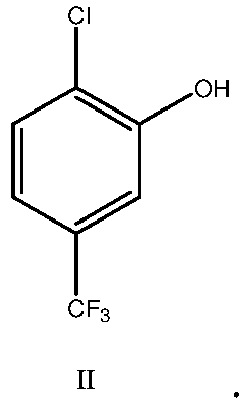
- In an embodiment, the mixture further comprises compound (II)

- wherein, said base optionally contains water, and said base is at least one of organic base and inorganic base;
- wherein precipitate is separated in step (b) by filtration, by centrifuge, or by decantation.
- The process described herein may be used to separate compound (I) from mixtures with any compound (I) to compound (II) ratio.
- In some embodiment, the ratio of compound (I) to compound (II) in the mixture is from 1:1000 to 1000:1.
- In some embodiment, the ratio of compound (I) to compound (II) in the mixture is from 90:10 to 70:30. In some embodiments, the ratio of compound (I) to compound (II) in the mixture is 90:10, 85:15, or 80:20, 75:25, or 70:30.
- In some embodiments, the ratio of compound (I) to compound (II) in the mixture is 88:11.
- In some embodiments, the mixture which comprises compound (I) and compound (II) is a solution.
- In some embodiment, the concentration of the compound (I) in the solution is from about 1% to 99%.
- In some embodiments, the resulting precipitate material is a metal salt.
- In some embodiments, the ratio of compound (I) to compound (II) in the resulting precipitate material is from 50:1 to 1000:1. In some embodiments, the ratio of compound (I) to compound (II) in the resulting precipitate material is from 50:1 to 500:1. In some embodiments, the ratio of compound (I) to compound (II) in the resulting precipitate material is from 50:1 to 200:1. In some embodiments, the ratio of compound (I) to compound (II) in the resulting precipitate material is from 50:1 to 100:1.
- In some embodiments, the ratio of compound (I) to compound (II) in the resulting precipitate material is 77:0.4.
- In some embodiments, the ratio of compound (I) to compound (II) in the resulting precipitate material is 98.15:1.85.
- In some embodiments, the ratio of compound (I) to compound (II) in the resulting precipitate material is 93:0.2.
- In some embodiment, the purity of compound (I) in the resulting precipitate material is 80% or more, 85% or more, 90% or more, 95% or more, or 99% or more. In some embodiment, the purity of compound (I) in the resulting precipitate material is 80%, 85%, 90%, 95%, or 99%.
- In some embodiment, the purity of compound (I) in the resulting precipitate material is 93%.
- In some embodiment, the process further comprises neutralization of the metal salt with an acid. In some embodiment, the metal salt of compound (I) is neutralized with an acid.
- In some embodiments, the acid is an organic acid.
- Organic acids that may be used include but are not limited to carboxylic acids such as citric acid, fumaric acid, phthalic acid, maleic acid, malic acid, oxalic acid, adipic acid, glutaric acid, 2-methyl glutaric acid, succinic acid and tartaric acid, tri fluoro methyl acetic acid, p-toluene sulfonic acid or any combination thereof.
- In some embodiments, the acid is an inorganic acid.
- Inorganic acids that may be used include but are not limited to hydrochloric acid, hydrobromic acid, hydroiodic acid, nitric acid, sulfuric acid, persulfuric acid or any combination thereof.
- In some embodiments, the mixture reacts with the base in the presence of at least two solvents.
- In some embodiments, the mixture reacts with the base in the presence of at least three solvents.
- In some embodiments, the mixture reacts with the base in the presence of at least four solvents.
- In some embodiments, at least one of the solvents is a polar solvent. In some embodiments, the polar solvent is an organic polar solvent.
- In some embodiments, the organic polar solvent is dimethyl sulfoxide (DMSO), dimethylformamide (DMF), N-Methyl-2-pyrrolidone (NMP), glycols, sulfolan, mono and di-glymes, acetamide, glycerine, ACN, nitro ethane or any combination thereof.
- In some embodiments, the organic polar solvent is an alcohol. In some embodiments, the alcohol is methanol, ethanol or propanol. In preferred embodiments, the alcohol is ethanol.
- In some embodiments, at least 1% of the total volume of the solvent is polar solvent.
- In some embodiments, at least one of the solvents is a nonpolar solvent. In some embodiments, the nonpolar solvent is an organic nonpolar solvent.
- In some embodiments, the nonpolar solvent is nonpolar aromatic solvent. In some embodiments, the nonpolar aromatic solvent is toluene, xylene, mono chloro benzene
- (MCB), naphtha, or any combination thereof. In preferred embodiments, the nonpolar aromatic solvent is toluene.
- In some embodiments, the naphtha is light naphtha. In some embodiments, the naphtha is heavy naphtha. In some embodiments, the naphtha is petroleum naphtha. In some embodiments, the solvent naphtha is the Solvesso® grades from ExxonMobil Chemical, especially Solvesso® 100 (CAS No. 64742-95-6), Solvesso® 150 (CAS No. 64742-94-5), and Solvesso® 200 (CAS No. 64742-94-5).
- In some embodiments, the nonpolar aromatic solvent has a flashpoint of about 38°C (100°F) to about 93°C (200°F).
- In some embodiments, the nonpolar aromatic solvent has a flashpoint of about 38°C (100°F).
- In some embodiments, the nonpolar aromatic solvent has a flashpoint of about 66°C (150°F).
- In some embodiments, the nonpolar aromatic solvent has a flashpoint of about 93°C (200°F).
- In some embodiments, none of the solvents is a nonpolar aromatic solvent.
- In some embodiment, the nonpolar solvent is pentane, hexane, or dichloromethane (DCM).
- In some embodiments, one of the solvents is water. In some embodiments, the water is added to the reaction mixture. In some embodiments, the water is formed during the reaction. In some embodiments, the water is formed with addition of the base into the reaction mixture.
- In some embodiments, at least 1 % of the total volume of the solvent is water.
- In some embodiments, the mixture is solution. In some embodiments, the mixture is solid.
- In some embodiments, the concentration of water in the aqueous solution is not more than 25 %. In some embodiments, the concentration of water in the aqueous solution is 10 %. In some embodiments, the concentration of water in the aqueous solution is 1 %. In some embodiments, the mixture reacts with the base in the presence of one solvent wherein the solvent is ethanol. In some embodiments, the mixture reacts with the base in the presence of at least one solvent wherein one of the solvent is ethanol.
- In some embodiments, the mixture reacts with the base in the presence of two solvents wherein the two solvents are toluene and ethanol. In some embodiments, the mixture reacts with the base in the presence of at least two solvents and two of the solvents are toluene and ethanol.
- In some embodiments, the mixture reacts with the base in the presence of three solvents wherein the three solvents are toluene, water, and ethanol. In some embodiments, the mixture reacts with the base in the presence of at least three solvents and three of the at least three solvents are toluene, water, and ethanol.
- In some embodiments, the base is an organic base. In some embodiments, the base is an inorganic base.
- In some embodiments, the base is an alkali metal base. In some embodiments, the base is an earth alkaline metal base. In some embodiments, the alkaline metal is sodium, lithium, or potassium. In some embodiments, the earth alkaline metal is magnesium or calcium.
- In some embodiments, the organic base is triethylamine, trimethylamine, pyridine, guanidines, tetramethylammonium hydroxide, tetrabutylammonium hydroxide, choline hydroxide, or 1,4-diazabicyclo[2.2.2]octane (DABCO).
- In some embodiments, the inorganic base is i. ammonia, ii. alkali metal base, optionally consisting of sodium base, lithium base, potassium base, magnesium base or calcium base, iii. hydroxy base, optionally consisting of ammonium hydroxide, iv. alkoxy base, optionally consisting of methoxy base or ethoxy base or v. carbonate base, optionally consisting of lithium carbonate, sodium carbonate, sodium bicarbonate, potassium carbonate or potassium bicarbonate, or any combination thereof.
- In preferred embodiments, the base is potassium hydroxide. In preferred embodiments, the base is sodium hydroxide.
- In some embodiments, the base is dissolved in the solvent. In some embodiments, the base is dissolved in water. In some embodiments, the base contains water. In some embodiments, the base is dissolved in an organic solvent.
- In some embodiments, the process is performed at a temperature below 50°C. In some embodiments, the temperature is 20°C to 40°C. In some embodiments, the temeprature is 15-22 °C. In some embodiments, the temperature is 45°C, 40°C, 35°C, 30°C, 25°C, 20°C, 15°C, 10°C. In specific embodiment, the temperature is 30°C.
- In some embodiments, the resulting precipitate material is a solid. In some embodiments, the resulting precipitate material is a paste.
- In some embodiments, the resulting precipitate material is separated in step (b) by filtration. In some embodiments, the resulting precipitate material is separated in step (b) by centrifuge. In some embodiments, the resulting precipitate material is separated in step (b) by decantation.
- In a second aspect, the subject invention provides a method of obtaining the compound of formula (I)

- In a third aspect, the present invention provides a precipitate comprising compound (I) , or a salt thereof, obtained by separation from a mixture containing compound (I), using the process of the present invention.
- In a forth aspect, the present invention provides a precipitate comprising compound (I)

- i. greater than or equal to 80%,
- ii. greater than or equal to 85%,
- iii. greater than or equal to 90%,
- iv. greater than or equal to 95%,
- v. greater than or equal to 99%, or
- vi. 93%.
- In a fifth aspect, the present invention provides a composition comprising the precipitate of the third or forth aspect of the present invention.
- In a sixth aspect, the present invention provides a composition comprising a precipitate and at least one solvent, wherein the precipitate comprises salt of compound (I)
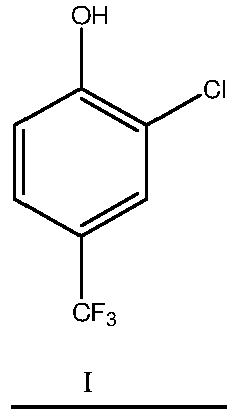

- a. from 50:1 to 1000: 1,
- b. from 50:1 to 500:1,
- c. from 50: 1 to 200: 1,
- d. from 50:1 to 100: 1,
- e. 77:0.4,
- f. 98.15: 1.85
- g. 93:0.2.
- In some embodiments, the salt of the compound (I) is a metal salt.
- In some embodiments, the metal salt is a potassium salt.
- In some embodiments, the composition further comprises a base.
- In some embodiments, the base is potassium hydroxide.
- In some embodiments, the composition comprises at least two solvents. In some embodiments, the composition comprises at least three solvents. In some embodiments, the composition comprises at least four solvents.
- In some embodiments, at least one of the solvents is a polar solvent. In some embodiments, the polar solvent is an organic polar solvent.
- In some embodiments, the organic polar solvent is dimethyl sulfoxide (DMSO), dimethylformamide (DMF), N-Methyl-2-pyrrolidone (NMP), glycols, sulfolan, mono and di-glymes, acetamide, glycerine, ACN, nitro ethane or any combination thereof.
- In some embodiments, the organic polar solvent is alcohol. In some embodiments, the alcohol is methanol, ethanol or propanol. In preferred embodiments, the alcohol is ethanol.
- In some embodiments, at least 1% of the total volume of the solvent is polar solvent.
- In some embodiments, at least one of the solvents is a nonpolar solvent. In some embodiments, the nonpolar solvent is an organic nonpolar solvent.
- In some embodiments, the nonpolar solvent is nonpolar aromatic solvent. In some embodiments, the nonpolar aromatic solvent is toluene, xylene, mono chloro benzene (MCB), naphtha, or any combination thereof. In preferred embodiment, the nonpolar aromatic solvent is toluene.
- In some embodiments, the naphtha is light naphtha. In some embodiments, the naphtha is heavy naphtha. In some embodiments, the naphtha is petroleum naphtha. In some embodiments, the solvent naphtha is the Solvesso® grades from ExxonMobil Chemical, especially Solvesso® 100 (CAS No. 64742-95-6), Solvesso® 150 (CAS No. 64742-94-5), and Solvesso® 200 (CAS No. 64742-94-5).
- In some embodiments, none of the solvents is a nonpolar aromatic solvent.
- In some embodiment, the nonpolar solvent is pentane, hexane, or dichloromethane (DCM).
- In some embodiments, one of the solvents is water.
- In some embodiments, the composition comprises one solvent wherein the solvent is ethanol.
- In some embodiments, the composition comprises two solvents wherein the two solvents are toluene and ethanol.
- In some embodiments, the composition comprises three solvents wherein the three solvents are toluene, water, and ethanol.
- Each embodiment disclosed herein is contemplated as being applicable to each of the other disclosed embodiments. Thus, all combinations of the various elements described herein are within the scope of the invention.
- This invention will be better understood by reference to the Experimental Details which follow, but those skilled in the art will readily appreciate that the specific experiments detailed are only illustrative of the invention as described more fully in the claims which follow thereafter.
- The invention is illustrated by the following examples without limiting it thereby.
- Into a three neck round bottom flask equipped with a mechanical stirrer, dropping funnel and thermometer were added toluene (350 g), ethanol (25 g), water (15g) and potassium hydroxide flakes (90 g). The mixture was stirred at room temperature for 1 hour. A mixture (300 g, 1.53 mol of phenols mixture) of 2-chloro-4-(trifluoromethyl)-phenol, i.e. compound (I), and 2-chloro-5-(trifluoromethyl)-phenol, i.e. compound (II), was added dropwise, during 45 minutes, at such a rate that the temperature maintained at 15-22 °C. The mixture was stirred at room temperature for 3 hours until all the KOH has disappeared (the color of the mixture was brown), and a brown solid was formed. The solid was filtered, washed with toluene (50 g) and dried at 30 °C under reduced pressure to afford phenoxy-K (hydrate) (306 g). The filtered solid comprised compound (I) and compound (II) in of ratio of 93 : 0.2.
- Mother liquor from
U.S. Patent No. 4,046,798 Example 3 or Chinese Patent Application No.CN1363548A Example 5 (600 g) were evaporated under reduced pressure at room temperature to obtain about 300 g residue, which contains a mixture of 2-chloro-4-(trifluoromethyl)-phenol, i.e. compound (I), 2-chloro-5-(trifluoromethyl)-phenol, i.e. compound (II), and other impurities. - Into a three neck round bottom flask equipped with a mechanical stirrer, dropping funnel and thermometer were added toluene (350 g), ethanol (25 g), water (15 g) and potassium hydroxide flakes (90 g). The mixture was stirred at room temperature for 1 hour and then the above residue left from the mother liquor evaporation (300 g) was added dropwise, during 45 minutes, at such a rate that the temperature maintained at 15-22 °C. The mixture was stirred at room temperature for 3 hours until all the KOH has disappeared (the color of the mixture was brown), and a brown solid was formed. The solid was filtered, washed with toluene (50 g) and dried at 30 °C under reduced pressure to afford phenoxy-K (hydrate) (306 g) (ratio of compound (I) to compound (II) was 93 : 0.2).
- Into a three neck round bottom flask equipped with a mechanical stirrer, dropping funnel and thermometer were added ethanol (150 g) and potassium hydroxide flakes (32 g). The mixture was stirred at room temperature for 1 hour and then a mixture (100 g) of 2-chloro-4-(trifluoromethyl)-phenol, i.e. compound (I) and 2-chloro-5-(trifluoromethyl)-phenol, i.e. compound (II), were added dropwise, during 45 minutes, at such a rate that the temperature maintained at 15-20 °C. The ratio of compound (I) to compound (II) in the mixture was 95:5. The mixture was stirred at room temperature for 18 hours. No solid was formed. Ethanol was distilled out until a precipitation was observed. The solid was filtered and dried at 30 °C under reduced pressure to afford phenoxy-K (hydrate) (18.8 g) (ratio of compound (I) to compound (II) was 98.15 : 1.85).
Claims (15)
- A process for separating compound (I), or a salt thereof, from a mixture comprising the compound (I),
 the process comprising the steps of:(a) combining the mixture with an amount of base in the presence of at least one solvent so as to form precipitate; and(b) separating precipitate,thereby separating the compound (I) from the mixture.
 - The process of claim 1, wherein the mixture further comprises compound (II)

wherein precipitate is separated in step (b) by filtration, by centrifuge, or by decantation. - The process of claim 2, wherein the ratio of compound (I) to compound (II) in the mixture, isa. from 1:1000 to 1000:1b. from 90:10 to 70:30, orc. 88:11.
- The process of any of claims 2 or 3, wherein:a. the organic base is triethylamine, trimethylamine, pyridine, guanidines, tetramethylammonium hydroxide, tetrabutylammonium hydroxide, choline hydroxide, 1,4-diazabicyclo[2.2.2]octane (DABCO), orb. the inorganic base isi. ammonia,ii. alkali metal base, optionally consisting of sodium base, lithium base, potassium base, magnesium base or calcium base,iii. hydroxy base, optionally consisting of ammonium hydroxide,iv. alkoxy base, optionally consisting of methoxy base or ethoxy base orv. carbonate base, optionally consisting of lithium carbonate, sodium carbonate, sodium bicarbonate, potassium carbonate or potassium bicarbonate, or any combination thereof.
- The process of any one of claims 1-4, wherein the at least one solvent isa. polar solvent selected from alcohol, optionally consisting of methanol, ethanol or propanol; dimethyl sulfoxide (DMSO); dimethylformamide (DMF); N-Methyl-2-pyrrolidone (NMP); glycols; sulfolan; mono and di-glymes; acetamide; glycerine; acetonitrile (ACN),;nitro ethane, and any combinations thereof, orb. nonpolar solvent selected from toluene, xylene, mono chloro benzene (MCB), naphtha, pentane, hexane, or dichloromethane (DCM) and any combinations thereof.
- The process of any one of claims 1-5, wherein the mixture is an aqueous solution and the concentration of water in the aqueous solution is not more than 25 %, and when the mixture reacts with the base, it optionally includes one additional solvent and the additional solvent is ethanol, or two additional solvents and the additional solvents are toluene and ethanol.
- The process of any one of claims 1-5, wherein:a. the mixture reacts with the base in the presence of one solvent and the solvent is ethanol,b. the mixture reacts with the base in the presence of two solvents and the solvents are toluene and ethanol, orc. wherein the mixture reacts with the base in the presence of three solvents and the solvents are toluene, ethanol and water.
- The process of any one of claims 1-7, wherein step a) of the process is performed at a temperature of:i. below 50°Cii. between 20°C to 40°C,iii. between 15°C to 22°C, oriv. a temperature selected from any one of 45°C, 40°C, 35°C, 30°C, 25°C, 20°C, 15°C and 10°C.
- The process of any one of claims 1-8, wherein the precipitate comprises a metal salt of the compound (I), characterized in that,a. said precipitate further comprises a metal salt of the compound (II) wherein the ratio of the metal salt of compound (I) to the metal salt of compound (II) in the precipitate is from 50:1 to 1000:1, and/orb. the purity of the salt of compound (I) in the precipitate is 80% or more, 85% or more, 90% or more, 95% or more, or 99% or more.
- The process of claim 9, wherein the process further comprises neutralizing the metal salt of compound (I) with an acid, wherein said acid is carboxylic acids, fumaric acid, phthalic acid, maleic acid, malic acid, oxalic acid, adipic acid, glutaric acid, 2-methyl glutaric acid, succinic acid, tartaric acid, tri fluoro methyl acetic acid, p-toluene sulfonic acid, hydrochloric acid, hydrobromidic acid, hydroiodic acid, nitric acid, sulfuric acid, persulfuric acid or any combination thereof.
- A method of obtaining a compound (I) from a mixture containing compound (I),

- A precipitate comprising compound (I)
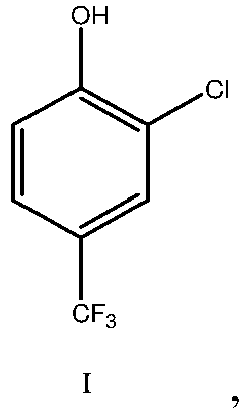
- A precipitate comprising compound (I)
 i. greater than or equal to 80%,ii. greater than or equal to 85%,iii. greater than or equal to 90%,iv. greater than or equal to 95%,v. greater than or equal to 99%, orvi. 93%.
 - A composition comprising the precipitate of any one of claims 12 or 13.
- A composition comprising a precipitate and at least one solvent, wherein the precipitate comprises salt of compound (I)

 a. from 50:1 to 1000: 1,b. from 50:1 to 500:1,c. from 50: 1 to 200: 1,d. from 50:1 to 100: 1,e. 77:0.4,f. 98.15: 1.85g. 93:0.2.
Applications Claiming Priority (2)
| Application Number | Priority Date | Filing Date | Title |
|---|---|---|---|
| US201762481235P | 2017-04-04 | 2017-04-04 | |
| PCT/IB2018/000446 WO2018185559A1 (en) | 2017-04-04 | 2018-04-03 | Separation of phenol isomer |
Publications (2)
| Publication Number | Publication Date |
|---|---|
| EP3606897A1 EP3606897A1 (en) | 2020-02-12 |
| EP3606897B1 true EP3606897B1 (en) | 2024-02-28 |
Family
ID=62245362
Family Applications (1)
| Application Number | Title | Priority Date | Filing Date |
|---|---|---|---|
| EP18727419.6A Active EP3606897B1 (en) | 2017-04-04 | 2018-04-03 | Separation of phenol isomer |
Country Status (6)
| Country | Link |
|---|---|
| US (2) | US11203562B2 (en) |
| EP (1) | EP3606897B1 (en) |
| CN (2) | CN117924039A (en) |
| BR (1) | BR112019017945A2 (en) |
| IL (1) | IL269824B (en) |
| WO (1) | WO2018185559A1 (en) |
Families Citing this family (3)
| Publication number | Priority date | Publication date | Assignee | Title |
|---|---|---|---|---|
| CN117924039A (en) | 2017-04-04 | 2024-04-26 | 安道麦阿甘有限公司 | Separation of phenol isomers |
| CN116655456B (en) * | 2023-05-16 | 2025-09-09 | 上虞颖泰精细化工有限公司 | Method for efficiently purifying and separating 2-chloro-4-trifluoromethyl phenol |
| WO2026139960A1 (en) | 2024-12-29 | 2026-07-02 | Adama Agan Ltd. | Processes for preparing an oxyfluorfen intermediate, and the oxyfluorfen intermediate prepared, process for preparing oxyfluorfen, and the oxyfluorfen prepared |
Family Cites Families (10)
| Publication number | Priority date | Publication date | Assignee | Title |
|---|---|---|---|---|
| US2016848A (en) | 1934-05-07 | 1935-10-08 | Monsanto Chemicals | Method of separating phenolic isomers |
| DE2016624A1 (en) | 1970-04-08 | 1971-10-21 | Farbenfabriken Bayer Ag, 5090 Leverkusen | Microbicidal agents |
| US4046798A (en) | 1973-02-12 | 1977-09-06 | Rohm And Haas Company | Herbicidal 4-trifluoromethyl-4'nitrodiphenyl ethers |
| US4262152A (en) * | 1979-05-02 | 1981-04-14 | Rohm And Haas Company | Preparation of trifluoromethylphenyl nitrophenylethers |
| DK155935C (en) | 1979-05-16 | 1989-10-16 | Rohm & Haas | SUBSTITUTED DIPHENYLETHERS, HERBICIDE PREPARATIONS CONTAINING THESE COMPOUNDS AND PROCEDURES TO COMBAT WEEDS |
| US4366329A (en) | 1981-06-22 | 1982-12-28 | Eastman Kodak Company | Process for the separation of meta and para isomers of the sodium salt of bromophenol |
| FR2529197A1 (en) | 1982-06-29 | 1983-12-30 | Rhone Poulenc Agrochimie | PROCESS FOR THE PREPARATION OF PHENATES SUBSTITUTED BY HALOGEN GROUPS OR CORRESPONDING PHENOLS |
| CN1363548A (en) | 2001-01-20 | 2002-08-14 | 浙江巨化股份有限公司兰溪农药厂 | Bietherifying process for synthesizing oxyfluorfen |
| WO2007120012A1 (en) | 2006-04-19 | 2007-10-25 | Amorepacific Corporation | Novel compounds, isomer thereof, or pharmaceutically acceptable salts thereof as vanilloid receptor antagonist; and pharmaceutical compositions containing the same |
| CN117924039A (en) | 2017-04-04 | 2024-04-26 | 安道麦阿甘有限公司 | Separation of phenol isomers |
-
2018
- 2018-04-03 CN CN202311662924.3A patent/CN117924039A/en active Pending
- 2018-04-03 BR BR112019017945A patent/BR112019017945A2/en not_active Application Discontinuation
- 2018-04-03 US US16/500,271 patent/US11203562B2/en active Active
- 2018-04-03 EP EP18727419.6A patent/EP3606897B1/en active Active
- 2018-04-03 WO PCT/IB2018/000446 patent/WO2018185559A1/en not_active Ceased
- 2018-04-03 CN CN201880022177.8A patent/CN110573483B/en active Active
-
2019
- 2019-10-03 IL IL269824A patent/IL269824B/en unknown
-
2021
- 2021-11-15 US US17/526,316 patent/US20220073442A1/en not_active Abandoned
Also Published As
| Publication number | Publication date |
|---|---|
| WO2018185559A1 (en) | 2018-10-11 |
| CN117924039A (en) | 2024-04-26 |
| US20220073442A1 (en) | 2022-03-10 |
| US11203562B2 (en) | 2021-12-21 |
| CN110573483A (en) | 2019-12-13 |
| US20210101857A1 (en) | 2021-04-08 |
| EP3606897A1 (en) | 2020-02-12 |
| IL269824B (en) | 2022-05-01 |
| CN110573483B (en) | 2023-12-29 |
| IL269824A (en) | 2019-11-28 |
| BR112019017945A2 (en) | 2020-05-19 |
Similar Documents
| Publication | Publication Date | Title |
|---|---|---|
| US20220073442A1 (en) | Separation of phenol isomer | |
| CA3006946C (en) | Method for producing 2-[4-(4-chlorophenoxy)-2-(trifluoromethyl)phenyl]-1-(1,2,4-triazol-1-yl)propan-2-ol | |
| CN101558047B (en) | Preparation method of substituted cyanophenoxy-pyrimidinyloxy-phenyl acrylate derivatives | |
| CZ290597B6 (en) | Purification process of 2,6-diisopropylphenol | |
| EP3169664B1 (en) | Process for the preparation of dibenzenesulfonimide | |
| EP3519388B1 (en) | Process for preparation of boscalid anhydrate form i and boscalid anhydrate form ii | |
| RS53735B1 (en) | PROCEDURE FOR PRODUCING TOLUIDINE UNITS | |
| WO2021033200A1 (en) | A process for preparation of sultones | |
| CN113135866A (en) | Ethyl bisbenzoxazolate with few impurities and preparation method thereof | |
| CH645616A5 (en) | METHOD FOR PRODUCING ARYLGLYOXYLONITRIL-2-OXIM-CYANOALKYLAETHERS. | |
| CN114805065A (en) | Preparation method of oxalyl chloride monoester | |
| PL191606B1 (en) | Method of obtaining 3-cyano-2,4-dichlorogeno-5-fluorobenzoic acids | |
| KR100903171B1 (en) | Method for preparing 2,2'-bis (trifluoromethyl) -4,4'-diaminobiphenyl | |
| KR880000202B1 (en) | Process for preparing halogenated phenol | |
| JP7710435B2 (en) | Process for preparation of aripiprazole lauroxyl | |
| EP0012108B1 (en) | Process for the preparation of 4,5-dichloro-2-(4-chlorophenoxy)-phenol and of 4,5-dichloro-2-(4-chlorophenoxy)-anisol | |
| US10150731B2 (en) | Method for preparing 4-cyanopiperidine hydrochloride | |
| WO2016142173A1 (en) | 4-(2-methyl-1h-imidazol-1-yl)-2,2-diphenylbutanenitrile solid form | |
| KR20230155447A (en) | Method for producing 3-bromo-1-(3-chloropyridin-2-yl)-1H-pyrazole-5-carboxylic acid ester | |
| DE60126590T2 (en) | PROCESS FOR THE PREPARATION OF 4-BROMTHIOANISOL | |
| PL138793B1 (en) | Method of obtqining nysatidine | |
| DE10317878A1 (en) | Process for the preparation of alpha-methylated cysteine and serine derivatives | |
| CN120265608A (en) | Preparation method of chlorinated benzamide derivatives | |
| JPS6213936B2 (en) | ||
| CN111406047A (en) | Production method of solid triazolinedione compound, solid triazolinedione compound, and production method of triazolinedione compound |
Legal Events
| Date | Code | Title | Description |
|---|---|---|---|
| STAA | Information on the status of an ep patent application or granted ep patent |
Free format text: STATUS: UNKNOWN |
|
| STAA | Information on the status of an ep patent application or granted ep patent |
Free format text: STATUS: THE INTERNATIONAL PUBLICATION HAS BEEN MADE |
|
| PUAI | Public reference made under article 153(3) epc to a published international application that has entered the european phase |
Free format text: ORIGINAL CODE: 0009012 |
|
| STAA | Information on the status of an ep patent application or granted ep patent |
Free format text: STATUS: REQUEST FOR EXAMINATION WAS MADE |
|
| 17P | Request for examination filed |
Effective date: 20191023 |
|
| AK | Designated contracting states |
Kind code of ref document: A1 Designated state(s): AL AT BE BG CH CY CZ DE DK EE ES FI FR GB GR HR HU IE IS IT LI LT LU LV MC MK MT NL NO PL PT RO RS SE SI SK SM TR |
|
| AX | Request for extension of the european patent |
Extension state: BA ME |
|
| DAV | Request for validation of the european patent (deleted) | ||
| DAX | Request for extension of the european patent (deleted) | ||
| STAA | Information on the status of an ep patent application or granted ep patent |
Free format text: STATUS: EXAMINATION IS IN PROGRESS |
|
| 17Q | First examination report despatched |
Effective date: 20210408 |
|
| P01 | Opt-out of the competence of the unified patent court (upc) registered |
Effective date: 20230601 |
|
| GRAP | Despatch of communication of intention to grant a patent |
Free format text: ORIGINAL CODE: EPIDOSNIGR1 |
|
| STAA | Information on the status of an ep patent application or granted ep patent |
Free format text: STATUS: GRANT OF PATENT IS INTENDED |
|
| RIC1 | Information provided on ipc code assigned before grant |
Ipc: C07C 39/26 20060101ALI20230808BHEP Ipc: C07C 37/86 20060101AFI20230808BHEP |
|
| INTG | Intention to grant announced |
Effective date: 20230912 |
|
| GRAS | Grant fee paid |
Free format text: ORIGINAL CODE: EPIDOSNIGR3 |
|
| GRAA | (expected) grant |
Free format text: ORIGINAL CODE: 0009210 |
|
| STAA | Information on the status of an ep patent application or granted ep patent |
Free format text: STATUS: THE PATENT HAS BEEN GRANTED |
|
| AK | Designated contracting states |
Kind code of ref document: B1 Designated state(s): AL AT BE BG CH CY CZ DE DK EE ES FI FR GB GR HR HU IE IS IT LI LT LU LV MC MK MT NL NO PL PT RO RS SE SI SK SM TR |
|
| REG | Reference to a national code |
Ref country code: GB Ref legal event code: FG4D |
|
| REG | Reference to a national code |
Ref country code: CH Ref legal event code: EP |
|
| REG | Reference to a national code |
Ref country code: DE Ref legal event code: R096 Ref document number: 602018065840 Country of ref document: DE |
|
| REG | Reference to a national code |
Ref country code: IE Ref legal event code: FG4D |
|
| REG | Reference to a national code |
Ref country code: LT Ref legal event code: MG9D |
|
| PG25 | Lapsed in a contracting state [announced via postgrant information from national office to epo] |
Ref country code: IS Free format text: LAPSE BECAUSE OF FAILURE TO SUBMIT A TRANSLATION OF THE DESCRIPTION OR TO PAY THE FEE WITHIN THE PRESCRIBED TIME-LIMIT Effective date: 20240628 |
|
| REG | Reference to a national code |
Ref country code: NL Ref legal event code: MP Effective date: 20240228 |
|
| PG25 | Lapsed in a contracting state [announced via postgrant information from national office to epo] |
Ref country code: LT Free format text: LAPSE BECAUSE OF FAILURE TO SUBMIT A TRANSLATION OF THE DESCRIPTION OR TO PAY THE FEE WITHIN THE PRESCRIBED TIME-LIMIT Effective date: 20240228 |
|
| PG25 | Lapsed in a contracting state [announced via postgrant information from national office to epo] |
Ref country code: GR Free format text: LAPSE BECAUSE OF FAILURE TO SUBMIT A TRANSLATION OF THE DESCRIPTION OR TO PAY THE FEE WITHIN THE PRESCRIBED TIME-LIMIT Effective date: 20240529 |
|
| PG25 | Lapsed in a contracting state [announced via postgrant information from national office to epo] |
Ref country code: RS Free format text: LAPSE BECAUSE OF FAILURE TO SUBMIT A TRANSLATION OF THE DESCRIPTION OR TO PAY THE FEE WITHIN THE PRESCRIBED TIME-LIMIT Effective date: 20240528 Ref country code: NL Free format text: LAPSE BECAUSE OF FAILURE TO SUBMIT A TRANSLATION OF THE DESCRIPTION OR TO PAY THE FEE WITHIN THE PRESCRIBED TIME-LIMIT Effective date: 20240228 Ref country code: HR Free format text: LAPSE BECAUSE OF FAILURE TO SUBMIT A TRANSLATION OF THE DESCRIPTION OR TO PAY THE FEE WITHIN THE PRESCRIBED TIME-LIMIT Effective date: 20240228 |
|
| PG25 | Lapsed in a contracting state [announced via postgrant information from national office to epo] |
Ref country code: ES Free format text: LAPSE BECAUSE OF FAILURE TO SUBMIT A TRANSLATION OF THE DESCRIPTION OR TO PAY THE FEE WITHIN THE PRESCRIBED TIME-LIMIT Effective date: 20240228 |
|
| PG25 | Lapsed in a contracting state [announced via postgrant information from national office to epo] |
Ref country code: RS Free format text: LAPSE BECAUSE OF FAILURE TO SUBMIT A TRANSLATION OF THE DESCRIPTION OR TO PAY THE FEE WITHIN THE PRESCRIBED TIME-LIMIT Effective date: 20240528 Ref country code: NO Free format text: LAPSE BECAUSE OF FAILURE TO SUBMIT A TRANSLATION OF THE DESCRIPTION OR TO PAY THE FEE WITHIN THE PRESCRIBED TIME-LIMIT Effective date: 20240528 Ref country code: NL Free format text: LAPSE BECAUSE OF FAILURE TO SUBMIT A TRANSLATION OF THE DESCRIPTION OR TO PAY THE FEE WITHIN THE PRESCRIBED TIME-LIMIT Effective date: 20240228 Ref country code: LT Free format text: LAPSE BECAUSE OF FAILURE TO SUBMIT A TRANSLATION OF THE DESCRIPTION OR TO PAY THE FEE WITHIN THE PRESCRIBED TIME-LIMIT Effective date: 20240228 Ref country code: IS Free format text: LAPSE BECAUSE OF FAILURE TO SUBMIT A TRANSLATION OF THE DESCRIPTION OR TO PAY THE FEE WITHIN THE PRESCRIBED TIME-LIMIT Effective date: 20240628 Ref country code: HR Free format text: LAPSE BECAUSE OF FAILURE TO SUBMIT A TRANSLATION OF THE DESCRIPTION OR TO PAY THE FEE WITHIN THE PRESCRIBED TIME-LIMIT Effective date: 20240228 Ref country code: GR Free format text: LAPSE BECAUSE OF FAILURE TO SUBMIT A TRANSLATION OF THE DESCRIPTION OR TO PAY THE FEE WITHIN THE PRESCRIBED TIME-LIMIT Effective date: 20240529 Ref country code: FI Free format text: LAPSE BECAUSE OF FAILURE TO SUBMIT A TRANSLATION OF THE DESCRIPTION OR TO PAY THE FEE WITHIN THE PRESCRIBED TIME-LIMIT Effective date: 20240228 Ref country code: ES Free format text: LAPSE BECAUSE OF FAILURE TO SUBMIT A TRANSLATION OF THE DESCRIPTION OR TO PAY THE FEE WITHIN THE PRESCRIBED TIME-LIMIT Effective date: 20240228 Ref country code: BG Free format text: LAPSE BECAUSE OF FAILURE TO SUBMIT A TRANSLATION OF THE DESCRIPTION OR TO PAY THE FEE WITHIN THE PRESCRIBED TIME-LIMIT Effective date: 20240228 |
|
| PG25 | Lapsed in a contracting state [announced via postgrant information from national office to epo] |
Ref country code: PL Free format text: LAPSE BECAUSE OF FAILURE TO SUBMIT A TRANSLATION OF THE DESCRIPTION OR TO PAY THE FEE WITHIN THE PRESCRIBED TIME-LIMIT Effective date: 20240228 Ref country code: PT Free format text: LAPSE BECAUSE OF FAILURE TO SUBMIT A TRANSLATION OF THE DESCRIPTION OR TO PAY THE FEE WITHIN THE PRESCRIBED TIME-LIMIT Effective date: 20240628 |
|
| REG | Reference to a national code |
Ref country code: AT Ref legal event code: MK05 Ref document number: 1661139 Country of ref document: AT Kind code of ref document: T Effective date: 20240228 |
|
| PG25 | Lapsed in a contracting state [announced via postgrant information from national office to epo] |
Ref country code: SE Free format text: LAPSE BECAUSE OF FAILURE TO SUBMIT A TRANSLATION OF THE DESCRIPTION OR TO PAY THE FEE WITHIN THE PRESCRIBED TIME-LIMIT Effective date: 20240228 Ref country code: PT Free format text: LAPSE BECAUSE OF FAILURE TO SUBMIT A TRANSLATION OF THE DESCRIPTION OR TO PAY THE FEE WITHIN THE PRESCRIBED TIME-LIMIT Effective date: 20240628 Ref country code: PL Free format text: LAPSE BECAUSE OF FAILURE TO SUBMIT A TRANSLATION OF THE DESCRIPTION OR TO PAY THE FEE WITHIN THE PRESCRIBED TIME-LIMIT Effective date: 20240228 Ref country code: LV Free format text: LAPSE BECAUSE OF FAILURE TO SUBMIT A TRANSLATION OF THE DESCRIPTION OR TO PAY THE FEE WITHIN THE PRESCRIBED TIME-LIMIT Effective date: 20240228 |
|
| PG25 | Lapsed in a contracting state [announced via postgrant information from national office to epo] |
Ref country code: DK Free format text: LAPSE BECAUSE OF FAILURE TO SUBMIT A TRANSLATION OF THE DESCRIPTION OR TO PAY THE FEE WITHIN THE PRESCRIBED TIME-LIMIT Effective date: 20240228 |
|
| PG25 | Lapsed in a contracting state [announced via postgrant information from national office to epo] |
Ref country code: SM Free format text: LAPSE BECAUSE OF FAILURE TO SUBMIT A TRANSLATION OF THE DESCRIPTION OR TO PAY THE FEE WITHIN THE PRESCRIBED TIME-LIMIT Effective date: 20240228 |
|
| PG25 | Lapsed in a contracting state [announced via postgrant information from national office to epo] |
Ref country code: EE Free format text: LAPSE BECAUSE OF FAILURE TO SUBMIT A TRANSLATION OF THE DESCRIPTION OR TO PAY THE FEE WITHIN THE PRESCRIBED TIME-LIMIT Effective date: 20240228 Ref country code: CZ Free format text: LAPSE BECAUSE OF FAILURE TO SUBMIT A TRANSLATION OF THE DESCRIPTION OR TO PAY THE FEE WITHIN THE PRESCRIBED TIME-LIMIT Effective date: 20240228 |
|
| PG25 | Lapsed in a contracting state [announced via postgrant information from national office to epo] |
Ref country code: AT Free format text: LAPSE BECAUSE OF FAILURE TO SUBMIT A TRANSLATION OF THE DESCRIPTION OR TO PAY THE FEE WITHIN THE PRESCRIBED TIME-LIMIT Effective date: 20240228 |
|
| PG25 | Lapsed in a contracting state [announced via postgrant information from national office to epo] |
Ref country code: SK Free format text: LAPSE BECAUSE OF FAILURE TO SUBMIT A TRANSLATION OF THE DESCRIPTION OR TO PAY THE FEE WITHIN THE PRESCRIBED TIME-LIMIT Effective date: 20240228 |
|
| PG25 | Lapsed in a contracting state [announced via postgrant information from national office to epo] |
Ref country code: SM Free format text: LAPSE BECAUSE OF FAILURE TO SUBMIT A TRANSLATION OF THE DESCRIPTION OR TO PAY THE FEE WITHIN THE PRESCRIBED TIME-LIMIT Effective date: 20240228 Ref country code: SK Free format text: LAPSE BECAUSE OF FAILURE TO SUBMIT A TRANSLATION OF THE DESCRIPTION OR TO PAY THE FEE WITHIN THE PRESCRIBED TIME-LIMIT Effective date: 20240228 Ref country code: RO Free format text: LAPSE BECAUSE OF FAILURE TO SUBMIT A TRANSLATION OF THE DESCRIPTION OR TO PAY THE FEE WITHIN THE PRESCRIBED TIME-LIMIT Effective date: 20240228 Ref country code: EE Free format text: LAPSE BECAUSE OF FAILURE TO SUBMIT A TRANSLATION OF THE DESCRIPTION OR TO PAY THE FEE WITHIN THE PRESCRIBED TIME-LIMIT Effective date: 20240228 Ref country code: DK Free format text: LAPSE BECAUSE OF FAILURE TO SUBMIT A TRANSLATION OF THE DESCRIPTION OR TO PAY THE FEE WITHIN THE PRESCRIBED TIME-LIMIT Effective date: 20240228 Ref country code: CZ Free format text: LAPSE BECAUSE OF FAILURE TO SUBMIT A TRANSLATION OF THE DESCRIPTION OR TO PAY THE FEE WITHIN THE PRESCRIBED TIME-LIMIT Effective date: 20240228 Ref country code: AT Free format text: LAPSE BECAUSE OF FAILURE TO SUBMIT A TRANSLATION OF THE DESCRIPTION OR TO PAY THE FEE WITHIN THE PRESCRIBED TIME-LIMIT Effective date: 20240228 |
|
| PG25 | Lapsed in a contracting state [announced via postgrant information from national office to epo] |
Ref country code: MC Free format text: LAPSE BECAUSE OF FAILURE TO SUBMIT A TRANSLATION OF THE DESCRIPTION OR TO PAY THE FEE WITHIN THE PRESCRIBED TIME-LIMIT Effective date: 20240228 |
|
| PG25 | Lapsed in a contracting state [announced via postgrant information from national office to epo] |
Ref country code: MC Free format text: LAPSE BECAUSE OF FAILURE TO SUBMIT A TRANSLATION OF THE DESCRIPTION OR TO PAY THE FEE WITHIN THE PRESCRIBED TIME-LIMIT Effective date: 20240228 |
|
| REG | Reference to a national code |
Ref country code: DE Ref legal event code: R097 Ref document number: 602018065840 Country of ref document: DE |
|
| PG25 | Lapsed in a contracting state [announced via postgrant information from national office to epo] |
Ref country code: IT Free format text: LAPSE BECAUSE OF FAILURE TO SUBMIT A TRANSLATION OF THE DESCRIPTION OR TO PAY THE FEE WITHIN THE PRESCRIBED TIME-LIMIT Effective date: 20240228 |
|
| PG25 | Lapsed in a contracting state [announced via postgrant information from national office to epo] |
Ref country code: LU Free format text: LAPSE BECAUSE OF NON-PAYMENT OF DUE FEES Effective date: 20240403 |
|
| REG | Reference to a national code |
Ref country code: BE Ref legal event code: MM Effective date: 20240430 |
|
| PG25 | Lapsed in a contracting state [announced via postgrant information from national office to epo] |
Ref country code: LU Free format text: LAPSE BECAUSE OF NON-PAYMENT OF DUE FEES Effective date: 20240403 Ref country code: IT Free format text: LAPSE BECAUSE OF FAILURE TO SUBMIT A TRANSLATION OF THE DESCRIPTION OR TO PAY THE FEE WITHIN THE PRESCRIBED TIME-LIMIT Effective date: 20240228 |
|
| PLBE | No opposition filed within time limit |
Free format text: ORIGINAL CODE: 0009261 |
|
| STAA | Information on the status of an ep patent application or granted ep patent |
Free format text: STATUS: NO OPPOSITION FILED WITHIN TIME LIMIT |
|
| PG25 | Lapsed in a contracting state [announced via postgrant information from national office to epo] |
Ref country code: BE Free format text: LAPSE BECAUSE OF NON-PAYMENT OF DUE FEES Effective date: 20240430 |
|
| PG25 | Lapsed in a contracting state [announced via postgrant information from national office to epo] |
Ref country code: BE Free format text: LAPSE BECAUSE OF NON-PAYMENT OF DUE FEES Effective date: 20240430 |
|
| 26N | No opposition filed |
Effective date: 20241129 |
|
| PG25 | Lapsed in a contracting state [announced via postgrant information from national office to epo] |
Ref country code: IE Free format text: LAPSE BECAUSE OF NON-PAYMENT OF DUE FEES Effective date: 20240403 |
|
| PG25 | Lapsed in a contracting state [announced via postgrant information from national office to epo] |
Ref country code: SI Free format text: LAPSE BECAUSE OF FAILURE TO SUBMIT A TRANSLATION OF THE DESCRIPTION OR TO PAY THE FEE WITHIN THE PRESCRIBED TIME-LIMIT Effective date: 20240228 |
|
| PG25 | Lapsed in a contracting state [announced via postgrant information from national office to epo] |
Ref country code: CY Free format text: LAPSE BECAUSE OF FAILURE TO SUBMIT A TRANSLATION OF THE DESCRIPTION OR TO PAY THE FEE WITHIN THE PRESCRIBED TIME-LIMIT; INVALID AB INITIO Effective date: 20180403 |
|
| PG25 | Lapsed in a contracting state [announced via postgrant information from national office to epo] |
Ref country code: HU Free format text: LAPSE BECAUSE OF FAILURE TO SUBMIT A TRANSLATION OF THE DESCRIPTION OR TO PAY THE FEE WITHIN THE PRESCRIBED TIME-LIMIT; INVALID AB INITIO Effective date: 20180403 |
|
| PG25 | Lapsed in a contracting state [announced via postgrant information from national office to epo] |
Ref country code: TR Free format text: LAPSE BECAUSE OF FAILURE TO SUBMIT A TRANSLATION OF THE DESCRIPTION OR TO PAY THE FEE WITHIN THE PRESCRIBED TIME-LIMIT Effective date: 20240228 |
|
| REG | Reference to a national code |
Ref country code: CH Ref legal event code: U11 Free format text: ST27 STATUS EVENT CODE: U-0-0-U10-U11 (AS PROVIDED BY THE NATIONAL OFFICE) Effective date: 20260501 |
|
| PGFP | Annual fee paid to national office [announced via postgrant information from national office to epo] |
Ref country code: GB Payment date: 20260421 Year of fee payment: 9 |
|
| PGFP | Annual fee paid to national office [announced via postgrant information from national office to epo] |
Ref country code: DE Payment date: 20260421 Year of fee payment: 9 |
|
| PGFP | Annual fee paid to national office [announced via postgrant information from national office to epo] |
Ref country code: CH Payment date: 20260501 Year of fee payment: 9 |
|
| PGFP | Annual fee paid to national office [announced via postgrant information from national office to epo] |
Ref country code: FR Payment date: 20260423 Year of fee payment: 9 |