EP3606155A1 - Segment packaging method, and receiving end - Google Patents
Segment packaging method, and receiving end Download PDFInfo
- Publication number
- EP3606155A1 EP3606155A1 EP18777245.4A EP18777245A EP3606155A1 EP 3606155 A1 EP3606155 A1 EP 3606155A1 EP 18777245 A EP18777245 A EP 18777245A EP 3606155 A1 EP3606155 A1 EP 3606155A1
- Authority
- EP
- European Patent Office
- Prior art keywords
- data packet
- rlc
- numbers
- received
- segment
- Prior art date
- Legal status (The legal status is an assumption and is not a legal conclusion. Google has not performed a legal analysis and makes no representation as to the accuracy of the status listed.)
- Granted
Links
Images



Classifications
-
- H—ELECTRICITY
- H04—ELECTRIC COMMUNICATION TECHNIQUE
- H04W—WIRELESS COMMUNICATION NETWORKS
- H04W28/00—Network traffic management; Network resource management
- H04W28/02—Traffic management, e.g. flow control or congestion control
- H04W28/06—Optimizing the usage of the radio link, e.g. header compression, information sizing, discarding information
- H04W28/065—Optimizing the usage of the radio link, e.g. header compression, information sizing, discarding information using assembly or disassembly of packets
Definitions
- This disclosure relates to the field of communication technology, in particular to a method of assembling segments and a receiving end.
- Radio Link Control (RLC) layer is an important protocol layer in communication system, which is responsible for delivering data transferred from Media Access Control (MAC) to Packet Data Convergence Protocol (PDCP) layer. It is found in practice that, assembling the segments at RLC layer may improve the transmission performance of communication system. It follows that how to assemble the segments at RLC layer remains an urgent technical problem to be solved.
- a method of assembling segments is provided in the present disclosure, applied to a receiving end and including:
- a receiving end is further provided in the present disclosure, including:
- the receiving end determines whether the target data packet is a segment of a RLC data packet based on a header of the target data packet; in the case that the target data packet is a segment of the RLC data packet, the receiving end arranges the segment of the RLC data packet received by the receiving end; in the case that the receiving end receives all segments of the RLC data packet, the receiving end assembles all segments of the RLC data packet to obtain the RLC data packet; and the receiving end delivers the RLC data packet to a PDCP layer, thereby assembling the segments at the RLC layer, improving the transmission performance of the communication system.
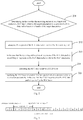
- Fig.1 is a flow chart of a method of assembling segments in the embodiment of the present disclosure, the method is applied to a receiving end and, as shown in Fig.1 , the method includes the following steps:
- Step 101 determining, in the case that the receiving end receives a target data packet at a RLC layer, whether the target data packet is a segment of a RLC data packet based on a header of the target data packet; if so, proceeding to step 102, otherwise terminating the process or delivering the target data packet to a PDCP layer, where the terminating the process is illustrated for example in the drawing.
- the target data packet may be any data packet delivered by a lower layer (e.g., MAC layer) to the RLC layer, and the target data packet may be or may be not a segment of a RLC data packet (e.g., may be a whole RLC data packet).
- the step 101 is configured to determine whether the target data packet is a segment of a RLC data packet, and if so, the assembly function is enabled, i.e., proceeding to the step 102.
- Step 102 arranging the segment of the RLC data packet received by the receiving end.
- the arrangement may be in a specific order or random, which is not limited by embodiments of this disclosure.
- Step 103 assembling, in the case that the receiving end receives all segments of the RLC data packet, all segments of the RLC data packet to obtain the RLC data packet.
- the receiving end assembles the segments, so as to deliver the resultant RLC data packet to the PDCP layer. Whether all segments of the RLC data packet are received may be determined based on segment identifiers or segment location information carried in the received segmented data packet of the RLC data packet.
- Step 104 delivering the RLC data packet to a PDCP layer.
- the RLC data packet may be delivered to the PDCP layer, the RLC data packet may be delivered as soon as it is assembled successfully, or the delivering of RLC data packets may be performed collectively when a quantity of successfully assembled RLC data packets reaches a threshold, which is not limited by embodiments of this disclosure.
- the assembly may be performed at RLC layer, and in particular, performed at RLC layer without the reorder detection function of RLC layer, that is, the RLC layer assembly function is achieved.
- the RLC layer assembly may support segmented transmission at lower layer, thereby improving transmission performance.
- the receiving end may be a device in a communication system that is configured to receive data packet, and certainly, the device may as well be configured to transmit data packet.
- the receiving end may be a UE or a network-side device, wherein the UE may include a cell phone, Table Personal Computer, Laptop Computer, personal digital assistant (PDA), Mobile Internet Device (MID) or Wearable Device.
- the network-side device may be a Transmission Reception Point (TRP) or a base station, the base station may be a macro base station such as LTE (Long-Term Evolution) eNB and 5G NR (New Radio) NB (Node-B); or the network-side device 12 may be an access point (AP).
- TRP Transmission Reception Point
- AP access point
- the receiving end determines whether the target data packet is a segment of a RLC data packet based on a header of the target data packet; in the case that the target data packet is a segment of the RLC data packet, the receiving end arranges the segment of the RLC data packet received by the receiving end; in the case that the receiving end receives all segments of the RLC data packet, the receiving end assembles all segments of the RLC data packet to obtain the RLC data packet; and the receiving end delivers the RLC data packet to a PDCP layer, thereby assembling the segments at the RLC layer, improving the transmission performance of the communication system.
- Fig.2 is a flow chart of a method of assembling segments in the embodiment of the present disclosure, the method is applied to a receiving end.
- a main difference between this embodiment and the embodiment as shown in Fig.1 is that, a step is added on the basis of the embodiment as shown in Fig.1 , in which step the RLC layer is notified of the RLC data packet for which it is determined a reception failure occurs after the PDCP layer receives the RLC data packet delivered by the RLC layer.
- the method includes the following steps.
- Step 201 determining, in the case that the receiving end receives a target data packet at a RLC layer, whether the target data packet is a segment of a RLC data packet based on a header of the target data packet; if so, proceeding to step 102, otherwise terminating the process or delivering the target data packet to a PDCP layer, where the terminating the process is illustrated for example in the drawing.
- the target data packet may be any data packet delivered by a lower layer (e.g., MAC layer) to the RLC layer, and the target data packet may be or may be not a segment of a RLC data packet (e.g., may be a whole RLC data packet).
- the step 101 is configured to determine whether the target data packet is a segment of a RLC data packet, and if so, the assembly function is enabled, i.e., proceeding to the step 102.
- the RLC data packet may be understood as a RLC Service Data Unit (SDU).
- SDU RLC Service Data Unit
- the determining whether the target data packet is a segment of the RLC data packet based on the header of the target data packet includes: determining whether the header of the target data packet includes a format indication of a segmented packet, and determining that the target data packet is the segment of the RLC data packet in the case that the header of the target data packet includes the format indication of the segmented packet; or determining whether the header of the target data packet includes segment position information, and determining that the target data packet is the segment of the RLC data packet in the case that the header of the target data packet includes the segment position information.
- the format indication may be configured to indicate that the target data packet is a segmented data packet of the RLC data packet, so that the target data packet may be indicated explicitly to be a segment of the RLC data packet; while the step of determining that the target data packet is a segment of the RLC data packet based on the segment position information is configured to indicate implicitly that the target data packet is the RLC data packet, which may reduce header overhead since additional format indication may be omitted from the header.
- the method further includes: in the case that the receiving end receives the target data packet at the RLC layer, determining whether the target data packet is a duplicated RLC data packet based on a number of the target data packet; in the case that the target data packet is the duplicated RLC data packet, discarding the target data packet; and in the case that the target data packet isn't the duplicated RLC data packet, performing the step of determining whether the target data packet is a segment of the RLC data packet based on the header of the target data packet.
- Whether the target data packet is a duplicated RLC data packet may be determined based on status information stored or recorded by the receiving end, e.g., by determining whether the target data packet is a data packet which has already been delivered to the PDCP layer, or by determining whether the target data packet is a data packet which has been assembled successfully, etc., which is not limited by embodiments of this disclosure.
- the method further includes: recording status information of the RLC layer, where the status information includes status and numbers of RLC data packets within a preset length range of numbers, and the status of the RLC data packets include: delivered to the PDCP layer, assembled successfully, being assembled or not received.
- the preset length range of numbers may be specified in protocol, e.g., it is specified in protocol that a quantity of numbers, recorded at the receiving end, of RLC data packets is half of a maximum RLC number, that is, if the maximum number is 10, then up to 5 numbers may be stored at the receiving end. Further, in embodiments of this disclosure, the number may also be called sequence number (SN).
- the preset length range of numbers is configured in advance at the receiving end, e.g., configured as 5, 6 or 7, that is, the receiving end may only record numbers of 5, 6 or 7 data packets at a time.
- the data packets within the preset length range of numbers vary with time or when data packet is received.
- the receiving end at first records status of data packet with numbers 1 to 5, and the five data packets may include data packets delivered to the PDCP layer, assembled successfully, being assembled and/or not received, i.e., some of the five data packets may be the data packets delivered to the PDCP layer, the data packets assembled successfully, the data packets being assembled or the data packets not received.
- the receiving end may instead record data packets with numbers 2 to 6, numbers 3 to 7, numbers 4 to 8, numbers 5 to 9, numbers 6 to 10 and numbers 7 to 1, where a maximum number of 10 is taken as an example, that is, upon 10 is reached, the number reverts back to 1 and the numbering resumes.
- status of data packets may be acquired timely by recording status information of the RLC layer, so as to facilitate the receiving end to process the data packets flexibly, thus improving flexibility of the system.
- the method further includes: determining an upper-limit number and a lower-limit number of the preset length range of numbers.
- the sequence of the step of recording status information of the RLC layer and the step of determining the upper-limit number and the lower-limit number of the preset length range of numbers is not limited, i.e., the recording step may precede the determining step, the determining step may precede the recording step or the steps may be performed simultaneously.
- the upper-limit number and the lower-limit number of the preset length range of numbers are determined, it may be ensured effectively that the receiving end only records status and numbers of RLC data packets within the preset length range of numbers, thus conserving storage space of the receiving end.
- the upper-limit number of the preset length range of numbers is: a maximum number among numbers of received data packets, the maximum number among the numbers of the received data packets plus 1, the maximum number among the numbers of the received data packets minus 1, or the lower-limit number of the preset length range of numbers plus the preset length range of numbers minus 1.
- the upper-limit number of the preset length range of numbers is: a maximum number among reverted numbers of numbers of received data packets, the maximum number among the reverted numbers of the numbers of the received data packets plus 1, the maximum number among the reverted numbers of the numbers of the received data packets minus 1, or a number obtained from a remainder operation to the preset length range of numbers by a first calculation result, where the first calculation result is the lower-limit number of the preset length range of numbers plus the preset length range of numbers minus 1.
- the preset length range of numbers is 5, the upper-limit number and the lower-limit number of the preset length range of numbers are 8 and 2 respectively.
- the lower-limit number of the preset length range of numbers is: a minimum number among numbers of received data packets, the minimum number among the numbers of the received data packets plus 1, the minimum number among the numbers of the received data packets minus 1, or the upper-limit number of the preset length range of numbers minus the preset length range of numbers plus 1.
- the lower-limit number of the preset length range of numbers is: a minimum number among non-reverted numbers of numbers of received data packets, the minimum number among the non-reverted numbers of the numbers of the received data packets plus 1, the minimum number among the non-reverted numbers of the numbers of the received data packets minus 1, or a number obtained from a second calculation result plus a preset maximum number, wherein the second calculation result is calculated from the upper-limit number of the preset length range of numbers minus the preset-size plus 1.
- the method further includes: in the case that the number of the received data packet is less than or equal to the lower-limit number of the preset length range of numbers, determining that the number of the received data packet has revert; or in the case that the number of the received data packet is less than or equal to a third calculation result, determining that the number of the received data packet has revert, where the third calculation result is the lower-limit number of the preset length range of numbers minus the preset length range of numbers.
- the determining whether the target data packet is the duplicated RLC data packet based on the number of the target data packet includes: determining whether the number of the target data packet is a number of a data packet delivered to the PDCP layer, and in the case that the number of the target data packet is the number of the data packet delivered to the PDCP layer, determining that the target data packet is the duplicated RLC data packet; determining whether the number of the target data packet is a number of a data packet assembled successfully, and in the case that the number of the target data packet is the number of the data packet assembled successfully, determining that the target data packet is the duplicated RLC data packet; or determining whether there is, within the preset length range of numbers, a data packet whose number is the same as the number of the target data packet, and in the case that there is, within the preset length range of numbers, the data packet whose number is the same as the number of the target data packet, determining that the target data packet is the duplicated RLC data packet; in the case that there isn'
- the target data packet is the data packet delivered to the PDCP layer or the data packet assembled successfully, it is determined that the target data packet is the duplicated RLC data packet.
- whether the target data packet is the duplicated RLC data packet may be determined by determining whether there is, within the preset length range of numbers, a data packet whose number is the same as the number of the target data packet.
- whether the target data packet is the duplicated RLC data packet may be determined by determining directly whether there is, within the preset length range of numbers, a data packet whose number is the same as the number of the target data packet.
- the specific determination mode is not limited by embodiments of this disclosure.
- whether the target data packet is the duplicated RLC data packet may be determined accurately through the 3 modes, so as to improve the performance of the receiving end.
- Step 202 arranging the segment of the RLC data packet received by the receiving end.
- the arranging the segment of the RLC data packet received by the receiving end includes: arranging the segment of the RLC data packet received by the receiving end sequentially in an order of segmentation; or arranging the segment of the RLC data packet received by the receiving end randomly.
- the segments may be arranged sequentially in the order of segmentation, which facilitates an upper layer to identify the segments in a received RLC data packet assembled from the segments arranged in this way, thus improving the performance of the receiving end. While by the random arrangement, the segments may be arranged and assembled rapidly, so as to enhance the assembly efficiency.
- the method further includes: in the case that the target data packet is a segment of the RLC data packet, determining whether the target data packet is a duplicated segment of a segment of the RLC data packet received by the receiving end; and in the case that the target data packet is a duplicated segment of the segment of the RLC data packet received by the receiving end, discarding the target data packet.
- the determining whether the target data packet is a duplicated segment of a segment of the RLC data packet received by the receiving end may include determining whether there is a segment same as the target data packet in the RLC data packet received at RLC layer, and if so, determining that the segment is received duplicatedly, i.e., the target data packet is a duplicated segment. Since the duplicated segment is discarded, the duplicated segment may be excluded from the assembly process, thus improving the correctness of assembly and conserving storage space of the receiving end.
- Step 203 in the case that the receiving end receives all segments of the RLC data packet, assembling all segments of the RLC data packet to obtain the RLC data packet.
- the receiving end assembles the segments, so as to deliver the resultant RLC data packet to the PDCP layer. Whether all segments of the RLC data packet are received may be determined based on segment identifier or segment location information carried in the received segmented data packet of the RLC data packet.
- the method further includes: in the case that a timer expires, terminating an assembly of the RLC data packet, and discarding segments of the RLC data packet stored by the receiving end.
- the assembly process of the RLC data packet is terminated and segments of the RLC data packet stored by the receiving end are discarded, thereby conserving power and storage space of the receiving end. Since the expiration of the timer suggests a segment of the RLC data packet remains absent, the assembly process may not be completed, as a result, the stored segments of the RLC data packet are discarded.
- the duration of the first timer may be configured in advance.
- the timer includes: a timer initiated when the receiving end receives a segment of the RLC data packet for the first time; or a timer initiated in the case that the receiving end receives a segment of the RLC data packet again after receiving the segment of the RLC data packet; or a timer initiated in the case that a segment between two adjacent segments is not received after the receiving end arranges the segments of the RLC data packet received by the receiving end in the order of segmentation.
- a timer may be initiated when the receiving end receives a segment of the RLC data packet for the first time; the timer may be re-initiated whenever a segment of the RLC data packet is received again; and a timer may be initiated in the case that there is an unreceived segment between two sequentially arranged segments after the segment of the RLC data packet is arranged sequentially in the order of segmentation, i.e., after it is found there is a segment missed. If the first timer expires, the segments of the RLC data packet stored by the receiving end are discarded, thereby conserving storage space of the receiving end.
- the method further includes: in the case that the receiving end receives all segments of the RLC data packet and the timer has not expired, terminating the timer.
- the power waste due to the fact that the timer continues running despite all segments of the RLC data packet are received may be avoided; and since the first timer is terminated after the assembly process, the discard of the segment of the RLC data packet due to an expiration of the first timer after the assembly process is completed successfully and a resultant RLC data packet error may be prevented.
- Step 204 delivering the RLC data packet to a PDCP layer.
- the RLC data packet may be delivered to the PDCP layer, where the RLC data packet may be delivered as soon as it is assembled successfully, or the delivering of RLC data packets may be performed collectively when a quantity of successfully assembled RLC data packets reaches a threshold, which is not limited by embodiments of this disclosure.
- the method may further includes: step 205, notifying the RLC layer of a failed RLC data packet which is determined to be received unsuccessfully, in the case that the PDCP layer receives the RLC data packet delivered by the RLC layer.
- the failed data packet may be those determined by the PDCP layer, after sorting the received RLC data packets, as failing to be received. For example, after the PDCP receives the RLC data packet delivered by the RLC layer, the PDCP layer records numbers of the received RLC data packets, sorts the received RLC data packets by number and during the course of sorting, determines whether there is a RLC data packet which failed to be received.
- a second timer may be initiated, and if the second timer expires and the failed data packet still fails to be received, the RLC data packets with numbers following the number of the failed data packet are delivered successively to an upper layer and the number of the failed data packet is transferred to the RLC layer. It is noted, the RLC data packet may be considered as a PDCP data packet on PDCP layer.
- the RLC layer may be notified of the data packet which failed to be received by the PDCP layer, such that the RLC layer is aware of the reception at the PDCP layer in a timely fashion, thus improving overall performance of the receiving end.
- steps 205 and 204 are not limited.
- a scenario in which step 204 precedes step 205 is illustrated as an example.
- step 205 may precede step 204 or the steps may be performed simultaneously, as the failed data packet may precede the RLC data packet delivered in step 204.
- the notifying the RLC layer of the failed RLC data packet includes: recording numbers of the RLC data packets received at the PDCP layer, determining a RLC-layer number of the failed RLC data packet which is determined to be received unsuccessfully, and notifying the RLC layer of the RLC-layer number of the failed RLC data packet.
- the RLC-layer number of the failed RLC data packet may be notified to the RLC layer, such that the RLC layer may determine the failed RLC data packet accurately and rapidly.
- the method further includes: in the case that segments of the failed RLC data packet are stored at the RLC layer, discarding the segments of the failed RLC data packet; or in the case that an assembly process of the failed RLC data packet is underway at the RLC layer, terminating the assembly process of the failed RLC data packet, terminating a timer initiated by the assembly process and discarding segments used in the assembly process of the failed RLC data packet.
- RLC layer may discard the stored segments of the failed data packet as it is not necessary to deliver the data packet to PDCP layer, thereby conserving storage space of the receiving end.
- RLC layer terminates the assembly process of the failed RLC data packet, terminates a timer initiated by the assembly process and discards stored segments of the failed data packet if the assembly process has been initiated by RLC layer, as it is not necessary to deliver the data packet to PDCP layer, thereby conserving power and storage space of the receiving end.
- the receiving end determines whether the target data packet is a segment of a RLC data packet based on a header of the target data packet; in the case that the target data packet is a segment of the RLC data packet, the receiving end arranges the segment, received by the receiving end, of the RLC data packet; in the case that the receiving end receives all segments of the RLC data packet, the receiving end assembles the all segments of the RLC data packet to obtain the RLC data packet; the receiving end delivers the RLC data packet to a PDCP layer; and after the PDCP layer receives the RLC data packet delivered by the RLC layer, in the case that it is determined that a reception of the RLC data packet fails, notifying the RLC layer of the failed RLC data packet.
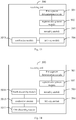
- the receiving end 500 includes: a first segment determination module 501, a segment arrangement module 502, an assembly module 503 and a delivery module 504, where the first segment determination module 501 is connected to the segment arrangement module 502, the segment arrangement module 502 is connected to the assembly module 503 and the assembly module 503 is connected to the delivery module 504.
- the first segment determination module 501 is configured to determine, in the case that the receiving end receives a target data packet at a Radio Link Control (RLC) layer, whether the target data packet is a segment of a RLC data packet based on a header of the target data packet.
- RLC Radio Link Control
- the segment arrangement module 502 is configured to arrange the segment of the RLC data packet received by the receiving end in the case that the target data packet is the segment of the RLC data packet.
- the assembly module 503 is configured to assemble, in the case that the receiving end receives all segments of the RLC data packet, all segments of the RLC data packet to obtain the RLC data packet.
- the delivery module 504 is configured to deliver the RLC data packet to a PDCP layer.
- the first segment determination module 501 is configured to determine whether the header of the target data packet includes a format indication of a segmented packet, and determine that the target data packet is the segment of the RLC data packet in the case that the header of the target data packet includes the format indication of the segmented packet; or
- the first segment determination module 501 is configured to determine whether the header of the target data packet includes segment position information, and determine that the target data packet is the segment of the RLC data packet in the case that the header of the target data packet includes the segment position information.
- the receiving end 500 further includes:
- the segment arrangement module 502 is configured to arrange the segments of the RLC data packet received by the receiving end in an order of segmentation; or the segment arrangement module 502 is configured to arrange the segments of the RLC data packet received by the receiving end randomly.
- the receiving end 500 further includes: a second discarding module 507, configured to terminate an assembly of the RLC data packet and discard the segment of the RLC data packet stored by the receiving end in the case that a timer expires.
- a second discarding module 507 configured to terminate an assembly of the RLC data packet and discard the segment of the RLC data packet stored by the receiving end in the case that a timer expires.
- the timer includes: a timer initiated in the case that the receiving end receives the segment of the RLC data packet for the first time; or a timer initiated in the case that the receiving end receives a segment of the RLC data packet again after receiving the segment of the RLC data packet; or a timer initiated in the case that a segment between two adjacent segments is not received after the receiving end arranges the segments of the RLC data packet received by the receiving end in the order of segmentation.
- the receiving end 500 further includes: a terminating module 508, configured to terminate the timer in the case that the receiving end receives all segments of the RLC data packet and the timer does not expire.
- a terminating module 508 configured to terminate the timer in the case that the receiving end receives all segments of the RLC data packet and the timer does not expire.
- the receiving end 500 further includes:
- the first segment determination module 501 is configured to determine whether the target data packet is the segment of the RLC data packet based on the header of the target data packet in the case that the target data packet is not the duplicated RLC data packet.
- the receiving end 500 further includes: a recording module 5011, configured to record status information of the RLC layer.
- the status information includes status and numbers of RLC data packets within a preset length range of numbers, and the status of the RLC data packets include: delivered to the PDCP layer, assembled successfully, being assembled or not received.
- the receiving end 500 further includes: a first determination module 5012, configured to determine an upper-limit number and a lower-limit number of the preset length range of numbers.
- the upper-limit number of the preset length range of numbers is: a maximum number among the numbers of the received data packets, the maximum number among the numbers of the received data packets plus 1, the maximum number among the numbers of the received data packets minus 1, or the lower-limit number of the preset length range of numbers plus the preset length range of numbers and minus 1; in the case that the number of the received data packet reverts, the upper-limit number of the preset length range of numbers is: a maximum number among reverted numbers of the numbers of the received data packets, the maximum number among the reverted numbers of the numbers of the received data packets plus 1, the maximum number among the reverted numbers of the numbers of the received data packets minus 1, or a number obtained from a remainder operation to the preset length range of numbers by a first calculation result, where the first calculation result is the lower-limit number of the preset length range of numbers plus the preset length range of numbers and minus 1.
- the lower-limit number of the preset length range of numbers is: a minimum number among the numbers of the received data packets, the minimum number among the numbers of the received data packets plus 1, the minimum number among the numbers of the received data packets minus 1, or the upper-limit number of the preset length range of numbers minus the preset length range of numbers and plus 1; in the case that the number of the received data packet reverts, the lower-limit number of the preset length range of numbers is: a minimum number among non-reverted numbers of the numbers of the received data packets, the minimum number among the non-reverted numbers of the numbers of the received data packets plus 1, the minimum number among the non-reverted numbers of the numbers of the received data packets minus 1, or a number obtained from a second calculation result plus a preset maximum number, where the second calculation result is the upper-limit number of the preset length range of numbers minus the preset length range of numbers and plus 1.
- the receiving end 500 further includes:
- the data packet determination module 509 is configured to determine whether the number of the target data packet is a number of a data packet delivered to the PDCP layer and determine that the target data packet is the duplicated RLC data packet in the case that the number of the target data packet is the number of the data packet delivered to the PDCP layer; or the data packet determination module 509 is configured to determine whether the number of the target data packet is a number of a data packet assembled successfully, and determine that the target data packet is the duplicated RLC data packet in the case that the number of the target data packet is the number of the data packet assembled successfully; or the data packet determination module 509 is configured to determine whether there is, within the preset length range of numbers, a data packet whose number is the same as the number of the target data packet, and determine that the target data packet is the duplicated RLC data packet in the case that there is, within the preset length range of numbers, the data packet whose number is the same as the number of the target data packet.
- the receiving end 500 further includes: a notification module 5015, configured to notify the RLC layer of a failed RLC data packet which is determined to be received unsuccessfully in the case that the PDCP layer receives the RLC data packet delivered by the RLC layer.
- a notification module 5015 configured to notify the RLC layer of a failed RLC data packet which is determined to be received unsuccessfully in the case that the PDCP layer receives the RLC data packet delivered by the RLC layer.
- the notification module 5015 is configured to in the case that the PDCP layer receives the RLC data packet delivered by the RLC layer, record numbers of the RLC data packets received at the PDCP layer, determine a RLC-layer number of the failed RLC data packet which is determined to be received unsuccessfully, and notify the RLC layer of the RLC-layer number of the failed RLC data packet.
- the receiving end 500 further includes:
- the receiving end determines whether the target data packet is a segment of a RLC data packet based on a header of the target data packet; in the case that the target data packet is a segment of the RLC data packet, the receiving end arranges the segment of the RLC data packet received by the receiving end; in the case that the receiving end receives all segments of the RLC data packet, the receiving end assembles all segments of the RLC data packet to obtain the RLC data packet; and the receiving end delivers the RLC data packet to a PDCP layer, thereby assembling the segments at the RLC layer, improving the transmission performance of the communication system.
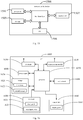
- the network-side device 1500 includes: a processor 1501, a transceiver 1502, a storage 1503, a User Interface (UI) 1504 and a bus interface.
- a processor 1501 a transceiver 1502
- a storage 1503 a User Interface 1504
- UI User Interface
- the processor 1501 is configured to read programs in the storage 1503 to perform the following process: determining, in the case that the receiving end receives a target data packet at a RLC layer, whether the target data packet is a segment of a RLC data packet based on a header of the target data packet; arranging the segment of the RLC data packet received by the receiving end, in the case that the target data packet is the segment of the RLC data packet; assembling, in the case that the receiving end receives all segments of the RLC data packet, all segments of the RLC data packet to obtain the RLC data packet; and delivering the RLC data packet to a PDCP layer.
- the transceiver 1502 is configured to transmit and receive data under the control of the processor 1501.
- a bus architecture may include any number of interconnected buses and bridges, and connects various circuits including one or more processors represented by the processor 1501 and storages represented by the storage 1503.
- the bus architecture may also connect various other circuits such as peripherals, voltage regulators and power management circuits, which is well known in the art. Therefore, a detailed description thereof is omitted herein.
- the bus interface acts as an interface.
- the transceiver 1502 may include multiple elements, such as a receiver and a transmitter, to allow for communication with various other apparatuses on the transmission medium.
- the UI 1504 may also be an interface capable of connecting externally or internally to a required device, and the device which may be connected includes, but not limited to: keypad, display, speaker, microphone, joystick and the like.
- the processor 1501 is configured to supervise the bus architecture and normal operation and the storage 1503 may store the data being used by the processor 1501 during operation.
- the processor 1501 is further configured to: determine whether the header of the target data packet includes a format indication of a segmented packet, and determine that the target data packet is the segment of the RLC data packet in the case that the header of the target data packet includes the format indication of the segmented packet; or determine whether the header of the target data packet includes segment position information, and determining that the target data packet is the segment of the RLC data packet in the case that the header of the target data packet includes the segment position information.
- the processor 1501 is further configured to: determine whether the target data packet is a duplicated segment of the segment of the RLC data packet received by the receiving end, in the case that the target data packet is the segment of the RLC data packet, and discard the target data packet, in the case that the target data packet is the duplicated segment of the segment of the RLC data packet received by the receiving end.
- the processor 1501 is further configured to: arrange the segments of the RLC data packet received by the receiving end in an order of segmentation, or arrange the segments of the RLC data packet received by the receiving end randomly.
- the processor 1501 is further configured to: terminate an assembly of the RLC data packet and discarding the segment of the RLC data packet stored by the receiving end, in the case that a timer expires.
- the timer includes: a timer initiated in the case that the receiving end receives the segment of the RLC data packet for the first time; or a timer initiated in the case that the receiving end receives a segment of the RLC data packet again after receiving the segment of the RLC data packet; or a timer initiated in the case that a segment between two adjacent segments is not received after the receiving end arranges the segments of the RLC data packet received by the receiving end in the order of segmentation.
- the processor 1501 is further configured to: terminate the timer, in the case that the receiving end receives all segments of the RLC data packet and the timer does not expire.
- the processor 1501 is further configured to: determine whether the target data packet is a duplicated RLC data packet based on a number of the target data packet, in the case that the receiving end receives the target data packet at the RLC layer; discard the target data packet, in the case that the target data packet is the duplicated RLC data packet; and determine whether the target data packet is the segment of the RLC data packet based on the header of the target data packet, in the case that the target data packet is not the duplicated RLC data packet.
- the processor 1501 is further configured to: record status information of the RLC layer, where the status information includes status and numbers of the RLC data packets within a preset length range of numbers, and the status of the RLC data packets include: delivered to the PDCP layer, assembled successfully, being assembled or not received.
- the processor 1501 is further configured to: determine an upper-limit number and a lower-limit number of the preset length range of numbers.
- the upper-limit number of the preset length range of numbers is: a maximum number among the numbers of the received data packets, the maximum number among the numbers of the received data packets plus 1, the maximum number among the numbers of the received data packets minus 1, or the lower-limit number of the preset length range of numbers plus the preset length range of numbers and minus 1; in the case that the number of the received data packet reverts, the upper-limit number of the preset length range of numbers is: a maximum number among reverted numbers of the numbers of the received data packets, the maximum number among the reverted numbers of the numbers of the received data packets plus 1, the maximum number among the reverted numbers of the numbers of the received data packets minus 1, or a number obtained from a remainder operation to the preset length range of numbers by a first calculation result, where the first calculation result is the lower-limit number of the preset length range of numbers plus the preset length range of numbers and minus 1.
- the lower-limit number of the preset length range of numbers is: a minimum number among the numbers of the received data packets, the minimum number among the numbers of the received data packets plus 1, the minimum number among the numbers of the received data packets minus 1, or the upper-limit number of the preset length range of numbers minus the preset length range of numbers and plus 1; in the case that the number of the received data packet reverts, the lower-limit number of the preset length range of numbers is: a minimum number among non-reverted numbers of the numbers of the received data packets, the minimum number among the non-reverted numbers of the numbers of the received data packets plus 1, the minimum number among the non-reverted numbers of the numbers of the received data packets minus 1, or a number obtained from a second calculation result plus a preset maximum number, where the second calculation result is the upper-limit number of the preset length range of numbers minus the preset length range of numbers and plus 1.
- the processor 1501 is further configured to: determine that the number of the received data packet reverts, in the case that the number of the received data packet is less than or equal to the lower-limit number of the preset length range of numbers, or determine that the number of the received data packet reverts, in the case that the number of the received data packet is less than or equal to a third calculation result, where the third calculation result is the lower-limit number of the preset length range of numbers minus the preset length range of numbers.
- the processor 1501 is further configured to: determine whether the number of the target data packet is a number of a data packet delivered to the PDCP layer, and determining that the target data packet is the duplicated RLC data packet in the case that the number of the target data packet is the number of the data packet delivered to the PDCP layer; or determine whether the number of the target data packet is a number of a data packet assembled successfully, and determining that the target data packet is the duplicated RLC data packet in the case that the number of the target data packet is the number of the data packet assembled successfully; or determine whether there is, within the preset length range of numbers, a data packet whose number is the same as the number of the target data packet, and determining that the target data packet is the duplicated RLC data packet in the case that there is, within the preset length range of numbers, the data packet whose number is the same as the number of the target data packet.
- the processor 1501 is further configured to: notify the RLC layer of a failed RLC data packet which is determined to be received unsuccessfully, in the case that the PDCP layer receives the RLC data packet delivered by the RLC layer.
- the processor 1501 is further configured to: record numbers of the RLC data packets received at the PDCP layer, determine a RLC-layer number of the failed RLC data packet which is determined to be received unsuccessfully, and notifying the RLC layer of the RLC-layer number of the failed RLC data packet.
- the processor 1501 is further configured to: in the case that segments of the failed RLC data packet are stored at the RLC layer, discard the segments of the failed RLC data packet; or in the case that an assembly of the failed RLC data packet is underway at the RLC layer, terminate the assembly of the failed RLC data packet, terminate a timer initiated by the assembly and discard the segments used in the assembly of the failed RLC data packet.
- the network-side device may be a TRP or a base station, the base station may be a macro base station such as LTE eNB and 5G NR NB. Alternatively, the network-side device 12 may be an AP.
- the network-side device determines whether the target data packet is a segment of a RLC data packet based on a header of the target data packet; in the case that the target data packet is a segment of the RLC data packet, the network-side device arranges the segment of the RLC data packet received by the receiving end; in the case that the network-side device receives all segments of the RLC data packet, the network-side device assembles all segments of the RLC data packet to obtain the RLC data packet; and the network-side device delivers the RLC data packet to a PDCP layer, thereby assembling the segments at the RLC layer, improving the transmission performance of the communication system.
- the UE 1600 includes a Radio Freq (RF) circuit 1610, a storage 1620, an input unit 1630, a display unit 1640, a processor 1650, an audio circuit 1660, a communication module 1670 and a power supply 1680.
- RF Radio Freq
- the input unit 1630 may be configured to receive digit or character information input by a user, and generate input signal related to the user settings and functional control of the UE 1600.
- the input unit 1630 may include a touch panel 1631.
- the touch panel 1631 aka touchpad, may sense user's touch actions on or in proximity to the touch panel (e.g., a user performs touch actions on the touch panel 1631 with any suitable object or accessory such as finger and stylus), and drive a corresponding connected device according to preset programs.
- the touch panel 1631 may include a touch sensing device and a touch controller.
- the touch sensing device senses the location of user's touch, detects signal caused by the touch and transfers the signal to the touch controller; the touch controller receives touch information from the touch sensing device, converts the information into touch point coordinates and transfers the coordinates to the processor 1650, and the touch controller may receive commands from the processor 1650 and execute the commands.
- the touch panel 1631 may be implemented with technologies such as resistive, capacitive, infrared (IR) and Surface Acoustic Wave (SAW).
- the input unit 1630 may include other input device 1632, which may include, but not limited to one or more of physical keyboard, function key (e.g., volume control button, switch button and the like), track ball, mouse, joystick, etc.
- the display unit 1640 may be configured to display information input by a user or information meant for a user, as well as various menu interfaces of UE 1600.
- the display unit 1640 may include a display panel 1641, and optionally, the display panel 1641 may be constructed based on technologies such as LCD or Organic Light-Emitting Diode (OLED).
- the touch panel 1631 may overlie the display panel 1641, to form a touchscreen.
- the touchscreen detects touch actions performed thereon or in proximity thereto and transfers the detected actions to the processor 1650 to identify a type of the touch event, and then the processor 1650 provides visual output on the touchscreen in accordance with the type of the touch event.
- the touchscreen includes an application interface display area and a common controls display area.
- the layout of these display areas is not limited, and may be vertical, horizontal or in other manner as long as the display areas may be distinguished from each other.
- the application interface display area may be used to display an application interface.
- Each interface may include interface elements such as icons and/or widgets of at least one application.
- the application interface display area may also be an empty interface void of any content.
- the common controls display area is used to display frequently used controls, e.g., setting button, interface number, scroll bar, application icon such as phone book icon, etc.
- the processor 1650 acts as a control center of the UE 1600 and is connected to various parts of the cell phone via a variety of interfaces and lines.
- the processor 1650 performs various functions of UE 1600 and processes data by running or executing software programs and/or modules stored in a first storage 1621 and calling data stored in a second storage 1622, so as to monitor and control the general operation of UE 1600.
- the processor 1650 may include one or more processing units.
- the processor 1650 is configured to: determine, in the case that the receiving end receives a target data packet at a RLC layer, whether the target data packet is a segment of a RLC data packet based on a header of the target data packet; arrange the segment of the RLC data packet received by the receiving end, in the case that the target data packet is the segment of the RLC data packet; assemble, in the case that the receiving end receives all segments of the RLC data packet, all segments of the RLC data packet to obtain the RLC data packet; and deliver the RLC data packet to a PDCP layer.
- the processor 1650 is further configured to: determine whether the header of the target data packet includes a format indication of a segmented packet, and determine that the target data packet is the segment of the RLC data packet in the case that the header of the target data packet includes the format indication of the segmented packet; or determine whether the header of the target data packet includes segment position information, and determining that the target data packet is the segment of the RLC data packet in the case that the header of the target data packet includes the segment position information.
- the processor 1650 is further configured to: determine whether the target data packet is a duplicated segment of the segment of the RLC data packet received by the receiving end, in the case that the target data packet is the segment of the RLC data packet, and discard the target data packet, in the case that the target data packet is the duplicated segment of the segment of the RLC data packet received by the receiving end.
- the processor 1650 is further configured to: arrange the segments of the RLC data packet received by the receiving end in an order of segmentation, or arrange the segments of the RLC data packet received by the receiving end randomly.
- the processor 1650 is further configured to: terminate an assembly of the RLC data packet and discarding the segment of the RLC data packet stored by the receiving end, in the case that a timer expires.
- the timer includes: a timer initiated in the case that the receiving end receives the segment of the RLC data packet for the first time; or a timer initiated in the case that the receiving end receives a segment of the RLC data packet again after receiving the segment of the RLC data packet; or a timer initiated in the case that a segment between two adjacent segments is not received after the receiving end arranges the segments of the RLC data packet received by the receiving end in the order of segmentation.
- the processor 1650 is further configured to: terminate the timer, in the case that the receiving end receives all segments of the RLC data packet and the timer does not expire.
- the processor 1650 is further configured to: determine whether the target data packet is a duplicated RLC data packet based on a number of the target data packet, in the case that the receiving end receives the target data packet at the RLC layer; discard the target data packet, in the case that the target data packet is the duplicated RLC data packet; and determine whether the target data packet is the segment of the RLC data packet based on the header of the target data packet, in the case that the target data packet is not the duplicated RLC data packet.
- the processor 1650 is further configured to: record status information of the RLC layer, where the status information includes status and numbers of the RLC data packets within a preset length range of numbers, and the status of the RLC data packets include: delivered to the PDCP layer, assembled successfully, being assembled or not received.
- the processor 1650 is further configured to: determine an upper-limit number and a lower-limit number of the preset length range of numbers.
- the upper-limit number of the preset length range of numbers is: a maximum number among the numbers of the received data packets, the maximum number among the numbers of the received data packets plus 1, the maximum number among the numbers of the received data packets minus 1, or the lower-limit number of the preset length range of numbers plus the preset length range of numbers and minus 1; in the case that the number of the received data packet reverts, the upper-limit number of the preset length range of numbers is: a maximum number among reverted numbers of the numbers of the received data packets, the maximum number among the reverted numbers of the numbers of the received data packets plus 1, the maximum number among the reverted numbers of the numbers of the received data packets minus 1, or a number obtained from a remainder operation to the preset length range of numbers by a first calculation result, where the first calculation result is the lower-limit number of the preset length range of numbers plus the preset length range of numbers and minus 1.
- the lower-limit number of the preset length range of numbers is: a minimum number among the numbers of the received data packets, the minimum number among the numbers of the received data packets plus 1, the minimum number among the numbers of the received data packets minus 1, or the upper-limit number of the preset length range of numbers minus the preset length range of numbers and plus 1; in the case that the number of the received data packet reverts, the lower-limit number of the preset length range of numbers is: a minimum number among non-reverted numbers of the numbers of the received data packets, the minimum number among the non-reverted numbers of the numbers of the received data packets plus 1, the minimum number among the non-reverted numbers of the numbers of the received data packets minus 1, or a number obtained from a second calculation result plus a preset maximum number, where the second calculation result is the upper-limit number of the preset length range of numbers minus the preset length range of numbers and plus 1.
- the processor 1650 is further configured to: determine that the number of the received data packet reverts, in the case that the number of the received data packet is less than or equal to the lower-limit number of the preset length range of numbers, or determine that the number of the received data packet reverts, in the case that the number of the received data packet is less than or equal to a third calculation result, where the third calculation result is the lower-limit number of the preset length range of numbers minus the preset length range of numbers.
- the processor 1650 is further configured to: determine whether the number of the target data packet is a number of a data packet delivered to the PDCP layer, and determining that the target data packet is the duplicated RLC data packet in the case that the number of the target data packet is the number of the data packet delivered to the PDCP layer; or determine whether the number of the target data packet is a number of a data packet assembled successfully, and determining that the target data packet is the duplicated RLC data packet in the case that the number of the target data packet is the number of the data packet assembled successfully; or determine whether there is, within the preset length range of numbers, a data packet whose number is the same as the number of the target data packet, and determining that the target data packet is the duplicated RLC data packet in the case that there is, within the preset length range of numbers, the data packet whose number is the same as the number of the target data packet.
- the processor 1650 is further configured to: notify the RLC layer of a failed RLC data packet which is determined to be received unsuccessfully, in the case that the PDCP layer receives the RLC data packet delivered by the RLC layer.
- the processor 1650 is further configured to: record numbers of the RLC data packets received at the PDCP layer, determine a RLC-layer number of the failed RLC data packet which is determined to be received unsuccessfully, and notifying the RLC layer of the RLC-layer number of the failed RLC data packet.
- the processor 1650 is further configured to: in the case that segments of the failed RLC data packet are stored at the RLC layer, discard the segments of the failed RLC data packet; or in the case that an assembly of the failed RLC data packet is underway at the RLC layer, terminate the assembly of the failed RLC data packet, terminate a timer initiated by the assembly and discard the segments used in the assembly of the failed RLC data packet.
- the receiving end determines whether the target data packet is a segment of a RLC data packet based on a header of the target data packet; in the case that the target data packet is a segment of the RLC data packet, the UE arranges the segment of the RLC data packet received by the receiving end; in the case that the UE receives all segments of the RLC data packet, the UE assembles all segments of the RLC data packet to obtain the RLC data packet; and the UE delivers the RLC data packet to a PDCP layer, thereby assembling the segments at the RLC layer, improving the transmission performance of the communication system.
- the disclosed device and method may be implemented in other manners.
- the described device embodiment is merely exemplary.
- the unit division is merely logical function division and may be other division in actual implementation.
- a plurality of units or components may be combined or integrated into another system, or some features may be neglected or not performed.
- the displayed or discussed mutual couplings or direct couplings or communication connections may be implemented through some interfaces.
- the indirect couplings or communication connections between the devices or units may be implemented in electronic, mechanical, or other forms.
- the units described as separate parts may or may not be physically separate, and parts displayed as units may or may not be physical units, that is, may be located in one position, or may be distributed on a plurality of network units. Apart or all of the units may be selected according to actual needs to achieve the objectives of the solutions of the embodiments.
- the functions may be stored in a computer-readable storage medium.
- the software product is stored in a storage medium, and includes several instructions for instructing a computer device (which may be a personal computer, a server, or a network device) to perform all or a part of the steps of the methods described in the embodiments of the disclosure.
- the foregoing storage medium includes any medium that can store program code, such as a Universal Serial Bus (USB) flash drive, a removable hard disk, a ROM, a RAM, a magnetic disk, or an optical disc.
- USB Universal Serial Bus
Landscapes
- Engineering & Computer Science (AREA)
- Computer Networks & Wireless Communication (AREA)
- Signal Processing (AREA)
- Communication Control (AREA)
- Data Exchanges In Wide-Area Networks (AREA)
- Mobile Radio Communication Systems (AREA)
- Input Circuits Of Receivers And Coupling Of Receivers And Audio Equipment (AREA)
- Burglar Alarm Systems (AREA)
- Electrotherapy Devices (AREA)
Abstract
Description
- The present application claims a priority of the Chinese patent application No.
201710210459.8 filed on March 31, 2017 - This disclosure relates to the field of communication technology, in particular to a method of assembling segments and a receiving end.
- As communication technology develops, more and more types of service data that need to be transmitted in communication system emerge and the various types of service data place different demands on transmission performance. To satisfy the demands of certain services, the concept of data segmentation is introduced in the art, i.e., one packet is allowed to be transmitted via multiple segments. Radio Link Control (RLC) layer is an important protocol layer in communication system, which is responsible for delivering data transferred from Media Access Control (MAC) to Packet Data Convergence Protocol (PDCP) layer. It is found in practice that, assembling the segments at RLC layer may improve the transmission performance of communication system. It follows that how to assemble the segments at RLC layer remains an urgent technical problem to be solved.
- In order to solve how to assemble segments at a RLC layer, a method of assembling segments and a receiving end are provided in the present disclosure.
- In a first aspect, a method of assembling segments is provided in the present disclosure, applied to a receiving end and including:
- determining, in the case that the receiving end receives a target data packet at a Radio Link Control (RLC) layer, whether the target data packet is a segment of a RLC data packet based on a header of the target data packet;
- arranging the segment of the RLC data packet received by the receiving end, in the case that the target data packet is the segment of the RLC data packet;
- assembling, in the case that the receiving end receives all segments of the RLC data packet, all segments of the RLC data packet to obtain the RLC data packet; and
- delivering the RLC data packet to a Packet Data Convergence Protocol (PDCP) layer.
- In a second aspect, a receiving end is further provided in the present disclosure, including:
- a first segment determination module, configured to determine, in the case that the receiving end receives a target data packet at a Radio Link Control (RLC) layer, whether the target data packet is a segment of a RLC data packet based on a header of the target data packet;
- a segment arrangement module, configured to arrange the segment of the RLC data packet received by the receiving end in the case that the target data packet is the segment of the RLC data packet;
- an assembly module, configured to assemble, in the case that the receiving end receives all segments of the RLC data packet, all segments of the RLC data packet to obtain the RLC data packet; and
- a delivery module, configured to deliver the RLC data packet to a Packet Data Convergence Protocol (PDCP) layer.
- Therefore, according to the present disclosure, in the case that the receiving end receives a target data packet at a RLC layer, the receiving end determines whether the target data packet is a segment of a RLC data packet based on a header of the target data packet; in the case that the target data packet is a segment of the RLC data packet, the receiving end arranges the segment of the RLC data packet received by the receiving end; in the case that the receiving end receives all segments of the RLC data packet, the receiving end assembles all segments of the RLC data packet to obtain the RLC data packet; and the receiving end delivers the RLC data packet to a PDCP layer, thereby assembling the segments at the RLC layer, improving the transmission performance of the communication system.
- To better clarify technical solutions of embodiments of the present disclosure, drawings used in description of the embodiments are briefly introduced hereinafter. Apparently, the described drawings merely illustrate a part of the disclosed embodiments. A person ordinary skilled in the art can obtain other drawings based on the described drawings without any creative efforts.
-
Fig.1 is a first flow chart of a method of assembling segments in the embodiment of the present disclosure; -
Fig.2 is a second flow chart of a method of assembling segments in the embodiment of the present disclosure; -
Fig.3 is a first schematic view of a preset length range of numbers in the embodiment of the present disclosure; -
Fig.4 is a second schematic view of a preset length range of numbers in the embodiment of the present disclosure; -
Fig.5 is a first schematic view of a receiving end in the embodiment of the present disclosure; -
Fig.6 is a second schematic view of a receiving end in the embodiment of the present disclosure; -
Fig.7 is a third schematic view of a receiving end in the embodiment of the present disclosure; -
Fig.8 is a fourth schematic view of a receiving end in the embodiment of the present disclosure; -
Fig.9 is a fifth schematic view of a receiving end in the embodiment of the present disclosure; -
Fig. 10 is a sixth schematic view of a receiving end in the embodiment of the present disclosure; -
Fig.11 is a seventh schematic view of a receiving end in the embodiment of the present disclosure; -
Fig.12 is an eighth schematic view of a receiving end in the embodiment of the present disclosure; -
Fig.13 is a ninth schematic view of a receiving end in the embodiment of the present disclosure; -
Fig.14 is a tenth schematic view of a receiving end in the embodiment of the present disclosure; -
Fig.15 is a schematic view of a network-side device in the embodiment of the present disclosure; and -
Fig.16 is a schematic view of a User Equipment (UE) in the embodiment of the present disclosure. - The technical solutions in embodiments of the present disclosure are described clearly and completely in conjunction with drawings in the embodiments of this disclosure. Apparently, the described embodiments are merely a part of rather than all the embodiments of this disclosure. All other embodiments obtained by a person ordinary skilled in the art based on the embodiments of this disclosure without any creative efforts fall within the protection scope of the present disclosure.
- Referring to
Fig.1 which is a flow chart of a method of assembling segments in the embodiment of the present disclosure, the method is applied to a receiving end and, as shown inFig.1 , the method includes the following steps: -
Step 101, determining, in the case that the receiving end receives a target data packet at a RLC layer, whether the target data packet is a segment of a RLC data packet based on a header of the target data packet; if so, proceeding tostep 102, otherwise terminating the process or delivering the target data packet to a PDCP layer, where the terminating the process is illustrated for example in the drawing. - The target data packet may be any data packet delivered by a lower layer (e.g., MAC layer) to the RLC layer, and the target data packet may be or may be not a segment of a RLC data packet (e.g., may be a whole RLC data packet). The
step 101 is configured to determine whether the target data packet is a segment of a RLC data packet, and if so, the assembly function is enabled, i.e., proceeding to thestep 102. -
Step 102, arranging the segment of the RLC data packet received by the receiving end. - The arrangement may be in a specific order or random, which is not limited by embodiments of this disclosure.
-
Step 103, assembling, in the case that the receiving end receives all segments of the RLC data packet, all segments of the RLC data packet to obtain the RLC data packet. - In this step, in the case that all segments of the RLC data packet are received, the receiving end assembles the segments, so as to deliver the resultant RLC data packet to the PDCP layer. Whether all segments of the RLC data packet are received may be determined based on segment identifiers or segment location information carried in the received segmented data packet of the RLC data packet.
-
Step 104, delivering the RLC data packet to a PDCP layer. - When the assembly process is successful, the RLC data packet may be delivered to the PDCP layer, the RLC data packet may be delivered as soon as it is assembled successfully, or the delivering of RLC data packets may be performed collectively when a quantity of successfully assembled RLC data packets reaches a threshold, which is not limited by embodiments of this disclosure.
- According to embodiments of this disclosure, by means of
steps 101 to 103, the assembly may be performed at RLC layer, and in particular, performed at RLC layer without the reorder detection function of RLC layer, that is, the RLC layer assembly function is achieved. The RLC layer assembly may support segmented transmission at lower layer, thereby improving transmission performance. - Further, in embodiments of this disclosure, the receiving end may be a device in a communication system that is configured to receive data packet, and certainly, the device may as well be configured to transmit data packet. For example, the receiving end may be a UE or a network-side device, wherein the UE may include a cell phone, Table Personal Computer, Laptop Computer, personal digital assistant (PDA), Mobile Internet Device (MID) or Wearable Device. The network-side device may be a Transmission Reception Point (TRP) or a base station, the base station may be a macro base station such as LTE (Long-Term Evolution) eNB and 5G NR (New Radio) NB (Node-B); or the network-side device 12 may be an access point (AP).
- According to the present disclosure, in the case that the receiving end receives a target data packet at a RLC layer, the receiving end determines whether the target data packet is a segment of a RLC data packet based on a header of the target data packet; in the case that the target data packet is a segment of the RLC data packet, the receiving end arranges the segment of the RLC data packet received by the receiving end; in the case that the receiving end receives all segments of the RLC data packet, the receiving end assembles all segments of the RLC data packet to obtain the RLC data packet; and the receiving end delivers the RLC data packet to a PDCP layer, thereby assembling the segments at the RLC layer, improving the transmission performance of the communication system.
- Referring to
Fig.2 which is a flow chart of a method of assembling segments in the embodiment of the present disclosure, the method is applied to a receiving end. A main difference between this embodiment and the embodiment as shown inFig.1 is that, a step is added on the basis of the embodiment as shown inFig.1 , in which step the RLC layer is notified of the RLC data packet for which it is determined a reception failure occurs after the PDCP layer receives the RLC data packet delivered by the RLC layer. As shown inFig.2 , the method includes the following steps. -
Step 201, determining, in the case that the receiving end receives a target data packet at a RLC layer, whether the target data packet is a segment of a RLC data packet based on a header of the target data packet; if so, proceeding to step 102, otherwise terminating the process or delivering the target data packet to a PDCP layer, where the terminating the process is illustrated for example in the drawing. - The target data packet may be any data packet delivered by a lower layer (e.g., MAC layer) to the RLC layer, and the target data packet may be or may be not a segment of a RLC data packet (e.g., may be a whole RLC data packet). The
step 101 is configured to determine whether the target data packet is a segment of a RLC data packet, and if so, the assembly function is enabled, i.e., proceeding to thestep 102. - It is noted, in the embodiments of this disclosure, the RLC data packet may be understood as a RLC Service Data Unit (SDU).
- Optionally, the determining whether the target data packet is a segment of the RLC data packet based on the header of the target data packet includes: determining whether the header of the target data packet includes a format indication of a segmented packet, and determining that the target data packet is the segment of the RLC data packet in the case that the header of the target data packet includes the format indication of the segmented packet; or determining whether the header of the target data packet includes segment position information, and determining that the target data packet is the segment of the RLC data packet in the case that the header of the target data packet includes the segment position information.
- The format indication may be configured to indicate that the target data packet is a segmented data packet of the RLC data packet, so that the target data packet may be indicated explicitly to be a segment of the RLC data packet; while the step of determining that the target data packet is a segment of the RLC data packet based on the segment position information is configured to indicate implicitly that the target data packet is the RLC data packet, which may reduce header overhead since additional format indication may be omitted from the header.
- Optionally, prior to the determining whether the target data packet is a segment of the RLC data packet based on the header of the target data packet, the method further includes: in the case that the receiving end receives the target data packet at the RLC layer, determining whether the target data packet is a duplicated RLC data packet based on a number of the target data packet; in the case that the target data packet is the duplicated RLC data packet, discarding the target data packet; and in the case that the target data packet isn't the duplicated RLC data packet, performing the step of determining whether the target data packet is a segment of the RLC data packet based on the header of the target data packet.
- In the embodiment, in the case that a target data packet is received, it is determined whether the target data packet is a duplicated RLC data packet, and if so, i.e., the target data packet has been received, the target data packet is discarded to avoid storage space being wasted on the generation of RLC data packet, thereby conserving the storage space. Whether the target data packet is a duplicated RLC data packet may be determined based on status information stored or recorded by the receiving end, e.g., by determining whether the target data packet is a data packet which has already been delivered to the PDCP layer, or by determining whether the target data packet is a data packet which has been assembled successfully, etc., which is not limited by embodiments of this disclosure.
- Optionally, in the embodiment, the method further includes: recording status information of the RLC layer, where the status information includes status and numbers of RLC data packets within a preset length range of numbers, and the status of the RLC data packets include: delivered to the PDCP layer, assembled successfully, being assembled or not received.
- The preset length range of numbers may be specified in protocol, e.g., it is specified in protocol that a quantity of numbers, recorded at the receiving end, of RLC data packets is half of a maximum RLC number, that is, if the maximum number is 10, then up to 5 numbers may be stored at the receiving end. Further, in embodiments of this disclosure, the number may also be called sequence number (SN). Alternatively, the preset length range of numbers is configured in advance at the receiving end, e.g., configured as 5, 6 or 7, that is, the receiving end may only record numbers of 5, 6 or 7 data packets at a time. Of course, the data packets within the preset length range of numbers vary with time or when data packet is received. For example, the receiving end at first records status of data packet with
numbers 1 to 5, and the five data packets may include data packets delivered to the PDCP layer, assembled successfully, being assembled and/or not received, i.e., some of the five data packets may be the data packets delivered to the PDCP layer, the data packets assembled successfully, the data packets being assembled or the data packets not received. However, due to the variation with time or when data packet is received, the receiving end may instead record data packets withnumbers 2 to 6,numbers 3 to 7,numbers 4 to 8,numbers 5 to 9,numbers 6 to 10 andnumbers 7 to 1, where a maximum number of 10 is taken as an example, that is, upon 10 is reached, the number reverts back to 1 and the numbering resumes. - In the embodiment, status of data packets may be acquired timely by recording status information of the RLC layer, so as to facilitate the receiving end to process the data packets flexibly, thus improving flexibility of the system.
- Optionally, in the embodiment, the method further includes: determining an upper-limit number and a lower-limit number of the preset length range of numbers.
- The sequence of the step of recording status information of the RLC layer and the step of determining the upper-limit number and the lower-limit number of the preset length range of numbers is not limited, i.e., the recording step may precede the determining step, the determining step may precede the recording step or the steps may be performed simultaneously. In the embodiment, since the upper-limit number and the lower-limit number of the preset length range of numbers are determined, it may be ensured effectively that the receiving end only records status and numbers of RLC data packets within the preset length range of numbers, thus conserving storage space of the receiving end.
- Optionally, in the case that a number of a received data packet does not revert, the upper-limit number of the preset length range of numbers is: a maximum number among numbers of received data packets, the maximum number among the numbers of the received data packets plus 1, the maximum number among the numbers of the received data packets minus 1, or the lower-limit number of the preset length range of numbers plus the preset length range of numbers minus 1.
- In the case that a number of a received data packet reverts, the upper-limit number of the preset length range of numbers is: a maximum number among reverted numbers of numbers of received data packets, the maximum number among the reverted numbers of the numbers of the received data packets plus 1, the maximum number among the reverted numbers of the numbers of the received data packets minus 1, or a number obtained from a remainder operation to the preset length range of numbers by a first calculation result, where the first calculation result is the lower-limit number of the preset length range of numbers plus the preset length range of numbers minus 1.
- In the embodiment, the upper-limit number of the preset length range of numbers may be determined accurately, to facilitate the receiving end to record accurately status of data packets within the preset length range of numbers. For example, if a number of a data packet does not revert, the preset length range of numbers is 5 and the lower-limit number is 3, the upper-limit number is: 3+5-1=7. As shown in
Fig.3 , the upper-limit number and the lower-limit number of the preset length range of numbers are 3 and 7 respectively. - For another example, if a number of a data packet reverts, the preset length range of numbers is 5 and the lower-limit number is 8, the upper-limit number is: (8+5-1)
mod 5=2, where 10 is the preset maximum number. As shown inFig.4 , the preset length range of numbers is 5, the upper-limit number and the lower-limit number of the preset length range of numbers are 8 and 2 respectively. - Optionally, in the case that a number of a received data packet does not revert, the lower-limit number of the preset length range of numbers is: a minimum number among numbers of received data packets, the minimum number among the numbers of the received data packets plus 1, the minimum number among the numbers of the received data packets minus 1, or the upper-limit number of the preset length range of numbers minus the preset length range of numbers plus 1.
- In the case that a number of a received data packet has revert, the lower-limit number of the preset length range of numbers is: a minimum number among non-reverted numbers of numbers of received data packets, the minimum number among the non-reverted numbers of the numbers of the received data packets plus 1, the minimum number among the non-reverted numbers of the numbers of the received data packets minus 1, or a number obtained from a second calculation result plus a preset maximum number, wherein the second calculation result is calculated from the upper-limit number of the preset length range of numbers minus the preset-
size plus 1. - In the embodiment, the lower-limit number of the preset length range of numbers may be determined accurately, to facilitate the receiving end to record accurately status of data packets within the preset length range of numbers. For example, if the upper-limit number is 7, the lower-limit number is: 7-5+1=3. As shown in
Fig.3 , the upper-limit number and the lower-limit number of the preset length range of numbers are 3 and 7 respectively. - For another example, if a number of a data packet reverts, the preset-size is 5 and the upper-limit number is 2, the lower-limit number is: 2-5+1+10=8, where 10 is the preset maximum number. That is, as shown in
Fig.4 , the preset-size is 5, the upper-limit number and the lower-limit number of the preset length range of numbers are 8 and 2 respectively. - Optionally, in the implementation involving determining the upper-limit number and the lower-limit number, prior to the determining an upper-limit number and a lower-limit number of the preset length range of numbers, the method further includes: in the case that the number of the received data packet is less than or equal to the lower-limit number of the preset length range of numbers, determining that the number of the received data packet has revert; or in the case that the number of the received data packet is less than or equal to a third calculation result, determining that the number of the received data packet has revert, where the third calculation result is the lower-limit number of the preset length range of numbers minus the preset length range of numbers.
- In the embodiment, whether the number of the received data packet reverts may be determined accurately, so as to determine accurately the upper-limit number and the lower-limit number of the preset length range of numbers. For example, if the preset-size is 5, the lower-limit number is 8, and the number of newly received data packet is 2, since 2< (8-5=3), it is determined the number of the data packet has reverted.
- Optionally, the determining whether the target data packet is the duplicated RLC data packet based on the number of the target data packet includes: determining whether the number of the target data packet is a number of a data packet delivered to the PDCP layer, and in the case that the number of the target data packet is the number of the data packet delivered to the PDCP layer, determining that the target data packet is the duplicated RLC data packet; determining whether the number of the target data packet is a number of a data packet assembled successfully, and in the case that the number of the target data packet is the number of the data packet assembled successfully, determining that the target data packet is the duplicated RLC data packet; or determining whether there is, within the preset length range of numbers, a data packet whose number is the same as the number of the target data packet, and in the case that there is, within the preset length range of numbers, the data packet whose number is the same as the number of the target data packet, determining that the target data packet is the duplicated RLC data packet; in the case that there isn't, within the preset length range of numbers, the data packet whose number is the same as the number of the target data packet, determining that the target data packet isn't the duplicated RLC data packet.
- In the embodiment, if the target data packet is the data packet delivered to the PDCP layer or the data packet assembled successfully, it is determined that the target data packet is the duplicated RLC data packet. Of course, in the case that it is determined the target data packet is neither the data packet reported to the PDCP layer nor the data packet assembled successfully, whether the target data packet is the duplicated RLC data packet may be determined by determining whether there is, within the preset length range of numbers, a data packet whose number is the same as the number of the target data packet. Certainly, whether the target data packet is the duplicated RLC data packet may be determined by determining directly whether there is, within the preset length range of numbers, a data packet whose number is the same as the number of the target data packet. The specific determination mode is not limited by embodiments of this disclosure. In the embodiment, whether the target data packet is the duplicated RLC data packet may be determined accurately through the 3 modes, so as to improve the performance of the receiving end.
-
Step 202, arranging the segment of the RLC data packet received by the receiving end. - Optionally, the arranging the segment of the RLC data packet received by the receiving end includes: arranging the segment of the RLC data packet received by the receiving end sequentially in an order of segmentation; or arranging the segment of the RLC data packet received by the receiving end randomly.
- In the embodiment, the segments may be arranged sequentially in the order of segmentation, which facilitates an upper layer to identify the segments in a received RLC data packet assembled from the segments arranged in this way, thus improving the performance of the receiving end. While by the random arrangement, the segments may be arranged and assembled rapidly, so as to enhance the assembly efficiency.
- Optionally, after the determining whether the target data packet is a segment of the RLC data packet based on the header of the target data packet, the method further includes: in the case that the target data packet is a segment of the RLC data packet, determining whether the target data packet is a duplicated segment of a segment of the RLC data packet received by the receiving end; and in the case that the target data packet is a duplicated segment of the segment of the RLC data packet received by the receiving end, discarding the target data packet.
- The determining whether the target data packet is a duplicated segment of a segment of the RLC data packet received by the receiving end may include determining whether there is a segment same as the target data packet in the RLC data packet received at RLC layer, and if so, determining that the segment is received duplicatedly, i.e., the target data packet is a duplicated segment. Since the duplicated segment is discarded, the duplicated segment may be excluded from the assembly process, thus improving the correctness of assembly and conserving storage space of the receiving end.
- Step 203, in the case that the receiving end receives all segments of the RLC data packet, assembling all segments of the RLC data packet to obtain the RLC data packet.
- In this step, in the case that all segments of the RLC data packet are received, the receiving end assembles the segments, so as to deliver the resultant RLC data packet to the PDCP layer. Whether all segments of the RLC data packet are received may be determined based on segment identifier or segment location information carried in the received segmented data packet of the RLC data packet.
- Optionally, after the determining whether the target data packet is a segment of the RLC data packet based on the header of the target data packet, the method further includes: in the case that a timer expires, terminating an assembly of the RLC data packet, and discarding segments of the RLC data packet stored by the receiving end.
- In the embodiment, in the case that a timer expires, the assembly process of the RLC data packet is terminated and segments of the RLC data packet stored by the receiving end are discarded, thereby conserving power and storage space of the receiving end. Since the expiration of the timer suggests a segment of the RLC data packet remains absent, the assembly process may not be completed, as a result, the stored segments of the RLC data packet are discarded. The duration of the first timer may be configured in advance.
- Optionally, the timer includes: a timer initiated when the receiving end receives a segment of the RLC data packet for the first time; or a timer initiated in the case that the receiving end receives a segment of the RLC data packet again after receiving the segment of the RLC data packet; or a timer initiated in the case that a segment between two adjacent segments is not received after the receiving end arranges the segments of the RLC data packet received by the receiving end in the order of segmentation.
- In the embodiment, a timer may be initiated when the receiving end receives a segment of the RLC data packet for the first time; the timer may be re-initiated whenever a segment of the RLC data packet is received again; and a timer may be initiated in the case that there is an unreceived segment between two sequentially arranged segments after the segment of the RLC data packet is arranged sequentially in the order of segmentation, i.e., after it is found there is a segment missed. If the first timer expires, the segments of the RLC data packet stored by the receiving end are discarded, thereby conserving storage space of the receiving end.
- Optionally, the method further includes: in the case that the receiving end receives all segments of the RLC data packet and the timer has not expired, terminating the timer.
- In the embodiment, since the first timer is terminated in the case that the receiving end receives all segments of the RLC data packet and the timer does not expire, the power waste due to the fact that the timer continues running despite all segments of the RLC data packet are received may be avoided; and since the first timer is terminated after the assembly process, the discard of the segment of the RLC data packet due to an expiration of the first timer after the assembly process is completed successfully and a resultant RLC data packet error may be prevented.
-
Step 204, delivering the RLC data packet to a PDCP layer. - When the assembly process is successful, the RLC data packet may be delivered to the PDCP layer, where the RLC data packet may be delivered as soon as it is assembled successfully, or the delivering of RLC data packets may be performed collectively when a quantity of successfully assembled RLC data packets reaches a threshold, which is not limited by embodiments of this disclosure.
- Optionally, the method may further includes:
step 205, notifying the RLC layer of a failed RLC data packet which is determined to be received unsuccessfully, in the case that the PDCP layer receives the RLC data packet delivered by the RLC layer. - The failed data packet may be those determined by the PDCP layer, after sorting the received RLC data packets, as failing to be received. For example, after the PDCP receives the RLC data packet delivered by the RLC layer, the PDCP layer records numbers of the received RLC data packets, sorts the received RLC data packets by number and during the course of sorting, determines whether there is a RLC data packet which failed to be received. After it is determined there is a RLC data packet which failed to be received, a second timer may be initiated, and if the second timer expires and the failed data packet still fails to be received, the RLC data packets with numbers following the number of the failed data packet are delivered successively to an upper layer and the number of the failed data packet is transferred to the RLC layer. It is noted, the RLC data packet may be considered as a PDCP data packet on PDCP layer.
- By
step 205, the RLC layer may be notified of the data packet which failed to be received by the PDCP layer, such that the RLC layer is aware of the reception at the PDCP layer in a timely fashion, thus improving overall performance of the receiving end. - It is noted, in embodiments of this disclosure, the execution sequence of
steps step 205 is illustrated as an example. In other scenarios, step 205 may precede step 204 or the steps may be performed simultaneously, as the failed data packet may precede the RLC data packet delivered instep 204. - Optionally, in the case that it is determined that the reception of the RLC data packet fails, the notifying the RLC layer of the failed RLC data packet includes: recording numbers of the RLC data packets received at the PDCP layer, determining a RLC-layer number of the failed RLC data packet which is determined to be received unsuccessfully, and notifying the RLC layer of the RLC-layer number of the failed RLC data packet.
- In the embodiment, the RLC-layer number of the failed RLC data packet may be notified to the RLC layer, such that the RLC layer may determine the failed RLC data packet accurately and rapidly.
- Optionally, after the, in the case that it is determined that the reception of the RLC data packet fails, notifying the RLC layer of the failed RLC data packet, the method further includes: in the case that segments of the failed RLC data packet are stored at the RLC layer, discarding the segments of the failed RLC data packet; or in the case that an assembly process of the failed RLC data packet is underway at the RLC layer, terminating the assembly process of the failed RLC data packet, terminating a timer initiated by the assembly process and discarding segments used in the assembly process of the failed RLC data packet.
- In this step, having received the number of the failed data packet transmitted by PDCP layer, RLC layer may discard the stored segments of the failed data packet as it is not necessary to deliver the data packet to PDCP layer, thereby conserving storage space of the receiving end. Moreover, having received the number of the failed data packet transmitted by PDCP layer, RLC layer terminates the assembly process of the failed RLC data packet, terminates a timer initiated by the assembly process and discards stored segments of the failed data packet if the assembly process has been initiated by RLC layer, as it is not necessary to deliver the data packet to PDCP layer, thereby conserving power and storage space of the receiving end.
- In embodiments of this disclosure, in the case that the receiving end receives a target data packet at an RLC layer, the receiving end determines whether the target data packet is a segment of a RLC data packet based on a header of the target data packet; in the case that the target data packet is a segment of the RLC data packet, the receiving end arranges the segment, received by the receiving end, of the RLC data packet; in the case that the receiving end receives all segments of the RLC data packet, the receiving end assembles the all segments of the RLC data packet to obtain the RLC data packet; the receiving end delivers the RLC data packet to a PDCP layer; and after the PDCP layer receives the RLC data packet delivered by the RLC layer, in the case that it is determined that a reception of the RLC data packet fails, notifying the RLC layer of the failed RLC data packet. Thereby assembling the segments at RLC layer is achieved, improving the transmission performance of communication system. Further, since the RLC layer is notified of the data packet which failed to be received by the PDCP layer, the RLC layer gets timely aware of the reception at the PDCP layer, thus improving overall performance of the receiving end.
- Referring to
Fig.5 , a schematic view of a receiving end in the embodiment of the present disclosure is illustrated. The receiving end may implement detailed steps of the method of assembling segments of embodiments as shown inFig.1 andFig.2 and achieve the same effect. As shown inFig.5 , the receivingend 500 includes: a firstsegment determination module 501, asegment arrangement module 502, anassembly module 503 and adelivery module 504, where the firstsegment determination module 501 is connected to thesegment arrangement module 502, thesegment arrangement module 502 is connected to theassembly module 503 and theassembly module 503 is connected to thedelivery module 504. - The first
segment determination module 501 is configured to determine, in the case that the receiving end receives a target data packet at a Radio Link Control (RLC) layer, whether the target data packet is a segment of a RLC data packet based on a header of the target data packet. - The
segment arrangement module 502 is configured to arrange the segment of the RLC data packet received by the receiving end in the case that the target data packet is the segment of the RLC data packet. - The
assembly module 503 is configured to assemble, in the case that the receiving end receives all segments of the RLC data packet, all segments of the RLC data packet to obtain the RLC data packet. - The
delivery module 504 is configured to deliver the RLC data packet to a PDCP layer. - Optionally, the first
segment determination module 501 is configured to determine whether the header of the target data packet includes a format indication of a segmented packet, and determine that the target data packet is the segment of the RLC data packet in the case that the header of the target data packet includes the format indication of the segmented packet; or - the first
segment determination module 501 is configured to determine whether the header of the target data packet includes segment position information, and determine that the target data packet is the segment of the RLC data packet in the case that the header of the target data packet includes the segment position information. - Optionally, as shown in
Fig.6 , the receivingend 500 further includes: - a second
segment determination module 505, configured to determine whether the target data packet is a duplicated segment of the segment of the RLC data packet received by the receiving end in the case that the target data packet is the segment of the RLC data packet; and - a first discarding
module 506, configured to discard the target data packet in the case that the target data packet is the duplicated segment of the segment of the RLC data packet received by the receiving end. - Optionally, the
segment arrangement module 502 is configured to arrange the segments of the RLC data packet received by the receiving end in an order of segmentation; or thesegment arrangement module 502 is configured to arrange the segments of the RLC data packet received by the receiving end randomly. - Optionally, as shown in
Fig.7 , the receivingend 500 further includes:
a second discardingmodule 507, configured to terminate an assembly of the RLC data packet and discard the segment of the RLC data packet stored by the receiving end in the case that a timer expires. - Optionally, the timer includes: a timer initiated in the case that the receiving end receives the segment of the RLC data packet for the first time; or a timer initiated in the case that the receiving end receives a segment of the RLC data packet again after receiving the segment of the RLC data packet; or a timer initiated in the case that a segment between two adjacent segments is not received after the receiving end arranges the segments of the RLC data packet received by the receiving end in the order of segmentation.
- Optionally, as shown in
Fig.8 , the receivingend 500 further includes:
a terminatingmodule 508, configured to terminate the timer in the case that the receiving end receives all segments of the RLC data packet and the timer does not expire. - Optionally, as shown in
Fig.9 , the receivingend 500 further includes: - a data
packet determination module 509, configured to determine whether the target data packet is a duplicated RLC data packet based on a number of the target data packet in the case that the receiving end receives the target data packet at the RLC layer; and - a third discarding
module 5010, configured to discard the target data packet in the case that the target data packet is the duplicated RLC data packet. - The first
segment determination module 501 is configured to determine whether the target data packet is the segment of the RLC data packet based on the header of the target data packet in the case that the target data packet is not the duplicated RLC data packet. - Optionally, as shown in
Fig.10 , the receivingend 500 further includes:
arecording module 5011, configured to record status information of the RLC layer. - The status information includes status and numbers of RLC data packets within a preset length range of numbers, and the status of the RLC data packets include: delivered to the PDCP layer, assembled successfully, being assembled or not received.
- Optionally, as shown in
Fig.11 , the receivingend 500 further includes:
afirst determination module 5012, configured to determine an upper-limit number and a lower-limit number of the preset length range of numbers. - Optionally, in the case that the number of the received data packet does not revert, the upper-limit number of the preset length range of numbers is: a maximum number among the numbers of the received data packets, the maximum number among the numbers of the received data packets plus 1, the maximum number among the numbers of the received data packets minus 1, or the lower-limit number of the preset length range of numbers plus the preset length range of numbers and
minus 1;
in the case that the number of the received data packet reverts, the upper-limit number of the preset length range of numbers is: a maximum number among reverted numbers of the numbers of the received data packets, the maximum number among the reverted numbers of the numbers of the received data packets plus 1, the maximum number among the reverted numbers of the numbers of the received data packets minus 1, or a number obtained from a remainder operation to the preset length range of numbers by a first calculation result, where the first calculation result is the lower-limit number of the preset length range of numbers plus the preset length range of numbers andminus 1. - Optionally, in the case that the number of the received data packet does not revert, the lower-limit number of the preset length range of numbers is: a minimum number among the numbers of the received data packets, the minimum number among the numbers of the received data packets plus 1, the minimum number among the numbers of the received data packets minus 1, or the upper-limit number of the preset length range of numbers minus the preset length range of numbers and
plus 1;
in the case that the number of the received data packet reverts, the lower-limit number of the preset length range of numbers is: a minimum number among non-reverted numbers of the numbers of the received data packets, the minimum number among the non-reverted numbers of the numbers of the received data packets plus 1, the minimum number among the non-reverted numbers of the numbers of the received data packets minus 1, or a number obtained from a second calculation result plus a preset maximum number, where the second calculation result is the upper-limit number of the preset length range of numbers minus the preset length range of numbers andplus 1. - Optionally, as shown in
Fig. 12 , the receivingend 500 further includes: - a
second determination module 5013, configured to determine that the number of the received data packet reverts in the case that the number of the received data packet is less than or equal to the lower-limit number of the preset length range of numbers; or - a
third determination module 5014, configured to determine that the number of the received data packet reverts in the case that the number of the received data packet is less than or equal to a third calculation result, where the third calculation result is the lower-limit number of the preset length range of numbers minus the preset length range of numbers. - Optionally, the data
packet determination module 509 is configured to determine whether the number of the target data packet is a number of a data packet delivered to the PDCP layer and determine that the target data packet is the duplicated RLC data packet in the case that the number of the target data packet is the number of the data packet delivered to the PDCP layer; or the datapacket determination module 509 is configured to determine whether the number of the target data packet is a number of a data packet assembled successfully, and determine that the target data packet is the duplicated RLC data packet in the case that the number of the target data packet is the number of the data packet assembled successfully; or the datapacket determination module 509 is configured to determine whether there is, within the preset length range of numbers, a data packet whose number is the same as the number of the target data packet, and determine that the target data packet is the duplicated RLC data packet in the case that there is, within the preset length range of numbers, the data packet whose number is the same as the number of the target data packet. - Optionally, as shown in
Fig. 13 , the receivingend 500 further includes:
anotification module 5015, configured to notify the RLC layer of a failed RLC data packet which is determined to be received unsuccessfully in the case that the PDCP layer receives the RLC data packet delivered by the RLC layer. - Optionally, the
notification module 5015 is configured to in the case that the PDCP layer receives the RLC data packet delivered by the RLC layer, record numbers of the RLC data packets received at the PDCP layer, determine a RLC-layer number of the failed RLC data packet which is determined to be received unsuccessfully, and notify the RLC layer of the RLC-layer number of the failed RLC data packet. - Optionally, as shown in
Fig. 14 , the receivingend 500 further includes: - a fourth discarding
module 5016, configured to, in the case that segments of the failed RLC data packet are stored at the RLC layer, discard the segments of the failed RLC data packet; or - a fifth discarding
module 5017, configured to, in the case that an assembly of the failed RLC data packet is underway at the RLC layer, terminate the assembly of the failed RLC data packet, terminate a timer initiated by the assembly and discard the segments used in the assembly process of the failed RLC data packet. - According to the receiving end of the present disclosure, in the case that the receiving end receives a target data packet at a RLC layer, the receiving end determines whether the target data packet is a segment of a RLC data packet based on a header of the target data packet; in the case that the target data packet is a segment of the RLC data packet, the receiving end arranges the segment of the RLC data packet received by the receiving end; in the case that the receiving end receives all segments of the RLC data packet, the receiving end assembles all segments of the RLC data packet to obtain the RLC data packet; and the receiving end delivers the RLC data packet to a PDCP layer, thereby assembling the segments at the RLC layer, improving the transmission performance of the communication system.
- Referring to
Fig.15 , a schematic view of a network-side device to which embodiments of this disclosure are applied is illustrated. The network-side device may implement detailed steps of the method of assembling segments of embodiments as shown inFig.1 andFig.2 and achieve the same effect. As shown inFig. 15 , the network-side device 1500 includes: aprocessor 1501, atransceiver 1502, astorage 1503, a User Interface (UI) 1504 and a bus interface. - The
processor 1501 is configured to read programs in thestorage 1503 to perform the following process:
determining, in the case that the receiving end receives a target data packet at a RLC layer, whether the target data packet is a segment of a RLC data packet based on a header of the target data packet; arranging the segment of the RLC data packet received by the receiving end, in the case that the target data packet is the segment of the RLC data packet; assembling, in the case that the receiving end receives all segments of the RLC data packet, all segments of the RLC data packet to obtain the RLC data packet; and delivering the RLC data packet to a PDCP layer. - The
transceiver 1502 is configured to transmit and receive data under the control of theprocessor 1501. - In
Fig.15 , a bus architecture may include any number of interconnected buses and bridges, and connects various circuits including one or more processors represented by theprocessor 1501 and storages represented by thestorage 1503. The bus architecture may also connect various other circuits such as peripherals, voltage regulators and power management circuits, which is well known in the art. Therefore, a detailed description thereof is omitted herein. The bus interface acts as an interface. Thetransceiver 1502 may include multiple elements, such as a receiver and a transmitter, to allow for communication with various other apparatuses on the transmission medium. For various UEs, theUI 1504 may also be an interface capable of connecting externally or internally to a required device, and the device which may be connected includes, but not limited to: keypad, display, speaker, microphone, joystick and the like. - The
processor 1501 is configured to supervise the bus architecture and normal operation and thestorage 1503 may store the data being used by theprocessor 1501 during operation. - Optionally, the
processor 1501 is further configured to: determine whether the header of the target data packet includes a format indication of a segmented packet, and determine that the target data packet is the segment of the RLC data packet in the case that the header of the target data packet includes the format indication of the segmented packet; or determine whether the header of the target data packet includes segment position information, and determining that the target data packet is the segment of the RLC data packet in the case that the header of the target data packet includes the segment position information. - Optionally, the
processor 1501 is further configured to: determine whether the target data packet is a duplicated segment of the segment of the RLC data packet received by the receiving end, in the case that the target data packet is the segment of the RLC data packet, and discard the target data packet, in the case that the target data packet is the duplicated segment of the segment of the RLC data packet received by the receiving end. - Optionally, the
processor 1501 is further configured to: arrange the segments of the RLC data packet received by the receiving end in an order of segmentation, or arrange the segments of the RLC data packet received by the receiving end randomly. - Optionally, the
processor 1501 is further configured to: terminate an assembly of the RLC data packet and discarding the segment of the RLC data packet stored by the receiving end, in the case that a timer expires. - Optionally, the timer includes: a timer initiated in the case that the receiving end receives the segment of the RLC data packet for the first time; or a timer initiated in the case that the receiving end receives a segment of the RLC data packet again after receiving the segment of the RLC data packet; or a timer initiated in the case that a segment between two adjacent segments is not received after the receiving end arranges the segments of the RLC data packet received by the receiving end in the order of segmentation.
- Optionally, the
processor 1501 is further configured to: terminate the timer, in the case that the receiving end receives all segments of the RLC data packet and the timer does not expire. - Optionally, the
processor 1501 is further configured to: determine whether the target data packet is a duplicated RLC data packet based on a number of the target data packet, in the case that the receiving end receives the target data packet at the RLC layer; discard the target data packet, in the case that the target data packet is the duplicated RLC data packet; and determine whether the target data packet is the segment of the RLC data packet based on the header of the target data packet, in the case that the target data packet is not the duplicated RLC data packet. - Optionally, the
processor 1501 is further configured to: record status information of the RLC layer, where the status information includes status and numbers of the RLC data packets within a preset length range of numbers, and the status of the RLC data packets include: delivered to the PDCP layer, assembled successfully, being assembled or not received. - Optionally, the
processor 1501 is further configured to: determine an upper-limit number and a lower-limit number of the preset length range of numbers. - Optionally, in the case that the number of the received data packet does not revert, the upper-limit number of the preset length range of numbers is: a maximum number among the numbers of the received data packets, the maximum number among the numbers of the received data packets plus 1, the maximum number among the numbers of the received data packets minus 1, or the lower-limit number of the preset length range of numbers plus the preset length range of numbers and
minus 1;
in the case that the number of the received data packet reverts, the upper-limit number of the preset length range of numbers is: a maximum number among reverted numbers of the numbers of the received data packets, the maximum number among the reverted numbers of the numbers of the received data packets plus 1, the maximum number among the reverted numbers of the numbers of the received data packets minus 1, or a number obtained from a remainder operation to the preset length range of numbers by a first calculation result, where the first calculation result is the lower-limit number of the preset length range of numbers plus the preset length range of numbers andminus 1. - Optionally, in the case that the number of the received data packet does not revert, the lower-limit number of the preset length range of numbers is: a minimum number among the numbers of the received data packets, the minimum number among the numbers of the received data packets plus 1, the minimum number among the numbers of the received data packets minus 1, or the upper-limit number of the preset length range of numbers minus the preset length range of numbers and
plus 1;
in the case that the number of the received data packet reverts, the lower-limit number of the preset length range of numbers is: a minimum number among non-reverted numbers of the numbers of the received data packets, the minimum number among the non-reverted numbers of the numbers of the received data packets plus 1, the minimum number among the non-reverted numbers of the numbers of the received data packets minus 1, or a number obtained from a second calculation result plus a preset maximum number, where the second calculation result is the upper-limit number of the preset length range of numbers minus the preset length range of numbers andplus 1. - Optionally, the
processor 1501 is further configured to: determine that the number of the received data packet reverts, in the case that the number of the received data packet is less than or equal to the lower-limit number of the preset length range of numbers, or determine that the number of the received data packet reverts, in the case that the number of the received data packet is less than or equal to a third calculation result, where the third calculation result is the lower-limit number of the preset length range of numbers minus the preset length range of numbers. - Optionally, the
processor 1501 is further configured to: determine whether the number of the target data packet is a number of a data packet delivered to the PDCP layer, and determining that the target data packet is the duplicated RLC data packet in the case that the number of the target data packet is the number of the data packet delivered to the PDCP layer; or determine whether the number of the target data packet is a number of a data packet assembled successfully, and determining that the target data packet is the duplicated RLC data packet in the case that the number of the target data packet is the number of the data packet assembled successfully; or determine whether there is, within the preset length range of numbers, a data packet whose number is the same as the number of the target data packet, and determining that the target data packet is the duplicated RLC data packet in the case that there is, within the preset length range of numbers, the data packet whose number is the same as the number of the target data packet. - Optionally, the
processor 1501 is further configured to: notify the RLC layer of a failed RLC data packet which is determined to be received unsuccessfully, in the case that the PDCP layer receives the RLC data packet delivered by the RLC layer. - Optionally, the
processor 1501 is further configured to: record numbers of the RLC data packets received at the PDCP layer, determine a RLC-layer number of the failed RLC data packet which is determined to be received unsuccessfully, and notifying the RLC layer of the RLC-layer number of the failed RLC data packet. - Optionally, the
processor 1501 is further configured to: in the case that segments of the failed RLC data packet are stored at the RLC layer, discard the segments of the failed RLC data packet; or in the case that an assembly of the failed RLC data packet is underway at the RLC layer, terminate the assembly of the failed RLC data packet, terminate a timer initiated by the assembly and discard the segments used in the assembly of the failed RLC data packet. - The network-side device may be a TRP or a base station, the base station may be a macro base station such as LTE eNB and 5G NR NB. Alternatively, the network-side device 12 may be an AP.
- According to the network-side device of the present disclosure, in the case that the network-side device receives a target data packet at a RLC layer, the network-side device determines whether the target data packet is a segment of a RLC data packet based on a header of the target data packet; in the case that the target data packet is a segment of the RLC data packet, the network-side device arranges the segment of the RLC data packet received by the receiving end; in the case that the network-side device receives all segments of the RLC data packet, the network-side device assembles all segments of the RLC data packet to obtain the RLC data packet; and the network-side device delivers the RLC data packet to a PDCP layer, thereby assembling the segments at the RLC layer, improving the transmission performance of the communication system.
- Referring to
Fig.16 , a schematic view of a UE to which embodiments of this disclosure are applied is illustrated. The UE may implement detailed steps of the method of assembling segments of embodiments as shown inFig.1 andFig.2 and achieve the same effect. As shown inFig. 16 , theUE 1600 includes a Radio Freq (RF)circuit 1610, astorage 1620, aninput unit 1630, adisplay unit 1640, aprocessor 1650, anaudio circuit 1660, acommunication module 1670 and apower supply 1680. - The
input unit 1630 may be configured to receive digit or character information input by a user, and generate input signal related to the user settings and functional control of theUE 1600. Specifically, in embodiments of this disclosure, theinput unit 1630 may include atouch panel 1631. Thetouch panel 1631, aka touchpad, may sense user's touch actions on or in proximity to the touch panel (e.g., a user performs touch actions on thetouch panel 1631 with any suitable object or accessory such as finger and stylus), and drive a corresponding connected device according to preset programs. Optionally, thetouch panel 1631 may include a touch sensing device and a touch controller. The touch sensing device senses the location of user's touch, detects signal caused by the touch and transfers the signal to the touch controller; the touch controller receives touch information from the touch sensing device, converts the information into touch point coordinates and transfers the coordinates to theprocessor 1650, and the touch controller may receive commands from theprocessor 1650 and execute the commands. Further, thetouch panel 1631 may be implemented with technologies such as resistive, capacitive, infrared (IR) and Surface Acoustic Wave (SAW). In addition to thetouch panel 1631, theinput unit 1630 may includeother input device 1632, which may include, but not limited to one or more of physical keyboard, function key (e.g., volume control button, switch button and the like), track ball, mouse, joystick, etc. - The
display unit 1640 may be configured to display information input by a user or information meant for a user, as well as various menu interfaces ofUE 1600. Thedisplay unit 1640 may include adisplay panel 1641, and optionally, thedisplay panel 1641 may be constructed based on technologies such as LCD or Organic Light-Emitting Diode (OLED). - It is noted, the
touch panel 1631 may overlie thedisplay panel 1641, to form a touchscreen. The touchscreen detects touch actions performed thereon or in proximity thereto and transfers the detected actions to theprocessor 1650 to identify a type of the touch event, and then theprocessor 1650 provides visual output on the touchscreen in accordance with the type of the touch event. - The touchscreen includes an application interface display area and a common controls display area. The layout of these display areas is not limited, and may be vertical, horizontal or in other manner as long as the display areas may be distinguished from each other. The application interface display area may be used to display an application interface. Each interface may include interface elements such as icons and/or widgets of at least one application. The application interface display area may also be an empty interface void of any content. The common controls display area is used to display frequently used controls, e.g., setting button, interface number, scroll bar, application icon such as phone book icon, etc.
- The
processor 1650 acts as a control center of theUE 1600 and is connected to various parts of the cell phone via a variety of interfaces and lines. Theprocessor 1650 performs various functions ofUE 1600 and processes data by running or executing software programs and/or modules stored in afirst storage 1621 and calling data stored in asecond storage 1622, so as to monitor and control the general operation ofUE 1600. Optionally, theprocessor 1650 may include one or more processing units. - In embodiments of this disclosure, by calling software programs and/or modules stored in the
first storage 1621 and/or data stored in thesecond storage 1622, theprocessor 1650 is configured to: determine, in the case that the receiving end receives a target data packet at a RLC layer, whether the target data packet is a segment of a RLC data packet based on a header of the target data packet; arrange the segment of the RLC data packet received by the receiving end, in the case that the target data packet is the segment of the RLC data packet; assemble, in the case that the receiving end receives all segments of the RLC data packet, all segments of the RLC data packet to obtain the RLC data packet; and deliver the RLC data packet to a PDCP layer. - Optionally, the
processor 1650 is further configured to: determine whether the header of the target data packet includes a format indication of a segmented packet, and determine that the target data packet is the segment of the RLC data packet in the case that the header of the target data packet includes the format indication of the segmented packet; or determine whether the header of the target data packet includes segment position information, and determining that the target data packet is the segment of the RLC data packet in the case that the header of the target data packet includes the segment position information. - Optionally, the
processor 1650 is further configured to: determine whether the target data packet is a duplicated segment of the segment of the RLC data packet received by the receiving end, in the case that the target data packet is the segment of the RLC data packet, and discard the target data packet, in the case that the target data packet is the duplicated segment of the segment of the RLC data packet received by the receiving end. - Optionally, the
processor 1650 is further configured to: arrange the segments of the RLC data packet received by the receiving end in an order of segmentation, or arrange the segments of the RLC data packet received by the receiving end randomly. - Optionally, the
processor 1650 is further configured to: terminate an assembly of the RLC data packet and discarding the segment of the RLC data packet stored by the receiving end, in the case that a timer expires. - Optionally, the timer includes: a timer initiated in the case that the receiving end receives the segment of the RLC data packet for the first time; or a timer initiated in the case that the receiving end receives a segment of the RLC data packet again after receiving the segment of the RLC data packet; or a timer initiated in the case that a segment between two adjacent segments is not received after the receiving end arranges the segments of the RLC data packet received by the receiving end in the order of segmentation.
- Optionally, the
processor 1650 is further configured to: terminate the timer, in the case that the receiving end receives all segments of the RLC data packet and the timer does not expire. - Optionally, the
processor 1650 is further configured to: determine whether the target data packet is a duplicated RLC data packet based on a number of the target data packet, in the case that the receiving end receives the target data packet at the RLC layer; discard the target data packet, in the case that the target data packet is the duplicated RLC data packet; and determine whether the target data packet is the segment of the RLC data packet based on the header of the target data packet, in the case that the target data packet is not the duplicated RLC data packet. - Optionally, the
processor 1650 is further configured to: record status information of the RLC layer, where the status information includes status and numbers of the RLC data packets within a preset length range of numbers, and the status of the RLC data packets include: delivered to the PDCP layer, assembled successfully, being assembled or not received. - Optionally, the
processor 1650 is further configured to: determine an upper-limit number and a lower-limit number of the preset length range of numbers. - Optionally, in the case that the number of the received data packet does not revert, the upper-limit number of the preset length range of numbers is: a maximum number among the numbers of the received data packets, the maximum number among the numbers of the received data packets plus 1, the maximum number among the numbers of the received data packets minus 1, or the lower-limit number of the preset length range of numbers plus the preset length range of numbers and
minus 1;
in the case that the number of the received data packet reverts, the upper-limit number of the preset length range of numbers is: a maximum number among reverted numbers of the numbers of the received data packets, the maximum number among the reverted numbers of the numbers of the received data packets plus 1, the maximum number among the reverted numbers of the numbers of the received data packets minus 1, or a number obtained from a remainder operation to the preset length range of numbers by a first calculation result, where the first calculation result is the lower-limit number of the preset length range of numbers plus the preset length range of numbers andminus 1. - Optionally, in the case that the number of the received data packet does not revert, the lower-limit number of the preset length range of numbers is: a minimum number among the numbers of the received data packets, the minimum number among the numbers of the received data packets plus 1, the minimum number among the numbers of the received data packets minus 1, or the upper-limit number of the preset length range of numbers minus the preset length range of numbers and
plus 1;
in the case that the number of the received data packet reverts, the lower-limit number of the preset length range of numbers is: a minimum number among non-reverted numbers of the numbers of the received data packets, the minimum number among the non-reverted numbers of the numbers of the received data packets plus 1, the minimum number among the non-reverted numbers of the numbers of the received data packets minus 1, or a number obtained from a second calculation result plus a preset maximum number, where the second calculation result is the upper-limit number of the preset length range of numbers minus the preset length range of numbers andplus 1. - Optionally, the
processor 1650 is further configured to: determine that the number of the received data packet reverts, in the case that the number of the received data packet is less than or equal to the lower-limit number of the preset length range of numbers, or determine that the number of the received data packet reverts, in the case that the number of the received data packet is less than or equal to a third calculation result, where the third calculation result is the lower-limit number of the preset length range of numbers minus the preset length range of numbers. - Optionally, the
processor 1650 is further configured to: determine whether the number of the target data packet is a number of a data packet delivered to the PDCP layer, and determining that the target data packet is the duplicated RLC data packet in the case that the number of the target data packet is the number of the data packet delivered to the PDCP layer; or determine whether the number of the target data packet is a number of a data packet assembled successfully, and determining that the target data packet is the duplicated RLC data packet in the case that the number of the target data packet is the number of the data packet assembled successfully; or determine whether there is, within the preset length range of numbers, a data packet whose number is the same as the number of the target data packet, and determining that the target data packet is the duplicated RLC data packet in the case that there is, within the preset length range of numbers, the data packet whose number is the same as the number of the target data packet. - Optionally, the
processor 1650 is further configured to: notify the RLC layer of a failed RLC data packet which is determined to be received unsuccessfully, in the case that the PDCP layer receives the RLC data packet delivered by the RLC layer. - Optionally, the
processor 1650 is further configured to: record numbers of the RLC data packets received at the PDCP layer, determine a RLC-layer number of the failed RLC data packet which is determined to be received unsuccessfully, and notifying the RLC layer of the RLC-layer number of the failed RLC data packet. - Optionally, the
processor 1650 is further configured to: in the case that segments of the failed RLC data packet are stored at the RLC layer, discard the segments of the failed RLC data packet; or in the case that an assembly of the failed RLC data packet is underway at the RLC layer, terminate the assembly of the failed RLC data packet, terminate a timer initiated by the assembly and discard the segments used in the assembly of the failed RLC data packet. - According to the UE of the present disclosure, in the case that the UE receives a target data packet at a RLC layer, the receiving end determines whether the target data packet is a segment of a RLC data packet based on a header of the target data packet; in the case that the target data packet is a segment of the RLC data packet, the UE arranges the segment of the RLC data packet received by the receiving end; in the case that the UE receives all segments of the RLC data packet, the UE assembles all segments of the RLC data packet to obtain the RLC data packet; and the UE delivers the RLC data packet to a PDCP layer, thereby assembling the segments at the RLC layer, improving the transmission performance of the communication system.
- A person skilled in the art may be aware that, in the examples described in combination with the embodiments disclosed in this specification, units and algorithm steps may be implemented by electronic hardware or a combination of computer software and electronic hardware. Whether the functions are performed by hardware or software depends on particular applications and design constraint conditions of the technical solutions. A person skilled in the art may use different methods to implement the described functions for each particular application, but it should not be considered that the implementation goes beyond the scope of the disclosure.
- It may be clearly understood by a person skilled in the art that, for convenient and brief description, for a detailed working process of the foregoing system, apparatus, and unit, reference may be made to a corresponding process in the foregoing method embodiments, and details are not described herein again.
- In the several embodiments provided in the present application, it should be understood that the disclosed device and method may be implemented in other manners. For example, the described device embodiment is merely exemplary. For example, the unit division is merely logical function division and may be other division in actual implementation. For example, a plurality of units or components may be combined or integrated into another system, or some features may be neglected or not performed. In addition, the displayed or discussed mutual couplings or direct couplings or communication connections may be implemented through some interfaces. The indirect couplings or communication connections between the devices or units may be implemented in electronic, mechanical, or other forms.
- The units described as separate parts may or may not be physically separate, and parts displayed as units may or may not be physical units, that is, may be located in one position, or may be distributed on a plurality of network units. Apart or all of the units may be selected according to actual needs to achieve the objectives of the solutions of the embodiments.
- In addition, functional units in the embodiments of this disclosure may be integrated into one processing unit, or each of the units may exist alone physically, or two or more units may be integrated into one unit.
- If the functions are implemented in a form of a software functional unit and sold or used as an independent product, the functions may be stored in a computer-readable storage medium. Based on such an understanding, the technical solutions of this disclosure essentially, or the part contributing to the prior art, or a part of the technical solutions may be implemented in a form of a software product. The software product is stored in a storage medium, and includes several instructions for instructing a computer device (which may be a personal computer, a server, or a network device) to perform all or a part of the steps of the methods described in the embodiments of the disclosure. The foregoing storage medium includes any medium that can store program code, such as a Universal Serial Bus (USB) flash drive, a removable hard disk, a ROM, a RAM, a magnetic disk, or an optical disc.
- The above descriptions merely describe specific embodiments of this disclosure, but the scope of this disclosure is not limited thereto. Changes or alternatives which can easily occur to those skilled in the art within the technical scope disclosed in this disclosure shall fall within the scope of this disclosure. Therefore, the scope of this disclosure is defined by the claims.
Claims (36)
- A method of assembling segments, applied to a receiving end and comprising:determining, in the case that the receiving end receives a target data packet at a Radio Link Control (RLC) layer, whether the target data packet is a segment of a RLC data packet based on a header of the target data packet;arranging the segment of the RLC data packet received by the receiving end, in the case that the target data packet is the segment of the RLC data packet;assembling, in the case that the receiving end receives all segments of the RLC data packet, all segments of the RLC data packet to obtain the RLC data packet; anddelivering the RLC data packet to a Packet Data Convergence Protocol (PDCP) layer.
- The method according to claim 1, wherein the determining whether the target data packet is the segment of the RLC data packet based on the header of the target data packet comprises:determining whether the header of the target data packet comprises a format indication of a segmented packet, and determining that the target data packet is the segment of the RLC data packet in the case that the header of the target data packet comprises the format indication of the segmented packet; ordetermining whether the header of the target data packet comprises segment position information, and determining that the target data packet is the segment of the RLC data packet in the case that the header of the target data packet comprises the segment position information.
- The method according to claim 1 or 2, wherein subsequent to the determining whether the target data packet is the segment of the RLC data packet based on the header of the target data packet, the method further comprises:determining whether the target data packet is a duplicated segment of the segment of the RLC data packet received by the receiving end, in the case that the target data packet is the segment of the RLC data packet; anddiscarding the target data packet, in the case that the target data packet is the duplicated segment of the segment of the RLC data packet received by the receiving end.
- The method according to any one of claims 1 to 3, wherein the arranging the segment of the RLC data packet received by the receiving end comprises:arranging the segments of the RLC data packet received by the receiving end in an order of segmentation; orarranging the segments of the RLC data packet received by the receiving end randomly.
- The method according to any one of claims 1 to 4, wherein subsequent to the determining whether the target data packet is the segment of the RLC data packet based on the header of the target data packet, the method further comprises:
terminating an assembly of the RLC data packet and discarding the segment of the RLC data packet stored by the receiving end, in the case that a timer expires. - The method according to claim 5, wherein the timer comprises:a timer initiated in the case that the receiving end receives the segment of the RLC data packet for the first time; ora timer initiated in the case that the receiving end receives a segment of the RLC data packet again after receiving the segment of the RLC data packet; ora timer initiated in the case that a segment between two adjacent segments is not received after the receiving end arranges the segments of the RLC data packet received by the receiving end in the order of segmentation.
- The method according to claim 5, further comprising:
terminating the timer, in the case that the receiving end receives all segments of the RLC data packet and the timer does not expire. - The method according to any one of claims 1 to 7, wherein prior to the determining whether the target data packet is the segment of the RLC data packet based on the header of the target data packet, the method further comprises:determining whether the target data packet is a duplicated RLC data packet based on a number of the target data packet, in the case that the receiving end receives the target data packet at the RLC layer;discarding the target data packet, in the case that the target data packet is the duplicated RLC data packet; anddetermining whether the target data packet is the segment of the RLC data packet based on the header of the target data packet, in the case that the target data packet is not the duplicated RLC data packet.
- The method according to claim 8, further comprising:recording status information of the RLC layer;wherein the status information comprises status and numbers of the RLC data packets within a preset length range of numbers, and the status of the RLC data packets comprise: delivered to the PDCP layer, assembled successfully, being assembled or not received.
- The method according to claim 9, further comprising:
determining an upper-limit number and a lower-limit number of the preset length range of numbers. - The method according to claim 10, wherein in the case that the number of the received data packet does not revert, the upper-limit number of the preset length range of numbers is: a maximum number among the numbers of the received data packets, the maximum number among the numbers of the received data packets plus 1, the maximum number among the numbers of the received data packets minus 1, or the lower-limit number of the preset length range of numbers plus the preset length range of numbers and minus 1;
in the case that the number of the received data packet reverts, the upper-limit number of the preset length range of numbers is: a maximum number among reverted numbers of the numbers of the received data packets, the maximum number among the reverted numbers of the numbers of the received data packets plus 1, the maximum number among the reverted numbers of the numbers of the received data packets minus 1, or a number obtained from a remainder operation to the preset length range of numbers by a first calculation result, wherein the first calculation result is the lower-limit number of the preset length range of numbers plus the preset length range of numbers and minus 1. - The method according to claim 10, wherein in the case that the number of the received data packet does not revert, the lower-limit number of the preset length range of numbers is: a minimum number among the numbers of the received data packets, the minimum number among the numbers of the received data packets plus 1, the minimum number among the numbers of the received data packets minus 1, or the upper-limit number of the preset length range of numbers minus the preset length range of numbers and plus 1;
in the case that the number of the received data packet reverts, the lower-limit number of the preset length range of numbers is: a minimum number among non-reverted numbers of the numbers of the received data packets, the minimum number among the non-reverted numbers of the numbers of the received data packets plus 1, the minimum number among the non-reverted numbers of the numbers of the received data packets minus 1, or a number obtained from a second calculation result plus a preset maximum number, wherein the second calculation result is the upper-limit number of the preset length range of numbers minus the preset length range of numbers and plus 1. - The method according to claim 11, wherein prior to the determining the upper-limit number and the lower-limit number of the preset length range of numbers, the method further comprises:determining that the number of the received data packet reverts, in the case that the number of the received data packet is less than or equal to the lower-limit number of the preset length range of numbers; ordetermining that the number of the received data packet reverts, in the case that the number of the received data packet is less than or equal to a third calculation result, wherein the third calculation result is the lower-limit number of the preset length range of numbers minus the preset length range of numbers.
- The method according to claim 8, wherein the determining whether the target data packet is the duplicated RLC data packet based on the number of the target data packet comprises:determining whether the number of the target data packet is a number of a data packet delivered to the PDCP layer, and determining that the target data packet is the duplicated RLC data packet in the case that the number of the target data packet is the number of the data packet delivered to the PDCP layer; ordetermining whether the number of the target data packet is a number of a data packet assembled successfully, and determining that the target data packet is the duplicated RLC data packet in the case that the number of the target data packet is the number of the data packet assembled successfully; ordetermining whether there is, within the preset length range of numbers, a data packet whose number is the same as the number of the target data packet, and determining that the target data packet is the duplicated RLC data packet in the case that there is, within the preset length range of numbers, the data packet whose number is the same as the number of the target data packet.
- The method according to any one of claims 1 to 14, further comprising:
notifying the RLC layer of a failed RLC data packet which is determined to be received unsuccessfully, in the case that the PDCP layer receives the RLC data packet delivered by the RLC layer. - The method according to claim 15, wherein the notifying the RLC layer of the failed RLC data packet which is determined to be received unsuccessfully comprises:
recording numbers of the RLC data packets received at the PDCP layer, determining a RLC-layer number of the failed RLC data packet which is determined to be received unsuccessfully, and notifying the RLC layer of the RLC-layer number of the failed RLC data packet. - The method according to claim 15, wherein subsequent to the notifying the RLC layer of the failed RLC data packet which is determined to be received unsuccessfully, the method further comprises:in the case that segments of the failed RLC data packet are stored at the RLC layer, discarding the segments of the failed RLC data packet; orin the case that an assembly of the failed RLC data packet is underway at the RLC layer, terminating the assembly of the failed RLC data packet, terminating a timer initiated by the assembly and discarding the segments used in the assembly of the failed RLC data packet.
- A receiving end, comprising:a first segment determination module, configured to determine, in the case that the receiving end receives a target data packet at a Radio Link Control (RLC) layer, whether the target data packet is a segment of a RLC data packet based on a header of the target data packet;a segment arrangement module, configured to arrange the segment of the RLC data packet received by the receiving end in the case that the target data packet is the segment of the RLC data packet;an assembly module, configured to assemble, in the case that the receiving end receives all segments of the RLC data packet, all segments of the RLC data packet to obtain the RLC data packet; anda delivery module, configured to deliver the RLC data packet to a Packet Data Convergence Protocol (PDCP) layer.
- The receiving end according to claim 18, wherein the first segment determination module is configured to determine whether the header of the target data packet comprises a format indication of a segmented packet, and determine that the target data packet is the segment of the RLC data packet in the case that the header of the target data packet comprises the format indication of the segmented packet; or
the first segment determination module is configured to determine whether the header of the target data packet comprises segment position information, and determine that the target data packet is the segment of the RLC data packet in the case that the header of the target data packet comprises the segment position information. - The receiving end according to claim 18 or 19, further comprising:a second segment determination module, configured to determine whether the target data packet is a duplicated segment of the segment of the RLC data packet received by the receiving end in the case that the target data packet is the segment of the RLC data packet; anda first discarding module, configured to discard the target data packet in the case that the target data packet is the duplicated segment of the segment of the RLC data packet received by the receiving end.
- The receiving end according to any one of claims 18 to 20, wherein the segment arrangement module is configured to arrange the segments of the RLC data packet received by the receiving end in an order of segmentation; or
the segment arrangement module is configured to arrange the segments of the RLC data packet received by the receiving end randomly. - The receiving end according to any one of claims 18 to 21, further comprising:
a second discarding module, configured to terminate an assembly of the RLC data packet and discard the segment of the RLC data packet stored by the receiving end in the case that a timer expires. - The receiving end according to claim 22, wherein the timer comprises:a timer initiated in the case that the receiving end receives the segment of the RLC data packet for the first time; ora timer initiated in the case that the receiving end receives a segment of the RLC data packet again after receiving the segment of the RLC data packet; ora timer initiated in the case that a segment between two adjacent segments is not received after the receiving end arranges the segments of the RLC data packet received by the receiving end in the order of segmentation.
- The receiving end according to claim 22, further comprising:
a terminating module, configured to terminate the timer in the case that the receiving end receives all segments of the RLC data packet and the timer does not expire. - The receiving end according to any one of claims 18 to 24, further comprising:a data packet determination module, configured to determine whether the target data packet is a duplicated RLC data packet based on a number of the target data packet in the case that the receiving end receives the target data packet at the RLC layer; anda third discarding module, configured to discard the target data packet in the case that the target data packet is the duplicated RLC data packet;wherein the first segment determination module is configured to determine whether the target data packet is the segment of the RLC data packet based on the header of the target data packet in the case that the target data packet is not the duplicated RLC data packet.
- The receiving end according to claim 25, further comprising:a recording module, configured to record status information of the RLC layer;wherein the status information comprises status and numbers of the RLC data packets within a preset length range of numbers, and the status of the RLC data packets comprise: delivered to the PDCP layer, assembled successfully, being assembled or not received.
- The receiving end according to claim 26, further comprising:
a first determination module, configured to determine an upper-limit number and a lower-limit number of the preset length range of numbers. - The receiving end according to claim 27, wherein in the case that the number of the received data packet does not revert, the upper-limit number of the preset length range of numbers is: a maximum number among the numbers of the received data packets, the maximum number among the numbers of the received data packets plus 1, the maximum number among the numbers of the received data packets minus 1, or the lower-limit number of the preset length range of numbers plus the preset length range of numbers and minus 1;
in the case that the number of the received data packet reverts, the upper-limit number of the preset length range of numbers is: a maximum number among reverted numbers of the numbers of the received data packets, the maximum number among the reverted numbers of the numbers of the received data packets plus 1, the maximum number among the reverted numbers of the numbers of the received data packets minus 1, or a number obtained from a remainder operation to the preset length range of numbers by a first calculation result, wherein the first calculation result is the lower-limit number of the preset length range of numbers plus the preset length range of numbers and minus 1. - The receiving end according to claim 27, wherein in the case that the number of the received data packet does not revert, the lower-limit number of the preset length range of numbers is: a minimum number among the numbers of the received data packets, the minimum number among the numbers of the received data packets plus 1, the minimum number among the numbers of the received data packets minus 1, or the upper-limit number of the preset length range of numbers minus the preset length range of numbers and plus 1;
in the case that the number of the received data packet reverts, the lower-limit number of the preset length range of numbers is: a minimum number among non-reverted numbers of the numbers of the received data packets, the minimum number among the non-reverted numbers of the numbers of the received data packets plus 1, the minimum number among the non-reverted numbers of the numbers of the received data packets minus 1, or a number obtained from a second calculation result plus a preset maximum number, wherein the second calculation result is the upper-limit number of the preset length range of numbers minus the preset length range of numbers and plus 1. - The receiving end according to claim 28, further comprising:a second determination module, configured to determine that the number of the received data packet reverts in the case that the number of the received data packet is less than or equal to the lower-limit number of the preset length range of numbers; ora third determination module, configured to determine that the number of the received data packet reverts in the case that the number of the received data packet is less than or equal to a third calculation result, wherein the third calculation result is the lower-limit number of the preset length range of numbers minus the preset length range of numbers.
- The receiving end according to claim 25, wherein the data packet determination module is configured to determine whether the number of the target data packet is a number of a data packet delivered to the PDCP layer and determine that the target data packet is the duplicated RLC data packet in the case that the number of the target data packet is the number of the data packet delivered to the PDCP layer; or
the data packet determination module is configured to determine whether the number of the target data packet is a number of a data packet assembled successfully, and determine that the target data packet is the duplicated RLC data packet in the case that the number of the target data packet is the number of the data packet assembled successfully; or
the data packet determination module is configured to determine whether there is, within the preset length range of numbers, a data packet whose number is the same as the number of the target data packet, and determine that the target data packet is the duplicated RLC data packet in the case that there is, within the preset length range of numbers, the data packet whose number is the same as the number of the target data packet. - The receiving end according to any one of claims 18 to 31, further comprising:
a notification module, configured to notify the RLC layer of a failed RLC data packet which is determined to be received unsuccessfully in the case that the PDCP layer receives the RLC data packet delivered by the RLC layer. - The receiving end according to claim 32, wherein the notification module is configured to, in the case that the PDCP layer receives the RLC data packet delivered by the RLC layer, record numbers of the RLC data packets received at the PDCP layer, determine a RLC-layer number of the failed RLC data packet which is determined to be received unsuccessfully, and notify the RLC layer of the RLC-layer number of the failed RLC data packet.
- The receiving end according to claim 32, further comprising:a fourth discarding module, configured to, in the case that segments of the failed RLC data packet are stored at the RLC layer, discard the segments of the failed RLC data packet; ora fifth discarding module, configured to, in the case that an assembly of the failed RLC data packet is underway at the RLC layer, terminate the assembly of the failed RLC data packet, terminate a timer initiated by the assembly and discard the segments used in the assembly process of the failed RLC data packet.
- A receiving end, comprising:a processor; anda storage, configured to store a computer program configured to be executed by the processor;wherein the processor is configured to execute the computer program to implement the method according to any one of claims 1 to 17.
- A computer readable storage medium storing a computer program, wherein the computer program is configured to be executed by a processor, to implement the method according to any one of claims 1 to 17.
Applications Claiming Priority (2)
| Application Number | Priority Date | Filing Date | Title |
|---|---|---|---|
| CN201710210459.8A CN108668320B (en) | 2017-03-31 | 2017-03-31 | Segment packing method and receiving end |
| PCT/CN2018/074676 WO2018177021A1 (en) | 2017-03-31 | 2018-01-31 | Segment packaging method, and receiving end |
Publications (3)
| Publication Number | Publication Date |
|---|---|
| EP3606155A1 true EP3606155A1 (en) | 2020-02-05 |
| EP3606155A4 EP3606155A4 (en) | 2020-03-25 |
| EP3606155B1 EP3606155B1 (en) | 2022-06-01 |
Family
ID=63675205
Family Applications (1)
| Application Number | Title | Priority Date | Filing Date |
|---|---|---|---|
| EP18777245.4A Active EP3606155B1 (en) | 2017-03-31 | 2018-01-31 | Method of assembling segments and receiving end |
Country Status (5)
| Country | Link |
|---|---|
| US (1) | US11337111B2 (en) |
| EP (1) | EP3606155B1 (en) |
| CN (1) | CN108668320B (en) |
| ES (1) | ES2919344T3 (en) |
| WO (1) | WO2018177021A1 (en) |
Families Citing this family (3)
| Publication number | Priority date | Publication date | Assignee | Title |
|---|---|---|---|---|
| CN114600551A (en) * | 2020-01-23 | 2022-06-07 | Oppo广东移动通信有限公司 | RRC message processing method, device, user equipment and network equipment |
| CN113923712B (en) * | 2020-07-09 | 2025-07-15 | 维沃移动通信有限公司 | Data processing method and device |
| CN121770702A (en) * | 2024-09-30 | 2026-03-31 | 华为技术有限公司 | Communication method and device |
Family Cites Families (25)
| Publication number | Priority date | Publication date | Assignee | Title |
|---|---|---|---|---|
| KR20080054683A (en) * | 2006-12-13 | 2008-06-19 | 삼성전자주식회사 | Device for transmitting and receiving data in mobile communication system |
| CN101217350B (en) * | 2007-01-05 | 2012-04-18 | 电信科学技术研究院 | Method, system and receiving end for detecting and reporting protocol data unit |
| PL2547031T3 (en) * | 2007-03-15 | 2014-07-31 | Interdigital Tech Corp | Method and apparatus for reordering data in an evolved high speed packet access |
| CN101330492B (en) | 2007-06-19 | 2012-08-01 | 上海贝尔股份有限公司 | Data transmission method, data receiving method and equipment |
| CN101217351A (en) * | 2007-12-28 | 2008-07-09 | 中国科学院计算技术研究所 | A communication network and its automatic retransmission mechanism realization method |
| CN101227483B (en) * | 2008-02-03 | 2012-03-28 | 北京天碁科技有限公司 | Data processing method and apparatus of wireless link control layer |
| CN101286945B (en) * | 2008-05-22 | 2011-06-22 | 北京星网锐捷网络技术有限公司 | Method and apparatus for processing of data fragmentation |
| CN101729525A (en) * | 2008-10-31 | 2010-06-09 | 华为技术有限公司 | Data packet sending and receiving method and device as well as processing method and system |
| US8711881B2 (en) | 2009-01-07 | 2014-04-29 | Qualcomm Incorporated | Packet bundling at the PDCP layer |
| CN101925116A (en) * | 2009-06-16 | 2010-12-22 | 中兴通讯股份有限公司 | Method and device for processing received data during system switching |
| CN101932004B (en) * | 2009-06-25 | 2012-07-04 | 电信科学技术研究院 | Data sending and processing method and equipment for data link layer |
| US20110038313A1 (en) * | 2009-08-12 | 2011-02-17 | Electronics And Telecommunications Research Institute | Enhanced communication apparatus for providing enhanced concatenation, segmentation and reassembly of service data units |
| US8416784B2 (en) * | 2009-09-03 | 2013-04-09 | Samsung Electronics Co., Ltd. | Apparatus and method for receiving packet data in wireless communication system |
| US8379619B2 (en) * | 2009-11-06 | 2013-02-19 | Intel Corporation | Subcarrier permutation to achieve high frequency diversity of OFDMA systems |
| CN101841856A (en) * | 2010-04-12 | 2010-09-22 | 展讯通信(上海)有限公司 | Transmitting method and receiving terminal for state report of protocol data unit receiving situation |
| CN101895372B (en) * | 2010-06-29 | 2013-04-03 | 中国科学院计算技术研究所 | Data transmission method in radio link control layer acknowledged mode |
| CN102638328B (en) * | 2011-02-15 | 2015-10-14 | 电信科学技术研究院 | A kind of method of transfer of data and device |
| US20130250853A1 (en) * | 2012-03-20 | 2013-09-26 | Qualcomm Incorporated | Methods and apparatuses to improve round trip time in transfer control protocol using accelerated acknowledgement messages |
| WO2014082270A1 (en) | 2012-11-29 | 2014-06-05 | 华为技术有限公司 | Method, apparatus and system for controlling data transmission |
| CN104935413B (en) | 2014-03-19 | 2019-12-27 | 夏普株式会社 | Packet data convergence protocol PDCP entity and execution method thereof |
| JP5852193B1 (en) * | 2014-08-06 | 2016-02-03 | 株式会社Nttドコモ | User equipment |
| US10396931B2 (en) * | 2014-11-20 | 2019-08-27 | Telefonaktiebolaget Lm Ericsson (Publ) | First network node, second network node and methods for transmitting and receiving a protocol data unit |
| CN105704197B (en) | 2014-11-28 | 2020-04-10 | 电信科学技术研究院 | Data transmission method and system |
| CN106470497B (en) * | 2015-08-17 | 2019-10-29 | 中国移动通信集团公司 | A kind of data transmission method, wireless spread-spectrum technology is sent and receiving entity |
| JP6643472B2 (en) * | 2015-11-06 | 2020-02-12 | ノキア テクノロジーズ オサケユイチア | Flow control feedback from user equipment receiving split bearer |
-
2017
- 2017-03-31 CN CN201710210459.8A patent/CN108668320B/en active Active
-
2018
- 2018-01-31 ES ES18777245T patent/ES2919344T3/en active Active
- 2018-01-31 US US16/498,176 patent/US11337111B2/en active Active
- 2018-01-31 EP EP18777245.4A patent/EP3606155B1/en active Active
- 2018-01-31 WO PCT/CN2018/074676 patent/WO2018177021A1/en not_active Ceased
Also Published As
| Publication number | Publication date |
|---|---|
| ES2919344T3 (en) | 2022-07-26 |
| WO2018177021A1 (en) | 2018-10-04 |
| EP3606155A4 (en) | 2020-03-25 |
| CN108668320A (en) | 2018-10-16 |
| CN108668320B (en) | 2020-11-03 |
| US20200275312A1 (en) | 2020-08-27 |
| EP3606155B1 (en) | 2022-06-01 |
| US11337111B2 (en) | 2022-05-17 |
Similar Documents
| Publication | Publication Date | Title |
|---|---|---|
| CN108347779B (en) | Uplink data sending method, receiving method, user terminal and network side device | |
| CN108616897B (en) | A configuration method, terminal and network device for discontinuous reception of DRX parameters | |
| CN111757410A (en) | Downlink channel reception method, transmission method, terminal and base station | |
| CN104902531B (en) | Connect method, application authorization server, terminal and the router of network | |
| US11647482B2 (en) | Method and device for selecting grant-free and grant-based uplink transmission | |
| US11044609B2 (en) | Method and device for integrity protection | |
| CN103338145B (en) | Method, device and system for controlling voice data transmission | |
| CN108809547B (en) | A data transmission method, base station and terminal | |
| CN108809561B (en) | Transmission method of synchronization signal block, network equipment and user equipment | |
| KR102591574B1 (en) | Downlink control information reception method, transmission method, terminal, and network side device | |
| US11337111B2 (en) | Method of assembling segments and receiving end | |
| CN111800867B (en) | Feedback method of semi-persistent scheduling physical downlink shared channel and terminal equipment | |
| EP3264662B1 (en) | Method and device for data transmission | |
| CN106453840B (en) | Performance adjustment method of mobile terminal and mobile terminal | |
| US20210153211A1 (en) | Resource allocation method, resource usage method, user equipment, and network side device | |
| CN109151843B (en) | Data transmission method, mobile terminal, base station, and computer-readable storage medium | |
| CN107104763B (en) | A kind of method and device for setting timeout retransmission duration | |
| KR20250093591A (en) | Resource Determination Method, Resource Configuration Method, Terminal, and Network Device | |
| EP4132061A1 (en) | Control channel detection method and device, and terminal, base station and storage medium | |
| CN111836307A (en) | Mapping type determination method and terminal | |
| CN108206732B (en) | Data transmission method, resource indication information acquisition method, terminal and base station | |
| CN111435907A (en) | Transmission processing method, device, terminal and medium | |
| CN108811162B (en) | A system information transmission method, terminal and base station | |
| CN104871636B (en) | A method, terminal, network device and system for changing secondary carrier | |
| JP2023522877A (en) | Information transmission method and equipment |
Legal Events
| Date | Code | Title | Description |
|---|---|---|---|
| STAA | Information on the status of an ep patent application or granted ep patent |
Free format text: STATUS: THE INTERNATIONAL PUBLICATION HAS BEEN MADE |
|
| PUAI | Public reference made under article 153(3) epc to a published international application that has entered the european phase |
Free format text: ORIGINAL CODE: 0009012 |
|
| STAA | Information on the status of an ep patent application or granted ep patent |
Free format text: STATUS: REQUEST FOR EXAMINATION WAS MADE |
|
| 17P | Request for examination filed |
Effective date: 20190927 |
|
| AK | Designated contracting states |
Kind code of ref document: A1 Designated state(s): AL AT BE BG CH CY CZ DE DK EE ES FI FR GB GR HR HU IE IS IT LI LT LU LV MC MK MT NL NO PL PT RO RS SE SI SK SM TR |
|
| AX | Request for extension of the european patent |
Extension state: BA ME |
|
| A4 | Supplementary search report drawn up and despatched |
Effective date: 20200224 |
|
| RIC1 | Information provided on ipc code assigned before grant |
Ipc: H04W 28/06 20090101AFI20200218BHEP |
|
| DAV | Request for validation of the european patent (deleted) | ||
| DAX | Request for extension of the european patent (deleted) | ||
| RIN1 | Information on inventor provided before grant (corrected) |
Inventor name: YANG, XIAODONG Inventor name: WU, YUMIN |
|
| GRAP | Despatch of communication of intention to grant a patent |
Free format text: ORIGINAL CODE: EPIDOSNIGR1 |
|
| STAA | Information on the status of an ep patent application or granted ep patent |
Free format text: STATUS: GRANT OF PATENT IS INTENDED |
|
| INTG | Intention to grant announced |
Effective date: 20211214 |
|
| GRAS | Grant fee paid |
Free format text: ORIGINAL CODE: EPIDOSNIGR3 |
|
| GRAA | (expected) grant |
Free format text: ORIGINAL CODE: 0009210 |
|
| STAA | Information on the status of an ep patent application or granted ep patent |
Free format text: STATUS: THE PATENT HAS BEEN GRANTED |
|
| AK | Designated contracting states |
Kind code of ref document: B1 Designated state(s): AL AT BE BG CH CY CZ DE DK EE ES FI FR GB GR HR HU IE IS IT LI LT LU LV MC MK MT NL NO PL PT RO RS SE SI SK SM TR |
|
| REG | Reference to a national code |
Ref country code: GB Ref legal event code: FG4D |
|
| REG | Reference to a national code |
Ref country code: AT Ref legal event code: REF Ref document number: 1496240 Country of ref document: AT Kind code of ref document: T Effective date: 20220615 Ref country code: CH Ref legal event code: EP Ref country code: DE Ref legal event code: R096 Ref document number: 602018036251 Country of ref document: DE |
|
| REG | Reference to a national code |
Ref country code: IE Ref legal event code: FG4D |
|
| REG | Reference to a national code |
Ref country code: NL Ref legal event code: FP |
|
| REG | Reference to a national code |
Ref country code: ES Ref legal event code: FG2A Ref document number: 2919344 Country of ref document: ES Kind code of ref document: T3 Effective date: 20220726 |
|
| REG | Reference to a national code |
Ref country code: LT Ref legal event code: MG9D |
|
| PG25 | Lapsed in a contracting state [announced via postgrant information from national office to epo] |
Ref country code: SE Free format text: LAPSE BECAUSE OF FAILURE TO SUBMIT A TRANSLATION OF THE DESCRIPTION OR TO PAY THE FEE WITHIN THE PRESCRIBED TIME-LIMIT Effective date: 20220601 Ref country code: NO Free format text: LAPSE BECAUSE OF FAILURE TO SUBMIT A TRANSLATION OF THE DESCRIPTION OR TO PAY THE FEE WITHIN THE PRESCRIBED TIME-LIMIT Effective date: 20220901 Ref country code: LT Free format text: LAPSE BECAUSE OF FAILURE TO SUBMIT A TRANSLATION OF THE DESCRIPTION OR TO PAY THE FEE WITHIN THE PRESCRIBED TIME-LIMIT Effective date: 20220601 Ref country code: HR Free format text: LAPSE BECAUSE OF FAILURE TO SUBMIT A TRANSLATION OF THE DESCRIPTION OR TO PAY THE FEE WITHIN THE PRESCRIBED TIME-LIMIT Effective date: 20220601 Ref country code: GR Free format text: LAPSE BECAUSE OF FAILURE TO SUBMIT A TRANSLATION OF THE DESCRIPTION OR TO PAY THE FEE WITHIN THE PRESCRIBED TIME-LIMIT Effective date: 20220902 Ref country code: FI Free format text: LAPSE BECAUSE OF FAILURE TO SUBMIT A TRANSLATION OF THE DESCRIPTION OR TO PAY THE FEE WITHIN THE PRESCRIBED TIME-LIMIT Effective date: 20220601 Ref country code: BG Free format text: LAPSE BECAUSE OF FAILURE TO SUBMIT A TRANSLATION OF THE DESCRIPTION OR TO PAY THE FEE WITHIN THE PRESCRIBED TIME-LIMIT Effective date: 20220901 |
|
| REG | Reference to a national code |
Ref country code: AT Ref legal event code: MK05 Ref document number: 1496240 Country of ref document: AT Kind code of ref document: T Effective date: 20220601 |
|
| PG25 | Lapsed in a contracting state [announced via postgrant information from national office to epo] |
Ref country code: RS Free format text: LAPSE BECAUSE OF FAILURE TO SUBMIT A TRANSLATION OF THE DESCRIPTION OR TO PAY THE FEE WITHIN THE PRESCRIBED TIME-LIMIT Effective date: 20220601 Ref country code: PL Free format text: LAPSE BECAUSE OF FAILURE TO SUBMIT A TRANSLATION OF THE DESCRIPTION OR TO PAY THE FEE WITHIN THE PRESCRIBED TIME-LIMIT Effective date: 20220601 Ref country code: LV Free format text: LAPSE BECAUSE OF FAILURE TO SUBMIT A TRANSLATION OF THE DESCRIPTION OR TO PAY THE FEE WITHIN THE PRESCRIBED TIME-LIMIT Effective date: 20220601 |
|
| PG25 | Lapsed in a contracting state [announced via postgrant information from national office to epo] |
Ref country code: SM Free format text: LAPSE BECAUSE OF FAILURE TO SUBMIT A TRANSLATION OF THE DESCRIPTION OR TO PAY THE FEE WITHIN THE PRESCRIBED TIME-LIMIT Effective date: 20220601 Ref country code: SK Free format text: LAPSE BECAUSE OF FAILURE TO SUBMIT A TRANSLATION OF THE DESCRIPTION OR TO PAY THE FEE WITHIN THE PRESCRIBED TIME-LIMIT Effective date: 20220601 Ref country code: RO Free format text: LAPSE BECAUSE OF FAILURE TO SUBMIT A TRANSLATION OF THE DESCRIPTION OR TO PAY THE FEE WITHIN THE PRESCRIBED TIME-LIMIT Effective date: 20220601 Ref country code: PT Free format text: LAPSE BECAUSE OF FAILURE TO SUBMIT A TRANSLATION OF THE DESCRIPTION OR TO PAY THE FEE WITHIN THE PRESCRIBED TIME-LIMIT Effective date: 20221003 Ref country code: EE Free format text: LAPSE BECAUSE OF FAILURE TO SUBMIT A TRANSLATION OF THE DESCRIPTION OR TO PAY THE FEE WITHIN THE PRESCRIBED TIME-LIMIT Effective date: 20220601 Ref country code: CZ Free format text: LAPSE BECAUSE OF FAILURE TO SUBMIT A TRANSLATION OF THE DESCRIPTION OR TO PAY THE FEE WITHIN THE PRESCRIBED TIME-LIMIT Effective date: 20220601 Ref country code: AT Free format text: LAPSE BECAUSE OF FAILURE TO SUBMIT A TRANSLATION OF THE DESCRIPTION OR TO PAY THE FEE WITHIN THE PRESCRIBED TIME-LIMIT Effective date: 20220601 |
|
| PG25 | Lapsed in a contracting state [announced via postgrant information from national office to epo] |
Ref country code: IS Free format text: LAPSE BECAUSE OF FAILURE TO SUBMIT A TRANSLATION OF THE DESCRIPTION OR TO PAY THE FEE WITHIN THE PRESCRIBED TIME-LIMIT Effective date: 20221001 |
|
| REG | Reference to a national code |
Ref country code: DE Ref legal event code: R097 Ref document number: 602018036251 Country of ref document: DE |
|
| PG25 | Lapsed in a contracting state [announced via postgrant information from national office to epo] |
Ref country code: AL Free format text: LAPSE BECAUSE OF FAILURE TO SUBMIT A TRANSLATION OF THE DESCRIPTION OR TO PAY THE FEE WITHIN THE PRESCRIBED TIME-LIMIT Effective date: 20220601 |
|
| PLBE | No opposition filed within time limit |
Free format text: ORIGINAL CODE: 0009261 |
|
| STAA | Information on the status of an ep patent application or granted ep patent |
Free format text: STATUS: NO OPPOSITION FILED WITHIN TIME LIMIT |
|
| PG25 | Lapsed in a contracting state [announced via postgrant information from national office to epo] |
Ref country code: DK Free format text: LAPSE BECAUSE OF FAILURE TO SUBMIT A TRANSLATION OF THE DESCRIPTION OR TO PAY THE FEE WITHIN THE PRESCRIBED TIME-LIMIT Effective date: 20220601 |
|
| 26N | No opposition filed |
Effective date: 20230302 |
|
| PG25 | Lapsed in a contracting state [announced via postgrant information from national office to epo] |
Ref country code: SI Free format text: LAPSE BECAUSE OF FAILURE TO SUBMIT A TRANSLATION OF THE DESCRIPTION OR TO PAY THE FEE WITHIN THE PRESCRIBED TIME-LIMIT Effective date: 20220601 |
|
| P01 | Opt-out of the competence of the unified patent court (upc) registered |
Effective date: 20230704 |
|
| REG | Reference to a national code |
Ref country code: CH Ref legal event code: PL |
|
| PG25 | Lapsed in a contracting state [announced via postgrant information from national office to epo] |
Ref country code: LU Free format text: LAPSE BECAUSE OF NON-PAYMENT OF DUE FEES Effective date: 20230131 |
|
| REG | Reference to a national code |
Ref country code: BE Ref legal event code: MM Effective date: 20230131 |
|
| PG25 | Lapsed in a contracting state [announced via postgrant information from national office to epo] |
Ref country code: LI Free format text: LAPSE BECAUSE OF NON-PAYMENT OF DUE FEES Effective date: 20230131 Ref country code: CH Free format text: LAPSE BECAUSE OF NON-PAYMENT OF DUE FEES Effective date: 20230131 |
|
| PG25 | Lapsed in a contracting state [announced via postgrant information from national office to epo] |
Ref country code: BE Free format text: LAPSE BECAUSE OF NON-PAYMENT OF DUE FEES Effective date: 20230131 |
|
| PG25 | Lapsed in a contracting state [announced via postgrant information from national office to epo] |
Ref country code: IE Free format text: LAPSE BECAUSE OF NON-PAYMENT OF DUE FEES Effective date: 20230131 |
|
| PG25 | Lapsed in a contracting state [announced via postgrant information from national office to epo] |
Ref country code: MC Free format text: LAPSE BECAUSE OF FAILURE TO SUBMIT A TRANSLATION OF THE DESCRIPTION OR TO PAY THE FEE WITHIN THE PRESCRIBED TIME-LIMIT Effective date: 20220601 |
|
| PG25 | Lapsed in a contracting state [announced via postgrant information from national office to epo] |
Ref country code: MC Free format text: LAPSE BECAUSE OF FAILURE TO SUBMIT A TRANSLATION OF THE DESCRIPTION OR TO PAY THE FEE WITHIN THE PRESCRIBED TIME-LIMIT Effective date: 20220601 |
|
| PG25 | Lapsed in a contracting state [announced via postgrant information from national office to epo] |
Ref country code: BG Free format text: LAPSE BECAUSE OF FAILURE TO SUBMIT A TRANSLATION OF THE DESCRIPTION OR TO PAY THE FEE WITHIN THE PRESCRIBED TIME-LIMIT Effective date: 20220601 |
|
| PG25 | Lapsed in a contracting state [announced via postgrant information from national office to epo] |
Ref country code: BG Free format text: LAPSE BECAUSE OF FAILURE TO SUBMIT A TRANSLATION OF THE DESCRIPTION OR TO PAY THE FEE WITHIN THE PRESCRIBED TIME-LIMIT Effective date: 20220601 |
|
| PG25 | Lapsed in a contracting state [announced via postgrant information from national office to epo] |
Ref country code: CY Free format text: LAPSE BECAUSE OF FAILURE TO SUBMIT A TRANSLATION OF THE DESCRIPTION OR TO PAY THE FEE WITHIN THE PRESCRIBED TIME-LIMIT; INVALID AB INITIO Effective date: 20180131 |
|
| PG25 | Lapsed in a contracting state [announced via postgrant information from national office to epo] |
Ref country code: HU Free format text: LAPSE BECAUSE OF FAILURE TO SUBMIT A TRANSLATION OF THE DESCRIPTION OR TO PAY THE FEE WITHIN THE PRESCRIBED TIME-LIMIT; INVALID AB INITIO Effective date: 20180131 |
|
| PG25 | Lapsed in a contracting state [announced via postgrant information from national office to epo] |
Ref country code: TR Free format text: LAPSE BECAUSE OF FAILURE TO SUBMIT A TRANSLATION OF THE DESCRIPTION OR TO PAY THE FEE WITHIN THE PRESCRIBED TIME-LIMIT Effective date: 20220601 |
|
| PGFP | Annual fee paid to national office [announced via postgrant information from national office to epo] |
Ref country code: GB Payment date: 20251211 Year of fee payment: 9 |
|
| PGFP | Annual fee paid to national office [announced via postgrant information from national office to epo] |
Ref country code: FR Payment date: 20251128 Year of fee payment: 9 Ref country code: NL Payment date: 20251215 Year of fee payment: 9 |
|
| PGFP | Annual fee paid to national office [announced via postgrant information from national office to epo] |
Ref country code: ES Payment date: 20260213 Year of fee payment: 9 |
|
| PGFP | Annual fee paid to national office [announced via postgrant information from national office to epo] |
Ref country code: DE Payment date: 20251210 Year of fee payment: 9 |
|
| PGFP | Annual fee paid to national office [announced via postgrant information from national office to epo] |
Ref country code: IT Payment date: 20251219 Year of fee payment: 9 |