EP3605920A1 - Data transmission method, terminal, network side device and computer readable storage medium - Google Patents
Data transmission method, terminal, network side device and computer readable storage medium Download PDFInfo
- Publication number
- EP3605920A1 EP3605920A1 EP18770717.9A EP18770717A EP3605920A1 EP 3605920 A1 EP3605920 A1 EP 3605920A1 EP 18770717 A EP18770717 A EP 18770717A EP 3605920 A1 EP3605920 A1 EP 3605920A1
- Authority
- EP
- European Patent Office
- Prior art keywords
- bearer
- entities
- packet duplication
- network side
- mac
- Prior art date
- Legal status (The legal status is an assumption and is not a legal conclusion. Google has not performed a legal analysis and makes no representation as to the accuracy of the status listed.)
- Granted
Links
Images


Classifications
-
- H—ELECTRICITY
- H04—ELECTRIC COMMUNICATION TECHNIQUE
- H04W—WIRELESS COMMUNICATION NETWORKS
- H04W28/00—Network traffic management; Network resource management
- H04W28/02—Traffic management, e.g. flow control or congestion control
- H04W28/04—Error control
-
- H—ELECTRICITY
- H04—ELECTRIC COMMUNICATION TECHNIQUE
- H04L—TRANSMISSION OF DIGITAL INFORMATION, e.g. TELEGRAPHIC COMMUNICATION
- H04L5/00—Arrangements affording multiple use of the transmission path
- H04L5/0001—Arrangements for dividing the transmission path
-
- H—ELECTRICITY
- H04—ELECTRIC COMMUNICATION TECHNIQUE
- H04L—TRANSMISSION OF DIGITAL INFORMATION, e.g. TELEGRAPHIC COMMUNICATION
- H04L5/00—Arrangements affording multiple use of the transmission path
- H04L5/0001—Arrangements for dividing the transmission path
- H04L5/0003—Two-dimensional division
- H04L5/0005—Time-frequency
- H04L5/0007—Time-frequency the frequencies being orthogonal, e.g. OFDM(A) or DMT
- H04L5/001—Time-frequency the frequencies being orthogonal, e.g. OFDM(A) or DMT the frequencies being arranged in component carriers
-
- H—ELECTRICITY
- H04—ELECTRIC COMMUNICATION TECHNIQUE
- H04L—TRANSMISSION OF DIGITAL INFORMATION, e.g. TELEGRAPHIC COMMUNICATION
- H04L5/00—Arrangements affording multiple use of the transmission path
- H04L5/003—Arrangements for allocating sub-channels of the transmission path
-
- H—ELECTRICITY
- H04—ELECTRIC COMMUNICATION TECHNIQUE
- H04W—WIRELESS COMMUNICATION NETWORKS
- H04W28/00—Network traffic management; Network resource management
- H04W28/02—Traffic management, e.g. flow control or congestion control
-
- H—ELECTRICITY
- H04—ELECTRIC COMMUNICATION TECHNIQUE
- H04W—WIRELESS COMMUNICATION NETWORKS
- H04W28/00—Network traffic management; Network resource management
- H04W28/02—Traffic management, e.g. flow control or congestion control
- H04W28/06—Optimizing the usage of the radio link, e.g. header compression, information sizing, discarding information
-
- H—ELECTRICITY
- H04—ELECTRIC COMMUNICATION TECHNIQUE
- H04W—WIRELESS COMMUNICATION NETWORKS
- H04W28/00—Network traffic management; Network resource management
- H04W28/02—Traffic management, e.g. flow control or congestion control
- H04W28/08—Load balancing or load distribution
- H04W28/082—Load balancing or load distribution among bearers or channels
-
- H—ELECTRICITY
- H04—ELECTRIC COMMUNICATION TECHNIQUE
- H04W—WIRELESS COMMUNICATION NETWORKS
- H04W72/00—Local resource management
- H04W72/04—Wireless resource allocation
- H04W72/044—Wireless resource allocation based on the type of the allocated resource
- H04W72/0453—Resources in frequency domain, e.g. a carrier in FDMA
-
- H—ELECTRICITY
- H04—ELECTRIC COMMUNICATION TECHNIQUE
- H04W—WIRELESS COMMUNICATION NETWORKS
- H04W72/00—Local resource management
- H04W72/12—Wireless traffic scheduling
- H04W72/1221—Wireless traffic scheduling based on age of data to be sent
-
- H—ELECTRICITY
- H04—ELECTRIC COMMUNICATION TECHNIQUE
- H04W—WIRELESS COMMUNICATION NETWORKS
- H04W72/00—Local resource management
- H04W72/12—Wireless traffic scheduling
- H04W72/1263—Mapping of traffic onto schedule, e.g. scheduled allocation or multiplexing of flows
-
- H—ELECTRICITY
- H04—ELECTRIC COMMUNICATION TECHNIQUE
- H04W—WIRELESS COMMUNICATION NETWORKS
- H04W72/00—Local resource management
- H04W72/20—Control channels or signalling for resource management
- H04W72/21—Control channels or signalling for resource management in the uplink direction of a wireless link, i.e. towards the network
-
- H—ELECTRICITY
- H04—ELECTRIC COMMUNICATION TECHNIQUE
- H04W—WIRELESS COMMUNICATION NETWORKS
- H04W8/00—Network data management
- H04W8/22—Processing or transfer of terminal data, e.g. status or physical capabilities
- H04W8/24—Transfer of terminal data
-
- H—ELECTRICITY
- H04—ELECTRIC COMMUNICATION TECHNIQUE
- H04W—WIRELESS COMMUNICATION NETWORKS
- H04W80/00—Wireless network protocols or protocol adaptations to wireless operation
- H04W80/08—Upper layer protocols
-
- H—ELECTRICITY
- H04—ELECTRIC COMMUNICATION TECHNIQUE
- H04L—TRANSMISSION OF DIGITAL INFORMATION, e.g. TELEGRAPHIC COMMUNICATION
- H04L1/00—Arrangements for detecting or preventing errors in the information received
- H04L1/08—Arrangements for detecting or preventing errors in the information received by repeating transmission, e.g. Verdan system
-
- H—ELECTRICITY
- H04—ELECTRIC COMMUNICATION TECHNIQUE
- H04L—TRANSMISSION OF DIGITAL INFORMATION, e.g. TELEGRAPHIC COMMUNICATION
- H04L5/00—Arrangements affording multiple use of the transmission path
- H04L5/003—Arrangements for allocating sub-channels of the transmission path
- H04L5/0032—Distributed allocation, i.e. involving a plurality of allocating devices, each making partial allocation
- H04L5/0035—Resource allocation in a cooperative multipoint environment
-
- H—ELECTRICITY
- H04—ELECTRIC COMMUNICATION TECHNIQUE
- H04L—TRANSMISSION OF DIGITAL INFORMATION, e.g. TELEGRAPHIC COMMUNICATION
- H04L5/00—Arrangements affording multiple use of the transmission path
- H04L5/0091—Signalling for the administration of the divided path, e.g. signalling of configuration information
- H04L5/0096—Indication of changes in allocation
- H04L5/0098—Signalling of the activation or deactivation of component carriers, subcarriers or frequency bands
-
- H—ELECTRICITY
- H04—ELECTRIC COMMUNICATION TECHNIQUE
- H04W—WIRELESS COMMUNICATION NETWORKS
- H04W28/00—Network traffic management; Network resource management
- H04W28/02—Traffic management, e.g. flow control or congestion control
- H04W28/0278—Traffic management, e.g. flow control or congestion control using buffer status reports
-
- H—ELECTRICITY
- H04—ELECTRIC COMMUNICATION TECHNIQUE
- H04W—WIRELESS COMMUNICATION NETWORKS
- H04W76/00—Connection management
- H04W76/10—Connection setup
- H04W76/15—Setup of multiple wireless link connections
-
- H—ELECTRICITY
- H04—ELECTRIC COMMUNICATION TECHNIQUE
- H04W—WIRELESS COMMUNICATION NETWORKS
- H04W80/00—Wireless network protocols or protocol adaptations to wireless operation
- H04W80/02—Data link layer protocols
Definitions
- This disclosure relates to the field of communication technology, in particular to a method of transmitting data, a User Equipment (UE), a network side device and a computer readable storage medium.
- UE User Equipment
- 5G New Radio (NR) systems mainly support three types of services: 1) enhanced Mobile Broadband (eMBB); 2) massive Machine Type Communications (mMTC); and 3) Ultra-Reliable and Low Latency Communications).
- eMBB enhanced Mobile Broadband
- mMTC massive Machine Type Communications
- URLLC Ultra-Reliable and Low Latency Communications
- packet duplication i.e., transmitting the same transmission data through a plurality of logical channels, so as to improve transmission reliability and reduce transmission latency.
- a schematic diagram showing the packet duplication model in related art is illustrated, in which a packet duplication based on Packet Data Convergence Protocol (PDCP) layer is taken as an example.
- PDCP Packet Data Convergence Protocol
- RB Radio Bearer
- RLC Radio Link Control
- MAC Medium Access Control
- this disclosure provides a method of transmitting data, a UE and a network side device so as to address the problem as to how to transmit a bearer for which packet duplication is enabled in the MAC layer.
- this disclosure provides a method of transmitting data applied to a UE including: transmitting, by the UE, duplicated transmission data to different radio link control (RLC) entities respectively when a network side configures or activates a packet duplication mode for a bearer; transmitting, by one of the different RLC entities, the transmission data through one of logical channels to a master medium access control (MAC) entity and transmitting, by each of the others of the different RLC entities, the transmission data through a different one of the logical channels to a different one of one or more secondary MAC entities; and transmitting, by the master MAC entity and the one or more secondary MAC entities, the transmission data to the network side through different carriers.
- RLC radio link control
- MAC medium access control
- each of the logical channels corresponds to one RLC entity and each of the logical channels corresponds to one MAC entity.
- the one or more secondary MAC entities are established together with the master MAC entity.
- the method further includes: establishing, the UE, the one or more secondary MAC entities corresponding to the bearer for which packet duplication mode is configured or activated when the network side configures or activates the packet duplication mode for the bearer.
- the method further includes: releasing, by the UE, the one or more secondary MAC entities corresponding to the bearer for which packet duplication mode is configured or activated when the network side deconfigures or deactivates the packet duplication mode for the bearer.
- the method further includes: receiving a mapping between the carriers and the master MAC entity and the one or more secondary MAC entities that is configured by the network side semi-statically or dynamically.
- the method further includes: receiving a mapping between the logical channels and the master MAC entity and the one or more secondary MAC entities or a mapping between the logical channels and the carriers that is configured by the network side semi-statically or dynamically.
- both the master MAC entity and the one or more secondary MAC entities are configured to bear a logical channel corresponding to a bearer for which packet duplication mode is not configured or activated and logical channels corresponding to a bearer for which packet duplication mode is configured or activated.
- the logical channel corresponding to the bearer for which packet duplication mode is not configured or activated that is borne on the released one of the one or more secondary MAC entities is automatically transferred to be borne on the master MAC entity.
- the master MAC entity is configured to bear a logical channel corresponding to a bearer for which packet duplication mode is not configured or activated and logical channels corresponding to a bearer for which packet duplication mode is configured or activated; and the one or more secondary MAC entities are configured to only bear logical channels corresponding to a bearer for which packet duplication mode is configured or activated.
- the method further includes: determining whether to trigger a buffer state reporting (BSR); and reporting to the network side buffer sizes of the logical channels or logical channel groups corresponding to the master MAC entity and the one or more secondary MAC entities when it is determined the BSR is to be triggered.
- BSR buffer state reporting
- the determining whether to trigger the BSR is performed based on the UE.
- the reporting to the network side the buffer sizes of the logical channels or logical channel groups corresponding to the master MAC entity and the one or more secondary MAC entities includes: reporting to the network side the buffer sizes of the logical channels or logical channel groups corresponding to the master MAC entity and the one or more secondary MAC entities by using a carrier corresponding to any one MAC entity of the master MAC entity and the one or more secondary MAC entities.
- the reporting to the network side the buffer sizes of the logical channels or logical channel groups corresponding to the master MAC entity and the one or more secondary MAC entities includes: reporting to the network side the buffer sizes of the logical channels or logical channel groups corresponding to the master MAC entity and the one or more secondary MAC entities through one BSR MAC CE.
- the reporting to the network side the buffer sizes of the logical channels or logical channel groups corresponding to the master MAC entity and the one or more secondary MAC entities includes: reporting to the network side the buffer sizes of the logical channels or logical channel groups corresponding to the master MAC entity and the one or more secondary MAC entities through a plurality of BSR MAC CEs in one MAC PDU.
- the determining whether to trigger the BSR is performed based on a MAC entity.
- the reporting to the network side the buffer sizes of the logical channels or logical channel groups corresponding to the master MAC entity and the one or more secondary MAC entities includes: reporting to the network side the buffer sizes of the logical channels or logical channel groups corresponding to the master MAC entity and the one or more secondary MAC entities by using a carrier corresponding to the MAC entity or a carrier corresponding to other MAC entity.
- the reporting to the network side the buffer sizes of the logical channels or logical channel groups corresponding to the master MAC entity and the one or more secondary MAC entities includes: adding identification information in the BSR MAC CE to identify a correspondence between the logical channels or logical channel groups and the MAC entities when a carrier used in BSR MAC CE transmission is not limited and there is a repetition of ID among the logical channels or logical channel groups corresponding to different MAC entities.
- the method further comprises: transmitting a UE capability to the network side, the UE capability carrying capability indication information indicating that the bearer using packet duplication mode is supported.
- This disclosure further provides a method of transmitting data applied to a network side device including: receiving, by a master medium access control (MAC) entity and one or more secondary MAC entities of a network side device, duplicated transmission data transmitted by a user equipment (UE) through different carriers when a packet duplication mode is configured or activated for a bearer; transmitting, by the master MAC entity and the one or more secondary MAC entities, the transmission data to different radio link control (RLC) entities through different logical channels; and transmitting, by the RLC entities, received transmission data to a Packet Data Convergence Protocol (PDCP) entity.
- MAC medium access control
- UE user equipment
- RLC radio link control
- PDCP Packet Data Convergence Protocol
- each of the logical channels corresponds to one RLC entity and each of the logical channels corresponds to one MAC entity.
- bearer duplication is performed by the PDCP entity or a protocol layer on top of PDCP layer.
- the one or more secondary MAC entities are established together with the master MAC entity.
- the method further includes: establishing the one or more secondary MAC entities corresponding to the bearer for which packet duplication mode is configured or activated when the packet duplication mode for the bearer is configured or activated; or establishing the one or more secondary MAC entities corresponding to the bearer for which the packet duplication mode is configured or activated when the network side device configures or activates packet duplication mode for a first UE of all UEs served by the network side device.
- the method further includes: releasing the one or more secondary MAC entities corresponding to the bearer for which packet duplication mode is configured or activated when the packet duplication mode for the bearer is deconfigured or deactivated; or releasing the one or more secondary MAC entities corresponding to the bearer for which packet duplication mode is configured or activated when the packet duplication mode for a last bearer for which packet duplication mode is configured or activated of all bearers served by the network side device is deconfigured or deactivated.
- the method further includes: setting semi-statically or dynamically a mapping between the carriers and the master MAC entity and the one or more secondary MAC entities, and transmitting the mapping to the UE when the packet duplication mode for the bearer is configured or activated.
- the method further includes: setting semi-statically or dynamically a mapping between the logical channels and the master MAC entity and the one or more secondary MAC entities or a mapping between the logical channels and the carriers, and transmitting the mapping to the UE when the packet duplication mode for the bearer is configured or activated.
- both the master MAC entity and the one or more secondary MAC entities are configured to bear a logical channel corresponding to a bearer for which packet duplication mode is not configured or activated and logical channels corresponding to a bearer for which packet duplication mode is configured or activated.
- the logical channel corresponding to the bearer for which packet duplication mode is not configured or activated that is borne on the released one of the one or more secondary MAC entities is automatically transferred to be borne on the master MAC entity.
- the master MAC entity is configured to bear a logical channel corresponding to a bearer for which packet duplication mode is not configured or activated and logical channels corresponding to a bearer for which packet duplication mode is configured or activated; and the one or more secondary MAC entities are configured to only bear logical channels corresponding to a bearer for which packet duplication mode is configured or activated.
- the method further includes: receiving buffer sizes, reported by the UE, of the logical channels or logical channel groups corresponding to the master MAC entity and the one or more secondary MAC entities of the UE, and performing uplink resource scheduling based on the buffer sizes of the logical channels or logical channel groups corresponding to the master MAC entity and the one or more secondary MAC entities of the UE.
- the method further comprises: receiving a UE capability transmitted by the UE, the UE capability carrying capability indication information indicating that the bearer using packet duplication mode is supported.
- This disclosure further provides a UE, including: a first transmission module, configured to transmit duplicated transmission data to different radio link control (RLC) entities respectively when a network side configures or activates a packet duplication mode for a bearer; a second transmission module, configured to trigger one of the different RLC entities to transmit the transmission data through one of logical channels to a master medium access control (MAC) entity and transmitting, by each of the others of the different RLC entities, the transmission data through a different one of the logical channels to a different one of one or more secondary MAC entities; and a third transmission module, configured to trigger the master MAC entity and the one or more secondary MAC entities to transmit the transmission data to the network side through different carriers.
- RLC radio link control
- MAC medium access control
- each of the logical channels corresponds to one RLC entity and each of the logical channels corresponds to one MAC entity.
- the UE further includes: a first establishment module, configured to establish the one or more secondary MAC entities together with the master MAC entity.
- the UE further includes: a second establishment module, configured to establish the one or more secondary MAC entities corresponding to the bearer for which packet duplication mode is configured or activated when the network side configures or activates the packet duplication mode for the bearer.
- the UE further includes: a releasing module, configured to release the one or more secondary MAC entities corresponding to the bearer for which packet duplication mode is configured or activated when the network side deconfigures or deactivates the packet duplication mode for the bearer.
- a releasing module configured to release the one or more secondary MAC entities corresponding to the bearer for which packet duplication mode is configured or activated when the network side deconfigures or deactivates the packet duplication mode for the bearer.
- the UE further includes: a first reception module, configured to receive a mapping between the carriers and the master MAC entity and the one or more secondary MAC entities that is configured by the network side semi-statically or dynamically.
- a first reception module configured to receive a mapping between the carriers and the master MAC entity and the one or more secondary MAC entities that is configured by the network side semi-statically or dynamically.
- the UE further includes: a second reception module, configured to receive a mapping between the logical channels and the master MAC entity and the one or more secondary MAC entities or a mapping between the logical channels and the carriers that is configured by the network side semi-statically or dynamically.
- a second reception module configured to receive a mapping between the logical channels and the master MAC entity and the one or more secondary MAC entities or a mapping between the logical channels and the carriers that is configured by the network side semi-statically or dynamically.
- both the master MAC entity and the one or more secondary MAC entities are configured to bear a logical channel corresponding to a bearer for which packet duplication mode is not configured or activated and logical channels corresponding to a bearer for which packet duplication mode is configured or activated.
- the UE further includes: a transferring module, configured to automatically transfer the logical channel corresponding to the bearer for which packet duplication mode is not configured or activated that is borne on the released one of the one or more secondary MAC entities to be borne on the master MAC entity when one of the one or more secondary MAC entities is released.
- a transferring module configured to automatically transfer the logical channel corresponding to the bearer for which packet duplication mode is not configured or activated that is borne on the released one of the one or more secondary MAC entities to be borne on the master MAC entity when one of the one or more secondary MAC entities is released.
- the master MAC entity is configured to bear a logical channel corresponding to a bearer for which packet duplication mode is not configured or activated and logical channels corresponding to a bearer for which packet duplication mode is configured or activated; and the one or more secondary MAC entities are configured to only bear logical channels corresponding to a bearer for which packet duplication mode is configured or activated.
- the UE further includes: a determination module, configured to determine whether to trigger a BSR; and a reporting module, configured to report to the network side buffer sizes of the logical channels or logical channel groups corresponding to the master MAC entity and the one or more secondary MAC entities when it is determined the BSR is to be triggered.
- a determination module configured to determine whether to trigger a BSR
- a reporting module configured to report to the network side buffer sizes of the logical channels or logical channel groups corresponding to the master MAC entity and the one or more secondary MAC entities when it is determined the BSR is to be triggered.
- the determination module determines whether to trigger the BSR based on the UE.
- the reporting module is further configured to report to the network side the buffer sizes of the logical channels or logical channel groups corresponding to the master MAC entity and the one or more secondary MAC entities by using a carrier corresponding to any one MAC entity of the master MAC entity and the one or more secondary MAC entities.
- the reporting module is further configured to report to the network side the buffer sizes of the logical channels or logical channel groups corresponding to the master MAC entity and the one or more secondary MAC entities through one BSR MAC CE.
- the reporting module is further configured to report to the network side the buffer sizes of the logical channels or logical channel groups corresponding to the master MAC entity and the one or more secondary MAC entities through a plurality of independent BSR MAC CEs in one MAC PDU.
- the determination module determines whether to trigger the BSR based on a MAC entity.
- the reporting module is further configured to report to the network side the buffer sizes of the logical channels or logical channel groups corresponding to the master MAC entity and the one or more secondary MAC entities by using a carrier corresponding to the MAC entity or a carrier corresponding to other MAC entity.
- the reporting module is further configured to add identification information in the BSR MAC CE to identify a correspondence between the logical channels or logical channel groups and the MAC entities when a carrier used in BSR MAC CE transmission is not limited and there is a repetition of ID among the logical channels or logical channel groups corresponding to different MAC entities.
- the UE further includes: a UE capability transmission module, configured to transmit a UE capability to the network side, wherein the UE capability carries capability indication information indicating that the bearer using packet duplication mode is supported.
- a UE capability transmission module configured to transmit a UE capability to the network side, wherein the UE capability carries capability indication information indicating that the bearer using packet duplication mode is supported.
- This disclosure further provides a network side device, including: a reception module, configured to trigger a master MAC entity and one or more secondary MAC entities to respectively receive duplicated transmission data transmitted by a user equipment (UE) through different carriers when a packet duplication mode is configured or activated for a bearer; a first transmission module, configured to trigger the master MAC entity and the one or more secondary MAC entities to transmit the transmission data to different radio link control (RLC) entities through different logical channels, a second transmission module, configured to trigger the RLC entities to transmit received transmission data to a Packet Data Convergence Protocol (PDCP)entity.
- a reception module configured to trigger a master MAC entity and one or more secondary MAC entities to respectively receive duplicated transmission data transmitted by a user equipment (UE) through different carriers when a packet duplication mode is configured or activated for a bearer
- a first transmission module configured to trigger the master MAC entity and the one or more secondary MAC entities to transmit the transmission data to different radio link control (RLC) entities through different logical
- each of the logical channels corresponds to one RLC entity and each of the logical channels corresponds to one MAC entity.
- the network side device further includes: a bearer duplication module, configured to trigger the PDCP entity or a protocol layer on top of PDCP layer to perform bearer duplication.
- a bearer duplication module configured to trigger the PDCP entity or a protocol layer on top of PDCP layer to perform bearer duplication.
- the network side device further includes: a first establishment module, configured to establish the one or more secondary MAC entities together with the master MAC entity.
- the network side device further includes: a second establishment module, configured to establish the one or more secondary MAC entities corresponding to the bearer for which packet duplication mode is configured or activated when the packet duplication mode for the bearer is configured or activated; or a third establishment module, configured to establish the one or more secondary MAC entities corresponding to the bearer for which the packet duplication mode is configured or activated when the network side device configures or activates packet duplication mode for a first UE of all UEs served by the network side device.
- a second establishment module configured to establish the one or more secondary MAC entities corresponding to the bearer for which packet duplication mode is configured or activated when the packet duplication mode for the bearer is configured or activated
- a third establishment module configured to establish the one or more secondary MAC entities corresponding to the bearer for which the packet duplication mode is configured or activated when the network side device configures or activates packet duplication mode for a first UE of all UEs served by the network side device.
- the network side device further includes: a first releasing module, configured to release the one or more secondary MAC entities corresponding to the bearer for which packet duplication mode is configured or activated when the packet duplication mode for the bearer is deconfigured or deactivated; or a second releasing module, configured to release the one or more secondary MAC entities corresponding to the bearer for which packet duplication mode is configured or activated when the packet duplication mode for a last bearer for which packet duplication mode is configured or activated of all bearers served by the network side device is deconfigured or deactivated.
- the network side device further includes: a first configuration module, configured to set semi-statically or dynamically a mapping between the carriers and the master MAC entity and the one or more secondary MAC entities, and transmitting the mapping to the UE when the packet duplication mode for the bearer is configured or activated.
- a first configuration module configured to set semi-statically or dynamically a mapping between the carriers and the master MAC entity and the one or more secondary MAC entities, and transmitting the mapping to the UE when the packet duplication mode for the bearer is configured or activated.
- the network side device further includes: a second configuration module, configured to set semi-statically or dynamically a mapping between the logical channels and the master MAC entity and the one or more secondary MAC entities or a mapping between the logical channels and the carriers, and transmitting the mapping to the UE when the packet duplication mode for the bearer is configured or activated.
- a second configuration module configured to set semi-statically or dynamically a mapping between the logical channels and the master MAC entity and the one or more secondary MAC entities or a mapping between the logical channels and the carriers, and transmitting the mapping to the UE when the packet duplication mode for the bearer is configured or activated.
- both the master MAC entity and the one or more secondary MAC entities are configured to bear a logical channel corresponding to a bearer for which packet duplication mode is not configured or activated and logical channels corresponding to a bearer for which packet duplication mode is configured or activated.
- the network side device further includes: a transferring module, configured to automatically transfer the logical channel corresponding to the bearer for which packet duplication mode is not configured or activated that is borne on the released one of the one or more secondary MAC entities to be borne on the master MAC entity when one of the one or more secondary MAC entities is released.
- a transferring module configured to automatically transfer the logical channel corresponding to the bearer for which packet duplication mode is not configured or activated that is borne on the released one of the one or more secondary MAC entities to be borne on the master MAC entity when one of the one or more secondary MAC entities is released.
- the master MAC entity is configured to bear a logical channel corresponding to a bearer for which packet duplication mode is not configured or activated and logical channels corresponding to a bearer for which packet duplication mode is configured or activated; and the one or more secondary MAC entities are configured to only bear logical channels corresponding to a bearer for which packet duplication mode is configured or activated.
- the network side device further includes: a scheduling module, configured to receive buffer sizes, reported by the UE, of the logical channels or logical channel groups corresponding to the master MAC entity and the one or more secondary MAC entities of the UE, and perform uplink resource scheduling based on the buffer sizes of the logical channels or logical channel groups corresponding to the master MAC entity and the one or more secondary MAC entities of the UE.
- a scheduling module configured to receive buffer sizes, reported by the UE, of the logical channels or logical channel groups corresponding to the master MAC entity and the one or more secondary MAC entities of the UE, and perform uplink resource scheduling based on the buffer sizes of the logical channels or logical channel groups corresponding to the master MAC entity and the one or more secondary MAC entities of the UE.
- the network side device further includes: a UE capability reception module, configured to receive a UE capability transmitted by the UE, wherein the UE capability carries capability indication information indicating that the bearer using packet duplication mode is supported.
- a UE capability reception module configured to receive a UE capability transmitted by the UE, wherein the UE capability carries capability indication information indicating that the bearer using packet duplication mode is supported.
- This disclosure further provides a computer readable storage medium storing therein a computer program, wherein the computer program is configured to be executed by a processor, to implement steps of the methods for transmitting data described above.
- This disclosure further provides a UE, including a processor and a memory, wherein the processor is configured to read and execute a program stored in the memory to implement steps of the method for transmitting data applied to the UE described above.
- a network side device including a processor and a memory, wherein the processor is configured to read and execute a program stored in the memory to implement steps of the method for transmitting data applied to the network side device described above.
- the aforementioned technical solutions of this disclosure have beneficial effects as follows: by introducing MAC entities equal in quantity to the logical channels corresponding to the bearer for which packet duplication mode is enabled, it is guaranteed that each of the logical channels corresponding to the bearer for which packet duplication mode is enabled is scheduled and transmitted through a different MAC entity, thereby due to multiplexing gain, transmission quality following the duplication is ensured, and packet transmission latency is reduced.
- FIG.5 a schematic flow diagram showing a method of transmitting data applied to a UE side according to some embodiments of this disclosure is illustrated, where the method includes the following steps.
- MAC entities equal in quantity to the logical channels corresponding to the bearer for which packet duplication mode is enabled, it is guaranteed that each of the logical channels corresponding to the bearer for which packet duplication mode is enabled is scheduled and transmitted through a different MAC entity, thereby due to multiplexing gain, transmission quality following the duplication is ensured, and packet transmission latency is reduced.
- the packet duplication mode may be valid in the following two manners: valid upon configuration; and being configured first, then valid upon activation.
- duplication of transmission data may be performed by the PDCP entity or a protocol layer on top of PDCP layer.
- the bearer for which packet duplication mode is enabled corresponds to at least two logical channels, where each of the logical channels corresponds to one RLC entity and each of the logical channels corresponds to one MAC entity.
- the first MAC entity established by the UE is called master MAC entity and other MAC entities are called secondary MAC entities.
- the secondary MAC entities may be established in one of the following conditions (but not limited thereto).
- the secondary MAC entities may be released in the following condition (but not limited thereto): when the network side deconfigures or deactivates packet duplication mode for the bearer, the UE releases the secondary MAC entities corresponding to the bearer for which packet duplication mode is enabled.
- the master MAC entity in a UE supporting a bearer for which packet duplication mode is enabled, the master MAC entity is always maintained by the UE, however the secondary MAC entities are established or released according to whether packet duplication mode is configured or activated for the bearer.
- the UE and the network side are kept in conformity in regard to the establishment or release mode of the secondary MAC entities, where the conformity may be maintained through protocol specification or signaling notification.
- a mapping between the carriers and the master MAC entity and the secondary MAC entities may be configured by the network side semi-statically or dynamically and transmitted to the UE.
- the mapping may be transmitted to the UE through Radio Resource Control (RRC) signaling semi-statically.
- RRC Radio Resource Control
- the mapping may be transmitted to the UE through L1/L2 signaling dynamically.
- the method further includes: receiving the mapping between the carriers and the master MAC entity and the secondary MAC entities that is configured by the network side semi-statically or dynamically.
- a mapping between the logical channels and the master MAC entity and the secondary MAC entities or a mapping between the logical channels and the carriers may be configured by the network side semi-statically or dynamically and transmitted to the UE.
- the mapping may be transmitted to the UE through RRC signaling semi-statically.
- the mapping may be transmitted to the UE through L1/L2 signaling dynamically.
- the method further includes: receiving the mapping between the logical channels and the master MAC entity and the secondary MAC entities or the mapping between the logical channels and the carriers that is configured by the network side semi-statically or dynamically.
- the master MAC entity and the secondary MAC entities may be used according to one of the following rules (but not limited thereto).
- LTE Long Term Evolution
- All LTE systems are based on scheduling, where eNodeB (eNB) allocates to UE time-frequency resources required for data transmission, and UE conducts Downlink (DL) data reception or Uplink (UL) data transmission based on the scheduling command of eNB.
- the UL data transmission is scheduled by eNB, where an eNB scheduler determines the UL resource allocation and then informs UE of the allocation result through UL grant.
- the eNB scheduler allocates the UL resources based on the UL data amount to be transmitted by the UE, i.e., the UE buffer state. Since the buffer is located at the UE side, in order to make the information available to the eNB, UE must perform a BSR reporting toward eNB.
- the BSR mechanism of LTE Rel-11 and previous releases is as follows.
- BSR of LTE system is based on Logical Channel Group (LCG).
- LCG Logical Channel Group
- Four LCGs are defined in total.
- LCG ID corresponding to the bearer/logical channel is configured during bearer establishment procedure.
- the RRC layer parameters directed to BSR configuration include the following timers, both of which are configured and maintained based on UE: 1) retxBSR-Timer: the timer prohibits BSR reporting; 2) periodicBSR-Timer: the timer controls the periodic BSR reporting.
- the UE For Regular BSR and Periodic BSR, if more than one LCG has data available, the UE reports a long BSR, else reports a short BSR.
- the UE For Padding BSR, if the number of padding bits is equal to or larger than (short BSR+MAC sub-header) but smaller than (long BSR+MAC sub-header), if more than one LCG has data available, the UE reports a truncated BSR, else reports a short BSR; if the number of padding bits is equal to or larger than (long BSR+MAC sub-header), reports a long BSR.
- both Periodic BSR and Padding BSR may be reported only if there are UL resources available; for Regular BSR, if there is no UL resource available, a Scheduling Request is triggered to request eNB to allocate UL resources for UE.
- eNB After eNB has allocated UL resources to UE, if the resources are just enough for the transmission of all UL data, BSR is not transmitted, instead the UL data are transmitted directly; if the resources are not enough for the transmission of all UL data, Regular BSR or Periodic BSR are reported preferentially, then eNB performs transmission scheduling subsequently based on the UL data amount to be transmitted by UE reported in the BSR.
- One MAC PDU contains at most one BSR.
- these two types of MAC Control Elements (CE) are placed preferentially, and then MAC Service Data Unit (SDU) is placed.
- CE MAC Control Elements
- SDU MAC Service Data Unit
- Padding BSR has a lower priority than data. Padding BSR and Regular/Periodic BSR may be reported in different MAC PDUs in the same sub-frame.
- the periodicBSR-Timer and retxBSR-Timer are started or restarted.
- the periodicBSR-Timer may not be started or restarted, and only the retxBSR-Timer is started or restarted.
- BSR is reported in the form of MAC CE, which may be divided into MAC sub-header and MAC CE.
- BSR MAC CE has two formats: long BSR and short BSR, where truncated BSR has the same format as the short BSR.
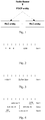
- MAC sub-header and BSR MAC CE in LTE system are as shown in Fig.2 to Fig.4 .
- Logical Channel ID this field indicates logical channel ID of corresponding load, where long BSR, short BSR and truncated BSR each has one LCID.
- E extended bit, used to indicate the next byte is MAC sub-header or MAC load.
- LCG ID logical channel group ID.
- Four logical channel groups are defined for BSR in LTE system.
- Buffer Size amount of data of corresponding logical channel group in the buffer.
- LTE R10/11 and LTE R8/9 consists in that, in the R10/11, a new BS table is introduced since carrier aggregation is supported and as a result peak rate is increased.
- a UE supporting R10/11 reports a BSR
- whether the new BS table is utilized is configured by eNB through RRC signaling.
- Whether the BS table in LTE R8/9 or the BS table in LTE R10/11 is quantized in 64 levels, i.e., corresponding quantized value may be represented by 6 bits.
- the field buffer size of each LCG in the above BSR MAC CE format consists of 6 bits.
- the method of transmitting data further includes the followings steps.
- determining whether to trigger the BSR may be performed in the following two ways (but not limited thereto).
- One way of determining whether to trigger the BSR is: determining whether to trigger the BSR based on the UE.
- the trigger mechanism of determining whether to trigger the BSR based on the UE may be the same as the trigger mechanism of LTE system explained above.
- the trigger mechanism is: (1) triggered if data with higher priority than those waiting in the buffer arrive or data arrive at empty buffer; (2) triggered when the retxBSR-Timer expires and there are data in the buffer.
- the trigger mechanism is: triggered when the periodicBSR-Timer expires.
- the trigger mechanism is: may be triggered if there is still resource available after resources are allocated for to-be-transmitted data during MAC PDU construction by UE.
- BSR MAC CE in BSR reporting, may be configured by the following two forms.
- identification information may be added in the BSR MAC CE to identify a correspondence between the logical channels or logical channel groups and the MAC entities.
- Another way of determining whether to trigger the BSR is: determining whether to trigger the BSR based on a MAC entity.
- the trigger mechanism in the determining whether to trigger the BSR based on the MAC entity may be the same as the trigger mechanism of LTE system explained above, thus a repeated description thereof is omitted herein.
- BSR MAC CE in BSR reporting, may be configured by the following form.
- identification information is added in the BSR MAC CE to identify a correspondence between the logical channels or logical channel groups and the MAC entities.
- the method further includes: transmitting a UE capability to the network side, where the UE capability contains capability indication information indicating that the bearer using packet duplication mode is supported.
- only the UE supporting the bearer using packet duplication mode may transmit data using the method for transmitting data described above.
- the method of transmitting data is applicable to data transmission using the packet duplication mode in Carrier Aggregation scenario.
- Fig.6 a schematic flow diagram of a method of transmitting data applied to a network side according to some embodiments of this disclosure is illustrated, where the method includes the following steps.
- Step S21 receiving, by a master MAC entity and one or more secondary MAC entities of a network side device, duplicated transmission data transmitted by a UE through different carriers when a packet duplication mode is configured or activated for a bearer.
- Step S22 transmitting, by the master MAC entity and the one or more secondary MAC entities, the transmission data to different RLC entities through different logical channels.
- Step S23 transmitting, by the RLC entities, received transmission data to a PDCP entity.
- MAC entities equal in quantity to the logical channels corresponding to the bearer for which packet duplication mode is enabled, it is guaranteed that each of the logical channels corresponding to the bearer for which packet duplication mode is enabled is scheduled and transmitted through a different MAC entity, thereby due to multiplexing gain, transmission quality following the duplication is ensured, and packet transmission latency is reduced.
- the bearer for which packet duplication mode is enabled corresponds to at least two logical channels, where each of the logical channels corresponds to one RLC entity and each of the logical channels corresponds to one MAC entity.
- duplication of transmission data may be performed by the PDCP entity or a protocol layer on top of PDCP layer.
- the first MAC entity established by the UE is called master MAC entity and other MAC entities are called secondary MAC entities.
- the secondary MAC entities may be established in one of the following conditions (but not limited thereto).
- the secondary MAC entities may be released in the following condition (but not limited thereto): when packet duplication mode for a last bearer for which packet duplication mode is enabled of all bearers served by the network side device is deconfigured or deactivated, releasing the secondary MAC entities corresponding to the bearer for which packet duplication mode is enabled.
- the UE and the network side are kept in conformity in regard to the establishment or release mode of the secondary MAC entities, where the conformity may be maintained through protocol specification or signaling notification.
- the method of transmitting data further includes: in the case that packet duplication mode for the bearer is configured or activated, configuring semi-statically or dynamically a mapping between the carriers and the master MAC entity and the secondary MAC entities, and transmitting the mapping to the UE.
- the mapping may be transmitted to the UE through RRC signaling semi-statically.
- the mapping may be transmitted to the UE through L1/L2 signaling dynamically.
- the method for transmitting data further includes: in the case that packet duplication mode for the bearer is configured or activated, configuring semi-statically or dynamically a mapping between the logical channels and the master MAC entity and the secondary MAC entities or a mapping between the logical channels and the carriers, and transmitting the mapping to the UE.
- the mapping may be transmitted to the UE through RRC signaling semi-statically.
- the mapping may be transmitted to the UE through L1/L2 signaling dynamically.
- the master MAC entity and the secondary MAC entities may be used according to one of the following rules (but not limited thereto).
- the method may further include: receiving a UE capability transmitted by the UE, where the UE capability contains capability indication information indicating that the bearer using packet duplication mode is supported.
- the network side won't configure or activate packet duplication mode for the bearer between the network side and the UE, until the capability indication information, transmitted by the UE, indicating that the bearer using packet duplication mode is supported is received by the network side.
- this disclosure further provides a UE.
- a structural block diagram of a UE includes: a first transmission module, configured to transmit duplicated transmission data to different RLC entities respectively when a network side configures or activates packet duplication mode for a bearer; a second transmission module, configured to trigger one of the different RLC entities to transmit the transmission data through one of logical channels to a master MAC entity and trigger the others of the different RLC entities to transmit the transmission data through different logical channels to different secondary MAC entities; and a third transmission module, configured to trigger the master MAC entity and the one or more secondary MAC entities to transmit the transmission data through different carriers to the network side.
- MAC entities equal in quantity to the logical channels corresponding to the bearer for which packet duplication mode is enabled, it is guaranteed that each of the logical channels corresponding to the bearer for which packet duplication mode is enabled is scheduled and transmitted through a different MAC entity, thereby due to multiplexing gain, transmission quality following the duplication is ensured, and packet transmission latency is reduced.
- the bearer for which packet duplication mode is enabled corresponds to at least two logical channels, where each of the logical channels corresponds to one RLC entity and each of the logical channels corresponds to one MAC entity.
- the first MAC entity established by the UE may be called master MAC entity and other MAC entities may be called secondary MAC entities.
- the secondary MAC entities may be established using one of the following two modules of UE (but not limited thereto).
- a first establishment module is configured to establish the one or more secondary MAC entities together with the master MAC entity.
- a second establishment module is configured to, in the case that the network side configures or activates packet duplication mode for the bearer, establish the one or more secondary MAC entities corresponding to the bearer for which packet duplication mode is enabled.
- the UE may further include: a releasing module, configured to, in the case that the network side deconfigures or deactivates packet duplication mode for the bearer, release the secondary MAC entities corresponding to the bearer for which packet duplication mode is enabled.
- a releasing module configured to, in the case that the network side deconfigures or deactivates packet duplication mode for the bearer, release the secondary MAC entities corresponding to the bearer for which packet duplication mode is enabled.
- the UE may further include: a first reception module, configured to receive the mapping between the carriers and the master MAC entity and the one or more secondary MAC entities that is configured by the network side semi-statically or dynamically.
- the UE may further include: a second reception module, configured to receive the mapping between the logical channels and the master MAC entity and the one or more secondary MAC entities or the mapping between the logical channels and the carriers that is configured by the network side semi-statically or dynamically.
- the master MAC entity and the secondary MAC entities may be used according to one of the following rules (but not limited thereto).
- the UE may perform a BSR reporting first, where the UE may further include: a determination module, configured to determine whether to trigger a BSR; and a reporting module, configured to, in the case that it is determined the BSR is to be triggered, report to the network side buffer sizes of the logical channels or logical channel groups corresponding to the master MAC entity and the one or more secondary MAC entities.
- the determination module may determine whether to trigger the BSR based on the UE, where the reporting module may be further configured to report to the network side the buffer sizes of the logical channels or logical channel groups corresponding to the master MAC entity and the one or more secondary MAC entities by using a carrier corresponding to any one MAC entity of the master MAC entity and the one or more secondary MAC entities.
- the reporting module may be configured to report to the network side the buffer sizes of the logical channels or logical channel groups corresponding to the master MAC entity and the one or more secondary MAC entities through one BSR MAC CE.
- the reporting module may be further configured to report to the network side the buffer sizes of the logical channels or logical channel groups corresponding to the master MAC entity and the one or more secondary MAC entities through a plurality of independent BSR MAC CEs in one MAC PDU.
- the determination module may determine whether to trigger the BSR based on a MAC entity, where the reporting module may be further configured to report to the network side the buffer sizes of the logical channels or logical channel groups corresponding to the master MAC entity and the one or more secondary MAC entities by using a carrier corresponding to the MAC entity or a carrier corresponding to other MAC entity.
- the reporting module is configured to, in the case that a carrier used in BSR MAC CE transmission is not limited and there is a repetition of ID among the logical channels or logical channel groups corresponding to different MAC entities, add identification information in the BSR MAC CE to identify a correspondence between the logical channels or logical channel groups and the MAC entities.
- the UE may further include: a UE capability transmission module, configured to transmit a UE capability to the network side, where the UE capability contains capability indication information indicating that the bearer using packet duplication mode is supported.
- a UE capability transmission module configured to transmit a UE capability to the network side, where the UE capability contains capability indication information indicating that the bearer using packet duplication mode is supported.
- some embodiments of this disclosure further provide a network side device.
- the network side device includes: a reception module, configured to trigger a master MAC entity and one or more secondary MAC entities to respectively receive duplicated transmission data transmitted by a UE through different carriers when packet duplication mode for a bearer is configured or activated; a first transmission module, configured to trigger the master MAC entity and the one or more secondary MAC entities to transmit the transmission data to different RLC entities through different logical channels; and a second transmission module, configured to trigger the RLC entities to transmit received transmission data to a PDCP entity.
- a reception module configured to trigger a master MAC entity and one or more secondary MAC entities to respectively receive duplicated transmission data transmitted by a UE through different carriers when packet duplication mode for a bearer is configured or activated
- a first transmission module configured to trigger the master MAC entity and the one or more secondary MAC entities to transmit the transmission data to different RLC entities through different logical channels
- a second transmission module configured to trigger the RLC entities to transmit received transmission data to a PDCP entity.
- the bearer for which packet duplication mode is enabled corresponds to at least two logical channels, where each of the logical channels corresponds to one RLC entity and each of the logical channels corresponds to one MAC entity.
- duplication of transmission data may be performed by the PDCP entity or a protocol layer on top of PDCP layer.
- the UE may further include: a bearer duplication module, configured to trigger the PDCP entity or a protocol layer on top of PDCP layer to perform bearer duplication.
- a bearer duplication module configured to trigger the PDCP entity or a protocol layer on top of PDCP layer to perform bearer duplication.
- the secondary MAC entities may be established using one of the following three modules of the network side device.
- a first establishment module is configured to establish the one or more secondary MAC entities together with the master MAC entity.
- a second establishment module is configured to establish the one or more secondary MAC entities corresponding to the bearer for which packet duplication mode is enabled when the packet duplication mode for the bearer is configured or activated.
- a third establishment module is configured to establish the one or more secondary MAC entities corresponding to the bearer for which packet duplication mode is enabled when the packet duplication mode for a first UE of all UEs served by the network side device is configured or activated.
- the network side device may further include: a first releasing module, configured to, in the case that packet duplication mode for the bearer is deconfigured or deactivated, release the one or more secondary MAC entities corresponding to the bearer for which packet duplication mode is configured or activated.
- the network side device may further include: a second releasing module, configured to, in the case that packet duplication mode for a last bearer for which packet duplication mode is configured or activated of all bearers served by the network side device is deconfigured or deactivated, release the one or more secondary MAC entities corresponding to the bearer for which packet duplication mode is enabled.
- a second releasing module configured to, in the case that packet duplication mode for a last bearer for which packet duplication mode is configured or activated of all bearers served by the network side device is deconfigured or deactivated, release the one or more secondary MAC entities corresponding to the bearer for which packet duplication mode is enabled.
- the network side device may further include: a first configuration module, configured to, in the case that packet duplication mode for the bearer is configured or activated, configure semi-statically or dynamically the mapping between the carriers and the master MAC entity and the one or more secondary MAC entities, and transmit the mapping to the UE.
- a first configuration module configured to, in the case that packet duplication mode for the bearer is configured or activated, configure semi-statically or dynamically the mapping between the carriers and the master MAC entity and the one or more secondary MAC entities, and transmit the mapping to the UE.
- the network side device may further include: a second configuration module, configured to, in the case that packet duplication mode for the bearer is configured or activated, configure semi-statically or dynamically the mapping between the logical channels and the master MAC entity and the one or more secondary MAC entities or the mapping between the logical channels and the carriers, and transmit the mapping to the UE.
- a second configuration module configured to, in the case that packet duplication mode for the bearer is configured or activated, configure semi-statically or dynamically the mapping between the logical channels and the master MAC entity and the one or more secondary MAC entities or the mapping between the logical channels and the carriers, and transmit the mapping to the UE.
- the master MAC entity and the secondary MAC entities may be used according to one of the following rules (but not limited thereto).
- the UE may perform a BSR reporting first, where the network side device may further include: a scheduling module, configured to receive buffer sizes, reported by the UE, of the logical channels or logical channel groups corresponding to the master MAC entity and the one or more secondary MAC entities of the UE, and perform uplink resource scheduling based on the buffer sizes of the logical channels or logical channel groups corresponding to the master MAC entity and the one or more secondary MAC entities of the UE.
- a scheduling module configured to receive buffer sizes, reported by the UE, of the logical channels or logical channel groups corresponding to the master MAC entity and the one or more secondary MAC entities of the UE, and perform uplink resource scheduling based on the buffer sizes of the logical channels or logical channel groups corresponding to the master MAC entity and the one or more secondary MAC entities of the UE.
- a UE supporting a bearer for which packet duplication mode is enabled may transmit to the network side a UE capability containing capability indication information indicating that the bearer using packet duplication mode is supported; correspondingly, the network side device may further include: a UE capability reception module, configured to receive a UE capability transmitted by the UE, where the UE capability contains capability indication information indicating that the bearer using packet duplication mode is supported.
- Some embodiments of this disclosure further provide an apparatus for processing data, including: a processor and a memory connected to the processor through a bus interface, where the memory is configured to store program and data being used by the processor in operation, and the processor is configured to call and execute the program and data stored in the memory to implement the following functional modules or units: a first transmission module, configured to transmit duplicated transmission data to different RLC entities respectively when a network side configures or activates packet duplication mode for a bearer; a second transmission module, configured to trigger one of the different RLC entities to transmit the transmission data through one of logical channels to a master MAC entity and trigger each of the others of the different RLC entities to transmit the transmission data through a different logical channel to a different secondary MAC entity; and a third transmission module, configured to trigger the master MAC entity and the secondary MAC entity to transmit the transmission data through different carriers to the network side.
- a first transmission module configured to transmit duplicated transmission data to different RLC entities respectively when a network side configures or activates packet duplication mode for a
- Some embodiments of this disclosure further provide an apparatus for processing data, including: a processor and a memory connected to the processor through a bus interface, where the memory is configured to store program and data being used by the processor in operation, and the processor is configured to call and execute the program and data stored in the memory to implement the following functional modules or units: a reception module, configured to trigger a master MAC entity and one or more secondary MAC entities to respectively receive duplicated transmission data transmitted by a UE through different carriers when packet duplication mode for a bearer is configured or activated; a first transmission module, configured to trigger the master MAC entity and the one or more secondary MAC entities to transmit the transmission data to different RLC entities through different logical channels; and a second transmission module, configured to trigger the RLC entities to transmit received transmission data to a PDCP entity.
- a reception module configured to trigger a master MAC entity and one or more secondary MAC entities to respectively receive duplicated transmission data transmitted by a UE through different carriers when packet duplication mode for a bearer is configured or activated
- the apparatuses provided in some embodiments of this disclosure are capable of implementing the corresponding methods of transmitting data provided in the abovementioned method embodiments, thus all embodiments of the methods of transmitting data provided in the abovementioned method embodiments may be applied correspondingly to the two apparatus embodiments described above and achieve the same or similar advantageous effects.
- Some embodiments of this disclosure further provide a computer readable storage medium storing therein a computer program, wherein the computer program is configured to be executed by a processor, to implement steps of the method of transmitting data described in any one of abovementioned embodiments.
- the computer readable storage medium includes permanent and non-permanent, removable and non-removable media, and may achieve information storage by any means or techniques.
- Information may be computer readable instruction, data structure, program module or other data.
- Computer storage medium may, for example, include, but not limited to: Phase Change Random Access Memory (PRAM), Static Random Access Memory (SRAM), Dynamic Random Access Memory (DRAM), other types of Random Access Memories (RAM), Read Only Memory (ROM), Electrically Erasable Programmable Read Only Memory (EEPROM), FLASH or other memory technologies, Compact Disc Read Only Memory (CD-ROM), Digital Versatile Disc (DVD) or other optical storages, cassette tape, magnetic tape, magnetic disk or other magnetic storage device or any other non-transmitting medium, which is configured to store information accessible by a computing device.
- the computer readable medium does not include transitory media, such as modulated data signals and carriers.
- Some embodiments of this disclosure further provide a UE, including a processor and a memory, where the processor is configured to read and execute a program stored in the memory to implement steps of the abovementioned method of transmitting data applied to the UE side.
- Some embodiments of this disclosure further provide a network side device, including a processor and a memory, where the processor is configured to read and execute a program stored in the memory to implement steps of the abovementioned method for transmitting data applied to the network side.
- the disclosed method and apparatus may be implemented in other manners.
- the described apparatus embodiment is merely exemplary.
- the unit division is merely logical function division and may be other division in actual implementation.
- a plurality of units or components may be combined or integrated into another system, or some features may be neglected or not performed.
- the displayed or discussed mutual couplings or direct couplings or communication connections may be implemented through some interfaces.
- the indirect couplings or communication connections between the apparatuses or units may be implemented in electrical, mechanical, or other forms.
- various functional units in the embodiments of this disclosure may be integrated into one processing unit, or each of the units may exist alone physically. Alternatively, two or more these functional units may be integrated into one unit.
- the above integrated unit may be implemented in form of hardware, or may be implemented in form of a combination of hardware and software functional unit.
- the integrated units implemented in form of software functional unit may be stored in a computer-readable storage medium.
- the software functional unit is stored in a storage medium, and includes several instructions for instructing a computer device (which may be a personal computer, a server, or a network device) to perform a part of the steps of the transmitting and receiving methods described in the embodiments of this disclosure.
- the foregoing storage medium includes any medium that can store program code, such as a Universal Serial Bus (USB) flash drive, a removable hard disk, a Read-Only Memory (ROM), a Random Access Memory (RAM), a magnetic disk, or an optical disc.
- USB Universal Serial Bus
- ROM Read-Only Memory
- RAM Random Access Memory
Landscapes
- Engineering & Computer Science (AREA)
- Signal Processing (AREA)
- Computer Networks & Wireless Communication (AREA)
- Databases & Information Systems (AREA)
- Mobile Radio Communication Systems (AREA)
Abstract
Description
- The present application claims a priority of the Chinese patent application No.
201710183006.0 - This disclosure relates to the field of communication technology, in particular to a method of transmitting data, a User Equipment (UE), a network side device and a computer readable storage medium.
- 5G New Radio (NR) systems mainly support three types of services: 1) enhanced Mobile Broadband (eMBB); 2) massive Machine Type Communications (mMTC); and 3) Ultra-Reliable and Low Latency Communications). For URLLC, a solution proposed by 3GPP to address URLLC's high demand in terms of latency and reliability is packet duplication, i.e., transmitting the same transmission data through a plurality of logical channels, so as to improve transmission reliability and reduce transmission latency.
- Referring to
Fig. 1 , a schematic diagram showing the packet duplication model in related art is illustrated, in which a packet duplication based on Packet Data Convergence Protocol (PDCP) layer is taken as an example. It can be seen fromFig. 1 that one Radio Bearer (RB) of PDCP layer (each RB corresponds to one PDCP entity) is transmitted through a plurality of logical channels in Radio Link Control (RLC) layer respectively (each logical channel corresponds to one RLC entity). However, there is no conclusive answer to the problem as to how to transmit a bearer for which packet duplication is enabled in Medium Access Control (MAC) layer. - In view of above mentioned, this disclosure provides a method of transmitting data, a UE and a network side device so as to address the problem as to how to transmit a bearer for which packet duplication is enabled in the MAC layer.
- To solve the aforementioned technical problem, this disclosure provides a method of transmitting data applied to a UE including: transmitting, by the UE, duplicated transmission data to different radio link control (RLC) entities respectively when a network side configures or activates a packet duplication mode for a bearer; transmitting, by one of the different RLC entities, the transmission data through one of logical channels to a master medium access control (MAC) entity and transmitting, by each of the others of the different RLC entities, the transmission data through a different one of the logical channels to a different one of one or more secondary MAC entities; and transmitting, by the master MAC entity and the one or more secondary MAC entities, the transmission data to the network side through different carriers.
- Optionally, each of the logical channels corresponds to one RLC entity and each of the logical channels corresponds to one MAC entity.
- Optionally, the one or more secondary MAC entities are established together with the master MAC entity.
- Optionally, the method further includes: establishing, the UE, the one or more secondary MAC entities corresponding to the bearer for which packet duplication mode is configured or activated when the network side configures or activates the packet duplication mode for the bearer.
- Optionally, the method further includes: releasing, by the UE, the one or more secondary MAC entities corresponding to the bearer for which packet duplication mode is configured or activated when the network side deconfigures or deactivates the packet duplication mode for the bearer.
- Optionally, prior to the transmitting, by the UE, the duplicated transmission data to the different RLC entities respectively, the method further includes: receiving a mapping between the carriers and the master MAC entity and the one or more secondary MAC entities that is configured by the network side semi-statically or dynamically.
- Optionally, prior to the transmitting, by the UE, the duplicated transmission data to the different RLC entities respectively, the method further includes: receiving a mapping between the logical channels and the master MAC entity and the one or more secondary MAC entities or a mapping between the logical channels and the carriers that is configured by the network side semi-statically or dynamically.
- Optionally, both the master MAC entity and the one or more secondary MAC entities are configured to bear a logical channel corresponding to a bearer for which packet duplication mode is not configured or activated and logical channels corresponding to a bearer for which packet duplication mode is configured or activated.
- Optionally, when one of the one or more secondary MAC entities is released, the logical channel corresponding to the bearer for which packet duplication mode is not configured or activated that is borne on the released one of the one or more secondary MAC entities is automatically transferred to be borne on the master MAC entity.
- Optionally, the master MAC entity is configured to bear a logical channel corresponding to a bearer for which packet duplication mode is not configured or activated and logical channels corresponding to a bearer for which packet duplication mode is configured or activated; and the one or more secondary MAC entities are configured to only bear logical channels corresponding to a bearer for which packet duplication mode is configured or activated.
- Optionally, the method further includes: determining whether to trigger a buffer state reporting (BSR); and reporting to the network side buffer sizes of the logical channels or logical channel groups corresponding to the master MAC entity and the one or more secondary MAC entities when it is determined the BSR is to be triggered.
- Optionally, the determining whether to trigger the BSR is performed based on the UE. Optionally, the reporting to the network side the buffer sizes of the logical channels or logical channel groups corresponding to the master MAC entity and the one or more secondary MAC entities includes: reporting to the network side the buffer sizes of the logical channels or logical channel groups corresponding to the master MAC entity and the one or more secondary MAC entities by using a carrier corresponding to any one MAC entity of the master MAC entity and the one or more secondary MAC entities.
- Optionally, the reporting to the network side the buffer sizes of the logical channels or logical channel groups corresponding to the master MAC entity and the one or more secondary MAC entities includes: reporting to the network side the buffer sizes of the logical channels or logical channel groups corresponding to the master MAC entity and the one or more secondary MAC entities through one BSR MAC CE.
- Optionally, the reporting to the network side the buffer sizes of the logical channels or logical channel groups corresponding to the master MAC entity and the one or more secondary MAC entities includes: reporting to the network side the buffer sizes of the logical channels or logical channel groups corresponding to the master MAC entity and the one or more secondary MAC entities through a plurality of BSR MAC CEs in one MAC PDU.
- Optionally, the determining whether to trigger the BSR is performed based on a MAC entity.
- Optionally, the reporting to the network side the buffer sizes of the logical channels or logical channel groups corresponding to the master MAC entity and the one or more secondary MAC entities includes: reporting to the network side the buffer sizes of the logical channels or logical channel groups corresponding to the master MAC entity and the one or more secondary MAC entities by using a carrier corresponding to the MAC entity or a carrier corresponding to other MAC entity.
- Optionally, the reporting to the network side the buffer sizes of the logical channels or logical channel groups corresponding to the master MAC entity and the one or more secondary MAC entities includes: adding identification information in the BSR MAC CE to identify a correspondence between the logical channels or logical channel groups and the MAC entities when a carrier used in BSR MAC CE transmission is not limited and there is a repetition of ID among the logical channels or logical channel groups corresponding to different MAC entities.
- Optionally, prior to the transmitting, by the UE, the duplicated transmission data to the different RLC entities respectively, the method further comprises: transmitting a UE capability to the network side, the UE capability carrying capability indication information indicating that the bearer using packet duplication mode is supported.
- This disclosure further provides a method of transmitting data applied to a network side device including: receiving, by a master medium access control (MAC) entity and one or more secondary MAC entities of a network side device, duplicated transmission data transmitted by a user equipment (UE) through different carriers when a packet duplication mode is configured or activated for a bearer; transmitting, by the master MAC entity and the one or more secondary MAC entities, the transmission data to different radio link control (RLC) entities through different logical channels; and transmitting, by the RLC entities, received transmission data to a Packet Data Convergence Protocol (PDCP) entity.
- Optionally, each of the logical channels corresponds to one RLC entity and each of the logical channels corresponds to one MAC entity.
- Optionally, bearer duplication is performed by the PDCP entity or a protocol layer on top of PDCP layer.
- Optionally, the one or more secondary MAC entities are established together with the master MAC entity.
- Optionally, the method further includes: establishing the one or more secondary MAC entities corresponding to the bearer for which packet duplication mode is configured or activated when the packet duplication mode for the bearer is configured or activated; or establishing the one or more secondary MAC entities corresponding to the bearer for which the packet duplication mode is configured or activated when the network side device configures or activates packet duplication mode for a first UE of all UEs served by the network side device.
- Optionally, the method further includes: releasing the one or more secondary MAC entities corresponding to the bearer for which packet duplication mode is configured or activated when the packet duplication mode for the bearer is deconfigured or deactivated; or releasing the one or more secondary MAC entities corresponding to the bearer for which packet duplication mode is configured or activated when the packet duplication mode for a last bearer for which packet duplication mode is configured or activated of all bearers served by the network side device is deconfigured or deactivated.
- Optionally, the method further includes: setting semi-statically or dynamically a mapping between the carriers and the master MAC entity and the one or more secondary MAC entities, and transmitting the mapping to the UE when the packet duplication mode for the bearer is configured or activated.
- Optionally, the method further includes: setting semi-statically or dynamically a mapping between the logical channels and the master MAC entity and the one or more secondary MAC entities or a mapping between the logical channels and the carriers, and transmitting the mapping to the UE when the packet duplication mode for the bearer is configured or activated.
- Optionally, both the master MAC entity and the one or more secondary MAC entities are configured to bear a logical channel corresponding to a bearer for which packet duplication mode is not configured or activated and logical channels corresponding to a bearer for which packet duplication mode is configured or activated.
- Optionally, when one of the one or more secondary MAC entities is released, the logical channel corresponding to the bearer for which packet duplication mode is not configured or activated that is borne on the released one of the one or more secondary MAC entities is automatically transferred to be borne on the master MAC entity.
- Optionally, the master MAC entity is configured to bear a logical channel corresponding to a bearer for which packet duplication mode is not configured or activated and logical channels corresponding to a bearer for which packet duplication mode is configured or activated; and the one or more secondary MAC entities are configured to only bear logical channels corresponding to a bearer for which packet duplication mode is configured or activated.
- Optionally, the method further includes: receiving buffer sizes, reported by the UE, of the logical channels or logical channel groups corresponding to the master MAC entity and the one or more secondary MAC entities of the UE, and performing uplink resource scheduling based on the buffer sizes of the logical channels or logical channel groups corresponding to the master MAC entity and the one or more secondary MAC entities of the UE.
- Optionally, before the packet duplication mode is configured or activated for a bearer, the method further comprises: receiving a UE capability transmitted by the UE, the UE capability carrying capability indication information indicating that the bearer using packet duplication mode is supported.
- This disclosure further provides a UE, including: a first transmission module, configured to transmit duplicated transmission data to different radio link control (RLC) entities respectively when a network side configures or activates a packet duplication mode for a bearer; a second transmission module, configured to trigger one of the different RLC entities to transmit the transmission data through one of logical channels to a master medium access control (MAC) entity and transmitting, by each of the others of the different RLC entities, the transmission data through a different one of the logical channels to a different one of one or more secondary MAC entities; and a third transmission module, configured to trigger the master MAC entity and the one or more secondary MAC entities to transmit the transmission data to the network side through different carriers.
- Optionally, each of the logical channels corresponds to one RLC entity and each of the logical channels corresponds to one MAC entity.
- Optionally, the UE further includes: a first establishment module, configured to establish the one or more secondary MAC entities together with the master MAC entity. Optionally, the UE further includes: a second establishment module, configured to establish the one or more secondary MAC entities corresponding to the bearer for which packet duplication mode is configured or activated when the network side configures or activates the packet duplication mode for the bearer.
- Optionally, the UE further includes: a releasing module, configured to release the one or more secondary MAC entities corresponding to the bearer for which packet duplication mode is configured or activated when the network side deconfigures or deactivates the packet duplication mode for the bearer.
- Optionally, the UE further includes: a first reception module, configured to receive a mapping between the carriers and the master MAC entity and the one or more secondary MAC entities that is configured by the network side semi-statically or dynamically.
- Optionally, the UE further includes: a second reception module, configured to receive a mapping between the logical channels and the master MAC entity and the one or more secondary MAC entities or a mapping between the logical channels and the carriers that is configured by the network side semi-statically or dynamically.
- Optionally, both the master MAC entity and the one or more secondary MAC entities are configured to bear a logical channel corresponding to a bearer for which packet duplication mode is not configured or activated and logical channels corresponding to a bearer for which packet duplication mode is configured or activated.
- Optionally, the UE further includes: a transferring module, configured to automatically transfer the logical channel corresponding to the bearer for which packet duplication mode is not configured or activated that is borne on the released one of the one or more secondary MAC entities to be borne on the master MAC entity when one of the one or more secondary MAC entities is released.
- Optionally, the master MAC entity is configured to bear a logical channel corresponding to a bearer for which packet duplication mode is not configured or activated and logical channels corresponding to a bearer for which packet duplication mode is configured or activated; and the one or more secondary MAC entities are configured to only bear logical channels corresponding to a bearer for which packet duplication mode is configured or activated.
- Optionally, the UE further includes: a determination module, configured to determine whether to trigger a BSR; and a reporting module, configured to report to the network side buffer sizes of the logical channels or logical channel groups corresponding to the master MAC entity and the one or more secondary MAC entities when it is determined the BSR is to be triggered.
- Optionally, the determination module determines whether to trigger the BSR based on the UE.
- Optionally, the reporting module is further configured to report to the network side the buffer sizes of the logical channels or logical channel groups corresponding to the master MAC entity and the one or more secondary MAC entities by using a carrier corresponding to any one MAC entity of the master MAC entity and the one or more secondary MAC entities.
- Optionally, the reporting module is further configured to report to the network side the buffer sizes of the logical channels or logical channel groups corresponding to the master MAC entity and the one or more secondary MAC entities through one BSR MAC CE.
- Optionally, the reporting module is further configured to report to the network side the buffer sizes of the logical channels or logical channel groups corresponding to the master MAC entity and the one or more secondary MAC entities through a plurality of independent BSR MAC CEs in one MAC PDU.
- Optionally, the determination module determines whether to trigger the BSR based on a MAC entity.
- Optionally, the reporting module is further configured to report to the network side the buffer sizes of the logical channels or logical channel groups corresponding to the master MAC entity and the one or more secondary MAC entities by using a carrier corresponding to the MAC entity or a carrier corresponding to other MAC entity.
- Optionally, the reporting module is further configured to add identification information in the BSR MAC CE to identify a correspondence between the logical channels or logical channel groups and the MAC entities when a carrier used in BSR MAC CE transmission is not limited and there is a repetition of ID among the logical channels or logical channel groups corresponding to different MAC entities.
- Optionally, the UE further includes: a UE capability transmission module, configured to transmit a UE capability to the network side, wherein the UE capability carries capability indication information indicating that the bearer using packet duplication mode is supported.
- This disclosure further provides a network side device, including: a reception module, configured to trigger a master MAC entity and one or more secondary MAC entities to respectively receive duplicated transmission data transmitted by a user equipment (UE) through different carriers when a packet duplication mode is configured or activated for a bearer; a first transmission module, configured to trigger the master MAC entity and the one or more secondary MAC entities to transmit the transmission data to different radio link control (RLC) entities through different logical channels, a second transmission module, configured to trigger the RLC entities to transmit received transmission data to a Packet Data Convergence Protocol (PDCP)entity.
- Optionally, each of the logical channels corresponds to one RLC entity and each of the logical channels corresponds to one MAC entity.
- Optionally, the network side device further includes: a bearer duplication module, configured to trigger the PDCP entity or a protocol layer on top of PDCP layer to perform bearer duplication.
- Optionally, the network side device further includes: a first establishment module, configured to establish the one or more secondary MAC entities together with the master MAC entity.
- Optionally, the network side device further includes: a second establishment module, configured to establish the one or more secondary MAC entities corresponding to the bearer for which packet duplication mode is configured or activated when the packet duplication mode for the bearer is configured or activated; or a third establishment module, configured to establish the one or more secondary MAC entities corresponding to the bearer for which the packet duplication mode is configured or activated when the network side device configures or activates packet duplication mode for a first UE of all UEs served by the network side device.
- Optionally, the network side device further includes: a first releasing module, configured to release the one or more secondary MAC entities corresponding to the bearer for which packet duplication mode is configured or activated when the packet duplication mode for the bearer is deconfigured or deactivated; or a second releasing module, configured to release the one or more secondary MAC entities corresponding to the bearer for which packet duplication mode is configured or activated when the packet duplication mode for a last bearer for which packet duplication mode is configured or activated of all bearers served by the network side device is deconfigured or deactivated.
- Optionally, the network side device further includes: a first configuration module, configured to set semi-statically or dynamically a mapping between the carriers and the master MAC entity and the one or more secondary MAC entities, and transmitting the mapping to the UE when the packet duplication mode for the bearer is configured or activated.
- Optionally, the network side device further includes: a second configuration module, configured to set semi-statically or dynamically a mapping between the logical channels and the master MAC entity and the one or more secondary MAC entities or a mapping between the logical channels and the carriers, and transmitting the mapping to the UE when the packet duplication mode for the bearer is configured or activated.
- Optionally, both the master MAC entity and the one or more secondary MAC entities are configured to bear a logical channel corresponding to a bearer for which packet duplication mode is not configured or activated and logical channels corresponding to a bearer for which packet duplication mode is configured or activated.
- Optionally, the network side device further includes: a transferring module, configured to automatically transfer the logical channel corresponding to the bearer for which packet duplication mode is not configured or activated that is borne on the released one of the one or more secondary MAC entities to be borne on the master MAC entity when one of the one or more secondary MAC entities is released.
- Optionally, the master MAC entity is configured to bear a logical channel corresponding to a bearer for which packet duplication mode is not configured or activated and logical channels corresponding to a bearer for which packet duplication mode is configured or activated; and the one or more secondary MAC entities are configured to only bear logical channels corresponding to a bearer for which packet duplication mode is configured or activated.
- Optionally, the network side device further includes: a scheduling module, configured to receive buffer sizes, reported by the UE, of the logical channels or logical channel groups corresponding to the master MAC entity and the one or more secondary MAC entities of the UE, and perform uplink resource scheduling based on the buffer sizes of the logical channels or logical channel groups corresponding to the master MAC entity and the one or more secondary MAC entities of the UE.
- Optionally, the network side device further includes: a UE capability reception module, configured to receive a UE capability transmitted by the UE, wherein the UE capability carries capability indication information indicating that the bearer using packet duplication mode is supported.
- This disclosure further provides a computer readable storage medium storing therein a computer program, wherein the computer program is configured to be executed by a processor, to implement steps of the methods for transmitting data described above.
- This disclosure further provides a UE, including a processor and a memory, wherein the processor is configured to read and execute a program stored in the memory to implement steps of the method for transmitting data applied to the UE described above. This disclosure further provides a network side device, including a processor and a memory, wherein the processor is configured to read and execute a program stored in the memory to implement steps of the method for transmitting data applied to the network side device described above.
- The aforementioned technical solutions of this disclosure have beneficial effects as follows: by introducing MAC entities equal in quantity to the logical channels corresponding to the bearer for which packet duplication mode is enabled, it is guaranteed that each of the logical channels corresponding to the bearer for which packet duplication mode is enabled is scheduled and transmitted through a different MAC entity, thereby due to multiplexing gain, transmission quality following the duplication is ensured, and packet transmission latency is reduced.
-
-
Fig.1 is a schematic diagram of the packet duplication model in a related art; -
Fig.2 is a schematic diagram of a format of a MAC sub-header in a related art; -
Fig.3 is a schematic diagram of a format of a short BSR MAC CE or a truncated BSR MAC CE in a related art; -
Fig.4 is a schematic diagram of a format of a long BSR MAC CE in a related art; -
Fig.5 is a schematic flow diagram showing a method of transmitting data applied to UE side according to some embodiments of this disclosure; -
Fig.6 is a schematic flow diagram showing a method of transmitting data applied to a network side according to some embodiments of this disclosure; -
Fig.7 is a structural block diagram of a UE according to some embodiments of this disclosure; -
Fig.8 is a structural block diagram of a network side device according to some embodiments of this disclosure. - In order to make the objectives, the technical solutions and advantages of embodiments of this disclosure clearer, the technical solutions of embodiments of this disclosure will be described clearly and completely in conjunction with drawings in the embodiments of the present disclosure hereinafter. Apparently, the described embodiments are merely a part of rather than all the embodiments of this disclosure. All other embodiments obtained by a person ordinary skilled in the art based on the embodiments of this disclosure fall within the protection scope of this disclosure.
- Referring to
Fig.5 , a schematic flow diagram showing a method of transmitting data applied to a UE side according to some embodiments of this disclosure is illustrated, where the method includes the following steps. - Step S11: transmitting, by the UE, duplicated transmission data to different RLC entities respectively when a network side configures or activates packet duplication mode for a bearer.
- Step S12: transmitting, by one of the different RLC entities, the transmission data through one of logical channels to a master MAC entity and transmitting, by each of the others of the different RLC entities, the transmission data through a different one of the logical channels to a different one of one or more secondary MAC entities.
- Step S13: transmitting, by the master MAC entity and the one or more secondary MAC entity, the transmission data to the network side through different carriers.
- In some embodiments of this disclosure, by introducing MAC entities equal in quantity to the logical channels corresponding to the bearer for which packet duplication mode is enabled, it is guaranteed that each of the logical channels corresponding to the bearer for which packet duplication mode is enabled is scheduled and transmitted through a different MAC entity, thereby due to multiplexing gain, transmission quality following the duplication is ensured, and packet transmission latency is reduced.
- In some embodiments of this disclosure, the packet duplication mode may be valid in the following two manners: valid upon configuration; and being configured first, then valid upon activation.
- In some embodiments of this disclosure, duplication of transmission data may be performed by the PDCP entity or a protocol layer on top of PDCP layer.
- In some embodiments of this disclosure, the bearer for which packet duplication mode is enabled corresponds to at least two logical channels, where each of the logical channels corresponds to one RLC entity and each of the logical channels corresponds to one MAC entity.
- In some embodiments of this disclosure, the first MAC entity established by the UE is called master MAC entity and other MAC entities are called secondary MAC entities. In some embodiments of this disclosure, the secondary MAC entities may be established in one of the following conditions (but not limited thereto).
- 1) The secondary MAC entities are established together with the master MAC entity. In some embodiments of this disclosure, in a UE supporting a bearer for which packet duplication mode is enabled, the secondary MAC entities and the master MAC entity may be established and released together, and the UE always maintains the master MAC entity and the secondary MAC entities simultaneously, no matter whether packet duplication mode is configured or activated for the bearer.
- 2) The UE establishes the secondary MAC entities corresponding to the bearer for which packet duplication mode is enabled when the network side configures or activates packet duplication mode for the bearer.
- In the case that the secondary MAC entities are established in the condition 2), the secondary MAC entities may be released in the following condition (but not limited thereto): when the network side deconfigures or deactivates packet duplication mode for the bearer, the UE releases the secondary MAC entities corresponding to the bearer for which packet duplication mode is enabled.
- In some embodiments of this disclosure, in a UE supporting a bearer for which packet duplication mode is enabled, the master MAC entity is always maintained by the UE, however the secondary MAC entities are established or released according to whether packet duplication mode is configured or activated for the bearer.
- In some embodiments of this disclosure, the UE and the network side are kept in conformity in regard to the establishment or release mode of the secondary MAC entities, where the conformity may be maintained through protocol specification or signaling notification.
- In some embodiments of this disclosure, a mapping between the carriers and the master MAC entity and the secondary MAC entities may be configured by the network side semi-statically or dynamically and transmitted to the UE.
- Optionally, in the case that the network side configures semi-statically the mapping between the carriers and the master MAC entity and the secondary MAC entities and transmits the mapping to the UE, the mapping may be transmitted to the UE through Radio Resource Control (RRC) signaling semi-statically.
- Optionally, in the case that the network side configures dynamically the mapping between the carriers and the master MAC entity and the secondary MAC entities and transmits the mapping to the UE, the mapping may be transmitted to the UE through L1/L2 signaling dynamically.
- That is, in some embodiments of this disclosure, prior to the UE transmitting the duplicated transmission data to the different RLC entities respectively, the method further includes: receiving the mapping between the carriers and the master MAC entity and the secondary MAC entities that is configured by the network side semi-statically or dynamically.
- In some embodiments of this disclosure, a mapping between the logical channels and the master MAC entity and the secondary MAC entities or a mapping between the logical channels and the carriers may be configured by the network side semi-statically or dynamically and transmitted to the UE.
- Optionally, in the case that the network side configures semi-statically the mapping between the logical channels and the master MAC entity and the secondary MAC entities or the mapping between the logical channels and the carriers and transmits the mapping to the UE, the mapping may be transmitted to the UE through RRC signaling semi-statically.
- Optionally, in the case that the network side configures dynamically the mapping between the logical channels and the master MAC entity and the secondary MAC entities or the mapping between the logical channels and the carriers and transmits the mapping to the UE, the mapping may be transmitted to the UE through L1/L2 signaling dynamically.
- That is, in some embodiments of this disclosure, prior to the UE transmitting the duplicated transmission data to the different RLC entities respectively, the method further includes: receiving the mapping between the logical channels and the master MAC entity and the secondary MAC entities or the mapping between the logical channels and the carriers that is configured by the network side semi-statically or dynamically.
- In some embodiments of this disclosure, the master MAC entity and the secondary MAC entities may be used according to one of the following rules (but not limited thereto).
- 1) Both the master MAC entity and the secondary MAC entities are configured to bear a logical channel corresponding to a bearer for which packet duplication mode is not configured or activated and logical channels corresponding to a bearer for which packet duplication mode is configured or activated.
In this case, optionally, when one of the secondary MAC entities is released, the logical channel corresponding to the bearer for which packet duplication mode is not configured or activated that is borne on the released MAC entity is automatically transferred to be borne on the master MAC entity, with no additional signaling configuration required. - 2) The master MAC entity is configured to bear a logical channel corresponding to a bearer for which packet duplication mode is not configured or activated and logical channels corresponding to a bearer for which packet duplication mode is configured or activated; and the secondary MAC entities are configured to only bear logical channels corresponding to a bearer for which packet duplication mode is configured or activated. In some embodiments of this disclosure, prior to transmitting the transmission data to the network side device, the UE may perform a BSR reporting. Hereinafter, how the UE performs the BSR in some embodiments of this disclosure is detailed.
- First, the BSR mechanism in the Long Term Evolution (LTE) system is briefly introduced.
- All LTE systems are based on scheduling, where eNodeB (eNB) allocates to UE time-frequency resources required for data transmission, and UE conducts Downlink (DL) data reception or Uplink (UL) data transmission based on the scheduling command of eNB. The UL data transmission is scheduled by eNB, where an eNB scheduler determines the UL resource allocation and then informs UE of the allocation result through UL grant. The eNB scheduler allocates the UL resources based on the UL data amount to be transmitted by the UE, i.e., the UE buffer state. Since the buffer is located at the UE side, in order to make the information available to the eNB, UE must perform a BSR reporting toward eNB. The BSR mechanism of LTE Rel-11 and previous releases is as follows.
- BSR of LTE system is based on Logical Channel Group (LCG). Four LCGs are defined in total. LCG ID corresponding to the bearer/logical channel is configured during bearer establishment procedure.
- In LTE system, the RRC layer parameters directed to BSR configuration include the following timers, both of which are configured and maintained based on UE: 1) retxBSR-Timer: the timer prohibits BSR reporting; 2) periodicBSR-Timer: the timer controls the periodic BSR reporting.
-
- 1) Regular BSR: (1) triggered if data with higher priority than those waiting in the buffer arrive or data arrive at empty buffer; (2) triggered when the retxBSR-Timer expires and there are data in the buffer.
- 2) Periodic BSR: triggered when the periodicBSR-Timer expires.
- 3) Padding BSR: may be triggered if there is still resource available after resources are allocated for to-be-transmitted data during MAC PDU construction by UE.
- For Regular BSR and Periodic BSR, if more than one LCG has data available, the UE reports a long BSR, else reports a short BSR.
- For Padding BSR, if the number of padding bits is equal to or larger than (short BSR+MAC sub-header) but smaller than (long BSR+MAC sub-header), if more than one LCG has data available, the UE reports a truncated BSR, else reports a short BSR; if the number of padding bits is equal to or larger than (long BSR+MAC sub-header), reports a long BSR.
- When a BSR is triggered, both Periodic BSR and Padding BSR may be reported only if there are UL resources available; for Regular BSR, if there is no UL resource available, a Scheduling Request is triggered to request eNB to allocate UL resources for UE.
- After eNB has allocated UL resources to UE, if the resources are just enough for the transmission of all UL data, BSR is not transmitted, instead the UL data are transmitted directly; if the resources are not enough for the transmission of all UL data, Regular BSR or Periodic BSR are reported preferentially, then eNB performs transmission scheduling subsequently based on the UL data amount to be transmitted by UE reported in the BSR.
- One MAC PDU contains at most one BSR. The priority of BSRs is: Regular BSR= Periodic BSR>Padding BSR. If multiple BSRs are triggered at the same time, only the BSR with the highest priority is reported. Since Regular BSR and Periodic BSR are the same in terms of report content (both contain data amount information of all data available for transmission in UE buffer) and report format, the choice between Regular BSR and Periodic BSR is arbitrary. During the construction of MAC PDU at MAC layer, these two types of MAC Control Elements (CE) are placed preferentially, and then MAC Service Data Unit (SDU) is placed.
- Padding BSR has a lower priority than data. Padding BSR and Regular/Periodic BSR may be reported in different MAC PDUs in the same sub-frame.
- As long as a BSR is triggered and can be reported, the periodicBSR-Timer and retxBSR-Timer are started or restarted. However, it is noted, for truncated BSR, the periodicBSR-Timer may not be started or restarted, and only the retxBSR-Timer is started or restarted.
- BSR is reported in the form of MAC CE, which may be divided into MAC sub-header and MAC CE. BSR MAC CE has two formats: long BSR and short BSR, where truncated BSR has the same format as the short BSR.
- The formats of MAC sub-header and BSR MAC CE in LTE system are as shown in
Fig.2 to Fig.4 . - The fields therein are defined as follows.
- Logical Channel ID (LCID): this field indicates logical channel ID of corresponding load, where long BSR, short BSR and truncated BSR each has one LCID.
- E: extended bit, used to indicate the next byte is MAC sub-header or MAC load.
- R: reserved bit.
- LCG ID: logical channel group ID. Four logical channel groups are defined for BSR in LTE system.
- Buffer Size: amount of data of corresponding logical channel group in the buffer.
- As far as BSR reporting is concerned, the distinction between LTE R10/11 and LTE R8/9 consists in that, in the R10/11, a new BS table is introduced since carrier aggregation is supported and as a result peak rate is increased. When a UE supporting R10/11 reports a BSR, whether the new BS table is utilized is configured by eNB through RRC signaling. Whether the BS table in LTE R8/9 or the BS table in LTE R10/11 is quantized in 64 levels, i.e., corresponding quantized value may be represented by 6 bits. As a result, the field buffer size of each LCG in the above BSR MAC CE format consists of 6 bits.
- In some embodiments of this disclosure, the method of transmitting data further includes the followings steps.
- 1) Determining whether to trigger a BSR.
- 2) In the case that it is determined the BSR is to be triggered, reporting to the network side buffer sizes of the logical channels or logical channel groups corresponding to the master MAC entity and the one or more secondary MAC entities.
- In some embodiments of this disclosure, determining whether to trigger the BSR may be performed in the following two ways (but not limited thereto).
- One way of determining whether to trigger the BSR is: determining whether to trigger the BSR based on the UE.
- The trigger mechanism of determining whether to trigger the BSR based on the UE may be the same as the trigger mechanism of LTE system explained above.
- That is, for Regular BSR, the trigger mechanism is: (1) triggered if data with higher priority than those waiting in the buffer arrive or data arrive at empty buffer; (2) triggered when the retxBSR-Timer expires and there are data in the buffer. For Periodic BSR, the trigger mechanism is: triggered when the periodicBSR-Timer expires. For Padding BSR, the trigger mechanism is: may be triggered if there is still resource available after resources are allocated for to-be-transmitted data during MAC PDU construction by UE.
- In some embodiments of this disclosure, in BSR reporting, BSR MAC CE may be configured by the following two forms.
- 1) Reporting to the network side the buffer sizes of the logical channels or logical channel groups corresponding to the master MAC entity and the secondary MAC entities through one BSR MAC CE, where a carrier corresponding to any one MAC entity of the master MAC entity and the secondary MAC entities is used in the reporting. In the case that there is a repetition of ID among the logical channels or logical channel groups corresponding to different MAC entities, identification information may be added in the BSR MAC CE to identify a correspondence between the logical channels or logical channel groups and the MAC entities.
- 2) Reporting to the network side the buffer sizes of the logical channels or logical channel groups corresponding to the master MAC entity and the secondary MAC entities through a plurality of independent BSR MAC CEs in one MAC PDU, where a carrier corresponding to any one MAC entity of the master MAC entity and the secondary MAC entities is used in the reporting.
- In the case that there is a repetition of ID among the logical channels or logical channel groups corresponding to different MAC entities, identification information may be added in the BSR MAC CE to identify a correspondence between the logical channels or logical channel groups and the MAC entities.
- Another way of determining whether to trigger the BSR is: determining whether to trigger the BSR based on a MAC entity.
- The trigger mechanism in the determining whether to trigger the BSR based on the MAC entity may be the same as the trigger mechanism of LTE system explained above, thus a repeated description thereof is omitted herein.
- In some embodiments of this disclosure, in BSR reporting, BSR MAC CE may be configured by the following form.
- Reporting to the network side the buffer sizes of the logical channels or logical channel groups corresponding to the master MAC entity and the secondary MAC entities by using a carrier corresponding to the MAC entity or a carrier corresponding to other MAC entity.
- In the case that a carrier used in BSR MAC CE transmission is not limited and there is a repetition of ID among the logical channels or logical channel groups corresponding to different MAC entities, identification information is added in the BSR MAC CE to identify a correspondence between the logical channels or logical channel groups and the MAC entities.
- In some embodiments of this disclosure, in order to make the network side aware of whether the bearer using packet duplication mode is supported by UE, optionally, prior to the UE transmitting the duplicated transmission data to the different RLC entities respectively, the method further includes: transmitting a UE capability to the network side, where the UE capability contains capability indication information indicating that the bearer using packet duplication mode is supported.
- In other words, only the UE supporting the bearer using packet duplication mode may transmit data using the method for transmitting data described above.
- In some embodiments of this disclosure, the method of transmitting data is applicable to data transmission using the packet duplication mode in Carrier Aggregation scenario. Referring to
Fig.6 , a schematic flow diagram of a method of transmitting data applied to a network side according to some embodiments of this disclosure is illustrated, where the method includes the following steps. - Step S21: receiving, by a master MAC entity and one or more secondary MAC entities of a network side device, duplicated transmission data transmitted by a UE through different carriers when a packet duplication mode is configured or activated for a bearer. Step S22: transmitting, by the master MAC entity and the one or more secondary MAC entities, the transmission data to different RLC entities through different logical channels.
- Step S23: transmitting, by the RLC entities, received transmission data to a PDCP entity. In some embodiments of this disclosure, by introducing MAC entities equal in quantity to the logical channels corresponding to the bearer for which packet duplication mode is enabled, it is guaranteed that each of the logical channels corresponding to the bearer for which packet duplication mode is enabled is scheduled and transmitted through a different MAC entity, thereby due to multiplexing gain, transmission quality following the duplication is ensured, and packet transmission latency is reduced.
- In some embodiments of this disclosure, the bearer for which packet duplication mode is enabled corresponds to at least two logical channels, where each of the logical channels corresponds to one RLC entity and each of the logical channels corresponds to one MAC entity.
- In some embodiments of this disclosure, duplication of transmission data may be performed by the PDCP entity or a protocol layer on top of PDCP layer.
- In some embodiments of this disclosure, the first MAC entity established by the UE is called master MAC entity and other MAC entities are called secondary MAC entities.
- In some embodiments of this disclosure, the secondary MAC entities may be established in one of the following conditions (but not limited thereto).
- 1) The secondary MAC entities are established together with the master MAC entity.
- 2) The secondary MAC entities corresponding to the bearer for which packet duplication mode is enabled are established when the network side configures or activates packet duplication mode for the bearer.
In the case that the secondary MAC entities are established in the condition 2), the secondary MAC entities may be released in the following condition (but not limited thereto): when the network side deconfigures or deactivates packet duplication mode for the bearer, the UE releases the secondary MAC entities corresponding to the bearer for which packet duplication mode is enabled. - 3) The secondary MAC entities corresponding to the bearer for which packet duplication mode is enabled are established when the network side device configures or activates packet duplication mo for a first UE of all UEs served by the network side device.
- In the case that the secondary MAC entities are established in the condition 3), the secondary MAC entities may be released in the following condition (but not limited thereto): when packet duplication mode for a last bearer for which packet duplication mode is enabled of all bearers served by the network side device is deconfigured or deactivated, releasing the secondary MAC entities corresponding to the bearer for which packet duplication mode is enabled.
- In some embodiments of this disclosure, the UE and the network side are kept in conformity in regard to the establishment or release mode of the secondary MAC entities, where the conformity may be maintained through protocol specification or signaling notification.
- In some embodiments of this disclosure, the method of transmitting data further includes: in the case that packet duplication mode for the bearer is configured or activated, configuring semi-statically or dynamically a mapping between the carriers and the master MAC entity and the secondary MAC entities, and transmitting the mapping to the UE.
- Optionally, in the case that the network side configures semi-statically the mapping between the carriers and the master MAC entity and the secondary MAC entities and transmits the mapping to the UE, the mapping may be transmitted to the UE through RRC signaling semi-statically.
- Optionally, in the case that the network side configures dynamically the mapping between the carriers and the master MAC entity and the secondary MAC entities and transmits the mapping to the UE, the mapping may be transmitted to the UE through L1/L2 signaling dynamically.
- In some embodiments of this disclosure, the method for transmitting data further includes: in the case that packet duplication mode for the bearer is configured or activated, configuring semi-statically or dynamically a mapping between the logical channels and the master MAC entity and the secondary MAC entities or a mapping between the logical channels and the carriers, and transmitting the mapping to the UE.
- Optionally, in the case that the network side configures semi-statically the mapping between the logical channels and the master MAC entity and the secondary MAC entities or the mapping between the logical channels and the carriers and transmits the mapping to the UE, the mapping may be transmitted to the UE through RRC signaling semi-statically.
- Optionally, in the case that the network side configures dynamically the mapping between the logical channels and the master MAC entity and the secondary MAC entities or the mapping between the logical channels and the carriers and transmits the mapping to the UE, the mapping may be transmitted to the UE through L1/L2 signaling dynamically.
- In some embodiments of this disclosure, the master MAC entity and the secondary MAC entities may be used according to one of the following rules (but not limited thereto).
- 1) Both the master MAC entity and the secondary MAC entities are configured to bear a logical channel corresponding to a bearer for which packet duplication mode is not configured or activated and logical channels corresponding to a bearer for which packet duplication mode is configured or activated.
In this case, optionally, when one of the secondary MAC entities is released, the logical channel corresponding to the bearer for which packet duplication mode is not configured or activated that is borne on the released MAC entity is automatically transferred to be borne on the master MAC entity, with no additional signaling configuration required. - 2) The master MAC entity is configured to bear a logical channel corresponding to a bearer for which packet duplication mode is not configured or activated and logical channels corresponding to a bearer for which packet duplication mode is configured or activated; and the secondary MAC entities are configured to only bear logical channels corresponding to a bearer for which packet duplication mode is configured or activated. In some embodiments of this disclosure, prior to transmitting the transmission data to the network side device, the UE may perform a BSR reporting. That is, in some embodiments of this disclosure, the method of transmitting data may further include: receiving buffer sizes, reported by the UE, of the logical channels or logical channel groups corresponding to the master MAC entity and the secondary MAC entities of the UE, and performing uplink resource scheduling based on the buffer sizes of the logical channels or logical channel groups corresponding to the master MAC entity and the secondary MAC entities of the UE.
- In some embodiments of this disclosure, prior to the network side configuring or activating packet duplication mode for the bearer, the method may further include: receiving a UE capability transmitted by the UE, where the UE capability contains capability indication information indicating that the bearer using packet duplication mode is supported.
- That is, optionally, the network side won't configure or activate packet duplication mode for the bearer between the network side and the UE, until the capability indication information, transmitted by the UE, indicating that the bearer using packet duplication mode is supported is received by the network side.
- Based on the same inventive concept, this disclosure further provides a UE.
- Referring to
Fig.7 , a structural block diagram of a UE according to some embodiments of this disclosure is illustrated, where the UE includes: a first transmission module, configured to transmit duplicated transmission data to different RLC entities respectively when a network side configures or activates packet duplication mode for a bearer; a second transmission module, configured to trigger one of the different RLC entities to transmit the transmission data through one of logical channels to a master MAC entity and trigger the others of the different RLC entities to transmit the transmission data through different logical channels to different secondary MAC entities; and a third transmission module, configured to trigger the master MAC entity and the one or more secondary MAC entities to transmit the transmission data through different carriers to the network side. - In some embodiments of this disclosure, by introducing MAC entities equal in quantity to the logical channels corresponding to the bearer for which packet duplication mode is enabled, it is guaranteed that each of the logical channels corresponding to the bearer for which packet duplication mode is enabled is scheduled and transmitted through a different MAC entity, thereby due to multiplexing gain, transmission quality following the duplication is ensured, and packet transmission latency is reduced.
- In some embodiments of this disclosure, the bearer for which packet duplication mode is enabled corresponds to at least two logical channels, where each of the logical channels corresponds to one RLC entity and each of the logical channels corresponds to one MAC entity.
- In some embodiments of this disclosure, the first MAC entity established by the UE may be called master MAC entity and other MAC entities may be called secondary MAC entities.
- In some embodiments of this disclosure, the secondary MAC entities may be established using one of the following two modules of UE (but not limited thereto). A first establishment module is configured to establish the one or more secondary MAC entities together with the master MAC entity.
- A second establishment module is configured to, in the case that the network side configures or activates packet duplication mode for the bearer, establish the one or more secondary MAC entities corresponding to the bearer for which packet duplication mode is enabled.
- In the case that the secondary MAC entities are established by the second establishment module, the UE may further include: a releasing module, configured to, in the case that the network side deconfigures or deactivates packet duplication mode for the bearer, release the secondary MAC entities corresponding to the bearer for which packet duplication mode is enabled.
- In order to acquire a mapping between the carriers and the master MAC entity and the one or more secondary MAC entities, the UE may further include: a first reception module, configured to receive the mapping between the carriers and the master MAC entity and the one or more secondary MAC entities that is configured by the network side semi-statically or dynamically.
- In order to acquire a mapping between the logical channels and the master MAC entity and the one or more secondary MAC entities or a mapping between the logical channels and the carriers, the UE may further include: a second reception module, configured to receive the mapping between the logical channels and the master MAC entity and the one or more secondary MAC entities or the mapping between the logical channels and the carriers that is configured by the network side semi-statically or dynamically.
- In some embodiments of this disclosure, the master MAC entity and the secondary MAC entities may be used according to one of the following rules (but not limited thereto).
- 1) Both the master MAC entity and the secondary MAC entities are configured to bear a logical channel corresponding to a bearer for which packet duplication mode is not configured or activated and logical channels corresponding to a bearer for which packet duplication mode is configured or activated.
In this case, optionally, the UE may further include: a transferring module, configured to, in the case that one of the one or more secondary MAC entities is released, automatically transfer the logical channel corresponding to the bearer for which packet duplication mode is not configured or activated that is borne on the released secondary MAC entity to be borne on the master MAC entity. - 2) The master MAC entity is configured to bear a logical channel corresponding to a bearer for which packet duplication mode is not configured or activated and logical channels corresponding to a bearer for which packet duplication mode is configured or activated; and the one or more secondary MAC entities are configured to only bear logical channels corresponding to a bearer for which packet duplication mode is configured or activated.
- In some embodiments of this disclosure, prior to transmitting the transmission data to the network side device, the UE may perform a BSR reporting first, where the UE may further include: a determination module, configured to determine whether to trigger a BSR; and a reporting module, configured to, in the case that it is determined the BSR is to be triggered, report to the network side buffer sizes of the logical channels or logical channel groups corresponding to the master MAC entity and the one or more secondary MAC entities.
- In some embodiments of this disclosure, the determination module may determine whether to trigger the BSR based on the UE, where the reporting module may be further configured to report to the network side the buffer sizes of the logical channels or logical channel groups corresponding to the master MAC entity and the one or more secondary MAC entities by using a carrier corresponding to any one MAC entity of the master MAC entity and the one or more secondary MAC entities.
- Further, the reporting module may be configured to report to the network side the buffer sizes of the logical channels or logical channel groups corresponding to the master MAC entity and the one or more secondary MAC entities through one BSR MAC CE. Alternatively, the reporting module may be further configured to report to the network side the buffer sizes of the logical channels or logical channel groups corresponding to the master MAC entity and the one or more secondary MAC entities through a plurality of independent BSR MAC CEs in one MAC PDU.
- In some embodiments of this disclosure, the determination module may determine whether to trigger the BSR based on a MAC entity, where the reporting module may be further configured to report to the network side the buffer sizes of the logical channels or logical channel groups corresponding to the master MAC entity and the one or more secondary MAC entities by using a carrier corresponding to the MAC entity or a carrier corresponding to other MAC entity.
- Further, the reporting module is configured to, in the case that a carrier used in BSR MAC CE transmission is not limited and there is a repetition of ID among the logical channels or logical channel groups corresponding to different MAC entities, add identification information in the BSR MAC CE to identify a correspondence between the logical channels or logical channel groups and the MAC entities.
- In order to make the network side aware of whether the bearer using packet duplication mode is supported by UE, optionally, in some embodiments of this disclosure, the UE may further include: a UE capability transmission module, configured to transmit a UE capability to the network side, where the UE capability contains capability indication information indicating that the bearer using packet duplication mode is supported.
- Based on the same inventive concept, some embodiments of this disclosure further provide a network side device.
- Referring to
Fig.8 , a structural block diagram of a network side device according to some embodiments of this disclosure is illustrated, where the network side device includes: a reception module, configured to trigger a master MAC entity and one or more secondary MAC entities to respectively receive duplicated transmission data transmitted by a UE through different carriers when packet duplication mode for a bearer is configured or activated; a first transmission module, configured to trigger the master MAC entity and the one or more secondary MAC entities to transmit the transmission data to different RLC entities through different logical channels; and a second transmission module, configured to trigger the RLC entities to transmit received transmission data to a PDCP entity. - In some embodiments of this disclosure, the bearer for which packet duplication mode is enabled corresponds to at least two logical channels, where each of the logical channels corresponds to one RLC entity and each of the logical channels corresponds to one MAC entity.
- In some embodiments of this disclosure, duplication of transmission data may be performed by the PDCP entity or a protocol layer on top of PDCP layer.
- That is, the UE may further include: a bearer duplication module, configured to trigger the PDCP entity or a protocol layer on top of PDCP layer to perform bearer duplication. In some embodiments of this disclosure, the secondary MAC entities may be established using one of the following three modules of the network side device.
- A first establishment module is configured to establish the one or more secondary MAC entities together with the master MAC entity.
- A second establishment module is configured to establish the one or more secondary MAC entities corresponding to the bearer for which packet duplication mode is enabled when the packet duplication mode for the bearer is configured or activated.
- A third establishment module is configured to establish the one or more secondary MAC entities corresponding to the bearer for which packet duplication mode is enabled when the packet duplication mode for a first UE of all UEs served by the network side device is configured or activated.
- In the case that the one or more secondary MAC entities are established by the second establishment module, the network side device may further include: a first releasing module, configured to, in the case that packet duplication mode for the bearer is deconfigured or deactivated, release the one or more secondary MAC entities corresponding to the bearer for which packet duplication mode is configured or activated.
- In the case that the one or more secondary MAC entities are established by the third establishment module, the network side device may further include: a second releasing module, configured to, in the case that packet duplication mode for a last bearer for which packet duplication mode is configured or activated of all bearers served by the network side device is deconfigured or deactivated, release the one or more secondary MAC entities corresponding to the bearer for which packet duplication mode is enabled. In order to inform a UE of a mapping between the carriers and the master MAC entity and the one or more secondary MAC entities, the network side device may further include: a first configuration module, configured to, in the case that packet duplication mode for the bearer is configured or activated, configure semi-statically or dynamically the mapping between the carriers and the master MAC entity and the one or more secondary MAC entities, and transmit the mapping to the UE.
- In order to inform a UE of a mapping between the logical channels and the master MAC entity and the one or more secondary MAC entities or a mapping between the logical channels and the carriers, the network side device may further include: a second configuration module, configured to, in the case that packet duplication mode for the bearer is configured or activated, configure semi-statically or dynamically the mapping between the logical channels and the master MAC entity and the one or more secondary MAC entities or the mapping between the logical channels and the carriers, and transmit the mapping to the UE.
- In some embodiments of this disclosure, the master MAC entity and the secondary MAC entities may be used according to one of the following rules (but not limited thereto).
- 1) Both the master MAC entity and the secondary MAC entities are configured to bear a logical channel corresponding to a bearer for which packet duplication mode is not configured or activated and logical channels corresponding to a bearer for which packet duplication mode is configured or activated.
In this case, optionally, the network side device may further include: a transferring module, configured to, in the case that one of the one or more secondary MAC entities is released, automatically transfer the logical channel corresponding to the bearer for which packet duplication mode is not configured or activated that is borne on the released secondary MAC entity to be borne on the master MAC entity. - 2) The master MAC entity is configured to bear a logical channel corresponding to a bearer for which packet duplication mode is not configured or activated and logical channels corresponding to a bearer for which packet duplication mode is configured or activated; and the one or more secondary MAC entities are configured to only bear logical channels corresponding to a bearer for which packet duplication mode is configured or activated.
- In some embodiments of this disclosure, prior to transmitting the transmission data to the network side device, the UE may perform a BSR reporting first, where the network side device may further include: a scheduling module, configured to receive buffer sizes, reported by the UE, of the logical channels or logical channel groups corresponding to the master MAC entity and the one or more secondary MAC entities of the UE, and perform uplink resource scheduling based on the buffer sizes of the logical channels or logical channel groups corresponding to the master MAC entity and the one or more secondary MAC entities of the UE.
- In order to make the network side aware of whether the bearer using packet duplication mode is supported by UE, optionally, a UE supporting a bearer for which packet duplication mode is enabled may transmit to the network side a UE capability containing capability indication information indicating that the bearer using packet duplication mode is supported; correspondingly, the network side device may further include: a UE capability reception module, configured to receive a UE capability transmitted by the UE, where the UE capability contains capability indication information indicating that the bearer using packet duplication mode is supported.
- Some embodiments of this disclosure further provide an apparatus for processing data, including: a processor and a memory connected to the processor through a bus interface, where the memory is configured to store program and data being used by the processor in operation, and the processor is configured to call and execute the program and data stored in the memory to implement the following functional modules or units: a first transmission module, configured to transmit duplicated transmission data to different RLC entities respectively when a network side configures or activates packet duplication mode for a bearer; a second transmission module, configured to trigger one of the different RLC entities to transmit the transmission data through one of logical channels to a master MAC entity and trigger each of the others of the different RLC entities to transmit the transmission data through a different logical channel to a different secondary MAC entity; and a third transmission module, configured to trigger the master MAC entity and the secondary MAC entity to transmit the transmission data through different carriers to the network side.
- Some embodiments of this disclosure further provide an apparatus for processing data, including: a processor and a memory connected to the processor through a bus interface, where the memory is configured to store program and data being used by the processor in operation, and the processor is configured to call and execute the program and data stored in the memory to implement the following functional modules or units: a reception module, configured to trigger a master MAC entity and one or more secondary MAC entities to respectively receive duplicated transmission data transmitted by a UE through different carriers when packet duplication mode for a bearer is configured or activated; a first transmission module, configured to trigger the master MAC entity and the one or more secondary MAC entities to transmit the transmission data to different RLC entities through different logical channels; and a second transmission module, configured to trigger the RLC entities to transmit received transmission data to a PDCP entity.
- It is noted, the apparatuses provided in some embodiments of this disclosure are capable of implementing the corresponding methods of transmitting data provided in the abovementioned method embodiments, thus all embodiments of the methods of transmitting data provided in the abovementioned method embodiments may be applied correspondingly to the two apparatus embodiments described above and achieve the same or similar advantageous effects.
- Some embodiments of this disclosure further provide a computer readable storage medium storing therein a computer program, wherein the computer program is configured to be executed by a processor, to implement steps of the method of transmitting data described in any one of abovementioned embodiments.
- The computer readable storage medium includes permanent and non-permanent, removable and non-removable media, and may achieve information storage by any means or techniques. Information may be computer readable instruction, data structure, program module or other data. Computer storage medium may, for example, include, but not limited to: Phase Change Random Access Memory (PRAM), Static Random Access Memory (SRAM), Dynamic Random Access Memory (DRAM), other types of Random Access Memories (RAM), Read Only Memory (ROM), Electrically Erasable Programmable Read Only Memory (EEPROM), FLASH or other memory technologies, Compact Disc Read Only Memory (CD-ROM), Digital Versatile Disc (DVD) or other optical storages, cassette tape, magnetic tape, magnetic disk or other magnetic storage device or any other non-transmitting medium, which is configured to store information accessible by a computing device. According to the definition herein, the computer readable medium does not include transitory media, such as modulated data signals and carriers.
- Some embodiments of this disclosure further provide a UE, including a processor and a memory, where the processor is configured to read and execute a program stored in the memory to implement steps of the abovementioned method of transmitting data applied to the UE side.
- Some embodiments of this disclosure further provide a network side device, including a processor and a memory, where the processor is configured to read and execute a program stored in the memory to implement steps of the abovementioned method for transmitting data applied to the network side.
- In the embodiments provided in this disclosure, it should be understood that the disclosed method and apparatus may be implemented in other manners. For example, the described apparatus embodiment is merely exemplary. For example, the unit division is merely logical function division and may be other division in actual implementation. For example, a plurality of units or components may be combined or integrated into another system, or some features may be neglected or not performed. In addition, the displayed or discussed mutual couplings or direct couplings or communication connections may be implemented through some interfaces. The indirect couplings or communication connections between the apparatuses or units may be implemented in electrical, mechanical, or other forms.
- In addition, various functional units in the embodiments of this disclosure may be integrated into one processing unit, or each of the units may exist alone physically. Alternatively, two or more these functional units may be integrated into one unit. The above integrated unit may be implemented in form of hardware, or may be implemented in form of a combination of hardware and software functional unit.
- The integrated units implemented in form of software functional unit may be stored in a computer-readable storage medium. The software functional unit is stored in a storage medium, and includes several instructions for instructing a computer device (which may be a personal computer, a server, or a network device) to perform a part of the steps of the transmitting and receiving methods described in the embodiments of this disclosure. The foregoing storage medium includes any medium that can store program code, such as a Universal Serial Bus (USB) flash drive, a removable hard disk, a Read-Only Memory (ROM), a Random Access Memory (RAM), a magnetic disk, or an optical disc.
- The above descriptions merely describe some implementations of this disclosure. It is appreciated, modifications and improvements may be made by a person of ordinary skill in the art without departing from the principle of this disclosure, and these modifications and improvements shall fall within the scope of this disclosure.
Claims (67)
- A method of transmitting data applied to a user equipment (UE), comprising:transmitting, by the UE, duplicated transmission data to different radio link control (RLC) entities respectively when a network side configures or activates a packet duplication mode for a bearer;transmitting, by one of the different RLC entities, the transmission data through one of logical channels to a master medium access control (MAC) entity and transmitting, by each of the others of the different RLC entities, the transmission data through a different one of the logical channels to a different one of one or more secondary MAC entities; andtransmitting, by the master MAC entity and the one or more secondary MAC entities, the transmission data to the network side through different carriers.
- The method according to claim 1, wherein each of the logical channels corresponds to one RLC entity and each of the logical channels corresponds to one MAC entity.
- The method according to claim 1, wherein the one or more secondary MAC entities are established together with the master MAC entity.
- The method according to claim 1, further comprising:
establishing, the UE, the one or more secondary MAC entities corresponding to the bearer for which packet duplication mode is configured or activated when the network side configures or activates the packet duplication mode for the bearer. - The method according to claim 4, further comprising:
releasing, by the UE, the one or more secondary MAC entities corresponding to the bearer for which packet duplication mode is configured or activated when the network side deconfigures or deactivates the packet duplication mode for the bearer. - The method according to claim 1, wherein prior to the transmitting, by the UE, the duplicated transmission data to the different RLC entities respectively, the method further comprises:
receiving a mapping between the carriers and the master MAC entity and the one or more secondary MAC entities that is configured by the network side semi-statically or dynamically. - The method according to claim 1, wherein prior to the transmitting, by the UE, the duplicated transmission data to the different RLC entities respectively, the method further comprises:
receiving a mapping between the logical channels and the master MAC entity and the one or more secondary MAC entities or a mapping between the logical channels and the carriers that is configured by the network side semi-statically or dynamically. - The method according to claim 1, wherein both the master MAC entity and the one or more secondary MAC entities are configured to bear a logical channel corresponding to a bearer for which packet duplication mode is not configured or activated and logical channels corresponding to a bearer for which packet duplication mode is configured or activated.
- The method according to claim 8, wherein when one of the one or more secondary MAC entities is released, the logical channel corresponding to the bearer for which packet duplication mode is not configured or activated that is borne on the released one of the one or more secondary MAC entities is automatically transferred to be borne on the master MAC entity.
- The method according to claim 1, wherein
the master MAC entity is configured to bear a logical channel corresponding to a bearer for which packet duplication mode is not configured or activated and logical channels corresponding to a bearer for which packet duplication mode is configured or activated; and
the one or more secondary MAC entities are configured to only bear logical channels corresponding to a bearer for which packet duplication mode is configured or activated. - The method according to claim 1, further comprising:determining whether to trigger a buffer state reporting (BSR); andreporting to the network side buffer sizes of the logical channels or logical channel groups corresponding to the master MAC entity and the one or more secondary MAC entities when it is determined the BSR is to be triggered.
- The method according to claim 11, wherein the determining whether to trigger the BSR is performed based on the UE.
- The method according to claim 12, wherein the reporting to the network side the buffer sizes of the logical channels or logical channel groups corresponding to the master MAC entity and the one or more secondary MAC entities comprises:
reporting to the network side the buffer sizes of the logical channels or logical channel groups corresponding to the master MAC entity and the one or more secondary MAC entities by using a carrier corresponding to any one MAC entity of the master MAC entity and the one or more secondary MAC entities. - The method according to claim 13, wherein the reporting to the network side the buffer sizes of the logical channels or logical channel groups corresponding to the master MAC entity and the one or more secondary MAC entities comprises:
reporting to the network side the buffer sizes of the logical channels or logical channel groups corresponding to the master MAC entity and the one or more secondary MAC entities through one BSR MAC control element (CE). - The method according to claim 13, wherein the reporting to the network side the buffer sizes of the logical channels or logical channel groups corresponding to the master MAC entity and the one or more secondary MAC entities comprises:
reporting to the network side the buffer sizes of the logical channels or logical channel groups corresponding to the master MAC entity and the one or more secondary MAC entities through a plurality of BSR MAC CEs in one MAC protocol data unit (PDU). - The method according to claim 11, wherein the determining whether to trigger the BSR is performed based on a MAC entity.
- The method according to claim 16, wherein the reporting to the network side the buffer sizes of the logical channels or logical channel groups corresponding to the master MAC entity and the one or more secondary MAC entities comprises:
reporting to the network side the buffer sizes of the logical channels or logical channel groups corresponding to the master MAC entity and the one or more secondary MAC entities by using a carrier corresponding to the MAC entity or a carrier corresponding to other MAC entity. - The method according to claim 14, 15 or 17, wherein the reporting to the network side the buffer sizes of the logical channels or logical channel groups corresponding to the master MAC entity and the one or more secondary MAC entities comprises:
adding identification information in the BSR MAC CE to identify a correspondence between the logical channels or logical channel groups and the MAC entities when a carrier used in BSR MAC CE transmission is not limited and there is a repetition of ID among the logical channels or logical channel groups corresponding to different MAC entities. - The method according to claim 1, wherein prior to the transmitting, by the UE, the duplicated transmission data to the different RLC entities respectively, the method further comprises:
transmitting a UE capability to the network side, the UE capability carrying capability indication information indicating that the bearer using packet duplication mode is supported. - A method of transmitting data applied to a network side device, comprising:receiving, by a master medium access control (MAC) entity and one or more secondary MAC entities of a network side device, duplicated transmission data transmitted by a user equipment (UE) through different carriers when a packet duplication mode is configured or activated for a bearer;transmitting, by the master MAC entity and the one or more secondary MAC entities, the transmission data to different radio link control (RLC) entities through different logical channels; andtransmitting, by the RLC entities, received transmission data to a Packet Data Convergence Protocol (PDCP) entity.
- The method according to claim 20, wherein each of the logical channels corresponds to one RLC entity and each of the logical channels corresponds to one MAC entity.
- The method according to claim 20, wherein bearer duplication is performed by the PDCP entity or a protocol layer on top of PDCP layer.
- The method according to claim 20, wherein the one or more secondary MAC entities are established together with the master MAC entity.
- The method according to claim 20, further comprising:establishing the one or more secondary MAC entities corresponding to the bearer for which packet duplication mode is configured or activated when the packet duplication mode for the bearer is configured or activated; orestablishing the one or more secondary MAC entities corresponding to the bearer for which the packet duplication mode is configured or activated when the network side device configures or activates packet duplication mode for a first UE of all UEs served by the network side device.
- The method according to claim 24, wherein the method further comprises:releasing the one or more secondary MAC entities corresponding to the bearer for which packet duplication mode is configured or activated when the packet duplication mode for the bearer is deconfigured or deactivated; orreleasing the one or more secondary MAC entities corresponding to the bearer for which packet duplication mode is configured or activated when the packet duplication mode for a last bearer for which packet duplication mode is configured or activated of all bearers served by the network side device is deconfigured or deactivated.
- The method according to claim 20, further comprising:
setting semi-statically or dynamically a mapping between the carriers and the master MAC entity and the one or more secondary MAC entities, and transmitting the mapping to the UE when the packet duplication mode for the bearer is configured or activated. - The method according to claim 20, further comprising:
setting semi-statically or dynamically a mapping between the logical channels and the master MAC entity and the one or more secondary MAC entities or a mapping between the logical channels and the carriers, and transmitting the mapping to the UE when the packet duplication mode for the bearer is configured or activated. - The method according to claim 20, wherein both the master MAC entity and the one or more secondary MAC entities are configured to bear a logical channel corresponding to a bearer for which packet duplication mode is not configured or activated and logical channels corresponding to a bearer for which packet duplication mode is configured or activated.
- The method according to claim 28, wherein when one of the one or more secondary MAC entities is released, the logical channel corresponding to the bearer for which packet duplication mode is not configured or activated that is borne on the released one of the one or more secondary MAC entities is automatically transferred to be borne on the master MAC entity.
- The method according to claim 20, wherein
the master MAC entity is configured to bear a logical channel corresponding to a bearer for which packet duplication mode is not configured or activated and logical channels corresponding to a bearer for which packet duplication mode is configured or activated; and
the one or more secondary MAC entities are configured to only bear logical channels corresponding to a bearer for which packet duplication mode is configured or activated. - The method according to claim 20, further comprising:
receiving buffer sizes, reported by the UE, of the logical channels or logical channel groups corresponding to the master MAC entity and the one or more secondary MAC entities of the UE, and performing uplink resource scheduling based on the buffer sizes of the logical channels or logical channel groups corresponding to the master MAC entity and the one or more secondary MAC entities of the UE. - The method according to claim 20, wherein before the packet duplication mode is configured or activated for a bearer, the method further comprises:
receiving a UE capability transmitted by the UE, the UE capability carrying capability indication information indicating that the bearer using packet duplication mode is supported. - A user equipment (UE), comprising:a first transmission module, configured to transmit duplicated transmission data to different radio link control (RLC) entities respectively when a network side configures or activates a packet duplication mode for a bearer;a second transmission module, configured to trigger one of the different RLC entities to transmit the transmission data through one of logical channels to a master medium access control (MAC) entity and transmitting, by each of the others of the different RLC entities, the transmission data through a different one of the logical channels to a different one of one or more secondary MAC entities; anda third transmission module, configured to trigger the master MAC entity and the one or more secondary MAC entities to transmit the transmission data to the network side through different carriers.
- The UE according to claim 33, wherein each of the logical channels corresponds to one RLC entity and each of the logical channels corresponds to one MAC entity.
- The UE according to claim 33, further comprising:
a first establishment module, configured to establish the one or more secondary MAC entities together with the master MAC entity. - The UE according to claim 33, further comprising:
a second establishment module, configured to establish the one or more secondary MAC entities corresponding to the bearer for which packet duplication mode is configured or activated when the network side configures or activates the packet duplication mode for the bearer. - The UE according to claim 33, further comprising:
a releasing module, configured to release the one or more secondary MAC entities corresponding to the bearer for which packet duplication mode is configured or activated when the network side deconfigures or deactivates the packet duplication mode for the bearer. - The UE according to claim 33, further comprising:
a first reception module, configured to receive a mapping between the carriers and the master MAC entity and the one or more secondary MAC entities that is configured by the network side semi-statically or dynamically. - The UE according to claim 33, further comprising:
a second reception module, configured to receive a mapping between the logical channels and the master MAC entity and the one or more secondary MAC entities or a mapping between the logical channels and the carriers that is configured by the network side semi-statically or dynamically. - The UE according to claim 33, wherein both the master MAC entity and the one or more secondary MAC entities are configured to bear a logical channel corresponding to a bearer for which packet duplication mode is not configured or activated and logical channels corresponding to a bearer for which packet duplication mode is configured or activated.
- The UE according to claim 40, further comprising:
a transferring module, configured to automatically transfer the logical channel corresponding to the bearer for which packet duplication mode is not configured or activated that is borne on the released one of the one or more secondary MAC entities to be borne on the master MAC entity when one of the one or more secondary MAC entities is released. - The UE according to claim 33, wherein
the master MAC entity is configured to bear a logical channel corresponding to a bearer for which packet duplication mode is not configured or activated and logical channels corresponding to a bearer for which packet duplication mode is configured or activated; and
the one or more secondary MAC entities are configured to only bear logical channels corresponding to a bearer for which packet duplication mode is configured or activated. - The UE according to claim 33, further comprising:a determination module, configured to determine whether to trigger a buffer state reporting (BSR); anda reporting module, configured to report to the network side buffer sizes of the logical channels or logical channel groups corresponding to the master MAC entity and the one or more secondary MAC entities when it is determined the BSR is to be triggered.
- The UE according to claim 43, wherein the determination module determines whether to trigger the BSR based on the UE.
- The UE according to claim 44, wherein the reporting module is further configured to report to the network side the buffer sizes of the logical channels or logical channel groups corresponding to the master MAC entity and the one or more secondary MAC entities by using a carrier corresponding to any one MAC entity of the master MAC entity and the one or more secondary MAC entities.
- The UE according to claim 45, wherein the reporting module is further configured to report to the network side the buffer sizes of the logical channels or logical channel groups corresponding to the master MAC entity and the one or more secondary MAC entities through one BSR MAC control element (CE).
- The UE according to claim 45, wherein the reporting module is further configured to report to the network side the buffer sizes of the logical channels or logical channel groups corresponding to the master MAC entity and the one or more secondary MAC entities through a plurality of independent BSR MAC CEs in one MAC protocol data unit (PDU).
- The UE according to claim 43, wherein the determination module determines whether to trigger the BSR based on a MAC entity.
- The UE according to claim 48, wherein the reporting module is further configured to report to the network side the buffer sizes of the logical channels or logical channel groups corresponding to the master MAC entity and the one or more secondary MAC entities by using a carrier corresponding to the MAC entity or a carrier corresponding to other MAC entity.
- The UE according to claim 46, 47 or 49, wherein the reporting module is further configured to add identification information in the BSR MAC CE to identify a correspondence between the logical channels or logical channel groups and the MAC entities when a carrier used in BSR MAC CE transmission is not limited and there is a repetition of ID among the logical channels or logical channel groups corresponding to different MAC entities.
- The UE according to claim 33, further comprising:
a UE capability transmission module, configured to transmit a UE capability to the network side, wherein the UE capability carries capability indication information indicating that the bearer using packet duplication mode is supported. - A network side device, comprising:a reception module, configured to trigger a master MAC entity and one or more secondary MAC entities to respectively receive duplicated transmission data transmitted by a user equipment (UE) through different carriers when a packet duplication mode is configured or activated for a bearer;a first transmission module, configured to trigger the master MAC entity and the one or more secondary MAC entities to transmit the transmission data to different radio link control (RLC) entities through different logical channels; anda second transmission module, configured to trigger the RLC entities to transmit received transmission data to a Packet Data Convergence Protocol (PDCP)entity.
- The network side device according to claim 52, wherein each of the logical channels corresponds to one RLC entity and each of the logical channels corresponds to one MAC entity.
- The network side device according to claim 52, further comprising:
a bearer duplication module, configured to trigger the PDCP entity or a protocol layer on top of PDCP layer to perform bearer duplication. - The network side device according to claim 52, further comprising:
a first establishment module, configured to establish the one or more secondary MAC entities together with the master MAC entity. - The network side device according to claim 52, further comprising:a second establishment module, configured to establish the one or more secondary MAC entities corresponding to the bearer for which packet duplication mode is configured or activated when the packet duplication mode for the bearer is configured or activated; ora third establishment module, configured to establish the one or more secondary MAC entities corresponding to the bearer for which the packet duplication mode is configured or activated when the network side device configures or activates packet duplication mode for a first UE of all UEs served by the network side device.
- The network side device according to claim 56, wherein the network side device further comprises:a first releasing module, configured to release the one or more secondary MAC entities corresponding to the bearer for which packet duplication mode is configured or activated when the packet duplication mode for the bearer is deconfigured or deactivated; ora second releasing module, configured to release the one or more secondary MAC entities corresponding to the bearer for which packet duplication mode is configured or activated when the packet duplication mode for a last bearer for which packet duplication mode is configured or activated of all bearers served by the network side device is deconfigured or deactivated.
- The network side device according to claim 52, further comprising:
a first configuration module, configured to set semi-statically or dynamically a mapping between the carriers and the master MAC entity and the one or more secondary MAC entities, and transmitting the mapping to the UE when the packet duplication mode for the bearer is configured or activated. - The network side device according to claim 52, wherein the network side device further comprises:
a second configuration module, configured to set semi-statically or dynamically a mapping between the logical channels and the master MAC entity and the one or more secondary MAC entities or a mapping between the logical channels and the carriers, and transmitting the mapping to the UE when the packet duplication mode for the bearer is configured or activated. - The network side device according to claim 52, wherein both the master MAC entity and the one or more secondary MAC entities are configured to bear a logical channel corresponding to a bearer for which packet duplication mode is not configured or activated and logical channels corresponding to a bearer for which packet duplication mode is configured or activated.
- The network side device according to claim 60, further comprising:
a transferring module, configured to automatically transfer the logical channel corresponding to the bearer for which packet duplication mode is not configured or activated that is borne on the released one of the one or more secondary MAC entities to be borne on the master MAC entity when one of the one or more secondary MAC entities is released. - The network side device according to claim 52, wherein
the master MAC entity is configured to bear a logical channel corresponding to a bearer for which packet duplication mode is not configured or activated and logical channels corresponding to a bearer for which packet duplication mode is configured or activated; and
the one or more secondary MAC entities are configured to only bear logical channels corresponding to a bearer for which packet duplication mode is configured or activated. - The network side device according to claim 52, further comprising:
a scheduling module, configured to receive buffer sizes, reported by the UE, of the logical channels or logical channel groups corresponding to the master MAC entity and the one or more secondary MAC entities of the UE, and perform uplink resource scheduling based on the buffer sizes of the logical channels or logical channel groups corresponding to the master MAC entity and the one or more secondary MAC entities of the UE. - The network side device according to claim 52, further comprising:
a UE capability reception module, configured to receive a UE capability transmitted by the UE, wherein the UE capability carries capability indication information indicating that the bearer using packet duplication mode is supported. - A computer readable storage medium storing therein a computer program, wherein the computer program is configured to be executed by a processor, to implement steps of the method according to any one of claims 1 to 19, or to implement steps of the method according to any one of claims 20 to 32.
- A user equipment (UE), comprising a processor and a memory, wherein the processor is configured to read and execute a program stored in the memory to implement steps of the method according to any one of claims 1 to 19.
- A network side device, comprising a processor and a memory, wherein the processor is configured to read and execute a program stored in the memory to implement steps of the method according to any one of claims 20 to 32.
Applications Claiming Priority (2)
| Application Number | Priority Date | Filing Date | Title |
|---|---|---|---|
| CN201710183006.0A CN108631980B (en) | 2017-03-24 | 2017-03-24 | Data transmission method, terminal, network side device and computer readable storage medium |
| PCT/CN2018/078990 WO2018171479A1 (en) | 2017-03-24 | 2018-03-14 | Data transmission method, terminal, network side device and computer readable storage medium |
Publications (3)
| Publication Number | Publication Date |
|---|---|
| EP3605920A1 true EP3605920A1 (en) | 2020-02-05 |
| EP3605920A4 EP3605920A4 (en) | 2020-03-11 |
| EP3605920B1 EP3605920B1 (en) | 2021-10-20 |
Family
ID=63584120
Family Applications (1)
| Application Number | Title | Priority Date | Filing Date |
|---|---|---|---|
| EP18770717.9A Active EP3605920B1 (en) | 2017-03-24 | 2018-03-14 | Data transmission method, terminal, network side device and computer readable storage medium |
Country Status (6)
| Country | Link |
|---|---|
| US (2) | US11109266B2 (en) |
| EP (1) | EP3605920B1 (en) |
| JP (1) | JP2020515195A (en) |
| KR (1) | KR102336206B1 (en) |
| CN (1) | CN108631980B (en) |
| WO (1) | WO2018171479A1 (en) |
Families Citing this family (20)
| Publication number | Priority date | Publication date | Assignee | Title |
|---|---|---|---|---|
| US11516796B2 (en) * | 2017-04-14 | 2022-11-29 | Asustek Computer Inc. | Method and apparatus of requesting semi-persistent scheduling resource for transmission of data duplication in a wireless communication system |
| CN110300428A (en) * | 2018-03-23 | 2019-10-01 | 展讯通信(上海)有限公司 | BSR triggering method and device, storage medium, user equipment for PDCP duplication |
| KR102764316B1 (en) * | 2018-06-21 | 2025-02-07 | 삼성전자주식회사 | Method and apparatus for inter-node packet duplication operation synchronization in radio access network |
| WO2019245339A1 (en) * | 2018-06-21 | 2019-12-26 | 삼성전자주식회사 | Method and apparatus for synchronizing packet duplication operation between base station nodes in mobile communication system |
| US11051309B2 (en) * | 2018-09-21 | 2021-06-29 | Lg Electronics Inc. | Method for managing duplication modes by user equipment in wireless communication system and apparatus therefor |
| CN111132375B (en) * | 2018-10-31 | 2021-09-10 | 维沃移动通信有限公司 | Control method for separated load bearing and related equipment |
| CN111148157B (en) * | 2018-11-06 | 2022-01-25 | 大唐移动通信设备有限公司 | Processing method and device for repeated transmission and network node |
| CN109257771B (en) | 2018-11-16 | 2020-11-06 | 腾讯科技(深圳)有限公司 | Service data transmission method, device and equipment |
| CN111294171B (en) * | 2018-12-10 | 2021-05-18 | 华为技术有限公司 | Method and equipment for configuring logical channel |
| CN109996261B (en) * | 2018-12-30 | 2021-04-09 | 北京邮电大学 | Data transmission method and device based on MAC layer data packet replication |
| JP2022516695A (en) | 2019-01-14 | 2022-03-02 | オッポ広東移動通信有限公司 | Data flow processing methods, equipment and storage media |
| CN112640508B (en) * | 2019-01-16 | 2023-06-27 | Oppo广东移动通信有限公司 | Control method for data replication and transmission, terminal equipment and network equipment |
| WO2020147054A1 (en) * | 2019-01-16 | 2020-07-23 | Oppo广东移动通信有限公司 | Indication method for data replication and transmission, terminal device, and network device |
| ES2963623T3 (en) * | 2019-01-16 | 2024-04-01 | Guangdong Oppo Mobile Telecommunications Corp Ltd | Data mirroring transmission configuration method and apparatus |
| CN112640509B (en) * | 2019-01-16 | 2023-04-07 | Oppo广东移动通信有限公司 | Data copying and transmitting processing method, terminal equipment and network equipment |
| CN111510950B (en) * | 2019-01-31 | 2021-12-17 | 大唐移动通信设备有限公司 | Transmission processing method, terminal and network equipment |
| WO2021065764A1 (en) * | 2019-10-03 | 2021-04-08 | 京セラ株式会社 | Communication control method and relay device |
| WO2022141450A1 (en) * | 2020-12-31 | 2022-07-07 | 华为技术有限公司 | Data transmission method, apparatus and system |
| CN113543340B (en) * | 2021-06-29 | 2024-12-03 | 广州慧睿思通科技股份有限公司 | Data transmission method, system and device, and computer readable storage medium |
| US11991740B2 (en) * | 2021-07-27 | 2024-05-21 | Qualcomm Incorporated | Radio unit sharing techniques in wireless communications |
Family Cites Families (19)
| Publication number | Priority date | Publication date | Assignee | Title |
|---|---|---|---|---|
| CN101166193B (en) * | 2006-10-19 | 2011-07-20 | 大唐移动通信设备有限公司 | A transmission method and system for media access control protocol data unit |
| CN101932019B (en) * | 2009-06-19 | 2015-06-03 | 中兴通讯股份有限公司 | Method, terminal and network system for reporting buffer status report |
| CN102348292B (en) * | 2011-09-28 | 2014-04-09 | 电信科学技术研究院 | Data transmission method and device based on MAC (media access control) sublayer and RLC (radio link control) sublayer |
| US9699779B2 (en) * | 2012-08-23 | 2017-07-04 | Interdigital Patent Holdings, Inc. | Physical layer operation for multi-layer operation in a wireless system |
| CN104105220B (en) * | 2013-04-03 | 2018-03-02 | 上海诺基亚贝尔股份有限公司 | The method and apparatus for supporting dual link |
| US10044613B2 (en) * | 2013-05-16 | 2018-08-07 | Intel IP Corporation | Multiple radio link control (RLC) groups |
| CN104349461B (en) * | 2013-07-26 | 2019-02-22 | 电信科学技术研究院 | A kind of uplink resource allocating method and its equipment |
| KR102287928B1 (en) | 2013-09-27 | 2021-08-10 | 삼성전자 주식회사 | Method and apparatus for transmitting and receiving a data using a plurality of carriers in mobile communication system |
| US10292196B2 (en) | 2013-12-23 | 2019-05-14 | Apple Inc. | Radio link control duplication for carrier aggregation |
| US9755726B2 (en) * | 2014-04-21 | 2017-09-05 | Alcatel Lucent | Method and apparatus for improved multi-carrier communication |
| US10306597B2 (en) | 2015-07-21 | 2019-05-28 | Samsung Electronics Co., Ltd. | Method and apparatus for beam-level radio resource management and mobility in cellular network |
| KR20200045014A (en) * | 2016-01-08 | 2020-04-29 | 닛본 덴끼 가부시끼가이샤 | Radio station system, radio terminal, and method for these |
| EP3417664A1 (en) * | 2016-02-18 | 2018-12-26 | Nokia Solutions and Networks Oy | Uplink selection for wireless network based on network cell weight and link-specific weight for wireless links |
| CN106231637B (en) * | 2016-07-29 | 2019-10-22 | 深圳市金立通信设备有限公司 | Secondary cell transform method, device and base station |
| CN108617029B (en) * | 2016-12-30 | 2023-05-12 | 夏普株式会社 | Radio bearer configuration method, corresponding UE and base station |
| US10986530B2 (en) * | 2017-03-10 | 2021-04-20 | Kt Corporation | Buffer state report transmission method and device therefor |
| JP7091359B2 (en) * | 2017-03-23 | 2022-06-27 | フラウンホーファー-ゲゼルシャフト・ツール・フェルデルング・デル・アンゲヴァンテン・フォルシュング・アインゲトラーゲネル・フェライン | Radio Access in a Mobile Communication Network Reliable data packet transmission between network entities |
| CN108924948B (en) * | 2017-03-23 | 2021-06-22 | 夏普株式会社 | Method performed at user equipment and base station and corresponding equipment |
| CN108924871B (en) * | 2017-03-23 | 2022-09-20 | 夏普株式会社 | Wireless configuration method, user equipment and base station |
-
2017
- 2017-03-24 CN CN201710183006.0A patent/CN108631980B/en active Active
-
2018
- 2018-03-14 US US16/497,408 patent/US11109266B2/en active Active
- 2018-03-14 KR KR1020197031554A patent/KR102336206B1/en active Active
- 2018-03-14 WO PCT/CN2018/078990 patent/WO2018171479A1/en not_active Ceased
- 2018-03-14 JP JP2019552514A patent/JP2020515195A/en active Pending
- 2018-03-14 EP EP18770717.9A patent/EP3605920B1/en active Active
-
2021
- 2021-08-04 US US17/394,316 patent/US11930395B2/en active Active
Also Published As
| Publication number | Publication date |
|---|---|
| CN108631980A (en) | 2018-10-09 |
| EP3605920A4 (en) | 2020-03-11 |
| KR102336206B1 (en) | 2021-12-09 |
| WO2018171479A1 (en) | 2018-09-27 |
| US20210368386A1 (en) | 2021-11-25 |
| US11930395B2 (en) | 2024-03-12 |
| EP3605920B1 (en) | 2021-10-20 |
| US11109266B2 (en) | 2021-08-31 |
| US20200382993A1 (en) | 2020-12-03 |
| CN108631980B (en) | 2021-03-05 |
| JP2020515195A (en) | 2020-05-21 |
| KR20190132675A (en) | 2019-11-28 |
Similar Documents
| Publication | Publication Date | Title |
|---|---|---|
| US11930395B2 (en) | Method of Transmitting data, user equipment, network side device and computer readable storage medium | |
| US10491358B2 (en) | Method and apparatus to receive and transmit data in a mobile communication system | |
| US12052729B2 (en) | Transmission pre-emption | |
| US9775064B2 (en) | Buffer state reporting method, system, and device | |
| US10182370B2 (en) | System and method for buffer status reporting for multi-stream aggregation | |
| CN110832927B (en) | Method and wireless communication system for logical channel data packet transmission | |
| CN104737613B (en) | The method and apparatus kept out of the way for being used for scheduling request is executed in a wireless communication system | |
| JP6683842B2 (en) | Uplink information transmission method and apparatus, base station, and user equipment | |
| US12041647B2 (en) | Method and device for determining and configuring scheduling request resource, and storage medium | |
| US20200205213A1 (en) | Methods and devices associated with improvements in or relating to an uplink split bearer in new radio | |
| CN110741674B (en) | Method for triggering buffer status report in wireless communication system and apparatus for the same | |
| JP2020504476A (en) | Resource allocation method, terminal, device, and system | |
| WO2017076197A1 (en) | Method and device for sending and receiving feedback | |
| US20200084796A1 (en) | Sr/bsr triggering method and device | |
| CN101695194A (en) | Multiplexing method for dispatching middle uplink logic channel in semi-static state by LTE systecm | |
| EP3029985B1 (en) | Mobile station and mobile communication system | |
| CN109788572B (en) | Method and device for processing SR configuration, storage medium, and terminal | |
| JP7357089B2 (en) | Uplink information transmission method and apparatus, base station, and user equipment | |
| JP7658436B2 (en) | Radio access network node and method thereof | |
| JP2023505642A (en) | Information transmission method and related products | |
| CN120615323A (en) | Multiplexing indicates uplink control information of unused configuration grant resources | |
| EP4104610A1 (en) | Uplink data grant scheduling |
Legal Events
| Date | Code | Title | Description |
|---|---|---|---|
| STAA | Information on the status of an ep patent application or granted ep patent |
Free format text: STATUS: THE INTERNATIONAL PUBLICATION HAS BEEN MADE |
|
| PUAI | Public reference made under article 153(3) epc to a published international application that has entered the european phase |
Free format text: ORIGINAL CODE: 0009012 |
|
| STAA | Information on the status of an ep patent application or granted ep patent |
Free format text: STATUS: REQUEST FOR EXAMINATION WAS MADE |
|
| 17P | Request for examination filed |
Effective date: 20190927 |
|
| AK | Designated contracting states |
Kind code of ref document: A1 Designated state(s): AL AT BE BG CH CY CZ DE DK EE ES FI FR GB GR HR HU IE IS IT LI LT LU LV MC MK MT NL NO PL PT RO RS SE SI SK SM TR |
|
| AX | Request for extension of the european patent |
Extension state: BA ME |
|
| A4 | Supplementary search report drawn up and despatched |
Effective date: 20200211 |
|
| RIC1 | Information provided on ipc code assigned before grant |
Ipc: H04W 28/08 20090101ALN20200205BHEP Ipc: H04W 80/02 20090101ALN20200205BHEP Ipc: H04W 28/02 20090101ALN20200205BHEP Ipc: H04W 36/02 20090101ALN20200205BHEP Ipc: H04L 1/00 20060101ALN20200205BHEP Ipc: H04L 5/00 20060101AFI20200205BHEP |
|
| DAV | Request for validation of the european patent (deleted) | ||
| DAX | Request for extension of the european patent (deleted) | ||
| STAA | Information on the status of an ep patent application or granted ep patent |
Free format text: STATUS: EXAMINATION IS IN PROGRESS |
|
| 17Q | First examination report despatched |
Effective date: 20201119 |
|
| GRAP | Despatch of communication of intention to grant a patent |
Free format text: ORIGINAL CODE: EPIDOSNIGR1 |
|
| STAA | Information on the status of an ep patent application or granted ep patent |
Free format text: STATUS: GRANT OF PATENT IS INTENDED |
|
| RIC1 | Information provided on ipc code assigned before grant |
Ipc: H04L 1/08 20060101ALN20210426BHEP Ipc: H04W 28/08 20090101ALN20210426BHEP Ipc: H04L 1/00 20060101ALN20210426BHEP Ipc: H04W 80/02 20090101ALN20210426BHEP Ipc: H04W 36/02 20090101ALN20210426BHEP Ipc: H04W 28/02 20090101ALN20210426BHEP Ipc: H04L 5/00 20060101AFI20210426BHEP |
|
| RIC1 | Information provided on ipc code assigned before grant |
Ipc: H04L 1/08 20060101ALN20210514BHEP Ipc: H04W 28/08 20090101ALN20210514BHEP Ipc: H04L 1/00 20060101ALN20210514BHEP Ipc: H04W 80/02 20090101ALN20210514BHEP Ipc: H04W 36/02 20090101ALN20210514BHEP Ipc: H04W 28/02 20090101ALN20210514BHEP Ipc: H04L 5/00 20060101AFI20210514BHEP |
|
| INTG | Intention to grant announced |
Effective date: 20210602 |
|
| RAP1 | Party data changed (applicant data changed or rights of an application transferred) |
Owner name: DATANG MOBILE COMMUNICATIONS EQUIPMENT CO., LTD. |
|
| GRAS | Grant fee paid |
Free format text: ORIGINAL CODE: EPIDOSNIGR3 |
|
| GRAA | (expected) grant |
Free format text: ORIGINAL CODE: 0009210 |
|
| STAA | Information on the status of an ep patent application or granted ep patent |
Free format text: STATUS: THE PATENT HAS BEEN GRANTED |
|
| AK | Designated contracting states |
Kind code of ref document: B1 Designated state(s): AL AT BE BG CH CY CZ DE DK EE ES FI FR GB GR HR HU IE IS IT LI LT LU LV MC MK MT NL NO PL PT RO RS SE SI SK SM TR |
|
| REG | Reference to a national code |
Ref country code: GB Ref legal event code: FG4D |
|
| REG | Reference to a national code |
Ref country code: CH Ref legal event code: EP |
|
| REG | Reference to a national code |
Ref country code: IE Ref legal event code: FG4D |
|
| REG | Reference to a national code |
Ref country code: DE Ref legal event code: R096 Ref document number: 602018025376 Country of ref document: DE |
|
| REG | Reference to a national code |
Ref country code: AT Ref legal event code: REF Ref document number: 1440823 Country of ref document: AT Kind code of ref document: T Effective date: 20211115 |
|
| REG | Reference to a national code |
Ref country code: NL Ref legal event code: FP |
|
| REG | Reference to a national code |
Ref country code: LT Ref legal event code: MG9D |
|
| REG | Reference to a national code |
Ref country code: AT Ref legal event code: MK05 Ref document number: 1440823 Country of ref document: AT Kind code of ref document: T Effective date: 20211020 |
|
| PG25 | Lapsed in a contracting state [announced via postgrant information from national office to epo] |
Ref country code: RS Free format text: LAPSE BECAUSE OF FAILURE TO SUBMIT A TRANSLATION OF THE DESCRIPTION OR TO PAY THE FEE WITHIN THE PRESCRIBED TIME-LIMIT Effective date: 20211020 Ref country code: LT Free format text: LAPSE BECAUSE OF FAILURE TO SUBMIT A TRANSLATION OF THE DESCRIPTION OR TO PAY THE FEE WITHIN THE PRESCRIBED TIME-LIMIT Effective date: 20211020 Ref country code: FI Free format text: LAPSE BECAUSE OF FAILURE TO SUBMIT A TRANSLATION OF THE DESCRIPTION OR TO PAY THE FEE WITHIN THE PRESCRIBED TIME-LIMIT Effective date: 20211020 Ref country code: BG Free format text: LAPSE BECAUSE OF FAILURE TO SUBMIT A TRANSLATION OF THE DESCRIPTION OR TO PAY THE FEE WITHIN THE PRESCRIBED TIME-LIMIT Effective date: 20220120 Ref country code: AT Free format text: LAPSE BECAUSE OF FAILURE TO SUBMIT A TRANSLATION OF THE DESCRIPTION OR TO PAY THE FEE WITHIN THE PRESCRIBED TIME-LIMIT Effective date: 20211020 |
|
| PG25 | Lapsed in a contracting state [announced via postgrant information from national office to epo] |
Ref country code: IS Free format text: LAPSE BECAUSE OF FAILURE TO SUBMIT A TRANSLATION OF THE DESCRIPTION OR TO PAY THE FEE WITHIN THE PRESCRIBED TIME-LIMIT Effective date: 20220220 Ref country code: SE Free format text: LAPSE BECAUSE OF FAILURE TO SUBMIT A TRANSLATION OF THE DESCRIPTION OR TO PAY THE FEE WITHIN THE PRESCRIBED TIME-LIMIT Effective date: 20211020 Ref country code: PT Free format text: LAPSE BECAUSE OF FAILURE TO SUBMIT A TRANSLATION OF THE DESCRIPTION OR TO PAY THE FEE WITHIN THE PRESCRIBED TIME-LIMIT Effective date: 20220221 Ref country code: PL Free format text: LAPSE BECAUSE OF FAILURE TO SUBMIT A TRANSLATION OF THE DESCRIPTION OR TO PAY THE FEE WITHIN THE PRESCRIBED TIME-LIMIT Effective date: 20211020 Ref country code: NO Free format text: LAPSE BECAUSE OF FAILURE TO SUBMIT A TRANSLATION OF THE DESCRIPTION OR TO PAY THE FEE WITHIN THE PRESCRIBED TIME-LIMIT Effective date: 20220120 Ref country code: LV Free format text: LAPSE BECAUSE OF FAILURE TO SUBMIT A TRANSLATION OF THE DESCRIPTION OR TO PAY THE FEE WITHIN THE PRESCRIBED TIME-LIMIT Effective date: 20211020 Ref country code: HR Free format text: LAPSE BECAUSE OF FAILURE TO SUBMIT A TRANSLATION OF THE DESCRIPTION OR TO PAY THE FEE WITHIN THE PRESCRIBED TIME-LIMIT Effective date: 20211020 Ref country code: GR Free format text: LAPSE BECAUSE OF FAILURE TO SUBMIT A TRANSLATION OF THE DESCRIPTION OR TO PAY THE FEE WITHIN THE PRESCRIBED TIME-LIMIT Effective date: 20220121 Ref country code: ES Free format text: LAPSE BECAUSE OF FAILURE TO SUBMIT A TRANSLATION OF THE DESCRIPTION OR TO PAY THE FEE WITHIN THE PRESCRIBED TIME-LIMIT Effective date: 20211020 |
|
| REG | Reference to a national code |
Ref country code: DE Ref legal event code: R097 Ref document number: 602018025376 Country of ref document: DE |
|
| PG25 | Lapsed in a contracting state [announced via postgrant information from national office to epo] |
Ref country code: SM Free format text: LAPSE BECAUSE OF FAILURE TO SUBMIT A TRANSLATION OF THE DESCRIPTION OR TO PAY THE FEE WITHIN THE PRESCRIBED TIME-LIMIT Effective date: 20211020 Ref country code: SK Free format text: LAPSE BECAUSE OF FAILURE TO SUBMIT A TRANSLATION OF THE DESCRIPTION OR TO PAY THE FEE WITHIN THE PRESCRIBED TIME-LIMIT Effective date: 20211020 Ref country code: RO Free format text: LAPSE BECAUSE OF FAILURE TO SUBMIT A TRANSLATION OF THE DESCRIPTION OR TO PAY THE FEE WITHIN THE PRESCRIBED TIME-LIMIT Effective date: 20211020 Ref country code: EE Free format text: LAPSE BECAUSE OF FAILURE TO SUBMIT A TRANSLATION OF THE DESCRIPTION OR TO PAY THE FEE WITHIN THE PRESCRIBED TIME-LIMIT Effective date: 20211020 Ref country code: DK Free format text: LAPSE BECAUSE OF FAILURE TO SUBMIT A TRANSLATION OF THE DESCRIPTION OR TO PAY THE FEE WITHIN THE PRESCRIBED TIME-LIMIT Effective date: 20211020 Ref country code: CZ Free format text: LAPSE BECAUSE OF FAILURE TO SUBMIT A TRANSLATION OF THE DESCRIPTION OR TO PAY THE FEE WITHIN THE PRESCRIBED TIME-LIMIT Effective date: 20211020 |
|
| PLBE | No opposition filed within time limit |
Free format text: ORIGINAL CODE: 0009261 |
|
| STAA | Information on the status of an ep patent application or granted ep patent |
Free format text: STATUS: NO OPPOSITION FILED WITHIN TIME LIMIT |
|
| 26N | No opposition filed |
Effective date: 20220721 |
|
| PG25 | Lapsed in a contracting state [announced via postgrant information from national office to epo] |
Ref country code: MC Free format text: LAPSE BECAUSE OF FAILURE TO SUBMIT A TRANSLATION OF THE DESCRIPTION OR TO PAY THE FEE WITHIN THE PRESCRIBED TIME-LIMIT Effective date: 20211020 Ref country code: AL Free format text: LAPSE BECAUSE OF FAILURE TO SUBMIT A TRANSLATION OF THE DESCRIPTION OR TO PAY THE FEE WITHIN THE PRESCRIBED TIME-LIMIT Effective date: 20211020 |
|
| REG | Reference to a national code |
Ref country code: CH Ref legal event code: PL |
|
| PG25 | Lapsed in a contracting state [announced via postgrant information from national office to epo] |
Ref country code: SI Free format text: LAPSE BECAUSE OF FAILURE TO SUBMIT A TRANSLATION OF THE DESCRIPTION OR TO PAY THE FEE WITHIN THE PRESCRIBED TIME-LIMIT Effective date: 20211020 |
|
| REG | Reference to a national code |
Ref country code: BE Ref legal event code: MM Effective date: 20220331 |
|
| PG25 | Lapsed in a contracting state [announced via postgrant information from national office to epo] |
Ref country code: LU Free format text: LAPSE BECAUSE OF NON-PAYMENT OF DUE FEES Effective date: 20220314 Ref country code: LI Free format text: LAPSE BECAUSE OF NON-PAYMENT OF DUE FEES Effective date: 20220331 Ref country code: IE Free format text: LAPSE BECAUSE OF NON-PAYMENT OF DUE FEES Effective date: 20220314 Ref country code: CH Free format text: LAPSE BECAUSE OF NON-PAYMENT OF DUE FEES Effective date: 20220331 |
|
| PG25 | Lapsed in a contracting state [announced via postgrant information from national office to epo] |
Ref country code: BE Free format text: LAPSE BECAUSE OF NON-PAYMENT OF DUE FEES Effective date: 20220331 |
|
| PG25 | Lapsed in a contracting state [announced via postgrant information from national office to epo] |
Ref country code: IT Free format text: LAPSE BECAUSE OF FAILURE TO SUBMIT A TRANSLATION OF THE DESCRIPTION OR TO PAY THE FEE WITHIN THE PRESCRIBED TIME-LIMIT Effective date: 20211020 |
|
| P01 | Opt-out of the competence of the unified patent court (upc) registered |
Effective date: 20230512 |
|
| PG25 | Lapsed in a contracting state [announced via postgrant information from national office to epo] |
Ref country code: MK Free format text: LAPSE BECAUSE OF FAILURE TO SUBMIT A TRANSLATION OF THE DESCRIPTION OR TO PAY THE FEE WITHIN THE PRESCRIBED TIME-LIMIT Effective date: 20211020 Ref country code: CY Free format text: LAPSE BECAUSE OF FAILURE TO SUBMIT A TRANSLATION OF THE DESCRIPTION OR TO PAY THE FEE WITHIN THE PRESCRIBED TIME-LIMIT Effective date: 20211020 |
|
| PG25 | Lapsed in a contracting state [announced via postgrant information from national office to epo] |
Ref country code: HU Free format text: LAPSE BECAUSE OF FAILURE TO SUBMIT A TRANSLATION OF THE DESCRIPTION OR TO PAY THE FEE WITHIN THE PRESCRIBED TIME-LIMIT; INVALID AB INITIO Effective date: 20180314 |
|
| PG25 | Lapsed in a contracting state [announced via postgrant information from national office to epo] |
Ref country code: MT Free format text: LAPSE BECAUSE OF FAILURE TO SUBMIT A TRANSLATION OF THE DESCRIPTION OR TO PAY THE FEE WITHIN THE PRESCRIBED TIME-LIMIT Effective date: 20211020 |
|
| PG25 | Lapsed in a contracting state [announced via postgrant information from national office to epo] |
Ref country code: TR Free format text: LAPSE BECAUSE OF FAILURE TO SUBMIT A TRANSLATION OF THE DESCRIPTION OR TO PAY THE FEE WITHIN THE PRESCRIBED TIME-LIMIT Effective date: 20211020 |
|
| PGFP | Annual fee paid to national office [announced via postgrant information from national office to epo] |
Ref country code: GB Payment date: 20260324 Year of fee payment: 9 |
|
| PGFP | Annual fee paid to national office [announced via postgrant information from national office to epo] |
Ref country code: DE Payment date: 20260319 Year of fee payment: 9 |
|
| PGFP | Annual fee paid to national office [announced via postgrant information from national office to epo] |
Ref country code: NL Payment date: 20260319 Year of fee payment: 9 |
|
| PGFP | Annual fee paid to national office [announced via postgrant information from national office to epo] |
Ref country code: FR Payment date: 20260320 Year of fee payment: 9 |