EP3605472A1 - Apparatus and method for image analysis using virtual three-dimensional deep neural network - Google Patents
Apparatus and method for image analysis using virtual three-dimensional deep neural network Download PDFInfo
- Publication number
- EP3605472A1 EP3605472A1 EP18771852.3A EP18771852A EP3605472A1 EP 3605472 A1 EP3605472 A1 EP 3605472A1 EP 18771852 A EP18771852 A EP 18771852A EP 3605472 A1 EP3605472 A1 EP 3605472A1
- Authority
- EP
- European Patent Office
- Prior art keywords
- dimensional
- neural network
- data
- convolutional neural
- image
- Prior art date
- Legal status (The legal status is an assumption and is not a legal conclusion. Google has not performed a legal analysis and makes no representation as to the accuracy of the status listed.)
- Withdrawn
Links
Images

Classifications
-
- G—PHYSICS
- G06—COMPUTING OR CALCULATING; COUNTING
- G06V—IMAGE OR VIDEO RECOGNITION OR UNDERSTANDING
- G06V20/00—Scenes; Scene-specific elements
- G06V20/60—Type of objects
- G06V20/64—Three-dimensional [3D] objects
-
- G—PHYSICS
- G06—COMPUTING OR CALCULATING; COUNTING
- G06F—ELECTRIC DIGITAL DATA PROCESSING
- G06F18/00—Pattern recognition
-
- G—PHYSICS
- G06—COMPUTING OR CALCULATING; COUNTING
- G06N—COMPUTING ARRANGEMENTS BASED ON SPECIFIC COMPUTATIONAL MODELS
- G06N3/00—Computing arrangements based on biological models
- G06N3/02—Neural networks
- G06N3/04—Architecture, e.g. interconnection topology
-
- G—PHYSICS
- G06—COMPUTING OR CALCULATING; COUNTING
- G06N—COMPUTING ARRANGEMENTS BASED ON SPECIFIC COMPUTATIONAL MODELS
- G06N3/00—Computing arrangements based on biological models
- G06N3/02—Neural networks
- G06N3/04—Architecture, e.g. interconnection topology
- G06N3/0464—Convolutional networks [CNN, ConvNet]
-
- G—PHYSICS
- G06—COMPUTING OR CALCULATING; COUNTING
- G06N—COMPUTING ARRANGEMENTS BASED ON SPECIFIC COMPUTATIONAL MODELS
- G06N3/00—Computing arrangements based on biological models
- G06N3/02—Neural networks
- G06N3/08—Learning methods
-
- G—PHYSICS
- G06—COMPUTING OR CALCULATING; COUNTING
- G06T—IMAGE DATA PROCESSING OR GENERATION, IN GENERAL
- G06T15/00—Three-dimensional [3D] image rendering
- G06T15/10—Geometric effects
- G06T15/20—Perspective computation
- G06T15/205—Image-based rendering
-
- G—PHYSICS
- G06—COMPUTING OR CALCULATING; COUNTING
- G06T—IMAGE DATA PROCESSING OR GENERATION, IN GENERAL
- G06T17/00—Three-dimensional [3D] modelling for computer graphics
- G06T17/30—Polynomial surface description
-
- G—PHYSICS
- G06—COMPUTING OR CALCULATING; COUNTING
- G06T—IMAGE DATA PROCESSING OR GENERATION, IN GENERAL
- G06T3/00—Geometric image transformations in the plane of the image
-
- G—PHYSICS
- G06—COMPUTING OR CALCULATING; COUNTING
- G06T—IMAGE DATA PROCESSING OR GENERATION, IN GENERAL
- G06T3/00—Geometric image transformations in the plane of the image
- G06T3/06—Topological mapping of higher dimensional structures onto lower dimensional surfaces
- G06T3/067—Reshaping or unfolding three-dimensional [3D] tree structures onto two-dimensional [2D] planes
-
- G—PHYSICS
- G06—COMPUTING OR CALCULATING; COUNTING
- G06T—IMAGE DATA PROCESSING OR GENERATION, IN GENERAL
- G06T3/00—Geometric image transformations in the plane of the image
- G06T3/40—Scaling of whole images or parts thereof, e.g. expanding or contracting
-
- G—PHYSICS
- G06—COMPUTING OR CALCULATING; COUNTING
- G06T—IMAGE DATA PROCESSING OR GENERATION, IN GENERAL
- G06T3/00—Geometric image transformations in the plane of the image
- G06T3/40—Scaling of whole images or parts thereof, e.g. expanding or contracting
- G06T3/4046—Scaling of whole images or parts thereof, e.g. expanding or contracting using neural networks
-
- G—PHYSICS
- G06—COMPUTING OR CALCULATING; COUNTING
- G06T—IMAGE DATA PROCESSING OR GENERATION, IN GENERAL
- G06T3/00—Geometric image transformations in the plane of the image
- G06T3/60—Rotation of whole images or parts thereof
-
- G—PHYSICS
- G06—COMPUTING OR CALCULATING; COUNTING
- G06F—ELECTRIC DIGITAL DATA PROCESSING
- G06F2218/00—Aspects of pattern recognition specially adapted for signal processing
-
- G—PHYSICS
- G06—COMPUTING OR CALCULATING; COUNTING
- G06T—IMAGE DATA PROCESSING OR GENERATION, IN GENERAL
- G06T2207/00—Indexing scheme for image analysis or image enhancement
- G06T2207/20—Special algorithmic details
- G06T2207/20084—Artificial neural networks [ANN]
Definitions
- the present invention relates to an image analysis technique using image reconstruction, and more specifically, to an apparatus and a method for image analysis using a virtual three-dimensional deep neural network.
- An artificial neural network is one of techniques for implementing machine learning.
- the artificial neural network is configured of an input layer, a hidden layer, and an output layer.
- Each of the layers is formed of neurons, and neurons of each layer are connected to the output of the neurons of a previous layer.
- a value obtained by adding a bias to a value calculated through an inner product of the output values of the neurons of the previous layer and connection weights corresponding thereto is put into an activation function, which is generally nonlinear, and an output value of the activation function is transferred to the neurons of the next layer.
- CNNs Convolutional neural networks
- CNNs draw much attention, overwhelming the performance of existing machine learning techniques in the field of image recognition.
- the structure of the convolutional neural network is almost identical to the structure of a general artificial neural network and has a convolutional layer and a pooling layer as additional components.
- the structure of a general convolutional neural network has convolutional layers and pooling layers alternating one after another, and an output layer comes last after two or three fully-connected layers. Neurons of the convolutional layers are connected to neurons of a previous layer only in a small area (local connectivity), unlike the artificial neural networks in which the neurons are fully connected to all neurons of the previous layer.
- neurons belonging to a slice such as a feature map have a weighted value and a bias of the same value (parameter sharing).
- An operation progressed in this manner is a convolution, and a set of applied weight values is referred to as a filter or a kernel.
- the conventional neural network may effectively extract features from an image, prevent overfitting by reducing the number of parameters, and improve performance of generalization.
- the pooling layer is positioned between the convolutional layers to reduce the spatial size of the feature map. This process also reduces the number of parameters and prevents overfitting.
- the most frequently used form is a max-pooling method of applying 2 ⁇ 2 filters at the intervals of 2. This process reduces the size of the feature map by half in the width and height directions.
- the present invention has been made in view of the above problems, and it is an object of the present invention to provide an apparatus and a method for image analysis, which can easily analyze three-dimensional image data in a deep neural network by reconstructing two-dimensional images into three-dimensional data in a three-dimensional space, generating other three-dimensional data by rotating the reconstructed three-dimensional data, applying a two-dimensional convolutional neural network to each of the generated three-dimensional data, and combining results of applying the two-dimensional convolutional neural network.
- an image analysis apparatus using a virtual three-dimensional deep neural network comprising: an image acquisition unit for stacking a plurality of two-dimensional image data in a predetermined order; a three-dimensional image generation unit for generating a plurality of three-dimensional data on the basis of a plurality of information of different forms on the plurality of two-dimensional image data of a stacked form from the image acquisition unit; and a deep learning algorithm analysis unit for applying a two-dimensional convolutional neural network to each of the plurality of three-dimensional data received from the three-dimensional image generation unit, and combining results of applying the two-dimensional convolutional neural network to the plurality of three-dimensional data.
- the three-dimensional image generation unit may perform a zero-mean or unit-variance operation on each of the plurality of two-dimensional image data before generating the plurality of three-dimensional data.
- the plurality of information of different forms may include a pattern corresponding to a change of movement or shape according to a time or a position of the stacked two-dimensional image data, or recognition information of the pattern.
- the deep learning algorithm analysis unit may combine the results of applying the two-dimensional convolutional neural network to the plurality of three-dimensional data, on any one among a convolutional layer, a fully-connected layer, an output layer, and a decision level fusion which calculates an average of final results.
- an image analysis method using a virtual three-dimensional deep neural network comprising the steps of: stacking a plurality of two-dimensional image data in a predetermined order, by an image acquisition unit; generating a plurality of three-dimensional data on the basis of a plurality of information of different forms on the plurality of two-dimensional image data of a stacked form, by a three-dimensional image generation unit; and applying a two-dimensional convolutional neural network to each of the plurality of three-dimensional data, and combining results of applying the two-dimensional convolutional neural network to the plurality of three-dimensional data, by a deep learning algorithm analysis unit.
- the generating step may perform a zero-mean or unit-variance operation on each of the plurality of two-dimensional image data before generating the plurality of three-dimensional data.
- the combining step may combine the results of applying the two-dimensional convolutional neural network to the plurality of three-dimensional data, on any one among a convolutional layer, a fully-connected layer, an output layer, and a decision level fusion which calculates an average of final results.
- an image analysis apparatus using a virtual three-dimensional deep neural network comprising: an image acquisition unit for stacking two-dimensional images in order of a photographing position or time; a three-dimensional image generation unit for generating a first three-dimensional image data using the two-dimensional images received from the image acquisition unit, and generating a second three-dimensional image data from the first three-dimensional image data by rotating an axis representing the photographing position or time to be overlapped with either of the other two axes; and a deep learning algorithm analysis unit for applying a two-dimensional convolutional neural network to each of the plurality of three-dimensional data received from the three-dimensional image generation unit, and combining results of applying the two-dimensional convolutional neural network to each three-dimensional data.
- the three-dimensional image generation unit may generate additional three-dimensional data on the basis of other two-dimensional images obtained by rotating the two-dimensional images obtained by the difference between the frames of the two-dimensional image or through optical flow.
- an image analysis method using a virtual three-dimensional deep neural network comprising the steps of: stacking two-dimensional images in order of a photographing position or time, by an image acquisition unit; generating a first three-dimensional image data using the two-dimensional images received from the image acquisition unit, and generating a second three-dimensional image data from the first three-dimensional image data by rotating an axis representing the photographing position or time to be overlapped with either of the other two axes, by a three-dimensional image generation unit; and applying a two-dimensional convolutional neural network to each of the plurality of three-dimensional data received from the three-dimensional image generation unit, and combining results of applying the two-dimensional convolutional neural network to each three-dimensional data, by a deep learning algorithm analysis unit.
- the generating step may generate additional three-dimensional data on the basis of other two-dimensional images obtained by rotating the two-dimensional images obtained by the difference between the frames of the two-dimensional image or through optical flow.
- FIG. 1 is a block diagram showing an image analysis apparatus using a virtual three-dimensional deep neural network according to an embodiment of the present invention.
- an image analysis apparatus 100 includes an image acquisition unit 110, a three-dimensional image generation unit 120, and a deep learning algorithm analysis unit 130.
- the image acquisition unit 110 prepares two-dimensional images stacked in order of a photographing angle or time of the two-dimensional images.
- the image acquisition unit 110 may be connected to a camera, a control unit, a communication unit and the like.
- the three-dimensional image generation unit 120 generates a plurality of three-dimensional data using the two-dimensional images received from the image acquisition unit 110.
- the three-dimensional image generation unit 120 may convert the two-dimensional images into a first three-dimensional data by stacking the two-dimensional images, and reconstruct the three-dimensional data into a plurality of pieces to generate a second three-dimensional data by rotating the converted first three-dimensional data at a predetermined angle in a three-dimensional space, preferably, rotating any one axis among three axes (x, y, z) to the position of another axis in a three-dimensional space.
- a plurality of three-dimensional data of different forms may be obtained from a plurality of two-dimensional image data stacked on the basis of a predetermined criterion, e.g., along the time axis, according to relative changes in time or position of the plurality of two-dimensional image data. That is, in this embodiment, a plurality of three-dimensional data may be obtained by stacking two-dimensional image data and performing a plurality of operations on the basis of change in time or position of the stacked two-dimensional image data.
- the three-dimensional data may include three-dimensional image data.
- two-dimensional image data including information on a moving image such as a cell image may have a form in which the morphology and position may change, i.e., a state capable of tracking, in each of the two-dimensional image data.
- an image recognition apparatus may extract a difference, such as a change in the outer lines or the positions, from the two-dimensional image data according to position or time, and when the two-dimensional image data are converted into three-dimensional data, the image recognition apparatus may recognize a pattern corresponding to a change in movement or shape on the basis of the extracted information.
- the image recognition apparatus may perform the pattern recognition using a volumemetry or the like.
- the stacked two-dimensional image data have a form of three-dimensional data.
- difference in the morphology may be recognized as the main difference
- the difference may be recognized as a change in the position according to the difference in time.
- a plurality of data which is recognized as a different form of the stacked two-dimensional image data, i.e., a plurality of virtual three-dimensional data, are acquired and used.
- the deep learning algorithm analysis unit 130 analyzes a three-dimensional image by applying a two-dimensional convolutional neural network (CNN) to each of the plurality of reconstructed three-dimensional data and combining the results of applying the two-dimensional convolutional neural network to each three-dimensional data.
- CNN convolutional neural network
- a three-dimensional image is analyzed by stacking two-dimensional image data and learning different forms of information on the stacked two-dimensional image data using a two-dimensional convolutional neural network.
- components 110 to 130 described above may be configured in hardware, it is not limited thereto. It may be implemented such that the components of the image analysis apparatus 100 are stored in a storage device such as a memory or the like in the form of a software module, and a processor connected to the storage device effectively learns and analyzes three-dimensional image data on the basis of a virtual three-dimensional deep neural network by executing the software module.
- a storage device such as a memory or the like in the form of a software module
- a processor connected to the storage device effectively learns and analyzes three-dimensional image data on the basis of a virtual three-dimensional deep neural network by executing the software module.
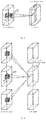
- FIG. 2 is an exemplary view schematically showing the operating principle of the image analysis apparatus of FIG. 1 .
- the image acquisition unit may stack two-dimensional images received or acquired from the outside or stored in and read from a memory or the like installed in the outside or inside of the image analysis apparatus, according to a photographing position or time.
- the three-dimensional image generation unit generates a plurality of three-dimensional data using the two-dimensional images received from the image acquisition unit.
- the three-dimensional data may include three-dimensional image data.
- the three-dimensional image generation unit may generate three-dimensional image data by stacking a plurality of two-dimensional images in order of photographing position or time.
- the three-dimensional image generation unit may generate additional three-dimensional data by rotating the generated three-dimensional image data at a predetermined angle.
- a plurality of three-dimensional image data can be generated through the process described below. That is, if it is assumed that two axes of a two-dimensional image are x and y and an axis representing a photographing position or time of the two-dimensional images is z, it is possible to use a three-dimensional data Dxyz (a first three-dimensional data) generated by stacking the two-dimensional images in the Z-axis order, and a three-dimensional data Dyzx and a three-dimensional data Dzxy generated by rotating the Dxyz in two different axis directions.
- the process may be performed only in two directions among the three directions according to memory size, calculation speed or targeting performance of a final model.
- the three-dimensional image generation unit may additionally generate and use yet another three-dimensional data in addition to the plurality of three-dimensional data described above. That is, the three-dimensional image generation unit may generate a plurality of three-dimensional images by applying the method described above to the yet another image obtained from the original two-dimensional images through a calculation prepared in advance. For example, a plurality of three-dimensional images may be generated through the method described above after performing normalization on each of the two-dimensional images to have zero-mean and unit-variance.
- the three-dimensional image generation unit may generate images obtained by a difference between frames or through a calculation of optical flow, and additional three-dimensional images by rotating the images.
- the deep learning algorithm analysis unit may generate a plurality of two-dimensional data sets by dividing and projecting each of the plurality of three-dimensional data received from the three-dimensional image generation unit at predetermined intervals as needed.
- the plurality of two-dimensional data sets may be included in the three-dimensional data.
- the deep learning algorithm analysis unit may obtain an image analysis result through a process of applying a two-dimensional convolutional neural network to each of the plurality of three-dimensional data received from the three-dimensional image generation unit, and combining the results of applying the two-dimensional convolutional neural network.
- the deep learning algorithm analysis unit may combine the two-dimensional convolutional neural networks on a convolutional layer, a fully-connected layer, an output layer, or a decision level fusion which calculates an average of final results.
- FIG. 3 is an exemplary view illustrating the operating principle of a two-dimensional convolutional neural network that can be employed in the image analysis apparatus of FIG. 1 .
- FIG. 4 is an exemplary view illustrating the operating principle of a three-dimensional convolutional neural network according to a comparative example.
- a convolution calculation structure of a two-dimensional convolutional neural network is shown.
- the convolution calculation structure of a two-dimensional convolutional neural network may be expressed as shown in Mathematical expression 1.
- v ij xy denotes a value at position (x, y) in the j-th feature map of the i-th layer
- f( ⁇ ) denotes an activation function
- b ij denotes a bias to a corresponding feature map
- m denotes the index of the feature map of the (i-1)-th layer
- w ijm pq denotes a value at position (p, q) of a kernel or a filter applied to the m-th feature map
- P i and Q i denote vertical and horizontal sizes of each kernel.
- the two-dimensional convolutional neural network described above shows outstanding performance in recognizing an image.
- the convolution that is performed calculates only two-dimensional spatial features
- information in the depth or time direction in a three-dimensional image having several two-dimensional images collected may not be learned.
- a three-dimensional convolutional neural network model is used instead to overcome the problems described above, since a general three-dimensional convolutional neural network learns three-dimensional filters to analyze three-dimensional images, a lot of memory is occupied and a long time is taken to learn due to the large number of parameters (see Mathematical expression 2). Therefore, in this embodiment, a convolution calculation structure using a two-dimensional convolutional neural network and a convolution calculation structure using a three-dimensional convolutional neural network are combined and used in a new method.
- the convolution calculation structure of a three-dimensional convolutional neural network combined with the convolution calculation structure of a two-dimensional convolutional neural network may be shown as shown in FIG. 4 or expressed as shown in Mathematical expression 2 described below.
- v ij xyz denotes a value at position (x, y, z) in the j-th feature map of the i-th layer
- f( ⁇ ) denotes an activation function
- b ij denotes a bias to a corresponding feature map
- m denotes the index of the feature map of the (i-1)-th layer
- w ijm pqr denotes a value at position (p, q, r) of a kernel or a filter applied to the m-th feature map
- P i , Q i and R i denote vertical, horizontal and depth (temporal) sizes of each kernel.
- the existing techniques using only the three-dimensional convolutional neural network model described above occupy a lot of memory and take a long time in learning since basically the number of parameters is very large, and furthermore, the calculation time is long when the learned model is used. Accordingly, in this embodiment, it is possible to efficiently learn three-dimensional image data and analyze images using a two-dimensional convolutional neural network having fewer parameters than the three-dimensional convolutional neural network.
- the deep learning algorithm analysis unit may derive an image analysis result using a 'virtual three-dimensional deep neural network' including the process of applying a two-dimensional convolutional neural network to each of a plurality of two-dimensional data sets (a plurality of three-dimensional data) received from the three-dimensional image generation unit and combining the results of applying the two-dimensional convolutional neural network.
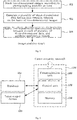
- FIG. 5 is a flowchart illustrating an image analysis method using a virtual three-dimensional deep neural network according to another embodiment of the present invention.
- an image analysis method using a virtual three-dimensional deep neural network includes the steps of stacking two-dimensional images of a specific group according to a photographing position or time by the image acquisition unit of the image analysis apparatus (step S51), generating a three-dimensional image (a first three-dimensional data) using the two-dimensional images and generating a second three-dimensional data by rotating the first three-dimensional data (step S52), and applying a two-dimensional convolutional neural network to each of a plurality of three-dimensional images (the first and second three-dimensional data) and combining the results of applying the two-dimensional convolutional neural network to each three-dimensional image (step S53).
- the image analysis method using a virtual three-dimensional deep neural network may be applied to learn three-dimensional data and analyze images more effectively using a two-dimensional convolutional neural network having a small number of parameters compared with a general three-dimensional convolutional neural network method.
- This method may be named as a method using a 'virtual three-dimensional deep neural network' .
- FIG. 6 is a block diagram showing an image analysis apparatus using a virtual three-dimensional deep neural network according to yet another embodiment of the present invention.
- the image analysis apparatus 100 may include a communication unit 160, a control unit 170, and a memory 180.
- the image analysis apparatus 100 may be implemented to include a controller or a computing device.
- the image analysis apparatus 100 may be connected to an input-output device 190 for processing data or signals according to an input from a user, a manager, a control terminal or the like and outputting a result of the processing.
- the image analysis apparatus 100 may be connected to a database system 200 provided with a database.
- the database may store at least any one among identification information, access information and authentication information of a device which provides an image to be analyzed.
- the input-output device 190 and the database system 200 are shown in this embodiment in a form that is not included in the image analysis apparatus 100, the present invention is not limited to the configuration and may be implemented to further include at least any one or more among the input-output device 190 and the database system 200 according to implementation.
- the communication unit 160 connects the image analysis apparatus 100 to a communication network.
- the communication unit 160 may receive images, or information or a signal related to image analysis from a user terminal, a server, a manager terminal and the like accessing through the network.
- the communication unit 160 may include one or more wired and/or wireless communication subsystems supporting one or more communication protocols.
- a wired communication subsystem may include a public switched telephone network (PSTN), an asymmetric digital subscriber line (ADSL) or very high-data rate digital subscriber Line (VDSL) network, a subsystem for PSTN emulation service (PES), Internet protocol (IP) multimedia subsystem (IMS) and the like.
- a wireless communication subsystem may include a radio frequency (RF) receiver, an RF transmitter, an RF transceiver, an optical (e.g., infrared) receiver, an optical transmitter, an optical transceiver or a combination of these.
- RF radio frequency
- the communication unit 160 may be implemented to support at least one or more selected among various wireless networks, for example, global system for mobile communication (GSM), enhanced data GSM environment (EDGE), code division multiple access (CDMA), W-code division multiple access (W-CDMA), long term evolution (LTE), LET-advanced (LET-A), orthogonal frequency division multiple access (OFDMA), WiMax, wireless fidelity (Wi-Fi), Bluetooth and the like.
- GSM global system for mobile communication
- EDGE enhanced data GSM environment
- CDMA code division multiple access
- W-CDMA W-code division multiple access
- LTE long term evolution
- LET-A LET-advanced
- OFDMA orthogonal frequency division multiple access
- WiMax wireless fidelity
- Wi-Fi wireless fidelity
- Bluetooth wireless fidelity
- the control unit 170 may implement the image analysis method by executing a software module or a program stored in an internal memory or the memory 180.
- the control unit 170 may be referred to as, for example, a processor and may execute a series of procedures shown in FIG. 5 .
- the control unit 170 may be implemented as a processor or a microprocessor including at least one or more central processing units (CPUs) or cores.
- the central processing unit or the core may be provided with a register for storing a command to be processed, an arithmetic logical unit (ALU) in charge of comparison, decision and operation, a control unit for internally controlling the CPU for analysis and execution of the command, and an internal bus for connecting these components.
- ALU arithmetic logical unit
- control unit for internally controlling the CPU for analysis and execution of the command
- an internal bus for connecting these components.
- the central processing unit or the core may be implemented as a system on chip (SOC) in which a micro control unit (MCU) and peripheral devices (an integrated circuit for external extension devices) are arranged together, it is not limited thereto.
- SOC system on chip
- control unit 170 may include one or more data processors, image processors, and codecs, it is not limited thereto.
- the control unit 170 may be provided with a peripheral device interface and a memory interface.
- the peripheral device interface may connect the control unit 170 to an input-output system such as the input-output device 190 or other peripheral devices, and the memory interface may connect the control unit 170 to the memory 180.
- the memory 180 may store a software module for analyzing images using a virtual three-dimensional deep neural network.
- the software module may include a first module to a third module performing the steps (S51 to S53) of FIG. 5 .
- the memory 180 described above may be implemented as semiconductor memory such as non-volatile RAM (NVRAM), dynamic random access memory (DRAM) which is representative volatile memory or the like, a hard disk drive (HDD), an optical storage device, flash memory or the like.
- NVRAM non-volatile RAM
- DRAM dynamic random access memory
- HDD hard disk drive
- flash memory or the like.
- the memory 180 may store an operating system, programs, command sets and the like, in addition to the software module for analyzing images using a virtual three-dimensional deep neural network.
- the image analysis method may be implemented in the form of a program command that can be executed through various computer means and may be recorded in a computer-readable medium.
- the computer-readable medium may include program commands, data files, data structures and the like independently or in combination.
- the program commands recorded in the computer-readable medium may be the ones specially designed and constructed for the present invention or the ones opened to and used by those skilled in computer software.
- Examples of the computer-readable medium include hardware devices specially configured to store and execute program commands, such as ROM, RAM, flash memory and the like.
- Examples of the program commands include a high-level language code that can be executed by a computer using an interpreter or the like, as well as a machine language code such as the ones generated by a compiler.
- the hardware device described above may be configured to operate by at least one software module to perform the operation of the present invention, and vice versa.
- this embodiment provides a method of constructing a structure of a deep neural network for analyzing three-dimensional image data.
- the structure of the virtual three-dimensional deep neural network according to this embodiment may be utilized for analysis of three-dimensional image data, such as diagnosing a disease from an inputted medical image, finding location of a lesion, or recognizing behaviors of a person from a video.
Landscapes
- Engineering & Computer Science (AREA)
- Physics & Mathematics (AREA)
- Theoretical Computer Science (AREA)
- General Physics & Mathematics (AREA)
- Artificial Intelligence (AREA)
- Software Systems (AREA)
- Mathematical Physics (AREA)
- Evolutionary Computation (AREA)
- Computing Systems (AREA)
- Data Mining & Analysis (AREA)
- Life Sciences & Earth Sciences (AREA)
- General Engineering & Computer Science (AREA)
- Biomedical Technology (AREA)
- Health & Medical Sciences (AREA)
- Biophysics (AREA)
- Computational Linguistics (AREA)
- General Health & Medical Sciences (AREA)
- Molecular Biology (AREA)
- Geometry (AREA)
- Computer Graphics (AREA)
- Pure & Applied Mathematics (AREA)
- Algebra (AREA)
- Mathematical Analysis (AREA)
- Mathematical Optimization (AREA)
- Bioinformatics & Cheminformatics (AREA)
- Bioinformatics & Computational Biology (AREA)
- Computer Vision & Pattern Recognition (AREA)
- Evolutionary Biology (AREA)
- Multimedia (AREA)
- Image Analysis (AREA)
- Complex Calculations (AREA)
Abstract
Description
- The present invention relates to an image analysis technique using image reconstruction, and more specifically, to an apparatus and a method for image analysis using a virtual three-dimensional deep neural network.
- An artificial neural network (ANN) is one of techniques for implementing machine learning.
- Generally, the artificial neural network is configured of an input layer, a hidden layer, and an output layer. Each of the layers is formed of neurons, and neurons of each layer are connected to the output of the neurons of a previous layer. A value obtained by adding a bias to a value calculated through an inner product of the output values of the neurons of the previous layer and connection weights corresponding thereto is put into an activation function, which is generally nonlinear, and an output value of the activation function is transferred to the neurons of the next layer.
- Existing machine learning techniques learn a classifier using the information obtained from input data through a feature extraction process designed by a human, whereas artificial neural networks learn feature extraction and a classifier from the beginning to the end (end-to-end learning).
- Convolutional neural networks (CNNs) draw much attention, overwhelming the performance of existing machine learning techniques in the field of image recognition. The structure of the convolutional neural network is almost identical to the structure of a general artificial neural network and has a convolutional layer and a pooling layer as additional components.
- The structure of a general convolutional neural network has convolutional layers and pooling layers alternating one after another, and an output layer comes last after two or three fully-connected layers. Neurons of the convolutional layers are connected to neurons of a previous layer only in a small area (local connectivity), unlike the artificial neural networks in which the neurons are fully connected to all neurons of the previous layer.
- In addition, neurons belonging to a slice such as a feature map have a weighted value and a bias of the same value (parameter sharing). An operation progressed in this manner is a convolution, and a set of applied weight values is referred to as a filter or a kernel. The conventional neural network may effectively extract features from an image, prevent overfitting by reducing the number of parameters, and improve performance of generalization.
- The pooling layer is positioned between the convolutional layers to reduce the spatial size of the feature map. This process also reduces the number of parameters and prevents overfitting. The most frequently used form is a max-pooling method of applying 2×2 filters at the intervals of 2. This process reduces the size of the feature map by half in the width and height directions.
- Meanwhile, as a conventional technique, there is Korean Laid-opened Patent No.
10-2016-0122452 - Therefore, the present invention has been made in view of the above problems, and it is an object of the present invention to provide an apparatus and a method for image analysis, which can easily analyze three-dimensional image data in a deep neural network by reconstructing two-dimensional images into three-dimensional data in a three-dimensional space, generating other three-dimensional data by rotating the reconstructed three-dimensional data, applying a two-dimensional convolutional neural network to each of the generated three-dimensional data, and combining results of applying the two-dimensional convolutional neural network.
- To accomplish the above object, according to one aspect of the present invention, there is provided an image analysis apparatus using a virtual three-dimensional deep neural network, the apparatus comprising: an image acquisition unit for stacking a plurality of two-dimensional image data in a predetermined order; a three-dimensional image generation unit for generating a plurality of three-dimensional data on the basis of a plurality of information of different forms on the plurality of two-dimensional image data of a stacked form from the image acquisition unit; and a deep learning algorithm analysis unit for applying a two-dimensional convolutional neural network to each of the plurality of three-dimensional data received from the three-dimensional image generation unit, and combining results of applying the two-dimensional convolutional neural network to the plurality of three-dimensional data.
- In an embodiment, the three-dimensional image generation unit may perform a zero-mean or unit-variance operation on each of the plurality of two-dimensional image data before generating the plurality of three-dimensional data.
- In an embodiment, the plurality of information of different forms may include a pattern corresponding to a change of movement or shape according to a time or a position of the stacked two-dimensional image data, or recognition information of the pattern.
- In an embodiment, the deep learning algorithm analysis unit may combine the results of applying the two-dimensional convolutional neural network to the plurality of three-dimensional data, on any one among a convolutional layer, a fully-connected layer, an output layer, and a decision level fusion which calculates an average of final results.
- According to another aspect of the present invention, there is provided an image analysis method using a virtual three-dimensional deep neural network, the method comprising the steps of: stacking a plurality of two-dimensional image data in a predetermined order, by an image acquisition unit; generating a plurality of three-dimensional data on the basis of a plurality of information of different forms on the plurality of two-dimensional image data of a stacked form, by a three-dimensional image generation unit; and applying a two-dimensional convolutional neural network to each of the plurality of three-dimensional data, and combining results of applying the two-dimensional convolutional neural network to the plurality of three-dimensional data, by a deep learning algorithm analysis unit.
- In an embodiment, the generating step may perform a zero-mean or unit-variance operation on each of the plurality of two-dimensional image data before generating the plurality of three-dimensional data.
- In an embodiment, the combining step may combine the results of applying the two-dimensional convolutional neural network to the plurality of three-dimensional data, on any one among a convolutional layer, a fully-connected layer, an output layer, and a decision level fusion which calculates an average of final results.
- According to yet another aspect of the present invention, there is provided an image analysis apparatus using a virtual three-dimensional deep neural network, the apparatus comprising: an image acquisition unit for stacking two-dimensional images in order of a photographing position or time; a three-dimensional image generation unit for generating a first three-dimensional image data using the two-dimensional images received from the image acquisition unit, and generating a second three-dimensional image data from the first three-dimensional image data by rotating an axis representing the photographing position or time to be overlapped with either of the other two axes; and a deep learning algorithm analysis unit for applying a two-dimensional convolutional neural network to each of the plurality of three-dimensional data received from the three-dimensional image generation unit, and combining results of applying the two-dimensional convolutional neural network to each three-dimensional data.
- In an embodiment, the three-dimensional image generation unit may generate additional three-dimensional data on the basis of other two-dimensional images obtained by rotating the two-dimensional images obtained by the difference between the frames of the two-dimensional image or through optical flow.
- According to another aspect of the present invention, there is provided an image analysis method using a virtual three-dimensional deep neural network, the method comprising the steps of: stacking two-dimensional images in order of a photographing position or time, by an image acquisition unit; generating a first three-dimensional image data using the two-dimensional images received from the image acquisition unit, and generating a second three-dimensional image data from the first three-dimensional image data by rotating an axis representing the photographing position or time to be overlapped with either of the other two axes, by a three-dimensional image generation unit; and applying a two-dimensional convolutional neural network to each of the plurality of three-dimensional data received from the three-dimensional image generation unit, and combining results of applying the two-dimensional convolutional neural network to each three-dimensional data, by a deep learning algorithm analysis unit.
- In an embodiment, the generating step may generate additional three-dimensional data on the basis of other two-dimensional images obtained by rotating the two-dimensional images obtained by the difference between the frames of the two-dimensional image or through optical flow.
- According to the present invention, there is an advantage of more effectively learning three-dimensional data and analyzing images using a two-dimensional convolutional neural network having a small number of parameters compared with a general three-dimensional convolutional neural network method.
- In addition, according to the present invention, it is possible to provide a new image analysis model which can perform effective learning and image analysis on three-dimensional image data, while solving the problem of a three-dimensional convolutional neural network model occupying a lot of memory since the number of parameters is large, taking a long time in learning, and having a long calculation time when using a learned model.
-
-
FIG. 1 is a block diagram showing an image analysis apparatus using a virtual three-dimensional deep neural network according to an embodiment of the present invention. -
FIG. 2 is an exemplary view schematically showing the operating principle of the image analysis apparatus ofFIG. 1 . -
FIG. 3 is an exemplary view illustrating the basic operating principle of a two-dimensional convolutional neural network that can be employed in the image analysis apparatus ofFIG. 1 . -
FIG. 4 is an exemplary view illustrating the operating principle of a three-dimensional convolutional neural network according to a comparative example. -
FIG. 5 is a flowchart illustrating an image analysis method using a virtual three-dimensional deep neural network according to another embodiment of the present invention. -
FIG. 6 is a block diagram showing an image analysis apparatus using a virtual three-dimensional deep neural network according to yet another embodiment of the present invention. - Hereinafter, the preferred embodiment of the present invention will be described in detail with reference to the accompanying drawings. In describing the present invention, elements having like functions will be denoted by like reference numerals and duplicate descriptions on the same element thereon will be omitted to facilitate overall understanding.
-
FIG. 1 is a block diagram showing an image analysis apparatus using a virtual three-dimensional deep neural network according to an embodiment of the present invention. - Referring to
FIG. 1 , animage analysis apparatus 100 according to this embodiment includes animage acquisition unit 110, a three-dimensionalimage generation unit 120, and a deep learningalgorithm analysis unit 130. - The
image acquisition unit 110 prepares two-dimensional images stacked in order of a photographing angle or time of the two-dimensional images. Theimage acquisition unit 110 may be connected to a camera, a control unit, a communication unit and the like. - The three-dimensional
image generation unit 120 generates a plurality of three-dimensional data using the two-dimensional images received from theimage acquisition unit 110. As a simple example, the three-dimensionalimage generation unit 120 may convert the two-dimensional images into a first three-dimensional data by stacking the two-dimensional images, and reconstruct the three-dimensional data into a plurality of pieces to generate a second three-dimensional data by rotating the converted first three-dimensional data at a predetermined angle in a three-dimensional space, preferably, rotating any one axis among three axes (x, y, z) to the position of another axis in a three-dimensional space. - This shows that a plurality of three-dimensional data of different forms may be obtained from a plurality of two-dimensional image data stacked on the basis of a predetermined criterion, e.g., along the time axis, according to relative changes in time or position of the plurality of two-dimensional image data. That is, in this embodiment, a plurality of three-dimensional data may be obtained by stacking two-dimensional image data and performing a plurality of operations on the basis of change in time or position of the stacked two-dimensional image data. The three-dimensional data may include three-dimensional image data.
- In addition, for example, two-dimensional image data including information on a moving image such as a cell image may have a form in which the morphology and position may change, i.e., a state capable of tracking, in each of the two-dimensional image data. Here, when outer lines are considered, an image recognition apparatus may extract a difference, such as a change in the outer lines or the positions, from the two-dimensional image data according to position or time, and when the two-dimensional image data are converted into three-dimensional data, the image recognition apparatus may recognize a pattern corresponding to a change in movement or shape on the basis of the extracted information. The image recognition apparatus may perform the pattern recognition using a volumemetry or the like.
- In other words, if it is assumed that the two-dimensional image data are stacked along the time axis (Z) direction on the X-Y plane, the stacked two-dimensional image data have a form of three-dimensional data. Here, there is a difference when seeing the stacked two-dimensional image data from the top and from the side, and for example, when the stacked two-dimensional image data are seen from the top, difference in the morphology may be recognized as the main difference, and when the stacked two-dimensional image data are seen from the side, the difference may be recognized as a change in the position according to the difference in time. Like this, in this embodiment, a plurality of data, which is recognized as a different form of the stacked two-dimensional image data, i.e., a plurality of virtual three-dimensional data, are acquired and used.
- The deep learning
algorithm analysis unit 130 analyzes a three-dimensional image by applying a two-dimensional convolutional neural network (CNN) to each of the plurality of reconstructed three-dimensional data and combining the results of applying the two-dimensional convolutional neural network to each three-dimensional data. - Like this, in this embodiment, a three-dimensional image is analyzed by stacking two-dimensional image data and learning different forms of information on the stacked two-dimensional image data using a two-dimensional convolutional neural network.
- Although the
components 110 to 130 described above may be configured in hardware, it is not limited thereto. It may be implemented such that the components of theimage analysis apparatus 100 are stored in a storage device such as a memory or the like in the form of a software module, and a processor connected to the storage device effectively learns and analyzes three-dimensional image data on the basis of a virtual three-dimensional deep neural network by executing the software module. - Hereinafter, an image analysis apparatus using a virtual three-dimensional deep neural network will be described in detail.
-
FIG. 2 is an exemplary view schematically showing the operating principle of the image analysis apparatus ofFIG. 1 . - Referring to
FIG. 2 , the image acquisition unit may stack two-dimensional images received or acquired from the outside or stored in and read from a memory or the like installed in the outside or inside of the image analysis apparatus, according to a photographing position or time. - The three-dimensional image generation unit generates a plurality of three-dimensional data using the two-dimensional images received from the image acquisition unit. The three-dimensional data may include three-dimensional image data.
- The three-dimensional image generation unit may generate three-dimensional image data by stacking a plurality of two-dimensional images in order of photographing position or time. The three-dimensional image generation unit may generate additional three-dimensional data by rotating the generated three-dimensional image data at a predetermined angle.
- For example, when the analysis in performed on the three-dimensional image data in three directions orthogonal to each other, a plurality of three-dimensional image data can be generated through the process described below. That is, if it is assumed that two axes of a two-dimensional image are x and y and an axis representing a photographing position or time of the two-dimensional images is z, it is possible to use a three-dimensional data Dxyz (a first three-dimensional data) generated by stacking the two-dimensional images in the Z-axis order, and a three-dimensional data Dyzx and a three-dimensional data Dzxy generated by rotating the Dxyz in two different axis directions.
- Of course, the process may be performed only in two directions among the three directions according to memory size, calculation speed or targeting performance of a final model.
- In addition, the three-dimensional image generation unit may additionally generate and use yet another three-dimensional data in addition to the plurality of three-dimensional data described above. That is, the three-dimensional image generation unit may generate a plurality of three-dimensional images by applying the method described above to the yet another image obtained from the original two-dimensional images through a calculation prepared in advance. For example, a plurality of three-dimensional images may be generated through the method described above after performing normalization on each of the two-dimensional images to have zero-mean and unit-variance.
- In still another implementation, in the case of a video, the three-dimensional image generation unit may generate images obtained by a difference between frames or through a calculation of optical flow, and additional three-dimensional images by rotating the images.
- The deep learning algorithm analysis unit may generate a plurality of two-dimensional data sets by dividing and projecting each of the plurality of three-dimensional data received from the three-dimensional image generation unit at predetermined intervals as needed. The plurality of two-dimensional data sets may be included in the three-dimensional data.
- The deep learning algorithm analysis unit may obtain an image analysis result through a process of applying a two-dimensional convolutional neural network to each of the plurality of three-dimensional data received from the three-dimensional image generation unit, and combining the results of applying the two-dimensional convolutional neural network.
- The deep learning algorithm analysis unit may combine the two-dimensional convolutional neural networks on a convolutional layer, a fully-connected layer, an output layer, or a decision level fusion which calculates an average of final results.
-
FIG. 3 is an exemplary view illustrating the operating principle of a two-dimensional convolutional neural network that can be employed in the image analysis apparatus ofFIG. 1 .FIG. 4 is an exemplary view illustrating the operating principle of a three-dimensional convolutional neural network according to a comparative example. - First, referring to
FIG. 3 , a convolution calculation structure of a two-dimensional convolutional neural network is shown. The convolution calculation structure of a two-dimensional convolutional neural network may be expressed as shown inMathematical expression 1.
- In the
Mathematical expression 1,

- The two-dimensional convolutional neural network described above shows outstanding performance in recognizing an image. However, since the convolution that is performed calculates only two-dimensional spatial features, when only the two-dimensional convolutional neural network is used, information in the depth or time direction in a three-dimensional image having several two-dimensional images collected may not be learned.
- Although a three-dimensional convolutional neural network model is used instead to overcome the problems described above, since a general three-dimensional convolutional neural network learns three-dimensional filters to analyze three-dimensional images, a lot of memory is occupied and a long time is taken to learn due to the large number of parameters (see Mathematical expression 2). Therefore, in this embodiment, a convolution calculation structure using a two-dimensional convolutional neural network and a convolution calculation structure using a three-dimensional convolutional neural network are combined and used in a new method.
- The convolution calculation structure of a three-dimensional convolutional neural network combined with the convolution calculation structure of a two-dimensional convolutional neural network may be shown as shown in
FIG. 4 or expressed as shown in Mathematical expression 2 described below.
- In the Mathematical expression 2,


- Like this, the existing techniques using only the three-dimensional convolutional neural network model described above occupy a lot of memory and take a long time in learning since basically the number of parameters is very large, and furthermore, the calculation time is long when the learned model is used. Accordingly, in this embodiment, it is possible to efficiently learn three-dimensional image data and analyze images using a two-dimensional convolutional neural network having fewer parameters than the three-dimensional convolutional neural network.
- That is, the deep learning algorithm analysis unit may derive an image analysis result using a 'virtual three-dimensional deep neural network' including the process of applying a two-dimensional convolutional neural network to each of a plurality of two-dimensional data sets (a plurality of three-dimensional data) received from the three-dimensional image generation unit and combining the results of applying the two-dimensional convolutional neural network.
-
FIG. 5 is a flowchart illustrating an image analysis method using a virtual three-dimensional deep neural network according to another embodiment of the present invention. - Referring to
FIG. 5 , an image analysis method using a virtual three-dimensional deep neural network according to this embodiment includes the steps of stacking two-dimensional images of a specific group according to a photographing position or time by the image acquisition unit of the image analysis apparatus (step S51), generating a three-dimensional image (a first three-dimensional data) using the two-dimensional images and generating a second three-dimensional data by rotating the first three-dimensional data (step S52), and applying a two-dimensional convolutional neural network to each of a plurality of three-dimensional images (the first and second three-dimensional data) and combining the results of applying the two-dimensional convolutional neural network to each three-dimensional image (step S53). - The image analysis method using a virtual three-dimensional deep neural network according to this embodiment may be applied to learn three-dimensional data and analyze images more effectively using a two-dimensional convolutional neural network having a small number of parameters compared with a general three-dimensional convolutional neural network method. This method may be named as a method using a 'virtual three-dimensional deep neural network' .
-
FIG. 6 is a block diagram showing an image analysis apparatus using a virtual three-dimensional deep neural network according to yet another embodiment of the present invention. - Referring to
FIG. 6 , theimage analysis apparatus 100 according to this embodiment may include acommunication unit 160, a control unit 170, and amemory 180. Theimage analysis apparatus 100 may be implemented to include a controller or a computing device. Theimage analysis apparatus 100 may be connected to an input-output device 190 for processing data or signals according to an input from a user, a manager, a control terminal or the like and outputting a result of the processing. In addition, theimage analysis apparatus 100 may be connected to adatabase system 200 provided with a database. The database may store at least any one among identification information, access information and authentication information of a device which provides an image to be analyzed. - Although the input-
output device 190 and thedatabase system 200 are shown in this embodiment in a form that is not included in theimage analysis apparatus 100, the present invention is not limited to the configuration and may be implemented to further include at least any one or more among the input-output device 190 and thedatabase system 200 according to implementation. - The
communication unit 160 connects theimage analysis apparatus 100 to a communication network. Thecommunication unit 160 may receive images, or information or a signal related to image analysis from a user terminal, a server, a manager terminal and the like accessing through the network. - The
communication unit 160 may include one or more wired and/or wireless communication subsystems supporting one or more communication protocols. A wired communication subsystem may include a public switched telephone network (PSTN), an asymmetric digital subscriber line (ADSL) or very high-data rate digital subscriber Line (VDSL) network, a subsystem for PSTN emulation service (PES), Internet protocol (IP) multimedia subsystem (IMS) and the like. A wireless communication subsystem may include a radio frequency (RF) receiver, an RF transmitter, an RF transceiver, an optical (e.g., infrared) receiver, an optical transmitter, an optical transceiver or a combination of these. - Although a wireless network basically refers to Wi-Fi, it is not limited thereto. In this embodiment, the
communication unit 160 may be implemented to support at least one or more selected among various wireless networks, for example, global system for mobile communication (GSM), enhanced data GSM environment (EDGE), code division multiple access (CDMA), W-code division multiple access (W-CDMA), long term evolution (LTE), LET-advanced (LET-A), orthogonal frequency division multiple access (OFDMA), WiMax, wireless fidelity (Wi-Fi), Bluetooth and the like. - The control unit 170 may implement the image analysis method by executing a software module or a program stored in an internal memory or the
memory 180. The control unit 170 may be referred to as, for example, a processor and may execute a series of procedures shown inFIG. 5 . - The control unit 170 may be implemented as a processor or a microprocessor including at least one or more central processing units (CPUs) or cores. The central processing unit or the core may be provided with a register for storing a command to be processed, an arithmetic logical unit (ALU) in charge of comparison, decision and operation, a control unit for internally controlling the CPU for analysis and execution of the command, and an internal bus for connecting these components. Although the central processing unit or the core may be implemented as a system on chip (SOC) in which a micro control unit (MCU) and peripheral devices (an integrated circuit for external extension devices) are arranged together, it is not limited thereto.
- In addition, although the control unit 170 may include one or more data processors, image processors, and codecs, it is not limited thereto. The control unit 170 may be provided with a peripheral device interface and a memory interface. The peripheral device interface may connect the control unit 170 to an input-output system such as the input-
output device 190 or other peripheral devices, and the memory interface may connect the control unit 170 to thememory 180. - The
memory 180 may store a software module for analyzing images using a virtual three-dimensional deep neural network. The software module may include a first module to a third module performing the steps (S51 to S53) ofFIG. 5 . - The
memory 180 described above may be implemented as semiconductor memory such as non-volatile RAM (NVRAM), dynamic random access memory (DRAM) which is representative volatile memory or the like, a hard disk drive (HDD), an optical storage device, flash memory or the like. In addition, thememory 180 may store an operating system, programs, command sets and the like, in addition to the software module for analyzing images using a virtual three-dimensional deep neural network. - Meanwhile, the image analysis method according to this embodiment may be implemented in the form of a program command that can be executed through various computer means and may be recorded in a computer-readable medium. The computer-readable medium may include program commands, data files, data structures and the like independently or in combination. The program commands recorded in the computer-readable medium may be the ones specially designed and constructed for the present invention or the ones opened to and used by those skilled in computer software.
- Examples of the computer-readable medium include hardware devices specially configured to store and execute program commands, such as ROM, RAM, flash memory and the like. Examples of the program commands include a high-level language code that can be executed by a computer using an interpreter or the like, as well as a machine language code such as the ones generated by a compiler. The hardware device described above may be configured to operate by at least one software module to perform the operation of the present invention, and vice versa.
- As described above, this embodiment provides a method of constructing a structure of a deep neural network for analyzing three-dimensional image data. The structure of the virtual three-dimensional deep neural network according to this embodiment may be utilized for analysis of three-dimensional image data, such as diagnosing a disease from an inputted medical image, finding location of a lesion, or recognizing behaviors of a person from a video.
- Although it has been described with reference to the preferred embodiments of the present invention, those skilled in the art may understand that the present invention can be diversely changed and modified without departing from the scope and spirit of the present invention disclosed in the claims described below.
Claims (7)
- An image analysis apparatus using a virtual three-dimensional deep neural network, the apparatus comprising:an image acquisition unit for stacking a plurality of two-dimensional image data in a predetermined order;a three-dimensional image generation unit for generating a plurality of three-dimensional data on the basis of a plurality of information of different forms on the plurality of two-dimensional image data of a stacked form received from the image acquisition unit; anda deep learning algorithm analysis unit for applying a two-dimensional convolutional neural network to each of the plurality of three-dimensional data received from the three-dimensional image generation unit, and combining results of applying the two-dimensional convolutional neural network to the plurality of three-dimensional data.
- The apparatus according to claim 1, wherein the three-dimensional image generation unit performs a zero-mean or unit-variance operation on each of the plurality of two-dimensional image data before generating the plurality of three-dimensional data.
- The apparatus according to claim 1, wherein the plurality of information of different forms includes a pattern corresponding to a change of movement or shape according to a time or a position of the stacked two-dimensional image data, or a recognition information of the pattern.
- The apparatus according to claim 1, wherein the deep learning algorithm analysis unit combines the results of applying the two-dimensional convolutional neural network to the plurality of three-dimensional data, on any one among a convolutional layer, a fully-connected layer, an output layer, and a decision level fusion which calculates an average of final results.
- An image analysis method using a virtual three-dimensional deep neural network, the method comprising the steps of:stacking a plurality of two-dimensional image data in a predetermined order, by an image acquisition unit;generating a plurality of three-dimensional data on the basis of a plurality of information of different forms on the plurality of two-dimensional image data of a stacked form, by a three-dimensional image generation unit; andapplying a two-dimensional convolutional neural network to each of the plurality of three-dimensional data, and combining results of applying the two-dimensional convolutional neural network to the plurality of three-dimensional data, by a deep learning algorithm analysis unit.
- The method according to claim 5, wherein the generating step performs a zero-mean or unit-variance operation on each of the plurality of two-dimensional image data before generating the plurality of three-dimensional data.
- The method according to claim 5, wherein the combining step combines the results of applying the two-dimensional convolutional neural network to the plurality of three-dimensional data, on any one among a convolutional layer, a fully-connected layer, an output layer, and a decision level fusion which calculates an average of final results.
Applications Claiming Priority (2)
| Application Number | Priority Date | Filing Date | Title |
|---|---|---|---|
| KR20170037958 | 2017-03-24 | ||
| PCT/KR2018/003404 WO2018174623A1 (en) | 2017-03-24 | 2018-03-23 | Apparatus and method for image analysis using virtual three-dimensional deep neural network |
Publications (2)
| Publication Number | Publication Date |
|---|---|
| EP3605472A1 true EP3605472A1 (en) | 2020-02-05 |
| EP3605472A4 EP3605472A4 (en) | 2020-12-23 |
Family
ID=63585872
Family Applications (1)
| Application Number | Title | Priority Date | Filing Date |
|---|---|---|---|
| EP18771852.3A Withdrawn EP3605472A4 (en) | 2017-03-24 | 2018-03-23 | DEVICE AND METHOD OF IMAGE ANALYSIS USING A VIRTUAL THREE-DIMENSIONAL DEEP NEURAL NETWORK |
Country Status (6)
| Country | Link |
|---|---|
| US (1) | US10970520B1 (en) |
| EP (1) | EP3605472A4 (en) |
| JP (1) | JP6979664B2 (en) |
| KR (1) | KR102061408B1 (en) |
| CN (1) | CN110574077B (en) |
| WO (1) | WO2018174623A1 (en) |
Cited By (2)
| Publication number | Priority date | Publication date | Assignee | Title |
|---|---|---|---|---|
| GB2597372A (en) * | 2020-06-22 | 2022-01-26 | Nvidia Corp | Image generation using one or more neural networks |
| US11830227B2 (en) | 2020-05-12 | 2023-11-28 | Lunit Inc. | Learning apparatus and learning method for three-dimensional image |
Families Citing this family (30)
| Publication number | Priority date | Publication date | Assignee | Title |
|---|---|---|---|---|
| US11190944B2 (en) | 2017-05-05 | 2021-11-30 | Ball Aerospace & Technologies Corp. | Spectral sensing and allocation using deep machine learning |
| WO2019219968A1 (en) * | 2018-05-18 | 2019-11-21 | Deepmind Technologies Limited | Visual speech recognition by phoneme prediction |
| KR102107182B1 (en) * | 2018-10-23 | 2020-05-06 | 전남대학교 산학협력단 | Hand Gesture Recognition System and Method |
| KR102250163B1 (en) * | 2018-11-23 | 2021-05-10 | 네이버웹툰 유한회사 | Method and apparatus of converting 3d video image from video image using deep learning |
| WO2020122513A1 (en) | 2018-12-10 | 2020-06-18 | 삼성전자주식회사 | Method for processing two-dimensional image and device for executing method |
| RU2703327C1 (en) * | 2018-12-10 | 2019-10-16 | Самсунг Электроникс Ко., Лтд. | Method of processing a two-dimensional image and a user computing device thereof |
| KR102263017B1 (en) * | 2019-01-15 | 2021-06-08 | 포항공과대학교 산학협력단 | Method and apparatus for high-speed image recognition using 3d convolutional neural network |
| KR102263005B1 (en) * | 2019-01-15 | 2021-06-08 | 포항공과대학교 산학협력단 | Method and apparatus for high-speed image recognition using 3d convolutional neural network dynamically |
| US11851217B1 (en) * | 2019-01-23 | 2023-12-26 | Ball Aerospace & Technologies Corp. | Star tracker using vector-based deep learning for enhanced performance |
| US11412124B1 (en) | 2019-03-01 | 2022-08-09 | Ball Aerospace & Technologies Corp. | Microsequencer for reconfigurable focal plane control |
| CN111988666B (en) * | 2019-05-23 | 2022-04-26 | 阿里巴巴集团控股有限公司 | Video detection method, 3D convolution and mapping method, equipment and storage medium |
| US11303348B1 (en) | 2019-05-29 | 2022-04-12 | Ball Aerospace & Technologies Corp. | Systems and methods for enhancing communication network performance using vector based deep learning |
| US11488024B1 (en) | 2019-05-29 | 2022-11-01 | Ball Aerospace & Technologies Corp. | Methods and systems for implementing deep reinforcement module networks for autonomous systems control |
| KR102081854B1 (en) * | 2019-08-01 | 2020-02-26 | 전자부품연구원 | Method and apparatus for sign language or gesture recognition using 3D EDM |
| US11828598B1 (en) | 2019-08-28 | 2023-11-28 | Ball Aerospace & Technologies Corp. | Systems and methods for the efficient detection and tracking of objects from a moving platform |
| KR102219364B1 (en) * | 2019-09-19 | 2021-02-25 | 주식회사 싸인텔레콤 | Lighting control system based image capturing apparatus for bus stop and lighting control method using the same |
| TWI730452B (en) * | 2019-10-16 | 2021-06-11 | 逢甲大學 | Stereo artificial neural network system |
| KR102166835B1 (en) | 2019-10-28 | 2020-10-16 | 주식회사 루닛 | Method for Training Neural Network and Device Thereof |
| KR102581941B1 (en) * | 2019-12-27 | 2023-09-22 | 권세기 | A monitering system for wearing muzzles of dog using deep learning and monitering method |
| US11276249B2 (en) | 2020-05-14 | 2022-03-15 | International Business Machines Corporation | Method and system for video action classification by mixing 2D and 3D features |
| CN111612689B (en) * | 2020-05-28 | 2024-04-05 | 上海联影医疗科技股份有限公司 | Medical image processing method, device, computer equipment and readable storage medium |
| KR102453834B1 (en) * | 2020-07-15 | 2022-10-11 | 한국로봇융합연구원 | A method for structuring the output information of multiple thermal and image cameras as input data of a deep neural network model |
| CN111985618B (en) * | 2020-08-14 | 2024-03-05 | 杭州海康威视数字技术股份有限公司 | Processing method and device of 3D convolutional neural network on neural network processor |
| KR102505994B1 (en) * | 2020-09-28 | 2023-03-07 | (주)제이엘케이 | Lightweight 3d volume data acquisition system and method |
| KR102575224B1 (en) * | 2021-01-07 | 2023-09-08 | 충북대학교 산학협력단 | Object detection system and method using deformable convolutional neural network |
| US20220391752A1 (en) * | 2021-06-08 | 2022-12-08 | X Development Llc | Generating labeled synthetic images to train machine learning models |
| KR102769440B1 (en) | 2021-08-20 | 2025-02-17 | 선문대학교 산학협력단 | Apparatus and method for reducing the amount of computation in the SRCNN(Super Resolution Convolutional Neural Network system) |
| KR20230027948A (en) | 2021-08-20 | 2023-02-28 | 선문대학교 산학협력단 | Convolutional neural network system for image super resolution |
| WO2025229698A1 (en) * | 2024-04-30 | 2025-11-06 | 三菱電機株式会社 | Object recognition device, object recognition method, and object recognition system |
| KR102982032B1 (en) * | 2024-12-27 | 2026-06-25 | 한국전자기술연구원 | Hardware accelerator for supporting 2D convolution and 3D convolution operations on dense and sparse tensors |
Family Cites Families (40)
| Publication number | Priority date | Publication date | Assignee | Title |
|---|---|---|---|---|
| JP2000105838A (en) | 1998-09-29 | 2000-04-11 | Toshiba Corp | Image display method and image processing device |
| JP2000293704A (en) | 1999-04-02 | 2000-10-20 | Kazuo Yamada | Three-dimensional data display device, three-dimensional data display method, and information recording medium |
| JP2010051691A (en) | 2008-08-29 | 2010-03-11 | Shimadzu Corp | Ultrasonic diagnostic apparatus |
| JP2010072910A (en) * | 2008-09-18 | 2010-04-02 | Nippon Telegr & Teleph Corp <Ntt> | Facial 3D model generation apparatus, facial 3D model generation method, and facial 3D model generation program |
| US8866845B2 (en) * | 2010-03-10 | 2014-10-21 | Empire Technology Development Llc | Robust object recognition by dynamic modeling in augmented reality |
| US11263823B2 (en) * | 2012-02-24 | 2022-03-01 | Matterport, Inc. | Employing three-dimensional (3D) data predicted from two-dimensional (2D) images using neural networks for 3D modeling applications and other applications |
| US10095917B2 (en) * | 2013-11-04 | 2018-10-09 | Facebook, Inc. | Systems and methods for facial representation |
| WO2015095733A1 (en) * | 2013-12-19 | 2015-06-25 | Objectvideo, Inc. | System and method for identifying faces in unconstrained media |
| US9898804B2 (en) * | 2014-07-16 | 2018-02-20 | Samsung Electronics Co., Ltd. | Display driver apparatus and method of driving display |
| WO2016033506A1 (en) * | 2014-08-29 | 2016-03-03 | Google Inc. | Processing images using deep neural networks |
| KR20160061856A (en) * | 2014-11-24 | 2016-06-01 | 삼성전자주식회사 | Method and apparatus for recognizing object, and method and apparatus for learning recognizer |
| US9928410B2 (en) | 2014-11-24 | 2018-03-27 | Samsung Electronics Co., Ltd. | Method and apparatus for recognizing object, and method and apparatus for training recognizer |
| KR102276339B1 (en) | 2014-12-09 | 2021-07-12 | 삼성전자주식회사 | Apparatus and method for training convolutional neural network for approximation of convolutional neural network |
| KR101719278B1 (en) | 2015-04-14 | 2017-04-04 | (주)한국플랫폼서비스기술 | Deep learnig framework and image recognition method for content-based visual image recognition |
| CN107924579A (en) | 2015-08-14 | 2018-04-17 | 麦特尔有限公司 | The method for generating personalization 3D head models or 3D body models |
| US11425866B2 (en) * | 2015-11-03 | 2022-08-30 | Keith Charles Burden | Automated pruning or harvesting system for complex morphology foliage |
| CN105787439B (en) * | 2016-02-04 | 2019-04-05 | 广州新节奏智能科技股份有限公司 | A Convolutional Neural Network-based Human Joint Localization Method in Depth Image |
| US9836820B2 (en) * | 2016-03-03 | 2017-12-05 | Mitsubishi Electric Research Laboratories, Inc. | Image upsampling using global and local constraints |
| US11055063B2 (en) * | 2016-05-02 | 2021-07-06 | Marvell Asia Pte, Ltd. | Systems and methods for deep learning processor |
| CN106407903A (en) * | 2016-08-31 | 2017-02-15 | 四川瞳知科技有限公司 | Multiple dimensioned convolution neural network-based real time human body abnormal behavior identification method |
| US10282918B2 (en) * | 2016-09-20 | 2019-05-07 | Siemens Healthcare Gmbh | Two-dimensional cinematic medical imaging in color based on deep learning |
| US10460511B2 (en) * | 2016-09-23 | 2019-10-29 | Blue Vision Labs UK Limited | Method and system for creating a virtual 3D model |
| HK1224513A2 (en) * | 2016-10-14 | 2017-08-18 | 智能3D有限公司 | Method for improving the quality of 2d-to-3d automatic conversion by using machine learning |
| JP2018067154A (en) * | 2016-10-19 | 2018-04-26 | ソニーセミコンダクタソリューションズ株式会社 | Arithmetic processing circuit and recognition system |
| US10176551B2 (en) * | 2017-04-27 | 2019-01-08 | Apple Inc. | Configurable convolution engine for interleaved channel data |
| WO2018227105A1 (en) * | 2017-06-08 | 2018-12-13 | The United States Of America, As Represented By The Secretary, Department Of Health And Human Services | Progressive and multi-path holistically nested networks for segmentation |
| CN107730503B (en) * | 2017-09-12 | 2020-05-26 | 北京航空航天大学 | Image object component level semantic segmentation method and device embedded with three-dimensional features |
| EP3462373A1 (en) * | 2017-10-02 | 2019-04-03 | Promaton Holding B.V. | Automated classification and taxonomy of 3d teeth data using deep learning methods |
| EP3474192A1 (en) * | 2017-10-19 | 2019-04-24 | Koninklijke Philips N.V. | Classifying data |
| US10762637B2 (en) * | 2017-10-27 | 2020-09-01 | Siemens Healthcare Gmbh | Vascular segmentation using fully convolutional and recurrent neural networks |
| US11636668B2 (en) * | 2017-11-10 | 2023-04-25 | Nvidia Corp. | Bilateral convolution layer network for processing point clouds |
| US10824862B2 (en) * | 2017-11-14 | 2020-11-03 | Nuro, Inc. | Three-dimensional object detection for autonomous robotic systems using image proposals |
| US10552664B2 (en) * | 2017-11-24 | 2020-02-04 | International Business Machines Corporation | Image feature classification and localization using discriminative representations for robotic surgical control |
| US11132797B2 (en) * | 2017-12-28 | 2021-09-28 | Topcon Corporation | Automatically identifying regions of interest of an object from horizontal images using a machine learning guided imaging system |
| CN108198145B (en) * | 2017-12-29 | 2020-08-28 | 百度在线网络技术(北京)有限公司 | Method and device for point cloud data restoration |
| KR102106694B1 (en) * | 2018-05-17 | 2020-05-04 | 한국과학기술원 | An image processing apparatus using neural network and a method performed by the image processing apparatus |
| US11234666B2 (en) * | 2018-05-31 | 2022-02-01 | Canon Medical Systems Corporation | Apparatus and method for medical image reconstruction using deep learning to improve image quality in position emission tomography (PET) |
| CN110163048B (en) * | 2018-07-10 | 2023-06-02 | 腾讯科技(深圳)有限公司 | Recognition model training method, recognition method and equipment of hand key points |
| US10297070B1 (en) * | 2018-10-16 | 2019-05-21 | Inception Institute of Artificial Intelligence, Ltd | 3D scene synthesis techniques using neural network architectures |
| US11436743B2 (en) * | 2019-07-06 | 2022-09-06 | Toyota Research Institute, Inc. | Systems and methods for semi-supervised depth estimation according to an arbitrary camera |
-
2018
- 2018-03-22 KR KR1020180033533A patent/KR102061408B1/en active Active
- 2018-03-23 US US16/496,960 patent/US10970520B1/en active Active
- 2018-03-23 JP JP2019552542A patent/JP6979664B2/en active Active
- 2018-03-23 CN CN201880027104.8A patent/CN110574077B/en active Active
- 2018-03-23 EP EP18771852.3A patent/EP3605472A4/en not_active Withdrawn
- 2018-03-23 WO PCT/KR2018/003404 patent/WO2018174623A1/en not_active Ceased
Cited By (3)
| Publication number | Priority date | Publication date | Assignee | Title |
|---|---|---|---|---|
| US11830227B2 (en) | 2020-05-12 | 2023-11-28 | Lunit Inc. | Learning apparatus and learning method for three-dimensional image |
| GB2597372A (en) * | 2020-06-22 | 2022-01-26 | Nvidia Corp | Image generation using one or more neural networks |
| GB2597372B (en) * | 2020-06-22 | 2024-02-14 | Nvidia Corp | Image generation using one or more neural networks |
Also Published As
| Publication number | Publication date |
|---|---|
| KR102061408B1 (en) | 2019-12-31 |
| JP2020513124A (en) | 2020-04-30 |
| JP6979664B2 (en) | 2021-12-15 |
| EP3605472A4 (en) | 2020-12-23 |
| US20210103716A1 (en) | 2021-04-08 |
| CN110574077A (en) | 2019-12-13 |
| CN110574077B (en) | 2023-08-01 |
| KR20180108501A (en) | 2018-10-04 |
| US10970520B1 (en) | 2021-04-06 |
| WO2018174623A1 (en) | 2018-09-27 |
Similar Documents
| Publication | Publication Date | Title |
|---|---|---|
| US10970520B1 (en) | Apparatus and method for image analysis using virtual three-dimensional deep neural network | |
| JP7490141B2 (en) | IMAGE DETECTION METHOD, MODEL TRAINING METHOD, IMAGE DETECTION APPARATUS, TRAINING APPARATUS, DEVICE, AND PROGRAM | |
| US20230089380A1 (en) | Neural network construction method and apparatus | |
| CN109543549B (en) | Image data processing method and device, mobile terminal device and server for multi-person pose estimation | |
| JP7289918B2 (en) | Object recognition method and device | |
| EP3989109B1 (en) | Image identification method and device, identification model training method and device, and storage medium | |
| Li et al. | SiamVGG: Visual tracking using deeper siamese networks | |
| US10755126B2 (en) | Convolutional neural network processing method and apparatus | |
| WO2022083536A1 (en) | Neural network construction method and apparatus | |
| EP4006777A1 (en) | Image classification method and device | |
| WO2017015390A1 (en) | Deep multi-task learning framework for face detection, landmark localization, pose estimation, and gender recognition | |
| CN110717420A (en) | A method, system and electronic device for extracting cultivated land based on remote sensing images | |
| EP4621706A1 (en) | Generative model training method and apparatus and data conversion method and apparatus | |
| WO2023125628A1 (en) | Neural network model optimization method and apparatus, and computing device | |
| WO2022012668A1 (en) | Training set processing method and apparatus | |
| Mohmmad et al. | A survey machine learning based object detections in an image | |
| Shanthappa et al. | Parkinson’s disease detection using inceptionV3: A Deep learning approach | |
| CN116310899A (en) | Improved target detection method, device and training method based on YOLOv5 | |
| Abed | Smart Aerial Image Classification using Deep Learning for Drone-Based Emergency Monitoring | |
| CN108876853B (en) | Image positioning method, device, system and storage medium | |
| US12548296B2 (en) | Spatially preserving flattening in deep learning neural networks | |
| CN114359710B (en) | Remote sensing building extraction method and device | |
| CN108629264B (en) | Method and apparatus for image processing | |
| González et al. | Data-driven multiresolution camera using the foveal adaptive pyramid | |
| Hasanaj et al. | Cooperative edge deepfake detection |
Legal Events
| Date | Code | Title | Description |
|---|---|---|---|
| STAA | Information on the status of an ep patent application or granted ep patent |
Free format text: STATUS: THE INTERNATIONAL PUBLICATION HAS BEEN MADE |
|
| PUAI | Public reference made under article 153(3) epc to a published international application that has entered the european phase |
Free format text: ORIGINAL CODE: 0009012 |
|
| STAA | Information on the status of an ep patent application or granted ep patent |
Free format text: STATUS: REQUEST FOR EXAMINATION WAS MADE |
|
| 17P | Request for examination filed |
Effective date: 20191024 |
|
| AK | Designated contracting states |
Kind code of ref document: A1 Designated state(s): AL AT BE BG CH CY CZ DE DK EE ES FI FR GB GR HR HU IE IS IT LI LT LU LV MC MK MT NL NO PL PT RO RS SE SI SK SM TR |
|
| AX | Request for extension of the european patent |
Extension state: BA ME |
|
| DAV | Request for validation of the european patent (deleted) | ||
| DAX | Request for extension of the european patent (deleted) | ||
| A4 | Supplementary search report drawn up and despatched |
Effective date: 20201123 |
|
| RIC1 | Information provided on ipc code assigned before grant |
Ipc: G06T 3/00 20060101ALI20201117BHEP Ipc: G06T 3/60 20060101ALI20201117BHEP Ipc: G06T 3/40 20060101ALI20201117BHEP Ipc: G06K 9/00 20060101ALI20201117BHEP Ipc: G06T 17/30 20060101AFI20201117BHEP Ipc: G06N 3/08 20060101ALI20201117BHEP |
|
| STAA | Information on the status of an ep patent application or granted ep patent |
Free format text: STATUS: EXAMINATION IS IN PROGRESS |
|
| 17Q | First examination report despatched |
Effective date: 20211223 |
|
| STAA | Information on the status of an ep patent application or granted ep patent |
Free format text: STATUS: THE APPLICATION HAS BEEN WITHDRAWN |
|
| 18W | Application withdrawn |
Effective date: 20220404 |