EP3605411A1 - Maintenance notification system and control method therefor, and program - Google Patents
Maintenance notification system and control method therefor, and program Download PDFInfo
- Publication number
- EP3605411A1 EP3605411A1 EP17903423.6A EP17903423A EP3605411A1 EP 3605411 A1 EP3605411 A1 EP 3605411A1 EP 17903423 A EP17903423 A EP 17903423A EP 3605411 A1 EP3605411 A1 EP 3605411A1
- Authority
- EP
- European Patent Office
- Prior art keywords
- maintenance
- information
- vehicle
- notification
- user
- Prior art date
- Legal status (The legal status is an assumption and is not a legal conclusion. Google has not performed a legal analysis and makes no representation as to the accuracy of the status listed.)
- Ceased
Links
Images



Classifications
-
- G—PHYSICS
- G06—COMPUTING OR CALCULATING; COUNTING
- G06Q—INFORMATION AND COMMUNICATION TECHNOLOGY [ICT] SPECIALLY ADAPTED FOR ADMINISTRATIVE, COMMERCIAL, FINANCIAL, MANAGERIAL OR SUPERVISORY PURPOSES; SYSTEMS OR METHODS SPECIALLY ADAPTED FOR ADMINISTRATIVE, COMMERCIAL, FINANCIAL, MANAGERIAL OR SUPERVISORY PURPOSES, NOT OTHERWISE PROVIDED FOR
- G06Q10/00—Administration; Management
- G06Q10/20—Administration of product repair or maintenance
-
- G—PHYSICS
- G07—CHECKING-DEVICES
- G07C—TIME OR ATTENDANCE REGISTERS; REGISTERING OR INDICATING THE WORKING OF MACHINES; GENERATING RANDOM NUMBERS; VOTING OR LOTTERY APPARATUS; ARRANGEMENTS, SYSTEMS OR APPARATUS FOR CHECKING NOT PROVIDED FOR ELSEWHERE
- G07C5/00—Registering or indicating the working of vehicles
- G07C5/006—Indicating maintenance
-
- G—PHYSICS
- G06—COMPUTING OR CALCULATING; COUNTING
- G06Q—INFORMATION AND COMMUNICATION TECHNOLOGY [ICT] SPECIALLY ADAPTED FOR ADMINISTRATIVE, COMMERCIAL, FINANCIAL, MANAGERIAL OR SUPERVISORY PURPOSES; SYSTEMS OR METHODS SPECIALLY ADAPTED FOR ADMINISTRATIVE, COMMERCIAL, FINANCIAL, MANAGERIAL OR SUPERVISORY PURPOSES, NOT OTHERWISE PROVIDED FOR
- G06Q10/00—Administration; Management
-
- G—PHYSICS
- G07—CHECKING-DEVICES
- G07C—TIME OR ATTENDANCE REGISTERS; REGISTERING OR INDICATING THE WORKING OF MACHINES; GENERATING RANDOM NUMBERS; VOTING OR LOTTERY APPARATUS; ARRANGEMENTS, SYSTEMS OR APPARATUS FOR CHECKING NOT PROVIDED FOR ELSEWHERE
- G07C5/00—Registering or indicating the working of vehicles
- G07C5/008—Registering or indicating the working of vehicles communicating information to a remotely located station
-
- G—PHYSICS
- G07—CHECKING-DEVICES
- G07C—TIME OR ATTENDANCE REGISTERS; REGISTERING OR INDICATING THE WORKING OF MACHINES; GENERATING RANDOM NUMBERS; VOTING OR LOTTERY APPARATUS; ARRANGEMENTS, SYSTEMS OR APPARATUS FOR CHECKING NOT PROVIDED FOR ELSEWHERE
- G07C5/00—Registering or indicating the working of vehicles
- G07C5/08—Registering or indicating performance data other than driving, working, idle, or waiting time, with or without registering driving, working, idle or waiting time
- G07C5/0841—Registering performance data
Definitions
- the present invention relates to a maintenance notification system, a method for controlling the same, and a program.
- an invention in which vehicle data is accumulated, and its data and maintenance (failure repair) information are registered in a server to perform failure prediction for a driver having similar data (Patent Document 1, etc.,).
- Patent Document 1 Japanese Patent Laid-Open No. 2004-272375
- Patent Document 1 a technique is known in which failure prediction is performed, with use of data of a failed vehicle, by notifying a vehicle having similar data.
- the appropriate maintenance timing of the vehicle may differ depending not only on the data of the vehicle, but also on the driving characteristics of the driver (such as how the driving is performed).
- an object of the present invention is to provide a more accurate maintenance notification for the operator of the vehicle by determining an appropriate maintenance timing for the vehicle on the basis of the vehicle data and the operation information of a driver.
- a maintenance notification system includes: accumulation means for collecting and accumulating status information of each of a plurality of vehicles, and drive history information of each of the plurality of vehicles; generation means for generating index information to be used for predicting a timing for maintenance with use of the information accumulated in the accumulation means; identification means for identifying a timing for maintenance on a target vehicle that is subjected to the maintenance on a basis of the status information and the drive history information of the target vehicle and the index information generated by the generation means; and notification means for providing a notification relating to the maintenance on a basis of the timing for the maintenance that is identified by the identification means.
- a more accurate maintenance notification for an operator of a vehicle can be provided.
- FIG. 1 illustrates an exemplary configuration of the entirety of a maintenance notification system according to the present embodiment.
- the maintenance notification system according to the present embodiment includes a server 10, an information processing apparatus 20, and a plurality of vehicles 30.
- the server 10 and the information processing apparatus 20 are communicatively connected via an Internet 60.
- vehicles 30 are also communicatively connected to the Internet 60 by wireless communication via an access point 50.
- the communication function may be achieved with an onboard terminal or a mobile terminal that can be carried by an operator of the vehicle 30.
- the mobile terminal is, but not limited to, a device such as a smart phone and a tablet, and the mobile terminal may be another device.
- the vehicle 30 (or the mobile terminal) is configured so that various information is retained in a portable medium 40, and the information in the portable medium 40 can be provided to the information processing apparatus 20 and the like in addition to the communication via the access point 50.
- the information processing apparatus 20 is, for example, a commonly used computer such as a personal computer (PC), but the configuration thereof is not particularly limited.
- the vehicle 30 is described by taking an automatic two-wheel vehicle (so-called motorbike) as an example.
- the configuration is not limited to this, and a plurality of the devices may be provided as necessary.
- the server 10 may be configured to perform distributed processing by a plurality of devices depending on functions and services rather than performing each process by a single device.
- the vehicle 30 is also not limited to the illustration of FIG. 1 , and may include more vehicles, and their characteristics (such as the vehicle type, equipment and the like) may not be identical to each other.
- FIG. 2 illustrates an exemplary hardware configuration of the server 10 and the information processing apparatus 20 according to the present invention.
- the hardware configuration of the server 10 and the hardware configuration of the information processing apparatus 20 are identical to each other, and therefore the server 10 will be described as an example.
- the server 10 includes a CPU 101, a ROM 102, a RAM 103, an external storage unit 104, a display unit 105, an input unit 106, and a communication unit 107.
- the units are communicatively connected with each other via a bus 100.
- the CPU 101 commands the entire control of the server 10, and implements processes and the like according to the present invention by reading and executing programs stored in the external storage unit 104 and the like.
- the ROM 102 is a non-volatile storage area and retains various programs and data.
- the RAM 103 is a volatile storage area, and is used as a work area in execution of a program, and the like.
- the external storage unit 104 is a non-volatile storage area, and retains various programs and data used for processes according to the present invention.
- the display unit 105 is a unit for displaying various screens.
- the input unit 106 is a unit for inputting various information and settings by a user or the like.
- the communication unit 107 is a unit configured to communicate with an external apparatus, and the communication method may be wired or wireless.
- FIG. 3 illustrates an exemplary hardware configuration of the vehicle 30 according to the present invention.
- the vehicle 30 includes a processing unit 301, a storage unit 302, a detection unit 303, a UI unit 304, a communication unit 305, and a driving unit 306.
- the processing unit 301 commands the entire control of the processes according to the present embodiment. While the vehicle 30 is described by taking an automatic two-wheel vehicle as an example in the present embodiment as mentioned above, the control of travel and the like of the automatic two-wheel vehicle may be configured separately from the processes in the processing unit 301.
- the storage unit 302 is a non-volatile storage area and retains various data according to the present embodiment.
- the storage unit 302 is configured as a portable medium that can be attached to and detached from the vehicle 30, and supports USB connections that allow for connection to the information processing apparatus 20 and the like, for example.
- the detection unit 303 is a detection means (sensor) for various operations included in the vehicle 30 according to the present embodiment, and its type, function, and detection method are not limited. Examples of information detected by the detection means include operations of the accelerator or brake, the remaining amount of fuel, tilt of the vehicle body, environmental information (air temperature, humidity and the like) during travel or stop, an impact on the vehicle body, an orientation of the handle, a state of a consumable (tire, fuel and the like), and the like.
- the information detected by the detection unit 303 may be retained in the storage unit 302 as raw data, or may be retained in the storage unit 302 after being processed as processing data by the processing unit 301.
- the UI unit 304 is a unit for receiving various information and instructions from the user of the vehicle 30 and the like.
- the communication unit 305 is a unit configured to perform wireless communication with an external apparatus, and the communication method is not particularly limited. In addition, the data transmitted and/or received via the communication unit 305 and the communication timing are not particularly limited.
- the driving unit 306 is a unit configured to command driving and operation relating to the travel of the vehicle and the like. Note that the driving unit 306 includes parts such as the handle, brake and the like, and detailed description thereof is omitted here.
- the present embodiment describes a configuration in which the vehicle 30 includes the processing unit 301, the storage unit 302, the UI unit 304, or the communication unit 305
- the present invention is not limited thereto.
- the above-mentioned functions may be achieved using an on-board apparatus (a car navigation apparatus or the like), a mobile terminal such as a smart phone, and the like.
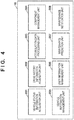
- FIG. 4 illustrates an exemplary software configuration of the server 10 according to the present invention.
- the server 10 includes a vehicle status information acquisition unit 201, a drive history information acquisition unit 202, an accumulation data processing unit 203, a component management unit 204, a vehicle information management unit 205, a user information management unit 206, a maintenance prediction unit 207, and a maintenance notification unit 208.
- the vehicle status information acquisition unit 201 acquires vehicle status information from the vehicle 30 (or via the information processing apparatus 20).
- the vehicle status information indicates information relating to the components mounted on the vehicle 30 (which includes the time of replacement and/or the degree of wear), and/or information relating to the maintenance actually performed by the user managing the vehicle 30.
- the information relating to the maintenance may include information relating to the timing and amount of oil supply.
- the provider of the information relating to maintenance here is not limited to the administrator (owner) of the vehicle 30, and may be a person in charge of a sales office who is contracted to perform the maintenance work, a factory for a vehicle inspection, and the like for example.
- the vehicle status information acquisition unit 201 may provide an input screen as a Web application to the information processing apparatus 20 to receive input of data via the screen.
- the drive history information acquisition unit 202 acquires drive history information from the vehicle 30 (or via the information processing apparatus 20).
- the drive history information indicates information relating to the history of driving performed by the user on the vehicle 30 (which includes the travelling route, travelling distance, driving frequency, operation history, and the like).
- the operation history may include control of the brake and accelerator, change of the gear, manipulation of the handle, change of the speed, tilt of the vehicle body, the continuous riding time, the weather during the driving, and the like.
- the drive history information acquisition unit 202 may provide an input screen as a Web application to the information processing apparatus 20 to receive input of data via the screen.
- the accumulation data processing unit 203 generates an index relating to the maintenance of the vehicle (and the components provided in the vehicle) on the basis of the accumulated data collected (acquired) from the plurality of vehicles 30.
- the index includes a correlation between the operation history and the wear of the component, a determination criterion for identifying the type of the component suitable for the operation history, and the like.
- the accumulation data processing unit 203 identifies and acquires, from the accumulated data, a history of maintenance performed by another user who has an identical or similar vehicle and is similar in the utilization purpose, frequency, and/or way of operation (tendencies in operation) of the vehicle.
- the accumulation data processing unit 203 determines (generates) a criterion for determining a suitable maintenance time or target.
- the method of determining the correlation and the method of determining the type of the component suitable for the operation history are not particularly limited, and may be determined by known statistical techniques, machine learning, deep learning, comparison with a predefined threshold (expiry date information and information relating to aging), and the like.
- the index is not limited to a single index, and multiple indices may be provided in accordance with the process to be performed on the accumulated data.
- the type of the accumulated data and the type of the index to be used may be designated by the user of the vehicle.
- the component management unit 204 manages the information of each component that can be mounted on each vehicle.
- the component information includes, for example, the category (type), the performance and uses, the tendency of the degree of wear, the popularity, the price, the manufacturer, and the like of components.
- the component information is not limited to components such as tires, mirrors, and the like, and may include engine oil, fuel performance, and the like.
- the component information may be updated in accordance with information processed by the accumulation data processing unit 203, in addition to information provided by the manufacturer.
- the vehicle information management unit 205 manages vehicle information for each vehicle.
- the vehicle information includes information specific to the vehicle (the manufacturing number and/or the type of the vehicle) and the like.
- the vehicle information includes vehicle status information acquired by the vehicle status information acquisition unit 201, and drive history information acquired by the drive history information acquisition unit 202 of each vehicle.
- the user information management unit 206 manages user information of the user who is the administrator of each vehicle.
- the user information may include the preferences, the information on the currently owned vehicle, and the information on the previously owned (or operated) vehicle of the user. Alternatively, information relating to a vehicle of interest may be included.
- the user information may include a content preset by the user, and may include notification destination information for the maintenance notification described later, for example.
- the maintenance prediction unit 207 makes a prediction relating to maintenance on the vehicle 30 on the basis of the information managed by the component management unit 204, the vehicle information management unit 205, and the user information management unit 206, and an index processed by the accumulation data processing unit 203. For example, a component, a part, timing (time), and the like of maintenance are predicted, and details are described later.
- the maintenance notification unit 208 notifies the user of maintenance information on the basis of the information predicted by the maintenance prediction unit 207.
- the notification destination is indicated by the user information managed by the user information management unit 206.
- the method of the notification is, but not limited to, a mail, a letter, and the like.
- FIG. 5 is a diagram illustrating a sequence of processes in the maintenance prediction system according to the present embodiment.
- the vehicle 30 records the vehicle status information and the drive history information in a timely manner.
- the recording of each information need not necessarily be performed at the same time, and the recording period and the timing of the recording may be different for each information.
- the recording may be performed at a predefined interval or may be performed when a predetermined operation (manipulation) is performed. For example, maintenance performed on the vehicle 30 side (e.g., a component has been replaced) may be detected and such information may be recorded.
- the vehicle 30 transmits the recorded vehicle status information and the drive history information to the server 10.
- the transmission of each information need not necessarily be performed at the same time, and only one of the information may be transmitted. Further, for the timing of the transmission, the transmission may be performed when a predetermined amount of data has been accumulated or at a timing when a predetermined period of time has elapsed after the last transmission.
- the information may be collectively transmitted at a timing when wireless communication is enabled, or may be transmitted in a divided manner.
- the information processing apparatus 20 receives an input of the vehicle status information and the drive history information via an input from the user or an input through a connection of the portable medium 40.
- the information processing apparatus 20 transmits each input information to the server 10.
- the transmission history may be managed within the information processing apparatus 20.
- the server 10 may provide a screen (e.g., a screen by a Web application) for inputting each information to the information processing apparatus 20.
- the server 10 receives an input and an update of the user information and the vehicle information from the user, and performs registration.
- the updating timing of the user information and the vehicle information is not particularly limited, and the user may perform the update as necessary.
- the server 10 acquires component information.
- the component information may be acquired by acquiring information provided by an administrator of the server 10, manufacturer, or the like, or may be periodically acquired by communicating with an external server (not illustrated).
- the server 10 acquires various information transmitted from the vehicle 30 or the information processing apparatus 20.
- the acquired information in the vehicle information management unit 205, is retained in association with the vehicle 30, and also, is classified in accordance with the type of the information and retained as accumulated data.
- the server 10 performs a process on the accumulated data. Specifically, with use of the accumulated data, the accumulation data processing unit 203 generates an index for use in determining the content and time of the maintenance. Note that this processing step is not limited to a process that is performed at a timing of reception of various information. For example, the process may be performed when a predetermined time has elapsed after the last process, or may be executed when an instruction is provided by the administrator of the server 10. It may also be executed when a predetermined amount of data is updated (added). That is, since data is successively collected from the plurality of vehicles and updated with time, the information (index) to be used in the maintenance prediction described later changes in accordance with the collection status and the processing status of the data.
- the server 10 performs a prediction process relating to maintenance on a certain vehicle 30 (target vehicle) that is subject to the maintenance prediction on the basis of the various information of the vehicle 30 and the information (index) determined by the process performed at S533. Details of this process will be described later with reference to FIG. 6 .
- This step may be performed independently of the execution timing of the process of S534, or may be performed at a predetermined time interval, or, may be performed upon receipt of various information at S532.
- the prediction process of the present embodiment also determines the timing (time) for the notification, in addition to the content of the maintenance.
- the server 10 notifies the user of the maintenance information determined through the process of the S535.
- the maintenance information is transmitted to the notification destination indicated by the user information associated with the information of the vehicle 30.
- the server 10 transmits an email containing maintenance information to the notification destination.
- the notification may be provided at an interval set by the user (e.g., once a day), whereas a highly urgent notification may be immediately provided.
- the user inputs and updates the user information and the vehicle information.
- the updating timing of the user information and the vehicle information is not particularly limited and may be performed as necessary by the user.
- an input is performed in a timely manner when maintenance has been performed on the vehicle.
- a person who performs the input/update here is not necessarily limited to the administrator (owner) of the vehicle, and may be a dealer of the vehicle or the like.
- the input screen of each information may also be provided by the server 10 as an application (e.g., a Web application).
- the information thereof may be registered together.
- the user receives the maintenance information notified from the server 10. For example, an email is received by a mobile terminal (not illustrated). Further, the user displays the received maintenance information.
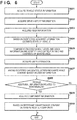
- the maintenance prediction process at the server 10 will be described below with reference to FIG. 6 .
- the processing flow is implemented when, at the server 10, the CPU 101 reads and executes a program stored in the external storage unit 104 and the like. Note that the processing flow described below is an example, and the order may be changed as necessary.
- the server 10 acquires, from the information managed by the vehicle information management unit 205, vehicle status information of the vehicle to be subjected to the maintenance prediction process.
- the information acquired here may only be the most recent information, or may include progress information in a predetermined range.
- the server 10 acquires, from the information managed by the vehicle information management unit 205, the drive history information of the vehicle to be subjected to the maintenance prediction process.
- the server 10 acquires the index information generated by the accumulation data processing unit 203 from the accumulated data.
- the index information only relevant information may be acquired using a predetermined item as a key from the vehicle status information and the drive history information of the vehicle.
- the server 10 estimates the state of the vehicle on the basis of each acquired information.
- the information indicated by the vehicle status information may be handled as the state of the vehicle as it is, or the state of a certain part (portion) or function may be estimated based on a plurality of items.
- the state (e.g., the degree of wear) of the tire may be estimated based on the time of the last replacement, the traveled distance, the utilization purpose of the vehicle of the user, and the operation tendency of the user. Further, in this step, the characteristics of the user operating the vehicle may be identified.
- the utilization purpose of the vehicle may be inferred based on the travelling route and/or frequency indicated by the drive history information, and a change (such as improvement or decline) of the driving skill of the user may also be estimated.
- an expected value of the financial expense for the vehicle may be estimated by estimating the balance (money) for the vehicle of the user on the basis of the maintenance status, the replacement history of the components, and/or the like of the user in the past.
- the server 10 determines candidates for the time and content of the maintenance for the vehicle on the basis of the state of the vehicle estimated at S604 and the index information acquired at S603.
- the candidate is not limited to the same part (or component or consumable), and candidates for a plurality of maintenance contents, such as "supply brake oil” "within X days", and “replace tire” "within Y months", are determined.
- the server 10 acquires, from the information managed by the user information management unit 206, the user information of the user of the vehicle to be subjected to the maintenance prediction process.
- the server 10 determines, from among the candidates determined at S606, the content of the maintenance to be provided to the user at this point in time on the basis of the user information. For example, the content of highly urgent maintenance may be always notified, and the priority of the notification for a portion maintained by the user last time may be lowered such that a higher priority is assigned to other notifications. In addition, in the case where a setting in which the user does not use the vehicle for some period of time has been made at this point in time, the notification may not be provided.
- the server 10 determines whether to provide additional information relating to the determined content of the maintenance.
- the determination may be based on, for example, the setting set by the user or the content of the maintenance.
- the present embodiment describes an exemplary case where information on a component that is usable (replaceable) for the maintenance is provided as additional information.
- the process proceeds to S609.
- this processing flow is terminated.
- the server 10 acquires the component information managed by the component management unit 204.
- the information to be acquired may be determined in accordance with the content of the maintenance and the user information. For example, when the maintenance of a tire is specified to be required at S605, information on the tire (e.g., product name, sales office, and performance information) is acquired.
- the server 10 determines information to be provided together with the maintenance information.
- the information of a suitable component is determined in accordance with the preferences of the user set in the user setting, the estimated user characteristics (skill level, utilization purpose), and the like, for example.
- a user whose characteristics are identical or similar to the estimated characteristics of the user may be identified based on the accumulated data so as to determine the component used by the identified user as a recommended component. Thereafter, this processing flow is terminated.
- the vehicle status information and the drive history information of the own vehicle are used for providing a maintenance notification relating to the vehicle. Further, information relating to the components, and information (index) acquired by processing the vehicle status information and the drive history information collected from a source other than the own vehicle are used.
- Examples of the vehicle status information are as follows: The replacement history of each component, the type and performance of mounted components, the timing and number of times of refueling, and the like.
- Examples of the drive history information are as follows: The operation history of the accelerator and brake, the number of changes of the gear, tilt of the vehicle body, the posture during operation, the movement of the center of gravity during operation, the number of times of operations, the operation time, the travelled distance, whether an accident (impact and/or vibration) has occurred, the frequency of operation, the time interval between the last operation and the next operation, the traveling location, the traveling position on the road, and the like.
- the index information examples include categorization for identifying the tendency in driving of the driver on the basis of the drive history information of the operator.
- the operator is categorized into a plurality of categories such as category A (safety-oriented driving), category B (speed-oriented driving), and category C (road rage-oriented driving).
- category A safety-oriented driving
- category B speed-oriented driving
- category C road rage-oriented driving
- the accumulated data is processed to generate a plurality of categories from the operation history.
- the categories of the categorization may be given in advance by a person or may be automatically generated.
- the tendencies of maintenance, the components to be used, and the like are determined from the accumulated data in association with each category.
- the appropriate maintenance time, recommended component, and/or the like for the user to be subjected to the maintenance prediction can be identified on the basis of the operation tendencies and index information of the user.
- the index information may be information such as "when the degree of wear of a consumable component A (e.g., a tire) is estimated to be X% for a user having a tendency (category A), the user is recommended to replace the component within Y days".
- the information may be information such as "when Z months or more have passed since the last operation, replacement of a component W is recommended”.
- the index information it is possible to use similarity in operation tendencies in the categorization such as "the operational characteristics of a user whose braking frequency tends to be higher than the acceleration frequency by a predetermined ratio or more are categorized as category C".
- the component information includes the performance, function, manufacturer, and the like of components. Note that, since the content to be notified is not limited to the components in the maintenance notification, the information to be managed may be changed in accordance with the content of notification such as the content of service, for example.
- the notification destination of the maintenance information is the user (administrator) of the vehicle set as the notification destination in the user information.
- the present invention is not limited to such a configuration, and the notification may be provided also to other predetermined notification destinations (information sharing).
- the notification may be provided also to the manufacturer of the vehicle, and the factory, sales office, and the like where maintenance can be performed.
- the maintenance information and/or user information (such as preferences) of the past may also be provided together.
- the notification may be provided to, as a notification destination, a store used by another user who is highly similar to the user on the basis of the operation tendencies, frequency, and the like of the user in addition to the notification destination registered by the user.
- the notification destination that has received the notification may provide, with use of the information thereof, additional services relating to the maintenance (e.g., provision of tailored component information, efficiency enhancement in a reservation process for maintenance schedules and the like).
- additional services relating to the maintenance e.g., provision of tailored component information, efficiency enhancement in a reservation process for maintenance schedules and the like.
- the present invention is not limited thereto.
- maintenance information in accordance with the license class and/or the accident history may be provided.
- the notification content may be switched in consideration of whether the user performs the maintenance by oneself in consideration of the ratio of the frequency of the maintenance performed by the user by oneself and the frequency of the maintenance performed by a person other than the user in a place such as a factory.
- the notification content may be switched by estimating not only the tendency in operation, but also the tendency in maintenance (maintenance skill) on the basis of the above-mentioned information. For example, for a user who does not frequently rides on the vehicle but highly frequently performs maintenance (e.g., modifications, and the like), a notification in accordance with the details thereof may be provided.
- Information on a budget that can be spent by the user on the vehicle may be received in advance to provide information on components on the basis of the received information.
- the maintenance information may not be sent, or may be sent when the period is close to that period.
- the history of the vehicle itself may be passed on to a new user on the basis of the vehicle identification number and the like.
- communication between vehicles may be performed such that the drive history information includes the frequency of communication, the travelling spacing (the distance between vehicles) and the like.
- This case corresponds to a configuration of providing information on various products from an EC site together with the operation history, preferences, and tendencies in operation of the user.
- a more accurate maintenance notification for the user of the vehicle can be provided.
Landscapes
- Physics & Mathematics (AREA)
- General Physics & Mathematics (AREA)
- Business, Economics & Management (AREA)
- Engineering & Computer Science (AREA)
- Human Resources & Organizations (AREA)
- Entrepreneurship & Innovation (AREA)
- Operations Research (AREA)
- Quality & Reliability (AREA)
- Strategic Management (AREA)
- Tourism & Hospitality (AREA)
- Marketing (AREA)
- General Business, Economics & Management (AREA)
- Economics (AREA)
- Theoretical Computer Science (AREA)
- Management, Administration, Business Operations System, And Electronic Commerce (AREA)
- Traffic Control Systems (AREA)
- Vehicle Cleaning, Maintenance, Repair, Refitting, And Outriggers (AREA)
Abstract
Description
- The present invention relates to a maintenance notification system, a method for controlling the same, and a program.
- In the related art, an invention is disclosed in which vehicle data is accumulated, and its data and maintenance (failure repair) information are registered in a server to perform failure prediction for a driver having similar data (Patent Document 1, etc.,).
- Patent Document 1: Japanese Patent Laid-Open No.
2004-272375 - As disclosed in Patent Document 1, a technique is known in which failure prediction is performed, with use of data of a failed vehicle, by notifying a vehicle having similar data. However, the appropriate maintenance timing of the vehicle may differ depending not only on the data of the vehicle, but also on the driving characteristics of the driver (such as how the driving is performed).
- In view of the foregoing, an object of the present invention is to provide a more accurate maintenance notification for the operator of the vehicle by determining an appropriate maintenance timing for the vehicle on the basis of the vehicle data and the operation information of a driver.
- In order to solve the above-mentioned problems, the present invention has the following configuration. Specifically, a maintenance notification system includes: accumulation means for collecting and accumulating status information of each of a plurality of vehicles, and drive history information of each of the plurality of vehicles; generation means for generating index information to be used for predicting a timing for maintenance with use of the information accumulated in the accumulation means; identification means for identifying a timing for maintenance on a target vehicle that is subjected to the maintenance on a basis of the status information and the drive history information of the target vehicle and the index information generated by the generation means; and notification means for providing a notification relating to the maintenance on a basis of the timing for the maintenance that is identified by the identification means.
- According to the present invention, a more accurate maintenance notification for an operator of a vehicle can be provided.
- Other features and advantages of the invention will become apparent from the following descriptions, with reference to the accompanying drawings. Note that, in the accompanying drawings, the same reference numerals are assigned to the identical or similar configurations.
- The accompanying drawings are included in the specification to constitute parts thereof and illustrate embodiments of the invention, and are used to explain the principles of the invention together with the description.
-
FIG. 1 illustrates an exemplary system configuration according to the present invention. -
FIG. 2 illustrates an exemplary hardware configuration of a server and an information processing apparatus according to the present invention. -
FIG. 3 illustrates an exemplary hardware configuration of a vehicle according to the present invention. -
FIG. 4 illustrates an exemplary software configuration of the server according to the present invention. -
FIG. 5 is a sequence diagram of a system according to the present invention. -
FIG. 6 is a flowchart illustrating processes in the server according to the present invention. - An embodiment of the present invention is described below with reference to the drawings. Note that the configurations and the like described below are merely examples, and the present invention is not limited to the configurations and the like described below.
-
FIG. 1 illustrates an exemplary configuration of the entirety of a maintenance notification system according to the present embodiment. The maintenance notification system according to the present embodiment includes aserver 10, aninformation processing apparatus 20, and a plurality ofvehicles 30. Theserver 10 and theinformation processing apparatus 20 are communicatively connected via an Internet 60. In addition,vehicles 30 are also communicatively connected to the Internet 60 by wireless communication via anaccess point 50. - Note that, for the purpose of allowing wireless communication of the
vehicle 30, the communication function may be achieved with an onboard terminal or a mobile terminal that can be carried by an operator of thevehicle 30. Here, the mobile terminal is, but not limited to, a device such as a smart phone and a tablet, and the mobile terminal may be another device. In addition, the vehicle 30 (or the mobile terminal) is configured so that various information is retained in aportable medium 40, and the information in theportable medium 40 can be provided to theinformation processing apparatus 20 and the like in addition to the communication via theaccess point 50. Theinformation processing apparatus 20 is, for example, a commonly used computer such as a personal computer (PC), but the configuration thereof is not particularly limited. In the present embodiment, thevehicle 30 is described by taking an automatic two-wheel vehicle (so-called motorbike) as an example. - Note that, although only a single device for each of the devices other than the
vehicles 30 is illustrated inFIG. 1 , the configuration is not limited to this, and a plurality of the devices may be provided as necessary. In addition, theserver 10 may be configured to perform distributed processing by a plurality of devices depending on functions and services rather than performing each process by a single device. Thevehicle 30 is also not limited to the illustration ofFIG. 1 , and may include more vehicles, and their characteristics (such as the vehicle type, equipment and the like) may not be identical to each other. -
FIG. 2 illustrates an exemplary hardware configuration of theserver 10 and theinformation processing apparatus 20 according to the present invention. Here, the hardware configuration of theserver 10 and the hardware configuration of theinformation processing apparatus 20 are identical to each other, and therefore theserver 10 will be described as an example. - The
server 10 includes aCPU 101, aROM 102, aRAM 103, anexternal storage unit 104, adisplay unit 105, aninput unit 106, and acommunication unit 107. The units are communicatively connected with each other via abus 100. - The
CPU 101 commands the entire control of theserver 10, and implements processes and the like according to the present invention by reading and executing programs stored in theexternal storage unit 104 and the like. TheROM 102 is a non-volatile storage area and retains various programs and data. TheRAM 103 is a volatile storage area, and is used as a work area in execution of a program, and the like. Theexternal storage unit 104 is a non-volatile storage area, and retains various programs and data used for processes according to the present invention. Thedisplay unit 105 is a unit for displaying various screens. Theinput unit 106 is a unit for inputting various information and settings by a user or the like. Thecommunication unit 107 is a unit configured to communicate with an external apparatus, and the communication method may be wired or wireless. -
FIG. 3 illustrates an exemplary hardware configuration of thevehicle 30 according to the present invention. Thevehicle 30 includes aprocessing unit 301, astorage unit 302, adetection unit 303, aUI unit 304, acommunication unit 305, and adriving unit 306. Theprocessing unit 301 commands the entire control of the processes according to the present embodiment. While thevehicle 30 is described by taking an automatic two-wheel vehicle as an example in the present embodiment as mentioned above, the control of travel and the like of the automatic two-wheel vehicle may be configured separately from the processes in theprocessing unit 301. - The
storage unit 302 is a non-volatile storage area and retains various data according to the present embodiment. In the present embodiment, thestorage unit 302 is configured as a portable medium that can be attached to and detached from thevehicle 30, and supports USB connections that allow for connection to theinformation processing apparatus 20 and the like, for example. Thedetection unit 303 is a detection means (sensor) for various operations included in thevehicle 30 according to the present embodiment, and its type, function, and detection method are not limited. Examples of information detected by the detection means include operations of the accelerator or brake, the remaining amount of fuel, tilt of the vehicle body, environmental information (air temperature, humidity and the like) during travel or stop, an impact on the vehicle body, an orientation of the handle, a state of a consumable (tire, fuel and the like), and the like. The information detected by thedetection unit 303 may be retained in thestorage unit 302 as raw data, or may be retained in thestorage unit 302 after being processed as processing data by theprocessing unit 301. - The
UI unit 304 is a unit for receiving various information and instructions from the user of thevehicle 30 and the like. Thecommunication unit 305 is a unit configured to perform wireless communication with an external apparatus, and the communication method is not particularly limited. In addition, the data transmitted and/or received via thecommunication unit 305 and the communication timing are not particularly limited. The drivingunit 306 is a unit configured to command driving and operation relating to the travel of the vehicle and the like. Note that the drivingunit 306 includes parts such as the handle, brake and the like, and detailed description thereof is omitted here. - While the present embodiment describes a configuration in which the
vehicle 30 includes theprocessing unit 301, thestorage unit 302, theUI unit 304, or thecommunication unit 305, the present invention is not limited thereto. For example, the above-mentioned functions may be achieved using an on-board apparatus (a car navigation apparatus or the like), a mobile terminal such as a smart phone, and the like. -
FIG. 4 illustrates an exemplary software configuration of theserver 10 according to the present invention. Theserver 10 includes a vehicle statusinformation acquisition unit 201, a drive historyinformation acquisition unit 202, an accumulationdata processing unit 203, acomponent management unit 204, a vehicleinformation management unit 205, a userinformation management unit 206, amaintenance prediction unit 207, and amaintenance notification unit 208. - The vehicle status
information acquisition unit 201 acquires vehicle status information from the vehicle 30 (or via the information processing apparatus 20). The vehicle status information indicates information relating to the components mounted on the vehicle 30 (which includes the time of replacement and/or the degree of wear), and/or information relating to the maintenance actually performed by the user managing thevehicle 30. Note that the information relating to the maintenance may include information relating to the timing and amount of oil supply. In addition, the provider of the information relating to maintenance here is not limited to the administrator (owner) of thevehicle 30, and may be a person in charge of a sales office who is contracted to perform the maintenance work, a factory for a vehicle inspection, and the like for example. In a case where information is acquired via theinformation processing apparatus 20, the vehicle statusinformation acquisition unit 201 may provide an input screen as a Web application to theinformation processing apparatus 20 to receive input of data via the screen. - The drive history
information acquisition unit 202 acquires drive history information from the vehicle 30 (or via the information processing apparatus 20). The drive history information indicates information relating to the history of driving performed by the user on the vehicle 30 (which includes the travelling route, travelling distance, driving frequency, operation history, and the like). In addition, the operation history may include control of the brake and accelerator, change of the gear, manipulation of the handle, change of the speed, tilt of the vehicle body, the continuous riding time, the weather during the driving, and the like. In a case where information is acquired via theinformation processing apparatus 20, the drive historyinformation acquisition unit 202 may provide an input screen as a Web application to theinformation processing apparatus 20 to receive input of data via the screen. - The accumulation
data processing unit 203 generates an index relating to the maintenance of the vehicle (and the components provided in the vehicle) on the basis of the accumulated data collected (acquired) from the plurality ofvehicles 30. Here, the index includes a correlation between the operation history and the wear of the component, a determination criterion for identifying the type of the component suitable for the operation history, and the like. For example, the accumulationdata processing unit 203 identifies and acquires, from the accumulated data, a history of maintenance performed by another user who has an identical or similar vehicle and is similar in the utilization purpose, frequency, and/or way of operation (tendencies in operation) of the vehicle. Then, on the basis of these pieces of information, the accumulationdata processing unit 203 determines (generates) a criterion for determining a suitable maintenance time or target. Note that the method of determining the correlation and the method of determining the type of the component suitable for the operation history are not particularly limited, and may be determined by known statistical techniques, machine learning, deep learning, comparison with a predefined threshold (expiry date information and information relating to aging), and the like. In addition, the index is not limited to a single index, and multiple indices may be provided in accordance with the process to be performed on the accumulated data. In addition, the type of the accumulated data and the type of the index to be used may be designated by the user of the vehicle. - The
component management unit 204 manages the information of each component that can be mounted on each vehicle. The component information includes, for example, the category (type), the performance and uses, the tendency of the degree of wear, the popularity, the price, the manufacturer, and the like of components. In addition, the component information is not limited to components such as tires, mirrors, and the like, and may include engine oil, fuel performance, and the like. In addition, the component information may be updated in accordance with information processed by the accumulationdata processing unit 203, in addition to information provided by the manufacturer. - The vehicle
information management unit 205 manages vehicle information for each vehicle. Here, the vehicle information includes information specific to the vehicle (the manufacturing number and/or the type of the vehicle) and the like. The vehicle information includes vehicle status information acquired by the vehicle statusinformation acquisition unit 201, and drive history information acquired by the drive historyinformation acquisition unit 202 of each vehicle. - The user
information management unit 206 manages user information of the user who is the administrator of each vehicle. The user information may include the preferences, the information on the currently owned vehicle, and the information on the previously owned (or operated) vehicle of the user. Alternatively, information relating to a vehicle of interest may be included. The user information may include a content preset by the user, and may include notification destination information for the maintenance notification described later, for example. - The
maintenance prediction unit 207 makes a prediction relating to maintenance on thevehicle 30 on the basis of the information managed by thecomponent management unit 204, the vehicleinformation management unit 205, and the userinformation management unit 206, and an index processed by the accumulationdata processing unit 203. For example, a component, a part, timing (time), and the like of maintenance are predicted, and details are described later. - The
maintenance notification unit 208 notifies the user of maintenance information on the basis of the information predicted by themaintenance prediction unit 207. Here, the notification destination is indicated by the user information managed by the userinformation management unit 206. The method of the notification is, but not limited to, a mail, a letter, and the like. -
FIG. 5 is a diagram illustrating a sequence of processes in the maintenance prediction system according to the present embodiment. - At S501, the
vehicle 30 records the vehicle status information and the drive history information in a timely manner. Note that the recording of each information need not necessarily be performed at the same time, and the recording period and the timing of the recording may be different for each information. Regarding the timing of the recording, the recording may be performed at a predefined interval or may be performed when a predetermined operation (manipulation) is performed. For example, maintenance performed on thevehicle 30 side (e.g., a component has been replaced) may be detected and such information may be recorded. - At S502, the
vehicle 30 transmits the recorded vehicle status information and the drive history information to theserver 10. Note that the transmission of each information need not necessarily be performed at the same time, and only one of the information may be transmitted. Further, for the timing of the transmission, the transmission may be performed when a predetermined amount of data has been accumulated or at a timing when a predetermined period of time has elapsed after the last transmission. In addition, the information may be collectively transmitted at a timing when wireless communication is enabled, or may be transmitted in a divided manner. - At S511, the
information processing apparatus 20 receives an input of the vehicle status information and the drive history information via an input from the user or an input through a connection of theportable medium 40. - At S512, the
information processing apparatus 20 transmits each input information to theserver 10. Note that the transmission history may be managed within theinformation processing apparatus 20. As described above, theserver 10 may provide a screen (e.g., a screen by a Web application) for inputting each information to theinformation processing apparatus 20. - At S531, at an arbitrary timing, the
server 10 receives an input and an update of the user information and the vehicle information from the user, and performs registration. The updating timing of the user information and the vehicle information is not particularly limited, and the user may perform the update as necessary. - At S532, the
server 10 acquires component information. The component information may be acquired by acquiring information provided by an administrator of theserver 10, manufacturer, or the like, or may be periodically acquired by communicating with an external server (not illustrated). - At S533, the
server 10 acquires various information transmitted from thevehicle 30 or theinformation processing apparatus 20. The acquired information, in the vehicleinformation management unit 205, is retained in association with thevehicle 30, and also, is classified in accordance with the type of the information and retained as accumulated data. - At S534, the
server 10 performs a process on the accumulated data. Specifically, with use of the accumulated data, the accumulationdata processing unit 203 generates an index for use in determining the content and time of the maintenance. Note that this processing step is not limited to a process that is performed at a timing of reception of various information. For example, the process may be performed when a predetermined time has elapsed after the last process, or may be executed when an instruction is provided by the administrator of theserver 10. It may also be executed when a predetermined amount of data is updated (added). That is, since data is successively collected from the plurality of vehicles and updated with time, the information (index) to be used in the maintenance prediction described later changes in accordance with the collection status and the processing status of the data. - At S535, the
server 10 performs a prediction process relating to maintenance on a certain vehicle 30 (target vehicle) that is subject to the maintenance prediction on the basis of the various information of thevehicle 30 and the information (index) determined by the process performed at S533. Details of this process will be described later with reference toFIG. 6 . This step may be performed independently of the execution timing of the process of S534, or may be performed at a predetermined time interval, or, may be performed upon receipt of various information at S532. The prediction process of the present embodiment also determines the timing (time) for the notification, in addition to the content of the maintenance. - At S536, the
server 10 notifies the user of the maintenance information determined through the process of the S535. Here, the maintenance information is transmitted to the notification destination indicated by the user information associated with the information of thevehicle 30. For example, in a case where an email address is registered as a notification destination in the user information, theserver 10 transmits an email containing maintenance information to the notification destination. Regarding the timing of this notification, the notification may be provided at an interval set by the user (e.g., once a day), whereas a highly urgent notification may be immediately provided. - At S541, at an arbitrary timing, the user inputs and updates the user information and the vehicle information. As described above, the updating timing of the user information and the vehicle information is not particularly limited and may be performed as necessary by the user. In addition, an input is performed in a timely manner when maintenance has been performed on the vehicle. In addition, a person who performs the input/update here is not necessarily limited to the administrator (owner) of the vehicle, and may be a dealer of the vehicle or the like. The input screen of each information may also be provided by the
server 10 as an application (e.g., a Web application). In addition, in a case where maintenance is performed in response to the maintenance notification according to the present embodiment, the information thereof may be registered together. - At S542, the user receives the maintenance information notified from the
server 10. For example, an email is received by a mobile terminal (not illustrated). Further, the user displays the received maintenance information. - The maintenance prediction process at the
server 10 according to the present embodiment will be described below with reference toFIG. 6 . The processing flow is implemented when, at theserver 10, theCPU 101 reads and executes a program stored in theexternal storage unit 104 and the like. Note that the processing flow described below is an example, and the order may be changed as necessary. - At S601, the
server 10 acquires, from the information managed by the vehicleinformation management unit 205, vehicle status information of the vehicle to be subjected to the maintenance prediction process. The information acquired here may only be the most recent information, or may include progress information in a predetermined range. - At S602, the
server 10 acquires, from the information managed by the vehicleinformation management unit 205, the drive history information of the vehicle to be subjected to the maintenance prediction process. - At S603, the
server 10 acquires the index information generated by the accumulationdata processing unit 203 from the accumulated data. As the index information, only relevant information may be acquired using a predetermined item as a key from the vehicle status information and the drive history information of the vehicle. - At S604, the
server 10 estimates the state of the vehicle on the basis of each acquired information. Here, regarding the state of the vehicle, the information indicated by the vehicle status information may be handled as the state of the vehicle as it is, or the state of a certain part (portion) or function may be estimated based on a plurality of items. For example, regarding a tire, the state (e.g., the degree of wear) of the tire may be estimated based on the time of the last replacement, the traveled distance, the utilization purpose of the vehicle of the user, and the operation tendency of the user. Further, in this step, the characteristics of the user operating the vehicle may be identified. For example, the utilization purpose of the vehicle may be inferred based on the travelling route and/or frequency indicated by the drive history information, and a change (such as improvement or decline) of the driving skill of the user may also be estimated. In addition, an expected value of the financial expense for the vehicle may be estimated by estimating the balance (money) for the vehicle of the user on the basis of the maintenance status, the replacement history of the components, and/or the like of the user in the past. - At S605, the
server 10 determines candidates for the time and content of the maintenance for the vehicle on the basis of the state of the vehicle estimated at S604 and the index information acquired at S603. Here, the candidate is not limited to the same part (or component or consumable), and candidates for a plurality of maintenance contents, such as "supply brake oil" "within X days", and "replace tire" "within Y months", are determined. - At S606, the
server 10 acquires, from the information managed by the userinformation management unit 206, the user information of the user of the vehicle to be subjected to the maintenance prediction process. - At S607, the
server 10 determines, from among the candidates determined at S606, the content of the maintenance to be provided to the user at this point in time on the basis of the user information. For example, the content of highly urgent maintenance may be always notified, and the priority of the notification for a portion maintained by the user last time may be lowered such that a higher priority is assigned to other notifications. In addition, in the case where a setting in which the user does not use the vehicle for some period of time has been made at this point in time, the notification may not be provided. - At S608, the
server 10 determines whether to provide additional information relating to the determined content of the maintenance. Here, the determination may be based on, for example, the setting set by the user or the content of the maintenance. The present embodiment describes an exemplary case where information on a component that is usable (replaceable) for the maintenance is provided as additional information. In accordance with a determination that additional information is provided (YES at S608), the process proceeds to S609. In accordance with a determination that additional information is not provided (NO at S608), this processing flow is terminated. - At S609, the
server 10 acquires the component information managed by thecomponent management unit 204. Here, the information to be acquired may be determined in accordance with the content of the maintenance and the user information. For example, when the maintenance of a tire is specified to be required at S605, information on the tire (e.g., product name, sales office, and performance information) is acquired. - At S610, from the acquired component information, the
server 10 determines information to be provided together with the maintenance information. For example, the information of a suitable component is determined in accordance with the preferences of the user set in the user setting, the estimated user characteristics (skill level, utilization purpose), and the like, for example. In addition, a user whose characteristics are identical or similar to the estimated characteristics of the user may be identified based on the accumulated data so as to determine the component used by the identified user as a recommended component. Thereafter, this processing flow is terminated. - An example of information handled by the system according to the present embodiment will be described. As described above, in the present embodiment, the vehicle status information and the drive history information of the own vehicle are used for providing a maintenance notification relating to the vehicle. Further, information relating to the components, and information (index) acquired by processing the vehicle status information and the drive history information collected from a source other than the own vehicle are used.
- Examples of the vehicle status information are as follows: The replacement history of each component, the type and performance of mounted components, the timing and number of times of refueling, and the like.
- Examples of the drive history information are as follows: The operation history of the accelerator and brake, the number of changes of the gear, tilt of the vehicle body, the posture during operation, the movement of the center of gravity during operation, the number of times of operations, the operation time, the travelled distance, whether an accident (impact and/or vibration) has occurred, the frequency of operation, the time interval between the last operation and the next operation, the traveling location, the traveling position on the road, and the like.
- Examples of the index information include categorization for identifying the tendency in driving of the driver on the basis of the drive history information of the operator. For example, the operator is categorized into a plurality of categories such as category A (safety-oriented driving), category B (speed-oriented driving), and category C (road rage-oriented driving). Here, the accumulated data is processed to generate a plurality of categories from the operation history. The categories of the categorization may be given in advance by a person or may be automatically generated. Further, the tendencies of maintenance, the components to be used, and the like are determined from the accumulated data in association with each category. Thus, the appropriate maintenance time, recommended component, and/or the like for the user to be subjected to the maintenance prediction can be identified on the basis of the operation tendencies and index information of the user.
- In light of the above, the index information may be information such as "when the degree of wear of a consumable component A (e.g., a tire) is estimated to be X% for a user having a tendency (category A), the user is recommended to replace the component within Y days". In addition, the information may be information such as "when Z months or more have passed since the last operation, replacement of a component W is recommended". In addition, as the index information, it is possible to use similarity in operation tendencies in the categorization such as "the operational characteristics of a user whose braking frequency tends to be higher than the acceleration frequency by a predetermined ratio or more are categorized as category C".
- The component information includes the performance, function, manufacturer, and the like of components. Note that, since the content to be notified is not limited to the components in the maintenance notification, the information to be managed may be changed in accordance with the content of notification such as the content of service, for example.
- As described above, according to the present embodiment, by determining an appropriate maintenance timing for the vehicle on the basis of the vehicle data and the operation information of the driver, it is possible to provide a more accurate maintenance notification for the operator of the vehicle.
- In the first embodiment, the notification destination of the maintenance information is the user (administrator) of the vehicle set as the notification destination in the user information. The present invention is not limited to such a configuration, and the notification may be provided also to other predetermined notification destinations (information sharing). For example, the notification may be provided also to the manufacturer of the vehicle, and the factory, sales office, and the like where maintenance can be performed. In this case, the maintenance information and/or user information (such as preferences) of the past may also be provided together.
- In addition, the notification may be provided to, as a notification destination, a store used by another user who is highly similar to the user on the basis of the operation tendencies, frequency, and the like of the user in addition to the notification destination registered by the user.
- Further, the notification destination that has received the notification may provide, with use of the information thereof, additional services relating to the maintenance (e.g., provision of tailored component information, efficiency enhancement in a reservation process for maintenance schedules and the like).
- Thus, not only the user of the vehicle, but also other related persons can acquire the information on components and the like relating to the maintenance, and thus the maintenance efficiency can be increased. In addition, information based on the operation history and the operation tendencies of the vehicle can be shared, and thus the convenience of the user can be increased.
- While the maintenance is performed in accordance with the wear of the component and the like in the embodiment described above, the present invention is not limited thereto. For example, maintenance information in accordance with the license class and/or the accident history may be provided. In addition, the notification content may be switched in consideration of whether the user performs the maintenance by oneself in consideration of the ratio of the frequency of the maintenance performed by the user by oneself and the frequency of the maintenance performed by a person other than the user in a place such as a factory. Further, the notification content may be switched by estimating not only the tendency in operation, but also the tendency in maintenance (maintenance skill) on the basis of the above-mentioned information. For example, for a user who does not frequently rides on the vehicle but highly frequently performs maintenance (e.g., modifications, and the like), a notification in accordance with the details thereof may be provided.
- Information on a budget that can be spent by the user on the vehicle may be received in advance to provide information on components on the basis of the received information.
- In addition, in consideration of a predetermined period of time, such as the period of the vehicle inspection or the compulsory automobile liability insurance, the maintenance information may not be sent, or may be sent when the period is close to that period.
- In addition, in the case where the vehicle is a secondhand vehicle (a vehicle whose owner has been changed multiple times), the history of the vehicle itself may be passed on to a new user on the basis of the vehicle identification number and the like.
- In addition, communication between vehicles may be performed such that the drive history information includes the frequency of communication, the travelling spacing (the distance between vehicles) and the like.
- While information is shared with a manufacturer, a maintenance factory, and the like as an example in the second embodiment, it is possible to adopt a configuration of operating in conjunction with an EC site for Internet shopping, for example. This case corresponds to a configuration of providing information on various products from an EC site together with the operation history, preferences, and tendencies in operation of the user.
-
- 1. A maintenance notification system (e.g., 10) according to the above-mentioned embodiment including:
- accumulation means (e.g., 201, 202, 205) for collecting and accumulating status information of each of a plurality of vehicles, and drive history information of each of the plurality of vehicles;
- generation means (e.g., 203) for generating index information to be used for predicting a timing for maintenance with use of the information accumulated in the accumulation means;
- identification means (e.g., 207) for identifying a timing for maintenance on a target vehicle that is subjected to the maintenance on a basis of the status information and the drive history information of the target vehicle and the index information generated by the generation means; and
- notification means (e.g., 208) for providing a notification relating to the maintenance on a basis of the timing for the maintenance that is identified by the identification means.
According to this embodiment, a more accurate maintenance notification for the user of the vehicle can be provided. - 2. In the maintenance notification system according to the above-mentioned embodiment,
the status information includes a history of maintenance performed on a vehicle; and
the generation means generates index information for estimating a degree of wear of a component provided in the vehicle on a basis of the drive history information and the history of the maintenance performed on the vehicle.
According to this embodiment, a more accurate maintenance notification reflecting the history of maintenance can be provided. - 3. In the maintenance notification system according to the above-mentioned embodiment, the generation means generates one or more pieces of index information for performing categorization into a plurality of categories corresponding to a tendency in operation of a user on a basis of the drive history information.
According to this embodiment, a maintenance notification can be provided in accordance with the characteristic of the operation of the user. - 4. In the maintenance notification system according to the above-mentioned embodiment, the identification means identifies a user having an identical or similar tendency in operation to that of a user of the target vehicle on a basis of the drive history information and the index information.
According to this embodiment, a maintenance notification can be received based on another user whose information is identical or similar to the user. - 5. In the maintenance notification system according to the above-mentioned embodiment, the identification means identifies the timing for the maintenance on the target vehicle on a basis of a history of maintenance performed by the user having the identical or similar tendency in operation.
According to this embodiment, a maintenance notification can be received based on another user whose information is identical or similar to the user. - 6. In the maintenance notification system according to the above-mentioned embodiment, the accumulation means collects the status information and the drive history information from each of the plurality of vehicles via an Internet (e.g., 60).
According to this embodiment, a greater amount of data for use in maintenance notification can be collected via an external network. - 7. In the maintenance notification system according to the above-mentioned embodiment, the status information includes information on whether a response to the notification relating to the maintenance has been made.
According to this embodiment, a result of a response of the user to a maintenance notification can be collected, and additional maintenance notifications reflecting the information thereof are achieved. - 8. In the maintenance notification system according to the above-mentioned embodiment, the identification means switches the index information for use in identifying the timing for the maintenance in accordance with a setting set by a user.
According to this embodiment, maintenance notifications in accordance with the intention of the user may be provided. - 9. In the maintenance notification system according to the above-mentioned embodiment, the identification means further identifies information of a component associated with the maintenance on a basis of the status information and the drive history information of the target vehicle (e.g., 204); and
the notification means further notifies the identified information of the component.
According to this embodiment, maintenance notifications that are more convenient for the user can be provided. - 10. In the maintenance notification system according to the above-mentioned embodiment, the notification means further notifies information relating to the maintenance to a notification destination other than a user of the target vehicle on a basis of the status information and the drive history information of the target vehicle.
According to this embodiment, information relating to maintenance can be shared by a user or the like other than the user of the vehicle. - 11. A method for controlling a maintenance notification system according to the above-mentioned embodiment, the method including:
- collecting and accumulating status information of each of a plurality of vehicles, and drive history information of each of the plurality of vehicles;
- generating index information to be used for predicting a timing for maintenance with use of the information accumulated in the accumulating;
- identifying a timing for maintenance on a target vehicle that is subjected to the maintenance on a basis of the status information and the drive history information of the target vehicle and the index information generated in the generating; and
- providing a notification relating to the maintenance on a basis of the timing for the maintenance that is identified in the identifying.
According to this embodiment, a more accurate maintenance notification for the user of the vehicle can be provided. - 12. A program according to the above-mentioned embodiment is configured for functioning a computer as:
- accumulation means for correcting and accumulating status information of each of a plurality of vehicles, and drive history information of each of the plurality of vehicles;
- generation means for generating index information to be used for predicting a timing for maintenance with use of the information accumulated in the accumulation means;
- identification means for identifying a timing for maintenance on a target vehicle that is subjected to the maintenance on a basis of the status information and the drive history information of the target vehicle and the index information generated by the generation means; and
- notification means for providing a notification relating to the maintenance on a basis of the timing for the maintenance that is identified by the identification means.
- According to this embodiment, a more accurate maintenance notification for the user of the vehicle can be provided.
- The present invention is not limited to the embodiments described above, and various modifications and variations can be made without departing from the spirit and scope of the present invention. Accordingly, the following claims are appended to disclose the scope of the invention.
Claims (12)
- A maintenance notification system characterized in that comprising:accumulation means for collecting and accumulating status information of each of a plurality of vehicles, and drive history information of each of the plurality of vehicles;generation means for generating index information to be used for predicting a timing for maintenance with use of the information accumulated in the accumulation means;identification means for identifying a timing for maintenance on a target vehicle that is subjected to the maintenance on a basis of the status information and the drive history information of the target vehicle and the index information generated by the generation means; andnotification means for providing a notification relating to the maintenance on a basis of the timing for the maintenance that is identified by the identification means.
- The maintenance notification system according to claim 1, characterized in thatthe status information includes a history of maintenance performed on a vehicle; andthe generation means generates index information for estimating a degree of wear of a component provided in the vehicle on a basis of the drive history information and the history of the maintenance performed on the vehicle.
- The maintenance notification system according to claim 1 or 2, characterized in that the generation means generates one or more pieces of index information for performing categorization into a plurality of categories corresponding to a tendency in operation of a user on a basis of the drive history information.
- The maintenance notification system according to any one of claims 1 to 3, characterized in that the identification means identifies a user having an identical or similar tendency in operation to that of a user of the target vehicle on a basis of the drive history information and the index information.
- The maintenance notification system according to claim 4, characterized in that the identification means identifies the timing for the maintenance on the target vehicle on a basis of a history of maintenance performed by the user having the identical or similar tendency in operation.
- The maintenance notification system according to any one of claims 1 to 5, characterized in that the accumulation means collects the status information and the drive history information from each of the plurality of vehicles via an Internet.
- The maintenance notification system according to any one of claims 1 to 6, characterized in that the status information includes information on whether a response to the notification relating to the maintenance has been made.
- The maintenance notification system according to any one of claims 1 to 7, characterized in that the identification means switches the index information for use in identifying the timing for the maintenance in accordance with a setting set by a user.
- The maintenance notification system according to any one of claims 1 to 8, characterized in that
the identification means further identifies information of a component associated with the maintenance on a basis of the status information and the drive history information of the target vehicle; and
the notification means further notifies the identified information of the component. - The maintenance notification system according to any one of claims 1 to 9, characterized in that the notification means further notifies information relating to the maintenance to a notification destination other than a user of the target vehicle on a basis of the status information and the drive history information of the target vehicle.
- A method for controlling a maintenance notification system, characterized in that the method comprising:collecting and accumulating status information of each of a plurality of vehicles, and drive history information of each of the plurality of vehicles;generating index information to be used for predicting a timing for maintenance with use of the information accumulated in the accumulating;identifying a timing for maintenance on a target vehicle that is subjected to the maintenance on a basis of the status information and the drive history information of the target vehicle and the index information generated in the generating; andproviding a notification relating to the maintenance on a basis of the timing for the maintenance that is identified in the identifying.
- A program for functioning a computer as:accumulation means for collecting and accumulating status information of each of a plurality of vehicles, and drive history information of each of the plurality of vehicles;generation means for generating index information to be used for predicting a timing for maintenance with use of the information accumulated in the accumulation means;identification means for identifying a timing for maintenance on a target vehicle that is subjected to the maintenance on a basis of the status information and the drive history information of the target vehicle and the index information generated by the generation means; andnotification means for providing a notification relating to the maintenance on a basis of the timing for the maintenance that is identified by the identification means.
Applications Claiming Priority (1)
| Application Number | Priority Date | Filing Date | Title |
|---|---|---|---|
| PCT/JP2017/013511 WO2018179307A1 (en) | 2017-03-31 | 2017-03-31 | Maintenance notification system and control method therefor, and program |
Publications (2)
| Publication Number | Publication Date |
|---|---|
| EP3605411A1 true EP3605411A1 (en) | 2020-02-05 |
| EP3605411A4 EP3605411A4 (en) | 2020-02-05 |
Family
ID=63677263
Family Applications (1)
| Application Number | Title | Priority Date | Filing Date |
|---|---|---|---|
| EP17903423.6A Ceased EP3605411A4 (en) | 2017-03-31 | 2017-03-31 | MAINTENANCE NOTIFICATION SYSTEM AND CONTROL PROCEDURE THEREFOR AND PROGRAM |
Country Status (5)
| Country | Link |
|---|---|
| US (1) | US11222484B2 (en) |
| EP (1) | EP3605411A4 (en) |
| JP (1) | JP6802359B2 (en) |
| CN (1) | CN110520877B (en) |
| WO (1) | WO2018179307A1 (en) |
Families Citing this family (15)
| Publication number | Priority date | Publication date | Assignee | Title |
|---|---|---|---|---|
| CN110520877B (en) | 2017-03-31 | 2022-10-14 | 本田技研工业株式会社 | Maintenance notification system, control method and medium thereof |
| US11461674B2 (en) * | 2018-05-01 | 2022-10-04 | Kyndryl, Inc. | Vehicle recommendations based on driving habits |
| WO2020044568A1 (en) * | 2018-08-31 | 2020-03-05 | ヤマハ発動機株式会社 | Maintenance requirement indicator data outputting device and maintenance requirement indicator data outputting method |
| WO2020095691A1 (en) * | 2018-11-09 | 2020-05-14 | ヤマハ発動機株式会社 | Maintenance notification device for saddle-ridden vehicle |
| JP7372772B2 (en) * | 2019-07-16 | 2023-11-01 | カワサキモータース株式会社 | Condition monitoring device and condition monitoring program |
| JP2021048493A (en) * | 2019-09-18 | 2021-03-25 | 日立オートモティブシステムズ株式会社 | Electronic control device for automobile |
| WO2021140607A1 (en) * | 2020-01-09 | 2021-07-15 | 日本電気株式会社 | Information processing device, control method, and storage medium |
| JP7590123B2 (en) * | 2020-05-15 | 2024-11-26 | 株式会社 ディー・エヌ・エー | Information processing device, information processing method, and program |
| US12387537B2 (en) | 2020-08-25 | 2025-08-12 | ANI Technologies Private Limited | Determination of health status of vehicular systems in vehicles |
| JP7227997B2 (en) * | 2021-03-12 | 2023-02-22 | 本田技研工業株式会社 | Decision device, decision method, and program |
| JP7492648B2 (en) * | 2021-03-15 | 2024-05-29 | 本田技研工業株式会社 | Order quantity calculation device and order quantity calculation system |
| JP2022188675A (en) * | 2021-06-09 | 2022-12-21 | ウーブン・プラネット・ホールディングス株式会社 | Service providing server, service providing system, and service providing method |
| CN113836193B (en) * | 2021-08-13 | 2024-05-17 | 合肥维天运通信息科技股份有限公司 | Logistics vehicle intelligent rescue method and system |
| CN113722601B (en) * | 2021-09-07 | 2024-04-16 | 南方电网数字电网研究院股份有限公司 | Method, device, computer equipment and storage medium for recommending electric power measurement information |
| JP7505466B2 (en) * | 2021-09-27 | 2024-06-25 | トヨタ自動車株式会社 | Vehicle management system and store control device used therein |
Family Cites Families (25)
| Publication number | Priority date | Publication date | Assignee | Title |
|---|---|---|---|---|
| JP3657835B2 (en) * | 1999-12-27 | 2005-06-08 | 日本電信電話株式会社 | Information providing method and information providing system |
| US6450411B1 (en) * | 2001-02-02 | 2002-09-17 | Logis-Tech Corporation | Environmental stabilization system and method for maintenance and inventory |
| JP2003285724A (en) * | 2002-03-28 | 2003-10-07 | Ntt Comware Corp | Remote maintenance service system for mobile, integrated service provider site, mobile, and maintenance service method |
| JP2004272375A (en) | 2003-03-05 | 2004-09-30 | Mazda Motor Corp | Remote failure prediction system |
| JP4475251B2 (en) * | 2006-04-25 | 2010-06-09 | トヨタ自動車株式会社 | Vehicle environmental service system |
| WO2008038741A1 (en) * | 2006-09-28 | 2008-04-03 | Fujitsu Ten Limited | Vehicle-mounted device, frequency collection device, and frequency collection method |
| KR20090054171A (en) * | 2007-11-26 | 2009-05-29 | 한국전자통신연구원 | Vehicle and driver information management system and method |
| JP2010009123A (en) * | 2008-06-24 | 2010-01-14 | Nec Corp | Vehicle traveling information management system, travel distance calculation device, and vehicle traveling information management method |
| US8396870B2 (en) * | 2009-06-25 | 2013-03-12 | University Of Tennessee Research Foundation | Method and apparatus for predicting object properties and events using similarity-based information retrieval and modeling |
| JP2012123518A (en) * | 2010-12-07 | 2012-06-28 | Honda Motor Co Ltd | Vehicle information management server, vehicle information management system and vehicle information management method |
| US9082239B2 (en) * | 2012-03-14 | 2015-07-14 | Flextronics Ap, Llc | Intelligent vehicle for assisting vehicle occupants |
| WO2014144036A1 (en) * | 2013-03-15 | 2014-09-18 | Angel Enterprise Systems, Inc. | Engine analysis and diagnostic system |
| US20140279707A1 (en) * | 2013-03-15 | 2014-09-18 | CAA South Central Ontario | System and method for vehicle data analysis |
| US10423989B2 (en) * | 2013-10-07 | 2019-09-24 | State Farm Mutual Automobile Insurance Company | Systems and methods to assess the condition of a vehicle |
| JP6270491B2 (en) * | 2014-01-10 | 2018-01-31 | 大阪瓦斯株式会社 | Authentication method and authentication system |
| JP6414807B2 (en) * | 2014-02-10 | 2018-10-31 | 株式会社テクトム | Information processing apparatus and information processing method |
| JP2015152954A (en) * | 2014-02-10 | 2015-08-24 | Jx日鉱日石エネルギー株式会社 | Information processing apparatus and information processing method |
| JP5661976B1 (en) * | 2014-03-07 | 2015-01-28 | 株式会社日立システムズ | Vehicle preventive maintenance system |
| US20150286994A1 (en) * | 2014-04-08 | 2015-10-08 | Ramon Elder | "Method of Tracking and Reporting Vehicle Maintenance" |
| JP2016033501A (en) * | 2014-07-31 | 2016-03-10 | トヨタ自動車株式会社 | Vehicle information provision device |
| JP6593670B2 (en) * | 2014-09-19 | 2019-10-23 | 株式会社テクトム | Information processing device |
| CN106023345A (en) * | 2016-06-29 | 2016-10-12 | 北京奇虎科技有限公司 | Car repair prompting method and system |
| US20180158145A1 (en) * | 2016-12-01 | 2018-06-07 | AssetWorks LLC | Resource planning system, particularly for vehicle fleet management |
| EP3566201A4 (en) * | 2016-12-22 | 2020-11-25 | Xevo Inc. | PROCESS AND SYSTEM FOR PROVIDING SERVICES OF ANALYSIS OF ARTIFICIAL INTELLIGENCE (AIA) FOR PERFORMANCE PREDICTION |
| CN110520877B (en) | 2017-03-31 | 2022-10-14 | 本田技研工业株式会社 | Maintenance notification system, control method and medium thereof |
-
2017
- 2017-03-31 CN CN201780089008.1A patent/CN110520877B/en active Active
- 2017-03-31 WO PCT/JP2017/013511 patent/WO2018179307A1/en not_active Ceased
- 2017-03-31 JP JP2019508082A patent/JP6802359B2/en active Active
- 2017-03-31 EP EP17903423.6A patent/EP3605411A4/en not_active Ceased
-
2019
- 2019-09-19 US US16/575,996 patent/US11222484B2/en active Active
Also Published As
| Publication number | Publication date |
|---|---|
| US20200013237A1 (en) | 2020-01-09 |
| CN110520877B (en) | 2022-10-14 |
| JP6802359B2 (en) | 2020-12-16 |
| JPWO2018179307A1 (en) | 2019-12-26 |
| EP3605411A4 (en) | 2020-02-05 |
| WO2018179307A1 (en) | 2018-10-04 |
| CN110520877A (en) | 2019-11-29 |
| US11222484B2 (en) | 2022-01-11 |
Similar Documents
| Publication | Publication Date | Title |
|---|---|---|
| US11222484B2 (en) | Maintenance notification system and method for controlling same, and non-transitory computer readable medium | |
| US20230237857A1 (en) | System and Method for Scheduling Vehicle Maintenance and Service | |
| JP5661976B1 (en) | Vehicle preventive maintenance system | |
| US20190279444A1 (en) | Graphical user interface for efficiently viewing vehicle telematics data to improve efficiency of fleet operations | |
| US9921070B1 (en) | System for planning trips with estimated time of arrival (ETA) and projected time of availability (PTA) calculated for each stop | |
| US10012998B2 (en) | Transportation management system with route optimization tools using non-work stops to generate trip plans | |
| CN102574528A (en) | Impact sensing usable with fleet management system | |
| US10260893B2 (en) | System for integrating hours of service (HOS) with a vehicle's navigation system | |
| WO2020123222A1 (en) | System and methods for analyzing roadside assistance service of vehicles in real time | |
| US20220207450A1 (en) | Integrating vehicle data for provider and personal rental vehicles into a vehicle-fleet platform and fleet management interface | |
| JP7032881B2 (en) | Systems, methods, and programs for managing vehicle travel schedules | |
| US20240095686A1 (en) | Autonomous car repair | |
| US12422264B2 (en) | Systems and methods for generating dynamic transit routes | |
| JP2022188675A (en) | Service providing server, service providing system, and service providing method | |
| CN113222185A (en) | Analysis of vehicle drivelines in networked fleets | |
| Babiyola et al. | Development of an Internet of Things-based Integrated System for Fleet Management in RealTime | |
| US20240029032A1 (en) | Vehicle telematics systems and methods | |
| KR20180101232A (en) | Activity evaluation system, activity evaluation device, vehicle behavior data collection device, recording medium recording activity evaluation system program, and activity evaluation method | |
| JP7526964B2 (en) | Information processing method and information processing system | |
| US20250391204A1 (en) | Systems for individualized vehicle maintenance and repair | |
| JP7667126B2 (en) | Vehicle inspection system, vehicle management system, vehicle inspection method, and vehicle inspection program | |
| US20250140034A1 (en) | Systems and methods for improving vehicle navigation and safety | |
| CN121660652A (en) | Vehicle consumables replenishment methods, devices, electronic equipment and storage media | |
| CN120278322A (en) | Internet-based automobile sales service system | |
| IT202000019648A1 (en) | INTEGRATED ON-BOARD DEVICE AND ASSOCIATED KIT WITH IT FOR MONITORING AND LOCATION OF RENTAL VEHICLES, SUITABLE FOR MANAGING A FLEET OF VEHICLES |
Legal Events
| Date | Code | Title | Description |
|---|---|---|---|
| STAA | Information on the status of an ep patent application or granted ep patent |
Free format text: STATUS: THE INTERNATIONAL PUBLICATION HAS BEEN MADE |
|
| PUAI | Public reference made under article 153(3) epc to a published international application that has entered the european phase |
Free format text: ORIGINAL CODE: 0009012 |
|
| STAA | Information on the status of an ep patent application or granted ep patent |
Free format text: STATUS: REQUEST FOR EXAMINATION WAS MADE |
|
| 17P | Request for examination filed |
Effective date: 20191004 |
|
| A4 | Supplementary search report drawn up and despatched |
Effective date: 20191217 |
|
| AK | Designated contracting states |
Kind code of ref document: A1 Designated state(s): AL AT BE BG CH CY CZ DE DK EE ES FI FR GB GR HR HU IE IS IT LI LT LU LV MC MK MT NL NO PL PT RO RS SE SI SK SM TR |
|
| AX | Request for extension of the european patent |
Extension state: BA ME |
|
| DAV | Request for validation of the european patent (deleted) | ||
| DAX | Request for extension of the european patent (deleted) | ||
| STAA | Information on the status of an ep patent application or granted ep patent |
Free format text: STATUS: EXAMINATION IS IN PROGRESS |
|
| 17Q | First examination report despatched |
Effective date: 20200910 |
|
| APBK | Appeal reference recorded |
Free format text: ORIGINAL CODE: EPIDOSNREFNE |
|
| APBN | Date of receipt of notice of appeal recorded |
Free format text: ORIGINAL CODE: EPIDOSNNOA2E |
|
| REG | Reference to a national code |
Ref country code: DE Ref legal event code: R003 |
|
| APAF | Appeal reference modified |
Free format text: ORIGINAL CODE: EPIDOSCREFNE |
|
| APBT | Appeal procedure closed |
Free format text: ORIGINAL CODE: EPIDOSNNOA9E |
|
| STAA | Information on the status of an ep patent application or granted ep patent |
Free format text: STATUS: THE APPLICATION HAS BEEN REFUSED |
|
| 18R | Application refused |
Effective date: 20220614 |