EP3605338A1 - Apparatus, program, & computer-implemented image processing method for predicting execution performance metrics - Google Patents
Apparatus, program, & computer-implemented image processing method for predicting execution performance metrics Download PDFInfo
- Publication number
- EP3605338A1 EP3605338A1 EP18187395.1A EP18187395A EP3605338A1 EP 3605338 A1 EP3605338 A1 EP 3605338A1 EP 18187395 A EP18187395 A EP 18187395A EP 3605338 A1 EP3605338 A1 EP 3605338A1
- Authority
- EP
- European Patent Office
- Prior art keywords
- image
- environment
- images
- codes
- report
- Prior art date
- Legal status (The legal status is an assumption and is not a legal conclusion. Google has not performed a legal analysis and makes no representation as to the accuracy of the status listed.)
- Granted
Links
Images






Classifications
-
- G—PHYSICS
- G06—COMPUTING OR CALCULATING; COUNTING
- G06F—ELECTRIC DIGITAL DATA PROCESSING
- G06F11/00—Error detection; Error correction; Monitoring
- G06F11/30—Monitoring
- G06F11/34—Recording or statistical evaluation of computer activity, e.g. of down time, of input/output operation ; Recording or statistical evaluation of user activity, e.g. usability assessment
- G06F11/3409—Recording or statistical evaluation of computer activity, e.g. of down time, of input/output operation ; Recording or statistical evaluation of user activity, e.g. usability assessment for performance assessment
- G06F11/3428—Benchmarking
-
- G—PHYSICS
- G06—COMPUTING OR CALCULATING; COUNTING
- G06F—ELECTRIC DIGITAL DATA PROCESSING
- G06F11/00—Error detection; Error correction; Monitoring
- G06F11/30—Monitoring
- G06F11/32—Monitoring with visual or acoustical indication of the functioning of the machine
- G06F11/323—Visualisation of programs or trace data
-
- G—PHYSICS
- G06—COMPUTING OR CALCULATING; COUNTING
- G06F—ELECTRIC DIGITAL DATA PROCESSING
- G06F11/00—Error detection; Error correction; Monitoring
- G06F11/30—Monitoring
- G06F11/34—Recording or statistical evaluation of computer activity, e.g. of down time, of input/output operation ; Recording or statistical evaluation of user activity, e.g. usability assessment
- G06F11/3447—Performance evaluation by modeling
-
- G—PHYSICS
- G06—COMPUTING OR CALCULATING; COUNTING
- G06V—IMAGE OR VIDEO RECOGNITION OR UNDERSTANDING
- G06V10/00—Arrangements for image or video recognition or understanding
- G06V10/70—Arrangements for image or video recognition or understanding using pattern recognition or machine learning
- G06V10/82—Arrangements for image or video recognition or understanding using pattern recognition or machine learning using neural networks
-
- G—PHYSICS
- G06—COMPUTING OR CALCULATING; COUNTING
- G06V—IMAGE OR VIDEO RECOGNITION OR UNDERSTANDING
- G06V30/00—Character recognition; Recognising digital ink; Document-oriented image-based pattern recognition
- G06V30/10—Character recognition
- G06V30/19—Recognition using electronic means
- G06V30/191—Design or setup of recognition systems or techniques; Extraction of features in feature space; Clustering techniques; Blind source separation
- G06V30/19173—Classification techniques
-
- G—PHYSICS
- G06—COMPUTING OR CALCULATING; COUNTING
- G06V—IMAGE OR VIDEO RECOGNITION OR UNDERSTANDING
- G06V30/00—Character recognition; Recognising digital ink; Document-oriented image-based pattern recognition
- G06V30/40—Document-oriented image-based pattern recognition
- G06V30/41—Analysis of document content
- G06V30/418—Document matching, e.g. of document images
-
- G—PHYSICS
- G06—COMPUTING OR CALCULATING; COUNTING
- G06F—ELECTRIC DIGITAL DATA PROCESSING
- G06F11/00—Error detection; Error correction; Monitoring
- G06F11/30—Monitoring
- G06F11/34—Recording or statistical evaluation of computer activity, e.g. of down time, of input/output operation ; Recording or statistical evaluation of user activity, e.g. usability assessment
- G06F11/3466—Performance evaluation by tracing or monitoring
Definitions
- the invention lies in the field of image processing and in particular relates to the processing of images encoding software profiling reports.
- profiling is a form of program analysis that measures a variety of metrics that characterise software applications, with focus on run-time behaviour given a particular input.
- metrics are the elapsed time from the beginning to the end of the program execution, and the percentage of communication time in a distributed parallel program over its total elapse time, etc.
- the outcomes of profilers are typically not straightforward to follow, and often require deep knowledge of their functionalities.
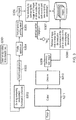
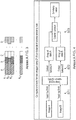
- Figure 1 illustrates an existing technique for assessing performance of code on a new computing environment.
- Embodiments include a computer-implemented image processing method for predicting execution performance metrics for a subject code on a target computing environment, comprising: obtaining target environment member images each encoding, in a standardised format, a software profiling report of an execution on the target computing environment of a member of a set of codes t, the software profiling report being output by a software profiling tool and in a report format comprising a value of each of a plurality of labelled execution performance metrics; combining the obtained target environment member images into a combined target environment member image conforming to the standardised format, the combination being based on a weighted contribution from each of the obtained target environment member images, the weighting being proportional to a similarity metric quantifying similarity between the subject code and the respective member of the set of codes; processing the combined target environment member image by decoding the combined target environment member image to extract a predicted software profiling report, and outputting the predicted software profiling report.
- the computer-implemented image processing method provides an effective, automated, and easy to use mechanism for predicting execution performance in codes using image processing and analysis without needing to port code to a target computing environment for execution.
- the method exploits the feasibility to automate the process of predicting the execution performance of codes via image processing rather than trial executions.
- Images encoding text-based execution performance metrics for codes are combined, and a decoder applied to the combined image to decode the image into values of execution performance metrics (i.e. a software profiling report) representing a prediction of performance of a code not previously executed on a new (target) computing environment.
- execution performance metrics i.e. a software profiling report
- embodiments leverage image processing of images encoding software profiling reports of codes already executed on a new or "target" computing environment to predict execution performance of new codes on the target computing environment. In this manner, predicted software profiling reports for subject code on the target computing environment are generated without needing to execute the subject code on the target computing environment.
- a code is, for example, a piece of executable software code such as an application.
- Software profiling tools monitor executions of code to produce execution performance information describing or representing the execution as values each representing a profiling metric, wherein a profiling metric is taken to be an aspect or characteristic of the execution or a phase thereof.
- Software profiling reports being collections of values of labelled characteristics, are encoded into a standardised image format, irrespective of the particular software profiling tool used (hence "standardised"), for example, using systems and methods disclosed in German patent application no. 102016223484.6 .
- the encoding may comprise determining a proportion or size of a region or area of the image corresponding to a particular profiling metric to colour or pattern in a particular manner in dependence upon the corresponding value in the software profiling report.
- the software profiling report of an execution on the target computing environment of a member of a set of codes encoded in the target environment member images may be of executions in progress or executions that are already completed.
- Combining the obtained target environment member images provides a mechanism to build up an image representing execution of the subject code on the target computing environment as a composite of component images.
- the decoding reverses the principle used to encode software profiling reports as images, and thus enables a software profiling report to be obtained, extracted, or derived, from an image in the standardised format.
- the software profiling report so obtained is a prediction of execution performance of the subject code on the target computing environment.
- the members of the set of codes are selected by: obtaining a software profiling report of an execution of the subject code on a host computing environment currently hosting the subject code, the software profiling report being output by a software profiling tool and in accordance with the report format, generating a host environment subject image encoding, in the standardised format, the obtained software profiling report; storing in a host environment image repository images encoding, in the standardised format, software profiling reports of executions on the host computing environment of respectively identified codes; storing in a target environment image repository, images encoding, in the standardised format, software profiling reports of executions on the target computing environment of respectively identified codes; querying the host environment image repository and the target environment image repository to identify, as candidate codes, codes in respect of which images are stored in both the host environment image repository and the target environment image repository; determining the n most similar images to the host environment subject image from among host environment candidate images, host environment candidate images being the images stored in the host environment image repository in respect of the candidate codes, and selecting as the members of the
- the quality of prediction improves if the set of codes selected to compose the combined target environment member image exhibit similarities to the subject code in terms of their execution performance. Since the subject code is not executed on the target computing environment, executions on the host computing environment are used as a basis to identify similar codes. In particular, executions on the host computing environment for which the software profiling reports have already been encoded into images are compared with an image encoding an execution of the subject code on the host computing environment.
- a technique leverages image processing techniques carried out on stored images in order to identify a set of codes similar to the subject code.
- determining the n most similar images to the subject image from among the host environment candidate images may comprise: using a deep neural network as a feature extractor to extract features from the subject image and from the host environment candidate images; comparing the extracted features from the subject image with the extracted features from each of the host environment candidate images individually to obtain a similarity score quantifying similarity between the features extracted from the first image and each of the host environment candidate images; and finding the n greatest similarity scores, and determining the respective images to be the n most similar images to the first image.
- DNNs deep neural networks
- the deep neural network for this purpose may be, for example, a deep neural network pre-trained for image recognition and image classification.
- DNNs suitable for this purpose include: AlexNet, Inception, ResNet, VAE, GANs, etc.
- the comparison may be a mathematical computation such as a cosine distance calculation.
- the standardised format may comprise comparable information/values (i.e. values representing the same parameter or metric) at the same or corresponding pixel locations within the image.
- the decoding may include feeding the single new image into an autoencoder artificial neural network trained to extract software profiling reports from images conforming to the standardised format.
- the same autoencoder artificial neural network may execute the encoding of software profiling reports into images of the standardised format.
- the autoencoder comprises an encoder and a decoder, each of which transition or transform data, in the case of the encoder from software profiling report into an image of the standardised format, and in the case of the decoder from an image of the standardised format into a software profiling report (or vice-versa).
- Autoencoders are specially suited to learning transitions from training data and applying the learned transitions to subject data.
- the plurality of labelled profiling metrics may include information on memory usage, time complexity, usage of particular instructions, frequency and/or duration of function calls, and information on the frequency and/or duration of communication calls in a parallel environment, the form of the label in each case being determined by the software profiling tool.
- each of the labelled profiling metrics specified in the software profiling report may relate to the entire execution or to a specified stage or phase thereof. Certain of the labelled profiling metrics may have more than one value in the software profiling report in the case of there being multiple phases or stages.
- Embodiments may further comprise populating the host environment image repository by, for each of a plurality of codes: performing an execution the code on the host computing environment; using a software profiling tool to generate a software profiling report of the execution, in the report format; generating a host environment image encoding, in the standardised format, the software profiling report; and adding the host environment image to the host environment image repository with an identifier for the code.
- the host environment image repository may be added to whenever a software profiling tool is used to monitor an execution in the execution environment. It is noted that the labels "host” and "target” with respect to computing environments are context-specific and a computing environment that is a host in one transaction may be a target in another, and vice-versa.
- Embodiments may further comprise populating the target environment image repository by, for each of a plurality of codes: performing an execution the code on the target computing environment; using a software profiling tool to generate a software profiling report of the execution, in the report format; generating a target environment image encoding, in the standardised format, the software profiling report; and adding the target environment image to the target environment image repository with an identifier for the code.
- the target environment image repository may be added to whenever a software profiling tool is used to monitor an execution in the execution environment. There may be instances in which there are not sufficient, or any, images in the host environment image repository for the computer-implemented image processing method to be performed. In such circumstances, the subject code is, in fact, executed on the target computing environment, and a target environment image generated and added to the target environment image repository.
- Embodiments may comprise performing the computer-implemented method of an embodiment with each of a plurality of different computing environments as the target computing environment, and selecting a computing environment, from among the plurality of different computing environments, to host the code for future executions, the selecting being based on the output predicted software profiling reports and in accordance with a computing environment selection policy.
- Such methods leverage the computer-implemented method of embodiments to select a computing environment to which to port code for future executions out of a plurality of potential destinations.
- the selection policy may be specified by a user in advance of the method being performed, or in response to being presented with information (such as the predicted software profiling reports) or a prompt.
- embodiments allow for a plurality of potential destination computing environments to be compared in terms of execution performance of the subject code, without needing to execute the subject code on those potential destination computing environments.
- Embodiments may comprise performing the computer-implemented method of an embodiment with each of a plurality of different codes as the subject code, and selecting a code, from among the plurality of different codes, to transfer to the target computing environment for future executions, the selecting being based on the output predicted software profiling reports and in accordance with a code selection policy.
- the plurality of different codes perform equivalent or comparable functions, so that a required or desired function is performed by any one of the plurality of different codes, and the method is performed in order to identify the code best suited (according to the selection policy) to perform the function on the target computing environment.
- the computing environment selection policy or the code selection policy is to minimise execution time.
- Embodiments of another aspect include processor hardware coupled to memory hardware, the memory hardware storing processing instructions which, when executed by the processor hardware, cause the processor hardware to implement a method for predicting execution performance metrics for a subject code on a target computing environment, the method comprising: obtaining target environment member images each encoding, in a standardised format, a software profiling report of an execution on the target computing environment of a member of a set of codes, the software profiling report being output by a software profiling tool and in a report format comprising a value of each of a plurality of labelled execution performance metrics; combining the obtained target environment member images into a combined target environment member image conforming to the standardised format, the combination being based on a weighted contribution from each of the obtained target environment member images, the weighting being proportional to a similarity metric quantifying similarity between the subject code and the respective member of the set of codes; processing the combined target environment member image by decoding the combined target environment member image to extract a predicted software profiling report, and outputting the predicted software
- the method for predicting execution performance metrics for a subject code on a target computing environment may comprise the features of any of the computer-implemented method embodiments.
- Embodiments of another aspect include a computer program which, when executed by a computer processor, causes the computer processor to implement a method for predicting execution performance metrics for a subject code on a target computing environment, the method comprising: obtaining target environment member images each encoding, in a standardised format, a software profiling report of an execution on the target computing environment of a member of a set of codes, the software profiling report being output by a software profiling tool and in a report format comprising a value of each of a plurality of labelled execution performance metrics; combining the obtained target environment member images into a combined target environment member image conforming to the standardised format, the combination being based on a weighted contribution from each of the obtained target environment member images, the weighting being proportional to a similarity metric quantifying similarity between the subject code and the respective member of the set of codes; processing the combined target environment member image by decoding the combined target environment member image to extract a predicted software profiling report, and outputting the predicted software profiling report.
- the method for predicting execution performance metrics for a subject code on a target computing environment may comprise the features of any of the computer-implemented method embodiments.
- the computer program may be in the form of a computer-readable medium storing processing instructions for implementing the method for predicting execution performance metrics for a subject code on a target computing environment.
- the computer-readable medium may be non-transitory.
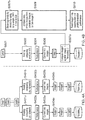
- Figure 2 illustrates a computer-implemented method for predicting execution performance metrics for a subject code on a target computing environment.
- the subject code is software code, and is an executable or application.
- the subject code is presently hosted by (i.e. stored ready for execution on) a host computing environment.
- a target computing environment different from the host computing environment is identified as a potential destination to which the subject code may be copied or ported for execution thereon.
- images encoding software profiling reports for executions of codes on the target computing environment are obtained.
- Software profiling reports are output by software profiling tools and are in a report format comprising a value of each of a plurality of labelled execution performance metrics.
- software profiling report is used as a term to refer to a collection of values of labelled execution performance metrics.
- the conversion from software profiling report to image is detailed in German patent application no. 102016223484.6 .
- the conversion may be performed as part of the present computer-implemented method, or it may have been carried out previously and the image or images so obtained stored in a repository.
- the images are in a standardised format, standardised across the images regardless of code, computing environment, or software profiling tool.
- the images may be specifically selected based on the codes whose executions are represented. For example, it may be that codes having similarity to the subject code are identified, from among the codes for which executions on the target computing environment are encoded in stored images, and the stored images for those codes selected.
- the similarity may be based on similarities in the code per se, or in similarities in executions of the codes on another computing environment, such as the host computing environment.
- the codes for which executions on the target computing environment are represented in the obtained images may be referred to as a set of codes.
- the set of codes comprises more than one code.
- the obtained images may be referred to as target environment member images, wherein the "target environment” denotes (in the context of a particular instance of the method) the computing environment on which the executions represented by the images were performed, and the "member” denotes that the executed code is a member of the set of codes.
- the obtained target environment member images are combined into a combined target environment member image.
- the combination preserves the format of the composite images, so that target environment member images and the combined target environment member image all conform to the standardised format.
- the combination takes a weighted contribution from each of the target environment member images, wherein the combined target environment member image is closer in appearance to composite images with higher weightings than to those with lower weightings.
- the combination may be performed by taking a weighted average of pixel values on a pixel-by-pixel basis.
- the pixel value may be the colour value (that is, the intensity of the or each colour) of the pixel as a single value (grayscale/monochrome) or as each of three values in a three-value-vector (RGB). In the RGB case, separate weighted averages are performed for each of R, G, and B.
- the combined target environment image is processed by a decoder to extract a predicted software profiling report.
- the decoder is trained to convert image features into values of execution performance metrics, to infer from the position or arrangement of image features the labels of the performance metrics to which the values relate, and to combine the labels and values into a software profiling report of a format comprising values of labelled execution performance metrics.
- the decoder may be, for example, an autoencoder, operable in both a feed-forward (software profiling report to image) and feed-backward (image to software profiling report) mode.
- the predicted software profiling report is outputed.
- the output may be to a user of the method, which may be a human user via a user interface such as a GUI, or the user may be another application, or the output may be to a software entity using the predicted software profiling report to determine to which computing environment to transfer the subject code.
- Figure 3 illustrates a computer-implemented method which includes a process for finding a set of codes that are considered to be similar to the subject code, and for which images encoding software profiling reports of executions on the target or new computing environment are available.
- an application to be characterised is selected.
- the application is an example of a subject code.
- Characterised means execution performance being characterised via the computer-implemented method.
- a computing environment already hosting the application is identified, and at S303 the application is loaded ready for execution. Preparatory steps S301 to S303 could be omitted depending on the implementation scenario. It may be that the application being selected and the loading for execution all occur as inherent parts of S304.
- the application is executed on the host (existing) computing environment.
- the execution of the code is accompanied by a software profiling tool (profiler) for extracting values of execution performance metrics representing the execution.
- a software profiling tool profiler
- steps S301 to S304 are optional. It may be the case that a software profiling report is already stored in relation to an execution of the subject code on the host computing environment, and can be retrieved from storage.
- the software profiling report comprising the values of the execution performance metrics representing the execution is collected.
- Information included in the software profiling report includes values of execution performance metrics including memory usage, time complexity, usage of particular instructions, the frequency and duration of function calls.
- the software profiling report may include information on the frequency and duration of communication functions.
- the values for each of a plurality of execution performance metrics which may include one or more of those listed above, are retrieved from the text-based files output by one or more software profiling tools, and encoded as a representative image of a standardised format (standardised across profilers, computing environments, and codes).
- the image may be referred to as a host environment subject image, wherein the "host environment” denotes that the image represents an execution of the code on the existing or current computing environment hosting the code, and the "subject” denotes that the code is the subject code.
- It may be an image repository storing images encoding software profiling reports of executions of code on the host computing environment stores an already-generated image encoding a software profiling report of an execution of the subject code on the host environment, in which case the image can be retrieved from the repository and need not be generated.
- a similarity check is invoked on the host environment subject image with other images that encode the software profiling reports of other codes on the host computing environment, and are stored in an image repository, in order to identify other similar codes that have been executed on both the host (existing) and target (new) computing environments, or are being executed and reports generated during execution.
- the similarity check includes querying a host environment image repository, storing images encoding, in the standardised format, software profiling reports of executions on the host computing environment of respectively identified codes; querying a target environment image repository, storing images encoding, in the standardised format, software profiling reports of executions on the target computing environment of respectively identified codes; to identify, as candidate codes, codes in respect of which images are stored in both the host environment image repository and the target environment image repository.
- the candidate codes are those codes that have been profiled executing on both the host computing environment and the target computing environment.
- codes are executed and profiled on computing environments available for hosting code within the network, so that the repositories exist when required by the computer-implemented method.
- the codes used to populate the repositories may be selected strategically to ensure that a code population is sampled representatively or comprehensively.
- the n most similar images to the host environment subject image from among host environment candidate images, host environment candidate images being the images stored in the host environment image repository in respect of the candidate codes, are found.
- the n most similar images are selected as the members of the set of codes, which are the codes whose executions on the target computing environment are used as the basis of the combined image (that is eventually decoded to obtain the predicted execution performance metrics for the subject code).
- the process of predicting the execution performance of the subject code on the target computing environment is invoked as follows.
- images that encode software profiling reports of executions of members of the set of codes on the target computing environment are retrieved from an image repository and at S309 used to construct a combined image that can be used to predict the execution performance of the subject code, for example, via feeding into an autoencoder based neural network.
- the counterpart image may be referred to as a combined target environment member image.
- S308 is an example of step S100, and S309 is an example of S110.
- an autoencoder based artificial neural network (an autoencoder) is applied to the combined image to decode or extract a software profiling report in the form of values of labelled execution performance metrics from the image.
- Figures 4A and 4B outline the procedures for populating the image repositories and constructing the combined target environment member image.
- Figure 4A illustrates the creation of two image repositories: Repository_I (host environment image repository) and Repository_II (target environment image repository) that store images that represent the execution performance of identified codes on the existing and new computing environments, respectively, by encoding software profiling reports of the executions.
- the software codes are loaded onto the host computing environment and target computing environment respectively.
- the executions of the codes on the respective computing environments are performed in association with a software profiling tool.
- the software profiling reports corresponding to each execution are encoded as an image of the standardised format.
- the images so produced are added to the respective repository, along with an identifier of he executed code.
- Figure 4B illustrates the procedure for creating the combined target environment member image.
- CodeX is the identifier for the subject code in this example.
- a subject code, CodeX is identified as code for which an indication of execution performance on the target computing environment (which is a computing environment other than and having a different hardware and/or software configuration from the current host computing environment) is required.
- S501 is an example of S301.
- the subject code is prepared for execution on the host computing environment.
- Step S502 is an example of steps S302-S303.
- the subject code is executed on the existing (i.e. the host) computing environment and a software profiling tool is used to generate values of labelled execution performance metrics representing the performance.
- Step S504 is an example of steps S304-S305.
- An image is generated that represents the execution by encoding the values of the labelled execution performance metrics as an image of the standardised format at S506.
- S506 is an example of S306.
- the image is referred to as imageX to indicate its correspondence to codeX, the subject code.
- imageX is compared against images that are stored in Repository_I for a similarity check using; for example, a deep neural network (DNN) and a cosine rule.
- Steps S507a and S507b are collectively exemplary of step S307.
- the purpose of using a DNN is for feature extraction.
- the standard cosine rule is used as a similarity function to generate a similarity score.
- Cosine rule is a widely-used method for measuring the similarity between two data vectors.
- the computer-implemented method automatically detects and quantifies similarity between imageX and images stored in repository_I.
- a new image (imageX', exemplary of the combined target environment member image) is constructed that is regarded a counterpart to imageX.
- the images that are combined to form imageX' are those that correspond to the images having the greatest similarity scores from Repository_I when compared with imageX, and for which the codes have been executed on the target computing environment, and images representing the executions on the target computing environment are stored in Repository_II.
- Step S509 is an example of S309.
- the construction of the new image, imageX' is obtained by applying a multiplying factor, here named similarity factor, SF, equal or proportional to that of the similarity scores of the identified most similar images in Repository_I (i.e. the host environment member images); however, the multiplying factors are applied to the counterpart images in Repository_II (i.e. the target environment member images).
- the counterpart images are combined according to their respective multiplying factors to obtain the new image, imageX'.
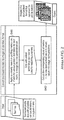
- FIGS 5A and 5B An example to this process is shown in Figures 5A and 5B , where the four counterpart images (exemplary of target environment member images) from Repository_II are retrieved with their SFs quoted for each corresponding image in Figure 5A .
- the individual similarity scores of the four counterpart images are used to weight their contributions to the combined image.
- these normalised contributions now add up to unity.
- the counterpart images, retrieved from Repository_II are combined into one image, imageX', by a weighted average of weighted contributions proportional to the now normalised SF from the counterpart images to ultimately obtain the combined target environment member image, imageX'.
- step S510 to predict the execution performance of CodeX on the target computing environment, imageX' is fed into a specifically trained neural network based on an autoencoder, and values of execution performance metrics extracted.
- Step S510 is exemplary of step S310.
- the computer-implemented method automatically predicts the execution performance of the subject code on the target computing environment, via applying an autoencoder based neural network.
- This process is regarded a form of feature extraction algorithm of the images representing executions of the set of codes identified as being most timilar to the subject code, based on executions on the host computing environment, with a purpose to construct a combined image that represents the execution performance of the subject code on the target execution environment composed of images representing executions of members of the set of codes on the target computing environment.
- Embodiments may apply autoencoder based neural network mechanisms (autoencoders_. Autoencoders are extremely robust for encoding and decoding images, at the same time they act as an effective technique for capturing the importance in characteristics of the entire image. Further, there exist several examples that employ autoencoders within a deep neural network (DNN) as a machine learning strategy. These autoencoders and DNNs are typically trained for image recognition via supervised learning.
- DNN deep neural network
- a similar approach is also used for the training process of the autoencoder based neural network in embodiments; however, the training process is specifically tailored for autoencoding the execution performance metrics that represent execution performance of codes and are constructed from images in the standardised image format. Therefore, when the combined image is generated; it is fed into the autoencoder based neural network in order to produce a prediction of the execution performance of the subject code on the target computing environment.
- Figure 6 illustrates an embodiment which deals with a scenario in which there have not been sufficient executions of codes on the host computing environment and the target computing environment for there to be candidate codes that have already had executions profiled on both the target and the host computing environment (and optionally there are sufficient numbers but not enough of those that exceed a similarity score threshold when the host environment candidate image are compared with the host environment subject image). However, if no high quality matches are identified, then no prediction is applied. Instead, the process shown as steps S601 to S605 of Figure 6 is invoked in order to convert the execution performance metrics of the subject code on the target computing environment into an image of the standardised format for storage in the repository and use in future predictions. The image is stored with an identifier for the code in order to enrich and diversify content of the image repositories that are responsible for storing all known possible execution performances of codes.
- the target computing environment is initialised, and at S602 the subject software code is loaded onto the target computing environment.
- the execution of the subject software code on the target computing environment is performed in association with a software profiling tool.
- the software profiling report corresponding to the execution is encoded as an image of the standardised format.
- the image so produced is added to the image repository, along with an identifier of the executed code.
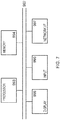
- FIGURE 7 is a block diagram of a computing device, such as a computing environment, a member of a computing environment, a computer network control entity, or a data storage server, which embodies the present invention, and which may be used to implement a method of an embodiment of, for example, Figure 2 , Figure 3 , Figure 4 , and/or Figure 6 .
- the computing device comprises a processor 993, and memory, 994.
- the computing device also includes a network interface 997 for communication with other computing devices, for example with other computing environments of invention embodiments.
- an embodiment may be composed of a network of such computing devices, separate subsets of devices within the network being individual computing environments.
- the computing device also includes one or more input mechanisms such as keyboard and mouse 996, and a display unit such as one or more monitors 995.
- the components are connectable to one another via a bus 992.
- the memory 994 may include a computer readable medium, which term may refer to a single medium or multiple media (e.g., a centralized or distributed database and/or associated caches and servers) configured to carry computer-executable instructions or have data structures stored thereon.
- Computer-executable instructions may include, for example, instructions and data accessible by and causing a general purpose computer, special purpose computer, or special purpose processing device (e.g., one or more processors) to perform one or more functions or operations.
- the term "computer-readable storage medium” may also include any medium that is capable of storing, encoding or carrying a set of instructions for execution by the machine and that cause the machine to perform any one or more of the methods of the present disclosure.
- computer-readable storage medium may accordingly be taken to include, but not be limited to, solid-state memories, optical media and magnetic media.
- computer-readable media may include non-transitory computer-readable storage media, including Random Access Memory (RAM), Read-Only Memory (ROM), Electrically Erasable Programmable Read-Only Memory (EEPROM), Compact Disc Read-Only Memory (CD-ROM) or other optical disk storage, magnetic disk storage or other magnetic storage devices, flash memory devices (e.g., solid state memory devices).
- RAM Random Access Memory
- ROM Read-Only Memory
- EEPROM Electrically Erasable Programmable Read-Only Memory
- CD-ROM Compact Disc Read-Only Memory
- flash memory devices e.g., solid state memory devices
- the processor 993 is configured to control the computing device and execute processing operations, for example executing code stored in the memory to implement the various different functions of the computer-implemented methods set out in Figures 2 , 3 , 4 , and/or 6, described here and in the claims.
- the memory 994 stores data being read and written by the processor 993.
- a processor may include one or more general-purpose processing devices such as a microprocessor, central processing unit, or the like.
- the processor may include a complex instruction set computing (CISC) microprocessor, reduced instruction set computing (RISC) microprocessor, very long instruction word (VLIW) microprocessor, or a processor implementing other instruction sets or processors implementing a combination of instruction sets.
- CISC complex instruction set computing
- RISC reduced instruction set computing
- VLIW very long instruction word
- the processor may also include one or more special-purpose processing devices such as an application specific integrated circuit (ASIC), a field programmable gate array (FPGA), a digital signal processor (DSP), network processor, or the like.
- ASIC application specific integrated circuit
- FPGA field programmable gate array
- DSP digital signal processor
- a processor is configured to execute instructions for performing the operations and steps discussed herein.
- the display unit 997 may display a representation of data stored by the computing device and may also display a cursor and dialog boxes and screens enabling interaction between a user and the programs and data stored on the computing device.
- the input mechanisms 996 may enable a user to input data and instructions to the computing device.
- the network interface (network I/F) 997 may be connected to a network, such as the Internet, and is connectable to other such computing devices via the network.
- the network I/F 997 may control data input/output from/to other apparatus via the network.
- Other peripheral devices such as microphone, speakers, printer, power supply unit, fan, case, scanner, trackerball etc may be included in the computing device.
- Each of the method steps of Figures 2 , 3 , 4 , and/or 6, may be executed by a processor 993 (or plurality thereof) executing processing instructions (a program) stored on a memory 994 and exchanging data via a network I/F 997 where necessary, for example, to port code between computing environments.
- the processor 993 executes processing instructions to receive, via the network I/F, target environment member images of the set of codes from an image repository, as in step S100 of Figure 2 , S308 of Figure 3 , and/or S508 of Figure 4B . Furthermore, the processor 993 may execute processing instructions to store the retrieved images on a connected storage unit and/or to transmit, via the network I/F 997, the retrieved images to another computing device for combination.
- a processor 993 executes processing instructions to receive, via the network I/F, the retrieved images from a computing device implementing step S100/S308/S508 and combine the images to form a combined image, as in step S110 of Figure 2 , S309 of Figure 3 , and/or S509 of Figure 4B . Furthermore, the processor 993 may execute processing instructions to store the combined image on a connected storage unit and/or to transmit, via the network I/F 997, the combined image to another computing device for decoding.
- a processor 993 executes processing instructions to receive, via the network I/F, the combined image from a computing device implementing step S110/S309/S509 and decode the image to extract a software profiling report, as in step S120 of Figure 2 , step S310 of Figure 3 , and/or step S510 of Figure 4B . Furthermore, the processor 993 may execute processing instructions to store the extracted software profiling report on a connected storage unit and/or to transmit, via the network I/F 997, the extracted software profiling report to an end user or to a network controller for use in allocating the subject code to a computing environment for future executions.
- a processor 993 executes processing instructions to receive, via the network I/F, the decoded software profiling report from a computing device implementing step S120/S310/S510 and output the report, as in step S130 of Figure 2 , step S311 of Figure 3 , and/or step S511 of Figure 4B .
- the output may be to a control mechanism that uses information in the report, optionally in combination with information from other decoded software profiling reports, to determine a computing environment to which to transmit the subject code for storage and execution.
- Methods embodying the present invention may be carried out on a computing device such as that illustrated in Figure 7 .
- a computing device need not have every component illustrated in Figure 7 , and may be composed of a subset of those components.
- a method embodying the present invention may be carried out by a single computing device in communication with one or more data storage servers via a network.
- the computing device may be a data storage itself storing the subject code, and optionally also the decoder.
- a method embodying the present invention may be carried out by a plurality of computing devices operating in cooperation with one another.
- One or more of the plurality of computing devices may be a data storage server storing at least a portion of the subject code, and optionally also the decoder.
- a computer-implemented profiling metric conversion process for converting values of profiling metrics , obtained by at least one software profiling tool in respect of at least one computer software code, into images for comparison purposes , which process comprises: identifying, within a plurality of labelledprofiling metrics whose values are to be converted, a set of profiling metrics with synonymous labels, using at least one natural language processing scheme, and matching all profiling metrics in the set to the same label; and, for each set of profiling metrics , converting values corresponding to the profiling metrics in the set into respective images such that all the converted images have the same image format.
- the at least one natural language processing scheme may for example be a dictionary-based search and match scheme.
- a computer-implemented comparison method for use in analyzing execution performance of computer software code comprises: converting values of profiling metrics , obtained by at least one software profiling tool in respect of at least one computer software code, into images using a profiling metric conversion process embodying the first aspect of the present invention; computing at least one of similarities and differences between at least two of the images; and comparing execution performance of the computer software code(s) corresponding to the said two images based on the results of the computation.
- the at least one of similarities and differences between images may be computed using an image comparison process carried out by a deep neural network trained for image recognition, which image comparison process comprises: extracting features from a first one of the images as a vector of values; and computing the similarity between the extracted vector for the first image and a vector of values representing the features of a second one of the images.
- a computer program which, when run on a computer, causes that computer to carry out a process embodying the first aspect of the present invention or a method embodying the second aspect of the present invention.
- a profiling metric conversion apparatus for converting values of profiling metrics , obtained by at least one software profiling tool in respect of at least one computer software code, into images for comparison purposes, which apparatus comprises: a matcher to identify, within a plurality of labelled profiling metrics whose values are to be converted, a set of profiling metrics with synonymous labels, using at least one natural language processing scheme, and match all profiling metrics in the set to the same label; and, a converter to convert, for each set of profiling metrics , values corresponding to the profiling metrics in the set into respective images such that all the converted images have the same image format.
- the at least one natural language processing scheme may for example be a dictionary-based search and match scheme.
- comparison apparatus for use in analyzing execution performance of computer software code, which apparatus comprises: a profiling metric conversion apparatus embodying the fourth aspect of the present invention to convert values of profiling metrics , obtained by at least one software profiling tool in respect of at least one computer software code, into images; an image comparer to compute at least one of similarities and differences between at least two of the images; and a performance comparer to compare execution performance of the computer software code(s) corresponding to the said two images based on the results of the computation by the image comparer.
- the image comparer may comprise a deep neural network trained for image recognition, which deep neural network: extracts features from a first one of the images as a vector of values; and computes the similarity between the extracted vector for the first image and a vector of values representing the features of a second one of the images.
- An embodiment of the present invention can provide an automated and easy-to-use mechanism for comparing the outcome from profiling technologies, seeking similarities in software codes and their execution performance (i.e. comparison between different applications / executable, and / or between different instances of the same application / executable), via image analysis. Similarities or anomalies between codes' performance are obtained by first converting the various text-based formats produced by profiling technologies into a unified set of metrics , then extracting values corresponding to the now-unified metrics into image representations of a standard format and analysing the associated images in order to determine similarities, or anomalies, in codes' performance. Therefore, an automated process for comparing and diagnosing codes in a seamless and straightforward manner can be provided.
- Embodiments of the present invention may be beneficial to the wider high performance computing (HPC) and software programming communities, by providing a fast, reliable and cost-effective mechanism that allows users without expert knowledge in the art or prior knowledge in the metrics produced by profiler technologies to avoid dealing with the cumbersome and time-consuming processes required in prior art systems when characterising and comparing the performance of codes (applications / executables).
- Embodiments of the present invention can provide an automated and modular mechanism to characterise codes.
- Annex A Figure 1 is a flowchart of a method including a metric conversion process embodying the present invention
- Annex A Figure 2 is a flowchart of a metric conversion process embodying the present invention
- Annex A Figure 3 is a diagram representing data values converted into images
- Annex A Figure 4 is a flowchart of a similarity computation process suitable for use with the present invention
- Annex A Figure 5 is a block diagram of comparison apparatus embodying the present invention
- Annex A Figure 6 is a block diagram of a computing device suitable for carrying out a method embodying the present invention.
- An embodiment of the present invention provides a method and apparatus to compute similarities, or differences, in profiling metrics for computer software codes (different applications / executables and / or different instances of the same application / executable) for use in analysis of execution performance. This may be achieved as follows:
- step S1 code(s) to be characterised are selected.
- step S2 each code is executed whilst an accompanying profiler extracts details on the code's performance.
- step S3 the extracted profile data that represent the code's performance, comprising details on its execution (commutation and communication), is collected. These details comprise, for example, information on memory usage, time complexity, usage of particular instructions, the frequency and duration of function calls, and, for the parallel execution environment, information on the frequency and duration of communication functions.
- step S4 values that correspond to the collected profile data, which is retrieved from the various text-based files, is then extracted and converted into representative images of a format which is standard irrespective of the profiler used.
- This metric conversion step will be explained in more detail later with reference to the flowchart of Figure 2 .
- the image files resulting from step S4, in the now standard format, are then exported into an image store.
- steps S2 to S4 are repeated until the profiling and data transformation processes are completed for all the different benchmarks.
- steps S6 to S9 the process of computing image similarities is then carried out.
- step S6 a metric of images' similarity or differences is computed.
- step S7 the similarity between two images is determined using the computed metric. Similarity values representing the similarities between images are obtained in step S8, and the similarities / differences between the codes is determined in step S9.
- the metric conversion process starts in step S41 by parsing the text files, whereby a natural language processing scheme is applied for converting the various possible definitions used for representing each of the metrics of the codes' performance into a unique definition.
- a natural language processing scheme is applied for converting the various possible definitions used for representing each of the metrics of the codes' performance into a unique definition.
- Several approaches can be applied for achieving this similarity in definitions (semantics). Nevertheless, the overall goal of this similarity matching is to merge the various synonyms into one definition. Therefore, the objective of this matching strategy is to consider similarities between the to-be-matched terms in order to create a single terminology that can be used for reasoning purposes thereafter. This can be achieved using a standard dictionary-based search and match approach on the collected data, or another suitable natural language processing scheme.
- step S42 the resulting set of values that corresponds to the now matched and standardised data is converted into images using a standard conversion technique which is the same for all the data. For example, this can be achieved using the outcome from the profiling metrics conversion process, obtained from using at least one software profiling tool, whereby the elapsed time required for executing the various functions of the target programme, as well as the communication time, when run in parallel, is extracted (the communication time includes the time recorded for the communication functions on the various computing nodes and / or processes or threads run on each node). The overall extracted time values are then mapped into a representative image, for example as shown in Figure 3 .
- the different patterns represent the elapsed time (or percentage of elapsed time) for the different functions corresponding to execution and / or communication, when run in parallel, and each row R 1 to R n represents these values recorded for each computing node and / or for each invoked process or thread.
- the profiling data of the originally-various definitions have now been transformed into a standard set with unique definitions
- the associated images produced to represent the values of the now unified metrics are also of standard format.
- the style of this image format is irrelevant (providing it is suitable for use in later processing steps); the crucial requirement is that the same image format is applied for the conversion, i.e. from values to images, of all metrics.
- DNNs deep neural networks
- Such DNNs are typically trained for image recognition via supervised learning and image classification.
- AlexNet http: // papers.nips.cc / paper / 4824-imagenet-classification-with-deep-convolutional-neural-networks.pdf).
- AlexNet consists in inputting a stream of images, each of a fixed size of pixels, with the aim of classifying an image into one of 1000 possible categories.
- Such pre-trained DNNs can be applied to extract unique features of an input image. This is done by processing the input image through the chosen DNN, stopping short however from feeding it all the way to the final layer of the DNN. Prior to reaching the network's outermost layer, corresponding features are extracted and the associated data are exported into an array of values, so-called 'vectors'. Therefore, by extracting the data associated with a given layer, the network acts as a feature extractor instead. This process is therefore capable of converting an arbitrary image, of afixed size, into a fixed-size data array (i.e. a vector with a fixed number of real-valued elements that represent that input image).
- step 71 two images A and B which are to be compared for similarities are input into a pre-trained DNN.
- the data extracted from one of the final layers of the DNN is exported as an array (vector) of values which represents the features of the image (step S72).
- the similarity between the resulting two feature arrays (vectors) is then computed using the standard cosine distance (step S73).
- FIG. 5 is a block diagram of comparison apparatus 100 configured for use in analyzing execution performance of computer software code in accordance with an embodiment of the present invention.
- Apparatus 100 comprises a profiling metric conversion apparatus 10, configured to convert values of profiling metrics, obtained by one or more software profiling tools in respect of one or more computer software codes, into images, an image comparison device 20, configured to compute similarities or differences between two or more of the images, and an performance comparer 30 configured to compare execution performance of the computer software code(s) corresponding to the said two images based on the results of the computation by the image comparer 20.
- the profiling metric conversion device 10 comprises a matcher 1, an extractor 2 and a converter 3.
- the matcher 1 is configured to identify, within a plurality of labelled profiling metrics whose values are to be converted, a set of profiling metrics with synonymous labels, using one or more natural language processing schemes (for example, a dictionary-based search and match scheme), and match all profiling metrics in the set to the same label.
- the extractor 2 is configured to extract values corresponding to the profiling metrics in the set
- the converter 3 is configured to convert, for each set of profiling metrics, those profiling metric values into respective images such that all the converted images have the same image format.
- the image comparison device 20 may comprise a deep neural network trained for image recognition, which extracts features from a first one of the images as a vector of values, and computes the similarity between the extracted vector for the first image and a vector of values representing the features of a second one of the images.
- Embodiments of the present invention may be implemented in hardware, or as software modules running on one or more processors, or on a combination thereof. That is, those skilled in the art will appreciate that a microprocessor or digital signal processor (DSP) may be used in practice to implement some or all of the functionality described above.
- DSP digital signal processor
- the invention may also be embodied as one or more device or apparatus programs (e.g. computer programs and computer program products) for carrying out part or all of the methods described herein.
- Such programs embodying the present invention may be stored on computer-readable media, or could, for example, be in the form of one or more signals.
- signals may be data signals downloadable from an Internet website, or provided on a carrier signal, or in any other form.
- Figure 6 is a block diagram of a computing device, such as a data storage server, which embodies the present invention, and which may be used to implement some or all of the steps of a method embodying the present invention, and perform some or all of the tasks of apparatus of an embodiment.
- the computing device of Figure 6 may be used to implement some or all of steps S1 to S9 of the method illustrated in Figure 1 , and perform some or all of the tasks of the profiling metric converter 10, the image comparer 20 and the performance comparer 30 of apparatus 100 shown in Figure 5 .
- the computing device comprises a processor 993, and memory, 994.
- the computing device also includes a network interface 997 for communication with other such computing devices, for example with other computing devices of invention embodiments.
- an embodiment may be composed of a network of such computing devices.
- the computing device also includes one or more input mechanisms such as keyboard and mouse 996, and a display unit such as one or more monitors 995.
- the components are connectable to one another via a bus 992.
- the memory 994 may include a computer readable medium, which term may refer to a single medium or multiple media (e.g., a centralized or distributed database and / or associated caches and servers) configured to carry computer-executable instructions or have data structures stored thereon.
- Computer-executable instructions may include, for example, instructions and data accessible by and causing a general purpose computer, special purpose computer, or special purpose processing device (e.g., one or more processors) to perform one or more functions or operations.
- the term "computer-readable storage medium " may also include any medium that is capable of storing, encoding or carrying a set of instructions for execution by the machine and that cause the machine to perform any one or more of the methods of the present disclosure.
- computer-readable storage medium may accordingly be taken to include, but not be limited to, solid-state memories, optical media and magnetic media.
- computer-readable media may include non-transitory computer-readable storage media, including Random Access Memory (RAM), Read-Only Memory (ROM), Electrically Erasable Programmable Read-Only Memory (EEPROM), Compact Disc Read-Only Memory (CD-ROM) or other optical disk storage, magnetic disk storage or other magnetic storage devices, flash memory devices (e.g ., solid state memory devices).
- RAM Random Access Memory
- ROM Read-Only Memory
- EEPROM Electrically Erasable Programmable Read-Only Memory
- CD-ROM Compact Disc Read-Only Memory
- flash memory devices e.g ., solid state memory devices
- the processor 993 is configured to control the computing device and execute processing operations, for example executing computer program code stored in the memory 994 to implement the methods described with reference to Figures 1 , 2 , 3 and / or 4 and defined in the claims.
- the memory 994 stores data being read and written by the processor 993.
- a processor may include one or more general-purpose processing devices such as a microprocessor, central processing unit, or the like.
- the processor may include a complex instruction set computing (CISC) microprocessor, reduced instruction set computing (RISC) microprocessor, very long instruction word (VLIW) microprocessor, or a processor implementing other instruction sets or processors implementing a combination of instruction sets.
- CISC complex instruction set computing
- RISC reduced instruction set computing
- VLIW very long instruction word
- the processor may also include one or more special-purpose processing devices such as an application specific integrated circuit (ASIC), afield programmable gate array (FPGA), a digital signal processor (DSP), network processor, or the like.
- ASIC application specific integrated circuit
- FPGA field programmable gate array
- DSP digital signal processor
- a processor is configured to execute instructions for performing the operations and steps discussed herein.
- the display unit 995 may display a representation of data stored by the computing device and may also display a cursor and dialog boxes and screens enabling interaction between a user and the programs and data stored on the computing device.
- the input mechanisms 996 may enable a user to input data and instructions to the computing device.
- the network interface (network I / F) 997 may be connected to a network, such as the Internet, and is connectable to other such computing devices via the network.
- the network I / F 997 may control data input / outputfrom / to other apparatus via the network.
- Other peripheral devices such as microphone, speakers, printer, power supply unit, fan, case, scanner, trackerball etc may be included in the computing device.
- Methods embodying the present invention may be carried out on a computing device such as that illustrated in Figure 6 .
- a computing device need not have every component illustrated in Figure 6 , and may be composed of a subset of those components.
- a method embodying the present invention may be carried out by a single computing device in communication with one or more data storage servers via a network.
- the computing device may be a data storage itself storing at least a portion of the data.
- a method embodying the present invention may be carried out by a plurality of computing devices operating in cooperation with one another.
- One or more of the plurality of computing devices may be a data storage server storing at least a portion of the data.
Landscapes
- Engineering & Computer Science (AREA)
- Theoretical Computer Science (AREA)
- Physics & Mathematics (AREA)
- General Physics & Mathematics (AREA)
- Computer Vision & Pattern Recognition (AREA)
- General Engineering & Computer Science (AREA)
- Multimedia (AREA)
- Evolutionary Computation (AREA)
- Artificial Intelligence (AREA)
- Quality & Reliability (AREA)
- Computer Hardware Design (AREA)
- General Health & Medical Sciences (AREA)
- Computing Systems (AREA)
- Databases & Information Systems (AREA)
- Health & Medical Sciences (AREA)
- Medical Informatics (AREA)
- Software Systems (AREA)
- Life Sciences & Earth Sciences (AREA)
- Bioinformatics & Cheminformatics (AREA)
- Bioinformatics & Computational Biology (AREA)
- Evolutionary Biology (AREA)
- Data Mining & Analysis (AREA)
- Debugging And Monitoring (AREA)
Abstract
Description
- The invention lies in the field of image processing and in particular relates to the processing of images encoding software profiling reports.
- Characterising the performance of computer software codes (applications/executables), and finding similarities between their execution profiles, relies on interpreting the outcome from profilers, i.e. software profiling tools that perform a profiling process. Profiling is a form of program analysis that measures a variety of metrics that characterise software applications, with focus on run-time behaviour given a particular input. Non-exhaustive examples of such metrics are the elapsed time from the beginning to the end of the program execution, and the percentage of communication time in a distributed parallel program over its total elapse time, etc. However, the outcomes of profilers are typically not straightforward to follow, and often require deep knowledge of their functionalities. Moreover, a user needs to be fluent in understanding the metrics such profiling tools produce, which are typically presented in a text-based format, in order to be able to read, analyse and compare more than one profile outcome. As a result, a steep learning process for acquiring the knowledge needed for understanding working details of the profiling technologies is required. In addition, since the analysis of these profiling results can be laborious and time-consuming, this manual process can adversely impact users' work productivity.
- Further, it is often the case that different versions of the same code (application/executable) are to be characterised. These execution versions (or benchmarks) may differ in how they are run on the possibly different computing hardware with also possibly different software settings, where different settings are applied for each benchmark before obtaining the associated profiles (code performance). As a result, different profilers may need to be used to capture the relevant metrics for these various and different execution environments/settings. It is evident that the more exhaustive the profiling process is, the higher the number of different benchmarks is required. Therefore, a plethora of text-based information is also produced. As a result, the requirements for comprehending and processing the resulting wide-ranged metrics, produced in a text-based format, are also exhaustive.
- As technologies in both hardware and software continue to evolve, so do the requirements to judge whether the new advancements would be favourable for executing software code relative to a present technology.
- Furthermore, porting different versions of code to potential destination computing environments with software profiling tools in order to run trial executions to obtain execution performance indicators is time-consuming, laborious, and computationally expensive in terms of communication and execution resource use.
Figure 1 illustrates an existing technique for assessing performance of code on a new computing environment. - It is desirable to automate aspects of the process of analysing execution performance of software codes and to reduce the dependency on trial executions.
- Embodiments include a computer-implemented image processing method for predicting execution performance metrics for a subject code on a target computing environment, comprising: obtaining target environment member images each encoding, in a standardised format, a software profiling report of an execution on the target computing environment of a member of a set of codes t, the software profiling report being output by a software profiling tool and in a report format comprising a value of each of a plurality of labelled execution performance metrics; combining the obtained target environment member images into a combined target environment member image conforming to the standardised format, the combination being based on a weighted contribution from each of the obtained target environment member images, the weighting being proportional to a similarity metric quantifying similarity between the subject code and the respective member of the set of codes; processing the combined target environment member image by decoding the combined target environment member image to extract a predicted software profiling report, and outputting the predicted software profiling report.
- Advantageously, the computer-implemented image processing method provides an effective, automated, and easy to use mechanism for predicting execution performance in codes using image processing and analysis without needing to port code to a target computing environment for execution.
- The method exploits the feasibility to automate the process of predicting the execution performance of codes via image processing rather than trial executions. Images encoding text-based execution performance metrics for codes are combined, and a decoder applied to the combined image to decode the image into values of execution performance metrics (i.e. a software profiling report) representing a prediction of performance of a code not previously executed on a new (target) computing environment.
- It is often the case that hardware specifications and/or software libraries being used are changed to an upgrade to more advanced systems or a better optimised software library. Therefore, to obtain execution performance information for codes on the new computing environment, a range of execution experiments are required in order to determine how the modifications will affect codes' execution performance. Advantageously, embodiments leverage image processing of images encoding software profiling reports of codes already executed on a new or "target" computing environment to predict execution performance of new codes on the target computing environment. In this manner, predicted software profiling reports for subject code on the target computing environment are generated without needing to execute the subject code on the target computing environment.
- A code is, for example, a piece of executable software code such as an application. Software profiling tools monitor executions of code to produce execution performance information describing or representing the execution as values each representing a profiling metric, wherein a profiling metric is taken to be an aspect or characteristic of the execution or a phase thereof. Software profiling reports, being collections of values of labelled characteristics, are encoded into a standardised image format, irrespective of the particular software profiling tool used (hence "standardised"), for example, using systems and methods disclosed in German patent application no.
102016223484.6 . For example, the encoding may comprise determining a proportion or size of a region or area of the image corresponding to a particular profiling metric to colour or pattern in a particular manner in dependence upon the corresponding value in the software profiling report. - The software profiling report of an execution on the target computing environment of a member of a set of codes encoded in the target environment member images may be of executions in progress or executions that are already completed.
- Combining the obtained target environment member images provides a mechanism to build up an image representing execution of the subject code on the target computing environment as a composite of component images. The decoding reverses the principle used to encode software profiling reports as images, and thus enables a software profiling report to be obtained, extracted, or derived, from an image in the standardised format. The software profiling report so obtained is a prediction of execution performance of the subject code on the target computing environment.
- Optionally, the members of the set of codes are selected by: obtaining a software profiling report of an execution of the subject code on a host computing environment currently hosting the subject code, the software profiling report being output by a software profiling tool and in accordance with the report format, generating a host environment subject image encoding, in the standardised format, the obtained software profiling report; storing in a host environment image repository images encoding, in the standardised format, software profiling reports of executions on the host computing environment of respectively identified codes; storing in a target environment image repository, images encoding, in the standardised format, software profiling reports of executions on the target computing environment of respectively identified codes; querying the host environment image repository and the target environment image repository to identify, as candidate codes, codes in respect of which images are stored in both the host environment image repository and the target environment image repository; determining the n most similar images to the host environment subject image from among host environment candidate images, host environment candidate images being the images stored in the host environment image repository in respect of the candidate codes, and selecting as the members of the set of codes the candidate codes in respect of which the n most similar images are stored.
- The quality of prediction improves if the set of codes selected to compose the combined target environment member image exhibit similarities to the subject code in terms of their execution performance. Since the subject code is not executed on the target computing environment, executions on the host computing environment are used as a basis to identify similar codes. In particular, executions on the host computing environment for which the software profiling reports have already been encoded into images are compared with an image encoding an execution of the subject code on the host computing environment. Advantageously, such a technique leverages image processing techniques carried out on stored images in order to identify a set of codes similar to the subject code.
- Furthermore, determining the n most similar images to the subject image from among the host environment candidate images may comprise: using a deep neural network as a feature extractor to extract features from the subject image and from the host environment candidate images; comparing the extracted features from the subject image with the extracted features from each of the host environment candidate images individually to obtain a similarity score quantifying similarity between the features extracted from the first image and each of the host environment candidate images; and finding the n greatest similarity scores, and determining the respective images to be the n most similar images to the first image.
- Advantageously, such methods exploit the capability of deep neural networks (DNNs) to extract features from images that have a bearing on classifying similarity and difference between images. The deep neural network for this purpose may be, for example, a deep neural network pre-trained for image recognition and image classification. DNNs suitable for this purpose, by way of example, include: AlexNet, Inception, ResNet, VAE, GANs, etc.
- The comparison may be a mathematical computation such as a cosine distance calculation.
- The standardised format may comprise comparable information/values (i.e. values representing the same parameter or metric) at the same or corresponding pixel locations within the image.
- Optionally, the decoding may include feeding the single new image into an autoencoder artificial neural network trained to extract software profiling reports from images conforming to the standardised format.
- The same autoencoder artificial neural network (autoencoder) may execute the encoding of software profiling reports into images of the standardised format. The autoencoder comprises an encoder and a decoder, each of which transition or transform data, in the case of the encoder from software profiling report into an image of the standardised format, and in the case of the decoder from an image of the standardised format into a software profiling report (or vice-versa). Autoencoders are specially suited to learning transitions from training data and applying the learned transitions to subject data.
- Optionally, the plurality of labelled profiling metrics may include information on memory usage, time complexity, usage of particular instructions, frequency and/or duration of function calls, and information on the frequency and/or duration of communication calls in a parallel environment, the form of the label in each case being determined by the software profiling tool.
- The value of each of the labelled profiling metrics specified in the software profiling report may relate to the entire execution or to a specified stage or phase thereof. Certain of the labelled profiling metrics may have more than one value in the software profiling report in the case of there being multiple phases or stages.
- Embodiments may further comprise populating the host environment image repository by, for each of a plurality of codes: performing an execution the code on the host computing environment; using a software profiling tool to generate a software profiling report of the execution, in the report format; generating a host environment image encoding, in the standardised format, the software profiling report; and adding the host environment image to the host environment image repository with an identifier for the code.
- The host environment image repository may be added to whenever a software profiling tool is used to monitor an execution in the execution environment. It is noted that the labels "host" and "target" with respect to computing environments are context-specific and a computing environment that is a host in one transaction may be a target in another, and vice-versa.
- Embodiments may further comprise populating the target environment image repository by, for each of a plurality of codes: performing an execution the code on the target computing environment; using a software profiling tool to generate a software profiling report of the execution, in the report format; generating a target environment image encoding, in the standardised format, the software profiling report; and adding the target environment image to the target environment image repository with an identifier for the code.
- The target environment image repository may be added to whenever a software profiling tool is used to monitor an execution in the execution environment. There may be instances in which there are not sufficient, or any, images in the host environment image repository for the computer-implemented image processing method to be performed. In such circumstances, the subject code is, in fact, executed on the target computing environment, and a target environment image generated and added to the target environment image repository.
- Embodiments may comprise performing the computer-implemented method of an embodiment with each of a plurality of different computing environments as the target computing environment, and selecting a computing environment, from among the plurality of different computing environments, to host the code for future executions, the selecting being based on the output predicted software profiling reports and in accordance with a computing environment selection policy.
- Such methods leverage the computer-implemented method of embodiments to select a computing environment to which to port code for future executions out of a plurality of potential destinations. The selection policy may be specified by a user in advance of the method being performed, or in response to being presented with information (such as the predicted software profiling reports) or a prompt. Advantageously, embodiments allow for a plurality of potential destination computing environments to be compared in terms of execution performance of the subject code, without needing to execute the subject code on those potential destination computing environments.
- Embodiments may comprise performing the computer-implemented method of an embodiment with each of a plurality of different codes as the subject code, and selecting a code, from among the plurality of different codes, to transfer to the target computing environment for future executions, the selecting being based on the output predicted software profiling reports and in accordance with a code selection policy.
- For example, it may be that the plurality of different codes perform equivalent or comparable functions, so that a required or desired function is performed by any one of the plurality of different codes, and the method is performed in order to identify the code best suited (according to the selection policy) to perform the function on the target computing environment.
- Optionally, the computing environment selection policy or the code selection policy is to minimise execution time.
- Embodiments of another aspect include processor hardware coupled to memory hardware, the memory hardware storing processing instructions which, when executed by the processor hardware, cause the processor hardware to implement a method for predicting execution performance metrics for a subject code on a target computing environment, the method comprising: obtaining target environment member images each encoding, in a standardised format, a software profiling report of an execution on the target computing environment of a member of a set of codes, the software profiling report being output by a software profiling tool and in a report format comprising a value of each of a plurality of labelled execution performance metrics; combining the obtained target environment member images into a combined target environment member image conforming to the standardised format, the combination being based on a weighted contribution from each of the obtained target environment member images, the weighting being proportional to a similarity metric quantifying similarity between the subject code and the respective member of the set of codes; processing the combined target environment member image by decoding the combined target environment member image to extract a predicted software profiling report, and outputting the predicted software profiling report.
- The method for predicting execution performance metrics for a subject code on a target computing environment may comprise the features of any of the computer-implemented method embodiments.
- Embodiments of another aspect include a computer program which, when executed by a computer processor, causes the computer processor to implement a method for predicting execution performance metrics for a subject code on a target computing environment, the method comprising: obtaining target environment member images each encoding, in a standardised format, a software profiling report of an execution on the target computing environment of a member of a set of codes, the software profiling report being output by a software profiling tool and in a report format comprising a value of each of a plurality of labelled execution performance metrics; combining the obtained target environment member images into a combined target environment member image conforming to the standardised format, the combination being based on a weighted contribution from each of the obtained target environment member images, the weighting being proportional to a similarity metric quantifying similarity between the subject code and the respective member of the set of codes; processing the combined target environment member image by decoding the combined target environment member image to extract a predicted software profiling report, and outputting the predicted software profiling report.
- Again, the method for predicting execution performance metrics for a subject code on a target computing environment may comprise the features of any of the computer-implemented method embodiments.
- The computer program may be in the form of a computer-readable medium storing processing instructions for implementing the method for predicting execution performance metrics for a subject code on a target computing environment. The computer-readable medium may be non-transitory.
- A detailed description of embodiments will now be provided, by way of example, with reference to the accompanying drawings, in which:
-
Figure 1 illustrates an existing technique for assessing performance of code on a new computing environment; -
Figure 2 illustrates a computer-implemented image processing method for predicting a software profiling report; -
Figure 3 illustrates a computer-implemented method including finding a set of codes similar to the subject code; -
Figures 4A and 4B illustrate processes for populating the image repositories and constructing the combined target environment member image; -
Figures 5A and 5B illustrate target environment member images; -
Figure 6 illustrates a computer-implemented image processing method alternative to that ofFigure 3 ; -
Figure 7 illustrates a hardware configuration of an embodiment. -
Figure 2 illustrates a computer-implemented method for predicting execution performance metrics for a subject code on a target computing environment. The subject code is software code, and is an executable or application. The subject code is presently hosted by (i.e. stored ready for execution on) a host computing environment. A target computing environment different from the host computing environment is identified as a potential destination to which the subject code may be copied or ported for execution thereon. However, it is desirable to assess how the differences between the host computing environment and the target computing environment will influence execution performance. - At step S100, images encoding software profiling reports for executions of codes on the target computing environment are obtained. Software profiling reports are output by software profiling tools and are in a report format comprising a value of each of a plurality of labelled execution performance metrics. In other words, software profiling report is used as a term to refer to a collection of values of labelled execution performance metrics. The conversion from software profiling report to image is detailed in German patent application no.
102016223484.6 . The conversion may be performed as part of the present computer-implemented method, or it may have been carried out previously and the image or images so obtained stored in a repository. The images are in a standardised format, standardised across the images regardless of code, computing environment, or software profiling tool. - The images may be specifically selected based on the codes whose executions are represented. For example, it may be that codes having similarity to the subject code are identified, from among the codes for which executions on the target computing environment are encoded in stored images, and the stored images for those codes selected. The similarity may be based on similarities in the code per se, or in similarities in executions of the codes on another computing environment, such as the host computing environment.
- The codes for which executions on the target computing environment are represented in the obtained images may be referred to as a set of codes. The set of codes comprises more than one code. The obtained images may be referred to as target environment member images, wherein the "target environment" denotes (in the context of a particular instance of the method) the computing environment on which the executions represented by the images were performed, and the "member" denotes that the executed code is a member of the set of codes.
- At step S110, the obtained target environment member images are combined into a combined target environment member image. The combination preserves the format of the composite images, so that target environment member images and the combined target environment member image all conform to the standardised format.
- The combination takes a weighted contribution from each of the target environment member images, wherein the combined target environment member image is closer in appearance to composite images with higher weightings than to those with lower weightings. For example, the combination may be performed by taking a weighted average of pixel values on a pixel-by-pixel basis. For example, the pixel value may be the colour value (that is, the intensity of the or each colour) of the pixel as a single value (grayscale/monochrome) or as each of three values in a three-value-vector (RGB). In the RGB case, separate weighted averages are performed for each of R, G, and B.
- At step S120, the combined target environment image is processed by a decoder to extract a predicted software profiling report. The decoder is trained to convert image features into values of execution performance metrics, to infer from the position or arrangement of image features the labels of the performance metrics to which the values relate, and to combine the labels and values into a software profiling report of a format comprising values of labelled execution performance metrics. The decoder may be, for example, an autoencoder, operable in both a feed-forward (software profiling report to image) and feed-backward (image to software profiling report) mode.
- At step S130 the predicted software profiling report is outputed. The output may be to a user of the method, which may be a human user via a user interface such as a GUI, or the user may be another application, or the output may be to a software entity using the predicted software profiling report to determine to which computing environment to transfer the subject code.
-
Figure 3 illustrates a computer-implemented method which includes a process for finding a set of codes that are considered to be similar to the subject code, and for which images encoding software profiling reports of executions on the target or new computing environment are available. - In S301 an application to be characterised is selected. The application is an example of a subject code. Characterised means execution performance being characterised via the computer-implemented method. At S302 a computing environment already hosting the application is identified, and at S303 the application is loaded ready for execution. Preparatory steps S301 to S303 could be omitted depending on the implementation scenario. It may be that the application being selected and the loading for execution all occur as inherent parts of S304.
- At S304 the application is executed on the host (existing) computing environment. The execution of the code is accompanied by a software profiling tool (profiler) for extracting values of execution performance metrics representing the execution. It is noted that steps S301 to S304 are optional. It may be the case that a software profiling report is already stored in relation to an execution of the subject code on the host computing environment, and can be retrieved from storage.
- At S305 the software profiling report comprising the values of the execution performance metrics representing the execution is collected. Information included in the software profiling report includes values of execution performance metrics including memory usage, time complexity, usage of particular instructions, the frequency and duration of function calls. In addition, for a parallel execution environment, the software profiling report may include information on the frequency and duration of communication functions. At S306 the values for each of a plurality of execution performance metrics, which may include one or more of those listed above, are retrieved from the text-based files output by one or more software profiling tools, and encoded as a representative image of a standardised format (standardised across profilers, computing environments, and codes). A process for encoding a software profiling report as an image is disclosed in German patent application no.
102016223484.6 , which process could be used at S306. The process is explained in more detail in Annex A, below. The image may be referred to as a host environment subject image, wherein the "host environment" denotes that the image represents an execution of the code on the existing or current computing environment hosting the code, and the "subject" denotes that the code is the subject code. It may be an image repository storing images encoding software profiling reports of executions of code on the host computing environment stores an already-generated image encoding a software profiling report of an execution of the subject code on the host environment, in which case the image can be retrieved from the repository and need not be generated. - At S307, a similarity check is invoked on the host environment subject image with other images that encode the software profiling reports of other codes on the host computing environment, and are stored in an image repository, in order to identify other similar codes that have been executed on both the host (existing) and target (new) computing environments, or are being executed and reports generated during execution. The similarity check includes querying a host environment image repository, storing images encoding, in the standardised format, software profiling reports of executions on the host computing environment of respectively identified codes; querying a target environment image repository, storing images encoding, in the standardised format, software profiling reports of executions on the target computing environment of respectively identified codes; to identify, as candidate codes, codes in respect of which images are stored in both the host environment image repository and the target environment image repository. In other words, the candidate codes are those codes that have been profiled executing on both the host computing environment and the target computing environment. For example, it may be that, in a preparatory phase, or, for example, during a system idle time in which resource usage is low, codes are executed and profiled on computing environments available for hosting code within the network, so that the repositories exist when required by the computer-implemented method. The codes used to populate the repositories may be selected strategically to ensure that a code population is sampled representatively or comprehensively.
- Once the candidate codes have been identified the n most similar images to the host environment subject image from among host environment candidate images, host environment candidate images being the images stored in the host environment image repository in respect of the candidate codes, are found. The n most similar images are selected as the members of the set of codes, which are the codes whose executions on the target computing environment are used as the basis of the combined image (that is eventually decoded to obtain the predicted execution performance metrics for the subject code).
- Once a number n of most similar images to the image that encodes the execution performance metrics of the subject code and corresponding images of other codes (members of the set of codes) is identified, the process of predicting the execution performance of the subject code on the target computing environment (hardware/software) is invoked as follows. At S308 images that encode software profiling reports of executions of members of the set of codes on the target computing environment are retrieved from an image repository and at S309 used to construct a combined image that can be used to predict the execution performance of the subject code, for example, via feeding into an autoencoder based neural network. The counterpart image may be referred to as a combined target environment member image. S308 is an example of step S100, and S309 is an example of S110.
- At step S310, an autoencoder based artificial neural network (an autoencoder) is applied to the combined image to decode or extract a software profiling report in the form of values of labelled execution performance metrics from the image.
- At S311 the extracted software profiling report is output
Figures 4A and 4B outline the procedures for populating the image repositories and constructing the combined target environment member image.
Figure 4A illustrates the creation of two image repositories: Repository_I (host environment image repository) and Repository_II (target environment image repository) that store images that represent the execution performance of identified codes on the existing and new computing environments, respectively, by encoding software profiling reports of the executions. At step S401a and S401b the software codes are loaded onto the host computing environment and target computing environment respectively. At S402a and S402b the executions of the codes on the respective computing environments are performed in association with a software profiling tool. At steps S403a and S403b the software profiling reports corresponding to each execution are encoded as an image of the standardised format. At steps S404a and S404b the images so produced are added to the respective repository, along with an identifier of he executed code. Each execution of a code onto will therefore generate two images, imageK and imageK', K, K' =1,..,N, that are stored in Repository_I and Repository_II, respectively, and correspond to the execution of codes with identifiers CodeK, K=1,..,N. -
Figure 4B illustrates the procedure for creating the combined target environment member image. CodeX is the identifier for the subject code in this example. - At S501 a subject code, CodeX, is identified as code for which an indication of execution performance on the target computing environment (which is a computing environment other than and having a different hardware and/or software configuration from the current host computing environment) is required. S501 is an example of S301. At S502 the subject code is prepared for execution on the host computing environment. Step S502 is an example of steps S302-S303. At S504 the subject code is executed on the existing (i.e. the host) computing environment and a software profiling tool is used to generate values of labelled execution performance metrics representing the performance. Step S504 is an example of steps S304-S305. An image is generated that represents the execution by encoding the values of the labelled execution performance metrics as an image of the standardised format at S506. S506 is an example of S306. The image is referred to as imageX to indicate its correspondence to codeX, the subject code.
- At S507a and S507b imageX is compared against images that are stored in Repository_I for a similarity check using; for example, a deep neural network (DNN) and a cosine rule. Steps S507a and S507b are collectively exemplary of step S307. The purpose of using a DNN is for feature extraction. The standard cosine rule is used as a similarity function to generate a similarity score. Cosine rule is a widely-used method for measuring the similarity between two data vectors. Using the DNN and cosine rule, the computer-implemented method automatically detects and quantifies similarity between imageX and images stored in repository_I.
- Thereafter, at step S509, from the images having the greatest similarity scores based on comparison with imageX, a new image (imageX', exemplary of the combined target environment member image) is constructed that is regarded a counterpart to imageX. The images that are combined to form imageX' are those that correspond to the images having the greatest similarity scores from Repository_I when compared with imageX, and for which the codes have been executed on the target computing environment, and images representing the executions on the target computing environment are stored in Repository_II. Step S509 is an example of S309.
- For example, the construction of the new image, imageX', is obtained by applying a multiplying factor, here named similarity factor, SF, equal or proportional to that of the similarity scores of the identified most similar images in Repository_I (i.e. the host environment member images); however, the multiplying factors are applied to the counterpart images in Repository_II (i.e. the target environment member images). The counterpart images are combined according to their respective multiplying factors to obtain the new image, imageX'.
- An example to this process is shown in
Figures 5A and 5B , where the four counterpart images (exemplary of target environment member images) from Repository_II are retrieved with their SFs quoted for each corresponding image inFigure 5A . The individual similarity scores of the four counterpart images are used to weight their contributions to the combined image. In this case, the total contribution of these to SFs adds to 0.85 + 0.8 + 0.7 + 0.5 = 2.85. Therefore the normalised SF (NSF) contributions are [0.85, 0.8, 0.7, 0.5]/2.85 = [0.298, 0.280, 0.246, 0.175] for each image, respectively, as also quoted for each corresponding image inFigure 5B . Note that these normalised contributions now add up to unity. The counterpart images, retrieved from Repository_II, are combined into one image, imageX', by a weighted average of weighted contributions proportional to the now normalised SF from the counterpart images to ultimately obtain the combined target environment member image, imageX'. - Thereafter, at step S510, to predict the execution performance of CodeX on the target computing environment, imageX' is fed into a specifically trained neural network based on an autoencoder, and values of execution performance metrics extracted. Step S510 is exemplary of step S310.
- By making use of the similarities between images encoding executions of codes on the host computing environment, the computer-implemented method automatically predicts the execution performance of the subject code on the target computing environment, via applying an autoencoder based neural network. This process is regarded a form of feature extraction algorithm of the images representing executions of the set of codes identified as being most timilar to the subject code, based on executions on the host computing environment, with a purpose to construct a combined image that represents the execution performance of the subject code on the target execution environment composed of images representing executions of members of the set of codes on the target computing environment.
- It is noted that there exist various possible ways for decoding images that could be used at steps S310 and S510. Embodiments may apply autoencoder based neural network mechanisms (autoencoders_. Autoencoders are extremely robust for encoding and decoding images, at the same time they act as an effective technique for capturing the importance in characteristics of the entire image. Further, there exist several examples that employ autoencoders within a deep neural network (DNN) as a machine learning strategy. These autoencoders and DNNs are typically trained for image recognition via supervised learning. A similar approach is also used for the training process of the autoencoder based neural network in embodiments; however, the training process is specifically tailored for autoencoding the execution performance metrics that represent execution performance of codes and are constructed from images in the standardised image format. Therefore, when the combined image is generated; it is fed into the autoencoder based neural network in order to produce a prediction of the execution performance of the subject code on the target computing environment.
-
Figure 6 illustrates an embodiment which deals with a scenario in which there have not been sufficient executions of codes on the host computing environment and the target computing environment for there to be candidate codes that have already had executions profiled on both the target and the host computing environment (and optionally there are sufficient numbers but not enough of those that exceed a similarity score threshold when the host environment candidate image are compared with the host environment subject image). However, if no high quality matches are identified, then no prediction is applied. Instead, the process shown as steps S601 to S605 ofFigure 6 is invoked in order to convert the execution performance metrics of the subject code on the target computing environment into an image of the standardised format for storage in the repository and use in future predictions. The image is stored with an identifier for the code in order to enrich and diversify content of the image repositories that are responsible for storing all known possible execution performances of codes. - Like reference numerals denote steps equivalent to the example of
Figure 3 . - At step S601 the target computing environment is initialised, and at S602 the subject software code is loaded onto the target computing environment. At S603 the execution of the subject software code on the target computing environment is performed in association with a software profiling tool. At step S604 the software profiling report corresponding to the execution is encoded as an image of the standardised format. At step S605 the image so produced is added to the image repository, along with an identifier of the executed code.
-
FIGURE 7 is a block diagram of a computing device, such as a computing environment, a member of a computing environment, a computer network control entity, or a data storage server, which embodies the present invention, and which may be used to implement a method of an embodiment of, for example,Figure 2 ,Figure 3 ,Figure 4 , and/orFigure 6 . The computing device comprises aprocessor 993, and memory, 994. Optionally, the computing device also includes anetwork interface 997 for communication with other computing devices, for example with other computing environments of invention embodiments. - For example, an embodiment may be composed of a network of such computing devices, separate subsets of devices within the network being individual computing environments. Optionally, the computing device also includes one or more input mechanisms such as keyboard and
mouse 996, and a display unit such as one or more monitors 995. The components are connectable to one another via abus 992. - The
memory 994 may include a computer readable medium, which term may refer to a single medium or multiple media (e.g., a centralized or distributed database and/or associated caches and servers) configured to carry computer-executable instructions or have data structures stored thereon. Computer-executable instructions may include, for example, instructions and data accessible by and causing a general purpose computer, special purpose computer, or special purpose processing device (e.g., one or more processors) to perform one or more functions or operations. Thus, the term "computer-readable storage medium" may also include any medium that is capable of storing, encoding or carrying a set of instructions for execution by the machine and that cause the machine to perform any one or more of the methods of the present disclosure. The term "computer-readable storage medium" may accordingly be taken to include, but not be limited to, solid-state memories, optical media and magnetic media. By way of example, and not limitation, such computer-readable media may include non-transitory computer-readable storage media, including Random Access Memory (RAM), Read-Only Memory (ROM), Electrically Erasable Programmable Read-Only Memory (EEPROM), Compact Disc Read-Only Memory (CD-ROM) or other optical disk storage, magnetic disk storage or other magnetic storage devices, flash memory devices (e.g., solid state memory devices). - The
processor 993 is configured to control the computing device and execute processing operations, for example executing code stored in the memory to implement the various different functions of the computer-implemented methods set out inFigures 2 ,3 ,4 , and/or 6, described here and in the claims. Thememory 994 stores data being read and written by theprocessor 993. As referred to herein, a processor may include one or more general-purpose processing devices such as a microprocessor, central processing unit, or the like. The processor may include a complex instruction set computing (CISC) microprocessor, reduced instruction set computing (RISC) microprocessor, very long instruction word (VLIW) microprocessor, or a processor implementing other instruction sets or processors implementing a combination of instruction sets. The processor may also include one or more special-purpose processing devices such as an application specific integrated circuit (ASIC), a field programmable gate array (FPGA), a digital signal processor (DSP), network processor, or the like. In one or more embodiments, a processor is configured to execute instructions for performing the operations and steps discussed herein. - The
display unit 997 may display a representation of data stored by the computing device and may also display a cursor and dialog boxes and screens enabling interaction between a user and the programs and data stored on the computing device. Theinput mechanisms 996 may enable a user to input data and instructions to the computing device. - The network interface (network I/F) 997 may be connected to a network, such as the Internet, and is connectable to other such computing devices via the network. The network I/
F 997 may control data input/output from/to other apparatus via the network. Other peripheral devices such as microphone, speakers, printer, power supply unit, fan, case, scanner, trackerball etc may be included in the computing device. - Each of the method steps of
Figures 2 ,3 ,4 , and/or 6, may be executed by a processor 993 (or plurality thereof) executing processing instructions (a program) stored on amemory 994 and exchanging data via a network I/F 997 where necessary, for example, to port code between computing environments. - In particular, the
processor 993 executes processing instructions to receive, via the network I/F, target environment member images of the set of codes from an image repository, as in step S100 ofFigure 2 , S308 ofFigure 3 , and/or S508 ofFigure 4B . Furthermore, theprocessor 993 may execute processing instructions to store the retrieved images on a connected storage unit and/or to transmit, via the network I/F 997, the retrieved images to another computing device for combination. - A
processor 993 executes processing instructions to receive, via the network I/F, the retrieved images from a computing device implementing step S100/S308/S508 and combine the images to form a combined image, as in step S110 ofFigure 2 , S309 ofFigure 3 , and/or S509 ofFigure 4B . Furthermore, theprocessor 993 may execute processing instructions to store the combined image on a connected storage unit and/or to transmit, via the network I/F 997, the combined image to another computing device for decoding. - A
processor 993 executes processing instructions to receive, via the network I/F, the combined image from a computing device implementing step S110/S309/S509 and decode the image to extract a software profiling report, as in step S120 ofFigure 2 , step S310 ofFigure 3 , and/or step S510 ofFigure 4B . Furthermore, theprocessor 993 may execute processing instructions to store the extracted software profiling report on a connected storage unit and/or to transmit, via the network I/F 997, the extracted software profiling report to an end user or to a network controller for use in allocating the subject code to a computing environment for future executions. - A
processor 993 executes processing instructions to receive, via the network I/F, the decoded software profiling report from a computing device implementing step S120/S310/S510 and output the report, as in step S130 ofFigure 2 , step S311 ofFigure 3 , and/or step S511 ofFigure 4B . The output may be to a control mechanism that uses information in the report, optionally in combination with information from other decoded software profiling reports, to determine a computing environment to which to transmit the subject code for storage and execution. - Methods embodying the present invention may be carried out on a computing device such as that illustrated in
Figure 7 . Such a computing device need not have every component illustrated inFigure 7 , and may be composed of a subset of those components. A method embodying the present invention may be carried out by a single computing device in communication with one or more data storage servers via a network. The computing device may be a data storage itself storing the subject code, and optionally also the decoder. - A method embodying the present invention may be carried out by a plurality of computing devices operating in cooperation with one another. One or more of the plurality of computing devices may be a data storage server storing at least a portion of the subject code, and optionally also the decoder.
- According to an embodiment of a first aspect of the present invention there is provided a computer-implemented profiling metric conversion process for converting values of profiling metrics, obtained by at least one software profiling tool in respect of at least one computer software code, into images for comparison purposes, which process comprises: identifying, within a plurality of labelledprofiling metrics whose values are to be converted, a set of profiling metrics with synonymous labels, using at least one natural language processing scheme, and matching all profiling metrics in the set to the same label; and, for each set of profiling metrics, converting values corresponding to the profiling metrics in the set into respective images such that all the converted images have the same image format. The at least one natural language processing scheme may for example be a dictionary-based search and match scheme.
- According to an embodiment of a second aspect of the present invention there is provided a computer-implemented comparison method for use in analyzing execution performance of computer software code, which method comprises: converting values of profiling metrics, obtained by at least one software profiling tool in respect of at least one computer software code, into images using a profiling metric conversion process embodying the first aspect of the present invention; computing at least one of similarities and differences between at least two of the images; and comparing execution performance of the computer software code(s) corresponding to the said two images based on the results of the computation.
- The at least one of similarities and differences between images may be computed using an image comparison process carried out by a deep neural network trained for image recognition, which image comparison process comprises: extracting features from a first one of the images as a vector of values; and computing the similarity between the extracted vector for the first image and a vector of values representing the features of a second one of the images.
- According to an embodiment of a third aspect of the present invention there is provided a computer program which, when run on a computer, causes that computer to carry out a process embodying the first aspect of the present invention or a method embodying the second aspect of the present invention.
- According to an embodiment of a fourth aspect of the present invention there is provided a profiling metric conversion apparatus for converting values of profiling metrics, obtained by at least one software profiling tool in respect of at least one computer software code, into images for comparison purposes, which apparatus comprises: a matcher to identify, within a plurality of labelled profiling metrics whose values are to be converted, a set of profiling metrics with synonymous labels, using at least one natural language processing scheme, and match all profiling metrics in the set to the same label; and, a converter to convert, for each set of profiling metrics, values corresponding to the profiling metrics in the set into respective images such that all the converted images have the same image format. The at least one natural language processing scheme may for example be a dictionary-based search and match scheme.
- According to an embodiment of a fifth aspect of the present invention there is provided comparison apparatus for use in analyzing execution performance of computer software code, which apparatus comprises: a profiling metric conversion apparatus embodying the fourth aspect of the present invention to convert values of profiling metrics, obtained by at least one software profiling tool in respect of at least one computer software code, into images; an image comparer to compute at least one of similarities and differences between at least two of the images; and a performance comparer to compare execution performance of the computer software code(s) corresponding to the said two images based on the results of the computation by the image comparer.
- The image comparer may comprise a deep neural network trained for image recognition, which deep neural network: extracts features from a first one of the images as a vector of values; and computes the similarity between the extracted vector for the first image and a vector of values representing the features of a second one of the images.
- An embodiment of the present invention can provide an automated and easy-to-use mechanism for comparing the outcome from profiling technologies, seeking similarities in software codes and their execution performance (i.e. comparison between different applications/executable, and/or between different instances of the same application/executable), via image analysis. Similarities or anomalies between codes' performance are obtained by first converting the various text-based formats produced by profiling technologies into a unified set of metrics, then extracting values corresponding to the now-unified metrics into image representations of a standard format and analysing the associated images in order to determine similarities, or anomalies, in codes' performance. Therefore, an automated process for comparing and diagnosing codes in a seamless and straightforward manner can be provided.
- Embodiments of the present invention may be beneficial to the wider high performance computing (HPC) and software programming communities, by providing a fast, reliable and cost-effective mechanism that allows users without expert knowledge in the art or prior knowledge in the metrics produced by profiler technologies to avoid dealing with the cumbersome and time-consuming processes required in prior art systems when characterising and comparing the performance of codes (applications/executables). Embodiments of the present invention can provide an automated and modular mechanism to characterise codes.
- Reference will now be made, by way of example, to the accompanying drawings, in which:
Annex AFigure 1 is a flowchart of a method including a metric conversion process embodying the present invention;
Annex AFigure 2 is a flowchart of a metric conversion process embodying the present invention;
Annex AFigure 3 is a diagram representing data values converted into images;
Annex AFigure 4 is a flowchart of a similarity computation process suitable for use with the present invention;
Annex AFigure 5 is a block diagram of comparison apparatus embodying the present invention; and
Annex AFigure 6 is a block diagram of a computing device suitable for carrying out a method embodying the present invention. - An embodiment of the present invention provides a method and apparatus to compute similarities, or differences, in profiling metrics for computer software codes (different applications/executables and/or different instances of the same application/executable) for use in analysis of execution performance. This may be achieved as follows:
- Firstly, the definitions used for representing metrics on codes' performance are standardized
- Secondly, the values that correspond to the now standardized metrics are converted into images, where all images have the same format (although it is not essential to use a specific format)
- Thirdly, similarities/differences between these images is determined (for example, using a deep neutral network as a feature extractor and applying the cosine similarity rule).
- A flow chart that illustrates an overall method including a metric conversion process embodying the present invention is shown in
Figure 1 . In step S1, code(s) to be characterised are selected. In step S2 each code is executed whilst an accompanying profiler extracts details on the code's performance. In step S3, the extracted profile data that represent the code's performance, comprising details on its execution (commutation and communication), is collected. These details comprise, for example, information on memory usage, time complexity, usage of particular instructions, the frequency and duration of function calls, and, for the parallel execution environment, information on the frequency and duration of communication functions. In step S4, values that correspond to the collected profile data, which is retrieved from the various text-based files, is then extracted and converted into representative images of a format which is standard irrespective of the profiler used. This metric conversion step will be explained in more detail later with reference to the flowchart ofFigure 2 . The image files resulting from step S4, in the now standard format, are then exported into an image store. At step S5, steps S2 to S4 are repeated until the profiling and data transformation processes are completed for all the different benchmarks. At steps S6 to S9 the process of computing image similarities is then carried out. In step S6 a metric of images' similarity or differences is computed. At step S7 the similarity between two images is determined using the computed metric. Similarity values representing the similarities between images are obtained in step S8, and the similarities/differences between the codes is determined in step S9. These steps will be explained in more detail later with reference toFigure 3 . - As aforementioned, it is typically the case that different profiling tools each have their own definition for representing each of the specific execution metrics. Therefore, in order to transform the various possible definitions representing the same quantity into a standard definition, the following metric conversion process is carried out (corresponding to step S4 of
Figure 1 ). Text-based search mechanisms are carried out on each set of the original 'raw' data, each produced at the profiling process, to identify the various definitions ("synonyms") for the same metrics and transform each of them into a single and consistent set of image data that represents each of the benchmarks in a standard format, as outlined in the flowchart ofFigure 2 . The metric conversion process starts in step S41 by parsing the text files, whereby a natural language processing scheme is applied for converting the various possible definitions used for representing each of the metrics of the codes' performance into a unique definition. Several approaches can be applied for achieving this similarity in definitions (semantics). Nevertheless, the overall goal of this similarity matching is to merge the various synonyms into one definition. Therefore, the objective of this matching strategy is to consider similarities between the to-be-matched terms in order to create a single terminology that can be used for reasoning purposes thereafter. This can be achieved using a standard dictionary-based search and match approach on the collected data, or another suitable natural language processing scheme. In step S42, the resulting set of values that corresponds to the now matched and standardised data is converted into images using a standard conversion technique which is the same for all the data. For example, this can be achieved using the outcome from the profiling metrics conversion process, obtained from using at least one software profiling tool, whereby the elapsed time required for executing the various functions of the target programme, as well as the communication time, when run in parallel, is extracted (the communication time includes the time recorded for the communication functions on the various computing nodes and/or processes or threads run on each node). The overall extracted time values are then mapped into a representative image, for example as shown inFigure 3 . Here, the different patterns (diagonal stripes A, vertical stripes B, no stripes C, horizontal stripes D) represent the elapsed time (or percentage of elapsed time) for the different functions corresponding to execution and/or communication, when run in parallel, and each row R1 to Rn represents these values recorded for each computing node and/or for each invoked process or thread. Since the profiling data of the originally-various definitions have now been transformed into a standard set with unique definitions, the associated images produced to represent the values of the now unified metrics are also of standard format. The style of this image format is irrelevant (providing it is suitable for use in later processing steps); the crucial requirement is that the same image format is applied for the conversion, i.e. from values to images, of all metrics. - With reference to steps S6 to S9 of
Figure 1 , various possible ways for computing similarities, or anomalies, between any two images exist that could be used with equal validity. In the embodiment described below deep-learning based mechanisms are used. Such mechanisms, which are well-known in the art, are extremely robust for detecting small image differences, whilst at the same time being an effective technique for capturing the importance in characteristics of the entire image. - In particular, it is known to employ deep neural networks (DNNs) as a machine learning strategy. Such DNNs are typically trained for image recognition via supervised learning and image classification. For example, one of the well-known DNNs suitable for this purpose is AlexNet (http://papers.nips.cc/paper/4824-imagenet-classification-with-deep-convolutional-neural-networks.pdf). Specifically, AlexNet consists in inputting a stream of images, each of a fixed size of pixels, with the aim of classifying an image into one of 1000 possible categories.
- Such pre-trained DNNs can be applied to extract unique features of an input image. This is done by processing the input image through the chosen DNN, stopping short however from feeding it all the way to the final layer of the DNN. Prior to reaching the network's outermost layer, corresponding features are extracted and the associated data are exported into an array of values, so-called 'vectors'. Therefore, by extracting the data associated with a given layer, the network acts as a feature extractor instead. This process is therefore capable of converting an arbitrary image, of afixed size, into a fixed-size data array (i.e. a vector with a fixed number of real-valued elements that represent that input image). Thereafter, by comparing the similarities in the associated arrays of values for two images, for example via the standard cosine similarity function (a widely-used method for measuring the similarity between any two arrays of data (vectors)). the system can automatically detect the similarities between these two images, This process is illustrated in the diagram of
Figure 4 , described below. - Firstly (step 71), two images A and B which are to be compared for similarities are input into a pre-trained DNN. For each image the data extracted from one of the final layers of the DNN is exported as an array (vector) of values which represents the features of the image (step S72). The similarity between the resulting two feature arrays (vectors) is then computed using the standard cosine distance (step S73).
-
Figure 5 is a block diagram ofcomparison apparatus 100 configured for use in analyzing execution performance of computer software code in accordance with an embodiment of the present invention.Apparatus 100 comprises a profilingmetric conversion apparatus 10, configured to convert values of profiling metrics, obtained by one or more software profiling tools in respect of one or more computer software codes, into images, animage comparison device 20, configured to compute similarities or differences between two or more of the images, and anperformance comparer 30 configured to compare execution performance of the computer software code(s) corresponding to the said two images based on the results of the computation by theimage comparer 20. - The profiling
metric conversion device 10 comprises amatcher 1, anextractor 2 and aconverter 3. Thematcher 1 is configured to identify, within a plurality of labelled profiling metrics whose values are to be converted, a set of profiling metrics with synonymous labels, using one or more natural language processing schemes (for example, a dictionary-based search and match scheme), and match all profiling metrics in the set to the same label. Theextractor 2 is configured to extract values corresponding to the profiling metrics in the set, and theconverter 3 is configured to convert, for each set of profiling metrics, those profiling metric values into respective images such that all the converted images have the same image format. - The
image comparison device 20 may comprise a deep neural network trained for image recognition, which extracts features from a first one of the images as a vector of values, and computes the similarity between the extracted vector for the first image and a vector of values representing the features of a second one of the images.
Embodiments of the present invention may be implemented in hardware, or as software modules running on one or more processors, or on a combination thereof. That is, those skilled in the art will appreciate that a microprocessor or digital signal processor (DSP) may be used in practice to implement some or all of the functionality described above. - The invention may also be embodied as one or more device or apparatus programs (e.g. computer programs and computer program products) for carrying out part or all of the methods described herein. Such programs embodying the present invention may be stored on computer-readable media, or could, for example, be in the form of one or more signals. Such signals may be data signals downloadable from an Internet website, or provided on a carrier signal, or in any other form.
-
Figure 6 is a block diagram of a computing device, such as a data storage server, which embodies the present invention, and which may be used to implement some or all of the steps of a method embodying the present invention, and perform some or all of the tasks of apparatus of an embodiment. For example, the computing device ofFigure 6 may be used to implement some or all of steps S1 to S9 of the method illustrated inFigure 1 , and perform some or all of the tasks of the profilingmetric converter 10, theimage comparer 20 and theperformance comparer 30 ofapparatus 100 shown inFigure 5 . - The computing device comprises a
processor 993, and memory, 994. Optionally, the computing device also includes anetwork interface 997 for communication with other such computing devices, for example with other computing devices of invention embodiments. - For example, an embodiment may be composed of a network of such computing devices. Optionally, the computing device also includes one or more input mechanisms such as keyboard and
mouse 996, and a display unit such as one or more monitors 995. The components are connectable to one another via abus 992. - The
memory 994 may include a computer readable medium, which term may refer to a single medium or multiple media (e.g., a centralized or distributed database and/or associated caches and servers) configured to carry computer-executable instructions or have data structures stored thereon. Computer-executable instructions may include, for example, instructions and data accessible by and causing a general purpose computer, special purpose computer, or special purpose processing device (e.g., one or more processors) to perform one or more functions or operations. Thus, the term "computer-readable storage medium " may also include any medium that is capable of storing, encoding or carrying a set of instructions for execution by the machine and that cause the machine to perform any one or more of the methods of the present disclosure. The term "computer-readable storage medium " may accordingly be taken to include, but not be limited to, solid-state memories, optical media and magnetic media. By way of example, and not limitation, such computer-readable media may include non-transitory computer-readable storage media, including Random Access Memory (RAM), Read-Only Memory (ROM), Electrically Erasable Programmable Read-Only Memory (EEPROM), Compact Disc Read-Only Memory (CD-ROM) or other optical disk storage, magnetic disk storage or other magnetic storage devices, flash memory devices (e.g., solid state memory devices). - The
processor 993 is configured to control the computing device and execute processing operations, for example executing computer program code stored in thememory 994 to implement the methods described with reference toFigures 1 ,2 ,3 and/or 4 and defined in the claims. Thememory 994 stores data being read and written by theprocessor 993. As referred to herein, a processor may include one or more general-purpose processing devices such as a microprocessor, central processing unit, or the like. The processor may include a complex instruction set computing (CISC) microprocessor, reduced instruction set computing (RISC) microprocessor, very long instruction word (VLIW) microprocessor, or a processor implementing other instruction sets or processors implementing a combination of instruction sets. The processor may also include one or more special-purpose processing devices such as an application specific integrated circuit (ASIC), afield programmable gate array (FPGA), a digital signal processor (DSP), network processor, or the like. In one or more embodiments, a processor is configured to execute instructions for performing the operations and steps discussed herein. - The
display unit 995 may display a representation of data stored by the computing device and may also display a cursor and dialog boxes and screens enabling interaction between a user and the programs and data stored on the computing device. Theinput mechanisms 996 may enable a user to input data and instructions to the computing device. - The network interface (network I/F) 997 may be connected to a network, such as the Internet, and is connectable to other such computing devices via the network. The network I/
F 997 may control data input/outputfrom/to other apparatus via the network.
Other peripheral devices such as microphone, speakers, printer, power supply unit, fan, case, scanner, trackerball etc may be included in the computing device. - Methods embodying the present invention may be carried out on a computing device such as that illustrated in
Figure 6 . Such a computing device need not have every component illustrated inFigure 6 , and may be composed of a subset of those components. A method embodying the present invention may be carried out by a single computing device in communication with one or more data storage servers via a network. The computing device may be a data storage itself storing at least a portion of the data. - A method embodying the present invention may be carried out by a plurality of computing devices operating in cooperation with one another. One or more of the plurality of computing devices may be a data storage server storing at least a portion of the data.
- The above-described embodiments of the present invention may advantageously be used independently of any other of the embodiments or in any feasible combination with one or more others of the embodiments.
- The following statements set out features that may be included in embodiments for obtaining target environment member images, or for otherwise obtaining images representing execution of code on a computing environment:
-
Statement 1. A computer-implemented profiling metric conversion process for converting values of profiling metrics, obtained by at least one software profiling tool in respect of at least one computer software code, into images for comparison purposes, which process comprises: identifying, within a plurality of labelled profiling metrics whose values are to be converted, a set of profiling metrics with synonymous labels, using at least one natural language processing scheme, and matching all profiling metrics in the set to the same label; and, for each set of profiling metrics, converting values corresponding to the profiling metrics in the set into respective images such that all the converted images have the same image format. -
Statement 2. A process as set out instatement 1, wherein the at least one natural language processing scheme is a dictionary-based search and match scheme. -
Statement 3. Profiling metric conversion apparatus for converting values of profiling metrics, obtained by at least one software profiling tool in respect of at least one computer software code, into images for comparison purposes, which apparatus comprises: a matcher to identify, within a plurality of labelled profiling metrics whose values are to be converted, a set of profiling metrics with synonymous labels, using at least one natural language processing scheme, and match all profiling metrics in the set to the same label; and, a converter to convert, for each set of profiling metrics, values corresponding to the profiling metrics in the set into respective images such that all the converted images have the same image format. - Statement 4. Apparatus as set out in
statement 3, wherein the at least one natural language processing scheme is a dictionary-based search and match scheme.
Claims (14)
- A computer-implemented image processing method for predicting execution performance metrics for a subject code on a target computing environment, comprising:obtaining target environment member images each encoding, in a standardised format, a software profiling report of an execution on the target computing environment of a member of a set of codes, the software profiling report being output by a software profiling tool and in a report format comprising a value of each of a plurality of labelled execution performance metrics;combining the obtained target environment member images into a combined target environment member image conforming to the standardised format, the combination being based on a weighted contribution from each of the obtained target environment member images, the weighting being proportional to a similarity metric quantifying similarity between the subject code and the respective member of the set of codes;processing the combined target environment member image by decoding the combined target environment member image to extract a predicted software profiling report, and outputting the predicted software profiling report.
- The computer-implemented image processing method according to claim 1, wherein the members of the set of codes are selected by:obtaining a software profiling report of an execution of the subject code on a host computing environment currently hosting the subject code, the software profiling report being output by a software profiling tool and in accordance with the report format,generating a host environment subject image encoding, in the standardised format, the obtained software profiling report;storing in a host environment image repository images encoding, in the standardised format, software profiling reports of executions on the host computing environment of respectively identified codes;storing in a target environment image repository, images encoding, in the standardised format, software profiling reports of executions on the target computing environment of respectively identified codes;querying the host environment image repository and the target environment image repository to identify, as candidate codes, codes in respect of which images are stored in both the host environment image repository and the target environment image repository;determining the n most similar images to the host environment subject image from among host environment candidate images, host environment candidate images being the images stored in the host environment image repository in respect of the candidate codes, and selecting as the members of the set of codes the candidate codes in respect of which the n most similar images are stored.
- The computer-implemented image processing method according to claim 2, wherein determining the n most similar images to the subject image from among the host environment candidate images comprises:using a deep neural network as a feature extractor to extract features from the subject image and from the host environment candidate images;comparing the extracted features from the subject image with the extracted features from each of the host environment candidate images individually to obtain a similarity score quantifying similarity between the features extracted from the first image and each of the host environment candidate images;finding the n greatest similarity scores, and determining the respective images to be the n most similar images to the first image.
- The computer-implemented image processing method according to any of the preceding claims, wherein the decoding includes feeding the single new image into an autoencoder artificial neural network trained to extract software profiling reports from images conforming to the standardised format.
- The computer-implemented image processing method according to any of the preceding claims wherein the plurality of labelled profiling metrics include information on memory usage, time complexity, usage of particular instructions, frequency and/or duration of function calls, and information on the frequency and/or duration of communication calls in a parallel environment, the form of the label in each case being determined by the software profiling tool.
- The computer-implemented image processing method according to any of the preceding claims, further comprising populating the host environment image repository by, for each of a plurality of codes:performing an execution the code on the host computing environment;using a software profiling tool to generate a software profiting report of the execution, in the report format;generating a host environment image encoding, in the standardised format, the software profiling report; andadding the host environment image to the host environment image repository with an identifier for the code.
- The computer-implemented image processing method according to any of the preceding claims, further comprising populating the target environment image repository by, for each of a plurality of codes:performing an execution the code on the target computing environment;using a software profiling tool to generate a software profiling report of the execution, in the report format;generating a target environment image encoding, in the standardised format, the software profiling report; andadding the target environment image to the target environment image repository with an identifier for the code.
- A computer-implemented method, comprising performing the computer-implemented method of any of the preceding claims with each of a plurality of different computing environments as the target computing environment, andselecting a computing environment, from among the plurality of different computing environments, to host the code for future executions, the selecting being based on the output predicted software profiling reports and in accordance with a computing environment selection policy.
- A computer-implemented method, comprising performing the computer-implemented method of any of claims 1 to 7 with each of a plurality of different codes as the subject code, andselecting a code, from among the plurality of different codes, to transfer to the target computing environment for future executions, the selecting being based on the output predicted software profiling reports and in accordance with a code selection policy.
- The computer-implemented method according to claim 8 or 9, whereinthe computing environment selection policy or the code selection policy is to minimise execution time.
- Processor hardware coupled to memory hardware, the memory hardware storing processing instructions which, when executed by the processor hardware, cause the processor hardware to implement a method for predicting execution performance metrics for a subject code on a target computing environment, the method comprising:obtaining target environment member images each encoding, in a standardised format, a software profiling report of an execution on the target computing environment of a member of a set of codes, the software profiling report being output by a software profiling tool and in a report format comprising a value of each of a plurality of labelled execution performance metrics;combining the obtained target environment member images into a combined target environment member image conforming to the standardised format, the combination being based on a weighted contribution from each of the obtained target environment member images, the weighting being proportional to a similarity metric quantifying similarity between the subject code and the respective member of the set of codes;processing the combined target environment member image by decoding the combined target environment member image to extract a predicted software profiling report, and outputting the predicted software profiling report.
- A computer program which, when executed by a computer processor, causes the computer processor to implement a method for predicting execution performance metrics for a subject code on a target computing environment, the method comprising:obtaining target environment member images each encoding, in a standardised format, a software profiling report of an execution on the target computing environment of a member of a set of codes, the software profiling report being output by a software profiling tool and in a report format comprising a value of each of a plurality of labelled execution performance metrics;combining the obtained target environment member images into a combined target environment member image conforming to the standardised format, the combination being based on a weighted contribution from each of the obtained target environment member images, the weighting being proportional to a similarity metric quantifying similarity between the subject code and the respective member of the set of codes;processing the combined target environment member image by decoding the combined target environment member image to extract a predicted software profiling report, and outputting the predicted software profiling report.
- A computer-readable medium storing processing instructions for implementing the computer program of claim 12.
- A computer-readable medium according to claim 13, wherein the computer-readable medium is non-transitory.
Priority Applications (1)
| Application Number | Priority Date | Filing Date | Title |
|---|---|---|---|
| EP18187395.1A EP3605338B1 (en) | 2018-08-03 | 2018-08-03 | Apparatus, program, & computer-implemented image processing method for predicting execution performance metrics |
Applications Claiming Priority (1)
| Application Number | Priority Date | Filing Date | Title |
|---|---|---|---|
| EP18187395.1A EP3605338B1 (en) | 2018-08-03 | 2018-08-03 | Apparatus, program, & computer-implemented image processing method for predicting execution performance metrics |
Publications (2)
| Publication Number | Publication Date |
|---|---|
| EP3605338A1 true EP3605338A1 (en) | 2020-02-05 |
| EP3605338B1 EP3605338B1 (en) | 2020-10-21 |
Family
ID=63363837
Family Applications (1)
| Application Number | Title | Priority Date | Filing Date |
|---|---|---|---|
| EP18187395.1A Not-in-force EP3605338B1 (en) | 2018-08-03 | 2018-08-03 | Apparatus, program, & computer-implemented image processing method for predicting execution performance metrics |
Country Status (1)
| Country | Link |
|---|---|
| EP (1) | EP3605338B1 (en) |
Cited By (3)
| Publication number | Priority date | Publication date | Assignee | Title |
|---|---|---|---|---|
| CN111626472A (en) * | 2020-04-17 | 2020-09-04 | 国网甘肃省电力公司信息通信公司 | A system and method for scene trend judgment index calculation based on deep hybrid cloud model |
| CN112464704A (en) * | 2020-10-12 | 2021-03-09 | 浙江理工大学 | Remote sensing image identification method based on feature fusion and rotating target detector |
| CN113722176A (en) * | 2021-07-30 | 2021-11-30 | 银清科技有限公司 | Self-adaptive abnormal performance index determining method and device |
Citations (2)
| Publication number | Priority date | Publication date | Assignee | Title |
|---|---|---|---|---|
| US20160188431A1 (en) * | 2014-12-24 | 2016-06-30 | Tata Consultancy Services Limited | Predicting performance of a software application over a target system |
| DE102016223484A1 (en) | 2016-11-25 | 2018-05-30 | Fujitsu Limited | Determining Similarities in Computer Software Codes for Performance Analysis |
-
2018
- 2018-08-03 EP EP18187395.1A patent/EP3605338B1/en not_active Not-in-force
Patent Citations (2)
| Publication number | Priority date | Publication date | Assignee | Title |
|---|---|---|---|---|
| US20160188431A1 (en) * | 2014-12-24 | 2016-06-30 | Tata Consultancy Services Limited | Predicting performance of a software application over a target system |
| DE102016223484A1 (en) | 2016-11-25 | 2018-05-30 | Fujitsu Limited | Determining Similarities in Computer Software Codes for Performance Analysis |
Non-Patent Citations (1)
| Title |
|---|
| KENNETH HOSTE ET AL: "Performance prediction based on inherent program similarity", PARALLEL ARCHITECTURES AND COMPILATION TECHNIQUES, 1 January 2006 (2006-01-01), 2 Penn Plaza, Suite 701 New York NY 10121-0701 USA, pages 114, XP055548893, ISBN: 978-1-59593-264-8, DOI: 10.1145/1152154.1152174 * |
Cited By (5)
| Publication number | Priority date | Publication date | Assignee | Title |
|---|---|---|---|---|
| CN111626472A (en) * | 2020-04-17 | 2020-09-04 | 国网甘肃省电力公司信息通信公司 | A system and method for scene trend judgment index calculation based on deep hybrid cloud model |
| CN111626472B (en) * | 2020-04-17 | 2023-10-27 | 国网甘肃省电力公司信息通信公司 | A scene trend judgment index calculation system and method based on a deep hybrid cloud model |
| CN112464704A (en) * | 2020-10-12 | 2021-03-09 | 浙江理工大学 | Remote sensing image identification method based on feature fusion and rotating target detector |
| CN112464704B (en) * | 2020-10-12 | 2023-10-31 | 浙江理工大学 | A remote sensing image recognition method based on feature fusion and rotating target detector |
| CN113722176A (en) * | 2021-07-30 | 2021-11-30 | 银清科技有限公司 | Self-adaptive abnormal performance index determining method and device |
Also Published As
| Publication number | Publication date |
|---|---|
| EP3605338B1 (en) | 2020-10-21 |
Similar Documents
| Publication | Publication Date | Title |
|---|---|---|
| CN112200296B (en) | Network model quantization method, device, storage medium and electronic device | |
| KR102074909B1 (en) | Apparatus and method for classifying software vulnerability | |
| CN112925924B (en) | Recommendation method and device for multimedia files, electronic equipment and storage medium | |
| US20140348420A1 (en) | Method and system for automatic selection of one or more image processing algorithm | |
| US11556860B2 (en) | Continuous learning system for models without pipelines | |
| US10402303B2 (en) | Determining similarities in computer software codes for performance analysis | |
| EP3605338A1 (en) | Apparatus, program, & computer-implemented image processing method for predicting execution performance metrics | |
| CN114462526B (en) | Classification model training method and device, computer equipment and storage medium | |
| KR20230065017A (en) | Apparatus and method for generating summary of program source code based on ai analysis | |
| CN110348509B (en) | Method, device, device and storage medium for adjusting data augmentation parameters | |
| CN119649084A (en) | Illegal image detection method, device, equipment and storage medium | |
| CN112399177B (en) | Video coding method, device, computer equipment and storage medium | |
| KR20230087309A (en) | Artificial intelligence cloud learning apparatus and method based on learning cloud type | |
| CN111242167A (en) | Distributed image annotation method and device, computer equipment and storage medium | |
| CN118607579B (en) | An Improved Method and System for Machine Learning Algorithms Based on Large Language Models | |
| US20250061699A1 (en) | Image encoding | |
| US20240119313A1 (en) | Method for knowledge graph embedding using numeric data and hyper-relational information and system thereof | |
| CN117149996B (en) | Man-machine interface digital conversation mining method and AI system for artificial intelligence application | |
| US20220222544A1 (en) | Analysis device, analysis method, and analysis program | |
| CN117011751A (en) | Segmentation of video image sequences using transformer networks | |
| CN116561568A (en) | Out-of-distribution detection system and method based on channel attention and cascade early exit | |
| KR20230087308A (en) | Cloud learning device and method through artificial intelligence-based resource utilization pattern prediction | |
| CN114880995A (en) | Algorithm scheme deployment method, related device, equipment and storage medium | |
| US7299214B2 (en) | System for predictive analysis of time series data flows | |
| CN119558597B (en) | Intelligent overall allocation method based on large model for steel industry |
Legal Events
| Date | Code | Title | Description |
|---|---|---|---|
| PUAI | Public reference made under article 153(3) epc to a published international application that has entered the european phase |
Free format text: ORIGINAL CODE: 0009012 |
|
| STAA | Information on the status of an ep patent application or granted ep patent |
Free format text: STATUS: REQUEST FOR EXAMINATION WAS MADE |
|
| 17P | Request for examination filed |
Effective date: 20190820 |
|
| AK | Designated contracting states |
Kind code of ref document: A1 Designated state(s): AL AT BE BG CH CY CZ DE DK EE ES FI FR GB GR HR HU IE IS IT LI LT LU LV MC MK MT NL NO PL PT RO RS SE SI SK SM TR |
|
| AX | Request for extension of the european patent |
Extension state: BA ME |
|
| RIC1 | Information provided on ipc code assigned before grant |
Ipc: G06F 11/32 20060101ALI20200326BHEP Ipc: G06K 9/00 20060101ALI20200326BHEP Ipc: G06K 9/62 20060101ALI20200326BHEP Ipc: G06F 11/34 20060101AFI20200326BHEP |
|
| GRAP | Despatch of communication of intention to grant a patent |
Free format text: ORIGINAL CODE: EPIDOSNIGR1 |
|
| STAA | Information on the status of an ep patent application or granted ep patent |
Free format text: STATUS: GRANT OF PATENT IS INTENDED |
|
| INTG | Intention to grant announced |
Effective date: 20200513 |
|
| GRAS | Grant fee paid |
Free format text: ORIGINAL CODE: EPIDOSNIGR3 |
|
| GRAA | (expected) grant |
Free format text: ORIGINAL CODE: 0009210 |
|
| STAA | Information on the status of an ep patent application or granted ep patent |
Free format text: STATUS: THE PATENT HAS BEEN GRANTED |
|
| AK | Designated contracting states |
Kind code of ref document: B1 Designated state(s): AL AT BE BG CH CY CZ DE DK EE ES FI FR GB GR HR HU IE IS IT LI LT LU LV MC MK MT NL NO PL PT RO RS SE SI SK SM TR |
|
| REG | Reference to a national code |
Ref country code: GB Ref legal event code: FG4D |
|
| REG | Reference to a national code |
Ref country code: CH Ref legal event code: EP |
|
| REG | Reference to a national code |
Ref country code: IE Ref legal event code: FG4D |
|
| REG | Reference to a national code |
Ref country code: DE Ref legal event code: R096 Ref document number: 602018008860 Country of ref document: DE |
|
| REG | Reference to a national code |
Ref country code: AT Ref legal event code: REF Ref document number: 1326530 Country of ref document: AT Kind code of ref document: T Effective date: 20201115 |
|
| REG | Reference to a national code |
Ref country code: DE Ref legal event code: R082 Ref document number: 602018008860 Country of ref document: DE Representative=s name: HL KEMPNER PATENTANWAELTE, SOLICITORS (ENGLAND, DE Ref country code: DE Ref legal event code: R082 Ref document number: 602018008860 Country of ref document: DE Representative=s name: HL KEMPNER PATENTANWALT, RECHTSANWALT, SOLICIT, DE |
|
| REG | Reference to a national code |
Ref country code: AT Ref legal event code: MK05 Ref document number: 1326530 Country of ref document: AT Kind code of ref document: T Effective date: 20201021 |
|
| REG | Reference to a national code |
Ref country code: NL Ref legal event code: MP Effective date: 20201021 |
|
| PG25 | Lapsed in a contracting state [announced via postgrant information from national office to epo] |
Ref country code: GR Free format text: LAPSE BECAUSE OF FAILURE TO SUBMIT A TRANSLATION OF THE DESCRIPTION OR TO PAY THE FEE WITHIN THE PRESCRIBED TIME-LIMIT Effective date: 20210122 Ref country code: NO Free format text: LAPSE BECAUSE OF FAILURE TO SUBMIT A TRANSLATION OF THE DESCRIPTION OR TO PAY THE FEE WITHIN THE PRESCRIBED TIME-LIMIT Effective date: 20210121 Ref country code: PT Free format text: LAPSE BECAUSE OF FAILURE TO SUBMIT A TRANSLATION OF THE DESCRIPTION OR TO PAY THE FEE WITHIN THE PRESCRIBED TIME-LIMIT Effective date: 20210222 Ref country code: RS Free format text: LAPSE BECAUSE OF FAILURE TO SUBMIT A TRANSLATION OF THE DESCRIPTION OR TO PAY THE FEE WITHIN THE PRESCRIBED TIME-LIMIT Effective date: 20201021 Ref country code: FI Free format text: LAPSE BECAUSE OF FAILURE TO SUBMIT A TRANSLATION OF THE DESCRIPTION OR TO PAY THE FEE WITHIN THE PRESCRIBED TIME-LIMIT Effective date: 20201021 |
|
| REG | Reference to a national code |
Ref country code: LT Ref legal event code: MG4D |
|
| PG25 | Lapsed in a contracting state [announced via postgrant information from national office to epo] |
Ref country code: BG Free format text: LAPSE BECAUSE OF FAILURE TO SUBMIT A TRANSLATION OF THE DESCRIPTION OR TO PAY THE FEE WITHIN THE PRESCRIBED TIME-LIMIT Effective date: 20210121 Ref country code: IS Free format text: LAPSE BECAUSE OF FAILURE TO SUBMIT A TRANSLATION OF THE DESCRIPTION OR TO PAY THE FEE WITHIN THE PRESCRIBED TIME-LIMIT Effective date: 20210221 Ref country code: PL Free format text: LAPSE BECAUSE OF FAILURE TO SUBMIT A TRANSLATION OF THE DESCRIPTION OR TO PAY THE FEE WITHIN THE PRESCRIBED TIME-LIMIT Effective date: 20201021 Ref country code: LV Free format text: LAPSE BECAUSE OF FAILURE TO SUBMIT A TRANSLATION OF THE DESCRIPTION OR TO PAY THE FEE WITHIN THE PRESCRIBED TIME-LIMIT Effective date: 20201021 Ref country code: SE Free format text: LAPSE BECAUSE OF FAILURE TO SUBMIT A TRANSLATION OF THE DESCRIPTION OR TO PAY THE FEE WITHIN THE PRESCRIBED TIME-LIMIT Effective date: 20201021 Ref country code: AT Free format text: LAPSE BECAUSE OF FAILURE TO SUBMIT A TRANSLATION OF THE DESCRIPTION OR TO PAY THE FEE WITHIN THE PRESCRIBED TIME-LIMIT Effective date: 20201021 Ref country code: ES Free format text: LAPSE BECAUSE OF FAILURE TO SUBMIT A TRANSLATION OF THE DESCRIPTION OR TO PAY THE FEE WITHIN THE PRESCRIBED TIME-LIMIT Effective date: 20201021 |
|
| PG25 | Lapsed in a contracting state [announced via postgrant information from national office to epo] |
Ref country code: NL Free format text: LAPSE BECAUSE OF FAILURE TO SUBMIT A TRANSLATION OF THE DESCRIPTION OR TO PAY THE FEE WITHIN THE PRESCRIBED TIME-LIMIT Effective date: 20201021 Ref country code: HR Free format text: LAPSE BECAUSE OF FAILURE TO SUBMIT A TRANSLATION OF THE DESCRIPTION OR TO PAY THE FEE WITHIN THE PRESCRIBED TIME-LIMIT Effective date: 20201021 |
|
| REG | Reference to a national code |
Ref country code: DE Ref legal event code: R097 Ref document number: 602018008860 Country of ref document: DE |
|
| PG25 | Lapsed in a contracting state [announced via postgrant information from national office to epo] |
Ref country code: CZ Free format text: LAPSE BECAUSE OF FAILURE TO SUBMIT A TRANSLATION OF THE DESCRIPTION OR TO PAY THE FEE WITHIN THE PRESCRIBED TIME-LIMIT Effective date: 20201021 Ref country code: EE Free format text: LAPSE BECAUSE OF FAILURE TO SUBMIT A TRANSLATION OF THE DESCRIPTION OR TO PAY THE FEE WITHIN THE PRESCRIBED TIME-LIMIT Effective date: 20201021 Ref country code: SM Free format text: LAPSE BECAUSE OF FAILURE TO SUBMIT A TRANSLATION OF THE DESCRIPTION OR TO PAY THE FEE WITHIN THE PRESCRIBED TIME-LIMIT Effective date: 20201021 Ref country code: RO Free format text: LAPSE BECAUSE OF FAILURE TO SUBMIT A TRANSLATION OF THE DESCRIPTION OR TO PAY THE FEE WITHIN THE PRESCRIBED TIME-LIMIT Effective date: 20201021 Ref country code: SK Free format text: LAPSE BECAUSE OF FAILURE TO SUBMIT A TRANSLATION OF THE DESCRIPTION OR TO PAY THE FEE WITHIN THE PRESCRIBED TIME-LIMIT Effective date: 20201021 Ref country code: LT Free format text: LAPSE BECAUSE OF FAILURE TO SUBMIT A TRANSLATION OF THE DESCRIPTION OR TO PAY THE FEE WITHIN THE PRESCRIBED TIME-LIMIT Effective date: 20201021 |
|
| PLBE | No opposition filed within time limit |
Free format text: ORIGINAL CODE: 0009261 |
|
| STAA | Information on the status of an ep patent application or granted ep patent |
Free format text: STATUS: NO OPPOSITION FILED WITHIN TIME LIMIT |
|
| PG25 | Lapsed in a contracting state [announced via postgrant information from national office to epo] |
Ref country code: DK Free format text: LAPSE BECAUSE OF FAILURE TO SUBMIT A TRANSLATION OF THE DESCRIPTION OR TO PAY THE FEE WITHIN THE PRESCRIBED TIME-LIMIT Effective date: 20201021 |
|
| 26N | No opposition filed |
Effective date: 20210722 |
|
| PG25 | Lapsed in a contracting state [announced via postgrant information from national office to epo] |
Ref country code: IT Free format text: LAPSE BECAUSE OF FAILURE TO SUBMIT A TRANSLATION OF THE DESCRIPTION OR TO PAY THE FEE WITHIN THE PRESCRIBED TIME-LIMIT Effective date: 20201021 Ref country code: AL Free format text: LAPSE BECAUSE OF FAILURE TO SUBMIT A TRANSLATION OF THE DESCRIPTION OR TO PAY THE FEE WITHIN THE PRESCRIBED TIME-LIMIT Effective date: 20201021 |
|
| PG25 | Lapsed in a contracting state [announced via postgrant information from national office to epo] |
Ref country code: SI Free format text: LAPSE BECAUSE OF FAILURE TO SUBMIT A TRANSLATION OF THE DESCRIPTION OR TO PAY THE FEE WITHIN THE PRESCRIBED TIME-LIMIT Effective date: 20201021 |
|
| REG | Reference to a national code |
Ref country code: CH Ref legal event code: PL |
|
| PG25 | Lapsed in a contracting state [announced via postgrant information from national office to epo] |
Ref country code: MC Free format text: LAPSE BECAUSE OF FAILURE TO SUBMIT A TRANSLATION OF THE DESCRIPTION OR TO PAY THE FEE WITHIN THE PRESCRIBED TIME-LIMIT Effective date: 20201021 |
|
| REG | Reference to a national code |
Ref country code: BE Ref legal event code: MM Effective date: 20210831 |
|
| PG25 | Lapsed in a contracting state [announced via postgrant information from national office to epo] |
Ref country code: LI Free format text: LAPSE BECAUSE OF NON-PAYMENT OF DUE FEES Effective date: 20210831 Ref country code: CH Free format text: LAPSE BECAUSE OF NON-PAYMENT OF DUE FEES Effective date: 20210831 |
|
| PG25 | Lapsed in a contracting state [announced via postgrant information from national office to epo] |
Ref country code: IS Free format text: LAPSE BECAUSE OF FAILURE TO SUBMIT A TRANSLATION OF THE DESCRIPTION OR TO PAY THE FEE WITHIN THE PRESCRIBED TIME-LIMIT Effective date: 20210221 Ref country code: LU Free format text: LAPSE BECAUSE OF NON-PAYMENT OF DUE FEES Effective date: 20210803 |
|
| PG25 | Lapsed in a contracting state [announced via postgrant information from national office to epo] |
Ref country code: IE Free format text: LAPSE BECAUSE OF NON-PAYMENT OF DUE FEES Effective date: 20210803 Ref country code: BE Free format text: LAPSE BECAUSE OF NON-PAYMENT OF DUE FEES Effective date: 20210831 |
|
| PG25 | Lapsed in a contracting state [announced via postgrant information from national office to epo] |
Ref country code: CY Free format text: LAPSE BECAUSE OF FAILURE TO SUBMIT A TRANSLATION OF THE DESCRIPTION OR TO PAY THE FEE WITHIN THE PRESCRIBED TIME-LIMIT Effective date: 20201021 |
|
| PG25 | Lapsed in a contracting state [announced via postgrant information from national office to epo] |
Ref country code: HU Free format text: LAPSE BECAUSE OF FAILURE TO SUBMIT A TRANSLATION OF THE DESCRIPTION OR TO PAY THE FEE WITHIN THE PRESCRIBED TIME-LIMIT; INVALID AB INITIO Effective date: 20180803 |
|
| PGFP | Annual fee paid to national office [announced via postgrant information from national office to epo] |
Ref country code: GB Payment date: 20230629 Year of fee payment: 6 |
|
| PGFP | Annual fee paid to national office [announced via postgrant information from national office to epo] |
Ref country code: FR Payment date: 20230703 Year of fee payment: 6 Ref country code: DE Payment date: 20230627 Year of fee payment: 6 |
|
| PG25 | Lapsed in a contracting state [announced via postgrant information from national office to epo] |
Ref country code: MK Free format text: LAPSE BECAUSE OF FAILURE TO SUBMIT A TRANSLATION OF THE DESCRIPTION OR TO PAY THE FEE WITHIN THE PRESCRIBED TIME-LIMIT Effective date: 20201021 |
|
| PG25 | Lapsed in a contracting state [announced via postgrant information from national office to epo] |
Ref country code: MT Free format text: LAPSE BECAUSE OF FAILURE TO SUBMIT A TRANSLATION OF THE DESCRIPTION OR TO PAY THE FEE WITHIN THE PRESCRIBED TIME-LIMIT Effective date: 20201021 |
|
| REG | Reference to a national code |
Ref country code: DE Ref legal event code: R119 Ref document number: 602018008860 Country of ref document: DE |
|
| GBPC | Gb: european patent ceased through non-payment of renewal fee |
Effective date: 20240803 |
|
| PG25 | Lapsed in a contracting state [announced via postgrant information from national office to epo] |
Ref country code: DE Free format text: LAPSE BECAUSE OF NON-PAYMENT OF DUE FEES Effective date: 20250301 |
|
| PG25 | Lapsed in a contracting state [announced via postgrant information from national office to epo] |
Ref country code: GB Free format text: LAPSE BECAUSE OF NON-PAYMENT OF DUE FEES Effective date: 20240803 |
|
| PG25 | Lapsed in a contracting state [announced via postgrant information from national office to epo] |
Ref country code: FR Free format text: LAPSE BECAUSE OF NON-PAYMENT OF DUE FEES Effective date: 20240831 |
|
| PG25 | Lapsed in a contracting state [announced via postgrant information from national office to epo] |
Ref country code: TR Free format text: LAPSE BECAUSE OF FAILURE TO SUBMIT A TRANSLATION OF THE DESCRIPTION OR TO PAY THE FEE WITHIN THE PRESCRIBED TIME-LIMIT Effective date: 20201021 |