EP3601554B1 - Detergent compositions - Google Patents
Detergent compositions Download PDFInfo
- Publication number
- EP3601554B1 EP3601554B1 EP18709354.7A EP18709354A EP3601554B1 EP 3601554 B1 EP3601554 B1 EP 3601554B1 EP 18709354 A EP18709354 A EP 18709354A EP 3601554 B1 EP3601554 B1 EP 3601554B1
- Authority
- EP
- European Patent Office
- Prior art keywords
- seq
- cellulase
- dye
- fabric
- preferred
- Prior art date
- Legal status (The legal status is an assumption and is not a legal conclusion. Google has not performed a legal analysis and makes no representation as to the accuracy of the status listed.)
- Active
Links
Images




Classifications
-
- C—CHEMISTRY; METALLURGY
- C12—BIOCHEMISTRY; BEER; SPIRITS; WINE; VINEGAR; MICROBIOLOGY; ENZYMOLOGY; MUTATION OR GENETIC ENGINEERING
- C12N—MICROORGANISMS OR ENZYMES; COMPOSITIONS THEREOF; PROPAGATING, PRESERVING, OR MAINTAINING MICROORGANISMS; MUTATION OR GENETIC ENGINEERING; CULTURE MEDIA
- C12N9/00—Enzymes; Proenzymes; Compositions thereof; Processes for preparing, activating, inhibiting, separating or purifying enzymes
- C12N9/14—Hydrolases (3)
- C12N9/24—Hydrolases (3) acting on glycosyl compounds (3.2)
- C12N9/2402—Hydrolases (3) acting on glycosyl compounds (3.2) hydrolysing O- and S- glycosyl compounds (3.2.1)
- C12N9/2405—Glucanases
- C12N9/2434—Glucanases acting on beta-1,4-glucosidic bonds
- C12N9/2437—Cellulases (3.2.1.4; 3.2.1.74; 3.2.1.91; 3.2.1.150)
-
- C—CHEMISTRY; METALLURGY
- C11—ANIMAL OR VEGETABLE OILS, FATS, FATTY SUBSTANCES OR WAXES; FATTY ACIDS THEREFROM; DETERGENTS; CANDLES
- C11D—DETERGENT COMPOSITIONS; USE OF SINGLE SUBSTANCES AS DETERGENTS; SOAP OR SOAP-MAKING; RESIN SOAPS; RECOVERY OF GLYCEROL
- C11D3/00—Other compounding ingredients of detergent compositions covered in group C11D1/00
- C11D3/16—Organic compounds
- C11D3/34—Organic compounds containing sulfur
- C11D3/349—Organic compounds containing sulfur additionally containing nitrogen atoms, e.g. nitro, nitroso, amino, imino, nitrilo, nitrile groups containing compounds or their derivatives or thio urea
-
- C—CHEMISTRY; METALLURGY
- C11—ANIMAL OR VEGETABLE OILS, FATS, FATTY SUBSTANCES OR WAXES; FATTY ACIDS THEREFROM; DETERGENTS; CANDLES
- C11D—DETERGENT COMPOSITIONS; USE OF SINGLE SUBSTANCES AS DETERGENTS; SOAP OR SOAP-MAKING; RESIN SOAPS; RECOVERY OF GLYCEROL
- C11D3/00—Other compounding ingredients of detergent compositions covered in group C11D1/00
- C11D3/16—Organic compounds
- C11D3/38—Products with no well-defined composition, e.g. natural products
- C11D3/386—Preparations containing enzymes, e.g. protease or amylase
- C11D3/38645—Preparations containing enzymes, e.g. protease or amylase containing cellulase
-
- C—CHEMISTRY; METALLURGY
- C11—ANIMAL OR VEGETABLE OILS, FATS, FATTY SUBSTANCES OR WAXES; FATTY ACIDS THEREFROM; DETERGENTS; CANDLES
- C11D—DETERGENT COMPOSITIONS; USE OF SINGLE SUBSTANCES AS DETERGENTS; SOAP OR SOAP-MAKING; RESIN SOAPS; RECOVERY OF GLYCEROL
- C11D3/00—Other compounding ingredients of detergent compositions covered in group C11D1/00
- C11D3/40—Dyes ; Pigments
-
- C—CHEMISTRY; METALLURGY
- C11—ANIMAL OR VEGETABLE OILS, FATS, FATTY SUBSTANCES OR WAXES; FATTY ACIDS THEREFROM; DETERGENTS; CANDLES
- C11D—DETERGENT COMPOSITIONS; USE OF SINGLE SUBSTANCES AS DETERGENTS; SOAP OR SOAP-MAKING; RESIN SOAPS; RECOVERY OF GLYCEROL
- C11D2111/00—Cleaning compositions characterised by the objects to be cleaned; Cleaning compositions characterised by non-standard cleaning or washing processes
- C11D2111/10—Objects to be cleaned
- C11D2111/12—Soft surfaces, e.g. textile
Definitions
- the invention relates to a detergent composition comprising a shading dye and a novel cellulase.
- the invention further relates to methods of doing laundry using such compositions.
- Cellulases are used for various applications and are of particular importance for the good performance of cleaning applications such as the performance of detergent compositions.
- US 2016/137956 A1 discloses combinations of shading dyes including AV50 and various enzymes including cellulases, for example celluclean.
- WO 2012/059363 A1 also discloses detergent compositions with enzymes and shading dyes.
- WO 2011/117728 A2 discloses fusion proteins comprising cellulases with various catalytic linker and carbohydrate binding domains.
- laundry compositions frequently contain cellulase blends (i.e. a cellulase for whiteness and a further cellulase for de-pilling, also termed "fabric care").
- cellulase blends i.e. a cellulase for whiteness and a further cellulase for de-pilling, also termed "fabric care"
- the invention seeks to address these problems through the provision of detergent compositions comprising a cellulase as described herein.
- Such cellulases may exhibit advantageous dual benefits of both improved laundry whiteness and fabric care (de-fuzzing and de-pilling). This provides both care and cleaning (whiteness) benefits using only one cellulase, rather than two.
- the inventors have further observed that synergy is seen between the novel cellulase and a shading dye in the detergent composition.
- the present invention provides a detergent composition comprising:-
- the invention provides a method of laundering white fabric, the method comprising contacting the fabric with an aqueous solution comprising a composition according the first aspect, optionally wherein the step of contacting the fabric with the aqueous solution occurs at 30°C or less.
- the term “cellulase” is to be understood as referring to any enzyme catalyzing cellulolysis, which is the decomposition of cellulose and related polysaccharides.
- the term “cellulase” also refers to any naturally occurring mixture or complex of such enzymes, which act serially or synergistically to decompose cellulosic material.
- the cellulase of the present invention may be of fungal, bacterial or protozoal origin.
- the term “cellulases” refers in particular to any enzyme capable of breaking down cellulose into monosaccharides such as beta-glucose, or shorter polysaccharides and oligosaccharides.
- de-pilling refers to the ability of cellulase enzymes to remove cotton fuzz and loose surface fibers in or on the fabric. This process is also referred to as “depilling", “biopolishing” and “biofinishing” and smoothes the surface of the fabric, which in turn improves its softness and appearance. Cellulase treatment also aids in the prevention of subsequent formation of fiber pills that make the garments appear worn. During de-pilling it is desirable to minimize strength loss of the fabric due to the hydrolytic action of the cellulases.
- amino acids are encoded as follows: G Glycine, P Proline, A Alanine, V Valine, L Leucine, I Isoleucine, M Methionine, C Cysteine, F Phenylalanine, Y Tyrosine, W Tryptophan, H Histidine, K Lysine, R Arginine, Q Glutamine, N Asparagine, E Glutamic Acid, D Aspartic Acid, S Serine, T Threonine.
- the sequence identity between two amino acid sequences is determined using the Needleman-Wunsch algorithm ( Needleman and Wunsch, 1970, J. Mol. Biol. 48: 443-453 ) as implemented in the Needle program of the EMBOSS package ( EMBOSS: The European Molecular Biology Open Software Suite, Rice et al., 2000, Trends Genet. 16: 276-277 ), preferably version 5.0.0 or later.
- the parameters used are gap open penalty of 10, gap extension penalty of 0.5, and the EBLOSUM62 (EMBOSS version of BLOSUM62) substitution matrix.
- the cellulase is selected from any sequence with a sequence identity of at least 80%, preferably at least 85%, further preferred at least 90%, even more preferred at least 92%, also preferred at least 95%, particularly preferred at least 98% and most preferred at least 99% to SEQ ID NO:11.
- the inventive cellulase may be prepared by any method known to a person skilled in the art as suitable for the inventive purpose. Preferred is the expression of the inventive cellulase by a suitable host cell.
- the term "host cell” refers to any cell type that is suitable to transformation, transfection, transduction, or the like with a nucleic acid construct or expression vector comprising the nucleic acid sequence of the inventive cellulase.
- the term "host cell” also encompasses any progeny of a parent cell, which is not identical to the parent cell due to mutations that occur during replication. Host cells are preferably selected from the group consisting of fungi, yeast and bacteria.
- the host cell is preferably a yeast cell such as Candida, Hansenula, Kluyveromyces; Pichia, Saccharomyces, Schizosaccharomyces, or Yarrowia wherein Kluyveromyces lactis, Kaccharomyces carlsbergensis, Saccharomyces cerevisiae, Saccharomyces diastaticus, Saccharomyces douglasii, Saccharomyces kluyveri, Saccharomyces norbensis, Saccharomyces oviformis, Yarrowia lipolytica and Pichia pastoris are preferred.
- yeast cell such as Candida, Hansenula, Kluyveromyces; Pichia, Saccharomyces, Schizosaccharomyces, or Yarrowia wherein Kluyveromyces lactis, Kaccharomyces carlsbergensis, Saccharomyces cerevisiae, Saccharomyces diastaticus, Saccharomy
- expression includes any step involved in the production of the inventive cellulase such as but not limited to transcription, posttranscriptional, modification, translation, post-translational modification and secretion.
- the detergent composition comprises from 0.0005 to 8 wt.%, more preferably from 0.001 to 5 wt.%, most preferably from 0.002 to 0.2 wt.% of the cellulase.
- the shading dye is a blue or violet shading dye, although other hues are also within the scope of the invention.
- the use of a blue or violet shading dye may enhance the perception of whiteness and / or cleanness.
- Suitable shading dyes are described in WO 2011/047987 , the contents of which are incorporated herein by reference in their entirety.
- the shading dye is a reactive dye covalently bound to a polymer.
- the polymer is a polyimine, optionally but preferably wherein the polyimine is substituted with 2-hydroxypropan-1-yl groups.
- the shading dye may preferably comprise a chromophore of formula: wherein ---- represents a point of attachment.
- An exemplary and preferred shading dye is UB40, which has the following structure:
- the shading dye is preferably a direct dye, for example, an azine dye.
- a direct dye for example, an azine dye.
- Suitable azine dyes are described in WO 2008/017570 .
- the dye is preferably AV50, which has the following structure:
- the shading dye is preferably present in the composition in range from 0.0001 to 1 wt %, more preferably from 0.0001 to 0.1 wt.%, even more preferably from 0.0001 to 0.01 wt.%, most preferably from 0.0005 to 0.001 wt%.
- the detergent composition of the invention may be in any convenient form, such as a bar, a homogenous tablet, a tablet having two or more layers, a pouch having one or more compartments, a regular or compact powder, a granule, a paste, a gel, or a regular, compact or concentrated liquid.
- Pouches can be configured as single or multicompartments. It can be of any form, shape and material which is known to a person skilled in the art as suitable for the inventive purpose and which prevents the release of the composition from the pouch prior to water contact.
- the pouch is preferably made from water soluble film which encloses an inner volume. The inner volume can be divided into compartments of the pouch.
- Preferred films are polymeric materials preferably polymers which are formed into a film or sheet.
- Preferred polymers, copolymers or derivates thereof are selected polyacrylates, and water soluble acrylate copolymers, methyl cellulose, carboxy methyl cellulose, sodium dextrin, ethyl cellulose, hydroxyethyl cellulose, hydroxypropyl methyl cellulose, malto dextrin, polymethacrylates, most preferably polyvinyl alcohol copolymers and, hydroxyprpyl methyl cellulose (HPMC).
- a liquid or gel detergent may be aqueous, preferably containing at least 20% by weight and up to 95 weight-% water, such as up to about 70 weight-% water, up to about 65 weight-% water, up to about 55 weight-% water, up to about 45 weight-% water, up to about 35 weight-% water, wherein a water content of from 2 to 40 weight-% is preferred.
- liquids include alkanols, amines, diols, ethers and polyols in an aqueous liquid or gel.
- An aqueous liquid or gel detergent may contain from 0 to 30 weight-% of an organic solvent.
- a liquid or gel detergent may also be non-aqueous.
- the detergent composition is a liquid, powder or gel. It may be provided in a capsule or tablet, or in free-pouring form.
- the detergent compositions may be prepared using any suitable methods known in the art.
- the composition is a liquid.
- Liquid compositions are preferred by many consumers, and concentrated liquid products improve sustainability owing to decreased packaging and a smaller transportation footprint.
- Preferred liquid compositions comprise from 2 to 60 wt.% of surfactant, preferably anionic surfactant and from 5 to 80 wt.% of water.
- the composition is a detergent composition and suitably comprises a surfactant.
- Suitable surfactant levels can be from 0.1 to 80 wt.%, preferably 1 to 70 wt.%, more preferably 2 to 60 wt.%
- the detergent composition preferably comprises from 4 to 40 wt.%, more preferably from 5 to 35 wt.%, most preferably from 6 to 33 wt.% of a surfactant.
- Suitable surfactants may be chosen from the surfactants described " Surface Active Agents” Vol. 1, by Schwartz & Perry, Interscience 1949 , Vol. 2 by Schwartz, Perry & Berch, Interscience 1958 , in the current edition of "McCutcheon's Emulsifiers and Detergents” published by Manufacturing Confectioners Company or in " Tenside-Taschenbuch", H. Stache, 2nd Edn., Carl Hauser Verlag, 1981 or in Anionic Surfactants: Organic Chemistry edited by Helmut W. Stache (Marcel Dekker 1996 ).
- an anionic surfactant is present.
- Suitable anionic detergent compounds which may be used are usually water-soluble alkali metal salts of organic sulphates and sulphonates having alkyl radicals containing from about 8 to about 22 carbon atoms, the term alkyl being used to include the alkyl portion of higher alkyl radicals.
- suitable synthetic anionic detergent compounds are sodium and potassium alkyl sulphates, especially those obtained by sulphating higher C 8 to C 18 alcohols, produced for example from tallow or coconut oil, Alkyl ether carboxylic acids; sodium and potassium alkyl C 9 to C 20 benzene sulphonates, particularly sodium linear secondary alkyl C 10 to C 15 benzene sulphonates; and sodium alkyl glyceryl ether sulphates, especially those ethers of the higher alcohols derived from tallow or coconut oil and synthetic alcohols derived from petroleum.
- the anionic surfactant is preferably selected from: linear alkyl benzene sulphonate; alkyl sulphates; alkyl ether sulphates; alkyl ether carboxylates; soaps; alkyl (preferably methyl) ester sulphonates, and mixtures thereof.
- Preferred anionic surfactants are selected from: linear alkyl benzene sulphonate; alkyl sulphates; alkyl ether sulphates and mixtures thereof.
- the alkyl ether sulphate is a C 12 -C 14 n-alkyl ether sulphate with an average of 1 to 3EO (ethoxylate) units.
- Sodium lauryl ether sulphate is particularly preferred (SLES).
- the linear alkyl benzene sulphonate is a sodium C 11 to C 15 alkyl benzene sulphonates.
- the alkyl sulphates is a linear or branched sodium C 12 to C 18 alkyl sulphates.
- Sodium dodecyl sulphate is particularly preferred, (SDS, also known as primary alkyl sulphate).
- two or more anionic surfactant are present, for example linear alkyl benzene sulphonate together with an alkyl ether sulphate.
- anionic surfactant is selected from: linear alkyl benzene sulphonates; alkyl sulphates; alkyl ether sulphates; and mixtures thereof.
- composition may comprise anionic and/or non-ionic surfactants.
- Suitable nonionic detergent compounds which may be used include, in particular, the reaction products of compounds having an aliphatic hydrophobic group and a reactive hydrogen atom, for example, aliphatic alcohols, acids or amides, especially ethylene oxide either alone or with propylene oxide.
- Specific nonionic detergent compounds are the condensation products of aliphatic C 8 to C 18 primary or secondary linear or branched alcohols with ethylene oxide.
- the alkyl ethoxylated non-ionic surfactant is a C 8 to C 18 primary alcohol with an average ethoxylation of 7EO to 9EO units.
- the non-ionic surfactant is an alcohol ethoxylate, more preferably a C 10 -C 18 alcohol ethoxylate having an average of 3-10 moles of ethylene oxide, most preferably a C 12 -C 15 alcohol ethoxylate having an average of 5-9 moles of ethylene oxide.
- a highly preferred surfactant comprises from 4 to 40 wt.%, more preferably from 5 to 35 wt.%, most preferably from 6 to 33 wt.% of a surfactant that comprises an anionic surfactant, preferably comprising linear alkyl benzene sulphonates and nonionic surfactant.
- the weight fraction of nonionic surfactant to anionic surfactant is ⁇ 0.5, for example from 0.1 to ⁇ 0.5. This means that it is preferable that the level of anionic surfactant is greater than the level of nonionic surfactant in the detergent composition.
- compositions of the invention include perfume, fluorescent agent, further enzymes, builders, and polymers.
- composition comprises one or more perfumes.
- the composition preferably comprises a perfume.
- the perfume is preferably present in the range from 0.001 to 3 wt.%, more preferably 0.05 to 0.5 wt.%, most preferably 0.1 to 1 wt.%.
- CTFA Cosmetic, Toiletry and Fragrance Association
- the perfume comprises at least one note (compound) from: alpha-isomethyl ionone, benzyl salicylate; citronellol; coumarin; hexyl cinnamal; linalool; Pentanoic acid, 2-methyl-, ethyl ester; octanal; benzyl acetate; 1,6-octadien-3-ol, 3,7-dimethyl-, 3-acetate; cyclohexanol, 2-(1,1-dimethylethyl)-, 1-acetate; delta-damascone; beta-ionone; verdyl acetate; dodecanal; hexyl cinnamic aldehyde; cyclopentadecanolide; benzeneacetic acid, 2-phenylethyl ester;amyl salicylate; beta-caryophyllene; ethyl undecylenate; geranyl an
- Useful components of the perfume include materials of both natural and synthetic origin. They include single compounds and mixtures. Specific examples of such components may be found in the current literature, e.g., in Fenaroli's Handbook of Flavor Ingredients, 1975, CRC Press ; Synthetic Food Adjuncts, 1947 by M. B. Jacobs, edited by Van Nostr and; or Perfume and Flavor Chemicals by S. Arctander 1969, Montclair, N.J. (USA ).
- compositions of the present invention it is envisaged that there will be four or more, preferably five or more, more preferably six or more or even seven or more different perfume components.
- top notes are defined by Poucher (Journal of the Society of Cosmetic Chemists 6(2):80 [1955 ]).
- Preferred top-notes are selected from citrus oils, linalool, linalyl acetate, lavender, dihydromyrcenol, rose oxide and cis-3-hexanol.
- the Research Institute for Fragrance Materials provides a database of perfumes (fragrances) with safety information.
- perfume components which it is advantageous to encapsulate include those with a relatively low boiling point, preferably those with a boiling point of less than 300, preferably 100-250 Celsius. It is also advantageous to encapsulate perfume components which have a low CLog P (i.e., those which will have a greater tendency to be partitioned into water), preferably with a CLog P of less than 3.0.
- these materials have been called the "delayed blooming" perfume ingredients and include one or more of the following materials: allyl caproate, amyl acetate, amyl propionate, anisic aldehyde, anisole, benzaldehyde, benzyl acetate, benzyl acetone, benzyl alcohol, benzyl formate, benzyl iso valerate, benzyl propionate, beta gamma hexenol, camphor gum, laevo-carvone, d-carvone, cinnamic alcohol, cinamyl formate, cis-jasmone, cis-3-hexenyl acetate, cuminic alcohol, cyclal c, dimethyl benzyl carbinol, dimethyl benzyl carbinol acetate, ethyl acetate, ethyl aceto acetate, ethy
- perfume components it is commonplace for a plurality of perfume components to be present in a formulation. It is envisaged that there will be four or more, preferably five or more, more preferably six or more or even seven or more different perfume components from the list given of delayed blooming perfumes given above present in the perfume.
- perfumes with which the present invention can be applied are the so-called 'aromatherapy' materials. These include many components also used in perfumery, including components of essential oils such as Clary Sage, Eucalyptus, Geranium, Lavender, Mace Extract, Neroli, Nutmeg, Spearmint, Sweet Violet Leaf and Valerian.
- composition comprises one or more fluorescent agents.
- the composition preferably comprises a fluorescent agent (optical brightener).
- fluorescent agents are well known and many such fluorescent agents are available commercially. Usually, these fluorescent agents are supplied and used in the form of their alkali metal salts, for example, the sodium salts.
- Preferred classes of fluorescer are: Di-styryl biphenyl compounds, e.g. Tinopal (Trade Mark) CBS-X, Di-amine stilbene di-sulphonic acid compounds, e.g. Tinopal DMS pure Xtra and Blankophor (Trade Mark) HRH, and Pyrazoline compounds, e.g. Blankophor SN.
- Di-styryl biphenyl compounds e.g. Tinopal (Trade Mark) CBS-X
- Di-amine stilbene di-sulphonic acid compounds e.g. Tinopal DMS pure Xtra and Blankophor (Trade Mark) HRH
- Pyrazoline compounds e.g. Blankophor SN.
- Preferred fluorescers are: sodium 2 (4-styryl-3-sulphophenyl)-2H-napthol[1,2-d]triazole, disodium 4,4'-bis ⁇ [(4-anilino-6-(N methyl-N-2 hydroxyethyl) amino 1,3,5-triazin-2-yl)]amino ⁇ stilbene-2-2' disulophonate, disodium 4,4'-bis ⁇ [(4-anilino-6-morpholino-1,3,5-triazin-2-yl)]amino ⁇ stilbene-2-2' disulphonate, and disodium 4,4'-bis(2-sulphostyryl)biphenyl.
- the total amount of the fluorescent agent or agents used in the composition is preferably from 0.0001 to 0.5 wt.%, more preferably 0.005 to 2 wt.%, most preferably 0.05 to 0.25 wt.%.
- further enzymes may preferably be present in the composition.
- the level of each enzyme in the laundry composition of the invention is from 0.0001 wt.% to 0.1 wt.%.
- Contemplated further enzymes include proteases, alpha-amylases, other cellulases (celluases other than those specified in the invention as defined by the claims upon filing), lipases, peroxidases/oxidases, pectate lyases, and mannanases, or mixtures thereof.
- the enzyme is selected from: proteases, alpha-amylases; and lipases.
- Builder materials may be present. If present then they are generally selected from 1) calcium sequestrant materials, 2) precipitating materials, 3) calcium ion-exchange materials and 4) mixtures thereof.
- calcium sequestrant builder materials examples include alkali metal polyphosphates, such as sodium tripolyphosphate and organic sequestrants, such as ethylene diamine tetra-acetic acid.
- precipitating builder materials examples include sodium orthophosphate and sodium carbonate.
- Examples of calcium ion-exchange builder materials include the various types of water-insoluble crystalline or amorphous aluminosilicates, of which zeolites are well known representatives, e.g. zeolite A, zeolite B (also known as zeolite P), zeolite C, zeolite X, zeolite Y and also the zeolite P-type as described in EP-A-0,384,070 .
- zeolites are well known representatives, e.g. zeolite A, zeolite B (also known as zeolite P), zeolite C, zeolite X, zeolite Y and also the zeolite P-type as described in EP-A-0,384,070 .
- the composition may also contain 0-65 % of a builder or complexing agent such as ethylenediaminetetraacetic acid, diethylenetriamine-pentaacetic acid, alkyl- or alkenylsuccinic acid, nitrilotriacetic acid or the other builders mentioned below.
- a builder or complexing agent such as ethylenediaminetetraacetic acid, diethylenetriamine-pentaacetic acid, alkyl- or alkenylsuccinic acid, nitrilotriacetic acid or the other builders mentioned below.
- the laundry cleaning formulation is a non-phosphate built laundry detergent formulation, i.e., contains less than 1 wt.% of phosphate.
- the composition may preferably comprise one or more polymers.
- Example polymers are polyethyleneimine, poly(vinylpyrrolidone), poly(vinylpyridine-N-oxide), poly(vinylimidazole), carboxymethylcellulose, poly(ethylene glycol), poly(vinyl alcohol), polycarboxylates such as polyacrylates, maleic/acrylic acid copolymers and lauryl methacrylate/acrylic acid copolymers.
- a preferred polymer is polyethyleneimine.
- the invention further relates to methods of laundering fabric.
- at least some of the fabric is white, although it will be appreciated that the compositions described herein may be used on coloured fabric.
- white fabric includes white portions of fabric in a garment, which may be patterned and have two or more coloured sections.
- the cellulases in the compositions of the invention may be stable at higher temperatures, but show good activity at lower temperatures.
- Lower temperature washes may be preferable as they are more environmentally friendly, less expensive and, typically, less likely to damage fabrics and trims.
- the step of contacting the fabric with an aqueous solution comprising a composition of the invention, or the wash step may occur at 60°C or less, for example at 50 °C or less, for example at 40°C or less, for example at 30 °C or less.
- Example 1 Cellulase expression of Cellulases in Pichia pastoris
- Table 1 Plasmid names and description plasmid name description pGAP- SEQ ID NO: 1 pGAPZ ⁇ A with SEQ ID NO: 1 pAOX- SEQ ID NO: 1 pPICZ ⁇ A with SEQ ID NO: 1 pGAP- SEQ ID NO: 15 pGAPZ ⁇ A with SEQ ID NO: 15 pAOX- SEQ ID NO: 15 pPICZ ⁇ A with SEQ ID NO: 15
- the vectors were transformed into X-33 strain (InvitrogenTM) according to suppliers manual.
- 96 transformants were screened for high protein production in deep-well plates. From each transformant series the best 5-10 clones were cultivated in 300 ml shake flasks (50 ml YP base medium with 1% glycerol; 27°C, 250 rpm, 80 % humidity; 2 ml shots of glycerin or methanol after 40 h, 48h, 66 h and 72 h; harvest after 96 h) for verification. The activity of the proteins was determined with Azo-CMC Assay (Megazyme, Ireland) at the end.
- SEQ ID NO: 1 SEQ ID NO: 11, SEQ ID NO: 13, SEQ ID NO: 15 and SEQ ID NO: 17 fermentation supernatants were quantified via an in house SDS gel quantification method using an external protein calibration curve. Enzyme samples were applied to an SDS gel which was subsequently stained with Sypro Ruby (Thermo Fisher: S12000). The gel image was recorded on a standard Bio-Rad gel documentation instrument. Image analysis was performed using ImageLab software (Bio-Rad). Protein concentration was determined by signal integration of the target protein's specific SDS gel band using the external protein calibration curve on the same SDS gel (e.g. BSA; bovine serum albumin).
- BSA bovine serum albumin
- Example 3 Cellulase quantification in fermentation supernatants using specific enzyme activities
- SEQ ID NO: 1 and SEQ ID NO: 11 were purified to homogeneity by Ni-NTA purification followed by size exclusion chromatography using a Superdex 75 10/300GL column.
- the protein sequences were determined experimentally by intact mass determination and N-terminal sequencing. Protein quantification of the homogenous samples was performed by HPLC with UV280 signal detection using the molar extinction coefficient calculated from the experimentally determined protein sequence. In brief, HPLC runs were performed as follows. The protein was applied to an end capped Nucleosil C4 column and eluted by a linear gradient of buffer A (90% water, 10% acetonitrile, 0.1% TFA) and buffer B (100% acetonitrile, 0.1% TFA). The peak UV280 signal was integrated to calculate the protein concentration.
- volumetric enzyme activities of purified SEQ ID NO: 1 and SEQ ID NO: 11 samples, or crude protein supernatants were measured using a modified, 96 well enabled Cellazyme® C assay (Megazyme). Specific and molar activities of size exclusion chromatography purified SEQ ID NO: 1 and SEQ ID NO: 11 were used to calculate target protein concentrations in the crude fermentation supernatants.
- the liquor cloth ratio was set to 25 by adding cotton fabric 80 A and 10 A (wfk Testgewebe GmbH, 41379 Brüggen, Germany) as ballast.
- the L*a*b* values of the white cotton swatches were recorded after drying the textile at the air using a spectrophotometer with D65, 10°(ColorFlex EZ, Hunterlab). The instrument was calibrated prior to the measurement with a supplied white standard.
- the dL* value was calculated by subtraction of the L* of a blank control without enzyme from L* of cotton swatches treated with cellulase.
- the dL* reflects the whiteness of a fabric, a higher dL* therefore indicates a higher ARD-effect of enzyme.
- Enzymes were dosed as mg of active enzyme protein (AEP). AEP content of each preparation was calculated based on specific enzyme activities. The protein quantification was performed as described in example 3. Dosage of the enzyme preparations was 0.625 mg of active enzyme protein per liter of wash liquor and control sample contained no enzyme.
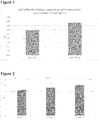
- Results are shown in Figure 1 . Applying the enzymes with the same protein concentration resulted in a higher dL* value for SEQ ID NO: 11 (3.85) compared to SEQ ID NO: 1 (2.94) indicating an increased ARD-effect for SEQ ID NO: 11.
- the liquor cloth ratio was set to 25 by adding cotton fabric 80 A and 10 A (wfk Testgewebe GmbH, 41379 Brüggen, Germany) as ballast.
- the L*a*b* values of the white cotton swatches were recorded after drying the textile at the air using a spectrophotometer with D65, 10°(ColorFlex EZ, Hunterlab). The instrument was calibrated prior to the measurement with a supplied white standard.
- the dL* value was calculated by subtraction of the L* of a blank control without enzyme from L* of cotton swatches treated with cellulase.
- the dL* reflects the whiteness of a fabric, a higher dL* therefore indicates a higher ARD-effect of enzyme.
- Enzymes were dosed as mg of active enzyme protein (AEP). AEP content of each preparation was calculated based on a SDS-PAGE, which was applied for protein quantification (example 2). Dosage of the enzyme preparations was 1.5 mg of active enzyme protein per liter of wash liquor and control sample contained no enzyme.
- Results are shown in Figure 2 . Applying the different cellulose variants resulted in different L+-values, indicating different ARD-effect of the cellulose variants.
- Example 6 ARD (Anti Re-Deposition) wash activity of enzymes with carpet soil
- the wash activity of cellulases was tested in an ARD washing test in Tergotometer scale.
- White cotton swatches T460-40, center for testmaterials B.V. 3133 KT Vlaardingen, The Netherlands) were washed 7 times 20 minutes in 800 mL at 35°C.
- the wash liquor consisted of the detergent AATCCliqD in a dosage of 2 g/L in water with French hardness set to 26, Ca:Mg 2:1.
- Liquor cloth ratio was set to 29 by adding cotton fabric 80 A and 10 A (wfk Testgewebe GmbH, 41379 Brüggen, Germany) as ballast.
- As soil 10 g/L carpet soil wfk 09W (wfk Testgewebe GmbH, 41379, Brüggen, Germany) was added into the wash liquor at each wash cycle.
- Enzymes were dosed in a concentration of 0.625 mg/L (AEP; active protein; example 2).
- the L*a*b* values of the white cotton swatches were recorded after drying the textile at the air using a spectrophotometer with D65, 10°(ColorFlex EZ, Hunterlab). The instrument was calibrated daily prior to each measurement with the supplied white standard (Hunterlab).
- the dL* value was calculated by subtraction of the L* of a blank control without enzyme from L* of cotton swatches treated with cellulase. The dL* gives the whiteness of a fabric, a higher dL* therefore indicates a higher ARD-effect of enzyme.
- SEQ ID NO: 11 shows a positive ARD effect with dL* of ⁇ 2 compared to fabric washed without enzyme treatment.
- Celluclean® 5000L shows on average a minimal negative ARD wash effect with carpet soil.
- Example 7 Launder-O-meter tests of a cellulase with liquid detergent application
- the tests were conducted as disclosed in WO 2016 066896 .
- the cellulase (SEQ ID NO: 11) was produced in Pichia pastoris, as described in example 1, and tested for their performance with AATCCliq. detergent at 40°C.
- the monitor E-253 was used for the demonstration of the de-pilling effect representing used cotton textiles.
- the test fabrics were cut into swatches (approx. 29 cm x 15 - 16.5 cm, total weight of two swatches approx. 24 g) containing full width stripes of each color (black, red, green, blue).
- Cellulase treatments were performed in an Atlas LP-2 Launder-O-meter (SDS Atlas, Rock Hill, SC 29732, USA) as follows.
- the Launder-O-meter was first pre-heated to 40°C. Subsequently, 60 g of steel balls (diameter 0.6 cm) and 240 ml of wash liquor and diluted enzyme ( ⁇ 1 .0 ml) were added into 1.2 liter containers. After that, one swatch of E-253 was placed in containers and the Launder-O-meter was run at 40°C for 60 min.
- Enzymes were dosed as mg of active enzyme protein (AEP). AEP content of each preparation was calculated based on a SDS-PAGE which was applied for protein quantification (example 2).
- Dosage of the enzyme preparations was 0.4 mg of active enzyme protein per liter of wash liquor and control sample contained no enzyme.
- the wash liquor contained 5 g of AATCCliq. per litre of synthetic tap water (16°dH).
- the preparation of the synthetic tap water with a hardness of 16°dH was prepared as described in WO 2016 066896 in example 4. After the cellulase treatment in the Launder-O-meter, the swatches were first rinsed separately under running water (ambient temperature -20°C) and then dried in a spin-dryer (THOMAS, Neunmaschinen; Type: 776 SEL 202) for 5 minutes.
- THOMAS Spin-dryer
- the cellulase performance in detergent application was evaluated by measuring the color of as reflectance values using a spectrophotometer (ColorFlex EZ, Hunterlab) using L*a*b* color space coordinates. The color of each 4 stripes of test monitors was measured after 5 washing cycles. Decrease of lightness (L*), i.e. increase of darkness compared to treatment without cellulase, was used as an indication of cellulase effect. When the surface fibers and fibrils protruding from the yarn forming pills and giving the fabric a greyish look are removed by cellulase, the lightness of the fabric decreases, and the surface of the fabric appears darker and colors get brighter ( WO 2016 066896 ).
- Example 8 ARD (Anti-re-deposition) wash activity of a cellulase at 20°C
- SEQ ID NO: 11 The activity of SEQ ID NO: 11 was tested in an ARD washing test in Tergotometer scale at 20°C.
- White cotton swatches (WK05, wfk Testgewebe GmbH, 41379 Brüggen, Germany) were washed 20 minutes in 800 mL at 20°C.
- the wash liquor consisted of the detergent IKEA12 in a dosage of 0.72 g/L in water with a defined French hardness of 26, Ca:Mg 2:1. To each wash cycle 0.04 g/L were added.
- the IKEA formulation is: Ingredient Wt.% Demin water To 100 TEA 1.95 NaOH 1.28 Gulf Farabi LAS (linear alkylbenzene sulfonate) 11.33 Texapon N701 (1EO) (nonionic surfactant) 7.17 Proxel GXL (1, 2- benzisothiazolin-3-one) 0.02 Neolone 950 (Methylisothiazolone) 0.01 NaCl 1.00
- the liquor cloth ratio was set to 33 by adding a woven cotton fabric as ballast.
- the L*a*b* values of the white cotton swatches were recorded after drying the textile at 25°C; 10% humidity overnight in a spectrophotometer with D65, 10°(ColorFlex EZ, Hunterlab). The instrument was calibrated prior to the measurement with a supplied white standard.
- the dL* value was calculated by subtraction of the L* of a blank control without enzyme from L* of cotton swatches treated with cellulase. The dL* reflects the whiteness of a fabric, a higher dL* therefore indicates a higher ARD-effect of enzyme.
- Enzymes were dosed as mg of active enzyme protein (AEP). AEP content of each preparation was calculated based on the method described in example 2. Dosage of the enzyme preparations was 0.625 mg of active enzyme protein per liter of wash liquor and control sample contained no enzyme.
- Results are shown in Figure 4 . Applying SEQ ID NO: 15 with a concentration of 0.625 mg/L resulted in a dL* value of 4.5.
- Example 9 Determination of temperature optimum of SEQ ID NO: 11
- a 5% (w/v) p-hydroxybenz-hydrazide stock solution in 0.5 M HCl was diluted 1:3 in 0.5 M NaOH to yield the p-hydroxybenz-hydrazide working solution.
- 50 ⁇ L of sample was mixed with 150 ⁇ L of working solution and the reaction was incubated for 5 min at 95°C. After cooling to 4°C the absorbance at 410 nm was determined and liberated reducing ends were calculated using a glucose calibration curve.
- SEQ ID NO: 11 guarantees activity at all temperatures relevant for cleaning and washing applications. Even at low temperatures an activity of more than 20% is maintained.
- Example 10 Determination of pH optimum of SEQ ID NO: 11
- an enzyme stock solution was diluted in 120 mM Britton-Robinson universal buffers adjusted to pH 2, 3, 4, 5, 6, 7, 8, 9, 10, 11 and 12, respectively. 100 ⁇ L of these dilutions were mixed with 100 ⁇ L aqueous 1% carboxymethyl-cellulose solution and incubated for 10 minutes at 70°C, shaking. The reactions were stopped by incubation of the reaction mixes at 95°C for 5 minutes. Activity was determined by measurement of the liberated reducing ends using the p-hydroxybenz-hydrazide assay as described in Example 9.
- Example 11 Determination of temperature and pH optimum, and thermostability of SEQ ID NO: 11
- Cotton Monitors used were pre aged by washing them 20 times with OMO powder. 3 replicates per wash point of 1, 3, 5, 10, 15, 20, 25 and 30 washes were used. Soil Monitors used comprised of 3 x E101 monitors. Fabrics were washed in a range of formulations +/- Celluclean and AV50 (shading dye) to assess if there is any improvement to redeposition due to the enzyme being present. Machines used for the study were Asian TLA 45L. Washes were carried out in 40°C 26 FH (2:1 Ca:Mg) 45L wash liquor and the ballast load used was 1.5kg.
- Pill removal via cellulases was assessed using the instrumental pilling measurement equipment. Fabrics washed with the various cellulase technologies were analysed by taking multiple images and the subsequent images were then processed to give a percentage area covered by pills.
- the TruBurst - Intelligent Bursting Strength Tester is a computer-controlled pneumatic testing device. It is used to perform bursting strength tests on a variety of textile substrates including woven, knitted and non-woven fabrics when standard tensile strength methods are unsuitable.
- Drimarene blue interlocked cotton fabrics washed 15 times with the different enzyme technologies were cut in half to open up the fabric. 12 measurements per swatch were then taken using the conditions outlined below:
- Cellulase SEQ. ID 11 outperforms Celluclean® with regard to whiteness benefit ( Figure 8 ).
- the Cellulase SEQ. ID 11 provided a statistically significant improvement in terms of whiteness in comparison to celluclean.
- the test method used was the tergotometer wash studies as described earlier @ 45°C and used the RIN powder.
- Control (RIN powder) Cellulase SEQ. ID 11 Celluclean® mean L* 68.76 73.46 70.51 stdev 1.09 1.19 1.04 95% Cl 0.68 0.74 0.65
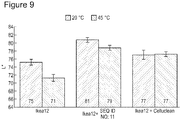
- Cellulase SEQ. ID 11 outperforms Celluclean® with regard to whiteness benefit ( Figure 9 ). This example was carried out at different washing temperatures (20 and 45 degrees Celsius). The Cellulase SEQ. ID 11 provided a statistically significant improvement in terms of whiteness in comparison to Celluclean®. Test method was the tergotometer wash studies described earlier @ both 20°C and 45°C using the IKEA liquid formulation. At 20 degrees Celsius Control (IKEA formulation) Cellulase SEQ. ID 11 Celluclean® mean L* 75.23 80.77 77.07 stdev 1.16 0.99 1.84 95% Cl 0.72 0.61 1.14 At 45 degrees Celsius Control (IKEA formulation) Cellulase SEQ. ID 11 Celluclean® mean L* 71.33 78.83 77.20 stdev 1.39 1.02 1.00 95% Cl 0.86 0.63 0.62
Landscapes
- Chemical & Material Sciences (AREA)
- Life Sciences & Earth Sciences (AREA)
- Engineering & Computer Science (AREA)
- Wood Science & Technology (AREA)
- Organic Chemistry (AREA)
- Chemical Kinetics & Catalysis (AREA)
- Oil, Petroleum & Natural Gas (AREA)
- Health & Medical Sciences (AREA)
- Bioinformatics & Cheminformatics (AREA)
- Genetics & Genomics (AREA)
- Zoology (AREA)
- Molecular Biology (AREA)
- Medicinal Chemistry (AREA)
- Biomedical Technology (AREA)
- Biotechnology (AREA)
- Microbiology (AREA)
- Biochemistry (AREA)
- General Engineering & Computer Science (AREA)
- General Health & Medical Sciences (AREA)
- Detergent Compositions (AREA)
Description
- The invention relates to a detergent composition comprising a shading dye and a novel cellulase. The invention further relates to methods of doing laundry using such compositions.
- Cellulases are used for various applications and are of particular importance for the good performance of cleaning applications such as the performance of detergent compositions.
- There are various cellulases known within the art, however, functional requirements are constantly increasing as customers expect high cleaning performance while production costs and thus costs of the final product should be kept low. In addition, environmental aspects gain importance and requirements for marketing approval constantly increase. So far, whiteness of fabrics is often achieved by implementation of bleaching agents such as chlorine-containing compositions. This leads not only to damages of the fabrics but is also increasing costs and environmentally harmful. Such state of the art enzymes are for example disclosed within
US 2005 070003 A1 . -
US 2016/137956 A1 discloses combinations of shading dyes including AV50 and various enzymes including cellulases, for example celluclean. -
WO 2012/059363 A1 also discloses detergent compositions with enzymes and shading dyes. -
WO 2011/117728 A2 discloses fusion proteins comprising cellulases with various catalytic linker and carbohydrate binding domains. - Owing to the wide array of cellulases and their assorted benefits, laundry compositions frequently contain cellulase blends (i.e. a cellulase for whiteness and a further cellulase for de-pilling, also termed "fabric care").
- This increases the enzyme content of the detergent, increasing the cost per dose and the amount of enzyme rinsed away at the end of a wash cycle. Furthermore, the different cellulases may have different stability and activity requirements and optima, making formulation and wash instruction considerations more difficult.
- The invention seeks to address these problems through the provision of detergent compositions comprising a cellulase as described herein. Such cellulases may exhibit advantageous dual benefits of both improved laundry whiteness and fabric care (de-fuzzing and de-pilling). This provides both care and cleaning (whiteness) benefits using only one cellulase, rather than two.
- The inventors have further observed that synergy is seen between the novel cellulase and a shading dye in the detergent composition.
- Accordingly, in a first aspect the present invention provides a detergent composition comprising:-
- (a) from 0.0001 to 1 wt.%, preferably from 0.0001 to 0.1 wt.%, more preferably from 0.0001 to 0.01 wt.%, most preferably from 0.0005 to 0.001 wt.% of a shading dye; and,
- (b) from 0.0001 to 10 wt.%, preferably from 0.0005 to 8 wt.%, more preferably from 0.001 to 5 wt.%, most preferably from 0.002 to 0.2 wt.% of a cellulase selected from any sequence with a sequence identity of at least 80%, preferably at least 85%, further preferred at least 90%, even more preferred at least 92%, also preferred at least 95%, particularly preferred at least 98% and most preferred at least 99% to SEQ ID NO: 11.
- In a second aspect, the invention provides a method of laundering white fabric, the method comprising contacting the fabric with an aqueous solution comprising a composition according the first aspect, optionally wherein the step of contacting the fabric with the aqueous solution occurs at 30°C or less.
- Within the present invention, the term "cellulase" is to be understood as referring to any enzyme catalyzing cellulolysis, which is the decomposition of cellulose and related polysaccharides. Within the present invention, the term "cellulase" also refers to any naturally occurring mixture or complex of such enzymes, which act serially or synergistically to decompose cellulosic material. The cellulase of the present invention may be of fungal, bacterial or protozoal origin. The term "cellulases" refers in particular to any enzyme capable of breaking down cellulose into monosaccharides such as beta-glucose, or shorter polysaccharides and oligosaccharides.
- The term "de-pilling" refers to the ability of cellulase enzymes to remove cotton fuzz and loose surface fibers in or on the fabric. This process is also referred to as "depilling", "biopolishing" and "biofinishing" and smoothes the surface of the fabric, which in turn improves its softness and appearance. Cellulase treatment also aids in the prevention of subsequent formation of fiber pills that make the garments appear worn. During de-pilling it is desirable to minimize strength loss of the fabric due to the hydrolytic action of the cellulases.
- Any motive or modification as referred to within the present application is defined using the one letter code for amino acids well known to a person skilled in the art.
- The amino acids are encoded as follows:
G Glycine, P Proline, A Alanine, V Valine, L Leucine, I Isoleucine, M Methionine, C Cysteine, F Phenylalanine, Y Tyrosine, W Tryptophan, H Histidine, K Lysine, R Arginine, Q Glutamine, N Asparagine, E Glutamic Acid, D Aspartic Acid, S Serine, T Threonine. - The sequence identity between two amino acid sequences is determined using the Needleman-Wunsch algorithm (Needleman and Wunsch, 1970, J. Mol. Biol. 48: 443-453) as implemented in the Needle program of the EMBOSS package (EMBOSS: The European Molecular Biology Open Software Suite, Rice et al., 2000, Trends Genet. 16: 276-277), preferably version 5.0.0 or later. The parameters used are gap open penalty of 10, gap extension penalty of 0.5, and the EBLOSUM62 (EMBOSS version of BLOSUM62) substitution matrix. The output of Needle labeled "longest identity" (obtained using the -nobrief option) is used as the percent identity and is calculated as follows: (Identical Residues X 100)/(Length of Alignment - Total Number of Gaps in Alignment)
- The cellulase is selected from any sequence with a sequence identity of at least 80%, preferably at least 85%, further preferred at least 90%, even more preferred at least 92%, also preferred at least 95%, particularly preferred at least 98% and most preferred at least 99% to SEQ ID NO:11.
- The inventive cellulase may be prepared by any method known to a person skilled in the art as suitable for the inventive purpose. Preferred is the expression of the inventive cellulase by a suitable host cell. The term "host cell" refers to any cell type that is suitable to transformation, transfection, transduction, or the like with a nucleic acid construct or expression vector comprising the nucleic acid sequence of the inventive cellulase. The term "host cell" also encompasses any progeny of a parent cell, which is not identical to the parent cell due to mutations that occur during replication. Host cells are preferably selected from the group consisting of fungi, yeast and bacteria. Within the present invention, the host cell is preferably a yeast cell such as Candida, Hansenula, Kluyveromyces; Pichia, Saccharomyces, Schizosaccharomyces, or Yarrowia wherein Kluyveromyces lactis, Kaccharomyces carlsbergensis, Saccharomyces cerevisiae, Saccharomyces diastaticus, Saccharomyces douglasii, Saccharomyces kluyveri, Saccharomyces norbensis, Saccharomyces oviformis, Yarrowia lipolytica and Pichia pastoris are preferred.
- The term "expression" includes any step involved in the production of the inventive cellulase such as but not limited to transcription, posttranscriptional, modification, translation, post-translational modification and secretion.
- Preferably, the detergent composition comprises from 0.0005 to 8 wt.%, more preferably from 0.001 to 5 wt.%, most preferably from 0.002 to 0.2 wt.% of the cellulase.
- Preferably, the shading dye is a blue or violet shading dye, although other hues are also within the scope of the invention. The use of a blue or violet shading dye may enhance the perception of whiteness and / or cleanness.
- Suitable shading dyes are described in
WO 2011/047987 , the contents of which are incorporated herein by reference in their entirety. - Preferably, the shading dye is a reactive dye covalently bound to a polymer. More preferably, the polymer is a polyimine, optionally but preferably wherein the polyimine is substituted with 2-hydroxypropan-1-yl groups.
- The shading dye may preferably comprise a chromophore of formula:

- An exemplary and preferred shading dye is UB40, which has the following structure:
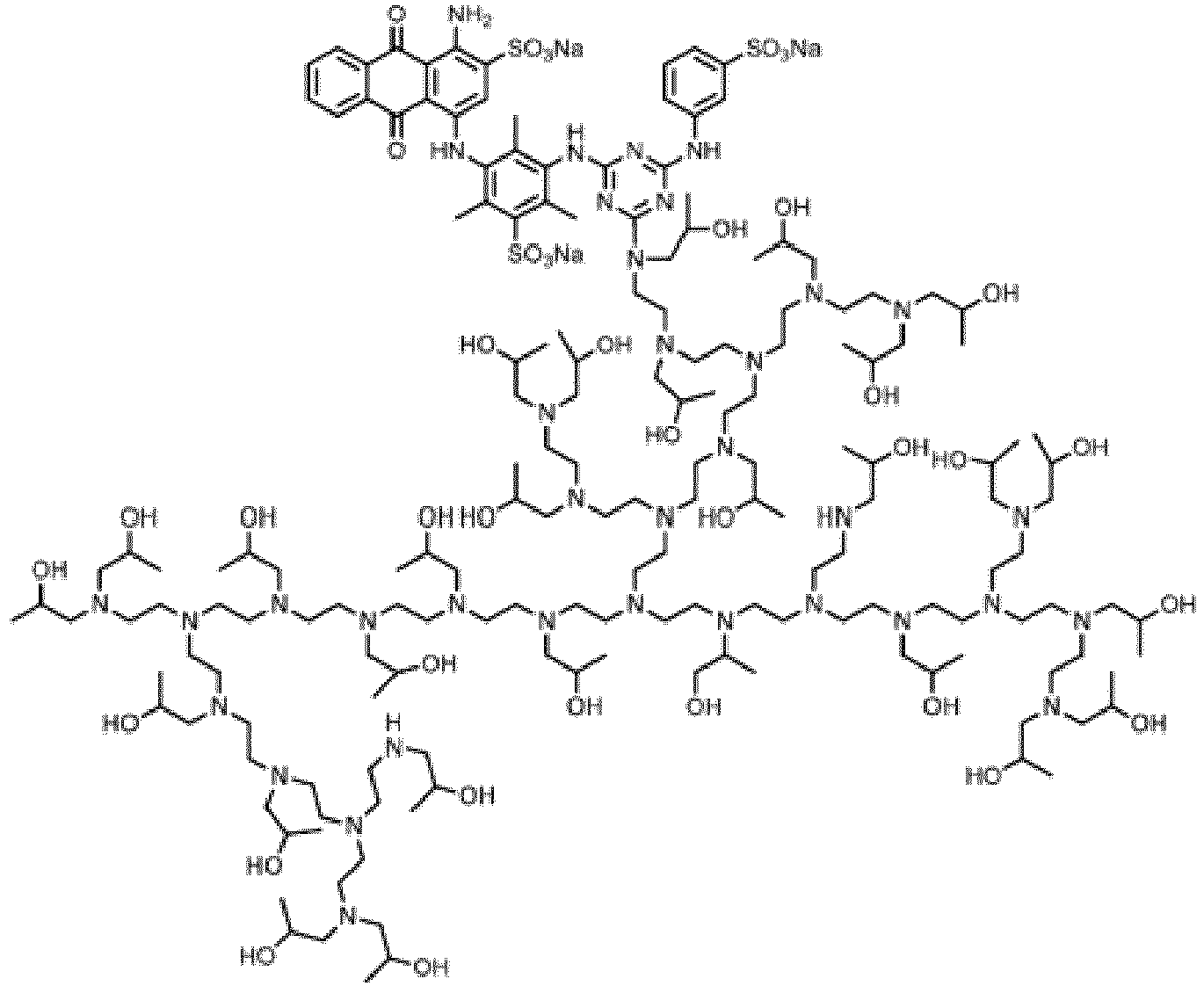
- In some cases, the shading dye is preferably a direct dye, for example, an azine dye. Suitable azine dyes are described in
WO 2008/017570 . - In some cases, the dye is preferably AV50, which has the following structure:

- The shading dye is preferably present in the composition in range from 0.0001 to 1 wt %, more preferably from 0.0001 to 0.1 wt.%, even more preferably from 0.0001 to 0.01 wt.%, most preferably from 0.0005 to 0.001 wt%.
- The detergent composition of the invention may be in any convenient form, such as a bar, a homogenous tablet, a tablet having two or more layers, a pouch having one or more compartments, a regular or compact powder, a granule, a paste, a gel, or a regular, compact or concentrated liquid.
- Pouches can be configured as single or multicompartments. It can be of any form, shape and material which is known to a person skilled in the art as suitable for the inventive purpose and which prevents the release of the composition from the pouch prior to water contact. The pouch is preferably made from water soluble film which encloses an inner volume. The inner volume can be divided into compartments of the pouch. Preferred films are polymeric materials preferably polymers which are formed into a film or sheet. Preferred polymers, copolymers or derivates thereof are selected polyacrylates, and water soluble acrylate copolymers, methyl cellulose, carboxy methyl cellulose, sodium dextrin, ethyl cellulose, hydroxyethyl cellulose, hydroxypropyl methyl cellulose, malto dextrin, polymethacrylates, most preferably polyvinyl alcohol copolymers and, hydroxyprpyl methyl cellulose (HPMC).
- A liquid or gel detergent may be aqueous, preferably containing at least 20% by weight and up to 95 weight-% water, such as up to about 70 weight-% water, up to about 65 weight-% water, up to about 55 weight-% water, up to about 45 weight-% water, up to about 35 weight-% water, wherein a water content of from 2 to 40 weight-% is preferred.
- Other types of liquids include alkanols, amines, diols, ethers and polyols in an aqueous liquid or gel. An aqueous liquid or gel detergent may contain from 0 to 30 weight-% of an organic solvent. A liquid or gel detergent may also be non-aqueous.
- Preferably the detergent composition is a liquid, powder or gel. It may be provided in a capsule or tablet, or in free-pouring form. The detergent compositions may be prepared using any suitable methods known in the art.
- Preferably, the composition is a liquid. Liquid compositions are preferred by many consumers, and concentrated liquid products improve sustainability owing to decreased packaging and a smaller transportation footprint. Preferred liquid compositions comprise from 2 to 60 wt.% of surfactant, preferably anionic surfactant and from 5 to 80 wt.% of water.
- The composition is a detergent composition and suitably comprises a surfactant. Suitable surfactant levels can be from 0.1 to 80 wt.%, preferably 1 to 70 wt.%, more preferably 2 to 60 wt.%
- The detergent composition preferably comprises from 4 to 40 wt.%, more preferably from 5 to 35 wt.%, most preferably from 6 to 33 wt.% of a surfactant.
- Suitable surfactants may be chosen from the surfactants described "Surface Active Agents" Vol. 1, by Schwartz & Perry, Interscience 1949, Vol. 2 by Schwartz, Perry & Berch, Interscience 1958, in the current edition of "McCutcheon's Emulsifiers and Detergents" published by Manufacturing Confectioners Company or in "Tenside-Taschenbuch", H. Stache, 2nd Edn., Carl Hauser Verlag, 1981 or in Anionic Surfactants: Organic Chemistry edited by Helmut W. Stache (Marcel Dekker 1996).
- It is preferred that an anionic surfactant is present.
- Suitable anionic detergent compounds which may be used are usually water-soluble alkali metal salts of organic sulphates and sulphonates having alkyl radicals containing from about 8 to about 22 carbon atoms, the term alkyl being used to include the alkyl portion of higher alkyl radicals.
- Examples of suitable synthetic anionic detergent compounds are sodium and potassium alkyl sulphates, especially those obtained by sulphating higher C8 to C18 alcohols, produced for example from tallow or coconut oil, Alkyl ether carboxylic acids; sodium and potassium alkyl C9 to C20 benzene sulphonates, particularly sodium linear secondary alkyl C10 to C15 benzene sulphonates; and sodium alkyl glyceryl ether sulphates, especially those ethers of the higher alcohols derived from tallow or coconut oil and synthetic alcohols derived from petroleum.
- The anionic surfactant is preferably selected from: linear alkyl benzene sulphonate; alkyl sulphates; alkyl ether sulphates; alkyl ether carboxylates; soaps; alkyl (preferably methyl) ester sulphonates, and mixtures thereof.
- Preferred anionic surfactants are selected from: linear alkyl benzene sulphonate; alkyl sulphates; alkyl ether sulphates and mixtures thereof. Preferably the alkyl ether sulphate is a C12-C14 n-alkyl ether sulphate with an average of 1 to 3EO (ethoxylate) units. Sodium lauryl ether sulphate is particularly preferred (SLES). Preferably the linear alkyl benzene sulphonate is a sodium C11 to C15 alkyl benzene sulphonates. Preferably the alkyl sulphates is a linear or branched sodium C12 to C18 alkyl sulphates. Sodium dodecyl sulphate is particularly preferred, (SDS, also known as primary alkyl sulphate).
- Preferably two or more anionic surfactant are present, for example linear alkyl benzene sulphonate together with an alkyl ether sulphate.
- Most preferably the anionic surfactant is selected from: linear alkyl benzene sulphonates; alkyl sulphates; alkyl ether sulphates; and mixtures thereof.
- The composition may comprise anionic and/or non-ionic surfactants.
- Suitable nonionic detergent compounds which may be used include, in particular, the reaction products of compounds having an aliphatic hydrophobic group and a reactive hydrogen atom, for example, aliphatic alcohols, acids or amides, especially ethylene oxide either alone or with propylene oxide. Specific nonionic detergent compounds are the condensation products of aliphatic C8 to C18 primary or secondary linear or branched alcohols with ethylene oxide.
- Preferably the alkyl ethoxylated non-ionic surfactant is a C8 to C18 primary alcohol with an average ethoxylation of 7EO to 9EO units.
- If a non-ionic surfactant is present, then most preferably the non-ionic surfactant is an alcohol ethoxylate, more preferably a C10-C18 alcohol ethoxylate having an average of 3-10 moles of ethylene oxide, most preferably a C12-C15 alcohol ethoxylate having an average of 5-9 moles of ethylene oxide.
- A highly preferred surfactant comprises from 4 to 40 wt.%, more preferably from 5 to 35 wt.%, most preferably from 6 to 33 wt.% of a surfactant that comprises an anionic surfactant, preferably comprising linear alkyl benzene sulphonates and nonionic surfactant.
- In this preferable surfactant mixture, most preferably the weight fraction of nonionic surfactant to anionic surfactant is < 0.5, for example from 0.1 to < 0.5. This means that it is preferable that the level of anionic surfactant is greater than the level of nonionic surfactant in the detergent composition.
- Further preferred ingredients that can suitably be included in the compositions of the invention include perfume, fluorescent agent, further enzymes, builders, and polymers.
- Preferably the composition comprises one or more perfumes.
- The composition preferably comprises a perfume. The perfume is preferably present in the range from 0.001 to 3 wt.%, more preferably 0.05 to 0.5 wt.%, most preferably 0.1 to 1 wt.%. Many suitable examples of perfumes are provided in the CTFA (Cosmetic, Toiletry and Fragrance Association) 1992 International Buyers Guide, published by CFTA Publications and OPD 1993 Chemicals Buyers Directory 80th Annual Edition, published by Schnell Publishing Co.
- Preferably the perfume comprises at least one note (compound) from: alpha-isomethyl ionone, benzyl salicylate; citronellol; coumarin; hexyl cinnamal; linalool; Pentanoic acid, 2-methyl-, ethyl ester; octanal; benzyl acetate; 1,6-octadien-3-ol, 3,7-dimethyl-, 3-acetate; cyclohexanol, 2-(1,1-dimethylethyl)-, 1-acetate; delta-damascone; beta-ionone; verdyl acetate; dodecanal; hexyl cinnamic aldehyde; cyclopentadecanolide; benzeneacetic acid, 2-phenylethyl ester;amyl salicylate; beta-caryophyllene; ethyl undecylenate; geranyl anthranilate; alpha-irone; beta-phenyl ethyl benzoate; alpa-santalol; cedrol; cedryl acetate; cedry formate; cyclohexyl salicyate; gamma-dodecalactone; and, beta phenylethyl phenyl acetate.
- Useful components of the perfume include materials of both natural and synthetic origin. They include single compounds and mixtures. Specific examples of such components may be found in the current literature, e.g., in Fenaroli's Handbook of Flavor Ingredients, 1975, CRC Press; Synthetic Food Adjuncts, 1947 by M. B. Jacobs, edited by Van Nostrand; or Perfume and Flavor Chemicals by S. Arctander 1969, Montclair, N.J. (USA).
- It is commonplace for a plurality of perfume components to be present in a formulation. In the compositions of the present invention it is envisaged that there will be four or more, preferably five or more, more preferably six or more or even seven or more different perfume components.
- In perfume mixtures preferably 15 to 25 wt.% are top notes. Top notes are defined by Poucher (Journal of the Society of Cosmetic Chemists 6(2):80 [1955]). Preferred top-notes are selected from citrus oils, linalool, linalyl acetate, lavender, dihydromyrcenol, rose oxide and cis-3-hexanol.
- The International Fragrance Association has published a list of fragrance ingredients (perfums) in 2011, (http://www.ifraorg.org/en-us/ingredients#.U7Z4hPidWzk).
- The Research Institute for Fragrance Materials provides a database of perfumes (fragrances) with safety information.
- Some or all of the perfume may be encapsulated, typical perfume components which it is advantageous to encapsulate, include those with a relatively low boiling point, preferably those with a boiling point of less than 300, preferably 100-250 Celsius. It is also advantageous to encapsulate perfume components which have a low CLog P (i.e., those which will have a greater tendency to be partitioned into water), preferably with a CLog P of less than 3.0. These materials, of relatively low boiling point and relatively low CLog P have been called the "delayed blooming" perfume ingredients and include one or more of the following materials:
allyl caproate, amyl acetate, amyl propionate, anisic aldehyde, anisole, benzaldehyde, benzyl acetate, benzyl acetone, benzyl alcohol, benzyl formate, benzyl iso valerate, benzyl propionate, beta gamma hexenol, camphor gum, laevo-carvone, d-carvone, cinnamic alcohol, cinamyl formate, cis-jasmone, cis-3-hexenyl acetate, cuminic alcohol, cyclal c, dimethyl benzyl carbinol, dimethyl benzyl carbinol acetate, ethyl acetate, ethyl aceto acetate, ethyl amyl ketone, ethyl benzoate, ethyl butyrate, ethyl hexyl ketone, ethyl phenyl acetate, eucalyptol, eugenol, fenchyl acetate, flor acetate (tricyclo decenyl acetate), frutene (tricyclco decenyl propionate), geraniol, hexenol, hexenyl acetate, hexyl acetate, hexyl formate, hydratropic alcohol, hydroxycitronellal, indone, isoamyl alcohol, iso menthone, isopulegyl acetate, isoquinolone, ligustral, linalool, linalool oxide, linalyl formate, menthone, menthyl acetphenone, methyl amyl ketone, methyl anthranilate, methyl benzoate, methyl benyl acetate, methyl eugenol, methyl heptenone, methyl heptine carbonate, methyl heptyl ketone, methyl hexyl ketone, methyl phenyl carbinyl acetate, methyl salicylate, methyl-n-methyl anthranilate, nerol, octalactone, octyl alcohol, p-cresol, p-cresol methyl ether, p-methoxy acetophenone, p-methyl acetophenone, phenoxy ethanol, phenyl acetaldehyde, phenyl ethyl acetate, phenyl ethyl alcohol, phenyl ethyl dimethyl carbinol, prenyl acetate, propyl bornate, pulegone, rose oxide, safrole, 4-terpinenol, alpha-terpinenol, and /or viridine. It is commonplace for a plurality of perfume components to be present in a formulation. It is envisaged that there will be four or more, preferably five or more, more preferably six or more or even seven or more different perfume components from the list given of delayed blooming perfumes given above present in the perfume. - Another group of perfumes with which the present invention can be applied are the so-called 'aromatherapy' materials. These include many components also used in perfumery, including components of essential oils such as Clary Sage, Eucalyptus, Geranium, Lavender, Mace Extract, Neroli, Nutmeg, Spearmint, Sweet Violet Leaf and Valerian.
- Preferably the composition comprises one or more fluorescent agents.
- The composition preferably comprises a fluorescent agent (optical brightener). Fluorescent agents are well known and many such fluorescent agents are available commercially. Usually, these fluorescent agents are supplied and used in the form of their alkali metal salts, for example, the sodium salts.
- Preferred classes of fluorescer are: Di-styryl biphenyl compounds, e.g. Tinopal (Trade Mark) CBS-X, Di-amine stilbene di-sulphonic acid compounds, e.g. Tinopal DMS pure Xtra and Blankophor (Trade Mark) HRH, and Pyrazoline compounds, e.g. Blankophor SN.
- Preferred fluorescers are: sodium 2 (4-styryl-3-sulphophenyl)-2H-napthol[1,2-d]triazole,
disodium 4,4'-bis{[(4-anilino-6-(N methyl-N-2 hydroxyethyl)amino disodium 4,4'-bis{[(4-anilino-6-morpholino-1,3,5-triazin-2-yl)]amino} stilbene-2-2' disulphonate, anddisodium 4,4'-bis(2-sulphostyryl)biphenyl. - The total amount of the fluorescent agent or agents used in the composition is preferably from 0.0001 to 0.5 wt.%, more preferably 0.005 to 2 wt.%, most preferably 0.05 to 0.25 wt.%.
- Other than the indicated celluase, further enzymes may preferably be present in the composition.
- If present, then the level of each enzyme in the laundry composition of the invention is from 0.0001 wt.% to 0.1 wt.%.
- Contemplated further enzymes include proteases, alpha-amylases, other cellulases (celluases other than those specified in the invention as defined by the claims upon filing), lipases, peroxidases/oxidases, pectate lyases, and mannanases, or mixtures thereof.
- Preferably the enzyme is selected from: proteases, alpha-amylases; and lipases.
- Builder materials may be present. If present then they are generally selected from 1) calcium sequestrant materials, 2) precipitating materials, 3) calcium ion-exchange materials and 4) mixtures thereof.
- Examples of calcium sequestrant builder materials include alkali metal polyphosphates, such as sodium tripolyphosphate and organic sequestrants, such as ethylene diamine tetra-acetic acid.
- Examples of precipitating builder materials include sodium orthophosphate and sodium carbonate.
- Examples of calcium ion-exchange builder materials include the various types of water-insoluble crystalline or amorphous aluminosilicates, of which zeolites are well known representatives, e.g. zeolite A, zeolite B (also known as zeolite P), zeolite C, zeolite X, zeolite Y and also the zeolite P-type as described in
EP-A-0,384,070 . - The composition may also contain 0-65 % of a builder or complexing agent such as ethylenediaminetetraacetic acid, diethylenetriamine-pentaacetic acid, alkyl- or alkenylsuccinic acid, nitrilotriacetic acid or the other builders mentioned below. Preferably the laundry cleaning formulation is a non-phosphate built laundry detergent formulation, i.e., contains less than 1 wt.% of phosphate.
- The composition may preferably comprise one or more polymers. Example polymers are polyethyleneimine, poly(vinylpyrrolidone), poly(vinylpyridine-N-oxide), poly(vinylimidazole), carboxymethylcellulose, poly(ethylene glycol), poly(vinyl alcohol), polycarboxylates such as polyacrylates, maleic/acrylic acid copolymers and lauryl methacrylate/acrylic acid copolymers. A preferred polymer is polyethyleneimine.
- The invention further relates to methods of laundering fabric. Suitably, at least some of the fabric is white, although it will be appreciated that the compositions described herein may be used on coloured fabric. The term white fabric includes white portions of fabric in a garment, which may be patterned and have two or more coloured sections.
- As described herein, the cellulases in the compositions of the invention may be stable at higher temperatures, but show good activity at lower temperatures. Lower temperature washes may be preferable as they are more environmentally friendly, less expensive and, typically, less likely to damage fabrics and trims. The step of contacting the fabric with an aqueous solution comprising a composition of the invention, or the wash step, may occur at 60°C or less, for example at 50 °C or less, for example at 40°C or less, for example at 30 °C or less.
- The invention will now be described with reference to the following non-limiting examples and with reference to the following figures:-
- Fig. 1
- shows the results of example 4: a comparison of the dL*-value of SEQ ID NO: 1 and SEQ ID NO: 11
- Fig. 2
- shows the results of example 5: applying the different cellulose variants resulted in different L+-values, indicating different ARD-effect of the celluloses SEQ ID NO: 15, SEQ ID NO: 13 and
SEQ ID NO 17. - Fig. 3
- shows the results of example 6: ARD wash activity of SEQ ID NO: 11 compared to Celluclean® for carpet soil
- Fig. 4
- shows the results of example 8: Applying SEQ ID NO: 11 with a concentration of 0.625 mg/L at 20°C resulted in a dL* value of 4.5
- Fig. 5
- shows the results of example 9: The temperature optimum of SEQ ID NO: 11
- Fig. 6
- shows the results of example 10: The pH optimum of SEQ ID NO: 11
- Fig. 7
- shows the results of example 11: The thermostability of SEQ ID NO: 11
- Fig. 8
- shows a comparison of whiteness for a cellulase within the definitions for the invention (Cellulase SEQ. ID 11) with Celluclean® and a control after 3 washes at 45 °C.
- Fig. 9
- shows improved whiteness performance for Cellulase SEQ.
ID 11 compared to Celluclean® in a liquid formulation at different temperatures. - Fig. 10
- compares the performance of a composition of the invention (Cellulase SEQ.
ID 11 and AV50 shading dye) with a composition comprising Celluclean® and various control compositions. - Fig. 11
- shows the superior whiteness performance over multiple washes of compositions comprising Cellulase SEQ.
ID 11 compared to Celluclean®. - Fig.12
- shows the depilling effect of Cellulase SEQ.
ID 11 is superior to that of Celluclean®. - Fig. 13
- shows the burst strength data for new drimarine blue fabric swatches washed 15 times with a control, a composition comprising Cellulase SEQ.
ID 11 and a benchmark "Care" cellulase. - For the expression of the proteins (the following methods refers to SEQ ID NO: 15 and SEQ ID NO: 1 as examples), the corresponding genes (SEQ ID NO: 2 and SEQ ID NO: 16) were cloned into standard vectors at first. Therefore, the two genes were amplified via PCR with primers having a restriction site as overhang. PCR products and vectors (pGAPZα A, pPICZα A; Invitrogen™), digested with Kpnl and Xbal, were ligated according to suppliers manual. The resulted vectors are listed in table 1.
Table 1: Plasmid names and description plasmid name description pGAP- SEQ ID NO: 1 pGAPZα A with SEQ ID NO: 1 pAOX- SEQ ID NO: 1 pPICZα A with SEQ ID NO: 1 pGAP- SEQ ID NO: 15 pGAPZα A with SEQ ID NO: 15 pAOX- SEQ ID NO: 15 pPICZα A with SEQ ID NO: 15 - After linearization with Bgll, the vectors were transformed into X-33 strain (Invitrogen™) according to suppliers manual. For each plasmid, 96 transformants were screened for high protein production in deep-well plates. From each transformant series the best 5-10 clones were cultivated in 300 ml shake flasks (50 ml YP base medium with 1% glycerol; 27°C, 250 rpm, 80 % humidity; 2 ml shots of glycerin or methanol after 40 h, 48h, 66 h and 72 h; harvest after 96 h) for verification. The activity of the proteins was determined with Azo-CMC Assay (Megazyme, Ireland) at the end.
- SEQ ID NO: 1, SEQ ID NO: 11, SEQ ID NO: 13, SEQ ID NO: 15 and SEQ ID NO: 17 fermentation supernatants were quantified via an in house SDS gel quantification method using an external protein calibration curve. Enzyme samples were applied to an SDS gel which was subsequently stained with Sypro Ruby (Thermo Fisher: S12000). The gel image was recorded on a standard Bio-Rad gel documentation instrument. Image analysis was performed using ImageLab software (Bio-Rad). Protein concentration was determined by signal integration of the target protein's specific SDS gel band using the external protein calibration curve on the same SDS gel (e.g. BSA; bovine serum albumin).
- SEQ ID NO: 1 and SEQ ID NO: 11 were purified to homogeneity by Ni-NTA purification followed by size exclusion chromatography using a
Superdex 75 10/300GL column. The protein sequences were determined experimentally by intact mass determination and N-terminal sequencing. Protein quantification of the homogenous samples was performed by HPLC with UV280 signal detection using the molar extinction coefficient calculated from the experimentally determined protein sequence. In brief, HPLC runs were performed as follows. The protein was applied to an end capped Nucleosil C4 column and eluted by a linear gradient of buffer A (90% water, 10% acetonitrile, 0.1% TFA) and buffer B (100% acetonitrile, 0.1% TFA). The peak UV280 signal was integrated to calculate the protein concentration. Volumetric enzyme activities of purified SEQ ID NO: 1 and SEQ ID NO: 11 samples, or crude protein supernatants were measured using a modified, 96 well enabled Cellazyme® C assay (Megazyme). Specific and molar activities of size exclusion chromatography purified SEQ ID NO: 1 and SEQ ID NO: 11 were used to calculate target protein concentrations in the crude fermentation supernatants. - The activity of cellulases was tested in an ARD washing test in Tergotometer scale. White cotton swatches (T460-40, center for testmaterials B.V. 3133 KT Vlaardingen, The Netherlands) were washed 4
times 20 minutes in 800 mL at 40°C. The wash liquor consisted of the detergent AATCC WOB 93 in a dosage of 1.5 g/L in water with a defined French hardness of 27, Ca:Mg 2:1. To eachwash cycle 8 new cotton swatches soiled with carbon black and olive oil (8x10 cm; 101 swissatest Testmaterialien AG, 9015 St Gallen, Switzerland) were added as soil ballast. The liquor cloth ratio was set to 25 by adding cotton fabric 80 A and 10 A (wfk Testgewebe GmbH, 41379 Brüggen, Germany) as ballast. The L*a*b* values of the white cotton swatches were recorded after drying the textile at the air using a spectrophotometer with D65, 10°(ColorFlex EZ, Hunterlab). The instrument was calibrated prior to the measurement with a supplied white standard. The dL* value was calculated by subtraction of the L* of a blank control without enzyme from L* of cotton swatches treated with cellulase. The dL* reflects the whiteness of a fabric, a higher dL* therefore indicates a higher ARD-effect of enzyme. Enzymes were dosed as mg of active enzyme protein (AEP). AEP content of each preparation was calculated based on specific enzyme activities. The protein quantification was performed as described in example 3. Dosage of the enzyme preparations was 0.625 mg of active enzyme protein per liter of wash liquor and control sample contained no enzyme. - Results are shown in
Figure 1 . Applying the enzymes with the same protein concentration resulted in a higher dL* value for SEQ ID NO: 11 (3.85) compared to SEQ ID NO: 1 (2.94) indicating an increased ARD-effect for SEQ ID NO: 11. - The activity of cellulases was tested in an ARD washing test in Tergotometer scale. White cotton swatches (T460-40, center for testmaterials B.V. 3133 KT Vlaardingen, The Netherlands) were washed 4
times 20 minutes in 800 mL at 40°C. The wash liquor consisted of detergent AATCC WOB 93 in a dosage of 1.5 g/L in water with set French hardness 27, Ca:Mg 2:1. To eachwash cycle 8 new cotton swatches soiled with carbon black and olive oil (8x10 cm; 101 swissatest Testmaterialien AG, 9015 St Gallen, Switzerland) were added as soil ballast. The liquor cloth ratio was set to 25 by adding cotton fabric 80 A and 10 A (wfk Testgewebe GmbH, 41379 Brüggen, Germany) as ballast. The L*a*b* values of the white cotton swatches were recorded after drying the textile at the air using a spectrophotometer with D65, 10°(ColorFlex EZ, Hunterlab). The instrument was calibrated prior to the measurement with a supplied white standard. The dL* value was calculated by subtraction of the L* of a blank control without enzyme from L* of cotton swatches treated with cellulase. The dL* reflects the whiteness of a fabric, a higher dL* therefore indicates a higher ARD-effect of enzyme. Enzymes were dosed as mg of active enzyme protein (AEP). AEP content of each preparation was calculated based on a SDS-PAGE, which was applied for protein quantification (example 2). Dosage of the enzyme preparations was 1.5 mg of active enzyme protein per liter of wash liquor and control sample contained no enzyme. - Results are shown in
Figure 2 . Applying the different cellulose variants resulted in different L+-values, indicating different ARD-effect of the cellulose variants. - The wash activity of cellulases was tested in an ARD washing test in Tergotometer scale. White cotton swatches (T460-40, center for testmaterials B.V. 3133 KT Vlaardingen, The Netherlands) were washed 7
times 20 minutes in 800 mL at 35°C. The wash liquor consisted of the detergent AATCCliqD in a dosage of 2 g/L in water with French hardness set to 26, Ca:Mg 2:1. Liquor cloth ratio was set to 29 by adding cotton fabric 80 A and 10 A (wfk Testgewebe GmbH, 41379 Brüggen, Germany) as ballast. As soil, 10 g/L carpet soil wfk 09W (wfk Testgewebe GmbH, 41379, Brüggen, Germany) was added into the wash liquor at each wash cycle. - Enzymes were dosed in a concentration of 0.625 mg/L (AEP; active protein; example 2). The L*a*b* values of the white cotton swatches were recorded after drying the textile at the air using a spectrophotometer with D65, 10°(ColorFlex EZ, Hunterlab). The instrument was calibrated daily prior to each measurement with the supplied white standard (Hunterlab). The dL* value was calculated by subtraction of the L* of a blank control without enzyme from L* of cotton swatches treated with cellulase. The dL* gives the whiteness of a fabric, a higher dL* therefore indicates a higher ARD-effect of enzyme.
- Results are shown in
Figure 3 . SEQ ID NO: 11 shows a positive ARD effect with dL* of ~2 compared to fabric washed without enzyme treatment.Celluclean® 5000L on the other hand and shows on average a minimal negative ARD wash effect with carpet soil. - The tests were conducted as disclosed in
WO 2016 066896 . The cellulase (SEQ ID NO: 11) was produced in Pichia pastoris, as described in example 1, and tested for their performance with AATCCliq. detergent at 40°C. The monitor E-253 was used for the demonstration of the de-pilling effect representing used cotton textiles. The test fabrics were cut into swatches (approx. 29 cm x 15 - 16.5 cm, total weight of two swatches approx. 24 g) containing full width stripes of each color (black, red, green, blue). Cellulase treatments were performed in an Atlas LP-2 Launder-O-meter (SDS Atlas, Rock Hill, SC 29732, USA) as follows. The Launder-O-meter was first pre-heated to 40°C. Subsequently, 60 g of steel balls (diameter 0.6 cm) and 240 ml of wash liquor and diluted enzyme (<1 .0 ml) were added into 1.2 liter containers. After that, one swatch of E-253 was placed in containers and the Launder-O-meter was run at 40°C for 60 min. - Enzymes were dosed as mg of active enzyme protein (AEP). AEP content of each preparation was calculated based on a SDS-PAGE which was applied for protein quantification (example 2).
- Dosage of the enzyme preparations was 0.4 mg of active enzyme protein per liter of wash liquor and control sample contained no enzyme. The wash liquor contained 5 g of AATCCliq. per litre of synthetic tap water (16°dH). The preparation of the synthetic tap water with a hardness of 16°dH was prepared as described in
WO 2016 066896 in example 4. After the cellulase treatment in the Launder-O-meter, the swatches were first rinsed separately under running water (ambient temperature -20°C) and then dried in a spin-dryer (THOMAS, Neunkirchen; Type: 776 SEL 202) for 5 minutes. - The cellulase performance in detergent application was evaluated by measuring the color of as reflectance values using a spectrophotometer (ColorFlex EZ, Hunterlab) using L*a*b* color space coordinates. The color of each 4 stripes of test monitors was measured after 5 washing cycles. Decrease of lightness (L*), i.e. increase of darkness compared to treatment without cellulase, was used as an indication of cellulase effect. When the surface fibers and fibrils protruding from the yarn forming pills and giving the fabric a greyish look are removed by cellulase, the lightness of the fabric decreases, and the surface of the fabric appears darker and colors get brighter (
WO 2016 066896 ). - Cellulase performance was calculated according to
WO 2016 066896 in example 4. The sum of the L*-values of all 4 test strips on the monitor appeared to be negative (-2.50). As described above, a negative L*-value indicates the removal of fibers and fibrils protruding from the yarn forming pills, giving the fabric a greyish look. The spectrophotometrical results were also confirmed by visual evaluation. - The activity of SEQ ID NO: 11 was tested in an ARD washing test in Tergotometer scale at 20°C. White cotton swatches (WK05, wfk Testgewebe GmbH, 41379 Brüggen, Germany) were washed 20 minutes in 800 mL at 20°C. The wash liquor consisted of the detergent IKEA12 in a dosage of 0.72 g/L in water with a defined French hardness of 26, Ca:Mg 2:1. To each wash cycle 0.04 g/L were added.
The IKEA formulation is: Ingredient Wt.% Demin water To 100 TEA 1.95 NaOH 1.28 Gulf Farabi LAS (linear alkylbenzene sulfonate) 11.33 Texapon N701 (1EO) (nonionic surfactant) 7.17 Proxel GXL (1, 2- benzisothiazolin-3-one) 0.02 Neolone 950 (Methylisothiazolone) 0.01 NaCl 1.00 - The liquor cloth ratio was set to 33 by adding a woven cotton fabric as ballast. The L*a*b* values of the white cotton swatches were recorded after drying the textile at 25°C; 10% humidity overnight in a spectrophotometer with D65, 10°(ColorFlex EZ, Hunterlab). The instrument was calibrated prior to the measurement with a supplied white standard. The dL* value was calculated by subtraction of the L* of a blank control without enzyme from L* of cotton swatches treated with cellulase. The dL* reflects the whiteness of a fabric, a higher dL* therefore indicates a higher ARD-effect of enzyme. Enzymes were dosed as mg of active enzyme protein (AEP). AEP content of each preparation was calculated based on the method described in example 2. Dosage of the enzyme preparations was 0.625 mg of active enzyme protein per liter of wash liquor and control sample contained no enzyme.
- Results are shown in
Figure 4 . Applying SEQ ID NO: 15 with a concentration of 0.625 mg/L resulted in a dL* value of 4.5. - For the determination of the
temperature optimum 100 µL enzyme solutions in 100 mM sodiumacetate buffer pH 5 were mixed with 100µL 1% aqueous carboxymethyl-cellulose solution and incubated for 10 minutes at 10°C, 20°C, 30°C, 40°C, 50°C, 60°C, 70°C, 80°C, 90°C and 99°C, shaking. The reactions were stopped by incubation of the reaction mixes at 95°C for 5 minutes. Activity was determined by measurement of the liberated reducing ends using the p-hydroxybenz-hydrazide assay. - For reducing end determination, a 5% (w/v) p-hydroxybenz-hydrazide stock solution in 0.5 M HCl was diluted 1:3 in 0.5 M NaOH to yield the p-hydroxybenz-hydrazide working solution. 50 µL of sample was mixed with 150 µL of working solution and the reaction was incubated for 5 min at 95°C. After cooling to 4°C the absorbance at 410 nm was determined and liberated reducing ends were calculated using a glucose calibration curve.
- The results show (
figure 5 ), that SEQ ID NO: 11 guarantees activity at all temperatures relevant for cleaning and washing applications. Even at low temperatures an activity of more than 20% is maintained. - For the determination of pH optimum, an enzyme stock solution was diluted in 120 mM Britton-Robinson universal buffers adjusted to
pH - The results show (
figure 6 ) that SEQ ID NO: 11 guarantees activity over a broad pH range and still shows very good activity at high/basic pH values (up to pH 9) which are relevant for washing and cleaning applications. - For the determination of
temperature stability 100 µL enzyme solutions in 100 mM sodiumacetate buffer pH 5 were incubated for 30 min at 10°C, 20°C, 30°C, 40°C, 50°C, 60°C, 70°C, 80°C, 90°C and 99°C. Solutions were cooled to 4°C. Subsequently, 100 µL of aqueous 1% carboxymethyl-cellulose solution were added and the samples were incubated at 50°C for 10 minutes. The reactions were stopped by addition of 40 µL 1 M sodium carbonate solution. Activity was determined by measurement of the liberated reducing ends using the p-hydroxybenz-hydrazide assay as described in Example 9. - The results show (
figure 7 ) that SEQ ID NO: 11 guarantees excellent temperature stability showing activity for a broad temperature range. - Methods and materials used:-
- The conditions used in the wash process were as follows:
- Temperature: 20 degrees Celsius or 45 degrees Celsius
- Enzyme concentration: 0.625ppm
- Product dose: 0.72gpl IKEA or RIN powder
- Soil dose: 0.04gpl carbon black
- Shading dye dose: 0.006% AV50
- Wash time: 1 × 20 minute wash
- Rinse time: 1 × 10 seconds rinse
- Cotton Monitors used were pre aged by washing them 20 times with OMO powder. 3 replicates per wash point of 1, 3, 5, 10, 15, 20, 25 and 30 washes were used. Soil Monitors used comprised of 3 x E101 monitors. Fabrics were washed in a range of formulations +/- Celluclean and AV50 (shading dye) to assess if there is any improvement to redeposition due to the enzyme being present. Machines used for the study were Asian TLA 45L. Washes were carried out in 40°C 26 FH (2:1 Ca:Mg) 45L wash liquor and the ballast load used was 1.5kg.
- Pill removal via cellulases was assessed using the instrumental pilling measurement equipment. Fabrics washed with the various cellulase technologies were analysed by taking multiple images and the subsequent images were then processed to give a percentage area covered by pills.
- The TruBurst - Intelligent Bursting Strength Tester is a computer-controlled pneumatic testing device. It is used to perform bursting strength tests on a variety of textile substrates including woven, knitted and non-woven fabrics when standard tensile strength methods are unsuitable.
- Except in special cases (for example wet tests), physical and mechanical testing of textiles are carried out in the conditioned state in the standard temperature atmosphere and relative humidity as given by ISO 139 standard. The standard temperature atmosphere is 20°C and 65% relative humidity.
- Drimarene blue interlocked cotton fabrics washed 15 times with the different enzyme technologies were cut in half to open up the fabric. 12 measurements per swatch were then taken using the conditions outlined below:
- Temperature: 20 °C
- Relative Humidity: 65%
- Weight: 0
- NTests: 3/3
- Diaphragm: 1.0 mm
- Test area: 50 cm2 (79.8 mm Dia)
- Inflation Rate: 15kPa/s
- Correction Rate: 3kPa/s
- Burst Detect: Normal
- Clamp Pressure: 500 kPa
- Target Pressure: 0kPa
- Target Distance: 0.0mm
- This example shows that Cellulase SEQ.
ID 11 outperforms Celluclean® with regard to whiteness benefit (Figure 8 ). The Cellulase SEQ.ID 11 provided a statistically significant improvement in terms of whiteness in comparison to celluclean. The test method used was the tergotometer wash studies as described earlier @ 45°C and used the RIN powder.Control (RIN powder) Cellulase SEQ. ID 11Celluclean® mean L* 68.76 73.46 70.51 stdev 1.09 1.19 1.04 95% Cl 0.68 0.74 0.65 - This example also shows that Cellulase SEQ.
ID 11 outperforms Celluclean® with regard to whiteness benefit (Figure 9 ). This example was carried out at different washing temperatures (20 and 45 degrees Celsius). The Cellulase SEQ.ID 11 provided a statistically significant improvement in terms of whiteness in comparison to Celluclean®. Test method was the tergotometer wash studies described earlier @ both 20°C and 45°C using the IKEA liquid formulation.At 20 degrees Celsius Control (IKEA formulation) Cellulase SEQ. ID 11Celluclean® mean L* 75.23 80.77 77.07 stdev 1.16 0.99 1.84 95% Cl 0.72 0.61 1.14 At 45 degrees Celsius Control (IKEA formulation) Cellulase SEQ. ID 11Celluclean® mean L* 71.33 78.83 77.20 stdev 1.39 1.02 1.00 95% Cl 0.86 0.63 0.62 - This example shows that the combination of Cellulase SEQ.
ID 11 with a shading dye (AV50) provides a synergistic effect in terms of whiteness over and above the effects provided individually by the Cellulase SEQ.ID 11 and shading dye (Figure 10 ). The whiteness values (dL*) are stated as the difference over the control formulation (IKEA liquid) without shading dye or cellulase. The test method used was the tergotometer wash studies as described earlier @ 20°C.Whiteness value (dL*) (normalized versus base formulation-IKEA liquid) + Shading Dye (AV50) 1.9 ± 0.3 + Celluclean® 2.6 ± 0.3 + Cellulase SEQ. ID 113.4 ± 0.3 + AV50 + Celluclean (Calculated) 4.5 ± 0.2 + AV50 + Celluclean (Measured) 4.0 ± 0.4 + AV50 + Cellulase SEQ. ID 11 (Calculated) 5.3 ± 0.2 + AV50 + Cellulase SEQ. ID 11 (Measured) 7.2 ± 0.3 - It is notable that the combination of Cellulase SEQ.
ID 11 with a shading dye (AV50) provides a synergistic benefit (measured versus calculated), in comparison to the Celluclean® combination with shading dye, where the measured value is lower than the calculated whiteness value. - This example shows that the enhanced whiteness effect persisted over many (30) washes for Cellulase SEQ.
ID 11 in comparison to Celluclean®. The effect was shown on knitted aged cotton and the base formulation was commercially available OMO powder. The values shown at Δ460 Reflectance values normalised from unwashed fabric, so they are given as negative values. A smaller negative value means the washed fabric is closer to pristine unwashed value.Figure 11 shows some selected results (for OMO, OMO + Celluclean®, and OMO + Cellulase SEQ. ID 11) from the table below in graphical format. The test method was the multiple machine wash studies method as described earlier.OMO OMO + AV50 OMO + Celluclean® OMO + Cellulas e SEQ. ID 11OMO + Celluclean ® + AV50 OMO + Cellulase SEQ. ID 11 +AV50 1 Wash -8.4 -7.9 - 4.8 - 5.2 -6.4 -7.2 3W - 13.6 - 13.5 -7.3 - 6.9 - 8.8 - 8.0 5W - 15.1 - 16.3 - 9.9 - 8.9 - 10.9 - 9.6 10W -21.4 - 21.7 - 19.2 - 15.1 - 19.8 - 15.3 15W - 23.6 - 23.7 - 19.0 - 15.9 - 20.6 - 16.3 20W - 25.1 - 24.1 - 19.2 - 17.2 - 19.9 - 16.8 25W - 25.4 - 25.1 - 20.0 - 17.4 - 19.9 - 17.8 30W - 26.6 - 26.8 - 21.3 - 19.1 - 20.5 - 18.2 - This example shown in (
Figure 12 ) shows that Cellulase SEQ.ID 11 also outperforms Celluclean® (the reference) with respect to fabric care, specifically de-pilling. This experiment was carried out with commercially available OMO powder. The measured value was the mean percentage area covered by pills. A lower number is better as it means fewer pills on the fabric. The test was the fabric pill removal assessment as defined earlier.Control (OMO powder) Control + Reference (Celluclean®) Control + Cellulase SEQ. ID 111 wash 0.19 (0.11 st. dev) 0.14 (0.11 st. dev) 0.06 (0.04 st. dev) 20 wash 0.73 (0.12 st. dev) 0.47 (0.24 st. dev) 0.14 (0.03 st. dev) 30 wash 0.69 (0.13 st. dev) 0.36 (0.19 st. dev) 0.21 (0.11 st. dev) - Importantly, this de-pilling is accompanied by comparatively little loss in tensile strength as seen in the burtst strength data (see
figure 13 ), which is advantageous as some vigorous "care" enzymes efficiently remove pills, but weaken fabric, curtailing the garment's wearable lifespan. This example shows that there is extended thermo resistance as measured by burst strength shown by the Cellulase SEQ.ID 11 versus the Celluclean® reference. The fabric was washed 15 times and the control was commercially available OMO powder. The method used the burst strength analysis method as defined earlier.Control (OMO powder) Control + Cellulase SEQ. ID 11Control + Reference (Celluclean®) Mean Pressure (pKa) 281.1 274.1 244.4 Standard Deviation (st. dev) 11.1 9.7 10.0 -
- SEQ ID NO: 1
- sequence comprising a catalytic domain motive [STA]-T-R-Y-[FYW]-D-x(5)-[CA]
- SEQ ID NO: 2
- corresponding nucleotide sequence to SEQ ID NO: 1
- SEQ ID NO: 3
- carbohydrate binding domain
- SEQ ID NO: 4
- corresponding nucleotide sequence to SEQ ID NO: 3
- SEQ ID NO: 5
- linker sequence
- SEQ ID NO: 6
- corresponding nucleotide sequence to SEQ ID NO: 5
- SEQ ID NO: 7
- linker sequence
- SEQ ID NO: 8
- corresponding nucleotide sequence to SEQ ID NO: 7
- SEQ ID NO: 9
- preferred catalytic domain motive T-T-R-Y-W-D-C-C-K-P-S-C
- SEQ ID NO: 10
- corresponding nucleotide sequence to SEQ ID NO: 9
- SEQ ID NO: 11
- preferred cellulase according to the present invention
- SEQ ID NO: 12
- corresponding nucleotide sequence to SEQ ID NO: 11
- SEQ ID NO: 13
- cellulase
- SEQ ID NO: 14
- corresponding nucleotide sequence to SEQ ID NO: 13
- SEQ ID NO: 15
- cellulase
- SEQ ID NO: 16
- corresponding nucleotide sequence to SEQ ID NO: 15
- SEQ ID NO: 17
- cellulase
- SEQ ID NO: 18
- corresponding nucleotide sequence to SEQ ID NO: 17
- SEQ ID NO: 19
- preferred carbohydrate binding domain tag
- SEQ ID NO: 20
- corresponding nucleotide sequence to SEQ ID NO: 19
- SEQ. ID NO. 21 to 24
- are further sequences identified in the invention
-
- <210> SEQ. ID NO. 1
<211 > 204
<212> PRT
<213> Myceliophthora thermophila - <220>
- <223> cellulase
- <400> SEQ. ID NO. 1


- <210> SEQ. ID NO. 2
<211> 612
<212> DNA
<213> Myceliophthora thermophila - <220>
- <223> cellulase
- <400> SEQ. ID NO. 2

- <210> SEQ. ID NO. 3
<211>137
<212> PRT
<213> Streptomyces clavuligerus - <220>
- <223> CBM
- <400> SEQ. ID NO. 3

- <210> SEQ. ID NO. 4
<211> 411
<212> DNA
<213> Streptomyces clavuligerus - <220>
- <223> CBM
- <400> SEQ. ID NO. 4


- <210> SEQ. ID NO. 5
<211>63
<212> PRT
<213> Teredinibacter turnerae - <220>
- <223> linker
- <400> SEQ. ID NO. 5
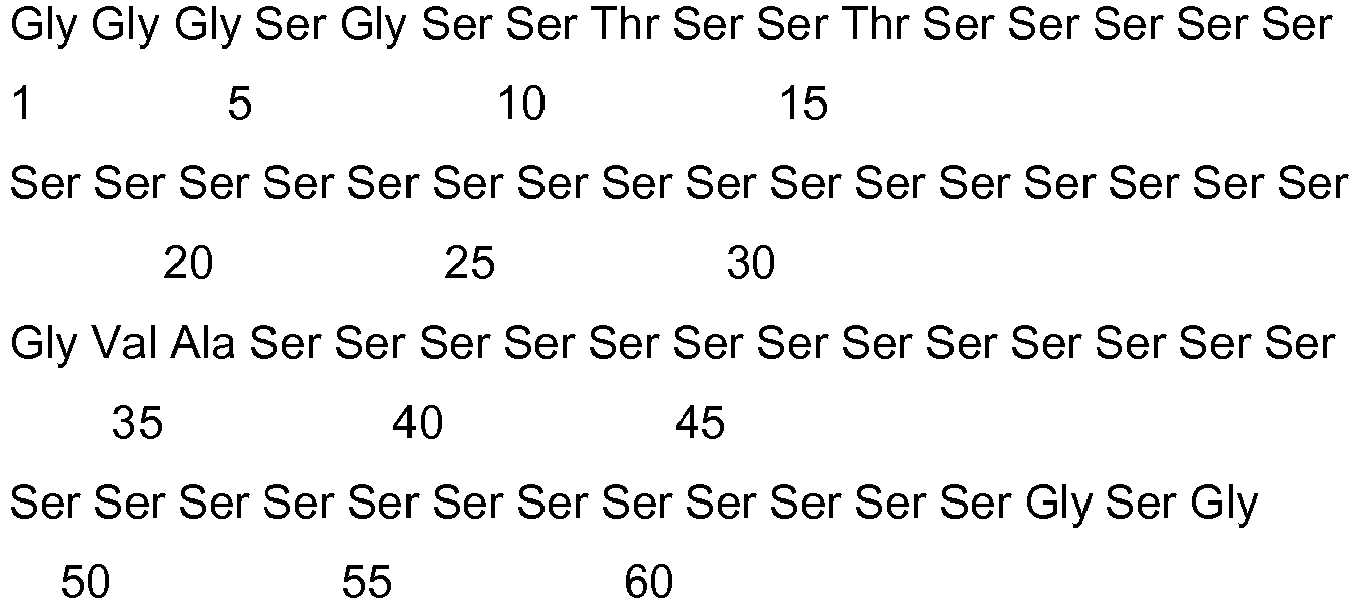
- <210> SEQ. ID NO. 6
<211>189
<212> DNA
<213> Teredinibacter turnerae - <220>
- <223> linker
- <400> SEQ. ID NO. 6


- <210> SEQ. ID NO. 7
<211> 17
<212> PRT
<213> Streptomyces clavuligerus - <220>
- <223> linker
- <400> SEQ. ID NO. 7

- <210> SEQ. ID NO. 8
<211> 51
<212> DNA
<213> Streptomyces clavuligerus <220> - <223> linker
- <400> SEQ. ID NO. 8
gactccgggg gacccggccc cggccccgga cccggcccgg gcggcacccc c 51 - <210> SEQ. ID NO. 9
<211> 12
<212> PRT
<213> Artificial Sequence - <220>
- <223> catalytic domain motif
- <400> SEQ. ID NO. 9

- <210> SEQ. ID NO. 10
<211> 36
<212> DNA
<213> Artificial Sequence - <220>
- <223> catalytic domain motif
- <400> SEQ. ID NO. 10
acgacccggt actgggactg ctgcaagccg agctgc 36 - <210> SEQ. ID NO. 11
<211> 223
<212> PRT
<213> Artificial Sequence - <220>
- <223> cellulase
- <400> SEQ. ID NO. 11


- <210> SEQ. ID NO. 12
<211> 669
<212> DNA
<213> Artificial Sequence - <220>
- <223> cellulase
- <400> SEQ. ID NO. 12


- <210> SEQ. ID NO. 13
<211 > 404
<212> PRT
<213> Artificial Sequence - <220>
- <223> cellulase
- <400> SEQ. ID NO. 13



- <210> SEQ. ID NO. 14
<211> 1212
<212> DNA
<213> Artificial Sequence - <220>
- <223> cellulase
- <400> SEQ. ID NO. 14


- <210> SEQ. ID NO. 15
<211 > 358
<212> PRT
<213> Artificial Sequence - <220>
- <223> cellulase
- <400> SEQ. ID NO. 15


- <210> SEQ. ID NO. 16
<211> 1074
<212> DNA
<213> Artificial Sequence - <220>
- <223> cellulase
- <400> SEQ. ID NO. 16

- <210> SEQ. ID NO. 17
<211> 365
<212> PRT
<213> Artificial Sequence - <220>
- <223> cellulase
- <400> SEQ. ID NO. 17

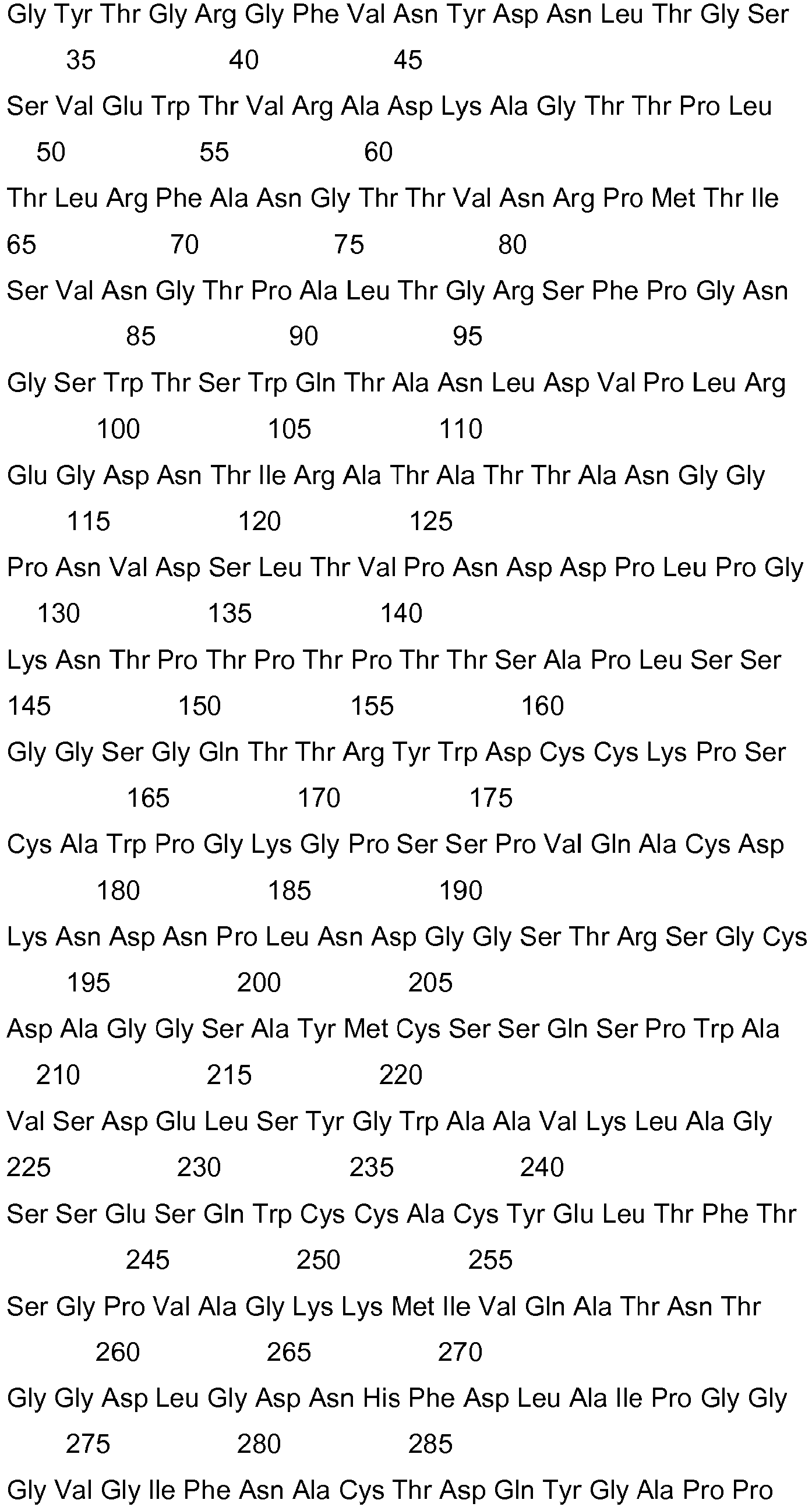

- <210> SEQ. ID NO. 18
<211> 1095
<212> DNA
<213> Artificial Sequence - <220>
- <223> cellulase
- <400> SEQ. ID NO. 18


- <210> SEQ. ID NO. 19
<211> 15
<212> PRT
<213> Artificial Sequence - <220>
- <223> carbohydrate binding domain tag
- <400> SEQ. ID NO. 19

- <210> SEQ. ID NO. 20
<211> 45
<212> DNA
<213> Artificial Sequence - <220>
- <223> carbohydrate binding domain tag
- <400> SEQ. ID NO. 20
gttccagact ctggtggtcc aggtccaggt ccaggtccag gtcca 45 - <210> SEQ. ID NO.21
<211> 12
<212> PRT
<213> artificial sequence - <220>
- <223> sequence motif is not specific for any organism
- <220>
<221> VARIANT
<222> (1)..(1)
<223> Xaa is any amino acid selected from the group consisting of serine, threonine and alanine - <220>
<221> VARIANT
<222> (5)..(5)
<223> Xaa is any amino acid selected from the group consisting of phenylalanine, tyrosine and tryptophan - <220>
<221> VARIANT
<222> (7)..(11)
<223> Xaa is any amino acid - <220>
<221> VARIANT
<222> (12)..(12)
<223> Xaa is any amino acid selected from the group consisting of cysteine and alanine - <400> SEQ. ID NO. 21

- <210> SEQ. ID NO. 22
<211> 15
<212> PRT
<213> artificial sequence - <220>
<223> sequence motif is not specific for any organism - <220>
<221> VARIANT
<222> (2)..(2)
<223> Xaa is any amino acid selected from the group consisting of proline, serine and cysteine - <220>
<221> VARIANT
<222> (3)..(3)
<223> Xaa is any amino acid selected from the group consisting of aspartate, glutamine, glutamate and asparagine - <400> SEQ. ID NO. 22

- <210> SEQ. ID NO. 23
<211> 12
<212> PRT
<213> artificial sequence - <220>
- <223> sequence motif is not specific for any organism
- <220>
<221> VARIANT
<222> (5)..(5)
<223> Xaa is any amino acid selected from the group consisting of phenylalanine, tyrosine and tryptophan - <220>
<221> VARIANT
<222> (7)..(11)
<223> Xaa is any amino acid - <220>
<221> VARIANT
<222> (12)..(12)
<223> Xaa is any amino acid selected from the group consisting of cysteine and alanine - <400> SEQ. ID NO. 23

- <210> SEQ. ID NO. 24
<211> 12
<212> PRT
<213> artificial sequence - <220>
- <223> sequence motif is not specific to any organism
-
- <110> Unilever PLC and Unilever N.V.
- <120> Detergent Compositions
- <130> C30052
- <160> 24
- <170> BiSSAP 1.3.6
- <210> 1
<211> 204
<212> PRT
<213> Myceliophthora thermophila - <220>
<223> cellulase - <400> 1

- <210> 2
<211> 612
<212> DNA
<213> Myceliophthora thermophila - <220>
<223> cellulase - <400> 2


- <210> 3
<211> 137
<212> PRT
<213> Streptomyces clavuligerus - <220>
<223> CBM - <400> 3

- <210> 4
<211> 411
<212> DNA
<213> Streptomyces clavuligerus - <220>
<223> CBM - <400> 4


- <210> 5
<211> 63
<212> PRT
<213> Teredinibacter turnerae - <220>
<223> linker - <400> 5

- <210> 6
<211> 189
<212> DNA
<213> Teredinibacter turnerae - <220>
<223> linker - <400> 6

- <210> 7
<211> 17
<212> PRT
<213> Streptomyces clavuligerus - <220>
<223> linker - <400> 7

- <210> 8
<211> 51
<212> DNA
<213> Streptomyces clavuligerus - <220>
<223> linker - <400> 8
gactccgggg gacccggccc cggccccgga cccggcccgg gcggcacccc c 51 - <210> 9
<211> 12
<212> PRT
<213> Artificial Sequence - <220>
<223> catalytic domain motif - <400> 9

- <210> 10
<211> 36
<212> DNA
<213> Artificial Sequence - <220>
<223> catalytic domain motif - <400> 10
acgacccggt actgggactg ctgcaagccg agctgc 36 - <210> 11
<211> 232
<212> PRT
<213> Artificial Sequence - <220>
<223> cellulase - <400> 11


- <210> 12
<211> 696
<212> DNA
<213> Artificial Sequence - <220>
<223> cellulase - <400> 12

- <210> 13
<211> 404
<212> PRT
<213> Artificial Sequence - <220>
<223> cellulase - <400> 13


- <210> 14
<211> 1212
<212> DNA
<213> Artificial Sequence - <220>
<223> cellulase - <400> 14


- <210> 15
<211> 358
<212> PRT
<213> Artificial Sequence - <220>
<223> cellulase - <400> 15


- <210> 16
<211> 1074
<212> DNA
<213> Artificial Sequence - <220>
<223> cellulase - <400> 16


- <210> 17
<211> 365
<212> PRT
<213> Artificial Sequence - <220>
<223> cellulase - <400> 17


- <210> 18
<211> 1095
<212> DNA
<213> Artificial Sequence - <220>
<223> cellulase - <400> 18

- <210> 19
<211> 15
<212> PRT
<213> Artificial Sequence - <220>
<223> carbohydrate binding domain tag - <400> 19

- <210> 20
<211> 45
<212> DNA
<213> Artificial Sequence - <220>
<223> carbohydrate binding domain tag - <400> 20
gttccagact ctggtggtcc aggtccaggt ccaggtccag gtcca 45 - <210> 21
<211> 12
<212> PRT
<213> artificial sequence - <220>
<223> sequence motif is not specific for any organism - <220>
<221> VARIANT
<222> (1)..(1)
<223> Xaa is any amino acid selected from the group consisting of serine, threonine and alanine - <220>
<221> VARIANT
<222> (5)..(5)
<223> Xaa is any amino acid selected from the group consisting of phenylalanine, tyrosine and tryptophan - <220>
<221> VARIANT
<222> (7)..(11)
<223> Xaa is any amino acid - <220>
<221> VARIANT
<222> (12)..(12)
<223> Xaa is any amino acid selected from the group consisting of cysteine and alanine - <400> 21

- <210> 22
<211> 15
<212> PRT
<213> artificial sequence - <220>
<223> sequence motif is not specific for any organism - <220>
<221> VARIANT
<222> (2)..(2)
<223> Xaa is any amino acid selected from the group consisting of proline, serine and cysteine - <220>
<221> VARIANT
<222> (3)..(3)
<223> Xaa is any amino acid selected from the group consisting of aspartate, glutamine, glutamate and asparagine - <400> 22

- <210> 23
<211> 12
<212> PRT
<213> artificial sequence - <220>
<223> sequence motif is not specific for any organism - <220>
<221> VARIANT
<222> (5)..(5)
<223> Xaa is any amino acid selected from the group consisting of phenylalanine, tyrosine and tryptophan - <220>
<221> VARIANT
<222> (7)..(11)
<223> Xaa is any amino acid - <220>
<221> VARIANT
<222> (12)..(12)
<223> Xaa is any amino acid selected from the group consisting of cysteine and alanine - <400> 23

- <210> 24
<211> 12
<212> PRT
<213> artificial sequence - <220>
<223> sequence motif is not specific to any organism - <220>
<221> VARIANT
<222> (7)..(11)
<223> Xaa is any amino acid - <400> 24

| Ingredient | Wt.% |
| Demin water | To 100 |
| TEA | 1.95 |
| NaOH | 1.28 |
| Gulf Farabi LAS (linear alkylbenzene sulfonate) | 11.33 |
| Texapon N701 (1EO) (nonionic surfactant) | 7.17 |
| Proxel GXL (1, 2- benzisothiazolin-3-one) | 0.02 |
| Neolone 950 (Methylisothiazolone) | 0.01 |
| NaCl | 1.00 |
| Ingredient | RIN powder Wt.% |
| Sodium LAS (linear alkylbenzene sulfonate) | 12.00 |
| Methyl Ether Sulfonate | 3.00 |
| Soda Ash | 24.00 |
| Calcite (Calcium carbonate) | 10.00 |
| Dolomite (Calcium magnesium carbonate) | 5.00 |
| Sodium Chloride | 39.00 |
| Sodium Sulphate | 3.00 |
| Minors & Moisture | To 100% |
| Ingredient | OMO low active Wt.% | OMO high active Wt.% |
| Sodium LAS (linear alkylbenzene sulfonate) | 8.00 | 15.00 |
| Sodium Silicate | 7.11 | 7.5 |
| Soda Ash | 22.89 | 17.4 |
| Sodium Sulphate | 59.39 | 56.9125 |
| Sokalan CP5 (Copolymer of acrylic acid and maleic acid) | 0.36 | 0.2625 |
| S.C.M.C (Sodium carboxymethylcellulose) | 0.13 | 0.16875 |
| Tinopal CBSx/DSBP (Flourescer) | 0.02 | 0.0225 |
| Moisture | 1.78 | 2.25 |
| Salts | 0.28 | 0.48 |
Claims (8)
- A detergent composition comprising:-(a) from 0.0001 to 1 wt.%, preferably from 0.0001 to 0.1 wt.%, more preferably from 0.0001 to 0.01 wt.%, most preferably from 0.0005 to 0.001 wt.% of a shading dye; and,(b) from 0.0001 to 10 wt.%, preferably from 0.0005 to 8 wt.%, more preferably from 0.001 to 5 wt.%, most preferably from 0.002 to 0.2 wt.% of a cellulase selected from any sequence with a sequence identity of at least 80%, preferably at least 85%, further preferred at least 90%, even more preferred at least 92%, also preferred at least 95%, particularly preferred at least 98% and most preferred at least 99% to SEQ ID NO: 11.
- The detergent composition according to claim 1, wherein the shading dye is a blue or violet shading dye.
- The detergent composition according to claim 1 or claim 2, wherein the shading dye is a reactive dye covalently bound to a polymer, preferably the polymer is a polyimine, optionally but preferably wherein the polyimine is substituted with 2-hydroxypropan-1-yl groups.
- The detergent composition of claim 3, wherein the shading dye comprises a chromophore of formula:

- The detergent composition according to any of claims 1 to 4, wherein the dye is a direct dye, preferably wherein the dye is an azine dye, optionally but preferably wherein the dye has the structure:

- The detergent composition according to any preceding claim, wherein the composition comprises from 0.0005 to 0.01 wt.% shading dye and from 0.001 to 5 wt.% cellulase.
- The detergent composition according to any preceding claim, wherein the composition comprises from 0.1 to 80 wt.%, preferably from 1 to 70 wt.%, more preferably from 2 to 60 wt.%, most preferably from 4 to 40 wt.% of a surfactant, preferably comprising an anionic surfactant, most preferably the anionic surfactant is selected from: linear alkyl benzene sulphonates; alkyl sulphates; alkyl ether sulphates; and mixtures thereof.
- A method of laundering white fabric, the method comprising contacting the fabric with an aqueous solution comprising the detergent according to any one of claims 1 to 7, optionally wherein the step of contacting the fabric with the aqueous solution occurs at 30 °C or less.
Applications Claiming Priority (2)
| Application Number | Priority Date | Filing Date | Title |
|---|---|---|---|
| EP17162871 | 2017-03-24 | ||
| PCT/EP2018/055759 WO2018172090A1 (en) | 2017-03-24 | 2018-03-08 | Detergent compositions |
Publications (2)
| Publication Number | Publication Date |
|---|---|
| EP3601554A1 EP3601554A1 (en) | 2020-02-05 |
| EP3601554B1 true EP3601554B1 (en) | 2021-10-13 |
Family
ID=58413012
Family Applications (1)
| Application Number | Title | Priority Date | Filing Date |
|---|---|---|---|
| EP18709354.7A Active EP3601554B1 (en) | 2017-03-24 | 2018-03-08 | Detergent compositions |
Country Status (7)
| Country | Link |
|---|---|
| US (1) | US10927325B2 (en) |
| EP (1) | EP3601554B1 (en) |
| CN (1) | CN110475862B (en) |
| AR (1) | AR111581A1 (en) |
| BR (1) | BR112019019987A2 (en) |
| WO (1) | WO2018172090A1 (en) |
| ZA (1) | ZA201905321B (en) |
Family Cites Families (9)
| Publication number | Priority date | Publication date | Assignee | Title |
|---|---|---|---|---|
| CA2001927C (en) | 1988-11-03 | 1999-12-21 | Graham Thomas Brown | Aluminosilicates and detergent compositions |
| CN1182451A (en) | 1995-03-17 | 1998-05-20 | 诺沃挪第克公司 | Novel endoglucanases |
| US7883872B2 (en) * | 1996-10-10 | 2011-02-08 | Dyadic International (Usa), Inc. | Construction of highly efficient cellulase compositions for enzymatic hydrolysis of cellulose |
| JP2009527618A (en) | 2006-08-10 | 2009-07-30 | ユニリーバー・ナームローゼ・ベンノートシヤープ | Shading composition |
| VN30996A1 (en) | 2009-10-23 | 2012-09-25 | Unilever Nv | Dye polymers |
| FR2957922A1 (en) * | 2010-03-26 | 2011-09-30 | Inst Francais Du Petrole | NEW CBH1-EG1 FUSION PROTEINS AND THEIR USE |
| WO2012059363A1 (en) * | 2010-11-01 | 2012-05-10 | Unilever Nv | A detergent composition having shading dyes and lipase |
| FI127093B (en) | 2014-10-27 | 2017-11-15 | Ab Enzymes Oy | Fungal endoglucanase variants, preparation and use thereof |
| EP3256563A1 (en) * | 2014-11-17 | 2017-12-20 | The Procter and Gamble Company | Benefit agent delivery compositions |
-
2018
- 2018-03-08 BR BR112019019987A patent/BR112019019987A2/en unknown
- 2018-03-08 CN CN201880020118.7A patent/CN110475862B/en active Active
- 2018-03-08 EP EP18709354.7A patent/EP3601554B1/en active Active
- 2018-03-08 US US16/496,627 patent/US10927325B2/en active Active
- 2018-03-08 WO PCT/EP2018/055759 patent/WO2018172090A1/en not_active Ceased
- 2018-03-23 AR ARP180100692A patent/AR111581A1/en active IP Right Grant
-
2019
- 2019-08-12 ZA ZA2019/05321A patent/ZA201905321B/en unknown
Non-Patent Citations (1)
| Title |
|---|
| None * |
Also Published As
| Publication number | Publication date |
|---|---|
| CN110475862A (en) | 2019-11-19 |
| US20200369988A1 (en) | 2020-11-26 |
| ZA201905321B (en) | 2021-01-27 |
| WO2018172090A1 (en) | 2018-09-27 |
| AR111581A1 (en) | 2019-07-31 |
| US10927325B2 (en) | 2021-02-23 |
| EP3601554A1 (en) | 2020-02-05 |
| CN110475862B (en) | 2023-06-23 |
| BR112019019987A2 (en) | 2020-04-28 |
Similar Documents
| Publication | Publication Date | Title |
|---|---|---|
| EP3194543B1 (en) | Whitening composition | |
| US20220372408A1 (en) | Detergent composition | |
| EP3884025B1 (en) | Detergent composition | |
| EP3194546B1 (en) | Whitening composition | |
| EP3717616B1 (en) | Detergent composition comprising protease | |
| CN107075416A (en) | Lightening compositions | |
| CN113056549B (en) | detergent composition | |
| EP3884026B1 (en) | Detergent composition | |
| EP3529342B1 (en) | Whitening composition | |
| EP3884024B1 (en) | Detergent composition | |
| US10927325B2 (en) | Detergent compositions | |
| EP3378936B1 (en) | Cellulase suitable for use in detergent compositions | |
| EP3194541B1 (en) | Liquid whitening composition | |
| CN107075412A (en) | whitening composition | |
| EP3884023B1 (en) | Detergent composition | |
| EP4015611A1 (en) | Shelf stable amylase mutants | |
| EP3417042B1 (en) | Whitening composition | |
| EP3417039B1 (en) | Whitening composition | |
| WO2020200734A1 (en) | Cellulolytic enzyme comprising laundry product |
Legal Events
| Date | Code | Title | Description |
|---|---|---|---|
| STAA | Information on the status of an ep patent application or granted ep patent |
Free format text: STATUS: UNKNOWN |
|
| STAA | Information on the status of an ep patent application or granted ep patent |
Free format text: STATUS: THE INTERNATIONAL PUBLICATION HAS BEEN MADE |
|
| PUAI | Public reference made under article 153(3) epc to a published international application that has entered the european phase |
Free format text: ORIGINAL CODE: 0009012 |
|
| STAA | Information on the status of an ep patent application or granted ep patent |
Free format text: STATUS: REQUEST FOR EXAMINATION WAS MADE |
|
| 17P | Request for examination filed |
Effective date: 20190829 |
|
| AK | Designated contracting states |
Kind code of ref document: A1 Designated state(s): AL AT BE BG CH CY CZ DE DK EE ES FI FR GB GR HR HU IE IS IT LI LT LU LV MC MK MT NL NO PL PT RO RS SE SI SK SM TR |
|
| AX | Request for extension of the european patent |
Extension state: BA ME |
|
| STAA | Information on the status of an ep patent application or granted ep patent |
Free format text: STATUS: EXAMINATION IS IN PROGRESS |
|
| 17Q | First examination report despatched |
Effective date: 20200421 |
|
| DAV | Request for validation of the european patent (deleted) | ||
| DAX | Request for extension of the european patent (deleted) | ||
| GRAP | Despatch of communication of intention to grant a patent |
Free format text: ORIGINAL CODE: EPIDOSNIGR1 |
|
| STAA | Information on the status of an ep patent application or granted ep patent |
Free format text: STATUS: GRANT OF PATENT IS INTENDED |
|
| INTG | Intention to grant announced |
Effective date: 20210503 |
|
| RIN1 | Information on inventor provided before grant (corrected) |
Inventor name: WALLRAPP, FRANK Inventor name: SAMBI, ILARIA Inventor name: PARRY, NEIL, JAMES Inventor name: O'CONNELL, TIMOTHY Inventor name: LANG, DIETMAR, ANDREAS Inventor name: KOTSAKIS, PANAGIOTIS Inventor name: KOHL, ANDREAS Inventor name: JOCHENS, HELGE Inventor name: JAKOB, CLAUDIA Inventor name: HOESL, MICHAEL Inventor name: EISELE, THOMAS Inventor name: COOK, ANDREW, THOMAS Inventor name: BEST, JONATHAN |
|
| GRAS | Grant fee paid |
Free format text: ORIGINAL CODE: EPIDOSNIGR3 |
|
| GRAA | (expected) grant |
Free format text: ORIGINAL CODE: 0009210 |
|
| STAA | Information on the status of an ep patent application or granted ep patent |
Free format text: STATUS: THE PATENT HAS BEEN GRANTED |
|
| RAP1 | Party data changed (applicant data changed or rights of an application transferred) |
Owner name: UNILEVER GLOBAL IP LIMITED Owner name: UNILEVER IP HOLDINGS B.V. |
|
| AK | Designated contracting states |
Kind code of ref document: B1 Designated state(s): AL AT BE BG CH CY CZ DE DK EE ES FI FR GB GR HR HU IE IS IT LI LT LU LV MC MK MT NL NO PL PT RO RS SE SI SK SM TR |
|
| REG | Reference to a national code |
Ref country code: GB Ref legal event code: FG4D |
|
| REG | Reference to a national code |
Ref country code: CH Ref legal event code: EP |
|
| REG | Reference to a national code |
Ref country code: DE Ref legal event code: R096 Ref document number: 602018024955 Country of ref document: DE |
|
| REG | Reference to a national code |
Ref country code: IE Ref legal event code: FG4D |
|
| REG | Reference to a national code |
Ref country code: AT Ref legal event code: REF Ref document number: 1438210 Country of ref document: AT Kind code of ref document: T Effective date: 20211115 |
|
| REG | Reference to a national code |
Ref country code: LT Ref legal event code: MG9D |
|
| REG | Reference to a national code |
Ref country code: NL Ref legal event code: MP Effective date: 20211013 |
|
| RAP4 | Party data changed (patent owner data changed or rights of a patent transferred) |
Owner name: UNILEVER GLOBAL IP LIMITED Owner name: UNILEVER IP HOLDINGS B.V. |
|
| REG | Reference to a national code |
Ref country code: AT Ref legal event code: MK05 Ref document number: 1438210 Country of ref document: AT Kind code of ref document: T Effective date: 20211013 |
|
| PG25 | Lapsed in a contracting state [announced via postgrant information from national office to epo] |
Ref country code: RS Free format text: LAPSE BECAUSE OF FAILURE TO SUBMIT A TRANSLATION OF THE DESCRIPTION OR TO PAY THE FEE WITHIN THE PRESCRIBED TIME-LIMIT Effective date: 20211013 Ref country code: LT Free format text: LAPSE BECAUSE OF FAILURE TO SUBMIT A TRANSLATION OF THE DESCRIPTION OR TO PAY THE FEE WITHIN THE PRESCRIBED TIME-LIMIT Effective date: 20211013 Ref country code: FI Free format text: LAPSE BECAUSE OF FAILURE TO SUBMIT A TRANSLATION OF THE DESCRIPTION OR TO PAY THE FEE WITHIN THE PRESCRIBED TIME-LIMIT Effective date: 20211013 Ref country code: BG Free format text: LAPSE BECAUSE OF FAILURE TO SUBMIT A TRANSLATION OF THE DESCRIPTION OR TO PAY THE FEE WITHIN THE PRESCRIBED TIME-LIMIT Effective date: 20220113 Ref country code: AT Free format text: LAPSE BECAUSE OF FAILURE TO SUBMIT A TRANSLATION OF THE DESCRIPTION OR TO PAY THE FEE WITHIN THE PRESCRIBED TIME-LIMIT Effective date: 20211013 |
|
| PG25 | Lapsed in a contracting state [announced via postgrant information from national office to epo] |
Ref country code: IS Free format text: LAPSE BECAUSE OF FAILURE TO SUBMIT A TRANSLATION OF THE DESCRIPTION OR TO PAY THE FEE WITHIN THE PRESCRIBED TIME-LIMIT Effective date: 20220213 Ref country code: SE Free format text: LAPSE BECAUSE OF FAILURE TO SUBMIT A TRANSLATION OF THE DESCRIPTION OR TO PAY THE FEE WITHIN THE PRESCRIBED TIME-LIMIT Effective date: 20211013 Ref country code: PT Free format text: LAPSE BECAUSE OF FAILURE TO SUBMIT A TRANSLATION OF THE DESCRIPTION OR TO PAY THE FEE WITHIN THE PRESCRIBED TIME-LIMIT Effective date: 20220214 Ref country code: PL Free format text: LAPSE BECAUSE OF FAILURE TO SUBMIT A TRANSLATION OF THE DESCRIPTION OR TO PAY THE FEE WITHIN THE PRESCRIBED TIME-LIMIT Effective date: 20211013 Ref country code: NO Free format text: LAPSE BECAUSE OF FAILURE TO SUBMIT A TRANSLATION OF THE DESCRIPTION OR TO PAY THE FEE WITHIN THE PRESCRIBED TIME-LIMIT Effective date: 20220113 Ref country code: NL Free format text: LAPSE BECAUSE OF FAILURE TO SUBMIT A TRANSLATION OF THE DESCRIPTION OR TO PAY THE FEE WITHIN THE PRESCRIBED TIME-LIMIT Effective date: 20211013 Ref country code: LV Free format text: LAPSE BECAUSE OF FAILURE TO SUBMIT A TRANSLATION OF THE DESCRIPTION OR TO PAY THE FEE WITHIN THE PRESCRIBED TIME-LIMIT Effective date: 20211013 Ref country code: HR Free format text: LAPSE BECAUSE OF FAILURE TO SUBMIT A TRANSLATION OF THE DESCRIPTION OR TO PAY THE FEE WITHIN THE PRESCRIBED TIME-LIMIT Effective date: 20211013 Ref country code: GR Free format text: LAPSE BECAUSE OF FAILURE TO SUBMIT A TRANSLATION OF THE DESCRIPTION OR TO PAY THE FEE WITHIN THE PRESCRIBED TIME-LIMIT Effective date: 20220114 Ref country code: ES Free format text: LAPSE BECAUSE OF FAILURE TO SUBMIT A TRANSLATION OF THE DESCRIPTION OR TO PAY THE FEE WITHIN THE PRESCRIBED TIME-LIMIT Effective date: 20211013 |
|
| REG | Reference to a national code |
Ref country code: DE Ref legal event code: R097 Ref document number: 602018024955 Country of ref document: DE |
|
| PG25 | Lapsed in a contracting state [announced via postgrant information from national office to epo] |
Ref country code: SM Free format text: LAPSE BECAUSE OF FAILURE TO SUBMIT A TRANSLATION OF THE DESCRIPTION OR TO PAY THE FEE WITHIN THE PRESCRIBED TIME-LIMIT Effective date: 20211013 Ref country code: SK Free format text: LAPSE BECAUSE OF FAILURE TO SUBMIT A TRANSLATION OF THE DESCRIPTION OR TO PAY THE FEE WITHIN THE PRESCRIBED TIME-LIMIT Effective date: 20211013 Ref country code: RO Free format text: LAPSE BECAUSE OF FAILURE TO SUBMIT A TRANSLATION OF THE DESCRIPTION OR TO PAY THE FEE WITHIN THE PRESCRIBED TIME-LIMIT Effective date: 20211013 Ref country code: EE Free format text: LAPSE BECAUSE OF FAILURE TO SUBMIT A TRANSLATION OF THE DESCRIPTION OR TO PAY THE FEE WITHIN THE PRESCRIBED TIME-LIMIT Effective date: 20211013 Ref country code: DK Free format text: LAPSE BECAUSE OF FAILURE TO SUBMIT A TRANSLATION OF THE DESCRIPTION OR TO PAY THE FEE WITHIN THE PRESCRIBED TIME-LIMIT Effective date: 20211013 Ref country code: CZ Free format text: LAPSE BECAUSE OF FAILURE TO SUBMIT A TRANSLATION OF THE DESCRIPTION OR TO PAY THE FEE WITHIN THE PRESCRIBED TIME-LIMIT Effective date: 20211013 |
|
| PLBE | No opposition filed within time limit |
Free format text: ORIGINAL CODE: 0009261 |
|
| STAA | Information on the status of an ep patent application or granted ep patent |
Free format text: STATUS: NO OPPOSITION FILED WITHIN TIME LIMIT |
|
| 26N | No opposition filed |
Effective date: 20220714 |
|
| PG25 | Lapsed in a contracting state [announced via postgrant information from national office to epo] |
Ref country code: MC Free format text: LAPSE BECAUSE OF FAILURE TO SUBMIT A TRANSLATION OF THE DESCRIPTION OR TO PAY THE FEE WITHIN THE PRESCRIBED TIME-LIMIT Effective date: 20211013 Ref country code: AL Free format text: LAPSE BECAUSE OF FAILURE TO SUBMIT A TRANSLATION OF THE DESCRIPTION OR TO PAY THE FEE WITHIN THE PRESCRIBED TIME-LIMIT Effective date: 20211013 |
|
| REG | Reference to a national code |
Ref country code: CH Ref legal event code: PL |
|
| PG25 | Lapsed in a contracting state [announced via postgrant information from national office to epo] |
Ref country code: SI Free format text: LAPSE BECAUSE OF FAILURE TO SUBMIT A TRANSLATION OF THE DESCRIPTION OR TO PAY THE FEE WITHIN THE PRESCRIBED TIME-LIMIT Effective date: 20211013 |
|
| REG | Reference to a national code |
Ref country code: BE Ref legal event code: MM Effective date: 20220331 |
|
| PG25 | Lapsed in a contracting state [announced via postgrant information from national office to epo] |
Ref country code: LU Free format text: LAPSE BECAUSE OF NON-PAYMENT OF DUE FEES Effective date: 20220308 Ref country code: LI Free format text: LAPSE BECAUSE OF NON-PAYMENT OF DUE FEES Effective date: 20220331 Ref country code: IE Free format text: LAPSE BECAUSE OF NON-PAYMENT OF DUE FEES Effective date: 20220308 Ref country code: CH Free format text: LAPSE BECAUSE OF NON-PAYMENT OF DUE FEES Effective date: 20220331 |
|
| PG25 | Lapsed in a contracting state [announced via postgrant information from national office to epo] |
Ref country code: BE Free format text: LAPSE BECAUSE OF NON-PAYMENT OF DUE FEES Effective date: 20220331 |
|
| PG25 | Lapsed in a contracting state [announced via postgrant information from national office to epo] |
Ref country code: IT Free format text: LAPSE BECAUSE OF FAILURE TO SUBMIT A TRANSLATION OF THE DESCRIPTION OR TO PAY THE FEE WITHIN THE PRESCRIBED TIME-LIMIT Effective date: 20211013 |
|
| PG25 | Lapsed in a contracting state [announced via postgrant information from national office to epo] |
Ref country code: MK Free format text: LAPSE BECAUSE OF FAILURE TO SUBMIT A TRANSLATION OF THE DESCRIPTION OR TO PAY THE FEE WITHIN THE PRESCRIBED TIME-LIMIT Effective date: 20211013 Ref country code: CY Free format text: LAPSE BECAUSE OF FAILURE TO SUBMIT A TRANSLATION OF THE DESCRIPTION OR TO PAY THE FEE WITHIN THE PRESCRIBED TIME-LIMIT Effective date: 20211013 |
|
| PG25 | Lapsed in a contracting state [announced via postgrant information from national office to epo] |
Ref country code: HU Free format text: LAPSE BECAUSE OF FAILURE TO SUBMIT A TRANSLATION OF THE DESCRIPTION OR TO PAY THE FEE WITHIN THE PRESCRIBED TIME-LIMIT; INVALID AB INITIO Effective date: 20180308 |
|
| PG25 | Lapsed in a contracting state [announced via postgrant information from national office to epo] |
Ref country code: MT Free format text: LAPSE BECAUSE OF FAILURE TO SUBMIT A TRANSLATION OF THE DESCRIPTION OR TO PAY THE FEE WITHIN THE PRESCRIBED TIME-LIMIT Effective date: 20211013 |
|
| PGFP | Annual fee paid to national office [announced via postgrant information from national office to epo] |
Ref country code: GB Payment date: 20260324 Year of fee payment: 9 |
|
| PGFP | Annual fee paid to national office [announced via postgrant information from national office to epo] |
Ref country code: DE Payment date: 20260319 Year of fee payment: 9 |
|
| PGFP | Annual fee paid to national office [announced via postgrant information from national office to epo] |
Ref country code: FR Payment date: 20260320 Year of fee payment: 9 |
|
| PGFP | Annual fee paid to national office [announced via postgrant information from national office to epo] |
Ref country code: TR Payment date: 20260303 Year of fee payment: 9 |