EP3599781A1 - Method for protecting a passive keyless entry system against a relay attack - Google Patents
Method for protecting a passive keyless entry system against a relay attack Download PDFInfo
- Publication number
- EP3599781A1 EP3599781A1 EP19187205.0A EP19187205A EP3599781A1 EP 3599781 A1 EP3599781 A1 EP 3599781A1 EP 19187205 A EP19187205 A EP 19187205A EP 3599781 A1 EP3599781 A1 EP 3599781A1
- Authority
- EP
- European Patent Office
- Prior art keywords
- transceiver
- vehicle
- radar signal
- low power
- authenticating
- Prior art date
- Legal status (The legal status is an assumption and is not a legal conclusion. Google has not performed a legal analysis and makes no representation as to the accuracy of the status listed.)
- Granted
Links
Images


Classifications
-
- G—PHYSICS
- G07—CHECKING-DEVICES
- G07C—TIME OR ATTENDANCE REGISTERS; REGISTERING OR INDICATING THE WORKING OF MACHINES; GENERATING RANDOM NUMBERS; VOTING OR LOTTERY APPARATUS; ARRANGEMENTS, SYSTEMS OR APPARATUS FOR CHECKING NOT PROVIDED FOR ELSEWHERE
- G07C9/00—Individual registration on entry or exit
- G07C9/00174—Electronically operated locks; Circuits therefor; Nonmechanical keys therefor, e.g. passive or active electrical keys or other data carriers without mechanical keys
- G07C9/00309—Electronically operated locks; Circuits therefor; Nonmechanical keys therefor, e.g. passive or active electrical keys or other data carriers without mechanical keys operated with bidirectional data transmission between data carrier and locks
-
- B—PERFORMING OPERATIONS; TRANSPORTING
- B60—VEHICLES IN GENERAL
- B60R—VEHICLES, VEHICLE FITTINGS, OR VEHICLE PARTS, NOT OTHERWISE PROVIDED FOR
- B60R25/00—Fittings or systems for preventing or indicating unauthorised use or theft of vehicles
- B60R25/20—Means to switch the anti-theft system on or off
- B60R25/24—Means to switch the anti-theft system on or off using electronic identifiers containing a code not memorised by the user
- B60R25/245—Means to switch the anti-theft system on or off using electronic identifiers containing a code not memorised by the user where the antenna reception area plays a role
-
- B—PERFORMING OPERATIONS; TRANSPORTING
- B60—VEHICLES IN GENERAL
- B60R—VEHICLES, VEHICLE FITTINGS, OR VEHICLE PARTS, NOT OTHERWISE PROVIDED FOR
- B60R25/00—Fittings or systems for preventing or indicating unauthorised use or theft of vehicles
- B60R25/20—Means to switch the anti-theft system on or off
- B60R25/24—Means to switch the anti-theft system on or off using electronic identifiers containing a code not memorised by the user
- B60R25/246—Means to switch the anti-theft system on or off using electronic identifiers containing a code not memorised by the user characterised by the challenge triggering
-
- G—PHYSICS
- G01—MEASURING; TESTING
- G01S—RADIO DIRECTION-FINDING; RADIO NAVIGATION; DETERMINING DISTANCE OR VELOCITY BY USE OF RADIO WAVES; LOCATING OR PRESENCE-DETECTING BY USE OF THE REFLECTION OR RERADIATION OF RADIO WAVES; ANALOGOUS ARRANGEMENTS USING OTHER WAVES
- G01S13/00—Systems using the reflection or reradiation of radio waves, e.g. radar systems; Analogous systems using reflection or reradiation of waves whose nature or wavelength is irrelevant or unspecified
- G01S13/02—Systems using reflection of radio waves, e.g. primary radar systems; Analogous systems
- G01S13/04—Systems determining presence of a target
-
- G—PHYSICS
- G01—MEASURING; TESTING
- G01S—RADIO DIRECTION-FINDING; RADIO NAVIGATION; DETERMINING DISTANCE OR VELOCITY BY USE OF RADIO WAVES; LOCATING OR PRESENCE-DETECTING BY USE OF THE REFLECTION OR RERADIATION OF RADIO WAVES; ANALOGOUS ARRANGEMENTS USING OTHER WAVES
- G01S13/00—Systems using the reflection or reradiation of radio waves, e.g. radar systems; Analogous systems using reflection or reradiation of waves whose nature or wavelength is irrelevant or unspecified
- G01S13/87—Combinations of radar systems, e.g. primary radar and secondary radar
- G01S13/878—Combination of several spaced transmitters or receivers of known location for determining the position of a transponder or a reflector
-
- G—PHYSICS
- G01—MEASURING; TESTING
- G01S—RADIO DIRECTION-FINDING; RADIO NAVIGATION; DETERMINING DISTANCE OR VELOCITY BY USE OF RADIO WAVES; LOCATING OR PRESENCE-DETECTING BY USE OF THE REFLECTION OR RERADIATION OF RADIO WAVES; ANALOGOUS ARRANGEMENTS USING OTHER WAVES
- G01S13/00—Systems using the reflection or reradiation of radio waves, e.g. radar systems; Analogous systems using reflection or reradiation of waves whose nature or wavelength is irrelevant or unspecified
- G01S13/88—Radar or analogous systems specially adapted for specific applications
- G01S13/93—Radar or analogous systems specially adapted for specific applications for anti-collision purposes
- G01S13/931—Radar or analogous systems specially adapted for specific applications for anti-collision purposes of land vehicles
-
- G—PHYSICS
- G01—MEASURING; TESTING
- G01S—RADIO DIRECTION-FINDING; RADIO NAVIGATION; DETERMINING DISTANCE OR VELOCITY BY USE OF RADIO WAVES; LOCATING OR PRESENCE-DETECTING BY USE OF THE REFLECTION OR RERADIATION OF RADIO WAVES; ANALOGOUS ARRANGEMENTS USING OTHER WAVES
- G01S7/00—Details of systems according to groups G01S13/00, G01S15/00, G01S17/00
- G01S7/003—Transmission of data between radar, sonar or lidar systems and remote stations
- G01S7/006—Transmission of data between radar, sonar or lidar systems and remote stations using shared front-end circuitry, e.g. antennas
-
- G—PHYSICS
- G07—CHECKING-DEVICES
- G07C—TIME OR ATTENDANCE REGISTERS; REGISTERING OR INDICATING THE WORKING OF MACHINES; GENERATING RANDOM NUMBERS; VOTING OR LOTTERY APPARATUS; ARRANGEMENTS, SYSTEMS OR APPARATUS FOR CHECKING NOT PROVIDED FOR ELSEWHERE
- G07C9/00—Individual registration on entry or exit
- G07C9/00174—Electronically operated locks; Circuits therefor; Nonmechanical keys therefor, e.g. passive or active electrical keys or other data carriers without mechanical keys
- G07C9/00658—Electronically operated locks; Circuits therefor; Nonmechanical keys therefor, e.g. passive or active electrical keys or other data carriers without mechanical keys operated by passive electrical keys
-
- H—ELECTRICITY
- H04—ELECTRIC COMMUNICATION TECHNIQUE
- H04L—TRANSMISSION OF DIGITAL INFORMATION, e.g. TELEGRAPHIC COMMUNICATION
- H04L9/00—Cryptographic mechanisms or cryptographic arrangements for secret or secure communications; Network security protocols
- H04L9/32—Cryptographic mechanisms or cryptographic arrangements for secret or secure communications; Network security protocols including means for verifying the identity or authority of a user of the system or for message authentication, e.g. authorization, entity authentication, data integrity or data verification, non-repudiation, key authentication or verification of credentials
- H04L9/3271—Cryptographic mechanisms or cryptographic arrangements for secret or secure communications; Network security protocols including means for verifying the identity or authority of a user of the system or for message authentication, e.g. authorization, entity authentication, data integrity or data verification, non-repudiation, key authentication or verification of credentials using challenge-response
-
- H—ELECTRICITY
- H04—ELECTRIC COMMUNICATION TECHNIQUE
- H04W—WIRELESS COMMUNICATION NETWORKS
- H04W12/00—Security arrangements; Authentication; Protecting privacy or anonymity
- H04W12/06—Authentication
-
- H—ELECTRICITY
- H04—ELECTRIC COMMUNICATION TECHNIQUE
- H04W—WIRELESS COMMUNICATION NETWORKS
- H04W4/00—Services specially adapted for wireless communication networks; Facilities therefor
- H04W4/80—Services using short range communication, e.g. near-field communication [NFC], radio-frequency identification [RFID] or low energy communication
-
- G—PHYSICS
- G01—MEASURING; TESTING
- G01S—RADIO DIRECTION-FINDING; RADIO NAVIGATION; DETERMINING DISTANCE OR VELOCITY BY USE OF RADIO WAVES; LOCATING OR PRESENCE-DETECTING BY USE OF THE REFLECTION OR RERADIATION OF RADIO WAVES; ANALOGOUS ARRANGEMENTS USING OTHER WAVES
- G01S13/00—Systems using the reflection or reradiation of radio waves, e.g. radar systems; Analogous systems using reflection or reradiation of waves whose nature or wavelength is irrelevant or unspecified
- G01S13/74—Systems using reradiation of radio waves, e.g. secondary radar systems; Analogous systems
- G01S13/76—Systems using reradiation of radio waves, e.g. secondary radar systems; Analogous systems wherein pulse-type signals are transmitted
- G01S13/767—Responders; Transponders
-
- G—PHYSICS
- G01—MEASURING; TESTING
- G01S—RADIO DIRECTION-FINDING; RADIO NAVIGATION; DETERMINING DISTANCE OR VELOCITY BY USE OF RADIO WAVES; LOCATING OR PRESENCE-DETECTING BY USE OF THE REFLECTION OR RERADIATION OF RADIO WAVES; ANALOGOUS ARRANGEMENTS USING OTHER WAVES
- G01S13/00—Systems using the reflection or reradiation of radio waves, e.g. radar systems; Analogous systems using reflection or reradiation of waves whose nature or wavelength is irrelevant or unspecified
- G01S13/88—Radar or analogous systems specially adapted for specific applications
- G01S13/93—Radar or analogous systems specially adapted for specific applications for anti-collision purposes
- G01S13/931—Radar or analogous systems specially adapted for specific applications for anti-collision purposes of land vehicles
- G01S2013/9316—Radar or analogous systems specially adapted for specific applications for anti-collision purposes of land vehicles combined with communication equipment with other vehicles or with base stations
-
- G—PHYSICS
- G07—CHECKING-DEVICES
- G07C—TIME OR ATTENDANCE REGISTERS; REGISTERING OR INDICATING THE WORKING OF MACHINES; GENERATING RANDOM NUMBERS; VOTING OR LOTTERY APPARATUS; ARRANGEMENTS, SYSTEMS OR APPARATUS FOR CHECKING NOT PROVIDED FOR ELSEWHERE
- G07C9/00—Individual registration on entry or exit
- G07C9/00174—Electronically operated locks; Circuits therefor; Nonmechanical keys therefor, e.g. passive or active electrical keys or other data carriers without mechanical keys
- G07C9/00309—Electronically operated locks; Circuits therefor; Nonmechanical keys therefor, e.g. passive or active electrical keys or other data carriers without mechanical keys operated with bidirectional data transmission between data carrier and locks
- G07C2009/00388—Electronically operated locks; Circuits therefor; Nonmechanical keys therefor, e.g. passive or active electrical keys or other data carriers without mechanical keys operated with bidirectional data transmission between data carrier and locks code verification carried out according to the challenge/response method
- G07C2009/00396—Electronically operated locks; Circuits therefor; Nonmechanical keys therefor, e.g. passive or active electrical keys or other data carriers without mechanical keys operated with bidirectional data transmission between data carrier and locks code verification carried out according to the challenge/response method starting with prompting the keyless data carrier
-
- G—PHYSICS
- G07—CHECKING-DEVICES
- G07C—TIME OR ATTENDANCE REGISTERS; REGISTERING OR INDICATING THE WORKING OF MACHINES; GENERATING RANDOM NUMBERS; VOTING OR LOTTERY APPARATUS; ARRANGEMENTS, SYSTEMS OR APPARATUS FOR CHECKING NOT PROVIDED FOR ELSEWHERE
- G07C9/00—Individual registration on entry or exit
- G07C9/00174—Electronically operated locks; Circuits therefor; Nonmechanical keys therefor, e.g. passive or active electrical keys or other data carriers without mechanical keys
- G07C9/00309—Electronically operated locks; Circuits therefor; Nonmechanical keys therefor, e.g. passive or active electrical keys or other data carriers without mechanical keys operated with bidirectional data transmission between data carrier and locks
- G07C2009/00555—Electronically operated locks; Circuits therefor; Nonmechanical keys therefor, e.g. passive or active electrical keys or other data carriers without mechanical keys operated with bidirectional data transmission between data carrier and locks comprising means to detect or avoid relay attacks
-
- G—PHYSICS
- G07—CHECKING-DEVICES
- G07C—TIME OR ATTENDANCE REGISTERS; REGISTERING OR INDICATING THE WORKING OF MACHINES; GENERATING RANDOM NUMBERS; VOTING OR LOTTERY APPARATUS; ARRANGEMENTS, SYSTEMS OR APPARATUS FOR CHECKING NOT PROVIDED FOR ELSEWHERE
- G07C2209/00—Indexing scheme relating to groups G07C9/00 - G07C9/38
- G07C2209/60—Indexing scheme relating to groups G07C9/00174 - G07C9/00944
- G07C2209/63—Comprising locating means for detecting the position of the data carrier, i.e. within the vehicle or within a certain distance from the vehicle
-
- H—ELECTRICITY
- H04—ELECTRIC COMMUNICATION TECHNIQUE
- H04L—TRANSMISSION OF DIGITAL INFORMATION, e.g. TELEGRAPHIC COMMUNICATION
- H04L2209/00—Additional information or applications relating to cryptographic mechanisms or cryptographic arrangements for secret or secure communication H04L9/00
- H04L2209/84—Vehicles
-
- H—ELECTRICITY
- H04—ELECTRIC COMMUNICATION TECHNIQUE
- H04W—WIRELESS COMMUNICATION NETWORKS
- H04W4/00—Services specially adapted for wireless communication networks; Facilities therefor
- H04W4/02—Services making use of location information
- H04W4/023—Services making use of location information using mutual or relative location information between multiple location based services [LBS] targets or of distance thresholds
-
- H—ELECTRICITY
- H04—ELECTRIC COMMUNICATION TECHNIQUE
- H04W—WIRELESS COMMUNICATION NETWORKS
- H04W4/00—Services specially adapted for wireless communication networks; Facilities therefor
- H04W4/30—Services specially adapted for particular environments, situations or purposes
- H04W4/40—Services specially adapted for particular environments, situations or purposes for vehicles, e.g. vehicle-to-pedestrians [V2P]
-
- Y—GENERAL TAGGING OF NEW TECHNOLOGICAL DEVELOPMENTS; GENERAL TAGGING OF CROSS-SECTIONAL TECHNOLOGIES SPANNING OVER SEVERAL SECTIONS OF THE IPC; TECHNICAL SUBJECTS COVERED BY FORMER USPC CROSS-REFERENCE ART COLLECTIONS [XRACs] AND DIGESTS
- Y02—TECHNOLOGIES OR APPLICATIONS FOR MITIGATION OR ADAPTATION AGAINST CLIMATE CHANGE
- Y02D—CLIMATE CHANGE MITIGATION TECHNOLOGIES IN INFORMATION AND COMMUNICATION TECHNOLOGIES [ICT], I.E. INFORMATION AND COMMUNICATION TECHNOLOGIES AIMING AT THE REDUCTION OF THEIR OWN ENERGY USE
- Y02D30/00—Reducing energy consumption in communication networks
- Y02D30/70—Reducing energy consumption in communication networks in wireless communication networks
Definitions
- This disclosure relates generally to automobile security, and more particularly, to a method for protecting a passive keyless entry system against a relay attack.
- a method for authenticating a transceiver in a keyless entry system for a vehicle comprising: transmitting a low power radar signal from the vehicle, wherein the low power radar signal is transmitted below an ambient noise level; and authenticating that the transceiver is a legitimate transceiver for accessing the vehicle using the low power radar signal.
- the vehicle may detect that a transceiver is within a predetermined range using a 125 kHz signal prior to transmitting the low power radar signal.
- transmitting a low power radar signal and authenticating that the transceiver is a legitimate transceiver may further comprise communicating spread spectrum challenge/response messages using the low power radar signal below the ambient noise level.
- transmitting a low power radar signal from the vehicle may further comprise: transmitting a first low power radar signal from a first transmitter fixed at a first location on the vehicle; and transmitting a second low power radar signal from a second transmitter fixed at a second location on the vehicle, the first location being different than the second location.
- the first location may be on a first side of the vehicle and the second location may be on the second side of the vehicle.
- authenticating that the transceiver is a legitimate transceiver may further comprise determining that the transceiver is within a predetermined distance from the vehicle based on the low power radar signal.
- authenticating that the transceiver is a legitimate transceiver for accessing the vehicle may further comprise, after determining that the transceiver is within a predetermined distance, authenticating using challenge/response messages communicated using the low power radar signal as a spread spectrum signal transmitted at a power level below the ambient noise level.
- transmitting a low power radar signal for the vehicle may further comprise attenuating a collision avoidance radar signal to a level below the ambient noise level by changing an operating mode of a power amplifier used for amplifying the collision avoidance radar signal.
- the low power radar signal may be characterized as being a radar signal in the 76 to 77 GHz band of the 77 to 81 GHz band.
- a method for authenticating a transceiver in a keyless entry system for a vehicle comprising: attenuating a collision avoidance radar signal generated on the vehicle to produce a low power radar signal having a power level below an ambient noise level; transmitting the low power radar signal from the vehicle in response to a signal received from the transceiver; and using the low power radar signal, authenticating that the transceiver is a legitimate transceiver for accessing the vehicle.
- transmitting a low power radar signal and authenticating that the transceiver is a legitimate transceiver may further comprise communicating spread spectrum challenge/response messages using the low power radar signal below the ambient noise level.
- transmitting a low power radar signal from the vehicle may further comprise: transmitting a first low power radar signal from a first transmitter fixed at a first location on the vehicle; and transmitting a second low power radar signal from a second transmitter fixed at a second location on the vehicle, the first location being different than the second location.
- authenticating that the transceiver is a legitimate transceiver may further comprise determining that the transceiver is within a predetermined distance from the vehicle based on the low power radar signal.
- authenticating that the transceiver is a legitimate transceiver for accessing the vehicle may further comprise authenticating using challenge/response messages communicated using a usable bandwidth of the low power radar signal as a spread spectrum signal transmitted at a power level below the ambient noise level.
- authenticating that the transceiver is a legitimate transceiver may further comprise: determining that the transceiver is within a predetermined distance from the vehicle based on the low power radar signal; and authenticating that the transceiver is a legitimate transceiver using challenge/response messages communicated using the low power radar signal as a spread spectrum signal transmitted at a power level below the ambient noise level.
- a method for authenticating a transceiver in a keyless entry system for a vehicle comprising: attenuating a 77 GHz collision avoidance radar signal generated on the vehicle to produce a low power radar signal having a power level below an ambient noise level; transmitting the low power radar signal from the vehicle in response to a signal received from the transceiver; using the low power radar signal, authenticating that the transceiver is a legitimate transceiver for accessing the vehicle using the low power radar signal to determine that a distance between the vehicle and the transceiver is less than predetermined distance; and authenticating that the transceiver is a legitimate transceiver using the low power radar signal to communicate with the transceiver using spread spectrum challenge/response messages.
- transmitting a low power radar signal from the vehicle may further comprise: transmitting a first low power radar signal from a first transmitter fixed at a first location on the vehicle; and transmitting a second low power radar signal from a second transmitter fixed at a second location on the vehicle, the first location being different than the second location.
- the first location may be on a first side of the vehicle and the second location is on the second side of the vehicle.
- authenticating that the transceiver is a legitimate transceiver for accessing the vehicle may further comprise providing the transceiver with a radar transceiver for communicating the challenge response message.
- the transceiver may be determined to be less than the predetermined distance from the vehicle before using the spread spectrum challenge/response messages to authenticate that the transceiver is the legitimate transceiver.
- a method for authenticating a transceiver for accessing a keyless entry system of a vehicle Many vehicles today include radar transmitters and radar receivers on the front, back, and sides of vehicles for detecting the presence of obstacles that may be a hazard or otherwise influence the safety of the vehicle.
- the method uses the radar transmitters and receivers that are on the vehicle for obstacle detection for authenticating the key fob for vehicle access.
- a lower power radar signal is transmitted.
- the lower power radar signal may be below an ambient noise level to make detection by an attacker difficult.
- the lower power radar signal may be used for exchanging spread spectrum challenge/response messages with a key fob radar transceiver.
- one or more of the radar transmitters may be used for distance bounding to determine if the key fob transceiver is within a predetermined distance from the vehicle.
- the lower power radar signal may be first used to determine that a distance between the vehicle and the key fob transceiver is less than the predetermined distance, and if the distance is less than the predetermined distance, further authenticating that the transceiver is a legitimate transceiver by using the low power radar signal to communicate with the transceiver of the key fob using spread spectrum challenge/response messages.
- vehicle radar transmitters and receivers as disclosed increases protection from attacks, such as relay attacks. Also, because the vehicle's obstacle detection radar system is used to provide both obstacle detection and the low power radar signal for authentication, increased vehicle security can be provided with relatively low cost. In addition, the use of distance bounding and challenge/response authentication together provides better security.
- a method for authenticating a transceiver in a keyless entry system for a vehicle includes: transmitting a low power radar signal from the vehicle, wherein the low power radar signal is transmitted below an ambient noise level; and authenticating that the transceiver is a legitimate transceiver for accessing the vehicle using the low power radar signal.
- the vehicle may detect that a transceiver is within a predetermined range using a 125 kHz signal prior to transmitting the low power radar signal.
- Transmitting a low power radar signal and authenticating that the transceiver is a legitimate transceiver may further include communicating spread spectrum challenge/response messages using the low power radar signal below the ambient noise level.
- Transmitting a low power radar signal from the vehicle may further include: transmitting a first low power radar signal from a first transmitter fixed at a first location on the vehicle; and transmitting a second low power radar signal from a second transmitter fixed at a second location on the vehicle, the first location being different than the second location.
- the first location may be on a first side of the vehicle and the second location may be on the second side of the vehicle.
- Authenticating that the transceiver is a legitimate transceiver may further include determining that the transceiver is within a predetermined distance from the vehicle based on the low power radar signal.
- Authenticating that the transceiver is a legitimate transceiver for accessing the vehicle may further include, after determining that the transceiver is within a predetermined distance, authenticating using challenge/response messages communicated using the low power radar signal as a spread spectrum signal transmitted at a power level below the ambient noise level.
- Transmitting a low power radar signal for the vehicle may further include attenuating a collision avoidance radar signal to a level below the ambient noise level by changing an operating mode of a power amplifier used for amplifying the collision avoidance radar signal.
- the low power radar signal may be characterized as being a radar signal in the 76 to 77 GHz band of the 77 to 81 GHz band.
- a method for authenticating a transceiver in a keyless entry system for a vehicle including: attenuating a collision avoidance radar signal generated on the vehicle to produce a low power radar signal having a power level below an ambient noise level; transmitting the low power radar signal from the vehicle in response to a signal received from the transceiver; and using the low power radar signal, authenticating that the transceiver is a legitimate transceiver for accessing the vehicle.
- Transmitting a low power radar signal and authenticating that the transceiver is a legitimate transceiver may further include communicating spread spectrum challenge/response messages using the low power radar signal below the ambient noise level.
- Transmitting a low power radar signal from the vehicle may further include: transmitting a first low power radar signal from a first transmitter fixed at a first location on the vehicle; and transmitting a second low power radar signal from a second transmitter fixed at a second location on the vehicle, the first location being different than the second location.
- Authenticating that the transceiver is a legitimate transceiver may further include determining that the transceiver is within a predetermined distance from the vehicle based on the low power radar signal.
- Authenticating that the transceiver is a legitimate transceiver for accessing the vehicle may further include authenticating using challenge/response messages communicated using a usable bandwidth of the low power radar signal as a spread spectrum signal transmitted at a power level below the ambient noise level.
- Authenticating that the transceiver is a legitimate transceiver may further include: determining that the transceiver is within a predetermined distance from the vehicle based on the low power radar signal; and authenticating that the transceiver is a legitimate transceiver using challenge/response messages communicated using the low power radar signal as a spread spectrum signal transmitted at a power level below the ambient noise level.
- a method for authenticating a transceiver in a keyless entry system for a vehicle including: attenuating a 77 GHz collision avoidance radar signal generated on the vehicle to produce a low power radar signal having a power level below an ambient noise level; transmitting the low power radar signal from the vehicle in response to a signal received from the transceiver; using the low power radar signal, authenticating that the transceiver is a legitimate transceiver for accessing the vehicle using the low power radar signal to determine that a distance between the vehicle and the transceiver is less than predetermined distance; and authenticating that the transceiver is a legitimate transceiver using the low power radar signal to communicate with the transceiver using spread spectrum challenge/response messages.
- Transmitting a low power radar signal from the vehicle may further include: transmitting a first low power radar signal from a first transmitter fixed at a first location on the vehicle; and transmitting a second low power radar signal from a second transmitter fixed at a second location on the vehicle, the first location being different than the second location.
- the first location may be on a first side of the vehicle and the second location may be on the second side of the vehicle.
- Authenticating that the transceiver is a legitimate transceiver for accessing the vehicle may further include providing the transceiver with a radar transceiver for communicating the challenge response message.
- the transceiver may be determined to be less than the predetermined distance from the vehicle before using the spread spectrum challenge/response messages to authenticate that the transceiver is the legitimate transceiver.
- FIG. 1 illustrates a simplified view of an automobile radar system 10 in accordance with an embodiment.
- Automobile radar system 10 is implemented on a vehicle 12, and includes a radar circuit 14 for providing and receiving radar information from radar transmitters and receivers 16, 18, 20, and 22.
- Vehicle 12 may be any kind of vehicle that can benefit from a security system and that is equipped with a collision avoidance radar. Vehicle 12 may also be referred to as a car, automobile, truck, bus, or other type of vehicle that can benefit from the described embodiments.
- Radar transmitter and receiver circuit 16 may be on a front portion of vehicle 12.
- Radar transmitter and receiver circuits 18 and 20 may each be on a side of vehicle 12.
- Radar transmitter and receiver circuit 22 may be on a rear of vehicle 12.
- Automobile radar system 10 also includes a key fob 26.
- Key fob 26 is a conventional key fob except that key fob 26 also includes a radar transceiver for communicating with the automobile radar system for vehicle access.
- Radar transmitters and receivers 16, 18, 20, and 22 may be arranged around the vehicle to provide complete 360-degree obstacle detection.
- radar transmitters 16 and 18 are at the front and rear locations of the vehicle, such as the bumpers, while radar transmitters 20 and 22 are located on the sides of the vehicle, such on the rear-view mirrors.
- the dashed lines radiating from radar transmitters 16, 18, 20, and 22 in FIG. 1 illustrate a simplified and approximated radar emission coverage from each of the radar transmitters on the vehicle.
- the radar coverage provided by radar transmitters and receivers 16, 18, 20, and 22 overlaps to provide 360 degrees of radar coverage around the vehicle.
- the dual uses of the radar system for obstacle detection and authentication of a key fob are naturally deconflicted because both uses are not required at the same time. Obstacle detection is only necessary when the vehicle is moving, whereas authentication of a key fob is only needed when the vehicle is stationary.
- the automobile radar signal is used for the transmission of challenge/response messages for authentication using a spread spectrum technique.
- the radar signal may be transmitted with a signal level below an ambient noise floor.
- the challenge/response communication may be any type of conventional challenge/response, such as a communication that uses a secret key and a cryptographic algorithm.
- the authentication process involves a common secret between the key fob and the vehicle. The vehicle will first transmit a challenge word to the key fob. The key fob calculates response word based on the challenge word and on the common secret. The response word is transmitted to the vehicle. The vehicle knows from processing the response word if the key fob is in possession of the correct common secret. If the response word from the key fob is correct, the vehicle provides access. If the response word is incorrect, the vehicle does not provide access.
- a spread-spectrum approach is used.
- the usable bandwidth of a radar channel is higher than the bandwidth needed to transfer challenge/response messages with, e.g., a word length of 2048 bits.
- a radar channel at 77 GHz allows approximately a 1 GHz bandwidth, while for the challenge/response exchange a bandwidth of approximately 10 kHz would be sufficient. This allows a very large spreading of the transmitted messages.
- C B ⁇ log 2 (1 + S/N).
- a bandwidth B is 1 GHz and a signal-to-noise power ratio S/N is 10 -4 (that is, the signal is 40 dB below the noise floor)
- a theoretical channel capacity of C 1.4 Mbits/second can be achieved.
- the practically achievable channel capacity may be significantly below this value, however, still a value of 10 percent of the theoretical channel capacity is sufficient.
- the capability of having the radar signal power below the noise floor allows the challenge/response transmissions to be nearly undetectable by an attacker. Even if detected, having the radar signal below the noise floor makes it difficult for an attacker to synchronize the data stream, or to record the data stream in order to perform a replay attack. Also, jamming the radar signal would require a high-power jamming signal because the spread-spectrum transmission would be over a relatively large frequency band.
- the radar signal may be used for distance bounding, also with a low power radar signal below an ambient noise level.
- Distance bounding as opposed to distance measurement simply makes sure that the distance is below a certain limit, usually a few meters. Distance bounding is sufficient and does not require the measurement of an exact distance, which is more difficult to achieve and easier to compromise.
- a conventional distance bounding method may be used. For example, distance bounding using a car radar may be based on a ultra-wideband (UWB) IEEE standard 802.15.4(a). Other conventional distance bounding methods may also be used.
- UWB ultra-wideband
- Other conventional distance bounding methods may also be used.
- One or more radar transmitters 16, 18, 20, and 22 may be used for the distance bounding.
- a car radar in the 77 GHz band allows for a bandwidth of between 1 and 4 GHz, depending on the country.
- a hardware based rake receiver may be used instead of a cheaper less secure energy detector.
- a software based rake receiver may be used.
- a software based rake receiver can be used because in commercial car radar integrated circuits, a down-converted signal is digitized at a data rate of, for example, 40 Mega samples/second and then provided to a post-processing unit, such as radar processor 32 illustrated in FIG. 2 .
- radar processor 32 can also implement the rake receiver functionality.
- several receivers with one antenna each may be implemented on a single integrated circuit. This enables relatively fast multipath detection which is needed for distance bounding.
- One advantage of using 77 GHz radar signals is that the radar band is not bound to a certain modulation scheme. Hence, attack mechanisms based on an anomaly or weakness in, e.g., the IEEE 802.15.4(a) standard can be avoided by using one or more different modulation schemes.
- the above described low power radar based distance bounding and spread-spectrum challenge/response communication may be implemented together.
- the distance bounding detection of the key fob transceiver is determined. If the distance is less than a predetermined distance, then the key fob transceiver is near the car, and the transceiver is authenticated using the challenge/response messages. Both the distance bounding and the challenge/response portions are implemented with a low power radar signal below the ambient noise level. Alternately, the challenge/response portion of the key fob authentication may be performed before the distance bounding portion.
- a 125 kHz signal may be used to determine if a key fob transceiver is with a predetermined range prior to transmitting the low power radar signal.
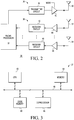
- FIG. 2 illustrates a simplified view of a radar transmitter and receiver circuit 30 for use in the radar system of FIG. 1 in accordance with an embodiment.
- a conventional radar integrated circuit may be used.
- Each of the radar transmitter and receiver circuits 16, 18, 20, and 22 may include radar transmitter and receiver circuit 30.
- Radar transmitter and receiver circuit 30 includes radar processor 32, a transmit path 34 and a plurality of receive paths 36.
- Transmit path 34 includes a transmitter circuit 38 and a power amplifier 40 coupled to an antenna 50.
- Other embodiments may have a plurality of transmit paths.
- Power amplifier 40 is provided with a mode input labeled "MODE".
- the MODE input allows a generated 77 GHz collision avoidance radar signal, generated on the vehicle, to produce a low power radar signal having a power level below an ambient noise level when a low power mode is selected.
- the attenuation may be done by switching off power amplifier 40.
- the signal leaked through power amplifier 40 may be enough to provide the correct amplitude for transmission below a noise floor.
- the MODE input is selected to provide a higher power radar signal for obstacle detection.
- Providing the low power radar signal below the ambient noise level makes the authentication of a key fob transceiver more resistant to attacks.
- using the radar signal provides a very high bandwidth.
- a rake receiver can be implemented in software making it less costly.
- the transmission of the spread-spectrum sequence can be done by switching phase shifters (not shown) of power amplifier 40 at very high speed.
- phase shifters not shown
- using the MIMO based directivity and multi-path handling of the transmitted and received radar allows the radar antennas to be directed to the key fob transceiver.
- the plurality of receiver circuits includes an antenna 52 coupled to an amplifier 44 and receiver circuit 42. Also, the plurality of receiver circuits includes an antenna 54 coupled to an amplifier 48 and receiver circuit 46. In other embodiments, there may be just one antenna that is switched between the different receive and transmit paths, or connected via a circular directional coupler.
- Receive circuits 42 and 46 are conventional receiver circuits and include circuits for converting the received radar signal to a form that can be used by radar processor 32. Radar processor 32 is configured to control the operation of radar transmitter and receiver circuit 30 and to process the signals received from the receive paths and to control the production of radar signals for transmission. Radar processor 32 may perform other functions as well, such as implementing a rake receiver.
- Radar transmitter and receiver circuit 30 may be an implementation of a multiple-in, multiple-out (MIMO) car radar system that provides distance measurement for obstacle detection and distance bounding for key fob authentication in multipath environments.
- the multiple receive paths are provided with different delays and phase shifts relative to the transmitted signal from transmit path 38 to determine a relative velocity of a potential obstacle. Equipping each receive and transmit path with its own antenna allows high directivity from both the transmitting and receiving lobes in locating key fob transceiver 26. After the direction of key fob transceiver 26 has been found out by coarse sweeping of the transmitter lobe in all directions, the transmitter lobe can be directed to the direction of the key fob transceiver, thus saving transmit power and reducing the influence of multi-path propagation.
- only one receive path and one transmit path may be used.
- FIG. 3 illustrates a simplified view of radar processor 32 in accordance with an embodiment.
- Radar processor 32 includes data and address bus 60.
- CPU central processing unit
- memory 64 memory 64
- code memory 66 code memory 66
- coprocessor 68 are bidirectionally connected to bus 60.
- Radar processor 32 may be implemented on one or more integrated circuits.
- CPU 62 may be any hardware device capable of executing instructions stored in memory 64 or code memory 66.
- CPU 62 may be, for example, a microprocessor, field programmable gate array (FPGA), application-specific integrated circuit (ASIC), or similar device.
- FPGA field programmable gate array
- ASIC application-specific integrated circuit
- Data memory 64 may be any kind of memory, such as for example, LI, L2, or L3 cache or system memory.
- Memory 64 may include volatile memory such as static random-access memory (SRAM) or dynamic RAM (DRAM), or may include non-volatile memory such as flash memory, read only memory (ROM), or other volatile or non-volatile memory.
- SRAM static random-access memory
- DRAM dynamic RAM
- non-volatile memory such as flash memory, read only memory (ROM), or other volatile or non-volatile memory.
- Code memory 66 may include one or more machine-readable storage media for storing instructions for execution by CPU 62. In other embodiments, memory 64 may also store data upon which CPU 62 may operate. Memory 64 may store, for example, a machine learning model, or encryption, decryption, or verification applications. A software implementation of a rake receiver may be implemented in memory 64. Memory 64 may be in the secure hardware element and be tamper-resistant.
- FIG. 4 illustrates a flow chart of a method 70 for authenticating a key fob radar transceiver in accordance with an embodiment.
- a collision avoidance radar signal is generated on a vehicle.
- the radar signal is attenuated to produce a low power radar signal having a power level below an ambient noise level.
- the low power radar signal is transmitted from the vehicle in response to a radar signal received from the key fob transceiver.
- the key fob transceiver is authenticated that it is the legitimate transceiver for accessing the vehicle.
- the authentication may include the distance bounding as described above. Alternately, the authentication may include the challenge/response communication as described above. In another embodiment, the authentication may include a combination of distance bounding and challenge/response communication.
- a method for authenticating a transceiver in a keyless entry system for a vehicle uses a collision avoidance radar system on the vehicle for authenticating a key fob radar transceiver.
- a lower power radar signal is transmitted from the vehicle.
- the lower power radar signal is transmitted below an ambient noise level to make the radar signal difficult for an attacker to detect.
- the key fob transceiver is then authenticated as being a legitimate transceiver for accessing the vehicle using the low power radar signal.
- a distance bounding scheme may be used to determine if the key fob is within a predetermined distance.
- Challenge/response communications may be used to authenticate that the key fob is the legitimate key fob.
- Non-transitory machine-readable storage medium including any mechanism for storing information in a form readable by a machine, such as a personal computer, laptop computer, file server, smart phone, or other computing device.
- the non-transitory machine-readable storage medium may include volatile and non-volatile memories such as read only memory (ROM), random access memory (RAM), magnetic disk storage media, optical storage medium, NVM, and the like.
- ROM read only memory
- RAM random access memory
- magnetic disk storage media such as magnetic disks, optical storage medium, NVM, and the like.
- NVM non-transitory machine-readable storage medium excludes transitory signals.
Landscapes
- Engineering & Computer Science (AREA)
- Radar, Positioning & Navigation (AREA)
- Remote Sensing (AREA)
- Computer Networks & Wireless Communication (AREA)
- Physics & Mathematics (AREA)
- General Physics & Mathematics (AREA)
- Mechanical Engineering (AREA)
- Computer Security & Cryptography (AREA)
- Signal Processing (AREA)
- Electromagnetism (AREA)
- Lock And Its Accessories (AREA)
Abstract
Description
- This disclosure relates generally to automobile security, and more particularly, to a method for protecting a passive keyless entry system against a relay attack.
- The theft of automobiles is a serious problem even with numerous security mechanisms. Relay attacks are used to gain access to cars where the car owner and legitimate key fob are more distant from the car than the attackers. In the relay attack, the security system of the car is deceived about the actual distance between the legitimate key fob and the car by a relay channel set up between the legitimate key fob, two attackers, and the car. Distance bounding countermeasures to the relay attack include the use of ultra-wideband (UWB) based systems to ensure that the key fob is near the car. Suggestions for protecting against the relay attack include shielding the key and removing the battery. However, these suggestions might not be practical for someone who uses the key fob to access the car. Also, distance bounding as a countermeasure is not as secure as once believed.
- Therefore, a need exists for a method to protect against a relay attack that provides better security while still being relatively inexpensive to implement.
- Aspects of the disclosure are defined in the accompanying claims.
- In a first aspect, there is provided a method for authenticating a transceiver in a keyless entry system for a vehicle, the method comprising: transmitting a low power radar signal from the vehicle, wherein the low power radar signal is transmitted below an ambient noise level; and authenticating that the transceiver is a legitimate transceiver for accessing the vehicle using the low power radar signal.
- In one or more embodiments, the vehicle may detect that a transceiver is within a predetermined range using a 125 kHz signal prior to transmitting the low power radar signal.
- In one or more embodiments, transmitting a low power radar signal and authenticating that the transceiver is a legitimate transceiver may further comprise communicating spread spectrum challenge/response messages using the low power radar signal below the ambient noise level.
- In one or more embodiments, wherein transmitting a low power radar signal from the vehicle may further comprise: transmitting a first low power radar signal from a first transmitter fixed at a first location on the vehicle; and transmitting a second low power radar signal from a second transmitter fixed at a second location on the vehicle, the first location being different than the second location.
- In one or more embodiments, the first location may be on a first side of the vehicle and the second location may be on the second side of the vehicle.
- In one or more embodiments, authenticating that the transceiver is a legitimate transceiver may further comprise determining that the transceiver is within a predetermined distance from the vehicle based on the low power radar signal.
- In one or more embodiments, authenticating that the transceiver is a legitimate transceiver for accessing the vehicle may further comprise, after determining that the transceiver is within a predetermined distance, authenticating using challenge/response messages communicated using the low power radar signal as a spread spectrum signal transmitted at a power level below the ambient noise level.
- In one or more embodiments, transmitting a low power radar signal for the vehicle may further comprise attenuating a collision avoidance radar signal to a level below the ambient noise level by changing an operating mode of a power amplifier used for amplifying the collision avoidance radar signal.
- In one or more embodiments, the low power radar signal may be characterized as being a radar signal in the 76 to 77 GHz band of the 77 to 81 GHz band.
- In a second aspect, there is provided a method for authenticating a transceiver in a keyless entry system for a vehicle, the method comprising: attenuating a collision avoidance radar signal generated on the vehicle to produce a low power radar signal having a power level below an ambient noise level; transmitting the low power radar signal from the vehicle in response to a signal received from the transceiver; and using the low power radar signal, authenticating that the transceiver is a legitimate transceiver for accessing the vehicle.
- In one or more embodiments, transmitting a low power radar signal and authenticating that the transceiver is a legitimate transceiver may further comprise communicating spread spectrum challenge/response messages using the low power radar signal below the ambient noise level.
- In one or more embodiments, transmitting a low power radar signal from the vehicle may further comprise: transmitting a first low power radar signal from a first transmitter fixed at a first location on the vehicle; and transmitting a second low power radar signal from a second transmitter fixed at a second location on the vehicle, the first location being different than the second location.
- In one or more embodiments, authenticating that the transceiver is a legitimate transceiver may further comprise determining that the transceiver is within a predetermined distance from the vehicle based on the low power radar signal.
- In one or more embodiments, authenticating that the transceiver is a legitimate transceiver for accessing the vehicle may further comprise authenticating using challenge/response messages communicated using a usable bandwidth of the low power radar signal as a spread spectrum signal transmitted at a power level below the ambient noise level.
- In one or more embodiments, authenticating that the transceiver is a legitimate transceiver may further comprise: determining that the transceiver is within a predetermined distance from the vehicle based on the low power radar signal; and authenticating that the transceiver is a legitimate transceiver using challenge/response messages communicated using the low power radar signal as a spread spectrum signal transmitted at a power level below the ambient noise level.
- In a third aspect, there is provided a method for authenticating a transceiver in a keyless entry system for a vehicle, the method comprising: attenuating a 77 GHz collision avoidance radar signal generated on the vehicle to produce a low power radar signal having a power level below an ambient noise level; transmitting the low power radar signal from the vehicle in response to a signal received from the transceiver; using the low power radar signal, authenticating that the transceiver is a legitimate transceiver for accessing the vehicle using the low power radar signal to determine that a distance between the vehicle and the transceiver is less than predetermined distance; and authenticating that the transceiver is a legitimate transceiver using the low power radar signal to communicate with the transceiver using spread spectrum challenge/response messages.
- In one or more embodiments, transmitting a low power radar signal from the vehicle may further comprise: transmitting a first low power radar signal from a first transmitter fixed at a first location on the vehicle; and transmitting a second low power radar signal from a second transmitter fixed at a second location on the vehicle, the first location being different than the second location.
- In one or more embodiments, the first location may be on a first side of the vehicle and the second location is on the second side of the vehicle.
- In one or more embodiments, authenticating that the transceiver is a legitimate transceiver for accessing the vehicle may further comprise providing the transceiver with a radar transceiver for communicating the challenge response message.
- In one or more embodiments, the transceiver may be determined to be less than the predetermined distance from the vehicle before using the spread spectrum challenge/response messages to authenticate that the transceiver is the legitimate transceiver.
- The present invention is illustrated by way of example and is not limited by the accompanying figures, in which like references indicate similar elements. Elements in the figures are illustrated for simplicity and clarity and have not necessarily been drawn to scale.
-
FIG. 1 illustrates a simplified view of an automobile radar system in accordance with an embodiment. -
FIG. 2 illustrates a transmitter and receiver circuit for use in the automobile radar system in accordance with an embodiment. -
FIG. 3 illustrates the processor of the automobile radar circuit in accordance with an embodiment. -
FIG. 4 illustrates a flow chart of a method for authenticating a key fob radar transceiver in accordance with an embodiment. - Generally, there is provided, a method for authenticating a transceiver for accessing a keyless entry system of a vehicle. Many vehicles today include radar transmitters and radar receivers on the front, back, and sides of vehicles for detecting the presence of obstacles that may be a hazard or otherwise influence the safety of the vehicle. The method uses the radar transmitters and receivers that are on the vehicle for obstacle detection for authenticating the key fob for vehicle access. In one embodiment, a lower power radar signal is transmitted. The lower power radar signal may be below an ambient noise level to make detection by an attacker difficult. The lower power radar signal may be used for exchanging spread spectrum challenge/response messages with a key fob radar transceiver. Alternately, one or more of the radar transmitters may be used for distance bounding to determine if the key fob transceiver is within a predetermined distance from the vehicle. In another embodiment, the lower power radar signal may be first used to determine that a distance between the vehicle and the key fob transceiver is less than the predetermined distance, and if the distance is less than the predetermined distance, further authenticating that the transceiver is a legitimate transceiver by using the low power radar signal to communicate with the transceiver of the key fob using spread spectrum challenge/response messages.
- Using the vehicle radar transmitters and receivers as disclosed increases protection from attacks, such as relay attacks. Also, because the vehicle's obstacle detection radar system is used to provide both obstacle detection and the low power radar signal for authentication, increased vehicle security can be provided with relatively low cost. In addition, the use of distance bounding and challenge/response authentication together provides better security.
- In accordance with an embodiment, there is provided, a method for authenticating a transceiver in a keyless entry system for a vehicle, the method includes: transmitting a low power radar signal from the vehicle, wherein the low power radar signal is transmitted below an ambient noise level; and authenticating that the transceiver is a legitimate transceiver for accessing the vehicle using the low power radar signal. The vehicle may detect that a transceiver is within a predetermined range using a 125 kHz signal prior to transmitting the low power radar signal. Transmitting a low power radar signal and authenticating that the transceiver is a legitimate transceiver may further include communicating spread spectrum challenge/response messages using the low power radar signal below the ambient noise level. Transmitting a low power radar signal from the vehicle may further include: transmitting a first low power radar signal from a first transmitter fixed at a first location on the vehicle; and transmitting a second low power radar signal from a second transmitter fixed at a second location on the vehicle, the first location being different than the second location. The first location may be on a first side of the vehicle and the second location may be on the second side of the vehicle. Authenticating that the transceiver is a legitimate transceiver may further include determining that the transceiver is within a predetermined distance from the vehicle based on the low power radar signal. Authenticating that the transceiver is a legitimate transceiver for accessing the vehicle may further include, after determining that the transceiver is within a predetermined distance, authenticating using challenge/response messages communicated using the low power radar signal as a spread spectrum signal transmitted at a power level below the ambient noise level. Transmitting a low power radar signal for the vehicle may further include attenuating a collision avoidance radar signal to a level below the ambient noise level by changing an operating mode of a power amplifier used for amplifying the collision avoidance radar signal. The low power radar signal may be characterized as being a radar signal in the 76 to 77 GHz band of the 77 to 81 GHz band.
- In another embodiment, there is provided, a method for authenticating a transceiver in a keyless entry system for a vehicle, the method including: attenuating a collision avoidance radar signal generated on the vehicle to produce a low power radar signal having a power level below an ambient noise level; transmitting the low power radar signal from the vehicle in response to a signal received from the transceiver; and using the low power radar signal, authenticating that the transceiver is a legitimate transceiver for accessing the vehicle. Transmitting a low power radar signal and authenticating that the transceiver is a legitimate transceiver may further include communicating spread spectrum challenge/response messages using the low power radar signal below the ambient noise level. Transmitting a low power radar signal from the vehicle may further include: transmitting a first low power radar signal from a first transmitter fixed at a first location on the vehicle; and transmitting a second low power radar signal from a second transmitter fixed at a second location on the vehicle, the first location being different than the second location. Authenticating that the transceiver is a legitimate transceiver may further include determining that the transceiver is within a predetermined distance from the vehicle based on the low power radar signal. Authenticating that the transceiver is a legitimate transceiver for accessing the vehicle may further include authenticating using challenge/response messages communicated using a usable bandwidth of the low power radar signal as a spread spectrum signal transmitted at a power level below the ambient noise level. Authenticating that the transceiver is a legitimate transceiver may further include: determining that the transceiver is within a predetermined distance from the vehicle based on the low power radar signal; and authenticating that the transceiver is a legitimate transceiver using challenge/response messages communicated using the low power radar signal as a spread spectrum signal transmitted at a power level below the ambient noise level.
- In yet another embodiment, there is provided, a method for authenticating a transceiver in a keyless entry system for a vehicle, the method including: attenuating a 77 GHz collision avoidance radar signal generated on the vehicle to produce a low power radar signal having a power level below an ambient noise level; transmitting the low power radar signal from the vehicle in response to a signal received from the transceiver; using the low power radar signal, authenticating that the transceiver is a legitimate transceiver for accessing the vehicle using the low power radar signal to determine that a distance between the vehicle and the transceiver is less than predetermined distance; and authenticating that the transceiver is a legitimate transceiver using the low power radar signal to communicate with the transceiver using spread spectrum challenge/response messages. Transmitting a low power radar signal from the vehicle may further include: transmitting a first low power radar signal from a first transmitter fixed at a first location on the vehicle; and transmitting a second low power radar signal from a second transmitter fixed at a second location on the vehicle, the first location being different than the second location. The first location may be on a first side of the vehicle and the second location may be on the second side of the vehicle. Authenticating that the transceiver is a legitimate transceiver for accessing the vehicle may further include providing the transceiver with a radar transceiver for communicating the challenge response message. The transceiver may be determined to be less than the predetermined distance from the vehicle before using the spread spectrum challenge/response messages to authenticate that the transceiver is the legitimate transceiver.
-
FIG. 1 illustrates a simplified view of anautomobile radar system 10 in accordance with an embodiment.Automobile radar system 10 is implemented on avehicle 12, and includes aradar circuit 14 for providing and receiving radar information from radar transmitters andreceivers Vehicle 12 may be any kind of vehicle that can benefit from a security system and that is equipped with a collision avoidance radar.Vehicle 12 may also be referred to as a car, automobile, truck, bus, or other type of vehicle that can benefit from the described embodiments. Radar transmitter andreceiver circuit 16 may be on a front portion ofvehicle 12. Radar transmitter andreceiver circuits vehicle 12. Radar transmitter andreceiver circuit 22 may be on a rear ofvehicle 12.Automobile radar system 10 also includes akey fob 26.Key fob 26 is a conventional key fob except thatkey fob 26 also includes a radar transceiver for communicating with the automobile radar system for vehicle access. Radar transmitters andreceivers radar transmitters radar transmitters radar transmitters FIG. 1 illustrate a simplified and approximated radar emission coverage from each of the radar transmitters on the vehicle. Preferably, the radar coverage provided by radar transmitters andreceivers - In one embodiment, the automobile radar signal is used for the transmission of challenge/response messages for authentication using a spread spectrum technique. To make the radar signal more difficult for an attacker to detect, capture, and to superimpose with the attacker's hacked version, the radar signal may be transmitted with a signal level below an ambient noise floor.
- Authentication via challenge/response messages ensures a key fob is allowed to open the vehicle. The challenge/response communication may be any type of conventional challenge/response, such as a communication that uses a secret key and a cryptographic algorithm. For example, in one embodiment, the authentication process involves a common secret between the key fob and the vehicle. The vehicle will first transmit a challenge word to the key fob. The key fob calculates response word based on the challenge word and on the common secret. The response word is transmitted to the vehicle. The vehicle knows from processing the response word if the key fob is in possession of the correct common secret. If the response word from the key fob is correct, the vehicle provides access. If the response word is incorrect, the vehicle does not provide access. To make the challenge/response authentication more resistant to attacks, a spread-spectrum approach is used. The usable bandwidth of a radar channel is higher than the bandwidth needed to transfer challenge/response messages with, e.g., a word length of 2048 bits. A radar channel at 77 GHz allows approximately a 1 GHz bandwidth, while for the challenge/response exchange a bandwidth of approximately 10 kHz would be sufficient. This allows a very large spreading of the transmitted messages. Given a channel capacity C calculated according to the Shannon-Harley theorem, C = B ∗ log2(1 + S/N). If a bandwidth B is 1 GHz and a signal-to-noise power ratio S/N is 10-4 (that is, the signal is 40 dB below the noise floor), a theoretical channel capacity of C = 1.4 Mbits/second can be achieved. The practically achievable channel capacity may be significantly below this value, however, still a value of 10 percent of the theoretical channel capacity is sufficient. The capability of having the radar signal power below the noise floor allows the challenge/response transmissions to be nearly undetectable by an attacker. Even if detected, having the radar signal below the noise floor makes it difficult for an attacker to synchronize the data stream, or to record the data stream in order to perform a replay attack. Also, jamming the radar signal would require a high-power jamming signal because the spread-spectrum transmission would be over a relatively large frequency band.
- In another embodiment, the radar signal may be used for distance bounding, also with a low power radar signal below an ambient noise level. Distance bounding, as opposed to distance measurement simply makes sure that the distance is below a certain limit, usually a few meters. Distance bounding is sufficient and does not require the measurement of an exact distance, which is more difficult to achieve and easier to compromise. A conventional distance bounding method may be used. For example, distance bounding using a car radar may be based on a ultra-wideband (UWB) IEEE standard 802.15.4(a). Other conventional distance bounding methods may also be used. One or
more radar transmitters radar processor 32 illustrated inFIG. 2 . In addition to processing the radar signals,radar processor 32 can also implement the rake receiver functionality. Also, several receivers with one antenna each may be implemented on a single integrated circuit. This enables relatively fast multipath detection which is needed for distance bounding. - One advantage of using 77 GHz radar signals is that the radar band is not bound to a certain modulation scheme. Hence, attack mechanisms based on an anomaly or weakness in, e.g., the IEEE 802.15.4(a) standard can be avoided by using one or more different modulation schemes.
- In another embodiment, the above described low power radar based distance bounding and spread-spectrum challenge/response communication may be implemented together. In one example, the distance bounding detection of the key fob transceiver is determined. If the distance is less than a predetermined distance, then the key fob transceiver is near the car, and the transceiver is authenticated using the challenge/response messages. Both the distance bounding and the challenge/response portions are implemented with a low power radar signal below the ambient noise level. Alternately, the challenge/response portion of the key fob authentication may be performed before the distance bounding portion.
- In another embodiment, a 125 kHz signal may be used to determine if a key fob transceiver is with a predetermined range prior to transmitting the low power radar signal.
-
FIG. 2 illustrates a simplified view of a radar transmitter andreceiver circuit 30 for use in the radar system ofFIG. 1 in accordance with an embodiment. A conventional radar integrated circuit may be used. Each of the radar transmitter andreceiver circuits receiver circuit 30. Radar transmitter andreceiver circuit 30 includesradar processor 32, a transmitpath 34 and a plurality of receivepaths 36. Transmitpath 34 includes atransmitter circuit 38 and apower amplifier 40 coupled to anantenna 50. Other embodiments may have a plurality of transmit paths. Usually there are 2 or 3 transmitters and 3 or 4 receivers in a car radarIC. Power amplifier 40 is provided with a mode input labeled "MODE". The MODE input allows a generated 77 GHz collision avoidance radar signal, generated on the vehicle, to produce a low power radar signal having a power level below an ambient noise level when a low power mode is selected. There are several ways an attenuated radar signal can be produced. For example, the attenuation may be done by switching offpower amplifier 40. The signal leaked throughpower amplifier 40 may be enough to provide the correct amplitude for transmission below a noise floor. Otherwise, the MODE input is selected to provide a higher power radar signal for obstacle detection. Providing the low power radar signal below the ambient noise level makes the authentication of a key fob transceiver more resistant to attacks. Also, using the radar signal provides a very high bandwidth. Also, a rake receiver can be implemented in software making it less costly. The transmission of the spread-spectrum sequence can be done by switching phase shifters (not shown) ofpower amplifier 40 at very high speed. In addition, using the MIMO based directivity and multi-path handling of the transmitted and received radar allows the radar antennas to be directed to the key fob transceiver. - The plurality of receiver circuits includes an
antenna 52 coupled to anamplifier 44 andreceiver circuit 42. Also, the plurality of receiver circuits includes anantenna 54 coupled to anamplifier 48 andreceiver circuit 46. In other embodiments, there may be just one antenna that is switched between the different receive and transmit paths, or connected via a circular directional coupler. Receivecircuits radar processor 32.Radar processor 32 is configured to control the operation of radar transmitter andreceiver circuit 30 and to process the signals received from the receive paths and to control the production of radar signals for transmission.Radar processor 32 may perform other functions as well, such as implementing a rake receiver. - Radar transmitter and
receiver circuit 30 may be an implementation of a multiple-in, multiple-out (MIMO) car radar system that provides distance measurement for obstacle detection and distance bounding for key fob authentication in multipath environments. The multiple receive paths are provided with different delays and phase shifts relative to the transmitted signal from transmitpath 38 to determine a relative velocity of a potential obstacle. Equipping each receive and transmit path with its own antenna allows high directivity from both the transmitting and receiving lobes in locatingkey fob transceiver 26. After the direction ofkey fob transceiver 26 has been found out by coarse sweeping of the transmitter lobe in all directions, the transmitter lobe can be directed to the direction of the key fob transceiver, thus saving transmit power and reducing the influence of multi-path propagation. However, for purposes of implementing the present invention according to a different embodiment, only one receive path and one transmit path may be used. -
FIG. 3 illustrates a simplified view ofradar processor 32 in accordance with an embodiment.Radar processor 32 includes data andaddress bus 60. Each of central processing unit (CPU) 62,memory 64,code memory 66, andcoprocessor 68 are bidirectionally connected tobus 60.Radar processor 32 may be implemented on one or more integrated circuits. CPU 62 may be any hardware device capable of executing instructions stored inmemory 64 orcode memory 66. CPU 62 may be, for example, a microprocessor, field programmable gate array (FPGA), application-specific integrated circuit (ASIC), or similar device. -
Data memory 64 may be any kind of memory, such as for example, LI, L2, or L3 cache or system memory.Memory 64 may include volatile memory such as static random-access memory (SRAM) or dynamic RAM (DRAM), or may include non-volatile memory such as flash memory, read only memory (ROM), or other volatile or non-volatile memory. -
Code memory 66 may include one or more machine-readable storage media for storing instructions for execution by CPU 62. In other embodiments,memory 64 may also store data upon which CPU 62 may operate.Memory 64 may store, for example, a machine learning model, or encryption, decryption, or verification applications. A software implementation of a rake receiver may be implemented inmemory 64.Memory 64 may be in the secure hardware element and be tamper-resistant. -
FIG. 4 illustrates a flow chart of amethod 70 for authenticating a key fob radar transceiver in accordance with an embodiment. Atstep 72, a collision avoidance radar signal is generated on a vehicle. The radar signal is attenuated to produce a low power radar signal having a power level below an ambient noise level. Atstep 74, the low power radar signal is transmitted from the vehicle in response to a radar signal received from the key fob transceiver. Atstep 76, using the low power radar signal, the key fob transceiver is authenticated that it is the legitimate transceiver for accessing the vehicle. The authentication may include the distance bounding as described above. Alternately, the authentication may include the challenge/response communication as described above. In another embodiment, the authentication may include a combination of distance bounding and challenge/response communication. - A method is provided for authenticating a transceiver in a keyless entry system for a vehicle. The method uses a collision avoidance radar system on the vehicle for authenticating a key fob radar transceiver. A lower power radar signal is transmitted from the vehicle. The lower power radar signal is transmitted below an ambient noise level to make the radar signal difficult for an attacker to detect. The key fob transceiver is then authenticated as being a legitimate transceiver for accessing the vehicle using the low power radar signal. A distance bounding scheme may be used to determine if the key fob is within a predetermined distance. Challenge/response communications may be used to authenticate that the key fob is the legitimate key fob.
- Various embodiments, or portions of the embodiments, may be implemented in hardware or as instructions on a non-transitory machine-readable storage medium including any mechanism for storing information in a form readable by a machine, such as a personal computer, laptop computer, file server, smart phone, or other computing device. The non-transitory machine-readable storage medium may include volatile and non-volatile memories such as read only memory (ROM), random access memory (RAM), magnetic disk storage media, optical storage medium, NVM, and the like. The non-transitory machine-readable storage medium excludes transitory signals.
- Although the invention is described herein with reference to specific embodiments, various modifications and changes can be made without departing from the scope of the present invention as set forth in the claims below. Accordingly, the specification and figures are to be regarded in an illustrative rather than a restrictive sense, and all such modifications are intended to be included within the scope of the present invention. Any benefits, advantages, or solutions to problems that are described herein with regard to specific embodiments are not intended to be construed as a critical, required, or essential feature or element of any or all the claims.
- Furthermore, the terms "a" or "an," as used herein, are defined as one or more than one. Also, the use of introductory phrases such as "at least one" and "one or more" in the claims should not be construed to imply that the introduction of another claim element by the indefinite articles "a" or "an" limits any particular claim containing such introduced claim element to inventions containing only one such element, even when the same claim includes the introductory phrases "one or more" or "at least one" and indefinite articles such as "a" or "an." The same holds true for the use of definite articles.
- Unless stated otherwise, terms such as "first" and "second" are used to arbitrarily distinguish between the elements such terms describe. Thus, these terms are not necessarily intended to indicate temporal or other prioritization of such elements.
Claims (9)
- A method for authenticating a transceiver in a keyless entry system for a vehicle, the method comprising:transmitting a low power radar signal from the vehicle, wherein the low power radar signal is transmitted below an ambient noise level; andauthenticating that the transceiver is a legitimate transceiver for accessing the vehicle using the low power radar signal.
- The method of claim 1, wherein the vehicle detects that a transceiver is within a predetermined range using a 125 kHz signal prior to transmitting the low power radar signal.
- The method of any preceding claim, wherein transmitting a low power radar signal and authenticating that the transceiver is a legitimate transceiver further comprises communicating spread spectrum challenge/response messages using the low power radar signal below the ambient noise level.
- The method of any preceding claim, wherein transmitting a low power radar signal from the vehicle further comprises:transmitting a first low power radar signal from a first transmitter fixed at a first location on the vehicle; andtransmitting a second low power radar signal from a second transmitter fixed at a second location on the vehicle, the first location being different than the second location.
- The method of claim 4, wherein the first location is on a first side of the vehicle and the second location is on the second side of the vehicle.
- The method of any preceding claim, wherein authenticating that the transceiver is a legitimate transceiver further comprises determining that the transceiver is within a predetermined distance from the vehicle based on the low power radar signal.
- The method of claim 6, wherein authenticating that the transceiver is a legitimate transceiver for accessing the vehicle further comprises, after determining that the transceiver is within a predetermined distance, authenticating using challenge/response messages communicated using the low power radar signal as a spread spectrum signal transmitted at a power level below the ambient noise level.
- The method of any preceding claim, wherein transmitting a low power radar signal for the vehicle further comprises attenuating a collision avoidance radar signal to a level below the ambient noise level by changing an operating mode of a power amplifier used for amplifying the collision avoidance radar signal.
- The method of any preceding claim, wherein the low power radar signal is characterized as being a radar signal in the 76 to 77 GHz band of the 77 to 81 GHz band.
Applications Claiming Priority (1)
| Application Number | Priority Date | Filing Date | Title |
|---|---|---|---|
| US16/042,252 US10573107B2 (en) | 2018-07-23 | 2018-07-23 | Method for protecting a passive keyless entry system against a relay attack |
Publications (2)
| Publication Number | Publication Date |
|---|---|
| EP3599781A1 true EP3599781A1 (en) | 2020-01-29 |
| EP3599781B1 EP3599781B1 (en) | 2021-05-05 |
Family
ID=67438114
Family Applications (1)
| Application Number | Title | Priority Date | Filing Date |
|---|---|---|---|
| EP19187205.0A Active EP3599781B1 (en) | 2018-07-23 | 2019-07-19 | Method for protecting a passive keyless entry system against a relay attack |
Country Status (2)
| Country | Link |
|---|---|
| US (1) | US10573107B2 (en) |
| EP (1) | EP3599781B1 (en) |
Cited By (1)
| Publication number | Priority date | Publication date | Assignee | Title |
|---|---|---|---|---|
| EP3968290B1 (en) | 2020-09-10 | 2024-03-27 | ADAC Plastics, Inc. | Gesture access system for a motor vehicle |
Families Citing this family (7)
| Publication number | Priority date | Publication date | Assignee | Title |
|---|---|---|---|---|
| FR3092925B1 (en) * | 2019-02-19 | 2022-09-09 | Continental Automotive | Systems and digital keys intended for the inhibition of relay attacks |
| US12179699B2 (en) * | 2019-04-18 | 2024-12-31 | Toyota Motor North America, Inc. | Systems and methods for countering security threats in a passive keyless entry system |
| JP7199391B2 (en) * | 2020-02-28 | 2023-01-05 | 株式会社東芝 | rangefinder |
| US11375463B2 (en) * | 2020-11-30 | 2022-06-28 | Silicon Laboratories Inc. | System, apparatus and method for dynamic transmit power determination |
| US11663899B2 (en) * | 2021-06-15 | 2023-05-30 | Toyota Motor North America, Inc. | Keyless entry message validation |
| FR3131009B1 (en) * | 2021-12-21 | 2023-11-03 | Continental Automotive Gmbh | Method for locating a communication device near a vehicle |
| EP4394436A1 (en) * | 2022-12-30 | 2024-07-03 | Nxp B.V. | Radar power calibration with mismatch compensation |
Citations (4)
| Publication number | Priority date | Publication date | Assignee | Title |
|---|---|---|---|---|
| US6252962B1 (en) * | 1994-04-22 | 2001-06-26 | Raytheon Company | Featureless covert communication system |
| US6774764B2 (en) * | 2000-02-25 | 2004-08-10 | Delphi Technologies, Inc. | Securing system for motor vehicle |
| US20140094129A1 (en) * | 2011-11-10 | 2014-04-03 | Skyworks Solutions, Inc. | Multi-mode power amplifier |
| GB2558589A (en) * | 2017-01-09 | 2018-07-18 | Jaguar Land Rover Ltd | Vehicle entry system |
Family Cites Families (12)
| Publication number | Priority date | Publication date | Assignee | Title |
|---|---|---|---|---|
| US6489893B1 (en) | 1998-03-23 | 2002-12-03 | Time Domain Corporation | System and method for tracking and monitoring prisoners using impulse radio technology |
| US6670909B2 (en) | 2001-01-16 | 2003-12-30 | Time Domain Corporation | Ultra-wideband smart sensor interface network and method |
| US6963727B2 (en) | 2001-07-26 | 2005-11-08 | Time Domain Corporation | Direct-path-signal detection apparatus and associated methods |
| US6759948B2 (en) | 2001-09-21 | 2004-07-06 | Time Domain Corporation | Railroad collision avoidance system and method for preventing train accidents |
| US7148791B2 (en) | 2001-09-21 | 2006-12-12 | Time Domain Corp. | Wireless danger proximity warning system and method |
| GB0228808D0 (en) * | 2002-12-11 | 2003-01-15 | Koninkl Philips Electronics Nv | Method and apparatus for measuring distance |
| EP1642242A1 (en) * | 2003-06-25 | 2006-04-05 | Philips Intellectual Property & Standards GmbH | Method and arrangements for increasing the security of transponder systems, particularly for access to automobiles |
| FR2961371B1 (en) | 2010-06-15 | 2013-02-15 | Commissariat Energie Atomique | METHOD OF SECURING WIRELESS COMMUNICATION, RECEIVER DEVICE AND COMMUNICATION SYSTEM USING THE SAME |
| US9501880B2 (en) * | 2011-03-17 | 2016-11-22 | Unikey Technologies Inc. | Wireless access control system including remote access wireless device generated magnetic field based unlocking and related methods |
| US8930045B2 (en) * | 2013-05-01 | 2015-01-06 | Delphi Technologies, Inc. | Relay attack prevention for passive entry passive start (PEPS) vehicle security systems |
| US9485609B2 (en) * | 2015-02-06 | 2016-11-01 | Nxp B.V. | Pulse frequency control for wireless communications and ranging |
| DE102016206539B4 (en) * | 2016-04-19 | 2019-05-16 | Volkswagen Aktiengesellschaft | Method for passive access control |
-
2018
- 2018-07-23 US US16/042,252 patent/US10573107B2/en active Active
-
2019
- 2019-07-19 EP EP19187205.0A patent/EP3599781B1/en active Active
Patent Citations (4)
| Publication number | Priority date | Publication date | Assignee | Title |
|---|---|---|---|---|
| US6252962B1 (en) * | 1994-04-22 | 2001-06-26 | Raytheon Company | Featureless covert communication system |
| US6774764B2 (en) * | 2000-02-25 | 2004-08-10 | Delphi Technologies, Inc. | Securing system for motor vehicle |
| US20140094129A1 (en) * | 2011-11-10 | 2014-04-03 | Skyworks Solutions, Inc. | Multi-mode power amplifier |
| GB2558589A (en) * | 2017-01-09 | 2018-07-18 | Jaguar Land Rover Ltd | Vehicle entry system |
Cited By (1)
| Publication number | Priority date | Publication date | Assignee | Title |
|---|---|---|---|---|
| EP3968290B1 (en) | 2020-09-10 | 2024-03-27 | ADAC Plastics, Inc. | Gesture access system for a motor vehicle |
Also Published As
| Publication number | Publication date |
|---|---|
| EP3599781B1 (en) | 2021-05-05 |
| US20200027294A1 (en) | 2020-01-23 |
| US10573107B2 (en) | 2020-02-25 |
Similar Documents
| Publication | Publication Date | Title |
|---|---|---|
| EP3599781B1 (en) | Method for protecting a passive keyless entry system against a relay attack | |
| EP3594913B1 (en) | Defense against relay attack in passive keyless entry systems | |
| Yeh et al. | Security in automotive radar and vehicular networks | |
| US8244169B1 (en) | System and method for active jamming of confidential information transmitted at a point-of-sale reader | |
| US9775034B2 (en) | Communications with distance authentication | |
| US9584542B2 (en) | Relay attack countermeasure system | |
| JP6768161B2 (en) | Protection against relay attacks | |
| Staat et al. | Analog physical-layer relay attacks with application to bluetooth and phase-based ranging | |
| JP3722216B2 (en) | Transfer detection method during data transmission | |
| Yeh et al. | Cybersecurity challenges and pathways in the context of connected vehicle systems | |
| US11950100B2 (en) | Method for determining a jitter attack, jitter attack detecting device, and computer program | |
| WO2014048715A1 (en) | Wireless communication device, and method for sending and receiving wireless signals | |
| EP3605476B1 (en) | Wireless receiver and method for detecting an attack on a keyless entry system for a vehicle | |
| CN116489597A (en) | Ranging signal transmission method, device and readable storage medium in UWB | |
| Rogobete et al. | Ultra-Wideband Technology in Telematics Security-A short Survey | |
| US11427160B2 (en) | Field superposition method and system | |
| US11518343B2 (en) | Vehicle access based on RF digests/backgrounds | |
| US20240312272A1 (en) | Method for Verifying an Identity of an Electronic Device and Related Device | |
| Ngoufo et al. | A New Approach to Detect and Thwart Replay Attacks on Car Remote Keyless Entry Systems from Stratosphere | |
| Lounis et al. | Frequency Hopping Spread Spectrum to Counter Relay Attacks in PKESs | |
| Thevenon et al. | Implementation of a Countermeasure to Relay Attacks | |
| CN109302260A (en) | An anti-eavesdropping security protection method for vehicle wireless communication based on multi-antenna technology | |
| Al-Kadi et al. | Ultra Wideband-How It Works and Its Web of Potential | |
| HK1151910A (en) | Decoupling of measuring the response time of a transponder and its authentication |
Legal Events
| Date | Code | Title | Description |
|---|---|---|---|
| PUAI | Public reference made under article 153(3) epc to a published international application that has entered the european phase |
Free format text: ORIGINAL CODE: 0009012 |
|
| STAA | Information on the status of an ep patent application or granted ep patent |
Free format text: STATUS: THE APPLICATION HAS BEEN PUBLISHED |
|
| AK | Designated contracting states |
Kind code of ref document: A1 Designated state(s): AL AT BE BG CH CY CZ DE DK EE ES FI FR GB GR HR HU IE IS IT LI LT LU LV MC MK MT NL NO PL PT RO RS SE SI SK SM TR |
|
| AX | Request for extension of the european patent |
Extension state: BA ME |
|
| STAA | Information on the status of an ep patent application or granted ep patent |
Free format text: STATUS: REQUEST FOR EXAMINATION WAS MADE |
|
| 17P | Request for examination filed |
Effective date: 20200729 |
|
| RBV | Designated contracting states (corrected) |
Designated state(s): AL AT BE BG CH CY CZ DE DK EE ES FI FR GB GR HR HU IE IS IT LI LT LU LV MC MK MT NL NO PL PT RO RS SE SI SK SM TR |
|
| REG | Reference to a national code |
Ref country code: DE Ref legal event code: R079 Ref document number: 602019004434 Country of ref document: DE Free format text: PREVIOUS MAIN CLASS: H04W0004700000 Ipc: H04W0012060000 |
|
| GRAP | Despatch of communication of intention to grant a patent |
Free format text: ORIGINAL CODE: EPIDOSNIGR1 |
|
| STAA | Information on the status of an ep patent application or granted ep patent |
Free format text: STATUS: GRANT OF PATENT IS INTENDED |
|
| INTG | Intention to grant announced |
Effective date: 20210112 |
|
| RIC1 | Information provided on ipc code assigned before grant |
Ipc: H04L 9/32 20060101ALI20201215BHEP Ipc: G01S 7/00 20060101ALI20201215BHEP Ipc: G01S 13/76 20060101ALN20201215BHEP Ipc: H04W 4/02 20180101ALI20201215BHEP Ipc: G01S 13/931 20200101ALI20201215BHEP Ipc: G07C 9/00 20200101ALI20201215BHEP Ipc: H04W 4/70 20180101ALI20201215BHEP Ipc: G01S 13/04 20060101ALI20201215BHEP Ipc: H04W 12/06 20090101AFI20201215BHEP Ipc: G01S 13/87 20060101ALI20201215BHEP Ipc: H04W 4/80 20180101ALI20201215BHEP |
|
| GRAS | Grant fee paid |
Free format text: ORIGINAL CODE: EPIDOSNIGR3 |
|
| GRAA | (expected) grant |
Free format text: ORIGINAL CODE: 0009210 |
|
| STAA | Information on the status of an ep patent application or granted ep patent |
Free format text: STATUS: THE PATENT HAS BEEN GRANTED |
|
| AK | Designated contracting states |
Kind code of ref document: B1 Designated state(s): AL AT BE BG CH CY CZ DE DK EE ES FI FR GB GR HR HU IE IS IT LI LT LU LV MC MK MT NL NO PL PT RO RS SE SI SK SM TR |
|
| REG | Reference to a national code |
Ref country code: GB Ref legal event code: FG4D |
|
| REG | Reference to a national code |
Ref country code: CH Ref legal event code: EP |
|
| REG | Reference to a national code |
Ref country code: AT Ref legal event code: REF Ref document number: 1391380 Country of ref document: AT Kind code of ref document: T Effective date: 20210515 |
|
| REG | Reference to a national code |
Ref country code: IE Ref legal event code: FG4D |
|
| REG | Reference to a national code |
Ref country code: DE Ref legal event code: R096 Ref document number: 602019004434 Country of ref document: DE |
|
| REG | Reference to a national code |
Ref country code: LT Ref legal event code: MG9D |
|
| REG | Reference to a national code |
Ref country code: AT Ref legal event code: MK05 Ref document number: 1391380 Country of ref document: AT Kind code of ref document: T Effective date: 20210505 |
|
| PG25 | Lapsed in a contracting state [announced via postgrant information from national office to epo] |
Ref country code: BG Free format text: LAPSE BECAUSE OF FAILURE TO SUBMIT A TRANSLATION OF THE DESCRIPTION OR TO PAY THE FEE WITHIN THE PRESCRIBED TIME-LIMIT Effective date: 20210805 Ref country code: AT Free format text: LAPSE BECAUSE OF FAILURE TO SUBMIT A TRANSLATION OF THE DESCRIPTION OR TO PAY THE FEE WITHIN THE PRESCRIBED TIME-LIMIT Effective date: 20210505 Ref country code: HR Free format text: LAPSE BECAUSE OF FAILURE TO SUBMIT A TRANSLATION OF THE DESCRIPTION OR TO PAY THE FEE WITHIN THE PRESCRIBED TIME-LIMIT Effective date: 20210505 Ref country code: LT Free format text: LAPSE BECAUSE OF FAILURE TO SUBMIT A TRANSLATION OF THE DESCRIPTION OR TO PAY THE FEE WITHIN THE PRESCRIBED TIME-LIMIT Effective date: 20210505 Ref country code: FI Free format text: LAPSE BECAUSE OF FAILURE TO SUBMIT A TRANSLATION OF THE DESCRIPTION OR TO PAY THE FEE WITHIN THE PRESCRIBED TIME-LIMIT Effective date: 20210505 |
|
| PG25 | Lapsed in a contracting state [announced via postgrant information from national office to epo] |
Ref country code: NO Free format text: LAPSE BECAUSE OF FAILURE TO SUBMIT A TRANSLATION OF THE DESCRIPTION OR TO PAY THE FEE WITHIN THE PRESCRIBED TIME-LIMIT Effective date: 20210805 Ref country code: LV Free format text: LAPSE BECAUSE OF FAILURE TO SUBMIT A TRANSLATION OF THE DESCRIPTION OR TO PAY THE FEE WITHIN THE PRESCRIBED TIME-LIMIT Effective date: 20210505 Ref country code: PL Free format text: LAPSE BECAUSE OF FAILURE TO SUBMIT A TRANSLATION OF THE DESCRIPTION OR TO PAY THE FEE WITHIN THE PRESCRIBED TIME-LIMIT Effective date: 20210505 Ref country code: RS Free format text: LAPSE BECAUSE OF FAILURE TO SUBMIT A TRANSLATION OF THE DESCRIPTION OR TO PAY THE FEE WITHIN THE PRESCRIBED TIME-LIMIT Effective date: 20210505 Ref country code: PT Free format text: LAPSE BECAUSE OF FAILURE TO SUBMIT A TRANSLATION OF THE DESCRIPTION OR TO PAY THE FEE WITHIN THE PRESCRIBED TIME-LIMIT Effective date: 20210906 Ref country code: SE Free format text: LAPSE BECAUSE OF FAILURE TO SUBMIT A TRANSLATION OF THE DESCRIPTION OR TO PAY THE FEE WITHIN THE PRESCRIBED TIME-LIMIT Effective date: 20210505 Ref country code: IS Free format text: LAPSE BECAUSE OF FAILURE TO SUBMIT A TRANSLATION OF THE DESCRIPTION OR TO PAY THE FEE WITHIN THE PRESCRIBED TIME-LIMIT Effective date: 20210905 Ref country code: GR Free format text: LAPSE BECAUSE OF FAILURE TO SUBMIT A TRANSLATION OF THE DESCRIPTION OR TO PAY THE FEE WITHIN THE PRESCRIBED TIME-LIMIT Effective date: 20210806 |
|
| REG | Reference to a national code |
Ref country code: NL Ref legal event code: MP Effective date: 20210505 |
|
| PG25 | Lapsed in a contracting state [announced via postgrant information from national office to epo] |
Ref country code: NL Free format text: LAPSE BECAUSE OF FAILURE TO SUBMIT A TRANSLATION OF THE DESCRIPTION OR TO PAY THE FEE WITHIN THE PRESCRIBED TIME-LIMIT Effective date: 20210505 |
|
| PG25 | Lapsed in a contracting state [announced via postgrant information from national office to epo] |
Ref country code: EE Free format text: LAPSE BECAUSE OF FAILURE TO SUBMIT A TRANSLATION OF THE DESCRIPTION OR TO PAY THE FEE WITHIN THE PRESCRIBED TIME-LIMIT Effective date: 20210505 Ref country code: ES Free format text: LAPSE BECAUSE OF FAILURE TO SUBMIT A TRANSLATION OF THE DESCRIPTION OR TO PAY THE FEE WITHIN THE PRESCRIBED TIME-LIMIT Effective date: 20210505 Ref country code: SK Free format text: LAPSE BECAUSE OF FAILURE TO SUBMIT A TRANSLATION OF THE DESCRIPTION OR TO PAY THE FEE WITHIN THE PRESCRIBED TIME-LIMIT Effective date: 20210505 Ref country code: SM Free format text: LAPSE BECAUSE OF FAILURE TO SUBMIT A TRANSLATION OF THE DESCRIPTION OR TO PAY THE FEE WITHIN THE PRESCRIBED TIME-LIMIT Effective date: 20210505 Ref country code: RO Free format text: LAPSE BECAUSE OF FAILURE TO SUBMIT A TRANSLATION OF THE DESCRIPTION OR TO PAY THE FEE WITHIN THE PRESCRIBED TIME-LIMIT Effective date: 20210505 Ref country code: CZ Free format text: LAPSE BECAUSE OF FAILURE TO SUBMIT A TRANSLATION OF THE DESCRIPTION OR TO PAY THE FEE WITHIN THE PRESCRIBED TIME-LIMIT Effective date: 20210505 Ref country code: DK Free format text: LAPSE BECAUSE OF FAILURE TO SUBMIT A TRANSLATION OF THE DESCRIPTION OR TO PAY THE FEE WITHIN THE PRESCRIBED TIME-LIMIT Effective date: 20210505 |
|
| REG | Reference to a national code |
Ref country code: DE Ref legal event code: R097 Ref document number: 602019004434 Country of ref document: DE |
|
| PLBE | No opposition filed within time limit |
Free format text: ORIGINAL CODE: 0009261 |
|
| STAA | Information on the status of an ep patent application or granted ep patent |
Free format text: STATUS: NO OPPOSITION FILED WITHIN TIME LIMIT |
|
| PG25 | Lapsed in a contracting state [announced via postgrant information from national office to epo] |
Ref country code: MC Free format text: LAPSE BECAUSE OF FAILURE TO SUBMIT A TRANSLATION OF THE DESCRIPTION OR TO PAY THE FEE WITHIN THE PRESCRIBED TIME-LIMIT Effective date: 20210505 |
|
| REG | Reference to a national code |
Ref country code: BE Ref legal event code: MM Effective date: 20210731 |
|
| 26N | No opposition filed |
Effective date: 20220208 |
|
| PG25 | Lapsed in a contracting state [announced via postgrant information from national office to epo] |
Ref country code: IS Free format text: LAPSE BECAUSE OF FAILURE TO SUBMIT A TRANSLATION OF THE DESCRIPTION OR TO PAY THE FEE WITHIN THE PRESCRIBED TIME-LIMIT Effective date: 20210905 Ref country code: LU Free format text: LAPSE BECAUSE OF NON-PAYMENT OF DUE FEES Effective date: 20210719 Ref country code: AL Free format text: LAPSE BECAUSE OF FAILURE TO SUBMIT A TRANSLATION OF THE DESCRIPTION OR TO PAY THE FEE WITHIN THE PRESCRIBED TIME-LIMIT Effective date: 20210505 |
|
| PG25 | Lapsed in a contracting state [announced via postgrant information from national office to epo] |
Ref country code: IT Free format text: LAPSE BECAUSE OF FAILURE TO SUBMIT A TRANSLATION OF THE DESCRIPTION OR TO PAY THE FEE WITHIN THE PRESCRIBED TIME-LIMIT Effective date: 20210505 Ref country code: IE Free format text: LAPSE BECAUSE OF NON-PAYMENT OF DUE FEES Effective date: 20210719 Ref country code: BE Free format text: LAPSE BECAUSE OF NON-PAYMENT OF DUE FEES Effective date: 20210731 |
|
| REG | Reference to a national code |
Ref country code: CH Ref legal event code: PL |
|
| PG25 | Lapsed in a contracting state [announced via postgrant information from national office to epo] |
Ref country code: LI Free format text: LAPSE BECAUSE OF NON-PAYMENT OF DUE FEES Effective date: 20220731 Ref country code: CH Free format text: LAPSE BECAUSE OF NON-PAYMENT OF DUE FEES Effective date: 20220731 |
|
| PG25 | Lapsed in a contracting state [announced via postgrant information from national office to epo] |
Ref country code: CY Free format text: LAPSE BECAUSE OF FAILURE TO SUBMIT A TRANSLATION OF THE DESCRIPTION OR TO PAY THE FEE WITHIN THE PRESCRIBED TIME-LIMIT Effective date: 20210505 |
|
| PG25 | Lapsed in a contracting state [announced via postgrant information from national office to epo] |
Ref country code: HU Free format text: LAPSE BECAUSE OF FAILURE TO SUBMIT A TRANSLATION OF THE DESCRIPTION OR TO PAY THE FEE WITHIN THE PRESCRIBED TIME-LIMIT; INVALID AB INITIO Effective date: 20190719 |
|
| P01 | Opt-out of the competence of the unified patent court (upc) registered |
Effective date: 20230725 |
|
| GBPC | Gb: european patent ceased through non-payment of renewal fee |
Effective date: 20230719 |
|
| PG25 | Lapsed in a contracting state [announced via postgrant information from national office to epo] |
Ref country code: MK Free format text: LAPSE BECAUSE OF FAILURE TO SUBMIT A TRANSLATION OF THE DESCRIPTION OR TO PAY THE FEE WITHIN THE PRESCRIBED TIME-LIMIT Effective date: 20210505 Ref country code: GB Free format text: LAPSE BECAUSE OF NON-PAYMENT OF DUE FEES Effective date: 20230719 |
|
| PG25 | Lapsed in a contracting state [announced via postgrant information from national office to epo] |
Ref country code: TR Free format text: LAPSE BECAUSE OF FAILURE TO SUBMIT A TRANSLATION OF THE DESCRIPTION OR TO PAY THE FEE WITHIN THE PRESCRIBED TIME-LIMIT Effective date: 20210505 |
|
| PG25 | Lapsed in a contracting state [announced via postgrant information from national office to epo] |
Ref country code: MT Free format text: LAPSE BECAUSE OF FAILURE TO SUBMIT A TRANSLATION OF THE DESCRIPTION OR TO PAY THE FEE WITHIN THE PRESCRIBED TIME-LIMIT Effective date: 20210505 |
|
| PGFP | Annual fee paid to national office [announced via postgrant information from national office to epo] |
Ref country code: FR Payment date: 20250620 Year of fee payment: 7 |
|
| PGFP | Annual fee paid to national office [announced via postgrant information from national office to epo] |
Ref country code: DE Payment date: 20250620 Year of fee payment: 7 |