EP3599757A1 - Image processing apparatus, image processing system, and control method for activating an application therein - Google Patents
Image processing apparatus, image processing system, and control method for activating an application therein Download PDFInfo
- Publication number
- EP3599757A1 EP3599757A1 EP19187238.1A EP19187238A EP3599757A1 EP 3599757 A1 EP3599757 A1 EP 3599757A1 EP 19187238 A EP19187238 A EP 19187238A EP 3599757 A1 EP3599757 A1 EP 3599757A1
- Authority
- EP
- European Patent Office
- Prior art keywords
- application
- usage quantity
- image processing
- processing apparatus
- user
- Prior art date
- Legal status (The legal status is an assumption and is not a legal conclusion. Google has not performed a legal analysis and makes no representation as to the accuracy of the status listed.)
- Ceased
Links
Images








Classifications
-
- H—ELECTRICITY
- H04—ELECTRIC COMMUNICATION TECHNIQUE
- H04N—PICTORIAL COMMUNICATION, e.g. TELEVISION
- H04N1/00—Scanning, transmission or reproduction of documents or the like, e.g. facsimile transmission; Details thereof
- H04N1/00127—Connection or combination of a still picture apparatus with another apparatus, e.g. for storage, processing or transmission of still picture signals or of information associated with a still picture
- H04N1/00204—Connection or combination of a still picture apparatus with another apparatus, e.g. for storage, processing or transmission of still picture signals or of information associated with a still picture with a digital computer or a digital computer system, e.g. an internet server
-
- H—ELECTRICITY
- H04—ELECTRIC COMMUNICATION TECHNIQUE
- H04N—PICTORIAL COMMUNICATION, e.g. TELEVISION
- H04N1/00—Scanning, transmission or reproduction of documents or the like, e.g. facsimile transmission; Details thereof
- H04N1/32—Circuits or arrangements for control or supervision between transmitter and receiver or between image input and image output device, e.g. between a still-image camera and its memory or between a still-image camera and a printer device
- H04N1/32101—Display, printing, storage or transmission of additional information, e.g. ID code, date and time or title
- H04N1/32106—Display, printing, storage or transmission of additional information, e.g. ID code, date and time or title separate from the image data, e.g. in a different computer file
-
- H—ELECTRICITY
- H04—ELECTRIC COMMUNICATION TECHNIQUE
- H04N—PICTORIAL COMMUNICATION, e.g. TELEVISION
- H04N1/00—Scanning, transmission or reproduction of documents or the like, e.g. facsimile transmission; Details thereof
- H04N1/0035—User-machine interface; Control console
- H04N1/00405—Output means
- H04N1/00474—Output means outputting a plurality of functional options, e.g. scan, copy or print
-
- H—ELECTRICITY
- H04—ELECTRIC COMMUNICATION TECHNIQUE
- H04N—PICTORIAL COMMUNICATION, e.g. TELEVISION
- H04N1/00—Scanning, transmission or reproduction of documents or the like, e.g. facsimile transmission; Details thereof
- H04N1/0035—User-machine interface; Control console
- H04N1/00405—Output means
- H04N1/00408—Display of information to the user, e.g. menus
- H04N1/00411—Display of information to the user, e.g. menus the display also being used for user input, e.g. touch screen
-
- H—ELECTRICITY
- H04—ELECTRIC COMMUNICATION TECHNIQUE
- H04N—PICTORIAL COMMUNICATION, e.g. TELEVISION
- H04N1/00—Scanning, transmission or reproduction of documents or the like, e.g. facsimile transmission; Details thereof
- H04N1/0035—User-machine interface; Control console
- H04N1/00405—Output means
- H04N1/00482—Output means outputting a plurality of job set-up options, e.g. number of copies, paper size or resolution
-
- H—ELECTRICITY
- H04—ELECTRIC COMMUNICATION TECHNIQUE
- H04N—PICTORIAL COMMUNICATION, e.g. TELEVISION
- H04N1/00—Scanning, transmission or reproduction of documents or the like, e.g. facsimile transmission; Details thereof
- H04N1/00962—Input arrangements for operating instructions or parameters, e.g. updating internal software
-
- H—ELECTRICITY
- H04—ELECTRIC COMMUNICATION TECHNIQUE
- H04N—PICTORIAL COMMUNICATION, e.g. TELEVISION
- H04N1/00—Scanning, transmission or reproduction of documents or the like, e.g. facsimile transmission; Details thereof
- H04N1/32—Circuits or arrangements for control or supervision between transmitter and receiver or between image input and image output device, e.g. between a still-image camera and its memory or between a still-image camera and a printer device
- H04N1/32358—Circuits or arrangements for control or supervision between transmitter and receiver or between image input and image output device, e.g. between a still-image camera and its memory or between a still-image camera and a printer device using picture signal storage, e.g. at transmitter
- H04N1/32363—Circuits or arrangements for control or supervision between transmitter and receiver or between image input and image output device, e.g. between a still-image camera and its memory or between a still-image camera and a printer device using picture signal storage, e.g. at transmitter at the transmitter or at the receiver
-
- H—ELECTRICITY
- H04—ELECTRIC COMMUNICATION TECHNIQUE
- H04N—PICTORIAL COMMUNICATION, e.g. TELEVISION
- H04N1/00—Scanning, transmission or reproduction of documents or the like, e.g. facsimile transmission; Details thereof
- H04N1/32—Circuits or arrangements for control or supervision between transmitter and receiver or between image input and image output device, e.g. between a still-image camera and its memory or between a still-image camera and a printer device
- H04N1/34—Circuits or arrangements for control or supervision between transmitter and receiver or between image input and image output device, e.g. between a still-image camera and its memory or between a still-image camera and a printer device for coin-freed systems ; Pay systems
-
- H—ELECTRICITY
- H04—ELECTRIC COMMUNICATION TECHNIQUE
- H04N—PICTORIAL COMMUNICATION, e.g. TELEVISION
- H04N1/00—Scanning, transmission or reproduction of documents or the like, e.g. facsimile transmission; Details thereof
- H04N1/32—Circuits or arrangements for control or supervision between transmitter and receiver or between image input and image output device, e.g. between a still-image camera and its memory or between a still-image camera and a printer device
- H04N1/34—Circuits or arrangements for control or supervision between transmitter and receiver or between image input and image output device, e.g. between a still-image camera and its memory or between a still-image camera and a printer device for coin-freed systems ; Pay systems
- H04N1/346—Accounting or charging based on a number representative of the service used, e.g. number of operations or copies produced
-
- H—ELECTRICITY
- H04—ELECTRIC COMMUNICATION TECHNIQUE
- H04N—PICTORIAL COMMUNICATION, e.g. TELEVISION
- H04N1/00—Scanning, transmission or reproduction of documents or the like, e.g. facsimile transmission; Details thereof
- H04N1/32—Circuits or arrangements for control or supervision between transmitter and receiver or between image input and image output device, e.g. between a still-image camera and its memory or between a still-image camera and a printer device
- H04N1/34—Circuits or arrangements for control or supervision between transmitter and receiver or between image input and image output device, e.g. between a still-image camera and its memory or between a still-image camera and a printer device for coin-freed systems ; Pay systems
- H04N1/348—Accounting or charging based on time or day
-
- H—ELECTRICITY
- H04—ELECTRIC COMMUNICATION TECHNIQUE
- H04N—PICTORIAL COMMUNICATION, e.g. TELEVISION
- H04N2201/00—Indexing scheme relating to scanning, transmission or reproduction of documents or the like, and to details thereof
- H04N2201/0077—Types of the still picture apparatus
- H04N2201/0094—Multifunctional device, i.e. a device capable of all of reading, reproducing, copying, facsimile transception, file transception
Definitions
- the processor is configured to determine the usage period as a time period that has elapsed since the application was activated for the first time.
- FIG. 3 is a diagram illustrating a display example of the display 110.
- a plurality of application buttons 111-1 to 111-6 are displayed on a screen 110-1 of the display 110 illustrated in FIG. 3 .
- the application button 111-1 of a copy application 1 the application button 111-2 of a scan application 1, the application button 111-3 of a copy application2, the application button 111-4 of a copy application3, the application button 111-5 of a scan application2, and the application button 111-6 of a scan application3, are displayed on the screen 110-1.
- a user can activate any of the six applications through the screen 110-1.
- the user selects one of the application buttons 111-1 to 111-6 of the application desired to be activated.
- the processor 300 executes the application corresponding to the selected application button and displays the screen executing the application on the touch panel.
- the usage quantity information database 331 stores information on the usage quantity of each user for each MFP function.
- FIG. 4 illustrates a copy function, a scan function, a print function, and a FAX transmission function as an MFP function.
- the print control unit 305 controls the printer unit 130 based on an application (for example, a print application) executed by the application activation control unit 303.
- an application for example, a print application
- a usage quantity information database 331a is stored in the auxiliary storage device 330 instead of the usage quantity information database 331.
- an attribute as to whether or not to prohibit activation of an application is set based on the total usage quantity of each MFP function by all users, as an application attribute of metadata of the application. If the activation of the application is prohibited based on the total usage quantity of each user for each MFP function, the attribute value is set to "True", and if the activation of the application is not prohibited based on the total usage quantity, the attribute value is set to "False”. In the third embodiment, an upper limit of the usage quantity of each MFP function is set in the attribute "TrialAmount".
- the acquisition unit 301a acquires information on execution of an application. For example, the acquisition unit 301a acquires user information, an activation instruction of the application, and a determination result obtained by the management device 400.
- the determination result obtained from the management device 400 includes either an OK notification or an NG notification.
- the application activation control unit 303 determines whether or not activation of the application is allowed based on the determination result included in the response. (ACT 605). Specifically, if the determination result is the OK notification, the application activation control unit 303 determines that the activation of the application is allowed. In addition, if the determination result is the NG notification, the application activation control unit 303 determines that activation of the application is not allowed.
Landscapes
- Engineering & Computer Science (AREA)
- Multimedia (AREA)
- Signal Processing (AREA)
- General Engineering & Computer Science (AREA)
- Business, Economics & Management (AREA)
- Accounting & Taxation (AREA)
- Human Computer Interaction (AREA)
- Computing Systems (AREA)
- Facsimiles In General (AREA)
- Accessory Devices And Overall Control Thereof (AREA)
- Stored Programmes (AREA)
Abstract
Description
- Embodiments described herein relate generally to an image processing apparatus, an image processing system, and a control method for activating an application therein.
- In the related art, there is a trial period in which an application program (hereinafter, referred to as "application") can be used on a trial basis in a multi-function peripheral (MFP). A user can use the application during the trial period even without a valid license. Herein, validity of a license means that a license has been purchased and activated. However, in the related art, even if the application is not used during the trial period, if the trial period elapses, the application cannot be used. Accordingly, in some cases, the application may not even be used during the trial period.
- To solve such problem, there is provided an image processing apparatus configured to execute an application that employs one of a plurality of functions of the image processing apparatus, comprising: a storage unit in which a usage quantity of each of the functions is stored; and a processor configured to control activation of the application, based on the usage quantity of the function employed by the application.
- Preferably, the functions include a copy function, a scan function, a print function, and a fax transmission function.
- Preferably still, the storage unit stores the usage quantity of each of the functions for each user of the image processing apparatus.
- Preferably yet, the usage quantity of the function is a total usage quantity of the function by a user of the image processing apparatus who has selected the application for activation.
- Suitably, the usage quantity of the function is a total usage quantity of the function by all users of the image processing apparatus.
- Suitably still, the processor is configured to control activation of the application, based on the usage quantity of the function employed by the application and a usage period of the application.
- Suitably yet, the processor is configured to determine the usage period as a time period that has elapsed since the application was activated for the first time.
- Typically, the processor is configured to prohibit activation of the application if the usage quantity of the function employed by the application exceeds a threshold quantity and a usage period of the application exceeds a threshold time period.
- Typically still, the storage unit stores metadata for the application which indicates whether or not the activation of the application is to be prohibited based on the usage quantity.
- The invention also relates to an image processing system comprising: a plurality of image processing apparatuses, each configured to execute an application that employs one of a plurality of functions thereof; and a management device configured to manage the plurality of image processing apparatuses, wherein the management device includes a storage unit in which a usage quantity of functions for each of the functions is stored, and a processor configured to determine whether or not the usage quantity exceeds a threshold value, in response to a request to activate the application received from one of the plurality of image processing apparatuses, and wherein each of the image processing apparatuses includes a processor configured to control activation of the application, based on a determination result returned by the management device in response to a request to activate the application.
- Preferably, the functions include a copy function, a scan function, a print function, and a fax transmission function.
- Preferably still, the storage unit stores the usage quantity of each of the functions for each user of the image processing system.
- Preferably yet, the usage quantity of the function is a total usage quantity of the function by a user of the image processing system who has selected the application for activation.
- Suitably, the usage quantity of the function is a total usage quantity of the function by all users of the image processing system.
- Suitably still, the processor of each image processing apparatus is configured to control activation of the application, based on the usage quantity of the function employed by the application and a usage period of the application.
- Suitably yet, the processor of each image processing apparatus is configured to determine the usage period as a time period that has elapsed since the application was activated for the first time.
- Typically, the processor of each image processing apparatus is configured to prohibit activation of the application if the usage quantity of the function employed by the application exceeds a threshold quantity and a usage period of the application exceeds a threshold time period.
- Typically still, the storage unit stores metadata for the application which indicates whether or not the activation of the application is to be prohibited based on the usage quantity.
- The invention also concerns a control method for activating an application in an image processing apparatus, wherein the application employs one of a plurality of functions of the image processing apparatus, the method comprising: tracking a usage quantity of each of the functions; determining whether or not the usage quantity of the function employed by an application for activation selected by a user exceeds a threshold quantity; and controlling activation of the application based on whether or not the usage quantity of the function employed by the application exceeds the threshold quantity.
- Preferably, in the method, the usage quantity of each of the functions is tracked for each user of the image processing apparatus, and the usage quantity of the function employed by the application for activation selected by the user that is compared against the threshold quantity is the usage quantity that is tracked for the user who selected the application for activation.
- The invention further relates to a non-transitory computer readable medium storing a program causing a computer to execute the method described above.
- The above and other objects, features and advantages of the present invention will be made apparent from the following description of the preferred embodiments, given as non-limiting examples, with reference to the accompanying drawings, in which:
-
FIG. 1 is an external view illustrating an overall configuration example of an image processing apparatus according to a first embodiment. -
FIG. 2 is a block diagram illustrating a hardware configuration. -
FIG. 3 is a diagram illustrating a display example. -
FIG. 4 is a diagram illustrating a specific example of a usage quantity information database. -
FIG. 5 is a diagram illustrating an example of metadata setting of an application. -
FIG. 6 is a schematic block diagram illustrating a functional configuration of a processor. -
FIG. 7 is a flowchart illustrating a flow of processing of the image processing apparatus. -
FIG. 8 is a diagram illustrating an example of an error screen displayed on the display. -
FIG. 9 is a flowchart illustrating a flow of processing when the image processing apparatus controls activation of the application based on a user usage quantity and a trial period. -
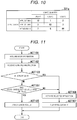
FIG. 10 is a diagram illustrating a specific example of a usage quantity information database according to a second embodiment. -
FIG. 11 is a flowchart illustrating a flow of processing of the image processing apparatus according to the second embodiment. -
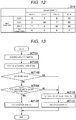
FIG. 12 is a diagram illustrating a specific example of a usage quantity information database according to a third embodiment. -
FIG. 13 is a flowchart illustrating a flow of processing of an image processing apparatus according to the third embodiment. -
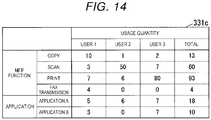
FIG. 14 is a diagram illustrating a specific example of a usage quantity information database according to a fourth embodiment. -
FIG. 15 is a flowchart illustrating a flow of processing of an image processing apparatus according to the fourth embodiment. -
FIG. 16 is a schematic block diagram illustrating a configuration of an image processing system according to a fifth embodiment. -
FIG. 17 is a schematic block diagram illustrating a functional configuration of a management device according to the fifth embodiment. -
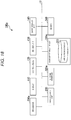
FIG. 18 is a block diagram illustrating a hardware configuration of an image processing apparatus according to the fifth embodiment. -
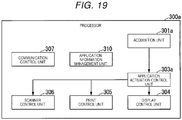
FIG. 19 is a schematic block diagram illustrating a functional configuration of a processor according to the fifth embodiment. -
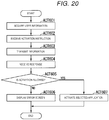
FIG. 20 is a flowchart illustrating a flow of processing of the image processing apparatus according to the fifth embodiment. -
FIG. 21 is a flowchart illustrating a flow of processing of the management device according to the fifth embodiment. -
FIG. 22 is a flowchart illustrating a flow of processing when the management device manages activation of an application based on a user usage quantity and a trial period; - Embodiments provide an image processing apparatus, an image processing system, and a control method for activating an application therein.
- An image processing apparatus according to an embodiment includes a storage unit in which a usage quantity of each of the functions is stored, and a processor configured to control activation of the application, based on the usage quantity of the function employed by the application.
- Hereinafter, an image processing apparatus, an image processing system, and a control method for activating application therein, according to an embodiment, will be described with reference to the drawings.
-
FIG. 1 is an external view illustrating an overall configuration example of animage processing apparatus 100 according to a first embodiment. Theimage processing apparatus 100 according to the embodiment is a multifunction printer capable of forming a toner image on a sheet. The sheet is, for example, an original document, paper on which an image is formed. The sheet may be anything as long as theimage processing apparatus 100 can read the image formed thereon. Theimage processing apparatus 100 reads an image on a sheet, generates digital data, and generates an image file. - After an application is installed, the
image processing apparatus 100 displays an execution instruction image of the installed application on a screen of a display. The execution instruction image is an image displayed on the screen of the display which a user selects to instruct execution of the application. Hereinafter, a case where the execution instruction image is an application button will be described as an example. Theimage processing apparatus 100 controls activation of an application depending on whether or not a usage quantity of an MFP function employed by the application exceeds an upper limit value. An MFP function is any function which can be performed by the MFP, and is, for example, a copy function, a scan function, a print function, and a facsimile transmission function. The MFP function is not limited to this, and any other functions that can be performed by the MFP are included. The usage quantity may be the number of sheets used by the MFP function or may be the number of times of use of the MFP function. In the following description, a case where the usage quantity is the number of sheets will be described as an example. - The
image processing apparatus 100 includes adisplay 110, acontrol panel 120, aprinter unit 130, asheet storage unit 140, and animage reading unit 200. - The
display 110 is a display device such as a liquid crystal display or an organic electro luminescence (EL) display. Thedisplay 110 displays various kinds of information on theimage processing apparatus 100. In addition, thedisplay 110 is configured to receive an operation input of a user and outputs a signal corresponding to an operation performed by the user to a processor of theimage processing apparatus 100. - The
control panel 120 includes a plurality of buttons. Thecontrol panel 120 receives the operation input of the user. Thecontrol panel 120 outputs a signal corresponding to the operation performed by the user to the processor of theimage processing apparatus 100. Thedisplay 110 and thecontrol panel 120 may be configured as an integrated touch panel. - The
printer unit 130 is an image forming device that performs image formation processing. In the image formation processing, theprinter unit 130 forms an image on a sheet based on image information generated by theimage reading unit 200 or image information received via a communication path. - The
sheet storage unit 140 is a sheet tray that stores a sheet used for image formation of theprinter unit 130. - The
image reading unit 200 includes a scanner and reads an image according to lightness and darkness of the image. For example, theimage reading unit 200 reads an image printed on the sheet to be read set on a document reading table. Theimage reading unit 200 records the read image data. The recorded image data may be transmitted to another information processing device via a network. The recorded image data may be formed on the sheet by theprinter unit 130. -
FIG. 2 is a block diagram illustrating a hardware components of theimage processing apparatus 100 according to the first embodiment. - The
image processing apparatus 100 includes thedisplay 110, thecontrol panel 120, theprinter unit 130, thesheet storage unit 140, theimage reading unit 200, aprocessor 300, anetwork interface 320, anauxiliary storage device 330, and amemory 340. Thedisplay 110, thecontrol panel 120, theprinter unit 130, thesheet storage unit 140, and theimage reading unit 200 are described above. Hereinafter, theprocessor 300, thenetwork interface 320, theauxiliary storage device 330, and thememory 340 will be described. Each of the components is connected to asystem bus 10 so as to enable data communication between them. - The
processor 300 is, for example, a processor such as a central processing unit (CPU). Theprocessor 300 controls an operation of each component of theimage processing apparatus 100. Theprocessor 300 performs various kinds of processing by executing a program. - The
network interface 320 performs data communication with other devices. Here, the other devices include an information processing device such as a personal computer. Thenetwork interface 320 operates as an input interface and receives data or instructions transmitted from other devices. The instructions transmitted from other devices are an instruction to perform printing, and the like. In addition, thenetwork interface 320 operates as an output interface and transmits data to other devices. - The
auxiliary storage device 330 is, for example, a hard disk or a solid state drive (SSD) and stores various data. The various data is, for example, digital data, a job, a job log, a usagequantity information database 331, auser information database 332, and anapplication database 333. - The usage
quantity information database 331 stores information on a usage quantity of an MFP function employed by an application for each user. - The
user information database 332 stores user information. The user information includes user identification information for identifying a user or an administrator, and user attribute of each user. The user attribute includes an authority that the user has. The authority includes, for example, a copy implementation authority, a scan implementation authority, a print implementation authority, and a FAX transmission implementation authority. - The
application database 333 stores an application package and license information. The application package includes application identification information, application metadata, an application program, data referred to by an application, application button image identification information, an application button image specified by the application button image identification information, and an application button name. The application identification information may be included in the application metadata or the application program. The application button name may be included in metadata. The application package may include a plurality of application button images having different display sizes. In addition, the license information is information on a license of the application. The license information includes, for example, application identification information of an application requiring a license and valid information indicating whether or not the license is valid. - The
memory 340 is, for example, a random access memory (RAM). Thememory 340 temporarily stores data used by each component of theimage processing apparatus 100. Thememory 340 may store the digital data generated by theimage reading unit 200. Thememory 340 may temporarily store a job and a job log. -
FIG. 3 is a diagram illustrating a display example of thedisplay 110. A plurality of application buttons 111-1 to 111-6 are displayed on a screen 110-1 of thedisplay 110 illustrated inFIG. 3 . Specifically, the application button 111-1 of acopy application 1, the application button 111-2 of ascan application 1, the application button 111-3 of a copy application2, the application button 111-4 of a copy application3, the application button 111-5 of a scan application2, and the application button 111-6 of a scan application3, are displayed on the screen 110-1. A user can activate any of the six applications through the screen 110-1. The user selects one of the application buttons 111-1 to 111-6 of the application desired to be activated. Theprocessor 300 executes the application corresponding to the selected application button and displays the screen executing the application on the touch panel. -
FIG. 4 is a diagram illustrating a specific example of the usagequantity information database 331 according to the first embodiment. - As illustrated in
FIG. 4 , the usagequantity information database 331 stores information on the usage quantity of each user for each MFP function.FIG. 4 illustrates a copy function, a scan function, a print function, and a FAX transmission function as an MFP function. - The example illustrated in
FIG. 4 indicates thatuser 1 has used ten sheets with the copy function,user 2 one sheet, anduser 3 two sheets. - In addition, the example illustrated in
FIG. 4 indicates thatuser 1 has used three sheets with the scan function,user 2 fifty sheets, anduser 3 seven sheets. In addition, the example illustrated inFIG. 4 indicates thatuser 1 has used seven sheets with the print function,user 2 six sheets, anduser 3 eighty sheets. In addition, the example illustrated inFIG. 4 indicates thatuser 1 has used four sheets with the FAX transmission function,user 2 zero sheet, anduser 3 zero sheet. -
FIG. 5 is a diagram illustrating an example of metadata setting of an application. - In the example of
FIG. 5 , application attributes, which describe the metadata setting of the application, are defined in an extensible markup language (XML) file. "AppId" indicates application identification information. "AppName" indicates a name of the application. "AppVersion" indicates a version of the application. "AppCreatedDate" indicates a creation date of the application. "AppSummary" indicates an overview of the application. "AppButtonName1" and "AppButtonName2" indicate application button names. - "SupportsTrialByUsedAmount" indicates an attribute as to whether or not to prohibit activation of the application depending on the usage quantity. If the activation of the application is prohibited according to the usage quantity, the attribute value is set to "True", and if the activation of the application is not prohibited according to the usage quantity, the attribute value is set to "False". "SupportsTrialPerUser" indicates an attribute as to whether or not to prohibit the activation of the application depending on the usage quantity for each user. If the activation of the application is prohibited depending on the usage quantity for each user, the attribute value is set to "True", and if the activation of the application is not prohibited depending on the usage quantity for each user, the attribute value is set to "False".
- "TrialAmount" indicates an upper limit of the usage quantity. In the first embodiment, "TrialAmount" indicates an upper limit of the usage quantity of one or more MFP functions. "TrialAmount" is set to an integer value. For example,
FIG. 5 illustrates that an upper limit of the copy function is 100, an upper limit of the scan function is 50, an upper limit of the print function is 80, and an upper limit of the FAX transmission function is 10. -
FIG. 6 is a schematic block diagram illustrating a functional configuration of theprocessor 300 according to the first embodiment. As illustrated, theprocessor 300 is programmed to function as anacquisition unit 301, adetermination unit 302, an applicationactivation control unit 303, adisplay control unit 304, aprint control unit 305, ascanner control unit 306, acommunication control unit 307, a userinformation management unit 308, a usagequantity management unit 309, and an applicationinformation management unit 310. - The
acquisition unit 301 acquires information on execution of an application. For example, theacquisition unit 301 acquires user information and an activation instruction of an application. - The
determination unit 302 determines whether or not a usage quantity exceeds an upper limit value based on the information acquired by theacquisition unit 301 and the database stored in theauxiliary storage device 330. For example, thedetermination unit 302 determines whether or not the usage quantity of a user acquired by theacquisition unit 301 exceeds the upper limit value. - The application
activation control unit 303 controls activation of the application selected by the user based on the determination result of thedetermination unit 302. For example, if thedetermination unit 302 determines that the usage quantity exceeds the upper limit value, the applicationactivation control unit 303 prohibits the activation of the application selected by the user. That is, if thedetermination unit 302 determines that the usage quantity exceeds the upper limit value, the applicationactivation control unit 303 does not activate the application. In addition, for example, if thedetermination unit 302 determines that the usage quantity does not exceed the upper limit value, the applicationactivation control unit 303 activates the application selected by the user. That is, if thedetermination unit 302 determines that the usage quantity does not exceed the upper limit value, the applicationactivation control unit 303 activates the application so as to allow the MFP function to be used. - The
display control unit 304 controls displaying on thedisplay 110. In addition, thedisplay control unit 304 detects a user operation performed on thedisplay 110. Thedisplay control unit 304, for example, detects that a user presses the application button on the screen 110-1 illustrated inFIG. 3 , and outputs an execution instruction of the application. - The
print control unit 305 controls theprinter unit 130 based on an application (for example, a print application) executed by the applicationactivation control unit 303. - The
scanner control unit 306 controls theimage reading unit 200 based on an application (for example, a scan application or a copy application) executed by the applicationactivation control unit 303. - The
communication control unit 307 controls thenetwork interface 320. Thecommunication control unit 307 performs connection to a facsimile device and transmission of image information, based on an application (for example, a FAX transmission application) executed by the applicationactivation control unit 303. The image information which is transmitted is, for example, an image read by theimage reading unit 200. - The user
information management unit 308 manages user information stored in theuser information database 332. - The usage
quantity management unit 309 adds the usage quantity stored in the usagequantity information database 331 to the usage quantity used by the application. - The application
information management unit 310 installs the application using the application package stored in theapplication database 333. -
FIG. 7 is a flowchart illustrating a flow of processing of theimage processing apparatus 100 according to the first embodiment. - The
acquisition unit 301 acquires user information (ACT 101). Theacquisition unit 301 may acquire the user information obtained from a card possessed by a user using a card reader. In addition, theacquisition unit 301 may acquire user information directly input to thedisplay 110. Theacquisition unit 301 outputs the acquired user information to thedetermination unit 302. - The
display 110 receives an input of an activation instruction of the application (ACT 102). That is, thedisplay 110 receives selection of the application. If the application is selected, thedisplay 110 outputs the selected application identification information to theprocessor 300. Theacquisition unit 301 acquires the application identification information output from thedisplay 110, and outputs the acquired application identification information to thedetermination unit 302. - The
determination unit 302 determines whether or not a license of the application identified by the application identification information is valid with reference to the application database 333 (ACT 103). For example, if the license of the application identified by the application identification information is stored in theapplication database 333, thedetermination unit 302 determines that the license is valid. For example, if the license of the application identified by the application identification information is not stored in theapplication database 333, thedetermination unit 302 determines that the license is not valid. If the license of the application is not valid (ACT 103: NO), thedetermination unit 302 determines whether or not a user usage quantity exceeds the upper limit value (ACT 104). - Specifically, first, the
determination unit 302 acquires the usage quantity of the MFP function which has been used by the application selected by the user with reference to the usagequantity information database 331. Next, thedetermination unit 302 acquires the upper limit value of the usage quantity of the MFP function which is used by the application selected by the user with reference to theapplication database 333. Then, thedetermination unit 302 compares the acquired usage quantity with the upper limit value, to determine whether or not the usage quantity of the user exceeds the upper limit value. - If the usage quantity of the user exceeds the upper limit value (ACT 104: YES), the
determination unit 302 outputs an NG notification to the applicationactivation control unit 303. The NG notification indicates that the activation of the application is not allowed. If the NG notification is output, the applicationactivation control unit 303 prohibits activation of the application. Then, the applicationactivation control unit 303 instructs thedisplay control unit 304 to display an error screen. Thedisplay control unit 304 causes an error screen to be displayed on a screen of the display 110 (ACT 105). For example, thedisplay control unit 304 causes the error screen to be displayed on the screen of thedisplay 110 as a pop-up screen. -
FIG. 8 is a diagram illustrating an example of the error screen displayed on thedisplay 110. - As illustrated in
FIG. 8 , anerror screen 112 is displayed on the screen of thedisplay 110 in an overlapping manner. A notification indicating that the usage quantity of the user exceeds, a notification prompting installation of the license, and anOK button 113, are displayed on theerror screen 112. TheOK button 113 is selected when confirmation is made by the user. If theOK button 113 is selected, thedisplay control unit 304 removes theerror screen 112 from the screen of thedisplay 110. - Referring back to
FIG. 7 , the explanation of the processing is continued below. - If the application license is valid (ACT 103: YES), the
determination unit 302 outputs the OK notification to the applicationactivation control unit 303. In addition, if the usage quantity of the user does not exceed the upper limit value (ACT 104: NO), thedetermination unit 302 outputs the OK notification to the applicationactivation control unit 303. The OK notification indicates that the activation of the application is allowed. If the OK notification is output, the applicationactivation control unit 303 activates the selected application (ACT 106). - For example, if the selected application is a scan application, the application
activation control unit 303 executes the scan application. Thescanner control unit 306 controls theimage reading unit 200 based on the application executed by the applicationactivation control unit 303. Thereafter, the usagequantity management unit 309 adds the usage quantity of the MFP function to the executed application (ACT 107). Specifically, the usagequantity management unit 309 adds the number of sheets of paper used in the MFP function to the usage quantity of the user. For example, ifuser 1 uses ten sheets in the copy function, the usagequantity management unit 309 adds ten to the usage quantity of copy ofuser 1. - In addition, for example, if the selected application is a print application, the application
activation control unit 303 executes the print application. Theprint control unit 305 controls theprinter unit 130 based on the application executed by the applicationactivation control unit 303. Thereafter, the usagequantity management unit 309 adds the usage quantity of the MFP function to the executed application (ACT 107). - According to the
image processing apparatus 100 configured as described above, it is possible to effectively use an application whose license is not valid. Specifically, theimage processing apparatus 100 allows use of the MFP function by an application for which the license is not valid, based on the usage quantity of the MFP function, until the usage quantity reaches the upper limit value. In this way, theimage processing apparatus 100 prohibits the use of the application according to the usage quantity (for example, the number of used sheets) of the MFP function by the application, not by a predefined time period. As a result, for so long as an application whose license is not valid is not used, the application still can be used on a trial basis. Therefore, it is possible to effectively use the application whose license is not valid. - In addition, the
image processing apparatus 100 prohibits the activation of the application by the usage quantity of the MFP function for each user. As a result, even if one user uses the application many times, this does not affect application usage by other users. Thus, many different users can use the MFP function through an application on a trial basis. - Hereinafter, a modification of the
image processing apparatus 100 according to the first embodiment will be described. - The
image processing apparatus 100 may be configured to control activation of an application based on a user usage quantity and a trial period. The trial period is a period in which the MFP function can be used by the application even if a license is not valid. The trial period is, for example, a predetermined period (for example, 30 days) from the date when theimage processing apparatus 100 installs the application, or the date and time when the application is activated. Information on the trial period, the date on which the application is installed, or the date and time when the application is activated is stored in theapplication database 333. In the following description, it is assumed that the trial period is a predetermined period from the date and time when the application is activated. Hereinafter, a description will be given on processing when theimage processing apparatus 100 controls the activation of the application based on the user usage quantity and the trial period, with reference toFIG. 9 . -
FIG. 9 is a flowchart illustrating a flow of processing when theimage processing apparatus 100 controls activation of an application based on a user usage quantity and a trial period. InFIG. 9 , processing which is the same as inFIG. 7 is denoted by the same reference numeral as inFIG. 7 , and description thereof will not be repeated. - Next, if a usage quantity of a user exceeds an upper limit value (ACT 104: YES), the
determination unit 302 determines whether or not the use period exceeds the trial period of the selected application (ACT 201). Specifically, first, thedetermination unit 302 acquires information on the trial period of the application identified by the application identification information and the date on which the application is activated, with reference to theapplication database 333. At this time, after the application identified by the application identification information is installed, if the application is never activated, information on the date and time when the application is activated is not acquired. - Next, the
determination unit 302 compares a use period from the date and time when the application is activated to the current date and time with the trial period. Then, if the use period exceeds the trial period, thedetermination unit 302 determines that the use period exceeds the trial period of the application. In addition, if the use period does not exceed the trial period, thedetermination unit 302 determines that the use period does not exceed the trial period of the application. If information on the date and time when the application is activated is not acquired, this means that the application has not been activated, so thedetermination unit 302 determines that the use period does not exceed the trial period of the application. If the use period exceeds the trial period of the application (ACT 201: YES), theimage processing apparatus 100 performs processing of ACT 105. - If the usage quantity of the user does not exceed an upper limit value (ACT 104: NO), or the use period does not exceed the trial period of the application (ACT 201: NO), the
determination unit 302 determines whether or not the application identified by the application identification information is being activated for the first time (ACT 202). Specifically, if information on the date and time when the application is activated is acquired, thedetermination unit 302 determines that the application is not being activated for the first time. Meanwhile, if the information on the date and time when the application is activated is not acquired, thedetermination unit 302 determines that the application is being activated for the first time. If the application is not being activated for the first time (ACT 202: NO), theimage processing apparatus 100 performs processing of ACT 106. - Meanwhile, if the application is being activated for the first time (ACT 202: YES), the application
information management unit 310 stores the use date and time of the application in the application database 333 (ACT 203). For example, the applicationinformation management unit 310 associates the date and time when the application is activated with the application identification information and stores them as the use date and time of the application. Thereafter, theimage processing apparatus 100 performs processing of ACT 106. - By configuring as described above, the
image processing apparatus 100 activates the application even if the user usage quantity exceeds an upper limit value, if the use period does not exceed the trial period. Thereby, even for users who use many MFP functions in a short period, applications can be effectively used during the trial period. Accordingly, it is possible to improve convenience. -
FIG. 9 illustrates a configuration in which the application is activated even if the user usage quantity exceeds the upper limit value, if the use period does not exceed the trial period. Alternatively, the applicationactivation control unit 303 may be configured to activate the application even if the use period exceeds the trial period, if the user usage quantity does not exceed the upper limit value. In addition, for example, the applicationactivation control unit 303 may be configured to prohibit the use of the application if the user usage quantity exceeds the upper limit value or if the use period exceeds the trial period. - In a second embodiment, a configuration will be described in which the
image processing apparatus 100 controls activation of an application based on usage quantity of each application for each user. - The
image processing apparatus 100 according to the second embodiment includes the same hardware components as theimage processing apparatus 100 according to the first embodiment, but processing performed by theimage processing apparatus 100 is different. Therefore, differences from the first embodiment will be described. - In the second embodiment, an attribute as to whether or not activation of an application is prohibited by the usage quantity of the application for each user is set in the metadata of the application as an application attribute. If the activation of an application is prohibited by the usage quantity of the application, the attribute value is set to "True", and if the activation of the application is not prohibited by the usage quantity of the application, the attribute value is set to "False". In addition, in the second embodiment, an upper limit of the usage quantity of an application is set in the attribute "TrialAmount".
- In addition, in the second embodiment, a usage
quantity information database 331a is stored in theauxiliary storage device 330 instead of the usagequantity information database 331. - The usage
quantity information database 331a stores information of the usage quantity of an application that employs the MFP function for each user. For example, the usagequantity information database 331a stores the information on the usage quantity of each application for each user. - The application
activation control unit 303 according to the second embodiment controls activation of the application based on the usage quantity of each application for each user. -
FIG. 10 is a diagram illustrating a specific example of the usagequantity information database 331a according to the second embodiment. - In
FIG. 10 , application A, application B, and application C are illustrated as the applications. Each application can employ one MFP function or a plurality of MFP functions. In the second embodiment, activation of the application is prohibited by the usage quantity of one application, not the usage quantity of the MFP function. - The example illustrated in
FIG. 10 indicates thatuser 1 has used ten sheets with application A,user 2 one sheet, anduser 3 uses two sheets. - In addition, the example illustrated in
FIG. 10 indicates thatuser 1 has used three sheets with application B,user 2 fifty sheets, anduser 3 seven sheets. - In addition, the example illustrated in
FIG. 10 indicates thatuser 1 has used seven sheets with application C,user 2 six sheets, anduser 3 eighty sheets. -
FIG. 11 is a flowchart illustrating a flow of processing of theimage processing apparatus 100 according to the second embodiment. InFIG. 11 , processing which is the same as inFIG. 7 is denoted by the same reference numeral as inFIG. 7 , and description thereof will not be repeated. - If an application license is not valid (ACT 103: NO), the
determination unit 302 determines whether or not an application usage quantity exceeds an upper limit value (ACT 301). Specifically, first, thedetermination unit 302 acquires information on the usage quantity of the application selected by a user with reference to the usagequantity information database 331. Next, thedetermination unit 302 acquires the upper limit value of the usage quantity of the application selected by the user with reference to theapplication database 333. Then, thedetermination unit 302 compares the acquired usage quantity with the upper limit value, thereby, determining whether or not the application usage quantity of the user exceeds the upper limit value. - If the application usage quantity of the user exceeds the upper limit value (ACT 301: YES), the
determination unit 302 outputs an NG notification to the applicationactivation control unit 303. Thereafter, theimage processing apparatus 100 performs processing of the ACT 105. - Meanwhile, if the application usage quantity of the user does not exceed the upper limit value (ACT 301: NO), the
determination unit 302 outputs an OK notification to the applicationactivation control unit 303. Thereafter, theimage processing apparatus 100 performs processing of the ACT 106 and subsequent processing. - According to the
image processing apparatus 100 of the second embodiment configured as described above, activation of an application is prohibited by the usage quantity of each application, for each user. Thereby, even if one user uses the application many times, this does not affect application usage by other users. Thus, many different users can employ the MFP function using the application on a trial basis. - Hereinafter, a modification example of the
image processing apparatus 100 according to the second embodiment will be described. - The
image processing apparatus 100 may be configured to control activation of an application based on an application usage quantity and a trial period. Specific processing thereof is the same as the processing ofFIG. 9 except that the processing of ACT 104 inFIG. 9 is replaced with the processing ofACT 301 inFIG. 11 , and thus, description thereof will not be repeated. - In addition, the application
activation control unit 303 may be configured to activate the application even if the application usage quantity exceeds the upper limit value, if the use period does not exceed the trial period. In addition, for example, the applicationactivation control unit 303 may be configured to activate the application even if the use period exceeds the trial period, if the application usage quantity does not exceed the upper limit value. In addition, for example, the applicationactivation control unit 303 may be configured to prohibit the use of the application if the application usage quantity exceeds the upper limit value or if the use period exceeds the trial period. - In a third embodiment, a configuration will be described in which the
image processing apparatus 100 controls activation of an application, based on the total usage quantity of each MFP function by all users. - The
image processing apparatus 100 according to the third embodiment includes the same hardware components as theimage processing apparatus 100 according to the first embodiment, but processing performed by theimage processing apparatus 100 is different. Therefore, differences from the first embodiment will be described. - In the third embodiment, an attribute as to whether or not to prohibit activation of an application is set based on the total usage quantity of each MFP function by all users, as an application attribute of metadata of the application. If the activation of the application is prohibited based on the total usage quantity of each user for each MFP function, the attribute value is set to "True", and if the activation of the application is not prohibited based on the total usage quantity, the attribute value is set to "False". In the third embodiment, an upper limit of the usage quantity of each MFP function is set in the attribute "TrialAmount".
- In addition, in the third embodiment, a usage
quantity information database 331b is stored in theauxiliary storage device 330, instead of the usagequantity information database 331. - The usage
quantity information database 331b stores information on the usage quantity of the application that employs the MFP function, for each user. For example, the usagequantity information database 331b stores information on the total usage quantity of each MFP function for each user. The applicationactivation control unit 303 according to the third embodiment prohibits the activation of the application based on the total usage quantity of each user for each MFP function. -
FIG. 12 is a diagram illustrating a specific example of the usagequantity information database 331b according to the third embodiment. -
FIG. 12 illustrates a copy function, a scan function, a print function, and a FAX transmission function as the MFP functions. The example illustrated inFIG. 12 indicates thatuser 1 has used ten sheets with the copy function,user 2 one sheet,user 3 two sheets, and all the users thirteen sheets. -
FIG. 13 is a flowchart illustrating a flow of processing of theimage processing apparatus 100 according to the third embodiment. InFIG. 13 , processing which is the same as inFIG. 7 is denoted by the same reference numeral as inFIG. 7 , and description thereof will not be repeated. - If a license of an application is not valid (ACT 103: NO), the
determination unit 302 determines whether or not the total usage quantity exceeds an upper limit value (ACT 401). Specifically, first, thedetermination unit 302 acquires the total usage quantity of the MFP function of the application selected by a user with reference to the usagequantity information database 331b. Next, thedetermination unit 302 acquires the upper limit value of the usage quantity of the application selected by the user with reference to theapplication database 333. Then, thedetermination unit 302 compares the total usage quantity with the upper limit value, thereby, determining whether or not the total usage quantity of the selected MFP function exceeds the upper limit value. - If the total usage quantity of the MFP function exceeds the upper limit value (ACT 401: YES), the
determination unit 302 outputs an NG notification to the applicationactivation control unit 303. Thereafter, theimage processing apparatus 100 performs processing of the ACT 105. - Meanwhile, if the total usage quantity of the MFP function does not exceed the upper limit value (ACT 401: NO), the
determination unit 302 outputs an OK notification to the applicationactivation control unit 303. Thereafter, theimage processing apparatus 100 performs the processing after the ACT 106. - According to the
image processing apparatus 100 of the third embodiment configured as described above, activation of the application is prohibited by total usage quantity of the MFP function. Theimage processing apparatus 100 allows the MFP function to be used by the application whose license is not valid until the total usage quantity reaches the upper limit value. In this way, theimage processing apparatus 100 prohibits the application to be activated according to the total usage quantity (for example, the number of used sheets) of the MFP function by the application, not by a predefined time period. As a result, for so long as an application whose license is not valid is not used, the application still can be used on a trial basis. Accordingly, it is possible to effectively use the application whose license is not valid. - Hereinafter, a modification example of the
image processing apparatus 100 according to the third embodiment will be described. - The
image processing apparatus 100 may be configured to control activation of an application based on the total usage quantity and the trial period. Specific processing thereof is the same as inFIG. 9 except that the processing of the ACT 104 ofFIG. 9 is replaced with processing of the ACT 401 ofFIG. 13 , and thus, description thereof will not be repeated. - In addition, the application
activation control unit 303 may be configured to activate the application even if the total usage quantity exceeds the upper limit value, if the use period does not exceed the trial period. In addition, for example, the applicationactivation control unit 303 may be configured to activate the application even if the use period exceeds the trial period, if the total usage quantity does not exceed the upper limit value. In addition, for example, the applicationactivation control unit 303 may be configured to prohibit the use of the application if the total usage quantity exceeds the upper limit value or if the use period exceeds the trial period. - In a fourth embodiment, a configuration will be described in which the
image processing apparatus 100 controls activation of an application based on a method set among the methods described in the first embodiment to the third embodiment. - The
image processing apparatus 100 according to the fourth embodiment includes the same hardware components as theimage processing apparatus 100 according to the first embodiment, but the processing performed by theimage processing apparatus 100 is different. Therefore, differences from the first embodiment will be described. - In the fourth embodiment, attributes of the first to third embodiments are application attributes that are set in the metadata of the application.
- In addition, in the fourth embodiment, a usage
quantity information database 331c is stored in theauxiliary storage device 330, instead of the usagequantity information database 331. - The usage
quantity information database 331c stores information on usage quantity of the application the employ the MFP function, for each user. For example, the usagequantity information database 331c stores information on usage quantity of each user and the total usage quantity of each MFP function and of each application. The applicationactivation control unit 303 according to the fourth embodiment prohibits activation of the application based on the set method. -
FIG. 14 is a diagram illustrating a specific example of the usagequantity information database 331c according to the fourth embodiment. -
FIG. 14 illustrates a copy function, a scan function, a print function, and a FAX transmission function as MFP functions. In addition, application A and application B are illustrated as applications. The example illustrated inFIG. 14 indicates thatuser 1 has used ten sheets with the copy function,user 2 one sheet,user 3 two sheets, and all the users thirteen sheets. In addition, the example illustrated inFIG. 14 indicates thatuser 1 has used five sheets with application A,user 2 six sheets,user 3 seven sheets, and all the users eighteen sheets. -
FIG. 15 is a flowchart illustrating a flow of processing of theimage processing apparatus 100 according to the fourth embodiment. InFIG. 15 , processing which is the same as inFIG. 7 is denoted by the same reference numeral as inFIG. 7 , and description thereof will not be repeated. - If a license of an application is not valid (ACT 103: NO), the
determination unit 302 determines setting of the determination unit 302 (ACT 501). Specifically, thedetermination unit 302 determines the setting as one of setting based on the user usage quantity, setting based on the application usage quantity, or setting based on the total usage quantity. If the setting is the setting based on the user usage quantity (ACT 501: setting for each user), thedetermination unit 302 determines whether or not the user usage quantity exceeds the upper limit value (ACT 502). Specific processing thereof is the same as in the first embodiment, and thus, description thereof will not be repeated. - If the user usage quantity exceeds the upper limit value (ACT 502: YES), the
determination unit 302 outputs an NG notification to the applicationactivation control unit 303. Thereafter, theimage processing apparatus 100 performs the processing of the ACT 105. - Meanwhile, if the user usage quantity does not exceed the upper limit value (ACT 502: NO), the
determination unit 302 outputs an OK notification to the applicationactivation control unit 303. Thereafter, theimage processing apparatus 100 performs the processing of the ACT 106 and subsequent processing. - If the setting is the setting based on the application usage quantity (ACT 501: setting for each application), the
determination unit 302 determines whether or not the application usage quantity exceeds the upper limit value (ACT 503). Specific processing thereof is the same as in the second embodiment, and thus, description thereof will not be repeated. - If the application usage quantity exceeds the upper limit value (ACT 503: YES), the
determination unit 302 outputs an NG notification to the applicationactivation control unit 303. Thereafter, theimage processing apparatus 100 performs the processing of ACT 105. - Meanwhile, if the application usage quantity does not exceed the upper limit value (ACT 503: NO), the
determination unit 302 outputs an OK notification to the applicationactivation control unit 303. Thereafter, theimage processing apparatus 100 performs the processing of the ACT 106 and subsequent processing. - If the setting is the setting based on the total usage quantity (ACT 501: total setting), the
determination unit 302 determines whether or not the total usage quantity exceeds the upper limit value (ACT 504). Specific processing thereof is the same as in the third embodiment, and thus, description thereof will not be repeated. - If the total usage quantity exceeds the upper limit value (ACT 504: YES), the
determination unit 302 outputs an NG notification to the applicationactivation control unit 303. Thereafter, theimage processing apparatus 100 performs the processing of the ACT 105. - Meanwhile, if the total usage quantity does not exceed the upper limit value (ACT 504: NO), the
determination unit 302 outputs an OK notification to the applicationactivation control unit 303. Thereafter, theimage processing apparatus 100 performs the processing of the ACT 106 and subsequent processing. - According to the
image processing apparatus 100 of the fourth embodiment configured as described above, it is possible to effectively use an application whose license is not valid. Theimage processing apparatus 100 allows the MFP function to be used by the application until any one of the application usage quantity, the user usage quantity, and the total usage quantity reaches the upper limit value. In this way, theimage processing apparatus 100 prohibits activation of the application according to the usage quantity (for example, the number of used sheets) of the MFP function employed by the application, not by a predefined time period. As a result, for so long as an application whose license is not valid has not been used, the application whose license is not valid still can be used. Accordingly, it is possible to effectively use the application whose license is not valid. - Hereinafter, a modification example of the
image processing apparatus 100 according to the fourth embodiment will be described. - The
image processing apparatus 100 may be configured to control activation of the application based on any one of the user usage quantity, the application usage quantity, and the total usage quantity, and the trial period. Specific processing thereof is the same as inFIG. 9 except that the processing of ACT 104 inFIG. 9 is replaced with any one of several types of processing of ACT 502, ACT 503, and ACT 504 inFIG. 15 , and thus, description thereof will not be repeated. - In addition, the application
activation control unit 303 may be configured to activate the application even if the set usage quantity exceeds the upper limit value, if the use period exceeds the trial period. Here, the set usage quantity is any one of the user usage quantities, the application usage quantity, and the total usage quantity which are set by theimage processing apparatus 100. In addition, for example, the applicationactivation control unit 303 may be configured to activate the application even if the use period exceeds the trial period, if the set usage quantity does not exceed the upper limit value. In addition, for example, the applicationactivation control unit 303 may be configured to prohibit use of the application even if the set usage quantity exceeds the upper limit value or if the use period exceeds the trial period. - In a fifth embodiment, a management device, e.g., a management server, that manages the image processing apparatus determines whether or not the usage quantity exceeds the upper limit value, and the image processing apparatus prohibits activation of the application based on the determination result.
-
FIG. 16 is a schematic block diagram illustrating a configuration of an image processing system. - The image processing system includes one or a plurality of
image processing apparatuses 100a and amanagement device 400. - After an application is installed, the
image processing apparatus 100a displays an execution instruction image of the installed application on a screen of a display. Theimage processing apparatus 100a controls activation of the application according to the determination result indicating whether or not the usage quantity of the MFP function of the application exceeds the upper limit value. - The
management device 400 manages the activation of an application in theimage processing apparatus 100a. Themanagement device 400 acquires an application execution instruction from theimage processing apparatus 100a and determines whether or not the usage quantity of the MFP function exceeds the upper limit value based on the acquired execution instruction. Themanagement device 400 manages the activation of the application by transmitting the determination result to theimage processing apparatus 100a. -
FIG. 17 is a schematic block diagram illustrating a functional configuration of themanagement device 400. - The
management device 400 includes a CPU, a memory, an auxiliary storage device, and the like which are connected by a bus, and executes a management program. By executing the management program, themanagement device 400 functions as a device including acommunication unit 410, acontrol unit 420, and astorage unit 430. All or a part of each function of themanagement device 400 may be realized by using hardware such as an application specific integrated circuit (ASIC), a programmable logic device (PLD), a field programmable gate array (FPGA), or the like. In addition, the management program may be recorded on a computer readable recording medium. The computer-readable recording medium is, for example, a portable medium such as a flexible disk, a magneto-optical disk, a ROM, and a CD-ROM, or a storage device such as a hard disk built in a computer system. In addition, the management program may be transmitted and received via an electric communication line. - The
communication unit 410 is realized by an interface controller and performs data communication with theimage processing apparatus 100a. - The
control unit 420 is realized by a processor, a memory, and an HDD. The processor is, for example, a CPU. The memory stores data which is directly referred to when the processor performs processing. The memory is, for example, a RAM. The HDD stores the management program. The HDD is, for example, a ROM. The processor operates as thecontrol unit 420 by reading and executing the program from the HDD. Thecontrol unit 420 includes acommunication control unit 421, adetermination unit 422, a userinformation management unit 423, a usagequantity management unit 424, and an applicationinformation management unit 425. - The
communication control unit 421 controls thecommunication unit 410. Thecommunication control unit 421 controls thecommunication unit 410 to transmit a response to a request transmitted from theimage processing apparatus 100a to theimage processing apparatus 100a. - The
determination unit 422 determines whether or not a usage quantity exceeds an upper limit value, based on information received by thecommunication unit 410 and a database stored in thestorage unit 430. For example, thedetermination unit 422 determines whether or not the usage quantity of a user exceeds the upper limit value, based on the information received by thecommunication unit 410. - The user
information management unit 423 manages user information stored in theuser information database 432. - The usage
quantity management unit 424 adds the usage quantity stored in the usagequantity information database 431 to the usage quantity used by an application. - The application
information management unit 425 installs the application by using an application package stored in theapplication database 433. - The
storage unit 430 is realized by a storage device such as a magnetic hard disk device or a semiconductor storage device. Thestorage unit 430 includes a usagequantity information database 431, auser information database 432, and anapplication database 433. - The usage
quantity information database 431 stores information on the usage quantity of the MFP function performed by the application for each user. Information on the usage quantity of the MFP function performed by the application for each user is stored in the usagequantity information database 431, for eachimage processing apparatus 100a. - The
user information database 432 stores user information. The user information indicates a user attribute of each of an administrator and a user. The user attribute stores user permissions. For example, user permissions include a copy execution authority, a scan execution authority, a print execution authority, and a Fax transmission execution authority. Theuser information database 432 stores user information for eachimage processing apparatus 100a. - The
application database 433 stores an application package and license information. Theapplication database 433 stores the application package and the license information for eachimage processing apparatus 100a. -
FIG. 18 is a block diagram illustrating a hardware configuration of theimage processing apparatus 100a according to the fifth embodiment. - The
image processing apparatus 100a includes thedisplay 110, thecontrol panel 120, theprinter unit 130, thesheet storage unit 140, theimage reading unit 200, aprocessor 300a, anetwork interface 320a, anauxiliary storage device 330a, and thememory 340. Each of the components is connected to thesystem bus 10 so as to enable data communication between them. - The
image processing apparatus 100a differs in configuration from theimage processing apparatus 100 in that theprocessor 300a, thenetwork interface 320a, and theauxiliary storage device 330a are included instead of theprocessor 300, thenetwork interface 320, and theauxiliary storage device 330. The other configuration of theimage processing apparatus 100a is the same as the configuration of theimage processing apparatus 100. Accordingly, only theprocessor 300a, thenetwork interface 320a, and theauxiliary storage device 330a will be described. - The
processor 300a is, for example, a CPU. Theprocessor 300a controls an operation of each component of theimage processing apparatus 100a. Theprocessor 300a performs various types of processing by executing a program. - The
network interface 320a transmits and receives data to and from theimage processing apparatus 100a. Thenetwork interface 320a operates as an input interface and receives data or an instruction transmitted from theimage processing apparatus 100a. In addition, thenetwork interface 320a operates as an output interface and transmits data to theimage processing apparatus 100a. - The
auxiliary storage device 330a is, for example, a hard disk or a solid state drive (SSD), and stores various data. The various data is, for example, digital data, a job, a job log, a usagequantity information database 331, auser information database 332, and anapplication database 333. -
FIG. 19 is a schematic block diagram illustrating a functional configuration of theprocessor 300a according to the fifth embodiment. Theprocessor 300a includes anacquisition unit 301a, thedetermination unit 302, an applicationactivation control unit 303a, thedisplay control unit 304, theprint control unit 305, thescanner control unit 306, thecommunication control unit 307, and the applicationinformation management unit 310. - The
processor 300a is different from theprocessor 300 in that theacquisition unit 301a and the applicationactivation control unit 303a are included instead of theacquisition unit 301 and the applicationactivation control unit 303, and in that thedetermination unit 302, the userinformation management unit 308, and the usagequantity management unit 309 are not included. The other configurations of theprocessor 300a are the same as the configurations of theprocessor 300. Accordingly, only theacquisition unit 301a and the applicationactivation control unit 303a will be described. - The
acquisition unit 301a acquires information on execution of an application. For example, theacquisition unit 301a acquires user information, an activation instruction of the application, and a determination result obtained by themanagement device 400. The determination result obtained from themanagement device 400 includes either an OK notification or an NG notification. - The application
activation control unit 303a controls the activation of the application selected by a user, based on the determination result obtained by theacquisition unit 301a. For example, if the NG notification is included in the determination result, the applicationactivation control unit 303 prohibits the activation of the application selected by the user. In addition, for example, if the OK notification is included in the determination result, the applicationactivation control unit 303 activates the application selected by the user. -
FIG. 20 is a flow chart illustrating a flow of processing of theimage processing apparatus 100a according to the fifth embodiment. - The
acquisition unit 301a acquires user information (ACT 601). Theacquisition unit 301a outputs the acquired user information to thedetermination unit 302. Thedisplay 110 receives an input of an activation instruction of the application (ACT 602). That is, thedisplay 110 receives selection of the application. If the application is selected, thedisplay 110 outputs the selected application identification information to theprocessor 300a. Theacquisition unit 301a acquires the application identification information output from thedisplay 110, and outputs the acquired application identification information to thecommunication control unit 307. - The
communication control unit 307 controls thenetwork interface 320a to transmit the output application identification information and user identification information to the management device 400 (ACT 603). Thenetwork interface 320a receives a response including a determination result from the management device 400 (ACT 604). Thenetwork interface 320a outputs the received response to the applicationactivation control unit 303a. - The application
activation control unit 303 determines whether or not activation of the application is allowed based on the determination result included in the response. (ACT 605). Specifically, if the determination result is the OK notification, the applicationactivation control unit 303 determines that the activation of the application is allowed. In addition, if the determination result is the NG notification, the applicationactivation control unit 303 determines that activation of the application is not allowed. - If the activation of the application is not allowed (ACT 605: NO), the application
activation control unit 303a prohibits the activation of the application. Then, the applicationactivation control unit 303a instructs thedisplay control unit 304 to display an error screen. Thedisplay control unit 304 displays the error screen on a screen of the display 110 (ACT 606). - Meanwhile, if the activation of the application is allowed (ACT 605: YES), the application
activation control unit 303a activates the selected application (ACT 607). -
FIG. 21 is a flowchart illustrating a flow of processing of themanagement device 400 according to the fifth embodiment. - The
communication unit 410 receives the information (the application identification information and the user identification information) transmitted from theimage processing apparatus 100a (ACT 701). Thecommunication unit 410 outputs the received information to thecontrol unit 420. Thedetermination unit 422 determines whether or not a license of the application identified by the application identification information is valid with reference to the application database 433 (ACT 702). If the license of the application is not valid (ACT 702: NO), thedetermination unit 422 determines whether or not a user usage quantity exceeds an upper limit value (ACT 703). - If the user usage quantity exceeds the upper limit value (ACT 703: YES), the
determination unit 422 outputs an NG notification to thecommunication control unit 421. If the NG notification is input, thecommunication control unit 421 generates a response including the NG notification. Then, thecommunication control unit 421 controls thecommunication unit 410 to transmit the generated response to theimage processing apparatus 100a (ACT 704). - If the license of the application is valid (ACT 702: YES), the
determination unit 422 outputs an OK notification to thecommunication control unit 421. If the user usage quantity does not exceed the upper limit value (ACT 703: NO), thedetermination unit 422 outputs the OK notification to thecommunication control unit 421. If the OK notification is input, thecommunication control unit 421 generates a response including the OK notification. Then, thecommunication control unit 421 controls thecommunication unit 410 to transmit the generated response to theimage processing apparatus 100a (ACT 705). Thereafter, the usagequantity management unit 424 adds the usage quantity of the MFP function in the executed application (ACT 706). - According to the image processing system of the fifth embodiment configured as described above, it is possible to effectively use an application whose license is not valid. The
management device 400 determines whether or not the application is to be activated based on usage quantity of the MFP function of a user in theimage processing apparatus 100a, and transmits the determination result to theimage processing apparatus 100a. Theimage processing apparatus 100a controls the activation of the application in accordance with the notification included in the determination result received from themanagement device 400. In this way, theimage processing apparatus 100a prohibits activation of the application according to the usage quantity (for example, the number of used sheets) of the MFP function employed by the application, not by a predefined time period. As a result, for so long as an application whose license is not valid is not used, the application whose license is not valid still can be used. Accordingly, it is possible to effectively use the application whose license is not valid. - In addition, the
image processing apparatus 100a does not need to determine whether or not the application is activated. Accordingly, it is possible to reduce a processing load by theimage processing apparatus 100a. - Hereinafter, a modification example of the image processing system will be described.
- One of the plurality of
image processing apparatuses 100a may include a function of themanagement device 400 and may be configured to operate as themanagement device 400. - The
management device 400 may be configured to manage the activation of the application based on the user usage quantity and the trial period. Hereinafter, processing when themanagement device 400 manages the activation of the application based on the user usage quantity and the trial period will be described with reference toFIG. 22 . -
FIG. 22 is a flowchart illustrating a flow of processing when themanagement device 400 manages the activation of the application based on the user usage quantity and the trial period. InFIG. 22 , processing which is the same as inFIG. 21 is denoted by the same reference numeral as inFIG. 21 , and description thereof will not be repeated. - If the user usage quantity does not exceed the upper limit value (ACT 703: NO), the
determination unit 422 next determines whether or not the use period exceeds the trial period of the selected application (ACT 801). Specifically, thedetermination unit 422 first acquires information on the trial period of the application identified by the application identification information and the date when the application is activated with reference to theapplication database 433. At this time, if the application identified by the application identification information is not activated at least once after being installed, information on the date and time when the application is activated not acquired. - Next, the
determination unit 422 compares a use period from the date and time when the application is activated to the current date and time with the trial period. Then, if the use period exceeds the trial period, thedetermination unit 422 determines that the use period exceeds the trial period of the application. In addition, if the use period does not exceed the trial period, thedetermination unit 422 determines that the use period does not exceed the trial period of the application. If the use period exceeds the trial period of the application (ACT 801: YES), themanagement device 400 performs processing of ACT 704. - If the use period does not exceed the trial period of the application (ACT 801: NO), the
determination unit 422 determines whether or not the application identified by the application identification information is being activated for the first time (ACT 802). Specifically, if information on the date and time when the application is activated is stored, thedetermination unit 422 determines that the application is not being activated for the first time. Meanwhile, if the information on the date and time when the application is activated is not stored, thedetermination unit 422 determines that the application is being activated for the first time. If the application is not being activated for the first time(ACT 802: NO), themanagement device 400 performs the processing of ACT 705 and subsequent processing. - Meanwhile, if the application is being activated for the first time (ACT 802: YES), the application
information management unit 425 stores the date and time when the application is used in the application database 433 (ACT 803). For example, the applicationinformation management unit 425 stores the date and time when the application is activated in association with the application identification information, as the date and time when application is used. Thereafter, themanagement device 400 performs the processing of ACT 705 and subsequent processing. - By using the configuration described above, the
management device 400 can activate the application even if the user usage quantity exceeds the upper limit value, if the user usage quantity does not exceed the trial period. Thereby, even for a user who uses many MFP functions in a short period of time, the application can be effectively used during the trial period. Accordingly, it is possible to improve convenience. -
FIG. 22 illustrates a configuration in which themanagement device 400 transmits an OK notification when the user usage quantity does not exceed the upper limit value and does not exceed the trial period, but embodiments are not limited to this. For example, themanagement device 400 may be configured to transmit the OK notification even if the user usage quantity exceeds the upper limit value, if the user usage quantity does not exceed the trial period. In addition, for example, themanagement device 400 may be configured to transmit the OK notification even if the user usage quantity exceeds the trial period, if the user usage quantity does not exceed the upper limit value. In addition, for example, the applicationactivation control unit 303 may be configured to transmit an NG notification if the user usage quantity exceeds the upper limit value or the use period exceeds the trial period. - The
management device 400 may be configured to determine whether or not the application usage quantity or the total usage quantity, which is used instead of the user usage quantity, exceeds the upper limit value. Since specific processing thereof is the same as the processing of theimage processing apparatus 100 according to the second embodiment or theimage processing apparatus 100 according to the third embodiment, description thereof will not be repeated. In addition, themanagement device 400 may be configured to determine whether or not the usage quantity set in theimage processing apparatus 100a exceeds the upper limit value. In such a configuration, theimage processing apparatus 100a transmits information of the usage quantity set in the image processing apparatus to themanagement device 400, in addition to the application identification information and the user identification information. Thedetermination unit 422 of themanagement device 400 specifies the usage quantity which is used for determination, based on the information of the usage quantity set in theimage processing apparatus 100a. Then, thedetermination unit 422 determines whether or not the specified usage quantity exceeds the upper limit value. - The
determination unit 422 included in themanagement device 400 may be configured to total up the usage quantity stored in the usagequantity information database 431 for eachimage processing apparatus 100a and determine whether or not the total usage quantity exceeds a threshold value. Specifically, first, thedetermination unit 422 first refers to the usagequantity information database 431 for eachimage processing apparatus 100a. Next, thedetermination unit 422 acquires information of a user identified by the user identification information transmitted from theimage processing apparatus 100a, from each usagequantity information database 431. For example, thedetermination unit 422 acquires one of the usage quantity for each MFP function, the usage quantity for each application, and the total usage quantity, for each user identified by the user identification information. Acquiring either the usage quantity for each MFP function, the usage quantity for each application, or the total usage quantity may be set in advance. - Next, the
determination unit 422 adds up the usage quantity acquired from the usagequantity information database 431 and calculates a total value between the plurality ofimage processing apparatuses 100a. For example, thedetermination unit 422 acquires the usage quantity of the MFP function which is used by the application selected by a user from each usagequantity information database 431, and calculates the total value between the plurality ofimage processing apparatuses 100a. Then, thedetermination unit 422 compares the total value with the upper limit value, thereby, determining whether or not the usage quantity of the user exceeds the upper limit value. - By configuring as described above, the
image processing apparatus 100a prohibits activation of the application if the usage quantity of one user or the total value of the usage quantity of the plurality ofimage processing apparatuses 100a reaches the upper limit value. That is, in the usage quantity of oneimage processing apparatus 100a, even if the usage quantity does not reach the upper limit value, use of the application is prohibited. Thereby, it is possible to prohibit that one user from activating the application. However, other users still can use the MFP function with the application on a trial basis. - Modification examples common to the first to fifth embodiments will be described.
- In the respective embodiments described above, an image processing apparatus is described as an example, but an image forming apparatus that forms an image on a sheet can also be adopted in the same manner.
- The
display control unit 304 may cause thedisplay 110 to display an application button of an application exceeding usage quantity in a display aspect different from an application button of an application which does not exceed the usage quantity. In such a case, thedisplay control unit 304 changes a display mode for each user identified by the user identification information acquired by the acquisition unit 301 (or theacquisition unit 301a). For example, thedisplay control unit 304 may perform displaying in a grayout mode such that the application button of the application exceeding the usage quantity cannot be selected, or may display that the application button cannot be selected. In addition, thedisplay control unit 304 may be configured such that the application button of the application exceeding the usage quantity is not displayed on a screen of thedisplay 110. - In addition, the
display control unit 304 may cause thedisplay 110 to display information on the remaining usage quantity for each MFP function by the application, for each user. Specifically, first, if a display request of information on the remaining usage quantity is made from the user, thedisplay control unit 304 first acquires user identification information acquired by the acquisition unit 301 (or theacquisition unit 301a). Next, thedisplay control unit 304 calculates the remaining usage quantity of the user of the user identification information for each MFP function with reference to the usagequantity information database 331 and theapplication database 333. Then, thedisplay control unit 304 causes thedisplay 110 to display information on the remaining usage quantity calculated for each MFP function. If the user identification information is acquired without the display request, thedisplay control unit 304 may cause thedisplay 110 to display the information on the remaining usage quantity for each MFP function by the application. In this case, thedisplay control unit 304 causes thedisplay 110 to display the information on the remaining usage quantity for each MFP function by the application on the screen illustrated inFIG. 3 . - By configuring as described above, the remaining usage quantity can be presented to a user. Thus, the user can grasp how much he can use the MFP function by the application.
- According to the
image processing apparatus 100 of at least one of the embodiments described above, it is possible to effectively use an applications whose license is not valid, by including an application activation control unit that allows use of the MFP function by the application whose license is not valid, until a usage quantity exceeds an upper limit value, based on the usage quantity of the MFP function. - A part of functions of the
image processing apparatus 100, theimage processing apparatus 100a, and themanagement device 400 according to the above-described embodiments may be realized by a computer. In that case, a program for realizing this function is recorded on a computer readable recording medium. Then, the program recorded on the recording medium on which the above-described program is recorded may be read and executed by a computer system. It is assumed that the "computer system" referred to here includes hardware such as an operating system and a peripheral apparatus. In addition, the "computer readable recording medium" refers to a portable medium, a storage device, or the like. The portable medium is a flexible disk, a magneto-optical disk, a ROM, a CD-ROM, and the like. In addition, the storage device is a hard disk built in the computer system or the like. Furthermore, the "computer readable recording medium", which dynamically holds a program for a short time, such as a communication line when a program is transmitted via the communication line. The communication line is a network such as the Internet or a telephone line. In addition, the "computer readable recording medium" may be a volatile memory inside a computer system serving as a server or a client. The volatile memory holds a program for a certain period of time. In addition, the program may realize a part of the above-described functions. In addition, the program may be realized by combining the above-described function with a program previously recorded in the computer system. - While certain embodiments have been described, these embodiments have been presented by way of example only, and are not intended to limit the scope of the inventions. Indeed, the novel embodiments described herein may be embodied in a variety of other forms; furthermore, various omissions, substitutions and changes in the form of the embodiments described herein may be made without departing from the scope of the inventions. The accompanying claims and their equivalents are intended to cover such forms or modifications as would fall within the scope of the inventions.
Claims (15)
- An image processing apparatus configured to execute an application that employs one of a plurality of functions of the image processing apparatus, comprising:a storage unit in which a usage quantity of each of the functions is stored; anda processor configured to control activation of the application, based on the usage quantity of the function employed by the application.
- The image processing apparatus according to claim 1, wherein the functions include a copy function, a scan function, a print function, and a fax transmission function.
- The image processing apparatus according to claim 1 or 2, wherein the storage unit stores the usage quantity of each of the functions for each user of the image processing apparatus.
- The image processing apparatus according to any one of claims 1 to 3, wherein the usage quantity of the function is a total usage quantity of the function by a user of the image processing apparatus who has selected the application for activation.
- The image processing apparatus according to any one of claims 1 to 3, wherein the usage quantity of the function is a total usage quantity of the function by all users of the image processing apparatus.
- The image processing apparatus according to any one of claims 1 to 5, wherein the processor is configured to control activation of the application, based on the usage quantity of the function employed by the application and a usage period of the application.
- The image processing apparatus according to claim 6, wherein the processor is configured to determine the usage period as a time period that has elapsed since the application was activated for the first time.
- The image processing apparatus according to claim 6 or 7, wherein the processor is configured to prohibit activation of the application if the usage quantity of the function employed by the application exceeds a threshold quantity and the usage period of the application exceeds a threshold time period.
- The image processing apparatus according to claim 8, wherein the storage unit stores metadata for the application which indicates whether or not the activation of the application is to be prohibited based on the usage quantity.
- An image processing system comprising:a plurality of image processing apparatuses, each configured to execute an application that employs one of a plurality of functions thereof; anda management device configured to manage the plurality of image processing apparatuses,wherein the management device includesa storage unit in which a usage quantity of functions for each of the functions is stored, anda processor configured to determine whether or not the usage quantity exceeds a threshold value, in response to a request to activate the application received from one of the plurality of image processing apparatuses, andwherein each of the image processing apparatuses includes
a processor configured to control activation of the application, based on a determination result returned by the management device in response to a request to activate the application. - The image processing system according to claim 10, wherein the functions include a copy function, a scan function, a print function, and a fax transmission function.
- The image processing system according to claim 10 or 11, wherein the storage unit stores the usage quantity of each of the functions for each user of the image processing system.
- A control method for activating an application in an image processing apparatus, wherein the application employs one of a plurality of functions of the image processing apparatus, the method comprising:tracking a usage quantity of each of the functions;determining whether or not the usage quantity of the function employed by an application for activation selected by a user exceeds a threshold quantity; andcontrolling activation of the application based on whether or not the usage quantity of the function employed by the application exceeds the threshold quantity.
- The method according to claim 13, wherein the usage quantity of each of the functions is tracked for each user of the image processing apparatus, and the usage quantity of the function employed by the application for activation selected by the user that is compared against the threshold quantity is the usage quantity that is tracked for the user who selected the application for activation.
- A non-transitory computer readable medium storing a program causing a computer to execute the method according to claim 13 or 14.
Applications Claiming Priority (1)
| Application Number | Priority Date | Filing Date | Title |
|---|---|---|---|
| JP2018139926A JP7136619B2 (en) | 2018-07-26 | 2018-07-26 | Image processing device, image processing system, and application startup control method |
Publications (1)
| Publication Number | Publication Date |
|---|---|
| EP3599757A1 true EP3599757A1 (en) | 2020-01-29 |
Family
ID=67438135
Family Applications (1)
| Application Number | Title | Priority Date | Filing Date |
|---|---|---|---|
| EP19187238.1A Ceased EP3599757A1 (en) | 2018-07-26 | 2019-07-19 | Image processing apparatus, image processing system, and control method for activating an application therein |
Country Status (4)
| Country | Link |
|---|---|
| US (2) | US10701236B2 (en) |
| EP (1) | EP3599757A1 (en) |
| JP (1) | JP7136619B2 (en) |
| CN (1) | CN110784606B (en) |
Families Citing this family (5)
| Publication number | Priority date | Publication date | Assignee | Title |
|---|---|---|---|---|
| JP7136619B2 (en) * | 2018-07-26 | 2022-09-13 | 東芝テック株式会社 | Image processing device, image processing system, and application startup control method |
| JP7395932B2 (en) * | 2019-10-04 | 2023-12-12 | 富士フイルムビジネスイノベーション株式会社 | Information processing device, information processing program, and image forming device |
| US11902484B2 (en) * | 2020-08-21 | 2024-02-13 | Brother Kogyo Kabushiki Kaisha | Image processing system and image processing apparatus utilizing trial mode |
| JP7746831B2 (en) * | 2021-11-30 | 2025-10-01 | セイコーエプソン株式会社 | Information management method and image forming apparatus |
| JP7855554B2 (en) * | 2023-07-20 | 2026-05-08 | 東芝テック株式会社 | Information processing apparatus and image forming apparatus |
Citations (4)
| Publication number | Priority date | Publication date | Assignee | Title |
|---|---|---|---|---|
| EP1953599A1 (en) * | 2007-01-31 | 2008-08-06 | Ricoh Company, Ltd. | System and method of seamlessly switching between embedded and external functions on a multi-function printer |
| US20110066721A1 (en) * | 2009-09-15 | 2011-03-17 | Kiyohiko Shinomiya | Image processing apparatus, remote management system, license update method, and computer program product |
| US20130057917A1 (en) * | 2011-09-07 | 2013-03-07 | Ricoh Company, Ltd. | Device cooperation system, image forming apparatus, function providing method |
| US20130159992A1 (en) * | 2011-12-16 | 2013-06-20 | Jayasimha Nuggehalli | Approach for implementing package-based subscriptions |
Family Cites Families (43)
| Publication number | Priority date | Publication date | Assignee | Title |
|---|---|---|---|---|
| US5282127A (en) * | 1989-11-20 | 1994-01-25 | Sanyo Electric Co., Ltd. | Centralized control system for terminal device |
| CN100365535C (en) * | 1995-02-13 | 2008-01-30 | 英特特拉斯特技术公司 | Systems and methods for secure transaction management and electronic rights protection |
| US5892900A (en) * | 1996-08-30 | 1999-04-06 | Intertrust Technologies Corp. | Systems and methods for secure transaction management and electronic rights protection |
| JP4018686B2 (en) * | 2003-12-10 | 2007-12-05 | キヤノン株式会社 | Information processing apparatus and method, and program |
| JP4699095B2 (en) * | 2005-06-06 | 2011-06-08 | オリンパスイメージング株式会社 | Software usage restriction method, usage restriction program, and recording medium |
| US20140013449A1 (en) * | 2005-07-28 | 2014-01-09 | Adobe Systems Incorporated | Delayed validation for software licensing and activation |
| JP4236671B2 (en) * | 2006-04-05 | 2009-03-11 | シャープ株式会社 | Image processing device |
| JP2008152499A (en) | 2006-12-18 | 2008-07-03 | Ricoh Co Ltd | Image formation restriction control system, image formation restriction control program, and recording medium |
| JP2008186101A (en) | 2007-01-26 | 2008-08-14 | Fuji Xerox Co Ltd | Service executing device, use amount limiting device, use amount limitation system, and program |
| US9110685B2 (en) * | 2008-03-25 | 2015-08-18 | Qualcomm, Incorporated | Apparatus and methods for managing widgets in a wireless communication environment |
| JP5599557B2 (en) * | 2008-08-29 | 2014-10-01 | 株式会社リコー | Information processing apparatus, license determination method, program, and recording medium |
| JP5428685B2 (en) * | 2009-09-11 | 2014-02-26 | 株式会社リコー | License introduction support device, license introduction support method, and license introduction support program |
| JP2011170464A (en) * | 2010-02-16 | 2011-09-01 | Ricoh Co Ltd | License management system, license management method and program |
| CN102208003A (en) * | 2010-03-31 | 2011-10-05 | 鸿富锦精密工业(深圳)有限公司 | Software program protection system and method |
| JP4805399B1 (en) | 2010-07-14 | 2011-11-02 | Kpe株式会社 | Terminal device, program, recording medium, and server device |
| US9389775B2 (en) * | 2010-10-13 | 2016-07-12 | Kabushiki Kaisha Toshiba | Display control device and display control method |
| CN102034059B (en) * | 2010-12-02 | 2013-09-04 | 东莞宇龙通信科技有限公司 | Application program management method and device and terminal |
| JP2012153033A (en) * | 2011-01-27 | 2012-08-16 | Ricoh Co Ltd | Image forming apparatus and program |
| JP5730106B2 (en) * | 2011-04-05 | 2015-06-03 | キヤノン株式会社 | Image processing apparatus, information processing method, and program |
| JP5804853B2 (en) * | 2011-09-02 | 2015-11-04 | キヤノン株式会社 | Image forming apparatus, image forming apparatus control method, and program |
| JP5824987B2 (en) * | 2011-09-07 | 2015-12-02 | 株式会社リコー | Device cooperation system, image forming apparatus, and service providing method |
| JP6160753B2 (en) | 2012-03-19 | 2017-07-12 | 株式会社リコー | Information processing system, information processing apparatus, information processing method, and information processing program |
| JP2014164392A (en) | 2013-02-22 | 2014-09-08 | Dainippon Printing Co Ltd | Information processing device and information processing system |
| JP6229476B2 (en) | 2013-12-17 | 2017-11-15 | コニカミノルタ株式会社 | Information device, control method of workflow operation, and computer program |
| JP2015222549A (en) | 2014-05-23 | 2015-12-10 | 株式会社リコー | Output system, terminal device, program, and output method |
| US9818010B2 (en) * | 2014-10-09 | 2017-11-14 | The Code Corporation | Barcode-reading system |
| US10073999B2 (en) * | 2014-10-09 | 2018-09-11 | The Code Corporation | Barcode-reading system |
| US9426650B2 (en) * | 2014-10-31 | 2016-08-23 | Gogo Llc | Autonomous-mode content delivery and key management |
| US9578104B2 (en) * | 2014-10-31 | 2017-02-21 | Gogo Llc | Resumption of play for a content-delivery session |
| US10162516B2 (en) * | 2015-05-22 | 2018-12-25 | Casio Computer Co., Ltd. | Display apparatus for displaying images |
| JP6424745B2 (en) * | 2015-06-09 | 2018-11-21 | 株式会社リコー | Image forming apparatus, image forming method and program |
| JP6597000B2 (en) * | 2015-07-10 | 2019-10-30 | ブラザー工業株式会社 | Image processing device |
| US9924062B2 (en) * | 2015-07-14 | 2018-03-20 | Canon Information And Imaging Solutions, Inc. | Apparatus, system and method for activating features of an image processing device |
| US20170150003A1 (en) * | 2015-11-19 | 2017-05-25 | Kabushiki Kaisha Toshiba | Image forming apparatus, method and storage medium for sharing setting information |
| JP2017227989A (en) * | 2016-06-20 | 2017-12-28 | キヤノン株式会社 | Image processing system, control apparatus, image processing apparatus, control method thereof, and program |
| JP6872867B2 (en) * | 2016-08-02 | 2021-05-19 | キヤノン株式会社 | Information processing device and application management method |
| JP6873665B2 (en) * | 2016-12-02 | 2021-05-19 | キヤノン株式会社 | Printing device, control method of printing device, and program |
| JP7016612B2 (en) * | 2017-02-10 | 2022-02-07 | 株式会社東芝 | Image processing equipment and programs |
| JP6951878B2 (en) * | 2017-06-21 | 2021-10-20 | 株式会社東芝 | Image processing device, image processing system, control method of image processing device |
| JP6919784B2 (en) * | 2017-09-25 | 2021-08-18 | ブラザー工業株式会社 | Generator and computer program |
| JP6939442B2 (en) * | 2017-11-09 | 2021-09-22 | コニカミノルタ株式会社 | Image processing system, information processing device, image processing device and program |
| JP6976160B2 (en) * | 2017-12-22 | 2021-12-08 | 株式会社東芝 | Image processing device |
| JP7136619B2 (en) * | 2018-07-26 | 2022-09-13 | 東芝テック株式会社 | Image processing device, image processing system, and application startup control method |
-
2018
- 2018-07-26 JP JP2018139926A patent/JP7136619B2/en active Active
-
2019
- 2019-03-29 US US16/370,840 patent/US10701236B2/en active Active
- 2019-07-17 CN CN201910647408.0A patent/CN110784606B/en active Active
- 2019-07-19 EP EP19187238.1A patent/EP3599757A1/en not_active Ceased
-
2020
- 2020-05-18 US US16/876,930 patent/US11076068B2/en active Active
Patent Citations (4)
| Publication number | Priority date | Publication date | Assignee | Title |
|---|---|---|---|---|
| EP1953599A1 (en) * | 2007-01-31 | 2008-08-06 | Ricoh Company, Ltd. | System and method of seamlessly switching between embedded and external functions on a multi-function printer |
| US20110066721A1 (en) * | 2009-09-15 | 2011-03-17 | Kiyohiko Shinomiya | Image processing apparatus, remote management system, license update method, and computer program product |
| US20130057917A1 (en) * | 2011-09-07 | 2013-03-07 | Ricoh Company, Ltd. | Device cooperation system, image forming apparatus, function providing method |
| US20130159992A1 (en) * | 2011-12-16 | 2013-06-20 | Jayasimha Nuggehalli | Approach for implementing package-based subscriptions |
Also Published As
| Publication number | Publication date |
|---|---|
| US20200036857A1 (en) | 2020-01-30 |
| US10701236B2 (en) | 2020-06-30 |
| CN110784606A (en) | 2020-02-11 |
| US11076068B2 (en) | 2021-07-27 |
| CN110784606B (en) | 2023-02-03 |
| JP2020017879A (en) | 2020-01-30 |
| US20200280650A1 (en) | 2020-09-03 |
| JP7136619B2 (en) | 2022-09-13 |
Similar Documents
| Publication | Publication Date | Title |
|---|---|---|
| US11076068B2 (en) | Image processing apparatus, image processing system, and control method for activating an application therein | |
| US8363242B2 (en) | Image processing apparatus and image processing apparatus control method for requesting an external apparatus to transmit image data | |
| US8693034B2 (en) | Image processing method, apparatus, and computer-readable storage medium for computer program that retrieves a condition input screen | |
| KR101784211B1 (en) | Image forming apparatus, method for controlling image forming apparatus, computer-readable storage medium storing program, and program | |
| US10750051B2 (en) | Image forming apparatus and controlling method of printing based on selection of an object associated with user name and network domain name obtained from print data | |
| JP2013025775A (en) | Image processor, display control method and display control program | |
| US20150022846A1 (en) | Information processing system and method, and recording medium | |
| US9160888B2 (en) | Information processing apparatus, user information management control method, and storage medium | |
| US12399664B2 (en) | Image processing apparatus capable of displaying a setting history for which authentication information is required to execute a job and control method therof | |
| US10587766B2 (en) | Electronic device, screen display method, and computer program product for changing a display appearance of a screen based on a parameter received from an application | |
| CN105988756A (en) | Information processing apparatus, program, output system, and output method | |
| KR20180032181A (en) | Image forming apparatus, control method of image forming apparatus, and storage medium | |
| US20190182399A1 (en) | Image forming apparatus, and method of controlling image forming apparatus | |
| US11122182B2 (en) | Information processing apparatus, storage medium, and control method with voice instruction to peform print settings operation | |
| EP3503521A1 (en) | Image processing apparatus | |
| US10126992B2 (en) | Image processing apparatus, control method thereof, and storage medium | |
| JP2016062558A (en) | Information processing system, information processing device, and control method of information processing system | |
| JP6233365B2 (en) | Image processing apparatus, display control method, and display control program | |
| US10970008B2 (en) | Printing apparatus, control method for printing apparatus, and storage medium | |
| US20170034365A1 (en) | Information processing apparatus, method of controlling the same, and storage medium | |
| US20220374662A1 (en) | Image processing apparatus and method for controlling image processing apparatus | |
| US9491158B2 (en) | Authentication system, authentication method, information processing apparatus | |
| JP6217301B2 (en) | Information processing system, information processing apparatus, information processing method, and program | |
| US11949824B2 (en) | Image forming apparatus and method for notifying detection of virus | |
| JP7103189B2 (en) | Printing equipment, printing methods and programs |
Legal Events
| Date | Code | Title | Description |
|---|---|---|---|
| PUAI | Public reference made under article 153(3) epc to a published international application that has entered the european phase |
Free format text: ORIGINAL CODE: 0009012 |
|
| STAA | Information on the status of an ep patent application or granted ep patent |
Free format text: STATUS: THE APPLICATION HAS BEEN PUBLISHED |
|
| AK | Designated contracting states |
Kind code of ref document: A1 Designated state(s): AL AT BE BG CH CY CZ DE DK EE ES FI FR GB GR HR HU IE IS IT LI LT LU LV MC MK MT NL NO PL PT RO RS SE SI SK SM TR |
|
| AX | Request for extension of the european patent |
Extension state: BA ME |
|
| STAA | Information on the status of an ep patent application or granted ep patent |
Free format text: STATUS: REQUEST FOR EXAMINATION WAS MADE |
|
| 17P | Request for examination filed |
Effective date: 20200729 |
|
| RBV | Designated contracting states (corrected) |
Designated state(s): AL AT BE BG CH CY CZ DE DK EE ES FI FR GB GR HR HU IE IS IT LI LT LU LV MC MK MT NL NO PL PT RO RS SE SI SK SM TR |
|
| STAA | Information on the status of an ep patent application or granted ep patent |
Free format text: STATUS: EXAMINATION IS IN PROGRESS |
|
| 17Q | First examination report despatched |
Effective date: 20210726 |
|
| STAA | Information on the status of an ep patent application or granted ep patent |
Free format text: STATUS: THE APPLICATION HAS BEEN REFUSED |
|
| 18R | Application refused |
Effective date: 20231207 |