EP3599258A1 - Method to produce colorless, high porosity, transparent polymer aerogels - Google Patents
Method to produce colorless, high porosity, transparent polymer aerogels Download PDFInfo
- Publication number
- EP3599258A1 EP3599258A1 EP19187670.5A EP19187670A EP3599258A1 EP 3599258 A1 EP3599258 A1 EP 3599258A1 EP 19187670 A EP19187670 A EP 19187670A EP 3599258 A1 EP3599258 A1 EP 3599258A1
- Authority
- EP
- European Patent Office
- Prior art keywords
- solvent
- precursors
- polymer
- precursor solution
- stable free
- Prior art date
- Legal status (The legal status is an assumption and is not a legal conclusion. Google has not performed a legal analysis and makes no representation as to the accuracy of the status listed.)
- Granted
Links
Images




Classifications
-
- C—CHEMISTRY; METALLURGY
- C08—ORGANIC MACROMOLECULAR COMPOUNDS; THEIR PREPARATION OR CHEMICAL WORKING-UP; COMPOSITIONS BASED THEREON
- C08J—WORKING-UP; GENERAL PROCESSES OF COMPOUNDING; AFTER-TREATMENT NOT COVERED BY SUBCLASSES C08B, C08C, C08F, C08G or C08H
- C08J9/00—Working-up of macromolecular substances to porous or cellular articles or materials; After-treatment thereof
- C08J9/28—Working-up of macromolecular substances to porous or cellular articles or materials; After-treatment thereof by elimination of a liquid phase from a macromolecular composition or article, e.g. drying of coagulum
- C08J9/286—Working-up of macromolecular substances to porous or cellular articles or materials; After-treatment thereof by elimination of a liquid phase from a macromolecular composition or article, e.g. drying of coagulum the liquid phase being a solvent for the monomers but not for the resulting macromolecular composition, i.e. macroporous or macroreticular polymers
-
- C—CHEMISTRY; METALLURGY
- C08—ORGANIC MACROMOLECULAR COMPOUNDS; THEIR PREPARATION OR CHEMICAL WORKING-UP; COMPOSITIONS BASED THEREON
- C08F—MACROMOLECULAR COMPOUNDS OBTAINED BY REACTIONS ONLY INVOLVING CARBON-TO-CARBON UNSATURATED BONDS
- C08F293/00—Macromolecular compounds obtained by polymerisation on to a macromolecule having groups capable of inducing the formation of new polymer chains bound exclusively at one or both ends of the starting macromolecule
- C08F293/005—Macromolecular compounds obtained by polymerisation on to a macromolecule having groups capable of inducing the formation of new polymer chains bound exclusively at one or both ends of the starting macromolecule using free radical "living" or "controlled" polymerisation, e.g. using a complexing agent
-
- B—PERFORMING OPERATIONS; TRANSPORTING
- B01—PHYSICAL OR CHEMICAL PROCESSES OR APPARATUS IN GENERAL
- B01J—CHEMICAL OR PHYSICAL PROCESSES, e.g. CATALYSIS OR COLLOID CHEMISTRY; THEIR RELEVANT APPARATUS
- B01J13/00—Colloid chemistry, e.g. the production of colloidal materials or their solutions, not otherwise provided for; Making microcapsules or microballoons
- B01J13/0052—Preparation of gels
- B01J13/0065—Preparation of gels containing an organic phase
-
- B—PERFORMING OPERATIONS; TRANSPORTING
- B01—PHYSICAL OR CHEMICAL PROCESSES OR APPARATUS IN GENERAL
- B01J—CHEMICAL OR PHYSICAL PROCESSES, e.g. CATALYSIS OR COLLOID CHEMISTRY; THEIR RELEVANT APPARATUS
- B01J13/00—Colloid chemistry, e.g. the production of colloidal materials or their solutions, not otherwise provided for; Making microcapsules or microballoons
- B01J13/0091—Preparation of aerogels, e.g. xerogels
-
- C—CHEMISTRY; METALLURGY
- C08—ORGANIC MACROMOLECULAR COMPOUNDS; THEIR PREPARATION OR CHEMICAL WORKING-UP; COMPOSITIONS BASED THEREON
- C08F—MACROMOLECULAR COMPOUNDS OBTAINED BY REACTIONS ONLY INVOLVING CARBON-TO-CARBON UNSATURATED BONDS
- C08F2/00—Processes of polymerisation
- C08F2/38—Polymerisation using regulators, e.g. chain terminating agents, e.g. telomerisation
-
- C—CHEMISTRY; METALLURGY
- C08—ORGANIC MACROMOLECULAR COMPOUNDS; THEIR PREPARATION OR CHEMICAL WORKING-UP; COMPOSITIONS BASED THEREON
- C08J—WORKING-UP; GENERAL PROCESSES OF COMPOUNDING; AFTER-TREATMENT NOT COVERED BY SUBCLASSES C08B, C08C, C08F, C08G or C08H
- C08J3/00—Processes of treating or compounding macromolecular substances
- C08J3/24—Crosslinking, e.g. vulcanising, of macromolecules
-
- C—CHEMISTRY; METALLURGY
- C08—ORGANIC MACROMOLECULAR COMPOUNDS; THEIR PREPARATION OR CHEMICAL WORKING-UP; COMPOSITIONS BASED THEREON
- C08F—MACROMOLECULAR COMPOUNDS OBTAINED BY REACTIONS ONLY INVOLVING CARBON-TO-CARBON UNSATURATED BONDS
- C08F2438/00—Living radical polymerisation
- C08F2438/01—Atom Transfer Radical Polymerization [ATRP] or reverse ATRP
-
- C—CHEMISTRY; METALLURGY
- C08—ORGANIC MACROMOLECULAR COMPOUNDS; THEIR PREPARATION OR CHEMICAL WORKING-UP; COMPOSITIONS BASED THEREON
- C08F—MACROMOLECULAR COMPOUNDS OBTAINED BY REACTIONS ONLY INVOLVING CARBON-TO-CARBON UNSATURATED BONDS
- C08F2438/00—Living radical polymerisation
- C08F2438/02—Stable Free Radical Polymerisation [SFRP]; Nitroxide Mediated Polymerisation [NMP] for, e.g. using 2,2,6,6-tetramethylpiperidine-1-oxyl [TEMPO]
-
- C—CHEMISTRY; METALLURGY
- C08—ORGANIC MACROMOLECULAR COMPOUNDS; THEIR PREPARATION OR CHEMICAL WORKING-UP; COMPOSITIONS BASED THEREON
- C08J—WORKING-UP; GENERAL PROCESSES OF COMPOUNDING; AFTER-TREATMENT NOT COVERED BY SUBCLASSES C08B, C08C, C08F, C08G or C08H
- C08J2201/00—Foams characterised by the foaming process
- C08J2201/04—Foams characterised by the foaming process characterised by the elimination of a liquid or solid component, e.g. precipitation, leaching out, evaporation
- C08J2201/054—Precipitating the polymer by adding a non-solvent or a different solvent
- C08J2201/0542—Precipitating the polymer by adding a non-solvent or a different solvent from an organic solvent-based polymer composition
-
- C—CHEMISTRY; METALLURGY
- C08—ORGANIC MACROMOLECULAR COMPOUNDS; THEIR PREPARATION OR CHEMICAL WORKING-UP; COMPOSITIONS BASED THEREON
- C08J—WORKING-UP; GENERAL PROCESSES OF COMPOUNDING; AFTER-TREATMENT NOT COVERED BY SUBCLASSES C08B, C08C, C08F, C08G or C08H
- C08J2205/00—Foams characterised by their properties
- C08J2205/02—Foams characterised by their properties the finished foam itself being a gel or a gel being temporarily formed when processing the foamable composition
- C08J2205/026—Aerogel, i.e. a supercritically dried gel
Definitions
- This disclosure relates to polymer aerogels, more particularly to colorless, transparent, high porosity polymer aerogels.
- Colorless, transparent, porous materials have uses in a variety of applications including transparent thermal insulation for windows. These three requirements all have value in these applications. Transparency is required for visibility, colorlessness leads to a high color rendering index, and higher porosity leads to improved thermal insulation. It is difficult to achieve high porosity and transparency, as these are coupled properties, and the colorlessness requirement limits the choices of available starting materials. Because pores of greater than 50 nanometers scatter visible light, only materials with a narrow pore size distribution, with pores on average below 50 nanometers can achieve high transparency and high porosity.
- silica aerogels make up most of the colorless, high transparency, high porosity materials. These materials do not have narrow pore size distributions, but they can achieve transparency because they have high porosity. However, the high porosity and brittleness of silica leads to fragility. Typically, silica aerogels require supercritical CO 2 drying and post processing to make them stable to ambient moisture, which makes them expensive.
- silica aerogels One alternative to silica aerogels lies in controlled radical polymerization to produce high transparency, high porosity polymer aerogels.
- Polymer aerogels have more mechanical robustness than silica aerogels, are intrinsically more hydrophobic, and they can be produced by ambient drying.
- Controlled radical polymerization processes such as stable free radical polymerization (SFRP) are used to achieve narrow pore size distributions, rendering the materials transparent.
- SFRP stable free radical polymerization
- polymer precursors themselves are colorless, stable free radical species such as nitroxide radicals are highly colored, and can lead to deep coloration in otherwise transparent, high porosity aerogels.
- ATRP atom transfer radical polymerization
- RAFT reversible addition fragmentation transfer
- One embodiment is a method to produce a colorless polymer aerogel that includes dissolving precursors in a solvent to form a precursor solution, the precursors including polymer precursors, a stable free radical, an initiating radical, and a stable free radical control agent, the stable free radical control agent being a slowly decomposing radical or a reducing agent, heating the precursor solution to produce a cross-linked gel, performing solvent exchange with the cross-linked gel to produce a solvent-exchanged aerogel, and drying the solvent-exchanged aerogel to produce a colorless polymer aerogel.
- the embodiments here include a process to make colorless, high transparency, high porosity polymer aerogels for applications such as transparent thermal insulation.
- a 'high transparency' or 'highly transparent' aerogel allows at least 20% of the intensity of incident light, to pass through (visible transmittance ⁇ 20 %), when using an artificial light source mimicking daylight (e.g. CIE Illuminant C), where the path length of light through the sample is 3 mm or greater.
- a 'highly porous' or 'high porosity' aerogel has a porosity of above 10%, with a BET (Brunauer-Emmett Teller) surface area of 100 m 2 /g or higher.
- a 'colorless' aerogel allows light transmission across most wavelengths of an artificial light source mimicking daylight (e.g. CIE Illuminant C), such that the averaged transmittance is above 20 %, and is characterized by a high color rendering index in transmission, above 20 % for this light source.
- daylight e.g. CIE Illuminant C
- the embodiments here use a stable free radical control agent in conjunction with stable free nitroxide polymerization.
- the SFRP process alone gives transparent gels that have narrow pore size distributions but are mechanically weak and colored.
- the SFRP process provides a promising starting point because unlike other processes, such as the RAFT process mentioned earlier, the colored stable free radical becomes colorless when bound to another molecule.
- the stable free radical control agent removes coloration by reacting with the colored chemical species introduced in the SFRP process.
- the stable free radical control agent has the added benefits of increasing the porosity of the aerogels, and enabling the use of methacrylate and acrylate monomers to produce colorless aerogels. These monomers are difficult substrates for traditional SFRP processes, but they are important classes of polymers in high transparency applications.
- Stable free radical polymerization can produce transparent aerogels with moderate porosity.
- the resulting materials are often colored and unsuitable for applications where colorless materials are desired such as window insulation.
- SFRP leads to aerogels with narrower pore size distributions and higher transparency.
- FIG. 1 A schematic of an example SFRP process is shown in Figure 1 .
- the first part of the process involves initiation of the polymer chain, typically by application of heat to generate initiating radicals, shown at process A from azo, or peroxide compounds.
- the initiating radical reacts with monomers and crosslinkers, shown at processes B and C, to form a polymer chain.
- the growing polymer chain reacts reversibly with the mediating radical at process D, such as the TEMPO nitroxide (2,2,6,6-tetramethylpiperidin-1-yl)oxyl, or 2,2,6,6-tetramethylpiperidin-1-yl)oxidanyl, or (CH 2 ) 3 (CMe 2 ) 2 )NO) radical used here, and the SFRP process reaches equilibrium.
- the mediating radical such as the TEMPO nitroxide (2,2,6,6-tetramethylpiperidin-1-yl)oxyl, or 2,2,6,6-tetramethylpiperidin-1-yl)oxidanyl, or (CH 2 ) 3 (CMe 2 ) 2 )NO) radical used here
- the SFRP process reaches equilibrium.
- the stable radical is bound to the polymer chain, the polymer is dormant at process E, and in the state where the stable free radical is unbound, the polymer chain becomes active and undergoes chain growth, at process F. Thermal equilibrium is
- the ratio of bound and unbound stable free radicals to the total number of propagating chains controls the SFRP equilibrium; if the number of stable free radicals is in excess of the number of propagating chains, process H, polymerization is too dormant, leading to inhibition, and if it is below, polymerization is too active, leading to loss of control.
- the unbound mediating radical such as the TEMPO nitroxide
- the unbound mediating radical is colored.
- some chain-chain coupling or chain termination may occur during the reaction, leading to dead chains, show at G, and a buildup of excess stable free radical material, at H, intensifying the coloration.
- Degradation byproducts of the stable free radical material may also contribute color.
- the process must balance the number of propagating chains and stable radicals over time, either by eliminating excess stable free radicals or by generating new propagating polymer chains so that the ratio of living, propagating chains to stable free radicals remains roughly constant for the duration of the reaction.
- the embodiments here achieve this balancing by the introduction of a stable free radical control agent into the reaction.
- the stable free radical control agent consists of a reducing agent, at process I.
- the reducing agent reacts with the excess stable free radical material and eliminates the color. Additional benefits of decreasing the excess stable free radical material include higher monomer conversion and more mechanically robust and porous aerogels, because excess stable free radical material inhibits polymerization.
- the use of a reducing agent enables the production of colorless, high transparency, high porosity materials.
- the stable free radical control agent consists of a time-controlled decomposing initiator at process J.
- the time-controlled decomposing initiator slowly generates initiating radicals, which react with the remaining monomers and crosslinkers, at B and C, to initiate new propagating polymer chains.
- the time-controlled decomposing initiator decreases the number of stable free radicals in excess of the number of propagating chains, by generating more propagating chains over the course of the reaction.
- the time-controlled decomposing initiator acts to decrease the amount of the excess nitroxide.
- the time-controlled and slow generation aspects of the time-controlled decomposing initiator mean that the rate of radical production is slower than for the initiating radical.
- the initiating radical may have a half-life of few minutes, and the time-controlled decomposing initiator may have a half-life on the order of 10 hours, at the reaction temperature. The half-life may change with temperature and solvent.
- Figure 2 shows an overall flow of the embodiments.
- Polymerization occurs at 30, in which the solvent and reagents are mixed, deoxygenated and heated to obtain a solvated gel.
- Thermal initiators may include azo-initiators such as AIBN, or peroxide initiators such as benzoyl peroxide.
- Photoinitiators may include hydroxyacetophenones or phosphine oxides. These initiators are chosen to produce radicals in a short span in the beginning of the reaction. Thermal initiators should have a half-life of less than one hour at the polymerization temperature.
- BlocBuilder MA a commercially available alkoxyamine methacrylic acid-based radical initiating species joined with a nitroxide-based reaction controller
- TEMPO alkoxyamine N-O-R
- the process has one source of a stable free radical (mediating radical) and at least one source of an initiating radical.
- the stable free radical and initiating radical each comprise 0.001-10 wt% of the precursor solution.
- the stable free radical control agents are mixed with the polymer precursors at 30.
- the control agent consists of a reducing agent
- these may include reducing sugars such as glucose, reagents containing hemiacetal groups, hydroxyacetone, or enediol species derived from ketones and aldehydes, such as ketose and aldose sugars. Examples of hemiacetal and enediol reagents are shown in Figure 3 .
- the reducing agent comprises 0.001-20 wt% of the precursor solution.
- control agent consists of a time-controlled decomposing initiator
- it may consist of dicumyl peroxide (DCP) or di-tertbutylperoxide (DTBP), 2,2-bis(tert-butylperoxy)butane, 1,1-bis(tert-butylperoxy)cyclohexane, 2,5-bis(tert-butylperoxy)-2,5-dimethylhexane, 2,5-bis(tert-butylperoxy)2,5-dimethyl-3-hexyne, tert-butyl hydroperoxide, cumene hydroperoxide, 2,4-pentanedione peroxide, or other thermal initiators with a decomposition half-life of over 1 hour at the polymerization temperature, in the polymerization solvent.
- DCP dicumyl peroxide
- DTBP di-tertbutylperoxide
- 2,2-bis(tert-butylperoxy)butane 1,1-bis(ter
- the time-controlled decomposing initiator could consist of a photoinitiator, wherein the decomposition time is controlled by exposure to doses of UV light.
- the time-controlled decomposing initiator comprises 0.001 - 10 wt% of the precursor solution.
- both a reducing agent and a time-controlled decomposing initiator can be used to balance the number of propagating radicals and stable radicals.
- the polymers consist of mono or difunctional monomers and multifunctional crosslinkers (three or more functional groups) with groups that can undergo radical polymerization such as vinyl, acrylate, or methacrylate groups.
- the polymers may consist of only monomers without crosslinkers, or only crosslinkers without monomers.
- Monomers and difunctional monomers may include styrene, divinylbenzene, 1,6-hexanediol diacrylate, and methylmethacrylate.
- Cross-linkers may include trimethacryladamantane, dipenterithritol pentacrylate, trimethylolpropane trimethacrylate, and polyoligosilsequioxane octamethacrylate.
- the precursors can include 0-60 wt% monomers, and 0-60 wt% crosslinkers, and in total, the polymer precursors comprise 0.1-60% of the precursor solution.
- the polymerization may occur in a high boiling solvent, which for the embodiments here means over 80 °C, and a 'good' solvent.
- a 'good' solvent means a solvent that has a high affinity for the polymer network. The polymer will dissolve almost entirely in the solvent.
- a 'poor' solvent is one in which at least part of the polymer or precursors, or intermediates, precipitate out of solution because it does not dissolve completely. Examples of good solvents for the precursors in the preferred embodiment in Example 1, below, include acetophenone, dimethylsulfoxide, dimethylformamide, toluene, xylene, and n-methylpyrrolidone. A single solvent or a mixture of solvents may be used. The total solvent may comprise 40-99.9 wt% of the precursor solution.
- the reaction mixture Prior to heating or light exposure for the initiation step, the reaction mixture is deoxygenated. This may result from bubbling the solution with an inert gas like nitrogen or argon, using chemical species to scavenge oxygen, or by degassing the solution using vacuum or freeze-pump-thaw cycles.
- an inert gas like nitrogen or argon
- chemical species to scavenge oxygen or by degassing the solution using vacuum or freeze-pump-thaw cycles.
- the process results in a cross-linked gel.
- This gel then undergoes solvent removal.
- the gel undergoes solvent removal by solvent exchange at 32, followed by drying at 34.
- the solvent exchange may take many forms, but in one embodiment it first involves a good solvent, as discussed above, and then a poor solvent such as heptane or acetone. Solvent exchange in the good solvent extracts unreacted oligomers. Solvent exchange may take the form of static or flow solvent exchange. In an alternative embodiment, the solvent is not removed, instead stopping at the achievement of a cross-linked gel.
- the below discussion assumes the production of an aerogel, but one should note that eliminating the removal of the solvent adapts the below process to production of a gel.
- drying the gel produces the aerogel.
- the rate and spatial uniformity of drying may be controlled to prevent cracking.
- the solvent removal is performed by directly drying the gel after polymerization, forgoing solvent exchange.
- precursors consisting of a monomer, a crosslinker, a reducing agent, an initiator, and a stable free radical were dissolved in a high boiling point solvent.
- the solution was mixed and degassed by bubbling with argon for 10 minutes.
- the gels were polymerized at 125 °C for 18 hours in a mold.
- the gels were removed from the mold and solvent exchanged before subsequent drying steps. Gels were first solvent exchanged into a good solvent to extract any oligomers, and then exchanged into a solvent with low solvent-polymer interaction strength, before drying. Either static or flow solvent exchange can be used. In static solvent exchange, 2 grams of wet gel were placed in 10 mL of solvent for a day. Two exchanges were performed for each type of solvent.
- Solvent is introduced directly or gradually.
- a gel solvated by Solvent A can be directly immersed in Solvent B, or first immersed in a 50/50 mixture of Solvent A/Solvent B for 1 day and then immersed in 100% Solvent B.
- flow solvent exchange a reservoir of solvent is flowed across the gel to reduce solvent exchange time.
- Drying the solvent exchanged gels produces the aerogels. Drying may involve either ambient or supercritical CO 2 drying. In ambient drying, a gel immersed in a non-solvent was dried first at room temperature and pressure, and then in vacuum. In supercritical CO 2 drying, gels in a non-solvent such as acetone or an alcohol are solvent exchanged with liquid CO 2 and supercritically dried. Supercritical CO 2 drying generally obtains higher porosity.
- the porosity was calculated using the measured apparent density of the gel and the density of the polymer with no pores.
- the cumulative pore volume (CPV), BET surface area, and pore size were measured using N 2 adsorption porosimetry.
- the aerogel produced with reducing agent has relatively high BET surface area, small pore size, high porosity and CPV, high precursor conversion, and high visible light transmittance.
- the aerogel produced without the reducing agent performed worse in all areas. Visible light transmittance could not be measured because the gel cracked severely.
- Figure 6 shows a graph of cumulative pore size distribution of gels, using N 2 adsorption porosimetry.
- Figure 7 shows a graph of the pore size distributions of the gels.
- the aerogel produced with a reducing agent shows narrow pore size distribution and a pore size of less than 10 nm.
- the porosity of the aerogel produced without the reducing agent is too low to obtain a clear pore size distribution.
- the CPV of the aerogel with the reducing agent is far higher than the one without.
- the embodiments here produce colorless, high transparency, high porosity gels and aerogels.
- the gels and aerogels resulting from the methods herein are also embodiments of the invention. These aerogels are suitable for applications as transparent thermal insulation for windows.
- Using a reducing agent in the process takes advantage of the benefits of narrow pore size distribution of the SFRP process without the downsides of discoloration of materials, improves the conversion of the precursors, enables the polymerization of methylacrylate and acrylate monomers and cross-linkers, and leads to more robust gels with higher porosities. Further, the reduction in coloration occurs without adding any expensive processing steps such as solvent extraction or additional reaction steps.
- the solvated gel has visible transparency greater than 20 % for a sample 3 mm thick or greater, or visible transparency higher than 6.66 % per mm of sample, and solvent content ranging from 99.9 to 10 % the volume of the gel.
- the gel is solvated in a solvent selected such that the refractive indices of the dense, bulk polymer network and solvent differ by more than 5%.
- the gel network is highly crosslinked, meaning that more than 5 wt % of the monomers in the precursor solution have two or more polymerizable groups.
- the gel network may have narrow pore size distribution such that the full width at half maximum of the pore size distribution is below 400 nm.
- the dried polymer aerogel has a BET surface area of over 100 m 2 /g, porosity of greater than 10 %, visible transparency of greater than 20 % for a sample 3 mm thick or greater, or visible transparency higher than 6.66 % per mm of sample, a color rendering index of greater than 20%, and an average pore size of less than 100 nm.
- the dried aerogel may have small pore size, with fewer than 5% of the pore volume occupied by pores larger than 100 nm.
Landscapes
- Chemical & Material Sciences (AREA)
- Organic Chemistry (AREA)
- Chemical Kinetics & Catalysis (AREA)
- Health & Medical Sciences (AREA)
- Medicinal Chemistry (AREA)
- Polymers & Plastics (AREA)
- Dispersion Chemistry (AREA)
- Engineering & Computer Science (AREA)
- Materials Engineering (AREA)
- Polymerisation Methods In General (AREA)
- Addition Polymer Or Copolymer, Post-Treatments, Or Chemical Modifications (AREA)
- Manufacture Of Porous Articles, And Recovery And Treatment Of Waste Products (AREA)
Abstract
Description
- This disclosure relates to polymer aerogels, more particularly to colorless, transparent, high porosity polymer aerogels.
- Colorless, transparent, porous materials have uses in a variety of applications including transparent thermal insulation for windows. These three requirements all have value in these applications. Transparency is required for visibility, colorlessness leads to a high color rendering index, and higher porosity leads to improved thermal insulation. It is difficult to achieve high porosity and transparency, as these are coupled properties, and the colorlessness requirement limits the choices of available starting materials. Because pores of greater than 50 nanometers scatter visible light, only materials with a narrow pore size distribution, with pores on average below 50 nanometers can achieve high transparency and high porosity.
- Currently, silica aerogels make up most of the colorless, high transparency, high porosity materials. These materials do not have narrow pore size distributions, but they can achieve transparency because they have high porosity. However, the high porosity and brittleness of silica leads to fragility. Typically, silica aerogels require supercritical CO2 drying and post processing to make them stable to ambient moisture, which makes them expensive.
- One alternative to silica aerogels lies in controlled radical polymerization to produce high transparency, high porosity polymer aerogels. Polymer aerogels have more mechanical robustness than silica aerogels, are intrinsically more hydrophobic, and they can be produced by ambient drying. Controlled radical polymerization processes such as stable free radical polymerization (SFRP) are used to achieve narrow pore size distributions, rendering the materials transparent.
- However, while the polymer precursors themselves are colorless, stable free radical species such as nitroxide radicals are highly colored, and can lead to deep coloration in otherwise transparent, high porosity aerogels.
- One could adapt other controlled radical processes such as atom transfer radical polymerization (ATRP), or reversible addition fragmentation transfer (RAFT) polymerization to produce polymer aerogels with narrow pore size distribution. However, these methods pose coloration issues like those in SFRP. ATRP uses transition metal reagents that have colored oxidation states and RAFT typically uses sulfur-based chemicals that have an intense yellow color. Removing the color in the ATRP and RAFT methods requires additional processing steps that add cost.
- One embodiment is a method to produce a colorless polymer aerogel that includes dissolving precursors in a solvent to form a precursor solution, the precursors including polymer precursors, a stable free radical, an initiating radical, and a stable free radical control agent, the stable free radical control agent being a slowly decomposing radical or a reducing agent, heating the precursor solution to produce a cross-linked gel, performing solvent exchange with the cross-linked gel to produce a solvent-exchanged aerogel, and drying the solvent-exchanged aerogel to produce a colorless polymer aerogel.
-
Figure 1 shows an embodiment of a stable free radical polymerization process; the presence of a solvent is implied in all steps. -
Figure 2 shows an embodiment of a process to produce a colorless, transparent, high porosity aerogel. -
Figure 3 shows embodiments of reducing agents. -
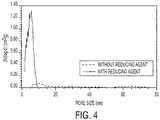
Figure 4 shows a graph of pore size distributions in aerogels produced using stable free radical polymerization process with and without a reducing agent. -
Figure 5 shows a graph of cumulative pore size volumes in aerogels produced using stable free radical polymerization process with and without a reducing agent. -
Figure 6 shows a graph of cumulative pore size volumes in aerogels produced using stable free radical polymerization process with a reducing agent, with a reducing agent and a time controlled stable free radical control agent, and a control containing neither a reducing agent nor a time controlled stable free radical control agent. -
Figure 7 shows a graph of pore size distributions in aerogels produced using stable free radical polymerization process with a reducing agent, with a reducing agent and a time controlled stable free radical control agent, and a control containing neither a reducing agent nor a time controlled stable free radical control agent. - The embodiments here include a process to make colorless, high transparency, high porosity polymer aerogels for applications such as transparent thermal insulation. As used here, a 'high transparency' or 'highly transparent' aerogel allows at least 20% of the intensity of incident light, to pass through (visible transmittance ≥ 20 %), when using an artificial light source mimicking daylight (e.g. CIE Illuminant C), where the path length of light through the sample is 3 mm or greater. A 'highly porous' or 'high porosity' aerogel has a porosity of above 10%, with a BET (Brunauer-Emmett Teller) surface area of 100 m2/g or higher. A 'colorless' aerogel allows light transmission across most wavelengths of an artificial light source mimicking daylight (e.g. CIE Illuminant C), such that the averaged transmittance is above 20 %, and is characterized by a high color rendering index in transmission, above 20 % for this light source.
- The embodiments here use a stable free radical control agent in conjunction with stable free nitroxide polymerization. The SFRP process alone gives transparent gels that have narrow pore size distributions but are mechanically weak and colored. The SFRP process provides a promising starting point because unlike other processes, such as the RAFT process mentioned earlier, the colored stable free radical becomes colorless when bound to another molecule.
- In the embodiments here, the stable free radical control agent removes coloration by reacting with the colored chemical species introduced in the SFRP process. The stable free radical control agent has the added benefits of increasing the porosity of the aerogels, and enabling the use of methacrylate and acrylate monomers to produce colorless aerogels. These monomers are difficult substrates for traditional SFRP processes, but they are important classes of polymers in high transparency applications.
- Stable free radical polymerization (SFRP) can produce transparent aerogels with moderate porosity. However, due to byproducts of the reaction, the resulting materials are often colored and unsuitable for applications where colorless materials are desired such as window insulation. Compared to conventional radical polymerization, SFRP leads to aerogels with narrower pore size distributions and higher transparency.
- Conventional radical polymerization has high levels of actively growing polymer chains. Consequently, chain-chain coupling events occur frequently and the gels have a wide distribution of pore sizes. Controlled radical polymerizations obtain narrow pore size distributions because the concentration of actively growing polymer chains is low. It minimizes the chain-chain coupling events that lead to uncontrolled pore sizes.
- A schematic of an example SFRP process is shown in
Figure 1 . One should note that this is intended merely as an explanation of one SFRP process and is not intended to limit the scope of the embodiments or the claims. The first part of the process involves initiation of the polymer chain, typically by application of heat to generate initiating radicals, shown at process A from azo, or peroxide compounds. The initiating radical reacts with monomers and crosslinkers, shown at processes B and C, to form a polymer chain. The growing polymer chain reacts reversibly with the mediating radical at process D, such as the TEMPO nitroxide (2,2,6,6-tetramethylpiperidin-1-yl)oxyl, or 2,2,6,6-tetramethylpiperidin-1-yl)oxidanyl, or (CH2)3(CMe2)2)NO) radical used here, and the SFRP process reaches equilibrium. When the stable radical is bound to the polymer chain, the polymer is dormant at process E, and in the state where the stable free radical is unbound, the polymer chain becomes active and undergoes chain growth, at process F. Thermal equilibrium is achieved between these two processes. The ratio of bound and unbound stable free radicals to the total number of propagating chains (active living chains F, and dormant living chains E) controls the SFRP equilibrium; if the number of stable free radicals is in excess of the number of propagating chains, process H, polymerization is too dormant, leading to inhibition, and if it is below, polymerization is too active, leading to loss of control. - In the above process, the unbound mediating radical, such as the TEMPO nitroxide, is colored. Over time, some chain-chain coupling or chain termination may occur during the reaction, leading to dead chains, show at G, and a buildup of excess stable free radical material, at H, intensifying the coloration. Degradation byproducts of the stable free radical material may also contribute color. To produce colorless materials, the process must balance the number of propagating chains and stable radicals over time, either by eliminating excess stable free radicals or by generating new propagating polymer chains so that the ratio of living, propagating chains to stable free radicals remains roughly constant for the duration of the reaction.
- The embodiments here achieve this balancing by the introduction of a stable free radical control agent into the reaction. In one embodiment the stable free radical control agent consists of a reducing agent, at process I. The reducing agent reacts with the excess stable free radical material and eliminates the color. Additional benefits of decreasing the excess stable free radical material include higher monomer conversion and more mechanically robust and porous aerogels, because excess stable free radical material inhibits polymerization. The use of a reducing agent enables the production of colorless, high transparency, high porosity materials.
- In another embodiment, the stable free radical control agent consists of a time-controlled decomposing initiator at process J. The time-controlled decomposing initiator slowly generates initiating radicals, which react with the remaining monomers and crosslinkers, at B and C, to initiate new propagating polymer chains. The time-controlled decomposing initiator decreases the number of stable free radicals in excess of the number of propagating chains, by generating more propagating chains over the course of the reaction. In the example of using TEMPO, the time-controlled decomposing initiator acts to decrease the amount of the excess nitroxide.
- The time-controlled and slow generation aspects of the time-controlled decomposing initiator mean that the rate of radical production is slower than for the initiating radical. In one embodiment, the initiating radical may have a half-life of few minutes, and the time-controlled decomposing initiator may have a half-life on the order of 10 hours, at the reaction temperature. The half-life may change with temperature and solvent.
-
Figure 2 shows an overall flow of the embodiments. Polymerization occurs at 30, in which the solvent and reagents are mixed, deoxygenated and heated to obtain a solvated gel. In one embodiment, the polymer network initiates from a radical initiator derived from conventional thermal or photoinitiators, or from the decomposition of an alkoxyamine species (=N-O-R, where "=" indicates a double bond or single bonds to two different atoms). Thermal initiators may include azo-initiators such as AIBN, or peroxide initiators such as benzoyl peroxide. Photoinitiators may include hydroxyacetophenones or phosphine oxides. These initiators are chosen to produce radicals in a short span in the beginning of the reaction. Thermal initiators should have a half-life of less than one hour at the polymerization temperature. - The decomposition of alkoxyamine species may involve other materials. These may include BlocBuilder MA, a commercially available alkoxyamine methacrylic acid-based radical initiating species joined with a nitroxide-based reaction controller, and TEMPO alkoxyamine (=N-O-R) where the O-R bond can cleave, and R forms a radical capable of initiating polymer chains.
- The stable free radical is either added as a nitroxide species (=N-O) such as TEMPO, SG1 (C13H29NO4P), TIPNO (2,2,5-trimethyl-4-phenyl-3-azahexane-3-nitroxide), chlorobenzyl TIPNO, and hydroxy-TEMPO, or may derive from the decomposition of an alkoxyamine based on these nitroxide radicals, discussed above. Generally, the process has one source of a stable free radical (mediating radical) and at least one source of an initiating radical. The stable free radical and initiating radical each comprise 0.001-10 wt% of the precursor solution.
- The stable free radical control agents are mixed with the polymer precursors at 30. In the embodiment where the control agent consists of a reducing agent, these may include reducing sugars such as glucose, reagents containing hemiacetal groups, hydroxyacetone, or enediol species derived from ketones and aldehydes, such as ketose and aldose sugars. Examples of hemiacetal and enediol reagents are shown in
Figure 3 . The reducing agent comprises 0.001-20 wt% of the precursor solution. In the embodiment where the control agent consists of a time-controlled decomposing initiator, it may consist of dicumyl peroxide (DCP) or di-tertbutylperoxide (DTBP), 2,2-bis(tert-butylperoxy)butane, 1,1-bis(tert-butylperoxy)cyclohexane, 2,5-bis(tert-butylperoxy)-2,5-dimethylhexane, 2,5-bis(tert-butylperoxy)2,5-dimethyl-3-hexyne, tert-butyl hydroperoxide, cumene hydroperoxide, 2,4-pentanedione peroxide, or other thermal initiators with a decomposition half-life of over 1 hour at the polymerization temperature, in the polymerization solvent. In another embodiment, the time-controlled decomposing initiator could consist of a photoinitiator, wherein the decomposition time is controlled by exposure to doses of UV light. The time-controlled decomposing initiator comprises 0.001 - 10 wt% of the precursor solution. - In a third embodiment, both a reducing agent and a time-controlled decomposing initiator can be used to balance the number of propagating radicals and stable radicals.
- In the embodiments here, the polymers consist of mono or difunctional monomers and multifunctional crosslinkers (three or more functional groups) with groups that can undergo radical polymerization such as vinyl, acrylate, or methacrylate groups. The polymers may consist of only monomers without crosslinkers, or only crosslinkers without monomers. Monomers and difunctional monomers may include styrene, divinylbenzene, 1,6-hexanediol diacrylate, and methylmethacrylate. Cross-linkers may include trimethacryladamantane, dipenterithritol pentacrylate, trimethylolpropane trimethacrylate, and polyoligosilsequioxane octamethacrylate. The precursors can include 0-60 wt% monomers, and 0-60 wt% crosslinkers, and in total, the polymer precursors comprise 0.1-60% of the precursor solution.
- The polymerization may occur in a high boiling solvent, which for the embodiments here means over 80 °C, and a 'good' solvent. A 'good' solvent means a solvent that has a high affinity for the polymer network. The polymer will dissolve almost entirely in the solvent. A 'poor' solvent is one in which at least part of the polymer or precursors, or intermediates, precipitate out of solution because it does not dissolve completely. Examples of good solvents for the precursors in the preferred embodiment in Example 1, below, include acetophenone, dimethylsulfoxide, dimethylformamide, toluene, xylene, and n-methylpyrrolidone. A single solvent or a mixture of solvents may be used. The total solvent may comprise 40-99.9 wt% of the precursor solution.
- Prior to heating or light exposure for the initiation step, the reaction mixture is deoxygenated. This may result from bubbling the solution with an inert gas like nitrogen or argon, using chemical species to scavenge oxygen, or by degassing the solution using vacuum or freeze-pump-thaw cycles.
- After polymerization, of which deoxygenation is part, the process results in a cross-linked gel. This gel then undergoes solvent removal. In one embodiment, the gel undergoes solvent removal by solvent exchange at 32, followed by drying at 34. The solvent exchange may take many forms, but in one embodiment it first involves a good solvent, as discussed above, and then a poor solvent such as heptane or acetone. Solvent exchange in the good solvent extracts unreacted oligomers. Solvent exchange may take the form of static or flow solvent exchange. In an alternative embodiment, the solvent is not removed, instead stopping at the achievement of a cross-linked gel. The below discussion assumes the production of an aerogel, but one should note that eliminating the removal of the solvent adapts the below process to production of a gel.
- After solvent exchange, drying the gel produces the aerogel. The rate and spatial uniformity of drying may be controlled to prevent cracking.
- In another embodiment, the solvent removal is performed by directly drying the gel after polymerization, forgoing solvent exchange.
- To produce a colorless, high transparency, high porosity gel, precursors consisting of a monomer, a crosslinker, a reducing agent, an initiator, and a stable free radical were dissolved in a high boiling point solvent. The solution was mixed and degassed by bubbling with argon for 10 minutes. The gels were polymerized at 125 °C for 18 hours in a mold.
- The gels were removed from the mold and solvent exchanged before subsequent drying steps. Gels were first solvent exchanged into a good solvent to extract any oligomers, and then exchanged into a solvent with low solvent-polymer interaction strength, before drying. Either static or flow solvent exchange can be used. In static solvent exchange, 2 grams of wet gel were placed in 10 mL of solvent for a day. Two exchanges were performed for each type of solvent.
- Solvent is introduced directly or gradually. For example, a gel solvated by Solvent A can be directly immersed in Solvent B, or first immersed in a 50/50 mixture of Solvent A/Solvent B for 1 day and then immersed in 100% Solvent B. In flow solvent exchange, a reservoir of solvent is flowed across the gel to reduce solvent exchange time.
- Drying the solvent exchanged gels produces the aerogels. Drying may involve either ambient or supercritical CO2 drying. In ambient drying, a gel immersed in a non-solvent was dried first at room temperature and pressure, and then in vacuum. In supercritical CO2 drying, gels in a non-solvent such as acetone or an alcohol are solvent exchanged with liquid CO2 and supercritically dried. Supercritical CO2 drying generally obtains higher porosity.
- The above embodiments produce a colorless, high transparency, high porosity aerogel. In contrast, a gel produced using the same formulation but without the reducing agent produced a yellowish gel with lower porosity. The following table shows the resulting properties of the two gels.
Control With Reducing Agent With Reducing Agent and Time-Controlled SFR Agent Precursor Conversion (%) 78 90 89 Visible Transmittance (%) N/A 68 40 CPV (cm3/g) 0.037 0.52 1.11 Porosity (%) 16 30.1 59 BET area (m2/g) 7.9 659 936 Ave. Pore Size (nm) 10.1 5.9 8.1 - The porosity was calculated using the measured apparent density of the gel and the density of the polymer with no pores. The cumulative pore volume (CPV), BET surface area, and pore size were measured using N2 adsorption porosimetry. The aerogel produced with reducing agent has relatively high BET surface area, small pore size, high porosity and CPV, high precursor conversion, and high visible light transmittance. The aerogel produced without the reducing agent performed worse in all areas. Visible light transmittance could not be measured because the gel cracked severely.
-
Figure 6 shows a graph of cumulative pore size distribution of gels, using N2 adsorption porosimetry.Figure 7 shows a graph of the pore size distributions of the gels. The aerogel produced with a reducing agent shows narrow pore size distribution and a pore size of less than 10 nm. The porosity of the aerogel produced without the reducing agent is too low to obtain a clear pore size distribution. The CPV of the aerogel with the reducing agent is far higher than the one without. - One should note that the use of the reducing agent alone will not reduce the coloration in the gels. They also should undergo deoxygenation. Deoxygenation decreases the coloration in a gel produced by either method.
- The embodiments here produce colorless, high transparency, high porosity gels and aerogels. The gels and aerogels resulting from the methods herein are also embodiments of the invention. These aerogels are suitable for applications as transparent thermal insulation for windows. Using a reducing agent in the process takes advantage of the benefits of narrow pore size distribution of the SFRP process without the downsides of discoloration of materials, improves the conversion of the precursors, enables the polymerization of methylacrylate and acrylate monomers and cross-linkers, and leads to more robust gels with higher porosities. Further, the reduction in coloration occurs without adding any expensive processing steps such as solvent extraction or additional reaction steps.
- In one embodiment, the solvated gel has visible transparency greater than 20 % for a
sample 3 mm thick or greater, or visible transparency higher than 6.66 % per mm of sample, and solvent content ranging from 99.9 to 10 % the volume of the gel. To measure the transparency, the gel is solvated in a solvent selected such that the refractive indices of the dense, bulk polymer network and solvent differ by more than 5%. The gel network is highly crosslinked, meaning that more than 5 wt % of the monomers in the precursor solution have two or more polymerizable groups. The gel network may have narrow pore size distribution such that the full width at half maximum of the pore size distribution is below 400 nm. - In one embodiment, the dried polymer aerogel has a BET surface area of over 100 m2/g, porosity of greater than 10 %, visible transparency of greater than 20 % for a
sample 3 mm thick or greater, or visible transparency higher than 6.66 % per mm of sample, a color rendering index of greater than 20%, and an average pore size of less than 100 nm. The dried aerogel may have small pore size, with fewer than 5% of the pore volume occupied by pores larger than 100 nm.
Claims (31)
- A method to produce a polymer gel, comprising:dissolving precursors in a solvent to form a precursor solution, the precursors including polymer precursors, a stable free radical, one or more initiating radicals, and one or more stable free radical control agents; andheating the precursor solution to a temperature of polymerization to produce a cross-linked gel.
- The method of claim 1, wherein the stable free radical control agent comprises one or more reducing agents.
- The method of claim 1, wherein the stable free radical control agent comprises one or more time-controlled decomposing initiators.
- The method of claim 1, wherein the stable free radical control agent comprises a mixture of one or more reducing agents and one or more time-controlled decomposing initiators.
- The method of claim 1, further comprising mixing and deoxygenating the mixture of precursors in solvent.
- The method of claim 1, wherein the polymer precursors comprise from at least one selected from a first group consisting of: difunctional monomers with two vinyl groups; crosslinkers with three or more vinyl groups; divinylbenzene, tricyclodecane dimethanol diacrylate; hexanediol diacrylate; butanediol diacrylate; hexanediol dimethacrylate; butanediol dimethacrylate; trimethacryl adamantine; dipentaerythritol pentacrylate; and one of either alone or combined with at least one selected from a second group consisting of: monomers with one vinyl group, styrene, methylmethacrylate;
- The method of claim 6, wherein the polymer precursors comprise 0.1-60% of the precursor solution.
- The method of claim 1, wherein the stable free radical comprises one of the group consisting of: a nitroxide species added directly, a nitroxide species derived from the decomposition of an alkoxyamine, 4-hydroxy-TEMPO, TEMPO, TIPNO, chlorobenzyl-TIPNO, SG1, and a commercially available alkoxyamine based on SG1 nitroxide joined to a methacrylic acid radical.
- The method of claim 1, wherein the stable free radical comprises 0.001 - 10 wt% of the precursor solution.
- The method of claim 1, wherein the initiating radical comprises an initiating radical derived from one of a conventional thermal initiator, a photoinitiator, or from decomposition of an alkoxyamine species.
- The method of claim 1, wherein the initiator has a decomposition half-life of less than 1 hour at the temperature of polymerization, and in the solvent of polymerization.
- The method of claim 1, wherein the initiating radical comprises 0.001-10 wt% of the precursor solution.
- A method to produce a polymer gel, comprising:dissolving precursors in a solvent to form a precursor solution, the precursors including polymer precursors, a stable free radical, one or more initiating radicals, and a reducing agent; andheating the precursor solution to a temperature of polymerization to produce a cross-linked gel.
- The method of claim 13, wherein the reducing agent comprises one selected from the group consisting of: reducing sugars, reagents containing hemiacetal groups, glucose, hydroxyacetone, and reagents capable of forming enediol species.
- The method of claim 13, wherein the reducing agent comprises 0.001-20 wt% of the precursor solution.
- The method of claim 13, wherein the precursor also includes a time-controlled decomposing initiator.
- A method to produce a polymer gel, comprising:dissolving precursors in a solvent to form a precursor solution, the precursors including polymer precursors, a stable free radical, one or more initiating radicals, and a time-controlled decomposing initiator; andheating the precursor solution to a temperature of polymerization to produce a cross-linked gel.
- The method of claim 17, wherein the time-controlled decomposing initiator is one of either a thermally-decomposing radical initiator or a mixture of thermally-decomposing initiators with half-life greater than 1 hour at the temperature of polymerization, and in the solvent of the polymerization.
- The method of claim 17, wherein the time-controlled decomposing initiator is one or more of the group consisting of: dicumyl peroxide, di-tert-butylperoxide, 2,2-bis(tert-butylperoxy)butane, 1,1-bis(tert-butylperoxy)cyclohexane, 2,5-bis(tert-butylperoxy)-2,5-dimethylhexane, 2,5-bis(tert-butylperoxy)2,5-dimethyl-3-hexyne, tert-butyl hydroperoxide, cumene hydroperoxide, or 2,4-pentanedione peroxide.
- The method of claim 17, wherein the time-controlled decomposing initiator or initiators comprise 0.001 to 10 wt% of the precursor solution.
- The method of claim 17, wherein the precursors also include a reducing agent.
- The method of claim 1, wherein the solvent comprises one or more selected from the group consisting of: acetophenone, xylenes, toluene, dimethylsulfoxide, dimethylformamide, n-methylpyrrolidone, and organic solvents with boiling points over 80 °C that dissolve the precursors.
- The method of claim 1, wherein the solvent comprises 40-99.9 wt% of the precursor solution.
- The method of claim 1, further comprising removing the solvent from the gel to produce an aerogel.
- The method of claim 24, wherein removing solvent from the gel comprises performing one or more solvent exchanges.
- The method of claim 25, wherein the solvent exchange process comprises:performing one or more solvent exchanges with a first solvent that is compatible with the polymer precursors, such that the polymer precursors dissolve entirely in the solvent; andperforming one or more solvent exchanges with a second solvent that is only partially compatible with the polymer network such that linear polymers made from same components as the polymer network do not fully dissolve in the solvent.
- The method of claim 26, wherein the first solvent comprises one of: tetrahydrofuran, toluene, xylenes, n-methylpyrrolidone, dimethylformamide, dimethylsulfoxide, or acetophenone, and the second solvent comprises one of: acetone, heptane, hexane, octane, water, or alcohols.
- The method of claim 25, wherein performing solvent exchange comprises performing one of either static solvent exchange or flow solvent exchange.
- The method of claim 24, wherein removing solvent from the gel comprises drying gels after polymerization or after solvent exchange, by one of either ambient drying or supercritical CO2 drying.
- The polymer gel resulting from the process in claim 1.
- A dried polymer aerogel has a Brunauer-Emmett Teller (BET) surface area over 100 m2/g, porosity of greater than 10%, visible transparency greater than 20%, color rendering index of over 20%, and average pore size of less than 100 nm.
Applications Claiming Priority (1)
| Application Number | Priority Date | Filing Date | Title |
|---|---|---|---|
| US16/046,692 US10836855B2 (en) | 2018-07-26 | 2018-07-26 | Method to produce colorless, high porosity, transparent polymer aerogels |
Publications (2)
| Publication Number | Publication Date |
|---|---|
| EP3599258A1 true EP3599258A1 (en) | 2020-01-29 |
| EP3599258B1 EP3599258B1 (en) | 2021-04-07 |
Family
ID=67438425
Family Applications (1)
| Application Number | Title | Priority Date | Filing Date |
|---|---|---|---|
| EP19187670.5A Active EP3599258B1 (en) | 2018-07-26 | 2019-07-22 | Method to produce colorless, high porosity, transparent polymer aerogels |
Country Status (3)
| Country | Link |
|---|---|
| US (2) | US10836855B2 (en) |
| EP (1) | EP3599258B1 (en) |
| JP (1) | JP2020015902A (en) |
Families Citing this family (7)
| Publication number | Priority date | Publication date | Assignee | Title |
|---|---|---|---|---|
| US10836855B2 (en) | 2018-07-26 | 2020-11-17 | Palo Alto Research Center Incorporated | Method to produce colorless, high porosity, transparent polymer aerogels |
| US11614409B2 (en) | 2018-12-20 | 2023-03-28 | Palo Alto Research Center Incorporated | Printed sensor with vibrant colorimetric particles |
| US11612852B2 (en) | 2020-05-28 | 2023-03-28 | Palo Alto Research Center Incorporated | Tunable, rapid uptake, aminopolymer aerogel sorbent for direct air capture of CO2 |
| US12270569B2 (en) | 2021-03-11 | 2025-04-08 | Palo Alto Research Center Incorporated | Reversible water-absorbing constructs comprising phase-change polymer filaments |
| US12491494B2 (en) | 2021-04-02 | 2025-12-09 | Genesee Valley Innovations, LLC | Moisture swing CO2 sorbents with enhanced capacity and kinetics |
| US11965793B2 (en) | 2021-05-18 | 2024-04-23 | Xerox Corporation | Stress engineering of transparent materials |
| CN120865650A (en) * | 2025-09-28 | 2025-10-31 | 天津嘉泰伟业化工有限公司 | Low-solvent-residue expandable polystyrene material and preparation method thereof |
Citations (3)
| Publication number | Priority date | Publication date | Assignee | Title |
|---|---|---|---|---|
| US6716948B1 (en) * | 1999-07-31 | 2004-04-06 | Symyx Technologies, Inc. | Controlled-architecture polymers and use thereof as separation media |
| US20180093456A1 (en) * | 2016-10-05 | 2018-04-05 | Palo Alto Research Center Incorporated | Polymer aerogel for window glazings |
| EP3466986A1 (en) * | 2017-10-09 | 2019-04-10 | Palo Alto Research Center Incorporated | Method to produce transparent polymer aerogels using chain transfer agents |
Family Cites Families (16)
| Publication number | Priority date | Publication date | Assignee | Title |
|---|---|---|---|---|
| FR2736342B1 (en) | 1995-07-07 | 1999-01-29 | Univ Claude Bernard Lyon | PROCESS FOR THE MANUFACTURE OF MONOLITHIC SILICA AEROGELS AND THUS OBTAINED SILICA AEROGELS |
| JP3296153B2 (en) | 1995-09-06 | 2002-06-24 | 住友化学工業株式会社 | Method for producing styrenic polymer, styrenic resin composition and molded article thereof |
| US5891971A (en) * | 1997-08-15 | 1999-04-06 | Xerox Corporation | Polymerization processes |
| KR100593427B1 (en) | 1998-03-12 | 2006-06-28 | 루사이트 인터내셔널 유케이 리미티드 | Polymer composition |
| JP2004182944A (en) * | 2002-12-06 | 2004-07-02 | Denki Kagaku Kogyo Kk | Resin composition and shrink film |
| US7732496B1 (en) | 2004-11-03 | 2010-06-08 | Ohio Aerospace Institute | Highly porous and mechanically strong ceramic oxide aerogels |
| WO2007043485A1 (en) * | 2005-10-07 | 2007-04-19 | Kyoto University | Process for producing organic porous material and organic porous column and organic porous material |
| US8110258B2 (en) | 2005-11-25 | 2012-02-07 | Advanced Glazing Technologies Limited (Agtl) | Glazing unit with transparent filler |
| JP5068765B2 (en) * | 2005-12-14 | 2012-11-07 | ノバルティス アーゲー | Method for producing silicone hydrogel |
| AU2009293609A1 (en) | 2008-06-30 | 2010-03-25 | Stc.Unm | Durable polymer-aerogel based superhydrophobic coatings: a composite material |
| CA2747385A1 (en) | 2008-12-18 | 2010-07-15 | 3M Innovative Properties Company | Telechelic hybrid aerogels |
| US8691883B2 (en) | 2009-02-11 | 2014-04-08 | Samsung Electronics Co., Ltd. | Aerogel-foam composites |
| WO2012154602A1 (en) | 2011-05-06 | 2012-11-15 | Showers Robert James | Aerogel window film system |
| WO2015051217A1 (en) * | 2013-10-03 | 2015-04-09 | Dentsply International Inc. | Dental composite compositions for reduced stress shrinkage |
| WO2019006184A1 (en) * | 2017-06-29 | 2019-01-03 | Blueshift Materials, Inc. | Hyperbranched poss-based polymer aerogels |
| US10836855B2 (en) | 2018-07-26 | 2020-11-17 | Palo Alto Research Center Incorporated | Method to produce colorless, high porosity, transparent polymer aerogels |
-
2018
- 2018-07-26 US US16/046,692 patent/US10836855B2/en active Active
-
2019
- 2019-06-28 JP JP2019121320A patent/JP2020015902A/en active Pending
- 2019-07-22 EP EP19187670.5A patent/EP3599258B1/en active Active
-
2020
- 2020-10-13 US US17/069,611 patent/US11760824B2/en active Active
Patent Citations (3)
| Publication number | Priority date | Publication date | Assignee | Title |
|---|---|---|---|---|
| US6716948B1 (en) * | 1999-07-31 | 2004-04-06 | Symyx Technologies, Inc. | Controlled-architecture polymers and use thereof as separation media |
| US20180093456A1 (en) * | 2016-10-05 | 2018-04-05 | Palo Alto Research Center Incorporated | Polymer aerogel for window glazings |
| EP3466986A1 (en) * | 2017-10-09 | 2019-04-10 | Palo Alto Research Center Incorporated | Method to produce transparent polymer aerogels using chain transfer agents |
Also Published As
| Publication number | Publication date |
|---|---|
| JP2020015902A (en) | 2020-01-30 |
| US11760824B2 (en) | 2023-09-19 |
| US20210040256A1 (en) | 2021-02-11 |
| US20200031977A1 (en) | 2020-01-30 |
| US10836855B2 (en) | 2020-11-17 |
| EP3599258B1 (en) | 2021-04-07 |
Similar Documents
| Publication | Publication Date | Title |
|---|---|---|
| EP3599258B1 (en) | Method to produce colorless, high porosity, transparent polymer aerogels | |
| EP3466986B1 (en) | Method to produce transparent polymer aerogels using chain transfer agents | |
| CN101356197B (en) | Atom transfer radical polymerization in microemulsion and real letex polymerization | |
| CN112876585B (en) | Free radical polymerization initiated by Ag/MXene and preparation method of organic hydrogel | |
| NO328079B1 (en) | Dispersion Stabilizer for Suspension Polymerization of Vinyl Compound and Process for Preparing the Same | |
| JP2023052330A (en) | Polyvinyl alcohol-based resin, dispersing agent, and dispersing agent for suspension polymerization | |
| US20090306302A1 (en) | Process of free-radical polymerization in aqueous disperasion for the preparation of polymers | |
| CN112251097A (en) | Multifunctional polyacrylate nano composite coating agent and preparation method thereof | |
| JP2009509004A5 (en) | ||
| KR100483851B1 (en) | Method for preparing exfoliated nitropolymer/silicate nanocomposites | |
| CN108948243A (en) | A kind of preparation method of the polymethyl methacrylate of high molecular weight narrow ditribution | |
| EP1832610B1 (en) | Polymerization of monomers with differing reactivities | |
| CA2560287A1 (en) | Process for preparing an aqueous dispersion of a quaternary ammonium salt containing vinyl copolymer | |
| CN102167754A (en) | Active free radical polymerization method taking bithiaxanthene diol and derivatives thereof as initiator | |
| EP2848636B1 (en) | Polymer, method for preparing same, and composition and film comprising same | |
| Chern et al. | Particle nucleation and growth mechanisms in miniemulsion polymerization of styrene | |
| KR100572013B1 (en) | Process for preparing monodisperse polymer particles by suspension polymerization | |
| AU6472199A (en) | Redox polymerization process | |
| CN109503783B (en) | A kind of terminal siloxane-modified polyacrylate block copolymer and preparation method thereof | |
| JP2012241043A (en) | Modified polyvinyl acetal resin, and composite resin composition | |
| US20210206939A1 (en) | Transparent, colorless, porous polymers derived from multiphasic polymer networks | |
| JPH03285903A (en) | Graft copolymer | |
| KR100602324B1 (en) | Method for Preparing Vinylchlorides Graft Copolymer Having Improved Thermostability and Hight-resistance and Vinylchlorides Graft Copolymer Produced Thereby | |
| Wang et al. | N‐Chlorosuccinimide (NCS): A Novel Initiator for Atom Transfer Radical Polymerization of Methyl Methacrylate | |
| Hou et al. | Synthesis of polyacrylonitrile via reverse atom transfer radical polymerization initiated by 1, 1, 2, 2‐tetraphenyl‐1, 2‐ethanediol/FeCl3/triphenylphosphine |
Legal Events
| Date | Code | Title | Description |
|---|---|---|---|
| PUAI | Public reference made under article 153(3) epc to a published international application that has entered the european phase |
Free format text: ORIGINAL CODE: 0009012 |
|
| STAA | Information on the status of an ep patent application or granted ep patent |
Free format text: STATUS: THE APPLICATION HAS BEEN PUBLISHED |
|
| AK | Designated contracting states |
Kind code of ref document: A1 Designated state(s): AL AT BE BG CH CY CZ DE DK EE ES FI FR GB GR HR HU IE IS IT LI LT LU LV MC MK MT NL NO PL PT RO RS SE SI SK SM TR |
|
| AX | Request for extension of the european patent |
Extension state: BA ME |
|
| STAA | Information on the status of an ep patent application or granted ep patent |
Free format text: STATUS: REQUEST FOR EXAMINATION WAS MADE |
|
| 17P | Request for examination filed |
Effective date: 20200729 |
|
| RBV | Designated contracting states (corrected) |
Designated state(s): AL AT BE BG CH CY CZ DE DK EE ES FI FR GB GR HR HU IE IS IT LI LT LU LV MC MK MT NL NO PL PT RO RS SE SI SK SM TR |
|
| GRAP | Despatch of communication of intention to grant a patent |
Free format text: ORIGINAL CODE: EPIDOSNIGR1 |
|
| STAA | Information on the status of an ep patent application or granted ep patent |
Free format text: STATUS: GRANT OF PATENT IS INTENDED |
|
| INTG | Intention to grant announced |
Effective date: 20201030 |
|
| GRAS | Grant fee paid |
Free format text: ORIGINAL CODE: EPIDOSNIGR3 |
|
| GRAA | (expected) grant |
Free format text: ORIGINAL CODE: 0009210 |
|
| STAA | Information on the status of an ep patent application or granted ep patent |
Free format text: STATUS: THE PATENT HAS BEEN GRANTED |
|
| AK | Designated contracting states |
Kind code of ref document: B1 Designated state(s): AL AT BE BG CH CY CZ DE DK EE ES FI FR GB GR HR HU IE IS IT LI LT LU LV MC MK MT NL NO PL PT RO RS SE SI SK SM TR |
|
| REG | Reference to a national code |
Ref country code: GB Ref legal event code: FG4D |
|
| REG | Reference to a national code |
Ref country code: AT Ref legal event code: REF Ref document number: 1379642 Country of ref document: AT Kind code of ref document: T Effective date: 20210415 Ref country code: CH Ref legal event code: EP |
|
| REG | Reference to a national code |
Ref country code: DE Ref legal event code: R096 Ref document number: 602019003732 Country of ref document: DE |
|
| REG | Reference to a national code |
Ref country code: IE Ref legal event code: FG4D |
|
| REG | Reference to a national code |
Ref country code: LT Ref legal event code: MG9D |
|
| REG | Reference to a national code |
Ref country code: NL Ref legal event code: MP Effective date: 20210407 Ref country code: AT Ref legal event code: MK05 Ref document number: 1379642 Country of ref document: AT Kind code of ref document: T Effective date: 20210407 |
|
| PG25 | Lapsed in a contracting state [announced via postgrant information from national office to epo] |
Ref country code: NL Free format text: LAPSE BECAUSE OF FAILURE TO SUBMIT A TRANSLATION OF THE DESCRIPTION OR TO PAY THE FEE WITHIN THE PRESCRIBED TIME-LIMIT Effective date: 20210407 Ref country code: AT Free format text: LAPSE BECAUSE OF FAILURE TO SUBMIT A TRANSLATION OF THE DESCRIPTION OR TO PAY THE FEE WITHIN THE PRESCRIBED TIME-LIMIT Effective date: 20210407 Ref country code: BG Free format text: LAPSE BECAUSE OF FAILURE TO SUBMIT A TRANSLATION OF THE DESCRIPTION OR TO PAY THE FEE WITHIN THE PRESCRIBED TIME-LIMIT Effective date: 20210707 Ref country code: FI Free format text: LAPSE BECAUSE OF FAILURE TO SUBMIT A TRANSLATION OF THE DESCRIPTION OR TO PAY THE FEE WITHIN THE PRESCRIBED TIME-LIMIT Effective date: 20210407 Ref country code: HR Free format text: LAPSE BECAUSE OF FAILURE TO SUBMIT A TRANSLATION OF THE DESCRIPTION OR TO PAY THE FEE WITHIN THE PRESCRIBED TIME-LIMIT Effective date: 20210407 Ref country code: LT Free format text: LAPSE BECAUSE OF FAILURE TO SUBMIT A TRANSLATION OF THE DESCRIPTION OR TO PAY THE FEE WITHIN THE PRESCRIBED TIME-LIMIT Effective date: 20210407 |
|
| PG25 | Lapsed in a contracting state [announced via postgrant information from national office to epo] |
Ref country code: GR Free format text: LAPSE BECAUSE OF FAILURE TO SUBMIT A TRANSLATION OF THE DESCRIPTION OR TO PAY THE FEE WITHIN THE PRESCRIBED TIME-LIMIT Effective date: 20210708 Ref country code: IS Free format text: LAPSE BECAUSE OF FAILURE TO SUBMIT A TRANSLATION OF THE DESCRIPTION OR TO PAY THE FEE WITHIN THE PRESCRIBED TIME-LIMIT Effective date: 20210807 Ref country code: LV Free format text: LAPSE BECAUSE OF FAILURE TO SUBMIT A TRANSLATION OF THE DESCRIPTION OR TO PAY THE FEE WITHIN THE PRESCRIBED TIME-LIMIT Effective date: 20210407 Ref country code: PL Free format text: LAPSE BECAUSE OF FAILURE TO SUBMIT A TRANSLATION OF THE DESCRIPTION OR TO PAY THE FEE WITHIN THE PRESCRIBED TIME-LIMIT Effective date: 20210407 Ref country code: NO Free format text: LAPSE BECAUSE OF FAILURE TO SUBMIT A TRANSLATION OF THE DESCRIPTION OR TO PAY THE FEE WITHIN THE PRESCRIBED TIME-LIMIT Effective date: 20210707 Ref country code: RS Free format text: LAPSE BECAUSE OF FAILURE TO SUBMIT A TRANSLATION OF THE DESCRIPTION OR TO PAY THE FEE WITHIN THE PRESCRIBED TIME-LIMIT Effective date: 20210407 Ref country code: PT Free format text: LAPSE BECAUSE OF FAILURE TO SUBMIT A TRANSLATION OF THE DESCRIPTION OR TO PAY THE FEE WITHIN THE PRESCRIBED TIME-LIMIT Effective date: 20210809 Ref country code: SE Free format text: LAPSE BECAUSE OF FAILURE TO SUBMIT A TRANSLATION OF THE DESCRIPTION OR TO PAY THE FEE WITHIN THE PRESCRIBED TIME-LIMIT Effective date: 20210407 |
|
| REG | Reference to a national code |
Ref country code: DE Ref legal event code: R097 Ref document number: 602019003732 Country of ref document: DE |
|
| PG25 | Lapsed in a contracting state [announced via postgrant information from national office to epo] |
Ref country code: EE Free format text: LAPSE BECAUSE OF FAILURE TO SUBMIT A TRANSLATION OF THE DESCRIPTION OR TO PAY THE FEE WITHIN THE PRESCRIBED TIME-LIMIT Effective date: 20210407 Ref country code: ES Free format text: LAPSE BECAUSE OF FAILURE TO SUBMIT A TRANSLATION OF THE DESCRIPTION OR TO PAY THE FEE WITHIN THE PRESCRIBED TIME-LIMIT Effective date: 20210407 Ref country code: SK Free format text: LAPSE BECAUSE OF FAILURE TO SUBMIT A TRANSLATION OF THE DESCRIPTION OR TO PAY THE FEE WITHIN THE PRESCRIBED TIME-LIMIT Effective date: 20210407 Ref country code: SM Free format text: LAPSE BECAUSE OF FAILURE TO SUBMIT A TRANSLATION OF THE DESCRIPTION OR TO PAY THE FEE WITHIN THE PRESCRIBED TIME-LIMIT Effective date: 20210407 Ref country code: RO Free format text: LAPSE BECAUSE OF FAILURE TO SUBMIT A TRANSLATION OF THE DESCRIPTION OR TO PAY THE FEE WITHIN THE PRESCRIBED TIME-LIMIT Effective date: 20210407 Ref country code: DK Free format text: LAPSE BECAUSE OF FAILURE TO SUBMIT A TRANSLATION OF THE DESCRIPTION OR TO PAY THE FEE WITHIN THE PRESCRIBED TIME-LIMIT Effective date: 20210407 Ref country code: CZ Free format text: LAPSE BECAUSE OF FAILURE TO SUBMIT A TRANSLATION OF THE DESCRIPTION OR TO PAY THE FEE WITHIN THE PRESCRIBED TIME-LIMIT Effective date: 20210407 |
|
| PLBE | No opposition filed within time limit |
Free format text: ORIGINAL CODE: 0009261 |
|
| STAA | Information on the status of an ep patent application or granted ep patent |
Free format text: STATUS: NO OPPOSITION FILED WITHIN TIME LIMIT |
|
| 26N | No opposition filed |
Effective date: 20220110 |
|
| PG25 | Lapsed in a contracting state [announced via postgrant information from national office to epo] |
Ref country code: MC Free format text: LAPSE BECAUSE OF FAILURE TO SUBMIT A TRANSLATION OF THE DESCRIPTION OR TO PAY THE FEE WITHIN THE PRESCRIBED TIME-LIMIT Effective date: 20210407 |
|
| REG | Reference to a national code |
Ref country code: BE Ref legal event code: MM Effective date: 20210731 |
|
| PG25 | Lapsed in a contracting state [announced via postgrant information from national office to epo] |
Ref country code: IS Free format text: LAPSE BECAUSE OF FAILURE TO SUBMIT A TRANSLATION OF THE DESCRIPTION OR TO PAY THE FEE WITHIN THE PRESCRIBED TIME-LIMIT Effective date: 20210807 Ref country code: LU Free format text: LAPSE BECAUSE OF NON-PAYMENT OF DUE FEES Effective date: 20210722 Ref country code: AL Free format text: LAPSE BECAUSE OF FAILURE TO SUBMIT A TRANSLATION OF THE DESCRIPTION OR TO PAY THE FEE WITHIN THE PRESCRIBED TIME-LIMIT Effective date: 20210407 |
|
| PG25 | Lapsed in a contracting state [announced via postgrant information from national office to epo] |
Ref country code: IT Free format text: LAPSE BECAUSE OF FAILURE TO SUBMIT A TRANSLATION OF THE DESCRIPTION OR TO PAY THE FEE WITHIN THE PRESCRIBED TIME-LIMIT Effective date: 20210407 Ref country code: IE Free format text: LAPSE BECAUSE OF NON-PAYMENT OF DUE FEES Effective date: 20210722 Ref country code: BE Free format text: LAPSE BECAUSE OF NON-PAYMENT OF DUE FEES Effective date: 20210731 |
|
| REG | Reference to a national code |
Ref country code: CH Ref legal event code: PL |
|
| PG25 | Lapsed in a contracting state [announced via postgrant information from national office to epo] |
Ref country code: LI Free format text: LAPSE BECAUSE OF NON-PAYMENT OF DUE FEES Effective date: 20220731 Ref country code: CH Free format text: LAPSE BECAUSE OF NON-PAYMENT OF DUE FEES Effective date: 20220731 |
|
| PG25 | Lapsed in a contracting state [announced via postgrant information from national office to epo] |
Ref country code: CY Free format text: LAPSE BECAUSE OF FAILURE TO SUBMIT A TRANSLATION OF THE DESCRIPTION OR TO PAY THE FEE WITHIN THE PRESCRIBED TIME-LIMIT Effective date: 20210407 |
|
| PG25 | Lapsed in a contracting state [announced via postgrant information from national office to epo] |
Ref country code: HU Free format text: LAPSE BECAUSE OF FAILURE TO SUBMIT A TRANSLATION OF THE DESCRIPTION OR TO PAY THE FEE WITHIN THE PRESCRIBED TIME-LIMIT; INVALID AB INITIO Effective date: 20190722 |
|
| PG25 | Lapsed in a contracting state [announced via postgrant information from national office to epo] |
Ref country code: MK Free format text: LAPSE BECAUSE OF FAILURE TO SUBMIT A TRANSLATION OF THE DESCRIPTION OR TO PAY THE FEE WITHIN THE PRESCRIBED TIME-LIMIT Effective date: 20210407 |
|
| PG25 | Lapsed in a contracting state [announced via postgrant information from national office to epo] |
Ref country code: MT Free format text: LAPSE BECAUSE OF FAILURE TO SUBMIT A TRANSLATION OF THE DESCRIPTION OR TO PAY THE FEE WITHIN THE PRESCRIBED TIME-LIMIT Effective date: 20210407 |
|
| PGFP | Annual fee paid to national office [announced via postgrant information from national office to epo] |
Ref country code: GB Payment date: 20250619 Year of fee payment: 7 |
|
| PGFP | Annual fee paid to national office [announced via postgrant information from national office to epo] |
Ref country code: FR Payment date: 20250620 Year of fee payment: 7 |
|
| PGFP | Annual fee paid to national office [announced via postgrant information from national office to epo] |
Ref country code: DE Payment date: 20250620 Year of fee payment: 7 |
|
| PG25 | Lapsed in a contracting state [announced via postgrant information from national office to epo] |
Ref country code: TR Free format text: LAPSE BECAUSE OF FAILURE TO SUBMIT A TRANSLATION OF THE DESCRIPTION OR TO PAY THE FEE WITHIN THE PRESCRIBED TIME-LIMIT Effective date: 20210407 |