EP3598814A1 - Receiving paging messages through a corresponding bandwidth part (bwp) - Google Patents
Receiving paging messages through a corresponding bandwidth part (bwp) Download PDFInfo
- Publication number
- EP3598814A1 EP3598814A1 EP19179790.1A EP19179790A EP3598814A1 EP 3598814 A1 EP3598814 A1 EP 3598814A1 EP 19179790 A EP19179790 A EP 19179790A EP 3598814 A1 EP3598814 A1 EP 3598814A1
- Authority
- EP
- European Patent Office
- Prior art keywords
- bwp
- information
- paging
- delivery
- records
- Prior art date
- Legal status (The legal status is an assumption and is not a legal conclusion. Google has not performed a legal analysis and makes no representation as to the accuracy of the status listed.)
- Granted
Links
Images



Classifications
-
- H—ELECTRICITY
- H04—ELECTRIC COMMUNICATION TECHNIQUE
- H04W—WIRELESS COMMUNICATION NETWORKS
- H04W68/00—User notification, e.g. alerting and paging, for incoming communication, change of service or the like
- H04W68/005—Transmission of information for alerting of incoming communication
-
- H—ELECTRICITY
- H04—ELECTRIC COMMUNICATION TECHNIQUE
- H04W—WIRELESS COMMUNICATION NETWORKS
- H04W36/00—Hand-off or reselection arrangements
- H04W36/16—Performing reselection for specific purposes
- H04W36/165—Performing reselection for specific purposes for reducing network power consumption
-
- H—ELECTRICITY
- H04—ELECTRIC COMMUNICATION TECHNIQUE
- H04W—WIRELESS COMMUNICATION NETWORKS
- H04W68/00—User notification, e.g. alerting and paging, for incoming communication, change of service or the like
- H04W68/02—Arrangements for increasing efficiency of notification or paging channel
-
- H—ELECTRICITY
- H04—ELECTRIC COMMUNICATION TECHNIQUE
- H04W—WIRELESS COMMUNICATION NETWORKS
- H04W76/00—Connection management
- H04W76/10—Connection setup
- H04W76/11—Allocation or use of connection identifiers
-
- H—ELECTRICITY
- H04—ELECTRIC COMMUNICATION TECHNIQUE
- H04W—WIRELESS COMMUNICATION NETWORKS
- H04W76/00—Connection management
- H04W76/20—Manipulation of established connections
- H04W76/27—Transitions between radio resource control [RRC] states
-
- H—ELECTRICITY
- H04—ELECTRIC COMMUNICATION TECHNIQUE
- H04W—WIRELESS COMMUNICATION NETWORKS
- H04W76/00—Connection management
- H04W76/20—Manipulation of established connections
- H04W76/28—Discontinuous transmission [DTX]; Discontinuous reception [DRX]
-
- H—ELECTRICITY
- H04—ELECTRIC COMMUNICATION TECHNIQUE
- H04W—WIRELESS COMMUNICATION NETWORKS
- H04W76/00—Connection management
- H04W76/50—Connection management for emergency connections
-
- Y—GENERAL TAGGING OF NEW TECHNOLOGICAL DEVELOPMENTS; GENERAL TAGGING OF CROSS-SECTIONAL TECHNOLOGIES SPANNING OVER SEVERAL SECTIONS OF THE IPC; TECHNICAL SUBJECTS COVERED BY FORMER USPC CROSS-REFERENCE ART COLLECTIONS [XRACs] AND DIGESTS
- Y02—TECHNOLOGIES OR APPLICATIONS FOR MITIGATION OR ADAPTATION AGAINST CLIMATE CHANGE
- Y02D—CLIMATE CHANGE MITIGATION TECHNOLOGIES IN INFORMATION AND COMMUNICATION TECHNOLOGIES [ICT], I.E. INFORMATION AND COMMUNICATION TECHNOLOGIES AIMING AT THE REDUCTION OF THEIR OWN ENERGY USE
- Y02D30/00—Reducing energy consumption in communication networks
- Y02D30/70—Reducing energy consumption in communication networks in wireless communication networks
Definitions
- the present disclosure is directed to a method of receiving a paging message for a user equipment (UE) and a UE using the same method.
- UE user equipment
- SSB Synchronization Signal Block
- RMSI remaining minimum system information
- CD-SSB SSB which is associated with a RMSI
- the CD-SSB would be received by a UE to inform the UE the physical resource from which the RMSI could be received as different UEs which receive different CD-SSBs could receive the RMSI in the different physical resource.
- a UE may know the physical resource from which paging messages (PMs) could be received.
- PMs paging messages
- Each CD-SSB may carry a bandwidth part (BWP) configuration.
- BWP bandwidth part
- the UE could be configured with a BWP which is configured by the CD-SSB selected by the UE in an idle mode or an inactive mode as its initial BWP after the UE sets up a connection.
- FIG. 1 illustrates an example of the above described paging message implementation.
- a base station such as a gNB may transmit a plurality of SSBs located within a wideband aggregated carrier which is divided into a plurality of BWPs as each BWP may contain a different SSB, and some of the SSBs are associated with the RMSI.
- UE 1 could be camped on SSB1 and be configured with a first BWP
- UE 2 could be camped on SSB3 and be configured with a second BWP.
- such deployment with the multiple CD-SSBs could help the gNB to distribute the UEs in an idle mode or in an inactive mode and may reduce power consumptions of UEs by balancing the loadings when such UEs enter the connected mode from the idle mode or the inactive mode.
- the multiple CD-SSBs deployment could help the gNB to increase UE capacity and would likely to reduce the overall power consumptions of the UEs in general.
- a gNB does not actually know the distribution of the camping UEs within multiple CD-SSBs. Therefore, during a process of paging, in order for the gNB to not miss any UEs, the gNB will need to deliver the same paging messages(PMs) at each initial BWP.
- the PM may need to include all paging records (PRs) from a 5G core network (5GC).
- PRs paging records
- 5GC 5G core network
- FIG. 2 illustrates an example of a current mechanism to transmit paging records to UEs distributed across different initial BWPs.
- a 5G core network needs to transmit 20 PRs to a gNB as each PR is associated with a DRX cycle and is tied to a different UE identity (ID)
- the gNB would then need to transmit PMs having the same 20 PRs to each of the UEs camped in all of the initial BWPs in order to not miss any UE.
- Such implementation would result in inefficient use of bandwidth, power consumption, and paging messages. Therefore, a more efficient mechanism is required in order to increase network efficiency.
- the disclosure provides a method of receiving a paging message for a UE compatible with a 5G communication system and a UE using the same method.
- the disclosure is directed to a method of receiving a paging message for a UE compatible with a 5G communication system, and the method would include not limited to: receiving a paging record (PR) delivery rule; determining a bandwidth part (BWP) according to the PR delivery rule; or re-selecting a cell which corresponds to the BWP which has been determined.
- PR paging record
- BWP bandwidth part
- the disclosure is directed to a 5G UE, and the UE would include not limited to: a processor coupled to the wireless receiver and configured to: receive, via the wireless receiver, a PR delivery rule; enter into a power saving mode; determine a BWP according to the PR delivery rule; re-select a cell which corresponds to the BWP which has been determined; and receive, via the wireless receiver, a paging message transmitted through the BWP by the cell.
- a processor coupled to the wireless receiver and configured to: receive, via the wireless receiver, a PR delivery rule; enter into a power saving mode; determine a BWP according to the PR delivery rule; re-select a cell which corresponds to the BWP which has been determined; and receive, via the wireless receiver, a paging message transmitted through the BWP by the cell.
- FIG. 3 is a flow chart which illustrates a method of receiving a paging message for a UE which is compatible with a 5G communication system according to one of the exemplary embodiments of the disclosure.
- the UE in step S301, the UE is assumed to have received from a gNB one PR delivery rule or a set of PR delivery rules as each PR delivery rule could be directed to a different BWP group.
- the UE may enter into a power saving mode. The power saving mode is used for a UE reducing power consumption.
- the power saving mode could be idle mode or inactive mode.
- a PR delivery rule could be received by the UE in different ways. For instance, a UE may receive system information transmitted from a gNB or other nearby base station. Such system information may contain a PR delivery rule. Further, the PR delivery rule could be transmitted in a radio resource control (RRC) signaling message such as an RRC release message.
- RRC radio resource control
- the UE would determine a bandwidth part according to the PR delivery rule. In particular, the UE would determine, based on its own available information such as the UE ID, the DRX cycle, or other information of the PR delivery rule, which BWP to transmit one's own PR. If the UE is not located under the cell which corresponds to the BWP to transmit one's own PR, then the UE has to re-select the proper cell. In step S304, the UE would consider a cell as the highest priority to camp on which corresponds to the BWP that has been determined, and the UE would listen to paging messages from the BWP. In step S305, the UE may receive a paging message which has been transmitted through the determined BWP by the cell.
- the previously described paging message may include a first plurality of paging records as each of the first plurality of paging records corresponds to a discontinuous reception (DRX) cycle and an identification (ID) of a UE.
- the first plurality of paging records of the paging message may have a different quantity from a second plurality of paging records of another paging message which is transmitted through another BWP.
- the previously described PR delivery rule may include a PR delivery information and a BWP information such that the UE may determine a frequency location of the BWP based on the PR delivery information and the BWP information. Specifically, the UE may check whether one of various PR delivery information is satisfied.
- the PR delivery information may include UE IDs, DRX cycles, paging record categories, and etc. Each of the PR delivery information is associated to at least a specific BWP. If one of the PR delivery information is satisfied, the UE will select to the corresponding BWP to receive corresponding paging messages.
- the UE may also determine the frequency location of the BWP based on the BWP information based on a frequency information of the BWP associated with a CD-SSB, a frequency information of the paging message, or an assisting information of the frequency location of the BWP.
- the paging categories could be, for instance, various levels of urgencies of the UE.
- the assisting information could be, for instance, a frequency offset of the BWP.
- the PR delivery rule may further include another PR delivery rule of a neighboring base station.
- FIG. 4 illustrates an exemplary UE according to one of the exemplary embodiments of the disclosure.
- the hardware of the UE would include not limited to a hardware processor 401, a hardware transceiver 402 which may include integrated or separate transmitter and receiver, and non-transitory storage medium 403.
- the hardware processor 401 is electrically connected to the hardware transceiver 402 and the non-transitory storage medium 403 and configured at least for implementing the method of receiving a paging message for a UE which is compatible with a 5G communication system as well as its exemplary embodiments and alternative variations.
- the hardware transceiver 402 may include one or more transmitters and receivers configured to transmit and receive signals respectively in the radio frequency or in the mmWave frequency.
- the hardware transceiver 402 may also perform operations such as low noise amplifying, impedance matching, frequency mixing, up or down frequency conversion, filtering, amplifying, and so forth.
- the hardware transceiver 1102 may each include one or more analog-to-digital (A/D) and digital-to-analog (D/A) converters which are configured to convert from an analog signal format to a digital signal format during uplink signal processing and from a digital signal format to an analog signal format during downlink signal processing.
- the hardware transceiver 402 may further include an antenna array which may include one or multiple antennas to transmit and receive omni-directional antenna beams or directional antenna beams.
- the hardware processor 401 is configured to process digital signals and to perform procedures of the proposed hierarchical registration method in accordance with the proposed exemplary embodiments of the disclosure. Also, the hardware processor 401 may access to the non-transitory storage medium 403 which stores programming codes, codebook configurations, buffered data, and record configurations assigned by the hardware processor 401.
- the hardware processor 401 could be implemented by using programmable units such as a micro-processor, a micro-controller, a DSP chips, FPGA, etc.
- the functions of the hardware processor 401 may also be implemented with separate electronic devices or ICs. It should be noted that the functions of hardware processor 401 may be implemented with either hardware or software.
- a base station would transmit the same PRs within PMs to all initial BWPs.
- a base station would transmit the same PRs within PMs to all initial BWPs.
- PRs transmitted to different BWPs may imply that the PMs are not identical but could be different as the PMs are delivered to each BWP.
- FIG. 5 illustrates a mechanism of transmitting different PRs within PMs at different initial BWP according to one of the exemplary embodiments of the disclosure.
- the 5GC transmit 20 PRs to find 20 different UEs as each PR correspond to a different unique ID.
- the 20 PRs may be configured with different DRX cycles. For example, 10 PRs out of the 20 PRs might be associated with DRX cycle value x, 6 PRs out of the 20 PRs might be associated with DRX cycle value y, and 4 PRs out of the 20 PRs might be associated with DRX cycle value z.
- the gNB After the gNB receives from the 5GC the 20 PRs, the gNB would categorize the PRs according to their DRX cycles and distribute the PRs based on current BWP situation. For example, the PRs that is associated with DRX cycle value x may be to be transmitted at BWP1, the PRs that is associated with DRX cycle value y may be transmitted at BWP2, and the PRs that is associated with DRX cycle value z may be transmitted at BWP3.
- a gNB would be able to transmit a PR to a UE at a specific BWP without resorting to transmit all PRs to initial BWPs in order to page a UE.
- FIG. 6 is a signaling diagram serves to illustrate signaling exchanges among 5GC, gNB, and UE according to one of the exemplary embodiments of the disclosure.
- a 5GC would transmit to a gNB a PR information which may include PRs for a number of UEs.
- the 5GC may provide additional PR information for each of the PRs, and thus each PR information may include additional information to be used during implementation of the paging mechanism such as category or class associated with each PR, the device capability associated with each PR, the service type associated with each PR, or the calling type of each PR.
- the category or class associated with each PR may include information such as urgency of the PR, subscription level, or others.
- step S602 in response to receiving the PR information, the gNB would transmit PR delivery rules to one or more UEs which are within the coverage of the gNB.
- step S603 in response to receiving a PR delivery rule. Based on the PR delivery rule, the UE would camp on a proper BWP from which the UE may receive its paging message.
- the content of the PR delivery rule is to be explained in further detail.
- a PR delivery rule may include at least a PR delivery information and a BWP information.
- the PR delivery information may at least include the information of how the PRs be classified.
- the PRs could be classified based on the DRX cycle of each PR, the UE ID of each PR, or the additional PR information which has been described previously as the category of each PR, the capability of each PR, the service type of each PR, or the calling type of each PR.
- the additional PR information could be provided by a 5GC along with information of PRs.
- FIG. 7 illustrates an example of contents of PR delivery information according to one of the exemplary embodiments of the disclosure.
- a group of PRs could be classified under one of three ways which include the ID 701 of each UE, the DRX cycle 702 of each UE, or the category 703 of each PR.
- Different groups of PRs may adopt different ways of classifying the PRs. For instance, PRs that are classified by an ID 701 of the UE could be that if IDs of the UEs are greater than 256, then those corresponding PRs would be delivered on the first BWP and / or the second BWP (e.g. BWP information 1 and BWP information 2).
- PRs that are classified by a DRX cycle 702 of the UE could be that if the DRX cycle of the UEs are x, then those corresponding PRs would be delivered on the first BWP. If the DRX cycle 702 of the UE is not x, then those corresponding PRs would be delivered on the second BWP and / or third BWP and / or the fourth BWP.
- PRs that are classified by a category 703 of the UE could be that if category of the UEs is category 1, then those corresponding PRs would be delivered on the first BWP. If the category of the UEs is category 2, then those corresponding PRs would be delivered on the second BWP and / or the third BWP.
- the UE may obtain multiple paging messages from multiple BWPs or the UE may select one paging message from one BWP. Otherwise, some PRs may have higher priority over other PRs, the UE may select a paging message which contain a PR having a higher priority.
- the PR delivery rule would also include BWP information.
- the BWP information is used by a UE find to the BWP from which a paging message is to be received.
- the BWP information may be frequency information of the BWP which is associated with a CD-SSB, assisting information of the frequency location of the BWP which associated the CD-SSB or the frequency information of paging message.
- the above described assisting information could be a frequency offset of a current BWP.
- a gNB would be able to configure multiple PR delivery rules for different BWP groups, as each PR delivery rule is applicable for one BWP group.
- the gNB may decide which BWPs could be grouped based on a signal feature of the BWPs and then apply the same PR delivery rule for each group. For example, the gNB may only consider the BWPs with similar signal feature as a group and apply the same PR delivery rule.
- gNB may provide a default PR delivery BWP in PR the delivery rule.
- the default PR delivery BWP is a BWP that provides all PRs. An example of such implementation is provided in FIG. 8 .
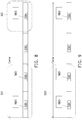
- FIG. 8 illustrates an example of a gNB configuring multiple PRs delivery rules for different BWP groups according to one of the exemplary embodiments of the disclosure. For example, If SSB1 and SSB2 have similar signal feature, they could be grouped as a first BWP group 801 which would apply the same the PR delivery rule. If the signal feature of SSB4 is different from the signal feature of SSB1 and SSB2, then SSB4 could be the only member of a second BWP group 802 which would apply a different PR delivery rule from the first BWP group 801.
- the PR delivery rule could be, for example, PRs associated with IDs being greater than 256, then the PRs are to be transmitted on the first BWP (e.g. BWP information 1).
- the PRs associated with IDs that are less than or equal to 256 are to be transmitted on the second BWP (e.g. BWP information 2).
- FIG. 9 illustrates an example of a gNB configuring PRs delivery rules based on the BWP loading or feature of PRs according to one of the exemplary embodiments of the disclosure.
- the gNB may decide which PRs delivery rule to be implemented based on the BWP loadings or the feature of PRs. For example, once a BWP experiences heavy loading, the PR delivery rule could be selected so that the number of PRs to be delivered at the BWP would be small or the interval of PRs to be delivered at the BWP would be long. For another example, if a BWP has experienced heavy loading, the BWP could be configured to deliver the PRs with a long DRX cycle or with a small range of IDs of UEs. Alternatively, some low priority PRs could be delivered at fewer BWPs once heavy loading in some BWP has been detected.
- the PR delivery rule has been set up such that the PRs associated with IDs that are greater than the number 256 would be transmitted in the first BWP (e.g. BWP information 1), and the PRs associated with IDs that are less than or equal to the number 256 would be transmitted in the second BWP (e.g. BWP information 2). It is supposed that the BWP which is associated with SSB2 has experience heavy loading relative to the traffic in SSB1, then the BWP associated with SSB2 may deliver less PRs.
- the BWP which is associated with SSB2 has experience heavy loading relative to the traffic in SSB1, then the BWP associated with SSB2 may deliver less PRs.
- the range of the IDs of the UEs might be adjusted so that the PRs to be transmitted in the second BWP would be associated with IDs that are a lot less than 256 in order to reduce the quantity of PRs to be transmitted over the second BWP. It would mean that the PRs to be transmitted in the first BWP would increase so that the PRs to be transmitted in the first BWP would be associated with IDs that are far less than 256 which is the same as the UE IDs transmitted by the adjusted second BWP in order to increase the number of UEs transmitted in the first BWP so that there will be no missing UEs.
- the second BWP could be used to transmit PRs with longer DRX cycles, and the first BWP could be used to transmit PRs with shorter DRX cycles.
- the PR delivery information would be required by the UE in order to for the UE to properly receive paging messages.
- the PRs are classified by the IDs of the UEs such that the PRs associated with IDs over 256 would be transmitted in the first BWP (e.g. BWP information 1) and the second BWP (e.g. BWP information 2), then the PRs associated with IDs that are less than or equal to 256 would be transmitted in the third BWP (e.g. BWP information 3) and the fourth BWP (e.g. BWP information 4).
- the first BWP e.g. BWP information 1
- the second BWP e.g. BWP information 2
- the PRs associated with IDs that are less than or equal to 256 would be transmitted in the third BWP (e.g. BWP information 3) and the fourth BWP (e.g. BWP information 4).
- Such PR delivery information would be used by a UE to find the proper BWP to receive a paging message otherwise the UE would not know which BWP should be camped on to receive paging messages. In this way, the UE would consider the BWPs that may deliver the PR for the UE as the frequency band for listening to the paging messages, and the UE would need to listen to the BWPs which do not deliver any PR for the UE.
- the UE should consider the third BWP and the fourth BWP as the frequency band for detecting the paging messages, and the UE does not need to listen to the first BWP and the second BWP for receiving paging messages.
- the third BWP and the fourth BWP might have considered as cell re-selection priorities, but for receiving paging messages, the UE does not need to listen to the first BWP and the second BWP which are not a part of the priority consideration.
- the PR delivery rule could also include the PR delivery rule of a neighboring gNB or base station. In this way, even if the UE leaves the range of the serving gNB to the neighboring gNB, the UE would still be able to acquire information that are necessary for receiving paging messages in the neighboring gNB.
- the PR delivery rule could be transmitted from a gNB to a UE in multiple ways.
- the PR delivery rule could be delivered by a dedicated signal or a broadcast signal.
- the PR delivery rule could be broadcasted as a part of the system information (SI). If a UE just powers on, the UE would receive the SI and acquire the proper BWP to receive a paging message. The UE may continuously listen to the SI and update the PR delivery rule accordingly. Once UE receive the SI with the PR delivery rule, the UE would verify whether the current camped BWP would provide to the UE its PR. If the BWP would not, then the UE would camp on another BWP which may deliver its PR as the highest priority.
- SI system information
- a UE may also receive the PR delivery rule from a signaling message.
- FIG. 10 is a signaling diagram which illustrates the transmission of PR delivery rule according to one of the exemplary embodiments of the disclosure.
- the gNB would transmit a RRC message for state transition, and the RRC message would include a PR delivery rule.
- the RRC message could be a RRC connection release message.
- the UE would leave the RRC connected state and enter into a power saving mode.
- step S1003 assuming that the UE would refer to the last acquired PR delivery rule to determine the proper BWP for receiving a paging message as its highest priority.
- the disclosure is suitable for being used in a wireless communication system and is able to reduce power consumption of a communication system by transmitting different PRs within paging messages at different initial BWPs.
- the gNB is not required to transmit all the PRs to all the BWPs but instead would only be required to transmit a portion of the PRs to one or more specific BWPs.
- each of the indefinite articles “a” and “an” could include more than one item. If only one item is intended, the terms “a single” or similar languages would be used.
- the terms “any of' followed by a listing of a plurality of items and/or a plurality of categories of items, as used herein, are intended to include “any of', “any combination of', “any multiple of', and/or “any combination of multiples of the items and/or the categories of items, individually or in conjunction with other items and/or other categories of items.
- the term “set” is intended to include any number of items, including zero.
- the term “number” is intended to include any number, including zero.
Landscapes
- Engineering & Computer Science (AREA)
- Computer Networks & Wireless Communication (AREA)
- Signal Processing (AREA)
- Mobile Radio Communication Systems (AREA)
Abstract
Description
- The present disclosure is directed to a method of receiving a paging message for a user equipment (UE) and a UE using the same method.
- Currently, one possible paging message implementation would involve using a Synchronization Signal Block(SSB) to associate with a remaining minimum system information (RMSI), and such SSB which is associated with a RMSI is a CD-SSB. The CD-SSB would be received by a UE to inform the UE the physical resource from which the RMSI could be received as different UEs which receive different CD-SSBs could receive the RMSI in the different physical resource. Based on the received RMSI, a UE may know the physical resource from which paging messages (PMs) could be received.
- Each CD-SSB may carry a bandwidth part (BWP) configuration. After a UE wakes up from an idle mode or an inactive mode, the UE could be configured with a BWP which is configured by the CD-SSB selected by the UE in an idle mode or an inactive mode as its initial BWP after the UE sets up a connection.
-
FIG. 1 illustrates an example of the above described paging message implementation. A base station such as a gNB may transmit a plurality of SSBs located within a wideband aggregated carrier which is divided into a plurality of BWPs as each BWP may contain a different SSB, and some of the SSBs are associated with the RMSI. As shown inFIG. 1 , UE 1 could be camped on SSB1 and be configured with a first BWP, and UE 2 could be camped on SSB3 and be configured with a second BWP. As multiple CD-SSBs are transmitted within the wideband carrier, such deployment with the multiple CD-SSBs could help the gNB to distribute the UEs in an idle mode or in an inactive mode and may reduce power consumptions of UEs by balancing the loadings when such UEs enter the connected mode from the idle mode or the inactive mode. Also, the multiple CD-SSBs deployment could help the gNB to increase UE capacity and would likely to reduce the overall power consumptions of the UEs in general. - However, as different UEs may select different CD-SSBs to camp on, a gNB does not actually know the distribution of the camping UEs within multiple CD-SSBs. Therefore, during a process of paging, in order for the gNB to not miss any UEs, the gNB will need to deliver the same paging messages(PMs) at each initial BWP. The PM may need to include all paging records (PRs) from a 5G core network (5GC). The loadings involved in these paging message may increase based on the number of CD-SSBs within the wideband carrier.
-
FIG. 2 illustrates an example of a current mechanism to transmit paging records to UEs distributed across different initial BWPs. As shown inFIG. 2 , assuming that a 5G core network needs to transmit 20 PRs to a gNB as each PR is associated with a DRX cycle and is tied to a different UE identity (ID), the gNB would then need to transmit PMs having the same 20 PRs to each of the UEs camped in all of the initial BWPs in order to not miss any UE. Such implementation would result in inefficient use of bandwidth, power consumption, and paging messages. Therefore, a more efficient mechanism is required in order to increase network efficiency. - Accordingly, to address the above described difficulty, the disclosure provides a method of receiving a paging message for a UE compatible with a 5G communication system and a UE using the same method.
- In an aspect, the disclosure is directed to a method of receiving a paging message for a UE compatible with a 5G communication system, and the method would include not limited to: receiving a paging record (PR) delivery rule; determining a bandwidth part (BWP) according to the PR delivery rule; or re-selecting a cell which corresponds to the BWP which has been determined.
- In another aspect, the disclosure is directed to a 5G UE, and the UE would include not limited to: a processor coupled to the wireless receiver and configured to: receive, via the wireless receiver, a PR delivery rule; enter into a power saving mode; determine a BWP according to the PR delivery rule; re-select a cell which corresponds to the BWP which has been determined; and receive, via the wireless receiver, a paging message transmitted through the BWP by the cell.
- In order to make the aforementioned features and advantages of the present disclosure comprehensible, exemplary embodiments accompanied with figures are described in detail below. It is to be understood that both the foregoing general description and the following detailed description are exemplary, and are intended to provide further explanation of the disclosure as claimed.
- It should be understood, however, that this summary may not contain all of the aspect and embodiments of the present disclosure and is therefore not meant to be limiting or restrictive in any manner. Also, the present disclosure would include improvements and modifications which are obvious to one skilled in the art.
- The accompanying drawings are included to provide a further understanding of the disclosure, and are incorporated in and constitute a part of this specification. The drawings illustrate embodiments of the disclosure and, together with the description, serve to explain the principles of the disclosure.
-
FIG. 1 illustrates an example of a current paging message implementation which involves using a wideband carrier to transmit a plurality of SSBs. -
FIG. 2 illustrates an example of a current paging message implementation which involves transmitting identical paging records in one or more paging messages to each of the BWPs. -
FIG. 3 is a flow chart which illustrates a method of receiving a paging message for a UE which is compatible with a 5G communication system according to one of the exemplary embodiments of the disclosure. -
FIG. 4 illustrates an exemplary UE according to one of the exemplary embodiments of the disclosure. -
FIG. 5 illustrates a mechanism of transmitting different PRs within PMs at different initial BWP according to one of the exemplary embodiments of the disclosure. -
FIG. 6 is a signaling diagram serves to illustrates signaling exchanges among 5GC, gNB, and UE according to one of the exemplary embodiments of the disclosure. -
FIG. 7 illustrates an example of contents of PR delivery information according to one of the exemplary embodiments of the disclosure. -
FIG. 8 illustrates an example of a gNB configuring multiple PRs delivery rules for different BWP groups according to one of the exemplary embodiments of the disclosure. -
FIG. 9 illustrates an example of a gNB configuring PRs delivery rules based on the BWP loading or feature of PRs according to one of the exemplary embodiments of the disclosure. -
FIG. 10 is a signaling diagram which illustrates the transmission of PR delivery rule according to one of the exemplary embodiments of the disclosure. - Reference will now be made in detail to the present exemplary embodiments of the disclosure, examples of which are illustrated in the accompanying drawings. Wherever possible, the same reference numbers are used in the drawings and the description to refer to the same or like parts.
- Accordingly, to address the above described difficulty, the disclosure provides a method of receiving a paging message for a UE compatible with a 5G communication system and a UE using the same method.
FIG. 3 is a flow chart which illustrates a method of receiving a paging message for a UE which is compatible with a 5G communication system according to one of the exemplary embodiments of the disclosure. Referring toFIG. 3 , in step S301, the UE is assumed to have received from a gNB one PR delivery rule or a set of PR delivery rules as each PR delivery rule could be directed to a different BWP group. In step S302, the UE may enter into a power saving mode. The power saving mode is used for a UE reducing power consumption. For example, the power saving mode could be idle mode or inactive mode. It is worth noting that a PR delivery rule could be received by the UE in different ways. For instance, a UE may receive system information transmitted from a gNB or other nearby base station. Such system information may contain a PR delivery rule. Further, the PR delivery rule could be transmitted in a radio resource control (RRC) signaling message such as an RRC release message. When a UE is at a power saving mode such as an idle mode, an inactive mode, or a sleep mode, then UE may receive a PR delivery rule from the system information message. - In step S303, the UE would determine a bandwidth part according to the PR delivery rule. In particular, the UE would determine, based on its own available information such as the UE ID, the DRX cycle, or other information of the PR delivery rule, which BWP to transmit one's own PR. If the UE is not located under the cell which corresponds to the BWP to transmit one's own PR, then the UE has to re-select the proper cell. In step S304, the UE would consider a cell as the highest priority to camp on which corresponds to the BWP that has been determined, and the UE would listen to paging messages from the BWP. In step S305, the UE may receive a paging message which has been transmitted through the determined BWP by the cell.
- The previously described paging message may include a first plurality of paging records as each of the first plurality of paging records corresponds to a discontinuous reception (DRX) cycle and an identification (ID) of a UE. The first plurality of paging records of the paging message may have a different quantity from a second plurality of paging records of another paging message which is transmitted through another BWP.
- The previously described PR delivery rule may include a PR delivery information and a BWP information such that the UE may determine a frequency location of the BWP based on the PR delivery information and the BWP information. Specifically, the UE may check whether one of various PR delivery information is satisfied. The PR delivery information may include UE IDs, DRX cycles, paging record categories, and etc. Each of the PR delivery information is associated to at least a specific BWP. If one of the PR delivery information is satisfied, the UE will select to the corresponding BWP to receive corresponding paging messages. The UE may also determine the frequency location of the BWP based on the BWP information based on a frequency information of the BWP associated with a CD-SSB, a frequency information of the paging message, or an assisting information of the frequency location of the BWP. The paging categories could be, for instance, various levels of urgencies of the UE. The assisting information could be, for instance, a frequency offset of the BWP. In one of the exemplary embodiments, the PR delivery rule may further include another PR delivery rule of a neighboring base station.
-
FIG. 4 illustrates an exemplary UE according to one of the exemplary embodiments of the disclosure. The hardware of the UE would include not limited to ahardware processor 401, ahardware transceiver 402 which may include integrated or separate transmitter and receiver, andnon-transitory storage medium 403. Thehardware processor 401 is electrically connected to thehardware transceiver 402 and thenon-transitory storage medium 403 and configured at least for implementing the method of receiving a paging message for a UE which is compatible with a 5G communication system as well as its exemplary embodiments and alternative variations. - The
hardware transceiver 402 may include one or more transmitters and receivers configured to transmit and receive signals respectively in the radio frequency or in the mmWave frequency. Thehardware transceiver 402 may also perform operations such as low noise amplifying, impedance matching, frequency mixing, up or down frequency conversion, filtering, amplifying, and so forth. The hardware transceiver 1102 may each include one or more analog-to-digital (A/D) and digital-to-analog (D/A) converters which are configured to convert from an analog signal format to a digital signal format during uplink signal processing and from a digital signal format to an analog signal format during downlink signal processing. Thehardware transceiver 402 may further include an antenna array which may include one or multiple antennas to transmit and receive omni-directional antenna beams or directional antenna beams. - The
hardware processor 401 is configured to process digital signals and to perform procedures of the proposed hierarchical registration method in accordance with the proposed exemplary embodiments of the disclosure. Also, thehardware processor 401 may access to thenon-transitory storage medium 403 which stores programming codes, codebook configurations, buffered data, and record configurations assigned by thehardware processor 401. Thehardware processor 401 could be implemented by using programmable units such as a micro-processor, a micro-controller, a DSP chips, FPGA, etc. The functions of thehardware processor 401 may also be implemented with separate electronic devices or ICs. It should be noted that the functions ofhardware processor 401 may be implemented with either hardware or software. - As previously described, conventionally since a base station does not know the whereabouts of UEs and does not want to miss a paging message to a UE, a base station would transmit the same PRs within PMs to all initial BWPs. However, such implementation is inefficient since each PR is unique to a UE, and a UE would only be located at a cell at a moment in time, and thus a UE would only receive from one initial BWP at once. One of the main concepts of the disclosure is to configure a gNB to transmit different PRs within PMs at different initial BWPs. Under such implementation, different PRs transmitted to different BWPs may imply that the PMs are not identical but could be different as the PMs are delivered to each BWP.
-
FIG. 5 illustrates a mechanism of transmitting different PRs within PMs at different initial BWP according to one of the exemplary embodiments of the disclosure. In the example ofFIG. 5 , it is assumed that the 5GC transmit 20 PRs to find 20 different UEs as each PR correspond to a different unique ID. Moreover, the 20 PRs may be configured with different DRX cycles. For example, 10 PRs out of the 20 PRs might be associated with DRX cycle value x, 6 PRs out of the 20 PRs might be associated with DRX cycle value y, and 4 PRs out of the 20 PRs might be associated with DRX cycle value z. After the gNB receives from the 5GC the 20 PRs, the gNB would categorize the PRs according to their DRX cycles and distribute the PRs based on current BWP situation. For example, the PRs that is associated with DRX cycle value x may be to be transmitted at BWP1, the PRs that is associated with DRX cycle value y may be transmitted at BWP2, and the PRs that is associated with DRX cycle value z may be transmitted at BWP3. In this way, as long as both a gNB and the UE know the DRX cycle of the UE, a gNB would be able to transmit a PR to a UE at a specific BWP without resorting to transmit all PRs to initial BWPs in order to page a UE. -
FIG. 6 is a signaling diagram serves to illustrate signaling exchanges among 5GC, gNB, and UE according to one of the exemplary embodiments of the disclosure. In step S601, a 5GC would transmit to a gNB a PR information which may include PRs for a number of UEs. Moreover, the 5GC may provide additional PR information for each of the PRs, and thus each PR information may include additional information to be used during implementation of the paging mechanism such as category or class associated with each PR, the device capability associated with each PR, the service type associated with each PR, or the calling type of each PR. The category or class associated with each PR may include information such as urgency of the PR, subscription level, or others. In step S602, in response to receiving the PR information, the gNB would transmit PR delivery rules to one or more UEs which are within the coverage of the gNB. In step S603, in response to receiving a PR delivery rule. Based on the PR delivery rule, the UE would camp on a proper BWP from which the UE may receive its paging message. The content of the PR delivery rule is to be explained in further detail. - A PR delivery rule may include at least a PR delivery information and a BWP information. The PR delivery information may at least include the information of how the PRs be classified. The PRs could be classified based on the DRX cycle of each PR, the UE ID of each PR, or the additional PR information which has been described previously as the category of each PR, the capability of each PR, the service type of each PR, or the calling type of each PR. The additional PR information could be provided by a 5GC along with information of PRs.
-
FIG. 7 illustrates an example of contents of PR delivery information according to one of the exemplary embodiments of the disclosure. In the example ofFIG. 7 , a group of PRs could be classified under one of three ways which include theID 701 of each UE, theDRX cycle 702 of each UE, or thecategory 703 of each PR. Different groups of PRs may adopt different ways of classifying the PRs. For instance, PRs that are classified by anID 701 of the UE could be that if IDs of the UEs are greater than 256, then those corresponding PRs would be delivered on the first BWP and / or the second BWP (e.g.BWP information 1 and BWP information 2). If the IDs of the UEs are less then or equal to 256, then those corresponding PRs would be delivered on the third BWP and / or the fourth BWP (e.g.BWP information 3 and BWP information 4). For instance, PRs that are classified by aDRX cycle 702 of the UE could be that if the DRX cycle of the UEs are x, then those corresponding PRs would be delivered on the first BWP. If theDRX cycle 702 of the UE is not x, then those corresponding PRs would be delivered on the second BWP and / or third BWP and / or the fourth BWP. For instance, PRs that are classified by acategory 703 of the UE could be that if category of the UEs iscategory 1, then those corresponding PRs would be delivered on the first BWP. If the category of the UEs iscategory 2, then those corresponding PRs would be delivered on the second BWP and / or the third BWP. - Under the circumstance when multiple PRs are satisfied, the UE may obtain multiple paging messages from multiple BWPs or the UE may select one paging message from one BWP. Otherwise, some PRs may have higher priority over other PRs, the UE may select a paging message which contain a PR having a higher priority.
- In addition to the PR delivery information, the PR delivery rule would also include BWP information. The BWP information is used by a UE find to the BWP from which a paging message is to be received. The BWP information may be frequency information of the BWP which is associated with a CD-SSB, assisting information of the frequency location of the BWP which associated the CD-SSB or the frequency information of paging message. The above described assisting information could be a frequency offset of a current BWP.
- In one of exemplary embodiments, a gNB would be able to configure multiple PR delivery rules for different BWP groups, as each PR delivery rule is applicable for one BWP group. The gNB may decide which BWPs could be grouped based on a signal feature of the BWPs and then apply the same PR delivery rule for each group. For example, the gNB may only consider the BWPs with similar signal feature as a group and apply the same PR delivery rule. gNB may provide a default PR delivery BWP in PR the delivery rule. The default PR delivery BWP is a BWP that provides all PRs. An example of such implementation is provided in
FIG. 8 . -
FIG. 8 illustrates an example of a gNB configuring multiple PRs delivery rules for different BWP groups according to one of the exemplary embodiments of the disclosure. For example, If SSB1 and SSB2 have similar signal feature, they could be grouped as afirst BWP group 801 which would apply the same the PR delivery rule. If the signal feature of SSB4 is different from the signal feature of SSB1 and SSB2, then SSB4 could be the only member of asecond BWP group 802 which would apply a different PR delivery rule from thefirst BWP group 801. For thefirst BWP group 801, the PR delivery rule could be, for example, PRs associated with IDs being greater than 256, then the PRs are to be transmitted on the first BWP (e.g. BWP information 1). The PRs associated with IDs that are less than or equal to 256 are to be transmitted on the second BWP (e.g. BWP information 2). Once a BWP has delivered all the PRs, then it may not need any more PR delivery rule. -
FIG. 9 illustrates an example of a gNB configuring PRs delivery rules based on the BWP loading or feature of PRs according to one of the exemplary embodiments of the disclosure. The gNB may decide which PRs delivery rule to be implemented based on the BWP loadings or the feature of PRs. For example, once a BWP experiences heavy loading, the PR delivery rule could be selected so that the number of PRs to be delivered at the BWP would be small or the interval of PRs to be delivered at the BWP would be long. For another example, if a BWP has experienced heavy loading, the BWP could be configured to deliver the PRs with a long DRX cycle or with a small range of IDs of UEs. Alternatively, some low priority PRs could be delivered at fewer BWPs once heavy loading in some BWP has been detected. - Referring to the example of
FIG. 9 , it is supposed that the PR delivery rule has been set up such that the PRs associated with IDs that are greater than thenumber 256 would be transmitted in the first BWP (e.g. BWP information 1), and the PRs associated with IDs that are less than or equal to thenumber 256 would be transmitted in the second BWP (e.g. BWP information 2). It is supposed that the BWP which is associated with SSB2 has experience heavy loading relative to the traffic in SSB1, then the BWP associated with SSB2 may deliver less PRs. This means that the range of the IDs of the UEs might be adjusted so that the PRs to be transmitted in the second BWP would be associated with IDs that are a lot less than 256 in order to reduce the quantity of PRs to be transmitted over the second BWP. It would mean that the PRs to be transmitted in the first BWP would increase so that the PRs to be transmitted in the first BWP would be associated with IDs that are far less than 256 which is the same as the UE IDs transmitted by the adjusted second BWP in order to increase the number of UEs transmitted in the first BWP so that there will be no missing UEs. Alternatively, the second BWP could be used to transmit PRs with longer DRX cycles, and the first BWP could be used to transmit PRs with shorter DRX cycles. - From the perspective of the UE, the PR delivery information would be required by the UE in order to for the UE to properly receive paging messages. For example, it is supposed that the PRs are classified by the IDs of the UEs such that the PRs associated with IDs over 256 would be transmitted in the first BWP (e.g. BWP information 1) and the second BWP (e.g. BWP information 2), then the PRs associated with IDs that are less than or equal to 256 would be transmitted in the third BWP (e.g. BWP information 3) and the fourth BWP (e.g. BWP information 4). Such PR delivery information would be used by a UE to find the proper BWP to receive a paging message otherwise the UE would not know which BWP should be camped on to receive paging messages. In this way, the UE would consider the BWPs that may deliver the PR for the UE as the frequency band for listening to the paging messages, and the UE would need to listen to the BWPs which do not deliver any PR for the UE.
- For example, if the ID of the UE is 250, then the UE should consider the third BWP and the fourth BWP as the frequency band for detecting the paging messages, and the UE does not need to listen to the first BWP and the second BWP for receiving paging messages. The third BWP and the fourth BWP might have considered as cell re-selection priorities, but for receiving paging messages, the UE does not need to listen to the first BWP and the second BWP which are not a part of the priority consideration.
- For another example, the PR delivery rule could also include the PR delivery rule of a neighboring gNB or base station. In this way, even if the UE leaves the range of the serving gNB to the neighboring gNB, the UE would still be able to acquire information that are necessary for receiving paging messages in the neighboring gNB.
- The PR delivery rule could be transmitted from a gNB to a UE in multiple ways. The PR delivery rule could be delivered by a dedicated signal or a broadcast signal. In one embodiment, the PR delivery rule could be broadcasted as a part of the system information (SI). If a UE just powers on, the UE would receive the SI and acquire the proper BWP to receive a paging message. The UE may continuously listen to the SI and update the PR delivery rule accordingly. Once UE receive the SI with the PR delivery rule, the UE would verify whether the current camped BWP would provide to the UE its PR. If the BWP would not, then the UE would camp on another BWP which may deliver its PR as the highest priority.
- A UE may also receive the PR delivery rule from a signaling message.
FIG. 10 is a signaling diagram which illustrates the transmission of PR delivery rule according to one of the exemplary embodiments of the disclosure. In step S1001, the gNB would transmit a RRC message for state transition, and the RRC message would include a PR delivery rule. The RRC message could be a RRC connection release message. In step S1002, the UE would leave the RRC connected state and enter into a power saving mode. In step S1003, assuming that the UE would refer to the last acquired PR delivery rule to determine the proper BWP for receiving a paging message as its highest priority. - In view of the aforementioned descriptions, the disclosure is suitable for being used in a wireless communication system and is able to reduce power consumption of a communication system by transmitting different PRs within paging messages at different initial BWPs. Once a UE and a gNB know a PR delivery rule, the gNB is not required to transmit all the PRs to all the BWPs but instead would only be required to transmit a portion of the PRs to one or more specific BWPs.
- No element, act, or instruction used in the detailed description of disclosed embodiments of the present application should be construed as absolutely critical or essential to the present disclosure unless explicitly described as such. Also, as used herein, each of the indefinite articles "a" and "an" could include more than one item. If only one item is intended, the terms "a single" or similar languages would be used. Furthermore, the terms "any of' followed by a listing of a plurality of items and/or a plurality of categories of items, as used herein, are intended to include "any of', "any combination of', "any multiple of', and/or "any combination of multiples of the items and/or the categories of items, individually or in conjunction with other items and/or other categories of items. Further, as used herein, the term "set" is intended to include any number of items, including zero. Further, as used herein, the term "number" is intended to include any number, including zero.
Claims (15)
- A method of receiving a paging message for a user equipment (UE), the method comprising:receiving a paging record (PR) delivery rule (S301);entering into a power saving mode (S302);determining a bandwidth part (BWP) according to the PR delivery rule (S303);re-selecting a cell which corresponds to the BWP which has been determined (S304); andreceiving a paging message transmitted through the BWP by the cell (S305).
- The method of claim 1, wherein the paging message comprising:
a first plurality of paging records as each of the first plurality of paging records corresponds to a discontinuous reception (DRX) cycle and an identification (ID) of a UE, wherein the first plurality of paging records of the paging message has a different quantity from a second plurality of paging records of another paging message which is transmitted through another BWP. - The method of claim 1, wherein the PR delivery rule comprising a PR delivery information and a BWP information, and claim 1 further comprising: reading the PR delivery information from which the UE determines a frequency location of the BWP based on the BWP information; and
selecting the frequency location of the BWP to receiving a paging message. - The method of claim 1, wherein the paging records are classified based on UE IDs, DRX cycles, or paging record categories.
- The method of claim 1, wherein the UE determines the frequency location of the BWP based on the BWP information comprising:
determining the frequency location of the BWP based on the BWP information by:a frequency information of the BWP associated with a cell defined synchronization signal block (CD-SSB);a frequency information of the paging message; oran assisting information of the frequency location of the BWP. - The method of claim 5, wherein the assisting information comprising:
a frequency offset of the BWP corresponding to a BWP in which the UE camps on. - The method of claim 4, wherein the paging records are classified based on UE IDs comprising:associating a first portion of paging records which falls within a first range of UE IDs with a first BWP; andassociating a second portion of paging records which falls within a second range of UE IDs with a second BWP.
- The method of claim 1, wherein receiving the PR delivery rule comprising:receiving the PR delivery rule from a radio resource control (RRC) release message which is received before the UE enters the power saving mode; orreceiving the PR delivery rule from a broadcasted system information message.
- A user equipment (UE) comprising:a wireless receiver 402; anda processor 401 coupled to the wireless receiver 402 and configured to:receive, via the wireless receiver 402, a paging record (PR) delivery rule;enter into a power saving mode;determine a bandwidth part (BWP) according to the PR delivery rule;re-select a cell which corresponds to the BWP which has been determined; andreceive, via the wireless receiver 402, a paging message transmitted through the BWP by the cell.
- The UE of claim 9, wherein the paging message comprising:
a first plurality of paging records as each of the first plurality of paging records corresponds to a discontinuous reception (DRX) cycle and an identification (ID) of a UE, wherein the first plurality of paging records of the paging message has a different quantity from a second plurality of paging records of another paging message which is transmitted through another BWP. - The UE of claim 9, wherein the PR delivery rule comprising a PR delivery information and a BWP information, the processor is further configured to read the PR delivery information so as to determine a frequency location of the BWP based on the BWP information, and selecting the frequency location of the BWP to receiving a paging message.
- The UE of claim 9, wherein the paging records are classified based on UE IDs, DRX cycles, or paging record categories.
- The UE of claim 9, wherein the processor 401 is configured to determine the frequency location of the BWP based on the BWP information comprising:
determine the frequency location of the BWP based on the BWP information by:a frequency information of the BWP associated with a cell defined synchronization signal block (CD-SSB);a frequency information of the paging message; oran assisting information of the frequency location of the BWP. - The UE of claim 13, wherein the assisting information comprising:
a frequency offset of the BWP corresponding to a BWP in which the UE camps on. - The UE of claim 12, wherein the paging records are classified based on UE IDs comprising:associate a first portion of paging records which falls within a first range of UE IDs with a first BWP; andassociate a second portion of paging records which falls within a second range of UE IDs with a second BWP.
Applications Claiming Priority (2)
| Application Number | Priority Date | Filing Date | Title |
|---|---|---|---|
| US201862699780P | 2018-07-18 | 2018-07-18 | |
| US16/387,555 US10841898B2 (en) | 2018-07-18 | 2019-04-18 | Method of receiving paging messages for UE and UE using the same |
Publications (2)
| Publication Number | Publication Date |
|---|---|
| EP3598814A1 true EP3598814A1 (en) | 2020-01-22 |
| EP3598814B1 EP3598814B1 (en) | 2021-06-02 |
Family
ID=66998086
Family Applications (1)
| Application Number | Title | Priority Date | Filing Date |
|---|---|---|---|
| EP19179790.1A Active EP3598814B1 (en) | 2018-07-18 | 2019-06-12 | Receiving paging messages through a corresponding bandwidth part (bwp) |
Country Status (4)
| Country | Link |
|---|---|
| US (1) | US10841898B2 (en) |
| EP (1) | EP3598814B1 (en) |
| CN (1) | CN110740507B (en) |
| TW (1) | TWI717747B (en) |
Cited By (3)
| Publication number | Priority date | Publication date | Assignee | Title |
|---|---|---|---|---|
| US20210136725A1 (en) * | 2018-07-16 | 2021-05-06 | Vivo Mobile Communication Co.,Ltd. | Paging indication method, apparatus, and system |
| WO2023151059A1 (en) * | 2022-02-12 | 2023-08-17 | 北京小米移动软件有限公司 | Methods and apparatuses of applying downlink initial bwp, network device, terminal and storage medium |
| WO2024168492A1 (en) * | 2023-02-13 | 2024-08-22 | 北京小米移动软件有限公司 | Information processing method and apparatus, and communication device and storage medium |
Families Citing this family (3)
| Publication number | Priority date | Publication date | Assignee | Title |
|---|---|---|---|---|
| US12035171B2 (en) * | 2018-09-04 | 2024-07-09 | Beijing Xiaomi Mobile Software Co., Ltd. | Method and device for transmitting load balancing factors |
| EP3840506A1 (en) | 2019-12-17 | 2021-06-23 | Comcast Cable Communications, LLC | Wireless resource switching |
| WO2023010256A1 (en) * | 2021-08-02 | 2023-02-09 | 北京小米移动软件有限公司 | Paging method and apparatus, communication device, and storage medium |
Citations (2)
| Publication number | Priority date | Publication date | Assignee | Title |
|---|---|---|---|---|
| WO2008022782A1 (en) * | 2006-08-22 | 2008-02-28 | Telefonaktiebolaget Lm Ericsson (Publ) | Method and arrangement for paging in e-utran |
| WO2018028432A1 (en) * | 2016-08-12 | 2018-02-15 | 电信科学技术研究院 | Method for transmitting and receiving paging message and associated apparatus |
Family Cites Families (14)
| Publication number | Priority date | Publication date | Assignee | Title |
|---|---|---|---|---|
| CN101547508B (en) * | 2008-03-24 | 2010-12-15 | 大唐移动通信设备有限公司 | A method, device and system for paging processing |
| EP2481182B1 (en) * | 2009-09-25 | 2016-01-13 | BlackBerry Limited | System and method for multi-carrier network operation |
| WO2012043524A1 (en) * | 2010-10-01 | 2012-04-05 | 三菱電機株式会社 | Communication system |
| WO2012134182A2 (en) * | 2011-03-31 | 2012-10-04 | Lg Electronics Inc. | Method of providing service to user equipment in wireless communication system and apparatus thereof |
| WO2014092614A1 (en) * | 2012-12-11 | 2014-06-19 | Telefonaktiebolaget L M Ericsson (Publ) | Apparatus and method for scheduling paging messages in a communications network |
| ES2596286T3 (en) * | 2014-02-28 | 2017-01-05 | Nokia Solutions And Networks Oy | Determination of the actual tracking area when dynamic tracking area (TA) or intelligent tracking area (TA) list techniques are applied |
| WO2017217758A1 (en) * | 2016-06-15 | 2017-12-21 | Samsung Electronics Co., Ltd. | Method and apparatus for paging using beamforming in wireless communication system |
| WO2018031603A1 (en) * | 2016-08-10 | 2018-02-15 | Idac Holdings, Inc. | Light connectivity and autonomous mobility |
| KR102501931B1 (en) * | 2016-09-13 | 2023-02-21 | 삼성전자 주식회사 | Method and apparatus for updating system infromation in a wireless communication system |
| CN108271215B (en) * | 2017-01-03 | 2023-03-14 | 中兴通讯股份有限公司 | A method, device, base station and terminal for transmitting paging information |
| WO2018129672A1 (en) * | 2017-01-11 | 2018-07-19 | Qualcomm Incorporated | Techniques for broadcasting paging messages in wireless communications |
| CN110679186B (en) * | 2017-03-22 | 2022-11-08 | Idac控股公司 | Beamforming paging transmission |
| BR112019019334A2 (en) * | 2017-03-24 | 2020-04-14 | Ericsson Telefon Ab L M | method for user equipment, method for network equipment, user equipment and network equipment |
| CN109417769B (en) * | 2017-06-09 | 2020-11-10 | 华为技术有限公司 | Method, terminal and system for sending and receiving paging message |
-
2019
- 2019-04-18 US US16/387,555 patent/US10841898B2/en active Active
- 2019-05-30 TW TW108118845A patent/TWI717747B/en active
- 2019-06-12 EP EP19179790.1A patent/EP3598814B1/en active Active
- 2019-06-19 CN CN201910529620.7A patent/CN110740507B/en active Active
Patent Citations (3)
| Publication number | Priority date | Publication date | Assignee | Title |
|---|---|---|---|---|
| WO2008022782A1 (en) * | 2006-08-22 | 2008-02-28 | Telefonaktiebolaget Lm Ericsson (Publ) | Method and arrangement for paging in e-utran |
| WO2018028432A1 (en) * | 2016-08-12 | 2018-02-15 | 电信科学技术研究院 | Method for transmitting and receiving paging message and associated apparatus |
| EP3499990A1 (en) * | 2016-08-12 | 2019-06-19 | China Academy of Telecommunications Technology | Method for transmitting and receiving paging message and associated apparatus |
Non-Patent Citations (3)
| Title |
|---|
| INTEL CORPORATION: "Bandwidth parts configuration and operations", vol. RAN WG1, no. Hangzhou, China; 20170515 - 20170519, 7 May 2017 (2017-05-07), XP051263076, Retrieved from the Internet <URL:http://www.3gpp.org/ftp/tsg_ran/WG1_RL1/TSGR1_89/Docs/> [retrieved on 20170507] * |
| MEDIATEK INC: "Remaining Details on Bandwidth Part Operation in NR", vol. RAN WG1, no. Prague, CZ; 20171009 - 20171013, 8 October 2017 (2017-10-08), XP051341510, Retrieved from the Internet <URL:http://www.3gpp.org/ftp/Meetings_3GPP_SYNC/RAN1/Docs/> [retrieved on 20171008] * |
| ZTE ET AL: "Clarification on the Cell ID for wideband carrier with multiple SSBs", vol. RAN WG2, no. Sanya, China; 20180416 - 20180420, 14 April 2018 (2018-04-14), XP051428116, Retrieved from the Internet <URL:http://www.3gpp.org/ftp/Meetings%5F3GPP%5FSYNC/RAN2/Docs/> [retrieved on 20180414] * |
Cited By (4)
| Publication number | Priority date | Publication date | Assignee | Title |
|---|---|---|---|---|
| US20210136725A1 (en) * | 2018-07-16 | 2021-05-06 | Vivo Mobile Communication Co.,Ltd. | Paging indication method, apparatus, and system |
| US12069608B2 (en) * | 2018-07-16 | 2024-08-20 | Vivo Mobile Communication Co., Ltd. | Paging indication method, apparatus, and system |
| WO2023151059A1 (en) * | 2022-02-12 | 2023-08-17 | 北京小米移动软件有限公司 | Methods and apparatuses of applying downlink initial bwp, network device, terminal and storage medium |
| WO2024168492A1 (en) * | 2023-02-13 | 2024-08-22 | 北京小米移动软件有限公司 | Information processing method and apparatus, and communication device and storage medium |
Also Published As
| Publication number | Publication date |
|---|---|
| CN110740507B (en) | 2022-05-03 |
| US10841898B2 (en) | 2020-11-17 |
| TWI717747B (en) | 2021-02-01 |
| TW202007210A (en) | 2020-02-01 |
| CN110740507A (en) | 2020-01-31 |
| EP3598814B1 (en) | 2021-06-02 |
| US20200029298A1 (en) | 2020-01-23 |
Similar Documents
| Publication | Publication Date | Title |
|---|---|---|
| US10841898B2 (en) | Method of receiving paging messages for UE and UE using the same | |
| EP3815433B1 (en) | Method for selection of a network slice | |
| US6697651B2 (en) | Communication system having implemented point-to-multipoint-multicast function | |
| US11071092B2 (en) | Response message transmission method and apparatus | |
| AU2003241355B2 (en) | Method and system for reducing message instances | |
| US6385457B1 (en) | Method and arrangement relating to radio communications systems | |
| US20170208543A1 (en) | Method Of, And Transceiver Station And Mobile Terminal For, Distributing System Information In A Cellular Telecommunications Network | |
| US10849096B2 (en) | Flexible configuration of paging signals | |
| CN110431891A (en) | Reduce the signaling instruction of the power consumption of MTC device | |
| EP3618533B1 (en) | Method for selecting carrier set for device-to-device multi-carrier aggregation and related devices | |
| US11290945B2 (en) | Methods, apparatus and systems for indicating a configuration of access control information in a wireless communication | |
| EP3849244B1 (en) | Method and apparatus for selecting a network cell or frequency influenced by network slicing | |
| US20060234702A1 (en) | Selective transmission of mobile radio communications system service information | |
| CN101873636B (en) | Multi-carrier selection preprocessing method based on multi-carrier system | |
| US20240179785A1 (en) | Method, device and computer program product for wireless communication | |
| CN111448822B (en) | User equipment, electronic equipment, wireless communication method and storage medium | |
| KR20200090245A (en) | Method and apparatus for transmitting paging message, computer storage medium | |
| US20210297986A1 (en) | Method and device of transmitting information and base station | |
| RU2799488C1 (en) | Method, device for indicating the state of channels in the unlicensed spectrum and information carrier | |
| JP2000228645A (en) | Base station power saving method | |
| EP3231121B1 (en) | Method for data transmission in a cellular network to low-capability devices | |
| CN120602952A (en) | Network device, first terminal device and communication method | |
| CN118202716A (en) | Signal receiving and sending method and device | |
| CN112929989A (en) | Access cell determining method, module, core network system and computer readable medium | |
| AU2006225249A1 (en) | Method and system for reducing message instances |
Legal Events
| Date | Code | Title | Description |
|---|---|---|---|
| PUAI | Public reference made under article 153(3) epc to a published international application that has entered the european phase |
Free format text: ORIGINAL CODE: 0009012 |
|
| STAA | Information on the status of an ep patent application or granted ep patent |
Free format text: STATUS: THE APPLICATION HAS BEEN PUBLISHED |
|
| AK | Designated contracting states |
Kind code of ref document: A1 Designated state(s): AL AT BE BG CH CY CZ DE DK EE ES FI FR GB GR HR HU IE IS IT LI LT LU LV MC MK MT NL NO PL PT RO RS SE SI SK SM TR |
|
| AX | Request for extension of the european patent |
Extension state: BA ME |
|
| STAA | Information on the status of an ep patent application or granted ep patent |
Free format text: STATUS: REQUEST FOR EXAMINATION WAS MADE |
|
| 17P | Request for examination filed |
Effective date: 20200520 |
|
| RBV | Designated contracting states (corrected) |
Designated state(s): AL AT BE BG CH CY CZ DE DK EE ES FI FR GB GR HR HU IE IS IT LI LT LU LV MC MK MT NL NO PL PT RO RS SE SI SK SM TR |
|
| GRAP | Despatch of communication of intention to grant a patent |
Free format text: ORIGINAL CODE: EPIDOSNIGR1 |
|
| STAA | Information on the status of an ep patent application or granted ep patent |
Free format text: STATUS: GRANT OF PATENT IS INTENDED |
|
| RIC1 | Information provided on ipc code assigned before grant |
Ipc: H04W 68/02 20090101AFI20201221BHEP |
|
| INTG | Intention to grant announced |
Effective date: 20210120 |
|
| RIN1 | Information on inventor provided before grant (corrected) |
Inventor name: LIN, JUNG-MAO |
|
| GRAS | Grant fee paid |
Free format text: ORIGINAL CODE: EPIDOSNIGR3 |
|
| GRAA | (expected) grant |
Free format text: ORIGINAL CODE: 0009210 |
|
| STAA | Information on the status of an ep patent application or granted ep patent |
Free format text: STATUS: THE PATENT HAS BEEN GRANTED |
|
| REG | Reference to a national code |
Ref country code: CH Ref legal event code: EP |
|
| AK | Designated contracting states |
Kind code of ref document: B1 Designated state(s): AL AT BE BG CH CY CZ DE DK EE ES FI FR GB GR HR HU IE IS IT LI LT LU LV MC MK MT NL NO PL PT RO RS SE SI SK SM TR |
|
| REG | Reference to a national code |
Ref country code: GB Ref legal event code: FG4D |
|
| REG | Reference to a national code |
Ref country code: DE Ref legal event code: R082 Ref document number: 602019005009 Country of ref document: DE Representative=s name: 2K PATENTANWAELTE, EUROPEAN PATENT ATTORNEYS B, DE Ref country code: DE Ref legal event code: R082 Ref document number: 602019005009 Country of ref document: DE Representative=s name: 2K PATENTANWAELTE BLASBERG KEWITZ & REICHEL PA, DE Ref country code: DE Ref legal event code: R082 Ref document number: 602019005009 Country of ref document: DE Representative=s name: 2K PATENT PARTNERSCHAFT MBB, DE |
|
| REG | Reference to a national code |
Ref country code: AT Ref legal event code: REF Ref document number: 1399650 Country of ref document: AT Kind code of ref document: T Effective date: 20210615 |
|
| REG | Reference to a national code |
Ref country code: IE Ref legal event code: FG4D |
|
| REG | Reference to a national code |
Ref country code: DE Ref legal event code: R096 Ref document number: 602019005009 Country of ref document: DE |
|
| REG | Reference to a national code |
Ref country code: NL Ref legal event code: FP |
|
| REG | Reference to a national code |
Ref country code: LT Ref legal event code: MG9D |
|
| PG25 | Lapsed in a contracting state [announced via postgrant information from national office to epo] |
Ref country code: FI Free format text: LAPSE BECAUSE OF FAILURE TO SUBMIT A TRANSLATION OF THE DESCRIPTION OR TO PAY THE FEE WITHIN THE PRESCRIBED TIME-LIMIT Effective date: 20210602 Ref country code: HR Free format text: LAPSE BECAUSE OF FAILURE TO SUBMIT A TRANSLATION OF THE DESCRIPTION OR TO PAY THE FEE WITHIN THE PRESCRIBED TIME-LIMIT Effective date: 20210602 Ref country code: LT Free format text: LAPSE BECAUSE OF FAILURE TO SUBMIT A TRANSLATION OF THE DESCRIPTION OR TO PAY THE FEE WITHIN THE PRESCRIBED TIME-LIMIT Effective date: 20210602 Ref country code: BG Free format text: LAPSE BECAUSE OF FAILURE TO SUBMIT A TRANSLATION OF THE DESCRIPTION OR TO PAY THE FEE WITHIN THE PRESCRIBED TIME-LIMIT Effective date: 20210902 |
|
| REG | Reference to a national code |
Ref country code: AT Ref legal event code: MK05 Ref document number: 1399650 Country of ref document: AT Kind code of ref document: T Effective date: 20210602 |
|
| PG25 | Lapsed in a contracting state [announced via postgrant information from national office to epo] |
Ref country code: GR Free format text: LAPSE BECAUSE OF FAILURE TO SUBMIT A TRANSLATION OF THE DESCRIPTION OR TO PAY THE FEE WITHIN THE PRESCRIBED TIME-LIMIT Effective date: 20210903 Ref country code: NO Free format text: LAPSE BECAUSE OF FAILURE TO SUBMIT A TRANSLATION OF THE DESCRIPTION OR TO PAY THE FEE WITHIN THE PRESCRIBED TIME-LIMIT Effective date: 20210902 Ref country code: PL Free format text: LAPSE BECAUSE OF FAILURE TO SUBMIT A TRANSLATION OF THE DESCRIPTION OR TO PAY THE FEE WITHIN THE PRESCRIBED TIME-LIMIT Effective date: 20210602 Ref country code: LV Free format text: LAPSE BECAUSE OF FAILURE TO SUBMIT A TRANSLATION OF THE DESCRIPTION OR TO PAY THE FEE WITHIN THE PRESCRIBED TIME-LIMIT Effective date: 20210602 Ref country code: RS Free format text: LAPSE BECAUSE OF FAILURE TO SUBMIT A TRANSLATION OF THE DESCRIPTION OR TO PAY THE FEE WITHIN THE PRESCRIBED TIME-LIMIT Effective date: 20210602 Ref country code: SE Free format text: LAPSE BECAUSE OF FAILURE TO SUBMIT A TRANSLATION OF THE DESCRIPTION OR TO PAY THE FEE WITHIN THE PRESCRIBED TIME-LIMIT Effective date: 20210602 |
|
| PG25 | Lapsed in a contracting state [announced via postgrant information from national office to epo] |
Ref country code: SK Free format text: LAPSE BECAUSE OF FAILURE TO SUBMIT A TRANSLATION OF THE DESCRIPTION OR TO PAY THE FEE WITHIN THE PRESCRIBED TIME-LIMIT Effective date: 20210602 Ref country code: EE Free format text: LAPSE BECAUSE OF FAILURE TO SUBMIT A TRANSLATION OF THE DESCRIPTION OR TO PAY THE FEE WITHIN THE PRESCRIBED TIME-LIMIT Effective date: 20210602 Ref country code: ES Free format text: LAPSE BECAUSE OF FAILURE TO SUBMIT A TRANSLATION OF THE DESCRIPTION OR TO PAY THE FEE WITHIN THE PRESCRIBED TIME-LIMIT Effective date: 20210602 Ref country code: AT Free format text: LAPSE BECAUSE OF FAILURE TO SUBMIT A TRANSLATION OF THE DESCRIPTION OR TO PAY THE FEE WITHIN THE PRESCRIBED TIME-LIMIT Effective date: 20210602 Ref country code: CZ Free format text: LAPSE BECAUSE OF FAILURE TO SUBMIT A TRANSLATION OF THE DESCRIPTION OR TO PAY THE FEE WITHIN THE PRESCRIBED TIME-LIMIT Effective date: 20210602 Ref country code: SM Free format text: LAPSE BECAUSE OF FAILURE TO SUBMIT A TRANSLATION OF THE DESCRIPTION OR TO PAY THE FEE WITHIN THE PRESCRIBED TIME-LIMIT Effective date: 20210602 Ref country code: PT Free format text: LAPSE BECAUSE OF FAILURE TO SUBMIT A TRANSLATION OF THE DESCRIPTION OR TO PAY THE FEE WITHIN THE PRESCRIBED TIME-LIMIT Effective date: 20211004 Ref country code: RO Free format text: LAPSE BECAUSE OF FAILURE TO SUBMIT A TRANSLATION OF THE DESCRIPTION OR TO PAY THE FEE WITHIN THE PRESCRIBED TIME-LIMIT Effective date: 20210602 |
|
| REG | Reference to a national code |
Ref country code: DE Ref legal event code: R097 Ref document number: 602019005009 Country of ref document: DE |
|
| REG | Reference to a national code |
Ref country code: BE Ref legal event code: MM Effective date: 20210630 |
|
| PG25 | Lapsed in a contracting state [announced via postgrant information from national office to epo] |
Ref country code: MC Free format text: LAPSE BECAUSE OF FAILURE TO SUBMIT A TRANSLATION OF THE DESCRIPTION OR TO PAY THE FEE WITHIN THE PRESCRIBED TIME-LIMIT Effective date: 20210602 Ref country code: LU Free format text: LAPSE BECAUSE OF NON-PAYMENT OF DUE FEES Effective date: 20210612 |
|
| PLBE | No opposition filed within time limit |
Free format text: ORIGINAL CODE: 0009261 |
|
| STAA | Information on the status of an ep patent application or granted ep patent |
Free format text: STATUS: NO OPPOSITION FILED WITHIN TIME LIMIT |
|
| PG25 | Lapsed in a contracting state [announced via postgrant information from national office to epo] |
Ref country code: IE Free format text: LAPSE BECAUSE OF NON-PAYMENT OF DUE FEES Effective date: 20210612 Ref country code: DK Free format text: LAPSE BECAUSE OF FAILURE TO SUBMIT A TRANSLATION OF THE DESCRIPTION OR TO PAY THE FEE WITHIN THE PRESCRIBED TIME-LIMIT Effective date: 20210602 |
|
| 26N | No opposition filed |
Effective date: 20220303 |
|
| PG25 | Lapsed in a contracting state [announced via postgrant information from national office to epo] |
Ref country code: AL Free format text: LAPSE BECAUSE OF FAILURE TO SUBMIT A TRANSLATION OF THE DESCRIPTION OR TO PAY THE FEE WITHIN THE PRESCRIBED TIME-LIMIT Effective date: 20210602 |
|
| PG25 | Lapsed in a contracting state [announced via postgrant information from national office to epo] |
Ref country code: BE Free format text: LAPSE BECAUSE OF NON-PAYMENT OF DUE FEES Effective date: 20210630 |
|
| REG | Reference to a national code |
Ref country code: CH Ref legal event code: PL |
|
| PG25 | Lapsed in a contracting state [announced via postgrant information from national office to epo] |
Ref country code: LI Free format text: LAPSE BECAUSE OF NON-PAYMENT OF DUE FEES Effective date: 20220630 Ref country code: CH Free format text: LAPSE BECAUSE OF NON-PAYMENT OF DUE FEES Effective date: 20220630 |
|
| PG25 | Lapsed in a contracting state [announced via postgrant information from national office to epo] |
Ref country code: CY Free format text: LAPSE BECAUSE OF FAILURE TO SUBMIT A TRANSLATION OF THE DESCRIPTION OR TO PAY THE FEE WITHIN THE PRESCRIBED TIME-LIMIT Effective date: 20210602 |
|
| PG25 | Lapsed in a contracting state [announced via postgrant information from national office to epo] |
Ref country code: HU Free format text: LAPSE BECAUSE OF FAILURE TO SUBMIT A TRANSLATION OF THE DESCRIPTION OR TO PAY THE FEE WITHIN THE PRESCRIBED TIME-LIMIT; INVALID AB INITIO Effective date: 20190612 |
|
| PG25 | Lapsed in a contracting state [announced via postgrant information from national office to epo] |
Ref country code: MK Free format text: LAPSE BECAUSE OF FAILURE TO SUBMIT A TRANSLATION OF THE DESCRIPTION OR TO PAY THE FEE WITHIN THE PRESCRIBED TIME-LIMIT Effective date: 20210602 |
|
| PG25 | Lapsed in a contracting state [announced via postgrant information from national office to epo] |
Ref country code: MT Free format text: LAPSE BECAUSE OF FAILURE TO SUBMIT A TRANSLATION OF THE DESCRIPTION OR TO PAY THE FEE WITHIN THE PRESCRIBED TIME-LIMIT Effective date: 20210602 |
|
| PGFP | Annual fee paid to national office [announced via postgrant information from national office to epo] |
Ref country code: NL Payment date: 20250421 Year of fee payment: 7 |
|
| PGFP | Annual fee paid to national office [announced via postgrant information from national office to epo] |
Ref country code: DE Payment date: 20250416 Year of fee payment: 7 |
|
| PGFP | Annual fee paid to national office [announced via postgrant information from national office to epo] |
Ref country code: GB Payment date: 20250425 Year of fee payment: 7 |
|
| PGFP | Annual fee paid to national office [announced via postgrant information from national office to epo] |
Ref country code: IT Payment date: 20250522 Year of fee payment: 7 |
|
| PGFP | Annual fee paid to national office [announced via postgrant information from national office to epo] |
Ref country code: FR Payment date: 20250422 Year of fee payment: 7 |
|
| PG25 | Lapsed in a contracting state [announced via postgrant information from national office to epo] |
Ref country code: TR Free format text: LAPSE BECAUSE OF FAILURE TO SUBMIT A TRANSLATION OF THE DESCRIPTION OR TO PAY THE FEE WITHIN THE PRESCRIBED TIME-LIMIT Effective date: 20210602 |