EP3598794A1 - Method of inactive user equipments redistribution in the same radio notification area - Google Patents
Method of inactive user equipments redistribution in the same radio notification area Download PDFInfo
- Publication number
- EP3598794A1 EP3598794A1 EP19179585.5A EP19179585A EP3598794A1 EP 3598794 A1 EP3598794 A1 EP 3598794A1 EP 19179585 A EP19179585 A EP 19179585A EP 3598794 A1 EP3598794 A1 EP 3598794A1
- Authority
- EP
- European Patent Office
- Prior art keywords
- cell
- redistribution
- candidate
- area information
- cell redistribution
- Prior art date
- Legal status (The legal status is an assumption and is not a legal conclusion. Google has not performed a legal analysis and makes no representation as to the accuracy of the status listed.)
- Granted
Links
Images




Classifications
-
- H—ELECTRICITY
- H04—ELECTRIC COMMUNICATION TECHNIQUE
- H04W—WIRELESS COMMUNICATION NETWORKS
- H04W36/00—Hand-off or reselection arrangements
- H04W36/24—Reselection being triggered by specific parameters
- H04W36/30—Reselection being triggered by specific parameters by measured or perceived connection quality data
-
- H—ELECTRICITY
- H04—ELECTRIC COMMUNICATION TECHNIQUE
- H04W—WIRELESS COMMUNICATION NETWORKS
- H04W48/00—Access restriction; Network selection; Access point selection
- H04W48/20—Selecting an access point
-
- H—ELECTRICITY
- H04—ELECTRIC COMMUNICATION TECHNIQUE
- H04W—WIRELESS COMMUNICATION NETWORKS
- H04W68/00—User notification, e.g. alerting and paging, for incoming communication, change of service or the like
- H04W68/005—Transmission of information for alerting of incoming communication
-
- H—ELECTRICITY
- H04—ELECTRIC COMMUNICATION TECHNIQUE
- H04W—WIRELESS COMMUNICATION NETWORKS
- H04W72/00—Local resource management
- H04W72/04—Wireless resource allocation
- H04W72/044—Wireless resource allocation based on the type of the allocated resource
- H04W72/0453—Resources in frequency domain, e.g. a carrier in FDMA
-
- H—ELECTRICITY
- H04—ELECTRIC COMMUNICATION TECHNIQUE
- H04W—WIRELESS COMMUNICATION NETWORKS
- H04W76/00—Connection management
- H04W76/20—Manipulation of established connections
- H04W76/27—Transitions between radio resource control [RRC] states
-
- H—ELECTRICITY
- H04—ELECTRIC COMMUNICATION TECHNIQUE
- H04W—WIRELESS COMMUNICATION NETWORKS
- H04W88/00—Devices specially adapted for wireless communication networks, e.g. terminals, base stations or access point devices
- H04W88/02—Terminal devices
- H04W88/022—Selective call receivers
- H04W88/023—Selective call receivers with message or information receiving capability
-
- H—ELECTRICITY
- H04—ELECTRIC COMMUNICATION TECHNIQUE
- H04W—WIRELESS COMMUNICATION NETWORKS
- H04W48/00—Access restriction; Network selection; Access point selection
- H04W48/08—Access restriction or access information delivery, e.g. discovery data delivery
- H04W48/12—Access restriction or access information delivery, e.g. discovery data delivery using downlink control channel
Definitions
- the present disclosure is directed to a method of cell redistribution for a user equipment (UE) and a UE using the same method.
- UE user equipment
- a radio resource control (RRC) inactive state or into a power saving mode e.g. idle mode, sleep mode, inactive mode, etc.
- RRC radio resource control
- the UE could be redistributed from one cell to another.
- the UE may operate under a cell that is different from the cell before the UE enters into the power saving mode.
- the redistribution of UEs from one cell to another is triggered by a network and may depend on different factors.
- the UE would be triggered to perform a procedure so as to know whether to stay on the same cell or to attach to a new cell which is assigned by the network.
- a UE may perform signal quality measurements of the cell which has been assigned by the network, when the UE is triggered to redistribute to the assigned cells. Otherwise, in normal operation, the UE may perform signal quality measurements by itself in order to detect available cells nearby. After the UE has a list of available cells that meets its signal quality standard, the UE may subsequently camp on the cell that has the highest frequency priority among cells that the UE has detected and have met the UE's signal quality standard.
- FIG. 1 illustrates an example of a UE camping on a cell among cells that have different frequency priorities.
- cell_1 101 which operates under a first carrier frequency (F1) is considered to have higher frequency priority than cell_2 102 and cell_3 103 which operate under a second carrier frequency (F2).
- F1 101, cell_2 102, and cell_3 103 all have satisfactory signal qualities for all the UEs, all the UEs would nevertheless choose to camp on cell_1 101 since cell_2 101 has the highest frequency priority. Consequently, cell_2 102 and cell_3 103 would be left empty.
- the mechanism to redistribute UEs could be important so as to minimize the need for handovers that are triggered due to overloading of the cell or for redirecting network traffic of UEs after the UEs entering the RRC connected mode.
- the mechanism to redistribute a UE may need to take loadings of cells into consideration when the network decides to redistribute the UE.
- the loading status is assumed to be cell_3 103 > cell_2 102 > cell_1 101, then the quantity of UEs that are under a power saving mode would be cell_3 103 ⁇ cell_2 102 ⁇ cell_1 101.
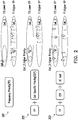
- FIG. 2 illustrates various criteria for redistributing UEs under a power saving mode among cells with different carrier frequencies.
- the UEs under a power saving mode would be redistributed solely based on frequency priority (FP). Since cell_1 has a higher frequency priority than cell_2 and cell_3, then all UEs under a power saving mode are redistributed in cell_1.
- FP frequency priority
- CSP cell specific priority
- FIG. 3 is a flow chart which illustrates some details of such implementation from the perspective of a UE. It is assumed that, for a UE in a power saving mode or in a RRC inactive state, there are five redistribution candidates including two frequency candidates and three cell candidates, and each cell corresponds to a different physical cell indicator (PCI).
- PCI physical cell indicator
- the frequency candidates are F1 and F2, and 3 cell candidates are PCI_1, PCI_2, and PCI_3. It is assumed that each of the frequency candidates is assigned with a redistribution factor which is shown in Table 1 below.
- the UE may or may not be redistributed from one cell to all redistribution candidates. Such decision may depend on the UE's location. Therefore, the UE would need to perform the procedures of FIG. 3 in order to determine which cell the UE should camp on.
- a UE would obtain redistribution parameters which would include the contents of Table 1.
- the UE would determine whether the redistribution mechanism is a CRS mechanism or OSS mechanism. If the redistribution mechanism is not the CRS mechanism, then the OSS mechanism could be assumed.
- the UE would perform a typical operation by receiving an indicator.
- the UE would determine whether it has received a message having a redistribution indicator which indicates that a redistribution to another cell has occurred for the UE. If not, the UE would re-execute step S306. If so, the UE would perform step S303.
- step S303 the UE would perform signal quality measurements for the redistribution parameters obtained from step S301.
- step S304 the UE would determine whether any of the redistribution parameters are valid or has become valid. In detail, if at least one cell on the candidate frequency fulfills the cell selection criterion S (i.e. signal quality being satisfactory), the factor of the candidate frequency is valid. Also, if a candidate cell is ranked as the best cell on this candidate frequency, then the factor of the candidate cell is valid. For example, it is assumed that after a signal quality measurement, it has been determined that only the factor of F1, which is 2, and the factor of PCI_2, which is 8, are valid.
- a ueID is a value that is generated by a UE based on its identity (ID). If a ueID is within 0 ⁇ 20 range, then the redistribution target will be F1; otherwise, the redistribution target will be PCI 2. In step S305, once the redistribution target has been determined, then the UE will camp on the cell which corresponds to the determined redistribution target.
- RNAU radio access network notification area update
- An inter-frequency redistribution i.e. redistribution of a UE across different cells or different carrier frequencies
- RNA RAN Notification Area
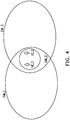
- FIG. 4 shows a scenario, within which, it is assumed that the RNA of UE_1 is cell_1 and cell_2, and the RNA of UE_2 is cell_2 and cell_3.
- UE_1 and UE_2 both camp on cell_2, then the RNAU procedure would not be triggered since they are still within their configured radio access network (RAN) notification area.
- RAN radio access network
- cell_2 initiates the inter-frequency redistribution procedure to redistribute both UE_1 and UE_2, it is possible that the redistribution target of UE_1 is cell_3 and the redistribution target of UE_2 is cell_1. Under such circumstance, both UE_1 and UE_2 would trigger the RNAU.
- redistribution candidates are determined based on the current loading of a cell and statuses of the network, it is quite impossible to pre-configure all possible redistribution target candidates within an RNA for UEs that are in RRC inactive within the RNA. Therefore, a solution to reduce unnecessary RNAUs would be required at this time.
- the disclosure is directed to a method of cell redistribution for a UE and a UE using the same method
- the disclosure is directed to a method of cell redistribution for a UE.
- the method would include not limited to: acquiring an area information of a cell redistribution candidate; performing a filtering procedure for the cell redistribution candidate based on the area information to determine a filtered cell redistribution candidate; and performing a cell re-selection procedure to select a target cell from the filtered cell redistribution candidate.
- the disclosure is directed to a user equipment which includes not limited to: a hardware transceiver; and a hardware processor coupled to the hardware transceiver and configured at least to: acquire, via the transceiver, a radio access area information of a cell redistribution candidate; perform a filtering procedure for the cell redistribution candidate based on the area information to determine a filtered cell redistribution candidate; perform a cell re-selection procedure to select a target cell from the filtered cell redistribution candidate.
- RNA redistribution candidates within an area
- RNA redistribution candidates
- a method of cell redistribution for a UE in idle mode or RRC inactive state is proposed to reduce unnecessary RNAUs. The method of cell redistribution would be used by a UE which would take the area information into consideration and perform a cell re-selection procedure accordingly.
- FIG. 5 is flow chart which illustrates a method of cell redistribution for a UE according to one of the exemplary embodiments of the disclosure.
- the UE When a UE is in a power saving mode or a RRC inactive state, the UE would perform not limited to these following three steps.
- step S501 the UE would acquire an area information such as a RNA information of one or more redistribution candidates from a plurality of redistribution candidates.
- the UE would perform a filtering procedure for the one or more redistribution candidates based on the area information.
- the UE would perform a cell reselection procedure in response to obtaining a result from the filtering procedure.
- the UE may obtain area information of the one or more redistribution candidates by following at least two options.
- the UE could obtain area information of one or more redistribution candidates from a camping cell.
- the camping cell could be the cell from which the UE camps on and receives paging messages.
- the above described area information of one or more redistribution candidates could be area information of all possible redistribution candidates known by the network or known by the UE.
- the UE could obtain area information of one or more redistribution candidates from a measured cell.
- the measure cell could be a cell which satisfies the required signal quality (e.g. S criterion) after the UE performs a signal quality measurement on the cell.
- the RNA information of the one or more redistribution candidates may include area information of the measured cell.
- the UE perform a filtering procedure for the one or more redistribution candidates based on the area information could be accomplished based on three options.
- the UE may eliminate any redistribution candidate that outside of the area (e.g. outside of a RNA list).
- the UE may consider the redistribution factor of any redistribution candidates within the area as a valid redistribution factor.
- the UE may scale the redistribution parameter (e.g. redistribution factor or redistribution rage) of the redistribution candidate(s) within the area.
- the UE may perform a cell reselection procedure in response to obtaining a result from the filtering procedure by selecting the one or more redistribution candidates within the area as having the highest priority for cell re-selection or by performing a normal cell re-selection procedure and ignoring the redistribution parameters.
- FIG. 6 illustrates the hardware block diagram of an exemplary UE according to one of the exemplary embodiments of the disclosure.
- the hardware of the UE would include not limited to a hardware processor 601, a hardware transceiver 602 which may include integrated or separate transmitter and receiver, and non-transitory storage medium 603.
- the hardware processor 601 is electrically connected to the hardware transceiver 602 and the non-transitory storage medium 603 and configured at least for implementing the provided method of cell redistribution and its exemplary embodiments.
- the hardware transceiver 602 may include one or more transmitters and receivers configured to transmit and receive signals respectively in the radio frequency or in the mmWave frequency.
- the hardware transceiver 602 may also perform operations such as low noise amplifying, impedance matching, frequency mixing, up or down frequency conversion, filtering, amplifying, and so forth.
- the hardware transceiver 602 may each include one or more analog-to-digital (A/D) and digital-to-analog (D/A) converters which are configured to convert from an analog signal format to a digital signal format during uplink signal processing and from a digital signal format to an analog signal format during downlink signal processing.
- the hardware transceiver 602 may further include an antenna array which may include one or multiple antennas to transmit and receive omni-directional antenna beams or directional antenna beams.
- the hardware processor 601 is configured to process digital signals and to perform procedures of the proposed hierarchical registration method in accordance with the proposed exemplary embodiments of the disclosure. Also, the hardware processor 401 may access to the non-transitory storage medium 603 which stores programming codes, codebook configurations, buffered data, and record configurations assigned by the hardware processor 601.
- the hardware processor 601 could be implemented by using programmable units such as a micro-processor, a micro-controller, a DSP chips, FPGA, etc.
- the functions of the hardware processor 601 may also be implemented with separate electronic devices or ICs. It should be noted that the functions of hardware processor 401 may be implemented with either hardware or software.
- FIG. 7 is a flow chart which shows an improvement over the implementation of redistributing UEs under a power saving mode among cells with different carrier frequencies of FIG. 3 according to one of the exemplary embodiments of the disclosure.
- a UE would obtain redistribution parameters.
- the UE would also obtain an area information which is assumed to be an RNA information of one or more redistribution candidates. Alternatively, the UE may also obtain area information of all known redistribution candidates.
- the UE would determine whether the redistribution mechanism is a CRS mechanism or OSS mechanism. If the redistribution mechanism is not the CRS mechanism, then the OSS mechanism could be assumed.
- step S706 since the OSS mechanism is adopted and the redistribution is one shot only, the UE would perform a typical operation.
- step S707 the UE would determine whether it has received a message having a redistribution indicator which would indicates that a redistribution to another cell has occurred for the UE.
- the redistribution indicator would further indicate whether to redistribute all UEs in an RRC inactive state or a percentage of UEs in the RRC inactive state. If not, the UE would re-execute step S706. If so, the UE would perform step S703.
- step S703 the UE would perform signal quality measurements based on the redistribution parameters obtained from step S701. However, the UE that is in the RRC inactive state would only try to measure the redistribution candidate(s) which belong to its configured RNA. In step S704, the UE would determine whether any of the redistribution parameters are valid or has become valid. However, the condition for determining the whether any of the redistribution parameters are valid or has become valid could been modified from step S304 and will be explained in a latter part of the disclosure.
- step S705 once the redistribution target has been determined, then the UE will camp on the cell which corresponds to the determined redistribution target.
- the redistribution candidates that are within the configured RNA of the UE could be scaled by a weight value.
- a UE may obtain redistribution parameters and additionally RNA information of redistribution candidates from a cell or a base station such as a gNB.
- the RNA information may include not limited to cell identity, RNA code (RNAC), or tracking area identity list (TAI).
- the gNB may provide the redistribution candidates with RNA information by a broadcast message or by dedicated signaling such as an RRC release message or a similar type of message.
- the RNA information for redistribution candidates could be, for example, similar to the information shown in Table 2 below.
- Redistribution candidate Redistribution Factor RNA Information Frequency 1 5 Cell identity list, RNAC list, or TAI of neighboring cells PCI 1 8 Cell identity, RNAC, or TAI PCI 2 3 Cell identity, RNAC, or TAI
- Step S702 is the same as step S302.
- the UE would perform signal quality measurements based on the redistribution parameters obtained from step S701. However, the UE that is in the RRC inactive state would only try to measure the redistribution candidate(s) which belong to its configured RNA. The UE may do so by filtering out some of the redistribution candidates which do not belong to the UE's configured RNA. After the filtering, the UE would measure the remaining redistribution candidates and verify whether any redistribution parameters become valid. The remaining redistribution candidates would then be the redistribution candidates which belong to the UE's configured RNA.
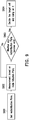
- FIG. 8 illustrates an exemplary embodiment of one such mechanism.
- Step S801 is the same as step S701
- step S805 is the same as steps S702 ⁇ S707
- steps S802 ⁇ S804 are added to implement the above described redistribution mechanism.
- step S802 the UE would filter out some of the redistribution candidates which do not belong to the UE's configured RNA.
- step S803 the UE would determine whether there is any remaining redistribution candidate which below to the UE's configured RNA. If not, in step S804, the UE would ignore the redistribution instruction and perform the normal operation. If yes, the UE would execute step S805.
- step S704 the UE would determine whether any of the redistribution parameters are valid or has become valid.
- the condition for determining the whether any of the redistribution parameters are valid or has become valid has been redefined in comparison to step S304.
- the valid condition of the redistribution parameter may include (1) If at least one cell on the candidate frequency fulfills the cell selection criterion S, the redistribution factor of the candidate frequency is valid; Or, (2) if a candidate cell is ranked as the best cell on this frequency, the redistribution factor of the candidate cell is valid.
- the valid condition of the redistribution parameter could be modified as: (1) If at least one cell on the candidate frequency fulfills the cell selection criterion S and the cell belongs to the configured RNA, the redistribution factor of the candidate frequency is valid; Or, (2) if a candidate cell ranked as the best cell on this frequency and belongs to the configured RNA, the redistribution factor of the candidate cell is valid.
- the UE may need to acquire RNA information for the measured cell.
- step S705 once the redistribution target has been determined, then the UE will camp on the cell which corresponds to the determined redistribution target.
- the redistribution candidates that are within the configured RNA of the UE are be scaled by a weight value.
- the redistrRange of the redistribution target which belongs to the configured RNA could be extended.
- the redistribution factor of the redistribution target which belongs to the configured RNA could be added with an offset value or could be multiplied by a factor.
- the redistrRange of the redistribution target which belongs to the configured RNA could be extended by multiplying a factor or by adding an offset value.
- the multiplying factor or the offset value could be configured by a network by a broadcast message or by a unicast message or by a dedicated signaling which could be, for example, an RRC release type of message.
- the UE would determine whether it has received a message having a redistribution indicator which would indicates that a redistribution to another cell has occurred for the UE.
- the redistribution indicator would further indicate whether to redistribute all UEs in an RRC inactive state or a percentage of UEs in the RRC inactive state.
- the redistribution indicator to be received from a paging message or from a broadcast message could contain more information.
- redistribution indicator may further indicate that only UEs in a power saving mode or in a RRC inactive state would need to perform the method of cell redistribution.
- the redistribution indicator may indicate a portion of UEs that are in a power saving mode or in an RRC inactive state would need to be perform the method of cell redistribution. Further, only the UEs which are in a power saving mode or in an RRC inactive state and fulfill a condition of cell redistribution would need to perform the method of cell redistribution, and the condition of cell redistribution could be based on UE generated value and a redistribution UE range. For example, only the UEs which are in a power saving mode or in an RRC inactive state which generate values within the redistribution range would need to perform the method of cell redistribution.
- the disclosure further provides several exemplary embodiments.
- the embodiments in this disclosure may be applied to any events disclosed.
- the process or the order of events / signaling / messages in the disclosure are not limited to these embodiments which serves to explain a piece of the overall inventive concepts.
- steps, messages, and signaling described in the procedures may not be limited to the exactly order as described by the disclosure. It would be apparent to an ordinary person skilled in the art that each step or message or signaling may be inter-changeable and could be implemented in various combinations or may be implemented independently.
- a UE may obtain redistribution parameters which would include RNA information.
- the RNA information would include UE configured RNA and the RNA information for redistribution candidates that are provided by a camping cell.
- a UE may filter the redistribution candidates which does not belong to the UE's configured RNA.
- UE could filter the redistribution candidates based on the UE configured RNA and the RNA information for redistribution candidates that are provided by a camping cell under which the UE camps on previously.
- the UE After UE has filtered the redistribution candidates, in step S803, the UE would measure the remaining redistribution candidates to verify whether any redistribution parameters could be valid.
- the remaining redistribution candidates may be the redistribution candidates which belong to the UE's configured RNA. If UE does not find any valid redistribution candidates, in step S804, the UE would ignore the redistribution instruction.
- Step S901 could be the same as step S701 or step S801.
- step S902 the UE would perform signal quality measurement based on redistribution parameters acquired from step S901.
- the UE may need to acquire the RNA information for each cell to be measured, thus the UE would also need to have previously acquired the RNA information for the measured cell.
- the measured cell may be the cell which satisfies the signal quality (e.g, S criterion) after such measurement.
- the valid condition of the redistribution parameter may at least be that (1) if at least one cell on the candidate frequency fulfills the cell selection criterion S and the cell belongs to the configured RNA, then the redistribution factor of the candidate frequency is valid; or (2) if the candidate cell is ranked as the best cell on this frequency and belongs to the configured RNA, then the redistribution factor of the candidate cell is valid; or (3) if the candidate cell fulfills the cell selection criterion S and belongs to the configured RNA, then the redistribution factor of the candidate cell is valid.
- the candidate cell becomes the target cell to be camped on; thus, the UE would camp on the target cell.
- the redistrRange of the redistribution target which belongs to configured RNA could be extended.
- the redistribution factor of the target which belongs to configured RNA could be added an offset value or multiplied a factor. For example, If the redistribution factor of Fl, which is 1, and redistribution factor of PCI_1, which is 2, are valid, but only PCI_1 belongs to UE's configured RNA, then the UE may add an offset value x to the redistribution factor of PCI_1so that the modified factor of PCI_1 will be 2 + x. The UE will then use the modified factor of PCI_1 to calculate the corresponding redistrRange.
- the redistrRange of the redistribution target cell which belongs to UE's configured RNA could be extended.
- the redistrRange of the target cell which belongs to UE's configured RNA could be extended by multiplying a factor or by adding a offset value. For example, if redistrRange of F1 is 80 and redistrRange of PCI_1 is 20, but only PCI_1 belongs to UE's configured RNA, then the UE may multiply a value y to the redistrRange of PCI_1 and (1-y) to the redistrRange of F1.
- the modified redistrRange of PCI 1 will be 20 ⁇ y and the modified redistrRange of F1 will be 80 ⁇ (1-x). UE would then use the modified redistrRange to find the redistributed target cell.
- the redistribution indicator in a paging message or in a broadcast message could be modified to carry more information.
- the redistribution indicator may further indicate that the UEs that are in a power saving mode or in an RRC inactive state would need to perform the method of cell redistribution.
- the existing paging message could be modified to contain a two-bits indicator.
- 00 may mean that the method of cell redistribution is not triggered
- 01 may mean that the method of cell redistribution is triggered for only any UE that is in a power saving mode
- 10 may mean that the method of cell redistribution is triggered for any UE that is in an RRC inactive state
- 11 may mean that the method of cell redistribution is triggered for any UE that are both in a power saving mode and in a RRC inactive state.
- the redistribution indicator may further be modified to indicate that a portion of UEs that are in a power saving mode or in an RRC inactive state would need to perform the method of cell redistribution.
- only UEs that are in a power saving mode or in an RRC inactive state may fulfill the condition of cell redistribution to perform the method of cell redistribution.
- the condition of cell redistribution could be based on a UE generated value and / or a redistribution UE range.
- the paging message may contain a redistribution range for a UE which is in a power saving mode.
- the UE generated value could be a value that generated by a UE's identity.
- the disclosure is suitable for being used in a wireless communication system and is able to redistribute UEs from one cell or another in a way that would reduce unnecessary RNAUs.
- the method of cell redistribution would be used by a UE which would take the RNA information into consideration and perform a cell re-selection procedure accordingly.
- each of the indefinite articles “a” and “an” could include more than one item. If only one item is intended, the terms “a single” or similar languages would be used.
- the terms “any of' followed by a listing of a plurality of items and/or a plurality of categories of items, as used herein, are intended to include “any of', “any combination of', “any multiple of', and/or “any combination of multiples of the items and/or the categories of items, individually or in conjunction with other items and/or other categories of items.
- the term “set” is intended to include any number of items, including zero.
- the term “number” is intended to include any number, including zero.
Landscapes
- Engineering & Computer Science (AREA)
- Computer Networks & Wireless Communication (AREA)
- Signal Processing (AREA)
- Computer Security & Cryptography (AREA)
- Mobile Radio Communication Systems (AREA)
Abstract
Description
- The present disclosure is directed to a method of cell redistribution for a user equipment (UE) and a UE using the same method.
- Currently, in a latest communication system, as a UE enters into a radio resource control (RRC) inactive state or into a power saving mode (e.g. idle mode, sleep mode, inactive mode, etc.), the UE could be redistributed from one cell to another. After the UE resumes the normal operation, the UE may operate under a cell that is different from the cell before the UE enters into the power saving mode. The redistribution of UEs from one cell to another is triggered by a network and may depend on different factors. As the UE is in a power saving mode, the UE would be triggered to perform a procedure so as to know whether to stay on the same cell or to attach to a new cell which is assigned by the network. For example, a UE may perform signal quality measurements of the cell which has been assigned by the network, when the UE is triggered to redistribute to the assigned cells. Otherwise, in normal operation, the UE may perform signal quality measurements by itself in order to detect available cells nearby. After the UE has a list of available cells that meets its signal quality standard, the UE may subsequently camp on the cell that has the highest frequency priority among cells that the UE has detected and have met the UE's signal quality standard.
- If frequency priority is the only criteria to redistribute UE, it is possible for the UEs to be very unevenly distributed among different cells.
FIG. 1 illustrates an example of a UE camping on a cell among cells that have different frequency priorities. InFIG. 1 ,cell_1 101 which operates under a first carrier frequency (F1) is considered to have higher frequency priority thancell_2 102 andcell_3 103 which operate under a second carrier frequency (F2). Even thoughcell_1 101,cell_2 102, andcell_3 103 all have satisfactory signal qualities for all the UEs, all the UEs would nevertheless choose to camp oncell_1 101 sincecell_2 101 has the highest frequency priority. Consequently,cell_2 102 andcell_3 103 would be left empty. - In order to balance the distribution of UEs in a heterogeneous network (HetNet) with multiple carriers (e.g. F1 and F2 as shown in
FIG. 1 ), the mechanism to redistribute UEs could be important so as to minimize the need for handovers that are triggered due to overloading of the cell or for redirecting network traffic of UEs after the UEs entering the RRC connected mode. The mechanism to redistribute a UE may need to take loadings of cells into consideration when the network decides to redistribute the UE. For example, if the loading status is assumed to becell_3 103 >cell_2 102 >cell_1 101, then the quantity of UEs that are under a power saving mode would becell_3 103 <cell_2 102 <cell_1 101. -
FIG. 2 illustrates various criteria for redistributing UEs under a power saving mode among cells with different carrier frequencies. For afirst scenario 201, the UEs under a power saving mode would be redistributed solely based on frequency priority (FP). Since cell_1 has a higher frequency priority than cell_2 and cell_3, then all UEs under a power saving mode are redistributed in cell_1. For asecond scenario 202, there is an additional criterion which is to redistribute UEs based on cell specific priority (CSP). Assuming that some UEs are unable to be camp on cell_1, but could be redistributed to cell_2 and cell_3, then these UEs could all be redistributed to cell_2 if cell_2 has a higher CSP than cell_3. For athird scenario 203, there is an additional criterion which is to redistribute UEs based on UE's own determination. Some UEs that are unable to camp on cell_1 may also consider that cell_2 is undesirable. In such case, the remaining UEs may camp on cell_3. - To implementation the above described redistribution for a UE in a power saving mode, there could be two mechanisms. One mechanism is continuous randomization distribution (CRS) which redistributes UEs continuously. Another mechanism is one-shot re-distribution mechanism (OSS) which redistributes UEs in a power saving mode at once after the mechanism has been triggered by a paging message.
FIG. 3 is a flow chart which illustrates some details of such implementation from the perspective of a UE. It is assumed that, for a UE in a power saving mode or in a RRC inactive state, there are five redistribution candidates including two frequency candidates and three cell candidates, and each cell corresponds to a different physical cell indicator (PCI). Thus, the frequency candidates are F1 and F2, and 3 cell candidates are PCI_1, PCI_2, and PCI_3. It is assumed that each of the frequency candidates is assigned with a redistribution factor which is shown in Table 1 below.Table 1 Redistribution Candidates Redistribution Factor F1 2 F2 4 PCI_1 4 PCI_2 8 PCI_3 2 - Thus, while a UE is in a power saving mode, the UE may or may not be redistributed from one cell to all redistribution candidates. Such decision may depend on the UE's location. Therefore, the UE would need to perform the procedures of
FIG. 3 in order to determine which cell the UE should camp on. Some details regarding the steps ofFIG. 3 are provided as follows. - In step S301, a UE would obtain redistribution parameters which would include the contents of Table 1. In step S302, the UE would determine whether the redistribution mechanism is a CRS mechanism or OSS mechanism. If the redistribution mechanism is not the CRS mechanism, then the OSS mechanism could be assumed. In step S306, since the OSS mechanism is adopted and the redistribution is one shot only, the UE would perform a typical operation by receiving an indicator. In step S307, the UE would determine whether it has received a message having a redistribution indicator which indicates that a redistribution to another cell has occurred for the UE. If not, the UE would re-execute step S306. If so, the UE would perform step S303.
- Assuming back in step S302 that the redistribution mechanism is the CRS mechanism, then in step S303, the UE would perform signal quality measurements for the redistribution parameters obtained from step S301. In step S304, the UE would determine whether any of the redistribution parameters are valid or has become valid. In detail, if at least one cell on the candidate frequency fulfills the cell selection criterion S (i.e. signal quality being satisfactory), the factor of the candidate frequency is valid. Also, if a candidate cell is ranked as the best cell on this candidate frequency, then the factor of the candidate cell is valid. For example, it is assumed that after a signal quality measurement, it has been determined that only the factor of F1, which is 2, and the factor of PCI_2, which is 8, are valid. Next, a ueID would be used to determine the redistribution target. A ueID is a value that is generated by a UE based on its identity (ID). If a ueID is within 0∼20 range, then the redistribution target will be F1; otherwise, the redistribution target will be
PCI 2. In step S305, once the redistribution target has been determined, then the UE will camp on the cell which corresponds to the determined redistribution target. - The above described redistribution mechanism may run into difficulties under the circumstance when a radio access network notification area update (RNAU) is to be triggered. An inter-frequency redistribution (i.e. redistribution of a UE across different cells or different carrier frequencies) may cause an unnecessary RNAU to occur for UEs that are in the RRC inactive state. A reason could be that a UE that is in RRC inactive may take a cell that out of its configured RAN Notification Area (RNA) as a redistribution target.
- For example,
FIG. 4 shows a scenario, within which, it is assumed that the RNA of UE_1 is cell_1 and cell_2, and the RNA of UE_2 is cell_2 and cell_3. When UE_1 and UE_2 both camp on cell_2, then the RNAU procedure would not be triggered since they are still within their configured radio access network (RAN) notification area. However, if cell_2 initiates the inter-frequency redistribution procedure to redistribute both UE_1 and UE_2, it is possible that the redistribution target of UE_1 is cell_3 and the redistribution target of UE_2 is cell_1. Under such circumstance, both UE_1 and UE_2 would trigger the RNAU. - However, since redistribution candidates are determined based on the current loading of a cell and statuses of the network, it is quite impossible to pre-configure all possible redistribution target candidates within an RNA for UEs that are in RRC inactive within the RNA. Therefore, a solution to reduce unnecessary RNAUs would be required at this time.
- Accordingly, the disclosure is directed to a method of cell redistribution for a UE and a UE using the same method
- In one of the exemplary embodiments, the disclosure is directed to a method of cell redistribution for a UE. The method would include not limited to: acquiring an area information of a cell redistribution candidate; performing a filtering procedure for the cell redistribution candidate based on the area information to determine a filtered cell redistribution candidate; and performing a cell re-selection procedure to select a target cell from the filtered cell redistribution candidate.
- In one of the exemplary embodiments, the disclosure is directed to a user equipment which includes not limited to: a hardware transceiver; and a hardware processor coupled to the hardware transceiver and configured at least to: acquire, via the transceiver, a radio access area information of a cell redistribution candidate; perform a filtering procedure for the cell redistribution candidate based on the area information to determine a filtered cell redistribution candidate; perform a cell re-selection procedure to select a target cell from the filtered cell redistribution candidate.
- In order to make the aforementioned features and advantages of the present disclosure comprehensible, exemplary embodiments accompanied with figures are described in detail below. It is to be understood that both the foregoing general description and the following detailed description are exemplary, and are intended to provide further explanation of the disclosure as claimed.
- It should be understood, however, that this summary may not contain all of the aspect and embodiments of the present disclosure and is therefore not meant to be limiting or restrictive in any manner. Also, the disclosure would include improvements and modifications which are obvious to one skilled in the art.
- The accompanying drawings are included to provide a further understanding of the disclosure, and are incorporated in and constitute a part of this specification. The drawings illustrate embodiments of the disclosure and, together with the description, serve to explain the principles of the disclosure.
-
FIG. 1 illustrates an example of a UE camping on a cell among cells that have different frequency priorities of a current communication system. -
FIG. 2 illustrates various criteria for redistributing UEs under a power saving mode among cells with different carrier frequencies. -
FIG. 3 is a flow chart which illustrates an implementation of redistributing UEs under a power saving mode among cells with different carrier frequencies. -
FIG. 4 illustrates an example of two UEs performing a current redistribution procedure moving from one cell to another. -
FIG. 5 illustrates a method of cell redistribution for a UE in according to one of the exemplary embodiments of the disclosure. -
FIG. 6 is flow chart which illustrates the hardware block diagram of an exemplary UE according to one of the exemplary embodiments of the disclosure. -
FIG. 7 is a flow chart which shows an improvement over the implementation of redistributing UEs under a power saving mode among cells with different carrier frequencies ofFIG. 3 according to one of the exemplary embodiments of the disclosure. -
FIG. 8 illustrates one of the inventive concepts related to the method of cell redistribution for a UE according to one of the exemplary embodiments of the disclosure. -
FIG. 9 illustrates an updated exemplary embodiment of the method of cell redistribution for a UE by expanding upon one of the exemplary embodiments of the disclosure. - Reference will now be made in detail to the present exemplary embodiments of the disclosure, examples of which are illustrated in the accompanying drawings. Wherever possible, the same reference numbers are used in the drawings and the description to refer to the same or like parts.
- As it was previously described, it is rather difficult and impractical for a network to pre-configure all possible redistribution candidates within an area (e.g. RNA) as the redistribution from one area to another for a UE which is in a power saving mode or is in the RRC inactive state are often based on instantaneous cell loadings, network statuses are so like. However, without careful configuration of redistribution candidates, unnecessary RNAU could be triggered even the UE is stable. Hence, a method of cell redistribution for a UE in idle mode or RRC inactive state is proposed to reduce unnecessary RNAUs. The method of cell redistribution would be used by a UE which would take the area information into consideration and perform a cell re-selection procedure accordingly.
-
FIG. 5 is flow chart which illustrates a method of cell redistribution for a UE according to one of the exemplary embodiments of the disclosure. When a UE is in a power saving mode or a RRC inactive state, the UE would perform not limited to these following three steps. In step S501, the UE would acquire an area information such as a RNA information of one or more redistribution candidates from a plurality of redistribution candidates. In step S502, the UE would perform a filtering procedure for the one or more redistribution candidates based on the area information. In step S503, the UE would perform a cell reselection procedure in response to obtaining a result from the filtering procedure. - According one of exemplary embodiments, when the UE acquires area information of one or more redistribution candidates, the UE may obtain area information of the one or more redistribution candidates by following at least two options. In the first option, the UE could obtain area information of one or more redistribution candidates from a camping cell. The camping cell could be the cell from which the UE camps on and receives paging messages. Further, the above described area information of one or more redistribution candidates could be area information of all possible redistribution candidates known by the network or known by the UE. In the second option, the UE could obtain area information of one or more redistribution candidates from a measured cell. The measure cell could be a cell which satisfies the required signal quality (e.g. S criterion) after the UE performs a signal quality measurement on the cell. The RNA information of the one or more redistribution candidates may include area information of the measured cell.
- According one of exemplary embodiments, the UE perform a filtering procedure for the one or more redistribution candidates based on the area information could be accomplished based on three options. In the first option, the UE may eliminate any redistribution candidate that outside of the area (e.g. outside of a RNA list). In the second option, the UE may consider the redistribution factor of any redistribution candidates within the area as a valid redistribution factor. In the third option, the UE may scale the redistribution parameter (e.g. redistribution factor or redistribution rage) of the redistribution candidate(s) within the area.
- According one of exemplary embodiments, the UE may perform a cell reselection procedure in response to obtaining a result from the filtering procedure by selecting the one or more redistribution candidates within the area as having the highest priority for cell re-selection or by performing a normal cell re-selection procedure and ignoring the redistribution parameters.
-
FIG. 6 illustrates the hardware block diagram of an exemplary UE according to one of the exemplary embodiments of the disclosure. The hardware of the UE would include not limited to ahardware processor 601, ahardware transceiver 602 which may include integrated or separate transmitter and receiver, andnon-transitory storage medium 603. Thehardware processor 601 is electrically connected to thehardware transceiver 602 and thenon-transitory storage medium 603 and configured at least for implementing the provided method of cell redistribution and its exemplary embodiments. - The
hardware transceiver 602 may include one or more transmitters and receivers configured to transmit and receive signals respectively in the radio frequency or in the mmWave frequency. Thehardware transceiver 602 may also perform operations such as low noise amplifying, impedance matching, frequency mixing, up or down frequency conversion, filtering, amplifying, and so forth. Thehardware transceiver 602 may each include one or more analog-to-digital (A/D) and digital-to-analog (D/A) converters which are configured to convert from an analog signal format to a digital signal format during uplink signal processing and from a digital signal format to an analog signal format during downlink signal processing. Thehardware transceiver 602 may further include an antenna array which may include one or multiple antennas to transmit and receive omni-directional antenna beams or directional antenna beams. - The
hardware processor 601 is configured to process digital signals and to perform procedures of the proposed hierarchical registration method in accordance with the proposed exemplary embodiments of the disclosure. Also, the hardware processor 401 may access to thenon-transitory storage medium 603 which stores programming codes, codebook configurations, buffered data, and record configurations assigned by thehardware processor 601. Thehardware processor 601 could be implemented by using programmable units such as a micro-processor, a micro-controller, a DSP chips, FPGA, etc. The functions of thehardware processor 601 may also be implemented with separate electronic devices or ICs. It should be noted that the functions of hardware processor 401 may be implemented with either hardware or software. -
FIG. 7 is a flow chart which shows an improvement over the implementation of redistributing UEs under a power saving mode among cells with different carrier frequencies ofFIG. 3 according to one of the exemplary embodiments of the disclosure. In step S701, a UE would obtain redistribution parameters. In addition, the UE would also obtain an area information which is assumed to be an RNA information of one or more redistribution candidates. Alternatively, the UE may also obtain area information of all known redistribution candidates. In step S702, the UE would determine whether the redistribution mechanism is a CRS mechanism or OSS mechanism. If the redistribution mechanism is not the CRS mechanism, then the OSS mechanism could be assumed. In step S706, since the OSS mechanism is adopted and the redistribution is one shot only, the UE would perform a typical operation. In step S707, the UE would determine whether it has received a message having a redistribution indicator which would indicates that a redistribution to another cell has occurred for the UE. In addition, the redistribution indicator would further indicate whether to redistribute all UEs in an RRC inactive state or a percentage of UEs in the RRC inactive state. If not, the UE would re-execute step S706. If so, the UE would perform step S703. - Assuming back in step S702 that the redistribution mechanism is the CRS mechanism, then in step S703, the UE would perform signal quality measurements based on the redistribution parameters obtained from step S701. However, the UE that is in the RRC inactive state would only try to measure the redistribution candidate(s) which belong to its configured RNA. In step S704, the UE would determine whether any of the redistribution parameters are valid or has become valid. However, the condition for determining the whether any of the redistribution parameters are valid or has become valid could been modified from step S304 and will be explained in a latter part of the disclosure. In step S705, once the redistribution target has been determined, then the UE will camp on the cell which corresponds to the determined redistribution target. In addition, the redistribution candidates that are within the configured RNA of the UE could be scaled by a weight value. Each of the steps of
FIG. 7 are to be elucidated with more details. - In step S701, a UE may obtain redistribution parameters and additionally RNA information of redistribution candidates from a cell or a base station such as a gNB. The RNA information may include not limited to cell identity, RNA code (RNAC), or tracking area identity list (TAI). For example, the gNB may provide the redistribution candidates with RNA information by a broadcast message or by dedicated signaling such as an RRC release message or a similar type of message. Thus, the RNA information for redistribution candidates could be, for example, similar to the information shown in Table 2 below.
Redistribution candidate Redistribution Factor RNA Information Frequency 1 5 Cell identity list, RNAC list, or TAI of neighboring cells PCI 1 8 Cell identity, RNAC, or TAI PCI 2 3 Cell identity, RNAC, or TAI - Step S702 is the same as step S302. In step S703, the UE would perform signal quality measurements based on the redistribution parameters obtained from step S701. However, the UE that is in the RRC inactive state would only try to measure the redistribution candidate(s) which belong to its configured RNA. The UE may do so by filtering out some of the redistribution candidates which do not belong to the UE's configured RNA. After the filtering, the UE would measure the remaining redistribution candidates and verify whether any redistribution parameters become valid. The remaining redistribution candidates would then be the redistribution candidates which belong to the UE's configured RNA. However, in the case that the UE not finding any remaining redistribution candidates, the UE should ignore the redistribution instruction. To implement the above described redistribution mechanism,
FIG. 8 illustrates an exemplary embodiment of one such mechanism. Step S801 is the same as step S701, step S805 is the same as steps S702 ∼ S707, and steps S802 ∼ S804 are added to implement the above described redistribution mechanism. In step S802, the UE would filter out some of the redistribution candidates which do not belong to the UE's configured RNA. In step S803, the UE would determine whether there is any remaining redistribution candidate which below to the UE's configured RNA. If not, in step S804, the UE would ignore the redistribution instruction and perform the normal operation. If yes, the UE would execute step S805. - In step S704, the UE would determine whether any of the redistribution parameters are valid or has become valid. The condition for determining the whether any of the redistribution parameters are valid or has become valid has been redefined in comparison to step S304. In a known redistribution method, the valid condition of the redistribution parameter may include (1) If at least one cell on the candidate frequency fulfills the cell selection criterion S, the redistribution factor of the candidate frequency is valid; Or, (2) if a candidate cell is ranked as the best cell on this frequency, the redistribution factor of the candidate cell is valid. For inactive state UE, the valid condition of the redistribution parameter could be modified as: (1) If at least one cell on the candidate frequency fulfills the cell selection criterion S and the cell belongs to the configured RNA, the redistribution factor of the candidate frequency is valid; Or, (2) if a candidate cell ranked as the best cell on this frequency and belongs to the configured RNA, the redistribution factor of the candidate cell is valid. Thus, in order to verify whether a redistribution parameter of redistribution candidates is valid, the UE may need to acquire RNA information for the measured cell.
- In step S705, once the redistribution target has been determined, then the UE will camp on the cell which corresponds to the determined redistribution target. In addition, the redistribution candidates that are within the configured RNA of the UE are be scaled by a weight value. In a known redistribution method, the valid redistribution parameters are normalized as redistrRange. For example, if the redistribution factor of Fl, which is 2, and also redistribution factor of PCI_1, which is 8, are valid, then the redistrRange of F1 may be 100 ∗ (2 / (2+8)) = 20, and the redistrRange of PCI_1 may be 100 ∗ (8 / (2+8)) = 80. For a UE that is in a power saving mode or in the RRC inactive state, the redistrRange of the redistribution target which belongs to the configured RNA could be extended. For example, the redistribution factor of the redistribution target which belongs to the configured RNA could be added with an offset value or could be multiplied by a factor. For example, the redistrRange of the redistribution target which belongs to the configured RNA could be extended by multiplying a factor or by adding an offset value. The multiplying factor or the offset value could be configured by a network by a broadcast message or by a unicast message or by a dedicated signaling which could be, for example, an RRC release type of message.
- In step S707, the UE would determine whether it has received a message having a redistribution indicator which would indicates that a redistribution to another cell has occurred for the UE. In addition, the redistribution indicator would further indicate whether to redistribute all UEs in an RRC inactive state or a percentage of UEs in the RRC inactive state. The redistribution indicator to be received from a paging message or from a broadcast message could contain more information. For example, redistribution indicator may further indicate that only UEs in a power saving mode or in a RRC inactive state would need to perform the method of cell redistribution. Alternatively, the redistribution indicator may indicate a portion of UEs that are in a power saving mode or in an RRC inactive state would need to be perform the method of cell redistribution. Further, only the UEs which are in a power saving mode or in an RRC inactive state and fulfill a condition of cell redistribution would need to perform the method of cell redistribution, and the condition of cell redistribution could be based on UE generated value and a redistribution UE range. For example, only the UEs which are in a power saving mode or in an RRC inactive state which generate values within the redistribution range would need to perform the method of cell redistribution.
- To further elucidate the above described method of cell redistribution for a UE and the UE using the same method, the disclosure further provides several exemplary embodiments. The embodiments in this disclosure may be applied to any events disclosed. The process or the order of events / signaling / messages in the disclosure are not limited to these embodiments which serves to explain a piece of the overall inventive concepts. Also, steps, messages, and signaling described in the procedures may not be limited to the exactly order as described by the disclosure. It would be apparent to an ordinary person skilled in the art that each step or message or signaling may be inter-changeable and could be implemented in various combinations or may be implemented independently.
- The concept of the first exemplary embodiment is the combination of step S701 and steps S802 ∼ S804. In the first exemplary embodiment, as described in step S701, a UE may obtain redistribution parameters which would include RNA information. The RNA information would include UE configured RNA and the RNA information for redistribution candidates that are provided by a camping cell. In step S802, a UE may filter the redistribution candidates which does not belong to the UE's configured RNA. UE could filter the redistribution candidates based on the UE configured RNA and the RNA information for redistribution candidates that are provided by a camping cell under which the UE camps on previously. After UE has filtered the redistribution candidates, in step S803, the UE would measure the remaining redistribution candidates to verify whether any redistribution parameters could be valid. The remaining redistribution candidates may be the redistribution candidates which belong to the UE's configured RNA. If UE does not find any valid redistribution candidates, in step S804, the UE would ignore the redistribution instruction.
- The second exemplary embodiment expands upon the step S704 by modifying the valid condition.
FIG. 9 shows an updated flow chart fromFIG. 7 . Step S901 could be the same as step S701 or step S801. In step S902, the UE would perform signal quality measurement based on redistribution parameters acquired from step S901. In order to verify whether the redistribution parameters of redistribution candidates are valid, the UE may need to acquire the RNA information for each cell to be measured, thus the UE would also need to have previously acquired the RNA information for the measured cell. The measured cell may be the cell which satisfies the signal quality (e.g, S criterion) after such measurement. - In step S904, for a UE in a power saving mode or in a RRC inactive state, the valid condition of the redistribution parameter may at least be that (1) if at least one cell on the candidate frequency fulfills the cell selection criterion S and the cell belongs to the configured RNA, then the redistribution factor of the candidate frequency is valid; or (2) if the candidate cell is ranked as the best cell on this frequency and belongs to the configured RNA, then the redistribution factor of the candidate cell is valid; or (3) if the candidate cell fulfills the cell selection criterion S and belongs to the configured RNA, then the redistribution factor of the candidate cell is valid. In step S904, once the redistribution factor of the candidate cell is target, the candidate cell becomes the target cell to be camped on; thus, the UE would camp on the target cell.
- For a UE which is in a power saving mode or in an RRC inactive state, the redistrRange of the redistribution target which belongs to configured RNA could be extended. The redistribution factor of the target which belongs to configured RNA could be added an offset value or multiplied a factor. For example, If the redistribution factor of Fl, which is 1, and redistribution factor of PCI_1, which is 2, are valid, but only PCI_1 belongs to UE's configured RNA, then the UE may add an offset value x to the redistribution factor of PCI_1so that the modified factor of PCI_1 will be 2 + x. The UE will then use the modified factor of PCI_1 to calculate the corresponding redistrRange.
- For a UE which is in a power saving mode or in an RRC inactive state, the redistrRange of the redistribution target cell which belongs to UE's configured RNA could be extended. The redistrRange of the target cell which belongs to UE's configured RNA could be extended by multiplying a factor or by adding a offset value. For example, if redistrRange of F1 is 80 and redistrRange of PCI_1 is 20, but only PCI_1 belongs to UE's configured RNA, then the UE may multiply a value y to the redistrRange of PCI_1 and (1-y) to the redistrRange of F1. Thus, the modified redistrRange of PCI 1 will be 20∗y and the modified redistrRange of F1 will be 80∗(1-x). UE would then use the modified redistrRange to find the redistributed target cell.
- The redistribution indicator in a paging message or in a broadcast message could be modified to carry more information. For example, the redistribution indicator may further indicate that the UEs that are in a power saving mode or in an RRC inactive state would need to perform the method of cell redistribution. The existing paging message could be modified to contain a two-bits indicator. For example, 00 may mean that the method of cell redistribution is not triggered, 01 may mean that the method of cell redistribution is triggered for only any UE that is in a power saving mode, 10 may mean that the method of cell redistribution is triggered for any UE that is in an RRC inactive state, and 11 may mean that the method of cell redistribution is triggered for any UE that are both in a power saving mode and in a RRC inactive state.
- The redistribution indicator may further be modified to indicate that a portion of UEs that are in a power saving mode or in an RRC inactive state would need to perform the method of cell redistribution. Thus, only UEs that are in a power saving mode or in an RRC inactive state may fulfill the condition of cell redistribution to perform the method of cell redistribution. The condition of cell redistribution could be based on a UE generated value and / or a redistribution UE range. For example, the paging message may contain a redistribution range for a UE which is in a power saving mode. Only when a value generated by a UE in a power saving mode falls within the redistribution UE range, the UE would need to perform the method of cell redistribution. The UE generated value could be a value that generated by a UE's identity.
- In view of the aforementioned descriptions, the disclosure is suitable for being used in a wireless communication system and is able to redistribute UEs from one cell or another in a way that would reduce unnecessary RNAUs. Thus, the method of cell redistribution would be used by a UE which would take the RNA information into consideration and perform a cell re-selection procedure accordingly.
- No element, act, or instruction used in the detailed description of disclosed embodiments of the present application should be construed as absolutely critical or essential to the present disclosure unless explicitly described as such. Also, as used herein, each of the indefinite articles "a" and "an" could include more than one item. If only one item is intended, the terms "a single" or similar languages would be used. Furthermore, the terms "any of' followed by a listing of a plurality of items and/or a plurality of categories of items, as used herein, are intended to include "any of', "any combination of', "any multiple of', and/or "any combination of multiples of the items and/or the categories of items, individually or in conjunction with other items and/or other categories of items. Further, as used herein, the term "set" is intended to include any number of items, including zero. Further, as used herein, the term "number" is intended to include any number, including zero.
Claims (15)
- A method of cell redistribution used by a user equipment, UE, the method comprising:acquiring an area information of a cell redistribution candidate for being redistributed from a camping cell to a target cell (S501);performing a filtering procedure for the cell redistribution candidate based on the area information to determine a filtered cell redistribution candidate (S502); andperforming a cell re-selection procedure to camp on the target cell from the filtered cell redistribution candidate (S503).
- The method of claim 1, wherein acquiring the area information of the cell redistribution candidate comprising:
acquiring the area information of the cell redistribution candidate from the camping cell. - The method of claim 1, wherein acquiring the area information of the cell redistribution candidate comprising:performing a signal quality measurement of the cell redistribution candidate;determining the cell redistribution candidate to be a measured cell in response to a result of the signal quality measurement being satisfactory; andacquiring the area information of the cell redistribution candidate from the measured cell.
- The method of claim 1 or 2, wherein performing the filtering procedure for the cell redistribution candidate based on the area information to determine the filtered cell redistribution candidate comprising:filtering out from the redistribute candidate any redistribute candidate that does not belong to an area as indicated by the area information; anddetermining the filtered cell redistribution candidate after filtering out any redistribute candidate that does not belong to the area.
- The method of claim 1 or 2, wherein performing the filtering procedure for the cell redistribution candidate based on the area information to determine the filtered cell redistribution candidate comprising:filtering out from any redistribute candidate that does not belong to an area as indicated by the area information by considering a redistribution factor of the any redistribute candidate that does not belong to the area as invalid; anddetermining the filtered cell redistribution candidate after filtering out any redistribute candidate that does not belong to the area.
- The method of claim 1 or 2, wherein performing the filtering procedure for the cell redistribution candidate based on the area information to determine the filtered cell redistribution candidate further comprising:
scaling a redistribution factor or a redistribution range of any cell redistribution candidate that belongs to the area as indicated by the area information. - The method of one of the claims 1-6, wherein performing the cell re-selection procedure to select the target cell from the filtered cell redistribution candidate comprising:
selecting the filtered cell redistribution candidate which belongs to the RNA as indicated by the area information as having a highest priority for to camp on the target cell. - The method of claim 6, further comprising:
acquiring a redistribution parameter which comprises the area information of the cell redistribution candidate and the redistribution factor which corresponds to the cell redistribution candidate. - A user equipment, UE, comprising:a hardware transceiver 602; anda hardware processor 601 coupled to the hardware transceiver 602 and configured at least to:acquire, via the transceiver 602, an area information of a cell redistribution candidate for being redistributed from a camping cell to a target cell;perform a filtering procedure for the cell redistribution candidate based on the RNA information to determine a filtered cell redistribution candidate; andperform a cell re-selection procedure to camp on the target cell from the filtered cell redistribution candidate.
- The UE of claim 9, wherein the hardware processor is configured to acquire, via the transceiver 602, the area information of the cell redistribution candidate comprising:
acquire, via the transceiver 602, the area information of the cell redistribution candidate from the camping cell. - The UE of claim 9, wherein the hardware processor 601 is configured to acquire the area information of the cell redistribution candidate comprising:perform a signal quality measurement of the cell redistribution candidate;determine the cell redistribution candidate to be a measured cell in response to a result of the signal quality measurement being satisfactory; andacquire, via the transceiver 602, the area information of the cell redistribution candidate from the measured cell.
- The UE of one of the claims 9-11, wherein the hardware processor 601 is configured to perform the filtering procedure for the cell redistribution candidate based on the area information to determine the filtered cell redistribution candidate comprising:filter out from the redistribute candidate any redistribute candidate that does not belong to an area as indicated by the area information; anddetermine the filtered cell redistribution candidate after filtering out any redistribute candidate that does not belong to the area.
- The UE of one the claims 9-11, wherein the hardware processor 601 is configured to perform the filtering procedure for the cell redistribution candidate based on the area information to determine the filtered cell redistribution candidate comprising:filter out from any redistribute candidate that does not belong to an area as indicated by the area information by considering a redistribution factor of the any redistribute candidate that does not belong to the area as invalid; anddetermine the filtered cell redistribution candidate after filtering out any redistribute candidate that does not belong to the area.
- The UE of one of the claims 9-11, wherein the hardware processor 601 is configured to perform the filtering procedure for the cell redistribution candidate based on the area information to determine the filtered cell redistribution candidate further comprising:
scale a redistribution factor or a redistribution range of any cell redistribution candidate that belongs to the area as indicated by the area information. - The UE of of the claims 9-14, wherein the hardware processor 601 is configured to perform the cell re-selection procedure to select the target cell from the filtered cell redistribution candidate comprising:
select the filtered cell redistribution candidate which belongs to the area as indicated by the area information as having a highest priority for to camp on the target cell.
Applications Claiming Priority (2)
| Application Number | Priority Date | Filing Date | Title |
|---|---|---|---|
| US201862699782P | 2018-07-18 | 2018-07-18 | |
| US16/378,569 US10827406B2 (en) | 2018-07-18 | 2019-04-09 | Method of cell redistribution for user equpment and user equipment using the same |
Publications (2)
| Publication Number | Publication Date |
|---|---|
| EP3598794A1 true EP3598794A1 (en) | 2020-01-22 |
| EP3598794B1 EP3598794B1 (en) | 2024-08-28 |
Family
ID=67145507
Family Applications (1)
| Application Number | Title | Priority Date | Filing Date |
|---|---|---|---|
| EP19179585.5A Active EP3598794B1 (en) | 2018-07-18 | 2019-06-12 | Method of inactive user equipments redistribution in the same radio notification area |
Country Status (3)
| Country | Link |
|---|---|
| US (1) | US10827406B2 (en) |
| EP (1) | EP3598794B1 (en) |
| TW (1) | TWI751417B (en) |
Families Citing this family (2)
| Publication number | Priority date | Publication date | Assignee | Title |
|---|---|---|---|---|
| US11284352B2 (en) | 2019-02-11 | 2022-03-22 | Ofinno, Llc | Mobile initiated only mode |
| CN112188471B (en) * | 2019-07-02 | 2022-01-11 | 华为技术有限公司 | Communication method and device |
Citations (2)
| Publication number | Priority date | Publication date | Assignee | Title |
|---|---|---|---|---|
| WO2017018638A1 (en) * | 2015-07-29 | 2017-02-02 | Samsung Electronics Co., Ltd. | Idle mode load balancing |
| US20180132153A1 (en) * | 2015-04-09 | 2018-05-10 | Lg Electronics Inc. | Method and apparatus for performing cell reselection procedures for load distribution |
Family Cites Families (9)
| Publication number | Priority date | Publication date | Assignee | Title |
|---|---|---|---|---|
| US8818395B2 (en) * | 2007-03-19 | 2014-08-26 | Qualcomm Incorporated | Method and apparatus of tracking area allocation |
| SG190111A1 (en) * | 2010-11-30 | 2013-06-28 | Research In Motion Ltd | Cell re-selection in a cellular telecommunications network |
| US9008659B1 (en) * | 2011-03-10 | 2015-04-14 | Marvell International Ltd. | Cell reselection methods based on tracking area for cellular systems |
| US9398532B2 (en) * | 2013-05-10 | 2016-07-19 | Mediatek Inc. | Long paging cycle and paging enhancement for power saving LTE devices |
| EP3282772B1 (en) | 2015-04-10 | 2021-05-26 | Kyocera Corporation | User terminal and wireless base station |
| EP3300409B1 (en) * | 2015-05-16 | 2020-12-30 | LG Electronics Inc. | Method and device for terminal calculating redistribution range in wireless communication system |
| US10904811B2 (en) * | 2015-09-25 | 2021-01-26 | Kyocera Corporation | Base station and user terminal |
| KR102399152B1 (en) * | 2018-04-04 | 2022-05-18 | 삼성전자주식회사 | Method and apparatus for performing a cell reselection in wireless communication system |
| US11419022B2 (en) * | 2018-05-11 | 2022-08-16 | FG Innovation Company Limited | Cell prioritization for cell (re)selection in wireless communication systems |
-
2019
- 2019-04-09 US US16/378,569 patent/US10827406B2/en active Active
- 2019-05-21 TW TW108117424A patent/TWI751417B/en active
- 2019-06-12 EP EP19179585.5A patent/EP3598794B1/en active Active
Patent Citations (2)
| Publication number | Priority date | Publication date | Assignee | Title |
|---|---|---|---|---|
| US20180132153A1 (en) * | 2015-04-09 | 2018-05-10 | Lg Electronics Inc. | Method and apparatus for performing cell reselection procedures for load distribution |
| WO2017018638A1 (en) * | 2015-07-29 | 2017-02-02 | Samsung Electronics Co., Ltd. | Idle mode load balancing |
Non-Patent Citations (2)
| Title |
|---|
| ALCATEL-LUCENT ET AL: "A harmonised CRS solution for Idle mode load distribution", vol. RAN WG2, no. Malmö, Sweden; 20151005 - 20151009, 4 October 2015 (2015-10-04), XP051005219, Retrieved from the Internet <URL:http://www.3gpp.org/ftp/Meetings_3GPP_SYNC/RAN2/Docs/> [retrieved on 20151004] * |
| HUAWEI ET AL: "Cell reselection for inactive UEs", vol. RAN WG2, no. Montreal, Canada; 20180702 - 20180706, 1 July 2018 (2018-07-01), XP051467873, Retrieved from the Internet <URL:http://www.3gpp.org/ftp/Meetings%5F3GPP%5FSYNC/RAN2/Docs> [retrieved on 20180701] * |
Also Published As
| Publication number | Publication date |
|---|---|
| US20200029263A1 (en) | 2020-01-23 |
| TWI751417B (en) | 2022-01-01 |
| TW202007202A (en) | 2020-02-01 |
| EP3598794B1 (en) | 2024-08-28 |
| US10827406B2 (en) | 2020-11-03 |
Similar Documents
| Publication | Publication Date | Title |
|---|---|---|
| US11071056B2 (en) | Apparatus, method, and system for cell selection | |
| EP2082603B1 (en) | Transmission of special neighbor cell lists | |
| EP3648498A1 (en) | Method and device for selecting beam | |
| EP4333493B1 (en) | Communications device and method | |
| EP2950582A1 (en) | Device and method in radio communication system | |
| US20130109372A1 (en) | Performing inter-frequency measurements in a mobile network | |
| EP4278698A1 (en) | Methods for devices that do not support ntns to avoid cell selection/(re)selection to a cell in ntn | |
| EP2375828A1 (en) | Network node control for facilitating relocation | |
| US10945122B2 (en) | Network node, communication device and method for idle mode positioning configuration | |
| EP3391691B1 (en) | Communication device and method therein for selecting cell and radio access technology in wireless communication network. | |
| CN109996332A (en) | Resident method and apparatus | |
| CN117223327A (en) | Method and UE for 5G data session handover | |
| RU2747990C2 (en) | Method for communication and communication apparatus | |
| US20120252436A1 (en) | Methods and Arrangements for Handling a Setup of an S1 Application Protocol Signalling Connection | |
| GB2495008A (en) | Controlling a communication state of an apparatus | |
| KR20190006959A (en) | User device, base station and measuring method | |
| EP2911450B1 (en) | Cell reselection method and apparatus | |
| EP3598794B1 (en) | Method of inactive user equipments redistribution in the same radio notification area | |
| US11589284B2 (en) | Method and system for prioritizing cell selection | |
| KR102132109B1 (en) | Wireless device and method for improved cell reselection procedure | |
| US20170013548A1 (en) | Method for cell selection and cell reselection in a time division synchronous code division multiple access (td-scdma) system | |
| US10075909B2 (en) | Method to select a candidate cell during cell selection | |
| EP3266250B1 (en) | Cell selection | |
| CN110740520B (en) | Cell re-allocation method of user equipment and user equipment using the same | |
| WO2025156399A1 (en) | Method, device and computer program product for wireless communication |
Legal Events
| Date | Code | Title | Description |
|---|---|---|---|
| PUAI | Public reference made under article 153(3) epc to a published international application that has entered the european phase |
Free format text: ORIGINAL CODE: 0009012 |
|
| STAA | Information on the status of an ep patent application or granted ep patent |
Free format text: STATUS: THE APPLICATION HAS BEEN PUBLISHED |
|
| STAA | Information on the status of an ep patent application or granted ep patent |
Free format text: STATUS: REQUEST FOR EXAMINATION WAS MADE |
|
| AK | Designated contracting states |
Kind code of ref document: A1 Designated state(s): AL AT BE BG CH CY CZ DE DK EE ES FI FR GB GR HR HU IE IS IT LI LT LU LV MC MK MT NL NO PL PT RO RS SE SI SK SM TR |
|
| AX | Request for extension of the european patent |
Extension state: BA ME |
|
| 17P | Request for examination filed |
Effective date: 20200110 |
|
| RBV | Designated contracting states (corrected) |
Designated state(s): AL AT BE BG CH CY CZ DE DK EE ES FI FR GB GR HR HU IE IS IT LI LT LU LV MC MK MT NL NO PL PT RO RS SE SI SK SM TR |
|
| STAA | Information on the status of an ep patent application or granted ep patent |
Free format text: STATUS: EXAMINATION IS IN PROGRESS |
|
| 17Q | First examination report despatched |
Effective date: 20210112 |
|
| GRAP | Despatch of communication of intention to grant a patent |
Free format text: ORIGINAL CODE: EPIDOSNIGR1 |
|
| STAA | Information on the status of an ep patent application or granted ep patent |
Free format text: STATUS: GRANT OF PATENT IS INTENDED |
|
| RIC1 | Information provided on ipc code assigned before grant |
Ipc: H04W 48/12 20090101ALN20240426BHEP Ipc: H04W 48/20 20090101ALN20240426BHEP Ipc: H04W 28/08 20090101AFI20240426BHEP |
|
| RIC1 | Information provided on ipc code assigned before grant |
Ipc: H04W 48/12 20090101ALN20240506BHEP Ipc: H04W 48/20 20090101ALN20240506BHEP Ipc: H04W 28/08 20090101AFI20240506BHEP |
|
| INTG | Intention to grant announced |
Effective date: 20240524 |
|
| RAP3 | Party data changed (applicant data changed or rights of an application transferred) |
Owner name: ACER INCORPORATED |
|
| RIC1 | Information provided on ipc code assigned before grant |
Ipc: H04W 48/12 20090101ALN20240510BHEP Ipc: H04W 48/20 20090101ALN20240510BHEP Ipc: H04W 28/08 20090101AFI20240510BHEP |
|
| RIN1 | Information on inventor provided before grant (corrected) |
Inventor name: LIN, JUNG-MAO |
|
| GRAS | Grant fee paid |
Free format text: ORIGINAL CODE: EPIDOSNIGR3 |
|
| GRAA | (expected) grant |
Free format text: ORIGINAL CODE: 0009210 |
|
| STAA | Information on the status of an ep patent application or granted ep patent |
Free format text: STATUS: THE PATENT HAS BEEN GRANTED |
|
| P01 | Opt-out of the competence of the unified patent court (upc) registered |
Free format text: CASE NUMBER: APP_41131/2024 Effective date: 20240711 |
|
| AK | Designated contracting states |
Kind code of ref document: B1 Designated state(s): AL AT BE BG CH CY CZ DE DK EE ES FI FR GB GR HR HU IE IS IT LI LT LU LV MC MK MT NL NO PL PT RO RS SE SI SK SM TR |
|
| REG | Reference to a national code |
Ref country code: GB Ref legal event code: FG4D |
|
| REG | Reference to a national code |
Ref country code: CH Ref legal event code: EP |
|
| REG | Reference to a national code |
Ref country code: DE Ref legal event code: R096 Ref document number: 602019057748 Country of ref document: DE |
|
| REG | Reference to a national code |
Ref country code: IE Ref legal event code: FG4D |
|
| REG | Reference to a national code |
Ref country code: LT Ref legal event code: MG9D |
|
| PG25 | Lapsed in a contracting state [announced via postgrant information from national office to epo] |
Ref country code: NO Free format text: LAPSE BECAUSE OF FAILURE TO SUBMIT A TRANSLATION OF THE DESCRIPTION OR TO PAY THE FEE WITHIN THE PRESCRIBED TIME-LIMIT Effective date: 20241128 |
|
| REG | Reference to a national code |
Ref country code: AT Ref legal event code: MK05 Ref document number: 1719257 Country of ref document: AT Kind code of ref document: T Effective date: 20240828 |
|
| PG25 | Lapsed in a contracting state [announced via postgrant information from national office to epo] |
Ref country code: NL Free format text: LAPSE BECAUSE OF FAILURE TO SUBMIT A TRANSLATION OF THE DESCRIPTION OR TO PAY THE FEE WITHIN THE PRESCRIBED TIME-LIMIT Effective date: 20240828 Ref country code: GR Free format text: LAPSE BECAUSE OF FAILURE TO SUBMIT A TRANSLATION OF THE DESCRIPTION OR TO PAY THE FEE WITHIN THE PRESCRIBED TIME-LIMIT Effective date: 20241129 Ref country code: FI Free format text: LAPSE BECAUSE OF FAILURE TO SUBMIT A TRANSLATION OF THE DESCRIPTION OR TO PAY THE FEE WITHIN THE PRESCRIBED TIME-LIMIT Effective date: 20240828 Ref country code: PL Free format text: LAPSE BECAUSE OF FAILURE TO SUBMIT A TRANSLATION OF THE DESCRIPTION OR TO PAY THE FEE WITHIN THE PRESCRIBED TIME-LIMIT Effective date: 20240828 Ref country code: PT Free format text: LAPSE BECAUSE OF FAILURE TO SUBMIT A TRANSLATION OF THE DESCRIPTION OR TO PAY THE FEE WITHIN THE PRESCRIBED TIME-LIMIT Effective date: 20241230 |
|
| PG25 | Lapsed in a contracting state [announced via postgrant information from national office to epo] |
Ref country code: BG Free format text: LAPSE BECAUSE OF FAILURE TO SUBMIT A TRANSLATION OF THE DESCRIPTION OR TO PAY THE FEE WITHIN THE PRESCRIBED TIME-LIMIT Effective date: 20240828 |
|
| PG25 | Lapsed in a contracting state [announced via postgrant information from national office to epo] |
Ref country code: LV Free format text: LAPSE BECAUSE OF FAILURE TO SUBMIT A TRANSLATION OF THE DESCRIPTION OR TO PAY THE FEE WITHIN THE PRESCRIBED TIME-LIMIT Effective date: 20240828 |
|
| REG | Reference to a national code |
Ref country code: NL Ref legal event code: MP Effective date: 20240828 |
|
| PG25 | Lapsed in a contracting state [announced via postgrant information from national office to epo] |
Ref country code: AT Free format text: LAPSE BECAUSE OF FAILURE TO SUBMIT A TRANSLATION OF THE DESCRIPTION OR TO PAY THE FEE WITHIN THE PRESCRIBED TIME-LIMIT Effective date: 20240828 Ref country code: IS Free format text: LAPSE BECAUSE OF FAILURE TO SUBMIT A TRANSLATION OF THE DESCRIPTION OR TO PAY THE FEE WITHIN THE PRESCRIBED TIME-LIMIT Effective date: 20241228 |
|
| PG25 | Lapsed in a contracting state [announced via postgrant information from national office to epo] |
Ref country code: HR Free format text: LAPSE BECAUSE OF FAILURE TO SUBMIT A TRANSLATION OF THE DESCRIPTION OR TO PAY THE FEE WITHIN THE PRESCRIBED TIME-LIMIT Effective date: 20240828 |
|
| PG25 | Lapsed in a contracting state [announced via postgrant information from national office to epo] |
Ref country code: ES Free format text: LAPSE BECAUSE OF FAILURE TO SUBMIT A TRANSLATION OF THE DESCRIPTION OR TO PAY THE FEE WITHIN THE PRESCRIBED TIME-LIMIT Effective date: 20240828 Ref country code: RS Free format text: LAPSE BECAUSE OF FAILURE TO SUBMIT A TRANSLATION OF THE DESCRIPTION OR TO PAY THE FEE WITHIN THE PRESCRIBED TIME-LIMIT Effective date: 20241128 |
|
| PG25 | Lapsed in a contracting state [announced via postgrant information from national office to epo] |
Ref country code: RS Free format text: LAPSE BECAUSE OF FAILURE TO SUBMIT A TRANSLATION OF THE DESCRIPTION OR TO PAY THE FEE WITHIN THE PRESCRIBED TIME-LIMIT Effective date: 20241128 Ref country code: PT Free format text: LAPSE BECAUSE OF FAILURE TO SUBMIT A TRANSLATION OF THE DESCRIPTION OR TO PAY THE FEE WITHIN THE PRESCRIBED TIME-LIMIT Effective date: 20241230 Ref country code: PL Free format text: LAPSE BECAUSE OF FAILURE TO SUBMIT A TRANSLATION OF THE DESCRIPTION OR TO PAY THE FEE WITHIN THE PRESCRIBED TIME-LIMIT Effective date: 20240828 Ref country code: NO Free format text: LAPSE BECAUSE OF FAILURE TO SUBMIT A TRANSLATION OF THE DESCRIPTION OR TO PAY THE FEE WITHIN THE PRESCRIBED TIME-LIMIT Effective date: 20241128 Ref country code: NL Free format text: LAPSE BECAUSE OF FAILURE TO SUBMIT A TRANSLATION OF THE DESCRIPTION OR TO PAY THE FEE WITHIN THE PRESCRIBED TIME-LIMIT Effective date: 20240828 Ref country code: LV Free format text: LAPSE BECAUSE OF FAILURE TO SUBMIT A TRANSLATION OF THE DESCRIPTION OR TO PAY THE FEE WITHIN THE PRESCRIBED TIME-LIMIT Effective date: 20240828 Ref country code: IS Free format text: LAPSE BECAUSE OF FAILURE TO SUBMIT A TRANSLATION OF THE DESCRIPTION OR TO PAY THE FEE WITHIN THE PRESCRIBED TIME-LIMIT Effective date: 20241228 Ref country code: HR Free format text: LAPSE BECAUSE OF FAILURE TO SUBMIT A TRANSLATION OF THE DESCRIPTION OR TO PAY THE FEE WITHIN THE PRESCRIBED TIME-LIMIT Effective date: 20240828 Ref country code: GR Free format text: LAPSE BECAUSE OF FAILURE TO SUBMIT A TRANSLATION OF THE DESCRIPTION OR TO PAY THE FEE WITHIN THE PRESCRIBED TIME-LIMIT Effective date: 20241129 Ref country code: FI Free format text: LAPSE BECAUSE OF FAILURE TO SUBMIT A TRANSLATION OF THE DESCRIPTION OR TO PAY THE FEE WITHIN THE PRESCRIBED TIME-LIMIT Effective date: 20240828 Ref country code: ES Free format text: LAPSE BECAUSE OF FAILURE TO SUBMIT A TRANSLATION OF THE DESCRIPTION OR TO PAY THE FEE WITHIN THE PRESCRIBED TIME-LIMIT Effective date: 20240828 Ref country code: BG Free format text: LAPSE BECAUSE OF FAILURE TO SUBMIT A TRANSLATION OF THE DESCRIPTION OR TO PAY THE FEE WITHIN THE PRESCRIBED TIME-LIMIT Effective date: 20240828 Ref country code: AT Free format text: LAPSE BECAUSE OF FAILURE TO SUBMIT A TRANSLATION OF THE DESCRIPTION OR TO PAY THE FEE WITHIN THE PRESCRIBED TIME-LIMIT Effective date: 20240828 |
|
| PG25 | Lapsed in a contracting state [announced via postgrant information from national office to epo] |
Ref country code: DK Free format text: LAPSE BECAUSE OF FAILURE TO SUBMIT A TRANSLATION OF THE DESCRIPTION OR TO PAY THE FEE WITHIN THE PRESCRIBED TIME-LIMIT Effective date: 20240828 Ref country code: SM Free format text: LAPSE BECAUSE OF FAILURE TO SUBMIT A TRANSLATION OF THE DESCRIPTION OR TO PAY THE FEE WITHIN THE PRESCRIBED TIME-LIMIT Effective date: 20240828 Ref country code: RO Free format text: LAPSE BECAUSE OF FAILURE TO SUBMIT A TRANSLATION OF THE DESCRIPTION OR TO PAY THE FEE WITHIN THE PRESCRIBED TIME-LIMIT Effective date: 20240828 |
|
| PG25 | Lapsed in a contracting state [announced via postgrant information from national office to epo] |
Ref country code: EE Free format text: LAPSE BECAUSE OF FAILURE TO SUBMIT A TRANSLATION OF THE DESCRIPTION OR TO PAY THE FEE WITHIN THE PRESCRIBED TIME-LIMIT Effective date: 20240828 |
|
| PG25 | Lapsed in a contracting state [announced via postgrant information from national office to epo] |
Ref country code: CZ Free format text: LAPSE BECAUSE OF FAILURE TO SUBMIT A TRANSLATION OF THE DESCRIPTION OR TO PAY THE FEE WITHIN THE PRESCRIBED TIME-LIMIT Effective date: 20240828 |
|
| PG25 | Lapsed in a contracting state [announced via postgrant information from national office to epo] |
Ref country code: IT Free format text: LAPSE BECAUSE OF FAILURE TO SUBMIT A TRANSLATION OF THE DESCRIPTION OR TO PAY THE FEE WITHIN THE PRESCRIBED TIME-LIMIT Effective date: 20240828 Ref country code: SK Free format text: LAPSE BECAUSE OF FAILURE TO SUBMIT A TRANSLATION OF THE DESCRIPTION OR TO PAY THE FEE WITHIN THE PRESCRIBED TIME-LIMIT Effective date: 20240828 |
|
| REG | Reference to a national code |
Ref country code: DE Ref legal event code: R097 Ref document number: 602019057748 Country of ref document: DE |
|
| PLBE | No opposition filed within time limit |
Free format text: ORIGINAL CODE: 0009261 |
|
| STAA | Information on the status of an ep patent application or granted ep patent |
Free format text: STATUS: NO OPPOSITION FILED WITHIN TIME LIMIT |
|
| 26N | No opposition filed |
Effective date: 20250530 |
|
| PG25 | Lapsed in a contracting state [announced via postgrant information from national office to epo] |
Ref country code: SE Free format text: LAPSE BECAUSE OF FAILURE TO SUBMIT A TRANSLATION OF THE DESCRIPTION OR TO PAY THE FEE WITHIN THE PRESCRIBED TIME-LIMIT Effective date: 20240828 |
|
| REG | Reference to a national code |
Ref country code: CH Ref legal event code: H13 Free format text: ST27 STATUS EVENT CODE: U-0-0-H10-H13 (AS PROVIDED BY THE NATIONAL OFFICE) Effective date: 20260127 |
|
| PG25 | Lapsed in a contracting state [announced via postgrant information from national office to epo] |
Ref country code: MC Free format text: LAPSE BECAUSE OF FAILURE TO SUBMIT A TRANSLATION OF THE DESCRIPTION OR TO PAY THE FEE WITHIN THE PRESCRIBED TIME-LIMIT Effective date: 20240828 |
|
| PG25 | Lapsed in a contracting state [announced via postgrant information from national office to epo] |
Ref country code: LU Free format text: LAPSE BECAUSE OF NON-PAYMENT OF DUE FEES Effective date: 20250612 |
|
| REG | Reference to a national code |
Ref country code: BE Ref legal event code: MM Effective date: 20250630 |
|
| PG25 | Lapsed in a contracting state [announced via postgrant information from national office to epo] |
Ref country code: IE Free format text: LAPSE BECAUSE OF NON-PAYMENT OF DUE FEES Effective date: 20250612 |
|
| PG25 | Lapsed in a contracting state [announced via postgrant information from national office to epo] |
Ref country code: BE Free format text: LAPSE BECAUSE OF NON-PAYMENT OF DUE FEES Effective date: 20250630 |
|
| PG25 | Lapsed in a contracting state [announced via postgrant information from national office to epo] |
Ref country code: CH Free format text: LAPSE BECAUSE OF NON-PAYMENT OF DUE FEES Effective date: 20250630 |
|
| PG25 | Lapsed in a contracting state [announced via postgrant information from national office to epo] |
Ref country code: LT Free format text: LAPSE BECAUSE OF FAILURE TO SUBMIT A TRANSLATION OF THE DESCRIPTION OR TO PAY THE FEE WITHIN THE PRESCRIBED TIME-LIMIT Effective date: 20240828 |
|
| PGFP | Annual fee paid to national office [announced via postgrant information from national office to epo] |
Ref country code: GB Payment date: 20260601 Year of fee payment: 8 |
|
| PGFP | Annual fee paid to national office [announced via postgrant information from national office to epo] |
Ref country code: DE Payment date: 20260529 Year of fee payment: 8 |
|
| PGFP | Annual fee paid to national office [announced via postgrant information from national office to epo] |
Ref country code: FR Payment date: 20260608 Year of fee payment: 8 |
|
| PG25 | Lapsed in a contracting state [announced via postgrant information from national office to epo] |
Ref country code: CY Free format text: LAPSE BECAUSE OF FAILURE TO SUBMIT A TRANSLATION OF THE DESCRIPTION OR TO PAY THE FEE WITHIN THE PRESCRIBED TIME-LIMIT Effective date: 20240828 |