EP3598431A1 - Active noise control system and on-vehicle audio system - Google Patents
Active noise control system and on-vehicle audio system Download PDFInfo
- Publication number
- EP3598431A1 EP3598431A1 EP19186066.7A EP19186066A EP3598431A1 EP 3598431 A1 EP3598431 A1 EP 3598431A1 EP 19186066 A EP19186066 A EP 19186066A EP 3598431 A1 EP3598431 A1 EP 3598431A1
- Authority
- EP
- European Patent Office
- Prior art keywords
- filter
- transfer function
- noise
- output
- sound
- Prior art date
- Legal status (The legal status is an assumption and is not a legal conclusion. Google has not performed a legal analysis and makes no representation as to the accuracy of the status listed.)
- Granted
Links
Images


Classifications
-
- G—PHYSICS
- G10—MUSICAL INSTRUMENTS; ACOUSTICS
- G10K—SOUND-PRODUCING DEVICES; METHODS OR DEVICES FOR PROTECTING AGAINST, OR FOR DAMPING, NOISE OR OTHER ACOUSTIC WAVES IN GENERAL; ACOUSTICS NOT OTHERWISE PROVIDED FOR
- G10K11/00—Methods or devices for transmitting, conducting or directing sound in general; Methods or devices for protecting against, or for damping, noise or other acoustic waves in general
- G10K11/16—Methods or devices for protecting against, or for damping, noise or other acoustic waves in general
- G10K11/175—Methods or devices for protecting against, or for damping, noise or other acoustic waves in general using interference effects; Masking sound
- G10K11/178—Methods or devices for protecting against, or for damping, noise or other acoustic waves in general using interference effects; Masking sound by electro-acoustically regenerating the original acoustic waves in anti-phase
- G10K11/1781—Methods or devices for protecting against, or for damping, noise or other acoustic waves in general using interference effects; Masking sound by electro-acoustically regenerating the original acoustic waves in anti-phase characterised by the analysis of input or output signals, e.g. frequency range, modes, transfer functions
- G10K11/17813—Methods or devices for protecting against, or for damping, noise or other acoustic waves in general using interference effects; Masking sound by electro-acoustically regenerating the original acoustic waves in anti-phase characterised by the analysis of input or output signals, e.g. frequency range, modes, transfer functions characterised by the analysis of the acoustic paths, e.g. estimating, calibrating or testing of transfer functions or cross-terms
-
- G—PHYSICS
- G10—MUSICAL INSTRUMENTS; ACOUSTICS
- G10K—SOUND-PRODUCING DEVICES; METHODS OR DEVICES FOR PROTECTING AGAINST, OR FOR DAMPING, NOISE OR OTHER ACOUSTIC WAVES IN GENERAL; ACOUSTICS NOT OTHERWISE PROVIDED FOR
- G10K11/00—Methods or devices for transmitting, conducting or directing sound in general; Methods or devices for protecting against, or for damping, noise or other acoustic waves in general
- G10K11/16—Methods or devices for protecting against, or for damping, noise or other acoustic waves in general
- G10K11/175—Methods or devices for protecting against, or for damping, noise or other acoustic waves in general using interference effects; Masking sound
- G10K11/178—Methods or devices for protecting against, or for damping, noise or other acoustic waves in general using interference effects; Masking sound by electro-acoustically regenerating the original acoustic waves in anti-phase
- G10K11/1785—Methods, e.g. algorithms; Devices
- G10K11/17853—Methods, e.g. algorithms; Devices of the filter
- G10K11/17854—Methods, e.g. algorithms; Devices of the filter the filter being an adaptive filter
-
- G—PHYSICS
- G10—MUSICAL INSTRUMENTS; ACOUSTICS
- G10K—SOUND-PRODUCING DEVICES; METHODS OR DEVICES FOR PROTECTING AGAINST, OR FOR DAMPING, NOISE OR OTHER ACOUSTIC WAVES IN GENERAL; ACOUSTICS NOT OTHERWISE PROVIDED FOR
- G10K11/00—Methods or devices for transmitting, conducting or directing sound in general; Methods or devices for protecting against, or for damping, noise or other acoustic waves in general
- G10K11/16—Methods or devices for protecting against, or for damping, noise or other acoustic waves in general
- G10K11/175—Methods or devices for protecting against, or for damping, noise or other acoustic waves in general using interference effects; Masking sound
- G10K11/178—Methods or devices for protecting against, or for damping, noise or other acoustic waves in general using interference effects; Masking sound by electro-acoustically regenerating the original acoustic waves in anti-phase
- G10K11/1781—Methods or devices for protecting against, or for damping, noise or other acoustic waves in general using interference effects; Masking sound by electro-acoustically regenerating the original acoustic waves in anti-phase characterised by the analysis of input or output signals, e.g. frequency range, modes, transfer functions
- G10K11/17821—Methods or devices for protecting against, or for damping, noise or other acoustic waves in general using interference effects; Masking sound by electro-acoustically regenerating the original acoustic waves in anti-phase characterised by the analysis of input or output signals, e.g. frequency range, modes, transfer functions characterised by the analysis of the input signals only
- G10K11/17823—Reference signals, e.g. ambient acoustic environment
-
- G—PHYSICS
- G10—MUSICAL INSTRUMENTS; ACOUSTICS
- G10K—SOUND-PRODUCING DEVICES; METHODS OR DEVICES FOR PROTECTING AGAINST, OR FOR DAMPING, NOISE OR OTHER ACOUSTIC WAVES IN GENERAL; ACOUSTICS NOT OTHERWISE PROVIDED FOR
- G10K11/00—Methods or devices for transmitting, conducting or directing sound in general; Methods or devices for protecting against, or for damping, noise or other acoustic waves in general
- G10K11/16—Methods or devices for protecting against, or for damping, noise or other acoustic waves in general
- G10K11/175—Methods or devices for protecting against, or for damping, noise or other acoustic waves in general using interference effects; Masking sound
- G10K11/178—Methods or devices for protecting against, or for damping, noise or other acoustic waves in general using interference effects; Masking sound by electro-acoustically regenerating the original acoustic waves in anti-phase
- G10K11/1787—General system configurations
- G10K11/17879—General system configurations using both a reference signal and an error signal
- G10K11/17883—General system configurations using both a reference signal and an error signal the reference signal being derived from a machine operating condition, e.g. engine RPM or vehicle speed
-
- G—PHYSICS
- G10—MUSICAL INSTRUMENTS; ACOUSTICS
- G10K—SOUND-PRODUCING DEVICES; METHODS OR DEVICES FOR PROTECTING AGAINST, OR FOR DAMPING, NOISE OR OTHER ACOUSTIC WAVES IN GENERAL; ACOUSTICS NOT OTHERWISE PROVIDED FOR
- G10K2210/00—Details of active noise control [ANC] covered by G10K11/178 but not provided for in any of its subgroups
- G10K2210/10—Applications
- G10K2210/128—Vehicles
- G10K2210/1282—Automobiles
-
- G—PHYSICS
- G10—MUSICAL INSTRUMENTS; ACOUSTICS
- G10K—SOUND-PRODUCING DEVICES; METHODS OR DEVICES FOR PROTECTING AGAINST, OR FOR DAMPING, NOISE OR OTHER ACOUSTIC WAVES IN GENERAL; ACOUSTICS NOT OTHERWISE PROVIDED FOR
- G10K2210/00—Details of active noise control [ANC] covered by G10K11/178 but not provided for in any of its subgroups
- G10K2210/30—Means
- G10K2210/301—Computational
- G10K2210/3028—Filtering, e.g. Kalman filters or special analogue or digital filters
-
- G—PHYSICS
- G10—MUSICAL INSTRUMENTS; ACOUSTICS
- G10K—SOUND-PRODUCING DEVICES; METHODS OR DEVICES FOR PROTECTING AGAINST, OR FOR DAMPING, NOISE OR OTHER ACOUSTIC WAVES IN GENERAL; ACOUSTICS NOT OTHERWISE PROVIDED FOR
- G10K2210/00—Details of active noise control [ANC] covered by G10K11/178 but not provided for in any of its subgroups
- G10K2210/30—Means
- G10K2210/301—Computational
- G10K2210/3055—Transfer function of the acoustic system
Definitions
- the present invention relates to a technology of active noise control (ANC) capable of reducing noise by emitting cancellation sound which cancels noise.
- ANC active noise control
- the error signal is corrected using the previously obtained difference between the transfer function from the noise source to the position of the ear of the user and the transfer function from the noise source to the microphone, such that if the transfer function from the noise source to the ear of the user or the transfer function from the noise source to the microphone is changed, the transfer function cannot be appropriately set in the adaptive filter and the cancellation sound which cancels the noise at the position of the ear of the user cannot be generated.
- an object of the present invention is to provide an active noise control device generating a cancellation sound which cancels noise at a position of an ear of a user using a microphone disposed at a position near the position of the ear of the user and outputting the generated cancellation sound from a speaker, in which the generated cancellation sound is adapted to a change in a transfer function from a noise source to the position of the ear of the user or a transfer function from the noise source to the microphone.
- Another object of the present invention is to provide an on-vehicle audio system to which such an active noise control system is applied.
- the invention relates to an active noise control device and on-vehicle audio system according to the appended claims. Embodiments are disclosed in the dependent claims.
- the present invention provides an active noise control device reducing noise, including: a speaker configured to output a cancellation sound which cancels noise at a predetermined noise cancel position; a microphone configured to pick-up a synthetic sound of the noise with the cancellation sound and output the picked up synthetic sound as an error signal; and a cancellation sound generation unit configured to generate the cancellation sound output from the speaker.
- the cancellation sound generation unit includes an adaptive filter configured to use, as an input, a noise signal which is a signal indicating noise generated from a noise source of the noise, a first filter configured to set an output of the adaptive filter as an input and output the cancellation sound, and a second filter configured to set the output of the adaptive filter as the input.
- the adaptive filter updates a transfer function for the adaptive filter by a predetermined adaptive algorithm.
- a transfer function for the first filter is set in the first filter, and the transfer function for the first filter is set so that the noise at the noise cancellation position is canceled when the cancellation sound generation unit generates, as the noise cancellation sound, a sound which is obtained by applying the transfer function for the first filter to the noise signal in a predetermined standard state.
- a transfer function for the second filter is set in the second filter, and the transfer function for the second filter is set so that the error is an output of a virtual microphone disposed at the noise cancellation position when the transfer function for the adaptive filter is a transfer function which sets, as an output, an input as it is in the predetermined standard state.
- the present invention provides an active noise control device reducing noise, including: a speaker configured to output a cancellation sound which cancels noise at a predetermined noise cancel position; a microphone configured to pick-up a synthetic sound of the noise with the cancellation sound and output the picked up synthetic sound as an error signal; and a cancellation sound generation unit configured to generate the cancellation sound output from the speaker.
- the cancellation sound generation unit includes an adaptive filter configured to use, as an input, a noise signal which is a signal indicating noise generated from a noise source of the noise, a first filter configured to set an output of the adaptive filter as an input and output the cancellation sound, and a second filter configured to set the output of the adaptive filter as the input.
- the adaptive filter updates a transfer function for the adaptive filter by a predetermined adaptive algorithm.
- a transfer function for the first filter learned by a predetermined learning processing is set in the first filter and a transfer function for the second filter learned by the learning processing is set in the second filter.
- the transfer function for the first filter is satisfied "-V(z)/Sv(z)" by setting V(z) as a transfer function from the noise source to the noise cancellation position and Sv(z) as a transfer function from the cancellation sound generation unit to the noise cancellation position at a time when the learning processing is executed
- the transfer function for the second filter is satisfied "P(z) ⁇ V(z)/Sv(z) ⁇ S(z)” by setting P(z) as a transfer function from the noise source to the microphone and S(z) as a transfer function from the cancellation sound generation unit to the microphone at a time when the learning processing is executed.
- the present invention provides an active noise control device reducing noise, including: a speaker configured to output a cancellation sound which cancels noise at a predetermined noise cancel position; a microphone configured to pick-up a synthetic sound of the noise with the cancellation sound and output the picked up synthetic sound as an error signal; and a cancellation sound generation unit configured to generate the cancellation sound output from the speaker.
- the cancellation sound generation unit includes an adaptive filter configured to use, as an input, a noise signal which is a signal indicating noise generated from a noise source of the noise, a first filter configured to set an output of the adaptive filter as an input and output the cancellation sound, and a second filter configured to set the output of the adaptive filter as the input.
- the adaptive filter updates a transfer function for the adaptive filter by a predetermined adaptive algorithm.
- a transfer function for the first filter learned by a predetermined learning processing is set in the first filter and a transfer function for the second filter learned by the learning processing is set in the second filter.
- the learning processing is processing of learning, as the transfer function for the first filter, the first transfer function of which the noise at the noise cancellation position is canceled in the configuration in which the cancellation sound generation unit is replaced with a first learning unit which generates, as the cancellation sound, a sound obtained by applying a first transfer function to the noise signal, and learning the second transfer function as the transfer function for the second filter without the difference between the output of the microphone and a sound obtained by applying the second transfer function to the noise signal in the configuration in which the cancellation sound generation unit is replaced with the second learning unit which generates, as the cancellation sound, the sound obtained by applying the transfer function for the first filter to the noise signal.
- the active noise control device in which the transfer function for the first filter learned by the learning processing is set in the first filter and the transfer function for the second filter learned by the learning processing is set in the second filter as described above may include a learning processing execution unit which executes the learning processing to set the transfer function for the first filter in the first filter and set the transfer function for the second filter in the second filter.
- the present invention also provides an on-vehicle audio system mounted on the vehicle, which includes the described active noise control device.
- the on-vehicle audio system includes an audio device for a user who boards a first seat of a vehicle, which emits audio into the vehicle.
- the noise is the audio emitted from the audio device
- the noise signal is an audio signal output from the sound source of the audio device
- the noise cancellation position is a position of an ear of a user who boards a second seat of the vehicle
- the microphone is disposed at a position near the position of the ear of the user who boards the second seat, such as on or in any part of the second seat or the vehicle roof interior, e. g. the headrest of the second seat.
- the generated cancellation sound can be adapted to the change in the transfer function from a noise source to the position of the ear of the user or the transfer function from the noise source to the microphone.
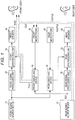
- Fig. 1 illustrates a configuration of an audio system according to the present embodiment
- the audio system includes a front sound source device 11, a front signal processing unit 12, a front synthesizing unit 13, a front speaker 14, a front canceling device 15, and a front microphone 16.
- the audio system further includes a rear sound source device 21, a rear signal processing unit 22, a rear synthesizing unit 23, a rear speaker 24, a rear canceling device 25, and a rear microphone 26.
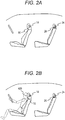
- the front speaker 14 is a speaker for a front user who is a user boarding a front seat of a vehicle, and is disposed, for example, at a position next to a headrest of the front seat as illustrated in Fig. 2A .
- the front microphone 16 is disposed at a position near a position of an ear of the user boarding the front seat, such as on or in the headrest of the front seat or any other part of the front seat or the vehicle roof interior.
- the rear speaker 24 is a speaker for a rear user who is a user boarding a rear seat of the vehicle, and is disposed, for example, at a position next to a headrest of the rear seat as illustrated in Fig. 2A .
- the rear microphone 26 is disposed at a position near a position of an ear of the user boarding the rear seat, such as on or in the headrest of the rear seat or any other part of the rear seat or the vehicle roof interior.
- the front sound source device 11 is a device serving as a sound source of audio that the front user listens to, such as a music player or a radio
- the front signal processing unit 12 is a device which performs predetermined signal processing on audio output from the front sound source device 11 such as an equalizer and outputs the audio.
- the rear sound source device 21 is a device serving as a sound source of audio that the rear user listens to, such as the music player or the radio
- the rear signal processing unit 22 is a device which performs predetermined signal processing on audio output from the rear sound source device 21 such as the equalizer.
- the front canceling device 15 generates and outputs a front cancellation sound from a voice picked up by the front microphone 16 and the audio output from the rear sound source device 21, and the front synthesizing unit 13 synthesizes the audio output from the front signal processing unit 12 with the front cancellation sound output from the front canceling device 15 and outputs the synthesized signal from the front speaker 14.
- the rear canceling device 25 generates and outputs a rear cancellation sound from a voice picked up by the rear microphone 26 and the audio output from the front sound source device 11, and the rear synthesizing unit 23 synthesizes the audio output from the rear signal processing unit 22 with the rear cancellation sound output from the rear canceling device 25 and outputs the synthesized signal from the rear speaker 24.
- the audio of the sound source for the rear sound source device 21, which is transmitted from the rear speaker 24, is noise for the front user
- the sound of the sound source for the front sound source device 11, which is transmitted from the front speaker 14, is noise for the rear user.
- the position of the ear of the front user is a noise cancellation position where the noise for the front user is to be canceled
- the position of the ear of the rear user is a noise cancellation position where the noise for the rear user is to be canceled.
- the front cancellation sound generated and output from the front canceling device 15 is a sound for canceling the audio (noise) transmitted from the rear speaker 24 at the position of the ear of the front user
- the rear cancellation sound generated and output from the rear canceling device 25 is a sound for canceling the audio (noise) transmitted from the front speaker 14 at the position of the ear of the rear user.
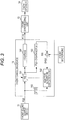
- the front canceling device 15 includes a variable filter 151, an adaptive algorithm execution unit 152, a transfer model 153, a first filter 154, a second filter 155, and a subtractor 156.
- a transfer function "-V(z)/Sv(z)” is set in the first filter 154 by learning processing performed in advance, and a transfer function "P(z) ⁇ V(z)/Sv(z) ⁇ S(z)” is set in the second filter 155 by the learning processing.
- A(z)V(z) is the transfer function from the current rear sound source device 21 to the ear of the front user
- A(z)P(z) is the transfer function from the current rear sound source device 21 to the front microphone 16
- Sv(z) is the transfer function from the front canceling device 15 to the ear of the front user
- S(z) is the transfer function from the front canceling device 15 to the front microphone 16.
- V(z) is the transfer function from the rear sound source device 21 to the ear of the front user at the time of executing the learning processing described above
- P(z) is the transfer function from the rear sound source device 21 to the front microphone 16 at the time of executing the learning processing described above.
- the transfer function V(z) from the rear sound source device 21 to the ear of the front user or the transfer function P(z) from the rear sound source device 21 to the front microphone 16 is changed in the same manner as the movement of the front sheet or the rear sheet or the change (change in setting of the equalizer, change in a delayed time or the like) in the content of the signal processing performed by the front signal processing unit 12, A(z) represents the change in the transfer function.
- the transfer function Sv(z) from the front canceling device 15 to the ear of the front user and the transfer function S(z) from the front canceling device 15 to the front microphone 16 can be considered not to be changed because the positional relationship between the front speaker 14 and the ear of the front user or the front microphone 16 is appropriately constant.
- the audio X(z) input from the rear sound source device 21 to the front canceling device 15 passes through the variable filter 151 and the first filter 154 and is output to the front speaker 14 via the front synthesizing unit 13 as the front cancellation sound FC(z).
- the audio X(z) input from the rear sound source device 21 to the front canceling device 15 is transmitted to the subtractor 156 through the variable filter 151 and the second filter 155, and the subtractor 156 subtracts the output of the second filter 155 from the sound picked up by the front microphone 16 and outputs the subtracted result to the adaptive algorithm execution unit 152 as an error EH(z).
- variable filter 151, the adaptive algorithm execution unit 152, and the transfer model 153 configures a (Filtered-X) adaptive filter, and the transfer model 153 inputs a preset propagation characteristic S ⁇ (z) such as a phase delay from the front canceling device 15 to the front microphone 16 to the adaptive algorithm execution unit 152 by convoluting the propagation characteristic S ⁇ (z) with the audio X(z) input from the rear sound source device 21 to the front canceling device 15.
- a preset propagation characteristic S ⁇ (z) such as a phase delay from the front canceling device 15 to the front microphone 16 to the adaptive algorithm execution unit 152 by convoluting the propagation characteristic S ⁇ (z) with the audio X(z) input from the rear sound source device 21 to the front canceling device 15.
- the adaptive algorithm execution unit 152 executes an adaptive algorithm such as NLMS or LMS using, as an input, the audio X(z) with which the propagation characteristic S ⁇ (z) is convoluted by the transfer model 153 and the error EH(z), and sets the transfer function H(z) for the variable filter 151 so that the error EH(z) becomes 0.
- an adaptive algorithm such as NLMS or LMS
- the front canceling device 15 can cancel the audio of the sound source of the rear sound source device 21 with the front cancellation sound, at the position of the ear of the front user.
- the front canceling device 15 can cancel the audio of the sound source of the rear sound source device 21 with the front cancel sound according to the adaptation to the change, at the position of the ear of the front user.
- the learning processing is performed by setting the positions of the front and rear seats or the content of the signal processing performed by the rear signal processing unit 22 to be the predetermined standard state.
- the learning processing includes learning processing of a first stage of setting the transfer function in the first filter 154 and learning processing of a second stage of setting the transfer function in the second filter 155.
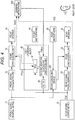
- the learning processing of the first stage is performed in a configuration in which the front canceling device 15 of the audio system of Fig. 1 is replaced with a first learning block 40.
- the learning processing of the first stage is performed using a learning microphone 400 which is disposed at the position which is normally the ear of the front user.
- the disposition of the learning microphone 400 at the position which is normally the ear of the front user is realized, for example, by disposing the learning microphone 400 at a position of an ear of a dummy doll on the front seat.
- the first learning block 40 includes a second variable filter 41, a second adaptive algorithm execution unit 42, and a second transfer model 43, and the second variable filter 41, the second adaptive algorithm execution unit 42, and the second transfer model 43 constitutes a (Filtered-X) adaptive filter.
- the audio X(z) input from the rear sound source device 21 to the first learning block 40 passes through the second variable filter 41 and is output to the front speaker 14 via the front synthesizing unit 13 as the front cancellation sound FC(z).
- the second transfer model 43 inputs the preset propagation characteristic Sv ⁇ (z) such as the phase delay from the front canceling device 15 to the learning microphone 400 to the second adaptive algorithm execution unit 42 by convoluting the propagation characteristic Sv ⁇ (z) with the audio X(z) input from the rear sound source device 21 to the front canceling device 15.
- the second adaptive algorithm execution unit 42 executes the adaptive algorithm such as NLMS or LMS by setting the sound picked up by the learning microphone 400 as an error EW(z) and setting, as an input, the audio X(z) in which the propagation characteristic Sv ⁇ (z) is convoluted by the second transfer model 43 and the error EW(z), and sets the transfer function W(z) of the second variable filter 41 so that the error EW(z) becomes minimum.
- the adaptive algorithm such as NLMS or LMS
- the learning processing of the second stage is performed in a configuration in which the front canceling device 15 of the audio system of Fig. 1 is replaced with a second learning block 50.
- the second learning block 50 includes a third variable filter 51, a third adaptive algorithm execution unit 52, a learning filter 53, and a second subtractor 54.
- the third variable filter 51 and the third adaptive algorithm execution unit 52 constitute an adaptive filter.
- the audio X(z) input from the rear sound source device 21 to the second learning block 50 passes through the learning filter 53 and is output to the front speaker 14 via the front synthesizing unit 13 as the front cancellation sound FC(z).
- the audio X(z) is transmitted to the second subtractor 54 through the third variable filter 51, and the second subtractor 54 subtracts the output of the third variable filter 51 from the sound picked up by the front microphone 16, and outputs the subtracted result as an error EK(z) to the third adaptive algorithm execution unit 52.
- the third adaptive algorithm execution unit 52 executes the adaptive algorithm such as the NLMS or the LMS and sets the transfer function K(z) for the third variable filter 51 from the errors EK(z) and audio X(z) so that the error EK(z) becomes 0.
- the transfer function K(z) P(z) ⁇ V(z)/Sv(z) ⁇ S(z) for the second variable filter 41 thus obtained corrects the output of the front microphone 16 with the output of the virtual microphone disposed at the position of the ear of the front user by subtracting the output of the second variable filter 41 from the output of the front microphone 16.
- the learning processing is terminated by setting "-V(z)/Sv(z)" obtained as the transfer function W(z) for the second variable filter 41 in the learning processing of the first stage in the first filter 154 of the front canceling device 15 and setting "P(z) ⁇ V(z)/Sv(z) ⁇ S(z)” obtained as the transfer function K(z) for the third variable filter 51 in the learning processing of the second stage in the second filter 155 of the front canceling device 15.
- the front canceling device 15 may be configured to include the function of performing the learning processing described above.
- the front canceling device 15 is configured to include the variable filter 151, the adaptive algorithm execution unit 152, the transfer model 153, the subtractor 156, the second variable filter 41, the second adaptive algorithm execution unit 42, the second transfer model 43, the third variable filter 51, and the third adaptive algorithm execution unit 52.
- the propagation characteristic S ⁇ (z) from the front canceling device 15 to the front microphone 16 is preset in the transfer model 153
- the propagation characteristic Sv ⁇ (z) from the front canceling device 15 to the learning microphone 400 is preset in the second transfer model 43.
- the audio X(z) input from the rear sound source device 21 to the front canceling device 15 is input to the variable filter 151, the transfer model 153, the second transfer model 43, and the third adaptive algorithm execution unit 52.
- the output of the transfer model 153 is input to the adaptive algorithm execution unit 152, and the output of the second transfer model 43 is input to the second adaptive algorithm execution unit 42.
- the output of the variable filter 151 is input to the second variable filter 41, and the output of the second variable filter 41 is output to the front speaker 14 via the front synthesizing unit 13 as the front cancellation sound.
- the output of the variable filter 151 is input to the third variable filter 51, and the output of the third variable filter 51 is input to the subtractor 156.
- the subtractor 156 outputs the difference between the output of the front microphone 16 and the output of the third variable filter 51 to the third adaptive algorithm execution unit 52 and the adaptive algorithm execution unit 152.
- the second adaptive algorithm execution unit 42 can selectively connect the output of the learning microphone 400.
- the learning processing is as follows.
- the transfer function H(z) for the variable filter 151 is set to the transfer function which passes through the signal as it is, in the state in which the operation of the adaptive algorithm execution unit 152 is stopped, the learning microphone 400 disposed at the position of the ear of the user of the front sheet is connected to the second adaptive algorithm execution unit 42, and the first adaptive algorithm execution unit executes the adaptive algorithm from the audio X(z) with which the propagation characteristic Sv ⁇ (z) is convoluted by the second transfer model 43 and the error EW(z) by setting the output of the learning microphone 400 as the error EW(z) in order to set the transfer function W(z) of which the error EW(z) becomes 0 in the second variable filter 41.
- the transfer function H(z) for the variable filter 151 is set to the transfer function which passes through the signal as it is, and in the state where the operation of the adaptive algorithm execution unit 152 and the operation of the second adaptive algorithm execution unit 42 are stopped, the third adaptive algorithm execution unit 52 executes the adaptive algorithm from the error EK(z) and the audio X(z) by setting the output of the subtractor 156 as the error EK(z) in order to set the transfer function K(z) of which the error EK(z) becomes 0 to be the transfer function K(z) of the third variable filter 51.
- the transfer function K(z) for the third variable filter 51 is converged, the operation of the third adaptive algorithm execution unit 52 is stopped, the learning processing of the second stage is terminated, the learning microphone 400 is removed, the operation of the adaptive algorithm execution unit 152 is started while the operation of the second adaptive algorithm execution unit 42 and the operation of the third adaptive algorithm execution unit 52 are stopped, and the learning processing is completed.
- the audio system may be configured to input the output of the rear signal processing unit 22 instead of the output of the rear sound source device 21 to the front canceling device 15, perform processing using the output of the rear signal processing unit 22 instead of the output of the rear sound source device 21 in the front canceling device 15, input the output of the front signal processing unit 12 instead of the output of the front sound source device 11 to the rear canceling device 25, and perform processing using the output of the front signal processing unit 12 instead of the output of the rear sound source device 21 in the rear canceling device 25.
- the audio system may include a front channel division unit 81 configured to divide the output of the front sound source device 11 into a plurality of front channels, and a rear channel division unit 82 configured to divide the output of the rear sound source device 21 into a plurality of rear channels, a set of the front signal processing unit 12, the front synthesizing unit 13, and the front speaker 14 for each of the front channels, and a set of the rear signal processing unit 22, the rear synthesizing unit 23, and the rear speaker 24 for each of the rear channels.
- the input of the front canceling device 15 is replaced with the output of the rear sound source device 21 to be the output of the rear signal processing unit 22 or the input of the rear canceling device 25 is replaced with the output of the front sound source device 11 to be the output of the front signal processing unit 12, the front canceling device 15 for each front channel or the rear canceling device 25 for each rear channel is required, such that it is preferable that as illustrated in Fig. 8 , the output of the rear sound source device 21 is input to the front canceling device 15 and the output of the front sound source device 11 is input to the rear canceling device 25.
- the engine sound picked up by a microphone separately provided may be input to the front canceling device instead of the output of the rear sound source device 21 or the simulating sound obtained by simulating the engine sound generated from a simulating sound generating device separately provided is input to the front canceling device instead of the output of the rear sound source device 21.
Landscapes
- Physics & Mathematics (AREA)
- Engineering & Computer Science (AREA)
- Acoustics & Sound (AREA)
- Multimedia (AREA)
- Soundproofing, Sound Blocking, And Sound Damping (AREA)
- Fittings On The Vehicle Exterior For Carrying Loads, And Devices For Holding Or Mounting Articles (AREA)
- Circuit For Audible Band Transducer (AREA)
Abstract
Description
- The present invention relates to a technology of active noise control (ANC) capable of reducing noise by emitting cancellation sound which cancels noise.
- As a technology of active noise control which reduces noise by emitting cancellation noise that cancels noise, there has also been known a technology in which a speaker which emits cancellation noise, a microphone disposed near a position of an ear of a user, and an adaptive filter that applies a set transfer function to a signal simulating noise generated by a noise source to generate a cancellation sound are provided, and by setting a transfer function of an output of a microphone as an error signal, the transfer function is adaptively set in the adaptive filter to generate the cancellation noise which cancels noise at the position of the microphone near the position of the ear of the user (see, for example,
JP 6-195089 A - In addition, as the technology, there has also been known a technology (
JP 6-195089 A - According to the technology of correcting the error signal so that the transfer function set to cancel the noise at the position of the ear of the user described above is set in the adaptive filter, the error signal is corrected using the previously obtained difference between the transfer function from the noise source to the position of the ear of the user and the transfer function from the noise source to the microphone, such that if the transfer function from the noise source to the ear of the user or the transfer function from the noise source to the microphone is changed, the transfer function cannot be appropriately set in the adaptive filter and the cancellation sound which cancels the noise at the position of the ear of the user cannot be generated.
- Therefore, an object of the present invention is to provide an active noise control device generating a cancellation sound which cancels noise at a position of an ear of a user using a microphone disposed at a position near the position of the ear of the user and outputting the generated cancellation sound from a speaker, in which the generated cancellation sound is adapted to a change in a transfer function from a noise source to the position of the ear of the user or a transfer function from the noise source to the microphone.
- Another object of the present invention is to provide an on-vehicle audio system to which such an active noise control system is applied.
- The invention relates to an active noise control device and on-vehicle audio system according to the appended claims. Embodiments are disclosed in the dependent claims.
- According to an aspect, the present invention provides an active noise control device reducing noise, including: a speaker configured to output a cancellation sound which cancels noise at a predetermined noise cancel position; a microphone configured to pick-up a synthetic sound of the noise with the cancellation sound and output the picked up synthetic sound as an error signal; and a cancellation sound generation unit configured to generate the cancellation sound output from the speaker. Here, the cancellation sound generation unit includes an adaptive filter configured to use, as an input, a noise signal which is a signal indicating noise generated from a noise source of the noise, a first filter configured to set an output of the adaptive filter as an input and output the cancellation sound, and a second filter configured to set the output of the adaptive filter as the input. In addition, by setting a difference between an output of the microphone and an output of the second filter as an error, the adaptive filter updates a transfer function for the adaptive filter by a predetermined adaptive algorithm. A transfer function for the first filter is set in the first filter, and the transfer function for the first filter is set so that the noise at the noise cancellation position is canceled when the cancellation sound generation unit generates, as the noise cancellation sound, a sound which is obtained by applying the transfer function for the first filter to the noise signal in a predetermined standard state. In addition, a transfer function for the second filter is set in the second filter, and the transfer function for the second filter is set so that the error is an output of a virtual microphone disposed at the noise cancellation position when the transfer function for the adaptive filter is a transfer function which sets, as an output, an input as it is in the predetermined standard state.
- In addition, in a further aspect, the present invention provides an active noise control device reducing noise, including: a speaker configured to output a cancellation sound which cancels noise at a predetermined noise cancel position; a microphone configured to pick-up a synthetic sound of the noise with the cancellation sound and output the picked up synthetic sound as an error signal; and a cancellation sound generation unit configured to generate the cancellation sound output from the speaker. Here, the cancellation sound generation unit includes an adaptive filter configured to use, as an input, a noise signal which is a signal indicating noise generated from a noise source of the noise, a first filter configured to set an output of the adaptive filter as an input and output the cancellation sound, and a second filter configured to set the output of the adaptive filter as the input. In addition, by setting a difference between an output of the microphone and an output of the second filter as an error, the adaptive filter updates a transfer function for the adaptive filter by a predetermined adaptive algorithm. Here, a transfer function for the first filter learned by a predetermined learning processing is set in the first filter and a transfer function for the second filter learned by the learning processing is set in the second filter. Here, the transfer function for the first filter is satisfied "-V(z)/Sv(z)" by setting V(z) as a transfer function from the noise source to the noise cancellation position and Sv(z) as a transfer function from the cancellation sound generation unit to the noise cancellation position at a time when the learning processing is executed, and the transfer function for the second filter is satisfied "P(z){V(z)/Sv(z)}S(z)" by setting P(z) as a transfer function from the noise source to the microphone and S(z) as a transfer function from the cancellation sound generation unit to the microphone at a time when the learning processing is executed.
- In addition, in a further aspect, the present invention provides an active noise control device reducing noise, including: a speaker configured to output a cancellation sound which cancels noise at a predetermined noise cancel position; a microphone configured to pick-up a synthetic sound of the noise with the cancellation sound and output the picked up synthetic sound as an error signal; and a cancellation sound generation unit configured to generate the cancellation sound output from the speaker. Here, the cancellation sound generation unit includes an adaptive filter configured to use, as an input, a noise signal which is a signal indicating noise generated from a noise source of the noise, a first filter configured to set an output of the adaptive filter as an input and output the cancellation sound, and a second filter configured to set the output of the adaptive filter as the input. In addition, by setting a difference between an output of the microphone and an output of the second filter as an error, the adaptive filter updates a transfer function for the adaptive filter by a predetermined adaptive algorithm. Here, a transfer function for the first filter learned by a predetermined learning processing is set in the first filter and a transfer function for the second filter learned by the learning processing is set in the second filter. Here, the learning processing is processing of learning, as the transfer function for the first filter, the first transfer function of which the noise at the noise cancellation position is canceled in the configuration in which the cancellation sound generation unit is replaced with a first learning unit which generates, as the cancellation sound, a sound obtained by applying a first transfer function to the noise signal, and learning the second transfer function as the transfer function for the second filter without the difference between the output of the microphone and a sound obtained by applying the second transfer function to the noise signal in the configuration in which the cancellation sound generation unit is replaced with the second learning unit which generates, as the cancellation sound, the sound obtained by applying the transfer function for the first filter to the noise signal.
- According to an embodiment, the active noise control device in which the transfer function for the first filter learned by the learning processing is set in the first filter and the transfer function for the second filter learned by the learning processing is set in the second filter as described above may include a learning processing execution unit which executes the learning processing to set the transfer function for the first filter in the first filter and set the transfer function for the second filter in the second filter.
- In a further aspect, the present invention also provides an on-vehicle audio system mounted on the vehicle, which includes the described active noise control device. Here, the on-vehicle audio system includes an audio device for a user who boards a first seat of a vehicle, which emits audio into the vehicle. The noise is the audio emitted from the audio device, the noise signal is an audio signal output from the sound source of the audio device, the noise cancellation position is a position of an ear of a user who boards a second seat of the vehicle, and the microphone is disposed at a position near the position of the ear of the user who boards the second seat, such as on or in any part of the second seat or the vehicle roof interior, e. g. the headrest of the second seat.
- According to the embodiments of active noise control devices or the on-vehicle audio system, as will be described in detail later, even if the transfer function from the noise source to the noise cancellation position and the transfer function from the noise source to the microphone are changed similarly, it is possible to cancel the noise at the noise cancellation position with the cancellation sound according to the adaptation to the change.
- As described above, according to the present invention, in the active noise control system which generates the cancellation sound which cancels the noise at the position of the ear of the user using the microphone disposed at the position near the position of the ear of the user and outputs the generated cancellation sound from the speaker, the generated cancellation sound can be adapted to the change in the transfer function from a noise source to the position of the ear of the user or the transfer function from the noise source to the microphone.
- In addition, according to the present invention, it is possible to provide the on-vehicle audio system to which such an active noise control system is applied.
-
Fig. 1 is a block diagram illustrating a configuration of an audio system according to an embodiment of the present invention. -
Figs. 2A, 2B are views illustrating an arrangement of a speaker and a microphone according to an embodiment of the present invention. -
Fig. 3 is a block diagram illustrating a configuration of a front canceling device according to an embodiment of the present invention. -
Fig. 4 is a diagram illustrating a first stage of learning according to an embodiment of the present invention. -
Fig. 5 is a diagram illustrating a second stage of learning according to an embodiment of the present invention. -
Fig. 6 is a block diagram illustrating another configuration example of the front canceling device according to an embodiment of the present invention. -
Fig. 7 is a block diagram illustrating another configuration example of the audio system according to an embodiment of the present invention. -
Fig. 8 is a block diagram illustrating another configuration example of the audio system according to an embodiment of the present invention. - Hereinafter, example in which an embodiment of the present invention will be applied to an audio system mounted in a vehicle will be described as an example.
-
Fig. 1 illustrates a configuration of an audio system according to the present embodiment - As illustrated in
Fig. 1 , the audio system includes a frontsound source device 11, a frontsignal processing unit 12, a front synthesizingunit 13, afront speaker 14, afront canceling device 15, and afront microphone 16. - In addition, the audio system further includes a rear
sound source device 21, a rearsignal processing unit 22, a rear synthesizingunit 23, arear speaker 24, arear canceling device 25, and arear microphone 26. - Here, the
front speaker 14 is a speaker for a front user who is a user boarding a front seat of a vehicle, and is disposed, for example, at a position next to a headrest of the front seat as illustrated inFig. 2A . In addition, as illustrated inFig. 2A , thefront microphone 16 is disposed at a position near a position of an ear of the user boarding the front seat, such as on or in the headrest of the front seat or any other part of the front seat or the vehicle roof interior. - In addition, the
rear speaker 24 is a speaker for a rear user who is a user boarding a rear seat of the vehicle, and is disposed, for example, at a position next to a headrest of the rear seat as illustrated inFig. 2A . In addition, as illustrated inFig. 2A , therear microphone 26 is disposed at a position near a position of an ear of the user boarding the rear seat, such as on or in the headrest of the rear seat or any other part of the rear seat or the vehicle roof interior. - Returning to
Fig. 1 , the frontsound source device 11 is a device serving as a sound source of audio that the front user listens to, such as a music player or a radio, and the frontsignal processing unit 12 is a device which performs predetermined signal processing on audio output from the frontsound source device 11 such as an equalizer and outputs the audio. - In addition, the rear
sound source device 21 is a device serving as a sound source of audio that the rear user listens to, such as the music player or the radio, and the rearsignal processing unit 22 is a device which performs predetermined signal processing on audio output from the rearsound source device 21 such as the equalizer. - The
front canceling device 15 generates and outputs a front cancellation sound from a voice picked up by thefront microphone 16 and the audio output from the rearsound source device 21, and the front synthesizingunit 13 synthesizes the audio output from the frontsignal processing unit 12 with the front cancellation sound output from thefront canceling device 15 and outputs the synthesized signal from thefront speaker 14. - In addition, the
rear canceling device 25 generates and outputs a rear cancellation sound from a voice picked up by therear microphone 26 and the audio output from the frontsound source device 11, and the rear synthesizingunit 23 synthesizes the audio output from the rearsignal processing unit 22 with the rear cancellation sound output from therear canceling device 25 and outputs the synthesized signal from therear speaker 24. - Here, the audio of the sound source for the rear
sound source device 21, which is transmitted from therear speaker 24, is noise for the front user, and the sound of the sound source for the frontsound source device 11, which is transmitted from thefront speaker 14, is noise for the rear user. - In addition, the position of the ear of the front user is a noise cancellation position where the noise for the front user is to be canceled, and the position of the ear of the rear user is a noise cancellation position where the noise for the rear user is to be canceled.
- The front cancellation sound generated and output from the
front canceling device 15 is a sound for canceling the audio (noise) transmitted from therear speaker 24 at the position of the ear of the front user, and the rear cancellation sound generated and output from therear canceling device 25 is a sound for canceling the audio (noise) transmitted from thefront speaker 14 at the position of the ear of the rear user. - Next, the configuration of the
front canceling device 15 is illustrated inFig. 3 . - As illustrated in
Fig. 3 , thefront canceling device 15 includes avariable filter 151, an adaptivealgorithm execution unit 152, atransfer model 153, afirst filter 154, asecond filter 155, and asubtractor 156. - Then, a transfer function "-V(z)/Sv(z)" is set in the
first filter 154 by learning processing performed in advance, and a transfer function "P(z){V(z)/Sv(z)}S(z)" is set in thesecond filter 155 by the learning processing. - The learning processing will be described in detail later.
- However, as illustrated in
Fig. 1 , A(z)V(z) is the transfer function from the current rearsound source device 21 to the ear of the front user, A(z)P(z) is the transfer function from the current rearsound source device 21 to thefront microphone 16, Sv(z) is the transfer function from thefront canceling device 15 to the ear of the front user, and S(z) is the transfer function from thefront canceling device 15 to thefront microphone 16. - Further, V(z) is the transfer function from the rear
sound source device 21 to the ear of the front user at the time of executing the learning processing described above, and P(z) is the transfer function from the rearsound source device 21 to thefront microphone 16 at the time of executing the learning processing described above. - Here, the transfer function V(z) from the rear
sound source device 21 to the ear of the front user or the transfer function P(z) from the rearsound source device 21 to thefront microphone 16 is changed in the same manner as the movement of the front sheet or the rear sheet or the change (change in setting of the equalizer, change in a delayed time or the like) in the content of the signal processing performed by the frontsignal processing unit 12, A(z) represents the change in the transfer function. - On the other hand, the transfer function Sv(z) from the front canceling
device 15 to the ear of the front user and the transfer function S(z) from the front cancelingdevice 15 to thefront microphone 16 can be considered not to be changed because the positional relationship between thefront speaker 14 and the ear of the front user or thefront microphone 16 is appropriately constant. - Now, by setting X(z) as the audio output from the rear
sound source device 21, FC(z) as the front cancellation sound generated and output from the front cancelingdevice 15, and H(z) as the transfer function for thevariable filter 151, the audio X(z) input from the rearsound source device 21 to the front cancelingdevice 15 passes through thevariable filter 151 and thefirst filter 154 and is output to thefront speaker 14 via thefront synthesizing unit 13 as the front cancellation sound FC(z). - Also, the audio X(z) input from the rear
sound source device 21 to the front cancelingdevice 15 is transmitted to thesubtractor 156 through thevariable filter 151 and thesecond filter 155, and thesubtractor 156 subtracts the output of thesecond filter 155 from the sound picked up by thefront microphone 16 and outputs the subtracted result to the adaptivealgorithm execution unit 152 as an error EH(z). - Next, the
variable filter 151, the adaptivealgorithm execution unit 152, and thetransfer model 153 configures a (Filtered-X) adaptive filter, and thetransfer model 153 inputs a preset propagation characteristic S^(z) such as a phase delay from the front cancelingdevice 15 to thefront microphone 16 to the adaptivealgorithm execution unit 152 by convoluting the propagation characteristic S^(z) with the audio X(z) input from the rearsound source device 21 to the front cancelingdevice 15. - Then, the adaptive
algorithm execution unit 152 executes an adaptive algorithm such as NLMS or LMS using, as an input, the audio X(z) with which the propagation characteristic S^(z) is convoluted by thetransfer model 153 and the error EH(z), and sets the transfer function H(z) for thevariable filter 151 so that the error EH(z) becomes 0. - Here, since the sound picked up by the
front microphone 16 is {A(z) P(z)}X(z)-{H(z) V(z) S(z)/Sv(z)}X(z) obtained by adding the front cancellation sound transmitted to the position of thefront microphone 16 to the audio of the sound source of the rearsound source device 21 transmitted to the position of thefront microphone 16, EH(z) ={A(z) P(z) - H(z) V(z) S(z)/Sv(z)}X(z) - << H(z) [P(z) -{V(z)/Sv(z)}S(z)] >> X(z) is satisfied, and the adaptive algorithm setting the transfer function H(z) for thevariable filter 151 so that EH(z) is minimum is executed and thus the transfer function for thevariable filter 151 is set to H(z) = A(z). - The difference Ev(z) between the audio of the sound source of the rear
sound source device 21 and the front cancellation sound at the position of the ear of the front user is an addition of the audio of the sound source of the rearsound source device 21 transmitted to the position of the ear of the front user to the front cancellation sound transmitted to the position of the ear of the front user.
- Therefore, the front canceling
device 15 can cancel the audio of the sound source of the rearsound source device 21 with the front cancellation sound, at the position of the ear of the front user. - Further, when the transfer function from the rear
sound source device 21 to the ear of the front user changes from V(z) to A(z)V(z) at the time of the execution of the learning processing and the transfer function from the rearsound source device 21 to thefront microphone 16 changes from P(z) to A(z)P(z) at the time of the execution of the learning processing, that is, the transfer function from the rearsound source device 21 to the ear of the front user and the transfer function from the rearsound source device 21 to thefront microphone 16 change similarly, the front cancelingdevice 15 can cancel the audio of the sound source of the rearsound source device 21 with the front cancel sound according to the adaptation to the change, at the position of the ear of the front user. - Next, the above-described learning processing to be performed in advance will be described.
- Here, the learning processing is performed by setting the positions of the front and rear seats or the content of the signal processing performed by the rear
signal processing unit 22 to be the predetermined standard state.. - The learning processing includes learning processing of a first stage of setting the transfer function in the
first filter 154 and learning processing of a second stage of setting the transfer function in thesecond filter 155. - As illustrated in
Fig. 4 , the learning processing of the first stage is performed in a configuration in which the front cancelingdevice 15 of the audio system ofFig. 1 is replaced with afirst learning block 40. In addition, as illustrated inFig. 2B , the learning processing of the first stage is performed using alearning microphone 400 which is disposed at the position which is normally the ear of the front user. Here, the disposition of the learningmicrophone 400 at the position which is normally the ear of the front user is realized, for example, by disposing the learningmicrophone 400 at a position of an ear of a dummy doll on the front seat. - The
first learning block 40 includes a secondvariable filter 41, a second adaptivealgorithm execution unit 42, and asecond transfer model 43, and the secondvariable filter 41, the second adaptivealgorithm execution unit 42, and thesecond transfer model 43 constitutes a (Filtered-X) adaptive filter. - Now, by setting W(z) as the transfer function for the second
variable filter 41, the audio X(z) input from the rearsound source device 21 to thefirst learning block 40 passes through the secondvariable filter 41 and is output to thefront speaker 14 via thefront synthesizing unit 13 as the front cancellation sound FC(z). - Next, the
second transfer model 43 inputs the preset propagation characteristic Sv^(z) such as the phase delay from the front cancelingdevice 15 to thelearning microphone 400 to the second adaptivealgorithm execution unit 42 by convoluting the propagation characteristic Sv^(z) with the audio X(z) input from the rearsound source device 21 to the front cancelingdevice 15. - Further, the second adaptive
algorithm execution unit 42 executes the adaptive algorithm such as NLMS or LMS by setting the sound picked up by the learningmicrophone 400 as an error EW(z) and setting, as an input, the audio X(z) in which the propagation characteristic Sv^(z) is convoluted by thesecond transfer model 43 and the error EW(z), and sets the transfer function W(z) of the secondvariable filter 41 so that the error EW(z) becomes minimum. - Since the error EW(z) picked up by the learning
microphone 400 disposed at the position of the ear of the front user is EW(z) ={V(z)}X(z) +{W(z) Sv(z)}X(z) obtained by adding the front cancellation sound transmitted to the position of the ear of the front user to the audio of the sound source of the rearsound source device 21 transmitted to the position of the ear of the front user, the transfer function W(z) for the secondvariable filter 41 sets to be W(z) = -V(z)/Sv(z) by executing the adaptive algorithm which sets the transfer function W(z) for the secondvariable filter 41 so that EW(z) becomes 0. - Here, the transfer function W(z) = - V(z)/Sv(z) for the first variable filter thus obtained is a function of generating the front cancellation sound, normally at the position of the ear of the front user.
- Next, when the transfer function W(z) for the second
variable filter 41 has converged, the learning processing of the first stage is terminated, and the learning processing of the second stage is performed using "- V(z)/Sv(z)" obtained as the transfer function W(z) for the secondvariable filter 41 in the learning processing of the first stage. - As illustrated in
Fig. 5 , the learning processing of the second stage is performed in a configuration in which the front cancelingdevice 15 of the audio system ofFig. 1 is replaced with a second learning block 50. - The second learning block 50 includes a third
variable filter 51, a third adaptivealgorithm execution unit 52, a learningfilter 53, and asecond subtractor 54. - Here, the third
variable filter 51 and the third adaptivealgorithm execution unit 52 constitute an adaptive filter. - In addition, "-V(z)/Sv(z)" obtained as the transfer function W(z) for the second
variable filter 41 in the learning processing of the first stage is set as the transfer function in the learningfilter 53 . - Now, by setting K(z) as the transfer function for the third
variable filter 51, the audio X(z) input from the rearsound source device 21 to the second learning block 50 passes through the learningfilter 53 and is output to thefront speaker 14 via thefront synthesizing unit 13 as the front cancellation sound FC(z). - Further, the audio X(z) is transmitted to the
second subtractor 54 through the thirdvariable filter 51, and thesecond subtractor 54 subtracts the output of the thirdvariable filter 51 from the sound picked up by thefront microphone 16, and outputs the subtracted result as an error EK(z) to the third adaptivealgorithm execution unit 52. - The third adaptive
algorithm execution unit 52 executes the adaptive algorithm such as the NLMS or the LMS and sets the transfer function K(z) for the thirdvariable filter 51 from the errors EK(z) and audio X(z) so that the error EK(z) becomes 0. - Here, since the sound picked up by the
front microphone 16 is {P(z)}X(z) - [{V(z)/Sv(z)}S(z)] X(z) obtained by adding the front cancellation sound transmitted to the position of thefront microphone 16 to the audio of the sound source of the rearsound source device 21 transmitted to the position of thefront microphone 16, the error EK(z) ={P(z)}X(z) - [{V(z)/Sv(z)}S(z)] X(z) -{K(z)}X(z) is satisfied, and the adaptive algorithm setting the transfer function K(z) for the thirdvariable filter 51 so that EK(z) becomes 0 is executed, such that the transfer function K(z) for the thirdvariable filter 51 is set to K(z) = P(z) -{V(z)/Sv(z)}S(z). - Next, if the transfer function K(z) for the third
variable filter 51 is converged, the learning processing of the second stage is terminated. - The transfer function K(z) = P(z){V(z)/Sv(z)}S(z) for the second
variable filter 41 thus obtained corrects the output of thefront microphone 16 with the output of the virtual microphone disposed at the position of the ear of the front user by subtracting the output of the secondvariable filter 41 from the output of thefront microphone 16. - Then, the learning processing is terminated by setting "-V(z)/Sv(z)" obtained as the transfer function W(z) for the second
variable filter 41 in the learning processing of the first stage in thefirst filter 154 of the front cancelingdevice 15 and setting "P(z) {V(z)/Sv(z)}S(z)" obtained as the transfer function K(z) for the thirdvariable filter 51 in the learning processing of the second stage in thesecond filter 155 of the front cancelingdevice 15. - The learning processing has been described above.
- However, the front canceling
device 15 may be configured to include the function of performing the learning processing described above. - That is, in this case, as illustrated in
Fig. 6 , the front cancelingdevice 15 is configured to include thevariable filter 151, the adaptivealgorithm execution unit 152, thetransfer model 153, thesubtractor 156, the secondvariable filter 41, the second adaptivealgorithm execution unit 42, thesecond transfer model 43, the thirdvariable filter 51, and the third adaptivealgorithm execution unit 52. - In this case, the propagation characteristic S^(z) from the front canceling
device 15 to thefront microphone 16 is preset in thetransfer model 153, and the propagation characteristic Sv^(z) from the front cancelingdevice 15 to thelearning microphone 400 is preset in thesecond transfer model 43. - The audio X(z) input from the rear
sound source device 21 to the front cancelingdevice 15 is input to thevariable filter 151, thetransfer model 153, thesecond transfer model 43, and the third adaptivealgorithm execution unit 52. - The output of the
transfer model 153 is input to the adaptivealgorithm execution unit 152, and the output of thesecond transfer model 43 is input to the second adaptivealgorithm execution unit 42. - The output of the
variable filter 151 is input to the secondvariable filter 41, and the output of the secondvariable filter 41 is output to thefront speaker 14 via thefront synthesizing unit 13 as the front cancellation sound. - In addition, the output of the
variable filter 151 is input to the thirdvariable filter 51, and the output of the thirdvariable filter 51 is input to thesubtractor 156. Thesubtractor 156 outputs the difference between the output of thefront microphone 16 and the output of the thirdvariable filter 51 to the third adaptivealgorithm execution unit 52 and the adaptivealgorithm execution unit 152. - In addition, the second adaptive
algorithm execution unit 42 can selectively connect the output of the learningmicrophone 400. - Here, in such a front canceling
device 15, the learning processing is as follows. - That is, first, in the learning processing of the first stage, the transfer function H(z) for the
variable filter 151 is set to the transfer function which passes through the signal as it is, in the state in which the operation of the adaptivealgorithm execution unit 152 is stopped, the learningmicrophone 400 disposed at the position of the ear of the user of the front sheet is connected to the second adaptivealgorithm execution unit 42, and the first adaptive algorithm execution unit executes the adaptive algorithm from the audio X(z) with which the propagation characteristic Sv^(z) is convoluted by thesecond transfer model 43 and the error EW(z) by setting the output of the learningmicrophone 400 as the error EW(z) in order to set the transfer function W(z) of which the error EW(z) becomes 0 in the secondvariable filter 41. - Then, if the transfer function W(z) for the second
variable filter 41 is converged, the operation of the second adaptivealgorithm execution unit 42 is stopped and the transfer function W(z) for the secondvariable filter 41 is fixed. - Next, in the learning processing of the second stage, the transfer function H(z) for the
variable filter 151 is set to the transfer function which passes through the signal as it is, and in the state where the operation of the adaptivealgorithm execution unit 152 and the operation of the second adaptivealgorithm execution unit 42 are stopped, the third adaptivealgorithm execution unit 52 executes the adaptive algorithm from the error EK(z) and the audio X(z) by setting the output of thesubtractor 156 as the error EK(z) in order to set the transfer function K(z) of which the error EK(z) becomes 0 to be the transfer function K(z) of the thirdvariable filter 51. - If the transfer function K(z) for the third
variable filter 51 is converged, the operation of the third adaptivealgorithm execution unit 52 is stopped, the learning processing of the second stage is terminated, the learningmicrophone 400 is removed, the operation of the adaptivealgorithm execution unit 152 is started while the operation of the second adaptivealgorithm execution unit 42 and the operation of the third adaptivealgorithm execution unit 52 are stopped, and the learning processing is completed. - Next, the rear canceling
device 25 will be described. - With reference to the explanation of the front canceling
device 15 described above, in the rear cancelingdevice 25, the front and rear are exchanged. - The embodiments of the present invention have been described above.
- As illustrated in
Fig. 7 , the audio system may be configured to input the output of the rearsignal processing unit 22 instead of the output of the rearsound source device 21 to the front cancelingdevice 15, perform processing using the output of the rearsignal processing unit 22 instead of the output of the rearsound source device 21 in the front cancelingdevice 15, input the output of the frontsignal processing unit 12 instead of the output of the frontsound source device 11 to the rear cancelingdevice 25, and perform processing using the output of the frontsignal processing unit 12 instead of the output of the rearsound source device 21 in the rear cancelingdevice 25. - In addition, as illustrated in
Fig. 8 , the audio system may include a frontchannel division unit 81 configured to divide the output of the frontsound source device 11 into a plurality of front channels, and a rearchannel division unit 82 configured to divide the output of the rearsound source device 21 into a plurality of rear channels, a set of the frontsignal processing unit 12, thefront synthesizing unit 13, and thefront speaker 14 for each of the front channels, and a set of the rearsignal processing unit 22, therear synthesizing unit 23, and therear speaker 24 for each of the rear channels. - As described above, when the set of the front
signal processing unit 12, thefront synthesizing unit 13, and thefront speaker 14 is provided for each of the plurality of front channels and the set of the rearsignal processing unit 22, therear synthesizing unit 23, and therear speaker 24 is provided for each of the plurality of channels, if as illustrated inFig. 7 , the input of the front cancelingdevice 15 is replaced with the output of the rearsound source device 21 to be the output of the rearsignal processing unit 22 or the input of the rear cancelingdevice 25 is replaced with the output of the frontsound source device 11 to be the output of the frontsignal processing unit 12, the front cancelingdevice 15 for each front channel or the rear cancelingdevice 25 for each rear channel is required, such that it is preferable that as illustrated inFig. 8 , the output of the rearsound source device 21 is input to the front cancelingdevice 15 and the output of the frontsound source device 11 is input to the rear cancelingdevice 25. - In addition, although the above embodiment has been described by taking the application to the audio system as an example, the present embodiment can be applied to the noise cancellation of an arbitrary noise source in the same manner.
- That is, for example, in the case of canceling, as noise at the ear of the front user, an engine sound generated from an engine serving as a sound source, the engine sound picked up by a microphone separately provided may be input to the front canceling device instead of the output of the rear
sound source device 21 or the simulating sound obtained by simulating the engine sound generated from a simulating sound generating device separately provided is input to the front canceling device instead of the output of the rearsound source device 21. -
- 11
- Front sound source device
- 12
- Front signal processing unit
- 13
- Front synthesizing unit
- 14
- Front speaker
- 15
- Front canceling device
- 16
- Front microphone
- 21
- Rear sound source device
- 22
- Rear signal processing unit
- 23
- Rear synthesizing unit
- 24
- Rear speaker
- 25
- Rear canceling device
- 26
- Rear microphone
- 40
- First learning block
- 41
- Second variable filter
- 42
- Second adaptive algorithm execution unit
- 43
- Second transfer model
- 50
- Second learning block
- 51
- Third variable filter
- 52
- Third adaptive algorithm execution unit
- 53
- Learning filter
- 54
- Second subtractor
- 81
- Front channel dividing unit
- 82
- Rear channel dividing unit
- 151
- Variable filter
- 152
- Adaptive algorithm execution unit
- 153
- Transfer model
- 154
- First filter
- 155
- Second filter
- 156
- Subtractor
- 400
- Learning microphone
Claims (3)
- An active noise control device reducing noise, comprising:a speaker configured to output a cancellation sound which cancels noise at a predetermined noise cancel position;a microphone (16) configured to pick-up a synthetic sound of the noise with the cancellation sound and output the picked-up synthetic sound as an error signal; anda cancellation sound generation unit configured to generate the cancellation sound output from the speaker,wherein the cancellation sound generation unit includes:an adaptive filter configured to use, as an input, a noise signal which is a signal indicating noise which a noise source of the noise generates;a first filter (154) configured to use an output of the adaptive filter as an input and output the cancellation sound; anda second filter (155) configured to use the output of the adaptive filter as an input, andthe adaptive filter is configured to update the transfer function of the adaptive filter by a predetermined adaptive algorithm using a difference between an output of the microphone (16) and an output of the second filter (155) as an error,a transfer function for the first filter (154) learned by a predetermined learning processing is set in the first filter (154) and a transfer function for the second filter (155) learned by the learning processing is set in the second filter (155), andthe learning processing isprocessing of learning, as the transfer function for the first filter (154), a first transfer function of which the noise at the noise cancellation position is canceled in the configuration in which the cancellation sound generation unit is replaced with a first learning unit which generates, as the cancellation sound, a sound obtained by applying the first transfer function to the noise signal, andlearning, as the transfer function for the second filter (155), a second transfer function without the difference between the output of the microphone (16) and the sound obtained by applying the second transfer function to the noise signal in the configuration in which the cancellation sound generation unit is replaced with the second learning unit which generates, as the cancellation sound, the sound obtained by applying the transfer function for the first filter (154) to the noise signal.
- The active noise control device according to claim 1, further comprising:
a learning processing execution unit configured to perform the learning processing to set the transfer function for the first filter (154) in the first filter (154) and the transfer function for the second filter (155) in the second filter (155). - An on-vehicle audio system including the active noise control device according to claim 1 or 2 mounted on a vehicle, the on-vehicle audio system comprising:an audio device for a user who boards a first seat of the vehicle, which emits audio into the vehicle,wherein the noise is audio which is emitted from the audio device,the noise signal is an audio signal output from a sound source of the audio device,the noise cancellation position is a position of an ear of a user who boards a second seat of the vehicle, andthe microphone (16) is disposed near the position of the ear of the user who boards the second seat.
Applications Claiming Priority (1)
| Application Number | Priority Date | Filing Date | Title |
|---|---|---|---|
| JP2018133739A JP7083576B2 (en) | 2018-07-13 | 2018-07-13 | Active noise control system and in-vehicle audio system |
Publications (2)
| Publication Number | Publication Date |
|---|---|
| EP3598431A1 true EP3598431A1 (en) | 2020-01-22 |
| EP3598431B1 EP3598431B1 (en) | 2022-03-23 |
Family
ID=67262182
Family Applications (1)
| Application Number | Title | Priority Date | Filing Date |
|---|---|---|---|
| EP19186066.7A Active EP3598431B1 (en) | 2018-07-13 | 2019-07-12 | Active noise control system and on-vehicle audio system |
Country Status (3)
| Country | Link |
|---|---|
| US (1) | US10854187B2 (en) |
| EP (1) | EP3598431B1 (en) |
| JP (1) | JP7083576B2 (en) |
Cited By (1)
| Publication number | Priority date | Publication date | Assignee | Title |
|---|---|---|---|---|
| EP4184943A1 (en) * | 2021-11-12 | 2023-05-24 | Alps Alpine Co., Ltd. | Audio system |
Families Citing this family (16)
| Publication number | Priority date | Publication date | Assignee | Title |
|---|---|---|---|---|
| JP7124506B2 (en) * | 2018-07-17 | 2022-08-24 | 日本電信電話株式会社 | Sound collector, method and program |
| EP4029018B1 (en) * | 2019-09-11 | 2023-07-26 | DTS, Inc. | Context-aware voice intelligibility enhancement |
| WO2021199284A1 (en) * | 2020-03-31 | 2021-10-07 | ソニーグループ株式会社 | Information processing device, information processing method, and information processing program |
| KR20210130325A (en) * | 2020-04-21 | 2021-11-01 | 현대자동차주식회사 | Noise control apparatus, Vehicle having the same and method for controlling the vehicle |
| JP7508292B2 (en) * | 2020-07-03 | 2024-07-01 | アルプスアルパイン株式会社 | Active Noise Control System |
| JP7449182B2 (en) | 2020-07-03 | 2024-03-13 | アルプスアルパイン株式会社 | In-car communication support system |
| JP7511978B2 (en) * | 2020-07-03 | 2024-07-08 | アルプスアルパイン株式会社 | Active Noise Control System |
| JP7500308B2 (en) * | 2020-07-03 | 2024-06-17 | アルプスアルパイン株式会社 | Approach reporting system |
| JP7497233B2 (en) | 2020-07-03 | 2024-06-10 | アルプスアルパイン株式会社 | In-car communication support system |
| JP7520458B2 (en) | 2020-08-06 | 2024-07-23 | アルプスアルパイン株式会社 | Active noise control system and in-vehicle system |
| JP7599788B2 (en) * | 2021-03-10 | 2024-12-16 | アルプスアルパイン株式会社 | Active Noise Control System |
| JP7599787B2 (en) * | 2021-03-10 | 2024-12-16 | アルプスアルパイン株式会社 | Active Noise Control System |
| JP7598831B2 (en) | 2021-07-14 | 2024-12-12 | アルプスアルパイン株式会社 | In-car communication support system |
| CN117912476A (en) | 2022-10-10 | 2024-04-19 | 北京字跳网络技术有限公司 | Audio processing method, device and equipment |
| KR102914389B1 (en) * | 2023-04-10 | 2026-01-16 | 강원대학교산학협력단 | Active noise control method and system for forming variable virtual microphone |
| JP7641702B1 (en) * | 2023-09-05 | 2025-03-07 | 本田技研工業株式会社 | Active noise reduction device |
Citations (3)
| Publication number | Priority date | Publication date | Assignee | Title |
|---|---|---|---|---|
| JPH06195089A (en) | 1992-12-25 | 1994-07-15 | Alpine Electron Inc | Noise cancellation method |
| US20100177905A1 (en) * | 2009-01-12 | 2010-07-15 | Harman International Industries, Incorporated | System for active noise control with parallel adaptive filter configuration |
| US20120170764A1 (en) * | 2008-11-20 | 2012-07-05 | Harman International Industries, Incorporated | System for active noise control with audio signal compensation |
Family Cites Families (8)
| Publication number | Priority date | Publication date | Assignee | Title |
|---|---|---|---|---|
| US5381485A (en) * | 1992-08-29 | 1995-01-10 | Adaptive Control Limited | Active sound control systems and sound reproduction systems |
| JPH06138888A (en) * | 1992-10-26 | 1994-05-20 | Honda Motor Co Ltd | Active vibration control device |
| US5917919A (en) * | 1995-12-04 | 1999-06-29 | Rosenthal; Felix | Method and apparatus for multi-channel active control of noise or vibration or of multi-channel separation of a signal from a noisy environment |
| JP2001142469A (en) * | 1999-11-15 | 2001-05-25 | Yanmar Diesel Engine Co Ltd | Active muffler |
| WO2008029336A1 (en) * | 2006-09-06 | 2008-03-13 | Koninklijke Philips Electronics N.V. | Active noise reduction system and method using a virtual microphone |
| EP2395501B1 (en) * | 2010-06-14 | 2015-08-12 | Harman Becker Automotive Systems GmbH | Adaptive noise control |
| EP3226580B1 (en) * | 2016-03-31 | 2020-04-29 | Harman Becker Automotive Systems GmbH | Automatic noise control for a vehicle seat |
| JP6623408B2 (en) * | 2016-11-04 | 2019-12-25 | 株式会社ヤクルト本社 | Active silencer and silencing system |
-
2018
- 2018-07-13 JP JP2018133739A patent/JP7083576B2/en active Active
-
2019
- 2019-07-11 US US16/508,624 patent/US10854187B2/en active Active
- 2019-07-12 EP EP19186066.7A patent/EP3598431B1/en active Active
Patent Citations (3)
| Publication number | Priority date | Publication date | Assignee | Title |
|---|---|---|---|---|
| JPH06195089A (en) | 1992-12-25 | 1994-07-15 | Alpine Electron Inc | Noise cancellation method |
| US20120170764A1 (en) * | 2008-11-20 | 2012-07-05 | Harman International Industries, Incorporated | System for active noise control with audio signal compensation |
| US20100177905A1 (en) * | 2009-01-12 | 2010-07-15 | Harman International Industries, Incorporated | System for active noise control with parallel adaptive filter configuration |
Non-Patent Citations (1)
| Title |
|---|
| KUO S M ET AL: "ACTIVE NOISE CONTROL: A TUTORIAL REVIEW", PROCEEDINGS OF THE IEEE, IEEE. NEW YORK, US, vol. 87, no. 6, 1 June 1999 (1999-06-01), pages 943 - 973, XP011044219, ISSN: 0018-9219, DOI: 10.1109/5.763310 * |
Cited By (2)
| Publication number | Priority date | Publication date | Assignee | Title |
|---|---|---|---|---|
| EP4184943A1 (en) * | 2021-11-12 | 2023-05-24 | Alps Alpine Co., Ltd. | Audio system |
| US12223978B2 (en) | 2021-11-12 | 2025-02-11 | Alps Alpine Co., Ltd. | Audio system |
Also Published As
| Publication number | Publication date |
|---|---|
| US10854187B2 (en) | 2020-12-01 |
| JP2020012917A (en) | 2020-01-23 |
| EP3598431B1 (en) | 2022-03-23 |
| JP7083576B2 (en) | 2022-06-13 |
| US20200020315A1 (en) | 2020-01-16 |
Similar Documents
| Publication | Publication Date | Title |
|---|---|---|
| EP3598431B1 (en) | Active noise control system and on-vehicle audio system | |
| JP7466998B2 (en) | Active Noise Control System | |
| EP3675120B1 (en) | Active noise control system, setting method of active noise control system, automobile, and audio system | |
| EP3933826B1 (en) | Active noise control system | |
| EP3951770B1 (en) | Active noise control system | |
| EP4057276B1 (en) | Active noise control system | |
| EP3933837B1 (en) | In-vehicle communication support system | |
| US12112733B2 (en) | Communication support system | |
| EP3933833A1 (en) | In-vehicle communication support system | |
| EP4057275A1 (en) | Active noise control system |
Legal Events
| Date | Code | Title | Description |
|---|---|---|---|
| PUAI | Public reference made under article 153(3) epc to a published international application that has entered the european phase |
Free format text: ORIGINAL CODE: 0009012 |
|
| STAA | Information on the status of an ep patent application or granted ep patent |
Free format text: STATUS: THE APPLICATION HAS BEEN PUBLISHED |
|
| AK | Designated contracting states |
Kind code of ref document: A1 Designated state(s): AL AT BE BG CH CY CZ DE DK EE ES FI FR GB GR HR HU IE IS IT LI LT LU LV MC MK MT NL NO PL PT RO RS SE SI SK SM TR |
|
| AX | Request for extension of the european patent |
Extension state: BA ME |
|
| STAA | Information on the status of an ep patent application or granted ep patent |
Free format text: STATUS: REQUEST FOR EXAMINATION WAS MADE |
|
| 17P | Request for examination filed |
Effective date: 20200721 |
|
| RBV | Designated contracting states (corrected) |
Designated state(s): AL AT BE BG CH CY CZ DE DK EE ES FI FR GB GR HR HU IE IS IT LI LT LU LV MC MK MT NL NO PL PT RO RS SE SI SK SM TR |
|
| RAP1 | Party data changed (applicant data changed or rights of an application transferred) |
Owner name: ALPINE ELECTRONICS, INC. Owner name: A SCHOOL CORPORATION KANSAI UNIVERSITY |
|
| RIC1 | Information provided on ipc code assigned before grant |
Ipc: G10K 11/178 20060101AFI20211013BHEP |
|
| GRAP | Despatch of communication of intention to grant a patent |
Free format text: ORIGINAL CODE: EPIDOSNIGR1 |
|
| STAA | Information on the status of an ep patent application or granted ep patent |
Free format text: STATUS: GRANT OF PATENT IS INTENDED |
|
| RIC1 | Information provided on ipc code assigned before grant |
Ipc: G10K 11/178 20060101AFI20211015BHEP |
|
| INTG | Intention to grant announced |
Effective date: 20211119 |
|
| GRAS | Grant fee paid |
Free format text: ORIGINAL CODE: EPIDOSNIGR3 |
|
| GRAA | (expected) grant |
Free format text: ORIGINAL CODE: 0009210 |
|
| STAA | Information on the status of an ep patent application or granted ep patent |
Free format text: STATUS: THE PATENT HAS BEEN GRANTED |
|
| AK | Designated contracting states |
Kind code of ref document: B1 Designated state(s): AL AT BE BG CH CY CZ DE DK EE ES FI FR GB GR HR HU IE IS IT LI LT LU LV MC MK MT NL NO PL PT RO RS SE SI SK SM TR |
|
| REG | Reference to a national code |
Ref country code: GB Ref legal event code: FG4D |
|
| REG | Reference to a national code |
Ref country code: CH Ref legal event code: EP |
|
| REG | Reference to a national code |
Ref country code: IE Ref legal event code: FG4D |
|
| REG | Reference to a national code |
Ref country code: DE Ref legal event code: R096 Ref document number: 602019012744 Country of ref document: DE |
|
| REG | Reference to a national code |
Ref country code: AT Ref legal event code: REF Ref document number: 1478003 Country of ref document: AT Kind code of ref document: T Effective date: 20220415 |
|
| REG | Reference to a national code |
Ref country code: LT Ref legal event code: MG9D |
|
| REG | Reference to a national code |
Ref country code: NL Ref legal event code: MP Effective date: 20220323 |
|
| PG25 | Lapsed in a contracting state [announced via postgrant information from national office to epo] |
Ref country code: SE Free format text: LAPSE BECAUSE OF FAILURE TO SUBMIT A TRANSLATION OF THE DESCRIPTION OR TO PAY THE FEE WITHIN THE PRESCRIBED TIME-LIMIT Effective date: 20220323 Ref country code: RS Free format text: LAPSE BECAUSE OF FAILURE TO SUBMIT A TRANSLATION OF THE DESCRIPTION OR TO PAY THE FEE WITHIN THE PRESCRIBED TIME-LIMIT Effective date: 20220323 Ref country code: NO Free format text: LAPSE BECAUSE OF FAILURE TO SUBMIT A TRANSLATION OF THE DESCRIPTION OR TO PAY THE FEE WITHIN THE PRESCRIBED TIME-LIMIT Effective date: 20220623 Ref country code: LT Free format text: LAPSE BECAUSE OF FAILURE TO SUBMIT A TRANSLATION OF THE DESCRIPTION OR TO PAY THE FEE WITHIN THE PRESCRIBED TIME-LIMIT Effective date: 20220323 Ref country code: HR Free format text: LAPSE BECAUSE OF FAILURE TO SUBMIT A TRANSLATION OF THE DESCRIPTION OR TO PAY THE FEE WITHIN THE PRESCRIBED TIME-LIMIT Effective date: 20220323 Ref country code: BG Free format text: LAPSE BECAUSE OF FAILURE TO SUBMIT A TRANSLATION OF THE DESCRIPTION OR TO PAY THE FEE WITHIN THE PRESCRIBED TIME-LIMIT Effective date: 20220623 |
|
| REG | Reference to a national code |
Ref country code: AT Ref legal event code: MK05 Ref document number: 1478003 Country of ref document: AT Kind code of ref document: T Effective date: 20220323 |
|
| PG25 | Lapsed in a contracting state [announced via postgrant information from national office to epo] |
Ref country code: LV Free format text: LAPSE BECAUSE OF FAILURE TO SUBMIT A TRANSLATION OF THE DESCRIPTION OR TO PAY THE FEE WITHIN THE PRESCRIBED TIME-LIMIT Effective date: 20220323 Ref country code: GR Free format text: LAPSE BECAUSE OF FAILURE TO SUBMIT A TRANSLATION OF THE DESCRIPTION OR TO PAY THE FEE WITHIN THE PRESCRIBED TIME-LIMIT Effective date: 20220624 Ref country code: FI Free format text: LAPSE BECAUSE OF FAILURE TO SUBMIT A TRANSLATION OF THE DESCRIPTION OR TO PAY THE FEE WITHIN THE PRESCRIBED TIME-LIMIT Effective date: 20220323 |
|
| PG25 | Lapsed in a contracting state [announced via postgrant information from national office to epo] |
Ref country code: NL Free format text: LAPSE BECAUSE OF FAILURE TO SUBMIT A TRANSLATION OF THE DESCRIPTION OR TO PAY THE FEE WITHIN THE PRESCRIBED TIME-LIMIT Effective date: 20220323 |
|
| PG25 | Lapsed in a contracting state [announced via postgrant information from national office to epo] |
Ref country code: SM Free format text: LAPSE BECAUSE OF FAILURE TO SUBMIT A TRANSLATION OF THE DESCRIPTION OR TO PAY THE FEE WITHIN THE PRESCRIBED TIME-LIMIT Effective date: 20220323 Ref country code: SK Free format text: LAPSE BECAUSE OF FAILURE TO SUBMIT A TRANSLATION OF THE DESCRIPTION OR TO PAY THE FEE WITHIN THE PRESCRIBED TIME-LIMIT Effective date: 20220323 Ref country code: RO Free format text: LAPSE BECAUSE OF FAILURE TO SUBMIT A TRANSLATION OF THE DESCRIPTION OR TO PAY THE FEE WITHIN THE PRESCRIBED TIME-LIMIT Effective date: 20220323 Ref country code: PT Free format text: LAPSE BECAUSE OF FAILURE TO SUBMIT A TRANSLATION OF THE DESCRIPTION OR TO PAY THE FEE WITHIN THE PRESCRIBED TIME-LIMIT Effective date: 20220725 Ref country code: ES Free format text: LAPSE BECAUSE OF FAILURE TO SUBMIT A TRANSLATION OF THE DESCRIPTION OR TO PAY THE FEE WITHIN THE PRESCRIBED TIME-LIMIT Effective date: 20220323 Ref country code: EE Free format text: LAPSE BECAUSE OF FAILURE TO SUBMIT A TRANSLATION OF THE DESCRIPTION OR TO PAY THE FEE WITHIN THE PRESCRIBED TIME-LIMIT Effective date: 20220323 Ref country code: CZ Free format text: LAPSE BECAUSE OF FAILURE TO SUBMIT A TRANSLATION OF THE DESCRIPTION OR TO PAY THE FEE WITHIN THE PRESCRIBED TIME-LIMIT Effective date: 20220323 Ref country code: AT Free format text: LAPSE BECAUSE OF FAILURE TO SUBMIT A TRANSLATION OF THE DESCRIPTION OR TO PAY THE FEE WITHIN THE PRESCRIBED TIME-LIMIT Effective date: 20220323 |
|
| PG25 | Lapsed in a contracting state [announced via postgrant information from national office to epo] |
Ref country code: PL Free format text: LAPSE BECAUSE OF FAILURE TO SUBMIT A TRANSLATION OF THE DESCRIPTION OR TO PAY THE FEE WITHIN THE PRESCRIBED TIME-LIMIT Effective date: 20220323 Ref country code: IS Free format text: LAPSE BECAUSE OF FAILURE TO SUBMIT A TRANSLATION OF THE DESCRIPTION OR TO PAY THE FEE WITHIN THE PRESCRIBED TIME-LIMIT Effective date: 20220723 Ref country code: AL Free format text: LAPSE BECAUSE OF FAILURE TO SUBMIT A TRANSLATION OF THE DESCRIPTION OR TO PAY THE FEE WITHIN THE PRESCRIBED TIME-LIMIT Effective date: 20220323 |
|
| REG | Reference to a national code |
Ref country code: DE Ref legal event code: R097 Ref document number: 602019012744 Country of ref document: DE |
|
| PLBE | No opposition filed within time limit |
Free format text: ORIGINAL CODE: 0009261 |
|
| STAA | Information on the status of an ep patent application or granted ep patent |
Free format text: STATUS: NO OPPOSITION FILED WITHIN TIME LIMIT |
|
| PG25 | Lapsed in a contracting state [announced via postgrant information from national office to epo] |
Ref country code: DK Free format text: LAPSE BECAUSE OF FAILURE TO SUBMIT A TRANSLATION OF THE DESCRIPTION OR TO PAY THE FEE WITHIN THE PRESCRIBED TIME-LIMIT Effective date: 20220323 |
|
| PG25 | Lapsed in a contracting state [announced via postgrant information from national office to epo] |
Ref country code: MC Free format text: LAPSE BECAUSE OF FAILURE TO SUBMIT A TRANSLATION OF THE DESCRIPTION OR TO PAY THE FEE WITHIN THE PRESCRIBED TIME-LIMIT Effective date: 20220323 |
|
| REG | Reference to a national code |
Ref country code: CH Ref legal event code: PL |
|
| 26N | No opposition filed |
Effective date: 20230102 |
|
| REG | Reference to a national code |
Ref country code: BE Ref legal event code: MM Effective date: 20220731 |
|
| PG25 | Lapsed in a contracting state [announced via postgrant information from national office to epo] |
Ref country code: LU Free format text: LAPSE BECAUSE OF NON-PAYMENT OF DUE FEES Effective date: 20220712 Ref country code: LI Free format text: LAPSE BECAUSE OF NON-PAYMENT OF DUE FEES Effective date: 20220731 Ref country code: CH Free format text: LAPSE BECAUSE OF NON-PAYMENT OF DUE FEES Effective date: 20220731 |
|
| PG25 | Lapsed in a contracting state [announced via postgrant information from national office to epo] |
Ref country code: SI Free format text: LAPSE BECAUSE OF FAILURE TO SUBMIT A TRANSLATION OF THE DESCRIPTION OR TO PAY THE FEE WITHIN THE PRESCRIBED TIME-LIMIT Effective date: 20220323 Ref country code: BE Free format text: LAPSE BECAUSE OF NON-PAYMENT OF DUE FEES Effective date: 20220731 |
|
| PG25 | Lapsed in a contracting state [announced via postgrant information from national office to epo] |
Ref country code: IT Free format text: LAPSE BECAUSE OF FAILURE TO SUBMIT A TRANSLATION OF THE DESCRIPTION OR TO PAY THE FEE WITHIN THE PRESCRIBED TIME-LIMIT Effective date: 20220323 Ref country code: IE Free format text: LAPSE BECAUSE OF NON-PAYMENT OF DUE FEES Effective date: 20220712 |
|
| PG25 | Lapsed in a contracting state [announced via postgrant information from national office to epo] |
Ref country code: HU Free format text: LAPSE BECAUSE OF FAILURE TO SUBMIT A TRANSLATION OF THE DESCRIPTION OR TO PAY THE FEE WITHIN THE PRESCRIBED TIME-LIMIT; INVALID AB INITIO Effective date: 20190712 |
|
| PG25 | Lapsed in a contracting state [announced via postgrant information from national office to epo] |
Ref country code: MK Free format text: LAPSE BECAUSE OF FAILURE TO SUBMIT A TRANSLATION OF THE DESCRIPTION OR TO PAY THE FEE WITHIN THE PRESCRIBED TIME-LIMIT Effective date: 20220323 Ref country code: CY Free format text: LAPSE BECAUSE OF FAILURE TO SUBMIT A TRANSLATION OF THE DESCRIPTION OR TO PAY THE FEE WITHIN THE PRESCRIBED TIME-LIMIT Effective date: 20220323 |
|
| PG25 | Lapsed in a contracting state [announced via postgrant information from national office to epo] |
Ref country code: TR Free format text: LAPSE BECAUSE OF FAILURE TO SUBMIT A TRANSLATION OF THE DESCRIPTION OR TO PAY THE FEE WITHIN THE PRESCRIBED TIME-LIMIT Effective date: 20220323 |
|
| PG25 | Lapsed in a contracting state [announced via postgrant information from national office to epo] |
Ref country code: MT Free format text: LAPSE BECAUSE OF FAILURE TO SUBMIT A TRANSLATION OF THE DESCRIPTION OR TO PAY THE FEE WITHIN THE PRESCRIBED TIME-LIMIT Effective date: 20220323 |
|
| PGFP | Annual fee paid to national office [announced via postgrant information from national office to epo] |
Ref country code: DE Payment date: 20250722 Year of fee payment: 7 |
|
| PGFP | Annual fee paid to national office [announced via postgrant information from national office to epo] |
Ref country code: GB Payment date: 20250722 Year of fee payment: 7 |
|
| PGFP | Annual fee paid to national office [announced via postgrant information from national office to epo] |
Ref country code: FR Payment date: 20250725 Year of fee payment: 7 |