EP3595311A1 - Method and apparatus for encoding/decoding image using variable-sized macroblocks - Google Patents
Method and apparatus for encoding/decoding image using variable-sized macroblocks Download PDFInfo
- Publication number
- EP3595311A1 EP3595311A1 EP19193515.4A EP19193515A EP3595311A1 EP 3595311 A1 EP3595311 A1 EP 3595311A1 EP 19193515 A EP19193515 A EP 19193515A EP 3595311 A1 EP3595311 A1 EP 3595311A1
- Authority
- EP
- European Patent Office
- Prior art keywords
- size
- macroblock
- encoding
- subblock
- information
- Prior art date
- Legal status (The legal status is an assumption and is not a legal conclusion. Google has not performed a legal analysis and makes no representation as to the accuracy of the status listed.)
- Granted
Links
Images





Classifications
-
- H—ELECTRICITY
- H04—ELECTRIC COMMUNICATION TECHNIQUE
- H04N—PICTORIAL COMMUNICATION, e.g. TELEVISION
- H04N19/00—Methods or arrangements for coding, decoding, compressing or decompressing digital video signals
- H04N19/10—Methods or arrangements for coding, decoding, compressing or decompressing digital video signals using adaptive coding
- H04N19/169—Methods or arrangements for coding, decoding, compressing or decompressing digital video signals using adaptive coding characterised by the coding unit, i.e. the structural portion or semantic portion of the video signal being the object or the subject of the adaptive coding
- H04N19/17—Methods or arrangements for coding, decoding, compressing or decompressing digital video signals using adaptive coding characterised by the coding unit, i.e. the structural portion or semantic portion of the video signal being the object or the subject of the adaptive coding the unit being an image region, e.g. an object
- H04N19/176—Methods or arrangements for coding, decoding, compressing or decompressing digital video signals using adaptive coding characterised by the coding unit, i.e. the structural portion or semantic portion of the video signal being the object or the subject of the adaptive coding the unit being an image region, e.g. an object the region being a block, e.g. a macroblock
-
- H—ELECTRICITY
- H04—ELECTRIC COMMUNICATION TECHNIQUE
- H04N—PICTORIAL COMMUNICATION, e.g. TELEVISION
- H04N19/00—Methods or arrangements for coding, decoding, compressing or decompressing digital video signals
- H04N19/50—Methods or arrangements for coding, decoding, compressing or decompressing digital video signals using predictive coding
- H04N19/503—Methods or arrangements for coding, decoding, compressing or decompressing digital video signals using predictive coding involving temporal prediction
-
- H—ELECTRICITY
- H04—ELECTRIC COMMUNICATION TECHNIQUE
- H04N—PICTORIAL COMMUNICATION, e.g. TELEVISION
- H04N19/00—Methods or arrangements for coding, decoding, compressing or decompressing digital video signals
- H04N19/10—Methods or arrangements for coding, decoding, compressing or decompressing digital video signals using adaptive coding
- H04N19/102—Methods or arrangements for coding, decoding, compressing or decompressing digital video signals using adaptive coding characterised by the element, parameter or selection affected or controlled by the adaptive coding
- H04N19/103—Selection of coding mode or of prediction mode
- H04N19/105—Selection of the reference unit for prediction within a chosen coding or prediction mode, e.g. adaptive choice of position and number of pixels used for prediction
-
- H—ELECTRICITY
- H04—ELECTRIC COMMUNICATION TECHNIQUE
- H04N—PICTORIAL COMMUNICATION, e.g. TELEVISION
- H04N19/00—Methods or arrangements for coding, decoding, compressing or decompressing digital video signals
- H04N19/10—Methods or arrangements for coding, decoding, compressing or decompressing digital video signals using adaptive coding
- H04N19/102—Methods or arrangements for coding, decoding, compressing or decompressing digital video signals using adaptive coding characterised by the element, parameter or selection affected or controlled by the adaptive coding
- H04N19/103—Selection of coding mode or of prediction mode
-
- H—ELECTRICITY
- H04—ELECTRIC COMMUNICATION TECHNIQUE
- H04N—PICTORIAL COMMUNICATION, e.g. TELEVISION
- H04N19/00—Methods or arrangements for coding, decoding, compressing or decompressing digital video signals
- H04N19/10—Methods or arrangements for coding, decoding, compressing or decompressing digital video signals using adaptive coding
- H04N19/102—Methods or arrangements for coding, decoding, compressing or decompressing digital video signals using adaptive coding characterised by the element, parameter or selection affected or controlled by the adaptive coding
- H04N19/103—Selection of coding mode or of prediction mode
- H04N19/109—Selection of coding mode or of prediction mode among a plurality of temporal predictive coding modes
-
- H—ELECTRICITY
- H04—ELECTRIC COMMUNICATION TECHNIQUE
- H04N—PICTORIAL COMMUNICATION, e.g. TELEVISION
- H04N19/00—Methods or arrangements for coding, decoding, compressing or decompressing digital video signals
- H04N19/10—Methods or arrangements for coding, decoding, compressing or decompressing digital video signals using adaptive coding
- H04N19/102—Methods or arrangements for coding, decoding, compressing or decompressing digital video signals using adaptive coding characterised by the element, parameter or selection affected or controlled by the adaptive coding
- H04N19/103—Selection of coding mode or of prediction mode
- H04N19/11—Selection of coding mode or of prediction mode among a plurality of spatial predictive coding modes
-
- H—ELECTRICITY
- H04—ELECTRIC COMMUNICATION TECHNIQUE
- H04N—PICTORIAL COMMUNICATION, e.g. TELEVISION
- H04N19/00—Methods or arrangements for coding, decoding, compressing or decompressing digital video signals
- H04N19/10—Methods or arrangements for coding, decoding, compressing or decompressing digital video signals using adaptive coding
- H04N19/102—Methods or arrangements for coding, decoding, compressing or decompressing digital video signals using adaptive coding characterised by the element, parameter or selection affected or controlled by the adaptive coding
- H04N19/119—Adaptive subdivision aspects, e.g. subdivision of a picture into rectangular or non-rectangular coding blocks
-
- H—ELECTRICITY
- H04—ELECTRIC COMMUNICATION TECHNIQUE
- H04N—PICTORIAL COMMUNICATION, e.g. TELEVISION
- H04N19/00—Methods or arrangements for coding, decoding, compressing or decompressing digital video signals
- H04N19/10—Methods or arrangements for coding, decoding, compressing or decompressing digital video signals using adaptive coding
- H04N19/134—Methods or arrangements for coding, decoding, compressing or decompressing digital video signals using adaptive coding characterised by the element, parameter or criterion affecting or controlling the adaptive coding
- H04N19/136—Incoming video signal characteristics or properties
-
- H—ELECTRICITY
- H04—ELECTRIC COMMUNICATION TECHNIQUE
- H04N—PICTORIAL COMMUNICATION, e.g. TELEVISION
- H04N19/00—Methods or arrangements for coding, decoding, compressing or decompressing digital video signals
- H04N19/10—Methods or arrangements for coding, decoding, compressing or decompressing digital video signals using adaptive coding
- H04N19/134—Methods or arrangements for coding, decoding, compressing or decompressing digital video signals using adaptive coding characterised by the element, parameter or criterion affecting or controlling the adaptive coding
- H04N19/146—Data rate or code amount at the encoder output
-
- H—ELECTRICITY
- H04—ELECTRIC COMMUNICATION TECHNIQUE
- H04N—PICTORIAL COMMUNICATION, e.g. TELEVISION
- H04N19/00—Methods or arrangements for coding, decoding, compressing or decompressing digital video signals
- H04N19/10—Methods or arrangements for coding, decoding, compressing or decompressing digital video signals using adaptive coding
- H04N19/134—Methods or arrangements for coding, decoding, compressing or decompressing digital video signals using adaptive coding characterised by the element, parameter or criterion affecting or controlling the adaptive coding
- H04N19/157—Assigned coding mode, i.e. the coding mode being predefined or preselected to be further used for selection of another element or parameter
-
- H—ELECTRICITY
- H04—ELECTRIC COMMUNICATION TECHNIQUE
- H04N—PICTORIAL COMMUNICATION, e.g. TELEVISION
- H04N19/00—Methods or arrangements for coding, decoding, compressing or decompressing digital video signals
- H04N19/10—Methods or arrangements for coding, decoding, compressing or decompressing digital video signals using adaptive coding
- H04N19/134—Methods or arrangements for coding, decoding, compressing or decompressing digital video signals using adaptive coding characterised by the element, parameter or criterion affecting or controlling the adaptive coding
- H04N19/157—Assigned coding mode, i.e. the coding mode being predefined or preselected to be further used for selection of another element or parameter
- H04N19/159—Prediction type, e.g. intra-frame, inter-frame or bidirectional frame prediction
-
- H—ELECTRICITY
- H04—ELECTRIC COMMUNICATION TECHNIQUE
- H04N—PICTORIAL COMMUNICATION, e.g. TELEVISION
- H04N19/00—Methods or arrangements for coding, decoding, compressing or decompressing digital video signals
- H04N19/10—Methods or arrangements for coding, decoding, compressing or decompressing digital video signals using adaptive coding
- H04N19/169—Methods or arrangements for coding, decoding, compressing or decompressing digital video signals using adaptive coding characterised by the coding unit, i.e. the structural portion or semantic portion of the video signal being the object or the subject of the adaptive coding
- H04N19/17—Methods or arrangements for coding, decoding, compressing or decompressing digital video signals using adaptive coding characterised by the coding unit, i.e. the structural portion or semantic portion of the video signal being the object or the subject of the adaptive coding the unit being an image region, e.g. an object
-
- H—ELECTRICITY
- H04—ELECTRIC COMMUNICATION TECHNIQUE
- H04N—PICTORIAL COMMUNICATION, e.g. TELEVISION
- H04N19/00—Methods or arrangements for coding, decoding, compressing or decompressing digital video signals
- H04N19/10—Methods or arrangements for coding, decoding, compressing or decompressing digital video signals using adaptive coding
- H04N19/169—Methods or arrangements for coding, decoding, compressing or decompressing digital video signals using adaptive coding characterised by the coding unit, i.e. the structural portion or semantic portion of the video signal being the object or the subject of the adaptive coding
- H04N19/17—Methods or arrangements for coding, decoding, compressing or decompressing digital video signals using adaptive coding characterised by the coding unit, i.e. the structural portion or semantic portion of the video signal being the object or the subject of the adaptive coding the unit being an image region, e.g. an object
- H04N19/172—Methods or arrangements for coding, decoding, compressing or decompressing digital video signals using adaptive coding characterised by the coding unit, i.e. the structural portion or semantic portion of the video signal being the object or the subject of the adaptive coding the unit being an image region, e.g. an object the region being a picture, frame or field
-
- H—ELECTRICITY
- H04—ELECTRIC COMMUNICATION TECHNIQUE
- H04N—PICTORIAL COMMUNICATION, e.g. TELEVISION
- H04N19/00—Methods or arrangements for coding, decoding, compressing or decompressing digital video signals
- H04N19/10—Methods or arrangements for coding, decoding, compressing or decompressing digital video signals using adaptive coding
- H04N19/169—Methods or arrangements for coding, decoding, compressing or decompressing digital video signals using adaptive coding characterised by the coding unit, i.e. the structural portion or semantic portion of the video signal being the object or the subject of the adaptive coding
- H04N19/17—Methods or arrangements for coding, decoding, compressing or decompressing digital video signals using adaptive coding characterised by the coding unit, i.e. the structural portion or semantic portion of the video signal being the object or the subject of the adaptive coding the unit being an image region, e.g. an object
- H04N19/174—Methods or arrangements for coding, decoding, compressing or decompressing digital video signals using adaptive coding characterised by the coding unit, i.e. the structural portion or semantic portion of the video signal being the object or the subject of the adaptive coding the unit being an image region, e.g. an object the region being a slice, e.g. a line of blocks or a group of blocks
-
- H—ELECTRICITY
- H04—ELECTRIC COMMUNICATION TECHNIQUE
- H04N—PICTORIAL COMMUNICATION, e.g. TELEVISION
- H04N19/00—Methods or arrangements for coding, decoding, compressing or decompressing digital video signals
- H04N19/10—Methods or arrangements for coding, decoding, compressing or decompressing digital video signals using adaptive coding
- H04N19/169—Methods or arrangements for coding, decoding, compressing or decompressing digital video signals using adaptive coding characterised by the coding unit, i.e. the structural portion or semantic portion of the video signal being the object or the subject of the adaptive coding
- H04N19/177—Methods or arrangements for coding, decoding, compressing or decompressing digital video signals using adaptive coding characterised by the coding unit, i.e. the structural portion or semantic portion of the video signal being the object or the subject of the adaptive coding the unit being a group of pictures [GOP]
-
- H—ELECTRICITY
- H04—ELECTRIC COMMUNICATION TECHNIQUE
- H04N—PICTORIAL COMMUNICATION, e.g. TELEVISION
- H04N19/00—Methods or arrangements for coding, decoding, compressing or decompressing digital video signals
- H04N19/46—Embedding additional information in the video signal during the compression process
- H04N19/467—Embedding additional information in the video signal during the compression process characterised by the embedded information being invisible, e.g. watermarking
-
- H—ELECTRICITY
- H04—ELECTRIC COMMUNICATION TECHNIQUE
- H04N—PICTORIAL COMMUNICATION, e.g. TELEVISION
- H04N19/00—Methods or arrangements for coding, decoding, compressing or decompressing digital video signals
- H04N19/50—Methods or arrangements for coding, decoding, compressing or decompressing digital video signals using predictive coding
- H04N19/593—Methods or arrangements for coding, decoding, compressing or decompressing digital video signals using predictive coding involving spatial prediction techniques
-
- H—ELECTRICITY
- H04—ELECTRIC COMMUNICATION TECHNIQUE
- H04N—PICTORIAL COMMUNICATION, e.g. TELEVISION
- H04N19/00—Methods or arrangements for coding, decoding, compressing or decompressing digital video signals
- H04N19/60—Methods or arrangements for coding, decoding, compressing or decompressing digital video signals using transform coding
- H04N19/61—Methods or arrangements for coding, decoding, compressing or decompressing digital video signals using transform coding in combination with predictive coding
-
- H—ELECTRICITY
- H04—ELECTRIC COMMUNICATION TECHNIQUE
- H04N—PICTORIAL COMMUNICATION, e.g. TELEVISION
- H04N19/00—Methods or arrangements for coding, decoding, compressing or decompressing digital video signals
- H04N19/70—Methods or arrangements for coding, decoding, compressing or decompressing digital video signals characterised by syntax aspects related to video coding, e.g. related to compression standards
Definitions
- the flag indicating whether to transmit the information for the macroblock size may be decoded in an arranged position of a sequence header, a header of each picture, or a slice header.
- a minimum subblock size according to a picture type may be set by extracting minimum subblock sizes of an intra picture and an inter picture from a position within the bitstream agreed with an encoder.
- a case where the value of M ⁇ N_Block_Type of the decoded macroblock is "0" means that the macroblock is divided into four subblocks.
- sizes of the divided subblocks are equal to or larger than size 16 ⁇ 16, data in FIG. 22 are sequentially decoded for each subblock.
- sizes of the divided subblocks are smaller than size 16 ⁇ 16, data in FIG. 23 are sequentially decoded.
- the macroblock size may be obtained by using a decoded value as the index value of the table.
- the macroblock size is set to the same size as the reference macroblock size and then the first picture is decoded.
- the minimum subblock size to be transmitted may be encoded using various binary coding methods such as a unary code, a truncated unary code, and an exponential (Exp) Golomb code.
- the minimum subblock size designation flag (Set_minBlockSize_flag) indicates that the minimum subblock size is designated
- the minimum subblock size is entropy decoded and extracted through a method agreed with the encoder among various entropy decoding methods such as a unary code, a truncated unary-code, an exponential (Exp)-Golomb code, etc.
- the horizontal size and the vertical size may be obtained by separately entropy decoding the horizontal size and the vertical size.
- only information on one side of the square minimum subblock may be entropy decoded.
- the minimum subblock size may be obtained by separately entropy decoding the ratios of the horizontal size and the vertical size.
- the video decoding apparatus extracts a flag indicating whether to use the reference minimum subblock size and/or additional information indicating an enlargement or a reduction by a predetermined ratio with respect to the reference minimum subblock size from the bitstream, and then can extract a current minimum subblock size by using the above information.
- a size N ⁇ N is set as the reference minimum subblock size and a flag indicating whether to use the reference minimum subblock size is decoded in every header of each picture, slice header, and subblock header.
- the flag indicates that the reference minimum subblock size is used
- the current minimum subblock size is set to the same size as the reference macroblock size and a decoding is performed by using the set minimum subblock size in the unit of minimum subblocks.
- a value enlarged or reduced with respect to the reference minimum subblock size by a predetermined ratio agreed with the encoder is set as the current minimum subblock size and a decoding is performed in the unit of minimum subblocks. For example, a size enlarged or reduced twice from the horizontal size and the vertical size of the reference minimum subblock may be set as the current minimum subblock size.
- a flag indicating whether to transmit information on subblock modes available for the prediction or the transform may be included in the sequence header or the header of each picture.
- Information on the combination of available block modes may be either transmitted or not according to a value of the flag. If the information is not transmitted, all subblock modes within a basic subblock combination agreed between the encoder and the decoder are used for the prediction or the transform.
- a flag indicating that the subblock modes are selected and used is encoded into the bitstream, a flag indicating types of block shapes to be used is encoded and transmitted to the decoder, and a flag indicating that respective subblocks included in corresponding types are available for each size.
- a case where the flag indicates that the combination of subblock modes is available in the prediction or the transform means that all subblocks included in a group are available.
- the index value of the table between the encoder and the decoder is encoded in encoding information on the combination of available subblock modes
- the index value of the table is decoded and then it may be set whether respective subblock modes are available with the arranged table.
- a video decoding apparatus may include a video decoder for extracting information for a block type for encoding an image by macroblocks of size 16 ⁇ 16 or more and encoded image data from the bitstream, and generating a reconstructed image by decoding the encoded image data depending on a block type identified by the information for the block type.
- FIG. 9 is a flow chart for illustrating a first implementation of a video encoding method according to a preferred embodiment of the present invention.
- FIG. 10 is a block diagram for illustrating a second implementation of the video encoding apparatus according to a preferred embodiment of the present invention.
- the video decoder may be implemented as the video decoder according to the embodiment of the present invention described through FIG. 7 .
- a video decoding apparatus according to a preferred embodiment of the present invention generates a reconstructed image by decoding image data encoded using only subblock modes, which can be used in the prediction or the transform, set in the subblock mode setting unit.
- prediction information is entropy decoded through the number of bits for entropy decoding a prediction mode or transform information differently set according to the number of available subblock modes and the prediction information is set by using the table updated in the table generator.
- all subblocks within one macroblock can be prediction encoded using the inter prediction, all subblocks can be prediction encoded using the intra prediction, and some subblocks can be inter prediction encoded and the remaining subblocks can be intra prediction encoded.
- the video encoding apparatus compares encoding costs generated when only the intra prediction is used, encoding costs generated when only the inter prediction is used, and encoding costs generated when both the inter prediction and the intra prediction are used, to determine a macroblock type, and prediction encodes respective subblocks according to a selected prediction scheme to generate a bitstream.
- a video decoding apparatus may be equally or similarly constructed to the video decoding apparatus according to the embodiment of the present invention.
- the video decoding apparatus according to a preferred embodiment of the present invention decodes a macroblock type of a macroblock of size 16 ⁇ 16 or more from the bitstream and reconstructs the decoded macroblock type.
- the reconstructed macroblock type corresponds to blocks, which can use only the intra prediction, information on an intra prediction mode of each block is extacted, decoded, and reconstructed.
- the macroblock type corresponds to blocks, which can use only the inter prediction, motion information on each block is extracted, decoded, and reconstructed.
- the intra mode and the inter mode in a complex area because a subblock size is substantially small in the complex area. Accordingly, if the predictive encoding is performed selectively using the inter prediction or the intra prediction in the unit of macroblocks, the encoding efficiency may be deteriorated because there are various areas within a macroblock such as a macroblock of size 16 ⁇ 16 or more.
Landscapes
- Engineering & Computer Science (AREA)
- Multimedia (AREA)
- Signal Processing (AREA)
- Compression Or Coding Systems Of Tv Signals (AREA)
Abstract
Description
- The present invention relates to an apparatus and a method for encoding/decoding an image using variable sized macroblocks. More particularly, the present invention relates to an apparatus and a method for encoding and decoding a high resolution image effectively by using variable sized blocks.
- The statements in this section merely provide background information related to the present invention and may not constitute prior art.
- Technologies for compressing video data include H.261, H.263, H.264, MPEG-2, MPEG-4, and so on. According to such video compression standards, each image is divided and encoded into fixedly sized macroblocks formed of rectangular areas having pixels sized 16x16 of luma component and pixels sized 8x8 of chroma component. All luma components and all chroma components of each macroblock are spatially or temporally predicted, and then a predicted residual undergoes a transform, a quantization, and an entropy coding and finally a transmission.
- The most recently enacted H.264/AVC standard prescribes an encoding apparatus to use a 16x16 pixel block for the fixed macroblock size and subdivide each macroblock into smaller blocks for which an intra prediction or an inter prediction is carried out. In carrying out the intra prediction encoding, each macroblock may be divided into 16x16, 8x8, or 4x4 sizes, and the block of size 16x16 is intra predicted in one of four prediction modes, 8x8 and 4x4 blocks are intra predicted in one of nine prediction modes. In the case of inter prediction, the macroblock may be subdivided into blocks of sizes 16x16, 16x8, 8x16, 8x8, 8x4, 4x8, or 4x4, and then used for the inter prediction through a motion compensation. The transform is performed in the unit of 8x8 or 4x4 sized blocks, and the quantization used for the transform coefficients is scalar quantization.
- However, the 16x16 macroblock may be considered appropriate for small images by the class of the conventional QCIF (Quarter Common Intermediate Format) and CIF (Common Intermediate Format) and it is not the right macroblock size for compressing a high resolution image such as a 4Kx2K image. In addition, since typical video compression technology uses a fixedly sized macroblock in encoding an image (even though H.264/AVC subdivides and encodes macroblock into smaller block units, the macroblock is of a fixed size), encoding the high resolution image hardly achieves a sufficient encoding efficiency.
- Therefore, embodiments of the present invention seek to solve the above-mentioned problems effectively by providing a method for determining a block type to match the image characteristics and a method and an apparatus effective for encoding/decoding when a large pixel block over size 16x16 is used for a macroblock as an encoding and/or decoding unit.
- An aspect of the present disclosure provides a video encoding/decoding apparatus, including: a video encoder for configuring block type candidates for encoding an image by using variable sized macroblocks, encoding an input image by each block type candidate, determining a block type based on encoding costs for each block type candidate, and generating a bitstream including a image data encoded by a determined block type and a information for the determined block type; and a video decoder for extracting a information for the block type for encoding the image by using variable sized macroblocks and a encoded image data from the bitstream, and generating a reconstructed image by decoding the encoded image data depending on the block type identified by the information for the block type.
- Another aspect of the present disclosure provides a video encoding apparatus, including: a candidate block type configuration unit for configuring block type candidates for encoding an image by using variable sized macroblocks; a video encoder for encoding an input image by each block type candidate; and a block type determiner for determining a block type based on encoding costs by the block type candidate, and generating a bitstream including an image data encoded by a determined block type and an information for the determined block type.
- Yet another aspect of the present disclosure provides a video decoding apparatus including: a video decoder for extracting an information for a block type for encoding an image by using variable sized macroblocks and encoded image data from a bitstream, and generating a reconstructed image by decoding the encoded image data depending on a block type identified by the information for the block type.
- Yet another aspect of the present disclosure provides a video encoding/decoding method, including: setting block type candidates for encoding an image by using variable sized macroblocks, encoding an input image for each block type candidate, determining a block type based on encoding costs for each block type candidate, and generating a bitstream including an image data encoded in a determined block type and an information for the determined block type; and extracting an information for a block type for encoding the image by using variable sized macroblocks and an encoded image data from the bitstream, and generating a reconstructed image by decoding the encoded image data depending on the block type identified by the information for the block type.
- Yet another aspect of the present disclosure provides a video encoding method, including: configuring block type candidates for encoding an image by using variable sized macroblocks; encoding an input image for each block type candidate; determining a block type based on encoding costs for each block type candidate; and generating a bitstream including an image data encoded in a determined block type and an information for the determined block type.
- The block type may include one or more of a macroblock size corresponding to an encoding and/or a decoding unit, a minimum subblock size, and a subblock mode combination.
- The step of configuring the block type candidates may configure input block type candidates or determine and configure a block type candidate according to characteristics of the input image.
- The block type candidates may be determined and configured according to a ratio of a horizontal size and a vertical size of the input image, when the block type becomes a macroblock size or a minimum subblock size.
- The block type candidates may be differently configured according to an intra prediction or an inter prediction, when the block type is a subblock mode combination.
- The step of generating the bitstream may include information for the determined block type in the bitstream once or in every picture of the input image.
- A macroblock size may be variably selected based on resolution of the input image or image characteristics, a minimum subblock size may be variably selected based on a macroblock size, and a subblock mode combination within a macroblock may be selected based on a macroblock size and a minimum subblock size.
- A macroblock size may be transmitted to a video decoding apparatus by unit of sequences, pictures, slices, or macroblocks.
- A reference macroblock size may be set, and a flag indicating whether to use the reference macroblock size is encoded in each every header of picture, slice header, or macroblock header of the input image and transmitted to a video decoding apparatus.
- A selected macroblock size may be encoded when the flag indicates that the reference macroblock size is not used.
- A block having a size equal to the reference macroblock size may be selected as a current macroblock when the flag indicates that the reference macroblock size is to be used.
- A block having a size enlarged or reduced by a predetermined ratio with respect to the reference macroblock size may be selected as a current macroblock when the flag indicates that the reference macroblock size is not used.
- After encoding a selected macroblock size, encoding may be carried out with respect to a flag indicating whether to use a macroblock size of a previous picture from a next picture and a macroblock size of a current picture, in a case where the macroblock size of the previous picture is not used.
- A macroblock size for an intra picture and a macroblock size for an inter picture may be encoded with a size difference in a sequence header.
- An encoding of a flag indicating whether to transmit information for a minimum subblock size may be omitted, and the minimum subblock size may be transmitted to a video decoding apparatus in each every sequence header, picture header, slice header, or macroblock header.
- A reference minimum subblock size may be set, and a flag indicating whether to use the reference minimum subblock size may be encoded in each every header of picture, slice header, or macroblock header.
- A reference minimum subblock size may be set, and a flag indicating whether to use the reference minimum subblock size may be encoded in each every header of picture, slice header, or minimum subblock header.
- A block having a size equal to the reference minimum subblock size may be selected as a current minimum subblock when the flag indicates that the reference minimum subblock size is to be used.
- A block having a size enlarged or reduced by a predetermined ratio with respect to the reference minimum subblock size may be selected as a current minimum subblock when the flag indicates that the reference minimum subblock size is not to be used.
- After encoding a selected minimum subblock size, encoding may be carried out with respect to a flag indicating whether to use a minimum subblock size of a previous picture from a next picture and a minimum subblock size of a current picture in a case where the minimum subblock size of the previous picture is not used.
- A minimum subblock size for an intra picture and a minimum subblock size of an inter picture may be encoded with a size difference.
- A flag indicating whether to transmit information of available subblock modes for a prediction or a transform may be included in a sequence header or a header of each picture.
- Yet another aspect of the present disclosure provides a video decoding method including: extracting an information for a block type for encoding an image by using variable sized macroblocks and an encoded image data from a bitstream; and generating a reconstructed image by decoding the encoded image data depending on a block type identified by the information for the block type.
- The block type may include one or more of a macroblock size corresponding to an encoding and/or a decoding unit, a minimum subblock size, and a subblock mode combination.
- The extracting step may extract the information for the determined block type from the bitstream once or in every picture of an input image.
- When a flag indicating whether to transmit an information for a macroblock size is included in the bitstream, the flag indicating whether to transmit the information for the macroblock size may be decoded in an arranged position of a sequence header, a header of each picture, or a slice header.
- A reference macroblock size agreed with an encoder may be set, and a flag indicating whether to use the reference macroblock size may be decoded from a header of each picture, a slice header, or a macroblock header.
- After extracting from the bitstream a flag indicating whether to use a reference macroblock size and/or additional information indicating an enlargement or a reduction by a predetermined ratio with respect to the reference macroblock size, a current macroblock size may be determined by using an extracted flag and/or extracted additional information.
- In addition, after decoding macroblock block size information, a macroblock size required for a first picture decoding may be obtained by using decoded macroblock size information.
- A macroblock size according to a picture type may be set by extracting macroblock sizes of an intra picture and an inter picture from a position within the bitstream agreed with an encoder, respectively.
- When a flag indicating whether to transmit information for a minimum subblock size is included in the bitstream, the flag indicating whether to transmit the information on the minimum subblock size may be decoded in an arranged position of a sequence header, a header of each picture, or a slice header.
- A size agreed with an encoder may be set as a reference minimum subblock size, and a flag indicating whether to use the reference minimum subblock size may be decoded from a header of each picture, a slice header, or a minimum subblock header.
- After extracting from the bitstream a flag indicating whether to use a reference minimum subblock size and/or additional information indicating an enlargement or a reduction by a predetermined ratio with respect to the reference minimum subblock size, a current minimum subblock size may be extracted by using the information.
- When a flag indicating whether to use a reference minimum subblock size and the reference minimum subblock size are not used, minimum subblock size information may be decoded and then a minimum subblock size required for a first picture decoding may be obtained by using decoded minimum subblock size information.
- In addition, a minimum subblock size according to a picture type may be set by extracting minimum subblock sizes of an intra picture and an inter picture from a position within the bitstream agreed with an encoder.
- Further, a flag indicating whether to select and use a combination of subblocks for a prediction or a transform may be decoded in a sequence header or a header of each picture, and a basic subblock combination mode agreed with an encoder may be used in a prediction or a transform when a value of a decoded flag indicates that the combination of subblocks is not selected and used.
- According to the present invention as mentioned above, determining the block type to match the image characteristics enables combinations of diverse modes such as a large block and macroblock sizes, a minimum subblock size, available divisional block types, prediction mode types within a macroblock, and so on to achieve more effective encoding and decoding of high resolution images.
-
-
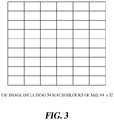
FIGs. 1 to 3 are exemplary diagrams for illustrating macroblocks in the unit of M × N pixels according to a preferred embodiment of the invention, -
FIGs. 4 and5 are exemplary diagrams for illustrating various subblock modes according to a preferred embodiment of the invention, -
FIG. 6 is a schematic block diagram for illustrating a video encoding apparatus according to a preferred embodiment of the invention, -
FIG. 7 is a schematic block diagram for illustrating a video decoding apparatus according to a preferred embodiment of the invention, -
FIG. 8 is a block diagram for illustrating a first implementation of a video encoding apparatus according to a preferred embodiment of the present invention, -
FIG. 9 is a flow chart for illustrating a first implementation of a video encoding method according to a preferred embodiment of the present invention, -
FIG. 10 is a block diagram for illustrating a second implementation of the video encoding apparatus according to a preferred embodiment of the present invention, -
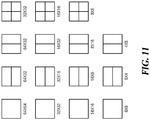
FIGs. 11 and12 are exemplary diagrams for illustrating subblock modes of a macroblock depending on minimum subblock sizes, -
FIG. 13 is a flow chart for illustrating a second implementation of the video encoding method according to a preferred embodiment of the present invention, -
FIG. 14 is a block diagram for illustrating a third implementation of the video encoding apparatus according to a preferred embodiment of the present invention, -
FIGs. 15 and16 are exemplary diagrams for illustrating combinations of the subblock modes, -
FIG. 17 is a flow chart for illustrating a third implementation of the video encoding method according to a preferred embodiment of the present invention, -
FIG. 18 is a flow chart for illustrating an example of a video encoding apparatus according to yet another embodiment, -
FIG. 19 is a flow chart for illustrating an example of a video encoding method according to yet another embodiment, -
FIGs. 20 and21 are a flow chart for illustrating an encoding method of an intra picture according to a preferred embodiment of the invention, -
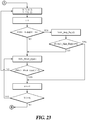
FIGs. 22 and23 are a flow chart for illustrating an encoding method of an inter picture according to a preferred embodiment of the invention, -
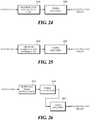
FIG. 24 is a block diagram for illustrating a first implementation of a video decoding apparatus according to a preferred embodiment of the present invention, -
FIG. 25 is a block diagram for illustrating a second implementation of a video decoding apparatus according to a preferred embodiment of the present invention, and -
FIG. 26 is a block diagram for illustrating a third implementation of a video decoding apparatus according to a preferred embodiment of the present invention. - Hereinafter, aspects of the present invention will be described in detail with reference to the accompanying drawings. In the following description, the same elements will be designated by the same reference numerals although they are shown in different drawings. Further, in the following description of the present invention, a detailed description of known functions and configurations incorporated herein will be omitted when it may make the subject matter of the present invention rather unclear.
- Additionally, in describing the components of the present invention, there may be terms used like first, second, A, B, (a), and (b). These are solely for the purpose of differentiating one component from the other but not to imply or suggest the substances, order or sequence of the components. If a component were described as 'connected', 'coupled', or 'linked' to another component, they may mean the components are not only directly 'connected', 'coupled', or 'linked' but also are indirectly 'connected', 'coupled', or 'linked' via a third component.
- A video encoding apparatus and a video decoding apparatus, which will be discussed in the following description, may be a Personal Computer (PC), a notebook computer, a Personal Digital Assistant (PDA), a Portable Multimedia Player (PMP), a PlayStation Portable (PSP), and a mobile communication terminal, and refer to various apparatuses including a communication apparatus such as a communication modem for performing communication with various devices or a wired/wireless communication network, a memory for storing various programs and data for encoding or decoding a video, and a microprocessor for executing a program to perform an operation and a control.
- Further, a video encoded into a bitstream by a video encoding apparatus is transmitted to a video decoding apparatus through a wired/wireless communication network such as an internet, a near field communication network, a wireless LAN (Local Area Network), a WiBro (Wireless Broadband) network, and a mobile communication network or through a communication interface such as a cable or a Universal Serial Bus (USB) in real-time or non-real time and decoded in the video decoding apparatus, and thus the decoded video may be reconstructed and reproduced as a video.
- In general, a video includes a series of pictures and each picture is divided into predetermined areas such as macroblocks, which are the reference unit for encoding and decoding an image. The macroblocks are classified into an intra macroblock and an inter macroblock according to a macroblock decoding method. The intra macroblock refers to a macroblock encoded using an intra prediction coding. The intra prediction coding corresponds to a scheme of generating a predicted block by predicting a current block pixel by using pixels of reconstructed blocks previously encoded and decoded within a current picture, in which a current encoding is performed, and encoding a differential value between the generated predicted block and the current block pixel. The inter macroblock refers to a macroblock encoded using an inter prediction coding. The inter prediction coding corresponds to a scheme of generating a predicted block by predicting a current block within a current picture with reference to one or more past pictures or future pictures and encoding a differential value between the generated predicted block and the current block. Here, a picture referred to in encoding or decoding the current picture is called a reference picture.
- Hereinafter, an apparatus for encoding and decoding a video in the unit of macroblocks by using fixedly sized macroblocks will be described with an illustration. Here, the macroblocks refer to M × N sized pixel blocks (however, M and N are integers, wherein M is a horizontal size of the macroblock and N is a vertical size of the macroblock, and thus 0<M< a horizontal size of an input image and 0<N< a vertical size of the input image) and correspond to the encoding and decoding units. However, encoding and decoding a video in the unit of macroblocks are only an example, and the video may be encoded and decoded in the unit of defined areas or undefined areas instead of a form of macroblocks. However, an encoding/decoding apparatus, which will be discussed in the following description, can use macroblocks having a certain size, but an encoder and a decoder encodes/decodes an image using macoblock sizes agreed between the encoder and the decoder, available subblock types and modes, and minimum subblock sizes.
-
FIGs. 1 to 3 are exemplary diagrams for illustrating macroblocks in the unit of M × N pixels according to a preferred embodiment of the present invention. -
FIG. 1 shows macroblocks in the unit of of M × N pixels (hereinafter, referred to as macroblocks of size M × N) expressed in a part of an input image having a certain size as an example,FIG. 2 shows a CIF image including 396 macroblocks ofsize 16 × 16 as an example, andFIG. 3 shows a CIF image including 54 macroblocks of size 64 × 32 as an example. - In the conventional video compression technology, an image is divided into macroblocks of fixed
size 16 × 16 and then encoded and decoded as shown inFIG. 2 . However, in an embodiment of the present invention, the image may be encoded and decoded using macroblocks of size 64 × 32 (not only the size 64 × 32 but also size M × N (greater than asize 16 × 16) such as size 64 × 64 and size 32 × 64 are available) as shown inFIG. 3 . -
FIGs. 4 and5 are exemplary diagrams for illustrating various subblocks according to a preferred embodiment of the present invention. -
FIG. 4 shows subblock modes available for a macroblock of size 32 × 32, andFIG. 5 shows subblock modes available for a macroblock of size 32 × 16. - According to a preferred embodiment of the present invention, the macroblock of size M × N may be divided into smaller blocks, that is, subblocks as shown in
FIG. 5 . Macroblocks of the image may be intra prediction encoded or inter prediction encoded in the unit of macroblocks, subblocks, or designated predictions. -
FIG. 6 is a schematic block diagram for illustrating a video encoding apparatus according to a preferred embodiment of the present invention. The video encoding apparatus according to the embodiment of the present invention corresponds to an apparatus for encoding an image by using macroblocks ofsize 16 × 16 or more, and may include apredictor 610, anencoder 620, areconstructor 630, afilter 640, and aframe memory 650. Here, thereconstructor 630, thefilter 640, and theframe memory 650 may be omitted or included in another element selectively according to an implementation manner. - The
predictor 610 may include amotion estimator 612, amotion compensator 614, and anintra predictor 616, and predicts macroblocks of the input image by dividing the macroblocks into smaller macroblocks and then intra predicting or inter predicting the divided macroblocks. According to the conventional art, the intra prediction and the inter prediction cannot be simultaneously used in intra encoding subblocks within one macroblock. However, according to a preferred embodiment of the present invention, the intra prediction and the inter prediction can be simultaneously used in encoding subblocks within one macroblock. - The
motion estimator 612 generates a motion vector by comparing a block, which is desired to be encoded, with a reference picture stored in theframe memory 650 and estimating a motion of the corresponding block. - The
motion compensator 614 fetches a block corresponding to a size of a block, which is desired to be encoded, from the reference picture stored in theframe memory 650 with reference to the motion vector generated by themotion estimator 612. The block having been fetched by themotion compensator 614 becomes a predicted block having a predicted value of the block, which is desired to be encoded. - The
intra predictor 616 intra predicts the block, which is desired to be encoded. For the intra prediction, theintra predictor 616 generates a reference block by using reconstructed neighboring pixel information already encoded and decoded, and compares the reference block with the target block, which is to be encoded, to determine an intra prediction mode. And then, the intra predictor 606 intra predicts the block according to the determined intra prediction mode. The block having been predicted by theintra predictor 616 becomes a predicted block having a predicted value of the target block. A subblock size available in the intra prediction corresponds to (M/y) × (N/y), and y is an integer larger than 0 and smaller than min{log2(M/4), log2(N/4)}. For example, in a case of a macroblock of size 64 × 32, available subblock sizes for the intra prediction include sizes 64 × 32, 32 × 16, 16 × 8, and 8 × 4. In a case of a macroblock of size 32 × 32, subblock sizes available for the intra prediction include sizes 32 × 32, 16 × 16, 8 × 8, and 4 × 4. For another example, only square shaped blocks may be used. In a case of a macroblock of size 64 × 32, available subblock sizes include sizes 32 × 32, 16 × 16, 8 × 8, and 4 × 4. - Here, for blocks of
size 16 × 16 or more (althoughhowever, the blocks may have other designated sizes instead ofsize 16 × 16), a prediction mode having the best encoding efficiency is selected from prediction modes equal or similar to four intra prediction modes of H.264/AVC, and the selected intra prediction mode is encoded. Further, for blocks havign a size smaller thansize 16 × 16, a prediction mode having the best encoding efficiency is selected from prediction modes equal or similar to nine intra prediction modes of H.264/AVC, and the selected prediction mode is encoded. - In this event, available transform types may be different according to a macroblock type and size. When the macroblock is an intra macroblock, blocks using an intra prediction of
size 16 × 16 or more can use a transform of a size equal to that of the predicted block and a transform, in which a 4 × 4 transform is performed for a residual block and the 4 × 4 transform is performed again for DC components, and information on selected transform types is transmitted through a bitstream. Further, a transform having a size equal to that of the predicted block is used for blocks using an intra prediction having a size smaller thansize 16 × 16 use. When the macroblock is an inter macroblock, blocks ofsize 16 × 16 or more use a 4 × 4 transform, 8 × 8 transform, or a 16 × 16 transform and a selected transform type is transmitted through a transform flag by using 1 bit or 2 bits. In other cases, a transform flag is transmitted in the unit of blocks ofsize 16 × 16 and subblocks within the block ofsize 16 × 16 all use the same transform. If the block ofsize 16 × 16 is divided into two blocks of size 8 × 16, a transform having the smallest encoding cost is selected from a 4 × 4 transform, a 8 × 8 transform, and a 8 × 16 transform. If the block ofsize 16 × 16 is divided into two blocks ofsize 16 × 8, the 4 × 4 transform, the 8 × 8 transform, and the 8 × 16 transform are used and a transform having the smallest encoding cost is selected. Further, a selected transform type is transmitted through a transform flag by using a 1 bit or 2 bits. Only when the block ofsize 16 × 16 is divided into 4 blocks of 8 × 8, the 4 × 4 transform or the 8 × 8 transform may be used, and a selected transform type is transmitted through the transform flag. In other cases, the transform flag is not transmitted. - The
encoder 620 encodes a residual signal, which is a difference between pixel values of a target macroblock to be encoded and a predicted macroblock. Specifically, theencoder 620 encodes the residual signal through a transform, a quantization, and an entropy coding. Further, when theencoder 620 inter predicts the target macroblock to be encoded, theencoder 620 can encode motion information such as the motion vector generated by themotion estimator 612 and macroblock mode information such as a macroblock size. When theencoder 620 intra predicts the target macroblock to be encoded, theencoder 620 can encode prediction mode information such as an intra prediction mode and macroblock mode information such as the macroblock size. An encoding method of theencoder 620 includes various variable sized encoding methods such as CAVLC, CABAC, and so on. Further, as information on the performed encoding method, a flag or an index value of the table agreed between the encoder and the decoder may be included in and transmitted by a header of the bitstream. - The
reconstructor 630 inversely quantizes and inversely transforms a transformed and quantized residual signal and adds the residual signal and the predicted macroblock output from thepredictor 610 to reconstruct the target macroblock. - The
filter 640 filters the reconstructed target macroblock by using a filter such as a deblocking filter. The filtered reconstructed macroblock is stored in theframe memory 650 and used for inter predicting a next macroblock or a macroblock of a next picture in thepredictor 610. - Hereinafter, an encoding method of an intra picture and data to be transmitted through a bitstream are described with reference to
FIGs. 20 and21 . The intra picture may be encoded only using the intra prediction, and orders of encoding a macroblock type and an intra prediction mode are as shown inFIGs. 20 and21 . However, the title and the encoding order of the syntax ofFIGs. 20 and21 are only examples, and it is possible to use a title and an encoding order different from the title and the encoding order ofFIGs. 20 and21 . - In
FIGs. 20 and21 , M × N_Block_type is encoded using Table 1 for blocks ofsize 16 × 16 or more. Four intra prediction modes may be used for blocks ofsize 16 × 16 or more, and a residual block is transformed using a transform indicated by use_large_transform_flag.[Table 1] M × N Block_type Name of M × N_block_type Block size Intra prediction mode CBP_Chrom CBP_Luma 0 I_(M/2) × (N/2) Intra_(M/2) × (N/2) - 1 I_M × N_0_0_0 I_M × N 0 0 0 2 I_M × N_1_0_0 I_M × N 1 0 0 3 I_M × N_2_0_0 I_M × N 2 0 0 4 I_M × N_3_0_0 I_M × N 3 0 0 5 I_M × N_0_1_0 I_M × N 0 1 0 6 I_M × N_1_1_0 I_M × N 1 1 0 7 I_M × N_2_1_0 I_M × N 2 1 0 8 I_M × N_3_1_0 I_M × N 3 1 0 9 I_M × N_0_2_0 I_M × N 0 2 0 10 I_M × N_1_2_0 I_M × N 1 2 0 11 I_M × N_2_2_0 I_M × N 2 2 0 12 I_M × N_3_2_0 I_M × N 3 2 0 13 I_M × N_0_0_1 I_M × N 0 0 15 14 I_M × N_1_0_1 I_M × N 1 0 15 15 I_M × N_2_0_1 I_M × N 2 0 15 16 I_M × N_3_0_1 I_M × N 3 0 15 17 I_M × N_0_1_1 I_M × N 0 1 15 18 I_M × N_1_1_1 I_M × N 1 1 15 19 I_M × N_2_1_1 I_M × N 2 1 15 20 I_M × N_3_1_1 I_M × N 3 1 15 21 I_M × N_0_2_1 I_M × N 0 2 15 22 I_M × N_1_2_1 I_M × N 1 2 15 23 I_M × N_2_2_1 I_M × N 2 2 15 24 I_M × N_3_2_1 I_M × N 3 2 15 25 I_PCM na na na na - In a case of blocks of
size 16 × 16 or more, when use_large_transform_flag indicates that a large-size transform is not used (e.g. use_large_transform_flag is "0"), a 4 × 4 transform is performed and a Hardamard transform is performed for DC components of transform coefficients obtained through the 4 × 4 transform. When use_large_transform_flag indicates that the large-size transform is used (e.g. use_large_transform_flag is "1"), a transform having the same size as that of the current block is performed. - In a case of blocks having a size smaller than
size 16 × 16, use_large_transform_flag is encoded once in the unit of 16 × 16 blocks. When use_large_transform_flag indicates that the large-size transform is not used (e.g. use_large_transform_flag is "0"), the 16 × 16 block is divided into sixteen 4 × 4 blocks. Each 4 × 4 block performs a 4 × 4 intra prediction and a residual block performs a 4 × 4 transform. Further, when use_large_transform_flag indicates that the large-size transform is used (e.g. use_large_transform_flag is "1"), the 16 × 16 block is divided into four 8 × 8 blocks. Each 8 × 8 block performs an 8 × 8 intra prediction and a residual block performs an 8 × 8 transform. In addition, blocks of a quantized transform coefficient of a luma component are allocated a 1 bit for every (M/2) × (N/2) block and it is shown whether there is a coefficient, which is not "0", within the (M/2) × (N/2) blocks through the allocated 1 bit. - Hereinafter, an encoding method of an inter picture and data to be transmitted through a bitstream will be described with reference to
FIGs. 22 and23 . The inter picture can selectively use the intra prediction or the inter prediction in the unit of macroblocks, and an encoding order of macroblock data including a macroblock type within the inter picture is as shown inFIGs. 22 and23 . However, the title and the encoding order of the syntax ofFIGs. 22 and23 are only examples, and it is possible to use a title and an encoding order different from the title and the encoding order ofFIGs. 22 and23 . - In a case of a M × N block type equal to or larger than
size 16 × 16, a picture P may be encoded using Table 2 and a picture B may be encoded using Table 3.[Table 2] M × N Block_type Name of M × N_block_type Number of subblocks within M × N MbPartPredMode (mb_type, 0) MbPartPredMode (mb_type,1) MbPartWidth (mb_type) MbPartHeight (mb_type) 0 P_L0_ M × N 1 Pred_L0 - M N 1 P_L0_L0_(M /2) 2 Pred_L0 Pred_L0 M N/2 2 P_L0_L0_(M /2) × N 2 Pred_L0 Pred_L0 M/2 N 3 P_(M/2) × (N/2) 4 - - M/2 N/2 4 P_(M/2) × (N/2)_ref0 4 - - M/2 N/2 inferred P_Skip 1 Pred_L0 - M N 


-
FIG. 7 is a schematic block diagram for illustrating a video decoding apparatus according to a preferred embodiment of the present invention. - The
video decoding apparatus 700 according to a preferred embodiment of the present invention may include adecoder 710, apredictor 720, areconstructor 730, afilter 740, and aframe memory 750. Thedecoder 710 extracts three types of information required for a macroblock decoding from an input bitstream. - First, the
decoder 710 entropy decodes and extracts macroblock type information on whether a macroblock, which is desired to be currently decoded, is an intra macroblock or an inter macroblock and subblock mode information indicating subblock modes of the macroblock. - Second, the
decoder 710 entropy decodes and extracts information required for the prediction. In this event, data required for the prediction is different according to a macroblock type. When a reconstructed macroblock is the inter macroblock, thedecoder 710 extracts reference picture information required for the motion compensation of respective subblocks and information on a motion such as a motion vector from the bitstream and decodes the extracted information. When the reconstructed macroblock is the intra macroblock, thedecoder 710 extracts information of intra prediction modes of a luma component and a chroma component from the bitstream and decodes the extracted information. - Lastly, the
decoder 710 decodes information required for a residual signal decoding. Specifically, thedecoder 710 first decodes information indicating whether there is a transform coefficient, which is not "0", in each subblock and then decodes transform information indicating a type of a used transform and a quantized transform coefficient for blocks having the transform coefficient, which is not "0". - In decoding the transform information, the number of bits required for decoding the transform information is different according to a transform type, and the transform type is determined according to a macroblock type and a subblock size. 1 bit or 2 bits are decoded when there are three types of available transforms, and only 1 bit is decoded when there are two types of available transforms. Further, when the types of available transforms are fixed to one type, the transform information is not decoded.
- If the macroblocks are the intra macroblocks and subblock sizes are equal to or larger than
size 16 × 16, it is determined whether a transform having a size equal to that of the predicted block is used or a transform by which residual blocks are 4 × 4 transformed and then DC components are 4 × 4 transformed is used. A transform flag is not decoded for blocks using an intra prediction having a size smaller than size16 × 16. In this event, a transform having a size equal to that of the predicted block is used. - When the macroblocks are inter macroblocks, 1 bit or 2 bits are extracted, through an entropy decoding, from each of blocks having a size equal to or larger than a
size 16 × 16, by using one transform among a 4 × 4 transform, a 8 × 8 transform, and a 16 × 16 transform. In other cases, the transform flag is decoded in the unit of 16 × 16 blocks and subblocks within the 16 × 16 block all use the same transform. When the 16 × 16 block is divided into two subblocks of size 8 × 16, a reconstructed transform flag corresponds to one of the 4 × 4 transform, the 8 × 8 transform, and a 8 × 16 transform. When each block ofsize 16 × 16 is divided into two subblocks ofsize 16 × 8, the reconstructed transform flag indicates one of the 4 × 4 transform, the 8 × 8 transform, and a 16 × 8 transform. Further, when the 16 × 16 block is divided into four 8 × 8 blocks, information indicating whether the 4 × 4 transform is used or the 8 × 8 transform is used is extracted by decoding the transform flag. In other cases, the transform flag is not decoded and a transform type is set to the 4 × 4 transform. - The
predictor 720 predicts a current macroblock, which is desired to be currently decoded, and may include amotion compensator 722 and anintra predictor 724. When the current macroblock is an inter macroblock, themotion compensator 722 generates a predicted macroblock by dividing the macroblock into subblocks in a reconstructed subblock mode decoded by thedecoder 710 and fetching pixels corresponding to a size of subblocks within the current macroblock from the reference picture stored in theframe memory 750 by using the motion vector of each reconstructed subblock decoded by thedecoder 710. When the current macroblock is the intra macroblock, theintra predictor 724 generates a predicted macroblock by predicting the current macroblock by using reconstructed neighboring pixel information already decoded according to the reconstructed intra prediction mode decoded by thedecoder 710. - The
reconstructor 730 inversely quantizes a quantized transform coefficient decoded by thedecoder 710 and inversely transforms the transform coefficient by using a transform type extracted from thedecoder 710, to generate a residual signal. And then, thereconstructor 730 generates a reconstructed macroblock by adding the generated residual signal and the predicted macroblock generated by thepredictor 720. The generated reconstructed macroblock is filtered in thefilter 740 and stored in theframe memory 750, and the filtered and stored macroblock is used for reconstructing a next macroblock or a next picture. As described above, thevideo encoding apparatus 600 and thevideo decoding apparatus 700 according to a preferred embodiment of the present invention can encode and decode an image by using macroblocks ofsize 16 × 16 or more. - Hereinafter, data of an intra picture transmitted through a bitstream and a decoding method of the intra picture will be described with reference to
FIGs. 20 and21 . In a case of the intra picture, a type and an order of data transmitted through the bitstream are as shown inFIGs. 20 and21 . First, a value of M × N_Block_type is obtained through an entropy decoding. And then, it is determined whether each macroblock is divided into four subblocks by using Table 1. - When a value of M × N_Block_type of the reconstructed macroblock is not "0", the intra prediction is performed in the unit of macroblocks and a prediction mode and CBP information can be grasped through the value of M × N_Block_type. Thereafter, prediction mode information and transform types of chroma components, QP_delta, and data required for reconstructing a residual block such as the quantized transform coefficient are decoded. However, data related to the residual block decoding are decoded only when CBP obtained through M × N_Block_type is not "0" (that is, only when there is a transform coefficient, which is not "0", in the macroblock).
- A case where the value of M × N_Block_type of the reconstructed macroblock is "0" means that the macroblock is divided into four subblocks. When the divided subblocks have sizes equal to or larger than
size 16 × 16, data inFIG. 20 are sequentially decoded for each subblock as shown inFIG. 20 . When the divided subblocks have sizes smaller thansize 16 × 16, data inFIG. 21 are sequentially decoded. - In a method of decoding transform information, a value of use_large_transform_flag is set by
entropy decoding 1 bit for blocks having sizes equal to or larger thansize 16 × 16. When the set value of use_large_transform_flag indicates that there is no use of a transform having a large size (for example, the value is "0"), a 4 × 4 transform is used and a Hardamard transform is used for DC components of transform coefficients obtained through the 4 × 4 transform in an inverse transform. When the set value of use_large_transform_flag indicates that there is the use of a transform having a large size (for example, the value is "1"), a transform having a size equal to that of the current block is used. - In a case of blocks having a size smaller than
size 16 × 16, use_large_transform_flag indicates transform types and subblock sizes used in the prediction within a 16 × 16 block. In this event, use_large_transform_flag is encoded in the unit of 16 × 16 blocks only one time. When use_large_transform_flag indicates that there is no use of a transform having a large size (for example, the value is "0"), each 16 × 16 block is divided into sixteen blocks ofsize 4 × 4. Each 4 × 4 block is 4 × 4 intra predicted and a residual block is inversely 4 × 4 transformed. Further, when use_large_transform_flag indicates that there is the use of a transform having a large size (for example, the value is "1"), each 16 × 16 block is divided into four blocks of size 8 × 8. Each 8 × 8 block is intra predicted and a residual block is inversely 8 × 8 transformed. - Hereinafter, data of an intra picture transmitted through a bitstream and a decoding method of the intra picture will be described with reference to
FIGs. 22 and21 . In a case of the intra picture, a type and an order of data transmitted through the bitstream are as shown inFIGs. 22 and21 . In a case of decoding a value of M × N_Block_Type equal to or larger thansize 16 × 16, the picture P may be decoded using Tables 1 and 2, and the picture B may be decoded using Tables 1 and 3. Intra macroblocks within the picture P use Table 1, and index values are allocated values generated by adding "5" to values of M × N_Block_Type. For example, when a reconstructed value of M × N_Block_Type within the picture P is "6", the intra prediction is performed in the unit of M × N blocks and an intra prediction mode value is "0". Further, transform coefficients of both the luma component and the chroma component are in amode 0. In the same way, macroblocks within the picture B use Tables 1 and 3, and values generated by adding "23" to values of M × N_Block_Type are allocated. In a case of a M × N block type equal to or smaller than size 8 × 8, the picture P may be decoded using Table 4, and the picture B may be decoded using Table 5. - In a process of decoding macroblocks within the picture P, a flag (M × N_Skip_flag) indicating whether the macroblocks are in a SKIP mode is decoded and it is determined whether the macroblocks are in the SKIP mode. When the macroblocks are in the SKIP mode, a motion compensation is performed using a predicted motion vector and a current macroblock decoding is completed based on an assumption that the predicted macroblock obtained through the motion compensation is a reconstructed macroblock. Then, next macroblock data is entropy decoded.
- When the macroblock to be currently decoded is not in the SKIP mode or not the intra macroblock, a value of M × N_Block_Type is entropy decoded.
- It is determined whether the macroblock is divided into four subblocks by using the decoded value of M × N_Block_Type and Table 2. That is, when the value of M × N_Block_Type of decoded macroblock is not "0", subblock sizes and modes are set according to Table 2 based on the value of M × N_Block_Type and reference picture information and an amount of motion vector information are decoded equal to the number of subblocks. Thereafter, it is determined whether there is a transform coefficient, which is not "0", by decoding a CBP. When there is the transform coefficient, which is not "0", Use_Large_tranform_flag indicating transform types, QP_delta, and the transform coefficient are decoded. A case where the value of M × N_Block_Type of the decoded macroblock is "0" means that the macroblock is divided into four subblocks. When sizes of the divided subblocks are equal to or larger than
size 16 × 16, data inFIG. 22 are sequentially decoded for each subblock. When sizes of the divided subblocks are smaller thansize 16 × 16, data inFIG. 23 are sequentially decoded. - A method of entropy decoding transform data required for a residual block decoding and extracting a transform type used in the encoder is different depending on block types and sizes as described below.
- In a case of blocks of
size 16 × 16 or more, a transform type selected by the encoder is one of 4 × 4, 8 × 8, and 16 × 16 transforms. In this event, when a value decoded byentropy decoding 1 bit indicates that a transform having a large size is not used (for example, the value is "0"), the 4 × 4 transform is used in an inverse transform as a method of decoding transform information. In a case where the decoded bit value indicates that the transform having a large size is used (for example, the value is "1"), if a second bit value decoded byentropy decoding 1 bit indicates that the transform having a large size is not used (for example, the value is "0"), the 8 × 8 transform is used in an inverse transform. On the other hand, the 16 × 16 trasform is used in an inverse transform. - In a case where a block of
size 16 × 16 is divided into two subblocks ofsize 16 × 8 or two subblocks of size 8 × 16, if a value decoded byentropy decoding 1 bit indicates that a transform having a large size is not used, the 4 × 4 transform is used as an inverse transform. In a case where the decoded value indicates that the transform having a large size is used, if a value decoded byfurther entropy decoding 1 bit indicates that the transform having a large size is not used, the 8 × 8 transform is used as an inverse transform. In a case where the secondly decoded bit value indicates that the transform having a large size is used, an inverse transform ofsize 16 × 8 is used when subblock sizes are 16 × 8 and an inverse transform of size 8 × 16 is used when subblock sizes are 8 × 16. - Hereinafter, as another embodiment of the present invention, an apparatus and a method for determining macroblock sizes, and available subblock types and sizes and then encoding and decoding a video according to the determination in order to efficiently encode and decode the video by using variable sized macroblocks will be described. The macroblocks refer to pixel blocks of size M × N (M and N are integers, where M is a horizontal size of the macroblock and N is a vertical size of the macroblock, and thus satisfying 0<M<a horizontal size of an input image and 0<N< a vertical size of an input image), and correspond to the encoding and decoding units.
- A video encoding apparatus according to a preferred embodiment of the present invention may include a candidate block type configuration unit, a video encoder, and a block type determiner.
- The candidate block type configuration unit configures block type candidates for encoding an image by using macroblocks having a certain size. The block type may include one or more of a macroblock size, a minimum subblock size, and a subblock mode combination. That is, according to the typical video compression technology, since macroblock sizes are fixed to size 16 × 16, an image can be encoded or decoded after dividing the image into macroblocks having a fixed size. However, according to a preferred embodiment of the invention and another embodiment of the present invention, since any macroblock size can be used, an image can be encoded after dividing the image in the unit of macroblocks having a predetermined size. Further, according to a preferred embodiment of the present invention, macroblock sizes, which are the encoding/decoding units, may be differently selected for each picture, slice, or macroblock layer.
- A high resolution image may be efficiently encoded in the unit of large blocks. However, the encoding efficiency is not always improved whenever all areas of the image (block, slice, picture, etc.) are encoded using the largest blocks. For example, in a case where characteristics of one picture of the image are monotonous, it can be efficient to encode the image in the unit of macroblocks having a large size. However, in a case where characteristics of one picture are complex, it may be efficient to encode the image in the unit of macroblocks having a small size. Accordingly, in another embodiment of the present invention, macroblock sizes, by which an image can be efficiently encoded, are determined, the image is encoded in the unit of macroblocks having the selected size, and the image is decoded and reconstructed using macroblock sizes identified by information included in the bitstream.
- Meanwhile, one macroblock may be divided into a plurality of subblocks for the prediction and the transform. As macroblock sizes are enlarged, a minimum subblock size may be changed. For example, according to the typical video compression technology, a subblock of
size 4 × 4 corresponds to a minimum subblock for the prediction and the transform in a macroblock ofsize 16 × 16. However, in a case of encoding an image by using macroblocks of size 64 × 64, if the prediction or the transform is performed using subblocks ofsize 4 × 4, the encoding efficiency may be deteriorated depending on image characteristics because excessively small subblocks are used for the encoding. Therefore, it may be efficient to determine the subblocks of size 8 × 8 orsize 16 × 16 as the minimum subblock size. Accordingly, in another embodiment of the present invention, a minimum subblock size, by which an image can be efficiently encoded by encoding the image in advance, is determined, the image is encoded using only subblocks of sizes equal to or larger than the corresponding determined size, and the image is decoded and reconstructed using subblocks of sizes equal to or larger than the minimum subblock size identified by information included in the bitstream. - Further, as macroblock sizes are enlarged, block modes of subblocks into which macroblocks are divided are greatly diversified, and thus the encoding efficiency may be deteriorated. For example, according to the typical video compression technology, subblock modes for a macroblock of
size 16 × 16 may include 16 × 16, 16 × 8, 8 × 16, 8 × 8, 8 × 4, 4 × 8, and 4 × 4. However, in a case of encoding an image by using macroblocks of size 64 × 64, many more subblock modes including 64 × 64, 64 × 32, 32 × 32, 32 × 16, 16 × 32, 16 × 16, etc. can be used, so that an amount of bits for expressing or encoding information on subblocks divided from each macroblock is enlarged and thus the encoding efficiency may be deteriorated. Accordingly, it may be efficient to predetermine a combination of available subblock modes according to the unit of entire images, the unit of pictures, the intra mode, or the inter mode and then to remove subblock modes, which are not used. - Accordingly, in another embodiment of the present invention, a subblock mode combination, which can efficiently encode an image, are determined, the image is encoded using only a subblock mode within the determined subblock mode combination, and the image is decoded and reconstructed using only a subblock mode within a subblock mode combination identified by information included in a bitstream. For example, when a subblock mode combination for an entire image is determined as 32 × 16, 16 × 16, and 16 × 8, other subblock modes (e.g. 64 × 64, 32 × 64, 64 × 32, 32 × 32, 8 × 8, 4 × 4, etc.) except for subblock modes 32 × 16, 16 × 16, and 16 × 8 may not be included in the universe for expressing information on subblock sizes for a corresponding area or macroblock, so that it is possible to reduce an amount of bits to express or encode information on subblock modes. For example, in Tables 1 to 5, allocated values or bits are changed although a mode of the same meaning is encoded because unnecessary syntaxes are not used based on mocroblock sizes, minimum subblock sizes, and available subblock modes, and code values allocated to such syntaxes are removed.
- Block types such as a macroblock size, a minimum subblock size, a subblock mode combination, and so on are determined in the unit of macroblocks, slices, or pictures of an image, or in the unit of Group of Picture (GOP) or entire image sequences, and information on such block types may be included in a bitstream header. For example, when macroblock sizes are determined in the unit of pictures, information on the macroblock sizes may be included in a picture header of the bitstream.
- A method of encoding/decoding types of subblocks within a macroblock may be different according to a macroblock size, a minimum subblock size, and a subblock mode combination.
- A method of encoding types of subblocks within a macroblock may be different according to a macroblock size or a minimum subblock size.
- Hereinafter, various methods of encoding macroblock sizes according to the present invention will be described. A first method of encoding macroblock sizes is described below.
- A flag (Set_MBsize_flag) indicating whether to transmit information on macroblock sizes may be included in a sequence header, a header of each picture, or a slice header. The macroblock sizes may be either transmitted or not according to a value of the flag. In a case of not transmitting the macroblock sizes, macroblocks having a predetermined size, for example, blocks of
size 16 × 16 are used as macroblocks. - If macroblock sizes are designated, information on the macroblock sizes is transmitted. In this event, macroblocks having a certain size, of which horizontal sizes and vertical sizes are separately set, may be used. Alternatively, in a case of using square macroblocks, only information on one side of the square macroblock is encoded and then may be transmitted to the decoding apparatus.
- Size values of macroblocks to be encoded may be designated as actual macroblock sizes or a value indicating the number of times, by which a macroblock is to be enlarged or reduced with respect to a predetermined size, may be transmitted. Further, macroblock size values may be represented using smaller bits through applying a log function to the macroblock size values instead of directly encoding the macroblock size values. For example, a value of log 2 (selected MBsize/X) (X is a certain positive integer, which is a multiple of 2) is encoded. In this case, a value of X may be selected as an available minimum macroblock size. For example, if the available minimum macroblock size is 8 × 8, it is preferable to select "8" as the value of X. In this event, "0" is encoded when a current macroblock is a block of size 8 × 8, and "1" is encoded when the current macroblock is a block of
size 16 × 16. If the available minimum macroblock size is 16 × 16, it is preferable to select "16" instead of "8" as the value of X. In this event, "0" is encoded when the current macroblock is a block ofsize 16 × 16, and "1" is encoded when the current macroblock is a block of size 32 × 32. Accordingly, a current macroblock size can be represented using bits smaller than bits used for encoding a large number such as 8, 16, or 32. - Further, magnifications of the horizontal size and the vertical size may be encoded, respectively.
- Alternatively, the size values of macroblocks to be encoded may be index values of a prearranged table between the encoder and the decoder.
- In this event, macroblock sizes to be transmitted may be encoded using various binary coding methods such as a unary code, a truncated unary code, and an exponential (Exp) Golomb code.
- Hereinafter, it is not described to separately set a horizontal size and a vertical size for the convenience of descriptions, but it is applicable to separately set the horizontal size and the vertical size. Further, although it is exemplified to encode data on a sequence header and a picture header, the data may be encoded on a slice header or a macroblock header.
- An example of syntax according to the first method of encoding the macroblock sizes is as follows.
 Set-MBsize_Flag
 if(Set_MBsize_Flag == 1)
 {
 MBsize
 }
or
 Set-MBsize_Flag
 if(Set_MBsize_Flag == 1)
 {
 MBsize_width
 MBsize_height
 }
 if(Set_MBsize_Flag == 1)
 {
 default_MBsize
 }
 Picture, slice, or macroblock header
 use_default_MBsize_flag
 if(use_default_MBsize_flag == 0)
 {
 MB_size
 }
 use_default_MBsize_flag
 if(use_default_MBsize_flag == 0)
 {
 MB_size
 }
 use_prevPic_MBsize_flag
 if(use_prevPic_MBsize_flag == 0)
 {
 MB_size
 }
 Set_intraMBsize_Flag
 Set_interMBsize_Flag
 if(Set_interMBsize_Flag == 1)
 {
 intraMBsize
 }
 if(Set_interMBsize_Flag == 1)
 {
 interMBsize
 }
 Set_minBlockSize_flag
 If(Set_minBlockSize_flag == 1)
 {
 minBlockSize
 }
or
 Set_minBlockSize_flag
 If(Se_minBlockSize_flag == 1)
 {
 minBlockSize_Width
 minBlockSize_height
 }
 Sequence header, picture header, or slice header
 Set_defalut minBlockSize_Flag
 if(Set_default minBlockSize_Flag == 1)
 {
 Default_minBlockSize
 }
use_default_minBlockSize_flag
 if(use_default_minBlockSize_flag == 0)
 {
 minBlockSize
 }
 use_default_ minBlockSize _flag
 if(use_defaulf_ minBlockSize _flag == 0)
 {
 minBlockSize
 }
use_prevPic_ minBlockSize _flag
 if(use_prevPic_ minBlockSize e_flag == 0)
 {
 minBlockSize
 }
 Set_intra minBlockSize _Flag
 Set_inter minBlockSize _Flag
 if(Set_intra minBlockSize _Flag == 1)
 {
 intra minBlockSize
 }
 if(Set_inter minBlockSize _Flag == 1)
 {
 inter minBlockSize
 }
| M × N Bock_type | Name | Number of subblocks within M × N block | Prediction mode of first subblock within M × N block | Prediction mode of second subblock within M × N block | Horizontal size of subblock | Vertical size of | |
| 0 | P_L0_16 × 16 | 1 | L0 prediction | na | 16 | 16 | |
| 1 | P_L0_16 × 8 | 2 | L0 | L0 prediction | 16 | 8 | |
| 2 | P_4 × 4 | 16 | na | na | 4 | 4 | |
| 3 | P_4 × | 16 | na | na | 4 | 4 | |
| inferred | P- | 1 | L0 | L0 prediction | 16 | 16 |
 Set_predBlockSize_flag
 if(Set_ predBlockSize _flag == 1)
 {
 predBlockSize
 }
or
 Set_ predBlockSize _flag
 if(Set_ predBlockSize _flag == 1)
 {
 predBlockSize_Width
 predBlockSize _height
 }
 Set_default predBlockSize _Flag
 if(Set_ default predBlockSize _Flag == 1)
 {
 default_ predBlockSize
 }
 use_default_predBlockSize _flag
 if(use_default_predBlockSize e_flag == 0)
 {
 predBlockSize
 }
 use_default_predBlockSize _flag
 if(use_default_predBlockSize _flag == 0)
 {
 predBlockSize
 }
 use_prevPic_ predBlockSize _flag
 if(use_prevPic_ predBlockSize e_flag == 0)
 {
 predBlockSize
 }
Claims (12)
- A method of decoding a video which includes a sequence of pictures by dividing each of the pictures in the unit of blocks, the method comprising:decoding, from a header of the sequence in a bitstream, a first information indicating a reference size and a second information indicating a ratio of a macroblock size to the reference macroblock size, wherein:the reference size is a minimum macroblock size, andthe second information is represented as a value of log2 (MBsize / X) where MBsize is the macroblock size, X is the reference macroblock size, and both MBsize and X are a number of pixels in one dimension;determining the macroblock size in the unit of the entire sequence of pictures, by using the first and second information; andreconstructing image data of the sequence by dividing every and each of the pictures in the unit of macroblocks having the determined macroblock size.
- The method of claim 1, further comprising:decoding, from the header of the sequence, a log scale value of the minimum subblock size, the log scale value being log2 (minimum subblock size / Y) where Y is a positive integer which is a multiple of 2,wherein the image data is reconstructed by transforming in the units of subblocks equal to or larger than the minimum subblock size.
- The method of claim 1, wherein the first and second information are values encoded by an exponential Golomb code.
- The method of claim 1, wherein the macroblock size is determined from among 16x16, 32x32 and 64x64.
- An apparatus of decoding a video which includes a sequence of pictures by dividing each of the pictures in the unit of blocks, the apparatus comprising:a macroblock size setting unit configured to decode, from a header of the sequence in a bitstream, a first information indicating a reference size and a second information indicating a ratio of a macroblock size to the reference macroblock size, and determine the macroblock size in the unit of the entire sequence of pictures, by using the first and second information, wherein:the reference size is a minimum macroblock size, andthe second information is represented as a value of log2 (MBsize / X) where MBsize is the macroblock size, X is the reference macroblock size, and both MBsize and X are a number of pixels in one dimension;a video decoder configured to reconstruct image data of the sequence by dividing every and each of the pictures in the unit of macroblocks having the determined macroblock size.
- The apparatus of claim 5, further comprising:a minimum subblock size setting unit configured to decode, from the header of the sequence, a log scale value of the minimum subblock size, the log scale value being log2 (minimum subblock size / Y) where Y is a positive integer which is a multiple of 2,wherein the video decoder reconstructs the image data by transforming in the units of subblocks equal to or larger than the minimum subblock size.
- The apparatus of claim 5, wherein the first and second information are values encoded by an exponential Golomb code.
- The apparatus of claim 5, wherein the macroblock size is determined from among 16x16, 32x32 and 64∗64.
- An apparatus of encoding a video which includes a sequence of pictures by dividing each of the pictures in the unit of blocks, the apparatus comprising:a size determiner configured to determine a macroblock size in the unit of the entire sequence of the pictures for encoding image data of the sequence;a video encoder configured toencode a first information indicating a reference macroblock size and a second information indicating a ratio of the macroblock size to the reference macroblock size, so as to indicate the macroblock size, wherein,
the reference macroblock size is a minimum macroblock size,
the second information is encoded as a value of log2 (MBsize / X) where MBsize is the macroblock size, X is the reference macroblock size, and both MBsize and X are a horizontal or vertical size, and
the first and second information are encoded into a header of the sequence in a bitstream, andencode the image data of the sequence by dividing every and each of the pictures in the unit of macroblocks having the macroblock size into the bitstream. - The apparatus of claim 9, wherein,
the size determiner is further configured to determine a minimum subblock size for transform to be used in the entire sequence of the pictures, and
the video encoder is further configured to encode a log scale value of the minimum subblock size into the header of the sequence, the log scale value being log2 (minimum subblock size / Y) where Y is equal to 4,
wherein the video encoder performs the transform for the image data using subblocks equal to or larger than the minimum subblock size. - The apparatus of claim 9, wherein the first and second information are encoded by an exponential Golomb code.
- The apparatus of claim 9, wherein the macroblock size is determined from among 16x16, 32x32 and 64∗64.
Priority Applications (1)
| Application Number | Priority Date | Filing Date | Title |
|---|---|---|---|
| PL19193515T PL3595311T3 (en) | 2009-10-01 | 2010-10-01 | Method and apparatus for encoding/decoding image using variable-sized macroblocks |
Applications Claiming Priority (5)
| Application Number | Priority Date | Filing Date | Title |
|---|---|---|---|
| KR20090093982 | 2009-10-01 | ||
| EP10820867.9A EP2485489A4 (en) | 2009-10-01 | 2010-10-01 | METHOD AND APPARATUS FOR IMAGE ENCODING / DECODING USING VARIABLE-SIZE MACROBLOCKS |
| PCT/KR2010/006734 WO2011040794A2 (en) | 2009-10-01 | 2010-10-01 | Method and apparatus for encoding/decoding image using variable-size macroblocks |
| KR1020100095905A KR101543314B1 (en) | 2009-10-01 | 2010-10-01 | Video Coding/Decoding Apparatus and Method Using Variable Size Macroblock |
| EP15182719.3A EP2991356B1 (en) | 2009-10-01 | 2010-10-01 | Method and apparatus for encoding/decoding image using variable sized macroblocks |
Related Parent Applications (2)
| Application Number | Title | Priority Date | Filing Date |
|---|---|---|---|
| EP15182719.3A Division EP2991356B1 (en) | 2009-10-01 | 2010-10-01 | Method and apparatus for encoding/decoding image using variable sized macroblocks |
| EP10820867.9A Division EP2485489A4 (en) | 2009-10-01 | 2010-10-01 | METHOD AND APPARATUS FOR IMAGE ENCODING / DECODING USING VARIABLE-SIZE MACROBLOCKS |
Publications (2)
| Publication Number | Publication Date |
|---|---|
| EP3595311A1 true EP3595311A1 (en) | 2020-01-15 |
| EP3595311B1 EP3595311B1 (en) | 2020-08-12 |
Family
ID=44044434
Family Applications (4)
| Application Number | Title | Priority Date | Filing Date |
|---|---|---|---|
| EP15182719.3A Active EP2991356B1 (en) | 2009-10-01 | 2010-10-01 | Method and apparatus for encoding/decoding image using variable sized macroblocks |
| EP19193514.7A Active EP3595301B1 (en) | 2009-10-01 | 2010-10-01 | Method and apparatus for encoding/decoding image using variable-sized macroblocks |
| EP19193515.4A Active EP3595311B1 (en) | 2009-10-01 | 2010-10-01 | Method and apparatus for encoding/decoding image using variable-sized macroblocks |
| EP10820867.9A Ceased EP2485489A4 (en) | 2009-10-01 | 2010-10-01 | METHOD AND APPARATUS FOR IMAGE ENCODING / DECODING USING VARIABLE-SIZE MACROBLOCKS |
Family Applications Before (2)
| Application Number | Title | Priority Date | Filing Date |
|---|---|---|---|
| EP15182719.3A Active EP2991356B1 (en) | 2009-10-01 | 2010-10-01 | Method and apparatus for encoding/decoding image using variable sized macroblocks |
| EP19193514.7A Active EP3595301B1 (en) | 2009-10-01 | 2010-10-01 | Method and apparatus for encoding/decoding image using variable-sized macroblocks |
Family Applications After (1)
| Application Number | Title | Priority Date | Filing Date |
|---|---|---|---|
| EP10820867.9A Ceased EP2485489A4 (en) | 2009-10-01 | 2010-10-01 | METHOD AND APPARATUS FOR IMAGE ENCODING / DECODING USING VARIABLE-SIZE MACROBLOCKS |
Country Status (9)
| Country | Link |
|---|---|
| US (4) | US20130039415A1 (en) |
| EP (4) | EP2991356B1 (en) |
| KR (3) | KR101543314B1 (en) |
| CN (4) | CN105007492B (en) |
| DK (1) | DK2991356T3 (en) |
| ES (3) | ES2829810T3 (en) |
| HU (3) | HUE051313T2 (en) |
| PL (3) | PL3595311T3 (en) |
| WO (1) | WO2011040794A2 (en) |
Families Citing this family (54)
| Publication number | Priority date | Publication date | Assignee | Title |
|---|---|---|---|---|
| US8675730B2 (en) * | 2009-07-13 | 2014-03-18 | Nvidia Corporation | Macroblock grouping in a destination video frame to improve video reconstruction performance |
| CN102771125B (en) * | 2009-12-10 | 2015-12-09 | Sk电信有限公司 | Encoding/decoding method and device using tree structure |
| MY176988A (en) | 2010-04-13 | 2020-08-31 | Samsung Electronics Co Ltd | Video-encoding method and video-encoding apparatus based on encoding units determined in a accordance with a tree structure, and video-decoding units determined in a accordance with a tree structure |
| SG10201605263SA (en) * | 2011-06-27 | 2016-08-30 | Samsung Electronics Co Ltd | Method And Apparatus For Encoding Motion Information, And Method And Apparatus For Decoding Same |
| US20130301713A1 (en) * | 2012-05-14 | 2013-11-14 | Qualcomm Incorporated | Systems and methods for intra prediction video coding |
| WO2015015681A1 (en) * | 2013-07-31 | 2015-02-05 | パナソニック インテレクチュアル プロパティ コーポレーション オブ アメリカ | Image coding method, and image coding device |
| CN105519115A (en) | 2013-09-10 | 2016-04-20 | 株式会社Kt | Method and apparatus for encoding/decoding scalable video signal |
| TWI536811B (en) | 2013-12-27 | 2016-06-01 | 財團法人工業技術研究院 | Method and system for image processing, decoding method, encoder and decoder |
| CN104284188B (en) * | 2014-10-11 | 2018-03-13 | 华为技术有限公司 | Prediction Block Division Method, Encoding Device, and Decoding Device |
| EP3313078B1 (en) | 2015-06-18 | 2020-12-23 | LG Electronics Inc. | Image properties-based adaptive filtering method and device in image coding system |
| KR101718969B1 (en) * | 2015-10-02 | 2017-03-23 | 인하대학교 산학협력단 | Early Block Size Decision Scheme Fast HEVC Intra Prediction |
| US10819987B2 (en) * | 2015-11-12 | 2020-10-27 | Lg Electronics Inc. | Method and apparatus for coefficient induced intra prediction in image coding system |
| KR20180091932A (en) * | 2016-05-10 | 2018-08-16 | 삼성전자주식회사 | METHOD AND APPARATUS FOR ENCODING / DECODING IMAGE |
| KR102426131B1 (en) * | 2016-06-17 | 2022-07-27 | 세종대학교산학협력단 | Method and apparatus for encoding or decoding video signal |
| KR102534604B1 (en) * | 2016-06-17 | 2023-05-26 | 세종대학교 산학협력단 | Method and apparatus for encoding or decoding video signal |
| WO2017222237A1 (en) * | 2016-06-22 | 2017-12-28 | 한국전자통신연구원 | Intra prediction method and device |
| FR3053555A1 (en) * | 2016-06-29 | 2018-01-05 | B<>Com | METHOD FOR ENCODING A DIGITAL IMAGE, DECODING METHOD, DEVICES, TERMINAL AND COMPUTER PROGRAMS |
| ES2737843B2 (en) | 2016-07-05 | 2021-07-15 | Kt Corp | METHOD AND APPARATUS TO PROCESS A VIDEO SIGNAL |
| KR102821962B1 (en) | 2016-08-22 | 2025-06-20 | 코닌클리케 필립스 엔.브이. | Method and apparatus to transmite the block-partiton information for codec of cctv camera |
| CN117412035A (en) * | 2016-08-31 | 2024-01-16 | 株式会社Kt | Methods and devices for processing video signals |
| US20190215521A1 (en) * | 2016-09-22 | 2019-07-11 | Mediatek Inc. | Method and apparatus for video coding using decoder side intra prediction derivation |
| FI3975559T3 (en) | 2016-10-04 | 2024-09-13 | B1 Institute Image Technology Inc | Image data encoding/decoding method and apparatus |
| WO2018066982A1 (en) * | 2016-10-04 | 2018-04-12 | 김기백 | Image data encoding/decoding method and apparatus |
| WO2018066980A1 (en) | 2016-10-04 | 2018-04-12 | 김기백 | Image data encoding/decoding method and apparatus |
| CN117097910A (en) * | 2016-11-18 | 2023-11-21 | 株式会社Kt | Video decoding method, video encoding method and compressed video data transmission device |
| CN116347077B (en) * | 2016-11-21 | 2025-10-28 | 松下电器(美国)知识产权公司 | Bitstream transmitter |
| CN116744023A (en) | 2016-11-25 | 2023-09-12 | 株式会社Kt | Methods used to encode and decode video |
| PL3806463T3 (en) * | 2016-12-23 | 2026-04-13 | Huawei Technologies Co., Ltd. | INTRA-FRAME PREDICTION APPARATUS FOR EXTENDING THE SET OF PREDETERMINED DIRECTIONAL INTRA-FRAME PREDICTION MODES |
| KR102435881B1 (en) | 2017-05-26 | 2022-08-24 | 에스케이텔레콤 주식회사 | Apparatus and Method for Video Encoding or Decoding |
| US11218697B2 (en) | 2017-05-26 | 2022-01-04 | Sk Telecom Co., Ltd. | Apparatus and method for video encoding or decoding supporting various block sizes |
| CN110870309B (en) * | 2017-07-06 | 2023-02-03 | 三星电子株式会社 | Image encoding method and device and image decoding method and device |
| EP4468700A1 (en) * | 2017-07-17 | 2024-11-27 | Industry-University Cooperation Foundation Hanyang University | Method and apparatus for encoding/decoding image |
| SG11202010629TA (en) | 2018-05-10 | 2020-12-30 | Samsung Electronics Co Ltd | Method and apparatus for image encoding, and method and apparatus for image decoding |
| WO2020003279A1 (en) | 2018-06-29 | 2020-01-02 | Beijing Bytedance Network Technology Co., Ltd. | Concept of using one or multiple look up tables to store motion information of previously coded in order and use them to code following blocks |
| KR102641872B1 (en) | 2018-06-29 | 2024-02-29 | 베이징 바이트댄스 네트워크 테크놀로지 컴퍼니, 리미티드 | Interaction between LUT and AMVP |
| WO2020003282A1 (en) | 2018-06-29 | 2020-01-02 | Beijing Bytedance Network Technology Co., Ltd. | Managing motion vector predictors for video coding |
| CN110662054B (en) | 2018-06-29 | 2023-01-06 | 北京字节跳动网络技术有限公司 | Method, device, computer-readable storage medium for video processing |
| TWI723445B (en) | 2018-06-29 | 2021-04-01 | 大陸商北京字節跳動網絡技術有限公司 | Update of look up table: fifo, constrained fifo |
| EP4325862A3 (en) | 2018-06-29 | 2024-03-06 | Beijing Bytedance Network Technology Co., Ltd. | Checking order of motion candidates in lut |
| CN110662070B (en) | 2018-06-29 | 2022-03-18 | 北京字节跳动网络技术有限公司 | Selection of encoded motion information for lookup table updates |
| JP7460617B2 (en) | 2018-06-29 | 2024-04-02 | 北京字節跳動網絡技術有限公司 | LUT update conditions |
| WO2020008351A1 (en) | 2018-07-02 | 2020-01-09 | Beijing Bytedance Network Technology Co., Ltd. | Luts with lic |
| TWI820211B (en) | 2018-09-12 | 2023-11-01 | 大陸商北京字節跳動網絡技術有限公司 | Conditions for starting checking hmvp candidates depend on total number minus k |
| EP3743855B1 (en) * | 2018-09-18 | 2025-05-14 | Google LLC | Receptive-field-conforming convolution models for video coding |
| CN111050172A (en) * | 2018-10-15 | 2020-04-21 | 华为技术有限公司 | Image block transforming method and device, image block inverse transforming method and device |
| KR102648159B1 (en) | 2019-01-10 | 2024-03-18 | 베이징 바이트댄스 네트워크 테크놀로지 컴퍼니, 리미티드 | Invocation of LUT update |
| CN122513554A (en) * | 2019-01-10 | 2026-08-04 | 世宗大学校产学协力团 | Image encoding/decoding methods and computer-readable non-transitory recording media |
| CN113383554B (en) | 2019-01-13 | 2022-12-16 | 北京字节跳动网络技术有限公司 | Interaction between LUTs and shared Merge lists |
| WO2020147773A1 (en) | 2019-01-16 | 2020-07-23 | Beijing Bytedance Network Technology Co., Ltd. | Inserting order of motion candidates in lut |
| CN113615193B (en) | 2019-03-22 | 2024-06-25 | 北京字节跳动网络技术有限公司 | Interaction between Merge list construction and other tools |
| US10887589B2 (en) * | 2019-04-12 | 2021-01-05 | Realnetworks, Inc. | Block size determination for video coding systems and methods |
| CN114556945A (en) * | 2019-09-23 | 2022-05-27 | Vid拓展公司 | Switching logic for bi-directional optical flow |
| WO2021068921A1 (en) * | 2019-10-10 | 2021-04-15 | Beijing Bytedance Network Technology Co., Ltd. | Motion vector handling in geometry partition mode |
| US12301825B2 (en) | 2022-03-16 | 2025-05-13 | Apple Inc. | Resolution-based video encoding |
Citations (4)
| Publication number | Priority date | Publication date | Assignee | Title |
|---|---|---|---|---|
| WO2003045069A2 (en) * | 2001-11-16 | 2003-05-30 | Qualcomm Incorporated | Block size assignment using local contrast ratio |
| US20060133503A1 (en) * | 2004-12-06 | 2006-06-22 | Park Seung W | Method for scalably encoding and decoding video signal |
| KR20090093982A (en) | 2006-12-15 | 2009-09-02 | 킴벌리-클라크 월드와이드, 인크. | Method and device for detecting the presence of multiple insults in an absorbent article |
| KR20100095905A (en) | 2009-02-23 | 2010-09-01 | 삼성전자주식회사 | Method for fabricating semiconductor devices |
Family Cites Families (15)
| Publication number | Priority date | Publication date | Assignee | Title |
|---|---|---|---|---|
| KR100987765B1 (en) * | 2003-09-30 | 2010-10-13 | 삼성전자주식회사 | Method and apparatus for performing prediction in video encoder |
| KR100679031B1 (en) * | 2004-12-03 | 2007-02-05 | 삼성전자주식회사 | Multi-layer based video encoding method, decoding method and apparatus using the method |
| US20060193386A1 (en) * | 2005-02-25 | 2006-08-31 | Chia-Wen Lin | Method for fast mode decision of variable block size coding |
| US9071844B2 (en) * | 2005-12-16 | 2015-06-30 | Texas Instruments Incorporated | Motion estimation with motion vector penalty |
| KR100728031B1 (en) * | 2006-01-23 | 2007-06-14 | 삼성전자주식회사 | Method and apparatus for determining coding mode for variable block size motion prediction |
| KR100896978B1 (en) * | 2006-11-27 | 2009-05-14 | 한양대학교 산학협력단 | The Motion Vector Prediction Method and The Mode Prediction Method and Recording Medium Thereof in Fast MPEG-2 to H.264/AVC Transcoding |
| CN101222641B (en) * | 2007-01-11 | 2011-08-24 | 华为技术有限公司 | Infra-frame prediction encoding and decoding method and device |
| US20090003449A1 (en) * | 2007-06-28 | 2009-01-01 | Mitsubishi Electric Corporation | Image encoding device, image decoding device, image encoding method and image decoding method |
| US8432970B1 (en) * | 2007-12-14 | 2013-04-30 | Marvell International Ltd. | Block type selection |
| CN101304529A (en) * | 2008-06-06 | 2008-11-12 | 浙江大学 | Method and device for selecting macro block mode |
| CN101350928A (en) * | 2008-07-29 | 2009-01-21 | 北京中星微电子有限公司 | Method and apparatus for estimating motion |
| US8503527B2 (en) * | 2008-10-03 | 2013-08-06 | Qualcomm Incorporated | Video coding with large macroblocks |
| CN101527854A (en) * | 2009-01-20 | 2009-09-09 | 源见科技(苏州)有限公司 | Interframe mode selection method |
| US20110002391A1 (en) * | 2009-06-11 | 2011-01-06 | Motorola, Inc. | Digital image compression by resolution-adaptive macroblock coding |
| US20110194613A1 (en) * | 2010-02-11 | 2011-08-11 | Qualcomm Incorporated | Video coding with large macroblocks |
-
2010
- 2010-10-01 ES ES19193514T patent/ES2829810T3/en active Active
- 2010-10-01 EP EP15182719.3A patent/EP2991356B1/en active Active
- 2010-10-01 US US13/499,345 patent/US20130039415A1/en not_active Abandoned
- 2010-10-01 PL PL19193515T patent/PL3595311T3/en unknown
- 2010-10-01 EP EP19193514.7A patent/EP3595301B1/en active Active
- 2010-10-01 PL PL15182719T patent/PL2991356T3/en unknown
- 2010-10-01 WO PCT/KR2010/006734 patent/WO2011040794A2/en not_active Ceased
- 2010-10-01 DK DK15182719T patent/DK2991356T3/en active
- 2010-10-01 ES ES15182719T patent/ES2747977T3/en active Active
- 2010-10-01 CN CN201510303536.5A patent/CN105007492B/en active Active
- 2010-10-01 CN CN201510303298.8A patent/CN105007491B/en active Active
- 2010-10-01 EP EP19193515.4A patent/EP3595311B1/en active Active
- 2010-10-01 HU HUE19193515A patent/HUE051313T2/en unknown
- 2010-10-01 HU HUE15182719A patent/HUE047479T2/en unknown
- 2010-10-01 EP EP10820867.9A patent/EP2485489A4/en not_active Ceased
- 2010-10-01 CN CN201510302991.3A patent/CN105049865B/en active Active
- 2010-10-01 CN CN201080054730.XA patent/CN102907098B/en active Active
- 2010-10-01 HU HUE19193514A patent/HUE052466T2/en unknown
- 2010-10-01 KR KR1020100095905A patent/KR101543314B1/en active Active
- 2010-10-01 PL PL19193514T patent/PL3595301T3/en unknown
- 2010-10-01 ES ES19193515T patent/ES2823231T3/en active Active
-
2013
- 2013-07-25 KR KR1020130088205A patent/KR101543319B1/en active Active
- 2013-07-30 US US13/954,408 patent/US9215461B2/en active Active
-
2014
- 2014-12-17 KR KR1020140182218A patent/KR101635830B1/en active Active
-
2015
- 2015-06-19 US US14/744,412 patent/US9462278B2/en active Active
- 2015-06-19 US US14/744,359 patent/US9462277B2/en active Active
Patent Citations (4)
| Publication number | Priority date | Publication date | Assignee | Title |
|---|---|---|---|---|
| WO2003045069A2 (en) * | 2001-11-16 | 2003-05-30 | Qualcomm Incorporated | Block size assignment using local contrast ratio |
| US20060133503A1 (en) * | 2004-12-06 | 2006-06-22 | Park Seung W | Method for scalably encoding and decoding video signal |
| KR20090093982A (en) | 2006-12-15 | 2009-09-02 | 킴벌리-클라크 월드와이드, 인크. | Method and device for detecting the presence of multiple insults in an absorbent article |
| KR20100095905A (en) | 2009-02-23 | 2010-09-01 | 삼성전자주식회사 | Method for fabricating semiconductor devices |
Non-Patent Citations (1)
| Title |
|---|
| QUALCOMM INC: "Video Coding Using Extended Block Sizes", ITU (INTERNATIONAL TELECOMMUNICATION UNION) STUDY GROUP 16,, vol. COM16?C123?E, 1 January 2009 (2009-01-01), pages 4pp, XP007912516 * |
Also Published As
Similar Documents
| Publication | Publication Date | Title |
|---|---|---|
| EP3595311B1 (en) | Method and apparatus for encoding/decoding image using variable-sized macroblocks | |
| US11206397B2 (en) | Reconstructed block creating method | |
| US9609335B2 (en) | Method and apparatus for encoding/decoding image using variable-size macroblocks | |
| US9124901B2 (en) | Method and apparatus for encoding/decoding images considering low frequency components | |
| EP3402202A1 (en) | Image decoding apparatus | |
| US20130230106A1 (en) | Method and device for encoding/ decoding image having removable filtering mode | |
| KR20130054981A (en) | Video coding method and apparatus using variable size macroblock |
Legal Events
| Date | Code | Title | Description |
|---|---|---|---|
| PUAI | Public reference made under article 153(3) epc to a published international application that has entered the european phase |
Free format text: ORIGINAL CODE: 0009012 |
|
| STAA | Information on the status of an ep patent application or granted ep patent |
Free format text: STATUS: THE APPLICATION HAS BEEN PUBLISHED |
|
| AC | Divisional application: reference to earlier application |
Ref document number: 2991356 Country of ref document: EP Kind code of ref document: P Ref document number: 2485489 Country of ref document: EP Kind code of ref document: P |
|
| AK | Designated contracting states |
Kind code of ref document: A1 Designated state(s): AL AT BE BG CH CY CZ DE DK EE ES FI FR GB GR HR HU IE IS IT LI LT LU LV MC MK MT NL NO PL PT RO RS SE SI SK SM TR |
|
| STAA | Information on the status of an ep patent application or granted ep patent |
Free format text: STATUS: REQUEST FOR EXAMINATION WAS MADE |
|
| 17P | Request for examination filed |
Effective date: 20200224 |
|
| RBV | Designated contracting states (corrected) |
Designated state(s): AL AT BE BG CH CY CZ DE DK EE ES FI FR GB GR HR HU IE IS IT LI LT LU LV MC MK MT NL NO PL PT RO RS SE SI SK SM TR |
|
| GRAP | Despatch of communication of intention to grant a patent |
Free format text: ORIGINAL CODE: EPIDOSNIGR1 |
|
| STAA | Information on the status of an ep patent application or granted ep patent |
Free format text: STATUS: GRANT OF PATENT IS INTENDED |
|
| INTG | Intention to grant announced |
Effective date: 20200515 |
|
| GRAS | Grant fee paid |
Free format text: ORIGINAL CODE: EPIDOSNIGR3 |
|
| GRAA | (expected) grant |
Free format text: ORIGINAL CODE: 0009210 |
|
| STAA | Information on the status of an ep patent application or granted ep patent |
Free format text: STATUS: THE PATENT HAS BEEN GRANTED |
|
| AC | Divisional application: reference to earlier application |
Ref document number: 2991356 Country of ref document: EP Kind code of ref document: P Ref document number: 2485489 Country of ref document: EP Kind code of ref document: P |
|
| AK | Designated contracting states |
Kind code of ref document: B1 Designated state(s): AL AT BE BG CH CY CZ DE DK EE ES FI FR GB GR HR HU IE IS IT LI LT LU LV MC MK MT NL NO PL PT RO RS SE SI SK SM TR |
|
| REG | Reference to a national code |
Ref country code: CH Ref legal event code: EP |
|
| REG | Reference to a national code |
Ref country code: IE Ref legal event code: FG4D |
|
| REG | Reference to a national code |
Ref country code: DE Ref legal event code: R096 Ref document number: 602010065200 Country of ref document: DE |
|
| REG | Reference to a national code |
Ref country code: AT Ref legal event code: REF Ref document number: 1302743 Country of ref document: AT Kind code of ref document: T Effective date: 20200915 |
|
| REG | Reference to a national code |
Ref country code: NL Ref legal event code: FP |
|
| REG | Reference to a national code |
Ref country code: SK Ref legal event code: T3 Ref document number: E 35408 Country of ref document: SK |
|
| REG | Reference to a national code |
Ref country code: LT Ref legal event code: MG4D |
|
| PG25 | Lapsed in a contracting state [announced via postgrant information from national office to epo] |
Ref country code: BG Free format text: LAPSE BECAUSE OF FAILURE TO SUBMIT A TRANSLATION OF THE DESCRIPTION OR TO PAY THE FEE WITHIN THE PRESCRIBED TIME-LIMIT Effective date: 20201112 Ref country code: FI Free format text: LAPSE BECAUSE OF FAILURE TO SUBMIT A TRANSLATION OF THE DESCRIPTION OR TO PAY THE FEE WITHIN THE PRESCRIBED TIME-LIMIT Effective date: 20200812 Ref country code: SE Free format text: LAPSE BECAUSE OF FAILURE TO SUBMIT A TRANSLATION OF THE DESCRIPTION OR TO PAY THE FEE WITHIN THE PRESCRIBED TIME-LIMIT Effective date: 20200812 Ref country code: HR Free format text: LAPSE BECAUSE OF FAILURE TO SUBMIT A TRANSLATION OF THE DESCRIPTION OR TO PAY THE FEE WITHIN THE PRESCRIBED TIME-LIMIT Effective date: 20200812 Ref country code: NO Free format text: LAPSE BECAUSE OF FAILURE TO SUBMIT A TRANSLATION OF THE DESCRIPTION OR TO PAY THE FEE WITHIN THE PRESCRIBED TIME-LIMIT Effective date: 20201112 Ref country code: GR Free format text: LAPSE BECAUSE OF FAILURE TO SUBMIT A TRANSLATION OF THE DESCRIPTION OR TO PAY THE FEE WITHIN THE PRESCRIBED TIME-LIMIT Effective date: 20201113 Ref country code: LT Free format text: LAPSE BECAUSE OF FAILURE TO SUBMIT A TRANSLATION OF THE DESCRIPTION OR TO PAY THE FEE WITHIN THE PRESCRIBED TIME-LIMIT Effective date: 20200812 |
|
| REG | Reference to a national code |
Ref country code: AT Ref legal event code: MK05 Ref document number: 1302743 Country of ref document: AT Kind code of ref document: T Effective date: 20200812 |
|
| PG25 | Lapsed in a contracting state [announced via postgrant information from national office to epo] |
Ref country code: RS Free format text: LAPSE BECAUSE OF FAILURE TO SUBMIT A TRANSLATION OF THE DESCRIPTION OR TO PAY THE FEE WITHIN THE PRESCRIBED TIME-LIMIT Effective date: 20200812 Ref country code: LV Free format text: LAPSE BECAUSE OF FAILURE TO SUBMIT A TRANSLATION OF THE DESCRIPTION OR TO PAY THE FEE WITHIN THE PRESCRIBED TIME-LIMIT Effective date: 20200812 Ref country code: IS Free format text: LAPSE BECAUSE OF FAILURE TO SUBMIT A TRANSLATION OF THE DESCRIPTION OR TO PAY THE FEE WITHIN THE PRESCRIBED TIME-LIMIT Effective date: 20201212 |
|
| REG | Reference to a national code |
Ref country code: HU Ref legal event code: AG4A Ref document number: E051313 Country of ref document: HU |
|
| PG25 | Lapsed in a contracting state [announced via postgrant information from national office to epo] |
Ref country code: EE Free format text: LAPSE BECAUSE OF FAILURE TO SUBMIT A TRANSLATION OF THE DESCRIPTION OR TO PAY THE FEE WITHIN THE PRESCRIBED TIME-LIMIT Effective date: 20200812 Ref country code: DK Free format text: LAPSE BECAUSE OF FAILURE TO SUBMIT A TRANSLATION OF THE DESCRIPTION OR TO PAY THE FEE WITHIN THE PRESCRIBED TIME-LIMIT Effective date: 20200812 Ref country code: CZ Free format text: LAPSE BECAUSE OF FAILURE TO SUBMIT A TRANSLATION OF THE DESCRIPTION OR TO PAY THE FEE WITHIN THE PRESCRIBED TIME-LIMIT Effective date: 20200812 Ref country code: RO Free format text: LAPSE BECAUSE OF FAILURE TO SUBMIT A TRANSLATION OF THE DESCRIPTION OR TO PAY THE FEE WITHIN THE PRESCRIBED TIME-LIMIT Effective date: 20200812 Ref country code: SM Free format text: LAPSE BECAUSE OF FAILURE TO SUBMIT A TRANSLATION OF THE DESCRIPTION OR TO PAY THE FEE WITHIN THE PRESCRIBED TIME-LIMIT Effective date: 20200812 |
|
| REG | Reference to a national code |
Ref country code: ES Ref legal event code: FG2A Ref document number: 2823231 Country of ref document: ES Kind code of ref document: T3 Effective date: 20210506 |
|
| REG | Reference to a national code |
Ref country code: DE Ref legal event code: R097 Ref document number: 602010065200 Country of ref document: DE |
|
| PG25 | Lapsed in a contracting state [announced via postgrant information from national office to epo] |
Ref country code: AT Free format text: LAPSE BECAUSE OF FAILURE TO SUBMIT A TRANSLATION OF THE DESCRIPTION OR TO PAY THE FEE WITHIN THE PRESCRIBED TIME-LIMIT Effective date: 20200812 Ref country code: AL Free format text: LAPSE BECAUSE OF FAILURE TO SUBMIT A TRANSLATION OF THE DESCRIPTION OR TO PAY THE FEE WITHIN THE PRESCRIBED TIME-LIMIT Effective date: 20200812 |
|
| REG | Reference to a national code |
Ref country code: CH Ref legal event code: PL |
|
| PLBE | No opposition filed within time limit |
Free format text: ORIGINAL CODE: 0009261 |
|
| STAA | Information on the status of an ep patent application or granted ep patent |
Free format text: STATUS: NO OPPOSITION FILED WITHIN TIME LIMIT |
|
| PG25 | Lapsed in a contracting state [announced via postgrant information from national office to epo] |
Ref country code: LU Free format text: LAPSE BECAUSE OF NON-PAYMENT OF DUE FEES Effective date: 20201001 Ref country code: MC Free format text: LAPSE BECAUSE OF FAILURE TO SUBMIT A TRANSLATION OF THE DESCRIPTION OR TO PAY THE FEE WITHIN THE PRESCRIBED TIME-LIMIT Effective date: 20200812 |
|
| REG | Reference to a national code |
Ref country code: BE Ref legal event code: MM Effective date: 20201031 |
|
| 26N | No opposition filed |
Effective date: 20210514 |
|
| PG25 | Lapsed in a contracting state [announced via postgrant information from national office to epo] |
Ref country code: CH Free format text: LAPSE BECAUSE OF NON-PAYMENT OF DUE FEES Effective date: 20201031 Ref country code: BE Free format text: LAPSE BECAUSE OF NON-PAYMENT OF DUE FEES Effective date: 20201031 Ref country code: LI Free format text: LAPSE BECAUSE OF NON-PAYMENT OF DUE FEES Effective date: 20201031 |
|
| PG25 | Lapsed in a contracting state [announced via postgrant information from national office to epo] |
Ref country code: IE Free format text: LAPSE BECAUSE OF NON-PAYMENT OF DUE FEES Effective date: 20201001 |
|
| PG25 | Lapsed in a contracting state [announced via postgrant information from national office to epo] |
Ref country code: MT Free format text: LAPSE BECAUSE OF FAILURE TO SUBMIT A TRANSLATION OF THE DESCRIPTION OR TO PAY THE FEE WITHIN THE PRESCRIBED TIME-LIMIT Effective date: 20200812 Ref country code: CY Free format text: LAPSE BECAUSE OF FAILURE TO SUBMIT A TRANSLATION OF THE DESCRIPTION OR TO PAY THE FEE WITHIN THE PRESCRIBED TIME-LIMIT Effective date: 20200812 |
|
| PG25 | Lapsed in a contracting state [announced via postgrant information from national office to epo] |
Ref country code: MK Free format text: LAPSE BECAUSE OF FAILURE TO SUBMIT A TRANSLATION OF THE DESCRIPTION OR TO PAY THE FEE WITHIN THE PRESCRIBED TIME-LIMIT Effective date: 20200812 |
|
| PG25 | Lapsed in a contracting state [announced via postgrant information from national office to epo] |
Ref country code: PT Free format text: LAPSE BECAUSE OF FAILURE TO SUBMIT A TRANSLATION OF THE DESCRIPTION OR TO PAY THE FEE WITHIN THE PRESCRIBED TIME-LIMIT Effective date: 20200812 |
|
| P01 | Opt-out of the competence of the unified patent court (upc) registered |
Effective date: 20230602 |
|
| PG25 | Lapsed in a contracting state [announced via postgrant information from national office to epo] |
Ref country code: SI Free format text: LAPSE BECAUSE OF FAILURE TO SUBMIT A TRANSLATION OF THE DESCRIPTION OR TO PAY THE FEE WITHIN THE PRESCRIBED TIME-LIMIT Effective date: 20200812 |
|
| PGFP | Annual fee paid to national office [announced via postgrant information from national office to epo] |
Ref country code: TR Payment date: 20250930 Year of fee payment: 16 Ref country code: IT Payment date: 20250922 Year of fee payment: 16 Ref country code: PL Payment date: 20250915 Year of fee payment: 16 Ref country code: NL Payment date: 20250912 Year of fee payment: 16 |
|
| PGFP | Annual fee paid to national office [announced via postgrant information from national office to epo] |
Ref country code: GB Payment date: 20250904 Year of fee payment: 16 |
|
| PGFP | Annual fee paid to national office [announced via postgrant information from national office to epo] |
Ref country code: FR Payment date: 20250908 Year of fee payment: 16 |
|
| PGFP | Annual fee paid to national office [announced via postgrant information from national office to epo] |
Ref country code: SK Payment date: 20250912 Year of fee payment: 16 |
|
| PGFP | Annual fee paid to national office [announced via postgrant information from national office to epo] |
Ref country code: HU Payment date: 20250929 Year of fee payment: 16 |
|
| PGFP | Annual fee paid to national office [announced via postgrant information from national office to epo] |
Ref country code: DE Payment date: 20250902 Year of fee payment: 16 |
|
| PGFP | Annual fee paid to national office [announced via postgrant information from national office to epo] |
Ref country code: ES Payment date: 20251106 Year of fee payment: 16 |