EP3594198A2 - Use of dmso for the synthesis of oleacein and oleocanthal - Google Patents
Use of dmso for the synthesis of oleacein and oleocanthal Download PDFInfo
- Publication number
- EP3594198A2 EP3594198A2 EP18764100.6A EP18764100A EP3594198A2 EP 3594198 A2 EP3594198 A2 EP 3594198A2 EP 18764100 A EP18764100 A EP 18764100A EP 3594198 A2 EP3594198 A2 EP 3594198A2
- Authority
- EP
- European Patent Office
- Prior art keywords
- compounds
- oleacein
- oleocanthal
- preparation
- dmso
- Prior art date
- Legal status (The legal status is an assumption and is not a legal conclusion. Google has not performed a legal analysis and makes no representation as to the accuracy of the status listed.)
- Withdrawn
Links
- VMJBPBTXHAHDRJ-XFQLMFQHSA-N C/C=C(\C(CC=O)CC(OCCc(cc1)ccc1OC(C)=O)=O)/C=O Chemical compound C/C=C(\C(CC=O)CC(OCCc(cc1)ccc1OC(C)=O)=O)/C=O VMJBPBTXHAHDRJ-XFQLMFQHSA-N 0.000 description 1
- 0 CC=C(C(CC=O)CC(OCCc1cc(*)c(*)cc1)=O)C=O Chemical compound CC=C(C(CC=O)CC(OCCc1cc(*)c(*)cc1)=O)C=O 0.000 description 1
Images

Classifications
-
- C—CHEMISTRY; METALLURGY
- C07—ORGANIC CHEMISTRY
- C07C—ACYCLIC OR CARBOCYCLIC COMPOUNDS
- C07C69/00—Esters of carboxylic acids; Esters of carbonic or haloformic acids
- C07C69/66—Esters of carboxylic acids having esterified carboxylic groups bound to acyclic carbon atoms and having any of the groups OH, O—metal, —CHO, keto, ether, acyloxy, groups, groups, or in the acid moiety
- C07C69/73—Esters of carboxylic acids having esterified carboxylic groups bound to acyclic carbon atoms and having any of the groups OH, O—metal, —CHO, keto, ether, acyloxy, groups, groups, or in the acid moiety of unsaturated acids
- C07C69/738—Esters of keto-carboxylic acids or aldehydo-carboxylic acids
-
- A—HUMAN NECESSITIES
- A61—MEDICAL OR VETERINARY SCIENCE; HYGIENE
- A61K—PREPARATIONS FOR MEDICAL, DENTAL OR TOILETRY PURPOSES
- A61K8/00—Cosmetics or similar toiletry preparations
- A61K8/18—Cosmetics or similar toiletry preparations characterised by the composition
- A61K8/30—Cosmetics or similar toiletry preparations characterised by the composition containing organic compounds
- A61K8/49—Cosmetics or similar toiletry preparations characterised by the composition containing organic compounds containing heterocyclic compounds
- A61K8/4973—Cosmetics or similar toiletry preparations characterised by the composition containing organic compounds containing heterocyclic compounds with oxygen as the only hetero atom
- A61K8/498—Cosmetics or similar toiletry preparations characterised by the composition containing organic compounds containing heterocyclic compounds with oxygen as the only hetero atom having 6-membered rings or their condensed derivatives, e.g. coumarin
-
- A—HUMAN NECESSITIES
- A23—FOODS OR FOODSTUFFS; TREATMENT THEREOF, NOT COVERED BY OTHER CLASSES
- A23L—FOODS, FOODSTUFFS OR NON-ALCOHOLIC BEVERAGES, NOT OTHERWISE PROVIDED FOR; PREPARATION OR TREATMENT THEREOF
- A23L33/00—Modifying nutritive qualities of foods; Dietetic products; Preparation or treatment thereof
- A23L33/10—Modifying nutritive qualities of foods; Dietetic products; Preparation or treatment thereof using additives
- A23L33/105—Plant extracts, their artificial duplicates or their derivatives
-
- A—HUMAN NECESSITIES
- A61—MEDICAL OR VETERINARY SCIENCE; HYGIENE
- A61K—PREPARATIONS FOR MEDICAL, DENTAL OR TOILETRY PURPOSES
- A61K31/00—Medicinal preparations containing organic active ingredients
- A61K31/21—Esters, e.g. nitroglycerine, selenocyanates
- A61K31/215—Esters, e.g. nitroglycerine, selenocyanates of carboxylic acids
- A61K31/22—Esters, e.g. nitroglycerine, selenocyanates of carboxylic acids of acyclic acids, e.g. pravastatin
- A61K31/222—Esters, e.g. nitroglycerine, selenocyanates of carboxylic acids of acyclic acids, e.g. pravastatin with compounds having aromatic groups, e.g. dipivefrine, ibopamine
-
- A—HUMAN NECESSITIES
- A61—MEDICAL OR VETERINARY SCIENCE; HYGIENE
- A61K—PREPARATIONS FOR MEDICAL, DENTAL OR TOILETRY PURPOSES
- A61K31/00—Medicinal preparations containing organic active ingredients
- A61K31/33—Heterocyclic compounds
- A61K31/335—Heterocyclic compounds having oxygen as the only ring hetero atom, e.g. fungichromin
- A61K31/34—Heterocyclic compounds having oxygen as the only ring hetero atom, e.g. fungichromin having five-membered rings with one oxygen as the only ring hetero atom, e.g. isosorbide
-
- A—HUMAN NECESSITIES
- A61—MEDICAL OR VETERINARY SCIENCE; HYGIENE
- A61K—PREPARATIONS FOR MEDICAL, DENTAL OR TOILETRY PURPOSES
- A61K31/00—Medicinal preparations containing organic active ingredients
- A61K31/33—Heterocyclic compounds
- A61K31/335—Heterocyclic compounds having oxygen as the only ring hetero atom, e.g. fungichromin
- A61K31/35—Heterocyclic compounds having oxygen as the only ring hetero atom, e.g. fungichromin having six-membered rings with one oxygen as the only ring hetero atom
-
- A—HUMAN NECESSITIES
- A61—MEDICAL OR VETERINARY SCIENCE; HYGIENE
- A61P—SPECIFIC THERAPEUTIC ACTIVITY OF CHEMICAL COMPOUNDS OR MEDICINAL PREPARATIONS
- A61P17/00—Drugs for dermatological disorders
- A61P17/18—Antioxidants, e.g. antiradicals
-
- A—HUMAN NECESSITIES
- A61—MEDICAL OR VETERINARY SCIENCE; HYGIENE
- A61P—SPECIFIC THERAPEUTIC ACTIVITY OF CHEMICAL COMPOUNDS OR MEDICINAL PREPARATIONS
- A61P25/00—Drugs for disorders of the nervous system
- A61P25/28—Drugs for disorders of the nervous system for treating neurodegenerative disorders of the central nervous system, e.g. nootropic agents, cognition enhancers, drugs for treating Alzheimer's disease or other forms of dementia
-
- A—HUMAN NECESSITIES
- A61—MEDICAL OR VETERINARY SCIENCE; HYGIENE
- A61P—SPECIFIC THERAPEUTIC ACTIVITY OF CHEMICAL COMPOUNDS OR MEDICINAL PREPARATIONS
- A61P29/00—Non-central analgesic, antipyretic or antiinflammatory agents, e.g. antirheumatic agents; Non-steroidal antiinflammatory drugs [NSAID]
-
- A—HUMAN NECESSITIES
- A61—MEDICAL OR VETERINARY SCIENCE; HYGIENE
- A61P—SPECIFIC THERAPEUTIC ACTIVITY OF CHEMICAL COMPOUNDS OR MEDICINAL PREPARATIONS
- A61P31/00—Antiinfectives, i.e. antibiotics, antiseptics, chemotherapeutics
-
- A—HUMAN NECESSITIES
- A61—MEDICAL OR VETERINARY SCIENCE; HYGIENE
- A61P—SPECIFIC THERAPEUTIC ACTIVITY OF CHEMICAL COMPOUNDS OR MEDICINAL PREPARATIONS
- A61P35/00—Antineoplastic agents
-
- A—HUMAN NECESSITIES
- A61—MEDICAL OR VETERINARY SCIENCE; HYGIENE
- A61P—SPECIFIC THERAPEUTIC ACTIVITY OF CHEMICAL COMPOUNDS OR MEDICINAL PREPARATIONS
- A61P9/00—Drugs for disorders of the cardiovascular system
-
- A—HUMAN NECESSITIES
- A61—MEDICAL OR VETERINARY SCIENCE; HYGIENE
- A61Q—SPECIFIC USE OF COSMETICS OR SIMILAR TOILETRY PREPARATIONS
- A61Q19/00—Preparations for care of the skin
-
- C—CHEMISTRY; METALLURGY
- C07—ORGANIC CHEMISTRY
- C07C—ACYCLIC OR CARBOCYCLIC COMPOUNDS
- C07C67/00—Preparation of carboxylic acid esters
- C07C67/30—Preparation of carboxylic acid esters by modifying the acid moiety of the ester, such modification not being an introduction of an ester group
- C07C67/317—Preparation of carboxylic acid esters by modifying the acid moiety of the ester, such modification not being an introduction of an ester group by splitting-off hydrogen or functional groups; by hydrogenolysis of functional groups
- C07C67/327—Preparation of carboxylic acid esters by modifying the acid moiety of the ester, such modification not being an introduction of an ester group by splitting-off hydrogen or functional groups; by hydrogenolysis of functional groups by elimination of functional groups containing oxygen only in singly bound form
-
- C—CHEMISTRY; METALLURGY
- C07—ORGANIC CHEMISTRY
- C07C—ACYCLIC OR CARBOCYCLIC COMPOUNDS
- C07C67/00—Preparation of carboxylic acid esters
- C07C67/30—Preparation of carboxylic acid esters by modifying the acid moiety of the ester, such modification not being an introduction of an ester group
- C07C67/333—Preparation of carboxylic acid esters by modifying the acid moiety of the ester, such modification not being an introduction of an ester group by isomerisation; by change of size of the carbon skeleton
-
- C—CHEMISTRY; METALLURGY
- C07—ORGANIC CHEMISTRY
- C07D—HETEROCYCLIC COMPOUNDS
- C07D309/00—Heterocyclic compounds containing six-membered rings having one oxygen atom as the only ring hetero atom, not condensed with other rings
- C07D309/32—Heterocyclic compounds containing six-membered rings having one oxygen atom as the only ring hetero atom, not condensed with other rings having two double bonds between ring members or between ring members and non-ring members
-
- C—CHEMISTRY; METALLURGY
- C07—ORGANIC CHEMISTRY
- C07D—HETEROCYCLIC COMPOUNDS
- C07D317/00—Heterocyclic compounds containing five-membered rings having two oxygen atoms as the only ring hetero atoms
- C07D317/08—Heterocyclic compounds containing five-membered rings having two oxygen atoms as the only ring hetero atoms having the hetero atoms in positions 1 and 3
- C07D317/10—Heterocyclic compounds containing five-membered rings having two oxygen atoms as the only ring hetero atoms having the hetero atoms in positions 1 and 3 not condensed with other rings
- C07D317/14—Heterocyclic compounds containing five-membered rings having two oxygen atoms as the only ring hetero atoms having the hetero atoms in positions 1 and 3 not condensed with other rings with substituted hydrocarbon radicals attached to ring carbon atoms
- C07D317/26—Radicals substituted by doubly bound oxygen or sulfur atoms or by two such atoms singly bound to the same carbon atom
-
- C—CHEMISTRY; METALLURGY
- C07—ORGANIC CHEMISTRY
- C07D—HETEROCYCLIC COMPOUNDS
- C07D317/00—Heterocyclic compounds containing five-membered rings having two oxygen atoms as the only ring hetero atoms
- C07D317/08—Heterocyclic compounds containing five-membered rings having two oxygen atoms as the only ring hetero atoms having the hetero atoms in positions 1 and 3
- C07D317/10—Heterocyclic compounds containing five-membered rings having two oxygen atoms as the only ring hetero atoms having the hetero atoms in positions 1 and 3 not condensed with other rings
- C07D317/14—Heterocyclic compounds containing five-membered rings having two oxygen atoms as the only ring hetero atoms having the hetero atoms in positions 1 and 3 not condensed with other rings with substituted hydrocarbon radicals attached to ring carbon atoms
- C07D317/30—Radicals substituted by carbon atoms having three bonds to hetero atoms with at the most one bond to halogen, e.g. ester or nitrile radicals
-
- C—CHEMISTRY; METALLURGY
- C12—BIOCHEMISTRY; BEER; SPIRITS; WINE; VINEGAR; MICROBIOLOGY; ENZYMOLOGY; MUTATION OR GENETIC ENGINEERING
- C12P—FERMENTATION OR ENZYME-USING PROCESSES TO SYNTHESISE A DESIRED CHEMICAL COMPOUND OR COMPOSITION OR TO SEPARATE OPTICAL ISOMERS FROM A RACEMIC MIXTURE
- C12P17/00—Preparation of heterocyclic carbon compounds with only O, N, S, Se or Te as ring hetero atoms
- C12P17/02—Oxygen as only ring hetero atoms
- C12P17/06—Oxygen as only ring hetero atoms containing a six-membered hetero ring, e.g. fluorescein
-
- C—CHEMISTRY; METALLURGY
- C12—BIOCHEMISTRY; BEER; SPIRITS; WINE; VINEGAR; MICROBIOLOGY; ENZYMOLOGY; MUTATION OR GENETIC ENGINEERING
- C12Y—ENZYMES
- C12Y301/00—Hydrolases acting on ester bonds (3.1)
- C12Y301/01—Carboxylic ester hydrolases (3.1.1)
- C12Y301/01003—Triacylglycerol lipase (3.1.1.3)
-
- A—HUMAN NECESSITIES
- A61—MEDICAL OR VETERINARY SCIENCE; HYGIENE
- A61K—PREPARATIONS FOR MEDICAL, DENTAL OR TOILETRY PURPOSES
- A61K2800/00—Properties of cosmetic compositions or active ingredients thereof or formulation aids used therein and process related aspects
- A61K2800/10—General cosmetic use
Definitions
- the invention can be used to double the yield of a Krapcho reaction by means of which oleacein is obtained from oleuropein, present in olive leaves.
- Oleacein a dialdehyde secoiridoid present in virgin and extra virgin olive oil, has very interesting biological properties, such as anti-inflammatory and antiasthmatic properties.
- the Krapcho reaction has been extended to the conversion of monoaldehyde aglycones of oleuropein and ligstroside, present in phenolic extracts of EVOO, into the corresponding oleocanthal and oleacein dialdehyde derivatives, thereby providing a very effective method for enriching phenolic extracts with dialdehyde secoiridoids, with high added value.
- the invention also relates to a new method for stabilising and increasing the bioavailability of oleacein and oleocanthal using acetalation and acetylation reactions.
- the invention falls within the scope of the agriculture, food, chemical and pharmaceutical fields.
- the invention is suitable for use in the activity sector of the pharmaceutical and food industries.
- the major components of the phenolic fraction of extra virgin olive oils are the dialdehydes oleacein and oleocanthal, monoaldehyde aglycones of oleuropein and ligstroside, and the corresponding dialdehyde aglycones (1).
- oleocanthal exhibits beneficial properties such as anti-inflammatory activity (2;3) and anti-tumour activity (4;5). Furthermore, oleocanthal plays a neuroprotective role in the brain (6;7), being effective in reducing ⁇ -amyloid plaques, which contributes to the prevention of the Alzheimer's disease (8).
- oleacein is a potent antioxidant and good inhibitor of the enzyme 5-lipoxygenase involved in the biosynthesis of leukotrienes, therefore oleacein can be useful in the treatment of asthma and allergic rhinitis (9). It has proven to be an effective drug against diseases related to the degradation of the atherosclerotic plaques (10), and exhibits antiproliferative properties (11).
- Oleocanthal can be isolated from EVOO (13) or prepared from D-lyxose (14). Oleacein can also be synthesised from D-lyxose (14).
- the original method of converting oleuropein into oleacein has been improved using the Krapcho demethoxycarbonylation reaction in wet DMSO.
- this invention based on the absence of alkali halide, the process described above is improved by substantially reducing the heating time and increasing the yield of oleacein, more than doubling said yield.
- DOA Dehydrated Oleuroside Aglycone
- the reaction mixture is acylated in situ, achieving stabilisation of both oleacein and DOA, and allowing the chromatographic purification of both.
- monoaldehyde aglycones of oleuropein and ligstroside are converted into oleacein and oleocanthal, respectively, by means of heating in wet DMSO.
- the conversion can be carried out with monoaldehyde aglycones separately, or with phenolic mixtures, such as for example mixtures of phenols isolated from olive oil.
- This method allows enriching the mixture of phenols with the dialdehyde secoiridoids oleacein and oleocanthal, facilitating the chromatographic isolation of both by reducing the number of components of the mixture.
- Both diacylated oleacein 2 and oleocanthal 9 can be deacylated using lipase or a basic catalyst in alcohol (ROH)
- the diacylated dialdehyde derivatives have also been stabilised by converting them into monoacetyl-monoaldehyde derivatives by means of regioselective acetalation with ethyleneglycol on the unconjugated formyl group, maintaining the acyl groups on phenolic hydroxyls. More stable and lipophilic, and therefore more readily bioavailable derivatives can thereby be obtained. Subsequent deacylation leads to the 3-ethylidene acetals of oleacein and oleocanthal.
- the present invention describes the method of converting different secoiridoid compounds into oleocanthal and oleacein by means of a variant of Krapcho demethoxycarbonylation in wet DMSO at a high temperature in the absence of halide (inorganic salt).
- This reaction can be carried out on isolated oleuropein, on extracts rich in oleuropein, on phenolic fractions extracted from virgin and extra virgin olive oil, and on isolated monoaldehyde aglycones of oleuropein and ligstroside.
- This invention allows enriching phenolic extracts from olive oil with oleacein and oleocanthal through its monoaldehyde precursors, and facilitating chromatographic separation of said dialdehyde derivatives.
- the chromatographic purification (silica gel, among other adsorbents) of this mixture allows isolating only DOA due to the substantial breakdown of oleacein during the process. Acylation of the mixture allows both compounds to stabilise and to furthermore be more efficiently purified by means of chromatographic separation (silica gel, among other adsorbents), which leads to the isolation the new compounds 2 and 3 ( Figure 2 ).
- oleacein 4 the spectroscopic data of which coincides with that of natural oleacein; likewise, deacylation of 3 leads to dehydrated oleuroside aglycone (DOA) 5 , not previously described.
- DOA dehydrated oleuroside aglycone
- the chromatographic separation of both dialdehydes allows obtaining pure oleocanthal 8 with a good yield.
- the Krapcho reaction on the isolated aglycone monoaldehyde of ligstroside 6 , or on the isolated aglycone monoaldehyde of oleuropein 7 allows, after removing DMSO, directly obtaining oleocanthal 8 or oleacein 4 , respectively.
- acylated derivatives 2 and 9 with ethyleneglycol in the presence of a strong acid as a catalyst, for example trifluoroacetic acid, leads to 10 and 11 , respectively, acetalated in the unconjugated carbonyl ( Figure 4 ).
- Deacylation of these compounds is carried out with the methods mentioned above which use, for example, lipase or base as catalyst in the presence of aliphatic alcohol, which allows obtaining monoacetalated oleacein 12 and monoacetalated oleocanthal 13 .
- Compounds 12 and 13 can also be obtained by acetalation of oleocanthal 8 and oleacein 4 , respectively, with ethyleneglycol and acid catalysis.
Landscapes
- Chemical & Material Sciences (AREA)
- Health & Medical Sciences (AREA)
- Organic Chemistry (AREA)
- Life Sciences & Earth Sciences (AREA)
- General Health & Medical Sciences (AREA)
- Veterinary Medicine (AREA)
- Public Health (AREA)
- Animal Behavior & Ethology (AREA)
- Medicinal Chemistry (AREA)
- Pharmacology & Pharmacy (AREA)
- Engineering & Computer Science (AREA)
- General Chemical & Material Sciences (AREA)
- Chemical Kinetics & Catalysis (AREA)
- Nuclear Medicine, Radiotherapy & Molecular Imaging (AREA)
- Bioinformatics & Cheminformatics (AREA)
- Epidemiology (AREA)
- Zoology (AREA)
- Biochemistry (AREA)
- Wood Science & Technology (AREA)
- Genetics & Genomics (AREA)
- Dermatology (AREA)
- Biomedical Technology (AREA)
- General Engineering & Computer Science (AREA)
- Neurology (AREA)
- Neurosurgery (AREA)
- Polymers & Plastics (AREA)
- Nutrition Science (AREA)
- Psychiatry (AREA)
- Emergency Medicine (AREA)
- Heart & Thoracic Surgery (AREA)
- Cardiology (AREA)
- Rheumatology (AREA)
- Oncology (AREA)
- Hospice & Palliative Care (AREA)
- Botany (AREA)
- Mycology (AREA)
- Pain & Pain Management (AREA)
- Food Science & Technology (AREA)
- Communicable Diseases (AREA)
- Birds (AREA)
Abstract
Description
- The invention can be used to double the yield of a Krapcho reaction by means of which oleacein is obtained from oleuropein, present in olive leaves. Oleacein, a dialdehyde secoiridoid present in virgin and extra virgin olive oil, has very interesting biological properties, such as anti-inflammatory and antiasthmatic properties. For the first time, the Krapcho reaction has been extended to the conversion of monoaldehyde aglycones of oleuropein and ligstroside, present in phenolic extracts of EVOO, into the corresponding oleocanthal and oleacein dialdehyde derivatives, thereby providing a very effective method for enriching phenolic extracts with dialdehyde secoiridoids, with high added value. The invention also relates to a new method for stabilising and increasing the bioavailability of oleacein and oleocanthal using acetalation and acetylation reactions.
- In terms of production, the invention falls within the scope of the agriculture, food, chemical and pharmaceutical fields.
- The invention is suitable for use in the activity sector of the pharmaceutical and food industries.
- The major components of the phenolic fraction of extra virgin olive oils (EVOO) are the dialdehydes oleacein and oleocanthal, monoaldehyde aglycones of oleuropein and ligstroside, and the corresponding dialdehyde aglycones (1).
- It has been described that oleocanthal exhibits beneficial properties such as anti-inflammatory activity (2;3) and anti-tumour activity (4;5). Furthermore, oleocanthal plays a neuroprotective role in the brain (6;7), being effective in reducing β-amyloid plaques, which contributes to the prevention of the Alzheimer's disease (8).
- Moreover, oleacein is a potent antioxidant and good inhibitor of the enzyme 5-lipoxygenase involved in the biosynthesis of leukotrienes, therefore oleacein can be useful in the treatment of asthma and allergic rhinitis (9). It has proven to be an effective drug against diseases related to the degradation of the atherosclerotic plaques (10), and exhibits antiproliferative properties (11).
- Recently, there has been described a method for converting the oleuropein, the main phenolic compound present in olive leaves, in oleacein using the Krapcho reaction based on heating in DMSO containing NaCl and water. The published yield for this reaction is 20.5 %. It has also been described that oleacein is significantly broken down during chromatographic purification both in silica gel and in reverse phase (12).
- Oleocanthal can be isolated from EVOO (13) or prepared from D-lyxose (14). Oleacein can also be synthesised from D-lyxose (14).
-
- (1) Diamantakos P et al. Oleokoronal and oleomissional: new major phenolic ingredients of extra virgin olive oil. Olivae 2015, 122, 23
- (2) Parkinson L & Keast R. Oleocanthal, a phenolic derived from virgin olive oil: a review of the beneficial effects on inflammatory disease. Int J Mol Sci 2014, 15, 12323
-
(3) Peyrot Des Gachons C et al. Use of the irritating main oleocanthal in olive oil, as well as structurally and functionally similar compounds,
WO2006122128 A2 - (4) Hodge AM et al. Foods, nutrients and prostate cancer. Cancer Cause Control 2004, 15, 11
- (5) LeGendre O et al. (-)-Oleocanthal rapidly and selectively induces cancer cell death via lysosomal membrane permeabilization, Mol Cell Oncol 2015, 2, e1006077-1-8
- (6) Heneka et al. Neuroinflammation in Alzheimer's disease, Lancet Neurol 2015, 14, 388
-
(7) Theoharides TC, Anti-inflammatory compositions for treating neuroinflammation,
US2013115202 A1 - (8) Abuznait et al. Olive oil-derived oleocanthal enhances β-amyloid clearance as a potential neuroprotective mechanism against Alzheimer's disease: In vitro and in vivo studies, ACS Chem Neurosci 2013, 4, 973
- (9) Vougogiannopoulou et al. One-step semisynthesis of oleacein and the determination as a 5-lipoxygenase inhibitor, J Nat Prod 2014, 77, 441
-
(10) Czerwinska ME et al. Oleacein for treating or preventing diseases resulting from atherosclerotic plaques,
US20160008311 - (11) Corona et al. Inhibition of p38/CREB phosphorylation and COX-2 expression by olive oil polyphenols underlies their anti-proliferative effects. Biochem Biophys Res Commun 2007, 362, 606
- (12) Karkoula et al. Direct measurement of oleocanthal and oleacein levels in olive oil by quantitative 1H NMR. Establishment of a new index for the characterization of extra virgin olive oils. J Agric Food Chem 2012, 60, 11696
- (13) Fogli S et al. Cytotoxic activity of oleocanthal isolated from virgin olive oil on human melanoma cells. Nutr Cancer 2016, 68, 873
- (14) Smith III AB et al. Syntheses of (-)-oleocanthal, a natural NSAID found in extra virgin olive oil, the (-)-deacetoxy-oleuropein aglycone, and related analogues. J Org Chem 2007, 72, 6891
-
-
Figure 1 .- Structures of diacylatedoleacein 2 and diacylated dehydrated oleuroside aglycone (DOA) 3. -
Figure 2 .- Krapcho demethoxycarbonylation reaction onoleuropein 1 followed by acylation, chromatographic separation and subsequent deacylation -
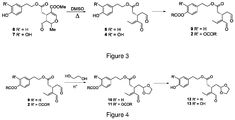
Figure 3 .- Krapcho demethoxycarbonylation reaction on monoaldehyde aglycones of theoleuropein 6 andligstroside 7 followed by acylation. -
Figure 4 . - Chemoselective monoacetalation reactions on the unconjugated carbonyl of acylated oleocanthal 9 and diacylatedoleacein 2. - The original method of converting oleuropein into oleacein has been improved using the Krapcho demethoxycarbonylation reaction in wet DMSO. With this invention, based on the absence of alkali halide, the process described above is improved by substantially reducing the heating time and increasing the yield of oleacein, more than doubling said yield. In the course of the reaction it is possible to isolate a second product, Dehydrated Oleuroside Aglycone (DOA), in respect of which there is no prior art.
- The reaction mixture is acylated in situ, achieving stabilisation of both oleacein and DOA, and allowing the chromatographic purification of both. There is no prior art on diacylated oleacein; where diacetylated oleacein shall be referred to as aceolein (
Figure 1 , R = Me). - Using the same method, monoaldehyde aglycones of oleuropein and ligstroside are converted into oleacein and oleocanthal, respectively, by means of heating in wet DMSO. The conversion can be carried out with monoaldehyde aglycones separately, or with phenolic mixtures, such as for example mixtures of phenols isolated from olive oil. This method allows enriching the mixture of phenols with the dialdehyde secoiridoids oleacein and oleocanthal, facilitating the chromatographic isolation of both by reducing the number of components of the mixture.
- The acylation of this mixture enriched with phenolic dialdehydes stabilises both compounds for the chromatographic purification step. Both diacylated
oleacein 2 andoleocanthal 9 can be deacylated using lipase or a basic catalyst in alcohol (ROH) - The diacylated dialdehyde derivatives have also been stabilised by converting them into monoacetyl-monoaldehyde derivatives by means of regioselective acetalation with ethyleneglycol on the unconjugated formyl group, maintaining the acyl groups on phenolic hydroxyls. More stable and lipophilic, and therefore more readily bioavailable derivatives can thereby be obtained. Subsequent deacylation leads to the 3-ethylidene acetals of oleacein and oleocanthal.
- The present invention describes the method of converting different secoiridoid compounds into oleocanthal and oleacein by means of a variant of Krapcho demethoxycarbonylation in wet DMSO at a high temperature in the absence of halide (inorganic salt). This reaction can be carried out on isolated oleuropein, on extracts rich in oleuropein, on phenolic fractions extracted from virgin and extra virgin olive oil, and on isolated monoaldehyde aglycones of oleuropein and ligstroside.
- This invention allows enriching phenolic extracts from olive oil with oleacein and oleocanthal through its monoaldehyde precursors, and facilitating chromatographic separation of said dialdehyde derivatives.
- The Krapcho reaction on
oleuropein 1, or extracts rich in oleuropein, in wet DMSO or DMSO-d6 at a temperature greater than 140 °C in the absence of halide (inorganic salt) leads to oleacein and dehydrated oleuroside aglycone (DOA). The chromatographic purification (silica gel, among other adsorbents) of this mixture allows isolating only DOA due to the substantial breakdown of oleacein during the process. Acylation of the mixture allows both compounds to stabilise and to furthermore be more efficiently purified by means of chromatographic separation (silica gel, among other adsorbents), which leads to the isolation thenew compounds 2 and 3 (Figure 2 ). Deacylation of 2 carried out, for example, with lipase or base in alcohol (MeOH, among other aliphatic alcohols) leads to oleacein 4 the spectroscopic data of which coincides with that of natural oleacein; likewise, deacylation of 3 leads to dehydrated oleuroside aglycone (DOA) 5, not previously described. This Krapcho reaction on the ligstroside gives access to-oleocanthal 8. - The Krapcho reaction with phenolic mixtures from virgin or extra virgin olive oil, containing, among other phenolic compounds, monoaldehyde aglycones of
ligstroside 6 andoleuropein 7, carried out by heating in DMSO or DMSO-d6 at temperatures above 90 °C leads to the conversion of these monoaldehydes into the corresponding dialdehydes 8 (oleocanthal) and 4 (oleacein), the mixture therefore being enriched with said dialdehydes (Figure 3 ). The chromatographic separation of both dialdehydes allows obtainingpure oleocanthal 8 with a good yield. Acylation of the mixture of 8 and 4 followed by chromatographic separation allows obtaining pureacylated oleocanthal 9 anddiacylated oleacein 2. Acetylated oleocanthal (9 R = Me) shall be referred to as aceocanthal and diacetylated oleacein (2, R = Me) shall be referred to as aceolein. There is no prior art relating to 2, or the synthesis of 9 by acylation ofoleocanthal 8, although 9 it has been prepared through an alternative route (Smith, III et al. J Org Chem 2007, 72, 6891). Deacylation of 9 for regenerating 8 is carried out, for example, with lipase or base in alcohol (MeOH, among other aliphatic alcohols). - The Krapcho reaction on the isolated aglycone monoaldehyde of
ligstroside 6, or on the isolated aglycone monoaldehyde ofoleuropein 7, allows, after removing DMSO, directly obtainingoleocanthal 8 or oleacein 4, respectively. - The treatment of
acylated derivatives Figure 4 ). Deacylation of these compounds is carried out with the methods mentioned above which use, for example, lipase or base as catalyst in the presence of aliphatic alcohol, which allows obtainingmonoacetalated oleacein 12 andmonoacetalated oleocanthal 13.Compounds oleocanthal 8 and oleacein 4, respectively, with ethyleneglycol and acid catalysis. -

- A solution of oleuropein 1 (110 mg, 0.20 mmol) in wet DMSO (3 ml) is heated at 150 °C for 5 h. The reaction mixture without removing the solvent is acetylated using Ac2O (0.4 ml) and a catalytic amount of DMAP (2 mg). Once the reaction is completed (8 h, at room temperature) the excess Ac2O is hydrolysed and concentrated to dryness at low pressure. The residue is purified by column chromatography using as eluent AcOEt-cyclohexane (1:3 → 1:1), acetylated DOA being obtained as a colourless syrup (higher R F) and the aceolein (lower R F) as a colourless syrup.
- Data for acetylated oleacein 2 (R = Me). Yield: 38 mg, 42 % R F 0.4 (1:1 AcOEt-cyclohexane),

- Data for acetylated dehydrated oleuroside aglycone (DOA) 3 (R = Me). Yield: 12.5 mg, 15%, R F 0.6 (1:1 AcOEt-cyclohexane),

-

- 2 R = Me (12 mg, 0.038 mmol) is dissolved in MeOH (1 ml) and lipase from Candida Antarctica Novozyme 435 (12 mg) is added. The mixture is heated at 40 °C for 3 h. Once the reaction has ended, it is microfiltered and concentrated to dryness, the product being obtained as an orange syrup. Yield: quant. R F 0.1 (1:1 AcOEt-cyclohexane). 1H-NMR (300 MHz, CDCl3): δ 9.64 (m, 1H, H-3), 9.22 (d, 1H, J= 1.9 Hz, H-1), 6.78 (d, 1H, J= 8.0 Hz, H-7'), 6.71 (d, 1H, J= 1.9 Hz, H-4'), 6.64 (q, 1H, J= 7.0 Hz, H-8), 6.54 (dd, 1H, J= 8.0 Hz, J= 1.9 Hz, H-8'), 4.17 (m, 2H, H-1'), 3.69 (m, 1H, H-5), 2.92 (ddd, 1H, J= 19.2 Hz, J= 8.5 Hz, J= 1.2 Hz, H-6a), 2.81-2.62 (m, 5H, H-4, H-2' and H-6b), 2.05 (d, 3H, J= 7.1 Hz, H-10).
-

- 3 R = Me (32 mg, 0.072 mmol) is dissolved in MeOH (1 ml) and lipase from Candida Antarctica Novozyme 435 (32 mg) is added. The mixture is stirred at room temperature for 4 h. Once the reaction has ended, it is microfiltered and concentrated to dryness, the product being obtained as an orange syrup. Yield: quant. R F 0.45 (1:1 AcOEt-cyclohexane). 1H-NMR (300 MHz, CDCl3): δ 7.52 (s, 1H, H-3), 6.78 (d, 1H, J= 8.0 Hz, H-7'), 6.77 (d, 1H, J= 2.0 Hz, H-4'), 6.61 (dd, 1H, J= 8.0 Hz, J= 2.0 Hz, H-8'), 6.57 (s, 1H, H-1) 6.15 (dd, 1H, J= 17.6 Hz, J= 11.1 Hz, H-8), 5.35 (d, 1H, J= 17.6 Hz, H-10 trans ), 5.08 (d, 1H, J= 11.1 Hz, H-10 cys ), 4.14 (m, 2H, H-1'), 3.95 (dd, 1H, J= 4.1 Hz, J= 5.5 Hz H-5), 3.77 (s, 3H, COOMe), 2.80 (t, 2H, J= 6.9 Hz, H-2'), 2.58 (dd, 1H, J= 14.4 Hz, J= 4.1 Hz, H-6a), 2.54 (dd, 1H, J= 14.4 Hz, J= 5.5 Hz, H-6b).
-

- 8 (100 mg, 0.33 mmol) is dissolved in a 1:1 mixture of Ac2O/Py (v/v) cooled at 0 °C. After 15 min, it is left under stirring at room temperature overnight. Ac2O is hydrolysed and concentrated to dryness at low pressure, and the residue is purified by column chromatography (AcOEt-cyclohexane 1:2), a colourless syrup being obtained. Yield: quant. 1H-NMR (300 MHz, CDCl3): δ 9.63 (m, 1H, H-3), 9.21 (d 1H, J= 2.0 Hz, H-1), 7.19 (m, 2H, H-4', H-8'), 7.01 (m, 2H, H-5', H-7'), 6.61 (q, 1H, J= 7.1 Hz, H-8), 4.24 (m, 2H, H-1'), 3.61 (m, 1H, H-5), 2.97 (ddd, 1H, J= 18.3 Hz, J= 8.5 Hz, J= 1.1 Hz, H-4a), 2.89 (t, 2H, J= 6.9 Hz, H-2'), 2.74 (dd, 1H, J= 18.3 Hz, J= 8.5 Hz, H-4b), 2.70 (dd, 1H, J= 15.8 Hz, J= 8.4 Hz, H-6a), 2.60 (dd, 1H, J= 15.8 Hz, J= 6.6 Hz, H-6b), 2.29 (s, 3H, Ac), 2.05 (d, 3H, J= 7.1 Hz, H-10). 13C-NMR (75.5 MHz, CDCl3): δ 200.5 (C-3), 195.3 (C-1), 172.0 (C-7), 169.7 (COOMe), 154.4 (C-8), 149.5 (C-6'), 143.4 (C-9), 135.5 (C-3'), 130.0 (C-4', C-8'), 121.8 (C-5', C-7'), 64.9 (C-1'), 46.4 (C-4), 37.0 (C-6), 34.5 (C-2'), 27.4 (C-5), 21.3 (COOMe), 15.3 (C-10). HRESI: calculated for C19H22O6Na ([M + Na]+): 369.1309, found: 369.1309.
-

- 2 R = Me (115 mg, 0.28 mmol) is dissolved in CDCl3 (2 ml) and ethyleneglycol (31 µl, 0.56 mmol) and TFA (10.7 µl, 0.14 mmol) are added. The mixture is heated at 50 °C for 3 h, until the disappearance of the starting product monitored by 1H-NMR. Lastly, the medium is neutralised with NaHCO3 and the product is purified by column chromatography (AcOEt-cyclohexane 1:2). Yield: 86 mg, 68 % RF 0.4 (1:1 AcOEt-cyclohexane). 1H-NMR (300 MHz, CDCl3): δ 9.20 (d, 1H, J= 2.0 Hz, H-1), 7.09 (d, 1H, J= 8.2 Hz, H-7'), 7.06 (dd, 1H, J= 8.2 Hz, J= 1.9 Hz, H-8'), 6.99 (d, 1H, J= 1.9 Hz, H-4'), 6.56 (q, 1H, J= 7.1 Hz, H-8), 4.68 (dd, 1H, J= 6.1 Hz, J= 3.6 Hz, H-3), 4.19 (m, 2H, H-1'), 3.89 and 3.76 (2 m, 2 H each, OCH2CH2O), 3.28 (m, 1H, H-5), 2.85 (t, 2H, J= 6.8 Hz, H-2'), 2.81 (dd, 1H, J= 15.6 Hz, J= 9.6 Hz, H-6a), 2.60 (dd, 1H, J= 15.6 Hz, J= 5.5 Hz, H-6b), 2.26 and 2.25 (2 s, 3H each, 2 Ac), 2.10 (m, 1H, H-4a), 1.96 (d, 3H, J= 7.1 Hz, H-10), 1.83 (dt, 1H, J= 14.0 Hz, J= 5.9 Hz, H-4b). 13C-NMR (75.5 MHz, CDCl3): δ 195.2 (C-1), 172.4 (C-7), 168.3, 168.2 (OCOMe), 153.0 (C-8), 144.1 (C-9), 141.9, 140.7 (C-5', C-6'), 136.8 (C-3'), 127.0 (C-8'), 123.8 (C-4'), 123.3 (C-7'), 103.2 (C-3), 64.8 and 64.7 (OCH2CH2O), 64.3 (C-1'), 37.5 (C-6), 36.0 (C-4), 34.3 (C-2'), 29.3 (C-5), 20.6 (OCOMe), 14.0 (C-10). HRLSI-MS: calculated for C23H28NaO9 ([M + Na]+): 471.1626, found: 471.1613.
-

- 11 (87 mg, 0.19 mmol) is dissolved in MeOH (1 ml), lipase from Candida antarctica Novozyme 435 (30 mg) is added and stirred at room temperature for 4 h. The mixture is microfiltered and concentrated to dryness, the product being obtained as an orange syrup. Yield: quant. R F 0.3 (1:1 AcOEt-cyclohexane)
- 1H-NMR (300 MHz, CDCl3): δ 9.21 (d, 1H, J= 1.9 Hz, H-1), 6.76 (d, 1H, J= 8.0 Hz, H-7'), 6.67 (d, 1H, J= 1.5 Hz, H-4'), 6.57 (q, 1H, J= 7.1 Hz, H-8), 6.50 (dd, 1H, J= 8.0 Hz, J= 1.5 Hz, H-8'), 4.67 (dd, 1H, J= 6.0 Hz, J= 3.6 Hz, H-3), 6.19 (bs, 2H, OH), 4.11 (m, 2H, H-1'), 3.89 and 3.75 (2 m, 2 H each, OCH2CH2O), 3.31 (m, 1H, H-5), 2.77 (dd, 1H, J= 15.5 Hz, J= 9.4 Hz, H-6a), 2.68 (t, 2H, J= 6.8 Hz, H-2'), 2.59 (dd, 1H, J= 15.5 Hz, J= 5.6 Hz, H-6b), 2.12 (m, 1H, H-4a), 1.97 (d, 3H, J= 7.1 Hz, H-10), 1.83 (dt, 1H, J= 14.1 Hz, J= 5.8 Hz, H-4b). 13C-NMR (75.5 MHz, CDCl3): δ 195.7 (C-1), 172.6 (C-7), 153.8 (C-8), 144.4 (C-5'), 144.1 (C-9), 143.3 (C-6'), 129.9 (C-3'), 120.7 (C-8'), 116.4 (C-4'), 116.0 (C-7'), 103.3 (C-3), 65.3 (C-1'), 64.9, 64.8 (OCH2CH2O), 37.7 (C-6), 36.1 (C-4), 34.4 (C-2'), 29.3 (C-5), 15.1 (C-10). HRLSI-MS: calculated for C19H24NaO7 ([M + Na]+): 387.1414, found 387.1401.
-

- 8 (33 mg, 0.11 mmol) is dissolved in CDCl3 (1 ml) and ethyleneglycol (0.22 mmol) and TFA (0.054 mmol) are added. The mixture is heated at 50 °C and monitored by 1H-NMR until complete conversion. The mixture is neutralised with NaHCO3 and concentrated to dryness. The residue is purified by column chromatography (AcOEt-cyclohexane 1:2), a colourless syrup being obtained. Yield: 31 mg, 84 %. 1H-NMR (300 MHz, CDCl3): δ 9.23 (d, 1H, J= 2.0 Hz, H-1), 7.02 (m, 2H, H-4', H-8'), 6.75 (m, 2H, H-5', H-7'), 6.57 (q, 1H, J= 7.1 Hz, H-8), 6.04 (bs, 1H, OH), 4.70 (dd 1H, J= 6.0 Hz, J= 3.7 Hz, H-3), 4.16 (m, 2H, H-1'), 3.86, 3.78 (2 m, 2H each, OCH2CH2O), 3.31 (m, 1H, H-5), 2.79 (t, 2H, J= 7.0 Hz, H-2'), 2.78 (dd, 1H, J= 15.7 Hz, J= 9.3 Hz, H-6a), 2.62 (dd, 1H, J= 15.7 Hz, J= 5.8 Hz, H-6b), 2.14 (ddd, 1H, J= 14.0 Hz, J= 9.3 Hz, J= 3.7 Hz, H-4a), 1.98 (d, 3H, J= 7.1 Hz, H-10), 1.84 (dt, 1H, J= 14.0 Hz, J= 6.0 Hz, H-4b). 13C-NMR (75.5 MHz, CDCl3): δ 195.3 (C-1), 172.0 (C-7), 154.8 (C-6'), 153.5 C-8), 143.2 (C-9), 130.1 (C-4', C-8'), 129.6 (C-3'), 115.5 (C-5', C-7'), 103.4 (C-3), 65.3 (C-1'), 64.8, 64.9 (OCH2CH2O), 37.7 (C-6), 36.1 (C-4), 34.3 (C-2'), 29.3 (C-5), 15.1 (C-10). HRCI: calculated for C19H24NaO6 ([M+Na]+): 371.1465, found: 371.1456.
-

- 12 (31 mg, 0.108 mmol) is dissolved in CH2Cl2 (1 ml) and Ac2O (12.2 µl, 0.16 mmol) and a catalytic amount of DMAP are added. It is stirred at room temperature overnight and hydrolysed with water. The phases are separated and the organic phase is washed with 2x5 ml of water. The organic phase is dried with Na2SO4 and concentrated to dryness. Yield: quant. 1H-NMR (300 MHz, CDCl3): δ 9.23 (d, 1H, J= 2.0 Hz, H-1), 7.17 (m, 2H, H-4', H-8'), 7.00 (m, 2H, H-5', H-7'), 6.55 (q, 1H, J= 7.1 Hz, H-8), 4.69 (dd, 1H, J= 6.1 Hz, J= 3.6 Hz, H-3), 4.17 (m, 2H, H-1'), 3.85, 3.77 (2 m, 2H each, OCH2CH2O), 3.30 (m, 1H, H-5), 2.86 (t, 2H, J= 6.9 Hz, H-2'), 2.80 (dd, 1H, J= 15.7 Hz, J= 9.5 Hz, H-6a), 2.62 (dd, 1H, J= 15.7 Hz, J= 5.6 Hz, H-6b), 2.28 (s, 3H, Ac), 2.14 (ddd, 1H, J= 13.9 Hz, J= 9.2 Hz, J= 3.6 Hz, H-4a), 1.97 (d, 3H, J= 7.0 Hz, H-10), 1.84 (dt, 1H, J= 14.0 Hz, J= 5.9 Hz, H-4b). 13C-NMR (75.5 MHz, CDCl3): δ 195.2 (C-1), 172.5 (C-7), 169.7 (OCOMe), 153.0 (C-8), 149.5 C-6'), 144.2 (C-9), 135.6 (C-3'), 130.0 (C-4', C-8'), 128.7 (C-5', C-7'), 103.4 (C-1), 64.9 (OCH2CH2O), 64.8 (C-1'), 64.7 (OCH2CH2O), 37.6 (C-6), 36.1 (C-4), 34.5 (C-2'), 29.4 (OCOMe), 21.2 (C-5), 15.0 (C-10). HRESI: calculated for C23H28NaO9 ([M+Na]+): 471.1626, found: 471.1613.
Claims (30)
- Use of wet dimethylsulphoxide (DMSO) or hexadeuterated dimethylsulphoxide (DMSO-d6) at temperatures above 140 °C, using conventional heating or microwaves and in the absence of inorganic salt for the conversion of oleuropein and/or ligstroside, separately or mixed with other phenolic compounds, into the oleacein and oleocanthal dialdehyde compounds, respectively.
- Use of dimethylsulphoxide (DMSO) or hexadeuterated dimethylsulphoxide (DMSO-d6) at temperatures above 90 °C, using conventional heating or microwaves, for the conversion of monoaldehyde aglycone of oleuropein and/or monoaldehyde aglycone of ligstroside, separately or mixed with other phenolic compounds, into the oleacein and oleocanthal dialdehyde compounds, respectively.
- Use of wet dimethylsulphoxide (DMSO) or hexadeuterated dimethylsulphoxide (DMSO-d6) at temperatures above 140 °C, using conventional heating or microwaves, for the conversion of oleuropein isolated (or mixed with other phenolic compounds) into dehydrated oleuroside aglycone (DOA) 5.

- Use of dimethylsulphoxide (DMSO) or hexadeuterated dimethylsulphoxide (DMSO-d6) at temperatures above 90 °C, using conventional heating or microwaves, for enriching phenolic extracts from virgin or extra virgin olive oil with oleacein and oleocanthal dialdehyde compounds.
- Preparation of compounds of general formula 2 wherein R is selected from hydrogen (H), (C1-C22) alkyl, substituted or unsubstituted phenyl, by means of acylation of the phenolic hydroxyls of oleacein, isolated or mixed with other secoiridoids.

- Preparation of compounds of general formula 9, wherein R is selected from hydrogen (H), (C1-C22) alkyl, substituted or unsubstituted phenyl, by means of acylation of the phenolic hydroxyl of oleocanthal, isolated or mixed with other secoiridoids.

- Preparation of compounds of general formula 3 wherein R is selected from hydrogen (H), (C1-C22) alkyl, substituted or unsubstituted phenyl, by means of acylation of the phenolic hydroxyls of dehydrated oleuroside aglycone prepared as described in claim 3.

- Preparation of compounds of general formula 10, wherein R is selected from hydrogen (H), (C1-C20) alkyl, substituted or unsubstituted phenyl, by means of regioselective acetalation of acetylated oleocanthal (oleacein) with ethyleneglycol.

- Preparation of compounds of general formula 11, wherein R is selected from hydrogen (H), (C1-C22) alkyl, substituted or unsubstituted phenyl, by means of regioselective acetalation of acetylated oleacein (aceolein) with ethyleneglycol.

- Preparation of oleocanthal 3-ethylidene acetal 12 by means of deacylation of the compound prepared according to claim 8.

- Preparation of oleacein 3-ethylidene acetal 13 by means of deacylation of the compound prepared according to claim 9.

- Preparation of oleocanthal 3-ethylidene acetal 12 by means of regioselective acetalation of oleocanthal with ethyleneglycol.
- Preparation of oleocanthal 3-ethylidene acetal 13 by means of regioselective acetalation of oleacein with ethyleneglycol.
- Use of the compounds of general formula 2, wherein R is selected from hydrogen (H), (C1-C22) alkyl, substituted or unsubstituted phenyl prepared according to claim 5.
- Use of the compound prepared according to claim 5, wherein R is methyl: acetylated oleacein (or aceolein).
- Use of the compounds mentioned in claims 14 and 15 for the preparation of a cosmetic or pharmaceutical composition.
- Use of the compounds of general formula 9, wherein R is selected from hydrogen (H), (C1-C22) alkyl, substituted or unsubstituted phenyl, prepared according to claim 6.
- Use of the compound prepared according to claim 6, wherein R is methyl: acetylated oleocanthal (or aceocanthal).
- Use of the compounds mentioned in claims 17 and 18 for the preparation of a cosmetic or pharmaceutical composition.
- Use of the compound of the dehydrated oleuroside aglycone (DOA), compound 5.
- Use of the compound of general formula 3, wherein R is selected from hydrogen (H), (C1-C22) alkyl, substituted or unsubstituted phenyl.
- Use of compounds 5 and 3 for the preparation of a cosmetic or pharmaceutical composition.
- Use of the compounds of general formula 10, wherein R is selected from hydrogen (H), (C1-C22) alkyl, substituted or unsubstituted phenyl.
- Use of the compounds of general formula 11, wherein R is selected from hydrogen (H), (C1-C22) alkyl, substituted or unsubstituted phenyl.
- Use of compound 12 (oleocanthal 3-ethylidene acetal).
- Use of compound 13 (oleacein 3-ethylidene acetal).
- Use of the compounds mentioned in claims 23, 24, 25 and 26 for the preparation of a cosmetic or pharmaceutical composition.
- Use of the compounds prepared according to the preceding claims for the treatment or prevention of tumour, neurodegenerative, inflammatory, cardiovascular or infectious diseases.
- Use of the compounds prepared according to the preceding claims in the preparation of pharmaceutical formulations, cosmetic formulations or food compositions for the prevention of the oxidation of biomolecules, foods and cells.
- Composition prepared according to any of the preceding claims, where said composition is in the form suitable for topical, oral or parental administration.
Applications Claiming Priority (2)
| Application Number | Priority Date | Filing Date | Title |
|---|---|---|---|
| ES201700241A ES2690412B1 (en) | 2017-03-10 | 2017-03-10 | Procedure for obtaining dialdehyde secairidoids |
| PCT/ES2018/000016 WO2018162769A2 (en) | 2017-03-10 | 2018-03-09 | Use of dmso for the synthesis of oleacein and oleocanthal |
Publications (2)
| Publication Number | Publication Date |
|---|---|
| EP3594198A2 true EP3594198A2 (en) | 2020-01-15 |
| EP3594198A4 EP3594198A4 (en) | 2021-09-08 |
Family
ID=63449030
Family Applications (1)
| Application Number | Title | Priority Date | Filing Date |
|---|---|---|---|
| EP18764100.6A Withdrawn EP3594198A4 (en) | 2017-03-10 | 2018-03-09 | USE OF DMSO IN THE SYNTHESIS OF OLEACEIN AND OLEOCANTHAL |
Country Status (3)
| Country | Link |
|---|---|
| EP (1) | EP3594198A4 (en) |
| ES (1) | ES2690412B1 (en) |
| WO (1) | WO2018162769A2 (en) |
Cited By (2)
| Publication number | Priority date | Publication date | Assignee | Title |
|---|---|---|---|---|
| EP3838885A1 (en) * | 2019-12-16 | 2021-06-23 | National and Kapodistrian University of Athens | Process for the production of oleocanthal, oleacein and their analogues |
| WO2024213667A1 (en) * | 2023-04-11 | 2024-10-17 | Université De Montpellier | Olive oil lees |
Families Citing this family (1)
| Publication number | Priority date | Publication date | Assignee | Title |
|---|---|---|---|---|
| ES2769902B2 (en) * | 2018-12-28 | 2020-12-04 | Consejo Superior Investigacion | Use of secoiridoids for the treatment of optic neuritis. |
Family Cites Families (4)
| Publication number | Priority date | Publication date | Assignee | Title |
|---|---|---|---|---|
| CA2607977C (en) | 2005-05-09 | 2014-10-28 | The Trustees Of The University Of Pennsylvania | Use of the irritating principal oleocanthal in olive oil, as well as structurally and functionally similar compounds |
| US20130115202A1 (en) | 2005-08-31 | 2013-05-09 | Theta Biomedical Consulting & Development Co., Inc | Anti-inflammatory compositions for treating neuro-inflammation |
| US20070299129A1 (en) * | 2006-01-05 | 2007-12-27 | Deviris Inc. | Compounds and derivatives for the treatment of medical conditions by modulating hormone-sensitive lipase activity |
| PL227843B1 (en) | 2012-07-14 | 2018-01-31 | Warszawski Uniwersytet Medyczny | Use of oleacein, especially Ligustrum vulgare L. |
-
2017
- 2017-03-10 ES ES201700241A patent/ES2690412B1/en active Active
-
2018
- 2018-03-09 WO PCT/ES2018/000016 patent/WO2018162769A2/en not_active Ceased
- 2018-03-09 EP EP18764100.6A patent/EP3594198A4/en not_active Withdrawn
Cited By (4)
| Publication number | Priority date | Publication date | Assignee | Title |
|---|---|---|---|---|
| EP3838885A1 (en) * | 2019-12-16 | 2021-06-23 | National and Kapodistrian University of Athens | Process for the production of oleocanthal, oleacein and their analogues |
| WO2021121925A1 (en) * | 2019-12-16 | 2021-06-24 | National And Kapodistrian University Of Athens | Process for the production of oleocanthal, oleacein and their analogues |
| WO2024213667A1 (en) * | 2023-04-11 | 2024-10-17 | Université De Montpellier | Olive oil lees |
| FR3147802A1 (en) * | 2023-04-11 | 2024-10-18 | Université De Montpellier | Olive oil margins |
Also Published As
| Publication number | Publication date |
|---|---|
| ES2690412B1 (en) | 2019-11-13 |
| ES2690412R1 (en) | 2019-02-08 |
| WO2018162769A3 (en) | 2018-11-08 |
| WO2018162769A2 (en) | 2018-09-13 |
| EP3594198A4 (en) | 2021-09-08 |
| ES2690412A2 (en) | 2018-11-20 |
Similar Documents
| Publication | Publication Date | Title |
|---|---|---|
| Miyase et al. | Phenylethanoid glycosides from Plantago asiatica | |
| Machida et al. | Studies on the constituents of Syringa Species. X. Five new iridoid glycosides from the leaves of Syringa reticulata (B LUME) H ARA | |
| Mishchenko et al. | Mirabiquinone, a new unsymmetrical binaphthoquinone from the sea urchin Scaphechinus mirabilis | |
| Yoshimura et al. | Diarylheptanoid sulfates and related compounds from Myrica rubra bark | |
| Nyokat et al. | Isolation and synthesis of pinocembrin and pinostrobin from Artocarpus odoratissimus | |
| Hatano et al. | Tannins of Coriaria japonica A. Gray. I.: Coriariins A and B, new dimeric and monomeric hydrolyzable tannins | |
| Disadee et al. | Unprecedented furan-2-carbonyl C-glycosides and phenolic diglycosides from Scleropyrum pentandrum | |
| ES2690412B1 (en) | Procedure for obtaining dialdehyde secairidoids | |
| Sati et al. | Cantalasaponin-1, a novel spirostanol bisdesmoside from Agave cantala | |
| Bouberte et al. | Tithoniaquinone A and tithoniamide B: A new anthraquinone and a new ceramide from leaves of Tithonia diversifolia | |
| Hatano et al. | Characterization of the Oxidation Products of (-)-Eplgallocatechin Gallate, a Bioactive Tea Polyphenol, on Incubation in Neutral Solution | |
| Kupchan et al. | Tumor inhibitors. LXVIII. Liatrin, a novel antileukemic sesquiterpene lactone from Liatris chapmanii | |
| Djemgou et al. | Antitumor and immunostimulatory activity of two chromones and other constituents from Cassia petersiana | |
| Zielińska et al. | Sesquiterpenoids from roots of Taraxacum laevigatum and Taraxacum disseminatum | |
| Khan et al. | Tyrosinase-inhibitory long-chain esters from Amberboa ramosa | |
| Tanabe et al. | Total syntheses of the aromatase inhibitors, mammeasins C and D, from Thai medicinal plant Mammea siamensis | |
| ES2693177B1 (en) | Procedure for obtaining dialdehyde secairidoids | |
| Speranza et al. | Studies on aloe, 12. Furoaloesone, a new 5-methylchromone from cape aloe | |
| Kimura et al. | Efficient preparation of various O-methylquercetins by selective demethylation | |
| Kerkatou et al. | Secondary Metabolites and Antioxidant Activity of Limonium duriusculum (de Girard) Kuntze Extracts. | |
| Nguyen-Ngoc et al. | Chemical constituents of Antidesma bunius aerial parts and the anti-AGEs activity of selected compounds | |
| Cai et al. | Symplocosionosides AC, three megastigmane glycosides, a neolignan glucoside, and symplocosins A and B, two triterpene glycosyl esters from the leaves of Symplocos cochinchinensis var. philippinensis | |
| Fujita et al. | Site-selective synthesis of acacetin and genkwanin through lipase-catalyzed deacetylation of apigenin 5, 7-diacetate and subsequent methylation | |
| Söhretoglu et al. | Polyphenolic constituents and antioxidant potential of Geranium stepporum Davis | |
| Duc et al. | Flavonoids and other compound isolated from leaves of Aconitum carmichaeli Debx. growing in Viet Nam |
Legal Events
| Date | Code | Title | Description |
|---|---|---|---|
| STAA | Information on the status of an ep patent application or granted ep patent |
Free format text: STATUS: THE INTERNATIONAL PUBLICATION HAS BEEN MADE |
|
| PUAI | Public reference made under article 153(3) epc to a published international application that has entered the european phase |
Free format text: ORIGINAL CODE: 0009012 |
|
| STAA | Information on the status of an ep patent application or granted ep patent |
Free format text: STATUS: REQUEST FOR EXAMINATION WAS MADE |
|
| 17P | Request for examination filed |
Effective date: 20191010 |
|
| AK | Designated contracting states |
Kind code of ref document: A2 Designated state(s): AL AT BE BG CH CY CZ DE DK EE ES FI FR GB GR HR HU IE IS IT LI LT LU LV MC MK MT NL NO PL PT RO RS SE SI SK SM TR |
|
| AX | Request for extension of the european patent |
Extension state: BA ME |
|
| DAV | Request for validation of the european patent (deleted) | ||
| DAX | Request for extension of the european patent (deleted) | ||
| RIC1 | Information provided on ipc code assigned before grant |
Ipc: C07C 69/738 20060101AFI20210325BHEP Ipc: C07D 317/30 20060101ALI20210325BHEP Ipc: C07D 309/32 20060101ALI20210325BHEP Ipc: C07C 67/327 20060101ALI20210325BHEP Ipc: A61K 31/222 20060101ALI20210325BHEP Ipc: A61K 31/34 20060101ALI20210325BHEP Ipc: A61K 31/35 20060101ALI20210325BHEP Ipc: A61P 9/00 20060101ALI20210325BHEP Ipc: A61P 17/18 20060101ALI20210325BHEP Ipc: A61P 25/28 20060101ALI20210325BHEP Ipc: A61P 29/00 20060101ALI20210325BHEP Ipc: A61P 31/00 20060101ALI20210325BHEP Ipc: A61P 35/00 20060101ALI20210325BHEP Ipc: A61Q 90/00 20090101ALI20210325BHEP Ipc: A23L 33/105 20160101ALI20210325BHEP Ipc: C07C 67/333 20060101ALI20210325BHEP Ipc: C07D 317/26 20060101ALI20210325BHEP |
|
| A4 | Supplementary search report drawn up and despatched |
Effective date: 20210810 |
|
| RIC1 | Information provided on ipc code assigned before grant |
Ipc: C07D 317/26 20060101ALI20210804BHEP Ipc: C07C 67/333 20060101ALI20210804BHEP Ipc: A23L 33/105 20160101ALI20210804BHEP Ipc: A61Q 90/00 20090101ALI20210804BHEP Ipc: A61P 35/00 20060101ALI20210804BHEP Ipc: A61P 31/00 20060101ALI20210804BHEP Ipc: A61P 29/00 20060101ALI20210804BHEP Ipc: A61P 25/28 20060101ALI20210804BHEP Ipc: A61P 17/18 20060101ALI20210804BHEP Ipc: A61P 9/00 20060101ALI20210804BHEP Ipc: A61K 31/35 20060101ALI20210804BHEP Ipc: A61K 31/34 20060101ALI20210804BHEP Ipc: A61K 31/222 20060101ALI20210804BHEP Ipc: C07C 67/327 20060101ALI20210804BHEP Ipc: C07D 309/32 20060101ALI20210804BHEP Ipc: C07D 317/30 20060101ALI20210804BHEP Ipc: C07C 69/738 20060101AFI20210804BHEP |
|
| STAA | Information on the status of an ep patent application or granted ep patent |
Free format text: STATUS: THE APPLICATION IS DEEMED TO BE WITHDRAWN |
|
| 18D | Application deemed to be withdrawn |
Effective date: 20211001 |